This is a pertinent question, as support for this teaching has gained increased acceptance amongst open minded Christians.
Feed the Hunger:
‘The prophetic community is somewhat divided over whether or not America is the “Babylon the Great” mentioned in Revelation 17-18.’
So that interpretations vary with some commentators identifying Babylon as ancient Rome and thus by extension, the Universal Church for example; while others teach Babylon represents a modern power such as the United States of America.
Regardless, Babylon the Great in the Book of Revelation is depicted as a powerful and dominating entity responsible for idolatry, moral corruption and luring nations into rebellion and sin against God.
What is key, is what does the Bible actually state rather than relying on the perceptions of biblical scholars and descriptions by teachers; who may have arrived – through over zealous enthusiasm for end time prophecy fulfilment – at perhaps an incorrect conclusion.
It is as crucial to understand whether Babylon is at once a city, a state, a country, a group of nations or is a system. If the latter, is it political and or religious?
Similarly, is the (first) Beast of Revelation, a man or a spirit entity (an antichrist); or is it a system? Likewise, who or what is the second Beast; a national state or an individual called the false prophet? And, is one of these beasts, Babylon?
The books of Revelation and Daniel are the focus of this discussion and therein will lie the answer.
While constant readers will be aware of this writer’s findings and conclusions in previous articles, a fresh investigation is perhaps warranted in bringing further insight (of which can be confirmed has been the result).
A summary of present understanding – new readers please lend patience and withhold judgement until the end – is that the first Beast is the angel of the Abyss known as Abaddon in Hebrew and Apollyon in Greek – meaning (place of) destruction (or doom) and the destroyer respectively.
This being was originally Azazel, one of the chief Watchers who descended to the earthly plane to corrupt the Eternal’s creation.
The Beast is subservient to the Dragon (the Adversary) and when loosed from the bottomless pit (an endless void) as the Antichrist, seeks to enslave and ultimately destroy humankind – Chapter XXI The Incredible Identity, Origin and Destiny of Nimrod; and Chapter XXII Alpha & Omega.
Which thematically leads to the second Beast, who sets a constraining mark on humanity to worship the first Beast. This second Beast enforces a belief system that is at once contrary to the true religion espoused by Christ – refer article: The Seven Churches – A Message for the Church of God in the Latter Days – and a continuation of the Babylonian Mystery Religion promulgated by the Nephilim tyrant Nimrod. The second Beast is a supernatural entity and scripture indicates its identity as a re-incarnation of Nimrod himself – Chapter XXI The Incredible Identity, Origin & Destiny of Nimrod.
The question surrounding Babylon is understood by many to represent a continuation of this self same mystery religion. Where this writer differs from other commentators is that they teach ‘Babylon’ is centred in Rome, the Vatican and wholly within Catholicism; while it is this writer’s understanding that ‘Babylon’ includes all of Rome’s apostate (protestant) daughters. For Christianity is a false religion inspired by and based upon the theology of Paul and not the Way as preached by the apostles who followed the teachings of Christ – refer article: The Pauline Paradox.
The fact that northern (and central) Italy is populated principally by people of Chaldean descent is no coincidence, for they are the biological inheritors of the Chaldean lineage descending from Abraham’s elder brother Nahor – refer Chapter XXV Italy: Nahor & the Chaldeans; and Chapter XXIII Aram & Tyre: Spain, Portugal & Brazil.
Thus the same mystery religion of the Chaldean Babylonians is realised in Vatican City and the Universal Church – this is true.
Where does this leave the United States of America? Some propound it is the second beast while recognising Rome, the Vatican and the Papacy as the first beast. For others, Babylon is being fulfilled entirely by America. An important part of their reasoning is how could a hyper power of such magnitude be omitted from the scriptures. And they are right, so they seek to identify America in the Book of Revelation. Yet ironically, the United States is mentioned in Revelation – as it is throughout the Old Testament. Unless one understands the true identity of America, interpretation of prophetic scripture is easily skewed into misinterpretation.
This dichotomy is widespread as Tim LaHaye (American Baptist minister) acknowledges:
“One of the hardest things for American prophecy students to accept is that the United States is not clearly mentioned in Bible prophecy, yet our nation is the only superpower in the world today.”
Where Are The Chinese People In God’s Word?, Tom Hobson, 2017:
‘God’s word may speak more specifically about China than it does about America [no, not true]. The closest such verse I can find is Ezekiel 30:5, which mentions the “Land of the Covenant,” which sounds like the modern Israeli name in Hebrew for the “United States” (Artzoth-ha-Berith, “The Lands of the Covenant”) [yes, true].’
Constant readers will be cognisant of America’s real identity as the descendants of Jacob’s son Joseph, through his sons Ephraim and the half tribe of West Manasseh. For the tribe of Manasseh split into two, with the half tribe of East Manasseh becoming the nation of Canada – Chapter XXXIII Manasseh & Ephraim – the Birthright Tribes.
Part of our investigation will necessitate understanding what Babylon meant historically, as well as its derivation from Babel and its infamous tower campaigned and built by none other than Nimrod – refer article: The Pyramid Perplexity.
Book of Daniel
Prior to exploring Babylon and specifically the Book of Revelation, it is to its companion book in the Old Testament we turn, the prophetic Book of Daniel; to discover what we can learn in assisting to comprehend the mysterious revelation given to the Apostle John directly by Jesus Christ.
Ancient Babylon
Daniel was of royal birth and descended from the tribe of Judah and as a young man was selected with three others to be retained in the court of the Chaldean King Nebuchadnezzar II (King of Babylon) – Daniel 1:3. Daniel was blessed by the Eternal and like Joseph was a seer of dreams and visions (Article: Seventh Son of a Seventh Son) – Daniel 1:17, Genesis 37:5-11; 40: 5-23; 41:15-32 (English Standard Version throughout unless stated otherwise).
In the second chapter of Daniel we learn that Nebuchadnezzar was troubled and sleep deprived from a vivid reoccurring dream. He challenged his wise men (magicians and sorcerers) to not just interpret the dream but to reveal his dream to him. They were aghast and declared no one in the world could do what he asked.
Daniel learned of the king’s challenge and requested an audience with King Nebuchadnezzar. He also beseeched mercy from the Eternal “concerning this mystery, so that Daniel and his companions might not be destroyed with the rest of the wise men of Babylon. Then the mystery was revealed to Daniel in a vision of the night.”
Nebuchadnezzar’s dream was of a great statue and Daniel reveals this as well as three pertinent facts.
First, the head of gold symbolised Nebuchadnezzar himself and the Chaldean Empire; second, there would be identifiable kingdoms following his own; and three, the Kingdom of God would ultimately supplant the kingdoms of men with Christ’s return – Daniel 2:44.
The following understanding on the successive kingdoms is universally agreed, though their modern identities and the final interpretation on the two (yet individual) legs is this writer’s.
Four Kings & One Queen:
‘The Statue in Nebuchadnezzar’s dream has been discussed previously, with the Medes of Madai… [ancestors of] the Turko-Mongols of Central Asia and the Persians of Elam… [ancestors of the Turks], being the chest and arms of silver.
The head of gold is synonymous with the Babylonian Chaldean Empire from the descendants of Abraham’s brother Nahor… [and the ancestors of the Italians] – Chapter XXV Italy: Nahor & the Chaldeans.’
The fall of Babylon in 539 BCE at the hands of Cyrus the Great, king of the Medes and Persians
‘The torso and thighs of bronze equate to the Greco-Macedonian Empire, the descendants of Abraham’s nephew Lot (Moab and Ammon)… [and ancestors of the French] – Chapter XXVI The French & Swiss:Moab, Ammon & Haran.
Each descending metal is less valuable, though more robust than the one previous to it.’
‘In Daniel 2:33, 40 NET, it says:
“Its legs were of iron… Then there will be a fourth kingdom, one strong like iron. Just like iron breaks in pieces and shatters everything, and as iron breaks in pieces all these metals, so it will break in pieces and crush the others.”
‘The legs of iron, are much stronger than the bronze of the Greco-Macedonians, yet not as culturally sophisticated or resplendent.
It would be unusually conspicuous if the Assyrians were missing from the statue, as other major European powers are included as we have investigated.
The two legs represent the division of the Roman Empire. One leg of iron is the Western Roman Empire centred in Rome and represents the descendants of Ishmael… [the ancestor of the Germans] –Chapter XXVIII The True Identity & Origin of Germans & Austrians – Ishmael & Hagar.
The other leg is the Eastern Roman Empire of Byzantium and this leg represents the descendants of Asshur… [the ancestor of the Russians] – Chapter XX Will the Real Assyria Stand Up: Asshur & Russia.’
It is worth noting two important points in the a. anthropomorphic symbolism for worldly kingdoms in Daniel chapter two and whether this is replicated in Revelation or not and b. how the legs and hence the (future) feet represent gentile kingdoms and not those of Israel (the sons of Jacob not to be confused with the state of Israel – Chapter XXIX Esau: The Thirteenth Tribe).
In other words, not the United States or the United Kingdom as many propose – observe diagram of statue above for example. While these nations may have been successors to Rome and Byzantium from an imperial (global power and influence) perspective; they have not necessarily been the inheritors of the Babylonian Mystery Religion. This is an important aspect regarding whether America is included in the Revelation of Christ to John or not. Whereas German states were the nucleus of the Holy Roman Empire for a thousand years (from 800 to 1806).
It is also pivotal in appreciating which powers will be the focus of attention in the latter days. For they are Russia (one foot and five toes) with a resurrected ‘Soviet’ empire; and a German (the other foot and five toes) led ‘United States of Europe’ – refer article: Four Kings & One Queen.
In chapter three, King Nebuchadnezzar in his arrogance erects an ‘image’ of gold, a statue some ninety feet high and presumably of himself (or the statue of his dream) – Daniel 3:1.
Either way, the king required everyone to bow down and worship it (an ante-type in likeness of the future Beast – Revelation 13:12-15) or die in a fiery furnace – Daniel 3:5-6.
It is no surprise then, that in chapter four, the Eternal strikes Nebuchadnezzar with a mental breakdown (psychosis), whereby he becomes like a ‘beast’ living with animals and eating grass for seven years – Daniel 4:32-33. The result was a miraculous turnaround when his madness was removed and Nebuchadnezzar was converted, becoming a servant of the Eternal – Daniel 4:34-35, 37.
The next key dream vision (prophecy) is in Daniel chapter seven.
2 ‘Daniel declared, “I saw in my vision by night, and behold, the four winds of heaven were stirring up the great sea*. 3 And four great beasts [living animals] came up out of the sea, different from one another.
4 The first was like a lion and had eagles’ wings. Then as I looked its wings were plucked off, and it was lifted up from the ground and made to stand on two feet like a man, and the mind of a man was given to it.’
The lion^ with eagles** wings – like the head of gold – represents the Chaldean’s regality and ostensibly does not (literally or figuratively) symbolise the United Kingdom^ (Judah) or America** (Joseph).
Amazingly, the symbol of a lion with eagles wings is prevalent throughout modern day Italy – refer Chapter XXV Italy: Nahor & the Chaldeans.
5 ‘And behold, another beast, a second one, like a bear. It was raised up on one side. It had three ribs in its mouth between its teeth; and it was told, ‘Arise, devour much flesh.’
The bear in this instance – seemingly not Russia (Assyria) – symbolises the raw strength of the Medo-Persian Empire.
Bear and Eagle: Tom Lovorn, Th.D:
‘The bear was reared up on one side to indicate that Persia would be the stronger nation, eventually absorbing the Medes into one empire.’
The three ribs signify the defeated kingdoms in Persia’s rise to world power: Babylon, Egypt and either Lydia (probably) or Assyria (possibly). Persia ‘devoured much flesh’, in that its geographic size was immense.
The Achaemenid (Achaemenian) Empire was the largest that the ancient world had seen. The kingdom covered a total area of approximately 2.1 million square miles. Only later eclipsed by the Mongol Empire and following that, by the British Empire.
6 ‘After this I looked, and behold, another, like a leopard, with four wings of a bird on its back. And the beast had four heads, and dominion was given to it.’
The leopard also has wings like the lion. The four wings are deemed to represent the speed with which the Greco-Macedonian empire travelled and fought. The four heads were fulfilled by the division of the empire following Alexander’s death among four of his generals – Chapter XXVI The French & Swiss: Moab, Ammon & Haran.
7 ‘After this I saw in the night visions, and behold, a fourth beast, terrifying and dreadful and exceedingly strong. It had great iron teeth [Job 41:14]; it devoured and broke in pieces and stamped what was left with its feet [Job 41:10, 25].
It was different from all the beasts that were before it, and it had ten horns. 8 I considered the horns, and behold, there came up among them another horn, a little one, before which three of the first horns were plucked up by the roots. And behold, in this horn were eyes like the eyes of a man, and a mouth speaking great things.’
Aurel Gheorghe describes the common yet problematic and limiting explanation for the little horn and the three horns plucked by the roots.
“There is little agreement among Bible scholars who the little horn is or who the three horns of Daniel 7 are. (In the Bible horns represent powers or kings).
However, the explanation that makes the most sense (in my opinion) is that the little horn is papal power while the three little horns are the Heruli (493 AD), the Vandals, (534 AD), and, the Ostrogoths (538 AD).
Vandals, Ostrogoths and Heruli were tribes [who] opposed the rise of the papal power and were completely destroyed by the Roman armies. In 538 AD after the defeat of the Ostrogoths, Justinian decreed that the bishop of Rome is the head of all the churches.”
The horns and particularly the little horn is given human attributes of a mouth and eyes. Thus the horns appear to be rulers emanating from the fourth beast. We will discover in Revelation a theme of seven heads; whereby a mysterious eighth head is included from nowhere. This would seem to correlate with the ten horns losing three to make way for the transplanting of an eighth horn.
17 ‘These four great beasts are four kings who shall arise out of the earth.* 18 But the saints of the Most High shall receive the kingdom and possess the kingdom forever, forever and ever.’
This verse says the beasts are kings (whether human or otherwise) and not just kingdoms or nations. As the Greek word for king is different for that for kingdom.
19 “Then I desired to know the truth about the fourth beast, which was different from all the rest, exceedingly terrifying, with its teeth of iron [like the lower legs of ancient Rome (modern day Germany)] and claws of bronze [like the upper legs of ancient Greece (modern day France)], and which devoured and broke in pieces and stamped what was left with its feet,
20 and about the ten horns that were on its head, and the other horn that came up and before which three of them fell, the horn that had eyes and a mouth that spoke great things, and that seemed greater than its companions.’
The fourth beast is not recognisable amongst the known animals of the Earth, though it may well be a frightening creature such as a dragon-like dinosaur or xenomorph.
21 ‘As I looked, this horn made war with the saints and prevailed over them, 22 until the Ancient of Days came, and judgment was given for the saints of the Most High, and the time came when the saints possessed the kingdom.’
The little horn is clearly defined as a future ruler, with biblical scholars jumping the gun identifying it as the papacy.
23 “Thus he said: ‘As for the fourth beast, there shall be a fourth kingdom on earth, which shall be different from all the kingdoms [continuation or rather an evolution of the (Holy) Roman Empire], and it shall devour the whole earth, and trample it down, and break it to pieces.’
The beasts are allegedly kings yet verse twenty-three says the fourth beast is actually a kingdom. It appears to lead into the final kingdom before Christ’s return when viewed alongside John’s details in Revelation.
Online Encyclopaedia:
‘The Holy Roman Empire fell on August 6, 1806, when the last emperor, Francis II [a Hapsburg], abdicated in response to Napoleon’s rise to power and the formation of the Confederation of the Rhine, which included many German states that had previously been part of the empire. This dissolution marked the end of a political entity that had existed for over a thousand years, weakened by wars and internal divisions.’
Thus the dissolving of the Holy Roman Empire may only be an interruption and as Adolf Hitler wished to proclaim a thousand year Reich of German hegemony, a future ruler will in some form, resurrect the Holy Roman Empire and its dominion will pave the way for the little horn and ensuing enslavement and destruction. The Book of Revelation provides the important details on who this little horn is.
24 ‘As for the ten horns, out of this kingdom ten kings shall arise, and another shall arise after them; he shall be different from the former ones, and shall put down three kings’ – recall the three ribs in the mouth of the bear.
In this verse the horns are kings which in turn supports the identification of the fourth beast – on which the ten horns are attached – as not a king but a kingdom (or system).
25 ‘He shall speak words against the Most High, and shall wear out the saints of the Most High, and shall think to change the times and the law; and they shall be given into his hand for a time, times, and half a time’ – refer article: The Calendar Conspiracy.
The preceding verse lends weight to a (supernatural) future fulfilment for the eleventh ‘little’ horn. Many commentators regarding the Gregorian Calendar teach the first half of the verse has been fulfilled, though it is tied in to the promised three and one half year tribulation on the world as described by John in Revelation and foretold by Christ – Matthew 24:21.
26 ‘But the court shall sit in judgment, and his dominion shall be taken away, to be consumed and destroyed to the end. 27 And the kingdom [of God] and the dominion and the greatness of the kingdoms under the whole heaven shall be given to the people of the saints of the Most High; his kingdom shall be an everlasting kingdom [Matthew 6:33], and all dominions shall serve and obey him.’
These beasts are clearly animals which represent kingdoms (or empires). The fourth beast is marked out as different, just as a dragon is in comparison with a lion, a bear or a leopard. In the same way its horns are apparently human rulers, the eleventh little horn is seemingly supernatural.
Chapter eight of Daniel is enlightening as it supports and adds to our conclusions thus far. Daniel sensationally predicts the overthrow of the Medo-Persian Empire by Alexander the Great, the swiftness of his army’s tactical manoeuvres and the breakup of his empire amongst four generals upon his death.
20 ‘As for the ram that you saw with the two horns, these are the kings of Media and Persia.
5 As I was considering, behold, a male goat came from the west across the face of the whole earth, without touching the ground. And the goat had a conspicuous horn between his eyes.’
21 ‘And the goat is the king of Greece. And the great horn between his eyes is the first king. 22 As for the horn that was broken, in place of which four others arose, four kingdoms shall arise from his nation, but not with his power.’
Chapter eight discusses the mysterious ‘little’ horn.
9 ‘Out of one of them came a little horn, which grew exceedingly great toward the south, toward the east, and toward the glorious land* [formerly Judea, currently the state of Israel].
10 It grew great, even to the host of heaven. And some of the host and some of the stars [angels] it threw down to the ground and trampled on them. 11 It became great, even as great as the Prince of the host [Christ]. And the regular burnt offering was taken away from him, and the place of his sanctuary was overthrown’ – Abomination of Desolation (Matthew 24:15).
12 ‘And a host will be given over to it [Revelation 9: 3-11*] together with the regular burnt offering because of transgression, and it will throw truth to the ground, and it will act and prosper.’
This passage confirms a number of salient points.
The little horn is a spirit entity and challenges the Son of God for supremacy of the Earth. This drama was prefigured and enacted in the Holy day observance of Atonement by the Israelites. Leviticus chapter sixteen provides the name of this entity as Azazel. None other than the leader* of the Abyss and future Antichrist.
He was represented by a goat no less as was Christ. The goat foreshadowing Christ was sacrificed as a sin offering, while the second goat was led into the desert wilderness, symbolic of the spiritual void in which Azazel dwells. This goat was ultimately led over a cliff (representing the bottomless pit) to fall to its death. As the defeat of Azazel’s challenge to Christ’s authority to rule the World will ultimately fail and lead to his death (Revelation 19:20) – Chapter XXI The Incredible Identity, Origin & Destiny of Nimrod.
Azazel will rule from Jerusalem for this is indicated in Revelation and he will commit an act of desecration regarding Christ’s sacrifice and status as the true Son of God.
An interesting side note is that the little horn in verse nine is described as issuing from one of the four horns (leaders) of the Greco-Macedonian Empire. The ancestors of this empire are the sons of Lot: Moab and Ammon, whom today comprise the French nation.
Curiously in the eleventh chapter of Daniel we learn that the future King of the North when he sweeps into the ‘glorious land’*, ‘tens of thousands’ will die, but two peoples are spared from his warpath wrath: the Edomites (Israel) and Moab and Ammon (France).
While the state of Israel is understandable for the antichrist chooses to reign from there, the protecting of France is perplexing in light of the Russian connection with the King of the North and the German connection with ‘Rome’ and the Chaldeans of the Vatican – Article: Four Kings & One Queen.
23 ‘And at the latter end of their kingdom, when the transgressors have reached their limit, a king of bold face, one who understands riddles, shall arise. 24 His power shall be great – but not by his own power; and he shall cause fearful destruction and shall succeed in what he does, and destroy mighty men and the people who are the saints’ – refer Chapter XXXIV Dan: The Invisible Tribe.
25 ‘By his cunning he shall make deceit prosper under his hand, and in his own mind he shall become great. Without warning he shall destroy many. And he shall even rise up against the Prince of princes [Christ], and he shall be broken – but by no human hand.’
The Book of Revelation reveals this being receives its power from the Dragon, the foremost adversary of the Eternal (Revelation 13:2, 4) – Article: Asherah.
While commentators almost unanimously subscribe to much of the chapter referring to the clashes which would take place in mainly the Levant and Egypt amongst the four factions of the divided Greco-Macedonian Empire, it is plausible this is not the case and that Daniel chapter eleven predominantly predicts the conflict between a future King of the South and the King of the North.
Four Kings & One Queen:
“Daniel 11: 15, 18, 25
English Standard Version
‘Then the king of the north shall come… Afterward he shall turn his face to the coastlands and shall capture many of them… [in verses twenty to twenty-four we are introduced to a new and final human leader (king) of the North] And he shall stir up his power and his heart against the king of the south with a great army. And the king of the south shall wage war with an exceedingly great and mighty army, but he shall not stand, for plots shall be devised against him…’
The King of the North finds reason to attack the coastlands (or isles) which in the Bible are invariably associated with the far East. In this case, Southeast Asia – [Chapter V Gomer: Continental South East Asia]; Chapter VII Javan:Archipelago South East Asia & Polynesia; Chapter VIII Kittim & Indonesia; and Chapter IX Tarshish & Japan.
Isaiah 66:19, ESV:
‘… to Tarshish , Pul, and Lud, who draw the bow, to Tubal and Javan, to the coastlands far away, that have not heard my fame or seen my glory…’
Pul, is not a mis-translation for Put or Phut. It is a name of a king; a King of Asshur and a reference to Assyria. Russia then turns its attention to the King of the South and defeats them in their first encounter.”
Daniel 11:29-45
29 ‘At the time appointed he [a new king – the Antichrist] shall return and come into the south, but it shall not be this time as it was before. 30 For ships of Kittim [or from Kittim (Indonesia)] shall come against him, and he shall be afraid and withdraw, and shall turn back and be enraged and take action against the holy covenant. He shall turn back and pay attention to those who forsake the holy covenant. 31 Forces from him shall appear and profane the temple and fortress, and shall take away the regular burnt offering. And they shall set up the abomination that makes desolate’ – Matthew 24:15, 2 Thessalonians 2:3-6.
“The interlinear states:
‘For ships Chittim shall come…’
It does not include ‘of’ or ‘from’ in the Hebrew, though it is considered by this writer that the inference is from rather than, of Kittim.
Sometimes translated unhelpfully, as ships from the west. Some have then mistakenly translated Kittim as being Cyprus or Italy; where Kittim once dwelled. The people descended from Kittim today live in the Indonesian archipelago – refer Chapter** VIII Kittim & Indonesia.”
We learned in a previous chapter** – in Numbers 24:24 – that ships from Kittim inflict a loss on Asshur and Eber – “an alliance of Russia and a German led European Union respectively.”
32 ‘He shall seduce with flattery those who violate the covenant, but the people who know their God shall stand firm and take action’ – 2 Thessalonians 2:7-12.
While the author of 2 Thessalonians – not Paul and probably the prophet Silas, who was once a dedicated supporter of Paul, before switching allegiance and loyalty to Peter (Article: The Pauline Paradox) – is writing about the false prophet the second beast, his attributes are in tandem with the Antichrist; for the two of them are a committed double act – Chapter XXI The Incredible Identity, Origin & Destiny of Nimrod.
33 ‘And the wise among the people shall make many understand, though for some days they shall stumble by sword and flame, by captivity and plunder. 34 When they stumble, they shall receive a little help. And many shall join themselves to them with flattery, 35 and some of the wise shall stumble, so that they may be refined, purified, and made white, until the time of the end, for it still awaits the appointed time’ – Daniel 12:1-4, 9-10.
Christ’s message to the true church at the end of this age:
’For you say, “I am rich, I have prospered, and I need nothing,” not realizing that you are wretched, pitiable, poor, blind, and naked. I counsel you to buy from me gold refined by fire, so that you may be rich, and white garments so that you may clothe yourself and the shame of your nakedness may not be seen, and salve to anoint your eyes, so that you may see’ – Revelation 3:17-18.
“Behold, I am coming like a thief! Blessed is the one who stays awake, keeping his garments on, that he may not go about naked and be seen exposed!” – Revelation 16:15
Daniel: 36 ‘And the king shall do as he wills.
He shall exalt himself and magnify himself above every god, and shall speak astonishing things against the God of gods.
He shall prosper till the indignation is accomplished; for what is decreed shall be done. 37 He shall pay no attention to the gods of his fathers, or to the one beloved by women. He shall not pay attention to any other god, for he shall magnify himself above all.
38 He shall honor the god of fortresses [the god of war Baal-hadad, the storm god – aka Samael^] instead of these. A god whom his fathers did not know he shall honor with gold and silver, with precious stones and costly gifts.
39 He shall deal with the strongest fortresses with the help of a foreign god.^ Those who acknowledge him he shall load with honor. He shall make them rulers over many and shall divide the land for a price.’
40 ‘At the time of the end, the king of the south shall attack him, but the king of the north shall rush upon him like a whirlwind, with chariots and horsemen, and with many ships. And he shall come into countries and shall overflow and pass through. 41 He shall come into the glorious land. And tens of thousands shall fall, but these shall be delivered out of his hand: Edom [state of Israel] and Moab [France] and the main part of the Ammonites [Northern France, Paris].
42 He shall stretch out his hand against the countries, and the land of Egypt shall not escape. 43 He shall become ruler of the treasures of gold and of silver, and all the precious things of Egypt [Middle East], and the Libyans [Pakistan] and the Cushites [India] shall follow in his train.
44 But news from the east and the north [Chinese Confederacy] shall alarm him, and he shall go out with great fury to destroy and devote many to destruction’ – Revelation 16:12.
45 ‘And he shall pitch his palatial tents between the sea and the glorious holy mountain. Yet he shall come to his end, with none to help him’ – Article: Four Kings & One Queen.
What is open to question for some is the identity of the King of the North either prior to or culminating with the Antichrist’s reign – still, this writer remains fully persuaded in the belief it is Russia – yet what is strikingly clear as we progress, is the extreme nature of the persecutory violence and hateful tyranny which will be enforced on Earth’s inhabitants. Spearheaded by the False Prophet through the mark of the Beast and worship of the Antichrist.
Book of Revelation
We turn our attention now to the Book of Revelation, seeking to survey the key verses which will help in decoding and clarifying the identity of the Beast, the False Prophet and specifically Babylon the Great.
It is noteworthy that there are three integral members comprising the ‘opposition team’ – the Dragon, the Antichrist and the False Prophet – who campaign tirelessly and relentlessly in rebellion against the ‘home team’, constituting the Eternal, His Son and the archangel Michael.
Recall in Daniel chapter seven, the fourth beast (of four) is frightening and terrible – like a dragon. This beast has ten horns, with the addition of a little horn representing the Antichrist. This eleventh horn has ‘eyes like the eyes of a man, and a mouth speaking great things.’
Support for the two beasts in Revelation chapter thirteen being spiritual entities in contrast with the Book of Daniel – which focusses on the beasts (or animals) as physical kingdoms – stems from a curious description of Christ.
‘And between the throne and the four living creatures and among the elders I saw a Lamb standing, as though it had been slain, with seven horns and with seven eyes, which are the seven spirits of God sent out into all the earth’ – Revelation 5:6.
Christ is the Lamb (Revelation 13:8; 21:22-23, 1 Peter 1:19-20) and the seven spirits work on his behalf – refer article: The Seven Churches – A Message for the Church of God in the Latter Days.*
No one would expect a lamb to have seven horns, just the nubs beginning for two horns. This verse clearly shows that horn’s are typology for sentient beings; whether human rulers like Alexander the Great or a spirit being in the case of the Antichrist. The Son of God is revealed elsewhere as looking human with white hair and eyes aflame – burning so brightly they are actually blue* (Revelation 1:13-14, Daniel 7:9).
Thus the symbolism of an innocent lamb is reflective of Christ’s role as the mediator between God the Father and humankind. Not a description of what he actually looks like.
This is a key in recognising the nature of the two Beasts in chapter thirteen.
The prevalence of ram and goat (of Mendes, Baphomet) imagery in the occult worship of spirits is an interesting correlation and or coincidence.
Revelation clearly delineates between human rulers and spiritual rulers. In chapter six there are seven seals. The first four opened by the Lamb himself are known as the Four Horsemen of the Apocalypse – false religion, war, famine and pestilence. These are angelic beings and not literal human horsemen.
‘Then the kings of the earth and the great ones and the generals and the rich and the powerful, and everyone, slave and free, hid themselves in the caves and among the rocks of the mountains, calling to the mountains and rocks, “Fall on us and hide us from the face of him who is seated on the throne, and from the wrath of the Lamb…” – Revelation 6:15-17.
In Revelation chapter nine, angelic beings (Revelation 9:1, 13) sweep across the Earth delivering destruction, riding locusts which look like horses decked out for battle, each with a lions head and the sting of a scorpion. Their number is two hundred million – Revelation 9:16. Various commentators incorrectly associate this reference with the Kings of the East in Revelation 16:12 and the immense population of China – Chapter X China: Magog, Tubal & Meshech.
Revelation chapter seven discusses the 144,000 sealed saints who will be protected at the time of the end in contrast with the majority of the world who will accept the mark of the Beast. An understanding of the identity of the so-called ‘lost tribes of Israel’ means the omission of the tribe of Dan and the listing of Manasseh and Joseph, instead of Ephraim can be explained – Chapter XXXIV Dan: The Invisible Tribe.
As touched upon, the tribe of Manasseh during the division of the promised land split into two. The half tribe of East Manasseh east of the River Jordan are the ancestors of principally British and Irish Canadians. Whereas the half tribe of West Manasseh remained with Ephraim on the west side of the Jordan river and include the ancestors of British and Irish immigrants (amongst others) in America – refer Chapter XXXIII Manasseh & Ephraim – the Birthright Tribes.
In the Bible, the half tribe of East Manasseh is called: Manasseh, Gilead and Machir. Whereas the combined tribes of Ephraim and West Manasseh are called: Joseph, Ephraim or Samaria.
Thus it is profoundly vital to appreciate that the United States of America is mentioned in a number of Old Testament (prophetic) scriptures – particularly the Book of Hosea – aside from clearly being included in the Book of Revelation.
The two witnesses are the subject of chapter eleven.
‘When the two witnesses have finished their testimony, the beast that comes up from the Abyss will wage war with them, and will overpower and kill them. Their bodies will lie in the street of the great city– figuratively called Sodom and Egypt – where their Lord was also crucified [Jerusalem]’ – Revelation 11:7-8, BSB.
This beast is the same being who is king over the angelic army of two hundred million. ‘They have as king over them the angel [Azazel] of the bottomless pit. His name in Hebrew is Abaddon, and in Greek he is called Apollyon’ – Revelation 9:11.
The Dragon
Chapter twelve of Revelation discusses the true body of Christ (a church), the little flock (Luke 12:32). This small church is described as a woman – Revelation 12:17. The woman is persecuted by a great red Dragon (the Adversary) who is described as having seven heads, with crowns on each of them and with ten horns – Revelation 12:3.
Of note, unlike the beasts of Daniel, the Dragon is identified as an individual: ‘… that ancient serpent, who is called the devil and Satan, the deceiver of the whole world…’ who fights against Michael in Heaven.
We then learn in the following chapter that the first Beast possesses seven heads and ten horns as well, but this time the crowns are on the horns instead. What this means is unclear, though a shift is apparent from kingdoms (head) possessing power to kings (horn).
Revelation chapter thirteen in likeness with Daniel chapter two (four beasts), describes two beasts. Are these two beasts world ruling empires, kingdoms, churches, systems, human beings, spiritual beings, all (none) of the above?
First Beast
1 ‘And I saw a beast rising out of the sea, with tenhorns and sevenheads, with ten diadems [crowns] on its horns and blasphemous names on its heads.’
The Beast rendered above has ten heads instead of seven. Even so, it depicts the reality of the Beast appearing as from out of nowhere and the frightening repercussions resulting from its sudden presence on the Earth.
The descriptions says the Beast rises out of the sea, though we just read in chapter eleven where it says: ‘… the beast that rises from the bottomless pit…’ Constant readers will be aware that the sea can be a euphemism for space or the spirit realm. In this instance it perhaps indicates the supernatural Antichrist being loosed from a spiritual prison, either originating beneath the sea or not.
Remember, the fourth (dragon) beast in Daniel originally had ten horns before an eleventh sprouted, while Nebuchadnezzar’s statue had ten toes. If the horns are rulers (kings) over ten territories, what do the seven heads signify? The next chapter answers this question.
‘This calls for a mind with wisdom: the seven heads are seven mountains… they are also seven kings… And the ten horns that you saw are ten kings…’ Revelation 17:9-10, 12.
Christ confirms that the ten horns are kings (at the time of the end), whereas the seven heads in biblical eschatology are believed to be successive empires. Borrowing from Revelation seventeen, commentators have claimed the seven heads are the seven hills of Rome. Yet just as pointedly, Jerusalem is also situated on seven hills.
AI suggests: ‘The seven heads of the beast in Revelation 13 serve as a multifaceted symbol, representing both historical and spiritual elements of power, authority, and opposition to divine rule.’
The scriptures discuss mountains and they can be linked with the celestial government and abode of the Eternal. Regarding the one known as Lucifer:
You said in your heart, ‘I will ascend to heaven; above the stars [angels] of God. I will set my throne on high; I will sit on the mount of assembly in the far reaches of the north; I will ascend above the heights of the clouds; I will make myself like the Most High’ – Isaiah 14:13-14.
Similarly, regarding the Adversary:
‘… I placed you… on the holy mountain of God; in the midst of the stones of fire you walked… you were filled with violence in your midst, and you sinned; so I cast you as a profane thing from the mountain of God, and I destroyed you, O guardian cherub…’ – Ezekiel 28:14, 16.
Mountains in the Bible also represent places where Heaven and the Earth meet – the spiritual realm touching upon the physical dimensions and inevitably encounters between God (or spirits) with humanity. These meetings are associated with significant events, such as receiving divine revelation or making covenants. None better demonstrated by the descent of the fallen Watcher angels on Mount Bashan and their extraordinary covenant to stand united in corrupting humankind; or Moses ascending Mount Sinai in the momentous receiving of the Law from the Eternal.
Mountains (kingdoms) can be destroyed – Zechariah 4:7.
‘And in the days of those kings the God of heaven will set up a kingdom that shall never be destroyed, nor shall the kingdom be left to another people. It shall break in pieces all these kingdoms and bring them to an end, and it shall stand forever, just as you saw that a stone was cut from a mountain by no human hand, and that it broke in pieces the iron, the bronze, the clay, the silver, and the gold’ – Daniel 2:44-45.
‘It shall come to pass in the latter days that the mountain of the house of the Lord shall be established as the highest of the mountains, and shall be lifted up above the hills; and all the nations shall flow to it…’ Isaiah 2:2.
Revelation: 2 ‘And the beast that I saw was like a leopard; its feet were like a bear‘s, and its mouth was like a lion‘s mouth. And to it the dragon gave his power and his throne and great authority.
This creature is not the Dragon – with seven heads and ten horns – yet displays qualities similar to the Greek (French), Persian (Turkish) and Chaldean (Italian) empires – spirit, supremacy and stature.
Scripture Speaks:
‘This beast possessed qualities of three animals… The kingdom the beast rules and represents seems to reflect his personal qualities. “The fact that the leopard of Greece, the bear of Medo-Persia, and the lion of old Babylon (Daniel 7) are all seen in this Beast, shows how all-inclusive… will be his character; he sums up all the brilliancy (Greece), all of the massive ponderousness of power (Persia), all of the absolute autocratic royal dominion (Babylon), that the Gentiles have ever known.”
This aspect may be referenced in Daniel, where it states:
“I looked then because of the sound of the great words that the horn was speaking. And as I looked, the beast was killed, and its body destroyed and given over to be burned with fire. As for the rest of the beasts [the lion, bear and leopard], their dominion was taken away, but their lives were prolonged for a season and a time” – Daniel 7:11-12.
The likeness with the same number of heads and horns indicates the Beast is aligned with the Dragon’s purpose in influencing the same seven kingdoms and ten kings, apart from receiving its authority from the Dragon.
It is worth mentioning that a prevalent view amongst biblical scholars and researchers is the belief the leopard, bear and lion are separate nations and in turn – if also combined with the same animals in the Book of Daniel – must represent modern powers. Even though the beast appears to be a single creature in the form of a leopard, with the paws of a bear and the head of a lion; verse two does say beasts in the plural.
This mish mash of animal symbolism appears to have merit, yet does not align smoothly with the entirety of the Book of Daniel. Unless of course, these animals really are future kingdoms and nothing to do with Daniel chapter seven.Thereby, the animals representing kingdoms in Daniel chapter seven may not correlate with the statue image in Daniel chapter two at all.
A convincing case for this scenario is presented in an article by Thomas Taylor; Daniel’s Lion, Bear, & Leopard are modern-day countries, 2015 – capitalisation & emphasis his:
‘If it were true that Daniel 7 is ancient Babylon, ancient Media/Persia, and ancient Greece, then it is nothing more than a repeat of Daniel 2… But this is not true. They are separate because Daniel 2 deals primarily with an image of ancient nations, but the symbolic animals of Daniel 7 are dealing with modern times…
Daniel 7:1-6 describes the rising of the lion, bear, and leopard. Next, in verses 7, 8, the Kingdom of the Antichrist is described. Therefore, the lion, bear, and leopard kingdoms must still exist during the reign of the Antichrist. This is what makes us look at modern nations to be considered rather than ancient Babylon, ancient Media/Persia, and ancient Greece.
Notice the lion, bear, and leopard “shall arise”. Daniel is under the Babylonian king when he had this vision. Therefore, this proves that the first beast mentioned is NOT ancient Babylon, because it was already risen and at the height of its power during Daniel’s time. In Daniel 2, when he spoke of the image with the head of gold, arms of silver, mid-section of brass, legs of iron, and feet of iron and clay, he clearly says the golden head is the current kingdom of Babylon. But Daniel 7:17 says all the kingdoms are yet in the future relative to Daniel’s time.
When you count the heads of Daniel’s beasts you get 7 (1 – lion, 1- bear, 4 – leopard, 1 – dreadful beast). Revelation 13 shows the same 7 heads. There are seven heads yet one beast. This one beast has all of these kingdoms, the lion, bear, and leopard, within it in the end times. Revelation primarily deals with the time of Christ’s Second Coming and these beasts are, therefore, all present at Christ’s Second Coming, unlike ancient Babylon, ancient Media/Persia, and ancient Greece.’
For interest sake, ideas proposed include, the lion (Revelation 13) representing England and the plucked wings of an eagle (Daniel 7) being the United States of America. According to Dr Gene Kim, the lion’s mouth is “the English language since it can be considered the universal language, given that many countries speak it.”
The bear is universally accepted as Russia.
Thomas Taylor:
‘Russia is well known for its ability to devour much flesh as leaders like Lenin and Stalin killed several million people. The bear is raised up on one side with three ribs in its mouth. These three ribs may be the nations the final end-time Russia will conquer in an attempt to gain back former Soviet republics that it once held, such as Ukraine and two unknown others. So we can predict that Russia is on the move to take two more former Soviet republics…’
It is the leopard which stirs the most diverse opinion. Gene Kim concludes the “Leopard represents America because it is a multi-racial country. The leopard has three colors representing races, a white belly, yellow skin, and black spots.’
Just as convincingly, the leopard with multiple spots could symbolise the European Union and the leopard’s four heads the leading nations comprising: Germany, France, Italy and Spain. While Germany’s symbol is an eagle, Thomas Taylor considers the leopard in this instance the symbol for Germany.
Taylor:
‘The leopard… has four heads. So there must be four distinct kingdoms within this one kingdom. It also says it has the wings of a fowl. Therefore, another kingdom is associated with it. Germany seems to fit best as being the leopard because of their ferociousness at war like a leopard on the hunt. Interestingly, Germany has a modern tank… called the Leopard.
The four heads are the four reichs (German for “empires”) of Germany.
The First Reich was the Holy Roman Empire first ruled by a Frankish king Charlemagne (800 – 1806).
The Second Reich was the German Empire under Otto Van Bismark (1870 – 1919).
The Third Reich was Adolf Hitler’s rule (1933 – 1945).
The Fourth Reich seems to be the European Union (1958 – present), an entity almost entirely held up and controlled by Germany and France.
The Germans have a strong alliance with the French as the key players of the European Union. France’s national symbol is a rooster, hence the wings of the foul prophecy is fulfilled when these two nations come together. All of the reichs were/are attempting to unite Europe under one government and religion. They are attempting to recreate the original Holy Roman Empire which held so much power for over 1,000 years.’
Yet an alternative view is that the leopard is in fact China.
The Four Beasts of the End-Times, Mark A Becker, 2021 – emphasis mine:
‘… this is the most difficult beast to identify. Most would think that if this beast was China, that she would be represented by the dragon. One would surely think that would be the case, but the dragon has already been assigned to Satan…
The leopard is… cunning, swift, and [a] stealth hunter. China has been very cunning on the geopolitical stage. At home, as is so well documented, no nation has ever surveilled their own people as the Chinese Communists have – stealthily lurking at a distance, as a leopard hunts its prey.
Most fascinating… is China’s push for a global government and… tracking of all citizens of the world. Something I would never have dreamed would happen, as I always thought they may be the last to lean into globalism, yet here we are.
Her stealth and rapid rise in economic power have been, as one might say, “Accomplished under the radar, yet in plain sight.” The United States, in particular, has played an active role in China’s rise in economic wealth and power as they import China’s goods at an astronomical rate.
Militarily, China has swiftly used those economic resources to fund her capabilities to unheard-of heights, as she has become a preeminent military threat to the world and a major supplier of arms.
The rise in technological advances – whether from within or without through stolen intellectual properties and trade secrets – is mind-blowing, probably surpassing even the United States.
When it comes to Daniel’s description of the leopard having “four wings of a fowl,” one can’t help but notice the rate of speed her ascension to dominance has had on the world stage in such a remarkably short time. These four “wings” could also indicate China’s expansion in all four directions of her sphere of influence.
As far as the “four heads,” there may be an alliance coming in the near future… though, the “four heads” could very well be in China herself – as one of the 10 kings – being split up into four smaller kingdoms [Magog (Gog), Meshech and Tubal] within her borders, all under the leadership of the one king [Rosh]. The population of China is unsurpassed and could very well need four separate “governors” in four separate regions within the nation of China to help delegate the orders from the supreme leader – or king – of China’s regional global kingdom’ [refer Chapter X China: Magog, Tubal & Meshech].
This writer would add, the leopard was a significant symbol in ancient Egypt. The leopard represented strength and power and was associated with royalty and the divine. It was used in rituals and as a garment for priests and kings, symbolizing their authority and connection with the gods.
In this case following the theme presented, the leopard could represent Islam and by extension, the King of the South. Thus the four heads would represent an Islamic confederation led by Turkey, Iran and Pakistan with Egypt. If so, then the bear could well be Russia – the King of the North – with the lion representative – not of England or America but rather – of Rome and with it the Vatican, each indicative of the Chaldean legacy and hence modern Babylon (refer article: Four Kings & One Queen).
The Leopard-like Beast of Revelation 13, Part I & II, Kym Jones – emphasis theirs:
“This… beast is described as having ‘the mouth of a lion’. Just as… a winged lion with the head of a man… representative of ancient Babylon… was the first of the four beasts which Daniel saw in vision described as being ‘like a lion, and had eagles wings… and made stand upon the feet as a man, and a man’s heart was given to it.’ (Daniel 7: 4)
… we find King Nebuchadnezzar commanding all within his kingdom to fall down and worship the golden image which he had set up, under pain of death (Daniel 3: 4-6). This is representative of the ‘little horn’ of Daniel 7: 20, 25, which had ‘a mouth that spake very great things’, and who ‘shall speak great words against the most High’.
Thus this aspect of the… beast of Revelation 13 having ‘the mouth of a lion’ clearly represents the papacy, which is ‘lifted up’ and ‘exalted’… for it sets itself up in the seat of Caesar as Pontifex Maximus – the ‘bridge builder’ between heaven and earth.
… the third kingdom of Daniel chapter 2 is depicted… as Greece, and Daniel chapter 8 declares that the rough goat which is described in that chapter is this very same power, then it is Greece which we turn to as we attempt to understand precisely why this… beast is described as being like a Leopard.
To say that the… beast of Revelation 13 has the body of a Leopard is actually a misnomer, for a literal translation of the text is that it ‘was like a leopard’ (NKJV). If it was ‘like a leopard’ – then the chief characteristic of the Papacy is that as it is very much like Greece in some respects, then its ‘likeness’ to Greece constitutes the foundation of Catholic faith.”
If we momentarily reconsider the beast as not an entity but an amalgamation of kingdoms (empires), it is likely that the creature symbolism in Revelation thirteen is a logical continuation of the same animals introduced in Daniel chapter seven.
Thus the Chaldean rule (head of a Lion) in Babylon was continued within the Holy Roman Empire in Central Europe (comprising many German states) and headquartered in Rome – the mouth of the Lion fulfilled by the Holy See of the Vatican (Chapter XXV Italy: Nahor & the Chaldeans).
Holy Roman Empire 1359
In like manner, the Medo-Persian Empire was resurrected by the Elamite descendants of the Turks during the Ottoman Empire – stretching very nearly to the steps of Vienna. The Bear’s four paws a reflection of the four quarters of the compass (north, south, east and west) in which the Ottoman empire spread throughout Eastern Europe and the Middle East – refer Jeremiah 49:36 (Chapter XVIII Elam & Turkey).
The Greco-Macedonian Empire comprising the children of Lot (Moab and Ammon) was later in evidence during the formation of the French nation by the Franks who were the early embodiment of the future Holy Roman Empire led by Charlemagne. Napoleon Bonaparte an eerie incarnation of Alexander the Great in his designs for a French Empire which like the Leopard stealthily took over Western Europe in counter balance to the Ottoman Empire in the East – refer Jeremiah 48:9, 29 (Chapter XXVI The French & Swiss: Moab, Ammon & Haran).
Revelation: 3 ‘One of its heads seemed to have a mortal wound, but its mortal wound was healed, and the whole earth marveled as they followed the beast. 4 And they worshiped the dragon, for he had given his authority to the beast, and they worshiped the beast, saying, “Who is like the beast, and who can fight against it?”
Taylor:
‘The fall of the Berlin wall [in 1989] united East and West Germany into one nation again (and incidentally created modern-day Russia [in 1991]). This resurrection of Germany was prophesied in Revelation as the head that had the mortal wound but lived.
Rev 13:3 KJV And I saw one of his heads as it were wounded to death; and his deadly wound was healed: and all the world wondered after the beast.
Germany was mortally wounded as a nation and… thought to never recover after WWII… [after its division into] East and West Germany. But… [Germany re-uniting created] the New World Order.’
A question remains over what a mortal wound would mean for the Antichrist. With regard to how it is viewed by scholars who advocate the Beast is the Papacy, End Times Prophecy explain:
“The Papacy received a ‘mortal wound’ in 1798 when the French army marched into Rome and captured the pope and the Papacy lost it’s control and power. But then in 1929 Mussolini granted state power back to the Vatican and the deadly wound began to heal.’
An alternative view is presented by Revelation Logic –emphasis mine:
‘Note that Revelation 13:3 remarks that the composite beast has one head that appears to have been slain, but the fatal wound was healed. Later, this fatal wound is referenced in Revelation 13:12-15, where it indicates that the beast shall be killed (suffer a fatal wound) and then be brought back to life. This “death and resurrection” is certainly reminiscent of the work of Christ, which itself happens to be referenced in this chapter (Revelation 13:8).
In Daniel 7:11, we read that the fourth beast of Daniel’s vision… was slain, and yet in Daniel 7:23-24 we read that ten kings will arise from it, and the “little horn” (Antichrist) shall arise among them. We may thus say that the fourth kingdom itself has, in this sense, attained a new life, or resurrection.
In Revelation 13:12, we read about how the False Prophet will lead people to worship the beast. In this context, the word beast refers to the individual Antichrist who is given authority as Satan’s final king (Revelation 13:2), and who persecutes the saints for 42 months (Revelation 13:5, 7) [Article: 42]. He is also described as having a fatal wound from a sword (Revelation 13:12, 14), and yet he was returned to life as one of the “great signs” performed by the False Prophet (Revelation 13:15).
In this sense, the future Antichrist himself will appear to have a death and resurrection, as appropriate for a counterfeit Christ.’
5 ‘And the beast was given a mouth uttering haughty and blasphemous words, and it was allowed to exercise authority for forty-two months. 6 It opened its mouth to utter blasphemies against God, blaspheming his name and his dwelling, that is, those who dwell in heaven.’
The Beast like the antichrist little horn has a mouth and uses it to blaspheme – Daniel 7:25. It could be inferred that the Beast is an entity, as opposed to a kingdom or power – as evidenced in the Book of Daniel, where the lion, the bear, the leopard and the fourth beast do not speak – by virtue of having either eyes or in this case a mouth.
7 ‘Also it was allowed to make war on the saints and to conquer them. And authority was given it over every tribe and people and language and nation, 8 and all who dwell on earth will worship it, everyone whose name has not been written from the foundation of the world in the book of life of the Lamb who was slain.’
Worship of an individual whether a god or a demagogue is easier to comprehend and accept than the worship of a state, system or a church. Therefore subscribing to the idea the first Beast is the Vatican and Catholicism is problematic. That said, the Beast like the Dragon clearly leads and influences seven kingdoms and ten kings.
Second Beast
11 ‘Then I saw another beast rising out of the earth. It had two horns like a lamb and it spoke like a dragon.’
12 ‘It exercises all the authority of the first beast in its presence, and makes the earth and its inhabitants worship the first beast, whose mortal wound was healed.’
The second Beast does not arise from the sea like the first Beast, but from the Earth. Is this a veiled clue to the fact that the second Beast is not an angel but rather of Nephilim origin? The disembodied spirits of Nephilim are tied to the Earth as demons, of whom Nimrod is an arch-demon – Article: Nephilim & Elioud Giants I & II. For the second Beast does not have seven heads and ten horns.
This Beast masquerades as a Christ like lamb yet is really a devouring satanic dragon like creature. A wolf in sheep’s clothing – Matthew 7:15. The second Beast speaks and thus provides difficulty for those who ascribe a national identity such as the United States. The second Beast is in fact identified as the False Prophet in Revelation 16:13, 19:20; 20:10.
13 ‘It performs great signs, even making fire come down from heaven to earth in front of people, 14 and by the signs that it is allowed to work in the presence of the beast it deceives those who dwell on earth, telling them to make an image for the beast that was wounded by the sword and yet lived. 15 And it was allowed to give breath to the image of the beast, so that the image of the beast might even speak and might cause those who would not worship the image of the beast to be slain.’
The working of the false prophet:
‘Let no one deceive you in any way… The coming of the lawless one is by the activity of Satan with all power and false signs and wonders, and with all wicked deception…’ – 2 Thessalonians 2:3, 9-10.
The false prophet performs spectacular miracles in like manner to the two witnesses:
‘And if anyone would harm them, fire pours from their mouth and consumes their foes… They have the power to shut the sky, that no rain may fall during the days of their prophesying, and they have power over the waters to turn them into blood and to strike the earth with every kind of plague, as often as they desire’ – Revelation 11:5-6.
Just as the evil magicians of Pharaoh Neferhotep I challenged Moses and Aaron prior to the Exodus – Exodus 7:10-12, 2 Timothy 3:8.
Verses thirteen to fifteen read like Mary Shelley’s Frankenstein. One could say a third character is introduced, a mini-me of the first Beast. This is confirmed four times in Revelation:
“If anyone worships the beast and its image [1] and receives a mark on his forehead or on his hand, he also will drink the wine of God’s wrath, poured full strength into the cup of his anger, and he will be tormented with fire and sulfur…And the smoke of their torment goes up forever and ever, and they have no rest, day or night, these worshipers of the beast and its image [2], and whoever receives the mark of its name.” – Revelation 14:9-10 (Revelation 16:2; [3] 19:20 [4]).
The author of Colossians (not Paul – refer article: The Pauline Paradox) relates a different and even more profound example of an image.
‘[Christ] is the image of the invisible God, the firstborn of all creation. And he is the head of the body, the church…’ – Colossians 1:15, 18.
Revelation: 16 ‘Also it causes all, both small and great, both rich and poor, both free and slave, to be marked on the right hand or the forehead, 17 so that no one can buy or sell unless he has the mark, that is, the name of the beast or the number of its name. 18 This calls for wisdom: let the one who has understanding calculate the number of the beast, for it is the number of a man, and his number is 666.’
The constant reader will be aware of the discussion on the mark of the Beast in a number of articles. The key aspect is that the Greek word for man (G444, anthropos) can be used for an angel. For whatever reason, translators have not followed (or understood) the context of Chapter thirteen in using the word man.
Therefore a full understanding on the mysterious number originating from an evil angelic being may remain out of reach for the time being. It might only be towards the end of this age, when the saints may well understand its exact interpretation.
In chapter fourteen verse eight we read about Babylon for the first time.
Another angel, a second, followed, saying, “Fallen, fallen is Babylon the great, she who made all nations drink the wine of the passion of her sexual immorality.”
While there is an argument that sexual immorality applies in a context of false religious worship (and belief) – mentioned as a problem in earlier eras of the true church – there was two thousand years ago during the time of Revelation’s writing, temple prostitutes. Refer article: The Seven Churches – A Message for the Church of God in the Latter Days.
‘But I have a few things against you: you have some there who hold the teaching of Balaam, who taught Balak to put a stumbling block before the sons of Israel, so that they might eat food sacrificed to idols and practice sexual immorality’ – Article: Belphegor.
‘But I have this against you, that you tolerate that woman Jezebel, who calls herself a prophetess and is teaching and seducing my servants to practice sexual immorality and to eat food sacrificed to idols. I gave her time to repent, but she refuses to repent of her sexual immorality’ – Revelation 2:14, 20-21.
In this context, one could be persuaded that Babylon is a continuation of the Chaldean mysteries, which originated with Nimrod and are preserved by the Vatican in Rome. This verse does not call Babylon a city, wherein chapter eighteen of Revelation does. If such is the case, then ascribing the United States to Babylon would be inaccurate.
In Chapter sixteen verse ten, the Beast is unarguably an individual, who rules its own kingdom:
‘The fifth angel poured out his bowl on the throne of the beast, and its kingdom was plunged into darkness…’
Credence that the Antichrist is linked with the King of the North, is the amassing of the Kings of the East in verse twelve prior to the Battle of Armageddon in verse sixteen – Daniel 11:44.
18 ‘And there were flashes of lightning, rumblings, peals of thunder, and a great earthquake such as there had never been since man was on the earth, so great was that earthquake.
19 The great city [1] was split into three parts, and the cities [2] of the nations fell, and God remembered Babylon the great [3], to make her drain the cup of the wine of the fury of his wrath. 20 And every island fled away, and no mountains were to be found.’
The question is, is this Jerusalem, the great city (like sodom) in chapter eleven or another great city, Babylon (Revelation 18:10). As the great city is seemingly distanced from Babylon the Great by the cities of the nations, it is possible the first great city is Jerusalem. Coincidently, the old city of Jerusalem is currently split into four parts and ‘three’ religions: Christian, Jewish, Muslim and Armenian.
In support of the city in question being Babylon, for Jerusalem was clearly defined in Revelation chapter eleven, G G Rupert held the following conclusion:
‘Drawing a line north and south, east of Italy, you have on one hand the dragon power: on the other hand, Western Europe, or the beast power. Hence we cannot look to the old world for the territory of the third power. We must look to the new world, across the ocean in the far West…
In the language of Bishop Berkeley:-
“Westward the course of empires takes its way;
The first four acts already passed;
The fifth shall close the drama of the day.
God’s noblest offspring is the last.”
‘… Babylon is represented as being divided into three parts. But the question is, Where are these divisions? We answer, They exist in the three great divisions of the world powers as symbolized by the three great divisions just considered, – Greek Catholicism as it exists in the dragon territory; Roman Catholicism as it exists in the beast territory, or the Western Empire of Rome; apostate Protestantism as it exists in the territory of the two-horned beast, or North America.’
The division of Europe into east and west with the dominant nations of each, Russia and Germany respectively, aligns with the two lower legs and feet of Nebuchadnezzar’s statue. The addition of North America, while it is not revealed on the statue in Daniel or in the beasts of Revelation, warrants consideration in being a component of Babylon at the least.
The reason for this is that Babylon derives from the Tower of Babel and the tower was the endeavour by Nimrod – no less (Article: The Pyramid Perplexity) – to challenge and thwart God’s plan for humanity by taking a different route… the one offered by the Adversary, the Dragon. That is, to merge the spiritual and physical in an unholy alliance (marriage) as revealed by the feet of iron and clay on Nebuchadnezzar’s statue – Daniel 2:43. An attempt to revisit the antediluvian age of Angels, Nephilim and Giants – Chapter XXII Alpha & Omega.
It is significant that America was founded on the ideal of a New World Order – Article: The Establishment: Who are they… What do they want?
America’s mottoes on the reverse of the Great Seal being Novus ordo seclorum, meaning ‘New order of the ages’; and the equally ominous Annuit coeptis, translating as ‘He has favored our undertakings’ or ‘Providence favors our undertakings.’
The ‘he’ is accepted as God, though the question is which god? – refer article: 33. As the all seeing eye is shrouded in a burst (or blaze) of light, former archangel Samael (aka Lucifer) the light bringer, is prime candidate.
Thus America’s connection with Babylon or rather Babel is through Nimrod seeking to bring the world together in rebellion against the Eternal. It was serious to the extent that the Lord came down to Babel to put an end to humankind’s united efforts (Genesis 11:5) – Chapter XXI The Incredible Identity, Origin & Destiny of Nimrod.
Should the second Beast, the False Prophet be Nimrod himself, then his using the Beast’s mark to bind the inhabitants of the world to one cause under a single government is not a coincidence and while it finds it seeds in the tower of Babel, it fruition may well be accomplished from the shoulders of America. Regardless, the endeavour will be to raise up Babylon (the Great) to eclipse the original rebellion of Babel in leading the world’s inhabitants diabolically astray.
Constant readers will have joined the dots, for this amazing correlation is symbolically epitomised on the reverse of America’s Great Seal with the powerful imagery of a pyramid (and its emblazoned capstone), reminiscent of the Great Pyramid (minus capstone) which is stunningly… the ‘lost’ and yet actual Tower of Babel – refer article: The Pyramid Perplexity.
There is a connecting line between the Tower of Babel (which was not destroyed – Genesis 11:8), Babylon, Egypt, The Great Pyramid, the Great Seal and the founding of the United States of America.
The story of Joseph ruling in Egypt; the Israelite’s enslavement; and their exodus from under the shadow of the Great Pyramid; is shrouded in dark and foreboding irony when viewed with the knowledge that America today was founded by and principally peopled from descendants of Joseph’s sons, Ephraim and Manasseh – Chapter XXXIII Manasseh & Ephraim – the Birthright Tribes.
America’s contribution and participation in a Babylonian system would seem a given in light of this connection. We will now study the crucial chapters seventeen and eighteen in Revelation to understand if,
a. such is the case;
or b. as more advocates are proposing, the United States is wholly Babylon;
c. whether Babylon is specifically represented by Nebuchadnezzar’s statue and the one leg denoting German hegemony;
incorporating d. the Vatican and Rome (the physical and literal descendants of the Chaldeans);
or e. another interpretation entirely.
Scarlet Beast
1 ‘Then one of the seven angels who had the seven bowls came and said to me, “Come, I will show you the judgment of the great prostitute who is seated on many waters, 2 with whom the kings of the earth have committed sexual immorality, and with the wine of whose sexual immorality the dwellers on earth have become drunk.”
In this context, the great prostitute is the Universal Church with sexual immorality representing the central tenets of Catholicism, which are nowhere to be found in the books a. written by Paul; b. not written by Paul yet credited to him; c. authored by other imposters in the New Testament; or d. in the the Old Testament and therefore are tantamount to idolatry – Articles: The Seven Churches – A Message for the Church of God in the Latter Days; and The Pauline Paradox.
3 ‘And he carried me away in the Spirit into a wilderness, and I saw a woman sitting on a scarlet beast that was full of blasphemous names, and it had seven heads and ten horns. 4 The woman was arrayed in purple and scarlet, and adorned with gold and jewels and pearls, holding in her hand a golden cup full of abominations and the impurities of her sexual immorality.’
There are valuable pieces of the end time puzzle here and in the remainder of the chapter in that a new beast is not introduced but the first Beast is presented with its seven heads, ten horns and additionally, the colour of scarlet. The woman is dressed in scarlet, which links her not only to the Beast which she rides (though does not control), but to the Great ‘Red’ Dragon. It is notable that cardinals (the highest ranking priests beneath the Pope) of the Catholic Church wear scarlet – while Bishops wear purple.
This woman is resplendent with wealth and the intoxicating elixir of false doctrine and heresy. So much so, she acts as royalty, represented by the colour purple.
The use of the word abomination is significant in relation to who she is riding (the Antichrist) and the Abomination (of Desolation) which he commits in claiming to be Christ/God whilst in Jerusalem – Daniel 8:13, Matthew 24:15.
Additionally, this woman who symbolises the great false church is in stark antithesis to the other woman, the true church – who flees to the wilderness as recorded in Revelation chapter twelve.
5 ‘And on her forehead was written a name of mystery:
“Babylon the great, mother of prostitutes and of earth’s abominations.”
The Identity of Babylon the Great in the Book of Revelation, Adam Robinson:
‘By calling the woman Babylon, John relates her to two of the most infamous cities in the Old Testament… The first city to which the Old Testament gives prominence is Babylon (בבל/Βαβυλών), who rebelled against God’s command to fill the earth (Genesis 1:28; 9:1, 7; 11:1–9).
Babylon is also the name of one of the worst anti-God cities in the Old Testament due to her destruction of Jerusalem, the temple, and her other atrocities (2 Kings 25:1–10; Jeremiah 50:14, 24, 29; 51:11, 24, 49).
By relating the Prostitute to two of the most infamous cities in the Old Testament, the interpreting angel is clarifying that the woman… is opposed to both God and his people. Further, by identifying the Prostitute with the two Babylons of the Old Testament, the book of Revelation suggests she has a history that is intertwined with them.’
6 ‘And I saw the woman, drunk with the blood of the saints, the blood of the martyrs of Jesus.’ When I saw her, I marveled greatly.’
The woman is the great prostitute and the mother of all her daughters who have likewise prostituted themselves. These being all forms of Protestantism; whether mainline or not and whether non-denominational or not. As the great prostitute is the Universal Church it is the self-same church that finds itself guilty of a litany of persecution and deathstretching for centuries. The Earth’s prime abomination is that this woman has led the western world away from the truth of the Way as taught by Jesus and the apostles.
7 ‘But the angel said to me, “Why do you marvel? I will tell you the mystery of the woman, and of the beast with seven heads and ten horns that carries her. 8 The beast that you saw was, and is not, and is about to rise from the bottomless pit and go to destruction. And the dwellers on earth whose names have not been written in the book of life from the foundation of the world will marvel to see the beast, because it was and is not and is to come.”
The Beast is Azazel who for all intent and purpose has disappeared (was) as if dead (is not), to be ‘resurrected’ by being released (about to rise) from the bottomless pit – Jude 6, Revelation 9:11. Though in all probability it is a reference to the Beast sustaining an actual mortal wound, its death and subsequent resurrection. It may tie in with the mysterious image of the Beast brought to life by the False Prophet and worshipped by the world.
This of itself is a curious scenario, for this was part of the function of the Tower of Babel orchestrated by Nimrod, in seeking to bridge the gap between the physical and spiritual dimensions through resurrection and rebirth – Chapter XXI The Incredible Identity, Origin & Destiny of Nimrod; and article: The Pyramid Perplexity.
9 “This calls for a mind with wisdom: the seven heads are seven mountains on which the woman is seated; 10 they are also seven kings, five of whom have fallen, one is, the other has not yet come, and when he does come he must remain only a little while. 11 As for the beast that was and is not, it is an eighth but it belongs to the seven, and it goes to destruction.”
The woman is representative of the Roman Catholic Church – and preceding that incarnation, the Babylonian Mystery Religion – so it is she who will have presided over six kingdoms with one more to arise. The seventh then gives way to an eighth (or 7b) ruled directly by the Antichrist.
12 “And the ten horns that you saw are ten kings who have not yet received royal power, but they are to receive authority as kings for one hour, together with the beast. 13 These are of one mind, and they hand over their power and authority to the beast. 14 They will make war on the Lamb, and the Lamb will conquer them, for he is Lord of lords and King of kings, and those with him are called and chosen and faithful.”
As the seven kingdoms appear successive, the ten kings in contrast are concurrent. It is also noteworthy that they rule with (and for) the Beast and so are classed as the eighth kingdom from this perspective but in actuality are the seventh. The eighth is closely related to the seventh chronologically and in ideology.
This eighth kingdom rules during the three and one half year tribulation. A short time as intimated by one hour – Revelation 17:10. The exact time frame used to denote Babylon’s judgement – Revelation 18:10.
These ten kings are divided it would seem geographically, five and five, as well as being an unnatural mixture if they are represented by the two feet and ten toes composed of iron and clay.
15 ‘And the angel said to me, “The waters that you saw, where the prostitute is seated, are peoples and multitudes and nations and languages. 16 And the ten horns that you saw, they and the beast will hate the prostitute. They will make her desolate and naked, and devour her flesh and burn her up with fire, 17 for God has put it into their hearts to carry out his purpose by being of one mind and handing over their royal power to the beast, until the words of God are fulfilled. 18 And the woman that you saw is the great city that has dominion over the kings of the earth.”
The Vatican City State is an independent country where the Pope is both spiritual and administrative head of the smallest country in the world. In this instance, the great city appears without many other contenders to be the Vatican. For Vatican City and the Papacy has wielded immense power over temporal kings.
In other articles we have discussed the spirit which rules the false church as being the fallen angel Lilith, alluded to albeit cryptically in the Old Testament – Article: Lilith. She has been known by a host of names including Isis, Semiramisand Ishtar, where the word (celebration) Easter derives. Lilith is also linked with the Greek goddess Europa and the Roman goddess Libertas – from whom the Statue of Liberty is inspired.
Judging by verse sixteen, shockingly, the Papacy will come to an end and the dissolution of the Catholic Church will be enforced, to make way for the Antichrist’s rule. In tandem with this the False Prophet ensures the globe (or the western world at least), worships the Beast, a new god and with it… a New Religion.
Babylon the Great
Revelation chapter eighteen graphically and specifically describes Babylon and its spectacular downfall. It is important to remember the context of the chapter and the seventeen chapters which have preceded the eighteenth.
1 ‘After this I saw another angel coming down from heaven, having great authority, and the earth was made bright with his glory. 2 And he called out with a mighty voice,
“Fallen, fallen is Babylon the great!
She has become a dwelling place for demons, a haunt for every unclean spirit, a haunt for every unclean bird, a haunt for every unclean and detestable beast.’
Lilith is associated with demons, unclean spirits, unclean birds and detestable beasts, so Babylon being described as ‘she’ is not an odd coincidence – Article: Lilith.
3 ‘For all nations have drunk the wine of the passion of her sexual immorality, and the kings of the earth have committed immorality with her, and the merchants of the earth have grown rich from the power of her luxurious living.”
4 Then I heard another voice from heaven saying,
“Come out of her, my people, lest you take part in her sins, lest you share in her plagues; 5 for her sins are heaped high as heaven, and God has remembered her iniquities. 6 Pay her back as she herself has paid back others, and repay her double for her deeds; mix a double portion for her in the cup she mixed.
7 As she glorified herself and lived in luxury, so give her a like measure of torment and mourning, since in her heart she says, ‘I sit as a queen, I am no widow, and mourning I shall never see.’ 8 For this reason her plagues will come in a single day, death and mourning and famine, and she will be burned up with fire; for mighty is the Lord God who has judged her.”
For the Israelites – whether spiritual or perhaps even physical – to come out of Babylon would infer Babylon is not a city, a state or one country. Yet, an interesting coincidence is the use of double portion; as the name Ephraim means: ‘Doubly Fruitful, Two-fold Increase.’ Perhaps the United States is punished twofold in measure in recompense for being doubly blessed.
Babylon is a queen, which is female* and corresponds with “the woman that you saw is the great city that has dominion over the kings of the earth.” Linking again with false Christianity, which is in reality all of it (99.9%).
9 ‘And the kings of the earth, who committed sexual immorality and lived in luxury with her, will weep and wail over her when they see the smoke of her burning. 10 They will stand far off, in fear of her torment, and say, “Alas! Alas! You great city, you mighty city, Babylon! For in a single hour your judgment has come” [Revelation 17:12].
11 And the merchants of the earth weep and mourn for her, since no one buys their cargo anymore, 12 cargo of gold, silver, jewels, pearls, fine linen, purple cloth, silk, scarlet cloth, all kinds of scented wood, all kinds of articles of ivory, all kinds of articles of costly wood, bronze, iron and marble, 13 cinnamon, spice, incense, myrrh, frankincense, wine, oil, fine flour, wheat, cattle and sheep, horses and chariots, and slaves [human trafficking*], that is, human souls [this does not bode well* for the future].
14 “The fruit for which your soul longed has gone from you, and all your delicacies and your splendors are lost to you, never to be found again!” 15 The merchants of these wares, who gained wealth from her, will stand far off, in fear of her torment, weeping and mourning aloud, 16 “Alas, alas, for the great city that was clothed in fine linen, in purple and scarlet, adorned with gold, with jewels, and with pearls!
17 For in a single hour all this wealth has been laid waste.” And all shipmasters and seafaring men, sailors and all whose trade is on the sea, stood far off 18 and cried out as they saw the smoke of her burning,
“What city was like the great city?”
R A Coombes takes stock in the fact that the ‘city of Babylon, New York features a tall water tower that ship captains use to navigate directly into the harbor channel. They come within view of Babylon before turning west to head into the ports of New York City.’
Babylon was founded in 1872 by immigrant Jews. Their idea of a little joke perhaps. New York harbour is dwarfed by Los Angeles and it in turn is not as busy as Rotterdam, Antwerp and Hamburg in Europe. Commentators have latched onto the idea of a deep water port and then proceeded to synchronise it with New York, without thought of consideration that European ports are bigger and busier.
19 ‘And they threw dust on their heads as they wept and mourned, crying out, “Alas, alas, for the great city where all who had ships at sea grew rich by her wealth! For in a single hour she has been laid waste.’
What is revealing in this passage is how economic wealth is clearly derived from global trading. Easily ruling out Vatican City as being singularly Babylon on one hand. On the other, those who trade with Babylon stand afar off across oceans and witness Babylon’s demise from a distance; thus ruling out Babylon – not as an influential global economic and religious systembut – as a geographic entity beyond a certain delineated area.
Even so, this understanding can be added to the fact that Babylon is not just one country either.
Viewing the world today from an economic perspective, the United States is an obvious – as it is the glue which binds the present global economy – yet incorrect choice.
What pundits forget or do not recognise – as they expect Christ’s imminent return without fully understanding Bible prophecy (due to not comprehending the biblical identity of modern nations) – is that Babylon the Great is a future enterprise taking centre stage in a vastly different world.
In this future time frame the United States is a diminished power.
‘Ephraim mixes himself with the peoples; Ephraim is a cake not turned [burned black on one side, pale on the other – revealing the increasing ethnic mixture which will irrevocably alter America’s population demographic]. Strangers devour his strength, and he knows it not; gray hairs are sprinkled upon him, and he knows it not’ – Hosea 7:8-9.
‘Ephraim has become like a silly dove. He cannot decide where to go. The Israelites ask Egypt to help them. Then they decide to ask Assyria [Russia] instead’ – Hosea 7:11, EEB.
The surprise for some is that Russia will be one of two powers which replace the United States – Article: Four Kings & One Queen.
The other will be a surprise for most and that is a powerful German Empire – a ‘United States of Europe – who will ally with a rejuvenated Russian Empire – Chapter XX Will the Real Assyria Stand Up: Asshur & Russia; and Chapter XXVIII The True Identity & Origin of Germans & Austrians – Ishmael & Hagar.
The other equally forgotten aspect not realised by biblical prophecy enthusiasts is that the chapters preceding chapter eighteen have either directly or indirectly emphasised the religious arm of Babylon above any civil or economic aspect.
20 ‘Rejoice over her, O heaven, and you saints and apostles and prophets, for God has given judgment for you against her!” 21 Then a mighty angel took up a stone like a great millstone and threw it into the sea, saying,
“So will Babylon the great city be thrown down with violence, and will be found no more; 22 and the sound of harpists and musicians, of flute players and trumpeters, will be heard in you no more, and a craftsman of any craft will be found in you no more, and the sound of the mill will be heard in you no more, 23 and the light of a lamp will shine in you no more, and the voice of bridegroom and bride will be heard in you no more, for your merchants were the great ones of the earth, and all nations were deceived by your sorcery.
24 And in her was found the blood of prophets and of saints, and of all who have been slain on earth.”
Destruction of Babylon
Two essential points addressed in this passage is that firstly, there have only ever been twelve apostles; all living during the first era of the true church – Article: The Seven Churches – A Message for the Church of God in the Latter Days. This tells the reader that Babylon has existed for far longer than the United States of America has.
Secondly and very importantly – apart from witch hunts – the United States has not systematically killed people who did not believe the central tenets of the Universal Church. Rather the opposite, where religious freedom and protestantism (even though in the main 99.9% false) is tolerated without fear of reprisal or death. This is perhaps the biggest nail in the coffin for the idea that America is Babylon the Great.
The Church of Rome – and before it, the early Roman Caesars – have been killing christians for a long time. While the high born in England hunt foxes, the popes have made killing humans their blood sport. The history of the Vatican is one dripping in the shed blood of innocent lives – Revelation 2:10, 13, 22.
While the Spanish Inquisition is the most well known and lasted from 1478 to 1834; other forms of the Inquisition existed before and after this period. The horror of this is not just the tragic loss of life but the horrendous suffering which was endured by those souls tortured.
What does all this mean?
Well, Babylon the Great is a system, a religious control mechanism which subverted early christianity and its current home is with the literal and physical descendants of ancient Babylon when under Chaldean dominion and their most (in)famous king: Nebuchadnezzar II.
If Babylon was merely a city today then it would be Rome. The addition of the religious legacy stemming from Nimrod is found in the Vatican within Rome – a city within a city. As the prophecies in Revelation are about a future Babylon’s greatness and subsequent demise, it is not about America today.
The thrust of all the imagery and symbolism in the books of Daniel and Revelation is a chronicling of the successive stages of the Babylonian legacy inherited from the Chaldeans (1), to the Persians (2), the Greeks (3), the Romans (4), Byzantium (5), the European Union (6) and whatever follows – a combination of Western Europe and Eastern Europeans (7); a resurrection (or evolution) of the Holy Roman Empire, to be subsumed under the Antichrist (8) which lasts but only a short while – Revelation 17:10.
All the major European (Shem) descended players have been included in preserving the Babylonian mysteries: 1. Italy (Nahor); 2. Turkey (Elam); 3. France (Moab and Ammon); 4 Germany (Ishmael); 5. Russia (Asshur).
We have deduced the seventh kingdom (head of the Beast) correlates with the ten horns on the fourth beast in Daniel and the ten toes of Nebuchadnezzar’s statue; while the eighth kingdom is represented by the (eleventh) little horn.
It is important to understand that when John recorded ‘five have fallen one is and one is to come’, it was not from the context of his own time. Thinking Rome was number six, scholars have subsequently sought to find two empires preceding the Chaldeans and make them one and two, invariably Egypt and Assyria. This is incorrect as Nebuchadnezzar’s statue begins with the Chaldeans for the reason that they are number one.
Added to this is not recognising the two arms of Rome (in this case lower legs) were not just two different geopolitical units but an ethnic ‘Roman’ division between a fading power in the West (Ishmael-Prussia-Germany) and a rising power in the East (Asshur-Rus-Russia).
Thus this prophecy was written for our time when the two lower legs of iron, Byzantium and Rome (including the Holy Roman Empire) had faded from the pages of history and their successor states, the Soviet Union and the European Union came into focus. The European Union appears to be the fledgling number six. The defunct Soviet Union is clearly not, though watch this space as the former Russian Empire is slowly restored – articles 2050; Four Kings & One Queen; and Ophir & Ukraine.
This is not a fabricated concept on this writer’s part as enumerated by Steven Anderson:
‘There is a principle stated in Daniel 12:8-10 that the referents of certain eschatological prophecies cannot be understood before the stage begins to be set for the fulfillment of those prophecies. Thus, while the identification of Babylon the Great should be obvious at the present time, it would have been impossible to make this identification before the United States became the dominant power in the world. Today, the identification of Babylon the Great is clear, due to the way in which the United States of America is aligning with Revelation 17-18.
The main reason why this interpretation has not yet gained wide acceptance in the church is due to a commitment to eschatological agnosticism on the part of most Bible scholars and pastors. It is hoped that the arguments made in this treatise will help refocus the church’s attention on the literal interpretation of Bible prophecy.’
Yet unbeknown to Anderson and perhaps a perspective not considered – due to the endemic myopia (Revelation 3:17-18) afflicting Christians on eschatological chronology in stubbornly viewing Christ’s return just around the corner – is the fact that a future power will fulfil the scriptures regarding Babylon in a more comprehensive manner than America appears to do so now.
As noted, the Book of Revelation discusses at length a false religious system (in its doctrine and worship) which exhibits global economic dominance. The United States has economic dominance today but does not have the religious pedigree wielded by the Vatican and the Pope – or specifically, possessed by the coming Antichrist.
And where did the Papacy receive its power?
“In 330 A. D. Constantine removed his capital from Rome to Constantinople. The ancient city was left to the papal power and the pope occupied in Rome a throne higher than any occupied by the Caesars. Constantine laid the foundation of the papacy; but it remained for Justinian to complete the edifice in 533 A.D., by declaring that memorable decree which constituted the pope the head of all the churches” – S N Haskell, Seer of Patmos, 1905, page 229.
“The Popes filled the place of the vacant emperors at Rome, inheriting their power, prestige and titles from Paganism. Constantine left all to the Bishop of Rome… The Papacy is but the ghost of the deceased Roman Empire, sitting crowned upon it’s grave…” – Stanley’s HISTORY, page 40, as quoted in Charlene R Fortsch, Daniel: Understanding the Dreams and Visions, page 105.
Anderson describes the United States of America, yet inevitably the exact same sentiments will be palpably applicable in describing a future Europe, led by an indomitable Germany:
‘The United States of America [Europe] is no insignificant entity. It is the prime player in today’s world… The United States [of Europe] differs in its greatness and scope of action from the great powers of the past; its power and luxury are on a different order of magnitude… Never before has one nation been able to stamp its own image upon the whole world. With its tangled tentacles extending into every sphere of life in every corner of the globe, the United States [of Europe] is shaping the world of the end times – politically, economically, culturally, and spiritually.’
American Eagle
“The United States is and remains the one indispensable nation. That has been true for the century passed and it will be true for the century to come” – President Barack Obama, May 28, 2014.
This is somewhat insightful of the 44th president of the United States, for America will certainly remain the globe’s leader during the 21st Century. It is what lays beyond which is of more interest, with the 22nd century belonging to Germany and the following centuries after that to Russia.
Therefore, it is Western Europe and a revived Holy Roman Empire which is the physical inheritor and spiritual successor of Babylon’s legacy, not the United States. The Italians, particularly from Northern and Central Italy are the descendants of the Chaldeans (from Abraham’s brother Nahor); whereas the Germans are the descendants of the (western) Romans from Jacob’s uncle, Ishmael.
A number of commentators erroneously ascribe chapters fifty and fifty-one of the Book of Jeremiah to America; though even a cursory reading of each one – beginning in the first verse of chapter fifty no less – reveals they are discussing the Chaldeans and no Israelite tribe, let alone Ephraim or Manasseh. There is considerable irony in this mistake, as the Chaldeans ruled Babylon at the time Jeremiah wrote the book; with Judah’s defeat and many of its people taken captive.
German Eagle
Family rivalry and jealousy is a key component in what has occurred in Europe in recent centuries and for what will happen again in the future – Genesis 16:11-12. Ishmael smarted at being rejected as the firstborn and his whole endeavour through the millennia has been to dominate – as the Hittites and the Romans in the past and in the future as the successor to an American (Israelite) power vacuum… creating a United States of Europe.
A description and aim not unique to this writer, for former German Chancellor Gerhard Schröder (1998-2005) remarked: “… we cannot have a common currency zone without a common fiscal, economic and social policy… We will have to give up national sovereignty” – Brian Rohan reported, ‘Former German leader calls for United States of Europe’,Reuters.com, September 4, 2011.
Twice in recorded history, Ishmael and Asshur possessed empires adjacent to one another. Once as the Hittites and Assyrians…
… and again as Rome and Byzantium.
The Bible reveals it will occur a third time before the end of our age. The threat of a revival in German aggression, supported by Russia is real – Chapter XXVIII The True identity of Germans & Austrians –Ishmael & Hagar.
Map of Europe in 1914 – a prophetic glimpse into our near future, whereby history will repeat itself in the centuries which follow – articles: Four Kings & One Queen; and 2050.
An alliance between Moscow and Berlin is not so far-fetched as evidenced in the seminal work by Jewish German journalist and writer, Friedrich Tete Harens Tetens (1899-1976): Germany Plots with the Kremlin, 1953.
Excerpt: An Open Letter to President Eisenhower
Mr PRESIDENT:
While the free world is busy organizing its strength in the struggle against the Soviet bloc, Germany’s geo-political master minds have quietly sharpened the weapons from their time-tested arsenal of Realpolitik. They have mapped out a bold plan aimed at undoing our military victories. They hope to achieve this goal by a treacherous sellout of Europe to Moscow, a scheme that would entail economic and political disaster for the United States.
We have not learned our lessons from the past. Twice within a generation we went to war in order to stop German aggression. Each time we gained military victory, only to throw it away by making Germany strong again as a “bulwark against the East”. That policy has always backfired against its architects. This was proven in 1922 at Rapallo, and in 1939 in the Moscow-Berlin Pact.
After World War I, the United States put Germany back on her feet with generous political concessions and huge loans. But shortly thereafter the German industrialists, politicians and generals turned toward Moscow and made their economic, political and military deals against the West.
If the Germans have their way it will happen again. If events take that course, then the United States will indeed be faced with the greatest disaster in her history. All of our planning since 1945 will have turned out to be the preparation which hastens our economic and political suicide.
With this thought in mind, and as a warning to the nation, I bring this book with its documentation to your special attention.
Respectfully yours,
T. H. TETENS
Cooperstown, N. Y.,
February, 1953.
Telegram from Hitler to Stalin on August 20, 1939:
‘Herr Stalin, Moscow.
1) I sincerely welcome the signing of the new German-Soviet Commercial Agreement as the first step in the reordering of German-Soviet relations.
2) The conclusion of a nonaggression pact with the Soviet Union means to me the establishment of a long-range German policy. Germany thereby resumes a political course that was beneficial to both states during by-gone centuries. The Government of the Reich is therefore resolved in such case to act entirely consistent with such a far-reaching change…’
Stalin replied the following day and two days later on August 23, the non-aggression pact between Germany and the Soviet Union was signed. Later to be reneged upon by Hitler when Germany foolishly attacked Russia on June 22, 1941.
“There is a wing of the German industrialists, and some of the officers, who believe an alliance with Russia and agrarian eastern Europe against the West (is more promising). In any case the concept seems uniform that Germany play off East against West and ally itself with one against the other in the interests of German dominance in Europe” – Howard K Smith, Chief European Correspondent for CBS.
Tetens: ‘… we must follow the only… course open to us: That is, the United States should remain in Germany as an occupying power [there are currently 35,188 American troops in Germany, the highest number in Europe and the second highest in the world after Japan (53,246)] until there is clear proof that a new generation of Germans can be trusted [unlikely] or until we have made the other European powers so strong that they can prevent the resurgence of aggressive German militarism without our help [even more improbable].’
Russian Eagle
The Assyrians have historically been everyone’s rival – Isaiah 10:5, Micah 5:6. Admittedly, Babylon has been associated with gentile nations and peoples descended from Arphaxad; but specifically not from Jacob’s descendants. In fact, Judah was defeated by the Chaldeans and a sizeable number were taken captive to Babylon.
It would certainly run against the biblical narrative to say America is Babylon and would require a very persuasive argument to prove it beyond all shadow of a doubt. It is this writer’s belief that it cannot be done – not without misquoting scripture. It is therefore understandable why scholars are divided on the question and for now, it remains open for debate.
Aside from Babylon, it doesn’t end well for the first beast, the Antichrist (Azazel) or the second beast, the False Prophet (Nimrod).
‘And I saw the beast and the kings of the earth with their armies gathered to make war against [the Lamb]… and against his army. And the beast was captured, and with it the false prophet who in its presence had done the signs by which he deceived those who had received the mark of the beast and those who worshiped its image. These two were thrown alive into the lake of fire that burns with sulfur. And the rest were slain by the sword… of him who was sitting on the horse…’ – Revelation 19:19-21.
… for I am a father to Israel, and Ephraim is my firstborn… I have heard Ephraim grieving… Is Ephraim my dear son? Is he my darling child? For as often as I speak against him, I do remember him still. Therefore my heart yearns for him; I will surely have mercy on him, declares the Lord.
Jeremiah 31:9, 18, 20
“In truth, there was only one christian and he died on the cross.”
Friedrich Nietzsche
“You will find more saints are interested in antichrist than Christ.”
Frank Gaebelein
“Man prefers to believe what he prefers to be true.”
Prior to the increasing popularity of the history defining findings at Gobekli Tepe and aside from the enduring obsession with the perfection of the Pyramids at Giza, it is Stonehenge – located on Salisbury Plain in Wiltshire, England, eight miles north of the cathedral city of Salisbury – that is one of the most famous prehistoric landmarks in the world; perhaps capturing the fascination of people more than any other. Yet even so, this arcane monument remains one of the most mysterious.
The impressive feat of Stonehenge’s erection is incorrectly attributed to primitive man some five thousand years ago. While Stonehenge may not be as old as Gobekli Tepe or perhaps even the Great Pyramid (Article: The Pyramid Perplexity), its erection predates 3000 BCE by millennia. The size of the intricate set of stones belie a construction by the mysterious giants of the early epoch following the Younger Dryas event – refer articles: Nephilim & Elioud Giants I & II. The name of the monument may derive from the Saxon stan-hengen, which means ‘stone hanging’ or the more sinister ‘gallows’.
As Ancient Code note: ‘Not a single archaeologist has successfully explained how it was built. Interestingly, the how isn’t perhaps as mysterious as the why. Countless theories have tried explaining the real purpose of Stonehenge, yet experts have still failed to agree on one. Was Stonehenge an Astronomical observatory? Was it a religious temple? Was it [a] burial site? We still do not know.’ Of these options and if we follow the clues of the Cochno Stone, the Inga Stone and of Gobekli Tepe, then the first one is the most likely or foremost to consider – refer article: Monoliths of the Nephilim.
Graves have not been found at Stonehenge though a cemetery of Bronze Age burial mounds (above and below) has been unearthed less than ten miles distant. Live Science, June 15, 2023: ‘The cemetery includes more than 20 circular mounds, known as barrows, built between 2400 B.C. and 1500 B.C. on a chalk hillside near Harnham on the outskirts of Salisbury in southwest England. Other than the site’s proximity to Stonehenge, there’s no evidence that the cemetery was connected with the famous monument. One of the barrows was originally enclosed by an oval-shaped ditch that was replaced in prehistory with a nearly circular ditch. That suggests this barrow might have been built before the others, during the Neolithic period, which ended around 2400 B.C.; a mass grave near its center held the skeletal remains of adults and children…’
Whoever built Stonehenge, they were particular in the stones they chose. When restoration work was conducted in 1958, a rocky core was removed and kept as a souvenir. Robert Phillips was a representative of the drilling company assisting in the restoration of Stonehenge. He took the cylindrical core when it was drilled from one of Stonehenge’s pillars – coincidently, Stone 58.* Phillips later emigrated to the United States, taking the core with him. Due to Stonehenge’s protected status, it is not possible to extract samples from the stones any longer. Some sixty years later, the core was returned, providing ‘researchers the opportunity to perform unprecedented geochemical analyses of a Stonehenge pillar…’
The final stone is put in place during the restoration of Stonehenge on July 9, 1958,* with the giant lintel laid across the top of upright megaliths 57 and 58*
The results showed that the standing stones or sarsens – sandstone remnants of eroded Tertiary beds found in south-central England – were comprised of rock ‘containing sediments formed when the dinosaurs walked the Earth’.
According to an unconventional chronology, this would be far more recently than sixty-five million years ago. Similarly, other grains of rock in the pillar would date far later than the 1.6 billion years ascribed to them. English heritage: “Sarsens were erected in two concentric arrangements – an inner horseshoe and an outer circle – and the bluestones were set up between them in a double arc.”
Mindy Weisberger: ‘When the scientists peered through a microscope at thin slices of sarsen rock from Stone 58, they were surprised to discover that the stone was 99.7% quartz. A quartz “cement” held fine-to-medium quartz grains and formed “an interlocking mosaic of crystals”. That made the rock more durable, and it may have been why the builders chose that type of rock for their massive monument thousands of years ago.’ Author David Nash, a professor of physical geography at the University of Brighton in England: “These cements are incredibly strong. I’ve wondered if the builders of Stonehenge could tell something about the stone properties, and not only chose the closest, biggest boulders, but also the ones that were most likely to stand the test of time.”
Surely the condition of the Stonehenge stone slabs is a clue to their great antiquity; considerably older in construction than four to five thousand years ago. The error has been made in equating Stonehenge as just another stone circle. The construction of which is typically dated to beginning in 3000 BCE. What seems to have passed researchers attention is that Stonehenge is not just another stone circle and if it is the first, it set a precedent long before other cultures began following suit. The same scenario has occurred with the Pyramids of Giza setting a standard which granted was copied, but only millennia later and with workmanship incomparable to the originals.
English Heritage: ‘From the 1880s, various stones had been propped up with timber poles, but concern for the safety of visitors grew when an outer sarsen upright and its lintel fell in 1900. The then owner, Sir Edmund Antrobus, with the help of the Society of Antiquaries, organised the re-erection of the leaning tallest trilithon in 1901. This was the start of a sequence of campaigns to conserve and restore Stonehenge – the last stones were consolidated in 1964.’
It is interesting to note how English Heritage describe the site with such salient points as: ‘Stonehenge is the world’s best-known ancient stone circle… Built around the same time as the Great Pyramid in Egypt… the finished monument of massive and finely dressed sarsen stone was unlike anything ever seen across Europe. It is a powerful memorial… of… a time of transformations when landscape was being monumentalised in completely new ways…’ We will return to the significance of the circle formation.
This writer concurs with Stonehenge being unique and unlike anything else in Europe, because it was a monument from a far earlier millennia than is readily acknowledged. But perhaps still not within the earliest after the great flood. Mere mortals did not conceive or oversee the construction of either edifices. By English Heritage’s own admission, Stonehenge is utterly unique and a monument seemingly out of time and context in our world. A dating of only circa 2500 BCE is more incredulous than the accomplishments of the site itself.
‘The significance of Stonehenge itself can be summarised as follows:
Stonehenge is the most architecturally sophisticated and only surviving lintelled stone circle in the world.
The earliest stage of the monument is one of the largest cremations cemeteries known in Neolithic Britain.
The stones were brought from long distances – the [igneous] bluestones from the Preseli Hills, over 150 miles (250km) away [in South Wales], and the [Cenozoic silcrete] sarsens from West Woods, 15 miles (25km) north of Stonehenge on the edge of the Marlborough Downs.
The stones were dressed using sophisticated techniques and erected using precisely interlocking joints, unseen at any other prehistoric monument.’
An interlocking sarsen slab forming a circle
These points stand alone as vital clues to Stonehenge’s almost otherworldly design, but by putting them all together, is one not compelled to consider the possibly, that this monument was not formed by human hands alone, if at all? Even comparing the ancient decrepit Stonehenge with the modern complete Stonehenge II, there is no comparison. Stonehenge II ‘is a concrete sculpture in the Texas Hill Country, US, built in homage to the original… monument. Stonehenge II was conceived by Al Shepperd and built with the help of his friend and neighbor, Doug Hill. Originally located on FM 1340 west of Hunt, Texas, Stonehenge II now resides on the campus of the Hill Country Arts Foundation in Ingram, Texas.’
According to the signage at the site: ‘Stonehenge II is not a replica; it is about 2/3 the size of the original’ – so much for “everything being bigger in Texas” – ‘and it is not oriented to the sun, as is the original. Rather, it is Hill’s impression, in steel and concrete, of the nearly 5,000 year old circle of stones on the Salisbury Plain.’
Aside from Stonehenge II, there is a a full scale replica of Stonehenge in Maryhill, Washington. It was built by another Hill, this time Samuel Hill, who had visited the ancient monument during the war, and ‘was told it was used for human sacrifice by the Druids.’ Samuel Hill connected this story with the appalling loss of life during the Great War, building the replica as a reminder of those sacrifices and the “incredible folly” of war. It was dedicated in 1918 to Maryhill residents who had died in World War I.
In Sweden, there is as ancient megalithic structure shaped like a ship. It seems to have a similar geometry with Stonehenge, with one scientist saying it may have been used as an astronomical calendar.
There is a curious Stonehenge like structure located in Armenia, called Carahunge (or Karahunj). It is deemed a sophisticated astronomical observatory and oddly has beings with elongated heads and almond shaped eyes depicted on some of its rocks (above)… Other parts of the world also contain sites built on the principle of Stonehenge; such as Russia, the Sahara Desert, the Amazon, underneath Lake Michigan, Australia and even Stonehenge 2.0, about two kilometres from Stonehenge. Researchers discovered a massive stone arrangement of approximately ninety pieces of megalithic blocks of stone. The stones were discovered one metre beneath the surface and are around 4.5 metres in height.
English Heritage: ‘The earliest structures known in the immediate area are four or five pits, three of which appear to have held large pine ‘totem-pole like’ posts erected in the Mesolithic period [within 200m of Stonehenge’s future location], between 8500 and 7000 BC. It is not known how these posts relate to the later monument of Stonehenge.’ It is proposed that the true age of Stonehenge is within this time frame. Thus after Layer III of Gobekli Tepe, coinciding with Layer II and avoiding any conflict with the relationship of the posts in a non-different time.
During this age, most of the rest of southern England was largely covered in woodland, so that the ‘chalk downland in the area of Stonehenge may have been an unusually open landscape.’ Explaining why it was chosen as the site for an early monument complex. The ‘complex included the causewayed enclosure at Robin Hood’s Ball, two cursus monuments or rectangular earthworks (the Greater, or Stonehenge, and Lesser Cursus), and several long barrows…’
The Greater, or Stonehenge, Cursus, a huge rectangular earthwork enclosure 1.7 miles long, seen from the air in 2000
The Normanton Down Barrows lie on the crest of a low ridge just to the south of Stonehenge. Excavation of these early Bronze Age barrows has produced several rich finds, including beads and other personal ornaments.
Stonehenge today is incomplete, with many of its original sarsens and bluestones having been broken up and taken away during Britain’s Roman and medieval periods. It was not until between 1874 to 1877 that Flinders Petrie made the first accurate plan of the stones and the first official archaeological excavation was conducted in 1901 by William Gowland.
Stonehenge is thought to have been built in six stages. Britannica describe the enormous size of the individual monoliths:
‘They were then arranged inside the circle in a horseshoe-shaped setting of five tall trilithons (paired uprights with a lintel) – the central and largest of which is known as the giant trilithon – surrounded by 30 uprights linked by curved lintels to form a circle. The stones appear to have been laid out systematically in units and subunits of the long foot; the circumference of the sarsen circle is 300 long feet. The lintels, weighing some 7 tons each, are held on top of the uprights by mortise-and-tenon (dovetail) joints, and the ends of the curved lintels of the sarsen circle fit together with tongue-and-groove joints. All the joints were created using hammer stones, presumably in imitation of woodwork. Most of the sarsen uprights weigh about 25 tons and are about 18 feet (5.5 metres) high. The uprights of the giant trilithon, however, were 29 feet (9 metres) and 32 feet (10 metres) high, weighing more than 45 tons.
Only one of the giant trilithon’s uprights still stands, reaching a height above ground of about 23 feet (7 metres). Only six lintels (out of a total of 230) sit in place on the sarsen circle, with two more lying on the ground. Three of the five sarsen trilithon lintels are in place, with the other two on the ground. Four of the uprights from the sarsen circle are absent, and one is much shorter than the others. Although it is possible that the sarsen circle was never completed, the existence of a hole for an absent sarsen suggests that this stone and others were reused as construction materials for Roman buildings and medieval churches in the vicinity.’
‘Most of the surviving 45 original bluestones of Stonehenge are of spotted dolerite (also called diabase) from southwest Wales, specifically the Preseli Mountains. Other stones of rhyolite, rhyolitic tuff, volcanic ash, and dolerite are believed to be from the same region. A source for one of the rhyolites, however, was identified in 2011 as Pont Saeson, north of the Preselis. The Altar Stone (a toppled upright so called because it looked to the 17th-century architect Inigo Jones like an altar at the centre of the monument) and another two sandstone monoliths likely came from the Brecon Beacons, a cluster of mountains about 60 miles (100 km) east of the Preseli range. The bluestones weigh up to 4 tons each, and the taller ones are over 6 feet (2 metres) high. Most of them are unworked natural pillars.’
An important clue in the distinctiveness of Stonehenge is the fact that the ‘vast majority of Neolithic stone monuments throughout Western Europe were built less than 2km to 3km away from their stone quarries. So Stonehenge is a major exception to this rule, as its bluestones were dragged around 290km. This makes it unique for prehistoric Europe’, according to Mike Parker Pearson. He also makes the following claim: ‘I led the team of researchers that discovered that Stonehenge was most likely to have been originally built in Pembrokeshire, Wales, before it was taken apart and transported some 180 miles to Wiltshire, England. It may sound like an impossible task without modern technology, but it wouldn’t have been the first time prehistoric Europeans managed to move a monument.’ If such is the case, for the bluestones at least, this only reinforces the extraordinary capabilities of the designers and builders of Stonehenge.
Latest findings reveal that the Altar Stone was brought to the site from much further away than South Wales.
Mystery of Stonehenge deepens after ‘jaw-dropping’ discovery, David Keys, August 14, 2024:
‘Remarkable new scientific research at Stonehenge has revealed an extraordinary new mystery. Mineralogical tests on the massive six-tonne stone at the heart of the monument show that this central rock, known as the altar stone, was brought to Stonehenge from the far north of Scotland. The altar stone is arguably the most ritually important stone in Stonehenge, because it is the rock that marks the intersection of the prehistoric temple’s two most important celestial alignments – the winter solstice sunrise to summer solstice sunset alignment, and the summer solstice sunrise to winter solstice sunset alignment.
… moving a rock from northern mainland Scotland or Orkney would have involved a journey of well over 500 miles. The discovery has huge implications, and is likely to transform archaeologists’ perceptions around key aspects of life in prehistoric Britain. Dragging a six-tonne rock across mountains, hills, valleys and at least 30 rivers for well over 500 miles (in practice probably at least 700 miles) would have taken several years to accomplish – so it seems relatively unlikely that the rock was brought over land from northern Scotland to Wiltshire. It’s far more probable that it was brought by sea, a journey that would have taken just a few months. What’s more, the stone would almost certainly have been accompanied on its journey by a large team of mariners, priests and others – so it’s conceivable that it proceeded south as part of a substantial flotilla.
The North Sea is often far from calm, so the craft would have needed to deal with some relatively choppy waters, and of course the flotilla’s navigators would have needed to have prior knowledge of the coastline of at least eastern Britain. It’s likely, therefore, that the flotilla proceeded south, hugging Britain’s east coast for some 700 miles, and then turned west into the Thames estuary, along the Thames and part of the Kennet until Newbury or possibly Hungerford, where the rock would have been unloaded and then dragged (on a sledge or on rollers) for at least 30 miles to its final destination, Stonehenge.
But why did the… builders of Stonehenge want a northern Scottish (or Orkney) rock as the symbolic centre of their spectacular southern British stone temple? At present there is no way of knowing for certain the answer to that question. However, it is possible that the concept of stone circles was first developed in Orkney – and that somehow the builders of Stonehenge were aware of that. It is therefore conceivable that they wanted to ensure that the central feature of their new monument came from Orkney. Indeed, it is possible that the six-tonne rock had been chosen specifically for its religious significance – and that it had formed part of a major stone circle in Orkney.
No doubt, archaeologists will be investigating that possibility – not least because the great rock brought well over 500 miles to Stonehenge is roughly the same size and shape as some of those used in the construction of stone circles in Orkney. So perhaps the builders of Stonehenge were deliberately paying homage to what they might have perceived to be their great temple’s ideological/theological ancestor. It also suggests that the builders of Stonehenge viewed their great monument as a composite temple made up of components from across a much wider geographical and ideological landscape, symbolically and perhaps even spiritually incorporating several different parts of Britain (certainly including Wales and mainland Scotland or Orkney [with England]).
… it was a British geologist at Curtin University who did the crucial research, pinpointing a northern Scottish/Orkney origin for Stonehenge’s central stone. They identified the stone’s mineralogical fingerprint (and crucially, the geological ages of that fingerprint – ranging from around 3 billion to around 460 million years), which showed that the closest match by far was the extreme north of Scotland (including Orkney). “It’s been a two-year voyage of discovery for me and my colleagues. We collated more than 500 ages for the minerals within the altar stone, and it was those ages which, when correlated, gave us the crucial chronological fingerprint which revealed the northern Scottish origin of the rock,” said Anthony Clarke, the British geologist who carried out the crucial research at Curtin.’
The total number of sarsen stones that were needed for the completed site totalled eighty-two; comprising ten trilithon uprights; five trilithon lintels; thirty circle uprights; thirty circle lintels; four Station Stones; and three Slaughter Stones. Approximately eighty bluestones were required, of which sixty uprights formed the bluestone circle. Six bluestones were found to have distinctive shapes, with grooves and holes cut into them. Today there are 83 stones remaining at the Stonehenge site and 43 bluestones.
Stonehenge as the world’s most famous stone circle, is visited by more than a million people each year. ‘It stands as an icon for all that is mysterious and awe-inspiring about humanity’s prehistoric past.’ For over a century, people have gathered at the monument to celebrate the longest day of the year and watch the sun rise over the stone ruins on the summer solstice in June (above). The gathering was banned in 1985 after violent clashes with police, though was resumed in 2000 and draws more than 30,000 people.
People from all over the world attend, including ‘New Agers, neo-pagans, Wiccans and sun-watchers.’ Modern Druidic societies claim Stonehenge as their own temple, even though the identification of Stonehenge with the original Druid Order is unsubstantiated. The first notable society, the Ancient Order of Druids was formed in 1781. In recent years the number of Druidic and Neo-Pagan groups ‘has risen in tandem with the decline in conventional religious belief.’
We have a more accurate idea on when Stonehenge was begun and an evolving understanding on who was responsible for Stonehenge as well as the other megalithic sites around the globe – Article: Monoliths of the Nephilim. This leaves the most enigmatic question: Why was Stonehenge built?
English Heritage: ‘Stonehenge has perhaps been the focus of more theories about its origin and purpose than any other prehistoric monument. Today, the interpretation which is most generally accepted is that of a prehistoric temple aligned with the movements of the sun. It is the most striking example… [of] places to honour… ancestors and mark important moments in the calendar. At the centre of this belief system was the sun, with the solstice alignments enshrined within the fabric of the monument.’
This is a superficial answer at best, skimming only the surface. For an ancient race of mixed human and angelic genealogy were constructing monuments of not just great size and scale, but of intricate and complex design. It behooves us to question our interpretation of the purpose for not just Stonehenge, but every arcane site. A starting point in answering the enigma of Stonehenge is an article by Tia Ghose, where she lists seven reasons why Stonehenge may have been built.
There is some overlap with a few of them and applying Occam’s razor may just assist in eliminating the incorrect propositions. The area surrounding Stonehenge may have become a sacred hunting ground [1]. Archaeological evidence points to an auroch migration route thousands of years before the first stones were raised.
Ghose adds: ‘A site just a mile away from the Wiltshire… megaliths contains evidence of human occupation… including thousands of auroch bones, flint tools and evidence of burning.’ Tellingly, ‘the Stonehenge site itself bears evidence of construction as far back as 8,500 to 10,000 years ago… This archaeological evidence hints that the site was originally an ancient hunting and feasting site, and perhaps the megaliths were raised to memorialize the meaty bounty.’ While ‘hunting and feasting’ likely took place at Stonehenge, the building of a monument to immortalise that fact seems unlikely.
A similar though just as unlikely reason for Stonehenge put forward, is that its ‘construction may have been about more than primeval barbecue cookouts’ and that they ‘were erected to celebrate peace and unity.’ According to Mike Parker Pearson of University College London Institute of Archaeology:
“Stonehenge itself was a massive undertaking, requiring the labor of thousands to move stones from as far away as west Wales, shaping them and erecting them. Just the work itself, requiring everything literally to pull together, would have been an act of unification.” There is no doubting the extent of the collaborative effort required in constructing Stonehenge, but its purpose as a unity monument [2] or a symbol of a glorified team building exercise, remains unconvincing.
A third reason proposed for Stonehenge is that it was a healing site [3]. This is based on archaeologists Geoffrey Wainwright and Timothy Darvill, who in 2008 reported that a significant number of skeletons recovered from Stonehenge bore signs of illness and injury. Credence to this theory stems from finding that many of the bluestones had chip marks, highlighting people had taken chips away with them, perhaps as ‘talismans for protective or healing purposes.’ Though, people may have simply taken them as souvenirs in superstition of an auspicious site.
Stonehenge may have been a place for burial, but not just for anyone but an elite cemetery [4]. Remains which were deemed unimportant and reburied were re-exhumed by British researchers, comprising more than fifty thousand cremated bone fragments and representing sixty-three separate individuals including men, women and children from Stonehenge. Archaeologists found a mace head and a bowl possibly used to burn incense; suggesting the buried people in the graves were possibly religious or political elite. Though people were buried in the vicinity of Stonehenge, it does not stand as a viable reason for its construction.
An intriguing aspect of Stonehenge, is that of its acoustic qualities producing an illusory soundscape [5]. The theory proposed by Steven Waller, an archaeoacoustics researcher is that Stonehenge’s circular construction was created to mimic a sound illusion. For instance, if two pipers played bagpipes in a field, a listener would notice a strange effect, for in certain areas, the sound waves from the dual pipes would cancel each other out, creating quiet spots. In this case, it is the stone slabs which create a similar effect, on any sounds originating from the centre of the circle, instead of competing sound waves, blocking noise. Thus the megaliths might have been designed to augment the area’s natural sound cancellation; using the boulders to selectively block sound.
According to Waller, prehistoric circles are traditionally known as “piper stones.” Legend associates Stonehenge with pipers and tells of magic pipers who led maidens to the field and then turned them into stones. A study confirmed that the circle would have caused cavernous sound reverberations similar to those in a modern day cathedral or concert hall. Not everyone who has studied the acoustics of Stonehenge, subscribes to the belief there is any evidence ancient people designed the circle of stones with sound as its primary function.
A similar theory, after researchers had the ‘rare chance to thwack the giant megaliths’ postulates that the dolerites and sarsens at Stonehenge produce ‘unique, subtly different sounds similar to hollow wooden or metallic giant bells’ [6]. Therefore, as the sounds would have carried over a long distance, the monument may have once been an ancient ‘communication system’ or a ‘Stone Age church bell.’ The use of rocks to create music is not new. Numerous ‘cultures have employed lithophones – essentially giant Flintstones-like xylophones that produce unique sounds.’ As with the illusory soundscape, it seems likely that this musical quality is either an interesting byproduct of its construction or a secondary function of Stonehenge at best.
The final purpose proposed for Stonehenge is the one which not only makes sense, but also follows the pattern of the Cochno Stone, the Inga Stone and Gobekli Tepe. Until a better explanation is presented, the use of Stonehenge as anastronomical calendarand celestial observatory [7] is the most plausible and practical. It does not necessarily follow that the ancients observed the winter solstice in December, yet an avenue near Stonehenge – connecting the monument with the nearby River Aven – is aligned with the mid-winter solstice sunset and archaeological evidence ‘suggests that pigs were slaughtered during December and January – possibly for a mid-winter feast.’ Though this might be a later rite and not an early original ritual.
As the site also faces the sunrise during the mid-summer solstice in June, a connection with the Sun’s movements was obviously intended and planned by its designers and builders. Stonehenge’s alignment with the Sun and probable use for observing the Moon as well, may mean it had a role in working out the planting and farming seasons. When looking toward the sunrise, the entrance in the northeast points over a big pillar leaning at an angle, called the Heel Stone. Looking the other way, it points to the midwinter sunset.
In 1963, American astronomer Gerald Hawkins proposed that Stonehenge was constructed as a ‘computer’ to predict lunar and solar eclipses. Other scientists have attributed astronomical capabilities to the monument. As with Gobekli Tepe and other sites, most of these speculations have been intriguingly, rejected by experts.
In Gods of the New Millennium, 1997, Alan F Alford addresses the astronomical nature of Stonehenge:
‘On Salisbury Plain in Wiltshire, England, 80 miles south-west of London, stands [a] calendrical computing machine… made of stone… the most famous prehistoric monument in the whole of Europe… Centuries of study have been unable to solve the mystery of who built Stonehenge and why, but modern science has been able to lift the veil on many of its secrets. It is now generally accepted that, from its beginning, Stonehenge was an astronomical observatory, aligned exactly to the midsummer solstice.
Following extensive surveys of the site, archaeologists believe that the layout of the monument has been changed several times during its history. The earliest phase was a circular area, known as a “henge” more than 300 feet in diameter, with a ditch and a raised bank around its circumference. One of the most exciting features of Stonehenge occurred during this earliest phase. Four Station Stones, positioned on the edge of the circle so as to form a rectangle, marked out a sophisticated set of alignments to a 19-year cycle of the Moon! Possibly contemporary with the first phase is a series of 56 mysterious holes, which were made in a circle just inside the bank.
One of the most intriguing mysteries of Stonehenge is why these holes, known as Aubrey Holes after their seventeenth century discoverer John Aubrey, were filled in immediately after they were dug. The initial henge was left basically unaltered for 300 years, but then underwent a series of dramatic changes… 80 bluestones, each weighing 4 tons, were transported across a distance of 250 miles from Wales, and placed in a double circle of “Q and R holes” inside the henge. The introduction of these stones literally made the site a “stone henge” for the first time.
However, it is not clear whether the bluestone circles were ever completed, because… the builders adopted a radical new design. The bluestones were removed, and substituted by huge sandstone boulders, known as “sarsen” stones. These stones, weighing 40 to 50 tons each, were somehow transported over a river and steep gradients, from the Marlborough Downs, 12 miles to the north. They were then erected to form the Sarsen Circle, comprising 30 uprights, joined across the top by lintels. These lintels were carefully cut in a curved form to create a continuous ring when assembled, and stability was ensured by linking them to the uprights using the mortise and tendon joint which is familiar to carpenters.
When the Sarsen Circle was completed, the builders turned their attention to the construction of a giant causeway, known as the Avenue, which extended from the circle’s entrance as far as the River Avon two miles away. No-one has ever explained why such a long causeway was required. A 35-ton stone, known as the Heel Stone, was probably erected at this time. This stone, standing 16 feet high, and buried 4 feet into the ground, was erected 100 feet away from the circle, opposite its entrance, in order to create an axis which pointed to sunrise at the time of the summer solstice.
There then followed a 400 year hiatus, at the end of which, for some unknown reason, the builders decided to bring even bigger stones onto the site. Five pairs of enormous sarsen stones, joined across the top by lintels, were erected inside the Sarsen Circle, in the shape of a horseshoe. These 13-feet high trilithons, for which the site is most famous… remain in excellent condition today. It is believed that, around this time, the site was given a new axis, to realign it with the summer solstice. This involved the erection of a two-stone sight-line just outside the henge, and the shifting of the Heel Stone slightly to the east so as not to interfere with the new sight-line.
A short time later… the bluestones were reintroduced to Stonehenge. One, the 16-feet high Altar Stone, was set upright in the centre of the complex, directly on its axis with the midsummer solstice. Two concentric circles of bluestones were then erected between the Sarsen Circle and the trilithons. Finally… 19 bluestones were set up to form a horseshoe inside the trilithons. After this flurry of activity, all went quiet for around 500 years, followed by a minor addition of the so-called “Y… holes”. Then the site was abandoned.
Stonehenge is an unusual site in the sense that it is the astronomers rather than the archaeologists who have led the research from the beginning. As early as 1740, William Stukeley discovered that the central axis of the site from the Altar Stone through the Heel Stone and the Avenue pointed to the position of sunrise at the summer solstice. This alignment was confirmed unequivocally by Sir Norman Lockyer in 1901. The debate then shifted to other possible astronomical alignments, particularly since the site had many other features which could not be accounted for. In 1963, it was suggested that the site could have been used for observing and predicting the equinoxes as well as the solstices.
Then in 1964, Cecil Newham stunned the academic world with his proposal that Stonehenge was also used as a lunar observatory, based on the rectangle formed by the four Station Stones. His findings were confirmed by Professor Gerald Hawkins in various studies between 1963-65 using computer analysis, Hawkins proved that Stonehenge was not only aligned to certain key points in the cycle of the Moon, but also designed to predict lunar eclipses. These conclusions were simply too much for the scientific establishment, because lunar cycles are far more complex than solar cycles, and it was unthinkable that Neolithic people could have had such an advanced knowledge of astronomy’ – Article: The Calendar Conspiracy.
This would be an entirely valid argument and conclusion if Stonehenge had been designed by ‘Neolithic’ peoples but, if built earlier in the Neolithic era – yet after the construction of Gobekli Tepe (and perhaps prior to the Great Pyramid) – this would fit the time frame, the mind set and capabilities of the formidable race of Nephilim and Elioud giants who while ranging over the whole Earth, were constructing megalithic structures following the Flood cataclysm. Giants dwelling in the British Isles is well documented – refer Chapter XXXI Reuben, Simeon, Levi & Gad – the Celtic Tribes.
Alford: ‘Alexander Them published the most comprehensive survey of the site in the mid 1960s, which confirmed both lunar and solar functions for Stonehenge from its very beginning; it was clear, he said, that the site was in a unique location, for nowhere else would the lines formed by the rectangle of Station Stones point exactly to the eight key points of lunar observation. If the site had been positioned only a few miles further north or south, this geometrical relationship would not have worked.
When Sir Fred Hoyle concurred with these findings in the late 1960s, the lunar theory suddenly became respectable. Hoyle declared Stonehenge to be not just an observatory but also a predictor of astronomical events; he felt that the builders of Stonehenge might have come to the British Isles from the outside, purposely looking for this rectangular alignment… just as the modern astronomer often searches far from home for places to build his telescopes.’
‘The indisputable conclusion is that whoever designed Stonehenge must have known in advance the precise length of the solar year and the cycle of the Moon. Even more impressively, these ancient astronomers had the skill to identify a unique location for the measurement of the Moon’s 19-year cycle! Many reference books today are still, understandably, reluctant to cite the full evidence on Stonehenge, for conventional history simply cannot explain the advanced technology of the people who came here [thousands of] years ago.’
In endeavouring to understand Stonehenge, it is worth looking at a completely different topic, yet at the same time oddly related. And that subject is crop circles. Notice the word circle. Two of the most famous and important megalithic monuments in the world, Stonehenge and Gobekli Tepe are arranged in circular shapes – refer Gobekli Tepe, article: Monoliths of the Nephilim. This cannot be mere happenstance. Our very home, which teems with life is described as a sphere in the scriptures.
Isaiah 40:22, describes the relationship of the Creator with the blue-green orb we call Earth. “… the one who sits above the circle of the earth…” – Evangelical Heritage Version. The Expanded Version says: “God sits on his throne above the circle of the earth…” While The Message Bible describes it simply and more graphically as: “God sits high above the round ball of earth…”
A link exists between the roundness of the Earth and the cycle of life. The essence of life, an ovum, is a circular sphere. Call it the ‘circle of life’ if you will. Associated with this are astronomical observations and calculations of planetary bodies within the cosmos, whether it be the Sun, the Earth or the Moon. All are integral to life on this planet. Symbols, whether used as as good or for evil, such as the swastika; a cross; or the Ashoka Chakra; each represent a spinning motion which turns the shape into a circle and symbolises life, birth, regeneration and infinity. And life equals energy.
The Ouroboros snake is an image of a serpent (or dragon) eating its own tail. This symbolises its ‘continual devouring of itself and being reborn from itself’ as well, as the ‘unity of all things, material and spiritual, which never disappear but perpetually change form in an eternal cycle of destruction and re-creation.’ It is the ‘oldest allegorical symbol in alchemy’ and represents the ‘concept of eternity and endless return like the sun.’
The Ouroboros snake represents the Serpent in the Garden of Eden and so in turn is the founder and inspiration for the Brotherhood of the Snake, which interestingly ties in with the Atlantis city-state designed as a series of concentric circles – Chapter XXII Alpha & Omega; and article: Monoliths of the Nephilim.
The Richat Structure located in Mauritania, North Africa, has led some to believe that the naturally formed structure is in fact the residue of Atlantis – Article: Antartica: Secrets of the Lost Continent of Atlantis.
We see this pattern of concentric circles repeated in Gobekli Tepe, Stonehenge and yes, in various crop circles. A crop circle by definition is ‘an area of standing crops [such as wheat, barley or canola] which has been flattened in the form of a circle or more complex pattern. No general cause of crop circles has been identified although various natural and unorthodox explanations have been put forward; many are known to have been hoaxes.’
This topic is controversial and many people are dubiously sceptical. As with much unexplained phenomena, some causes are certainly entirely human inspired, or not so inspired as the case may be. Yet there is always a percentage of instances which remain in the realm of the inexplicable.
Perhaps some do not wish to contemplate what it might mean if extraterrestrial or invisible entities are using laser type technology to image intricate patterns on crops, presumably in the small hours of the night. But, what if the genuine crop circles are of just such an origin. What then?
As more crop circles are reported in the South of England than anywhere else in the world; with most crop circles created in Wiltshire – where Stonehenge is (coincidently) located – than in any other county; and as the original Stonehenge from above looked like, well… a crop circle, it is worth investigating the link.
Live Science, Stephanie Pappas: ‘The first report of a crop-related mystery now linked to crop circles was a woodcut chapbook, or small book containing ballads and poems and tracts, called “The Mowing Devil,” dating back to 1678. According to Oxford Reference, this chapbook tells the tale of a cheap farmer who refused to pay a laborer to cut his oats. Overnight, the devil did the job instead, “cutting them in round circles.”
Right from the reported beginning of this phenomena, a supernatural explanation is cited. It is not the intention to delve into whether occupants of UFOs are responsible or not for the formation of crop circles. This writer has addressed the subject of who are inside UFOs in other articles and may concentrate on UFOs specifically in a future article – refer article: Potentates & Principalities: What they want… Who they are; and Chapter XXII Alpha & Omega. What is the primary concern, is what the non-human crop circle formations signify and what if any correlation they may have with Stonehenge.
Britannica: ‘Beginning in the late 1970s, simple crop circles began to appear regularly in the fields of Wiltshire, Oxfordshire, Somerset, and Gloucestershire in southern England [but it was in the late 1980s that the phenomenon exploded – coinciding with the beginning of the Age of Aquarius (1990)]. They were made at night, and over the years they became more complex, growing into large patterns of geometric forms hundreds of feet across.’
The crop circles are invariably centred around highly charged electromagnetic ley lines – mystical seams of spiritual energy that intersect at sacred sites like Avebury and Stonehenge – refer Ley Lines, article: The Pyramid Perplexity.
‘Some people who studied crop circles were convinced that their intricacy and the fact that the plants seemed to be bent but not broken precluded a human creator, which meant that they were being produced either by some unknown natural phenomenon or by extraterrestrials.’ The elaborate designs surely suggest an advanced civilisation.
Dylan Thomas is a co-founder of the Atlas Obscura: A Compendium of the World’s Wonders, Curiosities, and Esoterica. In an article entitled, “Crop Circles” Reveal an Ancient Burial Site a Thousand Years Older Than Stonehenge, in 2009 it says:
‘… there is… another set of “crop circles,” [above] made… by the gravesites of prehistoric man… National Geographic “… older than nearby Stonehenge, the site includes the remains of wooden temples and two massive… tombs that are among “Britain’s first architecture,” according to archaeologist Helen Wickstead, leader of the Damerham Archaeology Project. Discovered during a routine aerial survey by English Heritage, the U.K. government’s historic-preservation agency, the “crop circles” are the results of buried archaeological structures interfering with plant growth”.’ While these images below the surface of the landscape are not crop circles per se, it is of note that they are circular.
England’s Crop Circle Controversy, August 21, 2021, Daniel Stables:
‘Although these mysterious formations have appeared worldwide, south-west England is the unlikely world capital of crop circles, baffling locals and farmers alike.’
One can only wonder regarding why the pre-occupation with the southwest of England. It is worth reminding the constant reader of the significance of this region in England – particularly Glastonbury in the county of Somerset – as once being the home and at that time, of a little known son of an unknown Judean carpenter whose name was Jesus (Yeshua) – refer Appendix VIII: When the Creator came to dwell with His Creation.
Stables: ‘The intricacy and size of the formations, coupled with the fact that they would appear overnight, seemingly out of nowhere, baffled locals and farmers alike. In 1996, a crop circle appeared opposite Stonehenge depicting a mathematical fractal called a Julia set – a similar formation that emerged on Milk Hill in 2001 was one of the largest ever, stretching 900ft’, comprising a script of Hebrew-like letters.
Benjamin Radford: ‘On Sunday, July 7, 1996, what has been called “one of the most complex and spectacular crop circle designs ever seen” appeared in England. It is unique in crop circle history for several reasons, including the fact that it appeared not far from the mysterious and world-famous Stonehenge monument in the English countryside – and that it allegedly appeared during daylight in less than an hour. The circle became one of the most famous and important crop circles in history and has been claimed to be one of the best cases for crop circles.
Indeed… [noted] researcher Colin Andrews expressed the sentiments of many when he said at several public conferences … “If these Julia Sets can be proven to be made by humans, then we can all pack our bags and go home.“
‘The circumstances surrounding its appearance are, at first glance, straightforward and impressive enough: A pilot flew over the field opposite Stonehenge late one afternoon and saw a normal, undisturbed field below; on his return flight less than an hour later, the pilot was stunned to see the spectacular 600-foot fractal crop circle below in that very same field. Soon word of the circle’s discovery spread, and it made international news. Yet there exists no photographs or video of it being made; it seemingly spontaneously appeared in minutes. The validity of this crop circle rests almost entirely on eyewitness testimony and a timeline of events suggesting that the crop circle must have appeared in between the two flights, approximately twenty to forty-five minutes apart.’
A Julia set is a ‘set of complex numbers which do not converge to any limit when a given mapping is repeatedly applied to them. In some cases the result is a connected fractal set.’ It is named after the French mathematician Gaston Julia who investigated their properties in 1915 and culminated in his famous paper in 1918: Mémoire sur l’itération des fonctions rationnelles. It is also known as the Fibonacci sequence, the Golden Ratio or the Golden Spiral.
Bitesize: ‘These mysterious numbers and shapes are all connected to each other. If you look closely, they can be found in the most unexpected of places, creating beautiful and pleasing patterns [such as in art, architecture and biology]. Put simply, the Fibonacci sequence is a series of numbers which begins with 1 and 1.
From there, you add the previous two numbers in the sequence together, to get the next number. This is a type of recursive sequence. So 1+1=2, 1+2=3, 2+3=5, and so on. This gives you a sequence that looks like 1, 1, 2, 3, 5, 8, 13, 21, 34, 55 etc. But what makes this sequence so special and interesting?
… Fibonacci numbers can be found in the natural world all around us. Most flowers, for example, will have a number of petals which correspond with the Fibonacci sequence. Irises have three petals whereas wild roses and buttercups have five petals. That is of course, until a petal falls off. No wonder rare four leaf clovers are seen as lucky! If you cut into a piece of fruit, you’re likely to find a Fibonacci number there as well, in how the sections of seeds are arranged. Bananas have three sections whilst apples have five.
The Fibonacci sequence even plays a role in the subtle spirals you can see in the seed head of a sunflower. This is because of something known as the Golden Ratio, the Golden Section or the Greek letter Phi. If you take a number in the sequence above 5, and divided it by the previous number, you will get an answer very close to 1.618. The larger the numbers, the closer you get to 1.618. The Golden Ratio is an irrational number, and so cannot be written as a fraction.
Take the sunflower. To be as efficient as possible, its seeds need to be closely packed together without overlapping. Now, if it simply grew seeds in a straight line in one direction, that would leave loads of empty space on the flower head. The best way of minimising wasted space is for the seeds to grow in spirals, with each seed growing at a slight angle away from the previous one. If the degree of turn was a fraction, like 1/4, that doesn’t help matters much because after four turns the seed pattern would be right back at the start again. There would be four lines of seeds, but that’s not much better than one when trying to cover a circular area. The perfect degree of turn needs to be an irrational number, which can’t be easily approximated by a fraction, and the answer is the Golden Ratio.
Another way of thinking about the Golden Ratio is as a spiral. This spiral gets wider by a factor of 1.618 every time it makes a quarter turn (90°). Drawing a perfect Golden Spiral is pretty tricky to do by hand, but just like with the Golden Ratio, you can get a close approximation with the Fibonacci Spiral. This is created by drawing an arc through a series of squares which correspond to the Fibonacci numbers, so 1², 1², 2², 3² etc.’
‘You might have seen these spirals superimposed over famous pieces of artwork, as experts try and explain why we find them so aesthetically pleasing. Often, the spiral draws in our eye so that the focus of the artwork is found in the centre of the spiral. Examples can be found in the works of Leonardo da Vinci and Salvador Dali. Fibonacci didn’t actually discover the sequence himself. Born Leonardo Bonacci in 12th-Century Pisa, Italy, the mathematician travelled extensively around North Africa. There, he learnt how the Hindu-Arabic numerals of 0-9 could be used to complete calculations more easily than the Roman numerals still in use across much of Europe.
Fibonacci explained his findings in a book called Liber Abaci, published in 1202, which had a section devoted to the intriguing sequence which would be named after him hundreds of years later. Indian poets and musicians had already been aware of the Fibonacci sequence for centuries though, having spotted its implications for rhythm and different combinations of long and short beats.
Mozart made use of the Golden Ratio when writing a number of his piano sonatas. A sonata can be divided into two separate sections, known as the exposition (where the theme is introduced) and the development and recapitulation (where the theme is developed and repeated). In Mozart’s sonatas, the number of bars of music in the latter section divided by the former is approximately 1.618, the Golden Ratio.
There’s even a style of poetry inspired by the Fibonacci sequence, known as Fib Poetry. Every line of the poem must contain the exact number of syllables that correspond with the Fibonacci sequence. So a six line poem would have syllable line counts of 1, 1, 2, 3, 5 and 8.’
Whomever hurriedly stencilled the Fibonacci spiral adjacent to Stonehenge was sharing their understanding of a simple sequence, yet complex structure replicated throughout nature as well as in human’s creative endeavours. Were they showing they were our equals in the least, or more likely, our superiors? Why did they break protocol and draw it in broad daylight instead of under cover of night? Is it a message of some kind or merely a simple statement of fact? Have we only scratched the surface? Is there more to the Fibonacci sequence than meets the eye? Would a deeper understanding assist scientific advancement?
Daniel Stables: ‘A 2008 formation near the Iron Age hill fort of Barbury Castle required decoding by an astrophysicist, who concluded that it was a geometric representation of the first 10 digits of pi.
The phenomenon peaked in the 1990s and early 2000s, but continues today; an average of 30 crop circles appear each year in the UK, around 80% of them in Wiltshire.’ There have been 380 crop circles recorded in the county since 2005. ‘Formations reported in 2021 have included a hexagonal pattern overlaid with spirals in Avebury, and a pattern of concentric “bubbles” in Tidworth Down. Crop circle season usually begins at the end of May, with the first ripening of the barley, and ends by September when the harvesting of the crops cuts away the circle canvasses.
Reports of cameras suddenly breaking and car engines turning themselves on in the vicinity of crop circles are common. “I’ve seen several orbs of light,” said [Monique] Klinkenbergh [crop circle researcher]. “I once saw a UFO; not a classic flying saucer, but a strange object hanging stationary in the air and eventually flying away with enormous speed. According to locals, these lights and strange objects have been witnessed for centuries.”
Regarding hoaxers, “Some of the formations are so intricate and so big that I can’t see two people doing them,” said Tim Carson, a farmer in the Wiltshire village of Alton Barnes. “Some of them are 300m long and they go over the brow of a hill. How would you know the other person’s doing the same thing you are?” Carson is more qualified than most to comment, having seen hundreds of crop circles appear in his fields – ravaging thousands of pounds worth of crops in the process. It all began in 1990, when a famous formation known as the Eastfield Pictogram appeared overnight in one of Carson’s fields. It caught the attention of the world’s press, and a photograph of the crop circle [below] was even used as cover art by Led Zeppelin.’
Some hoaxers have claimed to be behind the crop circles, but the intricacy and size of the formations continues to baffle many people
“Within days we had thousands of people turning up,” Carson said. “We charged people a pound a time, had keyrings and T-shirts made. It became probably our most profitable quarter of an acre ever. Some of the circles are mysterious, without doubt,” he said. “Sometimes the crops appear woven, lying one way and another on top of each other. That would take hours and hours to do by hand.” In a different article, Monique Klinkenbergh is quoted as saying she thought the reason for Wiltshire’s record number of crop circles was linked to the numerous ancient sites in the county. “The county is so famous for those sites of heritage, and I believe the crop circles are attracted to those places.”
Some of at the more notable examples of crop circles near Stonehenge include the following.
Silbury Hill, Wiltshire, 2005
Woodborough Hill, Wiltshire, 2009
Near Amesbury, Wiltshire, 2013
Near Amesbury, Wiltshire, 2016
Coneybury Hill, Wiltshire, 2018
Observing the series of crop circles, it can’t be helped being in awe of their intricacy and aesthetic appeal. Their circular commonality could be representative of planets, stars or constellations perhaps?
Another giant crop circle appeared next to Stonehenge in 2018 just before the Summer Solstice. Matthew Williams ‘captured the stunning formation, near Amesbury, Wiltshire, about a mile next to the world heritage site. The 180 ft formation [below] contains five spokes and five off-set petal-like shapes, as well as Aztec-style patterns.’ The 47-year-old crop circle expert said: “I think it’s quite timely that it appeared in the area right before the Solstice. To me, it kind of looks like a combination lock – but the flowers obviously represent the passage of time and the changing of the seasons. It’s very unusual to see offset shapes in these geometric designs, so that’s why I think this is a special formation.”
All these crop formations comprise and include circles; they are all located near Stonehenge and from a birds eye view, could easily have their inspiration from the ancient monument. Could the answer to the purpose of crop circles, be to point mankind to a practical process? Similarly, Stonehenge may have an overriding practical function rather than merely a ceremonial one. Recall, the shape of a circle symbolises life and life equals energy. Interestingly, an Italian inventor believes crop circles are models for generating free energy.
Ancient Code: ‘In 1991… “Crop Circles: Harbingers of World Change” by Alick Bartholomew… explored the idea that some crop circles could be messages from non-human intelligence… beyond this physical world. In the book, an English historian and psychic, Isabelle Kingston, suggested that crop circles… reveal a molecular structure or blueprint for a new form of energy that would one day be unraveled by scientists. One Italian inventor, Umberto Baudo, believes crop circles may be meant to impart secrets of new technology and free energy to humanity.
In 2008, Umberto Baudo decided to use crop circles as… a blueprint for a mechanism that he believed could deliver a source of free energy, similar to the ultimate goals of Nikola Tesla… among the hundreds of images found, he chose the formations he believes represent authentic energy generating systems. He demonstrates that those formations can operate like the gears of a machine.’
“SINCE 2008 I REALIZED THAT IT IS ABSOLUTELY POSSIBLE TO GENERATE FREE ENERGY TO ALL OF THE PLANET, AND INSTEAD OF HAVING TO PAY LARGE AMOUNTS OF MONEY TO HAVE IN EXCHANGE [FOR] A SMALL AMOUNT OF ENERGY.”
‘In Baudo’s first experiments, he attempted to create magnetic motors. The prototypes were arrays of circles based on crop circle formations. His work progressed from magnetic systems to systems using centrifugal force and tested using computer simulations. The simulations allowed him to find out what happens when the shapes are rotated at high speed, generating energy both with and without the variables of gravity and counterweight mechanisms: magnets, springs, and chains.
Baudo believes extraterrestrials chose to communicate with crop circles for a reason.’
“IT’S IMPORTANT TO UNDERSTAND THAT THE CROP CIRCLES ARE THE MAXIMUM EXPRESSION OF A MESSAGE BECAUSE THROUGH AN IMAGE YOU CAN COMMUNICATE MUCH MORE THAN WITH WORDS WITHOUT ANY DOUBT,” HE EXPLAINS. “… ESPECIALLY IF THE MESSAGE [IS ADDRESSED] TO SOMEONE THAT DOES NOT SPEAK OUR LANGUAGE.”
‘The inventor found that the rotating systems could whirl around an “eccentric core,” shapes he recognizes in many crop circle formations. Spinning around this core, the circular shapes generate momentum.
… Baudo is convinced that crop circles are meant as examples of using centrifugal force and that he has decoded their meaning. With modifications, including the addition of a spring, he says he has created perfect models that continue to build momentum even after the engine is turned off. All thanks to centrifugal force…’
“AFTER SOME YEARS STUDYING AND RESEARCHING, ALWAYS WITH THESE IMAGES IN MY MIND, FINALLY I THINK I’VE FOUND THE KEY TO UNDERSTAND THE [MAIN] PART OF THESE CROP CIRCLES. THE MAIN KEY TO UNDERSTAND IT IS FUNDAMENTALLY ONE: THE CENTRIFUGAL FORCE. JUST LIKE THAT!”
‘The circular gears rotate until the spring slowly reaches full extension.’
“THE SPEED WILL INCREASE, ALWAYS IN A CONSTANT WAY, UNTIL THE SPRING ACHIEVES ITS MAXIMUM. IN THAT MOMENT [IT] WILL STABILIZE.”
‘… he believes that these systems can work against the first principle of thermodynamics, that states the total energy of an isolated system is constant. Instead, the engine he simulates continues to accelerate, while the “eccentric core” of the disc appears distorted into an oval shape.
What happened to Umberto Baudo’s designs? If he had been successful, surely we would know about it, right? Yet delivering a source of free energy to the world would most likely be met with incredible resistance in a world where economies revolve around monetized methods of energy delivery. Finding a source of unlimited free energy would change the global economy, freeing people from the need to labor endlessly to pay energy bills. Are beings with higher intelligence trying to tip the odds in the common person’s favor, allowing us to finally have such technology distributed to everyone worldwide?’
An alternative method of generating free energy for the masses certainly wouldn’t sit well or be tolerated by the controlling Establishment and its oppressive aims – refer article: The Establishment: Who are they… What do they want? That aside, Baudo’s interpretation of crop circles is original and thought provoking. His explanation may be part of the equation and he has hit upon one important component.
Alick Bartholomew, who says genuine ‘crop circles could be messages from non-human intelligence… beyond this physical world’ is close. The entities responsible from a physical perspective could be seen as alien or extraterrestrial, though in reality, are dark demonic beings originating from spiritual dimensions – refer article: Potentates & Principalities: What they want… Who they are.
Crop circles are undoubtedly a form of communication. But what message if any is being said? Are they giving advice or delivering a warning? Are they pointing to a change in technology, or perhaps to other changes for humanity? One can’t help thinking that solving the enigma of crop circles may answer the primary function of Stonehenge and conversely, understanding Stonehenge may solve the cryptic puzzle of crop circles. Apart from paranormal explanations… earth energies and gravitational forces are offered as solutions. Yet, how could these alone account for the intelligent design of crop circle patterns?
Some researchers believe the circle formations are warnings about ‘climate change, nuclear war and similar existential threats.’ Do crop circles have an astronomical association or are they a calendrical calculation? Thus, do they catalogue in some way mankind’s evolution, a coming transformation or some other significant event? Matthew Williams said the 2018 crop circle near Amesbury marked ‘the passage of time’ and some researchers wonder if the authors of bonafide crop circles are in fact time travellers.
One source states: ‘These future beings are said to be behind the crop circle phenomenon, which are theorized to be a way of navigating between parallel time streams like someone leaving marks in tree bark, warnings and portents of future events, or even the secrets of time travel and parallel dimensions.’
What significance is there to the proliferation of crop circles since the late 1980s and peaking around the year 2000. Are crop circles hidden messages based on highly advanced mathematical equations and sacred geometry, and if so, are the messages really intended for humankind or actually between the makers of the crop circles themselves? Crop circles could be a signature, calling card or sigil (‘a pictorial symbol, seal or signet used in ritualistic magic and supposed to have supernatural power’) left by its creator.
Another source offers crop circles as representing an ‘esoteric form of communication’, akin to a ‘secret demonic language.’ A commentator noted, ‘most of these signs can only be seen from the air… Who is the Prince of the Power of the Air[?]’ – refer Chapter XXII Alpha & Omega.
Ephesians 2:2, RSV: “… following the course of this world, following the prince of the power of the air, the spirit that is now at work in the sons of disobedience.”
If crop circles are simply a communication between the beings drawing them, then we will probably never decipher the formations. If not, then they must be for humankind to ultimately decode, even retrospectively. Or perhaps with Stonehenge, they are a marker of a specific date or event from the past to be understood; or set in the future to be solved. Recall, Sir Fred Hoyle declared Stonehenge to be not just an observatory but also a predictor of astronomical events.
English Heritage: ‘Stonehenge is an icon of the past and a powerful image of ancient achievement. It has been the subject of many paintings and poems and featured in books, music and films… it is not simply a record of the past – it remains vibrant and compelling as an enduring place of belief and meaning that… inspires visitors and communities today.’
A final thought – as if Stonehenge, the ultimate crop circle wasn’t enough – there is a Stonehenge twin on the planet Mars.
Ancient Code, December 26, 2023:
Meet ‘Marshenge’, a mysterious rock formation that has been spotted on the surface of the red planet. The mysterious formation rests on a mound that rises from the ground and clearly seems to be surrounded by a ditch. I think we can agree that it is very unlikely that what we are seeing here is the result of Pareidolia‘ – “the illusory perception of meaningful patterns or images of familiar things in random or amorphous data.”
‘But is it possible that we are looking at an ancient monument on Mars? This mysterious rock formation clearly resembles the well-known Stonehenge in Britain and is very unlikely to be the result of Mars’ Mother Nature. People who have looked at the image and compared it to an aerial view of Stonehenge believe that these two have certain similarities that cannot be overlooked.’
Suggestions and contributions from readers regarding Stonehenge are welcome as we endeavour to unlock the riddle of Stonehenge, seeking enlightenment on not only its present past but also its forgotten future.
So early in the morning Jacob took the stone that he had put under his head and set it up for a pillar and poured oil on the top of it.
Genesis 28:18 English Standard Version
… Take twelve stones from here out of the midst of the Jordan, from the very place where the priests’ feet stood firmly, and bring them over with you and lay them down…
Joshua 4:3 English Standard Version
“Every age has the Stonehenge it deserves – or desires.”
Jacquetta Hawkes
“Anyone who has lived through an English winter can see the point of building Stonehenge to make the Sun come back.”
Alison Jolly
An original excerpt transferred from the article Monoliths of the Nephilim.
Of all the unexplained mysteries on various websites, it is Jack the Ripper which appears the most frequently. On the Top Tens website where readers can vote up to ten mysteries which cumulatively results in their ranking, Jack the Ripper is at position number three out of a total of seventy-three unexplained mysteries. Another list: The 6 Most Mysterious Unsolved Murders of All Time, places Jack the Ripper squarely at number one.
Hundreds of nonfiction books have been written, dozens of novels and multiple television series and films. With Ripperology a bona fide discipline specialising in research and theories behind the murders. There is clearly huge interest in the 137 year unsolved crime.
This could be in large part due to the fact the murderer went on such a viciously violent killing spree in such a short compacted space of time during the autumn of 1888, yet seemed to suddenly stop and disappear into thin air. It is this aspect of the case which may well be the biggest clue, not so much to who Jack was, but in certainly eliminating who he was not.
Beginning with London during the era encapsulated in the article, Who was Jack the Ripper, Ignacio Peyro, October 29, 2018 – emphasis mine:
‘At the end of the 19th century a foreign traveller only had to spend a day sightseeing in London to feel stirred by England’s power. But all was not well with London. Joseph Conrad’s 1899 novel, Heart of Darkness, describes London as ”one of the dark places of the earth.” To the theatregoers and shoppers thronging the well-lit, opulent streets of the West End, this description might have seemed out of place, but just three miles to the east, in the neighbourhood of Whitechapel, disease, alcoholism, and poverty ravaged the lives of thousands of souls. It was a place that was, as the Diocese of London reported, “as unexplored as Timbuktu.”
The mystery of Jack the Ripper seemingly began on August 31, 1888, when the body of a dead woman was found in a Whitechapel street. Her throat had been cut and her abdomen gouged open. Three months later, when what became known as the ‘Autumn of Terror’ had ended, four more women had undergone the same grisly fate.
Above all, the Ripper case laid bare an uncomfortable irony: at the heart of a city that prided itself on spreading Pax Britannica around the world, a murderer walked free – and none of the authorities could stop him. When the murders abruptly ceased in November 1888, the mystery only deepened and grew… Jack the Ripper has become arguably the most infamous and mythologised serial killer.’
Jack the Ripper’s alleged first victim was discovered in the early morning hours of August 31. She was 43 year old Mary Ann Nichols. The next victim was 47 year old Annie Chapman, discovered on September 8 shortly before 6 am in a yard. Her injuries were similar to Nichols’s, but she was missing some of her internal organs. On September 30, two more lives were taken on the same night. They were 45 year old Elizabeth Stride and 46 year old Catherine Eddowes.
From left to right: Mary Ann Nichols, Elizabeth Stride, Annie Chapman and Catherine Eddowes.
Allegedly the last known victim was 25 year old Mary Jane Kelly on November 9, 1888. Her body was discovered brutally mutilated in a lodging house.
Mary Jane Kelly
What is noteworthy about these dates is that they were nights where the Moon was less that a quarter in its phase. For the Full Moon in September was on the 20th day and in November the 18th of the month. Thus the Ripper chose relatively moonless nights in which to entice these women from off a street to somewhere secluded.
What these women had in common was that they were all active or former prostitutes; all lower class; all lived no more than a quarter mile from each other; and their deaths occurred after pub closing time. Added to this is the puzzling fact ‘no one ever heard a single scream or cry for help, unusual for such a densely populated neighbourhood’ and none of the bodies showed evidence of any struggle leading to defence wounds on their arms or hands.
One wonders if the killer used a drug to render the women unconscious. If this were the case, then in 1888 this could likely be someone who had medical knowledge. Where this is relevant is that coupled with this is the fact that the removal of certain organs from at least three of the victims reveals a degree of surgical knowledge on the killer’s part. Noteworthy as well, is that Jack the Ripper as the name suggests, killed the women with a knife, but what shocked the police and public alike was his savage stabbing and desecration of the dead women.
The highly pertinent piece of information is that there was ‘one solid, reported sighting of the killer… on the early morning of September 8, 1888, when a woman saw Annie Chapman, accompanied by a ‘foreigner’ of medium height, wrapped in a dark cloak. They are believed to have met just after 5:30 a.m., and her body was found half an hour later. Like all of his other victims, there were no signs of resistance, and no one heard her cry out.’
Years ago when investigating this subject this writer was staggered when first learning of this crucial piece of information. This means Jack the Ripper was either not a European, or as we will learn was of European descent though not an Englishman. Also critical, is the fact he was of medium height. This information would rule out every single English suspect put forward in this case by investigators. Thus we will not spend time on the large number of British persons of interest – except for two foreigners who stand out.
Nearly all letters sent to the police were deemed hoaxes. The name Jack the Ripper originated from an early letter which divides opinion – known as the “Dear Boss” letter. The later “From Hell” letter is considered in a more careful light regarding its authenticity and was received by George Lusk. Lusk of the Whitechapel Vigilance Committee received a box in the mail which contained a letter and half a human kidney. Peyro adds: ‘Dr. Thomas Horrocks Openshaw of the London Pathological Museum examined the organ and identified it as a portion of a human left kidney. The news caused a sensation in the press: for it was discovered upon examination that Catherine Eddowes (found on September 30) had had her left kidney removed.’
The murders were brutally shocking even by todays standards. The women had their throats cut from one side to the other, their abdominal cavity sliced fully open and the stomach and genitals repeatedly stabbed; with at least three of the women having internal organs removed and one having their face mutilated beyond all recognition. Tragically, Mary Kelly was disembowelled with almost all her organs removed, with her uterus, kidneys and one breast placed beneath her head. The remaining organs and other breast were left on the bedside table, except her heart which chillingly was not recovered at the crime scene.
What seems to have escaped investigators attention is not just the fact that the Ripper suddenly vanishes after a blood drenched ten weeks, with four murders incredibly occurring within a five week period; but unbelievably he hit the ground running as if he had killed before and was comfortable with the act. Then he seemingly changed his modus operandi from the fourth to fifth killing, with the violence escalating enormously. Even so, his first murder belies a practiced killer, though perhaps one who had not accosted victims from public thoroughfares before.
This is a massive clue, surely? If Jack the Ripper was a foreigner, then his sudden appearance as an accomplished killer, then disappearing into thin air would be entirely logical. The fact the police could not make anything stick on any local suspect due to lack of solid evidence even if there was a seeming motive, is testimony that this line of reasoning cannot be ruled out of question.
A suspect of note was a Dutchman named Hendrik de Jong (above). He was a sailor working as a steward on a ship regularly crossing from Rotterdam to London. Hendrik had a history of violence having bludgeoned two women to death in Belgium in 1898 and was suspected of murdering and burying two ex-wives in 1893 though without a conviction. In 1898 he apparently fled to the United States and vanished. Newspapers reported ‘blood-stained surgical instruments were found among his possessions.’ Former Cardiff University lecturer Dr Bondeson ‘scoured Dutch newspapers from the time and found de Jong visited prostitutes and was a “pathological liar without conscience… [and] had the killer instinct to execute a murder and to get away scot-free.” When a Dutch police inspector brought Hendrik de Jong’s portrait to Whitechapel, residents recognised him.
In 2006, BBC History magazine readers selected Jack the Ripper as the worst Briton in history. This is highly ironic if Jack the Ripper wasn’t even British. Researchers not very astutely, suspect Jack the Ripper was single and suffered from insomnia – because he kept night hours. Most historians think Jack the Ripper was probably between twenty-five to thirty-five years old when he committed the murders in Whitechapel. This is interesting, for the prime suspect we will now investigate, would have been twenty-seven years old in the Autumn of 1888.
H H Holmes
The most infamous serial killer in American history, was H H Holmes. The name is an alias, though it is the name in which he is the most recognised. Born Herman Webster Mudgett on May 16, 1861, in Gilmanton, New Hampshire and into an affluent family, Herman enjoyed a privileged childhood. He was the third born child of Levi Horton Mudgett and Theodate Page Price, both descended from the first English settlers in the area. Herman was unusually intelligent from an early age and as an adolescent he attended Phillips Exeter Academy before graduating high school with honours from Gilmanton Academy when he was 16.
An online Encyclopaedia:
‘Holmes’ parents were both devout Methodists. His father was from a farming family, and at times he worked as a farmer, trader and house painter. He was also reportedly a heavy drinker who cruelly mistreated his family. Holmes also faced bullying by classmates due to his outstanding academic capabilities. In one incident he was forced to stand in front of a human skeleton and put the skeleton’s hands on his face in an effort to frighten him. Initially terrified, Holmes later discovered the experience to be intriguing and claimed that it helped him overcome his worries. Holmes subsequently developed an obsession with death as a result of the encounter, and later took up the pastime of dissecting animals’ – Article: DEATH: A Dead End or a New Beginning?
Accounts indicate that he may have been responsible for the death of a friend. On July 4, 1878 Mudgett married Clara Lovering. They had one son, Robert Lovering Mudgett – born February 3, 1880; died November 3, 1956. Herman enrolled at the University of Vermont from 1879 to 1880 but was dissatisfied and left. In 1882, Mudgett entered the University of Michigan’s Department of Medicine and Surgery, passing his exams and graduating in 1884 – at the age of twenty-three.
Encyclopaedia: ‘While enrolled, he worked in the anatomy lab under Professor William James Herdman, then the chief anatomy instructor, and the two were said to have been engaged in facilitating graverobbing to supply medical cadavers. Holmes had apprenticed in New Hampshire under Nahum Wight, a noted advocate of human dissection. Years later, when Holmes was suspected of murder and claimed to be nothing but an insurance fraudster, he admitted to using cadavers to defraud life insurance companies several times in college.’
Thus was the start of Herman Mudgett’s proclivity towards a life of crime beginning with fraud and forgery, which would later include con-artist scams, bigamous illegal marriages, debt, horse theft, abduction and murder. Herman possibly fuelled his fascination for the macabre by using cadavers for experiments. Housemates recalled that Mudgett was physically violent with his wife Clara and before his graduation, she moved back to New Hampshire.
After graduating from the University of Michigan in 1884, Herman worked various odd jobs before abandoning his wife and young son.
Encyclopaedia: ‘… [Herman] moved to Mooers, New York, [and] a rumor spread that [he] had been seen with a little boy who later disappeared. [Herman] claimed the boy went back to his home in Massachusetts. No investigation took place and [Mudgett] quickly left town. He later traveled to Philadelphia and was hired as a keeper at Norristown State Hospital but quit after a few days. He then took a position at a drugstore in Philadelphia, but while he was working there a boy died after taking medicine that was purchased at the store. [Herman] denied any involvement in the child’s death and immediately left the city. Before moving to Chicago [at the age of 25], he changed his name to “Henry Howard Holmes” to avoid the possibility of being exposed by victims of his previous scams.’
Now using his infamous moniker, Dr Henry Howard Holmes – presumably inspired by English detective Sherlock Holmes, the literary creation of author Sir Arthur Conan Doyle. Holmes arrived in Chicago in August 1886, where he came across a drugstore at the northwest corner of South Wallace Avenue and West 63rd Street in Englewood.
Encyclopaedia: ‘The drugstore’s owner, Elizabeth Holton, gave Holmes a job; he proved to be a hardworking employee, eventually buying the store. Contrary to several accounts Holmes did not kill Dr. E. S. Holton. Holmes purchased an empty lot across the street, where construction began in 1887 for a two-story mixed-use building, with apartments on the second floor and retail spaces, including a new drugstore, on the first. When Holmes declined to pay the architects or the steel company, Aetna Iron and Steel, they took him to court [crucially] in 1888. In 1892, he added a third floor, telling investors and suppliers he intended to use it as a hotel during the upcoming World’s Columbian Exposition [in nearby Jackson Park].
In late-1886, while still legally married to Clara, Holmes married 24-year-old Myrta Belknap in Minneapolis, Minnesota. He filed for divorce from Clara a few weeks after marrying Myrta, alleging infidelity on her part. The claims could not be proven and the suit went nowhere. Surviving paperwork indicated that Clara probably was never even informed of the suit. In any case, the divorce was never finalized: it was dismissed on June 4, 1891, on the grounds of “want of prosecution.” Holmes had one daughter with Myrta, Lucy Theodate Holmes (July 4, 1889 – December 29, 1956), who was born in the Englewood neighborhood of Chicago. Holmes lived with Myrta and Lucy in Wilmette, Illinois, and spent most of his time in Chicago tending to business.’
‘VIEW OF THE WORLD’S FAIR HOTEL… ALSO KNOWN AS THE ‘MURDER CASTLE,’ ON W. 63RD STREET IN CHICAGO, ILLINOIS, MID-1890S. THE STRUCTURE WAS DESIGNED BY SERIAL MURDERER HERMAN WEBSTER MUDGETT, BETTER KNOWN BY HIS ALIAS H.H. HOLMES.’
There are two aspects of Holmes’s life which arguably were probably sensationalised. One was the number of victims he actually killed and the other was the extent his property on West 63rd Street was used for luring victims to torture and murder. In the interest of impartiality, let’s address both sides of each issue.
Firstly, the property which became known as the Murder Castle: It is claimed that the mixed residential/retail building was specially constructed as an ‘elaborate house of horrors, the lair of a bloodthirsty maniac.’ The cunning killer kept hiring and firing builders and architects so nobody knew the full design but himself.
Purportedly, the upper floors contained Holmes’ living quarters and many small rooms where he tortured and killed his victims. The purpose-built property was replete with secret passageways, stairways leading to nowhere, fake walls with 51 doorways that opened to brick walls, peepholes, trapdoors, windowless-soundproof torture rooms and furnaces. Thus the building was a nightmarish maze of hidden passages and death rooms, specially designed for ambushing, torturing, killing and disposing of bodies. For according to the Crime Museum, an intricate system of greased body-sized chutes and elevators enabled Holmes to transport his victims bodies to the building’s basement, which was apparently equipped with a dissecting table, surgical equipment, a medieval-style stretching rack for torture and a crematory with a human sized kiln.
Alleged methods of death included Holmes boiling a man in oil as well as poisoning wealthy women in order to seize their fortunes. Other claims include ‘a secret hanging chamber, blowtorches hidden in walls to engulf victims in fireballs’ as they slept, rooms which were ‘sealed air-tight with gas jets hooked up to a tank in the basement that could quickly fill the air with poison as Holmes watched them struggle and choke. All the rooms were wired to an alarm system which rang a buzzer in his private apartments if they opened the doors – meaning he knew if anyone was trying to flee.’
A hidden sealed vault was used to trap victims and then it was filled with slowly pouring acid. Erik Larson, author of The Devil in the White City, 2004, added in 2017: “One room was essentially a vault, in which he dispatched at least one victim. She left a perfectly etched footprint on the inside of the door which suggested, according to the Chicago Fire Department at the time, that Holmes may have spilled acid into the room underneath the door. In her terror she tried to force the door open by placing her foot against it.” Another room which contained no doors could only be accessed through a trap door in the ceiling, where he would leave victims to starve.
It has also been claimed that Holmes and an assistant, stripped the flesh off the bodies, dissecting them and crafting the leftover bones into skeleton models; selling them to medical institutions and on the black market, along with organs and other body parts. The decaying corpses and parts he couldn’t sell were incinerated in the basement’s oven, dissolved in vats of acid or buried in quicklime pits.
With all this mind, once guests had checked in they had little chance of escaping from the labyrinth-like castle and Holmes was free to pick them off at his leisure. ‘Many of his victims had travelled from out of town for the 1893 Chicago World’s Fair, making them the perfect targets. If anyone came asking about them he could just say they had checked out and left.’
Whether any of this is accurate or conjecture is open to question. If any aspects of the above is true, then Holmes’ actions were beyond horrific even by todays standards. Perhaps the names he became known as, were founded: “The Beast of Chicago”, “The Torture Doctor” and the “Devil in the White City.”
Encyclopaedia:
‘Although he did have a history of selling stolen cadavers to medical schools, Holmes had acquired these wares through graverobbing rather than murder. Likewise, there is no evidence that Holmes ever murdered Exposition-goers on the premises. The [hyperbolic yellow journalism of the period] labeled the building as Holmes’ “Murder Castle”… [yet] none of these sensationalised claims were true. In reality, the third-floor hotel was moderately sized, largely unremarkable and uncompleted due to Holmes’ disputes with the builders. It did contain some hidden rooms, but they were used for hiding furniture Holmes bought on credit and did not intend to pay for.
In his confession Holmes usual murder method was by suffocation of his victims including: an overdose of chloroform; overexposure to lighting gas fumes; trapped in an airless vault to give some examples. Holmes also claimed to have used starvation and burning victims alive in his “castle”. Besides his infamous “Murder Castle”, Holmes also owned a one-story factory which he claimed was to be used for glass bending. It is unclear if the factory furnace was ever used for this purpose; it was speculated to have been used to destroy incriminating evidence of Holmes’s crimes.’
The answer to the exact purpose of the Murder Castle lays in the fact that when police on numerous occasions searched Holmes property, they did not find evidence for the sensationalist claims. While ‘one hundred’ rooms, the multiple methods of disposing of bodies and the over elaborate network of secret passage were exaggerated, it does not negate those victims whether lured to the property or not who did lose their lives in a grisly manner. The question of how many people lost their lives to Henry Howard Holmes is also enveloped in controversy, for it ranges between nine deaths to upwards of two hundred.
Author Adam Selzer in H.H. Holmes: The True History of the White City Devil, states: “[And], like all the best tall tales, it sprang from a kernel of truth.” The facts according to Selzer: ‘Though sensationalised reports suggest that Holmes killed upward of 200 people, Selzer could only confirm nine actual victims. Far from being strangers drawn into a house of horrors, the deceased were actually individuals Holmes befriended (or romanced) before murdering them as part of his money-making schemes. And, while historical and contemporary accounts alike tend to characterize the so-called Murder Castle as a hotel, its first and second floors actually housed shops and long-term rentals, respectively. “When he added a third floor onto his building in 1892, he told people it was going to be a hotel space, but it was never finished or furnished or open to the public,” Selzer added. “The whole idea was just a vehicle [in swindling] suppliers and investors and insurers.”
Regarding Holmes, Selzer adds:
‘Just killing several people isn’t necessarily enough for most definitions [of a serial killer]. More often, it has to be a series of similar crimes, committed over a period of time, usually more to satisfy a psychological urge on the killer’s part than any more practical motive.” He added: “The murders we can connect [Holmes] to generally had a clear motive: someone knew too much, or was getting in his way, and couldn’t be trusted. The murders weren’t simply for love of bloodshed but a necessary part of furthering his swindling operations and protecting his lifestyle.’
Selzer has his view, yet Holmes’ tendency towards evil by torturing and killing people whether they were known to him or not and if there was motive or not, does not detract from a man who was clearly a psychopath. While Psychopaths and sociopaths both suffer from ASPD, psychopaths are more premeditated in their thinking; able to control their emotions more effectively, such as rage; are charming; and fit into normal society more successfully than a sociopath. Holmes was able to seduce and swindle women, much like the notorious yet charming Ted Bundy. Holmes mastered the ‘habit of getting engaged to a woman, only for his fiancée to suddenly “disappear.” Other victims were lured to the Murder Castle through Holmes’s pharmacy by the offer of employment.
A description of Holmes:
‘Debonair and preternaturally charismatic, Holmes nevertheless elicited lingering unease among many he encountered. Still, his charm was substantial, enabling him to pull off financial schemes and, for a time, get away with murder. (“Almost without exception, [his victims appeared] to have had two things in common: beauty and money,” according to Harper’s. “They lost both.”)
Holmes even wed for a [fourth] time, marrying Georgina Yoke [his fourth and final wife] in 1894 without attracting undue suspicion.’ Holmes married Georgiana Yoke on January 17, 1894, in Denver, Colorado, while still married to both Clara and Myrta.
‘As employee C.E. Davis later recalled, “Holmes used to tell me he had a lawyer paid to keep him out of trouble, but it always seemed to me that it was the courteous, audacious rascality of the fellow that pulled him through… He was the only man in the United States that could do what he did.”
Holmes was forced to leave Chicago after the World’s Fair in July 1894. Insurance companies were pressing to prosecute him for arson. He reappeared in ‘Fort Worth, where he had inherited property from the Williams sisters, at the intersection of modern-day Commerce Street and 2nd Street. Here, he once again attempted to build an incomplete structure without paying his suppliers and contractors.’ It was at this time that Holmes was ‘arrested and briefly jailed for the first time, on the charge of selling mortgaged goods in St. Louis, Missouri.’
He was promptly bailed out, but not before he had confided in fellow inmate, notorious train robber and Wild West outlaw Marion Hedgepeth, who was serving a twenty-five year sentence. While in prison, Hedgepeth knew Holmes as his alias H M Howard. According to the National Police Journal: Holmes explained he had “devised a scheme for swindling an insurance company of $10,000. He promised Hedgepeth that, if he would recommend him a lawyer suitable for such an enterprise, he should have $500 [commission] promised him.”
Holmes had originally concocted a plan to claim from an insurance company $10,000 by taking out a policy on himself and faking his death. The lawyer Hedgepeth directed Holmes to meet was a young St. Louis attorney named Jeptha Howe. Howe thought Holmes’ scheme was a brilliant idea and agreed to play a part. Though Holmes’ plan to fake his own death failed, as the insurance company became suspicious and refused to pay. Holmes did not press the claim; but instead concocted a similar plan with a trusted associate named Benjamin Freelon Pitezel. Pitezel agreed to fake his death for his wife to collect $10,000 from a life insurance company and split with Holmes and Howe. ‘But Holmes never [ever] paid up; as payback, Hedgepeth [later] shared the information with the police.’ This was the beginning of Holmes falling increasingly under police suspicion.
Pitezel was a carpenter who joined Holmes’ construction of his hotel in November 1889. He had been working in the Chemical Bank building on Dearborn Street, where he and Holmes first met and the two became close friends. Thirty-eight year old Pitezel had a criminal past and was exhibiting a coal bin he had invented in the same building. He became a trusted acquaintance and so Holmes retained Pitezel in his employment. Benjamin Pitezel was married to Carrie Alice Canning of Galva, Illinois and they had five children. Pitezel was Holmes’ relied upon right hand man for several criminal schemes, but the full extent of what he knew about Holmes’ dark habits remain unclear. A district attorney would later say: “Pitezel was [Holmes’] tool […] his creature.” (1.5.30) Pitezel one could say, was Holmes’ one mistake with his victims. Holmes became too close with Benjamin, allowing him to enter his personal realm and undoubtedly learning some of his secrets. It was this relationship with Pitezel which lead to Holmes’ demise.
The scheme was to take place in Philadelphia with Pitezel as B F Perry an inventor who would die and be disfigured in a lab explosion. Instead of procuring an appropriate cadaver as planned, Holmes used his former business partner Benjamin as part of his insurance fraud scam instead. Holmes killed Pitezel on September 4, 1894. He knocked him unconscious with chloroform and set his body on fire with benzene.
Encyclopaedia:
‘In his confession, Holmes implied Pitezel was still alive after he used the chloroform on him, before he set him on fire. However, forensic evidence presented at Holmes’s later trial showed chloroform had been administered after Pitezel’s death, a fact of which the insurance company was unaware, presumably to stage a suicide to exonerate Holmes should he be charged with murder. Holmes collected the insurance payout on the basis of the genuine Pitezel corpse. Holmes then went on to manipulate Pitezel’s unsuspecting wife, Carrie… Canning, into allowing three of her five children to be placed in his custody.
The three children who were placed under Holmes’ care were: 13-year-old Alice Pitezel, 9-year-old Nellie Pitezel and 7-year-old Howard Robert Pitezel. Holmes and the three Pitezel children traveled throughout the northern United States and into Canada. Simultaneously, he escorted Carrie along a parallel route, all the while using various aliases and lying to Carrie concerning her husband’s death by claiming Pitezel was hiding in London [interesting choice] as well as lying to her about the true whereabouts of her three missing children. In Detroit, just before entering Canada, they were only separated by a few blocks.
Holmes kept the three children just out of reach of their mother in what was essentially a cruel game of cat and mouse. On a number of occasions, Holmes actually stashed the two in separate lodgings located just a few streets away from each other. “It was a game for Holmes,” wrote Larson: “… He possessed them all and revelled in his possession.” Pitezel became a household name in the national search for his three missing children.
A Philadelphia police detective Frank Geyer was assigned to investigate Holmes and find the three missing children. Audaciously, Holmes was staying at a different location with his current wife Georgiana Yoke, who was unaware of the whole affair. Holmes later confessed to murdering Alice and Nellie on October 25, 1894. Given the absence of visible injuries, the coroner theorised that Holmes forced the sisters into a large trunk, locked them inside and drilled a hole in the lid, putting one end of a hose through the hole and attaching the other end to a gas line, asphyxiating the girls. Holmes then buried their nude bodies in the cellar of his rental house at 16 St Vincent Street in Toronto.
It was Geyer who found the decomposed bodies of the two dead Pitezel girls in July 1895. Detective Geyer wrote: “The deeper we dug, the more horrible the odor became, and when we reached the depth of three feet, we discovered what appeared to be the bone of the forearm of a human being.”
Geyer then travelled to Indianapolis where Holmes had rented a cottage. Holmes had visited a local pharmacy to purchase drugs he would use to kill Howard Pitezel on October 10, 1894. Holmes also went to a repair shop to sharpen knives he used to chop up the body before he burned it. Howard’s teeth and pieces of bone were discovered amongst his charred ruins in the Cottage’s chimney.
‘Holmes’ murder spree finally ended [after several weeks of outrunning authorities] when he was arrested in Boston on November 17, 1894, after being tracked there from Philadelphia by the private Pinkerton National Detective Agency. He was held on an outstanding warrant for horse theft [and fraud] in Texas because the authorities had become more suspicious at this point and Holmes appeared poised to flee the country in the company of his unsuspecting [fourth] wife.’
While the authorities eventually identified Howard as Holmes, they did not catch on soon enough to stop his final murders of the Pitezel family. They thought at first that Holmes was simply a ‘prolific and gifted swindler,’ as Stephan Benzkofer of the Chicago Tribune reported – but they soon uncovered evidence linking Holmes to the murder of Benjamin Pitezel. For the police initially had little evidence with which to convict Holmes, apart from the outstanding warrant for stealing a horse in Texas. Holmes was scared of being sent back to Texas where the punishment would be “rough and ready” and so he confessed to the insurance scam, but not the murder of Pitezel.
Holmes claimed to have gotten a body from a doctor in New York who shipped it to Philadelphia, where he was living at the time, using his medical knowledge to fit the body in a trunk. Holmes nearly got away with this version of events, but an Inspector on the case recalled when the body was first discovered, that it was in full rigor mortis, meaning the person had died recently. The Inspector asked Holmes what technique he had learned to stiffen a body again after rigor mortis had been broken. Of course Holmes had no answer and the game was quickly up.
‘[Beginning] in July 1895, following the discovery of Alice and Nellie’s bodies, Chicago police and reporters began investigating Holmes’s building in Englewood, now locally referred to as the “Castle”. Though many sensational claims were made, no evidence was found which could have convicted Holmes in Chicago, as there was only very circumstantial physical evidence of the “Castle” victims. A piece of human bone possibly from Julia Conner; remains of a child-possibly Pearl Conner; a burned gold watch chain and burned dress buttons apparently belonging to Minnie Williams; a tuft of human female hair found in a chimney flue. Thus Holmes would be tried for the murder of Petzel in Philadelphia which had the clearest case for murder.’
Holmes was put on trial for the murder of Benjamin Pitezel, even though it was evident Holmes had also murdered the three missing Pitezel children. A Philadelphia grand jury found Holmes guilty of Benjamin’s murder on September 12, 1895 and he was given the death sentence.
Following his conviction, Holmes was paid $7,500 – about $215,000 today – by Hearst Newspapers to provide a confession of his crimes. Holmes gave contradictory accounts and in so doing discredited the story he had agreed to tell. It is because of his contradicting lies, that not much is known about Holmes’s childhood, for he even manipulated information on his census forms.
Holmes initially confessed to twenty-seven murders in Chicago, Indianapolis, and Toronto, as well as six attempted murders between 1891 and 1894. Is this number factual or the tip of a bigger iceberg? Certain researchers claim that Holmes may have confessed to twenty-seven murders, though not all can be proved and he may have only killed nine to fourteen victims. Was Holmes a serial killer, a mass murderer, neither or both?
While writing in prison, Holmes mentioned how drastically his facial appearance had changed during his imprisonment, turning into a satanic image of the devil. He also grew a beard while in custody. Holmes appealed his case but unsurprisingly lost. An example of Holme’s duplicitous words in his memoir, where he said on one hand in describing himself as, “but a very ordinary man, even below the average in physical strength and mental ability.. [to] have planned and executed the stupendous amount of wrongdoing that has been attributed to me would have been wholly beyond my power.” Holmes was intentionally lying about his intellectual capacity.
In contradiction, Holmes also chillingly stated at the time:
“I was born with the very devil in me, I could not help the fact that I was a murderer, no more than the poet can help the inspiration to song, nor the ambition of an intellectual man to be great. The inclination to murder came to me as naturally as the inspiration to do right comes to the majority of persons. I was born with the Evil One standing as my sponsor beside the bed where I was ushered into the world, and he has been with me since.”
Eight months after his conviction Holmes was executed by hanging in front of a crowd at Philadelphia’s Moyamensing Prison on May 7, 1896. Before his execution and ‘until the moment of his death, Holmes remained calm and amiable, showing very few signs of fear, anxiety, or depression.’ Witnesses said he ‘maintained his cool to the very end, even telling the executioner not to rush.’ Despite this, he had requested for his pine coffin to be cement filled and buried ten feet deep, which was granted. Ironically, Holmes had a ‘terrible fear’ grave robbers would steal his body and use it for dissection.
When Holmes was hung, the fall did not break his neck. His body twitched repeatedly in a slow death until he was finally strangled and pronounced dead over fifteen minutes later. ‘Upon his execution, Holmes’s body was interred in an unmarked grave at Holy Cross Cemetery, a Catholic cemetery in the Philadelphia Western suburb of Yeadon, Pennsylvania.
A later photograph of the derelict Murder Castle in 1938
Holmes’ Englewood property was damaged by a fire in August 1895. Witnesses reported seeing two men entering the back of the building at nine o’clock in the evening. Half an hour later, they were seen exiting the building and running away. There were several explosions and the castle went up in flames. ‘Investigators found a half-empty gas can underneath the back steps of the building. The building survived the fire and remained in use until it was torn down in 1938. The site is currently occupied by the Englewood branch of the United States Postal Service.’
‘On New Year’s Eve 1909, Hedgepeth, who had been pardoned for informing on Holmes, was shot and killed by Police Officer Edward Jaburek during a hold-up at a Chicago bar. On March 7, 1914, the Chicago Tribune reported that, with the death of Patrick Quinlan, the former caretaker of the “Castle”, “the mysteries of Holmes’s castle” would remain unexplained. Quinlan had committed suicide by taking strychnine. His body was found in his bedroom with a note that read: “I couldn’t sleep.” Quinlan’s surviving relatives claimed he had been “haunted” for several months and was suffering from hallucinations.
In 2017, during allegations Holmes had escaped execution, Holmes’ body was exhumed for testing led by Janet Monge of the University of Pennsylvania Museum of Archaeology and Anthropology. Due to his coffin being encased in concrete, his body was found to not have decomposed normally. His clothes were almost perfectly preserved and his moustache was found to be intact. The body was positively identified by his teeth as being that of Holmes. He was then reburied.’
The exact number or identity of Holmes’ victims will forever be unknown, though there are a number of people who were either certain (4), presumed (5) or suspected (11) victims of his. Benjamin Pitezel and three of his children are certainly confirmed. Other people unfortunate enough to come into Holmes’ life include the following. Three have already been mentioned briefly in passing.
Holmes had a mistress, thirty-one year old Julia Smythe and involved her in his business interests. She was the wife of Dr Laurence Icilius “Ned” Conner, who had moved into the Castle and worked at the jewellery counter in Holmes’ pharmacy. Connor found out about their relationship, quit his job and moved away; leaving his five year old daughter Pearl Connor behind. Julia acquired custody of Pearl and remained at the hotel, continuing her relationship with Holmes. Both Julia and Pearl disappeared on Christmas Eve in 1891 [1, 2].
Holmes initially claimed to acquaintances that Julia had left unexpectedly to visit her dying sister, but then changed his story and said that she had fled to her former husband. Later still, Holmes claimed that Julia had actually died during an abortion. ‘Despite his medical background, Holmes was unlikely to be experienced in carrying out abortions, and mortality from such a procedure was high at that time.’ Holmes is alleged to have poisoned Pearl, to hide the circumstances of her mother’s death. A partial skeleton, possibly of a child around Pearl’s age, was found when excavating Holmes’ cellar in the basement.
Julia’s body was never found, though ‘around that time, according to Larson’s Devil in the White City, Holmes paid a local man to remove the skin from the corpse of an unusually tall woman (Julia stood nearly six feet tall) and articulate her skeleton for sale to a medical school. No visible clues to the deceased’s identity remained. Pearl’s father was a key witness at Holmes’ trial in Chicago.’
Emeline Cigrand at age twenty-three, began working in Holmes’ building in May 1892. Emeline worked for him for about six months. Holmes had reportedly hired Cigrand as his secretary because she was connected to a doctor who peddled a “vaccine” that allegedly cured alcoholism. ‘Those who saw Cigrand in the weeks before her disappearance noted that she appeared to have lost interest in Holmes and their relationship [whom he purportedly proposed to]. Cigrand was last seen in December 1892. Her parents were informed that she had left to marry a man named “Robert Phelps”.
Authorities hypothesised that she had gotten pregnant by Holmes, possibly being a victim of another failed abortion that Holmes tried to cover up.’ Her body was never found, though the police believed they had come upon her hair and bones. ‘One account claims that an eyewitness saw Holmes and his janitor haul out a big trunk the day after her disappearance’ [3].
Early in 1893, twenty-four year old one-time actress, Wilhelmina “Minnie” Williams moved to Chicago. Holmes had claimed to have met her in an employment office, though he may have actually met her in Boston several years earlier while he was going by the alias Harry Gordon. Holmes offered her a job at the hotel as his personal stenographer*, which she accepted. Holmes was able to persuade Minnie to transfer the deed to her property in Fort Worth, Texas, to a man named Alexander Bond – which was another alias of Holmes – swindling her out of her inheritance. Williams transferred the deed in April 1893, with Holmes serving as the notary. Holmes later signed the deed over to Pitezel, giving him the alias Benton T Lyman.
The following month, Holmes and Minnie, presenting themselves as husband and his third wife, rented an apartment in Chicago’s Lincoln Park. Minnie’s younger sister, Anna “Nannie” Williams who was eighteen, came to visit and on July 5, 1893, she wrote her aunt how she planned to accompany ‘Brother Harry’ to Europe. She signed off with the message: “Brother Harry says you need never trouble any more about me, financially or otherwise. He and sister will see to me. I hope our hard days are over.”
Like Emeline Cigrand, Minnie had a personal and business relationship with Holmes when she disappeared. ‘Neither Minnie nor Nannie were ever seen alive again and Holmes would subsequently use Minnie’s name in future scams.’ The bodies of Minnie and Nannie were never found either [4, 5]. The rumour was Holmes had likely sold the cadavers to medical schools. When searching Holmes’ hotel, authorities recovered Minnie’s burnt gold watch chain, burned dress buttons and Nannie’s garter buckle in one of the furnaces.
Although there is a lengthy list of potential victims Holmes may have murdered, these nine victims have been plausibly agreed by researchers and investigators and attributed to the serial killer’s killing spree. Other strongly suspected victims include the following eleven unfortunate souls.
‘A 68-year-old creditor of Holmes named John DeBrueil died of apoplexy on April 17, 1891, in the “Castle” drugstore. DuBreuil collapsed and died shortly after Holmes poured a “black liquid” down his throat, according to a witness. Foul play was not suspected; in 1895, it was determined that DuBrueil’s life had been insured, and that Holmes had profited from his death.
In 1891, Emily Van Tassel disappeared after working at Holmes’ drugstore; Holmes spoke of her in his confession. In 1897, Tassel’s name was cited in a list of suspected victims and Tassel’s mother believed she was a possible victim.
“Dr. Russler” had an office in the “Castle” and went missing in 1892; Holmes mentioned killing Russler in his confession. Kitty Kelly, a stenographer* for Holmes, also went missing in 1892. John Davis of Greenville, Pennsylvania, went to visit the 1893 World’s Fair and vanished. In 1920, he was declared legally dead. Harry Walker of Greensburg, Indiana, went missing in November 1893. He was alleged to have insured his life to Holmes for $20,000 and wrote to friends that he was working for Holmes in Chicago. Holmes and Pitezel took George Thomas out to a Mississippi swamp on the Tombigbee River in June 1894, killed him, and disposed of the body.
Holmes confessed to the murder to his second wife [Myrta Belknap]. Milford Cole of Baltimore, Maryland, disappeared after receiving a telegram from Holmes to come to Chicago in July 1894. An additional possible victim was Lucy Burbank; her bankbook was found with human hair in a chimney flue at the “Castle” in 1895. Allegedly in his confession Holmes claimed to have killed two persons in Lake County, Illinois [in the 1890s] which was confirmed years later when the remains of an unknown man and an unknown woman were found on a farm in 1919 – twenty-three years after his execution.’
A list entitled, The World’s Most Famous Serial Killers And Murderers, included the fifteen most notorious serial killers on record. At number two was Jack the Ripper and at number eleven was H H Holmes. It is worth noting that one non-fiction book of the many written about Holmes is entitled, H H Holmes – The life of the American Ripper by Hourly History and Marc Zeale, 2018. Interesting they should label Holmes the ‘American Ripper’, yet have chosen to argue against any association with the original Ripper. Additionally, popular pulp fiction horror writer Richard Laymon intriguingly incorporated the idea that Jack the Ripper fled London for the United States after his last murder, in his 1993 novel, Savage: From Whitechapel to the Wild West on the Track of Jack the Ripper.
Case Against
The case against Jack the Ripper being the same man as H H Holmes, can be summed up in one word: circumstantial. Thus those who oppose the hypothesis feel vindicated in their position. This writer would counter with two points. First, circumstantial is defined as: ‘relating to or derived from circumstances’ and ‘of the nature of a circumstance or minor detail; nonessential; secondary.’
It means ‘containing information, especially about a crime, that makes you think something is true but does not completely prove it’ as well as, ‘pointing indirectly toward’s guilt but not conclusively…’
So, while any evidence accrued may be considered circumstantial, it still indicates a measure of guilt. In other words, where there is smoke there is fire. Therefore, if there is enough nonessential even secondary evidence amassed would this not constitute the most rational and reasonable answer to a mystery. A puzzle such as the identity of Jack the Ripper? We have already encountered Occam’s razor earlier, yet on this subject, it seems the majority of investigators are reticent in accepting a link between Jack and Holmes.
The second point which should be raised with those who oppose an association between the Ripper and the Beast of Chicago, is that this discussion is not a criminal investigation going to court, requiring a conviction, a sentencing and a punishment. This is a cold case, you could say of an unknown identity to be unravelled as comprehensively as possible; thereby providing the most logical and likely answer to an enigmatic riddle. For nearly all the names put forward in 137 years have been palpably incorrect. Only one candidate – which may not fill all the missing pieces of the jig-saw puzzle – provides more pieces than any other possibility. Thus giving a picture of greater detail than ever observed before. While it may not be deemed proof enough, it correlates in finer hue H H Holmes as Jack the Ripper than any other proposed perpetrator.
One person unconvinced states: “The Ripper sketch may have been good enough to snag a warrant [at least that is admitted], but none of the other evidence would have been enough to keep Holmes in police custody for longer than a few minutes. There is no smoking gun, no hard proof to tie him with any of the Ripper murders.” We are not trying to put him in retrospective custody but establish a link. Perhaps common sense and embracing the grey rather than only accepting a black or white explanation is required in this investigation.
There are three letters which stand out from the hundreds received by the police during the Ripper murders. The case against, says the three letters are hoaxes. We shall turn our attention to them shortly. The case against, does not answer Holmes’ missing time in 1888; dismisses his name in a ship log as a common name anyway; and even though he “roamed about the world” for victims, his statement should be ignored because he was a proven liar.
The prime argument used by the case against, is that apart from Holmes and Jack being in two separate continents, they appear just too different in their profiles regarding personality, motivation and modusoperandi. We will look at both men carefully and compare each with the four main profile types used for serial killers and in what motivates them.
The case against, says H H Holmes was ‘driven by nothing grander or more outlandish than a basic greed for money. He regarded himself as a cunning entrepreneur, and killed in order to collect on life insurance and further his material success.’ Undoubtedly, this was the case for Holmes; but could it be short-sighted to think a man who was so comfortable in a Dr Jekyll-like killing in everyday life for ‘practicable’ reasons, could not have gained this confidence from a Mr Hyde-like monstrous murdering double life.
It is also claimed ‘there’s no evidence he was driven by a lust for murder for its own sake.’ This might have some truth for the years 1891 through 1894, though with the twenty credible victims we studied, some may have been murdered because Holmes was driven by a blood lust, such as the Pitezel children; Minnie Williams’ sister; and the unidentified couple in Lake County, Illinois.
After graduating from University, estranged from his first wife Clara and while travelling, Holmes had another life from 1885 to 1890. His lust for murder in this period would have been pleasure driven. Only later did it then combine with the necessity of killing those he was scamming, to cover his tracks. Just because the killer in Whitechapel murdered with almost reckless abandon, does not negate the perpetrator being H H Holmes.
The case against think themselves clever in portraying H H Holmes like Robert Louis Stevenson’s character Doctor Jekyll and his alter ego, Mr Hyde as Jack the Ripper.In that Holmes is the gentlemanly Jekyll and Jack is the monster which is Hyde. So that this seemingly wide dichotomy in character precludes any chance of them being one and the same person.
They state: ‘Jack the Ripper… was seemingly motivated by nothing other than pathological blood lust. He gained nothing from slaughtering those women except some twisted emotional satisfaction. It’s very hard to believe that someone as coldly rational and committed as HH Holmes would take time out from his burgeoning career as a con artist to sail halfway across the world and commit a string of messy murders in a city he didn’t even know.’
An additional comment remarks: ‘Jack the Ripper was very different. He slaughtered the poor, helpless, penniless women of the East End. There was no greed there, except a greed for death. While we’ll never know what made the Ripper kill, it seems reasonable to assume it was a deep-seated, irrational, emotional craving that he needed to satisfy. HH Holmes was a con man who was willing to kill, but he was not irrational.’
A couple of important points are the assumption that Jack the Ripper was irrational and that H H Holmes was rational in comparison. When in fact the Ripper’s actions and movements were rationally methodical. Whereas Holmes’ whole life was a progression of irrationality, moving from one place to another and from one person to the next. Holmes was clearly sick, yet hid behind a mask of conformity and the Ripper was outwardly sane while committing atrocious crimes of evil. The other point is that if Holmes sailed to Britain, it was not ‘halfway across the world’. Nor has the commentator thought about what may have led to Holmes going walk about in late 1888, which we will consider later. They have also not thought like a killer would.
H H Holmes was still in the early stages of building his future Murder Castle where he could eventually kill in private and at leisure. This was a thought out plan of his, for it was too dangerous to randomly and violently kill openly on the streets of his own neighbourhood. Holmes had to travel if he wanted to do that. As he was married to Myrta Belknap at the time and his business responsibilities with the Pharmacy were increasing, it was now or never; if his intention was to go on a violent rampage and killing spree somewhere overseas. Unlike in Chicago or even in the United States, local authorities in England would either be non-plussed or not be able to easily track him, extradite him, or convict him once he returned to America.
It was actually a dastardly plan and if Holmes was the Ripper, it reveals how insanely sane he was and a serial killer of the highest order.
There is a final point for the case against, though it is one this writer has noticed and until this point has not come across anywhere else. That is the fact that Holmes and his second wife Myrta had a baby daughter Lucy, who was born July 4, 1889. The final murder attributed to Jack the Ripper was Mary Kelly on November 9, 1888. Simple math shows either Lucy was not Holmes’ daughter, or Holmes was not Jack the Ripper. Quite a nail in the proverbial coffin for the case against, perhaps?
The alternative explanation is that H H Holmes as Jack the Ripper only killed four women and not five. Thus the deaths of Elizabeth Stride and Catherine Eddowes on September 30, 1888 within an hour of each other, gave Holmes the requisite time to travel across on a transatlantic liner in about six days and arrive from New York to Chicago to impregnate Myrta approximately October 10 or shortly thereafter, some 38 weeks before Lucy’s birth.
We will investigate this line of reasoning further for there are a number of serious anomalies surrounding Jack the Ripper’s supposed fifth and final victim… leading to questioning exactly who was his first victim in the East End of London in 1888.
Case For
In 2017, American Ripper – an eight-part History Channel series – investigated the belief that Holmes and Jack were indeed one and the same person. It was presented by American lawyer Jeff Mudgett and ex-CIA analyst Amaryllis Fox. Jeff Mudgett sensationally believes that his great-great-grandpa Holmes, was Jack the Ripper and came to this conclusion based on Holmes’ personal diaries, which he had inherited.
Jeff Mudgett
Returning to Jack the Ripper’s victims will be enlightening regarding the viability of H H Holmes being in London at the same time. For there is not only a question mark on Jack the Ripper’s final murder, but also on who actually was his first victim. Over the course of 1888 to 1891 there were fourteen attacks or murders on women in London. Hence they are all presented here as alleged victims of Jack the Ripper, not just the canonical five agreed by most experts.
Looking at them chronologically shows that the ones in early 1888 and following 1888 could not possibly be the work of Jack the Ripper. In fact, we will discover that the window for his killings is narrow indeed and fits into a two month period over the summer and early autumn of 1888.
What is notable, is if Jack was not local and indeed a foreigner such as Holmes; he had done his homework meticulously, knowing London’s Whitechapel was the best place to anonymously perform a killing spree and then flee into oblivion.
The first victim of fourteen was Annie Millwood who on February 25, 1888 was stabbed in the lower torso and legs. She survived only to die a month later of unrelated natural causes. Ada Wilson was stabbed twice in the throat during a robbery gone wrong on March 28, 1888 and survived. On April 3, 1888, forty-five year old Emma Elizabeth Smith was assaulted and robbed by two or three men and survived, but later died in hospital.
Now skipping ahead to after the death of Mary Jane Kelly, the next victim was Annie Farmer who on November 21, 1888, was ‘lightly cut in the throat’ by a ‘man who ran away.’ Annie survived and the police were sceptical about her story. Following her was Rose Mylett, age 26 and on December 20, 1888 was a possible suicide by accidental hanging according to the police. Of note was the death of Alice Mckenzie, age 40 on July 17, 1889. A Ripper style copycat killing is possible as the cuts to the body were not as deep and performed with a shorter blade. The last two murders included the Pinchin Street Torso on September 10, 1889 and Frances Coles on February 13, 1891 who was not murdered in a Ripper style killing. This leaves six deaths, including the canonical five acknowledged as Jack the Ripper’s and one other which preceded them.
Encyclopaedia:
‘On Tuesday 7 August, following a Monday bank holiday, [39* year old] prostitute Martha Tabram was murdered at about 2:30 am. Her body was found at George Yard Buildings, George Yard, Whitechapel, shortly before 5:00 a.m. She had been stabbed 39* times about her neck, torso and genitals with a short blade. With one possible exception, all her wounds had been inflicted by a right-handed individual.
On the basis of statements from a fellow prostitute, and PC Thomas Barrett who was patrolling nearby, Inspector Reid put soldiers at the Tower of London and Wellington barracks on an identification parade, but without positive results. Police did not connect Tabram’s murder with the earlier murder of Emma Smith, but they did connect her death with later murders. Most experts do not connect Tabram’s murder with the others attributed to the Ripper, because she had been repeatedly stabbed, whereas later victims typically suffered slash wounds and abdominal mutilations. However, a connection cannot be ruled out.’
This writer proposes that Martha Tabram (below) was the true first victim of Jack the Ripper and not Mary Ann Nichols twenty-four days later.
The death of Martha fits the Ripper profile, as he avoided a Full Moon; chose a prostitute aged 39, which is close to the next four women who ranged between 44 and 47 years of age; and Martha lived in the vicinity of the other female victims. While it has not been possible thus far to confirm definitively that Holmes was right handed, it appears he was. Jack the Ripper on the other hand, is believed to have been ambidextrous according to the precision of left handed and right handed cuts on the victims bodies. Significantly, Holmes was 5’ 7” (170 cm) tall. In the 1880s this fell in the range of the average height for a European man. Recall the one witness account, which said Jack the Ripper was of ‘medium height.’
The MO for this murder does not seem out of place with the subsequent murder of Mary Nichols. An evolution is reasonable here, in that the first murder may have been rushed and Jack might have been nervous. In fact it would appear that Jack chose his first victim Martha too close to where he was staying. So much so, he got spooked and found his second victim Mary much father away. It was only then that he gained confidence for his next three killings in a. finding them nearer to his accommodation but not as close as Martha had been and b. having the bravado and time to remove organs – except the fourth victim Elizabeth Stride where he was likely disturbed.
Second victim Mary Ann “Poly” Nichols was 44 at the time of her death on Friday August 31, 1888. She too was found outside, in a gateway entrance of Bucks Row between a boarding school and a neighbourhood of cottages. The Coroner stated that, ‘he believed Nichols had been facing her attacker when he had held his hand across her mouth before cutting her throat. Death would have been instantaneous, and all her abdominal injuries, which would have taken less than five minutes to perform, were made by the murderer after she was dead. Llewellyn was able to determine this fact because wounds inflicted to an individual’s body after death do not result in blood spattering and may not result in an extensive amount of blood loss from the body.’
The third victim and not the second, was forty-seven year old Annie Chapman eight days later on Saturday September 8, 1888. She was found at 29 Hanbury Street, with the same abdominal cuts and stabbing wounds, but with her uterus and sections of her bladder and vagina missing. The short turn-around from Jack’s second killing tells us he had felt more comfortable with how Mary’s attack had gone and was eager to strike again. He was on a high from his success and probably fuelled even more by his intention to take an organ this time for the express purpose of cannibalism.
‘At the inquest into Chapman’s murder, Elizabeth Long described having seen Chapman standing outside 29 Hanbury Street at about 5:30 a.m. in the company of a dark-haired man wearing a brown deer-stalker hat and dark overcoat, and of a “shabby-genteel” appearance’ – this accurately describes Holmes’ usual appearance. ‘According to this eyewitness, the man had asked Chapman, “Will you?” to which Chapman had replied, “Yes.”‘
The fact Jack did not offend again until twenty-two days later means he was relishing his third successful kill and organ trophies. There may have only been four murders committed by Jack and not five if he had not been likely disturbed during his attack on forty-five year old Elizabeth Stride Sunday September 30, 1888. She was found dead in Dutfield’s Yard from a cut throat yet displaying no signs of mutilation. Police were on the scene within the hour when forty-six year old Catherine Eddowes died. Police ascertained the Ripper struck twice in less than half an hour. In killing again immediately, it is apparent that Jack was not to be thwarted in his desire for more organs. His desecration of Catherine’s body belied his obvious anger.
After killing her, Jack had disfigured her face greatly and some of her intestines were draped over her right shoulder and a different piece was deliberately laid on the ground. ‘The lobe and auricle of the right ear were cut obliquely through.’ The Coroner recorded:
‘The death was immediate and the mutilations were inflicted after death… There would not be much blood on the murderer. The cut was made by someone on the right side of the body, kneeling below the middle of the body… The peritoneal lining was cut through on the left side and the left kidney carefully taken out and removed… I believe the perpetrator of the act must have had considerable knowledge of the position of the organs in the abdominal cavity and the way of removing them. The parts removed would be of no use for any professional purpose. It required a great deal of knowledge to have removed the kidney and to know where it was placed. Such a knowledge might be possessed by one in the habit of cutting up animals. I think the perpetrator of this act had sufficient time… It would take at least five minutes… I believe it was the act of one person.’
Remember this information as it is pertinent.
While an escalation in the violence perpetrated against Catherine was evident and understandable from the murders of Martha, Mary, Annie and Elizabeth before her; the quantum leap in the barbarity inflicted on Mary Jane Kelly is puzzling.
Aside from the logistic difficulty discussed of ascribing the murder to H H Holmes as Jack (the conception of Lucy Holmes in early to mid October 1888), there are a few facts which do not align with Jack the Ripper being guilty for Mary’s death either, even if he wasn’t Holmes.
The first anomaly in MO, is Mary Kelly was twenty-five when she died. The first four women had ranged in age from thirty-nine to forty-seven. The second, is the fact that Mary Kelly was not lured by an attacker outside on the streets like the previous four, but completely contrary to the Ripper’s MO, in her home. She was likely startled and murdered while still in bed. The third issue, is that Mary was not just cut open, stabbed and mutilated by a street slasher in a matter of minutes like the previous four women, but she was eviscerated and obliterated to the point of being unrecognisable. To this day, ‘the crime scene photos of the aftermath remain a disturbing image.’ The killer as discussed earlier, had ample time behind closed doors in systematically arranging her internal organs about her body.
‘Investigator Amaryllis Fox puts it, the initial Ripper murders may represent Holmes’ “adolescence as a killer”, when he was still honing his style, inspiring him to take the next logical step and create his own killing environment: the Chicago Murder Castle.’ But Holmes was already building his Murder Castle, a plan probably in his mind for a long time. The ‘huge escalation from the previous Ripper killings, both in terms of context and ferocity’ may seem like a logical evolution in MO for some, though this writer is not convinced.
The fourth point of note is the pattern exhibited in when the Ripper chose his five victims. The killing of Mary Kelly, breaks the pattern. Martha was killed on August 7th on a dark night; then well after the other side of the Full Moon, Jack killed Mary Nichols on August 31. He waits a week, killing Annie well before the Full Moon and almost exactly a month after Martha on September 8. Jack then waits again almost the exact amount of days, twenty-two – instead of twenty-four the first time – and kills Elizabeth. She should have been the final victim, though disturbed and uncontrollably seeking a trophy organ to probably eat, Jack killed Catherine as well. This occurred on September 30, almost an exact month again since the death of Mary Nichols. The pattern here is no fluke. So why did the Ripper wait five weeks until allegedly killing Mary Kelly on November 9? We have established that if the Ripper was Holmes, he was long gone since early October. If Jack the Ripper was not H H Holmes, the question remains.
The fifth enigma is the pattern again of where the Ripper killed. A study of the two maps of Whitechapel shows where the Ripper likely lodged and the mistake he makes with killing his first victim Martha too near to his accommodation. He over compensates a little with his second murder of Mary Nichols, though when we see where the third, fourth and fifth women died there is logic displayed. The last four victims create a diamond shape around Martha. It doesn’t take long to observe that Mary Kelly’s location does not fit the pattern at all.
The contention is that Mary Kelly was not the fifth or even sixth victim of Jack the Ripper. As there were multiple killers in the Whitechapel area during 1888 to 1891, enough time had elapsed for the newspapers to divulge a plethora of details, allowing an albeit very evil and cunning individual to commit a horrific copycat killing and literally taking her heart with them. Regardless, the Ripper’s ‘legacy remains unmatched in the annals of true crime, with historians and researchers still trying to make sense of the mess he made over a century ago.’
Researchers have tried to find a motive for the Jack the Ripper murders aside from a deep-seated hatred of women. One is that of killing in a brutal fashion to conceal his real motive of obtaining internal organs. Yet the fact the Ripper did not take body parts until his third victim Annie and only two uteruses, part of a bladder and half a kidney in total does not reconcile with this proposed agenda. Even so, ‘Coroner Wynne Baxter, who examined Chapman, stated that the organs were the motive for the murders.’
‘Supposedly, the coroner was aware that an American was in town and that he had asked to purchase uteruses at the hefty price of 20 pounds each. Based on this theory, the mutilations and butchery of the victims were simply a smokescreen to hide the fact that Jack wanted organs. In other words, the American may not have purchased the organs had he known they came from innocent victims. Did Holmes somehow know that an American was in the market for uteruses?’
According to Douglas Barr: “The medical schools had outright refused this American… It was common knowledge throughout the medical community of London at the time that an American had made this highly unusual 20-pound offer, and the coroner at the Annie Chapman inquest knew it, and brought it up as the probable motive for the then-current Whitechapel murders of 1888” ‘The British Medical Journal responded by saying that the highly reputable doctor from the United States who had requested the uteruses had left England 18 months prior to the Ripper slaying. Some people suspected Dr. Francis Tumblety. However, he was by no means “reputable.” Most considered him a charlatan and quack, and later, he called himself an Indian herb doctor. However, he had a collection of uteruses. Could those have included the ones from the Ripper victims?’
‘… there’s the particularly damning image of Jack the Ripper created by a forensic sketch artist’ commissioned by Mudgett and Fox, ‘based on… 13 different witness testimonies from 1888’ who had seen the Ripper victims with men just before they died. ‘This sketch bears such a striking resemblance to H H Holmes that Mudgett believes it would be grounds for a warrant if the suspect was still alive today.’ Remember, Mudgett is a practicing attorney and the artist knew he was drawing Jack the Ripper but knew nothing about H H Holmes.
It is easy for the case against, to dismiss Jack and Holmes as the same man due to the superficial disparity in their modus operandi. Dig deeper and the similarities outweigh the differences. We have touched upon the reason why Holmes as Jack was able to kill with relative abandon, thus the different MO of the two is not a conclusive objection. We have witnessed the methodicalness of the Ripper in both his movements and victim selections. He was no less so in his attacks. ‘London’s police officers walked a very strict beat and had to be at a certain point at a certain time each shift. Jack seemed to know exactly when and where to strike when the officer was nowhere near.’ Then he calmly and carefully found, subdued and mutilated his victims in a quick and efficient manner.
Jack may have used chloroform on his victims. Holmes is on record for repeatedly using chloroform. As the Ripper is thought to have wielded medical and or surgical expertise, this would include pharmaceutical knowledge. It might have been a factor in the ease with which the Ripper manoeuvred his victims; laid their bodies down on the ground; and either silently throttled the women or cut their throats. Perhaps part of the reason the Ripper didn’t alert anyone within earshot to what was going on. Less blood seepage once the victim was dead, meant easier slashing of the abdomen and subsequent mutilation and organ removal. H H Holmes ‘took a similarly logical approach to his known victims. Let’s also remember he was a qualified doctor, adept at dissection and organ removal – who had studied in the anatomy lab of the University of Michigan’s department of Medicine and Surgery – something the university features on its website.’
We touched upon the fact that H H Holmes was a psychopath and not a sociopath. Tangent with this is that serial killers fall into two broad categories, organised or disorganised. Two modern examples include Ted Bundy who began as an organised killer, yet his alcohol addiction led to him becoming disorganised towards the end and Jeffrey Dahmer who superficially appeared a disorganised killer, actually exhibited a majority of organised traits. Needless to say, H H Holmes typified an organised killer, as did Jack the Ripper. Within these boundaries, serial killers can be categorised into four main types:
a. Visionary; b. Mission-orientated; c. Hedonistic; and d. Power and control.
The Visionary serial killer ‘believes that a person or entity is commanding him to kill.’ They are most likely suffering from psychosis and usually act as a disorganised killer. They select random targets, lack planning and make little or no effort to cover up crimes. An example would be Peter Sutcliffe the Yorkshire Ripper, who allegedly had schizophrenia, hearing voices commanding him to kill.
The Mission-orientated serial killer ‘kills in order to “rid” society of a certain group.’ These killers believe they are doing society a favour and are organised, planning their crimes. They do not suffer from psychosis and unlike the Visionary killer, are ‘not out of touch with reality’, deciding to kill from their own accord. They kill quickly and efficiently often with a gun, avoiding close contact with victims.
The Hedonistic serial killer ‘commits his acts for his own personal pleasure. For example, rape, torture or money.’ The Hedonistic killer can be subdivided into three subcategories, labelled Lust, Thrill and Comfort. The Lust serial killer rapes, tortures and mutilates because it gives them sexual gratification. They fantasise about violence and can find it difficult to control their impulses. The Lust killer prefers close contact and will use their hands or a knife instead of a gun.
This Interests Me, The Four Types of Serial Killers:
‘Lust killers can fantasize about committing these crimes for years before they pick up the courage to commit their first murder. In many cases, this violent fantasy will dominate their thoughts to the point that it becomes a deep-seated psychological need. Once a lust killer commits his first murder, this “part of him” can take over his life. As time goes on, he might require more stimulation in order to relive the “highs” of his first couple of kills. As a result, the time between each murder may continue to get shorter and shorter as he struggles to control his impulses. Lust killers will sometimes take trophies from their victims in order to remind themselves of their crimes. They can also return to the crime scene in order to relive the murder. Or worse… mutilate the body and engage in necrophilia. It is important to note that these crimes do not have to involve sexual intercourse. For example, the killer might not rape his victim because it is the murder itself that gives him sexual gratification. He may “get off” on torturing his victim and mutilating their body. As a result, intercourse with the victim may be a completely unnecessary act from his perspective.’
The Thrill serial killer feeds from the response they receive from their victims. Hunting their victim or experiencing their terror gives them an adrenaline rush and their suffering excites them. They often have feelings of inadequacy, yet feel powerful when dominating. Once a Thrill killer has murdered their victim they lose interest in the body and there will unlikely be signs of mutilation after they have perished.
A Comfort serial killer ‘is someone who kills for money or other material gains. For example, they might murder their spouse in order to receive an insurance payout.’ They often use poison; avoid contact; can wait a long time between murders, because they are a means to an end; and won’t necessarily take pleasure in the kill.
The Power and control serial killer, seeks to gain control over his victims, dominating them. Taking away their lives gives them a feeling of empowerment. It is one of the more common type of serial killer. They have feelings of inadequacy, are afraid of rejection and may have been abused as children. These killers are calm, meticulous, patient and organised.
‘Although they may sexually assault their victims, this is not done for sexual pleasure. Unlike Lust killers, the “Power/control” killer uses sexual assault as a tool to exert power and control over their victims. Even after the act of murder is done, the “Power/control” killer may continue to “control” his victim. For example, he might return to the body and mutilate it further. He might also engage in necrophilia. The act of keeping souvenirs that remind them of their victims is also common. For example, the killer could take photographs of his victims or keep pieces of their jewelry. A souvenir allows the killer to relive the crime and fantasize about it. It also acts as a badge or token. In other words, it represents a life that they took.’
Comparing these profiles, expert profilers admit serial killers can exhibit over lapping tendencies. There is a strong correlation between the Hedonistic Lust serial killer and Jack the Ripper. The same category would also define H H Holmes, particularly if there is truth to his later exploits performed in the Murder Castle. It is interesting to note that the related Hedonistic category, the Comfort serial killer resonates strongly with many of Holmes’ murder schemes for money. Likewise, an overlap of sorts with the Power/controlling serial killer is feasible for both men. Yet, it is hard to gauge whether sexual violence was part of Holmes’ MO or not. As well as how much he was driven by sexual arousal or not. Regardless, what is not questionable, is that both Jack and Holmes shared as their foremost motivation, the lust inspired from the planning of a kill and the resulting ecstasy achieved from the actual act of the murder.
Holmes’ zodiac sign was Taurus. A list compiled by This Interests Me, revealed of the worst serial killers in American history – some sixty-one individuals, born between 1900 and 2000 – the star sign having the most killers with nine, was Pisces and the one with the least was Taurus with three. Taurus was sixth equal with Cancer, Libra and Aquarius. Of the serial killers who have been the Taurus sign, no famous or well known names were included. Thus Holmes is in a minority astrological profile, though matched against the worst 161 serial killers worldwide for the same birth years on the Chinese calendar, he is in a majority. For his birth year was the Rooster and the rooster is third equal with the Dog with sixteen killers. The Dragon (unsurprisingly) having the most with twenty names and the Pig second on eighteen. The second lowest is the Monkey with nine and the lowest, the Ox with eight killers.
An area of further interest is three critical letters which may have been penned by the Ripper, aka Holmes. If the Ripper was Holmes – who was only in London for nearly two months – would he have had the inclination to write letters? On the other hand, as he was on vacation so-to-speak, it may have been a welcome distraction. If so, which letter or letters did he write?
The first letter of note is called the Dear Boss letter. Mudgett and Fox during the course of their investigation met with ‘John Harris, a professor of linguistics, who analysed the letter and confirmed “the language doesn’t identify as a British writer”, pointing to conspicuous American-isms dotted throughout the message.’
This is quite a coincidence, even if the American in question wasn’t Holmes, it supports what we have learned; that Jack was essentially a foreigner and not English (or British).
Most experts of the case dismiss these letters as hoaxes. A case in point is famous contemporary crime novelist, Patricia Cornwell. She is convinced Walter Sickert was Jack the Ripper. ‘Cornwell’s prime evidence regards scientific analysis of stationery used by Sickert, the same of which was used by the Ripper to send letters to the police. The best-selling author’s research has found that three Sickert letters and two Ripper ones came from a paper run of just 24 sheets.’ Yet if the so-called Ripper letters are hoaxed then all this proves is that Sickert wrote three hoax letters too. This is credible for ‘British impressionist painter Walter Sickert painted and drew nudes of brutalised women and was known to take a keen interest in the crimes of the shadowy figure who stalked the foggy alleyways of Whitechapel in 1888…’ What does not help Cornwell’s case is the fact that Sickert was in Britain for only three of the killings and away in France for the others.
Encyclopaedia:
‘The “Dear Boss” letter was a message allegedly written by the notorious unidentified Victorian serial killer known as Jack the Ripper. Addressed to the Central News Agency of London and dated 25 September 1888, the letter was postmarked and received by the Central News Agency on 27 September. The letter itself was forwarded to Scotland Yard on 29 September’ – delayed, because it was perceived as a joke. ‘Although many dispute its authenticity, the “Dear Boss” letter is regarded as the first piece of correspondence signed by one Jack the Ripper, ultimately resulting in the unidentified killer being known by this name. The “Dear Boss” letter was written in red ink, was two pages long and contains several spelling and punctuation errors. The overall motivation of the author was evidently to mock investigative efforts and to allude to future murders. The letter itself reads:
Dear Boss,
I keep on hearing the police have caught me but they wont fix me just yet. I have laughed when they look so clever and talk about being on the right track. That joke about Leather Apron gave me real fits. I am down on whores and I shant quit ripping them till I do get buckled. Grand work the last job was. I gave the lady no time to squeal. How can they catch me now. I love my work and want to start again. You will soon hear of me with my funny little games. I saved some of the proper red stuff in a ginger beer bottle over the last job to write with but it went thick like glue and I cant use it. Red ink is fit enough I hope ha. ha. The next job I do I shall clip the ladys ears off and send to the police officers just for jolly wouldn’t you. Keep this letter back till I do a bit more work, then give it out straight. My knife’s so nice and sharp I want to get to work right away if I get a chance. Good Luck.
Yours truly Jack the Ripper
Dont mind me giving the trade name
PS Wasnt good enough to post this before I got all the red ink off my hands curse it. No luck yet. They say I’m a doctor now. ha ha
The salient points are, the letter writer seems intent on making sure his alias is known as Jack the Ripper. Up till this time, he had been referred to as: ‘the Whitechapel Murderer’ or ‘Leather Apron’. ‘The grotesque mutilation upon Nichols and later victims was generally described as involving their bodies having been “ripped up” and residents spoke of their worries of a “ripper” or “high rip” gang.’ It was only after September 27, 1888 that the killer was known as Jack the Ripper. He boasts of his third murder (not second), who was Annie Chapman. It was her corpse that he took organs for the first time, and it would seem perhaps, her blood as well. The chilling sentence is the one regarding cutting ears, for the killer did in fact cut part of the ear of his fifth and final victim, Catherine Eddowes. How would a hoaxer know this? This letter was written seventeen days after the murder of Annie and five days before the killer murdered Elizabeth and Catherine. Eerily, the letter was forwarded to the police the day before their deaths.
While not an expert in calligraphy or psychology, but what stood out was a. the almost forced impression of coming across as a jovial Cockney, contrasted with b. the neat and precise handwriting. Handwriting which for exhibits the artistry and neatness noticeable amongst schooled Americans. Perhaps more time is spent teaching on writing nicely and neatly in American schools, or they are just more gifted at hand writing. Regardless, there is something off about the letter. Not that it is a hoax, but perhaps it really was written by the killer.
‘Like many documents related to the Ripper case, the “Dear Boss” letter disappeared from the police files shortly after the investigation into the murders had ended. The letter may have been kept as a souvenir by one of the investigating officers. In November 1987, the letter was returned anonymously to the Metropolitan Police, whereupon Scotland Yard recalled all documents relating to the Whitechapel Murders from the Public Record Office…’
The second letter of interest, which a forensic linguist analysis in 2018 supports was written by the same person as the Dear Boss letter is the Saucy Jack postcard. For instance, a perusal of each communication reveals clear similarity in a number of letters; such as the letter f and letter r.
The card was postmarked October 1, the day after the fourth and fifth murders.
‘Postmarked and received on 1 October 1888, the postcard mentions that the two victims killed on 30 September were killed very close to one another, stating: “double event this time”. Some authors have argued that the letter was sent before the murders were publicised, making it unlikely that a hoaxer would have such knowledge of the crime, but the letter was postmarked more than 24 hours after the killings took place, long after many details were known by journalists and residents of the area. The text of the postcard reads:
I was not codding dear old Boss when I gave you the tip, you’ll hear about Saucy Jacky’s work tomorrow double event this time number one squealed a bit couldn’t finish straight off. Had not time to get ears off for police thanks for keeping last letter back till I got to work again. Jack the Ripper
Even though less is written than in the Dear Boss letter, There are a number of salient points. If the card is to be trusted, the author has genuinely committed the double murder. It is obviously very fresh in his mind and though the postmark is the next day, as anyone knows who has written a letter or postcard, the chances of mailing it immediately after writing are low. Invariably, it is posted hours later or the next day. The fact the writer of the postcard is acting like it is breaking news validates its authenticity does it not?
We have confirmation that the killer was disturbed during Elizabeth Stride’s murder, or did not have an easy time of it. The author of the card also provides an explanation as to why he did not send Catherine Eddowes’ ear to the police. Though we know he partially clipped one. The Saucy Jack postcard also went missing in the years after the murders and has never been recovered.
The third letter is known as the From Hell letter. It was postmarked October 15, 1888. While this falls outside of the reinterpreted time frame for Jack the Ripper’s murders if he was in fact H H Holmes, we will consider its authenticity nonetheless.
From hell
Mr Lusk, Sor
I send you half the Kidne I took from one women prasarved it for you tother piece I fried and ate it was very nise. I may send you the bloody knif that took it out if you only wate a whil longer
signed
Catch me when you can Mishter Lusk
‘An examination of the kidney revealed the individual from whom the organ originated had suffered from Bright’s disease’ and that the left kidney was from a sickly alcoholic woman who had died within the past three weeks. The letter itself reveals a lower literacy level than the other two letters and tellingly, markedly different handwriting. Further information showing the letter to be likely a hoax and not from the real killer includes:
‘A contemporary police lead found that shopkeeper Emily Marsh had encountered a visitor at her shop, located in London’s Mile End Road, with an odd, unsettling manner in both his appearance and speech. The visitor asked Marsh for the address of Mr. Lusk, which he wrote in a personal notebook, before abruptly leaving. He was described as a slim man wearing a long black overcoat at about six feet inheight who spoke with a distinct Irish accent, his face featuring a dark beard and mustache. While the event took place the day before Lusk received the “From Hell” message and occurred in the area in which it is considered to have been postmarked, the fact that Lusk received so many letters during this time suggests that the suspicious individual may have been another crank.
Forensic handwriting expert Michelle Dresbold, working for the History Channel documentary series Mystery Quest… argued that the letter is genuine based on the peculiar characteristics of the handwriting… Based on linguistic clues (including the use of the particular spelling of the word “prasarved” for “preserved”), Dresbold felt that the letter showed strong evidence that the writer was either Irish or of Irish extraction… the author may have had an Irish background but also… that he may have had Cockney mannerisms.’
From this we learn that the letter writer was probably the same man in the shop. This man was slim, tall and with a beard. He does not fit the profile for Holmes.
An area which is summarily dismissed by the case against, yet has to be taken seriously is the missing time of H H Holmes. Holmes was an enterprising businessman who regularly left a ‘constant paper trail of financial transactions, promissory notes, legal problems, and lawsuits in the United States.’ Making it remarkably easy to track his movements. Oddly, his trail falls silent after July 1888 until early 1889, as Mudgett and Fox discovered. Extraordinarily, during the exact period of the Ripper murders, Holmes seems to have vanished from the United States.
We know already that Holmes declined to pay the architects or the steel company, Aetna Iron and Steel for their work to date on the Englewood property. It was in 1888 they took him to court. Holmes thus had reason if needed to disappear for a while. Ship records dug up by Mudgett and Fox discovered details confirming that someone called H Holmes was a passenger on a ship travelling from Britain to the United States after the final Ripper murder. Of course, now with a reinterpreted time line, it would be fascinating to learn if a H Holmes took passage from Britain to America in early October, 1888. Holmes proclaimed: “I roamed about the world seeking whom I can destroy.”
Jeff Mudgett claims Holmes’ diaries indicate he was in London in 1888, the year of the Ripper murders. Mudgett told The Mirror newspaper that ‘Scotland Yard had visited the US amid rumours the killer was an American doctor, after Mary Kelly’s viciously mutilated body was discovered in her East End home.’ Mudgett continues: “I don’t know why Scotland Yard aborted this search then. I think they knew it was an American doctor. I think he committed his crimes, booked a trip home and they followed him back here. I don’t know why they stopped, it could have been money. If they had stuck with their investigation, if they had followed with the evidence, they may have stopped the Murder Castle being built at all.”
There are other potential American links to Jack the Ripper which go beyond H H Holmes. A number of experts believe that Jack the Ripper could have been another identity, known as “Servant Girl Annihilator”, otherwise called the ‘Austin Axe Murderer’. This ‘Midnight Assassin’ murdered eight people in Austin, Texas in 1884 and 1885. The murders are still unsolved. While it is beyond the scope of this article to delve into this line of reasoning, it would be interesting to study if any connection between this killer and H H Holmes could be established.
A television documentary, Meet the Markles, produced for Channel Four UK, revealed the former Suits star has a distant relation to H H Holmes. The claim was made by Holmes’s great-great-grandson, Jeff Mudgett, who discovered that he and Markle are eighth cousins. ‘When asked about his connection to Markle, and their shared connection to Holmes – and, possibly, Jack the Ripper – Mudgett replied:
“We did a study with the FBI and CIA and Scotland Yard regarding handwriting analysis. It turns out [H H Holmes] was Jack the Ripper. This means Meghan is related to Jack the Ripper. I don’t think the Queen knows. I am not proud he is my ancestor. Meghan won’t be either.”
Finally, unrelated to proving the case for Jack and Holmes being the same person, though perhaps of interest for some readers, is the suggestion that Holmes might have chosen on purpose to be Jack the Ripper in the year 1888. Or, in a somewhat more sinister vein, the year 1888 may have chosen him?
While numbers determining the influences on ones life divides opinion, it cannot be denied that either the following information is an extraordinary coincidence; or Holmes himself, was a practitioner of numerology.
Briefly, numerology takes account of a person’s birthdate, day, month and year as well as their name. The letters of the alphabet are ascribed a numerical value, so that a=1, b=2 and so forth up to nine. Thus the first set of nine are letters a through to i, the next set are j to r and the last set, s to z, which is worth eight as there are only twenty-six letters. There are also what are called master numbers, which are double digits such as 11, or 22. These can be brought down to their base number, so that 11 equals 1 + 1 or 2 and 22, is 2 + 2 or 4. As a master number, they are powerful numbers which resonate with an intense frequency. More is required of an individual which can either be fulfilled in a positive manner or take someone down a darker, baser path. There are also Karmic numbers: 10, 13, 14, 16 and 19, which present different specific learning opportunities.
Taking Holmes birth name, Herman Webster Mudgett produces a surprising result. Adding the numbers of Herman results in the number 32 and 3 + 2 = 5. Webster equals 29 or 11, a master number and Mudgett equals 27 or 9. We will not dissect every number, just those of interest. In this case the master number eleven. Master numbers indicate an ‘opportunity for learning and integrating spiritual information’, particularly the number eleven. For the number eleven represents a ‘spiritual messenger’ This learning is derived through tests, trials and stressful circumstances and if fulfilling the master number potential, one is operating with ‘spiritual, philosophical, universal and metaphysical principles.’ The converse – if one is focusing on the ego, selfishness and the material – one is confined to a specific base number vibration instead.
The Complete Idiot’s Guide to Numerology, Kay Lagerquist & Lisa Lenard, 2004:
‘… if you have a master number, you’ve made a kind of contract… to help humankind in this lifetime…’ While a person can change their name, taking on the qualities of the new name, they still retain the attributes of their original birth name. It distinctly appears Herman Mudgett did not live up to his master number 11 and chose a baser path. ‘The 11/2 walks a fine line between greatness and self-destruction… and can be given over to fear and phobias or soar to the heights of the enlightened.’
Even so, the most interesting facet of Herman’s name is what his three names add up to: 32 + 29 + 27 = 88. This total is called your Destiny number, the second of five core numbers, which include, Life Path, Soul, Personality and Maturity numbers. The master numbers run from 11 to 99, though after the number 33, they are rare. The number 8 is also a rare number to begin with in numerology when relating to peoples names. For example, the number 9 is the only number represented by just two letters, i and r. Even so these letters are common in the English language, whereas the letters represented by the number 8 are h, q and z. The letter h is fairly common but q and z are not. Therefore, Herman had both a unique and rare Destiny number.
The number eight in numerology relates to personal power and excellence. ‘If it has anything to do with money, chances are it has something to do with the 8.’ Isn’t that the truth. Herman was obsessed with personal power and money. The number eight is the number of wealth and abundance and was ‘born to be the boss.’ Their strengths are leadership, organisation, dedication to work and the ‘unusual ability to overcome obstacles.’ Eights need goals and a plan to direct their energies and they are not adverse in taking financial risks. The challenge for the eight is ‘resist the drive to live for money and to be consumed by the acquisition of wealth.’ Lagerquist and Lenard add, in perverted irony when considering Holmes: ‘With a number 8 Destiny Number, your mission in life is to gain mastery of self. Your purpose is to achieve and succeed, using your skill at business and organisation.’
Regarding the 88/7 master number they continue: ‘The demand here is for self-mastery for control of the power of thought and emotion. This number is learning about the right use of material resources.’ Clearly, Holmes or rather Mudgett failed to live up to his potential. His true self may have been working at times as a seven, for 8 + 8 = 16, which is 1 + 6 or 7. A coincidence is that Mudgett was born May 16, where 16 is 1 + 6 or 7; and Holmes died on May 7.
True Numerology shares the following regarding master number 88 and base number 7 and similarly there is upsetting irony when considering Holmes:
‘… Master Number 88 builds upon a solid foundation and structure. Similarly, they are also extremely disciplined and know how to take an opportunity and make the best out of it. Likewise, they are also very hard working… Master Number 88 reduces to Number 7. Number 7, as we know, is the most spiritual number in numerology. Therefore, those with Master Number 88… may be driven to succeed in business and career, but the motivation behind it is always a spiritual, higher purpose. Because Master Number 88 is an upgraded version of Master Number 44, it has double the discipline, double the structure, and double the stability. Although it may sound like nothing could go wrong with this scenario, the amplified energies of Master Number 44 within 88 can translate to extreme inflexibility, defensiveness, and fear-driven lack of movement.
People born into Master Number 88’s energy may have a tendency to be paralyzed by fear of what could go wrong… once they do start and get the ball rolling, they are highly likely to achieve success as these people are very good at taking an opportunity and making the best out of it. The energies of 44 and 88 are quite the opposite from Number 7, which Master Number 88 reduces to. Number 7 has a tendency to be distracted, get caught into conflict due to the fact that they are an odd number, become too idealistic, and do not enjoy socializing.’
We do not know if Herman Mudgett chose a pseudonym that was inspired by his first name Herman; by the fictional detective Sherlock Holmes; for another reason entirely; or perhaps by the dark entities guiding him. It is an amazing circumstance that Mudgett should choose the distinctive name Henry Howard Holmes. This is where it becomes fascinating for the name Henry adds up to 34, which breaks down to the number 7.
The middle name Howard adds up to 33/6 a master number connected with healing or the opposite if abused; while Holmes adds up to 27, which is 2 + 7 or 9. His three names added together is 94 and this breaks down to Karmic number 13 and base number 4, which is half of 8. The number 13/4 is Holmes’ alternative Destiny number and coincidentally has energies in common with eight. It is interesting irony that Holmes inflicted himself with this Karmic number, for it is about being honourable, disciplined and fulfilling commitments.
The most striking element in connection with Herman Mudgett’s new name was the fact that his three initials HHH equalled 888. In so doing it formed an eerie synchronicity with the fateful year and the grisly murders, 1888.
Numerology Nation says regarding the Angel number triple eight:
‘… angel number 888… is strongly associated with power and influence and when you see it, you should know that the great potential within… is about to be unleashed. The 888 meaning… is that we all have a mighty power deep within us and the ability to impact the world in a big way – you can influence many… it’s time to develop a new way of thinking… [and] take every possible chance to make your dreams come true and that giving up is not an option. It shows that it’s time to reinvent yourself.’
The number 8 also represents the infinity symbol, which means that there are infinite possibilities to explore for someone with eights in their life. According to professional medium Megan Michaela Firester – aka Mystic Michaela – the number eight represents energy that is limitless and “the forces of the universe are always flowing through and around you.” She says eight serves as a reminder that “the forces you open yourself up to with mindful attention will envelop you in their flow.” It would seem to this writer that H H Holmes certainly did that.
In 2015, a film adaptation of The Devil in the White City, starring Leonardo DiCaprio and to be directed by Martin Scorsese, was set to begin filming but strangely never got under way. Then in 2019, Scorsese and DiCaprio were to be executive producers in a television version to have been released by Paramount TV and Hulu, but strangely again, the idea is apparently no longer progressing.
An original excerpt transferred from the article: The Top Ten Unexplained Mysteries of all Time.
The number forty-two may appear a rather random selection – yet as Buzzfeed explain:
“You’re probably familiar with 42. It’s just a number, right? The one that comes after 41 and before 43? Well, what if we told you it has a deeper meaning?”
While the general reader may be non-plussed, the constant reader and certain others will be aware of the number 42’s significance in The Hitchhiker’s Guide to the Galaxy. A Novella written by Douglas Adams and published in 1979. The book with its four sequels – ‘a trilogy of five books’ – have as a ‘pop-culture classic’ and ‘international phenomenon’, sold over 15 million copies and resulted in nearly as many dedicated fans and followers.
Alas, this writer is not one of them. While endeavouring to appreciate its appeal to a mass audience – confessedly managing only a partial reading – an emotional connection was not formed in response to the author’s story, with the book failing to resonate overall. Perhaps an overly heightened expectation of what was to come; coupled with a lack of nerdy enthusiasm, were contributing factors.
Regardless, the conceiving of the number 42 playing a role of orphic relevancy did strike a cord. As did the numerous wise witticisms recorded throughout.
The aim of this article is to catalogue the numerous correlations and synchronism relating to the number forty-two. Perhaps it is the first of its kind, or if not it will become the most comprehensive. Our investigation will include science, nature, mathematics, the media, everyday life and the esoteric.
Readers are encouraged to suggest additional examples of patterned serendipity linked with the number 42; to contribute salient facts which might be omitted from this (first) draught, with all being gratefully received.
What makes this endeavour a little poignant is that Douglas (Noel) Adams died prematurely in 2001 at the age of forty-nine.
Douglas Adams
So it is to his first book we now turn, for this is where it all began.
The Hitchhikers Guide to the Galaxy, pages 150-152:
“The room… In seven and a half million years… had been well looked after and cleaned every century or so… the large computer terminal sat in sparkling glory… as bright as if it had been constructed yesterday.
‘The time is nearly upon us… seventy-five thousand generations ago, our ancestors set this program in motion,’ the second man said, ‘and in all that time we will be the first to hear the computer speak.’
‘We are the ones who will hear… the answer to the great question of Life… the Universe… And Everything…!’
‘Shhh… I think Deep Thought is preparing to speak!’
There was a moment’s expectant pause whilst panels slowly came to life on the front of the console. Lights flashed on and off experimentally and settled down into a businesslike pattern. A soft low hum came from the communication channel.
‘Good morning,’ said Deep Thought at last.
‘Er… Good morning, O Deep Thought… do you have… er, that is…’
‘An answer for you?’ interrupted Deep Thought majestically. ‘Yes. I have.’
The two men shivered with expectancy.
‘There really is one?’
There really is one,’ confirmed deep Thought.
‘And you’re ready to give it to us?’
‘I am.’
‘Now?’
‘Now,’ said Deep Thought.
They both licked their lips.
‘Though I don’t think,’ added Deep Thought, ‘that you’re going to like it.’
‘Doesn’t matter… We must know it! Now!’
‘Now?’ enquired Deep Thought.
‘Yes! Now…’
‘All right,’ said the computer and settled into silence again… the tension was unbearable.
‘The Answer to the Great Question… Is’… said Deep Thought, and paused.
‘Yes…!’
‘Is…’
‘Yes…!!!…?’
‘Forty-two,’ said Deep Thought, with infinite majesty and calm.
It was a long time before anyone spoke.
‘It was a tough assignment,’ said Deep Thought mildly.
‘Forty-two!… Is that all you’ve got to show for seven and a half million years’ work?’
‘I checked it very thoroughly,’ said the computer, ‘and that quite definitely is the answer.’
Prior to investigating the merit of Deep Thought’s (really Douglas Adam’s) answer of 42, there is another number which has endeavoured to steal forty-two’s limelight in recent years.
And that number is seventy-three.
Made popular by Sheldon Cooper on the hit comedy television show, The Big Bang Theory. Sheldon has an obsession for his favourite number, calling it his “best number” even though contrarily his perfect room temperature is 72 degrees (22.22 celsius). In one episode he calls 73 the “Chuck Norris of numbers.”
Sheldon is seen sporting the number on T-shirts in various episodes and it is in season four, episode ten – The Alien Parasite Hypothesis – he first divulges his love for the number, which was the 73rd appearance of actor Jim Parsons on the show – at the age of.. 37. It is also the year Parsons was born in 1973.
Jim Parsons aka Sheldon Cooper
Sheldon explains why the number is special:
It is the 21st prime number and also a mirror prime. Prime numbers are those that are whole numbers with no fractional component (integers) and only divisible by themselves or by 1. Its mirror number 37 is the 12th prime number and its mirror 21 is the product of multiplying seven and three. In binary, 73 is a palindrome: 1-0-0-1-0-0-1, which backwards is also 1-0-0-1-0-0-1 and composed of seven (7) digits, with three (3) ones. This makes it one of the few palindromous binary primes.
According to Mike Manz, the number 73 is especially unique for the following reasons:
‘… if we obtain the positions of the “1” of 73 in binary (1001001), we have that these are position 0, position 3 and position 6. The binary code is base 2, and if the 2 to each of the positions we have:
2^0 = 1
2^3 = 8
2^6 = 64
And what is 64+8+1? Exactly, 73!
In the octal system (base 8) 73 is represented as 111, which is also a palindrome.
These characteristics make this number truly unique, so unique that some scientists who are fans of the series made a mathematical demonstration that no matter how many prime numbers are calculated, only 73 will meet this series of characteristics. It is a formal investigation, it is called “the Sheldon conjecture” and you can read it here –
‘The number 2 is the only prime number that is even.
In 1963, mathematician Stanislaw Ulam created a visual method to look for patterns among prime numbers. By writing consecutive numbers in a square spiral and marking the primes, Ulam discovered surprisingly dense diagonal lines of prime numbers, suggesting underlying patterns in their distribution. This is known as The Spiral of Ulam.
… prime numbers are the basis of mathematics and many scientific and technological principles. For example, prime numbers are the basis of digital certificates, mobile communications, cryptographic hashes that mean that even if Google has your password, it cannot know which one it is…
Prime numbers, like the set of all numbers, are infinite, but the larger they are, the more difficult it is to calculate the next prime number. As happens when mining cryptocurrencies (whose base is prime numbers), the more cryptocurrencies are calculated, the more complex it is to calculate the next one.
The largest prime number discovered has more than 23 million digits and is the result of -1 + 2^77232917. Which also makes it a member of the select club of “Mersenne Primes”, which are those prime numbers that comply with the formula (-1 + 2^x), with x also being a prime number. There are currently only about 50 Mersenne primes discovered.’
John Bartley: ‘73 also means “Best Regards” to telegraphers and amateur radio operators worldwide… you know, the folks who pioneered digital communications.’
While the number 73 is clearly a special number of and by itself, it’s uniqueness rather stops there. The number 42 on the other hand is a seemingly innocuous number, comprised of a plain four and a simple, well no, the number two is the first prime and the only even one at that. But compared to the impressive 73, the number 42 resides in its shadow. Where we will discover it shines, is in the fact the number 42 seems to be almost everywhere as we shall learn.
It’s a number with a lot of different meanings, both literal and abstract. It’s a number that can be found all over the place, both in the real world and in fiction. And it’s a number that just might help answer the greatest question of all, “What is the meaning of life?” – Katie Terrell Hanna.
Yet while a level of seriousness is being dedicated to the number 42, as the answer to everything, it was conceived as a humorously ironic joke.
Many suggestions have been offered on Adams’ inspiration in choosing the number 42, though he rejected them all. A persistent tale is of Adams’ ‘tribute to the indefatigable paperback and the average number of lines on an average paperback book.’ (1) In fact the fourth book in the series, the novel So Long and Thanks for All the Fish, contains 42 chapters. (2) Another popular theory is that 42 refers to the number of laws in cricket, a recurring theme of the books. (3)
When pressed on his reasoning, Douglas eventually admitted:
“The answer to this is very simple. It was a joke. It had to be a number, an ordinary, smallish number, and I chose that one. Binary representations, base thirteen, Tibetan monks are all complete nonsense. I sat at my desk, stared into the garden and thought 42 will do. I typed it out. End of story.”
Adams added: “A completely ordinary number, a number not just divisible by two but also six and seven. In fact it’s the sort of number that you could, without any fear, introduce to your parents.”
Adams always maintained the number forty-two had no secret or hidden meanings. In an interview with Iain Johnstone on BBC Radio 4 (recorded in 1998 though never broadcast) to celebrate the first radio broadcast’s 20th anniversary, he elucidated further. ‘Having decided it should be a number, he tried to think what an “ordinary number” should be. He ruled out non-integers, then he remembered having worked as a “prop-borrower” for John Cleese on his Video Arts training videos.
Cleese needed a funny number for the punchline to a sketch involving a bank teller (himself) and a customer (Tim Brooke-Taylor).’ Adams recollected that the number that Cleese came up with was 42 and he decided to use it too. (4)
Interestingly, Douglas Adams had written a sketch for The Burkiss Way, called “42 Logical Positivism Avenue”, broadcast on BBC Radio 4, fourteen months before the Hitchhiker’s Guide first broadcast the number forty-two. (5)
The year before his untimely death, Adams responded to a panelist’s question on the radio show, Book Club in January 2000 – “Where does the number 42 come from?”
He replied that ‘on his way to work one morning, whilst still writing the scene, and was thinking about what the actual answer should be. He eventually decided that it should be something that made no sense whatsoever – a number, and a mundane one at that. And that is how he arrived at the number 42, completely at random.’
John Lloyd, a collaborator on Adams’ The Meaning of Liff and two Hitchhiker’s fits, said that Douglas called 42 “the funniest of the two-digit numbers.”
Rather mysteriously, Stephen Fry comedian and former friend of Adams, ‘claims that Adams told him “exactly why 42”, and that the reason is “fascinating, extraordinary and, when you think hard about it, completely obvious.” However, Fry says that he has vowed not to tell anyone the secret, and that it must go with him to the grave.’
Online Encyclopaedia: The number 42 ‘is a pronic number [no not an ironic number] an abundant number as well as a highly abundant number [at that], a practical number, an admirable number, and a Catalan number.’
Phew, that is a lot of responsibility for a number.
Encyclopaedia: ‘A pronic number is a number that is the product of two consecutive integers, that is, a number of the form. The study of these numbers dates back to Aristotle. They are also called oblong numbers, heteromecic numbers, or rectangular numbers.
In number theory, an abundant number or excessive number is a positive integer for which the sum of its proper divisors is greater than the number. The integer 12 is the first abundant number. Its proper divisors are 1, 2, 3, 4 and 6 for a total of 16.
In number theory, a practical number or panarithmic number is a positive integer such that all smaller positive integers can be represented as sums of distinct divisors of.
The Catalan numbers are a sequence of natural numbers that occur in various counting problems, often involving recursively defined objects. They are named after Eugène Catalan, though they were previously discovered in the 1730s by Minggatu.’
The relevance of the number 42 and its starring role in The Hitchhikers Guide to the Galaxy have been referenced by this writer in three previous articles (as well as a couple of others inadvertently). We will use these as a springboard to begin before investigating its further array of usages.
In Chapter XXII Alpha & Omega, we explored what caused the planet Uranus to flip and rotate horizontally on its side at a 98 degree axis tilt.
As an aside, Sheldon mentions the planet a couple of times. In the episode “The Pants Alternative”, while accepting an award before an audience while drunk, Sheldon shows the astronomers in the audience a “moon” and then says, “and here’s Uranus.” Again in the episode “The Sales Call Sublimation”, after Raj and Sheldon discover an asteroid and discuss what to name it, Sheldon says to pick a name people can’t make fun of since Johann Elert Bode did no favours to Uranus.
A case in point is the question of how many earths can fit in Uranus? Sixty-three, apparently. We digress.
The subsequent flipping of Uranus means that the poles are parallel to the plane of the solar system, not perpendicular like our Earth. Therefore, Uranus does not spin left to right, it spins up to down; so that for 42 years the south pole faces the Sun and then the north pole directly faces the sun for the following 42 years. (6)
In Appendix VI: Joseph & Imhotep – One man different name? It was mentioned how ‘Ancient Egypt was divided into 42 regions known as Nomes and these were headed by a provincial governor called a Nomarch, who invariably held considerable authority in their respective jurisdictions.’ (7)
Staying with ancient Egypt, the article The Pyramid Perplexity lifted the lid on the Tower of Babel. An interesting fact about the Great Pyramid:
‘It is worth noting that the dimensions of the Great Pyramid incorporate a number of fascinating numerical wonders… One is the fact that the slope angles of its sides are the angles required to see a rainbow. Light refracts through a water surface by 42 degrees to create a rainbow.’ (8)
‘This of itself is interesting because this dates the pyramid to at least after the time of the patriarch Noah – Chapter I Noah Antecessor Nulla. After the global cataclysm which nearly destroyed all life on Earth, the Creator established a covenantal agreement with Noah and his offspring to never destroy the Earth again, by flood at least – Article: The Younger Dryas Stadial: Ending of the Earth… Beginning of the World.
Retaining an Egyptian theme, we discovered a preference for the number forty-two in the article, Thoth.
Ma’at was the wife of Thoth. They were a perfect match as Ma’at was the goddess of harmony, truth, law and order, while Thoth was responsible for all the knowledge and wisdom in the world. Hence both deities featured heavily alongside each other during the judgment of dead souls. Now Ma’at had ideals or principles of which there were forty-two. (9) It is believed that Thoth was the framer of those principles.
Meanwhile, Clement of Alexandria was under the impression that the Egyptians had forty-two sacred writings of Hermes (Thoth), writings that detailed the training of Egyptian priests. (10)
‘Siegfried Morenz has suggested, in Egyptian Religion: “The reference to Thoth’s authorship… is based on ancient tradition; the figure forty-two probably stems from the number of Egyptian nomes, and thus conveys the notion of completeness.” The neoplatonic writers took up Clement’s “forty-two essential texts.”
Online source: ‘Modern occultists suggest that some Hermetic texts may be of Pharaonic origin, and that the legendary “forty-two essential texts” that contain the core Hermetic religious beliefs and philosophy of life, remain hidden in a secret library.’
Everet Dee reveals regarding these 42 books: ‘The forty-two were kept in the great Library of Alexandria, which was eventually destroyed. What remained moved to the Islamic world in 400-600 AD, before eventually re-emerging in Europe during the Renaissance. During… Medieval Europe Hermeticism was banned by the church, and the philosophy was forced underground. It was kept alive by secret societies such as the Freemasons, Rosicrucians, and the Hermetic Order of the Golden Dawn.
Of the forty-two books, ten deal with sacrifices, ten with sacred rites, and two were hymns to the gods, as well as rules for how kings should govern. Four books were about astrology, and six about medicine. Today only a small handful remain, although their authenticity is sometimes called in to question by skeptics. These have been compiled into the Corpus Hermeticum.’
Further, Ancient Origins discuss the origin of the Emerald Tablet: ‘… the creator of the Emerald Tablet has been provided in myth as the Egyptian god Thoth, who… “divided his knowledge into 42 plates of emerald, codifying the great scientific principles ruling the Universe.” (11)
Additional expressions of the number 42 included in the article Thoth.
When using base 13: 610 × 910 = 5410, it can be expressed as 4213, In other words the decimal expression 54 is encoded as 42 in base 13. (12)
Katie Terrell Hanna explains how base 13 came to be used in reference to the number 42:
‘A BBC News radio script based on Adams’ book introduces this concept with the following lines:
A caveman lays out the following sentence in Scrabble stones: “What do you get if you multiply six by nine?”
Arthur: “Six by nine? Forty-two? You know, I’ve always felt that there was something fundamentally wrong with the Universe.”
A faint and distant voice then says: “Base thirteen!”
What is base 13 and how is it related to the number 42?
Base 13 (otherwise known as a tri-decimal or tre-decimal) is a positional number system that holds 13 as its base. It uses 13 digits to represent numbers. It should be known however that Base 13 is not used in any practical situation. The number 42 is not a particularly significant number in base 13.’
No, and in response to this being the intention of Adams when choosing 42, he said:
“I may be a sorry case, but I don’t write jokes in base 13.”
Similar to what we learned about the number 73, the number 42 is 101010 in base 2. Hence 42 is a significant number in binary code, as this particular pattern of zeros and ones appears often in mathematical and computer-related contexts. (13)
Two physical constants in the universe are the speed of light and the diameter of a proton. It takes light 10 to the minus 42nd power seconds to cross the diameter of a proton. (14)
In the article, The Truly Big Questions, the biggest questions of all were tackled head on. One, which was certainly worthy of Sheldon’s attention was, Will we ever have a theory of everything?
While this writer’s whole answer cannot be replicated in this article, mention was made to Douglas Adams posing a similar question.
‘What a question… and wouldn’t every scientist like to know its answer. As luck would have it, an English author gave the world the answer in 1978. The Hitchhiker’s Guide to the Galaxy is a comic science fiction series originally broadcast on radio and created by Douglas Adams.
Online Encyclopaedia: “In the radio series and the first novel, a group of hyper-intelligent pan-dimensional beings demand to learn the Answer to the Ultimate Question of Life, The Universe, and Everything from the supercomputer Deep Thought, specially built for this purpose. It takes Deep Thought 7 1/2 million years to compute and check the answer, which turns out to be 42. Deep Thought points out that the answer seems meaningless because the beings who instructed it never knew what the question was.”
‘Mystery solved. That said, the series also reveals: “There is a theory which states that if ever anyone discovers exactly what the Universe is for and why it is here, it will instantly disappear and be replaced by something even more bizarre and inexplicable. There is another theory mentioned, which states that this has already happened.” A character in the series called Prak who ‘knows all that is true’ “confirms that 42 is indeed The Answer, and that it is impossible for both The Answer and The Question to be known in the same universe, as they will cancel each other out and take the Universe with them…”
Well, we will not give up just yet and keep searching for meaning behind the number forty-two.
In certain Spanish speaking countries, there is a phrase, “42 es la respuesta a la pregunta final” or “42 is the answer to the final question.” (15)
Forty-two is the ASCII (American Standard Code for Information Interchange) code for the asterisk * symbol. (16) It signifies a wildcard character on the keyboard. Katie Hanna: ‘This symbol is often thought to translate to anything or everything. In this instance, 42 equals everything, the meaning of life.’
Math may play a part in the meaning of everything:
13 = M
1 = A
20 = T
8 = H
Thus, 13+1+20+8 = 42 (17)
Encyclopaedia: ‘The 42-sided tetracontadigon is the largest such regular polygon that can only tile a vertex alongside other regular polygons, without tiling the plane.’ (18)
‘The magic constant or magic sum of a magic square is the sum of numbers in any row, column, or diagonal of the magic square. In mathematics, a magic cube is the 3-dimensional equivalent of a magic square, that is, a collection of integers arranged in an n × n × n pattern such that the sums of the numbers on each row, on each column, on each pillar and on each of the four main space diagonals are equal…
42 is the magic constant of the smallest non-trivial magic cube, a 3×3×3 cube with entries of 1 through 27, where every row, column, corridor, and diagonal passing through the center sums to forty-two. (19) 42 can be expressed as the sum of three cubes’ – Article: 33.
Encyclopaedia: ‘The Rubik’s Cube is a 3D combination puzzle invented in 1974 by Hungarian sculptor and professor of architecture Ernő Rubik. Originally called the Magic Cube, the puzzle was licensed by Rubik to be sold by Pentangle Puzzles in the UK in 1978, and then by Ideal Toy Corp in 1980… The cube was released internationally in 1980 and became one of the most recognized icons in popular culture.’ (20)
The number forty-two, thanks entirely to Douglas Adams has etched itself into modern folklore and memory so that the line is blurred in many instances on who has influenced what in connection to the use of the number 42 and or its symbolism.
For instance even Google has a calculator when one searches “the answer to the ultimate question of life, the universe, and everything.” Once typed, the calculator answers with the number 42. (21)
The number 42 is used frequently as a seed for pseudorandom number generators in source code, including the machine learning field. (22)
Due to its ubiquity, machine intelligences will now often respond with 42 when asked for a random number. (23)
There are numerous cultural references which we will attempt to catalogue. For example, the Allen Telescope Array, a radio telescope used by SETI, has 42 dishes in homage to the Answer. (24)
The British television show The Kumars at No. 42 is so named because show creator Sanjeev Bhaskar is a Hitchhiker’s fan. (25)
In the American TV show Lost, 42 is the last of the mysterious lottery like numbers 4, 8, 15, 16, 23, and 42. It plays an important role and appears repeatedly throughout the series.
In an interview with Lostpedia, producer David Fury confirmed this was a reference to Hitchhiker’s. (26)
The band Coldplay’s album Viva la Vida includes a song called ’42’ about life and death. When asked by Q if the song’s title was Hitchhiker’s related, Chris Martin said unconvincingly, “It is and it isn’t.” (27)
The band Level 42 chose its name in reference to the book. (28)
The episode “42” of the British science fiction television series Doctor Who was named in reference to the Answer. (29) Writer Chris Chibnall acknowledged that “it’s a playful title.” During the episode, the Doctor has exactly 42 minutes to rescue his crew, which is aboard a spaceship hurtling towards the sun. (30)
Ken Jennings defeated along with Brad Rutter in a Jeopardy! match against IBM’s Watson, wrote that Watson’s avatar which appeared on-screen for those games showed 42 “threads of thought,” shown as colourful lines spinning around Watson’s logo, and that the number was chosen in reference to this meme. (31)
The Hitchhiker knitting pattern, designed by Martina Behm, is a scarf with 42 teeth (32)
In The Flash, Season 4, Episode 1 (one of Sheldon Cooper’s favourite super heroes), Cisco in trying to decipher what Barry is writing explicitly says that what Barry says might solve answer to the Life, the Universe and Everything, which Caitlin suggests is 42. (33)
In The X-Files, Fox Mulder lives in apartment 42. This has been acknowledged by the show’s creator, Chris Carter, as a reference to Hitchhiker’s. (34)
Agent Scully at Mulder’s door
The number 47 appears often throughout the Star Trek franchise. When producer Rick Berman was asked about the unusual frequency of the number, he stated, “47 is 42, corrected for inflation.” (35)
‘In the French comic series Ducobu (a non-sci-fi comedy about a hilariously ignorant student and his unending attempts at cheating at a maths test, in a Wile E. Coyote-esque style, there is a recurring gag that the only question Ducobu ever has to answer is “what is 6 multiplied by 7”, and he never, ever figures out that the answer is 42.’ (36)
The games developer Mens Sana Interactive released a computer game called “The Answer is 42” on Steam in December 2019. The game consists of 100 puzzles, each of which is a grid of numbers that must be connected to sum 42. (37)
The 42nd episode of The Spawn Chunks (a Minecraft podcast) is titled ‘Life, The Universe and Pillaging.’ (38)
‘In the Stargate Atlantis Season 4 episode Quarantine, 42 are the last two digits in Rodney McKay’s password. After John Sheppard explains to Teyla the meaning of the previous twelve digits, she asks him what 42 is. Then, John says, “It’s the ultimate answer to the great question of life, the universe, and everything,” at which point Teyla looks confused.’ (39)
In the PC game Spore, once reaching the centre of the galaxy, Steve the UFO presents you with the ‘Staff of Light’ that can make any planet livable – but can only be used 42 times. (40)
Encyclopaedia: ‘The jersey number [42] of Jackie Robinson, which is the only number retired by all Major League Baseball teams. Although the number was retired in 1997, Mariano Rivera of the New York Yankees, the last professional baseball player to wear number 42, continued to wear it until he retired at the end of the 2013 season. As of the 2014 season, no player ever again wore the number 42 in Major League Baseball except on Jackie Robinson Day (April 15), when all uniformed personnel (players, managers, coaches, and umpires) wear the number. (41)
42 is a film on the life of American baseball player Jackie Robinson. (42)
Miles Morales was bitten by a spider bearing the number 42, causing him to become a Spider-Man. The number was later heavily referenced in the film Spider-Man: Into the Spider-Verse. The use of 42 within the franchise references Jackie Robinson’s use of the number, though many fans incorrectly believed it to be a Hitchhiker’s Guide to the Galaxy reference.’ (43)
When the movie The Hitchhiker’s Guide to the Galaxy, premiered in 2005 it raked in £4.2 million at the box office. As Buzzfeed remark: “That’s one spooky coincidence.” (44)
In Japanese culture, the number 42 is considered unlucky because the numerals when pronounced separately – shi ni (four two) – sound like the word ‘dying’, like the Latin word mori. (45)
According to Freethink Media, Inc. (2024, January 15), question: How many times must you fold a paper to reach the Moon? The answer: a sheet of A4 copy paper would require 42 half-folds in order to reach the Moon from the surface of Earth. (46)
Author and mathematician Lewis Carroll preceded Douglas Adams choice of the number 42 by 113 years when he published Rule 42 in Alice’s Adventures in Wonderland, where it states “All persons more than a mile high to leave the court.” (47) Of note is that in the original book, the artist John Tenniel provided 42 wood-engraved illustrations for the book. (48)
In the motion picture Finding Nemo, Dory and Marlin are on a mission ‘to 42 Wallaby Way to, well, find Nemo.’ (49)
In the series Supernatural, the episode “Inside Man” features a door labelled 42 that leads to the gate of heaven. (50)
The name of an electronic dance track by Deadmau5 and Wolfgang Gartner is called Channel 42. (51)
On the popular board game Risk – about world domination – the map is divided into 42 territories. (52)
The number forty-two perhaps unsurprisingly – as it was important in ancient Egypt and to the likes of the gods, Thoth and Ma’at – has spiritual significance and is highlighted as having relevancy in the Bible.
The number 42 is significant in some Eastern religions, such as Buddhism and Hinduism where many believe a person reaches Nirvana or Moksha, which is the final goal of life, around the age of 42. (53) ‘Of course, there is no actual set age for this experience.’ Just as well as what happens when one reaches past the age of forty-two?
Encyclopaedia: ‘In Judaism, by some traditions the Torah scroll is written with no fewer than 42 lines per column, based on the journeys of Israel.In the present day, 42 lines is the most common standard, but various traditions remain in use. (54)
42 is the number with which God creates the Universe in Kabbalistic tradition. (55)
In Kabbalah, the most significant name is that of the En Sof (also known aa “Infinite” or “Endless”), who is above the Sefirot. The Forty-Two-Lettered Name contains four combined names which are spelled in Hebrew letters (spelled in letters = 42 letters), which is the name of Azilut (or “Emanation”). (56)
While there are obvious links between the Forty-Two Lettered Name of the Babylonian Talmud (57) and the Kabbalah’s Forty-Two Lettered Name, they are probably not identical because of the Kabbalah’s emphasis on numbers.
42 letters make the Ana beKo’ach prayer.’ (58)
Spiritual Desk – emphasis mine:
‘The spiritual number 42 holds significant meaning in various religious and spiritual contexts, symbolizing growth, progress, harmony, and spiritual awakening.
In numerology, numbers are believed to hold specific vibrations and energies that can influence a person’s life. The number 42 combines the energies of 4 and 2, which signifies stability and balance, as well as duality and partnership. This combination represents a strong support system, receptivity, and cooperation, making it a powerful spiritual number.
The number 42 has a profound spiritual significance… [appearing] frequently in religious texts and significant events… [and] holds significant spiritual symbolism and representation across various belief systems.
Ancient Egyptian Culture:
Associated the number 42 with the 42 gods and goddesses who judged the deceased in the afterlife. (59)
These deities asked 42 questions to determine the righteousness of the soul, influencing the fate of the deceased. (60)
Hinduism:
Regards the number 42 through the 42-letter long syllable ‘Om Namah Shivaya.’ This sacred mantra signifies surrender and devotion to Lord Shiva, representing the ultimate reality. (61)
For individuals who encounter the number 42 repeatedly in their lives, it may serve as a gentle reminder to delve deeper into their spiritual journey, seek answers within themselves, and embrace the path of self-discovery.’
From a biblical perspective, the number 42 does not fail to deliver. The number four represents a foundation and the building built on top of it. For example, a pyramid with four sides – Article: The Pyramid Perplexity. The number four (apart from the number one) represents the Creator, the Eternal One in the Old Testament and the Father of the New Testament. The Tetragrammaton (YHWH) is the four letter word for the name and identity of God. The number two represents balance as in a male and female for example and for God who is one and who was later joined by the Word then making two – Article: Arius, Alexander & Athanasius.
Adding four and two equals six. Six represents not only the humans created during the Sixth Day (epoch), but also transgression and rebellion, typified by the number 666 – Articles: Homo neanderthalensis I, II, III & IV; and Seventh Son of a Seventh Son.
So it is illuminating that 42 derives from multiplying six by seven. Just as the number six is drenched in physicality and all the weaknesses associated with that incomplete state; the number seven is washed in spiritual perfection and subsequently completion.
One could say that ostensibly the number 42 is the beginning point of a journey of discovery in the physical realm that is our Universe… leading to the vitally important path out of it. A human during their personal sojourn on Earth must first build a foundation that is based on the truth as revealed by the Eternal (number 4) and expressed to humanity by His Son (number 2). This is not Christianity (number 6) as we know it, but rather the Way (number 7) as taught by Christ and the apostles – refer articles: The Pauline Paradox; The Sabbath Secrecy; and The Seven Churches – A Message for the Church of God in the Latter Days.
Just as the number six is obvious in 4 + 2 = 6, it is also hidden like seven in 6 x 7 = 42. Even so, the number six is represented twice and the number seven once. This shows that the number 42’s value is (two-thirds) pulled towards physical matter, yet with a built in path to progress (one-third) in the bid to escape and build a spiritual nature – Article: Principalities & Potentates:What they want… Who they are; and Chapter XXII Alpha & Omega.
Therefore, the dual profundity of the number 42 lays in it not just being an answer to the greatest question asked, but the necessary staring point in a human’s odyssey to truly find the answers to the Universe (and everything).
The number 42 is in effect leading one to understand that in seeking the answer to everything, one must first begin at the beginning. In so doing the number 42 represents a transition in a persons development… a transitional process for the inhabitants of the Earth.
This writer has scoured the scriptures and discovered four direct and three indirect references to the number 42. Any other findings offered by readers would be of great interest and welcomed. Admittedly it had been hoped the number would be six as this seemed appropriate (4 + 2 = 6). Yet, the number seven is perhaps more revealing in this context (42 = 6 x 7).
There is an eighth reference which will be discussed following the other seven as it is a personal viewpoint. That said, the number eight (8) like omega (∞) is endless, unlimited and represents the concept of eternity. This is extremely significant (4 x 2 = 8) and the constant reader will be all too aware of the incredible destiny being afforded to humanity should an individual choose… to accept the mission.
The first (not chronological) reference to the number forty-two in the Bible is in reference to Christ’s family tree on his mother Mary’s side (Matthew 1:1-16) – refer article: Seventh Son of a Seventh Son.
Matthew 1:17
English Standard Version
‘So all the generations from Abraham to David were fourteen generations, and from David to the deportation to Babylon fourteen generations, and from the deportation to Babylon to the Christ fourteen generations.’
Thus from Christ’s ancestor Abraham to himself there is recorded a total (14+14+14 = 42) of 42 generations. (62)
The second reference is another genealogical record, noted by the scribe (and priest) Ezra when exiles from the Babylonian captivity returned to Canaan. It is an interesting chapter in that numbers are either in thousands or hundreds, with only a handful under one hundred yet verse 24 (the inversion of 42) merely states forty-two, which stands out as the lowest number. (63)
Ezra 2:24
English Standard Version
‘The sons of Azmaveth, 42.’
Abarim Publications – emphasis & bold mine:
Azmaveth meaning, death is strong.
‘From (1) the verb (‘azaz), to be strong, and (2) the noun (mawet), death, from the verb (mut), to die or kill.
The name Azmaveth is remarkably popular in the Bible. It’s assigned to:
One of David’s [Mighty] Men… (1 Chronicles 11:33)… (2 Samuel 23:31).
A Benjaminite… (1 Chronicles 8:36).
One of David’s royal officers… (1 Chronicles 27:25).
Then there is an Azmaveth listed among the exilic returnees, mentioned by Ezra (2:24); Nehemiah calls him Beth-azmaveth (7:28), which typically looks like the name of a town. And both Ezra and Nehemiah place names of towns on their lists… so it’s not clear whether the Azmaveth of Ezra 2:24 is a man or a town. On top of everything, Nehemiah makes mention of a town called Azmaveth in Nehemiah 12:29.’
The third reference is during the time of King Jehu (841-814 BCE) of the Kingdom of Israel. King Jehu went on a rampage, murdering all the evil family related to a previous wicked king, Ahab. Jehu even executed family of the King of Judah, Ahaziah. Of which there were 42 people. (64) The irony being that Jehu himself was not willing to give up worship of false gods and so he too is counted a wicked king (2 Kings 10:29-31).
2 Kings 10:13-14
English Standard Version
‘Jehu met the relatives of Ahaziah king of Judah, and he said, “Who are you?” And they answered, “We are the relatives of Ahaziah, and we came down to visit the royal princes and the sons of the queen mother.” He said, “Take them alive.” And they took them alive and slaughtered them at the pit of Beth-eked, forty–two persons, and he spared none of them.’
A fourth reference involves Elijah’s successor, the formidable Elisha. An incredible incident which contains more than meets the eye. Coincidently, the key verse is again verse 24, the inversion of 42.
2 Kings 2:23-25
English Standard Version
‘[Elisha] went up from there to Bethel, and while he was going up on the way, some small [H6996 – qatan: little, young] boys [H5288 – na’ar: babe, young, youth] came out of the city and jeered at him, saying, “Go up, you baldhead! Go up, you baldhead!”
And he turned around, and when he saw them, he cursed them in the name of the Lord. And two she-bears came out of the woods and tore [H1234 – baqa: split, cleave, rent, break, burst, rip open, pieces] forty–two of the boys. From there he went on to Mount Carmel, and from there he returned to Samaria.’ (65)
There are some salient points in this passage. Elisha was the Eternal’s servant. Elisha had received a double portion of Holy Spirit following the departure of Elijah. Elisha had recently lost his friend and mentor. It is likely Elisha had shaved his head. This act in ancient times was associated with repentance and significantly, mourning – Job 1:20, Isaiah 15:2. Such a large group of very young boys spelt trouble. They had gone rogue in a Lord of the Flies kind of way. The boys had gone beyond just being disrespectful to a holy prophet. It wasn’t humorous teasing about being bald in a ‘Boaty McBoatface’ way. They had been threatening.
Elisha’s life was in danger. Forty-two people, even small ones can easily overcome and kill one person. The size of their group necessitated not just one bear but two. It is clear Elisha was being protected by the Eternal and was in the right. Elisha had not acted out of anger for being mocked, but because he recognised the threatening behaviour as a precursor to violence.
Additionally, the account does not say all the boys were killed. The assumption is that forty-two was the total number, but perhaps some fled for their lives. In that case, they would have learned not to attack a holy man in the service of the Eternal.
A pattern has emerged. One involving death. Recall Azmaveth includes death in its meaning. Though in the preceding two examples, death hasn’t been happenstance but as the consequence of wrongdoing or bluntly, sin.
The next and fifth reference is debated by some. We will look at the evidence and the reader can decide for themselves. It involves the sojourn of the Israelites in the wilderness following the Exodus and prior to entering the land of Canaan – Appendix VII: Moses, the Exodus & the Red Sea Crossing – Fabrication or Fact?
The question is whether the elapsed number of years was forty or forty-two. In Numbers chapter thirty-three the encampments of the trekking Israelites are listed.
Rameses
Succoth
Etham
Pihahiroth
Marah
Elim
the Red sea
the wilderness of Sin
Dophkah
Alush
Rephidim
the wilderness of Sinai
Kibrothhattaavah
Hazeroth
Rithmah
Rimmonparez
Libnah
Rissah
Kehelathah
Mount Shapher
Haradah
Makheloth
Tahath
Tarah
Mithcah
Hashmonah
Moseroth
Benejaakan
Horhagidgad
Jotbathah
Ebronah
Eziongaber
the wilderness of Zin (Kadesh-barnea*)
Mount Hor
Zalmonah
Punon
Oboth
Ijeabarim
Dibongad
Almondiblathaim
the mountains of Abarim
the plains of Moab
There are 42. (66) On this there is no debate.
Did the Israelites move camp once a year and so did they sojourn for forty-two years as proposed by some?
In Numbers chapter fourteen we learn of a spirit of rebellion amongst the Israelites which was about to escalate into a revolution and a return to Egypt. The Eternal punished the existing generation apart from the loyal Joshua and Caleb (Numbers 32:8); with wandering for forty years before entering the promised land. This allowed for all those who had exited Egypt, witnessed all the spectacular miracles, yet still disbelieved and grumbled, to die.
Now the Israelites had travelled for two years (Numbers 9:1-2, 17-23; 10:11-12, 33; 11:19-20; 12:15; 13:25) prior to the Eternal’s decision to make them wander forty years, after spying out the land of Canaan while camped at Kadesh-barnea.* Yet as can be seen above, they had only a few camps (nine) after this time compared with the many (33) during only two years beforehand. Thus each single encampment does not represent a calendrical year.
Deuteronomy 2:14-15
English Standard Version
‘And the time from our leaving Kadesh-barnea until we crossed the brook Zered was thirty-eight years, until the entire generation, that is, the men of war, had perished from the camp, as the Lord had sworn to them. For indeed the hand of the Lord was against them, to destroy them from the camp, until they had perished.’
Verse fourteen provides pivotal information, for we discover that the Israelites wandered a total of forty years and not for forty-two. The Eternal decided to extend grace and commute part of their sentence so that the two years already spent wandering was served towards the required forty years in total.
This fits with what we know of the chronology of the Exodus; the age of Moses at his death; the period the Israelites spent conquering Canaan; and the age of Caleb.
According to an unconventional chronology, the Exodus occurred in 1446 BCE, when Moses was 80 years old. The two year sojourn to Kadesh-barnea and spying of the land took place in 1444 BCE when Caleb was forty years old. Thirty-eight years later, Moses dies at age 120 (Deuteronomy 34:7) and the Israelites begin their seven year conquest of Canaan in 1406 BCE. Seven years later (counting inclusively) in 1400 BCE during the allotment of land, for the conquest is complete, Caleb is 85 years old – Joshua 14:7-12.
The number forty in the Bible is always associated with testing and trial. The number forty-two isn’t. Though as we have learned so far, the number 42 is symbolic of a transition and so the forty-two encampments certainly align with this symbolism of a transitional period in the aftermath of sin and resulting in, unfortunately… death.
The sixth Bible reference regarding the number forty-two bears an interesting alignment perhaps with the preceding point. It is likely the most well known amongst believers, christians and biblical scholars. While it is classed as one reference, it is mentioned four times in the mysterious Book of Revelation.
Revelation 11:1-3
English Standard Version
Then I was given a measuring rod like a staff, and I was told, “Rise and measure the temple of God and the altar and those who worship there, but do not measure the court outside the temple; leave that out, for it is given over to the nations, and they will trample (Abomination of Desolation – Matthew 24:15, Daniel 7:19; 9:26-27) the holy city for forty–two months. (67a) And I will grant authority to my two witnesses (Zechariah 4:14), and they will prophesy for 1,260 days [42 months], clothed in sackcloth.” (67b)
It is not this writer’s purpose to investigate these verses here or similar ones to follow in depth as they have been thoroughly dissected in previous chapters and articles. Constant readers will now be able to marry those discussions with our current observations on the number forty-two. In the Bible, a prophetic month is 30 days long and so 1,260 days equals 42 months.
Revelation 13:4-5
English Standard Version
‘And they worshiped the dragon, for he had given his authority to the beast (Abaddon – Revelation 9:11), and they worshiped the beast, saying, “Who is like the beast (Bear – Daniel 7:5), and who can fight against it?” And the beast was given a mouth uttering haughty and blasphemous words, and it was allowed to exercise authority (Daniel 7:25) for forty–two months.’ (67c)
Revelation 12:6
English Standard Version
‘… and the woman (Luke 12:32) fled into the wilderness, where she has a place prepared by God (Hosea 2:14), in which she is to be nourished for 1,260 days [42 months].’ (67d)
Notice the number 1,260 (days) is associated in a positive expression about a good person or group; whereas 42 (months) in comparison is a demonstration in negativity and evil oppression.
The two witnesses proclaim on the Eternal’s behalf, yet they are in mourning as they are wearing sackcloth (goes hand in hand with shaving the head) and… they willdie (Revelation 11:7-8). The woman is the body of Christ, true believers who like the Israelites of old, will be supernaturally protected and nourishedduring a momentous transitional period – Article: The Manna Mystery.
In contrast, an antichrist figure will bring both spiritual and physical death to the world for 42 months in a transitional period of great tribulation never ever seen before or ever again – Matthew 24:21.
The seventh biblical reference to the number forty-two is the many-layered work, the Book of Job which comprises 42 chapters – refer Article: Job. (68)
The Book of Job contains a host of profound revelations and in a sense ties up some seemingly loose ends in the themes discussed this far.
‘He takes away understanding from the chiefs of the people of the earth and makes them wander in a trackless waste’ (wilderness) – Job 12:24 (inversion* of 42), ESV. Behold, like wild donkeys in the desert the poor go out to their toil, seeking game; the wasteland yields food (manna) for their children… They are wet with the rain of the mountains and cling to the rock (the rock that was Christ – 1 Corinthians 10:4) for lack of shelter – Job 24*:5, 8, ESV.
Compare Job with the book of 1 Kings.
Job 30:3-7
New King James Version
‘They are gaunt from want and famine,
Fleeing late to the wilderness, desolate and waste,
Who pluck mallow by the bushes, And broom tree roots for their food.
They were driven out from among men, They shouted at them as at a thief.
They had to live in the clefts of the valleys, In caves of the earth and the rocks.
Among the bushes they brayed, Under the nettles they nestled.’
1 Kings 19:4-9
New King James Version
‘But he himself went a day’s journey (same term used fro the Israelites) into the wilderness, and came and sat down under a broom tree.
And he prayed that he might die, and said, “It is enough! Now, Lord, take my life, for I am no better than my fathers!”
Then as he lay and slept under a broom tree, suddenly an angel touched him, and said to him, “Arise and eat.”
Then he looked, and there by his head was a cake baked on coals, and a jar of water. So he ate and drank, and lay down again.
And the angel of the Lord came back the second time, and touched him, and said, “Arise and eat, because the journey is too great for you.”
So he arose, and ate and drank; and he went in the strength of that food forty days and forty nights as far as Horeb, the mountain of God.
And there he went into a cave, and spent the night in that place; and behold, the word of the Lord came to him, and He said to him, “What are you doing here, Elijah?”
Not only was Elijah close to Elisha, most scholars believe he is one of the two witnesses in the Book of Revelation. And the other possible witness? None other than Moses who led the Israelites in the wilderness and whom himself was a type of Christ as he prefigured and foreshadowed him. The constant reader will recall other biblical personalities who are possible candidates, though the case for Elijah particularly and Moses remains strong.
An intriguing connection is that of the two she bears in Elisha’s story with a verse in Job.
Job 38:31-32
The Voice
‘Can you bind together a cluster of twinkling stars – the seven sisters of Pleiades who keep company in the night sky? Can you loosen the cords of Orion’s bow?
Can you lead the stars of the Zodiac out in their proper seasons and guide the Bear [H5906 – ‘Ayish: Ursa Major constellation] with her cubs?’
Note, adjacent to the Ursa Major (Great Bear) is another bear, the Ursa Minor (Little Bear) constellation.
For a comprehensive explanation of these two verses, refer article: The Pyramid Perplexity.
The book of Job’s central theme is death. Death of the self. Job endured his own tribulation (recorded in 42 chapters just as the Israelites endured the trial in the wilderness over 42 way stations and the people of God will endure tribulation for 42 months) when he was sorely tried and lived in his own spiritual wilderness until he came to see himself as he really was. Perhaps the core of the number forty-two’s meaning and symbolism is no better expressed than by Job in the 42nd chapter no less.
Job 42:1-6
The Voice
‘Job answered the Eternal One…
I know You can do everything; nothing You do can be foiled or frustrated.
You asked, “Who is this that conceals counsel with empty words void of knowledge?”
And now I see that I spoke of – but did not comprehend – great wonders that are beyond me. I didn’t know.
You said, “Hear Me now, and I will speak. I’ll be asking the questions, and you will supply the answers.”
Before I knew only what I had heard of You, but now I have seen You.
Therefore I realize the truth: I disavow and mourn all I have said and repent in dust and ash.’
Job came to understand that life, purpose and truth were all bigger than himself and could only be found in God. Yet, not just knowing about God, but knowing Him. This can only be achieved by having a relationship with Him and this is something given to only the few (for now)… and only the few know that (Matthew 22:14).
Job was like a sizeable number of people, whether christian or not, whereby a person can be good, kind, generous and honest, even righteous like Job (Job 1:8, Ezekiel 14:14); but if they are not truly converted and walking with God – not merely talking at Him – then it all stops there. As it did for Job.
The Eternal wanted a real relationship with Job. How does one gain the attention of a wealthy ruler who has it all? Take it all away from him. And so God did just that to obtain his consideration. Only then was it that Job’s eyes were able to be opened to really see God and truly know Him (Revelation 3:18).
The eighth reference to forty-two is possibly of more interest to this writer and admittedly has a level of subjectivity. There are 66 books in the biblical canon – 39 in the Old Testament thanks to the Jews, though how they count them is a lesser number and 27 in the New Testament thanks to the might of the Universal Church in Rome.
In short the books of the Old Testament are legitimate, though can be counted differently. The New Testament is more complicated, whereby a large number are either forgeries or written by Paul, a false apostle – refer article: The Pauline Paradox.
Thus seventeen books – including the thirteen ascribed to Paul – are dubious (from a strict doctrinal perspective).
The ten which can be trusted are: Matthew, Mark, Luke, John, Acts, Hebrews, James, 1 John, Jude and Revelation. There are question marks over 2 Thessalonians and 1 Peter, though for now we will leave them.
The Jewish Bible of the Old Testament, the Tanach (TaNaKh) contains 24 (inversion of 42) books. Though Josephus records that there were twenty-two as he included Ruth with Judges and Lamentations with Jeremiah. The five books of the Law (Torah, Pentateuch); eight books of the Prophets, whereby the 12 minor prophets count as one; and the eleven books of the writings, with Ezra and Nehemiah counted as one. The two books of Samuel are counted as one, as are Kings and Chronicles.
An fascinating comment online:
‘Anyway, what I wanted to comment… is to say that you are not on shaky ground with your blog, because F. W. Grant quotes in his book “The Numerical Bible, Fourth Edition” was published in 1903. And he quotes the following:
“The number forty-two is also significant. It is the number of… books in the Hebrew Bible. This suggests that the number forty-two represents the journey of the Israelites from slavery to freedom, and from ignorance to knowledge.”
I think that quote is on page 18 of the book.’
Dr Elaine Goodfriend – emphasis mine:
‘The Torah is often thought of and treated as one book, nevertheless, it is comprised of five books: Genesis, Exodus, Leviticus, Numbers, and Deuteronomy. This division is marked in the Torah scroll itself, which is written as one long document, on pieces of parchment sewn together, and includes a 4-line break between each book (see Shulchan Arukh, Yoreh Deah 273).
It is attested in all text traditions, MT, SP, and LXX, and is taken for granted by the religious groups that canonize the Torah, such as the Jews, Samaritans, and Christians. Nevertheless, the division of the Torah into five books is not mentioned explicitly anywhere in the Bible…
The 2nd century B.C.E. Letter of Aristeas (which tells the origins of the Septuagint Pentateuch translation), refers to the books and “rolls” (τὰ τεύχη) of the Jews, i.e., treating the Torah as plural. Nevertheless, it does not specify the number five.’
Torah Scroll
This writer sincerely holds that there are in fact thirty-two books comprising the Old Testament and therefore a total of 42 legitimate and trusted books in the rightful biblical canon. (69) So that the Writings include fourteen books; the Prophets, seventeen books; and the books of the Law, one.
Job, Psalms, Proverbs, Ecclesiastes, Song of Solomon
Graced Guide:
‘The number 42 is seen by some mathematicians and numerologists as a transitional number, bridging different stages, realms, or levels of development. This aligns with the transitional nature of the Israelites’ 42-stage journey.
The number 42 represents completeness and fullness, specifically regarding a period of trial, suffering, or judgment. It underscores the severity of consequences for defiant rebellion against God. The number 42 only appears a handful of times [in the Bible], but clearly carries weight when it does!’
As a self proclaimed ‘radical atheist’, Douglas Adams regrettably outsmarted himself, using his own wisdom of folly in denying his Creator. A pitfall much of humanity fall into, when they delude themselves as atheists or in worshiping the wrong god in a false religion.
Romans 1:18-22
Good News Translation
“God’s anger is revealed from heaven against all the sin and evil of the people whose evil ways prevent the truth from being known… because what can be known about God is plain… for God himself made it plain. Ever since God created the world, his invisible qualities, both his eternal power and his divine nature, have been clearly seen; they are perceived in the things that God has made. So those people have no excuse at all… their thoughts have become complete nonsense, and their empty minds are filled with darkness. They say they are wise, but they are fools.”
Douglas Adams in endeavouring to pick an ironic and humorous answer to the greatest question of life and thus selecting just a plain ole simple number, inadvertently chose perhaps one of if not the most (tongue in cheek) important numbers in the Universe and by chance (or inspired design) selected the number that is maybe not just the end to everything, but incredibly, the starting point for all things.
The End rather, the Beginning…
There is a way that seems right to a man, but its end is the way to death.
Proverbs 14:12 English Standard Version
… But seek first the kingdom of God and his righteousness, and all these things will be added to you.
Matthew 6:33 English Standard Version
“The truth will set you free, but first it will piss everyone off.”
Gloria Steinem
“Perhaps the most compelling piece of evidence is this: Donated blood lasts only 42 days. (70)
So maybe it is the answer to life, the universe, and everything after all.”
The Georgia Guidestones ironically built to withstand a devastating calamity in March 1980 only lasted forty-two years and four months and were easily destroyed in July 2022 (71) – Article: The Top Ten Unexplained Mysteries of all Time.
Addendum I
According to Paul Johnson there are 42 abominations to God listed in the Bible (72).
While Christianity is a heretical religion, offering a false path to salvation; there are in contradistinction, 42 Bible verses regarding the true Way, as taught by Christ and the apostles (73) – refer articles: The Pauline Paradox; and The Seven Churches – A Message for the Church of God in the Latter Days.
The Pyramid Perplexity: ‘Astronomers refer to Orion as M42 and it is there where stars are being born (74). The Orion constellation is one of the most prominent star formations in the night sky and has seven stars with known planets.’
Similarly in the Taurus constellation there is the Pleiades star cluster (asterism) known as the Seven Sisters with one designation being Collinder 42 (75).
Dedicated gamers will be aware of the Capcom Playstation franchise, Resident Evil. In the first game (1996) there is a mutant carnivorous (man eating) plant developed from the T-Virus. It is called Plant 42 (76).
Addendum II
Section for numbers numerically or symbolically associated with the number 42.
A number related to the number 42 (and as its shadow, temporarily stealing its thunder) is the social media sensation 67 (1).
For six times seven is forty-two – refer number (61) for the meaning and symbolism of the numbers six and seven together.
The number 67 was the most popular and subsequently obnoxious meme of 2025 – a veritable ‘linguistic time capsule’ according to Dictionary.com. Teenagers were obsessed with saying it. The number became the biggest ‘Gen Alpha slang term of the year’. The more annoyed adults became, the more fun it is was for children to refer to 67.
Six seven is a seemingly nonsense reference, however it does have meaning depending on how it is used.
Your Teen:
‘Teens will often say 67 while making a hand gesture as if they’re weighing things on a balance. Saying 67 with that hand gesture can mean “so-so” or “about”, but the emote can also be meaningless, as it is part of the meme.
Many believe that the 6-7 meme started in a drill rap song called “Doot Doot” by Skrilla. The song has a line that goes “6-7, I just bipped right on the highway” [just] as the beat drops. This catchy phrase was then reused in other places, including by professional basketball player LaMelo Ball, since he is 6 foot 7 inches tall.
From there, people started sneaking the numbers 6-7 into everyday interactions… This inside joke became somewhat of a challenge, seeing where people could insert the phrase seamlessly… the meme has gotten hundreds of millions of views on TikTok and Instagram.
While at first people tried to be really subtle with the inside joke, it has progressed where teens just yell it all the time to get a quick laugh. 67 has become a massive inside joke that teens think is hilarious to include in everyday settings such as classrooms.’
The real meaning of the ‘6-7’ trend revealed, Nicole Rosen, January 14, 2026 – emphasis mine:
‘The expression “6-7” spread like wildfire last year, making its way outside the realm of usual adolescent slang and into the collective discourse… But what does it actually mean? The answer – “It doesn’t mean anything”… But meaning nothing is kind of the whole point.
While it may not signify anything in the conventional sense of meaning, 6-7 expresses solidarity and belonging.
Users of the expression show that they’re part of the in-group as opposed to those who “just don’t get it.” They’re deploying something sociolinguists call “social meaning.”
Usually, words have at least semantic meaning and sometimes also social meaning. 6-7 is interesting precisely because it has no semantic meaning, only social meaning, which is much more uncommon. Social meaning involves how hearers interpret language not only on the basis of the meaning of the words, but on the basis of what kind of person is speaking and how they align themselves socially.
… and yes, it will pass. By now it’s so widespread… [it] has already lost its cachet. A new perplexing, yet socially meaningful, phrase or expression will soon take its place. In fact, it appears that 41 may be the new 6-7.’
An interesting choice of number by Rosen, only one short of the number 42…
This number has been called to this writer’s attention by reader MattyDRx and is an acknowledgment of their comment below. Where they state:
“… the symbol of Jupiter… looks like a 2 and a 1 combined to form a 4. In that symbol there… are encoded 3 numbers: 1, 2 and 4. And the number 3 is indirectly in the amount of numbers. One could also say a 2 and a 4 together form the symbol of Jupiter, making it One.”
The symbol for Jupiter is ♃ and is derived from the Greek letter zeta (Ζ), which represents Zeus, the Greek equivalent of the Roman god Jupiter – Article: Thoth.
Thus, the symbol for Jupiter resembles the number 24 and therefore the number 42 inverted (2).
While not an avid reader of the work’s of Shakespeare, his literary and intellectual genius has never ceased to impress. In the course of related research and interwoven investigation, the identity of William Shakespeare – a wordsmith extraordinaire – grew to be more than a passing interest.
Conclusions reached remained withheld until the following article (reproduced below) confirmed the validity of said suspicions. In an endeavour to reach a wider audience with the fascinating material contained therein, the article quoted in chapter thirty of The Noachian Legacy, has been given centre stage in its own post…
A man who helped shape the destiny of England, America and the world, perhaps more than any other, is ‘the man that should have been king’ after Elizabeth I.
In an article under the same name, History Exposed writes – emphasis mine:
“Unknown to most people, Sir Francis Bacon has been one of the most influential people in western society since Jesus Christ. Few people are aware of the full story of Francis Bacon or why it has been hidden for so long by those who have written our history. Many of us may know that he was the father of modern science because he introduced research through recorded trial and error. He was the editor in chief for the King James Bible. Some may know that he was perhaps the greatest politician who ever lived having represented 3 seats in the House of Commons plus a Member of the House of Lords all concurrently. He also rose to the position of Attorney General in the Parliament of King James I.
But not many know of his royal birth [in 1561] as the firstborn son of Queen Elizabeth 1st, ‘the Virgin Queen’, which has been hidden and denied for 400 years. His incredible literary talents as the creator of William Shakespeare have also been hidden and denied for 400 years. He created a new religion combining Jesus, Horus and Lucifer under the banners of Rosicrucianism and Freemasonry.”
Elizabeth I
“Bacon was the first child from the marriage of Queen Elizabeth 1stand theEarl of Leicester (Robert Dudley), but was adopted by the Bacons after being rejected by his mother. The Queen also had a second son, Robert (Earl of Essex), who was adopted by the Devereuxs. At this time, England was split between Catholicism, ruled by the Pope in Rome and the new Anglican Church created by Henry VIII, Elizabeth’s father.”
Henry VIII
Notice the shape of the nose, the petted lip and the red hair shared between father and daughter.
“When Henry died, his son Edward acceded to the throne but died a few years later and after him, Queen Mary then reigned with her Spanish husband as Catholics. When Mary died, the protestant parliament put Elizabeth on the throne, but because of the threat to her from Rome and Spain she chose neutrality and courted the favours of the Catholic kings of France, Spain, Portugal and Holland to keep the Pope in Rome at arm’s length. She declared herself as ‘the Virgin Queen of England’. So when Francis was born, she denied his existence in order to keep peace between England and Europe.”
Francis Bacon
“Francis Bacon was well educated by the Bacons and wrote his first play at the age of 12. At age 15 when he became aware of his royal birth, he was sent immediately to Europe where over time, he gained knowledge of the European Courts. He was to be a spy for his mother but he also gathered knowledge for his plays. While in France he embraced the Renaissance in Europe and started the Rosicrucian movement. Some say that it was Dr. John Dee, the Queen’s astrologist who created Rosicrucianism, but as he was one of Francis’ tutors, it was possibly a joint effort.
He returned to England and set about establishing the English language as the premier language of Europe. This period is referred to as the Renaissance of English literature. Francis formed a group of writers under the banner of “Knights of the Helmet” after the goddess Pallas Athena, who was known as the shaker of the spear. This group added more than 20,000 new words to the English language. As his plays became more political he needed to conceal his identity. He created the name of William Shakespeare [1564 – 1616: note the subtle difference in dates to Bacon’s own life] as the author and found a man called William Shaksper to pose as Shakespeare, the author reminiscent of ‘Shaker of the Spear’.
Depictions of the fictitious or rather pseudonymous William Shakespeare vary, yet renditions invariably bear some similarity to Francis Bacon.
Red hair, brown eyes, same shape of the nose and similar lips exhibited by Francis Bacon (above) remind of his mother, Elizabeth I. So that the depiction of Shakespeare with reddish hair (below) is perhaps closer to the truth.
“Throughout his life the Queen denied him his birth right as the Prince of Wales and so he became a lawyer and a Member of Parliament while continuing to write his plays and social reformations. Through the treachery of Robert Cecil, James VI of Scotland was appointed king and as James was aware of Bacon’s legitimate right to the throne bestowed honours and positions upon Francis, provided he swore never to have children who might lay claim to the throne. Even though he did marry, he did not have descendants. And so the House of Stuart took the throne of England from the Tudors.”
A reconstruction of how Elizabeth I may have looked in real life. Examine her portrait on the left carefully, particularly her nose. Now compare with Francis Bacon. The exact size and shape is uncanny.
“Francis Bacon developed Freemasonry into its current form with the 33 degrees” – refer article: 33. “It was his new religion and included Roiscrucian philosophies as well as elements of Egyptian mythology – the gods of Horus, Osiris and Isis, and the religion of the Druids. He wrote them to mirror the terms of Christianity, with which he was familiar, having been involved in the King James publication of the Holy Bible. Unfortunately Bacon was unaware of the gift of the Holy Spirit and so this new religion has resulted in the worship of Satan… (by another name).”
Abundant cryptographic proof exists revealing Bacon’s participation in the production of the Shakespearian plays. Sir Francis Bacon’s cipher number was 33. InHenry IV Part 1, the name‘Francis’ appears 33 times upon one page.
“He also wrote The New Atlantis, a blueprint for government which was free of religion and hereditary leadership. It was to be leadership by a group of benevolent, intelligent and ethical men believing in science and man’s own inner abilities and enlightenment. This was his dream for Freemasonry. The privileged elite, study the sciences in secret and act as an invisible government deciding what people should [and] should not be told. Unfortunately, the power exercised by this secret society, corrupted the dream as well as the men involved. This elite group still secretly manipulates… events [and] information… today” – refer Chapter XXIX Esau: The Thirteenth Tribe; Chapter XXXIV Dan: The Invisible Tribe; and The Establishment: Who are they… What do they want?
“He co-wrote the charters for the Virginia Company and the settlement of [the] USA. This decreed that 50% of profits from the New Territories would go to the ‘Crown’ [ostensibly to Judah, in reality to Edom]. The Crown was actually ‘The City of London’ and not King James; however the king was a shareholder. America was to become this New Atlantis and most of the Founding Fathers and early presidents were Freemasons. Most Freemasons are unaware that as they worship ‘the great architect of the universe,’ they are actually worshiping Lucifer” – Article: Asherah.
“Bacon was finally hounded out of politics due to jealousies from his peers and retired to study the sciences and developed processes for scientific research. He faked his own death in 1626 and hid out in Germany until his death around twenty years later.
Bacon recorded his whole life in coded documents that were deciphered and even published from the end of the nineteenth century up to the present time but because this history differs from what we have been taught it has been covered over. The clear-sighted manipulating the partially sighted. But now the time is right, as he so many times, in his own words, has cried out for his story to be told especially at the end of his play Hamlet; “In your great pain, please tell my story. Let my story be told!”
Francis Bacon is the Father of Empiricism. The belief that external influences experienced via our senses are paramount in formulating answers from knowledge acquired; as opposed to rational thought that stems from our innate intellect in answering questions. ‘Bacon’s philosophy was that it was nearly impossible for most people to see the world as it really is because they cannot set aside their prejudices and their preconceptions.’ In other words, our versions of the truth are mis-truths. ‘He said any obstacles that distract from seeing the world objectively were idols. His idea can be summarised by the phrase “everything is not as it appears.”
Bacon’s chaplain, Doctor William Rawley, pays Bacon a remarkable tribute: “I have been enduced to think that if there were a beame of knowledge derived from God upon any man in these modern times, it was upon him. For though he was a great reader of books; yet he had not his knowledge from books but from some grounds and notions from within himself.”
This is immensely ironic considering Bacon was the father of empiricism.
Aside from Bacon, a contemporary forever responsible for guiding the world down a darker path is the already mentioned John Dee.
History Exposed, Dr. John Dee – emphasis mine:
“Queen Elizabeth’s life was in danger from the time of her birth [and] exponentially so when she ascended to the throne… assassination could come by either physical or spiritual means. Magical threats had to be quashed with as much ferocity as physical ones, and in such an environment of paranoia, nothing could be dismissed as coincidence – particularly when sorcery, which operates by the engineering of coincidence was involved” – Article: The Top Ten Unexplained Mysteries of all Time. “To further complicate matters, Queen [Elizabeth’s] administration was too financially strapped to effectively suppress Catholicism in the country. This meant that the threat of assassination could never be fully circumvented, making John Dee’s services in protecting against magical attack as critical as Walsingham’s in espionage.
In 1638, a poem published in Moray’s hometown of Edinburgh proclaimed, ‘We be brethren of the Rosie Crosse: We have the Mason word and second sight. Things for to come we can foretell aright…” (Second sight is a well-known phenomena by which certain Scottish families are believed to possess inborn psychic abilities, publicized in Walter Scott’s 1817 Rob Roy)” – refer article: Seventh Son of a Seventh Son.
“References connecting the Masons to the Rosicrucians continued throughout the 17th century, including the establishment of Rose Croix degrees in the Scottish Rite. Masonry is itself concerned with the same themes Dee and his forebears were, and is an expression of the truths of the adepts that any man, of any background, provided he is a worthy brother, should be able to enter and visualise within his own life at a deep level. And far beyond the obscure writings of cloistered Hermeticists, Masonry has formed the backbone of Western civilization for over three centuries.
Enochian magic was fabricated initially by John Dee and his associate Edward Kelley. Together, they contacted the spirit world with various spirits giving them revelations. Some of them were illuding spirits which led them off track. But from Dee’s writings, a form of magic was developed which is part of the higher levels of Freemasonry. The system claims to relate to secrets contained within the apocryphal book of Enoch and consists of complex language and alphabet, magic squares, and cubes. It is complex and very powerful. Adept Rosicrucians and Freemasons have used these magical texts – The Key of Solomon (refer articles: Seventh Son of a Seventh Son; and Thoth) and the Lesser Key of Solomon – for years (to do just that) to bind, loose, and control the seventy-two stars (demons) over the nations.”
Recall, we addressed earlier the angelic princes whom govern all the nations of this world – Chapter XXX Judah & Benjamin – the Regal Tribes.
“This is a counterfeit version of the key of David: ‘that He shall open and no one shall shut and He shall shut and no one shall open’ (Isaiah 22:22). The keys of the kingdom are also associated with the key of David. ‘Whatever is bound on earth is bound in heaven and whatever is loosed on earth is loosed in heaven’ (Matt. 16:19).
The depth of this counterfeit and deception knows no bounds. It is just so curious that they use this scripture where it suits their purposes, and they obviously know the power in it but totally reject anything to do with Jesus. Interestingly, the witches in Macbeth used a mirror for scrying in one of the scenes in which apparitions of kings and the descendants of Banquo appear. This is an example of Enochian magic redesigned to legitimise, make normal, and condition people into believing that this stuff is okay. It seems to be a precursor to all the ‘mirror, mirror on the wall’ fairy tales.”
An original excerpt transferred from Chapter XXX Judah & Benjamin – the Regal Tribes.
“Life’s but a walking shadow, a poor player, that struts and frets his hour upon the stage, and then is heard no more; it is a tale told by an idiot, full of sound and fury, signifying nothing.”
William Shakespeare (Macbeth, Act 5, Scene 5)
“Begin doing what you want to do now. We are not living in eternity. We have only this moment, sparkling like a star in our hand – and melting like a snowflake.”
A proportion of researchers and commentators consider there is a link between the Edomite king Job-ab with the Patriarch Job in the Old Testament. If such is the case, then Job is the most famous Edomite in the Bible after Esau himself.
Job has forty-two chapters (Article: 42) dedicated to the story of his righteousness – one of the three most righteous men listed in the Bible (Ezekiel 14:14), with the antediluvian Patriarch Noah and the Prophet Daniel – and his subsequent testing by the Adversary, with the Eternal’s confident agreement. The written structure of the book of Job is unusual, in that it combines prose and poetry. No other book in the Bible uses this ‘prose-poetry-prose pattern.’ Which lends itself to having more than one author. Job is considered by some scholars the most ancient book in the Bible, predating Genesis – Job 19:23.
In addition to its profound biblical message it is regarded as a literary masterpiece. The book contains dialogue between Job and his four friends as well as Job’s conversations with the Creator. There is much wisdom to glean as well as valuable information regarding the pre-Adamic (or angelic) world, particularly with regard to impressive creatures such as Leviathan…
… and the Behemoth…
… ostensibly dinosaurs and allegorically, angelic beings – Chapter XXII Alpha & Omega; and article: Asherah.
Christopher Eames: ‘the book of Job is believed by many to be a translation into Hebrew from an original text of another language, based on certain peculiarities throughout. Davis, who explains them in his book, summarizes: “Job is distinctively non-Israelite in nature, saying nothing about the land of Israel, the people and history of Israel, or the religious practices in Israel. The names of Job and his friends are not Israelite names. This… hints at a non-Israelite origin for the book. If the book’s origin was not within Israel, the original language would likely not be Hebrew.”
Added to this is the fact that the Book of Job makes no references to Israelite law, the Old Covenant or the temple, suggesting a pre-Mosaic era. Job must have lived during an ancient epoch prefiguring – yet overlapping – Moses and the Israelites, as his wealth is measured in livestock, similar to the patriarchs Abraham, Isaac, and Jacob; as well as his age (210) being a length similar to Abraham (175) and Isaac (180).
Eames: ‘The book of Job is unique in that it contains the greatest percentage of hapax legomena of all the books in the Hebrew Bible. A hapax legomenon is a word that is only found once in a source – as such, these words can often be difficult to understand or translate, as over time their meaning is easily lost. The book of Job contains nearly 150 of them – and a full 60 are completely without derivation from any known biblical root words. (As a side note, the circa second-century b.c.e. Greek Septuagint translation of the book of Job is some 400 lines shorter than the Hebrew – one theory for this is that the translators became so frustrated with the book’s complex language that they simply gave up!).’
The Book of Job: Chronological, Historical and Archaeological Evidence, Gerard Gertoux, 2015:
‘Many people who think themselves wise assume that Job was a fictional character like the Good Samaritan, a parable to teach morals. This assumption is illogical and even absurd. Indeed, what is the importance of knowing many insignificant details… [about his life] (Job 42:9-14)… If the Book of Job was a parable Satan would have persecuted a fictional character. Those who suppose that Satan must be the principle of evil lead to an absurdity because in that case God [wouldn’t] have discussed with “it”… [the details regarding Job’s character] (Job 1:8-10).’
The name Jobab means ‘to call’ or ‘cry shrilly’ from the verb yabab, whereas Job is a different name meaning ‘returning enemy’ or ‘the persecuted.’ Job was blessed greatly after his trial, with much more than all he possessed before his series of vicissitudes.
Job 42:10-17
Common English Bible
‘Then the Lord changed Job’s fortune when he prayed for his friends, and the Lord doubled* all Job’s earlier possessions. All his brothers, sisters, and acquaintances came to him and ate food with him in his house. They comforted and consoled him concerning all the disaster the Lord had brought on him, and each one gave him a qesitah [an amount of money: value not known] and a gold ring. Then the Lord blessed Job’s latter days more than his former ones. He had fourteen thousand sheep, six thousand camels, one thousand yoke of oxen, and one thousand female donkeys… After this, Job lived 140 years* and saw four generations of his children [4 x 35 years]. Then Job died, old [210 years of age] and satisfied.’
In the Jewish Encyclopedia, “Jose B. Ḥalafta [states] that Job was born when Jacob and his children entered Egypt and that he died when the Israelites left that country.” This equals two hundred and forty-one years. It would place Job’s testing around 1587 BCE at the age of one hundred and his birth in 1687 BCE. This scenario fits, though a marriage to second wife Dinah does not work – to be discussed later – and how did Job live a staggering one hundred years longer than any one else of his generation?
The orthodox view maintains that the Book of Job belongs to the era before the Exodus and if Eliphaz is linked rather to Ishmael – as a Tema-nite – and not Esau’s son by the same name, then the patriarch Job lived sometime between the time of Ishmael, who died in 1754 BCE and the children of Israel’s Exodus from Egypt in 1446 BCE. Saying that, Esau’s grandson would have been born circa 1725 BCE and sits convincingly in the same time frame.
Chuck Swindoll proposes regarding Job: “Though we cannot be certain, Job may have lived during the time of Jacob or shortly thereafter.” A chronology based on Job living seventy years, then receiving an additional one hundred and forty, would mean that he lived after Jacob. Jacob died in 1670 BCE and Job would have been born fourteen years later in 1656 BCE – the beginning of Jobab’s reign as king of Edom for ten years – Genesis 36:33-34. This suggests that Jobab and Job were two different people.
If Job lived one hundred and forty years after his testing, being blessed doubly, then his age at his testing in 1586 BCE, would have been seventy. Job living to two hundred and ten* would have been a very special blessing and reward, as he was afforded an extra seventy years or so on top of what people were usually living at that time; yet in keeping with the patriarchs Abraham and Issac. Job’s death in 1446 BCE, would indicate he would have known the Israelites had been freed, for he ‘died satisfied.’ His birth would have been some forty years after Jacob’s family entered Egypt and when Joseph was seventy years old and had been Vizier for forty years – Appendix VI: Joseph & Imhotep – One man, differentname?
In the Alexandrian Septuagint (LXX), dated approximately three hundred years before Christ (280 BCE), there is a part of the Book of Job (Job 42:17) later translators left out of the Masoretic MSS (180 CE). Where it states Job lived a total of about 248 years.
Dan Fefferman: ‘In the Greek version of the Book of Job, at the end, there is the following addition:
“This man (Job) is described in the Syriac book as living in the land of Ausis, on the borders of Idumæa and Arabia; and his name before was Jobab; and he, having taken an Arabian wife, begot a son whose name was Ennon. And he himself was the son of Zare, who was one of the sons of Esau, and Bosorrha; so that he was the fifth in descent from Abraham. And these were the kings who reigned in Edom, which country he also ruled over: first Balak, the son of Beor, and the name of his city was Dennaba; and after Balak Jobab.”
Fefferman: ‘This is convincing evidence for those who accept the Septuagint as inspired scripture even when it departs from the Hebrew version in a major way. However, for those who see the above as a scribal insertion, the proof is not convincing.’
As the Septuagint has more than once shown itself on our journey – much like the historian Josephus – to be unreliable (regardless of which version), both these points regarding a conflict with age and supporting Job’s Edomite origin are dubious in this writer’s view.
Moslem tradition posits that after his father died, Job journeyed to Egypt to marry Rahme (or Rahma), the daughter of Ephraim – or possibly Manasseh according to some sources – ‘who had inherited from her grandfather Joseph his beautiful robe [of many colours].’ The chronology supports this scenario, as a daughter born circa 1660 BCE is likely and would mean she was the same age as Job when they married – circa 1615 BCE, a year after Joseph’s death – and would have time to have ten children by 1586 BCE.
Job 1:1-22
Amplified Bible
1 ‘There was a man in the land of Uz whose name was Job; and that man wasblameless [H8535 – tam: complete, undefiled, perfect, pious] and upright [H3477 – yashar; pleasing, straight, righteous], and one who feared God (with reverence) and abstained from and turned away from evil (because he honored God).
2 Seven sons and three daughters were born to him. 3He also possessed 7,000 sheep, 3,000 camels, 500 yoke (pairs) of oxen, 500 female donkeys*, and avery great number of servants, so that this man was the greatest [and wealthiest and most respected] of all the men of the east.’
To be located in the east, means Job may not have been an Edomite or living in the land of Uz associated with Seir – Genesis 36:28. The alternatives for the location of Uz include a son of Aram called Uz and a son of Nahor, Abraham’s brother – Genesis 10:23; 22:21. Both equate to some admixture and as the peoples of northern and central Italy today – refer Chapter XXV Italy: Nahor & the Chaldeans; and Chapter XXIII Aram & Tyre: Spain, Portugal & Brazil. This writer considers it a distinct possibility that Job is from – or could be an ancestor of – an Italian lineage as opposed to a Jewish one. We will compare the evidence as we progress.
Eames: ‘The book of Job introduces the protagonist in no uncertain terms: “[This] man was the greatest of all the men of the east” (Job 1:3). The word “east” here can mean exactly that – but it is also the same word for “ancient times” or “antiquity.” Thus, it can be just as accurately translated “this man was the greatest of all the men of antiquity.” (And this may well be the better translation, as other words are used in Job to describe “east” directionally.)’
Job: 4 ‘His [seven] sons used to go (in turn) and feast in the house of each one on his day, and they would send word and invite their three sisters to eat and drink with them. 5 When the days of their feasting were over, Job would send (for them) and consecrate [H6942 – to set apart, to be holy] them, rising early in the morning and offering burnt [sin] offerings according to the number of them all; for Job said, “It may be that my sons have sinned and cursed God in their hearts.” Job did this at all (such) times.’
It has been inferred by some that ‘on his day’ refers to Job’s birthday or the son’s birthdays and that his day was a special occasion; but the Hebrew wording indicates, that his refers to each of the brothers in turn. As there were seven of them, it follows that they likely held a banquet every day of the week, rotating from house to house, as indicated in verse five. This is evidence of the brothers’ prosperity, as well as the close relationship they maintained with one another. Job’s concern for them and offering sacrifices on their behalf could mean the brothers were debauched in their carousing and leading their sisters astray. Or more likely from the context, that the sons were righteous, as Job could only consecrate or sanctify someone holy. The fact that Job is offering sacrifices on their behalf and not his own, would indicate that he was a priest. If so, Job would have been a priest of the Most High, of the Order of Melchizedek – refer article: The Ark of God.
Perhaps ‘a man in the land of Uz’ is an inspiration for the motion picture The Wizard of Oz and particularly the poem Ozymandias by Percy Bysshe Shelley.
The support for Job being a priest of note is found in the Book of Jasher, where the Pharaoh of Egypt summoned his two counsellors, Reuel the Midianite and Job the Uzite – ‘from Mespotamia, in the land of Uz.’ When studying Abraham’s son Midian we looked at Moses’ father-in-law Jethro and his status as a High Priest and possibly one of three priests acquainted with the Pharaoh, including Job and the false prophet Balaam. Recall that Reuel is Jethro’s last or family name inherited from his father and Jethro his priestly name – refer Chapter XXVII Abraham & Keturah – Benelux & Scandinavia. Notice that the reference to Uz is in Mesopotamia and not Edom, Canaan or Arabia. This lends support towards the Uz being a reference to either territory in Aram or Nahor.
It is worth noting, that support for Job living east of Edom, is the fact that the prophet Balaam was from a city called Pethor – Numbers 22:5; Deuteronomy 23:4.
Numbers 23:7
Amplified Bible
‘Balaam took up his (first) discourse (oracle) and said: “Balak, the king of Moab, has brought mefrom Aram (Syria), from the mountains of the east…‘
Balaam lived in the east and he was from Aram. Now the city of Pethor was situated in northern Mesopotamia, on the banks of the Euphrates River. In the region we have discussed when studying Nahor, the very area known as Aram-Naharaim discussed in Chapter XXV Italy: Nahor & the Chaldeans. Jethro from Midian, lived in the east, in the north of the Arabian Peninsula, east of Egypt and south of Canaan. Balaam from Aram-Nahar(aim) lived in the East, in western Mesopotamia, north of Canaan.
The time frame means that Jethro, Job and Moses were contemporaries towards the end of Job’s life, just as Job was with Joseph when he was younger. The fact Job visited Egypt and may have married Joseph’s grand daughter, means he must have surely met Imhotep the Vizier of Egypt – refer Appendix VI: Joseph & Imhotep – One man, different name? The later Pharaoh prior to the Exodus, apparently was not enamoured with Job’s counsel regarding the Israelite slaves and who could well have been Moses’ adopted father, Amenemhet III – who reigned from 1529 to 1484 BCE – the sixth king of the 12th Dynasty (refer Appendix VII: Moses, the Exodus & the Red Sea Crossing – Fabrication or Fact?)
Even so, the land of Uz may well have been a separate land unique in its connection with Edom – indications are that it could have been northerly in the Hauron Valley of Bashan in the Transjordan, or southerly on the Kings’s Road between Bozrah and Elath adjoining the Red Sea – and named after Seir’s great grandson Uz, the brother of Aran, similar to the name Aram and the son of Dishan, who was in turn the son of Lotan.
As Job is not Jobab, then his descent from Edom is questionable. It hinges in part, on his four friends and their origins. The constant reader will be aware we have established the link between the Uz of Aram and Uz of Nahor as the modern Italians. Gether, another son of Aram is the ancestor of the Spanish – Chapter XXIII Aram & Tyre: Spain, Portugal & Brazil. The link with Spain is through the Sephardic Jew, who were located in the Iberian Peninsula. Jews had a strong presence in Italy, as highlighted by William Shakespeare in The Merchant of Venice. Lotan of Seir may have a connection with Lot’s sons Moab and Ammon, the modern day French. Could these links with Spain and France find an answer within the peoples nestled there, known as the Basque and perhaps the Catalonians? – Chapter XXVI The French & Swiss: Moab, Ammon & Haran.
Job: 6 ‘Now there was a day when the sons of God (angels) came to present themselves before the Lord, and Satan (adversary, accuser) also came among them.
7 The Lord said to Satan, “From where have you come?” Then Satan answered the Lord, “From roaming around on the earth and from walking around on it.”
8 The Lord said to Satan, “Have you considered and reflected on My servant Job? For there is none like him on the earth, a blameless and upright man, one who fears God [with reverence] and abstains from and turns away from evil [because he honors God].”
9 Then Satan answered the Lord, “Does Job fear God for nothing? 10 Have You not put a hedge [of protection] around him and his house and all that he has, on every side? You have blessed the work of his hands [and conferred prosperity and happiness upon him], and his possessions have increased in the land.
11But put forth Your hand now and touch (destroy) all that he has, and he will surely curse You to Your face.” 12 Then the Lord said to Satan, “Behold, all that Job has is in your power, only do not put your hand on the man himself.” So Satan departed from the presence of the Lord.’
The Creator barred the Adversary from actually killing Job, though all else was available to Satan in seeking to turn Job from his devotion to the Eternal. Satan did not understand Job’s heart; in thinking Job’s faithfulness was based on what the Creator had given (or done) for him. The Almighty though, seeks those who love and trust Him, regardless of what He does for them. Those individuals with that mindset will later be given all things, even though it is not that reward which fires their passion for loyalty.
One wonders, if Satan only ever loved the Almighty because of what they had been given – refer article: Asherah. Thus their loyalty could be broken. Whereas Job’s faith, could be tested indefinitely and he would still remain steadfast. When the Creator says there is none like Job, this would have been in approximately 1586* BCE. Now Jacob died in 1670 BCE and all his sons with Levi being the last – died by 1611 BCE. Joseph had lived for the first forty years of Job’s life from 1656 to 1616 BCE and so the statement is immense; though stated thirty years after Joseph’s death and sixty years before the birth of Moses. We know that Joseph pleased the Eternal and was richly blessed.
Genesis 41:38
English Standard Version
And Pharaoh said to his servants, “Can we find a man [Joseph] like this, in whom is the Spirit of God?”
Hebrews 11:22
English Standard Version
‘By faith Joseph, at the end of his life, made mention of the exodus of the Israelites and gave directions concerning his bones.’
Job: 13 ‘Now there was a day when Job’s sons and daughters were eating and drinking wine in their oldest brother’s house, 14 and [1] a messenger came to Job and said, “The oxen were plowing and the donkeys were feeding beside them, 15 and the Sabeans[terrorising robbers from SW Arabia] attacked and swooped down on them and took away the animals. They also killed the servants with the edge of the sword, and I alone have escaped to tell you.”
16 While he was still speaking, [2] another [messenger] also came and said, “The fire of God (lightning) has fallen from the heavens and has burned up the sheep and the servants and consumed them, and I alone have escaped to tell you.”
17 While he was still speaking, [3] another (messenger) also came and said, “The Chaldeans formed three bands and made a raid on the camels and have taken them away and have killed the servants with the edge of the sword, and I alone have escaped to tell you.”
18 While he was still speaking, [4] another [messenger] also came and said, “Your sons and your daughters were eating and drinking wine in their oldest brother’s house, 19 and suddenly, a great wind came from across the desert, and struck the four corners of the house, and it fell on the young people and they [all ten] died, and I alone have escaped to tell you.’
The dramatic succession of the loss of Job’s possessions – livestock – and family, quickly turned from the sublime to the ridiculous… with the such seemingly coincidental catalogue of strange disasters to descend on Job. It is not clear who the Sabeans are, expert perhaps by context. They could at a stretch be the Seba and Sheba (Genesis 10:7) descended from Cush – Chapter XIII India & Pakistan: Cush & Phut. Geographically closer and far more likely – due to the reference to the Chaldeans – they are either Sheba from Joktan (Genesis 10:28) or Sheba of Jokshan (Genesis 25:3), the son of Abraham (refer Chapter XXIV Arphaxad & Joktan: Balts, Slavs & the Balkans; and Chapter XXVII Abraham & Keturah – Benelux & Scandinavia).
Sheba, son of Joktan would be the preferred guess and who would equate to their descendants today: the Romanians. Coincidently, Ophir another son of Joktan and brother of Sheba, is mentioned in Job 22:24 – Article: Orphir & Ukraine.
It is worth noting that Jobab is a family name amongst Arphaxad’s descendants, for it is not only recorded in Esau’s sons – descended from Peleg – but also as a son of Peleg’s brother, Joktan. Jobab the brother of Sheba, was the thirteenth and youngest son of Joktan – Genesis 10:29. As this Jobab lived circa 7000 BCE, it effectively rules him out as being the Patriarch Job.
The reference to the Chaldeans is important, for if Job was descended from Uz of Nahor, then Job would be a Chaldean himself. Why would his own people be attacking him? Yet, this is not an entirely valid reason as some of the worst atrocities are committed by family members against each other.
The fact Job’s sons and daughters are described as young, fits with what we know already about Job and his Ephraimite wife, Uzit. Recall, Isaac was described as young when he was thirty years old. Job and his wife would have married circa 1615 BCE and their ten children would have been born somewhere between 1615 to 1595 BCE. Thus, the eldest at the time of their deaths would have been about twenty-nine and the youngest between nineteen and perhaps twelve*. It would explain how all the children had inheritances and the sons, their own dwellings; particularly as Job was a wealthy ruler, the equivalent of a king.
Job 29:1-25
English Standard Version
2 “Oh, that I were as in the months of old… 7 When I went out to the gate of the city, when I prepared my seat in the square [similar with Lot – Genesis 19:1 – Job held a position of rulership], 8 the young men saw me and withdrew, and the aged rose and stood; 9 the princes refrained from talking and laid their hand on their mouth; 10 the voice of the nobles was hushed, and their tongue stuck to the roof of their mouth…
12 because I delivered the poor who cried for help, and the fatherless who had none to help him. 14 I put on righteousness, and it clothed me; my justice was like a robe and a turban. 16 I was a father to the needy, and I searched out the cause of him whom I did not know. 21 Men listened to me and waited and kept silence for my counsel.
22 After I spoke they did not speak again, and my word dropped upon them.
23 They waited for me as for the rain… 25 I chose their way and sat as chief, and I lived like a king among his troops, like one who comforts mourners.”
20 Then Job got up and tore his robe and shaved his head (in mourning for the children), and he fell to the ground and worshiped (God).
21 He said “Naked (without possessions) I came (into this world) from my mother’s womb, And naked I will return there. The Lord gave and the Lord has taken away; Blessed be the name of the Lord.”
22 Through all this Job did not sin nor did he blame God.’
Job 2:1-13
Amplified Bible
1 ‘Again there was a day when the sons of God (angels) came to present themselves before the Lord, and Satan (adversary, accuser) also came among them to present himself [H3320 – yatsab: set, stand or station oneself, present oneself] before the Lord. 2 The Lord said to Satan, “From where have you come?” Then Satan answered the Lord, “From roaming around on the earth and from walking around on it.”
3 The Lord said to Satan, “Have you considered and reflected on My servant Job? For there is none like him on the earth, a blameless and upright man, one who fears God [with reverence] and abstains from and turns away from evil [because he honors God]. And still he maintains and holds tightly to his integrity, although you incited Me against him to destroy him without cause.”
4 Satan answered the Lord, “Skin for skin! Yes, a man will give all he has for his life. 5 But put forth Your hand now, and touch his bone and his flesh [and severely afflict him]; and he will curse You to Your face.” 6 So the Lord said to Satan, “Behold, he is in your hand, only spare his life.”’
The Amplified Bible says regarding verse four, one possible meaning is that ‘according to Satan, Job would be willing to give up his wife (his remaining loved one) to save his own life, thus surrendering his integrity (verse 3). Another is that Satan is hypothetically offering to give up his own life if Job is actually willing to die for his integrity. In any case, this is a bluff on the Adversary’s part, probably to make what they really desire (verse 5) appear less drastic.’
7 ‘So Satan departed from the presence of the Lord and struck Job with loathsome boils and agonizingly painful sores from the sole of his foot to the crown of his head. 8 And Job took a piece of broken pottery with which to scrape himself, and he sat [down] among the ashes (rubbish heaps).
Job: 9 Then his wife said to him, “Do you still cling to your integrity[and your faith and trust in God, without blaming Him]? Curse God and die!”
10 But he said to her, “You speak as one of the [spiritually] foolish women speaks [ignorant and oblivious of God’s will]. Shall we indeed accept (only) good from God and not (also) accept adversity and disaster?” In [spite of] all this Job did not sin with [words from] his lips.’
The Septuagint states: “After taking an Arabian wife, he became father to a son whose name was Ennon. But he himself was the son… of his mother Bosorra (Bozra)…” Job’s wife does not appear to be led by the Holy Spirit in the same way as Job. She reminds the reader of Lot’s wife. Her lack of understanding is indicative of an unconverted mind. For she thinks that Job is placing confidence in his own righteousness and faith, rather than perceiving that Job is actually focusing foremost, on the the will of the Eternal. Islamic tradition calls Job’s wife Rahma and Jewish sources state her name as Uzit, [in the Greek Sitidos (Sitis)]. Sitis may have the same root as Satan in Hebrew or Sotah, meaning ‘unfaithful wife’ – Article: Asherah. Uz-it was Job’s first wife and is believed to have died during Job’s afflictions.
Job: 11 ‘Now when Job’s three friends heard of all this adversity that had come upon him, each one came from his own place,
[1] Eliphaz theTemanite[probably this Eliphaz is someone ‘of Teman’ meaning a ‘man of Teman (city)’ rather than the first Eliphaz the father of Teman (or alternatively an Eliphaz the Tema-nite from Ishmael)],
[2] Bildad the Shuhite, and
[3] Zophar the Naamathite;
for they had made an appointment together to come to sympathize with him and to comfort him. 12 When they looked from a distance and did not recognize him [because of his disfigurement], they raised their voices and wept; and each one tore his robe [in grief] and they threw dust over their heads toward the sky [in sorrow]. 13 So they sat down on the ground with Job for seven days and seven nights and no one spoke a word to him, for they saw that his pain was very great.’
The Eliphaz stated here, is assumed by most to be the son of Esau and Adah. Eliphaz had been taken captive by Joseph and according to the Book of Jasher, Eliphaz was a notable military leader and was killed in Rameses, Egypt at the age of eighty-three. If he was born approximately when Esau married Adah, in circa 1777 BCE and died in 1694 BCE; he was not alive in 1586 BCE when Job was afflicted. Therefore, this Eliphaz is a different person, though could still be a descendant of Eliphaz via his son Teman and a potential cousin of Job. Edom and by extension Teman in the Bible are described as ‘wise men’ with ‘understanding’ which is an apt description for the Jewish intelligentsia – Obadiah 1:8-9.
There remains the alternative argument that this Eliphaz is descended from Tema, a son of Ishmael. Thus the Temanite description could actually be a reference to Tema and not Teman. In the Book of Job, Tema is mentioned with a Sheba. From the context, most likely Sheba the nephew of Midian; though Sheba of Joktan cannot be ruled out.
Job 6:19
English Standard Version
‘The caravans of Tema look, the [travellers] of Sheba hope.’
There is a scripture in Job which alludes to Eliphaz possibly being old when he speaks with Job. It is Job’s father who is referenced and Eliphaz measures his own age with other men who are older even than Job’s father.
Job 15:9-10
English Standard Version
‘What do you know that we do not know? What do you understand that is not clear to us? Both the gray-haired and the aged are among us, older than your father.’
Of Job’s three friends, Bildad is humorously regarded as the shortest man in the Bible, as he is only ‘shoe height’ (Shu-hite). The Shuhites are deemed descendants of Shuah – the sixth (Genesis 25:2) and youngest son of Abraham and Keturah – the ancestor of the Swedes.
Zophar in the Septuagint LXX: Sophar, meaning ‘to chirp’ or ‘to leap’, the Naamathite, meaning ‘sweet, pleasant’ is proposed by a number of sources as the king of the Minaeans in Arabia – possibly a link with Abraham’s children by Keturah. At a stretch he is possibly associated with Eliphaz’s son Zepho (or Zephi), a grandson of Esau.
Recall, Zepho – meaning ‘watch’ or ‘gaze’ – had also been taken prisoner by Joseph at the time of Esau’s death during the battle of the burial of Jacob in 1670 BCE. It is possible that if it is Zepho, he was still alive and approximately one hundred and forty. There was a town in the land of Judah called Naamah – Joshua 15:41 – possibly the hometown of Zophar the Naamathite? – Article: Na’amah.
We are left with the following two options for Job’s three locutionary friends of either being an Ishmaelite; a Shuite from Shuah; and let’s say a Naamathite from the tribe of Judah – or alternatively, three Edomites. Either way it does not equivocally prove that Job was or wasn’t an Edomite. Though the various references throughout to Arabia and the East, favours the first option and indicates the likely hood that Job maintained a closer genetic tie with Uz descended from Nahor (or Aram), instead of the Uz from Seir (and Edom).
Later in the Book of Job, there is a fourth friend of Job – who becomes exasperated with the other three – mentioned in Job chapter thirty-two. His name is Elihu the Buzite: descended from Buz, the brother of Uz, the son of Nahor – Genesis 22:21.
Job 32:1-10
The Message
1-5 ‘Job’s three friends now fell silent. They were talked out, stymied because Job wouldn’t budge an inch – wouldn’t admit to an ounce of guilt [because he was righteous in his own eyes]. Then Elihu lost his temper. (Elihu was the son of Barakel the Buzite from the clan of [A]Ram.) He blazed out in anger against Job for pitting his righteousness [justifying himself] against God’s [as if God was in the wrong]. He was also angry with the three friends because they had neither come up with an answer nor proved Job wrong [even though they had declared Job to be in the wrong].’
Job 32:2-3
Living Bible
‘Then Elihu… became angry because Job refused to admit he had sinned and to acknowledge that God had just cause for punishing him. But he was also angry with Job’s three friends because they had been unable to answer Job’s arguments and yet had condemned him.’
Elihu had waited with Job while they spoke because they were all older than he. But when he saw that the three other men had exhausted their arguments, he exploded with pent-up anger.
Job 6-10 ‘This is what Elihu, son of Barakel the Buzite, said: “I’m a young man, and you are all old and experienced. That’s why I kept quiet and held back from joining the discussion. I kept thinking, ‘Experience will tell. The longer you live, the wiser you become.’
But I see I was wrong –it’s God’s Spirit in a person, the breath of the Almighty One, that makes wise human insight possible.The experts have no corner on wisdom; getting old doesn’t guarantee good sense. So I’ve decided to speak up. Listen well! I’m going to tell you exactly what I think.’
Elihu’s lineage as a Chaldean, lends considerable support for Job being of the same extraction. Elihu clearly sees Job’s predicament better than his other friends and grasps the trial Job is going through. Is this a clue to Job being a Chaldean descended from Nahor too? It is worth remembering that Job though not in the heart of Edomite territory, could have been on the periphery to the northeast or southeast even. Job had easy access to the Pharaoh in Egypt and this supports a southeastern location in Canaan at the least. Plus, he was in striking distance of the Sabeans in Arabia and the Chaldean raiding parties from the North in Babylon.
Job could well have migrated from southern Mespotamia, or even from Paddan-Aram (or Haran), like Abraham. This might explain his status as a Priest and his acceptable sacrifices to the Eternal; in that he was not Aramaean or an Edomite, but rather descended from Abraham’s brother Nahor. A Chaldean who was related to his cousins Bethuel, Rebekah, Laban, Leah and Rachel. Bethuel was the eighth son and youngest brother of Uz the eldest (and Buz the second) born son of Nahor (Genesis 22:21-22) and Milcah – the sister of Sarah and eldest daughter of Haran.
Remember: “There is one other factor which may or may not be a valid consideration, namely the typology of the line of Esau. This line [is] often depicted as resisting or opposing the Lord’s people and His ways (as in Obadiah or King Herod for example). If Job was from the line of Esau, he would be the Scriptural exception to this picture” – Barry Setterfield.
Once the friends begin speaking they start well enough, though soon descend into Uzit’s territory in mis-reading Job, his predicament and the Eternal’s involvement. Their words and his torment lead Job into a less than positive mindset. Even so, he refuses to blame the Almighty, but rather bemoans himself.
Job 3:1-4
Common English Bible
1 ‘Afterward, Job spoke up and cursed the day he was born. 2 Job said: 3 Perish the day I was born, the night someone said, “A boy has been conceived.” 4 That day – let it be darkness; may God above ignore it, and light not shine on it.’
Job 7:1-4
Common English Bible
‘Isn’t slavery everyone’s condition on earth, our days like those of a hired worker? Like a slave we pant for a shadow, await our task like a hired worker.’
So I have inherited months [or years] of emptiness; nights of toil have been measured out for me. If I lie down and think – When will I get up? – night drags on, and restless thoughts fill me until dawn.’
Job 14:5
Amplified Bible
“Since [man’s] days are determined, The number of his months [years] is with You (in Your control), And You have made his limits [by a death gene or an accident] so he cannot pass(his allotted time)” – Ecclesiastes 3:2, NIV: ‘… a time to be born and a time to die.’
Dark, poignant and timeless truths are expressed by Job. We are born into a flawed and decaying world. There is not much to celebrate. Being physical on this earth, means enduring bondage and slavery in a corrupt world, serving evil masters. We enter and exit this life, according to the Almighty’s will and the timing of His plan for us. When Job had endured the testing and trials sent to him for long enough and the Eternal recognised a humble change in an already righteous man, then he restored Job’s wealth and family. Sources record that Job’s second wife was in fact Jacob’s daughter and Zebulun’s twin, Dinah.
Dinah though, was born in 1741 BCE and marrying a seventy year old Job when Dinah was one hundred and fifty-five seems unreasonable to entertain. As Job may have already married an Israelite, it is plausible he did so again; just as Jacob had married into Nahor’s family… Job was doing the reverse – as a Chaldean marrying an Israelite. A romantic solution, is that there is some truth in the record and that it was a descendant of Dinah – a great… granddaughter – who Job married.
There is an interesting link between Dinah her brother Issachar and Job. Recall, Jobab was a family name for Arphaxad – specifically the families of Joktan and Esau. Likewise, the name Job (Genesis 46:13) may have been as well, for the third son of Issachar was named Jashub (1 Chronicles 7:1); yet it is also translated as Job (H3102) – possibly a form of Jobab (H3103) or as Strong’s consider, an erroneous transcription of Jashub (H3437).
Dinah was Zebulun’s twin and Zebulun had a close relationship with his older brother by Leah, Issachar. Today they live in the same territory – Chapter XXXII Issachar, Zebulun, Asher & Naphtali – theAntipodean Tribes. So it is a notable coincidence that Job might have married a second wife from Dinah’s descendants who in turn may have a close association with Issachar (and Zebulun), where a son of Issachar was called Job – Deuteronomy 33:18-19.
Could this Job from Issachar be the patriarch Job? Well, Issachar was born in 1742 BCE and lived 122 years until 1620 BCE. Job was born in 1656 BCE. It is certainly possible Issachar’s third son was born when he was eighty-six years old, when he lived to one hundred and twenty-two himself.
The tantalising question would be how Issachar’s son Job acquired his vast wealth, kingdom and lands far removed from the Israelites living in Goshen, Egypt? Yet, an additional fascinating coincidence linking Job again with the tribe of Issachar, is that the sons of Issachar were renowned for their calendrical and astronomical ability – 1 Chronicles 12:32 (refer Chapter XXXII Issachar, Zebulun, Asher & Naphtali – theAntipodean Tribes). How strange then that Job should also possess advanced astronomical knowledge – Job 38:31-33 (refer article: The Pyramid Perplexity).
The Creator doubled all of Job’s assets and wealth and restored the number of ten children he had previously. Curiously, the three daughters are named, though the sons are not.
Job 42:10-16
Common English Bible
10 ‘Then the Lord changed Job’s fortune when he prayed for his friends… 12… the Lord blessed Job’s latter days more than his former ones… 13 He also had seven sons and three daughters.
14 He named one Jemimah [dove],
a second Keziah [cinnamon, ‘ended’],
and the thirdKeren-happuch [dark eyes (from mascara) or ‘radiate with beautiful eyes’].
Job: 15 No women in all the land were as beautiful as Job’s daughters; and their father gave an inheritance to them along with their brothers [The Message Bible: Their father treated them as equals with their brothers, providing the same inheritance].’
The remarkable reason Job’s daughters are named, while his sons are not, is due to the fact the daughters are clearly new born girls; whereas the sons were not new, with no need to introduce them, as the same sons had returned, or simply: they had been resurrected.
We are presented with new daughters but not new sons. The sons names being omitted is not a mistake, but a clue. In Job chapter one we learned that Job’s sons were righteous. This is why Job offered sacrifices for them and how they could be worthy to have been resurrected. For Satan took their lives without good cause. The Adversary killed them before their time, to spite Job. Job knew full well, that his children could be resurrected.
Job 33:28-30
The Message
‘But God stepped in and saved me from certain death. I’m alive again! Once more I see the light! This is the way God works. Over and over again He pulls our souls back from certain destruction so we’ll see the light – and live in the light!’
Immeasurable joy must have filled Job to have his seven sons miraculously raised from the dead. The three original daughters had houses and an inheritance, but they were not inviting their brothers or being hospitable. The fact they were not resurrected implies they were not converted like their brothers.
The new daughters given to Job through his second wife Dinah, were given an inheritance like their half-brothers. Job’s replacement daughters were not like the first three. Job’s new daughters were the most stunning women in that region of the world. The KJV says: “And in all the land were no women found so fair as the daughters of Job…” The Hebrew word for fair (or beautiful) includes the connotation of one being fair in complexion. The implication is that Job’s three daughters, Jemimah, Keziah and Keren-happuch were blond (red) and blue (light) eyed.
The Book of Job – Chronological, Historical and Archaeological Evidence, Gerard Gertoux, 2015 – emphasis mine:
‘Why does the Bible specify that God gave 140 years of extra life to Job? Only the context allows us to answer this question. According to the Talmud, Moses wrote the Book of Job (Baba Bathra 15a) and this information is very likely true for the following reasons: the writer of the Book of Job knew him intimately because he was able to give the names of his three daughters (Job 42:12-14) as well as the exact assessment of his cattle and herds, it can be assumed that he must have met him after his trial around… [1586 BCE].
When Moses… [1526-1406 BCE] came in Midian… [from 1486-1446] he had to have met Job… [1656-1446] who was around 137 years old [rather 170, with Moses 40 years of age] at that time. Job probably heard through Moses that the Israelites were under the yoke of Egypt… [since 1593 BCE] and that he had tried to stop their oppression, but without success. In the same manner that Job saw the end [to] his suffering, he also saw the end of suffering for the Israelites… before his death [in 1446 BCE].
If God had given him only 100 additional years [instead of 140], Job would not have been able to see this extraordinary deliverance. Similarly, Moses saw the Promised Land before he died (Deuteronomy 32:48-52) [in 1406 BCE, the year of his death].’
An original excerpt transferred from Chapter XIX Esau: The Thirteenth Tribe.
Where was the Garden of Eden? Just as pertinent a question would be… what was the Garden of Eden? Was it even on the Earth? What if Adam was created on Mars? And if for instance the Earth was one land mass prior to the deluge and Pangaea split afterwards into the separate continents, how could we really know where Eden was in the first place? In investigating this subject we will study Adam and Eve further; their early progeny, Cain, Abel and Seth; the events which took place within Eden; as well as various hypotheses from different commentators regarding its potential location – refer Chapter XXII Alpha &Omega. It is hoped that the reader has already read Chapter I Noah Antecessor Nulla.
Genesis 2:8-14
New Century Version
‘Then the Lord God planted a garden in the east,in a place calledEden [H5731: pleasure, luxury, delight (paradise)], and put the man he had formed into it. The Lord God caused every beautiful tree and every tree that was good for food to grow out of the ground. In the middle of the garden, God put the tree that gives life and also the tree that gives the knowledge of good and evil.
A river flowed through Eden and watered the garden. From there the river branched out to become four rivers. The first river, named Pishon [increase, diffusion, flowing], flows around the whole land of Havilah [in Lower Mesopotamia (or Arabia)], where there is gold.
The gold of that land is excellent. Bdellium and onyx are also found there. The second river, named Gihon [bursting forth], flows around the whole land of Cush [in Arabia]. The third river, named Tigris [rapid], flows out of Assyriatoward the east [in northern Mesopotamia]. The fourth river is the Euphrates [in Mesopotamia, meaning: bountiful, fruitful].’
We learn a number of key points in Genesis chapter two. Eden was already a location, when the Eternal planted a garden within its territory. The trees of life and knowledge were placed in the centre of the garden – by the Eternal. One river flowed through Eden and specifically its garden to then branch out into four subsidiary rivers. If we take the locations at face value and where the peoples stated finally ended up, the extent of Eden is vast. The benefit of this is that it widens the search for the right river. Most searches are concentrated within the Middle East due to the present locations of the Tigris and Euphrates Rivers, as well as the past locations for Cush (ancient Ethiopia/Arabia – modern day India) and Asshur (ancient Mesopotamia/Anatolia – modern day Russia). It is assumed by most that Havilah refers to the son of Cush, though it may well be Havilah the son of Joktan, who anciently (and today) lived close to Asshur – Chapter XXIV Arphaxad & Joktan: Balts, Slavs & the Balkans.
What hasn’t occurred to researchers – refer to point two in the introduction – is that the Tigris and Euphrates Rivers may be more recent names for ancient rivers of the same name in an entirely different location. Support for this according to Abarim Publications is ‘in geographical reality, the Tigris and Euphrates are not part of a four river system, and there are no rivers that flow through a land directly east of Egypt and through Nubia that are in any way connected to the rivers of Mesopotamia. The Haddakel is said to flow east of Assyria, but Assyria’s eponymous city, namely Assur, sat on the bank of the Tigris. That means that the Tigris did not flow east of Assyria but [right] through the heart of it.’
Most biblical researchers regard ancient Dilmun as the most logical location for Eden.
Abraham of Ur, David A Snyder, 2014 – emphasis mine:
‘There is also a very interesting theory by Samuel Kramer about that rib that hurt Enki in Dilmun. Let us look at what he wrote: “The Sumerian word for rib is “ti” (pronounced tee). The goddess created for the healing of Enki’s rib is called Nin-ti, ‘the lady of the rib’. But, the Sumerian word ti also means ‘to make live’. The name Nin-ti therefore means ‘the lady who makes live, as well as the lady of the rib.’
Eve, according to the Biblical notion means approximately‘she who makes live’. It is Kramer’s opinion that this was the basis for the authors of Genesis choosing Adam’s rib to make Eve. If he is right, the relationship of the paradise lost stories in Dilmun and Eden is quite likely. Dilmun has yet to be found by archeologists,but most ancient references would seem to place Dilmun on the Persian Gulf near… Bahrain of today. Some place it in southwest Iran. Both may be right as the Landsat space images of this area show that the whole top of the Persian Gulf of today was dry land before the de-glaciation of the last Ice Age.The satellite image also revealed the dry-bed remains of the Pison and Gihon rivers mentioned with the Tigris and Euphrates in Genesis as emptying into Eden.’
Author and biblical historian David Rohl has proposed an interesting location for Eden as evidenced on the map below. The most interesting point he raises in a presentation on the Garden of Eden is regarding the Land of Nod, to which Cain fled.
‘The Gihon flows to the Land of Cush. Descend the valley, the road rises up, out of the valley and goes through a pass and as it drops down the other side it goes to the town of Ardabil where all the earth quakes are. I went out there and I discovered that all over this region there are villages called Nod. In fact they are called Nod-i (belonging to Nod), like pakistani (belonging to Pakistan), inglesi (belonging to England): “i” of a belonging. The villages are all called of Nod.
This is the Land of Nod of the Bible where Cain is exiled from the garden. So even today, the topper names of this region still reflect the biblical story. It’s [been] there for thousands of years and in the recent millennia people seem to have forgotten. At any rate, according to the written record, nobody seems to have noticed the striking correlations. And those who may have added one and one may have preferred to keep their insights for themselves. But it’s also another illustration of the forest you don’t see for reason of all the trees in front of you.
We went to the mapping centre of the Iranian Government for this governorate and we actually looked at these maps. And there they were: Upper Nodi and Lower Nodi.’
Rohl’s idea is not so far removed from this writer’s thoughts discussed in the first chapter, concerning the region of Jammu-Kashmir – refer Chapter I Noah Antecessor Nulla. Though it is an original hypothesis, it may appear attractive merely for being blurred with the more likely option of the Kashmir being where Noah and his family settled^ after disembarking from the Ark. After looking at the evidence available, the location of the Garden of Eden in northern India or northern Iran does not appear as sustainable, though they cannot be completely ruled out.
Notice in red above, Pishan County of China, similar to the River Pishon; as well as the four river heads of the Indus below, including the Sutlej, Chenab and Jhelum.
Alternatively, the proximity of the Indus and Sutlej with the Brahmaputra and Ganges Rivers.
In this scenario, Nod would have been in southern China or where the Himalayan Mountain range is presently situated.
Stunning Kashmir^
An alternative option for Eden’s location is the Nile delta of lower Egypt. The significance of the Pyramid and Sphinx complex being built at Giza and Jacob’s descendants dwelling in northern Egypt may have significance, if this area was the original Paradise homeland – Article: The Pyramid Perplexity. In this case, the land of Nod would have been the Arabian Peninsula. The serpentine Nile river reminds of the Serpent in the Garden and the myriad heads of the river are reminiscent of both Medusa and the fanned hood on a Cobra.
Where was the Garden of Eden? Ken Ham, 2013 – emphasis & bold mine:
‘Even the great theologian John Calvin struggled over the exact location of the Garden of Eden. In his commentary on Genesis he states:
“Moses says that one river flowed to water the garden, which afterwards would divide itself into four heads. It is sufficiently agreed among all, that two of these heads are the Euphrates and the Tigris; for no one disputes that… (Hiddekel) is the Tigris. But there is a great controversy respecting the other two. Many think that Pison [or the Indus] and Gihon are the Ganges and the Nile; the error, however, of these men is abundantly refuted by the distance of the positions of these rivers.”
Ken Ham: ‘God’s Word makes it clear that the Garden of Eden was located where there were four rivers coming from one head. No matter how one tries to fit this location in the Middle East today, it just can’t be done. The worldwide, catastrophic Flood of Noah’s day would have destroyed the surface of the [Earth]. If most of the sedimentary strata over the [Earth’s] surface (many thousands of feet thick in places) is the result of this global catastrophe… then we would have no idea where the Garden of Eden was originally located – the [Earth’s] surface totally changed as a result of the Flood.
Not only this, but underneath the region where the present Tigris and Euphrates Rivers are located, there exists hundreds of feet of sedimentary strata – a significant amount of which is fossiliferous. Such fossil-bearing strata had to be laid down at the time of the Flood. Therefore, no one can logically suggest that the area where the present Tigris and Euphrates Rivers are today is the location of the Garden of Eden, for this area is sitting on Flood strata containing billions of dead things (fossils). The perfect Garden of Eden can’t be sitting on billions of dead things before sin entered the world!’
‘It is probable, however, that the story as given in the Bible is a later adaptation of an old legend, points of which were vague to the narrator himself, and hence any attempt to find the precise location of Eden must prove futile. Indeed, the original Eden was very likely in heaven… Gunkel, in his commentary on Genesis, also adopts this view, and connects the stream coming out of Eden with the Milky Way and its four branches. The “garden of God,” situated on the mountain, in [Ezekiel 28:13-14], and the tall cedar in [Ezekiel 31:3]…’
Ezekiel 28:13-14
English Standard Version
‘You were in Eden, the garden of God… You were an anointed guardian cherub. I placed you; you were on theholy mountainofGod [heaven]; in themidst of the stones of fire [stars] you walked.’
It has to be considered that Eden is Heaven, the abode of the Eternal. Particularly as we have learned that Adam and Eve originally had spirit bodies and were subsequently transformed into physical beings – Chapter XXII Alpha & Omega. Asherah was located in the Garden as the Tree of Knowledge of Good and Evil – Article: Asherah. The Serpent Samael also had access to the Garden. If the Son of Man equates to the Lord God of the Garden, then the Ancient of Days must represent the Tree of life. This of itself lends heavily towards Eden and Heaven being one and the same.
The Historicity of the Bible, Iurii Mosenkis – emphasis & bold mine:
‘Searching for the astronomical images in the Biblical Eden narrative, we must recollect the Sumerian constellation of A.EDIN which was located in the place of the modern constellations of Virgo and Coma Berenice. It is the center of the Milky Way circle! Two trees of Eden (Genesis 2:17, 3:22) correspond with two ‘branches’ of the Milky Way. Therefore, Eden might be a cosmological concept, linked with another cosmological concept of the World River, from which other rivers are flowing. In the Greek sacral geography, all rivers of the world flow from the Oceanus river, the rivers are his children, and the Oceanus is the river, associated with Elysium (a paradise in the ancient Greek beliefs).
Cherubs (Kerub-im in plural) as the guards of the Paradise (Genesis 3:24), like Greek Cerberus, are the embodiments of Canis Major and Canis Minor (‘big dog’ and ‘small dog’) or Leo and Leo Minor which guarded the border between ‘good’ and ‘bad’ parts of the year (i.e. between the season of the increasing sun and the season of the decreasing sun)’ – Article: The Pyramid Perplexity.
‘It is probable that the water of life also formed a part of the original story, and that the river of Eden is a trace of it. In Ezekiel [47:6-12] and, with some variation, in Revelation [22:1-2] mention is made of a “river of water of life… and on either side of the river was there the tree of life,” showing that the water of life was associatedwith the tree of life.’
Revelation 22:1-2
English Standard Version
‘Then the angel showed me the river of the water^ of life, bright as crystal, flowing from the throne of God and of the Lamb through the middle of the street of the city; also, on either sideof the river,the tree of life with its twelve kinds of fruit, yielding its fruit each month. The leaves of the tree were for the healing of the nations.’
Mosenkis: ‘The cherubim placed to guard the entrance to Eden are distinctly Babylonian, and are identical with the immense winged bulls [Lamassu below] and lions at the entrances to Babylonian and Assyrian temples.’
‘The Talmudists and Cabalists agree that there are two gardens of Eden: one, the terrestrial, of abundant fertility and luxuriant vegetation; the other, celestial, the habitation of righteous, immortal souls. These two are known as the “lower” and “higher” Gan Eden.The location of the earthly Eden is traced by its boundaries as described in Genesis.
A baraita fixes the dimensions of Gan and of Eden by comparisons with Egypt, Ethiopia, etc: “Egypt is 400 parasangs square, and is one-sixtieth the size of Cush (Ethiopia). Cush is one-sixtieth of the world (inhabited earth), the Gan being one-sixtieth of Eden, and Edenone-sixtieth of Gehinnom.”
By this reckoning today, Eden would be the size of Mongolia and the Garden, the size of Albania – or twice* the size of the state of Israel.
Mosenkis: ‘The opinions of the most eminent Jewish authoritiespoint to the location of Eden in Arabia. The “four heads” or mouths of the rivers (= seas) are probably thePersian Gulf (east), the Gulf of Aden [Eden] (south), the Caspian Sea(north), and theRed Sea (west).
The first river, Pison, probably refers to the Indus, which encircles Hindustan, confirming the Targum Yerushalmi. The second river, Gihon, is theNilein its circuitous course around Ethiopia, connecting with the Gulf of Aden. The third river, Hiddekel, is theTigris, which has its course in the front of Assur (= Persia), speaking from the writer’s point of view in Palestine.’ So that the fourth river, Perath, is the Euphrates.
‘The leviathan [a description for both Asherah and Samael] disturbs the waters of the seas, and would have destroyed the life of all human beings by the bad breath of [its] mouth, but for the fact that [it] occasionally puts [its] head through the opening of Gan Eden, the spicy odor issuing from which acts as an antiseptic to [its] bad smell. The Arabic word for Eden is “Adn,” which, according to the commentators and lexicographers, means “fixed residence,” i.e., the everlasting abode of the faithful.’
One theory put forward by Samatha Siegel is that the land of the state of Israel was Eden:
Mosenkis: ‘As proof… she notes the four rivers of Eden… According to her theory, the Pishon and Gihon could be the two sources of the Nile, southwest of Israel. The Tigris and Euphrates are located in what is today Iraq, northeast of modern-day Israel. She describes these four rivers as encircling Israel with the center point being the Dead Sea and Jerusalem.
In response, Rabbi Natan Greenburg says:
“For our purposes today, Eden was once a place but it transcended that, becoming a spiritual concept… Once it was in the physical world but now it is gone, and there is no return. That connection between the physical and spiritual is unattainable today. It’s like Valinor [Lord of the Rings – J R R Tolkien], where the elves first came from. It became a myth, a place of high spiritual transformation and something to strive towards, but there is no return.”
Rabbi Avraham Arieh Trugman adds:
“According to Jewish tradition, the Garden of Eden is associated with the Land of Israel, according to the big borders – from the river of Egypt to the Euphrates…”
‘The borders of Israel are described several times in the Bible. When God promised the land to Abraham, specific borders were described allotting to his descendants a piece of land significantly larger* than what was eventually conquered in the days of Joshua Ben Nun. These more expansive borders were based on the description of the Garden of Eden.’
In support for the land of Israel matching Eden and particularly its northern territory once known as Lebanon, which was southwards of the nation by that name today, is Ezekiel chapter thirty-one. It is addressed to the pharaoh of Egypt, yet it uncannily appears to be describing a prominent tree in Eden. Is this the same being as described in Ezekiel 28:11-19. If so, it would be Asherah and again her beauty, pride, death and destruction are the main thrust of the verses – refer article: Asherah.
Ezekiel 31:2-18
English Standard Version
‘Son of man, say to Pharaoh king of Egypt and to his multitude:
“Whom are you like in your greatness? Behold, Assyria was a cedar in Lebanon, with beautiful branches and forest shade, and of towering height, its top among the clouds. The waters nourished it; the deep made it grow tall, making its rivers^^ flow around the place of its planting, sending forth its streams to all the trees [angelic beings] of the field. So it towered high above all the trees of the field; its boughs grew large and its branches long from abundant water in its shoots… and under its shadow lived all great nations.
It was beautiful in its greatness… [Ezekiel 28:12]. The cedars in the garden of God could notrival it, nor thefir trees[Christmas tree] equal its boughs… no tree in the garden of God was its equal in beauty – Article: Asherah. I made it beautiful in the mass of its branches, andall the trees of Eden envied it, that were in the garden of God. “Therefore thus says the Lord God: Because it towered high andset its top among the clouds [spirit realm], and its heart was proud of its height [Ezekiel 28:17], I will give it into the hand of a mighty one… He shall surely deal with it as its wickedness deserves.I have cast it out [Ezekiel 28:17].
All this is in order that no trees by the waters may grow to towering height or set their tops among the clouds, and that no trees that drink water may reach up to them in height. For they are all given over to death… “Thus says the Lord God: On the day the cedar went down to Sheol [the bowels of the Earth] I caused mourning; I closed the deep over it, and restrained its rivers, and many waters were stopped. I clothed Lebanon in gloom for it, and all the trees of the field fainted because of it… Andall the trees of Eden, the choice and best of Lebanon, all that drink^^ water, were comforted in the world below. “Whom are you thus like in glory and in greatness among the trees of Eden? You shall be brought down with the trees of Eden to the world below…”
Verse sixteen simply states, that Eden was in Lebanon and certainly appears to be a correlating verse to Genesis 2:8-14 quoted at the beginning of this section.
The Cedar tree figures prominently on the flag of Lebanon
The series of maps show the area of ‘Lebanon’ firstly, during the time of the Judges and the separate Israelite tribes, when it was within the territory of Asher and Naphtali; secondly, during the kingdoms of Israel and Judah, when it was in Phoenicia; thirdly, the present day Arab nation called Lebanon.
The word Lebanon is etymologically linked to Jacob’s father-in-law Laban and both words mean: whiteness, white, to make white, become white, purify to be purified.
Where is the Garden of Eden? Unknown author – emphasis mine:
‘Along with the idea that the Garden of Eden is buried under Lebanon and Northern Israel, I believe that the description of the rivers in Genesis 2:10-14 was given as a commentary, probably by Shem or Noah shortly after the Tower of Babel incident. The inland lakes at the end of The Flood would have been full to the brim and the ocean level would have been lower by 300 feet (or more) than what it is today. The inland lakes would have included the Mediterranean Sea, the Black Sea, the Caspian Sea, andsmaller lakes in that part of the world. Because of this, the water table would have been much higher right after The Flood. After these lakes breached, the source of water flow for these rivers probably changed.
Whoever first wrote the account given in Genesis 2:10-14 only describes the drainage system of where the rivers flowed after they left the garden, but never describes the whole drainage system of the river that flowed into the garden. That’s why I think that it’s a post-flood description, given prior to the end of Peleg [and Joktan’s life time]. Before the Flood, everyone knew where these rivers were. (The area where the river came from before it entered God’s Garden probably [became condensed] when the mountains between the Middle East and the area North of it were formed!). One interesting discovery I have made since writing this article: The Jordan River, when said in its Hebrew pronunciation is The ‘Yarden’ River.Although it’s the Hebrew word for ‘descend’, it sounds very much like the French and English words for ‘garden’, and according to my understanding of the scriptures, it’s in the right location!’
The same author discusses points which make more sense if the original Paradise was located in the environs of modern day Israel. It might just be the answer to why it was such a beautiful region on through to Abraham’s time and why it was such prized real estate, contested over more than any other region in history. Every major empire has either set foot in or conquered the area known as the holy land.
The author’s reckoning logically concludes, that the Land of Nod is buried under Babylon. This writer’s investigations regarding a. the sacrifice of the Lamb of God in Jerusalem; b. the self same spot where the original temptation occurred with Eve; c. Melchizedek choosing to dwell in Salem, conducting his priesthood there; d. the location of Abraham’s aborted sacrifice of Isaac; and e. Cain murdering Abel in the same area all bear monumental significance – Matthew 23:35.
Touching on the point about the Jordan River; it is interesting to note that Christ lived and grew up in the northern region of this river system in Galilee (meaning: region, rolling, circle, circuit) and the Sea of Galilee, until the age of twelve. This area also includes Mount Hermon where the Watchers first descended – why did they choose this region? It is also the area where the tribe of Dan migrated and dwelt. Significance will become clearer when we study Dan – Chapter XXXIV Dan: The Invisible Tribe.
It is also worth serious consideration whether instead of seeking an enlarged area with rivers having ancient names from previous rivers of the past; rather, the area for Eden was smaller and that the river system described was once condensed in the area of ‘Israel.’
The series of maps above and below show the four main tributary rivers branching off from the River Jordan. Of most interest is its source and network of rivers south of Galilee.
When the Genesis account was compiled it was a very long time after the Flood, let alone when Eden may have actually been on the Earth. Hence perhaps the river sources and geography would have likely been radically unrecognisable.
Even so, a different configuration which matches the Bible description may have existed in the antediluvian age and Pangaea. Remember too, Asshur, Havilah and Cush did not exist prior to the Flood and therefore the writer of the account is using post-flood geography (and ethnicities) to describe a pre-flood environment.
The above map highlights the River Jordan running through the once (proposed) land of Eden, stretching from the Sea of Galilee in the North to the Dead Sea in the South; with its four branching tributary rivers: Yarmouk; Naher Ez-Zarqa; Wadi El-Hassa; and Wadi El-Mojeb. The land to the West – level with the top of the Dead Sea – reaching to Jerusalem, corresponding with the Garden of Eden.
Cryptic clues to the location of the Garden of Eden are indirectly given in the Book of Jubilees, when the land inheritance for Japheth, Ham and Shem’s descendants is proclaimed by Noah. The boundaries of Eden are included for Shem and Ham, though not for Japheth’s sons as they lived far to the north of Eden’s boundaries.
Book of Jubilees 8:12-24
12 ‘And there came forth on the writing as Shem’s lot the middle of the earth which he should take as an inheritance for himself and for his sons… 14 And his portion extends along the great sea [Mediterranean Sea], and it extends in a straight line till it reaches the west of the tongue which looks towards the south: for this sea is named the tongue of the Egyptian Sea [Red Sea].
15 And it turns from here towards the south towards the mouth of the great sea on the shore of (its) waters, anditextends to the west to ‘Afra, and it extends till itreaches the waters of the river Gihon, and to the south of the waters ofGihon, to the banks of this river [River Nile]. 16 And it extendstowards the east, till it reaches the Garden of Eden, to the south thereof, [to the south] and from the east of the whole land of Eden and of the whole east, it turns to the east and proceeds till it reaches the east of the mountain named Rafa, and it descends to the bank of the mouth of the river Tina.
17 This portion came forth by lot for Shem and his sons, that they should possess it… 19 And he knew that the [1] Garden of Eden is the kodesh [Holy] of kodeshim[Holies], and thedwelling of Yahweh, and [2] Mount Sinai the centre of the desert, and [3] Mount Zion [Jerusalem] the centre of the navel of the earth: these three were created as kodesh [Holy] places facing each other.
21 And he knew that a blessed portion and a blessing had come to Shem and his sons…thewhole land of Eden and the whole land of the Red Sea…and all the land of Bashan, andall the land of Lebanon…a blessed and spacious land, and all that is in it is very good.
22 And for Ham came forth the second portion, beyond the Gihon [Nile River] towards the south to the right of the Garden [as viewed from the North]…’
The references seem on first reading jumbled overall and confusing regarding south, east and to the ‘right’ of the garden; almost as if the map is being read upside down. The repeated references to the River Gihon are not much help, unless of course – and one cannot help but think – it is the River Nile.
On one hand, the information leaves the reader none the wiser… except for verses sixteen and nineteen. Here lies valuable information. If verse sixteen refers to the River Nile, then a straight line from its northern delta region eastwards meets first Jerusalem and then the Dead Sea.
In connection with verse nineteen, it is worth noting that there are two viable locations for Mount Sinai. We will not digress and discuss the topic here, as comprehensive research has already been conducted – refer Appendix VII: Moses, the Exodus & the Red Sea Crossing – Fabrication or Fact? The traditional site is Mt Horeb or Jebel Musa in the southern tip of the Sinai Peninsula. The other site, believed to be the mountain Moses ascended to receive the tablets of the Law is Jabal Al-Lawz, due east across the Arabian Gulf on the very western tip of the Arabian Peninsula in an area where Abraham’s son Midian an his descendants once dwelt.
This region would have been where Moses fled, when he departed Egypt in haste. He met his future father-in-law, Jethro the Priest of Midian and lived forty years with his family as a farmer – Chapter XXVII Abraham & Keturah – Benelux & Scandinavia.
Drawing a straight line from the alternative Mt Sinai through Jerusalem, amazingly brings one to the area northwest of the Sea of Galilee, in the region of Tyre – the land of the Cedars of Lebanon no less. Drawing a line from the traditional Mt Sinai through Jerusalem, fascinatingly brings one to the Sea of Galilee and continuing northeast to none other than Mount Hermon. Was this the Mountain of God in the Garden of Eden? Could Eden have encompassed the land within the triangle formed from Mount Sinai north to Lebanon and east to Bashan. Is this why Mount Hermon in Bashan was chosen by the Watcher angels for their descent? Is this why Nephilim and Elioud giants such as King Og, congregated in this area? Today, this disputed region is held by the Israelis after seizing it from Syria during the 1967 Six day War and is known as the Golan Heights, or simply Golan.
Bashan means ‘fruitful’ or ‘smooth.’ There are two insightful verses regarding Bashan.
Jeremiah 50:19
English Standard Version
‘I will restore Israel [the sons of Jacob, not the state of Israel] to his pasture, andhe shall feed on Carmel [H3759 and H3760 – Karmel] and inBashan, and his desire shall be satisfied on the hills of Ephraim and in Gilead.’
Nahum 1:4
English Standard Version
‘He rebukes the sea and makes it dry; he dries up all the rivers; Bashanand Carmel wither; the bloom of Lebanon withers.’
The reader has learned that Lebanon is described being within Eden and seen the link between Bashan and Eden. We have a third region and name, Carmel. What now becomes startling, is that these three geographic locations form an almost horizontal geographic line. Could this be the historic northern boundary line of ancient Eden?
The Hebrew word for Carmel means: a ‘plantation, garden-land, orchard’ or ‘fruit.’ This is a vital piece of information and surely cannot be coincidence. It also means ‘a planted field’ and ‘garden produce’ in being ‘full (green) east (of corn), plentiful.’ The word is translated as: ‘fruitful field, plentiful field, full ear, green ear, full ears of corn’ and ‘plentiful.’
Bashan means fruitful, Carmel means plentiful, as well as a ‘garden’ or ‘park’ and Lebanon means pure and Eden means luxury. These names are painting a very obvious picture of a rich and blessed land, with plentiful produce. Carmel is actually Mount Carmel located on the Mediterranean coast of northern Israel, just south of the modern city of Haifa.
Mount Carmel is famous for the showdown between Elijah and the 450 prophets of Baal (and the 400 prophets of Asherah), all in the service of Jezebel and her wicked husband King Ahab, the seventh king of Israel – 1 Kings 18:19-20, 42. Mount Carmel is due west from the Sea of Galilee and half way between the two is the city of Nazareth, where Christ was raised – Matthew 2:22-23; Luke 4:34.
Mark 1:9
English Standard Version
‘In those days Jesuscame from Nazareth of Galilee and was baptized by John in theJordan.‘
Certain possibilities entertained previously have been the association of Adam with the colour red and whether his origins could be linked to the red planet, Mars. By extension, was Eden originally situated there and hence the difficulty in locating Eden or its garden here on Earth. Even Nibiru (Planet 9) is associated with the colour red – refer Chapter XXII Alpha & Omega. Could Adam have originated on this planet (star)? Is the celestial Eden linked with this mysterious orbiting cosmic orb?
Yet it seems plausible and logical that those commentators who have narrowed the search for Eden to the land of modern Palestine could be correct. The specific location of the Garden within another triangle formed inside the triangle of Eden; comprising Mount Zion, Mount Carmel and Mount Hermon, is supported by the Bible and the Book of Jubilees and thus difficult to ignore. The land of Nod in the region of ancient Babylon is a good fit symbolically as well as geographically. Until any new research arises to indicate otherwise, this hypothesis is the one this writer deems the most credible; if the geography of the Levant is not drastically different from that which existed prior to the great Flood.
An original excerpt transferred from Chapter XXII Alpha & Omega.
In an astonishing arc of irony, Asherah is the least understood spirit entity in all the written word.
Coupled with this, she is not spoken of by name at all within Christianity; whether in Christian dogma or during church sermons from the pulpit. It would seem – for indirectly and unbeknown to christian believers – she is discussed under a different name, far more often than anyone else in the scriptures aside from the Father and the Son.
Have you guessed who it is?
In the very beginning, the Creator dwelt alone, with nothing but His inspired thoughts and neoteric ideas.
At a certain defining moment in the history of everything, the Ancient of Days purposed to translate his thoughts into a living sentient being like Himself and it was then that he thought and so it was that Wisdom was created, a separate entity and an image of his own mind.
At another momentous moment, the Creator spoke and the result was an additional extraordinary being, the Word.
And so the Creator had translated His own wise thoughts and profound words into companions with which to expand His creation. What is not clear, is that from a biblical – New Testament – perspective, the narrative points to the Word being the first of the two; while from extra biblical sources – and the Old Testament – it was actually Wisdom.
As we proceed, the answer may well become apparent, though for now it will remain perhaps a potential theological debate.
In Proverbs chapter eight we learn of a being who is not the Word or Logos, but introduced as the Wisdom of the Eternal. As the Word is the utterance and articulation of the Creator’s mind and thinking, Wisdom is the reasoning and motivation of the Eternal. As the Word is the verbal expression of the Ancient of Day’s will, which became a formed entity; Wisdom is the Almighty’s expression of his feelings, which also became a distinct entity, different and separate from the Word.
Adding to the perplexing puzzle of this mysterious, shadowy, hidden figure is that they are female.
The Greek word for wisdom, meaning ‘clear’ or ‘clarity’ is the beautiful feminine name, Sophia.
Proverbs 9:1
English Standard Version
‘Wisdom has built her house; she has hewn her seven pillars.’
Proverbs 8:1-3, 22-31
English Standard Version
‘Does not wisdom call? Does not understanding raise her voice? 2 On the heights beside the way, at the crossroads she takes her stand; 3 beside the gates in front of the town, at the entrance of the portals she cries aloud…’
22 “The Lord possessed [H7069 – qanat: acquire, create] me at the beginning [‘first in time, order or rank’] of his work [journey, path], the first of his acts of old.
23 Ages ago [H5769 – olam: everlasting] I was set [H5258 – nacak: to install] up, at the first [H7218 – ro’sh: head], before [H6924 – qedem: aforetime] the beginning of the earth.
24 When there were no depths I was brought forth, when there were no springs abounding with water. 25 Before the mountains had been shaped, before the hills, I was brought forth, 26 before he had made the earth with its fields, or the first of the dust of the world. 27 When he established the heavens, I was there; when he drew a circle on the face of the deep, 28 when he made firm the skies above, when he established the fountains of the deep, 29 when he assigned to the sea its limit, so that the waters might not transgress his command, when he marked out the foundations of the earth,
30then I was beside [H681 – ‘etsel: ‘against, close, contiguous to’] him, like a masterworkman [H525 – ‘amown], and I was daily his delight [enjoyment], rejoicing before him always, 31 rejoicing in his inhabited world and delighting in the children of man.”
The word set in verse twenty-three translates as: ‘pour out, cover, melteth’ and ‘molten.’ It means: ‘to pour out, especially a libation [a pouring out of wine or other liquid in honour of a deity], or to cast (metal)’ and ‘to anoint a king.’
Similarly, the word for ages ago can be translated as: ‘old, perpetual, evermore, time, ancient, always’ and ‘long.’ It means: from ‘antiquity, long duration, long time (past), ancient time, indefinite or unending future, eternity’ and ‘continuous existence.’ The connotation is from the ‘beginning of the world and without end.’
The word for first continues the theme of being first and is the exact Hebrew word used for Gog, the chief prince of Meshech and Tubal – refer Chapter X China: Magog, Tubal & Meshech.
Its meanings include, ‘chief, top, beginning, principal, top (of a mountain), height (of stars), choicest’ and ‘best.’
The word for before also strongly impresses the vast age of Wisdom. It is translated as: ‘east, old, eastward, ancient, east side, east part, ancient time’ and ‘eternal.’ It means: the ‘past, anciently, from of old, the front, that which is before, earliest time.’ The connection with the east is that of the beginning of a new day, with the rising of the sun.
The wording for master workman is enlightening as it means: ‘one brought up’ as ‘in the sense of training.’ A skilled ‘artificer [inventor, craftsperson, clever in devising ways of making things]’ and ‘architect.’
Remember this verse as we will return to the significance of its meaning.
Proverbs 8:22-23, 30-31
New Century Version
“I, wisdom, was with the Lord when he began his work, long before he made anything else. I was created in the very beginning, even before the world began. I was like a child by his side. I was delighted every day, enjoying his presence all the time, enjoying the whole world, and delighted with all its people.”
The Voice
“The Eternal created me; it happened when His work was beginning, one of His first acts long ago. Before time He established me, before the earth saw its first sunrise. All this time I was close beside Him, a master craftsman. Every day I was His delightful companion, celebrating every minute in His presence, Elated by the world He was making and all its fine creatures; I was especially pleased with humanity.”
There can be no doubt, that these verses are describing a being of very great age, though still with a beginning as part of the original spiritual creation. It is mindful of the Word and his great age, yet he too had a beginning – Colossians 1:15-17 (refer article: Arius, Alexander & Athanasius).
Even so, this passage divides opinion. Is it merely an inventive, colourful description of the Eternal’s mind and His own attribute of wisdom; or is it a cryptic revealing of a consort and companion for the Eternal, a queen of heaven and a mother goddess – her original loyal role, from before the beginning of the physical Creation.
It is appreciated for many this is astounding, yet we will discover that this might just be the best kept secret in the history of the Universe.
If so, why?
There is a passage in the Gospel of Luke where the Messiah is castigating the Scribes and Pharisees, the equivalent of our influential lawyers, civil servants and religious heads today. The Son of Man is squarely laying the blame at the feet of those responsible for the death of all the righteous prophets from the first one Abel to the present. The officials responsible are an amalgamation of the lines of Edom and Cain – refer Chapter XXIX Esau: The Thirteenth Tribe.
Their guilt-ridden blood by association, will be required in recompense for the innocent blood spilled of the holy prophets. Christ focused on his current generation as it was this one, which would murder the most important prophet of all, Himself.
In a unique New Testament context, the Messiah reveals the Wisdom of God.
Luke 11:47-51
English Standard Version
‘Woe to you! For you build the tombs of the prophets whom your fathers killed. So you are witnesses and you consent to the deeds of your fathers, for they killed them, and you build their tombs.
Therefore also the Wisdom [G4678 – sophia] of God said, ‘I will send them prophets and apostles, some of whom they will kill and persecute,’ so that the blood of all the prophets, shed from the foundation of the world, may be charged against this generation, from the blood of Abel to the blood of Zechariah, who perished between the altar and the sanctuary. Yes, I tell you, it will be required of this generation.’
The Great Red Dragon, Ancient Serpent, the Devil, Satan the Adversary and deceiver of the whole world… though this is not who you think it is.
In the Bible, there is a being who has feminine attributes and initially it is easy to incorrectly reconcile these with the former archangel Samael. When in actuality they are the characteristics of Satan.
Author Travis Yates confronts this profound hypothesis in Lucifer Revisited: She’s Not Who You Think He Is! – 2012.
Yates assigns the abundant female clues to Lucifer, whom we have previously learned is in reality, Samael – Chapter XXII Alpha& Omega.
Remember from his perspective, Lucifer is Satan. Prepare now to be shocked as we discover not only the truth about Satan’s gender, but also the mysterious Asherah; investigating in depth her clandestine role and unravelling her concealed identity as the Adversary.
Page 96 – emphasis & bold mine throughout:
‘… Satan… was the one who “beguiled” or tricked Eve… the Book of Enoch states it was actually one of the fallen angels who “led Eve astray”, one of the original angels… who rebelled with Lucifer; Gadreel… [Book of Enoch 69:6, And the third was named Gadreel: he it is who showed the children of men all the blows of death, and he led astray Eve…]. Satan… deceived Eve, but it was Gadreel who “sexually” assaulted her. It took Satan’s beautiful voice, music and smooth words to… [cause] Eve to become so “hot” with desire emotionally and sexually; it was easy to seduce her mentally.’
Noted already, is the held belief that the serpent in the garden was Lilith, working together with Satan in seducing Eve – Article: Lilith.
Gadreel is proposed here by Yates, as an accomplice with Satan. Neither is correct, for we have established by degree that it was Samael who took on the role of the serpent, seducing Eve verbally and sexually. As we have ascertained that Samael and Satan are two different personages, it has to be one or the other.
As we will continue to provide evidence that it was the male impregnation of Eve which led to the conception and birth of a son with Samael called Cain; this then will effectively rule out Satan as a father in more ways than one. Though Satan is the Old Serpent and the Devil, this does not change the fact that Samael was the one who presented himself in the Garden of Eden, presumably at the behest of Satan, as a serpent and who in turn is the one cursed with his seed in Genesis 3:15.
Samael is the devilish father and progenitor of Cain’s seed, who has been at war with Eve’s seed since her second and third sons, Abel and Seth.
Samael
Pages 114-115:
‘Satan is also known by another name; Samael [rather, they are two different entities]. Samael is known as the “chief of satans”, the “angel of death”, the “prince of demons”… the “Blind Dragon” and the “venom of God”… He is known to have twelve wings and is the angel of death, he kills men with a drop of poison. So it is no wonder that he took the form of the serpent, it also spits or bites and kills with venomous poison… another name for Samael is “the hidden one.”
As well, the nature of Cain is well known as a murderer, full of jealousy and envy. Sounds just like Lucifer’s characteristics…
What most people don’t realise is the intent of seducing Eve was twofold: first to get her to sin against God, second to corrupt her offspring; just like [angels] did with the other women of men later on.’
Satan is also the hidden or occult one and her being invisible and obscure is a recurrent theme. Samael is linked to the planet Saturn which means hidden. Interestingly, the seventh day incorrectly ascribed to the Sabbath, is called Saturn’s day or Saturday – Articles: The Calendar Conspiracy; and The Sabbath Secrecy.
Pages 116-117:
‘The Books of Adam and Eve talk a lot about the physical changes their bodies went through after leaving the Garden… being thirsty, needing to eat food, feeling sick after eating, growing tired, feeling cold and how fire burnt their skin… prior to leaving their bodies were more of a spiritual nature, such as the angels… The name Cain means “gotten or acquired.”
Cain was a wanderer on the earth like we read about Satan in the Book of Job – Genesis 4:14. The Apostle John says Cain was of ‘that wicked or evil one’, his father Samael – 1 John 3:12.
Pages 118-119:
‘The story of Samael’s castration is part of a larger story… Bacharach, ‘Emeq haMelekh, 121b: And he [the blind Dragon] is castrated so that he cannot beget, lest [his offspring] annihilate the world. (Patai 81:458).
… she’s known as the “Queen of Heaven”… throughout history there has been a plethora of “Goddesses”…goddesses throughout history have demonstrated or known to illuminatea bright light.’
Was castration a punishment, for seducing Eve? Or is it a euphemism for Samael’s diminished standing in the Eternal’s presence?
Samael
Yates discusses the feminine attributes of Satan which are listed and paraphrased.
Pages 121, 125-126:
Suspicious by nature
Fighting for control, wants to be the Boss
Vain
Ruthless with her greatest weapon… her Tongue
Plays mind games and loves petty power
Uses seduction and Sex as a weapon
Vengeful and vicious Enemy
Beautiful
‘What… would… convince a [host of heaven, a third of the angels] to defy God and leave with her?’
She was someone of great authority, having a high position and held in high esteem, as chief Cherub.
She was the most beautiful of all angels and everyone envied her beauty
She was an expert manipulator
She was the mother of the angels
She was God’s favourite and the wife of God
The first seven points are reflective of either sex who are vying for power through manipulation and is unfair to portray as wholly female. Point eight and the second list of characteristics from two to five are very much attributes of a woman. Such as the female described in Ezekiel chapter Twenty-eight, the mis-named king of Tyre. Yet, they are not indicative for Samael the lucifer (light bringer), described in Isaiah chapter fourteen.
Yates:
‘It‘s not the position that gives her power, it‘s the relationship; ties that aren‘t just spiritual, they‘re also emotional, physical and bound by blood.’
This is a penetrating and insightful statement from Yates. It conveys the immense sway and power held by a Mother over her brood and perhaps explains for the first time, just how Satan could lead one-third of the holy angels to turn away from their Father.
Pages 198-199:
Second Book of Adam and Eve:
‘… then God sent his Word unto Adam, saying, “O Adam, that figure is the one [Samael] that promised thee the Godhead, and majesty; he is not favourably disposed towards thee; but shows himself to thee at one time in the form of [1] a woman; another moment, in the likeness of [2] an angel; on another occasions, in the similitude of [3] a serpent; and at another time, in the semblance of [4] a god; but he does all that only to destroy thy soul.
3:4 Then Satan [Samael], the hater of all good, when he saw Adam thus alone, fasting and praying, appeared unto him in the form of a beautiful woman, who came and stood before him…
4:1-6
Then God ordered Satan [Samael] to show himself to Adam in plainly, in his own hideous form [a transformed Seraphim, now Serpent]. 2 But when Adam saw him, he feared, and trembled at the sight of him. 3 And God said to Adam, “Look at this devil, and at his hideous look, and know that he it is who made thee fall from brightness into darkness, from peace and rest to toil and misery.
4 And look, O Adam, at him, who said of himself that he is God!
Can God be black? Would God take the form of a woman?
Is there any one stronger than God? And can He be overpowered? 5 “See, then, O Adam, and behold him bound in thy presence, in the air, unable to flee away! Therefore, I say unto thee, be not afraid of him; henceforth take care, and beware of him, in whatever he may do to thee.”
6 Then God drove Satan [Samael] away from before Adam…’
As indicative of spirit beings, Samael can take on different chimeras, including that of a woman. Yet, Samael is not a woman, a female or femininely inclined. Samael can assume the role of a woman and may impersonate the form of his own Mother. Satan on the other hand is female and can easily take on a masculine role, such as when transformed as an angel of light – 2 Corinthians 11:14.
Invariably Samael is depicted as a blackened entity as shown by the four images reproduced.
Former Archangel Samael
The Ancient of Days clearly reveals that He is not a female or of black colouring. Thus, the being manifesting to Adam was not the Almighty. The Eternal is angered by the thought of Satan. The issue is not one of her being female or black, it’s that it was a reminder of Asherah, which wasn’t welcome. For the truth is, Asherah is female and is the original Wisdom who was previously the Most High’s companion. Separated, divorced, she became His Nemesis.
We have read scripture (Daniel and Revelation) showing the Ancient of Days and the Son of Man are white like snow – refer Chapter I Noah Antecessor Nulla; and article: The Ark of God.
The Creator is not disparaging being black or being a woman. It would seem to this writer that the Ancient of Days deliberately created a companion opposite to Himself, in sex and colour. It was obviously what He was attracted to. The story of Solomon who was white and the Queen of Sheba who was black, is a type of the original celestial love story, regrettably gone sour – refer Chapter XIII India & Pakistan: Cush & Phut.
Pages 211-213:
‘There are numerous Biblical references to the “Queen of heaven”… Ashtoreth*, an idol of the Philistines, Zidonians and Phoenicians… Astarte*, a Semetic goddess of fertility and sexual love… Isis, Diana [of Ephesus], and Tammuz… Ishtar [Easter*], Aphrodite, Venus [the Morning Star] and Mary, the mother of Jesus, the Blessed Virgin.’
Most of these goddesses names and titles are attributable to Lilith, some perhaps with Asherah; while others could be interchangeable.
Yates:
‘A new Age writer, China Galland, a practicing Buddhist… wrote a book entitled “Longing For Darkness”. Galland explores the commonality between the Virgin Mary and other Pagan goddesses. “… St. Ignatius gave his sword to the Black Madonna of Montserrat in Spain… and founded the Jesuit Order…”
It is believed by some that Mary has already begun being transformed into the Black Madonna which is prevalent in many religions today…
Kali, the death-dealer and life-giver, the end and beginning of time’ – Samael is likened to Kronos, ‘Father Time’ – (refer article: The Calendar Conspiracy) …
‘Kali is dark and female…
Some say she is black because black is the colour in which all distinctions are dissolved, others say she is black because she is eternal night.’
Hindu Goddess Kali
Yates:
‘There is obviously something more to this “black” that I haven‘t figured out yet.
The fact God emphatically points out that He isn‘t andwould never be black or present Himself as a woman is important.
It may be a blackness reference to “emptiness” or something of that nature. I’m just not sure yet. But I do find it interesting that a “Black Madonna” is appearing who some claim will “heal the rifts of materialism and racism” seems all too close to being or “telling” its timeliness of now.’
Travis Yates has grappled with the same conundrum this writer faced.
Who is black and female?
It is Samael’s Mother, Asherah.
Again, the Father is not castigating these characteristics, rather, He is reinforcing that He is not to be confused with the Black Goddess who is the Queen of Heaven. It may well include a reference to a ‘black heart’, but significantly, it implies a black skin and countenance; this is what identifies Asherah.
And who is Asherah? She is none other than the Adversary, Satan the Devil.
In Alien World Order, 2017, Len Kasten on page twenty-one, describes the early Reptilian angels from the Draco Constellation – emphasis & bold mine:
“Empires and Kingdoms rose and fell. But in time, one race of reptilian people surfaced as the dominant people of the [Green World] planet. They were known as the NEKH [most powerful of the Kheb species], or fearsome ‘Black Ones.’
Through the victories of the Black Warriors and the political manipulations of the Black Kings, the world of the reptiles was eventually united under one King and one Kingdom [of the Dracos, (Dragons, Serpents, Reptiles)]” – refer article: Principalities & Potentates: What they want… Who they are.
The Black Madonna and Child above – The Indian Goddess Kali below
Online Encyclopaedia:
‘Kali… also called Kalika, is a major goddess in Hinduism, primarily associated with time, death and destruction. Kali is also connected with transcendental knowledge and is the first of the ten Mahavidyas, a group of goddesses who provide liberating knowledge. Of the numerous Hindu goddesses, Kali is held as the most famous. Kali is chiefly worshipped as the Divine Mother,Mother of the Universe, and Divine feminine energy.’
The following verse shows how translations can shade meaning. We will see more blatant examples of this as we investigate Asherah more fully.
1 Samuel 4:8
English Standard Version
‘Woe to us! Who can deliver us from the power of these mighty [H117 – ‘addiyr: majestic ones, of waters of (the) sea] gods?
These are the gods who struck [smite, strike, slay and slaughter] the Egyptians with every sort of plague in the wilderness.’
One commentator suggests this verse should read:
‘Woe unto us! Who shall deliver us out of the hand of this mighty Sea Goddess, the Goddess that smote the Egyptians with all the plagues in the wilderness.’
Edited excerpt from Chapter XXII Alpha & Omega:
‘Ezekiel 28:1-19, English Standard Version
A Lament over the King of Tyre
11 ‘Moreover, the word of the Lord came to me: 12 “Son of man, raise a lamentation [H7015 – qiynah: dirge, elegy] over the king [royal (one)] of Tyre, and say [H559 –‘amar: speak, utter] to [them], Thus says the Lord God:
“You were the signet [or seal] of perfection, full of wisdom [Proverbs 8:22-31] and perfect in beauty.
13 You were in Eden, the garden of God; every precious stone was your covering, sardius [ruby, carnelian, garnet], topaz, and diamond, beryl, onyx, and jasper, sapphire, emerald, and carbuncle; and crafted in gold were your settings and your engravings. [Original Hebrew says: ‘the workmanship (H4399) of your tabrets or tambourines (H8596) and your pipes (H5345)’]
On the day that you were created they were prepared. 14You were an anointed [H4473 – mimshach: ‘outspread (with outstretched wings)’, root H4886: ‘consecrate’] guardian [H5526 – cakak: defend, cover, protector, join together] cherub [‘flanking God’s throne’].
I placed you; you were on the holy mountain of God; in the midst of the stones of fire you walked [planets of the Solar System].
15 You were blameless in your ways from the day you were created, till unrighteousness [H5766 – avel: violent deeds of injustice] was found in you. 16 In the abundance of your trade you were filled with violence [H2555 – chamac: injustice] in your midst, and you sinned [H2398 – chata: ‘miss the way or path of right’];
so I cast you [threw you] as a profane^ [H2490 – chalal: polluted] thing [disgraced] from the mountain of God, and I destroyed [H6 – ‘abad: exterminate] you, O guardian [anointed] cherub, from the midst of the stones of fire [“no more strolling among the gems of fire for you!”].
17 Your heart was proud because of your beauty [H3308 – yophiy]; you corrupted [H7843 – shchath: to spoil, ruin] your wisdom for the sake of your splendor [brightness, shining]. I cast you to the ground; I exposed you before kings, to feast their eyes on you. 18 By the multitude of your iniquities, in the unrighteousness of your trade you profaned your sanctuaries; so I brought fire out from your midst; it consumed [destroyed] you, and I turned you to ashes on the earth in the sight of all who saw you [cast into a lake of fire]. 19 All who know you among the peoples are appalled [astonished, desolate, devastated] at you; you have come to a dreadful [terror, calamity, destruction] end and shall be no more forever” – Revelation 20:2, 7, 10.
The salient points for the King of Tyre and they are numerous, include:
they are perfect; full of wisdom; extraordinarily beautiful; trusted in the Garden of Eden; bedecked with jewels; arrayed in gold; an anointed guardian cherub by the Eternal’s throne; held the highest position of authority in the Almighty’s government;
became unrighteous; turned violent; were thrown out of God’s sanctuary and cast to the ground, meaning the physical plane; their headquarters on Earth (Tiamat) was destroyed; they became proud because of how beautiful they were; their wisdom became secondary to their outward splendour; and they will be consumed by eternal fire when this Earth is destroyed.
The King of Tyre like the Prince of Tyre, is wise and became full of pride. Yet unusually, considerable extra detail is provided for the ‘King’ of Tyre. Why split them into a prince and king if they are the same person? Chapter Twenty-Eight in Ezekiel is speaking of two very different personalities, though commentators read it as describing just one being, while then equating them with the same personality as described in Isaiah chapter Fourteen. In support of being one person, is how a prince can either inherit or usurp the position of a king. Yet the fact remains that
a. a prince is distinct and separate from a king and
b. a king is of higher rank than a prince.
The telling point about the King of Tyre, is the first which happens to be the most profound in its permutations. The Prince of Tyre has a prophecy or prediction against them; whereas the King of Tyre is given a lament. The word for lament also means a dirge or elegy.
Lament: ‘to feel or express sorrow or regret for’, ‘to mourn for or over deeply’, ‘a formal expression of sorrow or mourning, especially in verse or song; an elegy or dirge.’
Elegy: ‘a mournful, melancholy, or plaintive poem, especially a funeral song or a lament for the dead’.
Dirge: ‘a funeral song or tune, or one expressing mourning in commemoration of the dead’.
What do all three words have in common? They are expressions for
a. mourning and sorrow and
b. in commemoration of someone who is already, ‘dead.’ Not only are they dead, they are lamented.
We will learn that the King of Tyre is not yet dead, but that it is the death of the relationship being lamented by the Almighty. One does not lament someone unless they hold extreme value to the one mourning. Who could such a being be, who has turned against the Eternal yet is still worthy of remembrance by Him in memorial?
The very next point made is nearly as weighty as the first, for in verse twelve, it is not necessarily a king being addressed, but it is someone royal, someone of prestige. This personage could be feminine. Clues of the such are that they are described as a perfect creation, possessing perfect beauty – absolute beauty of face and form – every precious gem, including diamonds, sapphires, emeralds, ruby and gold was their covering, they were an anointed Cherub or protector of the Creator’s very throne, an integral member of the Celestial Assembly; but then condemned for their unjust actions and their pride over their beauty, swapping righteous wisdom for self-glorification of their own splendour and thus cast out from the mountain of God. A process akin to spontaneous combustion, means they will be destroyed, being stunningly terminated and reduced to ashes forever.
Penetrating deeper into these words and phrases, we can confirm that there is a distinct femaleness flowing from them. This entity is the sum of female beauty, rather than of masculine handsomeness – to the point of perfection, in that the Creator was proud of His work – and they are clothed in extensive jewellery and gold, walking or strutting their splendour for all to see. Precious gems and stones are adored by woman the world over. What woman does not like jewellery or ever has enough? It could be argued the same can be said of an effeminate or trans-sexual male; or, these verses really are describing a female being.
The text could just as accurately be rendered the Queen of Tyre.
We will study further regarding the question of a Queen of Heaven; a Goddess in the spirit realm, who was created as a companion for the Ancient of Days.’
Edited excerpt from the article The Ark of God:
‘Most Bible translations say king; only a couple use the correct contextual, ‘ruler. In the Hebrew, the word ‘him’ is not there and has been added in English translations, only misleading further regarding the true identity of this ‘ruler of Tyre.’ For the Hebrew word if it were included in the original, would be H1931 hu or hi, meaning either ‘he, she’ or ‘it’ depending on the context.’
As this king is actually a queen, ‘the difficulty is that the Hebrew word used, melek (H4428) is masculine… It stems from the same root word which can mean king or queen (H4427 – melek), literally, “to become queen or king.” The Hebrew does not have a specific word for queen, for it only recognises a queen as not a ruler in her own right, but as subsidiary to a king. Thus, there is the the feminine of melek, in malkah (H4436) which is used invariably for a queen regent or wife of a king. For example Queen Vashti, the wife of Artaxerxes I (or Ahasuerus) – Esther 1:9 (Chapter IV Central Asia – Madai & the Medes).
Alternatively, shegal (H7694) for a queen consort (Psalm 45:9, Daniel 5:2-3), which simply means a ‘wife’ of the first rank, as distinguished from mere concubines and gebirah (H1377 for a lady or queen mother – for example Tahpenes, wife of Pharaoh Hadad, 1 Kings 11:19 (1 Kings 2:19). McClintock and Strong: ‘Gebirdh… is expressive of authority; it means “powerful” or “mistress,” being the feminine of gebir, “master,” or “lord.” The feminine is to be understood by its relation to the masculine, which is not applied to kingly power or to kings, but to general authority and dominion.’
The one exception is the Queen of Sheba who visited King Solomon. She very obviously a female, was accorded the Hebrew word malkah – 1 Kings 10:1 (refer Chapter XIII India & Pakistan: Cush & Phut). Otherwise there has been in Hebrew, a bias in the assumption a ruler was male and therefore a king and so in the case of typing this ruler against that of Tyre, the identity of Wisdom the once closest companion of the Ancient of Days turned His greatest Adversary (Job 1:6-12), has remained conveniently hidden for millennia…’
‘Like the resplendent personage in Isaiah chapter fourteen who fell from Heaven, the King of Tyre is similarly spectacular and cast out from the Eternal’s presence. The plot thickens and provides significant food for thought. The Hebrew word for violence in verse sixteen means: ‘cruelty, wrong, false, damage, oppressor’ and ‘unjust gain’ – Violence ‘done against’ others and ‘violent [in] dealing’ with others.
The word profane translates as: ‘pollute, defile, break, wounded’ and ‘slay.’ It can also mean ‘piped’. It means: ‘to desecrate’ or ‘pollute oneself sexually and ‘to violate the honour of’ or ‘dishonour’ or ‘violate (a covenant).’ Further important clues, are a sexual connotation, where it can mean ‘prostitute.’ Did this creature betray the Eternal and was that betrayal sexual? Also, the Hebrew word for violence can mean to ‘wound (fatally), bore through’ and ‘pierce.’ This implies a serious injury in the least and at the worst, death.
Additionally, Ezekiel refers to musical proficiency, in playing ‘the flute or pipe’ a ‘player on instruments.’ This being was given the gift of musical talent so they could share joy with the Eternal – Article: Na’amah.
Recall, we discussed a similar reference to Nimrod in the previous chapter. Interestingly, though some translations mention Satan, it is actually the Prince of the Power of the Air or the One who rules those in the air, who is described in Ephesians 2:2, BSB: as “… the ruler of the power of the air [waves]… the spirit who is now at work…” This being is none other than the Lord of the Fliers or Lord of those who Fly. His title, as revealed in the New Testament is Beelzebub (Old Testament: Baal); while his personal name is perhaps a surprise for many, for it is the light bringer (Lucifer)… Samael.
The word for destroyed is past tense and leaves little to the imagination. It is translated as: ‘perish, lose, fail, utterly, broken, undone’ and ‘void’. It also means: ’cause to vanish, go astray, die, be exterminated, be lost, to give up (as lost), to blot out, do away with, put to death (of divine judgement).’ The connotation is, ‘have no way to flee, to wander away’ or ‘lose oneself.’
There can be no doubt that this being has either died, or has a death sentence against them that makes them as good as dead. The Hebrew word for corrupted in verse seventeen can be translated as: ‘destroy, mar, waster’ and ‘battered.’ The word means: ‘go to ruin, decay, to be marred, be injured, be ruined, be rotted, to spoil, ruin, to pervert, corrupt (morally).’
The verses in this passage about the ‘king’ of Tyre are referring to someone else entirely. They are separate from the verses describing the Prince of Tyre. Each are also distinct from those contained in Isaiah. Aside from the connections through covering and shining; the clues reveal that this being is not Samael; but rather a creature of great Wisdom who betrayed the Creator and very possibly, has been seriously wounded. For this being, it has been about distancing themselves from the Eternal and following their own path or Way of Wisdom.
We will investigate further, this mysterious and enigmatic being of perfection and wisdom.
Samael, ‘a’ satan but not ‘the’ Satan, is not described as perfect or beautiful. Rather, as the Watcher Samyaza, he desired the beauty and allure of human women on Earth.
The one incorrectly called Lucifer (in Latin), but rather Heylel in the Hebrew – the ‘shining one, light bearer’ and ‘morning star’ – is not the same personage as the King of Tyre in Ezekiel chapter Twenty-Eight.
It would explain the persistent belief in which Satan’s identity and the mysterious ‘Lucifer’ are not the same person. If such is the case, then Samael as Heylel, fell from Heaven after saying in his heart that he would exalt himself above all other angels, sit in the Assembly of Celestial government, ruling as the Most High himself. This being like Satan, seeks to rule in the place of the Creator and topple the hierarchy of Heaven. For Samael, it is all about a thirst and lust for Power. This in turn raises the vital question – for clues suggest it is a legitimate one – of whether all the forces of evil are united, or torn apart by factions.
The war for control of the spiritual realm, described in Revelation chapter Twelve has not happened (not according to our perception of time at least); it is yet future. Once it takes place and the Archangel Michael defeats the Dragon, the Adversary is cast out literally and once for all. This time, to begin the final countdown of end time events on Earth.’
In Job Chapter forty-one we learn of Leviathan. Commonly described as a Sea Monster. The creature described here, whether land or sea based, is clearly a fire-breathing Dragon. As dragons are mentioned in the Bible, originating from the Seraphim order of beings, including serpents, it is worth reading this chapter in full. Particularly, if one is a Game of Thrones, Lord of the Rings or Dungeons & Dragons aficionado.
Job 41:1-34
New Century Version
“Can you catch Leviathan [H3882 – livyathan] on a fishhook or tie its tongue down with a rope? 2 Can you put a cord through its nose or a hook in its jaw? 3 Will it keep begging you for mercy and speak to you with gentle words? 4 Will it make an agreement with you and let you take it as your slave for life?
5 Can you make a pet of Leviathan as you would a bird or put it on a leash for your girls?
6 Will traders try to bargain with you for it? Will they divide it up among the merchants? 7 Can you stick darts all over its skin or fill its head with fishing spears?
8 If you put one hand on it, you will never forget the battle, and you will never do it again!
9 There is no hope of defeating it; just seeing it overwhelms people.
10 No one is brave enough to make it angry, so who would be able to stand up against me? 11 No one has ever given me anything that I must pay back, because everything under the sky belongs to me.”
The almighty made the (almost) indestructible Leviathan. The Eternal then reminds Job, how much more powerful the Lord is than the awe inspiring creature he created.
12 “I will speak about Leviathan’s arms and legs, its great strength and well-formed body.
13 No one can tear off its outer hide or poke through its double armor.
14 No one can force open its great jaws; they are filled with frightening teeth. 15 It has rows of shields on its back that are tightly sealed together [like scales (or plates)]. 16 Each shield is so close to the next one that no air can go between them. 17 They are joined strongly to one another; they hold on to each other and cannot be separated.
18When it snorts, flashes of light are thrown out, and its eyes look like the light at dawn.
19 Flames blaze from its mouth; sparks of fire shoot out.
20 Smoke pours out of its nose, as if coming from a large pot over a hot fire. 21 Its breath sets coals on fire, and flames come out of its mouth.“
The word leviathan can mean ‘mourning.’ The creature itself is described as a ‘sea monster’ or ‘dragon.’ Strong’s says it is a ‘large aquatic animal’ that is a ‘fire breathing animal and not a ‘crocodile.’ This ‘great sea dragon may have an explosive producing mechanism to enable it to be a real fire breathing dragon.’ From the root H3867, lavah meaning ‘joined’ a ‘wreathed animal’ like a ‘snake’ and ‘figuratively, the constellation of the dragon [Draco].’ The Morning Star Venus, appears to rise out of the eastern sea at dawn prior to resurrecting the Sun and is also equated as a sea monster.
22 “There is great strength in its neck. People are afraid and run away. 23 The folds of its skin are tightly joined; they are set and cannot be moved. 24 Its chest is as hard as a rock, even as hard as a grinding stone. 25 The powerful fear its terrible looks and draw back in fear as it moves. 26 The sword that hits it does not hurt it, nor the arrows, darts, and spears. 27 It treats iron as if it were straw and bronze metal as if it were rotten wood. 28 It does not run away from arrows; stones from slings are like chaff to it. 29 Clubs feel like pieces of straw to it, and it laughs when they shake a spear at it. 30 The underside of its body is like broken pieces of pottery. It leaves a trail in the mud like a threshing board. 31 It makes the deep sea bubble like a boiling pot; it stirs up the sea like a pot of oil. 32 When it swims, it leaves a shining path in the water that makes the sea look as if it had white hair [a wake].
33 Nothing else on earth is equal to it; it is a creature without fear. 34It looks down on all those who are too proud [Queen] over all proud creatures.”
As discussed, the word for king is melek (H4428 and root H4427), which can be translated as royal or more tellingly, as a queen.
The Leviathan is a sea monster, linked to a Goddess who has no equal and is over all those who are proud. This is the same being described in Ezekiel chapter Twenty-Eight. Asherah as the Queen of Heaven, the Mother Goddess of all Living would also be the original Mother of Dragons.
True World History Humanity’s Saga, Stewart A Swerdlow, 2014, page 28:
‘In China… [there are] plaques describing the birth of China from a Reptilian Yellow Dragon King. The First Dynasty was the offspring of this Reptilian king; who was considered a very “Holy Being” – refer Chapter X China: Magog, Tubal & Meshech.
Flying Serpents and Dragons, R A Boulay, 1997 & 1999, Pages 12, 15, 21, 51-52 – emphasis mine:
‘…in the west we have created god in our image and not the other way around [an insightful and true statement].
Many… world [civilisations] take pride in the fact that they were descended from “dragons” or “flying serpents.” … the… [Chinese] Yih King, claims that the first humans were formed by the ancient [dragon] goddess Nu Kua…Early Chinese emperors boasted of being descendants of this… dragon goddess…
Dragons have permeated world consciousness to the extent that they can be found in the mythology and literature of all world [civilisations]. A catalogue of all the appearances of dragons in the [cultures of the world]… would be an enormous task in itself. In many places it is a substratum to historical traditions.
In England, for example, there are over 70 towns and villages which have dragons in their folklore… [in] the [Jewish Talmud]… Pictures of all planets are permissible except that of the Sun and Moon, and that of the Dragon. There is a common thread that runs through… stories of flying serpents with a fiery breath.
They were:
Winged [and had] ability to fly
[Upright on legs]
Had a flaming breath
Coexisted with man
Obsession with gems
[Co-creators of] man
Held secret to immortality
Lived underground
Fought each other in the sky
Reptilian origin
In Ezekiel Chapter sixteen, we read an enlightening passage about the Creator’s Bride.
As with the Kings of Tyre and Babylon, the descriptions are dual or intertwined. It is obvious that this chapter is speaking primarily of an original wife, not the later wife as portrayed by the people of ancient Israel.
In verse eight, the Creator clearly loved his bride, Wisdom.
Ezekiel 16:6-22, 30-34, 38, 44-45
English Standard Version
The Lord’s Faithless Bride
6 “And when I passed by you and saw you wallowing in your blood, I said to you in your blood, ‘Live!’ I said to you in your blood, ‘Live!’ 7 I made you flourish like a plant of the field.
And you grew up and became tall and arrived at full adornment. Your breasts were formed, and your hair had grown; yet you were naked and bare.
8 “When I passed by you again and saw you, behold, you were at the age for love, and I spread the corner of my garment over you and covered your nakedness [sexual relationship]; I made my vow [engaged] to you and entered into a covenant [betrothed] with you, declares the Lord God, and you became mine [marriage].
9 Then I bathed you with water and washed off your blood from you and anointed you with oil [Holy Spirit]. 10 I clothed you also with embroidered cloth and shod you with fine leather. I wrapped you in fine linen and covered you with silk. 11 And I adorned you with ornaments and put bracelets on your wrists and a chain on your neck. 12 And I put a ring on your nose and earrings in your ears and a beautiful crown on your head.
13 Thus you were adorned with gold and silver, and your clothing was of fine linen and silk and embroidered cloth. You ate fine flour and honey and oil [refer article: The Manna Mystery]. You grew exceedingly beautiful and advanced to royalty. 14 And your renown went forth among the [angelic] nations because of your beauty, for it was perfect [Ezekiel 28:11], through the splendor [Ezekiel 28:17] that I had bestowed on you [Ezekiel 28:13], declares the Lord God.
15 “But you trusted in your beauty [Ezekiel 28:17] and played the whore because of your renown and lavished your whorings on any passerby; your beauty became his. 16 You took some of your garments and made for yourself colorful shrines, and on them plyed the whore.
The like has never been, nor ever shall be.
17 You also took your beautiful jewels of my gold and of my silver [Ezekiel 28:13], which I had given you, and made for yourself images of men, and with them played the whore. 18 And you took your embroidered garments to cover them, and set my oil and my incense before them. 19 Also my bread that I gave you – I fed you with fine flour and oil and honey – you set before them for a pleasing aroma; and so it was, declares the Lord God.
20 And you took your sons and your daughters, whom you had borne to me, and these you sacrificed to them to be devoured.
Were your whorings so small a matter 21 that you slaughtered my children and delivered them up as an offering by fire to them? 22 And in all your abominations and your whorings you did not remember the days of your youth, when you were naked and bare, wallowing in your blood” – Proverbs 8:22-30.
30 “How sick is your heart,
declares the Lord God, because you did all these things, the deeds of a brazen prostitute, 31 building your vaulted chamber at the head of every street, and making your lofty place in every square. Yet you were not like a prostitute, because you scorned payment.
32 Adulterous wife, who receives strangers instead of her husband!
33 Men give gifts to all prostitutes, but you gave your gifts to all your lovers, bribing them to come to you from every side with your whorings. 34 So you were different from other women in your whorings. No one solicited you to play the whore, and you gave payment, while no payment was given to you; therefore you were different. 38 And I will judge you as women who commit adultery and shed blood are judged, and bring upon you the blood of wrath and jealousy.
44 “Behold, everyone who uses proverbs will use this proverb about you:
‘Like mother [Asherah], like daughter [Lilith].’ 45 You are the daughter [Lilith] of your mother [Asherah], who loathed her husband [the Ancient of Days] and her children [the angels]…’
The preceding verses are extraordinary in their implications. They have been there all along, yet why has this astonishing revelation not been expounded on. The Bible, the Creator’s plan, Christianity, Satanism, Paganism, the Duality exhibited in nature and just about everything obscure – which has been darkened in the Occult and clouded within Esotericism – cloaked in mystery, has new meaning once this light of understanding is cast amongst the shadows. So that we see the Creator and Asherah as they truly are: male and female, husband and wife, co-creators of all that is living and alive.
The worship of the Goddess Asherah, who was linked with ritual temple prostitution and fertility rites was endemic in the land of Canaan and a serious heresy practised by the descendants of Jacob.
The resident Nephilim and Elioud giants would obviously favour and encourage, worship of their spiritual Mother.
A commentator online remarks:
‘In Ashtoreth’s worship services, male worshipers (committed sodomy) with priests and priestesses of the goddess. The priests and male prostitutes, who were consecrated to her cult were called qadesh, qedishim or sodomites. (In addition, physical relations)… between male and male worshipers and male and female worshipers was viewed as an offering to the goddess’ – Article: Belphegor.
The Creator’s anger is stirred up as no other, when Asherah is involved or mentioned.
Could this be because of their shared, intimate history. Nothing gets under the skin, like a failed relationship turned ugly. It would seem readily plausible when connecting the love story turned to vengeance, revealed in Proverbs chapter eight and Ezekiel chapter sixteen. It mirrors many relationships which become sour; reflecting the paradoxical love and hate from the flip side of the same coin. The love affair between King Solomon and the Queen of Sheba is a fascinating parallel, in light of Asherah also being dark.
The personal name of Wisdom is Asherah, from the verb yasher meaning: ‘to be straight’ or ‘level’ and ‘progression.’ The adjective yasher, means: ‘right’ or ‘upright.’ The nouns ‘esher, ‘ashar and ‘osher mean: ‘happiness’ or ‘blessedness’ and ‘prosperity’ and the noun te’ashur, refers to a kind of tree.
The root word is H833,‘ashar and means; ‘to go straight, advance, to set right.’ It can be no surprise that not only has Asherah’s name been almost blotted out in the scriptures as if all memory of her is trying to be expunged; but also due to its righteous meaning, why her name has been dropped from use and replaced with the Adversary’s title, Satan.
The Tree of Life
Originally, Asherah was ordained a righteous path as a Tree of Life. At some point she changed, following an unrighteous path which led to her becoming the Tree of Knowledge of Good and Evil. It is symbolically this tree which her son Samael partook and later enticed Eve, tricking her to do the same.
This tree is associated with the physical creation and with sex.
Asherah committed adultery with her spiritual creation which had sprung from her; heinously betraying the Eternal who had created her as His companion.
Under the Almighty’s instruction, Moses forbade the worship of Asherah – Exodus 34:13.
Deuteronomy 16:21
English Standard Version
“You shall not plant [H5193 – nata’: fasten, establish, fix] any tree [H6086 – ets: wood, timber, staff, plank, stick] as an Asherah [H842: grove (for idol worship)] beside the altar of the Lord your God that you shall make.”
Asherah poles – limbless tree trunks planted in or raised off the ground – were built as symbolic sacred trees. Sometimes the trunk was carved into a symbolic representation of the goddess.
They are particularly sinister.
The name Asherah appears forty times in the Bible, though it is routinely translated as grove, sometimes as trees or even Astarte, the Canaanite goddess of ‘fortune and happiness’, a consort of Baal – otherwise known as Ishtar from which the word Easter derives.
Ishtar is in reality the goddess Lilith, the daughter of Asherah.
The carved trees, meant the places of Asherah worship were commonly called groves and so the words Asherah and grove became synonymous.
It is worth noting that Asherah became Satan and Baal was originally Samael. A dual application is rendered later in the period during Israelite history, when Asherah signified the ‘moon goddess’ and was customarily presented as a consort of Baal, the ‘sun-god’ – Judges 3:7; 10:6, 1 Samuel 7:4; 12:10.
The Moon goddess being none other than Lilith, also known as ‘Black Moon Lilith’ and her twin, Apollos (Azazel), the ‘god of the sun.’
Astarte, worshipped by the Phoenicians, is one and the same as Ashteroth. She was worshipped throughout Syria, Canaan and by the Philistines – 1 Samuel 31:10. Both words are etymologically linked with Ishtar of the Assyrians. In fact, the first city Chedorlaomer and his allies defeated in the War of the Nine Kings was Ashteroth-karnaim, the city of the Rephaim, the leading post-flood clan of the Nephilim – Genesis 14:5 (refer Chapter XIX Chedorlaomer & the War of Nine Kings).
The Vulgate in Latin provides lucus or nemus, a grove or a wood. From the Vulgate, the King James version persistently uses grove or groves instead of Asherah’s name. Therefore, non-scholarly English language readers of the Bible would not have read about the identity of Asherah for more than four hundred years.
The groves stated in the Bible include the following produce: grapevines, pomegranates, walnuts, myrtles and willows.
Micah 5:14
English Standard Version
‘… and I will root out your Asherah images from among you and destroy your cities.’
This verse in Micah, is in the same chapter which reveals Nimrod was descended from Asshur and not from Cush – refer Chapter XXI The Incredible Identity, Origin & Destiny of Nimrod.
Nimrod – or a kindred spirit of Nimrod – will be instrumental as the False Prophet in popularising the worship of Asherah, the Queen of Heaven. Just as Nimrod is believed to have promulgated Mother worship and the Mystery Babylonian religion; it cannot be a coincidence both subjects are in the same chapter, a few verses apart.
The obelisk (or menhir) is the outward public name and monument for an Asherah pole and can be found continuously all over the world.
In the Book of Second Kings we read about King Josiah of Judah and his massive cleansing of the kingdom; ridding it of its pagan artefacts, idols and temples rife with Asherah worship, which had begun as soon as Joshua had passed away – Judges 2:8-13 (Article: The Ark of God). Josiah re-instituted the true worship of the Eternal, the God who David, Joshua, Moses, Joseph, Jacob, Isaac and Abraham had obeyed.
2 Kings 23:1-25
English Standard Version
‘Then the king [righteous Josiah]… went up to the house of the Lord, and with him all the men of Judah and all the inhabitants of Jerusalem and the priests and the prophets, all the people, both small and great.
Andhe read in their hearing all the words of the Book of the Covenant that had been found in the house of the Lord.
And the king stood by the pillar and made a covenant before the Lord, to walk after the Lord and to keep his commandments and his testimonies and his statutes with all his heart and all his soul, to perform the words of this covenant that were written in this book. And all the people joined in the covenant.
And the king commanded Hilkiah the high priest and the priests of the second order and the keepers of the threshold to bring out of the temple of the Lord all the vessels made for Baal [Samael], for Asherah[Satan], and for all the host of heaven [astrology and demonolatry^]… And he deposed the priests whom the kings of Judah had ordained to make offerings in the high places at the cities of Judah and around Jerusalem; those also who burned incense to Baal, to the sun [Azazel] and the moon [Lilith] and the constellations and all the host^ of the heavens.
And he brought out the Asherah from the house of the Lord, outside Jerusalem, to the brook Kidron, andburned it at the brook Kidron andbeat it to dust and cast the dust of it upon the graves of the common people. And he broke down the houses of the male cult prostitutes who were in the house of the Lord, where the women wove hangings for the Asherah.
And he defiled Topheth, which is in the Valley of the Son of Hinnom, that no one might burn his son or his daughter as an offering to Molech.
And he removed the horses that the kings of Judah had dedicated to the sun… And the king defiled the high places that were east of Jerusalem, to the south of the mount of corruption, which Solomon the king of Israel had built for Ashtoreth the abomination of the Sidonians, and for Chemosh the abomination of Moab, and for Milcom the abomination of the Ammonites’ – Articles: Belphegor; and Seventh Son of a Seventh Son.
‘And he broke in pieces the pillars and cut down the Asherim [plural] and filled their places with the bones of men. Moreover, the altar at Bethel, the high place erected by Jeroboam the son of Nebat, who made Israel to sin, that altar with the high place he pulled down and burned, reducing it to dust. He also burned the Asherah.
Moreover, Josiah put away the mediums and the necromancers and the household gods and the idols and all the abominations that were seen in the land of Judah and in Jerusalem, that he might establish the words of the law that were written in the book that Hilkiah the priest found in the house of the Lord.
Before him there was no king like him, who turned to the Lord with all his heart and with all his soul and with all his might, according to all the Law of Moses, nor did any like him arise after him.’
2 Chronicles 15:16
English Standard Version
‘Even Maacah, his mother, King Asa removed from being queen mother because she had made a detestable image for Asherah. Asa cut down her image, crushed it, and burned it at the brook Kidron.’
In 2 Kings 18:4, ESV: “[righteous King Hezekiah] removed the high places and broke the pillars and cut down the Asherah. And he broke in pieces the bronze serpent [Samael] that Moses had made, for until those days the people of Israel had made offerings to it (it was called Nehushtan).”
Asherah stood side by side with the ‘bronze serpent’, Hebrew word Nehushtan, ‘he who knows all.’
Gideon a judge of Israel, also destroyed an alter to Baal and its companion Asherah – Judges 6:25-32.
2 Kings 21:1-16
English Standard Version
‘Manasseh was twelve years old when he began to reign, and he reigned fifty-five years in Jerusalem. His mother’s name was Hephzibah. And he did what was evil in the sight of the Lord, according to the despicable practices of the nations whom the Lord drove out before the people of Israel.
For he rebuilt the high places that Hezekiah his father had destroyed, and he erected altars for Baal and made an Asherah, as Ahab* king of Israel had done, and worshiped all the host of heaven and served them…’
1 Kings 16:30-33
English Standard Version
‘And Ahab* the son of Omri did evil in the sight of the Lord, more than all who were before him. And as if it had been a light thing for him to walk in the sins of Jeroboam the son of Nebat, he took for his wife Jezebel the daughter of Ethbaal king of the Sidonians, and went and served Baal and worshiped him. He erected an altar for Baal in the house of Baal, which he built in Samaria.
And Ahab made an Asherah.
Ahab [and his wife Jezebel*] did more to provoke the Lord, the God of Israel, to anger than all the kings of Israel who were before him.”
1 Kings 18:19
English Standard Version
“Now therefore send and gather all Israel to me at Mount Carmel, and the 450 prophets of Baal and the 400 prophets of Asherah, who eat at Jezebel’s table.”
2 Kings:
‘And he built altars for all the host of heaven in the two courts of the house of the Lord. And he burned his son as an offering and used fortune-telling and omens and dealt with mediums and with necromancers. He did much evil in the sight of the Lord, provoking him to anger.
And the carved image of Asherah that he had made he set in the house of which the Lord said to David and to Solomon his son, “In this house, and in Jerusalem, which I have chosen out of all the tribes of Israel, I will put my name forever.”
KJV: ‘… a graven image of the grove that he had made in the house…’
TLB: ‘… a shameful Asherah idol in the temple…’
MSG: ‘… the carved image of the sex goddess Asherah in the Temple of God…’
‘… and Manasseh led them astray to do more evil than the nations had done whom the Lord destroyed before the people of Israel. And the Lord said by his servants the prophets, “Because Manasseh king of Judah has committed these abominations and has done things more evil than all that the Amorites did… And I will stretch over Jerusalem the measuring line of Samaria, and the plumb line of the house of Ahab, and I will wipe Jerusalem as one wipes a dish, wiping it and turning it upside down. Moreover, Manasseh shed very much innocent blood, till he had filled Jerusalem from one end to another, besides the sin that he made Judah to sin so that they did what was evil in the sight of the Lord.’
Jeremiah 7:16-18
English Standard Version
“As for you, do not pray for this people, or lift up a cry or prayer for them, and do not intercede with me, for I will not hear you. Do you not see what they are doing in the cities of Judah and in the streets of Jerusalem?
The children gather wood, the fathers kindle fire, and the women knead dough, to make cakes [cake, (mince pies)] for the queen [H4446 – moleketh] of heaven [Asherah]…”
Jeremiah 44:15-25
English Standard Version
‘Then all the men who knew that their wives had made offerings to other gods, and all the women who stood by… 16 “As for the word that you have spoken to us in the name of the Lord, we will not listen to you.
17 But we will do everything that we have vowed, make offerings to the queen of heaven and pour out drink offerings to her…
For then we had plenty of food, and prospered, and saw no disaster. 18 But since we left off making offerings to the queen of heaven and pouring out drink offerings to her, we have lacked everything and have been consumed by the sword and by famine.”
19 And the women said, “When we made offerings to the queen of heaven and poured out drink offerings to her, was it without our husbands’ approval that we made cakes for her bearing her image and poured out drink offerings to her?”
25 Thus says the Lord of hosts, the God of Israel: You and your wives have declared with your mouths, and have fulfilled it with your hands, saying, ‘We will surely perform our vows that we have made, to make offerings to the queen of heaven and to pour out drink offerings to her.’
Then confirm your vows and perform your vows!’
This passage corroborates a number of archaeological excavations where altar spaces were found in Hebrew homes. The household idols variously referred to in the Bible may also be linked to the hundreds of female pillar-base figurines which have been discovered in ancient Israel and confirmed in William Dever’s book, Did God Have a Wife?
It also shows archaeological evidence for multiple shrines and temples in honour of Asherah, within ancient Israel and Judah.
The temple site at Arad, has two massebot or standing stones representing the presence of deities. Formerly Yahweh and Asherah and later, Asherah and Baal are the strong candidates. Asherah was the wife of YHWH, the Eternal before she became the consort of her son, Samael. “The only goddess whose name is well attested in the Hebrew Bible (or in ancient Israel generally) is Asherah.”
An Asherah idol excavated at Hazor
Jeremiah 2:20
New Century Version
“Long ago you refused to obey me as an ox breaks its yoke. You broke the ropes I used to hold you and said, ‘I will not serve you!’ In fact, on every high hill and under every green tree [H7488 – ra’anan: fresh, verdant, luxuriant] you laydown [H6808 – tsa’ah: wander, wanderer, stoop, bend] as a prostitute.”
The Bible frequently and graphically associates goddess worship with prostitution. Fertility sex rites typically revolved around women of power and influence, such as Maacah, King Asa’s mother.
Ugaritic amulets show a miniature ‘tree of life’ growing out of Asherah’s belly.
Asherah and the Tree of Life, Lauren Raine, 2017 – emphasis mine:
‘For many years I’ve made “tree of life” images. I’m not sure where I got the image from originally.
In early lithographs there was always a woman within the tree form, or the Tree was a backdrop to everything else in the painting… and later I started making sculptural torsos, the Mother within the Tree.
Asherah is sometimes referred to as the wife of Yahweh, whose name became something that could not be uttered, only represented as “the Lord”. The Asherah poles, and eventually the name of Asherah, were banned from worship as Judaism became [was] monotheistic and [re]established the sole deity as male.
Interestingly, with the early advent of Gnostic Christianity, Asherah is perhaps re-born in the form of Sophia [Wisdom], the feminine face of deity, often called the”mother” or sometimes “wife”of Yaweh.
The emblem for Sophia was often a [white] dove.’
A relief from the palace of Assyrian king Ashurnasirpal II (884-859 BCE) showing an Asherah Tree with male figures holding anointing oils.
Wisdom’s personal name is Asherah. Asherah is (was) the Queen of Heaven, once the Ancient of Day’s consort and wife.
She forsook the Most High, looked to herself and focused on her creation. As an unfaithful wife, a whore, she darkened herself, figuratively and literally.
In the scriptures, trees are analogous with spiritual beings. Samael sought to have Eve imbibe from his Mother, the fruit from the Tree of Knowledge of Good and Evil. Her Way, the path of physicality, gratification and selfishness was symbolised in becoming a carnal sexual being in contrast to and in conflict with what the Almighty intended; that of the Tree of Life, His Way, the path of spirituality, character and selflessness, symbolised in remaining a pure spirit and at one with the Eternal Creator.
Anciently, Asherah was worshipped as a tree.
That tree is the same tree which millions upon millions of people every year remember, the same queen of heaven with another name, Mary. The shiny adornments and sparkly baubles of the Christmas tree, with presents scattered underneath are enticing and appear innocent to the uninitiated. The reality is that it represents the Tree of Asherah and choosing her path opposed to the Most High and the Tree of Life represented by His Son, the Word. This re-enactment every year, of humanities decision to forsake the Creator and rely on the Devil must indeed be galling and bitter (like wormwood) for the Creator. It is one of the greatest hoaxes, conspiracies and ironies in the history of western civilisation.
Christmas is a Lie, The Christmas Tree – capitalisation theirs, emphasis & bold mine:
‘There is a lot more going on “spiritually” with “the Tree” than most people know. And the annual ritual of erecting one in your home synchronized with the panoply of “solstice rituals” serves a very important function within the SUN WORSHIP system. Ritual “Trees” do not come alone. They come with “spirits”. The head of demons, was a “spirit” known as “Azazel” (“spirit” of “the wilderness”). Thus why “the tree” is ritualistically “brought into the home”. The solstice tree ritual is possibly one of the oldest rituals on earth. It is the beginning point, for the Genesis story in the Bible. In fact, Genesis was actually written to serve as a “rebuttal” to it.
“The tree” comes with a “serpent”. In almost all traditions of SUN WORSHIP, both the tree and the serpent, are described together. The serpent ranges from a variety of local breeds, such as the Egyptian Cobra, to completely mythological, such as the “feathered serpent” of the Mayas, or the “rainbow serpent” of the aborigines [Articles: Thoth; and The Pyramid Perplexity].
But there’s always the “serpent”, with “the Tree”. That is why Moses wrote what he did in Genesis 3… When Moses described the “Tree of Knowledge of Good & Evil”, he was describing what is known in the SUN WORSHIP tradition, as the “tree of enlightenment”, or as was the case in Egypt, the “tree of Life”, or the “paradise tree”. Moses reversed the values in the Egyptian tradition, by placing the label of the “tree of life” with “God” and what he “says”. And instead of the serpent bringing “enlightenment”, it brought “deception” and “death”.
One of the first things a neophyte pagan will do, is go pray to a “tree”… Because, spiritually and symbolically, it is a conduit for energy from the “under-world”. “Trees” (themselves) are also the oldest form of idolatry on earth, and play a “central” role in symbolism and ritual, in traditions of “self-deification”. When Christmas”dissidents” charge”Christmas trees” are “idols”. That would be correct. They are. In fact, they are the world’s first “idols”. They were known as”spirit-trees”. Isaiah 57:5 Enflaming yourselves with idols under every green tree… But “the tree” was more than the earliest form of idolatry, it evolved into the actual staging area, for the idols themselves. It was the location for the “idols”, which were placed underneath it. The practice is duplicated today, precisely as it was, thousands of years ago.
There are myriad upon myriad of “fictions”. Most of these “fictions” were simply concocted, as “propaganda”. One such tale is that Martin Luther instituted the “Christmas tree”. That is an intentional bold faced lie. It is told to “seduce” Protestants into the practice, using deception. There is no basis for it in real “history”. The fraudulent pictures of Luther and his “Christmas tree” were fabricated by Masons in Philadelphia, Pennsylvania, in the 1800s to promote the practice among “Protestants” (who refused to do it). They picked up the propaganda from counter-reformation Lutherans, in Germany. There was no truth to it. But that didn’t stop “Apollo-gists” from making frequent use of the deception.
Your “Christmas Tree” really did come, directly from “Satan’s Tree” in the Garden of Eden, straight to your living room, for your children to “play with.”
Deuteronomy 7:26 ‘And you shall not bring an abominable thing into your house and become devoted to destruction like it. You shall utterly detest and abhor it, for it is devoted to destruction’ – English Standard Version.
Jeremiah 10:1-4
English Standard Version
‘Hear the word that the Lord speaks to you, O house of Israel. 2 Thus says the Lord: “Learn not the way of the nations [or heathen], nor be dismayed at the signs of the heavens because the nations are dismayed at them, 3 for the customs of the peoples are vanity. A tree from the forest is cut down and worked with an axe by the hands of a craftsman.
4 They decorate it with silver and gold; they fasten it with hammer and nails so that it cannot move.’
‘Opponents who deny the verses about the Christmas tree in Jeremiah chapter ten use three main arguments:
A. They give a modern date for the invention for “Christmas trees” and show “Jeremiah 10” was written long before that. Thus demonstrating a reference to it in Jeremiah, would be a “logistical” impossibility. Therefore it has nothing to do with “Christmas trees”.
B. They cite the fact that in the text, “Idols” are mentioned. Therefore the “tree” is being “cut down” in order to “carve idols”. They claim the nails and “fasteners” refer to a very large wooden idol, that was made from the tree, and thus needs to be “stabilized” in place (from falling over), because it is so “large”. Therefore it has nothing to do with “Christmas trees”. The text is about “idolatry” only.
C. They show that “Christians” invented “Christmas trees”, and as such, it is a “Christian” practice, therefore “Christmas trees” are not “heathen”, and is not referenced by the prohibition against the “way of the heathen”.
… the modern “date” of the “Christmas tree” ritual, is not “relevant” in dismissing the “prohibition”, as being applicable against it. (Or in potentially having the ritual described in ancient texts, prior to it’s appropriation) [The origin of the ‘modern’ Christmas tree is rooted in present day Germany. “In 1419, a guild in Freiburg put up a tree decorated with apples… wafers, tinsel and gingerbread… plays that were performed to celebrate the feast day of Adam and Eve, which fell on Christmas Eve, a tree of knowledge was represented by an evergreen fir with apples tied to its branches.”]
The “idols” are “graven” and “molten” indicating they are pressed/molded/made from materials, other than “wood” from the “tree”. In Hebrew, the artificer (v.14) is called “a refiner” [that is a worker of metals] but included the “firing” of clay pottery (or clay figurines). (The “tree” is serving another function, completely aside from the production of the associated “idols”) The tree is only cut with an “ax”. No further mention of wood-working of the tree is cited. (Only that it is “beautified” and “fixed”) not “shaped” or “carved”.
Tree ritual preceded both Christianity and Judaism. There is nothing “in” either Christianity or Judaism that involves “Tree ritual”, commands it, or provides a positive example of it, to be emulated. It is a “foreign” (Gentile) practice and concept.
When we look at what is actually known about the period in which Jeremiah was prophesying, we discover that the explanations given by “counter-reformationist” ministers do not match the facts. The “idols” were not huge “wooden” idols that needed “stabilizing”.They were “small idols” (figurines) placed “under the green tree” (precisely as is done today) and in fact, about the same size.What the archaeology of the period actually shows, is that Jeremiah was very much talking about “Trees” and “idols” (both) because (just as in our custom today), it was their “custom” to place the “idols” under the “tree”. And the “tree” was (separately) “beautified”, precisely as Jeremiah describes.’
‘Those raised in the Judeo-Christian tradition may be surprised to learn that the god we were told was singularly sacred once had a wife. How do we know? Asherah figures prominently as the wife of El – the supreme god – in a treasure trove of cuneiform texts found in the second millennium port city of Ugarit (in today’s Northern Syria).
For perhaps hundreds [or thousands] of years before Abraham migrated to what would become known as Israel, Asherah was revered as Athirat, Earth Mother and Fertility Goddess.
Upon entering the region, the ancient Israelites soon adopted her and gave her the Hebrew equivalent name of Asherah. The Ugarit excavation of 1928 put Asherah, the goddess, on the map again, after having lost her place for thousands of years. But who was Asherah to the ancient Israelites? And why is she often found paired with Yahweh, the Hebrew god?
Historians and archaeologists have pieced together Asherah’s narrative and found large chunks of it interwoven in the artifacts from the region and in the scriptures of the Hebrew Bible itself. Evidence suggests that Asherah was observed in ancient Israel and Judah as early as the 12th century BC, to a few decades before the fall of the southern kingdom of Judah (587-588 BC), a time known as the pre-exilic period.’
‘As much as the ruling elite tried to inhibit Asherah and Yahweh’s “marriage,” their union appears solidified in an ancient blessing seen with some regularity at a number of excavation sites in the region.
The inscription reads: “I have blessed you by Yahweh… and his Asherah.”
Not only was this engraving found in the 9th-8th century BC Israelite caravanserai, Kuntillet Ajrud, the same text was found in a number of sites thought to be Yahweh sanctuaries, such as in Samaria, Jerusalem, Teman, and in the Biblical kingdom of Judah, at the ancient burial site of Khirbet el-Qom, dating to 750 BC.’
Yahweh and his Asherah: burial inscription from Khirbet El Qom (above)
‘In fact, this phrase “Yahweh and his Asherah” was so quotidian that it actually appears in the Hebrew Bible itself. The cryptic blessing is in an early rendition of Deuteronomy 33:2-3, when Asherah’s influence had not yet been fully subordinated.
The full hymn reads: “YHWH came from Sinai and shone forth… at his right hand his own Asherah.”
Susan Ackerman:
‘Asherah, along with Astarte [Lilith] and Anath [?], was one of the three great goddesses of the Canaanite pantheon. In Canaanite religion her primary role was that of mother goddess. In mythological texts from the Late Bronze Age (c. 1550–1200 B.C.E) city-state of Ugarit, she is called “the creatress of the gods”; her consort at Ugarit, the god El, is called “creator.”
El is also referred to as father and patriarch at Ugarit, as Asherah, likewise, is called mother.
Their children form the pantheon of the gods [archangels], who are said to number seventy; a Hittite myth similarly mentions the seventy-seven and eighty-eight children of Asherah.’
‘On occasion in Ugaritic myth, Asherah performs the maternal role of wet nurse. Ugaritic and other Canaanite materials further associate Asherah with lions (indicating power) [“… Your adversary the devil prowls around like a roaring lion, seeking someone to devour” – 1 Peter 5:8], serpents (representing immortality or healing), and sacred trees (signifying fertility).
Thus Asherah’s children at Ugarit can be called her “pride of lions”; the goddess is called “lady of the serpent” in second-millennium B.C.E. inscriptions from the Sinai; the late-thirteenth-century B.C.E. Lachish ewer dedicated to Asherah is decorated with images of sacred trees.
The Canaanite association of Asherah with sacred trees is also found in Israelite tradition. For example, one of the Canaanite epithets of Asherah, elat, “goddess,” is etymologically identical to the Hebrew word for the terebinth tree (ela). Another word for “terebinth” (alla) and two words for “oak” (elon and allon) are also closely related.’
Anya Leonard:
‘However, as the book religion solidified, Asherah became increasingly marginalized in the scriptures to the point of being reduced to her cult object – the stylized tree or wooden pole which became known as asherah or asherim.
Trees were revered as symbols of life and nourishment in arid regions and so became associated with Asherah and her cult.
Many scholars believe that Asherah’s tree functioned in the Garden of Eden parable.’
The World Tree has achieved mythical status throughout cultures all around the globe. Nearly all depictions of the World Tree have a great serpent residing at its base, being a custodian of forbidden knowledge.
Anya Leonard:
‘The ruling elite propagandized against goddess worship by integrating the story of the fall of mankind to the tree which was clearly associated with Asherah. Whereas Asherah’s influence was restrained in the official religion, her presence loomed large in the rural communities, most often in the form of figurines which are prolific in the region.
Even while idolatry is reviled in the Hebrew Bible, ample archaeological evidence suggests that those living outside the metropolis idolized statuary and cult objects as part of their religion, leading one scholar to opine: “Folk religion can be defined as everything that those who wrote the Bible condemned.” Asherah is represented many times in various forms scattered throughout the region.
But the most abundant of these are her pillar figurines which were popular from the 10th through the 7th centuries BC.
The term “images of Asherah” is often used in the Hebrew Bible and it is thought that these pillar figurines are what the writers of the bible had in mind.
Because the breasts^ are exaggerated with the hands supporting them, they are thought to symbolize the nurturing aspect of the mother goddess. Predominantly, the pillar figurines were found in private homes, suggesting their domesticity. In a world beset by hardship and drought, likely a concern for fecundity was what attracted the rural Israelites and Judeans to thegoddess Asherah, whom they associated with abundance.*
While there are voluminous artifacts identified as Asherah in the region, there are still pieces missing from the puzzle.
Was Asherah Yahweh’s wife, as many scholars now contend?
Was her worship confined to folk religion only, or was her influence felt in the book religion of the Hebrew Bible as well?
Indeed, unearthing a goddess who has been buried for close to two millennia has its distinct disadvantages.
Yet increasingly, Asherah’s influence in the region is becoming recognized by archaeologists and historians alike, with the expectation of further scrutiny and scholarship to come in this area.’
The feminine nurturing mother role of Asherah as the Queen of Heaven and Mother Goddess are without question. It is interesting to note that the Ancient of Days is also revealed in the Hebrew scriptures with a nurturing^ aspect, which has been hidden from Bible readers within English translations.
Genesis 17:1
English Standard Version
‘When Abram was ninety-nine years old the Lord appeared to Abram and said to him, “I am God Almighty [H7706 – Shadday: most powerful]; walk before me, and be blameless…’
Jerusalem Prayer Team, Hebrew Word of the Day, The Almighty, El Shaddai – emphasis mine:
‘Hebrew nouns have genders. Every noun is pre-determined to be either masculine or feminine. The sound of the noun usually discloses its gender. Feminine nouns normally end with the sound ‘ah’ or with ‘…et.’ So you can tell that ‘To-rah’… for example, [is] feminine… ‘Ki-ne-ret’ (Sea of Galilee) [is] also feminine…
Rule: all body [parts] that come in pairs (or more than 2) are feminine nouns.Hands, ears, legs, shins, fingers, teeth and more are all feminine nouns. All, except for one pair – breasts! Breasts, the most feminine pair organ in the human body happens to be a masculine noun.
Ask my why it is so. Thanks for asking this very good question. The answer is: because! Truly, I don’t know the answer and I don’t know anyone who has an educated, intelligent answer for it. This is an internal Hebrew paradox. Perhaps something with a very deep meaning [that] extends far beyond the boundaries of our limited I.Q.
El Shaddai [presents] the same unexplained challenge! Shaddai in Hebrew is the word for breasts.^ Every English Bible translates El Shaddai as The Almighty. The Almighty is a great name for God but it has nothing to do with El Shaddai. It was superimposed on innocent Bible [readers] and that’s it!
El Shaddai appears 12 times in the Bible. 10 in the Old Testament and twice in the New Testament.
If you check carefully the first three references to El Shaddai in the Bible you’ll be more than surprised. The [fourth] verse below [Genesis 49:25] is even more amazing. These are the three cases when God speaks in first person. Each verse is about fertility and the name Shaddai is stressed. Here is how El Shaddai is connected with fruitfulness:
‘May God Almighty (El Shaddai) bless you and make you fruitful and increase your numbers…’ Genesis 28:3
‘I am God Almighty (El Shaddai): be fruitful and increase in number’ Genesis 35:11
‘By the Almighty (El Shaddai) who will bless you with blessings of heaven above, blessings of the deep that lies beneath, blessings of the breasts (shadayim) [H7699 – shad: bosom] and of the womb (racham)’ Genesis 49:25
‘Yes, we all know God as the Father.
Is it possible that we overlooked [an] extra dimension of nourishing, motherly manifestation?
One more point to ponder upon: whereas shaddai, breasts, (the letters: Sheen, Dalet, Yood) represent human’s and other mammals nourishment, the rest of God’s creatures are nourished from the field. Guess how we spell field in Hebrew… Field is ‘sa-de’ and it is spelled with Sheen, Dalet and Hey. Almost identical to the word breast. If you take the last letter of each word (the only difference between the two), Yood and Hey, you get God’s more [well] known Name: ‘Yah.’ And if you still feel this is all just coincidence, you are welcome to resort to the safe translation: The Almighty.’
His Name is One, Jeff A Benner, 2003 – emphasis mine:
‘The Hebrew word (shaddai) also has the meaning of a “teat.” Just as the goat provides nourishment to its kids through the milk, God nourishes his children through his milk and provides all the necessities of life. This imagery can be seen in the following passage:
“And I will come down to snatch them (Israel) from the hand of the Egyptians and to bring them up from that land to a good and wide land to a land flowing with milk and honey.” Exodus 3:8
The word (teat) is often coupled with the word (mighty, strong) creating the phrase (el shaddai) literally meaning the “mighty teat,” hence we can see the translator’s reluctance to literally translate this phrase in this manner and instead using the more sanitized “God Almighty.”
The idea of God being characterized as having teats [nipples like a man] does not sit well in our Western culture. We are familiar with identifying with God as a father, but not as a mother.
The Hebrew word for mother is (em)… in the ancient pictographic script. The ox head meaning “strength” combined with the picture for”water” forms the word meaning “strong water.” Animal’s hides were placed in a pot of boiling water. As the hide boiled, a thick sticky substance formed at the surface of the water and was removed and used as glue, a binding liquid or “strong water.”
The mother of the family is the “one who binds the family together.”God can be seen as the “glue” that holds the whole universe together.
This is more than a figurative statement but also very scientific. All matter is composed of atoms, which consist of protons with a positive charge and electrons with a negative charge. The protons are packed together in the nucleus, the center of the atom, while the electrons orbit the nucleus.
Since each proton has a positive charge, each proton should repel the others causing the protons to fly apart, but for some unknown reason, they do not.
This phenomenon is called “nucleic bonding.” God literally “binds” the entire universe together.
[The Bible] states that man was created as male and female and also that man was created in the image of God. God has the characteristics of both male and female and these characteristics were put in man, the male characteristics were placed in men while the feminine characteristics were placed in women. When a man and a woman come together, they unite these characteristics as one, now a perfect representation of God.’
Or… could it be that the male qualities originate from one greater God, the Father – and the female qualities are from one lesser god, Asherah (2 Corinthians 4:4, Matthew 4:9-10)?
Thus the two sexes comprising male and female in humans are not some form of a schizophrenic divine split from one God; but rather a mirroring of the two ancient gods from antiquity – the Eternal One and for want of a better word, the Demiurge – who each created and fashioned the spiritual and physical realms respectively as espoused in gnosticism.
Abarim Publications – emphasis mine:
‘… the noun (shed)… describes a mythological creature, namely the Mesopotamian sedu, a kind of protecting spirit depicted as a winged bull [a Cherub], in essence not unlike the more familiar genius and daemon. Slightly more surprising, a third identically spelled noun, (shad), describes the mammalian breast, whether human or animal. This noun is assumed to stem from an unused verb (shadeh), meaning to moisten… breast, bosom, used both in erotic scenes and the practical usage of feeding babies.
A relation with the name Shaddai is not unthinkable, as this is the name by which God initiates the covenant of which Jesus is the final fulfillment… Paul compares introduction to the basics of the gospel with feeding milk to infants (1 Corinthians 3:1-2).’
A small votive statue of the Mother Goddess – notice where Asherah has placed her hands, directing attention towards the life giving and nurturing breasts: symbolising her status as the goddess of fertility
Asherah is known by numerous names and as: the Goddess of Motherhood and Fertility, Mother of Angels, Mother of the Gods, Supreme Goddess, Life Mother, Lady of the Divine, Great Mother and Lady of the Sea.
Asherah’s kind is not clear, for is she from the Seraphim order, as Satan the Dragon would intimate; or is she from the Cherubim order as the anointed and covering Cherub in Ezekiel chapter twenty-eight?
The Hebrew word kruwb (H3742) while translated as Cherub, means an angelic being, either as a ‘guardian of Eden’ or ‘flanking God’s throne.’ Both these definitions fit Asherah as she was side by side with the Creator in his Holy Mountain, the celestial Eden (Ezekiel 28:14) – refer article: The Eden Enigma.
The answer may lay in both, in that Asherah is deemed a pre-existential being – a shadowy figure from before the creation and the beginning of time. Asherah is Primordial in that as Wisdom, she was the first creation of the Ancient of Days.
Yet the possibility exists she was co-equal with the Word – refer article: Thoth.
If one relies on John 1:1-3, Colossians 1:15-16, Hebrews 1:2 and Revelation 3:14 then it appears Christ was both first and pre-eminent.
The issue with this understanding is that firstly, Colossians is of dubious origin with an unknown author – refer article: The Pauline Paradox.**
Second, the first verse of John chapter one regarding the Word, has been translated into English incorrectly and there is doubt surrounding the veracity of the following two verses which conflict with Proverbs chapter eight – refer article: Arius, Alexander & Athanasius.
Third, the fourteenth verse in Revelation chapter three is the opening salutation of the Word to the seventh church (and final era) – Article: The Seven Churches – a Message for the Church of God in the Latter Days.
It reveals his pre-eminence as both a created being and foremost in God’s spiritual creation. Not that he was literally first. A role Christ has filled after the vacuum created by the rebellion of the Adversary.
Fourthly, the author of Hebrews – not Paul** and likely Apollos – appears in verse two of chapter one to endorse the sentiments of John. But in each instance, the use of ‘the’ beginning for the Word is not as accurate as ‘a’ beginning… one which followed an earlier beginning with Wisdom.
Tellingly, verse nine reveals this contextual interpretation to be more accurate, for Apollos states:
“… I am your God and I have blessed you. I have chosen you to be greater than others who are with you.”
The Eternal selected the Word for his role as mediator between Himself and humankind and in the process elevated him above his ‘fellow companions.’
Who might they have been?
Was Christ formerly an archangel (1 Thessalonians 4:16) and were his brothers the likes of Michael, Gabriel, Raphael and therefore even Samael; the other light bringer and chief Morning Star mentioned in scripture (Isaiah 14:12, Revelation 22:16) – Chapter XXII Alpha & Omega.
Asherah possibly had a vast number of children; the possibilities are endless.
It goes without saying that Asherah must have been beautiful beyond compare. She may have had hair white as snow, like the Eternal (and the Word) and against her dark skin, she would have exuded incredible sexual appeal, becoming the object of great desire for many in the angelic realm. So much so that this inordinate amount of attention led her to consider relations with her admiring offspring; thereby departing from the monogamous relationship with her Creator.
As the first of the Eternal’s creation, Asherah would have undoubtedly wielded immense power and influence. Her participation in the creation of myriad spiritual offspring established her status as the revered Mother of all creation prior to her metamorphosis to sexual siren and temptress.
Readers interested in further discussion regarding Asherah during the primordial age when she both ruled and was synonymous with the ancient planet Tiamat – and its demise, destruction and rebirth as our own Earth – please refer Chapter XXII Alpha & Omega.
An attributed quote by Asherah to the Archangel Michael:
“Everyone fails at who they are supposed to be, Michael. The measure of a person, be it a human, an angel, a god, or demon, is how well they succeed at being who they are.”
In Akkadian sources, Asherah is known as Ashratu, in Hittite as Asherdu and in Ugaritic as Athirat.
Legend says ‘Asherah settled within a Garden that is said to be the Nexus of all life and creation itself, becoming its very source while having equal share in ruling all of creation as well.’ As stated, many scholars believe that Asherah’s tree functioned in the Garden of Eden; integrating the story of the fall of mankind to her tree. And though they have invariably assigned the incorrect tree, they have understood that this could mean that Asherah herself is a Tree (of Knowledge of Good and Evil) given form.
Asherah became the Nemesis of the Ancient of Days, an opponent – the Satan.
There was a Greek goddess named Nemesis, which means, ‘to give what is due.’
‘It originally meant the distributor of fortune, neither good nor bad, simply in due proportion to each according to what was deserved.’* Not necessarily one and the same with Asherah, though they do share characteristics, aside from both being female. Nemesis is known as the winged balancer of life, the daughter of justice and the dark-faced goddess. She is the goddess of vengeance and divine retribution, ironically, against those who succumb to pride and arrogance and is often depicted with a sword and scales.
‘As the “Goddess of Rhamnous”, Nemesis was honoured in an archaic sanctuary in the isolated district of [Rhamnousia] in northeastern Attica. There she was a daughter of Oceanus [a link with watery Tiamat and the sea dwelling Leviathan], the primeval river-ocean that encircles the world.
Nemesis had a crown of stags [a link with Artemis (and thus Lilith)] and her cult may have originated at Smyrna.’ One of the seven churches – refer article: The Seven Churches – A Message for the Church of God in the Latter Days.
Observations on the Woman of Revelation 17 – Is the Harlot the Catholic Church? David Reagan – emphasis mine:
‘Particularly appalling in modern history has been the increasing emphasis given to the worship of Mary.
This gross idolatry was accentuated in 1978 by the selection of a Polish Pope, John Paul II. That’s because the adoration of Mary has long been a central focus of Polish Catholicism… Catholics will deny that they worship Mary. They argue, instead, that they simply give her the honor that she deserves. But, again, their actions speak louder than their words, and in this case, official words are sufficient to establish the point.’
Pope John Paul II (1978-2005) worshipping a statue of Mary
Reagan:
‘Consider, for example, the following statement taken from an official Catholic publication:
Mary is co-redemptrix of the human race… because with Christ she ransomed mankind from the power of Satan. Jesus redeemed us with the blood of His body, Mary with the agonies of her heart… The church and the saints greet her thus:
“You, O Mary, together with Jesus Christ, redeemed us… God has ordained that no grace will be granted to us except through Mary…
No one will be saved or obtain mercy except through you,O Heavenly Lady…
No one will enter heaven without passing through Mary [Asherah] as one would pass through a door…
O Mary, our salvation is in your hands.”
Pope Francis (2013-2025) committing idolatry at the feet of Mother Mary
Reagan:
‘This is blasphemy of the worst sort. It is the ancient Babylonian mystery religion parading in new clothes, worshiping Mary [Satan] as the “Queen of Heaven.”
Granted, Asherah succumbed to her own vanity, becoming consumed with pride in the process. Her son Samael meanwhile aimed to be the brightest and most powerful among the angelic realm; to ascend wherein no creature had ever dreamt about reaching. Samael’s treachery exceeded that of his Mother, in that he aimed to be the new Most High. He was rapacious and full of ingratitude. His plan, to overthrow the Ancient of Days from His throne in Heaven.
Samael wished to destroy faith in the true Creator from within the hearts of angels and later humans. Samael like Satan, seeks to corrupt everyone, everything and to rule over all. He too turned evil, spiteful and poisonous like his mother Asherah. How much of this was due to his Mother’s influence may remain unanswered.
Indeed, Samael makes Satan look less evil by comparison.
In the very beginning, the Ancient of Days loved Asherah and appointed her as head of all their angelic children. Asherah failed due to her desire to be equal with Him and separate herself from Him. As one who worshipped the Most High, she wanted to become not one with the Ancient of Days, but as one with Him.
Samael like his Mother, brings sorrow, loss, defamation and shame to the Creator and to His abode. Samael appeared to neither respect Asherah nor fear the Eternal One. Yet, neither was he wholly evil. Samael is thus, somewhat complex, fiendishly steering humanity down his dark path. For he possesses the goodness of his Father and the darkness of his Mother.
The name Baphomet is a (composite) occult figure who was allegedly worshiped by the Templar Knights. Many since have equated Baphomet with Lucifer who is really Samael; and with Satan, who is actually Asherah.
“The Atbash Cipher is a Hebrew code which substitutes the first letter of the alphabet for the last, the second letter for the second to last, and so on.
When the Hebrew letters spelling Baphomet are applied to the Atbash Cipher it generates the Greek word “Sophia”.
The word “Sophia” in Hebrew is שופיא, and the Atbash form is בפעמת or “baf’omet”.
If one writes the word Baphomet in Hebrew* (remember Hebrew letters read from right to left),* and you apply the Atbash Cipher, Schonfield revealed the following:
The word BAPHOMET *(Bet Pe Vav Mem Taf)* with the Atbash Cipher *(Shin Vav Pe Yud Alef)* spells SOPHIA.
Although written in Hebrew it reads as the Greek word “Sophia” again, meaning wisdom. The most noteworthy translation of Baphomet comes from a Masonic source “Craft Symbolism in the Gnostic Mass” which says, “An interesting point about Baphomet is that the Greek translation of this name breaks down into the words bafe (BAPhE – baptism) and metis (METIS – wisdom): Baptism of Wisdom.”
What is pertinent is that recorded in the scriptures is an ancient being who existed at the beginning with the Eternal One. This entity was not the one known as the Word in John 1:1, but rather as Wisdom… and she was female.
Gnostics teach of a demigod, a lesser god if you will, a Goddess who was responsible for maintaining the material universe. She also cultivated the ego and a sense of separateness coupled with the evolution of the flesh, rather than the spirit.
This is in contrast with the Christ consciousness of oneness, which seeks to refine and elevate the spirit back to its source. This demigod called the Demiurge (Rex Mundi: ‘ruler of the world’) sought to turn away from the Creator and towards the material universe.
The word Demiurge derives from the Latin, demiurgos, a common noun meaning:
‘craftsman, artisan, producer’ and ‘creator.’
Recall, these meanings are strikingly similar to those revealed in Proverbs 8:30 – where Wisdom is described as a master workman, which by definition means:
‘a skilled artificer, inventor, craftsperson, clever in devising ways of making things, architect.‘
The Demiurge is ‘said to bring order out of substance by imitating an unchanging and eternal model.’ A being who existed alongside ‘another remote and unknowable supreme being’ who embodied goodness; while she is the originator of evil.
The Demiurge (or Queen of Heaven) was (is) a supernatural ‘creator’ – or rather manipulator and architect – of the (physical) Universe, while subordinate to the Eternal of the spirit realm.
According to the Gnostics, the Demiurge was the agent employed by the Supreme Being to create the material universe and humankind. Plato believed the Demiurge created other, ‘lower’ gods who, in turn, created humanity.
This is supported in Genesis 1:26, where its says: Then the gods said, “Let us make man in our image, after our likeness…”
Powerful Archons support the Demiurge, the most prominent of which is their chief: Yaldabaoth (also known as Yaltabaoth or Ialdabaoth).
Yaldabaoth has other names: Saklas, meaning ‘fool’; Nebro, meaning ‘rebel’; and revealingly, Samael meaning: ‘Blind God’ or ‘God of the Blind’ in Hebrew.
The etymology of the name Yaldabaoth is complex and without a definitive meaning. Though a number of speculative theories have been advanced.
The first etymology proposed was in 1575 by Francois Feuardent translating it from Hebrew to mean in Latin: a patribus genitus, literally, ‘the child of fathers.’
A theory proposed by Jacques Matter in 1828 identified the name as ‘child of darkness… an element of chaos.’
Adolf Hilgenfeld in 1884 based on Matter’s interpretation, proposed: ‘child of chaos.’
This analysis was convincingly deconstructed by Jewish historian of religion Gershom Scholem in 1974, who argued that based on the earliest textual data, which termed Yaldabaoth “the King of Chaos”, he was the progenitor of chaos, not its progeny.
Scholem’s theory rendered the name as Yald’ Abaoth.Yald’ translated as ‘begetter’, not ‘child’ and Abaoth being a term attested as Sabaoth, one of the names of God in the Bible with a number of variants in the Old Testament.
Thus he rendered Yald’ Abaoth as ‘begetter of Sabaoth (armies)’.
Scholem’s conclusion echoed that of Robert M Grant in 1957; who proposed that Ialdabaoth was derived from Yah(weh) El(ohei)-Sabaoth, “Yahweh, God of Hosts (Armies).”
Matthew Black objected to Scholem’s idea, on the confusing grounds that Sabaoth is the name of one of Yaldabaoth’s sons in certain Gnostic texts. Instead he suggested the second noun to mean ‘shame’. Which is cognate with boset, a term used to replace the name Ba’al no less.
The same Baal of the Old Testament, who is Lucifer in Isaiah chapter fourteen and none other than the former Archangel, Samael.
Thus Black proposed: ‘son of shame/Ba’al.’
In 1967, Alfred Adam offered: ‘bringing forth’.
He believed the name’s second part to derive from ‘fatherhood’ and hence meant ‘the bringing forth of the power of generation.’
Encyclopaedia:
‘Yaldabaoth… is first mentioned in “The Cosmos, Chaos, and the Underworld” as one… to come “into being to rule over chaos and the underworld”. He comes from heaven, and it is said his “face flashed with fire and his appearance was defiled with blood”.
Yaldabaoth is frequently called “the Lion-faced”, leontoeides, and is said to have the body of a serpent’ – Genesis 3:1, 1 Peter 5:8.
Yaldabaoth [Samael] is the son of Sophia [Asherah], the personification of wisdom according to Gnosticism, with whom he contends.
From his mother he received the powers of light, but he used them for evil.
Sophia rules the Ogdoas [a supercelestial eighth region beyond the seven heavens^], the Demiurge rules the Hebdomas.’
Hebdomas in Gnosticism refers to a governing entity associated with the Demiurge (rather Yaldabaoth), representing a class of existence below the Great Archon (Asherah). It signifies a divine assembly of seven rulers and is linked to the concept of the seven heavens^ in Gnostic cosmology.
Encyclopaedia:
‘In the act of creation… Yaldabaoth breathed the soul into the first man, Adam… [and] Sophia instilled in him the divine spark of the spirit. After matter, Yaldabaoth produced the serpent spirit (Ophiomorphos), which is the origin of all evil.
The light being Sophia caused the fall of man through the serpent [Samael]… By eating the forbidden fruit…’
The Demiurge was later associated with the planet Saturn, which as discussed means ‘hidden’. And Asherah has certainly been hidden from view. She has remained secretly in the shadow of her son Samael. So much so that Yaldabaoth is almost unanimously mistaken as the Demiurge, just as Lucifer is wholly mistaken for Satan.
A similar parallel relationship is mirrored in the epic Star Wars movie franchise by director George Lucas where we are introduced to Darth Vader, the leader of the evil Galactic Empire. What the viewer is not aware of until only later in the second film (episode five of the nine film series) is that Darth Vader serves another.
Darth Vader aka Anakin Skywalker
This person is revealed in stages and unlike Darth Vader who began as good, they choose to follow evil.
Sheev Palpatine’s back story is as a Senator of the planet Naboo. While posing as a charming politician and trust worthy leader, he secretly advances his own Sith agenda.
The Sith, an ancient order of dark side Force-wielders are known for their use of hate, deception and violence to gain power. Their goal to destroy the order of the Jedi Knights who use the Force for good.
Palpatine becomes Supreme Chancellor of the Galactic Republic through manipulating events and using ensuing crises to gain emergency powers. This ultimately leads to the fall of the Galactic Republic and the rise of the Galactic Empire of which Palpatine becomes its emperor. In this guise, Palpatine as a dark lord of Sith becomes Darth Sidious.
It is he who plays on the hurt of the young Jedi Knight Anakin Skywalker, transforming him through a gradual cunning emotional process using fear and loss into the Sith Lord Darth Vader.
Emperor Palpatine aka Darth Sidious
Darth Sidious is an archetypal symbol of evil and manipulation. His character embodies themes of power, betrayal and the dark side of ambition, all the while maintaining a dual identity.
Just as Samael (the light bringer) is in the limelight as the frontman – like Darth Vader – it is the Empress Asherah who is cloaked in the shadows, all the while wielding ultimate power as does Darth Sidious.
One writer proposes that some schools of thought say ‘Satan was a rebellious Archon who rebelled against Saturn the original leader of the archons (planets), the great architect of the matrix, who was ignorant of a higher power, whereas Satan wasn’t and overthrew Saturn the way Zeus overthrew Cronus, whose symbol is the scythe, [a] symbol associated with Saturn, and the astrological symbol for Saturn.’
Continuing:
‘… to my mind, Satan isn’t Saturn, perhaps Satan hijacked Saturns following and power over the material 3D universe, who portrays himself as God or Yahweh when he is in fact not, for he cannot create ex nihilo… however they are both related, being lesser “gods” who cultivate the current of chaos, the current of the ego and the flesh, which like the [qliphoth] of kabala, are husks which contain the sparks of light, the goodness and souls which originate from the logos, the word, the Divine spark’ – Article: Principalities & Potentates: What they want… Who they are.
Alternatively, the truth may reside in the fact that Samael (Lucifer), sought to overthrow his mother, Asherah the Adversary – who is Satan – and therefore it is Samael who now equates with Saturn – refer article: The Calendar Controversy.
It is agreed with the writer, where ‘Satan’ (actually Asherah) and ‘Saturn’ (in turn Samael), are “related, lesser gods”.
Encyclopaedia:
‘According to Marcion, the title God was given to the Demiurge, who was to be sharply distinguished from the higher Good God. The former was díkaios, severely just, the latter agathós, or loving-kind; the former was the God of the Old Testament [perhaps in truth represented by Samael], the latter the true God of the New Testament.
Christ, in reality, is the Son of the Good God. The true believer in Christ entered into God’s kingdom; the unbeliever remained forever the slave of the Demiurge.’
A rather frightening yet fascinating insight into the very mind and nature of the supreme-like being Asherah the Adversary – on first reading, though perhaps it is actually describing Samael instead – is provided by Hidden Mysteries, quoting from Cosmic Voyage by Courtney Brown – capitalisation theirs, emphasis mine.
‘… COSMIC VOYAGE, by Mr. Courtney M. Brown, Ph.D… deals with the authors’ personal experiments with remote viewing… From my own perspective, remote viewing [RV] operates through the subspace body of a human being who is able to tap-in to the universal psionic field. Since the psionic field is the very foundation of all space-time-material reality, the so-called “master program” of the universe, it is not necessarily bound by the limits of space, time and matter. Like a bio-chemical radio transceiver, some individuals – for better or for worse – have the ability to “tune-in” to and “surf” the universal consciousness, the “flowline”, or the Akasha memory matrix, to specific places in space and time. One of the “targets”… was the Grey aliens’ collective mind.
He noticed, at one point, an unusual “subspace” being that seemed to be directing the activities of the Greys he was observing… He came to what he sensed was the central governing center of the subspace beings’ activity, and in the center of this there was another area where a “council of 10” very high-level subspace beings congregated. These were apparently the governing principalities who were engaged running the whole operation. The security here was absolutely incredible.
Then he perceived the SUPREME LEADER of this council of 10 subspace entities… and at about this point Courtney Brown was jerked back into his body, so to speak. He sensed that this leader had detected the presence of his subspace body, and had followed this RV “intruder” back to his physical source. Brown… felt a deep, dark “cloud” enter the room and it stayed there for about half a minute scrutinizing the scene. It left, apparently seeing [Brown and his trainer] as “small frys” who were not worth wasting its time on.
Before Brown’s expulsion from the command center however, he was able to perceive for a brief moment what this being was really like…
it was an extremely powerful being, but with a twisted personality that was full of darkness.
Apparently this being had come into conflict with another Force which it saw as its enemy. Brown sensed in this being a severe self-esteem problem, in spite of its incredible power, and because of this it had a consuming desire to be worshipped by others.
Brown was confused when he sensed that the subspace beings and in turn the Reptilians/Greys were COMMANDED by this leader to engage in self-indulgent and destructive activities. This being wanted his servants to use self-indulgent rewards or fear to maintain the absolute hierarchical command structure within its empire…
Brown also got the impression that it was FEAR and PRIDE – its perceived NEED to be worshipped – that kept this being from negotiating with its ancient enemy, and that this being was utterly desperate to maintain its very survival or existence (strange for a seemingly immortal subspace being) and chose to resort to rebellion and terrorism in a desperate attempt to take control of the situation. Brown received a strong impression that this being was the ultimate universal terrorist!!!
Apparently because of its all-consuming ego this being would NEVER humble itself before its “enemy.”
An original excerpt transferred from Chapter XXII Alpha & Omega
The Great Pyramid is a paragon of construction perfection and symbolic mystery. Unarguably, it is the most obsessively discussed monolithic monument on the Earth. It stands testament to a long ago bygone age. Silently taunting humanity to try and unlock its arcane purpose and the knowledge secretly embedded in its inexplicable, otherworldly design. It has stood defiantly at Giza as a silent witness for millennia. Its aura and majesty remain awe inspiring, even without its outer covering layers of gleaming white limestone or its shiny solid gold capstone.
The Great Pyramid in the foreground without its capstone. Notice the second pyramid at the top of the frame still retains part of its limestone casing – a residue of the aftermath of persistent vandalism and desecratrion.
What makes the Great Pyramid wholly more enigmatic, is the profusion of pyramid replicas not just in Egypt but throughout the globe, even in a remote continent such as Antartica – refer article: Antartica: Secrets of the Lost Continent of Atlantis. Not just that, the existence of five sided pyramids on the surface of Mars provoke sensibilities beyond the reasonable to the unfathomable.
While nearly all aspects surrounding the Pyramid have been exhaustively broached by researchers and authors alike, perhaps one avenue not questioned has been whether the Great Pyramid and its two counter parts at Giza are devices for good or sentinels of evil. As we progress, the answer to this important question will become clearer.
The obvious questions to ask about the Great Pyramid are: who, why, when and how.
Egyptologists adhering to an incorrect chronology, have sought to answer who built the Pyramid, when it was built and why. In each case, the answer is incorrect as we shall learn. Conversely, the truth is so staggering, that most of academia cannot and will not entertain the ramifications.
In an earlier article, the premise was proposed that the megalithic structures built using monolithic stones around the entirety of the globe, was the work of a united, organised and technologically advanced elite – Article: Monoliths of the Nephilim. What challenges mainstream science, is that this occurred after a global cataclysm which ended the last ice age, an event known as the Younger Dryas – Article: The Younger DryasStadial: Ending of the Earth… Beginning of the World. This event culminated in a worldwide deluge in the year 10,837 BCE – according to an unconventional chronology.
Renowned investigative journalist and author Graham Hancock, advocates the same premise. Of course, this runs contrary to the tenets of Evolution and so is automatically dismissed out of hand. Rather than scientists displaying intellectual integrity and re-investigating evolution in light of the geological evidence.
What surprises this writer is knowing Hancock is an intelligent and well read individual who has successfully joined the dots on the myths, legends, traditions and geology of a destructive global catastrophe which enveloped the ancient world leaving a few survivors to begin again; even entertaining as recorded in the Bible, the Flood in the time of Noah – Chapter I Noah Antecessor Nulla.
If Graham Hancock is well versed in these traditions, then he surely must be aware of the parallel stories which corroborate the identity of the architects responsible for the myriad megalithic monuments and cities across the surface of the planet. And it was not the few human survivors. This writer’s question to Graham would be: Why isn’t he discussing this topic? Has it really escaped his radar of investigation?
While science refuses to acknowledge a superior culture could exist a. 13,000 years ago; b. let alone have the ability to build structures with a technological sophistication ahead of current construction capabilities; and c. immediately following a global cataclysm no less – it certainly does not wish to entertain who these inventive engineers really were.
Briefly for new readers, this elite core of master builders – the Brotherhood of the Snake – traversing the Earth in the early centuries after the Flood; laying down a premeditated network of geodetic markers were the descendants of angelic and human offspring: comprising the Nephilim and their offspring in following generations known as the Elioud – refer articles: Nephilim & Elioud Giants I & II.These beings were not fully human and had at their disposal minds, skills and the size to carry out the remarkable exploits of which we have studied or discussed on our journey so far. They include the sites at Gobekli Tepe; Stonehenge (refer article: Stonehenge); Sacsayhuamán; Baalbek; Easter Island; Machu Picchu; and the Sphinx.
It stands to reason that a race of giants could be the only reasonable explanation – applying Occam’s razor – for the otherwise inexplicable origin of the grand edifices around the world of yes, gigantic size. This may be a difficult concept for those apart from constant readers. The premise of this article goes a step further. While the sites mentioned above all indicate a use of technology more advanced than possessed by 21st Century humankind and an impressive knowledge of astronomy, they still bear the telltale hallmarks of constructions devised by principally physical beings.
There is one monument or complex which defies this paradigm and aloofly and prominently stands apart. It is the Great Pyramid of the Giza complex. It is hoped that as we progress, the details of its design, construction and purpose will convince the reader of its almost ethereal authorship by an entity not wholly from this world or the physical plane. So perfect for example is the Great Pyramid, that not only did purely human hands not design or oversee its construction, nor were the race of Elioud giants wholly responsible for it – Articles: Nephilim & Elioud Giants I & II.
An image of the pyramid has been indelibly imprinted on the mind of the public as seen on the iconic album cover of The Dark Side of the Moon by Pink Floyd in 1973.
While arguably it is a prism refracting light showing the colours of the spectrum, it is pyramidal none-the-less. The most famous progressive rock record and the fourth highest selling album of all time with sales somewhere between twenty-five to forty-five million copies.
It is worth noting that the dimensions of the Great Pyramid incorporate a number of fascinating numerical wonders, of which we will study. One is the fact that the slope angles of its sides are the angles required to see a rainbow. Light refracts through a water surface by 42 degrees to create a rainbow – refer articles: 42; Thoth; and The Truly Big Questions. This of itself is interesting because this dates the pyramid to at least after the time of the patriarch Noah – Chapter I Noah Antecessor Nulla. After the global cataclysm which nearly destroyed all life on Earth, the Creator established a covenantal agreement with Noah and his offspring to never destroy the Earth again, by flood at least – Article: The Younger Dryas Stadial: Ending of the Earth… Beginning of the World.
Genesis 9:8-15
Easy English Bible
God said to Noah and to his sons, “I promise you that I will obey the covenant that I am making with you I promise this to you and to all your descendants. I also promise this to all the animals and birds that came out of the ship with you… I will never cause water to destroy all living things on the earth again. I will show you clearly that I have made this covenant with you, and with every living animal… I have put my rainbow among the clouds in the sky… When I bring clouds over the earth, a rainbow will sometimes appear. Then I will remember the covenant that I have made with you… Never again will the water become so deep that it destroys everything that lives.”
This promise extended to Noah’s prosperity forever, with all the animals on the Earth. Prior to the Flood the Earth was very different, including its flora, fauna, geography, atmosphere and astronomy. Months were thirty days long – refer article: The Calendar Conspiracy. Noah entered the Ark on the 10th day of the second month, equating to April/May – Genesis 7:7, 10. The Flood began in 10,837 BCE on the 17th day – Genesis 7:11. Noah and his family remained on board until water levels had stabilised and the ground was completely dry. Thus they disembarked the Ark – 377 days after sealing it shut and 370 days after the flood waters consumed the Earth – on the 27th day of the second month, a year later: Genesis 8.14. It was shortly after this that the Eternal agreed the Rainbow Covenant with righteous Noah – Genesis 6:9, Ezekiel 14:14. Refer article: The Sabbath Secrecy.
We will discover that the timing of this event and the subsequent planning if not the building of the Great Pyramid have more in common than one would imagine. But first, what age do Egyptologists typically ascribe to the Great Pyramid? The stock answer is that it was built by the second king of the 4th Dynasty, Khufu or Cheops in Greek, during his reign from 2589 to 2566 BCE. There are multiple issues with this in that the thirty dynasties of pharaohs were not successive, with many concurrent and overlapping.
Added to this, local rulers in both Lower and Upper Egypt, would talk themselves up, so that while records listed them kings and pharaohs; this did not mean they ruled all of either Upper Egypt or Lower Egypt. In many cases there was rarely one Pharaoh over all Egypt. The Dynastic period of Egypt did begin with Pharaoh Narmer (or Menes), but not in 3100 BCE, but rather he reigned from 1988 to 1970 BCE – Appendix IV: AnUnconventional Chronology.
Thus Khufu reigned considerably later and so if the Great Pyramid was built circa 2550 BCE as alleged it was not built by him anyway. The second and much smaller third pyramid are attributed to Khufu’s son and grandson respectively: Khafre (or Chephren) from 2558 to 2532 BCE and Menkaure (or Mycerinus) from 2432 to 2503 BCE. The pyramids at Giza are explained as monumental tombs. Granted, pharaohs expected to become gods in the afterlife and the pyramids appear to be associated with this concept.
But they were never intended to be tombs. The extravagant cost of building such a structure to be a massive sarcophagus makes no sense at all. The purported time required to build them ‘conventionally’ would have outlived the pharaoh in question by perhaps decades. The prominent pyramids were infamously appropriated by earlier pharaohs and their names attached to them. Most pharaohs were buried in the Valley of the Kings and in rock-cut tombs, mastabas and sarcophagi.
Even so, many researchers continue in firmly believing the Great Pyramid of Giza was built to serve as the eternal resting place of the Pharaoh. Yet not a single piece of evidence has been unearthed to support the Great Pyramid was ever intended to serve as a tomb. Not even hieroglyphics or ancient texts. Nor was any mummy ever discovered in the Great Pyramid. When it was ‘first’ entered by the Arabs in 820 CE, the only thing found in the pyramid was an empty granite box in the King’s chamber called the coffer.
Famous pharaohs who were buried in pyramids include: Djoser, Khufu, Khafre, Menkaure and Tutankhamun.
Djoser is noteworthy, for he was the first king of the 3rd Dynasty – from 1700 to 1672/71 BCE – and the dream interpretation Pharaoh at the time of Joseph – refer Chapter XXXIII Manasseh & Ephraim – the Birthright Tribes; and Appendix VI: Joseph & Imhotep – One man, different name? Both men are associated with the Saqqara step pyramid.
The Second Pyramid of Giza
As the second Pyramid is associated with Khufu’s son Khafre, the necropolis or burial ground attributed to him stands out on the landscape because it includes the Sphinx – refer Appendix VII: Moses, the Exodus & the Red Sea Crossing – Fabrication or Fact? There is no proof whatsoever that Khafre built the Sphinx, let alone the second Pyramid; or that it is his face presently carved on it.
National Geographic, The Pyramids at Giza were built to endure an eternity – but how? Brian Handwerk, 2023:
‘The third of the Giza Pyramids is considerably smaller than the first two – less than half their height… the pyramid’s elaborate complex includes two separate temples connected by a long causeway, and three individual queens’ pyramids.’
These pyramids are labeled G-IIIa, East subsidiary pyramid; G-IIIb, Middle subsidiary pyramid; and G-IIIc, West subsidiary pyramid. In the chapel associated with G-IIIa, a statue of a Queen was found. It is thought by Egyptologists that Khamerernebti II was buried in one of the Queen pyramids.
Fifth king of the 4th Dynasty, Menkaure with his wife Khamerernebti II appearing as Hathor on left and the goddess of the seventeenth nome of Egypt on the right
The sixty-four thousand dollar question is: why if Menkaure had the previous expertise of his father and grandfather at his disposal to draw upon, would he build a pyramid less than half the size of the preceding two?
Handwerk: ‘Menkaure’s chambers include niche decorations unique to Giza and a vaulted ceiling in his burial chamber itself. The pharaoh’s elaborate sarcophagus was lost at sea near Gibraltar in 1838.’
The third Pyramid of Giza in the foreground
Two more questions remain as to how did Khufu, Khafre and Menkaure a. erect these cyclopean towers of cut rock and b. with such exactitude of accuracy not even replicated by today’s skyscrapers?
Handwerk: ‘The ancient engineering feats at Giza were so impressive that even today scientists and engineers can’t be sure exactly how the pyramids were built… [and] are still debating exactly how the pyramids were constructed. It’s generally believed that the Egyptians moved massive stone blocks to the heights along large ramps, greased by water or wet clay, using a system of sledges, ropes, rollers, and levers. Some suggest exterior ramps either zig-zagged or spiralled around each pyramid, while a more controversial theory suggests internal ramps were used.’
How the Great Pyramid was not built
This explanation just doesn’t fit with the evidence we see before our eyes. The amount of blocks required and the 2.5 to 15 ton average weight of each of them abrogates this line of reasoning as palpably incorrect. The estimate for the number of blocks used is a mind blowing 2.3 million; (though computer calculations indicate a number closer to a still staggering 590,712 blocks, according to A New Science for Everything).
The enormity of the titanic endeavour in building a monument of such incredible size, using so many heavy stone blocks perfectly melded together, is profoundly visible above.
Before concentrating on the mathematical data of the Great Pyramid and spatial correlations with the Earth below and the stars above, there are a couple of pyramid complexes located in Mexico which while not exhibiting the perfection of the Giza pyramids are none-the-less impressive and imposing examples of workmanship.
In Yucatan, stands the Castillo de Kukulcán – with its nine stepped platforms, perhaps alluding to the nine dimensions between humans and God – the centre piece of Chichén Itzá. The pyramid functions as an enormous calendar and was designed so that on the equinoxes, the play of sunlight and shadow would create the illusion of a snake descending to Earth.
Observe the serpent’s head at the base of the steps with its body composed of sunlight shining on the steps during the equinox. As visitors are no longer allowed to climb the steps or access the Temple of Kukulcán at the top of the pyramid, they tour other courts, temples and palaces throughout the city instead. Such as the Templo de los Guerreros or Temple of the Warriors below.
As arresting as the monuments are, it appears to this writer that they may not be the work solely of giants but also mortal men at a later date than the Great Pyramid. Though more recent, they still look far older than historians propose: between 700 to 1300 CE.
In contrast, Teotihuacán is thought to have flourished between 100 to 550 BCE and was one of the most influential cities in Mesoamerica, with a population of nearly 200,000 at its peak. The city is dominated by the enormous Pyramid of the Sun, the Pyramid of the Moon, and a citadel, which sit along the 2.5 mile long Avenue of the Dead. The site awed the Aztecs, who wondered what vanished civilisation could have created such a monumental city.
The Pyramid of the Sun – not its original title and retrospectively named – is one of the largest structures of its type in the Western Hemisphere and the third largest pyramid in the world. The pyramid dominates the central city from the east side of the Avenue of the Dead. The pyramid rises 216 feet (66 metres) above ground level and measures approximately 720 by 760 feet (220 by 230 metres) at its base. It was constructed of about 1,000,000 cubic yards (765,000 cubic metres) of material, including hewed tezontle, a red coarse volcanic rock of the region.
The north end of the Avenue of the Dead is capped by the foreboding Pyramid or Temple of the Moon, flanked by platforms and lesser pyramids. The second largest structure in the city, it rises to 140 feet (43 metres) and measures 426 by 511 feet (130 by 156 metres) at its base.
Even though the Pyramid of the Moon is dwarfed by the pyramid of the Sun, it is still gigantic as can be seen by the smallness of the people exploring it. The Pyramid of the Moon looks out of place, otherworldly and genuinely malevolent. The pre-Aztec culture was brutal, with many people and animals sacrificed in rituals. The decapitated remains of people, wolves, jaguars, pumas, rattlesnakes and eagles, were discovered under the Temple of the Moon in 2004.
A more recent photograph reveals the growth in the vegetation and nearby trees, as well as the new buildings in the background. Its main stairway faces the Avenue of the Dead and the Pyramid of the Sun can be seen in the distance. One can see just how steep the incline is on the first set of steps.
Along the southern part of the avenue lies the Ciudadela or Citadel, a large square courtyard covering 38 acres (15 hectares). Within the Citadel stands the Temple of Quetzalcoatl – the Feathered Serpent – in the form of a truncated pyramid; projecting from its ornately decorated walls are numerous stone heads of the deity – refer article: Thoth. The temple walls were once painted in hematite red – or haematite – a common dark red rock from which iron is obtained.
Crystal Council: ‘NASA made a remarkable discovery when they found Hematite on Mars [the red planet]. It was found by the infrared spectrometer on the NASA Mars Global Surveyor and the 2001 Mars Odyssey spacecraft when it was orbiting the planet. What makes this even more interesting is the need of water for Hematite to occur.’
Other archaeologists suggest cinnabar was heated and used for the blood-red pigment. This process produces the deadly to handle, mercury ore; of which its significance will become apparent shortly.
Cinnabar (or cinnabarite), also known as mercurblende, is the bright scarlet to brick-red form of mercury sulfide – HgS. It is the most common source ore for refining elemental mercury and is the historic source for the brilliant red or scarlet pigment termed vermilion and associated red mercury pigments – refer scarlet, article: Is America Babylon? Cinnabar generally occurs as a vein-filling mineral associated with volcanic activity and alkaline hot springs – occurring in brilliant red crystals and also in red or brown amorphous masses.
Cinnabar has been valued since ancient times and is used in medicine. It symbolises wealth and power and historically was used in royal artefacts. It also represents vitality, longevity and connecting individuals to spiritual realms. The mineral is said to enhance intuition and psychic ability. While popular in jewellery, safety measures are essential to minimise mercury exposure.
Individual burial sites were found around the Temple of Quetzalcoatl in 1925, and in the early 1980s archaeologists discovered the ceremonially interred remains of 18 men, thought to be ‘soldiers who had been ritually sacrificed; about 200 CE. Further excavation revealed more than 130 skeletons of both sexes in mass graves along the edges of the temple as well as underneath it.’
As with Chichén Itzá, the stamp of the Brotherhood of the Snake is grimly evident. The correlation does not end there.
Ancient Code: ‘The construction of Teotihuacan was attributed to the Quinametzin Giants; Quinametzin (Náhuatl), a race of giants who, legend says, populated the world during the previous era and whose survivors were hidden in those days. “The Quinametzin were created during the era of the “Sun of Rain” and its ruler was Tlaloc.”
Crystal Council: ‘Mexican archaeologist Sergio Gómez and his team have discovered liquid mercury at the end of the tunnel below the Pyramid of the Feathered Serpent, the third largest pyramid of Teotihuacan.
According to archaeologists, the ancient builders had opened the tunnel once in the past, probably to place something inside. Since then… No one had entered or seen the interior of the tunnel. The tunnel’s ceiling was very interesting as it had traces of metal powder that reflects light in a curious pattern, almost as if mimicking the night sky… when entering the tunnel with torches, the metal dust shined just like the stars. Researchers believe that these traces are pyrite or magnetite remains elements not found in the region of Teotihuacan.
[One hundred and fifty] meters below the temple of the Feathered Serpent, researchers discovered 50,000 mysterious objects, ranging from animal bones, batons to metal spheres. The descent through the tunnel resembles… the journey to the underworld, in an enigmatic city… 50 [km] northeast of Mexico City.
During their search, the team… discovered a large amount of silvered metal at the end of the sacred tunnel that remained sealed for 1800 years. Many researchers firmly believe that the toxic element could be a clue that will provide more insight about… a mysterious ancient civilization that predates the Aztecs, which still remains a mystery as researchers do not have a name for them.
Gomez believes… the metal could have been used to represent a river or lake of the underworld, even though ancient astronaut theorists suggest that there could have been a more “technological use” to mercury’ as the “first known superconductor.” ‘Traces of mercury have been previously found in small amounts in a couple of Maya sites farther south, but it has never been found in Teotihuacan until now.
Mercury is an element very difficult to extract, appreciated for its refracting properties, it is used [in] numerous appliances today. Mercury was uncommon in ancient Mexico and some researchers believe that its features could have given supernatural features to its rulers. What use could the ancient inhabitants of Teotihuacan have for Mercury and Mica?’
Large quantities of Mica have been found at Teotihuacan, even though this mineral is sourced three thousand miles away in Brazil. Mica is present almost in every single building at Teotihuacan. Mica was known to ancient Indian, Egyptian, Greek, Roman and Chinese civilisations. Mica is stable when exposed to electricity, light, moisture and extreme temperatures. It has superior electrical properties as a superior thermal insulator – often used in today’s electronics – and as a dielectric; can support an electrostatic field while dissipating minimal energy in the form of heat; and is thermally stable to 500 °C.
‘Mercury is a heavy, silvery-white metal. As compared to other metals, it is a poor conductor of heat, but a fair conductor of electricity’ – Article: The Ark of God. ‘Mica is an excellent conductor of electricity. Mercury is the only elemental metal known to melt at a generally cold temperature.’
It is interesting to note as discussed previously, the link between the personalities Thoth, the Moon; Hermes Trismegistus, the planet Mercury; and Quetzalcoatl – Article: Thoth. This added to the metal, liquid Mercury; refracting properties; and pyramids, becomes greater interest in light of the Great Pyramid and its link with the spectrum of a rainbow. What is of the greatest significance is that Quetzalcoatl is not just a serpent, but a feathered serpent with a plume like a bird, always pictured with a regalia of many colours – like a rainbow. North American Indians symbolise this god when they wear an ornate headdress made of bird feathers.
It should be added that as Quetzalcoatl is represented in the symbolism of a serpent and… a bird; Thoth is likewise portrayed as humanoid and… avian.
In depictions of Quetzalcoatl two colours predominate: turquoise and yellow (or gold). The significance of gold will become clearer as we proceed. Turquoise is a precious and sacred gemstone to Native American tribes of the Southwest United States – who associate it with healing properties and spiritual guidance.
Turquoise stone has an opaque blue/green colour and forms when water containing copper and aluminium seeps into rock and settles there. It is the copper which is responsible for the vivid colour of the gemstone. Turquoise like Quetzalcoatl represents life, with the blue and green mixed with the brown of the matrix being the colours of the sky, water and earth.
The captivating colour of Turquoise held spiritual and cultural significance for the ancient Egyptians, where turquoise was revered as a symbol of protection and good fortune. It adorned the tombs of pharaohs, signifying a connection between the earthly and divine realms.
The Inca version of Quetzalcoatl was named Viracocha; venerated as the sun god and a creator. He was sacred to the Inca Empire, as was gold. However, gold had less material value because it more importantly represented Viracocha’s blood and the Sun’s sweat. Ancient Code: ‘In pre-Incan times, highly developed civilizations in South America were expert goldsmiths. To them, it was part of religious rituals.’
Fascinatingly, Viracocha was non-binary, that is neither male nor female. We have encountered an individual of similar sexual ambivalence in the form of the Greek god Hermes and the Roman god, Mercury – Article: Thoth.
The Incas of Peru rarely used Viracocha’s name because of its sacred nature. Instead, they would refer to the god as Ilya, meaning light; Ticci, meaning beginning; and Wiraqocha Pacayacaciq, meaning instructor.
Linked with Viracocha’s gold blood was the belief that monoatomic gold unlocks a means to immortality. The ancient Egyptians ingested gold, believing it was the skin and flesh of the gods in similar vein to the Incas – Article: The Ark of God.
Viracocha’s face usually remained hidden behind a mask – Article: Belphegor. Though in some cases, Viracocha is referred to as an old bearded man, with a long robe and staff like a wizard and remarkably reminisce of the Hermit in the Tarot – refer article: Thoth. Viracocha wandered the world to teach humans how to build civilisation. Eventually, Viracocha departed across the Pacific; promising to return one day.
Notably, the beard could also be seen as a symbol of a water god, as Viracocha translates to “sea foam.” According to certain accounts, the god emerged from Lake Titicaca – after creating the land and the sky – near the ancient site of Tiwanaku, home of the portal-like Gateway of the Sun.
The Gateway of the Sun depicts Viracocha powerfully poised with a rod in each hand, surrounded by forty-eight winged chasquis, or ‘god messengers.’ Drawing a comparison with the angelic Watchers from the Book of Enoch. Unsurprisingly, Viracocha is credited with creating a race of giants.
Below the Gateway, a series of alien-like stone heads adorn an enormous wall. Each head may represent a different alien race. One of the heads bears a striking resemblance to modern depictions of grey aliens.
It is worth noting Viracocha accentuates a humanlike aspect; whereas Queztalcoatl, embodies the serpent like nature reminiscent of the biblical order of the Seraphim – refer Chapter XXII Alpha & Omega; and article: The Ark of God.
The staff may represent a technological ability to move massive stones. Much like Moses and his brother Aaron carried staffs, using them to perform miracles – Article: The Manna Mystery; and Appendix VII: Moses, the Exodus & the Red Sea Crossing – Fabrication or Fact?
Ancient Code, The Bosnian Pyramids, 2023 – emphasis & bold mine: ‘A Pyramid in Europe? Well… Pyramids actually! … the discovery in Bosnia & Herzegovina [of] the incredible Pyramid complex found by Dr. Semir “Sam” Osmanagić Ph.D. … Head of Anthropology at the American University in Bosnia-Herzegovina…
These strange geometrical shapes were first sighted in 2005 when Dr. Osmanagić traveled to the town of Visoko [northwest of Sarajevo], and these strange looking hills caught his attention when you travel to the area, these geometrical shapes clearly stand out from the rest and are very difficult to miss.’
‘The Pyramid of the Sun, with its 220 [metre] height, exceeds the Great Pyramid of Egypt, which measures 147 meters. But what we find mind-blowing is the fact that the Pyramid’s orientation to the North is accurate with an error of 0 degrees, 0 minutes and 12 seconds. Incredible precision and this is where the Bosnian Pyramid of the Sun has an amazing fact in common with the Great Pyramid of Egypt.
The great Pyramid of Egypt resides at the intersection of the longest line of latitude and the longest line of longitude, the exact center of all the land mass in the world. Also, each of the four sides aligns almost precisely with the four points of the compass. But how can this be? These two ancient civilizations were not connected.’
‘If the discovery itself isn’t enough, there’s more to the Bosnian Pyramids. Several teams of physicists and electrical engineers from around the world have gathered in Visoko to study these findings and found some interesting things in Bosnia.
Researchers have detected and measured an energy beam (electromagnetic in nature) coming through the top of the Bosnian Pyramid of the Sun… The radius of the beam is 4.5 meters with a frequency of 28 kHz with a strength of 3.9 V. According to researchers, the beam is continuous, and its strength grows as it moves up and away from the pyramid. This phenomenon contradicts the known laws of nature, physics and technology and might as well be the first ever “tangible” proof of non-herzian technology found on Earth.’
If we look elsewhere on Earth, we will find that beams coming out of Pyramids are not strange phenomena as beams of light have been recorded coming out of the Mayan Kukulkan Pyramid located in Yucatan, Mexico. In China, we also have reports of strange beams of energy coming out of the Xianyang pyramid, and according to some even the Chinese government has begun monitoring the Xianyang pyramid as researchers claim, the beam has extraterrestrial origins. Could it be that these Pyramids are enormous energy machines? If so, what is their actual purpose? And better yet where does this beam lead to?
An “ultrasound” beam found at the Bosnian Pyramid of the Sun comes in regular blocks of 9.3333 Hz with peaks up to 28.3000 kHz so what you have here are properties of energy… By the end of 2012, the source of the beam was located 1.5 miles under the Pyramid and according to researchers it has an estimated power of over 10kW. Hydrophone recordings conducted in water pools within the Ravne tunnels showed the presence of ultrasound oscillations at 24 kHz and one octave up at 48 kHz whose amplitudes changed in a rhythmic manner. A 38 kHz frequency also appeared erratically. Interestingly, this is 14 kHz higher than the 24 kHz frequency, a [different] frequency that is half of the 28 kHz frequency reported coming from the Pyramid of the Sun.
But that’s not all, enormous underground constructions have been discovered as well, chambers, labyrinths, and even underground lakes have been found in the area. Energy screenings show that the ionization level has over 43,000 negative ions which are about 200 times higher than the average concentration which makes these underground chambers display healing properties.’
If credible, the beam of energy emanating from within the Pyramid and exiting through its apex is indicative of a high level of a metallic element beneath the Pyramid. Therefore, a plausible link between the Bosnian Pyramid’s energy beam; the Kukulkan Pyramid exhibiting the same phenomena; and the mercury beneath the Pyramid of the Feathered Serpent is drawn.
The elevation of gold as the life blood of Viracocha – aka Quetzalcoatl – equates to it being a good conductor for electricity and perhaps a core element in pyramids historically – refer article: The Ark of God. The evidence of its presence now long gone, due to vandalism and theft over the centuries.
The ultrasound beam reminds of the Taos Hum located near Mexico no less, in the state of New Mexico – refer article: The Top Ten Unexplained Mysteries of all Time. A young person without hearing loss can hear between 20 Hz and 20,000 Hz. Thus the Bosnian Pyramid beam at 28,000 Hz would be beyond the frequency of a human being. Likewise, the lower end of the beam at 9.3333 Hz would be outside of range. But should the beam hit between 20 Hz and 20 kHz it would technically be audible.
What might the reason be for this mysterious ray of energy and its frequency of vibration? Are these emitted from a network of pyramids and used to impact humankind in some way? Is it a transmission of some kind – a measure of influence or control? (Refer article: Thoth) We have learned that there are invisible entities who do not have humankind’s interests at heart – Article: Principalities & Potentates: What they want… Who they are. Their leader certainly doesn’t: “…in which you formerly lived according to this world’s present path, according to the ruler of the domain of the air, the ruler of the spirit that is now energizing the sons of disobedience…” – Ephesians 2:2, NET.
Before returning to the Giza complex and the search for a mysterious fourth pyramid, a number of modern pyramids have been erected around the world. Some of the more iconic include the following:
The Sunway Pyramid Shopping Mall in Malaysia – Chapter VII Javan: Archipelago South East Asia & Polynesia. It opened in 1997 and is one of Malaysia’s largest malls at four million square feet. It boasts an array of large pharaoh statues, pseudo-hieroglyphs and an imposing sphinx standing guard at the front.
The Palace of Peace and Reconciliation in Kazakhstan’s capital, Astana – Chapter IV Central Asia – Madai & the Medes. Designed by Sir Norman Foster, it was completed in just two years – with a cost of roughly $58 million – and the 203 foot edifice was unveiled in 2006 as a custom-built venue for the Congress of Leaders of World and Traditional Religions.
The Muttart Conservatory in Edmonton, Canada – Chapter XXXIII Manasseh & Ephraim – the Birthright Tribes. The modern botanical conservatory complex is comprised of four massive glass pyramids, designed by British-born architect Peter Hemingway and completed in 1977.
The Luxor Las Vegas in Nevada – Chapter XXXIII Manasseh & Ephraim – the Birthright Tribes. It cost $375 million to build the 30 storey glass and steel skyscraper and was unveiled in 1993. It is currently the ninth largest hotel in the world with over 4,400 rooms. The pyramid emits the world’s strongest UFO beacon-beam of light from its apex and there is a replica of the Sphinx of Giza in front of it.
The Walter Pyramid at California State University, Long Beach, California.
The aluminum-clad cobalt structure was opened in 1994 and is eighteen stories tall. Inside it has a seating capacity for over 4,000 people.
The Memphis Pyramid in Memphis, Tennessee.
Opened two years before its more ostentatious Las Vegas cousin in 1991, the $65 million Memphis Pyramid initially functioned as a 20,000 seat sports and entertainment arena.
The Louvre Pyramid in Paris, France.
The seventy-one foot pyramid forms the entrance pavilion at the Louvre Museum – the world’s largest and second most well-attended museum in the world – completed in 1989. It is regarded as one of Paris’ most photogenic architectural landmarks.
Egypt historian Matthew Sibson claims he discovered evidence of a fourth Pyramid of Giza, first described by the explorer Danish naval captain Frederik Ludvig Norden in 1737 on behalf of King Christian VI of Denmark.
Sibson: “Well, some authorities have suggested that it was dismantled… and the stone used for building the nearby city of Cairo. Looking at satellite photos of Giza, we are looking for an area slightly west of the main rough diagonal axis, an area beyond the Pyramid of Menkaure. I used to think the pyramid may well have sat in the rectangular enclosure to the west of the Menkaure pyramid, but this doesn’t really work as it doesn’t match Norden’s words.”
Norden’s sketch showing four pyramids at Giza
“Looking at his map, we can instantly see that it isn’t to scale or accurate when comparing it to a satellite photo, but it does give us a rough estimate of how the pyramids were laid out and the fourth pyramid certainly isn’t due west of the Menkaure pyramid.”
“This sketch by Norden, looking towards the southwest also shows that the fourth pyramid is on the diagonal and again is not due west of the Menkaure pyramid. So the obvious place for the pyramid to be is in the space outside the Menkaure enclosure and the rectangular enclosure as well.
This would put the missing pyramid slightly due west of the rough axis of the three main pyramids on what looks to be some flat prepared ground. You may say that this is just guesswork, but then I remembered the Wall of the Crow, a 650-feet-long and 32-foot-high wall located to the south of the Sphinx. It displays truly incredible stonework, with enormous blocks of stone used in its construction.
Experts date it to the Fourth Dynasty, but I and many others suspect it actually predates the pyramids, making it one of the oldest pieces of architecture in the Giza Plateau. Nobody knows why it was built, but I suspect it was an old causeway, leading from where the River Nile used to be, up to the Giza Plateau, just like the three other pyramids.
The Wall of the Crow, if extended, leads to nothing of note, but that would only be true if you are unaware of Norden’s description of a lost fourth pyramid. Each of the three pyramids of Giza has a long causeway leading to where the River Nile once extended.
What I’ve discovered is the Wall of the Crow would lead directly to this small patch of land that I’ve already identified as the best possible location for the fourth pyramid based on the topography and Norden’s description.”
“Interestingly, it also perfectly aligns with Khufu and Khafre’s pyramids. I think it is certainly possible, but what happened to it? According to research, there is evidence of a pyramid being dismantled in 1759 and [it] took 10 months. This pyramid would have been quite different from the others, around 100 foot smaller than the others and apparently had a cube on top, which I would guess was for a statue.”
In Voyage d’Egypte et de Nubie (Travels in Egypt and Nubia), Norden describes the missing pyramid as being made of ‘stone more black than the common granite.’ Norden’s description and illustrations are of superb quality, positioning the fourth pyramid at a little distance from the three Pyramids of Giza.
Norden: “The principal pyramids are at the east, south-east of Giza… There are four of them; that deserve the greatest attention of the curious; for though, we see seven or eight others in the neighborhood, they are nothing in comparison to the former… The two most northerly pyramids are the greatest and have five hundred feet perpendicular height. The two others are much less, but have some particularities, which occasion their being examined and admired.
It is without coating, closed and resembles the others, but without any temple like the first. It has, however, one particular deserving remark; which is, that its summit is terminated by a single great stone, which seems to have served as a pedestal… the fourth pyramid has been made, upwards above the middle, of a stone more black than the common granite, and at least as hard. Its summit is of a yellowish stone. I shall speak elsewhere of its top, which terminates in a cube. It is, moreover, situated out of the line of the others, being more to the west… it makes a series with the three others.”
Detractors and naysayers accuse Norden of confusing the missing fourth pyramid with other pyramids in the area. It would seem this is a poor attempt at trying to dismiss an embarrassing situation. The aspect of four aligned pyramids in a row instead of three, will have an impact on a following discussion regarding the Giza pyramids positions.
Another pyramid not quite missing but dubbed ‘the lost pyramid’, is the peculiar structure located at Abu Rawash – eight kilometres from the pyramids of Giza and the most northerly pyramid in Egypt. Opinion is divided, so that some think it was never finished and others propose it was and that an explosion destroyed its top half. Amongst those who think it was completed, they are divided again between the pyramid being a similar size to the third pyramid on the Giza plateau or the highest pyramid ever built, at 722 feet; some 240 feet taller than the Great Pyramid.
Brien Foerster considers the Abu Rawash Pyramid was part of an energy grid and a power plant. At the time, the region was known as ‘The Land of Osiris’ and ruled by ‘heavenly’ rulers, the ‘Gods’. He advances that the Pyramid exploded between 10,000 to 12,000 years ago; caused by a destabilisation of the entire energy system.
Further details claim that once completed, it was the ‘most beautiful Pyramid ever constructed in ancient Egypt’, having an exterior of ‘polished imported granite, limestone with a huge pyramidion placed on the top.’ The ancient name of the Pyramid was ‘Djedefre’s Starry Sky.’
The dates given by Foerster are far older than the orthodox chronology for the building of the Giza pyramids. Which means the Abu Rawash pyramid could predate them by an astounding seven or eight millennia. We will investigate this huge discrepancy in dating.
First, there are a number of intriguing facts and anomalies surrounding the Great Pyramid worth investigating, as well as a clear correlation between ‘as above, so below’ – Article: Thoth; and Chapter XXII Alpha & Omega.
The following sequence of photos in this section include old images of the Great Pyramid and stunning photos shot by people near to or on the Great Pyramid, which has been illegal to climb since 1951.
A stunning photo of the Great Pyramid on the outskirts of sprawling Cairo in the background. Giza is a suburb of Cairo, Egypt’s capital with 22 million inhabitants. Notice how small people look, like ants.
The Great Pyramid is compellingly unique in comparison with all other pyramids. In Egypt it can be said all the pyramids are similar. Not so with the Great Pyramid. It is clear that its designers and constructors were scientists and mathematicians, wanting everyone to know it was different and inexplicable. A veritable time capsule – and perhaps a distinct marker of a specific time – if it is nothing else. The ancient Greeks named the Great Pyramid of Giza as the first wonder of the world. It is the only one of the seven ancient wonders still remaining to this day.
Above, is the Pyramid attributed to Senusret III; a classic example of a pyramid ostensibly built to a blueprint diametrically in contrast to that of the Giza pyramids. The resulting failings of which is all too clear to see.
The Great Pyramid is the only pyramid in Egypt with its four faces slightly concave. So that the centres of the four sides are indented with an extraordinary degree of precision forming the only ‘eight’ sided pyramid. This effect is not visible from ground level whether near by or from a distance. Only from the air and even then only under certain lighting conditions. The phenomena has remained hidden for thousands of years, as it is only clearly detectable at dawn and during sunset on the spring and autumn equinoxes, when the sun casts shadows on the pyramid. Not only that – the curvature designed into the faces of the Great Pyramid exactly matches the radius of the earth.
The photograph (above) highlights two significant details. Firstly, the concave sides of the great Pyramid and its different shape – as evidenced in a preceding photo – in comparison with the Second Pyramid and secondly; the difference in construction quality between the Great Pyramid and its clearly non-identical twin, the Second Pyramid. Looking closely, the coarser, rougher formation and more advanced deterioration of the stone blocks made visible by the removal of the casing stones is strikingly evident on the Second Pyramid.
The Great Pyramid is the only known pyramid in Egypt to have both descending and ascending inner passages. The passages remain unexplained, so we will return to their enigma later. Likewise, there are a variety of airshafts built into the pyramid – present inside the Kings and Queen’s chambers. The purpose of these airshafts remains a mystery. The Great Pyramid is the only pyramid to have chambers above ground level.
There is a relationship between Pi (p) and Phi (F) expressed in the fundamental proportions of the Great Pyramid; proving that the architect of the Great Pyramid predated the discovery of Pi of the Greeks by millennia. The vertical height of the pyramid maintains the same relationship to the perimeter of its base – the distance around the pyramid – as the radius of a circle bears to its circumference.
One of the oldest images of the Giza pyramids in existence, dating to 1862
The base of the pyramid covers 55,000 m2 (or 592,000 ft2), with each side greater than 20,000 m2 (or 218,000 ft2) in area. The base area in feet is coincidentally close with the computer calculation for 590,712 blocks in the pyramid.
The cornerstone foundations of the pyramid have ball and socket construction capable of dealing with heat expansion and earthquakes.
The Great Pyramid once possessed an entrance with a swivel door. Only two other pyramids have been known to have a similar access: Khufu’s father and grandfather, Sneferu and Huni, respectively. According to historic accounts when the pyramid was first entered, the swivel door weighing about twenty tons, was so well balanced that it could be opened by pushing out from the inside with only minimal force. Though once closed, it was so perfect a fit that it could scarcely be detected; with not enough crack or crevice around the edges to gain a grasp from the outside.
Photograph taken in the 1890s of the entrance to the Great Pyramid
Ancient Wisdom: ‘Today tourists enter the Great Pyramid via the ‘Robbers’ tunnel dug by workmen employed by Caliph al-Ma’mun around AD 820. The tunnel was cut straight through the masonry of the pyramid for approximately 27 metres (89 ft), then turns sharply left to encounter the blocking ‘plugs’ in the Ascending Passage.’
‘The workmen tunnelled up beside them through the softer limestone of the Pyramid until they reached the Ascending Passage. Al Mamun decided to bore direct centre on the North face of the pyramid and on the level of the 7th course. The original entrance is ten courses higher and 24 feet east of the main axis than Al Mamun dug.’
‘The fact is that Al Mamun appears to have tunnelled directly towards the junction of the ascending and descending passages. The hole that he quarried was unnervingly accurate… ?’
According to one source, while the chemical composition of the mortar used in the construction process of the Great Pyramid after analysis is known; it cannot be reproduced and has an unknown origin. The mortar is so strong – it is stronger than the stones it binds – it continues to hold the pyramid together until this day.
Tourists and guides climbing the Great Pyramid in the early twentieth century. Notice the steepness of the slope and the perilousness of the 450 foot ascent.
Taking the length of a base side of the pyramid, equals 9,131 Pyramid Inches measured at the mean socket level or 365.24 Pyramid Cubits. This number is the same number as the days in a solar based calendar year – 9,131/25 = 365.24, accurate to 5 digits – Article: The Calendar Conspiracy.
The Ancient Egyptian Royal Cubit originates from the differences in volume between the sphere and cube – refer cube, article: 42. “The cube and the sphere are the sole working tools of creation” – Walter Russell
This photo highlights the palpable difference in quality and in the wear of the stones of the Second Pyramid compared to the superior sides of the Great Pyramid.
Chapter XXII Alpha & Omega: ‘There is a curious link between precession and the Great pyramid of Giza. It has been shown that the exterior measurements of the Pyramid of Giza are an accurate representation of the Earth’s Northern Hemisphere on a scale of 1:43,200.
The distance the Earth spins or rotates at the Equator in 2 seconds is equal to the Perimeter of the Great Pyramid of [Giza]. Since there are 86,400 seconds in a day, two seconds is 1/43200th of a day. Multiplying the Height of the Great Pyramid by 43,200 equals the polar radius of the Earth. Multiplying the Perimeter of the Great Pyramid by 43,200 equals the equatorial circumference of the Earth. The Great Pyramid therefore is not just a 1:43,200 scale model of the Northern Hemisphere of Earth, but also represents a 1:43,200 ratio of time in a day.’
A coincidence is that 432,000 is the number of years in the Kali Yuga – a time cycle in the Vedic tradition.
‘It is a number that proves highly significant when one considers the method of doubling or halving key numbers used frequently in ancient Egypt. For instance 25,920 years divided by twelve constellations equals 2,160 years; times this by two produces 4,320. The platonic year of 25,920 years produces the decimal 25.92. Doubling this number equals 51.84. Amazingly, the angle of inclination or slope of the pyramid is cited as 51.8539761 degrees. Though created with sekeds – an ancient Egyptian unit for the measurement of the slope of an inclined surface such as the triangular faces of a pyramid – it is exactly 51.84. A pyramid based on phi, would be 51.83 degrees. This number at very least, is an extraordinary coincidence in light of the astronomical references applicable to the pyramid.’
An impressive view from the top of the Great Pyramid
The interior temperature of the Great Pyramid is a constant 20 Degrees Celsius (68 Degrees Fahrenheit); which is the average mean temperature of the Earth.
An interesting number in regard to the original outer mantle of the pyramid were the 144,000 casing stones – Revelation 7:1-8; 14:1-5. The Limestone was highly polished; flat to an accuracy of 1/100th of an inch; 100 inches thick; weighed approximately 15 tons each; with near perfect right angles for all six sides.
One set of computer calculations indicate only 40,745 casing stones were used; with the average casing stone on the lowest level being five foot long by five foot high by six feet deep. Some casing stones weighed as much as 20 tons and were placed with an accuracy of 5/1000th of an inch and an intentional gap about 2/100th of an inch for mortar.
The massive size alone of the Great Pyramid means it can be seen from a vast distance. So much so, it is clearly visible in satellite images of the Earth. Yet in the past it was even more visible than it is today when it had its covering of casing stones made of polished limestone. The Ancient Egyptians called the Great Pyramid Ikhet, meaning the ‘Glorious Light.’ The casing stones reflected the Sun’s light in such a way that they made the Pyramid shine as if it were a giant mirror. The casing stones were removed by the Bahri Mamluk Sultan of Egypt – Al-Nasir Badr ad-Din Hasan ibn Muhammad ibn Qalawun, better known as al-Nasir Hasan – to build mosques and fortresses in nearby Cairo in 1356 CE. Many of the casing stones had been fortuitously loosened during an earthquake in 1303 CE. The original pyramid with its casing stones reflected light so powerfully that it would have been visible from the moon as a shining star on earth.
The Great Pyramid of Giza is one of the most aligned structures on the surface of the planet. Many are aware of the Orion Correlation Theory, which we will discuss later. As mentioned previously, the Great Pyramid is located at the centre of the land mass of the earth. The east to west parallel that crosses the most land and the north to south meridian which crosses the most land intersect in two places on the earth. One in the ocean on the opposite side of the planet and the other at the Great Pyramid.
Aside from these aspects, a number of researchers consider the Great Pyramid is mathematically connected with numerous other ancient sites across the globe. One for instance being Stonehenge in England – refer article: Stonehenge. Alfred Watkins in 1921 proposed the theory that ancient sites were specifically placed on certain points across the globe. These sites could be discovered by following what he referred to as Ley Lines.
Inside the King’s Chamber is a granite coffer, the size of which necessitates that the chamber was built with the coffer already in place. For it would not have fitted through the entrance, nor would it have fit along the lower section of the ascending passageway; casting doubt in the coffer’s use as a tomb.
There are no markings on the Coffer. This is odd if the coffer was intended to house the remains of a Pharaoh. It would have undoubtedly had hieroglyphs depicted if intended as a coffin. The coffer no longer has its lid and the southeast upper corner has been broken away – possibly when the lid was removed. As its western edge sports three drilled pinion holes, used to hold the lid in place. The lid would have weighed over two tons and was slid into place within angled grooves.
The coffer was made out of a single block of solid rose granite weighing about 3.75 tons. Experts advance that to carve such a structure its builders would have required bronze saws eight to nine feet long with a set of teeth made from sapphires. Hollowing out the interior would require tubular drills of the same material applied with a tremendous vertical force. Microscopic analysis of the coffer reveals a fixed point drill was used, which utilised hard jewel bits and a drilling force of two tons.
The outside of the pyramid has been exhaustively surveyed while the inside still remains largely uncharted. A number of archeological missions have endeavoured to understand what the Great Pyramid looks like from the inside. The ScanPyramid project, using muon tomography, located voids inside the Pyramid. The voids may be indicating ‘internal air currents.’
Situated above the Pyramid’s Grand Gallery, is a massive unknown structure that has still not been explored. It is one of a number of ‘thermal anomalies’ discovered in the Great Pyramid. It has been dubbed the Big Void. It resembles a corridor and has remained hidden behind the chevrons on the North face of the pyramid for millennia. The mystery void’s length is at least 30 metres long and between 50 to 70 metres up from the ground.
The weight of the pyramid has been estimated at a staggering 5,955,000 tons. This figure multiplied by 10^8 gives a corresponding estimate of the Earth’s mass of M🜨 = 5.9722 × 1024 kg, (with a relative uncertainty of 10-4). Similarly, the pyramid’s volume and density times 10^15 equals the ratio of volume to the density of the earth.
Earth How: ‘Earth is not a perfect sphere. But we can approximate it by using the volume of a sphere which is 4/3πr3. Based on a radius of 6,371 km, Earth’s volume would be 1.08 trillion cubic kilometers. Given the mass of Earth is 5.972 × 1024 kg, we can divide by its volume… After converting kilograms and cubic kilometers to grams and cubic centimeters, Earth’s density is about 5.519 g/cm3.’
The air inside the Great Pyramid is dense. Visitors who enter the pyramid with a flashlight or a camera to film and record the inside, are surprised to find that batteries drain very quickly.
Author Eckhart Schmitz, leaves no doubt regarding the monumental mathematic milestone the Great Pyramid represents.
‘Mankind has been fascinated with the Great Pyramid of Giza for Millennia and… [to] contemplate how the structure could have been erected in such scale and exactitude without machinery and advanced technology seems unthinkable and indeed impossible. I propound that the Great Pyramid is a testament in stone written in the “Universal Language” of mathematics and it is in the use of elegantly simple equations that one finds information of advanced knowledge relating to the Earth, Astronomy and Astrophysics.
It is substantiated that the Great Pyramid of Giza is a Monument of Science as it was known by our ancestors in the extreme distant past and was in this way a means of communication with humanity spanning countless lifetimes and will go on indefinitely well into the future… The Great Pyramid of Giza is of a highly intelligent design that clearly demonstrates that the builders possessed highly advanced geodetic… knowledge well beyond what has been hitherto advanced including Newtonian Mechanics.
The following is a list of conclusions drawn from analysis of the relationship of dimensions found within and without the Great Pyramid:
– A precise definition of the Royal Cubit as it relates to the Earth
– The size and shape of the Earth
– The Mass and Density of the Earth
– The Gravitational Constant
– The Escape Velocity from the Earth to obtain an Open Orbit
– The Escape Velocity from the Earth to obtain escape from the combined Earth’s and Sun’s gravitational field
– The significance of the location of the Great Pyramid
– The Golden Ratio
– The Mass of the Sun
– The Mass of the Moon
– The Mean distance to the Sun and the Circumference of the Earth’s Orbit
– Neutral Points of Gravity between the Earth and the Sun
– The Mean distance to the Moon
– The Orbital Velocity of the Earth
– The Orbital Velocity of the Moon
– The Metonic 19 year cycle of the Moon’s orbit of the Earth
– The Lagrange Point (L1) between the Earth and the Moon
– The Speed of Light
– The Orbital Velocity of the Solar System relative to the Center of the Milkyway Galaxy
– The Velocity of the Local Group of Galaxies which includes the Milky Way Galaxy relative to the Universe
Joe Dubs:‘Mainstream academia dismisses these findings since they are not 100% accurate. (They are 99.9+% accurate). Little do they know that 100% precision is unobtainable in the real world. 100% can only be achieved conceptually.’
“Science is about recognizing patterns… Everything depends on the ground rules of the observer: if someone refuses to look at obvious patterns because they consider a pattern should not be there, then they will see nothing but the reflection of their own prejudices” – Christopher Knight, Who Built the Moon?
Researcher, Historian and author Zecharia Sitchin, divides opinion regarding his conclusions on the ancient Anunnaki and their role in human affairs. That said, his synopsis of the Great Pyramid is a concise and enlightening summary.
The Stairway to Heaven, 1980:
‘The Great Pyramid stands at the extreme northeastern edge of a protrusion of the plateau; a few hundred feet to the north and east, sands and mud begin, making such massive structures impossible. One of the first scientists to have taken precise measurements, Charles Piazzi Smyth (Our Inheritance in the Great Pyramid) established that the center of the Great Pyramid was at northern latitude 29° 58′ 55” – a mere one-sixtieth of a degree off from exactly at the thirtieth parallel. The center of the second large pyramid was only thirteen seconds (13/3600 of a degree) to the south of that.
The alignment with the cardinal points of the compass; the inclination of the sides at the perfect angle of about 52° [51.51 degrees] (at which the height of the pyramid in relation to its circumference is the same as that of a radius of a circle to its circumference); the square bases, set on perfectly level platforms – all bespeak of a high degree of scientific knowledge of mathematics, astronomy, geometry, geography and of course building and architecture, as well as the administrative ability to mobilize the necessary manpower, to plan and execute such massive and long-term projects.
The wonderment only increases as one realizes the interior complexities and precision of the galleries, corridors, chambers, shafts and openings that have been engineered within the pyramids, their hidden entrances (always on the north face), the locking and plugging systems – all unseen from the outside, all in perfect alignment with each other, all executed within these artificial mountains as they were being built layer after layer.
Though the Second Pyramid (that of Chefra) is only slightly smaller than the First, “Great Pyramid” (heights: 470 and 480 feet; sides at base 707 and 756 feet, respectively), it is the latter that has by and large captured the interest and imagination of scholars and laymen since men ever set their eyes upon these monuments. It has been and still remains the largest stone building in the world, having been constructed of an estimated 2,300,000 to 2,500,000 slabs of yellow limestone (the core), white limestone (the smooth facing or casing), and granite (for interior chambers and galleries, for roofing, etc.).
Its total mass, estimated at some 93 million cubic feet weighing 7 million tons, has been calculated to exceed that of all the cathedrals, churches and chapels combined that have been built in England since the beginning of Christianity. On ground that has been artificially leveled, the Great Pyramid rises on a thin platform whose four corners are marked by sockets of no ascertained function. In spite of the passage of millennia, continental shifts, Earth’s wobble around its own axis, earthquakes and the immense weight of the pyramid itself, the relatively thin platform (less than twenty-two inches* thick) is still undamaged and perfectly level: the error or shift in its perfect horizontal alignment is less than a tenth of an inch over the 758 feet that each side of the platform measures.
From a distance, the Great Pyramid and its two companions appear to be true pyramids; but when approached it is realized that they too are a kind of step pyramid, built layer upon layer (scholars call them courses) of stone, each layer smaller than the one below it. Modern studies, in fact, suggest that the Great Pyramid is a step pyramid at its core, engineered to sustain great vertical stress.’
A foundation this thin* yet enduringly stable is beyond extraordinary. We will return to the concept of a step pyramid – in reality, a ziggurat. More remarkable then, are the legends that subterranean chambers and tunnels exist beneath the Giza pyramids. With even a passageway extending from the Sphinx to the Great Pyramid.
Many of these ideas remain conjecture without clear evidence or disclosure by the Egyptian government on findings already known and not made public. What may be of more significance is the possibility the Giza complex was once submerged under the sea. While there is evidence of a pattern of water erosion on the Sphinx for example, which indicates it is far older than mainstream scientists consider; it was the finding of a controversial fossil which added impetus to the theory.
Archaeologist Sherif El Morsi and his colleague Antoine Gigal made the discovery during a photo shoot documenting patterns of erosion on several megaliths in the area. El Morsi said, a “bump on the top surface of a block that almost tripped me was in fact [an] exoskeleton of a fossil of what appears to be a Echinoid (Sea Urchin) which are marine creatures that live in relatively shallow waters.”
He postulates that the Giza plateau was once covered by a surge of flood water. The temple site of Menkare – the Third Pyramid – may have been a lagoon when the sea level rose over the Necropolis; the Sphinx; the complex of temples; and other monuments. In response to opponents to his theory: “We can clearly see the pristine condition and the details of the perforations of the exoskeleton, this means that the sea creature must have been petrified in recent times.” According to El Morsi, the Sphinx, the temple of the Sphinx and the first twenty fields or courses of the Great Pyramid exhibit erosion caused by deep water saturation.
Apparently, ‘when one of the pyramids was first opened, incrustations of salt one inch (2.54 cm) thick were found inside it. When a chemical analysis was conducted on the salt, researchers found that it had a mineral content the same as salt from the ocean. This evidence indicates that the pyramids were swamped by water that came from the ocean’ – Martin Gray.
Others have supported the evidence of water erosion as proof the Sphinx and Giza pyramids are far older than generally recognised. Two Ukrainian scientists, Manichev and Parkhomenko posited that the Sphinx had to be submerged for a long time under water; with “large bodies of water” partially flooding the Sphinx monument creating “wave cut-out hollows on its vertical walls”, sensationally proposing this occurred 800,000 years ago. According to an unconventional chronology, this is wildly inaccurate for the construction of the Sphinx or the Great Pyramid.
Andrew Collins countered, that while the rock formation may have been ‘kissed by the Mediterranean Sea’, the actual statue was carved out of it at a much later date. In other words, the rock is ancient but the statue is relatively less so.
Closer to the mark from the perspective of when the monuments of Giza were first constructed and secondly flooded, is Dr Robert M Schoch – a geology professor at Boston University – who was one of the first researchers to address the idea that the structures of the plateau are older than previously thought.
Schoch visited the Sphinx in 1990, at which time he immediately noticed there was a disconnect between the statue’s academically accepted date of origin and the truth staring him in the face. Upon careful inspection, Schoch realised the Sphinx had survived intensely wet weather conditions that stand in stark contrast to the now arid conditions of the Sahara Desert. Thus the statue was carved at a time when the Saharan region was humid, lush with plant and animal life and subject to persistent rainfall. For the heavy rainfall which has eroded the Sphinx was uncommon to the Egyptian plateau within the past 5,000 years.
At one period in its existence, the Sphinx spent more than seven hundred years beneath the surface of the desert. There is no doubt the scoring on the Sphinx has been subject to mainly water erosion rather than windblown sand.
Top photo circa 1860; bottom photo circa 1878
Adir Ferrara: ‘Rocks eroded by wind-blown sand have a ragged, sharp appearance. Rocks eroded by water have smoother, undulating erosion patterns, resulting in wide fissures.’
In 1991, Schoch proposed the Sphinx was thousands of years older than archaeologists believed, dating back to between 5000 to 9000 BCE. This was based on the pattern of erosion as a result of water found on the monument and the surrounding rocks. Tasha Shayne: ‘… despite constant criticism from mainstream archeologists, [Schoch has] held his ground, showing seismic data of the region which suggests the Sphinx’s origin may be more accurately placed at 10,000 B.C.E.’
Schoch was approached in 1992 by author John Anthony West, who similarly claimed the Sphinx had been carved ten thousand years earlier, before Egypt was a desert – Mystery of the Sphinx.
Author and researcher Graham Hancock, also concurs with an ancient age for the sphinx and believes the origin of the Sphinx is close to 12,500 years ago. ‘According to… Hancock, computer simulations show that in 10,500 BC the constellation of Leo housed the sun on the spring equinox – i.e. an hour before dawn in that epoch Leo would have reclined due east along the horizon in the place where the sun would soon rise. This means that the lion-bodied [rather, canine bodied] Sphinx, with its due-east orientation, would have gazed directly on that morning at the one constellation in the sky that might reasonably be regarded as its own celestial counterpart.’
This may not be the convincing support for the Sphinx being carved at this time as Hancock thinks, if the Sphinx was really Anubis; a statue of a black headed Jackal with a closer association with the Dog Star, Sirius than the constellation of Leo, the Lion – refer Appendix VII: Moses, the Exodus & the Red Sea Crossing – Fabrication or Fact? Though this does not necessarily cancel out the date of 10,500 BCE.
In Hancock’s book, Fingerprints Of The Gods, 1995, in the chapter ‘Lord of Eternity’, Hancock quotes Robert Bauval: “They knew their epochs, and the clock that they used was the natural clock of the stars. Their working language was precessional astronomy…” Hancock: ‘What do you think the purpose of the pyramid builders really might have been?’ Bauval: “They didn’t do it because they wanted an eternal tomb. In my view… They… transmitted the power of their ideas through something that is to all intents and purposes is eternal… My guess is that they knew the human mind to perfection… They knew they could initiate people far ahead in the future… They were not only telling us when they built it, they were also telling us about the precession of the equinoxes and Aquarius.”
In this writer’s view, the precessional Age of Aquarius – The Water Bearer – began in 1990 and will last until 4150 CE.
Shayne: ‘Egyptian-born writer and engineer Robert Bauval famously argued that there are no inscriptions on the Sphinx “either carved on a wall or a stela or written on the throngs of papyri that associates” the statue with the time period of the pharaohs of ancient Egypt as we know them.’
Ferrara: ‘However, the idea that the Sphinx is older than commonly assumed is not new, it was an accepted truth among Egyptologists in the nineteenth century. The British archaeologist Sir Flinders Petrie, one of the founding fathers of Egyptology, considered the Sphinx older than the Old Kingdom. In 1900, the director of the Department of Antiquities in the Cairo Museum, Sir Gaston Maspero, raised the possibility that Khafre did not build the Sphinx, but simply unearthed it. If that is the case, the monument is obviously older than the Old Kingdom, the time of Khafre’s reign.
Egyptologists argue that the water erosion on the Sphinx could have been caused from the Nile floods that occur in the area, but Schoch contends that if that were the case, the floods would have undercut the monument from its base. Instead, the heaviest erosion appears at the top of both the Sphinx and the walls enclosing it. This pattern is more consistent with rainfall from above, rather than flood water from below. Robert Schoch notes that for centuries, starting in the period of the New Kingdom and throughout Roman times, the Great Sphinx of Giza was considered to have been built before the Pyramids.’
Similarly, Robert Ballard – a well known underwater archaeologist – using a robotic submersible with a remote-controlled camera, probed the depths of the Black Sea near the coast of modern day Turkey. Ballard was looking for traces of an ancient civilisation dating back to the time of Noah; indicating that the biblical flood, mentioned in ancient Sumerian texts was real. Ballard established a timeline of the events by carbon dating sea shells found along the coastline. Ballard estimated that it was around 5000 BCE when a catastrophic flood occurred. While a number of scholars inaccurately ascribe this date to the historic Flood in Noah’s day; Ballard actually found evidence for a subsequent flooding during the time of his descendant, Peleg – Genesis 10:25.
Egyptologists attempt at chronicling the evolution of pyramid building (above); but if anything, it goes in the opposite direction, with pyramids built long after the Great Pyramid, being inferior replicas. The pyramid built during Djoser’s reign was overseen by his Vizier Joseph, otherwise known as Imhotep – refer Appendix VI: Joseph & Imhotep – One man, different name?; and Chapter XXXIII Manasseh & Ephraim – the Birthright Tribes. Pharaoh Djoser was the first king of the 3rd Dynasty and ruled from 1700 to 1672/71 BCE according to an unconventional chronology. The issue with carbon dating is that it cannot be tested on inanimate stone or rock. Additionally, dates older than 2000 BCE, are invariably skewed giving misleading results.
As The Conscious Vibe admit: ‘When King Djoser’s Pyramid was built… it was built [with] some large stones, but… mostly stones of manageable size and weight (about 1’x1’x1’). These stones… were stacked on top of one another to form the Step Pyramid at a height of 203’ tall. However only 80 years later, the same civilization was able to cut and hoist 2.3 million stones weighting 2-3 tons in weight, to a height of 481’ and with the mathematical precision to align directly with North, South, East & West directions, and to be sized in direct proportion to the exact [measurement] of the Earth. That’s a large advance in ability for only 80 years difference at that time period.
Experts are still, to this day, baffled to the exact construction methods used to hoist the blocks into place. There is no known accurate historical or archaeological evidence that definitively resolves the question. The exact age of the pyramids is not known for sure. What we definitely know is that the Pharaoh Khufu certainly conducted renovations and maintenance to the Pyramids if he wasn’t the original builder.’
Sherif El Morsi’s theory could thus be revealing in regard to dating the Great Pyramid. Could the flooding involved have occurred at the time of the Great Flood in 10,837 BCE? – refer article: The Younger Dryas Stadial: The Ending of the Earth… Beginning of the World. This would indicate construction of the Pyramid prior to the Flood – though this is highly unlikely as the destruction of the great Deluge was all consuming – refer Chapter I Noah Antecessor Nulla. What is more likely is the Great Pyramid and the Sphinx – legacies of knowledge from the antediluvian age – suffered partial water submersion during the Black Sea Catastrophe circa 6700 BCE, occurring around or after the dispersion from the Tower of Babel in circa 6755 BCE – Chapter XXI The Incredible Identity, Origin & Destiny of Nimrod; and article: Antartica: Secrets of the Lost Continent of Atlantis.
Added together, the information to this point indicates the Great Pyramid and Sphinx are far older than circa 2500 BCE uniformly attributed to them. They appear to date to approximately between 10,500 BCE – some three hundred years after the Deluge – and 7000 BCE. It is possible that the reoccurring belief the Sphinx is older; means it was built closer to 10,500 BCE and the Great Pyramid may have been a later addition to the Giza plateau.
To assist in understanding when the Great Pyramid was built there are key aspects which focus on the pyramid’s geographic location.
The first, is in accordance with its longitude and latitude location from a ground level perspective in relation to other monuments around the globe and their possible link via invisible Ley lines.
The second, is that of the Pyramids’s location from a celestial view and its association with stars in the cosmos, mirroring down below that which is above.
A third key element is one concerning the positioning of the pyramid’s so-called internal air shafts.
Out of all the pyramids investigated, it is only the Great Pyramid which contains air vents. The King’s Chamber has two, about five inches in diameter, connecting to the exterior. The Queen’s Chamber also has two, though they stop short of the walls of the chamber and do not penetrate completely to the outside. The cross section of these shafts vary so that they are either oval, domed, or rectangular.
No one has been able to decipher what the ascending and descending passages were built for apart from accessing the three chambers. The descending passageway leads to the Subterranean chamber.
Ancient Wisdom: ‘The first noticeable thing about the subterranean passage [below] is that it has the appearance of being unfinished. The southern passage was in the process of being carefully cut, and adds to the idea that work was stopped in the middle of the chamber. The obvious question is – why [was it…] left unfinished when it was such an obviously original feature of the pyramid. The Polar shaft was a feature of all the other Memphite pyramids.’
‘It has been commonly argued in the past that the upper chambers were created following a ‘change in plan’. Anyone who has actually been in the subterranean chamber will know that it would be impossible to get a sarcophagus down there. The existence of this chamber contradicts the ‘Pyramid as Tomb’ theory.’ This raises an immense point. The work was halted in the subterranean chamber for some reason. Remember this as it will be very important later on.
According to calculations, the 344 foot descending passage provides an angle of view of only +/- 1/3 of a degree and was astronomically aligned to the pole star Alpha Draconis, circa 2170 to 2144 BCE. This was the North Star at that point in time and no other star has aligned with the passage since then. The next alignment will be with the North Star, Polaris* in about 2004 CE.’
‘Approximately 60 feet from the entrance there is a hole in the masonry roof of the descending passageway which leads to the first ascending passageway found in a major pyramid. The passage is 129 feet in length and rises at a gradient of 26°2’30”. Its lower end was plugged with three, seven ton granite slabs, which are still in place. A hole was hewn bypassing the slabs for access to the ascending passageway.’
Queen’s Chamber
The ascending passageway leads to the Grand Gallery, where entry to both the Queen’s Chamber and the King’s Chamber can be found.
The Grand Gallery
The King’s Chamber is the main chamber, built entirely of rose granite. It is situated at the 50th course of masonry. The stones used to construct this chamber are the heaviest known stones in the entire pyramid. Twenty-one stones comprise the floor; the walls are made from one hundred and one stones; and there are nine huge beams forming the ceiling. As with all the other exposed surfaces in the Great Pyramid, there are no inscriptions or carved reliefs on the chamber walls.
The northern shaft in the Queen’s Chamber – 39.7 degrees, 00 minutes, 00 seconds – pointed to the Kachob Star in the Ursa Minor* constellation, circa 2450 BCE. Ursa Minor means Lesser Bear or Little Bear.
Queen’s Chamber southern shaft
Meanwhile, the southern shaft of the Queen’s Chamber – 39.36 degrees, 30 minutes, 00 seconds – pointed to the star Sirius – the Dog Star – circa 2450 BCE. Sirius was associated with the Egyptian goddess Isis and is also part of a unique ceremony continued to this day, practiced by the African Dogon tribe – refer article: Lilith. Sirius is the brightest star in the night sky. Its name is derived from the Greek word Σείριος [Latin: Seirios], meaning: ‘glowing’ or ‘scorching’. The star is designated as Alpha Canis Majoris. With a ‘visual apparent magnitude of -1.46, Sirius is almost twice as bright as Canopus, the next brightest star.’
The southern shaft in the King’s Chamber – 45 degrees, 00 minutes, 00 seconds – pointed to the star Al Nitak [Zeta Orionis] in the constellation Orion, circa 2450 BCE. The Orion constellation was associated with the Egyptian god Osiris – Chapter XXI The Incredible Identity, Origin & Destiny of Nimrod. No other star aligned with this shaft during that time in history. Orion means the Giant Hunter or Great Hunter.
The constant reader will recall the strong association between Osiris and Isis. Thus the Great Pyramid focussing on both neighbouring star constellations of Orion and Canis Major, the Greater Dog is no coincidence and laden with symbolism, which will be unravelled as we progress.
While the northern shaft in the King’s Chamber – 32.36 degrees, 28 minutes, 00 seconds – pointed to the star Thuban also known as Alpha Draconis, circa 2450 BCE. This is the same star as would be viewed from the descending passage some three hundred years later.
Though Ursa Minor and Draco – the Dragon – are two different constellations, they are adjacent. The fact Alpha Draconis is highlighted twice may be significant, as is the fact that this star is likely linked to the Draconian Aliens – refer article: Principalities & Potentates: What they want… Who they are.
The date 2450 BCE of itself does not prove when the pyramid was designed or built. It would be simplistic to think it does. Yet this date may have a significance not yet realised. Even so, we are certainly alerted to the importance of the respective stars – Thuban, Kachob, Sirius, Al Nitak – and the constellations of which they belong – Draco, Ursa Minor, Canis Major, Orion – to the builders of the Great Pyramid.
We will investigate these constellations in more detail shortly, though first the mysterious matrix that the Great Pyramid may be the fulcrum. Ley Lines at their simplest, refer to straight alignments drawn between various historic structures and prominent landmarks; whether in a designated region, a country, or globally. Ley line adherents believe ancient monuments are linked by this network of invisible lines and that there was a pre-purposed plan in their chosen locations. At a complex level, it is thought these lines form a sort of connected grid or matrix; composed of either the Earth’s natural energies – or perhaps an engineered [magical] one – being channeled through the megalithic structures.
Benjamin Taub: ‘The concept of ley lines was first proposed by English antiquarian Alfred Watkins in [1921]. Laying out the concept in his book The Old Straight Track, Watkins revealed that the idea came to him while traveling through [the Malvern Hills in] rural Herefordshire one day, when he suddenly noticed that ancient monuments appeared to be arranged in a grid of straight lines that stood out like “glowing wires all over the surface of the county.”
The scientific community rejected the idea as they saw Ley Lines as ‘the perfect illustration of the mathematical concept known as the Ramsey Theory, which basically states that you can find any pattern you want as long as you have enough random data points to choose from. To further complicate the landscape, there’s no consensus on what ley lines even are…’
‘It wasn’t until 1969, however, that the idea really took flight, largely thanks to John Michell’s New Age book The View Over Atlantis, in which he introduced the concept of Earth energies… archaeologist Dr Robert Wallis… explained that the view was “these are sort of the spiritual arteries of the planet, and there’s a belief that through psychic awareness, or dowsing, particularly at ancient sites, it’s possible to sense these energies.” The idea behind Earth energies is therefore that ancient societies were somehow more attuned than we are to these power lines running through the landscape, and built their monuments directly on top of these sacred pathways.
In the 1970s, Paul Devereux – who at the time was the editor of the Ley Hunter magazine – set up a research initiative called The Dragon Project to scientifically investigate these supposed mysterious power centers.’ After decades of searching by enthusiasts, no tangible evidence exists for Ley Lines.
Though ‘there are a few examples of intentionally aligned monuments stretching across vast areas, with the most notable being in South America. For example, the Inca Empire [in Peru] was dissected by a series of ritual pathways known as ceques, which radiated out from the capital, Cuzco, and extended towards the outer edges of the kingdom. Along these straight lines, the pre-Hispanic culture placed ceremonial markers known as Wak’as, although it’s still unclear exactly why they did this or how they determined the trajectory of each ceque.
In China, meanwhile, the ancient art of Feng Shui was developed as a means of arranging landscape features to ensure a harmonious flow of the universal energy called Qi. Though not entirely the same as Earth energies, there are some clear similarities between this philosophy and the New Age idea of ley lines.’
Jordan Long: ‘One… proto ley line example is that of “Dragon Paths”, or lung mei as they were originally called. This ancient Chinese concept mapped out energy paths from a central source, or the Heart of the Dragon. These energy paths, like ley lines, were straight, and there were stone markers and monuments built to signify where they were.
Before ley lines had their name, the idea of historically significant and sacred sites being connected was suggested. In 1846, Reverend Edward Duke wrote that he believed these sites were built intentionally on linearly connected pathways. Later, the hypothetical linear connection of these landmarks and monuments was investigated in Germany. In 1909, German archaeologist Wilhelm Teudt continued to study these possible connections, proposing that the sites may have been built in specific locations for astronomical or religious use.’
According to Ancient Wisdom, the word ley or lea, means ‘a clearing’ and is Saxony for fire. In other cultures these lines were known as ‘Heilige Linien’ [Holy Lines] to the Germans; ‘Fairy paths’ to the Irish; ‘Dragon Lines’ to the Chinese; ‘Spirit Lines’ to Peruvians; and ‘Song Paths’ to the Australian Aborigines. This is interesting if Ley Lines are purely imaginary, that a number of disperse cultures should give recognition to them.
‘Even though the term Ley-line was originally conceived by Alfred Watkins, by 1929, he had discarded the use of the name ‘ley’ and referred to his alignments only as ‘old straight tracks’ or ‘archaic tracks.’
Factors explaining the existence for Ley Lines include – emphasis & bold mine:
Spirit ways and Death roads – (Funerary paths):
‘A number of rituals and traditions have been associated with the path taken by funerary parties. Traditionally known as ‘death roads’ (dood–wegen or geister-wege). The fact that ‘spirit paths’ are traditionally straight and seem to include the same ‘markers’ as ley lines significantly increases the argument for some of the leys having once served this function. Spirit lines are also invisible, and are viewed as ‘tracks’ or ‘paths’ for the movement of the spirits, which may explain why markers are often not visible from one location to another (an argument traditionally used against the existence of leys themselves).’
Feng shui – (Earths Magnetic Field):
Many important ley-markers are associated with springs and water sources.
‘The Chinese art of ‘Feng-shui’, or ‘wind and water’, also means ‘that which cannot be seen and cannot be grasped’. The duty of the practitioners of the art was to determine the flow of ‘lung-mei’, or ‘Dragon currents’. Every building, stone and planted tree was so placed into the landscape as to conform to the ‘dragon currents’ which flowed along these lines. The main paths of the forces were believed to be determined by the routes of the sun, moon and five major planets. We know that the Earth is encompassed within a magnetic field. The strength and direction of the magnetic currents vary according to the position of the sun, moon and closer planets. The magnetic field is also affected.
It is possible that this field may have been detected (i.e. through dowsing), and mapped out in the past. Noobergen reminds us that the earths natural magnetism was believed to have been used to re-fertilise the soil, in the same way as the aborigines did with their ‘turingas’ or ‘dream lines’. He also mentions that there is scientific research that shows that water is extremely sensitive to electromagnetic fields, and that as the fields are changed or influenced, so the chemistry of the water may be altered too. Horticulturalists have discovered that plants placed within a magnetic field grow more than six times faster than in normal conditions. We are able to show today that the strength and direction of the Earths magnetic currents vary according to the positions of the Sun, Moon and other planets’ – refer Addendum I.
Astronomical Alignments:
‘The fact it took so long for us to realise that astronomy was in any way involved with megalithic culture is almost as surprising as the fact that it was ever forgotten. Although there has been a traditional resistance to this theory from the scientific establishment, we live in a time when it is finally accepted that many of the larger megalithic constructions were designed so as to be able to accurately identify celestial objects or measure their cycles – Article: Monoliths of the Nephilim.
The clear link between megaliths and astronomy can also be said for megaliths and ley-lines, as they are often found to be prime ley-markers, and intersections of several ley-lines.
Stonehenge, whilst not being a part of the St. Michael ley, is connected with both Glastonbury and Avebury/Silbury through geometry, and also forms the crossing point of several prominent ley-lines – both astronomical and non-astronomical’ – Article: Stonehenge. ‘The first astronomically significant ley-line to pass through Stonehenge was first identified by Sir Norman Lockyer, and later extended to 22 miles in length by K. Koop. This ley follows the path of the mid-summer sunrise on a bearing of 49� 15’.
Another significant ley-line to pass through Stonehenge was also identified by Lockyer, and can be shown to extend accurately for 18.5 miles. It skirts only the edge of the henge at the junction of the avenue, missing the centre (and the sarsen stones) altogether. This line runs on a bearing of 170� 45′, and appears to have no astronomical significance.
The alignments at Stonehenge therefore appear to offer a fusion of funerary, astronomical and geometric practices, simultaneously connecting three of the most significant locations in southern England. Glastonbury, Stonehenge and Avebury/Silbury, which all align to create a perfect right-angled triangle, accurate to within 1/1000th part. It is from this historic starting point that we can begin unravelling the complexity of prehistoric geometry of the British landscape.
In 1740, Dr. William Stuckley, first noted that the axis of Stonehenge and the Avenue leading from it point to the north-east, ‘whereabouts the sun rises when the days are longest’. He perceived the whole British landscape as laid out according to a sacred ‘druidic’ pattern, and etched with symbols of serpents and winged discs.’
Other Traditions:
‘The Aborigines of Australia tell of a ‘pastage’, which they call the ‘dream-time’, when the ‘creative gods’ traversed the country and reshaped the land to conform with important paths called ‘turingas’. They say that at certain times of the year these ‘turingas’ are revitalised by energies flowing through them fertilising the adjacent countryside. They also say that these lines can be used to receive messages over great distances.
The Incas used ‘Spirit-lines’ or ‘ceques’ with the Inca temple of the sun in Cuzco as their hub. The Jesuit father Bernabe Cobo referred to these ‘ceques’ in his ‘History of the new World’, 1653. These were lines on which ‘wak’as’ were placed and which were venerated by the local people. Ceques were described as sacred pathways. The old Indian word ‘ceqque’ or ‘ceque’ means boundary or line. Cobo describes how these lines are not the same as those at Nazca, being only apparent in the alignment of the wak’as. These wak’as were most often in the form of stones, springs, and often terminating near the summits of holy mountains.’
This reminds of the god Hermes who’s “role as a god who crossed boundaries was further reinforced by the herma, or way markers, that stood on boundaries between properties and states. Originally simple stone cairns, they later bore his image as the god of travel across borders before further evolving into phallic shapes that reinforced the connection between boundaries and fertility.” According to most scholars, the name Hermes is derived from the Greek word herma, meaning: a ‘stone heap’ – refer article: Thoth.
Ancient Wisdom: ‘Documentary records made by the Spanish record that ‘qhapaq Hucha’ ceremonies of human sacrifice (usually children), took place at wak’as as an annual event and also at times of disaster. In the 17th century the Roman catholic church ordered that the holy shrines along the routes be destroyed. As in Europe, many ancient holy places were built over with churches.
Elsewhere in America, fragments of ancient tracks can still be found such as the Mayan ‘Sache’, of which 16 have so far been found originating in Coba, Mexico. The following is a description of one found in the Yucatan;
“… a great causeway, 32ft wide, elevated from 2-8 ft above the ground, constructed of blocks of stone. It ran as far as we could follow it straight as an arrow, and almost flat as a rule. The guide told us that it extended 50 miles direct to Chichen itza (it started from the other chief town of Coba) and that it ended at the great mound, 2km to the north of Nohku or the main temple in a great ruined building.”
‘Watkins maintained that leys ran between initial ‘sighting posts’. Many of the ‘mark stones’, and ‘ancient tracks’ he refers to have since disappeared, a situation which is considerably unhelpful to serious research… Watkins believed that the lines were associated with former ‘Trade routes’ for important commodities such as water and salt. He found confirmation in this through ‘name-associated’ leys. Even today the Bedouins of North Africa use the line system marked out by standing stones and cairns to help them traverse the deserts. A letter to the Observer (5 Jan 1930), notes similarities with Watkins theories and the local natives of Ceylon, who had to travel long distances to the salt pans. The tracks were always straight through the forest, were sighted on some distant hill, (called ‘salt-hill’), and that the way was marked at intervals by large stones (called ‘salt-stones’), similar to those in Britain.
After the 1914-18 world war, Major F.A. Menzies, M.C., a distinguished British army engineer and surveyor, decided to live in France where he chose to investigate the energies of the earth. During this time Major Menzies became aware of the importance of the Feng Shui system of geomancy… By learning how to use the Chinese geomancers compass in conjunction with his British army compass, Major Menzies became very proficient in locating earth energy alignments (ley-lines)… Eventually, Major Menzies returned to England where, during the 1940’s, he carried out research work, using both his compasses, at the ancient megalithic site of Stanton Drew, six miles south of Bristol in the south west of England. Stanton Drew is comprised of several megalithic stone circles which are said to possibly date back to 3,000 B.C. They show several astronomical alignments and are believed to have been associated with solar (fire) worship in Pagan times. While investigating these stone circles, Major Menzies had an extraordinary experience which he subsequently related to a friend and fellow surveyor, George Sandwith. Major Menzies said:
“Although the weather was dull there was no sign of a storm. Just at a moment when I was re-checking a bearing on one of the stones in that group, it was as if a powerful flash of lightning hit the stone, so the whole group was flood-lit, making them glow like molten gold in a furnace. Rooted to the spot – unable to move – I became profoundly awestruck, as dazzling radiations from above, caused the whole group of stones to pulsate with energy in a way that was terrifying. Before my eyes, it seemed the stones were enveloped in a moving pillar of fire – radiating light without heat – writhing upwards towards the heavens: on the other hand it was descending in a vivid spiral effect of various shades of colour – earthward. In fact the moving, flaring lights gyrating around the stones had joined the heavens with the earth.”
‘Major Menzies’ experience at Stanton Drew may have a direct bearing on the ‘fire-pillars’ of ancient Phoenician tradition and elsewhere. To re-quote Rev. J.A. Wylie: ‘Altein is a name given to certain stones or rocks found in many districts of Scotland, and which are remarkable for their great size, and the reverence in which they are held by the populace, from the tradition that they played an important part in the mysteries transacted in former days. Altein is a compound word – al, a stone, and teine, fire, and so it signifies ‘the stone of fire’. These ‘stones of fire’ form a connecting link between the early Caledonia and the ancient Phoenicia’. The fire-pillars that blazed at the foot of Lebanon burned in honour of the same gods as those that lighted up the straths of Caledonia. Ezekiel speaks of the ‘stones of fire’ of Tyre, and his description enables us to trace the same ceremonies at the Phoenician alteins as we find enacted at the Scottish ones.’ (History of the Scottish Nation, 1886, volume I).
Wylie brings to attention an important point regarding the stones of fire in Ezekiel. This passage, incorrectly addressed to a ‘king’ of Tyre is in fact the Adversary of the Ancient of Days. She was the original Wisdom – refer verse 12 and Proverbs 8:22-31 – and her name is Asherah – Article: Asherah.
Ezekiel 28:14-16
Easy English Bible
“I put you there with a cherub to be your guard. You lived on my holy mountain. You walked among the stones that burned with fire. Everything that you did was completely good from the day that you were born” – Proverbs 8:22-25. “But later, you started to do wicked things” – Isaiah 47:1-15. “… So I sent you away in shame. I would not allow you to remain on my mountain. The cherub that had been your guard chased you out. You could no longer walk among the stones that burned with fire.”
Asherah was perfect and had dwelt in Eden – verses 12-13. She, like Adam and Eve was banished from Eden – Genesis 3.24. The Holy Mountain represents the Eternal’s seat of power and His throne. These and the angels who serve Him, are associated with fire – Daniel 7:10, Revelation 4:5, Psalm 104:4. Recall, the Great Pyramid is likened to a mountain of stones. The mountain of God and the angelic stones of fire are in a spiritual Eden. The Garden of Eden had been a dedicated part for Adam and Eve to dwell until they too rebelled.
Norbert Link: ‘It is true that fire could be an allusion to God’s throne in heaven or its surroundings (Daniel 7:9; Revelation 8:5). God Himself is sometimes associated with fire (Exodus 24:17; Hebrews 12:29; Revelation 2:18; 19:12). In addition to the cherubim’s fiery sword mentioned in Genesis 3:24, another interesting and more compelling reference can be found in Isaiah 6:6, stating: “Then one of the seraphim flew to me, having in his hand a live coal which he had taken from the tongs of the altar…” This live or “burning” coal or, one might say, this coal of fire, was taken from the altar of God, showing the close proximity of angels to fiery coals or fiery stones.
But coals of fire or fiery stones are also used in the Bible as a reference to attributes of angels or, better yet, angels themselves. In Ezekiel 10:2, 6-7 “coals of fire from among the cherubim” are mentioned, and in Ezekiel 1:13, cherubim are themselves described in this way: “… their appearance was like burning coals of fire, like the appearance of torches going back and forth among the living creatures. The fire was bright, and out of the fire went lightning.”
Bible Resources: ‘… the “stones of fire” is a way of saying the stars of heaven, [represent] a portal access to the throne and presence of God. As holy angels of God’s creation these had the ability to come and go throughout the physical universe, with full liberty of travel, [untrammelled] by the great distances involved. However, when disobedience became manifest among them, restrictions were put in place, curtailing [their] freedoms and movement and access to God’s throne’, including Asherah.
Bible Resources reference Revelation 4:2-3: “Immediately God’s Spirit caused me to see… a throne in heaven, with someone sitting on it. The person who sat there shone with bright red and white light, like jewels called jasper and ruby. Around the throne there was a rainbow that shone with bright green light like an emerald jewel”, EEB – refer Emerald tablets, article: Thoth.
Objective History – emphasis & bold mine: ‘In the system of ancient monumental structures (SAMS) were considered some of the features of lines – great circles [a great circle divides a sphere in two equal hemispheres], which interconnect the reference points of the System. It was found that the apparent randomness of the location of the lines of intersection are certain laws by which objects interact. In the table there were shown points of intersection of lines connecting the Great Pyramid (GP) with the key objects of the system, which shows that many of the lines, except the intersections between them, are also at certain points where the meridians [an imaginary line between the North Pole and the South Pole, drawn on maps to help to show the position of a place] intersect with one objects latitudes [and] other objects.
Now, when we found out that there is a system of latitudes and meridians uniting the major monumental structures of antiquity, you can see how [its] lines interact directly [connecting] key points of SAMS. In this publication, we consider several lines connecting the Great Pyramid with the main points of the system. Namely, Teotihuacan [Mexico], Uluru [Australia], Stonehenge [England], Tiwanaku [Bolivia], Easter Island [Polynesia – southeastern Pacific Ocean], Nan Madol [Micronesia], Baalbek [Lebanon] and Angkor [Cambodia].’ Sites in bold; investigated in depth – refer articles: Monoliths of the Nephilim; and Stonehenge – and italicised sites; cursory explanations in previous articles or chapters of The Noachian Legacy.
‘If we remove all the “extra” lines, we see that the great circle joining the GP with other objects that are diagonals of rectangles formed by certain latitudes and longitudes [and] with very interesting properties.
[A] line connects with the Mexican Pyramids, and carried through… the pyramid of the Sun at Teotihuacan. This line is the diagonal of the six rectangles and passes through five independent points of intersection of latitude with meridians. A very interesting feature of the line GP – Teotihuacan, appears at points of intersection with the 40th and 45th latitude. In the northern hemisphere the line crosses these latitudes on the meridians of Tiwanaku and perpendicular to the meridian of Baalbek. In the southern hemisphere, the 40th latitude line crosses along the meridian of Angkor+90°, but with a small error, and the 45th meridian with Stonehenge.’
‘… the line connecting, perhaps the two most famous historical sites – GP and Stonehenge. This line… is a diagonal of six rectangles and passes through five independent points of intersection of latitude with meridians. An interesting feature of this line is that it brings together the most significant centers of civilizations and religions – Rome (Vatican), Jerusalem (Temple of Solomon), Mecca, GP (Cairo)’ – Chapter XXV Italy: Nahor & the Chaldeans; Chapter XXIX Esau: The Thirteenth Tribe; and article: Is America Babylon? ‘In addition to the GP and Stonehenge, the line just goes through the ancient capital of Aegean civilization – Mycenae.’
‘Baalbek – cyclopean structure, which we still can not build because of the lack of necessary equipment, able to lift 800-ton monoliths, is 655 kilometers, almost certainly in the north-east (azimuth 45.55 °) from the Great Pyramid. Baalbek… meridian divides the sector between the meridians of GP and Uluru + 90° half and is a very important point in the system. Line GP – Baalbek once again confirms this, passing through five independent intersections latitude with meridians. An interesting feature of this line is detected as it passes through the latitude of Stonehenge, which it intersects with the meridians of Teotihuacan and Machu Picchu.’
Joe Dubs – emphasis & bold mine: ‘Carl Munck is an archeocryptographer who re-discovered an ancient geo mathematical grid on Earth with precise latitude/longitude positions of ancient pyramids, mounds, effigies, monuments, and stone circles. He has been able to confirm these discoveries by simply pointing-out what is there for all to see, by use of simple math.
One of his greatest achievements was in proving that the prime meridian is actually centered on the Great Pyramid of Giza instead of Greenwich, England.
He clearly lays out this ‘geomath matrix’ in astounding detail and accuracy by surveying various ancient sites around the globe. He found a code that the ancient’s knew about and had used in determining where to place sacred temples, and sacred sites.’
Whatever one may think regarding Ley Lines, it is the opinion of this writer that the evidence of a thought out and pre-meditated pattern of specific locations chosen for the construction of the most important megalithic monuments around the world is clearly laid out before us. Are these locations on specific points of the Earth’s latitude, Longitude and meridian lines? Yes, they obviously are. Is there a circuitry of spiritual energy – like electricity – uniting these inexplicable cyclopean structures? It is considered very likely. Just because the energy transmitted is invisible or remains undetected, does not negate its existence – Article: Principalities & Potentates: What they want… Who they are.
Remember, the race of Elioud giants responsible for these endeavours possessed advanced knowledge in architecture, astrophysics and geometry; as well as superior construction technology and logistical know-how – Chapter XXII Alpha & Omega. Their leaders – specifically, soon after the Flood – were Nephilim, who were themselves a mixture of half spirit from their primarily, paternal angelic parentage and half flesh – Articles: Nephilim & Elioud Giants I & II. With regard to the origin of the Great Pyramid, the mastermind responsible was – while technically from the Nephilim – a cut above, in a different league again.
The second key involves an alignment which is in accordance with the Duat; the art of placement as it was practiced in ancient Egypt, wherein the structures of the Earth were positioned to mirror the architecture of heaven. Thus, monuments on Earth reflect certain celestial spheres in the cosmos; principally from specific constellations of which there are eighty-eight in total: 88 is 8+8=16, which is 1+6 and equals the spiritual number 7.
The Duat, pronounced “do-aht” – also called Amenthes in ancient Greek or Te in Coptic – is the underworld in ancient Egyptian mythology. It has been represented in hieroglyphs as a star-in-circle: 𓇽. This is reflective of a pentagram, a five pointed star inside a circle. This symbol is of great importance within occult practices, such as ceremonial magic and witchcraft – Articles: Thoth; and Seventh Son of aSeventh Son.
How interesting then, that ancient megalithic monuments as geodetic markers invariably form a variety of geometric patterns such as hexagrams and pentagrams.
Online Encyclopaedia: ‘The god Osiris was believed to be the lord of the underworld. He was the first mummy as depicted in the Osiris myth and he personified rebirth and life after death. The underworld was also the residence of various other gods along with Osiris… including… Anubis, Thoth, Horus, Hathor and Maat, who all appear to the dead soul as it makes its way toward judgement’ – article: Thoth. ‘The absolute punishment for the wicked, in ancient Egyptian thought, was the denial of an afterlife to the deceased, ceasing to exist in the intellectual form…’ – Article: Heaven & Hell.
‘The geography of the Duat is similar in outline to the world the Egyptians knew: There are realistic features like rivers, islands, fields, lakes, mounds and caverns, but there were also fantastic lakes of fire, walls of iron, and trees of turquoise.’
Alternative timeline theories in opposition to orthodox Egyptology’s dating for the Giza pyramids began with Dr James J Hurtak in 1973. Suggesting that the three pyramids were built to align with Orion’s belt was popularised by Egyptian born author Robert Bauval and known as The Orion Correlation Theory. Mainstream archeologists do not accept the Orion theory, instead claiming that the Giza Pyramids are aligned as they are so that they can be seen by people, especially kings travelling down river from Memphis.
Orion’s Belt is a prominent asterism (an observed pattern or group of stars in the sky), formed by three stars in the Orion constellation. The three bright blue stars are: Alnitak, Alnilam and Mintaka, which outline the belt in the constellation figure of the celestial Hunter.
In fact, five of the seven brightest stars in the night sky have pyramid equivalents: The three pyramids of Giza; the Great Pyramid (Khufu), the Second Pyramid (Khafra) and the Third Pyramid (Menkaure); the pyramid of Nebka at Abu Rawash corresponding to the star Saiph; and the pyramid at Zawat al Aryan, corresponding to the star Bellatrix. The only two missing star positions are seemingly for Betelgeuse and Rigel.
Another idea, in tandem with The Orion Correlation Theory is the Leo Constellation Theory. Currently, the sphinx is not aligned with any stars or constellations. Robert Bauval and Graham Hancock propose the construction of the Great Sphinx occurred circa 10,500 BCE. They base their case on 1. the layout and orientation of the Sphinx; 2. the Giza Pyramid complex; and 3. the Nile River, as an accurate reflection or terrestrial map of a. the constellation of Leo; b. Orion’s Belt; and c. the Milky Way respectively.
According to the theory in 10,450 BCE, the sphinx would have been perfectly aligned with the constellation of Leo and during this time frame, the three largest pyramids of Giza would have been aligned with the stars in Orion’s Belt.
The fact the three pyramids aligned with Orion’s Belt at this time is more convincing than the Sphinx’s alignment with the precessional Age of Leo – between 10,970 and 8810 BCE – if it wasn’t technically a sphinx. For a sphinx is a mythical creature with the head of a human, the body of a lion and the wings of an eagle. There is no evidence on the body of the Giza Sphinx of broken off wings. This added to the resting, sitting position of the Sphinx more in keeping with a canine dog rather than a feline cat; casts serious doubt on the original carving being a lion.
It is odd that researchers have not questioned whether the Sphinx and Giza pyramids are not in fact markers of a global catastrophe – in the same manner as the site at Gobekli Tepe – and not actually erected in the time they are memorialising – Article: Monoliths of the Nephilim. At Gobekli Tepe the original layer of building, Level III, is dated to circa 9600 BCE. Whereas pillar no. 43, the Vulture Stone marks a date commensurate with the ending of the Last Glacial Maximum in 10,837 BCE – Article: The Younger Dryas Stadial: Ending of the Earth… Beginning of the World.
Therefore, while the Sphinx and pyramids are clearly far older than the 4,500 years typically ascribed to them; they may not be as old as 12,500 years offered by Hancock and company. The year 10,500 BCE was a mere three hundred years after the great deluge which destroyed everything in its path and covered the whole earth, even rising above the Himalayan mountain range – Chapter I Noah Antecessor Nulla. It is the view of this writer that it may have taken longer for the ground to fully dry out and stabilise. The building work at Gobekli Tepe a good example of at least a thousand years passing before major construction was viable.
Thus, the parameters put forward by Robert Schoch for the Sphinx between 9000 to 5000 BCE is realistic. Anything pushed back past 10,000 BCE is problematic, though not impossible. As the Black Sea Catastrophe occurred circa 6700 BCE, it is considered 10,000 to 7000 BCE to be a feasible window for the construction of the Giza pyramids and the Sphinx. As the Sphinx and Second Pyramid are linked, it is possible they were built during the same phase of construction. It is also reasonable to conclude that the Giza complex was a. planned and b. a work in progress. Thus, any gaps between the second to fourth pyramids may not have been very long. Though not very long may have meant decades. As there is a decline in quality from the Great Pyramid to the Second and Third pyramid, it appears logical the great Pyramid was built first.
An alternative hypothesis from author Andrew Collins, is the Cygnus Constellation Theory, which also subscribes to the notion that the pyramids were built in alignment with the stars. Like The Orion Correlation Theory, it similarly proposes a mapped mirror of not just Orion’s Belt – with the three main pyramids at Giza – but with the setting constellation of Cygnus. This theory carries some weight with a calculated mathematical correlation. It was through the research of this theory that ‘Egyptological researcher Nigel Skinner-Simpson was able to find and locate the bird tomb entrance to an underground cave system in 2008, which had been lost for over 200 years’ – The Conscious Vibe. Andrew Collins acknowledges both the Orion and Cygnus theories have merit and their matching is more than a coincidence for neither to be true.
That said, it is a little peculiar and perhaps somewhat suspicious that there is not just one clear hypothesis in explaining the Giza pyramids layout, if they match up with and align with a sequence of stars in the cosmos.
Monoliths of the Nephilim: “Working with British engineer Rodney Hale, Andrew Collins established that the three main Pyramids of Giza not only reflect the astronomical positions of the three wing stars of Cygnus, but are aligned to them on the ground as well. The three pyramids are locked into the setting of these three Cygnus stars in the horizontal and vertical planes of all three dimensions.”
“The visual alignment of the same three stars, as seen from a vertical perspective, their astronomical positions corresponding with the geographical locations of the Giza pyramids.”
Cygnus is the avian Swan Constellation and reminds of the fact that Thoth and Quetzalcoatl are associated with birds.
The three aligned stars, Kappa, Iota and Theta – located at the tip of the swan’s wing – corresponding to the three Giza pyramids. The brightest star in the Cygnus Constellation is Deneb.
The Pyramid of the Sun in Teotihuacan is exactly half as tall as the Great Pyramid of Giza; and interestingly, the Temple of the Sun, the Temple of the Moon and the Temple of Quetzalcoatl also share the same layout as Orion’s Belt.
Before investigating the lingering question on the layout of the three principle Giza pyramids, we must look to the stars and consider the constellations which the architect of the Great Pyramid deemed fit to draw attention to in its internal structure.
The constellation associated with the southern shaft of the Queen’s Chamber is Canis Major and its brightest star Sirius. While Canis Minor is not directly highlighted within the Great Pyramid, it is associated with the Giza Complex in the form of the Sphinx.
Canis Minor is a small constellation located in the northern celestial hemisphere. The name comes from Latin and it translates as the ‘Lesser Dog’, in contrast with Canis Major, the ‘Greater Dog’. Both celestial dogs are commonly represented as following the Constellation of Orion, the hunter.
The Winter Triangle is also called the Great Southern Triangle. It is not a constellation, but an asterism. It is formed by connecting the three brightest stars in the winter constellations; Betelgeuse – which occasionally outshines Rigel – from Orion; Sirius from Canis Major; and Procyon from Canis Minor.
Orion as the celestial hunter, always had his dogs with him. He was so proficient at hunting, he vowed to kill all the animals on Earth. This made the goddess of the Earth, Gaia, angry. She asked the giant scorpion, Scorpio, to kill the hunter before he harmed every animal. Scorpio duly murdered Orion. This made Artemis his lover, very sorrowful. When Zeus realised his daughter was upset, he placed Orion in the sky together with his two loyal hunting dogs. The ancient Egyptians associated Canis Minor with Anubis, the ancient Egyptian jackal god of the Dead and the Underworld – refer article: Thoth.
The Nine Planets: ‘Two stars in Canis Minor have been discovered to host planets: HD 66141, and Luyten’s Star… Procyon… has a magnitude of 0.34 – the eighth brightest star in the night sky. Procyon is a binary star system, consisting of a white main-sequence primary star, and a fainter white dwarf companion. One of the nearest star systems to Earth is located in Canis Minor, Luyten’s Star, which is situated at only 12.36 light-years away.
In Greek mythos, the constellation of Canis Minor was related to the Teumessian Fox, a beast turned into stone together with its hunter, Laelaps, by Zeus.’ Laelaps had been a gift from Zeus to Europa, ‘or sometimes the hound of Procris, Diana’s nymph, or the one given by Aurora to Cephalus, so famed for its speed that Zeus elevated it to the sky. Zeus later placed them into the sky as Canis Major (Laelaps) and Canis Minor (Teumessian Fox)’ – refer fox (Gobekli Tepe), article: Monoliths of the Nephilim.
The constellation of Canis Minor is the 71st largest constellation in the sky. Canis Minor spreads for over 183 square degrees. Canis Minor is located in the second quadrant of the northern hemisphere (NQ2), and can be seen at latitudes +90o and -75o. The neighboring constellations of Canis Minor are Cancer, Gemini, Hydra, and Monoceros. Canis Minor belongs to the Orion family of constellations together with Canis Major, Lepus, Monoceros, and Orion.
The Aztec calendar was related to their cosmology, with the stars of Canis Minor being incorporated along with some stars of Orion and Gemini, that formed an asterism associated with the day called Water.’
Canis Major ‘was also considered to represent one of Orion’s hunting dogs, pursuing Lepus, the celestial Hare, or helping Orion fight Taurus, the celestial bull, and it is referred to in this way by Aratos, Homer, and Hesiod.
Encyclopaedia: ‘Sirius is a binary star consisting of a main-sequence star of spectral type A0 or A1, termed Sirius A, and a faint white dwarf companion of spectral type DA2, termed Sirius B. The distance between the two varies between 8.2 and 31.5 astronomical units as they orbit every 50 years. Sirius appears bright because of its intrinsic luminosity and its proximity to the Solar System. At a distance of 2.64 parsecs, the Sirius system is one of Earth’s nearest neighbours’ – refer Addendum II & III.
‘Sirius is gradually moving closer to the Solar System; it is expected to increase in brightness slightly over the next 60,000 years to reach a peak magnitude of -1.68. Coincidentally, at about the same time, Sirius will take its turn as the southern Pole Star, around the year 66,270 AD.’ Polaris Australis or Sigma Octantis, is the current South Star, being the nearest visible star to the south celestial pole. It is a yellow giant located 294 light-years away in the faint southern constellation Octans.
‘Sirius A is about twice as massive as the Sun and… It is 25 times as luminous as the Sun but has a significantly lower luminosity than other bright stars such as Canopus, Betelguese, or Rigel. The system… was originally composed of two bright bluish stars. The initially more massive of these, Sirius B, consumed its hydrogen fuel and became a red giant before shedding its outer layers and collapsing into its current state as a white dwarf… Sirius is colloquially known as the “Dog Star”, reflecting its prominence in its constellation, Canis Major (the Greater Dog).’
‘The heliacal rising of Sirius marked the flooding of the Nile in Ancient Egypt and the “dog days” of summer for the ancient Greeks, while to the Polynesians, mostly in the Southern Hemisphere, the star marked winter and was an important reference for their navigation around the Pacific Ocean.’
The Nine Planets: ‘Currently, seven stars that host planets have been discovered in Canis Major. The constellation… is the 43rd largest constellation in the sky. Canis Major spreads out for over 380 square degrees. Canis Major is located in the second quadrant of the southern hemisphere (SQ2), and it can be seen at latitudes between +60o and -90o. The bordering constellations of Canis Major are Columba, Lepus, Monoceros, and Puppis.’
Orion is intrinsically linked with the Greater and Lesser Dog constellations. The Lesser Dog in turn is said to generally represent the Egyptian god Anubis and the Greater Dog, the Egyptian goddess Isis. Isis is a complex character and is in fact the Mesopotamian Ishtar or Babylonian-Assyrian Semiramis; otherwise known as, Lilith – Article: Lilith. The Orion constellation is synonymous with the Egyptian god, Osiris. Osiris is just as complex as Isis and is linked with the biblical demagogue, Nimrod – of which we will have more to discuss later.
Orion is the focus of the – parallel to the Queen’s – southern vent in the King’s Chamber. The constellation of Orion is one of the most prominent and oldest constellations in the night sky; hosting numerous bright stars, nebulae, clusters and clouds. To date, ten stars in the constellation have been discovered to host exoplanets. The constellation is the 26th largest constellation in the night sky and spreads out 594 square degrees. Orion lies on the celestial equator and it is visible throughout the world.
The spectacular Orion Nebula (below), is among the brightest in the sky and can be viewed without the aid of binoculars. It has a visual magnitude of 4.0 and is 1,344 light years away from the Earth. The Orion Nebula is the nearest known region of a massive star formation to our Solar System and is part of the Orion Molecular Cloud Cluster.
The constellation of Orion hosts several of the brightest stars in the night sky. The brightest star in Orion is Rigel, followed by Betelgeuse. Rigel, designated as Beta Orionis, is a massive blue-white supergiant variable star. While it appears as a single star, Rigel is actually a star system containing four stars. Rigel is the seventh brightest star in the night sky. It is located about 860 light years away from Earth. ‘Rigel has 7,000% of our Sun’s radius, and 2,100 % of our Sun’s mass. As time passes, Rigel will expand to an even greater size transcending into a red supergiant. It may explode as a supernova in the future.
Betelgeuse is located at around 640 light-years away from Earth, and its brightness ranges from 90,000 to 150,000 times that of our Sun. Betelgeuse is among the biggest stars known to us [and ninth brightest overall], having a radius of around 88.700% of our Sun’s radius, and 1,160% of its mass.’
Bellatrix or Gamma Orionis, is the third brightest star in Orion. ‘Bellatrix is a slightly variable star… [and] varies in being the 27th and the 25th brightest star in the night sky. Bellatrix is a blue star located at around 250 light-years away from us. It has around 575% of our Sun’s radius, around 860% of its mass, and it is around 9.211 times brighter.’
Bellatrix
Al Nitak or Zeta Orionis, is a triple star system; the fifth brightest star in Orion; and the 31st brightest star in the night sky. Al Nitak as part of the famous asterism, Orion’s Belt, is located at about 1,260 light years away from Earth and is a blue supergiant star. Al Nitak is 250,000 times brighter than our Sun; possessing some 33 solar masses and a radius twenty times that of the Sun.
It is very curious then, that as the primary star of the Belt of Orion – ‘representing’ the Great Pyramid – it is the ‘second most massive and the second biggest star’ in Orion’s belt. For the second star, Alnilam – representing the marginally smaller Second Pyramid – is a bright blue supergiant star and the biggest and most massive star of the asterism. Remember this important anomaly…
The Nine Planets: ‘Orion was called the MUL.SIPA.ZI.AN.NA. – the Heavenly Shepherd or the True Shepherd of Anu – Anu being the chief god of the heavenly realms. What is more interesting is the fact that in Egyptian mythology, the gods descended from Siriusand the Orion’s Belt asterism… instigating the human race.’ This is in accordance with the southern shafts originating from the King and Queen’s chambers pointing at one time to Sirius and Al Nitak, respectively.
Were these star systems – or rather the invisible subspace realities shadowing them – the original home worlds of the angels who rebelled?
‘The mythical hunter, Orion, is often depicted in star maps as either facing the charge of Taurus, (the celestial bull…), who is pursuing the Pleiades sisters, (represented by the famous open cluster) or chasing after the hare (constellation Lepus)… In ancient Aramea, the offspring of the “sons of God” – the Nephilim – were said to be Orion’s descendants’ – Genesis 6:1-2, 4. ‘In medieval Muslim astronomy, Orion was known as al-Jabbar – “the giant”. In old Hungarian tradition, Orion is known as the “magic Archer”, he is called Nimrod’ – Chapter XXI The Incredible Identity, Origin & Destiny of Nimrod.
Turning our attention to the northern vent of the Kings Chamber and its alignment with the Draco Constellation and its star Alpha Draconis or Thuban. Not to be confused with the name Draco, made popular by J K Rowling in her Harry Potter series and the character Draco Lucius Malfoy, one of the principle antagonists.
Draco as a circumpolar constellation, means it never sets below the horizon for many observers in the northern hemisphere. Its name derives from Latin, meaning ‘the dragon.’ The Draco Constellation contains seventeen stars; of which nine stars have known planets. There is one meteor shower associated with the constellation, the Draconids.
The Planets: ‘Draco was first catalogued by the Greek astronomer Ptolemy in the 2nd century. While it is associated with several myths, it is most frequently associated with the 12 labours of Heracles. In the myth, Draco represents Ladon, the dragon that guarded the golden apples in the gardens of the Hesperides. The apple tree was a wedding present to Hera when she married Zeus, and she planted it in her garden. She tasked Atlas’ daughters, the Hesperides, with guarding it, and placed the dragon Ladon around the tree so that the Hesperides would not pick any apples from it. As part of his 12 labours, Heracles was asked to steal some golden apples from the tree. He killed [Ladon with his poisoned arrows] while doing so… Hera [who was saddened] placed its image in the sky among the constellations.’
There is a distant echo here of the Garden of Eden and one of its two trees, with forbidden fruit – Chapter XXII Alpha & Omega.
Constellation Guide: ‘In some versions of the myth, Ladon had a hundred heads and was the child of the monster Typhon and Echidna, who was half woman and half serpent. In others, he was the offspring of two sea deities, Ceto and Phorcys… Draco is usually depicted coiled around the North Pole, with one foot of Heracles on its head. In Roman mythology, Draco was one of the Giant Titans who warred with the Olympian gods for ten years’ – refer article: Thoth. ‘The Titan met his end at the hands of the goddess Minerva and was thrown into the sky, where it froze around the North Pole.’
Perhaps an accurate alternative mythological interpretation is that Draco is represented actually as Typhon, the Titan son of Gaia.
Constant readers will be aware there are two prime antagonists in the scriptures as well as in non-biblical accounts. They are mighty Dragons and often described as sea monsters or leviathans – Revelation 12:9, Job 41:1-34. Though the sea can be a euphemism for space or the dimensions beyond our own. The dragon Ladon, has more than a passing resemblance to one of these leviathans – Samael the Serpent in Eden. The reference to stepping on its head also hearkens to a biblical reference, whereby the Serpent of Eden would be defeated through the sacrifice of the Messiah – Genesis 3:14-15, Romans 16:20. The association with the North Pole is highly relevant and due serious consideration as we proceed.
It is outside the remit of this article to discuss the inhabitants of Draco at length. Those readers interested in a full discussion, may refer to the article: Principalities & Potentates: What they want… Who they are. In essence, the Draco are viewed by the non-religious as extraterrestrials and form the hierarchy of the reptilian alien races who a. reside within the Earth and its sub-space environs; b. monitor and manipulate the Earth and its inhabitants; with the aim of c. seeking to completely control the world.
In the Bible, these beings are dark, fallen angels. They are of the order of the Dragon and may identify with the ‘fiery, flying, fire-breathing’ Seraphim. Those reptilians subservient to them are known as ‘serpents’ or ‘devils’ in the scriptures. In ancient Sumerian texts, the Draco are known as the Anunnaki and in the Book of Enoch as the Watchers. Did the dragon race flee and settle in the Draco Constellation, after being expelled from Orion and Sirius?
The constellation of Draco is the eighth largest constellation in the night sky. It occupies an area of 1083 square degrees and lies in the third quadrant of the northern hemisphere (NQ3); which can be seen at latitudes between +90° and -15°.
The Planets: ‘Draco belongs to the Ursa Major family of constellations, along with Coma Berenices, Boötes, Camelopardalis, Canes Venatici, Corona Borealis, Leo Minor, Lynx, Ursa Major and Ursa Minor. The neighboring constellations are Boötes, Camelopardalis, Cepheus, Cygnus, Hercules, Lyra [refer Chapter XXII Alpha & Omega; and Addendum IV], Ursa Major, and Ursa Minor.’
Recall the Cygnus Constellation – top left above – proposed by Andrew Collins as a potential celestial reflection of the Giza pyramids.
The Planets: ‘Eltanin, also known as Gamma Draconis, is the brightest star in Draco with an apparent magnitude of 2.3617. It is an evolved giant and belongs to the spectral class K5 III. It is located around 154.3 light years distant from the Solar System and is 471 times more luminous than the Sun… [with] 72 percent more mass than the Sun. Eltanin has a companion with a visual magnitude of 13.4, likely a red dwarf that may be a physical companion, not just an optical one. It is pretty easy to find in the night sky, lying just north-northwest of Vega, which is the brightest star in the constellation of Lyra. The star’s name comes from the Arabic At-Tinnin, which means “the great serpent”. It is sometimes known as the Zenith Star because it lies close to the zenith point directly overhead in London.
Omicron Draconis is a spectroscopic binary star. It is a giant belonging to the spectral class K2 III and has a visual magnitude of 4.62 and is 322.93 light years away from us. It has a radius that is 30 times that of the Sun and is 269 times brighter than the Sun. Omicron Draconis is notable for being the North Pole star of Mercury.
Thuban, also known as Alpha Draconis, is a white giant star that belongs to the spectral class A0III. It has an apparent magnitude of 3.6452 and is approximately 303 light years away from us. It is 250 times more luminous than the Sun. Thuban is a double star. The main star has a companion, which is either a red or white dwarf. The two complete an orbit every 51 days. Its name comes from the Arabic thuʿbān, which means “the snake.”
Recall, Thuban is not only associated with the northern vent in the King’s Chamber in 2450 BCE but also with the descending passage between 2170 to 2144 BCE. For this star – aka Alpha Draconis – to be highlighted twice, shows the builder of the Great Pyramid had an affinity with not just Sirius and Orion but especially with Draco.
Though incongruously, ‘For a star with the Alpha designation, Thuban is pretty inconspicuous…‘ – Constellation Guide ‘… [and] can be found by following the line from the inner two stars of the Big Dipper [Ursa Major], Phecda and Megrez, which point in its direction.’
As Thuban is a long way from being the brightest star in the Draco Constellation, one wonders why it has been highlighted twice in the Great Pyramid? Or has it? What significance does this sphere play as the North Pole star? We will return to these important questions.
Finally, there is the northern shaft in the Queen’s chamber. It highlights Kachob in the Ursa Minor Constellation. Like Canis Major, the Greater Dog; and Canis Minor, the Lesser Dog; the Bear is split into two constellations – Ursa Major and Ursa Minor. Ursa Major is not highlighted in the Great Pyramid, just as Canis Minor isn’t either. Even so, Ursa Major is mentioned twice in the Bible – in the same book as Leviathan coincidentally is – the Book of Job.
The Ursa Major constellation is situated in the northern sky. Its name means ‘the great bear’ or ‘the larger bear’ in Latin. Ursa Major is the largest northern constellation and third largest constellation in the sky. Its brightest stars form the Big Dipper asterism – the tail of the bear – one of the most well known shapes in the sky, also known as the Plough and the Wagon.
Ursa Major is often used as a symbol of the North – for example, its depiction on the flag of Alaska (above). Note the ladle like shape of the Big Dipper and Polaris, the North Pole Star in the top right hand corner. The flags of Minnesota and Maine also incorporate the Pole Star.
The grizzly bear featured on the California flag, named Monarch, was a grizzly bear captured in 1899. Though the grizzly bear become extinct in California, with the last known sighting occurring in 1924. The lone red star represents California’s unfulfilled aspirations at becoming an independent nation. While the bear does not symbolise either of the Bear constellations, it is interesting that the star could be the North Pole Star Polaris, in combination with the bear of the Ursa Minor Constellation.
Katie Wareham: ‘The seven stars that create the Big Dipper’s recognizable ladle make up the bear’s uniquely long tail.’
‘In Greek mythology, Ursa Major represents Callisto, a beautiful nymph and huntress with whom Zeus, the god of the sky, fell in love. Zeus fathered Callisto’s son, Arcas, and out of jealousy Hera, Zeus’s wife, turned Callisto into a bear forcing her to spend the rest of her life roaming the woods. Years later, Callisto’s son Arcas became a great hunter himself. One day, he encountered a bear in the woods and took chase not knowing the true identity of the bear was his mother.’ [This reminds of Nimrod the hunter and his mother Semiramis] ‘Zeus stopped Arcas just before he threw his spear to kill her. In order to protect her, Zeus hoisted Callisto into the sky by her tail, stretching it to an abnormal length.’
‘There are numerous versions of this myth. In one version of the story, both Callisto and Arcas were thrown to the heavens, becoming Ursa Major and Ursa Minor (“Little Bear”). They were forced to circle the North Star and never allowed to rest beneath the ocean, explaining why the constellation is visible in the Northern Hemisphere year-round.’ Another version has Arcas turned into the constellation Bootes, the Herdsman.
‘In some Native American cultures, the three stars in Ursa Major’s tail represent three hunters pursuing a bear. The hunt lasts from spring to autumn, until the hunters finally pierce the bear with their arrows. The constellation drops much closer to the horizon in the fall and the blood from the wounded bear spills onto the earth, changing the colors of the leaves.’
Constellation Guide: ‘The Romans called the constellation Septentrio, or “seven plough oxen,” even though only two of the seven stars represented oxen, while the others formed a wagon. In Hindu legend, the brightest stars of Ursa Major represent the Seven Sages and the constellation is known as Saptarshi.’
Ursa Major contains a number of notable stars and deep sky objects; including the Pinwheel Galaxy and the Owl Nebula.
Pinwheel Galaxy – Messier 101
The Great Bear occupies an area of 1280 square degrees. ‘It is located in the second quadrant of the northern hemisphere (NQ2) and can be seen at latitudes between +90° and -30°. The neighboring constellations are Bootes, Camelopardalis, Canes Venatici, Coma Berenices, Draco, Leo, Leo Minor and Lynx.’
Ursa Major contains thirteen stars with confirmed planets. The constellation contains twenty-two formally named stars. There are two meteor showers associated with the constellation; the Alpha Ursa Majorids and the Leonids-Ursids.
‘The Big Dipper is… very useful in navigation as it points the way to Polaris, the North Star (Alpha Ursae Minoris), which is a part of another famous asterism, the Little Dipper in Ursa Minor constellation. If you follow the imaginary line from Merak to Dubhe and continue the arc, you will eventually reach the Northern Star.’
Katie Wareham: ‘The Big Dipper can help beginning astronomers identify the North Star, Polaris. This is exactly what many slaves did before, and during the Civil War, in an attempt [to] escape slavery. Many slaves did not know how to read and lacked access to navigational tools. However, even without maps or compasses, escaping slaves could read the stars.’ There were numerous songs that spread in the south that said to follow the “Drinking Gourd” to get to a better life. ‘By using the Big Dipper to find Polaris, slaves could navigate North in search of freedom.’
Constellation Guide: ‘Similarly, the imaginary line that stretches along the handle of the Dipper leads to the bright star Arcturus, the bear keeper, located in the constellation Bootes…’ – Job 38:32. ‘If you follow the line further, you will find Spica, the brightest star in the constellation Virgo and also one of the brightest stars in the sky’ – Article: The Christ Chronology.
The Nine Planets: ‘Alioth, designated as Epsilon Ursae Majoris, is the brightest star in Ursa Major, and the brightest of the seven stars of the Big Dipper asterism. Alioth also shares the 31st place as the brightest star in the night sky with Alnitak – one of three stars that make up the Orion’s Belt asterism.’
Constellation Guide: ‘The star’s traditional name comes from the Arabic word alyat, which means “fat tail of a sheep.” Alioth is the star in the bear’s tail that is closest to the body of the bear.’
The Nine Planets: ‘Alioth is a blue-white giant or subgiant star with a peculiar spectrum, having calcium K-lines in it. It is located at 86 light-years from Earth, and it is 102 times brighter than our Sun. Alioth has an apparent magnitude of 1.77, it is also classified as a Canum Venaticorum variable star – meaning, it varies in brightness due to its magnetic field and its chemical peculiarity. Alioth has 291% of our Sun’s mass, and around 414% its radius. Its magnetic field is 100 times greater than Earth’s. Alioth, along with Dubhe, and Alkaid, are among the 58 navigational stars selected for celestial navigation. Only the brightest and the most easily recognizable stars are part of this group.’
Constellation Guide: ‘Alioth belongs to the Ursa Major Moving Group (Collinder 285), a group of stars that includes most of the brightest stars in the constellation Ursa Major. The stars belonging to the group share common velocities in space and are believed to have a common origin. The Ursa Major Moving Group was discovered in 1869 by the English astronomer Richard A. Proctor, who realized that all stars of the Big Dipper with the exception of Alkaid and Dubhe have proper motions heading toward a common point in the constellation Sagittarius.’
Ursa Minor, is the constellation highlighted by the northern shaft in the Queen’s Chamber and perhaps on first reading, the least significant of the four constellations. Or is it?
The Nine Planets: ‘The constellation of Ursa Minor is among the oldest constellations in the sky. Among the earliest records of it belongs to the Babylonian star catalogs, where it was known as the “Wagon of Heaven” – MUL.MAR.GID.DA.AN.NA – who is also associated with the goddess Damkina. Ursa Minor is listed in the MUL.APIN catalog, compiled around 1000 BC, among the “Stars of Enlil” – the northern sky. In classical antiquity, the celestial pole was closer to Kochab, the second brightest star of Ursa Minor, rather than Polaris, and the entire constellation was taken to indicate the northern direction.
The constellation of Ursa Minor is the 56th largest constellation in the sky. Ursa Minor spreads out for over 256 square degrees. Ursa Minor is easy to spot since it hosts the north pole star’ – Polaris. ‘The constellation has been traditionally important for navigation, particularly by mariners. Ursa Minor is located in the third quadrant of the northern hemisphere (NQ3). The constellation of Ursa Minor hosts several important stars, such as Polaris… or the seven stars that form the Little Dipper asterism. Currently, around 4 stars have been discovered to host planets in Ursa Minor.’
‘Polaris… is a triple star system, and currently, it is our North Star or Pole Star, being the closest star to the north celestial pole. The star system has an apparent magnitude of 1.98. The primary star, Polaris Aa, is a [pulsating] yellow supergiant located at around 433 light-years* [133 parsecs] away from Earth.’
Supergiants are the largest and brightest stars, often many hundred times larger and brighter than our Sun. Yet Polaris does not look as bright to us because it is so far away. Polaris is over 6400 million million kilometres or 4000 million million miles.*
‘Polaris has 540% of our Sun’s mass, and it is overall around 50 times bigger than our Sun. It is… around 2,900 times brighter than our Sun, holding the [48th] position among the brightest stars in the night sky.’ Polaris is slightly hotter than our Sun. It has an estimated surface temperature of around 6.015 Kelvins. ‘Polaris has been the North Pole star for more than 2,000 years, and… will remain more accurate than any compass.’
Bruce McClure & Don Machholz: ‘Polaris is a variable star. In the past, it had varied between magnitudes 1.86 and 2.13 every four days. In recent decades, this variability decreased from 10% to 2%, then it went back up to 4% variability. Astronomers are not sure why this happened. It’s the type of variable star known as a Cepheid variable star, a class of stars that astronomers use to figure distances to star clusters and galaxies.’
The Nine Planets: ‘Kochab, designated as Beta Ursae Minoris, is the brightest star in the bowl of the Little Dipper asterism, and the second-brightest star in the constellation of Ursa Minor’ – after Polaris. ‘Kochab has an apparent magnitude of 2.08, it can be used by amateur astronomers as a precise guide for setting up a telescope, as the celestial north pole is located at 43 arcminutes away from Polaris, very close to the line connecting Polaris with Kochab.
Kochab is a giant star located at 130.9 light-years away from us. It is 390 times brighter than our Sun, having 220% of its mass, and around 4.206% of its radius. Around the year 2500 BCE, Kochab was the north pole star. Recently, it was discovered that a planet orbits Kochab, which is 610% more massive than Jupiter.’
Ursa Minor is associated with two different myths. The first was described in relation with Ursa Major. In the second myth, ‘the constellation represents Ida, the nymph who took care of Zeus on the island of Crete when he was young, along with Adrasteia, the nymph who is associated with the larger Ursa Major constellation. Zeus’s mother, Rhea, hid him on the island to protect him from his father, Cronus, who was afraid that his children will overthrow him. Cronus swallowed Zeus’s brothers and sisters but was tricked into swallowing a stone, thinking that it was Zeus’ – Article: The Calendar Conspiracy; and Addendum II.
‘Zeus would eventually free his brothers and sisters and become the supreme god of the Olympians. In an older myth, the seven stars that form the Little Dipper were said to represent the Hesperides, the seven daughters of Atlas. Before it became known as the Little Bear, Ursa Minor was known as the Dog’s Tail or Cynosura.*
In Inuit astronomy, the three brightest stars of Ursa Minor – Polaris, Kochab, and Pherkad, were known as the Nuutuittut – “never moving”, though the term is more frequently used for Polaris alone.’
Prior to focussing on the North Pole Star, Polaris, and in light of the theories and observations highlighted up to this point, it is worth considering a proposal by investigative journalist Armando Mei on a revised timeline for humankind’s early history, as it not only dovetails with an unconventional chronology, it has bearing on the age of the Great Pyramid.
Armando Mei – emphasis his: ‘In the last [29] years, one of the most outstanding theories, in scientific terms, is that proposed by Robert Bauval, known as The Orion Correlation Theory. He proposed a correlation between the major pyramids of Giza and the three largest stars forming the Belt of Orion. Particularly, he suggested that a perfect alignment between the former and the latter occurred in the year 10,450 BC.
Still mysteries remain, for example, the dispute over the “Zep Tepi” (‘First Time’ or Golden Era). While academics agree to confine its purpose to mythology, I believe that their position conflicts with the long lists of sovereigns found so accurately transcribed in Egyptian documents and temples. In my opinion, all major monuments of Giza were built before the Dynastic Age to celebrate the Age of Osiris rule. But, when were the monuments of Giza built?’ – Article: Na’amah.
‘First of all, I analyzed the astronomical configuration concerning the sky above Giza in the year 10,450 BC (Bauval’s Theory).
Bauval’s Orion Correlation Theory – Vernal Equinox 10,500 BC. Al Nitak is not on the Meridian and not connected to the Great Pyramid. Sirius is under the Horizon. Planets [do not have] a symbolic arrangement.
At the dawn of the vernal equinox, the Constellation of Lion [Leo] is right on the ecliptic, while the Constellation of Orion is on the Meridian. Remarkable is the position of Mintaka, because this star lies on the Meridian while Alnitak has moved toward the south-east. In my opinion, this is not the right configuration, because I would expect to find Alnitak (the correspondent of the Great Pyramid, the most important monument of Giza) on the Meridian and not the pyramid of Mycerinus, the smaller pyramid of Giza. Any other astronomical object, close to the monuments of Giza, were in the Sky at that time.
In the following table, what is most striking is the configuration of the sky above Giza in the year 36,420 BC. At the dawn of the vernal equinox, at an entire astronomical precessional cycle before 10,450 BC, all monuments of Giza were perfectly aligned with the constellations as follows:
The Sky above Giza at Vernal Equinox in the year 36,400 BC: my proposal on Historical Golden Age of the Zep Tepi.
At the dawn of the vernal equinox. The Lion constellation and Sphinx are closely connected to the East. The Orion constellation is on the Celestial Meridian, exactly above the Pyramids. Most importantly, it’s a perfect connection between Al Nitak – the largest Star of the Belt of Orion – and the Great Pyramid, the biggest monument in the Giza Plateau. The connection occurred only in this astronomical configuration and in no one astronomical alignment ever proposed by experts, from 2,000 AD to 100,000 BC. As Al Nitak cuts the Celestial Meridian, so the Great Pyramid lies in the center of emerged lands, the main meridian and parallel intersection, or rather at the distance of 1/3 between the Equator and North Pole, symbolizing the “natural zero” for longitude.
Moreover, there are many astronomical guidelines proving the concept of the Beginning of a New Age. First of all, the planets positions. They are positioned in the south-east hemisphere, as though following the rising Sun through its movement along the ecliptic. In particular, the Moon is a New Moon, and it’s positioned just below the celestial horizon, ready to follow the Sun’s movement towards the light. The seven planets are positioned along the ecliptic in a perfect row, fixing the beginning of the New Era. Just below the ecliptic, the New Moon gives way to Sunrise – the rebirth of the New Light – that will flood the Land of Egypt…’
This article is interesting for a couple of reasons. Taking for granted for the moment that Orion’s Belt and the pyramids of Giza are a correct match, this finding supports the fact that the Great Pyramid is memorialising a date in antiquity and not necessarily providing a date for its construction. As the evidence points to the pyramid being built this side of the Flood, 36,420 BCE is not a viable or realistic date for its erection.
That said, Mei’s date for the dawn of the first time of Zep Tepi, nearly aligns with the date in an unconventional chronology for the Age of Leo from 36,890 to 34,730 BCE, during the Sabbath rest of the Eternal on the Seventh day of creation lasting from 51,397 BCE to 27,397 BCE.
Mei’s findings may show a flaw in the Orion Correlation Theory as we shall discover.
Polaris was officially discovered by William Herschel in August of 1779. Polaris as the Pole Star appears to stay fixed in our northern sky, as it marks the location of the sky’s north pole; the point around which the whole northern sky, full of stars, turns. One can always depend on Polaris to find the direction north.
The North Star does move, as it makes its own little circle around the sky’s north pole every day. The North Star is offset by a small 0.65 degrees from celestial north. Thus Polaris makes a circle that is 1.3 degrees in diameter every day. When it will be at its closest to the celestial pole in approximately 100 (75) years – at a distance of only 0.45 degrees – it will make a daily circle of just 0.90 degrees.
The bright star in this montage of time-exposure photos is Polaris, the North Star
This lack of movement is derived from the Earth’s spin. The Earth spins under the sky every twenty-four hours and it is its spin which causes the sun to rise in the East in the daytime – and the stars at night to rise – and set in the west. The North Star is unique as it lies almost exactly above Earth’s northern axis like the hub of a wheel. So that Polaris doesn’t rise or set – appearing to stay motionless in the northern sky.
McClure & Machholz: ‘The Big Dipper, like a great big hour hand, goes full circle around Polaris in one day. More specifically, the Big Dipper circles Polaris in a counterclockwise direction in 23 hours and 56 minutes. Although the Big Dipper (Great Bear, Ursa major) travels around Polaris all night long, the Big Dipper pointer stars always point to Polaris at any time of the night, and on any day of the year. Polaris marks the center of nature’s grandest celestial clock!’
It was well after Alpha Draconis in around 400 BCE, that the pole was significantly closer to Kochab – Beta Ursae Minoris. Then the constellation of Ursa Minor was used for navigation as a whole rather than a single star. As Polaris wasn’t close or bright enough to be seen until gradually during the early Middle Ages – 500 to 1000 CE. Polaris was particularly prominent over the past five centuries and depended on by European sailors navigating the Atlantic Ocean. The angle of the star above the horizon provides the latitude (north-south position on the Earth’s surface). Sailors relied on the North Star for navigating at sea, with the help of instruments like quadrants and astrolabes.
Earth Sky: ‘The North Star not only points toward the north, but its height in the northern sky also matches your latitude on earth. If you are sailing the Caribbean at 16° north latitude, the north star will be about 16° high in your sky. If you are sailing around Nova Scotia, at 44° north latitude, then the North Star will be about 44° high in your northern sky. Each degree north or south equals 69 miles (111 km), so traveling 690 miles north or south will change your latitude, and the North Star’s elevation, by 10 degrees.
A motion of Earth called precession causes our axis to trace out an imaginary circle on the celestial sphere every 26,000 years. Thousands of years ago… the North Star was an inconspicuous star called Thuban in the constellation Draco the Dragon. Twelve thousand years from now, the blue-white star Vega in the constellation Lyra the Harp will be a much brighter North Star than our current Polaris.’
The 26,000-year precession cycle causes the north celestial pole to move counterclockwise relative to the background stars. Whichever star is closest to the north celestial pole is called the North Star.
McClure & Machholz: ‘… Polaris will continue its reign as the North Star for many centuries to come. It will align most closely with the north celestial pole – the point in the sky directly above Earth’s north rotational axis – on March 24, 2100. The computational wizard Jean Meeus figures Polaris will be 27’ 09’’ (0.4525 degrees) from the north celestial pole at that time (a little less than the angular diameter of the moon when at its farthest from Earth).
Meanwhile, there is currently no visible star marking the celestial pole in the Southern Hemisphere. What’s more, the Southern Hemisphere won’t see a pole star appreciably close to the south celestial pole for another 2,000 years.’
‘In the year 2000, Polaris’ position was RA: 2h 31m 48.7s, dec: +89° 15′ 51″. Due to precession, since this star is so close to the celestial north pole, its Right Ascension (RA) can change quickly. Presently it is sitting at about 03h 00m. Here is a graph showing how the RA of the star changes over the next century.’
The Ancient Chinese called Polaris the Emperor Star and many Native Americans knew it as ‘The Star-That-Does-Not-Walk-Around.’
Judy Volker: ‘The first mentioning of a pole star usable for navigation can be found in England at around the 8th or 9th century AD. In old English, the star we now know as Polaris was called scip-steorra, the ship-star… In 14th century Northern Europe, Polaris was called the “guiding star”; lodestar in Old English, leiðarstjarna in Old Norse and leitstern in Middle High German.’
Earth Sky: ‘Polaris could be a name for any North Star. Our current Polaris used to be called Phoenice. According to The Nine Planets, the name Polaris was coined in the Sixteenth Century during the Renaissance era. It is a shortened version from the Latin, Stella Polaris, which translates to ‘polar star.’
Judy Volker: ‘… the first known usage of the name Stella Polaris applied to this star in print was in an edition of the Alfonsine Tables published in Venice in 1492. According to R. H. Allen, in the Alfonsine Tables, the term Alrucaba et est Stella polaris sive Polus was applied to both Kochab (β UMi) and Polaris (α UMi). The name Stella Polaris also appears on a celestial globe made in 1493 by German priest Johannes Stoffler.’
While honoured as the North Star, Polaris enjoys the title of Cynosura* as well. Cynosure meaning: ‘something that strongly attracts attention by its brilliance, interest…’ and ‘something serving for guidance or direction.’ For example, to be the cynosure of all eyes. Other names for the North Pole Star include: Alruccabah, Tramontana, Angel Stern, Navigatoria, Star of Arcady, Yilduz, Mismar and Polyarnaya.
Earth sky: ‘[Polaris] is not known for its brightness, but for its unique position in the sky.
… Polaris – like all stars – has more than one kind of motion. The stars we see in our night sky are all members of our Milky Way galaxy. All of these stars are moving through space, but they’re so far away we can’t easily see them move relative to each other. That’s why the stars appear fixed relative to each other. And it’s why, for the most part, we see the same constellations as our ancestors.
But over time, this movement, called proper motion rearranges the patterns of stars we see in our sky. For Polaris, that movement is small, about 46 arcseconds in 1,000 years. That is about 1/40th of the diameter of the full moon as seen from the earth. So when you’re talking about stars moving or staying fixed, remember… they are all moving through the vastness of space. It’s just the relatively short time of a human lifespan that prevents us from seeing this grand motion.’
Royal Museums Greenwich: ‘In Arabic mythology, [Polaris] is an evil star that killed the great warrior of the sky. The dead warrior now lies in the coffin of the ‘Funeral Bier’ constellation – the Arabic name for the Great Bear [Ursa Major]. In Norse mythology the Pole Star is the jewel on the end of the spike that the gods stuck through the universe and around which the sky revolves. To the Moguls (Mongolian empire) it was the peg holding the world together’ – Isaiah 22:22-25, Revelation 3:7.
McClure & Machholz: ‘Just when you think you have seen it all… maybe you have. Because this next bit will blow your mind, and you will never visually see it. Below we see an image of Polaris, which is several images stacked to bring out the contrast. Those are not clouds in our atmosphere. They are not clouds between us and Polaris. They are clouds well beyond Polaris, illuminated by the light of our galaxy. These clouds are called the Integrated Flux Nebula.’
The changing Pole Star, Steve Hurley, 2020 – emphasis his:
‘Polaris is located roughly one and a half times the diameter of the Moon away from the projection of the North Pole into the sky. This point is known as the North Celestial Pole and, to an observer in the Northern Hemisphere, Polaris appears almost exactly due north. Over the course of a night, the Earth’s rotation means that all stars appear to rotate around the North Celestial Pole. This includes Polaris as well, because it isn’t located exactly at the North Celestial Pole.’
‘Although Polaris is almost directly above the North Pole today, it has been known for over two thousand years that the orientation of the Earth’s axis is not fixed with respect to the background stars. Instead, it slowly rotates in a circle, completing one revolution every 25,800 years. This causes the position of the North Celestial Pole to gradually change.
Line AB shows the current alignment of the Earth’s axis, with respect to the background stars. Line CD shows the alignment of the Earth’s axis in 13 000 years’ time.
The current orientation of the Earth’s rotation axis is shown as the line running from the North Celestial Pole (marked A) to the South Celestial Pole (marked B). Over 25,800 years the projection of the Earth’s rotation axis traces out a circle of radius 23.5 degrees (roughly 45 times the apparent diameter of the Moon). This circle is centred at a point called the North Ecliptic Pole which lies at a right angle to the plane of the Earth’s orbit. 13,000 years from now in the year 15000 the North Celestial Pole will be at the opposite side of this circle from its current location and there will be no bright north pole star.
The diagram above shows how the North Celestial Pole changes over the 25,800-year cycle. Five thousand years ago, it was very close to Thuban in the constellation Draco – the Dragon.
In the year 10000 the North Celestial Pole will lie close to Deneb in the constellation Cygnus – the Swan.’
‘In the year 11000 it will lie close to Delta Cygni in the same constellation. In 14000, Vega which is the fifth brightest star in the sky will be close to the North Celestial Pole.’
Over the centuries other stars take the place of the previous North Star, while the Earth’s axis shifts and wobbles in precession. When Thuban – Alpha Draconis of Draco – was the North Pole star beginning circa 3900 BCE, it reached its zenith in 2787 BCE, for it was then it was almost precisely at the point of celestial north. Both the northern vent in the Kings Chamber and the opening from the descending passage, aligned with Thuban during the third millennia BCE.
Kochab – Beta Ursa Minor of the Little Bear (Ursa Minor) – held the position as Pole Star from approximately 1800 BCE until the transition to Polaris – Alpha Ursae Minoris – about 300 CE. With the northern shaft of the Queen’s chamber aligning with Kochab also.
Encyclopaedia: ‘From around 2500 BCE, as Thuban became less and less aligned with the north celestial pole, Kochab became one “pillar” of the circumpolar stars, first with Mizar, a star in the middle of the handle of the Big Dipper (Ursa Major), and later with Pherkad (in Ursa Minor). In fact, around the year 2467 BCE, the true north was best determined by drawing a plumb line between Mizar and Kochab… Kochab and Mizar were referred to by Ancient Egyptian astronomers as ‘The Indestructibles’ lighting the North.
As precession continued, by the year 1100 BCE, Kochab was within roughly 7° of the north celestial pole, with old references over-emphasizing this near pass by referring to Beta Ursae Minoris as “Polaris”, relating it to the current pole star, Polaris, which is slightly brighter and will have a much closer alignment of less than 0.5° by 2100 CE. After 2000 BCE, Kochab and a new star, its neighbor Pherkad, were closer to the pole and together served as twin pole stars, circling the North Pole from around 1700 BCE until just after 300 CE. Neither star was as close to the north celestial pole as Polaris is now. Today, they are sometimes referred to as the “Guardians of the Pole” [since they appear to be rotating around Polaris].’
While Polaris has been the North Pole Star practically for over a thousand years – and technically for seventeen hundred years – it critically did not align with the descending passage of the Great Pyramid until very recently, circa the year 2000.
Polaris as the Pole Star has bridged two precessional zodiac houses with the Age of Pisces, the Fish from 170 BCE to 1990 CE; and the Age of Aquarius, the Water Bearer from 1990 to 4150.
Polaris will continue to hold its pride of place as Pole Star for the next thousand years until 3100, when Errai – Gamma Cephei of Cepheus – will be the North Star. Peter Mulford: ‘… Polaris… will be the brightest star near the North Pole, but, after 2105, it will be gradually moving away from its Zenith 89°32′ N.’
The following stars – a number of them inconspicuous – are projected to be the respective pole stars for the next twenty-three thousand years; as the 25,920 year precession cycle causes the north celestial pole to move counter-clockwise relative to the backdrop of stars. Whichever star is closest to the north celestial pole is the Pole Star.
5900: Alfirk – Beta Cephei of Cepheus
7500: Alderamin – Alpha Cephei of Cepheus
9800: Deneb – Alpha Cygni of Cygnus
11,250: Fawaris – Delta Cygni of Cygnus
13,727: Vega – Alpha Lyrae of Lyra – North Star in 12,000 BCE, during the Younger Dryas Stadial
15,000: Iota Herculis of Hercules – North Star in 9000 BCE
18,400: Tau Herculis of Hercules – North Star in 7,400 BCE
20,500: Thuban, Alpha Draconis of Draco or Edasich, Iota Draconis of Draco – North Star in 4420 BCE
23,800: Kochab – Beta Ursae Minoris of Ursa Minor
25,800: Polaris – Alpha Ursae Minoris of Ursa Minor
While Polaris’ movement in relation to the Earth is almost imperceptible, one online comment considers differently.
Inconvenient Truther, 2025:
‘Have you ever noticed that [Polaris] has never moved. If Thuben used to be a pole star, the math associated with it says the pole star would move about 1 degree every 70 years. We have monuments with holes bored through them that have pointed at the same pole star for centuries. It’s likely the reason the Georgia [Guidestones] were destroyed’ – refer article: The Top Ten Unexplained Mysteries of all Time.
‘In 40 years the pole star never drifted out of its hole when observed through the [Guidestones]. It should have been more than half a degree off, but it wasn’t. For perspective the width of the moon in the sky is about 1/2 degree (.5°) Taking that into account, Polaris should have been at least a quarter to half a moon’s width out of the hole when looking through the guidestone in the center of the Georgia guidestones.
Should there say be any substance to this line of reasoning, then the permutations are pertinent in that Polaris may well have been the North Pole star for a very long time. This then heightens – no pun intended – the symbolism of the Great pyramid representing not just a number of pole stars through the eons, but perhaps principally just one: Polaris.
Later, we will explore who is affiliated with the North Pole star and this will inevitably take on an even more profound meaning. Particularly when combined with who potentially built the Great Pyramid.
The reader may be wondering where this is heading and why the volume of detail on the constellations targeted by the Great Pyramid and their principle stars. The question of whether the mapping of the Giza pyramids with Orion’s Belt or the wing tip of Cygnus’ wing are entirely correct remains.
The Cygnus Constellation is not specifically or even indirectly highlighted by the Great Pyramid; while the somewhat awkward fact that Alnilam with a greater solar mass, is bigger than Alnitak – and opposite in scale when compared with the Great Pyramid and Second Pyramid – strikes a blow against the Orion Correlation Theory’s validity. Are both theories incredible flukes, yet correct subsets within a more accurate answer? Perhaps if one searched the 88 constellations conscientiously, further synchronistic examples for three aligned pyramids could be found?
Enthusiasm for both theories appears to extend to the three pyramids and their corollary stars as a set, without pausing to consider the identity of the first pyramid, which is vastly different from its two neighbours. With reason, it is called great and so does Alnitak of Orion and Kappa Cygni of Cygnus fit the same designation? Are they great stars? It could be posited that once removed from their respective set of three, they are rather unremarkable.
What if looking for three stars is limiting because there was once four principle pyramids on the Giza plateau. What if there are four aligned stars in the cosmos which mirror Giza in a different constellation? Is there an asterism comprising two larger stars with two offset smaller stars?
This writer would like to be able to say after studying the constellations of Orion, Draco, Canis Major and Ursa Minor, a definitive answer was found. Such is not the case, though that said, it was in the last of the four checked that a compelling partial match is evident. That was in Ursa Minor. Notice below, the three end stars of the tail in the upper right hand corner. The fourth star to the left of them joins with the body of the bear and is in relative scale and curvature with where the missing fourth pyramid of Giza was located.
Using the respective markers of solar mass (M) and visual magnitude (VM) or brightness, these are the findings.
Working from left to right of the four tail stars, the fourth is Alifa al Farkadain, otherwise known as Zeta Ursae Minoris. Its mass is 3.4 M and visual magnitude: 4.32 VM.
The third star is Urodelus, otherwise known as Epsilon Ursae Minoris, with 3.6 M and 4.23 VM. It is a marginally bigger and brighter star and ostensibly fits the pattern of the missing fourth pyramid and the Third Pyramid.
The second star is Yildun, otherwise known as Delta Ursae Minoris, having 2.35 M and 4.36 VM.
The first star of course is Polaris, otherwise known as Alpha Ursae Minoris. It is the biggest of the four, 5.4 M; and the brightest, 2.02 VM.
There are two issues in that a. the third and fourth stars are not appreciably smaller; and b. the second star is smaller than the other three.
Out of interest, the mass and visual magnitude of the three stars in Orion’s Belt:
Alnitak: 33 M / 2.05 VM; Alnilam: 40 M / 1.7 VM; Mintaka: 17.8 M / 2.23 VM.
The three pertinent stars in the Cygnus Constellation:
Kappa Cygni: 2.35 M; Iota Cygni: 1.8 M; Theta Cygni: 1.4 M.
As is evident for both groups, the ratios in mass are off in comparison with the volumes for the three respective Giza pyramids – Great Pyramid: 2.5 million cubic metres; Second Pyramid: 2.2 million cubic metres; Third Pyramid: 235,183 cubic metres. The first two pyramids are near identical, with the Third Pyramid a tenth of the size of the Second; so that neither of the two established theories match their ratio either.
It is appreciated readers will wonder why this writer would persevere with this line of reasoning, when on the surface it does not appear to correlate. There are three reasons.
First, the Cygnus and Orion theories do not fit, as illustrated. The Cygnus Constellation is not encoded in the Great Pyramid and Orion’s belt has three stars and not four.
Second – and the opinion of an astrophysicist would be welcome – is there an explanation for the Yildun anomaly, which then would explain its current size and position – see excerpt below.
Third, the pre-eminence of the Great Pyramid – as a carefully crafted monument in symbolising a real star – can only be logically matched with the most prominent and important navigational star in the sky, the North Pole Star, currently Polaris.
Jim Kaler – emphasis & bold mine: ‘Ursa Minor is one of the few constellations in which the Greek letters actually do progress from brightest to faintest. Polaris [present Pole Star] tops the list as Alpha, after which follow Kochab (Beta) [a past pole Star] and Pherkad (Gamma). The next three are all about the same, so while Yildun is technically number 6 in brightness, (slightly beat out by Epsilon and Zeta), its designation as Delta is certainly forgivable. Eta and Theta follow.
The first distinction is the name. While most stars carry Arabic names, and the ones that do not are mostly of Greek or Latin extraction, “Yildun” is taken from a Turkish word for “star.” Why such a faint star was given such a singular proper name is not known. But it may have to do with the second distinction. As the second star in from the Little Dipper’s handle, Yildun is very close to the North Celestial Pole, the sky’s point of zero rotation. Only 3.5 degrees away from the Pole, if not for Polaris, Yildun would make a reasonably acceptable Pole star and probably would have been called Polaris!’
This might explain why the Second Pyramid of Giza is only very slightly smaller in height and mass than the Great Pyramid. Perhaps the 3/4 pyramids did not mirror literal size, but rather portrayed the importance of this pole star and its near neighbour.
Kaler: ‘Aside from Polaris itself, it is the closest star to the Pole with a proper name. It is circumpolar – perpetually visible – from the entire northern hemisphere down to a latitude of only 3 degrees north. Moreover, it is about as close to the Pole as it can be, as precession, the 26,000-year wobble of the Earth’s axis, is now carrying the Pole away from it.
Physically, Yildun is a quite-ordinary white class A star (A1) 183 light years away with a temperature of 9000 Kelvin, a luminosity 47 times that of the Sun, and a diameter of 2.8 solar. Its only real, and not all that unusual, physical distinction is a high rotation speed of 174 kilometers per second that makes its spectrum lines fuzzy. The star spins 87 times faster than the Sun, and makes a full rotation in just 19 hours.’
Remember, the Great Pyramid’s shafts bring attention to the pole stars Thuban or Alpha Draconis of Draco the dragon and Kochab or Beta Ursae Minoris of Ursa Minor, the Little Bear. The architect of the Great Pyramid chose to highlight these stars and constellations and in so doing artfully, hides a yet future recognition of Polaris as the North Pole Star – refer dragon and bear, article: Is America Babylon? For the alignment in the descending passage coinciding with the turn of our present millennium holds prophetic significance – Hosea 6:2. In fact, the era of Polaris being the pole star for nearly two thousand years parallels the latter days spoken of by the Messiah – Matthew 24:1-14.
Quite obviously, pole stars have import and significance to the designer of the Great Pyramid; when two are directly highlighted and one indirectly. Recall, the constellation of Draco was emphasised twice; once in the northern vent of the King’s Chamber and again in the descending passage. Curious then that Draco (Thuban) and Ursa Minor (Kochab_ – where Polaris is a star – are closely entwined.
An enlightening, unknown quote:
‘As far back as the third “Deluge” of the third Lemurian race, that old Dragon “Whose tail sweeps whole nations out of existence in the twinkling of an eye,” that ancient “Old Dragon” of the heavenly constellation was identical with the great Flood’ – Revelation 12:4. “We know that in the past the constellation of the Dragon was at the pole, or boss, of the celestial sphere. In stellar temples… the Dragon would be the uppermost or ruling constellation… it is singular how closely the constellations… correspond in sequence and in range of right ascension with the events recorded respecting the (Biblical) flood” – Proctor. The first great flood was heaven-born and cosmical. There have been numbers of terrestrial flood’ – Chapter I Noah Antecessor Nulla.
A parallel exists with the Tower of Babel, for its ideology and construction was in response to the flood cataclysm and the ensuring of humanities survival. Its leader and builder Nimrod, in his rebellion against the Eternal, was batting for the other side led by no less than the supreme Dragon itself – Revelation 12:3, 9. Pertinent perhaps that the Great Pyramid should have more than one astronomical clue pointing to the Draco Constellation… of the Dragon.
There is reason to believe the Bear serves the Dragon. Constant readers will be aware of the modern identity of the Russian people and the part they play in the future – Chapter XX Will the Real Assyria Stand Up – Asshur & Russia. It is necessarily intriguing that Russia has historically been referred as the Russian Bear – ‘a widespread symbol for Russia, used in cartoons, articles and dramatic plays since as early as the sixteenth century.’
Likewise, Nimrod’s parentage included a mixed ancestry, though his paternal lineage was that from Asshur and not Cush, as misleadingly translated in the Bible – refer Chapter XXI The Incredible Identity, Origin & Destiny of Nimrod. Of note, is Nimrod’s association with the Orion Constellation and the Egyptian god, Osiris.
Thus, the following dots, consisting of: Ursa Minor, Polaris, Bear, Russia, Asshur, Nimrod, Osiris, Orion; join and form a line.
We will investigate whether this line, is connected to the Great Pyramid.
The potential synchronism of the Great Pyramid with Polaris cannot be underestimated.
The Great Pyramid represents the Northern Hemisphere of the Earth and is located at an equidistant centre of the globe. An invisible line originating from its apex travelling skywards would have ultimately connected with Polaris before it became the pole star. As Polaris stands watch, yet is itself watched by many; so too, the Great Pyramid maintains its eternal vigilance, while innumerable residents and tourists stare in wonder when they visit Giza.
The positioning of the Great Pyramid clearly was not left to happenstance. Ancient Code: ‘The Pyramid is located on a powerful source of underground energy, like many other ancient structures around the globe. The Geology present at the Giza plateau naturally concentrates high amounts of electromagnetic forces of our planet. Beneath the surface, natural electric forces travel [and] are known as telluric currents or Earth current [Ley Lines]. Telluric currents are an electric current which moves underground or through the sea. Telluric currents result from both natural causes and human activity, and the discrete currents interact in a complex pattern.’
Von Del Chamberlain: ‘… the Skidi band of Pawnee Indians… referred to Polaris as the Chief Star. In the Skidi mythology we find instructions given by the creator to this star:
“You shall stand in the north. You shall not move; for you shall be the chief of all the gods that shall be placed in the heavens, and you shall watch over them.”
The Great Pyramid in comparison with the Bible, tantalisingly points to the constellations of Canis Major, Ursa Minor and Draco. While interestingly, both (the Pyramid and the Bible) draw attention to the constellation of Orion. Tauntingly, the Pyramid does not include the Taurus Constellation in its encoding. The Bible does, in the form of the Pleiades asterism – or Messier 45 (M45). Other designations include Collinder 42 and Melotte 22 – refer article: 42. Is there significance, in this deliberate omission by the builder of the Great Pyramid?
Constant readers will be aware in previous articles of the important enduring presence of the Taurus Constellation – refer: Chapter XV The Philistines: Latino-Hispano America; and The Younger Dryas Stadial: Ending of the Earth… Beginning of the World. The fact this influential constellation is omitted from the Great Pyramid, while at the same time emphasised in the scriptures, may be of great relevance.
The Taurus constellation – Latin for Bull – represents a bull’s head and front legs, not the whole body. Taurus – the second sign of the Zodiac – is visible at latitudes between 90°N and 65°S. It takes up 797 square degrees of the sky and is the 17th largest constellation. Taurus contains seventeen named stars, of which five have planets in their orbits. There are two meteor showers associated with the constellation; the Taurids and the Beta Taurids, which can be quite spectacular, similar to fireballs – refer article: The Younger Dryas Stadial: Ending of the Earth… Beginning of the World.
Aldebaran or Alpha Tauri, is the most prominent star in Taurus and the 14th brightest star in the night sky. It is a red giant about 350,000 times bigger and 400 times more luminous than the Sun. Aldebaran appears to chase the Pleiades across the night sky, which is why its name in Arabic means ‘the follower’. The ancient Persians considered Aldebaran one of Four Royal Stars, along with Regulus in Leo; Antares in Scorpius; and Fomalhaut in Piscis Austrinus, the Southern Fish.
The Hyades is an open cluster containing hundreds of stars that share the same motion through space, origin, age and chemical content. It is the nearest open star cluster to the Sun. The brightest stars in the Hyades cluster and Aldebaran form a V shape. Aldebaran is not a member of the cluster, but lies in the same line of sight. It is much closer to Earth than the Hyades. The four brightest stars in the cluster – Gamma, Delta, Epsilon and Theta Tauri – are red giants and form an asterism that represents the bull’s head. The cluster was named after the Hyades, five daughters of the titan Atlas and half-sisters to the Pleiades. When their brother Hyas passed, the sisters were transformed into a star cluster which was later associated with rain. In England, the cluster was sometimes known as the April Rainers.
Babylonian astronomers called the constellation MUL.APIN, or ‘The Heavenly Bull’; who was sent by the goddess Ishtar^ to kill the hero Gilgamesh. The bull was defeated and torn apart and his body parts were hurled into the sky, where they became the stars. The head turned into Taurus and the rear part was believed to make up Ursa Major and Ursa Minor. Gilgamesh is associated with nearby Orion and the two constellations are depicted as Gilgamesh and the bull in combat. Gilgamesh in turn, is equated with Nimrod – Chapter I Noah Antecessor Nulla; and Chapter XXI The Incredible Identity, origin & Destiny of Nimrod.
In Greek mythology, the bull represents Zeus, the supreme god who transformed himself into a beautiful white bull to seduce the Phoenician princess Europa.^ Whereby he abducts her and takes her across the Mediterranean Sea until they reach the island of Crete. They settle there and have a baby by the name of Minos, who later becomes the legendary king of the Island.
The Bible deems the Pleiades asterism – in the Taurus Constellation – and the neighbouring Orion Constellation, important enough to mention them three times – Articles: 33; and Job.
Job 38:31-33
English Standard Version
“Can you bind* the chains [H4576 – ma’adannah: (sweet) influence] of the Pleiades or loose** the cords [belt] of Orion?”
The Eternal once issued an impossible challenge to Job, in showing his limitations as a human in comparison with His Creator’s omnipotence – Article: Job.
‘… [the]… Pleiades as a group of seven stars… [are] visible to the naked eye as seven bright, blue-white stars, also called the Seven Sisters. Modern astronomy has shown that the constituent stars of Pleiades are expected to dissociate within the next 250 million years, and hence Pleiades is an open or unbound* cluster. That is, the motions and velocities of its constituent objects are such that the gravitational forces between them are not sufficient to hold it together (as a recognizable cluster) over the longer term. A ‘bound’** cluster, by contrast, can be shown to still be a recognizable grouping even if its motions are projected forward by a billion years or so.
Modern astronomy has revealed that more than 500 [perhaps up to a thousand] mostly faint stars belong to the Pleiades star cluster… Pleiades is a large but expanding, or unbound, cluster of stars that are all just passing the same region of space at the same time with the same motion’ at about 25 miles per second. ‘What was originally thought to be bound is unbound and what was thought to be unbound is bound (given current astrophysical definitions).
The text in Job 38:31, 32 describe real astronomical bodies. God is speaking to Job in practical terms about real objects that Job can see (or has seen) and He is expecting Job to give Him immediate answers. In the past, some have used this passage in Job to claim biblical accuracy in relation to the universe… it was argued that God was asking Job if he can do the same as God, while now we could turn the argument around and suggest that God is asking Job if he can undo what God has done…’
Job: “Can you lead forth the Mazzaroth [H4216 – Mazzarah: 12 signs of the Zodiac and their 36 associated constellations] in their season [precession of the equinoxes], or can you guide the Bear [H5906 – ‘Ayish: Ursa Major constellation] with its children? [Arcturus, also known as ‘Job’s Star’: a red giant star; 3rd single brightest star in the night sky; in the Bootes (the herdsman) constellation, to the west of Ursa Major]
Do you know the ordinances of the heavens? Can you establish their rule [H4896 – mishtar: dominion, authority] on the earth?”
Certain translations use the word Arcturus instead of Bear. Though the Hebrew word (H5906) means either Great Bear (or Ursa Major). For example, the GW translation uses Ursa Major. Similarly, other translations use the word cubs [for a bear] instead of children. The NASB uses the equally appropriate word, satellites [indicating Ursa Major and perhaps Ursa Minor with Polaris]. Yet the inference may be in relation to Arcturus and the stars of the Bootes Constellation, with Ursa Major which ‘[migrates] through the heavens.’ Notice below, how Bootes follows behind the tail and hind quarters of the Great Bear.
Interestingly, the traditional name Arcturus is Latinised from the ancient Greek Arktouros, which means, ‘Guardian of the Bear’; derived from arktos, ‘bear’ and ouros, ‘watcher, guardian.’
Arcturus or Alpha Bootis – the left foot of Bootes the Herdsman – forms one corner of the Spring Triangle asterism with Spica from Virgo and Regulus of Leo. Arcturus is slightly metal deficient, which suggests that it is a very old star, belonging to an older population of stars in the Milky Way’s thick disk.
Constellation Guide: ‘Arcturus and a group of 52 other old disk stars share a common proper motion. The group is known as the Arcturus moving group [or stream]. These stars don’t travel with the group of stars in the Milky Way’s disk. Instead, they are cutting perpendicularly across the disk. They are moving at a greater speed and at a different angle than other stars in the Milky Way Galaxy. For this reason, Arcturus will eventually move out of our line of sight.
Arcturus was formed in our galaxy’s large spherical halo. It moves in an elliptical orbit, unlike the Sun, which moves with the galaxy’s plane. A different theory suggests that the stars in the Arcturus moving group may have entered our system as a result of the Milky Way colliding with a smaller satellite dwarf galaxy… Arcturus is believed to have come into our system about 500,000 years ago, and it will likely stay here for another 500,000 years before continuing its journey in the direction of the Virgo Cluster of galaxies.’
Encyclopaedia: ‘With an apparent visual magnitude of -0.05, Arcturus is the brightest star in the northern celestial hemisphere [ahead of Vega in the Northern constellation of Lyra] and the fourth-brightest star in the night sky, after Sirius [Northern constellation Canis major] (-1.46 apparent magnitude), Canopus [Southern constellation of Carina] (-0.72) and [Alpha] Centauri [Southern constellation of Centaurus] (combined magnitude of -0.27). However, α Centauri AB is a binary star, whose components are each fainter than Arcturus. This makes Arcturus the third-brightest individual star, just ahead of α Centauri A (officially named Rigil Kentaurus), whose apparent magnitude is -0.01
One astronomical tradition associates Arcturus with the mythology around Arcas, who was about to shoot and kill his own mother Callisto who had been transformed into a bear. Zeus averted their imminent tragic fate by transforming the boy into the constellation Boötes, called Arctophylax “bear guardian” by the Greeks, and his mother into Ursa Major (Greek: Arctos “the bear”).’
To the ancient Romans, Arcturus was associated as a harbinger of stormy and tempestuous weather.
‘In Arabic, Arcturus is one of two stars called al-simāk “the uplifted ones” (the other is Spica). Another Arabic name is Haris-el-sema… “the keeper of heaven”… or… ħāris al-shamāl’ “the keeper of north.”
One is reminded of Polaris the North Pole Star.
‘In Chinese astronomy, Arcturus is called Da Jiao… ‘great horn’* – Daniel 8:8, Revelation 13:1, 11; 17:3.
‘In the Society Islands, Arcturus, called Ana-tahua-taata-metua-te-tupu-mavae (“a pillar to stand by”), was one of the ten* “pillars of the sky”, bright stars that represented the ten heavens of the Tahitian afterlife…
In Inuit astronomy, Arcturus is called the Old Man [euphemism for the Devil] (Uttuqalualuk in Inuit languages) and The First Ones (Sivulliik in Inuit languages).’The Mi’ kmaq of eastern Canada saw Arcturus as Kookoogwéss, the owl.’ The owl is synonymous with wisdom – refer article: Lilith.
Amos 5:8
English Standard Version
‘He who made the Pleiades and Orion, and turnsdeep darkness into the morning and darkens the day into night… the Lord is his name…’
The Pleiades star cluster is about 444 light years away from the Sun – an interesting number of itself – from Earth. Kitty Fields: ‘When we see the number 444, we are immediately reminded of the angel number 444 which symbolizes the balance of the Universe, infinity, and that we are not alone.’
According to one definitive study by astronomer Mark Reid in 2014, they are actually at a distance of ‘448 light-years with an uncertainty of 0.9%.’ The Pleiades cluster is very bright and is visible from almost every part of the globe; though it cannot be seen during the months of May and June as the Sun blocks our view of the cluster in that period.
The nine brightest stars in the cluster were named after the Pleiades, the Seven Sisters in Greek mythology – Alcyone (brightest star); Celaeno; Electra (third brightest star); Maia – her name meaning great one (fourth brightest star), eldest of the seven sisters, wife of Vulcan and mother of the god Hermes; Merope (wife of Sisyphus); Asterope; Taygeta – and their parents, the Oceanid nymph Pleione and the Titan Atlas (second brightest star).
On the Nebra sky disc – a Northern German Bronze Age artefact, dated circa 1600 BCE – the cluster of seven dots in the upper right portion of the disk is believed to be the Pleiades.
Computer simulations have demonstrated that the Pleiades were likely formed from a compact configuration that resembled the Orion Nebula. Thus the very hot blue and luminous stars in the Pleiades cluster have a common origin; forming through the gravitational pull on a gigantic molecular cloud of dust and gas.
Earth Sky: ‘According to a Polynesian legend, the Pleiades was once a single star: the brightest in the sky. The Polynesian god Tane disliked this star bragging about its beauty – Ezekiel 28:12, 17, Isaiah 47:8, 10. So the god smashed the star into pieces, creating the Pleiades star cluster.’
The name Pleiades comes from Ancient Greek and it most likely derives from plein, which translates to ‘sail’, since the ‘cluster’s importance in delimiting the sailing season in the Mediterranean Sea’, as “the season of navigation began with their heliacal rising.”
Mark Fisher: ‘The structure of the Pleiades in the sky is a small ‘dipper’ shape, with Atlas forming the handle attached to a quadrangle made up of Alcyone… Electra, Merope and Maia. The other sisters are clustered around the western end of this ‘dipper’, while the star of their mother Pleione lies close to her brighter companion Atlas in the east.
The Nine Planets: ‘The Pleiades are mentioned in the Kojiki as the Mutsuraboshi – translating to “six stars.” In modern Japan, the cluster is now known as Subaru – the same name used by the famous automobile company that depicts the six brightest stars in their logo.’
In Greek mythology, once Atlas was forced to carry the heavens, the giant hunter Orion, started to pursue his daughters. To protect them from his advances, Zeus first transformed the seven sisters into a flock of doves and then, to comfort their father, into stars. It is said that the Orion Constellation still pursues the Pleiades across the sky.
Earth Sky: ‘The modern-day festival of Halloween originates from an old Druid rite that coincided with the midnight culmination of the Pleiades cluster. People believed the veil dividing the living [physical] from the dead [spirit] is at its thinnest when the Pleiades culminates – reaches its highest point in the sky – at midnight.’
Job 9:9
Easy English Bible
‘He put the groups of stars in their places. He made the Bear, Orion, and the Pleiades. He put the groups of stars in the southern sky.’
This verse clearly states groups of stars or rather constellations; so that while some translations state Arcturus instead of the Bear, this is an incorrect and misleading rendition in naming a star in the context of this verse. Thus the use of Bear – as in the Great Bear – is in keeping with Orion and the Pleiades cluster, part of the Taurus Constellation. The verse also separates all three as northern constellations and distinct from the constellations in the Southern Hemisphere.
Conjectured previously, is the idea that Orion is linked to the ancestral home of the Sons of God and of the fallen Angels – who were the progenitors of the Nephilim. Additionally, it seems Sirius in Canis Major is included and as well by extension, Canis Minor. Then it appears after the fallout of their rebellion, these dark angels spilled over into the constellations of Draco and Ursa Minor – where Polaris is located – and by extension, Ursa Major – the Great Bear.
This leaves the unmentioned – in the Great pyramid at least – constellation of Taurus. In the investigation so far, as enumerated in previous articles and chapters, the dots found which join to form a line, include: Taurus, Bull, Egyptian god Apis, the Hidden God, Saturn and the Storm God or Ba’al Hadad. Baal is none other than (the Hebrew) Heylel or (the Latin) Lucifer… the former archangel Samael and the Serpent in the Garden of Eden – refer Chapter XXII – Alpha & Omega.
With regard to the handful of constellations focussed upon both in the Great Pyramid and in the Bible as to their – spiritually rather than physically – being the home worlds of the angelic realm; then what role does the Pleiades play? Particularly as it is conspicuously omitted from the Great Pyramid’s testimony. Could the star cluster of the Pleiades be the seat and dwelling of the Creator?
The seven stars of the Pleiades are possibly a physical representation of the seven spirits which go out from God’s throne, observe all in the cosmos and report to the one called the Lamb – who is the Messiah. These seven spirits are called the seven eyes of the Lord – refer article: The Seven Churches – A Message for the Church of God in the Latter Days. It states in Proverbs 15:3, ESV: ‘The eyes of the Lord are in every place, keeping watch on the evil and the good.’
The ‘eyes of the Lord’ are spirits who watch on behalf of the Eternal. They are also lights. Zechariah 4:10 EEB: ‘The Lord sees everything in the whole earth. (The seven lights are the seven eyes of the Lord.)’ The seven pre-eminent stars of the Pleiades star cluster – the closest to the Earth – are strikingly bright lights in the sky, clearly visible to the naked eye. This aspect of watching is significant, as we will investigate the all-seeing eye of the Great Pyramid in Masonic (esoteric/occult) symbolism. Again, the role of the great Pyramid in watching, as well as being a visibly prominent marker, is reflected perhaps, in its celestial counterpoint the North Pole Star, Polaris.
In the article, The Seven Churches – A Message for the Church of God in the Latter Days, it was surmised that the Pleiades star cluster was the location of the third heaven – refer article: Heaven & Hell. It was ventured that the New Earth and by extension, the New Jerusalem originates and descends from the Pleiades – Revelation 21:1-2, 10.
Imagine this writer’s surprise, when they learned Helena Lehman confirms the following in The Pleiades Connection to the New Jerusalem, 2014 – emphasis & bold mine:
‘Although the entire expanse of the heavens is called God’s Throne in the Bible, there are speculations that God’s actual Throne Room may be located near to the Earth’s Northern Celestial Pole because of this verse… Leviticus 1:11 – “He shall kill it (the atonement sacrifice) on the northside of the altar before Yahweh; and the priests, Aaron’s sons, shall sprinkle its blood all around on the altar.”
Some believe this means that God’s heavenly abode must be north of the Altar of Sacrifice in the Jerusalem Temple, thus connecting His abode to the Earth’s Northern Celestial Polar Region in space.
In addition, after the empty space behind the star Polaris was discovered recently, some have speculated that it might be some kind of doorway or portal between the Second Heaven, which is our physical Universe, andthe Third Heaven, where God dwells (Note: The First Heaven is the Earth’s Atmosphere).
This connection is further supported by the location of the constellation Cepheus, or the Enthroned King and Cassiopeia, or the Enthroned Queen of Heaven in the Northern Celestial Polar Region of the sky’ – refer article: Asherah.
‘Fascinatingly, the four horns of Taurus and Aries represent the four horns on the corners of the altar that once stood outside God’s Temple in Jerusalem.
Also within this symbolic altar is the star called Al-Cyone, or“The Center“, which many scientists believe marks the region of the sky where the center of the Universe is located.’
‘Al-Cyone… happens to be the brightest star within the Pleiades Star Cluster in Taurus, as well as the brightest member of a binary star system… the Pleiades Star Cluster may be allegorically connected to the New Jerusalem, which is to be the heavenly and earthly home of the Bride of Christ and her Redeemer Yahshua Ha Mashiach for eternity’ – Revelation 21:1-3. ‘In fact, the word “Al Cyone” or “kingfisher” [means] (a brightly colored little bird) in Greek…’
Very interesting indeed that Lehman should draw attention to the Creator dwelling in the North and particularly beyond the North Pole Star Polaris, via a portal between the physical and spiritual realms. As is the fact that the Pleiades asterism as we have learned, once had a singular origin and therefore being the centre of the Universe is not only revelatory, but logically plausible.
While a New Earth could originate from any number of the Pleiades stars, the brightest star Al-Cyone – and central within the Pleiades – is as good a hypothesis as any.
Is the Great Pyramid mentioned in the Bible? Surely not? Well, it isn’t… not directly, though surprisingly, its exact geographic location is stated in the scriptures. In the Book of Isaiah the Pyramid is alluded too and then in a future prophecy, the exact site for the Great Pyramid today will be used for a new, different monument.
Isaiah 19:13
The Voice
‘The elite, the nobles from the northern delta south to bustling Memphis, have been overconfident, deluded fools. These cornerstones of society have led Egypt in the wrong direction, and Egypt pays the price.’
The definition of a cornerstone: ‘a stone that forms part of the corner of a building; especially a foundation stone of this kind, often inscribed, laid at a ceremony that marks the beginning of building.’
The rulers and elite of Egyptian society are described as cornerstones in reflection of their importance and influence. Such could be said of the Great pyramid. One could say, the Great Pyramid as a whole, is a gigantic cornerstone – a mountain of stone – on the Earth’s surface.
The four corners of the Great Pyramid of Giza align with the cardinal directions of the compass – north, south, east, and west – so that its base is exactly square to a fraction of a degree. That means the corner angles are almost exactly 90 degrees. With its north to south alignment exhibiting an accuracy of up to 0.05 degrees. The square base of the Great Pyramid is just 3.4 arc minutes off of true north – a precision of about one millimetre per metre. How the Pyramid builders achieved this feat of precision remains an unanswered question for Egyptologists. Today, one can align a building north-south by pointing the sides towards the North Pole Star, which sits at true north.
Most researchers accept that the pyramid’s engineers used the motion of the Sun in the sky. True north is the easily observed north when you track the direction of sunrise and sunset. True north is distinct from magnetic north, which is the direction that magnets orient with, thanks to the Earth’s magnetic field. Magnetic north can be anywhere from exactly matched with true north, to tens of degrees off.
Christ himself, is likened to a cornerstone. ‘… Christ Jesus himself being the cornerstone, in whom the whole structure, being joined together, grows into a holy temple…’ – Ephesians 2:20-21, ESV. Could the Pyramid be a temple? If so, a temple dedicated to whom?
Isaiah 19:19
Easy English Bible
‘At that time, there will be an altar in the middle of Egypt’s land, where people will worship the Lord. There will also be atall stone for the Lord at Egypt’s border.’
This is a remarkable verse for two reasons. First, the phrasing middle of Egypt and its border are not a contradiction, as the map below shows. Second, it intimates a time when the Great Pyramid will not exist and a different monument will replace its position on the Giza landscape.
It is worth remembering the precise location of the Great Pyramid was mapped out specifically. As Ancient Code state: ‘It remains a profound mystery the fact that the Great Pyramid of Giza was built with such precision. The fact that The Great Pyramid is the most accurately aligned structure in existence and faces true north with only 3/60th of a degree of error is something mind-boggling.’
The position of the North Pole moves over time and so the Great Pyramid undoubtedly, was exactly aligned at one point. As well, the Great Pyramid is located at the centre of the Earth’s land mass. These are indicators of a structure built in harmony with our planet.
Granted, the notion the Great Pyramid reflects Polaris is not water-tight, though in light of the information to be highlighted, it deserves recognition. Thus support for the tail of the Little Bear, or the handle of the Little Dipper’s credentials being the match with the Giza pyramids versus Orion’s Belt, follows.
Are the Egyptian pyramids aligned with the stars? Eric Betz, 2021:
‘… it’s clear that the pyramids hold celestial significance and that they were built with a mastery of the sky in mind. Those ideas are not at all controversial. The controversy stems from the notion that each of the three pyramids were specifically positioned and oriented to represent Orion’s Belt. If you look at Bauval’s overlay of the pyramids’ placement and the stars of Orion’s Belt, you can definitely see the similarities. Yet, the alignment still isn’t perfect.
Believers see a connection between the layout of the pyramids at Giza (crossed squares) and stars of Orion (smudgy circles). But critics say the overlap has been distorted.
‘It also isn’t completely honest. In 1999, astronomers using planetarium equipment exposed some serious liberties taken by proponents of the idea.’
Adrian Terer: ‘Among these are critiques from two astronomers, Ed Krupp of Griffith Observatory in Los Angeles and Tony Fairall of the University of Cape Town, S Africa. Using planetarium equipment, Krupp and Fairall independently investigated the bending between the alignment of Orion’s Belt and during the era cited by Hancock, Bauval, et al. (which differs from the bending seen today or in the 3rd millennium BC, considering… the precession of the equinoxes).’
Betz: ‘In order for the pyramids to take the shape of Orion’s Belt, you have to invert one or the other.’
Terer: ‘Krupp pointed out that the slightly bent line formed by the three pyramids was deviated towards the north, whereas the slight “kink” in the line of Orion’s Belt was deformed to the due south, and to match them up one or the other of them had to be turned upside-down. Indeed, this is what was done in the original book by Bauval and Gilbert (The Orion Mystery), which compares images of the pyramids and Orion without revealing that the pyramids’ map had been inverted.’
Betz: ‘So, the pyramids don’t really mirror the celestial alignment in the way that’s often presented. What’s more, the stars in Orion’s Belt have moved since the pyramids were constructed, so their relative positions would’ve been different back then.’
Precession and the layout of the ancient Egyptian pyramids, Anthony Fairall, 1999:
‘Bauval claims that going back to 10 500 BC gives “a perfect match”. Or does it? My own investigation showed that, while the line of the two outer pyramids is set 38 [degrees] from north, the angle of Orion’s Belt to north in 10 500 BC is close on 50 [degrees]! Hardly an exact match. I calculate that circular precessional motion would give 47 [degrees]…’
Terer: ‘Krupp and Fairall found other problems with their arguments, including noting that if the Sphinx is meant to represent the constellation of Leo, then it should be on the opposite side of the Nile (the “Milky Way”) from the pyramids (“Orion”), that the vernal equinox c. 10,500 BC was in Virgo and not Leo…’
The Mars Mystery, Graham Hancock & Robert Bauval, 1998:
‘…nosotros… demonstrated with a substantial trunk of evidence that the design of stars that is “frozen” on the footing at Giza in the form of the three pyramids and the Sphinx represents the disposition of the constellations of Orion and Leo every bit they looked at the moment of sunrise on the… equinox during the astronomical “Age of Leo” (i.e., the epoch… which… was “housed” past Leo on the spring equinox.) Like all precessional ages this was a 2,160-yr period. It is more often than not calculated to have fallen between the Gregorian calendar dates of 10,970 and 8810 BC.’
Fairall: ‘… the vernal equinox of 10 500 BC would lie at 2000: 11 h 40 m, +2.2 [degrees], which although close to the star pattern we now know as Leo, still lies decidedly in Virgo. Again, not a perfect match.’ The precessional age of Virgo preceded Leo and likely occurred between 13,130 to 10,970 BCE.
Terer: ‘…and that in any case the constellations of the Zodiac originate from Mesopotamia and were completely unknown in Egypt until the much subsequently Graeco-Roman era.’
Therefore, if the Giza pyramids do not match Orion’s Belt, or at least the time frame proposed of 10,500 BCE – and Armando Mei’s earlier Leo correlation not withstanding – when was the Great Pyramid built? If the cleverly hidden clue of the North Pole Star, Polaris dating from circa 2000 CE is significant, then perhaps the focus should be on the North Pole Star at the time of the pyramid’s construction?
The pole stars during and after the Flood cataclysm, until Alpha Draconis in the early fourth millennium include: Vega – Alpha Lyrae of Lyra – North Star in 12,000 BCE; Iota Herculis of Hercules – North Star in 9000 BCE; Tau Herculis of Hercules – North Star in 7,400 BCE; and Edasich – Iota Draconis of Draco – North Star in 4420 BCE.
We have learned the weathering and erosion evidence rules out a construction later than 5000 BCE and thus Iota Draconis. For the same reasons, it favours the earlier epoch from 9000 to 7000 BCE, which included the two stars in the Hercules Constellation. Yet, neither of these stars are necessarily notable. Coincidence may mean Hancock and company are correct in the epoch chosen for the Pyramid’s construction, as Vega is a prominent star and the Lyra Constellation of interest – as discussed in Chapter XXII Alpha & Omega.
In short, the inhabitants of the Lyra Constellation in a distant era were allegedly placed under threat by the warlike Draco and with the mass destruction of their home world, fled to other regions, including our own Solar System and planet Earth – refer Addendum IV. Thus it would be an interesting coincidence if the Lyrans’ brightest star, Vega, were the pole star during Earth’s own near fateful disaster – Article: The Younger Dryas Stadial: Ending of the Earth… Beginning of the World.
Lyra is a small constellation – the 52nd largest – occupying an area of 286 square degrees. ‘It is located in the fourth quadrant of the northern hemisphere (NQ4) and can be seen at latitudes between +90° and -40°.’ Lyra is latin for the stringed musical instrument, the lyre. Lyra is often represented on star maps as a vulture or an eagle carrying a lyre and is sometimes referred to as Vultur Cadens (falling vulture) or Aquila Cadens (falling eagle) – refer article: Monoliths of the Nephilim. Beginning in the north, Lyra is bordered by Draco, Hecules, Vulpecula and Cygnus. Lyra belongs to the Hercules family of constellations.
The constellation of Lyra is home to six formally named stars and contains nine stars with known planets. The Double Double, also known as Epsilon Lyrae, is a multiple star system. There are three meteor showers associated with the constellation – the Lyrids.
Lyra is one of three constellations – along with neighbouring Cygnus and Draco – to be in the Kepler Mission’s field of view and as such, it contains many more known exoplanets (a planet orbiting a star not our Sun) than most constellations.
Note the former pole star, Vega and the current star, Polaris
The Planets: ‘In Greek mythology, Lyra represents the lyre of Orpheus. It was made by Hermes from a tortoise shell and is said to be the first lyre ever produced – Article: Thoth. Orpheus’ music was said to be so great that even inanimate objects such as trees, streams, and rocks could be charmed. His music was able to quell the voices of the dangerous Sirens, who sang tempting songs to the Argonauts.
In Wales, Lyra is known as King Arthur’s Harp (Talyn Arthur), and King David’s harp. In Australian Aboriginal astronomy, Lyra is known by the Boorong people in Victoria as the Malleefowl constellation. Lyra was known as Urcuchillay by the Incas and was worshipped as an animal deity.’
Vega also known as Alpha Lyrae, is the brightest star in the constellation of Lyra; the second brightest star in the northern hemisphere after Arcturus; and the fifth brightest star in the night sky over all, surpassed only by: Arcturus (4), Alpha Centauri (3), Canopus (2) and Sirius (1). Vega is 25.04 light years away and 2.1 times as massive as the Sun. In 1979, Vega was discovered to be the first solitary main-sequence star beyond the Sun to emit excess infrared radiation like an X-ray. In 1983, Vega was discovered to be surrounded by a circumstellar disk of dust – similar to the Kuiper belt. It may have at least one planet the size of Jupiter in its orbit.
The star was first photographed by William Bond and John Adams Whipple at the Harvard College Observatory on July 17, 1850. It was the first star other than the Sun to be photographed and the first to have its spectrum recorded – in 1872 by Henry Draper – showing absorption lines for the first time. Since 1943, the spectrum of Vega has served as one of the stable anchor points by which other stars are classified.
Vega is part of the Summer Triangle asterism which it forms with the stars Altair in the constellation Aquila and Deneb in Cygnus.
Vega also forms one vertex of a much smaller triangle, along with Epsilon and Zeta Lyrae.
The name Vega is borrowed from Medieval Latin Wega; which in turn is altered from the Arabic al-nasr al-wāqi’, literally meaning, ‘the descending [or diving, swooping] eagle.’
Encyclopaedia: ‘Vega is one of the most magnificent of all stars, and has been called “arguably the next most important star in the sky after the Sun.”
One can’t help surmising that Vega may have been the inspiration for the Great Pyramid and perhaps the beginning of an all important time line or even a count down clock. Has this stately pyramid symbolised each succeeding North Pole Star through the many millennia? In turn, culminating with Polaris in our time? – Appendix IV: An Unconventional Chronology. If such is the case, then the time frame for the Great Pyramid’s construction may potentially be narrowed to between 10,800 to 9000 BCE, if one ignores the immediate post-flood terrain. We will continue to discuss the chronology of the Great Pyramid as we progress.
A perplexing issue is how the Great Pyramid was built; which may remain not fully comprehended until perhaps humankind advances to the level of technological know how that matches the pyramid builders. Yet we do know how the pyramid was not built. Ropes, rollers and ramps are not the correct answer.
A standard explanation goes something like this:
“Built by the Pharaoh Khufu in 2560 BC, it took thousands of dedicated labourers over twenty years to haul six million tons of stone into the classic shape of the Great Pyramid. The pyramid remains to this day a spectacular and awe-inspiring example of ancient craftsmanship, but also a source of mystery. Little wonder, considering that it was a monument designed as a tomb for a god!”
Well, not a tomb, for no mummy was ever found in it. Though what is interesting in this answer, is the reference to a god. While the answerer is perhaps thinking of a pharaoh who was considered a god; the truth may be closer to one who really was a god… or a demigod. Yes, the pyramid remains a mystery because Egyptologists refuse to think outside the restrictive paradigm they have placed themselves within. Why for instance, are there no hieroglyphs or writing left in the Great Pyramid by its builder, other than those obviously written much later.
If we accept the conventional answer to the Great Pyramid’s construction, there are just too many unanswered questions and obstacles countering any credence to the idea. The period suggested of twenty years – an idea taken from The Nine Books of History, where Herodotus says, “… as for the pyramid, twenty years were spent on [its] construction…” – is too short (using primitive methods) to build a monument so vast and in perfect precision.
Whatever the size of the workforce – whether five thousand men or one hundred thousand – they would have had to place ‘130,000 blocks of stone, which in turn means they had to place 360 a day’ according to Ancient Code. ‘… a rough calculation of the working day of ancient Egyptian labourers at that time… consisted of a 12-hour period… [so that]… for 20 years… the architect of the Great Pyramid organized a work team that was capable of quarrying the massive stones, cutting them… while somehow managing to lift these blocks up to a height of hundreds of meters, and place them into position with incredible precision, and all of that in a record time of 120 seconds per block.’
Further, quarries were hundreds of miles away with no traced roads to transport the hundreds of thousands or even millions of stone blocks. And all done before the advent of iron or the wheel.
The stone blocks were cut with such exactness that the most advanced saws today would not be able to match the accuracy. Marks left on the surface of certain blocks raise interesting questions. Researchers have demonstrated that the pyramid builders used a material, ‘fifty times stronger than a diamond’ to cut and shape the giant stones. But what kind of material is fifty times stronger than a diamond? Additionally, the stones used for the Great Pyramid do not bear the signs of stress normally associated with dragging or pulling heavy stones over long distances. Current ‘modern’ technology is not able to replicate these feats.
Ancient Code: ‘And while building the Great Pyramid in record time, apparently they managed to incorporate countless mathematical formulas…’
One method used in Egypt for transporting stone blocks and obelisks for example, was to pour water on the sand in front of a sledge carrying a heavy load. This principle is evidenced on a wall painting in the tomb of Djehutihotep. Dry sand develops clumps and wet sand can be thick and too stiff; whereas just the right amount of water produces firm sand, thereby creating an optimal sliding friction and reducing drag by fifty percent. This would have certainly made smaller building projects easier, though still does not account for the enormity of the Great Pyramid project.
Carriage scene in the Colossus showing water being poured into the path of a sleigh
The most interesting and enlightening idea to emerge on the building of the Great Pyramid is an internal ramp theory. The idea that the pyramids had been built from the inside was formulated in 1999 by Henri Houdin, an engineer and the father of the French architect Jean-Pierre Houdin who presented a controversial theory about the way the Great Pyramid of Giza was constructed.
Bob Brier is coauthor with Jean-Pierre Houdin of the Secret of the Great Pyramid. In a 2009 article he wrote:
‘All of the current theories – a long, straight ramp, a ramp that corkscrewed around the outside of the pyramid, or cranelike shadoufs (used in Egypt until recently for irrigating fields) – have serious flaws. In the May/June 2007 issue of ARCHAEOLOGY, architect Jean-Pierre Houdin and I presented a radical new theory: that blocks of stone were raised to the very top of the pyramid on an internal ramp’, named “the spiral structure.”
‘We gave what we felt was strong evidence for the theory, which explains a French team’s microgravemetric survey in the 1980s that recorded variations in the density of the pyramid. Although the researchers didn’t recognize its importance, an image from the survey may show a ramp still open inside the pyramid, running parallel to the outer face of the structure and turning 90 degrees at the corners, corkscrewing up to the top.
The internal ramp theory suggests that for the bottom third of the pyramid, the blocks were hauled up a short, straight external ramp. At the same time, a second ramp was built inside the pyramid on which blocks for the top two-thirds would be hauled. This ramp, beginning at the bottom, was put into use after the lower third was completed and the external ramp had served its purpose. Men hauling heavy blocks of stones up a narrow ramp can’t easily turn a 90-degree corner, so Houdin suggests that the ramp had openings at each corner where a simple wooden hoist could turn the blocks.’
‘The presence of small, open chambers behind each notch would explain why the 1980s microgravemetric survey indicated that the pyramid’s four edges were of a lower density than the rest of it.’
‘The French team had no explanation, but small rooms behind each notch might be the answer. For now, those who remain skeptical about the theory will need to devise a better explanation for… the results of the 1980s microgravemetric survey.’
This theory is a plausible attempt to reconcile a physical delivery with an enigmatic result. Unsurprisingly, Egyptologists do not welcome it with open arms. While a reliance on ramps may not be the actual answer as we shall contemplate; the small L shaped rooms with which to turn blocks and distribute them internally, is both a practical and obvious solution.
The mention of aliens exasperates one half of an audience and enthrals the other, depending on one’s view. It is an unfortunate term and cleverly hides the fact that they are what the Bible describes as either angels or demons – Chapter XXII Alpha & Omega; and article: Principalities & Potentates: What they want… Who they are. The angels in question were called Watchers in the Book of Enoch and demons find their origin as the Nephilim in the Book of Genesis. If choosing to apply the word alien, then the Reptilians, including the Draco are actually fallen angels; while the various factions of Greys are masquerading demonic entities.
Various researchers equate Ancient Egyptian achievements as evidence of ‘alien’ technology. While this is unpalatable for the more serious scholar, the general populace is not so easily dissuaded from the convincing arguments for these conclusions. It is undeniable that since antiquity, the Great Pyramid has been connected with deities and gods – to a time when the gods themselves walked among mortals.
This is underscored by the intriguing artwork found in Egypt chronicling what appears to be high-tech equipment and machinery, as well as, well… an ancient alien presence in Egypt. The photograph below is one of the most well known, depicting arial and perhaps nautical military hardware that a modern mind readily associates with high technology. The glyph is carved into a lintel in the temple of Seti I in Abydos, Egypt.
If this is not bizarre enough, Ancient Code: ‘The enigmatic 3,000-year-old vignette from the Djedkhonsuiefankh funerary papyrus found on display in the Cairo Museum (below) illustrates an uncanny scene: a disc-shaped object, depicted as being extremely bright, with a landing gear deployed on top of a Sphinx.’
‘And if we take a close look at the ancient manuscript, it’s clear that it… has a radiating dome on top. It is depicted as having ‘landed’ on the Sphinx, with three leg-like tripods seen protruding from the object… what if this really is a UFO – and not a plant or some sort of bug?’
For those who remain incredulous, the Tulli Papyrus supports UFO and hence alien visitation. The translation of the text according to R Cedric Leonard:
“In the year 22, of the third month of winter, sixth hour of the day… among the scribes of the House of Life it was found that a strange Fiery Disk was coming in the sky. It had no head. The breath of its mouth emitted a foul odor. Its body was one rod in length and one rod in width. It had no voice. It came toward His Majesty’s house. After several days had passed, they became more numerous in the sky than ever. They shined in the sky more than the brightness of the sun, and extended to the limits of the four supports of heaven… Powerful was the position of the Fiery Disks. The army of the King looked on, with His Majesty in their midst. It was after the evening meal when the Disks ascended even higher in the sky to the south. And His Majesty caused incense to be brought to appease the heart of Amun-Re, the god of the Two Lands. And it was (ordered) that the event (be recorded for) His Majesty in the Annals of the House of Life (to be remembered) forever.”
The Eternal during his discourse to Job, discusses the creation of the Earth, though it could quite easily be referring to the Great Pyramid. Particularly as this pyramid is a microcosm of the Earth,
“Where were you when I dug and laid the foundation of the earth? Explain it to me, if you are acquainted with understanding. Who decided on the measurements? Surely you know that! Who stretched out a line to measure the dimensions? Upon what base was the foundation set? Or who laid the cornerstone…” – Job 38:4-6, The Voice.
After the Flood, the issues which had led to the flooding of the Earth in the first place erupted again. Fallen angels, ‘aliens’, Anunnaki, descended upon the Earth. Nephilim who survived the cataclysm were present and a supreme Nephilim was born called Nimrod. The localised flooding and disasters which ensued after the aborted Tower of Babel and the confusing of the one global language into myriad dialects ended the disruption initialised by dark angels and their legacy continued by Nephilim and the Elioud giants – Genesis 11:7-8; 10:25.
How did the Giza pyramids really end up looking like those rendered above? It is doubtful if the other pyramids had capstones made of a different substance like the Great Pyramid and were merely painted distinct colours or had a veneer applied. Notice the fourth pyramid in the top left hand corner, situated approximately where it would have been located. Note also the Sphinx is incorrectly rendered, though in front of the Great Pyramid, statues of Anubis figure prominently.
Overall, it is an interesting and accurate depiction as water once surrounded the Giza pyramid complex. As the three/four pyramids represented stars, the water symbolised outer space, where the stars appear to float.
There is a persistent and reoccurring belief that the Great Pyramid was built using the assistance of an advanced technology based on a sonic manipulation of the physical elements, which enabled the levitation of heavy objects. In this instance, the large and heavy stone blocks. As with the subject of aliens, people are polarised on the building of the Great Pyramid. Perhaps understanding aliens as real and that they are in fact angelic (or demonic) beings, then the manipulation of physical objects seemingly akin to magic by these same entities, may be easier to digest, assimilate and comprehend.
The subject of levitation was briefly discussed in the article – Antartica: Secrets of the Lost Continent of Atlantis:
“Lemuria and Atlantis were highly evolved technological societies with ‘advanced knowledge of cymatics and systems of energy resonance.’ Cymatics is the science of visible sound, whereby ‘when sound meets a membrane, such as a water surface, it makes the sound visible.’ For instance, the Great pyramid was built according to cymatic principles and geodetic knowledge from a legacy of Atlantean knowledge after the global cataclysm 13,000 years ago.”
Famous psychic and clairvoyant Edgar Cayce offered how the Great Pyramid of Egypt was built. “By the use of those forces in nature as make for iron to swim. Stone floats in the air in the same manner. This will be discovered in 58.” It was in 1958 that Werner Heisenberg announced the Unified Field Theory – refer article: The Truly Big Questions.
We will consider the mediums of water and air as viable vehicles for the transportation of heavy masonry in Ancient Egypt. For example, water in connection with more recent endeavours like obelisks and air in regard to older and larger edifices as the Great Pyramid. Such are the repeated legends concerning the movement of megalithic stones through the air, they cannot be categorically ignored as fanciful flights – no pun intended – of fantasy.
Cosmic Key: ‘In almost every culture where megaliths exist, a legend also exists that the huge stones were moved by acoustic means – either by the chanted spells of magicians, by song, by striking with a magic wand or rod (to produce acoustic resonance), or by trumpets, gongs, lyres, cymbals or whistles.’
Trumpets are interesting and we shall return to this instrument. In fact, we shall learn of the musical nature of the Great Pyramid as we proceed. The mention of a rod or staff is also noteworthy – refer article: The Ark of God; and Appendix VII: Moses, The Exodus & the Red Sea Crossing – Fabrication or Fact?
The Aymara Indians in Peru allege that in the ‘beginning of time’, the founder god Viracocha (aka Quetzalcoatl) and his followers, caused gigantic stones to be ‘carried through the air to the sound of a trumpet’. An alternative theme is that they created a ‘heavenly fire’ that consumed the stones and enabled large blocks to be lifted by hand ‘as if they were cork.’
According to Mayan legend the temple complex of Uxmal in the Yucatan Peninsula, was built by a race of dwarfs who were able to move heavy rocks into place by whistling. Could the reference to dwarfs be referring to the invariably small, Grey aliens? – Article: Principalities & Potentates: What they want… Who they are; and Chapter XXII Alpha & Omega.
The Moai statues on Easter Island are as high as a three storey building. The Rapa Nui – the indigenous Polynesian peoples of Easter Island – explain how ‘masters of special knowledge’ had used mana – a heavenly gift? – or mind power, to make the Moai walk, or float through the air – Article: The Manna Mystery.
As a prelude to this subject, Griffin Gallagher presents interesting observations about the Great Pyramid in the 2024 article, Stairway to Heaven: How the Pyramids Were Built with Levitation – emphasis mine:
‘The Great Pyramid of Egypt is the most profound monument in the existence of the planet… [it] has approximately 2.3 million limestone blocks with an average height and length of 2.5 feet and an average weight of 2.5 to 15 tons. Above the King’s Chamber within the Great Pyramid are numerous massive granite blocks weighing from 25 to 80 tons, all imported from Aswan located more than 800 km away… these stones are stacked up to 455 feet high in the air, and placed completely without error, in such a way that even a piece of paper cannot fit between them. As Edgar Cayce describes… “[its] records are written in the language of mathematics, geometry and astronomy, as well as in the lands of stone used, with their symbology.”
“The builders had a knowledge of materials: [red] granite which expands and contracts with heat and cold was used in the inside construction, while the limestone used on the outside becomes harder and more marblelike in appearance when exposed to the weather” – Holt. ‘By choosing to put granite within the pyramid, it serves as a strong center so that the Pyramid does not cave in on itself, while the limestone on the outside not only withstands the forces of nature but also actually benefits from it over time.
How did they build it? The most convincing explanation is that the Great Pyramid… was assembled with the lost technology of acoustic levitation… Arthur Clarke’s third law on the nature of technology puts it best: “Any sufficiently advanced technology is indistinguishable from magic”… Many hieroglyphs depict rituals of song, chants, or musical instruments which could be concluded to have been used to build the Pyramids.
… the idea that ancient civilizations were masters of using sound as levitation is no surprise… [and] with the use of striking rods, chanting, or a combination of both, were able to resonate sound at a frequency that caused massive blocks of stone to levitate in the air. One of the earliest known documentations of the acoustic levitation theory comes from Abul Hasan Ali Al-Masudi, the ‘Herodotus of the Arabs’, about 1,000 years ago. Having traveled much of the known world, Al-Masudi settled in Egypt to document what he had learned from the locals about the construction of these ancient megaliths.’
Al-Masudi claimed that a magic papyrus imprinted with symbols was placed under each block of stone required to be moved. The stone was struck with a metal rod, which caused the stone to levitate and move along a path – about fifty metres in length – paved with stones and fenced on either side by metal poles, until it settled on the ground. The process would be repeated until the stone was in its final resting place. The metal poles as electrodes may have been responsible for creating a high frequency sound vibration that would have been engaged in creating the levitation effects.
These are claims from the past – what about today? While the properties of sound are principally associated with communication and music, sound propulsion and the ability to move objects using sound waves is presently a tangible concept.
African Explorer Magazine: ‘Experiments in sound or acoustic levitation are common and ongoing. Dozens of researchers have managed to use sound waves to levitate and move tiny particles and liquid droplets. Multiple vibrating plates are used to create different frequencies and move an acoustic field with particles trapped inside. The techniques developed have not been used to lift heavy or large objects. Twenty-first century scientists do not yet know if such a thing is possible. But there have been breakthroughs, some of which are significant enough to suggest that large-scale acoustic levitation may some day be possible.’
Overall, it is an interesting and accurate depiction as water once surrounded the Giza pyramid complex. As the three/four pyramids represented stars, the water symbolised outer space, where the stars appeared to float.
There is a persistent and reoccurring belief that the Great Pyramid was built using the assistance of an advanced technology based on a sonic manipulation of the physical elements, which enabled the levitation of heavy objects. In this instance, the large and heavy stone blocks. As with the subject of aliens, people are polarised on the building of the Great Pyramid. Perhaps understanding aliens are real and are in fact angelic or demonic beings, then the manipulation of physical objects seemingly akin to magic by these same entities, may be easier to digest, assimilate and comprehend.
The subject of levitation was briefly discussed in the article – Antartica: Secrets of the Lost Continent of Atlantis: “Lemuria and Atlantis were highly evolved technological societies with ‘advanced knowledge of cymatics and systems of energy resonance.’ Cymatics is the science of visible sound, whereby ‘when sound meets a membrane, such as a water surface, it makes the sound visible.’ For instance, the Great pyramid was built according to cymatic principles and geodetic knowledge from a legacy of Atlantean knowledge after the global cataclysm 13,000 years ago.”
Famous psychic and clairvoyant Edgar Cayce offered how the Great Pyramid of Egypt was built. “By the use of those forces in nature as make for iron to swim. Stone floats in the air in the same manner. This will be discovered in 58.” It was in 1958 that Werner Heisenberg announced the Unified Field Theory – refer article: The Truly Big Questions.
We will consider the mediums of water and air as viable vehicles for the transportation of heavy masonry in Ancient Egypt. For example, water in connection with more recent endeavours like obelisks and air in regard to older and larger edifices as the Great Pyramid. Such are the repeated legends concerning the movement of megalithic stones through the air, they cannot be categorically ignored as fanciful flights – no pun intended – of fantasy.
Cosmic Key: ‘In almost every culture where megaliths exist, a legend also exists that the huge stones were moved by acoustic means – either by the chanted spells of magicians, by song, by striking with a magic wand or rod (to produce acoustic resonance), or by trumpets, gongs, lyres, cymbals or whistles.’ Trumpets are interesting and we shall return to this instrument. In fact, we shall learn of the musical nature of the Great Pyramid as we proceed. The mention of a rod or staff is also noteworthy – refer article: The Ark of God; and Appendix VII: Moses, The Exodus & the Red Sea Crossing – Fabrication or Fact?
The Aymara Indians in Peru allege that in the ‘beginning of time’, the founder god Viracocha [aka Quetzalcoatl] and his followers, caused gigantic stones to be ‘carried through the air to the sound of a trumpet’. An alternative theme is that they created a ‘heavenly fire’ that consumed the stones and enabled large blocks to be lifted by hand ‘as if they were cork.’
According to Mayan legend the temple complex of Uxmal in the Yucatan Peninsula, was built by a race of dwarfs who were able to move heavy rocks into place by whistling. Could the reference to dwarfs be referring to the invariably small, Grey aliens? – Article: Principalities & Potentates: What they want… Who they are; and Chapter XXII Alpha & Omega.
The Moai statues on Easter Island are as high as a three storey building. The Rapa Nui – the indigenous Polynesian peoples of Easter Island – explain how ‘masters of special knowledge’ had used mana – a heavenly gift? – or mind power, to make the Moai walk, or float through the air – Article: The Manna Mystery.
As a prelude to this subject, Griffin Gallagher presents interesting observations about the Great Pyramid in the 2024 article, Stairway to Heaven: How the Pyramids Were Built with Levitation – emphasis mine:
‘The Great Pyramid of Egypt is the most profound monument in the existence of the planet… [it] has approximately 2.3 million limestone blocks with an average height and length of 2.5 feet and an average weight of 2.5 to 15 tons. Above the King’s Chamber within the Great Pyramid are numerous massive granite blocks weighing from 25 to 80 tons, all imported from Aswan located more than 800 km away… these stones are stacked up to 455 feet high in the air, and placed completely without error, in such a way that even a piece of paper cannot fit between them. As Edgar Cayce describes… “[its] records are written in the language of mathematics, geometry and astronomy, as well as in the lands of stone used, with their symbology.”
“The builders had a knowledge of materials: [red] granite which expands and contracts with heat and cold was used in the inside construction, while the limestone used on the outside becomes harder and more marblelike in appearance when exposed to the weather” – Holt. ‘By choosing to put granite within the pyramid, it serves as a strong center so that the Pyramid does not cave in on itself, while the limestone on the outside not only withstands the forces of nature but also actually benefits from it over time.
How did they build it? The most convincing explanation is that the Great Pyramid… was assembled with the lost technology of acoustic levitation… Arthur Clarke’s third law on the nature of technology puts it best: “Any sufficiently advanced technology is indistinguishable from magic”… Many hieroglyphs depict rituals of song, chants, or musical instruments which could be concluded to have been used to build the Pyramids.
… the idea that ancient civilizations were masters of using sound as levitation is no surprise… [and] with the use of striking rods, chanting, or a combination of both, were able to resonate sound at a frequency that caused massive blocks of stone to levitate in the air. One of the earliest known documentations of the acoustic levitation theory comes from Abul Hasan Ali Al-Masudi, the ‘Herodotus of the Arabs’, about 1,000 years ago. Having traveled much of the known world, Al-Masudi settled in Egypt to document what he had learned from the locals about the construction of these ancient megaliths.’
Al-Masudi claimed that a magic papyrus imprinted with symbols was placed under each block of stone required to be moved. The stone was struck with a metal rod, which caused the stone to levitate and move along a path – about fifty metres in length – paved with stones and fenced on either side by metal poles, until it settled on the ground. The process would be repeated until the stone was in its final resting place. The metal poles as electrodes may have been responsible for creating a high frequency sound vibration that would have been engaged in creating the levitation effects.
These are claims from the past – what about today? While the properties of sound are principally associated with communication and music, sound propulsion and the ability to move objects using sound waves is presently a tangible concept.
African Explorer Magazine: ‘Experiments in sound or acoustic levitation are common and ongoing. Dozens of researchers have managed to use sound waves to levitate and move tiny particles and liquid droplets. Multiple vibrating plates are used to create different frequencies and move an acoustic field with particles trapped inside. The techniques developed have not been used to lift heavy or large objects. Twenty-first century scientists do not yet know if such a thing is possible. But there have been breakthroughs, some of which are significant enough to suggest that large-scale acoustic levitation may some day be possible.’
These orbs of liquid aren’t magically levitating: they’re hovering on the power of sound waves
‘In two experiments, scientist have successfully levitated lightweight polystyrene balls greater in size than the wavelengths used to elevate them, which represents an important step forward in the management of the force of concentrated sound. One of these experiments, carried out by a joint team of researchers in the UK and Brazil in 2016, lifted a 50-millimeter polystyrene ball several centimeters off the ground, where it remained suspended for as long as the sound waves were generated. Just one year later, another group of researchers working out of the University of Bristol successfully levitated a polystyrene ball of two centimeters in diameter.’
A truly astounding account exists of construction work occurring in the previous century fully accounting for the very principles being discussed. Located in Homestead – not far from Miami in southeastern Florida – is a series of huge stone structures formally known as ‘Rock Gate Park’, but has since been named Coral Castle. What is amazing about the construction is that it was built single handedly by the diminutive Edward Leedskalnin, a five foot tall, one hundred pound, Latvian immigrant. Leedskalnin worked in secret – from 1923 to 1951, usually at night – and was mysteriously able to quarry, fashion, manoeuvre and construct the impressive edifices from large blocks of heavy coral rock at his unique home.
An estimated one thousand tons of coral rock were used in the construction of the walls and towers and an additional hundred tons were carved into furniture and art objects. Features include: a raised obelisk, weighing 28 tons; a surrounding eight foot tall wall, comprising large blocks weighing several tons; large stone crescents perched atop twenty foot, high walls; a nine ton swinging gate, which guards the eastern wall that moves at the touch of a finger and guards the eastern wall; and a rock on the property purported to be an estimated thirty-five tons.
Ed Leedskalnin with hoisting equipment at his Coral Castle in Homestead
Crystal Links: ‘It’s made through a gate fashioned from a single coral block weighing nine tons. This miraculous monolith is approximately 80 inches wide, 92 inches tall, and 21 inches thick. It fits within a quarter of an inch of the walls on either side and pivots through an iron rod resting on an automobile gear. The enormous block balances so perfectly on its center of gravity that a visitor can easily push it open with one finger. People who are sensitive to electromagnetic energies fields will sometimes report headaches while standing inside the archway of the nine-ton swinging gate-door – thought to be over a vortex – and a major grid point of the planet.’
Leedskalnin refused visitors or observers onsite while he was working, so there are no official eyewitness accounts detailing his construction methods. Although it is claimed that some spying teenagers saw him “float coral blocks through the air like hydrogen balloons.” Nor are there any reports of heavy machinery or mysterious sounds emanating from the vicinity of the Coral Castle. That said, sonic levitation relies on the use of sound frequencies inaudible to human ears.
Edward Leedskalnin – in his writings and conversations – tantalisingly never specifically identified sound as a key factor in his work. Though he was known to have an interest in radio; possessing a range of radio equipment, which he used for unknown purposes. Cryptically, Leedskalnin said he was able to tune in to “the music of the stars,” a reference which could have literal or metaphorical significance.
The perpetually enigmatic Leedskalnin proclaimed the following:
“I have discovered the secrets of the pyramids and have found out how the Egyptians and the ancient builders in Peru, Yucutan and Asia… raised and set in place blocks of stone weighing many tons!”
Leedskalnin implies that somehow these ancient master craftsman had developed a method for overcoming the force of gravity. How Leedskalnin discovered this secret of the ancients remains a mystery; though there are reports that he was a practicing Freemason – Article: The Establishment: Who are they… What do they want? Perhaps he was exposed to secret knowledge. If Leedskalnin did indeed rediscover the ancient secrets of levitation, he probably took them with him to his grave.
Sacha Black proposes a thought provoking idea in their article, The Mystery of Sound Propulsion, Coral Castle & the Pyramids, 2015 – capitalisation theirs:
‘So how DID he do it? There were rumours Leedskalnin used strange cone shaped objects which emanated sound to levitate the enormous stone objects’ – refer cone, article: Monoliths of the Nephilim. ‘Cone like objects similar to the one… [below]. This particular one however, is rather more ancient. It’s thousands of years old and covered in cuneiform [inscriptions]… developed by the Sumerians…’
When Black visited the British Museum in London, they noticed depictions of cones and that the ‘cone highlighted in the red circle, wasn’t just on one or two of the carved statues, but on dozens of them across various different sculptures, and interestingly from different cultures, Egyptian, Sumerian, Babylonian… The other interesting thing in the photo, is the bracelets the creature is wearing. Two identical bracelets with a circular plate. Kind of like a watch… I wonder what they did, and why there are two of them.’
The hybrid being portrayed is an Assyrian (Sumerian) god and notably has four wings like a cherub – article: The Ark of God; and Chapter XXII Alpha & Omega. Certain cherubim have faces like birds and particularly of eagles – Ezekiel 10:14. Doesn’t its head look very much like the head of the god, Quetzalcoatl?
Black also highlights the impractical physics in transporting massive blocks of stone. ‘… [conventionally] the Pyramids were built using ropes and pulleys and round wooden-bobbin like structures to roll the stones. I always thought that a little odd though, stone being heavier and denser than wood, surely it would immediately crush the bobbins?’
Black has made a remarkable correlation with a mysterious cone shaped device and a mechanism like a remote control to use in the levitating and movement of heavy objects. In the article, Monoliths of the Nephilim, on the section on Baalbek, it was discussed how ‘sacred stones’ of a conical shape were worshipped by the Assyrians and Egyptians like a god. At the temple of Ammon at the oasis of Siwa, its appearance was ‘most like an umbilicus, and it is made of an emerald and gems cemented together. The term omphalos in Greek or umbilicus in Latin means a ‘navel’ – a conical stone which, for reasons that scholars do not understand, was deemed in antiquity to have marked a ‘center of the Earth.’
We have discovered the association of emerald – and the colour green – with the Book of Thoth; and Atlantis – articles: Thoth; and Antartica: Secrets of the Lost Continent of Atlantis. Interesting, that a small stone shaped like a cone, should equate to the centre of the Earth, just like a very big conical inspired Great Pyramid which sits at the centre of the Earth, no less. Constant readers may remember the multiple omphali of Karahan Tepe, discussed by Graham Hancock.
At sites where an omphalos were located, the stones were venerated as oracles. Zechariah Sitchin postulates: ‘This device could communicate with the heavens as well as with other places on Earth… the apparent dual function of the Stone of Splendor… becomes clear: the same device which the Gods used to communicate with each other was also the object from which there emanated the Gods’ oracular answers to the kings and heroes!’
These stones were consulted by notable leaders such as Alexander the Great who had a quest for immortality; and the Persian king Cambyses who searched for the secrets of longevity. The association of these stones with a navel and umbilical cord symbolises the connection between a mother and her unborn baby. This in turn represents a mother giving life to her baby, who when born in essence continues her own life genetically and figuratively. So that while the mother will one day die, her child will live on carrying part of her as the closest way she will live forever or, be immortal… a resurrection of sorts – Chapter XXII Alpha& Omega.
Sitchin: ‘In a most thorough study on the subject, Wilhelm H. Roscher (Omphalos) showed that the Indo-European term for these oracle stones – navel in English, nabel in German… stem from the Sanskrit nabh, which meant “emanate forcefully” – a little like a birth? ‘It is no coincidence that in the Semitic languages naboh meant to foretell and nabih meant “prophet.” All these identical meanings undoubtedly harken back to the Sumerian, in which NA.BA(R) meant “bright-shiny stone that solves.”
If perhaps these smaller stones represent the Great Pyramid, one wonders what did the pyramid solve, pray tell?
At Delphi in Greece, the most famous oracle, was dedicated to the Sun god, Apollo, ‘He of Stone.’ Constant readers will be aware of the familial link between Apollo (or Azazel) and his nephew, Nimrod. The quest for immortality and Nimrod’s endeavours are inextricably linked. The purpose for the Tower of Babel, as is Nimrod’s association with Apollo are discussed in Chapter XXI The Incredible Identity, Origin & Destiny of Nimrod – refer also Chapter XXIV Arphaxad & Joktan: Balts, Slavs & the Balkans. We will return to both Nimrod and the subject of a resurrection to immortality.
Monoliths of the Nephilim: ‘According to Boulay, the Phoenix was a fabled bird which arose from its own ashes and was a symbol of regeneration. It resembled an eagle in size and shape and had gold and red plumage’ much like the feathers of Quetzalcoatl. ‘The phoenix was connected to fire and associated with sun worship in Egypt. The inner sanctum of the Sun Temple at the City of Annu was the most sacred of all places. It was the home of the Sun Stone which the Egyptians called the “Ben-Ben.”
‘Mounted on a truncated pyramid, the “Ben-Ben” was a square stone platform upon which was set a pyramid-shaped stone or pyramidion, giving the appearance of [a] stubby obelisk. It was on this stone that the Phoenix or Benu bird alighted.’
‘The Sun Stone was revered as the ‘dwelling of the Sun God.’ Not only pictured as a “stubby obelisk but… [also] as an upright conical stone. At Byblos, the oldest of the Phoenician cities… the Egyptian gods were worshiped side by side with those of the Canaanite pantheon. The Sun Stone was called a “baetyl” or “betyl” by the Semitic peoples, and its functions are similar to the pyramid-shaped stone found in Egypt. “Betyl” is a Semitic version of the Hebrew term “Beth-el” meaning the dwelling or abode of God.” This coalesces with numerous authors and researchers who firmly agree the Great Pyramid channeled, captured and encapsulated light – it was meant to be the Sunlight in Stone.
We will return to the Benben stone and the missing pyramidion from the top of the Great Pyramid. For now, there is much food for thought. The dots discovered thus far – whether they join intrinsically or not – are:
Thoth; emerald and turquoise; Quetzalcoatl; feathered serpent; gold and red; phoenix; eagle; Sun god; Apollo, Nimrod; Osiris; Orion; Tower of Babel; Benben; Great Pyramid; resurrection and immortality.
The subject of levitation as well as water in transporting heavy stone, is discussed at length by Abdul-Wahab El-Kadi in The Role of Abolishing Gravity in Ancient Egyptian Pyramids Architecture; of the Architectural Department, College of Engineering and Technology, Arab Academy for Science, Technology and Maritime Transport, Latakia, Syria. Published in Archaeological Discovery, Volume 11, Number 1, January 2023.
“The latest study that has discussed the abolition of gravity for the construction of the pyramids is by Nick Redfern in his book, ‘How Antigravity Built the Pyramids: The Mysterious Technology of Ancient Superstructures’. In his book, Redfern discusses the idea of building the pyramids by using sound [waves]… the main working element in acoustic lifting.
Moreover, Redfern also mentions in his book other researchers who have discussed acoustic levitation such as Mari D. Jones and Larry Flaxman. However, Redfern only discusses the hypothesis without providing scientific evidence or scientific laws to support his ideas. For example, some chapters of the book give explanations about the pyramids’ construction that depend on supernatural forces like jinns [spirits] or aliens that came from other planets.”
Unfortunately, for all the atheists, agnostics and nay sayers, this may be as good as it gets. The technology to manipulate sound waves sounds – no pun intended – otherworldly, or akin to magic if one does not understand it or possess it. This does not make the theory untenable. If that were the case, then throw out each theory on everything.
Though this paper seeks to ‘prove with scientific evidence that the construction of the pyramids was based on the abolition of gravity.’ The author rightly points out the doubt over the Great Pyramid being a tomb, as it ‘does not have mural art, a coffin, or a mummy.’ El Kadi offers that the Great Pyramid was a power station which captured sound waves and released ‘free energy.’
Abolition of Gravity in Architecture
4.1. Definition
“The Earth’s gravity is a force that causes objects to move toward its center. This force cannot be absorbed, transformed, or armed against. Gravity enables humans to move comfortably on horizontal surfaces, and allows structures to be stable on the surface of the earth. The Earth’s gravity is constant in its value, controls all the masses on its surface, and determines the weight of each mass.
Anti-Gravity, which is known as a non-gravitational field, is a hypothetical phenomenon of creating a place or object that is free from the force of gravity. It is stated that gravity ‘does not refer to the lack of weight under gravity experienced in free fall or orbit, or to balancing the force of gravity with some other force, such as electromagnetism or aerodynamic’ (Wei, Li, & Gao, 2018).”
4.2. Objective
“The abolition of gravity… plays a role in facilitating the lifting [of] weights and heavy loads by using the forces of sound and electromagnetic waves and fluid flow, which reduce both effort and time (Abdul Jalil, 2018).”
4.3. Ways to Abolish Gravity in Lifting Large Bodies
The most important of which are:
Acoustic Lift.
Hydro Lift.
5.2. Theory Proposed (Hydro Lifting)
5.2.1. Principle
“This research indicates the possibility of adopting the theory of water lifting to justify how the process of lifting large weights was performed… [by] facilitating the transportation of huge stones using waterslides.”
5.2.2. Physical Evidence to Support the Theory (Nawamis)
Definition
“Al-Nawamis (singular namus) are circular-shaped buildings built from the Nubian sandstone scattered in Southern Sinai. Each namus has a small door and an opening in the roof. There are more than a thousand Nawamis in the valleys of South Sinai, as well as a group of similar buildings that are all registered in Halaib, Southeast Egypt. Moreover, they can also be found in many different locations in Egypt… each of which varies in diameter from 1 to 3 m. The nets were built without adhesive to the stones.
Khaled Elyan, Director General of Saint Catherine’s Antiquities said: “Experts differed and opinions varied about why prehistoric people built these buildings. Some say that they are dwellings, and the first appearance of the idea of gathering and tribe, while others believe that they were tombs, and a third opinion appeared, that they were used for hunting animals” As shown in Figure 13(a) & Figure 13(b (Ibrahim, 2017).”
2) Methods of building
“… this research assumes that these types of buildings were used to make a water lift (hydraulic) as presented in the illustration in (Figure 9 [below]) in which these Nawamis of different diameters were filled with water and a certain pressure was applied to enable these devices (Nawamis) to lift heavy weights (Goren, 2002).”
“Hydrolifting method is one of the most feasible methods compared to acoustic lifting, and it can be adopted in combination with the previous traditional method.”
7. Application of the Theory of Water Lifting in the Construction of the Pyramids
“The proposed theory depends on the principle of water lifting vertically huge stones and then moving them horizontally, depending on water and the application of Pascal law in hydraulic press. The process requires two Nawamis (that are considered as cylinders) in which one of the two Nawamis is considerably larger in size than the other. The two Nawamis are connected to each other, and the smaller Namus is filled with an incompressible liquid (water in this case).
Assume that, A1 is the small stone, A2 is the big stone, R1 is the small piston radius (m), R2 is the large piston radius (m), d1 is the distance a small weight lifts (m), d2 is the distance a large weight lifts (m), F1 is the small stone weight (kg), and F2 is the big stone weight (kg). The hydrolift suggestion steps are shown in Figure 14(a) & Figure 14(b) as in the following:
– Putting the large stone in place and closing the Nawamis well.
– Filling the void with water.
– Putting the small stone in its place.
– The large stone rises due to the pressure difference upwards until reaching the appropriate level.
– Moving the stone horizontally using water pouring to make it easy to pull.
The process was repeated by emptying the Namus which was linked at the same time with another Namus (as shown in Figure 13(a)). Furthermore, at the time of floods, the water of the floods was used for both filling the Nawamis with water and increase the speed of the whole process of hyrdrolic press (Hydrolifting).”
Figure 14. (a) Site plan of the suggested method, (b) Steps of the suggested method.
8. The application of the Theory of Water Lifting in the Construction of Obelisks
“Obelisks were carved at the site and raised 90 degrees… Water lifting can be used to lift large sizes vertically. However, when it comes to obelisks, large blocks can be slipped through water in order to be moved at an angle of 90 degrees. When lifting a stone under water, the buoyant force applied by water helps. When the obelisk was going through the process of construction, it was in a horizontal position. After the construction work was finished, another difficult task was facing the workers at that time: transporting the obelisk to the wanted location and then changing its position from horizontal to vertical one by going through the following steps (Figure 16).”
1) Due to its extremely heavy weight, it is carried vertically on level ground (illustration 1)
2) The obelisk is pulled down to fit in its assigned position as in (illustration 2).
3) As the bottom of the obelisk comes down, its top goes up as in (illustration 3).
4) The obelisk fits right in a vertical position as in (illustration 4).
Figure 16. Way to lift the obelisk.
There appears to be merit in water being used for certain building projects in Egypt, though it remains limited and unconvincing for the stand alone Great Pyramid.
4.3.1. Acoustic Lift
“It is sonic lifting (Acoustic Levitation) or swimming on a wave of sound (Fontana & Liu, 2016). The idea that something intangible can lift things up may seem incredible, but it is a real phenomenon. Acoustic levitation takes advantage of the properties of sound in order to make solids, liquids, and heavy gases float above a sound wave. The process of acoustic levitation can be done in normal or low gravity. In other words, sound can lift objects on Earth or in space (Röthlisberger, Schuck, Kulmer, & Kolar, 2021).
Acoustic levitation experiments are common and ongoing. Some researchers have already been able to use sound waves to lift and move small particles and liquid droplets. Multiple vibrating plates are used to create different frequencies and move the sound field as in Figure 7 (Röthlisberger, Schuck, Kulmer, & Kolar, 2021).”
4.3.2. Hydro Lift
“Hydraulic jacks are tools used to lift heavy objects such as the levers in auto repair shops, in wheelchairs, and even on skyscraper construction sites. They use water (or other liquids) to increase the force available to lift objects. The experiment in (Figure 8) explains how to design one of these levers in which it demonstrates how easy it is to lift objects with the use of hydropower (Wei, Li, & Gao, 2018).”
Figure 7. (a) Acoustic levitation. (b) Sonic lifting.
Figure 8. Fluid energy: A design for a lever that uses water as an aid.
“When moving an object, exerting a force is not enough because the force must be distributed over the entire area of where it is exerted, as in Figure 9 (Mahmoud, Salih, & Moneer, 2017).”
5. Application of Methods of Abolishing Gravity in Ancient Egyptian Architecture
“A number of researchers and studies referred to the theory of abolishing gravity when lifting huge stone blocks weighing 2.5 tons and more (Cassel, 2017). On the one hand, the theory of Acoustic Lift is the one in circulation up to this date. On the other hand, this research sheds light on the theory of Hydrolift with reference to evidence of its use.”
5.1. Common Theory of Absorption of Gravity in Ancient Egyptian Architecture (Sound Lifting)
5.1.1. Principle
“The technique of Sound Lifting has not been used to lift heavy or large objects, and scientists have not yet known whether such a technique is possible, but their findings so far suggest that large-scale sonic hovering may one day be possible (Sundvik, Salmi, Nieminen, & Panula, 2015).”
Figure 9. Hydrolift method.
“In addition, a team of architects and Egyptologists confirmed that the Pharaohs were able to abolish the Earth’s gravity when lifting the stones that were used in building the pyramids and moving them over long distances by directing special sound vibrations and electrostatic charges to facilitate the process of lifting them (Fontana & Liu, 2016).”
5.1.2. Physical Evidence Supporting the Theory
“Sayed Karim, a professor of architecture at Cairo University and an expert in Egyptology, told Al-Ahram Journal that two papyri were discovered and that they gave valuable information about the method used to construct the pyramids. The two papyri are now in two different places: One is in Karnak and the other is in Paris. The former papyrus is in an architect’s tomb who belonged to the Middle Kingdom, and the latter is in the Louvre Museum, Figure 10.”
Figure 10
“In 1993, an inaccessible room known as the “lower chamber” was found under the Great Pyramid. In 2011, thanks to technological development and the use of cosmic ray-based imaging, what was inside this room (void) was discovered: it was just a void. Scientists could specify the dimensions of the void, but they were not certain about the purpose of that void which ‘it could have been a burial chamber, another gallery, an architectural anomaly, or simply a sealed-off construction passage’ (Rubin, 2017). However, some historians and experts still have the hope to prove that such a void had an important role in transforming the earth’s gravity into high-frequency sound vibrations that played the role of Acoustic Lifting.
The Egyptians used dolomite on the inner sides of the stone’s walls. This mineral is known for its doubling electrical conductivity. In addition, tunnels and underground passages (paths) were lined with radioactive granite and quartz crystals which are great conductors of piezoelectricity by directing the sound waves emanating from the center of the Earth through the pyramid and intensifying them to the highest frequencies by passing them through passages supplied with water that works as a jet engine. In this situation, the quartz crystals vibrate in water which has an effect on the sound waves speed which is quadrupled if compared to the speed of the sound waves affected by the vibrating quartz crystals in the air. This can be called anti-gravity (Schwabl, 2006).”
Encyclopaedia: ‘Piezoelectricity is the electric charge that accumulates in certain solid materials – such as crystals, certain ceramics, and biological matter such as bone, DNA, and various proteins – in response to applied mechanical stress. The word piezoelectricity means electricity resulting from pressure and latent heat.’
The American Heritage Dictionary: ‘The generation of electricity or of electric polarity in dielectric crystals subjected to mechanical stress, or the generation of stress in such crystals subjected to an applied voltage. The ability of certain crystals to generate a voltage in response to applied mechanical stress. Electricity produced by mechanical pressure on certain crystals (notably quartz or Rochelle salt); alternatively, electrostatic stress produces a change in the linear dimensions of the crystal.’
El-Kadi: “With the presence of the metal coils at the base of the pyramid, these waves are generated, and they are filtered in side chambers through the granite layers to turn into frequency-calculated resonance energy. The quartz crystals on the surfaces of the granite blocks work to condense sound waves to generate electromagnetic fields and electrostatic charges. The result is a repulsion between the stones and the earth, so the stones rise from the ground to be controlled by a polarizing column of energy consisting mainly of three parts: a ceramic bowl, a copper tube with an iron rod inside it, and an acid liquid that produces the outgoing reaction that is formed by striking the stone with the polarized column. This leads to the rise of the stone and moving it through a path paved with stones. The stone reaches a certain distance, and the process is repeated until the stone reaches to the desired and specified place (Figure 12) (Massey, 2014).”
Figure 12. Antigravity technology
The author is saying the Great Pyramid itself, is an anti-gravity device with the capability to levitate objects sonically. Therefore, an example of the theory of Sound Lifting in practice. Not just that it was built according to this technology. The Plot thickens.
The points of particular interest are the fact the Great Pyramid was a finely tuned conductor of electricity, as well as the reference to its internal mechanism being an ‘engine’, of which we shall investigate further.
It would seem the builders – even if of a spiritual nature themselves – were able to manipulate the laws of physics and harness natural energy in some manner in moving the thousands of stone blocks. Not by some inexplicable magic spell, though this can’t be ruled out. Edward Leedskalnin may be, albeit a tenuous strand, proof that it was possible then and just as possible now.
In the article, The Ark of God, the conquering of the city of Jericho by the Israelites was discussed, from the perspective of chronology and the presence of the Ark of the Covenant in the victory. The element of sound being a significant feature was omitted, though in this context it is pertinent in interest.
Joshua 6:1-4, 15-17, 20
English Standard Version
‘Now Jericho was shut up inside and outside because of the people of Israel. None went out, and none came in. 2 And the Lord said to Joshua, “See, I have given Jericho into your hand, with its king and mighty men of valor. 3 You shall march around the city, all the men of war going around the city once. Thus shall you do for six days. 4 Seven priests shall bear seven trumpets of rams’ horns before the ark. 15 On the seventh day they rose early, at the dawn of day, and marched around the city in the same manner seven times. It was only on that day that they marched around the city seven times. 16 And at the seventh time, when the priests had blown the trumpets, Joshua said to the people, “Shout, for the Lord has given you the city. 17 And the city and all that is within it shall be devoted to the Lord for destruction.”
20 So the people shouted, and the trumpets were blown. As soon as the people heard the sound of the trumpet, the people shouted a great shout, and the wall fell down flat, so that the people went up into the city, every man straight before him, and they captured the city.’
This episode is in contrast to moving objects to construct something, where the opposite occurred with the city wall crumpling in a heap. The reoccurring themes of sound with trumpets yet again are evident. As described in The Ark of God:
‘Can you imagine the cacophony created from the blaring trumpets with an eerie lack of voices until they all shouted, yet the foot falls of over six hundred thousand soldiers marching around the imposing walls of an impregnable city. The spectacle may have been humorous and ominous in equal measure for the inhabitants of the ancient city of Jericho. Added to this scenario, was the glimpse of the ghostly and gleaming golden Ark.’
If sound was the cause, was it the shouting, the trumpets or the marching soldiers?
Archaeoacoustics and the Fall of Jericho, Anne Habermehl, 2017:
‘The march around Jericho was possibly not a strange custom to the inhabitants of the city. As [Bruce] Waltke… says: “The royal march around the city is based on widespread custom in the ancient Near East of laying claim to territory by tracing out its bounds” – An Old Testament Theology, 2007.
But audible sound is not the only result of the marching. Experts include infrasounds (cycles per second in the range below what the human ear can hear) in the science of acoustics… [D] Jones… an expert in viscoelastic vibration damping, also mentions that the vibrations of Joshua’s marching soldiers… are what made the wall fall’ – Handbook of Viscoelastic Vibration Damping, 2001.
Vibration Spectrum Analysis, Volume 1, Steve Goldman, 1999:
‘To demonstrate that pulse theory may be applied to a great many varied phenomena, one last case will be covered: the falling of the walls of Jericho. The blowing ram’s horns and shouting would cause pressure waves of rather high frequency, several hundred to several thousand Hertz. It is extremely unlikely that these pressure waves… would have been capable of causing the low natural frequency walls to collapse.
On the other hand, the stomping of a large number of feet on fertile ground would have caused long-time-duration pulses of rather high amplitude. Pulse theory tells us that long-time-duration pulses have most of their energy concentrated in the low-frequency range, near the natural frequency of the wall. We can surmise, therefore, that the walls of Jericho fell due to the marching…’
Can A Contingent Of Marching Soldiers Collapse A Bridge? Vaishnavi Patil, 2022: ‘Have you ever felt the windows of your room rattling when a heavy truck lumbers along outside? This happens when the windows vibrate in synch with the natural frequency produced by the truck. This effect is called resonance, but for something really dramatic to take place, a considerably inelastic system has to be subjected to a frequency that perfectly matches its own natural frequency. Therefore, if the truck’s natural frequency was the same as that of the windows, then the mechanical resonance thus created would result in the windows shattering.
When people walk on a bridge, they collectively create complex and scattered frequencies, the combination of which is nowhere near that of the natural frequency of the bridge. However, when soldiers march in unison, the otherwise scattered frequencies of people walking is transformed into a more unified frequency. If this frequency closely matches the bridge’s natural frequency, it could cause the bridge to resonate with amplified vibrations. The stronger the mechanical resonance that is produced, the better the chances are of the bridge collapsing.’
During Christ’s ministry, he uttered a curious analogy, in light of the fact he is the chief cornerstone of a spiritual temple comprised of many living stones. The Great Pyramid is a mountain of many stones. The stones were plausibly moved into place using levitation and so Christ’s words are intriguing:
‘And when they came to the crowd, a man came up to him and, kneeling before him, said, “Lord, have mercy on my son, for he has seizures and he suffers terribly. For often he falls into the fire, and often into the water. And I brought him to your disciples, and they could not heal him.”
And Jesus answered, “O faithless and twisted generation, how long am I to be with you? How long am I to bear with you? Bring him here to me.” And Jesus rebuked the demon, and it came out of him, and the boy was healed instantly. Then the disciples came to Jesus privately and said, “Why could we not cast it out?”
He said to them, “Because of your little faith. For truly, I say to you, if you have faith like a grain of mustard seed, you will say to this mountain, ‘Move from here to there,’ and it will move, and nothing will be impossible for you” – Matthew 17:14-20, ESV.
Fascinating Christ should exhort true faith would move a mountain. A literal mountain, or a figurative mountain comprised of stones? Christ said the mustard seed was very small in Matthew 13:32, ESV: “It is the smallest of all seeds, but when it has grown it is larger than all the garden plants and becomes a tree, so that the birds of the air come and make nests in its branches.”
Some commentators say something like, “Poor Jesus, hampered by his parochial upbringing, didn’t even know that the seeds of Anoectochilus – the Jewel Orchid – are significantly smaller than mustard seeds.” For while Mustard seeds vary from 0.3 mm to 2.0 mm in length – and are either yellow, white or black in colour – the orchid seeds can be as small as 0.05 millimetres.
Of course, what these self same detractors fail to realise is that Christ is speaking of a. plants local to the region – the Jewel Orchid is typically found in South East Asia – and b. plants that are edible – try eating an orchid. The mustard seed was likened to faith which can move mountains because it is a fast growing plant that becomes a tall tree up to thirty feet in height – far bigger than any orchid which usually only grows to about three feet, if it is not an epiphytic orchid that grows on the trunks of other trees.
There are myriad theories about what the Great Pyramid is, does, or means. Sifting through them in endeavouring to reach the truth is challenging. A journey akin to travelling down the yellow brick road. Even so, let us see where it takes us.
The album cover above is by the avant-garde Death metal band, Blood Incantation. They like many other bands and the populace at large, have an enduring fascination for the Great Pyramid and understandably so. It speaks to all of us in varying degrees. No one can see its image and not be left with it permanently engraved in our memory as a strange lingering question mark. It portrays a complexity in its design yet simplicity all at the same time. Its great age abundantly apparent – yet one cannot help but think it is still not obsolete and is possibly waiting patiently to be renovated and activated.
If such is the case, then if and when that occurs, a sign of great importance would have been demonstrated. Artistic depictions of futuristic pyramids are a concept that may not be far-fetched, either with the Great Pyramid in mind, or perhaps a wholly new structure to be built on the Earth…
General consensus is the Great Pyramid is more than an impressive monument incorporated with earthly and celestial symbolism, but also primarily an energy producing machine, a power plant if you will. The Great Pyramid is convincingly a legacy technology from the antediluvian age which included the legendary Atlantis. Its internal mechanism certainly looks machine like, as if it is an engine; a generator; an industrial oven of some kind; or even an instrument.
It is inescapable that a unified ancient culture positioned Pyramids around the globe in specific geographic locations, creating a global pyramid network – Article: Monoliths of the Nephilim. For what reason? Did they work in tandem to harness a natural energy from our planet? Do they form a defensive forcefield like an electric fence as some claim?
If they are active energy devices this could be due to their specific crystalline compositions and positions, each indelibly connected to the planet. Crystals receive power from a variety of sources; which include the Sun, the energy field of the earth, as well as those megalithic structures capable of transmitting energy from one location to another.
Researchers have discovered numerous facets of the Great Pyramid in lending credibility to these conclusions. For example, the Great Pyramid of Giza focuses electromagnetic energy in its chambers, concentrating the electromagnetic energy in its lower cavity beneath the surface. Thus behaving like a resonant cavity. A resonant cavity is a foundational concept in physics. It is predominantly used in the field of telecommunication, electronics and even in quantum physics.
Study Smarter: ‘In electromagnetism, a resonant cavity functions as a placeholder for propagating waves at specific frequencies. Consequently, these cavities are integral to electromagnetic devices, ranging from antennas and oscillators to filters and amplifiers. They function through resonance, a phenomenon wherein an object vibrates at its natural frequency, causing an increase in amplitude.
A resonant cavity, also known as a resonator, is a system in which standing waves occur when certain frequencies allow waves to bounce back and forth and align to form an amplified signal or intensified field. This phenomenon happens through the process of resonance, where a system vibrates at its natural frequencies, resulting in an enhanced output.
Every resonator… has what’s known as a resonant frequency. It is significant because it’s at this frequency that the cavity can store energy most effectively. This resonant frequency depends on the physical characteristics of the resonator, making each resonator unique in its response.’
The formula for resonant frequency is f = nc/2L, where n represents the resonant mode number, L is the length of the cavity and c is the speed of light.
Features of a resonator include –
1. Ability to store energy: ‘A resonant cavity traps the energy within it, causing an amplified and intensified output. This energy storage feature means the cavity has a sort of “memory” for the vibrations happening inside it.’
2. Natural Frequencies: ‘Every resonator has a set of natural frequencies it responds to, which depend on its physical properties such as size and shape. These frequencies increase the strength of the resonating waves internally.’
3. Quality factor: ‘The quality factor (Q) of a resonant cavity relates to how long it can keep the energy before releasing it. A high Q factor points to low energy loss and a longer resonance.’
Real life examples of resonating cavities –
1. Musical instruments: ‘In musical instruments like guitars or violins, the hollow body acts as a resonant cavity. When played, the body captures the vibrations from the strings, amplifying the sound.’
2. Laser cavities: ‘In laser systems, a resonant cavity is used to produce coherent light waves.’
3. Microwave ovens: ‘The cooking area in a microwave is a resonant cavity. The food sits inside a metal box with microwaves (electromagnetic waves) being emitted into the space. As these microwaves bounce off the metal walls, they form standing waves inside the cavity. It is these standing waves that cause the water in the food to vibrate, creating the heat that cooks the food.’
The Great Pyramid fits the description of a resonating cavity and incredibly, one akin to a musical instrument – where it exhibits natural frequencies, vibrates and stores energy.
A fascinating journey inside the Great Pyramid is recorded by Tom Danley in The Great Pyramid: Early Reflections & Ancient Echoes, 2024. An article which first appeared in the July/August 2000 issue of Live Sound International – emphasis & bold mine:
“To enter the Great Pyramid, one must first enter the cave El-Mamun. A would-be robber bored into the limestone here in around 600 AD. This tunnel goes in approximately 50 ft (15.2 m) to a point they were supposedly about to give up, but heard a noise inside and re-directed the tunnel to the left. There they hit the Red Granite casing on one of the interior passages and by following it (the tools they had couldn’t cut granite), they eventually located the Great Pyramid’s interior. From the end of this tunnel, one climbs about 120 ft (36.6 m) stooped over in a space barely 1 yard/meter high. This section is fairly steep with an approximate 30-degree incline. Without the wooden boards fastened to the stone for footing, it would be almost impossible to make this climb while carrying gear. For me, this path created a whole new meaning to the term “walk like an Egyptian.”
Next you enter the Grand Hall. It’s also inclined but now about 40 ft (12.2 m) tall with a corbled (stepped) ceiling.”
“After trudging up another 120 ft (36.6 m) up the grand hall one finally reaches the entry to the King’s Chamber, which is another tunnel. This time, however, it’s level and about 10 sq.ft (1 sq.m) and perhaps 20 ft (6.1 m) long. The King’s Chamber is about 40 ft (12.2 m) long, 20 ft (6.1 m) wide and 20 ft (6.1 m) high. The walls, floor and ceiling are all made of Red Granite.
The granite blocks that make up the walls are huge. The one over the door is nearly 8 ft (2.4 m) high 14 ft (4.3 m) long and 5 ft (1.5 m) thick, yet all the blocks fit so tightly you can’t get a business card between them. They are polished to a surprisingly smooth finish.
The producer was also right about the acoustics in the King’s Chamber. It sounded very weird inside there. Think of the “livest room” you’ve ever experienced, and then double that. It was acoustically “solid as a rock.” Given a minimum of 200 ft (61 m) of stone in all directions, it should be.
The lighting guy tapped into the AC mains (240-volt, 50 Hz) and set up his transformer, and we were ready. I picked a spot on the wall in the King’s Chamber to set up my stuff. I placed the source at one wall and the microphone at the opposite wall and was ready to go. I applied the first loud slow sweep starting at 200 Hz to 10 Hz – a comfortable level. Around 90 Hz I observed a strong room mode and sweeping at 1.1 Hz/sec – some real energy was transferred.
What really made everyone get up and run to the exit was the resonance near 30 Hz. At that moment I aborted that test. This was a good resonance, it got nice and strong and scared the wits out of a several crew members. Frankly, I was a little concerned myself. High-Q resonances at low frequencies can be very exciting!
The chances of something bad happening are small, but the consequences are large. Not wanting to be known as the first person in modern times to be buried in the pyramid, I moved the TEF and myself to the tunnel entry way instead of inside the King’s Chamber.
I spent several nights taking measurements there and was filmed without incident. I observed a good distribution of room modes and curiously, the red granite sarcophagus displayed several resonant modes, which directly corresponded to these room modes.
Lying in the sarcophagus, one finds it’s nearly impossible to hum any note other than ones related to the main resonances. In that position when you do hum at the “right” frequency, it’s easy to make it seem very loud. But for someone standing next to you, it’s not loud at all. Also lying in it, the outside sounds that get coupled throughout, colors other people’s voices for a very “Darth Vader” effect.”
The Great Pyramid Experiment: Exploring Infrasound Technology Use By The Ancients, Andrew Collins, 2019:
‘Since intoning seems to be a natural thing to do when lying down inside the sarcophagus there is every reason to assume it was designed with this intention in mind. The average male vocal frequency range is between 85 Hz and 180 Hz, with most female voices spanning the range between 165 Hz and 255 Hz. Indeed, the fundamental frequency of what is known as the complex speech tone for a typical male – known as pitch or f0 – spans the range between 100-120 Hz, even though the female natural pitch is on average one octave higher. Since the sarcophagus’s optimum resonant frequency range of 114-122 Hz synchronizes near perfectly to the pitch of the male voice, it seems reasonable to suggest that it was designed with the male intoning range in mind. This then is yet further evidence that the pyramid builders possessed an advanced knowledge of sound technology.’
Danley: “My general observation is that the pyramid’s dimensions, the pyramid’s construction materials, and the box inside the King’s Chamber were designed to passively (as in zero electricity) enhance whatever sounds were present inside the chamber. It also appears that any wind pressure across the pyramid’s internal air shafts, especially when it was new and smooth, was like blowing across the neck of a Coke bottle. This wind pressure created an infrasound harmonic vibration in the chamber at precisely 16 Hz.”
Recall, a person without any hearing loss can process sounds between 20* Hz and 20,000 Hz.
“Being a musician myself, I was especially interested to discover a patterned musical signature to those resonances that formed an F-sharp chord.
AncientEgyptian texts indicate that this F-sharp was the resonant harmonic center of planet Earth.
F-sharp is (coincidentally?) the tuning reference for the sacred flutes of many Native American shamans. Bottom line: We have 2.5 million blocks piled up in Egypt. Halfway around the world you have a guy whittling a tree into a musical instrument with exactly the same F-sharp resonance.
The producer and crew were hot to film me placing an accelerometer on the big red granite beams which make up the roof of the King’s Chamber. Each of these beams weighs up to 90 tons (91.444 kg), and they were quarried at Aswan some 600 [miles] (966 km) away. They are also about 150 ft (46 m) high inside the pyramid. Another “how did they do that” question.
To reach the upper levels above the King’s Chamber, one re-enters the grand hallway, then climbs 40 ft (1.2 m) up an old extension ladder to a hole in the wall. A small bundle of knotted cords comes out of the hole, which is also the entrance to a small tunnel. Once in the tunnel, you make a right turn and crawl a little more to an enlarged area carved out around a red Granite wall with a hole in it. Climbing through that opening, you come into the chamber directly above the King’s Chamber. This room is only about 4 ft (12.1 m) tall but is the same length and width as the King’s Chamber. The ceiling is flat and is covered with some very old graffiti. The floor consists of big rounded bulges, which are the center beams that run the width of the room.
After being home for a few months and trying to see what else might be revealed on the DAT tape using Hyperception software, I found several things I couldn’t have seen with the TEF. The TEF showed a large number of room modes some going below 20* Hz.
While doing an FFT on the between-sweep time or quiet parts of the recording I found some very LF sound – resonances which start at a few Hz and go upward to 15-20 Hz or so. At least some of these were the same LF resonances I excited with my sweep, but not all of them.
This sound was present even if everyone is silent.
I crunched the results of the measurements, and they were sent on to a musicologist that was part of the staff. As mentioned, he identified that there was a pattern of frequencies, which roughly form an F-sharp chord. Not all the resonances fell in the right place but many did and some repeated the pattern for many octaves. In other words, it was roughly tuned to F-sharp over many octaves.
It has been suggested (by others) that the Great Pyramid is NOT a tomb at all but actually a temple of sorts and that these resonant frequencies were “designed into” the structure. While many exotic and often far-fetched properties have been ascribed to “the power of the pyramid,” I see a possible argument that some of the phenomena people experience in it may be caused by the acoustical properties that were measured.
The effects of LF sound were extensively studied by various government agencies to determine the effects on humans, partly for the space program.
One of the things that was discovered is that infrasound (very LF) can effect ones brain wave activity (Alpha rhythms, etc.) and other biological functions.
If, as some suggest, these pyramids were constructed as a “temple” or for an initiation ritual rather than a tomb, then the LF sounds may be deliberate and have served a scared purpose – with the sound triggering and even forcing changes in brain wave state (i.e., one’s level of consciousness).
One of the latest rages in controlling one’s brain wave state are the light/sound machines which use black glasses and headphones with flashing lights in the glasses and LF pulsing sound in the headphones to literally trap your brain into synchronizing at the pre-programmed frequency. It would seem like sort of a meditation ride. You need no practice to do it. It just takes you. The frequency range, which causes this effect, is at the low end of the audio spectrum or even below the LF that we hear (infrasound).
Low-pitched sounds have long been known to cause emotional responses. The massive pipe organs of the ancient cathedrals were built (at considerable difficulty one should remember) to produce powerful LF sounds to frequencies below “audibility” or infrasound because of the powerful emotional and physiological effects they have on people.
Music and movie sound tracks are reproduced loudly to have an emotional effect on most people. Before the industrial revolution (and the attendant noise pollution) humans had more sensitive hearing than we do now. Accordingly, to the ancients, the sound in the pyramids would seem even more powerful.
Apparently man has been intentionally designing acoustic spaces for quite some time. During 1996, A Journal of the Acoustical Society of America paper, authored by Paul Devereux and Robert G. Jahn, detailed a number of ancient structures in England and Ireland which were apparently designed to enhance the bass frequencies in the voice range. Among other conclusions, Devereux and Jahn believed this was done because of the group chanting used in their rituals. Mantra’s were often part of the meditation process and are even now.
The dimensions of the Sarcophagus in the main chamber are also such that there’s acoustical reinforcement of the LF voice range as well. As such, it seems obvious that architectural acoustics are simultaneously very old, and yet a virtually new science. The ancients had a grip on these principles, yet acoustic sciences seemed nearly lost for thousands of years.
We ask why, yet we have no answer.
In many cases, architectural designs made more than 100 years before the computer are still considered to be among the best there are. This is further evidence, it seems, of how cyber-analysis can never fully replace life experience. Still, these days, architectural acoustics exist almost entirely within the computer.
Lacking a time machine, one cannot “know” what the designers really had in mind when they built the Egyptian Pyramids. Clearly, they went to an amazing amount of work and had a powerful reason for doing it. Equally clear, they had techniques and skills used in its construction that we are aware of, but what they did looks impossible with what is known about them. Still, it obviously was possible.
“High Technology” (aliens, etc.) seems very unlikely as the pyramid’s interior nooks and crannies are very roughly shaped. If they had a laser or other high-tech voodoo tools, logic predicts they would have used them everywhere, not just where it showed. On the other hand, machining marks were visible on the inside of the sarcophagus wall from some “rotary” type cutting process. Obviously they had some mechanical help.
Anyone who has been in the Great Pyramid and chanted or hummed will tell you that it feels weird, and that the acoustic effect is powerful. In short, it is possible that the ancient builders may well have been aware that sounds, even inaudible ones, can have a profound effect on [ones] consciousness. The fact that they were able to quarry huge red granite blocks six hundred miles away, transport them, “machine” them to a precise fit and then polish them, implies that there is an ocean about the ancient’s we don’t know – especially regarding their application of acoustic science.”
Danley in sharing his journey into the winding passageways of the Great Pyramid raises a number of important points. The aspect of a temple strikes a chord as it resonates – no pun intended – with the temple of living stones where Christ is the chief cornerstone. A temple is very different from a tomb and does not necessarily contradict the pyramid being a machine. A temple is synonymous with the worship of a god. The Great Pyramid’s internal mechanism and particularly the King’s Chamber with its coffer-cum-sarcophagus may be concerned with a god too. Except in this instance, a transformation into a god.
The aspect of the pyramid vibrating and humming reminds of the Bosnian Pyramid discussed earlier and the conjecture of some form of control via a transmission of energy. The frequency under 20Hz and therefore below normal hearing is significant, particularly if it alters consciousness. For instance, listening to 19Hz prevents listeners from seeing straight as it’s the frequency at which eyeballs vibrate. Even scarier, lower frequencies can damage internal organs. Danley certainly portrays a structure very much tuned – pun intended – as a musical instrument. We will return to the all important sound element of the Pyramid.
Lastly, Danley thinks the internal roughness of some of the workmanship indicates a lack of ‘alien’ contribution. This writer would beg to differ. On a persianl note my conviction is that the architect of the Great Pyramid was not entirely of this world. Nor perhaps all the process of its construction. Though undoubtedly most of it was. Once the structure’s finishing touches were predominantly complete, certain aspects of its internal work not visible from the exterior did not require exact precision. Thus any imperfection does not negate or contradict its otherworldly inspiration in my view. Particularly as the sophistication of the construction of the Great Pyramid when compared with the Second and Third pyramids is far superior. It is the only pyramid to exhibit any internal design. Who knows how long the Great Pyramid stood alone, before being joined by its 2/3 companions – years, decades, centuries?
An alternative explanation why some of the workmanship was lesser quality may be due to a sudden breakdown in communication. This reason will become clearer as we explore the possibility of the Great Pyramid actually being discussed in the Bible, but sensationally under a different name.
Researcher and author Andrew Collins, considers the infrasound function of the Great Pyramid an intentional feature incorporated into its design. Collins says the ‘rock-cut Dead-end Passage inside the structure’s enigmatic Subterranean Chamber… functioned as a sound resonance tube, generating infrasound with a base frequency in the range of 5 Hz.’
Collins continues: ‘… infrasound affects the human brain in a number of different ways. It can induce feelings of nausea, anxiety, paranoia, as well as a sense of dread. In more sensitive individuals this can lead to a feeling of disconnection with the material world, accompanied by a very real sense of otherworldliness.’
Ancient Code: ‘Interestingly, historical figures such as Alexander the Great, Julius Caesar and Napoleon, ventured to spend a night inside this monument where, presumably, they had experiences of a “mystical” nature.’
Collins: ‘As the only thing a person can do when in the Dead-end Passage is either sit cross-legged or lie down lengthways, then it really does make sense that its original function involved a person, an initiate or priest perhaps, entering inside it and achieving some kind of altered state of consciousness. This might have been achieved through either the use of meditational practices or the achievement of non-REM sleep, enhanced, of course, by the effects of the tube’s own inherent infrasound; the two resonating in sympathy with each other.
Since this rock-cut passage lies almost directly beneath the dead center of the pyramid, any induced sense of otherworldliness when inside it is likely to have been linked with the building’s primary function. Since this was most likely connected with the eternal nature of the spirit of the pharaoh responsible for its construction, then a close association with the cosmic nature of the human soul and its supposed destination in the afterlife has to be considered likely.
… this deep cosmic journey involved an ascent to the constellation of Orion, and then an onward passage via the Milky Way to the constellation of Cygnus, the entrance to the sky world proper’ – refer Gobekli Tepe, article: Monoliths of the Nephilim. ‘It is a process outlined in the 4,300-year-old Pyramid Texts, found inscribed on the interior walls of several Old Kingdom pyramids, whereby in death every pharaoh automatically becomes the god Osiris.’
Does this mean every pharaoh symbolically became the original Osiris, that is, Nimrod. Was the original ‘pharaoh’ who built the Great Pyramid, Nimrod?
Collins: ‘In this guise, the soul’s primary goal was to achieve rebirth in the womb of Osiris’s mother. She was the sky-goddess Nut, who was herself a personification of the Milky Way, her womb synonymous with the fork in the milky Way marked by the stars of Cygnus. Having achieved entry to the afterlife, the ascended soul of the pharaoh was reunited with both the gods and the ancestors.’
The gods in question being fallen angels (Draconian and Reptilian ‘aliens’) and ancestors being Nephilim (Grey ‘aliens’). An online comment: “… the triangle/pyramid-shape is a symbol of the womb. And the entrance of for example the Kufu-pyramid has the stones stacked in a chevron-shape which is a symbol of the vulva. As these old cathedrals have often a vulva shaped entrance as well – Article: Belphegor. So pyramids indeed probably have a initiatory or [funerary] function; returning via the womb to mother earth.”
The entry way or portal to the feminine aspect is in fact represented by Isis/Semiramis or in reality, Lilith. Though in turn, she is the beginning or conduit to someone far more powerful and frightening… the once Queen of Heaven and presently the Mother of Dragons – refer article: Asherah.
Collins: ‘At the same time, he or she would become a new star among the so-called Imperishable Stars, the circumpolar and near-circumpolar stars of the northern night sky. All of this would have been played out in a terrestrial sense within the inner chambers of a pyramid, almost as if by doing so it would ensure the success of the soul’s final ascension – a classic case of “as above, so below.”
A new star symbolising the birth of a new spirit – a rebirth if you like, of a human spirit transformed into immortality. It is of great interest that Andrew Collins should equate these new stars with circumpolar stars. Circumpolar stars being those situated around or inhabiting one of the earth’s celestial poles. In this instance the North Pole. A circumpolar star is visible at all times due to its latitude position and so remains above the horizon for the entire night on every night of the year.
Which circumpolar star was the most prominent in the northern night sky at the time the Great Pyramid was feasibly erected? It was Vega of the Lyra Constellation. Of course now, during a period of prophetic paramountcy, it is Polaris of the Little Bear (Ursa Minor) Constellation.
Collins: ‘Could it be that the initiate or priest granted access to the Dead-end Passage for extended rituals involving the use of infrasound was somehow able to link their inner consciousness with the building’s genius loci, the two merging to quite literally maintain and perhaps even guide its future destiny? If correct, then these findings suggest that the notion of spending an extended period of time inside the darkness of the Dead-end Passage, while being bathed in infrasound, might well be crucial to our understanding of the true function not only of the Great Pyramid, but also of its highly mysterious Subterranean Chamber, which remains an enigma to this day.’
Collins use of genius loci, is appropriate for it means ‘the prevailing character or atmosphere of a place’ and ‘the presiding [or protective] god or spirit of a place.’ It was depicted in religious iconography as a figure holding attributes such as a cornucopia (horn of plenty), patera (shallow ceramic or metal bowl – used in a libation: a ritual pouring of a liquid as an offering to a deity or spirit, or in memory of the dead), or snake.
Snakes have been associated with some of the oldest rituals known to humankind, including: fertility; sexual passion; wisdom; knowledge; and the expression of good and evil. And again, the serpent reminds of Quetzalcoatl.
One of the most comprehensive and influential works explaining the role of the Great Pyramid by some distance is the book, The Giza Power Plant: Technologies of Ancient Egypt, Bear & Company, 1998, by Christopher P Dunn. Dunn’s conclusion on the pyramid consists of it being built by a highly technical society as a holistic energy device, harmonically coupled with the Earth.
His biography reads: ‘In a brilliant piece of reverse engineering based on twenty years of research, Dunn reveals that the Great Pyramid of Giza was actually a large acoustical device! By its size and dimensions, this crystal edifice created a harmonic resonance with the Earth and converted Earth’s vibrational energies to microwave radiation. The author shows how the pyramid’s numerous chambers and passageways were positioned with the deliberate precision to maximize its acoustical qualities. This may be the same technology discovered by Nikola Tesla and the solution to our own clean energy needs.’
Griffin Gallagher in his article, Stairway to Heaven: How the Pyramids Were Built with Levitation, 2024, provides a summary of Dunn’s theory:
‘To summarize, using sinkholes in the lowest chamber, the Queen’s (middle) chamber underwent a chemical reaction that began to produce hydrogen [from H2O (water)]. Shafts then lead the hydrogen into the Grand Gallery, where granite compression generates electricity.’ According to Ancient Code, the granite stones used in the Pyramid’s passageways are slightly radioactive, a feature that allows the stone to electrify the air.
Gallagher: ‘Conveniently, the outside of the pyramid was built with an electricity-insulating limestone, an electricity-conducting limestone mixture on the inside, and energy-creating chambers of granite on the inside, making the Pyramid naturally conductive. Seems rather intentional, like everything else about the pyramid.
Twenty-seven large metal resonators inside the Grand Gallery would emit sound waves which would further resonate the pyramid at 440 Hertz. The large granite beams above the Grand Gallery are tuned to an F-sharp chord, which would make the pyramid a colossal musical instrument. Christopher Dunn, mechanical engineer and one of the leading researchers in the power plant theory suggests that “In order for the system to work, the pyramid would need to be mechanically coupled with the Earth and vibrating in sympathy with it… After the initial priming pulse, though, the pyramid would be coupled with the Earth and could draw off its energy”. Essentially, once the pyramid is resonating at the same frequency as the Earth, the energy produced would then be harnessed and transmitted through the conducting alloyed point of the pyramid, creating an unlimited source of clean energy.’
In the absence of a better theory or explanation, Dunn’s ideas have to be considered as logical and credible. That said, is it the sole purpose of the Great Pyramid? No, this writer thinks there is more as Andrew Collins has put forward.
Encyclopaedia: ‘In an interview [Alan Alford, author of several books on ancient history and mythology] said that “In a nutshell, the Great Pyramid is of an entirely different ilk to the other pyramids in Egypt. Its build quality is totally superior. Its design is radically different. And its dimensions – as a scaled down hemisphere of the Earth – bespeak a scientific rather than a religious purpose. All this suggests that the Great Pyramid was built by an entirely different culture – in my view an earlier, pre-dynastic culture.”
Alford’s conclusion on the function of the Great Pyramid is discussed in his first book, Gods of the New Millennium, 1997. In the vein of Christopher Dunn, his summary:
“The Great Pyramid possessed a tremendously powerful source of energy… The Pyramid’s enigmatic chambers and shafts have a functional explanation. The Queen’s Chamber Niche contained a Water Fuel Cell, the King’s Chamber coffer was used to burn hydrogen gas, the Grand Gallery functioned as a cylinder for compressed hydrogen gas, and the “airshafts” transported hydrogen and oxygen accordingly. The mysterious doorway, discovered by Rudolf Gantenbrink, is a valve leading to a Gas Settlement Chamber.”
Meanwhile, supporting the premise pyramids are a source of energy is the incredible number of them worldwide. There are more than one thousand pyramids in Central America alone; three hundred in China; and over two hundred in Sudan. Whereas Egypt boasts around one hundred and twenty pyramids.
Two men independently have conducted experiments with pyramid models, with fascinating results. In the 1970s, Jim Onan discovered a study by the University of Wisconsin which claimed the ancient Egyptians used the pyramids as energy producing machines. Subsequently, Onan performed a series of experiments, endeavouring to recreate the energetic properties of the pyramid. Onan built a thirteen foot tall structure and invited a botanist to plant plants inside the pyramid. The plants grew three times faster inside the pyramid than what they would normally grow – refer Addendum I.
A man named Ralph who worked maintenance at the Onan’s property, drank spring water every day while working on the Pyramid. Ralph had high blood pressure, though noticed his blood pressure became lower. Word got out and people started coming to Onan’s mysterious Pyramid to drink the miracle water from it; with many people claiming to feel better or to have certain ailments cured.
Physicist Dr Volodymyr Krashnoholovets from Ukraine, after studying pyramids for a decade – including building a model one hundred and forty-four feet tall outside of Moscow – compiled the following observations:
The immune system of organisms improved (blood leukocyte composition increased).
Improved regeneration of tissue.
Seeds stored in the pyramid for 1-5 days showed a 30-100% increase in yield.
Soon after construction of the Lake Seliger pyramid a marked improvement of the ozone was noted above the area.
Seismic activity near the pyramid research areas is reduced in severity and size.
Violent weather also appears to decrease in the vicinity of the pyramids.
Pyramids constructed in Southern Russia (Bashkiria) appeared to have a positive effect on oil production with oil becoming less viscous by 30% and the yield of the oil wells increased according to tests carried out by the Moscow Academy of Oil and Gas.
A study was done on 5000 prisoners who ingested salt and pepper that had been exposed to the pyramid energy field. The test subjects exhibited a greatly reduced violence rate and overall behavior was much improved.
Standard tissue culture tests showed an increase in survival of cellular tissue after infection by viruses and bacteria.
Radioactive substances show a decreased level of radiation inside the pyramid.
There are reports of spontaneous charging of capacitors.
Physicists observed significant changes in superconductivity temperature thresholds and the properties of semiconducting and carbon nanomaterials.
Water inside the pyramid will remain liquid to minus 40 degrees Celsius but freeze instantly if jostled or bumped in any way.
At the outset of this study, the questions relating to the Great Pyramid of who, why, when and how were posed in the endeavour to shed light on them. At this point of our investigation it seems we are not much further along in answering them. Though the information thus far has provided some valuable pieces of the puzzle and it is the hope that more will fall into place, so that a clearer composite picture forms. It occurred to this writer that there is a fifth question closely related to why the Great Pyramid was built and that is, what is the Great pyramid?
This is a complex question as the Great Pyramid somewhat resembles a Rubik’s cube, in that it is more than just the sum of its parts; it is more than just a powerful aesthetic object, when viewed as such; though unlike the cube, it appears to have a multipurpose functionality.
We will turn our attention to who built the pyramid shortly. At this point, there is conflict surrounding the when, as there are convincing arguments for two different overseers – and therefore two separate timeframes – for its construction.
The probability of two primary functions for the pyramid as discussed, has added to the dilemma. While the Great Pyramid is linked with other pyramids as the principal geodetic marker, this writer is not convinced that there was a sharing of energy or a network between them. Only the Great Pyramid possesses an internal mechanism resembling a functioning machine. Arguably, the Great Pyramid is a stand alone monument; the first of its kind, with all other pyramids built in imitation of it – including the Second, the Third (and the fourth) pyramid of Giza.
Albeit these two or three were relatively immediate copies and an obvious inheritance of superior technology. Whereas other pyramids scattered throughout Northern Africa and across the globe are palpably later endeavours by less able civilisations, yet seeking to continue the original pyramid tradition.
There are undoubtedly a number of lesser known people with regard to the authorship of the Great Pyramid. It would be informative to learn from readers any other options not addressed here. Interestingly, of the six principal contenders, five of them are to be found in the Old Testament narrative. All six have been discussed previously, so that the constant reader will be conversant with each one as we proceed.
Two biblical patriarchs associated with the building of the Great Pyramid – particularly popular amongst Adventist, Evangelical and Fundamentalist Christian circles – are Joseph and Job. Two ante-diluvian candidates include a descendant from the line of Cain – his first son – the evil Enoch; and a personage without maternal or paternal lineage, the enigmatic Melchizedek. The final two personalities are an Egyptian god no less; and rather pointedly, one who lived, died and is to be reborn.
Starting chronologically from a biblical perspective, let’s begin with evil Enoch. Not to be confused with righteous Enoch of the posterity of Seth and the ancestor of Noah – yet he invariably is. The initial reaction was to eliminate Enoch because he lived prior to the flood and thereby seemingly ruled himself out of contention. But, it was apparent that as he is a. persistently linked with the Great Pyramid; b. equated with Thoth and Hermes Trismegistus; c. a renowned master mason and d. from a Nephilim bloodline and thus a type of god. Yet could evil Enoch have built a pyramid – during Zep Tepi, the first time – before the flood?
This opens to questioning whether the Great Pyramid truly was a legacy of the antediluvian age of Atlantis and modelled on an original pyramid preceding it? Additionally, could Enoch have survived the Flood and actually led the orchestration of the Great Pyramid. In a previous article, it was surmised that the Greek god Hermes and the Roman god Mercury were personifications of evil Enoch – refer article: Thoth. A second incarnation if you will of the god Thoth and the third incarnation being Hermes Trismegistus and equating with Nimrod; with the specific identity of Thoth not definitive.
In hindsight, a case could well be made for Enoch actually being Thoth and thus the original or first incarnation. Where this becomes interesting is that Nimrod is the post-flood successor of the legacy precipitated by Enoch – the Brotherhood of the Snake – refer articles: Thoth; and Antartica: Secrets of the Lost Continent of Atlantis.
The Jews up to the time of Christ, cherished a tradition that the Great Pyramid was built before the Flood and supported by the – dubious at times – historian, Josephus. While data points to the Great Pyramid’s construction following the global flood, perhaps the lingering belief it was built prior to the deluge is inspired by the forgotten memory that it was firstly, a copy of an earlier pyramid and secondly, built by the same personage.
Arab histories support the notion that Hermes and Enoch are one and the same person with a ruler called Surid. Surid being credited as the builder of the Giza pyramids. Though not necessarily original to him and likely a legacy suspiciously passed to him by fallen angels.
Thus according to an Arabian writer – Ibrahim al-Maqrizi – the Great Pyramid was constructed long before the Great Flood by a king with the name of Surid Ibn Salhouk. Alan Alford notes that a popular tradition, drawing on Coptic and Hermetic lore, asserts that the builder of the pyramids had been ‘the first Hermes’ or ‘Hermes of Hermes’, also known later as Hermes Trismegistus. Alford adds that in the thirteenth century, one writer alleged the pyramids had been built by a pre-Adamite race, the inhabitants of an earlier Earth.
The first theory would equate to the period between circa 450,000 BCE to 200,000 BCE when angels lived and ruled the Earth. Pyramids may well have been built during this epoch as evidenced by megalith remnants on the surface of Mars, though the Great Pyramid would not have been one of them surely.
The second theory would coincide with the advent of Neanderthal man (with animals and insects) on Day Six of creation circa 75,397 BCE to 51,297 BCE – according to an unconventional chronology (Genesis 1:24-31).
These ideas became merged to the extent that Surid was identified as Hermes or Enoch. Surid having learned of the coming Flood in a dream, erected the Pyramids as vaults to protect antediluvian knowledge and artefacts.
Masoudi speaks of Surid assigning guardians to the pyramids:
“The guardian of the eastern pyramid was an idol of speckled granite, standing upright, with a weapon like a spear in his hand; a serpent was wreathed round his head, which seized upon and strangled whoever approached, by twisting round his neck, when it again returned to its former position upon the idol… When everything was finished, he caused the Pyramids to be haunted with living spirits; and offered up sacrifices to prevent the intrusion of strangers, and of all persons excepting those who by their conduct were worthy of admission.”
We have encountered this concept previously, where a sorcerer invokes demonic entities to possess stone monuments. Perhaps gargoyles and grotesques are a throwback to this custom. In a bizarre anti-type of true christians becoming living stones; structures are dedicated to evil – like diabolical temples of stone – and perversely defiled. The Maoi statues on Easter Island a case in point.
According to a Coptic account, the following passage was inscribed, in Arabic, upon the pyramids: “I, Surid the King, have built these Pyramids, and have finished them in sixty-one years. Let him, who comes after me, and imagines himself a king like me, attempt to destroy them in six hundred. To destroy is easier than to build. I have clothed them with silk: let him try to cover them with mats.”
Evil Enoch was born circa 26,119 BCE. His father Cain built a city named after his first born son in 26,108 BCE – Genesis 4:16-18. It later came to be known as Baalbek, an attempt to rebuild a massive platform after the flood was interrupted and not finished – Article: Monoliths of the Nephilim. Enoch was known as En-men-lu-ana (or Ammilu’anna) in Mesopotamia – Article: Na’amah. Enoch ruled from Bad-Tibira for 3,600 years – Chapter I Noah Antecessor Nulla. The name Enoch as defined by Abarim Publications, from the root hanak means: ‘to inaugurate, train, dedicate.’ Another source offers: ‘initiated’ and ‘disciplined’.
Evil Enoch – artwork by Molly Brown
The Genesis 6 Conspiracy, Gary Wayne, 2014 – emphasis & bold mine:
‘Two of Cain’s descendants were fingered as particularly corrupt in the application of the Sacred Sciences: Enoch and Lamech’ – refer article: Na’amah. ‘In the Anderson Legend, Enoch was considered an expert in science, geometry, and masonry… credited with the invention of sacred symbols and hieroglyphics… as a means to… preserve and transmit the sacred truths… Bar Hebraeus credits Enoch with inventing writing and books and with teaching men the art of building cities… while the Babylonians noted that Enoch was… expert on the stars… [inventing] astrology [with zodiacal precession].’
The Book of Jubilees records that Enoch was ‘a mystery figure conversant in… esoteric and scientific knowledge.’
Wayne: ‘… Enoch… set out to pervert the sacred knowledge, enslaving it to the augmentation of wickedness and mysticism. This hijacking of sacred knowledge and segregating that powerful knowledge into exclusive and secretive Snake Brotherhoods by Enoch… was the naissance to The Genesis 6 Conspiracy. The sullied liberal arts… were earmarked for the elite, while philosophy was reserved for even fewer.
Consider the list of sinister sacraments Enoch introduced. From astronomy, he created astrology and sun worship. Enoch… [with] his counterparts and descendants became idolaters, worshipping other gods rather than the true God of the universe’ – Article: Belphegor. ‘Enoch implemented pagan rituals, ceremonies and rites with this new, repulsive religion. The knowledge could then only be passed on to initiates, the selected guardians of the knowledge that was then cloaked in mysteries and secrets. This is why he was called Enoch, for the Hebrew translation means “initiated or consecrated.”
Enoch was… reputed to be Taut (Thoth) in other legends… he was deified by the Egyptians… Thoth was the keeper of the magical arts that made him master of the Gods, the one who revealed all knowledge of the Seven Sacred Sciences and religion to humankind. Thoth… transmitted mystical secrets to his obscure followers, members of a reticent Snake order…’ – refer Article: Monoliths of the Nephilim. ‘Thoth was transformed into a god through wisdom.’
The equating of Enoch with Thoth could be pivotal or merely substantiating Enoch’s role as a follower of Thoth. Vital is the aspect of Thoth transforming into a god. Enoch inherited the Nephilim bloodline from his father Cain and so as a first generation Elioud, possessed a spirit component equaling twenty-five percent of his total genetic composition – refer Chapter XXII Alpha & Omega. Even if Thoth and evil Enoch are not the same entity, there is little doubt that Enoch walked in the way of Thoth; embraced his teachings; and likely sought to transform into a powerful spirit being. Cue the Great Pyramid?
Wayne: ‘When Enoch imagined writing in the form of hieroglyphics, he… set in motion the technology that would fuel all of humankind’s advances’ and in so doing, employed ‘the secretive, sacred symbols, known only to the selected elite, as a vehicle to transmit the sacred truths and Mysteries in a way that was free from discovery by the masses not considered worthy enough to learn about [them]. Enoch then, was the first Master Mason.’
Enoch was reputed to have ‘constructed nine hidden [subterranean] vaults [underneath the Great Pyramid] to protect the seven spurious sciences from the impending deluge… one of the two famous Pillars of Lamech [preserved by his children, refer article: Na’amah] was manufactured out of marble [“some form of crystalline rock”] so that it would never burn and the second out of Laterus… so that it would not sink.’ This pillar* had the seven spurious sciences inscribed on it, while the pillar of marble had directions to find the nine vaults. The pillars were originally known as Mazzebah Stones.
‘… Freemasonry regards the mystical [evil] Enoch as the ecclesiastical [righteous] Enoch. Strange indeed, unless one considers that Freemasonry truly upholds the doctrine that mysticism is in fact the pure religion and the pure branch of heavenly knowledge that descended from Adam through Seth and Noah, coupled with the concept that orthodox Christianity and orthodox Judaism are, in fact, equal partners in the evil religion.’
This is a monumentally profound point, as this is the explanation why the Establishment – led by invisible and powerful Principalities and Potentates – maintains the agenda they relentlessly follow – refer articles: The Establishment: Who are they… What do they want? and Principalities & Potentates: What they want…Who they are. It also reveals how orthodox religions are not untainted, including the Judaeo-Christian offshoot religion, Islam. There is no pure religion, yet there is a pure path or Way – Article: The Seven Churches – A message for the Church of God in the Latter Days.
Wayne: ‘Enoch fuses to mysticism when we consider the second definition of the Hebrew name Enoch. Not only can Enoch be translated as “consecrated,” which applies perfectly to the biblical Enoch, but also it can be translated as “initiated,” which applies perfectly to the Enoch of Freemasonry.’ Wayne likens the intercessory roles of Mercury the Messenger; Hermes, who transmitted the knowledge of the gods concerning their secret names, weaknesses, and abilities to control the gods to humankind; and Thoth, with Enoch, ‘as one who interceded with the gods.’
‘Understand then, that masonry, the Seven Liberal Sciences, the additional illicit heavenly knowledge from the… [Watchers], and mysticism, in which all this has been cleverly encoded, are all part of the same spurious religion of Enoch, Cain, fallen angels, and Nephilim. It is no wonder that [evil] Enoch was held in such high regard by the descendants of the [specious] religion of the postdiluvian epoch. Enoch was truly the spurious patron saint, the founding father of mysticism and Freemasonry.
The Mythology of the Hebrews by Goldziher, a German ethnologist, clearly identifies Enoch’ with the sun and the solar year. ‘Enoch was a sun worshipper, as testified by his festivals and sacrifices celebrated to the sun during its procession through the zodiac’ – refer articles: The Calendar Conspiracy; and The Seven Churches – A Message for the Church of God in the Latter Days.
‘Hermes collected 36,525 books (the exact number of days in a solar year: 365.25), kept secretly in the temples…’ Recall, the length of a base side of the pyramid, equals 9,131 Pyramid Inches measured at the mean socket level or 365.24 Pyramid Cubits. This number is the same number as the days in a solar based calendar year – 9,131/25 = 365.24.
Wayne: ‘The worship of the sun was a classic anti-God act by the rebellious Cain lineage and not a violation likely to have been committed by the faithful posterity of Seth and the ecclesiastical Enoch. In addition, the Enoch of mysticism was also known as the third great leader of the Adamites, which could only be possible if Enoch the Evil was [the] son of Cain…’ – Article: 33.
Monoliths of the Nephilim: ‘Baalbek… sits 5 degrees east of Giza, and 4 degrees north, suggesting it may have been a major marker on an ancient survey of the Earth, that also revealed an interesting anomaly that was spotted by Alex Whitaker: “This very specific separation of both longitudes and latitudes between the two sites has a secondary significance in that the angle created is 51° 51′ [5+1 = 6 and 6+6 = 66], which is the same angle as that of the exterior faces of the great pyramid at Giza.”
The connection between Giza and Baalbek is noteworthy for it may be a clue to not just a coordinated effort in aligning the two building projects, but to the age of the re-building of Baalbek II after the flood.
Before we turn to the next suspect in the Great Pyramid’s construction, the persistent idea that associates the pyramids with aliens needs to be addressed. While sceptical readers will summarily disregard out of hand the notion of aliens, the fact of the matter which needs to be underlined is that rebellious angels in the guise of aliens; have a. existed either in the Earth or within the lower dimensions just beyond our perception; and b. have manipulated humanity from as far back as one can imagine.
An incredible link alluded to earlier – which re-writes pre-history – between Earth and the planet Mars, is the fact that there there are pyramids on Mars. The most well known being the five sided D & M Pyramid – named after V DiPietro and G Molenaar by Richard Hoagland – located near 40.7°N, 9.6°W in the Cydonia region of Mars.
An excerpt is included below from an enlightening and forthright article by J J Hurtack in 1976, entitled: The search for the meaning of the pyramidal structures on Mars: Do they hold the key to man’s existence? Information contained in the article is included from two works by Hurtack: The Meaning of the Pyramids on Mars and The Book of Knowledge: The Keys of Enoch. The second book title of interest in light of Enoch’s connection with the Great Pyramid. While many scientists, including NASA which took the photographs are eager to dismiss the images as tricks of light; millions of people are not so easily convinced, nor was J J Hurtack – emphasis & bold mine:
Hurtack: “The historic gap between ancient documents claiming some form of extraterrestrial visitation and our present search for ‘a viable extraterrestrial paradigm’ is now being bridged by the findings of remarkable pyramidal structures on Mars by the Mariner 9 probe. The Mariner 9 spacecraft which reached Mars on November 11, 1971, circled the planet 698 times in 349 days, gathering a wealth of science data that has revised all previous concepts of Mars. For more than half a Martian year, the spacecraft maintained an instrumental surveillance of the planet as the seasons changed beneath the cameras.
Besides Mariner 9, photographs from 1033 miles up, showing a sinuous rille [a fissure] 2500 miles long indicating that free-flowing water may have existed in Mars geological history, a series of tetrahedron pyramids were seen.”
‘In geometry, a tetrahedron, also known as a triangular pyramid, is a polyhedron composed of four triangular faces, six straight edges, and four vertices. The tetrahedron is the simplest of all the ordinary convex polyhedra.’
“These Martian pyramids appear in sets which are centered at approximately 15.258 latitude and 198.425 longitude, appearing on a somewhat barren plateau. A comparison of two photographs taken from a viewing angle of 6.018 degrees on February 8, 1972 and 37.510 degrees taken on August 7, 1972 shows near perfect tetrahedrons of two denominations observed from two different time directions when the Sun was well above the horizon. These show remarkably exact pyramidal faces disclosing that these pyramids are not part of a natural phenomena.”
“We know from the work of Nobel prize winner Jacques Monad that mother nature does not create surface realities by straight lines or repeatable structures, but here we have in the region of Elysium Quadrangle on Mars sets of pyramids showing exact repeatable patterns with what appears to be the same mathematical distance between the sets. Could these structures whose volume is estimated to be some 700 to 800 times the volume of the Great Pyramid in Egypt be part of an earlier evolutionary story, some other evolutionary mechanisms of life in the local universe?
It is true that the geological history of Mars shows that half the planet erupted into turmoil as lavas flowed and great volcanoes poked into the Martian sky” – Chapter XXII Alpha & Omega. “Sometime… and probably fairly recent, copious quantities of water flowed on the surface of Mars and eroded immense arroyo beds. Yet, in the midst of a planet which is geologically active with volcanic mountains and calderas larger than any on earth the Mariner 9 B frames MTVS 4205-77, DAS 0779453 and MTVS 4296-24 DAS 12985881, taken in the east central portion of the Elysium Quadrangle, showed a perfect set of tetrahedron pyramidal structures too unique to be a result of natural formations.
Like Carl Sagan and others, I pointed out that non-artificial pyramidal structures can be explained by one or several of the following mechanisms:
Wind-faceting of volcanic cones, lava flow ridges and elongated level morphologies by prevailing storm winds. These winds could be either part of the primary circulation pattern of Mars or dust storms of long duration.
Regolith mantling of erosional remnants of either intersecting resistant dikes, dipping sediments, or other bedrock forms that have pyramidal appearance.
Probably glacial sculpturing producing horns analogous to alpine glacial horns on earth.
Rotation of solidified lava blocks in the underling molten lava. The tilting of such solidified blocks could expose corners protruding above the lava field.
Closer examination, however, by image enhancement has shown details of parallel walls and structures build exactly above the water line as determined by the US Geological Survey for the surface of Mars. In fact, the Soviets have reached the opposite conclusion than the Americans on the question of previous evolutionary life on Mars by reprocessing the NASA data and the more than 54,000 Mariner 9 frames.”
“Additional arguments have been brought forth by traditional geologists who have argued that the unique mountain formations in the Peruvian highlands provide an analog for wind-faceted Martian pyramidal structures. More extensive research, however, reveals non-natural pyramidal sets clustered in Chan-cay, Jequet-epe-que, Viru, etc., in the surrounding Peruvian areas. It has become clear that the many earth mount clusters, so far discovered in Peru, are not to be dismissed as geological anomalies, but with further investigation many have been discovered to be, in reality, astronomical-calendrical complexes built during previous millenniums of time.”
“Compared to the grid network of pyramidal sets in Mars’ Elysium Quadrangle, the Peruvian area does not give weight to the arguments that the pyramids are a result of regolithic mantling of erosional remnants of either intersecting resistant dikes, dipping sediments, or other bedrock forms.”
‘Regolith is a blanket of unconsolidated, loose, heterogeneous superficial deposits covering solid rock. It includes dust, broken rocks, and other related materials and is present on Earth, the Moon, Mars, some asteroids, and other terrestrial planets and moons’.
“Nor are there any visible faults that would indicate structural controls relating to the grid formation of the four tetrahedron pyramids. A site of multiple pyramidal structures suggest the need to update the arguments of surface morphology.
Additional attention to striking anomalies of pyramid structures on crater rims is drawn by Mariner 9 cameras to a location near the south pole of Mars (original B frame 1417-160341 changed to 42125) which shows a regular assortment of high plateau grid units, box-like structures of several kilometers each with raised bulwarks possibly used as an experimental area for a biome, or as some type of information gathering grid pattern that was destroyed by cataclysmic change. This site was nicknamed by NASA as the “Inca City.” A closer examination of aerial pictures shows similarities with Machu Picchu in Peru.
How many professional archaeologists have ever heard of the site of Morro Solar? It is within a mile of Las Palmas, on the outskirts of Lima, and reveals acres of scientific buildings and an elaborate hydraulic system virtually unknown to the scientific world.” [An answer to levitation?] “How many know about the twenty-five pyramids at Apurle in northwestern Peru? Jack West, a contemporary archaeologist, has recently brought forth pictures showing scores of small pyramids within Peruvian pyramidal shaped mountains. More and more archaeological evidence has shown that what geologists for centuries have perceived as mountains have, in actuality, turned out to be pyramidal artifacts from previous millenniums.
Pyramid structures which range in dimensions of 3.0-base to 6.0 km mean diameter have been identified in the Elysium Quadrangle of Mars. Geologic processes that could result in such features have not produced a satisfactory scientific explanation for some of the pyramids. Thus we must keep in mind that what may appear to be a natural hill from an aerial view may be a pyramidal artifact.
Perhaps, instead of preparing for the contemporary scans of the Martian micro-intelligence, we might prepare ourselves for a close examination of pyramidal structures as blueprints for bio-magnetic analogs?
The Martian and Egyptian pyramidal grids may be models preparing us to meet the superior architects in our immediate universe?
Perhaps, the pyramid is a future artifact?”
The last sentence delivered from Hurtack is penetratingly insightful.
Notice the face on Cydonia, close to the pentagonal pyramid in the first photograph. What an amazing coincidence it is for this configuration on Mars to be mirrored by the Giza Pyramids and the Sphinx on Earth. As humankind’s origins are linked to Mars prior to Earth, perhaps this shouldn’t be too much of a surprise – Chapter XXII Alpha & Omega.
Although pyramids have existed for millennia and across numerous civilisations around the world; the introduction of ‘aliens’ is a fairly recent idea. “I would say it really develops after HG Wells publishes The War of the Worlds in 1897. This starts a run of sci-fi books. There’s one in particular in 1898, Edison’s Conquest of Mars (by American astronomer and writer Garrett P Serviss), which reveals that the Great Pyramid and the Sphinx are Martian constructions. It’s not supposed to be a serious book; it’s fiction. But this idea that someone from outside Earth might have visited Egypt and built the pyramids took hold” – Professor Tyldesley.
Is fact mimicking fiction or fiction copying fact? Regardless, truth is truly stranger than fiction.
The second candidate considered as the builder of the Great Pyramid is the Old Testament figure, Melchizedek.
Charles Piazzi Smyth (1819 – 1900) was Astronomer Royal for Scotland from 1846 to 1888. He is renowned for numerous innovations in astronomy and with his wife, his pryamidological and meteorological studies of the Great Pyramid. Smyth published a book Our Inheritance in the Great Pyramid in 1864, later expanded to The Great Pyramid: Its Secrets and Mysteries Revealed. Smyth claimed the measurements he obtained from the Great Pyramid indicated a unit of length, the pyramid inch – equivalent to 1.001 British inches – that may have been the standard of measurement by the pyramid’s architects.
Smyth’s theories on pyramid prophecy were integrated into the prophecies of Charles Taze Russell who founded the Bible Student movement – which later adopted the name Jehovah’s Witnesses in 1931. Russell’s successor, Joseph Rutherford denounced pyramidology as unscriptural. Smyth’s proposed dates for the Second Coming in 1882 and subsequent dates between 1892 and 1911, were all failed predictions.
Smyth corresponded with a pyramid theorist, John Taylor; being heavily influenced by him. Taylor theorised in his 1859 book The Great Pyramid: Why Was It Built? & Who Built It? that the Great Pyramid was planned and the building supervised by the biblical patriarch Noah. Based upon theories by Taylor, Smyth conjectured that the Hyksos were the Hebrew people and that they built the Great Pyramid under the leadership of Melchizedek.
An observation on Melchizedek is that biblical commentators frustratingly equate him with someone else – such as Shem, Job or Christ – instead of accepting his identity as it is simply stated – refer Chapter XXVII Abraham & Keturah – Benelux & Scandinavia.
As the evidence of the Great Pyramid points to a monument stemming from an evil legacy and not intended for wholly benign use, it is improbable that Noah as a righteous man, would have had the inclination or time – Genesis 6:3, 9, Hebrews 11:7.
Added to this, Noah did not descend very far from where the Ark finally came to rest, so that Noah being anywhere near Egypt is highly unlikely – refer Chapter I Noah Antecessor Nulla.
The Hyksos though related to the Hebrews, were not one and the same and a different people who had invaded Egypt after the Israelites hurriedly vacated Goshen – Chapter XXIX Esau: The Thirteenth Tribe.
The case for Melchizedek being either Shem or Job is hampered by the fact that these two men have genealogies – or families – supporting their status as physical human beings – Genesis 9:18, Job 1:1-2; 2;9; 42:13. Job’s ancestry is an investigation in itself, unravelled in the article: Job. Whereas Melchizedek did not have a physical father or mother, revealing his spiritual origin – Hebrews 7:3.
If Melchizedek were Christ in pre-incarnate form then his desire or requirement to build the Great Pyramid would be what? What would be Christ’s motive? His role was to be fulfilled thousands of years later as the mediator between God and mankind through a spiritual enactment. Building a physical building was both a distraction and unnecessary.
The author of Hebrews – not Paul and probably Apollos (refer articles: The Sabbath Secrecy; and The Pauline Paradox) – explains that Melchizedek was like the Son of God, not that he is the Son of God. As the Son of Man is inadvertently though incorrectly equated with the Archangel Michael, so He is perhaps mistakenly equated with Melchizedek. The similar descriptions are because both are in the same Order, as Priests of the Most High.
If Melchizedek was not Christ, then would he have built the Great Pyramid? Well for the same reasons as Christ, it is unlikely a spirit being representing the Eternal would interfere in humankind’s history with such a profound physical endeavour – Chapter XXVII Abraham & Keturah – Benelux & Scandinavia. The Pyramid sits squarely – no pun intended – in the face of humanity. It is surely there for our attention, but not from a clear holy source but rather a suspiciously unholy one.
The next pairing are Joseph and Job. Certain Christians including those from Adventist, Evangelical and Fundamentalist circles teach that Joseph built the Great Pyramid. One commentator states: ‘The late Dr. Herman Hoeh, self-educated “historian” and biblical scholar, wrote an article in the Plain Truth magazine in 1964 titled “Who Built the Great Pyramid?”… He asserts that not only Joseph was involved, but the biblical figure of “Job” was in fact Cheops, the non-Egyptian king who ruled Egypt in the 18th century BCE.’
While Hoeh joins a number of seemingly convincing dots, they form an imperfect line because the Great Pyramid clearly antedates Job and Joseph. Also, Herman Hoeh relies on histories of others which are not conclusive in their own conclusions. Though scriptural references may refer to construction projects performed by Job, to then infer they relate specifically to the Great Pyramid is not concrete – no pun intended – proof of his involvement.
It is considered that the granaries built by Joseph to store up the grains from the seven years of plenty against the succeeding seven years of famine were the Giza Pyramids. But nothing could be more ill adapted for a purpose of that sort. The pyramids were a thousand times more costly than the worth of all the corn, wheat and barley they could hold and any one of them would require more time to construct than the number of years Joseph had at his disposal to prepare for the famine – Chapter XXXIII Manasseh & Ephraim – The Birthright Tribes.
Only the Great Pyramid could even remotely have been used in this manner, yet it was built thousands of years before Joseph was born in 1726 BCE. On the other hand, Joseph as the Vizier Imhotep, may well have been involved with the building of Djoser’s step pyramid; the first king of the 3rd Dynasty from 1700 to 1672/71 BCE according to an unconventional chronology – refer Appendix VI: Joseph & Imhotep – One man, different name?
Joseph lived for 110 years and died in 1616 BCE – Genesis 37:3. This means he was a contemporary of Job, who lived 210 years, from 1656 to 1446 BCE, the year of the Exodus. Even so, it effectively rules Job out as the builder of the Great Pyramid – refer article: Job.
The pairing of Thoth and Nimrod have been extensively researched in previous articles and so those points relating to their link with the Great Pyramid will be the prime focus – Article: Thoth; and Chapter XXI The Incredible Identity, Origin & Destiny of Nimrod.
Thoth
A brief background from the article, Thoth:
“Wayne considers the likelihood that thrice greatest indicates three individuals, with which this writer would concur. They are a ‘God’ – or in reality a fallen angelic being – and for the want of a better name, known as Thoth (1); ‘Enoch the Evil’ the son of Cain (2); and Hermes a ‘postdiluvian father/priest of the Mysteries’ (3). As ‘it turns out, Hermes better known as Hermes Trismegistus, was more than just one individual.’
Wayne: ‘Thoth… begat an ultra secret Snake Order… and perhaps… was the fallen angel Azazel. The latter two Hermes were fused into the first Hermes, forming the legend known as Trismegistus Hermes in later ages, where Hermes Trismegistus became mythologized as a spiritual guide, or prophet… Hermes… was so named “thrice Hermes,” honoring his accomplishments of being first among men to attain all knowledge and secrets of the gods that he inscribed onto stone tablets with sacred hieroglyphs, which he concealed for future generations.’
Wayne offers that the first postdiluvian Hermes known as Hermarynes was of Nephilim origin who had discovered one of two pillars left by Enoch’s descendants and after translating the spurious branch of Masonry, then taught the Corrupted Sciences to the civilisation at Babel. Sounds remarkably like Nimrod or one in league with him – Chapter XXI The Incredible Identity, Origin & Destiny of Nimrod.”
Thoth: “In summary, a case is tentatively made for the third incarnation originating in the post-flood epoch – during the height of Sumerian culture and wending its way to Egyptian lore – and now known as Hermes Trismegistus, as none other than the biblical Nimrod. The second incarnation during the preceding antediluvian age; whom was also descended from Nephilim ancestry, known to us as Hermes or Mercury was the biblical evil Enoch.”
“The air of enigma surrounding the original Thoth, may mean his true name is forever shrouded in mystery. While there is reason to believe his identity was not one of the two leaders of the Grigori, Azazel, he perhaps remains the front runner. Thoth was very likely one of the fallen Watchers and – apart from the possible candidate Quetzalcoatl, who has remarkable similarity with Azazel under a different name perhaps – does closely equate with the 13th leader out of twenty: Penemue.
Penemue’s name means ‘the inside’… Another source states, ‘Penemue is the angel’s equivalent of Prometheus [a Titan god of fire]. According to Enoch, he [or she] is the angel that taught humankind how to read and write – not because [they] loved us, but because reading leads to knowledge, knowledge leads to thinking, thinking leads to sin’ – Chapter XXII Alpha & Omega.”
It is undeniable that the biblical figures of Nimrod and the evil Enoch, are strongly connected with the legendary identities of Hermes Trismegistus and Mercury, respectively. That these are incarnations of an original god, Thoth who may or may not be Azazel, though a parallel with Quetzalcoatl remains striking. This added to the fact that Enoch and Thoth are closely linked with the Great Pyramid and Quetzalcoatl by extension with American pyramids, is too much of a coincidence to ignore.
The Egyptian god Thoth portrayed with the head of an Ibis bird is synonymous with wisdom, writing and teaching. Quetzalcoatl likewise is described in the same manner.
Both gods exhibit birdlike qualities and are colourful, with turquoise or teal (emerald) a shared colour.
Each are associated with a Pyramid: the Great Pyramid and the Pyramid of Quetzalcoatl. Notice above the pyramid in the lower left hand corner.
As an aside, the imagery of the long beak of the Ibis bird has been curiously held onto today in not just the artwork of the Hermit in the Tarot – refer article: Thoth.
The sinister Venetian long-nosed mask is popular at masquerade balls and exclusive ceremonies and perhaps derives its inspiration from the mask the plague doctors wore during the Black Death and are replicated in ominous costumes today.
While Thoth is closely linked with the Moon, he – through his association with Hermes and Hermes Trismegistus – also shares with Quetzalcoatl an attachment to the planet, symbol and element, of Mercury. So it is is enlightening to learn the following.
Ancient Wisdom – emphasis & bold mine: ‘The meticulous measuring of the Giza complex by Petrie, Smyth and others, has illuminated the extent of the geometry at Giza, but there is a simple geometry behind the Giza layout which returns us again and again to 30 [degrees] which has in fact been associated with an 8×8 grid before as noted by John Michel, who mentions ‘Levi’s magic squares’ of which there was one for each planet, and that each of the seven wonders of the ancient world represented a planet, and that Giza represented Mercury ‘the messenger’, whose square was an 8×8. While this may be a coincidence, it seems worth mentioning.’
Recall, the Great Pyramid uniquely has not four but eight sides… and, there are 88 constellations. Of note as Christ is the chief cornerstone, is that his Hebrew name Yeshua – Joshua in English – adds up in the Greek form, Ἰησοῦς, as 10+8+200+70+400+200 = 888. An angel number equated with balance.
Visible from the air, the Great pyramid with its concave sides is distinctly different from the Second Pyramid.
Quote from article, Thoth, whereone commentator stated: “Before Atlantis, Thoth came from elsewhere in the Universe… [confirming] his otherworldly origins… He lived many lives on Arcturus in a higher dimension. Thoth is a Carian… abird–like extraterrestrial who came to earth to aid in the creation of humanity. He is a creator god of cosmic origins. He may also have been Lyran before his time in Arcturus. And he’s believed to be one of the Ascended Masters who are now aiding humanity in ascension.”
This quote is interesting for a number of reasons. Arcturus is the brightest star in the Bootes Constellation and Bootes is the Herdsman. Herdsman herd cattle or sheep, like a shepherd. Herman Hoeh: ‘Herodotus, the famous Greek historian of the 5th century before Christ, states that the builders of the Great Pyramid were SHEPHERDS (“Euterpe” § 128).’
There is now a link between the prominent stars Arcturus and Polaris and perhaps with the former pole star, Vega which is the brightest star in the Lyra Constellation. If Thoth did originate from Lyra, then this may have been before his fall, for Bootes is adjacent to the Draco Constellation. If Thoth came originally from Lyra, this ties in with the Great Pyramid’s proposed construction during the period when Vega was the North pole Star.
Thoth: “The Emerald Tablets allegedly comprise ten tablets, and are referred to as keys, such as the Key of Wisdom; the Key of Magic; the Key of Mysteries; the Key of Time; and the Keys of Life and Death. It is claimed by Doreal, the Supreme Voice of the Brotherhood that the ‘writer is Thoth, an Atlantean Priest-King, who founded a colony in ancient Egypt after the sinking of the mother country. He was the builder of the Great Pyramid of Giza… In it he incorporated his knowledge of the ancient wisdom and also securely secreted records and instruments of ancient Atlantis.”
“Built I the Great Pyramid, patterned after the pyramid of earth force, burning eternally so that it, too, might remain through the ages. In it, I built my knowledge of “Magic-Science” so that it might be here when again I return from Amenti [Hades, the Underworld]. Aye, while I sleep in the Halls of Amenti, my Soul roaming free will incarnate, [dwelling] among men in this form or another” – Emerald tablet 1.
This is a recurrent and persistent theme regarding the origin of the Great Pyramid. All roads seem to lead to the mysterious Thoth. Is that his true name; or does it hide a shocking truth pertaining to his identity. Could Thoth be the mighty watcher angel, Azazel? – Chapter XXI The Incredible Identity, Origin & Destiny of Nimrod.
The very entity described in the Book of Enoch; stated directly in the Old Testament; and indirectly – under different names – in the New Testament. Who figures prominently in future biblical prophecy at the end of this age. Azazel is prophesied to return, after being released from a place of restraint. Does he reclaim the Great Pyramid, because it is his and belongs to him?
Quoting again from the article on Thoth, a very enlightening passage which discusses the fact the pyramid resonates or hums. This aspect of sound and its role in the creation is a subject we will investigate further as we continue.
Thoth: ‘Returning to the idea that Thoth was the builder of the Great Pyramid, there is a remarkable article by Igor Oakwood, entitled, The Sanctuary Of Thoth May Be The Original ‘Sanctuary of Thought’, 2020. It is an extract from his book, Hallu-Cygns – Language of Creation. We have previously discussed elements of the creation coming into being via the spoken word, as intimated in the Book of John 1:1-4 – refer Chapter I Noah Antecessor Nulla.
Igor Oakwood – emphasis & bold mine: ‘… the Sanctuary of Thoth is a gateway to understanding… about the incredible feats of the ancient Egyptians… it confirms… that the ancient gods were originally mathematical principles that were used by the megalith builders to induce hyperdimensional communication and for the building of “stargates” – Article: Monoliths of the Nephilim. ‘The basic metaphor of these principles is found in the Heliopolitan Ennead or the Nine Creator Gods… which, when synthesized in a sacred geometrical structure, open up the 1/10th or 9-11 Gate of Consciousness.
Although there seems to be no direct indication in the etymology of the word “thought” that connects it to the ancient Egyptian name Thoth, the meanings of both words are so related that it could not be a coincidence… it would imply that the creators of the Egyptian language and thought are somehow related to modern-day English language and thought. Is it… just coincidental to believe that the name Thoth is the root of the word “thought”?
… the Sanctuary of Thoth becomes the Sanctuary of Thought. Therefore… the secret chambers must be a metaphor for the hidden chambers or glands in the brain’ – Article: 33; and Chapter XXII Alpha & Omega.
‘The number 110 is a key length in the sacred geometry of the Great Pyramid (110 cubits is a fourth of its base length) and in many other megalithic structures like the Hypogeum in Malta… [as] the whole Hypogeum temple is designed to resonate at a frequency of 110 Hertz.
In 2008, a report was published by Dr Ian Cook of UCLA in which he describes his… experiment in which he monitored regional brain activity in a number of healthy volunteers through exposure to different resonance frequencies… findings indicated that, at 110 Hz, the patterns of activity over the prefrontal cortex abruptly shifted, resulting in a relative deactivation of the language center and a temporary shifting from left to right-sided dominance, related to emotional processing. This shift did not occur at other frequencies. This means that the Hypogeum’s oracle chamber was constructed in such a way as to induce mystical experiences and hyperdimensional consciousness’ – refer article: Stonehenge.
‘We know that the most important temple in Heliopolis was the Temple of Ra-Atum or the Temple of the Phoenix, in which the sacred knowledge… was stored (in its architecture and cosmic alignments). Therefore, the temple functioned as an “inventory of knowledge.” In the center of this temple stood a granite (firestone) obelisk upon which rested an even more sacred object known as the Benben Stone. The Benben Stone is a mysterious conical stone (resembling a pinecone or a honeycomb) that symbolized the egg of the cosmic bird of creation or the Phoenix. The Phoenix was usually depicted as a grey heron, a migratory bird just like the ibis or the swan.
It was believed that the first coming of the Phoenix marked the birth of a new age and the Benben Stone was its egg or divine seed… the conical shape of the Benben Stone has been linked more than once with the conical shape of the pineal gland (just like the pine cone statue in the Vatican!), which is considered to be the “Seed of Thought,” or the divine seed of reality’ – refer articles: 33; and Monoliths of the Nephilim. ‘The conical shape of the Benben Stone was later replaced by the pyramid capstone.’
The Benben Stone from the Black Pyramid of Amenemhat III, sixth king of the 12th Dynasty and adoptive father of Moses – refer Appendix VII: Moses, the Exodus & the Red Sea Crossing – Fabrication or Fact?
Oakwood: ‘And the “Inventory” was replaced by the Great Pyramid itself… the Sanctuary of Thoth is a metaphor for the Sanctuary of Thought (Brain); the Seed of Thoth (Benben Stone) is a metaphor for the Seed of Thought (the pineal gland); and the Phoenix is a metaphor for the bird of the New Age.
When I was in Egypt a few years ago, I visited Memphis, the ancient capital of Lower Egypt, where one can admire the tall statues of Pharaoh Ramesses II. Interestingly, in all these statues we see Ramesses holding two cylinder-like objects. Valery Uvarov, in his book “Pyramids,” says this about these cylinders:
“they (the Pharaohs) are all clasping cylinder-like objects in their hands. Their roots go back into the depths of time… Those cylinders, with which the Pharaohs never parted throughout their lives, were harmonisers of the two basic flows of energy which the Ancient Egyptians called BA and KA, corresponding to Yin and Yang in the Oriental tradition. For the Ancient Egyptians BA and KA were the two component elements of the human entity, the two sources of vital energy… The diameter of the Wands is designed to be tuned to the Earth’s breathing rate of 54 minutes. Each planet has its own breathing tempo, its distinctive frequency which determines the bio-energy rhythms of all that exists on its surface. This tempo depends on the planet’s orbit and its period of revolution around its sun.”
‘Today, we know that the “breathing rate” of the earth is the frequency of seismic waves. On earth, the lowest possible seismic wave is indeed 54 minutes. In other words, 5.4 or 54 [5+4=9] is a key number that dictates the energy impulse to life on the earth. Whereas 54 might be the frequency of Mother Earth, we also know that Father Sky had its own frequencies, which are called the Schumann Resonances (SR). SR’s are global electromagnetic resonances, generated and excited by lightning discharges in the atmospheric cavity formed by the earth’s surface and the ionosphere. At every second, some 100 lightning discharges touch the surface of the earth, which submerge the planet in a constant hum’ – refer Taos Hum – article: The Top Ten Unexplained Mysteries of all Time.
‘The fundamental Schumann Resonance is 7.83 [7+8+3=18 / 1+8=9] hertz. Interestingly, when we divide 7.83 hertz by 5.4, we get 1.45 hertz, a frequency which is known today as the psychoacoustic baseline frequency. This frequency induces the tri-thalamic synchronization of the hypothalamus, pineal and pituitary gland with the human heartbeat.
Knowing this, the Great Pyramid of Giza might have been built as an instrument to balance the fundamental Schumann frequency of the earth’s atmosphere (7.83 hertz) and the fundamental frequency of the earth itself (5.4 hertz) with the third basic tri-thalamic human heartbeat frequency of 1.45 hertz. This is because the base length of the Great Pyramid is 756 [7+5+6=18 / 1+8=9] feet, which divided by 54 yields 14. We know that 756 divided 14 times by the golden ratio phi yields 1.45 hertz. This means that 1.45 hertz functions as a harmonizing frequency between the cosmic Yin (earth/seismic wave/Ba) and Yang (heaven/Schumann resonance/Ka) energies.
Could this sophisticated “Mer-Ka-Ba Science of Thought” be behind the famous story of Osiris who was cut into 14 pieces by his brother Seth, only to be reassembled by his consort Isis? If this is true, then I suggest that Osiris (Yang/Ka) embodied either the number 756 or the Schumann resonance of 7.83 hertz. Therefore, Seth was the golden ration phi; Isis (Yin/Ba) would have been the number 54; and Horus, as the sacred child born from their union, would then become the balancing frequency of 1.45 hertz.
Apparently, the Maltese megalith builders had a complete understanding of how certain frequencies deactivate the language center in the human brain. And they knew perfectly well how to build sanctuaries resonating with these consciousness-altering frequencies. But why would these people have been interested in deactivating the language center in the brain?’ – Chapter XXI The Incredible Identity, Origin & Destiny of Nimrod.
‘Reality as we know it is made up of atoms and molecules that form increasingly complex and self-organizing structures which we call living beings. The relationships, geometries and resonances between the components of living beings are the “letters” that make up the language or “the word” of creation and are therefore “sacred.” As a result, we can say that language functions as the universal software program that programs reality. Since the universe is a perpetual self-sustaining system, its language is the key to oneness and immortality.
Human language, on the other hand, is made of another kind of words. The letters that make up our words are phonetic symbols with which we can transmit very complex information but with which we can also influence our own thoughts and beliefs. It is our thoughts and beliefs that define what we call “reality” or “non-reality” or what is manifest or not manifest. As a result, we can say that human language functions as a software program that programs our reality. In short, we can say that language and belief are inextricably intertwined like the two strands of the DNA molecule, the building block of life itself.
The problem is that because of their merely phonetic function, the letters and sounds of human languages have no connection with any geometric or resonant principle in the creational language. Although the Bible tells us that “In the Beginning was the Word,” we seem to have forgotten the deepest sense of the word “Word.” The fact that there are hundreds of human languages does not make a positive contribution to a united humanity nor to our self-identification as an intrinsic part of the planetary ecological system.
Since our megalithic ancestors apparently had deep knowledge of the psychoacoustic and infrasound frequencies of the universe, which they applied in their sacred architecture or “Sanctuaries of Thought,” we can assume that they considered these frequencies as the language of creation. In order to (re)connect with the source language of sacred geometry and resonance it seems logical that they switch off our “unnatural” language system in the brain. We can now easily imagine how our ancestors, during rituals inside these “thought” sanctuaries, resonated with the source, speaking the same language of the micro cosmos and the macro cosmos.’
Oakwood has hit upon a profound yet ignored event which was recorded in the scriptures. Genesis 11:6-8, ESV: ‘And the Lord said, “Behold, they are one people, and they have all one language, and this is only the beginning of what they will do. And nothing that they propose to do will now be impossible for them. Come, let us go down there and confuse their language, so that they may not understand one another’s speech.” So the Lord dispersed them from there over the face of all the earth, and they left off building…’
Humanity once possessed a telepathic ability which was switched off either at this time or earlier. Regardless, the incident at the Tower at Babel was the end of a universal way of communicating and the beginning of the approximate 7,151 languages we have in the world today – refer Chapter XXI The Incredible Identity, Origin & Destiny of Nimrod.
Oakwood: ‘In a healthy system, every component, from the smallest atom to the biggest star system, “speaks the same language.” It is therefore right to say that it is the deviation of human language from the primordial language of creation that causes the deviation of humanity from nature. This leads us to the most obvious reason why information about the original blueprint of the Sanctuary of Thought and its original purpose would be concealed because it hides the power of thought control.
The solution to the concealment of this knowledge is the return to the source. This source is… the language of sacred geometry and resonance. Logically, when we “speak” this source language we enter into resonance with the whole of creation. This means that we gain a much deeper influence over reality at the moment we enter into resonance with the universe. This resonance functions as a hyper-dimensional portal that connects human subjective consciousness with the very core of objective material reality.
However, this also means that everything we think of when we are in resonance inside the portal, will be manifested in material reality. Therefore, keeping our thoughts sacred is so important that we can understand why a “Sanctuary of Thought” was built. Was Thoth one of these high priests who inherited the secrets of “Sacred Thought”? And who decided to save this precious knowledge in an “Inventory or Sanctuary of Thought”?
Were the pyramid complexes of Egypt, situated at the exact center of the planet’s landmass, used as a thought-control tower for the whole planet?
Is it still functioning? If not, how could we activate it?’
Igor Oakwood’s theory is original and unique and to the mind of this writer, resonates – no pun intended – with a compelling element of truth. His final two sentences cause serious pause for thought – again no pun intended.
The likening of the Phoenix with the swan recalls the Cygnus Constellation and Andrew Collin’s theory that it was an entry or portal from our dimensions into those beyond. We shall explore the Benben stone as a ‘divine’ seed or egg and a metaphor for thought as represented by the pineal gland. The Great Pyramid as a sanctuary of thought, as in a brain is interesting, in light of the pyramidion (Benben) being in essence the mind within or in this case, above – Article: DEATH: A Dead End or a New Beginning?
The Stairway to Heaven, Zecharia Sitchin, 1980:
‘The Giza pyramids are nowadays also minus their apex or capstones, which were shaped as pyramidions and may have been either made of metal or covered with a shiny metal – as the similar pyramidion-shaped tips of obelisks were. Who, when and why they were removed from their great heights, no one knows. It is known however that in later times these apex stones, resembling the Ben-Ben at Heliopolis, were made of special granite and bore appropriate inscriptions.
The one from the pyramid of Amen-em-khet at Dahshur, which was found buried some distance away from the pyramid [previous photo above], bore the emblem of the Winged Globe and the inscription… The face of king Amen-em-khet is opened, That he may behold the Lord of the Mountain of Light, When he sails across the sky.’
According to one source, the average height for land above sea level for the Earth is 5449 inches. This is the exact height of the pyramid, which equates to 454.0833 feet (or 138.4046 metres). The height to the missing apex is 5812.98 PI (5768.28 inches) or 480.69 feet – 146.5143 metres. The height of the pyramid without the capstone is 5496 PI. The difference representing the capstone being 26.6067 feet.
The Great Pyramid’s Missing Capstone, Luke Piwalker, 2020:
‘Building on Carl Munck’s’ – refer The Code, 1997 by Carl Munck – ‘model of the Great Pyramid, after rounding up… on the Great Pyramid’s present height without the missing apex… the present height defines the [probable] height of the capstone’s platform at 452.3813491 ft… Munck… referred to 4523.893421 as a “Holy of Holies”, and there are a lot of things that are attractive about the proposal that the Great Pyramid embodied this “Holy” number that way, including in Royal Cubits this is 1.622311470^2 x 10^n, a very useful way to incorporate the quintessential number 1.622311470 into the Great Pyramid.
This automatically defines the remainder. The equation is Height with missing apex section 480.3471728 ft (Munck) – 452.3893421 = 27.95783074, which was subsequently identified as 27.94546572 ft. Emphatically, I am not suggesting that the Great Pyramid was once topped with a single stone nearly 28 feet high, nor do I wish to try to guess how much such [a] massive artifact would weigh[…] or the difficulties to be encountered in getting it to the top of the pyramid.
However, the mathematics involved imply that the Great Pyramid’s current height after presumably a plundering at the top of blocks of a coveted construction material ended when this prized material (or materials) ran out, so that the height to where this material began is where it now remains – thus a height of Munck’s “Holy” number of 452.389421.
Thus the Great Pyramid’s capstone may have been a composite of different layers that may have afforded it with additional significant height values, achieving the same purpose as having a pyramidion whose slope angle doesn’t match the slope angle of its pyramid… Thus the Great Pyramid’s actual capstone, however many pieces comprised it, would probably have had different proportions from the projected proportions of the missing section.”
Agreed, as probably only the tip of the pyramidion would have been made of solid gold and then a certain amount of the courses beneath either gold leaf or painted a gold colour. The total number of courses of stones on the Great Pyramid is two hundred and one, about forty storeys.
The capstone of the Great Pyramid in essence was a fifth corner stone, above the four below constituting the base. It was the preeminent corner stone, made of gold and as such, valuable. Not surprising it was taken and that it is missing. Though how was it removed and where is it?
Isaiah 28:16
English Standard Version
‘… therefore thus says the Lord God, “Behold, I am the one who has laid as a foundation in Zion, a stone, a tested stone, a precious cornerstone, of a sure foundation: ‘Whoever believes will not be in haste.’
In other words, one does not need to move quickly in panic. Certainly, patience was required to build the Great Pyramid and was not completed in haste. In like manner, Christ is the ‘sure foundation’, the ‘tested stone’ and ‘precious cornerstone.’
Christopher Eames writes regarding the first Pastor General of the former Worldwide Church of God, Herbert Armstrong – refer article: The Seven Churches – A Message for the Church of God in the Latter Days.
‘Mr. Armstrong (who himself visited the pyramid a number of times) expounded on the… scripture, Job 38:7, in one of his early radio broadcasts on the subject of Job – particularly as it relates to the Great Pyramid’s capstone (or, pyramidion).’
Armstrong: “One point about [pyramids] that is most interesting, is this: It’s the only type of building, that I know of, the only building that I’ve ever heard of on Earth, where the cornerstone is the top stone, and is laid last.” He continued: “[It] signified the very completion of the building. The cornerstone there is on top. And it is a corner – you know, you have the four corners of the bottom, but you have the corner at the top, too, at the apex, where they all meet.”
“And all the sons of God shouted for joy” as the final corner stone was laid on this Earth. Now that’s all figurative language, of course. There isn’t any actual cornerstone on the Earth. He’s comparing it to a building. It’s being compared to a building on this Earth, where the cornerstone is the final capstone, the completing stone that is laid last… And, strangely enough, if there is a symbolism to the Great Pyramid, that top cornerstone seems to be referred to in the Bible as the “stone which the builders rejected, that has become the head of the corner… which means the head cornerstone, the top cornerstone” (quoting Psalm 118:22).
As concluded by Herbert Armstrong: “[There] are a great many things in the Great Pyramid that are just beyond belief, almost – it was so perfectly designed. And a great many people believe that the Great Pyramid was divinely inspired. At least, you see things in it that certainly make you wonder. And I will say this: I’m not going to discount the possibility at all.”
Eames: ‘There are… numerous unusual statements throughout the book of Job that various translations make attempts at interpreting. Among them are statements that relate to some kind of worry about removable landmarks, preservation in death and the permanency of “the rock.” What could this be referring to?
Job 5:23-24 contain an assurance from one of Job’s friends that he would be “in league with the stones of the field …. And thou shalt know that thy tabernacle shall be in peace” (KJV). Yet Job 14:18-19 contain Job’s fear that “surely the mountain falling crumbleth away, And the rock is removed out of his place; The waters wear the stones.” Also, “[there] are [those] that remove the landmarks” (Job 24:2). One of Job’s friends stated: “Thou tearest thyself in thine anger, Shall the earth be forsaken for thee? Or shall the rock be removed out of its place?” (Job 18:4, KJV). Job replied: “Oh that my words were now written… That with an iron pen and lead they were graven in the rock for ever!” (Job 19:23-24).
Could this “rock” be a veiled reference to the Great Pyramid? Certainly, with the Great Pyramid of Giza, we have one of history’s most enduring, immovable, monumental landmarks – a record in stone, “for ever.”
‘A key understanding of astronomy also explains how the Great Pyramid was so perfectly, almost inexplicably aligned to True North (not magnetic north, which regularly changes position). The book of Job contains several references to the North, including the following peculiar statement:
“Out of the north he comes in golden splendor; God comes in awesome majesty” (Job 37:22; NIV). Alternatively, the New Living Translation puts part of the verse this way: “So also, golden splendor comes from the mountain of God.” (On this point, note that the Great Pyramid’s missing pyramidion is often considered to have been made of gold/electrum.)’
The North Mountain by Robertino Solàrion, elaborates on the pivotal nature of the Pole Star in the sky and in the mind of this writer, underlines the high probability that it is realised in the Great Pyramid on Earth below – refer Addendum V. For as the Great Pyramid is likened to a ‘rock’ and ‘mountain’, so too is the North Pole Star – emphasis & bold mine.
‘Occult science proves that the founders of all root races have been connected with the North Pole. Gods, religions, beliefs, myths, have all come from there. No wonder we find it alluded to as the “Cradle of Man,” for when the Pole star energizes the earth’s axis humanity receives an upward urge or spiritual rebirth.
The ancient topography of the nature of the Arctic and Antarctic regions of which the ancients had clear understanding is unquestionably accurate. “If we hold at present only to the astronomical and geographical significance it may be found that the ancients knew the topography and nature of the Arctic and Antarctic regions better than any of our modern astronomers” – The Secret Doctrine, H P Blavatsky.
‘Early astronomers divided the heavens into three great divisions’ – refer article: Heaven & Hell. ‘The point called the Mountain, denominated the Highest, was the middle of the first division which always seemed to remain above the horizon, and stationary’ – Ezekiel 28:16. ‘It was made the seat of the Empire, whose monarch, from his throne, could behold the whole world and every nation night or day. This was the Great Judgment Seat, from which even unto this day, at certain periods in world changes, proceeds the powerful Justice Ray of a Balancing Manifestation.’
“Look at you! You have fallen from heaven! You shine like the bright morning star! You have won against many nations, but now you have come down very low! You said to yourself, “I will go up into heaven. I will put my throne above the stars of God. I will rule as king on the mountain in the far north, where the gods of the nations meet together” – Isaiah 14:12-13, EEB.
‘Henry Melville in “Veritas” very fittingly speaks of the “Pole Star” as the rock of ages. “‘Trust ye in the Lord forever; for the Lord Jehovah is the rock of ages.’ Isaiah xxiv, 4. This Polar star is the rock, or Mount Olympus of the Latins, which was so high that no bird could fly to the top, nor were clouds ever seen on its summit. This Polar Star is the Mount Meru of the Buddhists, and the Mount Zion of the Hebrews. ‘They that trust in the Lord shall be as Mount Zion, which cannot be removed, but abideth forever.’ Psalm cxxv, 1. David says, ‘Lead me to the rock that is higher than I.’ Psalm lxi, 1.
From our world nothing can appear higher than the Polar star which is the pivot or point of axis on which the earth performs its diurnal and annular motion. David exclaims, ‘thus saith the Lord, the heaven is my throne, and the earth is my footstool; where is the house that ye build unto me? And where is the place of my rest!’ Isaiah lxvi, 1.
Cephas, or Cepheus, means rock. Cepheus is seated in the highest heaven, and he has Mount Olympus, or the Pole Star, for his footstool.” Celestial Astrology and Astronomy are spoken of as lost sciences, and we are told that until the position of the dark planets is known, astrology cannot become an exact science, yet it can and will again be raised to its former sublimity.
The North Pole of the heavens was represented as the Mountain, the South Pole as the Pit. The Mountain and the Pit explain the meaning of Helion and Acheron, which, according to S. A. Mackey, were made use of in astronomical calculations by the ancients. Helion or the Sun, was the Sun in his highest, Acheron was usually translated as Hell, or the last condition or state of the Sun in its disappearance among the Southern constellations. Could we look down from the North Pole to the South Pole into the great abyss, the point of our vision might lead us very quickly to the discerning of a Christian Heaven and Hell, for many an absurd misinterpretation has been generated concerning these primordial parents, the Poles.’
The connection between the North Pole Star – the peg, or nail – and ensuing destruction on the Earth is outlined in the following startling discussion, entitled: The Nail of the North.
From Hamlet’s Mill, By Giorgio de Santillana & Hertha von Dechend, 1969, with comments from Robertino Solàrion – emphasis & bold mine:
‘As concerns the removing of the Pole Star, the most drastic version is told by the Lapps:
“When Arcturus (alpha Boötis, supposed to be an archer, Ursa Major being his bow) shoots down the North Nail [Polaris] with his arrow on the last day, the heaven will fall, crushing the earth and setting fire to everything.”
‘In that day the heavens will disappear in a terrific tearing blast, the very elements will disintegrate in heat and the earth and all that is in it will be burnt up to nothing’ – 2 Peter 3:10, Phillips.
The relationship stated between the gigantic star Arcturus and Polaris is a curious one. Particularly as the Herdsman chases the Bear. Imagine the surprise when this writer found the following comment on The National Radio Astronomy Observatory website.
Unusual Events Involving Arcturus or Polaris? | February 12, 2013
Question: Has anyone noticed any unusual “observations” from either the star Arcturus and/or the star Polaris. Thank You – Michael
Answer: No, not to my knowledge. If you have noted anything unusual in the direction of these two stars then I would be happy to try to explain your observations. I should note, though, that it is often best to apply the principle of “Occam’s Razor” to unusual observations that one might make of the night sky. Start with the simplest explanation, then if those fail proceed to add complexity to your analysis – Jeff Mangum
This writer wonders what prompted Michael to ask his unusual question?
‘Other legends prefer to deal with the fate of circumpolar stars, the result being the same.’
‘All the stars in the sky will dissolve. The sky will roll up like a scroll, and its stars will all wither as leaves wither on the vine…’ – Isaiah 34:4, CSB.
“The Siberian Kirghis call the three stars of the Little Bear nearest the Pole Star, which form an arch, a “rope” to which the two larger stars of the same constellation, the two horses, are fastened. One of the horses is white, the other bluish-grey. The seven stars of the Great Bear they call the seven watchmen, whose duty it is to guard the horses from the lurking wolf. When once the wolf succeeds in killing the horses, the end of the world will come. In other tales the stars of the Great Bear are “seven wolves” who pursue those horses. Just before the end of the world they will succeed in catching them. Some even fancy that the Great Bear is also tied to the Pole Star. When once all the bonds are broken, there will be a great disturbance in the sky” – refer Addendum III.
‘There will be signs in the sun, moon and stars. The nations of the earth… will be puzzled… Terror will make people faint. They will be worried about what is happening in the world. The sun, moon and stars will be shaken from their places’ – Luke 21:25-26, NIRV.
Robertino Solàrion: ‘In the context of the Planet Nibiru occupying the position atop “The Cosmic Tree” or “The North Nail”, this reference to “the end of the world” would obviously mean the time when the Planet Nibiru last [de-tethered] and departed.’
‘According to South Russian folklore, a dog is fettered to Ursa Minor, and tries constantly to bite through the fetter; when he succeeds, the end of the world has come.’
“Others say that Ursa Major consists of a team of horses with harness; every night a black dog is gnawing at the harness, in order to destroy the world, but he does not reach his aim; at dawn, when he runs to a spring to drink, the harness renews itself.”
‘A very strange and apparently stone-old story is told by the Skidi-Pawnee about the end and the beginning of the world.’
“Various portents will precede: the Moon will turn red and the Sun will die in the skies.”
“And I will show wonders in the heavens above and signs on the earth below, blood, and fire, and vapor of smoke; the sun shall be turned to darkness and the moon to blood, before the day of the Lord comes, the great and magnificent day” – Acts 2:19-20, ESV.
“When he opened the sixth seal, I looked, and behold, there was a great earthquake, and the sun became black as sackcloth, the full moon became like blood…” – Revelation 6:12, ESV.
“The North Star [Polaris] is the power which is to preside at the end of all things, as the Bright Star of Evening was the ruler when life began.
The Morning Star, the messenger of heaven, which revealed the mysteries of fate to the people, said that in the beginning, at the first great council which apportioned to star folk their stations, two of the people fell ill. One of these was old, and one was young. They were placed upon stretchers, carried by stars (Ursa Major [Big bear] and Ursa Minor [Little Bear]), and the two stretchers were tied to the North Star [Polaris (of Ursa Minor)].
Now the South Star, the Spirit Star, or Star of Death, comes higher and higher in the heavens, and nearer and nearer to the North Star; and when the time for the end of life draws nigh, the Death Star will approach so close to the North Star that it will capture the stars that bear the stretchers and cause the death of the persons who are lying ill upon those stellar couches.”
“…a great mountain, burning with fire, was thrown into the sea, and a third of the sea became blood… a great star fell from heaven, blazing like a torch… The name of the star is Wormwood… a third of the sun was struck, and a third of the moon, and a third of the stars, so that a third of their light might be darkened, and a third of the day might be kept from shining, and likewise a third of the night” – Revelation 8:8, 10-12, ESV.
“The North Star will then disappear and move away and the South Star will take possession of Earth and its people.
The command for the ending of all things will be given by the North Star, and the South Star will carry out the commands. Our people were made by the stars. When the time comes for all things to end, our people will turn into small stars and will fly to the South Star where they belong.”
“And many of those whose bodies lie dead and buried will rise up, some to everlasting life… And those who are wise – the people of God – shall shine as brightly as the sun’s brilliance, and those who turn many to righteousness will glitter like stars forever” – Daniel 12:2-3, Living Bible.
“Then I saw a new heaven and a new earth, for the first heaven and the first earth had passed away…” – Revelation 21:1, ESV.
Solàrion: ‘Think of “The South Star” as the Planet Nibiru, arriving from its perpendicular orbit (in relation to the Ecliptic) from “underneath” the South Pole and rising to dock/tether as “The North Nail”, displacing the North Star Polaris’ – Chapter XXII Alpha & Omega. ‘Then this bit of “mythology” makes scientific and historical sense.’
“In that day, declares the Lord of hosts, the peg that was fastened in a secure place will give way, and it will be cut down and fall, and the load that was on it will be cut off, for the Lord has spoken” – Isaiah 22:25, ESV.
Solàrion: ‘When the Planet Nibiru begins its final approach towards the North Star, it is first visible in the Constellation of Sagittarius, wherein lies the Center of the Galaxy. Thus, it is not surprising to read that these zodiacs give prominence to this region of the Milky Way, as well as to the Big Dipper.’
‘To return to better known provinces, Proclus informs us that the fox star nibbles continuously at the thong of the yoke which holds together Heaven and Earth; German folklore adds that when the fox succeeds, the world will come to its end. This fox star is no other than Alcor, the small star near Zeta Ursae Majoris [Mizar]… known as such since Babylonian times’ – refer fox, (Gobekli Tepe), article: Monoliths of the Nephilim. Zeta Ursa Majoris forms a well-known naked eye double star with the fainter star Alcor, and is itself a quadruple star system.
Solàrion: ‘The “yoke” or “bond” that holds together “Heaven” and “Earth” is nothing more than the electromagnetic tether, the North Nail, which links the docked Nibiru to the Earth’s North Pole.’
“Christ… was before all else… and it is his power that holds everything together” – Colossians 1:16-17, Living Bible.
Stairway to Heaven: How the Pyramids Were Built with Levitation, Griffin Gallagher, 2024:
‘Not to mention, its specific location on the Earth’s surface is completely intentional. It serves as a natural avoidance of the forces of nature: such as floods, storms, earthquakes, etc. As Etelka Holt puts it, “It was imperative that the site for the Great Pyramid furnish as stable a foundation as possible because of the esoteric knowledge it was to house”. One can only wonder if the placement so severely close to perfect was almost intentional, or even symbolic, of man’s displacement from God.’
Recall, the Ancient Egyptians called the Great Pyramid Ikhet – the Glorious Light. The 144,000 casing stones reflected the Sun’s light in such a way that they made the Pyramid shine as if it were a giant mirror, seen from as far away as the Moon.
One of the few surviving casing stones from the Great Pyramid of Giza – originating from a quarry at Tura, 15 kilometres upriver from Giza – and the only pyramid casing stone on display outside Egypt at the National Museum of Scotland – reference A.1955.176.
As the Pyramid is in harmony with the Earth, it is claimed the numeric value of 144,000 plays a key role in the harmonic connection which eventually determined the exact size of the structure.
This is absolutely fascinating for as quoted, Christ is building a spiritual and holy temple comprised of resurrected human beings, changed from mortality to immortality – who are living stones. 1 Peter 2:5, NCV: “You also are like living stones, so let yourselves be used to build a spiritual temple…”
1 Corinthians 15:51-52
Easy English Bible
‘Listen to me. I will explain a great secret to you. Not all of us will die, but God will change all of us… God will raise up the believers who have died. He will give them bodies that can never die.’
It is intriguing that the biblical patriarch Job is considered as a potential builder of the Great Pyramid, when he himself refers to his own transformation through the resurrection – Article: Job. Job 14:14, NCV: “Will the dead live again? All my days are a struggle; I will wait until my change comes.”
Ancient Code: ‘Under the World Geodetic System 84 (WGS84 Earth Model), we understand that the elliptical arc length separation between the structure itself and the equator of the planet is equal to 10885784.94485787 feet. In addition, the established measure for the base-line length of the structure has been determined to be 755.7875 feet. By dividing the two values = 10885784.94485787 / 755.7875 we obtain 14403.23496, a value nearly identical to 1/10th of 144,000, which is the number of casing stones that originally formed the Great Pyramid of Giza when the structure was built.
… according to Sir William Matthew Flinders Petrie an English Egyptologist and a pioneer of systematic methodology in archaeology and preservation of artefacts the above association is accurate since the margin of error one would be dealing with in determining the base length of the structure would be about 1/4000 of the actual distance itself…’
So that the pyramid was built with the 144,000 casing stones in mind and not with them as an after thought. In other words, the pyramid was built to scale so as to house the layer of finishing casing stones and not with the preparation of the casing stones to fit the existing pyramid. This indicates that the ancient builders had knowledge of the exact shape and size of the Earth and built the pyramid accordingly – something mainstream scholars believe impossible.
The Book of Revelation reveals a select number of saints will be saved at the end of this age. They will be supernaturally protected from the horrific events of the tribulation to come upon the world, and resurrected – Revelation 7:1-8; 14:1-5. They are numbered from the descendants of the patriarch Jacob, equaling twelve times 12,000 people, totalling 144,000 – Chapter XXXIV Dan: The Invisible Tribe. An interesting number in numerological terms for it contains the master number 44 – which symbolises building and putting things into form – and adds up to 1+4+4 = 9. Nine being a special, spiritual number, representing oneness and perfection.
‘Ancient mathematical philosophers called NINE the “finishing post” and “that which brings completion.” Nine is the unsurpassable limit, the utmost bound, the ultimate extension to which the archetypal principles of number can reach and manifest themselves in the world. The ancient Greeks called nine “the horizon,” as it lies at the edge of the shore before the boundless ocean of numbers that repeat in endless cycles the principles of the first nine digits. Nothing lies beyond the principles of nine…’ – Michael Schneider.
The Great Pyramid was synonymous – when it had all its casing stones – with light like a star. Each of the 144,000 casing stones having its part to play. The 144,000 saints are also individual lights. Christ was a light to the world (John 8:12) and he described the righteous as lights, Matthew 5:14, 16, EEB: “You are like a light for everybody in this world. You must be sure that your light shines well. Then you will give light to other people. They will see all the good things that you do.” Paul adds, Philippians 2:15, EEB: “In this world, you are living among bad people who have turned away from what is good. But you must bring light into this dark place, like stars that shine in the night.”
Both the Father and the Son as light beings will provide the illumination in the New Jerusalem. ‘And the city hath no need of the sun, nor of the moon, to shine in it: for the glory of God enlighteneth it, and the Lambis it’s light’ – Revelation 21:23, Worsley New Testament.
As the saints will be beings of light, they are also vessels for energy. And so in real essence, the 144,000 casing stones on the Great Pyramid may have acted as literally solar panels for converting electrical energy.
Ancient Code: ‘Is it just an eerie coincidence that the speed of Light equals the coordinates of the Great Pyramid of Giza? The speed of light in a vacuum is 299,792,458 meters per second, and the geographic coordinate for the Great Pyramid of Giza is 29.9792458°N… this is just one of the many numerical ‘coincidences’ embedded within the Great Pyramid.
Furthermore, another mind-bending coincidence related to the speed of light is found inside the Great Pyramid, discovered by John Charles Webb Jr. Precise latitude of the center of the Grand Gallery is 29° 58′ 45.28″ N = 29.9792458° N. The speed of light in vacuum, usually denoted by c, is a universal physical constant important in many areas of physics (299,792,458 meters /s).
While this is a fascinating connection, it is noteworthy to mention that the meter is a modern unit and the ancient Egyptians are not known to have used seconds or for that matter decimal counting. The ancient Egyptians used cubits as a measurement system. Is this another coincidence? Or is it possible that somehow, the ancient Egyptians knew about the concept of speed of light or a vacuum?’
Space math: ‘The most interesting of these stellar alignments may be with the [brightest] star Sirius, also associated with the goddess Isis; the wife of Osiris who was resurrected after death. Inside the Pyramid of Khufu are a number of chambers and shafts that were built into the pyramid as the pyramid was being assembled. This sketch [below] is a cross-section of the pyramid along the North-South axis through the apex of the pyramid. North is to the right. The two [shafts on the left] show the pointing directions of the ‘Sirius’ shaft (lower) and the ‘Orion’ shaft (upper). The Orion shaft opens to the outside, however, the Sirius shaft is blocked by 16 meters of limestone blocks and cannot be used to see stars in the sky.’
Osiris or Nimrod is the great hunter – Genesis 10:9. His fame is linked with the aborted Tower of Babel, yet fascinatingly enough, his name is not included with the biblical account of Babel but inferred – refer Genesis 10:10; 11:4, 9. Nimrod was the preeminent offspring of a fallen angelic mother and a father named Kish, a descendant of Asshur – refer Chapter XXI The Incredible Identity, Origin & Destiny of Nimrod. The plot darkens as his mother known as Semiramis (and Isis), is the evil spirit Lilith – article: Lilith. Nimrod infamously married his own mother.
Nimrod was a formidable demagogue in the post-flood age and sought to establish a ‘one world government.’ He as a Nephilim giant composed of spirit and flesh, would eventually lose his physical body to death; while his spirit would remain immortal – Articles: Nephilim & Elioud Giants I & II. Therefore, his resurrection is not as spectacular or literal as it first sounds. Shem being the plausible slayer of Nimrod; whereas Osiris, was murdered by his brother Seth (or Set), who then cut his body into fourteen pieces. Isis with the help of her son Horus, avenged the death of Osiris and collecting his body parts – apart from his phallus – brought him back to life.
As Nimrod is equated with the Tower of Babel, Osiris is associated with the Great Pyramid. Both are strongly linked with Orion. It begs the question: Is the Great Pyramid: the Tower of Babel? We will investigate this vital question and the importance of Osiris and Horus.
It is interesting that renditions of the Tower of Babel are either conical in shape like a menhir (or obelisk) and closer to the mark, as a square sided building with a base and step-like structure resembling a tall pyramid.
In the article, Monoliths of the Nephilim, Baalbek was considered as the site for the Tower of Babel, though was ostensibly ruled out it because, ‘first, the people involved had travelled eastwards to a plain in Shinar located in Southern Mesopotamia – Genesis 11:1-2. They built a city and a tower, which was then abandoned – Genesis 11:3-8. Though, there was no evidence of any rubble or collapse of a very high tower in [Mesopotamia just like there isn’t] in Baalbek – Chapter XXI The Incredible Identity, Origin & Destiny of Nimrod. Second, the city and tower were called Babel. Babel which purportedly became known as Babylon is located in Shinar not Baalbek in present day Lebanon – Genesis 11:9 – though there is similarity between the words Ba–be–l and Ba-a-l–be-k.’
There are a number of proposed buildings which will dwarf the current tallest building in the world, the Burj Khalifa in Dubai, United Arab Emirates – refer Chapter XXI The Incredible Identity, Origin & Destiny of Nimrod. The building has a total height of 829.8 metres or 2,722 feet – just over half a mile tall. Whereas the Book of Jubilees mentions the Tower of Babel’s height as being 5,433 cubits and 2 palms, or 2,484 m (8,150 feet) – an incredible 1.6 miles high. This may sound like an exaggeration, though with plans to create future monster skyscrapers, perhaps not.
One example is the Ultima Tower – see image below, lower right hand corner. A two mile tall, one mile wide structure planned to be the tallest building ever in the United States. It would be 3,354 metres (11,000 feet) tall and destined – unwisely – to be located in San Francisco Bay, California. Designed by Eugene Tsui, the tower would be almost two times taller than the Grand Canyon at 1,655 metres (5,429 feet).
Think that is tall, the Tokyo Tower of Babel would be a hyperbuilding in the city of Tokyo and an astounding 10,000 metres or 6.2 miles (33,000 feet) tall. The megastructure was designed by Professor Toshio Ojima of Waseda University. It is the world’s tallest building ever envisioned by humankind. The ultra-skyscraper would require 100 to 150 years to complete and have the capacity to house thirty million people.
Hrothsige Frithowulf: ‘The name alludes to the aspiration that it ascends to the heavens like the biblical Tower of Babel, which was 8,150 ft (2,500 m) tall. If built, the Tokyo Tower of Babel would reach a height that is 3,770 feet (1,150 m) higher than Mount Everest [8,849 metres or 29,032 feet]. This makes the project an unprecedented architectural achievement.
For comparison, jet planes go no lower than 33,000 ft (10 km) on domestic flights and 39,000 ft (12 km) on international flights. At a height of 33,000 ft (10 km), the air pressure is one-fourth that at sea level, and the temperature is about -67 degrees Fahrenheit (-55 degrees Celsius).
The closest building in height to the Tokyo Tower of Babel would be the X-Seed 4000 which is only 13,100 feet (4,000 m) tall [see image above, left hand side]. X-Seed 4000 has 800 floors. But, the Tokyo Tower of Babel has around [1,969] floors… The structure’s logarithmic design, conical shape, wide base, and narrowing top parts make it strong enough to bear any force applied to it [much like the Great Pyramid]. The Tokyo Tower of Babel is an example of arcology because the project focuses on biodiversity preservation.
The building’s construction cost is 25 trillion USD. It comes with a basal area of 42,5 mi2 (110 km2), a total floor area of 656 mi2 (1,700 km2, including all levels of floors) and an impressive steel volume of 10 billion tons. This total floor area is equal to the area of the city of Houston (4,460 mi2).’
Chapter XXI The Incredible Identity, Origin & Destiny of Nimrod:
‘We do not know exactly what the tower constituted, though it was serious enough for the Creator to stop the endeavour in its tracks. As the Creator said nothing would be withheld from humanity, it must be presumed that the structure was linked to mankind gaining access to what had been denied to them in Eden. Was it a portal entrance and star-gate route to heaven and immortality, as well as a safe guard against another catastrophic Flood? Are the pyramids a replica in some way of the original tower, or more correctly, a precursor of the tower. The great Pyramid of Giza, has an internal mechanism no one has been able to definitively explain. Some scholars have concluded the tower was more than just an extremely tall building; rather, a portal or doorway between dimensions, a gateway in accessing spiritual realms. In light of this, William Henry presents a case for a link between the Tower of Babel and ancient Egypt.’
Ancient Code: ‘The Great Temple of Seti I at Abydos in the Osiris sanctuary contains many fascinating relief carvings on the walls, still rich in color today. The temple is dedicated to six major gods – Osiris, Isis, Horus, Amun-Ra, Ra-Horakhty and Ptah, and also to Seti I himself. The Osiris sanctuary is dedicated to this god of the underworld and his son Horus god of the sky. Osiris is often depicted with greenish skin, an elongated head, and partially mummy-wrapped legs.
At this temple, we find a depiction considered of importance… The relief carving shows an extraordinary object that some say represents unknown technology. It’s called the Osiris Device or Osiris Stargate Device by William Henry, investigative mythologist.’
‘Henry made a connection between the Osiris Device and the Tower of Babel from biblical accounts’ – capitalisation his.
“… THE SUMERIAN KING NIMROD BUILT A LADDER (SYMBOLIZED BY AN H) OR TOWER (ACTUALLY A GATE) THAT REACHED FROM BABYLON INTO THE STARS. THE JEALOUS ISRAELITE GOD YAHWEH GOT NERVOUS ABOUT HUMANKIND ‘MAKING A NAME OR RENOWN’ FOR ITSELF BY BUILDING THIS GATE. IF SUCCESSFUL, SAYS THE BOOK OF GENESIS, “NOTHING WE CAN IMAGINE WOULD BE IMPOSSIBLE FOR US…
BIBLICAL SCHOLARS SAY NIMROD WAS KNOWN AS OSIRIS, THE EGYPTIAN GOD OF RESURRECTION, IN EGYPT. BOTH ARE ASSOCIATED WITH LADDERS OR STAIRWAYS TO HEAVEN. THIS IS KEY. INSIDE SETY’S 14TH CENTURY B.C. TEMPLE AT ABYDOS, IN THE OSIRIS CHAPEL, IS THE MAGNIFICENT DEPICTION OF OSIRIS AS A PILLAR OR TOWER. IN FACT, THE EGYPTIANS CALLED THIS OSIRIS PILLAR THE TA-WER OR ‘BOND BETWEEN HEAVEN AND EARTH’. SOUNDS LIKE BABEL TO ME.
ON THE OPPOSITE WALL OF THE OSIRIS CHAPEL AT ABYDOS IS THE OSIRIS DEVICE, ENHANCED, I NOTICED, WITH THE SHIP OF ETERNITY UPON WHICH THE KING WILL SAIL INTO ETERNITY AS A STAR. THIS SHIP RESEMBLES A MODERN DRAWING OF A WORMHOLE. PAY PARTICULAR ATTENTION TO SETY WHO APPEARS TO HAVE TRANSFORMED HIS BODY INTO THE OSIRIS DEVICE… OR IS COMING OUT OF IT. THIS IS A WONDERFUL MOMENT OF TRANSFORMATION AND RESURRECTION…”
‘If there is a connection with Osiris, the Sumerian king Nimrod, and the story of the Tower of Babel, could this attempt to create “a stairway to heaven” be the motive for the biblical destruction of the tower, or this technology? The Anubis shrine found in King Tut’s tomb could be a physical representation of the Osiris device, which is similar in appearance to the Ark of the Covenant of the Bible’ – refer article: The Ark of God; and Appendix VII: Moses, the Exodus & the Red Sea Crossing – Fabrication or Fact?
The themes discussed above and thus far – Orion; Osiris and Nimrod; a tower; a stairway to Heaven; rebirth; and the Great Pyramid – continue to interweave. Just as Thoth and Anubis are closely linked as gods of the underworld, death and resurrection; so too are Osiris and Anubis.
The link between the Tower of Babel and the Great Pyramid could be answered a number of ways. The two structures may be one and the same and therefore built by Nimrod. This would change the time frame of its construction from circa 10,000 / 9000 BCE to circa 7000 BCE. It would also necessitate Thoth – like evil Enoch – being rather instigators of pyramids, prior to the flood. Though if Thoth/Enoch were the (unlikely) architects of the Great Pyramid and replicating an antediluvian edifice, then Nimrod may have been either a. trying to complete or add to the pyramid, by renovating and re-using it; or b. building a new monument that might have worked in tandem with the Great Pyramid. Was the Cydonian Pyramid on Mars a part of this loop?
As discussed in Monoliths of the Nephilim, the Genesis account clearly states that firstly, the Tower of Babel was constructed in Shinar, that is, lower Mesopotamia; and secondly yet conversely, its construction was interrupted and halted… it was not destroyed or razed to the ground – Genesis 11:2, 8. If so, where is the evidence of this tower? Logic says the Great Pyramid could be the tower of Babel, supported by the second point. Though the first point is a serious stumbling block to this idea… yet deserves further investigation.
Remaining scholastically objective and impartial would mean the Tower of Babel was a separate and distinct event from the Great Pyramid, though by no means does it preclude it from being a legacy of the pyramid. If a transformation and resurrection from the physical plane through a portal or gateway into the spirit realm is the prime focus of the Great Pyramid – inspired by Thoth, the ‘first incarnation’ of Hermes Trismegistus – then a continuation of this process in the Tower of Babel – orchestrated by a later incarnation of Hermes Trismegistus, Nimrod – cannot be ruled out or deemed improbable.
Helena Lehman: ‘… the EU Parliament Building in Strasbourg, Germany looks remarkably like either a Space Age rendition of the ruined Coliseum in Rome, or a partially constructed Tower of Babel. Significantly, the Coliseum is where many Christians were martyred, while the Tower signifies Babylon…’
More than being a blot on the landscape, the curved lower part of the building looks like a triangular UFO from above. In fact, the circular Eye of Horus, the all-seeing eye is firmly implanted within the pyramidal shape – refer article: 33.
Armando Mei provides surprising support for Thoth as either the Great Pyramid’s inspiration or architect – Who Really Built the Pyramids of Giza? Thoth’s Enigmatic Emerald Tablets May Provide the Answer, 2017 – emphasis & bold mine:
‘… I observed a Giza map taken from above… Considering the pyramids altogether… Their very special shape enlightened me, suggesting an intriguing hypothesis. Just out of curiosity, I traced some guidelines starting from the corners of the major pyramids, toward the center of the monuments, following the satellite pyramids’ orientation. Then I drew the same lines for the satellite pyramids, according to their cardinal direction. Therefore, I obtained the following image.’
‘It is curious to observe how a very easy geometric exercise might instill a deep doubt, challenging the foundation of humankind’s history and the origins of modern societies. In fact, to detect the possible existence of cuneiform writing in the land of hieroglyphics can be considered a crazy idea. As presently known, academic considerations about Sumerian and Egyptian civilizations story are very precise; in fact, they assume that during their time the two cultures had never been in contact. With this in mind, I should have given up my curiosity; however, I wanted to listen to my own instincts because I found the possible connection between pyramids and cuneiform writing very compelling.
A comparison between the pyramids’ geometric forms and cuneiform writing is possible by analyzing the Sumerian alphabet, containing the symbols of each letter. Observing the [above] image, it is astonishing to note the unbelievable correlation between some Sumerian letters and the signs I obtained while drawing the lines at the pyramids base. For example, Mycerinus Pyramid (Pyramid of Menkaure, the smallest of the three main Giza Pyramids and at the bottom of the map) – with a triangle projection towards its satellite pyramids – has a geometrical form very similar to the cuneiform letter for “G”; i.e. a wedge downward. Equally, I can state that Mycerinus’ satellite pyramids look like the cuneiform letter for “L”, having three wedges downward.
I followed the same procedure for all pyramids of Giza.
Khafre’s Pyramid, for example, (the second-largest of the Ancient Egyptian Pyramids, and in the middle of the map) has a little peculiarity, because of the position of its satellite pyramid, very close to the major monument. It is a very unusual architectural technique, compared to the other pyramidal complexes, showing the precise builders’ will to meld the monuments into having a single and homogeneous design. As result of this, the graphic sign is very similar to the Sumerian letter for “Z”.
Finally, the Great Pyramid (the largest of the plateau and at the top of the map) and its satellites give very exciting symbols, perfectly connected to cuneiform letters, i.e. to the letter “T” as a cuneiform towards the right side, and to the letter “H”, characterized by three cuneiform symbols towards right side. Therefore, I obtained the following sequence: GL – Z – TH
Originally, cuneiform writing was inscribed vertically, and in the event of more lines, they were aligned from right to left. It is interesting to note that pyramid position on the Giza Plateau develops in accordance with a vertical orientation – from the highest place, i.e. the Great Pyramid, until the lowest, i.e. the Mycerinus Pyramid – and in different lines. Moreover, as the Sumerian writing was characterized for a lack of vowels, so is for the geometrical symbols obtained by the pyramids.
So far, we have observed some technical characteristics of the Sumerian writing and its homogeneity with symbols coming from graphics processing of the Giza buildings. Now, let us look to the complete sentence, with vowels, searching for a possible meaning of the ancient message: GaL Zu TeHu
The meaning of the message is: TeHu the Great Wise
It is very clear that the word TeHu refers to a proper noun, very probably to the designer of the Giza Project. To unveil the name, I studied the Egyptian Book of Dead (as translated by Wallis Bydge and also Boris de Rachewiltz) where the name of TeHu refers to Thoth.
In fact, one of the Egyptian words indicating the Ibis is Tekh, which sounds like the name TeHu; that word refers to the Moon as Measurer of the Time, and that is why Egyptians depict Thoth as Ibis.’
‘The analysis is very fascinating, but proposes a series of questions:
1) The message indicates that Thoth was the designer of Giza, as reported in the Emerald Tablets. Does it mean that the Book of Thoth really exists?
2) If the Sumerian correlation with the monuments has a scientific validity, the question is why, in the distant past of Egypt, did the population use the Sumerian writing?
When one studies the origins of cuneiform writing, we find that archaeologists date it to 3500 BC [far too late]. Nevertheless, it’s very interesting that when the writing appeared it was characterized by an extraordinary complexity, consisting of over a thousand phonetic symbols. Over time, the writing had a rationalization process and it reduced to hundreds of symbols. So, we can suppose that Sumerian writing was born in a very full form, and experienced a process apart from all other writing forms which display real signs of evolution. Only cuneiform is considerably convoluted – or, as archaeologists suggest, “rationalized” – as if it followed its founders’ decline. Can we argue that the Sumerian was the language used by the ancient Gods? Can we state that Middle Eastern and Egyptian cultures, during the pre-dynastic age, were influenced by an ancient and unknown Civilization?
According to historians, due its geography, Egypt was isolated from the outside world until the First Intermediate Period, around 2000 BC – without experiencing any kind of influence from other civilizations. Therefore, the possible ‘corruption’ could have happened a long time before the pre-dynastic age. Furthermore, one of the most interesting pieces of evidence could be the numbers of Egyptians gods that are very similar to the Sumerians ones. Indeed, the story of the Sumerian Gods is very similar to the Egyptian Neteru, and the great part of religious traditions of eastern civilizations.
An unknown civilization seems to have bequeathed symbols we can find everywhere around the planet; for example, the winged sun, or caduceus [linked to Hermes and Mercury], even the gods who have different names but similar functions. It is possible that this civilization could have inspired the Sumerian and Egyptian cultures… and likewise shared many symbols and divinities. It is undeniable that the two cultures originated from a “matrix” which lived in the distant past. If Egyptian and Sumerian civilizations have deep cultural and religious correlations, it may mean they were generated by a lost civilization [Atlantis], maybe the same who built pyramids all around the planet [prior to the great Flood].
Lastly, did the Emerald Tablets really exist? Maybe we will never have a confirmation, but it is thrilling to show the relationship between the god Thoth and the Giza Plateau, as the result of an easy geometrical game, which gave an unexpected answer to one of the most fascinating mysteries of the past. It is also interesting to suppose that the Sumerian writing system offered a Hermetic link with the Ancient Egyptians, which was historically never detected, but clear in my proposal. All these indications can be considered very important clues and may be regarded as the starting point to understanding the scientific meaning of the pyramids and the Knowledge of which they are [keeping].’
While there is a palpable link between Nimrod and Egypt through his association with Osiris; there is an equally compelling link between the ‘Egyptian’ god Thoth – the Giza pyramid complex – and the Great Pyramid. Because of the persistent association between the Great Pyramid and Orion in mythology, consistently mentioned by researchers, let’s investigate further.
Orion: the Star Gospel Symbol for Many Bible Heroes, Helena Lehman – emphasis & bold mine:
‘In Egypt, Orion was associated with the resurrected god-king Osiris… if we can discern the fabrications obscuring the truth… we can peel them away, and see that the evil part Nephilim god-king Gilgamesh [Osiris/Nimrod] usurped the place of the coming Messiah of mankind, and twisted the heavenly record of the Messiah’s heroic deeds on behalf of humanity… powerfully depicted in the signs of Orion and Taurus’ – 2 Thessalonians 2:1-12, Matthew 24:15.
‘This was not merely a smoke screen to hide the truth… It was a prophecy of things to come far into the future, when [the Messiah] was scheduled to return, and to exact judgment against all the evil seeds of the serpent, whether… human, or… Nephilim. This can be seen no more clearly than in the wicked mimicry of the coming Antichrist, who will deceive many into thinking he is the true Messiah, just as Gilgamesh, Nimrod… and… other evil political figures attempted…’ – refer Chapter XXI The Incredible Identity, Origin & Destiny of Nimrod.
‘After a terrible battle, the Scorpion succeeded in stinging Orion fatally in the heel. Shortly thereafter, however, the gods resurrected Orion by immortalizing him as a constellation. In addition, they supposedly placed the Scorpion on the opposite end of the sky to Orion so that they would never have to do battle again. Since Orion and Scorpio were given honored places in the heavens – among the stars and planets of the gods – Pagans believed that the gods were ensuring that their memory would never be forgotten.
Looking at Orion in relation to the other constellations around it, we can see many elements of the Gilgamesh, Osiris, and Orion stories depicted in the sky. For example, Orion’s name in Ancient Egypt was “Seir” or “Prince” – refer Seir, Chapter XXIX Esau: The Thirteenth Tribe. ‘This was also the name of the Egyptian god-king Osiris, making Orion a royal figure like a Pharaoh, or King Gilgamesh. The strong animals that Orion boasts that he can kill are represented by the rampaging figure of Taurus, the Mighty Bull’ – Chapter XV The Philistines: Latino-Hispano America; and article: The Calendar Conspiracy. ‘This same bull makes his appearance in the Epic of Gilgamesh as the raging Bull of Heaven, whose breath and hooves could cause earthquakes, and volcanic eruptions until Gilgamesh kills it. In Osiris’ case, bulls were used to plow the earth, and make it fertile with their dung – thus serving to perpetuate Osiris’ blessings on Egypt as the breadbasket of the ancient world.
Originating at Orion’s feet, there is [a] winding river that flows downward into the “outer darkness,” where the darkest regions of the night sky are located. This is the constellation Eridanus, the River of Judgment. In the Gilgamesh Epic, this constellation can be identified with the Euphrates River… The Milky Way also runs alongside Orion in the sky – and in Ancient Egypt, the Milky Way was the celestial counterpart of the Nile River. Nonetheless, the Eridanus constellation is not primarily a symbol for the Nile, or Euphrates Rivers, but of the Jordan River! In fact, in ancient Hebrew, “Jordan” is pronounced “Yardanu,” which is clearly related to “Eridanus” – the Greco-Roman version of the Hebrew word’ – Chapter XXXIV Dan: The Invisible Tribe. ‘All… these rivers flow quietly through various Bible stories, providing backgrounds for major biblical events such as the divine turning of the Nile River to blood before the Exodus, the Israelite crossing of the Jordan River into Canaan, and the baptism of Christ.
Directly under Orion’s feet is the sign called Lepus, known today as a dead, or dying hare. But, in ancient times, this sign was seen as a serpent, whose head is biting Orion’s foot. This connects well with Scorpio, the Scorpion in Greek myth that fatally wounded Orion in the heel. Scorpio is also represented by its decan called Serpens, the Serpent, both of which depict Satan…
Satan inspired all mythological, Pagan connections made between the heavens, and various human heroes… Satan beguiled men into worshipping the constellations, stars, Sun, Moon, and planets – thereby blinding them to the knowledge and worship of the one and only… Creator God… Thankfully, the Bible was written to… preserve a memory of the true allegorical and prophetic meanings behind many of the constellations. This is especially true for the constellation Orion…
Of course, the greatest of these heroes is Yahshua, the Messiah. Just as the Egyptians called Orion “Seir,” or “Prince,” Christ is the Prince of Peace, and will one day literally rule as the King of kings on Earth. Orion therefore depicts Yahshua as a Conquering Prince, or King.
In relation to Yahshua, the Bull of Taurus has much prophetic meaning… it signifies Christ as an atonement sacrifice – as seen in the bulls sacrificed to atone for the sins of the priests, and all Israel (Exodus 29:36; Leviticus 4:13-14), and the lambs [and young goats] sacrificed in atonement at Passover (Exodus 12:5-8).
… the star that depicts Orion’s foot is called “Rigel,” meaning “The Foot that Crushes,” and hearkens back to the first messianic prophecy in the Bible found in Genesis 3:15…’
“I will put enmity between you [the Serpent] and the woman [Eve], and between your offspring and her offspring; he [the Messiah] shall bruise your head, and you shall bruise his heel” – ESV.
‘… the star called Regulus in the sign of Leo was also known as Rigel, and marks the same truth: that Christ has won the war against evil, and will one day crush Satan forever!’
If as Lehman asserts, Orion has been appropriated by Nimrod worship and really represents Christ, then this is profound for the following reasons. Nimrod as the builder of the Babel ‘skyscraper’ would have been symbolically a cornerstone himself and literally would have laid a cornerstone at the beginning – or in the case of the Great Pyramid at the end – of the tower’s construction. This is in mimicry of the cornerstone, Christ and his true temple as opposed to the false temple of Nimrod; which will be resurrected in the future by the False Prophet – Revelation 13:11-18; 19:20, 2 Thessalonians 2:1-12 (Article: Is America Babylon?)
Christ as the Atonement sacrifice is in righteous opposition to the false christ’s ‘sacrifice’ typified annually by the goat representing Azazel, the future Antichrist – Leviticus 16:1-28, Revelation 13:1-10; 17:1-13, Daniel 7:19-26; 9:26-27, Matthew 24:15 – refer Chapter XXI The Incredible Identity, Origin & Destiny of Nimrod.
Christ is likened as a prince, a bull, a ram and a goat during a vision of the prophet Ezekiel. “In the first month, on the fourteenth day of the month, you shall celebrate the Feast of the Passover… On that day the prince shall provide for himself and all the people of the land a young bull for a sin offering. And on the seven days of the festival he shall provide as a burnt offering to the Lord seven young bulls and seven rams without blemish, on each of the seven days; and a male goat daily for a sin offering” – Ezekiel 45:21-23, ESV.
The question of when the Great Pyramid was constructed is presently an informed estimate at best. Similarly, it is intrinsically tied with who built the pyramid and indirectly related to what the Great Pyramid is and why it was conceived. Of the time frame proposed thus far – broadly between circa 10,500 BCE and 6000 BCE – the earlier end for arguments sake, appears an attractive date for the following reasons.
The Bible reveals an eruption of angelic activity following the global cataclysm – Genesis 6:4. In other words, the Anunnaki gods reappeared. This would account for the high tech (Sumerian and Egyptian) society; a ‘legacy’ from Atlantis in the post-flood era, which – not so – mysteriously, disappeared approximately four thousand years later, when Nimrod endeavoured to revive and exceed an already fading civilisation – Genesis 10:25; 11:8.
In light of this, Thoth – whether that be his true identity or an alternative alias for Azazel or even Enoch the Evil – is ostensibly more closely linked with the Great Pyramid than Nimrod. Added to this is Thoth’s status as a god, opposed to Nimrod’s lesser status – albeit a unique Nephilim – of a ‘mighty man.’
The Tower of Babel was built in Shinar and apparently constructed after the Great Pyramid. If Nimrod was seeking to go one better than the Great Pyramid, it would explain perhaps why the Great Pyramid remains and the greater threat of the Babel Tower thwarted, is gone – presumably dismantled as no sign of its destruction is known.
Of course, this lack of evidence could be a singular proof the Great Pyramid is in fact the Tower of Babel. We shall return to this thought and how the land of Shinar is seemingly a stumbling block for an Egyptian Tower of Babel.
4. The aligning of the Great Pyramid – apart from its accurate scale association with the Northern Hemisphere of the Earth; the parallel symbolism with planet Mercury as one of the Seven Wonders; as well as with Hermes/Thoth – with the impressive North Pole Star at the time, Vega and subsequently the equally ‘most important’ star in the sky, Polaris.
5. While the preceding Pole Startheory is especially new – presented here for the first time – the long established Orion Correlation Theory remains relevant because of the following, though not so much for its accuracy of scale as observed already.
As explained by Goro Adachi there was an extraordinary set of alignments about 10,500 BCE as a. Orion reached its lowest point at the Meridian in its 26,000 year precessional cycle. Precession slowly shifts Orion and other stars along the meridian, an imaginary north to south line drawn in the sky where the stars achieve their highest daily altitudes and b. on the vernal equinox (March), the Great Sphinx, directly facing east, witnessed the rising of its supposed two celestial counterparts – the sun and Leo. Though if the sphinx was a dog and not a lion, the significance of the Leo aspect is puzzling.
At the moment of equinoctial sunrise, a. Orion was positioned right at the meridian and b. in the southern sky, the Milky Way was seen roughly vertical and positioned in such a way that it appeared to be an extension of the Nile. Orion was situated just to the right of the celestial river; closely mimicking the configuration of the Giza pyramids and the Nile River.
6. Due to one particular prophetic timeline*, the construction of the pyramid circa 10,500 BCE holds increased subjective (yet not necessarily accurate) interest compared with a later date.
7. The preceding point dovetails with the precession of the equinoxes and perhaps a reason why the vernal equinox figures prominently for the pyramid and sphinx at this time. The year 10,500 BCE is an approximate date – as according to computer models, the Sphinx and the three pyramids at Giza would align with Orion’s Belt in the year 10,450 BCE – which has been easy to remember and disseminate. Though of considerable interest is Adachi’s diagram above, with a date of 10,600 BCE. This date correlates with this writer’s findings.*
Due to a personal conviction that the Great Pyramid includes in its design the element of being a time piece; it is marking or recording two significant dates. Based on precession for each constellation of the Zodiac moving fully every 2,160 years – Appendix IV An Unconventional Chronology – so that half way equals six houses totalling 12,960 years; the construction of the Great Pyramid was either begun or completed close to 10,627 BCE.
This would have been two hundred and ten years after the flood waters had time to lower and settle, for land to dry out and top soil firm up. The construction would have been during the early part of the Leo Constellation, though a transition period from Virgo to Leo cannot be ruled out. Both these zodiacal houses are pertinent, as Christ was born under the sign of Virgo; descended from the tribe of Judah which equates with Leo; and he is described as a Lion [Revelation 5:5] – refer article: Chronology of Christ; Chapter XXII Alpha & Omega; and Chapter XXX Judah & Benjamin – the Regal Tribes. The adversary, Satan, is also likened to a lion – 1 Peter 5.8.
Pertinent points about the Orion Constellation.
Alnilam, Mintaka [a double star] and Alnitak – a 100,000 times more luminous than the Sun – which form Orion’s belt, are the most prominent stars in the Orion constellation.
Betelgeuse, the second brightest star in Orion, establishes the right shoulder of the hunter. Bellatrix serves as Orion’s left shoulder.
Even though the Orion Nebula is a formation of dust, hydrogen, helium and other ionized gases, it is labelled the middle ‘star’ in Orion’s sword.
The star Hatsya, establishes the tip of Orion’s sword that hangs off the belt and Meissa forms Orion’s head. Saiph serves as Orion’s right knee.
Rigel forms the hunter’s left knee and is Orion’s brightest star.
Astronomers refer to Orion as M42 and it is there where stars are being born. The Orion constellation is one of the most prominent star formations in the night sky and has seven stars with known planets.
According to Egyptian mythology, the gods in the form of humans descended from the belt of Orion and Sirius – the brightest star in the sky – and instigated the human race. It was believed that Osiris would one day return from Orion.
Located in the eastern region of the Sahara Desert is the archaeological site, Nabta Playa. In 1974, it was discovered by a team of scientists. Researchers believe that the “mini Stonehenge of the desert” reveals an intricate alignment to the stars of the constellation of Orion.
Babylonian ‘star catalogues’ name Orion, ‘The Heavenly Shepherd’ or ‘True Shepherd of Anu’ – Anu the chief god of the heavenly realms.
Ancient Code explores the aspect of the importance of the Orion Constellation in NASA’s processes.
‘The original insignia for Apollo 13 depicted the constellation Orion in the background. The insignia was later changed but… most of NASA’s planned events coordinate… with Orion, Sirius, and their positions in the sky. An example… is the Moon landing. According to NASA records, the sea of tranquility was chosen based on its flat surface, but some researchers suggest this sight was chosen because on that date its coordinates lined up directly under Orion’s belt…
According to Ancient Egyptian [beliefs], ceremonies performed directly under Orion’s belt produce a sacred alignment, which allows humans to communicate directly with Osiris. Apollo 11 had landed at a specific day and a specific time where the three belt stars of Orion were on the horizon. The person who picked all of Apollos landing dates and landing times including Apollo 11 was Farouk El-Baz… his father is an expert on the ancient Egyptian stellar religion, now you just connect the dots.’
Sirius is a a binary star system, consisting of a white main sequence ‘star of spectral type A1V, termed Sirius A, and a faint white dwarf companion of spectral type DA2, called Sirius B. In ancient Egyptian mythology, Hathor, was closely connected and identified to Sirius but then again so was Isis. An icon of Sirius depicted as a five-pointed star was discovered on the walls of the Temple of Isis/Hathor located at Denderah. When we talk about the beautiful goddess Isis, we cannot omit Osiris, her husband. Osiris was connected to Orion. According to some, the Sirius system is attributed to Isis as Sirius A and Osiris as Sirius B.
Known as the Dog Star, Sirius is the leading star in the Canis Major constellation, with Procyon in the tiny Little Dog constellation located to the north east. These two stars with Betelgeuse form the Winter Triangle.’
Brian Jones: ‘Canis Minor can be seen from every inhabited part of the world. Although generally identified as one of Orion’s hunting dogs, the astronomers of ancient Egypt linked Canis Minor with Anubis, the jackal-headed dog in Egyptian mythology associated with mummification and the after-life.’
‘Procyon derives its name from the Greek for ‘before the dog’, alluding to the fact that Canis Minor rises before the neighbouring celestial dog Canis Major. But because of Earth’s precession, this effect has become far less obvious as the centuries have passed. Procyon and Sirius now rise basically in tandem, with Procyon only slightly higher. Gomeisa, on the other hand, has a name derived from the Arabic ‘al-ghumaisa’ meaning ‘the Dim, Watery-eyed or Weeping One’, a name that was originally applied by Arabic astronomers to the constellation as a whole…’
Daniel Johnson: ‘If you’re a fan of classic cartoons, you might be familiar with a series of Warner Brothers short films that feature Chester, a little terrier, who is the devoted fan of Spike, a big bulldog. By the end of the show, Chester has proven his worth and the roles are reversed, so that the little dog is now the top dog.
Procyon… had canine associations in ancient Egypt, where the star was connected to the mythological figure of Anubis. Ancient Mesopotamians associated Procyon with dogs, too. But other cultures saw things differently. For Polynesians living in what is now Tahiti, Procyon was a pillar that supported the sky, while the Ojibwe of North America actually included Procyon in their version of Orion, what they call the Wintermaker.’
Annette Lee: ‘The Ojibwe constellation of the Wintermaker includes the familiar stars of our Orion but his outstretched arms reach to include Procyon in Canis Minor as well as Aldebaran in Taurus. The painting depicts the Ojibwe way of seeing star figures – both their inner spirit and outer form.’
It has to be acknowledged that support for the association between the Giza pyramids and the Sphinx is lent by the fact Orion (Osiris), Sirius the Dog Star (Isis) and the Little Dog (Anubis) are so closely linked. The Sphinx representing a dog and not a lion has to be taken seriously. Thus the Little Dog certainly – and primarily Procyon – being Anubis is of significance when added to the Great Pyramid, specifically being so closely attached to another Egyptian god, Thoth.
Even more so, when wherever Thoth is, so too is Anubis. When Thoth and the Great Pyramid are present, so too is Anubis – its guardian the Sphinx – and resurrection, the afterlife and the underworld.
Thus there is a potent synchronicity between Sirius, the Dog Star, the Sphinx and Anubis.
Anubis, Anpu, Anup or Anapa, was the son of either Set and Nephthys or Osiris and Nephthys; depending on the version of myth. From another older point of view, he was the sun of Ra. Anubis was ‘noted for being the general anointer of the mummified Osiris prior to his resurrection. Some versions assert he was the baptiser of Horus’ – The Gods of the Egyptians, Wallis Budge, 1904. Most sources equate Anubis with the Little Dog, though not all.
Imagining the World into Existence: an Ancient Egyptian Manual of Consciousness, Normandi Ellis, 2012:
‘At most underworld entrances and in many sarcophagus rooms, the black dogs Anubis and Upuaut appear. While Anubis prepares the human vessel for its entrance into the underworld, Upuaut guards the gateway and opens the way into altered states of being. These jackals appear as openers of the way as early as the First Dynasty of Egypt. The Dogon tribe of Sudan, who probably are linked to Egypt’s early ancestors, have a strong connection to the star Sirius, the bright Dog Star, which appears in the constellation Canis Major. They know, for example, that there are actually two stars: Sirius A and Sirius B, which appear to circle each other. The Canis Major and Canis Minor constellations may represent Anubis and Upuaut, but the Dog Star itself, called Sothis by the Egyptians, is linked to Isis, and the hidden twin star may be linked to Nephthys.’
When Thebes became the new religious capital, Anubis became the chief embalming god of the dead. ‘In the Theban Recension of the Book of the Dead, Anubis plays some very prominent parts, the most important of all being those which are connected with the judgment and the embalming of the deceased. Tradition declared that Anubis embalmed the body of Osiris, and that he swathed it in the linen swathings which were woven by Isis and Nephthys for their brother; and it was believed that his work was so thoroughly well performed under the direction of Horus and Isis and Nephthys, that it resisted the influences of time and decay’ – The Gods of the Egyptians, Wallis Budge, 1904, Volume II, page 262.
One source states: ‘Anubis was perceived to superintend the embalming of the kings and courtiers in the mortuary and the subsequent binding with linen bandages. His coat color, according to Michael Jordan [Encyclopedia of Gods: Over 2,500 Deities of the World, 1993], is black in relation to the black tar that embalmers coated the mummies with. It is Anubis who performs the “opening of the mouth” ceremony; hence, he seems to have an astro-theology origin’ – refer article: Belphegor.
Concerning Anubis, Wallis Budge writes: “His worship is very ancient, and there is no doubt that even in the earliest times his cult was general in Egypt; it is probable that it is older than that of Osiris. In the text of Unas (line 70) he is associated with the Eye of Horus, and his duty as the guide of the dead in the Underworld on their way to Osiris was well defined, even at the remote period when this composition was written, for we read, ‘Unas standeth with the Spirits, get thee onwards, Anubis, into Amenti (the Underworld), onwards, onwards to Osiris.’
According to Budge, the worship of Anubis as a god is older than that of Osiris; yet not as old as Horus if the Eye of Horus is associated with Anubis. As Horus is the son of Osiris, this is an interesting anomaly. Though Anubis and the all-seeing eye is of increasing interest as we progress; for the original Sphinx as Anubis – before its head was decreased in size due to facial cosmetic surgery – silently sat watching for millennia. A guardian of the Giza complex, keeping what secret?
Osiris
‘Isis learning that Osiris in his love had consorted with her sister [Nephthys] through ignorance, in the belief that she was Isis, and seeing the proof of this in the garland of melilote which he had left with Nephthys, sought to find the child; for the mother, immediately after its birth, had exposed it because of her fear of Typhon [Set]. And when the child had been found, after a great toil and trouble, with the help of dogs which led Isis to it, it was brought up and became her guardian and attendant, receiving the name of Anubis, and it is said to protect the gods just as dogs protect men’ – Plutarch, 100 CE.
‘Of the stars, the Egyptians think that the Dog Star is the star of Isis, because it is the bringer of water [the heliacal rising of Sirius marks the start of the annual 150 day Nile River flood]’ – Plutarch. Likewise, Anubis was – associated with Aquarius, a man carrying a water jar – also known as the ‘bringer of the waters’ in the celestial Nile River as in a Milky Way sense of things. It is of note that we entered the precessional age of Aquarius in 1990.
The origin of the avian god Thoth from not Arcturus in Bootes but rather from Lyra, where the former North Pole Star Vega is located has been ventured. As Lyra and Draco appear prominently in New Age teachings and remote viewing testimonies, it is worth learning more about Lyra – Addendum IV. Both these constellations are apparently home to two warring factions – refer Chapter XXII Alpha & Omega. Each are allegedly linked to the antediluvian civilisations of Lemuria and Atlantis.
‘There are a few stars in the Lyra constellation, but the main planet of origin is Vega. It’s said the first humans originate from Lyra. Two races of ancient beings called Felines and Avians also come from Lyra and helped establish much of the ancient world on Earth including Atlantis and ancient Egypt. The Lyrans who aren’t incarnated on our planet are typically found in the higher dimensions – in the sixth dimension and up.’
‘Lyra is a small star constellation viewable in the Summer months in the Northern Hemisphere. The stars of Lyra form a harp’s shape, or a lyre which gives the constellation it’s name. Lyra was recorded as early as the 2nd century BC by the astronomer Ptolemy. But it’s impact on our planet started long before time was invented. Modern mystics, magical practitioners, and witches are drawn to Lyra. And some believe their souls originate in the Lyran realm.
In the new age community, there’s belief that man’s origins go far beyond the scientific or religious explanations. That perhaps humans arise from a mixture of evolution and creation, of sorts. That the ancient races from the Lyra constellation may actually be our earliest ancestors who seeded us on this planet. I find this interesting, because according to astronomy, the stars in the Lyra constellation are younger than our Sun. However, remember not every star race is on the physical plane but may be in other dimensions and other planes of existence.
I’ve also read books in which Polarians were the “first” spiritual beings on this planet from a higher dimension.
Vega is the brightest star in the Lyra constellation, which is why it’s also called Alpha Lyrae. This is where life in Lyra probably originated. Vega was the gateway to that galaxy from another: in Old Norse the word “Vega” meant “to move” or “to transport”. This is why I feel Vega was the doorway the Avians came through to populate Lyra. There are two main types of Lyran starseeds and star ancestors that we know of: the Felines (cat-people) and the Avians (bird-people).
The Avians are some of the oldest beings in our Universe and there’s speculation they come from another Universe [higher dimensions] entirely. They look like bird-humanoids, and interestingly the star Vega’s name in Arabic means “Falling Eagle”. In addition, the stars Mu Lyrae [Le–muria?] and Eta Lyrae are referred to as Alathfar, which means “the Talons of the Swooping Eagle” confirming our beliefs in Avians populating the Lyra constellation. They were present in the lost civilization of Atlantis and spread throughout the world after its fall [caused by the Deluge].
Thoth, the Ibis-headed god of Ancient Egypt may be an Avian star being and an ancestor to Lyran starseeds.’
The constant reader is well aware of arguably, the most famous avian god, Thoth. Though for others, the bird headed god of equal renown is the falcon or hawk headed god, Horus. The Falcon had special protective powers and is often represented hovering over or protecting a Pharaoh.
Notice the Horus falcon with its talons clutching orbs and ankhs – a cross having a loop instead of the top arm, used in ancient Egypt as a symbol of the key of life. In time, the falcon became an eagle, the ankh became a sceptre of rulership, and a prominent heraldic symbol of national power, adopted by the United States of America and Russia for example – refer Chapter XXXIII Manasseh & Ephraim – the Birthright Tribes; and Chapter XX Will the Real Assyria Stand Up: Asshur & Russia.
Yet, as where Thoth is and the jackal headed Anubis; where the Eye of Horus is, so is the Great Pyramid.
The Falcon was also represented or was sacred to: Montu, the god of war; Sokar the god of the Memphite necropolis; and Qebehsenuef, the son of Horus.
The Goose – known as the ‘Great Cackler’ – was sacred to the god Geb, the ‘earth’ god and father of the goddess Isis; who is sometimes referred to as the ‘egg of the Goose’.
The Heron is fascinating in Egyptian mythology, for it can be equated with the original Phoenix – as discussed earlier in connection with the Benben stone – and a symbol of the Sun and rebirth. The heron is closely linked with Heliopolis, the Sun City, like the Phoenix. It is also the Ba (depiction/Soul) of both the gods Ra and Osiris.
Both Isis (Goose) and Osiris (Heron/Phoenix) are associated with birds and thereby linked with Thoth. Also, Maat, the goddess of truth and justice is often depicted as a woman seated with an Ostritch feather headdress. Recall, Quetzalcoatl the feathered serpent and the American Indian headdresses designed from feathers.
A very important bird in Ancient Egypt was the Vulture. It was sacred to the goddess Nekhbet of Upper Egypt and Mut, the ‘mother goddess.’ The Vulture represented eternal power and protection. Vultures are by nature scavengers – they eat the flesh of the dead. Symbolically consuming the soul of the departed, they became associated with eternity. When finished eating the vulture soars off into the sky, carrying the departed soul to ‘heaven.’ As Egyptian dynastic mythology was obsessed with immortality (and mummification), the Vulture was invariably depicted in association with the rulers of Egypt. Constant readers will recall the remarkable Pillar 43, the Vulture Stone at Gobekli Tepe in Turkey – refer article: Monoliths of the Nephilim.
Fields: ‘Many Lyran starseeds relate closely to the Feline race of Lyran star ancestors. I believe there are more Feline Lyran starseeds than Avian. The Feline star ancestors had a hand in humans’ origins including in the ancient civilization of Atlantis. When Atlantis fell, the Felines moved to Ancient Egypt along with Avian and Sirian [Isis] star beings. You might know the Feline star races through the Ancient Egyptian cat goddesses Bastet and Sekhmet.’
Bastet is a goddess of possibly Nubian origin and was worshipped in Lower Egypt originally as a Lioness. Though in time, she was increasingly depicted as a cat. This was to represent a gentler aspect in comparison with her twin Sekhmet of Upper Egypt, who is a powerful warrior and protecter of Ra. Notably, Sekhmet – the Lady of the Flame – is one of the honored “Eyes of the Sun.”
Bastet
Encyclopaedia: ‘Together, they represent duality: life and death, mercy and wrath, submission and domination’ Bastet and Sekhmet are simultaneously daughters and consorts of the Sun god Ra. Sometimes, their father-husband is Ptah, depending on the version of the story and who is the chief god. ‘In Sekhmet’s most famous myth, she was so bloodthirsty that Ra – or Thoth – had to get her drunk enough to sleep so that she would stop slaughtering mortals. If they hadn’t, she would have destroyed humanity.’
Considered to have powerful attributes, feline deities were associated with the pharaohs and became patrons of Egypt.
Maahes was a lion headed god of war, whose name means “he who is true beside her”. He is viewed as the son of the Creator god Ptah as well as a feline goddess – either Bastet in Lower Egypt or Sekhmet in Upper Egypt – whose nature he shared. His cult was centred in Taremu and Per-Bast, the cult centres of Sekhmet and Bastet respectively.
A very interesting leonine goddess is Wadjet, a local goddess of the city of Dep (or Buto) in Lower Egypt – an important site in prehistoric Egypt. Over time, Wadjet’s worship evolved from a local goddess to a patron goddess. Of consequence was Wadjet’s close association with the Eye of Ra and the Eye of Horus symbols, each powerful protective deities.
Encyclopaedia: ‘The hieroglyph for her eye is shown below; sometimes two are shown in the sky of religious images.’
‘There is little consensus on which eye is truly tied to Wadjet as both have some importance to her. The main differences between her eyes are which side of the face they are on, left or right. The color of these eyes in amulets and ceramics are usually created in vibrant blue and green colors, which resemble the goddess’s name of “the green one” [just as Thoth is associated with the colour green]. The green Wadjet eye amulets found in Egyptian daily life provided a token of fertility and protection to those who had them.’
Notice in the first photo, the vulture and the serpent. While Wadjet was principally feline, she was also rendered as a snake as in the photo above. Again, an avian theme is present and she looks like none other than the winged feathered serpent of the Americas… Quetzalcoatl.
Fields: ‘Thoth says, “the wisdom of the Universe can be placed on a single feather.” And unsurprisingly, ‘Thoth the ibis-headed god of wisdom, writing, math, and medicine is indeed Avian in origin.’
This writer has warned against the ascended master deception – Article: Thoth. Fields lists thirty of them, though the two pertinent masters in this discussion are Isis and Thoth.
12. Isis: ‘While mostly known as an Ancient Egyptian goddess, is also an Ascended Master and is woven into Atlantean myth in the new age community. She will teach magic, healing, and the sacred feminine to those who call on her’ – Article: Na’amah. ‘In Egyptian myth, this mother goddess was able to resurrect her husband Osiris by giving birth to the god Horus. She can transform herself into any form she wishes but typically chooses the form of a bird or a woman with beautiful feathered wings.’
28. Thoth: ‘An ascended master and Egyptian god, Thoth (Tehuti) is a guide for writers, mathematicians, healers, and magicians. They say he wrote The Emerald Tablet of Thoth and may have incarnated as Hermes Trismegistus… Thoth is a scribe, astronomer, and may have initially been an Atlantean before making his way to Egypt… [a guide in] studying healing, magic, writing, alchemy, and spiritual growth.’
As the rainbow is embedded in the Great Pyramid and its colours with Quetzalcoatl’s plumage, the following may be of interest.
Fields: ‘The seven rays of light represent energtic vibrations, consciousness, and frequencies in the Universe. Each ray represents something distinct from the next.
The First Ray (RED) represents will, power, and force.
The Second Ray (BLUE) represents love, compassion, kindness, understanding.
Third Ray (YELLOW) = logic, idea, reasoning, communication.
Fourth Ray (GREEN) = creativity, the arts, love, harmony through contradiction.
Fifth Ray (ORANGE) = science, technological advancements, knowledge.
Sixth Ray (INDIGO) = religion, spirituality, dedication.
Seventh Ray (VIOLET) = ceremonial magic, ritual, healing, shifting.
In seeking to obtain a clearer focus of the material presented thus far with the additional information to follow, reference is made to controversial historian and scholar, Zechariah Sitchin.
The Stairway to Heaven, 1980 – capitalisation and emphasis his, bold mine:
‘In time Ra divided the kingdom between the Gods OSIRIS and SETH. But the sharing of the kingdom between the two divine brothers did not work. Seth kept seeking the overthrow and death of his brother Osiris. It took some doing, but finally Seth succeeded in tricking Osiris into entering a coffin, which Seth promptly set to seal and drown. ISIS, the sister and wife of Osiris, managed to find the coffin, which had floated ashore in what is nowadays Lebanon.
She hid Osiris as she went to summon the help of other Gods who could bring Osiris back to life; but Seth discovered the body and cut it to pieces, dispersing them all over the land. Helped by her sister NEPHTYS, Isis managed to retrieve the pieces (all except for the phallus) and to put together the mutilated body of Osiris, thereby resurrecting him. Thereafter, Osiris lived on, resurrected, in the Other World among the other celestial Gods. Of him the sacred writings said:
“He entered the Secret Gates, The glory of the Lords of Eternity, In step with him who shines in the horizon, On the path of Ra.”
‘The place of Osiris on the throne of Egypt was taken over by his son HORUS. When he was born, his mother Isis hid him in the reeds of the river Nile (just as the mother of Moses did, according to the Bible), to keep him out of the reach of Seth. But the boy was stung by a scorpion and died. Quickly, the Goddess his mother appealed to THOTH, a God of magical powers, for help. Thoth, who was in the heavens, immediately came down to Earth in Ra’s “Barge of Astronomical Years” and helped restore Horus to life.
Growing up, Horus challenged Seth for the throne. The struggle ranged far and wide, the Gods pursuing each other in the skies. Horus attacked Seth from a Nar, a term which in the ancient Near East meant “Fiery Pillar.” Depictions from pre-dynastic times showed this celestial chariot as a long, cylindrical object with a funnel-like tail and a bulkhead from which rays are spewed out, a kind of a celestial submarine. In front the Nar had two headlights or “eyes,” which according to the Egyptian tales changed color from blue to red.’
‘There were ups and downs in the battles, which lasted several days. Horns shot at Seth, from out of the Nar, a specially designed “harpoon,” and Seth was hurt, losing his testicles; this only made him madder. In the final battle, over the Sinai peninsula, Seth shot a beam of fire at Horus, and Horus lost an “eye.” The great Gods called a truce and met in council. After some wavering and indecision, the Lord of Earth ruled in favor of giving Egypt to Horus, declaring him the legitimate heir in the Ra-Osiris line of succession.’
‘Thereafter, Horus was usually depicted with the attributes of a falcon, while Seth was shown as an Asiatic deity, symbolized by the ass, the burden animal of the nomads. The accession of Horus to the reunited throne of the Two Lands (Upper Egypt and Lower Egypt) remained throughout Egyptian history the point at which kingship was given its perpetual divine connection; for every Pharaoh was deemed a successor of Horus and the occupier of the throne of Osiris.’
The avian god Horus, not unlike Thoth and his alter ego, Quetzalcoatl
In like manner every Pharaoh sought to live again in the celestial realm, resurrected and transformed as an eternal spirit being. This process after death involved a lengthy journey ascending a stairway to heaven. The ultimate goal to reach the Imperishable Star, symbolised by a ‘Celestial Disk’. The hieroglyphic pictograph for the ‘Stairway to Heaven’ was in a few instances a single stairway – which was cast in gold and worn as a charm according to Sitchin – or usually as a double stairway, as in a step pyramid. The Book of the Dead describes the Stairway to Heaven as a Mountain of Light no less.
The Old Testament records just such a stairway: ‘At sunset [Jacob] came to a holy place and camped there. He lay down to sleep, resting his head on a stone. He dreamed that he saw a stairway reaching from earth to heaven, with angels going up and coming down on it’ – Genesis 28:11-12, GNT.
Sitchin: ‘Illustrations to the Book of the Dead showed such a Divine Ladder sometimes with the Ankh ([key of] “Life”) sign symbolically reaching toward the Celestial Disk in the heavens – in the shape of a high tower with a superstructure. In stylized form, the tower by itself was written hieroglyphic-ally (“Ded”) and meant “Everlastingness.”
Some illustrations show the king being granted a Ded – “Everlastingness.” Blessed by Isis and Nephtys, he is led by a falcon-God to a rocket-like Ded, equipped with fins. The king’s prayer to be given Everlastingness, a “Name,” a Divine Ladder, has been granted. He is about to begin his actual ascent to the Heavens.
Though [Pepi] requires only one Divine Ladder for himself, not one but two Ascenders are raised together. Both the “Eye of Ra”and the “Eye of Horus” are prepared and put into position, one on the “wing of Thoth” and the other on the “wing of Seth”…‘
Thoth and the watchful Eye of Ra (or Osiris)
‘The term “Eye” (of Horus, of Ra) which has gradually replaced the term Ascender or Ladder, now is being increasingly displaced by the term “boat.” The “Eye” or “boat” into which the king steps’ is not a sailing boat but rather as it travels the sky, is a celestial vessel akin to a space craft.
‘The texts dealing with the Journey to the Afterlife by King Pepi describe the moment: “Pepi is arrayed in the apparel of Horus, and in the dress of Thoth; Isis is before him and Nephtys is behind him; Ap-uat who is Opener of the Ways hath opened a way unto him…’
“The Door to Heaven is open! The Door of Earth is open! The aperture of the celestial windows is open! The Stairway to Heaven is open; The Steps of Light are revealed… The double Doors to Heaven are open… for Horus of the east, at daybreak.”
Ap-uat is the same as the god Anpu and this is none other than Anubis. Anubis as the ‘opener’ is eerily reminiscent of the god, Ba’al of Peor, the ‘Lord of the Opening’ in the Old Testament – refer article: Belphegor. Anubis is sometimes equated with Osiris, though in reality was his son – Addendum II. More importantly, he is considered a son of either Isis (or sometimes Nephtys). As such, Anubis may be more accurately equated with Sirius of the Canis Major constellation rather than the Little Dog star system as discussed – refer Addendum III.
Eye of Horus hieroglyph
Before continuing with Zechariah Sitchin and studying afterward the Eye of Horus further, a digression is required on Anubis; the meaning of his name and a word association regarding language with the pivotal event marked by the dissolution of the Tower of Babel.
“Let’s go build ourselves… a huge tower… That way we will make a name for ourselves…” – Genesis 11:4, The Voice. It was important for all those involved in the Tower of Babel project to make a name for themselves and to be remembered. Building a device or structure to obtain immortality would certainly do that, unless of course it was interrupted – Genesis 11:8. Even so, could that name be both forgotten and yet remembered because the device built in this endeavour still endures to this day?
With this in mind, Polat Kaya presents enlightening linguistic details on the name of Anubis. The Name of God “Anubis” revisited and his secret identity revealed (Ancient Masarian god ANPU and AP-UAT), 2008 – capitalisation and italics his, bold mine:
‘ANUBIS is the Greek version of the Masarian ANPU. As all ancient Greek names are artificially manufactured words from Turkish, so is the name ANUBIS.’
Kaya is seemingly correct in this premise (and his findings to follow) as research has convinced this writer, that forms of a later Sumerian dialect inherited from far older ones, were the precursors of Turkish – refer Chapter XVIII Elam & Turkey; and Chapter XXIV Arphaxad & Joktan: Balts, Slavs & the Balkans.
Kaya: ‘The name ANUBIS, rearranged as “ANU-BIS” or “ANI BUS”, is the distorted Turkish expression “ANU BAŞ” which has a number of meanings in Turkish:
a) “ANU BAŞ” means “ANU is head”, that is, the Sky-God ANU (Turkish “AN O” (Gök O) meaning “it is sky” and “HAN U” meaning “That Lord”) is the top Sky-God. Sumerian ANU is also known as the name of the universal Sky-God. Thus, in this context, ANPU (ANUBIS) is the personification of the Top Sky God.
b) “ANU BAŞ” means “ANU is the HEAD”, that is, the god ANU (“HAN U”) is the “head” of man. In this meaning, Turkish words ANU and BAŞ are synonyms, that is, having the same meanings. Turkish ANU (ANI), from Turkish verb “anmak”, that is, “hatirlamak, usda saklamak” meaning “to remember, to keep in memory, to save as knowledge in mind” takes place in the “HEAD” (BAŞ) of man. In other words, “ANU” is the knowledge being kept in the human mind and personified as “GOD”.
c) “ANU BAŞ” or “BAŞ ANI”, that is, “BAŞ ADI” (ILK AD, BIRINCI AD) meaning “the head name of man”, “the first name of man”, “the common name of man”. In this context, ANUBIS (ANU BAŞ) is the personification of “man’s name”.
Turkish BAŞ means “head”, but it also means “first among others”, for example a “king” is the first among all others in a society and therefore he is the “head” of the country; A good example of this is the supposedly “Greek” word “BASIL” (VASIL, VASILUS) meaning “King”. But this Greek word BASIL (VASIL) is nothing but Turkish words “BAŞ IL” (IL BAŞI) meaning “the head of the country” which is the “king”. In the case of VASILUS, it is made up from Turkish “IL US BAŞI” meaning “the wise head of country”.
ANU (ANI), in this context, means “name”, that is “how someone is being remembered, recognized or called”. Again, ANI (ANU) is from the root AN of the Turkish verb “anmak” meaning “to remember”. When we remember to address someone, we say and/or recall his/her name. Thus, “BAŞ ANU” (BAŞ ANI) is “the first name given to a person”, or to an “object” or to “any concept” at the time of its conception.’
Anubis has a. a name; b. a name which is to be remembered; and c. a name which is first amongst other names. His name is most important and to be remembered. Why?
Kaya: ‘Turkish words “ANUM, ANIM, NAM, ANI, ANU and AD” all mean “name”. It is clear that the so-called English word “NAME” is sourced from these Turkish words, particularly from Turkish ANIM meaning “my name”. So-called “English” term NAME is exactly that. It is somebody’s name.
Turkish “BAŞ ANU” (BAŞ ANI, TEPE AD, TEPE ANI, ILK AD) all mean the “head name” or “first name” given to a person. Thus, in Turkish, a ANIM / ANUM / NAM means “my name”, ANI means “name by which one is called” and ANIT means “monument by which someone is remembered”.
Hieroglyphically… the symbol of ANPU (ANUPU) or the ANUBIS… is, the “first name” of the dead person. But it is also the name of the Sky-god “ANU” who is forever present above the dead person.
At this point, I should also mention the makeup of the so-called “English” word MONUMENT. The word MONUMENT rearranged as “MEN-ONUTM is the altered and disguised Turkish expression MEN ANUTAM (MEN ANITIM) meaning “I am monument”, “I am rememberence”. MONUMENT, when rearranged as “OTEMU-NMN”, reveals itself as the Turkish expression “ADIMU ANMAN” meaning “it is your remembering my name”, that is, “it is the way you remember me”. MONUMENT, when rearranged as “UNOTME-MN”, it reveals itself as the Turkish expression “UNUTMA MeNi” meaning “do not forget me”.
Genesis 11:6-7
The Voice
“… The people are all together on this. With one [tongue] they are able to start this kind of project… If We confuse their language, they won’t be able to understand each other’s words.”
Kaya: ‘So we again find that the ANPU or AM-UT or the so-called name ANUBIS is the personification of the “name” that is given to a person (and also to concepts). Thus, in general it can be said that ANPU is the personification of the “words” of the language because names are “words” generated by the “mouth”, that is, “AUZ” (AGUZ) in Turkish.
This associates the god ANPU (ANUBIS) with OSIRIS, that is, in ancient Masarian “AUSAR” (ASAR, OSIR). Now we immediately note that the Masarian name “AUSAR”, rearranged as AUS-AR and read as in Turkish, is the Turkish expression “AUZ ER” (AGUZ ER or ER AGUZU) meaning “man’s mouth”.
Additionally, the name OSIRIS, which is the Greek version of the Masarian name AUSAR (ASAR, OSIR), rearranged in the form of “IR-SOSI”, is also an altered and disguised form of the Turkish expression “ER SÖZI” meaning “word of man”, that is, “speech, language of man“.
With my new identification of the name “ANUBIS” being Turkish “ANU BAŞ” (BAŞ ANI), that is, the “first name” of men, objects and concepts, it becomes, by nature, “NAMES” which are “WORDS” that are coined by the “head and mouth”. This establishes the relation between “ANU BAŞ” (ANUBIS) and the name “OSIRIS” (i.e., “ER SÖZI” or “SÖZ”) meaning “word of man” and “word” respectively.
This identity of Anubis, and, he being the son of Osiris, relates them to each other. Thus they are one and the same. They are both the personification of “man’s name, word, language, writings, speech, etc.,”
Hence the source of all these so-called “Egyptian” and “Greek” words were TURKISH based – contrary to all kinds of “mythology” having been spread among the public. These foreign looking and sounding words were all Turkish words and phrases which were intentionally altered and restructured into broken up formats.
In the above reference, ANPU (ANUBIS) is said to be son of Osiris or Ra, sometimes by ISIS and sometimes NEPHTHYS. Since ANPU is the personification of a “word”, its mother ISIS or NEPHTHYS must also be, at least in one meaning, related to “WORD” and/or to “word generation”. In this context, the Hellenized (Greek) name ISIS, in the form of “I-SIS” is the disguised form of Turkish word “I SES” (BIR SES) meaning “one sound” (one voice) which is the human voice. This is one of her many titles. Turkish word SES means “voice” and Symbol “I” is the symbol for numeral one which is “BIR” in Turkish.
It is well known that “words” are short modulated forms of “voice”, that is, “SES”. In speech, “voice” and “words“ are one and the same and cannot be separated from each other. Without “VOICE” (SES) there can be no “WORD” (SÖZ). Hence, SES (voice) is the mother of SÖZ (word). Thus, in one meaning ISIS (I SES) is the personification of “voice.”
As Isis is the mother of Anubis; she is the voice, while her son Anubis is the word.
Kaya: ‘Since she is a twin sister of ISIS who is a “voice”, that is, (I-SES) in Turkish, NEPHTHYS in one meaning must also be related to Turkish SES [voice], SÖZ [word] and AGUZ [mouth]. First, supposedly Greek name NEPHTHYS, when arranged as “NEPH-THYS”, where the bogus letter H can be an “I” as well as an “H”, by substituting this in the name we get “NEPI-TIYS” which is a Hellenized and disguised form of the Turkish expression “NEBI DEYIŞ” meaning “prophet saying”, “lordly saying”. This makes NEPHTHYS “a personification of word” again and in one of her meanings, thus “she is the personification of word and/or word generation” in the human head or mouth.
One of the most important organs in the mouth is the “tongue” which is “DIL” in Turkish. Turkish word “DIL” (TIL) means “tongue” and also “the language“. Everyone knows that without “tongue”, (DIL), there can be no “word generation” possible. One form of the name of goddess NEPHTHYS, among many, is written in hierogyliphs… which has been read as “NEB-T-HET” by Wallis Budge. “NEB-T-HET” is also identified as “a singing goddess”. “Singing” is a quality of ‘man’ who uses his/her “mouth, voice, tongue and lips” to generate enchanting and powerful words in voice. Thus again she is a female personification of “mouth, voice, tongue and lips”. In this context, the name “NEB-T-HET” can be read, as in Turkish, “NEBI-DEITI-O” meaning “it is divine saying” which human speech and singing are’ – refer article: Na’amah.
‘Turkish word NEBI which is also attributed to “Arabic”, means “prophet, heavenly messenger”. Similarly, NEBIH means “celebrated, famous, noble”. Turkish DE means “say, tell, talk, word”, DEI (DEYI, SÖZ) means “speech, what is said”, and Turkish DEITI (DEYIDI) means “it is saying, it is word”. But, in the beginning there was the “WORD”, “Word” was God [rather, correct Greek rendering is: “God was the Word”] and “Word” was with the God. Thus Turkish DEI (DEYI) is the “GOD”. Is it not a curious “coincidence” that, in the so-called “European” languages, DEI and DEITY has the meaning of “GOD”? So they have had a free ride on the shoulders of the ancient Turkish language and culture for thousands of years by way of punning and by way of alteration.
In another excerpt, Wallis Budge gives the following:
“From Plutarch’s treatise on Isis and Osiris we may gather many curious facts about the Egyptian beliefs concerning Nephthys. Thus he tells us that the Egyptians call “the extreme limits of their country, their confines and sea-shores, Nephthys (and sometimes TELEUTE, a name meaning expressly signifying “the end of anything”), whom they suppose likewise to be married to Typho.”
In this description, goddess NEPHTHYS being called “TELEUTE” is very significant because the name “TELEUTE” is a form of the Turkish word “TIL-ÖYTÜ” (DIL ÖYDÜ) , meaning “it is the tongue house”, “it is the language house”, “it is mouth”. Alternatively, “TELEUTE” is the distorted form of turkish word “DILDI O” meaning “it is the tongue; it is language“. It would also refer to their country boundaries within which their language was spoken. Here again we find goddess NEPHTHYS being related to “mouth, voice, tongue and language”.
In another form of the name of goddess NEPHTHYS, it is transliterated as “NEB-T KHA-T”. This ancient Masarian name is almost exactly the same as the Turkish girl’s name of “NEBEHAT”. In Turkish this name means “a noble being, great and famous; nobility, celebrity.”
It is of real interest that Osris, Anubis, Isis and Nephthys are intrinsically linked with each other as a. family; b. constellations in the sky; and c. in definitions of their names being associated with name, voice, word and language. Add this to Anubis being an important name to firstly remember; Nephthys a great celebrity; and Egypt’s borders being defined by the tongue of its language.
Then compare this information with the fact Anubis/Sirius/the Sphinx; with Horus/the Eye of Horus/Stairway of Heaven; and Osiris/Nimrod/Great Hunter (Genesis 10:9) are linked with the Tower of Babel/language/a name – and its role (like the Great Pyramid) as… a Stairway to Heaven.
Sitchin: ‘… Gods symbolizing the waning moon (“Daybreak”) begin to pronounce magical “words of power which will cause splendor to issue from the Eye of Horus.” The “radiance” – reported earlier as the hallmark of the twin-peaked Mountain of Light – intensifies:
“The sky-God has strengthened the radiance for the king that the king may lift himself to Heaven like the Eye of Ra. The king is in this Eye of Horus, where the command of the Gods is heard.”
The Eye of Horus is in itself a crucial key in this investigation. Sitchin has shown from the Book of the Dead, that it is both part of an ascending ladder or spiral stairway to heaven, as well as a means to reaching heaven via a trans-dimensional craft.
The Eye of Horus appears to symbolise a number of things pertaining to the mythical, the esoteric and the occult. Unsurprisingly, Egyptologists are not always in agreement for texts do not provide a consistent narrative regarding the injuries inflicted by both Seth and Horus on one another.
The Eye of Horus is known as the left wedjat* or udjat eye, ‘specular to the Eye of Ra’, which is the right wedjat eye.
As a symbol in ancient Egyptian religion it represented well-being, healing, rejuvenation and rebirth of the soul. Once Horus was healed by Thoth, he offered the eye to his deceased father Osiris; with its revitalising power sustaining him in the afterlife.
Encyclopaedia: ‘The Eye of Horus symbol, a stylized eye with distinctive markings, was believed to have protective magical power and appeared frequently in Egyptian art. It was one of the most common motifs for amulets…
The Eye of Horus was… equated with funerary offerings, as well as with all the offerings given to deities in temple ritual. It could also represent other concepts, such as the moon, whose waxing and waning was likened to the injury and restoration of the eye.’
Eye of Ra versus Eye of Horus – The Main Differences, James Lingard, 2023 – emphasis mine:
‘The Eye of Ra… looks like a large bronze or golden disc that has two cobras on each side. The disc… [represents] Ra… the Sun, and the two cobras represent royalty… the cobras on each side… were first used on an even older Egyptian symbol… the Uraeus… associated with the goddess Wadjet*, an [old] deity that existed before the unification of… Lower Egypt with… Upper Egypt…’ Recall, Wadjet is a cat deity who also appears as a serpent with wings.
‘… the Eye of Ra symbol was meant to represent the eye of the God, [yet] it’s not that simple… [it] was also viewed as the sun itself as well as the weapon that Ra wielded against anyone that dared to oppose him… the Eye of Ra was also seen as its very own deity, or more specifically as the feminine counterpart of Ra… even though it was… feminine… it was nowhere near as benevolent as he was. In fact, it was known for being quite vengeful and wrathful… keep in mind that this is a weapon…
The symbol… was also associated… with female deities from the Egyptian mythos, including Sekhmet, Bastet and Hathor [the wife of Horus]… it was most often times worn by pharaohs as a way to showcase their close relation with the God of the Sun. They would plaster it on their crowns as a way of indicating the fact that they were chosen by Ra himself.
Early on after the merger of the Upper and the Lower Egyptian Kingdoms, the Eye of Ra started to be portrayed in two different places, namely on the red Deshret crown and the white Hedjet crown. Even so, the… truth is that the symbol is not the first thing that people think of when they picture the Eye of Ra. Instead, people tend to picture a different design altogether.
Many people look at… [the Eye of Horus] and immediately think of the ancient God Ra, when in actuality it belongs to a god that is in an entirely different pantheon altogether. The symbol actually pertains to the Falcon God Horus… a member of the Ennead… the nine divine beings that the people of Helipolis are known to worship… these two deities couldn’t be more different from one another, as… the followers of Ra eventually disappeared… being replaced by the cult of the Ennead… [who] controlled death, resurrection and more.’
‘The cult… claimed that the Eye of Horus, by unifying all of the human senses**, was a mirror to our soul, showcasing the unity of mind and the unity of being all at once… one of the most beloved symbols of Ancient Egypt… it is still being used to this very day… it was considered to be a symbol of inner peace, as the people that wore it were the followers of Horus, and they believed that by donning this symbol they would be protected from any threats to the soul.
The main reason… why the Eye of Ra is… confused with the Eye of Horus is because there is an illustration [see above]… which depicts the Eye of Ra as a mirrored version of the Eye of Horus… this depiction… shows the desperate means that the cult of Ra was willing to go to in order to capitalize on the cult of Ennead, as they were even willing to change up their symbol altogether to mimic theirs.’
‘Even though the two gods had practically nothing in common with one another at first… connections were made later on… which allowed the two cults to merge… For… the Eye of Ra is clearly meant to represent the sun while the Eye of Horus is… related to the moon…’
The Eye of Horus is confirmed as a symbol of rebirth and resurrection, coupled as a talismanic source of protection for an individuals soul. It is also analogous with the Moon like Thoth.
Wu Mingren: ‘The Eye of Horus is not merely a magical symbol but is also an example of the mathematical knowledge acquired by the ancient Egyptians… Set tore Horus’ eye into six parts. As a symbol, the Eye of Horus contains six parts. Each of them was given a fraction as a unit of measurement – the right side of the eye is 1/2, the pupil 1/4, the eyebrow 1/8, the left side of the eye 1/16, the curved tail 1/32, and the teardrop 1/64. These fractions add up to 63/64, and the missing part is said to either represent the magical powers of Thoth or to illustrate that nothing is perfect.’
‘Each of the six parts of the Eye of Horus correspond to a different sense**. The right side of the eye is associated with the sense of smell, as it is closest to the nose and resembles this organ… the pupil represents the sense of sight, while the eyebrow represents thought, as it can be used to express our thoughts. The left side of the eye represents the sense of hearing, as it points towards the ear, and has the shape of a musical instrument. The curved tail resembles a sprout from a planted stalk of wheat or grain. As a representation of food, this part of the Eye of Horus corresponds to the sense of taste. Finally, the teardrop is supposed to represent the sense of touch, as this part of the Eye represents a stalk being planted into the ground, an act that involves physical contact and touching.’
The Eye of Horus is undoubtedly the inspiration for the somewhat innocuous Eye of Providence, which in turn is known as the more sinister ‘all-seeing eye.’ The simplest representation is a ‘lidded eye with “glory,” or beams, emanating from it in all directions.’ The Christian version includes a triangular (pyramidal) frame encompassing the eye. Typically, the all-seeing eye is a symbol of an ‘omniscient entity – usually a deity – that can see all.’
Got Questions: ‘Most Americans are familiar with the all-seeing eye because it appears on the reverse of the dollar bill.’
‘There, as part of what is labeled “The Great Seal,” the Eye of Providence appears as the capstone of an unfinished pyramid. The base of the pyramid is inscribed with “1776” in Roman numerals. Beneath the pyramid is a banner reading “Novus Ordo Seclorum” (Latin for “New Order of the Ages”). Above the pyramid are the words “Annuit Cœptis” (Latin for “Favors Undertakings”). The idea on the Great Seal, then, is that the Eye of Providence has shown favor to America in its founding of a new era of history.
The film industry… [gave] us National Treasure, in which the “all-seeing eye” was supposedly used as a symbol of Free Masonry by America’s Founding Fathers. However, the use of the eye in an unfinished pyramid was never a Masonic symbol, and the all-seeing eye was not used in Free Masonry until 1797, years after the design for the Great Seal was finalized.’
For the simple reason that a more shadowy and sinister group were behind the all-seeing eye and Great Pyramid symbolism – refer article: The Establishment: Who are they… What do they Want?
‘In popular culture, J. R. R. Tolkien’s character Sauron in The Lord of the Rings is referred to as the Red Eye, the Lidless Eye, and the Great Eye. Peter Jackson’s depiction of Sauron in his Lord of the Rings film trilogy is that of a fiery eye that watches all of Middle Earth.’
The all-seeing eye is found throughout the world and used as a talisman or charm in many cultures – especially those which subscribe to the existence of the ‘evil eye’, against which the ‘all-seeing eye’ is believed to provide protection. The ojo de venado is a shamanic amulet used in this fashion in Mexico. The symbol is not used in Buddhism, though Buddha is referred to as the ‘eye of the world’ in some Buddhist texts.
Got Questions: ‘While Christianity makes use of many symbols (the cross and the fish being the most common), they were never imbued with any special power. The symbols remain pictures that remind us of basic Christian [‘truths’], and that meaning makes them important but not inherently powerful. In European Christian contexts, particularly in the Medieval and Renaissance periods, the so-called Eye of Providence within a triangular frame was used as a symbol of the Trinity. The eye itself could be considered a symbol of God’s omniscience.’
The all-seeing eye is a powerful icon regardless of the different contexts recognised by diverse peoples. The benign meanings include those on the chart above. Malevolent meanings extend to it being a Masonic symbol and a conspiratorial sign of the Illuminati – Article: 33. Sharing centre stage with the Great Pyramid is intriguing, as is it representing a watching God.
There are a number of verses in the scriptures which refer to the Eternal or rather His messengers or angels watching people on earth and particularly those who please Him. ‘For his eyes are on the ways of a man, and he sees all his steps’ – Job 23:21, ESV. 2 Chronicles 16:9, ESV: ‘For the eyes of the Lord run to and fro throughout the whole earth, to give strong support to those whose heart is blameless toward him.’
While the Bible discusses the Nephilim – the offspring of fallen angels – it does not disclose the angels role as watchers, but the Book of Enoch does. ‘[Righteous Enoch] was wholly engaged with the holy ones, and with the Watchers in his days. Then the Lord said to me: Enoch, scribe of righteousness, go tell the Watchers of heaven, who have deserted the lofty sky, and their holy everlasting station…’ – Enoch 12:2, 5.
The eyes of the Adversary who rules the world are not directly stated in the Bible though they are indirectly. 1 Peter 5:8, ESV: “… be watchful. Your adversary the devil prowls around like a roaring lion, seeking someone to devour.” Like a predatory lion, the eyes of the Devil keenly watch for those whom they can tempt and destroy. Likewise in 2 Corinthians 4:4, ESV: “In their case the god of this world has blinded the minds of the unbelievers, to keep them from seeing the light of the gospel of the glory of Christ…”
It is wishful thinking that the Eye of Horus, or the all-seeing eye is that of the Creator. Rather, it is the baneful watchful eye of the Adversary, the architect of the physical realm and god of this world. The designers of the Great Seal surely knew this and deigned to place the all-seeing eye of Horus and its hidden meaning in plain sight on top of the Great Pyramid’s capstone.
The Eye of Horus – the Falcon sky god – on top of the Great Pyramid, highlights the aspect of a ‘birds eye view.’
What a bird sees when flying
Applicable sayings include: having the “eyes of an eagle” and being “watched like a hawk”.
Yet having a bird’s eye view and being watched like hawk have a disquieting interpretation, when viewed in light of angelic/alien activity perpetrated against the human race. Of course now, we are in a period of history where people can literally be monitored much of the time they go outside, use online services, ATMs or mobile phones – Article: The Great Reset & the Fourth Industrial Revolution. It is an age the founding fathers could have only dreamed and one where George Orwell’s prediction of televisions that are capable of watching us (Nineteen Eighty-Four, 1949) has eerily come true – Article: The Establishment: Who are they… What do they Want?
The ramifications of the all-seeing eye include what is called, the Third Eye. The third eye in turn is linked with the pineal gland in the human brain. A further interesting correlation is related to the Great Pyramid’s hum and vibrational qualities.
Article, 33: ‘… it is interesting to note the related subject of Aum or Om which is said to represent the most primordial sound vibration of the Universe. The syllable Om or Ohm was the original, holy sound emanation, predating the Universe and the herald of the birth, life, death and rebirth process. According to Hinduism, Brahma was the single entity in existence and as the Creator, thought ‘to become many’. Yoga practitioners chant the sound Om to bring themselves ‘into harmonic resonance with the Infinite and connect with the divine’ in seeking ‘to move out of mental dissonance and chaos’ according to Ashley Turner. She further states:
“OM is said to vibrate at 432 Hz [4+3+2 = 9], which is the natural musical pitch of the Universe, as opposed to 440 Hz, which is the frequency of most modern music. It is considered one of the most important spiritual symbols (pratima) and represents the sacred trinity in all its depictions.” For instance: Body, Mind and Spirit; Father, Son and Holy Spirit; Brahma, Vishnu and Shiva; Saraswati, Lakshmi and Durga-Kali. The… symbol represents the meaning of AUM. The symbol OM visually consists of three curves, one semicircle, and a dot.’
‘The pineal gland is a small pine cone shaped object located deep between the cerebral hemispheres in the epithalamus. It is attached to the upper part of the thalamus near the roof of the third ventricle. A normal pineal gland appears as a small reddish-brown or grey structure and its normal size ranges between 10 and 14 mm, or a third of an inch. The gland is part of the endocrine system and assists in regulating melatonin; a chemical produced to help the body sleep at night. Its function is to govern the production of hormones, while maintaining the circadian rhythm of our sleep/wake cycle.’
What is the pineal gland? Healthglade – emphasis & bold mine:
‘To the present day, the functions of the pineal gland are not fully understood. Current knowledge indicates that by secretion of melatonin, the pineal gland plays an important role in the regulation of the sleep-wake cycle and of reproductive function (e.g. onset of puberty), with melatonin also acting as a neuroprotector or antioxidant.
Previous studies have suggested a decline of melatonin secretion with age and an association between melatonin decrease and neurodegenerative diseases such as Alzheimer’s or Parkinson’s disease. The amount of uncalcified pineal tissue was shown to predict total melatonin excretion with lack of melatonin being hypothesized to result from pineal gland calcification [with the addition of Fluoride in tap water and toothpaste, contributing to calcification of the pineal gland].
Calcification of pineal region tumors is very common… Pineal gland calcifications, also referred to as “brain sand”, involves the development of hydroxyapatite deposits and is very common with a reported prevalence of approximately 68-75% in adults. In all population groups, calcification of the pineal gland was found to increase with age.’
The acceleration of the decline in pineal gland functions as one grows older is further alarming as it does not just regulate purely physical processes.
What is the Pineal Gland’s Function and How to Amplify It, Mindbliss – emphasis & bold mine:
‘[The pineal gland] has long been associated with the idea of the “third eye”, which is a spiritual symbol of all-knowing according to yoga philosophy and often perceived as a gateway for the soul’s liberation. In his book Kundalini Tantra, Swami Satyananda Saraswati says, “It has also been called ‘the eye of intuition’, and it is the doorway through which the individual enters the astral and psychic dimension of consciousness. Perhaps the most common name for this chakra is “the third eye”, and the mystical traditions of every age and culture make abundant references to it.
It is portrayed as a psychic eye located midway between the two physical eyes and it looks inward instead of outward.”
‘The idea of the third eye has also floated around science circles previously, as some believe the pineal gland is what has been leftover in the human brain of an actual, physical third eye which we eventually evolved out of. Swami Satyananda Saraswati says:
“The pineal gland acts as a lock on the pituitary. As long as the pineal gland is healthy, the functions of the pituitary are controlled. However, in most of us, the pineal gland started to degenerate when we reached the age of eight, nine or ten. Then the pituitary began to function and to secrete various hormones which instigated our sexual consciousness, our sensuality and worldly personality. At this time, we began to lose touch with our spiritual heritage.”
‘The pituitary gland is a gland that acts as a master gland, controlling many of the hormonal functions in the body.
It is located in the hypothalamus in the brain, which also contributes to our sleep/wake patterns. This means the pituitary and pineal gland work together for proper function. Imbalances in the pineal gland (and pituitary) can lead to sleep disturbances and problems with your sleep/wake cycle. Therefore, this tiny, little gland plays a bigger role in our lives than previously thought!
In addition to the physiological role the pineal gland plays in the body, it is also commonly associated with spiritual thought and mystical experiences. Ancient sages and mystics believed this area of the body to be the space for ascension and enlightenment through the brain/body.
It is perceived as a bridge between our inner and outer worlds, as well as to a connection to something beyond what we know to exist, to a higher state of consciousness… now that it has been proven that melatonin is in part regulated by the pineal gland, it does lend credibility to the fact that increased melatonin production can produce transcendent or mystical experiences during a waking state such as meditation through its function as a psychotropic chemical.
Symbolically, the third eye represents union on the path to cosmic consciousness, divine wisdom, inner knowing, and intuition. This is the place where the ego is left behind and the concept of duality begins to unwind in order to embrace unity or the concept of oneness.’
A healthy pineal gland allows a person to be open to a spiritual relationship. Optimistically a positive one with the Eternal rather than a negative one at a low vibrational level with a demonic entity as encouraged by New Age, ceremonial magic and occult practices. An unhealthy pineal gland, one that is calcified and indicative of the majority of the population means the world is being progressively dumbed down spiritually at the very least.
Article, 33: ‘Associated with the Third Eye, is the All-Seeing Eye. The symbol of the number three is a triangle; specifically, an equilateral triangle inside a circle. It is an arcane occult symbol dating back to very ancient civilisations. Alice Bailey of the Lucis Trust states that the coming New World Order is best symbolised by a triangle within a circle, with a dot inside the triangle. The dot or point symbolises the ruler of the spirit world, Sanat, an anagram for Satan. Bailey says that Sanat is the entity who at the appointed time, will emerge to rule the Earth and humanity’ – Revelation 12:3-4.
‘Satan is clearly represented in the Illuminati symbol the Eye of Providence, or the All-Seeing Eye. It is a symbol rooted deeply in Masonic tradition and ritual. It is typically depicted as a single eye – the eye of Horus – placed centrally inside a triangle or pyramid and enhanced using beams of light, in Illumination. The eye represents the Serpent of Wisdom, the powerful, ever-present, all seeing one’ – Genesis 3:1.
The link between the pineal gland, the third eye and the Eye of Horus
‘Theresa Ibis, founder of the Universal Kabbalah Network, says: “From spirals, to circles, to triangles, to squares and where these things manifest themselves, and why those are the best patterns for nature to follow, and how that we can use those patterns as gates and keys within our own soul, and open up energies to flow through us that we would like to be working with. The triangle often represents a trinity, it represents spirit, so if we want to connect with spirit, we can imagine our head being immersed in a golden pyramid of light”.
‘The Rosicrucians are another ancient movement heavily involved in the triangle inside the circle symbolism. Their manuals refer to it as the “Symbol of Creation”, with the only difference being that the circle is represented in the form of a serpent swallowing its own tail. The serpent is known as Nehushstan, and is mentioned in the Bible in 2 Kings 18:4 as the bronze serpent which the Israelites worshipped and made religious offerings to.
The serpent is also referred to as Ouroboros, and can be found in both the Ancient Greek and Egyptian cultures, as well as practices such as Gnosticism, Hermeticism, Alchemy, and Kundalini Yoga – refer Chapter XXII Alpha & Omega.
The infiltration of the Christian religion by satanic and occult practices is well known. The Catholic churches are chock full of symbolism, including the all-seeing eye, circumscribed triangle, or triangle within an arch, and even modern churches such as the Seventh Day Adventists have also been overtaken by these symbol proliferators’ – article: The Seven Churches – A Message for the Church of God in the Latter Days.
It does not bode well for organised religion when the founder of the Jehovah Witnesses was a Freemason and the founder of the Seventh Day Adventist Church is buried adjacent to a miniature replica pyramid.
‘One of the main agendas of the Illuminati is to proliferate the use of occult symbols and spread them throughout our daily lives. This plan is discrete, and with the general public not knowing the true meanings of these symbols, it is an easy plan for them to promote and worship Satan without facing opposition. One of their favourite places to put these images is on government or official logos, where they will be recognised and acknowledged by the public as a symbol of authority and domination over their lives.’
‘Alcoholics Anonymous is a well known Illuminati front organisation, so it comes as no surprise that they would adopt an Illuminati symbol to depict themselves’ – image below, upper right corner. ‘Their description and reasoning for selection of the symbol to represent them [sounds] very much like the making of a satanic ritual… The Alcoholics Anonymous organisation also acknowledged the symbols origins in ancient times and cultures… In addition… the symbol can also be found in seemingly innocuous locations, such as shown below on the monitoring well, and has even been known to appear in crop circles in the United Kingdom’ – refer article: Stonehenge.
‘Another popular modern-day movement to have adopted this symbolism is the homosexuality movement, and many members will be shocked to find out the origins of their symbol, the pink triangle inverted inside a green circle. They use it to symbolise alliance with gay rights and a space free from homophobia, unaware that the same space has been used for centuries by satanists in their rituals to conjure demons.
Satanists refer to the triangle inside the circle as… the Thaumaturgic Triangle or Thaumaturgic Circle. It is one of their primary tools used in demon conjuring ceremonies, as the triangle is the doorway to the spirit realm, and the circle is the boundary of the power. Some Satanists will even remove the circle in the hope of being possessed by the demons.
The triangle within a circle dominates the pages of Masonic literature, and is also used in their most popular imagery. It is said they refer to it as the symbol of the Kybalion, and have adopted it from Hermetic Philosophy of Ancient Egypt and Greece – refer article: Thoth. Hermes just happens to be mentioned in the Bible in Acts 14:8-13, where the masses believed that gods had come down in human form, and that Paul was in fact Hermes.’
Originally, this fact was just an interesting coincidence. Yet, it may indicate a strange and dark relationship between the arcane legacy associated with the Great Pyramid and the theology taught by the false apostle Paul – explored in the article: The PaulineParadox.
The reoccurring aspect of the Great Pyramid being a portal to other dimensions is important. Its prime shape is composed of triangular faces and it is triangles which form the points of drawn stars as well as on pentagonal and heptagonal stars used in flags and satanic ceremonies.
In The Genesis 6 Conspiracy, 2014, Gary Wayne discusses the legacy of the Watchers and their Nephilim hybrid offspring. According to Wayne, all clandestine brotherhoods adhere to cloak-and-dagger ceremonies, arcane rituals and surreptitious initiations; with two sides, one for the elite and one for the mundane masses. ‘Why was and still is there a necessity for secret Snake Societies? As with all of these stealthy forms of religion, the true face is always hidden beneath a veil of mystery and lies. Specious societies and religions are always reinforced with ceremonial rituals, some secret and some for public consumption.’ It was evil Enoch the son of Cain, who ‘first introduced ceremonies, rituals, secret allegories, and other mysticism into the pure ante-diluvian masonry. Secret worship was called mysticism. Secret societies, and societies within societies, were, and are, Enoch’s ancient style of mysticism.
There were of course, distinct degrees of deception. The Lesser Mysteries could be revealed without fear of incrimination, through public ceremonies and rituals immersed in allegories. As for the Greater Mysteries, these were forbidden to be written down or disclosed in any form to the… masses… Alan Alford writes that the true secrets nurtured by numinous [‘surpassing comprehension or understanding, mysterious, spiritual, supernatural’] societies have never been fully divulged, a comment that one can apply to modern Freemasonry and modern mysticism. Alford… adds… only at the final level of initiation, the Third level of Perfection, or at the Thirty-Third Level of Freemasonry, is the “Secret of Secrets” revealed, which would not only astound the initiate but… is believed… to be of such earth-shattering meaning that its revelation would overturn any preconceived opinions’ – Article: 33.
‘… Enochian pantheism that Freemasonry is anchored in is a doctrine denying the personality of God, while worshipping gods of different creeds. Pantheism depersonalizes God [as our Father] to a universal life force, to an impersonal [pure] energy’ as the ‘singularity and the unicity point that sparked the Big Bang.
The mysteries were created to both conceal and teach the initiated two great truths… the unity of God and… the immortality of the soul in a future life‘ – refer article: DEATH: A Dead End or a New Beginning?; The Seven Churches – A Message for the Church of God in the Latter Days; and Chapter XXII Alpha & Omega.
‘The translations of the two truths are very simple and consistent with the definition of pantheism and mysticism… the unity of God, represented by the All-seeing Eye or the Eye of Osiris, pictured prominently on the American one-dollar bill, atop a great pyramid, is the non personal, universal life force and not a single entity, omnipotent God proclaimed by monotheistic religions’ – Article: 33.
Of course, this supposed monotheistic God of Christianity is falsely taught as a Trinity, when in fact God is best described by Unitarianism. God is one, for there is only one true God – Article: Arius, Alexander & Athanasius.
Wayne: ‘The All-seeing eye… is merely a symbol for the…. Architect of Heaven and Earth’ – the Adversary. ‘This is the secret that supposedly changes all preconceived minds alongside the illicit knowledge from heaven… the immortality of the soul, is commonly known as reincarnation. The individual is on an evolutionary path to godhood, where eventually, that person, too, will join the pantheon of gods.’
The truth is that when we die, we enter a state much like sleep, but with no dreams. There is no heaven or hell at the moment of death, but a future resurrection awaits everyone – Revelation 20:13.
Wayne: ‘Enoch the Evil consequently changed the order of access to the holy knowledge by establishing selected elite to garner and preserve it. Enoch the Evil was alternatively recorded as Uanna, the great Mesopotamian sage who travelled with the Anunnaki/Nephilim and was one of the Shadowy Seven (Snake) Sages, one of the builder gods…. who helped transfer antediluvian knowledge to the postdiluvian epoch’ – refer article: Monoliths of the Nephilim.
The mystery of lawlessness (2 Thessalonians 2:7); the mystery religion (Genesis 10:9); mystery Babylon the Great (Revelation 17:5); and the Brotherhood of the Snake (Genesis 3:4-5), which were ‘founded’ by Cain and his evil son Enoch (Genesis 4:17), permeated the antediluvian age and corrupted Atlantis (Genesis 6:5).
Thoth being the overseer of this system – and so may just equate with the princely fallen angel Azazel as surmised – with Anubis as guardian. Headquarters of this administration appears to be perhaps formerly Sirius (and Orion) and now Draco, with Mars and the Moon convenient way stations. Pre-flood pyramids surely a given; it was Nimrod who sought to resurrect – pun intended – this satanic system.
The burning question: Is did Nimrod in fact build a pyramid?
Many authors and researchers have questioned whether the Great Pyramid of Giza may have acted as a device that helped prolong and grant new life and power to the Egyptian monarchs. It – like the Tower of Babel – is heavily tied to being a stairway to heaven, facilitating a transfer between dimensions, from the physical to spiritual.
The vibrational acoustic qualities of the Great Pyramid are suspiciously related to either a. inducing altered states of consciousness in expediting communication between men and spirits; and or b. going a step further and promoting the ability to vibrate at a higher rate so that a human bridges the third, fourth and fifth dimensions.
One source states that the word pyramid is deemed to be ‘derived from πῦρ or fire, thus signifying that it is the symbolic representation of the One Divine Flame, the life of every creature’ – Addendum I.
Nimrod’s destiny like Osiris (or Orion) is living again and his role is paramount in supporting the future Antichrist – Chapter XXII Alpha & Omega; Article: Is America Babylon? It is Nimrod as the False Prophet, who will set the mark of the Beast on all those who are unsuspecting of the insidious agenda to lead humanity down a path towards destruction – though in the guise of ‘immortality.’
“Through the mystic passageways and chambers of the Great Pyramid passed the illumined of antiquity. They entered its portals as men; they came forth as gods. It was the place of the “second birth,” the “womb of the Mysteries,” and wisdom dwelt in it as God dwells in the hearts of men” – Manly P Hall
The questions posed on who, when, why and how still linger in relative degrees. This is in part due to the fact that when this investigation was begun, little did this writer comprehend the direction it would take.
Personally, it has been unsettling at first yet progressing to exhilarating, as discoveries relating to other preconceived and incorrect ideas. For example: a. that Noah’s ark was a wooden sailing ship instead of a titanium type submarine; b. the original mountain range of Ararat, was not located in Turkey, but the Himalayas in Asia; and c. Atlantis did not sink, but was submerged in layers of glaciation and remains hidden as the ice continent, Antartica.
For the first time in any research, this writer found themselves left with not just one theory or conclusion, but confusingly yet equally convincingly, with two.
Regarding when the Great Pyramid was built, two time frames step easily forward. One occurs quickly after the Flood. The date of 10,627 BCE was chosen for it lays within Vega as the North Pole Star and fits with a prophetic hunch. It is a flimsy premise, though Graham Hancock and company do propose 10,450 BCE. There is the real issue of the devastation left by the Flood and the time required for the land to heal. After further thought, anytime prior to 10,000 BCE is probably unfeasible. Added to this, is the fact that a certain measure of time was required to pass, so that a. enough manpower was available to participate in such a monumental project; and b. the technological equipment required to build such an imposing edifice needed to be developed and manufactured.
Thus the alternative era is during the lifetime of Nimrod. Due to natural disasters on the Earth at the time; the genealogy of Arphaxad’s descendants; and the confusing of the languages; a date of circa 6755 BCE has been an attractive and realistic date used in this writer’s research to date. Nearly four thousand years separates these two dates though.
Just as 10,627 BCE was based on the precessional cycle working backwards from a future date with prophetic implications; a more exact date for the construction or perhaps failed completion of the Great Pyramid – on the assumption it doubles as the Tower of Babel – and based on a re-interpretation of the same prophecy, arrives at a date I personally certainly did not foresee. Nor did I presume to engineer it for effect, for sensationally it is a date in keeping with Nimrod’s role as the False Prophet and the mark of the Beast. The pivotal year in question regarding the construction of the nearly nine thousand year old Great Pyramid resulted in the year, 6666 BCE. This number adds up to 24, which is 2+4 and interestingly, equals 6 – refer article: 42.
Who built the Great Pyramid is certainly an enigma if the event occurred immediately following the Flood. Even if it was a god like being such as Thoth, who exactly – Egyptian name ḏḥwty – is Thoth? Enoch reincarnated or the mighty Azazel? As Nimrod is closely associated with Orion and Osiris, it would be hasty to dismiss him as the builder of the Great Pyramid. Yet he was born well after the Flood as a fourth generation descendant of Shem, at the earliest. These two names are repeatedly associated with the Great Pyramid. If one of them did not build it, then answering who did may never be understood.
Why the Great Pyramid was built relates to what is the Great Pyramid? On the one hand it may well have been a device to create energy as Christopher Dunn and many others argue. This would perhaps ascribe a benevolent use and an earlier construction. If it was still an energy creating machine though with a diabolical metaphysical purpose, then a later construction may then coincide with the intentions of Nimrod to bridge the gap between the physical world and the spirit realm with a portal or stargate.
Whether this was through thought transference or a spirit resurrection? Either way, the Pyramid was built with all the remarkable symbolism discussed, equating it with both the Earth – and particularly the Northern Hemisphere – as well as a star, in all likelihood the North Pole Star.
What is a star? What does a star do? It transforms from Hydrogen to Helium.
This is interesting when compared to nuclear power plant capability, where through Electrolysis and thermochemical means, they can split water molecules into its component parts of Hydrogen and Oxygen. Hydrogen as a fuel, is both cheaper and safer than conventional fossil fuels and electricity.
Herschel Space laboratory: ‘The process begins when a star forms from a collapsing hydrogen cloud. The gravitational pressure at the star’s core generates heat, which ignites a thermonuclear fusion reaction that converts the core’s hydrogen into helium. This process, called “nucleosynthesis,” continues until the core’s hydrogen is exhausted. What happens next depends on the star’s mass.
Observations indicate that most stars are massive enough to enter a second round of nucleosynthesis. The depleted core – now rich in helium – contracts further, generating enough heat to start a thermonuclear reaction in a shell of hydrogen surrounding it, which fuses that hydrogen into helium. If the core’s temperature gets hot enough, it undergoes a second wave of thermonuclear fusion itself, turning its helium into carbon and oxygen.
The more massive the star, the more generations of nucleosynthesis it will experience. The most massive stars can have several layers of fusion going on at the same time, with the outermost converting hydrogen to helium, a shell beneath it turning helium into carbon and oxygen, a shell beneath that producing heavier elements, a shell beneath that creating even heavier elements, and so on down to a core in which iron is produced.’
‘Once a star forms an iron core, its days are numbered. Up to that point, the nuclear fusion reactions produce energy, creating an outward pressure that counterbalances the inward pressure of gravity. But iron fusion uses up energy instead of producing it. So the outward pressure stops and even reverses, gravity takes over, and the star rapidly implodes until suddenly a vast number of neutrinos blast out of the core, blowing the rest of the star to bits in a supernova explosion that may be as bright as an entire galaxy.’
“A neutrino is a subatomic particle that is very similar to an electron, but has no electrical charge and a very small mass, which might even be zero. Neutrinos are one of the most abundant particles in the universe. Because they have very little interaction with matter, however, they are incredibly difficult to detect” – Aksel Hallin.
Smaller stars undergo a less spectacular transformation. It is interesting that a large star can finish its life, or perhaps begin its life as a Black Hole. A misconception about Black Holes is that they are wormholes; but they do not provide shortcuts between different points in space, or portals to other dimensions or universes. Another is that they are ‘Cosmic vacuum cleaners.’ Black holes don’t suck in other matter; their gravitational effects are like those of other objects of the same mass. Similarly, these objects are not really holes. They are in reality huge concentrations of matter packed into very tiny spaces. So that a Black Hole is so dense that gravity just beneath its surface, the event horizon, is so strong that nothing, not even light can escape.
Analogous to this less than positive transformational rebirth is the bleak state rebellious angels will find themselves. ‘They are like stars which follow no orbit, and their proper place is the everlasting blackness of the regions beyond the light’ – Jude 15, Phillips.
How the Great Pyramid was built might remain the greatest mystery of the four questions. If built by a god after the Flood, perhaps ‘magic’ such as sonic levitation was used. A later construction could have meant a technology which utilised an advanced hydraulic system for transporting and lifting the huge stones. But even this idea poses logistical capability and lifting stability dilemmas. Perhaps it did take one hundred thousand people over twenty years to build the pyramid as Herodotus claimed.
Where does this leave us?
‘Certainly, with the Great Pyramid of Giza, we have one of history’s most enduring, immovable, monumental landmarks – a record in stone, “for ever” – Christopher Eames
Well, the Great Pyramid isn’t just one of the most enduring, but is the most enduring monument in history. Impossible to be a relic from before the Flood, it is the most ambitious architectural achievement in the age following the Flood cataclysm.
Surely the Bible wouldn’t be quiet on the matter? In seeking to resolve which theory is most plausible of the two presented, let’s return to the Old Testament and read verse by verse.
Genesis 11:1-4, 8-9
English Standard Version
1 ‘Now the whole earth had one language and the same words.’
After the Flood, the family of eight survivors, became twenty-one and soon multiplied to become nations – Genesis 10:32. It is both credible and obvious, everyone spoke the same language at that time.
2 ‘And as people migrated from the east, they found a plain [H1237 – biq‘ah: a plain or valley] in the land [H776 – ‘erets: firm or level earth] of Shinar [H8152 – Shin’ar] and settled there.’
This verse is one of three pivotal verses in Genesis chapter eleven. Strong’s define the Hebrew words, though do not define the word shinar, as it is ‘probably of foreign derivation.’
Abarim Publications offer ‘that what is young.’ This is applicable in two ways in that Shinar was a new territory after the Flood and what Nimrod and company endeavoured was a form of staying young, by living forever – the age old quest for immortality.
Strong’s state: ‘hinar = “country of two rivers”, with Shinar ‘the ancient name for the territory later known as Babylonia or Chaldea.’
Though as the constant reader is aware, words can be older than ‘ancient’ even and derive from a geographic location older than the one currently known or acknowledged – refer Ararat: Chapter I Noah Antecessor Nulla. Doubt has a legitimate claim in being cast on the original location of Shinar if the word is not Hebrew in origin and ostensibly from an older language.
The map below highlights the location of Shinar as commonly accepted. Though perhaps it is a later, shrunken territory after the dispersal.
People had travelled from the East. East must mean Asia, West Asia or the Middle East. Scientists propose man originated in Africa, but historians teach Sumerian civilisation is the oldest. Yet, human’s after the Flood settled first in the Indus Valley and travelled eastwards to the Middle East – Chapter I Noah Antecessor Nulla. Civilisation in Egypt, while old, realistically sprung from Mesopotamia if the Tower of Babel as the Great Pyramid was built circa 6666 BCE.
In Genesis 10:10 it says Nimrod’s kingdom included Babel, Erech, Accad and Calneh, which were all in the land of Shinar. Due to the expansion from the Indus Valley, the assumed cities may have been regions within Shinar, dating from the Flood in 10,837 BCE until circa 7000 BCE. Thus on the map above – for the want of a better one – the territory of Calneh would have incorporated the Indus Valley (Pakistan); Accad, Persia (Iran); Erech, Mesopotamia (Iraq); and Babel, Egypt. There is no reason to disregard the area to the south of the Nile Delta region in Lower Egypt as the plain in question.
In answer to the following on Quora, Could the Great Pyramid be the Tower of Babel? An online comment in reply:
“Interesting question… everyone’s arguments seem to be a dispute of the geography indicated in Genesis… fair enough. But the Qur’an does mention an incident that resembles the Tower of Babel story, with a few key differences” – 28:38; 40:36-37. “In the Islamic version, the story does take place in Egypt, and it is the Pharaoh who orders a minister named Haman to build a tower that reaches the heavens. So, using this configuration, your query would be geographically possible, and the position could be plausible.”
3 ‘And they said to one another, “Come, let us make bricks [H3843 – lbenah], and burn [H8313 – saraph: kindled, made] them thoroughly.” And they had brick for stone [H68 – ‘eben: stone (large or small), a ‘sacred object’], and bitumen [H2564 – chemar: slime, pitch, asphalt, bitumen; derived from H2560 – chamar: to daub, seal up, cover or smear] for mortar [H2563 – ḥōmer: cement, clay].’
The second key verse in this passage reveals the bricks in question were not necessarily what we today would think of as a small red and brown brick. The meaning of eben includes large stone ‘blocks’, which generically could be called ‘bricks’. They were also designed for a ‘sacred object.’ The Hebrew word for brick can mean to tile or a pavement and derives from H3835 – laban: meaning ‘to be white, make white, to show whiteness.’ Recall the Great Pyramid was constructed from yellow limestone blocks (bricks) and slabs of white limestone.
4 Then they said, “Come, let us build ourselves a city and a tower [H4026 – migdal] with its top [H7218 – rosh] in the heavens [H8064 – shamayim], and let us make a name [H8034 – shem] for ourselves, lest we be dispersed over the face of the whole earth.”
The third key verse describes the monument and cryptically its purpose. Some detractors ridicule that a ‘tower’ could not be for instance, a pyramid; yet the Hebrew word for tower can mean a ‘castle, elevated stage, a rostrum’ and a ‘pulpit.’ Amazingly, it can also refer to ‘a (pyramidal) bed of flowers.’ Tellingly, the word in reference to a ‘tower’ can refer not just to its height, but its size. The Great Pyramid with a mass greater than all the cathedrals and churches in Great Britain combined and a height of 480 feet could easily be defined as a tower, no matter what anyone may argue to the contrary.
Added to this, the word migdal is derived from H1431 – gadal, meaning: ‘to grow, become great or important, promote, make powerful, praise, magnify, do great things.’ While this definition does not prove it is the Great Pyramid, it certainly could apply to said structure.
The Hebrew word for top means: ‘head, summit, upper part, chief.’ Top can be in reference to the tip of a mountain, which fits the Great pyramid, but not so well a standard – tall, thin – skyscraper. Fascinatingly, the word rosh can allude to height in the context of the stars. In comparison, the Hebrew word for heavens can mean: ‘air, the sky, atmosphere, visible heavens, visible universe’ and ‘Heaven (as the abode of God).’ The Tower of Babel did not and could not literally reach Heaven. Figuratively, it was designed so that it could – Chapter XXI The Incredible Identity, Origin & Destiny of Nimrod.
Recall the empty space discovered behind the North Pole Star, Polaris. A veritable stargate if there ever was one. A portal from the Universe (the second heaven) accessing the spirit realm (the third Heaven) where the Eternal dwells. The significance of the correlation between the Great Pyramid and Polaris is heightened – no pun intended – when factoring in the very purpose of the Tower of Babel, which was to reach God or to become like Him.
The Great Pyramid Decoded, Peter Lemesurier, 1977 & 1996, page 53:
‘And in this case what strange truth may lie in the speculations of those who assert that man’s true origins were extra-terrestrial [for “man was originally a wholly spiritual creature”], and are to be found in the celestial region of the Pole Star?’ Lemesurier postulates that man’s fall was from ‘the northern sky, via dimensions unknown, into earthy mortality […] And may we see a connection with the fact that homo sapiens apparently first appeared – quite suddenly, it seems – in the northern hemisphere?’
The Hebrew word for name means: ‘reputation, fame, glory, memorial’ and ‘monument.’ Attributes the Great Pyramid certainly represents. Strong’s concordance further state: ‘… through the idea of definite and conspicuous position… an appellation, as a mark or memorial of individuality; by implication honor, authority, character… base… fame(-ous), named(-d), renown, report.’
The Tower of Babel was to be an impressive project with lasting impact. The word shem is derived from H7760 – siym, which means: ‘to put, place, set, appoint, make, lay, direct, ordain, establish, found, constitute, determine, fix, plant, station, work, fashion’ and ‘bring to pass.’ Interesting definitions of the word for name, in light of the Great Pyramid are: ‘heap up’, where the pyramid is literally composed of nearly two and a half million blocks; ‘transform into’; and ‘to set or make for a sign’, which the Great Pyramid after 8,690 years still achieves.
8 ‘So the Lord dispersed them from there over the face of all the earth, and they left off building the city’ – Genesis 10:25.
The Tower was not destroyed. The single, sole language was confounded, the people spread across the globe. The Tower was not finished, completed or used for its evil purpose. Hence why the internal mechanism for the Great Pyramid shows hurried, lesser quality workmanship due to the ensuing breakdown in communication – as well as an unfinished subterranean chamber. For those who consider the capstone was never positioned as the pinnacle on the Great Pyramid, possess further support of an interruption. Perhaps the pyramid was even tested, though a concerted or prolonged effort in making use of its capability was prohibited in transpiring.
9 ‘Therefore its name was called Babel [H894 – babel: ‘Babylon = “confusion (by mixing)”], because there the Lord confused the language of all the earth. And from there the Lord dispersed them over the face of all the earth.’
Like the word shinar, babel is not a Hebrew word and so a definition has been ascribed to it that describes what the Eternal did. Abarim Publications describe the non-Hebrew word as being ‘from the Sumerian phrase Bab-ilim’ meaning the‘gate of god.’
Shawn Murphy: “The groundbreaking work of Sir William Jones has shown that all of the world’s languages originally came from one. Much more work has been done on this theory which has resulted in accurate dating of the history of language, illustrated in the attached table [below].”
This is an excellent table, though would hasten to add that it only shows the languages spoken by the descendants of Shem and not his brothers, Japheth and Ham (apart from Cush) – Chapter XVI Shem Occidentalis.
Murphy: “The most logical research shows that the various languages started to develop after the flooding at the end of the last ice age, about 10,500 years ago” [10,837 BCE] – Article: The Younger Dryas Stadial: Ending of the Earth… Beginning of the World. “So, the history of language shows that the “Tower of Babel” event must have happened sometime before 8,000 BCE [6666 BCE]. There are no archeological finds dating back to this time period. The “towers” discovered were built thousands of years later, after there were many languages already.
Many think that Babel somehow refers to [the word] Babylonian, yet the word Baba-el has turned out to be a much older word than [Sumerian] or Babylonian. It dates back to the earliest language and it means “God the Father” [Baba = father, El = God].”
Agreed, all this information is circumstantial evidence. That said, until someone can categorically disprove where it all leads, then it is considered the best theory in this writer’s view.
Given the purpose of the Great Pyramid, it would just be a matter of time before a large enough number of people – led by an adversary – set to construct one, as the following quote reveals.
“Show me a man or a woman alone and I’ll show you a saint. Give me two and they’ll fall in love. Give me three and they’ll invent the charming thing we call society. Give me four and they’ll build a pyramid. Give me five and they’ll make one an outcast. Give me six and they’ll reinvent prejudice. Give me seven and in seven years they’ll reinvent warfare. Man may have been made in the image of God, but human society was made in the image of His opposite number, and is always trying to get back home” – Stephen King, The Stand
Weighing all the information carefully, Nimrod fulfils better than anyone else in being the instigator of the Great Pyramid – the Tower of Babel. He in turn may not have been the original architect but rather an inheritor of a pyramid legacy from the antediluvian Atlantis age – begun with the god Thoth and or the demigod, Enoch the Evil.
Based on an unconventional chronology, the Tower of Babel was built during the lifetime of Nimrod and Arphaxad’s descendants, Joktan and Peleg. This dates to anywhere between 8700 BCE to 4737 BCE. Refining this period to a more accurate time frame decreases the window from 7727 BCE to 6232 BCE. Reducing one further time after synchronising all relevant data, provides a calculated date of circa 6666 BCE for the Tower of Babel rebellion.
Opinion that the Sphinx is of a greater age than the Great Pyramid could be with foundation and so its construction may well equate to the earlier precessional based period circa 10,627 BCE or shortly thereafter.
The Eternal said nothing would be beyond humanity’s capabilities if the building project succeeded. Therefore the serious ramifications of the project was of the greatest magnitude and threat to the timetable of the Creator’s plan for humankind. Nimrod was seeking to advance the human race more quickly than scheduled. At the time of the end, it would not be a surprise then, if the Great Pyramid is renovated, completed and one would dare to say, activated.
As the Tower of Babel, the use of its pyramidal and triangular depictions on numerous logos – as well as infamously on the currency of the world’s only hyper power and chief sponsor of the Illuminati inspired United Nations, World Health Organisation and International Monetary Fund – is monstrous and terrifying…
A special stone was quarried and cut, but not by human hands. The divinely hewn stone began to move… the divinely hewn stone… became a mountain that filled the whole earth.
Daniel 2:34-35 The Voice
“The true finish is the work of time, and the use to which a thing is put. The elements are still polishing the pyramids.”
Henry David Thoreau
“It’s very important to reveal the mystery of the pyramid. Science in archaeology is very important. People all over the world are waiting to solve this mystery.”
The pyramid shape and its beneficial effects are discussed by Caeli Francisco, The Secret Power of the Pyramidal Shape, 2023 – capitalisation theirs:
‘Why does the pyramidal shape resonate various energy fields?
The very shape of the pyramid is an amplified-receiver or resonator of various kinds of energy fields… electro-magnetic waves, cosmic rays, electrical discharges, gravitational waves… surrounding our planet and which are in the air around and within the pyramid.
Inside the pyramid the received energies, interact with one another.
A pyramid also creates a spherical field like a 3D globe of harmonic vibrations – where the wave patterns are synchronous and rhythmic – around itself. Everything within that field will move towards the harmony.
How does the pyramid create a spherical field of harmonic vibrations around itself?
In a magnetic field like the inside of a pyramid, the produced magnetism is in a direction opposite to that of iron where the field-direction is outward from the North pole and inward to the South pole of a magnet. In other words in a pyramid the direction of its magnetic field is outward from the south pole of the pyramid and inwards to the north pole.
The pyramid shape generates a spin field from its apex for electrons, meaning that they can move in an angular momentum… around their own axis. So, if moving or kinetic energy enters the pyramid at the top opening, this can be taken as the north pole of its magnetic field and as the pyramid emits energy from its middle, this can then be taken as the south pole of its magnetic field.
Once… entered into the pyramid, the energy bounces from the equal sides of its walls while the five angles of the pyramid project a beam of radiation towards the center where the energy is collected or pooled to form the “fire in the middle” (the word pyramid is translated as ‘fire in the middle’). These energies all combine in the center or King’s chamber area of… the Great Pyramid. The molecules or atoms in this area absorb these energies by resonance.
The corners are then, in effect, a type of nano-wave radiator. As the energy increases, the electron orbits start to expand; as more energy is absorbed, more expansion occurs and as the energy increases, there is an increase in circulation and finally we have a highly saturated energy atmosphere in the wave bands around 10 nm. These energies also radiate outwards from the corners of the pyramid.
Pyramid energy is a life-giving force called bio-cosmic energy, which allows for the pyramid to become a kind of cosmic antenna that tunes into vast energy sources, receives the energy and changes itself into a magnetic field.
While most of the positive energy is focused within and beneath the pyramid, some is also diffused from the five points or angles. Many people who have stood on top of the Great Pyramid have described sensing a high energy field or electrical charge.
How does this occur?
Depending on the material it is built with, i.e. some kind of crystal or stone such as granite or marble, a pyramid will create a spherical field of harmonic vibrations around itself. Rose granite, which was used in the construction of the King’s Chamber of the Great Pyramid, is one of the most paramagnetic substances that has the ability to alter the magnetic field in the area it occupies.
Limestone, which covered the Great Pyramid on the outside, is a diamagnetic substance in that it is repelled by both poles of a magnet – being repelled then, the energy moves right through its walls to the outside.
According to Joe Parr, a member of the Great Pyramid of Giza Research Association, any pyramidal shape will theoretically attract and trap certain mass particles and it is these particles that produce the orb-like energy field, also called a containment bubble, around any true pyramid that shields out other energies.
It does so in order to cleanse the atmosphere outside around the structure enabling all other elements and vibrations to move towards the harmony and therefore making what is negative, positive. In this process, destructive energies are deflected and positive energies are enhanced.
Parr studied this energy field, which emanates from the one-third height level of the pyramid – the geometric center – he found that sun spot activity and the phases of the moon had an effect upon the intensity of a pyramid’s energy field and that at certain times of the year the field would block all electromagnetic radiation and even the force of gravity, which brought him to the conclusion that solar and lunar activity has a direct impact on the strength of dynamic torsion energy streaming into the earth:
– Pyramid energy weakens radiation consisting of waves of energy associated with electric and magnetic fields resulting from the acceleration of an electric charge, i.e. gamma rays. One of the aspects of the power of pyramids is that the atmospheric energy in and around a pyramid is contained in a spherical aetheric energy field centered at the 1/3 height level of the pyramid.
This energy field is called a third dimensional energy bubble that has been tested and measured by scientists and it was found that every now and then Pyramids quit responding to recordings and measurements.
Regarding this, a correlation was found that celestial events such as sun spot activity seemed to affect the intensity of the pyramid energy bubble: at certain times of the year the energy bubble would totally block not only the force of gravity but also nuclear and electromagnetic radiation.
Another effect of the influence of celestial events upon a pyramid’s energy bubble, was found in a pyramid’s seeming ability to relate in a harmonious way at 500 and 1000 Hz. This means that the force field around the pyramid become totally non-conductive to all known forces that are generally negative.
– Parr has also found that the width of the energy containment bubble or orb expands and contracts with the phases of the moon. This suggests again that the spherical orb on the outside of the pyramid is a static torsion field that gathers around the pyramid and is strengthened by absorbing other dynamic torsion fields. These fields can be strengthened by the electrostatic energy in the ions or in the acoustic vibration of air, which also is a vibration of the ether.
The best passive torsion generators are formed by cones or pyramidal shapes built according to the “phi” ratio of 1 to 0.618 and it can, therefore, be said the pyramid shape has the power to harness torsional energy because torsion waves are phi-spirals and for this reason a pyramid will hold positive energy and deflects negative energy wavelengths…
Meditation and Healing
A cube-shape such as most houses people live in, inhibits energy while a pyramid-shape allows for a heightened energy field… A pyramid aids meditation because it focuses harmonious energy while deflecting distracting energies, which are unordered, disharmonic energy.
By guarding against external interference, it helps you corral your own maverick thoughts by focusing positive energy within you, which is precisely your goal. As you enter your reflective state, the pyramid assists you at every step. Meditation is faster, deeper and more rewarding.
It has been reported that after spending time within a pyramid, people feel revitalized with sense-perceptions sharpened. Added to this, some people experience an internal tingling and sometimes a distant ringing sound, which is explained by the fact that the pyramidal shape focuses and resonates beneficial sound vibrations.
Through Kirlian photography, changes have been noted in the meditator’s aura, described as his/her electromagnetic field, such as the aura becoming brighter and larger. Meditators reported deeper relaxation, an enhanced sense of well-being and increased levels of awareness – these conditions have been achieved due to the positive energy flow in the pyramid facilitating deeper focus. What happens is that their alpha waves became much stronger and meditation became deeper.
People meditating in a pyramid regularly, have received strong spiritual and psychic impressions, enhanced dreams and visions, vivid visual imagery and increased memory recall. Many people reported feeling revitalized with sense-perceptions sharpened after spending time within a pyramid. People sitting or sleeping near just a model pyramid, have reported the alleviation or disappearance of pain or symptoms of illness.
Another pair of researchers postulates that the pyramid energy field tends to produce healthier functioning of cells, tissues and organs. People experience enhanced effects when meditating beneath pyramids, which can be attributed to the positive energy flow in the pyramid that facilitates deeper focus.
The energy within a pyramid makes it a transmitter of universal light energy (also known as Source Energy, Ether and Zero Point Energy). As the inside of the pyramid transmits the inflowing energy it causes a higher dimensional field – a field that is the animating force behind all creation – and has the capacity to automatically transform lower vibrational (negative) energy into higher vibrational (positive) energy.
By the layering of organic and inorganic matter in the building blocks of the structure, the Life Force Energy are purified, condensed and then magnified, enabling it to transmit this energy to the outside where a spherical field of harmonic vibrations around the pyramidal structure is created.
This form of energy, orgone energy, is known by various cultures as Chi, Ki, Prana, Ether, or Life Force. By simply holding an Orgone device or being near one, negative energy will be cleared from your field creating a higher, more balanced and healthy state. Using your intent you can also direct this Source Energy towards personal healing, protection and spiritual awakening.
Make your own
Anyone can use a pyramid model in the proportions of the Great Pyramid to conduct various experiments such as placing different organic matter inside the pyramid shape: razor blades are sharpened, organic matter undergoes dehydration, milk turns into smooth yogurt after six weeks, seeds germinate more easily while plant growth is accelerated and remains free of pests, by pyramid power.
Experiments have shown copper to be the best metal for an open-frame meditation pyramid, due to its natural electronic and bio-enhancing properties, but pyramid structures of cardboard, wood or bamboo are effective too, if built to the same proportional dimensions as the Great Pyramid.
If you want to build or make your own, the pyramid MUST be aligned to magnetic north to work! The energy is very weak when it is out of alignment, so you want to get it aligned as good as possible.
One particular observation made by Schul and Pettit, captured the difference in the growth rate of plants beneath pyramids with time-lapse photography. What their photography showed was “plants gyrating in a symphonic dance as though orchestrated by an unseen conductor.” Their first film showed a six-inch-tall sunflower placed in a glass pyramid at the one-third height level.
“THE PLANT FOLLOWED AN EAST-WEST CYCLIC MOVEMENT. IT BOWED TO THE EAST NEARLY TOUCHING THE BASE, SWEPT A SEMICIRCLE TO THE SOUTH, BACK TO THE WEST AND FINALLY STRAIGHTENED TO THE VERTICAL BEFORE STARTING THE DANCE ONCE MORE. THE MOVEMENT WAS REPEATED EVERY TWO HOURS ….”
The authors observed this east-west movement for two years, then abruptly the plants started to move instead in a north-south arc, presumably due to some change in the environment or atmosphere. An aluminum screen placed to the west of the plants would stop the plants’ gyrations, since aluminum blocks a pyramid’s energy field.
Similarly, seeds placed on aluminum foil in a pyramid will sprout slowly – but aluminum’s blocking effect is overcome if the foil is left in a pyramid for two weeks or more. Amazingly, the foil then carries its own pyramid energy and it will enhance seed growth and cook food faster.
Flanagan investigated pyramid effects on plants, water, animals and people. He was particularly enthusiastic about the pyramid’s ability to preserve food – foods and beverages stay fresh longer and acquire enhanced flavour. Fruit is preserved indefinitely by dehydration. The Great Pyramid Company explains how pyramids inhibit natural decay:
“PYRAMIDS DON’T KILL BACTERIA. HOWEVER THE BACTERIA FEED BY ABSORBING NUTRIENTS AS ENTROPY BREAKS THE TISSUES DOWN. IN A PYRAMID THERE IS SO LITTLE ENTROPY THAT THE BACTERIA BARELY SURVIVE AND DON’T MULTIPLY PROLIFICALLY. FOOD THEREFORE STAYS FRESHER LONGER AND HAS A CHANCE TO DEHYDRATE BEFORE IT GOES BAD.”
Addendum II
A valuable contribution on the subject of Osiris, Isis, Sirius and Anubis is provided in The Sirius Mystery, Robert K G Temple, 1976, pages 79-81:
“Sirius was the most important star in the sky to the ancient Egyptians. The ancient Egyptian calendar was based on the rising of Sirius. It is established for certain that Sirius was sometimes identified by the ancient Egyptians with their chief goddess Isis.
The companion of Isis was Osiris, the chief Egyptian god. The ‘companion’ of the constellation of the Great Dog (which includes Sirius) was the constellation of Orion. Since Isis is equated with Sirius, the companion of Isis must be equated, equally, with the companion of Sirius. Osiris is thus equated on occasion with the constellation Orion.
We know that the ‘companion of Sirius’ is in reality Sirius B. It is conceivable that Osiris-as-Orion, ‘the companion of Sirius,’ is a stand-in for the invisible true companion Sirius B.
‘The oldest and simplest form of the name’ of Osiris, we are told, is a hieroglyph of a throne and an eye. The ‘eye’ aspect of Osiris is thus fundamental. The Bozo tribe of Mali, related to the Dogon, call Sirius B ‘the eye star’. Since Osiris is represented by an eye and is sometimes considered ‘the companion of Sirius’, this is equivalent to saying that Osiris is ‘the eye star’, provided only that one grants the premise that the existence of Sirius B really was known to the ancient Egyptians and that ‘the companion of Sirius’ therefore could ultimately refer to it.
The meanings of the Egyptian hieroglyphs and names for Isis and Osiris were unknown to the earliest dynastic Egyptians themselves, and the names and signs appear to have a pre-dynastic origin…
‘The Dog Star’ is a common designation of Sirius throughout known history. The ancient god Anubis was a ‘dog god’, that is, he had a man’s body and a dog’s head.
In discussing Egyptian beliefs, Plutarch says that Anubis was really the son of Nephthys, sister to Isis, although he was said to be the son of Isis. Nephthys was ‘invisible’, Isis was ‘visible’. (In other words, the visible mother was the stand-in for the invisible mother, who was the true mother, for the simple reason that the invisible mother could not be perceived.)
Plutarch said that Anubis was a ‘horizontal circle, which divides the invisible part … which they call Nephthys, from the visible, to which they give the name Isis; and as this circle equally touches upon the confines of both light and darkness, it may be looked upon as common to them both.’
This is as clear an ancient description as one could expect of a circular orbit (called ‘Anubis’) of a dark and invisible star (called ‘Nephthys’) around its ‘sister’, a light and visible star (called ‘Isis’) – and we know Isis to have been equated with Sirius. What is missing here are the following specific points which must be at this stage still our assumptions: (a) The circle is actually an orbit. (b) The divine characters are actually stars, specifically in this context.
Actually, Anubis and Osiris were sometimes identified with one another. Osiris, the companion of Isis who is sometimes ‘the companion of Sirius’ is also sometimes identified with the orbit of the companion of Sirius, and this is reasonable and to be expected.
Isis-as-Sirius was customarily portrayed by the ancient Egyptians in their paintings as travelling with two companions in the same celestial boat. And as we know, Sirius does, according to some astronomers, have two companions, Sirius B and Sirius C.
To the Arabs, a companion-star to Sirius (in the same constellation of the Great Dog) was named ‘Weight’ and was supposed to be extremely heavy – almost too heavy to rise over the horizon. ‘Ideler calls this an astonishing star-name’, we are told, not surprisingly.
The true companion-star of Sirius, Sirius B, is made of super-dense matter which is heavier than any normal matter in the universe and the weight of this tiny star is the same as that of a gigantic normal star.
The Dogon also, as we know, say that Sirius B is ‘heavy’ and they speak of its ‘weight’.
The orbit of Sirius B around Sirius A takes fifty years…
There are many divine names and other points in common between ancient Egypt and ancient Sumer (Babylonia). The Sumerians seem to have called Egypt by the name of ‘Magan’ and to have been in contact with it.
The chief god of Sumer, named Anu, was pictured as a jackal, which is a variation of the dog motif and was used also in Egypt for Anubis, the dog and the jackal apparently being interchangeable as symbols. The Egyptian form of the name Anubis is ‘Anpu’ and is similar to the Sumerian ‘Anu’, and both are jackal-gods.
The famous Egyptologist Wallis Budge was convinced that Sumer and Egypt both derived their own cultures from a common source which was ‘exceedingly ancient’.
Anu is also called An (a variation) by the Sumerians. In Egypt Osiris is called An also. Remembering that Plutarch said that Anubis (Anpu in Egyptian) was a circle, it is interesting to note that in Sanskrit the word Anda means ‘ellipse’. This may be a coincidence.
Wallis Budge says that Anubis represents time. The combined meanings of ‘time’ and ‘circle’ for Anubis hint strongly at ‘circular motion’.
The worship of Anubis was a secret mystery religion restricted to initiates (and we thus do not know its content). Plutarch who writes of Anubis, was an initiate of several mystery religions, and there is reason to believe his information was from well-informed sources. (Plutarch himself was a Greek living under the Roman Empire.) A variant translation of Plutarch’s description of Anubis is that Anubis was ‘a combined relation’ between Isis and Nephthys. This has overtones which help in thinking of ‘the circle’ as an orbit – a ‘combined relation’ between the star orbiting and the star orbited.
The Egyptians used the name Horus to describe ‘the power which is assigned to direct the revolution of the sun’, according to Plutarch. Thus the Egyptians conceived of and named such specific dynamics – an essential point. Plutarch says Anubis guarded like a dog and attended on Isis. This fact, plus Anubis being ‘time’ and ‘a circle’, suggests even more an orbital concept – the ideal form of attendance of the prowling guard dog.
An Egyptian papyrus says the companion of Isis is ‘Lord in the perfect black’. This sounds like the invisible Sirius B. Isis’s companion Osiris ‘is a dark god’.
The Trismegistic treatise ‘The Virgin of the World’ from Egypt refers to ‘the Black Rite’, connected with the ‘black’ Osiris, as the highest degree of secret initiation possible in the ancient Egyptian religion – it is the ultimate secret of the mysteries of Isis.
This treatise says Hermes came to earth to teach men civilization and then again ‘mounted to the stars’, going back to his home and leaving behind the mystery religion of Egypt with its celestial secrets which were some day to be decoded.
There is evidence that ‘the Black Rite’ did deal with astronomical matters. Hence the Black Rite concerned astronomical matters, the black Osiris, and Isis. The evidence mounts that it may thus have concerned the existence of Sirius B.
A prophecy in the treatise ‘The Virgin of the World’ maintains that only when men concern themselves with the heavenly bodies and ‘chase after them into the height’ can men hope to understand the subject-matter of the Black Rite. The understanding of astronomy of today’s space age now qualifies us to comprehend the true subject of the Black Rite, if that subject is what we suspect it may be.”
Addendum III
The association between Sirius and Anubis is amplified in Tracking the Alien Astroengineers, An Essay By Vladimir V Rubtsov, Chairman Research Institute On Anomalous Phenomena (RIAP), Kharkov, Ukraine, RIAP Bulletin Volume 4, Number 4 October-December 1998:
‘It is well known that the most common (though not the only) name for Sirius in the ancient world was “The Dog” (with the variants: the wolf, the fox, the jackal). The ancient Egyptians called it, in particular, the Starry Dog and identified the star with Anubis, the jackal – or dog-headed god of the dead. The North American Indian Cherokee tribe believed that this Dog awaited the souls of the dead on the Milky Way; the Blackfeet Indians named the star “Dog-face”.
The oldest Hindu name for Sirius was Sarama, “one of the Twin Watch-dogs of the Milky Way”. The Chinese knew this star as the Heavenly Wolf, and the Greeks as the Dog of Orion, or more specifically, as the dog Orthrus, a son of the monster Typhon. The Romans saw in it the Southern Cerberus, a watch-dog of their hell. As for the fennec Ogo, it is the smallest wild animal in the dog family (which hints probably at the small size of Sirius B).
What is more, Sirius represented not a decent house dog, but a terrible beast, monstrous and dangerous for everyone. It was related to death, hell and disaster. Orphrus’ father Typhon was identified with the Egyptian evil god Seth (who, incidentally, was sometimes portrayed as a dog-headed creature) and was regarded as one of the monstrous adversaries of Zeus. The latter fought with Typhon and defeated him with much difficulty. Finally, Ogo himself is, as we know, a very harmful character in the Dogon mythology.
The worship of a dangerous dog was widespread in the ancient world, and this is rather strange: the dog was in fact the “first friend” of ancient man and played a very important part in his everyday life. Nonetheless, the fact remains: dogs (as well as wolves and jackals, which seems much more natural) were regarded as chthonian animals, guardians of the underworld. The “Inmost Story” of the Mongols contains a motif of monstrous metal dogs who feed on human flesh. The terrible dog Yarchuk, from Slavic mythology, had a wolf tooth in his mouth and two vipers under his lower lip. According to a Russian belief, a Solar eclipse happens when the heavenly wolf swallows the Sun (this idea was not unfamiliar to many other peoples).
The Ukrainians believed that Ursa Major was a team of horses with harness; “every night a black dog tries to bite through the harness, in order to destroy the world, but he does not achieve his disastrous aim: at dawn, when he runs to drink from a spring, the harness renews itself”.
Another version of this story states that a dog was chained beside Ursa Minor; he tries in every way to gnaw through his iron chain, and when this happens, the world will perish. According to the famous ancient Greek philosopher Proclus, who lived in the 5th century A.D., “the fox star nibbles continuously at the thong of the yoke which holds together heaven and Earth”; the Germans added that “when the fox succeeds, the world will come to its end.”
The reference to a fox destroying the world was discussed previously – refer 666 (Gobekli Tepe) article: Monoliths of the Nephilim.
‘One can find some interesting details of this future event in the Nordic mythology. It has been called “Ragnaroek”, and the wolf Fenrir, together with the great dog Garm, play leading parts in it. Having snapped his fetters (which, incidentally, were made of nothing), Fenrir will devour the Sun and the supreme god Odin [equating to Thoth, according to Robertino Solarion].
These fetters are of much importance for our subject. As was ascertained by the Russian philologist Dr. Vyacheslav Ivanov, the motif of the fight against the dragon in Slavic mythology grew out of an older motif of the hero-blacksmiths, chaining up a terrible dog. What is still more essential, “over the whole territory of Eurasia, this mythological complex is associated both with the Great Bear… with a star near it as a dog which is dangerous for the Universe, and also with blacksmiths…” One should remember that, although Sirius is far from this constellation in the firmament, it belongs to the same star-cluster.
Now, let us pay some attention to other Sirius names. There exists in mythology some kind of “principle of complementarity”: you can describe a complex phenomenon, using a set of quite different, even incompatible, images. Thus, the first satellite of Sirius is at the same time an empty husk of a millet grain, and the Pale Fox himself. Just as much, Sirius may have been represented as the Dog, the Arrow, the Triangle [Pyramid], as well as in many other ways. This star was either the tip of the arrow (in Mesopotamia and Persia) [apex or capstone], or its target (in China, as well as in Ancient Egypt).
The Chinese mythical emperor Huang-ti was both a smith and an archer; on an ancient picture he aims at the celestial jackal, located beside another star, which represent, probably, the A and B components of this system.
The Iranian mythology personified Sirius as Tishtrya, the divine archer (the corresponding character in the Vedic myths was Tishya). The name “Tishtrya” goes back to the Sanskrit term “three stars” and to an older Indo-European one of the same meaning. Some scholars prefer to see here a designation of the Belt of Orion, but it seems to be just an ad hoc conjecture. On the other hand, the name “three stars” is quite justified in terms of the Dogon concept of this stellar system. There is, by the way, a direct relationship between the word “Tishtrya” and the name of the hellish dog Cerberus.
Thus, there are in various parts of the world some traces of an ancient – and rather clear – concept of Sirius as a dangerous stellar system, consisting of three stars. Its transformation has been described, first, as the transition from Typhon (a fiery monster in rage, that is a red giant before its change into a Supernova) to Orphrus (a dangerous but suppressed beast, that is the core of the red giant in the process of its “calm” turning into a white dwarf).
Second, the Dog is usually chained up by sacred blacksmiths, which can be interpreted as a description of astroengineering activity by a supercivilization. Nommos are also considered as heavenly blacksmiths, but they do not chain up the Fox; they simply circumcise him. This rather unexpected metaphor expresses very clearly the main point: it was necessary to remove the excess of stellar matter from Sirius B. The 240 years of increased brightness of the star looks like a slow explosion of this “cosmic bomb”.
When did all this happen? Astrophysical data suggest that the lifetime of Sirius B as a white dwarf has been 30 to 100 million years. However, some classical authors, such as Ptolemy and Seneca, described Sirius as red, which is very different from its present white-bluish appearance. For instance, Seneca wrote: “… The redness of the Dog star is deeper, that of Mars milder, that of Jupiter nothing at all.”
This enigma has been discussed by astronomers since the 18th century up to now, and it remains still unsolved. It is astrophysically very unlikely that Sirius B could have been a red giant as recently as 2000 years ago; but we cannot rule out entirely the possibility of lasting astroengineering works in this system. In any case, attempts to explain the red color of Sirius by some atmospheric causes are not very convincing. There is some evidence that the epithet “red” was not unusual for Sirius in the past.
Thus, Tistrya was called “aurusha”, what can be translated either as “white”, or as “red”. In Egyptian hieroglyphic writing, Sirius was depicted as a red triangle with a small semicircle and a five-pointed star near it. The Babylonians referenced to the star as “shining like copper”. Finally, the Dogon represent Po tolo by a red stone (let us note it is precisely Po tolo, not Sigi tolo or Emme ya tolo, which is represented in such a way!).
In a recent work R. Ceragioli has made an attempt to solve the riddle of Sirius’ redness in the context of classical philology: the color red was in antiquity a token of danger. The most typical cultural pattern for Sirius connected it with fire, fever, rage, bloodshed, heat and other perils; that is why it may have been called red even in spite of evidence.
It is questionable, however, if Ptolemy and Seneca were so much devoted to the cultural tradition that they did not trust their own eyes and took a color of Sirius’ scintillations for the intrinsic color of the star. It seems more appropriate to assume that they did in fact see Sirius as red, even though this can have been just a temporary reddening related to some physical (or astroengineering?) processes in this stellar system.
What is even more important, the solution suggested by R. Ceragioli does not provide the answer to the main question: why the ancients attached so great “negative” importance to Sirius? Egyptian priests watched this star closely at its heliacal risings, believing that its bright and white color presaged abundance, and its redness betokened war.’
There may be an important link and correlation between Sirius and Earth – not just through Anubis and the Sphinx, but – via the red planet of war, Mars. Also, the description of the dog – and particularly of the fox – as originally a friend of mankind; being castrated, that is having its power neutered; and posing a threat to humanity in seeking to destroy the world, all hearken of the powerful former archangel Samael… synonymous with the Serpent of Eden, Baal and Lucifer – Chapter XXII Alpha & Omega.
‘The inhabitants of the Greek island of Ceos, when expecting Sirius’ rising “prayed for the north winds to cool the ‘Dog’s’ heat, which in their myths had once threatened to burn the world”. All that fits well with the “astroengineering hypothesis”, raising at the same time some doubts: was “the cosmic bomb” discharged completely? Let us remember that the myth of the Dogon tells us that the blacksmiths only chained up the Dog, but it does not mean they rendered it quite harmless. Therefore, we can suppose that alien astroengineering activities inside the Sirius system were finished only recently (if at all).’
Addendum IV
While the following article reads like science fiction, it is included as ‘historical’ background regarding the Lyra, Draco and Orion Constellations and their bearing on the unseen forces influencing our world and how the Great Pyramid may fit into this paradigm – articles: The Establishment:Who are they… What do they want? and Principalities & Potentates: What they want… Who they are.
STEWART SWERDLOW, Time Traveler & Montauk Survivor: Lyran, Draco, Pleiades, Venus & Mars, New Berliners, The Cabal & Us, Sasha Alex Lessin, Ph.D. (Anthropology, UCLA), 2018 – emphasis & bold mine:
‘In Blue Blood, True Blood, Swerdlow writes that four billion [?] years ago… the Lyran System… created the Galactic Federation of 110 scattered planets to fight Reptilians from the Draco System. Dracos bombarded a planet of [Lyrans] of Apex… forcing the Apex people to live underground, then flee into space. Other survivors of the initial Draco attacks rocketed to Mars and a (now extinct) planet called Maldek in the Solar[…] System and “to Orion, Tau Ceti, Pleiades [Taurus], Procyon [Little Dog], Antares, Alpha Centauri, Aquarius and dozens of other solar systems.”
One group of Lyran refugees to the Pleiades, the Atlans, refused to join the Galactic Federation and fight the Draco Empire. Atlans wanted, instead of a federation of refugees, to restore the ancient civilization in Lyra enjoyed before the Dracos invaded. Atlans, like most Lyrans, were blue-eyed and blond or green-eyed and red-haired.
Millions of years ago several humanoid species dwelt in [the] star group Lyra. Most were Lyran Caucasians, who looked like Caucasians on Earth… but taller. They colonized nearby Vega… On Vega, the Lyran refugees found and bred with brown-skinned people. The hybrid Vegans colonized in the Orion,Sirius, Altair and Alpha Centauri systems. In Orion, Lyran-Vegans – but mostly Vegans – allied themselves with Reptilian races. (Greys came to Orion later). The Vegans later met Reptilians in the Draco constellation.
Draco Reptilians already ruled an empire from Thuban… Alpha Draconius with humanoid worlds they conquered or who joined voluntarily. The Dracos colonized the Alpha Draconis, Epsilon Bootes, Zeta II Reticuli, Polaris, Rigel (Orion), Bellatrix (Orion), Capella (Alpha Aurigae) systems.
The Lyran-Vegan explorers fought the Dracos in the Ring Nebula over planets each sought for themselves. Dracos attacked the Lyran home planets and killed Lyrans by the millions. But by then most Lyrans had already gone to other worlds. Lyrans in the Orion colonies hit Reptilian colonies in Orion and the Dracos struck back.
Before the wars between the Lyrans and Dracos started, Vegans and local reptilians on Orion-neighborhood planets had lived cooperatively and joined, as the Galactic Federation in the war against the Draco Empire. The Federation included some reptilians but mostly… from Lyra, Andromeda, Pleiades, Hyades, Iumma, Procyon, Tau Ceti, Alpha Centauri, and Epsilon Eridani. The Federation… included non-physical races, Sirian groups, Orion organizations as well as Koldasians and Dal civilizations from a parallel universe. Some Reptilian worlds joined the Federation to escape Draco rule. Cooperating Vegans and Reptilians of Orion began the Orion Empire around the time the Federation started. “They did this to stay out of the wars.” But the wars went on.
“The earliest humanoid civilizations, explorers and colonizers, led migrations. When the wars erupted, more migrations followed over millions of years in seven waves.”
Migration 1: “22 million years ago, the first humanoid civilizations colonized Vega, which was already inhabited by humanoids and Apex. Lyran explorers moved to Sirius and Orion; others came to Earth and from Earth moved on to the Pleiades.”
Migration 2: “The original humanoid population of Vega created settlements on worlds in Altair, Centauri, Sirius (Nibirans’ homeword), and Orion. Some came to Earth. While exploring the Ring Nebula, they came across lizard-like races that claimed the territory for themselves. This is where Galactic wars erupted [with the Draconians].”
Migration 3: “Nuclear war on Apex destroyed much of its surface, forcing its inhabitants to live underground for thousands of years. The radiation… damaged their reproductive capacities, forcing them to use cloning as a way to survive as a species. The Apexians – surviving underground for millennia – would become the Greys from Zeta Reticuli.”
Migration 4: “[Vegan] Settlers… moved to Arcturus, [ascending] to Non-Physicality… [while] others stay Embodied. Most Arcturians… are non-physical, higher-dimensional beings, though physical races still exist.”
Migration 5: “In worlds around Sirius humanoid [Vegan] settlers found species… not like them and chose to move on to Orion. Later on, Sirians migrated to Earth, too.”
Migration 6: “The main battleground for the Galactic Wars was in Orion. Because of this, many descendants of humanoid settlers in Orion, fled, and also migrated to Earth.”
Migration 7: “Some of the very first Lyran colonizers had to come to Earth. When their descendants were afraid the Galactic Wars were coming too close to Earth, most of them moved to the Pleiades.”
“After a time, however, some of their descendants decided to [meet] up with their relatives from Earth again, and came back to Earth.”
“Draco-Federation wars lasted for millions [?] of years. [Humanoids] and Reptilians fled the wars to Sirius’ planets. Several moved to Earth. Wherever these refugees went, wars followed. Some groups in Sirius tried marriage between royal lineages to create a dynasty to unite everyone but many people refused loyalty to the new dynasty.
Groups with different agendas now inhabit the Sirian system. Members of this new dynasty settled on Nibiru (which would shoot out of its original orbit around Sirius C to a path that crosses our inner solar system then clockwise off to an elongated orbit to Nemesis, the somewhat cooled remains of Sirius C. Royals of the combined would-be Unity Kingdom settled the planet Nibiru” – refer Chapter XXII Alpha & Omega.
Addendum V
The Celestial Ship Of The North, E Valentia Straiton, first published circa 1900 – emphasis & bold mine:
‘Age after age the Great Architect of the Universe has sent his messengers in many lands to make plain to man that the laws under which life spiritual and temporal evolves have been the same from the foundation of the world and are but the reactions of the planet earth to the stimuli of the moon, stars, suns and super-suns of the heavens. And amongst these the Mighty Ruler, “Ship of the North,” was ever pre-eminent in its primal energizing.
The relation between the heavens and earth has been the same fundamentally in all ages. Heavenly forces play upon earth and visibly impress their operative laws. The sun governs earth’s motion. The moon sways earth’s tides.
The pole–star exerts a law–giving, orbit–directing influence upon earth‘s polar axis.
And the signs of the zodiac through which the Sun takes his royal course year after year and in one of which earth dwells every age, being at present in Pisces and proceeding thence into Aquarius, were called the “living creatures” because of their lively magisterial modification of forces playing through the sun upon earth.
Of old other celestial governors of earth were known and their forces differentiated and reverenced. Astrology and astronomy, esoteric and exoteric knowledge of the heavenly bodies or entities, have lain at the generating heart of every great religion that has waxed and waned upon earth in accordance with cyclic celestial law.
“Every one of these Stars that are in Heaven, do not make the like, or an equal course; who is it that hath prescribed unto every one, the manner and the greatness of their course? This Bear that turns round about its own self; and carries the whole World with her, who possessed and made such an Instrument. Who hath set the Bounds of the Sea? Who hath established the Earth? For there is somebody, O Tat, that is the Maker and Lord of these things. For it is impossible, O Son, that either place, or number, or measure, should be observed without a Maker. For no order can be made by disorder or disproportion” – Hermes Trismegistus
Eden has another name, Gen-Eden, which means Paradise, a “Garden of Delight,” a “Region of Supreme Loveliness.” It also means to encompass, to surround, to clasp, to enclose. It was a circle of space, a cycle of time, a ring… situated on the horizon.
Eden by whatever name it may be called is a symbol of the Seven Stars and their circle around the pole.
The original Eden meant Wisdom, and a place of bliss like Nirvana. “The Garden of Eden on the Euphrates became the garden of the Astrologers and the Magi.” “China, 2000 B. C., had such a primitive garden in Central Asia, inhabited by the ‘Dragons of Wisdom’,” the Wise Ones.
The Japanese also had their Garden of Eden “on the Plateau of Pamir between the highest peaks of the Himalayan ranges,” a culminating point of Central Asia, where four rivers flowed from a common source called “The Lake of the Dragons.” The Light descended at these places in the past.
A symbol of sacred knowledge in antiquity was a Tree, ever guarded by a serpent, the serpent or dragon of wisdom. The serpent of Hercules was said to guard the golden apple that hung from the Pole, the Tree of Life, in the midst of the garden of the Hesperides. The serpent that guarded the golden fruit in the garden of the Hesperides and the serpent of the Garden of Eden, which enfolded with its coils that mysterious tree, are the same. Likewise Mount Meru with its beautiful tree, the abode of the Gods was guarded by the serpent guarding the North Pole, whose secret still defies the greatest explorers and scientists of the day.
The cross is of immense antiquity, and was first celestial. The Tree of Paradise was called the Tree of the Cross, and was placed at the Mount of the Four Corners in the Garden of Eden, which was formed by the stars encircling the pole. Here the great Serpent, as the constellation Draco, kept his sacred watch, “the Cross was an evolution from ‘The Tree and the Serpent’ and thus became the salvation of mankind.
The Tree of Life and the Cross were identical also with that Mount Meru of the Four Corners that originated at the Pole, with its seven steps, our Paradise. The Tat Cross or Pillar was a special type of the Moon-god Taht, who was the establisher of the four quarters of the Moon, as well as of Ptah the Sun-god when he established the four quarters of the solar Zodiac. It is the equivalent of the Mount of the Four Corners and was ever a sacred emblem.
A four-headed and four-winged serpent in Egypt symbolized the four corners of the earth, and their serpent, Apta, a name signifying “The Corner or end of the World,” was covered with four mystic figures, which represented the four cardinal points. Hapu means “Corner or Secret Places,” and the serpent Hapu was represented with four heads. Four serpents, in various forms and conditions, were used in many countries as foundations for temples... and places for worship. The four corners that turned four ways were called the Sword of Flyfut, the weapon of Thor. This was a form of the four-footed cross, type of the four corners, as was the Swastika or the God Agni of the Hindus, or the Agnus Dei of the Christians.
From the earliest Sabean reckoning by the constellation of the Great Bear down to the latest periodicity given for the Sun, the Four Corners and the ancient Sabean cycle still remain in our solar Zodiac with the four quarters marked out by the signs of the Lion, the Bird, the Waterer, and the Bull. In all lands in all languages are found endless myths of the early Four, which belong to the circle discovered to have been made by the constellation of the Great Bear revolving around thePole.
There is a tradition that the first great tree of earth was hung with clusters of beautiful stars or constellations… The Tree in the beginning was single, feminine, the Mother, the nourisher of life. When the heavens divided, there were two branches. Then there were four, the four quarters of the four cardinal points of the world, and then it became seven-branched, and these were the seven constellations revolving around the Pole, or the Seven Stars of the Great Bear.
Then came the tree with its twelve branches, and variable fruits for every month, representing the twelve signs of the Zodiac, and finally this celestial Tree is depicted with seventy-two branches, the duo-decans of the Zodiac… The twelve-branched Tree of the Book of Revelation is the Bearer, celestial type of the Zodiac.
The Palm Tree as an ideograph of time as well as of letters was a form of the Tree of Knowledge, and when Taht, the Egyptian scribe, carried a Palm cross in his hand it was a symbol of Time, representing the crossing (astronomical), not the crucifixion. It was the symbol of the equinoctial year.
The Apple Tree… was called the Tree of Pure Gold. In ancient times covenants were made and troths plighted under this tree. With its berried sprigs of Mistletoe, so like the clustering stars, it was named the Tree of the “Lofty Summit,” pointing the way above.
“The tree of the Summit“ was a type of the Celestial Pole, Seat of Judgment, and was guarded by the celestial serpent, the Constellation Draco.’
An ever increasing challenge in our rapidly changing world
I. The Moment is Now
Living in the moment or the present, has become a cliche and an over-hyped phrase, more the pity. Never-the-less, the person who has control of their own mind, their thinking and purpose; truly living by this principle… are free in a way few ever understand or attain in this life.
Dwelling on the past or over thinking about the future invariably involves negative memories, or a fear of the unknown. Both are detrimental and useless, needing to be ignored. Certainly, happy memories of the past can create temporary sentimentality; yet can turn sour if they are compared to a present that is not as pleasant. Likewise, while projecting positively about the future has limited value, it can soon turn to frustration or depression, if it does not come to fruition.
Exhortations espousing living in the moment:
Carpe diem – ‘seize the day’
Live one day at a time
The power of the present
The art of life is to live in the present moment
Live fully in the moment, the past is over and the future is promised to no one
While the Bible is viewed by many as uncool and irrelevant, it actually has astute advice for those willing to hear. Regarding letting go of the past…
“Remember not the former things, nor consider the things of old” – Isaiah 43:18, ESV.
… not attaching too much confidence in a future beyond our control…
“Do not boast about tomorrow, for you do not know what a day may bring” – Proverbs 27:1, ESV.
… and making the most of today…
“Look carefully then how you walk, not as unwise but as wise, making the best use of the time…” – Ephesians 5:15-16, ESV.
While it is only human to be concerned about the necessities of life, such as food, clothing and shelter; these are items which are promised to all who trust in the One who created us – He who desires to provide for those who follow Him.
Matthew 6:25-33
English Standard Version
“… I tell you, do not be anxious about your life, what you will eat or what you will drink, nor about your body, what you will put on. Is not life more than food, and the body more than clothing? Look at the birds of the air… your heavenly Father feeds them. Are you not of more value than they?… Therefore do not be anxious, saying, ‘What shall we eat?’ or ‘What shall we drink?’ or ‘What shall we wear?’ … But seek first the kingdom of God and his righteousness, and all these things will be added to you.”
The Creator closes with the following remark in Matthew 6:34, TLB:
“So don’t be anxious about tomorrow. God will take care of your tomorrow too. Live one day at a time.”
Those who trust in the Eternal, possess a confidence of mind other people are not remotely aware and would be envious if they knew.
Philippians 4:5-7
English Standard Version
“… do not be anxious about anything, but in everything… with thanksgiving let your requests be made known to God. And the peace of God, which surpasses all understanding, will guard your hearts and your mind…”
Remember:
If you squander the present, it becomes the past. You will not get it back again.
II. Simplify…
Simply, own fewer things and place less emphasis on worldly possessions. Why? Because the more items you have the more you are concerned about their upkeep and safety. The more expensive the physical possessions you own, the more money required in maintaining and securing them. Less responsibilities means less worry.
Another secret to happiness most people are completely oblivious to, is that the pursuit of material things only fuels disillusionment and discontent. While it makes no sense to the average person’s mind to decrease what they own, the scales tip towards contentment when a person learns how much they own affects their mental well being. The more possessions, less happy; less possessions, increased happiness.
This is due to the fact that humans are supernal creatures in need of spiritual nourishment. Overflowing one’s life with physical goodies does not fill the gaping hole in a person’s soul. No matter how many houses, cars and possessions a person acquires, they will never satisfy their spiritual thirst.
Simplify your life. Only keep that which you truly require; use regularly; or has important sentimental value. Otherwise, get rid of it. The same goes for people. Quality over quantity. Even if a person is very wealthy, one car instead of ten, for you can only drive one at a time; ten books instead of one hundred, if you are not going to read the other ninety; and get rid of the golf clubs if you never play golf.
Sage sayings regarding living simply:
Life is really simple, but we insist on making it complicated
Simplifying your life is about simplifying yourself
The ability to simplify means to eliminate the unnecessary so that the necessary may speak
There’s a movement for simplifying your life: purchase less stuff, own a few things that are very high quality that last a long time, and that are multifunctional
As you simplify your life, the laws of the universe will be simpler; solitude will not be solitude, poverty will not be poverty, nor weakness weakness
In the past, people had less and lived frugally by necessity. The Spartans are a good example of a whole state in ancient Greece who lived by a minimalist ethos to great effect – refer Chapter XXIX Esau: The Thirteenth Tribe. Today, a good portion of the world – though still the minority – live by a creed of greed and are spoilt with an excess of materialism, poisonous to the spirit. Many people are suffocating under the weight of not just the pursuit of too many things, but also from how much time they spend on hobbies, pastimes, friends, socialising and work. All these can be a distraction from attaining inner peace, emotional stability and mental equilibrium.
An important aspect of simple living, forgotten or ignored by the majority, is that of a healthy diet and lifestyle. Time is found for everything else, yet exercise is given little or no priority. Likewise, people eat an excess of the processed foods on offer. Simplifying your diet to nutritional foods leads to a healthy, fit and toned body when combined with exercise. Plus, the substantial benefit of this is a clearer, sharper mind, a better standard of health – and perhaps a longer life – to enjoy the things that really count; your loved ones.
The Bible has a significant amount to say about living simply, modestly and focusing on what has enduring value.
Ecclesiastes 5:10
International Children’s Bible
Solomon: “The person who loves money will never have all the money he wants. The person who loves wealth will not be satisfied when he gets it.”
Luke 12:15
Easy English Bible
Christ: “Then he said to all the people, ‘Be very careful! Do not want more things than you really need. A person’s life is worth more than the things that he has, even if he is very rich’.”
Matthew 6:19-21, 24
English Standard Version
Christ: “Do not lay up for yourselves treasures on earth, where moth and rust destroy and where thieves break in and steal, but lay up for yourselves treasures in heaven… For where your treasure is, there your heart will be also. No one can serve two masters, for either he will hate the one and love the other, or he will be devoted to the one and despise the other. You cannot serve God and money.”
1 Corinthians 7:30-31
Easy English Bible
Paul: “… People who buy things should live as if those things do not belong to them. If you enjoy the things of this world, do not live as if those things are important…”
1 Timothy 6:6-10
English Standard Version
Paul: “But godliness with contentment is great gain, for we brought nothing into the world, and we cannot take anything out of the world. But if we have food and clothing, with these we will be content. But those who desire to be rich fall into temptation, into a snare, into many senseless and harmful desires that plunge people into ruin and destruction. For the love of money is a root of all kinds of evils.”
Hebrews 13:5
Easy English Bible
“In the way that you live, do not want lots of money. Be happy with the things that you have. Be happy, because God has said this: ‘I will never leave you; I will always be there with you’.”
Remember:
Live simply, Simply live.
III. Be Selfish to be Selfless
It really is okay to be selfish with your time – which is precious – to ensure you are happy and content. Our lives are like a timer, counting down to the day of our departure from this life. Make every moment count for you. So many aspects of life – whether people or responsibilities – drain our physical, mental, emotional and spiritual energy. Take the time to recharge properly. If your own needs are not met, your power in giving to others is diminished.
Some extroverted people flourish from other people’s energy and so perhaps need less time alone. Others who are introverted, are conversely drained from contact with other people, requiring time by themselves.
“All of humanity’s problems stem from man’s inability to sit quietly in a room alone” – Blaise Pascal (1623–1662).
Jesus Christ was born in the late Summer, early Autumn and thus was born under the sign of Virgo – refer article: The Christ Chronology. Virgo’s are not generally people persons or overtly extrovert. That said, they are usually charming, polite, interested, considerate and humorous whether in public settings or personal interactions – Article: Thoth. This takes a toll on their energy levels. Christ had the unprecedented pressure of remaining perfect at every moment in his thoughts and actions towards other people. Because of this, he often had to be alone to rest. “But Jesus would often go away from the crowd to pray in quiet places” – Luke 5:16, EEB.
Christ quickly became famous and had to deal with being a celebrity, after drawing attention to himself through his provocative ideas, wise words and his kindness extended towards others through healing those who were sick or afflicted with demons.
Mark 1:27-28
Easy English Bible
“All the people were very surprised and they said to each other, ‘This is very strange. This man Jesus is teaching us something new and he speaks with authority’ … Immediately, people began to hear the news about Jesus. Everywhere… people were talking about him.”
Luke 4:42
Easy English Bible
“Early the next morning, Jesus went to a place where he could be alone. The people went to look for him. When they found him they said, ‘Do not leave us! Please stay here with us’.”
Christ’s closest companions inevitably were caught up in the circus that became his life.
Mark 6:31-34
Easy English Bible
“Many people were coming to Jesus and then going away. Jesus and his disciples were too busy even to eat. So Jesus said to them, ‘Come with me to a place where there are no other people. We should be alone together. Then we can rest for a short time.’
So they left all the people behind. They went away in a boat together to a quiet place. But many people saw that they were leaving the town. Those people recognized them. So they ran out from all the towns around there. They went on land and reached the place before Jesus and the disciples.
Jesus got out of the boat and he saw a large crowd. He felt sorry for them. He thought to himself, ‘These people are like sheep that have nobody to take care of them.’ So he began to teach them many things.”
Here we see Jesus and his disciples were being hounded and followed just like the media and paparazzi do to celebrities today. Yet in his act of being selfish to get away, Christ recognised the need of those who followed him was greater and selflessly decided to talk with them and later provided food for everyone, some five thousand people – Mark 6:35-44.
Sound sayings about being selfish to be selfless.
Be Self-Aware, Be Selfless, and Then be Selfish
Sometimes you have to be selfish to be selfless
Am I selfish to rejoice in my freedom as a priceless possession? Is freedom antecedent to selfishness or does it empower us to be selfless for others?
Sometimes being selfish is actually selfless, you need to take care of yourself in order to properly care for somebody else
Wisdom is often required in knowing when to be selfish and when to act selflessly. Time, experience and character all contribute in developing good judgement in discerning accordingly.
Ecclesiastes 3:1, 5
Easy English Bible
“There is a right time for everything. Everything that we do on the earth has a proper time… [for example] there is a time to hug people. There is a time to turn away from people.”
Sometimes there are people in our life who are negative or toxic. They should be removed. If it is a family member, this may not be possible or desirable. In this case, limit interaction with them so that they do not unnecessarily drain the energy from your soul. Who we spend time with affects us either for good or bad. “Do not let anyone deceive you. Remember this: If you become a friend of bad people, you also will live in a bad way” – 1 Corinthians 15:33, EEB. Likewise: “If you have wise people as your friends, you will become wise yourself…” – Proverbs 13:20, EEB.
That said, we should always demonstrate a spirit of kindness towards others when it is in our power to do so. The golden rule in treating others as we would like to be treated is eternal and one with a karmic reward. Christ advocated this way of thinking and it was central to his ministry. Luke 6:31, Easy English Bible: “Do the good things for other people that you would want them to do for you.” Matthew 22:39, Easy English Bible: “… You should love other people as much as you love yourself.”
Remember:
Being totally selfless will destroy you just as surely as being completely selfish will too. Strike a balance between the two.
IV.Bepositive
Being positive has a lot to do with living simply and in in the moment. For each of these are more effectively accomplished when one is thankful for the blessings they have. A continual grasping for more of anything erodes any benefit that could be achieved otherwise. It would not be over dramatic or an exaggeration to admit that the sin – for the want of a better word – of ingratitude is perhaps the most prevalent detrimental characteristic in the world today. It was the original transgression of one who had much to be thankful for and chose to be negative instead – refer article: Asherah.
Our earliest ancestors chose the same path and now we suffer the repercussions of that decision.
Therefore, all the more reason to fight against the wall of negativism surrounding our civilisation and focus on the good, the right and the positive. Being thankful for our lives; our closest family and friends; and any opportunities which come our way – granted some people and nations are more blessed than others – is a good place to begin. Appreciating the simple things or those we take for granted; such as the small acts of consideration shown us by others or the beauty of nature and the diverse ways we can enjoy it.
Positive platitudes:
Happiness is enjoying the little things in life
It takes the same energy to worry as it does to be positive. Use your energy to think positive, and positive things will happen
Being positive does not mean ignoring the negative. Being positive means overcoming the negative
Focus on an ocean of positives, not a puddle of negatives
Look for something positive each day, even if some days you have to look a little harder
Choose to be optimistic, it feels better
Train your mind to see the good in everything. Positivity is a choice. The happiness of your life depends on the quality of your thoughts
Positive emotional energy is the key to health, happiness and wellbeing. The more positive you are, the better your life will be in every area
The more you focus on the positive and the beauty around you, the more positive and peaceful your life will be
A positive attitude causes a chain reaction of positive thoughts, events and outcomes. It is a catalyst and it sparks extraordinary results
Maintaining a positive mindset means things work out for the best, particularly as humans have a built in survival mechanism. It is true, ‘fortune favours the brave.’ Still, it is natural to become dejected sometimes, especially if the negatives come in waves or are weighty. Even so, endeavouring to stay positive and thankful for the good things in our lives helps us bounce back from worries, difficulties and set backs.
1 Thessalonians 5:16-18, ICB:
“Always be happy… Give thanks whatever happens…” The Bible says a ‘happy heart is like good medicine’ – Proverbs 17:22. Paul underwent many trials, yet also had the good fortune to live well at various times. Philippians 4:12, EEB: “I know what it is like to need things. I also know what it is like to have more than enough. I have learned this secret. I know how to be happy whatever happens. I can be happy when I have enough food to eat, and also when I am hungry. I can be happy when I have plenty of things, and also when I have nothing.”
A true believer has a distinct advantage upon their reliance on the Eternal.
Romans 8:28, EEB:
“We know that God works to help those people who love him. He uses everything that happens to them to bring something good. He does this for those people that he has chosen to serve him.”
If more people but realised, the Eternal desires to reach out to those who do not wish to take his hand. If they chose to humble themselves, they too could have these words said about them.
Psalm 20:4, EEB:
“May God give to you all the things that you really want. He will help you to do everything that you want to do.”
Remember:
Accentuate the positive; eliminate the negative; and don’t mess with the in-between.
This writer guarantees these four principles – even only on a surface physical level – will produce peace of mind and a lightness of spirit otherwise difficult to attain in this complicated and complex age in which we find ourselves.
On a deeper spiritual level, these principles will assist in achieving genuine serenity in your life. A sensation of well-being which cannot be described or defined. It can only be experienced and then one knows what it means to be truly happy.
“Sanity is a valuable possession; I hoard it the way people once hoarded money. I save it, so I will have enough, when the time comes.”
Margaret Atwood – The Handmaid’s Tale
“It is said that all people who are happy have God within them.”
In 2006, New Scientist magazine celebrated its 50th birthday by tackling the ‘truly big questions.’ The magazine invited ‘leading lights in science’ to write features on the questions posed. Without a subscription to the magazine, this writer did not have the benefit of their respective replies. As there was personal enrichment in researching the articles: The Top Ten Unexplained Mysteries of all Time; and Monoliths of the Nephilim – which was inspired by the article: Five Archaeological discoveries no one can explain – it was considered this might be another rewarding endeavour.
Wholly objective or definitive answers may be difficult to achieve or articulate. Plus, answers may appear short or incomplete for those of an academic persuasion. Though it is believed the truth or the closest answer to it, is invariably straightforward so that a child can understand. Truth is uncomplicated.
There are eight questions and the order which follows replicates how they were presented in New Scientist. There is an opening introductory sentence for each, which is included as a springboard in answering.
I. What is reality?
Can we be sure that the world we experience is not just a figment of our imaginations?
This is in all likelihood the most difficult of the eight questions. This subject has been addressed in part, in the article, The Top Ten Unexplained Mysteries of all Time, and more in depth, in the article, Principalities & Potentates: What they want… Who they are.
The introductory question poses a truism, with a good analogy being that of the 1999 motion picture, The Matrix. In that in the case for humans, reality is relative and it is dual. What we process with our six senses – touch, taste, smell, sight, hearing and instinct – is actually less real than what we are unable to perceive beyond the first three dimensions, in addition to our awareness of time and space. Like the Matrix postulates, we may actually brush with ‘reality’ when we dream. But that is another subject.
The bottom line, is that while awake, humankind lives inside what can best be described as a complex simulation, with every thought, word and action a response governed by an indescribable sophisticated program. This means – as unpalatable as it will be for many reading this – that humans are not in full control of their own lives and are literally prisoners, held captive by an intelligence far older and superior to our own.
This intelligence operates outside our dimensions and beyond where we dwell; what in religious terminology, would be called the physical realm and in scientific jargon, what is defined as matter. The habitation of our captors would be aptly described in religion as the spirit realm and by science it is presumed, as either the ether; the dimensions beyond our own; the multi-verse; antimatter; or perhaps dark matter.
Thus while our experiences everyday on Earth are very real for each one of us, thanks to the wiring of our nervous system and brain functions, it is not as ‘real’ as what is experienced outside of the program. As it is all we know, with nothing else to compare our existence to, it is as real as it can be. But, the truth of the matter is that humanity lives, or rather exists, endures and succumbs, to an image and copy or fabrication of true reality, no matter how convincing it seems. Our reality is like a waking dream, walking in the shadows of what is really real behind our personal matrix of software and algorithms which govern our lives.
Igor Oakwood in his book, Hallu-Cygns – Language of Creation, proposes a logical interpretation for our perceived reality:
“Reality as we know it is made up of atoms and molecules that form increasingly complex and self-organizing structures which we call living beings. The relationships, geometries and resonances between the components of living beings are the “letters” that make up the language or “the word” of creation and are therefore “sacred.” As a result, we can say that language functions as the universal software program that programs reality. Since the universe is a perpetual self-sustaining system, its language is the key to oneness and immortality.
Human language, on the other hand, is made of another kind of words. The letters that make up our words are phonetic symbols with which we can transmit very complex information but with which we can also influence our own thoughts and beliefs. It is our thoughts and beliefs that define what we call “reality” or “non-reality” or what is manifest or not manifest. As a result, we can say that human language functions as a software program that programs our reality. In short… language and belief are inextricably intertwined like the two strands of the DNA molecule, the building block of life itself.”
As a number of the subsequent questions overlap with this first question, further details in answering these respective questions will hopefully add insight to the question of what is reality.
II. What is life?
If we encountered alien life, chances are we wouldn’t recognise it – not even if it were here on Earth.
We shall return to the introductory statement, for the question what is life is not far removed from the first question. In that there is a dual aspect to our lives and again the life we live is relative. Readers interested in a more in-depth study are welcome to read the article, DEATH: A Dead End or a New Beginning?
What science does not understand or wish to readily admit, is that animals and humans while alive physically in that they breathe and have blood flow, which with food, liquid and sleep keeps them alive; also have a component within the brain which allows them to not just exist, but to live. This aspect goes beyond the electrical nervous system which operates brain functions and is synonymous with the biblical soul.
In religious terms, living creatures possess a spirit which animates instinct in animals, relative levels of higher thinking in others and for humans – which elevates them from other mammals – reasoning and intellect. The same way an earthworm experiences a different and heightened life, compared to that of a plant for example; and a bird experiences life on a different level again from the worm; so a person’s life is more complex than that of a bird. Similarly, the value of a human’s life is immensely diminished in comparison to the entities who control the program.
Which brings us to the opening sentence. The entities in question outside the program would be considered as alien. The irony is that they are already here and are able to enter the matrix of our pseudo-reality. They have made themselves known by liaising with certain world governments and the general populace though abductions and hallucinogenic drug use. They are commonly referred to as Reptilians and Greys and in religious parlance they equate respectively, to fallen angels and demons. While these beings are not our creators, they are unquestionably our manipulators and enemies – refer article: Principalities & Potentates: What they want… Who they are; and Chapter XXII Alpha & Omega.
Science discredits a Creator in favour of an explanation for life which is so flawed its not worth the breath in refuting it – refer article: Chance Chaos orDesignated Design? The miracle of life surrounds us for those with eyes to see, whether a single cell organism; a diminutive ant; the tallest Coast Redwood tree; or an enormous Blue whale.
As incredible as the human mind and its spirit component which operates it is, it is only running on ten percent of potential functionality as assessed by scientists. There is an answer for this, as well as the reason why life is temporary as a physical creature. Though these answers are outside the scope of this question – refer Chapter XXII Alpha & Omega.
Life is a precious gift… made all the more priceless when tempered with the surety of death.
III. Do we have free will?
The more we find out about how the brain works, the less room there seems to be for personal choice or responsibility.
This opening sentence is interesting in view of the material we have covered thus far. The question of free will versus predestination is a profound theological debate, with one Christian denomination having predestination as its founding tenet: Calvinism. While humans will swear black and blue they possess free will, the truth is not so black and white – refer article: Predestination & Free Will. There are two aspects to this question.
Firstly, theologically as demonstrated from the scriptures, some people are predestined to be believers in this age, while the majority of people will be given the opportunity in the future. For while Christ died so that all could ultimately come to salvation, only a few are truly called and converted now.
Secondly, from a human perspective it is a different answer. Shakespeare insightfully wrote: “All the world’s a stage, And all the men and women merely players; They have their exits and their entrances, And one man in his time plays many parts…” (Article: The Shakespeare Shadow). Imagine the letter A representing a person’s birth and Z a person’s death. They are the two constants and certain happenstances in our life. For each person they are events which happen to us and where we have no control over them, except in the case of suicide.
The Matrix formulates the timing of our birth and the manner of our death. It also constructs our DNA, personalities and what type of person we have become when we die. So that while a person can either develop character or erode it, they bye and large remain the same person for their entire life. You are what you are. Even so a margin exists where a person can seek to grow or not, through the things they think and do. So that between the letter A and Z there are 24 letters not in a sequential order, but rather arranged laterally, B to Y.
Meaning, a person has multiple options available with every thought and every action during each moment they are alive or specifically, while awake. As there are thousands upon thousands of variables, it means a person in their own mind has freedom of choice along the path of their own life, but the reality – like a program for a computer game – is that all the options one can choose, no matter how many, are all preprogrammed.
The result is that, while the journey beginning from letter A, may be plain sailing or alternatively a roller coaster ride, it still arrives at destination letter Z. And, in that lifetime, the personalised program for the person in question has achieved what it intended for that specific individual – no matter what choices they made, either freely instigated from their own mind or those which externally affected them. For free will is merely a very cleverly designed tool in achieving a predestined outcome, purposed by the Creator.
IV. Is the universe deterministic?
However you look at it, the answer seems to be “maybe”
This writer must confess, in that they were not exactly sure what this question was asking and checked the definition for deterministic, which is: ‘causally determined and not subject to random chance.’ So in other words, is the Universe and all it contains predetermined? It appears there are innumerable conflicting theories about Determinism, which ‘is the philosophical view that all events in the universe, including human decisions and actions, are causally inevitable’ and ‘Determinism is often contrasted with free will, although some philosophers claim that the two are compatible.’
This writer considers that they are, though Determinism is the overriding factor or fail safe in controlling free will so that it does not become an uncontrollable force throughout the Universe and destroy everything in its path.
As philosopher J J C Smart offered, free will is denied whether determinism is true or not. For if it is true, then all actions are predicted and no one is assumed to be free. But, if determinism is false, all actions are then presumed to be random and as such no one is really free because they have no part in controlling what happens.
“Every cause has its effect; every effect has its cause; everything happens according to law; chance is but a name for law not recognized; there are many planes of causation, but nothing escapes the law” – The Kybalion.
Micki Spollern: ‘The universe is governed by laws, meaning nothing happens without reason. You may not be able to directly pinpoint a specific cause for a certain effect because the cause may happen on different planes of existence, but every action has a ripple effect that leads to a consequence.’
There must be a reason why there are a number of words or phrases which support a deterministic Universe, such as: fate; destiny; predestination; karma; and ‘everything happens for a reason.’
V. What is consciousness?
How does the brain, with its diverse distributed functions, come to arrive at a unified sense of identity?
Consciousness at its simplest, is an awareness of internal and external existence. As experienced through our thoughts, memories, feelings, sensations, and environments. Therefore it is unique to each individual and subjective in nature. As one writer explains:
“Your conscious experiences are constantly shifting and changing. For example, in one moment, you may be focused on reading this article. Your consciousness may then shift to the memory of a conversation you had earlier with a co-worker. Next, you might notice how uncomfortable your chair is, or maybe you are mentally planning dinner.”
While animals possess varying degrees of consciousness with some like the dolphin being an example of high intelligence, humans have a distinct spirit which allows them to think beyond one dimensionality possessed by most animals; so that they are spatially aware, comprehending the passing of time more explicitly and its past, present and future contexts. Likewise, whereas some animals can be trained, humans are not only inherently cognisant of right and wrong and good versus evil; they have the ability to choose between the two in their thoughts, words and actions.
VI. Will we ever have a theory of everything?
2000 years of rational enquiry may be approaching their crowning glory. Just one more push could be enough.
What a question… and wouldn’t every scientist like to know its answer. As luck would have it, an English author gave the world the answer in 1978. The Hitchhiker’s Guide to the Galaxy is a comic science fiction series originally broadcast on radio and created by Douglas Adams.
Online Encyclopaedia: “In the radio series and the first novel, a group of hyper-intelligent pan-dimensional beings demand to learn the Answer to the Ultimate Question of Life, The Universe, and Everything from the supercomputer Deep Thought, specially built for this purpose. It takes Deep Thought 7 1/2 million years to compute and check the answer, which turns out to be 42. Refer: Emerald Tablet – article: Thoth. Deep Thought points out that the answer seems meaningless because the beings who instructed it never knew what the question was.”
Mystery solved. That said, the series also reveals: “There is a theory which states that if ever anyone discovers exactly what the Universe is for and why it is here, it will instantly disappear and be replaced by something even more bizarre and inexplicable. There is another theory mentioned, which states that this has already happened.” A character in the series called Prak who ‘knows all that is true’ “confirms that 42 is indeed The Answer, and that it is impossible for both The Answer and The Question to be known in the same universe, as they will cancel each other out and take the Universe with them…” (refer article: 42).
Perhaps we do not need or want to know the actual answer? Joking aside, Unified Field Theory ‘is an attempt to describe all fundamental forces and the relationships between elementary particles in terms of a single theoretical framework.’ No mean feat. Celebrated theoretical physicist and cosmologist Stephen Hawking wrote the following in his 2001 book, The Universe in a Nutshell – emphasis & bold mine:
“Will we succeed in our quest for a complete unified theory that will govern the universe and everything that it contains? In fact… we may have already identified the theory of everything (TOE) as M-Theory.”
Ellen Rigell: M-Theory ‘is the name of the unknown theory of everything which would combine all five Superstring theories and the Supergravity at 11 dimensions together. The theory requires mathematical tools which have yet to be invented in order to be fully understood. The theory was proposed by Edward Witten.’
Hawking: “This theory doesn’t have a single formulation, at least as far as we know, instead we’ve discovered a network of apparently different theories, which all seem to be approximations to the same underlying fundamental theory, in different limits; just as Newton’s theory of gravity is an approximation to Einstein’s general theory of relativity, in the limit that the gravitational field is weak.
M-Theory is like a jigsaw. It’s easy to identify and fit together the pieces around the edges of the jigsaw… We now have a fairly good idea of these edges, but there is still a gaping hole at the centre of the M-theory, where we don’t know what’s going on. We can’t really claim to have found the theory of everything until we have filled that hole.
What is in the centre of the M-theory? Will we discover dragons or something equally strange like on old maps of unexplored lands? Our experience in the past suggests we’re likely to find unexpected new phenomena whenever we extend the range of our observations to smaller scale.”
Well, funny Hawking should quip about finding a dragon at the centre of things, for this is closer to the truth than he realises in regard to the origin of the physical Universe – refer article: Asherah.
Recall, the spirit placed in mankind answers the question regarding his mind, consciousness and his ability to reason. “But it is the spirit in man, the breath of the Almighty, that makes him understand” – Job 32:8, ESV.
In like manner, there is a spirit from which the spirit in man originates and it is called the Holy Spirit, for its source is the Creator. “For who knows a person’s thoughts except the spirit of that person, which is in him? So also no one comprehends the thoughts of God except the Spirit of God” – 1 Corinthians 2:11, ESV.
It is by and through the power of his own spirit that the Creator has created all things, both spiritual and invisible… the physical and tangible. Everet Dee: “… everything in the universe consists of thought, and is created by thought” – refer article: Thoth. “Everything that exists, whether in the physical universe, or as abstract concepts or pure energy… is made of spirit, which itself is the product of a universal living mind.”
It is the Spirit of God which unifies the whole creation and it is His Holy Spirit which is the missing piece that fills the ‘gaping hole at the centre of the M-Theory.’
VII. What happens after you die?
We have all wondered if there is an afterlife, but only a few are brave – or foolish – enough to try and find out.
Constant readers will readily recognise the answer to this question, while new readers if desirous of an in-depth discussion are encouraged in reading the articles: Heaven & Hell; and DEATH: A Dead End or a New Beginning?
“For what happens to the children of man and what happens to the beasts is the same; as one dies, so dies the other. They all have the same breath, and man has no advantage over the beasts, for all is vanity. All go to one place. All are from the dust, and to dust all return. Who knows whether the spirit of man goes upward and the spirit of the beast goes down into the earth?” – Ecclesiastes 3:19-21, ESV.
This Bible passage reveals that animals do not live again. When they die, their spirit returns to the Creator; though unlike human beings, it is not so-to-speak, kept for renewal. Humans are composed of a body, soul and spirit. When they die, their body decomposes and their life force or soul dies with them. The so called ‘christian’ doctrine of the immortality of the soul is unchristian and false. People do not go to heaven, hell or purgatory – Article: The Seven Churches – A Message for the Church of God in the Latter Days.
Rather, they enter a type of sleep and await their resurrection. The Creator retains a person’s spirit, which is eternal. All people will live again and that reanimation is possible because of their spirit being safe guarded for that purpose. Like a CD with data on it, it is integral to a person’s identity and what makes them, unique. The question of a new body or ‘hard drive’ is easy for the Creator to re-engineer, so that once resurrected, a person’s CD-spirit is placed in the new body and they are alive again, awakened out of their slumber – whether the time elapsed has been minutes, days, months, years or centuries.
VIII. What comes after humans?
All species are either fated to die out or evolve into something else – all except humans.
This is an insightful and perhaps the most important question of all. The opening sentence homes in on the fundamental difference between animals and humans. Yet it is incorrect, for humanity is fated to paradoxically suffer extinction, while simultaneously transforming. This is the Creator’s plan, whereby He is offering humanity the chance to go full circle and recapture the status once on offer in the Garden of Eden – Article: The Eden Enigma. To not become God, but to become like God – 1 Corinthians 15:52-53.
The stumbling block is that the Creator’s adversary, seeks to implement a transmogrification in humankind which circumnavigates the Creator’s holiness for something diabolically profane. It includes a spiritual change akin to the antediluvian era – refer Chapter XXII Alpha & Omega. Prior to this, a physical, bio-mechanical alteration will occur as a precursor to this metamorphosis. The first step just on the horizon for humanity is transhumanism – a term first coined in 1957, by Julian Huxley, an evolutionary biologist.
It is the extraordinary concept of utilising science and technology in radically enhancing human capabilities and thereby seek to direct our own evolutionary path. Disease, ageing and death, are all realities transhumanists aim to end. In the process, dramatically increasing our cognitive, emotional and physical capacities. Transhumanists advocate three supers: superintelligence, superlongevity and superhappiness. That is, lasting happiness.
How all this will be achieved could take different forms. Ideas include, uploading the mind into a digital form, and settling the cosmos as an inter-planetary species. Alternatively, other proponents advocate remaining organic beings but rewiring or upgrading our biology through genetic engineering. So that a future replete with designer babies, artificial wombs, anti-aging therapies and bionic limbs becomes a common place reality. While this may sound like it is in the realm of futuristic fantasy; rapid developments in artificial intelligence and synthetic biology indicate otherwise.
The Apostle John while in exile on the Isle of Patmos, as a prisoner of the Roman Emperor – located to the East of the western coastline of present day Turkey – experienced a series of remarkable visions. They were so vivid and beyond compare, his account of them in the Book of Revelation is seen by many at worst, as the ravings of a mad man and at best, an episode fuelled by narcotics.
Rather, John was led by the Holy Spirit to see what was too befall humanity in the latter days; marked between Christ’s first and second comings. It is unquestionably ironic that the visions of modern seers – such as Nostradamus and Edgar Cayce – are given more credence than the Bible, even when they are inspired from unholy sources. The prophetic elements in Revelation are ambiguous on purpose, yet many can be unlocked when synchronised with the similarly startling prophecies recorded by Daniel in the biblical book of the same name.
The Apostle John
Even so, it is without question that the revelation given to John would have weighed heavily on him just as it had for Daniel before him – Daniel 8:27.
What some perhaps fail to recognise, is that the entirety of John’s revelation is written to seven specific churches – Revelation 1:11. These seven churches are of such importance, that they each have an individual letter addressed to them within the Revelation – Revelation 2:1-28; 3:1-22.
Revelation 1:1-2, 4, 9-13, 16, 19-20
English Standard Version
1 ‘The revelation of Jesus Christ, which God gave him to show to his servants the things that must soon take place. He made it known by sending his angel to his servant John, 2 who bore witness to the word of God and to the testimony of Jesus Christ, even to all that he saw.’
We will learn – aside from the revelation given to John – that the testimony of Christ were the words he spoke during his ministry and specifically, the good news (gospel) of the Kingdom of God – article: The Sabbath Secrecy.
4 ‘John to the seven churches that are in Asia:
9 I, John, your brother and partner in the tribulation and the kingdom and the patient endurance that are in Jesus, was on the island called Patmos on account of the word of God and the testimony of Jesus. 10 I was in the Spirit… and I heard behind me a loud voice… 11 saying,
“Write what you see in a book and send it to the seven churches, to Ephesus and to Smyrna and to Pergamum and to Thyatira and to Sardis and to Philadelphia and to Laodicea.”
12 Then I turned to see the voice that was speaking to me, and on turning I saw seven golden lampstands, 13 and in the midst of the lampstands one like a son of man… 16 In his right hand he held seven stars… 19 Write therefore the things that you have seen, those that are and those that are to take place after this. 20 As for the mystery of the seven stars that you saw in my right hand, and the seven golden lampstands, the seven stars are the angels of the seven churches, and the seven lampstands are the seven churches.’
The Seven Churches of Revelation are also known as the Seven Churches of the Apocalypse or the Seven Churches of Asia. The seven churches were located in seven cities – in western Asia Minor – and while spread apart were close enough to be on a shared mail route.
Church tradition claims John died during the reign of Emperor Trajan during 98 CE and 117 CE; Irenaeus (125 CE – 202 CE) speaks of John as still living in 98 CE and passing away at the grand old age of 101; and Jerome dates John’s death as sixty-eight years after the Crucifixion (in 30 CE). Christ seems to foretell John living to a great age – John 21:21-23.
Therefore if John died in 98 CE at one hundred and one, this means he was born the exact same year as his beloved Lord in 3 BCE – refer article: The Christ Chronology; and Appendix VIII: When the Creator came to dwell with His Creation.
All the more poignant when it is remembered John was a first cousin of Jesus.
James and his brother John were the sons of Zebedee the fisherman – Matthew 4:21. Their mother was Salome the wife of Zebedee and she is recorded being at the crucifixion of Christ – Matthew 27:56, Mark 15:40. From these accounts it is universally accepted that Salome and Christ’s mother Mary were sisters – John 19:25.
The Apostle John was sentenced to death, seemingly destined to earn a fate of martyrdom like the other apostles. He was rumoured to be killed in a cauldron of boiling oil, yet when his executioners cast him in, he apparently did not die. Instead, he stood up praising God. Nor did he suffer any burns or bodily injury. Such was the nature of the spectacular miracle, it was said many witnesses were moved to convert to the faith they were vainly trying to eradicate.
Most historical accounts record that John in fact died of old age in Ephesus, the city he returned to after his exile on the Island of Patmos.
The prevalent teaching is that John was banished and sentenced to exile on Patmos – not by Emperor Nerva who reigned from 96 to 98 CE – but by Domitian in about 90 CE, who was emperor from 81 CE to 96 CE. It is then assumed that during this time frame, John recorded under inspiration the Book of Revelation.
Thus its message and the letters to each church contained therein could have been sent to the seven churches during the final period or phase of the apostolic era which began with Christ’s death in 30 CE until its justifiable end with the death of the last original Apostle, John in 98 CE.
Not all biblical scholars would agree with this dating for John’s exile and the writing of Revelation (Revelation 1:9-11); as a large minority advocate an earlier authorship by John some thirty years prior – during the reign of Nero (54 CE to 68 CE). The numerous persuasive arguments presented convincingly support the dating for the Book of Revelation to somewhere between 58 CE to 66 CE.
This is the time frame following when John likely wrote the Gospel bearing his name – refer article: The Pauline Paradox.
An early church father, Tertulian (155 CE – 220 CE), places John’s banishment to Patmos at the same time as the martyrdom of Peter (68 CE) and Paul (67 CE). In his writing, Exclusion of Heretics, speaking about the history of Rome, he states:
‘… on which the Apostles poured out all their doctrine, with their blood: where Peter had a like Passion with the Lord; where Paul hath for his crown the same death with John; where the Apostle John was plunged into boiling oil, and suffered nothing, and was afterwards banished to an island.’
Clement of Alexandria (150 CE – 215 CE) wrote that John “after the death of the tyrant [was] removed from the island of Patmos to Ephesus.”
The question is which emperor?
Greek philosopher Apollonius of Tyana (3 BCE – 97 CE), who lived during the reigns of both Nero and Domitian said:
“In my travels… I have seen many, many beasts of Arabia and India; but this beast, that is commonly called a Tyrant, I know not how many heads he has, nor if it be crooked of claw, and armed with terrible fangs… And of wild beasts you cannot say that they were ever known to eat their own mothers, but Nero has gorged himself in this diet.”
In support of Nero being the emperor in question and not Domitian is the comment by Clement where he says:
“Revelation ceased at the time of Nero. As such, the canon would have to have been completed at the time of Nero.”
The Book of Revelation could not have been written some thirty years later during Domitian’s reign, if the inspiration for the New Testament was complete during the lifetime of Nero. This would mean John returned to Ephesus from Patmos following the deaths of both Nero and the Apostle Peter in 68 CE.
In addition, one of the oldest known New Testament documents – dating from the second century – is called The Syriac (or the Peshitta). Contained in this early version, on the Book of Revelation’s title page:
‘… the revelation was upon the holy John… from Yahuwah when he was on the island of Patmos, where he was thrown by the emperor Nero.’
Twenty Evidences Why Revelation Was Written before AD 70, Charles Meek:
‘The book “The Shepherd of Hermas” was well known by early church fathers and was often considered canonical. This suggests its composition to have been around the time of the apostles or shortly thereafter, as later books were not considered canonical. The book may have been written by the person Paul references in Romans 16:14. The book draws from Revelation, which implies a date for Revelation much earlier than the AD 95 time-frame, and probably before AD 70.’
The early church father Jerome wrote about the eventual frailty of the Apostle John:
“… he was with difficulty carried to the church and could speak only a few words to the people.”
This description is pertinent when compared with John’s account about Christ’s words to Peter in John 21:18-19, ESV:
“Truly, truly, I say to you, when you were young, you used to dress yourself and walk wherever you wanted, but when you are old, you will stretch out your hands, and another will dress you and carry you where you do not want to go.” (This he said to show by what kind of death he was to glorify God.)…
Christ’s instruction to John in Revelation 10:11, ESV:
And I was told, “You must again prophesy about many peoples and nations and languages and kings.”
This highlights the difficulty John would have had as an old man in his nineties if he wrote Revelation then – when there was an eyewitness who said John could barely walk or speak at that time – in continuing to preach to nations and kings the message of the Gospel of the Kingdom of God. Conversely, if John was in his early sixties (or late fifties) and robust, then he had time to fulfill this verse.
Clement of Alexandria confirms a younger John was released from Patmos, when he states:
“… [John] used to journey by request to the neighboring districts of the Gentiles, in some places to appoint bishops, in others to regulate whole churches, in others to set among the clergy some one man, it may be, of those indicated by the Spirit.”
Clement describes John chasing down an apostate on horseback ‘with all his might’. If true, then it is difficult to envisage a frail man in his nineties going at full gallop on a horse.
Charles Meek discusses the possibility that John did not live to old age and died a martyr:
‘Another reason to believe the Book of Revelation was written at the earlier date is… a question about John’s life after AD 70. Papias (AD 60-130) wrote that John was killed by the Jews. John’s martyrdom would have been when the Jews had the authority and means to have accomplished the execution – before AD 70.
Actually, there is internal biblical evidence about the martyrdom of John (and his brother James). In Matthew 20:22-23 and Mark 10:38-39 Jesus implies that John and his brother James would drink the cup of martyrdom that He was about to drink! Further evidence comes from silence in the historical record about John. If John had survived AD 70, he would have been a leader in the church, but history is silent.’
It is worth noting that Daniel was instructed to seal his vision – Daniel 12:4, ESV:
“But you, Daniel, shut up the words and seal the book, until the time of the end…”
Some of Daniel’s prophecies are for the time of the end and run parallel with the Book of Revelation, while others were to be fulfilled some 483 years later.
Yet fascinatingly, John was told not to seal his vision – Revelation 22:10, ESV:
And he said to me, “Do not seal up the words of the prophecy of this book, for the time is near.”
This was due to the fact that prophecies outlined in Matthew Chapter Twenty-Four and paralleled in Revelation chapters two and three – consisting of the destruction of the Temple and widespread persecution, torture and death – were due to come to pass within five to ten years depending on when Revelation was actually penned.
It would not make sense – if Daniel’s prophecy was sealed because it was ‘a long way off’ – to leave John’s prophecy unsealed if the early chapters were not to ‘shortly come to pass’ more than two thousand years later?
Even so, the seven messages to the churches are dual, in that they were not only applicable in John’s day, but to unfold through the centuries until the time of the end.
Thus the contents of Christ’s revelation to John remain largely unfulfilled and lay in our not so distant future.
The Book of Revelation has been interpreted through four main views:
Preterism, in that Revelation refers to past events, particularly those in the first century;
Historicism, where Revelation is a prophecy that unfolds throughout church history;
Futurism, interprets Revelation as predicting future events leading up to the end of the world, and;
Idealism, (spiritual) which views Revelation as a timeless allegory of the ongoing struggle between good and evil.
Each have merit and all are accurate in part, yet the Book of Revelation primarily focuses on the second and third views and this will be substantiated as we progress.
The ‘seven churches’ were brought to wider attention by the heavy metal band Possessed, who released their debut album, Seven Churches in 1985. What is significant about their release was that it bridged the period between Thrash and Death Metal. For the album was a landmark in metal music, as it went beyond thrash and is credited with the first components of death metal, which would rapidly evolve between the years 1987 and 1991.
The album itself was utterly unique, as if it had been dropped from the heavens – or raised from hell, out of time and out of place – so defining a moment in metal music was its impact. It is fittingly ironic that this album, named after the little understood yet profound symbolism of the Seven Churches of Revelation, should hold a one of a kind place in music history. The band is also credited with coining the term Death Metal and include a track on the album by the same name.
Biblical scholars, ministers and lay people consider the intent of the letters to the seven churches as not only applicable in the first century but also to the present day, in that aspects of each church can be accounted for currently. While lessons can be gleaned from each letter, this is not an accurate interpretation.
The truth is that the letters which granted were originally written to seven actual churches at the time of John, are in fact also coded messages to successive church epochs or eras encompassing the time of Christ, the apostles, and the early church in the first era; right through until just prior to the return of the Son of Man during the seventh and final era of the church.
The second vital aspect to understand is that when one says church, it does not mean the Universal (or Catholic Church), or even Christians from Protestant denominations.
A History of the True Church, Andrew N Dugger & Clarence O Dodd, 1936:
‘Any people deviating from the teaching of the scriptures, be they ever so sincere, cannot be the people of the true religion… mentioned repeatedly in the New Testament as “The Church of God”…’
The letters are actually written to this one body of Christ…
‘For just as the body is one and has many members, and all the members of the body, though many, are one body, so it is with Christ. For in one Spirit we were all baptized into one body… and all were made to drink of one Spirit’ – 1 Corinthians 12:12-13, ESV.
… the followers of the Way…
‘…and asked him for letters to the synagogues at Damascus, so that if he found any belonging to the Way, men or women, he might bring them bound to Jerusalem’ – Acts 9:2, ESV.
… and the ones who make up the little flock.
“Fear not, little flock, for it is your Father’s good pleasure to give you the kingdom” – Luke 12:32, ESV.
In the Bible, the Church (or Body of Christ), is likened to a virgin bride – Matthew 25:1, 2 Corinthians 11:2, Revelation 19:7. In the Book of Revelation there are two churches revealed and both are likened to two very different women. The first woman represents the true body of believers – Revelation 12:1-6. The second woman, is the bastion of false christianity, the Roman Catholic Church and her many Protestant daughters; likened unfortunately, to a whore – Revelation 17:1-6.
It is important to remember that the divine revelation was not from John himself, but of Jesus Christ. As is the singular nature of the book’s title; for many commentators incorrectly name it in the plural, the Book of Revelations.
The seven churches were obviously once concurrent. Yet from a prophetic standpoint, they reveal a sequential timeline. Of course, the sixty-four thousand dollar question, is… which church era are we in today? This article will seek to understand this and perhaps answer such an important question.
The seven letters to the churches follow a common pattern. Christ addresses each church and introduces Himself. Then reveals identifying signs about the church in question; including their failings or accomplishments. Christ then gives either a reproach, offers praise, or issues a challenge. Which is followed by a promise of reward, for those who endure and overcome; with an exhortation to listen to what the Spirit has to say.
Ephesus
The first church congregation was located in Ephesus – a wealthy city (in the eastern Mediterranean region). Ephesus housed the impressive temple of the Greek goddess Artemis – refer articles: Thoth; and Lilith.
Thomas A Rohm: “The Ephesian church was proud of its position not only as ‘the metropolis of Asia’ (as Ephesus was called) but also of its heritage as the mother church of the region. Therefore, it is natural that this be the first church addressed, not only for its status but also because the mail route for these letters would naturally begin there” – Osborne.
“Ephesus, as the most prominent city in the Roman province of Asia, had already had a long history of Christian witness. Paul had effectively ministered there for 3 years… The preaching of the gospel had affected the lucrative pagan worship of Diana, in whose honor the Temple of Diana [the goddess of fertility] had been built in Ephesus, an imposing structure considered one of the Seven Wonders of the world” – refer Acts 19:23-41. “After Paul’s ministry at Ephesus came to a close, evidence indicates that Timothy for many years led the work as superintendent of the churches in that area. There is reason to believe that the Apostle John himself had succeeded Timothy as the pastor at large in Ephesus” – Walvoord.
Nota Bene
At this point it is only fair to mention the status of the man originally called Saul and later, Paul. While mainstream Christians recognise Paul as a prominent figure in the New Testament church, the truth of the matter is that Paul was actually the founder of Christianity – refer article: The Pauline Paradox. His teachings are contrary to the apostles and in variance with that of Christ and followers of the Way. Importantly, anything written by Paul (seven New Testament books) and any credited to him (six New Testament books) are of no value in any theological debate. This wields huge irony for literally all the ‘difficult’ scriptures in the New Testament are ascribed to Paul – Article: The Sabbath Secrecy.
Michal Hunt: Ephesus was ‘a prosperous Roman city at the mouth of the river Cayster… [and] the second most important city in the Roman Empire after Rome, according to the geographer Strabo… Ephesus was the center of Roman government in Asia… for trade and learning, and… the location of… John the Apostle’s home church’ – refer Appendix VIII: When the Creator came to dwell with His Creation.
‘The Greeks gave the city the name “mouth of Asia” because the world of the West seemed to pour through Ephesus on the way Eastward. The main street of Ephesus ran from the busy harbor to the Roman Theater and along the way a visitor would pass the gymnasium, the public baths, and the public library, as well as brothels and the temples to various pagan gods… Luke offered some valuable information about the city in the Acts of Apostles that may have some bearing on the Seven Letters as a whole. He wrote that Ephesus was a hotbed of Jewish occultism and magical arts’ – Acts 19:13-19.
Revelation chapters two and three contain the seven respective letters to the churches; beginning first with Ephesus.
Revelation 2:1-7
English Standard Version
1 “To the angel of the church in Ephesus write: ‘The words of him who holds the seven stars in his right hand, who walks among the seven golden lampstands.”
We read in chapter one that the stars represent angels and the lamp stands, stand – no pun intended – for the churches. Of which Christ walks amongst them. The letter itself is written to an angel and in this case a specific angel of not only the original Ephesian church but perhaps of the entire Ephesian era of the church. The Greek word is G32 – aggelos: ‘a messenger* from God, envoy, one who is sent.’ It is usually applied to a spirit entity working on the Eternal’s behalf, though can also be used in connection to a human messenger and by implication a human pastor. The same word is used for John the Baptist – Matthew 11:10.
C I Scofield: “The natural explanation of the ‘messengers’ is that they were men sent by the seven churches to ascertain the state of the aged apostle… [John] but they figure any who bear God’s messages to a church.” Two schools of thought interpret this word as meaning either in the case of Origen, a guardian angel and with Epiphanius, a bishop or elder. Two points which lean towards a human messenger, are that stars are separately singled out as angels and secondly, the letters contain rebuke (or chastisement) and so logically would a righteous spirit messenger of the church be the intended target in such condemnation?
It is notable that an apostle* is also ‘one who is sent out’ (or off) and ‘sent forth’.
In the Ephesian era of the church there were multiple apostles unlike any era which followed. For biblical scholars it is difficult to ascertain the exact number as while some men were clearly named as apostles, others are seemingly hinted at so that the total figure is not categoric in the minds of some. Judas Iscariot was an original disciple of Jesus, though he was never an apostle and committed suicide – Matthew 27:3-5.
The truth is – according to the scriptures – there were only ever twelve apostles, no less, no more.
The original eleven apostles were “… Peter (1) and John (2) and James (3) and Andrew (4), Philip (5) and Thomas (6), Bartholomew (7) and Matthew (8), James (9) the son of Alphaeus (Mark 15:40) and Simon (10) the Zealot and Judas (11) the son of James” – Acts 1:13, ESV.
The replacement for Judas was Matthias (12) – Acts 1:26.
Peter and Andrew were brothers (Matthew 4:18) and so were John and James the Greater (Matthew 4:21). Yet another pair of brothers were Matthew or Levi (Matthew 9:9; 10:3, Mark 2:14) and James the Lesser (the son of Alphaeus).
Two men are called apostles – in English Bible translations – by Luke in Acts 14:14… Barnabas and Paul. Though Luke’s intention was in using the Greek word apostolos (G652), to mean a delegate, a messenger and one sent forth with orders.
James the half-brother of Christ (Matthew 13:55), though not a believer originally (John 7:5), became a pillar and the pastor (Elder) of the Jerusalem congregation – Galatians 2:9, Acts 15:13, 19. Some commentators believe he was an apostle because Paul calls him one – Galatians 1:19. Though Paul was being facetious as evidenced in his mocking James with Peter and John in chapter two of Galatians.
Four other people are considered to have possibly been apostles, though the context or wording in the Greek refers to messengers (like Paul and Barnabas) rather than the office of an apostle for two out of the four.
This line of erroneous reasoning is firstly applied in Philippians 2:25 for Epaphroditus – refer article: The PaulineParadox. And secondly, includes Paul’s (at first) faithful assistant, Silas – 1 Thessalonians 1:1; 2:6. In Acts 15:22, Silas is chosen to go to Antioch with Judas called Barsabbas, Paul and Barnabas. As Barsabbas was not selected as the replacement apostle for Judas Iscariot (Acts 1:23) and Silas was sent with him. Silas was himself a prophet (Acts 15:32).
In Romans 16:7, ESV it says: “Greet Andronicus and Junia, my kinsmen and my fellow prisoners. They are well known to the apostles, and they were in Christ before me.” Some credit Andronicus and Junia as apostles, though this is not what it is saying, but rather their reputation was known by the apostles; for they were long standing converts.
Others rightly claim Junia is a woman’s name and hence, a female apostle is being indicated. This is not supported scripturally as the roles fulfilled by women in the New Testament were either as a prophetess or as a deaconess and did not include elders, evangelists or apostles. Online Encyclopaedia: ‘… the Greek name is in the accusative and could be either Junia (a woman) or Junias (a man). Later manuscripts add accents to make it unambiguously Junias; however, while “Junia” was a common name, “Junias” was not…’
Finally, there are two men where the scriptural support for their being apostles is inferred. The first is Apollos and a case is made for his apostleship from the words written by Paul in 1 Corinthians 4:6, 9. Where the Corinthian brethren enthusiastically (yet incorrectly), viewed Apollos as an apostle and Paul did not deny it. Though Paul had his own agenda in not doing so – refer article: The Pauline Paradox.
The second is person is Jude, the half-brother of Christ and brother of James called the Just – Jude 1, Matthew 13:55. As James the Lord’s brother is credited with the authorship of the epistle bearing his name and hence (wrongly) viewed as an apostle… the inference is that his brother, the author of Jude’s epistle was also an apostle.
The seven golden Lampstands have a precursor with the gold lamp stand the Eternal commanded Moses and the Israelites to fashion for the Tabernacle in the wilderness and which later resided in Solomon’s Temple – Article: The Ark of God. Exodus 25:32, ESV: ‘And there shall be six branches going out of its sides, three branches of the lampstand out of one side of it and three branches of the lampstand out of the other side of it…’ – Exodus 25:31-40.
Curiously, the seven branched candlestick is mentioned in the Book of Zechariah in connection with Zerubbabel – who built the second Temple in Jerusalem between 536 to 516 BCE – a descendant of King David and an ancestor of Christ the Messiah.
Zechariah 4:1-14
English Standard Version
1 ‘… the angel who talked with me came again and woke me, like a man who is awakened out of his sleep. 2 And he said… “What do you see?” I said, “I see, and behold, a lampstand all of gold, with a bowl on the top of it, and seven lamps on it, with seven lips on each of the lamps that are on the top of it. 3 And there are two olive trees by it, one on the right of the bowl and the other on its left.” 4 … I said to the angel who talked with me, “What are these, my lord?”… he said to me, “This is the word of the Lord to Zerubbabel: Not by might, nor by power, but by my Spirit, says the Lord of hosts…
“The hands of Zerubbabel have laid the foundation of this house; his hands shall also complete it. Then you will know that the Lord of hosts has sent me to you. 10 For whoever has despised the day of small things shall rejoice, and shall see the plumb line in the hand of Zerubbabel.
“These seven are the eyes of the Lord, which range through the whole earth.” 11 Then I said to him, “What are these two olive trees on the right and the left of the lampstand?”… “What are these two branches of the olive trees, which are beside the two golden pipes from which the golden oil is poured out?”… 14 Then he said, “These are the two anointed ones who stand by the Lord of the whole earth.”
Zerubbabel who rebuilt the physical Temple – was a type of Christ and symbolically – represents the Word, who will finish the spiritual temple – 1 Corinthians 3:16, 1 Peter 2:5, Matthew 24:1-2, Revelation 21:22. Amplification of the identity of the two anointed ones goes full circle and is found in Revelation 11:1-4, ESV:
‘Then I was given a measuring rod like a staff, and I was told, “Rise and measure the temple of God and the altar and those who worship there… 3 And I will grant authority to my two witnesses, and they will prophesy for 1,260 days, clothed in sackcloth.” 4 These are the two olive trees and the two lampstands that stand before the Lord of the earth.’
The constant reader will be aware of the previous options discussed regarding the identities of these two – it would seem – human beings. While the possibility exists they are angelic beings, it remains that they are both described as prophets; are killed; and then resurrected three and a half days later. Zechariah describes them as olive trees either side of the seven branched candlestick; yet John says the olive trees are lamp stands themselves. Some commentators who make a case for the sixth and seventh church eras to run in tandem, consider that each era or church, provides a witness. While the scriptures do not overtly support such a scenario, it is interesting in light of the witnesses being equated with lamp stands – symbols for the churches.
Definitions for the name Ephesus include: ‘desirable, lovely’ and ‘to let go’. The Greek word is G2181 – Ephesos: meaning, ‘permitted.’
Abarim Publications add: ‘New town’ and ‘place in the back’ from the Hittite name Apasa, from appa, behind or after, which relates to the Greek (epi), on or upon.’ It may correspond with names like ‘Newton’ and ‘Neapolis’… ‘perhaps since it was located on the coast, at the end of a river, it was called Place Very Much At The Back and named in the sense of Lands’ End or The Boondocks.
Ephesus was a splendid Greek city… situated half-way up the western coast of modern-day Turkey, on the river Cayster. It was founded in the tenth century BC (probably on or near the ruins of an even older settlement). In Biblical times, the city was known for its theatre (which could seat 25,000 or half the population), its advanced aqueduct system and its temple of Artemis (or Diana), which was such an elaborate affair that it was counted as one of the seven wonders of the ancient world.’
‘It was also a prime tourist attraction and when Paul and Barnabas began to preach the gospel of Jesus Christ, a souvenir seller named Demetrius became understandably upset ( Acts 19:24). Paul first came to Ephesus together with Priscilla and Aquila of Corinth (Acts 18:19)… Paul left them there… While he was gone… Apollos arrived at Ephesus and began to share the gospel (Acts 18:2), but he had moved on to Corinth when Paul returned to Ephesus and this time to stay for two years… during which Paul wrote 1 Corinthians… From his prison in Rome, Paul wrote the church in Ephesus his famous epistle. Possibly as many as four decades after Paul was in Ephesus, John was there (according to non-Biblical traditions) and wrote his gospel.’
The reality is that Paul did not write the epistle to the Ephesian brethren. Circumstantial evidence points to a close associate of Paul who did and in so doing copied the epistle to the Colossians – refer article: The Pauline Paradox.
Revelation: 2 “I know your works, your toil and your patient endurance, and how you cannot bear with those who are evil, but have tested those who call themselves apostlesand are not, and found them to be false.^ 3 I know you are enduring patiently and bearing up for my name’s sake, and you have not grown weary.”
Aside from the very end of the age, this early period of the church Jesus foundered was full of drama, heartache, anticipation, inspiration and reward, unlike anything seen or experienced before – Matthew 21:42. Peoples lives were irrevocably changed forever with the understanding that death truly does not swallow us up whole and that eternal life is available for all those who seek it through the Saviour – refer article: DEATH: A Dead End or a New Beginning? Many suffered for their new beliefs and for claiming Christ as their Lord and master, contrary to expected – and often enforced – allegiance to a Caesar in Rome – Appendix VIII: When the Creator came to dwell with His Creation.
A constant roller coaster ride swept believers along in a whirlwind of change. Beginning with the teaching and miracles of Christ; then his death and resurrection; the institution of baptism, first taught by Christ’s cousin John the Baptist; the outpouring of the Holy Spirit on the first Day of Pentecost in 30 CE; the ending of circumcision – after nearly two thousand years – and the sacrificial system; the destruction of the temple in Jerusalem in 70 CE; and the scattering of the saints.
Acts 16:1-4, 20:5-6, 16
English Standard Version
‘When the day of Pentecost arrived, they were all together in one place. 2 And suddenly there came from heaven a sound like a mighty rushing wind, and it filled the entire house where they were sitting. 3 And divided tongues as of fire appeared to them and rested on each one of them. 4 And they were all filled with the Holy Spirit…’
5 ‘These went on ahead and were waiting for us at Troas, 6 but we sailed away from Philippi after the days of Unleavened Bread… 16 For Paul had decided to sail past Ephesus, so that he might not have to spend time in Asia, for he was hastening to be at Jerusalem, if possible, on the day of Pentecost.’
Even with all these amazing occurrences, the seeds of corruption were growing. Many jumped on the bandwagon of this new Way, so that there were tares amongst the wheat; sheep in wolves clothing; and self proclaimed apostles teaching falsehoods – Matthew 7:15; 13:24-30.
It is an incongruity then of the highest order, that chief amongst these false^ teachers was none other than the ‘apostle’ Paul… while others impacted the fledgling movement begun by Jesus – of whom we will discuss – it was Paul who subverted the Way of Christ to one of Paul, where his way appropriated the name of Christ and became christianity as we know it today.
For Christ to warn of this through the words of John is nothing short of spectacular – in the worst possible way (no pun intended). Heart stopping and breath taking all in one, in its ramifications for all true believers – refer article: The Pauline Paradox.
So it is with sinister and grim irony indeed that Paul should address exactly this in 2 Corinthians 11:13-15, ESV:
‘For such men are false apostles, deceitful workmen, disguising themselves as apostles of Christ. And no wonder, for even Satan disguises [them]self as an angel of light. So it is no surprise if [it’s] servants, also, disguise themselves as servants of righteousness. Their end will correspond to their deeds.’
The early true Christians were obedient and patient – rejecting ‘christians’ without sincerity for the truth – and remained faithfully steadfast to Christ’s promises – John 8:31-32, 2 Timothy 2:15. Many like Paul had taken Christ’s words to mean his return was imminent – Matthew 24:3; 26:29, 1 Thessalonians 4:15. So they eagerly endured, yet in so doing, their enthusiasm waned as more time elapsed.
The wholesale deception which has resulted in the divergent path of false Christianity from the true Way is evidenced in the following quote.
Dugger & Dodd: ‘A history of the true Church of God could not be written without taking into consideration the lives and work of the outstanding leaders of the Gospel Age, that is the apostles, Paul, Peter and John; for by, or under their direction, most of the New testament Scriptures were written, and the fortunes of the church advanced during the first century, and fashioned for future centuries.’
Yet, it is seven books conclusively written by Paul and six credited to him which number thirteen, of the total of twenty-seven books in the New testament which are of questionable (divine) inspiration or even doctrinal value.
Readers interested in the exploits of Peter, John, (even Paul) and early church heroes such as Joseph of Arimathea and Christ’s mother, Mary following Christ’s death, are welcome to refer to Appendix VIII: When the Creator came to dwell with His Creation.
The reference to congregations as the Church of God is found in Pauls’s letters (or those credited to him) alone – for example in 1 Corinthians 1:2; 11:6, Galatians 1:13 and in 1 Timothy 3:5. The exception in is in Acts 20:28, where interestingly, Paul uses the phrase while addressing elders of the Ephesian church.
The expression caught on as records of the early church writers testify to letters written between the churches being addressed for example as: ‘To the Church of God in Ephesus.’ Dugger & Dodd: ‘In the second century Ignatius wrote to the Smyrnaeans thus: “To the Churches of God in Smyrna” – Ante-Nicean Fathers, Volume 1.
As the faith spread and time passed, detractors, opponents and persecutors, called the sect by different names. The first known name used for the elect was that of the Nazarenes. Paul was satirically described as such. Acts 24:5, ESV: ‘For we have found this man a plague, one who stirs up riots among all the Jews throughout the world and is a ringleader of the sect of the Nazarenes.’
It had been foreknown as the name derives from the city of Nazareth, where Christ moved with his family after being born in Bethlehem. Matthew 2:23, ESV: ‘And he went and lived in a city called Nazareth, so that what was spoken by the prophets might be fulfilled, that he would be called a Nazarene.’ The Hebrew for Nazareth is netzer, meaning a ‘branch’ or ‘germ.’ In time the term Nazarene came to mean a ‘despised one.’
The Encyclopaedia Britannica remarks that the Nazarenes were identified right up until 370 CE, living in ‘Coele-Syria, Decapolis (Pella) and Basanitis (Cocabe).’ They dated their origin prior to fleeing Jerusalem’s siege by Titus in 70 CE, to Pella – Matthew 24:16.
The Nazarene teachings most closely match the New Testament church – truth in bold, error strikethrough – for they recognised thenew covenant as well as the old; theresurrection from the dead; one God; and his Son, Jesus Christ. They also adhered to the‘Mosaic economy’ regarding ‘sabbaths, foods [clean and unclean meats]…’ and ‘did not refuse to recognise… [Paul’sapostleship] or the rights of (Gentile) Christians.’ During the first four centuries the Nazarenes used the Aramaic recension for the scriptures. Eusebius (264-339) wrote that the church of the first centuries observed the Lord‘s Supper (Bread and wine) ‘at the sametime as the Jews kept Passover.’
Originally, two or more bishops (elders) were appointed for each city as instructed by Paul – Titus 1:5. Towards the close of the second century, this was changed to just one bishop, over not just a city but a district with an ‘inferior order of ministers’ called Deacons presiding over the local affairs of the church congregation – Acts 6:3-6, Philippians 1:1, 1 Timothy 3:8-13.
Paul and his ministers choosing elders instead of the congregations and the subsequent creation of a two tier hierarchy with bishops and deacons were both unbiblical. True church government was the first Bible teaching to be changed by ‘wolves in sheep’s clothing’, infiltrating with a different agenda – one of power and greed (Matthew 7:15, Acts 20:29, 3 John 9-10).
The Pauline Paradox: “For in the apostolic era, there were (1) apostles, (2) prophets/prophetesses and (3) deacons/deaconesses. Deacon literally meaning a servant or minister. Thus men who were deacons became elders; otherwise known in the New Testament as bishops, shepherds, pastors and teachers. An elder was an ordained deacon. A deacon was simply a servant and minster. A deacon who travelled and preached was performing the work of an evangelist. Though these are functions and not ranks.”
The first Christian church established at Jerusalem was led by fifteen consecutive bishops who ‘united the teachings of Moses with the doctrines of Christ’ – History of the Christian Church, Hugh Smith, pages 50-51 (Acts 15:1-21).
Hugh Smith: ‘These Judaizing Christians were first known by the outside world as Nazarenes. All Christians agreed in celebrating the seventh day of the week in conformity to the Jewish converts’. This perchance contradicts the decision made at the Jerusalem Conference – refer article: The SabbathSecrecy.
Nota Bene
It is at this point in our study of a true history of the true church that a strange paradox requires highlighting. It involves the seventh day Sabbath which of itself is a complex issue. The constant reader will already be aware of its importance in previous contexts and so it is recommended for new readers to refer to the articles: The Calendar Conspiracy; and The Sabbath Secrecy, in understanding why it will be a reoccurring theme in this investigation. The change over from the Old Covenant Sabbath of the Israelites to a New Covenant Sabbath for spiritual Israel has not always been conclusive, concise or clear cut. Because of this, in a remarkable twist of fate, the search for true believers sometimes leads to enclaves of Sabbath keepers. As we progress, the reason for this anomaly will become crystal clear.
Gieseler: ‘While the Jewish Christians of Palestine retained the entire Mosaic Law, and consequently the Jewish festivals, the Gentile Christians observed also the Sabbath and the Passover…’ Smith: The Nazarenes were “abhorred and publicly execrated by theJewsfor their attachment to Christianity, and despised by the Christiansfor their prejudice in favour of the Mosaic law… they were peculiarly oppressed and unfortunate.”
It is not conclusive all ‘Nazarenes’ were participating in celebrating the Sabbath (or Passover). Lee Roy Martin: ‘The early church fathers from the second and third centuries… report that Sunday was the Christian day of worship. Ignatius (c. AD 45-115), a disciple of the apostle John’ – who died a mere seventeen years after John – ‘wrote that Christians were “no longer observing the Sabbath, but living in observance of the Lord’s Day” (Epistle to the Magnesians, 8)’ – refer article: The Sabbath Secrecy.
Myer’s General History: ‘As long as the Christians were supposed to be Jews they were not especially molested. They simply suffered from the ill-feeling which the Romans had for the Jews… [Nazarene Christians] disapproved of the Roman amusements, the gladiatorial shows, the races in the circus, the plays, the dances, and the theaters. They were hence regarded as unsocial, and ‘Haters of mankind.’ Their churches were looked upon as secret societies, which were contrary to law. They were hated and frequently subjects of mob violence.’
With the last of the apostles dying, a new period in the church began where it was increasingly led by men who had not known the Saviour while in the flesh and in many instances had not even met the apostles. So while there were loyal servants, the number grew of those who were not.
Revelation: 4 “But I have this against you, that you have abandoned the love you had at first. 5 Remember therefore from where you have fallen; repent, and do the works you did atfirst. If not, I will come to you and remove your lampstand from its place, unless you repent.”
Most commentators universally conclude that the Ephesian era of the church was short and ended swiftly. We will return to this important question. For as an abrupt ending is implied with the removal of the lampstand; it does not necessarily mean the era lasted only sixty-eight years, ending with the death of John. In support of this is the fact that the early church had truly transformed into a hidden, small and scattered church on one hand and a visible – growing in influence – church led by the Bishops of Constantinople and Rome on the other by the beginning of the fourth century.
As the church slowly (yet quickly) grew into two entities, the true Church (or woman) of Revelation chapter twelve maintained the following identifying and foundational… well, not so much teachings per se, but practices throughout the ensuing centuries.
Its founder and head is Jesus Christ – Matthew 16:18-19
It is independent – Matthew 22:21
Its rule of faith and practice is the Bible – Matthew 4:4
Its members are (mature) baptised adults – Acts 2:41
Its teaching on salvation is predicated on faith and (good) works – Acts 16:31, Matthew 5:16
Its government is one of congregational equality – Acts 1:23-26
It has but two (symbolic) ordinances: Baptism and the Bread and Wine – Acts 2:38, Matthew 26:26-28
The sad and regrettable reality is that if the congregation a person attends does not adhere to these simple yet central truths, thereby confessing the true Body of Christ in their practice… then perhaps they need to carefully reconsider their choice.
1. While churches claim Christ as their head, it is invariably a man who sits at the top, whether a Pope, an Archbishop, or another form of quite simply, someone who is anti Christ.
2. Any church which has been incorporated or registered as a charity is an organisation of men and not of Christ. If it possesses financial accounts and is run as a business, it is not the spiritual organism of the true church.
3. Churches claim to believe the scriptures, yet when they publish a formal doctrinal creed they limit being led by the Holy Spirit in growing in understanding and truth.
4. Baptising children and confirming them as teenagers denies a person the opportunity for a true conversion and calling from God.
5. Mainstream Christianity – deceived by the theology of Paul – is adrift on the exact relationship between faith (grace) and works (the Law).
6. A hierarchal church government with ranks (and offices) is unscriptural. The body of Christ composed of different members of no greater or lesser importance than others and divinely appointed responsibilities (or functions) is scriptural.
7. All the additional rituals and sacraments in Christianity endemically originate from pagan and demonic practices and are designed to keep Christians enslaved to falsehoods.
Dugger & Dodd: ‘There has been but little interest manifest in the history of religion of the past because, most historians leave the history of the true faith with the death of the apostles, and then trace what they call Christianity down through the “Dark Ages” as it emanated from Rome…’
While John lived, heresy had made serious headway, though he had hardly passed away in 98 CE when heretical teachers infiltrated the true church in mass. According to Wilkinson, the ‘New Testament books were corrupted in abundance’ at this time. Eusebius relates that the ‘corrupted manuscripts were so prevalent that agreement between the copies was hopeless; and that those who were corrupting the Scriptures, claimed that they really were correcting them.’
‘For fifty [plus] years after… Paul’s life [when he died in 66 CE], a curtain hangs over the church, through which we vainly strive to look; and when at last it rises, about 129 A.D, with the writings of the earliest church fathers, we find a church in many respects very different from that in the days of St. Peter and St. Paul’ – Story of the Christian Church, Jesse Hurlbut.
Thus it is easy to comprehend how the Apostolic church came to be backsliding, who were ‘once on fire for Christ, but… [had become] indifferent.’ The saints were praised for being committed to doctrine, though corrected for their lessening fervour in maintaining good works – Article: The Sabbath Secrecy.
When one is converted – after being baptised and receiving the Holy Spirit through the laying on of hands – they are flush with feelings and emotions akin to a romance. Christ through the Holy Spirit fills a person’s soul and consumes their thoughts and actions. Faith is strong and love for the Way impassioned. Christ is reminding the Ephesian brethren that they have lost this ardour and need to regain the enthusiasm of their calling and embrace that inward dedication and outward zeal again.
The parable of the ten virgins is related to the two olive trees – the lamp stands – who possess pipes flowing with golden oil. The oil from the olive trees represents the Holy Spirit. While the parable is aimed at the final era of the church, its message is applicable to all the churches and notably, the saints in Ephesus.
Matthew 25:1-13
English Standard Version
“Then the kingdom of heaven will be like ten virgins who took their lamps and went to meet the bridegroom. 2 Five of them were foolish, and five were wise. 3 For when the foolish took their lamps, they took no oil with them, 4 but the wise took flasks of oil with their lamps. 5 As the bridegroom was delayed, they all became drowsy and slept. 6 But at midnight there was a cry, ‘Here is the bridegroom! Come out to meet him.’ 7 Then all those virgins rose and trimmed their lamps. 8 And the foolish said to the wise, ‘Give us some of your oil, for our lamps are going out.’ 9 But the wise answered, saying, ‘Since there will not be enough for us and for you, go rather to the dealers and buy for yourselves.’ 10 And while they were going to buy, the bridegroom came, and those who were ready went in with him to the marriage feast, and the door was shut. 11 Afterward the other virgins came also, saying, ‘Lord, lord, open to us.’ 12 But he answered, ‘Truly, I say to you, I do not know you.’ 13 Watch therefore, for you know neither the day nor the hour.”
The author of 2 Thessalonians 2:1-7 (not Paul), predicted a falling away from the truth, which had begun even in their lifetime and would accelerate after Paul’s death, the person most instrumental in this deception – refer article: The Pauline Paradox.
Acts 20:29-31, ESV: “I know that after my departure fierce wolves will come in among you, not sparing the flock; and from among your own selves will arise men speaking twisted things, to draw away the disciples after them. Therefore be alert…”
In the Book of Acts we learn of a more than coincidental confrontation between church leader Simon Peter and would be leader, the orphic Simon Magus (or Magician).
Acts 8:9-24
English Standard Version
9 ‘… there was a man named Simon, who had previously practiced magic in the city and amazed the people of Samaria, saying that he himself was somebody great. 10 They all paid attention to him, from the least to the greatest, saying, “This man is the power of God that is called Great.” 11 And they paid attention to him because for a long time he had amazed them with his magic.
12 But when they believed Philip [the Deacon] as he preached good news about the kingdom of God and the name of Jesus Christ, they were baptized, both men and women. 13 Even Simon himself believed, and after being baptized he continued with Philip. And seeing signs and great miracles performed, he was amazed.
14 Now when the apostles at Jerusalem heard that Samaria had received the word of God, they sent to them Peter and John, 15 who came down and prayed for them that they might receive the Holy Spirit, 16 for [it] had not yet fallen on any of them, but they had only been baptized in the name of the Lord Jesus. 17 Then they laid their hands on them and they received the Holy Spirit.
18 Now when Simon saw that the Spirit was given through the laying on of the apostles’ hands, he offered them money, 19 saying, “Give me this power also, so that anyone on whom I lay my hands may receive the Holy Spirit.” 20 But Peter said to him, “May your silver perish with you, because you thought you could obtain the gift of God with money! 21 You have neither part nor lot in this matter, for your heart is not right before God. 22 Repent, therefore, of this wickedness of yours, and pray to the Lord that, if possible, the intent of your heart may be forgiven you. 23 For I see that you are in the gall of bitterness and in the bond of iniquity.” 24 And Simon answered, “Pray for me to the Lord, that nothing of what you have said may come upon me.”
Peter perceived that Simon was not what he portrayed himself to be and was in fact a possessed, servant of evil. Simon was seeking the power Peter had been given (Matthew 16:1), who was the true spiritual leader of the Way.While falsified histo;ry tells us Simon Peter was the ‘first’ Bishop of Rome, in essence the first Pope, it was in fact the deluded, self serving Simon Magus, who fulfilled a role of a false apostle as referred to in Christ’s letter to the Ephesians.
Simon Magus was one of the first public figures to cross Christian concepts with Pagan ideas in a syncretism which ultimately blended with the theology of Paul and led to what became the Catholic Church. A church that accepted preaching about the name and the person of Jesus; rather than his message – the Gospel of the Kingdom of God.
The Dictionary of Christian Biography, Literature, Sects and Doctrinesm, Smith and Wace, page 62:
“Helen was a prostitute whom [Simon Magus] had redeemed at Tyre, and led about with him… This ‘Jezebel’ can be equated with the ‘Female Principle’ which Simon introduced into his ‘Christianity.’ For she was an Ennoea [an Archon of knowledge] “who had been detained in the lower regions… she suffered all manner of contumely, so far as to be included in a human body, and to pass by transmigration from one female body to another… until at last she was found in a brothel… Simon’s Helen – the reclaimed temple prostitute – what better type of person [was] there who could so expertly ‘teach’ and ‘seduce my servants to commit fornication,’ literally as well as spiritually?”
Saint Justin Martyr, Thomas B Falls, Volume VI (The First Apology): “After the ascension of Christ into Heaven, the demons produced certain men who claimed to be gods… There was a certain Simon, a Samaritan, from the village called Gitta, who in the time of Emperor Claudius [41-54 CE] through the force of the demons working in him, performed mighty acts of magic in your royal city of Rome and was reputed to be a god.”
‘He tried to prove he was a god by flying “… to give the emperor a crowning proof of his magical skill, he had attempted to fly through the air, but that through the efficacy of the Apostle’s prayers the demon who bore him [was] compelled to let him go, whereupon he perished miserably” – Smith and Wace, page 684.’
Falls: “And as a god he was honored by you with a statue, which was erected (on an island) in the Tiber River, between the two bridges, with this Roman inscription: ‘To Simon, the holy God.’ Almost every Samaritan, and even a few from other regions, worship him and call him the first God” (page. 62).’ It was during the reign of Titus (79-81 CE), in 80 CE, that this monument in Rome was dedicated to a ‘Peter’. This was not the Apostle Peter, but another Pater – Simon Magus who had appropriated the name.
The History of Baptism, Robert Robinson: ‘Toward the latter end of the second century, most of the churches assumed a new form, the first simplicity disappeared; and insensibly, as the old disciples retired to their graves, their children, along with new converts… came forward and new-modeled the cause.’
Wharey’s Church History: ‘At the end of the second century… it is obvious to remark the changes that had already been introduced in much of the Christian worship. The garb of heathenism was already being worn. The seed of most of these errors… marred its beauty and tarnished its glory, also that distinction of grades began to be established that ended in thepapal hierarchy.’
History of Romanism, John Dowling: ‘There is scarcely anything which strikes the mind of the careful student of ancient ecclesiastical history with greater surprise than the comparatively early period at which many of the corruptions of Christianity, which are embodied in the Romish system, took their rise; yet it is not to be supposed that when the first originators of many of these unscriptural notions and practices planted those germs of corruptions, they anticipated or even imagined they would ever grow into such a hideous system of superstition and error as that of popery…’
The Modern Sabbath Examined, Henry Bannerman, 1923: ‘… the chief corruptions of popery… within fifty years of the apostolic age, the cup [of wine for the Lord’s Supper] was mixed with water, and a portion of the elements sent to the absent. The bread, which at first was sent only to the sick, was… [later] carried home by the people, and locked up as a divine treasure for their private use… the ordinance of the supper was given to infants of the tenderest age… praying for the dead… was common in the second century, and became the universal practice of the following ages; so that… in the fourth century… [it was] a kind of heresy to deny the efficacy of it. By this time the invocation of saints, the superstitious use of images, of the sign of the cross, and of consecrated oil… [became] established practices, and pretended miracles were confidently abduced in proof of their supposed [success].’
The second century witnessed significant changes in the outward practices of the church, yet within the true church these were rejected as the Body of Christ sought to hold onto the faith once delivered – Jude 3. By the time of the third century – during 200 to 300 CE – the transformation of the church into two separate entities was beyond question. The visible church increasingly powerful and influential fiscally, politically and doctrinally; and the other increasingly outnumbered, persecuted and forcibly required to be cloaked with invisibility.
A remnant of Judaic christian families – whom had fled Jerusalem to Pella in 70 CE – were able to return to Jerusalem in 130 CE, led by an elected Gentile called Marcus. For about one hundred years they remained in peace in the Holy City, headquartered there as they had been in the beginning of the era. Yet Marcus had disfellowshipped brethren who were faithful to the truth of Jesus Christ. Persecution arose and intensified when Decius the Roman emperor issued an imperial edict in 248 CE, exposing the church to ‘great calamities.’ Hugh Smith: ‘The venerable bishops of Jerusalem and Antioch died in prison, and many true followers were scourged to death, many sacrificed to wild beasts, some burned, and others perished by the sword.’
Comparable atrocities were perpetrated by the crazed young Emperor Nero (54-68) between 64 CE to 68 CE, where he happily crucified christians and wrapped others in clothes saturated with tar, burning them as human torches in his garden and throughout Rome. The early death of Decius (249-251) only led to his successor Gallus (251-253) continuing the persecution. Though Gallus had a short reign too, falling at the hand of one of his own soldiers; so that the terrible period of violence inflicted against the Jerusalem church ended in 253 CE.
The zeal of the true followers of Christ was increasingly matched and surpassed by the number of apostate christians; multiplicity of sects; false doctrine; and the lowering of christian standards. The breach between the Church of God and the Church of Rome widened further, reflected by a purposeful ignorance towards what the apostles had lived and taught. The false church brooded over amassing wealth; pastors and deacons neglected their duty to serve, or works of mercy in assisting the needy, rather following secular pursuits. ‘Usury and effeminacy prevailed’ and a preoccupation with cultivating ‘metricious arts in dress.’ Fraud and deceit were common practice amongst brethren, as was uniting themselves in matrimony with unbelievers. They were equally comfortable with swearing, quarrelling and ‘despising their ecclesiastical superiors.’
Aside from Jerusalem, the city of Antioch had also been a headquarters for the true church. In fact it was where disciples were first called Christians – Acts 11:26. Antioch was the largest predominantly Gentile congregation. Barnabas the brother-in-law of the Apostle Peter (Acts 12:12, Colossians 4:10, 1 peter 5:13) was their first minister – Act 11:22. Eusibius credits Peter as ‘establishing’ Antioch in 42 CE. This would have been when Peter withstood Simon Magus. After the apostolic era, Antioch maintained its importance as one of the five seats of Patriarchs (great fathers or papas) in the false church, organised into a state church by Emperor Constantine.
It is no coincidence that it was Ephesus which became the headquarters of the Ephesian era – 1 Timothy 1:3. Both John and the Deacon Philip died in Ephesus; for after his exile on Patmos, John was released. John’s protégée was called Polycarp. Polycarp lived between 69 CE to 155 CE and was the Bishop of Smyrna for half a century. Polycarp wrote numerous letters to congregations and individuals, though all have ‘perished, save one doubtful exception.’
Encyclopaedia Britannica: ‘The steady progress of the heretical movement in spite of all opposition was a cause of deep sorrow to Polycarp, so that in the last years of his life the words were constantly on his lips, “Oh good God, to what times hast thou spared me, that I must suffer such things!” In his old age, at about eighty-five, Polycarp journeyed to Rome in the hope of persuading the Bishop of Rome, Anicetus, to cease Easter observance. It was not a success, for he would not repent or accept the Passover. The following year, Polycarp was burnt to death by a mob in Smyrna.
According to Peter Lemesurier, the philosophical and doctrinal break between the Nazarenes, Judaism and Christians was complete circa 152 CE. This date dovetails with Polycarp’s death. While a later date is contemplated at the end of this section for the ending of the Ephesian era, the date of circa 150 CE could also be considered.
During Polycarp’s lifetime, the following events occurred: 1. Easter (false doctrine) began to be commemorated; 2. The resurrection of Christ on a Sunday (true doctrine – though emphasising ‘Sunday’ worship a false doctrine) began to be taught – refer article: The Sabbath Secrecy; 3. Maryology (false doctrine) developed; and 4. the growing dichotomy between the church of Rome and the churches in the East spread.
Polycrates – who lived between 130 CE to 196 CE and was the Bishop of Ephesus – was the faithful disciple of Polycarp; carrying the baton of leadership for the Ephesian era. Polycrates continued in the fight against false holy day observances and the pagan pretences of Victor at Rome (190-198 CE), but in vain. Ambassador College Bible Correspondence Course (ACBCC), Lesson 49, I will Build my Church: ‘Victor not only pretended his vast Easter-keeping organisation was Christs Church but arrogated to himself authority to “excommunicate” [in 195 CE] those who in Asia still kept the Passover.’
Though Passover (and Unleavened Bread) is a Jewish festival, the term Passover can also refer to those true Christians who while they took Bread and Wine, did not partake of communion mass or observe Easter.
Eventually, Ephesus was completely deserted with the population moving to a higher location more than a mile to the northeast – which today is called Ayassoluk. With one source claiming this name is a corruption of the Greek words for “St. John, spokesman for God.”
A group worth noting during these early centuries, were the Ebionites. The word Ebion – according to ACBCC – means: ‘paupers, poor’ and ‘destitute.’ It seems some may have been a continuation of the Nazarenes; while a rigid splinter group of the same name were clearly not. Traces of their name lingered in the Damascus region until the fourth century. It is difficult to ascertain how related to the true body of Christ the Ebionites were, due to the fact their own writings have perished and information which comes from their enemies is a combination of truth mixed with error.
They purportedly still believed in circumcision (Old Covenant) and held to Docetism (false doctrine), where Christ never really came in the flesh, rather entering Jesus and then leaving him when he endured his suffering on the cross. They were accused of rejecting the ‘virgin birth’, the ‘pre-existence of Christ’ and the ‘writings of Paul.’ ACBCC: ‘But this is not true at all. The next age of God’s True Church – revived in the place where migrating Ebionites disappear – accepted these truths… Their very distinguishing name became Paul-ician!’
Certain Ebionites ‘had accepted some Gnostic doctrines. As the second century ended a considerable number had exchanged the simple creed of Jesus Christ for a strange blend of Christianity and Essenism… led astray…’ by a ‘false prophet’ leader who had ‘demon visions…’
It is worth noting that certain ‘christians’ today teach that Christ was an Essene. This is not true. Christ if anything – if you like – was the founder or inspiration for the Nazarenes. He had nothing to do with the mystic Jewish sect, the Essenes. A perusal of Essene doctrine reveals more differences than similarities with the teachings of Christ.
‘About 200 A.D. an Ebionite from Ephesus, named Theodotion, revised earlier translations of the Old testament into Greek. His translation of Daniel gained universal acceptance in place of the poorly done original Septuagint version… another Ebionite, Symmachus… made a Greek translation of the Old Testament. His was probably the most readable – yet faithful – such translation ever made.’
Constant readers will be aware of the little known history of the fledgling movement of the Way in the decades after Christ’s death in the British Isles and the significance of the events which transpired there. As well, the sensational happenings which occurred in Rome involving the royal family of Britain and bizarrely enough, Paul – refer Appendix VIII: When the Creator came to dwell with His Creation.
After all these momentous events beginning with the resurrection of the Messiah in 30 CE, continuing for nearly 300 years to circa 300 CE and the falling away from the truth, it is little wonder that Christ should say the following.
Revelation: 6 “Yet this you have: you hate the works of the Nicolaitans, which I also hate.”
God’s people in the Ephesian era may have lost some of their passion in their christian walk with Christ; yet they resolutely resisted false teachings and doctrines. Chief of which were the works of the Nicolaitans. The word works is the Greek word erga, meaning ‘deeds.’ This word is all-encompassing, in that it portrays all the behaviour of the Nicolaitans; to include their conduct, words, thoughts and beliefs.
This group is somewhat mysterious as they are not expounded upon in the Bible and are coincidently mentioned only once more in the letter to the third era of the Church. Even to be stated just twice in the scriptures, signifies their importance historically and prophetically. Dugger and Dodd quote: “In his later years… Paul spent more time in preparing the churches for the great future apostasy than in pushing the work further on” – Wilkinson, Our Authorised Bible Vindicated, pages 13-14.
The Nicolaitans according to the Catholic Encyclopedia: ‘led lives of unrestrained indulgence’ and they ‘claimed to have derived from Nicholas the doctrine of promiscuity.’ Patrick Oben: ‘The Nicolaitans… [propagated] the belief that Christians could engage in sexual immorality without moral consequences. They encouraged Christians to pursue sexual pleasure without restraint… This movement contended that faith in Christ meant freedom from moral laws, leading some to indulge in sexual immorality, convinced that Jesus’ liberation from the law negated any repercussions.’
Smith’s Bible Dictionary: The Nicolaitans ‘in a time of persecution, when the eating or not eating of things sacrificed to idols was more than ever a crucial test of faithfulness, they persuaded men more than ever that was a thing indifferent. This was bad enough, but there was a yet worse evil. Mingling themselves in the orgies of idolatrous feasts, they brought the impurities of those feasts into the meetings of the Christian Church.
And all this was done, it must be remembered not simply as an indulgence of appetite: but as a part of a system, supported by a “doctrine,” accompanied by the boast of a prophetic illumination, (2 Peter 2:1). It confirms the view which has been taken of their character to find that stress is laid in the first instance on the “deeds” of the Nicolaitans. To hate those deeds is a sign of life in a Church that otherwise is weak and faithless. To tolerate them is well nigh to forfeit the glory of having been faithful under persecution.’
Hope Bolinger: ‘… Roman rule required sacrifice to their gods. Emperors such as Decius attempted to weed out Christians by enforcing sacrifices to various Roman deities. Those who resisted faced persecution and possible execution. The Nicolaitans… conform[ed] to this Roman culture and seemed to encourage Christians in Ephesus to do the same in a time of dire persecution (1 Corinthians 6:12). In eating the food given to the idols. This implies they had gone to the temples to receive this food and would’ve had to engage in the immoralities there to acquire this meat’ – Article: Belphegor.
In the Book of Acts, seven men were chosen to serve the church locally in a physical capacity, thus alleviating the load of the apostles. They were selected according to being men of ‘good repute, full of the Spirit and of wisdom’ – Acts 6:3. The seventh man chosen was Nicholas of Antioch – Acts 6:5 (Article: Seventh Son of a Seventh Son). In Hasting’s Dictionary of the Bible, this man is equated with a Bishop Nicholas of Samaria. A connecting link between Nicholas and the Apostle Peter’s visit in 42 CE, is none other than the Samaritan, Simon Magus – Galatians 2:11. The two men may be one and the same or Nicholas was a successor to Simon after his departure for Rome. Regardless, Nicholas is identified with the counterfeit Christianity founded by Simon Pater Magus.
The doctrine of the Nicolaitans was one of antinomianism – literally meaning, ‘against the law.’ The ethos today of sex, drugs and rock & roll. As well as the satanic: ‘do what thou wilt.’ This ideal is part of a longer phrase coined by occult ceremonial magician Aleister Crowley: “Do what thou wilt shall be the whole of the Law. Love is the law, love under will” – Article: The Top Ten Unexplained Mysteries of all Time.
The concept of no Law, is the fundamental tenet which underpins the whole fabric of false christianity. Catholicism, Protestantism and Fundamentalism are quick to deny an antinomianism position, yet in swallowing Paul’s philosophy on grace (faith) over the law (works), they have unwittingly included themselves in the deeds of the Nicolaitans.
It is a lie that the law has been done away or made of lesser effect through Christ’s sacrifice – Matthew 5:17. One will not find this anywhere in the Bible. The Law stands and while the Mosaic Law was in effect replaced it was at the same time magnified. For a spiritual application is required above and beyond the letter of the law – refer article: The Sabbath Secrecy.
And this is exactly what Jesus hates about the Nicolaitans, is the claim they follow him, while living contrary to his teachings. They instead followed false doctrines, perverting his truth. All the while believing they had been saved in his name – by his blood – and therefore eternally secure in his grace. Just as the vast bulk of Christians blindly believe today.
Christ dramatically describes these people who do not understand, why they have been denied entrance into the Kingdom. Matthew 7:21-23, ESV: “Not everyone who says to me, ‘Lord, Lord,’ will enter the kingdom of heaven, but the one who does the will of my Father who is in heaven. On that day many will say to me, ‘Lord, Lord, did we not prophesy in your name, and cast out demons in your name, and do many mighty works in your name?’ And then will I declare to them, ‘I never knew you; depart from me, you workers of lawlessness.’
Ted J McDonald: ‘In the very long treatise on heresies, a treatise of 252 pages of small type, Irenaeus wrote very little on the Nicolaitanes. His meager discussion of the Nicolaitanes is as follows… “The Nicolaitanes are the followers of that Nicolas who was one of the seven first ordained to the diaconate by the apostles. The character of these men is very plainly pointed out in the Apocalypse of John, as teaching that it is a matter of indifference to practice adultery, and to eat things sacrificed to idols.”
The Greek word G3531 – Nikolaites means, ‘destruction of people’ or more commonly interpreted as ‘conqueror of the people.’ It can also mean to be ‘victorious over the people.’ It is a combination of two Greeks words: nikos, ‘to conquer’ (or subdue) and laos, ‘the people’ or ‘laity.’ Strong’s G3534 – nikos: from 3529; means a conquest, that is by implication: a triumph. Strong’s G2992 – laos: signifies a people in general; differing from G1218, which denotes one’s own populace.
Others have translated the name as meaning ‘rulers over the people.’ Inferring that the Nicolaitans were ‘Christian leaders who imposed a hierarchical order in the church and sought to lord it over those below them in the pecking order… it foreshadows the actions of the hierarchical Church of later centuries’ and of which we endure today.
McDonald: ‘Ecclesiastical evil consists of a doctrine or practice that sets aside the scriptural functioning of the church, the ecclesia’ – the called out ones. ‘For example, the papacy is an ecclesiastical evil. The papacy sets a person in a position of power over the church to rule as a lord. This ecclesiastical evil sets aside the Headship of Christ and the leading of the Spirit of God in the assembly… Ephesians 1:22.’
This element of elitist authoritarian control through a hierarchal system is a legacy of none other than the first great ‘conqueror of the people’ after the Flood: Nimrod – refer Chapter XXI The Incredible Identity, Origin & Destiny of Nimrod; and article: The Pyramid Perplexity.
The two defining groups of people during the first era of the church were the Nazarenes and the Nicolaitans, both beginning with the letter N. That is where the similarity ends, for the two were diametrically opposed in their ideology and practice. One embodied the called out ones of the body of Christ, the elect, the saints: the first woman in the Book of Revelation. The other (with the followers of Simon Magus) represented the formation of the second woman in Revelation. Referred to as: ‘Mystery, Babylon the Great, the Mother of Harlots and of the Abominations of the Earth.’
Revelation: 7 “He who has an ear, let him hear what the Spirit says to the churches. To the one who conquers I will grant to eat of the tree of life, which is in the paradise of God.”
It is noteworthy that Christ uses the word conquer, when this was the meaning and aim of the Nicolaitans.
Genesis 2:9-10, ESV: ‘… The tree of life was in the midst of the garden… A river flowed out of Eden to water the garden…’
Adam and Eve gave up the chance to eat from the Tree of Life, yet a way has been made possible for humanity to return to the celestial paradise and the Tree of Life. For the Father and the Lamb have provided a path making it possible to become citizens of a new Earth; dwelling with them for eternity – Revelation 21:1-3.
Revelation 22:1-2, 14 ESV: ‘Then the angel showed me the river of the water of life, bright as crystal, flowing from the throne of God and of the Lamb through the middle of the street of the city; also, on either side of the river, the tree of life with its twelve kinds of fruit, yielding its fruit each month. The leaves of the tree were for the healing of the nations. Blessed are those who wash their robes, so that they may have the right to the tree of life and that they may enter the city by the gates.’
Recall the five wise virgins who were ready as the bride to marry Christ upon his return. Christ says to the church at Ephesus to ‘hear what the Spirit says.’ Revelation 22:17, ESV: ‘The Spirit and the Bride say, “Come.” And let the one who hears say, “Come.” And let the one who is thirsty come; let the one who desires take the water of life without price.”
The congregation at Ephesus was of far more significance than many realise, for a specific letter to them remains to this day as the Epistle to the Ephesians, credited to Paul, though not actually written by him – Article: The Pauline Paradox. There is more to learn from the author’s words to the Ephesian brethren and as they tie in closely with the final era of the Church, we will study the epistle then.
The Ephesian era was the first of seven. It is interesting to note the significance of the number, one. For example, the first thing designated as Holy in the Bible was the seventh ‘Day’, when God rested from His creative work – Genesis 2:1-3.
The number one is reflective of the unity and primacy of God – Deuteronomy 6:4. As there is one mediator between God and humankind – John 14:6, Hebrews 9:15. Yet the number one also symbolises the unity shared by God and Christ – John 10:30. There is one shepherd in the life of a Christian, Jesus and one flock – John 10:16.
Ephesians 4:4-6, ESV: ‘There is one body and one Spirit – just as you were called to the one hope that belongs to your call – one Lord, one faith, one baptism, one God and Father of all, who is over all and through all and in all.’
Bible Study: ‘In Gematria, the value of 1 is represented by the Hebrew letter Alef. In the Greek alphabet it is represented by the letter Alpha. Christ referred to himself as the first or Alpha (the first letter of the Greek language) several times in the book of Revelation’ – Revelation 1:8, 21:6; 22:13, ESV: “I am the Alpha and the Omega [Α and Ω], the first and the last, the beginning and the end.”
Before we turn our attention to the second era of God’s true church, there is the question of the length of the Ephesus era. A measure of hindsight and working backwards as well as forwards assists in successfully drawing as accurate a conclusion as possible. Various sources are unanimous that the Ephesus era was incredibly short compared with those which followed. Yet establishing an average time period for each era – say, three hundred years – highlights the improbability of an era lasting only 68 years from 30 CE (the death of Christ) to 98 CE with the death of John. These same sources all give a period beginning from either 30, 31 or 33 CE to 100 CE. The actual year Christ died was in 30 CE – refer article: Chronology of Christ.
One commentator suggests 70 to 170 CE and Ambassador College considers the Ephesian era to have lasted until 135 CE, when the Christians who had fled Jerusalem to Pella, returned. It would appear as we progress that Ambassador College desired to concertina the eras, thereby having the final two coalesce in the latter part of the twentieth century, so as to align with a miscalculated date for the return of Christ.
That said, 135 CE is close to 155 CE, the death of John’s faithful servant, Polycarp. As Peter Lemesurier opines, close to 152 CE is when the divergent lines of (false) Christianity, Judaism (Old Covenant) and the Nazarenes were clearly split one from each other. Perhaps this demarcation between the three was earlier still in the second century.
Two factors not considered by researchers, are the distances between the mail route cities and a possible correlation with time frames; as well as the length of the individual letters. We will consider the distances between each city as we progress. With regard to the Ephesian letter, it is neither short nor long and therefore possibly reflects an era of average length.
Key events at the beginning of the second era, help perhaps in substantiating an abrupt ending to Ephesus; as does the fact that each era begins strongly with a visibly identifiable work and then progressively fading from view until the new era. In the case of Ephesus, it began strongly during the apostolic age – from 30 to 98 CE. Then held ground to a degree, from 98 CE until the death of Polycrates in 196 CE. After this point, the Ephesian era steadily declined until events leading to the second era of Smyrna began with a bang, in 303 CE.
Smyrna
“If one traveled from Ephesus to Smyrna, he would cover a distance of about 35 miles to the north, entering Smyrna by what was called the ‘Ephesian Gate.’ Smyrna was a wealthy city, a noted center of science and medicine, second only to Ephesus in the entire area of Asia. Located on a gulf of the Aegean Sea, it was, like Ephesus, a thriving seaport, said to be the most beautiful city in Asia [with magnificent buildings].
From extrabiblical literature it is evident that this city was noted for its wickedness and opposition to the Christian gospel. Smyrna was a hotbed for pagan worship. At one end of its most famous street, the ‘Street of Gold,’ was the temple of Cybele, and at the other the temple of Zeus. In between were the temples of Apollo, Asklepios, and Aphrodite.
Unlike Ephesus, which today is uninhabited, Smyrna is still a large city (modern Izmir in Turkey). In this large and flourishing commercial city of the first century was the little church…” – Walvoord/MacArthur. Rohm: ‘Scripture does not record the founding of the church in Smyrna.’
Ancient Smyrna against the backdrop of modern Izmir
“According to legend, Smyrna was founded by an Amazon and named after her. According to Aristides (Athenian general and statesman, 530?-468? B.C.), Smyrna was actually founded 3 times, once by Tantalus or Pelops, again by Thesus, and finally by Alexander the Great. A number of great literary figures of the ancient world came from Smyrna, including, according to tradition, Homer” – Aune.’
Smyrna was a Greek colony, captured and destroyed by the Lydians in the 7th century BCE – Chapter XVII Lud & Iran. It was rebuilt in the 3rd century BCE and became an ally to Rome.
Michal Hunt: ‘The beautiful city of Smyrna, which rivaled Ephesus… was destroyed seven hundred years earlier (circa 580 BC) and had laid in ruins for three centuries until rebuilt in circa 290 BC to a comprehensive plan. It was one of the very few planned cities of antiquity, and many ancient writers commented on its beauty, calling it “the glory of Asia.” Smyrna enjoyed many natural advantages, including an excellent harbor at the head of a well-protected gulf that made it a commercial center. The city was the natural outlet for the trade that flowed into the river valley of the Hermus and the regions beyond. But it was also known for its schools of rhetoric and philosophy, and Smyrna claimed the honor of being the birthplace of the great poet, Homer. The people erected a… Temple to honor his memory, and a cave in the city was believed to be the site when he composed his epic poem.
The Romans honored Smyrna as one of the principal cities in Asia Minor. In appreciation for Roman patronage, it was one of the first cities of the region to engage in worship of the Roman emperor, winning the honor of erecting a temple devoted to the deified emperor Caesar Augustus [27 BCE to 14 CE] in the reign of Tiberius [14-37 CE] (emperor who reigned at the time of Jesus’ ministry and resurrection).’
The meaning of the word Smyrna, is Myrrh. Taken by some to mean a ‘sweet fragrance.’ One of the gifts brought by the wise men who travelled from Parthia in the East to visit the young Jesus – Matthew 2:11. Abarim: ‘From the noun (smurna), myrrh, from (mor), myrrh, from the verb (marar), to be bitter or strong.’ One source, offer ‘anointing oil’ as a definition. Myrrh was brought by the faithful disciple Nicodemus to use in the embalming process for the body of the dead Christ – John 19:39-40. Others propose the meaning of Smyrna to be that of death.
The letter to the Ephesians comprises seven verses. The letter to the Smyrna Church era is the shortest of all the seven letters, with only four verses. The second letter is very different from that of the first. An entirely different audience is being addressed, of this there is no doubt.
Revelation 2:8-11
English Standard Version
8 “And to the angel of the church in Smyrna write: The words of the first and the last, who died and came to life.”
In this short but packed full introduction, we have echoes of the Alpha and Omega; a continuation from the Ephesian letter and the primacy, of the number one. Christ is the beginning and end of all things and the church. Christ is the Word of God. John 1:1, ESV: ‘In the beginning was the Word, and the Word was with God…’ Christ speaks the word of God. John 6:63, ESV: ‘It is the Spirit who gives life… The words that I have spoken to you are spirit and life.’ Christ not only speaks the words of life; died and was raised again to life himself; he also has the power to raise us from the dead. John 11:25, ESV: ‘Jesus said… “I am the resurrection and the life”…’
Revelation: 9 “I know your tribulation and your poverty (but you are rich) and the slander [G988 – blasphemia: blasphemy, railing, evil speaking] of those who say that they are Jews [G2453 – Ioudaios: of Judea] and are not, but are a synagogue [G4864 – sunagoge: gathering, assembly] of Satan.”
This verse is monumental in its importance and enormous in its ramifications; yet it is not fully understood by the world. Some say it refers to unbelieving Jews who were persecuting Christians. This is true in part. For the Jews reject Christ as the Messiah. Others interpret the verse as referring to spiritual Jews pretending to be christians. While this is highly applicable in a subsequent era; it is less so during Smyrna. The Universal Church and its daughter offshoots are never described as the ‘synagogue of Satan’ in the Bible, but by other references as we shall discover. Including for example the tag of Nicolaitans, as we learned in the first church era.
The full scope of the verse is far reaching. This is due to the fact that the Jews in question are not who they say they are, in a physical sense. In this, the Jewish people are imposters. They are ethnically and genetically not descended from the tribe of Judah or from his father Jacob – John 8:39-44. The Jews in the main are in fact descendants of Jacob’s twin brother, Esau – Malachi 1:2-4, Obadiah 1-21. Constant readers will be well aware of this truth. For those readers interested in a full discussion, please refer to Chapter XXIX Esau: The Thirteenth Tribe and Chapter XXX Judah & Benjamin – the Regal Tribes.
Many Jews colluded with Rome against Christians. Thus true Christians were amongst the fallout. The hostility between the two ideologies was evident in the time of Christ – John 8:45-47. As the Jewish hierarchy had control of Judea during Christ’s life – in both state temporal affairs under King Herod the Edomite Jew as well as religiously under the High Priest and the Sadducees – so too, do the Jewish establishment control and manipulate the upper echelons of the leading nations in the West today – refer article: The Establishment: Who they are… What do they want? This was prophesied to occur – Genesis 27:39-40. Nor is Jewish power restricted to politics, banking, and the media, but also in religion and none other than in the headquarters of the false mother church – the Vatican City and Rome.
What is absolutely pivotal to understand is that this verse is speaking of a people who claim to be from Judah and are not. The use of the word Jew has stemmed from ignorance of the truth and at the same time, has clouded the meaning of the verse, so as to make it difficult to interpret. For the Jews are Jews. It’s just that the Jews are not Judah. The Greek word used here is misleadingly translated as Jew, when the term Judea, as in a location would be more accurate. The Greek word Ioudaios derives from G2448 – Iouda, meaning: ‘Juda’ or Judah, the fourth son of Jacob.
Jews have claimed to be Judah and they are not. Jews have not claimed to be Jews and are not. See the difference and how the meaning alters, becoming clearer from the verse if it were translated as: ‘those who say they are of Judea [or from Judah] and are not.’
The clinching clue that this verse is speaking about the Jews descended from Edom and not about the true tribe of Judah, is the use of the Greek word for a Jewish synagogue. John under inspiration could have easily used the Greek word G1577 – ekklesia, meaning a church, congregation or assembly; pointing to the regular gathering of the elect to fellowship and worship. But he pointedly did not.
The Jews were not just saying nasty things, but blasphemies. The Greek word G988 derives from G989 – blasphemos, meaning: ‘reproachful, abusive’ and ‘impious.’ Impious means: ‘ungodly’ and ‘lacking reverence for God.’ The Greek word, blasphemia is a serious word, for it implies hostile blasphemy directly ‘against God.’
“Scripture links persecution with spiritual strength. The church at Smyrna displayed the power and purity that comes from successfully enduring persecution. The Greek word for ‘tribulation’… carries the idea of pressure. The church at Smyrna was facing intense pressure because of their faithfulness. Persecution had purified and purged it from sin and affirmed the reality of its members’ faith. Though they suffered physical privation and poverty, the Christians at Smyrna clung to their immeasurable spiritual riches” – MacArthur.
The Greek word for “poverty”… describes beggars and refers to extreme poverty. “Many of the believers at Smyrna were slaves; most were destitute. The few who had possessions had undoubtedly lost them in the persecution. The church at Smyrna had every reason, humanly speaking, to collapse. Instead, it remained faithful to its Lord, never (unlike Ephesus) leaving its first love for Him.” – MacArthur.
Revelation: 10 “Do not fear what you are about to suffer. Behold, the devil is about to throw some of you into prison, that you may be tested, and for ten days* you will have tribulation…”
Unlike the Ephesus letter, the letter to the Smyrna church era contains no rebuke, condemnation or admonishment. But rather a warning of impending tests and trials, where they would suffer for their faith. Smyrna was to be ‘Persecuted, poor, but ever faithful and resolute.’ While the Ephesian era backslid, Smyrna remained a steadfast church in their zeal as well as in their dedication to the truth.
Eusibius who lived from 264 to 340 CE – an early Catholic historian and the ‘Father of church history’ – “believed that he was living at the beginning of a new age, and he felt that it was a fitting time, when the old order of things was passing away, to put on record for the benefit of posterity the great events which had occurred during the generations that were past” – Encyclopedia Britannica, 11th edition, page 954.
How right Eusibius was for he lived during the relatively sudden and violent passing of the first era to the second.
Isolated persecution had transpired during the Ephesus era, such as perpetrated by Nero in Rome (64 CE) and Decius in Jerusalem (248 CE). The church enjoyed nearly one hundred years of relative freedom of worship after the death of Polycrates in 196 CE. Yet, the most severe persecution – which ushered in the Smyrna era – were the tenth and final climatic persecutions begun by Emperor Diocletian in 303 CE.
Dugger & Dodd: ‘… Diocletian… formulated plans for the extermination of Christians. The edict… stated that churches, and all Christian writings should be destroyed, and all their rights and privileges annulled. Furious persecutions raged. Some were broiled to death on gridirons after being cruelly scourged, and their wounds washed in brine. Others were thrown to wild beasts, and some starved to death.’
Diocletian reigned over the Eastern Empire from 284 until 305 when at the age of sixty-eight(?) he abdicated after developing a ‘loathsome disease.’ The new emperor – in the West – Constantine, ended the evil purge in 313 CE. Exactly ten years, or ten prophetic days* – for in scripture a prophetic day often stands for a year – Numbers 14:34, Ezekiel 4:6.
Much like the ‘conversion’ experience of Paul – who first persecuted Christians and then became one himself after a revelatory encounter – Constantine had a change of heart when he beheld a luminous cross in the sky with the inscription: “By This Conquer” – Acts 9:1-9. There is that word ‘conquer’ again. Constantine chose to champion Christianity with the Edict of Milan in 313, favouring the Church and so peace ensued as he became emperor of the West and the East until his death in 337 – though not without historic decisions and everlasting consequences. The first of which occurred during a synod of bishops and prelates who assembled at Nice in Bithynia – a Greek city in northwestern Anatolia – in 321.
Again like Paul (article: The Pauline Paradox), the heathen Constantine was not a holy or converted man and did not understand the truth – or chose to ignore it – when it was presented to him regarding the controversy surrounding Easter versus the Passover; the question of the true nature of Christ and his relationship with the Father; and the debate over the Sabbath or the Lord’s Day. In fact, Constantine was so keen to distance himself from anything ‘Jewish’, he used Christianity for his gain in both solidifying his own power and establishing ecclesiastical unity across the empire.
Constantine I (the Great), sculpture found in York and on display at the Yorkshire Museum. There is more than one bust of Constantine discovered, though none are flattering. This rendition reveals a man not to be trifled with, with more than a hint of the psychotic.
Constantine was in York with his father, Constantius in 305 CE. The system of succession at the time demanded that another Caesar should become emperor but the soldiers in York immediately proclaimed Constantine their leader. It proved to be a pivotal moment in history.
Ambassador College, Bible Correspondence Course, Lesson 50, What became of the Church Jesus built?
‘Constantine… was not a Christian. He was a worshipper of the sun god, who foresaw how political advantage might be reaped by allying himself with “Christianity.” He allied himself with the faction which offered the most immediate benefits – the strongest ally. That faction happened to be reigned over by Sylvester, bishop of Rome. He too, observed the day of the sun. Sylvester could become head over all christendom – under the Emperor, of course!’
The first ‘doctrine’ – long after the corruption of church governance – isolated for adjustment, was to paganise the Sabbath tradition.
History of the First Council of Nice, Dean Dudley, 1880 – emphasis mine:
‘And our present legal institution of Sunday was established by this man’s authority. “He enjoined on all the subjects of the Roman empire to observe the Lord’s Day as a day of rest.“ This decree for the general observance of Sunday** appears to have been issued A.D. 321, before which time both “the old and new Sabbaths” were observed by Christians. Gibbon says he called the Lord’s Day “Dies Solis,” that is, the Day of the Sun, or Sun’sday, “This day,” he said, “should be regarded as a special occasion for prayer.”
Up until this time, both the ‘seventh’ day (Saturday) and the first day of the Roman week (Sunday), were chosen as days to congregate, fellowship and worship on by Jews and Christians alike. Neither were the true seventh day Sabbath of Old Covenant Israel as calculated by a scripturally based Lunar calendar – refer article: The CalendarConspiracy. Nor was Saturday or Sunday observance in keeping with the true purpose of the New Covenant Sabbath – refer article: The Sabbath Secrecy.
Dudley: ‘It was not generally called** “Sunday” before this time; probably, never so called. Constantine had claimed Apollo, the sun-god, as his patron, and even after becoming a Christian, he stamped Apollo’s image on one side of his coin, and the initials of Christ on the other. The earlier Fathers of the Church observed the first day of the week as a day of rejoicing and triumph, because Christ, on that day, triumphed over the grave, and initiated the resurrection. They did not wholly cease from labor, but observed the old Sabbath as a day of rest. The first day of the week was, by then, called the “Lord’s Day.”
It is debatable whether true Christians were actually ‘observing’ both days or either. Yet, there are a number of occasions in the New Testament where early Church members were meeting on the first day of the week – Acts 20:7, 1 Corinthians 16:1-2. Of course, this does not prove anything, for while Christ appears to have been resurrected very early on the first day of the week, it may also have been very late on the seventh day – refer articles: Chronology of Christ; and The Sabbath Secrecy. There is no place in the scriptures where the first day of the week was ordained a special day of remembrance, worship, or rest by either Jesus or by apostolic mandate.
According to Dugger and Dodd, Father Enright, a deceased Catholic Priest from Kansas City, Missouri, stated: “It was the Roman Catholic Church that changed the Sabbath from Saturday, the seventh day of the week, to Sunday, the first day, and anathematized those who kept the Sabbath, and urged all persons to labor on the seventh day of the week under penalty of anathema.”
Anathema: ‘a person or thing detested or loathed; a person or thing accursed or consigned to damnation or destruction; a formal ecclesiastical curse involving excommunication; any imprecation of divine punishment; a curse; execration.’
William James: “When the practice of keeping Saturday Sabbaths, which had become so general at the close of [the fourth] century, was evidently gaining ground in the Eastern church, a decree [or law] was passed in the Council of Laodicea (A.D. 364), ‘That members of the church should not rest from work on the [Saturday] Sabbath like Jews’.”
The phrase Lord’s Day, is used only once in the Bible, coincidently in Revelation and in context with Christ addressing the seven churches – the seven golden lamp stands.
Revelation 1:9-13
English Standard Version
9 ‘I, John, your brother and partner in the tribulation and the kingdom and the patient endurance that are in Jesus, was on the island called Patmos on account of the word of God and the testimony [prophecy] of Jesus. 10I was in the Spirit on the Lord’s day, and I heard behind me a loud voice like a trumpet 11 saying, “Write what you see in a book and send it to the seven churches, to Ephesus and to Smyrna and to Pergamum and to Thyatira and to Sardis and to Philadelphia and to Laodicea.” 12 Then I turned to see the voice that was speaking to me, and on turning I saw seven golden lampstands, 13 and in the midst of the lampstands one like a son of man…’
John was in a receptive like state or trance, induced by the Holy Spirit so that he could witness a vision from his time to the end of the latter days. It embraced the history of the church through the ages, culminating in the Lord’s Day, or the Day of the Lord. The Day of the lord is a time of God’s wrath and judgement on the world – Isaiah 13:9, Malachi 4:5, 2 Peter 3:10 – which the majority of the Book of Revelation describes. It is the climax of what is declared in other passages as the time of Jacob’s Trouble and as the Great Tribulation – Jeremiah 30:7, Matthew 24:21.
This phrase is used by many to support the argument that John sanctioned the first day of the week as a new Sabbath. Yet why would John explain what day of the week he was on when he had his rather lengthy vision, which could not have been revealed in one sitting (or day) judging by the length of Revelation. It makes little sense to say a particular day as this is without precedent in the scriptures from any other prophet or apostle. Why not the third day and if it really was the first day of the week, just say that as it was Jewish custom to refer to the days of the week by their numeric value; opposed to a name as in the Roman manner.
It is relevant to note the environment of the now well established universal church in 300 CE, just prior to the extraordinary events that would transpire a few short years later. Originally, the Bishop of Jerusalem was accorded the most honour and respect in the leadership of the Church of God. By the third century, bishops were commonly known as ‘papa’ or pope. As Jerusalem had taken a lesser role after 70 CE, the role of the Bishop of Rome grew in stature, aided by its proximity to the Roman emperor.
The Church of God went further under ground after the death of Polycrates in 196 CE, with the false church steadily rising to prominence. The Bishop of Rome became head of the clerical order, as the primary bishop; confirming his leadership superiority through ‘immense splendour and magnificence.’ Dugger & Dodd: ‘His authority had, however, before the close of the fourth century, a formidable rival in the bishop of Constantinople, who at a council in that city [in 381] was elected to bishop of second clerical rank.’
For a lengthy period the Bishop at Constantinople ‘regulated the affairs for the professed followers of Christ in the East, while the Bishop of Rome ruled the West.’ The title of papa or pope gradually became applicable only to the bishops of Constantinople and Rome. Later again, the use of pope as a title was reserved solely for the Bishop of Rome.
Constantinople
It was during this backdrop, a bright light shone in a dark world. The emanation of the Ephesus church era had grown dimmer after Polycrates the Bishop of Ephesus had faithfully served the Lord. One hundred and twenty-nine years elapsed and a mere twenty-two years or less had transpired since the emergence of the Smyrna church era, when a brilliant and brave man named Arius, took up the baton for the true church and led the crusade in standing up not just for the truth, but in challenging the unified might of the Catholic Church and the Roman Emperor.
As an aside, it is interesting to note that the earliest known document where the word ‘catholic’ is used to label the Church, is a letter from Ignatius of Antioch, a loyal disciple of John; written in 107 CE, while being taken to Rome for execution. Catholic simply means, universal; from the Greek, katholikos.
Much of what we learn about Arius derives from records written by his detractors and opponents. Even so, his stance of unwavering faith and defiance against an insurmountable wall of doctrinal bureaucracy and obstinacy is remarkable. Dugger & Dodd: ‘… Arius, the most talented, intellectual and spiritual power of the fourth century was the central figure against which the evil and polluted minds of western Roman bishops were directed. He was indeed a man of God, in whom the truth found its most consecrated and able defender… he traversed the then known world, propagating truth, and denouncing error.’
The name Arius is believed to have been inspired by Ares – renowned as the Greek god of courage and war – one of the twelve Olympians in the archaic tradition – refer article: Thoth. ‘In Roman times, the Algerian city of Médéa is thought to have been identified by the name Arius.’ Arius is believed to have originated in ancient Greek script as a Latinised variant of Areios and translates as: ‘immortal, devoted to Ares’, or ‘warlike.’ Other connotations for this name include: ‘of Ares, sacred to Ares, martial, deathless’ and ‘name of a settlement.’ Arius is also a transliteration of another Greek word, Athanasios. This is a strange coincidence as will become very apparent. A variant of the name includes Areius, which has a similar origin. If used today, the name can be abbreviated to Ari, Rius, and Ri Ri.
Little is known of the early life of Arius. He is credited with being born in Libya in Africa circa 250 to 260 CE, with 256 invariably cited. Described as an ascetic Christian minister of Baucalis in Alexandria, Egypt. Alexandria was founded in 331 BCE by Alexander the Great and became a renowned centre of learning, with a famous Library and eventually replaced Memphis as the capital. Arius was ordained in 313 as a presbyter, an unscriptural office placed between a deacon and a bishop.
This brings to attention an important point mentioned earlier in that the apostolic church did not have ranks amongst minsters but rather functions or responsibilities. The overriding qualification and definition of a minster, is to serve. The Bible is clear on what the responsibilities in the ministry or presbytery are and of how many. But as can be seen with the case of Arius, the process had deviated from the understanding of the early church and so today christian churches maintain unscriptural ministerial hierarchies.
In the Bible, there is a unique ministerial function, apart from apostles, prophets, prophetesses and priests, for all saints are priests, but not all have the gift of prophesy – Acts 11:27-28, Revelation 18:20, Luke 2:36-38, Acts 21:9, 1 Peter 2:9, 1 Corinthians 14:1-4. The basic and prime function in the congregation are deacons. The word means a servant or minster. Overseers or bishops were men already ordained deacons (with the laying on of hands) chosen to be elders in a local congregation. Recall, deacons and deaconesses were responsible for the ministration of the church, allowing the apostles to travel and preach – Acts 6:1-6.
Though it was Paul who led the way in appointing elders himself (instead of the congregation) and creating an artificial two tier ministry composed of bishops and deacons – Romans 16:1, Philippians 1:1, 1 Timothy 3:8-13.
Elders as deacons (Bishops) oversee the spiritual and physical welfare of the church congregation – 1 Timothy 3:1-7. The letter written to Titus shows that the words overseer and elder are synonymous and one and the same – Titus 1:5-7. The author of Acts confirms this, adding the responsibilities of an elder or overseer as one who shepherds the flock – Acts 20:17, 28. In only one place in the Bible, the word shepherd is translated as pastor. Not another position but rather an amplification of the role of an overseer or bishop to be a shepherd, pastor and a teacher. This verse interestingly, occurs in the anonymous letter to the Ephesian congregation, which we will discuss towards the end of the article.
Ephesians 4:11
King James Version
‘And he gave some, apostles; and some, prophets; and some, evangelists; and some, pastors and teachers…’
The author states the key functions or responsibilities of the ministry who serve the brethren and spread the gospel. Yet the list is misleading, as there are not five but rather three.
Pastors and teachers form one role – for the Greek wordand [G2532 – kai] joins them together – which elsewhere is described as either an overseer, bishop or elder. Minsters (deacons) perform the work of an evangelist in spreading the ‘good news of the gospel’ – as the name means – and in establishing new congregations – Acts 21:8, 2 Timothy 4:5.
Prophets function as the Eternal’s warning mechanism for turning away from sin before national calamity strikes – Jeremiah 25:3-9, Revelation 11:10.
An Apostle was ‘one who is sent out’ or sent forth. His commission and authority was given by Christ – Matthew 10:1, 5-10.
In summary, the only functions delineated in the New Testament church are: Apostles, Prophets (Prophetesses) and Deacons (Deaconesses) – who may or may not have been elders and who may or may not have evangelised. Three in total, or five depending how one wishes to count them. These are responsibilities and while they are in descending order of service, they are not, repeat, are not ranks of a hierarchical order of rulership and therefore a yoke of bondage for the brethren, the beloved saints.
William Jones: ‘A Bishop, during the first and second centuries, was a person who had the care of the Christian assembly, which, at that time, was, generally speaking, small enough to be contained in a private house. In this assembly, he acted, not so much with the authority of a master, as with the zeal and diligence of a, faithful servant.’
The concept of us and them, with a congregation and separate clergy is not found in the New Testament and is a creation of the evolving Roman church which early understood the reward of creating a power structure to control income and ensure selfish financial gain. Recall the Nicolaitans who sought to subjugate the brethren during the first era and Simon Magus who sought power for himself.
Wish to know where the true church is? Well, here are clues to where it is not. It won’t be anywhere near a pyramidal structure of descending priestly control; nor will it be an organised, political, financial business entity with great wealth; and it will not entertain false doctrine of any kind, but rather be continually contending for the faith once delivered and always seeking to grow in grace and knowledge – Jude 3, 2 peter 3:18. Use this standard and you will know when you are in a false church and conversely, when you have found the true Church of God.
The key features in the life of Arius include his training at the hands of Lucian, a presbyter of the city with a famed christian tradition, Antioch. In 318, at the age of approximately sixty-two, Arius was compelled to openly challenge major error originating with the Bishop of Alexandria, Alexander; and began teaching the truth about the nature of Christ. As early as 320 or 321 Alexander convoked a council at Alexandria at which more than one hundred bishops from Egypt and Libya anathematised Arius. Arius continued to officiate in his church and to recruit believers. He was finally driven out, going first to Palestine and then to Nicomedia. But such was the impact of his preaching and teaching, it caused Constantine to summon the first ever Church Council at Nicea in 325, as the doctrinal crisis threatened to split the church.
Arius and his teaching were condemned at the council. He was essentially accused of reviving an ‘old heresy.’ One propounded by Sebellius in 215 CE and before him by Montanus in 150 CE, who both taught the oneness of God. Yet the importance of the theological question and strength of the case made by Arius, meant the controversy continued to rage in the East for centuries.
Although the points debated were many, the main issue at stake was whether the Logos – the Word of God – was coeternal with God the Father. Main catch phrases attributed to Arius in explaining his biblical position included: “There was when the Son was not” and “The Son has beginning, but God is without beginning.” Arius was essentially teaching that Christ did not pre-exist eternally with God – refer article: Arius, Alexander & Athanasius. On the surface, it appears Christ ‘was the first of the creation, who then created all the rest of the creation.’ But this is is not the complete story – refer Chapter XXII Alpha & Omega.
According to Dugger and Dodd, 318 bishops attended the council. A coincidental number to when Arius first began to preach Arianism in 318 CE as well as the same number used earlier in the Bible. Genesis 14:14, ESV: ‘When Abram heard that his kinsman [Lot] had been taken captive, he led forth his trained men, born in his house, 318 of them, and went in pursuit as far as Dan.’
Bishop’s Encylopedia of Religion, Society and Philosophy aptly describes the Arian controversy. ‘The Arian controversy began in Alexandria when its bishop, Alexander (250-326), clashed with the presbyter Arius (256-336) over matters of theology.’
“Alexander held that the Word existed eternally with the Father; Arius argued that the Word was not coeternal with the Father”. ‘Whereas Alexander believed in the divinity of the Word, Arius, although accepting the preexistence of the Word, claimed that the Word was not God, but the first of all creatures created by God. But in Alexander’s view, the Word was divine and therefore could not be created. It is coeternal with the Father.
Arius argued that Alexander’s view entailed a denial of monotheism. In Alexander’s view, there were two who were divine, and thus there were two gods. Alexander countered that Arius’s position denied the divinity of the Word and therefore the divinity of the Son. He also saw how Arius’s view had grave consequences for the Church’s worship of Jesus by suggesting that it had been worshiping a creature.’
‘During this period [Catholic Church historian, Eusibius] took the side of Arius in the dispute with Alexander of Alexandria, and accepted what he understood to be the position of Arius and his supporters, who, as he supposed, taught both the divinity and subordination of the Son. It was natural that he should take this side, for… he found it difficult to approve the position of Alexander, who seemed to be doing away altogether with the subordination of the Son. And, moreover, he believed that Alexander was misrepresenting the teaching of Arius and doing him great injustice.
Meanwhile at the council of Nicea he seems to have discovered that the Alexandrians were right in claiming that Arius was carrying his subordinationnism so far as to deny all real divinity to Christ. To this length Eusebius himself was unwilling to go, and so convinced that he had misunderstood Arius, and that the teaching of the latter was imperiling the historic belief in the Divinity of Christ, he gave his support to the opposition, and voted for the Nicene Creed, in which the teachings of Arians were repudiated’ – Encyclopedia Britannica, 11th edition, page 954.
In 325 CE, the bishops had gathered in Nicea in what would become known as the First Ecumenical Council. There was a small group of Arians led by the bishop Eusebius of Nicomedia (d. 341). Arius himself was not a bishop so could not sit in the council and Eusebius of Nicomedia had to represent him and his theology. The Arian position was… opposed by another small group of bishops, led by Alexander… One of Alexander’s followers was the deacon Athanasius of Alexandria (c. 296-373) who, while not permitted to sit in the council, would become a leading defender of Nicene orthodoxy against Arianism.
The creed was agreed upon that presented the views of the council that deliberately excluded Arianism. Constantine, either by his own accord or through his ecclesiastical advisor Hosius of Cordoba, suggested that the word homoousios (“of the same substance”) be included in the creed showing that the Son is just as divine as the Father.
Following the unbiblical Nicene Creed, all the bishops present save five declared themselves ready to subscribe to the formula, convinced that it contained the ancient faith of the Apostolic Church. The opponents were soon reduced to two, Theonas of Marmarica and Secundus of Ptolemais, who were exiled and anathematised. Arius and his writings were branded with anathema, his books were cast into fires and he was exiled to Illyria.
Dugger & Dodd: “A company of bishops who secretly favoured… Arius were discovered and banished into Gaul. One of the followers of Brother Arius, who by the dying words of his Sister Constantina, had been recommended to the emperor [Constantine] of Rome, had the address to persuade him that the sentence of… Arius was unjust. The emperor consequently recalled him, and endeavoured to have him received into the church at Alexandria, but the bishop [there] refused his admittance, but Arius and his adherents were received into the communion of the church at Jerusalem” – Hugh Smith’s History, page 114.
Constant readers will be aware of the details in this doctrinal crisis and the theological answer. How the Trinity doctrine is no where to be found in the Bible and what the oneness of the true God means. Dudley: ‘According to some historians, the idea of the Triad and Trinity originated with Plato, and was discussed by the Platonists – see Gibbon’s Decline and Fall of Rome, chapter 21.’ Interested readers are encouraged to refer to the article: Arius, Alexander & Athanasius; and Chapter XXII Alpha & Omega.
An opposing answer on the Quora forum regarding Arius is reproduced below. It is a good example of a. the widely held view on Arius as a villain and not a hero and b. how people are so easily misled in accepting party line propaganda, without realising the error they are promulgating.
“In the year 318, at the Synod of Alexandria, the Patriarch of that city gave a discourse on the doctrine of the Most Holy Trinity. Arius declared that the Patriarch had fallen into error, and proceeded to set out his own ideas of Christian doctrine. He denied that Christ was really the Eternal Son of God, equally sharing in the Divine Nature with the Father. According to him, the Person of Christ existed before all other created things, and was nobler than them all. But God had created that Person of Christ in eternity, and then through Him created all other things in time. Later that created Personality of Christ became man for the redemption of the human race.
In 320 A.D. a second Synod of Alexandria condemned the doctrine of Arius as heretical because it made the Eternal Son of God a mere creature, denying that He was equally the uncreated God with the Father and the Holy Ghost.
Arius would not submit, but went on teaching and publicly spreading his errors, securing many followers and causing immense disturbance in the Church, and also in the State. The Emperor Constantine demanded that a General Council be held to settle the matter, and in 325 A.D. the Bishops met at Nicea. They condemned the teaching of Arius because he denied the Deity of Christ, and he was excommunicated because he would not submit to the authority of the Church. His heresy led multitudes astray, and for over four centuries Arian heretics were proportionately as numerous as the various forms of Protestantism during the last four centuries.
Arius himself died in 335 A.D., and his movement died out also in the seventh century. In modern times Unitarianism is really a revived form of Arianism, at least by its denial of the doctrine of the Trinity and of the Deity of Christ.”
The Gothic peoples – the ‘Arian kingdoms: Burgundians, Vandals and Ostrogoths’ – faithfully embraced what was known as Arianism. Refer Chapter XV The Philistines: Latino-Hispano America; and Chapter XXIII Aram & Tyre: Spain, Portugal & Brazil.
Of course Arius did not submit to the usurping hypocritical rule of the second woman in Revelation chapter seventeen, the false church. Arius in the tradition of the Apostle Peter represented the first woman in Revelation chapter twelve – Matthew 16:18-19. It has to be considered that Arius as the rock of the Smyrna era of the church, whilst not an apostle had been sent forth as a messenger of the truth. In this, his opponents in Alexandria, at Nicea and even the eminent Roman emperor himself, were all in the presence unbeknown to them, of one greater in the eyes of the Eternal than all of them put together – Isaiah 66:2.
Dean Dudley provides a synopsis of the Council of Nicea in 325 – emphasis mine. ‘The Orthodox believed the Son to be derived of, and from, the Father, being of the same identical essence, and not merely of similar essence. But the Arians held that he was created by the power of God, out of nothing, although they allowed him to have been the first created being in the Universe. Great dissensions had arisen in the church of Egypt about the nature of Christ, and the time to celebrate Easter, by which Constantine was much troubled.
He therefore ordered a convention to be held at Nicea in Bithynia, to which bishops were invited from all parts of the world, hoping that harmony might result from the decision of such a Universal Assembly of the chief Christians of the world.
Arius (son of Ammonius), the celebrated originator of the Arian doctrines, was a presbyter of the Alexandrian Church, and presided over an independent parish of that city, by the name of Baucalis, where he had been placed a short time before Alexander became bishop. He was a rigid ascetic, and acquired great respect from all.’
Ascetic: ‘a person who dedicates their life to a pursuit of contemplative ideals and practices extreme self-denial or self-mortification for religious reasons. A person who leads an austerely simple life, especially one who abstains from the normal pleasures of life or shuns material satisfaction.’
Dudley: ‘Socrates [Scholasticus] thus describes the advent of Arianism: – “After Peter of Alexandria had suffered martyrdom (A.D. 311), Achillas was installed in the episcopal office, whom Alexander succeeded. The latter bishop, in the fearless exercise of his functions for the instruction and government of the Church, attempted one day, in the presence of the presbytery and the rest of his clergy, to explain, with perhaps too philosophical minuteness, that great theological mystery, the Unity of the Holy Trinity.
A certain one of the presbyters under his jurisdiction, whose name was Arius, possessed of no inconsiderable logical acumen, imagining that the bishop entertained the same view of this subject as Sabellius the Libyan (African, who taught, in the third century, that there was but one person in the divine essence), controverted his statement with excessive pertinacity; advancing another error, which was directly opposed, indeed, to that which he supposed himself called upon to refute.
‘If,’ said he, ‘the Father begat the Son, he that was begotten had a beginning of existence; and, from this, it is evident that there was a time when the Son was not in being. It, therefore, necessarily follows he had his existence from nothing.’ Having drawn this inference from this novel train of reasoning, he excited many to a consideration of the question; and thus, from a little spark, a large fire was kindled.”
‘Arius is thus described by the orthodox Epiphanius: “He was exceedingly tall, with a clouded and serious brow, having the appearance of a man subdued by self-mortification. His dress corresponded with his looks; his tunic was without sleeves, and his vest but half the usual length. His address was agreeable, and adapted to engage and fascinate all who heard him.” He was a man of acknowledged learning, but not of the deepest philosophy. Arius died suddenly at Constantinople, perhaps by the poison of his enemies, A.D. 336, and his opponents rejoiced at his death.’
Constantinople
Arius died at about eighty – when called by Constantine (a year before his own death) to the city – though his death was sudden with symptoms mimicking severe food poisoning, not unlike those produced by arsenic. Dan Fefferman: ‘Anti-Arians related the story of his death as miraculous: the venomous heretic a just victim of his own spiritual poison. Pro-Arians, on the other hand saw the event as the result of a murder and martyrdom. But at 80, he may easily have died of food poisoning or a natural stomach ailment, with the narrative then exaggerated by friends and foes alike.’
Dudley mentions two great debates raging at the time. The other had groundwork conveniently laid either by chance or design, when Sunday was officially venerated in 321. The awkward matter of a ‘Jewish Passover’, was also addressed and adjusted at the Council of Nicea. The prime motivation being Constantine: “Let us, then, have nothing in common with the most hostile rabble of the Jews” – Boyle’s Historical View of the Council of Nice, 1842, page 52.
During the first three centuries, the church was in constant flux with persecution and so no attempt was made to standardise the biblical festival observances. When Constantine became emperor and Christianity was no longer illegal, it was possible to consider the Passover-Easter controversy more carefully. Hence its inclusion on the Council of Nicea agenda. Constantine did not want Easter to be celebrated on the Jewish Passover. Whether he understood or not that the true body of believers were participating in a Bread and Wine ceremony – aka the ‘Lord’s Supper’ – instead of the Old Testament Passover is irrelevant, if he perceived it as Jewish because of its synchronistic timing – Article: The Chronology of Christ.
Constantine remarked that it was a Christian “duty to have nothing in common with the murderers of our Lord.” All the while ignoring the ironic fact that Christ’s execution was a joint effort between the Jews and Gentile Romans, of whom he was one, in part at least – Appendix VIII: When the Creator came to dwell with His creation.
Accordingly, the Council of Nicea required the ‘feast of the resurrection” to be celebrated on a Sunday and never on the day of the ‘Jewish Passover.’ Which was calculated as the fourteenth day of the first month of Abib or Nisan – preceding the full Moon of the fifteenth day – on the Jewish calendar and falling on any day of the week – Article: The Calendar Conspiracy.
Whereas Easter was calculated to be on the Sunday afterthe first full moon which followed the Spring equinox. This meant the date for Easter would always fall between March 22nd and April 25th. Since there is seldom a full moon on March 21st, Easter rarely falls on the following day. The last time it happened was in 1818 and in the twentieth century, it never occurred.
An important distinction between the two celebrations is that the Lord’s Supper commemorates the sacrifice and the death of the Messiah, the evening before he died. The Lord’s Supper is not the same as the Passover observance held the following night. Similarly, it is certainly not anchored to the Passover in its remembrance. Christ’s death made possible the forgiveness of sin. Yet focus was switched when Easter replaced the ‘Passover’ to a celebration of Christ’s resurrection; with the choice of a Sunday observance being inconsequential regardless. It was a successful attempt to paganise an Old Testament biblical observance of the Jews into a heathen holiday.
Some might ask, is there any observance which celebrates Christ’s resurrection. Overtly, no, there isn’t. Though two instances where it is remembered is when a new christian is baptised and rises from the watery grave in newness with Christ – Colossians 3:1-2. The other instance was the Feast of Weeks, or Pentecost where the first New Testament Christians gathered and received the Holy Spirit – Leviticus 23:15-22, Acts 2:1-4. This event and Holy Day observance pictured the church – the body of Christ – as the first fruits of God’s plan of redemption (with Christ, 1 Corinthians 15:20-23) and their process from a begotten Christian to a resurrected one with a new body, inheriting eternal life – Romans 8:23, Leviticus 23:10-11.
Needless to say, the ruling of the Nicean Council was not immediately accepted everywhere. It certainly did not sit well with those who had been celebrating the Lord’s supper at the time of the Passover to suddenly learn they were being called heretics.
ACBCC: ‘As protector and favorer of a counterfeit form of “Christianity,” Constantine forced everyone , pagan or Christian, either into conformity – or exile!’
A group undoubtedly encompassing the true church is identifiable in the latter part of the fourth century. Dugger & Dodd: ‘… in the midst of all the turmoil and the wrangling caused by ambitious bishops… there dwelt a people untouched by the worldliness of the apostate church, this was the true Church of God, known, it is true, by various man-made names, but among themselves holding to the true name, and the pure unadulterated doctrines advocated by the disciples of the first century… [were retrospectively named] the Waldenses…
“The heresy of the Waldenses is the oldest heresy in the world… they first betook themselves… among the mountains, where they existed before Constantine the Great… The people being settled there, their posterity continued… from age to age; and being, as it were, by natural walls, as well as by God’s grace, separated from the rest of the world, they never partook of the overflowing corruption” – Edwards’s History of Redemption.’
Dudley: ‘In the thirty-first year of [Constantine’s] reign [in 337], and the sixty-third of his age, he fell sick, and desired the bishop where he was, in Nicomedia, to baptize him, which was done; and he thought this ceremony had the effect to purify and purge his soul from past errors.’ Wishful thinking on Constantine’s part, unless his repentance was genuine. How many have thought upon deathbed conversions, the same as him? Where there are notable exceptions – such as the thief on the same tree of the cross as the Saviour – they are invariably actions of carnal people acting ‘too little, too late’ – Luke 23:39-43. Even so, only God can judge the heart of a person – 1 Samuel 16:7.
Little is known of the true church during the century lasting from 400 to 500 CE. Though “in the beginning of the fifth century, Vigilantius, a learned and eminent presbyter of a Christian church, took up his pen to oppose the growing superstitions. His book… now lost, was directed against the institution of monks [1], the celibacy of the clergy [2], praying for the dead…[refer article: The Pauline Paradox] the martyrs [3], adoring their relics [4], celebrating their vigils [5], and lighting up candles to them after the manner of the pagans [6]” – William Jones.
During the fifth century there were still a number of sects outside of the orthodox churches. In the East there were significant numbers of Christians not associated with the Roman [Catholic] or Greek [Eastern Orthodox] church. Of these, there were those who while dissenting from the Greek church, formed similar clergy led hierarchies and others ‘who never were of any hierarchy, and who have always retained their original freedom’ – Baptist History. ‘It is remarkable, that although they differ… on speculative points of divinity [Trinitarianism versus Arianism], yet they all administered baptism by immersion, and there is no instance to the contrary.
The Messalians or Euchites [the first word a Hebrew term and the second word Greek, signifying a praying people] had in Greece a very early existence… These people like all other nonconformists, are reproached and branded with heresy… The term Euchites among the Greeks was a general name for Dissenters, as the Waldenses was in the Latin church, and Nonconformists in England.’
Dugger & Dodd: ‘… between 500 and 600 A.D. … the Church of God was sorely oppressed by the state religion clothed with civil power, and completely overpowered, and scattered to the valleys of the mountains… the true followers of Jesus were… driven into the wilderness, where they took refuge in the rocks, and dens, and caves or the earth, yet they rejoiced in persecution, and lived in humble obedience… “They crossed the Alps, and traveled… into Germany, England, France, Italy and other countries” – William Jones.’
Those who settled in northern Italy and the south of France were primarily known as the Vaudois, meaning ‘valley dwellers.’ These people were the same as the later Waldenses, claiming their origin to 300 CE; with successive generations living in the region for a thousand years until the thirteenth century.
Somewhere and sometime during the seventh century the baton passes from the fading Smyrna era to the third church era. It it a seemingly hazy transition, for it is unlike the abrupt end of Ephesus with the removal of its lamp stand and the clear clue for the beginning of Smyrna, with the ten years of frightening persecution inflicted on saints by the Roman emperors.
Revelation: 10… “Be faithful unto death, and I will give you the crown of life. 11 He who has an ear, let him hear what the Spirit says to the churches. The one who conquers will not be hurt by the second death.”
ACBCC: ‘Ancient Smyrna was a “Crown City” in its heyday. The “crown of Smyrna” was an acropolis – a circle of beautiful buildings standing on a peak close to the bay. The view from the sea must have been famous in all the world. Now it lies desolate, deserted. The “crown” is a ruin.’
Ephesus fell into ruin and was not rebuilt, just as the lamp stand symbolising the church was removed. The Smyrna church was praised, with no rebuke. Yet the city’s fortunes declined when Constantine built his new capital at Byzantium on the Bosporus. Smyrna’s commerce and prestige shifted to Byzantium. Smyrna did sink into ruin, but was reborn as the living modern city of Izmir.
Christ mentions death twice in the final verse to the Smyrna brethren. Recall in verse eight he said about himself: “… who died and came to life” – 1 Corinthians 15:4. Thus he mentions death – and by extension, life – three times. Biblically, the number three signifies a decision or finality. It is therefore a very important point the Son of Man is repeating to the Smyrna era. They suffered severe persecution, yet remained faithful and unwavering towards the intoxicating temptation of false doctrine and the corrupting influence of unconverted christians.
Christ had led the way in defeating death and being resurrected – Revelation 1:18. 1 Corinthians 15:21, ESV: ‘For as by a man came death, by a man has come also the resurrection of the dead.’ It is the expectation of a resurrection which separates true Christians from the rest of the world – Job 14:14. Paul rightly says in 1 Corinthians 15:19, ESV: ‘If in Christ we have hope in this life only, we are of all people most to be pitied.’ But instead, we have the hope of the resurrection as the anchor of our faith – Hebrews 6:17-20.
1 Thessalonians 4:13, ESV: ‘But we do not want you to be uninformed, brothers, about those who are asleep, that you may not grieve as others do who have no hope.’ Our hope is not in vain, or without substance. Nor is it reliant just on our faith, but rather an assurance and promise from Christ. John 11:25-26, ESV: “Whoever believes in me, though he die, yet shall he live, and everyone who lives and believes in me shall never die. Do you believe this?”
Jesus also mentions being spared from the second death. In other words, eternal death. This is the fate of all creatures whether physical or spiritual, who rebel against the Creator; who refuse to submit; do not believe in Him; and who do not repent of their sins – Revelation 20:10, 13-15; 21:8, Matthew 25:41, 46, Jude 12. The Apostle John echoes these words to the Smyrna church; for there is more than one resurrection. The saints and the elect are raised first, prior to the rest of humanity.
Revelation 20:4-6
English Standard Version
‘Then I saw thrones, and seated on them were those to whom the authority to judge was committed. Also I saw the souls of those who had been beheaded for the testimony of Jesus and for the word of God, and those who had not worshiped the beast or its image and had not received its mark on their foreheads or their hands. They came to life and reigned with Christ for a thousand years. The rest of the dead did not come to life until the thousand years were ended. This is the first resurrection. Blessed and holy is the one who shares in the first resurrection! Over such the second death has no power, but they will be priests of God and of Christ, and they will reign with him for a thousand years.’
In relation to this subject is the doctrine of Heaven and Hell. It is a false doctrine, not taught in the Bible and does not explain what really happens following death – refer articles: Heaven & Hell; and DEATH: A Dead End or a New Beginning?
Dr Ken Vincent, a retired psychology professor from Houston Community College and the author of over one hundred books in the fields of psychology and religion, notes – emphasis & bold mine:
‘The first person to write about “eternal hell” was the Latin (West) North African Tertullian (160-220 A.D.), who is considered the Father of the Latin Church. As most people reason, hell is a place for people you don’t like! Tertullian fantasized that not only the wicked would be in hell but also every philosopher and theologian who ever argued with him! He envisioned a time when he would look down from heaven at those people in hell and laugh with glee!
Out of the six theological schools in Tertullian’s day and beyond (170-430 A.D.), the only school that taught the doctrine of eternal torment or hell to its students was the Latin (Roman) school in Carthage, Africa. Four of the other five taught that, through the death and resurrection of Christ, all people would be saved through restorative judgment and reconciliation in a plan of Ages. This teaching was called, “Universal Salvation” or “Universal Reconciliation.”
By far, the main person responsible for making hell eternal in the Western Church was St. Augustine (354-430 CE). Augustine… was made Bishop of Hippo in North Africa. He did not know Greek, had tried to study it, but stated that he hated it. Sadly, it is his misunderstanding of Greek that cemented the concept of eternal hell in the Western Church. Augustine not only said that hell was eternal for the wicked, but also for anyone who wasn’t a Christian. So complete was his concept of God’s exclusion of non-Christians that he considered un-baptized babies as damned. When these babies died, Augustine softened slightly to declare that they would be sent to the “upper level” of hell.
Augustine is also the inventor of the concept of “hell Lite,” also known as Purgatory, which he developed to accommodate some of the universalist verses in the Bible. Augustine acknowledged the Universalists, whom he called “tender-hearted,” and included them among the “orthodox.” Not only was Augustine somewhat the champion of the hell doctrine in the Western Church, he also had a major influence on the onset of religious bigotry and hate campaigns in the following centuries.
In the 1907 book, Lives of the Fathers: Sketches of Church History in Biography, written by Frederick D. Farrar, who was Chaplain in Ordinary to the Queen of England, we read about Augustine:
“The advocacy of hell came primarily on the scene with Augustine: In no other respect did Augustine differ more widely from Origen and the Alexandrians (Eastern Church) than in his intolerant spirit. Even Tertullian conceded to all the right of opinion. [Augustine] was the first in the long line of Christian persecutors, and illustrates the character of the theology that swayed him in the wicked spirit that impelled him to advocate the right to persecute Christians who differ from those in power. The dark pages that bear the record of subsequent centuries are a damning witness to the cruel spirit that actuated Christians, and the cruel theology that impelled it. Augustine was the first and ablest asserter of the principle which led to Albigensian crusades, Spanish armadas, Netherland’s butcheries, St. Bartholomew massacres, the accursed infamies of the Inquisition, the vile espionage, the hideous bale fires of Seville and Smithfield, the racks, the gibbets, the thumbscrews, and the subterranean torture-chambers used by churchly torturers.”
Samuel Dawson, author of, The Teaching of Jesus: From Mount Sinai to Gehenna a Faithful Rabbi Urgently Warns Rebellious Israel, says: “Most of what we believe about hell comes from Catholicism and ignorance of the Old Testament, not from the Bible. I now believe that hell is the invention of Roman Catholicism; and surprisingly, most, if not all, of our popular concepts of hell can be found in the writings of Roman Catholic writers like the Italian poet Dante Alighieri (1265-1321), author of Dante’s Inferno. The English poet John Milton (1608-1674), author of Paradise Lost, set forth the same concepts in a fashion highly acceptable to the Roman Catholic faith. Yet none of our concepts of hell can be found in the teaching of Jesus Christ!”
Tertullian lived and wrote during the Ephesian era. More importantly Augustine, who is principally credited with disseminating the erroneous evil of an immortal soul suffering all eternity in a hellfire; was firmly ensconced within the Smyrna era. I reference this, because the teaching counters the truth of the resurrection after one dies and because Christ saw fit to repeat the truth of living again after death, three times to the Smyrna era of the church. At the very time that a systematic attack was being waged by Augustine.
The Smyrna church era is the second of seven and represented by the number two, as Ephesus is by the number one. The number two conveys the meaning of a union or even a division. There is the profound union of two between Christ and the Church – John 6:56, 1 Corinthians 12:12, 19. As well as the Father who is one, with the Son, making two.
Bible Study: ‘The testimony of God is divided into two Testaments (Old and New). His agreements with mankind are divided into Old and New Covenants. Adam, the first man, sinned and brought death… into the world. Jesus, however, as the second Adam brings the hope of the resurrection and eternal life.’ There are two deaths as discussed, for ‘those who ultimately refuse to repent and obey God will be put to death forever by being thrown into the lake of fire, which is called the second death…
Jesus… sent the disciples out in groups of 2 (pairs) so that they could not only testify about his teachings and miracles, but also be witnesses of those who accepted or rejected the gospel (Mark 6:7-13). Jesus’ second appearance after his resurrection from the dead was to 2 men traveling to the city of Emmaus (Luke 24:13-33).’
Various commentators provide the following dates for the Smyrna era of God’s Church: 170 to 312; and three agree with 100 to 313. Ambassador College suggest the years, 135 to the Council of Nicea in 325. That is, one hundred and ninety years. As the length of Ephesus has been unanimously misinterpreted by researchers, it then throws out the beginning of Smyrna to the date of its end, actually being its beginning. Two hundred years would make it a short era, shorter than the Ephesian era. Yet, no clue is given in Revelation for this scenario.
Comparing the length of Christ’s letters indicates that the Smyrna letter is in fact the shortest. More enlightening, is the distances between the church congregations in the seven cities. Depending on which source, the distances vary, so an average for them has been used for uniformity. Thus the distance between Ephesus and Smyrna is approximately 47 miles. If we divide the 273 years between 30 to 303 CE by 47 it provides a ratio of 5.808.
The distance between Smyrna and the third city, Pergamos, is approximately 70 miles. It is the longest distance between any of the seven cities. If the scale correlates, it would suggest that the Smyrna era is in the least a long era and perhaps the longest at 407 years in length. Beginning in 303 and thus ending perhaps near the year 710. That said, the rapidly fading Smyrna era during the early seventh century coincides with increased activity later in the century, which feasibly indicates the beginning of Pergamos.
We will endeavour to keep an open mind and revise time frames as we progress if required. Yet in the interest of maintaining an objective chronological continuity, it appears the transition between Smyrna and Pergamos occurred midway through the seventh century.
Pergamos
Pergamos also known as Pergamon (or Pergamum), was a city which lay north of Smyrna and was about fifteen miles inland from the Aegean Sea. For a time it was the capital of the Roman province of Mysia. Pergamos was situated on a lofty hill and according to one source the name means ‘height’ or ‘elevation’ and Dugger and Dodd offer in the same vein, ‘high, exalted.’
Abarim Publications suggest the meaning is a synonym for capital and for a citadel or an acropolis. Also stating the name was applied by Homer in reference to the citadel of Troy, meaning ‘of or like Priam’ the renowned king of Troy – refer Chapter XXVI The French & Swiss: Moab, Ammon & Haran; and Chapter XXX Judah & Benjamin – the Regal Tribes. Literally, the name refers to those ‘of first class courage’, applicable to the brethren of the Pergamos era of the church. Another source offers the definition, ‘to be married to power.’
Abarim: ‘Alexander the Great died in 323 BC. The issue of his succession rent the known world to pieces (Daniel 8:8, 8:22) and in the vacuum the infant Roman Republic slithered its way to greatness, became unstable, collapsed and rose again as [a] totalitarian Empire and [the] epitome of blasphemy against the Lord of Life (Daniel 8:23-26).
General Antipater (or short: Antipas) is commonly considered the last man to keep Alexander’s empire together, and his death in 319 BC was the beginning of the end. Instrumental in bringing about this end was Lysimachus, who had become king in Pergamum in 323 BC, and who came to rule all of Asia Minor as well as Thrace and Macedon in 306 BC. At Pergamum, king Lysimachus kept his treasure of 9,000 talents of silver (roughly 270,000 kilograms, enough to hire an army of 50,000 men for three years), which he entrusted to a eunuch named Philetaerus (tells us Strabo, Geo.13.4.1).
The Ptolemies, who ran the Egyptian part of Alexander’s realm, controlled the world’s papyrus, and papyrus was essential to correspondence and thus to the consistency of one’s realm. Since the Ptolemies didn’t like Pergamum they refused to supply it with papyrus. The craftsmen of Pergamum were forced to invent parchment (hence the word), which was a papyrus substitute made from animal skin, and proceeded to copy the world’s wisdom onto their invention. Thus Pergamum accumulated a library of a baffling 200,000 volumes (or possibly many more), which was second only to the library of Alexandria. But apparently this library was merely a show of wealth as there was very little scholarship associated to Pergamum.’
Thomas Rohm: ‘… the magnificent city of Pergamum, with a citadel nearly 1300 feet above the plain of the Caicus River. William Ramsey commented about Pergamum, “Beyond all other sites in Asia Minor it gives the traveler the impression of a royal city, the home of authority. The rocky hill on which it stands is so huge, it dominates the broad plain so proudly and boldly.” Pergamum was the capital of Asia for almost 250 years. Pergamum… was “a wealthy city with many pagan temples devoted to idol worship. A thriving university and a large library of 200,000 volumes (later sent to Egypt as a gift from Anthony to Cleopatra)…” – Walvoord.’
Michal Hunt: ‘The earliest mention of a settlement appears in the writings of Xenophon, a Greek who lived in the fourth century BC. In the third century BC, Pergamum was the center of the Hellenistic kingdom of the Attalids. When the last Attalid king died in 133 BC, he willed his kingdom to Rome. The city’s location did not occupy an advantageous position for trade like the city of Ephesus that was the largest and most important trading center in the Roman province of Asia. However, Pergamum dominated the other cities because of its position as the administrative capital. The Roman governor resided at Pergamum and ruled the entire Asian province, making Pergamum one of the three most prominent cities along with Ephesus and Smyrna.
Pergamum continued to be a leading cultural and political center of the Roman Empire until the fourth century AD. It was a sophisticated city… a center of… four pagan cults and rivaled Ephesus in its worship of idols. The city’s chief god was Asklepios, the serpent-god of healing. People came to Pergamum from all over the world seeking relief from various afflictions. Another significant temple honored Zeus, the chief deity in the Greek pantheon, whose great throne-like altar overlooked the city on its highest point. Dionysius, the Greek god of harvest, fertility, and every kind of sexual excess, and the goddess Athena also had significant temples.
Abarim: ‘Pergamum was… host to a large number of temples, although the most spectacular appear to have been built after John wrote Revelation. One of these splendid buildings was the Asclepion, which was founded in the 4th century BC and was slowly elaborated upon until it had become quite a world famous spectacle by the second century AD. The Asclepion was of course dedicated to Asclepius – the god of healing whose pet emblem was the snake (today still the symbol of the medicinal industrial complex)’ – refer article: WHO… will own my body?
People came from afar to be cured. ‘As with faith-healers and witch doctors today, a large percentage of people was indeed cured, which perpetuated the myth as well as the cash flow (in those days contributions were voluntary and medical attention free for all). Still, an industry based on despair and deceit is grim to say the least, also since the Lord of Life offers health, healing and wisdom as part of humanity’s inherent qualities.’
Hunt: ‘But what elevated Pergamum above her sister cities was her importance as a center for worship of the Roman emperor as a god. There was a temple dedicated to Rome and the deified Roman Emperor Caesar Augustus as early as 29 BC. By the 1st century AD, there were three temples devoted to emperor worship and the most magnificent temples dedicated to the Roman Caesars of all the seven cities. Because it was a center of emperor worship, it was the city in which Christians were most likely to clash with the Roman imperial cult. Today Pergamum is modern Bergama, in Turkey.’
Rohm: “… overshadowing the worship of all of these deities was Pergamum’s devotion to emperor worship. In Pergamum, more than any city in Asia, Christians were in danger of harm from the emperor worship cult. Elsewhere, Christians were primarily in danger on the one day per year they were required to offer sacrifices to the emperor; in Pergamum they were in danger every day” – MacArthur.
“Emperor worship was linked to civic loyalty and patriotism. Thus refusal to participate was considered godless and subversive. Christians, due to their rejection of the Roman gods, were called atheists; but they were also accused of hatred of the human race because they refused to show political loyalty to the emperor and thus to the Roman people. Because they were considered an ancient nation, the Jews were tolerated and protected and recognized by a Roman treaty. Christianity had no such background and so was labeled a mere ‘superstition,’ all the more hated for its exclusivism and intolerance of the gods” – Osborne.
While four verses are dedicated to the Smyrna letter and Ephesus has seven; Pergamos receives six verses dedicated to its brethren – with a letter of comparable length as the one written to the Ephesians.
Revelation 2:12-17
English Standard Version
12 “And to the angel of the church in Pergamum write: The words of him who has the sharp two-edged sword.“
Three times in the Book of Revelation, Christ is described as having ‘from his mouth came a sharp two-edged sword’ – Revelation 1:16; 19:15, 21 – Article: 33. Hebrews 4:12, ESV: ‘For the word of God is living and active, sharper than any two-edged sword, piercing to the division of soul and of spirit, of joints and of marrow, and discerning the thoughts and intentions of the heart.’ Christ is the Word and his word is represented in the scriptures of the Bible. In the relevant Epistle to the Ephesians, its mystery author includes the same terminology.
Ephesians 6:13-17
English Standard Version
13 ‘Therefore take up the whole armor of God, that you may be able to withstand in the evil day, and having done all, to stand firm. 14 Stand therefore, having fastened on the belt of truth, and having put on the breastplate of righteousness, 15 and, as shoes for your feet, having put on the readiness given by the gospel of peace. 16 In all circumstances take up the shield of faith, with which you can extinguish all the flaming darts of the evil one; 17 and take the helmet of salvation, and the sword of the Spirit, which is theword of God…’
The sharp double-edged sword was a symbol of Roman justice and so the imagery is applicable for a sword of justice issuing ‘out of Christ’s mouth’ – referring to His word of judgment. For Christ will judge everyone who has ever lived and the dead – 2 Timothy 4:1, 2 Corinthians 5:10, Acts 10:42; 17:31.
In connection with the reward for the first era, we read in Genesis 3:24, ESV: ‘He drove out the man, and at the east of the garden of Eden he placed the cherubim and a flaming sword that turned every way to guard the way to the tree of life’ – Article: The Ark of God; and Chapter XXII Alpha & Omega.
Revelation: 13 “I know where you dwell, where Satan’s throne is. Yet you hold fast my name, and you did not deny my faith even in the days of Antipas my faithful witness, who was killed among you, where Satan dwells.’
Christ sees fit to state a connection between where the Adversary is and where the church is… twice. Christ also mentions a person, concealing a literal first name by using a coded word which describes their role in witnessing for him directly. This is an astounding revelation for a number or reasons. When John wrote this, it was yet future. Though for the Pergamos era of the true church and those reading it, they would recognise the past tense – ‘even in the days of.’
The word, among in verse thirteen is not as clear or an accurate translation as could be rendered. It gives the connotation of the near past or present within the Pergamos era and does not fit cleanly with the past tense indicated by, even in the days of… The word in the Greek is G3844 – para, meaning: ‘from, of, at, besides, near.’ These definitions would be better than the word ‘among.’ In the King James Version the word is translated as: of, 51 times; with, 42; from, 24; by (the) side, 15; at, 12; than, 11; and miscellaneous words, 45 times. It is a primary preposition and while according to the context can signify among, it can also be used in relation to proximity as, above, against, by, past and before. This would be in keeping with even in the days of… So that it could read: ‘… who in the past was killed before you…’
It stands then that this Antipas preceded the Pergamos era; either during the Ephesus or Smyrna era. Those brethren alive at the time when Antipas stood faithfully as a witness, would have been moved by the Spirit to understand the fulfilling of scripture right in front of their eyes. Perhaps the most remarkable aspect of this verse, is the fact that only one person in all the seven letters is singled out in this way. Each letter is written to all the faithful elect who are included in the book of life – Revelation 3:5; 20:12. But only one unique person is identified for special attention.
One would think this would be an easy task in knowing who is being referenced, but in fact no one has successfully shown who Antipas is in nearly two thousand years of biblical scholarship. The Ambassador College Bible Correspondence Course misread the verse and searched for an ‘Antipas’ during the Pergamos era. While unsuccessful, they did establish I believe, the person who was responsible for raising the Pergamos era of God’s Church and who was the spiritual heir of Smyrna, taking hold of the passing of the baton. We will study this man shortly.
Michal Hunt: ‘Scholars give several possible interpretations to this reference to Satan’s throne: The allusion could be to Zeus’ throne-like altar located in the Temple of Zeus high above the city. It may be a reference to the prominence of Pergamum as the official cult center of emperor worship in Asia. It may even refer to a community of false Jews, another synagogue of Satan. The unbelieving Jewish communities who rejected their Redeemer-Messiah have become the foremost enemy of the Church. Jewish communities were constantly denouncing Christians to the Roman magistrate… John will reveal in Revelation Chapters 12-13 that Satan is the moving force behind the Jewish and Roman attempt to destroy the Church!
The tensions between the Roman state and organized Jewish opposition made it only natural that Christian persecution and martyrdom in the Roman Province of Asia would begin in Pergamum. That they “still hold firmly to My Name” testifies that the Christians of Pergamum confessed Jesus alone as Savior and Lord and did not waiver in the face of persecution… For this reason, Christ regards the church at Pergamum as faithful. We do not know very much about Antipas, whose name means “against all.” And, it doesn’t matter that human history has lost the account of his martyrdom because Christ singles him out for special acknowledgment and calls him “My faithful witness.”
Actually it does matter, in a. to be able to celebrate this individual by giving honour where honour is due; and b. in deciphering the chronological sequence of the first three church eras.
Rohm adds: ‘Antipas was obviously one of the early Christian martyrs. “There has been speculation as to the character of the person, but there is NO certain word concerning the nature of his martyrdom. His name means ‘against all’ which perhaps symbolizes the fact he may have stood alone against the forces of evil and was faithful even unto death” – Walvoord.’
According to Abarim, the name is derived from anti, meaning ‘instead of’ or ‘opposite’ and pater, meaning ‘father’ or from pas, meaning ‘everything.’ In other words, ‘against everything.’ Fascinatingly, in their view, Abarim offer the following definition: ‘Representation Of The Father in a Hermetic “on earth as it is in heaven” sort of way’ or ‘Representative Of God On Earth.’
This is an extraordinarily insightful definition considering Antipas’ identity.
‘The immediate question, of course, is: who is this Antipas whom Jesus finds so important but nobody else in the entire Bible appears to mention? Post-biblical tradition rushed to the rescue and invented a Saint Antipas, made him a bishop of Pergamum and devised a fittingly grizzly end [of being roasted alive in a brazen bull] for him to warrant his elevation to martyrdom.’
Going as far back as the Ephesus era would mean the Apostolic age. All the apostles made a significant contribution in spearheading the spreading of the Gospel. It would make no sense to isolate just one of them, when nearly all died as martyrs standing against the might of Rome – Appendix VIII: When the Creator came to dwell with His Creation. Thus, it is to the era preceding Pergamos we look and it is none other than the one and only possible candidate in the Smyrna era – the humble presbyter turned messenger, Arius. Arius was a faithful witness; who represented on Earth the true nature of the Father and of the Son; who perhaps did die a martyrs death from poisoning; and whom passed away where Satan figuratively dwelt at the time. The city which by 336 CE had surpassed Rome – if not in ecclesiastical, certainly political power and influence – that of Constantinople.
While most commentators assume where Satan dwelt and hence its throne was in reference to Pergamos; others such as Professor Rohm, consider that ‘while many possibilities have been suggested, just what the term “Satan’s throne” refers to is uncertain. Rather than a specific pagan temple the term could better be seen as a general reference to Satanic dominion through Roman rule.’
To herald the beginning of the Pergamos era, the Eternal commissioned a new shining light in the dark ages, a messenger called Constantine Silvanus, otherwise known as Constantine of Mananali. Constantine was born circa 620 in Mananalis near Samosata in modern day Syria.
Online Encyclopaedia: ‘According to Christian historian and scholar Samuel Vila (A las fuentes del cristianismo, page 203, 5th Edition, 1976; 1st Edition 1931): “… in the year 660 (Constantine) received a deacon in his house, who put in his hands a precious and rare treasure in those days before the invention of the printing press: a New Testament. Upon reading the same he came to know about the whole salvation in Christ; and upon sharing said good news with others, he formed a group of sincere believers; later on, of preachers… who became known as Paulicians.”
Constantine regarded ‘himself as called to restore the pure Christianity of Paul (of Tarsus)…’ In this he was deceived, though one is judged according to what they know and understand – Matthew 12:36, James 3:1, Revelation 20:12. He assumed the name Silvanus, also known as Silas – one of the Paul’s early companions and an alleged scribe to the Apostle Peter – in honour of the prophet Silas – Article: The Pauline Paradox (1 Peter 5:12, 2 Corinthians 1:19, Acts 15:32). This duality of names was imitated by subsequent Paulician leaders. Constantine studied the Gospels, the Epistles and christian doctrines; resulting in his vigorously opposing the ‘formalism of the church.’
Encyclopaedia Britannica: ‘Insisting that the New Testament (as he interpreted it) should be the only written source of religious guidance, Constantine-Silvanus left no known writings.’
ACBCC: ‘Constantine of Mananali plainly taught that the Pope was not the representative of God, that Peter was not the only apostle given the keys of the kingdom as the popes claimed, but that all their true successors shared in the knowledge and authority to guide Christians into the way of life.’
Britannica: ‘Becoming a noted teacher, he founded, during the reign (641-668) of the Byzantine emperor Constans II, a Paulician community at Kibossa, near Colonia, Armenia, and directed it until his death [in 684]. He died by stoning after his arrest by soldiers sent by the emperor Constantine IV (reigned 668-685) to suppress heresy. The leader of this force [clothed with imperial power], Symeon–Titus became a convert to Paulicianism and was himself martyred (690)’ by Emperor Justinian II [685-695, 705-711].
ACBCC: ‘Simeon offered to spare any who would themselves stone their leader. And it was one of those very men [a man called Justus] who should have been disfellowshipped long before, who cast the… [first stones]! So greatly impressed was… Simeon by the fortitude and sincerity of most, and especially the faith and courage with which he saw Constantine die, that he was convinced these were God’s people. Three years later, he completed his duty at the Emperor’s court and returned to join the humble people of God’s Church. He was placed by Jesus Christ as their head and carried on the ministry of Constantine for another three years until he too was martyred. He was burned at the stake – accused to the Emperor by that same man [Justus]!’
Hugh Smith: “The year 692 Justinian II, called the sixth general council to convene at Constantinople, as an imperial order from Rome. This council… condemned the Saturdays.” Dugger and Dodd note that Sabbath observance during the seventh century was so prevalent that this council found it necessary to legislate against it.
In the century encompassing 700 to 800 CE, “many British missionaries crossed the… [English Channel] and penetrated into the gloomy recesses of the German forests for the instruction of the fierce and uncivilised people” – Hugh Smith. “In 789, Charles the Great resolved to subdue the [German] Saxons or destroy them, unless they accepted of life on the condition of professing the Christian religion agreeably to the Roman ritual” – Chapter XXVI The French & Swiss: Moab, Ammon & Haran. “On pain of death the Saxons, with their infant offspring, were to receive baptism. Germany in time was subdued, and religious liberty destroyed. The king took an oath of fidelity of them…” – Orchard, Baptist History. In 794, Charlemagne called a council of 300 bishops to consider the subject of images in the churches. The first teaching of transubstantiation appeared during this century in the Roman Church.
As true christians were to be identified amongst the Nazarenes in the first ere of God’s church; and as Arians during the second; they were largely concentrated (ironically) within those called Paulicians in the third era. All were deemed by the Universal ‘Mother” Church as heretics. In the original Armenian, Paulician meant ‘a follower of the wretched little Paul.’ Unfortunately, in this there is truth – Article: ThePauline Paradox. How low they were held by the world’s false christians. Simeon Titus was later succeeded by a man named Paul (702-?) who did not change his name, though his son and successor Gegnesius, took the name Timothy and was leader from 717 to 746 CE.
ACBCC: ‘[Timothy] convinced Emperor Leo III [717-741] that the Paulician doctrine was not heresy; at his death his son Zachariah claimed the office but was rejected by most Paulicians.’ His successor was a man called Joseph who became Epaphroditus [746-782]’ – Philippians 2:25. Sergius calling himself Tychicus, led the Paulicians from 801 to 835; while successfully spreading the gospel – Ephesians 6:21.
Aside from Constantine, Sergius was the most renowned of the Paulician leaders. He was a woodcutter and carpenter, earning a living by his own hands. He laboured tirelessly for thirty-four years, saying: “I have run from east to west, and from north to south, until my knees are weary, preaching the gospel of Christ.” Even Sergius’ sternest critics acknowledged he had been a ‘most exemplary Christian.’ Later during the ninth century, Sambat reorganised a remnant of the Paulicians at Thronrak, after ensuing divisions, persecution, violence and warfare.
All these men were ostensibly followers of Paul – 1 Corinthians 11:1. Detractors within the Catholic Church claimed the Paulicians rejected the teachings of Peter as well as of the Old Testament, though this was false propaganda. As was the orthodox church fathers claiming the Paulicians were Dualists or linked in any way with the Manichaeans and their esoteric, gnostic teachings.
ACBCC: ‘Paulicians rejected the false practice of praying to saints – or to Mary [1]. They rejected purgatory [2], images [3], pictures, crosses [4], incense, candles! [5] They said that monks are the agents of Satan! That Mary, according to scripture, was not a perpetual virgin [6]. They are accused of ignoring all the fasts and feasts, especially Sunday [7]… Obviously!
These pagan institutions were incorporated into “Christianity” long after Christ. They rejected the “bath water” of the persecuting church – infant baptism [8]. But they practiced real baptism by immersion after genuine repentance, and cited Jesus’ age of 30… as a significant example. To those who advocated baptising infants… [the Paulicians] said: “you do not know the mystery of baptism; we are in no hurry to be baptised, for baptism is death.” They knew baptism signified the death of the self.’
What is of signifiant importance is that one book – of all that were burnt and destroyed about the Paulician teachings – which has survived, is the Key of Truth. It is clear that the Paulicians recognised the humanity of Christ while he was on the Earth and that he was not divine or God in the flesh as falsely taught by orthodox christianity. Coupled with this, is the understanding taught by Arius that Christ had a beginning and he was not co-eternal with the Father.
Further, Paulicians Sergius and Sambat taught that the same Holy Spirit was in them as had been in Christ – Isaiah 11:2, Matthew 3:16. ACBCC: ‘Their persecutors, to whom this was incomprehensible, charged that the Paulician leaders called themselves “Christs,” as if it were blasphemy’ – Galatians 2:20, Romans 8:10-17. ‘The Paulicians claimed to be the “holy universal and apostolic church” founded by Jesus Christ and his apostles. Of the false churches, they would say: “We do not belong to these, for they have long ago broken connection with the church.”
From the Key of Truth translated by Fred Conybeare, we learn the Paulicians rejected the Trinity [9]; the Eucharist [10]; the doctrine of Transubstantiation [11]; and the Pope as a representative of God [12]. They recognised the church was not a building, but a body of people and believed in the gospel of the Kingdom of God. While the Paulicians apparently observed ‘Passover’ on the 14th of Nisan as a meal, there is no mention in their teachings of observing the weekly Sabbath.
Roman Catholic heresies and inventions during the Smyrna and Pergamos eras:
1. Prayers for the dead – 300 CE
2. Making the Sign of the Cross – 300
3. Wax candles – 320
4. Veneration of angels, dead saints and use of images – 375
5. The Mass as a daily celebration – 394
6. Beginning of the exaltation of Mary, the term “Mother of God” first applied to her by the Council of Ephesus – 431
7. Priests began to dress differently from lay members – 500
8. Extreme Unction, prayers for the dying – 526
9. The doctrine of Purgatory, established by Gregory I – 593
10. Latin Language used in prayer and worship imposed by Gregory I – 600
11. Prayers directed to Mary, dead saints and angels – 600
12. Title of pope or universal bishop, given to Boniface III by Emperor Phocus – 607
13. Kissing the pope’s foot began with Pope Constantine – 709
14. Temporal power of the popes conferred by Pepin, king of the Franks – 750
15. Worship of the cross, images and relics authorised – 786.
16. Holy water mixed with a pinch of salt and blessed by a priest – 850
17. Worship of Saint Joseph – 890
18. College of Cardinals established – 927
19. Baptism of Bells instituted by Pope John XIII – 965
20. Canonisation of dead saints by Pope John XV – 995
21. Fasting on Fridays and during Lent – 998
22. The Mass attendance made obligatory – 998
23. Celibacy of the priesthood decreed by Pope Gregory VII (Hildebrand) – 1079
24. The Rosary and mechanical praying with beads invented by Peter the Hermit – 1090
The Paulician work at its height spread throughout the Taurus Mountains, Armenia, Albania and the surrounding Caspian Sea region. This growth over time meant many converts who were living amongst the saints, were not of the elect. Added to this was the increasing acceptance of false doctrine and those brethren who tolerated this situation in their midst. During the Pergamos era as with the preceding two eras, persecution had not abated. In time, the civil government of Constantinople was replaced by the dominant church government of Rome as the active agent of persecution.
ACBCC: ‘For it knew best how to hunt down and identify its victims. It knew just enough of true Christian doctrine to detect its intended victims from among the general population. At first, persecuting “Christianity” found difficulty in condemning Paulician doctrine. When the persecutors asked: “Do you believe” in this or that fundamental “Christian doctrine,” the Paulician could usually answer “Yes”.’ As the Catholic persecutors grew wiser to Paulician belief, they were able to condemn devout Paulicians to martyrdom and weaker Paulicians to apostasy. In so doing, their compromising led to swift judgement. As we shall discover later in the Pergamos letter.
Fleeing Paulicians headed West to Bulgaria; to Piedmont in Italy, where there were Waldenses; and the southern provinces of France where they mixed with the Albigeois. The Albigenses and Toulousians were sects of the true church who had originated from the peoples mentioned earlier in the Smyrna era, who would later be identified as the Waldenses.
Dugger & Dodd: ‘In a confession of their faith, one of the members of the Waldenses stated their faith, “declaring that they proffered the doctrine contained in the Old and New Testaments and comprehended in the Apostles’ Creed, and admitted the sacraments instituted by Christ, and the ten commandments… They said they had received this doctrine from their ancestors, and that if they were in any error they were ready to receive instruction from the word of God…” – William Jones.’
‘Theodore Beza, contemporary and colleague of Calvin, says, “As for the Waldenses, I may be permitted to call them the very seed of the primitive and purer Christian church… And as for their religion, they never adhered to papal superstitions…”
“The Waldenses were among the first of the people of Europe to obtain before the Reformation, the possession of the Bible in manuscript of their native tongue. They had the truth unadulterated, and this rendered them the special objects of hatred and persecutions… Here for a thousand years, witnesses for the truth maintained the ancient faith… in a most wonderful manner it (the Word of Truth) was preserved through all ages of darkness” – Wilkinson, Our Authorized Bible Vindicated, page 42.
“That the Waldensian faith and worship existed many centuries before Protestantism arose is undeniable; the proofs and monuments of this fact lie scattered over all Europe; but the antiquity of the Waldenses is the antiquity of Protestantism. The Church of the Reformation was in the loins of the Waldensian church ages before the birth of Luther… In their dispersion over so many lands… [in] France, the Low Countries, Germany, Poland, Bohemia, Moravia, England, Calabria, Naples – the Waldenses sowed the seeds of the great spiritual revival which, beginning with the days of Wycliffe, and advancing in the times of Luther and Calvin, awaits its full consummation in the ages to come.” – Wylie, History of the Waldenses, pages 24-25.
The Waldenses were described as: ‘… a very peaceable people, beloved by their neighbours… of good behaviour, of godly conversation, faithful to their promises, and punctual in paying their debts… liberal to strangers and the travelling poor… could not endure to blaspheme… or swear at all…’ – William Jones, Church History, page 260, edition 1837. Likewise, ‘… they generally live a purer life than other Christians… living for the most part in poverty, they profess to live the apostolic life and doctrine… [and] to overcome only by the simplicity of faith… purity of conscience, and integrity of life… in their lives and morals they were perfect… and without reproach among men, addicting themselves with all their might to observe the commands of God’ – page 259.
Dugger & Dodd: ‘In the preface to the first French Bible, the translator says, that… (the Valdenses) have always had the full enjoyment of the heavenly truth contained in the holy scriptures, ever since they were enriched with the same by the apostles; having in fair MSS, preserved the entire Bible in their native tongue, from generation to generation’ – Orchard, Baptist History, page 257.
According to Orchard, their resemblance to the true church is striking:
‘Their elders… do not appear distinguished [1] from the brethren by dress or names, but every christian was considered as capable… of instructing others, and of confirming the brethren by exhortations. Their rules… were practiced by a literal interpretation [2] of Christ’s sermon on the mount. They consequently prohibited wars [3], suits at law [4], acquisitions of wealth [5], capital punishments… [6] and oaths [7] of all kinds… they gave up all worldly possessions… [7] contended that a church was an assembly of believers… [8] and… the Lord Jesus Christ is head [9], and he alone; that it is governed by his word [Bible], and guided by the Holy Spirit [10]; that it behooves all Christians to walk in fellowship [unity]; that the only ordinances Christ hath appointed for the churches, are baptism [11] and [the] Lord’s Supper… [12]’
The transition from the Pergamos era of the true Church to the fourth era and from the Paulicians to the Waldeneses took place gradually over the tenth and eleventh centuries as the steadfastness of the Paulicians began to wane. This was a period of turbulent persecution for the Paulicians; as well as infighting amongst themselves; and the continual watering down of their faith, with an ever increasing tolerance for false doctrine and disingenuous teachers. The reason why Christ states the following:
Revelation: 14 “But I have a few things against you: you have some there who hold the teaching of Balaam, who taught Balak [the king of Moab] to put a stumbling block before the sons of Israel, so that they might eat food sacrificed to idols and practice sexual immorality. 15 So also you have some who hold the teaching of the Nicolaitans.”
Constant readers will be conversant with the prophet Balaam from earlier discussions – refer Chapter XXVI The French & Swiss: Moab, Ammon & Haran; Chapter XXVII Abraham & Keturah – Benelux & Scandinavia; and Chapter XXIX Esau: The Thirteenth Tribe.
It is worth remembering to note Balaam transformed from a prophet of God (Numbers 22:18; 24:2) to a soothsayer (Joshua 13:22), eventually dying a violent death by the sword (Numbers 31:8). Balaam strayed (Jude 11, 2 Peter 2:2) from righteousness (Numbers 24:4) to evil (2 Peter 2:15-16, Numbers 24:25); preferring the temporary rewards of wickedness (Revelation 2:14, Micah 6:5) over the everlasting riches of obedience (Matthew 6:33).
And, we meet again, the raised evil head of the Nicolaitans, who were so problematic in the first church era. Here then were God’s people making the same mistakes as the Ephesians and the ancient Israelites in the time of Moses. The name Balaam in Hebrew is H1109 – Bil’am: meaning, ‘not of the people’ – Numbers 22:7.
Christian Treasury breaks the word down further: ‘Balaam is a Hebrew word having a meaning similar to the Greek word, Nicolaitanes. Balaam means to “destroy the people.” It is a combination of two Hebrew words: bala, to destroy and am, a people.
Strong’s # 1104 bala’ (baw-lah’); a primitive root; to make away with (specifically by swallowing); generally, to destroy: KJV – cover, destroy, devour, eat up, be at end, spend up, swallow down (up). Strong’s # 5971 ‘am (am); from 6004; a people (as a congregated unit); specifically, a tribe (as those of Israel); hence (collectively) troops or attendants; figuratively, a flock: KJV – folk, men, nation, people.
The similarity of the Greek word, Nicolaitan, to the Hebrew word, Balaam, is noted in A.R. Fausset, The Critical and Expository Bible Cyclopaedia. Michaelis explains Nicolas (conqueror of the people) is the Greek for the Hebrew Balaam (destroyer of the people). It is instructive that “the doctrine of Balaam” is mentioned with “the doctrine of the Nicolaitanes”.’
ACBCC: ‘Both words [denote] the office of Nimrod, dictator and arch-rebel, who first after the Flood established man’s political and religious government based on false principles, in opposition to the government of God’ – Chapter XXI The Incredible Identity, Origin & Destiny of Nimrod. ‘This Balaam was Nimrod’s successor in that office’ – just as Simon Magus was in the first century (Jude 11, 2 Peter 2:15). ‘He was the greatest pagan prophet of his time – the Pontifex Maximus, the chief oracle of paganism… this man’s headquarters… was called Pethor. And – let the wise understand – who, today, in the same office, is headquartered in (St.) Peter‘s?!’
When the king of Moab was desperate, there was no one higher to whom he could resort. Far to the north of his own country in Mesopotamia, completely passing up his own ‘priests, magicians and astrologers…’ Balaam was not permitted to curse Israel as Balak desired but rather ended up blessing them. To circumnavigate this, the evil Balaam counselled Balak to get the Israelites to sacrifice to the idol, Baal of Peor and indulge insexual sin – Exodus 31:16.
Michal Hunt: ‘Moabite and Midianite women enticed the Israelite men into ritual prostitution to the false god, Baal, on the plains of Peor. Worship of Baal of Peor involved every kind of “bodily emission” before the idol of the god. After the sacrifices and the orgies, they ate the meat of the animals sacrificed in a sacred meal. The sin of the Israelite men, in this case, was not only the sins of fornication, adultery, and sodomy with pagan women but also eating the meat sacrificed to the false god which amounted to national “adultery” from the covenant with Yahweh on the part of Israel, the Bride of Yahweh’ – refer article: Belphegor.
Balaam was to the children of Israel in the Old Testament, what the Nicolaitans were to the Church of God in the New Testament. Balaam was both a continuation from Nimrod and a prototype of those who promote compromise with the world in idolatry and immorality. Christ distinguished between the moral evil of Balaam and the religious, ecclesiastical evil of Nicolaitanism.
Sam Storms: ‘The Nicolaitans had dared to insinuate that freedom in Christ granted them a blank check to sin. The fault of believers in Pergamum was not so much that they had followed this pernicious teaching but that they had allowed it to be vocalized in the congregation.’ Showing an indifference to the licentiousness of the Nicolaitans. ‘… the Nicolaitans were advocating, in the name of Christian freedom, participation in the worship service both of the local church and the local pagan temple (a similar problem [of compromise] existed at Corinth; see 1 Corinthians 10:14-22).’
In the Old Testament, spiritual idolatry was described in terms of sacrificing to idols, and prostitution – Jeremiah 3:2; 13:27, Ezekiel 16:15-58; 23;1-49; 43:7, Hosea 5:4; 6:10. Whereas in Revelation, sexual immorality is invariably metaphorical for spiritual apostasy – Revelation 14:8; 17:1-16; 18:3, 9; 19:2.
Storms: ‘However, we can’t dismiss the possibility that the Nicolaitans were teaching that forgiveness of sin and their new-found freedom in Christ have now released them from what they regarded as “slavish obedience” to rules and regulations concerning sexual conduct.
The “teaching” of the Nicolaitans should probably be identified with the “teaching” of Balaam. The similarity of language also suggests that Jezebel and her followers constituted a group of Nicolaitans in [the following era]. They are all said to be guilty of enticing God’s people “to eat things sacrificed to idols” and “to commit acts of immorality”.
There was a difference in the response to the Nicolaitans in these two congregations. The Ephesians “hated” the work of the Nicolaitans and refused to tolerate their pernicious behavior. The church in Pergamum, on the other hand, had welcomed them into the fellowship of the church and given them freedom to propagate their destructive ways.’
Nicolaitanism was becoming fully accepted and it was there to stay. For what had begun as deeds in Ephesus; became doctrine in Pergamos; and finally dogma in Thyatira. A complete division of a scriptural, equal brotherhood into an unscriptural, priests and laity – Matthew 23:8. As the spirit and teaching of the Nicolaitans is evident even in the fourth era, as well as the first and the third eras, it is beneficial to understand its origins more fully; as explained by Rick Renner – emphasis his, bold mine:
‘Acts 6:5 tells us that this Nicolas was “a proselyte of Antioch.” The fact that he was a proselyte tells us that he was not born a Jew but had converted from paganism to Judaism. Then he experienced a second conversion, this time turning from Judaism to Christianity. From this information, we know these facts about Nicolas of Antioch:
He came from paganism and had… pagan roots… unlike the other six deacons who came from a pure Hebrew line. Nicolas’ pagan background meant that he had… been immersed in the activities of the occult.
He was not afraid of taking an opposing position, evidenced by his ability to change religions twice. Converting to Judaism would have estranged him from his pagan family and friends. It would seem to indicate that he was not impressed or concerned about the opinions of other people.
He was a free thinker and very open to embracing new ideas and concepts. Judaism was very different from the pagan and occult world in which he had been raised. For him to shift from paganism to Judaism reveals that he was… liberal in his thinking, for most pagans were offended by Judaism. He was obviously not afraid to entertain or embrace new ways of thinking.
When he converted to Christ, it was at least the second time he had converted from one religion to another. We don’t know if, or how many times, he shifted from one form of paganism to another before he became a Jewish proselyte. His ability to easily change religious “hats” implies that he was not afraid to switch direction in midstream and go a totally different direction.
According to the writings of the Early Church leaders, Nicolas taught a doctrine of compromise, implying that total separation between Christianity and the practice of occult paganism was not essential. From Early Church records, it seems apparent that this Nicolas of Antioch was so immersed in occultism, Judaism, and Christianity that he had a stomach for all of it. He had no problem intermingling these belief systems in various concoctions and saw no reason why believers couldn’t continue to fellowship with those still immersed in the black magic of the Roman empire and its countless mystery cults.
Occultism was a major force that warred against the Early Church. In Ephesus, the primary pagan religion was the worship of Diana (Artemis). There were many other forms of idolatry in Ephesus, but this was the primary object of occult worship in that city. In the city of Pergamos, there were numerous dark and sinister forms of occultism, causing Pergamos to be one of the most wicked cities in the history of the ancient world. In both of these cities, believers were lambasted and persecuted fiercely by adherents of pagan religions, forced to contend with paganism on a level far beyond all other cities. It was… hard for believers to live separately from all the activities of paganism because paganism and its religions were the center of life in these cities. Slipping in and out of paganism would have been… easy for young or weak believers to do since most of their families and friends were still pagans. A converted Gentile would have found it… difficult to stay away from all pagan influence.
It is significant that the “deeds” and “doctrines” of the Nicolaitans are only mentioned in connection with the churches in these two occultic and pagan cities. It seems that the “doctrine” of the Nicolaitans was that it was all right to have one foot in both worlds and that one needn’t be so strict about separation from the world in order to be a Christian. This, in fact, was the “doctrine” of the Nicolaitans that Jesus “hated.” It led to a weak version of Christianity that was without power and without conviction – a defeated, worldly type of Christianity.
Nicolas’ deep roots in paganism… produced in him a tolerance for occultism… Growing up in this perverted spiritual environment may have caused him to view these belief systems as not so damaging or dangerous. This wrong perception would have resulted in a very liberal viewpoint that encouraged people to stay connected to the world. This kind of teaching would result in nothing but total defeat for its followers. When believers allow sin and compromise to be in their lives, it drains away the power in the work of the Cross and the power of the Spirit that is resident in a believer’s life. This is the reason the name Nicolas is so vital to this discussion. The evil fruit of Nicolas’ “doctrine” encouraged worldly participation, leading people to indulge in sin and a lowered godly standard. In this way he literally conquered the people.
God wants to make sure we understand the doctrine the Nicolaitans taught, so Balaam’s actions are given as an example of their doctrine and actions. When Balaam could not successfully curse the people of God, he used another method to destroy them. He seduced them into unbridled, sensual living… Just as the men of Israel compromised themselves with the world and false religions, now the “doctrine” of the Nicolaitans was encouraging compromise. As you are well aware, compromise with the world always results in a weakened and powerless form of Christianity. This was the reason Jesus “hated” the “doctrine” and the “deeds” of the Nicolaitans.’
Revelation: 16 “Therefore repent. If not, I will come to you soon and war against them with the sword of my mouth.”
According to Michal Hunt, “Repent” is a keyword in five of the letters, and Jesus repeats it seven times: 2:5 twice, Ephesus; 2:16, Pergamum; 2:21 and 2:22 to the fourth church; 3:3, for the fifth church; and 3:19, about the seventh church. It is only Smyrna and the sixth church who are not exhorted to repent.
Hunt: ‘Notice that justice will be swift: “I shall soon come!” Failure to repent will bring judgment. It is also significant that in the story of Balaam in the Book of Numbers that the Angel of the Lord met Balaam with a drawn sword (Numbers 22:31) and a sword killed Balaam (Numbers 31:8)… the warning of the imminent coming of Christ in judgment in verse 16… is not a statement about the Second Coming at the end of history, but rather… refers to a judgment within history. It is a judgment that was imminent to the church at Pergamum. This same principle repeats throughout the history of the Church. Wherever heretics are indulged by the community or by the leadership, that particular community is on the verge of being destroyed by the wrath of God.’
Romans 13:3-4
English Standard Version
‘For rulers are not a terror to good conduct, but to bad. Would you have no fear of the one who is in authority? Then do what is good… But if you do wrong, be afraid, for he does not bear the sword in vain. For he is… an avenger who carries out God’s wrath on the wrongdoer.’
Sam Storms: ‘… the Nicolaitans will be the focus of judgment. It is against “them” that Jesus will make “war”. Such language suggests that their lack of repentance would be evidence of a lack of saving faith. Their persistent licentiousness and morally compromising behavior undermine their claim to know Jesus in a saving way.’
The Paulicians who apostatised during the Pergamos era paid a terrible price, suffering persecution often by the hand of a sword. For the brethren had a choice of either accepting the sword of the spirit– the word of God – or dying by the sword of Christ’s mouth sent against them. Tragically, many thousands perished because they did not repent of the sins of Balaam and the Nicolaitans. During the seventh century, Arab expansion contested Armenia, forcing Paulicians to hide within Moslem territory; then during the eighth century Emperor Constantine Copronymus reconquered the region relocating many Paulicians to Thrace. The divided Paulicians in Mananalis resorted to violence between the followers of Zachariah the son of Gegnesius-Timothy and Joseph-Epaphroditus.
Jospeh led his followers to Pisidia where he evangelised all Phrygia. By 800 there were numerous Paulicians in Phrygia and Lycaonia. Divisions amongst Paulicians multiplied and retaliatory violence escalated. They had forgotten that Christ would wield the sword… against them. Emperor Leo V (813-820) instigated persecution against the Paulicians in Cappadocia. When Theophilus was emperor (828-842), his wife Theodora (829-867) ‘continued the persecution with unabated zeal.’ The Paulicians, furious and desperate, ‘reconciled the use of the Bible and sword.’ Yet revolt against the dominion of Theodora resulted in submission to the Caliph of Bagdad.
The Paulician Christians turned warriors, ranged through Asia Minor with their Moslem allies. Forsaking trust in Jesus Christ’s protection, they relied on military alliances. The Paulicians were ultimately betrayed, with one hundred thousand dying by the sword of divine retribution. Then in 970, Paulicians were again transported to Thrace – this time another one hundred thousand of them – by Emperor John Zimisces. They defended the Empire against the Bulgarians and received religious freedom in exchange. A century earlier, Paulician missionaries had taught the Bulgars, with converts known as Bogomils, which in Slavic meant: ‘friends of God.’
ACBCC: ‘During the… [eleventh century], the Crusades found Paulicians scattered everywhere in Syria and Cilicia, corrupting their name to Publicans… a name strangely descriptive of their apostasy – getting involved in public affairs! Later Turkish wars in the Balkans forced Paulicians and Bogomils into central and northwestern Europe.’
In the Book of Revelation, there are seven seals which are opened by Christ. The first four are known as the four horsemen of the apocalypse. They herald the time of the end, leading into the great tribulation.
Revelation 6:1-4
English Standard Version
‘Now I watched when the Lamb opened one of the seven seals, and I heard one of the four living creatures say with a voice like thunder, “Come!” And I looked, and behold, a white horse! And its rider had a bow, and a crown was given to him, and he came out conquering, and to conquer. When he opened the second seal, I heard the second living creature say, “Come!” And out came another horse, bright red. Its rider was permitted to take peace from the earth, so that people should slay one another, and he was given a great sword.’
The first horse is the colour white and symbolises false religion. Note the Pope wears white as opposed to the cardinals who wear vermillion and priests who wear black – Revelation 17:3-4. Notice, the rider does not possess a sword for war, but does conquer the people. The second horse is red, the colour of aggression and war. Now its rider is given a great sword, the very symbol of warfare. Later in Revelation, we read about the true spiritual leader who likewise rides a white horse, while making war with a sharp sword.
Revelation: 17 “He who has an ear, let him hear what the Spirit says to the churches. To the one who conquers I will give some of the hidden manna, and I will give him a white stone, with a new name written on the stone that no one knows except the one who receives it.”
For the third letter in a row, Christ uses the word conquer or ‘overcome.’ The process of overcoming requires repeated acts of repentance and faith. The very things Christ addresses in each letter. Particularly in light of the conquering agenda of the doctrine of Balaam and the Nicolaitans for the Pergamos church. To the brethren in the third era, Christ offers three gifts; where it was one in each of the first two eras: the Tree of Life in the Paradise of God for the Ephesians and escaping the second death through the first resurrection, for the Smyrna brethren.
The first gift given, is hidden manna. There was a physical type fulfilled in the wilderness when the Eternal instructed Moses to place an omer of manna within the Ark of the Covenant (Exodus 16:32-36, Hebrews 9:4) – refer articles: The Manna Mystery; and The Ark of God. An omer is equivalent to approximately 3.5 pounds or 1.6 kilograms. Whereas the spiritual symbolism of the hidden manna, is Christ himself who is the Bread of Life and the true manna from heaven – 1 Corinthians 11:23-26.
John 6:35, 49-50
English Standard Version
Jesus said to them, “I am the bread of life; whoever comes to me shall not hunger, and whoever believes in me shall never thirst. Your fathers ate the manna in the wilderness, and they died. This is the bread that comes down from heaven, so that one may eat of it and not die. I am the living bread that came down from heaven. If anyone eats of this bread, he will live forever…”
Hope Bolinger: ‘God sent manna… First, and most practically… to meet a physical need. God provides food… to show he meets our needs, even when situations seem most dire. Secondly, God want[ed] the Israelites to practice trust and obedience. God provided manna as a way to rely on him fully. Thirdly, God wanted to foreshadow the most important manna from heaven: Jesus. Although he provided for the physical needs of the Israelites, he knew they, along with all of mankind, needed a permanent, not temporary, solution to their need for spiritual bread. Because of the bread of life, we no longer hunger. Because of the bread of life, we have a chance to live.’
Just as the Ephesian and Pergamos churches shared a common factor in facing the threat of the Nicolaitans; they shared a similar symbolism in obtaining the reward of eternal life. The first era through eating from the fruit of the Tree of Life in the paradise of Eden and the third era through eating the Bread of Life from heaven. Both representative of the Lord Jesus Christ.
The second gift the Son of Man promises the faithful Pergamos brethren, is an enigmatic white stone. This reference has puzzled biblical scholars for centuries.
Hunt: ‘There are seven different suggested interpretations:
It was a practice in the first century AD to send a stone or potsherd (a broken piece of pottery) to a guest invited to a feast with the necessary information such as the name of the host and time and date for the banquet. The guest would show his invitation to the servants upon arriving at the feast to gain admittance.
Other scholars suggest that a black stone would be used in a court trial to condemn an accused person while a white one meant acquittal.
It is perhaps a reference to reckoning since white stones were often used in calculations.
It was a symbol of a “happy day.”
It was a Roman custom to use a white stone, which represented a ticket to bread and entertainment in the coliseum and horse racing in the circus.
It could refer to an amulet bringing good luck.
A reference to the two stones of the Urim and Thummin carried in the breastplate of the high priest. No description exists, but some scholars suggest that they were black on one side and white on the other, symbolizing “no” and “yes” as answers to God’s divine will. Their names, Urim and Thummim in Hebrew mean “lights” and “integrity” (plural); see Exodus 28:30 and Leviticus 8:8.
Some of these interpretations may be rejected or criticized because either the stone is not white or it had no inscription.’
The first interpretation has merit in that the elect will be the bride – ‘clothed in fine linen, bright and pure’ – who marries the Lamb and there will be a wedding feast. A stone being both the invitation and pass to the occasion – Matthew 22:1-14, Luke 14:12-24, Revelation 19:7-9. White is the colour of purity, of Christ and the Father – Isaiah 1:18, Psalm 51:7, Matthew 17:1-2, Revelation 1:14, Daniel 7:9.
The second interpretation applies in that a true Christian has received acquittal from the sentence of death for their sins through the death of the Saviour. It is worth noting that the colour of the manna in the wilderness was… white (Exodus 16:31, Numbers 11:7) – refer article: The Manna Mystery. Not only that, it also resembled white stone like blobs on the ground. Manna is likened to the bdellium stone, which was found in Eden – Genesis 2:1-12 – a further connection between manna and the Tree of Life in the paradise of the Garden of Eden.
Interpretation number seven is perhaps the most interesting – refer article: Chronology of Christ.
Exodus 28:9-12
English Standard Version
‘You shall take two onyx stones, and engrave on them the names of the sons of Israel, six of their names on the one stone, and the names of the remaining six on the other stone, in the order of their birth. As a jeweler engraves signets, so shall you engrave the two stones with the names of the sons of Israel. You shall enclose them in settings of gold filigree. And you shall set the two stones on the shoulder pieces of the ephod, as stones of remembrance for the sons of Israel. And Aaron shall bear their names before the Lord on his two shoulders for remembrance.’
Hunt: ‘In the Exodus passage, an onyx stone carried the names of the twelve tribes of Israel; however, there were two black onyx stones placed on the shoulders of the High Priest and engraved with the names of the twelve tribes. Perhaps the symbolism is in the imperfection of the Old Covenant (black stone) followed by those names made perfect, engraved on a white stone, in the New Covenant in Christ and carried by the New Covenant High Priest, Christ Jesus.’
Rohm: ‘The meaning of the “white stone” is uncertain. It could be a symbol of victory. Scholars differ as to the meaning of the ‘white stone.’ Alford says that the important point is the stone’s inscription which gives the believer ‘a new name,’ indicating acceptance by God and his title to glory.’
The author of 1 Peter enlightens on the stone symbolism.
1 Peter 2:4-8
English Standard Version
‘As you come to him, a living stone rejected by men but in the sight of God chosen and precious, you yourselves like living stones are being built up as a spiritual house, to be a holy priesthood, to offer spiritual sacrifices acceptable to God through Jesus Christ. For it stands in Scripture:
“Behold, I am laying in Zion a stone, a cornerstone chosen and precious, and whoever believes in him will not be put to shame.” So the honor is for you who believe, but for those who do not believe, “The stone that the builders rejected has become the cornerstone,” and “A stone of stumbling, and a rock of offense.”
They stumble because they disobey the word, as they were destined to do.’
First Peter profoundly reveals Christ is the cornerstone of the spiritual house the Father is building – Revelation 21:1-3, 22, John 14:2, Matthew 21:42. As Christ is a living stone in God’s house, so true believers, are living stones in the same building. Yet many non-christians and christians alike have rejected the truth of Christ’s word and do not tabernacle or dwell with him – Hebrews 8:1-2, Matthew 7:21-27.
In the book of Zechariah where the olive trees are described – the two witnesses repeated in Revelation – Christ is confirmed as the chief cornerstone; the top stone; or capstone. Recall the first verse to the Ephesus church and the indirect reference to the two witnesses – Revelation 2:1. In Zechariah, Zerubbabel is described as laying the foundation for the second Temple, prefiguring Christ who is raising a spiritual temple. Zechariah 4:7, ESV: “What are you, you great mountain? Because of Zerubbabel you will become a level plain! And he will bring forth the temple capstone with shoutings of ‘Grace! Grace!’ because of this.”
In the process, a mountain – symbolic of an earthly rule of government or kingdom – is flattened by the capstone representing Christ. In fact, a new mountain will supersede those of the Earth. Isaiah 2:2, ESV: ‘It shall come to pass in the latter days that the mountain of the house of the Lord shall be established as the highest of the mountains, and shall be lifted up above the hills; and all the nations shall flow to it…’
Prior to this, the Prophet Daniel describes the defeat of the Earth’s kingdoms in Daniel 2:44-45, ESV: “And in the days of those kings the God of heaven will set up a kingdom that shall never be destroyed, nor shall the kingdom be left to another people. It shall break in pieces all these kingdoms and bring them to an end, and it shall stand forever, just as you saw that a stone was cut from a mountain by no human hand, and that it broke in pieces the iron, the bronze, the clay, the silver, and the gold. A great God has made known to the king what shall be after this. The dream is certain, and its interpretation sure.”
Christ is the capstone from the top of the mountain of God – the top stone of a pyramidal mountain no less – Isaiah 14:13; 19:19-20, Ezekiel 28:14, 16. This is a complete topic in itself and an article devoted to the history and meaning of the Great Pyramid of Giza is planned – now written. Regardless, the capstone or pyramidion of the Great pyramid was originally a valuable element, which gleamed and shone in the sunlight; probably gold because of its conductive quality, or perhaps a crystal or even a composition of precious stones such as diamonds – Articles: The Ark of God; and The Pyramid Perplexity.
The third gift is an individual new name written upon each white stone. We have learned that Christ and the body of Christ the church, are living stones; as well as the colour white representing the Ancient of Days and the Son of Man. It also portrays the elect – Daniel 11:35; 12:10.
Bible Study: ‘White is the most frequently mentioned pigment in the New Testament and in the word of God as a whole. It is the third most referenced color behind blue (50 times) and red (47) in the Old Testament.’
The Father is described as having white clothes and hair and the Son also with white raiment and hair. Christ is our judge and he will sit on a throne which is white – John 5:22. Revelation 20:11-12, ESV: ‘Then I saw a great white throne and him who was seated on it. From his presence earth and sky fled away, and no place was found for them. And I saw the dead, great and small, standing before the throne, and books were opened. Then another book was opened, which is the book of life. And the dead were judged by what was written in the books, according to what they had done.’
Hunt: ‘Then there is the closing phrase, which says the name is known only to the person who receives it. Biblical scholars point out that the meaning of this expression, rooted in a Hebrew idiom, is that the name is “known” by the receiver in the sense of owning it; “to know” in Hebrew means intimate knowledge. In other words, the point is not that the new name is secret, but that the new name is exclusive. Only the one who overcomes possesses the “new name”… No one else has the right of possession except those who are faithful to Jesus and His New Covenant. This exclusiveness points to the personal, intimate relationship between God (who issues the invitation) and the invited guest. See Isaiah 43:1 where Yahweh says: “I have redeemed you, I have called you by your name, you are mine.” In the Pergamum church, the Nicolaitan heretic does not truly own the name “Christian.” That name only belongs to true doctrine Christians who are granted admittance to Paradise…’
Revelation 19:11-16
English Standard Version
‘Then I saw heaven opened, and behold, a white horse! The one sitting on it is called Faithful and True, and in righteousness he judgesand makes war… and he has a name written that no one knows but himself… and the name by which he is called is The Word of God. And the armies of heaven, arrayed in fine linen, white and pure, were following him on white horses. From his mouth comes a sharp sword with which to strike down the nations… On his robe and on his thigh he has a name written, King of kings and Lord of lords.’
Aside from three gifts, Pergamos was the third church era.
Bible Study: ‘The number 3 conveys the meaning of completeness, though to a lesser degree than 7. It derives its symbolism from the fact that it is the first of four spiritually perfect numerals (the others being 7, 10 and 12).
A triangle, which is a polygon with 3 sides and vertices, is considered the most stable physical shape. [consider a pyramid – a triangle with a square base or foundation]. Its stability allows it to be widely used in construction and engineering.
Next to seven, 3 is the most commonly used number in Revelation. God is described, in the very beginning of the book of Revelation, as a Being with the three-fold characteristic, “which is, and which was, and which is to come” (Revelation 1:4).
Jesus prayed three times in the Garden of Gethsemane before His arrest. He was placed on the cross at the 3rd hour of the day (9 a.m.) and died at the 9th hour. There were 3 hours of darkness that covered the land while Jesus was suffering on the cross from the 6th hour to the 9th hour. Christ was dead for three [inclusive] days and nights… Jesus took only 3 of his disciples, James, Peter and John, up a large hill in order to view his transfiguration (Matthew 17:3-9). What the men saw, in a vision, were 3 people in their glorified form (Jesus, Moses and Elijah).
Only 3 people were allowed to ask God anything. They were Solomon (1Kings 3:5), Ahaz (Isaiah 7:11) and, of course, Jesus Christ (Psalm 2:9).’
The length of the Pergamos era as provided by various researchers on the subject include: 312 to 606, twice; 313 to 538 and 313 to 600. Ambassador College proposes 325 to 1104. A staggering 779 years. This writer would concur with their dating for the beginning of the fourth era, just not with the beginning of the third; which is just 295 years following the death of Christ. Challenging these views, it is suggested the Smyrna era began with Diocletian’s persecution in 303 CE and lasted 357 years until the calling of Constantine of Mananali in 660 – messenger for the Pergamos era and founder of the Paulicians.
It is agreed with Ambassador College that Pergamos was a long era – in fact the longest – lasting an auspicious 444 years… with the beginning of the fourth era in the year 1104 – thus occurring after the second era of Smyrna lasting 357 years, from 303 to 660 CE; and the first era Ephesus of 273 years, from 30 to 303 CE.
The Pergamos era enduring exactly four hundred and forty-four years is significant. The number four is linked to the Creator and His acts of creation. In particular, the number four represents the solidity achieved from an essential foundational structure. Its shape is the square, such as exhibited in the four sides of a pyramid. Thus the number 4 symbolises stability, security and a strong foundation.
The angel number 444 resonates with solidity, productivity, dedication, protection and reassurance. The energy of the number four is tripled and magnified with four multiplied by three, totalling twelve. Biblically, the number twelve represents a foundation for rulership and governance – refer article: The Ark of God. The number twelve is composed of one plus two equalling: three. The number three can represents God’s will in a matter and signifies a decision (or judgment) and finality.
Noting the sequence of three fours in the number 444 represents a solid base to build upon. In the context of Pergamos, while beset with tests and trials, this era of the true Church laid a spiritual platform for the fourth era of God’s work on Earth and the effective spreading of the gospel of the Kingdom of God. The number four being an important and applicable number in turn for the following fourth era of the church.
It would seem so far that the length of the individual church letters are not a subtle clue to their length in years. While the distance between the cities – where the churches were located – do bear some correlation; it does not appear an exact scale, using the ratio of 5.808. The distance between Pergamos and Thyatira is approximately 52 miles and so would accord with a shorter 302 years. This is a longer distance than the 47 miles from Ephesus to Smyrna, though less than the 70 miles from Smyrna to Pergamos. Considering distances between the cities as an accurate gauge of timescales for eras may not be feasible; though as we will learn, there are some coincidental parallels.
As the Ephesus and Smyrna eras began strongly and visibly with a prominent apostolic witness and a theological debate respectively, so too did the Pergamos era. Paulician activity was demonstrably effective from 660 to circa 900, yet waned and faded in power from 900 to 1100 as the devastating effects of compromise and subsequent persecution were truly felt.
Thyatira
Thyatira seated on the River Hermus, is known today as Akhisar, which means a white coloured castle.Bible Study: ‘Thyatira, which in the Greek language means “daughter,” got its name in 290 B.C. in honor of the birth of King Seleucus I Nicator’s daughter.’ One source claims the additional meanings of, ‘perfume of labour’ and ‘sweet savour of sacrifice.’ Dugger and Dodd offer, ‘sacrifice of that which is nearest and dearest.’ A further source adds: ‘to be ruled by a woman.’ Ambassador College: ‘sweet savor of contrition.’ In contrast, Abarim: ‘From (1) the verb (thuo), to slaughter or to rage, and (2) the suffix (-theira), “she who …” That is, a ‘female butcher’ and ‘she who rages madly.’
‘The original name of Thyatira was Pelopia, after a Theban princess, daughter of king Tantalus (hence the English adjective “tantalizing”) of Lydia. He was punished by the Olympians for giving nectar and ambrosia to human mortals, and for putting the omniscience of the gods to the test by boiling his son Pelops and offering his flesh as dinner to the gods.’
Michal Hunt: ‘In the 1st century AD, powerful trade guilds dominated the local economy and controlled every business in [the prosperous city of] Thyatira. To work in any trade, one had to belong to the guild of that trade.’
Bible Study: ‘The trade guilds in the city, which were well known, were more organized and in far greater numbers than in any other ancient Asia Minor city. Every artisan in Thyatira belonged to a guild. Guilds were incorporated organizations that could own property in its own name and enter into contracts for construction projects. As such, they wielded a significant amount of influence.
Two of the most powerful guilds were those of the coppersmiths and the dyers. The city was famous for its dyeing and was a center of the indigo trade. Evidence suggests these artisans made use of the madder-root for making purple-colored dyes. Among [Thyatira’s] ruins were found inscriptions relating to a guild of dyers.’
Hunt: ‘Belonging to a guild was integrally connected with the pagan religions that were approved by the Roman government since the guild meetings took place in the pagan temples and included the accepted practice of guild members eating a communal meal of meat sacrificed to pagan gods.
In addition to eating meat sacrificed to pagan idols, illicit sexual relations were a central aspect of pagan worship. Most temples had male and female prostitutes permanently assigned to serve the temple and its worshipers. Any Christian who worked in a trade faced problems. His commitment to Christ and obedience to living a life of holiness as a Christian would affect his livelihood, his acceptance by his peers, and his ability to feed and house his family.’
Bible Study: ‘During his second missionary journey… [Acts 16:12-15] Paul traveled to Philippi. On a Sabbath day, he meets a woman named Lydia, from Thyatira, who is praying near a river. Lydia is a seller of purple (either of the dye or cloth dyed in this color)’ – refer Chapter XII Canaan & Africa. ‘She listens to Paul’s preaching and becomes so convicted in God’s way of life that she, along with her entire household, are baptized. It is likely Lydia, when she traveled back home, helped spread the gospel throughout the city.’
Christ’s letter to the Thyatira Church is the longest of the seven, comprising twelve verses. Yet this does not translate to a particularly long era as we shall learn.
Revelation: 18 “And to the angel of the church in Thyatira write: ‘The words of the Son of God, who has eyes like a flame of fire, and whose feet are like burnished bronze.’
Jesus uses the title, the Son of God and while the term is common throughout the New Testament it is only used once in the Book of Revelation. Michal Hunt: ‘The city’s chief deity was Tyrimnos, the son of Zeus. The people also practiced Emperor worship…’ Recall, this was a major issue during the former Pergamos era of the church. ‘Worship of the city’s chief god mixed with devotion to the deified Caesar was a central feature of the Thyatiran community.’
Christ’s use of Son of God contrasts against when the term was coined to describe Rome’s first and initial emperor, Augustus, son of the deified Julius Caesar. ‘Whose assassination cleared the way for the hated Empire, in which everybody was a slave bound to the emperor.’ The Roman Senate proclaimed Augustus Caesar ‘the incarnate son of god’ in 14 CE. Therefore, the conflict arising between worshiping the false ‘son of god’ and the true Son of God was very real for the faithful Christian community and likely why the first words of Christ to the Church in Thyatira is the proclamation that he alone is the Son of God.
Christ is likened to one having eyes of fire and feet like polished bronze. Some believe this is evidence that Jesus has brown skin. Though they do not similarly remain consistent and claim Christ has orange eyes as well. The Greek words used for flame and burnished bronze do in fact indicate the colour of the Son of God’s eyes and feet.
The Greek word for flame is G5395 – pholga: ‘to flash, flaming, a blaze.’ In other words, a flame consisting of a high temperature. A flame of intense heat, a blazing fire such as produced in a furnace. In Revelation chapter one, verses fourteen and fifteen, Christ is similarly described: ‘… His eyes were like a flame of fire, his feet were like burnished bronze, refined in a furnace…’
It may come as a surprise to those accustomed to associating heat with the vibrant oranges and reds seen in a crackling campfire or the glowing embers of a dying flame to learn that the hottest flames are those that burn with a violet, ultra-violet, indigo and blue colour.
Red flames for example, signal a cooler temperature and occur in conditions of limited oxygen or when burning certain materials which don’t allow for a more efficient combustion. An orange or yellow flame suggests moderate temperatures and is common in wood fires, where the combustion is more but not fully complete. While a blue flame indicates a hotter, oxygen-rich burn and the presence of a more intense and efficient combustion process, typically reaching very high temperatures. In scientific experiments and practical applications, the blue-violet flame is a clear indicator of maximum heat output similar to thermionic emission.
The Greek word for burnishedbronze is G5474 – chalkolibano. It is translated as fine brass or copper, but could mean a more precious metal than gold even. What is important is the polishing affect which implies brilliancy or whiteness – from a compound of G5475 and G3030 – as evidenced in white hot molten metal. Thus in keeping with the description of the Ancient of Days, the Son of Man likewise possesses piercing blue eyes and a white (luminous) body.
There is a chilling aspect in Christ speaking of flames of fire, for it was at this time that burning to death became the penalty for heresy. Up until this period it had been reserved for civil sentences and heinous crimes. The mob action against Polycarp in the second century for example, was outside the jurisdiction of the law.
Ambassador College Bible Correspondence Course, The Light in the Dark Ages, Lesson 51: ‘… the early Catholic “church fathers” taught that for the church to put a heretic to death would be an inexpiable sin. They allowed no more than banishment or imprisonment. But since cvil authority had prescribed burning for sorcery, it gradually became the custom to equate sorcery with heresy, which made burning the new official punishment for heretics. After 1229, the Dominican and Franciscan preaching friars – of the Inquisition – were accuser, judge and jury. When they turned over their victims to the civil authorities, it was understood most would be burned!’
Revelation: 19 “I know your works, your love and faith and service and patient endurance, and that your latter works exceed the first.”
God’s Son acknowledges the good works of the Thyatiran brethren; as well as their love, faith, service and patience. Patience is built though faith and faith comes from hope. While service is the outward manifestation of love. Paul speaks of these qualities to the church at Corinth. 1 Corinthians 13:13, ESV: ‘So now faith, hope, and love abide, these three; but the greatest of these is love.’
It is the last part of the verse which catches the attention of the careful reader. It is not saying the first works were feeble, but that the latter were more extensive, impressive and successful. It is a marker in time, just as Antipas aka Arius was earlier. On first reading, it seemed to this writer that Thyatira may have been a long era; though historical events appear to rule otherwise.
As with the preceding three eras, a visible and powerful messenger at the beginning of the Thyatira era should be identifiable in the annals of church history. Yet, we have a clue that a subsequent ministry was to eclipse the first. For this to be plausible, another messenger would have been raised to perform a further work. History does in fact record this unique scenario. Beginning with a gentleman known as Peter in 1104, followed by another in 1173; who would you believe, was also named Peter.
While true Christians had been living in northern Italy and in the south of France since the fourth century, fleeing during the days of Pope Sylvester and Emperor Constantine and objecting to the authority of Rome during the ensuing centuries. It wasn’t until the beginning of the twelfth century when a major work was spearheaded by Peter of Bruys.
Paulicians and doctrinally related Slavic speaking Bogomils who had fled to Italy, France and Germany, became known as Cathars (meaning puritans), Publicani and Albigenses. While these groups may have contained remnants of true believers, the majority were “the debris of an earlier Christianity” and the “abiding background of medieval heresy” – Encyclopaedia Britannica, 11th Edition, article, Cathars.
Perhaps it is more than a coincidence that the fourth era of the Church should begin in a region of France that was in the Middle Ages, the centre of the textile industry for Europe. Just as Thyatira was a prominent city of merchants and weavers. ACBCC: ‘The Cathars were noted as weavers. Contemporaries frequently designated them Texerant, Textors,Tisserants – all of which meant simply weavers.’
Peter of Bruys in Dauphiny, also known as Peter de Bruys (or Pierre de Bruis), was selected as a messenger for the truth after first being a Catholic priest who had supposedly ‘been deprived of his office by the Church hierarchy for teaching unorthodox doctrine’ – Online Encyclopaedia. Yet it was he, who resigned his orders in 1104, preferring to become a champion of the people against the corruptions of the Church and its lordship over them.
Peter taught the truth about baptism – challenging the infant baptism of the Catholic Church – and would only baptise those old enough to understand genuine repentance. Peter rejected the Catholic mystery of transubstantiation and the Eucharist (1) – where the Mass is believed to represent the literal flesh and blood of Jesus Christ.
Encyclopaedia: ‘The term, transubstantiation, used to describe the transformation of the consecrated bread and wine into the body and blood of Christ, was first used by Hildebert de Lavardin in about 1079. The theory had long been widely accepted as orthodox doctrine at the time of the attacks by Peter of Bruys. Less than two centuries later, in 1215, the Fourth Lateran Council officially declared transubstantiation the necessary, orthodox Catholic explanation of the Eucharist.’
Peter opposed reverence of crosses (2), saying “The accursed tree [of the cross] should be hated as an instrument of torture”; imposing and ostentatious church edifices for worship (3), saying “It is unnecessary to build temples, since the church of God does not consist in a multitude of stones joined together, but in the unity of the believers assembled”; the fable of purgatory (4); the unscriptural prayers, alms… oblations for the dead (5) and its associated bribes payable to the clergy; clerical celibacy; and chanting – refer Appendix VIII: When the Creator came to dwell with His Creation; and article: DEATH: A Dead End or a New Beginning?
Allegedly, ‘Peter admitted the doctrinal authority of the Gospels in their literal interpretation but considered the other New Testament writings to be valueless, as he doubted their apostolic origin. He questioned the Old Testament and rejected the authority of the Church Fathers and that of the Roman Catholic Church itself.’
This is a significant observation, showing Peter of Bruys was ahead of his time in recognising the polarisation in the New Testament canon. For seventeen books are of dubious authentic authorship and doctrinal accuracy – refer article: The Pauline Paradox. Only ten books can be – in the main – trusted and they include: Matthew, Mark, Luke, John, Acts, Hebrews, James, 1 John, Jude and Revelation. In addition, there are two books – not written by either Peter or Paul – of certain specific interest: 1 Peter and 2 Thessalonians. Of which both letters may have been either written by Silas or he was involved in their composition – article: The Pauline Paradox.
Peter was eproached by Peter the Venerable the Abbot of Clugny, as “that wretched little man.” Regardless, Peter eloquently preached a powerful gospel message and numbers grew as people converted by the Holy Spirit flocked to him. William Cathcart: ‘Peter de Bruys commenced his ministry… and such was his success that in a few years in the places about the mouth of the Rhone, in the plain country about Toulouse, and particularly in that city itself, and in many parts of the province of Gascoigne he led great throngs of men and women to Jesus, and overthrew the entire authority of popes, bishops, and priests.’
Hassell: ‘In the first years of the twelfth century Peter of Bruis went forth like another John the Baptist, full of the Spirit and of power, and lived… as an evangelist in the south of France, which he seems to have filled completely with his doctrine… Thus the seed was planted of what widened afterward into the famous and greatly dreaded ‘heresy’ of the Waldenses and Albigenses. Peter de Bruys was a strong Baptist.’
According to Ambassador College, Peter taught Sabbath observance, though there is no textual or historical support provided for this premise.
Encyclopaedia: ‘Peter of Bruys felt that crosses should not deserve veneration. Crosses became for the Petrobrusians objects of desecration and were destroyed in bonfires. In… the year 1131, Peter was [pushing his luck] publicly burning crosses in St Giles, near Nimes’ on Still Friday.
The local populace, ‘in an emeute caused by his preaching and probably instigated by the Romish ecclesiastics’ in the Arelatensia diocese, cast him into the flames of his own bonfire burning him alive – McClintock and Strong Biblical Cyclopedia.
Peter of Bruys – whether he understood it or not – was used by God as the first in an increasing successive wave of faithful preachers who represented an Anti-Catholic movement which would sensationally find its cataclysmic finale, in the form of William Tyndale, Martin Luther and the Protestant Reformation.
A disciple called Henry (or Henri of Lausanne), carried on Peter’s ministry, who had begun evangelising ten years before in 1121 at Le Mans – subsequently joining Peter in 1125. Henry was a former Cluniac (Benedictine) monk and had lived the life of a hermit. John R Daily: ‘The idleness of the hermit gave place to the armor and toil of an ambassador of Christ.’
‘He was of imposing stature, wore a cropped beard and flowing hair, went barefooted in winters, with a frame so robust as to endure with ease the utmost rigours of the climate, and a voice so powerful that his adversaries compared it to the roar of a legion of devils’ – The Dictionary of Sects and Heresies, page 183.
Henry with an unusual gift of eloquence, zealously condemned the false teachings of the Cathars and Catholics alike; exposing Roman holidays and the corruption of priests. ‘Henry dwelt much on two points. Although a monk by education, and by profession and practice a rigid ascetic, he was emphatically the apostle of marriage and the uncompromising foe of the clergy’ – page 183 continued.
During Peter’s life, converts were called Petrobrussians and later during Henry’s ministry, as Henricians.
A History of the Christian Church, Schaff: Henry ‘practiced poverty and preached it to the laity. One of the results of his preaching was that women of loose morals repented and young men were persuaded to marry them. Cardinal Alberic, sent to stamp out the Henrician heresy, called to his aid St. Bernard, the bishop of Chartres and other prelates. Henry was seized and imprisoned’ in 1135. Henry was released for a time but then cast into prison again in 1138, finally dying there in 1149.
‘The word “Church” signifies the congregation of the faithful and consists in the unity of the assembled believers and not in the stones of the building. God may be worshipped as acceptably in the market place or a stable as in a consecrated edifice. They preached on the streets and in the open places. As for the cross, as well might a halter or a sword be adored? Song, they said, was fit for the tavern, but not for the worship of God. God is to be worshipped with the affections of the heart and cannot be moved by vocal notes or wooed by musical modulations.’
While many had responded to Peter and Henry’s preaching by listening, only a few accepted their message in its entirety and were truly converted. ‘Those who hung upon the preaching of Peter de Bruys and Henry of Lausanne were soon lost among the Cathari and other sects’ – A History of the Christian Church.
Towards the end of Henry’s life, though separate from him was Arnold of Bresca, in Italy. He began his work in southern France, then returning to his native city where he preached the gospel with great power. The people were melted and roused beneath his fiery appeals. The Catholic clergy became alarmed at his success, and condemned him to perpetual silence in the year 1139.
After spending succeeding years in the wilderness of the Alps, he eventually set out for Rome circa 1145. While he may not have been the same ilk as Peter and Henry – becoming embroiled in a political endeavour contrary to the scriptures – still, as Christ said: “For the one who is not against us is for us” – Mark 9:40.
Schaff: ‘During the pontificates of Innocent II., Eugene III., and Adrian IV… Arnold of Brescia, an unsuccessful ecclesiastical and political agitator… protested against the secularization of the church, and tried to restore it to apostolic poverty and apostolic purity… He proclaimed the principle that the Church and the clergy, as well as the monks, should be without any temporal possessions, like Christ and the Apostles, and live from the tithes and the voluntary offerings of the people.
Their calling is purely spiritual. All the things of this earth belong to the laity and the civil government. He practiced what he taught, and begged his daily bread from house to house. He was… of… enthusiastic temper, popular eloquence, well versed in the Scriptures, restless, radical, and fearless. He agreed with the Catholic orthodoxy, except on the doctrines of the Eucharist and infant baptism…’ Daily: ‘He was charged with advocating that the kingdom of Christ was not of this world, that the church was a distinct and spiritual assembly of baptized believers.’
Schaff: ‘With this ecclesiastical scheme he combined a political one. He identified himself with the movement of the Romans to emancipate themselves from the papal authority, and to restore the ancient republic. By giving all earthly power to the laity, he secured the favor of the laity, but lost the influence of the clergy. It was the political complication which caused his ruin… Arnold sought the welfare of the Church in her complete separation from the State and of the clerical office from secular entanglements…
He preached in his monastic gown, on the ruins of the Capitol, to the patres conscripti, and advised them to rebuild the Capitol, and to restore the old order of senators and knights… Arnold was banished from Rome in 1154, and soon afterwards hanged [crucified] by order of Emperor Frederick I… His body was burnt and his ashes were thrown into the Tiber, in 1155. The Arnoldists continued for some time to defend the doctrines of their master, and were declared heretics by a council of Verona, 1184, after which they disappeared’, resurfacing later as Waldensians.
With Arnold’s death the work of Thyatira came to an abrupt standstill in 1155 and for eighteen years ran the risk of disappearing entirely after the unexpected early death of Peter of Bruys had contributed to cutting it short in 1131. Until the Eternal raised a second messenger to head the Thyatira church era: a wealthy merchant from nearby Lyon, the weaving capital of Europe.
Like Peter of Bruys, Peter Waldo originated from Dauphiny – and specifically the district of Walden. While there is no evidence that Waldo was directly influenced by Peter of Bruys, he may well have been aware of him and the Petrobrussians.
It is important to note that while we have used the name Waldenses for true believers living in the alpine regions of Italy and France since circa 300 CE, it is not a chronologically correct term – but rather one used in retrospect. Documentation collated by Dean C Blackwell in his thesis, The Plain Truth about the Waldensians, establishes this fact.
In endeavouring to support a past for the Waldenses predating Peter Waldo, William Jones states: ‘The most satisfactory definition that I have met with of the term Waldenses, is that given by Mr. Robinson, in his Ecclesiastical Researches: “From the Latin word Vallis, came the English word valley, the French and Spanish Valle, the Italian Valdesi, the Low Dutch Valleye, the Provencal Vaux, Vaudois, the ecclesiastical Valdenses; Ualdenses, and Waldenses. The words simply signify valleys, inhabitants of valleys, and no more” – History of the Christian Church: From the Birth of Christ to the XVII Century, page 255.
The word Waldenses in French is Vaudois and in Italian, Valdesi, signifying a native or inhabitant of Vaud – Colliers Encyclopedia, Volume 23, page 217.
There were ‘ingenious attempts to account for the name of Waldenses from some other source than from the historical founder of the sect, Peter Waldo or Valdez. To get rid of Waldo… the name Waldenses or Vallenses was derived from Vallis, because they dwelt in the valleys, or from a supposed Provencal word Vaudes, which meant a sorcerer’ – Encyclopaedia Britannica, 13th Edition, Volume 28, Page 255.
The History of the Christian Church During the Middle Ages, Philip Smith, 1885, pages 578-579:
‘For it may safely be pronounced a fond fancy, which, with the aid of a mere play on the name, would trace their origin to a primitive remnant… in the Alps of Piedmont and Savoy… The easy transformation of Waldensis or Valdensis (the V and W being interchangable in the Latin) into Vallensis is further complicated by the resemblance to Vaudois, the name of one of the districts where the sect has survived… The very likeness would be a ground for suspecting one of those frequent plays of words… if the argument were one of probability only. But, with the known origin of the sect from Peter Waldo as its founder, the conclusion is quite clear, that, “when it is sought to get rid of their relation to him, as embodied in the very name which they bear and to change this name into Vallenses, the Men of the Valleys, or the Dolesmen, it is a transformation which has no likelihood, philological or historic, to recommend it.” (Trench, page 250) The only early writer, in whom we find the name Vallenses, used it as a play of words’… with ‘Valdenses… evidently alluding to the German word Wald, Latin, Valda, “a wood”.’
‘Certainly if the Waldensians existed since Sylvester, we would not expect to find that “the first combined measures taken by the secular authority for the destruction of the Vaudois, do not appear to date before 1209.” Had the much persecuted Waldensians from the thirteenth century on, existed since Sylvester unknown and unpersecuted? Definitely not! Another possibility, and as a matter of fact the truth of church history, is that the Waldensians recognized an unbroken chain of successive church stages and eras were their ancestral chain from the Apostles. Only in this way could they claim they were apostolical, but not as Waldensians by name since the apostles’ – Philadelphia: Presbyterian Board of Publication: French Protestants: The Revocation of the Edict of Nantes.
It is possible the name Peter was ascribed to Waldo later, perhaps inspired by Peter of Bruys. For the name ‘Peter’ does not appear in the extant Waldensian writings until one hundred and fifty years after his death. His name being rather Valdés in French; Valdesius in Latin, Valdo in Italian; and therefore Waldo in English.
Corretta Thomson: ‘His conversion happened after a companion died of a seizure during a banquet [at a civic event]. “If death had taken me, what would now be my destiny?” Waldo realized with a shock. A few weeks later [in 1173], a passing troubadour sang of Saint Alexis, who had abandoned wealth, status, and family for a life of itinerant poverty. Deeply moved, Waldo invited the minstrel home to hear the story again. The following day he asked a priest which way to heaven was the most perfect. “If you would be perfect, go, sell what you possess and give to the poor,” was the reply (Matt. 19:21).’
In seeking to follow Christ, he began to give away his wealth – gained in measure through usurious means – which he perceived as his enemy, keeping a distance between himself and the Eternal. He liquidated his assets, publicly announcing his intention to serve God rather than mammon – Matthew 6:24. “No one can serve two masters, God and mammon!” he cried. “Citizens and friends, I am not mad, as you imagine… I am urged to this for my own good and yours; for myself, that if hereafter anyone should see me with money, he may say that I have gone mad; for you also, that you may learn to put your trust in God and not in riches.”
Petrus Waldus
Waldo provided for his Catholic wife who thought he had lost his mind – while enrolling at least one of his two daughters in a convent – they remained estranged, though according to Ambassador College his wife may have reconciled with him later in life, assisting with the money he had given her.
‘It is said of Waldo by the Dominican Inquisitor Stephanus de Borbone at Lyons about 1225, “His one desire was to have a fuller knowledge of Holy Scripture than he could obtain from hearing the lessons read in church, and to regulate his life by the example and precepts of Christ and His Apostles.” As Waldo grew more acquainted with the Scriptures, he discovered that the general practice of nominal Christians was totally abhorrent from the doctrines of the New Testament: and in particular, that a number of customs, which all the world regarded with reverence, had not only no foundation in the divine oracles, but were even condemned by them’ – Joseph Milner, The History of the Church of Christ, 1835, page 47.
In longing to be more knowledgeable in the scriptures Waldo commissioned – with three other scholars, in the Gallo-Provencial idiom – vernacular translations of the New Testament, the Psalms and numerous other books of the Old Testament. The christian world under providence, was indebted to Waldo for the first translation of the Bible into a modern, readable tongue.
It is known that Waldo joyfully stood in the market square of Lyon three days a week for many months giving out food to famine-ravaged townspeople.
Dean Blackwell: ‘He practiced self-denial and invited others to follow him. He was soon joined by a number of companions and they formed together a fraternity [of itinerant preachers] called the Poor Men of Lyons. This was a compassionate and charitable organization. Many Protestants held sound doctrines and led exemplary lives, but they all lacked the characteristics which seemed to unite the Waldenses: a pure faith which was animated by a spirit of love. Taking with them… translated books of the Bible along with other selected passages of Scripture, Waldo and his followers set out preaching the Gospel message in the streets and houses of Lyons and neighboring villages. As the seventy disciples went out two by two without staff or scrip and wearing wooden sandals, so did Waldo’s disciples.’
Thomson: ‘He exhorted everyone he met to take the scriptures seriously and actually do what Jesus instructed. Everyone, not just clergy and consecrated people, can put Jesus’ teachings into practice in daily life. Detractors called them “sandalled ones” or simply referred to them as Waldensians. As a contemporary, Walter Map, observed in 1179, “These people have no settled dwellings, but go around two by two, barefooted and dressed in wool tunics. They own nothing, sharing everything in common, after the manner of the apostles. Naked, they follow a naked Christ.”
Blackwell: ‘As the following grew, the local priests became jealous of their work and convinced the archbishop of Lyons to issue an order [in 1176] forbidding Waldo and his followers to expound the Scriptures or to preach. But Waldo’s spirit of truth by which he claimed he was led could not be silenced by a petty law of the land.’
Thomson: ‘When Archbishop of Lyon Jean de Bellesmains summoned Waldo and forbade further preaching, he replied, “We shall obey God rather than men” – Acts 4:18-19; 5:28-29.
ACBCC: ‘When they persisted, they were cited to appear before Pope Alexander III. Now it was no longer just a question of preaching at Lyons. The issue at stake was whether God’s Work anywhere could continue… Also himself went boldly to Rome in late 1178. He put forward the Bible translated… which could be understood all over southern France… parts of Italy and Spain – and urged the common people’s need for it. Doctrine was kept in the background. The Pope appeared willing to accede to Waldo’s demands, but left the decision to the Lateran Council…’
Blackwell: ‘Looking for justice within the Catholic Church, two of Waldo’s followers journeyed to Rome to see Pope Alexander III and solicit his approbation of their work. They brought with them a translation of their Bible. The pope received them graciously and expressed his approbation of their charitable work [commending their vow of mendicant poverty]. At the time of their visit, the third Lateran Council [in 1179] was in session and one of the topics of discussion was whether or not Waldo’s work was a threat to the Catholic Church. The pope didn’t think it would be wise to extinguish this small work, but he did grant to Waldo and his friends a limited license to preach [so long as they received permission from their local bishop, now being] subject to the control of the Catholic clergy.’
ACBCC: ‘The reason given? “The Roman Church cannot endure your preaching!” Their reply… “Christ sent us. If you were His Church, you would not hinder us.”
Blackwell: ‘Up to this point Waldo’s conduct was almost entirely within the Catholics’ limitations and there were no grounds for ecclesiastical censure. He counselled with their priests, enrolled his daughters in convents, and the men who helped him translate the Bible were in the priestly order. They even preached within the limitations imposed by the pope for a time.’
Thomson: ‘Although sometimes thought of as a “proto-Protestant,” Waldo sought to reform the Catholic Church, not abandon it. An 1180 [statement of faith] document believed to have been signed by Waldo [when he met with the papal legate Henri de Marci in the Languedoc] declares belief in orthodox Catholic tenets. Private Bible reading in the vernacular was not necessarily forbidden in late medieval France, where literacy was rising in the growing towns. Others before Waldo had left their wealth, and within a few decades, Saint Francis of Assisi and Saint Dominic would do the same. Rather than start monasteries, the first Waldensians remained itinerant. They refused to perform any work but preaching lest they be tempted to accumulate wealth. Moreover, they took the radical step of publicly reading, preaching, and interpreting scripture as laypeople.’
Blackwell: ‘At length their zeal became too intense to stay within the pope’s guidelines. They could not be restrained. They shed the shackles of ecclesiastical censure and declared the truth in the spirit of liberty.’
Thomson: ‘Relations quickly soured… Some Waldensians became anticlerical, and others failed to secure permission to preach. Moreover, women preachers joined the movement in 1180.’ The Bible does not condemn this, though the maverick Paul in seeming contradiction does – Luke 2:36-38, 1 Corinthians 11:5; 14:1, 34-35, (1 Timothy 2:11-15). Including Paul, it could be reconciled in that a female prophetess is permissible and able to proclaim publicly perhaps; whereas a woman is disallowed from holding the office of an elder – but not that of a deaconess. Ignoring Paul, there does not appear to be a prohibition of women evangelising and we will discover in the following era that this occurs.
Blackwell: ‘Because of this flagrant disobedience to the apostolic office of the pope, they were immediately threatened with the severest penalties. At the Council of Verona in 1184 under the presidency of Pope Lucius III, Waldo and his disciples were formally excommunicated’ – condemned as schismatic. ‘Thus, the Waldenses were cast out of their native land. They sprinkled themselves throughout much of Europe wherever they were received. To some, theirs was a new gospel and to others a recultivation of a seed sown earlier.’
ACBCC: ‘The Work now grew rapidly. Soon a college was founded to train qualified laborers. Three small stone buildings in the Angrogna Valley of the Cottian Alps [straddling the French-Italian border] provided classrooms. The college and the town of La Torre, located where the Angrogna Valley meets the Lucerna (“the valley of light”), became the new headquarters of the… growing Church of God… articles and small booklets were written and multiple copies were produced. There were no printing presses… all had to be laboriously copied by hand…
Waldensian ministers… came to be called “barbes” [or barbas] (uncles) to conceal their identity. Because of scarcity of Bibles and imminent danger to both Bible and person carrying one, every… minster had to memorize a large amount of Scripture… Most learned to speak at least 3 languages’ – Latin, Italian and Romaine [Old French]. ‘Each learned a trade, to be able if necessary to earn his own living’ – Acts 18:3, 1 Corinthians 4:12.
Blackwell: ‘Peter Waldo preached for a while in Dauphine, but the persecution was too hot so close to Lyons. He gathered many followers in Picardy. [The Picards] became so numerous that the French king, Philip Augustus, sent an army against them. Hundreds of houses were burned, several towns were sacked and survivors fled to Flanders. From there Waldo went to Bohemia where he would be beyond the reach of the papal police. Here he founded a church and the membership grew tremendously. In 1315 the communicants numbered an estimated 80,000.’
Thomson: ‘The network grew, with Waldensians appearing in Britain, Germany, and Spain. They adopted beliefs considered heretical at the time. Some rejected taking oaths or supporting the death penalty. A few proposed that it was acceptable to confess to a layperson if the local priest was corrupt. Others organized simple Lord’s Suppers administered by laypeople. The movement grew too radical for even its founder. In Lombardy, a group of Waldensians settled in communities, rebaptized those who wanted to join them, and stated that only those entirely divested of wealth would enter heaven. Waldo expelled them from The Poor [Men of Lyons] in 1205.’
Waldo had appointed Joseph and Esperon to the regions of Dauphiny and Provence, where Peter de Bruys had formerly preached. He also sent Arnold Hot – not to be confused with Arnold of Brescia – to Albi north of Toulouse, where Henry had preached. The Papal Bull of Pope Lucius III in 1184 had not just anathematised the Poor Men of Lyons, but a number of groups all labelled under the umbrella tag of Albigenses. They included: Arnoldists; Josephists; Passagines [Waldenses dwelling in the Alps]; the Humiliated; Cathars; and Paterines [Italian Cathars].
ACBCC: ‘In 1207, as chief spokesman for all the Albigenses, Arnold Hot expounded these theses: that the Roman Church was antichrist, and that Christ did not establish the Mass. Not many years after, holding firmly to their faith, Arnold and several associates were marched to the stake and burned… Waldo spent his later years preaching in Germany and Bohemia, barely escaping capture in Strasbourg in 1211. Waldenses taken at that time reported their three chief… centers were in Strasbourg, Milan and Bohemia, where Waldo died. All agree he was dead by 1217.’
History of the Waldenses, Wylie, pages 22-23: ‘Even the Seven-hilled City they feared not to enter, scattering the seed on ungenial soil, if perchance some of it might take root and grow. Their naked feet [in sandals] and coarse [woollen] garments made them somewhat marked figures in the streets of a city that clothed itself in purple and fine linen; and when their errand was discovered, as sometimes chanced, the rulers of Christendom took care to further, in their own way, the springing of the seed, by watering it with the blood of men who had sowed it.’
Thomson: ‘As external dangers mounted, their preaching went underground. In the 1230s, the Inquisition initiated a full-scale persecution against the Waldensians. Still, they spread throughout continental Europe. When towns became too dangerous in the 1300s, The Poor fled to the countryside. In the 1400s, they drew close to the Hussites in Moravia. Crusaders invading the Alpine valleys slaughtered hundreds, causing some Waldensians to abandon pacifism.’
Peter Waldo statue – part of the Martin Luther Monument, erected in 1868 in Worms, Germany
William Jones in his Church History, pages 258-259, records an inquisitor’s recollection of the righteous Waldenses he was unwittingly blessed to have come into contact with all those dark centuries ago:
“These Heretics are known by their manners and conversation, for they are orderly and modest in their behaviour and deportment. They avoid all appearance of pride in their dress. They neither indulge in finery of attire nor are they remarkable for being mean and ragged.
They avoid commerce, that they may be free from deceit and falsehood. They get their livelihood by manual industry, as day labourers or mechanics; and their teachers are weavers or tailors. They are not anxious about amassing riches; but content themselves with the necessities of life.
They are chaste, temperate, and sober. They abstain from anger. Even when they work, they either learn or teach. In like manner, also, their women are modest, avoiding backbiting, foolish jesting, and levity of speech, especially abstaining from lies or swearing, not so much as making use of the common asseverations, ‘in truth,’ ‘for certain,’ or the like, because they regard these as oaths, contenting themselves with simply answering ‘yes’ or ‘no’.”
John Milton [1608-1674] the insightful English poet, makes mention of the Waldensian elders who learned trades in supporting themselves, so as to preach the gospel without being a burden on the brethren – refer Appendix VIII: When the Creator came to dwell with His Creation. Milton says:
“Our ministers scorn to use a trade, and count it a reproach that tradesman preach the gospel. It were to be wished they were all tradesman. They would not then for want of another trade make a trade of preaching and become the worst of all tradesman.”
Certain Waldensians professed their abhorrence with killing any living creature, including birds and animals. This hints at some brethren living on a plant based diet – Article: Red or Green?
History of the Waldenses, Wylie, pages 22-23: ‘Thus did the Bible in those ages, veiling its majesty and its mission, travel silently through Christendom, entering homes and hearts, and there making its abode. From her lofty seat Rome looked down with contempt upon the Book and its humble bearers. She aimed at bowing the necks of kings, thinking if they were obedient, meaner men would not dare to revolt; and so she took little heed of a power which, weak as it seemed, was destined at a future day to break in pieces the fabric of her dominion.’
Thomson: ‘When Luther sparked the Protestant Reformation [in 1517], the Waldensian movement was already over three hundred years old. There was contact between the two groups as early as 1523, and the Waldensians would eventually adopt beliefs and structures of the Reformed Church. Some Waldensians saw this move as betrayal: a loosely structured, persecuted, and unaligned movement becoming tied to an established church and a systematic theology. Others have maintained that the measure was the only path to survival.’
“The Reformers (Luther, Calvin, Knox, and others) with all their zeal and learning were babes in spiritual knowledge when compared with the Waldenses, particularly in regard to the nature of thekingdom of Christ, and its institutions, laws, and worship in general” – History of the Christian Church, William Jones, 1845, page 326.
Thomson: ‘This year [in 2024] Waldensians in Italy, Uruguay, and Argentina – the countries where significant Waldensian communities still exist – celebrate 850 years of history, most of it spent as persecuted minority congregations. A Waldensian emblem depicts a candle and a book with the motto lux lucet in tenebris (light shines in the darkness). Waldo’s call to let God’s word illuminate our lives, to live according to it, and to share it with others has not been extinguished.’
Thomson raises a crucial point, in that while the Waldensian legacy lives on today, it is but a shadow of its former zealous and true self. Long past, the tenure of Thyatira has been eclipsed by succeeding church eras.
The Waldensian Church logo is truly fascinating for it represents 1. the Word of God: the scriptures; 2. the seven stars: the angels/messengers of the churches; and 3. the lamp stand: the candle of the Thyatiran church bisecting the seven eras with its flame pointing to the applicable 4th star.
In fulfilment of scripture the apostolic work of Waldo was not cast beneath the shadow of those wrought by his predecessor Peter de Bruys and his successors, but rather built upon their good work, shining even more brightly in the spiritual darkness of Medieval Europe.
Before we progress to the next verse in the letter to Thyatira, there is a pivotal doctrinal issue which requires addressing. It is one of profound unity or explosive division depending on one’s view. That matter, is the one surrounding the seventh day Sabbath – refer article: The Sabbath Secrecy. By extension, it includes the keeping of the festivals and Holy days – refer article: The Calendar Conspiracy. There are certain church historians and scholars who consider sabbath keeping a prerequisite in identifying a continuous thread for the true Church of God through the ages and those, who don’t. In fairness, let’s consider both perspectives.
Ambassador College claim the Waldenses observed the Sabbath, the New Testament Passover [or rather the Lord’s Supper] and the Holy day festivals. Though all with scant evidence.
Philadelphia: The Presbyterian Board, The Waldenses: Sketches of the Evangelical Christians of the Valleys of Piedmont (French Protestants; The Revocation of the Edict of Nantes), 1853, page 373 states:
‘The Waldensian synod anciently met every year, in the month of September… Later in their history, it met once in three years. It now (1853) meets once in five years. At the annual synod, held in the valleys, the past conduct of the pastors was closely investigated, and their mutations of residence regulated. These mutations took place every third year among the younger pastors; the old barbas were not removed.’
Ambassador College infer this annual [ministerial] conference was the Feast of Tabernacles held in the seventh month of the Jewish Calendar, equating to September/October of the Roman year – Leviticus 23:33-43. ACBCC: ‘Under the name of Passgini, we have the clearest sort of statement that these people, about 1200,observed the whole Old Testament law, including the Sabbath and festivals!’ – the original source is not provided.
Ambassador College continue: ‘… in 1194, Alphonse, king of Aragon, Barcelona and Provence decreed these “Waldenses, Zapatati or Inzabbati (keepers of God’s Sabbath)… worthy of any punishment…’ A source for this quote is not provided, though Dugger and Dodd do acknowledge as: Pegna’s Directory of the Inquisitors from History of the Christian Church, William Jones, 1845, page 237. It was the first time this word was used.
Similarly, according to Jones, ‘Investigators made a report to Louis XII, king of France [1498-1515], that “They had visited all the parishes where… [Waldenses] dwelt… [claiming] they kept the Sabbath day… and the commandments of God” – History of the Christian Church, page 260. This may or may not be an accurate report. The Investigators might have added the Sabbath, so as to tarnish the Waldensians with a ‘Jewish’ brush of condemnation and contempt.
Dean Blackwell enlighteningly explains the meaning of the word Inzabbati as actually a slur by enemies who noticing the Waldenses did not keep any Roman holidays, saints’ days or feasts, then added the insult that they also must neglect the Jewish Sabbath and were consequently labelled Inzabbatati or Insabbathists. Blackwell then reasons that if these people were called this because they worked on “Roman sabbaths” and did not regard them, that they then must have “regarded God’s Sabbaths” in the plural. As in not just the seventh day but all the Holy days as well.
And that is his proof provided in his thesis presented to the Faculty of the Ambassador College Graduate School of Theology in 1974: that the Waldenses were Sabbath keepers and observed the Old Testament festivals. A chapter which is eight and one half pages long – page 64 to 72. Yet in the PDF version online, pages 65 to 69 are unhelpfully and mysteriously missing.
What is also telling in Blackwell’s thesis, is that he lists between ten to twenty core doctrines of the Waldenses as defined in their confession of beliefs. While the Lord’s Supper is included, the seven annual Holy Days are not and shockingly… missing, is any inclusion of a seventh day Sabbath observance.
Bob Thiel: “A fifteenth-century manuscript, published by church historian Johann Döllinger in History of the Sects {Beiträge zur Sektengeschichte des Mittelalters (Munich: Beck, 1890), Volume II, page 662} reports that Waldensians in Bohemia “do not celebrate the feasts of the blessed virgin Mary and the Apostles, except the Lord’s day. Not a few celebrate the Sabbath with the Jews” – Gerard P Damsteegt, Were Waldensians Sabbath-keepers? Adventist World, September 6, 2017).
The majority were esteeming Sunday – or just meeting on the day – while a sizeable minority were observing – or just meeting on – the Jewish Sabbath. The constant reader will appreciate there are multiple issues involved with this admission – Article: The Calendar Conspiracy. It does not necessarily reveal that most were deceived into keeping the ‘Lord’s Day’ – the worshiping of Apollo’s day of the Sun – or others into observing the ‘Jewish Sabbath’ which is actually Saturn’s day and not the true seventh day Sabbath – Article: The Sabbath Secrecy.
Thiel: ‘Here is a report from the Lutheran historian Johann Mosheim concerning a group in the 12th century and two of their tenets: “… the denomination of the Pasaginians… The first was a notion, that the observance of the law of Moses, in everything except the offering of sacrifices, was obligatory upon Christians; in consequence of which they circumcised their followers, abstained from those meats, the use of which was prohibited under the Mosaic economy, and celebrated the Jewish sabbath – refer article: The Sabbath Secrecy. The second tenet that distinguished this sect was advanced in opposition to the doctrine of three persons in the divine nature” – refer article: Arius, Alexander & Athanasius.
Now this is interesting, because these ‘Waldensians’ located in the Italian Alps opposed the Trinity. The only viable stance on the nature of God is a Unitarian view. A Binitarian position as adopted by the descendant Churches of God is a recent error; hardly even considered a correct explanation for the Godhead over the past two thousand years. Apart from between the years 325 and 381 when the initial Binitarian definition with the addition of the Holy Ghost as a person, cemented a Trinitarian interpretation at the Council of Constantinople in 381 CE – refer article: Arius, Alexander & Athanasius.
While these Waldenses were partially correct in their interpretation of the Mosaic Law – magnified by Christ – the Jerusalem conference made it clear that circumcision was no longer required – Acts 15:5, 19. As did Paul: Romans 2:26, Galatians 5:3, Philippians 3:2, 1 Corinthians 7:18-19.
Gerard Damsteegt, a Seventh Day Adventist scholar, discloses: ‘With few exceptions, Waldensians today deny that the ancient Waldenses kept the seventh-day Sabbath. During the early part of the seventeenth century, the Swiss historian Melchior Goldastus (1576-1635) commented on Emperor Frederic II’s Constitution of 1220 against heretics. He reasoned that the label insabbatati was used to describe heretics during the thirteenth century “because they judaize on the Sabbath,” that is, they kept the Sabbath like the Jews. He mentioned that the “Valdenses” were often called “Insabbatati…”
Damsteegt is concurring with Goldastus’ reasoning as it fits his paradigm of belief. Recall, Blackwell interpreted the term with the opposite meaning, but then turned it into a definition for the Waldensians keeping the Sabbath.
What neither of these men do, is explain that there is another far simpler explanation, in that insabbatati is the derivative of a Spanish word for someone who lives and travels in the mountains. Something the reader will now realise the Waldenses were renowned for. It is this explanation which researcher Robert Robinson considers the accurate interpretation of the word. He states: ‘That the people called Valdenses and Sabbatati originally inhabited this district is the most probable of all conjectures’ – Ecclesiastical Researches, page 310.
There is one other interpretation where insabbatati is a derivative of the word Sabot or Zabot, which denotes a mark on a certain type of perforated shoe that may have not been worn by Waldensian Elders, but rather by a rival group, known as the Poor Catholics, according to Damsteegt.
Though it is worth noting that Emilia Comba – a popular Waldenese pastor from the 1900’s – never mentions the Waldenses keeping the Sabbath Day, the Holy days or other Mosaic Laws. He in fact, closely aligns with Robinson’s conclusions; affirming the moniker of ‘Insabates’, was because of the sabates (sandals) some wore in mountainous regions. While not the same as Robinsons conclusion, Comba identifies this name Insabbatati as a result of their clothing and not because it is a reference to the Sabbath.
Emilia Comba: ‘The first name they are ambitious of, that of “Poor of Christ,” was not new, nor was that of “Brethren.” Catholics sometimes call them after the name of Waldo, their teacher; sometimes “Poor of Lyons,” or “Leonists,” to mark their origins; or again, Insabates, because of the “sabates” (sandals) they were in the habit of wearing.”
Comba revealingly continues: ‘We shall now add a few more details about Waldensian customs. The early Waldenses as we have seen were distinguished by a particular costume. They wore a woollen tunic, a cloak and a particular kind of shoes. They cut the upper part of these latter, so as to recall the apostolic use of sandals and marked them with a sign resembling a shield on account of which they were called “Ensabates or Insabbatati.”
‘They were like the Nazarenes in respect that they wore their beards and their hair long.’ It was reported mockingly, that they ‘find it more convenient to cross the straps of their sandal than to crucify their members, they crown not their head but their shoes. That sign was however a cross in the days of the persecution.’
Seventh Day Adventist historian Dr Samuele Bacchiochi confirms: ‘… found in some documents are references to the insabbati, a common nickname for the Waldenses. In the past some uninformed readers have taken this term to mean that the Waldenses were Sabbath-keepers… Unfortunately the term insabbati has no connection to Sabbath-keeping. As Adventist Church Historian Daniel Augsburger explains in the symposium The Sabbath in Scripture and History, the Waldenses were often called insabbati, not because they kept the Sabbath, but because they wore sandals. “The Latin word for sandals is sabbatum, the root of the Spanish zapato and the French sabot. The sandals were an outward sign of their being imitators of the apostles in living the vita apostolica and the justification of their preaching the gospel.” In other words, the Waldenses were often called insabbati – sandal-wearers – because many of them wore sandals cut away at the top in their itinerant ministry of preaching the Gospel.’
Both Blackwell and Damsteegt are eager to portray the Waldensians as keeping the Sabbath and thus part of an unbroken line of Sabbath keepers from Christ until the present. Of course, the converse is unthinkable. That is, the original Waldensians were in fact part of God’s true church, but not in fact observing a Jewish Sabbath. Damsteegt continues using words such as: could apply; often influenced; could have been used; closely associated; and considered part of. The opinion of this writer is that a weak case has been presented to reinforce an already preconceived belief. Therefore, it is not a conclusive conclusion by any means.
Thiel considering Damsteegt has acquitted himself well, still admits to the tentativeness of claiming Waldo as a Sabbath keeper; yet confusingly proceeds to create a back story for him and then bewilderingly includes Waldo in a succession of Sabbath keepers from the Apostle Peter in 31 CE to an unnamed Waldensian in 1525(?)
Thiel: ‘The fact that the followers of Peter Waldo maynot have been publicly accused of keeping the seventh-day Sabbath until the late 12th century could possiblysuggest that some who were earlier categorized as Waldensians did not then do so.
Yet, since Peter Waldo lived until 1205 [1217] in the 13th century, the fact that his people were called insabbatati by the end of the 12th century looks to be evidence that Peter Waldo and his followers were keeping the seventh-day Sabbath by then. As far as Peter Waldo goes, it is my view that he initially (c. 1160-1179) may or may not have been a Sabbath-keeper, but became one, probably no later than 1180, after exposure to some in his region who held Church of God-type doctrines.
He is also in a succession list article that I wrote and that the January-February 2022 edition of the Sabbath Sentinel put out by the Bible Sabbath Association, which is not a Church of God group (though it has members that are in the COGs, as well as members who are not)… The succession list in this article only includes leaders, starting with the apostles, who seemingly kept the seventh-day Sabbath.’
For interested readers, the list compiled by Bob Thiel is replicated below. This writer has added the Church eras; highlighted in bold the initial (true) messengers; and italicised the subsequent (loyal) ‘evangelists’.
Ephesus 30 – 303
31 – c. 64-68 Apostles Peter and Paul c. 67 c. 98 – 102 Apostle John c. 100 – c. 157 Polycarp of Smyrna c. 157 – c. 160 Thraseas of Smyrna c.160 – c. 167 Sagaris of Laodicea c. 167 – c.170 Papirius of Smyrna c. 170 – c. 180 Melito of Sardis c. 180 – c. 200 Polycrates of Ephesus c. 200 – c. 220 Camerius of Smyrna c. 220 – c.254 Nepos of Arsinoe c. 254 – c. 275 Unnamed Antiochian(s) or possibly Dorotheus c. 275 – 312 Lucian of Antioch
Smryna 303 – 660
c. 313 – 380 Unnamed Antiochian(s) c. 380 – c. 470 Unnamed Antiochians or Unnamed Nazarenes c. 470 – c. 500 Constantine of Antioch and Aushin c. 500 – c. 645 Unnamed ‘Paulicians’ c. 645 – c. 650 Unnamed leader with New Testament from Syria
Pergamos 660 – 1104
c. 650 – c. 684 Constantine of Mananali (Silvanus) c. 684 – c. 696 Simeon c. 697 – c.702 Sergius c. 702 – c. 717 Paul the Armenian c. 717 – c. 746 Gegnesius c. 746 – c. 782 Joseph (Epaphroditus) c. 783 – c. 800 Unnamed Paulician(s) c. 801 – c. 835 Sergius (Tychicus) c.836 – c. 919 Unnamed Paulicians c. 920 – c. 950 Basil c. 951 – c. 980 Jeremiah 1000s Sergius (27 years)
Thyatira
c. 1110 – 1140 Peter De Bruy (Pierre De Bruy) 1140 – 1155 Arnold of Brescia 1156 – 1181 Nicetas 1181 – 1205 Peter Waldo 1205 – 1224 Arnold Hot
1224 – 1300 Unnamed Waldensians
Sardis
c. 1310 – 1322 Walter the Lollard 1322 – c. 1335 Raymond the Lollard [?] c. 1335 – c. 1460 Unnamed Waldensians c. 1460 -1492 Anthony Ferrar 1492 – 1525 Stefano Carlino or Unnamed Waldenesians
It is as satisfactory attempt as any and a good place to begin. Though it is in no way definitive or comprehensive, with numerous gaps containing no names; thereby lacking a convincing continuity of thread. This list cannot be relied upon, purely on the fact that most of the names listed, particularly in bold and italics – while ostensibly leaders in the ‘true church’ – cannot be documented as confirmed Sabbath keepers.
Fixating on a Jewish Sabbath record, rather than a seventh day Sabbath legacy, leads to no proof at all. Even so, the transformation of the Sabbath observance from the Old to New Covenant precludes this line of reasoning – refer article: The Sabbath Secrecy. It also results in some servants of the Eternal not even being considered, such as Arius. Add to this an erroneous interpretation about the nature of Christ and the whole Smyrna era has been misunderstood. Plus, placing a disproportionate emphasis on the Waldensian movement has meant the length of the Thyatira era has been without fail, perceived as far too long.
The Lord’s Supper was unsurprisingly observed, though this was not a continuation of the Old Testament Passover but a completely new ordinance. ‘… [the Waldenses] were determined to celebrate the Lord’s Supper yearly, and that in France it had been the custom of these people to celebrate it yearly from an early time. This work says further, “In Germany as well as France, the Waldenses celebrated the Lord’s Supper yearly, between the years of thirteen and fourteen hundred. In the Cottian Alps, on the other hand, as well as in Provence, Apulia, Calabria, and middle Italy, this independent celebration of the Lord’s Supper continued much longer than in France” – “Waldenses”, Schaff-Herzog Encyclopedia of Religious Knowledge, page 243.’
Interestingly, the Waldensians of a later date changed the type of bread they used for the Lord’s supper. They switched from the unleavened bread of Roman Catholicism to that of the leavened bread of the Eastern Orthodox Church.
Blackwell: ‘Leger, one of the historians of the Waldenses, who himself was a pastor in the valleys nearly twenty-four years, says that “as a consequence of the Waldensians’ supply of ministers from France and Geneva in 1630, one of the changes made was the giving up of the use of unleavened bread in the ordinance of the Lord’s Supper” – A Brief Sketch of the Waldenses, C H Strong, 1893, Page 81.
‘Notice how long they held onto this truth about the use of unleavened bread with the Lord’s Supper. Until they began their compromise with the Protestants, they still followed this practice from their foundation, and in all these countries. How sad to see such an exemplary people lose these vital truths one by one in being swallowed up by… [Protestantism].’
Blackwell imposes his own belief on the matter, concluding the Waldensians moved into apostasy and protestant heresy. Yet, the Greek word for the bread broken by Christ the night before he gave his life for all humankind; is that used for normal leavened bread [G740 – artos] (Matthew 26:26, Mark 14:22, Luke 22:19, Acts 2:42; 20:7) and not, repeat, not the Greek word used for unleavened bread [G106 – azymos] – refer articles: The Ark of God; and The Sabbath Secrecy.
There are a number of doctrines of the Waldensians which accord with the scriptures. Perhaps a pertinent one is that of good works, for this would become an important discussion in Protestantism.
Philadelphia: Presbyterian Board, The Waldenses, page 386, (from “A Confession of Faith” published by the Evangelical Churches of Piedmont, 1669):
“That the Lord having fully and absolutely reconciled us unto God, through the blood of His cross, by virtue of His merit only, and not of our works, we are thereby absolved and justified in His sight… That as God has promised us that we shall be regenerated in Christ, so those that are united unto Him by a true faith ought to apply, and do really apply themselves unto good works. That good works are so necessary to the faithful, that they cannot attain the kingdom of heaven without the same, seeing that God hath prepared them that we ought to avoid vice, and to apply ourselves to Christian virtues, making use of fasting, and all other means which may conduce to so holy a thing. That although our good works cannot merit anything, yet the Lord will reward or recompense them with eternal life, through the merciful continuation of His grace, and by virtue of the unchangeable constancy of His promises made unto us” – refer article: The Sabbath Secrecy.
An online comment reveals distinct differences between the Waldensians and modern Sabbath keeping groups such as the Seventh Day Adventists and the churches of God.
“Several other striking differences between the Waldenses from the Church of God movement is in their orthodox protestant views. Both Robinson and Comba specifically note religious practices that were common to the Waldenses. “Christian liberty” or “grace” was a hallmark characteristic of their [later] congregations. This stood out in sharp contrast to the Catholics belief in the necessity of works and rituals for salvation. The Waldenses also believed God was a Trinity, and in His triune nature.
While [the Churches of God] adheres to strict law keeping for salvation, the primitive Waldenses resembled baptists in their belief around divine grace. In addition, there was no clear governing hierarchy or clergy class among the Waldenses [laughing at such a distinction], with women freely teaching in their congregations.” Unlike the Catholic Church, Seventh Day Adventist Church and the Church of God which all maintain unscriptural hierarchal governmental structures.
Jared L Olar – emphasis & bold mine: ‘Take special note of the fact that at [an] early stage, the disagreements were not doctrinal, but rather had to do with obedience to Church authorities and the license to preach. Though Waldo and his movement did not start out with the intention to separate from the Catholic Church and to renounce many Catholic doctrines, that is nevertheless what eventually came to pass. Just as the early Waldenses were not evangelical [protestants], so too they had little, if anything, in common with Seventh-Day Sabbatarians.Though Sabbatarians have frequently believed the Waldenses included Christians who observed the seventh-day Sabbath, there is simply no historical evidence for that belief.
To show just how fundamentally Catholic the beliefs of Peter Waldo and his original followers were, here are lengthy excepts from the statement of faith that Waldo gave when he met with the papal legate Henri de Marci in the Languedoc in 1180 [1178].’
“In the name of the Father, Son, and Holy Spirit, and of the Blessed and Ever-Virgin Mary: Be it noted by all the faithful that I, Valdesius, and all my brethren, standing before the Holy Gospels, do declare that we believe with all our hearts, having been grasped by faith, that we profess openly that Father, Son, and Holy Spirit are three Persons, one God, and that the divine Trinity in full is one essence and substance, eternal and omnipotent, and that the single Persons of the Trinity are fully… one God as affirmed in the Creed…”
This is definitively Trinitarian and in gross error. The Eternal is the one true God. A Unitarian view of the godhead is the closest explanation in paralleling the truth expounded in the Bible – Acts 17:23, John 17:3, Matthew 23:9, 1 Corinthians 8:6.
“We firmly believe and explicitly declare that the incarnation of the Divinity did not take place in the Father and the Holy Spirit, but in the Son alone, so that he who was the divine Son of God the Father was also true man from his Mother… In Him co-existed two natures, God and Man in one person…. and He ate, drank, grew weary, and rested after His journeys…”
Christ is not God, did not have ‘two natures’ and was fully human while on Earth. To say otherwise is the spirit of the antichrist as defined by the Apostle John. An Arian view about the Word of God is the closest explanation to the truth written in the scriptures – 1 John 4:2-3, Colossians 1:15-20.
“We believe in our hearts and confess with our lips one Church, Catholic, Holy, Apostolic and Immaculate, apart from which no one can be saved.”
This is unscriptural and in error. The true Body of Christ is small and scattered – Luke 12.32. It is not contained in one physical hierarchical organisation, but is a diverse spiritual organism – 1 Corinthians 12: 12-13, 27-28.
“We accept the sacraments celebrated in the Church through the invisible and incomprehensible power of the Holy Spirit, even though administered by priests who sin… We firmly believe and affirm that the sacrifice, that is, the bread and wine, after its consecration, is the body and blood of Christ; in this sacrifice the good priest adds nothing more and the wicked priest in no way diminishes the sacrifice.”
Symbolically, yes – literally, no. Brethren do not require a priest to administer the bread and wine. It is an intimate ceremony within a personal relationship between Christ and the believer – Hebrews 10:19-22, 1 Timothy 2:5.
“We believe that those sinners who repent in their hearts, confess with their lips and give satisfaction with their works, according to the scriptures, can receive God’s forgiveness…”
True.
“We firmly believe in the judgment to come, and in the fact that each man will receive reward or punishment according to what he has done in this flesh. We do not doubt the fact that alms, sacrifice, and other good works benefit the dead.”
True, though the second sentence is unscriptural.
“And since, according to the Apostle James, faith without works is dead, we have renounced this world and have distributed to the poor all that we possess, according to the will of God, and we have decided that we ourselves should be poor in such a way as not to be anxious for the morrow, and to accept from no one gold, silver, or anything else, with the exception of raiment and daily food. We have set before ourselves the objective of fulfilling the Gospel counsels as precepts.”
Yes.
“We believe that anyone in this age who keeps to a proper life, giving alms and doing other good works from his own possessions and observing the Lord’scommandments, can be saved. Brothers, we make this declaration in order that if anyone should come to you affirming that he is one of us, you may know for certain that he is not one of us if he does not profess this same faith.”
Yes.
(Compiled from Giorgio Tourn, You Are My Witness, pages 20-21 and James E McGoldrick, Baptist Successionism: A Crucial Question in Baptist History, pages 76-77)
There are those on one side who endeavour to show Waldo was a Sabbath keeping christian in an unbroken chain of apostolic succession. While others are keen to emphasise Waldo’s affinity with the Catholic Church. The truth is somewhere in between and what seems to allude both sides, is that Peter Waldo began his christian walk as a faithful Catholic, who then gradually had the veil lifted from his eyes as he sought the truth in the scriptures and so in turn, turned ‘heretic’ and became a crusader for the light of the truth and the Eternal’s gospel.
Accusing Peter Waldo of this or that and trying to label him one thing or another is a fruitless task. The fruits of his ministry speak for themselves. Even so, within a hundred years of his death, the Thyatiran era had run its course. Battered, beaten and bruised from a relentless tide of persecution and torture, its members were ready to pass the baton to the fifth church era circa 1300.
Revelation: 20 “But I have this against you, that you tolerate that woman Jezebel, who calls herself a prophetess and is teaching and seducing my servants to practice sexual immorality and to eat food sacrificed to idols. 21 I gave her time to repent, but she refuses to repent of her sexual immorality. 22 Behold, I will throw her onto a sickbed, and those who commit adultery with her I will throw intogreat tribulation, unless they repent of her works, 23 and I will strike her children dead. And all the churches will know that I am he who searches mind and heart, and I will give to each of you according to your works.”
The woman described here is none other than the second woman discussed in Revelation (chapter seventeen). It is principally the Roman Catholic Church. As we have learned, this church played a signifiant role during the Thyatiran era and so it is expected that it is expanded upon in Christ’s letter. The issue is the influence it exerted over the true church and the spiritual immorality many brethren succumbed too in accepting false doctrine and exhibiting a lenient attitude towards its syncretism with the truth.
There is a duality with this woman; revealed in the article, Lilith. For simplicity, we will concentrate on the singular symbolism of the Universal Church named in the spirit of Jezebel. The name according to Abarim, derives from ‘(1) (‘i), a particle of negation, which may relate to the verb (‘wh), to desire, and (2) the verb (zabal), to dwell together in honor. BDB Theological Dictionary suggests Un-Exalted or Un-Husbanded…’
The false church is likened to Jezebel in the Old Testament who was the notorious wife of King Ahab, who in turn was perhaps the most wicked of the twenty kings of the Kingdom of Israel. Ahab the eighth monarch, ruled from 874 to 853 BCE. What is important to recognise is that Jezebel led Ahab down a dark path. She was a classic example of the type of Queen who does not meekly reside in the shadows, but rules the kingdom with an iron hand, with her kingly husband well in tow – 1 Kings 21:7, 25.
1 Kings 16:30, 32–34
English Standard Version
30 ‘… Ahab the son of Omri did evil in the sight of the Lord, more than all who were before him. 32 He erected an altar for Baal in the house of Baal, which he built in Samaria. 33 And Ahab made an Asherah‘ – Chapter XXII Alpha & Omega. ‘Ahab did more to provoke the Lord, the God of Israel, to anger than all the kings of Israel who were before him.’
Jezebel was the daughter of Ethbaal (1 Kings 16:31), king of the Sidonian Phoenicians – refer Chapter XXVII Abraham & Keturah – Benelux & Scandinavia. Jezebel undoubtedly came from a line of Baal worshippers, for her father Eth-baal had Baal within his name and the second part of the name Jeze-bel is a contraction of the extra-biblical Phoenician name Baalazebel.
Jezebel was such a symbol of evil, Christ saw fit to liken her to the Roman Church. Abarim: ‘John’s Jezebel is either a woman of some renown, alive at that time, or the Jezebel of the Old Testament has some symbolic value that is no longer obvious to us.’ Well for one, she was alive later in type, as a spiritual woman – the false church. Yet there was also a woman called Jezebel, which we will discuss shortly. The meaning is not obscure, for Jezebel represented a path, the same one Eve and Adam chose when they partook from the Tree of Knowledge of Good and Evil.
In fact, the great prophet Elijah the Tishbite, entered into a showdown with Jezebel and her husband, Ahab. It was the exact same choice as the Waldensian Thyatirans had to face twenty centuries later.
1 Kings 18:17-21
English Standard version
17 ‘When Ahab saw Elijah, Ahab said to him, “Is it you, you troubler of Israel?” 18 And he answered, “I have not troubled Israel, but you have, and your father’s house, because you have abandoned the commandments of the Lord and followed the Baals. 19 Now therefore send and gather all Israel to me at Mount Carmel, and the 450 prophets of Baal and the 400 prophets of Asherah, who eat at Jezebel’s table.” 20 So Ahab sent to all the people of Israel and gathered the prophets together at Mount Carmel.
21 And Elijah came near to all the people and said, “How long will you go limping between two different opinions? If the Lord is God, follow him; but if Baal, then follow him.”
And the people did not answer him a word.’
The sole prophet of God defeated the hundreds of Baal prophets. For Ba’al did not respond to the sacrifice laid out for him or the pleadings of his servants. While the Eternal powerfully reigned down fire on Elijah’s sacrifice when he prayed.
Elijah predicted Jezebel’s death – 1 Kings 21:23. When Jehu was anointed king, he had Jezebel thrown out a window. When he returns to bury her, she has been devoured by dogs with only her skull, hands and feet remaining – 2 Kings 9:30-37.
Bible Study: ‘Jezebel… is considered one of the most evil people in all of Scripture. Her notorious life earned her the spot as the fifth most mentioned woman in the entirety of the Bible…’
Of note is the fact Jezebel was a prophetess and coincidentally or not, ties in with the role of women in the church during the Thyatira era and the ‘liberal’ (according to Paul at least) view held by the Waldensians towards the subject – 1 Corinthians 14:31. As well as the false church arrogantly abrogating to itself the authority of a prophetess to rule true Christians in doctrinal bondage. A situation we will witness during the penultimate and final eras of the Church. There are only a handful of prophetesses mentioned in the scriptures. In the New Testament there is Anna as well as the four daughters of Philip – Luke 2:36-38, Acts 21:9.
In the Old Testament there is Miriam, the sister of Moses and Aaron; and Deborah a Judge of Israel – Exodus 15:20, Judges 4:4. There is a nameless prophetess in the Book of Isaiah and the little known Huldah who lived in Jerusalem – Isaiah 8:3, 2 Kings 22:14. Finally, there was Noadiah, a prophetess who while she disagreed with the Eternal’s servant Nehemiah, it does not say she was a false prophetess – Nehemiah 6:14.
Meanwhile in the Book of Ezekiel, there are false prophetesses mentioned but not by name – Ezekiel 13:17-23. This leaves the most infamous prophetess, Jezebel. She is unique in the scriptures, for she is not just the only false prophetess named, but she is also stated in both Testaments.
Jezebel was a whore, sorceress and murderer – 1 Kings 18:4; 19:2-3, 2 Kings 9:22. Compare with Revelation 17:1; 18:3, 23. ‘Outside’ the New Jerusalem where within the Tree of Life will be located… ‘are the dogs and sorcerers and the sexually immoral and murderers and idolaters, and everyone who loves and practices falsehood’ – Revelation 22:15, ESV. A list eerily recording the evil attributes of Queen Jezebel as well as the spiritual Jezebel.
In the Middle Ages this great false church sank to it lowest ebb as we shall see in the next verse of the Thyatiran letter. Yet all in the guise of a resplendent queen – Isaiah 47:1-15. Like the Gentile Queen Jezebel ruling over the physical nation of Israel, spiritual Jezebel lavishly ruled over the spiritual congregation of Israel.
The period between 1200 to 1300 was especially shocking, where her ‘celibate’ priests and nuns begat numerous offspring, with the remains of hundreds of babies buried in the walls and foundations of nunneries, monasteries and churches throughout Europe as evidence. Popes filled their palaces with harlots and debauchery. ACBCC: ‘Vicious females… ruled that church, elevating their lovers to the papal throne – murdering them later to elect others!’
Half of the Thyatiran letter is dedicated to warning about Jezebel, yet not enough ears listened to what the Spirit was saying as we shall discover and they fell into her trap. One of the principal ways the Thyatirans were seduced was in worshipping the city’s sun god, Apollo – with Sunday (Sin-day) the chief pagan day of worship. ACBCC: ‘And just outside the city of Thyatira, a sybil or prophetess presided at a famous Chaldean sanctuary. The Bible says her name was Jezebel. Probably, she not only pretended to be converted but took every opportunity to urge the members of Christ’s body to come to “her church.” Teaching them there to commit both physical and spiritual fornication, and to eat the things sacrificed to idols in her Chaldean mysteries’ – refer Jezebel* – article: The Pauline Paradox.
In the same way the antitypical Jezebel of the Middle Ages sought to entangle the true Church into her unholy communion. Many Waldensians compromised not seeing the harm – which Christ thought otherwise – on issues such as infant baptism; taking the Mass; and the immortality of the soul.
Michal Hunt: ‘The Jezebel of the church at Thyatira also advocated compromise with paganism. She may have been the wife of the pastor since some ancient manuscripts read your wife Jezebel. She was a woman of influence in the community, either the wife of… an elder, or she was a deaconess’ – refer Acts 16:11-15.*
Margaret Mowczko: ‘In Revelation 2:23, the Son of God says that he will kill Jezebel’s children with pestilence. The word “children” is commonly used by John in each of his three New Testament letters to describe Christian believers (i.e. disciples and church members)’ – Revelation 12:17. ‘It seems that Jezebel was not just a self-proclaimed prophetess and false teacher, she was a church leader who led her own “children” (disciples and church members) astray.’
Regarding women teachers in the church, Mowczko shares the following: ‘It is likely that Paul’s prohibition of a woman teaching was also aimed at silencing a false teacher, or, at least, a false teaching. Some say that this prohibition in 1 Timothy 2:23 – the only verse in the entire Bible that says a woman is not allowed to teach – was a universal and timeless prohibition against every woman from teaching any man. But this assumption overlooks the fact that Priscilla, a woman, along with her husband Aquila, taught Apollos, a man, in Ephesus. Moreover, Priscilla and Aquila were friends and ministry colleagues of Timothy, and especially of Paul, and the couple hosted and led a church that met in their home in Ephesus’ – 2 Timothy 4:19.
An irony which Mowczko would surely be interested in knowing is there is reason to believe that not only did Paul not write 1 Timothy (and this verse in question); but rather it was his closest colleague Timothy in an effort to consolidate his own power and influence in the wake of Paul’s demise – refer article: The Pauline Paradox.
It is worth noting that this Jezebel at Thyatira, despite her serious errors, lends credence to the notion that women were actively prophesying in the church. It also supports a link between prophecy and teaching – 1 Corinthians 14:31 – which was supposedly disallowed by Paul. Added to this is the fact that there is nothing to suggest that Jezebel should not have been teaching because she was a woman or that she was not given time to repent from teaching. Rather, she was graciously given time to repent of her immorality. Though she appears to have had an agenda for evil and thus like Simon Magus and Diotrephes before her, willed not to repent, seeking instead to reinforce her power – Acts 8:21-23, 3 John 9-10.
Alas, many forsook repentance, resulting in the following events. History of the Waldenses, Wylie, pages 22-23: ‘By and by [the Mother Church] began to be uneasy, and to have a boding of calamity. The penetrating eye of Innocent III [1198 to 1216] detected the quarter whence danger was to arise. He saw in the labors of these humble [Waldensian] men the beginning of a movement which, if permitted to go on and gather strength, would one day sweep away all that it had taken the toils and intrigues of centuries to achieve. He straightaway commenced those terrible crusades which wasted the sowers, but watered the seed, and helped bring on, at its appointed hour, the catastrophe which he sought to avert.’
In 1206, Innocent – innocent in name but certainly not by nature – had initiated sending trusted men out in twos in like manner to the Waldensians, in the hope of counteracting the barbes by their own methods. They were poorly clad and lived austerely. In 1209, Innocent authorised a rival Waldensian movement in the hope of enticing members. It was an ‘official organ of the Catholic Church, headed by Durand of Huesca, a Spanish ex-Waldense who had submitted to the pope in 1206… A similar arm called “Poor Catholics” was founded in Lombardy by Bernard Primo, another ex-Waldensian.’
Devastatingly in 1208, Pope Innocent III declared a holy war, the Albigensian Crusade. It began in 1209 and after twenty bitter years, it witnessed civilisation in southern France turn from the most brilliant in Europe to a decimated backwater; wholly in subjection to Paris and Rome.
Emperor Frederick II promulgated four edits in 1224, banning: Puritans, Paterines, Leonists, Arnoldists, Josephines, Albigenses and Waldenses. Dugger and Dodd note: ‘Frederick, in his proclamation against the heretics, uses the term “The Church of God.” This is found in the book entitled, Holy Roman Empire, in the Public Library of London.’
These events paved the way for the terrifying Inquisition. While the Inquisition can trace its origin to 1184 and Pope Lucius III excommunicating Peter Waldo; it began in earnest with Pope Gregory IX in 1231 and his appointing special inquisitors independent from the Bishops and Priests of the Roman Catholic clergy.
Its aim was to remove all religious objections though a Papal Bull, decreeing severe punishment for anyone even suspected of sympathising with a heretic. ACBCC: ‘Confiscations, imprisonments, burnings and every imaginable from of persecution [and torture] continued for more than a hundred years.’ Multiple tens of thousands died. In the city of Montsegur alone, two hundred people were gruesomely burned alive in just one day.
As promised, the tragic Thyatira era surely endured a horrendous nigh on one hundred years of great tribulation. Consisting of unrelenting persecution of the most despicable kind, grisly torture outside humane contemplation and hateful martyrdom beyond normal comprehension.
Yet through all this endeavour, ‘Rome saw that she was making no progress in the extermination of a heresy which had found seat amid these hills, as firm as it was ancient. The numbers of the Waldenses were not thinned; their constancy was not shaken, they still refused to enter the Roman church, and they met all edicts and inquisitors, all the torturings and burnings of their great persecutor, with a resistance as unyielding as that offered by their rocks to the tempests and hail and snow which the whirlwinds of winter hurled against them’ – History of the Waldenses, Wylie, Page 31.
Dugger and Dodd quote from Townsend’s Abridgement: “Though the narrative of the Waldensian transactions does not belong exclusively to the thirteenth century, it is however, ascribed to it, because during this, the sect endured most cruel persecutions, and experienced many severe conflicts, which particularly excited the attention of all Europe. It was a time of immense ignorance and wickedness.”
Revelation: 24 “But to the rest of you in Thyatira, who do not hold this teaching, who have not learned what some call the deep things ofSatan, to you I say, I do not lay on you any other burden. 25 Only hold fast what you have until I come.”
Thus as Christ promised Thyatira in verse twenty-three, each were recompensed for their works with either protection or persecution. For those protected, no other burden was laid upon them. Just as in Elijah’s day – where there were those who were faithful to the Eternal and did not buy into Jezebel’s deceptions – 1 Kings 19:18, ESV: “Yet I will leave seven thousand in Israel, all the knees that have not bowed to Baal, and every mouth that has not kissed him” – so too, true Christians did not descended into the occult, witchcraft and satanism saturating the Thyatira era.
Abarim: ‘The word (bathus), here translated with “deep thing” was… simply a synonym for “mystery” or “thing to be fathomed” and was in common use by early Gnostic schools… in 1 Corinthians 2:10 Paul uses the same word as he speaks of the “deep things of God” – refer article: The Calendar Conspiracy.
Revelation: 26 “The one who conquers and who keeps my works until the end, to him I will give authority over the nations, 27 and he will rule them with a rod of iron, as when earthen pots are broken in pieces, even as I myself have received authority from my Father. 28 And I will give him the morning star. 29 He who has an ear, let him hear what the Spirit says to the churches.”
Christ has received authority from the Father to rule. Matthew 28:18, ESV: ‘And Jesus came and said to them, “All authority in heaven and on earth has been given to me” – Revelation 11:15. Christ is then able to grant authority to those who overcome. Revelation 19:15, ESV: ‘From his mouth comes a sharp sword with which to strike down the nations, and he will rule them with a rod of iron…’ – Revelation 12:5.
Psalm 2:8-9
English Standard Version
“Ask of me, and I will make the nations your heritage, and the ends of the earth your possession. You shall break them with a rod of iron and dash them in pieces like a potter’s vessel.”
Recall in the preceding Pergamos Church era, Christ is the living stone which smashes the kingdoms of the world, thereby establishing the Kingdom of God on the Earth. Revelation 20:6, ESV: ‘Blessed and holy is the one who shares in the first resurrection… they will be priests of God and of Christ, and they will reign with him for a thousand years’ – Matthew 25:31-34, Daniel 7:13-14.
Therefore, what the Catholic Church has striven to accomplish in this life though spiritual harlotry and sorcery, it will have stripped away from it in the next life, and rulership of the world will be given to the faithful elect with Christ.
Christ says he will give the one who conquers, the morning star. Typically, this term is applied to the planet Venus. It can also be called the evening star. It is the brightest orb in the sky during sunrise and sunset. The reason being, is due to a combination of factors such as its relatively large surface area; its close proximity to the Sun; as well as having highly reflective multiple layers of clouds blanketing the planet.
It is a term used of angelic beings and signifies their brightness – Job 38:7. Just as there are many sons of God, there are many morning stars. In contrast, there is only one Son of God and only one, Morning Star – Revelation 22:16, 2 Peter 1:19.
Where some become confused is that a being described similarly is erroneously equated with Satan. The misleading Latin word, lucifer for the Hebrew Hylel, simply means a ‘light bringer’ and is a description, not a name – Isaiah 14:12. Thus Lucifer is not a personal name and it is not speaking about Satan or Christ, but someone else entirely – refer Chapter XXII Alpha & Omega.
Thyatira was the fourth era of the true Church. The flame of light from Christ through the Thyatiran church during the darkness of the Middle Ages, is linked to the number four – Revelation 2:18. For it was during the fourth ‘Day’ or epoch of the Creation that the Sun, Moon and Stars were brought forth – Genesis 1:14-19.
The purpose of these heavenly lights was not only to give light, but to divide the day from the night on Earth. It was a demarcation of time for days and hence years and the four seasons. The Hebrew word for season in Genesis 1:14 is H4150 – moed. Meaning ‘appointed times’ and particularly in reference to the Holy days and festivals – an interesting coincidence considering the Thyatiran era’s connection with the number four. Similarly is the fourth commandmentGod gave to Israel – Exodus 16:23; 20:8-11. Resting on the Sabbath is inextricably linked with the Creation ‘week’ – Article: The Sabbath Secrecy.
The duration of the Thyatira era as presented by various sources is unanimously long – in fact the longest of them all. Prior to this investigation the reasoning for a lengthy era had held a degree of logic. Time frames include: 538 to 1500; 600 to 1517; 606 to 1517; 606 to 1520 and 1050 to 1600. These average about nine hundred years, almost an incredible one thousand years – a whole millennium. This has to be balanced against an Ephesus era of only seventy years suggested by most. These respective discrepancies do not ring true.
It is interesting that a date close to the Protestant Reformation has been chosen by all. Ambassador College advocated a very long Pergamos era lasting 779 years, followed by a long Thyatiran era comprising 481 years – from 1104 to 1585. While agreeing with the beginning date, this writer does not concur with their position for a longer era.
It is proposed instead, that Thyatira began with the leadership of Peter of Bruys and later strengthened by the messenger Peter Waldo. After Waldo, for the next one hundred years, the church endured horrendous persecution and the power of the work went into serious decline.
In view of this, the Thyatira era was short, lasting 211 years; with the beginning of the fifth era in the year 1315. This after following the third era of Pergamos, which endured 444 years from 660 to 1104; occurring after the second era of Smyrna, lasting 357 years from 303 to 660 CE; and the first era Ephesus, of 273 years from 30 to 303 CE.
The Thyatiran church with the longest letter is shorter even than the Ephesus era and the shortest thus far. A comparison of the distances between the cities where the churches were located show an interesting correlation in that the distance between Thyatira and Sardis is approximately 39 miles. This compared with the 47 miles between Ephesus and Smyrna; 70 between Smyrna and Pergamon; and the 52 miles between Pergamon and Thyatira. Using our ratio of 5.808 it accords with 227 years; close to the 211 proposed.
As an additional point of interest, the average length of duration for these four eras thus far is 321.25 years. Fascinatingly, this figure coincides with the average length for empires to rise, peak and fall. Depending on which source or study one refers, it ranges between two hundred to four hundred years.
We have now witnessed the past exploits of four phases of the true church. Remember, the Body of Christ is invariably scattered and not wholly contained within one movement or group of people. And certainly, the saints shy away from church denominations and organisations which are based on a hierarchal and fiscal foundation.
The elect are not easily quantifiable, but for the sake of establishing a thread, the first era of Ephesus encompassed the Nazarenes; the second era of Smyrna, the Arians; the third era of Pergamos, the Paulicians; and the fourth era of Thyatira, the Waldensians.
The Nazarenes were named after Jesus of Nazareth; the Arians after the presbyter turned reformer, Arius; the Paulicians after the teachings of the itinerant and maverick Paul; and the Waldenses after businessman turned preacher, Peter Waldo.
Sardis
Sardis is located at the edge of the fertile Hermus plain and at the foot of the Tmolus Mountains, on a major route connecting the Aegean with inland Turkey. The city of Sardis and its surrounding area were watered by the river Pactolus. The river, known for its golden sands, helped make the city prosperous when gold was found near its banks.
The city became the capital of the Lydian empire in the seventh and sixth centuries BCE – Chapter XVII Lud & Iran. Its kings were legendary among the Greeks for their wealth and beneficence, building temples and dedicating precious objects and many tons of gold at Greek sanctuaries such as Ephesus, Didyma and Delphi – Article: The Ark of God.
The kingdom’s most noteworthy king was the very wealthy Croesus (Kroisos), who ruled from approximately 560 to 547 BCE. Croesus was the first person to strike and issue the first pure gold and silver coins used in the marketplace. His father King Alyattes, who reigned circa 610 to 560 BCE, had minted and distributed the world’s first coins. Alyattes’ coins were made of electrum, an alloy of gold and silver.
During the reign of Emperor Diocletian, Sardis became a provincial capital of Lydia and it flourished in the fourth and fifth centuries CE. The late Roman synagogue of Sardis is the largest known synagogue of the ancient world. The city’s churches included a fourth-century church outside the city walls, a chapel attached to the temple of Artemis and a large basilica near the centre of the city.
The main religion at Sardis was the worship of the goddess Cybele, as well as Artemis like Ephesus. The people of Sardis commemorated both goddesses with their images on the city’s coins.
Sardis fell into decline in the sixth and early seventh centuries CE, and the lower city was largely abandoned by the end of the seventh century. The acropolis however, described by Polybius as ‘the strongest place in the world’ remained an important citadel and stronghold through the Byzantine period.
The ancient name of the city, Sfar in Lydian, Sparda in Persian, is still reflected in the modern name of the town, Sart. In the Greek (G4554), Sardis means, ‘red ones.’ Other meanings offered include: ‘a precious stone’, ‘those escaping’ and ‘that which remains.’ Dugger and Dodd: ‘that which is left.’
Bible Study: ‘Tradition states that Sardis was the first in its area to be converted by the preaching of the apostle John. It also may have been the first city that revolted from Christianity and one of the first that was laid in its ruins. The inhabitants were dimly viewed by their contemporaries for their voluptuous way of life. There may be an allusion to this fact in God’s message to the church found in the book of Revelation.’
The length of Christ’s letter to the brethren in Sardis is similar to the Pergamos church and also contains six verses. Though unlike any letter preceding it or following, the letter to Sardis is decidedly odd. It does not really follow the format of the other six letters. It is bland, aloof, indifferent and ambivalent. Christ appears to be as disinterested in the brethren of this era as they appear to be towards him. And though he commends the faithful few, the praise is perhaps the least glowing of all the letters.
Nor does the letter mention all the tragic drama instigated through the rise of the second woman in Revelation – led by the Roman Catholic Church. The ‘sexual’ immorality rife in the Pergamos and Thyatira eras is nowhere to be found. Contained in the first four letters, the brethren faced either persecution, torture and death, or compromised in accepting or allowing false doctrine from insidious enemy influences. The letter to Sardis does not contain mention of any of these things, thereby providing a clue that an age of relative peace – though not without some persecution and martyrdom – had arrived in worship and dogma. Yet with it, the saints had slipped into apathy and ingratitude.
Revelation 3:1-6
English Standard Version
“And to the angel of the church in Sardis write: The words of him who has the seven spirits of God and the seven stars.”
This introduction is similar to the one used for Ephesus: “To the angel of the church in Ephesus write: The words of him who holds the seven stars in his right hand, who walks among the seven golden lampstands.” The difference being, that the seven golden lamp stands representing the Churches is omitted and substituted with seven spirits of God. The mutual connection is with the seven stars which represent the seven angels or messengers for each church – Revelation 1:20.
Who are the seven spirits, if they are distinct from the seven stars? The seven spirits are mentioned earlier. Revelation 1:4, ESV: ‘John to the seven churches that are in Asia: Grace to you and peace from him who is and who was and who is to come, and from the seven spirits who are before his throne…’ We learn the seven spirits are located by God’s throne.
Revelation 4:5, ESV:‘From the throne came flashes of lightning, and rumblings and peals of thunder, and before the throne were burning seven torches of fire, which are the seven spirits of God…’ This verse reminds of the introduction to the Thyatira church, where Christ says he has ‘eyes like flames of fire.’ So it is very interesting to then read in Revelation 5:6, ESV: ‘And between the throne and the four living creatures and among the elders I saw a Lamb standing, as though it had been slain, with seven horns and with seven eyes, which are theseven spirits of God sent out into all the earth.’
Thus the seven spirits located at God’s throne are specifically the flaming eyes of Christ the Lamb. This last verse shows the seven spirits proceed from the throne, whereas every other creature in heaven is turned toward the throne, bowing down and singing praises to God and Christ. The seven spirits come from the throne, indicating that unlike the other angelic creatures who have a permanent place in God’s presence, they represent his activity away from the throne and go out into all the Earth.
These seven spirits are confirmed as the seven eyes in Zechariah 4:10, ESV: ‘… “These seven are the eyes of the Lord, which range through the whole earth.” And they go out and watch on the Lord’s behalf.’ Proverbs 15:3, ESV: ‘The eyes of the Lord are in every place, keeping watch on the evil and the good.’
Revelation: “I know your works. You have the reputation of being alive, but you are dead. 2 Wake up, and strengthen what remains and is about to die, for I have not found your works complete in the sight of my God. 3 Remember, then, what you received and heard. Keep it, and repent. If you will not wake up, I will come like a thief, and you will not know at what hour I will come against you.”
The original Church in Sardis and particularly the Sardis Era, was going through the motions. They were doing what was expected of them, though without zeal. To the outside world, a work was being accomplished, but in Christ’s eyes it did not resemble the true body of Christ, but just blended in with the christian church around them. Part of the problem may have stemmed from living in a very prosperous and famous city.
Michal Hunt: “There seems to be no evidence, in an era of growing Roman persecution, that the church at Sardis experienced either theological controversy or abuse. The walking almost dead at Sardis did not necessarily result from a lack of youth activities, or meaningless inward-looking “spiritual awakening” programs, which is the reason why most churches today tend to be called “dead.” Instead, it appears the church at Sardis lacked… depth of conviction… drowning in mediocrity while she pursued non-controversial “works.” The church at Sardis had become “secularized.” Its fundamental worldview was the same as that of the surrounding pagan culture. Satan must have been satisfied with Sardis not to bother to add persecution and suffering.’
It is worth noting that the most fatal pandemic in recent history; the bubonic plague, occurred during the Sardis era – each synonymous with death. The black death originated in Asia, entering Europe, it ravaged its population between the years 1346 to 1353, with some twenty-five to fifty million deaths – equating to a third or half of Europe’s population.
The epistle to the Ephesians discusses the number one reason, why a person would be dead spiritually and not alive.
Ephesians 2:1-5
English Standard Version
‘And you were dead in the trespasses and sins in which you once walked, following the course of this world… among whom we all once lived in the passions of our flesh, carrying out the desires of the body and the mind, and were by nature children of wrath, like the rest of mankind. But God, being rich in mercy, because of the great love with which he loved us, even when we were dead in our trespasses, made us alive together with Christ – by grace you have been saved…’
The Sardis brethren a little like the Ephesian church, had lost the sparkle and shine of their original conversion to the truth. They perhaps were doing it themselves and not sharing the burden of the christian walk with their Saviour. Galatians 2:20, ESV: ‘I have been crucified with Christ. It is no longer I who live, but Christ who lives in me. And the life I now live in the flesh I live by faith in the Son of God, who loved me and gave himself for me.’
Christ’s statement to ‘strengthen what remains for it is about to die’, could be a reference to an early and abrupt ending to the Sardis era of the church. As are his words that he would ‘come like a thief against’ them. Christ is not speaking of his second coming, but the end of the Sardis work. Both Christ and Paul speak about waking up, staying awake and Christ’s return being as a thief in the night.
Matthew 24:42-44
English Standard Version
‘Therefore, stay awake, for you do not know on what day your Lord is coming. But know this, that if the master of the house had known in what part of the night the thief was coming, he would have stayed awake and would not have let his house be broken into. Therefore you also must be ready, for the Son of Man is coming at an hour you do not expect.’
Revelation 16:15
English Standard Version
“Behold, I am coming like a thief! Blessed is the one who stays awake, keeping his garments on, that he may not go about naked and be seen exposed!”
This is an especially applicable verse as it mentions garments, with which Christ has much to say to the the Sardis church in the closing verses of his letter. We will learn in the seventh letter that the word naked in the aforementioned verse is also highly personal and applicable. Even more so, as the reading of the seventh and final letter is the closest in tone and content with that of the Sardis letter.
1 Thessalonians 5:1-9
English Standard Version
‘Now concerning the times and the seasons, brothers, you have no need to have anything written to you. 2 For you yourselves are fully aware that the day of the Lord will come like a thief in the night. 3 While people are saying, “There is peace and security,” then sudden destruction will come upon them as labor pains come upon a pregnant woman, and they will not escape. 4 But you are not in darkness, brothers, for that day to surprise you like a thief.
5 For you are all children of light, children of the day. We are not of the night or of the darkness. 6 So then let us not sleep, as others do, but let us keep awake and be sober. 7 For those who sleep, sleep at night, and those who get drunk, are drunk at night. 8 But since we belong to the day, let us be sober, having put on the breastplate of faith and love, and for a helmet the hope of salvation. 9 For God has not destined us for wrath, but to obtain salvation through our Lord Jesus Christ…’
Paul says to the Thessalonians that the observation of the festival’s and Holy Days will not necessarily help them know when Christ will return – Article: The Sabbath Secrecy. With that said, a true Christian will recognise the signs of his imminent return and will not be surprised as if one was in the dark, sleeping or drunk. The elect are awake and sober as if it were daylight. Recall, the Sardis congregation were living in peace, yet could still be taken by surprise by real death. Likewise, when ‘dead in our trespasses’ we were ‘children of wrath’ and not of love. By staying awake, the elect have the hope of salvation, which is the resurrection.
Romans 13:11-14
English Standard Version
‘Besides this you know the time, that the hour has come for you to wake from sleep. For salvation is nearer to us now than when we first believed. 12 The night is far gone; the day is at hand. So then let us cast off the works of darkness and put on the armoroflight. 13 Let us walk properly as in the daytime, not in orgies and drunkenness, not in sexual immorality and sensuality, not in quarreling and jealousy. 14 But put on the Lord Jesus Christ, and make no provision for the flesh, to gratify its desires.’
Even so, there is cause to celebrate the good works of the Sardis era of the Church. After the severe persecution and decline of the influential albeit brief Thyatiran work – which flame burned ever so brightly but reduced to a flicker quickly – the Sardis era began with the raising of the next messenger. A bold and intrepid man called Walter Reynard. He may have had a brother called Raymond, though this is likely a corruption of the name Reynard, for there is scarce information in substantiating him or not.
Walter was a Picard from a Waldensian background. In the Netherlands, the Waldenses were called Lollards. It derived from a Flemish word, loellen, meaning to ‘sing’ or ‘speak softly’ and ‘mumble.’ The Lollards would memorise scripture, mumbling it to themselves or to one another. An alternative theory is that the name derives from the German loben, ‘to praise’ and herr, ‘lord’ – because the Lollards went from place to place singing psalms and hymns. Meanwhile enemies picked up on the connection with the Latin word lolium, meaning tares – Matthew 13:25. Lollards in Holland were noted as early as 1309 and it was Walter the Lollard in 1315, who carried the gospel to the English. The first Lollards in England arrived from Germany, though there is dispute whether Walter was Dutch or in fact German. Noted historian, Philip Schaff records he was a ‘Hollander.’
G H Orchard: ‘He was a man of learning and of remarkable eloquence, and famous for his writings. He was a laborious and successful preacher who resided [in Mentz] on the Rhine…’ Walter effectively preached the good news of salvation and the kingdom of God throughout much of England.
A Condensed History of The Church of God, J V Kirkland & C B Hassell, 1896: “In the time of King Edward II,” says Jarrel, “about the year A.D. 1315, Walter Lollard, a German preacher, a man of great renown among the Waldenses, came into England. He spread their doctrine very much in these parts; so that afterwards they went by the name ‘Lollards’, (Page 319).”
Penyrwrlodd Farm Cottages: ‘Lollard preachers travelled in pairs, and were distinguished by simple red robes. Many of them were women.’ The Encyclopedia Britannica, 11th edition, page 929: ‘The preachers were picturesque figures in long russet dress down to the heels, who, staff in hand, preached in the mother tongue to the people in churches and graveyards, in squares, streets and houses, in gardens, and pleasure grounds, and then talked privately with those who had been impressed.’
The Reformed Reader: ‘That this Walter Lollard was a Baptist [is] unquestionable. He came from the Waldensian Baptists to England, and found Baptists there, who… welcomed this eloquent teacher among them…
The Baptists in England were frequently called “Lollards” by their enemies for more than a century after the visit of Walter Lollard. They were generally among the common people, as their principles were held in mortal abhorrence by the clergy of the established religion. Those who believed or advocated them had to do so privately, or suffer; yet they were of the purest character and had many learned men to espouse their cause and boldly advocate their doctrine.’
The Lollards believed in an ‘Independent form of church government [1]; baptism by immersion upon a profession of faith [2]; they baptized anew all that came to them from any church not in fellowship with them; they refused baptism to infants [2a]; they were predestinarians [3]; they taught freedom of conscience; they acknowledged no rule of faith and practice but the Scriptures [4].’
History of the Baptists, David Benedict, 1813 & 1848, page 308: ‘They now abounded… yea, they covered all England. In 1389 they formed separate and distinct societies agreeable with Scripture. In these churches all the brethren were equal, each could preach, baptise and break bread. They were cited in opinion as one, and were called “Bible men,” since they allowed no office not enjoined in the Word of God. Their hostility to the hierarchy, and their numbers aroused their enemies to adopt severe measures. In the year 1400, a law was passed sentencing Lollards to be burned to death. In Norfolk they abounded, and there they suffered severely.
Still the “Bible men” increased, and became dangerous to the Church. They are said to have numbered 100,000. Henry VIII, while in conflict with the Pope, relieved and encouraged the Lollards in his kingdom: and this led their persecuted brethren from all parts of Europe to flock to England in great numbers, to enjoy religious liberty, and to strengthen the cause of true religion’ – James 1:27.
Describing Walter the Lollard, Benedict says: ‘He was in sentiment the same as Peter de Bruys, who was the founder of the Petrobrussians of France.’
Walter was eventually seized in Cologne, Germany in 1322 and burned to death.
The Lollard name and movement did not die out and was rejuvenated in part as well as partially subsumed in the late 1300s in the person of John Wycliffe who was born in 1324 on the banks of the Tee in Yorkshire – near the village of Wyclif in the diocese of Durham – and who died in 1384. Wycliffe undoubtedly came into contact with the legacy of Walter Lollard, who by ‘his extensive learning and superior ability no doubt were the means of bringing many of the more distinguished people of England in contact with these holy principles… As a result, many who were occupying distinguished positions in the established church broke away from the tyranny of the established priest and breathed the pure spirit of the Lollards…’
Berlin Hisel: ‘Who knows what great influence Walter Lollard and men like him had on Wycliffe. Certainly the Baptists of those days wanted folks to have a translation of the Bible. Certainly they believed the Bible to have all the answers for men’s rule of faith and practice. It could very well be that Wycliffe received those principles from them. He certainly did not receive them from the Catholic Church with which he was, at first, affiliated.’
Wycliffe’s studies and writings were immensely influential. While he publicly lived and died within the embrace of the Catholic Church, it remains doubtful that he was truly of that church. As indicative of the Sardis era, he may have played a double game. It is hard to discount his contribution to spreading the truth of the scriptures to a wide audience and his immeasurable evangelistic efforts. For even as far away as Prague, his writings were burned.
Bishop Newton said of the Lollards: “There was a man more worthy to have given name to the sect – the deservedly famous John Wycliffe, the honor of his own time and the admiration of succeeding times.”
John Wycliffe
Hisel: ‘There was a great deal of people called Lollards. Many of them were just reformers. Some of them, no doubt were Baptists. It is difficult to sort them out. John Wycliffe came on the scene [around 1371] and his followers were called Lollards. Quite naturally, his translation of the Scriptures would find much acceptance among the Baptists. He held many interesting views, yet, in my opinion, he was a reformer and not a Baptist.’ David Benedict: “The followers of Wycliffe and Lollard united and in a short time England was full of the ‘Bible Men’.”
Wycliffe was a theologian and professor at Oxford University, where he had first attended when age fifteen. His main interest was biblical studies. The Reformed Reader: ‘He passed his early manhood in Oxford University. He entered the clerical order, and beheld before him the highest honors in the “Church.” But… God’s Word had found entrance into his soul, and in obedience to its teaching he tore away from his heart the webs and wrappages of error which incased and deadened it. On, step by step, he struggled into light, until on the Bible and the Bible alone, he took his lone and defiant position.’
History of the Christian Church, Philip Schaff, 1910: ‘As a Schoolman – Wyclif was beyond dispute the most eminent scholar who taught for any length of time at Oxford… Whether we regard Wyclif’s constant activity in the pulpit, or the impression his sermons made, he must be pronounced by far the most notable of English preachers prior to the Reformation… Wyclif sets forth the ideal minister, as in the following description:
“A priest should live holily, in prayer, in desires and thought, in godly conversation and honest teaching, having God’s commandments and His Gospel ever on his lips. And let his deeds be so righteous that no man may be able with cause to find fault with them, and so open his acts that he may be a true book to all sinful and wicked men to serve God. For the example of a good life stirreth men more than true preaching with only the naked word.”
‘Behind all Wyclif’s other teaching is his devotion to Christ and his appeal to men to follow Him and obey His law. It is scarcely an exaggeration to say that the name of Christ appears on every page of his writings. To him, Christ was the supreme philosopher, yea, the content of all philosophy. In reaching his views Wyclif was, so far as we know, as independent as any teacher can well be. There is no indication that he drew from any of the medieval sects, as has been charged… He distinctly states that his peculiar views were drawn… from the Scriptures.’
Bible Manuscript Society: ‘As he studied the Holy Scriptures and learned Latin and Greek, he started comparing the teachings of the Scriptures with the church of his day. Instead of finding harmony, he found only differences – differences with the doctrines and beliefs of the established Catholic Church, and conflicts with practices which had no counterpart in the Biblical manuscripts that Wycliffe was studying.
At that time, the Roman Catholic Church held universal jurisdiction over the whole of Christendom. The church, and the Pope at the head of it, held total power over all. Everything and everyone, ultimately even kings, were subject to the decrees and decisions of the Roman church. The Crusades, starting in 1096, illustrated the sheer power of the Pope, in that at his command, out of fear and duty, vast numbers of people in Europe launched a series of persecutions of Jews across Europe, with incredible numbers migrating to the Middle East to kill Muslims and Jews alike, plundering and looting as they went, and slaughtering everyone who stood in their way. The Ninth Crusade (1271-1272) was still within living memory when Wycliffe was born. He would know no other world other than this one – a cruel Medieval world of fear, death, torture and the tyrannical excesses of power.
But into this Medieval world in which the Roman Catholic Church held universal power, something cataclysmic was about to happen. Something which would shake that world to its very foundations… the Black Death suddenly happened. People often died within hours of contracting the disease. Entire villages were wiped out. At first the bodies were buried decently, but towards the end there was none to bury the dead. Mass graves were dug and bodies simply thrown in. It was obvious to everyone that the Black Death was a judgement from God for the cruel excesses of the past. It was obvious that the church was powerless to control it.
But if the Black Death was sudden and unexpected, its effects were long and profound. Entire skills were permanently lost as people took their craftsman’s secrets to the grave. People suddenly inherited, or simply took, great wealth as those around them died. People became reluctant to do menial work, either because they lacked the skills or because they wanted higher wages. Society was disrupted from top to bottom. Soon afterwards The Peasants Revolt (1381) would take place. But crucially, circumstances now combined to create, within ordinary people, a longing and a desire to know the Bible for themselves. It was obvious to everyone that the established Roman Catholic Church did not have the answers.
Ordinary people now started to question the church – its authority was now questioned, in addition to its beliefs, its doctrines and its practices. To make matters worse, now that Wycliffe and others could read and understand the Bible for themselves, they were waking up to a secret that had been hidden for centuries – that the church’s beliefs, doctrines and practices were not what the Bible taught. People wanted to know what the Bible actually said, and read it for themselves – not to be told second-hand by a corrupt, lying and powerless priesthood…
Wycliffe, too, was affected by the Black Death. He, and others, survived it. His earlier conclusions that the church’s teachings did not match the Scriptures took on a new importance. He, and others, started preaching around the country, to an audience that had also survived the terrible plague, who knew they had been spared for a reason, and who now wanted to know for themselves what the Scriptures taught.’
Understanding the abuses perpetrated by the priests and prelates of the church, John began to write and distribute tracts beginning in 1374, subsequently being branded a Lollard. Wycliffe declared the priesthood in communion with Rome was not the true ministry of Christ; the Bishop of Rome was the anti-Christ; and later in 1381, assailed the accepted teachings of the Church in regard to the Eucharist.
Philip Schaff: ‘As Luther is the most vigorous tract writer that Germany has produced, so Wyclif is the foremost religious pamphleteer that has arisen in England…’
Ambassador College Bible Correspondence Course, The Book and the Church they couldn’t Destroy, Lesson 52: ‘A group of Oxford scholars and teachers gathered around him. Many of the rulers of England who had been his former associates listened to him with respect. And a great many of the common people began to look to him as their leader.’ A contemporary at the time said: The “sect” of the Wycliffites was “held in such great honour in these days, and has so multiplied, that you can hardly see two men passing in the road, but one of them shall be a disciple of Wycliffe.”
Kirkland & Hassell: ‘When he began to teach this pure doctrine of freedom of conscience [‘Freedom of conscience is the freedom of an individual to act upon their moral beliefs. In particular, it often refers to the freedom to not do something one is normally obliged, ordered or expected to do. An individual exercising this freedom may be called a conscientious objector. The right to freedom of conscience is… distinct from but closely related to freedom of thought, freedom of expression and freedom of religion’] and to instruct the people to read the Scriptures and make them their rule of faith and practice, he incurred the everlasting displeasure of the corrupt clergy, who saw that such measures would strike at the root of ignorance and superstition; and, as observed by Brown, “like the Ephesians of old, they trembled for their craft.”
At length they obtained letters patent from the king, directing that Wycliffe should be expelled from the University of Oxford, and that all of his publications should be everywhere seized and destroyed. When Wycliffe could no longer resist this flood of cruel intolerance, he gave up his professorship at Oxford and retired to Lutterworth.’
Admittedly, translations of parts of the Bible into Anglo-Saxon existed hundreds of years before John Wycliffe; yet the vital importance of Wycliffe’s contribution to the Church of God was to be the first person in translating the entirety of the Bible into English.
ACBCC: ‘Until the development of printing, it took a skilled and rapid writer ten months to make a copy of the Bible. A finished and bound copy was worth the price of a landed estate!’
Bible Manuscript Society: ‘… ordinary people now had a thirst to know, to read, and to understand, God’s Word for themselves. Their thirst was unquenchable. They hungered and thirsted to know the Truth of the Bible. And the more they found out, the more they wanted to know. But they had a problem. The authority of the Catholic Church was supreme. The Holy Scriptures were only available in Latin in the form of the Vulgate, only in the form of hand-written manuscripts, and only to those (like Wycliffe) who had the privilege of an education at a university such as Oxford, and who were able to understand Latin. Ordinary people had no access to read the Bible for themselves, and they could not understand Latin. They were dependent on people like Wycliffe and the Lollards to tell them what the Scriptures said, to tell them what the Latin said in their own mother tongue, English.
Wycliffe became Master of Balliol College, Oxford, in 1361. Studying the Bible, the Holy Scriptures, the Word of God, and seeing how ordinary people thirsted for a knowledge of God’s Word, he became convinced of the need to translate the Latin to which he had access – the Latin Vulgate – into the English language spoken by ordinary people. Only in this way would they be able to read the Scriptures for themselves. And so, a revolutionary idea was conceived – to translate the Bible from Latin into English, so that ordinary people could read and understand it. Wycliffe determined that it must be done, and the Wycliffe Bible was born.’
Philip Schaff: ‘Two years before his death, Wyclif received a paralytic stroke which maimed but did not completely disable him. While saying mass in his church, he was struck again with paralysis, and passed away two or three days after, Dec. 29, 1384. Wyclif was spare, and probably never of robust health, but he was not an ascetic. He was fond of a good meal. In temper he was quick, in mind clear, in moral character unblemished. Towards his enemies he was sharp, but never coarse or ribald. William Thorpe, a young contemporary standing in the court of Archbishop Arundel, bore testimony that “he was emaciated in body and well-nigh destitute of strength, and in conduct most innocent.”
Bible Manuscript Society: ‘Wycliffe did not work alone, and others helped him. He almost certainly personally translated the four gospels (Matthew, Mark, Luke and John) and possibly the entire New Testament…’
While Wycliffe died shortly before the hand written copy was fully completed in 1384, after being begun in 1382 – known as the ‘Evangelical doctor’ – his circle of scholars saw it to completion. With further more readable updated versions undertaken by Wycliffe’s assistant John Purvey – who later incredibly recanted – and others in 1388 and 1395. For the next thirty years, the Bible was distributed to all parts of England.
Bible Manuscript Society: ‘Rather than welcoming his translation of the Bible, however, the established church was furious. Their wrath knew no bounds. Wycliffe had challenged their authority, and made it possible for ordinary people to read the Bible for themselves, and discover just how astray the church was from the teachings of the Bible, from the faith and beliefs of Jesus Christ. In 1411, Archbishop Arundel wrote to… Pope [John XXIII]:
“This pestilent and wretched John Wycliffe, of cursed memory, that son of the old serpent… endeavoured by every means to attack the very faith and sacred doctrine of Holy Church, devising… to fill up the measure of his malice… the expedient of a new translation of the Scriptures into the mother tongue…“
Kirkland & Hassell: ‘The names of some of the prominent ministers and authors who were the exponents of the Baptist principles in England from the time that Walter Lollard visited England (A.D. 1315) until the first church of English Baptists was planted in America were John Wycliffe, Thomas Bodby, John Claydon, William Sawtree, David George, Thomas Mann, Christopher Shoomaker, William Tyndale, and John Frith.’
Penyrwrlodd Farm Cottages: ‘Joshua Thomas (1719-97), who was Minister at Olchon [on the South Wales/Herefordshire border] from 1746-54, in his book ‘The American Baptist Heritage in Wales’… states that Dr Thomas Bradwardine (1290-1349) was born in the county of Hereford, near Olchon and Hay, in the village of Bredwardine from which his family originated, though other sources suggest his family as coming from Sussex where some members of the Bradwardine family had moved some generations earlier. A Thomas Bradwardine is listed among the gentry of Herefordshire in 1433, which may be the Doctor himself or a relative of his, which at least demonstrates a connection with the area. He believed that the famous theologian sometimes attended services in Olchon, though his visits were infrequent because of the press of his busy life.
Bradwardine was a contemporary of Chaucer and is praised in ‘The Nun’s Tale’ as equal to Augustine and Boethius. He was a celebrated mathematician, scientist and diplomat for King Edward III. He is known as a proponent of the Art of Memory and for his theological radicalism, which may have been why he narrowly failed to become Archbishop of Canterbury in 1348 when the king withheld his consent after Bradwardine had been elected to that office and appointed his Chancellor, John de Ufford, instead. The following year Ufford died of the plague and Bradwardine succeeded to the appointment, though Bradwardine himself died of the plague only 40 days after his consecration.
An interesting aspect is the number of significant Lollard protestant reformers that have associations with Olchon. Joshua Thomas believed Walter Reynard, from Mainz [Germany], was given refuge there around 1315. While it cannot be proven Lollard actually went to Olchon, it is known that the European Anabaptist went to Wales. Thomas notes that Lollard was aware of the existence of Olchon before arriving in Wales. Thomas Crosby in his ‘History of the English Baptists’ of 1738 also records Lollard residing in Britain for some period of time.
John Wycliffe… is claimed to have lived near Olchon in 1371 and to have been influenced in his faith by Bradwardine while at Oxford. Wycliffe was unfortunate in that the Peasants Revolt that erupted in 1381 was openly Lollard in sympathy and one of its principle victims was the Archbishop of Canterbury who was murdered by the mob after being dragged from the Tower of London where he had sought refuge. One of the leaders, John Ball, was a Lollard preacher. Much of the blame for the Peasants’ Revolt was, unfairly, heaped onto Wycliffe, despite his well-established abhorrence of violence, and by 1382 all his writings had been banned. By 1407 the Lollard Bible had been banned.
The Lollard movement was particularly strong in Herefordshire around the Olchon Valley, where it is particularly associated with two men: Walter Brit (or Brute) and Sir John Oldcastle. Walter Brit lived at Olchon Court in the upper Olchon valley. He was described by John Foxe (1517-87) as “eminent in learning, gifts, knowledge, zeal and grace.”
The Reformed Reader: ‘In an old history of the Welsh Baptists are recorded the labors and sufferings of an intelligent, active Baptist layman, who, from Wales, passed into England in company with a preacher. “While the Lord was employing the immortal Wickliffe to prepare his way in England, he remembered Wales in his tender mercy, and visited her with the dayspring on high. The pioneer in the cause of the Reformation in Wales was Walter Brute, who was a native of the principality, and who had been at Oxford, where he became acquainted with Wickliffe, with whom he formed an intimacy, and fully entered into his views respecting the reformation of the church. Having reflected on the pitiable condition of his countrymen, who were bewildered in the haze of ignorance, his heart was moved with compassion. He left the university, endowed with the principles, fortified with the intrepidity, and fired with the zeal of his colleague; and fully determined to resist the delusions and abominations of the secular church, even unto blood, he entered his native land, where he soon distinguished himself.”
“He fearlessly sounded the trump of God throughout the land… As his weapons were those of truth and righteousness, and his cause the cause of God… he soon became instrumental in rescuing the prey from the mighty, and in delivering many lawful captives. His… labors of love appreciated, he found a number of steady friends among high and low. It may be supposed, that in traversing the country to preach the truth, and to seek the lost sheep… that the established churches were closed against him; for we learn that he was preaching from house to house, and in the chief places of concourse and elsewhere, and conducting the worship of God with the greatest simplicity. He… frequently took occasion to protest against the doctrines and discipline of the Established Church. His zeal for the truth and his exposures of the Papacy, soon elicited the hostility of the clergy… Many of the great congratulated Brute in putting a check to the clergy…”
Penyrwrlodd Farm Cottages: ‘In 1391 the Bishop of Hereford was granted permission by King Richard II to arrest Brit for preaching heresy and for conducting unauthorised religious meetings, probably in the Olchon Valley. He defended himself vigorously in his testimony, issuing a fierce and unrepentant denunciation of the Pope as Anti-Christ.’
The Reformed Reader: “… he confounded his adversaries by his fearlessness and acquaintance with the Scriptures. In the account of his trial, recorded by fox, is his written answer to the Bishop:
“In the name of the Father, Son, and Holy Ghost, I, Walter Brute, sinner, Layman, husbandman, and Christian, having my offspring of Britons, have been accused to the Bishhop of Herefordshire that I did err in matters of Christian faith, by whom I am required that I should give a written answer. If any man of any state or sect whatever, will show me that I err in my writings or sayings, by the authority of the sacred Scriptures, or a probable reason grounded thereon, I will gladly receive his information. But as for the bare words of any teacher, (Christ only excepted,) I will not simply believe, unless he shall be able to establish them by the truth of experience, and the example of God’s Word.”
Penyrwrlodd Farm Cottages: ‘For reasons unknown the case was dismissed before it came to trial and Brit disappears from history. The house at Olchon Court still stands, though is of later medieval construction. In the fields above it are a narrow path passing over the mountains to Eywas Valley and the overgrown remains of a small stone building at the junction of two narrow streams that is claimed by some as the earliest Baptist chapel.’
ACBCC: ‘In 1401, the famous statute called De Heretico Comburendo was pronounced against all Lollards. It forbade preaching without a license, teaching “new doctrines” or favoring those who taught them. It provided that those who did so should be imprisoned or fined, and… if obstinate or relapsed after once abjuring their “errors,” they were to be burned to death!’
Many Lollards were sympathisers and sought to merely purify the established Church, restoring it to an apostolic creed while staying firmly within it. With increasing oppression, Lollards fled to new parts of England and Scotland. Local priests were often sympathetic and omitted Catholic rites. The Lollards had to remain under cover and the true followers of Christ were scattered in all corners of England during the fourteenth and fifteenth centuries. They never rose to prominence again after the fall of the Wycliffites, due to the continued persecutory hunting of the Catholic Church.
The Lollards maintained the Papacy was anti-Christ and that it had never been given any authority by the Apostle Peter. They believed one should not be baptised until mature and that the true church was not ‘universal’ but limited to a few. The sacraments of the false church were blasphemous and the relics of saints and purported miracles claimed by them were fake.
Hisel: “Fuller says that Henry was more cruel to the Lollards ‘than his predecessors’, and Fox states that he was the first English monarch who burnt heretics. But Camden alludes to a case, it is thought the one recorded in the Chronicle of London, of one of the Albigenses who was burnt in 1210; and Collier tells of a deacon who became a Jew, was degraded by a council at Oxford, 1222, and burnt under Henry III. This inhuman torture had long existed on the Continent, and Burnet attributed its late introduction into England to the high temper of the people, who would not submit to such severity.
But this consideration is not satisfactory, while the fact stands that Parliament deliberately enacted the law for the burning of heretics, making a nation responsible for their murder, while in other lands the will of the prince was sufficient to burn heretics without statute law. The English sheriffs were forced to take an oath to persecute the Lollards, and the justices must deliver a relapsed heretic to be burned within ten days of his accusation. The fact is, that the pope dictated English law at the shrine, and Archbishop Chicheley says openly, in his constitution, 1416, that the taking of heretics ‘ought to be our principal care.’
‘John Badby [1380-1410], a Lollard… was brought before Archbishop Arundel, March 1, [1410], on the charge of heresy touching ‘The Sacrament.’ He said that he believed in the omnipotent God… but if every wafer used in the sacrament were Christ’s veritable body, soul and divinity, there would be 20,000 gods in England. Being condemned to death March 16, he was bound with chains, put into an empty barrel and burnt in Smithfield, in the presence of the Prince of Wales, afterward Henry V, who at the stake offered him a yearly stipend from the treasury if he would recant.
Even where the accused recanted the punishment was barbarous. John Florence, accused of heresy, renounced his views but was sentenced to be whipped for three Sundays before the congregation in the Norwich Cathedral, and for three Sundays more in his own parish church Shelton, bearing a taper and clothed only in canvas undergarments. The English had become mere serfs to a religious despotism, which brought them to the climax of wickedness that murdered its best subjects for claiming the sacred immunity to worship God as they would.
England made certain shades of opinion in the Church ‘high treason to the crown,’ simply constructive treason at the most; for so-called heresy was made disloyalty under the pretense that the ‘King of Glory was condemned under the cover of bread.’ In other words, the denial of the ‘Real Presence in the sacrament of the altar’ was made an overt act against the monarch of the realm. And so, the chief aim of king and Parliament was legally to grill to ashes the most patriotic people of England. The secular method of punishing treason was by hanging or beheading, but Bale says that at the Parliament at Leicester it was enacted (Henry V) that the Lollards should be hanged for treason against the king and burnt for heresy against God. It was in keeping with this double-handed tyranny that Lord Cobham (Sir John Oldcastle) was put to death.’
Penyrwrlodd Farm Cottages: ‘Probably the best known of all Lollard leaders and martyrs of England is Sir John Oldcastle [the Earl of Cobham], of Oldcastle, lower in Olchon – an “illustrious man of title, wealth, and courage” – who led the most significant and widespread Lollard uprising which in many respects anticipated the later English Civil War. He was a close friend of King Henry V and is known to history as the basis for Shakespeare’s character Falstaff, who originally named as Oldcastle but the name was changed at the request of his descendants. He helped Henry IV suppress the rebellion of Owain Glyndwr, where he served with the young Prince Henry (later Henry V), capturing 300 rebels near Usk. He also served with Henry V in Burgundy as a close and trusted aide but later became associated with religious radicalism and unlicenced Baptist preaching. It is claimed he was baptised by Walter Brit in Olchon Brook, close to Olchon Court.
Oldcastle was protected by the King for some time but finally arrested in 1411 after his Lollard beliefs became too flagrant to ignore and was held in the Tower of London to be tried as a Lollard. Large demonstrations were held in his support until Archbishop Chichely persuaded the reluctant King to have the ringleaders rounded up and 39 of them were hanged or burned at the stake.
Oldcastle, however, escaped in 1413, with a price of 1,000 marks on his head and, according to some accounts, fled to Olchon from where he tried to organise an uprising in the Welsh Marches. Lollard hopes of reform on Henry V’s accession to the throne in 1413 had been high, given his close friendship with Oldcastle and his known hostility towards Thomas Arundel, Archbishop of Canterbury, but it seems those hopes were dashed when the new King immediately sided with the established order.
Oldcastle’s plan was to establish a Lollard Commonwealth, along much the same lines as after the later Civil War, with the King and his brothers under restraint and himself as Regent. Henry was warned by a spy and escaped the ambush and capture by Oldcastle. Under Oldcastle’s plan all abbeys were to be dissolved and their wealth distributed to the people. A series of abortive revolts and plots followed around the country in 1414 (London), 1415 (Southampton) and 1416 (Scotland).
He was finally apprehended (according to one version at Olchon Court itself) in 1417, being severely injured attempting to jump out of an upper window, and, on the orders of King Henry V [1413-1422], tried and sentenced to death for heresy.’
Hisel: ‘Bishop Bale says that: ‘Upon the day appointed, he was brought out of the Tower with his arms bound behind him, having a very cheerful countenance. Then he was laid upon a hurdle, as though he had been a most heinous traitor to the crown, and so drawn forth into St. Gile’s field, where they had set up a new pair of gallows. As he was come to the place of execution, and was taken from the hurdle, he fell down devoutly upon his knees, desiring Almighty God to forgive his enemies.
Then was he hanged up there in the middle [by the waist] in chains of iron – “suspended between two gallows while a fire was lit below him to be slowly burnt to death, gallows and all” – and so consumed alive in the fire. That is, he was hanged over the fire as a traitor, and then burnt as a heretic, [in 1417].
The Reformed Reader: ‘… his possessions confiscated, his family impoverished, his name cast out as evil, Sir John Oldcastle never wavered. This was the victory whereby he overcame the world, even his faith. In death he warned the people to follow nothing but the scriptures; prayed for his enemies, and exclaimed, “I die in triumph!”
“Not satisfied with his death,” says Fox, “the clergy induced the Parliament to make fresh statutes against the Lollards. It was enacted, among other things, that whosoever read the Scriptures in English, should forfeit lands, chattels, goods, and life, and be condemned as heretics, should be hanged for treason against the king, and then burned for heresy against god.” (Fox, Acts and Monuments). “No sooner was this act passed than a violent persecution was raised against the Lollards.” (Ib., Book of Martyrs, page 224).’
Hisel: ‘This state of things did not cease down to the time of Henry VIII, when tyranny changed hands only from the pope to the monarch. When the head of Anne Boleyn fell upon the scaffold, no man dared to proclaim her innocent, even on religious grounds, and the king used the power which the law left in his hands to persecute either Catholic or Protestant as he would. Indeed, for three hundred years no great soul arose in England who was able to arrest the despotism of pope and sovereign. Religious freedom or bondage ebbed or flowed through the will of the monarch, and, in that matter, the nation counted for little as against imbecile pope or royal despot.
When a heretic was condemned, the church bells tolled, the priest thundered, and the sentence of excommunication was pronounced. The priest seized a lighted candle from the altar and cried: ‘Just as this candle is deprived of its light, so let him be deprived of his soul in hell.’ All the people were obliged to say ‘So be it;’ then came the fine, imprisonment and death.
Under Henry VIII it was proposed to consolidate all the penal laws against religion, when he said: ‘Leave that to me.’ He and his bishops then framed the ‘Six Article Act,’ which decreed that if a man denied that the bread and wine in the Supper were the very Christ, he should suffer death by burning and forfeit all his possessions to the king, as in high treason. No mercy was shown under any circumstances.’
The Reformed Reader: ‘But from the ten thousand sufferers of the poor Lollards we must pass, there still stands at this hour the gloomy monument of their miseries on the banks of the Thames, the Lollards Tower at Lambert Palace, London. Fitted up as the palace of their torture by the Bishop of Canterbury, in 1414, it stands there a witness to the triumph of truth. It speaks with an awful, yet prophetic eloquence, of the future of the Baptists.’
Penyrwrlodd Farm Cottages: ‘What is clear… is that within South Wales, centred on the valley of Olchon, was a long tradition of protestant dissent from at least the 13th Century onwards, manifesting ideas that later consolidated into the Baptist Church. Lollards had long propagated the idea of a secret ‘invisible’ community of ‘true Christians’ within but distinct from the outward and corrupt form of the established church institution. Olchon has long been cited by Baptists seeking to prove continuity of their church through the ‘invisible church’ all the way back to Jesus…’
Bible Manuscript Society: ‘At the Council of Constance in 1415, Wycliffe was declared a heretic. The Council decreed that all his works should be burned and his remains exhumed. In 1428, at Pope Martin V’s command, Wycliffe’s corpse was exhumed and burned, and the ashes cast into the River Swift, which flows through Lutterworth where he preached.’
Penyrwrlodd Farm Cottages: ‘There was a further brief Lollard uprising in 1431 and then various trials of individuals for Lollard heresy finally ending in 1559 when anti-Lollard legislation was repealed.’
Bible Manuscript Society: ‘… although his body was destroyed, the Wycliffe Bible would ultimately survive… each manuscript had to be hand-written. Despite the church’s wish to destroy the translation wherever it was found, around 250 individual copies or revisions are thought to have survived, and are still found in various libraries and museums today. The Wycliffe Bible laid the groundwork for further translations of the Bible into English… In fact, the King James Version retains much of the same wording as the Wycliffe Bible, and continues its legacy.’
Philip Schaff: ‘From about 1390 to 1425, we hear of the Lollards in all directions, so that the contemporary chronicler was able to say that of every two men found on the roads, one was sure to be a Lollard. The “heresy” also penetrated into Scotland; James Resby, one of Wyclif’s poor priests, being burnt at Perth, 1407, and another at Glasgow, 1422.
In 1488, a Bohemian student at St. Andrews, Paul Craw, suffered the same penalty for heresy. The Scotch parliament of 1425 enjoined bishops to make search for heretics and Lollards, and in 1416 every master of arts at St. Andrews was obliged to take an oath to defend the Church against them. Between 1450-1517, Lollardy was almost wholly restricted to the rural districts, and little mention is made of it in contemporary records. Although professed by many clerics, it was emphatically a movement of laymen.’
In 1494, thirty people called ‘the Lollards of Kyle’, were accused before the king in Ayrshire, Scotland. Every allegation of heresy against them was the truth as found in the scriptures. They amazingly escaped execution, though fury was provoked in Scotland by the events transpiring in Germany twenty years later.
The Lollard movement played a great part in preparing the people of England and Scotland toaccept the coming Reformation. The work of the Lollards also paved the way for the rise of Puritanism, with John Wycliffe being called the Morning Star of the Reformation.
Dugger & Dodd: ‘The Protestant Reformation… can be said to have begun in the fourteenth and fifteenth centuries through the work of Walter Lollard, Wycliffe… and which work was taken up in the following century by Luther, Knox, and others. Luther… at the beginning of his work… insisted that it was by the Word of God alone, that error was to be met. But a hundred years before Luther, this truth was imperfectly recognised…’ for in the ‘fifteenth century corruption in the Romish church reached its greatest extent…’
It was the goldsmith Johannes Gutenberg who perfected the moveable type of the printing press in 1440 and by the 1450s, the first book to ever be printed was a Latin version of the Bible, printed in Mainz, Germany. Printing and hence the Bible spread to Holland and England.
Dugger & Dodd: ‘… Benedict (History of the Baptists, page 308) speaks of separate and distinct societies of Sabbath-keeping Lollards as early as A.D. 1389.’ This a curious statement as there is a massive chasm between the early church ostensibly ‘keeping’ the Sabbath and Sabbath observance rising in popularity during the past four hundred years. Thus 1389 is an early date. Yet why would this be deemed early? Why is there such scant information for Sabbath observance for nearly one thousand, five hundred years?
There are accounts of isolated congregations within the Sardis era keeping the Sabbath. ACBCC: ‘Records of the Catholic Church in Norway mention obstinate keepers of the Sabbath at Bergen and at Oslo about 1435 (Andrews History of the Sabbath)… these people followed the familiar pattern of sitting among the Sunday congregations at Mass, but privately kept the true Sabbath (and no doubt other true doctrines).’ One hundred years later they were still doing the same thing, though by this time, the Catholic Church had been replaced by the Lutheran.
In Finland… ‘the common people were persuaded the hard times which had come on them were for “not observing the seventh day called Saturday.” A letter from the king in 1554 ordered them to “forsake this way leading to damnation at once.” Anjou’s Swedish Church History speaks of an “antichurch party” who kept the Sabbath holy, abstaining from work on it, but who did not separate themselves from the Lutheran Church and from taking Mass on Sunday.’
John Wycliffe:
“Christian men and women, old and young, should study closely the New Testament, and no simple man of wit should be afraid unduly to study in the text of holy Writ. The pride and covetousness of the clerics is the cause of their blindness and heresy and it prevents them from truly understanding holy Writ. The New Testament is of full authority and open to the understanding of simple men, as to the points that be most needful to salvation.”
Revelation: 4 “Yet you have still a few names in Sardis, people who have not soiled their garments, and they will walk with me in white, for they are worthy. 5 The one who conquers will be clothed thus in white garments, and I will never blot his name out of the book of life. I will confess his name before my Father and before his angels. 6 He who has an ear, let him hear what the Spirit says to the churches.”
ACBCC: ‘Most of the immediate followers of Wycliffe were ready to make peace with the Catholic Church rather than face martyrdom. It was left to a few – whose religion was from another source – to continue’ – Luke 12:32.
Many brethren in the Sardis era – aside from the few high profile examples discussed – were content to hide within the Mother Church, which may have been a prudent decision on one hand. The bigger issues were either while doing so, compromising and performing pagan rituals which were wrong such as taking the Mass; or denying their faith so as to spare their physical life, when it was their spiritual life they should have been more concerned about – Matthew 10:28.
Roman Catholic heresies and inventions during the Thyatira and Sardis eras:
25. The Inquisition instituted by the Council of Verona – 1184
26. Sale of Indulgences – 1190
27. Transubstantiation proclaimed by Pope Innocent III – 1215
28. Auricular Confession of sins to a priest instead of to God, instituted by Pope Innocent III in the Lateran council – 1215
29. Adoration of the Wafer (Host), decreed by Pope Honorius III – 1220
30. Bible forbidden to laymen and placed on the Index of Forbidden Books by the Council of Valencia – 1229
31. The Scapular* invented by Simon Stock an English monk – 1251
32. Cup of wine forbidden to the people at Communion by Council of Constance – 1414
33. Purgatory proclaimed as a dogma by the Council of Florence – 1439
34. The doctrine of Seven Sacraments affirmed – 1439
35. The Hail Mary (Ave Maria) finally approved by Pope Sixtus V [1521-1590] at the end of the 16th century – 1508
William Saunders: ‘The scapular* originates in the habits worn by the monastic orders, beginning with the Benedictines, and later adapted by many other religious communities. Basically, the scapular is a piece of cloth, about chest-wide from shoulder to shoulder, and drapes down the front and the back of the person, with an opening for the head. At first, the scapular served more as an apron worn during work, especially farm work… Over time, pious lay people who worked closely with the monastic communities adopted a smaller version of the scapular… [which] consisted of two small pieces of cloth joined by two strings, and was worn around the neck and underneath a person’s clothing. Eventually these smaller scapulars were marks of membership in confraternities, groups of laity who joined together, attaching themselves to the apostolate of a religious community and accepting certain rules and regulations… these smaller versions of the scapular became even more popular among the laity. To date [in 1999], the Church has approved 18 different scapulars, distinguished by color, symbolism and devotion.’
Just because one wears white, doesn’t mean they are saved or have fooled the Eternal. Condemnation can be even greater as the Scribes and Pharisees found out in Jesus’ day – Chapter XXIX Esau: The Thirteenth Tribe. Matthew 23:27-28, ESV: “Woe to you, scribes and Pharisees, hypocrites! For you are like whitewashed tombs, which outwardly appear beautiful, but within are full of dead people’s bones and all uncleanness. So you also outwardly appear righteous to others, but within you are full of hypocrisy and lawlessness.”
2 Thessalonians 1:11
English Standard Version
‘To this end we always pray for you, that our God may make you worthy [G515 – axioo: deserving] of his calling and may fulfill every resolve for good and every work of faith by his power…’
Luke 21:36
King James Version
‘Watch ye therefore, and pray always, that ye may be accounted worthy to escape all these things that shall come to pass, and to stand before the Son of man.’
Being worthy is something a Christian must ask of the Eternal. We cannot make ourselves worthy. While Christ’s sacrifice is the first step towards being worthy of salvation, our continued status in being deemed worthy is requisite on obedience and faith – Article: The Sabbath Secrecy.
Righteous Enoch was such a man, one who walked with God – Genesis 5:22. Genesis 6:9, ESV: ‘… Noah was a righteous man, blameless in his generation. Noah walked with God.’ Only two individuals in the whole Bible are described in this way. Though the inference in the Sardis letter is that they are not the only two. We learn that Abraham was called to walk with God and like Noah, to be blameless. Genesis 17:1, ESV: ‘When Abram was ninety-nine years old the Lord appeared to Abram and said to him, “I am God Almighty; walk before me, and be blameless”…‘
The reference to white garments or clothes, echoes the white stone in the Pergamos letter. And interestingly, the ‘name in the book of life’ links with the new name on the white stone; as with the crown of life promised in the Smyrna era. Revelation 14:14, ESV: ‘Then I looked, and behold, a white cloud, and seated on the cloud one like a son of man, with a golden crown on his head…’
Revelation 20:12
English Standard Version
‘And I saw the dead, great and small, standing before the throne, and books were opened. Then another book was opened, which is the book of life. And the dead were judged by what was written in the books, according to what they had done’ – Revelation 21:27.
Not just the elect of the first resurrection will be clothed in white but also those who live through the tribulation and choose the way of obedience and faith.
Revelation 7:9, 13-15, 17
English Standard Version
9 ‘After this I looked… a great multitude that no one could number, from every nation, from all tribes and peoples and languages, standing before the throne and before the Lamb, clothed in white robes… 13 Then one of the elders addressed me, saying, “Who are these, clothed in white robes, and from where have they come?”
The Elders themselves are clothed in white, wearing a gold crown like the Son of Man. Revelation 4:4, ESV: ‘Around the throne were twenty-four thrones, and seated on the thrones were twenty-four elders, clothed in white garments, with golden crowns on their heads.’
14 ‘I said to him, “Sir, you know.” And he said to me, “These are the ones coming out of the great tribulation. They have washed their robes and made them white in the blood of the Lamb. 15 “Therefore they are before the throne of God, and serve him day and night in his temple; and he who sits on the throne will shelter them with his presence. 17 For the Lamb in the midst of the throne will be their shepherd, and he will guide them to springs of living water”…’
Michal Hunt: ‘In Scripture, white robes symbolize righteousness and purity with origins in the sun-white brilliance of the Glory-cloud of God. In their resurrection in Christ, the saints are re-created in the image of God and clothed with the grace of Christ. This verse is a description of an aspect of salvation in which all who “persevere to the end” have an eternal inheritance’ – Matthew 22:1-14, Galatians 3:27.
Christ ‘confessing the name in the book of life’ of a faithful believer, is a repetition of his words recorded in the Gospels. Matthew 10:32-33, ESV: ‘So everyone who acknowledges me before men, I also will acknowledge before my Father who is in heaven, but whoever denies me before men, I also will deny before my Father who is in heaven.’
Too many Christians in Sardis denied Christ as they worked for the praise and acceptance of men rather than the Eternal. At the Last Judgment, it would be a fearful thing to hear instead, “And then will I declare to them, I never knew you; depart from me, you workers of lawlessness” – Matthew 7:23.
While Christ is stern with Sardis – the fifth era of the true church – he acknowledges the few who are worthy to walk with him in white. To walk with the Son of God is no mean reward and as we have discovered – and can appreciate – the fortitude of the believers at the forefront of the church at this time was praise worthy. The mission given to Walter in sending him forth to witness to the British people was vital in paving the way for the Evangelistic effort of John Wycliffe and similar minded individuals to further the gospel yet more thoroughly through the English translations of the Word of God.
Bible Study: ‘The number 5… symbolizes God’s grace, goodness and favor toward humans. Since five represents grace, when its multiplied by itself, it produces 25 which means “grace upon grace” – John 1:15-16. Christ showed grace to the 5,000 people gathered to listen to him by multiplying five loaves – Matthew 14:17, 21.
‘There are five books of God’s Law (Genesis, Exodus, Leviticus, Numbers and Deuteronomy) commonly referred to as the Pentateuch (“Penta” means five). The 4 Gospels plus Acts equals five books that, as a set, can be designated as “the New Testament Pentateuch.” They reveal Jesus’ teachings concerning the Law and the Prophets.’
While many assume the Ten commandments were divided into four – dedicated to God – and the remaining six – towards other people – they are actually comprised of two sets of five. For the first five commandments were specific to an Israelite’s treatment and relationship with God – which included how one treated their parents in the fifth commandment with promise. While the second set of five were concerned directly with a person’s relationship with other people and each is listed as “do not…”
As the Apostle John is central to relating Christ’s messages to the churches it is interesting that John allegedly wrote five books dedicated to the grace of God and eternal life – the Gospel of John; the epistles, 1 John, 2 John, 3 John; and the Book of Revelation. (Note, John actually wrote three books in the Bible, with 2 John and 3 John being forgeries. The number three in this instance of more significance – refer article: 33.)
‘There are 5 primary types of offerings God commanded Israel to bring to him. They are the Burnt Offering, Sin, Trespass, Grain and Peace Offering.’ Related to this, the design of the tabernacle in the wilderness contained five curtains, bars, pillars and sockets and an altar of wood that was five cubits long and five wide. The height of the court within the tabernacle was also five cubits – Article: The Ark of God.
‘Holy anointing oil is mentioned in Exodus 30:23-25. Its ingredients, which were [given] directly by God, were used to consecrate the furniture of the tabernacle. It was comprised of 5 parts, as it was a revelation of pure grace. The proportion of spices used in making the oil were… multiple[s] of five, which then had a Hin of olive oil added to it.’
Pure Myrrh, 500 shekels
Sweet cinnamon, 250 shekels
Sweet calamus, 250 shekels
Cassia, 500 shekels
A hin is equal to one and a half gallons (5.7 litres). Recall the Ephesus letter and the association in the Book of Zechariah with the two golden pipes – beside the two olive trees – where oil is poured. The olive trees being the anointed ones ‘who stand by the Lord.’
The length of the preceding Thyatira era is unanimously viewed by commentators as long… of which this writer does not concur. While Sardis is considered a far shorter era, with which it is agreed. Yet Ambassador College considered it a longer phase of the true church. There is reason to believe this was chosen so as to calibrate the beginning of the next era to coincide with their own work and place in history.
Time frames suggested by others include: 1500-1790; 1517-1648; 1517-1739 and 1520-1750; so that most equate to approximately two hundred years in length. An average shorter length for Sardis is persuasively accurate, though the extremely long length chosen by all for the Thyatira era has skewed time frames, so that the dates proposed above are all including the sixth era and going well past the fifth era.
Puzzling then, is that all have chosen the work of Martin Luther and the Protestant Reformation, as falling within the Dead era of Sardis, rather than in perhaps one of the two most ‘alive’ eras of them all, the sixth era?
Ambassador College chose a time frame, where there is relative agreement in their proposed beginning date, but just not for this era. The dates they choose for Sardis are from 1585 to 1934. We will discuss the end date in the letter to the sixth church. The beginning date of 1585 was chosen due to their interpretation of the church going into a spiritual wilderness because of persecution for 1,260 years (Revelation 11:3; 12:6) – beginning at the Council of Nicaea in 325 and therefore ending in 1585.
Rather, it is proposed that Sardis began with the Eternal’s servant Walter the Lollard, continued with the evangelistic work of John Wycliffe and similar to the Thyatiran endeavour, went into gradual decline for the next one hundred years. Thus the Sardis era of God’s Church began in 1315 and ended in 1515, lasting 200 years – now, the shortest era.
This followed the fourth era of Thyatira, for 211 years, from 1104 to 1315; the third era of Pergamos, which endured 447 years, from 657 to 1104; the second era of Smyrna, lasting 354 years, from 303 to 657 CE; and the first era Ephesus, of 273 years, from 30 to 303 CE.
The continuing comparison of the distances between the cities where the churches were located still shows an interesting correlation in that the distance between Sardis and Philadelphia is approximately 31 miles. This compared with the 47 miles between Ephesus and Smyrna; 70 between Smyrna and Pergamon; 52 miles between Pergamon and Thyatira; and the 39 miles between Thyatira and Sardis. Using our ratio of 5.808 it accords with 180 years, not far off the 200 proposed. The result is that the average for each of the five eras lowers from the previous 321.25 years to 297.0 years.
We have now discussed the exploits of five phases of the true church. Recall, ‘the elect are not easily quantifiable…’ Still, true believers of the Body of Christ would have been hidden among those brethren through the ages with the following names.
Some would argue with good cause, that the saints of the Sardis era were to be found under the broad umbrella of, Baptists. Though for reasons that will become clearer as we progress, we will refrain from this term and use another, which is more encompassing and indicative for the two centuries they dominated the true Christian Church landscape.
The first era of Ephesus embraced the Nazarenes; the second era of Smyrna, the Arians; the third era of Pergamos, the Paulicians; the fourth era of Thyatira, the Waldensians; and the fifth era of Sardis, the Lollards.
The Nazarenes were named after Jesus of Nazareth; the Arians after the presbyter turned reformer, Arius; the Paulicians after the teachings of the itinerant and maverick Paul; the Waldenses after businessman turned preacher, Peter Waldo; and the Lollards not after Walter, but the manner in which they remembered, quoted and shared the scriptures in a time when the Bible was not yet available for all.
Philadelphia
The sixth city on the mail route of churches was Philadelphia. It sits on the Cogamus River and is located in the Kuzucay Valley near the base of Mount Bozdag in Turkey’s district of Manisa. It is now known as Alasehir – or Allah-Sheryr, meaning ‘city of God’ – with a population of just over one hundred thousand people. Philadelphia was founded in 189 BCE by king Eumenes II [197-159 BCE] and named for the love of his brother and successor Attalus II Philadelphus of Pergamos [159-138 BCE], to be an open door for Greek culture.
Michal Hunt: Philadelphia ‘was called the “gateway to the East” because the city was at the crossroads to the approach to the provinces of Mysia, Lydia, and Phrygia. The city’s prosperity came from its strategic position as a center of trade and because of its grape-growing and wine-producing industry, and it sometimes bore the title “little Athens” because of the magnificence of its many temples and public buildings.’
‘The cultural centers of the 1st century AD practically floated on the wine consumed by its various populations. As was fitting for a center of wine production, Philadelphia was a center for the worship of Dionysus, the Greek god of wine and fertility (and every other kind of excess), but the city also had many other temples devoted to pagan gods.
In addition to Philadelphia’s location at the crossroads of the Empire, it had nearby volcanic hot springs, which increased its status; however, the city… suffered destruction from numerous earthquakes. Twice the city had been rebuilt and given a new name. The earthquake of AD 17 severely damaged the city [and afterwards it was exempted from taxes by Emperor Tiberius], but at the time John’s letter was written, the Roman Empire had provided the funds to magnificently rebuild Philadelphia. When the Romans restored the city, they gave it a new name, Neocaesar (“new Caesar”), but the name fell into disuse. Then later, Emperor Vespasian (ruled AD 69-79) renamed the city Flavia after his family name. However, as before, the name Philadelphia persisted. In this letter, Christ will promise the Christian community at Philadelphia another “new name” that will last throughout all eternity.’
The name Philadelphia means ‘brotherly love.’ Hunt: from the Greek ‘philios = love of family or mankind and adelphos = from the womb/brother.’ Abarim: ‘Place Of Brotherly Love. From (1) the adjective (philos), friend or beloved, and (2) the noun (adelphos), brother.’ The name Philadelphia aside from the Book of Revelation, occurs five times in the New Testament: Romans 12:10; 1 Thessalonians 4:9; Hebrews 13:1; 1 Peter 1:22 and 2 Peter 1:7.
The call for brotherly love amongst the brethren should always be manifest, for Christ said it was a sign of his church. John 13:35, ESV: “By this all people will know that you are my disciples, if you have love for one another.” We read earlier that of faith, hope and love, love is the greatest. Yet Christians are very good at isolating themselves into groups, where they see themselves as right and others as wrong – 1 Corinthians 1:12. Instead of working together. Psalm 133:1, KJV: ‘Behold, how good and how pleasant it is for brethren to dwell together in unity!’
How refreshing, satisfying and godly it would be if every Christian generously gave love to one another rather than as they do now, freely sharing their judgment on each other. James 2:13, ESV: ‘For judgment is without mercy to one who has shown no mercy. Mercy triumphs over judgment.’ But oh, how human nature loves to get in the way of what is good and right. Jeremiah 17:9, NLT: “The human heart is the most deceitful of all things, and desperately wicked. Who really knows how bad it is?” When treating each other, let us remember the words of Henry W Shaw: “Love looks through a telescope, envy through a microscope.”
The names of some of the churches cities in Asia Minor have been used in modern times by christian minded founders of the American colonies. For instance in the State of Mississippi there is a Thyatira and a Sardis; while in Georgia, there is an Ephesus, Smyrna and another Sardis. Of course the most well known city is Philadelphia, Pennsylvania. Philadelphia was founded in 1682 by William Penn in the English Crown Province of Pennsylvania. Philadelphia, colloquially referred to as Philly, is the most populous city in the state, as well as the sixth most populous city in the nation.
Christ’s letter to the Philadelphians contains seven verses like the letter to Ephesus and is a medium to long letter. The message to the Philadelphians stands out, for like the Smyrna Church, there are no reprimands or criticism – only praise and encouragement. As we begin to appreciate both the scale of the work performed by the Philadelphian era and the length of time they endured patiently, then it is incredible that no faults at all, are levelled at this church.
Revelation 3:7-13
English Standard Version
7 “And to the angel of the church in Philadelphia write: ‘The words of the holy one, the true one, who has the key of David, who opens and no one will shut, who shuts and no one opens’.”
Christ is holy and true. When speaking with a possessed man, the demons recognised the Messiah. Luke 4:34, ESV: “Ha! What have you to do with us, Jesus of Nazareth? Have you come to destroy us? I know who you are – the HolyOne of God.” When speaking to a crowd at the temple the Apostle Peter said, Acts 3:14, ESV: “But you denied the Holy and Righteous One, and asked for a murderer to be granted to you…”
Christ is the source of what is true. John 1:17, ESV: ‘For the law was given through Moses; grace and truth came through Jesus Christ. Christ is true, Revelation 19:11, ESV: ‘Then I saw heaven opened, and behold, a white horse! The one sitting on it is called Faithful and True, and in righteousness he judges and makes war.’ Christ speaking with Thomas, John 14:6, ESV: ‘Jesus said to him, “I am the way, and the truth, and the life. No one comes to the Father except through me.”
Next comes an enigmatic part of the verse where Christ is in possession of a key. A key that only he can use to open or shut and no one else can lock or unlock what he has unlocked or locked. Of note is that it is not a ‘key of Christ’ and not even the heavenly keys given to the Apostle Peter. Rather, it is a key in the singular, and one seemingly related to Christ’s ancestor, David – refer article: Seventh Son of a Seventh Son.
Nor is the key of David one of the keys Christ claims to possess in the beginning of the Book of Revelation. Revelation 1:17-18, ESV: ‘When I saw him, I fell at his feet as though dead. But he laid his right hand on me, saying, “Fear not, I am the first and the last, and the living one. I died, and behold I am alive forevermore, and I have the keys of Death and Hades. This reminds of the letter to the Smyrna era and Christ’s power over death and in turn the resurrection to life.
Constant readers will remember the study on the key of David in Chapter XXX Judah & Benjamin – the Regal Tribes. Following, selected passages in question, as well as relevant additional points.
Chapter XXX Judah & Benjamin – the Regal Tribes:
“The understanding of who Judah is, where Judah is and their possession of the royal orb and sceptre of the Messianic throne, is the integral key that unlocks the entire Holy Bible (whether history or prophecy). In the Book of Revelation and the seven separate letters written to seven consecutive church eras of the true body of Christ… there is a pointed clue to when the revealing of Israel’s true identity would begin to unfold.
The person who holds this key is the Son of Man. The beginning of interest in the identity of Israel… began about five hundred years ago. The open doors, signify a powerful and effective preaching by the true church, of the gospel of the Kingdom of God and thereby the knowledge and process of how to enter the spiritual kingdom – as was bestowed upon the apostle Peter. The key of David is thus linked with this open door for the true gospel message and in turn the response of those who heed.”
The key of David is intrinsically associated with the knowledge and understanding of the throne of David and where the modern nations of the houses of Israel and Judah – who descend from the physical kingdom of Israel – are located today – 2 Samuel 7:16.
For while Christ came to offer salvation for all humanity, he was not sent to everyone – John 3:16. Matthew 15:24, ESV: ‘He answered, “I was sent only to the lost sheep of the house of Israel”.’
“A key unlocks a door. A door to a room or a house which invariably contains valuable items, or in this case, knowledge. A key is important and it is not entrusted to just anyone. There are a few passages regarding keys in the Bible. We will look at those which are pertinent.”
The first is regarding the returned exiles from Babylon to Jerusalem and the rebuilding of the second temple.
1 Chronicles 9:21-27
English Standard Version
21 ‘Zechariah the son of Meshelemiah was gatekeeper at the entrance of the tent of meeting. 22 All these, who were chosen as gatekeepers at the thresholds, were 212 [men]. They were enrolled by genealogies in their villages. David and Samuel the seer [H7200 – ra’ah: to see, perceive, discern, have vision] established them in their office of trust. 23 So they and their sons were in charge of the gates of the house of the Lord, that is, the house of the tent, as guards. 24 The gatekeepers were on the four sides, east, west, north, and south. 25 And their kinsmen who were in their villages were obligated to come in every seven days, in turn, to be with these, 26 for the four chief gatekeepers, who were Levites, were entrusted to be over the chambers and the treasures of the house of God. 27 And they lodged around the house of God, for on them lay the duty of watching, and they had charge of opening it every morning.’
These figurative keys entrusted to the Levites, protected the treasures of the temple of God. The second example is found in the Gospels.
Matthew 16:18-19
English Standard Version
18 “And I tell you, you are Peter, and on this rock. I will build my church, and the gates of hell shall not prevail against it. 19 I will give you the keys of the kingdom of heaven, and whatever you bind on earth shall be bound in heaven, and whatever you loose on earth shall be loosed in heaven.”
This phrasing of binding is similar to the key of David which shuts, as loosening is to opening. Peter is given the proverbial keys to the Kingdom. It is he who is entrusted with the authority in heading the way to salvation in the inter-testament era leading to the New Covenant’s future establishment for all – Jeremiah 31:31-33. Yet this authority was not solely reserved for Peter as erroneously taught by the Catholic Church in endeavouring to maintain an unscriptural supreme pontiff – John 20:21-23.
Jesus made clear that this was in antithesis to the self-righteous scribes and Pharisees who were masters at closing doors but not in opening them – even for themselves. Matthew 23:13, ESV: “But woe to you, scribes and Pharisees, hypocrites! For you shut the kingdom of heaven in people’s faces. For you neither enter yourselves nor allow those who would enter to go in.”
The Pharisees created a plethora of rules which were not contained in the Bible and this placed a burden on believers in their worship of the Eternal. Much like the Universal Church exacts rituals on its believers which are not scriptural and are controlling. Christ said his way made a believer free and he gave this authority to his disciples, so as to liberate the true believer and not to tie them up in sacramental knots – Matthew 11:30, Galatians 5:1.
The cryptic Key of David is mentioned just once outside the Book of Revelation, in the Book of Isaiah.
Isaiah 22:1-25
English Standard Version
The oracle concerning the valley of vision.
‘What do you mean that you have gone up, all of you, to the housetops… Your slain are not slain with the sword or dead in battle. 3 All your leaders have fled together; without the bow they were captured. All of you who were found were captured, though they had fled far away. 5 For the Lord God of hosts has a day of tumult and trampling and confusion in the valley of vision… He has taken away the covering of Judah. In that day you looked to the weapons of the House of the Forest, 9 and you saw that the breaches of the city of David were many… But you did not look to him who did it, or see him who planned it long ago.’
“In 1 Kings 7:1-12, it says King Solomon took thirteen years to build his own Palace – circa 970 to 957 BCE. Compared to six years, to construct the Temple from 966 to 960 BCE. There were various rooms in the palace, such as the Hall of Pillars and the Hall of the Throne. All of these were built with ‘cedars from Lebanon’ and costly stones and jewels cut to measure” – refer articles: The Ark of God; and Seventh Son of a Seventh Son.
It is an analogous coincidence that Solomon had rooms in his palace dedicated to pillars and a throne, as both of these are mentioned as rewards in the sixth and seventh letters respectively to the churches.
2 ‘He built the House of the Forest of Lebanon. Its length was a hundred cubits [about 150 feet] and its breadth fifty cubits and its height thirty cubits, and it was built on four rows of cedar pillars, with cedar beams on the pillars. 3 And it was covered with cedar above the chambers that were on the forty-five pillars, fifteen in each row. 4 There were window frames in three rows, and window opposite window in three tiers. 5 All the doorways and windows had square frames, and window was opposite window in three tiers.’
“In 1 Kings 10:17, Solomon put three hundred shields made of gold in to the House of the Forest of Lebanon. The room was designed for weapons, though treasure seems to be included as we learn from the thirteenth king of Judah, Hezekiah.”
Isaiah 39:1-3
English Standard Version
‘At that time Merodach-baladan the son of Baladan, king of Babylon, sent envoys with letters and a present to Hezekiah, for he heard that he had been sick and had recovered. 2 And Hezekiah welcomed them gladly. And he showed them his treasure house, the silver, the gold, the spices, the precious oil, his whole armory,all that was found in his storehouses. There was nothing in his house or in all his realm that Hezekiah did not show them.
3 Then Isaiah the prophet came to King Hezekiah, and said to him, “What did these men say? And from where did they come to you?” Hezekiah said, “They have come to me from a far country, from Babylon.”
The Kingdom of Judah trusted in its own weapons and not the Creator. King Hezekiah naively shows his riches and weapons in front of envoys from Babylon – blind to the planned attack of the Chaldeans nearly a century later.
“Isaiah: 12 ‘In that day the Lord God of hosts called for weeping and mourning, for baldness and wearing sackcloth; 13 and behold, joy and gladness, killing oxen and slaughtering sheep, eating flesh and drinking wine. “Let us eat and drink, for tomorrow we die.” 14 The Lord of hosts has revealed himself in my ears: [‘He who has an ear, let him hear what the Spirit says…’] “Surely this iniquity will not be atoned for you until you die,” says the Lord God of hosts.
15 Thus says the Lord God of hosts, “Come, go to this steward, to Shebna, who is over the household, and say to him: 16 What have you to do here, and whom have you here, that you have cut out here a tomb for yourself, you who cut out a tomb on the height and carve a dwelling for yourself in the rock?’
Numbers 24:21, ESV: ‘And he looked on the Kenite, and took up his discourse and said, “Enduring is your dwelling place, and your nest is set in the rock” – Chapter XXIX Esau: The Thirteenth Tribe.
Isaiah: 17 ‘Behold, the Lord will hurl you away violently, O you strong man. He will seize firm hold on you 18 and whirl you around and around, and throw you like a ball into a wide land. There you shall die, and there shall be your glorious chariots, you shame of your master’s house. 19 I will thrust you from your office, and you will be pulled down from your station.’
“Shebna was a historical figure [Isaiah 36:3, 2 Kings 18:37], though as ‘in that day’ is used, this is a future prophecy during the Day of the Lord. The description of Shebna is possibly about a scribe, a steward, or an advisor to the throne – or even possibly an evil king himself. It could be someone more sinister – an angelic being or Nephilim at the time of the end, who may be a religious figure like the son of perdition – in the spiritual house of God, the Church” – Chapter XXI The Incredible Identity, Origin & Destiny of Nimrod.
Isaiah: 20 ‘In that day I will call my servant Eliakim [meaning: ‘God will establish, whom God sets up’] the son of Hilkiah, 21 and I will clothe him with your robe, and will bind your sash on him, and will commit your authority to his hand. And he shall be a father to the inhabitants of Jerusalem and to the house of Judah. 22 And I will place on his shoulder the key of the house of David. He shall open, and none shallshut; and he shall shut, and none shall open.’
“In the Old Testament, the Hebrew word for ‘key’ is maphteach and defined by Young’s Analytical Concordance of the Bible, as, ‘key opener, opening.’ In the New Testament, the Greek word for ‘key’ as used in Revelation 3:7, is kleis – a feminine word, defined by Young’s as simply, ‘a key.’
Eliakim is either a righteous steward or king after the deposed Shebna, or more likely the Son of Man taking His rightful seat. Eliakim was a historical figure as well, who became the ‘steward or prefect over the palace, as had been foretold by Isaiah (compare 2 Kings 18:18; Isaiah 36:3, 22; 37:2).’ The context of the passage speaks about the rulership of the house of David over Israel. ‘Originally, Shebna had been in a trustworthy position in the king’s rule. The Nelson Study Bible explains “the steward had the key that gave him an audience with the king”.’
Since Eliakim is given the same key as the Son of Man in Revelation, one could assume Eliakim is the returned Messiah, that the King is the Ancient of Days and that Shebna is the Adversary” – Chapter XXII Alpha & Omega.
Isaiah: 23 ‘And I will fasten him like a peg in a secure place, and he will become a throne of honor to his father’s house.’
“The covenant the Creator made with David, was because he kept God’s Law. Isaiah 55:3, describes the new or ‘everlasting’ covenant as ‘the sure [secure] mercies of David’.”
Isaiah: 24 ‘And they will hang on him the whole honor of his father’s house, the offspring and issue, every small vessel, from the cups to all the flagons. 25 In that day, declares the Lord of hosts, the peg that was fastened in a secure place will give way, and it will be cut down and fall, and the load that was on it will be cut off, for the Lord has spoken.’
Jamieson, Fausset and Brown, Commentary on the Whole Bible, states: “‘key’ – emblem of his office over the house; to ‘open’ or ‘shut’; access rested with him… keys are sometimes carried in the East, hanging from the kerchief on the shoulder. But the phrase is rather figurative for sustaining the government on one’s shoulders. Eliakim, as his name implies, is here plainly a type of… Christ, the Son of ‘David’… he that hath the key of David – the antitype of Eliakim, to whom the ‘key,’ the emblem of authority ‘over the house of David’ was transferred from Shebna, who was removed from the office of chamberlain or treasurer, as unworthy of it.
Christ, the Heir of the throne of David, shall supplant all the less worthy stewards who have abused their trust in God’s spiritual house, and ‘shall reign over the house of Jacob,’ literal and spiritual (Luke 1:32, 33), ‘for ever,’ ‘as a Son over His own house’ (Hebrews 3:2-6). It rests with Christ to open or shut the heavenly palace (the heavenly Jerusalem, verse 12, which will come down to this earth; Revelation 21:9-10), deciding who is, and who is not, to be admitted: as He also opens, or shuts… ‘having the keys of hell (the grave) and death (chapter 1:18)’.”
The Broadman Bible Commentary states: ‘To say that Christ is the one who has the key of David is to affirm his messianic authority to admit or exclude from the messianic kingdom.’
Michal Hunt: ‘The title Jesus uses [key of David] refers to God’s eternal covenant with David to which Jesus is the Davidic heir and the witness to the promise God made to David.’
In summary, the key of David now in the possession of Christ, was given to him. The key gives Christ authority to rule and judge. It is a symbol of being David’s heir; with the right to sit on the throne of Judah, in the future ruling government of the kingdom of God on Earth. Similarly, Christ as the Root or shoot of David is the Lion of Judah and described as a conqueror or overcomer – Revelation 5:5. As an aside, David when tending his father’s flock of sheep, defended them when he overcame lions with his bare hands – 1 Samuel 17:34-37, 1 Peter 5:8.
Revelation: 8 “I know your works [activities]. Behold, I have set before you an open door, which no one is able to shut [close]. I know that you have but little power [strength], and yet you have kept my word [commandments] and have not denied [disowned] my name.”
Michal Hunt: ‘”I know your works,” He assures them, and He has compassion for their lack of strength. The church of Philadelphia is not a large or prosperous church, but they have remained faithful to what they have received concerning the Gospel of Jesus… They have kept His commandments and have not denied His name. Because of their faithfulness, Christ the key holder, the Lord of the New Covenant Himself, has admitted them to fellowship and has cast out the ones from whom He removed the “keys” of authority.’
Christ as the one holding the key of David, confirms his authority in admitting or excluding Christians from the kingdom of God – Revelation 20:4. Later, Christ is responsible for ‘opening up’ the city of David that is the heavenly Jerusalem, where Christ alone opens or shuts the door of salvation – Revelation 21:27.
Opening the door to salvation during the Philadelphian era, required a work of spreading the gospel message of good news.
Acts 14:27
English Standard Version
‘And when they arrived and gathered the church together, they declared all that God had done with them, and how he had opened a door of faith to the Gentiles.’
1 Corinthians 16:9, ESV: Paul shared, ‘… for a wide door for effective work has opened to me, and there are many adversaries.’
The sixth era ushered in a time when some Christians could celebrate their beliefs and worship together without the same fear of reprisal. A certain amount of religious freedom and tolerance meant believers were not subject to the same level of pressure in persecution and suffocating Catholic dogma. Thereby allowing believers to keep God’s word and not to deny his name as evidenced repeatedly in previous eras. As we proceed, the history of the Philadelphian era establishes this fact and shows the gospel going out in power unlike any era preceding it, apart from Ephesus.
Some readers may be expecting Martin Luther to be the shining light of the Philadelphia church era and while he was instrumental in a monumental rupture between Catholicism and what would become a protest against her abhorrent abuse of power; all Luther achieved, is in the words of Berlin Hisel from the Baptist History Notebook: ‘Luther… jumped but not far enough. [He] actually created little Roman Catholic Churches’ – Revelation 17:5.
We will investigate Martin Luther’s contribution in evangelising portions of the truth to the world, though the baton of the light of truth was given to a young, remarkable and gifted William Tyndale in 1515. An Englishman born some one hundred years after the great John Wycliffe, Tyndale’s life bore an uncanny resemblance to that of his predecessor, as if he was the very reincarnation of him.
William was sent forth as the messenger of the Philadelphian era, through the door opened for him which ensured God’s word would be available for all people right through until the return of Jesus Christ.
William Tyndale
Bibles are easily accessible today and many people have several copies. For instance, how many do you have in your home? That we have the Bible in English owes in large part to William Tyndale’s dedication and vision – the ‘Father of the English Bible.’ Ninety percent of the King James Bible of 1611 – from which innumerable Bible translations are based – is from the translation of the Bible into English, made by Tyndale.
But this was not the world that Tyndale was born into, for little had changed from the age of Wycliffe. Bible Manuscript Society: ‘Following Wycliffe’s translation of the Bible into English, the Roman Catholic Church had… banned his works, burned his Bible wherever it could be found, forbidden the Bible to be read by the ordinary people, and outlawed translations of the Bible into English. The penalty for disobeying was simple. Death… the Catholic Church ruled supreme, with the Pope at its head. The Church permitted no rivals in its insatiable lust for power and wealth, and stood ready to destroy everything and anyone who stood in its path… the Spanish Inquisition was established in 1478. It would remain in force until 1834, more than 350 years later.
A reign of terror ensued. Anyone who was suspected of “heresy”, of not accepting whatever the Catholic Church taught, was tortured until they either died or confessed. At first mainly Jews and Moslems fell victim, but soon the Inquisition broadened out to all and sundry who opposed the Church, or spoke out against its excesses. Land, goods and lives were forfeited to the Catholic Church. Jews were expelled from country after country across Europe. The Bible was a banned book. The Church knew they dared not let people read God’s Word for themselves.
To those who hungered and thirsted to know the Truth of the Bible, the situation seemed hopeless. Europe had become a dark and dangerous place. But light was starting to shine from the darkness. Glimmers of hope were starting to arise. A new dawn of Truth was starting to emerge from the shadows. Despite the Bible still being a banned book, a sequence of events were starting to emerge which would make the translation of the Bible into English, not just a possibility, but an inevitability. The Bible was coming, and coming in an exciting way, to the people of Great Britain and the English-speaking world. These were events which changed history. And history is still feeling its effects.
First, in 1450, the Printing Press was invented. Whereas John Wycliffe and his followers had to produce hand-written manuscripts of his Bible translation, the printing press allowed Bibles to be (painstakingly and meticulously) typeset, but then hundreds of copies made. This made it possible to vastly increase the supply of Bibles.
Second… the printing press was starting to be used to good effect. Printed copies of the Hebrew Bible (or Old Testament) were being produced, albeit at great effort and expense. Copies of the New Testament in Greek and Latin were also being produced, as were Polyglot Bibles. Each one had to be personally authorized by the Pope. But these printed Hebrew, Greek and Latin texts allowed scholars in Universities to have access to the Holy Scriptures like never before – even if it was “only” in the Original Languages of the Bible, rather than the language of the common people.
Third, although the Spanish Inquisition was still in full sway and the Pope claimed universal authority over the whole of Christendom, elsewhere in Europe the Church’s authority was being questioned and challenged as never before. Like Wycliffe before him, in Germany, Martin Luther and his followers were starting to read and translate the Bible for themselves, armed with the printed copies of the Hebrew, Greek and Latin texts that were now rolling off the printing press. And like Wycliffe, they too could clearly see the gaping chasm between what was written in the Bible, and the beliefs, doctrines, practices and excesses of the Catholic Church.’
Tyndale can be spelled as Tynsdale, Tindall, Tindill and Tyndall. The Tyndale family were also known by the name Hychyns [Hitchins] and interestingly, it was as William Hychyns that Tyndale enrolled at Magdalen Hall, Oxford. Like John Wycliffe, William was a scholar and educated at Oxford University. Tyndale was born in 1490 in Melksham Court, Stinchcombe, a village near Dursley, Gloucestershire. It is held that Tyndale’s family had moved to Gloucestershire in the Fifteenth Century, as a result of the Wars of the Roses. The family are thought to have originated from Northumberland via East Anglia.
Online Encyclopaedia: ‘Tyndale is recorded in two Victorian genealogies which claim he was the brother of Sir William Tyndale of Deane, Northumberland, and Hockwold, Norfolk, who was knighted at the marriage of Arthur, Prince of Wales to Catherine of Aragon. If this is true then Tyndale’s family was thus descended from Baron Adam de Tyndale, a tenant-in-chief of Henry I.’
Tyndale began a Bachelor of Arts degree at Magdalen Hall [later Hertford College] at the age of sixteen in 1506 and received his Bachelor of Arts in 1512, the same year he became a subdeacon. He was made Master of Arts in July 1515 and was held to be ‘a man of virtuous disposition, leading an unblemished life.’ The added degree allowed William to start studying theology, but the official course did not include the systematic study of scripture. As Tyndale later complained:
“They have ordained that no man shall look on the Scripture until he is modeled in heathen learning eight or nine years and armed with false principles, with which he is clean shut out of the understanding of the Scripture.”
Tyndale excelled as a linguist, becoming fluent in French, Greek, Hebrew, German, Italian, Latin, and Spanish, in addition to English. Between 1517 and 1521, he attended the University of Cambridge. Erasmus was the leading teacher of Greek from August 1511 to January 1512, but not while Tyndale was at the university.
Tyndale became chaplain at the home of Sir John Walsh in Little Sodbury in Gloucestershire and tutor to his children. His challenging opinions proved controversial to fellow clergymen. In 1522 William was summoned before John Bell, the Chancellor of the Diocese of Worcester; though no formal charges were laid against him.
Encyclopaedia: ‘After the meeting with Bell and other church leaders, Tyndale, according to John Foxe, had an argument with a “learned but blasphemous clergyman” [at a dinner party], who allegedly asserted: “We had better be without God’s laws than the Pope’s”, to which Tyndale responded:
“I defy the Pope and all his laws; and if God spares my life, ere many years, I will cause the boy that driveth the plow to know more of the Scriptures than thou dost!”
By the early Sixteenth Century, the Wycliffite translations of the Bible were becoming less comprehensible due to changes in the English language as it evolved from Middle English to Early Modern English. This coincided with Classical and Koine Greek texts becoming widely available to European scholars for the first time in centuries – after Greek-speaking refugees arrived, following the fall of Constantinople in 1453.
‘Tyndale left for London in 1523 to seek sponsorship and permission to translate the Bible into English. He asked to join the household of London Bishop Cuthbert Tunstall, a well-known classicist who had worked with Erasmus, his friend, on the second edition of his Latin/Greek New Testament. The bishop, however, declined to extend his patronage, telling Tyndale that his household was already full with scholars. Tyndale preached and studied “at his book” in London for some time, relying on the help of cloth merchant Humphrey Monmouth. During this time, he lectured widely, including at St Dunstan-in-the-West at Fleet Street in London.’
Consequently, his life was in danger, so Tyndale departed England for Europe in the spring of 1524, heading to Hamburg and then traveling on to Wittenberg to meet Martin Luther. Tyndale never returned to England. An entry in the matriculation registers of the University of Wittenberg of the name Guillelmus Daltici ex Anglia, has been taken to be a Latinisation of “William Tyndale from England”. William began translating the New Testament in Wittenberg, completing it in 1525 with assistance from Observant Friar William Roy.
Tyndale’s translation was the first English Bible to draw directly from Hebrew and Greek texts and to some extent it was the first English translation to take advantage of the printing press. It was the first of the new English Bibles of the Reformation period and the first English translation to use the word Jehovah as God’s name which was preferred by English Protestant Reformers.
Encyclopaedia: ‘In 1525 the publication of the work by Peter Quentell in Cologne was interrupted by the impact of anti-Lutheranism.’ Betrayed, William fled up the Rhine to print again. ‘A full edition of the New Testament was produced in [February] 1526 by printer Peter Schöffer the Younger in Worms, a free imperial city… in the process of adopting Lutheranism. More copies were soon printed in Antwerp. It was smuggled from continental Europe into England and Scotland [in March 1526] by putting pages in between other legal books’ – where it was popularly received.
Tyndale’s translation was seen as a direct challenge to the hegemony of the Catholic Church and the laws of England which maintained the church’s position. The translation was condemned in October 1526 by Bishop Tunstall, who issued warnings to booksellers and had all the copies he could trace gathered and burned at St Paul’s Cross in London. Still they circulated. Tunstall arranged to buy them before they left the continent, so that they could be burned in bulk. Marius notes that the “spectacle of the scriptures being put to the torch… provoked controversy even amongst the faithful.”
Banner of Truth: ‘Tyndale used the money this brought him for further translation and revision. He began the Old Testament, apparently in Antwerp. Foxe tells how, sailing to Hamburg to print Deuteronomy, he was shipwrecked and lost everything, ‘both money, his copies, and time’, and started all over again, completing the Pentateuch between Easter and December. Back in Antwerp, Tyndale printed it in early January, 1530. Copies were in England by the summer. Revisions and shorter translations followed.’
Tyndale wrote A Prologue on the Epistle to the Romans in 1526; Parable of the Wicked Mammon and Obedience of a Christian Man in 1528; and Jonah in 1531. Cardinal Wolsey condemned Tyndale as a heretic; first stated in open court in January 1529, with Tyndale’s books banned by royal proclamation in 1530.
In the same year Tyndale’s version of the Pentateuch was published in Marburg. Tyndale remained at Worms for about a year and at some point moved to Antwerp, Belgium. He stayed at the house of Thomas Poyntz. Henry VIII [king from 1509 to 1547] asked Emperor Charles V to have Tyndale apprehended and returned to England under the terms of the Treaty of Cambrai; however, the emperor responded that ‘formal evidence was required before extradition.’
In 1530, while in exile, William had written The Practice of Prelates, which opposed Henry VIII’s intention to secure the annulment of his marriage to Catherine of Aragon in favour of Anne Boleyn, ‘on the grounds that it was unscriptural and that it was a plot by Cardinal Wolsey to get Henry entangled in the papal courts of Pope Clement VII. Historian Bruce Boehrer writes that for Tyndale the issue related to the perspicacity of literal scripture: “I suspect he (Tyndale) undercut the arguments of both Church and King because he found both to be based upon an objectionable premise: that the word of God should be subject to the final arbitrament of a single man.”
In 1531 King Henry asked Ambassador Stephen Vaughan to persuade Tyndale to retract his heretical opinions and return to England. Vaughan tried to persuade Tyndale, to no avail. In a secret, night-time meeting outside Antwerp’s city walls, Tyndale agreed that he would return to England, only if the king would print an English Bible. Tyndale was eventually betrayed by English spy Henry Phillips in 1535, to ducal authorities representing the Holy Roman Empire. Seized in Antwerp, he was held in the castle of Vilvoorde (Filford) near Brussels.
Following the insurrections of the Lollards and others ‘heresy was connected by states with sedition and possible regicide; it carried, at worst, the terrible death penalty of burning at the stake. The Church could usually protect someone accused of heresy from being charged by the state, if that person satisfied the appointed theologian Inquisitor, in a formal process, that they did not (now) hold heretical views.’
Tyndale was held in prison for a year and a half. His Roman Catholic inquisitor, Jacobus Latomus, gave him the opportunity to write a book stating his views. Latomus then wrote a book in response to convince him of his errors. Tyndale wrote two in reply and Latomus also wrote two further books in response to Tyndale.
Teachings discussed included: justification by faith and works (1); predestination versus free will (2); and the denial of the immortal soul (3). Latomus made no mention of a Bible translation. Indeed, while in prison, Tyndale was allowed to continue making translations from the Hebrew. ‘When Tyndale could not be convinced to abjure, he was handed over to the Brabantine secular arm and tried on charges of Lutheran heresy in 1536. The charges did not mention his Bible translation, which was not illegal in the Netherlands.’
Despite Thomas Cromwell’s attempt to intercede on his behalf – the most powerful man next to King Henry VIII, for he was blocked by Phillips acting for the papal authorities – Tyndale was deemed guilty by his own admission and subsequently condemned to be executed. Tyndale ‘was [mercifully] strangled to death while tied at the stake, and then his dead body was burned.’
Bible Manuscript Society: ‘As Tyndale was dying, as he gasped his last dying breaths, even as copies of his New Testament were rolling off the printing press into the hands of eager readers of the Bible, Tyndale uttered a final heart-felt prayer to the God of Heaven whom he had served, and to whom he had laid down his life in the ultimate sacrifice:
“Lord! Open the King of England’s eyes.”
This was a profound proclamation.
The traditional date of the commemoration of Tyndale’s death is October 6, yet records of Tyndale’s imprisonment suggest the actual date of his execution may have been weeks earlier. Foxe gives the 6th October as the date of commemoration, without providing a date of death. Biographer David Daniell states his date of death merely as ‘one of the first days of October 1536.’
At the time of Tyndale’s demise, 18,000 copies of his New Testament had been printed; however, only two complete volumes and a fragment remain today, at London’s British Library. Near to after Tyndale’s death, there was a sequence of four English translations of the Bible in as many years, published in England at the king’s behest, albeit revising Tyndale’s versions of the New Testament and Pentateuch; removing various objectionable features such as sectarian prefaces or annotations. The climate of reform helped speed the process of completing Tyndale’s Old Testament translation; with Henry VIII encouraging it, perhaps fulfilling William Tyndale’s final powerful words of prayer.
The first, was Miles Coverdale’s 1535 version, which was the first complete printed translation of the Bible into english, chiefly from the Latin Vulgate and from translations in German.
The second, was The Matthew Bible or Matthew’s Version, published in 1537 by John Rogers a follower of Tyndale, under the pseudonym Thomas Matthew. It combined the New Testament of William Tyndale and as much of the Old Testament as he had been able to translate before being captured and executed. Each were licensed for printing by Henry VIII, but neither was fully accepted by the Church. ‘Henry then held out the promise of an officially authorised English Bible being prepared by learned and catholic scholars.’
A fourth version, was known as the Great Bible of 1539. Encyclopaedia: ‘It was the first edition of the Bible in English, authorised by King Henry VIII of England to be read aloud in the church services of the Church of England. The Great Bible was prepared by [Miles] Coverdale, working under commission of Thomas Cromwell, Secretary to Henry VIII and Vicar General. In 1538, Cromwell directed the clergy to provide “one book of the Bible of the largest volume in English…” As the Tyndale Bible was incomplete, Coverdale translated the remaining books of the Old Testament and Apocrypha from… Latin… and German [sources], rather than working from the original Greek, Hebrew and Aramaic texts. Although called the Great Bible because of its large size, it is known by several other names as well: the King’s Bible… the Cromwell Bible… Whitchurch’s Bible after its first English printer; the Chained Bible, since it was chained to prevent removal from the church.’
It was in 1611 – after seven years of work – that 47 to 54 independent scholars produced the King James Version of the Bible, drawing extensively from Tyndale’s original work and translations descending from his. One estimate suggests the New Testament in the King James Version is 83% Tyndale’s words and the first half of the Old Testament 76%.
The translators of the Revised Standard Version in the 1940s, noted that Tyndale’s translation… also inspired the Geneva Bible of 1560; the Bishops’ Bible of 1568; and the Douay-Rheims Bible of 1582-1609. They added regarding the King James version: “It kept felicitous phrases and apt expressions, from whatever source, which had stood the test of public usage. It owed most, especially in the New Testament, to Tyndale.”
Banner of Truth: ‘… the Geneva Bible… was taken to the New World to Jamestown in 1607, and on the Mayflower in 1620.’ George Steiner in his book on translation After Babel refers to “the influence of the genius of Tyndale, the greatest of English Bible translators.”
In 2002, Tyndale was placed 26th in the BBC’s poll of the 100 Greatest Britons.’ Interesting… it would be fascinating to learn who the twenty-five people were above a man who did more to contribute to the preaching of the gospel than any other person since the original apostles of the first era.
Donald Smeeton conjectures that Tyndale came from a Lollard tradition which he argues was strong in Gloucestershire, but later scholars cast doubt on his claims. Yet perhaps Smeeton was correct.
Penyrwrlodd Farm Cottages: ‘Among the many other notable figures associated with Olchon is Walter Tyndale who was born close to Olchon, though he grew up in Gloucestershire, and whose family name is associated with the Olchon Valley. According to Davis in ‘History of the Welsh Baptists’, Llewellyn Tyndale and Hezekiah Tyndale were members of the Baptist church at nearby Abergaverney. Certainly in his writings Tyndale expresses Baptist views quite eloquently, particularly on the subject of baptism itself, and on occasion deliberately uses Baptist terms, such as [the] word ‘congregation’ instead of church, and only recognises clergy by the offices of ‘pastor’ and ‘deacon’. He uses the word ‘elder’ instead of ‘Bishop’ and challenged clerical celibacy.’
Beliefs of Tyndale included denouncing the practice of praying to dead saints and rejecting the view that the scriptures could be interpreted only by approved clergy. While some of his views were similar to Luther, Tyndale deliberately distanced himself from the German reformer on several key theological points, adopting a ‘symbolical interpretation of the Lord’s Supper in opposition to Luther’s doctrine of the real presence of Christ in the Eucharist.’
Dr Lee Gatiss: ‘Tyndale was very much interested in what has become known as covenant theology (“Seek therefore in the scripture, as thou readest it, chiefly and above all, the covenants made between God and us”), and took what has come to be thought of as a Calvinist stance on many issues, including the atonement (“Christ’s blood only putteth away all the sin that ever was, is, or shall be, from them that are elect”). His Reformation sacramentology will surprise some modern evangelicals, (“the sacraments which Christ ordained preach God’s word unto us, and therefore justify, and minister the Spirit to them that believe”).
William Tyndale – Victoria Embankment, River Thames, London
Tyndale had a refreshingly pragmatic and realistic view of himself. Describing himself as “evil-favoured in this world, and without grace in the sight of men, speechless and rude, dull and slow-witted.”
So Tyndale would have been unruffled by the comments of his contemporaries and detractors. Encyclopaedia: ‘Tyndale fought with… reformer George Joye who wrote in 1535: “Let every man be ware how he medle with Tin[dale],” finding him disdainful, conceited, hypocritical and unwilling to have his Bible translations corrected. John Foxe, writing in around 1562, considered Tyndale “simple and inexpert” in “the wily subtleties of this world.” The view of Tyndale given by a recent biography has been summarized as a “difficult, aggressive, unworldly and monomaniacal man.”
Though his ‘contemporary theological opponent Thomas More, who never met Tyndale personally, charitably described Tyndale as “a man of sober and honest living who was well educated, well liked, and a good preacher.”
Tyndale shared that it was his duty to translate the New Testament and defiantly declared:
“In burning the New Testament they did none other thing than I looked for; no more shall they do, if they burn me also, if it be God’s will it shall be so. Nevertheless, in translating the New Testament I did my duty…”
Though Martin Luther looms large on the religious landscape; Luther remains peripheral to the story of the saints of the true Church. While his motivation to challenge the usurped hegemony of the apostolic church by the Woman of Revelation seventeen is commendable; his lack of conversion is evident in his acceptance of diabolical doctrines such as the Trinity and the Eucharist. Never-the-less, a synopsis of his contribution during the Philadelphian era and his role in opening doors is relevant.
Martin Luther was a miners son born in Eisleben, Saxony, Germany in 1483. At age seven, Luther entered school in Mansfeld and then at fourteen, Luther went north to Magdeburg, where he continued his studies. In 1498, he returned to Eisleben and enrolled in a school, studying grammar, rhetoric and logic. He later compared this experience to purgatory and hell.
Reformation Art: ‘At the age of seventeen in 1501 he entered the University of Erfurt. The young student received his Bachelor’s degree [in grammar, logic, rhetoric and metaphysics] after just one year in 1502! Three years later, in 1505, he received a Master’s degree. According to his father’s wishes, Martin enrolled in the law school of that university. All that changed during a thunderstorm in the summer of 1505. A lightening bolt struck near to him [killing his friend Alexius] as he was returning to school. Terrified, he cried out, “Help, St. Anne! I’ll become a monk!” Spared of his life, but regretting his words, Luther kept his bargain, dropped out of law school and entered the [Augustinian] monastery there.
Young Brother Martin fully dedicated himself to monastic life, the effort to do good works to please God and to serve others through prayer for their souls. Yet peace with God escaped him. He devoted himself to fasts, flagellations, long hours in prayer and pilgrimages, and constant confession. The more he tried to do for God, it seemed, the more aware he became of his sinfulness. Johann von Staupitz, Luther’s superior, concluded the young man needed more work to distract him from pondering himself. He ordered the monk to pursue an academic career. In 1507 Luther was ordained to the priesthood. In 1508 he began teaching theology at the University of Wittenberg. Luther earned his Bachelor’s degree in Biblical Studies… [in] March 1508 and a Bachelor’s degree in the Sentences by Peter Lombard, (the main textbook of theology in the Middle Ages) in 1509… [and in] 1512, the University of Wittenberg conferred upon Martin Luther the degree of Doctor of Theology [becoming a doctor of divinity and a professor of biblical theology].’
It was in 1510 Luther was sent to Rome with a friar to settle a quarrel within Augustinian monasteries. He was shocked by the lack of meditation of the priests and the luxurious way of life of the cardinals. It was at this time that he started doubting the efficacy of prayer for souls in purgatory.
John Bishop: ‘Luther began to preach very unwillingly and only in obedience to the head of his monastery. He preached first in the dining hall of the cloister at Erfurt and then in the small church of the cloister at Wittenburg. Some of his earliest sermons are scholastic compositions in Latin, but soon he was preaching in German as often as four times a day on such subjects as the Lord’s Prayer and the Ten Commandments. His sermons were published and soon attracted attention by the freshness and frankness of his speech.
His delivery was dynamic. He cast a spell over those who heard him. Masterful in his handling of the language, Luther was fresh in expressing old truths and clear in expressing new ones. Those who heard him, though his plain speech often offended them, came eagerly again and again to hear him. They sensed the deep conviction of his soul. Their wide circulation extended Luther’s influence beyond the borders of Germany. They moved the hearts and stirred the consciences of the people. It soon became clear that this one man – by the converting power of his words – was ushering in a fresh era in the history of the Church.
There has been nothing like it since the Day of Pentecost, says John Derr. “On the way to Worms to meet the Diet, he could not escape from the crowds. At Erfurt the church was so crowded that they feared it would fall. At Zwickau, the marketplace was thronged by 2,500 eager listeners and Luther had to preach from a window. He continued to preach to the end of his life though so broken in health that he often fainted from exhaustion. To the end he retained his wonderful power. The last time he entered the pulpit was February 14, 1546, a few days before he died.”
He wrote once in a letter, “I simply taught, preached and wrote God’s Word: otherwise I did nothing. The Word did it all.”
Reformation Art: ‘The demands of study for academic degrees and preparation for delivering lectures drove Martin Luther to study the Scriptures in depth. Luther immersed himself in the teachings of the Scripture and the early church. This study convinced him that the Church had lost sight of several central truths.’
Pope Leon X renewed the plenary indulgence in 1515, that his predecessor Jules II had promulgated to finance the construction of Saint Peter’s Basilica in Rome. Then in 1516 the Dominican Tetzel was responsible for a campaign of indulgence sales in Germany; consisting of remission of sins and temporal punishments without repentance nor confession for the living and restriction of the time spent in purgatory for the dead, for a sum of money.
Reformation Art: ‘On Halloween of 1517, Luther changed the course of human history [and officially began the Protestant reformation which lasted until 1648] when he nailed his 95 Theses to the church door at Wittenberg, accusing the Roman Catholic church of heresy upon heresy. Luther’s charges… directly challenged the position of the clergy in regard to individual salvation.’
Biography: ‘Though Luther intended these to be discussion points, the 95 Theses laid out a devastating critique of the indulgences – good works, which often involved monetary donations, that popes could grant to the people to cancel out penance for sins – as corrupting people’s faith.’
Reformation Art: ‘Before long, Luther’s 95 Theses of Contention had been copied and published all over Europe. Luther’s Protestant views were condemned as heretical by Pope Leo III in the bull ExsurgeDomine in 1520 [which Luther threw in a fire and refused to recant]. Consequently Luther was summoned to either renounce or reaffirm them at the Diet of Worms on 17 April 1521.
When he appeared before the assembly, Johann von Eck, by then assistant to the Archbishop of Trier, acted as spokesman for Emperor Charles the Fifth. He presented Luther with a table filled with copies of his writings. Eck asked Luther if he still believed what these works taught. He requested time to think about his answer. Granted an extension, Luther prayed, consulted with friends and mediators and presented himself before the Diet the next day.
When the counselor put the same question to Luther the next day, the reformer apologized for the harsh tone of many of his writings, but said that he could not reject the majority of them or the teachings in them. Luther respectfully but boldly stated, “Unless I am convinced by proofs from Scriptures or by plain and clear reasons and arguments, I can and will not retract, for it is neither safe nor wise to do anything against conscience. Here I stand. I can do no other. God help me. Amen.” On May 25, the Emperor issued his Edict of Worms, declaring Martin Luther an outlaw.’ Though still let him free. One month later however, Luther was banished from the empire.
‘Luther had powerful friends among the princes of Germany, one of whom was his own prince, Frederick the Wise, Elector of Saxony. The prince arranged for Luther to be seized on his way from the Diet by a company of masked horsemen, who carried him to the castle of the Wartburg, where he was kept about a year. He grew a wide flaring beard; took on the garb of a knight and assumed the pseudonym Jörg. During this period of forced sojourn in the world, Luther was still hard at work upon his celebrated translation of the Bible, though he couldn’t rely on the isolation of a monastery. During his translation, Luther would make forays into the nearby towns and markets to listen to people speak, so that he could put his translation of the Bible into the language of the people.
Martin Luther was the first person to translate the New Testament… and later the whole Bible, into German. He used the recent 1516 critical Greek edition of Erasmus, a text which was later called textusreceptus. The Luther German New Testament translation was first published in September of 1522. The translation of the Old Testament followed, yielding an entire German language Bible. Luther is also known to have befriended William Tyndale, and given him safe haven and assistance…’
Biography: ‘Though still under threat of arrest, Luther returned to Wittenberg Castle Church, in Eisenach, in May 1522 to organize a new church, Lutheranism. He gained many followers, and the Lutheran Church also received considerable support from German princes. When a peasant revolt began in 1524 [led by former monk, Thomas Muntzer, who was later beheaded], Luther denounced the peasants and sided with the rulers, whom he depended on to keep his church growing. Thousands of peasants were killed, but the Lutheran Church grew over the years.’
Reformation Art: ‘The number of books attributed to Martin Luther is quite impressive. However, some Luther scholars contend that many of the works were at least drafted by some of his good friends… Luther’s books explain the settings of the epistles and show the conformity of the books of the Bible to each other. Of special note would be his writings about the Epistle to the Galatians in which he compares himself to… Paul in his defense of the Gospel. Luther also wrote about church administration and wrote much about the Christian home. Luther’s work contains a number of statements that modern readers would consider rather crude. For example, Luther was known to advise people that they should literally “Tell the Devil he may kiss my ass.”
It should be remembered that Luther received many communications from throughout Europe from people who could write anonymously, that is, without the specter of mass media making their communications known. No public figure today could write in the manner of the correspondences Luther received or in the way Luther responded to them. Luther was… an earthy man who enjoyed his beer, and was bold and often totally without tact in the blunt truth he vehemently preached. While this offended many, it endeared him all the more to others. He was open with his frustrations and emotions, as well.
Once, when asked if he truly loved God, Luther replied “Love God? Sometimes I hate Him!” Luther was also frustrated by the works-emphasis of the book of James, calling it “the Epistle of Straw”, and questioning its canonicity’ – refer article: The Pauline Pardox. ‘Also irritated with the complex symbolism of the Book of Revelation, he once said that it too, was not canon, and that it should be thrown into the river! He later retracted these statements, of course. Luther was a man who was easily misquoted or taken out of context. While a brilliant theologian, and a bold reformer, he would not have made a good politician. But then, he never aspired to any career in politics.’
Biography: ‘In 1525, Luther married Katharina von Bora [with whom he had six children], a former nun who had abandoned the convent and taken refuge in Wittenberg. Luther later said of his marriage, “I have made the angels laugh and the devils weep.” Unusual for its time, Luther in his will entrusted Katharina as his sole inheritor and guardian of their children.
Some works contained strident and offensive language against several segments of society, particularly Jews and, to a lesser degree, Muslims. Luther’s anti-Semitism is on full display in his treatise, The Jews and Their Lies.’
What stands out is that Luther and his associates laboured under the assumption of not realising that there were significant numbers around them in every country seeking reform. Added to this was their spiritual naivety. History of the Christian Church, William Jones – emphasis mine: ‘The Reformers [Luther, Calvin, Knox] with all their zeal and learning, were babes in spiritual knowledge… particularly in regard to the nature of the kingdom of Christ [the true gospel] and its institutions, laws, and worship in general.’
That said, a surprise to this writer and perhaps for many readers was Luther’s view of the Sabbath and the reason why it was not included as an article of faith. For Martin Luther believed in and practiced the observance of the Sabbath. Dugger & Dodd: ‘… in his original thesis, Luther advocated the observance of the seventh-day Sabbath, but that his colleagues objected on the grounds that it was an unpopular doctrine, which would have a tendency to repulse supporters of the Reformation who were not as pious as they should have been, but were of great assistance against the usurpations of the papacy.’
Luther in his own words: “The Sabbath was before the Law of Moses came, and has existed from the beginning of the world. Especially have the devout, who have preserved the true faith, met together and called upon God on this day” – Luther’s Work, XXXV, page 330.
Did Luther cave in to the pressure of accomplishing a political-corporate revolution, rather than truly seeking a theological-biblical one? On a number of false doctrines yes, regarding an Old Covenant interpretation of the Sabbath, no; for Luther’s acceptance of the Mosaic Sabbath was at strange odds with his intolerance of the Book of James.
‘In 1519 Martin Luther began to write against the frightful abominations of the Babylonian Harlot and to disclose all her wickedness… yes, as with thunder claps to bring it all down… But as soon as he joined himself to the secular rule, seeking protection there against the cross… then it went with him as with a man who in mending the old kettle only makes the hole bigger, and raised up a people altogether callous in sin’ – John C Wenger.
Because of Luther’s duplicity and hypocrisy, many who were from a Lollard and Baptist heritage, known as Anabaptists – initially drawn to the ideology of a protestation against the Catholic Church and the requirement to reform it – could not persevere with the increasing misdirection in Luther’s cause.
Berlin Hisel: ‘The Anabaptists believed that religion and all it includes (baptism, church membership), was to be… voluntary… People were not to be forced by the steel sword in matters of religion. State Religion is opposed to this. It believes coercion is to be used. The word “heretic” means “to exercise option in the presence of alternatives.” The Anabaptists, who believed religion to be a matter of choice, were called Heretics for that reason by those who believed in choiceless Christianity.
What would or what could Luther, Calvin and the Reformers do? If they went along with voluntary Christianity they would lose the support of the princes. How could they, without government help, oppose the Roman Catholic Church? Their other choice (rather than go it alone) was to make a deal with the local rulers. Thus was the choice the Reformers made.
All of the Anabaptists ancestors emphasized preaching and believing the preached Word. They taught that one was saved simply by believing the gospel. Baptism and the Lord’s Supper were nothing in the matter of salvation itself. They were only symbolic of salvation. When Luther first began to speak out against the papacy, he said the body of our Lord was not actually present in the Lord’s Supper. He was speaking against the Catholic doctrine of transubstantiation. He and other Reformers, at first, said lay people as much as priests are able to administer the ordinances as well as those ordained by a bishop. The Anabaptists liked this for this was their doctrine. They were, then, at first drawn toward Luther.
Then, when Luther attempted to combine “salvation by faith” with the administration of “sacraments”, the Anabaptists recognized him as not of the true faith and left his “reformation.” Luther’s consubstantiation and the Reformers’ “usual and specific presence,” the Anabaptists saw as the old Roman doctrine in another dress.
When Luther gave up the idea of a church composed of believers only (he never really believed this but toyed with the idea) he ran the gauntlet of Roman error. The Anabaptists, like their ancestors and the Baptists of today, wanted nothing to do with the sacerdotalism (a salvation by sacraments). They were soon disillusioned with the Reformation… they were not Reformers or “Protestants.” It was… a reason why they were hated and persecuted by the Reformers.
Jesus gathered His disciples together for worship without asking permission or license to meet. Early churches met in non-public places, such as private homes, to worship. Only those who had been admitted into the church’s society participated… the meeting was the property of the church. Only members partook of the Supper and voted. This non-public worship brought persecution from the Roman Empire. They were accused by the Empire of every imaginable evil going on in their “private” meetings. These Christians were up to evil and such meetings must be stopped.
When Constantine wedded Church to State, the same idea prevailed… Those who met privately must be up to no good or treason. They must be rooted out and stopped. Thus the Catholics sought to stop all such meetings. Persecution and death of these non-conformists resulted. The Reformers, Calvin especially, felt the Anabaptists and their non-public worship were an obstacle to a creation of a Protestant Church in opposition to the Catholic Church. He wanted them to be a public cult like Lutherans and Presbyterians. Their idea of the nature of a true church prevented this, thus bringing the displeasure of the Reformers against them.’
From 1533 until his death, Luther served as the dean of theology at the University of Wittenberg. During this time he suffered from many illnesses, including arthritis, heart problems and digestive disorders. Martin Luther escaped martyrdom, and died of a stroke at the age of sixty-two.
“He who does away with the Word and does not accept it as spoken by God does away with everything” – Martin Luther
Martin Luther did not live by these very words that he spoke. Luther’s statement is only true if one talks and walks the way of truth – Isaiah 66:2, Genesis 26:5.
Recall the heritage of the true Church in Wales, with both John Wycliffe and William Tyndale having an association. Hisel: ‘Our own American Baptist heritage has a close connection with Wales. Many of the earliest Baptists to come to America came here from Wales. Many of the early churches in America came from Wales or from people who were Baptists in Wales.’ This stemmed from the original spreading of the gospel shortly after the death of Christ by Joseph of Arimathea and the early church in Britain – refer Appendix VIII: When the Creator came to dwell with His Creation.
Britain remained untouched and unaffected by the evil tentacles of the Universal Church and its Pope for the six centuries which spanned the the first two church eras. As evidenced in the following work.
Saint Patrick and the Western Apostolic Churches: or The Religion of the Ancient Britains and Irish, not Roman Catholic: and the Antiquity, Tenents and Sufferings of the Albigenses and Waldenses, 1857:
‘This holy religion was introduced at an early period of the Christian era into Britain and Ireland. There is perhaps no point in ancient church history more clearly established than this, that the primitive, apostolic religion of Christ flourished in Britain and Ireland for the First Six Centuries, uninterrupted by any successful irruption of Popery. The following is a sketch of the proof… that there are seven remarkable epochs in the first seven centuries, relating to the ancient British Churches.
Under the first epoch… ‘St. Paul advanced into Spain,’ and ‘into the utmost bounds of the West,’ and ‘conferred advantages upon the islands which lie in the sea.’ And Henry Spelman quotes a passage out of Fortunatus, bishop of Poictiers, stating that ‘St. Paul passed over the ocean, even to the British Isles.
In the second epoch, in the second century, king Lucius publicly protected Christianity. In the ancient document called the British Triads, it is related that ‘Lleirwig (in Latin, Lucius) called Lleuver the Great, gave the privilege of the country and the tribe, with civil and ecclesiastical rights, to those who professed faith in Christ.’ The venerable Bede says: ‘After the days of Lucius, the Britons preserved the faith which they had received, whole and inviolate, in a quiet and peaceable manner, until the reign of Diocletian.’ In the third epoch, and during the frightful persecutions which raged from the year 304, for many years; Bede says, ‘The British Churches enjoyed the highest glory in its devoted confession of God.’
In the fourth epoch we find the British Churches sending eminent doctors to the Council of Arles, convoked, not by the Pope, who had no such power then, but by the emperor, Constantine the Great, in A.D. 314; also to the Council of Nice, in 325; and to the Council of Sardica, in 347. And these bishops were very unlike modern bishops. These ancient holy pastors, who preached every Sabbath, were so poor that ‘the three delegates were constrained, through their poverty, to accept the public allowance in lodging and food, provided by the emperor.’
The fifth epoch is rendered famous for the unanimous condemnation of Pelagianism, by the British pastors and churches.’ The hallmark of Pelagianism is a denial of original sin and a belief in human perfectibility, seemingly apart from divine grace. ‘In the sixth epoch, these faithful clergy and churches, in full council condemned Pelaganism for the third time.
The seventh epoch is rendered painfully remarkable by the arrival of the emissaries of the Roman pontiff, to propagate Popery and idolatry. The first melancholy occasion was the marriage of ‘a Papist,’ namely, queen Bertha, by the king Ethelbert. This paved the way for St. Austin and his monks, who came into Britain in A.D. 600, and began their fatal operations shortly after.’
Memoirs of the English Baptists, Josiah Taylor:
‘… Austin, the monk, with about forty others, were sent here by Pope Gregory the great, to convert the pagans to popery, and to subject all the British Christians to the dominion of Rome. The enterprise succeeded, and conversion (or rather perversion) work was performed on a large scale. King Ethelbert, and his court, and a considerable part of his kingdom were won over by the successful monk, who consecrated the river Swale, near York, in which he caused to be baptized ten thousand of his converts in a day.
Having met with so much success in England, he resolved to try what he could do in Wales. There were many British Christians who had fled hither in former times to avoid the brutal ravages of the outrageous Saxons. The monk held a synod… and sent to their pastors to request them to receive the pope’s commandment; but they utterly refused to listen to either the monk or the pope, or to adopt any of their maxims. Austin, meeting with this prompt refusal, endeavored to compromise matters with these strenuous Welshman, and requested that they would give Christendom, that is, baptism to their children; but with none of his propositions would they comply.
“Sins, therefore,” said he, “ye wol not receive peace of your brethren, ye of others shall have warre and wretche,” and accordingly he brought the Saxons upon them to shed their innocent blood, and many of them lost their lives for the name of Jesus.
We have no mention of the christening or baptizing children in England before the coming of Austin in 597; and to us, it is evident he brought it not from heaven, but from Rome. But though the subjects of baptism began now to be altered, the mode of it continued in the national church a thousand years longer, and baptism was administered by dipping… From the coming of Austin, the church in this island was divided into two parts, an old and the new. The old, or Baptist church maintained their original principles. But the new church adopted infant baptism, and the rest of the multiplying superstitions of Rome.’
While not all Baptists in history constituted the true Church, undoubtedly some of the true Church – as in the spiritual body of Christ – would have been part of the Baptist movement during the fifth and sixth eras of the church in particular. Baptist’s in England did not practice a church governmental structure. They believed in the biblically based, total autonomy of the local congregation.
As discussed, during the Sardis era, true Christians fell under the Lollard umbrella. In the Philadelphia era, we will learn that the true church has been found in various guises, though many have another common thread apart from baptism by full body immersion in water.
And that is the fact that a number of the elect have been associated with congregations which have met on the day observed by the Jews. Yet the day called Saturday is dependant on the Solar based Gregorian Calendar and as a result is a counterfeit – refer article: The Calendar Conspiracy. Whereas the original seventh day Sabbath was based according to a Sacred Calendar, which is calculated from the Lunar cycle of the Moon.
Incongruously, a label chosen for true Christians in the Philadelphia era could be one of: Sabbatarian. For the Sabbath figures prominently during the Philadelphian era. Thus, a honest history of the true Church cannot be accomplished without its inclusion. It is not without controversy; so much so, the questions surrounding the Sabbath spill over into the seventh and final era of the church. Underscoring the ramifications of its doctrinal, historical and future relevance.
For while most of Sunday keeping christendom is unaware of the debate within the Sabbath community, those of a Sabbatarian background are growing increasingly aware of the difficulties involved in a physical Sabbath observance – Article: The Sabbath Secrecy.
In the Old Testament, the Eternal certainly ceased from His labours and He ordained the seventh ‘day’ or epoch as holy – Genesis 2:1-3. Though scripture does not state a seventh day Sabbath was instituted at this time. The Sabbath was inaugurated at Mount Sinai and became a sign between the Almighty and physical Israel – Exodus 20:8-11; 31:13, 17, Ezekiel 20:20. The Sabbath as the fourth commandment was anchored in the Decalogue, which was incorporated in both the Law and the Mosaic Covenant – Exodus 31:16; 32:15-17, Deuteronomy 4:13; 5:2-3. The Law has not been abolished and remains in force, with a renewed, amplified and spiritual application – Matthew 5:17; 19:16-20, James 2:10-11.
Whereas the Old Covenant ended and the terms of its agreement was entirely superseded by that of the New Covenant (refer article: The Sabbath Secrecy), instituted with spiritual Israel – Hebrews 10:1, 16, Matthew 26:27, 2 Corinthians 2:1-18. It was those elements of the Mosaic Covenant associated with an unsatisfactory sacrificial system – the Levitical priesthood, tithing, sacrifices, Sabbaths, holy days and New Moons, which pointed to the satisfactory reality of Christ’s sacrifice given once and for all – that were by necessity either changed or abolished – Acts 15:5, 9-11, Hebrews 7:12, 27, Colossians 2:16-18.
The repercussions and fallout from the Protestant Reformation lasted throughout the sixteenth century. Yet during this time the Sabbath was being kept by larger numbers even though illegal to meet on that day. ‘In 1552 many in England were known as Sabbatarians’ – The Sabbath Recorder, June 11, 1868. ‘… many conscientious and independent thinkers in the reign of Elizabeth [who reigned from 1558 to 1603] advocated the seventh day [rather, the counterfeit Saturday]’ – Chambers Cyclopedia. Elizabeth I is said to have remarked on the ‘Church of God’ – History and Antiquity of Dissenting Churches, W Wilson, Volume IV, page 37.
Outside of England, another Sabbatarian movement was located in Transylvania, modern day Romania. It began with an ex-Catholic priest named Francis David. He had joined in succession the Lutherans in 1540; the Calvinists in 1559; and later the Polish Anabaptists. Having not found what he was searching for, he founded the first Unitarian congregation in Transylvania in 1566. Continued study led to deeper understanding so that he was branded as an ‘unscrupulous innovator.’ ACBCC: ‘Proving unmoveable in his convictions, he was condemned and imprisoned in 1578, and died the following year.’
At the same time, a rich Hungarian noble Andreas Eossi, who owned three villages and a number of estates, turned to studying the Bible while enduring a long sickness coupled with the tragic loss of his wife and three sons. A number of truths were revealed to him and in 1588 he began to lead the congregation whom Francis David had once pastored – Sabbatarians in Transylvania, Samuel Kohn. Yet he erred when he remarked on the physical observance of the Saturday Sabbath:
“He who keeps not the Sabbath will have no portion in the inheritance of Christ.”
In 1595 a law was passed for the suppression of Sabbath observance. Over the next few years they were punished having their property confiscated with books and writings, seized and burned. When Andreas Eossi died circa 1600, his adopted Hungarian son Simon Pechi, became leader. Pechi held public office, during which in 1619, he accompanied the army to war in Austria. Inexplicably, he was suddenly imprisoned for over three years and upon his release, retired. During this time there was an influx of Jews into the area, who became close to the Sabbath keepers; leading to Sabbatarians having increased secular influence. As a result, Simon Pechi returned to prominence and was honoured in government circles.
Then in 1635, a severer law was passed and in 1638, Sabbath keepers were sentenced to death and their possessions confiscated. Pechi was condemned and again imprisoned. He was later freed, after taking an oath to renounce the Sabbath. Sabbatarians were left with no option but to either go into hiding, emigrate or convert to Judaism.
England’s Henry VIII, led the way in becoming Protestant. Elizabeth I, firmly established England as a Protestant nation. James I (VI Scotland) cemented it with the publication of the King James Bible in 1611 – an early modern English translation for the Church of England. The King James Version was commissioned in 1604 and constituted eighty books, including fourteen books of the Apocrypha – which are not recognised in the inspired biblical canon – Article: The Pauline Paradox.
Encyclopaedia: ‘Noted for its “majesty of style”, the King James Version has been described as one of the most important books in English culture and a driving force in the shaping of the English-speaking world… [and] considered one of the important literary accomplishments of early modern England. The KJV was the third translation into English approved by the English Church authorities: The first had been the Great Bible (1535), and the second had been the Bishop’s Bible (1568).’
Biblical Research Institute, The Sabbath in Post-Reformation England:
‘Possibly no word in the history of religious ideas has been so misunderstood or misused as the word “Puritan.” It still carries today the unfortunate connotation of bigotry, fanaticism, and narrow-mindedness. In reality, it simply referred to those who wanted a purer church in England – a church more thoroughly cleansed from all remaining elements of medieval Catholicism in doctrine, practice, and structural organization. Above all, Puritans wanted a church that recognized the ultimate authority of the Bible.
Puritans in general, particularly in the early years, did not want to break from the Anglican Church, but stay within it and refine it. Only later, when that dream became impossible to realize, did the impetus for separatism arise, leading ultimately to Presbyterianism, Congregationalism, the Baptist Churches, and, between 1640 and 1660, sectarianism on an unprecedented scale. One of the outcomes of the developing Puritan impetus was what is now known as the “Sabbatarian Controversy.”
In 1657, the English Parliament, in response to mounting pressure from Sabbath-keeping leaders in London and supporting publications, appointed a committee to investigate observance of the seventh-day Sabbath. It appears either the committee never reported or, if it did, its report was never made public. We can only conjecture what might have happened if Parliament had reacted favorably to arguments advocating the seventh day.’ We will return to the findings of this all important report.
‘Three years later… former Puritan clergyman Theophilus Brabourne… claimed the Sabbath question was “the highest controversy in the Church of England” at the time. And in 1671 the influential Independent minister Dr. John Owen expressed the fear that “many might yet turn to the seventh day.” The Sabbatarians, though relatively small in number, were clearly not hiding their light under a bushel.
Within twenty years of Wycliffe’s death in 1384, a heresy trial in London confirmed that observance of the seventh-day Sabbath had taken root among Lollard “heretics.” In 1402, just a year after the introduction of the notorious anti-heresy Act, John Seygno, with two other defendants, was brought before the courts on a charge of heresy, indicted on several counts. Under interrogation he admitted, among other things, that the Sabbath was to be kept “according to what was observed in the Old Testament,” testifying that he wished to observe “a Sabbath of this kind as described in the old law, according to the customs and rites of the Jews.” He further stated that he intended to do so until he could be persuaded otherwise “with sufficient reasons.”
The Religious Denominations in the United States, Joseph Belcher: “The Sabbath controversy commenced in England near the close of the sixteenth century… Nicholas [Bownde]… published a book in 1595 [entitled, The Doctrine of the Sabbath], in which he advanced the… notion… the Christian Sabbath… is a perpetuation of the Sabbath of the fourth commandment, but that the day specified in that commandment has been changed by divine authority from the seventh to the first day of the week. ‘In a very little time it became the most bewitching error, and the most popular infatuation, that ever was embraced by the people of England.’
Ambassador College Bible Correspondence Course, Reaching the World with Power, Lesson 53: ‘One of those not satisfied with Puritan Sunday observance was a stentorian-voiced minister named John Traske [1585-1636]…’ Dugger & Dodd: ‘John Trask came to London from Salisbury and held revival meetings. One of his disciples, named Hamlet Jackson, was the means of bringing Trask and many, if not all, of his congregation to the observance of the seventh-day Sabbath in about 1617… this Traskite congregation was the origin of the Mill Yard Church.’
Belcher: ‘John Traske began to speak and write in favor of the seventh day Sabbath… [as well as abstinence from swine’s flesh]. He took high ground as to the sufficiency of the Scriptures to direct in religious services, and the duty of the State to impose nothing contrary to the Word of God.’ ACBCC: ‘Traske was censured… set on the pillory [at Westminster], publicly whipped and then imprisoned.’ Three years later he recanted; though his wife held fast to the Sabbath and died in prison after being confined there for fifteen years.
A former Anglican and Puritan minister in Norfolk, Theophilus Brabourne [1590-1662] – where many Anabaptists from Holland had migrated – published books advocating the seventh day Sabbath.’ Belcher: ‘Theophilus Brabourne… wrote a book… in 1628, wherein he argued “That the Lord’s Day is not the Sabbath Day by Divine Institution,” but “that the Seventh-day Sabbath is now in force”*… he published another in 1632, entitled, ‘A Defense of that most ancient and sacred ordinance of God, the Sabbath Day.’ For this he was called to account before the ‘Lord Archbishop of Canterbury’ and the Court of High Commission.’
Full quotation:* “Consequently the Seventh-day Sabbath, which is part of this law, is also in force… hence it clearly follows, that if not a jot or tittle must be taken from the Law, then the Seventh-day Sabbath in that Law must still be in force, and untaken away. You may as well take away the third or fifth Commandment, as the fourth Commandment, or any part of it.”
Biblical Research Institute: ‘His basic argument… “When it can be shown me that in Scripture’s account any day of the week save Saturday, the last day of the week, was called the seventh day, then may I be brought to think the Fourth Commandment may be understood of some other day besides Saturday, and not till then.”
Brabourne ‘may be regarded as the founder in England of the sect at first known as Sabbatarians, but now calling themselves Seventh Day Baptists’ – The Literature of the Sabbath Question, Robert Cox, 1853. Though under official pressure, Brabourne ‘became a convert, conforming himself quietly to the Church of England. His followers, however, did not all accompany him back to orthodoxy.’
Belcher: ‘He continued to maintain, however, that if the sabbatical institution be indeed moral and perpetually binding, then his conclusion that the seventh day ought to be kept is necessary and irresistible.’
BRI: ‘… the writings of Theophilus Brabourne… [are] undoubtedly representative of seventh-day literature as a whole, and since there are few aspects of seventh-day doctrine he does not at some point consider. A survey of Brabourne’s theology, based on an analysis of all his major works, reveals the following reasons for his advocacy of the seventh-day Sabbath and his corresponding rejection of the Lord’s Day or Sunday:
• The Sabbath was instituted at creation for man’s good and is a memorial of creation [false]
• It thus predates the Jews [false]
• The seventh-day Sabbath is specified in the perpetually binding moral law of the Ten Commandments [true]
• The seventh day was observed by Christ and the apostles [true] and was not abrogated in the New Testament [false]
• The seventh day was observed in the post-apostolic church for several centuries [false]
• The Sabbath is a sign and a means of the believer’s sanctification [false]
• The Lord’s Day was not introduced or substituted for the seventh day by divine authority [true]
• The New Testament texts used to support Sunday observance are incorrectly interpreted [true]
• The change from Sabbath observance to Sunday observance was instituted by the post-apostolic church [true]
• The observance of the Lord’s Day is based on canon law and ecclesiastical decree only [true]
• The change from Sabbath to Sunday observance was predicted in prophecy as the work of the “little horn” of Daniel 7 [false]
Brabourne castigates those who claim “Christ altered and changed the Sabbath from the seventh day to the first day.” He says, “Search the Scripture and you will nowhere find that Christ spake one word against the Sabbath, or about altering it and changing it.” It was, therefore, “a perpetual ordinance,” applicable to Christians in all ages.’
Christ gave a number of clues regarding a true understanding of Sabbath observance during the Old Covenant while he lived. After his death, it was revealed and authorised by the apostles that a change in observance had occurred and not its abolition or absolution – Article: The Sabbath Secrecy.
BRI: ‘Brabourne is justifiably regarded as one of the most important figures in the development of seventh-day belief and practice in the English-speaking world. Most of the foregoing arguments were adopted and developed by writers who followed Brabourne in advocating the seventh-day tradition.’
Theophilus Brabourne concluded ‘that observance of the biblical Sabbath had been replaced by Sunday by the “little horn” power foretold by Daniel in his prophetic outline of world kingdoms. Standard historicist interpretation of the period held that the “little horn” of Daniel 7 symbolized the papacy, which had arisen as the Roman Empire, the fourth beast in the prophetic sequence of world powers… It was “that little Horn, Antichrist… who hath destroyed the fourth commandment,” one anonymous Sabbatarian wrote.
Of the many features given in the text of Daniel 7 that helped to identify the “little horn” as the papacy, the attempt to “change times and laws” (Dan 7:25) was of particular significance to Sabbatarians, many of whom emphasized this prophecy and the papal substitution of Sunday for the biblical Sabbath’ – refer article: The Calendar Conspiracy. ‘Dr. Peter Chamberlen wrote an open letter to the Lord High Chancellor and the English judiciary in 1682, arguing that the “Triple-Crowned-Little-Horn-Changer of Times and Laws” had changed the Sabbath, thus “giving the lie to the Seventh day” by claiming “that the First day is the Sabbath of the Lord.”
Thomas Bampfield, MP, lawyer, and at one time Speaker of the House of Commons, had engaged in a long-running published discussion concerning the Sabbath with John Wallis, Professor of Geography at Oxford. Bampfield argued that although the bishops of Rome claimed authority to change or “dispense with the laws of the church, (they) could not alter or dispense with the laws of God.” Therefore “the law to alter the seventh day to the first” was based on a spurious authority.
Francis Bampfield, brother to Thomas and later to die in prison for his faith, describes Rome as “the papal Antichrist” and the “Anomos one” (the lawless one), since it had changed the law of God just as Daniel had predicted. Bampfield speaks uncompromisingly of Rome’s attack on the Ten Commandments as expressed in contemporary Psalters and Catechisms, writing that “the Antichristian party have mangled the Ten Words” (Ten Commandments) by leaving out the second commandment entirely and dispensing with the seventh day from the fourth commandment. He explains: “They thrust the weekly Seventh-day Sabbath of Jehovah out of the Fourth [commandment]… they turn the last [commandment] into two… they lay aside the weekly Seventh-day Sabbath and set up days of men’s inventing…”
Belcher: ‘Several causes combined to prevent the early organization of Sabbatarian churches in England. The various laws passed to secure uniformity in worship, and to hinder the holding of religious meetings among all dissenters from the Established Church, were doubly oppressive upon those who observed their Sabbath on a different day from the mass of Christians. To this and similar causes we must attribute the fact, that there were no churches regularly organized until about 1650. Within fifty years of that period, however, there were eleven** Sabbatarian churches, besides many scattered Sabbath-keepers, in different parts of the Kingdom.’ BRI: Even so, ‘one account suggests that Sabbath-keepers had been worshipping at Braintree,* in Essex, since the 1530s.’
Belcher: ‘These churches were located at the following places: Braintree,* in Essex; Chersey; Norweston; Salisbury, in Wiltshire; Sherbourne, in Buckinghamshire; Tewkesbury, or Natton, in Gloucestershire; Wallingford, in Berkshire; Woodbridge, in Suffolk; and three in London, namely, the Mill-Yard Church, the Cripplegate Church gathered by Francis Bampfield, and the Pinner’s Hall Church… Eight of these churches have now become extinct, and hence a complete account of them cannot be obtained.’
BRI: ‘For many years it was thought that there had been ten or eleven** seventh-day churches in England between circa 1640 and 1800, the date by which most of these congregations had died out. However, research carried out over the past thirty years or so has significantly widened our understanding of the English Sabbath-keeping movement, and it is now documented that there were more than sixty congregations in this period, scattered widely across the country in more than thirty counties. Some of these groups were small in number and short-lived, but many were flourishing congregations under regular pastoral care, lasting for several decades, and some for centuries.
Salisbury lasted until circa 1840, Watlington in Oxfordshire until 1808, and Natton in Gloucestershire until 1910. The heyday of English Sabbatarianism was undoubtedly the century between 1650 and 1750, when most of the seventh-day congregations co-existed and when there were hundreds of Sabbath-keepers across the country. If we include the whole period covered by this brief study, those who lived in parts of the country where no church existed, and the several hundred who left England and various parts of Europe for America during the years of hardship and persecution, the total number of Sabbath-keepers may well have reached several thousand.’
The most well known of these Sabbath keeping churches was the Mill Yard Church in London. It dates back to at least 1617 – and possibly ten years earlier – and the time of John Traske. Belcher: ‘The Mill-Yard Church is located in the eastern part of London.’
Dugger & Dodd: ‘From the beginning until 1654 they worshipped ‘near Whitechapel’; in 1661 their meeting place was in ‘Bull Stake Alley,’ and in 1680 they were at East Smithfield – from here they addressed a letter to the New Port (Rhode Island) Church, dated… December 21, 1680. From 1691 to 1785 they worshipped in Mill Yard Goodman’s Fields, County of Middlesex, a part of London, now in the heart of the Metropolis. Their chapel there was burned in 1790, and in September of the same year the first stone of a new edifice was laid…
“After being dispossessed of their Mill Yard property in 1885, they met for worship in the Commercial Street Baptist Church in Eldon Street, where once worshipped a Calvinistic Seventh Day Baptist Church, which became extinct about 1840. For some time since 1900, the congregation assembled in private houses and, to accommodate the widely scattered flock, two separate meetings were held – one at the residence of Lt. Col. Thomas W. Richardson, and the other either at the home of the church secretary, or at the home of the deacon. On the 4th of April 1903, this church began to hold services in St Thomas’ Hall, Gillespie Road, Highbury Vale.”
Belcher: On the 19th day of October 1661, while John James the pastor ‘was preaching, an officer entered the place of worship, pulled him down from the pulpit, and led him away to the police under a strong guard. About thirty members of his congregation were taken before a bench of justices then sitting at a tavern in the vicinity, where the oath of allegiance was tendered to each, and those who refused it were committed to Newgate Prison. Mr. James himself was examined and committed to Newgate, upon the testimony of several profligate witnesses, who accused him of speaking treasonable words against the King. His trial took place about a month afterward, at which he conducted himself in a manner to awaken much sympathy. He was however sentenced to be ‘Hanged, drawn, and quartered.’
This awful sentence did not dismay him in the least. He calmly said, ‘Blessed by God, whom man condemneth, God justifieth.’ While he lay in prison under sentence of death, many persons of distinction visited him, who was greatly affected by his piety and resignation… At the scaffold, on the day of his execution, Mr. James addressed the assembly in a very affectionate manner. Having finished his address, and kneeling down, he thanked God for covenant mercies… he prayed for the witnesses against him, for the executioner, for the people of God, for the removal of divisions, for the coming of Christ, for the spectators, and for himself, that he might enjoy a sense of God’s favor and presence, and an entrance into glory… Then, having thanked the Sheriff for his courtesy, he said, ‘Father, into thy hands I commit my spirit’; and was immediately launched into eternity. After he was dead, his heart was taken out and burned, his quarters were affixed to the gates of the city, and his head was set up in Whitechapel on a pole opposite to the Alley in which his meeting-house stood.’
According to William Jones: ‘… John Trask and John James were the founders of the Mill Yard Church, London, 1616 to 1661… In 1546 there were seven congregations in London, which called themselves collectively “The poor despised Churches of God…” Frances Banefield, writing sixteen years later (1677)… speaks of the church of which he is pastor, calling it the Church of God, and says there were then two other Sabbath-keeping churches in London… mentioning a public debate it was then carrying on in defense of the Sabbath, against opposers to this truth… At least three of the seven ‘poor despised Churches of God’ in London in 1646 had survived the persecutions, which cost the death of John James, and others, and were functioning in the year 1677… Frances Banefield’s church moved to the Mill Yard church to hold their services [in] the year 1830…’ This congregation was the Pinners Hall Sabbatarian church which had been established at Devonshire Square E.C. on March 1, 1574. Frances Banefield had brought forth evidence to show that the Church of God of his day [in 1677], like the Sabbath, is a continuation of the ‘Church of Jehovah in the Old Testament.’
Dugger & Dodd: ‘It was the pleasure of one of the authors of this book to spend some months during 1931 and 1932 with the Mill Yard church in London, and we were caused to rejoice, upon finding them advocating the same doctrine on the great essentials, in perfect harmony with the Church of God in America… though now connected with the Seventh day Baptists of America.’
BRI: ‘It has generally been thought that, with a few notable exceptions, Baptist churches drew their support largely from the lower classes of society. Baptist chapels, where they existed, were usually tucked away in some alley or back street, or located in a remote corner of the countryside where they attracted little attention. Compared to the thousands of sturdy, spacious, and well-appointed parish churches in which Anglicans worshipped, Baptists were very much the poor cousins. Baptist worship was often conducted in spartan conditions and with an eye open for authorities bent on detection and prosecution.
The Seventh Day Baptist chapel at Natton was attached to the end of a barn and its elder for years was the local farmer. In Wallingford in Oxfordshire, the church met in the ruins of the castle. That the Sabbath-keeping churches attracted people from a broader cross-section of the populace is evident from the following partial list of distinguished individuals who kept the seventh-day Sabbath, worshipping regularly with seventh-day congregations in various parts of the country during the seventeenth and eighteenth centuries:
• The Stennett family, including several generations of Baptist preachers, three of whom were national figures
• Joseph Stennett I, known to royalty and government ministers
• Dr. Peter Chamberlen, physician to three successive English royal households
• Francis Bampfield, descended from a distinguished family, eminent preacher and Hebrew scholar
• Joseph Davis, property owner and philanthropist
• Thomas Bampfield, MP, Recorder of the City of Exeter, and Speaker of the House of Commons
• Sir William Tempest, lawyer at the Court of Common Pleas in London and landowner
• Nathaniel Bailey, lexicographer
• Henry Jessey, author and publisher
• Arthur Squibb, MP and government official
• James Daniel, attorney
• Robert Cornthwaite, scholar and author
• Mordecai Abbott, Receiver General of Customs under William III
• Dr. Joseph Mason, psychiatrist and benefactor
• William Whiston, Newton’s successor as Lucasian professor of mathematics at Cambridge
That most of the Sabbatarian churches were composed of ordinary men and women from all walks of life goes without saying, but any movement that attracted and held men of this caliber cannot easily be dismissed.’
BRI: ‘Reference to… Sabbath-keepers… may suggest that it was structured with some kind of central organization. It would be a mistake to think of the English Sabbath-keepers in this way… [for example] all Seventh Day Baptist congregations… [were] independent. This is the key to the English Sabbath-keeping movement. It was identified by belief and practice, rather than by structure and organization. It arose spontaneously as study of the Bible led to greater understanding and as convinced individuals shared their convictions with others.
While there were those with seventh-day convictions outside Baptist ranks… the vast majority of the English Sabbath-keepers were Baptists. They fall into two distinctly recognizable groups: General Baptists and Particular Baptists. General Baptists, the older of the two, believed in general or universal redemption, the doctrine that Christ died for the sins of all humankind… believing in free will. Particular Baptists, who began to appear from about the 1640s onwards, were Calvinistic and predestinarian in theology, believing that Christ died only for the elect.
There were, of course, many points of agreement between these two wings of the early English Baptist Church, but there were also other notable differences. Thus the practice of foot washing, refusal to eat blood and perhaps adherence to other elements of Mosaic dietary law, and anointing of the sick were more likely to be found among General Baptists than among those in the Particular churches.
Most, if not all, early Sabbath-keeping congregations were General Baptists, including the Mill Yard Church in London, the earliest of the known Sabbatarian churches and the one that outlasted all others, surviving for more than three centuries. A present-day congregation in London claims descent from Mill Yard, a connection that is documented until at least the middle of the twentieth century. Much earlier than that, by the 1720s, Mill Yard, in common with most other General Baptist churches, had largely become Unitarian, a consequence of the intense Trinitarian debate among Baptists in the early eighteenth century – refer article: Arius, Alexander & Athanasius.
This emphasis declined in later years, although it preceded a revival in Mill Yard’s fortunes and wider influence in various parts of the country in the mid-1700s. Many Particular Baptists quickly adopted the seventh day, three of the four seventh-day congregations known in London before 1700 being of that mind.’
Dugger & Dodd: ‘… all converts to the truth from the Catholic church were re-baptized; that is, they were… immersed. The church was therefore known to be opposed to the Roman mode of baptism universally practiced in that day, hence called “Anti-baptists,” The word “anti” means against: thus they were called by their enemies… “Anabaptists.”
The Anabaptists in London were called “The Churches of God,” according to E. B. Underbill, writing in 1649, and… extracts from reliable sources [prove] further that these churches of God, observed the Sabbath, as well as held to the universal reign of Christ on the Earth during the millennium [and the Kingdom of God].’
It can be greatly appreciated and understood why bodies of people seeking religious freedom to worship in peace, departed for the American colonies in the New World. As persecution intensified in England, an open door was offered in America. This was a significant turning point – in the transference of religious zeal to preach the gospel – from the nation of England to the colonisers of the future United States of America. BRI: ‘… the English Sabbatarians were the first Seventh Day Baptists, and those who chose America as their new home became the first Sabbath-keepers in North America.’
In fact this was the beginning of a diminishing number of Sabbath keeping Christians in England; so that by 1800 they had become publicly at least as congregations, almost extinct. They were ultimately swallowed up by Baptist Churches which in the main, eventually shed keeping the Sabbath from their core beliefs in favour of Sunday.
Migrating Pilgrims to America consisted of Puritans, Quakers, Methodists, Baptists, Anabaptists and yes, Catholic’s. Puritans did not celebrate Christmas, but observed Sunday, calling it the Sabbath – refer Christmas: Chapter XXII Alpha & Omega. Sabbatarians were mixed in with this influx of Israelites seeking a promised land; prepared to undertake the hazardous ocean going journey across the Atlantic; with not much else than the clothes on their back; and to literally begin their lives anew in a wilderness of opportunity – Chapter XXXIII Manasseh & Ephraim – the Birthright Tribes; and Chapter XXXIV Dan: The Invisible Tribe.
The first brave souls to make this arduous journey landed at Plymouth Rock in the Autumn of 1620; the first permanent settlement in New England and the third overall in the colonies. According to Hugh Sprague who had ancestors on the ship, there were Sabbath keepers on the Mayflower. Regardless, venturesome believers followed.
One of these intrepid Sabbath keepers was a man called Stephen Mumford. BRI: ‘… Stephen Mumford, a member of the Bell Lane Seventh Day Baptist church in London and formerly of the mixed-communion Baptist church in Tewkesbury, emigrated to Rhode Island to avoid the difficult times in England. Isaac Backus, in his Church History of New England, summarizes Mumford’s part in [a] series of events, which prove to have planted the seeds of seventh-day observance and the Seventh Day Baptist Church in the American colonies:
“Stephen Mumford came over from London in 1664, and brought the opinion with him, that the whole of the Ten Commandments, as they were delivered from mount Sinai, were moral and immutable, and that it was the antichristian power, which thought to change times and laws, that changed the Sabbath from the seventh to the first day of the week.”
Belcher: ‘He associated much with the First-day Baptist Church in Newport, and soon won several members of that church to his views. They continued to walk with the church, however, for a time… in December, 1671, they came to an open separation, Stephen Mumford, William Hiscox, Samuel Hubbard, Roger Baster, and three sisters, entered into church covenant together, thus forming the first Seventh-day Baptist Church in America’ – seven people, seven years after Mumford’s arrival to the promised land, foundered a seventh day keeping congregation. ‘William Hiscox was chosen and ordained their pastor, which office he filled until his death in 1704, in the 66th year of his age.’
Mumford and these early American Sabbatarians believed Christ had been resurrected on the Sabbath and not on the morning of the first day of the week, or Sunday – refer article: The Sabbath Secrecy.
No small matter which has been an appalling hallmark of the Sabbath keeping churches and their congregations, has been a continual display of disunity in spirit, belief and judgement. The relentless divisive splitting apart of church after church began a little over thirty years after the establishment of the Providence congregation. Albeit for reasons of growth though invariably since, over doctrinal and leadership differences… because congregations lost sight at being a spiritual organism and hungered after the false Mother Church’s template – in seeking power through a corporate instilled identity in which to preach the gospel.
Belcher explains: ‘… the Newport Church included nearly all persons observing the seventh day in the States of Rhode Island and Connecticut; and its pastors were accustomed to hold stated meetings at several distant places, for the better accommodation of the widely-scattered members. But in 1708, the brethren living in what was then called Westerly, R.I., (comprehending all the south-western corner of the State,) thought best to form another society. Accordingly they proceeded to organize the Hopkinton Church, which had a succession of worthy pastors, became very numerous, and built three meeting-houses for the accommodation of the members in the different neighborhoods. At present (1854) there are seven [churches] in Rhode Island, and two in Connecticut, all in a healthy condition.’
ACBCC: ‘The… “Hopkinton” congregation retained the original records – being recognised as the… headquarters location… Previous to this time, the… site had become the regular meeting place for a “yearly meeting” of members from all over! It was at such a meeting – on September 28 (Gregorian calendar) – that the decision was made to establish the new congregation… it is highly significant that this date falls during the Feast of Tabernacles of that year! The earliest of these annual meetings… had been held in late May in 1864. Other annual meeting dates consistently fall… during the fall Holy day season or near Pentecost. None of these meetings came at Christmas, Easter, or even midsummer! (The Seventh Day Baptists in Europe and America, pages 127, 150-152, 174, 602, 614).’
A number of congregations were foundered in New Jersey – and then later in New York, Pennsylvania and West Virginia – with one of the most prominent being at Piscataway, in 1705. The first record after the articles of faith was a statement clearly identifying themselves as the Church of God.
“The Church of God keeping the commandments of God and the faith of Jesus Christ [Revelation 12:17], living in Piscataway and Hopewell, in the province of New Jersey, being assembled with one accord, at the house of Benjamin Martin, in Piscataway, the 19th day of August, 1705 – we did then, and with one mind, choose our dearly beloved Edward Dunham, who is faithful in the Lord, to be our elder and assistant, according to the will of God; whom we did send to New England to be ordained; who was ordained in the church-meeting in Westerly, Rhode Island, by prayer and laying on of hands, by their elder, William Gibson, the eight of September, 1705” – Seventh-day Baptist Memorial, Volume 2, Number 3, page 121.
Dugger and Dodd list the articles of faith for the Piscataway church:
“… one God, the Father, and one Lord Jesus Christ, who is the mediator between God and mankind, and that the Holy Ghost is the Spirit of God.”
“… all the Scriptures of the Old and New Testaments, given by inspiration, are the Word of God – and are the rule of faith and practice.”
“… the ten commandments… continue to be the rule of righteousness unto all men.”
“… the six principles recorded in Hebrews 6:1-2, to be the rule of faith and practice.”
“… the Lord’s Supper ought to be administered and received in all Christian churches.”
“… all Christian churches ought to have church officers in them, as elders and deacons.”
“… all persons thus believing ought to be baptised in water by dippingor plunging, after confession is made by them of their faith in the above said things.”
“… a company of sincere persons, being formed in the faith and practices of the above said things, may truly be said to be the Church of Christ.”
“We give up ourselves unto the Lord and one another, to be guided and governed by one another, according to the Word of God.”
Dugger and Dodd proposed the Philadelphian era began in 1789 when a door was opened for the church through the constitution drafted by eleven states. ‘It was the only official document in the world ratified by a national government, granting freedom of worship, freedom of speech and freedom of the press.’ A door that no man, or set of men, have since been able to shut. ‘The name of Benjamin Franklin, [a founding father and] a staunch Sabbath-keeper, who history says shone with a “peculiar luster,” was one of the brightest in this period of reconstruction’ – Chapter XXXIV Dan: The Invisible Tribe.
Even so, the inevitable watering down of the truth of the Word of God occurred during the eighteenth century; beginning almost immediately with William Davis, who had studied at Oxford to become a clergyman of the Church of England, though changed his mind and moved to America to become a Quaker. He then switched to the Baptists – after contact with the church at Newport. While Davis accepted the Sabbath, he held to the Trinity and the immortality of the soul, calling those who understood the truth of the resurrection as soul sleepers – refer article, DEATH: A Dead End or a New Beginning?
By 1776 brethren who had accepted the Trinity and immortal soul falsehoods had reasoned it was appropriate to take part in the revolutionary war. These and other protestant doctrines had become prevalent in the Sabbath keeping congregations by 1800. In time the majority of these congregations decided they did not wish to be known as Sabbatarians or the Church of God and officially became known as Seventh Day Baptists in 1818.
The Seventh Day Adventist Church was led by the visionary prophetess, Ellen G White and was founded on May 21, 1863 – in Battle Creek, Michigan – after accepting the truth of the Sabbath nearly twenty years previously. The church had been born from Sunday keeping Adventists who – disillusioned with William Miller’s failed prophecy on Christ’s return in 1844 – had aligned with a remnant of the Church of God.
Adopting the name Seventh Day Adventist earlier in 1860 – for they rejected the name Church of God as being ‘indistinctive and a mark of fanaticism’ – a group in opposition to White and in resistance to the proposed name change, retained the appellation of the Church of God or the Church of Christ. Both applicable names for the true church in the New Testament – Acts 20:28, Romans 16:16.
A conference consisting of several of these faithful congregations was organised in Michigan, with Gilbert Cranmer (1814-1903) – who had established many of the participating congregations – as President. Cranmer was a Christian Connection minister. The Christian Connection was a Christian movement in the United States of America – which developed during the late 1700s and early 1800s – composed of members who had withdrawn from other Christian denominations. The settling of the new frontier and the formation of the new United States, as well as its separation from Great Britain, influenced its creation. The Christian Connection professed no official creed outside of the sole authority of the Bible. Cranmer was a Unitarian, meaning God the Father is one singular being and that while Jesus Christ is God’s Son he is not divine.
Gilbert Cranmer
Gilbert Cranmer: ‘Among other subjects, the seventh day Sabbath was being investigated. My attention was first called to it by an article in a paper called the “Midnight Cry” written by J.C. Day of Ashburnham, Massachusetts [in 1843]. They strongly urged the doctrine at the time, but I did not become fully established in the Sabbath truth until the year 1845. David Hewitt of Battle Creek and myself commenced it at the same day. About this time I made the acquaintance of Elder Joseph Bates’ – a founder and developer of Sabbatarian Adventism. ‘He too commenced the observance of the Sabbath…’ Gilbert Cranmer began keeping the Sabbath before the Whites did.
John Kiesz: ‘It is evident that there were Sabbath-keeping groups (independent) besides the Seventh Day Baptists, before and during the time of William Miller’s preaching and prediction of the end of the world, in 1844’ – Appendix IV: An Unconventional Chronology.
Cranmer: “About ten years ago… Bates came to our town and advocated the whole Law, the gifts of the Spirit, and many other glorious truths. The gifts belonging to the Church, I had believed in for over 20 years. Hence I felt to rejoice, supposing I had found the people I had been so long looking for… But as long as I was with them, I never knew of any being healed. I have known them to try but they always failed…”
A credential of Cranmer’s ministry were reports of numerous miraculous healings.
“I also found that the gift of prophecy, with them, was wholly confined to a woman. I became suspicious that I had got a board the wrong ship. I then commenced giving her visions a thorough investigation. I found they contradict themselves, and they also contradict the Bible. My doubts concerning the visions I made known to the brethren. At once they gave me the cold shoulder, and I was held at bay. Not knowing any people I could unite with, I remained with them for years, hoping they would get sick of the visions of E.G. White, and that we could yet walk together in unity of spirit. But instead of rejecting them, as I hoped they would, they only drew the reigns tighter. At last I made up my mind to not be part of a church ruled by a woman any longer” – Coulter, The Story of the Church of God (Seventh Day), pages 13-14.
Keith W Stump: ‘… Cranmer… argued that [he] had not rebelled against Ellen G. White (as Seventh Day Adventists had accused), for though they had cooperated, and sometimes worked with her disciples, they had never specifically endorsed her.’
Encyclopaedia: ‘In 1858, five years before the founding of the Seventh-day Adventist Church, a group led by Cranmer separated from the Adventists who supported James and Ellen White. Another independent Sabbatarian Adventist body formed in Iowa in 1860, and joined with the Church of God (Seventh Day) in 1863.’
Later, after various groups came together in 1884, the Church of God called themselves the General Conference of the Church of God. In 1923, the name became the Church of God (Seventh Day). The Church of God (Seventh Day) grew from the efforts of dedicated followers of Christ living in western Michigan in 1858 and represents a line beginning with a publication called The Hope of Israel (inspired by Acts 28:20) – now The Bible Advocate – first printed in 1863.
As there is a wealth of information online regarding the Seventh Day Baptists, Seventh Day Adventists and the Church of God Seventh Day – and its hundreds of myriad offshoots – we will survey only the salient facts and teachings pertinent to the Philadelphian era and what they may pertain for the seventh and final era of God’s true church.
Before beginning with the Seventh Day Baptists, Dugger and Dodd raise two invaluable points about the true church. The first is that in Baptist records it is often claimed that certain congregations had ‘no official name.’ The reason for this is because they ‘did not believe in incorporating with the state or filing a charter’ – or registering as a church charity – for the Bible, they said, was sufficient.
The history we will shortly study is a catalogue of disaster, as carnal men clamber over each other in an attempt to gain and hold power over organisations and their financial income. In this, they are carbon copies of the harlot Church they so desperately claim disassociation with, yet mirror in heart and soul. This was not the example of governance set by Christ or the early apostles. In this, they have truly reaped what they have sown – Galatians 6:7-9. One cannot serve two masters, Matthew 6:24, ESV: “No one can serve two masters, for either he will hate the one and love the other, or he will be devoted to the one and despise the other. You cannot serve God and money.”
The second point is that the true Church has always upheld three key identifying teachings from the Bible.
The first crucial understanding as Dugger and Dodd enumerate, ‘… is the belief in the separateness of Almighty God, His Son Jesus Christ, and the Holy Spirit of God, as pertains to entities, but one as too unity of purpose and spirit. This Scriptural truth held dear by… Arius and his followers in the early centuries, is still dear to the Church of God in our day [in 1936], and was to the saints during the colonisation of America.’
Sadly today, almost one hundred years after Dugger wrote these words – regarding a Unitarian understanding of the scriptures – the vast majority of brethren associated with the various Churches of God Seventh Day, including the many offshoots from the former Worldwide Church of God, support an erroneous Binitarian explanation of the Godhead.
The second, is the observance of a Saturday Sabbath. It is suggested this doctrine be scratched and substituted instead with the practice of Baptism by full body immersion in water for mature adults.
The third, is ‘the teaching of immortality only through Jesus Christ, that is, a conditional immortality, which is given to the saints only, and not all mankind. There is no body of Christians in the world, with the exception of the Church of God, which teaches all three of these beautiful truths… and [contends] for the “faith which was once delivered unto the saints.” – Jude 3. In other words, faith in the first resurrection for the first fruits of God’s plan and denial of the unbiblical doctrines of Heaven, Hell and Purgatory.
If your church fellowship does not teach these three doctrines in a pure unadulterated form as revealed in the Bible – not just one or two, but all three – you are not in the right place… leave.
(If a fourth identifying sign were sought, it would be – even though coined by Paul – the name, Church of God. It is no coincidence that the phrase is stated twelve times in the New Testament; for the number twelve in the Bible is used in association with governance and establishing a foundation – Acts 20:28, 1 Corinthians 1:2; 10:32; 11:16, 22; 15;9, 2 Corinthians 1:1, Galatians 1:12, 1 Timothy 3:5, 15, 1 Thessalonians 2:14, 2 Thessalonians 1:4.)
In the United States, loyal congregations held onto the name Church of God, while most changed. Records show that early Sabbatarians who later became Seventh Day Baptists, used the name the Church of Christ; the Church of Jesus Christ; Sabbatarian Church of Christ; and Seventh Day Baptist Church of Christ. Gradually, ‘of Christ’ was disused and they became Seventh Day Baptists.
Dugger & Dodd: ‘After the church at Newport had faithfully held the true light aloft for one hundred and forty-five years, in obtaining a charter the year 1819, their name was registered as “The Seventh Day Baptist Church of Christ.”
“There were no by-laws, constitution, charter, or articles of faith, save the scriptures, which were considered all of these. There seems to have been no special thought that it should have any special name. It was referred to as the Sabbatarian church in Westerly (1758)… [or] the Hopkinton Church” – History of the Seventh day Baptists in America, Volume 2, page 610. ‘Sixty-one years later (1880) the name “Church of Christ” had been dropped and the name “Seventh Day Baptist” retained, and a charter given that year under the title of “The First Seventh Day Baptist Church” by the state legislature. Thus we see how, by consecutive stages, the divine scriptural titles are supplanted by worldly names, which would not be pleasing, or bring rejoicing, to the divine courts of heaven.’
With regard to the continuation of the Seventh Day Baptists, this writer had presumed they had become generically Baptist over the past two hundred years, putting aside keeping the Saturday Sabbath in favour of worship on Sunday. Yet, how valuable and eye opening this study has been; for the online presence of the Seventh Day Baptists does not support this occurrence. There are a number of conferences around the world available for Sabbath keepers seeking fellowship with like minded believers and while it may be partially commendable that they honour a ‘Sabbath’ – and not Sunday – it is weighed against the folly of upholding the Trinity.
Even the hostile and heretical Paul would be disappointed beyond measure and he would be quick to address the issue to all those christians who worship a God they do not know.
Acts 17:16-23
English Standard Version
‘Now while Paul was waiting for them at Athens, his spirit was provoked within him as he saw that the city was full of idols. So he reasoned in the synagogue… and in the marketplace every day with those who happened to be there… And some said, “What does this babbler wish to say?” Others said, “He seems to be a preacher of foreign divinities” – because he was preaching Jesus and the resurrection…
“May we know what this new teaching is that you are presenting? For you bring some strange things to our ears. We wish to know therefore what these things mean.” So Paul, standing in the midst of the Areopagus, said: “Men of Athens, I perceive that in every way you are very religious. For as I passed along and observed the objects of your worship, I found also an altar with this inscription: ‘To the unknown god.’ What therefore you worship as unknown, this I proclaim to you.’
The Trinity is a pagan, occult belief which condemns the adherent to pure and simple idol worship. It does not represent the true God of the Bible, the one known as the Ancient of Days; nor does it represent the mediator on God’s behalf, the one known as the Son of Man; or the power and essence of the Eternal, described as the Holy Spirit – Daniel 7:10, 13.
Remember the two doctrines, apart from the ‘Passover’ – that is the Lord’s Supperversus Communion – Easter controversy; was Saturn’s, Saturday ‘Sabbath’, versus the Sun’s Sunday,‘Lord’s Day’ (1); and Trinitarianism versus Arianism – or Unitarianism (2). It was these three teachings which were singled out for attack and re-alignment in shaping a new christianity for the Roman Empire at the Councils of Nicaea in 325; Laodicea in 364 CE; and Constantinople in 381 CE.
That said, the 45,000 members in 520 congregations worldwide of the Seventh Day Baptist church, maintain a scriptural form of governance. ‘Seventh Day Baptists hold to the congregational form of organization, by which the congregation as a whole has the final authority in decision-making. Each local church is autonomous with respect to the General Conference (which is a “conference” of churches, not an authority structure).’
Sunday keeping Baptists form the fifth largest Christian denomination in the world. While a figure of 100 million is given for Baptists, this includes children. The Baptist World Alliance reports 51 million baptised members.
Coupled with this, the Seventh Day Baptist church encourages an open and friendly relationship with other Christians, whether they be Sabbath keepers or not. ‘Seventh Day Baptists believe they have great truths to share with other people – both unbelievers and believers. For this reason, SDB’s have been open to fellowship with other Christians, including those who have not yet embraced the truth of the Sabbath. In general, SDB’s see the “mark of the beast” as still in the future and that it will include far more than a change in the day of worship, although some also take the view that it may include Papal traditions and Sunday worship.’
This writer happily embraces this attitude of Philadelphian ‘brotherly love’ towards others and in the main with their interpretation on the ‘mark of the beast’ as constant readers will be aware. This view is in stark contrast with the Seventh Day Adventist church, who ‘subscribe to “remnant theology” which many SDA’s understand to mean that only members of their own church will receive salvation. Ellen White’s book, “Great Controversy”, identified Sunday observance as the “mark of the beast” mentioned in the book of Revelation. She also taught that all other Christian denominations became a part of “Babylon” for rejecting William Miller’s prediction of Jesus coming in 1844. These teachings restrict SDA association with other denominations, especially those who do not observe the Sabbath.’
The Seventh Day Adventists – who officially came into existence about forty years after the Seventh Day Baptists – were originally followers of William Miller. Miller had – beginning in the 1930s – zealously and convincingly predicted Christ’s return in 1844. But he had incorrectly interpreted the prophecy in Daniel 8:14. His prophecy politely stated, was inaccurate and bluntly stated, was false. It resulted in the ‘Great Disappointment’ for his followers. They were ‘Sunday worshippers.’ The ‘light of the Sabbath’ first shone when Rachel D Oakes (later Preston), a member of the First Verona Seventh Day Baptist church in New York, introduced the doctrine of the Saturday Sabbath among the Adventists in Washington, New Hampshire in 1844.
During 1844 and 1845, two ministers in the Washington, New Hampshire, area, Frederick Wheeler and Thomas Preble accepted the doctrine and began to propagate their views. In turn it came to the attention of Joseph Bates; one of the founders of the Seventh day Adventist Church with James Springer White and Ellen White. When Bates shared his new conviction with Ellen – who had formerly been a Methodist – sometime during 1845 to 1846, her initial reaction was negative. “I did not feel its importance and thought that he erred in dwelling upon the fourth commandment more than upon the other nine.” In August 1846, Bates published his first Sabbath tract, The Seventh Day Sabbath, a Perpetual Sign, and James and Ellen White acquired a copy. From the biblical evidence presented in this tract, they decided to accept this doctrine.
James White and Ellen G White
Her husband James White began publishing The Messenger while at Rochester in New York. It became The Advent Review and later, the Sabbath Herald. Ellen White contributed articles to the latter two publications. William Miller swapped Sunday for the Saturday Sabbath and he and others called themselves the Church of God Adventists.
In 1874, Ellen White recalled in a letter to John Loughborough: “I believed the truth upon the Sabbath question before I had seen anything in vision in reference to the Sabbath. It was months after I had commenced keeping the Sabbath before I was shown [in vision] its importance.” A similar scenario occurred regarding the time to begin the observance of the Sabbath.
‘Four views of when the Sabbath begins coexisted among them during the late 1840s and early 1850s: (1) sunrise Saturday morning; (2) midnight Friday night (“legal time”); (3) 6 P.M. Friday (“equatorial time”), the position favored by Bates; and (4) sunset on Friday, the Jewish and Seventh Day Baptist position. J. N. Andrews was commissioned to study out the matter from Scripture, and wrote a report for a November 1855 conference in Battle Creek. On the basis of biblical and historical evidence, Andrews concluded that the proper time to begin the Sabbath was sunset on Friday. Ultimately, the attendees at this conference accepted Andrews’s study and conclusions.’ Regarding the correct time a day begins and hence the Sabbath, refer articles: The Sabbath Secrecy; and The Calendar Conspiracy.
Ellen White in subsequent years, remained a strong supporter of the Sabbath doctrine and its theological and spiritual meaning. She provided numerous counsels regarding Sabbath keeping. Though it can hardly be said that Adventists obtained their distinctive belief regarding the Sabbath – whether by vision or not – from Ellen G White.
Thus Sabbath observance was added to their unique interpretation of the prophecies in the books of Daniel and Revelation. This combined message was reinforced by the leadership of James and Ellen White. Ellen wrote many books, sometimes borrowing material from other authors and subsequently receiving the tag of plagiarism. Ellen White claimed to have visions which conveniently resolved a number of doctrinal issues in the early years of the new denomination. White came to be seen as the authority in Bible interpretation for her church. As early as 1857, the Seventh day Adventist Conference declared that her testimony to the church was ‘received as the voice of the Lord to His people’ – Review & Herald, November 12, 1857.
This highlights a fundamental difference between the SDBs and the SDA Church in their view on the Bible and its interpretation. ‘Seventh Day Baptists view the Bible as the final authority in all matters of faith and practice, both for the individual Christian and for the church as a whole.’ While Seventh Day Adventists ‘insist that the Bible is the source of their faith,’ they ‘also teach that Ellen G. White was an inspired prophetess’ and ‘consider her writings and teachings as authoritative in [the] church.’
Similarly, ‘Seventh Day Baptists consider liberty of thought under the guidance of the Holy Spirit to be essential to Christian belief and practice. They encourage unhindered study and open discussion of Scripture. They uphold the individual’s freedom of conscience in seeking to understand and apply God’s Word.’ In contrast, Seventh Day Adventists utilise a ‘creedal approach to the interpretation of Scripture. They expect members to accept and support the official position of their church in all areas of doctrine. Only [very] limited freedom is permitted to members to interpret for themselves.’
Recall the theme of the Philadelphian era, with Christ possessing the key of David to unlock and open doors. The Adventists recovered from Miller’s failed prophesy by creating a doctrine in explanation. Ironically called, the Shut Door doctrine. Keith W Stump: ‘Hiram Edson believed that Christ had not intended to return to Earth in 1844. Instead he entered the heavenly Holy of Holies to cleanse it of sins – sins that had been forgiven but not blotted out. Now a great investigative judgment of the saints had begun.
This concept became united with the belief that from the date of the Great Disappointment (in 1844), God had shut the door of salvation to nonbelievers in the Advent message. Strict Shut Door believers contended that from that day forward no one else could be converted. These beliefs were readily accepted by James White and his wife Ellen, who displayed prophetic gifts. Not long thereafter, Joseph Bates introduced the Whites to the Sabbath.
After becoming Sabbatarians, Ellen White’s prophetic claims initially failed to receive widespread acceptance among Sabbatarians. However, her influence gradually grew until her supporters became the majority party among the Sabbatarian Adventists. One of Ellen White’s earliest visions appeared to uphold the Shut Door doctrine, though some dispute this conclusion. Years later, when it became apparent that others were being converted, she denied that her visions ever supported a strict Shut Door position. Unconvinced, her Sabbatarian opponents argued that time had proven her Shut Door vision false and that she therefore could not be a prophet of God.’
Therefore, not long after the Great Disappointment, conditions for division among Sabbatarian Adventists were laid. Accepting the Shut Door doctrine and the Cleansing of the Sanctuary idea tended to support Ellen White as God’s messenger. Disagreeing with the Shut Door and Cleansing, inevitably meant rejecting her as a prophet. White’s visions, they felt, contradicted the plain teachings of the Bible. This hasn’t stopped the church growing, in that today it boasts twenty-two million members worldwide.
Bear in mind the name of the church going forward was decided in 1860, though under considerable controversy. Ridicule was heaped by the White supporters upon those who favoured the name: Church of God. The pages of the Review & Herald became the battleground for the church name when the organisational drive fostered by the Whites came to fruition. For example: “… We receive the name Seventh Day Adventist, because it contains the two leading principles of our faith: First, the second coming of our Lord [a throw back to their Millerite Adventism past], and second, it sets forth the 4th commandment. On the other hand, the name ‘Church of God’ is not appropriate, because there are several churches by that name, and so many by the same name would make confusion.’
Waterman Phelps strongly and aptly advocated the name Church of God in the Review & Herald: “I think it is not difficult to determine what name they will have, when we consult Revelation 14:1, ‘having his father’s name in their foreheads.’ Chapter 3:12, ‘I will write upon them the name of my God.’ And with this agrees the apostle in all his epistles. They are addressed to the Church of God… Now if we have the right to depart from the simplicity of the gospel in one instance have we not in another? If so, what does their confusion consist in? If so, can we as a people do the same and not become a member of the same great family… one of the harlots?
The high pressure campaign lead by the Whites to organise Church of God Sabbath keepers under the name ‘Seventh Day Adventists’ was ‘ostensibly conducted with the purpose of holding church property in a corporation instead of being deeded to individuals. Michigan had recently passed a law allowing churches to organize, and an ‘official’ organization was said to be an encouragement for increasing the membership… Some Adventists did not go along with the change of the name from ‘Church of God’ to ‘Seventh Day Adventist.’ Ohio appears to be a leading center of objection to the White Party.’
Review & Herald, article, ‘Secession,’ April 9, 1861: “Brother Smith: We conclude from present aspects that the name, ‘Seventh Day Adventist,’ is being made obligatory upon our brethren. Without further light Ohio cannot submit to the name ‘Seventh Day Adventist,’ as either a test, or an appropriate name for God’s people. Being appointed a finance committee at the last conference, and having now on hand means for carrying on the cause in Ohio, we could not conscientiously expend those means in any other than the advancement and extension of the truth and the ‘Church of God.’ If such means are expended otherwise it will be necessary for the churches in Ohio to assemble in conference, and to give instruction to that effect, and to choose some other committee to make the disbursements.”
This debate over the name is ironic, for Ellen White wrote numerous volumes entitled Spiritual Gifts and frequently mentioned the ‘Church of God.’ In fact, the first songbook was dedicated: The Church of God scattered abroad.
Ironically again, Ellen White stated: “Before 1844 we were all united in the truth, but since 1844, the time of perplexion, many new views have sprung up, and darkness and confusion have been the result.” Yes, because Ellen was the major contributing factor in the ensuing ‘new views, darkness and confusion.’ And what were they? The introduction of the Saturday Sabbath and the Shut Door and Cleansing doctrine; neither of which derived from her inspiration but never-the-less, received her sanction.
Incorporating the church with a non-biblical name was just the beginning, as the church grew, so did its income and there is nothing like money and power to bring out the worst in people. One source states: ‘D.M. Canright, an early Seventh Day Adventist who was intimate with the Whites, left them in the 1880’s because he saw the “Elder and Mrs. White ran and ruled everything with an iron hand. Not a nomination to office, or a resolution, not an item of business was ever acted upon in business meetings till all had been first submitted to Elder White for his approval… (and Mrs. White’s) revelations always favored Elder White and herself. If any dared question their course, they soon received a scathing revelation (based on a vision) denouncing the wrath of God against them.” Canright painted a picture of a ‘coldly legalistic’ Seventh Day Adventist church governed by the fear of going against the ‘divine testimonies’ of its ‘prophetess.’
This central, top down pyramidal form of worldly government is a further contrast with the more scripturally based church organisation of the Seventh Day Baptists. The Seventh Day Baptists ‘are “congregational” in organization. The responsibility to organize and function as a church rests with the people on the local level. Such matters as the selection of leaders, ownership of property, and setting priorities in ministry, are seen as duties of each congregation. Cooperation among churches is encouraged to promote larger efforts, fellowship, training, and spiritual enrichment.’ Whereas, the ‘Seventh-day Adventists are authoritarian in organization. It is fundamentally an “Episcopal” form of church government. Appointment of pastors, ownership of local church property, setting of goals, and development of programs all flow from the top down. Most tithes and offerings go to the central church government for distribution according to the plans of the leadership.’
This highlights the false teaching of tithing, which is mandatory in the Seventh Day Adventist church, who ‘hold that tithing (the giving of ten per cent of income) is obligatory on all church members. They teach that the tithe should be supplemented by offerings.’ The simple explanation on tithing is that it was integral to the sacrificial system in Ancient Israel. Once Christ offered himself as a supreme sacrifice for all of humankind’s sin; there was no further requirement for sacrificing animals; a priesthood to administer the task; or a tithe system to maintain the priests – Hebrews 9:26. Likewise, the Levitical priesthood was supplanted by or rather, reverted back to the Order of Melchizedek – Hebrews 7:11-18. Readers interested in an in-depth analysis of the subject or not convinced about the role of tithing, are welcome to refer to the following two books: The Tithing Dilemma by Ernest L Martin; and Should the Church Teach Tithing? by Russell Earl Kelly.
Doubts have been repeatedly raised about the credibility and accuracy of Ellen White’s prophetic visions. One example: ‘Ellen G. White wrote in her Testimonies for the Church that “At the General Conference at Battle Creek, May 27, 1856, I was shown in vision some things which concern the church generally… I was shown the company present at the Conference. Said the angel, ‘Some food for worms, some subjects of the seven last plagues, some will be alive and remain upon the earth to be translated at the coming of Jesus.” – Revelation 15:1. ‘All of the people alive at that conference have died, presenting a serious question as to the authenticity of Mrs. White’s visions.’
Added to doubt about the godliness of the source of her visions, is the veracity of some of her ideas and written works. Newsweek, ‘A False Prophetess?’, January 14, 1981:
“Between 1844 and her death in 1915, she wrote more that 46 volumes – totaling 25 million words – on the Bible, history and health. Mrs. White’s prodigious literary output was based largely on the 2,000 or so visions she claimed to have had, in which the voice of God instructed her on everything from Biblical interpretation to diet and dress… But now, 66 years after Ellen White’s death, the notion that she was a ‘true prophetess of God’ is being questioned by Adventist scholars who argue that many of her revelations were copied from other nineteenth-century writers – and that, borrowed or not, some of the most important ones cannot be squared with Scripture…
The copying charge was leveled by Rea, a voluble pastor and researcher from Long Beach, California, who spent two years analyzing Mrs. White’s works… Rea insists that ‘the heart of Adventist theology was also copied from others.’ In all, he estimates, as much as 80 per cent of Mrs. White’s writing was lifted almost word for word from earlier works… What bothers him the most, however, is not her failure to attribute her ideas to their source but her insistence on attributing them to God…
The Adventist establishment has had a harder time responding to the theological challenge posed by Ford… Before Mrs. White came on the scene, followers of early Adventist preacher William Miller had believed that Christ would return to earth on October 22, 1844, to cleanse the earthly ‘sanctuary’ of sin. So on that date Miller and his flock gathered on a boulder in upper New York State to await this Second Coming. When Christ failed to appear, most Millerites lost faith. But some rallied round Mrs. White, who taught that Miller had merely misinterpreted Daniel’s revelation.
The real sanctuary, she explained, was in heaven. What had happened on October 22, she said, was that Jesus had moved from one heavenly apartment to another in order to begin a final ‘investigative judgment’ on the righteous that would precede his return to earth. Mrs. White’s reinterpretation saved the Adventist movement… In his massive study, Ford argues that scripture simply does not support White’s interpretation of Daniel. ‘No scholar seriously believes that Jesus Christ is sitting in heaven turning pages to investigate Christian lives,’ he argues.”
Christianity Today, ‘Was Ellen White Merely an Epileptic?’, Rodney Clapp:
“White’s writings have been the source of heavy controversy since Adventist minister Walter Rea claimed that she plagiarized several other writers. In addition to the plagiarism question, Evangelica presents three other arguments that, if true, would topple White from the prophetic throne where Adventists placed her.
The most fascinating of those arguments is made by Delbert Hodder, a pediatrician and active Adventist. Hodder notes that the supposed ‘supernatural nature’ of the many visions White had during her lifetime are regarded as proof she was a prophet. But Hodder speculates the visions had no supernatural cause. A form of epilepsy called partial-complex seizures may have been responsible instead… Similarities between seizures and White’s visions include: ‘Eyes that are open and often turned up. Historical accounts report White’s eyes ‘rolled up’ during visions. Words or phrases that are repeated monotonously. White is characterized as repeating ‘light,’ ‘dark,’ ‘glory,’ and ‘glory to God’ during visions. Gestures. White reportedly wrung her hands, walked back and forth, and gracefully moved her shoulders in her ecstatic states. Visual hallucinations, including ‘crude sensations of light or darkness.’ White spoke of ‘light’ and ‘dark’ during her visions…
Brinsmead, one of the first dissident evangelical Adventists, believes the denomination ‘engaged in a conspiracy to hide the facts of early Adventist history.’ The shut-door theory was postulated to explain what happened in 1844 when, contrary to prediction, Christ did not return to earth. It held that on October 22, 1844, Christ stopped pleading for sinners in one apartment of a heavenly sanctuary and went into a second sanctuary to plead only for the ‘little flock.’ Only the Adventist believers, in other words, would be saved. Later, the church shifted its position. White once testified that a vision affirmed the shut-door teaching. At another time, after the shut-door teaching fell out of favor, she said the same vision contradicted that theory…
Evangelica’s third argument is that Ellen White made a number of statements on health now known to be scientifically false. She wrote that wigs congest the brain and that persons become ‘hopelessly insane’ after adopting the ‘deforming fashion.’ She believed masturbation was ‘killing thousands and tens of thousands,’ that eating meat strengthened man’s animal propensities, and that some races began by sexual relations with animals.”
This is rather upsetting reading. A christian wants reassurance that the church they affiliate with is truly honourable. Attentive Adventists are aware that the original leadership of the Seventh day Adventist church began in corruption and remains so till this day. For example, four times brethren have raised the issue of the problematic nature of keeping Saturday on the Solar based Gregorian Calendar as opposed to the seventh day on a Lunar based Sacred Calendar, supported by the Bible. Four times over the span of one hundred and twenty years, the Seventh Day Adventist leadership has been presented with this challenging discussion and four times they have sought to bury the truth, for fear of repercussions affecting church membership and more importantly, their beloved income – The Hiding of the Lunar Sabbath, The Experience of the Seventh-day Adventist Church.
It is interesting to note the difference in viewing the Sabbath between the Seventh Day Baptists and the Seventh Day Adventists. The former, as a day of liberty, the latter as a day of bondage. Seventh Day Baptists have ‘preached this distinctive doctrine as a blessing provided by God for all people to experience. Obedience is our loving response to God’s grace. SDB’s believe that the Sabbath should be faithfully observed as a day of rest, worship, and fellowship.’ The Seventh Day Adventists embraced the Sabbath truth that was presented to them by Seventh Day Baptists. Yet, they have ‘often presented the Sabbath as “work” that is essential to salvation. The Sabbath also plays an important role in Adventist interpretation of prophecy with their historic identification of Sunday with Revelation’s mark of the beast. Therefore, the motive for Sabbath observance becomes one of works rather than loving obedience.’
The SDA Church falls foul in a number of teachings which are not biblical, including the contemptible Trinity doctrine. Regarding baptism, the SDB maintain a balanced, fair and wise view. ‘Seventh Day Baptists teach that baptism by immersion is a testimony to the death, burial and resurrection of Jesus Christ. Because this is a personal testimony of the person being baptized, SDB’s generally accept previous immersion baptisms from other groups if the person views the baptism as valid.’ On the other hand, Seventh Day Adventists ‘generally do not accept baptisms by other groups. They view baptism as more than a symbol of the death, burial and resurrection of Jesus. For them it also represents acceptance of SDA doctrine and membership in their church.’
Online Encyclopaedia: ‘Adventist churches usually practice open communion four times a year. It commences with a foot washing ceremony, known as the “Ordinance of Humility”, based on the Gospel account of John 13. The Ordinance of Humility is meant to emulate Christ’s washing of his disciples’ feet at the Last Supper and to remind participants of the need to humbly serve one another. Participants segregate by gender to separate rooms to conduct this ritual, although some congregations allow married couples to perform the ordinance on each other and families are often encouraged to participate together. After its completion, participants return to the main sanctuary for consumption of the Lord’s Supper, which consists of unleavened bread and unfermented grape juice.’
Where to start? Perhaps the only scriptural similarity is partaking of the bread and wine more than once a year. Though four times was chosen because Ellen White grew up in a congregation which took it three times a year. Otherwise, it closely parallels the Catholic Church Mass or the Churches of God Passover. Christ washed the disciples feet as a profound example of humility they were to show each other after his death; not in literally washing feet but in how they were to treat one another. If he could serve them – the sacrificial Passover Lamb just fifteen hours later – how much more so should they to each other? Catholic priests wash members feet on Maundy Thursday preceding Easter. A good rule of thumb is that if the Catholic Church do it, be suspicious of any biblical merit.
The last supper was a meal on the evening preceding Passover, for Christ died as the Passover Lamb at the same time as the lambs were being slaughtered at the temple in Jerusalem – Article: The Chronology of Christ. Thus, this meal did not include unleavened bread. The Eastern Orthodox Church are correct in using leavened bread for this ceremony. Also, the Bread and Wine followed a meal. It was not divorced as a separate event as conducted incorrectly by all christian denominations today. Red wine, from the vine symbolises Christ’s shed blood – his life for ours. Grape Juice just doesn’t cut it. The exception of course, is sensitivity shown towards recovering alcoholics.
It is worth mentioning albeit briefly, the Church of Jesus Christ of Latter Day Saints and the Jehovah’s Witnesses of whom many are aware. Primarily from the perspective of their interpretation of the godhead. The LDS church foundered by Joseph Smith in the 1820s, include a number of radical and unbiblical teachings, while elevating the Book of Mormon with the Bible. Even so, there are approximately seventeen million Mormons worldwide.
In orthodox Mormonism, the term ‘God’ refers to God the Father, called Elohim. The term ‘Godhead’ refers to a council of three distinct divine persons consisting of God the Father; Jesus Christ, his firstborn Son, referred to as Jehovah; and the Holy Ghost. Latter Day Saints believe that the Father, Son, and Holy Ghost are three distinct beings, and that the Father and Jesus have perfected, glorified, physical bodies, while the Holy Ghost is a spirit without a physical body.
Latter Day Saints also believe that there are other gods and goddesses outside the Godhead, such as a Heavenly Mother who is married to God the Father and that faithful Latter-day Saints may attain godhood in the afterlife. Smith taught that God was once a man on another planet before being exalted to Godhood. ‘This conception differs from the traditional Christian Trinity in several ways, one of which is that Mormonism has not adopted or continued to hold the doctrine of the Nicene Creed that the Father, Son, and Holy Ghost are of the same substance or being.’
This definition of the godhead is unique in that whilst technically not the same as the Trinity in that each are deemed separate and not of one being; the Father, Son and Holy Spirit are still counted as one in a divine godhead. The Holy Spirit is God’s energy, essence and power. It is not a third god. It emanates from the Father as a radiance of light or as flames of fire. It would not have a physical, or a spiritual body for that matter. Nor would the Father and the Son have physical bodies. There is only one God who is Eternal and for now, one Son. Who like us, was created and those who are the first fruits at his coming, like him, will be elevated as sons and daughters. They are correct in that there is a (deposed) Goddess of Heaven, who was once a consort nigh, wife of the Ancient of Days. Her name is Asherah and she is now His Adversary – refer Chapter XXII Alpha & Omega.
Charles Taze Russell led Bible studies in Pittsburgh, Pennsylvania. Russell was a product of the Adventist moment – started by William Miller – and established himself as an independent and controversial Adventist teacher. Like Miller, he fell foul in predicting Christ’s failed return seventy years later in 1914. He began the international Bible Students Association in 1872, motivated by questioning a number of traditional views within mainstream Christianity. In 1881, he formed the Watch Tower Society. Russell died in 1916 and it was later in 1931 that the name Jehovah’s Witnesses was adopted to distinguish them from other Bible Student groups as well as endeavouring to break the legacy with Russell’s traditions. Today, there are approximately eight and a half million Jehovah’s Witnesses world wide.
While the Jehovah’s Witness Church is incorrect on a number of doctrines – for instance misinterpreting scriptures regarding Christians going from house to house of each other, as examples of personal public evangelism to non-believers. refer Luke 10:7, Acts 20:20 – and are in essence an additional harlot daughter of the whoring Mother Church; they do have one key doctrine correct…
(This is tragically ironic, as the Church overall does not have a favourable reputation due in large part to its cloying and intrusive evangelism. Thus having such a pivotal truth as the mainstay of their doctrinal creed has seen it pushed into the shadows, where it is either ignored at best; viewed with little serious regard; or ridiculed as spiritually immature and heretical at worst.)
… And that is the Church’s position on the nature of God, Christ and the Holy Spirit. They rightly proclaim the Trinity as false. Jehovah’s Witnesses believe God is a single divine entity and not a triune being. Thus they believe the scriptures, in that there is only one God who is the Creator and that Christ was His first and highest creation. The Son is a separate and distinct being from the Father. Not co-eternal, co-existent or co-equal with Him. They also understand that the Holy Spirit is not a person with independent agency but rather, is God’s active force or power that He uses to accomplish His purposes.
Fascinatingly, the Jehovah’s Witnesses uphold the biblically based Unitarian view of God and the biblically inspired Arian view of Christ. The only point where they deviate from the scriptures is in their interpretation of references to the Archangel Michael and the spirit Abaddon (aka Apollyon) as names for Jesus in various roles – refer Chapter XXI The Incredible Identity, Origin & Destiny of Nimrod; and Chapter XXII Alpha & Omega.
Turning to the Church of God, the Headquarters of the Church of God Seventh Day moved from Battle Creek, Michigan to Marian, Iowa in 1863 and again in 1884, the headquarters was moved to Stanberry, Missouri. Dugger & Dodd: ‘As time went on, work was opened up in foreign fields and the precious truth found its way into many countries, and islands of the sea. Hundreds of thousands of tracts were printed and distributed together with many books, and for a period of 72 years from 1861 to 1933 the church continued to send forth the true doctrine.’
It was in 1933 that the church split with one headquarters in Salem, West Virginia. The Salem church eventually chose Jerusalem in Palestine as a world headquarters. The Stanberry church moved to Denver, Colorado in 1950 and today has a worldwide membership of two hundred thousand people.
The Denver Church of God hold a Binitarian view of the Godhead, in that while Christ is rightly viewed as distinct from the Father, subordinate and ‘begotten’, he is incorrectly taught as being uncreated, having dwelt with the Father ‘from eternity.’ Teaching, when Jesus was born of the virgin Mary, he united ‘two natures – human and divine.’ Yet Christ was fully human, so he could be tested as we are – Hebrews 4:15. To say otherwise, is the spirit of the antichrist – 1 John 4:2-3.
Online Encyclopaedia: ‘The Denver Conference, part of the greatest Church of God (7th Day) movement, had an Arian christology for much of the twentieth century, before leaving part of their heritage and reverting to a more classical view of Christ. The Salem Conference, the Churches previously affiliated or linked to the Jerusalem Conference [which numbers about fourteen thousand members] and a number of independent Churches of God (7th Day) still believe that Jesus Christ, as the Word of God, is a created being. Some independent churches or individuals retain a biblical Unitarian [Arian] christology.’
Not very many people acknowledge the truth regarding the nature of Christ in the Churches of God Seventh Day, when comparing the dominant membership of the Denver Conference with the smaller Salem Conference. We will discover that this doctrine becomes a major theme, discussion, debate, controversy and source of division in the final and seventh era of the true Church. Though it is not the only teaching which will find itself under an intense spotlight, for as in the early centuries and particularly during the Smyrna era, two other doctrines are given special attention in the end times: the Bread and Wine ceremony – or Lord’s Supper, not the Passover (Eucharist or Communion) – and the weekly Sabbath, the New Moon and related Holy Day Festivals.
Over the past couple of decades the Church of God Seventh Day has had members leave who have lost their conviction in a flawed Sabbath doctrine. A congregation in California split, with the anti-sabbatarian group dissolving and joining local Sunday groups. While Sabbath keepers view this as apostasy, those with a different understanding are in their minds, escaping a teaching which has entrapped them in an archaic legalistic Old Covenant, similar to that enforced by the Scribes and Pharisees in the time of Christ – Matthew 23:4, Galatians 2:16; 5:2, Philippians 3:2-3.
Church of God Seventh Day member in the Church of God News, November-December 2005: ‘What has changed on an official basis within CG7, is the teaching today that [the] Sabbath is only a secondary issue or as they like to say, a “distinctive” [one] that has no bearing on the core beliefs of Christianity. In that kind of environment, I expect we will see many more such apostate groups forming within the Church, and whether they continue to leave or finally organize within the Church is a serious question.’
An e-mail to Bob Thiel from a CG7 member, July 18, 2019: ‘The church has an open doctrine… as our understanding improves we adjust doctrine. But it also opens the door for… bad doctrine. Open doctrine… has come to mean, believe whatever you want… Coupled with a liberal view that despises whatever it calls legalism… this is to be expected. The Sabbath is the biggest casualty… As a result, people do whatever they want. The only element that remains somewhat common is not doing your… job on the Sabbath… CoG7… teaches a Sabbath that has no keeping and instead has an observance (celebration) that consists entirely of going to church on the Sabbath…’
Proponents for Sabbath observance see these changes as a liberal watering down of doctrine; whilst others welcome these changes which relieve the burden of a teaching requiring modification – Matthew 11:28-30, Hebrews 8:7.
The next phase of the Church of God is inextricably tied with a man called Herbert W Armstrong. Armstrong was born on July 31, 1892, in Des Moines, Iowa into a Quaker family. He was the son of Eva Wright and Horace Elon Armstrong and regularly attended the services and the Sunday school of First Friends Church in Des Moines.
ACBCC: ‘Six months before [Herbert Armstrong’s] conversion [in September 1926], an elderly lady [Emma Runcorn]… who was a member of the… Church in [the Willamette Valley] Oregon introduced [Loma] Armstrong to… God’s Sabbath. Mrs. Armstrong gladly accepted this truth because God had opened her mind. But Mr. Armstrong was anything but pleased. He was worried about what friends would think.’ Herbert Armstrong set about to prove his wife wrong, but concluded the Bible did in fact teach the Sabbath Day. Armstrong equally satisfied himself that the Bible was inspired by God.
Herbert was baptised in May or June of 1927 by Dr Dean, a non-Sabbatarian pastor of Hinson Memorial Baptist Church in Portland, Oregon. Online Encyclopaedia: ‘He would later recollect over four decades later that he believed, “On being baptized I knew God then and there gave me HIS HOLY SPIRIT!” Despite his own unique teaching on baptism his own account is noteworthy for the absence of any mention of the process of laying on of hands or a special prayer in the dispensation of the Holy Spirit, which were considered fundamental for membership in the Worldwide Church of God and reason for many a new convert’s rebaptism.’
He then set about searching for the true church Christ promised to build – Matthew 16:18. The Church of God in Oregon seemed to have the truth yet weren’t preaching the gospel with passion. Herbert Armstrong fellowshipped with the church, was asked to preach, and ordained an elder in June 1931. His ministerial license certificate states: ‘This official document is to certify that H. W. Armstrong is a recognized licensed minister, and apostle of the true primitive faith, that he has labored for Jesus, and among this people for the required period before being recognized in this capacity…’
Armstrong became convicted that the seven annual festivals and Holy Days were to be observed alongside the Sabbath. Armstrong claims he began keeping them alone in 1927 with his wife. Yet Holy Day observance was not original to Herbert, who learned of it from Clarence Dodd.
Richard Nickels, History of the Seventh Day Church of God, 1993: ‘Clarence O. Dodd [co-author of A History of the True Church] states that he began to keep the Passover in 1928, and immediately began keeping the other Feast Days of the year… Vera Henion, who with her husband Dave Henion moved to Oregon in October of 1934… learned much of her beliefs concerning the Holy days from Dodd’s tracts and articles… She wrote questions to Dodd, and recalls that Armstrong’s knowledge of the Holy days was increased through her, as she gave him Dodd’s material and they studied them together… (She) believes it was the latter part of 1935 that she started keeping the Holy Days, along with 40-60 others, including the Helms, McGills, Davises and Armstrongs.’
Armstrong also became convinced that the identity of the modern House of Israel was a fundamental key in understanding biblical prophecy. His inspiration and future plagiarising were based on the work of J H Allen, Judah’s Sceptre & Joseph’s Birthright,1902. Yet the leadership in the Church of God Seventh Day were not convinced by Armstrong’s arguments or moved by his zeal to proclaim this truth themselves.
One of those men being none other, than Andrew Nugent Dugger (1886-1975), co-author of A History of the True Church from which we have noted numerous quotations. Dugger did concede Herbert was correct and that he had come to understand for a reason.
Andrew N Dugger
Andrew Dugger became a spokesman for a move to restore ‘Bible organisation’ to the church. He proposed that twelve men would look after the spiritual affairs of the church, seven men to take charge of the financial business, and seventy men to go out two by two to give ‘the warning message of the hour.’ The men were chosen by lot and Herbert Armstrong was number forty of the seventy elders selected. The issue concerning the reorganisation of church government became volatile and would eventually lead to a church split in 1933.
Armstrong was perceived by church hierarchy as both arrogant and rebellious. Dugger of the same ilk – who had predicted the apocalypse would begin in 1936 – was himself ousted with Dodd and in turn promised to make Armstrong an apostle in their new church if he joined them. His ministerial credentials with Dugger’s church were later revoked in the Autumn of 1937. The reason given by the Board of Twelve for this action was because he taught and kept the annual Feast days – John Kiesz, The Worldwide Church Of God Vs. The Church Of God (7th Day).
This, Armstrong believed, indicated God was now directing him in leading a revived work into the next church era – beginning in August 1933. Armstrong went from strength to strength in building a church and international work of renown.
Herbert aired on radio in 1933, becoming The World Tomorrow program and began The Plain Truth magazine in 1934 – reaching many millions over the span of six decades. The program would eventually expand to 382 United States television stations, and 36 television outlets internationally, dwarfing such televangelists as Jerry Falwell, Jimmy Swaggert, Oral Roberts and Jim Bakker. During its peak, The Plain Truth free subscription reached eight million copies – more than Time magazine. Church income was approximately two hundred million dollars per annum, with a church membership of one hundred thousand people.
The church Armstrong founded was the Radio Church of God in 1946, becoming the Worldwide Church of God in 1968. Armstrong’s early ministry is filled with many letters to members and co-workers pleading for money as well as proclaiming many failed prophecies. For instance, he predicted Hitler and Mussolini were the Beast and False Prophet in the Book of Revelation and in the February 1939 issue of The Plain Truth said about the coming world war: “By way of brief review of previous articles, and radio messages, notice, first, that this war will involve ALL nations. It will be the first real world war. Secondly, it will center around Jerusalem… And thirdly, this war will END with the Second Coming of Christ!” Seems he did not learn from Dugger’s failed prediction and in fact he again foretold Christ’s return, this time in 1975.
Herbert Armstrong purchased property in Pasadena, California and opened the doors to Ambassador College, a liberal arts and theology institution to train ministers in 1947. Herbert’s wife Loma – a distant cousin whom he had married in 1917 – died in 1968. They had four children together, two girls, Beverly and Dorothy and two boys, Richard and Garner Ted (1930-2003) – who figured prominently in the Church; possessed charm and charisma and as heir apparent, fell from grace due to sexual infidelity and gambling. He was disfellowshipped from the Church in 1978, subsequently starting his own church: the Church of God International. From 1968 onward, Herbert Armstrong was often criticised for living in extravagant wealth in comparison to church members. Personal luxuries enjoyed by Armstrong included a private jet; expensive clothing; a fine home; antique furniture; and possessions of art.
Loma and Herbert W Armstrong
Herbert had a controversial second marriage between 1977 and 1984 when he married divorcee Ramona Martin who had a fifteen year old son. They separated in 1982 and ‘during pre-trial proceedings in the divorce case, Armstrong’s lawyers had sought to limit evidence of “prior incestuous conduct with his daughter for many years,” but his wife’s attorneys said “it was crucial since the church leader alleged Mrs. Armstrong had breached an agreement of love and fidelity.”
Armstrong believed himself to be the rank of a New Testament apostle and the only instrument with which God governed his church and through whom he revealed new truth. Yet puzzlingly in 1937, Armstrong had switched from the more accurate date for the Feast of Pentecost based on the Pharisee count, to a modified version of the Sadducee method – from a Sunday observation to – a Monday Pentecost. In essence, he was two steps removed from the actual correct count and dating of Pentecost, based on a Lunar calendar, where Pentecost would fall on either Sivan 5, 6 or 7 each year.
While Armstrong chose an incorrect Binitarian view of God – instead of the correct Arian view held by the Church of God (Seventh Day) – beginning in 1938; he did teach a number of points of truth either unique to him or not taught in orthodox christianity. Yet Armstrong also taught a number of doctrines as equally false as his stance on the Godhead, such as tithing.
His correct scripturally based teachings, include: born again, which occurs when a true believer is resurrected and not at the time of their conversion (1). The gospel of the Kingdom of God, to be established upon Christ’s return, including a millennial rule (2). A resurrection for the dead, who after physical death are ‘sleeping’ and have not gone to either heaven or hell (3). The passing of the Old Covenant and yet future fulfilment of the New Covenant for all; with the reality now that true Christians exist between the two covenants (4). Though his interpretation of the identities of the modern descendants of the tribes of ancient Israel were incorrect, Armstrongs’s understanding of its significance in explaining biblical prophecy was entirely valid and biblically accurate (5).
A number of doctrines Herbert Armstrong learned from the Church of God (Seventh Day), which are not necessarily held by them today, include the following: church eras; clean and unclean meats; divorce and remarriage; the Gospel of the Kingdom of God; divine healing; the Holy spirit as a force, not a personage; the Law of God and the Ten Commandments; laying on of hands; mankind does not have an immortal soul; a Millennium on Earth; a new birth culminates in the resurrection (generally taught by the Church of God during the 1920s and 1930s); the Passover on Abib 14; the Christian reward is not heaven; tithing; water baptism; and a Wednesday Crucifixion, Saturday Resurrection.
The doctrines not italicised were/are incorrect. The teaching on unclean and clean meat is no longer a command (of the Old Covenant), though it is still a recommended choice considering the harmful side effects from eating pork and shell fish – Article: Red or Green? While Passover is on the 14th day of the first month of the Sacred calendar, it is not to be confused with the Bread and Wine ceremony.
Assuredly, Herbert Armstrong did not gain all his understanding through divine inspiration. Armstrong writes: “In this study I obtained every book I could find that upheld Sunday observance and condemned Saturday Sabbath-keeping. But I also obtained a Seventh-day Adventist book explaining their doctrines, and also a book called Bible Home Instructor (or something like that) published by the Church of God, Stanberry, Missouri. It was one of their members, neighbor to my parents’ home in Salem, Oregon, who had convinced my wife she ought to keep the Sabbath, Friday sunset to Saturday sunset” – Herbert W Armstrong, ‘What Every Reader Needs to Know About the Foundation, History, Authority and Doctrine of the Worldwide Church of God.’ Plain Truth, February 1978, page 41.
‘The Runcorns – our “spiritual parents” – were members of the Church of God, Seventh Day, with headquarters at Stanberry, Mo. I had studied completely their Bible Home Instructor’ – Herbert W Armstrong, ‘The History of the Beginning and Growth of the Worldwide Church of God,’ Good News, May 1980, pages 2-3.
Craig White: ‘But he and the team under him ([Herman] Hoeh, [Raymond] McNair, [Leroy] Neff, [Roderick] Meredith, [Kenneth] Herrmann… ) expanded and clarified the above doctrines greatly. In addition to poring through the works of others and various groups – taking the truth and leaving aside the errors. Mr Armstrong was a sifter and through him, God restored so much to the Church of God – truths that were scattered among other groups and organisations were collected, calibrated, and added to our body of knowledge.’
In the WCG it was widely held that Herbert Armstrong had ‘restored eighteen truths’ meant to reimplement first century Christianity. The number of their order listed is retained, though they are separated in to the following groups.
(1) hierarchical church government; (4) God is neither one person nor a Trinity;
(16) the annual festivals; (17) the authority of the Jewish calendar; (18) second and third tithe
The first two are unscriptural and the last three are not mandated for New Covenant Christians. Herbert Armstrong did not restore tithing, but borrowed it from the Seventh Day Adventists.
(2) that Mr. Armstrong preached the gospel of the Kingdom of God for the first time in 1,900 years;
This is debatable as we do not know exactly what the 2nd to 5th eras of the Church – from 303 to 1515 CE – were proclaiming.
(3) man’s ultimate destiny is to become [like] God; (5) man has no immortal soul; (6) man has a human spirit;
The word ‘like’ is added as otherwise, number three is unscriptural.
(7) God is not trying to save the world in this age; (8) the church is the Kingdom of God “in embryo”; (9) only those who are called of God can be converted in this age; (10) those not called in this age will be given a chance for salvation through the Great White Throne Judgment; (12) the Holy Spirit coming into us only begets us and opens our minds to spiritual understanding; (13) Christians are begotten rather than “born again”;
(11) Christ and the resurrected saints will rule on earth for 1,000 years;
(14) the identity of modern Israel; which is understood to be (15) a principal key to understanding prophecy
The last twelve teachings are supported scripturally. Various fundamentalist Christians believe in a millennial rule after Christ’s return. Thus Armstrong did not restore number eleven. Nor did he restore number fourteen. Rather, borrowing/plagiarising from J A Allen. Number fifteen is not technically a restored doctrine and is a subset of number fourteen. That said, as the major identities were all incorrect, Armstrong doubly did not restore the fourteenth truth.
Thus it could be argued that Herbert Armstrong restored nine out of the eighteen truths claimed. The glaring doctrines yet to be restored to the true church apart from number fourteen, are those which were the first four to be dismantled and changed by the eventual universal church headquartered in the Vatican at Rome – numbered below.
That said, there are six pivotal pillar teachings which define Christianity and a real christian. The number six coinciding with the sixth church era, Philadelphia and the word pillar in relation to the symbol and reward for the Philadelphian era – Revelation 3:7, 12.
The body of Christ throughout the ages of the true church of God would be found to uphold all six.
1 Governance: Church Hierarchy or Congregational Equality
2 Nature of God: Trinitarian or Unitarian (Arian)
3 Lord’s Supper: Passover, Communion or Bread & Wine
4 Day of Worship: Sabbath, Lord’s Day or Neither
5 Baptism: Anointing or Immersion
6 Kingdom of God: Heaven & Hell or Resurrection
The second and third feature as the key doctrinal issues for the Laodicean era, contained in the personal letter from Christ in the Book of Revelation. While the first pillar is more than hinted at in the meaning of the word Laodicea, as we shall discover. The author also discusses the second pillar in his epistle to the Colossians – also known as Laodicea. In the same letter, the author discusses the fourth pillar, stressing the requirement to resist or come out from a legalist interpretation of the New Covenant. These doctrinal challenges are central to the Laodicean era of the church; even so, they are a legacy from the Philadelphian era.
The sixth teaching could be split into two to create a perfect seven. The Kingdom of God is the true gospel. The false gospel instigated by Paul is about Christ – merely having faith in his name for salvation – rather than what Christ actually said about performing good works in obtaining salvation and represented by citizenship in his Father’s Kingdom. Conversely, the soul is not immortal and one does not go to heaven or hell upon death. Rather, the elect are later resurrected into the Kingdom of God. Because of this, these two truths were combined into the sixth pillar.
Anonymous critic: ‘Armstrong’s message was a mixture of Seventh Day Adventism, Jewish observances of the law, and specific cultist doctrines which were claimed to be special revelations from God. Yet most of his doctrines are very similar to those of [Jehovah’s] Witnesses, Mormonism, and British Israelism – thus in no way unique to Armstrong. Shortly before his death in 1986, Armstrong passed his authoritarian power as Pastor General to Joseph Tkach [1927-1995], a member of the board who had worked up through the ranks because of his unswerving loyalty… Ironically, Tkach used his power to change the Worldwide Church of God’s doctrines after Armstrong’s death to a more orthodox position, despite… widespread opposition among members.’
Armstrong recounts his reason for leaving the Church of God Seventh Day and beginning his own independent ministry: ‘The only Church I had so far found which “kept the commandments of God, and the testimony of Jesus Christ,” and at the same time bore the NAME of the original true Church, was this almost unknown little Church of God with its small publishing house in Stanberry, Missouri” – Autobiography 1973 edition, page 312.
‘Years later, still in my search for the one true church, still questioning whether this could be that church, still not having found it elsewhere, I asked Mrs. Runcorn (whom Mrs. Armstrong and I looked upon as our “spiritual mother”) if she could point out a single real bonafide convert, brought in from the outside, resulting from the ministry of any of the preachers affiliated with “Stanberry.” She thought seriously for quite a while. Then she slowly shook her head. She knew of none. I asked several others who had been in the church for years. Their answers were the same” – page 385.
‘… This was the crossroads – the final pivotal, crucial test before the living Christ began opening the doors of mass communication through which GOD’S WORK at last could come to life after centuries of sleeping, and go forth in mighty power to all the world, preparing the way before Christ’s return to earth as Ruler over all nations. I did not fully realize, then, that this was a crucial turning point in the history of the Church of God. My wife and I did not leave the Church. This was God’s Church. Of that I was not, then, completely sure. They came closer to Biblical truth than any other – but I was seriously disturbed by their lack of power and accomplishment. What actually was happening, though we did not understand it then, was that a NEW ERA was dawning in the history of the Church of God. The words of Christ are quoted in the 2nd and 3rd chapters of the Book of Revelation, foretelling the history of God’s Church in seven successive eras, or phases.
Events since that time have revealed was the transition from the ‘Sardis’ (Revelation 3:1-5) into the beginning of the ‘Philadelphia era’. Mrs. Armstrong and I continued to fellowship with these brethren. I continued to work with them, and with their ministers, as far as that was possible. The lay brethren continued to look to me for the leadership for getting the Work of God going to the world. Now the living Christ began opening DOORS! Later research into church history identified where we stood, at the moment, in the prophecy concerning the seven stages, or eras of God’s Church from the time of the original apostles, up to Christ’s return to earth and establishment of the Kingdom of God.
I had been fellowshipping with, working with, the latter part of the Sardis era, as described in Christ’s own words in Revelation 3:1-5. The time had come for the Philadelphia era to begin. It did begin a week later, with the ending of the Firbutte meetings, and establishment of a new local Church of God starting out with 19 members! It is to the Philadelphia era that Christ said He would OPEN DOORS that His Gospel might be worldwide, into all nations, in power’ – page 450.
Armstrong modified his teaching on church eras from an earlier version preached by an earlier Church of God, Seventh Day minister, G G Rupert. Richard Nickels: ‘G G Rupert and Armstrong both held that the Church of God (Seventh Day), headquartered at Stanberry, Missouri, was the “Sardis era” of the Church, while Stanberry believed itself to be the “Laodicean era.”
Thus Herbert believed the Sardis era ended with his severance from the Church of God (Seventh Day). Yet though he believed the eras are chronologically successive, the Sardis era somehow remained as a remnant in the guise of the CG7. Just as confusingly, the final and seventh era would be born from the Philadelphia era some forty to fifty years after the beginning of Philadelphia, with three eras running concurrently? Laodicea would be the ‘dominant’ era at the end of the age, yet Philadelphia would remain as the zealous era performing God’s work of spreading the gospel. If true, where are Thyatira, Pergamos, Smyrna and Ephesus? Armstrong’s concern was that Philadelphians would become Laodiceans and consequently lukewarm christians.
Encyclopaedia: ‘This concept has assumed greater importance among current [Worldwide Church of God] splinter groups, as those that practice Armstrong’s teachings tend to view the modern Worldwide Church of God (and sometimes other splinter groups) as “Laodicean” or entirely Protestant.’
It is interesting that while Armstrong was labelling the CG7 as Sardis; they thought of themselves as Laodicean – because it was expedient to do so, as they desired and expected the return of Christ – but, they were in fact the Philadelphian era of the Church.
Herman L Hoeh – feeling compelled to rewrite true church history as set forth by Dugger and Dodd – notes the following about the CG7 and the WCG – capitalisation his.
‘The “Church at Sardis” had a name that it was alive BUT IT WAS DEAD (Revelation 3:1). Only a minute fraction of its people were really surrendered to God and holding to the faith once delivered. This is just the picture of the Church of God for 400 years after the outbreak of the Reformation…
The remaining brethren retained the name “Church of God,” with headquarters finally at Stanberry, Missouri. Among local congregations only a few individuals repented and strengthened the truth that was ready to perish in their midst. But most of the ministers resorted to organizing pitifully weak evangelistic work on the pattern of state conferences rather than yielding themselves to God’s government and direction in the carrying of the gospel with power. In fact, instead of the true gospel, most ministers taught a “third angel’s message,” which they had accepted from the Adventist people. They also published a small paper called the “Bible Advocate.”…
John writes to the “Church at Philadelphia”: “I know thy works: behold, I HAVE SET BEFORE THEE AN OPEN DOOR, and no man can shut it: FOR THOU HAST A LITTLE STRENGTH, AND HAST KEPT MY WORD AND HAST NOT DENIED MY NAME” (Revelation 3:8). Here is a Church with little strength, few in numbers, but which has kept the word of God; one which has not denied the truth. Here is a Church which is preaching the gospel with power because Jesus promises to set before it AN OPEN DOOR until the work of the Church is completed…
The time had come for the gospel TO GO AROUND THE WORLD! Having tested and proven that Mr. Armstrong would remain faithful and subject to His government, God opened before him and a few faithful brethren the marvelous DOOR of radio and the printing press to carry forth the gospel. From a minute beginning in Oregon, in 1934, the work of God spread to cover much of North America in 19 years. In 1953 it leaped to Europe and the world!’ – A True History of the True Church, 1959.
Note, Hoeh provides an accurate beginning circa the Reformation for the era discussed, though lambasts an era which spread the gospel to the New World and was very much alive, not dead. Far from being Sardis, they were fellow Philadelphians. The Philadelphians have little strength, and are not ‘few in numbers’ as Hoeh purports. Hoeh places emphasis on the WCG government of a single man, a top down pyramidal hierarchy not supported in the scriptures.
Bob Thiel: ‘When I called CG7 sometime ago, I was told that it no longer teaches Church eras. This was also confirmed throughout Robert Coulter’s book The Journey: A History of the Church of God (Seventh Day).’
While somewhat pre-emptive, it is important to stress at this point that the work officially begun by Armstrong in August 1933, reflects one of two options. As it is impossible to predict the future and only possible to understand the past through hindsight or at best the present due to a detail in a letter, it appears that Herbert Armstrong may have been a continuation of the Philadelphian era on one hand. For doors in spreading the gospel of the Kingdom of God internationally were powerfully opened.
Within the Worldwide Church of God, even though characterised with a strict one man rule – coerced by an over riding doctrine of ‘Armageddon is near, save your spiritual soul now’, type fever – there was a strong common purpose amongst its members and a palpable atmosphere of brotherly love. Added to this, the Key of David and all its ramifications appears to have been fully unlocked during this era. That is, the Word of God, opened the door for the Word of the Bible to be translated into the English language for the descendants of the Celtic-Saxon-Viking peoples; the lost sheep of Israel – Matthew 15:24. This would suggest – coupled with clues in the Laodicean letter as we shall learn – that the seventh and final era is not too far away at the very least.
The alternative option, is that Herbert Armstrong was actually correct in thinking he began a ‘new’ church era. Except, it wasn’t Philadelphia, but rather, Laodicea. His ministry – even beset with all the transgressions and faults alleged in his personal and administrative life – bears the fruit of one sent forth, to proclaim a biblical gospel unlike any other christian one available today. Which other messenger has ever typified a Laodicean aura and attitude, as to fly in a Gulfstream GIII Jet?
This bears thought, as Armstrong certainly inherited a legacy of spiritual riches and his church clearly exhibited physical wealth and splendour in all that it had and did. Both hallmarks, of the final era of God’s Church.
We now arrive at the next verse in Christ’s letter to the Philadelphians and perhaps an answer to the pre-occupation with the Sabbath. We will discover that the Sabbath question does not go away and is a subject very much part of the next era of the Church. What many or some will not realise, is that not in the way one would perhaps envisage.
Revelation: 9 “Behold, I will make those of the synagogue of Satan who say that they are Jews and are not, but lie – behold, I will make them come and bow down before your feet, and they will learn that I have loved you.”
This is an almost replica statement made to the Smyrna era, where it says, Revelation 2:9, ESV: “I know your tribulation and your poverty (but you are rich) and the slander of those who say that they are Jews and are not, but are a synagogue of Satan…”
In discussing this verse, the physical nature of the ‘Jews’ in question was stressed and their descent from Edom and not from Judah. They with Rome, persecuted the Saints and have maintained an ongoing animosity towards Christ and Christianity. A ‘consistent distinguishing factor among Jews for the last 2,000 years and throughout the entire world is that they promote an anti-Christian agenda. They hate Christ, Christians, and Christianity as if their very identity is dependent on it’ – Who Is Esau-Edom, Charles A Weisman, 1991.
The difference with the reference to the synagogue of Satan to the Philadelphians, is a spiritual Jew is being discussed. The Philadelphian era has something in common with Sardis that preceded it and with Laodicea which follows. The first four eras share a commonality not shown in the final three church eras. With that said, the Smyrna and Philadelphian era are partial exceptions in their groups of four and three respectively, as they are not singled out for criticism or condemnation. Likewise, they both share in enduring the synagogue of Satan. The first four either resisted like Smyrna or succumbed to the temptation to compromise to attacks from without – albeit Smyrna from the Jews – which were manifestations of the evolving Catholic Church, whether they were the teachings of the Nicolaitans; Balaam; or Jezebel respectively.
Whereas the final three eras endure attacks from within – Philadelphia by spiritual Jews – which are manifested by the brethren themselves in who are either dead, with ‘soiled garments’ like Sardis; or lukewarm and ‘naked’ as Laodicea.
As the era typifies brotherly love, Christ states he loves the Philadelphians. Christ says the synagogue of Satan will bow down before the feet of the faithful Philadelphians – Isaiah 60:14. They will bow down because they have done wrong. What have they done wrong? What typifies a religious Jew? They reject Christ the Messiah as saviour and uphold the covenant of the Old Testament. The Orthodox Jew specifically studies the Law of the Torah – consisting of the first five books of the Bible – with its 613 commandments, statutes and judgments. Therefore, a spiritual Jew is akin to a Scribe or Pharisee who teaches a Christian to observe obsolete elements of the Old Covenant. Not understanding that while the Mosaic Law was not done away, the laws and statutes pertaining to the Levitical, sacrificial system were – Matthew 5:17, Colossians 2:16-17.
Thus, the Levitical priesthood reverted to the Order of Melchizedek with Christ. With no priesthood… no tithing. Sacrifices ended because Christ was the Passover Lamb sacrificed once and for all. Circumcision ended because a new covenantal agreement was made which is symbolised through baptism; the laying on of hands; and the receiving of the Holy Spirit. There is no physical temple, as each of the elect is a temple for the Holy Spirit, whereby Christ lives his life in us.
The celebrations of the New Moon, Festivals and Sabbaths – all computed by a Lunar calendar – ended, because these were part of the Old Covenant agreement. The New Covenant and the role of Christ for the first fruits of the Eternal is remembered and renewed each time a believer partakes of the Bread and Wine. Which is not a Passover or a replacement for Passover, but rather a new ordinance which hearkens back to the ancient ceremony Abraham shared with Melchizedek.
Thus, standing in the way of Christ by presenting passed away rituals as required precepts, rejects Christ, is a lie and originates from the Adversary. Following, is an astounding sequence of events never seen before in the history of Sabbath keeping christianity. We have discussed the origin of the Churches of God and the Seventh Day Adventist Church, though a recap may be helpful for what is addressed.
Lying for God: What Adventists Knew And When They Knew It! 8th Edition, 2014, multiple authors:
‘The Worldwide Church of God and the Seventh-day Adventist Church developed from the same group of post-Millerite Sabbath-keeping believers. This group split shortly after the Great Disappointment of 1844 over the Doctrine of the Shut Door adopted and taught by Ellen G. White after a vision showed her that it was the truth. The Church of God Seventh Day split into two factions in 1933, and eventually Herbert W. Armstrong branched off of one of those factions, and his followers metamorphosed into what was to become The Worldwide Church of God in 1968. Thus, these denominations had shared the same Sabbath heritage from the beginning.
Dale Ratzlaff, a Seventh-day Adventist pastor and Bible teacher, left Adventism in 1981 because he could not find biblical support for Ellen White’s Doctrine of the Investigative Judgment. Eventually he also studied his way out of the Sabbath doctrine by reading the research of Robert D. Brinsmead, Carson, and others. In 1990 Ratzlaff published his own refutation of the Sabbath doctrine, Sabbath in Crisis, which since has been renamed Sabbath in Christ, and is now widely recognized as the most extensive and authoritative book on the Sabbath heresy – Article: The Sabbath Secrecy.
Meanwhile the leaders of The Worldwide Church of God were searching for answers due to most of Armstrong’s prophecies revolving around 1972 and 1975 failing to come to pass. Even in his last book before he died, Armstrong was claiming the end time events leading up to the return of Christ would come about before the end of the twentieth century (The Mystery of the Ages; page 298).
Somehow one of the leaders of The Worldwide Church of God came across the writings of Brinsmead and Ratzlaff. The WWCG ordered large numbers of Ratzlaff’s book. These findings were presented to the Pastor General, Joseph W. Tkach,Sr., by his son, Joseph W. Tkach, Jr., and a few trusted associates. After studying the evidence, Joseph W. Tkach Sr., initiated the doctrinal change that did away with the Sabbath doctrine… in 1995…
The Worldwide Church of God renounced Sabbatarianism, opened its doors for “business” on Sundays, and became a more Gospel-oriented denomination. No greater rebuke to the perfidy of Adventist leaders could be offered. The turning from a religious cult to an orthodox, grace-oriented, Evangelical Christian denomination had never happened before to our knowledge.
There is no doubt that this astonishing development struck terror into the hearts of Seventh-day Adventist leaders everywhere, but there was no effort on their part to follow in the footsteps of their sister church. Apparently they observed the financial disaster that ensued as a result of The Worldwide Church of God’s profound doctrinal changes, and they decided the financial risk of major doctrinal reform was too great.
Unfortunately, despite ridding itself of the heresy of Sabbatarianism, the cultic behavior of the ministry of the Worldwide Church of God continued despite the change in theology to conform to a more “orthodox” view. Splinter groups broke away and continued to teach that Christians must keep the Jewish Sabbath [there are now hundreds]. It appears that the desire for income over ethics was still extant, and that the split that occurred was anticipated so that the ministry, despite whether they accepted the changes or not, were still guaranteed an income, seeing as the “replacement” Sabbatarian church was already set to go… “Grace Communion International”… is the new name adopted by The Worldwide Church of God a number of years after it repudiated the Sabbath…
Never-the-less, the story of the circumstances that led its sister Sabbath-keeping denomination to repudiate Sabbatarianism represents a stern rebuke to the refusal of Adventist leaders to acknowledge the (by now) unequivocal evidence against its Sabbath doctrine that had accumulated by 1995.’
One wonders how long Tkach and company were disgruntled with Armstrong and his teachings. How long had they compromised their precious beliefs? For they changed doctrine after doctrine in a domino effect, not just the sabbath. Would it have not been honourable to have departed and started their own church? Why take over and dismantle someone else’s ministry? Was that a christian act? I guess for them it was… saving people from false doctrine. Yet, for those supporting the Sabbath, they were seen as hijackers staging a coup and for those with disaffection for the Sabbath, liberators of a kind. Yet no matter how altruistic their motives, the act of changing the day – brethren had come to value for fellowship and worship – from Saturday to Sunday was a shocking and traumatic event.
The manner with which the doctrinal changes were conducted by Tkach senior and his son Joe junior were baffling in light of the obvious divide it would cause; with the majority of people leaving and the subsequent significant rupture in income. The almost complete dismantling of the Church’s core doctrines and assets left the WCG unrecognisable; as if they had been commissioned by a mysterious antagonist to systematically destroy a church. And while Herbert Armstrong didn’t do himself favours with inconsistencies personally, doctrinally and administratively, it still appears his heart towards the work of the Church was genuine, particularly at the beginning and at the end. One can’t help but think it was not the case with Joseph W Tkach and his son who while they may have done ‘good’, seems to have stemmed from blackened hearts filled with duplicitousness and hypocrisy.
The fact the Sabbath keeping element endured a succession of damaging doctrinal changes for a decade without making any stand, but prepared and waited until the Sabbath amendment to make their move is disappointing in the extreme. They made sure their nests were feathered and then fifteen thousand brethren left to form the United Church of God. Some years after the formation of the ironically named Philadelphia Church of God and the equally Global Church of God, which did not take long to split with the offshoot the anything but, the Living Church of God.
Regardless, the shock wave of doing a 180 degree about turn on the Sabbath and many other major doctrines sent a shock wave through the christian world. Well, at least in the United States of America. No transformation like it has occurred that has been so singularly and incredibly, utterly unique. Not since the Protestant Reformation at the beginning of the Philadelphia era. And so the open door has been well and truly shut on the ex Worldwide Church of God.
One can sadly comprehend how the Seventh Day Adventist administration has battened down the hatches and sailed through the stormy waters in an effort to preserve their power and income. But a day of reckoning is coming for that church too and when it does the fallout for an organisation with twenty-two million members will be spectacular. If the Worldwide Church of God experience escaped media attention outside of America, the SDA explosion will reverberate all around the world.
Lying for God: ‘Money has been a huge problem for both denominations. Here are several remarkable similarities that beg comparison:
1. Both churches had a prophet figure that required their followers to tithe and give generously to the organization on the basis that the “church” is the one and only true church.
2. Both denominations taught a version of the Jewish tithing system that is so twisted in its concept that it could not have been applied to Israel back in the days of the theocracy.
3. Both organizations developed financial and moral corruption that was way out of proportion to membership size.
4. Both the Seventh-day Adventist Church and The Worldwide Church of God developed this unprecedented financial and moral corruption at almost the same time.
5. Both denominations appear to have developed this large scale corruption because their leaders became increasingly aware that they were following false prophets and that they were teaching their followers to believe what they, themselves, did not believe.’
All five points are deplorable in light of supposedly converted christians, yet all churches contain some wheat and unfortunately, considerably more tares or weeds, which strangle the spiritual life out of the groups they associate with – Matthew 13:24-30. One cannot serve two masters, for one will win and invariably it is mammon – Matthew 6:24. Serving as a minister is a calling, yet most don’t want to sacrifice their life in that way and only treat the responsibility as a career at best and a job at worst.
John 10:12-14
English Standard Version
“He who is a hired hand and not a shepherd, who does not own the sheep, sees the wolf coming and leaves the sheep and flees, and the wolf snatches them and scatters them. He flees because he is a hired hand and cares nothing for the sheep. I am the good shepherd. I know my own and my own know me…”
Lying for God: ‘Here is a summary of these parallel developments:
SEVENTH-DAY ADVENTIST CHURCH – The Seventh-day Adventist Davenport Scandal came to a head in 1980-1981 after multiple revelations of the problems with Ellen White in the 1970’s. SDA physician, Dr. Donald Davenport, had managed to bilk over 25 million dollars of SDA Church funds – mostly tithe funds – from various SDA entities, as well as from private SDA investors. A quick look at our historical time line for the 1970’s lists a set of astonishing developments, including the discovery and subsequent publication of the 1919 Bible Conference Minutes in 1974-1975, which proved that SDA leaders had known she was a fraud since no later than 1919.
WORLDWIDE CHURCH OF GOD – A huge financial scandal came to light in 1979 after a series of revelations that the cult’s founder and prophet, Herbert W. Armstrong, had prophesied things that did not happen, the surfacing of the moral problems of Herbert W. Armstrong and his son, Garner Ted Armstrong, and their lavish life-styles. For a comparison with the details of the Adventist record of corruption, here is a condensed version of what happened with The Worldwide Church of God:
“Garner Ted Armstrong blamed Stanley Rader (legal counsel to HWA) for his two-time ousting from his father’s church. Garner Ted and other former and discontented members of the Worldwide Church of God prompted the State of California to investigate charges of malfeasance by Rader and others involved with the AICF (Ambassador International Cultural Foundation). By 1979, California Attorney General George Deukmejian had brought civil charges against the church, and the church was placed into an investigative financial receivership for one year.
The group of dissidents also gained the attention of Mike Wallace who investigated the church in a report for the TV program 60 Minutes. Using documentary evidence obtained, Wallace brought to light lavish secret expenditures, conflict of interest insider deals, posh homes and lifestyles in the higher ranks, and the heavy involvement of Stanley Rader in financial manipulation.
Wallace invited Rader to appear on 60 Minutes April 15, 1979. Wallace showed Rader a secret tape recording in which Herbert Armstrong had alleged Rader was attempting to take over the church after Armstrong’s death, reasoning that the donated tithe money might be quite a “magnet” to some evangelists. Rader abruptly ended the interview.
Rader, with the approval of Herbert Armstrong, was spending millions to fend off any financial audit or examination of the Church’s income and expenditures by litigating the issue all the way to the United States Supreme Court, several times, unsuccessfully. Having lost in the courts, Rader lobbied the California legislature to force the California Attorney General to drop the charges against the church and him. Under Rader’s lobbying, the California State Legislature passed legislation known as the Petris Bill, signed into law by Governor Jerry Brown, which changed the applicable law of California so that the Attorney General had no authority over churches in such circumstances.”
Money and power does strange things to people, especially the unconverted. One would hope that a converted servant would act differently, though all have their weaknesses and so only the Almighty can truly judge the heart of a person. These indiscretions give powerful reason why the true Church is the spiritual body of Christ and not an incorporated or registered organisation modelled on a secular company with assets and income. The true church is a little flock which meets in believers homes or small halls and only uses offerings of money to help widows, orphans and the needy – James 1:27.
Lying for God – emphasis & bold mine: ‘Ellen White, in her book, The Great Controversy, failed to discuss the significance of the post King James Era in regard to the Sabbath-Sunday Question. Therefore, few Adventists know that the Church of England came precariously close to establishing the Sabbath as official church doctrine within only a few decades of the publication of the King James Bible, which was published in 1611.
We were astonished by the discovery of this event because it seems like such an important part of the history of the Christian Church, now that we know about it. We also realize that we may not have been told about it because the story does not flatter the history of Sabbatarianism.
During the reign of King James (1603-1625), two tremendously powerful Sabbatarian movements had developed and were putting pressure on the Church of England to require Sabbath-keeping. One faction was pushing for the adoption of the Jewish Sabbath and the other was pushing for the adoption of Sunday observance with Jewish-type Sabbath restrictions.
King Charles I [1625-1649], who succeeded King James, inherited the controversy. When things heated to the boiling point, he turned to his court chaplain, Peter Heylyn, for help. He ordered him to begin a “Manhattan Project” – like research marathon to provide him an account of all the arguments for and against the idea that Christians must keep the Sabbath. Thanks to the definitive research that resulted, the Church of England reject both kinds of Sabbath-keeping.
Heylyn’s monumental work, The History of the Sabbath, was first published in 1636, and it appears to encompass almost all the arguments used by modern anti-Sabbatarians, with the exception of advanced Hebrew linguistics studies of Genesis and Exodus. His major points were these:
The Sabbath commandment was not instituted until the manna was given in Exodus 16,
that the Sabbath was given to Israel and to Israel alone,
that the Sabbath commandment is predicated by the requirement of circumcision, was ceremonial in nature, and was abrogated at the Cross – officially and publicly being “retired” at the Council of Jerusalem,
that Colossians 2:14-17 clearly abrogates the Sabbath, and
that the “abandonment” of Sabbath-keeping by the Gentiles was virtually immediate; the adoption of Sunday observance by them being virtually immediate, and that the Early Church observed the seventh day of the week only as a festival.
No wonder Ellen White did not discuss the history of the Sabbath in England in TheGreat Controversy!
Seventh-day Adventists may be especially interested to know that the biblical and historical evidence Heylyn discovered demonstrated that Ellen White’s concept that the Roman Catholic Church “changed” the Sabbath from Saturday to Sunday was impossible.
Christians “abandoned” Sabbath-keeping so quickly that there was no time for the influence of pagan sun worship or the Catholic Church to play any part in what happened… Paul died between 64 AD and 67 AD, and… Within only 40 short years after his death, most Christians were worshiping on Sunday… Dr. Bacchiocchi conceded that Sunday observance was wide-spread by 100 AD and universal by 140 AD.’
Thus the difficulty in finding Sabbath keepers not just during this early time period but right through the next fifteen centuries until it suddenly flourished during the Philadelphia era, which had predicted the synagogue of Satan’s role and influence in the Church.
Lying for God: ‘If the first Christians hadn’t figured it out before, they knew the Sabbath was not part of Christianity when the Council of Jerusalem clarified that the Gentile Christians were not to be bound by the ordinance of circumcision… The list of requirements for the new Gentile converts was very brief, and it did not include the keeping of the Jewish Sabbath – a no brainer since they were not to be bound by the ordinance of circumcision.
It didn’t take long for the Jews to kick the Christians out of the synagogues. Christians were going there to convince the Jews that Jesus was the Messiah. The Christians, out of convenience and expediency, began to meet on the first day of the week [as shown repeatedly in the Book of Acts]. Figuring that it was a good a day to meet as any, they made it a tradition to meet on that day for Christian fellowship and worship.
The Sunday observers, then, were on the right side of the fence. The Jewish Christians – at least the ones who chose to cling to Sabbath-keeping – were not the heroes of the Early Church. Instead they were the ones who were seduced into following “another gospel.” Somewhat later they became the enemies of Christianity, having evolved into the Gnostics and Ebionites. The Ebionites, who kept the Sabbath, vilified… Paul and claimed James as their spiritual leader.’
While it is maintained that the Apostle John’s reference to the Lord’s Day refers to the Day of the Lord (Matthew 24:29-31), the following quote taken from the Encyclopedia Britannica is revealing, in that it confirms the early brethren were taking the Bread and Wine on a regular (weekly) basis and not once year on the Passover, which was a later corruption of the Lord’s Supper.
Lying for God: ‘… researchers at the Encyclopedia Britannica have concluded that the reference to the Lord’s Day in Revelation is to Sunday and that the Lord’s Day is to be equated with Sunday:
“First day of the week; in Christianity, the Lord’s Day, the weekly memorial of Jesus Christ’s Resurrection from the dead. The practice of Christians gathering together for worship on Sunday dates back to apostolic times, but details of the actual development of the custom are not clear. Before the end of the 1st century ad, the author of Revelation gave the first day its name of the “Lord’s Day” (Revelation 1:10). Saint Justin Martyr (c. 100 – c. 165), philosopher and defender of the Christian faith, in his writings described the Christians gathered together for worship [1] on the Lord’s Day: the gospels or the Old Testament was read [2], the presiding minister preached a sermon [3], and the group prayed together [4] and celebrated the Lord’s Supper [5].”
Roman Catholic heresies and inventions during the Philadelphia era:
36. Jesuit order founded by Ignatius of Loyola, with the approval of Pope Paul III – 1534
37. Tradition declared of equal authority with the Bible by the Council of Trent – 1545
38. Apocryphal books added to the Bible by the Council of Trent – 1546
39. Tridentine Creed by Pope Pius IV imposed as the official creed of Catholic Church – 1560
40. Immaculate Conception of the Virgin Mary, proclaimed by Pope Pius IX – 1854
41. Syllabus of Errors proclaimed by Pope Pius IX and ratified by the Vatican Council, condemned freedom of religion, conscience, speech, press and scientific discoveries which are disapproved by the Roman Church; asserting the Pope’s temporal authority over all civil rulers – 1870
42. Infallibility of the Pope in matters of faith and morals, proclaimed by the Vatican council – 1870
43. Public Schools condemned by Pope Pius XI – 1930
44. Assumption of the Virgin Mary (bodily ascension into heaven shortly after her death), proclaimed by Pope Pius XII – 1950
45. Mary proclaimed Mother of the Church, by Pope Paul VI – 1965
Revelation: 10 “Because you have kept my word about patient endurance, I will keep you from the hour of trial that is coming on the whole world, to try those who dwell on the earth. 11 I am coming soon. Hold fast what you have, so that no one may seize your crown.”
Two previous eras were commended for patiently enduring: Ephesus, Revelation 2:2; and Thyatira, Revelation 2:19.
Christ then says the faithful Philadelphians would be spared from the tribulation. Matthew 24:21-22, ESV: ‘For then there will be great tribulation, such as has not been from the beginning of the world until now, no, and never will be. And if those days had not been cut short, no human being would be saved. But for the sake of the elect those days will be cut short’ – 1 Peter 1:7.
Of course, the Worldwide Church of God and its offshoots in recent decades have interpreted this verse as saying Philadelphians will be alive at Christ’s return and link it with Revelation 12:17. They have misleadingly taught about a place of physical safety, missing the symbolism of spiritual protection and the rapture (or first resurrection) of the Saints. They then concluded any remnant left behind would constitute the seventh and final era of the church. In contradistinction to the eras running successively – not concurrently.
Though what Christ is actually saying is that from a time perspective, chronologically speaking, his return is imminent. For the latter days encompass the past two thousand years and with only one more era to pass, the end of the Philadelphian era is relatively close to the advent of Christ. Even so, all Philadelphians have now very probably passed away and thus have been spared from the hour of trial as promised.
Sardis was extolled to ‘strengthen what remained’ and Philadelphia was told to ‘hold fast what you have.’ The Philadelphians translated the Bible into English and made the scriptures readily available. Thus they were able more than any other era to ‘earnestly contend for the faith once delivered’ as Christ’s half brother, Jude exhorted. In this regard, Philadelphia was in possession of more truth and was to hold fast to it. They have a crown, a symbol of rulership like the twenty four Elders – Revelation 4:9-10. The first woman in Revelation, the true Church, possesses a ‘crown of twelve stars’ – Revelation 12:1 (for the meaning, refer article: Chronology of Christ).
The white horse of the apocalypse symbolising religious deception has a rider who wears a crown given to him and he goes forth to conquer – Revelation 6:1-2. Likewise, when Christ returns he rides a white horse and on his head ‘are many diadems’ – Revelation 19:11-12. A diadem is a crown encrusted with precious stones.
In another similarity with the Smyrna era of the Church, they too have a crown, though it is received as a reward. Revelation 2:10, ESV: “… Be faithful unto death, and I will give you the crown of life” – 1 Thessalonians 2:19, Philippians 4:1, 2 Timothy 4:8, 1 Peter 5:4.
James 1:12
English Standard Version
‘Blessed is the man who remains steadfast under trial, for when he has stood the test he will receive the crown of life, which God has promised to those who love him.’
Revelation: 12 “The one who conquers, I will make him a pillar in the temple of my God. Never shall he go out of it, and I will write on him the name of my God, and the name of the city of my God, the new Jerusalem, which comes down from my God out of heaven, and my own new name. 13 He who has an ear, let him hear what the Spirit says to the churches.”
Remember the two photos at the beginning of the section with the imposing pillars of Philadelphia still standing. A pillar or column can be a strengthening support on a structure as well as an impressive part of the architecture in making a building regal and grandiose. They were put to good effect by the Greeks and Romans and in modern times in America. It is a term used of people who are seen as strong or leaders. Paul wrote to the Galatian congregation; Galatians 2:9, ESV: “… and when James and Cephas [Peter] and John, who seemed to be pillars, perceived the grace that was given to me, they gave the right hand of fellowship to Barnabas and me, that we should go to the Gentiles and they to the circumcised.”
It can also be a reference to a weak pillar. Genesis 19:26, ESV: ‘But Lot’s wife, behind him, looked back, and she became a pillar of salt.’ Luke 17:28-33, ESV: ‘Likewise, just as it was in the days of Lot – they were eating and drinking, buying and selling, planting and building, but on the day when Lot went out from Sodom, fire and sulfur rained from heaven and destroyed them all – so will it be on the day when the Son of Man is revealed. On that day, let the one who is on the housetop, with his goods in the house, not come down to take them away, and likewise let the one who is in the field not turn back. Remember Lot’s wife. Whoever seeks to preserve his life will lose it, but whoever loses his life will keep it.’ As a Christian one must look ahead and travel forward and not dwell on the past or look backwards; watching and ready for the return of Christ – Article: How to be Happy.
Michal Hunt: ‘The expression I will make into a pillar in the sanctuary of My God is related to the complex imagery of the Temple in Jerusalem and the robes of the High Priest. The Temple’s architectural structures corresponded to the garments of the anointed High Priest. The two pillars of the Temple at the entrance to the Holy Place were “the shoulders,” while the lintel, which arched over the pillars, corresponded to the headdress of the High Priest inscribed with the name of Yahweh (Exodus 28:15-39).
When Jesus said: “I will inscribe on it the name of my God,” He might have been referring to God’s holy Covenant name inscribed on the lintel or on the gold band the High Priest wore on his turban: “Holy (or consecrated) to YHWH” (Exodus 28:36).’ Unless the Eternal has another name of which we are unaware… YHWH is revealed as God’s name – Chapter XXII Alpha & Omega.
‘The two pillars of the Temple at the entrance to the Sanctuary’s Holy Place were named (1 Kings 7:21) – Article: The Ark of God. The pillar on the right was Yachin (or Jachin which means “He shall establish”) [signifying stability] and the one on the left was Boaz (“in Him is strength”) and can correspond to the shoulders of the high priest’s ephod which were inscribed with the names of the twelve tribes of Israel (Exodus 28:9-12). All this Old Covenant Temple symbolism is brought together in the Book of Revelation. The faithful overcomer is a firmly “established” pillar of “strength” in God’s heavenly Temple. The faithful of the New Covenant Kingdom have been redeemed from their wandering (“and it will stay forever”) and are characterized by permanence and stability (see Jeremiah 1:18…)’
1 Timothy 3:15
English Standard Version
“… if I delay, you may know how one ought to behave in the household of God, which is the church of the living God, a pillar and buttress of the truth.’
Being a pillar is also indicative of Wisdom. Proverbs 9:1, ESV: ‘Wisdom has built her house; she has hewn her seven pillars.’ The original Wisdom was a feminine companion of the Ancient of Days – Chapter XXII Alpha & Omega. There is a link between her seven pillars and the Pleiades, a seven star cluster, known as the Seven Sisters in the Taurus Constellation – refer article: The Pyramid Perplexity. Amos 5:8, ESV: ‘He who made the Pleiades and Orion… the Lord is his name…’
Likewise, heaven – in the spirit dimension where the Almighty dwells – from a physical perspective, is located near or just beyond the Pleiades. John refers to the new Jerusalem which is on a new Earth. Revelation 21:1-3, ESV: ‘Then I saw a new heaven and a new earth, for the first heaven and the first earth had passed away, and the sea was no more. And I saw the holy city, new Jerusalem, coming down out of heaven from God, prepared as a bride adorned for her husband. And I heard a loud voice from the throne saying, “Behold, the dwelling place of God is with man. He will dwell with them, and they will be his people, and God himself will be with them as their God.”
The new Jerusalem may well descend from the direction of the Pleiades. The name of this city is: ‘The Lord is there’ – Ezekiel 48:35 – and this name will be written on the pillars. Hunt: ‘Historically, Philadelphia had received a “new” name twice that didn’t last. The repetition of “new name” in verse 12 may be drawing on the failed renaming of the city historically that didn’t last in contrast with the new name that the Christians of Philadelphia will receive that will endure forever.’
Interestingly, when God dwells with humankind, there is no need for a temple building. Revelation 21:22, ESV: “And I saw no temple in the city, for its temple is the Lord God the Almighty and the Lamb.” Showing that the faithful Philadelphians will be spiritual pillars in the new Jerusalem. Not only is God’s name written on them, but also Christ’s new name – Isaiah 62:2.
Recall the letter to the Smyrna church. Revelation 2:17, ESV: “… To the one who conquers I will give… him… a new name… that no one knows except the one who receives it.” God’s name will be written on those dwelling with Him. Revelation 22:4, ESV: ‘… They will see his face, and his name will be on their foreheads.’ All the faithful will have a relationship with God like Moses experienced. Exodus 33:11, ESV: ‘Thus the Lord used to speak to Moses face to face, as a man speaks to his friend’ – 1 John 3:2.
But what is Christ’s new name? The Old Testament reveals Christ’s personal name before he came to Earth – and was named Yeshua – as Immanuel – Isaiah 7:14. In the Book of Revelation, Jesus is repeatedly called the Lamb, or the Lamb of God. Yet, John the Baptist had already referred to Christ by this name – John 1:29. It is the Apostle John who reveals Christ’s new name, to be written on those dwelling in the new Jerusalem.
Revelation 19:11-13, ESV: ‘Then I saw heaven opened, and behold… one… called Faithful and True… and he has a name written that no one knows but himself… and the name by which he is called is The Word of God.’
Philadelphia is the sixth era and represented by the number six. In the Bible, the number six is associated with the the creation of man on the Sixth Day. Interestingly in light of the Philadelphian era, the Israelites were appointed to labour six days and rest on the seventh.
Bible Study: The number six is related to ‘human weakness, the evils of the devil and the manifestation of sin.’ The number six as a triple six, is equated with the mark of the Beast. Related to this is the fact there are six references in the New Testament on people who practiced sorcery – Matthew 24:24, Acts 13 & 14, Acts 8, Acts 16:16; 19:13; 19:14-16. ‘Jesus was accused six times of being demon possessed (Mark 3:22, John 7:20, 8:48, 8:52, 10:20 and Luke 11:15).’
Christ was asked six times, mainly by those who were self-righteous, to produce a sign to prove his claims of who he said he was – Matthew 12:38; 16:1; 24:3, Luke 11:16, John 2:18; 6:30. While many believed the lie that Christ was a blasphemer and political activist, six people proclaimed his innocence between his trial and his death – Luke 23:14; 23:15, 23:41, 23:47, Matthew 27:3; 27:19.
‘The first miracle of Jesus’ ministry involved having the servants at a Cana wedding fill 6 large stone vessels full of water. These containers likely held anywhere from 96 gallons (363.4 liters) to 144 gallons (545 liters) of liquid [in] total! Immediately after the pots were filled the water in them became wine (John 2:1-11). Remember the city of Philadelphia was noted, for its ‘grape-growing and wine-producing industry.’
Three books of the Bible contain six chapters: Galatians, 1 Timothy and of interest, Ephesians. Credited to Paul but not written by him, the epistle to the congregation at Ephesus is primarily directed to the New Testament church at the time and contains insight into the issues they faced, in addition to Christ’s letter to them in Revelation. Added to this, is a timeless message of value for every era and particularly now in the seventh and final age. While there is not space to study every single verse, we will survey those applicable in relation to what we have studied thus far. Readers interested in when and who wrote the Book of Ephesians may refer to the articles: The Pauline Paradox; and The Sabbath Secrecy.
Time frames suggested by others for the Philadelphia era include: 1649-1900; 1739-1850; 1750-1900 and 1790-1840. One can’t help but think that these dates were chosen, influenced by the hope that Christ’s return was imminent. Of course, here we are in 2025 and still going strong. Some, place credence on Christ’s death between 30 to 33 CE and think Christ will return exactly 2,000 years later between 2030 and 2033. But in the process, suggesting the final era of the church is the shortest of all and an impossible seventy to one hundred years long. This flies in the face of the average for the first five eras of just under three hundred years. This leaves little time for Laodicea to begin, develop and fade so-to-speak. Even when considering time will be cut short – Matthew 23:22.
The length of Philadelphia proposed by these dates is considerably shorter even than those for Sardis which commentators averaged two hundred years. This writer would have to strenuously disagree and maintain the beginning of the doors opening for Philadelphia was fulfilled in William Tyndale’s English translation of the Bible; followed by the outpouring of Baptists, Puritans and others from Britain to the American Colonies, seeking religious freedom, while spreading the gospel in a way unforeseen before then. The fact the Reformation – characterised by rebellion against the tyrannical government and unscriptural doctrine of the Universal Church – occurred during this era, is no mere coincidence. Nor was the advent of the printing press at the beginning of the era and the wireless radio towards its end.
Ambassador College chose 1934 as the beginning of the Philadelphia era, whereas it is proposed that this was almost exactly its end date. Again, their reasoning was to include themselves in a ‘good’ era and not be associated with the lazy Laodiceans or the stiff [as in dead] Sardis era.
Thus, the Philadelphia era of God’s Church which began in 1515, ended in 1933, lasting 418 years – the second longest era. Following the fifth era of Sardis, for 200 years, from 1315 to 1515; which followed the fourth era of Thyatira, for 211 years, from 1104 to 1315; the third era of Pergamos, which endured 444 years, from 660 to 1104; the second era of Smyrna, lasting 357 years, from 303 to 660 CE; and the first era Ephesus, of 273 years, from 30 to 303 CE.
Recalling the distances between the cities where the churches were located, shows the distance between Philadelphia and Laodicea is 60 miles. This compared with the 47 miles between Ephesus and Smyrna; 70 miles between Smyrna and Pergamon; 52 miles between Pergamon and Thyatira; 39 miles between Thyatira and Sardis; and 31 miles between Sardis and Philadelphia. Using our ratio of 5.808 it accords with 348 years, somewhat off for the 418 proposed. The result is that the average for each of the six eras increases from the previous 297.0 years to 317.16 years.
This gives an indication perhaps for the length of the last church era prior to Christ’s return. The shortest eras, Sardis and Thyatira mean Laodicea could be as brief as 200 years; nearer the average of 300 years; or alternatively, as long as Philadelphia and Pergamos and 400 to 450 years long. If Laodicea were 400 years long, it would produce an average era length of almost exactly 330 years.
Having discussed the exploits of six phases of the true church, recall ‘the elect are not easily quantifiable.’ True believers of the Body of Christ would have been predominantly hidden among those brethren through the ages with the following names. While it was noted earlier that the body of Christ could have been broadly labelled Sabbatarians during the sixth era – this does not include all groups or individuals and therefore – the term Baptist better reflects believers during the entire 418 years which comprised the Philadelphian era.
The first era of Ephesus embraced the Nazarenes; the second era of Smyrna, the Arians; the third era of Pergamos, the Paulicians; the fourth era of Thyatira, the Waldensians; the fifth era of Sardis, the Lollards; and the sixth era of Philadelphia, the Baptists.
The Nazarenes were named after Jesus of Nazareth; the Arians after the presbyter turned reformer, Arius; the Paulicians after the teachings of the itinerant and maverick Paul; the Waldenses after businessman turned preacher, Peter Waldo; and the Lollards not after Walter, but the manner in which they remembered, quoted and shared the scriptures in a time when the Bible was not yet available for all – while the Baptists were named after the scriptural method of full body immersion in water.
Before we move on to the final Church era it may be productive to look at the Book of Ephesians.
Ephesus was a founding headquarters church, where the Apostle John purportedly spent most of his life (John 19:26-27); where Paul lived for two to three years (Acts 19:8, 10; 20:31); and which embraced the first era of believers in the Way – Revelation 2:1-7.
The author – who was not Paul (refer article: The Pauline Paradox) – spends much of his epistle discussing relationships amongst the Brethren; between husbands and wives; and children with parents. All are predicated on humility, respect and love.
Ephesians 1
English Standard Version
‘… To the saints who are in Ephesus, and are faithful in Christ Jesus…
God and Father of our Lord Jesus Christ, who has blessed us in Christ… even as he chose us in him before the foundation of the world, that we should be holy and blameless before him. In love he predestined us for adoption to himself as sons through Jesus Christ, according to the purpose of his will…’
The author of Ephesians does not say we have no free will, but he does say God predestined those He wishes to make Holy for adoption. This was decided before the physical creation. The first fruits are being offered what has already been given to Christ as the first of the first fruits: sonship (and daughter-ship). A relationship with God the Father which is completely and utterly unique. Not having ever been offered to any angelic being. Nor is its exact credentials to be offered to humanity again after the saints of the Old Testament and the elect of the New Testament, but rather a lesser form or version.
‘… making known to us the mystery of his will, according to his purpose, which he set forth in Christ as a plan for the fullness of time, to unite all things in him, things in heaven and things on earth.’
The mystery… is the incredible human potential. The opportunity to receive eternal life and be at one with the Eternal forever. Achieved through the sacrifice of the mediator between God and humankind, the Son of Man.
‘In him we have obtained an inheritance, having been predestined according to the purpose of him who works all things according to the counsel of his will, so that we who were the first to hope in Christ might be to the praise of his glory. In him you also, when you heard the word of truth, the gospel of your salvation, and believed in him, were sealed with the promised Holy Spirit, who is the guarantee of our inheritance until we acquire possession of it, to the praise of his glory.’
The true body of Christ have received a down payment of their future spiritual glory in the form of the Holy Spirit. While citizens of the kingdom of Heaven now, they yet await both the resurrection and the arrival of the kingdom on Earth when Christ returns.
‘I have heard of your faith in the Lord Jesus and your love toward all the saints… having the eyes of your hearts enlightened, that you may know… what are the riches of his glorious inheritance in the saints, and what is the immeasurable greatness of his power… when he raised [Christ] from the dead and seated him at his right hand in the heavenly places, far above all rule and authority… And he… gave him as head over all things to the church, which is his body…’
Notice the brotherly love between saints. ‘Eyes’, ‘riches’ and ‘seated’ next to Christ are highlighted, as these are discussed in Christ’s letter to the Laodiceans.
Ephesians 2
‘And you were dead in the trespasses and sins in which you once walked, following the course of this world… But God, being rich in mercy… even when we were dead in our trespasses, made us alive together with Christ… and raised us up with him and seated us with him in the heavenly places in Christ Jesus…’
Not remaining dead in sin like Sardis, but alive in Christ like Philadelphia and eventually resurrected and seated with Christ like Laodicea.
‘For by grace you have been saved through faith. And this is not your own doing; it is the gift of God, not a result of works, so that no one may boast. For we are his workmanship, created in Christ Jesus for good works, which God prepared beforehand, that we should walk in them… you are fellow citizens with the saints and members of the household of God, built on the foundation of the apostles and prophets, Christ Jesus himself being the cornerstone, in whom the whole structure, being joined together, grows into a holy temple in the Lord. In him you also are being built together into a dwelling place for God by the Spirit.’
A true believer is not only saved by works, though they are certainly rewarded according to them – Article:The Sabbath Secrecy. The elect with Christ are being fashioned into a spiritual temple, to be acceptable to God and ultimately a place for Him to dwell.
Ephesians 3
‘… I was made a minister according to the gift of God’s grace, which was given me by the working of his power. To me, though I am the very least of all the saints, this grace was given, to preach… the unsearchable riches of Christ, and to bring to light for everyone what is the plan of the mystery hidden for ages in God, who created all things…’
Ephesians 4
‘There is one body and one Spirit – just as you were called to the one hope that belongs to your call – one Lord [Jesus], one faith, one baptism, one God and Father of all, who is over all and through all and in all.’
Ephesians 5
‘… Christ loved the church and gave himself up for her, that he might sanctify her, having cleansed her by the washing of water with the word, so that he might present the church to himself in splendor, without spot or wrinkle or any such thing, that she might be holy and without blemish.’
Ephesians 6
‘Stand therefore, having fastened on the belt of truth, and having put on the breastplate of righteousness, and, as shoes for your feet, having put on the readiness given by the gospel of peace. In all circumstances take up the shield of faith, with which you can extinguish all the flaming darts of the evil one; and take the helmet of salvation, and the sword of the Spirit, which is the word of God, praying at all times in the Spirit…’
Laodicea
Philadelphia is now an era plausibly passed and we presently find ourselves in the seventh and final phase of the true church of God’s history.
It is vital to keep in mind that the verses in chapters two and three of the Book of Revelation are part of a personal, coded message to true believers and the elect of Christ, spanning since his death, until his return. Seven letters were written to seven congregations with different characteristics, representing seven phases or eras.
These verses have a complex tapestry in that they refer to a. the universal religious establishment which claims to have divine authority (John 20:23) for ‘so-called’ Christian beliefs and teachings (Matthew 16:18-19; 18:18); acting as a religious fraudster against the true spiritual body of Christ, which is always a little flock Luke 12:32) and cleverly refers to b. another influential religion which spawned Christianity (Romans 2:28-29) and a people who claim to be Judah or physical Jews and really are not.
Judaism and Roman Catholicism are equally Babylonian Mystery religions; imposters and usurpers, both posing as the true Church of God. Catholicism and Judaism are both spiritually Edom; rejecting the true Messiah, by either denying Him or replacing Him with an Antichrist. Judaism and Catholicism are related, or if you like, sinister spiritual sisters. Paradoxically working together; yet at enmity with one another, vying for world dominion. They are united in their wrath towards the spiritual Israel of God and the literal descendants of physical Israel.
The ancient city of Laodicea is now known as Denizli. It has also been known as ‘Laodicea on the Lycus, Laodicea ad Lycum, Laodiceia or Laodikeia’ and was founded in 260 BCE at the junction of the Lykos (Curuksu) River – located 3.5 miles from Denizli city centre – and the Maeander valleys; close to and between two other wealthy cities, Colossae and Hierapolis. Laodicea was named by Antiochus II Theos, king of Syria, and named in honor of his wife, Laodice (Laodike). Formerly, the city was called Diospolis, the ‘City of Zeus’, and afterwards Rhodas. Laodicea, like Rome, Jerusalem and several other cities, was built upon seven hills.
Abarim Publications:‘Laodice… (we may assume) was named after the great-great-great-great-great-granddaughter of none other than Zeus, namely Laodice the daughter of Priam of Troy and his second wife Hecuba, as mentioned in Homer’s Iliad.’
The city became part of the kingdom of Pergamon, then later it passed into Roman hands in 133 BCE. Cicero the famous Roman orator and statesman, served as governor of the province, residing mostly in Laodicea. Laodicea was renowned as a prestigious centre for banking and finance; being one of the wealthiest cities of the ancient world. Laodicea was destroyed by an earthquake in 60 CE, but refused aid from the Roman empire and rebuilt the city from its own wealth – Tacitus, Annals, 14:27.
‘The city was at the crossroads of north-south traffic between Sardis and Perga [Acts 13:13-14] and east-west from the Euphrates to Ephesus. Laodicea quickly became a rich city… In common with many of the Hellenistic cities there was a prosperous Jewish colony established there well before the Christian era. The city’s reputation was for its money transactions and the good quality of raven-black wool grown in the area’ – Blake and Edmonds, Biblical Sites in Turkey, pages 139-140.
Michal Hunt: ‘Laodicea had one of the largest Jewish populations in Roman Asia, with over 7,000 adult male Jews according to a 1st century Roman census. These were Hellenized (Greek culture) Jews who Rome granted the right to preserve their own customs and religion.’
Laodicea was the first city in Anatolia, to export to the Roman Empire textile products made of high quality knitting wool. Laodicea grew into a major centre for the manufacturing of clothing because of the sheep which grazed around Laodicea and the famous soft, black wool they produced. ACBCC: ‘A synonym for soft, luxurious living.’ Laodicea was also famous for its school of medicine.
The meaning of the name Laodicea is perhaps the most interesting of all the church eras. Recall the doctrine of the Nicolaitans in the first era, Ephesus and the third era, Pergamos. Meaning, victory over the people and reflective of an ‘us and them’ scenario; with an unbiblical clergy, lording it over a subservient laity.
ACBCC: ‘The name Laodicea is Greek. It means “the (self-) righteous people.” It is significant that the ancient city of Laodicea lies a great ruin today – and like Sardis it is completely dead!’
Some propose it means ‘judgement of the people’, ‘judging of the people’ or ‘a just people.’ An insightful definition is: ‘power of the laity.’ One source offers: ‘Laodicea is a… Greek word [from] laos meaning people, nation, or crowd… [referring to] custom, law, judgment, penalty, or punishment, all depending on the context. Therefore… the founders of Laodicea saw themselves as people of justice or law-abiding people.’
Abarim: ‘Place Of People Of Common Fairness’ From (1) the noun (laos), (common) people, and (2) the noun (dike), justice.
In Colossians 4:16 [the author] refers to a letter to the church of the Laodiceans which we no longer possess. To rectify this sad loss, someone in the second or third century AD produced a kind of Paul’s Greatest Hits compilation (composed largely of statements found in Paul’s letters to the Philippians, Galatians and Colossians) and named it Paul’s Letter To The Laodiceans. It’s unknown what the original selling price of it was but since this product is still with us today, we may assume that it circulated in heavy rotation; a kind of Da Vinci Code of its day. It was probably written in Greek but exists today only in Latin.
The noun (laos) means people and is one of a few words to do so. What precisely distinguishes this word from the others is hard to say – it mostly implies the common masses at large, but so do the others – but it bears a remarkable resemblance to the noun (leon), lion… That word in turn looks like it has to do with the adverb (leos), wholly or entirely, which in turn relates to the adverb (lian), very, very much or greatly.
The noun (dike) means justice in a formal, judicial sense, and fairness in a common sense. Ultimately, it denotes a harmony with the rules of the universe, and can be easily recognized from stability and perpetuity in all sorts of circumstances. Injustice, in a cosmological sense, causes instability and ultimately demise. This word comes with a long list of compound derivatives. The noun (diktuon) means fishing net. It’s not technically related to (dike), but in the hands of a gifted poet may still help to explain why the disciples would be fishers of men.
The name Laodice stems from deep antiquity and it’s difficult to establish what it may have meant to the original name giver. Henry George Liddell and Robert Scott’s A Greek-English Lexicon lists what appears to be a variant or at least a related term (laodikos), meaning tried by the people, which would contain almost an oxymoron. The common people didn’t do any trying in the legal sense. Magistrates did that.
But if the names of gods and demigods could be indicative of their relationship to mankind (they frequently are), Laodice could convey humanity’s motivation to standardize codes of conduct, something that eventually led to formal law. Perhaps Laodice denoted the judicial counterpart of street-wisdom; the common sense of everyday fairness. In that case a personification in the form of a demigoddess named Laodice would govern the social cohesion of a people that follow the precepts of common fairness (which would be represented by the higher-ranking goddess Dike, whose name is identical to our noun δικη, dike).’
This church is vastly different from those round about it in the world. It is not clergy led but governed by the laity. The church has come full circle from the Ephesus era, where elders (deacons) and apostles served others. They did not lord it over the brethren. It is a return to the ‘power of the people’, in a glorious and godly way. Not in an anarchic or selfish sense, but an environment and culture of collaboration amongst equals in congregations and fellowships who submit one to another in humility, respect, love and the word of God. Where justice and fairness are distributed in a manner not readily experienced; with substance beyond the shallow silhouette displayed by churches, and the formless shadows delivered by ‘democratic’ government.
Christ’s letter to the Laodiceans contains nine verses. The second longest letter after the one written to the Thyatira church era comprising twelve verses.
Revelation 3:14-22
English Standard Version
14 “And to the angel of the church in Laodicea write: ‘The words of the Amen [G281 – amen: truly], the faithful and true [G228 – alethinos: real, sincere, genuine] witness [G3144 – martus: record] the beginning of God’s creation.’
Jesus packs an almighty punch with a knock out blow against the Trinity in his opening address to the Laodicean church. Christ wastes no time in saying what is most important to him and what will define the seventh age of the church.
But first, Christ is the Amen. The word amen can be translated as ‘verily’ and means firm and faithful. Used at the beginning of a discourse, it signifies “surely, truly, of a truth.” While at the end: “so it is, so be it, may it be fulfilled.” ‘It was a custom, which passed over from the synagogues to the Christian assemblies, that when he who had read or discoursed, had offered up solemn prayer to God, the others responded Amen, and thus made the substance of what was uttered their own.
The word “amen” is a most remarkable word. It was transliterated: directly from the Hebrew into the Greek of the New Testament, then into Latin and into English and many other languages, so that it is practically a universal word. It has been called the best known word in human speech. The word is directly related – in fact, almost identical – to the Hebrew word for “believe” (amam), or faithful. Thus, it came to mean… an expression of absolute trust and confidence.’
Amen could be rendered as faithful or true. Which is interesting, as Christ then uses the very words, ‘faithful’ and ‘true.’ Thus amen is a double word play for both words. Other renderings could include: ‘the word of truth’, or the ‘sure word.’
The use of the word amen in the Bible is almost always in the context of agreeing with a statement and affirming it. It was not used to conclude prayers. Its main use was to affirm praise for God or to confirm a blessing, either by the speaker or the hearers. The original manuscripts of the New Testament, did not include the word amen at the end of the ‘Lord’s Prayer’ in Matthew 6:9-13.
Christ is the true Word and his words are true. The Greek word for true, alethinos, refers to Christ’s real* nature, not just a resemblance. He is ‘opposite to what is fictitious, counterfeit, imaginary, simulated, pretended, imperfect, defective, frail’ and ‘uncertain.’
The Greek word for witness is deep, for it means a martyr like Christ. It relates to ‘those who after his example have proved the strength and genuineness of their faith in Christ by undergoing a violent death.’ This may be an alarming hint towards the martyrdom of saints in the future – Revelation 12:17; 17:6. The fact that Christ refers to truth and by extension faithfulness twice in the opening verse, strongly suggests the truth is of supreme importance during the Laodicean era.
And none is more important than the true* nature of the Son of God. The ‘first’ teaching to be targeted by those with a pagan and gnostic agenda in subverting and disguising the true identity of Christ and thus of God the Father, of whom they did not comprehend or understand – 1 Corinthians 2:10-14. Notice, the first doctrine to come under serious attack some three hundred years after the death of Christ, was not a day of worship or baptism – even the Lord’s Supper was secondary – but the relationship between the Word and the Father.
This is why the stand made by Christ’s faithful servant Arius, was an essential debate and marker point in the history of the true church and the fight to righteously defend the truth of God’s word… about the Word.
The Greek word for beginning is [G746] arche, meaning: origin, first. It is ‘the person or thing that commences, the first person or thing in a series, the leader.’ Though not just in rank or place, it also connotes order and time.
The Greek word for creation is more telling. It is [G2937] ktisis, meaning: the act of founding, establishing, building and anything created. It applies to abeing that is a creature, who is a creation.
“For there is one God, and there is one mediator between God and men, the man [G444 – anthropos] Christ Jesus” – 1 Timothy 2:5.
Though not written by Paul, this is a critical verse, as it describes the central truth of how there is only one God and the Son who is different from the Father, with his role being ordained to serve the Father and humankind in bringing them ultimately together. The Greek word for man is anthropos and means ‘a human being’. It confirms that the Messiah was fully human while on the Earth – not divine or a mixture of both. Of course, while Christ asked the Father to restore his glory to him, he was never ever divine in his past – John 17:5.
For God is one, He alone is the Godhead. And for most, He is the unknown God. A Unitarian position is only correct if it accepts an Arian view of Christ. A being who was created, begotten and adopted by the Father as His Son. The first of the first fruits. Christ did not exist forever as a second God, whether in a triune or binary Godhead.
A position paper written by the Jerusalem Conference (of the Church of God Seventh day) stated the following: ‘The Amen, the faithful and the true witness is no one else but Jesus Christ and speaking of himself he said, he is “the beginning of the creation of God” i.e. the very first manifested act of YHWH was the creation of his son Yehoshua (Jesus). Do other scriptures support this? Colossians 1:15 “Who is the image of the invisible God, the firstborn of every creature”. A creature is life which has been created, whether terrestrial or celestial: Colossians supports Revelation, it says of Christ he is “the firstborn of every creature.”
It is both tragic and revealing that Herbert Armstrong in his study – as the likely Laodicean messenger – rightly decided the Trinity of Catholicism and Protestantism was incorrect; yet incorrectly perceived Arianism upheld by the CG7 as wrong, and chose a wholly unscriptural and minority Binitarian position. One wonders what Arius and John would make of this?
With the Godhead, it is the first and most important doctrine of any denomination’s creed of beliefs. This cardinal dogma of the Philadelphian legacy, was rejected by the leading light of Laodicea. As a minute minority uphold a true Christology within the true church – let alone Christianity at large – it remains then that this discussion will become a central issue which completely consumes and engulfs the church. As in the time of Arius, it will cause dissension like no other and will truly sort the sheep from the goats… and the wolves – Matthew 7:15; 25:32-33.
Revelation: 15 “I know your works: you are neither cold nor hot. Would that you were either cold or hot! 16 So, because you are lukewarm [G5513 – chliaros: tepid], and neither hot nor cold, I will spit [G1692 – emeo: spue, to vomit, throw up] you out of my mouth.”
Tepid means lukewarm; with synonyms including, mild or moderate. A tepid reaction is characterised ‘by a lack of force or enthusiasm.’ It is not too far removed from something being insipid, that is; uninteresting, dull, flat, bland or tasteless. Tepid can have different contexts, in that going into the sea which has been warmed daily by the summer sun – or a heated swimming pool – can be pleasant because it is lukewarm. On the other hand, imbibing a lukewarm beverage such as tea or coffee, is decidedly unpleasant for most people.
It is this example Christ refers. His reaction is to spit a lukewarm christian out of his mouth in disgust. Yet, it is not really about being lukewarm or cold, as Christ does not seek either from a believer. It is the hot fervent passion exhibited by a person filled with faith and full of hope which he desires.
With attendance at weekly church services falling all around the world in recent decades, there are a lot of lukewarm Christians in this age. It is a dangerous spiritual condition that threatens the spiritual life of God’s people today. When one is cold, they are invariably miserable. When one is lukewarm they are in the main, in a state of noncommittal uncomfortableness. If one is warm, they are usually comfortable and positive.
Michal Hunt: ‘Laodicea’s location was between two other wealthy cities: Colossae and Hierapolis (St. John’s disciple Papias was bishop here for circa 30 years). Icy mountain streams watered the city of Colossae, situated in a narrow valley between tall mountains. But Hierapolis [just six miles across the Lycus River valley and to the south] was famous for its hot mineral springs. It was these same heavily laden mineral waters that were carried by a Roman aqueduct to supply Laodicea with water, but by the time the water reached the city, it was no longer hot but lukewarm and putrid. The community at Laodicea, like the water, was ineffective: neither hot and healing, nor cold and refreshing.’ No other city on the Lycus Valley was as dependent on external water supplies as Laodicea. The water from Hierapolis was therapeutic, while the water from Colossae was invigorating. By the time it reached Laodicea it was nauseating.
‘Water piped into Laodicea by aqueduct from the south was so concentrated with minerals that the Roman engineers designed vents, capped by removable stones, so the aqueduct pipes could periodically be cleared of deposits’ – John McRay, Archaeology And The New Testament, page 248.
Christ did not accuse the brethren in Laodicea of apostasy; nor with following a false prophet; or even in engaging in emperor worship. Rather, the church is accused of being ‘lukewarm’ – this is the only congregation about which the Son of Man had nothing good to say. Jesus was not judging the church on her spiritual temperature but on the barrenness of her works.
Hunt: ‘He is… calling for them to have an influence on the pagan and Jewish society, to either actively and energetically [evangelise] them (hot) or to turn away and to completely reject interaction with their lifestyle and worldview (cold). If a church is not transforming its society and Christianizing the culture, what good is it? In Matthew 5:13, Jesus said: “You are salt for the earth. But if salt loses its taste, what can make it salty again: It is good for nothing and can only be thrown out to be trampled under people’s feet.” It is not our calling to blend in with our environment but to transform it, convert it, reform it, and reconstruct it in terms of what God has mandated in His Word.’
Hunt raises two very important points in that one, a Christian is to set an example of good works and in ‘always being prepared to make a defense to anyone who asks you for a reason for the hope that is in you; yet do it with gentleness and respect…’ – 1 Peter 3:15, ESV. Like wise, Christ exhorted in Matthew 5:15-16, ESV: “Nor do people light a lamp and put it under a basket, but on a stand, and it gives light to all in the house. In the same way, let your light shine before others, so that they may see your good works and give glory to your Father who is in heaven.”
Two, Hunt insightfully draws a distinction between hot and cold and evangelising and withdrawal from the world. During and especially after the demise of the Worldwide Church of God, many of the seventy thousand brethren who dispersed have not joined the hundreds of splinter Churches of God. Choosing not to fellowship with or support an evangelistic effort. While individuals’ reasons for this are many and varied and cannot be judged, one has to weigh them against what Christ says in the parable of the talents – Matthew 25:14-30.
With reference to believers being spit out of Christ’s mouth, the Greek word is more serious in that it means to vomit or spew. There are a few references to something similar in the Bible. Speaking to the ancient Israelites, the Eternal says in Leviticus 18:26-28, English Standard Version:
“But you shall keep my statutes and my rules… either the native or the stranger who sojourns among you (for the people of the land, who were before you, did all of these abominations, so that the land became unclean), lest the land vomit you out when you make it unclean, as it vomited out the nation that was before you.”
Leviticus 20:22-26
English Standard Version
“You shall therefore keep all my statutes and all my rules and do them, that the land where I am bringing you to live may not vomit you out. And you shall not walk in the customs of the nation that I am driving out before you, for they did all these things, and therefore I detested them. But I have said to you, ‘You shall inherit their land, and I will give it to you to possess, a land flowing with milk and honey.’ I am the Lord your God, who has separated you from the peoples. You shall therefore separate the clean beast from the unclean, and the unclean bird from the clean. You shall not make yourselves detestable by beast or by bird or by anything with which the ground crawls, which I have set apart for you to hold unclean. You shall be holy to me, for I the Lord am holy and have separated you from the peoples, that you should be mine.”
The Eternal warned the Israelites not to follow in the footsteps of the heathen nations before them who had been ejected from the land due to the abominations they committed. The Israelites were to remain ‘clean’, a ‘separate, holy’ people from the nations neighbouring them – Deuteronomy 28:9, Isaiah 62:12, 1 Peter 2:9. If they became ‘unclean’, they would be ‘vomited’ out from the land.
Jeremiah 25:26-29
English Standard Version
‘… And after them the king of Babylon shall drink. Then you shall say to them, “Thus says the Lord of hosts, the God of Israel: Drink, be drunk and vomit, fall and rise no more, because of the sword that I am sending among you.” And if they refuse to accept the cup from your hand to drink, then you shall say to them, “Thus says the Lord of hosts: You must drink! For behold, I begin to work disaster at the city that is called by my name, and shall you go unpunished? You shall not go unpunished, for I am summoning a sword against all the inhabitants of the earth, declares the Lord of hosts.”
The prophecy given to Jeremiah is dual in application, which relates to a. the original captivity of the Kingdom of Judah and b. to a coming future captivity for modern Judah (not the state of Israel) – Chapter XXX Judah & Benjamin – the Regal tribes.
Recall, it is Christ who will use a sword to strike the nations, Revelation 19:15, ESV: ‘From his mouth comes a sharp sword with which to strike down the nations, and he will rule them with a rod of iron. He will tread the winepress of the fury of the wrath of God the Almighty.’
It is the Harlot Church based in modern Babylon which intoxicates the governments of the world with her poisonous cup of wine to commit spiritual fornication – Chapter XXV Italy: Nahor & the Chaldeans; and Chapter XXII Alpha & Omega. This cup is in opposition to the true cup and wine symbolising the blood of Christ in the Lord’s Supper. The city mentioned in Jeremiah is Jerusalem and in Revelation, it is the same city – not Rome.
Revelation 17:1-18
English Standard Version
‘… “Come, I will show you the judgment of the great prostitute… with whom the kings of the earth have committed sexual immorality, and with the wine of whose sexual immorality the dwellers on earth have become drunk.” The woman was… holding in her hand a golden cup full of abominations and the impurities of her sexual immorality. And on her forehead was written a name of mystery: “Babylon the great, mother of prostitutes and of earth’s abominations.” And I saw the woman, drunk with the blood of the saints, the blood of the martyrs of Jesus. And the woman that you saw is the great city that has dominion over the kings of the earth.”
It is then of great interest after reading about the second woman – the false church – that we read the following about the first woman – the true church – in Revelation.
Revelation 12:1-17
English Standard Version
‘… another sign appeared in heaven: behold, a great red dragon.. [it’s] tail swept down a third of the stars of heaven and cast them to the earth. And the dragon stood before the woman… woe to you, O earth and sea, for the devil has come down to you in great wrath, because [it] knows that [its] time is short!” And when the dragon saw that [it] had been thrown down to the earth, [it] pursued the woman…But the woman was given the two wings of the great eagle so that she might fly from the serpent into the wilderness, to the place where she is to be nourished for a time, and times, and half a time’ – Exodus 19:4.
The serpent poured water like a river out of [its] mouth after the woman, to sweep her away with a flood’ – Genesis 6:17. ‘But the earth came to the help of the woman, and the earth opened its mouth and swallowed the river that the dragon had poured from his mouth. Then the dragon became furious with the woman and went off to make war on the rest of her offspring, on those who keep the commandments of God and hold to the testimony of Jesus’ – Romans 13:8-10, 13, 1 Corinthians 1:6; 6:9-10.
This prophecy is predicting a future event – of miraculous protection for some and persecuting martyrdom for others – at the end of this age and the close of the Laodicean era. Is it a remarkable coincidence that the imagery matches the words of Christ to the Laodicean church? One would conclude not. What is interesting, is that a forerunner of Christ’s anger with the Laodicean church occurred after the death of Herbert Armstrong.
Well, it actually began in the early 1970s when the Worldwide Church of God failed to listen to or heed the research from biblical scholarship which clearly showed errors in the following doctrines: the counting of Pentecost (1); the teaching on divorce and remarriage (2); and the legitimacy of tithing in the New Testament church (3). Coupled with an unbending and unscriptural church government; persistent stories of financial abuse; and failed prophecies about Christ’s return by 1975; led to ten thousand brethren leaving the church’s fellowship over the course of the decade. Others left with Garner Ted Armstrong in 1978 and a trickle leading to a constant stream began shortly after Armstrong senior’s death in January 1986.
This spewing forth of brethren in their thousands to either turn their back on the truth and return to the world; fellowship with other denominations entirely; go it alone; or join the formation of myriad Church of God groups was and is, an unprecedented event. Caused one cannot help but feel, from a lukewarmness of complacency and compromise spreading throughout the church. The result ironically, has led many brethren to re-evaluate their attitude regarding obedience towards the Eternal; to truly grow in grace and knowledge; and therefore earnestly contend for the faith once delivered.
Revelation: 17 “For you say, I am rich [G4145 – plousios: wealthy], I have prospered [G4147 – plouteo: increased with goods], and I need nothing, not realizing that you are wretched [G5005 – talaiporos: afflicted], pitiable [G1652 – eleeinos: miserable], poor [G4434 – ptochos: a beggar], blind, and naked.”
The letter to the last era is rather condemning; for the people of this present age are self-righteous in that they know they are blessed with spiritual knowledge, yet have failed to fully ‘contend for the faith once delivered’ as addressed by Jude. For they arrogantly think they have the sum of all the knowledge they need, oblivious to being ‘wretched, pitiable, poor, blind, and naked.’
This was the state of affairs in the Worldwide Church of God and perhaps other churches – such as the Seventh Day Adventist Church – await a similar fate if there are enough true believers in their congregations. A little like Lot pleading for the salvation of Sodom, though in reverse. If there are too few, then the Adversary will leave them alone, but if there are enough [self]-righteous, they are a target for wrath and tribulation.
“The saddest symptom about many so-called Christians is the utter absence of anything like conflict and fight against spiritual apathy in their Christianity. They eat, they drink, they dress, they work, they amuse themselves, they get money, they spend money, they go through a brief round of formal religious services once or twice every week. But of the great spiritual warfare – its watchings and strugglings, its agonies and anxieties, its battles and contests – of all things they appear to know nothing at all. Let us take care that this case is not our own” – J C Ryle
The Greek word for rich, means to be ‘abounding in material resources’ and by extension, ‘rich in Christian virtues and eternal possessions.’ So much so that the Laodiceans kept adding and growing their wealth. As the city was prosperous, so were many of its inhabitants including the true Church residing there. Yet Christ is homing in on their spiritual wealth and while they have inherited much from the preceding Philadelphia era as we have discovered, the majority are deceived on the pivotal doctrine regarding the true identity of the Son and the unique nature of his Father. Likewise, most brethren do not keep the Bread and Wine ceremony in the true manner it should be observed.
Thus far from being rich, Laodiceans are destitute of real wealth. What more proof does one need that we have entered the Laodicean era than the phenomenal progress in technology during the twentieth century. For while landmark achievements occurred before 1933, it was after this year that a number of them quickly advanced thanks to World War II. Including: Radar, 1904; Plastic, 1905; Radio Broadcasting, 1906; Sonar, 1916; Television, 1925; and the Jet Engine, 1930.
After 1933, the technological and material expansion has been nothing short of staggering and includes: Helicopter, 1939; Nuclear Reactor, 1942; Atomic Bomb, 1945; Automation, 1946; Artificial Intelligence, 1947; Mobile Phone, 1947; General Computer, 1948; Credit Card, 1950; Satellite, 1957; Video Game, 1958; Microchip, 1958; Laser, 1960; Man in Space, 1961; Fibre Optics, 1966; Internet, 1969; Cash Dispenser, 1969; Genetic Engineering, 1973; Barcodes, 1973; Cellular Phone, 1973; Personal Computer, 1975; World Wide Web, 1989.
In a little over half a century, computers were invented; reduced in size from whole buildings to rooms; evolving to sitting on a single desk in a family’s home; then to the size of a laptop; a tablet; to sleek black portable computers carried in pockets, that double as cameras, telephones, providing access to currency and credit transactions; and finally to wrist watches with the same capabilities. The next evolutionary step: micro computer chips implanted into the human body – Chapter XXII Alpha & Omega.
One has to entertain incredible advances will be experienced over the following centuries in Medicine; Artificial Intelligence and Robotics; Space Exploration and Mining; Weaponry; and Sustainable Cities, whether on the Earth’s surface, under the Oceans or perhaps on the Moon and beyond – Article: The Great Reset & the Fourth Industrial Revolution.
The Greek word for wretched means to be miserable from ‘enduring toils and troubles.’ A circumstance which began for many in the 1990s and will certainly be attendant at the end of the Laodicean era during the time of Jacob’s trouble. The Greek word for pitiable means ‘to be pitied.’ Most Laodiceans don’t realise they are to be pitied.
Like the Scribes and Pharisees in Christ’s day, believers are excellent at pointing the finger at other groups and churches, saying they are Laodiceans – thinking themselves as Philadelphians – when not seeing they are in fact Laodiceans too – 1 Corinthians 1:10-13, Romans 14:10. Matthew 5:20, ESV: Christ says, “For I tell you, unless your righteousness exceeds that of the scribes and Pharisees, you will never enter the kingdom of heaven.”
Division and self-righteousness was a real problem with the Corinthian brethren as it is today amongst the competing Churches of God.
1 Corinthians 1:10-13
English Standard Version
‘I appeal to you, brothers, by the name of our Lord Jesus Christ, that all of you agree, and that there be no divisions among you, but that you be united in the same mind and the same judgment. For it has been reported to me by Chloe’s people that there is quarreling among you, my brothers. What I mean is that each one of you says, “I follow Paul,” or “I follow Apollos,” or “I follow Cephas [Peter],” or “I follow Christ.” Is Christ divided? Was Paul crucified for you? Or were you baptized in the name of Paul?’
The self-righteous attitude of the Laodiceans will be a stumbling block to eternal salvation while they remain blind. The Greek word tuphlos [G5185] means ‘mentally blind.’ Christ’s use of the word poor is laden with meaning, highlighting the pitiable state of the church in the final era prior to his return. The word poor means to be reduced to beggary and asking for alms; as well as being destitute of wealth, influence, position and honour.
In a spiritual context it connotes being ‘lowly, afflicted, destitute of the Christian virtues and eternal riches, helpless, powerless to accomplish an end.’ One might find an effective organised work in preaching the true gospel is hampered by the smug disunity of the Laodicean brethren and is not completely achieved until the advent of the two witnesses – Revelation 11:1-13.
Regarding the word poor, Strongs says it means: ‘to crouch; akin to (4422) and the alternate of (4098); a beggar (as cringing), i.e. pauper (strictly denoting absolute or public mendicancy [the state or condition of being a beggar]…’
The word naked is as bare as it sounds. From the Greek gumnos [G1131] meaning ‘laid bare’ in both a literal and figurative sense. A full circle has spun in that it was the comparable question for our original ancestors, Adam and Eve. They were given the same opportunity the first fruits of God’s plan are being offered: eternal life in exchange for obedience. Adam and Eve failed the Serpent of Eden’s seduction and shockingly, saw their spiritual exposure, addressed in physical analogy – refer Chapter XXII Alpha & Omega.
Genesis 3:6-11
The Voice
‘The woman approached the tree, eyed its fruit, and coveted its mouth-watering, wisdom-granting beauty. She plucked a fruit from the tree and ate. She then offered the fruit to her husband who was close by, and he ate as well. Suddenly their eyes were opened to a reality previously unknown. For the first time, they sensed their vulnerability and rushed to hide their naked bodies, stitching fig leaves into crude loincloths.
Then they heard the sound of the Eternal God walking in the cool misting shadows of the garden. The man and his wife took cover among the trees and hid from the Eternal God. God (calling to Adam): Where are you? Adam: When I heard the sound of You coming in the garden, I was afraid because I am naked. So I hid from You. God: Who told you that you are naked? Have you eaten from the tree in the center of the garden, the very one I commanded you not to eat from?’
The story of humanity’s journey, by sinning and cutting themselves off from the Creator; begins with this second tree; is remedied by a third tree; which then allows the first tree to be made available once more. The second tree being the Tree of the Knowledge of Good and Evil – the way of the Adversary – and the third tree, the Tree of the Cross on which Jesus died for all – refer Appendix VIII: When the Creator came to dwell with His Creation. The first tree is the Tree of Life.
The second tree offered eternal death, the third tree offered forgiveness and the first tree offers eternal life. It is this tree, stated as a reward for the Ephesus era, which will be found in the New Jerusalem – Revelation 2:7; 22:2.
Matthew 25:31-46
English Standard Version
31 “When the Son of Man comes in his glory, and all the angels with him, then he will sit on his glorious throne. 32 Before him will be gathered all the nations, and he will separate people one from another as a shepherd separates the sheep from the goats. 33 And he will place the sheep on his right, but the goats on the left.
34 Then the King will say to those on his right, ‘Come, you who are blessed by my Father, inherit the kingdom prepared for you from the foundation of the world. 35 For I was hungry and you gave me food, I was thirsty and you gave me drink, I was a stranger and you welcomed me, 36 I was naked and you clothed me, I was sick and you visited me, I was in prison and you came to me.’
37 Then the righteous will answer him, saying, ‘Lord, when did we see you hungry and feed you, or thirsty and give you drink? 38 And when did we see you a stranger and welcome you, or naked and clothe you? 39 And when did we see you sick or in prison and visit you?’ 40 And the King will answer them, ‘Truly, I say to you, as you did it to one of the least of these my brothers, you did it to me.’
41 “Then he will say to those on his left, ‘Depart from me, you cursed, into the eternal fire prepared for the devil and his angels. 42 For I was hungry and you gave me no food, I was thirsty and you gave me no drink, 43 I was a stranger and you did not welcome me, naked and you did not clothe me, sick and in prison and you did not visit me.’
44 Then they also will answer, saying, ‘Lord, when did we see you hungry or thirsty or a stranger or naked or sick or in prison, and did not minister to you?’ 45 Then he will answer them, saying, ‘Truly, I say to you, as you did not do it to one of the least of these, you did not do it to me.’ 46 And these will go away into eternal punishment, but the righteous into eternal life.”
Christ spends time speaking about the good works of the righteous and their glorious reward and the weak works of the unrighteous and their fearful fate. A stern warning to the Laodiceans: “For unto whomsoever much is given, of him shall be much required…” – Luke 12:48, KJV.
Revelation: 18 “I counsel you to buy from me gold refined by fire, so that you may be rich, and white [G3022 – leukos: light, bright] garments so that you may clothe yourself and the shame [G152 – aischune: disgrace] of your nakedness may not be seen, and salve to anoint your eyes, so that you may see [G991 – blepo: take heed, behold]. 19 Those whom I love, I reprove and discipline, so be zealous and repent.”
The Greek word for buy is agorazo [G59] which means redeem. To redeem means to reclaim or regain something. It also includes an act of exchange. Thus Christ is encouraging Laodiceans to regain spirituality they formerly possessed and exchange outward riches for inward ones.
“God is more concerned with our character than with our achievements. Achievements have importance only in the realm of time. Character is eternal. It determines what we will be through eternity” – Derek Prince
The Eternal uses gold as a symbol for precious character developed through faith because of its many special qualities – refer article: The Ark of God. When melted in fire it is ‘purged of dross’, meaning it is ‘freed from impurities.’
1 Peter 1:5-7
English Standard Version
‘… who by God’s power are being guarded through faith for a salvation ready to be revealed in the last time. In this you rejoice, though now for a little while, if necessary, you have been grieved by various trials, so that the tested genuineness of your faith – more precious than gold that perishes though it is tested by fire – may be found to result in praise and glory and honor at the revelation of Jesus Christ.’
1 Corinthians 3:11-15
English Standard Version
‘For no one can lay a foundation other than that which is laid, which is Jesus Christ. Now if anyone builds on the foundation with gold, silver, precious stones, wood, hay, straw – each one’s work will become manifest, for the Day will disclose it, because it will be revealed by fire, and the fire will test what sort of work each one has done. If the work that anyone has built on the foundation survives, he will receive a reward. If anyone’s work is burned up, he will suffer loss, though he himself will be saved, but only as through fire.’
Better to repent now than to go through the ferocious fiery tempest of the Day of the Lord – Malachi 4:1, 6, 2 Peter 3:10-12. The Greek word for repent is metanoeo [G3340], meaning to change one’s mind, make a 180 degree turn… ‘to change one’s mind for better, heartily to amend with abhorrence of one’s past sins’ and to ‘think differently.’
Hunt: ‘St. Ambrose wrote that there are two conversions in the Church: there are water and tears: the water of Baptism and the tears of repentance.’
The Laodiceans are urged to not just buy gold symbolising character developed from faith but also clothes of white, symbolising purity of the soul – Psalm 104:2. Recall, the faithful in the Sardis era who overcame, were promised to be clothed in white garments and not blotted out of the Book of Life – Revelation 3:5.
The Greek word for white means, brilliant derived from a ‘dazzling’ white. It is likened to the ‘whitening colour of ripening grain’; ‘shining garments worn on festive or state occasions’; a ‘sign of innocence’; and ‘of the garments of angels, and of those exalted to the splendour of the heavenly state.’
This is to cover the shame of their spiritual nakedness which they do not see. The Greek word for shame relates to the ‘confusion of one who is ashamed of anything’, a ‘sense of shame’, a ‘thing to be ashamed of.’ The word itself includes the meanings of, ignominy, disgrace and dishonour. Strong’s also provide a meaning of dishonesty, used in the KJV of the Bible. This shows that to be caught out spiritually naked, reveals dishonesty on the part of the believer. Dishonesty towards others, the Eternal and themselves – 1 Peter 5:5.
Christ warns to anoint their eyes with salve so that they may see. The Greek word for eye, ophthalmas [G3788], metaphorically refers to the ‘eyes of the mind, the faculty of knowing.’ It is no coincidence that Christ should use this analogy and inspire the Apostle John to record it in the Laodicean letter.
‘The principal deity worshipped in Laodicea was the Phrygian god Men Karou, the Carian Men. In connection with this god’s temple there grew up a famous school of medicine, which followed the teachings of Herophilus (330-250 B.C.) who began administering compound mixtures to his patients on the principle that compound diseases require compound medicines’ – Otto F A Meinardus, St. John of Patmos, page 125. So famous were two doctors from Laodicea, that their names appear on the coins of the city, namely: Zeuxis and Alexander Philalethes.
‘One of the compounds used for strengthening the ears was made from the spice nard (spikenard? an aromatic plant). Galen says that it was originally made only in Laodicea, although by the second century A.D. it was made in other places also. Galen also described a medicine for the eyes made of Phrygian stone (eye salve). Aristotle spoke of it as a Phrygian powder. Ramsay tries to explain what kind of medicine it was by saying it was not an eye ointment but a cylindrical collyrium that could be powdered and then spread on the part affected. The term used by John in Revelation is the same that Galen uses to describe the preparation of the Phrygian stone. Would not these medicinal concoctions be a reason why John cautions the Laodiceans to buy “ointment for your eyes so that you may see”?’ – Blake and Edmonds, Biblical Sites in Turkey, page 140.
The eye salve was to help the patient to see. The Greek word for see has a number of meanings including: ‘to discern, to perceive, to feel, to know, to have the power of understanding, discover, examine, to weigh.’
The eye salve Christ really wants the Laodiceans to use is the Holy Spirit. Not to be like the foolish virgins who thought they could leave it to the last minute to be ready for Christ’s return, for they had not kept their earthly vessel as a living receptacle for the Holy Spirit in order and had let it dissipate away – Matthew 25:1-13, 1 Corinthians 6:19-20. Proverbs 29:18 KJV: ‘Where there is no vision, the people perish.’
The Laodiceans need to follow Paul’s admonition – by the entity who spoke to him – in Acts 26:18, ESV: “to open their eyes, so that they may turn from darkness to light and from the power of Satan to God, that they may receive forgiveness of sins and a place among those who are sanctified by faith in me.” ‘… then that person can pray to God and find favor with him, they will see God’s face and shout for joy; he will restore them to full well-being’ – Job 33:26, NIV.
Interestingly, the author of the letter to the congregation in Ephesus states: “… when you heard the word of truth… and believed in him, [you] were sealed with the promised Holy Spirit… [may] the God of our Lord Jesus Christ… give you the Spirit of… having the eyes of your hearts enlightened, that you may know what is the hope to which he has called you, what are the riches of his glorious inheritance in the saints…” – Ephesians 1:13-18, ESV.
As noted earlier, the Church of God splinter groups sit in judgement of the other churches as ‘Laodicean’ and ‘blinded’ not ‘seeing’ their own spiritual ‘nakedness’. The Apostle John warned against this scenario, 1 John 2:11, ESV: ‘But whoever hates his brother is in the darkness and walks in the darkness, and does not know where he is going, because the darkness has blinded his eyes.’
Hebrews 4:13
English Standard Version
‘And no creature is hidden from his sight, but all are naked and exposed to the eyes of him to whom we must give account.’
Hunt: ‘There is a meaningful contrast… between the city’s wealth and importance: The city as a banking and financial center of immense wealth versus its spiritual condition, which is wretchedly and pitiably poor. The city produces a world-famous eye ointment versus this church’s condition as spiritually blind. The city is a clothing manufacturing center, and yet the church is spiritually “naked.” Their condition recalls the warning in the Book of Proverbs: “Pride goes before destruction and a haughty spirit before a fall (Proverbs 16:18).”
‘The only thing the Christian Laodiceans feel good about is the church’s smugly positive opinion of itself, and that is false. She claims to have everything, and yet she has nothing. The fact that Jesus rebukes her shows that He has not cast her out. He still professes His love for His Bride when He says, “I reprove and train those whom I love: so repent in real earnest” (Revelation 3:19).’
This verse is the eighth time Jesus has urged repentance in the seven letters: Revelation 2:5 twice (Ephesus); 16 (Pergamos); 21 twice (Thyatira); 22 (Thyatira); 3:3 (Sardis); and 19 (Laodicea).
Revelation: 20 “Behold, I stand at the door [G2374 – thura: gate, entrance, vestibule] and knock. If anyone hears my voice and opens the door, I will come in to him and eat [G1172 – deipneo: dine, sup] with him, and he with me.”
The Greek word for door includes a ‘door through which sheep go in and out, the name of him who brings salvation to those who follow his guidance.’ Opening the door hearkens back to the Philadelphian era and ‘is used of the opportunity of doing something.’
While there is doubt regarding the strength of a future work during Laodicea, the past work fulfilled by Herbert Armstrong was arguably indicative of an open door during the Laodicean era of the church. Yet, the door here is specifically denoting the door to the Kingdom of Heaven, where the Kingdom of God ruled by Christ will descend to Earth. The word used also denotes a passage and Strong’s add that it is a portal.
Matthew 7:7-8
English Standard Version
“Ask, and it will be given to you; seek, and you will find; knock, and it will be opened to you. For everyone who asks receives, and the one who seeks finds, and to the one who knocks it will be opened.”
Recall the separation of the goats from the sheep. John explains who hears Christ’s voice in John 10:26-28, ESV: “… but you do not believe because you are not among my sheep. My sheep hear my voice, and I know them, and they follow me. I give them eternal life, and they will never perish, and no one will snatch them out of my hand.” The words spoken by the Good Shepherd that the sheep hear – John 6:63, ESV: “… The words that I have spoken to you are spirit and life.”
The second part of verse twenty speaks of the second key doctrine upheld by the little flock, coupled with that of the true nature of Christ. Both targeted at the Council in Nicaea, (almost) exactly 1,700 years ago – misunderstood ever since by christianity at large. And that is the Bread and Wine ceremony instituted by Christ at the Last Supper. The Greek word deipneo means a ‘supper’ as in an ‘evening’ or main meal.
The observation of the Bread and Wine ceremony has these essential points. This writer is unaware of a church which adheres to them all, though surely there are by God’s grace individual Christians who do faithfully practice them.
The ceremony was the night preceding the Passover and a completely separate event. The Passover has passed with Christ’s sacrifice and is no longer observed.
While the ceremony constitutes bread and wine and not a meal, it is appropriate to partake at the conclusion of a meal in a manner like Christ and the disciples. The segregating of the ceremony as a separate act such as the Catholic Mass is unscriptural.
The Wine is in fact wine and not grape juice as taught by the SDA Church (unless one has serious cause to refrain, Romans 14:21-23) – Matthew 26:29, John 2:9-11, 1 Corinthians 11:21. The Wine is drunk from the same cup by all participating in a small fellowship, not poured into individual glasses. For the Body of Christ is one.
The Bread used is leavened like the shewbread, for it is not the Passover or the Feast of Unleavened Bread requiring the unleavened bread of affliction – Deuteronomy 16:3, Leviticus 7:12-14, Isaiah 30:20. For the bread symbolises Christ’s (risen) body – Matthew 26:26, 1 Corinthians 11:24. In this regard, the Eastern Orthodox Church is correct. The Bread is a loaf, broken apart by each person and shared in that manner like the wine.
Christ is clear that both the wine and bread represent and symbolise his shed blood and broken body, they do not literally transform to become those things in some mystical, occult ritual.
As the Lord’s Supper is not anchored to the Passover it is not required to be kept on that night or just once a year – Jude 12, I Corinthians 11:26. Though it would not be wrong to do so. The early New Testament Christians were meeting once a week on the first day and therefore taking it weekly. Some may not feel comfortable with that frequency and so once a month or once a quarter like the SDA Church may suffice. Either way, taking it just once a year or too often could be seen as taking it unworthily – 1 Corinthians 11:27.
Christ says to the Laodiceans he will eat with them. Christ’s return is near and what a glorious day when he can share the wine too. Matthew 26:29, ESV: “I tell you I will not drink again of this fruit of the vine until that day when I drink it new with you in my Father’s kingdom.”
That said, we are to live on Christ who is the Bread of Life – refer article: The Manna Mystery. And he lives in us – Galatians 2:20.
John 6:47-56
English Standard Version
“Truly, truly, I say to you, whoever believes has eternal life. I am the bread of life. Your fathers ate the manna in the wilderness, and they died. This is the bread that comes down from heaven, so that one may eat of it and not die. I am the living bread that came down from heaven. If anyone eats of this bread, he will live forever. And the bread that I will give for the life of the world is my flesh.”
So Jesus said to them, “Truly, truly, I say to you, unless you eat the flesh of the Son of Man and drink his blood, you have no life in you. Whoever feeds on my flesh and drinks my blood has eternal life, and I will raise him up on the last day. For my flesh is true food, and my blood is true drink. Whoever feeds on my flesh and drinks my blood abides in me, and I in him.”
Michal Hunt: ‘In this verse, Jesus is extending to His Church an offer of renewed communion with Himself, and the very heart/center of our communion and fellowship with Him is at His table (our earthly altar/table which He has made His own). The most basic and most profound offer of Christ’s salvation is His willingness to eat with us by offering us Himself as the meal. In… Communion, we are… having a sacred meal with Jesus Christ. We are lifted up into His heavenly presence, and we are feasting on the Living Bread come down from heaven. This is truly an example of “You are what you eat.”
Jesus knocks on the door as his arrival is imminent. The Bible is clear that his return will be quick and unexpected.
Matthew 24:42-44
English Standard Version
“Therefore, stay awake, for you do not know on what day your Lord is coming. But know this, that if the master of the house had known in what part of the night the thief was coming, he would have stayed awake and would not have let his house be broken into. Therefore you also must be ready, for the Son of Man is coming at an hour you do not expect.”
1 Thessalonians 5:2-4
English Standard Version
“For you yourselves are fully aware that the day of the Lord will come like a thief in the night. While people are saying, “There is peace and security,” then sudden destruction will come upon them as labor pains come upon a pregnant woman, and they will not escape. But you are not in darkness, brothers, for that day to surprise you like a thief.”
Christ says as if in extension to what he has said in the Laodicean letter in Revelation 16:15, ESV: “Behold, I am coming like a thief! Blessed is the one who stays awake, keeping his garments on, that he may not go about naked and be seen exposed!”
Revelation: 21 “The one who conquers, I will grant him to sit with me on my throne, as I also conquered and sat down with my Father on his throne. 22 He who has an ear, let him hear what the Spirit says to the churches.”
In Daniel chapter seven we read about the Ancient of Days upon his throne and the Son of Man being presented before him and receiving a kingdom, a dominion and glory. In Psalms he is given a throne next to the Eternal. Psalm 110:1, ESV: ‘The Lord says to my Lord: “Sit at my right hand, until I make your enemies your footstool” – Matthew 26:64, Acts 2:33, Hebrews 8:1-2; 10:12-13, 1 Peter 3:22. King David was given a throne forever and it is the one the Son of Man will return to – 2 Samuel 7:16.
Luke 1:32-33
English Standard Version
‘He will be great and will be called the Son of the Most High. And the Lord God will give to him the throne of his father David, and he will reign over the house of Jacob forever, and of his kingdom there will be no end’ – Isaiah 9:7.
The disciple brothers James and John, asked Christ if they could sit next to him in the Kingdom of God.
Mark 10:35-45
English Standard Version
35 ‘And James and John, the sons of Zebedee, came up to him and said to him, “Teacher, we want you to do for us whatever we ask of you.” 36 And he said to them, “What do you want me to do for you?” 37 And they said to him, “Grant us to sit, one at your right hand and one at your left, in your glory.”
38 Jesus said to them, “You do not know what you are asking. Are you able to drink the cup that I drink, or to be baptized with the baptism with which I am baptized?” 39 And they said to him, “We are able.” And Jesus said to them, “The cup that I drink you will drink, and with the baptism with which I am baptized, you will be baptized, 40 but to sit at my right hand or at my left is not mine to grant, butit is for those for whom it has been prepared.”
41 And when the ten heard it, they began to be indignant at James and John. 42 And Jesus called them to him and said to them, “You know that those who are considered rulers of the Gentiles lord it over them, and their great ones exercise authority over them. 43 But it shall not be so among you. But whoever would be great among you must be your servant, 44 and whoever would be first among you must be slave of all. 45 For even the Son of Man came not to be served but to serve, and to give his life as a ransom for many.”
1 Corinthians 2:7-10
English Standard Version
‘But we impart a secret and hidden wisdom of God, which God decreed before the ages for our glory. None of the rulers of this age understood this, for if they had, they would not have crucified the Lord of glory. But, as it is written,
“What no eye has seen, nor ear heard, nor the heart of man imagined, what God has prepared for those who love him” – these things God has revealed to us through the Spirit. For the Spirit searches everything, even the depths of God.’
Do you see… do you hear?
Revelation 22:7
English Standard Version
“And behold, I am coming soon. Blessed is the one who keeps the words of the prophecy of this book.”
The number seven like twelve, is a foundational number in the Bible and intrinsically linked with the seven ‘days’ or rather phases of the re-creation. The number seven symbolises physical and spiritual completion and perfection. It is an interesting coincidence that the final and seventh era of Laodicea is stated seven times in the New Testament.
There are seven men in the Old Testament who are named as men of God: 1. Moses, Joshua 14:6; David, 2 Chronicles 8:14; Samuel, 1 Samuel 9:6, 14; Shemaiah, 1 Kings 12:22; Elijah, 1 Kings 17:18; Elisha, 2 Kings 5:8; and Igdaliah, Jeremiah 35:4.
Bible Study: ‘The seven churches of… Paul [were] groups of Gentile converts he wrote to in the first century A.D. These assemblies, composed of home fellowships, were located in the cities of Rome, Corinth, Thessalonica, Philippi, Colosse, Ephesus and the Roman Province of Galatia.’
‘The Bible, when it was originally canonized, was divided into seven major divisions… the Law, the Prophets, the Writings (Psalms), the Gospels and Acts, the general epistles, the epistles of… Paul and lastly the book of Revelation. The total number of originally inspired books was forty-nine, or 7 x 7, showing the absolute perfection of the Word of God.’
We briefly surveyed the epistle to the Ephesian Church congregation and will now study the epistle to the Colossian brethren. Scholars debate the authorship of Ephesians and Colossians. The argument against the Book of Ephesians is that it uses convoluted and elaborate sentences in contrast to Paul’s ‘short, punchy sentences’ as well as containing theological differences – refer article: The Pauline Paradox. The Book of Colossians is seen in a similar vein, with differences in ‘stylistic features’ and ‘usage of grammatical constructs’ yielding a ‘very different profile from the epistles widely accepted as authentic.’
The Colossians are interesting in that they are linked via a missing, yet similar letter to their neighbouring brethren in Laodicea – Colossians 2:1; 4:13, 15-16. The Church of Laodicea was chosen to represent the seventh and final age of the church prior to the return of the Son of Man – Revelation 3:14-22. These two letters with the Letter to the Philippians and to Philemon are known as ‘Paul’s prison epistles’, for they were penned during the two years of Paul’s house arrest in Rome, during 56 to 58 CE – Acts 28:30-31. By reading the letter to the Colossians we pick up valuable insight on the issues facing Laodicea then and now.
Colossians 1
English Standard Version
‘Paul, an apostle of Christ Jesus by the will of God, and Timothy our brother, To the saints and faithful brothers in Christ at Colossae: Grace to you and peace from God our Father.
We always thank God, the Father of our Lord Jesus Christ, when we pray for you, since we heard of your faith in Christ Jesus and of the love that you have for all the saints… you have heard before… the word of the truth… just as you learned it from Epaphras our beloved fellow servant. He is a faithful minister of Christ on your behalf and has made known to us your love in the Spirit.
He [Christ] is the image of the invisible God, the firstborn of all creation [Arianism]. For by him all things were created, in heaven and on earth, visible and invisible, whether thrones or dominions or rulers or authorities – all things were created through him and for him [Trinity]. And he is before all things, and in him all things hold together. And he is the head of the body, the church. He is the beginning, the firstborn from the dead, that in everything he might be preeminent [Arianism]. For in him all the fullness of God was pleased to dwell, and through him to reconcile to himself all things, whether on earth or in heaven, making peace by the blood of his cross [Trinity].’
In the Book of Jude written by the half-brother of Christ, we are admonished to: “contend for the faith that was once delivered to the saints.” Even in Paul’s day, a mere twenty years after the Messiah’s death the true faith was being thwarted. ‘For the mystery of lawlessness is already at work’ – 2 Thessalonians 2:7, ESV.
In the epistle to the church at Colossae, the writer speaks of another mystery: ‘the mystery hidden for ages and generations but now revealed to his saints. To them God chose to make known how great… are the riches of the glory of this mystery, which is Christ…’ – Colossians 1:26-27. And, what is the mystery of Christ?
‘[Christ] is the image [G1504 eikon: likeness] of the invisible God, the firstborn [G4416 prototokos] of all creation. And he is before [G4253 pro: in front of, prior] all things…’
The highlighted phrases in this passage of scripture all equal the same thing. That is, the Son of Man is not just the preeminent, first or beginning of God’s plan, he is literally, first of the creation. Christ as the image of the Eternal One, is a wholly separate yet near identical being. The main word of interest is firstborn. The word prototokos means: ‘the firstborn of all creation’ the ‘first begotten’ “literally and figuratively” according to Strong’s Concordance.
Colossians 2
‘For I want you to know how great a struggle I have for you and for those at Laodicea [1] and for all who have not seen me face to face, that their hearts may be encouraged, being knit together in love, to reach all the riches of full assurance of understanding and the knowledge of God’s mystery, which is Christ, in whom are hidden all the treasures of wisdom and knowledge.’
Paul had not met the church at Colossae or at Laodicea. Epaphras had been sent to teach the Colossians and Laodiceans on Paul’s behalf – Colossians 1:7; 4:12-13.
‘I say this in order that no one may delude you with plausible arguments. For though I am absent in body, yet I am with you in spirit… as you received Christ Jesus the Lord, so walk in him, rooted and built up in him and established in the faith, just as you were taught… See to it that no one takes you captive by philosophy and empty deceit, according to human tradition, according to the elemental spirits of the world, and not according to Christ.
For in him the whole fullness of deity dwells bodily, and you have been filled in him, who is the head of all rule and authority. In him also you were circumcised with a circumcision made without hands, by putting off the body of the flesh, by the circumcision of Christ, having been buried with him in baptism, in which you were also raised with him through faith in the powerful working of God, who raised him from the dead. And you, who were dead in your trespasses and the uncircumcision of your flesh, God made alive together with him, having forgiven us all our trespasses, by canceling the record of debt that stood against us with its legal demands. This he set aside, nailing it to the cross.’
Paul exhorts the brethren not to fall for the old arguments they left behind when they were taught the truth through Christ. They have all been circumcised spiritually through baptism, dying with Christ and raised a new person; with their sins forgiven and the associated guilt for transgression of the law is wiped clean. That is, the record of their sins and the required punishment of death prescribed by the law. Not the law itself. The law was not ‘against us’, the law was not ‘cancelled’, the law was not the ‘record’, but the list of each and everyone’s sins was. The Law was not ‘nailed to the cross.’
‘Therefore let no one pass judgment on you in questions of food and drink, or with regard to a festival or a new moon or a Sabbath. These are a shadow of the things to come, but the substance belongs to Christ. Let no one disqualify you, insisting on asceticism and worship of angels, going on in detail about visions, puffed up without reason by his sensuous mind, and not holding fast to the Head, from whom the whole body, nourished and knit together through its joints and ligaments, grows with a growth that is from God.’
The New Moon (calendar); festivals (annual Holy Days); feasting on meat and wine on those days (sacrifices and offerings); and the (weekly) Sabbath; were all tied together and a shadow of Christ and subsequently fulfilled in his sacrifice. Yes, the Sabbath was part of the decalogue as the one ceremonial commandment, yet was only relevant within the Old Covenant while it remained in force for physical Israel. It was no longer binding with the ending of the Old Covenant or required for spiritual Israel. So it is a remarkably fascinating yet eerie coincidence that Ellen G White through her ‘visions’, a result of her unholy ‘reverence for angels’, led a whole church into heresy on the Sabbath, the Trinity and the Lord’s Supper.
Colossians 3
‘If then you have been raised with Christ, seek the things that are above, where Christ is, seated at the right hand of God. Set your minds on things that are above, not on things that are on earth. For you have died, and your life is hidden with Christ in God. When Christ who is your life appears, then you also will appear with him in glory. Put to death therefore what is earthly in you: sexual immorality, impurity, passion, evil desire, and covetousness, which is idolatry. On account of these the wrath of God is coming. Here there is not Greek and Jew, circumcised and uncircumcised, barbarian, Scythian, slave, free; but Christ is all, and in all.’
An example, where Paul – forgets himself and – amplifies the law; as he does in Romans and 1 Corinthians, expanding on its principles and showing the Decalogue is not limited to ten ‘commands.’
For example, the command to remember the Sabbath incorporated remembering the Eternal had brought the Israelites out of slavery in Egypt, a type of bondage to sin – Deuteronomy 5:15. Similarly, the Creator commanded the Israelites to remember that He had also rested from His work – Exodus 20:11.
Even so, the Israelites did not remember or continue in the covenant agreement with God – Hebrews 8:9. They hardened their hearts in rebellion and God swore they would not enter ‘His rest’ – Hebrews 3:7-11. His rest, being where He had desisted from the physical creation – Genesis 2:2-3, Hebrews 4:3-4. While the Israelites did enter the promised land, a type of the Kingdom of God, they did not enter ‘God’s rest’– Hebrews 4:2, 8.
Apollos, the likely author of Hebrews, reminds Spiritual Israel that the tribes of Israel did not enter into a rest with the Eternal. Yet that rest is available today… for the true christian enters into God’s rest with Him upon conversion – Hebrews 4:3, 10. This spiritual rest of salvation culminates in the resurrection – Hebrews 4:9, 11.
Colossians 4
‘Continue steadfastly in prayer, being watchful in it with thanksgiving. At the same time, pray also for us, that God may open to us a door for the word, to declare the mystery of Christ, on account of which I am in prison – that I may make it clear, which is how I ought to speak.
Epaphras, who is one of you, a servant of Christ Jesus, greets you, always struggling on your behalf in his prayers, that you may stand mature and fully assured in all the will of God. For I bear him witness that he has worked hard for you and for those in Laodicea [2] and in Hierapolis.
Luke [author of the Gospel of Luke and the Acts of the Apostles] the beloved physician greets you, as does Demas. Give my greetings to the brothers at Laodicea [3], and to Nympha and the church in her house.
And when this letter has been read among you, have it also read in the church of the Laodiceans [4]; and see that you also read the letter from Laodicea [5].
And say to Archippus, “See that you fulfill the ministry that you have received in the Lord.” I, Paul, write this greeting with my own hand. Remember my chains. Grace be with you.’
In the epistle to the Colossians the author mentions the church at Laodicea five times no less. An unusual coincidence, unless the Colossae letter is the one we should have today. For we do not have the original or authentic epistle (from Paul) to the Laodiceans for a reason. We can safely assume that it was important to be mentioned, though it may well have been parallel to the one to the Colossians and therefore we are not missing anything relevant. The prevalent school of thought by a number of biblical scholars is that the Book of Ephesians is actually the Laodicean letter.
As the reader is now aware and what remains highly pertinent, is that there is another letter written to the Laodiceans recorded by the Apostle John. It is immensely revealing that the final message to the body of Christ, the church in the end of the latter days; speaks of the nature of Christ in the very first sentence, revealing his created status – and in the next breath, counsels Christians to anoint their eyes so that they may see – so that likewise Colossians expounds on the true nature of Christ in the first chapter.
The beginning date for the Laodicean era suggested by others include: 1840; 1850; and 1900 twice. These correlate to the first Industrial Revolution and the beginning of humankind’s accelerated advancement in technology. They have merit and cannot be completely ruled out. That said, the precedent of a leading messenger and evidence of his work does not support the beginning of a new church era until later. It is the view of this writer unless hindsight reveals evidence to the contrary, that the ministry – albeit imperfect – of Herbert W Armstrong chronicles the beginning of Laodicea.
Ambassador College did not provide a definitive date for Laodicea seeing as they thought it gradually began alongside Philadelphia during the 1970s. Their date for the beginning of Philadelphia in 1934 aligns with the suggestion of 1933 for the beginning of Laodicea – the year Adolf Hitler seized power as a troubling ante-type of the coming Antichrist and his reign of global tyranny. A qualified approximation – based on previous era lengths – for the duration of the Laodicean era beginning in 1933, would be between two hundred and four hundred and fifty years.
In summary, the Philadelphia era of God’s Church which began in 1515, ended in 1933, lasting 418 years – the second longest era. It followed the fifth era of Sardis, lasting for 200 years from 1315 to 1515 and followed the fourth era of Thyatira, of 211 years from 1104 to 1315. The third era of Pergamos, endured 444 years from 660 to 1104. The second era of Smyrna, lasted 357 years from 303 to 660 CE and the first era Ephesus, of 273 years was from 30 to 303 CE.
The distances between the cities where the churches were located, shows the distance between Philadelphia and Laodicea as 60 miles, compared with 47 miles between Ephesus and Smyrna; 70 between Smyrna and Pergamon; 52 between Pergamon and Thyatira; 39 between Thyatira and Sardis; and 31 between Sardis and Philadelphia. Using the ratio of 5.808, the average length for each of the six eras was 317.16 years – refer Appendix IV: An Unconventional Chronology.
The first era of Ephesus embraced the Nazarenes; the second era of Smyrna, the Arians; the third era of Pergamos, the Paulicians; the fourth era of Thyatira, the Waldensians; the fifth era of Sardis, the Lollards; and the sixth era of Philadelphia, the Baptists.
The Nazarenes were named after Jesus of Nazareth; the Arians after the presbyter turned reformer, Arius; the Paulicians after the teachings of the itinerant and maverick Paul; the Waldenses after businessman turned preacher, Peter Waldo; and the Lollards not after Walter, but the manner in which they remembered, quoted and shared the scriptures in a time when the Bible was not yet available for all – while the Baptists were named after the scriptural method of full body immersion in water.
It remains to be seen what the posterity of the people of God are labelled in the seventh era. Up and till today, opponents invariably call the movement Armstrongism and its adherents Armstrongites – more favourably, as the ‘churches of God’. As there are a number of Pentecostal churches using that same appellation – coupled with a growing number of brethren comprehending a deeper understanding of the true nature and celebration of the Sabbath, the Lord’s Supper and about Arianism – then the name Church of God may well fall out of favour and not be appropriate any longer.
Since the righteous will increasingly contend for the true faith once delivered by Christ and the apostles – and as we surge towards the events which will fulfil the latter days – they may revert to the original name ascribed to the very earliest Christians… before they were ever called Nazarenes – Acts 9:2; 18:26; 19:9; 22:4; 24:22, Hebrews 10:19-20, 2 Peter 2:2.
It was inspired by Christ – John 14:6, ESV: Jesus said to him, “I am the way, and the truth, and the life. No one comes to the Father except through me.”
Confirmed even by Paul – Acts 24:14, ESV: “But this I confess to you, that according to the Way, which they call a sect, I worship the God of our fathers, believing everything laid down by the Law and written in the Prophets…”
And recognised by others – Acts 19:23, ESV: ‘About that time there arose no little disturbance concerning the Way.’
This is dedicated to the Laodicean Church, the Followers of the Way…
May God bless you.
I, Jesus, have sent my angel to testify to you about these things for the churches. I am the root and the descendant of David, the bright morning star.
Revelation 22:16 English Standard Version
“Henceforth let no man glory in his denomination; that is sectarianism: but let all men glory in Christ and practice brotherhood with men; that is Christianity.”
Peter Ainslie
“It is dangerous to seek the truth, if one does not desire to truly change.”
Modern human DNA contains bits from all over the Neanderthal genome – except the Y chromosome. What happened, Jenny Graves, June 16, 2024:
‘Genetic studies are revealing ever more about the links between modern humans and [Neanderthals]… But one mystery still remains.
The Homo sapiens genome today contains a little bit of Neanderthal DNA. These genetic traces come from almost every part of the Neanderthal genome – except the Y sex chromosome, which is responsible for making males. So what happened to the Neanderthal Y chromosome? It could have been lost by accident, or because of mating patterns or inferior function. However, the answer may lie in a century-old theory about the health of interspecies hybrids.
Scientists have recovered copies of the full male and female Neanderthal genomes, thanks to DNA from well-preserved bones and teeth of Neanderthal individuals in Europe and Asia. Unsurprisingly, the Neanderthal genome was very similar to ours, containing about 20,000 genes bundled into 23 chromosomes. Like us, they had two copies of 22 of those chromosomes (one from each parent), and also a pair of sex chromosomes. Females had two X chromosomes, while males had one X and one Y.’
‘Y chromosomes are hard to sequence because they contain a lot of repetitive “junk” DNA, so the Neanderthal Y genome has only been partially sequenced. However, the large chunk that has been sequenced contains versions of several of the same genes that are in the modern human Y chromosome.
In modern humans, a Y chromosome gene called SRY kickstarts the process of an XY embryo developing into a male. The SRY gene plays this role in all apes, so we assume it did for Neanderthals as well – even though we haven’t found the Neanderthal SRY gene itself.
There are lots of little giveaways that mark a DNA sequence as coming from a Neanderthal or a H. sapiens. So we can look for bits of Neanderthal DNA sequence in the genomes of modern humans.
The genomes of all human lineages originating in Europe contain about 2% Neanderthal DNA sequences. Lineages from Asia and India contain even more, while lineages restricted to Africa have [little to] none. Some ancient Homo sapiens genomes contained even more – 6% or so – so it looks like the Neanderthal genes are gradually fading out.
At least half of the whole Neanderthal genome can be pieced together from fragments found in the genomes of different contemporary humans. There is one glaring exception. No contemporary humans have been found to harbour any part of the Neanderthal Y chromosome.
Was it just bad luck that the Neanderthal Y chromosome got lost? Was it not very good at its job of making males? Did Neanderthal women, but not men, indulge in interspecies mating? Or was there something toxic about the Neanderthal Y so it wouldn’t work with human genes?
A Y chromosome comes to the end of the line if its bearers have no sons, so it may simply have been lost over thousands of generations. Or maybe the Neanderthal Y was never present in interspecies matings. Perhaps it was always modern human men who fell in love with (or traded, seized or raped) Neanderthal women? Sons born to these women would all have the H. sapiens form of the Y chromosome. However, it’s hard to reconcile this idea with the finding that there is no trace of Neanderthal mitochondria DNA (which is limited to the female line) in modern humans.’
Ancient DNA and Neanderthals, Robin Teague, Ryan McRae and Briana Pobiner:
‘Researchers compared the Neanderthal mtDNA to modern human and chimpanzee mtDNA sequences and found that the Neanderthal mtDNA sequences were substantially different from both (Krings et al. 1997, 1999). Most human sequences differ from each other by an average of 8.0 substitutions, while the human and chimpanzee sequences differ by about 55.0 substitutions. The Neanderthal and modern human sequences differed by approximately 27.2 substitutions.
There is evidence that some other hominin contributed to the Neanderthal mtDNA gene pool… (Posth et al., 2017). A femur discovered in Germany had its mtDNA genotyped and it was found that there was introgression from a non-Neanderthal African hominin, either Homo sapiens or closely related to us… This mitochondrial genome is also highly divergent from the Neanderthal average discussed previously, indicating that Neanderthals may have been much more genetically diverse in their more distant past.
As for Neanderthal introgression into the modern human mtDNA genome, it is possible that the evidence of such admixture is obscured for a variety of reasons (Wang et al 2013). Primary among these reasons is sample size: There are to date only a dozen or so Neanderthal mtDNA sequences that have been sampled. Because the current sample of Neanderthal mtDNA is so small, it is possible that researchers simply have not yet found the mtDNA in Neanderthals that corresponds to that of modern humans.’
Graves: ‘Or perhaps the Neanderthal Y chromosome was just not as good at is job as its H. sapiens rival. Neanderthal populations were always small, so harmful mutations would have been more likely to accumulate.
We know that Y chromosomes with a particularly useful gene (for instance for more or better or faster sperm) rapidly replace other Y chromosomes in a population (called the hitchhiker effect). We also know the Y chromosome is degrading overall in humans. It is even possible that SRY was lost from the Neanderthal Y, and that Neanderthals were in the disruptive process of evolving a new sex-determining gene, like some rodents have.
Another possibility is that the Neanderthal Y chromosome won’t work with genes on other chromosomes from modern humans. The missing Neanderthal Y may then be explained by “Haldanes rule”. In the 1920s, British biologist J.B.S. Haldane noted that, in hybrids between species, if one sex is infertile, rare or unhealthy, it is always the sex with unlike sex chromosomes.
In mammals and other animals where females have XX chromosomes and males have XY, it is disproportionately male hybrids that are unfit or infertile. In birds, butterflies and other animals where males have ZZ chromosomes and females have ZW, it is the females.
Many crosses between different species of mice show this pattern, as do feline crosses. For example, in lion–tiger crosses (ligers and tigons), females are fertile but males are sterile.
We still lack a good explanation of Haldane’s rule. It is one of the enduring mysteries of classic genetics.
But it seems reasonable that the Y chromosome from one species has evolved to work with genes from the other chromosomes of its own species, and might not work with genes from a related species that contain even small changes. We know that genes on the Y evolve much faster than genes on other chromosomes, and several have functions in making sperm, which may explain the infertility of male hybrids.
So this might explain why the Neanderthal Y got lost. It also raises the possibility that it was the fault of the Y chromosome, in imposing a reproductive barrier, that Neanderthals and humans became separate species in the first place.’
Constant readers having read the first three articles in this series will be conversant with this writer’s explanation regarding Neanderthal man. For new readers or those who have skipped articles, it is briefly the following.
The Genesis account in the Bible discusses a creation of a human on what is referred to as Day Six, not a literal day but meaning an epoch of time. A pause of a ‘Day’ occurred where the Creator ‘rested’ and then Adam and Eve were created on Day ‘Eight’ – article: The Sabbath Secrecy; and Chapter XXII Alpha & Omega.
The people of Day Six equate to Homo neanderthalensis and those of Day Eight to Homo sapiens. A genetic bottleneck occurred during the Great Deluge in 10,837 BCE, whereby a handful of people survived – Article: The Younger Dryas Stadial:Ending of the Earth… Beginning of the World.
The Bible says eight people survived to then reproduce in the post-diluvian world. From this family, all the ethnicities in the world have evolved – Article: Y-DNA Adam & mtDNA Eve: The Genesis & Evolution of Homo sapiens.
Noah had three sons before the Flood, Japheth, Ham and Shem. They in turn had three wives. This was the advent of Homo sapiens sapiens. At least one of Noah’s daughters-in-law had Neanderthal DNA.
This perhaps answers why the Neanderthal Y Chromosome is missing; as every son born after the flood would have a Homo sapiens Y sex chromosome.
With regard to “no trace of Neanderthal mitochondria DNA in modern humans”; yet “evidence that some other hominin contributed to the Neanderthal mtDNA gene pool.”
There is a theory – as postulated by the late Alan Alford – that the DNA of Homo erectus was used in the formation of Homo sapiens. It is possible Homo erectus contributed the mystery genetic material in the Homo neanderthalensis mtDNA.
The descendants of Japheth, exhibit the most Neanderthal DNA – refer articles: Homo neanderthalensis I, II & III. Thus the wife of Japheth, Adataneses, was likely not fully Neanderthal – possessing a mixture of Neanderthal and Homo sapiens mtDNA.
A 28,000-year-old ‘hybrid child’ confirms interbreeding between humans and Neanderthals, Jordan Joseph, 2025:
‘… found [were] a child’s bones 27 years ago in a shallow rock shelter in central Portugal. Researchers immediately noticed that the young skeleton [of a child] only around four years old, had traits belonging to modern humans and to Neanderthals… [indicating a] mixed heritage. The limb proportions were similar to those seen in Neanderthals, while the skull and jaw had features reminiscent of modern humans… suggesting these two groups once had children together.’
The Neanderthal carried 22 pairs of chromosomes (autosomes) and one pair of sex chromosomes (X and Y) just like Homo sapiens.
Perhaps the merging of mtDNA from the two different, yet related humans has obscured the recessive like Neanderthal mtDNA, so that it is present but hidden?
In the Bible, Kings of Israel and Judah were deemed as either good or evil, with no room to spare in between – 2 Kings 21:2; 22:2. King Charles sits on the throne inherited from ancient Israel and is the alleged descendant of the royal line of Judah through his purported ancestor, King David – 2 Samuel 7:16.
Who is Charles III of England and Scotland? What is the truth about the present King?
Charles Philip Arthur George Windsor, formerly known as The Prince of Wales, became King at the death of his mother Queen Elizabeth II on September 8, 2022. His coronation took place eight months later on May 6, 2023. Before we investigate Charles the man and his lineage in detail, we will study the history and ancestral roots of the British monarchy in seeking to understand better, both the Crown and the King.
The constant reader will be aware of the life and genealogies of Kings Saul, David and Solomon from previous articles – Chapter XXX Judah & Benjamin – the Regal Tribes; and article: Seventh Son of a Seventh Son. Briefly, David was from the tribe of Judah and he and his son Solomon were the ancestors of a woman called Mary, who happened to be the biological mother of a man called Yeshua in Hebrew, translating to Joshua in English. Otherwise incorrectly and commonly known as Jesus. Jesus being the English translation of the Greek name Iesous from the Hebrew Yeshua.
The two key points being: 1. The transition from Saul’s family and the tribe of Benjamin to David’s family and the tribe of Judah, was permanent. 2 Samuel 7:16, ESV: “And your house and your kingdom shall be made sure forever before me. Your throne shall be established forever.” This is some promise, one that we will see is binding and unconditional – Psalm 89:20-37, “… His offspring shall endure forever, his throne as long as the sun before me…” Added to this promise was the following prayer by Solomon based on what David had said to him – 1 Kings 2:1-5.
1 Kings 8:25, ESV: ‘Now therefore, O Lord, God of Israel, keep for your servant David my father what you have promised him, saying, ‘You shall not lack a man to sit before me on the throne of Israel, if only your sons pay close attention to their way, to walk before me as you have walked before me.’
Notice Solomon was invoking a promise from the Eternal given to David, that someone from his family would be alive and eligible to sit on the throne of Israel. Note it says Israel and not Judah. This is the first important point to remember. Also, it says of these descendants that they were eligible if, they walked in God’s ways like David. It was a conditional covenant – psalm 132:11-12. This is the second important point to remember as we progress. Of the twenty kings of Israel who reigned after Solomon from 930 to 722 BCE, not one was righteous. All, are listed as evil. Granted, these were not David’s descendants, but it is an alarming indictment. Of the twenty monarchs of Judah from 930 to 586 BCE remarkably, eight were righteous – some forty percent.
2. The big question – and one numerous Bible commentators invariably say has lasted forever to our present day and the current king of the United Kingdom – is whether this latter promise does actually extend till our day. In Jeremiah 33:17-18, ESV it repeats: “For thus says the Lord: David shall never lack a man to sit on the throne of the house of Israel, and the Levitical priests shall never lack a man in my presence to offer burnt offerings, to burn grain offerings, and to make sacrifices forever.” What is interesting and important is that the Levite priests were promised the same. Yet in 70 CE, the second temple was destroyed and the Levitical priesthood and sacrificial system came to an abrupt end for the (now) past 1,955 years.
Thus, it is open to question whether a member of David’s family sits on the throne of the United Kingdom. That it is the throne of David is without question. What is crucial is that this throne is not an Israelite but a Judaic throne due to the real identity of the English people. Their true identity is not only shocking to comprehend, but integral in understanding the ramifications of the throne’s presence in England… who is sitting on it; and the fact, that it is the throne which Christ is coming back to claim.
Isaiah 9:6-7
English Standard Version
‘For to us a child is born, to us a son is given; and the government shall be upon his shoulder, and his name shall be called Wonderful Counselor, Mighty God, Everlasting Father, Prince of Peace. Of the increase of his government and of peace there will be no end, on the throne of David and over his kingdom, to establish it and to uphold it with justice and with righteousness from this time forth and forevermore…’
Christ is given the names and titles of the Father and will sit on David’s throne. While Christ’s name on Earth was Yeshua, this is not his real or celestial name. Isaiah 7:14, ESV: ‘Therefore the Lord himself will give you a sign. Behold, the virgin shall conceive and bear a son, and shall call his name Immanuel.’
Though of course Mary did not call him by his real name but rather as instructed by Gabriel – Luke 1:31-33, ESV: ‘And behold, you will conceive in your womb and bear a son, and you shall call his name [Yeshua]. He will be great and will be called the Son of the Most High. And the Lord God will give to him the throne of his [ancestor] David, and he willreign over the house of Jacob forever, and of his kingdom there will be no end.”
Interestingly, Christ in his admonishing message to the seventh and final era of the Church, prior to his imminent return, mentions his throne. Revelation 3:21, ESV: “The one who conquers, I will grant him to sit with me on my throne, as I also conquered and sat down with my Father on his throne.” This is also a hefty promise of reward in that the very throne Christ sits, he will share with the true saints who overcome – Article: The Seven Churches – A Message for the Church of God in the Latter Days.
In other articles we have addressed the likelihood though not infallibility, of the daughters of the last king of Judah, Zedekiah, fleeing to the British Isles and specifically to Ireland – Chapter XXX Judah & Benjamin – the Regal Tribes; and article: The Ark of God. Regardless, historical records, albeit from legend and myth corroborate the ancient throne of the high kings of Ireland as being descended from Judah and specifically through his son Zarah, the twin of Pharez, the actual ancestor of David – 1 Chronicles 2:1-15.
We will study the origins of the British monarchs and glean what we can in trying to establish a link between David’s descendants and King Charles III. While various monarchs have believed they were descendants of Israelites, such as Victoria and George VI, it remains to be seen whether they are specifically from David’s family or even the tribe of Judah.
Gerald Flurry in the Philadelphia Trumpet, 2013 thinks so:
‘The Otago Witness, a prominent newspaper in New Zealand for about 80 years up until 1932, ran an article on Sept. 24, 1902, titled “The King’s Pedigree.” It mentioned how Frederick Robert Augustus Glover, one of the best Irish historians… researched the history of the British monarchy and contacted Queen Victoria. “He sent Her Majesty a letter intimating the nature and result of his labors,” the paper reported.
“In reply, he got what both surprised and delighted him. The Queen’s answer was a most gracious letter in which she acknowledged Mr. Glover’s (work) and informed him that she was already in possession of the facts of which he had spoken concerning her ancestral line… and led him to believe that the facts were actually accepted as genuine by the royal family as true and authentic.”
Queen Victoria died in 1901… She recognized that she was a descendant of King David of ancient Israel – that… sitting on the throne of England was actually a [fulfilment] of God’s promise to King David! Queen Victoria ruled more than 60 years on [the] throne of David, the same throne that sits in London today. She knew about… the history of her throne. These days, we don’t hear much about that history from Britain’s throne, but we should.’
Was Queen Victoria – from the German House of Hanover – a descendant of King David? And was it really a fulfilment of God’s promise to David? We will return to Reverend F R A Glover’s conclusions.
The British Throne is the most recognised, established and perhaps revered monarchy in the world and is one of only a few survivors in Europe, when many tumbled and fell during the 18th and 19th Centuries. There are 29 monarchies worldwide. The Tenno dynasty in Japan is deemed the oldest reigning dynasty in the world with Emperor Naruhito being the 126th monarch.
While the British monarchy is seen as being a little over a thousand years old, we may find if it truly goes back to King David that it is in fact 3,034 years old. Of the current monarchies only four have absolute power – Swaziland, Oman, Saudi Arabia and the United Arab Emirates. The rest are all Constitutional monarchies like the United Kingdom; apart from Andorra, a Co-principality monarchy; Spain, a Parliamentary monarchy; and the Vatican/Holy See, an Absolute elective monarchy.
Of the twenty-nine monarchies, twelve are European, with the remainder being Asian, African and Middle Eastern. Those which are European and not principalities, include: Belgium, Denmark, Netherlands, Norway, Spain, Sweden and the United Kingdom. It is worth noting that all the descendant peoples from Abraham and Keturah – including Luxembourg – with the exception of Iceland, have retained monarchies – refer Chapter XXVII Abraham & Keturah – Benelux & Scandinavia.
Medieval Irish historical tradition holds Ireland had a High King (Ard Rí) based at Tara well before Israel’s first king: King Saul coronated in 1025 BCE. Compilations such as the 11th-century Lebor Gabala Erenn, followed by modern works like the Annals of the Four Masters and Geoffrey Keating’s Foras Feasa ar Eirinn purport to trace the line of High Kings from later Irish annals. The Hill of Tara is in Meath and just under twenty-four miles northwest of Dublin.
As the traditional list of High Kings is a mixture of historical fact and legend, Mael Sechnaill I is often considered the first historical king, who died in 1022 CE after being overthrown in 1002 by Brian Boru and later restored in 1014 following Boru’s death. Yet the Lebor Gabala Erenn lists every High King from remote antiquity to the time of Henry II’s Lordship of Ireland in 1171. And it is where we will begin.
Online Encyclopaedia: ‘The High Kingship was established by the Fir Bolg and their nine kings are succeeded by a sequence of nine kings of the Tuatha De Danann, most if not all of whom are considered euhemerised deities.’ This is convenient scholarship or rather lack thereof, as it dismisses the fact that the Fir Bolg were early descendants of the tribe of Reuben and who are ancestors of principally – many of the Protestant – people residing in Northern Ireland today – Chapter XXXI Reuben, Simeon, Levi & Gad – the Celtic Tribes. Likewise, the Tuatha De Danann have been relegated by historians as merely fairy folk, when in actuality, they really were the early descendants of the tribe of Dan, which is what the name Tuatha De Danann signifies – Chapter XXXIV Dan: The Invisible Tribe.
Encyclopaedia: ‘After the Milesian (Gaelic) conquest the High Kingship is contested for centuries between the descendants of Eber Finn and Erimon sons of Mil Espaine. The original compilation stopped at the reign of Tuathal Techtmar’ – the first of the Goidelic kings, 80-106 CE – AFM. ‘The kings of the Goidelic dynasties established by Tuathal were added by other editors. Later editions of the Lebor Gabála tried to synchronise its chronology with dateable kings of Assyria, Persia, and Ptolemaic Egypt and Roman emperors.
There are a handful of sources slightly predating the Lebor Gabála Érenn covering significant portions of essentially the same list of Milesian High Kings (though following a discrepant chronology), starting with the Laud Synchronisms estimated to have been compiled c. 1021. The oldest section of the Lebor Gabála Érenn “Roll of Kings” is taken from the poems of Gilla Comain mac Gilla Samthainde, written c. 1072.
Keating’s chronology, based on reign lengths, is longer than the synchronised chronology of the Lebor Gabála, and the Four Masters‘ chronology is even longer.’ This writer favours Keating’s chronology – FFE: chronology based on reign lengths given in Geoffrey Keating’s Forus Feasa ar Erinn – as the most accurate and is used for the following Irish king lists. With one exception where we note the generally too long AFM – chronology from the Annals of the Four Masters – and ignore entirely the LGE with synchronised dates from Lebor Gabala Erenn, as inconsistent.
We begin not with the earliest inhabitants of the Emerald Isle of Erin, but for the purpose of this study the first dynasty of the Fir Bolg kings. These were Israelites and principally of the tribe of Reuben. For a comprehensive survey of the tribe of Reuben, please refer Chapter XXXI Reuben, Simeon, Levi & Gad – the Celtic Tribes. Reuben was Jacob’s first son and the first with his wife Leah. Reuben was born in 1752 BCE, lived for 125 years and died in 1627 BCE. Presumably while living in Egypt – but possibly not as early – descendants of Reuben travelled to Greece, Spain, France, Belgium and Ireland.
Jacob and his family moved to Egypt in 1687 BCE and it wasn’t until 1593 BCE that the Israelites began to be subjugated by a Pharaoh who did not know Joseph – Appendix VII: Moses, the Exodus & the Red Sea Crossing – Fabrication or Fact? Thus freedom of travel lasted at least 94 years. The first king of the Fir Bolg was the short-lived Slaine mac Dela, from 1514 to 1513 BCE. The lag in years could be accounted for by migration to first Greece where colonies were established by various peoples descended from or related to the patriarch Abraham. The last and ninth king was Eochaid mac Eirc, from 1487 to 1477 BCE.
Worth mentioning, is Reuben being first to establish a line of kings is intimated within Jacob’s oracles about his twelve sons. Genesis 49:3, ESV: “Reuben, you are my firstborn, my might, and the firstfruits of my strength, preeminent in dignity and preeminent in power.” Even so, it would be short-lived as Reuben disqualified himself from being the recipient of the Birthright or Sceptre promises – Genesis 49:3. While later kings, particularly in Ulster may have been from Reuben, it was not Reuben’s destiny to be anything other than one of the least of Jacob’s descendants – Deuteronomy 33:6. That said, non-coincidently, Northern Ireland displays an unwavering loyalty to the Crown.
The next dynasty of Irish kings were the Tuatha De Danann from Jacob’s fifth son and first from Rachel’s handmaid Bilhah. Dan was born in 1746 BCE, lived 120 years and died in 1626 BCE. The Danites were the ancient world’s consummate sailors, explorers and traders. The first king was Bres, from 1477 to 1470 BCE. The third ruler was Lugh, in 1447 to 1407 BCE and the king during the Exodus from Egypt in 1446 BCE.
The 7th, 8th and 9th kings were Mac Cuill, Mac Cecht and Mac Greine from 1317 to 1287 BCE, equating to the time of the Judges. It isn’t a surprise that Dan had an early monarchy as hinted at by Jacob. Genesis 49:16, ESV: “Dan shall judge [or rule] his people as one of the tribes of Israel.”
The next phase of kingship in Ireland is of interest and importance, as the Milesian High Kings were the first dynasty of kings with a link to the royal tribe of Judah – refer Chapter XXX Judah & Benjamin – the Regal tribes. Even so, it is the Zarah clan of Judah that these kings descended and not the Pharez clan of David, Solomon and ultimately the Messiah.
How Israel Came to Britain, Canadian British Israel Association – emphasis mine:
‘Actually, groups of Israelites began to migrate away from the main body before the Israel nation was formed – while, as a people, they were still in bondage in Egypt. One of these groups under the leadership of Calcol, a prince of the tribe of Judah, went westward across the Mediterranean eventually settling in Ulster (Ireland). Another, under the leadership of Dardanus, a brother of Calcol, crossed to Asia Minor to found the Kingdom later known as Troy. E Raymond Capt in his work, Jacob’s Pillar, 1977, writes that Darda was ‘Egyptian’ in that he lived there during the bondage and was the son of Zarah. This Darda according to Capt, was one and the same with ‘Dardanus’, the ‘Egyptian founder of Troy.”
1 Chronicles 2:5-6, ESV: ‘The sons of Perez: Hezron and Hamul. The sons of Zerah: Zimri, Ethan, Heman, Calcol, and Dara, five in all.’ Judah was born in 1746 BCE, lived 129 years and died in 1617 BCE. His twin sons Pharez and Zarah were born in 1705 BCE. Prominent kings and ones alive at the same time as important rulers in Canaan include the following:
Eber Finn and his brother Erimon, 1287-1286 BCE
Erimon, 1286-1272 BCE
Enna Airgdech, 1032-1005 BCE – his contemporary, King Saul, 1025-1010 BCE
Rothechtaid mac Main, 1005-980 BCE; Setna Airt, 980-975 BCE – contemporaries of King David 1010-970 BCE
Fiachu Finscothach, 975-955 BCE; Muinemon, 955-950 BCE; Faildergdoit, 950-943 BCE; and Ollom Fotla, 943-913 BCE – all contemporaries of King Solomon 970-930 BCE
Simon Brecc, 685-679 BCE
Ailill Fin, 586-577 BCE; Eochu mac Ailella, 577-570 BCE and Airgetmar, 570-547 BCE are all candidates for marriage to Zedekiah’s daughters – refer article: The Ark of God
Crimthann Nia Nair, 12 BCE to 5 CE – contemporary of Christ, born in 3 BCE
Feradach Finnfechtnach, 5-25 CE and Fiatach Finn, 25-28 CE contemporaries of Christ when he was in Britain – refer Appendix VIII: When the Creator came to dwell with His Creation; and article: The Christ Chronology.
Elim mac Conrach, 60-80 CE – last king of the Milesian Dynasty
We will return to Ireland after we look at what was happening across the Irish Sea in Albion, the land of the Britons. But first, there were a people located principally in Ulster who bridge Ireland and Scotland’s shared history and they were the Cruithne Picts. The Irish called them Cruthin after their legendary first ruler, while the Romans called them Picts. Cruthin had seven sons: Cat, Fidach, Ce, Fotla, Circinn, Fortriu and Fib. In annals, the Picts were also known as Fortriu and their Kings of Alba also as Kings of Fortriu.
The Cruithne from the tribe of Benjamin – the youngest son of Jacob by his second wife, Rachel – were ancient Irish inhabitants with the Fir Bolg and Tuatha De Danann – Chapter XXX Judah & Benjamin – the Regal Tribes. Their arrival was slightly predated by the Milesians and early enclaves of Cruithne travelled to North Britain – otherwise to be known Caledonia and Alba – during the first millennia BCE. Benjamin was born circa 1699 BCE, lived 88 years and died in 1611 BCE.
Encyclopaedia: ‘The title King of the Britons (Latin: Rex Britannorum, Welsh: Brenin y Brythoniaid) was used (often retrospectively) to refer to the most powerful ruler among the Celtic Britons, both before and after the period of Roman Britain up until the Norman conquest of England. The Britons were the Brittonic-speaking peoples of what is now England, Wales, and southern Scotland, whose ethnic identity is today maintained by the Welsh, Cornish and Bretons. At least twenty kings were referred to as “King of the Britons”… the diminishing power of the Welsh rulers relative to the Kings of England, is reflected in in the gradual evolution of the titles by which these rulers were known from “King of the Britons” in the 11th century to “Prince of Wales” in the 13th… the majority of the rulers… had their power base in Gwynedd in North Wales…
Before the Conquest of Wales, completed in 1282, Wales consisted of several independent realms… Boundary changes and the custom of dividing patrimonies between heirs meant that few princes ever came close to ruling the whole of Wales. The only person known to have ruled all of Wales as a modern territory was Gruffydd ap Llywelyn’ a prince of Gwynedd and Powys from 1039 to 1063 CE who became King of Wales from 1057 to 1063 and King of Britons from 1058 to 1063.
‘… some Welsh princes sporadically claimed the medieval title of Prince of Wales between the 13th to 15th centuries. The title remains in use, but is usually given to heir apparents of English and British monarchs. The Principality of Wales was incorporated into the Kingdom of England under the Statute of Rhuddlan in 1284, and in 1301 King Edward I invested his eldest son, the future King Edward II, as Prince of Wales. Since that time, the eldest sons of all English monarchs, except for King Edward III, have borne this title.’
Early British kings include Cassivellaunus, 54 BCE and Tasciovanus, 20 BCE to 9 CE. The early Britons, successively known as Cymry and Welsh, descend from the tribe of Simeon – the second son of Jacob and Leah. Their unique status in the Kingdom of England was foretold – Joshua 19:9. The tribe of Simeon was one of the earliest tribes to migrate to the British Isles, with Reuben, Dan and Benjamin. Legend has it they also arrived in Ireland initially, but like Benjamin left Erin for Albion. Dan spread themselves between the two islands and Reuben remained in Ireland. Simeon was born in 1750 BCE, lived 120 years and died in 1630 BCE.
This brings us to the next dynasty of kings, the Goidelic High Kings of Ireland. These kings hail from the tribe of Gad, the seventh son of Jacob and the first with Leah’s handmaid, Zilpah. Both Reuben and Gad shared a close relationship in the past and it is replicated today – Numbers 32:1-5. For Gad’s descendants – predominantly Catholic – dwell in Ireland, to the south of Reuben in Northern Ireland. Gad was born in 1744 BCE, lived 125 years and died in 1619 BCE.
The first ruler was Tuathal Techtmar, 80-106 CE AFM. Muiredach Tirech, 310-343 FFE / 326-356 AFM, was king during the reign of the first recognised king of the Picts in Alba, Vipoig in 311 to 341 CE. It is not until Mael Sechnaill mac Maele Ruanaid in 846 to 860, that rulers are considered genuine historical High Kings of Ireland. That is only 1,178 years ago. It non-coincidently equates with the first official King of the Scots, Kenneth I MacAlpin, from 843 to 858 CE. The Irish ‘High Kingship was effectively ended in the 1170s after the Anglo-Norman invasion, its last holder being Ruaidri Ua Conchobair’, from 1166 to 1198.
Here we leave the Irish thread and concentrate on the Scottish lineage of kings which transferred from Ireland. Though first, much was happening in Britain for the Saxon invasion brought Angles, Frisians and especially important to our investigation, the Jutes. These tribes were spread throughout what is now England in seven kingdoms. In the north below the Caledonian tribes of Fortriu, were the Northumbrians.
Northumbria was comprised of two separate smaller kingdoms, Deira in the south and Bernicia in the north. Sometimes these kingdoms were ruled by two different kings and other times by just one. This division led to many civil wars, much like the later war of the Roses between the Houses of Lancaster and York. The first king was Ida, from 547 to 560 and the last ruler was Egbert II in 876 to 878 CE.
To the south of Northumbria and east of Wales was another sizeable kingdom, that of Mercia. By the late eighth century the Mercian kings held power over almost all of the other kingdoms. During the Viking invasions the kingdom was split with the Angles retaining the western half and the Vikings controlling the eastern half – the Five Boroughs. From the late ninth century onwards western Mercia was under the overlordship of the Wessex kings. The first Mercian king was Icel, circa 584 and the last to rule, was Aethelflaed, from 911 to 918.
The third kingdom was east of Mercia in East Anglia. The first king was Wehha, cicra 575 and the last was Guthrum in 875 to 890. By about 600 CE the Kingdom of Essex had absorbed the kingdom of the Middle Saxons – modern Middlesex. At several times in its history it appears to have been ruled by two kings at the same time, perhaps with one ruling Essex proper and the other ruling Middlesex. It was under Mercian overlordship from about 730 until the Viking invasions of the 9th century. The first king was Sledda, circa 580 and the last king was Sigered, from 800 to 805. On the southern coast sandwiched between Wessex and Kent was the Kingdom of Sussex. The first king was Aelle in 477 to 491 and the last Aldwulf, circa 773. Sussex was absorbed into Wessex in 860 CE.
The Kingdom of Wessex became the dominant kingdom and by the middle of the tenth century, the kings of the royal house of Wessex were the rulers of the whole of England. The first king was Cerdic, from 519 to 534. The House of Wessex produced a number of notable kings including Alfred the Great, reigning from 871 to 899; Edward I the Elder, from 899 to 924 and Edmund I the Magnificent, from 939 to 946. The last Wessex king was Aethelred the Unready, from 978 to 1013 CE, when Sweyn of the House of Denmark ruled for 41 days. Aethelred the Unready retuned from exile and reigned again from 1014 to 1016. The House of Denmark was restored from 1016 to 1042 and then finally reverted to the House of Wessex from 1042 until the landmark events transpiring in 1066.
King lists for England invariably begin with Alfred the Great. Alfred styled himself king of all the Saxons from about 886, and while he was not the first king to claim to rule all of the English, his rule represents the start of the first unbroken line of kings to rule the whole of England, descending from the House of Wessex.
His son Edward the Elder conquered the eastern Danelaw, though Edward’s son Æthelstan, King of the Saxons, from 924 to 927 and then King of the English during 927 to 939, became the first king to rule the whole of England when he conquered Northumbria in 927. He is regarded by some modern historians as the first true king of England. The title King of the English or Rex Anglorum in Latin, was first used to describe Æthelstan in one of his charters in 928. The standard title for monarchs from Æthelstan until John was “King of the English”.
It is important to note that apart from the Milesian kings of Ireland who were ostensibly from Zarah of Judah, no other kings in Ireland, Scotland or England were ostensibly from any royal lines of Judah. It is only with the arrival of the Jutes in Kent – the seventh kingdom – that we first see an identifiable Judaic kingship – refer Chapter XXX Judah & Benjamin – the Regal tribes. Old Kent, equated to approximately the modern county of Kent as well as the South-Eastern part of Greater London.
It is no coincidence that etymologically, the name Jute does not just derive from Jutland – or Jute Land – in Denmark, but from the word Jude, itself deriving from Jud-ah. Though originally the first letter was a Y and not a J. Nor is it a coincidence that the first wave of Saxons were headed by the tribe of Judah. Albeit they had been invited by the British King Vortigen to help defend against the pesky Pict’s incursions southwards. At the Battle of Aegaelsthrep (Aylesford), Jute leader Horsa was killed during the battle with King Vortigern and Vortigern’s son Catigern, also died in the fighting. While Jute leader Hengist was victorious and declared himself King of Kent.
What is an interesting coincidence is the fact that there were two Jutish leaders – brothers called Hengist and Horsa. In the same way that Judah’s son Pharez had two sons also beginning with the letter H: Hezron and Hamul – 1 Chronicles 2:5. As Horsa died while fighting, it was the eldest brother Hengist who was the first king from 455 to 488 CE. Just as the eldest son Hezron was the progenitor of the royal line including David and Solomon. Hengist in Old English means stallion and Horsa means, unsurprisingly, horse. While Zarah’s descendants through Calcol had established a long line of kings in Ireland; could Hengist have been a descendant from a line of Pharez, which sprung up in the British Isles?
While the odds of the Jutish King Hengist being of the tribe of Judah are favourable, the odds begin to steadily decrease as we consider he may have been from either Judah’s oldest surviving son of three, Shelah – 1 Chronicles 2:3 – or from the competing Zarah line. Even if he was of the Pharez line, it could have easily been from Pharez’s second son Hamul. The odds decrease considerably further against Hengist actually being descended from Hezron, the ancestor of David. The odds lengthen ever more if we are to believe that Hengest was a genuine descendant of one of David’s twenty or more sons listed in scripture and thus sitting on David’s throne – Article: Seventh Son of a Seventh Son.
Which could be argued was in Ireland already, if a Zarah descended Milesian king had truly married one of Zedekiah’s daughters – Article: The Ark of God. Of course, it does not stop there. What are the chances that Hengist was an actual descendant of Solomon and in turn from one of Christ’s half brothers or sisters? For Christ was the direct descendant of King Solomon, through his son Rehoboam. The odds must be astronomical, though not impossible.
Kent was under Mercian overlordship from about 784 to 793 and also 796-825 CE. The last and 21st Kentish king was Aethelwulf during 825 to 839 and again in 856 to 858 and it was from 825 to 860, that Kent was under the overlordship of Wessex – often with a member of the West Saxon line ruling it as a sub-king. After 860, Kent was fully absorbed into Wessex as the other five kingdoms. Could Aethelwulf have truly been from a line of Pharez, or even a descendant of David? Even so, the switch to the non-Jutish dominant House of Wessex would have stopped this line in its tracks.
With that thought, we return to the monarchy in Scotland and the man who supposedly unified the twin Pictish and Milesian royal lines. But in reality, there was only a transfer of kingship over the Picts with the Milesian Scots of the Kingdom of Dal Riata, replacing the name Pict, with Scot.
Encyclopaedia: ‘Historically, the Kingdom of Scotland is thought to have grown out of an earlier “Kingdom of the Picts”, though in reality the distinction is a product of later medieval myth and confusion from a change in nomenclature i.e. Rex Pictorum (‘King of the Picts’) becomes Rí Alban (King of Alba) under Donald II when annals switched from Latin to vernacular around the end of the 9th century, by which time the word Alba in Scottish Gaelic had come to refer to the Kingdom of the Picts rather than Britain (its older meaning). The Kingdom of the Picts just became known as Kingdom of Alba in Scottish Gaelic, which later became known in Scots and English as Scotland; the terms are retained in both languages to this day. By the late 11th century at the very latest, Scottish kings were using the term rex Scottorum, or King of Scots, to refer to themselves in Latin.’
The Picts and Scots are one and the same people and from the tribe of Benjamin. Undoubtedly, some of the aristocracy and certainly the monarchs of the transplanted Dalriada Kingdom from Northern Ireland were the Zarah branch of Judah as evidenced by the re-occurring symbolism in Northern Ireland and Scotland of the Red Hand and Scarlet Thread strongly associated with the Zarah royal line – Genesis 38:27-30.
The Ulster Banner of Northern Ireland
Accepted tradition is the first King of Scots was Kenneth I MacAlpin (Cináed mac Ailpín), who founded the state of the Kingdom of Scotland in 843 CE. His reign until 858 began ‘what is often called the House of Alpin’ from 848 to 1034 – ‘an entirely modern concept. The descendants of Kenneth MacAlpin were divided into two branches [and] the crown would alternate between the two, the death of a king from one branch often hastened by war or assassination by a pretender from the other.’
Donald II in 889 to 900 was the last Alpin king to be called King of the Picts. The following king, Constantine II, from 900 to 943 was the first to be called King of Alba. Malcolm II the Destroyer, during 1005 to 1034 ‘was the last king of the House of Alpin; in his reign, he successfully crushed all opposition to him and, having no sons, was able to pass the crown to his daughter’s son, Duncan I, who inaugurated the House of Dunkeld’ from 1034 to 1040 and again in 1058 to 1286. Duncan I, who reigned from 1034 to 1040 ‘succeeded to the throne as the maternal grandson of Malcolm II. The House of Dunkeld was therefore closely related to the House of Alpin. Duncan was killed in battle by Macbeth… [his cousin and also a] maternal grandson of Malcolm II.’
Thus ushering in the short-lived House of Moray, from 1040 to 1058. Macbeth the Red King – made infamous by William Shakespeare – had a long and relatively successful reign. ‘In a series of battles between 1057 and 1058, Duncan’s son Malcolm III the Great Chief defeated and killed Macbeth and Macbeth’s stepson and heir Lulach the Unfortunate and the Foolish and became the king, thereby passing the throne back to the House of Dunkeld. The dynastic feuds did not end there: on Malcolm III’s death in battle, his brother Donald III, known as “Bán”, claimed the throne, expelling Malcolm III’s sons from Scotland. A civil war in the family ensued, with Donald III and Malcolm III’s son Edmund opposed by Malcolm III’s English-backed sons, led first by Duncan II and then by Edgar. Edgar triumphed, sending his uncle and brother to monasteries.’
David I the Saint in 1124 to 1153 was the first Scottish king to have the family name of King David of Israel. ‘After the reign of David I, the Scottish throne was passed according to rules of primogeniture, moving from father to son, or where not possible, brother to brother.’ Some may think the name William, a quintessential English king name, though Scotland had the monarch William I the Lion and the Rough, during 1165 to 1214 – albeit chronologically after the famous Norman, William the Conqueror. Alexander III, in 1239 to 1286 was the last ruler from the House of Dunkeld. Having no sons, the throne was inherited by his granddaughter Margaret, maid of Norway.
Not long after the family civil war in the House of Dunkeld, the greatest event in the history of the monarchy of England, with repercussions for the yet throne of all of Great Britain occurred. Recall the kings of the House of Wessex were titled Kings of England, beginning with Aethelstan in 927 to 939 and ending with Edward III the Confessor, from 1042 to 1066 son of Aethelred the Unready. The next king was Harold II of the House of Godwin, from January 6th, 1066 to October 14th, 1066 when he was killed at the battle of Hastings. His reign rudely interrupted by an opportune event called the Norman Invasion.
The Normans, meaning north men, were Norse Vikings who had migrated to Normandy in northwestern France some two centuries earlier, while other Vikings were already entering the British mainland and Ireland. The Norwegian and Danish Vikings were different tribes of Israel – refer Chapter XXXII Issachar, Zebulun, Asher & Naphtali – the Antipodean Tribes. The Norman invasion is signifiant for added reasons unbeknown to secular and mainstream historians.
When the Kingdom of Judah went into captivity at the hand of the Chaldean led Babylonians, the principle tribes of Judah and Benjamin were split. Some continued fleeing and joined their Israelite kin and resurfaced as the Jutes, along with the Angles and Frisians in the Saxon invasion. Others though, had fled not as far, while a sizeable proportion had also been deported to Babylon. When the Medes and Persians toppled Babylon, they were predisposed to allow the Babylonian remnant to return to Jerusalem and rebuild the Temple. They were rejoined by those who had remained close by.
It was this second group, principally from Judah as well as Benjamin who a few centuries behind their earlier kith and kin resurfaced as the Normans. All the other tribes had entered Britain and Ireland in either dribs and drabs, as well as successive waves comprising a main retinue of people. Only the tribe of Judah arrived in two significant and distinct groups, First as the Jutes and then later, as the bulk of the Normans. The Normans were skilled in warfare and government, both key identifying attributes of the tribe of Judah – Genesis 49:8-10.
Encyclopaedia: ‘In 1066, several rival claimants to the English throne emerged. Among them were Harold Godwinson (recognised as king by the Witenagemot after the death of Edward the Confessor), Harald Hardrada (King of Norway who claimed to be the rightful heir of Harthacnut) and Duke William II of Normandy ([the sixth Duke of Normandy from 1035] vassal to the King of France, and first cousin once-removed of Edward the Confessor). Harald and William both invaded separately in 1066. Godwinson successfully repelled the invasion by Hardrada, but ultimately lost the throne of England in the Norman conquest of England.’
William the Bastard invaded England landing at Pevensey on the south coast of England – like his earlier forbears, Hengist and Horsa – on September 28th, 1066. The Battle of Hastings on October 14th lasted all day and only ended when Harold II was killed. The following day, the Witan proclaimed Edgar Aetheling, great grandson of Aethelred the Unready – grandson of Edmund Ironside and son of Edward the Exile – king of England. Though the young monarch was never crowned. Following his victory at Hastings, William expected the Saxons to submit to him. When they did not he was forced to begin the Norman Conquest to take England by force.
On December 10th Edgar Aetheling and the English nobility finally submitted to William. William II of Normandy was crowned King at Westminster Abbey beginning the rule of the Normans on December 25th, 1066 and he ruled until his death in 1087. The House of Normandy lasting from 1066 to 1135. Now William I the Conqueror, he made permanent the recent removal of the capital from Winchester to London. William is also famous for a very Judaic, savvy act, the ‘Domesday Book… (the Middle English spelling…) is a manuscript record of the Great Survey of much of England and parts of Wales completed in 1086 at the behest of… William… The manuscript was originally known by the Latin name Liber de Wintonia, meaning “Book of Winchester”, where it was originally kept in the royal treasury. The Anglo-Saxon Chronicle states that in 1085 the king sent his agents to survey every shire in England, to list his holdings and dues owed to him.’
The Normans had been granted the right to live in France under the condition their kings were called Dukes and remained subservient to the French king. The legitimacy of William becoming William I of England is strengthened when his identity from the tribe of Judah is recognised. Of course, the 64,000 dollar question, is which family clan of Judah was he from? Shelah, Zarah or Pharez? As every monarch of consequence since William I claims his ancestry, the identity of William of Normandy is paramount in understanding if the current incumbent, Charles III has either: a. just Judaic blood, (without question but with admixture); b. has royal blood, (almost without question and from Zarah); or c. has a Pharez royal bloodline, (reasonably possible); and d. is in fact a descendant of King David, (slim to little chance if William was not from Pharez himself).
After William’s death his son William II Rufus reigned from 1087 to 1100. The next king was Henry I Beauclerc, from 1100 to 1135, also a son of William the Conqueror. Encyclopaedia: ‘Henry I left no legitimate male heirs, his son William Adelin having died in the White Ship disaster of 1120. This ended the direct Norman line of kings in England. Henry named his eldest daughter, Matilda (Countess of Anjou by her second marriage to Geoffrey Plantagenet, Count of Anjou, as well as widow of her first husband, Henry V, Holy Roman Emperor), as his heir presumptive. Before naming Matilda as heir, he had been in negotiations to name his nephew Stephen of Blois as his heir. When Henry died, Stephen travelled to England, and in a coup d’etat had himself crowned instead of Matilda. The period which followed is known as The Anarchy, as parties supporting each side fought in open warfare both in Britain and on the continent for the better part of two decades.’
Matilda controlled England for 209 days during 1141. She was the first woman to do so, but was never crowned and is rarely listed as a monarch of England. ‘Count Eustace IV of Boulogne (c. 1130 – 17 August 1153) was appointed co-king of England by his father, King Stephen, on 6 April 1152, in order to guarantee his succession to the throne (as was the custom in France, but not in England). The Pope and the Church would not agree to this, and Eustace was not crowned. Eustace died the next year aged 23, during his father’s lifetime, and so never became king in his own right. The House of Blois ended in 1154.’
Meanwhile in Scotland there was the short-lived House of Sverre from 1286 to 1290. ‘The First Interregnum began upon the death of Alexander III of Scotland in 1286. Alexander’s only surviving descendant was his granddaughter Margaret… a young child, who inherited the throne… A set of guardians were appointed to rule Scotland in her absence since she was living in Norway where her father Eric II was king. She was finally sent to Scotland in 1290, but died in Orkney before arriving in Scotland’ to be crowned.
‘The status of Margaret, Maid of Norway, as a Scottish monarch is debated by historians. One of her biographers, Archie Duncan, argues that because she was “never inaugurated, she was never queen of Scots”. Another, Norman H. Reid, insists that Margaret was “accepted as queen” by her contemporaries but that, owing to the lack of Inauguration, “[her] reign never started”.
The death of Margaret of Norway began a further two-year interregnum in Scotland caused by the succession crisis. ‘With her death, the descent of William I [of Scotland] became extinct and there was no obvious heir. Thirteen candidates presented themselves; the most prominent were John Balliol, great-grandson of William I’s younger brother David of Huntingdon, and Robert de Brus, 5th Lord of Annadale, David of Huntingdon’s grandson. The Scottish magnates [unwisely] invited Edward I of England to arbitrate the claims. He did so but forced the Scots to swear allegiance to him as overlord. Eventually, it was decided that John Balliol should become king. He proved weak and incapable and, in 1296, was forced to abdicate by Edward I who then attempted to annex Scotland into the Kingdom of England.’ Thus the House of Balliol ended after four years and a Second Interregnum began in Scotland lasting from 1296 until 1306.
In England there was the formidable rise of the House of Plantagenet in the wake of the demise of the Blois and Normandy houses. The Plantagenet kings ruled for a substantial 331 years from 1154 to 1485. Encyclopaedia: ‘King Stephen came to an agreement with Matilda in November 1153 with the signing of the Treaty of Wallingford in which Stephen recognised Henry… as the designated heir. The House of Plantagenet takes its name from Geoffrey Plantagenet, Count of Anjou, husband of Empress Matilda and father of Henry II.
The name Plantagenet itself was unknown as a… name per se until Richard of York adopted it as his [own] family name in the 15th century. It has since been retroactively applied to English monarchs from Henry II onward. It is common among modern historians to refer to Henry II [the first king] and his sons as the… [House of Anjou] due to their vast continental empire… The Angevins… ruled… during the 12th and 13th centuries, an area stretching from the Pyrenees to Ireland.’
The son of Henry II and Eleanor of Aquitaine, Richard the Lionheart, from 1189 to 1199 was the second king. He was succeeded by John Lackland in 1199 to 1216, a son of Henry II. The Angevins ‘did not regard England as their primary home until most of their continental domains were lost by King John… House of Plantagenet… was the name given to the dynasty after the loss of most of their continental possessions, while cadet branches of this line became known as the House of Lancaster and the House of York during the War of the Roses. The Angevins formulated England’s royal coat of arms, which usually showed other kingdoms held or claimed by them or their successors, although without representation of Ireland for quite some time. Dieu et mon droit – ‘God and my right’ – was first used as a battle cry by Richard I in 1198 at the Battle of Gisors, when he defeated the forces of Philip II of France. It has generally been used as the motto of English monarchs since being adopted by Edward III.
The future Louis VIII of France (House of Capet) briefly won two-thirds of England… from May 1216 to September 1217… Prince Louis was proclaimed King Louis of England (though not crowned)… and enjoyed the support of two-thirds of the barons. However, he suffered military defeat at the hands of the English fleet. By signing the Treaty of Lambeth… Louis gained 10,000 marks and agreed he had never been the legitimate king of England. “King Louis” remains one of the least known kings to have ruled over a substantial part of England.’
The fourth king was Henry III during 1216 to 1272, son of John and Isabella of Angouleme. Then, striding onto the pages of history, making an indelible mark in the vein of his ancestor William the Conqueror, was Edward I Longshanks, from 1272 to 1307, the son of Henry III and Eleanor of Provence. Edward was called long [from Old English lang] and shanks [from schenk, meaning leg], due to his impressive height at the time of 6’2’’. His weaker son – with Eleanor of Castile – was Edward II, reigning from 1307 to 1327. The last true Plantagenet king was Richard II, from 1377 to 1399 who died childless.
In Scotland, the House of Bruce, from 1306 to 1371 saw the monarchy in Scotland restored for the second time. Encyclopaedia: ‘For ten years, Scotland had no king. The Scots however, refused to tolerate English rule. First William Wallace and then John Comyn and finally Robert the Bruce (the grandson of the 1292 competitor, Robert de Brus, 5th Lord of Annandale) [and whose family ancestors had arrived with the Normans in 1066] fought against the English. Bruce and his supporters had murdered their rival to the throne of Scotland, John Comyn, Lord of Badenoch, on 10 February 1306 at Greyfriars Church in Dumfries. Shortly after in 1306, Robert was crowned King of Scots at Scone.
Robert Bruce was then hunted down for his crime of murder, and subsequently, he escaped to [Rathlin Island off the coast of Ulster], leaving the country completely leaderless, and the English invaded once again. Bruce would return a year later and gain support for his cause. His energy, and the corresponding replacement of the vigorous Edward I with his weaker son Edward II in 1307, allowed Scotland to free itself from English rule.
At the Battle of Bannockburn in 1314, the Scots routed the English, and by 1328 the English had agreed by treaty to accept Scottish independence. Robert’s son, David II, acceded to the throne as a child [in 1329]. The English renewed their war with Scotland, and David was [temporarily] forced to flee the kingdom, by Edward Balliol, son of King John, who managed to get himself crowned (1332-1356) and to give away Scotland’s southern counties to England before being driven out again. David spent much of his life in exile, first in freedom with his ally, France, and then in prison in England. He was only able to return to Scotland in 1357. Upon his death, childless, in 1371, the House of Bruce came to an end.’
In England, the House of Lancaster descended from Edward III’s third surviving son, John of Gaunt. Henry IV of Bolingbroke seized power from Richard II and ruled from 1399 to 1413. The last king was Henry VI in 1422 to 1461 and again in 1470 to 1471. ‘The House of York claimed the right to the throne through Edward III’s second surviving son, Lionel of Antwerp, but it inherited its name from Edward’s fourth surviving son, Edmund of Langley, first Duke of York. The Wars of the Roses (1455-1485) saw the throne pass back and forth between the rival houses of Lancaster and York. The first York king was Edward IV in 1461 to 1470 and the last was Richard III during 1483 to 1485.’
The most well known and influential Scottish dynasty was the House of Stewart (or Stuart) from 1371 to 1651. At the same time in England, the House of Tudor during1485 to 1603 was making its mark. The first Stewart king was Robert II in 1371 to 1390, grandson of Robert I. There were a series of Scottish kings named James – which derives from the name, Jacob. Then Mary I in 1542 to 1567, the daughter of James V, found herself unable to govern Scotland due to the ‘surliness of the aristocracy and the intransigence of the population, who [favoured] Calvinism and disapproved of her Catholicism.’ Mary was forced to abdicate and fled to England. There she was ‘imprisoned in various castles and manor houses for eighteen years’ and eventually executed for treason against the English Tudor Queen Elizabeth I. ‘Upon her abdication, her son, fathered by Henry, Lord Darnley, a junior member of the Stewart family’ became the Scottish King James VI, reigning from 1567 to 1625.
The Royal Coat of Arms of the Kingdom of Scotland
Encyclopaedia: ‘The Tudors descended in the female line from John Beaufort, one of the illegitimate children of John of Gaunt (third surviving son of Edward III), by Gaunt’s long-term mistress Katherine Swynford. Those descended from English monarchs only through an illegitimate child would normally have no claim on the throne, but the situation was complicated when Gaunt and Swynford eventually married in 1396 (25 years after John Beaufort’s birth). In view of the marriage, the church retroactively declared the Beauforts legitimate via a papal bull the same year.
John Beaufort’s granddaughter Lady Margaret Beaufort was married to Edmund Tudor. Tudor was the son of Welsh courtier Owain Tudur (anglicised to Owen Tudor) and Catherine of Valois, the widow of the Lancastrian King Henry V. Edmund Tudor and his siblings were either illegitimate, or the product of a secret marriage, and owed their fortunes to the goodwill of their legitimate half-brother King Henry VI. When the House of Lancaster fell from power, the Tudors followed. By the late 15th century, the Tudors were the last hope for the Lancaster supporters. Edmund Tudor’s son became king as Henry VII [in 1485 to 1509] after defeating Richard III at the battle of Bosworth Field in 1485, winning the Wars of the Roses. King Henry married Elizabeth of York, daughter of Edward IV, thereby uniting the Lancastrian and York lineages.’
One of the two most illustrious monarchs of the Tudor line was Henry VIII, who reigned from 1509 to 1547 and the son of Henry VII and Elizabeth of York. With William the Conqueror, he helped shape the future of the monarchy more than any other monarch. ‘King Henry VIII’s break with the Catholic Church is one of the most far-reaching events in English history – Article: The Seven Churches – A Message for the Church of God in the Latter Days. During the Reformation, the King replaced the Pope as the Head of the Church in England, causing a bitter divide between Catholics and Protestants. Yet ironically, despite breaking with Rome and overthrowing the authority of the Pope, Henry never became a Protestant himself. However, Edward VI from 1547 to 1553, the son he eventually had with this third wife Jane Seymour, was raised Protestant.’
Henry VIII
Royal Museums Greenwich: ‘For a Tudor king, having a strong line of succession and a male heir to the throne was imperative. After Henry VII defeated Richard III in 1485 he became the first Tudor king. Although he had secured the throne, the fact that he had done so through violence rather than lineage made his position unstable. This meant that for his son Henry VIII, a male heir was key to continuing the line of Tudor kings. Having a male heir would stabilise Henry’s power.
In 1509 Henry married his first wife Catherine of Aragon. Catherine of Aragon had been the wife of Henry’s older brother, Arthur, who had died aged 15. When Arthur died Henry became first in line to the throne. Henry’s father, Henry VII died in 1509. A few months later, Henry was married and had been crowned King Henry VIII. Although Catherine was pregnant seven times during her marriage to Henry, only one baby survived past infanthood – their daughter Mary. This was bad news for Henry, who wanted a male heir to carry on the Tudor line. Henry did not see his daughter as an heir at all.
After Catherine’s ‘failure’ to produce an heir, Henry became interested in one of Catherine’s ladies-in-waiting, Anne Boleyn. This loss of interest in Catherine was partly because Henry believed that his lack of heir was punishment from God for marrying his brother’s wife. Henry wanted to marry Anne Boleyn, and believed she could produce an heir, but he was still married to Catherine. When he discovered that Anne Boleyn was pregnant, Henry arranged to marry her in secret at Whitehall Palace – this marked the beginning of the break with Rome.’
‘Henry had asked Pope Clement VII for his marriage to Catherine to be dissolved, but the Pope would not agree. Part of the reason that the Pope refused was because Charles V, the Holy Roman Emperor, had taken control of Rome – and Charles V was Catherine’s nephew. When Henry secretly married Anne, he was excommunicated from the Catholic Church. In 1534 however, Henry pushed through the Act of Supremacy. The Act made him, and all of his heirs, Supreme Head of the Church of England. This meant that the Pope no longer held religious authority in England, and Henry was free to divorce Catherine. Henry and Anne did have a child, but it was another girl.’ She would become Elizabeth I, reigning from 1558 to 1603 – the other Tudor monarch of accomplishment who presided over the beginning of colonial America and the golden age of Britain.
Elizabeth I: A redhead like her father Henry VIII
‘Henry went on to marry four more times in his quest for an heir. This break with Rome not only meant that Henry could divorce Catherine of Aragon. It also made him wealthy. The Crown seized the land that monasteries were stood on, and the goods and riches inside them were sold off. The monasteries were disbanded, Henry claimed their income, and the money was used to fund wars abroad and pay off debts.
After Henry died, his son Edward VI ruled as a Protestant king with the aid of his ‘protectors’ – he was only 15 years old. Laws were passed to enforce Protestant doctrine, and Catholic bishops were imprisoned in the Tower of London.’ Edward VI chose to name Lady Jane Grey – great granddaughter of Henry VII – as his heir in his will, in turn overruling the order of succession laid down by Parliament in the Third Succession Act.
Within four days after his death on 6 July 1553, Jane was proclaimed queen – the first of three Tudor women to be proclaimed queen regnant. Nine days after the proclamation, on July 19, the Privy Council switched its allegiance, proclaiming Edward VI’s Catholic half-sister Mary queen. Mary I reigned from 1553 to 1558. Jane was later executed for treason.
Coat of Arms of England: 1509 – 1603
Mary repealed the Act of Supremacy, restoring Catholicism in England. ‘Her persecution of Protestants earned her the nickname ‘Bloody Mary’. When Elizabeth I became Queen she attempted to please both sides. She restored the Act of Supremacy but named herself the ‘Supreme Governor’ rather than the Head of the Church of England. Elizabeth did not want foreign powers involved in the church or state, but also did not want to anger or upset either side.’ When Queen Elizabeth I died without apparent issue in 1603, the English and Welsh Tudor line ended and transferred to her Scottish Stewart first cousin twice removed, King James VI. Thereby inheriting the English crown as James I of England and Ireland and in the process joining the crowns of England and Scotland in personal union.
James VI of Scotland and James I of England
Encyclopaedia: ‘By royal proclamation, James styled himself “King of Great Britain”, but no such kingdom was actually created until 1707, when England and Scotland united during the reign of Queen Anne to form the new Kingdom of Great Britain, with a single British Parliament sitting at Westminster. This marked the end of the Kingdom of England as a sovereign state.’ While the two crowns remained separate the monarchy was based in England.
Charles I, from 1625 to 1649, James’s son, faced a Civil War. ‘The resultant conflict lasted eight years and ended in his execution. The English Parliament then decreed their monarchy to be at an end. The Scots Parliament, after some deliberation, broke their links with England and declared that Charles II, from 1649 to 1651 and again in 1660 to 1685, son and heir of Charles I, would become King. He ruled until 1651 when the armies of Oliver Cromwell occupied Scotland and drove him into exile.’
In England, no monarch reigned after the 1649 execution of Charles I. ‘Between 1649 and 1653, there was no single English head of state, as England was ruled directly by the Rump Parliament with the English Council of State acting as executive power during a period known as the Commonwealth of England. After a coup d’etat in 1653, Oliver Cromwell forcibly took control of England from Parliament. He dissolved the Rump Parliament at the head of a military force and England entered The Protectorate period, under Cromwell’s direct control with the title Lord Protector. It was within the power of the Lord Protector to choose his heir and Oliver Cromwell [1653-1658] chose his eldest son, Richard Cromwell [1658-1659], to succeed him.’ No rigged game there then. ‘Richard Cromwell was forcibly removed by the English Committee of Safety in May 1659. England again lacked any single head of state.
After almost a year of anarchy, the monarchy was formally restored [with the House of Stuart until 1707] when Charles II returned from France to accept the throne.’ Even so, Scotland’s rights were not respected. ‘During the reign of Charles II, the Scottish Parliament was dissolved and [his son] James was appointed Governor of Scotland. James II himself became James VII of Scotland in 1685. His Catholicism was not tolerated, [he was overthrown] and… driven out of England after three years in 1688.’
In his place, a Convention Parliament elected his daughter Mary and her husband William of Orange of the Netherlands, the ruler of the Dutch Republic – son of William II of Orange and Mary Stuart of England, daughter of Charles I, as co-regents in the Glorious Revolution. ‘The two were accepted as monarchs of Scotland after a period of deliberation by the Scottish Parliament and ruled together as William III, 1689 to 1702 and Mary II, 1689 to 1694. Mary II was a cousin of William of Orange – the daughter of James VII/II and his Protestant wife Anne Hyde.
An attempt to establish a Scottish colonial empire through the Darien Scheme, in rivalry to that of England, failed, leaving the Scottish nobles who financed the venture for their profit bankrupt. This coincided with the accession of Queen Anne [1702-1707, 1707-1714] Queen of Great Britain, daughter of James VII and Anne Hyde. Anne had multiple children but none of these survived her, leaving as heir her half-brother, James [the son of James II/VII], then living in exile in France.
The English [favoured] the Protestant Sophia of Hanover (a granddaughter of James VI/I) as heir. Many Scots preferred Prince James, who as a Stuart was a Scot by ancestry, and threatened to break the Union of Crowns between England and Scotland by choosing him for themselves. To preserve the union, the English elaborated a plan whereby the two Kingdoms of Scotland and England would merge into a single Kingdom, the Kingdom of Great Britain, ruled by a common monarch, and with a single Parliament. Both national parliaments agreed to this (the Scots albeit reluctantly, motivated primarily by the national finances), and some subterfuge as a total majority of signatories were needed to ratify the Scottish parliament’s assent, bribes, and payments. Thereafter, although monarchs continued to rule over the nation of Scotland, they did so first as monarchs of Great Britain, and from 1801 of the United Kingdom.’
Therefore Queen Anne in 1707 became the last monarch of the ancient kingdoms of Scotland and England and the first of Great Britain, though the kingdoms had shared a monarch since the Union of the Crowns in 1603 and the ascension of James I of England. Anne’s Uncle Charles II, was the last monarch to be crowned in Scotland, at Scone in 1651 and he had a second coronation in England ten years later.
Encyclopaedia: ‘James VII continued to claim the thrones of England, Scotland, and Ireland. When he died in 1701, his son James [Francis Edward] inherited his father’s claims and called himself James VIII of Scotland and III of England and Ireland. He would continue to do so all his life’ – until his death in 1766 – ‘even after the Kingdoms of England and Scotland were ended by their merging as the Kingdom of Great Britain.’ He was known as the Old Pretender.
‘In 1715, a year after the death of his half-sister, Queen Anne, and the accession of their cousin George of Hanover, James landed in Scotland and attempted to claim the throne. He failed and was forced to flee back to the Continent. A second attempt by his son, Charles on behalf of his father, in 1745, also failed.’ Each being Catholic were barred from the throne by the Act of Settlement in 1701, enacted by Queen Anne.
“Charles III”… known as The Young Pretender and… called Bonnie Prince Charlie, son of James VIII, was claimant from his father’s death until his [own] death in 1788 without legitimate issue. “Henry I”, brother of Charles III and youngest son of James VIII, died unmarried in 1807. Both James’s children died without legitimate issue, bringing the Stuart family to an end. After 1807, the Jacobite claims passed first to the House of Savoy (1807–1840), then to the Modenese branch of the House of Habsburg-Lorraine (1840–1919), and finally to the House of Wittelsbach (since 1919). The current heir is Franz, Duke of Bavaria. Neither he nor any of his predecessors since 1807 have pursued their claim.’
The kings named Charles I and Charles II, did not have an easy time of it as monarchs, with the first finding death by execution at a time when the monarchy fell into deep dissatisfaction in England and the second’s reign disrupted by the same civil war which had killed his father. Then the pretender, Charles III who nearly became King of Great Britain. His Catholic status and deviance from defending the faith of the Church of England a stumbling block in his kingly ambitions. Ironic then that Charles Windsor in the shadow of an earlier Charles III, should choose to lessen the role of the Church of England for all intent and purpose as now the defender of all faiths.
Charles claims he is a “committed Anglican” and he did swear at his coronation to uphold “the laws of God and the true profession of the gospel, maintain the Protestant Reformed religion established by law and preserve inviolably the settlement of the Church of England, and the doctrine, worship, discipline and government thereof, as by law established.” Yet in the coronation oath, for the very first time, it was prefaced with the following: “the church established by law, whose settlement you will swear to maintain… will seek to foster an environment in which people of all faiths and beliefs may live freely.”
King Charles has shared: “By my most profound convictions… I hold myself bound to respect those who follow other spiritual paths, as well as those who seek to live their lives in accordance with secular ideals.” What other spiritual paths might that include one wonders? One of no faith; one of Catholicism; one of Jediism inspired by Star Wars and included on the national census once a decade; one of Witchcraft even; or one of Satanism perhaps? We will return to this thought. It means that his mother Queen Elizabeth II, was the last ‘Christian’ monarch.
Just as interesting is the fact that Charles could have chosen a different regal name, yet chose to stay with an ill-omened title – that may be prove to be a poisoned chalice – already used by the pretender, the first Charles III. Those who give credence to ill portents do not view this favourably… perceiving it an auspice of foreboding surrounding this Charles III’s reign. The name Charles has a French and English origin. It is the French spelling of the Germanic name Karl or Carl and is derived from the Old English word ceorl, meaning ‘free man.’ The word ceorl was used to distinguish a free person from a bondsman or slave (‘thew’) and a noble person (‘eorl’). The name can also mean, ‘man’ or ‘army.’ The royal name began as Charlemagne before being shortened to Charles – Chapter XXVI The French & Swiss: Moab, Ammon & Haran.
The man who would be king
Ella Creamer: ‘Charles was bullied at school – children called him “fatty” and picked on his prominent ears. His great-uncle, Earl Mountbatten, urged Charles’ parents to have them surgically pinned back to no avail.’
After Queen Anne, the semblance of a wholly British monarchy – which had taken a minor turn with the deposing of the Stewart king, James II and replacing him with William of Orange of the Netherlands – took a major turn when the Hanoverian George Ludwig Duke of Brunswick-Luneburg became the British king. Some will argue, that while originating from Germany, George Louis was still the son of Sophia, who in turn was a granddaughter of James VI/I. Similarly, William of Orange was the son of Mary II. This is true, though so is the fact that this line of related peoples was also marrying non-British people, particularly from Germany and Scandinavia. With the result that these ‘related’ descendants were being selected for the monarchy.
We will return to this question in answering how ‘English’ the current monarch is? Put another way, how visible is the thread of a Judaic lineage from the tribe of Judah? If the royal line, say from William the Conqueror has intermingled over the course of a thousand years – and particularly during the past three hundred years – then with whose blood predominantly has it been mixing with? Does it have per chance, a biological, symbolic or prophetic significance?
Encyclopaedia: ‘The House of Hanover (German: Haus Hannover) is a European royal house with roots tracing back to [only as recently as] the 17th century. Its members… ruled Hanover, Great Britain, Ireland and the British Empire at various times during the 17th to 20th centuries. Originating as a cadet branch of the House of Welf in 1635, also known then as the House of Brunswick-Luneburg, the Hanoverians ascended to prominence with Hanover’s elevation to an Electorate in 1692.
In 1714 George I, prince-elector of Hanover… assumed the throne of Great Britain and Ireland… At the end of his line, Queen Victoria’s death in 1901, the throne of the United Kingdom passed to her eldest son Edward VII, a member of the House of Saxe-Coburg and Gotha, through his father Albert, Prince Consort. The last reigning members of the House of Hanover lost the Duchy of Brunswick in 1918 when Germany became a republic. The current head of the House of Hanover is Ernest Augustus, Prince of Hanover – born in 1983.’
Ernest Augustus, from 1679 to 1698, was the 4th son of Duke George. Ernest Augustus’s wife, Sophia of the Palatinate was declared heiress of the throne of England by the Act of Settlement. Sophia was at that time the senior eligible Protestant descendant of James I of England. The Hanover dynasty provided six British monarchs:
George I – 1714-1727
George II – 1727-1760
George III – 1760-1820
George IV – 1820-1830
William IV – 1830-1837
Victoria – 1837-1901
George I, George II, and George III served as dual monarchs of Britain and Hanover, maintaining control of the Hanoverian Army and foreign policy. ‘From 1814, when Hanover became a kingdom following the Napoleonic wars, the British monarch was also King of Hanover. Upon the death of William IV in 1837, the personal union of the thrones of the United Kingdom and Hanover ended. Succession to the Hanoverian throne was regulated by semi-Salic law (agnatic-cognatic), which gave priority to all male lines before female lines, and so it passed not to Queen Victoria but to her uncle, the Duke of Cumberland. The Kingdom of Hanover ended in 1866, when it was annexed by the Kingdom of Prussia, and the King of Hanover (and Duke of Cumberland) was forced to go into exile in Austria. The 1866 rift between the houses of Hanover and Hohenzollern was settled by the 1913 marriage of Princess Viktoria Luise of Prussia to Ernest Augustus, Duke of Brunswick, the last king’s grandson.’
Royal Shield of Arms of the Kingdom of Hanover
Until Queen Elizabeth II (69 years), Queen Victoria was the longest reigning British monarch (64 years). She was born Princess Alexandrina Victoria of Kent in Kensington Palace, London. Her parents were Prince Edward, Duke of Kent and Strathearn and Feodora – born in Coburg – Princess of Hohenlohe-Langenburg. Victoria’s mother made sure that her daughter kept in touch with their German roots, speaking primarily German in the house. German was in fact Queen Victoria’s first language as a child.
Queen Victoria with her son, who would become King Edward VII; her grandson, the future King George V; and her great grandson, Edward VIII who would abdicate
World History EDU: ‘When Victoria was born, her father and [three] other uncles were… ahead of her in the line of succession. With her father’s death 8 months after her birth, Victoria became the 4th in line for the throne. Fate [would] have it that all [three] of her uncles (Prince George, the Duke of Cornwall; Prince Fredrick, the Duke of York; and Prince William, the Duke of Clarence) left no legitimate heir to the British throne. The onus was on Victoria to steer the affairs of the empire right from age 18. In retrospect, the empire could not have gotten a king or queen better than Victoria. She is famed to have fixed the deplorable image (of the royal family) left behind by her uncles (George IV and William IV). The Queen breathed new life into not just British monarchy but in monarchies all across Europe.’
In fact Victoria’s mother, Feodora endeavoured to keep her daughter far away from her uncles’ court. One wonders what impact royal endogamy played in the unsavouriness of George IV, William IV, or in the ‘madness’ of King George III; who suffering from psychiatric illness, is blamed for losing the American colonies.
1896: Queen Victoria; her son Albert [Edward VII]; Tzar Nicholas II, distantly related to Victoria; and Victoria’s granddaughter, Tzarina Alexandra Feodorovna – Princess Alix of Hesse and by Rhine
Queen Victoria had nine children. Victoria’s second child Albert Edward succeeded her as Edward VII and her fourth child and second son was Alfred. Her reign was described as and typified by the Victorian era, which saw the United kingdom evolve in several spheres: scientifically, politically, culturally and industrially, catapulting Great Britain as the most influential and dominant power in the world. Victoria expanded the British Empire across the globe including Africa and Asia, where she became the Empress of India in 1877. Victoria sensationally survived six assassination attempts on her life. She redeveloped Buckingham Palace through massive reconstruction, making it the seat of power for subsequent British monarchs.
Victoria’s son Albert Edward, the Prince of Wales as a young man
Returning to George III, History Channel: ‘England’s longest-ruling monarch before Queen Victoria, King George III (1738-1820) ascended the British throne in 1760. During his 59-year reign, he pushed through a British victory in the Seven Years’ War, led England’s successful resistance to Revolutionary and Napoleonic France, and presided over the loss of the American Revolution. After suffering intermittent bouts of acute mental illness, he spent his last decade in a fog of insanity and blindness.
George III was the first Hanoverian king born in England rather than Germany. His parents were Frederick, Prince of Wales and Augusta of Saxe-Gotha. On his father’s death in 1751, the 12-year-old George became Prince of Wales. George III became king of Great Britain and Ireland in 1760 following his grandfather George II’s death. In his accession speech to Parliament, the 22-year-old monarch played down his Hanoverian connections. “Born and educated in this country,” he said, “I glory in the name of Britain.” A year after his coronation, George was married to Charlotte of Mecklenburg-Strelitz, the daughter of a German duke. It was a political union – the two met for the first time on their wedding day – but a fruitful one; Queen Charlotte gave birth to 15 children.’
Georges’s illnesses have been blamed on a genetic blood disorder called porphyria. Symptoms include aches, pains and blue urine. Yet researchers have thrown doubt on the cause of George’s blue urine. For his medical records show that the king was given medicine based on gentian. This plant, with its deep blue flowers, is still used today as a mild tonic, but may turn the urine blue. A research project based at St George’s, University of London, concluded that George III did actually suffer from mental illness.
BBC News: ‘Using the evidence of thousands of George III’s own handwritten letters, Dr Peter Garrard and Dr Vassiliki Rentoumi have been analysing his use of language. They have discovered that during his episodes of illness, his sentences were much longer than when he was well. A sentence containing 400 words and eight verbs was not unusual. George III, when ill, often repeated himself, and at the same time his vocabulary became much more complex, creative and colourful. These are features that can be seen today in the writing and speech of patients experiencing the manic phase of psychiatric illnesses such as bipolar disorder.’ A sinister explanation for the cause of George’s madness was put forward after a 2005 analysis of hair samples, which suggested ‘arsenic poisoning (from medicines and cosmetics) as a possible cause.’
Coat of Arms of the Duchy of Saxe-Coburg and Gotha
Encyclopaedia: ‘The House of Saxe-Coburg and Gotha… German: Haus Sachsen-Coburg und Gotha)… takes its name from its oldest domain, the Ernestine duchy of Saxe-Coburg and Gotha, and its members… sat on the thrones of Belgium, Bulgaria, Portugal, and the United Kingdom and its dominions. Founded in 1826 by Ernest Anton, the sixth duke of Saxe-Coburg-Saalfeld, it is a cadet branch of the Saxon House of Wettin. One agnatic branch currently reigns in Belgium – the descendants of Leopold I – and another reigned until the death of Elizabeth II in the United Kingdom – the descendants of Albert, Prince Consort.’
Prince Albert
‘In 1917, the First World War caused the British king George V [1910-1936] to officially change the namefrom “Saxe-Coburg and Gotha” to [the very English sounding] “Windsor” in the United Kingdom.
In 1893, the reigning duke Ernest II died childless, whereupon the throne would have devolved, by male primogeniture, upon the descendants of his brother Prince Albert. However, as heirs to the British throne, Albert’s descendants consented… [to] the law of the duchy [being] ratified [so] that the ducal throne would not be inherited by the British monarch or heir apparent. Therefore, the German duchy became a secundogeniture, hereditary among the younger princes of the British royal family who belonged to the House of Wettin, and their male-line descendants.
Instead of Albert Edward, Prince of Wales (the future Edward VII of the United Kingdom [king from 1901 to 1910]) inheriting the duchy, it was diverted to his next brother, Prince Alfred, Duke of Edinburgh. Upon the latter’s death without surviving sons, it went to the youngest grandson of Prince Albert and Queen Victoria, Prince Charles Edward, Duke of Albany. Patrilineality descent as reckoned from father to son, had historically been the principle determining membership in reigning families until late in the 20th century, thus the dynasty to which the monarchs of the House of Saxe-Coburg-Gotha belonged genealogically throughout the 1900s is the House of Wettin, despite the official use of varying names by different branches of the patriline.’
Prince Alfred, Duke of Edinburgh
The ascension of Queen Victoria’s eldest son saw a change of house, in keeping with his father’s Prince Albert’s royal pedigree. Another turn of the dial in the British monarchy becoming increasingly German, not just in name but genetically. Thus with George V, the House of Saxe-Coburg-Gotha ended in name and the subsequent monarchs have been known as the House of Windsor:
Edward VIII – 1936, 325 days;
Edward VIII brother of George VI
George VI – 1936 to 1952;
George VI father of Queen Elizabeth II
Elizabeth II – 1953 to 2022.
While King Charles III is the 41st monarch since William the Conqueror and remains the fifth monarch of the House of Windsor, history may well record him as the first monarch of the Mountbatten family a branch of yet another German house, the House of Battenberg.
Encyclopaedia: ‘The Mountbatten family… name was adopted on 14 July 1917, three days before the British royal family changed its name from “Saxe-Coburg and Gotha” to “Windsor”, by members of the Battenberg family residing in the United Kingdom, due to rising anti-German sentiment among the British public during World War I. The name is a direct Anglicisation of the German Battenberg, the name of a small town in Hesse. The titles of count and later prince of Battenberg had been granted in the mid-19th century to a morganatic branch of the House of Hesse-Darmstadt, itself a cadet branch of the House of Hesse’ and rulers of the Grand Duchy of Hesse in Germany.
‘The first member of the House of Battenberg was Julia Hauke… [and] on the occasion of her… marriage to Prince Alexander of Hesse and by Rhine… Julia was elevated in her title to Princess of Battenberg… in 1858. Two of Alexander and Julia’s sons, Prince Henry… and Prince Louis… became associated with the British Royal Family. Prince Henry married The Princess Beatrice, the youngest daughter of… Victoria. Prince Louis married Victoria’s granddaughter, Princess Victoria of Hesse and by Rhine, and became the First Sea Lord of the Royal Navy. Due to anti-German feelings… Prince Louis, his children, and his nephews (the living sons of Prince Henry), renounced their German titles and changed their name to the more English sounding Mountbatten. (They rejected an alternative translation, “Battenhill”.)
The late Prince Philip, Duke of Edinburgh.., adopted the surname of Mountbatten from his mother’s family in 1947, being a member of the House of Schleswig-Holstein-Sonderburg-Glucksburg by patrilineal descent. In 1952, on the accession of his wife as Queen Elizabeth II, there was some dispute regarding the dynasty to which descendants of Elizabeth and Phillip would belong. Queen Mary (the new Queen’s grandmother) expressed to Prime Minister Winston Churchill her aversion to the idea of the House of Mountbatten succeeding the House of Windsor as the royal dynasty, and so it remained Windsor.
Mountbatten-Windsor is the personal surname of some of the descendants of Queen Elizabeth II and Prince Philip… under an Order in Council issued in 1960, which has not been applied consistently. While the order specifically applies the surname “Mountbatten-Windsor” to Elizabeth’s male-line descendants not holding royal styles and titles, “Mountbatten-Windsor” has been formally used by some of her descendants who do hold royal styles. The surname was first officially used by Princess Anne in 1973, in the wedding register for her marriage to Mark Phillips.
Prince William and his wife Catherine used the names “Monsieur et Madame Mountbatten-Windsor” when filing a French lawsuit against the French magazine Closer. Prince Harry, Duke of Sussex and his wife Meghan named their children Archie Mountbatten-Windsor [born 2019] and Lilibet Mountbatten-Windsor [born 2021] from birth, although the children formally became a prince and princess on the accession of their grandfather to the throne on 8 September 2022. Mountbatten-Windsor differs from the official name of the British royal family or royal house, which remains Windsor. The adoption of the Mountbatten-Windsor surname applies only to members of the royal family who are descended from Elizabeth…’ It is then curious that some royals have wished to hold onto and publicly acclaim their preference and allegiance, to an overtly – albeit anglicised – name: that of Mountbatten derived from the German Battenburg.
As stated at the outset, the monarch of Britain who sits on the throne of Britain, is not just following in the tradition of the monarchy of ancient Israel, but literally represents the throne descended from King David. The coronation is subsequently steeped in biblical tradition and immersed in religious ceremonial rites. It then behooves the monarch to live by the oaths they swear by. How they meet this challenge, dictates how the Eternal would have them recorded for all time in the annals of history – as either a righteous, or evil king… or queen.
Why Christianity is at the heart of the King’s coronation, Jonathan Patrick Burnside – emphasis & bold mine:
‘When Charles [was] crowned King… he [was]… following in a long tradition of Christian kingship. The existing coronation practice of the British monarchy can be traced back over a thousand years to the crowning of the first King of All England, Edgar, in Bath Abbey in 973 AD. Edgar’s coronation service – devised by the then Archbishop of Canterbury, Saint Dunstan – has been the template for every coronation since. Key elements include the oath made by the monarch to God and a service of Holy Communion. Some critics object to the Christian and biblical basis of the coronation ceremony. The National Secular Society’s chief executive Stephen Evans said [before the coronation]:
“This coronation may be fit for a king, but it’s certainly not fit for a modern democracy. An exclusively Anglican ceremony is a ludicrous way to inaugurate a head of state in one of the least religious countries on Earth”.
‘But unpicking the Christian character of the coronation risks undermining the whole event. From the beginning, the coronation ceremony has been steeped in the Bible. This is seen, most obviously, in the fact that the monarch swears on the Bible and takes the coronation oath.
Key parts of the Order of Service are built around Old Testament ideas of kingship, law and justice. The anthem ‘Zadok the Priest’, for example, which derives from 1 Kings 1:34-35, goes back, in various musical arrangements, to the very first coronation in 973 AD. The anthem ‘I was glad’, which is taken from Psalm 122, was sung, for the first time, at the coronation of Charles II in 1661. A version of it has been sung at every coronation since. The Psalm expresses the joy Israelite pilgrims felt, not only at being able to ‘go to the house of the Lord!’ (verse 1), but also their delight at being in the place where ‘thrones for judgement’ are located, as well as the ‘thrones of the house of David’ (verse 5). As with ‘Zadok the Priest’, the choice of anthems is intentional. Their longstanding use testify to a continuity in national desire to celebrate early Israelite forms of governance as the ideal for the British monarchy.
The roots of this distinctively British – and, in earlier times, distinctively English – idea of Christian kingship may in fact be found in King Alfred (849 – 899 AD); the only monarch, in these isles, to be called ‘the Great’. His law-code (dated to the late 880s or early 890s), was the first and only codification of Old English law. It was based explicitly on the laws of Moses. Alfred’s style of kingship was strikingly different to then-contemporary Christian exemplars found on the continent.
What made Alfred unique – his biblicism, his invocation of Moses and his dependence on the book of Exodus – enabled him to shape an emerging English identity around the Bible, particularly the story of Israel. This did not come from nowhere. Alfred was influenced by Bede’s Ecclesiastical History of the English People (written c. 731 AD), which developed the idea of the gens Anglorum as a chosen people.
This, in turn, built on earlier iterations by Gildas (in De Excidio et Conquestu Britanniae, written sometime in the sixth century after the Romans left Britain) and Gregory the Great. Under Alfred, as at Sinai, the Angelcynn (or the English people) are constituted as a people and a nation around divine law. It was a deliberate, and provocative, choice on Alfred’s part to hitch his Wessex wagon to the star of Jerusalem. Over time, biblical ideas about kingship and national vocation took hold and developed, and became embedded in the coronation service. The Bible, and biblical law, are woven into the coronation ceremony precisely because they are woven into the fabric of our national history.
Although the biblical concept of kingship happens to be our heritage, the monarch’s legitimacy no longer depends, for many British people, on Christian oaths. But this does not mean we should ditch the religious element of the coronation ceremony. First, the coronation ceremony emphasises the monarch’s submission to the higher sovereignty of God. This is important. Seated in the Coronation Chair, the newly crowned monarch may read the inscription written above the High Altar of the Abbey:
‘The kingdoms of this world are become the kingdoms of our Lord and of his Christ…’ (Revelation 11:15). The ceremony crowns a mortal monarch, but always keeps in sight the ‘King of kings and Lord of lords’ (Revelation 19:16). It relativises kingship itself and, in doing so, calls to account every human exercise of power.
Second, the ceremony further orientates the monarchy and the government towards accountability by the public taking of an oath to God. Such a promise puts an enormous brake on personal ambition. By emphasising instead duty, courage, sacrifice, endurance, faithfulness and loyalty… the monarch’s oath also sets a standard for public life. This benchmark stands apart from the ebb and flow of partisan politics and potentially harmful ideologies.
Third, in addition to the upward responsibility to God, the ceremony also emphasises the monarch’s downward responsibilities to his or her subjects. When Queen Elizabeth II sent a message to her subjects, on the eve of the 70th anniversary of her Accession to the throne, she signed herself, simply: ‘Your Servant, Elizabeth R’. In doing so, she stood in a biblical tradition of servant monarchy that went all the way back to the Deuteronomic laws of the king (Deuteronomy 17). This idea of servant kingship ran completely against ancient Near Eastern ideas of monarchy. It would, in time, be fully expressed in the life, death and resurrection of Jesus Christ who, in His own words, “came not to be served but to serve, and to give his life as a ransom for many” (Mark 10:45).
Finally, a thousand years of Christian, and biblical, coronation oaths have largely, if not fully, protected the Christian gospel and its free preaching and Christian worship throughout our history. This has, at different times, included freedom for other religions not seen in many countries across the world. On the occasion of her Diamond Jubilee, and in a speech concerned with “the particular mission of Christianity and the general value of faith in this country,” Queen Elizabeth II explained that: “(w)oven into the fabric of this country, the Church has helped to build a better society – more and more in active co-operation for the common good with those of other faiths.”
This was her own understanding of the oath she took 60 years earlier. It means that when a British monarch, standing in this tradition of Christian monarchy, swears an oath to God, as Supreme Governor of the Church of England, it is good news for people of all faiths, as well as none. In this way, maintaining the internal integrity of a longstanding Christian ceremony, such as the coronation, can be seen as part of a broader argument for a tolerant and welcoming Christian-based polity. Such a ceremony provides a better foundation for constitutional values than a supposedly religiously-neutral liberal-democratic polity.’
The Coronation is based on 3,000-year old Biblical tradition, Sarah Whitebloom – emphasis & bold mine:
‘There have been ‘kings’ since time immemorial, but as Professor Garnett explains, the coronation ceremony we know today… was modelled… on Old Testament traditions… but reinterpreted in terms of Christian sacraments grounded in the New Testament. The coronation which developed in Europe was clearly based on the Old Testament, and the prophet Samuel’s successive [anointing] of Saul and David as kings… The Old Testament–based coronations introduced anointing with oil – which later was reflected in Christian sacraments. It was this anointing that came to confer kingship, rather than the placing of the crown on the monarch’s head. Through the anointing, which was the ceremony’s core, the king was given strength to defend the church, consisting of God’s people.
In 1953, the anointing itself was not filmed and, it has been revealed, it will not be filmed during King Charles’ inauguration either. Professor Garnett explains, “The anointing is the most sacred part of the ceremony, when the Holy Spirit is supposed to be conferred upon the new king.” But the coronation ceremony, with its constituent parts – involving oils, crown and other regalia, and the subsequent homage – has been key to the concept of kingship for well over a thousand years in Britain. After the Conquest, says Professor Garnett, a potential successor was not king until the moment of anointing. Before the Conquest, he adds, “This was not the case. Kings acceded shortly after their predecessors’ deaths. They were rapidly acknowledged as such at an assembly of the great and good, in Old English, the Witan (wise men). When we have sufficient evidence to be precise about timing, we can prove that the coronation ceremony would follow a year or more later. Yet in the interim, they ruled as kings.”
However, that all changed. King Harold II took the precaution of being crowned and anointed in 1066 – at his predecessor Edward the Confessor’s funeral, an unseemly haste which provoked outrage. Having no blood claim, he grasped at any shred of legitimacy he could find. That did not stop Duke William of Normandy claiming the crown (and England) and being crowned and anointed himself within the year, after Harold had been killed at Hastings. It was soon suggested on William’s behalf that he had succeeded direct to Edward, but he had not become king until that coronation. A gap had followed Edward’s death. Harold’s reign was wiped from the record. He had never been king. So much for his swift anointing.’
The act of anointing becoming key in the recognising of a new king with ostensibly, William the Norman is perhaps significant, if he was genuinely of the tribe of Judah, regardless if he was from a royal line of Zarah or Pharez. If he were, then William’s anointing as King of England may have been a defining moment in the history of the British monarchy – whether or not biologically descending from David – yet still constituting the legitimate legacy of the Judaic throne of David.
Whitebloom: ‘The post-Conquest idea of a king only being king from the time of the coronation remained until Edward I’s accession. He was deemed to have assumed the monarchy four days after the death of his father Henry III. He was actually abroad at the time and did not hurry home to secure anointing for two years. Novelly, there was no need. Thereafter, monarchs were considered to have succeeded directly on the deaths of their predecessors. Over the centuries, the coronation ceremony has persisted, complete with anointing, although it has not been essential to the monarch becoming monarch. “We saw an accession council in September,” says Professor Garnett, talking about the series of events after the late Queen’s death. “All the Privy Council was there, together with other important officers of state and prelates, and members of the royal family, and Charles was proclaimed king. If we want to envisage what happened with royal successions prior to the Conquest, that gave a very good idea.”
Although Charles is to be anointed and crowned, there are expected to be breaks withtradition.Leaders of other faiths are set to be involved – in the previously strictly Christian, and since the Reformation,strictly Anglican event. But one of the biggest differences with the coronation next month, is that there will not be the traditional ‘homage’ paid to the monarch. In 1086, when William the Conqueror received at Salisbury the returns on which Domesday Book was based, recording the reallocation of landed estates consequent on the Conquest, nobles knelt in front of the monarch, placed their hands in between his, and pledged allegiance. “Something of this sort was subsequently appended to the coronation rite proper, and could conceivably have followed coronations beforehand, though is much more likely to have marked recognition at a new king’s accession,” according to Professor Garnett.
It has, however, never formed part of the liturgical proceedings. “Homage became the most important part of the non-liturgical part of the ceremony,” he explains. “It must have taken a long time, as each noble knelt before the monarch. But it created an individual relationship between the Lord King and everyone else of any importance. William was drawing a line under the Conquest; he was acknowledged as the source of all lands… England was not a feudal pyramid – everyone, every individual of any significance, had a direct connection to the monarch and owed him loyalty.”
This traditional ceremonial aspect of the inauguration is expected to be missing from King Charles’s coronation, however, breaking one link with the past. There will be far fewer people in Westminster Abbey and most peers will not be present. Such homage as there is, is expected to be restricted to royal Dukes. It is clearly disappointing to coronation aficionados. Professor Garnett says, “In 1953, all the Lords did homage individually.” But he adds, with a disappointed smile, “With the life peers, invented in 1958, that could be over 800 people. The proceedings would take as long as those at Salisbury in 1086.”
In respect of news that a ‘chorus of millions’ will be able to take part, Professor Garnett points out, “The recent revelation that all subjects viewing on television will be invited to join the congregation in Westminster Abbey in pledging allegiance in some ways seeks to replicate a tradition, apparently, first evidenced in the laws of Alfred and Edward the Elder: that all free men should pledge faith to the king. But that late ninth-or early tenth-century legal requirement did not form part of the procedure in the coronation rite devised contemporaneously.”
Over the centuries, there have been many changes, explains Professor Garnett. Perhaps the most significant change in the interim was it being translated into English for James I in 1603. It was changed in 1685, since James II was not willing to take part in a Protestant communion service. But the communion service was restored in 1689, when William and Mary were crowned. Will there be a communion service this year? “I’d be very surprised if not… the service is being conducted by the Archbishop of Canterbury”…’
The Coronation: history and ceremonial:
‘The coronation ceremony is an occasion for pageantry and celebration, but it is also a solemn religious ceremony and has remained essentially the same over a thousand years. For the last 900 years, the ceremony has taken place at Westminster Abbey, London. The service is conducted by the Archbishop of Canterbury, whose task this has almost always been since the Norman Conquest in 1066. The coronation of the new Sovereign follows some months after his or her accession, following a period of mourning and as a result of the enormous amount of preparation required to organise the ceremony. Present at the Coronation of Queen Elizabeth II were representatives of the Houses of Parliament, Church and State. Prime ministers and leading citizens from the Commonwealth and representatives of other countries also attended.’
“I shall ever remember this day as the proudest of my life” – Queen Victoria on her coronation, 28 June 1838
‘During the ceremony, the Sovereign takes the coronation oath. The form and wording have varied over the centuries. Queen Elizabeth II undertook to rule according to law, to exercise justice with mercy – promises symbolised by the four swords in the coronation regalia (the Crown Jewels) – and to maintain the Church of England. Following the oath the Sovereign is then ‘anointed, blessed and consecrated’ by the Archbishop, whilst the Sovereign is seated in King Edward’s chair (made in 1300, and used by every Sovereign since 1626). After receiving the orb and sceptres, the Archbishop places St Edward’s Crown on the Sovereign’s head.
Unless decided otherwise, a Queen consort is crowned with the King, in a similar but simpler ceremony. If the new Sovereign is a Queen, her consort is not crowned or anointed at the coronation ceremony. After Queen Elizabeth II was crowned The Duke of Edinburgh was the first, after the archbishops and bishops, to pay homage to her. The Queen’s Coronation took place on 2 June 1953 following her accession on 6 February 1952.’
Queen Consort – Duchess of Cornwall
The Oaths sworn by His Majesty King Charles III during the ceremony at Westminster Abbey:
‘The Right Reverend Dr Iain Greenshields, Moderator of the General Assembly of the Church of Scotland, [received] the Bible from the Dean of Westminster and [presented] it to The King, saying “Sir, to keep you ever mindful of the law and the Gospel of God as the Rule for the whole life and government of Christian Princes, receive this Book, the most valuable thing that this world affords. Here is Wisdom; this is the royal Law; these are the lively Oracles of God.”
The Moderator [received] the Bible and [placed] it before The King. The King [stood] and the Archbishop [said]: “Our Majesty, the Church established by law, whose settlement you will swear to maintain, is committed to the true profession of the Gospel, and, in so doing, will seek to foster an environment in which people of all faiths and beliefs may live freely. The Coronation Oath has stood for centuries and is enshrined in law. Are you willing to take the Oath?”
The King [replied] “I am willing.”
The King [placed] his hand on the Bible, and the Archbishop [administered] the Oath “Will you solemnly promise and swear to govern the Peoples of the United Kingdom of Great Britain and Northern Ireland, your other Realms and the Territories to any of them belonging or pertaining, according to their respective laws and customs?”
The King [replied] “I solemnly promise so to do.”
The Archbishop [said] “Will you to your power cause Law and Justice, in Mercy, to be executed in all your judgements?”
The King [replied] “I will.”
The King[knelt] at the Chair of Estate. The Archbishop [said] “Will you to the utmost of your power maintain the Laws of God and thetrue profession of the Gospel? Will you to the utmost of your power maintain in the United Kingdom the Protestant Reformed Religion established by law? Will you maintain and preserve inviolably the settlement of the Church of England, and the doctrine, worship, discipline, and government thereof, as by law established in England? And will you preserve unto the Bishops and Clergy of England, and to the Churches… committed to their charge, all such rights and privileges as by law do or shall appertain to them or any of them?
The King [replied] “All this I promise to do.”
The King [placed] his hand on the Bible and [said] “The things which I have here before promised, I will perform and keep. So help me God.”
The King [kissed] the Bible. The Archbishop [said] “Your Majesty, are you willing to make, subscribe, and declare to the statutory Accession Declaration Oath?”
The King [replied] “I am willing. I Charles do solemnly and sincerely in the presence of God profess, testify, and declare that I am a faithful Protestant, and that I will, according to the true intent of the enactments which secure the Protestant succession to the Throne, uphold and maintain the said enactments to the best of my powers according to law.”
The King [signed] copies of the Oaths, presented by the Lord Chamberlain, whilst the choir [sang] “Prevent us, O Lord, in all our doings with thy most gracious favour, and further us with thy continual help; that in all our works begun, continued, and ended in thee, we may glorify thy holy name, and finally by thy mercy obtain everlasting life; through Jesus Christ our Lord. Amen.” – William Byrd (c 1540–1623) The Book of Common Prayer 1549
The King [knelt] before the Altar and [said] “God of compassion and mercy whose Son was sent not to be served but to serve, give grace that I may find in thy service perfect freedom and in that freedom knowledge of thy truth. Grant that I may be a blessing to all thy children, of every faith and belief, that together we may discover the ways of gentleness and be led into the paths of peace; through Jesus Christ our Lord. Amen.”
The King [returned] to the Chair of Estate and [sat].’
Queen Camilla and King Charles III during their coronation in Westminster Abby. Camilla appears ebullient in fulfilling her desire to become Queen Consort. In contrast with Charles becoming king, who looks on with seeming trepidation and perhaps resignation.
It is open to question whether any mere mortal could perform these oaths and do them justice; instead being doomed to fail. Though that is not the point, for in the eyes of the Eternal, He does not see as humans do. In reference to David and his brothers as to who would be chosen as king to replace Saul: ‘… the Lord said… “Do not look on his appearance or on the height of his stature, because I have rejected him. For the Lord sees not as man sees: man looks on the outward appearance, but the Lord looks on the heart” – 1 Samuel 16:7, ESV. The Eternal reveals the heart He looks upon in Isaiah 66:2, ESV: ‘… But this is the one to whom I will look: he who is humble and contrite in spirit and trembles at my word.’
While Charles has considered it prudent in pleasing the majority of people by candidly admitting to embrace all beliefs, he has in turn rejected the one true faith prescribed in the word of God. The Eternal only acknowledges those who ‘walk the walk and not just talk the talk.’ Many people and nearly all monarchs fall under the condemnation written by an unknown author in the letter to the Evangelist, Titus – Article: The Pauline Paradox. Titus 1:16, TLB: ‘Such persons claim they know God, but from seeing the way they act, one knows they don’t…’
Again in Matthew 15:8, EEB: ‘God says, “These people say good things about me, but they do not really want to obey me” and Isaiah 29:13, The Voice: ‘… These people think they can draw near to Me by saying the right things, by [honouring] Me with their lips, but their hearts are far away from Me. Their worship of Me consists of man-made traditions learned by rote; it is a meaningless sham.’
The oath taken by King Charles III expresses considerably less conscience, conviction and commitment than the one taken by his forebear James VI/I, for example.
The following is the Scottish coronation oath sworn by James VI/I, Charles I and Charles II – approved by the Parliament of Scotland in 1567:
“I… promise faithfully, in the presence of the eternal, my God, that I, enduring the whole Course of my Life, shall serve the same Eternal, my God, to the utmost of my Power, accordingly as he required in his most Holy Word, revealed and contained in the New and Old Testament; and according to the same Word shall maintain the true Religion of Jesus Christ, the preaching of his Holy Word, and due and right administration of his Sacraments, now received and practised within this Realm; and shall abolish and oppose all false Religion contrary to the same; and shall rule the People committed to my Charge, according to the Will and Command of God, revealed in his foresaid Word, and according to the lovable Laws and Constitutions received in this Realm, in no way repugnant to the said Word of the Eternal, my God; and shall procure to my utmost to the Kirk of God and whole Christian people true and perfect Peace in all times coming; the Rights and Rents, with all just privileges of the Crown of Scotland, I shall preserve and keep inviolate, neither shall I transfer nor alienate the same; I shall forbid and repress in all Estates and all Degrees theft, Oppression and all kind of Wrong; in all Judgements, I shall command and procure that Justice and Equity be kept to all creatures without exception, as he be merciful to me and you that is the Lord and Father of all Mercies; and out of all my lands and empire I shall be careful to root out all Heresy and Enemies to the true Worship of God, that shall be convicted by the true Kirk of God of the foresaid Crimes; and these Things above-written I faithfully affirm by my solemn Oath.”
It cannot be denied the focus of the monarch’s reign is allegiance to God far in excess of whatever is expected in leading the people of the realm wisely and honourably. Two points stand out. First, such religiosity based on the scriptures which were recorded by Israelites for and about Israelites, only makes any meaningful sense if one comprehends the modern people of Britain are the descendants of the sons of Jacob. And specifically, the jig saw puzzle pieces on the identity of the Scottish and English kingdoms can only be resolved once they are understood to be the living descendants of the tribes of Benjamin and Judah, the former Kingdom of Judah after its split from Israel – refer Chapter XXX Judah & Benjamin – the Regal Tribes.
Secondly, such is the gravity of the oaths taken by the British monarchs, only those who chose to follow the Way of the Eternal with their whole heart would ever endeavour to accept the role required and the destined duty in being the British sovereign – Matthew 7:14, John 14:6. For it is truly a fearful expectation to swear these oaths on the very word of God, if one does not have a pure heart and conscience – Psalm 24:4-5. Hebrews 10:31, ESV: ‘It is a fearful thing to fall into the hands of the living God.’
Constant readers will be aware that Christ did not just visit but also lived in Britain, in the area of ancient Avalon… modern day Glastonbury – Appendix VIII: When the Creator came to dwell with His Creation. Like wise, a case is put forward that King David visited Ireland and may even be the same person as the Irish King, Ollom Fodla – Chapter XXX Judah & Benjamin – the Regal Tribes; and article: The Ark of God.
Similarly, the possibility exists date wise that he could have actually been King Solomon. There are records which show descendants of Judah through his son Zarah established a monarchy not just in Ireland, but in Britain as well – refer The Trojan Origins of European Royalty! by John D Keyser – while it appears the line of Pharez and hence David’s descendants being transplanted to Ireland either through King Zedekiah’s exiled daughters or as William F Dankenbring postulates, earlier still via David’s daughter, Tamar remain speculative – refer Jeremiah, Ireland, and the Dynasty of King David.
That said, this writer has documented convincing evidence that the prophet Jeremiah did arrive in Ireland after the fall of the kingdom of Judah and the inference that he brought King Zedekiah’s daughters with him is both a plausible and realistic notion. Legend maintains that a famous survivor of the Trojan siege and defeat circa 1180 BCE, Aeneas a Trojan prince, was the grandfather of a man called Brutus. Aeneas was the son of Anchises who was a first cousin of King Priam – the sixth ruler of Troy – thus making Aeneas a second cousin to Priam’s sons Hector and Paris – Article: Thoth. Priam himself a great, great, great grandson of Darda (or Dara), the fifth and youngest son of Zarah and alleged founder of Troy. What is interesting about Brutus is that he founded a Trojan royal line in Britain circa 1100 BCE from whom Caractacus and Boadicea were descended – Appendix VIII: When the Creator came to dwell with His Creation.
According to Keyser, capitalisation his throughout: ‘Even James I [VI Scotland] knew of his background, and let it be known on several occasions that he was descended from Brutus!’ Likewise, King of the Britains, Cassibelaun wrote to Julius Caesar: ‘the SAME VEIN OF NOBILITY, FLOWS FROM AENEAS, IN BRITONS AND ROMANS, and ONE AND THE SAME CHAIN OF CONSANGUINITY SHINES IN BOTH: which ought to be a band of firm union and friendship. That was what you should have demanded of us, and not slavery…’ – Chapter XXVIII The True Identity & Origin of Germans & Austrians – Ishmael & Hagar.
Keyser continues, quoting Brigadier G Wilson, ‘Cassibellaunus was not the only king of Britain who knew of his Trojan blood-line.’ So did ‘Edward I, who removed the Stone of Destiny from Scone in Scotland… “The Irish and Scottish kings, Fergus and EDWARD HIMSELF were all DESCENDANTS OF JUDAH: in fact it is said that EDWARD used to boast of his DESCENT FROM THE TROJANS!”
It is highly pertinent that Edward I and James I claimed descent from the Zarah branch of Judah and while it is a royal line, it is not a lineal descent from the Pharez line of King David, let alone a royal one from King Solomon. Which brings us now to a monumental consideration.
In Matthew 1:1-17 we learn of the biological maternal lineage of Christ.
Biblical Research Institute – capitalisation theirs, emphasis & bold mine:
‘The last legitimate Jewish king, Jehoiachin [597 BCE], the son of Jehoiakim [608-597], the son of Josiah, was carted off to Babylon and an interloper chosen by Nebuchadnezzar put in his place. The Scriptures tell us: “At that time the servants of Nebuchadnezzar, king of Babylon, came up against Jerusalem, and the city was beseiged… And Jehoiachin [Jehoiakin], the king of Judah, went out to the king of Babylon, he, and his mother, and his servants, and his princes, and his officers; and the king of Babylon took him in the eighth year of his reign…[605-562 BCE]
And hecarried away Jehoiachin to Babylon, and the king’s mother, and the king’s wives, and his officers, and the mighty of the land: those carried he into captivity from Jerusalem to Babylon… And the king of Babylon made Mattaniah, his father’s brother[Jehoiachin’s uncle] KING IN HIS PLACE, and changed his name to Zedekiah” [597-586 BCE] (2 Kgs 24:10, 15, 17).
Did the English monarch, [Elizabeth II], sit on David’s throne? The British Israel World Federation tells us so in their literature, and in their pamphlets, and they include (at first glance) impressive geneaologies in their (at first glance) impressive charts. If King Jehoiachin, languishing in Babylon, had no children to carry on the royal line, his pedigree exterminated, then Zedekiah as an indirect collateral branch could (within the realm of possibility) have some substance in the continuation of the Davidic line. Of course, the plain truth of the matter is that Matthew Levi totally ignores Zedekiah in his chronological geneaology of the Messiah. Indeed, if you examine the Matthean text you will discover the following statement: “And Josiah begat Jechoniah [Jehoiachin] and his brothers, about the time that they were carried away to Babylon; and after they were brought to Babylon,Jechoniah [Jehoiachin] begat Salathiel, and Salathiel begat Zerubabel” which royal line terminates in Yeshua the Messiah (Matthew 1:11)!
Please note! It terminates with the Messiah. It does not continue with a Europeanbloodline of some “holy grail.” Thus was fulfilled the proclamation by God that with the removal of Jehoiachin the legitimate Davidic Dynasty would come to an abrupt end. All that would be left would be the stripping of the crown from the would-be Pretender Zedekiah. “Thus says the LORD God! Remove the diadem, and take off the crown: nothing will be the same: exalt him that is low, and abase him that is high. I will RUIN (Hebrew avah), RUIN (Hebrew avah), RUIN (Hebrew avah) it (the royal crown of Israel) and it shall become EXTINCT, until he come whose legal right it is (to rule) and I will give it to him” (Ezekiel 21:27 Hebrew).’
Greg Doudna: “However, the word translated ‘overturn’ means, in the Hebrew, ‘RUIN,’ not ‘transplant,’ and this is how it is translated in the Revised Standard Version and other translations. This prophecy in fact predicts the same INTERRUPTION IN THE REIGN OF THE THRONE OF DAVID reflected in Amos 9: 11-12 and Acts 15: 16-18. ‘Take off the crown… A RUIN, RUIN, RUIN I WILL MAKE IT; THERE SHALL NOT BE A TRACE OF IT until he comes whose right it is; and to him will I give it’ (Ezekiel 21: 27).”
BRI: ‘The New Berkeley Version has outdone itself when it comes to a close relation to (or transliteration from) the Hebrew, “Thus says the Lord God: Remove the turban, and take off the crown; change is in process. Let the low be exalted and the lofty abased. Ruin, ruin I will make it; only ruin will remain; there shall not be a trace left of it until he comes, whose right it is; to him will I give it.” Thus with the rapid exit of Jehoiachin and his family to Babylon, and the termination of the rule of the surrogate Zedekiah, accompanied by the subsequent tragic slaughter of his sons, came the abrupt endof theruling powerof thethrone of David.
Notice again the emphasis concerning the throne of David: thrice we are told “ruin, ruin, ruin” and then… “extinction.” The rabbis understood the three-fold emphasis as referring to the three conquests of Jerusalem during which Jehoiakim, Jeconiah and finally Zedekiah were overthrown. The number 3 in Hebrew numerology represents God making His will known! [as a decision of finality].
So much for the theory that the present Royal family of Britain is the European continuation of David‘s Throne. Nothing could be further from the truth.
Zedekiah was not an heir to the throne of David. Further, he could not convey the throne to any of his descendants, including a mythical “Tea.” The powerful prophet Ezekiel denounced him as an appointed stooge of Nebuchadnezzar and as a Davidic would-be king (Ezekiel 21:25-27). The last legitimate king of Israel was Jeconiah, who was also called Coniah and Jehoiachin. Jeremiah was explicit in his prediction that as far as the throne of David was concerned, he would die childless.
“Is this man Coniah a despised broken idol? Is he a vessel wherein is no pleasure? Wherefore are they cast out, he and his seed, and are cast into a land which they know not? O earth, earth, earth, hear the word of the Lord. Thus says the Lord, Write you this man childless, a man that shall not prosper in his days; for no man of his seed shall prosper, sitting upon the throne of David, and ruling any more in Judah” (Jeremiah 22:28-30).
In reality he was not rendered childless, for the record says he had sons, but he was rendered childless in as much as the throne was concerned!Zedekiah did not occupy the throne of David in God’s consideration. He was the “profane prince” who had a human – Nebuchadnezzar – appoint his rule and we have seen that God overturned that appointment.
I must also insist that by inserting Zedekiah into their version of the chronological genealogies of Matthew and Luke (refer to Anglo-Israel charts if you possess any) and jettisoning Jehoiachin and Jehoiakim from the sacred records (in order to give recognition to Zedekiah’s daughter to a continuing [Judaic] throne in the British Isles and thus to ultimately legitimise [Elizabeth II’s] place in sacred history) British Israelites have shown themselves to be blatantly dishonest. British Israel tables grant only thirty-two generations from Luke 3:32-38 and from verse 33 they conveniently jump to Matthew 1:7-10 to the forty-eighth generation. As we have bluntly stated, kings Jehoiachin and Jehoiakim are then omitted and Zedekiah insidiously inserted. Anglo-Israelites seemingly fail to grasp that if Zedekiah is legitimised Yeshua haMashiach is dislodged from His rightful accession to the “Throne of his father David” (Luke 1:32). The entire deal is suspect. Our readers can check for themselves.’
The simple fact of the matter is the throne of David came to an end with Jehoiachin. Thus whether one of Zedekiah’s daughters intermarried with a Milesian king in Ireland or not, does not have bearing on a Davidic line of kings. Merely that a line of Pharez may or may not have entered Scotland with the Dal Riada Scots and their Zarah descended kings.
Thus a reinterpretation or rather a re-explanation is required regarding the account of the birth of Zarah and Pharez in Genesis 38:27-30. While Zarah’s hand appeared first and was tied with a scarlet thread, his hand retracted and his twin Pharez was actually born first. Commentators have read this as Pharez having preeminence over Zarah’s line. With Zarah being secondary to Pharez, probably because David and Christ were descended from Pharez and Zarah was born second, even though technically first. Though it would seem that the Zarah line has always been preeminent as evidenced by the scarlet thread and red hand symbols prevalent in Ireland, Scotland and England.
For all we know, the Pharez line may not have figured in royal lines at all, or seldom at best. Perhaps multiple lines from Zarah’s five sons – Zimri, Ethan, Heman, Calcol, and Dara – are the true royal lines, with the Hezron line from Pharez giving birth to David and Christ the anomaly and a one time only event. It means pivotal rulers such as the Jute, Hengist and the Norman, William the Conqueror were never a line descended from David. Whether they were of Pharez even, may be of little consequence, with a descent from Zarah actually being relevant. With Edward I and James VI/I claiming a Trojan and therefore Zarah descent, adding credence to this line of reasoning.
The question of whether King Charles III is a descendant of King David is comprehensively answered in the article by John D Keyser entitled: Does King Charles III Sit On a Throne of David? Keyser concludes: ‘The bottom line is, though, that the reign of the Davidic line in Jerusalem is TEMPORARILY INTERRUPTED’ until Christ’s return. He adds: ‘Nevertheless, the royal line of Judah (through Zarah) DID go to Ireland… thus fulfilling the prophecy in Genesis 49:10: “The scepter shall NOT depart from Judah, nor a lawgiver from between his feet, until Shiloh comes…”
What about the claim that the British Israelites have been liberal with the truth? Reverend A B Grimaldi in 1885 posed the question: Is there a King or Queen still sitting on the Throne of Judah?… in his article: THE QUEEN’S ROYAL DESCENT FROM KING DAVID THE PSALMIST – capitalisation his, emphasis mine.
‘THE possible descent of Queen Victoria from King David was first entered upon in the present day by Reverend F. R A. Glover, M.A. (“England the Remnant of Judah.” London, 1861). He did not, however, attempt to give the genealogy link by link, nor enter into the proofs in detail. Since then the whole subject of Her Majesty’s Jewish [Judaic] ancestry has been further examined by various students and writers on our Israelitish origin.’ The aspect of her Jewish ancestry as opposed to the true tribe of Judah will be examined shortly.
‘Mr. J. C. Stephens has compiled a “Genealogical Chart, shewing the Connection between the House of David and the Royal Family of Britain.” (Liverpool, 1877.) This gives the descent from Abraham to Zedekiah in full, as found in Matthew. It then gives twelve generations only between Heremon, B.C. 580, and Victoria, A.D. 1819, thus, of course, omitting a great number of links. The descent of our Royal Family from the royal line of Judah is, however, no new discovery. The Saxon kings traced themselves back to Odin, who was traced back to his descent from David, as may be seen in a very ancient MS. in the Herald’s College, London; and in Sharon Turner. (“History of the Anglo-Saxons,” volume i.)
The full and complete genealogy of Victoria from David does not appear to have been ever printed; and it has, therefore, been thought that it would be useful, as well as interesting, to put it on record, both for reference and testimony. In its compilation reliable works of reference have been used – such as Anderson (“Royal Genealogies.” London, 1732). Keating (“History of Ireland.” Dublin, 1723), Lavoisne (“Genealogical and Historical Atlas.” London, 1814), as well as those mentioned above, and others. Perfect accuracy is hardly to be expected in such an attempt; but it is believed that the genealogy is as correct as our present knowledge of this obscure and intricate subject will permit.
In the following genealogy those who reigned have K prefixed to their names. The dates after private names refer to their birth and death; those after Sovereign’s names, to their accession and death. Wherever known, the wives have been mentioned. Besides those mentioned in Genesis, some have been obtained from Polano (“The Talmud.” London, 1877). b. and d. stand for born and died.’
After reading this introduction, there are already misgivings about a genealogy which lacks crucial connecting links; mentions a fictional Heremon in an incorrect time frame; and crucially provides an adjusted maternal genealogy for Christ in the Book of Matthew. This writer has presented proof of Christ’s maternal genealogy in previous articles, showing that Mary’s husband Joseph should actually be rendered father – refer articles: The Ark of God; and Seventh Son of a Seventh Son. And as we learned in the BRI article, Christ’s maternal lineage was not through Zedekiah but rather Jechoniah.
Matthew 1:1-17
English Standard Version
The book of the genealogy of Jesus Christ, the son of David, the son of Abraham.
‘Abraham was the father of Isaac, and Isaac the father of Jacob, and Jacob the father of Judah and his brothers, and Judah the father of Perez and Zerah by Tamar, and Perez the father of Hezron, and Hezron the father of Ram, and Ram the father of Amminadab, and Amminadab the father of Nahshon, and Nahshon the father of Salmon, and Salmon the father of Boaz by Rahab, and Boaz the father of Obed by Ruth, and Obed the father of Jesse, and Jesse the father of David the king.
And David was the father of Solomon by the wife of Uriah, and Solomon the father of Rehoboam, and Rehoboam the father of Abijah, and Abijah the father of Asaph, and Asaph the father of Jehoshaphat, and Jehoshaphat the father of Joram, and Joram the father of Uzziah, and Uzziah the father of Jotham, and Jotham the father of Ahaz, and Ahaz the father of Hezekiah, and Hezekiah the father of Manasseh, and Manasseh the father of Amos, and Amos the father of Josiah, and Josiah the father of Jechoniah and his brothers, at the time of the deportation to Babylon.
And after the deportation to Babylon: Jechoniah was the father of Shealtiel, and Shealtiel the father of Zerubbabel, and Zerubbabel the father of Abiud, and Abiud the father of Eliakim, and Eliakim the father of Azor, and Azor the father of Zadok, and Zadok the father of Achim, and Achim the father of Eliud, and Eliud the father of Eleazar, and Eleazar the father of Matthan, and Matthan the father of Jacob, and Jacob the father of Joseph the husband [father] of Mary, of whom Jesus was born, who is called Christ.
So all the generations from Abraham to David were fourteen generations, and from David to the deportation to Babylon fourteen generations, and from the deportation to Babylon to the Christ fourteen generations.’
Glover’s genealogy begins with Adam and stops first at the 31st generation with Jesse the father of David; but his dates for births and deaths are incorrect according to an unconventional chronology. Though once we arrive at Abraham, Glover is close with 1992 to 1817 BCE; where it is arguably 1977 to 1802 BCE – Appendix IV: An Unconventional Chronology. He then lists the Kings of Israel from David as the 32nd generation to Zedekiah, the 49th generation, when it should be Jechoniah. David’s life is given as 1085 to 1015 BCE; where it was closer to 1040 to 970 BCE. Glover’s dates for Zedekiah are incorrect as 578 to 599 BCE, when he must mean 578 to 567 BCE, yet he ruled from 597 to 586 BCE, when the final captivity of Judah by Nebuchadnezzar II was complete.
The next grouping is the Kings of Ireland. It jumps to Heremon in 580 BCE, yet the original Erimon reigned from 1287 to 1272 BCE. His list does not match the Milesian King List and it somehow goes from the 50th generation to the 103rd, jumping to the 104th generation and the Kings of Argyleshire, with Feargus More in 487 CE. It ends with the 116th generation and Alpin. Beginning again with Alpin’s son Kenneth and the Sovereigns of Scotland, until the 141st generation and Mary as below:
117. K. Kenneth II. (d. A.D. 854). 118. K. Constantin II. (d. A.D. 874). 119. K. Donald VI. (d. A.D. 903). 120. K. Malcolm I. (d. A.D. 958). 121. K. Kenneth III. (d. A.D. 994). 122. K. Malcolm II. (d. A.D. 1033). 123. Beatrix m. Thane Albanach. 124. K. Duncan I. (d. A.D. 1040). 125. K. Malcolm III. Canmore (A.D. 1055-1093), Margaret of England. 126. K. David I. (d. A.D. 1153), Maud of Northumberland. 127. Prince Henry (d. A.D. 1152), Adama of Surrey. 128. Earl David (d. A.D. 1219), Maud of Chester. 129. Isobel m. Robert Bruce III. 130. Robert Bruce IV. m. Isobel of Gloucester. 131. Robert Bruce V. m. Martha of Carriok. 132. K. Robert I. Bruce (A.D. 1306-1329), Mary of Burke. 133. Margary Bruce m. Walter Stewart III. 134. K. Robert II (d. A.D. 1390), Euphemia of Ross (d. A.D. 1376). 135. K. Robert Ill. (d. A.D. 1406), Arabella Drummond (d. A.D. 1401) 136. K. James I (A.D. 1424-1437), Joan Beaufort. 137. K. James II. (d. A.D. 1460), Margaret of Gueldres (d. A.D. 1463). 188. K. James III. (d. A.D. 1488), Margaret of Denmark (d. A.D. 1484). 139. K. James IV. (d. A.D. 1543), Margaret of England (d. A.D. 1539). 140. K. James V. (d. A.D. 1542), Mary of Lorraine (d. A.D. 1560). 141. Q. Mary (d. A.D. 1587), Lord Henry Darnley.
It concludes with the Sovereigns of Great Britain and James VI/I, ending with the 160th generation and Queen Victoria. Meaning by this reckoning that King Charles III is the 166th generation.
142. K. James VI. and I. (A.D. 1603-1625), Ann of Denmark. 143. Princess Elizabeth (1596-1613), K. Frederick of Bohemia. 144. Princess Sophia m. Duke Ernest of Brunswick. 145. K. George I. (1698-1727), Sophia Dorothea Zelle (1667- 1726). 146. K. George II. (1727-1760), Princess Caroline of Auspach (1683-1737). 147. Prince Frederick of Wales (1707-1751), Princess Augusta of Saxe-Gotha. 148. K. George III. (1760-1820), Princess Sophia of Mecklenburgh Strelitz (1744-1818). 149. Duke Edward of Kent (1767-1820), Princess Victoria of Leiningen. 160. Q. Victoria (b. 1819, cr. 1838), Prince Albert of Saxe-Coburg.
There are three pivotal questions or concerns. The first, is the messy jump from Judah in the Middle East to Ireland, compounded by not even using the correct paternal ancestor for the Pharez line of David. The second issue, is the fact that the genealogy is reliant on this unclear connecting link for the Pharez line. While this writer is persuaded and convinced from research – and as addressed in other articles – that a line from Zarah existed in Ireland, transferred to Scotland and again finally to England; it does not explain or reveal a descent from Pharez, let alone from David. The third point, is that by concentrating on this line of descent via Ireland and Scotland, any clues in the genealogy of the Kings of the Britons, the Saxons and Normans have been incredibly either excluded or ignored.
This is quite remarkable, for the simple reason that the identities of Ireland and Scotland are not Judah – they include, Reuben, Gad, Dan and Benjamin – whereas the modern peoples of England are descended from Judah. Pointedly, the injection of the true tribe of Judah was through two peoples… the Jutes and the Normans. Thus any lines from Pharez and specifically of David will be found in these migrations into Britain and principally England. It is worth noting that both the Jutes and Normans entered into Britain on the same southeastern coastline, whereas the Saxon tribes constituting the Angles and Frisians entered from the East Anglian coast.
Israelite identity researchers have been so fixated on an incorrect theory, they have completely missed or ignored any prospective lineages from Judah (or Pharez and David) entering from the East via Europe while focussing exclusively on the West and from Ireland. But, as the reader will now be assimilating, looking for a Pharez lineage, let alone one from David may be both a pointless and fruitless exercise. One the identity researchers and British Israelites will be cognisant. Of course, what has compounded the errors, is the fact that British Israelism and fundamentalist Christians maintain England is the tribe of Ephraim and the Jews are the tribe of Judah, when such is not the case – refer Chapter XXIX Esau: The Thirteenth Tribe; and Chapter XXXIII Manasseh & Ephraim – the Birthright Tribes.
The constant reader will be well aware of the true identities for the Jewish and English peoples. Thus they will be at an advantage as we head into the next section investigating ethnicity, DNA, Y-DNA Haplogroups and the legitimacy of the current British royal family sitting on the throne of Great Britain.
Y-DNA of the British Monarchy, Bradley T Larkin, 2013 – emphasis & bold mine:
‘Media observers refer to the current royal family as ‘The House of Windsor’ but the three generations of current royal heirs will probably be known in the future as the Mountbatten dynasty:
Charles… (b. 1948)
Prince William, Duke of Cambridge (b. 1982)
Prince George of Cambridge (b. 2013)
All these Mountbatten heirs trace their Y-DNA from Prince Philip Mountbatten, Duke of Edinburgh (b. 1921 Greece). Prince Philip descends maternally from Queen Victoria (1819-1901) and Prince Louis of Battenberg (1854-1921). Phillip’s Y-DNA lineage, however, is traced to King Christian III of Denmark (1503-1559) and further back to the medieval House of Oldenburg: John II of Oldenburg, Germany (1272-1301).
… The House of Oldenburg is one of Europe’s most prolific lineages with branches that include:
the current King Harald V of Norway (b. 1937)
the current Queen Margarethe II of Denmark (b. 1940)
Prince George Oldenburg of Denmark (1653-1708), husband of British Queen Anne (1665-1714)
Nicholas II of Russia (1868-1918), the last Romanov Tsar
Because Prince Philip is also a matrilineal cousin to Tsar Nicholas II’s wife, he should have both Y-DNA and MtDNA matches for members of the last Tsar’s family. When remains thought to belong to that family were discovered in Russia, Philip personally contributed a DNA sample which helped verify their authenticity.’
Prince Philip, Duke of Edinburgh and Queen Elizabeth II
Rogaev, 2009: ‘… tested the DNA of the presumed grave of Tsar Nicolas II of Russia and all his five children, and compared them against archival blood specimens from Nicholas II as well as against samples from descendants of both paternal and maternal lineages. The results unequivocally confirmed that the grave was the one of the last Russian Royal family. Nicholas II belonged to Y-haplogroup R1b and mt-haplogroup T2.
Eupedia: ‘Ivanov et al. (1996) sequenced the mitochondrial DNA of Grand Duke of Russia Georgij Romanov in order to establish the authenticity of the remains of his brother, Tsar Nicholas II of Russia. They also compared the sequence to that of [two] living matrilineal relatives. The mtDNA all matched and fitted into haplogroup T2 (with heteroplasmy at position 16169). Retracing the matrilineal genealogy of Nicholas II leads to Elizabeth of Luxembourg (1409-1442), Queen of Germany, Hungary and Bohemia, and daughter of Holy Roman Emperor Sigismund. Her female-line descendants include a great number of European nobles’ including: Charles I, George I, George III and George V, as well as dozens of German princely and ducal houses.’
Rogaev: ‘Consequently, all Russian emperors of the Romanov dynasty since Peter III (1728-1762) also belonged to haplogroup R1b [particularly the later Tzars of the House of Romanov who descended from the ‘House of Holstein-Gottorp in Schleswig-Holstein’]. This paternal lineage ultimately descends from the House of Oldenburg, which includes all the Kings of Denmark since Christian I (reigned from 1448) as well as several Kings of Norway, Sweden and Greece, and the current heirs to the British throne’ Prince William and his son Prince George.
Larkin: ‘Figure 2 [above] illustrates how Prince Philip, Duke of Edinburgh and Tsar Nicholas II of Russia are patrilineal 11th cousins, once removed with a known TMRCA of 450 years. In terms of the potential difference in their STR allele values, their relationship is 26 DNA generations apart (26 x 17 alleles = 442 potential mutation events). With an average Y-STR mutation rate of 0.0024, we would expect to see only a single allele difference between the two men over 17 markers.’
‘Based on the Y-STR results released in the Romanov studies, the Mountbatten Y-DNA signature can be inferred from the Tsar’s results shown in Figure 3 [above]. This Y-DNA signature was classified as part of the Atlantic Modal Haplotype (AMH) cluster within haplogroup R1b. Unfortunately, with only 17 STR values published, we can only make a low resolution assessment.
For this paper, a comparison was made between the Tsar’s results and the latest modal values for R1b-L21 and R1b-U106but no clear distinction was found. The precision of the Mountbatten/Oldenburg lineage could be improved with a new round of SNP testing and publication of the existing samples from Prince Philip and living Romanov descendants.’
Most men in Western Europe have received in their Y sex chromosome from their father, the Haplogroup R1b. Related Western European Haplogroups are the older Haplogroups I1 and I2a2 – refer article: Y-DNA Adam & mtDNA Eve: The Genesis and Evolution of Homo sapiens. Larkin is explaining that results were inconclusive in which type of R1b Nicholas II carried. The Phylogenetic tree above highlights the evolution of R1b mutations.
ISGG: ‘In human genetics, the Western Atlantic Modal Haplotype (WAMH) is the most frequently occurring 12-marker Y chromosome haplotype associated with haplgroup R1b1a2[a1a – L11], the most common haplogroup in Europe. WAMH is the modal haplotype of R1b-L11 and predominates in two subclades of L11 – R1b-P312 [S116] and R1b-U106 [S21]. It is also common in R1b-L21 [M529], a subclade of P312. It is sometimes possible to predict a more downstream subclade of P312 or U106 from a 67-marker haplotype.’
Broadly speaking, men in Western Europe with R1b fall into either the Germanic U106 (found in Scandinavia, Germany and England); the Latin ZZ11 (which includes U152 found in France and Italy, and DF27 located in Spain and Portugal); and the Celtic L21, found in the Celtic arc of Europe (which includes the Basque, Brittany, Cornwall, Wales, Ireland, Northern Ireland and Scotland).
Haplogroup R1b-L21 regional concentration levels are shown on the map above. It is clearly a Celtic marker. While R1b-U106 is dominant in the regions shown in the map below.
While Tzar Nicholas II could be from the lineage of L21, logic – rightly or wrongly – would deem it more likely he was descended from U106.
Though as the kings shown above should be expected to be descended from the R1b lineages U152 or DF27 – France and Spain respectively – they are not in fact and are rather from the Germanic U106.
Larkin: ‘The Windsor dynastybegan with the crowning of King Edward VII (1841-1910) in 1901 and culminates with its fifth monarch… Queen Elizabeth II (b. 1926). The family surname was changed from ‘Saxe-Coburg and Gotha’ to ‘Windsor’ when King George V (1865-1936) renounced his Germany territories and titles during World War I. This Y-DNA lineage came from Prince Albert of Saxe-Coburg and Gotha (1819-1861) who was the husband of Queen Victoria (1819-1901). The paternal Windsor DNA line continues back to Franz Josias (Germany 1697-1764); John, Elector of Saxony (1468-1532); and further to Dietrich I of Wettin, Germany (916-976).’
‘… There are numerous royal lineages from the House of Wettin. The Y-DNA signature for the House of Wettin is characterized as Haplogroup R1b-U106 with the additional SNP Z305+ (Figure 5) [above]. This finding comes from tests of two descendants of Prince Franz Herzong von Sachsen-Coburg-Saalfeld (1750-1806). Figure 4 [below] illustrates the genealogy connection between a Coburg Prince and the Windsor Monarchs. The test participant is a second cousin, twice removed to King George VI (1895-1952) with a known TMRCA of 166 years.’
‘The Stuart line of monarchs were among the most controversial in their own time… a total of six (6) monarchs were crowned from the paternity of Henry Stuart, Lord Darnley of Scotland (1545-1567). This Y-DNA linage can be traced further back to Robert II of Scotland (1316-1390), Walter FitzAlan (1106-1177) and Alan FitzFlaad (1070-1114) who came from Brittany, France as a knight in Norman service. Because Brittany was settled (and named) by displaced Celts from Britain in the 5th century, this lineage is thought to be anciently Celtic.
Although the Stuart line of British monarchs ended with the death of Queen Anne in 1714, there are several living Dukes and other Peers who are patrilinealy descended from King Charles II (1630-1685). Thus, the Stuarts could easily return to the throne if a female Mountbatten heiress were to marry a Stuart male in the future. The recent birth of a male Prince Cambridge, however, makes the possibility of returning a Stuart to the throne unlikely for the 21st century.
Thanks to an energetic DNA project and the participation of many Stuart/Stewart descendants, the Stuart Y-DNA signature is the best-studied of all the British monarchs. Figures 3 and 5 include test result highlights for the Stuarts based on an identified ducal descendant of King Charles II. Their Y-DNA is characterized as part of haplogroup R1b-L21 with the key SNP mutation L745. This R1b-L21 result is consistent with the Celtic attribution of the Stuart’s 11th century patriarch.
The Tudors are best known for King Henry VIII (1491-1547) and his daughter, Queen Elizabeth I (1533-1603). This dynasty provided five (5) English monarchs and is the only royal male line attributed to Celtic Wales. Henry VIII’s father, Henry Tudor (1457-1509), began the dynasty in 1485 by winning the crown in battle for the Lancastrians and closing the War of the Roses by marrying Elizabeth of York (1465-1503). Henry Tudor’s paternal ancestors are believed to descend from Ednyfed Fychan (1170-1246) of Wales.
A Tudor Y-DNA signature has not been identified and there are no documented descendants after the 17th century. If a signature can be identified, however, there may be numerous living matches because the ‘Tudor’ surname is still common where the royal Tudors originated on the Isle of Angelsey in Wales. There is at least one person of Welsh descent and surname who claims paternal descent from Henry VIII’s ancestor, Ednyfed Fychan. It is also reputed that Mary Boleyn’s first son, Henry Carey (1526-1596), was an illegitimate son of Henry VIII and may have had descendants that survived but faded from historical records. Carey’s remains lie in Westminster Abbey while Henry VIII’s remains lie in St George’s Chapel at Windsor Castle so the potential for aDNA to reveal this Y-DNA signature is tantalizing.’
‘The Plantagenets are perhaps best known for King Edward I (1239-1307) as portrayed in the movie Braveheart (1995). The Plantagenets are sometimes subdivided into the Lancastrian and Yorkist factions who fought the bloody War of the Roses over succession. But all of the fourteen (14) monarchs of this group were paternally descended from King Henry II (1133-1189) who was born in France and brought Ireland and England under the same crown. Although his mother was a granddaughter of William the Conqueror (1028-1087) and daughter of English King Henry I (1068-1135), Henry II’s Y-DNA came from his father Count Geoffrey V of Anjou (1113-1151) and further back from Geoffrey Ferole II, Count of Gastinois, France (1000-1046).
Plantagenet DNA characterization has been in the news… with an announcement of findings (without data) that MtDNA evidence supports the identification of a body discovered in Leicestershire as being the remains King Richard III (1452-1485). Researchers have identified four (4) surviving male descendants of Henry Somerset, 5th Duke of Beaufort (1744-1803) who should be Y-DNA matches for Richard III and all Plantagenet kings. Unfortunately, those results have not been published and were refused for this paper.
There have also been news stories about an Australian man named Simon Abney-Hastings, 15th Earl of Loudun (b. 1972), who might have been heir to the British crown from George Plantagenet, Duke of Clarence (1449-1478) under an alternative succession. However, that lineage has seven (7) maternal descents and so does not have any Plantagenet Y-DNA preserved. If a confirming Plantagenet aDNA sample is needed, investigators might consider King Henry III (1312-1377) who was interred in a chest tomb inside Westminster Abbey, London. Or perhaps the royal tomb of King Henry IV (1366-1413) at Canterbury Cathedral should be considered. Unlike many of his kinsmen, Henry IV died of natural causes and was buried with great care by his widow.’
‘The House of Normandy was seated with the successful invasion of England in 1066 by William I (1028-1087). This dynasty introduced French language and martial skills into the Anglo-Saxon culture of England. To put it in modern terms, these Normans were the high tech gurus of the 11th century with innovations like the Domesday Book, elaborate castles, and combined-arms warfare. Yet for all the territorial gains of William the Conqueror, his dynasty did not last long – only three (3) monarchs over 69 years. William’s Y-DNA came from his Viking ancestor Robert I (846-931) who was probably born in Denmark and became Duke of Normandy, France in about the year 900.
There are no patrilineal descendants of William the Conqueror who survived past the 12th century. Nor are there any modern DNA test results that have been linked to his paternal ancestors. William I and Henry I were both buried in abbeys but their remains were destroyed in subsequent centuries. There may be a chance for an aDNA test, however, as some of the bones of William II (1056-1100) are believed to be in a mortuary chest in Winchester Cathedral.
Geographically, only one (1) of these dynasties (Wessex) originates in England before the 10th century and another in Wales.Six(6) of these dynasties converge on Germanyand Denmark (and Wessex would make a seventh if one considers its origins prior to the 7th century). Two (2) more of the dynasties originate in France. Culturally, two(2) of these dynasties are Celtic in origin, two (2) French, and five(5) Germanic.
Based on the royal test results available, the overall Y-DNA results from Europe, and the geographical convergence of many of these lineages on Denmark and Germany, it is hypothesized that the Normandy, Wessex, and Knýtlinga dynasties will be found to come from the R1b-U106 haplogroup. The Tudor line is likely to resemble the Stuart line and come from haplogroup R1b-L21. The Plantagenets are a bit more difficult to predict as some speculate that they are related to the Carpetian kings of France and descended from Roman citizens… However, early sources attribute them as Germanic Franks and thus more likely to be another branch of R1b-U106′ or possibly from R1b-U152.
A brief reminder on the origin of the royal dynasties in Britain originating in Germany. They include the House of Hanover from the lander of Lower Saxony in northwestern Germany; the House of Saxe-Coburg and Gotha or Windsor from Thuringia in central Germany; and the House of Mountbatten, from Hesse also located in central Germany.
Aside from maternal mtDNA T2, other Haplogroups linked with European royalty include J1c2c found in the remains of Edward IV and Richard III as well as the most prevalent mtDNA Haplogroup, H. William III carried Haplogroup H as did Queen Victoria. Victoria was a descendant of Matilda of Flanders, 1031-1083 who married William the Conqueror.
There is conflicting information surrounding the famous Scottish king with Norman ancestry, Robert I of Scotland and Clan Bruce. One source claims Haplogroup I1 and another that ‘Clan Bruce, Robert the Bruce and David II of Scotland and High King of Ireland, Edward Bruce, Earls of Elgin and Earls of Kincardine [were] R1b-DF27 > ZZ12 > Z46512 > FGC78762 > ZZ41 > S7432.
Hero or anti-hero – Robert the Bruce
The Austrian [German] House of Hapsburg were instrumental in spreading their royal connections throughout Europe, almost as successfully as Queen Victoria. The Hapsburg Y-DNA Haplogroup being: R1b-U152 > L2 > Z41150 > DF90 > FGC59564. Richard III of England also carried U152. Eupedia state: ‘… three modern relatives with the surname Somerset and descended from the House of Lancaster all belonged to haplogroup R1b-U152 (x L2, Z36, Z56, M160, M126 and Z192). Although this points to a non-paternity at some time in the Plantagenet lineage, it is likely that most if not all Dukes of Beaufort, and possibly most Plantagenets monarchs outside the House of York belonged to R1b-U152.’
The O’Neil Dynasty of Gaelic Irish lineage in Northern Ireland, descended from Niall of the Nine Hostages and carried R1b-L21 > DF13 > DF49. Similarly as stated earlier, the House of Stewart, ‘who ruled Scotland from 1371, then also England and Ireland from 1603 until 1707, [belonged] to R1b-L21 > DF13 > Z39589 > DF41/S524 > Z43690 > S775 > L746 > S781. The most prominent members were King Robert II of Scotland, Kings James I, Charles I, Charles II and James II of England and Ireland. This is concordant with the history of the House of Stuart, which traces its roots to Brittany (a region with a high frequency of R-L21) before settling in Scotland during the Norman period.’ While Charles I had mtDNA T2, his son Charles II inherited Haplogroup H from his mother, Henrietta Maria of France. James II was also mtDNA Haplogroup H.
Prince Philip who carried Y-DNA R1b and mtDNA H, was the son of Princess Alice of Battenberg – who helped rescue Jews during the holocaust – and Prince Andrew of Greece and Denmark. While the Windsor (Wettin) kings have belonged to the Germanic R1b-U106, it is not clear if Philip and hence Charles are the same or the Celtic R1b-L21.
According to Eupedia, regarding the House of Bourbon: ‘All kings of France being descended in patrilineal line from Robert the Strong (820-866), unless a non-paternity event happened some time before Louis XIII… belonged to the same R1b-Z381 lineage. The House of Bourbon also includes all the kings of Spain from Philip V (1683-1746) to this day with King Juan Carlos, all the kings of the Two Sicilies, the grand dukes of Luxembourg since 1964, and of course all the dukes of Orléans and the dukes of Bourbon.’
‘The lineage of the House of Wettin was identified as R1b-U106 > Z2265 > Z381 > Z156 > Z305 > Z307 > Z304 > DF98 > S18823 > S22069 > Y17440 > A6535… Members of the House of Wettin include the Kings Edward VII, George V, Edward VIII and George VI of the United Kingdom, all the Kings of the Belgians, the Kings of Portugal from 1853 to 1910, the Kings of Bulgaria from 1887 to 1946, several Kings of Poland and Grand Dukes of Lithuania, the Margraves of Meissen from 1075 to 1423, the Electors of Saxony from 1423 to 1806, the Kings of Saxony from 1806 to 1918, and the rulers of the numerous smaller Saxon duchies.’
Remarkably, a number of United States presidents have also been Z381. One perhaps would expect a truly legitimate royal line to exhibit the paternal ancestry evidenced in the R1b Haplogroup and principally, the sub-clade U106 from which Z381 is downstream. For while L21 is undoubtedly a Celtic and thus Israelite R1b sub-clade, it is not given that it is a pure line from Judah. Likewise, the maternal Haplogroups H and J may not be as representative of a royal or Judaic pedigree as mtDNA Haplogroup T2.
Edward VII carried mtDNA H from his mother Victoria and Y-DNA R1b-U106 (Z305+) from his father Prince Albert. Edward married Alexandra of Denmark (1844-1925) who passed her mtDNA Haplogroup T2 to George V – who was Y-DNA R1b-U106 like his father.
Nicholas on the left and George on the right
It is curious then, that George V possessed a remarkable physical similarity to his cousin, Nicholas II.
Nicholas on the left and George on the right
Perhaps the Tzar was R1b-U106 and not R1b-L21 after all?
Nicholas on the left and George on the right
With this in mind, it is fascinating to learn just how English or perhaps German, the British royal family’s ancestry is. An example of just how interesting yet convoluted family ancestry can be, is the fact that ‘Charles is related to Vlad the Impaler, the inspiration for Dracula. The grandmother of Elizabeth was believed to be descended from two of Vlad’s sons’, says Ella Creamer.
According to Jim Wade: Elizabeth Alexandra Mary Windsor (1926-2022), was ‘ethnically 42% German, 39% English’, leaving 19% unaccounted. The contention would be that nestled within the German figure or perhaps the remaining nineteen percent, was a hidden Jewish ancestry. This we shall explore, though the subject has been addressed in Chapter XXIX Esau: The Thirteenth Tribe.
Wade continues in saying that Prince Philip was ‘ethnically 90% German, 0% English’, leaving 10% unaccounted. Meaning a Jewish component likely resided within the German percentage or the remaining ten percent. Charles is ‘ethnically 66% German, 19% English’, leaving questionably 15% room for a Jewish element. Prince William is ‘ethnically 34% German, 35% English’, leaving a substantial 31% to be deciphered.
Wade – emphasis his: ‘Let’s look more closely at ethnicity as researched by eminent genealogist William Addams Reitwiesner in [his] paper: The Ethnic ancestry of Prince William. I’ll summarise first and then show the detail.
“Queen Mother was entirely British” Almost true. She was a good three-quarters English but ethnically five times more French than Scottish.
“King George VI was at least part ethnically British” Not true. He was ethnically 0% British, 83% German**
“Prince Philip descends from the English, Scottish and British monarchs” True but he was also ethnically 0% British – and 90% German**
“Princess Diana was entirely British” Not quite true. She was ethnically largely British (over 90%) but not entirely.**
The ‘German’ figures I’ve used reflect the fact that, according to Reitwiesner, the ‘Royal’ ethnic group (created by the historic extensive inter-breeding between European Royals) is essentially German. So he says it’s valid – and I quote – to “simply add the values I refer to as Royal to the values I refer to as German and call the result German.” Here are the ethnic group details from Reitwiesner’s extensive research – which I know upsets the standard narrative.’
The first set of results are for Queen Elizabeth’s mother. It is not clear what the right hand columns signify, but for our purposes the percentages applicable are on the left. In this case, the Queen mother was 77.5% English – therefore of the tribe of Judah. It is presumed the Anglo-Irish means Northern Irish. Added to the Irish and Scottish, it totals 16.5%. This number added to English adds up to 94% British and Irish, with only 6% equating to non-Israelite DNA. No German and on the surface, no Jewish. Unless there is unaccounted ancestry within her ‘English’ heritage.
The second table is for Queen Elizabeth’s father George VI, husband of Elizabeth Bowes-Lyon and great grandson of Queen Victoria. His principle ethnicity is counted as royal which is a euphemism for German. Thus added to obvious German is actually 83%. There is no British or Irish DNA at all. Apart from Hungarian, the remaining ethnicities are negligible. A Jewish element resides within the eighty-three percent for German. The question remains, how much?
King Charles’ table is interesting for the diversity it reveals. His combined royal and German total is 66% and again, somewhere in that figure lies a percentage of Jewish ancestry. Charles’ actual Israelite descent equals 23.5% – of which 19% equals the tribe of Judah – with the remaining 10.5% miscellaneous. Presumably inherited from his mother?
Finally, the most interesting of all, William, the Prince of Wales and Duke of Cambridge (1982 -). His combined royal and German percentage is 35%, the same as his English figure of 35%. Yet, this is still misleading, for while his mother Diana Francis Spencer (1961-1997) was 90% ‘British’, she had a Jewish mother – Frances Ruth Roche (1936-2004) and her father John Spencer, the 8th Earl Spencer (1924-1992) was from a line of Earls and Dukes all the way back to James VI/I. Thus the English percentage for William is not just from the tribe of Judah, but also includes Jewish descent from Edom. William’s known Israelite blood is 22%. Meaning the remaining 8% is miscellaneous.
Therefore, William’s son George Alexander Louis (2013 -), has inherited not only Jewish blood from his father William via both grandparents, Charles and particularly Diana; George has also inherited Jewish ethnicity from his mother Catherine Middleton, Princess of Wales and Duchess of Cambridge (1982 – ) who herself has a Jewish mother.
It is appreciated constant readers will realise where we are heading, while other readers will be grappling with why we are questioning German and Jewish ethnicity. This writer has no prejudice against Germans, Germany, Jews or Israel.
The issue is related to whether: a. Charles III sits on David’s throne – yes he does; b. whether he is descended from David – he is almost certainly not; and c. if Charles could be honestly called English and a descendant from the tribe of Judah. Or, is he for all intent and purpose, German-Jewish? If such is the case, then this has historical and prophetic significance – refer article: The Establishment: Who are they… What do they want?; Chapter XXVIII The True Identity & Origin of Germans & Austrians – Ishmael & Hagar; Chapter XXIX Esau: The Thirteenth Tribe; and Chapter XXX Judah & Benjamin – the Regal Tribes.
As stated in a previous work, “… whether one deems the royal family as being descended from [Judah] as ‘Jewish’ or not – but rather a German-British (English, Scottish and Welsh) amalgam of peoples – does not change the fact that the English are the true descendants of Judah. Therefore the present royal family, while with some form of ancestral ties to the true tribe of Judah through English, Scottish and Welsh royal families, they are predominantly German and Jewish. Meaning they are descended from ostensibly Ishmael, but even more accurately, [from] Esau…”
Testament to this is the fact that George VI had 0% British ancestry; Elizabeth II somewhere between 40% to 50% British ethnicity; Charles has only 23.5% British DNA; and William is 57% at best and more plausibly about 40% genetically British. The royal family of Windsor – a pseudonym for the true Saxe-Coburg-Gotha and Mountbatten origins – are not very English let alone British, at all. Even their ‘German-ness’ is open to question as actually being Jewish.
Concerning Prince Charles, Ella Creamer states: ‘He once sent Barbra Streisand flowers. She later commented “I had a very funny line on stage when he came to see (my) show. I said, ‘You know, if I played my cards right, I could have wound up being the first Jewish princess!’
This is not an attack on Jewish people, rather an exposition of the higher echelons of Jewry and their attack on us – Article: The Establishment: Who are they… What do they want?. It is difficult to call King Charles wholly English and if he is substantially Jewish, then why does he and the Windsor family keep this secret from the public? In a fulfilment of biblical prophecy, the Jewish establishment for the past handful of centuries sought to control the world’s money supply and to infiltrate the royal families of Europe – Genesis 25:23; 27:40. Both objectives have been successfully staged. The result is that a tightening of control continues to grip our civilisation as we head towards a totalitarian one world, theocratic government, again prophesied in the Bible (Daniel 7:23-25, Revelation 13:1-18) – Article: Is America Babylon?
A time when young Charles enjoyed little responsibility…
… the somewhat relaxed smile of childhood, giving way to the weight of royal duty
Charles and Princess Anne
… the anxiety of being heir to the throne…
… yet waiting in the wings lasted decades longer for a future king in the shadow of the longest reigning British monarch in history…
The following is an edited excerpt from Chapter XXIX Esau: The Thirteenth Tribe:
‘An example of the related closeness of European royalty was exhibited at the beginning of the first World War, where Kaiser Wilhelm of Germany and Czar Nicholas II of Imperial Russia were third cousins and both of them were first cousins with King George V of England. The British monarchy had been able to gloss over their German roots, though quickly realised that it did not help their public image to be known as the House of Coburg-Saxe-Gotha, while at the same time their British ‘subjects’ were dying in trenches fighting their equals including from none other than Coburg-Saxe-Gotha, in Thuringia, Germany. Thus the Germanic monarchy of Britain changed their name to the far more agreeable: House of Windsor.
George III, great Grandson of George I, was the first German monarch to be born in England, in London, 1738. Though it appears that the House of Hanover is German, it is really Jewish. Since at least the seventeenth century every European royal house has been infiltrated by the Jews. For instance, the famous and influential Hapsburg Royal House in Austria. It wasn’t truly a German family who… [ascended] the British throne. The Hanoverian royal family were originally a Jewish family who claimed to have converted to Christianity in the fifteenth Century. The rumours are persistent in that the British royal family are still, secretly, Jewish.
Interestingly, the sovereign Bible that all British Kings and Queens use at their Coronation has been written in Hebrew since 1714. All British Monarchs are required to attend secret ceremonies at the Bevis Marks Synagogue – established by the Bank of England in 1701 – in the City of London, the night before their Coronation. The ceremonies are always attended by Britain’s senior Jews and Bankers. The very real, yet shadowy rulers behind the throne.
James Stuart the Old Pretender, son of King James II invaded Scotland in 1715 and attempted unsuccessfully to take back the British Crown from the Jews. The Stuarts made their final attempt to re-take British sovereignty from the Jewish usurpation when they invaded England in 1745 with an army of Scottish Highland Clans under Bonnie Prince Charlie, the grandson of King James II – and recall the first Charles III. Defeated at the Battle of Culloden in 1746; Bonnie Prince Charlie went into exile and the British Royal House of Stuart came to… [a sudden] end.
The Jewish connection within the British Royal family is evidenced by the rite performed by the Mohel; a Jewish practitioner of circumcision in London on the royal family. Odd ‘that the male patron of the world’s largest protestant church is circumcised by a rabbi in a Jewish ceremony.’ Charles, as Prince of Wales, was circumcised by Rabbi Jacob Snowman a medical doctor and the leading Mohel in London at the time; circumciser to the royal family. Snowman has only ever circumcised Jewish patients. All ‘British’ Kings have been circumcised by Jewish Doctors since 1714.
Queen Victoria claimed to be a direct descendent of King David and several items in the Crown Jewels are engraved with the Star of David. The Star of David is a Jewish, Edomite symbol and though it is ironically linked to the tribe of Judah, it has nothing to do with King David – refer articles: The Ark of God; Thoth; and Seventh Son of a Seventh Son. In all Royal Palaces and other premises it is purported that both Sunday and Saturday are treated equally as the Sabbath Day – Article: The Sabbath Secrecy.
It is reported that King Charles has his own blue velvet kippa, with a royal crest on it in silver to wear at Jewish weddings and that he possesses other Jewish regalia, of which the exact purpose is not known. As the defender of the Church of England and the christian faith, it can be understood why King Charles should wish to uphold all faiths, when in fact he is secretly Jewish. His duplicity of allegiance and being a member of the Magic Circle since 1975 for instance, would only cast hypocrisy if his oath as king had not been amended. Ella Creamer adds: ‘Charles has a love for magic, and was inducted into The Magic Circle… after performing a cup and balls trick. Though his acceptance may have been pre-decided, as his certificate was signed in advance of the audition.’ At all synagogues in the United Kingdom, two daily prayers are always held, one for the Royal Family and one for the State of Israel. Both are Jewish and neither are the tribe of Judah.
Reitwiesner’s extensive research includes the following incredible ethnicities in King Charles ancestry: English, Scottish, Irish, Anglo-Irish, Royal, German, French, Dutch, Belgian, Danish, Swedish, Swiss, Bohemian, Lithuanian, Hungarian, and Russian. Yet Jewish is not listed, included or discussed? Its omission resonates resoundingly. Ironically as the former Prince of Wales, Welsh is not included in King Charles ancestry either.
Princess Diana’s mother, Frances Shand Kydd is known to be Jewish – born Frances Ruth Burke Roche, a Rothschild. That is sufficient cause for Princess Diana to be certified as Jewish as well as her son, Prince William, the future King of England. Prince Harry’s appearance in a Nazi uniform with a swastika at a party in 2005, is both irregular and unsettling in light of this. Princess [Catherine’s] mother, Carole Goldsmith, is the daughter of Ronald Goldsmith and Dorothy Harrison who were both Jewish. Thus Carole Goldsmith is Jewish and by extension, according to Jewish law and custom through the maternal line, her daughter Kate Middleton is Jewish. Therefore, the future monarch Prince George is ethnically, predominantly Jewish – not even primarily German and certainly not principally English.’
One can observe in Prince George’s face above, the apprehension seen so frequently on the face of his grandfather Charles…
… while in this photograph, there is a more than a hint of none other than Prince Andrew, as evidenced below left…
The three brothers below – Andrew, Charles and Edward – sharing a happier moment…
‘One commentator states, British mainstream media ignored how a flight attendant married the Queen’s grandson, William. Kate’s selection was carefully crafted and although the pretence maintained in Kate Middleton’s wedding ceremony is that she is Christian, her family roots show that she is considered a Sephardic Jew from her mother’s side. According to the same commentator: ‘This gains more significance once we realize that… Sources close to… Kate Middleton’ said the ‘Church of England decided to baptize and Christianize the new member unofficially and secretly so that her marriage to Prince William could be confirmed. Nevertheless even being baptized… cannot prevent Prince William’s son [George], the next king and the senior governor of the Church of England, from being a Jew…’
One considerable side benefit for the Jewish infiltration into the British monarchy is that since William the Conqueror in 1066, all of the property of England, Britain and the United Kingdom belongs to the Crown. When one thinks they own their property outright, having no debts due on say, a house; they in fact just own license to the title, and it’s the monarchy which actually owns the property. The Queen continues to legally own the lands of Britain, Northern Ireland, Canada, Australia, New Zealand, land in Antartica and thirty-two of the member nations of the Commonwealth. The king who is the Crown, owns approximately one sixth of the planet’s surface. As one website explains: ‘Feudalism is not dead. It’s just hiding.’ Eminent Domain, that is Compulsory Purchase, gives the Crown or its Government agents, the power to purchase land from the freeholder in the event of necessity. The freeholder has no power to refuse.
The fact that the royal line in England is a fraudulent usurpation and the identity of the House of Windsor is not what everyone thinks it is, is concern enough, one would think; though an additional controversy is that the marriage of Queen Victoria to Prince Albert tempestuous at times, was possibly more divided than realised. Victoria was smitten when she first met Albert of Coburg-Saxe-Gotha; though Albert revealed a different side after marriage, with his thirst for power. In reality, he was king in all but name. Though public perception was a fairy tale marriage, Albert’s strong hold on Court life and Victoria, reshaped life in the palace in the twenty-one years they were married. Victoria having seven of her nine children in the first ten years of Marriage between 1840 and 1850, was in no condition to resist Albert’s aims and was wholly subjugated.
Queen Victoria was also the first known royal carrier of Haemophilia; which is commonly associated with European royal bloodlines – refer article: Rhesus Negative Blood Factor. Persistent rumour surrounds the father of Queen Victoria’s second child and first son, being Lionel Nathan Rothschild who was Nathan Mayer Rothschild’s son. Thus King Edward VII was the firstborn son officially, yet perhaps born in a bigamous relationship and therefore illegitimate. So added to an already fraudulent line, we may have an illegitimate monarch, who was quite accepting and willing to perpetuate a deception – Article: The Establishment: Who are they… What do they want?
The royal blood inherited from King Edward VII – who was known as ‘The Father of Europe’ – in Edward’s son, King George V was in tandem with his marriage to Mary of Teck, who was German on her father’s side and a great granddaughter of King George III on her mother’s side; producing the sons who became King Edward VIII and King George VI – the father of Queen Elizabeth II. The result is that Prince William and particularly his son Prince George, are not legitimately royal, or ‘mainly’ from the tribe of Judah but rather are in truth Jewish, descended from an Edomite bloodline.
The exact nature of the subterfuge perpetrated by influential Jews relating to European royalty and particularly the Royal family of Britain, would be eased if they gave an account of themselves. Though this will never happen. In an ideal world, the advocacy of total respect for the institution and to the Monarch would be appropriate; though as the Crown is corrupt, deceitful, lawless and opposed to truth, liberty and righteousness, with the family culpable of being willing participants in upholding a duplicitous status quo, their position is therefore vulnerable to the scrutiny we are putting it under and its subsequent exposition.’
When the question was posed on the online forum Quora, regarding the usurpation of the British throne by a family with a ‘German-Jewish’ genealogy, it was understandably met with consternation, derision and disbelief. Some of the responses are included.
Cris Smith: “There is [of] course three ways you can gain the throne and crown in the UK. Right of conquer. Right of inheritance. And the third very British way, be invited by parliament who will pass a law declaring you the monarch.”
Therein lies the problem, in that the second option makes sense, while the third is a convenient way of enacting a change of monarch with one deemed more, agreeable? Where would one draw the line for reasons to substitute a monarch?
Chris Spencer: “The only real usurper was William the Conqueror, who was not descended from the English kings and took the throne by military invasion. Every monarch since then has been one of his descendants. There have been a few occasions when the strict rules of inheritance were not followed – three times leading to civil war (the Anarchy, and the Cousins’ War, the Glorious Revolution) and then once to a political decision by Parliament which brought the Hanoverians to the throne… as they were not willing to tolerate another Catholic monarch. The current monarch reigns because he is a direct descendant of William I, and because according to UK law he is the senior descendant of Sophia of Hanover, and therefore the legal monarch of the UK.”
It could be argued that William the Conqueror was actually the rightful heir – from the tribe of Judah. A closer related bloodline sitting on the throne would in the mind of some, be preferable even if Catholic than a monarch 52nd in line who in reality was only overtly Protestant and who was really Jewish. The problem is compounded in placing so much confidence in the ‘law’ of the United Kingdom.
Helen Grant: “… there is no record of Jewish ancestry in the British Royal Family… who do you have in mind for this quintessentially British Royal Family to replace our current one? Of the remaining European monarchies, the Dutch, Spanish and Swedish ones all originated in France, the Belgian one in Germany, the Norwegian one in Denmark and, as far as the Danish Royal Family is concerned, the current branch originated in the Duchies of [Schleswig]-Holstein, which were parts of the Holy Roman Empire, but now part of Germany. I’m sure you will find many people in those countries who oppose the monarchy, but I doubt if anyone does so on the basis that they are not ethnically pure enough.”
No record of Jewish ancestry does not mean it is not there. Jews by necessity through the ages have been masters at disguising their identities. The final point is a valid one, though it remains unsaid, because the citizens of these countries are not aware of the conspiracy by stealth to infiltrate their royalfamilies with a Jewish bloodline.
A Jewish King And Queen Of England? It’s Possible, Bernard Starr, College Professor (Emeritus, City University of New York), Psychologist, Journalist, June 17, 2011 – emphasis mine:
‘What’s the chance of running into two Jews at Buckingham Palace and discovering that they are the King and Queen of England? Farfetched you say. Some curious emerging facts suggest that it could happen.
When the Royal Wedding uniting Kate Middleton and Prince William was announced, genealogy sleuths got to work. At first, the buzz indicated that Kate’s mother, Carole Goldsmith (maiden name), had Jewish ancestry. If Carole Goldsmith were Jewish then, according to Jewish law, her daughter Kate Middleton would be considered Jewish – and could become the first Jewish Queen (Consort) of England.
But alas, investigators still believing that there was a Jewish heritage in Kate’s lineage found that the last five generations of her family were married in churches. Of course, that doesn’t rule out that some may have been secret Jews, which was true for many Jews during the Inquisition. Other sources still suspect Jewish lineage for Kate. And according to an Orthodox Sephardic Rabbi in Israel, both parents of Kate’s mother were Jewish.
But wait, the plot thickens. Other intriguing bits of “evidence” and speculation have been cited… that claim that Diana was conceived during her mother’s affair with the Jewish banker tycoon Sir James Goldsmith (originally Goldschmidt and no apparent relationship to Carole Goldsmith). The report says that Frances was estranged from her husband, Earl Spencer (Viscount Althorp), and had an affair with Sir James Goldsmith just at the time that Diana was conceived. Strengthening the case, a report points to striking resemblances between Princess Diana and Sir James Goldsmith’s other three children, Zak, Ben and Jemima Goldsmith.
If these tidings are true then Diana would be thoroughly Jewish with a Jewish mother (Frances Ruth Burke Roche aka Rothschild) and a Jewish father (Sir James Goldsmith). In turn William, the future King of England, would have deep Jewish roots.
What a myseh (story).’
If there is truth to these accounts, then Prince William could be at least quarter Jewish from his mother Diana and perhaps half Jewish. Add this to Charles’ genetic input, where William would have 9.5% English/Judah blood and 29% royal aka Jewish DNA. Thus, William could be anywhere between 54% to 79% Jewish and far outweighing his English ancestry. For his son George, it means he would be 25% Jewish from his mother Kate and between 27% to 39.5% Jewish from his father William. Giving a total percentage of between 52% and 64.5% Jewish ancestry for Prince George.
Ostensibly, a convenient and plausible picture is painted of a British Monarch who is both English and Scottish. But this is not wholly accurate. The partial truth, is that King Charles III does possess ancestry of all the major ‘royal’ blood lines of the countries that comprise Great Britain and Northern Ireland. For in part, Charles is the descendant of the Stewarts of Scotland, the Tudors of Wales, the Milesians of Ireland and the Plantagenets of England. But, his ancestry is dominated principally by his descent from a ‘German-Jewish’ family, transplanted to the British Isles.
What is incredibly fascinating, is understanding now the thread that unites the four major royal strands Charles has inherited from the British and Irish peoples. Specifically, the actual origin of those four but related lines of Israelite descent. And if that wasn’t enough, even more startling, is the paradoxical intrigue surrounding the origin and identity of Charles III’s real ancestral roots; though geographically stemming from Germany, yet in reality, genealogically Jewish.
Before continuing with King Charles, the following article articulates the dedication his mother Queen Elizabeth exhibited. While she is not a monarch without blemish, she was certainly the epitome of what is required of a British monarch and set an exemplary example in her service to the United Kingdom and the Commonwealth.
Who is the least signifiant person in history that we’ve all probably heard of? Allen Lobo – capitalisation and emphasis his:
‘Not “probably”, but definitely heard of… that would be some understatement if ever there was one! Everyone… living on this planet… knows who she is. In fact I won’t even mention her name at any point in this answer, because I simply don’t need to.
She is easily the most famous sitting monarch, and I’ll bet that if you did a random test of the most recognizable faces in a… poll across the globe, she would rival the American president. Except that she’s been around (and famous) for a time period spanning no fewer than thirteen U.S. presidents (and coincidentally precisely thirteen U.K. prime ministers). So when viewed over that period, that race isn’t even close. She wins a recognition contest hands down. Not even 10% of people today outside of America would recognize a picture of Harry Truman or Dwight Eisenhower, or outside of the U.K. of say John Major or Ted Heath. The good woman has been world famous for nearly 70 years now! In terms of time, more than any other human over that period.
But tell me now, Of what actual significance is she? What real power does she have None. She is a mascot. Nothing more, nothing less.
That isn’t some hyperbole.
The surest way to be unpopular with the [Americans]? Insult their flag.
The surest way to be unpopular with the Brits? Insult their queen.
For all of the fun that Brits often make of [Americans] about the latter’s display of their national flag 24/7 in every… place, the Queen is to the Brits exactly as the “Stars and Stripes” is to the [Americans].
But the American flag has no power in and of itself. It is merely a symbol, albeit an immensely powerful one. Likewise The Queen is an incredibly powerful symbol. But a symbol nonetheless. A rubber stamp who must simply sign off on any decisions made at 10 Downing [Street].’
Well, that is not entirely true as we will learn.
Lobo: ‘Let her try to overrule the prime minister on any critical policy decision and that will bethe end of the British monarchy. Go ahead, name any time in the last seventy years where she said “No!” to the prime minister openly on any national decision of actual consequence. This complete lack of power is not a position borne out of some kind benevolence but out of both necessity and astuteness.
That isn’t to say that the royal family are a deviously power-hungry bunch, but that the House of Windsor is acutely aware of how precarious the position of monarchs is. Not least given the demise of those in every other major European continental power, most notably of their own cousins in Germany and Russia a hundred years ago (the houses of Hohenzollern and Romanov respectively). And then the House of Hapsburg in Austria.
The Windsors are the last ones standing among major European powers.
They know it. They are VERY conscious of it!
And they will not risk anything at any cost, she knows how trying to insert herself into any political decisions would be the quickest way to ensure the demise of the monarchy.
Know why?
Because the public opinion can then turn on a dime at any time if a domestic policy or foreign war which she goes on to even support let alone dictate, then goes seriously bad.
With Tony Blair for the Iraq War or Theresa May with Brexit the public will say “Vote this person out!” But with the monarchy the public will say “ENOUGH!! We didn’t even vote for these people and they’re now trying to dictate our affairs?! Why are they even around?!!”
Now I personally hold that the monarchy is a very important tradition that should be maintained, that the Brits who want to abolish it are… bonkers. But and because of that’s precisely what it is – a venerable tradition, an institution. She is merely the face of that great institution which the British people can rally around, especially given the decimation of other ones like the Anglican Church. And she of all people knows that more than anyone else.
She has no real decisive say in foreign policy or domestic affairs. She is much like the president in India. A titular head of state but for all intents and purposes in frank terms, a completely toothless tiger.’
Again, not quite true and not the closest analogy. The monarch is more akin to a coiled serpent; who’s presence regarding issues remains hidden. Yet it still has two sharp fangs and a whole lot of poison, if and when it needs to strike with a bite.
Lobo: ‘Nobody even knows what she thinks on any important matters of state! Save perhaps for the prime minister who has to meet and consult with her on a fairly regular basis. Show of hands now by any of you who even have a clue about what her opinions are on the real contentious issues of the day among her subjects, like immigration or Brexit.
Any takers? No?
Okay then now go ahead, give me any other major head of state anywhere in the world at large who has significant political power – and about whose policy positions, you not only know practically nothing about but won’t find anything even if you tried. Just even one. Go on, take your time, I’ll wait. Yeah okay, you won’t find any.
Which is precisely the reason for her almost universal popularity. She’s like everyone’s favorite grandma – loved in most part precisely because she is completely powerless. Even her most loyal subjects today would turn against her within moments if she had the power of an actual monarch over their lives. With… good reason. Conversely, even republicans who want to abolish the monarchy and often speak of the royal family as ‘free loaders’ have nothing but good things to say about her. But nobody except the innermost circle of royal family staff and attendants knows what she is like in person, nobody knows how she feels, she never lets her guard down.
She is remarkably unremarkable in terms of behavior, especially in comparison to other royal family members. She has to be, she is after all the monarch. It is on purpose, and it is wise. It is also why Prince William is relatively “bland and boring” compared to his “edgy and cool” brother, Prince Harry. Because Harry won’t be king someday, William will.
When kings, queens and popes had real political power as de facto heads of state? They weren’t anywhere as popular as they are now, after being thoroughly declawed. May sound harsh but it is the plain truth. Her namesake predecessor from four centuries ago, had far more power, actual real power… and was far less popular among her subjects than this one. Because the former then had to take a lot of hard decisions which naturally displeased certain factions, most notably her Catholic subjects. [Even] a member of her own family (Mary, Queen of Scots) plotted to kill her and then was put to death!
But this one has played her part with unerring fidelity, spectacularly well in keeping the dignity of what is perhaps the nation’s most respected institution outside of its armed forces. And the British people should be thankful for that. But therein precisely lies the paradox. She knows that the monarchy must stay distant from the people, smile and wave from afar, to maintain its regal aura.
An emblem. A mascot. Albeit an exemplary one.’
King Charles at the most, has special shoes to fill, or at the least, impressive steps to follow. Yet although Queen Elizabeth may have served valiantly and performed her duty for longer than any other British monarch, it is whether she followed the Eternal and obeyed Him with her whole heart that is the only marker which will count. Jeremiah 17:9-10, TLB: ‘The heart is the most deceitful thing there is and desperately wicked. No one can really know how bad it is! Only the Lord knows! He searches all hearts and examines deepest motives so he can give to each person his right reward, according to his deeds – how he has lived.’
After just over a year since the king was crowned, how is Charles measuring up? One thing which stood out about Elizabeth II was that she was highly visible, whether at public events or in the media. It seems to this writer that Charles III is rather invisible by comparison. Where is the king?
This is somewhat unfair as seventy-five year old Charles has been undergoing health issues since January 2024. Charles has an unspecified ‘form of cancer.’ The cancer was discovered by accident when he underwent a ‘corrective procedure’ for a benign [non-cancerous] prostate enlargement. Charles spent three nights in a private hospital in London and was discharged hours after forty-two year old Catherine, Princess of Wales was released from the same facility after a successful major ‘abdominal operation.’
Charles is receiving treatment for the cancer, which presumably is an orthodox medication involving chemotherapy or similar solution. Cancer is invariably a result of an issue out of kilter in a person’s life, such as a poor diet or mental health – often a product of stress. As such, a correction in one’s diet, the addition of exercise and a positive change in attitude can each be a healthier, more effective and permanent method of healing. It is somewhat frustrating not knowing what type of cancer or how severe it is. All we know is that it is not supposedly prostrate cancer. How refreshing, if the king was open and frank. It would endear him to the people.
As the king is advanced in years, any serious health issue is a cause for concern. Lauren Said-Moorhouse and Max Foster: ‘If the King becomes completely unable to carry out his constitutional duties and the state can no longer function properly, his powers can be withdrawn and assumed by a regent. Under the Regency Act 1937, that would be the next in line to the throne, which is Prince William.’
It is a strange coincidence that two high profile royals should both undergo routine operations and then learn they have in the case of Kate, cancer in the region of her initial operation. She is undergoing a ‘course of preventative chemotherapy.’ Again we do not know what type of surgery or where the cancer is located. Possibly, Kate had a hysterectomy or an ovarian cyst removed. Could Kate’s cancer be stressed related. This writer is not convinced that all is well within the Wales’ household behind closed doors.
Kathryn Lamontagne, historian and British monarchy expert was asked questions by Boston University in an article: What King Charles’ Cancer Could Mean for the Royal Family.
BU: ‘Do you think William is upset about not having this continued privacy during this time?’
KL: “… there is a general concern that William could be thrust into taking on the monarch’s role sooner than expected. And there is concern he might not be ready to take on the mantle… Is he leaning into being a father, rather than a Head of Church and State?”
BU: ‘He wouldn’t be the first heir who unexpectedly took the throne. What are the dangers or issues with that?’
KL: “I think [with] the… 24/7 news service/social media and the issues with his brother… there is so much speculation and a beady eye is always trained on him… but the reactions and expectations would be so quickly amped up that it might be untenable. Never-ending speculation about what’s going on in your family life and an ill father and wife are not a great combination for anyone. He has clearly lost his brother as his advisor and friend, and one wonders if he is in the right place mentally to take on this extra burden [in] possibly becoming monarch.”
BU: ‘Might the King’s younger son, Prince Harry, who has largely been estranged from his family the last few years, take on new responsibilities if Charles is forced to take an extended medical leave?’
KL: “This is speculation, from having read Spare, talking with friends… but if his family needs him, and, importantly, wants him – on his terms – Harry will be there. But there has to be some kind of “moment of clarity” between the different parties. If that happens, I imagine he would be flying over as much as they needed him. But I don’t know that his brother is at that point. There’s a lot in the news about the family dynamic in Britain, and many Britons are exhausted by the narrative. Others are really hoping that a reunion happens and a bond is re-created in some way. But, it can’t be overlooked that Lilibet has never met her grandfather…”
YouGov conducted a poll in late 2023 regarding the monarchy under Charles III.
Q: Do Britons think the UK should continue to have a monarchy?
A: Currently, 62% of Britons say the UK should continue to have a monarchy, with 26% saying the country should have an elected head of state instead. A further 11% are unsure. However, the youngest Britons are divided on whether or not to keep the monarchy – as they have been since 2020. Currently, just 37% of 18-24 year olds want to Britain to remain a monarchy, while 40% would prefer an elected head of state.
Q: Do Britons think the monarchy is good for the country?
A: Most people (58%) think the institution of the monarchy is good for Britain. Only 21% consider it bad for the country, while 21% say it is neither good nor bad. Another 11% are unsure. The youngest Britons disagree with the majority view, however. Only 30% of 18-24 year olds say that the monarchy is good for Britain; the same number think it is bad for the country, and 27% say it is neither good nor bad.
Q: Do Britons think the royal family are good value for money?
A: The public… tend to see the royal family as being worth the money they receive. Half (53%) think they are good value for money, compared to 34% who say they are bad value. Among 18-24 year olds, just 34% agree – in fact, almost half (47%) say they are bad value.
Q: Are Britons proud of, or embarrassed by, the monarchy?
A: The public tend to be proud of the monarchy – 48% say so, compared to only 19% for find them embarrassing. A further 30% say they are neither proud of, nor embarrassed by, the monarchy, while 3% answered ‘don’t know.’
Q: Do Britons think King Charles is doing a good job?
A: Most Britons think the king is doing a good job (59%), compared to only 17% who say he is doing a bad job.
Q: Royal favourability ratings
A: One year into his reign, 60% of Britons have a favourable view of King Charles III, compared to 32% who have a negative view. Prince William, Princess Anne, and Catherine, Princess of Wales, are the most popular royals, with 72-74% of Britons holding a positive view of them.
Prince Andrew continues to feature at the very bottom of the tables, with a mere 6% of Britons saying they feel positively about him. Prince Harry and Meghan, Duchess of Sussex, also continue to be unpopular, with only 31% saying they have a favourable view of the former and 24% the latter. As with all our other royal questions, younger Britons take a more negative view of individual members of the royal family. Indeed, 18-24 year olds actually have net negative opinion of King Charles, with 52% disapproving of him compared to 28% who hold a positive view (giving a net score of -24).
What hasn’t helped the image of the royal family has been the rift between Prince Harry and his wife Meghan with King Charles, Prince William and Princess Catherine. Harry told Britain’s ITV he had fled the UK with his family for California in 2020 “fearing for our lives”, saying he no longer recognised his father or hiselder brother Prince William, the heir to the throne. Harry also said he wanted reconciliation with his family members but they had shown no interest, giving the impression it was better to keep him and Meghan as villains. In his memoir, Spare, Harry reveals that William had knocked him over in a brawl. As well as the fact that both brothers begged their father not to marry his second wife, Camilla now the Queen Consort.’
It is sadly ironic that Charles and Harry are not on good terms. For Charles did not have an easy relationship with his father, Prince Philip.
Ella Creamer: ‘In an interview when he was 20, Charles was asked whether his father had been a “tough disciplinarian” and whether the prince had been told to “sit down and shut up.” Charles responded: “The whole time, yes.”
One wonders whether Prince Philip did not relate well with William either and instead preferred his friendship with Harry.
Prince Philip possessed a blunt and sarcastic wit, one not unlike a stereotypical Jew. He was known for using it at inappropriate occasions and oft with a racist or sexist undertone. The following are examples:
“You are a woman, aren’t you?” (in Kenya after accepting a small gift from a local woman – 1984).
“Aren’t most of you descended from pirates?” (to a wealthy islander in the Cayman Islands).
“Still throwing spears?” (question put to an Aboriginal Australian during a visit).
“It looks as if it was put in by an Indian” (referring to an old-fashioned fuse box in a factory near Edinburgh – 1999).
“There’s a lot of your family in tonight” (after looking at the name badge of businessman Atul Patel at a Palace reception for British Indians – 2009).
“If you stay here much longer you’ll all be slitty-eyed” (to a group of British students during a royal visit to China – 1986).
“The Philippines must be half-empty as you’re all here running the NHS” (on meeting a Filipino nurse at Luton and Dunstable Hospital – 2013).
“You can’t have been here that long, you haven’t got [a] pot belly” (to a Briton he met in Hungary).
“How do you keep the natives off the booze long enough to pass the test” (to a Scottish driving instructor).
“Do you have a pair of knickers made out of this?” (question to female Scottish Conservative leader Annabel Goldie, while pointing to some tartan in Edinburgh – 2010).
“I would get arrested if I unzipped that dress” (to 25-year-old council worker Hannah Jackson, who was wearing a dress with a zip running the length of its front, on a Jubilee visit to Bromley, Kent – 2012).
Anonymous quote: “Prince Philip to European aristocracy is what Donald Trump is to American liberal democracy: an embarrassment – the men who flaunt the ugly truth from under the thin veneer of their bourgeois etiquette.”
Tom Sykes provides an overview of a man who may have shaped the Windsor family more than the late Queen – emphasis mine:
‘The dysfunction at the heart of the British royal familyhas often been ascribed to the outsized role of its domineering patriarch, Prince Philip… At moments he was a tyrannical father and vengeful ex-father-in-law, whose child rearing was condemned by his own son. Philip rarely showed what might be called a soft side, at least in public – but he was absolutely dedicated to his wife in supporting her role as queen. Although she remained devoted to him throughout their long and sometimes turbulent marriage, finding a role that would fulfill him within the marriage presented Philip with a major challenge.
As viewers of The Crown saw, Philip was in many ways a traditional man of his times; however, he was in a marriage which defined him as number two, an adjunct. He railed, for example, when it was decreed by the government that his children’s last name would be “Windsor” and that he was “the only man in the country not allowed to give his name to his own children.” The Queen compensated these emasculating wounds to Philip’s pride by allowing Philip to be “the dominant force in the family”…
This dynamic hardened after the queen ascended unexpectedly early to the throne in 1952 at the age of 26; her official duties meant she was able to find very little time for her children. “… [relying] increasingly on her husband to make the major family decisions, and she depended on the nannies to supervise daily lives.” Philip was not only in charge of things like school, activity, and (later) career choices, but also dictated the overall tenor of their hands-off, nanny-reliant parenting style. Philip, who had been abandoned by his own parents, expected his children to stand on their own feet.
“He took the view… that it was no good trying to mould them, that the only way they’d learn was by doing it for themselves… the queen and Prince Philip brought up the children extremely toughly. Never cry when hurt, never make a fuss.” The impression of Philip as a tough, unemotional, and rather cold-hearted parent was devastatingly confirmed when Prince Charles, in 1994, gave a series of interviews to Jonathan Dimbleby… In a series of candid tirades, he publicly blamed his father for his lonely, unhappy childhood and for forcing him into a loveless marriage with Princess Diana. Dimbleby’s book, described Charles as a timid and passive young boy who was cowed by his father.
Philip for his part, was upset that his son preferred the arts to sports, and was “a bit of a wimp.” He publicly humiliated him, using “mocking banter” that brought him to tears “particularly at social gatherings.” Philip’s cousin Patricia Knatchbull said that Philip was tough on Charles because he wanted to help him develop traits that would help him deal with the pressures of being the future king. Charles told Dimbleby that his dad seemed to prefer his more outgoing and “fearless” sister, Anne. Philip and Anne were certainly more attuned emotionally than Philip and Charles… [and] that Philip encouraged her boisterous behavior as a youngster, and respected her opinionated personality.’
“Anne and the Duke of Edinburgh are actually very similar characters. In many ways I think Anne is the son he wishes he’d had “- Penny Junor
‘Undoubtedly, Philip was not as tough on Edward and Andrew as he was on the boy who would be king, and neither of them have ever complained publicly about his child-rearing. Society journalist Sue Arnold told Vanity Fair, “Andrew’s romantic escapades, together with some much-publicized midshipman japes, earned him the reputation of Royal Lout-About-Town, a label that saddened his mother and annoyed his father. Secretly, however, Prince Philip admires Andrew’s macho action-man image – it reminds him of his own youth.”
However Philip was disgusted, in later years, by Andrew’s unfailing ability to bring the royals into disrepute. He also loathed his unconventional post-divorce living arrangements, which saw him continue to share a home with ex-wife Sarah Ferguson, who he hated with a passion. Philip and Edward were never believed to be close. Philip was dismayed at Edward’s decision to pursue a career in the arts, as a theater and TV producer, and ridiculed him for the embarrassing TV show he organized featuring members of the royal family called It’s a Royal Knockout…
It wasn’t just Charles’ youth that he claimed his father destroyed; the book also said Prince Charles was rushed into asking Lady Diana Spencer to marry him by Philip. After they had been courting just a few months, Dimbleby said, Philip wrote to Charles saying he had one of two options: “Either to offer his hand in marriage, thereby pleasing both his family and the country, or to end the relationship immediately” for the sake of her honor. The prince “interpreted his father’s attitude as an ultimatum,” the book said, and in a “confused and anxious state of mind” he “tried to reconcile himself to the inevitable.” Robert Lacey described in his book, The Queen, how… “At some stage when the marriage started going wrong… he dug this letter out, folded it up and started carrying it round and showing it to everyone. It was his attempt to say that he was forced into it.”
Philip remained so annoyed by Charles’ attack on him in Dimbleby’s book that seven years after it was published he quietly co-operated with Turner… sometimes described as a biography, which, while not officially authorized, was well sourced and quoted Philip’s judgment of Charles as “precious, extravagant, and lacking in the dedication… to make a good king.” It was originally published in The Telegraph in 2001, but is no longer [believed to be] available in full online.
Turner claimed Charles never learned how to handle his father’s “hectoring” manner and quoted an aide as saying: “He is quite frightened of his father, who dominates the family by being bullying and loud. Charles deals with it by disengaging. That is why he doesn’t play a bigger role in family affairs. His father often doesn’t let him get a look-in. Charles is far too sensitive.” Perhaps Charles was weak, but there is little doubt that Philip could be a terrifying and intimidating patriarch’ and he despised self-pity in others, ‘especially Charles, whose extravagance and self-indulgence drove him to distraction.
In 2004, a friend of this reporter, who was at that time a confidant of Sarah Ferguson’s, said that she would describe Prince Philip thus: “He rules that family with a rod of iron.” Philip and Fergie fell out spectacularly and he vengefully (although ultimately unsuccessfully) sought to exclude Fergie from her family’s life in the wake of her divorce from Andrew. The narrative of the tyrannical despot was certainly spread by Ferguson to almost anyone who would listen. It is also only fair to point out that he was also hugely supportive to both Fergie and Diana (another royal woman he was accused of bullying) when they first married into the family.
Clear evidence of his warm relations with Diana was actually made public in a series of letters between Diana and Philip that were presented to an inquest investigating the death of Diana and her lover Dodi Fayed in a Paris car crash in August 1997. Philip wrote in one typewritten letter, dated 1992, as the Wales’ marriage foundered: “If invited, I will always do my utmost to help you and Charles to the best of my ability, but I am quite ready to concede that I have no talents as a marriage counsellor!!!” In her handwritten reply, Diana addressed Philip as “Dearest Pa,” and said: “I was particularly touched by your most recent letter which proved to me, if I didn’t already know it, that you really do care. You are very modest about your marriage guidance skills and I disagree with you.”
Philip was also a cheerleader for Ferguson in the early years of her marriage to Andrew, which took place five years after Diana’s wedding. Fergie’s father, Major Ronald Ferguson, was Prince Philip’s polo manager and, a keen flyer himself, Philip was impressed by Fergie getting her pilot’s licence in 1986, and helicopter license in 1987. She also learned horse-drawn carriage driving, with Philip, who continued carriage driving until his 98th year (when COVID, not old age, put a stop to it) as her tutor.
But Philip absolutely believed, with every fiber of his being, that being a royal meant sublimating one’s own desires and wishes to the sacred task of doing one’s duty to the institution. And when he decided that Fergie and Diana had abandoned that duty,he went to war on them as ferociously and brutally as he had once protected them.He maintained a mean-spirited boycott of Fergie to the end of his days, refusing to even be in the same room with her, a vow that was only broken once, when they both attended Prince Harry’s wedding.
His critics say that Philip exhibited gross double standards and was accused of having several affairs himself, most notably with showgirl Pat Kirkwood. It could be argued he exploited his wife’s predictable silence in the service of upholding the monarchy’s reputation. Other women rumoured to be lovers of Philip included the actress Merle Oberon; the Duchess of York’s mother, Susan Barrantes; and Philip’s glamorous carriage-driving companion, Lady Romsey. The Duchess of Abercorn, while admitting to “a highly charged chemistry” with Philip, denied any physical relationship, adding that “the passion was in the ideas.”
Caroline Halleman: ‘Philip has also been tied to Penelope “Penny” Knatchbull, Countess Mountbatten of Burma, a close family friend and the wife of Norton Knatchbull, the grandson of Philip’s uncle, Louis Mountbatten. Their relationship is a key plot point in season five of The Crown. Again, of course, an affair or any impropriety has never been confirmed, but Philip and Penny were undeniably close.’
‘Biographer Sarah Bradford had no doubts when she plainly labeled Philip an adulterer… “The Duke of Edinburgh has had affairs… full-blown affairs and more than one… He has affairs and the queen accepts it. I think she thinks that’s how men are. He’s never been one for chasing actresses… His interest is quite different. The women he goes for are always younger than him, usually beautiful, and highly aristocratic.” Penny was one of only 30 mourners invited to Prince Philip’s private funeral in April 2021.’
Penny Knatchbull, Countess Mountbattern of Burma
‘Tapes of Princess Diana recorded by her public speaking coach Peter Settelen reveal that Philip approved of Prince Charles’s affair with Camilla. Or at least, Diana thought so… “Diana says that Prince Philip told Charles that he could go back to Parker-Bowles ‘after five years’ if the marriage did not work.”
Sykes: ‘Philip himself explicitly denied infidelity, reportedly once telling an unidentified female journalist: “Good God, woman, have you ever stopped to think that for years, I have never moved anywhere without a policeman accompanying me? So how the hell could I get away with anything like that?” Hypocritical or not, Philip became utterly furious with his daughters-in-law when they publicly admitted affairs (Diana) or were caught in the act like Fergie.
That his racist and sexist jokes are sadly part of his legacy in the popular imagination only serves to remind us that while Philip may have believed everyone else was too sensitive, it was his own lack of sensitivity that may be construed as his greatest weakness. Ultimately, unlike the queen, he was simply not able to change with the times, or – like other royals – telegraph a relatable empathy.
… Philip took great pride in fulfilling the drudgery of royalty; whether he was meeting celebrities or opening a supermarket, he would go. His commitment to showing up meant he became a much-in-demand charitable patron: When he finally stood down from public life in 2017, he was patron, president, or a member of over 780 organizations. He was regularly cited as the hardest working royal, and the Telegraph calculated that, over his life, he carried out over 22,000 public engagements, made 637 solo overseas visits, and gave 5,493 speeches. They are amazing numbers, and there is no disputing that, for all his faults, Prince Philip made an extraordinary contribution to British public life.
He had planned to live out the rest of his days at a farmhouse on the Sandringham estate, but the coronavirus meant he actually spent most of the last year of his life in lockdown with the queen at Windsor Castle. It was an extraordinary twist of fate for this most unsentimental, family-minded of men, that the last year of his life was the longest, by far, that he ever spent with his wife.’
It was only natural then, that Charles would turn to his mother for everything he was not receiving from his Germanic father.
Charles remained in the shadow of the most recognised mother in the world for seventy-five long years. One wonders how her death has really impacted him and just how greatly he on the one hand misses her and on the other, is relieved to finally be on a throne which ironically now holds far less appeal than when he was younger.
According to Ella Creamer: ‘Charles’ U.S. Secret Service codename is “Unicorn.” Not a coincidence, as the Scottish symbol of a unicorn is on the Royal Coat of Arms as well as Charles’s former Prince of Wales Coat of Arms – below.
While Philip undoubtedly had mistresses and affairs, it appears that the apple does not fall far from the tree. “Do You Seriously Expect Me To Be The First Prince Of Wales In History Not To Have A Mistress?” – Prince Charles. A surprisingly open quote by Charles from the Daily Mail newspaper in 1994. If Charles had been pressured to marry Diana as he claims, then it was doomed from the beginning as highlighted by the fact that when Charles and Diana married on July 29th, 1981 at St Paul’s Cathedral, they had only met thirteen times beforehand. Charles had proposed February 6, 1981 in a rushed romance. On February 26th, an interviewer said, “You both look very much in love,” to which Lady Diana replies, “Oh, yes. Absolutely.” Charles however, answers with an enigmatic, “Whatever ‘in love’ means”, with an awkward silence ensuing.
A reticent looking Prince Charles
With hindsight, how could the people’s princess compete with a woman who so obviously is Charles’ soul mate.
Any mention of Diana is tinged with huge sadness and the dramatic loss of one so young. She had a unique gift in making people feel included and that they were not alone. The jury is still out on the manner of her death, for those who do not subscribe to it being merely a horrendous accident. If we place the simple accident scenario to one side and entertain a conspiracy to murder, then a suspect and a motive are required. First, it may be helpful to discuss the anomalies surrounding the tragic incident on the evening of August 31, 1997 in the French capital.
Rumours of a conspiracy were so prevalent – fuelled by the Daily Express and Egyptian businessmen Mohamed al-Fayed – that the the ‘Met Police were forced to launch Operation Paget, an inquiry to establish whether there was any truth in the theories. It lasted years, cost millions of pounds – and found that the theories were entirely without foundation, and that all that happened that night was an incredibly unfortunate accident. The report examined 175 theories about what happened that night, some of them small and some of them profound. It found that none of them were true.’
Of course it did. There is no way any other result would have been forth coming. It is exactly the same as any enquiry into the death of John F Kennedy. Even if the truth had been uncovered, it would never be disclosed to the public.
Diana was pregnant and according to Mohamed al-Fayed, this was was the reason for the plot to murder her. Diana was pregnant with his son’s child and that idea was unpalatable to the British state. Andrew Griffin: ‘Mr Fayed said that the royal family “could not accept that an Egyptian Muslim could eventually be the stepfather of the future King of England.” Yet in Diana’s post-mortem examination there were no signs of pregnancy; with tests on her blood finding no evidence of this condition. Close friends and confidantes confirmed that she hadn’t mentioned the possibility of being pregnant.
A reoccurring accusation is that of the photographers on the night who are repeatedly blamed for causing the car to crash, whether there was a conspiracy or not on their part. This solution has a wide acceptance because of the paparazzi’s treatment of Diana and its harmful impact throughout her life. The chasing pack of motorcycles may have caused the Mercedes Diana was in to accelerate to an unsafe speed. Their chase pattern in circulating around the vehicle may also have encouraged an environment where a crash could more easily happen. The official investigation by Operation Paget pointed out that the paparazzi are not a cohesive group – they act separately, competing for the best photo – and were unlikely to have been working as a conspiratorial unit.
Of course in a conspiracy scenario, not all, just one motorcyclist or moped rider could have been bought off to make sure they chased hard and pushed the Mercedes to keep increasing speed. A car going too fast within the city limits has an increased chance of an accident. Whether the paparazzi pack kept up or not with the designated motorcycle and in this case they did, only added to the occupants of the car feeling all the more harassed and placing the onus on the driver to try and outdistance them. In this case dangerously so.
While the Mercedes driver Henri Paul was the head of security at the Ritz Hotel in Paris, it is thought by some that he was working for a UK or French security service – as he appeared to have more money than would be expected. The claim that Mr Paul was ‘drunk’ at the time of the crash is believed to be false and a lie spread in the media to cover up the killing. His body perhaps swapped with another person, so that the toxicological results would appear correct, or alternatively the results were falsified. Support for this line of reasoning is that Mr Paul did not behave like he was inebriated earlier in the night. Even so, there is no evidence to suggest that either of these points contributed to the crash. Granted, there were ‘mistakes made with the tests’ involved in checking the alcohol level in Henri Paul’s blood.
Central to the conspiracy on Diana’s death is the car that Diana was travelling in. Griffin: ‘Conspiracy theorists claim that its route was blocked, that it was driving at an unusual speed, or that something had been tampered with in the car.’ Reports did not reveal anything out of order with the car. Nor did witnesses express anything unusual about the way it was driving, only that it was going fast.
A number of people reported observing flashes as the car headed into the tunnel prior to crashing. Thus blaming the flashes as the cause of the car crash. Yet evidence for these flashes is lacking and could well be explained by the photographer’s camera flashes or oncoming vehicle headlights.
Coupled with a bought off paparazzi driver – or perhaps just a singular event as the paparazzi were a given on the night – it would have been relatively straight forward to slip a drug in one of Henri Paul’s drinks while he waited at the Ritz Hotel. A drug which heightened his paranoia, agitated his pulse and heart rate; while at the same time affecting Paul’s coordination and judgement.
A vital aspect of the events that night is the belief that a lack of proper medical attention contributed to Diana’s death. ‘Conspiracy theorists believe that doctors allowed Diana to die, on purpose.’ This stems from the fact that French emergency services focus on giving treatment at the scene before moving a person to hospital. While in the United Kingdom the priority is getting the patient quickly to hospital. The Operation Paget report concluded that ‘such a conspiracy would require a substantial number of expert doctors and other caregivers to both break their ethics and then lie about doing so.’ Regardless of the order of process, doctors have since said that it was almost impossible for Diana to have ever survived her injuries.
Griffin: ‘The main motivating factor behind the conspiracies is the belief that Diana herself thought she was going to be killed. And that much, it appears, is true. Chief among them is a letter that was disclosed by Paul Burrell, Diana’s one time butler, who said he had been given it for safekeeping.’
“I am sitting here at my desk today in October, longing for someone to hug me and encourage me to keep strong and hold my head high. This particular phase in my life is the most dangerous… [?] is planning ‘an accident’ in my car, brake failure and serious head injury in order to make the path clear for Charles to marry…”
‘The letter appears eerily prescient. And, indeed, it had history: when Diana wrote the letter, she had experienced problems with her car, had voiced fears about them, and her bodyguard had died in an accident that she believed had been a conspiracy. Diana clearly had concerns about her safety: that much isn’t a conspiracy theory.
In 2004, US news channel NBC aired video showing Diana talking about an affair with Barry Mannakee, a former bodyguard who she described as “the greatest love I’ve ever had. [But] it was all found out and he was chucked out [from royal protection]. Then he was killed. I think he was bumped off,” she said in the tapes.’ It was suggested there was a mysterious driver who had helped orchestrate the car crash in which Mr Mannakee died. He was riding as a pillion passenger on a motorbike, when the bike crashed into another car ‘intentionally’ coming out of a junction.
The truth on what happened late that night in Paris will likely never be known, if it was more than an accident. Chief suspects in ascending order of likelihood would include: the British government; Prince Charles; Camilla Parker-Bowles; and Prince Philip.
The two most likely motives would be one: Charles had lived in the shadow of his mother the Queen, but it would be intolerable for him once king, to be continually overshadowed by the ever popular and arguably the most famous and loved person in the world: Diana. No one puts Charles in the corner. Except in this case, Diana certainly did, through no fault of her own. She epitomised everything Charles doesn’t, yet frankly a monarch should. How authentic it would be if the Crown only but realised that a shroud of secrecy and mystery – as forged by the Wizard of Oz for example – only distances and disenchants people.
Diana once said she would ‘Like to be Queen of people’s hearts.’ Which she undoubtedly and dearly achieved. Diana was vulnerable, honest, kind and generous. The outpouring of grief and respect at the news of her death and exemplified during her funeral, proof she had touched not just a nation, but the world. My, the monarchy has a lot to learn. And in their self-satisfaction they have failed to digest the lessons which should have been eagerly assimilated from Diana’s experience. Instead they were relieved that she could be compartmentalised away forever after her ‘untimely’ demise.
While Charles is not the formidable man his father was, he is a Scorpio and they have a sting in their tail and are not afraid to use it. That said, it is difficult to imagine Charles being involved in any order to kill Diana, let alone masterminding the operation. Perhaps Philip, the ruthless and cold patriarch took matters into his own hands and had the immensely problematic Diana silenced once and for all. Even though divorced, the other motive and one which Diana alluded to in her letter, was clearing the path for Charles to remarry with no hindrances of any kind. In this case, her nemesis Camilla. Who suddenly finds herself suspect number one with a very plausible motive. She certainly had the most to gain, more than Charles. For if Camilla’s intentions were to marry Charles, with designs on becoming queen with no rival to outshine her… well, the rest is history.
This brings us to the equally unsavoury topic of associations with unseemly individuals. Most recently and publicly, involving Prince Andrew. Yet in the distracting furor of this event, Charles similar friendship never came under the same microscopic scrutiny as his younger brother. The intention is not to go into detail. Only to highlight that ‘where there is smoke there is fire’ and that one can be ‘guilty by association.’
Jeffrey Edward Epstein allegedly died by suicide in a New York prison during August, 2019. Strange then that he has been sighted more than once, including in Lebanon.
The list above purporting to include visitor’s to Epstein’s ‘island’ is like reading a who’s, who of celebrities. It may be a complete fabrication. Or it may have a semblance of truth. And of course, just because someone visited Epstein’s island, does not mean they took part in what was on offer. With that said, there are names on the list which this writer recognises are people who unfortunately, align ideologically with Establishment groups such as the Illuminati and in practicing Satanic worship. The two most glaring names on the list, are Prince Andrew and alarmingly, Charles.
The adage ‘a man is known by his friends’ is a true one, as is ‘birds of a feather flock together.’ It certainly does not paint Prince Andrew in a good light, nor does it for King Charles. Even Paul stated the same understanding to the church congregation at Corinth, who were want to allow sinners openly transgress the law. 1 Corinthians 15:33, EEB: “Do not let anyone deceive you. Remember this: ‘If you become a friend of bad people, you also will live in a bad way.’
One would like to give the present king the benefit of the doubt. Except, Charles had a friendship with James Wilson Vincent Savile… otherwise known as Sir Jimmy Savile OBE KCSG. Photographs of Savile and Charles in public together show them clearly comfortable in one another’s presence, invariably laughing and sharing a joke. It definitely wasn’t a mere acquaintance, as evidenced by Savile claiming to be a frequent visitor to both Buckingham and St James palaces.
The name Savile is ‘English (of Norman origin; Yorkshire): a habitational name from’ Normandy in northern France of ‘which the identity is not clear though it is probably Sainville in Eure-et-Loire so called from Old French saisne ‘Saxon’ + ville ‘settlement.’ Saville signifies a ‘Saxon settlement.’ Saville is a variation of Savile. Famously, Savile Row is a sophisticated street in Mayfair, London, specialising in bespoke suits and garments.
Jimmy Saville was born on Halloween, October 31, 1926 and died just short of his 85th birthday on October 29, 2011. Of note is that his last name contains the word vile and can be re-spelt as evil, in which Savile certainly was both.
Regarding Savile: “Hidden in plain sight,” wrote one commenter, while another person said: “They all knew. Shielded as he was in the inner circle of the establishment.” An Establishment which included, the BBC, Prime Minster Margaret Thatcher and Buckingham Palace.
Savile’s authorised biographer ‘Alison Bellamy… unearthed the paedophile’s guide in the files she kept while researching for her book. The Former Yorkshire Evening Post journalist said: “Jimmy is advising them how to do it. “What they should do. How they should act. What they should say. Should they say anything?” She added: “Jimmy seems to be a kind of unofficial chief advisor to the Prince of Wales.”
‘… Charles penned his own response to Savile on January 27, 1989. His letter allegedly read: “I attach a copy of my memo on disasters which incorporates your points and which I showed to my Father. He showed it to Her Majesty.”
Whether Charles has proclivities or not like Savile or was blissfully unaware of Savile’s predilection, it shows a serious gross misjudgement of Jimmy Savile’s character on Charles’ part. This shouldn’t come as a great surprise, as he has shown the same naive weakness of character as a young man, in allowing Camilla to gain not only his ear, but also his heart.
Comments online on Charles’ relationship with Savile and other sex offenders: 1. “You can tell a lot about a man by the company he keeps.” 2. “… ‘if a man keeps company with thieves he is either a thief himself or has no issue with thieves’. The same applies in this situation, either he’s a pedophile himself or he has no issue with pedophilia as a whole, hence why he’s befriended many pedophiles and further defended them.”
Some readers may blindly think Charles III is a king who exercises his authority in accordance with parliament; bound in exercising his powers within limits prescribed by the established legal framework of the constitution. In other words, a constitutional monarch, unlike an absolute monarch who is the only decision-maker. Yet in February 2021, The Guardian newspaper published two articles which demonstrated Queen Elizabeth and King Charles’ influence and power over parliament. The Queen for example had lobbied parliament to make herself exempt from a law that would have publicly revealed her private wealth. It was then revealed that over the course of her reign she and King Charles had vetted the drafts of at least a thousand articles of legislation prior to their public debate in parliament. So much for King Charles merely being a ceremonial figurehead.
Author Christopher D Spivey in his book, Monsters in the Palace, 2019, lifts the diabolical lid on the monarchy of Great Britain, which isn’t so great. In the vein of other authors such as Chris Everard and David Icke. Not everything can be vouched for as accurate, though even if ten percent were true, it would be enough to make one recoil in horror and complete disgust at the ‘sheer depth of corruption and rottenness in the ruling establishment’ in the United Kingdom. Two of the ten chapters in Spivey’s book include: Prince Philip: The sickest man in the UK? and Prince Charles, heir to Dracula’s blood line.
Spivey – emphasis mine: ‘Filmmaker and child abuse survivor Bill Maloney… [in] a rousing speech… committed treason under Nelson’s column [on August 7, 2010]… [when he declared] that the Queen Mother was a paedophile. Diana had apparently [confirmed] to a close friend that she was evil. Her footman, who had previously been a butler to the Queen, was a convicted child sex offender who used to groom his victims by taking them to parties with the Queen Mother at Clarence House.’
It is tragically ironic then that the Queen committed a treasonous act herself in 1972 ‘when she let the corrupt paedophile Prime Minister, Edward Heath sign away our sovereignty… under very unfavourable terms for the [United Kingdom] – Terms which Heath had in fact been blackmailed into agreeing… [for] it was allegedly discovered that Heath was molesting young boys from various children’s care homes around the country.
Many of these boys were… provided to Heath – and many more prominent MP’s for that matter – by the Radio 1 DJ and TV celebrity, Jimmy Savile… he was extremely flamboyant, he never married… never… had a girlfriend. But most tellingly of all was his fondness for children, especially boys in care homes.’ Regarding Charles, Spivey says: ‘Charles, on the other hand is also rumoured to be gay, or at least bisexual.’
Spivey concludes: ‘… in reality the British Royal Family are evil, inbred parasites who despise us. And far from being holier than thou, they worship Satan, are ALL deeply perverted and – if many royal researchers are to be believed – they actively take part in child sacrifice.’ Now this might sound harsh and far-fetched. But it is worth noting what one outsider who became an insider thought about the wonderful Windsors.
Royal biographer Sarah Bradford documented that Diana called the Windsors “the Germans” and that she viewed them as “jumped-up foreign princelings.” Diana and Charles were distantly related, as he was her sixteenth cousin once removed. Yet ironically, Diana actually possessed more British ‘royal blood’ than her in-laws. Thus explaining why she viewed them as the Germans. Bradford also implied in her 2006 biography of Diana that the late princess looked down on the royals due to their German roots, and because her blood was bluer than theirs.
Not only did Diana make this dig against the royal family, she infamously labelled them lizards during her interview with Barbara Walters in 1995. This is some allegation and of course one which most would laugh at with scorn at a woman seemingly off her trolley. Yet in 1998, David Icke published The Biggest Secret, which is considered an important tome in lizard people conspiracy theory. In it, Icke claims that the Royal Family are “bloodsucking alien lizards” and that the late Queen and Duke of Edinburgh, were shape-shifters who drank human blood in the endeavour to remain human looking. As incredulous as this sounds, the concept of beings such as this is not to be ridiculed without consideration – Articles: Principalities & Potentates: What they want… Who they are; Rhesus Negative Blood Factor; and Chapter XXII Alpha & Omega.
For newer readers, one commentator describes the lizards as humanoid reptilians who have the power to shape-shift into human form. They are very tall and have retractable wings. It is held that the lizards are the hidden rulers behind secret societies such as Freemasonry and the Illuminati. The lizards have been visiting Earth for millennia and breeding with humans; resulting in lizard-human hybrids. The reptilian lizards originate from the constellation Draco and have links with other systems like Sirius and Orion. They are in our popular culture called aliens and the Greys are in their service. Draco, is the eighth largest constellation, shaped like a dragon and means ‘huge serpent.’
The following article is quoted for the interesting points it makes, which tie in with a number of subjects raised thus far; though this writer disagrees with its central thesis: that Charles is the prophesied Antichrist in the Book of Revelation – refer Chapter XXI The Incredible Identity, Origin & Destiny of Nimrod; Chapter XXII Alpha & Omega; and article: Is America Babylon?
Calculate the Number of the Beast, Dani Cheung – emphasis mine:
‘There is a man on the world scene whose name and title calculates to 666 in both Hebrew and English. He doesn’t fit the image of a strong charismatic leader, and most of us think of him as “weak”. He is… Prince Charles of Wales.
He is a Prince, through his father’s lineage, of the same people who destroyed the Temple in 70 AD – the Romans – refer Chapter XXVIII The True Identity & Origin of Germans & Austrians – Ishmael & Hagar. There was a documentary on Israeli television about Prince Charles which introduced his lineage chart to the Jewish people.
Prince Charles is not well respected by his own people (even more so after the Diana ‘car crash’). He has been through many messy public scandals, and there have been rumours of homosexuality, adultery (proven), occult practices and spiritual worship…
There were seven emperors of the Holy Roman Empire named Charles… Prince Charles’ lineage chart shows that he is descended, through his father, from the fifth emperor of the Holy Roman Empire named Charles, of the House of Hapsburg.
Prince Charles’ coat of arms and crest was designed for him by the British College of Heraldry, using a system of guidelines over 500 years old. It contains… the Biblical symbols of the Antichrist. It has a dog supported by a roaring lion and a unicorn, (called a wild beast with a straight horn, or a wild oxen). Psalms 22:19-21 describes these animals, with a prayer for deliverance. The composite beast of Revelation 13:2, with the head of a lion, body of a leopard and feet of a bear.. is on his Coat of Arms.
It represents the emperors of the Holy Roman Empire. These are the animal symbols for France, the leopard;* Germany, the Bear; and England, the lion. These nations represented the western arm of the Holy Roman Empire.’
In the Bible, these animals are symbolic representations for successive kingdoms or empires as outlined in Daniel 7:3-7. Where the Lion, was Chaldea-Babylonia; the Bear, Medo-Persia; and the Leopard, Greco-Macedonia.* Today, the descendants of these ancient peoples are respectively the Italians; Turks; and French.*
Cheung: ‘That verse also says, “And the dragon gave him his power and his throne and great authority.” The dragon is “symbolic”… Prince Charles… has a red dragon on his coat of arms. It comes from the flag of Wales… At his coronation, he sat on a chair with a large red dragon emblazoned on it.’
And what is a dragon? It is a very large lizard with wings.
Cheung: ‘During the ceremony, his mother said, “This dragon gives you your power, your throne and your authority” – Chapter XXII Alpha & Omega. His response to her was, “I am now your Leige-man, and worthy of your earthly worship.” Leige is an old English word meaning “Lord”.
… Prince Charles Coat of Arms has another symbol – The Order of the Garter. The Order of the Garter is the parent organization over Free Masonry, world-wide. When a man becomes a 33rd Degree Mason, heswears allegiance to that organization, and thereby to [King] Charles [Articles: 33; and The establishment: Who are they… What do they want?]
It also always seems that the devil or dark characters like Dracula often appear or are symbolised in books and films as an aristocratic person.
I also remember a newspaper article a couple of years ago when a young man tried to “assassinate” Prince Charles. He had a fake gun and ran on to the platform where Prince Charles was speaking and aimed a gun at him – Prince Charles just stood there in front of him and did not flinch. After that incident he was interviewed and asked how he managed to stand there and not move or duck out of the way… He said “It was from years of breeding.” I never quite understood what he meant until now.’
The fourteenth monarch of the kingdom of Judah was the inherently evil Manasseh. Of the twenty rulers before Judah’s fall and captivity, twelve were deemed evil.
2 Kings 21:1-16
English Standard Version
‘Manasseh was twelve years old when he began to reign, and he reigned fifty-five years in Jerusalem [from 696 to 642 BCE]… And he did what was evil in the sight of the Lord, according to the despicable practices of the nations… For he rebuilt the high places that Hezekiah his father had destroyed, and he erected altars for Baal and made an Asherah [tree or pole], as Ahab king of Israel had done, and worshiped all the host of heaven [false gods] and served them… and usedfortune-tellingandomensanddealt withmediumsand with necromancers. He did much evil in the sight of the Lord, provoking him to anger… Manasseh led [Judah] astray to do more evil than the nations had done whom the Lord destroyed before the people of Israel…Moreover, Manasseh shed very much innocent blood, till he had filled Jerusalem from one end to another…’
Manasseh had followed in the footsteps of the eighth king of the Kingdom of Israel, the equally evil Ahab – who reigned for 21 years from 874 to 853 BCE. Of the twenty kings of Israel, not one was counted as righteous, for all of them were recorded as evil – Article: Belphegor.
1 Kings 21:25-26
English Standard Version
‘There was none who sold himself to do what was evil in the sight of the Lord like Ahab, whom Jezebel his wife incited. He acted very abominably in going after idols, as the Amorites had done, whom the Lord cast out before the people of Israel.’
Even so, King Ahab differed from King Manasseh in that he repented of his evil ways – 1 Kings 21:27-29. In so doing, he averted disaster befalling Israel and stalled their captivity at the hands of the Assyrians, until 722 BCE.
King Charles could take the unprecedented step of turning from evil practices – whether they be embracing other faiths or worse – and return to the true faith once delivered (Jude 3). If he is desirous of etching himself into history for all time and at once gaining the favour of the Almighty, his example to the British people and to the whole world in turning to the truth of the word and to the one true God would be monumental. Such actions would impact the future of the monarchy and those who sit on the throne after him.
For the future of the monarchy is at stake, as it is in grave danger. At a certain point, the true Antichrist – not Charles III as postulated by Dani Cheung – will seek to depose earthly rulers and seize their thrones for itself (Daniel 8:24, Revelation 13:2, 7) – Chapter XXI The Incredible Identity, Origin & Destiny of Nimrod; articles: Four Kings & One Queen; and Is America Babylon?
Michel de Nostredame – aka Nostradamus – was a French astrologer, apothecary [Pharmacist], physician and seer who lived between 1503 to 1566. Nostradamus is reputed to have foreseen many future events. He wrote 942 predictions in his book Les Propheties in 1555.
Supposedly, a quatrain predicts King Charles’ reign coming to an abrupt end. Where it says: ‘King of the Isles driven out by force… replaced by one who will have no mark of a king.’ Mario Reading analysed the passage – in his 2005 book, Nostradamus: The Complete Prophecies for the Future – interpreting it as: “Because they disapproved of his divorce, a man who later they considered unworthy; The People will force out the King of the islands; A man will replace who never expected to be king.”
Reading thinks Nostradamus predicted the king may abdicate, with Prince Harry possibly taking up the throne, despite now being fifth in line – behind his brother William and his three children, George Alexander Louis, born 2013; Charlotte Diana, born 2015; and Louis Arthur Charles, born 2018.
The common issue with Nostradamus’ prophecies is that they are vague and open to individual interpretation. The above could easily be about the future Antichrist deposing the British monarch and therefore nothing to do with King Charles – Article: Is America Babylon?
For instance, Reading interprets Nostradamus as predicting: “Queen Elizabeth II [would] die, circa 22, at the age of around 96”, though Nostradamus is not that specific. Even so, Reading’s ‘guess’ in 2005 was remarkably accurate. Mario Reading died in 2017. Reading also predicted – based on Nostradamus’ writings – that when Charles took the throne, the Commonwealth would no longer exist. Though this is not the case. But that does’t mean that it won’t exist in the future. Particularly, if the quatrains are about a future king and not about Charles himself; or perhaps the dissolution of the Commonwealth occurs during Charles’ reign?
A photo of a young Prince Charles and his brother Prince Edward. Look closely at Charles’ face, particularly the set closeness of his eyes; his nose; and the expression of his mouth. Who do we see staring back at us, but an uncanny likeness of his youngest son, Prince Harry. There are persistent rumours that Charles is not Harry’s father. Yet, while Diana did have affairs – there is no evidence she was doing so early in her marriage – nor does it remain consistent with Diana’s moral duty that she would not take precautions, or allow the second heir to the throne to have not been Charles’. The royal family carry the gene for red hair and so Harry’s ruddiness is in keeping with his paternal ancestor of the same name – King Henry VIII.
Asparamancer, Jemima Packington, predicts the king stepping back from duties and making Prince William, Regent. A psychic from Birmingham, John Hughes has said that King Charles will only reign seven years before abdicating the crown to Prince William. Hughes maintains that Charles ‘will restructure the royal family and put a young king in.’
As close as Reading’s prediction for Queen Elizabeth’s death was, it was not as eerily exact as that made by Logan Smith, who on July 6, 2022, predicted the death of the Queen merely two months later on September 8, 2022. What is more startling is that on the same tweet, Smith predicted: ‘King Charles dies March 28, 2026.’ What if there is substance to this? Could Charles pass away at the age of 77? Meaning a new king: William V at the age of 43, or his brother… Henry IX?
A prescient picture of a forlorn King and Queen of the once mighty United Kingdom of Great Britain and Northern Ireland. The descending fortunes of the country are sadly mirrored by the present prosaic monarchy.
The future does not hold much better hope…
“It comes down to whether Charles will have a momentary reign as King and ultimately, if he should ever be noted as a “Token Gesture” as his mother, Elizabeth, dwelled far too long on the throne… Thus, she condemned her son, by default, to a very short and inglorious reign as [nothing] more than the “Harbinger” to the eventual [dissolving] of The British Monarchy…
William is no better than his father as neither are Leaders in any manner and form. Once Elizabeth died, the Monarch ended. What is left is the “[denouement]” of Charles and his Offspring. The Monarchy is allowed to continue by “Parliament” because it brings in millions and millions of tourist tax dollars. The Monarch is “Effete” and “Anachronistic”… Charles… will be maintained just as Elizabeth was… It is already over…” – anonymous comment
The Lord will keep us safe. He is our judge, our ruler and our king.
Isaiah 33:22 – Easy English Bible
I will lift you up high, my God, the true king. I will bless your name forever and always.
The expression seventh son of a seventh son, while not original to them, was popularised and brought to wider attention by the hugely successful and well known hard rock/metal band, Iron Maiden. It was both a song and title of an acclaimed seventh album and considered by many fans as one of their best loved albums alongside classics, The Number of the Beast, Piece of Mind and Powerslave. One wonders why the song is listed as track number five out of eight and wasn’t placed at number seven?
On a personal note, the inspiration for this article came from a question asked of me: “Who are some famous seventh sons, specifically the seventh son of the seventh son?” As this is a topic I have thought about during my research on the Israelite tribes, I was curious to discover more.
Online comment: “Yes, there have been documented instances of men being the seventh son of a seventh son. In some cultures and folklore, being the seventh son of a seventh son is believed to bestow special powers or abilities. This belief is particularly strong in Irish and Scottish folklore, where the seventh son of a seventh son is thought to have healing powers or be a natural-born healer. While there is no scientific evidence to support these beliefs, the idea has been a recurring theme in literature and folklore.”
We shall return to the subject introduced in the third sentence, as there is a fascinating and non-coincidental correlation between a seventh son and the paternal ancestors of both the Irish and Scottish.
Dom Lawson for Metal Hammer magazine, describes how Iron Maiden came to write their ‘epic [1988] concept album… [which] took them to heavy metal immortality.’ Lawson: ‘… famous British ‘psychic’ Doris Stokes… death in May 1987 proved to be the unlikely starting point for Maiden’s seventh and most impactful album yet. “I just had a thought: ‘I wonder if she could foresee her own death?’ stated Steve Harris… “Who knows? So I started off with that sort of idea.
I wrote The Clairvoyant and then went to Bruce with it and basically he said, ‘Yeah, it’s a great idea!’ I started then having an idea for a song, Seventh Son Of A Seventh Son, because supposedly if you were born the seventh son of a seventh son you had the powers of a clairvoyant. So I had those two ideas and Bruce went, ‘You know what? We should do a concept album about this…’
The Lyrics minus the repeated chorus, for Seventh Son of a Seventh Son:
Here they stand, brothers them all
All the sons, divided they’d fall
Here await the birth of the son
The seventh, the heavenly, the chosen one
Here, the birth from an unbroken line
Born the healer, the seventh, his time
Unknowingly blessed and as his life unfolds
Slowly unveiling the power he holds
Then they watch the progress he makes
The Good and the Evil, which path will he take?
Both of them trying to manipulate
The use of his powers before it’s too late
Today is born the seventh one
Born of woman, the seventh son
And he in turn of a seventh son
He has the power to heal
He has the gift of the second sight
He is the chosen one
So it shall be written
So it shall be done
Two points raised are that a seventh son of a seventh son possesses healing powers as well as clairvoyant ability. A clairvoyant is defined as ‘having or claiming to have the power of seeing objects or actions beyond the range of natural vision.’ Which is subtly different from having second sight as mentioned in the the song. For second sight is ‘the supposed ability to perceive future or distant events.’
Barry Rountree provides invaluable information from a nineteenth century source, Notes and Queries:
‘F. C. Birkbeck Terry posted the following question in the September 12 1885 issue: Seventh Son Superstition – Belief in the power of a seventh son to heal diseases is no doubt of considerable antiquity, but I do not remember to have seen it referred to in our dramatic literature, though probably there are several references besides the one here quoted:
“Whether my cure be perfect yet or no, It lies not in my doctor-ship to know. Your approbation may more raise the man, Then all the Colledge of physitians can; And more health from your faire hands may be wonne, Then by the stroekings of the seaventh sonne.” B. Brome, The Antipodes, the Epilogue, 1640.
‘This passage evidently has reference to the cure of the king’s evil. This belief seems still to prevail in Stornoway [Isle of Lewis, Scotland]… Folk-lore Journal, volume i. pages 59, 60… 397. At page 31 of volume ii is the following passage: “The power of the seventh son of a seventh son is very interesting to us, as being quoted by Cornelius a Lapide as existing in Flanders in his day, some two hundred years ago.” … Folk-Medicine, by Mr. W. G. Black (Folk-lore Society).
The several replies to this query were published in the December 19 1885 issue. One of the more fascinating responses quotes a text from 1660 as follows:
“It is manifest, by experience, that the seventh male child, by just order (never a girle or wench being born between) doth heal only with touching (through a natural gift) the king’s evil.”
‘The King’s evil is… Tuberculous cervical lymphadenitis, otherwise known as scrofula.’
Scrofula ‘refers to a lymphadenitis of the cervical lymph nodes associated with tuberculosis as well as nontuberculous mycobacteria. The second part of the quote above, ends as “… which is a special gift of God, given to kings and queens, as daily experience doth witnesse.” It was written by Thomas Lupton, in the second edition of his book, A Thousand Notable Things in 1660.
John Huculiak adds: ‘The Seventh child of the Seventh child are called a “Luck Child”. They are an auspicious sign for the frontier family, and the lore stems from the sixteenth century, where there were written records of curing the “King’s Evil”. If you simply look at it from a practical standpoint, this feat shows abundance, “healthy” stock, and many hands for working, thus bringing in [and] turning out more. When so many children could survive and thrive in one family; other families believed that it was supernaturally-influenced, and maybe it was…
The seventh daughter to the seventh daughter is gifted with “second sight” as known as the gift of prophesy. A seventh son is gifted with healing ability and/or a green thumb for Life. Now, not every culture saw the seventh child of the seventh child as a blessed; some attributed that they would suck the Life from the mother, even turn into a vampire (Romanian lore). There really is not much else recorded about the Seventh child of the Seventh child until the 1960’s where the New Age took the idea and ran amok with the concept.’
According to Huculiak, a seventh child of a seventh child is a lucky child. Though it is not clear whether for good or bad luck. Also, he makes an important distinction between a male having the gift of healing; whereas a female possessing the prophetic gift of second sight. This belief in a daughter’s gift of prophetic vision is held in Scotland.
It is worth noting that ‘in many cases seventh sons (who are not born to a seventh son) are also said to have supernatural or healing abilities.’ Online Encyclopaedia: ‘To qualify as “the seventh son of a seventh son” one must be the seventh male child born in an unbroken line with no female siblings born between, and to a father who himself is the seventh male child born in an unbroken line with no female siblings born between. The number seven has a long history of mystical and biblical significance…’ of which we will investigate.
Regional variations of the folklore surrounding special powers of a seventh son include the following.
Encyclopaedia: ‘In Italian legend, “Ciarallo” was a seventh son of a seventh son who had the power to enchant and recall snakes, and who was immune to snake venom. Ciarallo was not only a seventh son, but underwent a special initiation rite called “inciaramazione”. Customarily, one would ask Ciarallo’s intercession when a snake was discovered in the house. Ciarallo would answer these requests by attracting the snake with a whistle. He would also perform the inciaramazione rite on other people to ensure protection from snakes by spreading a special oil on their arm. Children were led to Ciarallo by their mothers to get protection.
In some Latin American countries [specifically Argentina, Uruguay, Paraguay and Brazil], the seventh son of a seventh son is believed to be cursed to be a werewolf, lobizón, Luison (in Paraguay) or lobisomem (the Portuguese word for “werewolf”). To prevent this, the newborn should be baptized in seven different churches. Alternately, he may be baptized under the name Benito, with his eldest brother (the eldest son of their father) as his godfather. The local myth of the lobizón is not connected to the custom*… by which every seventh son (or seventh daughter) born in Argentina to “legitimately married parents of good conduct and moral character” is eligible to become godchild to the president.’
The Legendary Powers of a Seventh Son of a Seventh Son, Wu Mingren, 2019:
‘In 1907, [a]… custom* about the seventh son was created. According to this custom, which originated in Germany, the reigning prince would be the sponsor to a seventh son of any of his subjects. When Enrique Brost and Apolonia Holmann, who were Volga Germans from south eastern Russia, immigrated to Argentina in the early 1900s, they brought the custom along. They requested the then Argentinian president, Jose Figueroa Alcorta, be their seventh son’s godfather. The president agreed to their request and this tradition has been kept till today. In 2014, Yair Tawil, a seventh son, became the godson of Argentina’s president, Cristina Fernandez de Kirchner.’
Yair Tawil, the seventh son, front left, becomes the godson of Argentinian president Christina Fernandez de Kirchner, front right.
In a similar vein to the Argentinian custom, albeit a rather complicated political issue, is the 2010 article in The German Way & More, which refers to an article entitled, Unlucky number seven causes headache for German President, where it states: ‘Thanks to a law made in 1949, German families may request that the German President act as godfather to their seventh child, in the event that one is born. President Christian Wulff was called upon to fulfill this role to a family in the northeastern federal state of… Mecklenburg-Western Pomerania. What may seem at first glance as a run of the mill duty of a figure head became a loaded decision. Apparently, the family in question has close links to Germany’s far-right National Democratic Party… [with] neo-Nazi leanings… as German President, it is more of an honorary vs. hands-on role to be godfather… Wulff’s decision has been highly criticized by local politicians… They voiced that he ought to have condemned the family’s political standpoint and activities and instead have given them a leg up in their political aspirations by association… Wulff… states that this decision is about the child and not about its parents. In fact, to deny the child’s legal right to have the German President as his godfather… would in fact be taking a fascist stance.’
Wu Mingren: ‘The myth of the luison originates with the Guarani, an indigenous group of people from Paraguay. In Guarani mythology, the luison was the seventh and youngest offspring of Tau, an evil spirit, and Kerana, a mortal woman. In the original story, the luison is said to be the God of Death and had a horrendous figure. His face was long and pale, and much of his body was covered with long dirty hair. He also had frightening eyes and the stench of death and decay around him. It was perhaps interaction with European colonists that transformed this myth overtime, as the luizon changed from a God of Death into a werewolf.’
‘It is believed that on the night of a full moon, especially if it fell on a Friday, the seventh son in a family of all boys, after he reached the age of 13, would transform into the luison. Like the European werewolf, the luison would terrorize the night by hunting and killing, and spread its curse through its bite.’
Encyclopaedia: ‘Raymond T. McNally and Radu Florescu describe the Transylvanian folk belief that “the seventh son of a seventh son is doomed to become a vampire.”
According to Edward Augustus Kendall in Travels through the Northern Parts of the United States, in the year 1807-1808, while he visited the Newgate copper mine and prison, he met an innkeeper who told him that “there was to be found in the surrounding hills, a black stone, of a certain species, through which a seventh son of a seventh son, born in the month of February, with a caul on his head, can discern everything that lies in the depths and interior of the globe.” The author speculated that the importance of mining to the community gave rise to the localized belief.’
The tradition that a seventh son had the power to cure the king’s evil was also believed in France. ‘He was called a “Marcou” and branded with a fleur-de-lis. The Marcou breathed on the part affected, or else the patient touched the Marcou’s fleur-de-lis.’
Encyclopaedia: ‘In Lancashire and particularly in Blackburn there was, in the eighteenth and nineteenth centuries, a tradition of calling seventh sons of seventh sons (and seventh sons) ‘Doctor’ (forename) because of their supposed abilities as healers.’
The Diary of Walter Yonge 1604-1628, published by the Camden Society in 1847 and edited by G Roberts, says regarding a false claim: “In January, 1606-7, it is reported from London by credible letters, that a child being the seventh son of his mother, and no woman child born between, healeth deaf, blind, and lame; but the parents of the child are popish, as so many say as are healed by it. The Bishop of London, Doctor Vaughan, caused divers [people] to be brought to the child as aforesaid, who said a short prayer as [he] imposed his hands upon, as ’tis said he did unto others; but no miracle followeth any, so that it appeareth to be a plain lie invented to win grace to the popish faction.”
Another contributor to Notes & Queries in the June 12, 1852 issue observed: “In Saltash Street, Plymouth [England], my friend copied, on the 10th December, 1851, the following inscription on a board, indicating the profession and claims of the inhabitant: ‘A. Shepherd, the third seventh daughter, Doctress.’”
This is an amazing advertisement of a woman born as a seventh daughter of not just the second but the third generation. Here we have an example of a female who had healing powers and not just an exclusivity of a male. This isn’t a surprise as ‘there was a general belief in Britain that the seventh son of a seventh son was destined to be a physician and would have an intuitive knowledge of the art of healing, often curing a patient simply by touching an afflicted part. This belief also extended to the seventh daughter of a seventh daughter’ according to one source.
Domestic Annals of Scotland from the Reformation to the Revolution, Robert Chambers, 1858, states that in February 1682, Hugh McGie “… gave in a bill to the Privy Council, representing that, by the practice of other nations, any tradesman having seven sons together, without the intervention of a daughter, is declared free of all public burdens and taxes, and has other encouragements bestowed on him, to enable him to bring up the said children for the use and benefit of the commonwealth; and claiming a similar privilege on the strength of his having that qualification. The Council recommended the magistrates [of Edinburgh] to take Hugh’s seven sons into consideration when they laid their ‘stents’ (trade taxes) upon him.”
It is in Ireland, where the seventh son of a seventh son was believed to be gifted as a healer and was attached to a general phenomenon known as ‘the “cure” (sometimes also called the “charm”). Belief in the efficacy of seventh son healers and other folklore related to healing persisted to the 20th century in parts of Ireland.’ Even the saliva of a seventh son was said to have healing properties.
A tradition in Donegal, Ireland claims that the healing powers of a seventh son ‘required a special ceremony at the moment of the infant’s birth. The woman who received the child in her arms [would] place in its hand whatever substance she decided that he should use to heal in later life. This substance could be metal (e.g., a silver coin) or a common substance like salt, or even hair’ so that ‘when the child was old enough, it would rub the substance and the patient would apply it to an afflicted part for healing purposes. There was also an Irish tradition similar to the Scottish belief that a seventh son of a seventh son possessed prophetic as well as healing powers.’
Astonishingly, the belief in these abilities is acknowledged in recent times. Two examples of healing of this kind, include Irishmen Danny Gallagher and Finbarr Nolan. They are called touch healers. Both men ‘recommend a sequence of two or three visits for maximum healing’ and are ‘credited with remarkable cures.’ Gallagher also “blesses” soil that is then mixed with water, before being applied to the afflicted area of a patient. Meanwhile Gallagher is ‘reported to have restored the sight of a woman blind for twenty-two years, and Nolan [claimed] to have successfully healed injured race horses as well as human beings.’ We shall return to these two men and investigate their gifts more fully.
Occult World, based on The Encyclopedia of Witches, Witchcraft and Wicca by Rosemary Ellen Guiley, 1989, 1999, 2008:
‘Seven is the most mystical and magical of numbers. Since the middle Ages, the seventh son of a seventh son is supposed to have formidable magical and healing powers: He is clairvoyant and can see Demons and witches that no one else can see. He is capable of casting powerful spells, and he possesses the ability to heal by a laying on of hands. The Pennsylvania Dutch hold in high regard the seventh son of a seventh son who is born into a family of witches, for his spells are considered more powerful than those of other witches and more difficult to break. The seventh daughter of a seventh daughter or a seventh son is supposed to be born with the powers of a witch, but with no connection to the devil. She can foretell the future and can heal the sick.’
This raises a a number of salient points. We will study the number seven shortly. Magical powers are a step up from clairvoyance and healing capabilities. Perceiving demons and casting spells embrace the domain of evil and are not sourced from a Divine inspiration.
While laying of hands on the sick and anointing with oil is a ritual of a true believer, it can also be mimicked by a wicked spirit acting through a human instrument – Acts 28:8, James 5:14, Acts 8:9-11, 18-23. One could readily accept a seventh child of a seventh child born into a family with a legacy of witchcraft, would have special magical powers beyond an ordinary witch. Just as the Paraguayan luison was the seventh and youngest offspring born of an evil spirit and a human woman and formerly described as a God of Death, yet latterly as a werewolf.
A concerning anonymous online comment regarding the dark side of being simply a seventh child, written January 6, 2017:
“I am the seventh son of my [ten] siblings. When I was born, just months later my mother got pregnant right then but the child died after [he was six] months old. According to the doctor, the child who was the 8th of my siblings was actually my twin but… destiny put a space for me to [be] born uncontested as the 7th son. I am… kind of different… it seems like I am not really human… when someone [hurts] me… nature will revenge and hurt [them] back… I have a rare vision, my dreams often tell me what [will] happen tomorrow… When I… pray to God and talk to them I [can] feel I am so [close] to him. I could ask [for any] material thing and he [would] grant everything…
I am still [continuously] discovering myself because it seems like I am owned by someone. If I fall in love [with] anyone, they would be driven away from me. I am good looking, and charming but it seems like I am not lovable… very few [become] my girlfriend… seems like… destiny does not want me to be owned by anyone because I am… already owned by [the] unknown. I feel like a super cudgel or a stick of an immortal… being used… owned by a supernatural nature. Anyone who loved me would be blessed and anyone who hurt me would [suffer]… seems I could not see the answer of the questions [of] who really I am… not in the library and not in Scientific theories… now… what I know I am the seventh son.”
Alison Laurie: ‘… 7 years old [is] regarded as [the] age of reason, when an infant [becomes] a child, and [can] work, or later, the school age (still is in Scandinavia). Fourteen was the church confirmation age, and still is, it was also the school leaving age in some places. And 21 was/is the coming of age, with parties and celebrations, it was the age you could vote (now lowered to 18), and drink alcohol (also now lowered). But interesting – 7, 14, 21. All significant. And lifespan, in the bible, is 3 score and 10 = 70.’
Mingren: ‘Seven seems to be a magical number in many cultures, and is often imbued with mystical and religious attributes. In the Abrahamic faiths, for instance, it is believed that God created the world in seven days [rather, epochs], while in Greek mythology, the Pleiades were seven sisters who were the companions of the goddess Artemis’ – Chapter XXII Alpha & Omega; Chapter XV The Philistines: Latino-Hispano America; andarticle: Lilith.
In the Greek myth of the Pleiades, a group of seven sisters were transformed into a cluster of stars – Article: The Pyramid Perplexity.
‘Other groups of seven include the Seven Wonders of the World, the Seven Sages of Greece, and the Shichi Fukujin (Seven Gods of Fortune) of Japanese mythology. In folklore, seven also has a special role in the order of birth.’
The number seven in numerology is equated with the intellect; inner wisdom; the metaphysical and occult mysteries; and a person led by this number is often a loner, eccentric, intuitive, private, skeptical and reserved.
The Tarot card equivalent is interestingly, The Hermit – refer article: Thoth. Sarah Regan: ‘While the archetype of the hermit can symbolize many things, spiritually it… [is] someone who withdraws a bit from society or cloisters themselves in order to study the spiritual mysteries.’
The Complete Idiot’s Guide to Numerology, Kay Lagerquist & Lisa Lenard, 2004:
‘The energy of the number 7 is… focussing inward… leaving the material world to turn to the world of spiritual understanding. The 7’s energy is spent on inner seeing… The 7 operates on a different wavelength than others… The 7 is often associated with magical powers… The number 7 is indivisible, and it represents the perfection of the God energy.
… the Mayans believed in a seven layered sky and that the number 7 was the number for orientation in space. In early Egypt it was believed that there were seven paths to heaven… seven heavenly cows, and Osiris, Egyptian god and judge of the dead, [led] his father through the seven halls of the netherworld [that is, hell].’
Jaliessa Sipress: ‘In numerology, the number 7 is a wild card, associated with unpredictable spiritual energy. Connected with the angelic realm and divine intervention, number 7 encourages you to try your luck and let the chips fall where they may.’
Kay Lagerquist: ‘Master Numbers indicate spiritual gifts that make them highly sensitive to intuition, extrasensory perception, and the world of higher guidance, including celestial beings, other life realities, and universal spiritual law.’ Number 77 is the master of spiritual energies.
Tanya C Richardson: “Angel numbers are a synchronicity, or a meaningful coincidence – divine guidance from angels and the universe.” Vanessa Hall: ‘The angel number 777 represents… spiritual awakening, divine intervention and in some cases, luck!’ Brett Larkin: ‘The number 7 is a highly mystic and spiritual number, so having it tripled makes 777 very powerful indeed… this number is… also connected to the magic of manifestation.’
In the Bible, the number seven signifies something finished, completed and perfected. Particularly in association with the Divine. The number seven in its singular form is mentioned 463 times in the King James Version of the Bible, with fascinatingly the most occurrences recorded 54 times each both in scripture’s first book Genesis and its last book, Revelation. If other variations of the word for seven, such as sevens, seventh and sevenfold are included, it brings the total to 591 times.
The number seven is heavily rooted in the creation, where it is used seven times in describing the Eternal’s creative work; with seven days in each Moon cycle; a seven day weekly cycle; and the Sabbath on the Seventh day – Articles: The Calendar Conspiracy; and The Sabbath Secrecy. There are seven colours in the spectrum; seven notes on the musical scale; and seven energy centres or chakras in the body.
There are numerous groups of sevens in the Bible. A few pertinent or interesting examples include the following according to Bible Study:
The Bible, when it was originally canonized, was divided into seven major divisions. The total number of originally inspired books was forty-nine, or 7 x 7, demonstrating the absolute perfection of the Word of God.
There are at least seven men in the Old Testament who are labeled “a man of God.” They are Moses (Joshua 14:6), David (2 Chronicles 8:14), Samuel (1 Samuel 9:6, 14), Shemaiah (1 Kings 12:22), Elijah (1 Kings 17:18), Elisha (2 Kings 5:8) and Igdaliah (Jeremiah 35:4).
In the book of Revelation there are 7 churches as well as the same number of angels overseeing them. The book also contains seven seals, [seven] trumpet plagues, [and seven] thunders.
Jesus performed 7 miracles on God’s holy Sabbath Day… 1) Jesus healed the withered hand of a man attending synagogue services (Matthew 12:9). 2) At a Capernaum synagogue [Jesus cast] out an unclean spirit that possessed a man (Mark 1:21). 3) Right after the above miracle Jesus heals Peter’s wife’s mother of a fever (Mark 1:29). 4) A woman attending synagogue, who was made sick by a demon for eighteen years, is released from her bondage (Luke 13:11). 5) At a Pharisee’s house eating a meal with the host and several lawyers, Jesus heals a man with dropsy (Luke 14:2). 6) A man who is disabled and unable to walk is healed at the pool of Bethesda (John 5:8 – 9). 7) Jesus heals a man born blind at the pool of Siloam (John 9:14).
There are seven annual Holy Days (holy periods) in the Bible… They are Passover, the Days of Unleavened Bread (7 days), Pentecost, the Feast of [Trumpets], the Day of Atonement, the Feast of Tabernacles (7 days) and the Last Great Day. This cycle begins in the first month of the Hebrew calendar’s sacred year and completes in its seventh month.
Jerusalem, historically, was a city believed to be built on 7 hills. These hills are Mount Scopus, Olivet, Corruption, Ophel, the original Mount Zion, the new Mount Zion, and the hill on which the Antonia Fortress was built.
In the Book of Genesis we read about the family of Cain. After Cain had murdered his brother Abel and the Eternal banished him, Cain was ironically and cowardly concerned for his own life. The Eternal replies in Genesis 4:15, ESV: ‘… “Not so! If anyone kills Cain, vengeance shall be taken on him sevenfold.” The Hebrew word for sevenfold is H7659, shib’athayim and means: ‘seven times.’ It derives from H7651, sheba, which is the Hebrew word for the number seven. It is not given why God chose this number over other spiritually perfect numbers in the Bible, such as three times or ten times for instance. The number three signifying a decision or finality and the number ten, judgement.
In the same chapter an important descendant of Cain, the evil Lamech is discussed – refer article: Na’amah. Interestingly, Lamech was the seventh generation after Adam, just as righteous Enoch was, who descended from Seth. Genesis 4:23-24, ESV: ‘Lamech said to his wives: “Adah and Zillah, hear my voice; you wives of Lamech, listen to what I say: I have killed a man for wounding me, a young man for striking me. If Cain’s revenge is sevenfold, then Lamech’s is seventy-sevenfold.”
Lamech met with the most unfortunate occurrence imaginable, in that it was he who inadvertently murdered Cain while out hunting. This happened in part because Lamech had poor eyesight and his son had mistook Cain for an animal. In the aftermath and the ensuing melee, Lamech accidentally killed his own son, Tubal-Cain. The similarity of his name with Cain, an interesting coincidence.
The Hebrew word for seventy is H7657, shib’iym, meaning: seventy. It derives from the word for seven, sheba. What is of note here, is that the Hebrew word used for sevenfold is not H7659, shib’athayim, but rather, H7651, sheba, which means seven. Yet this word can also mean: ‘sevens, seventh, seventeen, seventeenth’ and ‘seven times’ or ‘sevenfold.’
Why Lamech refers to seventy-seven times for his avenged life is not clear. The same way we do not know why the Eternal chose seven. That is, until we consider the root word for sheba, which is H7650, shaba. This word is key, for it means: ‘to swear, adjure, take an oath, to curse.’ It can also refer to the Eternal swearing by Himself. Thus in the context of Cain, the curse – not put upon Cain, but – on anyone who killed him, was to be sevenfold in severity. One could say Lamech paid an immediate price, in losing his third and perhaps youngest son and then later when his life was undeniably cut short in the global flood cataclysm.
The curiosity surrounding the number seven doesn’t stop in chapter four and continues in the following chapter. In chapter five of the Book of Genesis, the descendants of Seth are listed. Here there is another Lamech, who happens to be the father of Noah. This Lamech was the ninth generation after Adam and his life too, was cut short by the flood.
Genesis 5:30-31, ESV: ‘Lamech… after he fathered Noah… had other sons and daughters. Thus all the days of Lamech were 777 years, and he died.’
An angel number such as 777 is extremely rare in the scriptures. The only other one which this writer is immediately aware, is 666 – Revelation 13:18. Refer: Chapter XXI The Incredible Identity, Origin & Destiny of Nimrod; Chapter XXII Alpha & Omega; and article: Monoliths of the Nephilim.
A selection of people either claiming to be seventh sons of seventh sons or regarded as such, include the following individuals:
Glen Travis Campbell:
An American Country and Western singer, he was ‘born on April 22, 1936, in Billstown, a tiny community near Delight in Pike County, Arkansas, to John Wesley Campbell (a sharecropper) and Carrie Dell (née Stone) Campbell. Campbell was of Scottish descent and was the seventh son of 12 children. As a child he almost died from drowning. His family went to the Church of Christ, and Campbell’s brother Lindell became a Church of Christ minister. In 2011, Campbell said his mother was Irish; although his mother was born in the United States, her family had emigrated from County Tipperary’ in the Republic of Ireland. Campbell died August 8, 2017.
Perry Como (1912-2001):
Cheryl E Preston: ‘Singer Como [who was the seventh child of thirteen] discussed being a seventh son of a seventh son in interviews. He had two older sisters and only one older brother to survive until they were adults. He had three siblings who died in infancy and I assume they were boys. If the girls in Como’s family were the oldest and Perry the youngest, this would indeed qualify him for the honor with six brothers who preceded him. Some say his birth order is why he was so successful as an entertainer.’
Without further information, there is some doubt regarding Perry Como’s credentials and more so with Glen Campbell’s. They share a similar gift and career in the music industry. Como was of Italian descent, while Campbell had both Scottish and Irish ancestry. Campbell’s heritage is of particular interest and this aspect will be studied in more detail.
Leonard Ray Dawson (June 20, 1935 – August 24, 2022):
American football quarterback who played in the NFL and the AFL for 19 seasons – primarily with the Kansas City Chiefs. Dawson quarterbacked the Kansa City Chiefs to a win in Super Bowl IV and is a member of the Pro Football Hall of Fame. Dawson was the seventh son of a seventh son and ninth of eleven children overall. As Dawson was the ninth child, it indicates there were two females born before him. If the two females were born first, and then seven sons, he would qualify as a seventh son; provided his father also qualified by the same rule. Dawson had two children of his own.
Ivor Verdun PowellMBE (July 5, 1916 – November 6, 2012):
Welsh football player and manager. He won eight caps for Wales. Powell was a seventh son of a seventh son, who said that “people used to keep pointing it out, but it didn’t mean a lot to me.”
Both Powell and Dawson – like Como and Campbell – share similar careers. In this case, in the world of sport and related team sports at that. These four men are not on record in exhibiting or speaking about any gifts of healing or clairvoyant abilities.
Archille Noé Baillargeon (February 13, 1889 – January 29, 1940):
From Tecumseh, Ontario, Canada was the seventh son of a seventh son, being the eighth child of fourteen siblings – with a sister and six brothers preceding him – and credited with possessing extraordinary healing powers. Baillargeon had two children of his own.
Baillargeon is described as having a gift of healing, yet there is scant information about him, or regarding any additional abilities. It is the next two deceased men, in which we have considerably more information documenting preternatural behaviour. Both make fascinating reading and without a doubt, bear the expected hallmarks typified by a seventh son of a seventh son.
Abram George (1914/16 – ?):
Mohawk faith healer from Akwesasne, New York. Darren Bonaparte – capitals his:
‘This young fellow garnered a lot of press in the late 1920’s and early 1930’s because of his abilities as a healer. The Massena Observer ran an article on February 17, 1927 under the headline INDIAN BOY IS CAUSE OF WORRY. The story dealt with the question of whether or not Indians lose their rights when buying a home off the reservation. The house in question was purchased for Abram George by his father, Mitchell.
“In Batavia, there lives an 11-year-old St. Regis Indian boy named Abram George. The boy has built up a reputation as a healer and, incidentally, asmall fortune. His father, Mitchell George, has purchased expensive automobiles for the lad and puts him up at the best hotels when traveling. Now, he wants to buy a home for the boy and he doesn’t want it on an Indian reservation. Through an attorney, he asked the assemblyman to ascertain whether an Indian would lose his tribal rights, ceded to him by state and federal governments, if he bought a home outside the reservation…
Abram is credited not only with the ability to find bodies of drowned persons but with magical powers of healing and curing lameness. A St. Regis Indian, he formerly resided with his parents, nine brothers and two sisters between Hogansburg and St. Regis. He has been doing “private practice,” besides visiting the fairs in the fall.”
‘… March 10, 1927, the Massena Observer… “There is nothing boyish about the little red doctor… Years of traveling around the country and being held up as a supernatural being have given him a reticent manner and a countenance as solemn as that of Jiddu Krishnamurti, the much heralded ‘New Messiah,’ who recently came to this country from the Far East. He is a husky little chap of 12 years with the true bronze skin of his race and tousled shock of straight, black hair. He has unusually large jet black eyes that have a lustrous quality and intensity that command immediate attention” – Article: Are you an Old Soul… with a Young Heart. “He never questions his father’s orders and goes about his business with the matter of fact air of a practitioner…” The article goes on to suggest that his healing power stems more from the faith of those being healed than in the boy himself, who understands English but doesn’t speak it.’
“… While the powers claimed for the boy are explained by his father only in the statement that he is the seventh son of a seventh son, it is believed that this belief must be one of the Iroquois tribe or perhaps some clan of which the Georges are [members]. Seneca Indians on the Tonawanda reservation say they have never heard of such an Indian legend until the coming of the George family to Batavia. There is the belief that the seventh son of a seventh son is favored by luck, but as far as can be learned it is the first time that anyone has come forth with a statement that Indians thus endowed have a magic healing power…”
The article goes on to describe one Laverne Ellis, a Batavia boy who suffered from an attack of infantile paralysis that shrank his arms and legs and left him in a wheelchair. Abram George healed him of his afflictions, prompting his mother to declare the young healer “worth his weight in gold.”
“… [Abram] never speaks from the time he enters the home of a patient until he leaves – a nod or shake of his head or a smile being his only response to questions asked of him as he massages the atrophied limbs and twisted body parts of his patient.”
‘The Massena Observer ran another article about Abram George on March 20, 1930 under the headline, INDIAN HEALER RETURNS HOME… Like a medicine man, whose descendant he is said to be, the youth is revered… among the members of the St. Regis tribe for it was among them that the curative powers of the touch of his hands were first brought to light. Just at what time this seeming power was discovered is not known. In recent years he startled thousands with his apparent miracles.
Two years ago, when he was 14 years of age, accounts of a demonstration given by the boy at Rochester, swept through pages of newspapers and magazines. At that time, before a gathering of thousands of people, the boy is said to have given the healing touch to 75 people and was eagerly pressed for assistance by others who sought the touch of his hand. Again, while he was at Batavia near Tonawanda reservation, hundreds of letters came to him asking him to come to other cities and demonstrate his healing power, but it was decided that he must wait until he was 16 years of age before going out into the world on his curative missions…
Abram returns to Hogansburg after several weeks spent in Miami, Florida, where he mystified hundreds with demonstrations of his apparent power to heal by touch. At the Alcazar hotel in that city early in January of this year he gave a remarkable revelation of his miraculous healing before approximately 250 people. The crowd was amazed as afflicted persons announced that they had been helped by the touch of the boy’s hands… Some have attributed the boy’s miraculous powers to his descendancy. He is the seventh son of a seventh son and from this circumstance is believed to have been endowed with a sort of sixth sense. He is also a direct descendant of a great Indian healer and medicine man who lived in the days of the French and Indian wars when the powerful Iroquois tribes were supreme in the north…
Members of the St. Regis tribe and other followers of the youth, although unable to account for the work which he has done, stoutly declare that the healing touch of his hands has brought health to scores of afflicted. Abram George’s career as a healer eventually came to an end when he grew up, according to a member of the George family. He lived out the rest of his days in Akwesasne.’
Did Abram’s gift depart from him, or did he simply tire of the burden of his mission in helping and healing so many people. It is interesting that his gift was apparent from a very early age. We will find this is a common trait amongst seventh sons of seventh sons. It is worth noting his ancestry included a renowned healer and medicine man – ‘a person believed to have magical powers of healing; a shaman.’ Perhaps he too had been a seventh son. It is also notable that Abram’s father enjoyed and shared in the material trappings earned from his son’s healing powers.
James Murrell:
The seventh son of a seventh son, according to investigations by Arthur George Morrison – English writer and journalist. Online Encyclopaedia: Murrell ‘(c. 1785 – 16 December 1860)’ – baptised on October 9, 1785 – ‘also known as Cunning Murrell, was an English cunning man, or professional folk magician, who spent most of his life in the town of Hadleigh in the eastern English county of Essex. In this capacity, he reportedly employed magical means to aid in healing both humans and animals, exorcising malevolent spirits, countering witches, and restoring lost or stolen property to its owner… he was married in [August] 1812. He had seventeen children with his wife [though many did not survive infancy], and the family… [settled] in Hadleigh, where Murrell gained work as a shoemaker.’
Did Murrell also have a seventh son?
‘On a number of occasions his magical activities gained the attention of the local press. Although many residents valued his services and viewed him as a good and benevolent individual, his activities proved controversial and divisive. Many educated figures criticised what they saw as his role in encouraging superstition among the local population; his death certificate recorded his profession as that of a “quack doctor”… local folklore… surrounding him in the Hadleigh area, [included] the allegation that he had the ability to fly and to instantaneously transport himself vast distances.’ Remember this claimed feat of flying.
‘No images of Murrell survive. Accounts describe him as a short man who walked with his hands behind his back and hummed as he went. He was also noted for wearing a hard hat, bobbed tail coat, and iron goggles, while carrying a whalebone umbrella and a basket into which he placed the herbs that he collected. His appearance reportedly scared local children, of whom he was nevertheless fond. He cultivated an air of mystery about himself by keeping himself largely apart from wider community life, speaking seldom, and traveling largely at night.’
‘His house was locally known as a “place to avoid” and those visiting him reportedly often waited for some time outside, plucking up the courage to enter. Within the cottage, Murrell had drying herbs hanging from his ceiling, and his devices were reported to include a crystal, a mirror, and a bowl of water. Other items that Murrell used in his magical practices were a copper charm with which he would allegedly distinguish whether an individual was lying or not, and a “trick” telescope that supposedly enabled him “to see through brick walls”.
Murrell possessed a library of books, including works on astrology and astronomy, conjuration, and medical texts. He also wrote a number of personal notebooks containing information on such topics… He was reputed to cure sick animals by passing his hands over their affected area, muttering a prayer, and then hanging an amulet about their neck… the folklorist Eric Maple encountered claims that Murrell was able to summon anyone he wished using [witch bottles], including individuals who had gone overseas. Murrell experimented with the use of a witch bottle constructed out of iron; he had two such devices created by a local smith, Stephen Choppen, and had the plug at the mouth soldered up before the bottle was placed in a fire as part of an anti-bewitchment spell.’
‘The idea behind this was that the bottle itself would not explode under the heat, and that thus it could be reused on other occasions. According to folklore collected by Maple, the smith’s attempts, which were initially unsuccessful, succeeded only after Murrell had recited a charm.
According to Maple’s research… [Murrell] was able to predict the death of a man to the “very day and hour” while another was that he also predicted the time of his own death to the very minute. It was claimed that on one occasion he was asked to provide the horoscope of a newborn child, but that he refused, stating that “Make the most of the child, you will not have it for long”, after which the child soon died, while when an old lady asked him to predict the future for her, he refused to do so for more than nine years ahead, with her dying in the eighth. Morrison found that the locals whom he spoke to – many of whom remembered Murrell from several decades before – found the cunning man to be “a white and lawful wizard [‘a man who has magical powers’], who warred against the powers of darkness with all his might”; they added that it was “no sin to employ the arts of a man like him.”
Maple found one woman, Mrs Petchey, who described him as “a smuggler and a bad man. He did things that wouldn’t be allowed today – them witchcrafts, I mean. Nowadays, people would say he’d sold his soul to the Devil, wouldn’t they? They’d put him away for his witchcrafts” – 2 Kings 21:6. ‘Conversely, Maple noted that Mrs Murrell, who was a descendant of James, described the cunning man as “a good man and a regular churchgoer”. According to the folklore obtained by Maple, Murrell would often have debates about Christian theology with a local parson, the Reverend Thomas Espin – who had been Professor of Pastoral Theology at Queens College, Birmingham – and that Espin expressed the view that Murrell “knows his Bible better than I do… He is either a very good man or a very bad one, and I can’t make up my mind which.”
[A] story reports that Murrell took to his death bed aware of his oncoming demise, informing his daughter to turn away the curate “For I be the devil’s master as be well knowed. Clergymen den’t bother me in the oad time, they shan’t now.” Conversely, Maple recorded a story that in his final hours, Murrell was visited by the local curate; Murrell was frustrated by the latter’s attempts to administer religious consolation and eventually scared him off by shouting out “I am the Devil’s master”.
Murrell left no will. His son Edward later claimed that Murrell’s landlord soon buried a wooden chest with the old man’s papers in the garden of the cottage, deeming their associations with magic to be dangerous. Edward claimed that he subsequently dug the chest up again.’
‘Murrell’s personal effects were treated as souvenirs, and several were treated as though they retained magical and supernatural associations for many years after his death. Murrell’s correspondences and papers – then contained in the wooden chest owned by his son – were examined by Morrison during the course of his research. Morrison discovered that Murrell was in possession of the manuscript [the] Key of Solomon grimoire* on which he based his magical practise.’
Reproductions of pages from Murrell’s books of magic; the page above depicts sigils and pentacles, the page below depicts a horoscope.
‘These texts survived until 1956, at which point they were burned by someone who did not believe them to be of any importance. Many of Murrell’s handwritten books were also lost, although his scrapbook of astrological data had survived until at least the late 1950s…’
The concluding paragraphs leave little doubt that Murrell was not a servant of the Eternal. Not because of his denunciation of the clergy, for this is rightly so, as they represent and teach a false christianity based on the theology of Paul – Articles: The Pauline Paradox; The Sabbath Secrecy; Arius, Alexander & Athanasius; and The Seven Churches – A Message for the Church of God in the Latter Days. Rather, the references to his being a wizard; possessing magical powers; practising black* magick; selling his soul to the devil; and claiming to be the devil’s master, in the vein of King Solomon – of whom we will have more to say later – Article: Na’amah.
As Reverend Espin was ‘double minded’ regarding Murrell’s character, he perhaps should have ‘rightly divided the word of truth’ to discern the answer – 2 Timothy 2:15, James 1:8. For it is no mean thing if someone is wily in debating the Bible – for even Satan can quote scripture – and presents themselves as wholly righteous when in reality they represent good and evil – Matthew 4:6, 2 Corinthians 11:14, Genesis 3:5.
Following, are examples from the hotbed capital of seventh sons of seventh sons: Ireland. The significance of which, will be investigated in-depth. The first two men are deceased, while the remaining four are presently alive.
Valentine Greatrakes (February 14, 1628 – November 28, 1682):
Known as Greatorex or The Stroker, was an Irish faith healer from County Waterford; who toured England in 1666, claiming to cure people by the laying on of hands. It is not clear if he was a ‘seventh son of a seventh son.’ He certainly exhibited the signs of one in the main, but with mixed results. Both his parents were English Protestant settlers. Encyclopaedia: ‘He seemed to have been very religious; his outlook was grave but simple. He said himself, that ever since that year 1662 he had felt a strange impulse or persuasion that he had the gift of curing the King’s evil… and this suggestion became so strong, that he stroked several persons, and cured them.
Three years after that, an epidemical fever was raging in the country, he was again persuaded that he could also cure that. He made the experiment, and he affirmed to his satisfaction that he cured all who came to him. At length, in April 1665, another kind of inspiration suggested to him, that he had the gift of healing wounds and ulcers; and experience, he also said, proved that he was not deceived. He even found that he cured convulsions, the dropsy, and many other distempers.’
‘Robert Phayre… who had served in his regiment… [was] cured… in a few minutes of an acute ague’ in 1665. Greatrakes had served as a lieutenant in Lord Broghill’s regiment in the English Parliamentary army in Ireland in 1649, campaigning in Munster against the Irish Royalists. ‘John Flamsteed the famous Astronomer, (then aged 19) went over to Ireland… to be touched by Greatrakes for a natural weakness of constitution, but received no benefit.’
Even so, ‘crowds flocked to him from all parts, and he was reported to have performed such extraordinary cures, that he was summoned into the Bishop’s court at Lismore, and, not having a licence for practising, was forbidden to lay hands on anyone else in Ireland… Greatrakes was invited to England by his old commander, Lord Broghill… to cure Anne Viscountess Conway of an inveterate headache. He arrived in England in early 1666 but failed to cure the Viscountess. Undaunted, he travelled through the country, treating the sick.
King Charles II, being informed of it, summoned Greatrakes to Whitehall. While unpersuaded that Greatrakes had miraculous power, the king did not forbid him to continue his ministrations. Greatrakes went every day to a place in London where many sick persons, of all ranks in society, assembled. Pains, gout, rheumatism, convulsions and so forth were allegedly driven by his touch from one body part to another. Upon reaching the extremities, reportedly, all symptoms of these ailments ceased. As the treatment consisted entirely of stroking, Greatrakes was called The Stroker. Greatrakes ascribed certain disorders to the work of evil spirits. When persons possessed by such spirits saw Greatrakes or heard his voice, the afflicted fell to the ground or into violent agitation. He then proceeded to cure them by the same method of stroking.’
‘Greatrakes returned to Ireland in 1667, and resumed farming in 1668… Although he lived for many years, he no longer kept up the reputation of performing those strange cures which made him a name. However, his case is very singular, that on the strictest enquiry no sort of blemish was ever thrown upon his character, nor did any of those curious and learned persons, who espoused his cause, draw any imputation upon themselves.’
It would seem like Abram George, Greatrakes went into retirement. Was it to escape the responsibility his – sometimes happenstance – gift of healing weighed upon him? It is testament to Greatrakes that his character was described as blameless. We will confirm with subsequent healers that like Greatrakes, not all patients were healed. This is notable for a number of reasons, which we will discuss. Greatrakes, unlike George and Murrell, was a Christian and so ‘faith healer’ is an applicable term. Though not all healers are comfortable with the religious connotation and distance themselves from this label.
Finbarr Thomas Nolan (October 2, 1952 – June 20, 2020):
Encyclopedia: An ‘Irish healer who [was] the seventh son of a seventh son, and was thus, according to folk tradition, destined to begin healing by touch. He was born… at Loch Gowna, county Cavan, Republic of Ireland. His mother stated “I knew…God would give him the power to heal.” There were requests for healing when Nolan was only three months old, but his mother insisted that healing wait until the boy was at least two years old. At that time, a man brought his five-year-old child, who was suffering from ringworm. Nolan’s mother circled the spots with holy water, making the sign of the cross in the middle, then placed the two-year-old Nolan’s hand on each spot in turn, while she prayed for healing and asked her son to repeat the prayers after her. She claims that the ringworm was cured after two visits.’
‘However, Nolan did not immediately undertake regular healing, although at the age of nine he touched the paralyzed hand of a local hotel proprietor and the hand became normal in three days’ time. The father of this man was confined to a wheelchair with severe arthritis, but the day after Nolan touched him he was able to use his hands, and a month later he had recovered sufficiently to resume his job as a butcher.
At the age of sixteen, while still attending school, Nolan was asked to go to Donegal to cure an aunt. She notified the local newspaper, with the result that the young Nolan arrived to find a crowd of three hundred people and a television film crew. For several weeks afterward, some five thousand people a day came to his home for healing, and he touched them in groups of 14 or 15 at a time in the kitchen of the house’ – Matthew 14:13-21. ‘After that Nolan decided to leave school and devote himself full time to healing.
His reputation as a healer spread rapidly, and visitors came from around the world for treatment. Since county Cavan is located near the border of Northern Ireland, the political unrest and disorders began to discourage visitors, so Nolan moved with his parents and brothers to a house in the suburbs of Dublin. Here the large number of visitors seeking healing soon made it difficult for the family to live a normal life in an average-sized house, so Nolan hired halls and hotel rooms for regular clinics.’
‘In the early period, Nolan had been influenced by his mother’s religious outlook and used holy water, making the sign of the cross when touching each patient, but eventually he discarded such specifically Catholic tradition. As he said: “It deterred a lot of Protestants and I have nearly as many Protestant patients at my clinic as I do Catholic.” Moreover he came to believe that his healing power had nothing to do with religion, and rejected the term “faith healer.”
He stated: “People should understand my healing has nothing to do with faith; I believe my power is a gift… I’ve proved that faith is not needed by curing animals and babies.” Indeed, he became well known for treating injured race horses, and one horse he treated won nine races afterward.
His healing power appears to be in his right hand, and he therefore places it on each part of a patient’s body that is afflicted. He lays his hand on the patient for several seconds and does not himself feel anything unusual happening, although patients often state that they feel a sensation of heat. His healing technique was monitored at a Belfast hospital, and it was found that during healing sessions there were changes in his respiration, pulserate, and the electrical potential of his skin.’
‘Like other seventh son healers, he has found that three visits are usually necessary. Patients sometimes feel worse after the first healing session, usually a sign that some changes have commenced. Healing is usually consolidated at the second and third visits. Most patients pay a small voluntary contribution for healing, but some wealthier individuals have been very generous. An elderly lady in New York suffering from rheumatoid arthritis paid for Nolan’s 6,000-mile journey and gave him an additional check for several thousand dollars. Nolan has also flown to Washington to treat a young Vietnamese war soldier. Nolan has held clinics in London as well as the United States and is credited with some remarkable cures.
Nolan is an amiable and, apart from his healing activity, eminently normal individual, with none of the mystique of many professionals in the paranormal. He does not think about anything in particular during the laying on of hands and exudes a friendly matter-of-fact atmosphere.’
Gail Walker, 2004: ‘In the 1970s he made a point of not charging a fee for his services but, understandably, grateful clientele were very generous [consultations later cost £25]. Finbarr… began living a life of considerable luxury. He had a beautiful detached home. He drove fast cars. But some thought it was all a bit incongruous, given the day job.’
Liam Collins: ‘With his playboy good looks, long hair and black beard, Finbarr Nolan brought show business glamour to the old-fashioned practice of faith healing, and for a time was as rich and famous as a show business celebrity. In his heyday, the softly spoken… ‘seventh son of a seventh son’ was said to be taking home “sacks of cash” for “laying” hands on the sick…’
Walker: ‘In any case, the taxman called and bankruptcy followed. Speaking at his home in Dublin, Finbarr, now 51, balding and a father-of-two [sons], is philosophical about his career – and, indeed, about life in general. He doesn’t so much blame speculation over his earnings for the wane in interest, as an older superstition being superceded by the sophistication of modern life. “More people are more educated now, and they look for a doctor with as many letters after his name as possible,” he says. “What I do, based on me being the seventh son of a seventh son, isn’t their thing at all. They’d never think that I can cure them.”
‘In fact, Finbarr doesn’t promise that he can cure anyone. Asked to rate his chances, he puts it as “at best, 50/50.” He says: “I’ve always been upfront about it. It might work, it might not. “But I’ll certainly have a go at anything. I have had some measure of success with every condition but also some measure of failure with every condition.”
Among his most publicised cases in Northern Ireland was that of Anthony Milligan, from Co Down. In 1978 he had cancer of the pancreas and doctors had given him just six weeks to live. But he’s still alive today. “Of course Anthony’s story is unbelievable,” says Finbarr. “If I hadn’t been there myself, I wouldn’t believe it. But it happened. “I was staying at a hotel in Northern Ireland and more or less as a favour to the owner I agreed to go out and see Anthony. He was too ill to come to me. “After I saw him I even remember saying to someone that I wouldn’t be back to see that man again because he was so ill. “But two years later I was taking a clinic in Lisburn and Anthony walked through the door. I couldn’t believe it. I thought he would have been dead and buried. He’s still knocking about today.”
Finbarr’s own health has been poor since he was was almost killed in an accident 10 years ago. He was hit by a lorry while out cycling on a bike his wife Caroline had bought for him to tackle his middle-age spread. He was left with chronic back pain – and, no, the healer cannot heal himself. Perhaps unsurprisingly, there were once plans to turn his life story into a Hollywood movie. But they collapsed at the last moment.’
It is of consequence that Nolan came to view his ability to heal as a gift and not one of faith, in contrast with his religious mother. The use of holy water and making the sign of the cross, while indicative of Catholicism are not traditions associated with the Bible, Christ, the apostles or the early church. The fact Nolan rates his success as 50% also underlines that his healing is certainly not based on his faith, though it does not necessarily negate faith exhibited on the part of the patients involved.
The question of faith is an important one, for when Christ returns, he asks whether he will even ‘find faith on the earth’ – Luke 18:8. Nolan realises his gift does not stem from faith, but rather his status as a ‘seventh son of a seventh son.’ Thus, the question arises: where did Nolan’s gift come from? For a gift of healing has a spiritual source. Matthew 10:1, ESV: ‘And he called to him his twelve disciples and gave them authority over unclean spirits, to cast them out, and to heal every disease and every affliction.’ Yet how can one know what type of spirit is involved? Whether the Holy Spirit, or an infernal one?
1 John 4:1-6
The Voice
‘… I warn you: do not trust every spirit. Instead, examine them carefully to determine if they come from God, because the corrupt world is filled with the voices of many false prophets. Here is how you know God’s Spirit: if a spirit affirms the truth that Jesus the Anointed, our Liberating King, has come in human flesh, then that spirit is from God. If a spirit does not affirmthe true nature of Jesus the Anointed, then that spirit does not come from God and is, in fact, the spirit of the antiChrist. You have heard about its coming; in fact it is already active in the world… Whoever is not from God will not listen… This is the way we discern the difference between the spirit of truth and the spirit of deception.’
It is staggering beyond comprehension then, that nearly all of Christianity promulgates and believes a falsehood, perpetrated by the doctrine of the Trinity, which denies Christ was created by God and fully human while on the Earth and teaches he was ‘God in the flesh’ instead – the very spirit of the antichrist – refer article: Arius, Alexander & Athanasius.
How does one recognise a true believer? Isaiah 66:2, ESV: ‘… But this is the one to whom I will look: he who is humble and contrite in spirit and trembles at my word.’ A true servant of God and therefore a true healer, believes and lives by, the word of God – Matthew 4:4.
In what manner does a true healer perform a divine healing? James 5:14-16, NTFE: ‘Are any among you sick? They should call for the elders of the church, and they should pray over the sick person, anointing them with [olive] oil in the name of the Lord. Faithful prayer will rescue the sick person, and the Lord will raise them up. If they have committed any sin, it will be forgiven them. So confess your sins to one another, and pray for one another, that you may be healed. When a righteous person prays, that prayer carries great power.’
It is not this writer’s intention to denigrate Nolan’s real healings which were genuine wonderworking, but to call attention to his and other healers – no matter how well intentioned – who either heal without acknowledging Christ, or who are mislead by a deceiving spirit… and therefore not healing by the authority of Jesus Christ and the power of the Holy Spirit.
The electricity registered on Nolan’s skin when laying his hands, confirms that he was a vessel for a force greater than himself. It behooves all healers to question what exactly they are channeling and to what or to whom they are serving as a medium and acting as a conduit for energy transmission – Article: DEATH: A Dead End or a New Beginning? Thus, it is truly incredible that healers and particularly seventh sons of seventh sons, may devote their whole lives to a practice they are quite unable to explain. In essence having faith in its reality and in its results; yet without ever comprehending the source.
Finally, two vital points which distinguish true healings from, let’s say counterfeit ones, though this does not mean they are necessarily less genuine, just less miraculous. The first is the question of renumeration. Nolan originally accepted donations – some generous – and then later, began charging a ‘modest’ consultation fee of £25.
This would seem reasonable no doubt, as expenses requiring travel and hiring of halls or hotels require payment. But herein lays the issue, for healers discovering their gift then think they must use it indiscriminately, widely and often. Yet the New Testament example, is one of discrimination and is predicated on healing the few who either exhibit faith; who are deserving; or who by being healed, the example furthers the good news of the gospel message – giving glory to God and Christ.
Nolan endeavouring to heal 5,000 people a day, is in no way supported by the scriptures, no matter how well intentioned he was. By performing healing in this manner, it focuses attention on the healer, rather than on the healed, and more importantly, the supernatural author of the healing. Having ‘sacks of cash’, luxury items and a lavish lifestyle are not what a true servant of God is called to possess or strive for – Titus 1:11, 1 Timothy 3:8, 1 Peter 5:2.
When Jesus commissioned the apostles, he stated plainly in Matthew 10:8-14, The Voice: ‘Heal the sick, raise the dead, and cleanse those who have leprosy. Drive out demons from the possessed. You received these gifts freely, so you should give them to others freely. Do not take money with you: don’t take gold, silver, or even small, worthless change.
Do not pack a bag with clothes. Do not take sandals or a walking stick. Be fed and sheltered by those who show you hospitality. When you enter a town or village, look for someone who is trustworthy and stay at his house as long as you are visiting that town. When you enter this home, greet the household kindly. And if the home is indeed trustworthy, let your blessing of peace rest upon it; if not, keep your blessing to yourself. If someone is inhospitable to you or refuses to listen to your testimony, leave that house or town and shake the dust from your feet.’
It is tragic, yet ironic that Nolan should lose his wealth, develop poor health and pass from this world early. One hopes he learned valuable lessons before he died and that his extraordinary gift and life lived were not in vain.
The second vital point to be aware, is the fact that Nolan’s healings were not 100% effective and in the main did not occur instantaneously. Often requiring three visits before a full healing occurred. A somewhat suspicious number – refer articles: 33; and The Establishment: Who are they… What do they want?
The converse of this in the biblical account and how one would recognise a bonafide healer today for instance, is that healings performed by Christ and the apostles were instantaneous miracles on the spot. The other aspect of an individual used in the capacity as a true healer, is the gift of raising the dead.
Acts 14:8-15
English Standard Version
‘Now at Lystra there was a man sitting who could not use his feet. He was crippled from birth and had never walked. He listened to Paul speaking. And Paul, looking intently at him and seeing that he had faith to be made well, said in a loud voice, “Stand upright on your feet.” And he sprang up and began walking. And when the crowds saw what Paul had done, they lifted up their voices, saying… “The gods have come down to us in the likeness of men!” … We also are men, of like nature with you, and we bring you good news, that you should turn from these vain things to a living God, who made the heaven and the earth and the sea and all that is in them.’
Acts 20:9-12
English Standard Version
‘And a young man named Eutychus, sitting at the window, sank into a deep sleep as Paul talked still longer. And being overcome by sleep, he fell down from the third story and was taken up dead. But Paul went down and bent over him, and taking him in his arms, said, “Do not be alarmed, for his life is in him.” And when Paul had gone up and had broken bread and eaten, he conversed with them a long while, until daybreak, and so departed. And they took the youth away alive…’
Notice in both instances, the healing was immediate and performed with humility. Paul did not accept adulation and in the case of the dead young man, he maintained he was just unconscious and alive, rather than say: “I resurrected him”, thus causing too much discussion surrounding the feat and thereby distracting from his visit with the brethren and the importance of being able to share more truths with them – of far more consequence even than the miraculous raising of the dead – lasting the rest of the night as it eventuated.
In our modern world, it would be difficult with word of mouth and media, not to have the knowledge of a healing gift in a true servant of the Eternal spread – 1 Corinthians 12:9, 30. Though it would be safe to say, that should such an individual exist, they would not endeavour to publicise their power, but rather to maintain privacy at the utmost cost. In so doing, healings would be limited to those they were inspired to conduct (Job 5:18) – like the example set by Christ and the apostles (Matthew 13:58) – and therefore, travelling hundreds or thousands of miles to heal hundreds or thousands of people would not be sought. The result being, that recouping costs and charging money would not be necessary. Regardless of the fact that Jesus said not to take payment or strive for money – Matthew 6:24, 33, 1 Timothy 6:10.
Thus, one would know a true healer today in that they a. would not willingly broadcast their gift; b. would certainly not charge money in receipt of healing; c. healing would be from a divine source and thus instantaneous, permanent, with a 100% success rate; d, the healer would be acting not only according to their own faith, but in many instances the faith of the patient (Matthew 8:8; 15:28, Mark 5:23); e. the laying on of hands, with anointing oil would be used, though there could be exceptions; and f. divine healing would not be offered or given without an affirmation from the patient that being made whole and having sin forgiven was performed and given by and through the authority of Jesus Christ and the Holy Spirit; with an agreement to walk a better and new life; serving the Eternal and his Son – John 9:35, 38, Acts 3:16, Mark 10:52.
The following Irish seventh sons of seventh sons are currently living.
Bart Gibbons:
Irish Central: ‘An article by The New York Times, published in December 2021, investigated the phenomenon and met with seventh sons from around Ireland and even got the chance to witness their healing powers in action.’ Megan Specia, 2021:
‘Bart Gibbons, 57, who owns a grocery store in the village of Drumshanbo in County Leitrim [Republic of Ireland], has a cure for warts that was passed down from his father and his father’s father before him. It involves taking a bundle of rushes and saying a combination of prayers as they are held over the affected area. Then, he buries the reed-like plants. The belief is that when they decay, the warts are gone. Mr. Gibbons didn’t plan to carry on with the treatment after his father’s death, but then a woman showed up at his door asking for the cure to clear her warts before her wedding day. He said he would try. It worked, he said, and people have been coming ever since, some from hundreds of miles away.’
‘He said it would be wrong to receive payment for a cure, and the idea that payment is taboo is something experts say is ingrained in the tradition. Mr. Gibbons described being a“vessel” of his cure.’
2 Timothy 2:20-21, ESV: ‘Now in a great house there are not only vessels of gold and silver but also of wood and clay, some for honorable use, some for dishonorable. Therefore, if anyone cleanses himself from what is dishonorable, he will be a vessel for honorable use, set apart as holy, useful to the master of the house, ready for every good work.’
“I’m not holy,” he said. “And I don’t pretend to be.”
1 Peter 1:15, CEB: ‘… you must be holy in every aspect of your lives, just as the one who called you is holy.’
‘In Mr. Gibbons’s view, the cure is about belief rather than religion. “If people believe strongly enough that this has happened, I think your body makes it happen,” he said.’
Andrew Keane:
Megan Specia, 2021: ‘As Irish families have gotten smaller, seventh sons have become much rarer. But Andrew Keane, 37, who lives in County Mayo, [Republic of Ireland] is one. When he was a baby, his parents were told by another seventh son that theirs had the cure for ringworm, and he showed the boy the ritual. His mother still has vivid memories of Andrew as a young boy reaching out tiny hands and saying the curing prayers.’
Portrait of Andrew Keane, bottom-right, and his siblings
‘In their farming community, where ringworm is common in cattle and easily passes to people, it was a popular cure. Now, with two children of his own, doing the cure is just part of his everyday routine, and he has never really second-guessed it. “I’d feel bad if I stopped,” said Mr. Keane, who treats people in the evenings after work as a builder. “I feel like I was given this gift. And why would I not use it?”
Mr. Keane also treats animals. On this particular night, he went to visit neighbors, Áine McLoughlin, 54, and her husband, Chris McLoughlin, 55, whose two dogs had ringworm. “I thought it was worth a shot because the dogs weren’t improving,” Mr. McLoughlin said, adding they had already visited the vet. Mr. Keane stroked the floor three times, made the sign of the cross’ – Appendix VIII: When the Creator came to dwell with His Creation – ‘and placed his hands on the Highland Westies’ backs, while saying the Hail Mary’ – refer Chapter XXII Alpha & Omega. ‘As she watched him perform, Mrs. McLoughlin said she had grown up with beliefs in cures. But she worries the rituals may be lost in the next generation.’
Keane performing the cure for ringworm
Joe Gallagher:
Megan Specia, 2021: ‘Pullough, [Republic of] Ireland – For two hours on Sunday mornings, they come to the pub with all that ails them. A small boy with a rash. A farmer with ringworm. A man with a throat infection. They are here to see Joe Gallagher, who owns this canary yellow pub, nestled alongside a canal in the tiny Irish village of Pullough in County Offaly.’
‘They believe that as the seventh son of his family, he holds a cure. “I’m at this all my life,” said Mr. Gallagher, 75, as he took a deep drag on his cigarette. As he explained how he does the cure – by laying his hands on the affected area, doing the sign of the crossand reciting some prayers – he breathed out ribbons of smoke that swirled around his face. Mr. Gallagher is just one of hundreds of men and women across Ireland who are healers, or have “the cure,” an approach to health care that interweaves home remedies with mysticism, superstition, religion and a sprinkle of magic.’
‘It’s part of a belief in folk medicine, curing charms and faith healers that is still a way of life for many in Ireland, if a fading one. Some who are believed to have the cure are seventh sons, like Mr. Gallagher, a birth order long thought to bestow special powers. Others are keepers of family customs that range from rituals, prayers and charms to herbal tinctures, offered up as treatments for everything from burns and sprains to rashes and coughs. Since his childhood, people have sought out Mr. Gallagher.
“I think you must have the belief,” he said, acknowledging that the process doesn’t always work. “I wouldn’t say that I can do miracles.” For Mr. Gallagher, a former monk who said his religious order had been accepting of the cure, the practice is a deeply religious one. “You have to put your heart and soul into it, and you’re asking God to help you with this thing,” he said. For others, the cures depend less on a deep Christian faith and more on secrets handed down through centuries of oral tradition.’
Traditional faith healer Joe Gallagher performs a faith healing ritual inside his living room attached to The Pull Inn
Kayley Hardiman: ‘Joe explained: “It’s something I’ve been doing since I was a baby. My parents used to take my hand and do it when I didn’t know I was doing it.” At around six or seven years of age, Joe knew how to make the sign of the cross and to say a prayer on the affected area of the person’s body but said he didn’t like curing people then as he didn’t understand it. “I would be called in when I would be out playing. That time ringworm was the big thing. As I got older I realised what it was all about.” “You don’t know what people are going to turn up with. I just do what I do and see how it goes.” The Leitrim native doesn’t charge clients for his services as he explained: “If I got a gift from God I didn’t pay for it so I don’t think it’d be right to charge for it so I hope my reward will be in the next world” – Article: DEATH: A Dead End or a New Beginning?
Joe also has very strong faith and was a Franciscan monk in his youth up until the age of 25, [as he was unable to work as a missionary abroad] based at monasteries in Clara and Galway from 1960 to 1971 when he left the Brothers and opened the pub in Pullough. He said that he “enjoyed every day” with the Brothers and that they were “lovely people.” Joe also performed cures for people while in the monastery. “Being a monk helped me with my faith,” he said. “I have a strong belief in God and in prayer, there’s nothing better than prayer.”
Joe highlighted that faith healers are a “dying breed” as people with his gift cannot pass it on. “When I pass away that’s it, it dies with me,” explained Joe. “There’s not seven in a family never mind seven sons (nowadays.) There’s nobody can afford to have seven children, and then it’s just by luck if you have seven sons. There’s only two or three in most families now but in my time they were all big families where I came from in north Leitrim.” Joe has eight children…’
Times of Malta: ‘A blurry black and white photo shows a row of six brothers with a smiling Gallagher the youngest – and last surviving – in the line. Another brother, Oliver, died in infancy. “When I was born, the parish priest called to see my mother and said to her, ‘This lad must have the cure, sure, isn’t he the seventh son?’ he said. To prove whether the infant Joe had “the cure”, a worm was placed in his hand, and promptly died. “From then on I’ve been doing the cures, long before I ever knew what I was doing, but as I grew up, I realised I had this gift, and had to do it,” he said. Gallagher doesn’t charge for his services but visitors can donate to a children’s hospital if they wish.Told never to refuse anybody, he was once asked to “do an exorcism” for a Polish man. “That was frightening, it’s not something I’d be happy to do too often,” he said. Inside the small living room where he receives visitors, religious items, crucifixes and vials of holy water look down from shelves.
After enquiring about the complaint, Gallagher places his hand on the affected area, rubs ointment and calls for divine help. “Heal this little baby,” he said, stroking the sole of an infant’s foot as the father held the child. “It’s only a little touch of rash,” he added soothingly. Gallagher asks visitors to pray themselves and return three Sundays in succession, which makes for a hectic schedule. “Sometimes people might have to come back more if it’s not cleared up, but there’s always an improvement,” he said, adding that he has no intention to retire. “I get a great feeling if somebody comes back to me and says, ‘That worked, Joe’, so why should I stop?”
Danny Gallagher:
Power in the palm of his hands, Una Brankin, February 12, 2014: ‘In his youth, Danny Gallagher [another Gallagher like his preceding namesake, Joe] looked like a cross between the Sixties folk singer Donovan and musical icon David Essex. His face is fleshier and ruddier these days but he has managed to keep the dark curls, although they’re not as thick on top now. For a down-to-earth no-frills Maghera [County Down, Northern Ireland] man, he’s amusingly reluctant to give away his age (I’d put him in his early 60s).’
‘At the height of his international fame in the Eighties, the seventh son of a seventh son had the chance to make a pop star’s fortune when major promoters came knocking on his door. They’d heard the reports of his miraculous cures all over the world and saw the pound signs.
“The trouble was, they wanted to put me in these great big halls which would have meant the people would have been charged far too much to see me,” he recalls over coffee in Armagh’s City Hotel. “So I turned them all down. This is not something I do to make money. It’s to help people. I only make enough to cover my expenses. I usually only break even, but it’s important to use hotels because they are neutral; actual religion doesn’t come into my work, so using a parish hall or whatever wouldn’t be right.” He charges £25 per healing session, which usually take place in hotels. Taking in the cost of the hotel, advertising, insurance and transport, he reckons each gathering costs £5,000 to put on. He is incredibly busy working as a healer full-time and has no other source of income.
Much loved by those he has helped – many of whom have come to regard him as part of the family – his activities have, however, drawn the disapproval of the Advertising Standards Authority of Ireland (ASAI), specifically for, they say, the claim that he could treat “serious or prolonged ailments or conditions requiring the attention of a registered medical or other qualified practitioner”. According to the ASAI, a complainant said that: “Danny Gallagher had no medical qualifications and while no form of medical treatment was on offer, the advertiser nevertheless appeared to be making healing claims for serious illnesses.”
Danny is untroubled by the claim, though. “The complainant I think was some private doctor who I believe is jealous of my healing and tried to make it out it was not true,” he shrugs. “My healing is true; it’s backed up by testimonies. I don’t worry about that – it came to nothing at all. I asked the ASAI to come and meet the people who were healed and they would speak for themselves. They refused. It’s some stupid code that no-one understands.”
These testimonies are in their hundreds and they all cite a great heat coming from Danny’s hands when he touches them. Recent ones include 78-year-old Antrim woman, Martha Rea, who was blind from incurable degenerative eye disease until she started seeing Danny for healing, and Tipperary student, Laura Halloran, who suffered from Peripheral Neuropathy in her feet, nerve damage which left her in such agony she could hardly bear to walk to the toilet. “I was on 23 tablets a day, which did nothing for the pain,” Laura (26) told a… newspaper.
“I had to get injections for pain relief but when they wore off, I’d be in complete agony again. It was as if my feet were stuck in the fire. But the minute I met Danny, in Kildare, I knew immediately this man could help me. I met him three times in Athy and continued to have the pain until one night I slept – I couldn’t sleep properly before because the weight of a duvet or blankets on my feet was unbearable. The pain just disappeared and I was able to go to college, something that was impossible for me before meeting Danny.”
The day we meet, Danny has driven from his home in Maghera to the City Hotel in Armagh, where he often works. He arrives right on time and walks in brisk little strides to my table in the foyer. I’ve a habit of speaking quickly at times and he tells me not to be nervous, that he’s “an ordinary person”, just like me. He sits beside me on the sofa, insists on paying for the coffees, and leans in to chat – very openly and with good humour. I like him immediately.
So did Chris Tarrant when he met Danny while filming in Ireland in 2002, describing how he’d seen the “unassuming Irish man’s God-given talent” for himself at a healing event. Tarrant reported on the astonishing case of Fintona woman, Mary Mullan, who had been paralysed after suffering a seizure. At her second healing session with Danny, she was able to get out of her wheelchair and walk towards him.
According to ancient Celtic wisdom, the seventh son of a seventh son possesses the power to heal people by simply touching them. The origin of the legend is unclear, but it was common during the 17th century in England and according to the Encyclopedia of Folk Medicine, this idea of the seventh of the seventh being a healer is widespread among many cultures. Danny’s father, Michael Gallagher from Draperstown, survived the Battle of the Somme in WWI and won several medals for bravery in the conflict. A private man and hardworking labourer all his life, Michael never spoke about the war. Danny also values his privacy and prefers to keep his wife Nora and family out of the limelight. And like his father, he never spoke during his childhood of the experience that would change his life forever.
He was only eight when he had an extraordinarily vivid dream about curing a young girl, in which he was given a prayer to say for the sick. He told no-one and made no attempt to heal anyone for many years after his vision, until he finished school and bought himself an ice-cream van. One of his regulars was a tiny crippled girl for whom he always saved a free ice-cream. He laid his hands on the girl in the manner revealed to him as a child, said the prayer (which he keeps private) and the girl began to regain the power of her legs. The story of the cure was reported by the local newspaper and Danny’s life was changed for good. He obtained an immediate following locally, where the tradition of – if not necessarily the belief in – the powers of the seventh son is deep-rooted through generations.’
Steven Moore, 2023: ‘… Danny reveals: “I was very ill as a young boy… I was sick all the time from the age of about five to the age of 13. I was never out of hospital, particularly the Mid-Ulster in Magherafelt. It was my second home but I also ended up in the Royal (Victoria Hospital) too. One particular illness which was bad was pneumonia and then pleurisy which was very serious. I ended up having more operations than I care to remember. I had to get skin grafts from my leg to cover my wounds from operations. I still have the scars today from the grafts taken from my two legs. Doctors told my mother I would not survive. My mother brought me home because she wanted me to pass away at home and not in hospital”… he remembers coming close to death.
“I remember the priest by my bedside [reading the last rites] and my mother telling me not to worry, that the angels would come through the ceiling and take me with them.”
Brankin: ‘As people began to claim more cures, the national media began to take notice, at first concentrating efforts on exposing him as a fraud, later supporting him with exclusive accounts. Hundreds of letters and telephone calls were now coming daily from England. He eventually decided to take the boat across to England [as Valentine Greatrakes before him], but what he initially intended as a national tour came to an abrupt halt in the industrial heartland around Birmingham, because of the great demand there for his services. One cure in the Midlands did more to enhance Danny’s reputation than anything before. Jean Prichett, then a 40-year-old housewife, had been blind for 22 years from what was diagnosed as Retinitis Pigmentosa. She had visited specialists all over Britain without finding help. Her cure caused an immediate sensation in the popular press, attaining front page headlines in the News Of The World on October 31, 1976. The medical profession was immediately critical. One specialist expressed the opinion that Mrs Pritchett suffered from a case of hysterical blindness which was probably brought on by the psychological technique of autosuggestion.
But the Pritchett ‘miracle’ was followed a month later by Gallagher’s equally remarkable cure of Kathleen Bailey from the village of Dawley, near Shrewsbury, in England. Mrs Bailey, a 29-year-old mother-of-three, had been confined to a wheelchair after a spinal injury at work 11 years before. The condition did not respond to medical treatment and grew progressively worse. “I was virtually a cripple,” Mrs Bailey told the Shropshire Star on December 9, 1976. “I could not do anything.” Friends and relatives persuaded her to visit Gallagher at his clinic in Erdington, Birmingham. After treatment by the healer she was able to leave her wheelchair. A remarkable photograph of her in an article in the Shropshire Star, shows her bending to touch her toes, and a consultant at the Shropshire Orthopedic Hospital at Gobowen, a small town near the Welsh border, described her recovery as “incredibly dramatic.” Danny stresses, however, that he does not cure everyone, and strongly advises those he sees not to stop taking any form of medication or treatment.
“Not even Jesus cured everyone who came to him,” he says [though not because he couldn’t but rather, it just wasn’t feasible when many thousands of people flocked to listen to him]. “I don’t feel any different to anybody else. “I never asked to be a healer, it just happened. I can’t explain it.” Does a person have to believe in God and divine healing in order to be cured? “No,” replies Danny. “I’ve been able to help non-believers, the blind English girl never had been in a church in her life. And then there’s babies. They don’t believe in anything and still some of them are cured. The blind girl came over to see me a while after and she loved driving through the countryside. I asked her what was the nicest thing she saw and she said, ‘A leaf falling off a tree’. “It’s the simple things that have the power in them. I’ve clergy on both sides and nuns coming to see me all the time with all sorts of problems. Even the doctors now are more supportive. I’m very lucky with the world’s media too. Once they caught on I was genuine, they were very positive in their reports.”
Back in 2002, when Deportivo La Coruna defender, Aldo Duscher, broke David Beckham’s foot, Mr Gallagher offered to help heal the former Manchester United winger. Beckham reportedly asked Danny to be put on standby to treat the injury, as it was feared that the damage to his foot would not be receptive enough to medical treatment in time for the World Cup in South Korea and Japan. Danny proudly shows me the letter of thanks on Manchester United headed paper, and another from the late Queen Mother’s private secretary, thanking him for his offer to help her when she was unwell, and assuring him she was feeling much better. He also shows me newspaper coverage of his cures in Kenya, Holland, Australia, Washington, New York, Singapore, India, Pakistan and Turkey, as well as emails from three doctors, from London, Letterkenny and the famously expensive private Blackrock Clinic in Dublin, asking for his help with personal medical issues they couldn’t treat with conventional medicine. There are also dozens of letters from delighted people citing cures from depression, paralysis, eczema, anorexia and psoriasis.
Such is his reputation for healing, a RTE radio team recently followed Danny around for a week for a documentary on his work, while he will also feature in a major upcoming History Channel series, Miracles Decoded, which airs this June. A typical working day for him begins with replying to emails, which can take an hour or two, depending on the requests. Some enquire if he is returning to hold clinics abroad so that they can visit him in their own country. Others ask him to visit hospitals, some of whom are seeking absent healing. Then it’s off to his healing centres across the country, from his clinics in Maghera and Cavan to hotels such as the Clanree in Letterkenny, where he sets up signs to direct people to the room he’s in. He sees people individually from 2-8.30pm, “sometimes with no breaks in between”.
“I am so exhausted when I get back to my room sometimes I could sleep on a chair watching the news on television. I’ll get up around 7am and go down for breakfast at a quiet table, hoping no-one will come over to my table and start telling me their problems before I have time to butter my toast! If I am lucky, no-one bothers me, although I couldn’t ignore anyone who might appear. Then I head to the next city and do the same thing all over again. “Sometimes the healing works and sometimes not. It can be very stressful – travelling, taking phone calls and listening to everyone’s problems, some very disturbing, such as boys and girls who have been abused by a family member or close relative from a very young age. The suffering they came through can be very disturbing.”
One of the most disturbing encounters he’s had recently was in Washington, with young American soldiers badly injured in Iraq. “They were only babies those fellas. Babies in their teens. One was in a deep coma with half the head blown off him. I took his hand and he squeezed my hand. All I could do was touch his head and pray for him; I don’t know if he survived.
“It’s not all bad though. I met a 90-year-old the other day who could hardly walk and when I touched her she said it was years since anyone had felt her leg! You get a good laugh sometimes.”
Next stop for this warm, humble man is a trip to Russia, where he has been invited for healing. As he walks me to the car outside the hotel, he remarks for the second time, with a look of concern on his face, that I look tired, and says he will say a prayer. Then he scurries to his car boot and gives me seven small candles he uses in his healing, to light for each day of the week, and a card with [his] healing prayer on it. I go home and forget all about the candles, but I’ve kept the prayer card in my purse, just in case…’
Irish Central, October 5, 2022: ‘It was reported by the Sunday World that Gallagher recently came out of retirement to help a baby girl from Belfast who was brought to him with heart issues.’ Moore: ‘It was the story of little Co Antrim baby Maia Mhandu who was born with four holes in her heart. Her desperate parents, one of who is a leading surgical doctor at the Royal Victoria Hospital, approached Danny as a last resort. Doctors treating Maia told her parents when she was born she could suffer heart failure and die at any moment and she’d at the very best need several invasive operations and strong medication to save her life. When Maia’s parents became so afraid to sleep in case Maia didn’t wake up, they took drastic action and sought the help of Danny. And after a few visits the holes in her heart – including a massive one in her small chamber – closed over and scans at her six-month review proved it.’
Irish Central: “We visited him and he did the blessing always after sunset but even after the first visit we saw big improvements,” her mother explained “She started feeding better, putting on weight and getting stronger, she just had more energy and she just kept improving.” Moore: ‘Her mum Emma… : “We remain forever grateful to Danny. He was very honest with us from the start. He told us there was no guarantee and he was insistent that we keep up all our hospital appointments. “He wasn’t promising anything and definitely wasn’t saying we should ignore the advice of the hospital, quite the opposite. “It was fantastic being able to celebrate her first birthday in September. There were moments when we feared she would ever get to celebrate that.” Irish central: “The only thing I can call it is a miracle. I have no idea how it happened or why it happened but it happened.”
‘… Danny reveals how he was a reluctant healer and how he still has no idea how it works. “As a small boy my mother kept telling me I would be a healer one day,” he says.’
The persistent and prevalent folklore surrounding a seventh child in Scotland and especially Ireland, has its roots in the Bible. The identity of the Scots and Irish has been fully documented for those newer readers wishing to delve deeper into the secular, biblical and genetic evidence – refer Chapter XXX Judah & Benjamin – the Regal Tribes; and Chapter XXXI Reuben, Simeon, Levi & Gad – the Celtic Tribes.
Map of Scotland, Ireland and Northern Ireland and a hypothetical union in the future of the descendants of Benjamin, Gad and Reuben.
The Patriarch Jacob had twelve sons. Only two of them had seven sons or more. They were Jacob’s youngest and twelfth son, Benjamin – born to Jacob’s second wife Rachel – who had ten sons of his own; and his first son born to Leah’s maidservant, Zilpah. His name was Gad and he was Jacob’s seventh son. Gad in turn, had seven sons of his own.
It is then an uncanny coincidence that it is these two sons of Jacob, each with seven sons or more, who are the progenitors of the people in Scotland and Ireland respectively.
The original allotment of land for the twelve sons of Jacob. Note the geographic proximity between the tribes of Benjamin and Gad – then as well as today.
Famous and well known people from the tribe of Benjamin in the scriptures include, a. Ehud, second Judge of Israel; b. Saul, first king of Israel ; c. Mordecai; d. Esther; and e. the ‘Apostle’ Paul (Article: The Pauline Paradox).
Benjamin’s name in Hebrew means: Son of the Right Hand. ‘From (1) the noun (ben), son, and (2) the noun (yamin), right hand.’ This was not Benjamin’s original name.
Genesis 35:16-19
English Standard Version
‘Then they journeyed from Bethel. When they were still some distance from Ephrath, Rachel went into labor, and she had hard labor. And when her labor was at its hardest, the midwife said to her, “Do not fear, for you have another son.” And as her soul was departing (for she was dying), she called his name Ben-oni; but his father called him Benjamin. So Rachel died, and she was buried on the way to Ephrath (that is, Bethlehem)…’
Book of Jubilees 32:33-34
‘And Rachel bare a son in the night, and called his name ‘Son of my sorrow’; for she suffered in giving him birth: but his father called his name Benjamin, on the eleventh of the eighth month [October/November, circa 1699 BCE]… And Rachel died there and she was buried in the land of Ephrath, the same is Bethlehem, and Jacob built a pillar on the grave of Rachel, on the road above her grave.’
There are three men named Benjamin in the Bible, with Jacob’s son being the most famous. The other two men named are, 1. a descendant of the original Benjamin, namely a son of Bilhan, son of Jediael – 1 Chronicles 7:10; and 2. a son of Harim, ‘who had married and probably divorced a foreign woman during the purge of Ezra – Ezra 10:32.’
A number of chief families are listed amongst the exiles returning from Babylon, from the tribes of Judah, Benjamin and Levi. Included are families listed as Israel. Whether this means a remnant from all the tribes, or just not from Judah and Levi, meaning from Benjamin is not clear. If it was Benjamin, then Harim in verse 32 – not the same as Harim of the priesthood in verse 21 – may have been from the tribe of Benjamin and hence his son called Benjamin too. The same as the other two Benjamins recorded in the Bible. Of these families, four had seven or more sons. Including Harim, who had eight sons, with Benjamin being number six and Malluch, the seventh son.
Ezra 10:25-35
English Standard Version
‘And… of the sons of Parosh: Ramiah, Izziah, Malchijah, Mijamin, Eleazar, Hashabiah, and Benaiah [built up of the Lord]…
Of the sons of Pahath-moab: Adna, Chelal, Benaiah, Maaseiah, Mattaniah, Bezalel, Binnui [built], and Manasseh.
Of the sons of Harim: Eliezer, Isshijah, Malchijah, Shemaiah, Shimeon, Benjamin, Malluch, and Shemariah.
Of the sons of Hashum: Mattenai, Mattattah, Zabad, Eliphelet, Jeremai, Manasseh, and Shimei* [renown, famous].’
The thread of commonality between the meanings of the names of these seventh sons is interesting as is the meaning of Malluch in particular, which means reigning and stems from the verb malak, ‘to be or become king.’
The sons and early descendants of Benjamin are listed in three places.
Genesis 46:21
English Standard Version
‘And the sons of Benjamin: Bela [1], Becher [family name of Ephraim], Ashbel, Gera, Naaman, Ehi, Rosh [7], Muppim, Huppim, and Ard [10].’
Numbers 26:38-41
English Standard Version
‘The sons of Benjamin according to their clans: of Bela, the clan of the Belaites; of Ashbel, the clan of the Ashbelites; of Ahiram, the clan of the Ahiramites; of Shephupham, the clan of the Shuphamites; of Hupham, the clan of the Huphamites And the sons of Bela were Ard and Naaman: of Ard, the clan of the Ardites; of Naaman, the clan of the Naamites. These are the sons of Benjamin according to their clans, and those listed were 45,600.’
1 Chronicles 7:6-12
English Standard Version
‘The sons of Benjamin: Bela, Becher, and Jediael, three.
The sons of Bela: Ezbon, Uzzi, Uzziel, Jerimoth, and Iri, five, heads of fathers’ houses, mighty warriors. And their enrollment by genealogies was 22,034.
The sons of Becher: Zemirah, Joash, Eliezer, Elioenai, Omri, Jeremoth, Abijah [7], Anathoth, and Alemeth.
All these were the sons of Becher. And their enrollment by genealogies, according to their generations, as heads of their fathers’ houses, mighty warriors, was 20,200.
The son of Jediael: Bilhan. And the sons of Bilhan: Jeush [family name of Esau], Benjamin, Ehud, Chenaanah, Zethan, Tarshish [family name of Javan], and Ahishahar [7].
All these were the sons of Jediael according to the heads of their fathers’ houses, mighty warriors, 17,200, able to go to war. And Shuppim and Huppim were the sons of Ir, Hushim the son of Aher.’
Abijah means: ‘Yah Is (My) Father’ and Ahishahar, ominously means: brother of darkness or dark brother.
In 1 Chronicles chapter eight, the genealogy of Israel’s first king is recorded.
1 Chronicles 8:1-34
English Standard Version
‘Benjamin fathered Bela his firstborn, Ashbel the second, Aharah the third, Nohah the fourth, and Rapha the fifth. And Bela had sons: Addar, Gera [?], Abihud, Abishua, Naaman, Ahoah, Gera [7], Shephuphan [7a?], and Huram.
And Shaharaim fathered sons in the country of Moab after he had sent away Hushim and Baara his wives. He fathered sons by Hodesh his wife: Jobab, Zibia, Mesha, Malcam, Jeuz, Sachia, and Mirmah [7].
These were his sons, heads of fathers’ houses. He also fathered sons by Hushim: Abitub and Elpaal. The sons of Elpaal: Eber, Misham, and Shemed… and Beriah and Shema… and Ahio, Shashak [7], and Jeremoth. Zebadiah, Meshullam, Hizki, Heber, Ishmerai, Izliah, and Jobab [7] were the sons of Elpaal.
Jakim, Zichri, Zabdi, Elienai, Zillethai, Eliel, Adaiah [7], Beraiah, and Shimrath were the sons of Shimei.*’
Ishpan, Eber, Eliel, Abdon, Zichri, Hanan, Hananiah [7], Elam, Anthothijah, Iphdeiah, and Penuel were the sons of Shashak. These were the heads of fathers’ houses, according to their generations, chief men. These lived in Jerusalem.
Jeiel the father of Gibeon lived in Gibeon, and the name of his wife was Maacah. His firstborn son: Abdon, then Zur, Kish, Baal, Nadab, Gedor, Ahio [7], Zecher, and Mikloth (he fathered Shimeah). Now these also lived opposite their kinsmen in Jerusalem, with their kinsmen.
Ner was the father of Kish, Kish of Saul, Saul of Jonathan, Malchi-shua, Abinadab and Eshbaal; and the son of Jonathan was Merib-baal; and Merib-baal was the father of Micah.’
Gera or Gerar means: ‘dragging’ or ‘sojourning.’ The first Gera may have died and hence the second Gera may have been the sixth son. Placing Shephuphan as the seventh son instead. His name menacingly means: burrowing snake or serpent; Mirmah means: deceit or treachery; Jobab means: ‘to call’ or ‘cry shrilly’; and Ahio means: ‘brotherly’ or ‘brother of Yah’. Adaiah’s name has unique meanings: ‘Ornament of the Lord’, ‘Yahweh has adorned’ and ‘Yah has decked himself.’
In the main, the definitions are positive, though some stand out as dark and may indicate seventh sons who were evil. All in all, there are a number of families with seven sons, as larger families were the norm.
The first confirmed seventh son of a seventh son, is Hananiah. Which means: ‘Yah has been gracious’, who was the seventh son of Shashak. His name meaning: babel or six (666); the son of Elpaal- meaning: ‘God has wrought.’
Genesis lists ten sons; Numbers lists five sons; I Chronicles seven lists three sons and chapter eight which includes Saul’s genealogy, unhelpfully lists five sons. Even if one assumes the change from five to three was due to the Israelite civil war against Benjamin – it doesn’t explain the drop from ten to five in the first place – and if the six hundred men remaining were from Bela, Becher and Jediel, apart from Bela the one consistent son, the firstborn in all four references, Becher is missing from the second and fourth references and Jediel is only mentioned once, unless he is Ashbel. Even Muppim seems to have turned into Shuppim.
Added to this are the two lists of sons of seven from Elpaal. Either he had two wives, or there were two Elpaals in the family tree of Saul. The answer overall may lay with Benjamin having more than one wife. A connection between seventh son Rosh and the clan name Ros-s is possible, as is Ard-encaple with Benjamin’s tenth son, Ard. Rosh means ‘head, chief’ or ‘top’ – refer Chapter X China: Magog, Tubal & Meshech. Interestingly, the name Ross, means: ‘up-land peninsula’, ‘promontory head-land’, ‘cape’, ‘elder’ and may also be derived from the Gaelic word for ‘red.’
Before we study Gad, we learn the following about his half brother, Simeon’s descendants – the Welsh. 1 Chronicles 4:24-25, ESV: ‘The sons of Simeon: Nemuel, Jamin, Jarib, Zerah, Shaul; Shallum was his son, Mibsam his son, Mishma his son. The sons of Mishma: Hammuel his son, Zaccur his son, Shimei his son.’
Another son named Shimei as in the tribe of Benjamin. The name was a popular family name, for there was also a Shimei in Reuben’s family tree, in Levi’s and also a descendant of David of Judah – 1 Chronicles 5:4; 6:17. Shimei of Judah was the brother of Zerubbabel – 1 Chronicles 3:19. The Shimei from Simeon ‘… had sixteen sons and six daughters; but his brothers did not have many children, nor did all their clan multiply like the men of Judah’ – verse 27. It is possible that this Shimei from Simeon with sixteen sons, may have had an unbroken consecutive line of seven sons.
Continuing, Chronicle’s lists: ‘Elioenai, Jaakobah, Jeshohaiah, Asaiah, Adiel, Jesimiel, Benaiah [7], Ziza the son of Shiphi, son of Allon, son of Jedaiah, son of Shimri, son of Shemaiah – these mentioned by name were princes in their clans, and their fathers’ houses increased greatly – verses 36-38.
Seventh son Benaiah has the same name as the Benjamite seventh son of the returning exile from Babylon to Judea, Parosh. Included in King David’s descendants – tellingly as we shall discover – through his son Solomon’s line, was a man called Elioenai; meaning, ‘towards the Lord are my eyes’, who had seven sons. His seventh son was named Anani, meaning: ‘my obscurity, my cloud’ and ‘cloud of the Lord’ – 1 Chronicles 3:24.
Apart from Benjamin and possibly Simeon, evidence of seventh sons of seventh sons is scant amongst the sons of Jacob in the scriptures. Which leaves the tribe of Gad, where one does not need to hunt for an example, as it is leaps out from the pages of the Bible.
It is worth noting that Jacob’s uncle, Ishmael had twelve sons. His seventh son was called Massa, meaning ‘to lift up’ or an ‘oracle’ – Genesis 25:13-16. Refer Chapter XXVIII The True Identity & Origin of Germans & Austrians – Ishmael & Hagar.
Another relation, the elder brother of Abraham, Nahor also had twelve sons. He had eight sons with his wife Milcah who was Abraham’s niece – Genesis 11:29. The seventh son was called Jidlaph, meaning ‘he drips’ and ‘he weeps‘ – Genesis 22:20-24. Refer Chapter XXV Italy: Nahor & the Chaldeans.
A further example is the patriarch Job, a distant relative of Jacob and a contemporary of Moses. Job had seven sons and three daughters – Job 1:2. We are not told the names of his sons, or what order his ten children were born – Article: Job.
Outside of Jacob’s family, there are only two other examples of seventh sons in the Table of Nations in Genesis chapter ten. The first are the seven sons of Japheth, where the seventh is Tiras; his name meaning‘desire, moisten’ – Genesis 10:2. Refer Chapter III Tiras the Amerindian.
The second is a descendant of Shem called Joktan, who had thirteen sons – Genesis 10:26-29. The seventh was called Diklah, meaning ‘palm tree’ – refer Chapter XXIV Arphaxad & Joktan: Balts, Slavs & the Balkans.
Abarim Publications:
There are two or three Gads mentioned in the Bible:
The famous Gad [born in 1744 BCE] is the seventh son of Jacob and the first son of Zilpah, Leah’s maid (Genesis 30:11).
The lesser known human Gad is a prophet in the time of David (1 Samuel 22:5).
In Isaiah 65:11 the prophet seems to refer to an idol named Gad (also see the name Baal-gad) apparently in conjunction with the god Meni.
Gad’s name derives from the verb gadad, ‘to cut, invade’ and ‘expose.’
Abarim: ‘The name Gad indicates a fortune for which a troublesome, invasive effort is made. There are plenty of words to indicate treasure or felicity, but Leah who named the son of her maid, chose this painful word גד, Gad. Perhaps the reason for this is that she gave Zilpah to Jacob only because she could not conceive anymore. In those days, that was pretty awful, even though she had already given her husband four sons. The name Gad tells of a wife’s deep anguish, shame and loneliness.
For the meaning of Gad, the NOBSE Study Bible Name List reads Good Fortune. Jones’ Dictionary of Old Testament Proper Names has the same, but adds Good Luck. A more accurate translation would be Harrowing Fortune.’ Everyone has heard of “the luck of the Irish.”
Genesis 46:16
English Standard version
‘The sons of Gad: Ziphion [hidden], Haggi [festive], Shuni [silence], Ezbon [understand], Eri [focused], Arodi [fugitive], and Areli [7].’
Gad himself a seventh son, had seven sons. His seventh son was named Areli. His name stands out from his brothers, who all have relatively straight forward meanings. Whereas Areli means: ‘gathered by God, Lion of my God, valiant’ and ‘heroic.’
Perhaps Areli was a significant presence as a seventh son of a seventh son.
Areli: the seventh son of Gad
Gad’s fifth son Eri, has an etymological link with the names Eri-n and Ire-land, as well as the islands of Aran. Erin is the 41st most common girls name in Ireland out of 101 names – as of February 2024.
The Book of Numbers includes the main clans of Gad at the time of the census after the trek through the wilderness – Appendix VII: Moses, the Exodus & the Dead Sea Crossing – Fabrication or Fact?
Numbers 26:15-18
English Standard Version
‘The sons of Gad according to their clans: of Zephon, the clan of the Zephonites; of Haggi, the clan of the Haggites; of Shuni, the clan of the Shunites; of Ozni, the clan of the Oznites; of Eri, the clan of the Erites; of Arod, the clan of the Arodites; of Areli, the clan of the Arelites. These are the clans of the sons of Gad as they were listed, 40,500.’
We learn that Areli had children and perhaps a seventh son of his own? In 1 Chronicles, further information regarding Gad’s descendants is provided.
1 Chronicles 5:11-13
English Standard Version
‘The sons of Gad lived over… in the land of Bashan as far as Salecah: Joel the chief, Shapham the second, Janai, and Shaphat in Bashan. And their kinsmen according to their fathers’ houses:
Michael, Meshullam, Sheba, Jorai, Jacan, Zia and Eber [7], seven.
These were the sons of Abihail the son of Huri, son of Jaroah, son of Gilead, son of Michael, son of Jeshishai, son of Jahdo, son of Buz.’ Michael is the 15th most common boys name in Ireland out of 102 names – as of February 2024.
‘Ahi the son of Abdiel, son of Guni, was chief in their fathers’ houses, and they lived in Gilead, in Bashan and in its towns, and in all the pasturelands of Sharon to their limits. All of these were recorded in genealogies in the days of Jotham king of Judah [who reigned from 749 to 733 BCE], and in the days of Jeroboam [II, who reigned from 793 to 753 BCE] king of Israel.’
The final seventh son of a seventh son is identified as Eber, the son of Abihail. Eber means: ‘the region beyond, one from beyond, from the other side’ and ‘he who passed over.’ While these definitions are understood to be from a physical perspective for the original Eber – Genesis 10:24 – for this Eber, there may have been a spiritual application as a seventh son of a seventh son.
Eber was a common family name and for example, recall the same name of the son of Elpaal of Benjamin, as well as the son of Shashak. From the Hebrew word Eber, has derived the following names: Hebrew, Iberia and Hibernia.
The mystique of Ireland and their ancient Patriarchal ancestor Gad is reflected in the non-canonical work, The Book of Gad the Seer, mentioned in the Bible – 1 Chronicles 29:29. As is the preoccupation with seven sons in the 1954 motion picture, Seven Brides for Seven Brothers. Aside note of interest for the constant reader: all seven brothers had red hair – Chapter I Noah Antecessor Nulla and Chapter XXIX Esau: The Thirteenth Tribe.
There is one final example of perhaps the most famous seventh son of a seventh son of all and he also is to be found in the scriptures.
We begin with the young man in the Bible called David. Readers interested in added detail about David and his life are encouraged to read Chapter XXX Judah & Benjamin – the Regal Tribes. Picking up with David in the year 1022 BCE when he was seventeen years of age. The Eternal has directed the prophet and priest Samuel, to anoint a new king, for King Saul had fallen out of favour. Samuel arranges a meeting with a man from the tribe of Judah called Jesse and his sons.
1 Samuel 16:6-13
English Standard Version
‘When they came, he looked on Eliab [1] and thought, “Surely the Lord’s anointed is before him.” But the Lord said to Samuel, “Do not look on his appearance or on the height of his stature, because I have rejected him. For the Lord sees not as man sees: man looks on the outward appearance, but the Lord looks on the heart” [Jeremiah 17:9, Isaiah 66:2] Then Jesse called Abinadab [2] and made him pass before Samuel. And he said, “Neither has the Lord chosen this one.” Then Jesse made Shammah [3] pass by. And he said, “Neither has the Lord chosen this one.” And Jesse made seven of his sons pass before Samuel. And Samuel said to Jesse, “The Lord has not chosen these.”
Then Samuel said to Jesse, “Are all your sons here?” And he said, “There remains yet the youngest, but behold, he is keeping the sheep.” And Samuel said to Jesse, “Send and get him, for we will not sit down till he comes here.” And he sent and brought him in. Now he was ruddy and had beautiful eyes and was handsome. And the Lord said, “Arise, anoint him, for this is he.” Then Samuel took the horn of oil and anointed him in the midst of his brothers. And the Spirit of the Lord rushed upon David from that day forward…’
Samuel understandably, was struck by the impressive height and looks – with regard to stature and muscles – of David’s brothers. All seven passed by Samuel, though the Eternal did not choose any of them. David had not been deemed worthy enough by his father Jesse, to bring to such an important and historic event perhaps. Thus everyone had to wait until David was found herding the families sheep, freshened up and brought before Samuel. David was different and not especially close with his family – Psalm 38:11. Or it merely may have been that Jesse, who was very old at the time, felt a seventeen year old could not surely be in the running to be the next king.
This passage alludes to David being the eighth son of Jesse. And while David was a very handsome man, with a fair complexion and red hair, he was not as tall or imposing as his impressive brothers. Between this event and David’s confrontation with the Philistine giant Goliath, David worked for King Saul part time playing music, while still herding sheep for his father. David’s three eldest brothers mentioned in the previous passage were all in Saul’s army.
1 Samuel 17:12-18
English Standard Version
‘Now David was the son of an Ephrathite of Bethlehem in Judah, named Jesse, who had eight sons. In the days of Saul the man was already old and advanced in years. The three oldest sons of Jesse had followed Saul to the battle. And the names of his three sons who went to the battle were Eliab the firstborn, and next to him Abinadab, and the third Shammah [3]. David was the youngest. The three eldest followed Saul, but David went back and forth from Saul to feed his father’s sheep at Bethlehem.
For forty days the Philistine [giant called Goliath] came forward and took his stand, morning and evening. And Jesse said to David his son, “Take for your brothers an ephah of this parched grain, and these ten loaves, and carry them quickly to the camp to your brothers. Also take these ten cheeses to the commander of their thousand. See if your brothers are well, and bring some token from them.”
Again, the account records that Jesse had eight sons, with David being the eighth and youngest son. Yet in the later Book of Chronicles there is a perplexing omission in the genealogy of David.
1 Chronicles 2:3-16
English Standard Version
‘The sons of Judah: Er, Onan and Shelah; these three Bath-shua the Canaanite bore to him… His daughter-in-law Tamar also bore him Perez and Zerah. Judah had five sons in all. The sons of Perez: Hezron and Hamul. The sons of Zerah: Zimri, Ethan, Heman, Calcol, and Dara, five in all…
The sons of Hezron that were born to him: Jerahmeel, Ram, and Chelubai. Ram fathered Amminadab, and Amminadab fathered Nahshon, prince of the sons of Judah. Nahshon fathered Salmon, Salmon fathered Boaz, Boaz fathered Obed, Obed fathered Jesse.
Jesse fathered Eliab his firstborn, Abinadab the second, Shimea the third, Nethanel the fourth, Raddai the fifth, Ozem the sixth, David the seventh.
And their sisters were Zeruiah and Abigail…’
Here we learn that David is now the seventh son. The account clearly lists seven brothers with Eliab the firstborn and David now the seventh born son and importantly seventh born sibling, implying his sisters were younger. As this is obviously not a slip of the scribal pen, it means an older brother of David has been omitted. The question then, is why?
We read twice that the third child of Jesse was a male named Shammah, meaning at its worst: ‘waste, appalling desolation’ and at its best, ‘astonishment.’ This name has terrible significance and as Abarim note, Shammah ‘is an example of a name that probably didn’t have the function of reflecting qualities of the bearer but rather to commemorate a certain event that had nothing to do with the bearer, and at best coincided with his birth.’ I would add, maybe it had something to do with his death. Perhaps Shammah suffered a brutal demise while a soldier in Saul’s army.
Some equate Shimea and Shammah as the same person. Though their names have entirely different meanings, ruling this theory out. Shimea means: ‘He (God) has heard, hearing’ and ‘rumour.’ Either way, David began as the eighth son and sibling out of ten, to then legitimately become the seventh son and seventh sibling out of a resulting nine in total. There is reason to believe that the name David was in fact a title, meaning: a ‘beloved chieftain.’ Whereas David’s true name, was Elhanan, meaning ‘God has been gracious.’ It was a man called Elhanan, who had defeated Goliath.
David had a colourful love life and an eye for the ladies. He was charismatic, good looking and popular. In the Book of Chronicles, many of David’s numerous children from a number of wives are enumerated.
1 Chronicles 3:1-9
English Standard Version
‘These are the sons of David who were born to him in Hebron: the firstborn, Amnon, by Ahinoam the Jezreelite [in the territory of Issachar]; the second, Daniel [Kileab], by Abigail the Carmelite, the third, Absalom, whose mother was Maacah, the daughter of Talmai, king of Geshur [an Aramaean kingdom]; the fourth, Adonijah, whose mother was Haggith; the fifth, Shephatiah, by Abital; the sixth, Ithream, by his wife Eglah; six were born to him in Hebron, where he reigned for seven years and six months.’
This period was between Saul’s death when David ruled from the city of Hebron and winning a war against Saul’s son Ish-Bosheth; which made David Israel’s undisputed king.
‘And he reigned thirty-three years in Jerusalem. These were born to him in Jerusalem:
Shimea, Shobab, Nathan and Solomon, four by Bath-shua, the daughter of Ammiel;
then Ibhar, Elishama, Eliphelet, Nogah, Nepheg, Japhia, Elishama, Eliada, and Eliphelet, nine.
All these were David’s sons, besides the sons of the concubines, and Tamar was their sister.’
King David had six sons from six wives when living and ruling in Hebron. There, it abruptly and tantalisingly stops on a cliffhanger. Where we wonder who is number seven? David then proceeds to have at least thirteen more sons and a daughter, with at least eight wives. David possibly ‘inherited’ more wives of Saul – as was the custom – where the sons are listed without mothers named. This does not include the additional sons from concubines who are not listed in the kingly succession.
A son of David named Jerimoth is mentioned in 2 Chronicles 11:18; though it’s not clear whether he is one of the sons mentioned above, using another name, or if he was one of David’s sons by a concubine. Regarding three of David’s first six sons, Antonakis Maritis lists the key points:
Amnon: David’s firstborn by his wife Ahinoam was a man of low character and driven by lust. He became obsessed with his half-sister Tamar (daughter of Maakah) and lured her to his room on false pretenses so he could rape her. He was later murdered in revenge by Tamar’s full brother, Absalom (2 Samuel 13).
Absalom: Third in line, Absalom is one of David’s most notorious sons. A son of David’s wife Maakah, Absalom was hot-tempered and power-hungry. He planned out the murder of his half-brother Amnon to avenge the rape of his sister, and then he plotted to steal his father’s throne. He drew a following in Jerusalem, and David was forced to flee the city. To help complete his coup, Absalom had sex with David’s concubines in view of everyone. He died in battle when Joab, commander of David’s army, killed him. (2 Samuel 13-19 [1 Chronicles 3:1-2]).
Adonijah: David’s fourth son, by his wife Haggith, was handsome and undisciplined (1 Kings 1:6). He is known for a failed attempt to become king of Israel after his father died (1 Kings 1:9). Adonijah was eventually executed by his half-brother Solomon, the rightful king, for continued insurrection and attempts to steal the throne (1 Kings 2:23-25).
Amnon and Absalom died while David was alive and Adonijah after his death. David had one other son die while he was alive and that was his first son with Bathsheba. The one preceding the birth of Solomon. This son died seven days after his birth – 2 Samuel 12:14-23. It appears that he is not included with the four sons of Bathsheba and David. It is noteworthy that this son died after seven days and was not to be a seventh son of a seventh son.
Maritis: ‘Shimea: (Shammua). A son of Bathsheba… was born in Jerusalem, but nothing else is known about him.’ Note the name Shimea was the name of one of David’s elder brothers.
‘Shobab: Another son of Bathsheba; nothing else is known about him.
Nathan: … nothing else is known of him. Nathan was named after the prophet Nathan, who had a long-term association with David.
Solomon: David’s most famous son was also by Bathsheba. God chose Solomon to become the next king of Israel’ as well as to build the Temple. ‘God offered to grant Solomon anything he asked, Solomon asked for wisdom to rule the people well. God was so pleased with Solomon’s request that He granted the wisdom and also gave him unmatched wealth… Solomon was the author of most of the Proverbs, the Song of Solomon, and the book of Ecclesiastes.’ Also attributed to Solomon is the deuterocanonical book – which means this work is part of Catholic and Eastern Orthodox canon but tends to be viewed as apocryphal by Protestants – the Wisdom of Solomon, also known as the Book of Wisdom and the Odes of Solomon, Psalms of Solomon and the Testament of Solomon all part of the pseudepigrapha.
What is unusual is that Bathsheba’s sons are not listed in chronological order. Why? We do not know. Is it to hide the true identity of David’s seventh son? The answer is found in the Book of Samuel. When David and Bathsheba lost their son after seven days, they had another child.
2 Samuel 12:24-25
English Standard Version
‘Then David comforted his wife, Bathsheba, and went in to her and lay with her, and she bore a son, and he called his name Solomon. And the Lord loved* him and sent a message by Nathan the prophet. So he called his name Jedidiah, because of the Lord.’
David named his son Solomon, meaning: ‘recompense, completeness, peace’ and ‘peaceable.’ While the prophet Nathan, was moved by the Eternal to give him a birth name of Jedidiah, meaning: ‘beloved of the Lord’ and ‘friend of God.’ This name was fitting as the Lord loved Solomon. Solomon, like his father had two names and was also favoured by the Eternal.
The same way it was orchestrated that David the eighth son of Jesse became the seventh son; Solomon, the would be eighth son of David, became instead his seventh son. Thus Solomon was a seventh son of a seventh son. He is undoubtedly, the most famous seventh son of a seventh son in the biblical record and perhaps in history.
If we count the son who died as a baby after having been conceived through David’s adulterous relationship with Bathsheba, David had at least twenty sons by his wives, plus an unknown number from his concubines and this is not even including daughters. Thus it is well conceivable that David had thirty or more children.
As an aside, there are two genealogies in the Gospels for Christ. One includes David’s son Nathan – Luke 3:23-38 – which is considered the lineage of Christ’s mother, Mary. The other includes David’s son Solomon – Matthew 1:1-16 – which is considered the lineage of Christ’s adoptive father, Joseph. The truth is that the reverse is true as it is Matthew who has recorded Christ’s biological bloodline from King Solomon. Though it says Joseph was the husband of Mary, this Joseph was actually the father of Mary; as attested by early Hebrew manuscripts of the New Testament, before they were re-written in Greek. Evidence that Christ was descended from the biological line of Solomon and not Nathan is found in the Book of Samuel.
2 Samuel 7:12-17
English Standard Version
‘When your [that is, David’s] days are fulfilled and you lie down with your fathers, I will raise up your offspring after you, who shall come from your body, and I will establish his [Solomon’s] kingdom. He shall build a house for my name [Solomon built the Temple, not Nathan], and I will establish the throne of his kingdom forever [refer articles: The Ark of God; and The Life & Death of Charles III]. I will be to him a father, and he shall be to me a son. When he commits iniquity, I will discipline him with the rod of men, with the stripes of the sons of men, but my steadfast love* will not depart from him, as I took it from Saul, whom I put away from before you. And your house and your kingdom shall be made sure forever before me. Your throne shall be established forever” – Chapter XXX Judah & Benjamin – the Regal Tribes.
The chart above by Conforming to Jesus, correctly aligns the family tree of David and his descendant Jesus Christ
Verse seventeen states: ‘So all the generations from Abraham to David were fourteen generations, and from David to the deportation to Babylon fourteen generations, and from the deportation to Babylon to the Christ fourteen generations.’ This is interesting in light of the significance of the number seven, as this is two times seven, three times.
While both the Eternal and David favoured his seventh son, Bathsheba with the prophet Nathan, was instrumental in ensuring Solomon was anointed and coronated the next king. David assisted in the process by creating history’s first recorded ‘hit list’ which he gave to Solomon as one of his final acts as King of Israel. One Bible scholar calling it “a last will and testament worthy of a dying Mafia capo.” Solomon wasted no time in having Adonijah and Joab executed, while banishing Abiathar the priest from his office – 1 Kings 2:26-35. In both cases, the executioner was Benaiah, the captain of David’s bodyguard. King David died soon after Solomon’s coronation in 970 BCE who was thirty years of age, after saying: “I have appointed [Solomon] to be ruler over Israel and Judah” – 1 Kings 1:35.
As a seventh son of a seventh son, did Solomon possess a gift of healing? Did Solomon have second sight? Was he a seer of visions? The Bible does not reveal an answer. Though it would appear that Solomon did have a proclivity towards the occult and the supernatural, as we will learn. Solomon began his reign well enough, being a recipient of the Eternal’s love and pleasing Him by asking for wisdom in selflessly ruling the Kingdom of Israel, instead of seeking riches for himself. Even so, he was offering sacrifices to idols.
1 Kings 3:3-15
English Standard Version
‘Solomon loved the Lord, walking in the statutes of David his father, only he sacrificed and made offerings at the high places. And the king went to Gibeon to sacrifice there, for that was the great high place. Solomon used to offer a thousand burnt offerings on that altar.
At Gibeon the Lord appeared to Solomon in a dream by night, and God said, “Ask what I shall give you”… Give your servant therefore an understanding mind to govern your people, that I may discern between good and evil, for who is able to govern this your great people?”
It pleased the Lord that Solomon had asked this. And God said to him, “Because you have asked this, and have not asked for yourself long life or riches or the life of your enemies, but have asked for yourself understanding to discern what is right, behold, I now do according to your word. Behold, I give you a wise and discerning mind, so that none like you has been before you and none like you shall arise after you.
I give you also what you have not asked, both riches and honor, so that no other king shall compare with you, all your days. And if you will walk in my ways, keeping my statutes and my commandments, as your father David walked, then I will lengthen^ your days”.’ So the Eternal would give Solomon what he did not ask for: riches and honour. Yet Solomon did not live to see seventy, dying^ in 930 BCE – for he didn’t walk in the way of his father David.
The downfall of Solomon began with a. sacrificing to idols; then b. marrying hundreds of foreign wives; c. following after their gods; which led to d. worshipping demons; and e. sacrificing his own children – refer article: Na’amah. Solomon desired to discern between good and evil, yet this was what the Serpent Samael offered Eve from the Tree of Knowledge of Good and Evil – Chapter XXII Alpha & Omega. It didn’t end well. Solomon lacked the wisdom to consider asking for God’s Holy Spirit as represented by the Tree of Life, was the most important request one could ever make – 2 Kings 2:9. It was what separated and distanced him from his father, David – 2 Samuel 23:2, Mark 12:36.
Recall the angel numbers discussed earlier, contained within the scriptures: 666 and 777.
During the post-exilic period, both Ezra and Nehemiah recorded the families who returned to Jerusalem from Babylon. The total number of each family are listed and in Ezra 2:13, ESV it says: ‘The sons of Adonikam, 666.’ Nehemiah on the other hand states 667 instead (Nehemiah 7:18), for this family who were part of the second wave of returnees.
Abarim Publications: ‘Ezra reports a secondary surge of Adonikamites returning with the second wave, and counts 63 males, among whom [are] Eliphelet, Jeuel and Shemaiah (Ezra 8:13).’ The name Jeuel is a family name of the tribe of Judah and his son, Zarah – 1 Chronicles 9:6.
The name Adonikam – only mentioned once in the Bible – according to Abarim means: ‘my Lord has risen’ or ‘Lord of enemies.’ From (1) the noun (adon), lord, and (2) the verb (qum), to rise up or stand.
There is a curious scripture where there is a fourth angel number listed.
1 Kings 10:14
English Standard Version
‘Now the weight of gold that came to Solomon in one year was 666 talents of gold…’
Aside from the similarity with the number of the Beast, this is an incredible amount of gold, just in one year. A talent is seventy-five pounds, which equates to 50,000 pounds or twenty-five tons. In today’s value this is worth a staggering, USD $1,728,890,625. Of interest perhaps is that Solomon’s name in numerology – albeit in English – looks like this:
1, [6], 3, [6], 4, [6], 5.
A further peculiar numerical coincidence involving Solomon is the fact he was born in the auspicious angel number year of 999 BCE. One could say it is 666 inverted.
The Untold Truth of King Solomon, Benito Cerino, 2020: ‘The Jewish Encyclopedia reports legend had it Solomon… could determine a person’s guilt simply by looking at them without need for a trial… Arguably, Solomon’s greatest achievement as king was the completion of the First Temple in Jerusalem… the Bible credits Solomon with planning, funding, and executing the construction of the Temple in order to create a permanent location for the Ark of the Covenant… the literal physical presence of God’ – refer article: The Ark of God.
Online Encylopaedia: ‘Solomon’s Temple is a central symbol of Freemasonry which holds that the first three Grand Masters were King Solomon, King Hiram I of Tyre, and Hiram Abiff – the craftsman/architect who built the temple. Masonic initiation rites include the reenactment of a scene set on the Temple Mount while it was under construction.’
‘Every Masonic lodge, therefore, is symbolically the Temple for the duration of the degree and possesses ritual objects representing the architecture of the Temple. These may either be built into the hall or be portable. Among the most prominent are replicas of the pillars Boaz and Jachin through which every initiate has to pass’ – refer articles: 33; The Establishment: Who are they… What do they want? and Chapter XXIII Aram & Tyre: Spain, Portugal & Brazil.
Occult World: Solomon knew ‘the lore of plants, animals, and everything in the natural world… [ruling] over the realm of nature… In legend, his wisdom expands to include formidable magical knowledge… [becoming] the greatest of magicians and his name is used to control both good and bad spirits… able to summon angels and command demons’ – 1 Kings 4:33.
‘Josephus’ Antiquities credits Solomon with writing 1,500 books of odes and songs and 3,000 books of parables and similitudes and knowing how to exorcize Demons’ – 1 Kings 4:32. ‘The Sefer Raziel, a magical text, says that Solomon was heir to the famed book (also called the Book of Mysteries), which enabled him to become the source of all wisdom.’
Historical Blindness: ‘… in the Wisdom of Solomon, and also in Jewish Antiquities, [Solomon] is depicted as a master of occult knowledge, and specifically two areas of knowledge: astronomy, which would further link him to the magical art of astrology, and demonic exorcism, which would contribute to the tales of his power to bend all spirits to his will.’
Occult World: ‘Numerous magical handbooks, or Grimoires, attributed to the authorship of Solomon were popular in the early centuries of Christianity. By the 12th century, at least 49 texts were in existence. The most famous was the Greater Key of Solomon, quoted often in the magical books of the 17th-19th centuries’ as well as the Lemegeton Clavicula Salomonis or Lesser Key of Solomon. Recall James Murrell the Cunning man, was in possession of The Key of Solomon. Other works attributed to Solomon include the Secrets of Solomon and The Book of Solomon.
Historical Blindness: ‘The various versions of the Keys of Solomon provide instructions for the practitioner of magic, directing them in purification rituals and how to prepare the tools they will require. They collect incantations like recipes, demonstrating how to cast spells that invoke rain, conjure gold coins, make oneself invisible, instill love, and curse enemies. And perhaps most offensive to the Church, they name and describe many demons and teach the magician how to summon them and how to compel them to do their bidding.’
A magic circle used in the summoning of demons, according to the Lesser Key of Solomon
‘The question this begs is not why the [Catholic] church would ban such literature, but how the figure of Solomon, presented in the Bible as a wise and holy king favored by the Judeo-Christian God above all other men, came to be associated with black magic.
According to the lore of magic, King Solomon was not only a master magician, he was the originator of some magics. Just as Zoroaster is viewed as the first magus and inventor of astrology, and Hermes Trismegistus the first alchemist’ – refer article: Thoth – ‘King Solomon is thought of as the originator of more than one form of magic, such as Ars notoria, the magical art of supernaturally achieving knowledge, and perhaps most importantly, Ars goetia, the ritual magic used to summon and bind [72] demons and thus obtain favors from them.
… according to the magical myth of Solomon… God granted him supernatural wisdom like a superpower, including even the ability to talk with animals and to command spirits. From angels he received four magical stones, one that gave him power over the animal kingdom, one that empowered him to move heaven and earth, one that granted him dominion over all angels, and one that enabled him to bind even demons to his service… he united these stones into a ring that made him the most powerful human of all time. He possessed also the philosopher’s stone, it was believed by others, and thus was able to create gold and riches.
Zosimos… in one work refers to some supposedly ancient and conveniently lost book purportedly written by Solomon that is said to have detailed the many uses of quicksilver [or mercury – refer article: Thoth].
And with this great wealth and power, he built many wonders, forcing demons to complete the labor on his behalf. Not only did he build the Temple of Jerusalem in this manner, but also mythical constructions like the walled city of copper, a vast and secret city built to contain all his treasures and books of arcane wisdom.
In total, he was an ancient superhero, and his legend would provide the background for quite the adventure story. But where does this all come from? As mentioned, those who only know Solomon from the Bible know him only as the wise king, a writer of songs, lauded for his clever judgments, the builder of the First Temple, arrayed in riches and luxuries, and known for his sexual escapades. Unsurprisingly, there is no biblical basis for these fanciful legends, but perhaps more surprisingly, there is little scriptural support for any claims of Solomonic magic.’
Or, is there?
1 Kings 4:29-30, ESV: ‘And God gave Solomon wisdom and understanding beyond measure, and breadth of mind like the sand on the seashore, so that Solomon’s wisdom surpassed the wisdom of all the people of the east and all the wisdom of Egypt.’
Historic Blindness: ‘As Midrashic commentaries have emphasized, the wisdom of the East and Egypt was astrological in nature, so it would only make sense then that Solomon’s surpassing wisdom also partook of this kind of divination [‘the practice of attempting to foretell future events or discover hidden knowledge by occult or supernatural means’] and augury [the practice of divination].
The Hygromanteia is a Greek work, but portions of it appear to have Italian influence and to have been added later, in the early Middle Ages. In these sections, Solomon is not only a practitioner of astrology, but also of other forms of magic, such as hydromancy, the summoning of demons in a water basin to create a kind of crystal ball that would show him things he desired to see.
In the Arab and Muslim world… [Solomon] was called Nabi Sulayman and was said to be master of their version of demons, the djinn. Indeed, the entire notion of Solomon keeping demons in a bottle and forcing them to do his bidding may explain much about the development of stories featuring wish-granting genies kept in bottles.’
Allegedly, Solomon was in possession of magical items, including a flying carpet and was carried ‘aloft either by the demons at his command or by the winds that he could tame, depending on what source you read.’ Recall the rumours of James Murrell being able to move quickly from place to place as if he was transported by flying.
Cerino: ‘Of all of Solomon’s magic items that he used during his reign, probably the most famous is his ring that let him control demons. In many popular folktales of Solomon, this ring was known as the Seal of Solomon and featured a six-pointed [hexagram] Star of David on it, but in the early demonological text the Testament of Solomon, the ring is described as bearing a pentalpha, that is, a pentagram.’ The seal is the predecessor to the misleading name, the Star of David – a Jewish symbol – and in modern vexillology, it features on the flag of the state of Israel – refer Chapter XXIX Esau: The Thirteenth Tribe.
‘In that text, Solomon receives the ring from the archangel Michael… Once Solomon realizes his new power, he summons the demons one by one, learns their powers and dominions and to which constellations they are bound, as well as which angel has power over them. Once he has gained this wisdom, Solomon puts the demons to work on building the Temple.’
Occult World: ‘The Testament of Solomon… probably written between the first and third centuries C.E., is a legendary tale about how Solomon built the Temple of Jerusalem by commanding Demons. The text is rich in Demonology, angelology, and lore about medicine, astrology, and Magic. The author is unknown and may have been a Greek-speaking Christian who was familiar with the Babylonian Talmud. The magical lore related to Demons, which dominates the text, shows Babylonian influences.
The Demons are described as Fallen Angels or the offspring of fallen angels and human women, and they live in stars and constellations. They can shape shift into beasts and forces of nature. They lurk in deserts and haunt tombs, and they dedicate themselves to leading people astray. They are ruled by Beelzeboul (Beelzebub), the Prince of Demons.’
‘The stellar bodies themselves are Demonic, wielding destructive power over the affairs of humanity. The 36 decans, or 10-degree portions of the… 12 zodiacal signs, are called heavenly bodies and likewise are ruled by Demons, who cause mental and physical illnesses. There are seven “world rulers,” who are equated with the vices of deception, strife, fate, distress, error, power, and “the worst,” each of whom is thwarted by a particular angel (with the exception of “the worst”). Solomon summons them to appear before him for interrogation to learn what they do and the names of the angels who thwart them. They appear with heads of formless dogs and as humans, bulls, dragons with bird faces, beasts, and sphinxes.
The testament considers angels as God’s messengers but does not describe their origin or hierarchy. The main purpose of angels is to thwart Demons and render them powerless. Each angel is responsible for thwarting specific Demons. Humans must call upon the right angel by name in order to defeat a Demon; otherwise, Demons are worshipped as gods. Among the angels named are the archangels Michael, Raphael, Gabriel, and Uriel’ – Chapter XXII Alpha & Omega.
‘When the Demon ORNIAS vampirizes Solomon’s favourite boy by sucking out his soul through his thumb, Solomon begs God for power over the Demon. While he prays, Michael appears and gives Solomon a ring with a seal engraved upon a precious stone. Michael tells Solomon that thismagical ring will give him power over all Demons, male and female, and that they will help him build the temple. The Demons are subdued when the ring is thrown at their chests with the command “Solomon summons you!” Solomon interviews the Demons and demands from them the names of their thwarting angels. When they are subdued, they are made to construct his temple. One of [the] Demons interrogated by Solomon gives no name but describes himself as “a lecherous spirit of a giant man who died in a massacre in the age of giants.” He lives in “inaccessible places” – Articles: Nephilim & Elioud Giants I & II.
Historical Blindness: ‘Josephus included in his Jewish Antiquities an account of an exorcism performed by a man named Eleazar who cast out demons in the name of Solomon, speaking incantations the text says were written by Solomon, and pressing a ring said to bear the seal of Solomon to the possessed man’s nose.
Clearly by this point, the exorcism rituals attributed to Solomon had become a kind of folk healing remedy, and his name and seal an apotropaic [‘intended to ward off evil’] protection against evil spirits. Interestingly, we see here a ring, though not the magical ring gifted by angels to endow Solomon with power over all things. Rather it seems perhaps many such rings may have been made and used in such rituals, their power thought to derive from the “seal” engraved on it.
Over the following centuries, many apotropaic amulets would be inscribed with the names of demons, following the Solomonic exorcism ritual, and would even claim to bear the seal given to Solomon to ward off demons. Sometime after the first century CE, likely in the period of Late Antiquity between the 3rd and 6th centuries, we find this legend fully formed in the fragments later collected in the Middle Ages as the pseudepigraphal work called the Testament of Solomon, which not only has him wielding his magic ring but also compiles an entire demonology, with the names of each offending spirit, the nature of their activities, and specific prescriptions for exorcising them.’
Most if not all of the works ascribed to Solomon outside of the Bible, are likely not written by him, but rather an example of authors who have attributed their work to a more famous, well-known person to give their text legitimacy and credibility. Even so, “where there is smoke there is fire.” Solomon’s descent along the left hand path is undeniable and therefore his interaction with evil spirits a given. He followed many of the beliefs of his seven hundred wives and three hundred concubines, which ultimately led to his sickeningly sacrificing hundreds of his own children – refer Chapter XIII India & Pakistan: Cush & Phut; and article: Na’amah.
Whatever predisposition towards spirituality Solomon may have inherited as a seventh son of a very potent seventh son in his own right, King David, it was not used for the benefit of others; whether it included any gifts of healing and divination or not, but for selfish satisfaction.
1 Kings 11:6-10
English Standard Version
‘… Solomon did what was evil in the sight of the Lord and did not wholly follow the Lord, as David his father had done… Solomon built a high place for Chemosh the abomination of Moab, and for Molech the abomination of the Ammonites, on the mountain east of Jerusalem’ – Articles: Na’amah; and Belphegor. ‘And so he did for all his foreign wives, who made offerings and sacrificed to their gods. And the Lord was angry with Solomon, because his heart had turned away from the Lord, the God of Israel, who had appeared to him twice and had commanded him… that he should not go after other gods. But he did not keep what the Lord commanded.’
The most famous seventh son of a seventh son of all – hidden in plain sight within the inspired pages of the Bible – tragically failed to live up to his incredible potential and instead became entangled in demonolatry; plummeting into the dark depths where the daemons themselves reside.
Jesus said to them, “… I have given you power to crush… snakes and scorpions under your feet. Nothing will hurt you. Yes, even the spirits obey you. And you can be happy, not because you have this power, but because your names are written in heaven.”
Luke 10:18-20 Easy-to-Read Version
Now the priest of Midian had seven daughters, and they came and drew water and filled the troughs to water their father’s flock.
Exodus 2:16 English Standard Version
“I’m not quite sure what the odds are of a seventh son of a seventh son, however it must have happened by now because I am the seventh daughter of the seventh daughter of the seventh daughter. As I understand it, the odds are astronomical, but here I am, so I’m certain that such a man exists!”
The recent article, The Top Ten Unexplained Mysteries of All Time, has proven popular with readers, even with adding in two extra mysteries. The arcane Ark of the Covenant or Ark of the Testimony could easily be number thirteen; for it is one of the most enduring famous historical artefacts. With considerably more superstition and myth embedded in the popular psyche than fact. A lingering aura of fascination surrounding the Ark of God, continues to haunt those with a preoccupation for a relic that seemingly vanished into thin air. As if it wasn’t already well-known, the acclaimed 1981 American action-adventure film, Raiders of the Lost Ark – directed by Steven Spielberg and based on a story by George Lucas and Philip Kaufman – catapulted interest to a much wider secular audience.
The Ark of the Covenant as it appeared in Raiders of the Lost Ark
Even so, the significance of the Ark is profoundly misunderstood. This article follows on from the previous article, The Manna Mystery, in the hope of lifting the lid – no pun intended – on the Ark and its role in the lives of the Israelites and how its symbolism relates to us today. More interest has been invested in trying to discover the location of the Ark than what it represented in the lives of the Israelites or what lessons we can learn from its design, construction and use.
The still above is from a clip at the very end of the film, Raiders of the Lost Ark, where the discovered Ark – unrealistically found in Canis, Egypt in 1936… or not? – is put into a Washington DC vault with myriad other treasures. A discovery of this magnitude, would not be relegated to such an ignominious fate.
Indiana Jones with the lost Ark
Studying the biblical references will provide the backbone for this investigation, as it did for the article on manna. While manna is stated a handful of times in the Bible, the Ark of the Covenant is discussed frequently by comparison. To the degree that we will certainly endeavour to identify the key scriptures, in leaving ‘no stone unturned.’
The Book of Exodus is where we first learn of an ark for God. In chapter twenty-five, the Eternal instructs Moses to seek contributions from the Israelites which will be used for the construction of a movable temple called a Tabernacle, as well as for items associated with the establishment of a new priesthood descending from Moses’ elder brother, Aaron – Chapter XXXI Reuben, Simeon, Levi & Gad – the Celtic Tribes; and article: The Calendar Conspiracy.
This was long before King Solomon four hundred and eighty years later began the Temple in 966 BCE. Three integral items amongst others to be placed within the Tabernacle – listed in chapter twenty-five – were an Ark, a Table for Bread and a Lamp Stand. The first two were to be comprised of wood and overlaid with gold, while the Lampstand was to be made purely of solid gold.
Exodus 25:1-22
English Standard Version
1 ‘The Lord said to Moses, 2 “Speak to the people of Israel, that they take for me a contribution. From every man whose heart moves him you shall receive the contribution for me. 3 And this is the contribution that you shall receive from them:
gold [H2091 – zahab: ‘from an unused root meaning to shimmer, of brilliance, splendour, precious metal’], silver, and bronze,
4 blue and purple and scarlet yarns and fine twined linen, goats’ hair, 5 tanned rams’ skins, goat skins,
acacia [H7848 – shittiym: ‘acacia tree, acacia wood, meaning the sticks of wood, from H7850, scourge, flog, to pierce’] wood [H6086 – ets: ‘tree, timber, plank, stick’]
6 oil for the lamps, spices for the anointing oil and for the fragrant incense,
7 onyx stones, and stones for setting, for the ephod and for the breast piece.
8 And let them make me a sanctuary [H4720 – miqdash: ‘a consecrated thing, hallowed, holy place, sacred, chapel’], that I may dwell [H7931 – shakan: ‘abide, settle down, rest, inhabit’] in their midst [H8432 – tavek: ‘among, within, between, therein, middle’].
9 Exactly as I show you concerning the pattern [H8403 – tabniyth: ‘construction, likeness, form’], of the tabernacle [H4908 – mishkan: ‘dwelling place, habitation, tents’], and of all its furniture [H3627 – kliy: ‘furnishing, vessel, article, utensil’], so you shall make it.’
The Lord God who had delivered the Israelite tribes from Egypt, incredibly, desired to have an abode with them when they camped and settled for a period of time – Appendix VII: Moses, the Exodus & the Red Sea Crossing – Fabrication or Fact? Up until this time: “… the Lord went before them by day in a pillar of cloud to lead them along the way, and by night in a pillar of fire to give them light, that they might travel by day and by night. The pillar of cloud by day and the pillar of fire by night did not depart from before the people” – Exodus 13:21-22.
We will discover that the earthly tabernacle was a copy or mirror image of a celestial temple in the third Heaven where the Eternal dwells. Thus, His instructions were detailed and to be adhered to exactly. This means the items requested were significant and not randomly selected, including two principle elements: Acacia Wood and Gold.
According to the article, The Purpose of the Wilderness Tabernacle, Tamarajo, 2024, there are seven types of temples recorded in scripture.
The Tabernacle of Moses
The Tabernacle of David
The Temple of Solomon
Zerubbabel’s Temple
The Temple of Herod
The Temple of Ezekiel’s Vision
The Temple, which is the Body of Christ
It could be argued that King Herod’s restoration work was a continuation of that begun by Zerubbabel. As he was an Edomite Jew – not descended from the tribe of Judah – nor a righteous or holy man as his predecessors, it is questionable whether he would be a bonafide candidate on a list including holy sanctuaries for the Lord God. Coupled with this, is the fact that the Body of true believers would then be number five; with number six either Ezekiel bring shown an ideal for ancient Israel which was never met, or a vision during the millennial rule of the Kingdom of God after Christ’s return. After this period when there is a new Earth, God with Christ will dwell with man – Revelation 21:3. In fact, there will not be a temple structure all – Revelation 21:22.
These are holy temples of scripture, yet there is an unholy temple which will be dedicated to the False Prophet. 2 Thessalonians 2:3-4, ESV: “… For that day will not come, unless the rebellion comes first, and the man of lawlessness is revealed, the son of destruction, who opposes and exalts himself against every so-called god or object of worship, so that he takes his seat in the temple of God, proclaiming himself to be God” – Chapter XXI The Incredible Identity, Origin & Destiny of Nimrod.
It is not the purpose of this article to discuss the Tabernacle at length, yet it is part of the discussion for its most important purpose was to house the Ark of God in the section of the Tabernacle known as the Most Holy Place or the Holy of Holies. For this was where the physical presence of the Lord God was manifested on Earth. Righteous people had walked and talked with the Eternal in the past, such as Noah and Abraham, yet here was an opportunity for a whole nation comprising the twelve tribes of Israel to dwell with the one who represented the Ancient of Days and thereby share in a relationship with the Son of Man, the mediator between them and the Creator.
The Eternal did not choose the descendants of Jacob flippantly or because of an unfair bias of favouritism. Deuteronomy 7:6-8, NET: “For you are a people holy to the Lord your God. He has chosen you to be his people, prized above all others on the face of the earth. It is not because you were more numerous than all the other peoples that the Lord favored and chose you – for in fact you were the least numerous of all peoples. Rather it is because of his love for you and his faithfulness to the promise he solemnly vowed to your ancestors that the Lord brought you out with great power, redeeming you from the place of slavery, from the power of Pharaoh king of Egypt” – 2 Samuel 7:24. The ancestors in question were Abraham, Isaac and Jacob who were all loyal and obedient to the Eternal. The promises of national greatness and prosperity made by the Creator to Abraham, Issac and Jacob have been fulfilled in our modern age – refer Chapter XXX Judah & Benjamin – the Regal Tribes; and Manasseh & Ephraim – the Birthright Tribes.
The diagram above renders the arrangement of the twelve tribes – thirteen counting Levi in the centre – when the Israelites camped; setting up the Tabernacle and its furnishings. Each side had a leading tribe of the three as shown and it was the standards of Reuben, Judah, Dan and Ephraim which were flown.
Exodus: 10 “They shall make an ark [H727 – ‘arown] of acacia wood. Two cubits and a half shall be its length, a cubit and a half its breadth, and a cubit and a half its height.”
A cubit is recognised as eighteen inches, thus the ark was 45 inches long, 27 inches wide and 27 inches deep. The meaning for ark includes: ‘chest, coffin’ and from H717, ‘in the sense of gathering.’ It is the same word used for Noah’s Ark – refer Chapter I Noah Antecessor Nulla. It denotes something egg like, sealed, protected and enclosed.
Exodus: 11 “You shall overlay [H6823 – tsaphah: ‘cover, plate, stud, garnish’] it with pure gold, inside and outside shall you overlay it, and you shall make on it a molding [H2213 – zer: ‘border, circlet, crown’] of gold around it. 12 You shall cast four rings of gold for it and put them on its four feet, two rings on the one side of it, and two rings on the other side of it. 13 You shall make poles of acacia wood and overlay them with gold. 14 And you shall put the poles into the rings on the sides of the ark to carry the ark by them. 15 The poles shall remain in the rings of the ark; they shall not be taken from it.”
The Ark of God was constructed from Acacia wood and then gold plated with one imagines, more than just a thin layer of gold. Added to this was an extra covering or crown of gold placed around the Ark. The poles used to carry the ark were also made from Acacia wood and likewise overlaid with gold. The poles were never to be removed from the chest of the ark so as to remove the temptation of lifting the ark itself and thereby touching it directly. As the Ark of the Covenant contained God’s presence through His Holy Spirit, it was holy and no human – being impure by comparison – could touch the holy vessel and survive. It would be tantamount to irreverent contempt to do so and a case of the profane not able to touch that which was holy and expect to live.
Exodus: 16 “And you shall put into the ark the testimony that I shall give you. 17 “You shall make a mercy seat [H3727 – kapporeth: ‘place of atonement’] of pure gold. Two cubits and a half shall be its length, and a cubit and a half its breadth.”
The mercy seat was a separate section to the chest underneath and was a lid the same dimensions as the chest of the ark. Unlike the overlaid ark and poles, it was a slab of solid gold and with the cherubim ‘constituted the throne of God.’
It was important that the lid was separate from the ark, still sitting on it, yet made entirely from solid gold without any Acacia wood. Thus while the ark was not to be touched, the mercy seat was another level up in importance. The ark housed three important items, whereas the lid represented the Divine.
This ‘golden plate of propitiation’ was where the ‘High Priest sprinkled the seat 7 times on the Day of Atonement’, symbolising reconciliation between the Eternal and His chosen people.
The testimony placed into the ark was one of three items – refer article: The Manna Mystery. The testimony is another name for the covenant agreement between the Eternal and the Israelites, embodied and encapsulated in the Law and codified by the Ten Commandments.
Exodus: 18 “And you shall make two cherubim [H3742 – kruwb: ‘an angelic being’] of gold; of hammered work [H4749 – miqshah] shall you make them, on the two ends of the mercy seat. 19 Make one cherub on the one end, and one cherub on the other end. Of one piece with the mercy seat shall you make the cherubim on its two ends. 20 The cherubim shall spread out their wings above, overshadowing the mercy seat with their wings, their faces one to another; toward the mercy seat shall the faces of the cherubim be. 21 And you shall put the mercy seat on the top of the ark, and in the ark you shall put the testimony that I shall give you.”
The hammered work is translated from miqshah as ‘beaten work, beaten out of one piece, whole piece.’ It refers to ‘finely decorated cultic objects of gold and silver’ and ‘it signifies rounded work, moulded by hammering.’ The Mercy Seat was obviously the result of very skilled craftsmanship.
One wonders if Aaron was involved in following the Eternals’ instruction given to Moses for the Ark’s design and construction? We have learned about his considerable metal working skills and creative ability previously. It is worth a reminder.
Chapter XV The Philistines: Latino-Hispano America:
Exodus 32:1-8, 19-24, 35
English Standard Version
1 ‘When the people saw that Moses delayed to come down from the mountain, the people gathered themselves together to Aaron and said to him, “Up, make us gods who shall go before us. As for this Moses, the man who brought us up out of the land of Egypt, we do not know what has become of him.” 2 So Aaron said to them, “Take off the rings of gold that are in the ears of your wives, your sons, and your daughters, and bring them to me.” 3 So all the people took off the rings of gold that were in their ears and brought them to Aaron.
4 And he received the gold from their hand and fashioned it with a gravingtool [H2747 cheret – ‘a stylus, chisel’] and made a golden [H4541 maccekah – ‘molten metal, cast image’] calf [H5695 egel – ‘bull-calf, bullock, a steer’ a male calf nearly grown]. And they said, “These are your gods, O Israel, who brought you up out of the land of Egypt!” 5 When Aaron saw this, he built an altar before it.And Aaron made a proclamation and said, “Tomorrow shall be a feast to the Lord.”
6 ‘And they rose up early the next day and offered burnt offerings and brought peace offerings. And the people sat down to eat and drink and rose up to play. 7 And the Lord said to Moses, “Go down, for your people, whom you brought up out of the land of Egypt, have corrupted themselves. 8 They have turned aside quickly out of the way that I commanded them. They have made for themselves a golden calf [the Sun god, Ra] and have worshiped it and sacrificedto it and said, ‘These are your gods, O Israel, who brought you up out of the land of Egypt!”
19 And as soon as he came near the camp and saw the calf and the dancing, Moses’ anger burned hot, and he threw the tablets out of his hands and broke them at the foot of the mountain. 20 He took the calf that they had made and burned it with fire and ground it to powder and scattered it on the water and made the people of Israel drink it.’
Moses was so inflamed with anger, he made the rebellious Israelites drink the ground down gold as punishment, while at the same time ensuring they did not make another golden idol. Yet in so doing, was he inadvertently giving them something beneficial? Ancient Code: ‘Since ancient times, gold was used as medicine for thousands of years. Today, people pay hundreds of thousands of dollars to eat dishes adorned with edible 23-karat gold. Even so, it has no taste or nutritional value. However, it’s not known what, if any, value ingesting gold or nanoparticles of gold would have.’
21 ‘And Moses said to Aaron, “What did this people do to you that you have brought such a great sin upon them?” 22 And Aaron said, “Let not the anger of my lord burn hot. You know the people, that they are set on evil. 24 So I said to them, ‘Let any who have gold take it off.’ So they gave it to me, and I threw it into the fire, and out came this calf.”
35 Then the Lord sent a plague on the people, because they made the calf, the one that Aaron made.’
‘This is quite a scenario. There were people who were either oblivious or chose to ignore the leadership of Moses and that the Eternal was working through him or the fact that the Creator had delivered the Israelites from Egypt through a series of ten spectacular miracles and then again in a mind boggling act of parting the Red Sea to save them and then crashing down the thousands of tons of water to kill their enemies. The very people who had cruelly enslaved them for one hundred and forty-seven years – refer Appendix VII: Moses, the Exodus & the Red Sea Crossing – Fabrication or Fact?
Moses’s elder brother Aaron is a revelation; the man chosen to found the Levitical Priesthood for the ancient Israelites and temporarily replace the perpetual Melchizedek Order. Aaron put his artistic ability to use, fashioning the calf of gold and then he used his carpentry skills to build an altar to a pagan, false god. Aaron then ironically blames the people, for being set on evil and finally how does he think he can fool Moses, with: ‘I threw [the gold] into the fire, and out came this calf.’ Miracles had been so plenteous, it was worth a shot it would seem.’
Returning to the Ark, the instructions clearly state a. the cherubim were to be from the same piece of molten gold used for the lid; b. the cherubs were to be at either end; c. the cherubim’s wings were to be outstretched over the lid; d. the cherubs were to be facing each other; e. the cherubim’s faces were to have a downward slant looking towards the lid or Mercy Seat and not at each other. Thus in a pose of submission, deference or prayer with heads bowed. The passage does not say whether they were standing or kneeling; it does not reveal what kind of face they possessed; nor does it instruct for them to be touching. Thus some poetic licence is used in images and the construction of replica arks regarding the cherubim.
To take the one used for Raiders of the Lost Ark above as an example, the Cherubim are not fully at each end of the Mercy Seat; they do not look like they are one piece with the lid, but added on top; and they do not have their wings fully outstretched. Their heads are bowed correctly. The designers have chosen to have the cherubim kneeling and touching. This writer is not convinced the wings would be touching, particularly as this was not stated. A further error by the designers of the ark above, is that the Mercy Seat lid is not flush with the chest of the ark. Yet we know its length and width dimensions were exactly the same. A further criticism is that the cherubim may well have been impressive in size. The ones on the ark above are too diminutive in this writer’s opinion. We will look at a few examples of the Ark as we progress, which all have merit and flaws.
The ark above has perhaps oversized cherubim but it is more likely in keeping with the overall design.
A burning question which comes to mind, is what were the identities of the two cherubs – who were they? Constant readers will recall the nature of the cherubim was the subject of an investigation in Chapter XXII Alpha & Omega. A recap is presented later.
Different sources provide differing details on the angelic realm pertaining to types and hierarchies. The Bible is perhaps the simplest in the information it provides, with many researchers reading their own interpretation into various verses. The Bible speaks of a. angels who are God’s messengers; b. one archangel who is named Michael; c. one other angel, named as Gabriel, who is not called an archangel but referred to as one outside the Bible; d. the Seraphim; and e. the Cherubim.
Tradition and church writers such as Gregory and Thomas Aquinas maintain there are nine celestial orders or hierarchies of ‘angels’. Basing this supposedly on theological evidence by interpreting two verses in letters by the authors (not Paul, refer article: The Pauline Paradox) of the letters to the Ephesian and Colossae congregations as types of spiritual beings – Ephesians 1:21, Colossians 1:16.
They are ‘Virtue [dynameos: strength, mighty work, power],
Power [exousias: strength, jurisdiction, right],
Principality,
Dominion [kyriotetos: government, power, lordship, mastery] and
Throne [thronoi: seat, bench, tribunal].’
Yet these five english words used from the Greek are descriptions of rulership and government; with three of the five words all denoting power. One of the words, principality from G746 arche, meaning beginning is used for the Son of Man himself – Revelation 3:14.
Thus nine becomes four and as angel and archangel – meaning chief angel – are logically the same, there are perhaps only three types of angelic entities. To better understand the cherubim, we will look at the scriptures where they are described.
Genesis 3:24
English Standard Version
“He drove out the man, and at the east of the garden of Eden he placed the cherubim [H3742 – kruwb] and a flaming sword that turned every way [H2015 – haphak: ‘whirling’] to guard the way to the tree of life.”
More than one Cherub presumably guarded the Tree of Life. The reference to a sword is about a weapon of supernatural origin, with the word flaming meaning ‘magical, enchanted.’ The definition of the Hebrew word kruwb is rather nebulous. Abarim Publications offer from the verb karabu – ‘to bless’ or ‘to approach’ – and its adjective, ‘to be mighty.’ These meanings would fit creatures who attend the throne* of the Ancient of Days.
Ezekiel 1:4-28
English Standard Version
4 ‘As I looked, behold, a stormy wind came out of the north, and a great cloud, with brightness around it, and fire flashing forth continually, and in the midst of the fire, as it were gleaming metal. 5 And from the midst of it came the likeness of four living creatures [H2416 – chay: ‘live, life, alive’]. And this was their appearance: they had a human likeness, 6 but each had four faces, and each of them had four wings. 7 Their legs were straight, and the soles of their feet were like the sole of a calf’s foot. And they sparkled like burnished bronze. 8 Under their wings on their four sides they had human hands. And the four had their faces and their wings thus: 9 their wings touched one another. Each one of them went straight forward, without turning as they went.
10 As for the likeness of their faces, each had a human face. The four had the face of a lion on the right side, the four had the face of an ox on the left side, and the four had the face of an eagle. 11 Such were their faces. And their wings were spread out above. Each creature had two wings, each of which touched the wing of another, while two covered their bodies. 12 And each went straight forward. Wherever the spirit would go, they went, without turning as they went. 13 As for the likeness of the living creatures, their appearance was like burning coals of fire, like the appearance of torches moving to and fro among the living creatures. And the fire was bright, and out of the fire went forth lightning. 14 And the living creatures darted to and fro, like the appearance of a flash of lightning.’
The prophet Ezekiel in a vision provides a detailed yet confusing description of the cherubim. They are both anthropomorphic yet animalistic. The cherubim have human like hands with bovine hooves and chimera type faces – each human, bovine, feline and avian.
We learn there are at least four cherubim – associated with the Throne of God – with four wings each. Two wings outstretched, with two folded down beside their bodies. It is interesting to note that their upper wings touched the wing of the cherub either side of them. Adding support perhaps that the cherubim on the Mercy Seat were touching wings. It may also mean that the Ark of God cherubim possessed four wings and not just two. The question remains: why were just two cherubs included on the earthly Mercy Seat, when there are four surrounding the celestial throne?
Aside from three distinct categories of spiritual beings: Angels, Seraphs and Cherubs – it could alternatively be considered if all spirit beings are in fact Angels, that there are then just two types of angel: the order of mammalian and/or avian Cherubim and the order of the reptilian Seraphim.
We will return to the Book of 1 Kings in connection with the Ark of God, when it was housed in the Temple built by King Solomon between 966 and 959 BCE. Solomon also had two upright cherubim crafted inside the Temple’s Most Holy Place. Which interestingly makes a total of four living creatures. In addition, numerous cherubim were engraved on the inner walls of the inner sanctuary of the Holy of Holies.
1 Kings 6:23-35
English Standard Version
23 ‘In the inner sanctuary he made two cherubim of olivewood, each ten cubits high. 24 Five cubits was the length of one wing of the cherub, and five cubits the length of the other wing of the cherub; it was ten cubits from the tip of one wing to the tip of the other. 25 The other cherub also measured ten cubits; both cherubim had the same measure and the same form. 26 The height of one cherub was ten cubits, and so was that of the other cherub. 27 He put the cherubim in the innermost part of the house. And the wings of the cherubim were spread out so that a wing of one touched the one wall, and a wing of the other cherub touched the other wall; their other wings touched each other in the middle of the house.’
These two cherubim were impressively tall, standing 180 inches or fifteen feet high and a wingspan to match. The cherubs inner wings touched. One could safely assume this was in keeping with the cherubim on the Ark of God, who in turn were a reflection of the four cherubim beneath^ the Throne of the Eternal.Even so, they were not constructed from Acacia wood as used on the chest of the Ark and its poles, but from the wood of Olive Trees. While Acacia wood has an attractive grain compared to a number of alternative woods, Olivewood is stunningly beautiful.
Wood Assistant: “The olive wood, farmed from the trees of Olea europaea, is a hard… wood that is prized all around the world for its appearance, density, straight grain, and fine texture. Visually, olive wood has a strikingly rich and colorful appearance, which makes it perfect for use in decorative objects. Its structural features are highly contrasting brown lines and yellow streaks of sapwood, and even more importantly, the surface of olive wood can be easily polished to a high degree. While it can be a bit uncooperating during cutting, olive wood can easily be glued. It has a distinct, pleasant, and sweet odor during cutting, and this odor usually remains present in the finished product for several years.”
“The negative point of this wood is that lacks necessary natural oils that repel insects and rot. To achieve more extended durability, furniture made from olive wood needs to be treated so it can remain untouched by outside elements for years. Additionally, raw olive wood is hard to dry, and during this process, the lumber pieces can start to warp. To prevent this, olive wood must be very slowly dried using the Kiln-drying process at low heat levels.”
Compare the marked difference in grain and colour Olive wood has with other woods.
Inspire Uplift: “Being known as the hardest woods, Olive Wood is symbolized as peace, longevity, and sacredness… Its beautiful and messy grain patterns – straight, interlocked, or wild – is what makes it high-demanding.”
The aspect of Olive wood being prone to rot and termite infestation was remedied by Solomon in the following verse.
28 ‘And he overlaid the cherubim with gold.’
Read that again. The stunning fifteen feet tall and fifteen feet wide beautiful Olive wood cherubim were plated in gold. As everything in the Temple was either gold or covered in gold, this perhaps is not surprising. What is, is the use of such a beautiful yet slightly uncooperative wood to work with. The assumption would have to be that a plainer wood such as maple did not suit as the inside of the cherubim. Not even the decorative Cedar Wood. Thus the use of Olive wood for these Cherubim must represent the internal integrity of the inside of these creatures, as gold symbolises the exceptional exterior of these magnificent beings. Both in their close physical proximity to the Ancient of Days and in their spiritual relationship with Him.
29 ‘Around all the walls of the house he carved engraved figures of cherubim and palm trees and open flowers, in the inner and outer rooms. 30 The floor of the house he overlaid with gold in the inner and outer rooms. 31 For the entrance to the inner sanctuary he made doors of olivewood; the lintel and the doorposts were five-sided. 32 He covered the two doors of olivewood with carvings of cherubim, palm trees, and open flowers. He overlaid them with gold and spread gold on the cherubim and on the palm trees. 33 So also he made for the entrance to the nave doorposts of olivewood, in the form of a square, 34 and two doors of cypress wood. The two leaves of the one door were folding, and the two leaves of the other door were folding. 35 On them he carved cherubim and palm trees and open flowers, and he overlaid them with gold evenly applied on the carved work.’
Throughout the Most Holy Place, cherubim were carved. Beautiful Olive wood and Cyprus wood – not unlike Cedar wood – fitted doors and posts, engraved with cherubim and all overlaid in gold. One must pause to imagine the sheer volume** of gold used in this endeavour, not to mention all the expensive wood beneath it all. The cost beyond comprehension. The visual impact of a golden sea of yellow. The furnishings of Versace would not have been out of place.
The compiler of the 2 Book of Chronicles describes the Holy of Holies in Solomon’s Temple, providing supporting details.
2 Chronicles 3:8-14
English Standard Version
8 ‘And he made the Most Holy Place. Its length, corresponding to the breadth of the house, was twenty cubits, and its breadth was twenty cubits. He overlaid it with 600 talents** of fine gold. 9 The weight of gold for the nails was fifty shekels. And he overlaid the upper chambers with gold. 10 In the Most Holy Place he made two cherubim of wood and overlaid them with gold. 11 The wings of the cherubim together extended twenty cubits: one wing of the one, of five cubits, touched the wall of the house, and its other wing, of five cubits, touched the wing of the other cherub… The cherubim stood on their feet, facing the nave. 14 And he made the veil of blue and purple and crimson fabrics and fine linen, and he worked cherubim on it.’
The width of the inner sanctuary was twenty cubits, matching the outspread wings of the two cherubim. According to the footnotes^^ of the ESV Bible, a talent** is equivalent to 75 pounds or 34 kilograms. Even the nails were made from gold. A shekel^^ equivalent to 2/5 ounces or 11 kilograms. The use of the colours blue, purple and crimson are indicative of royalty. The upright nature of the two cherubim is confirmed. Perhaps the universal rendition of the cherubim kneeling on the Ark of God is inaccurate and in fact they stood on their feet.
This ark is perhaps too simple in design in that the chest does not have any ornate decoration. The Bible does not say one way or the other. Yet its lid is correctly flush with the chest, when most representations are not. Also, while the cherubim may be oversized, they are more reflective of their stature. The question of how many wings the cherubs had each, remains unanswered. Solomon used only two wings on his Cherubs. Though the design choice for these may have been purely a sculptural and spatial consideration within the inner sanctuary.
At this point it may be interesting and helpful to learn the significance of two integral components for the Ark of God – the symbol of the Lord God’s presence on the Earth with the Israelites: Acacia wood and Gold.
Compare the Acacia wood kitchen utensils with the other woods above
Acacia Wood, Exploring This Gorgeous Material & Uses, Dara Brandt, 2023 – emphasis mine : ‘Acacia wood, known for its durability and visually appealing grain, is a popular choice for the construction of long-lasting furniture and household items. Originating in [its native] Australia, Acacia trees and shrubs have spread across Africa, America, Asia… boasting over 1,350 varieties. The wood derived from Acacia is revered for its high density, pliability, and multidirectional fiber orientation, which contribute to its remarkable strength and longevity. The rich reddish-brown color, dark veins, and varying shades of sapwood present in Acacia wood make it an attractive option for interior design.’
‘Acacia wood has been used for various purposes since ancient times. It is mentioned in various historical records, including religious texts, where it was used to construct sacred items due to its resilience and robustness. Acacia’s hardiness has stood the test of time…
The distinctive features of acacia wood make it easy to identify compared to other hardwoods. A common characteristic is the presence of stripes on both sides of the wood grain, which typically occur parallel to each other. Additionally, acacia wood contains distinct pores or holes that extend from the tree’s bark into the center of its trunk, making it easily distinguishable from other types of wood. Acacia wood is valued for its high density, registering at 2,300 psi on the Janka scale. This density makes it 55% harder than European white oak, 23% harder than hickory, and 90% harder than carbonized bamboo.’
Adrian Tapu: ‘Acacia wood is not only hard and robust, it is also very flexible and easy to work with. The natural material is one of the few types of wood in resistance class 1 and can… be used outdoors without impregnation. Fungi, pests, weather will not affect furniture made of acacia… there are different types or species. Among all of them, two types of wood stand out. The first one known as black acacia (Acacia Melanoxylon) and native to Oceania, although it really is not entirely black and the second one known as the “false acacia” (Robinia Pseudoacacia)… is normal to find it in temperate climates.’
Brandt: ‘Blackwood… is highly sought after for its attractive, dark brown wood with a medium to coarse texture. It is commonly used in making furniture, cabinetry, and musical instruments due to its workability and beautiful finish.’
Tapu: ‘Robinia or “false acacia” is the… most common and which we usually refer to when talking about acacia wood. These trees belong to the Fabaceae family… Robinia originate from North America and were introduced as park trees. Since robinia is permanent and hardly needs any maintenance, the furniture industry soon became interested in it. There is hardly any real acacia wood on the North American and European market, which is why the false acacia, i.e. the robinia, has become the name of acacia wood.’
Tamarajo: ‘Trees or wood in Scripture are symbolic of human life and, in the case of the Tabernacle… represent Christ’s humanity. According to Glen Carpenter, in his book Connections, the shittim tree, sometimes called the Acacia, is a desert tree that can survive in the most barren and challenging conditions, as described by the prophet Isaiah. “I will plant in the wilderness the cedar and the acacia (shittim) tree, The myrtle and the oil tree…” – Isaiah 41:19-21. Shittim wood is resistant to decay and insect infestations, which speaks of the incorruptible Christ who became a man [refer Shittim, article: Belphegor]. No other type of wood was used in the Tabernacle’s construction, furnishings, or utensils. The boards, poles, and furnishings consisted of this particular wood and were also plated with gold… gold represents God and His glory.’
Thus the Acacia wood used for the chest of the Ark was both beautiful and robust. It was going to last a very long time, particularly with gold plating. The relation to Christ is very important, for the being who represented the Eternal One, His name YHWH, and whom tabernacled with the Israelites through the Ark was the Son of Man, who later manifested as the incarnated son of God – his name at that time, the Hebraic Yeshua. Which today would actually be closer to the anglicised name Joshua, rather than the commonly expounded Latinised Jesus.
While water may be technically the most important commodity on the Earth – apart from oxygen and a breathable atmosphere – and diamonds the most expensive; it is gold which historically has been the most sought after precious metal on the Earth – Article: Wonder of Water. Gold is the everlasting symbol of luck, prosperity and wealth and is truly a fascinating element; being the 58th rarest on Earth, with many remarkable properties.
Daniel Fisher: “Gold is considered rare due to its limited availability in the Earth’s crust compared to most elements, but it certainly isn’t the rarest. Rhodium is 35 times rarer to find than gold, with platinum and palladium 30 times rarer. Rarer still are metals such as osmium, iridium, and ruthenium.”
Gold is not reactive; doesn’t combine with oxygen; it doesn’t rust or tarnish easily; doesn’t react with halogens easily; or entirely dissolve with acids.
‘Gold has an atomic number of 79, which means each gold atom contains 79 protons in its nucleus. Gold’s atomic mass is 196.967… The way the outer electrons are arranged around the gold nucleus is associated with the characteristic [lustrous] yellow color of gold. A metal’s color is based on the movement of electrons between energy bands.’
‘The conditions for the strong absorption of light at the wavelengths that are essential to creating the characteristic gold color are met by a transition from the d-band to vacant positions in the conduction band. The warm and attractive color of gold has led to its extensive use in ornaments alongside other precious metals. While the number of protons in a gold nucleus is fixed at 79, the number of neutrons can differ from one atom to the other, offering several isotopes of gold. However, there is only one stable non-radioactive isotope that makes up for all naturally found gold.’
Fisher: “It’s the very core of gold’s makeup that sets it apart from other elements. It possesses a set of fundamental characteristics that enable it to outperform every other metal for a number of important uses.”
“Gold is represented by the chemical symbol “Au,” derived from the Latin word “aurum,” meaning “shining dawn.” Positioned within the transition metals group on the periodic table… As a noble metal [as opposed to a base metal], gold exhibits remarkable resistance to corrosion and oxidation. While gold is an expensive option for use in jewellery and electrical connectors, its corrosion resistance means it offers more longevity, improving the overall value of selecting it as the material of choice.”
Bailey: ‘Metallic gold has a crystal structure that is a face-centered cubic FCC. This crystal structure is responsible for the very high ductility of gold… Gold is ductile (the level of extension that takes place before the failure of a material in tension), and one ounce can be drawn into 80 km (50 miles) of thin gold wire (5-µm diameter), to create electrical contacts and bonding wire.’
‘The density of gold is 19.3 [grams per cubic centimetre – g/cm³]… this relies on its atomic mass as well as its crystal structure. This makes gold quite heavy… aluminum’s density is 2.7 gcm-3 and steel’s density is just 7.87 gcm-3.’
Fisher: “Worth its weight in gold”, is an expression referring to gold’s value. But its density and weight are also significant in their own right, which plays [important] roles in various practical applications and industries. Density refers to the amount of mass per unit volume of a substance… how heavy is something for its size. Gold is notably dense… [its] high density makes gold one of the densest naturally occurring elements, surpassed only by a few other precious metals such as platinum and iridium. If you’re ever lucky enough to pick up a kilo gold bar, it’s [surprisingly] heavy for its size.”
Bailey: ‘Pure gold has a melting temperature of 1064 °C [1947 degrees Fahrenheit]. The boiling point of gold, where gold changes from a liquid state to a gaseous state, is [2856] degrees Celsius or 5,173 degrees Fahrenheit.’ Fisher: “… gold’s relatively high melting point contributes to its enduring value and durability. It withstands the rigors of high-temperature environments, ensuring that gold-based products retain their structural integrity and aesthetic appeal over time.”’
Bailey: ‘Gold can efficiently transfer heat and electricity, and this ability is surpassed only by silver and copper, but unlike these metals, golddoes not tarnish, making it crucial in electronics. The corrosion resistance of gold is possibly one of its most valuable properties.’
Fisher: “Tarnishing, which is the dulling or discoloration of metals due to chemical reactions with substances like sulphur or oxygen [rust], is a common issue with many metals, including silver and copper. This makes keeping gold coins far easier than silver coins, with the later prone to tarnishing if exposed to too much oxygen. Gold’s inert nature ensures that it does not tarnish or corrode even when exposed to elements that typically cause tarnishing in other metals. This property makes gold particularly valuable in applications where maintaining appearance and longevity are critical, such as in jewellery and electronics.”
Rare gold coins found beneath a theatre in Italy
“When exposed to heat, gold rapidly distributes thermal energy throughout its structure, making it valuable in applications where efficient heat dissipation is essential. This trait comes in very handy in electronics, where gold is used in components such as heat sinks to prevent overheating and ensure the reliable performance of devices. Additionally, gold’s high thermal conductivity makes it suitable for aerospace technology, where it helps regulate temperatures in spacecraft components.
Electrical conductivity refers to a material’s ability to conduct electrical current. The official unit of measurement is Siemens per metre (S/m), named after the German physicist Ernst Werner von Siemen… Gold scores 48.8 compared to silver’s top of class 62.9. Silver ranks a perfect 100 on its self-administered scale, with copper scoring 97, and gold… in third at 76. Gold’s low resistance to the flow of electrons makes gold highly efficient in transmitting electrical signals. This property is exploited in various electronic devices, where gold is used in connectors, circuitry, and contacts to ensure reliable electrical connections. While silver is both cheaper and more conductive, gold’s corrosion resistance further enhances its utility in electronics, as it maintains conductivity over time without succumbing to oxidation or tarnishing.”
Bailey: ‘Gold is highly malleable (the degree to which a material can experience deformation in compression before failure). In the annealed state, gold can be hammered cold into a translucent wafer with a thickness of 0.000013 cm.’
Gold ranks amongst the most malleable of all metals. ‘Hardness can be defined as a material’s ability to resist surface abrasion. The relative hardness of materials was traditionally evaluated using a list of materials set in such an order that any material in the list will scrape any material below it. Thus, diamond, the hardest substance known, tops the list with a hardness index of 10, while talc is at the bottom with a hardness index of 1. On this scale, gold has a value of 2.5 to 3, meaning it is a soft metal.’ Though not as soft as tin or lead.
Fisher: “Its softness allows gold to be easily shaped and moulded into intricate designs, making it a great choice for jewellery…” such as the golden calf fashioned by Aaron and the Cherubim atop the Mercy Seat. “Within industrial settings, gold’s malleability and ductility are harnessed in processes like gold leaf production, where thin sheets of gold are used for decorative purposes, and in aerospace technology, where gold foils are employed for thermal insulation.”
Gold Leaf
Bailey: ‘Gold exhibits superior biocompatibility within the human body (the key reason for its use as a dental alloy), and, consequently, there are several direct applications of gold as a medical material.’ Gold’s flexibility is demonstrated in dentistry, when dental restorations such as crowns and bridges utilise gold because it conforms to a precise shape ensuring a comfortable and durable fit. ‘Gold also has a high degree of resistance to bacterial colonization, and hence it is the preferred material for implants that are at risk of infection, such as the inner ear.’
Fisher: “One of the most intriguing properties of gold is its exceptional reflectivity. Gold does not absorb any light rays at all, reflecting light with remarkable efficiency, making it appear bright and radiant even in dim lighting conditions. This high reflectivity is not only aesthetically pleasing but also practical. Gold’s reflective properties find applications in various fields, including optics and electronics. In mirrors and reflective coatings, gold’s ability to bounce light back contributes to clarity and precision, making it invaluable in optical instruments and high-tech devices.
Gold is inherently shiny and possesses a distinctive lustre that sets it apart from other metals. Its natural brilliance and reflective properties give it a shiny appearance, especially when polished or crafted into jewellery… gold typically maintains its shiny allure, making it a prized material for adornment and decoration.”
Features of gold having importance in the construction of the Ark include its ductility and efficient transfer of electricity and heat,* as well as its density and corrosion resistance. Some conclude the Ark was amongst other things, primarily a communication device, where these attributes would certainly be advantageous. As would its high melting point coupled with its reflective quality, allowing the ark to withstand the effects of the temperatures* inflicted by the pillar of fire – the manifestation of the power of the Holy Spirit – on the Mercy Seat. If gold is symbolic in bridging a gap between God and man, then gold’s electrical conductivity and biocompatibility with the human body may be of an unrecognised significance.
Ancient Code – emphasis mine: ‘Interestingly, there are… researchers that suggest… the construction details of the Ark are those which… would basically resemble an electrical capacitor with two electrodes separated by insulator drivers. The ark… is very similar to other artifacts that have been found in Egypt; the ark was placed in a dry “room” where the natural magnetic field is usually 500 or 600 volts per vertical meter. According to several ancient alien theorists, this would have made it possible to charge it through the golden crown that surrounded it; suggesting that the Ark of the Covenant would have acted as a capacitor.’
Online Encyclopaedia: ‘In electrical engineering, a capacitor is a device that stores electrical energy [much like a battery] by accumulating electric charges on two closely spaced surfaces that are insulated from each other. The capacitor was originally known as the condenser… It is a passive electronic component with two terminals.’
Ancient Code: ‘… some believe the Ark of the Covenant was… a generator of unknown, uncontrollable and deadly force… it was something extremely powerful… Ancient Astronaut theorists believe that the Ark of the Covenant was… a power generator or part of a more complex system of energy production. Energy that could be used as a weapon (Jericho) as a means of telecommunication (dialogue between Moses and god) and other… uses, and theorists state that the proof of its power lies in reading the instructions for the assembly of the tabernacle, the tent of meeting, where the ark was guarded and the precise rules for accessing it inside in order to protect human lives.’
Tamarajo in the article, The Meaning of the Tabernacle Metals: Gold, Silver, and Copper, provides observations regarding the metals used in the construction of the Tabernacle in the wilderness, including gold used for the Ark. Only gold, silver and copper qualify as genuine noble metals based on their electron structure. They were each resistant to corrosion and oxidation. The Tabernacle’s purpose was to facilitate a connection with the Eternal via His Son and as such had to symbolise purity and incorruptibility.
These three metals are ‘noted for their antimicrobial features that resist bacteria and viruses. Contact with God is cleansing and healing. Interestingly, when Moses destroyed the golden calf, he burnt it, ground it to powder, put it in water, and made the children of Israel drink it. Its germ-fighting qualities could have been a remedial prescription for possible infectious conditions that may have occurred when they “rose up to play” before their self-created god.
All three are ductile… and are malleable. Contact with God through His prescribed system will soften us and make us pliable in His hands. All three are excellent conductors of heat and electricity. Contact with God includes power that we cannot generate nor produce in and of ourselves.’
R A Boulay adds insightful details on the communication aspect of the Ark. Flying Serpents and Dragons, 1990 – emphasis mine:
‘In Mesopotamia, reed huts were scattered throughout the land and appear quite often in paintings and engravings on cylinder seals and pottery. This is presumably the reed hut that was used by Utnapishtim when he was informed of the coming Deluge’ – Chapter I Noah Antecessor Nulla. ‘Not wishing to see his creation destroyed, Enki decided to forewarn Utnapishtim so that he could make preparations and build a ship. In the epic, Enki addresses the wall of the reed hut, “Reed-wall, reed-wall! Wall! Wall! Reed-wall, listen! Wall, pay attention! Man of Shuruppak, son of Ubaratutu, tear down the house. Build an Ark.”
This verse of the epic has baffled scholars as to its meaning, of why the god would speak to the wall of a reed hut in order to pass information to the Sumerian Noah. Understandably, this was just not a pastoral reed hut. Enki would logically at this time be where the gods had just met in counsel to decide man’s fate, probably in [an] orbiting space ship. Utnapishtim was presumably listening to the broadcast at a reed hut or radio receiver below at his home city of Shuruppak in Mesopotamia.
These reed huts which were scattered all over Mesopotamia and the adjacent lands are shown on numerous cylinder seals and paintings. They all have the strange feature in common of antenna-like projections on the roofs with round eye-like objects attached. These antenna later became stylized as gateposts with streamers and became a symbol of the goddess Ishtar who seems to have had some association with these reed huts or radio stations’ – Article: Lilith.
‘These reed huts were also portable and could be moved from place to place when required, as shown on a cylinder seal depicting one being transported by boat.* Another example of the portable or mobile radio station was the Ark of the Covenant built by Moses specifically to contact Yahweh during the days of the Exodus.’
Ancient Code: ‘Another sacred object resembling the Ark is the Bark of Horus found in the sanctuary of the temple of Horus at Edfu. According to Global Egyptian Museum:
“… it is assumed that the so-called solar barks, found near Old Kingdom tombs, were designed to transport the king through the underworld. The best known is the boat* belonging to Khufu, now restored and open to the public where it was found, next to his pyramid at Giza. In addition, there was also another type: the bark used to transport the (statue of a) god in Egypt. This type resembled an ordinary Nile boat, but was decorated with an aegis [a shield, breastplate or statue symbolising majesty and a strong force of protection and support] at the prow or at both ends, and instead of a cabin had a shrine enclosing the statue. In most cases these barks also had carrying poles which rested on the shoulders of the priests carrying the bark.”
The holy bark in the sanctuary of the temple of Horus at Edfu
Boulay: ‘During the Exodus, Moses and the Israelites needed… a means of communication… to pass orders down when the deity was not among the Israelites in the Tent of Meeting. Moses was given instructions on how to build the Ark of the Covenant and schematic drawings as well. The fact that Moses built the Ark from drawings supplied by Yahweh on Mount Sinai is clearly stated in the Scriptures when he is told, “Note well and follow the patterns for them that are being shown you on the mountain.” The box itself was of acacia wood with gold plating. The cover, however, was the key to the device. The cover was to be fashioned of solid gold with a cherub at each end facing one another; solid gold was an excellent choice since it was a good conductor of electricity. It was also specified that the cherubs and the cover must be made in one piece, probably to ensure good electrical contact.
The cherubim were to have wings outstretched, facing each other and shielding the cover with their wings, thus forming an antennae. There is no description of what these cherub looked like, but in view of the Egyptian origin of Moses and his associates, it must have looked something like a winged sphinx.
The cover was to be placed on the box after depositing the tablets… It is significant that it was only after the Ark was constructed that the tablets were provided to Moses. The tablets presumably were an integral part of the device and contained the power source necessary to activate the receiver-transmitter. Moses is told then, “There I will meet you, and I will impart to you – from above the cover, from between the two cherubim that are on top of the Ark of the Pact.”
This was the form of communication used as they travelled through the wilderness for the next 38 years. According to Numbers 7, Moses “would hear the Voice addressing him from above the cover that was on top of the Ark of the Pact between the two cherubim.” The power source and transmission device was incorporated into the two tablets of “stone” upon which was inscribed the Ten Commandments. When Moses broke the first set of tablets upon descending Mount Sinai because he was angry at the sight of the Israelites worshiping a golden calf, it defeated the whole purpose of the Ark. Moses had to go back a second time in order to have another set fashioned. Perhaps this explains the forty days he spent there – it may have taken that long to fabricate a second set or to get the replacement parts.
At first, only Moses, Aaron, and his… sons were allowed to approach the Ark because of its inherent dangers. This was demonstrated when an accident killed… two sons of Aaron. They were hit by a sudden and unexpected discharge of electricity from the Arkfor as Leviticus states, “and fire came forth from the Lord and consumed them; thus they died before the Lord.” The Old Testament does not give the full story, however, and we must look to the Hebrew oral tradition for further details on this event.
In the Haggadah, it relates how, “from the Holy of Holies issued two flames of fire, as thin as threads, then parted into four, and two each pierced the nostrils of Nadab and Abihu, whose souls were burned, although no external injury was visible.” This obvious electrical discharge proved to be a real threat to anyone who dared to enter the tent in order to service the deity. Thus in order to prevent further casualties, Moses was told in Leviticus to warn Aaron: “Tell your bother Aaron that he is not to come at will into the shrine behind the curtain, in front of the cover that is upon the Ark, lest he die.” This statement makes it clear that it is the Ark of the Covenant that is dangerous and not something else in the Tent of Meeting…
Due to the inherent dangers of the Ark, it was decided to train a group of priests – the tribe of Levi – to care for and to handle all [contact] with the Ark. From thereon, only a fixed, clearly defined group of initiates, who wore protective clothing, and followed the proper safety procedures, were allowed access to the Ark. The instructions for fabricating these garments is very detailed and specific, allowing for no margin of error, indicative that its protective nature was woven into the fabric of the material. The Ark was extremely dangerous and even the Levites must have approached it with trepidation and a certain fear of not returning from the Tent alive.’
Regarding the symbolic properties of gold, Tamarajo comments: ‘In particular, silver and gold were used to fashion idols, the other “gods.” The idols of the nations are silver and gold, The work of men’s hands – Psalm 135:15.
Gold, silver, and copper are referred to as the “royal family” in the world of metals because they are considered currency metals and, therefore, can be attached to concept ideas regarding value. These are used in this respect in the New Testament when Jesus sends out His disciples. Provide neither gold nor silver nor copper in your money belts – Matthew 10:9… currency implies transactions between parties, which this structure is about. Our spiritual condition concerns a transaction. Salvation, therefore, required a transaction. These metals… serve as tools… to illustrate value and transaction, considering that the price paid for our salvation was even more precious than these… you were not redeemed with corruptible things, like silver or gold, from your aimless conduct received by tradition from your fathers, but with the precious blood of Christ, as of a lamb without blemish and without spot – I Peter 1:18-19.
The first of the three metals is gold, and its first occurrence is in Genesis chapter two… we see the temple pattern themes with their origins in Genesis. Gold is the only metal mentioned before the fall and stands alone as the last discussed metal in the Bible during the restoration of all things in the heavenly city. And the street of the city was pure gold, like transparent glass – Revelation 21:21. Gold’s connection with God’s pure, glorious, eternal, and holy characteristics is displayed in plan “A” of creation and restored in plan “B.” Gold is set apart (holy) from the others; it is the only metal that does not tarnish.
It remains virtually unchanged throughout time and exposure, hinting at the glorious eternal illustrations gold exhibits regarding faith. Faith is the currency of heaven. Gold in scripture is symbolic of tried and tested faith in the goodness of God. Faith finds its most exquisite exhibit in a life that glorifies Him. Gold and faith are both refined and purified by fire. In this you greatly rejoice, though now for a little while, if need be, you have been grieved by various trials, that the genuineness of your faith, being much more precious than gold that perishes, though it is tested by fire, may be found to praise, honor, and glory at the revelation of Jesus Christ – I Peter 1:6-9.
In connection with this concept of gold, glory, and tested faith, the Hebrew word for glory means: heavy with substance. Gold is understood to be very dense and, therefore, [a] heavy metal. In his second letter to the Corinthian church, Paul discusses glory in terms of weight. For our light affliction, which is but for a moment, is working for us a far more exceeding and eternal weight of glory – II Corinthians 4:17.
A characteristic of gold is that it is the most pliable and versatile metal. It is so soft that it can be scratched with a fingernail. One of the instructions for the high priest’s garment included a turban adorned with a plate of pure gold inscribed with “Holiness to the Lord” on it. “You shall also make a plate of pure gold and engrave on it, like the engraving of a signet: HOLINESS TO THE LORD – Exodus 28:36. As our faith comes forth as pure gold through test and trial, He will inscribe His holiness on our lives. May we be as pliable and malleable as gold in our faith as we trust him in everything?’
Two points which were invaluable and worth highlighting is first – which this writer had not been consciously aware – gold being stated at both the beginning of Genesis and at the end of Revelation. If one doubted the importance of the physical presence of gold to the Creator, then the street of the future dwelling of the Lord God Almighty and the Lamb made from gold, as well as gold’s presence in His former residence in the Garden of Eden, quells the idea – Article: The Eden Enigma. Of course, more impressive still is the fact that while the wall of the New Jerusalem is constructed of jasper, the whole city itself is made of gold; which is a staggering 1,372 miles foursquare – Revelation 21:15-16.
The second point, is if one wondered to what extent the symbolism of gold was important to the Eternal, it is answered by His likening faith produced through trials, to being even more precious than pure gold.
Returning to the Book of Ezekiel and the cherubim: 15 ‘Now as I looked at the living creatures, I saw a wheel [H212 – ophan: ‘to revolve, whirlwinds, spheres’] on the earth beside the living creatures, one for each of the four of them. 16 As for the appearance of the wheels and their construction: their appearance was like the gleaming of beryl. And the four had the same likeness, their appearance and construction being as it were a wheel within a wheel. 17 When they went, they went in any of their four directions without turning as they went. 18 And their rims were tall and awesome, and the rims of all four were full of eyes all around. 19 And when the living creatures went, the wheels went beside them; and when the living creatures rose from the earth, the wheels rose. 20 Wherever the spirit wanted to go, they went, and the wheels rose along with them, for the spirit of the living creatures was in the wheels. 21 When those went, these went; and when those stood, these stood; and when those rose from the earth, the wheels rose along with them, for the spirit of the living creatures was in the wheels.’
The Second Book of Enoch equates the mysterious wheels – in Hebrew the ophanim – as a type of spiritual creature or the ‘many-eyed ones’ – 1 Enoch 20:1, 21:1. While the First Book of Enoch implies they are related to the ‘Thrones’ mentioned in the Letter to the Colossians, by listing the Ophanim with the Seraphim and Cherubim – 2 Enoch 61:10, 71:7. They are also described as never sleeping, guarding the throne of God. What does not fully persuade that they are heavenly creatures but rather a mechanism of movement in transporting the Eternal’s throne is the control the Cherubim have over the wheels.
King Solomon added elements to the Temple, including the following.
1 Kings 7:27-36
English Standard Version
27 ‘He also made… ten stands of bronze. Each stand was four cubits long, four cubits wide [six feet], and three cubits high [four and a half feet]. 28 … they had panels, and the panels were set in the frames, 29 and on the panels that were set in the frames were lions, oxen, and cherubim. On the frames, both above and below the lions and oxen, there were wreaths of beveled work. 30 Moreover, each stand had four bronze wheels and axles of bronze… 32 And the four wheels were underneath the panels. The axles of the wheels were of one piece with the stands, and the height of a wheel was a cubit and a half. 33 The wheels were made like a chariot wheel; their axles, their rims, their spokes, and their hubs were all cast… and on the top of the stand its stays and its panels were of one piece with it. 36 And on the surfaces of its stays and on its panels, he carved cherubim, lions, and palm trees, according to the space of each, with wreaths all around.’
The ten stands made from bronze were of good size and decorated with cherubim symbolism: lions, oxen or bulls and cherubs. The exact nature of the artwork will be looked at later. The stands had supports and were stationary, yet had decorative wheels at the bottom. An obvious correlation between the cherubic imagery of the stand and its wheels with the cherubim and the ophanim of God’s throne.
Ezekiel: 22 ‘Over the heads of the living creatures there was the likeness of an expanse, shining like awe-inspiring crystal, spread out above their heads. 23 And under the expanse their wings were stretched out straight, one toward another. And each creature had two wings covering its body. 24 And when they went, I heard the sound of their wings like the sound of many waters, like the sound of the Almighty, a sound of tumult like the sound of an army. When they stood still, they let down their wings. 25 And there came a voice from above the expanse over their heads. When they stood still, they let down their wings.
26 And above the expanse over^ their heads there was the likeness of a throne, in appearance like [dark blue] sapphire; and seated above the likeness of a throne* was a likeness with a human appearance. 27 And upward from what had the appearance of his waist I saw as it were gleaming metal, like the appearance of fire enclosed all around. And downward from what had the appearance of his waist I saw as it were the appearance of fire, and there was brightness around him. 28 Like the appearance of the bow that is in the cloud on the day of rain, so was the appearance of the brightness all around.’
Above the Cherubim, the throne of the Eternal One is located, who we now discover has a human appearance with a waist. We have previously discussed the throne of the Ancient of Days – Daniel 7:9-10 – refer Chapter I Noah Antecessor Nulla.Here, we learned only of His clothing being ‘white as snow’ and the hair of His head as white as ‘pure wool’ – refer Daniel 7:13, Revelation 1:14. This is quite a revelation, though an unsurprising one since man is made in the image of God – Genesis 1:26.
Ezekiel reveals wheels move God’s throne and Daniel states the same, albeit a different word is used, the Aramaic inspired, ‘galgal.’ Daniel 7:9, ESV: “… the Ancient of Days took his seat… his throne was fiery flames; its wheels were burning fire.”
Also of interest, is the number of spiritual beings who are loyal to the Ancient of Days, which in turn may give a clue to how many serve the Adversary – Revelation 12;4, 9. Daniel 7:10, ESV: “… a thousand thousands served him, and ten thousand times ten thousand stood before him; the court sat in judgment, and the books were opened.” A million angelic beings directly serve the Eternal from a total of one hundred million. It is not clear if this is an original number or a future count. If past, the number 33 is revered amongst the Establishment’s luciferian cabals and societies, thus taking on a profound significance if there were 33,333,333 rebellious angels who fell with the Great Red Dragon – refer articles: 33; and Asherah. Alternatively, the number could be fifty million fallen angels if a future reference is implied.
Later in the Book of Ezekiel the approaching of the sacking of Jerusalem and destruction of the Temple by the Chaldeans is described. It may be a dual prophecy with a future application.
Ezekiel 9:1-10
English Standard Version
1 ‘Then he cried in my ears with a loud voice, saying, “Bring near the executioners of the city, each with his destroying weapon in his hand…” 3 Now the glory of the God of Israel had gone up from the [cherubim] on which it rested to the threshold of the house…’
Prior to the attack, the Holy Spirit of the Eternal lifted and departed from presumably, the Cherubim on the Ark.
4 ‘And the Lord said… “Pass through the city, through Jerusalem, and put a mark on the foreheads of the men who sigh and groan over all the abominations that are committed in it.”’
This is reminiscent of the future sealing of the faithful 144,000 saints of which 12,000 are from the tribe of Judah – Revelation 7:5. The earth, sea and trees are not to be harmed until the sealing of the servants of God on their foreheads – Revelation 7:3. What was this mark? Revelation 14:1, ESV: “Then I looked, and behold, on Mount Zion stood the Lamb, and with him 144,000 who had his name and his Father’s name written on their foreheads.”
5 ‘And to the others he said in my hearing, “Pass through the city after him, and strike. Your eye shall not spare, and you shall show no pity. 6 Kill old men outright, young men and maidens, little children and women, but touch no one on whom is the mark. And begin at my sanctuary.” So they began with the elders who were before the house. 7 Then he said to them, “Defile the house, and fill the courts with the slain. Go out.” So they went out and struck in the city.
8 And while they were striking, and I was left alone, I fell upon my face, and cried, “Ah, Lord God! Will you destroy all the remnant of Israel in the outpouring of your wrath on Jerusalem?” 9 Then he said to me, “The guilt of the house of Israel and Judah is exceedingly great. The land is full of blood, and the city full of injustice. For they say, ‘The Lord has forsaken the land, and the Lord does not see.’ 10 As for me, my eye will not spare, nor will I have pity; I will bring their deeds upon their heads.”’
Continuing in the Book of Ezekiel.
Ezekiel 10:1-22
English Standard Version
1 ‘Then I looked, and behold, on the expanse that was over the heads of the cherubim there appeared above them something like a [dark blue] sapphire [H5601 – cappiyr], in appearance like a throne. 2 And he said to the man clothed in linen, “Go in among the whirling wheels [H1534 – galgal] underneath the cherubim. Fill your hands with burning coals from between the cherubim, and scatter them over the city.”
The Hebrew word for sapphire can also mean Lapis lazuli, a Persian word meaning blue. It is a pretty rock composed primarily of the minerals lazurite, pyrite and calcite and is a lighter shade of blue than the darker sapphire stone. As the lower atmosphere and sky is blue and the oceans are a blue-green, it is perhaps safe to assume the Creator likes the colour blue; for His throne is of the same hue.
The same word used in the Book of Daniel for wheel is used here and not ophan used in chapter one of Ezekiel. As Ezekiel wrote both chapters, he must have had a reason in making a distinction. This word means ‘wheel, whirl, whirlwind, whirling.’ It stems from H1556, galal, meaning, ‘roll, roll away, roll down, roll together, roll up, to roll oneself.’
‘And he went in before my eyes. 3 Now the cherubim were standing on the south side of the house, when the man went in, and a cloud filled the inner court. 4 And the glory of the Lord went up from the cherub to the threshold of the house, and the house was filled with the cloud, and the court was filled with the brightness of the glory of the Lord. 5 And the sound of the wings of the cherubim was heard as far as the outer court, like the voice of God Almighty when he speaks.’
We read earlier about the noise the wings of the cherubim made when they moved. Recall there are four cherubs and each have four wings. Again they are pictured standing and not kneeling. The Cherubim are clearly responsible for the transportation of God’s Throne. Psalm 18:10, 80:1 ESV: “He rode on a cherub and flew; he came swiftly on the wings of the wind.” “Give ear, O Shepherd of Israel… You who are enthroned upon the cherubim, shine forth.” Isaiah 37:16, ESV: “O Lord of hosts, God of Israel, enthroned above the cherubim, you are the God, you alone…”
6 ‘And when he commanded the man clothed in linen, “Take fire from between the whirling wheels [H1534], from between the cherubim,” he went in and stood beside a wheel [H212 – ophan; ‘to revolve, a wheel’]. 7 And a cherub stretched out his hand from between the cherubim to the fire that was between the cherubim, and took some of it and put it into the hands of the man clothed in linen, who took it and went out. 8 The cherubim appeared to have the form of a human hand under their wings.’
Ezekiel uses both words for wheel and continues to use ophan in the following verses. This writer’s viewis that ophan is the prime word for wheel when it is stationary and galgal is used by Ezekiel when the wheel is in motion, whirling.
9 ‘And I looked, and behold, there were four wheels beside the cherubim, one beside each cherub, and the appearance of the wheels was like sparkling beryl [H8658 – tarshiysh]. 10 And as for their appearance, the four had the same likeness, as if a wheel were within a wheel. 11 When they went, they went in any of their four directions without turning as they went, but in whatever direction the front wheel faced, the others followed without turning as they went. 12 And their whole body, their rims, and their spokes, their wings, and the wheels were full of eyes all around – the wheels that the four of them had.’
13 ‘As for the wheels [H212], they were called in my hearing “the whirling wheels [H1534].” 14 And every one had four faces: the first face was the face of the cherub, and the second face was a human face, and the third the face of a lion, and the fourth the face of an eagle.’
The Hebrew word for beryl can mean a topaz stone. Each are a clear gem stone, though can exhibit other colours from impurities. The connotation here is that it is a yellow shade like yellow jasper – refer Chapter IX Tarshish & Japan. The four wheels act as one in the direction they move. Mysteriously, they are described as possessing four faces like the cherubim. But unlike them, the face of an ox or bull is swapped for a cherub – who supposedly have four faces themselves?
15 ‘And the cherubim mounted up. These were the living creatures [Revelation 4:6-8] that I saw by the Chebar canal. 16 And when the cherubim went, the wheels went beside them. And when the cherubim lifted up their wings to mount up from the earth, the wheels did not turn from beside them. 17 When they stood still, these stood still, and when they mounted up, these mounted up with them, for the spirit of the living creatures was in them.
The Chebar Canal or river comes from hebar, meaning ‘far-off’ and likely was the ‘Habor or the Royal Canal of King Nebuchadnezzar.’ The cherubs are described as living creatures, whereas the wheels are not. Similarly, the wheels do not appear to have action of themselves unless the movement is coordinated from the Cherub. While endeavouring to maintain an open mind on the possibility the ophanim are subservient spiritual beings of the cherubim, it seems they are – either a part of the cherubim themselves or as this writer lean towards – a transportation mechanism controlled by the Cherubs.
18 ‘Then the glory of the Lord went out from the threshold of the house, and stood over the cherubim. 19 And the cherubim lifted up their wings and mounted up from the earth before my eyes as they went out, with the wheels beside them. And they stood at the entrance of the east gate of the house of the Lord, and the glory of the God of Israel was over them. 20 These were the living creatures that I saw underneath the God of Israel by the Chebar canal; and I knew that they were cherubim. 21 Each had four faces, and each four wings, and underneath their wings the likeness of human hands. 22 And as for the likeness of their faces, they were the same faces whose appearance I had seen by the Chebar canal. Each one of them went straight forward.’
The Prophet Ezekiel does not stop there, for he goes on to describe an infamous Cherub in chapter twenty-eight. We have investigated this chapter previously and so it is not the intention to repeat all the discussion on the subject, but there are some salient points in chapter twenty-eight – refer Chapter XXII Alpha & Omega. A mistake commentators make is equating this chapter with chapter fourteen of the Book of Isaiah. The individual discussed in Isaiah is not the same person. Added to this, is the fact that the Prince of Tyre in verses one to ten of Ezekiel twenty-eight, is not the same personality as that described incorrectly as the King of Tyre in verses eleven to nineteen.
For this king is actually a queen. The difficulty is that the Hebrew word used, melek [H4428] is masculine for king. It stems from the same root word which can mean king or queen [H4427], literally, “to become queen or king”. The Hebrew does not have a specific word for queen, for it only recognises a queen as not a ruler in her own right, but as subsidiary to a king. Thus, there is the feminine of melek, in malkah [H4436] which is used invariably for a queen regent or wife of a king; for example Queen Vashti, the wife of Artaxerxes I (or Ahasuerus) – Esther 1:9: refer Chapter IV Central Asia – Madai & the Medes.
Alternatively, shegal (H7694) for a queen consort (Psalm 45:9, Daniel 5:2-3), which simply means a ‘wife’ of the first rank, as distinguished from mere concubines; and gebirah (H1377) for a lady or queen mother – for example Tahpenes, wife of Pharaoh Hadad, 1 Kings 11:19 (1 Kings 2:19). McClintock and Strong: ‘Gebirdh… is expressive of authority; it means “powerful” or “mistress,” being the feminine of gebir, “master,” or “lord.” The feminine is to be understood by its relation to the masculine, which is not applied to kingly power or to kings, but to general authority and dominion.’
The one exception is the Queen of Sheba who visited King Solomon. She very obviously a female, was accorded the Hebrew word malkah – 1 Kings 10:1. Refer Chapter XIII India & Pakistan: Cush & Phut. Otherwise there has been in Hebrew, a bias in the assumption a ruler was male and therefore a king and so in the case of typing this ruler against that of Tyre, the identity of Wisdom the once closest companion (Proverbs 8:22-31^) of the Ancient of Days turned His greatest Adversary (Job 1:6-12), has remained conveniently hidden for millennia… refer Article: Asherah.
Thus the crucial passages in Isaiah and Ezekiel pertain to three distinct rebellious beings. In error, they have all been ascribed to a Satan, yet only one of them actually identifies under not this name, but rather the descriptive title or rank Satan, meaning: an Adversary. This Satan, is only the subject of the latter verses in Ezekiel chapter twenty-eight and in perhaps one of the greatest plot twists in the entirety of the scriptures, is actually… a feminine supernatural entity and not an assumed masculine one.
Ezekiel 28:12-19
English Standard Version
12 “Son of man, raise a lamentation over the king [H4428 – melek: ‘royal’] of Tyre, and say to him, Thus says the Lord God:
While ostensibly this appears to be written to or more accurately about, a human king of Tyre, the subsequent verses leave no doubt that a powerful being residing in the spirit realm is being discussed – Chapter XXIII Aram & Tyre: Spain, Portugal & Brazil. Further, unlike the prophetic nature of verse one to ten for the Prince of Tyre, this passage is a paradoxical lamentation for one not dead, though will be. The word can be translated as a dirge or elegy. In other words, a mournful commemoration for one already dead. This being is such a one who has been close to the Creator and while deserving of the sentence of death, is of such high esteem, is remembered…
Most Bible translations say king; only a couple use the correct contextual, ‘ruler.’ In the Hebrew, the word ‘him’ is not there and has been added in English translations, only misleading further regarding the true identity of this ‘ruler of Tyre.’ For the Hebrew word if it were included in the original, would be H1931 hu or hi, meaning either ‘he, she’ or ‘it’ depending on the context.
“You were the signet [or seal] of perfection, full of wisdom and perfect in beauty [H3308 – yophiy].”
This individual was full of wisdom for she was the Wisdom^ of God – Proverbs 8:22-31. She was the first of God’s creation with the Word and perfect in every way – John 1:1-2. The Hebrew word used here for beauty is a word associated with females rather than for males and can mean from its root, ‘fair, to be bright, beautiful.’
13 “You were in Eden, the garden of God; every precious stone was your covering, sardius, topaz, and diamond, beryl, onyx, and jasper, sapphire, emerald, and carbuncle; and crafted in gold were your settings and your engravings. On the day that you were created they were prepared.”
This being’s name is Asherah – 1 Kings 18:19, 2 Kings 23:6, Micah 5:14. It was she who was in Eden with God and after she turned away from Him, she is the enigmatic Tree of Knowledge of Good and Evil in the Garden – Deuteronomy 16:21, Judges 6:25, Jeremiah 17:2, 2 Kings 17:10. It was the fruit of her tree that the Serpent enticed Eve and Adam to eat from. The Ancient of Days had planned and prepared Asherah’s creation and adorned her with many precious gem stones in recognition of her beauty, perfection and wisdom. These presents, tantamount to jewellery were not given to a male being.
14 “You were an anointed [H4473 – mimshach: ‘outspread (with outstretched wings)’, root H4886: ‘consecrate’] guardian [H5526 – cakak: ‘cover, defend, overshadow, to screen, protector’] cherub [H3742 – kruwb]. I placed you; you were on the holy mountain of God; in the midst of the stones of fire you walked.”
Eden was both a heavenly and earthly abode – refer article: The Eden Enigma. In the celestial abode with God, Asherah was an original Cherub. Though she is not any more. Was she one of the four cherubs who transport the Throne of the Ancient of Days and was then replaced? Probably not. Perhaps at least two cherubs guarded the Tree of Life in the Garden. With Asherah included too, there were at least seven cherubim. If Asherah was originally a consecrated cherub, she had four wings, of which at least two were outstretched and therefore covering something or someone. Was Asherah one of two Cherubs who covered the Eternal? Could the other have been the Word? Making at least eight cherubim? And how could this perhaps be related to the cherubim of the Ark of God?
A surprise answer to who may have been the second covering Cherub with Asherah is the mysterious leader of the Watchers who rebelliously descended to Earth in the endeavour to corrupt humanity during the time of righteous Enoch. His name was Samyaza, which tellingly means ‘covering’ or ‘that which covers’. The shocking true identity of Samyaza is revealed in Chapter XXII Alpha & Omega.
15 “You were blameless in your ways from the day you were created, till unrighteousness was found in you. 16 In the abundance of your trade you were filled with violence in your midst, and you sinned; so I cast you as a profane thing from the mountain of God, and I destroyed you, O guardian cherub, from the midst of the stones of fire. 17 Your heart was proud because of your beauty; you corrupted your wisdom for the sake of your splendor. I cast you to the ground; I exposed you before kings, to feast their eyes on you. 18 By the multitude of your iniquities, in the unrighteousness of your trade you profaned your sanctuaries; so I brought fire out from your midst; it consumed you, and I turned you to ashes on the earth in the sight of all who saw you. 19 All who know you among the peoples are appalled at you; you have come to a dreadful end and shall be no more forever.”
As discussed in The Manna Mystery, Asherah fell foul to the sin of ingratitude. She was summarily dismissed from the upper echelon of God’s government and was no longer welcome. Her fate is the same as all those in Heaven and Earth who reject the Tree of Life – Matthew 25:41, Revelation 20:10.
Revelation 4:1-11
English Standard Version
1 ‘After this I looked, and behold, a door standing open in heaven! And the first voice, which I had heard speaking to me like a trumpet, said, “Come up here, and I will show you what must take place after this.” 2 At once I was in the Spirit, and behold, a throne stood in heaven, with one seated on the throne. 3 And he who sat there had the appearance of jasper [G2393 – iaspis] and carnelian [G4556 – sardios], and around the throne was a rainbow that had the appearance of an emerald.’
While jasper can be different colours, we have learned from other scriptural references that the Ancient of Days is clothed in white and has white hair. The most likely inference in this verse is white jasper, suggested by Knowing Jesus: “There is one kind called the Aeizusa, [likened] to air and another Crystallizusa, clear as crystal. So Pliny speaks of a white Jasper called Astrios, and which, he says is “crystallo propinquans”, near to crystal, found in India, and on the shores of Pallene.”
Similarly, the word carnelian is the precious stone sardius, of which there are two types: a sard and the ‘flesh coloured’ carnelian. The sard is harder and darker. The carnelian ranges from a pale light orange on one hand to a reddish-orange or a deep reddish-brown on the other.
4 ‘Around the throne were twenty-four thrones, and seated on the thrones were twenty-four elders, clothed in white garments, with golden crowns on their heads. 5 From the throne came flashes of lightning, and rumblings and peals of thunder, and before the throne were burning seven torches of fire, which are the seven spirits of God, 6 and before the throne there was as it were a sea of glass, like crystal.’
The mysterious Elders are not mentioned outside of the Book of Revelation and are included in relation to the four living creatures of God’s Throne. The term elder signifies an office as well as great age. The Elders wear crowns of rulership. Their role appears to be one of co-rulership with the Eternal as a serving advisory Council.
The number twelve symbolises a foundation, particularly in regard to power, authority and governance; as well as completeness in a nation, such as the Israelites. The number twelve is found throughout scripture. The word twelve, is recorded 189 times in the King James version; with most references in 1 Chronicles, 26 times; followed by Revelation with 22. The word twelfth is used 23 times.
Examples include:
Twelve sons of Jacob
Twelve sons of Ishmael
Twelve sons of Canaan
Twelve loaves of Bread in the Tabernacle
Twelve officers appointed by King Solomon over all of Israel
Twelve chapters in the Books of Daniel and Ecclesiastes
Twelve Minor Prophets
Twelve gem stones embedded on the High Priest’s breastplate
Twelve patriarchs descending from Noah: Shem, Arphaxad, Shelah, Eber, Peleg, Reu, Serug, Nahor, Terah, Abraham, Isaac and Jacob.
Twelve names in the Bible with two letters according to Bible Study: ‘… Ai (Joshua 7:2), Ar (Numbers 21:15), Ed (Joshua 22:34), Er (Genesis 38:3), Ir (1 Chronicles 7:12), No (Jeremiah 46:25), Og (Numbers 21:33), On (Numbers 16:11), Pe (Psalm 119:129), So (2 Kings 17:4), Ur (Genesis 11:28) and Uz (Genesis 10:23).’
Twelve ‘people are specially noted in the Bible… being anointed for a unique task or responsibility… Aaron and his four sons to serve as priests (Exodus 29:7-9), Saul (1 Samuel 10:1), David (1 Samuel 16:13) and Solomon (1 Kings 1:39) to serve as kings over a united Israel. David’s son Absalom, who wanted to take the throne of his [father] David but was killed (2 Samuel 19:10), was also anointed by some to be king. The remaining three specially anointed are King Jehu of Israel (2 Kings 9:6) and Kings Joash (2 Kings 11:12) and Jehoahaz (2 Kings 23:30) of Judah’ – Bible Study.
Twelve Passovers mentioned in the Bible, six in each Testament
Twelve disciples who became apostles
Twelve stars on the Woman’s crown in Revelation Twelve
Twelve thousand people from the twelve Tribes – aside from Dan – sealed before the Great Tribulation
Twelve foundations of the New Jerusalem with the twelve names of the twelve apostles on them
Twelve gates in the New Jerusalem, with twelve angels and the twelve names of the tribes inscribed
Twelve thousand stadia foursquare equals the boundary size of the city of the New Jerusalem
Twelve multiplied by itself equals the 144 cubit height of the city’s walls
Thus the twenty-four Elders represent the added authority of twelve twice. The number twelve itself is comprised of the numbers 3 x 4. The number three signifying decision and finality, while the number four represents the Creator and a creative foundation – Article: 33.
Revelation: ‘And around the throne, on each side of the throne, are four living creatures, full of eyes [G3788 – ophthalmos: sight] in front and behind: 7 the first living creature like a lion, the second living creature like an ox, the third living creature with the face of a man, and the fourth living creature like an eagle in flight.
8 And the four living creatures, each of them with six wings, are full of eyes all around and within, and day and night they never cease to say, “Holy, holy, holy, is the Lord God Almighty, who was and is and is to come!” 9 And whenever the living creatures give glory and honor and thanks to him who is seated on the throne, who lives forever and ever, 10 the twenty-four elders fall down before him who is seated on the throne and worship him who lives forever and ever. They cast their crowns before the throne, saying, 11 “Worthy are you, our Lord and God, to receive glory and honor and power, for you created all things, and by your will they existed and were created” – Revelation 11:16; 19:4.’
The living creatures may not literally possess many eyes but rather have keen sight beyond what is seen into what is known. A metaphor for ‘the eyes of the mind, the faculty of knowing.’ Not just literally but figuratively and ‘by implication’ visionary. These creatures exhibit the characteristics of cherubim, with each one being either feline, bovine, humanoid or avian.
It is these same symbols which were used by the head tribes of each of the fours sides of the encampment. The Lion, the standard of Judah; the Bull, the standard of Ephraim; a Man, the standard of Reuben; and an Eagle, the standard of Dan – refer Chapter XXII Alpha & Omega.
There appears to be an abrupt transition after verse 7 about the cherubim in verse 8, where six wings and crying aloud with praise for God, is a description of the Seraphim – Isaiah 6:2-7.
Thus these four new living creatures are not the cherubs spoken of earlier, who are ‘around’ and ‘on each side’ of the Throne.
The Elders honour the fact that the Ancient of Days created all things and gave life to all living beings. A gross irony when held up against the rebellious angelic spirits who like the Adversary, Asherah, have chosen to dishonour the Eternal One.
Chapter XXII Alpha & Omega:
‘The biblical prophet Ezekiel describes the cherubim as a tetrad of living creatures, each having four faces: of a lion, an ox, an eagle and of a man… this is symbolic in that they possess the four facets described and not a literal description of four faces… each Cherub may have a predominant personality so that one may look human, one birdlike… and… like a minotaur… They may have shape shifting ability in exhibiting them at will.
One is reminded of the Egyptian gods with human bodies and [the] heads of animals, such as the… god Horus with the head of a falcon… Anubis had the head of a jackal… The goddess of war, Sekhmet had a lioness head; Heket the goddess of birth and fertility possessed a frogs head and her husband, Khnum had the head of a ram; Sobek, had the head of a crocodile; Thoth the head of an Ibis; and Kehpheri, the head of a scarab beetle’ – Article: Thoth.
‘The definition of Cherub is not clear, though the verb karabu means ‘to bless’ and the adjective form, is ‘to be mighty’ or Mighty Ones. It can also connote ‘to approach’ and to be ‘in the midst’ or ‘within.’ Hence, these mighty multi-faceted beings are blessed by attending to the Creator and are in the midst of His presence and throne.’
The Cherubim: Their Role on the Ark in the Holy of Holies, Dr Rabbi Zev Farber – emphasis mine: “Tradition has a rich history of interpreting the mythical cherubs in numerous ways. Nevertheless the extensivefindings from the Ancient Near East make it clear that the Cherubs historically represented either frighteningbeasts used as guards, or the equivalent of flying horses drawing chariots; these images fit a number of biblical passages. In the Mishkan, however, they served either as God’s throne or as buffers surrounding the deity.
Anciently karibu were depicted as colossal bulls. The Cherubs that are stationed by the Eternal’s throne-cum-transportation device appear to conduct a dual role of bodyguard, providing a protective covering with their wings; and flight attendants, including piloting of said craft or chariot – Psalm 18:10, 2 Samuel 22:11, Ezekiel 9:3. Engravings and paintings of chimera type creatures abound as do sphinx, gryphons and lamassu which are all cherubim inspired.
The idea of a god or a king riding a chariot pulled by fantastic creatures exists in the Ancient Near East. Phoenician art depicts sphinx driven war chariots, for instance. The idea is most developed, and well known, in the ancient Greek and Roman worlds, where many different gods and goddesses are [pictured] with their own chariots. Apollo rides a gryphon, Poseidon a pair of Hippokampi (horse-fish). Helios’ chariot is carried by winged horses, Saturn by serpents, and Dionysius by centaurs. When seen in this context, the imagery of God riding a chariot in the Bible seems in keeping with ancient conceptions and poetic norms.”
‘Cherubim are associated with the images of Lamassu, with a human head, the body of a bull or lion and eagle wings [see below]; the Sphinx, with a female human head, the body of a lion and the wings of a falcon; and the Griffin, with the body, tail and hind legs of a lion and the head, wings and front talons of an eagle.’
The dual role of the cherubim surrounding God’s Throne appears to be distinct yet similar to the role of other cherubim. For while the four cherubim of the Eternal uniquely transport his Throne, they are also protectors just as the cherubim who guard Eden for example. Asherah once was a protector who covered something or someone. Who or what did she guard? Perhaps it was the Tree of Life, before she established her own tree – the Tree of Knowledge of Good and Evil.
The other tree, the Tree of Life symbolises the Bread from Heaven – the Son of Man – Article: The Manna Mystery. The two cherubs on the Mercy Seat are symbolic protectors of the Ark of God. The Ark with the Tabernacle a representation in miniature, of the Eternal’s Throne on Earth.
Exodus 25: 22 “There I will meet with you, and from above [H5921 – al: ‘upon, over, through’] the mercy seat, from between the two cherubim that are on the ark of the testimony, I will speak with you about all that I will give you in commandment for the people of Israel.”
The Ark of God then, was not just the point where the Eternal resided with the Israelites on their epic forty year journey through the Sinai wilderness, but it was the conduit with which the Eternal manifested his presence when he met with and spoke with his righteous and humble servant Moses. This time the Holy Spirit of God in the column of cloud by day or the pillar of fire by night grounded or earthed in the Ark, just as it had done in the burning bush with Moses a few weeks previously – Exodus 3:1-5.
Exodus 34:27-35
English Standard Version
27 ‘And the Lord said to Moses, “Write these words, for in accordance with these words I have made a covenant with you and with Israel.” 28 So he was there with the Lord forty days and forty nights. He neither ate bread nor drank water. And he wrote on the tablets the words of the covenant, the Ten Commandments.
29 When Moses came down from Mount Sinai, with the two tablets of the testimony in his hand as he came down from the mountain, Moses did not know that the skin of his face shone [H7160 – qeren: ‘to send out rays’] because he had been talking with God. 30 Aaron and all the people of Israel saw Moses, and behold, the skin of his face shone, and they were afraid to come near him. 31 But Moses called to them, and Aaron and all the leaders of the congregation returned to him, and Moses talked with them. 32 Afterward all the people of Israel came near, and he commanded them all that the Lord had spoken with him in Mount Sinai.
33 And when Moses had finished speaking with them, he put a veil over his face. 34 Whenever Moses went in before the Lord to speak with him, he would remove the veil, until he came out. And when he came out and told the people of Israel what he was commanded, 35 the people of Israel would see the face of Moses, that the skin of Moses’ face was shining. And Moses would put the veil over his face again, until he went in to speak with him.’
For Moses to have fasted without water for forty days, meant he was given miraculous assistance from the Eternal. His time with God meant his face shone. The Hebrew word reveals that Moses did not just have a red face or a radiation burn but rather the Holy Spirit from God’s presence had transferred to him. This means they were physically close to one another when they spoke as two people chatting. In the Holy Place, one imagines Moses kneeled or sat facing towards the Ark behind the veiled curtain separating the Most Holy Place. His meetings with the Eternal were regular enough for Moses to be compelled to wear a veil. Moses undoubtedly looked like an angel and this must have caused both awe and consternation amongst the Israelites.
In numbers 7:89, ESV, at the consecration of the Tabernacle we read: ‘And when Moses went into the tent of meeting to speak with the Lord, he heard the voice speaking to him from above the mercy seat that was on the ark of the testimony, from between the two cherubim; and it spoke to him.’
Thoth:
‘Moses did an about turn, radically changing his whole philosophy, belief system and the gods he had venerated. Moses already a unique individual, became the most humble man on the face of the Earth – Numbers 12:3. He was given – because of his faithfulness and belief – a special relationship with the Eternal. Exodus 33:9-11, The Voice: “When Moses entered the tent, the cloud pillar descended to the tent’s entrance, and the Eternal would talk with Moses. When people witnessed the cloud pillar standing at the meeting tent’s entrance, they would stand and bow in worship at the entrance of their own tents. The Eternal spoke with Moses face-to-face, just as a friend speaks to another friend.”
The next chapter, Exodus twenty six, explains in detail how the Tabernacle was constructed. The principle colours used being blue, scarlet and purple and the main components, Acacia wood, gold, silver and bronze. It says the following regarding the cherubim and the Ark.
Exodus 26:1, 31-34
English Standard Version
“Moreover, you shall make the tabernacle with ten curtains of fine twined linen and blue and purple and scarlet yarns; you shall make them with cherubim skillfully worked into them.“And you shall make a veil of blue and purple and scarlet yarns and fine twined linen. It shall be made with cherubim skillfully worked into it. And you shall hang it on four pillars of acacia overlaid with gold, with hooks of gold, on four bases of silver. And you shall hang the veil from the clasps, and bring the ark of the testimony in there within the veil. And the veil shall separate for you the Holy Place from the Most Holy. You shall put the mercy seat on the ark of the testimony in the Most Holy Place.”
Exodus chapter thirty discusses the construction of the altar of incense and in chapter thirty-one the two men who led the construction of the Tabernacle are disclosed; eliminating Aaron as the head* of its design.
Exodus 31:1-11
English Standard Version
1 ‘The Lord said to Moses, 2 “See, I have called by name Bezalel the son of Uri, son of Hur, of the tribe of Judah’ – Chapter XXX Judah & Benjamin – the Regal Tribes, 3 ‘and I have filled him with the Spirit of God, with ability and intelligence,with knowledge and allcraftsmanship, 4 to devise artistic designs, to work in gold, silver, and bronze, 5 in cutting stones for setting, and in carving wood, to work in every craft. 6 And behold, I have appointed with him Oholiab, the son of Ahisamach, of the tribe of Dan’ – Chapter XXIV Dan: The Invisible Tribe.
‘And I have given to all able men ability, that they may make all that I have commanded you: 7 the tent of meeting, and the ark of the testimony, and the mercy seat that is on it, and all the furnishings of the tent, 8 the table and its utensils, and the pure lampstand with all its utensils, and the altar of incense, 9 and the altar of burnt offering with all its utensils, and the basin and its stand, 10 and the finely worked garments, the holy garments for Aaron the priest and the garments of his sons, for their service as priests, 11 and the anointing oil and the fragrant incense for the Holy Place. According to all that I have commanded you, they shall do” – Exodus 35:30-35; 36:1-2.
Exodus 37:1-9
English Standard Version
1 ‘Bezalel made the ark of acacia wood. Two cubits and a half was its length, a cubit and a half its breadth, and a cubit and a half its height. 2 And he overlaid it with pure gold inside and outside, and made a molding of gold around it.
3 And he cast for it four rings of gold for its four feet, two rings on its one side and two rings on its other side. 4 And he made poles of acacia wood and overlaid them with gold 5 and put the poles into the rings on the sides of the ark to carry the ark.
6 And he made a mercy seat of pure gold. Two cubits and a half was its length, and a cubit and a half its breadth. 7 And he made two cherubim of gold. He made them of hammered work on the two ends of the mercy seat, 8 one cherub on the one end, and one cherub on the other end. Of one piece with the mercy seat he made the cherubim on its two ends. 9 The cherubim spread out their wings above, overshadowing the mercy seat with their wings, with their faces one to another; toward the mercy seat were the faces of the cherubim.’
The cherubim on the Mercy Seat above are in proportion with the chest of the Ark. The wings are not touching but are very close together. They are in a raised kneeling position closer to an upright stance. Yet lacking two extra wings to make four. The lid of the Mercy Seat is oversized and not flush with the opening of the Ark. Additionally, the Ark incorrectly has legs; whereas it should just have the four pole hoops as it feet.
Exodus 38:21-31
English Standard Version
21 ‘These are the records of the tabernacle, the tabernacle of the testimony, as they were recorded at the commandment of Moses, the responsibility of the Levites under the direction of Ithamar* the son of Aaron the priest. 22 Bezalel the son of Uri, son of Hur, of the tribe of Judah, made all that the Lord commanded Moses; 23 and with him was Oholiab the son of Ahisamach, of the tribe of Dan, an engraver and designer and embroiderer in blue and purple and scarlet yarns and fine twined linen.’
Bezalel was responsible for the design and construction of the components of the Tabernacle made from metal and wood, while Oholiab for those made from fabrics including the yarn and linen.
24 ‘All the gold that was used for the work, in all the construction of the sanctuary, the gold from the offering, was twenty-nine talents [talent = 75 pounds / 34 kilograms] and 730 shekels [2/5 ounces ‘ 11 grams]…’
Exodus 40:1-3, 17-18, 20-21,
English Standard Version
‘The Lord spoke to Moses, saying, 2 “On the first day of the first month you shall erect the tabernacle of the tent of meeting. 3 And you shall put in it the ark of the testimony, and you shall screen the ark with the veil. 17 In the first month [March/April] in the second year, on the first day of the month [New Moon], the tabernacle was erected. 18 Moses erected the tabernacle.
20 He took the testimony and put it into the ark, and put the poles on the ark and set the mercy seat above on the ark. 21 And he brought the ark into the tabernacle and set up the veil of the screen, and screened the ark of the testimony, as the Lord had commanded Moses.’
The comments for the previous image of the Ark apply to the one pictured above.
34 ‘Then the cloud covered the tent of meeting, and the glory of the Lord filled the tabernacle. 35 And Moses was not able to enter the tent of meeting because the cloud settled on it, and the glory of the Lord filled the tabernacle. 36 Throughout all their journeys, whenever the cloud was taken up from over the tabernacle, the people of Israel would set out. 37 But if the cloud was not taken up, then they did not set out till the day that it was taken up. 38 For the cloud of the Lord was on the tabernacle by day, and fire was in it by night, in the sight of all the house of Israel throughout all their journeys.’
Leviticus 16:1-16,
English Standard Version
1 ‘The Lord spoke to Moses after the death of the two sons of Aaron, when they drew near before the Lord and died [Leviticus 10:1-2], 2 and the Lord said to Moses, “Tell Aaron your brother not to come at any time into the Holy Place inside the veil, before the mercy seat that is on the ark, so that he may not die. For I will appear in the cloud over the mercy seat… 5 And he shall take from the congregation of the people of Israel two male goats for a sin offering, and one ram for a burnt offering. 6 “Aaron shall offer the bull as a sin offering for himself and shall make atonement for himself and for his house.’
Absolutely no one was to enter the Holy of Holies while encamped. Not even Moses. Only the High Priest could enter on the Day of Atonement on the 10th day of the seventh month – September/October. Aaron had to offer a bull first and wear the correct garments before he could enter.
7 ‘Then he shall take the two goats and set them before the Lord at the entrance of the tent of meeting. 8 And Aaron shall cast lots over the two goats, one lot for the Lord and the other lot for Azazel. 9 And Aaron shall present the goat on which the lot fell for the Lord and use it as a sin offering, 10 but the goat on which the lot fell for Azazel shall be presented alive before the Lord to make atonement over it, that it may be sent away into the wilderness to Azazel.’
For additional information on Azazel, refer Chapter XXI The Incredible Identity, Origin & Destiny of Nimrod; and Chapter XXII Alpha & Omega.
12 ‘And he shall take a censer full of coals of fire from the altar before the Lord, and two handfuls of sweet incense beaten small, and he shall bring it inside the veil 13 and put the incense on the fire before the Lord, that the cloud of the incense may cover the mercy seat that is over the testimony, so that he does not die. 14 And he shall take some of the blood of the bull and sprinkle it with his finger on the front of the mercy seat on the east side, and in front of the mercy seat he shall sprinkle some of the blood with his finger seven times.
15 “Then he shall kill the goat of the sin offering that is for the people and bring its blood inside the veil and do with its blood as he did with the blood of the bull, sprinkling it over the mercy seat and in front of the mercy seat. 16 Thus he shall make atonement for the Holy Place, because of the uncleannesses of the people of Israel and because of their transgressions, all their sins. And so he shall do for the tent of meeting, which dwells with them in the midst of their uncleannesses.’
This process was performed once a year on the Day of Atonement, with the cleansing of the inner sanctuary and the Ark of the Covenant with the sprinkling of the sacrificial blood by the High Priest of the bull for himself and then the goat on behalf of the congregation of Israel. At-one-ment achieved between the Holy God and the unholy Israelites.
Numbers 4:5, 15
English Standard Version
‘When the camp is to set out, Aaron and his sons shall go in and take down the veil of the screen and cover the ark of the testimony with it. And when Aaron and his sons have finished covering the sanctuary and all the furnishings of the sanctuary, as the camp sets out, after that the sons of Kohath shall come to carry these, but they must not touch the holy things, lest they die. These are the things of the tent of meeting that the sons of Kohath are to carry.’
When the Israelites broke camp, Only Aaron and his priestly sons could enter the Most Holy Place and cover the Ark of God with the curtain veil that separated the Holy Place and the Holy of Holies. Once all the holy items had been covered, then the sons of Kohath could uplift them, but they were not to touch anything directly with their skin, body or hands. Levi originally had three sons. Kohath was the middle son between Gershon and Merari and the ancestor of Moses and Aaron – Genesis 46:11.
Numbers 10:11-35
English Standard Version
11 ‘In the second year, in the second month, on the twentieth day of the month, the cloud lifted from over the tabernacle of the testimony, 12 and the people of Israel set out by stages from the wilderness of Sinai. And the cloud settled down in the wilderness of Paran. 13 They set out for the first time at the command of the Lord by Moses. 17 And when the tabernacle was taken down, the sons of Gershon and the sons of Merari, who carried the tabernacle, set out.
21 Then the Kohathites set out, carrying the holy things, and the tabernacle was set up before their arrival. 33 So they set out from the mount of the Lord three days’ journey. And the ark of the covenant of the Lord went before them three days’ journey, to seek out a resting place for them. 34 And the cloud of the Lord was over them by day, whenever they set out from the camp. 35 And whenever the ark set out, Moses said, “Arise, O Lord, and let your enemies be scattered, and let those who hate you flee before you.”
Boulay: ‘The Ark also appears to have emitted dangerous radioactivity. Numbers [twelve] relates the incident when [Miriam], the sister of Moses, was “stricken with scales” at the entrance to the Tent, an affliction that sounds very much like radioactive poisoning. Subsequent associations with the Ark seem to confirm the radioactive character of the instrument.’
Recorded in Numbers fourteen is an account where the people of Israel, incredibly, rebelled against Moses and Aaron, planning to stone them to death, desiring a new leader to take them back to Egypt. The Eternal in His anger said to Moses: “How long will this people despise me? And how long will they not believe in me, in spite of all the signs that I have done among them? I will strike them with the pestilence and disinherit them, and I will make of you a nation greater and mightier than they.”
Moses in his humility and wisdom replied, “Then the Egyptians will hear of it… [and] the nations who have heard your fame will say, ‘It is because the Lord was not able to bring this people into the land that he swore to give to them that he has killed them in the wilderness.’ Please pardon the iniquity of this people, according to the greatness of your steadfast love, just as you have forgiven this people, from Egypt until now.”
The Eternal listened to Moses and relented. Yet he punished all those over twenty years of age by extending their journey to Canaan to last forty years, allowing for those over twenty to die. Only those under twenty were allowed to enter the promised land. There were two exceptions of the faithful men, Joshua the son of Nun and Caleb the son of Jephunneh. The Lord said, “And none of those who despised me shall see it. But my servant Caleb, because he has a different spirit and has followed me fully, I will bring into the land into which he went, and his descendants shall possess it.”
The Eternal warned the people about the Amalekites and the Canaanites and to change direction towards the Red Sea. Yet the people did not heed and hoped to bypass them. The Eternal removed his protection and predicted they would fall by the sword. Tellingly, they proceeded out of the camp with ‘neither the ark of the covenant of the Lord nor Moses… Then the Amalekites and the Canaanites who lived in that hill country came down and defeated them and pursued them, even to Hormah.’
The Israelites were aware of the potency of the Ark of God, the Eternal’s miracles and the faith of Moses, yet astoundingly chose to trust in themselves.
Boulay: ‘In Numbers [chapter sixteen], the story is related of how a group of 250 members of the tribe of Korah were annihilated by the destructive power of the Ark. When the Israelites were resting near Kadesh after their second and final defeat in Canaan, 250 members of the tribe of Korah were directed to bring copper pans for presenting incense, and to appear at the entrance of the Tent of Meeting. Suddenly, “a fire went forth from the Lord and consumed the two hundred and fifty men offering incense.”
The victims appeared to have been completely incinerated for the priests were told to remove “the charred remains, and scatter the coals.” Ironically, their copper pans which had attracted the electrical discharge were hammered into sheets and used as plating for the altar. Since the incident happened right after their second defeat at Hormah, it may be, as the Haggadah seems to suggest, that the tribe was eliminated for showing cowardice at this battle.’
In Deuteronomy, the compiler of the first five books of the Bible, provides his version of events regarding the Ark and the second set of tablets after he had broken them in anger – Exodus 32:19.
Deuteronomy 10:1-10
English Standard Version
1 “At that time the Lord said to me, ‘Cut for yourself two tablets of stone like the first, and come up to me on the mountain and make an ark of wood. 2 And I will write on the tablets the words that were on the first tablets that you broke, and you shall put them in the ark.’ 3 So I made an ark of acacia wood, and cut two tablets of stone like the first, and went up the mountain with the two tablets in my hand. 4 And he wrote on the tablets, in the same writing as before, the Ten Commandments that the Lord had spoken to you on the mountain out of the midst of the fire on the day of the assembly. And the Lord gave them to me. 5 Then I turned and came down from the mountain and put the tablets in the ark that I had made. And there they are, as the Lord commanded me.”
Deuteronomy 31:1-7, 23-29
English Standard Version
1 ‘… Moses… said… “I am 120 years old today. I am no longer able to go out and come in. The Lord has said to me, ‘You shall not go over this Jordan.’ 3 The Lord your God himself will go over before you. He will destroy these nations before you, so that you shall dispossess them, and Joshua will go over at your head, as the Lord has spoken… 6 Be strong and courageous. Do not fear or be in dread of them, for it is the Lord your God who goes with you. He will not leave you or forsake you.” 7 Then Moses summoned Joshua and said to him in the sight of all Israel, “Be strong and courageous, for you shall go with this people into the land that the Lord has sworn to their fathers to give them, and you shall put them in possession of it. 8 It is the Lord who goes before you. He will be with you; he will not leave you or forsake you. Do not fear or be dismayed.” 23 And the Lord commissioned Joshua the son of Nun and said, “Be strong and courageous, for you shall bring the people of Israel into the land that I swore to give them. I will be with you…”
25 Moses commanded the Levites who carried the ark of the covenant of the Lord, 26 “Take this Book of the Law and put it by the side of the ark of the covenant of the Lord your God, that it may be there for a witness against you. 27 For I know how rebellious and stubborn you are. Behold, even today while I am yet alive with you, you have been rebellious against the Lord. How much more after my death! 28 Assemble to me all the elders of your tribes and your officers, that I may speak these words in their ears and call heaven and earth to witness against them. 29 For I know that after my death you will surely act corruptly and turn aside from the way that I have commanded you. And in the days to come evil will befall you, because you will do what is evil in the sight of the Lord, provoking him to anger through the work of your hands”.’
The Book of the Law was not the Ten Commandments writ by the finger of God on the tablets, known as the testimony, but rather the instructions the Eternal had given Moses regarding the seven annual Holy Day festivals. The Law was to be kept next to the Ark, not inside it. Moses did not withhold any punches in his address to the people just before his death. After the death of Joshua, the people did walk down an evil path, just as Moses had predicted for them.
Joshua 3:1-17
English Standard Version
1 ‘Then Joshua rose early in the morning and they set out from Shittim. And they came to the Jordan, he and all the people of Israel, and lodged there before they passed over. 2 At the end of three days the officers went through the camp 3 and commanded the people, “As soon as you see the ark of the covenant of the Lord your God being carried by the Levitical priests, then you shall set out from your place and follow it. 4 Yet there shall be a distance between you and it, about 2,000 cubits in length. Do not come near it, in order that you may know the way you shall go, for you have not passed this way before.” 5 Then Joshua said to the people, “Consecrate yourselves, for tomorrow the Lord will do wonders among you.” 6 And Joshua said to the priests, “Take up the ark of the covenant and pass on before the people.” So they took up the ark of the covenant and went before the people.’
Two thousand cubits represents 3,000 feet or over half a mile. This was some distance separating the trailing Israelites behind the Ark carrying Levitical priests.
Boulay: ‘The Tent of Meeting containing the Ark was kept at a safe distance from the Israelite camp. When travelling, the Ark was carried by the Levites and preceded the body of people. In Joshua 3, they are instructed to keep a safe distance, “there shall be two thousand cubits, do not come near it.” Two thousand cubits is roughly one kilometer, the distance considered as a safety buffer zone.’
Joshua passing the River Jordan with the Ark of the Covenant – Benjamin West
7 ‘The Lord said to Joshua, “Today I will begin to exalt you in the sight of all Israel, that they may know that, as I was with Moses, so I will be with you. 8 And as for you, command the priests who bear the ark of the covenant, ‘When you come to the brink of the waters of the Jordan, you shall stand still in the Jordan.’ 9 And Joshua said to the people of Israel… 11 Behold, the ark of the covenant of the Lord of all the earth is passing over before you into the Jordan… 13 And when the soles of the feet of the priests bearing the ark of the Lord, the Lord of all the earth, shall rest in the waters of the Jordan, the waters of the Jordan shall be cut off from flowing, and the waters coming down from above shall stand in one heap.
14 So when the people set out from their tents to pass over the Jordan with the priests bearing the ark of the covenant before the people, 15 and as soon as those bearing the ark had come as far as the Jordan, and the feet of the priests bearing the ark were dipped in the brink of the water (now the Jordan overflows all its banks throughout the time of harvest), 16 the waters coming down from above stood and rose up in a heap very far away, at Adam, the city that is beside Zarethan, and those flowing down toward the Sea of the Arabah, the Salt Sea [the Dead Sea], were completely cut off. And the people passed over opposite Jericho. 17 Now the priests bearing the ark of the covenant of the Lord stood firmly on dry ground in the midst of the Jordan, and all Israel was passing over on dry ground until all the nation finished passing over the Jordan.’
Joshua, seen as a righteous man like Moses, meant the Eternal saw fit to cement his authority in the eyes of the people by performing a similar miracle to the parting of the Red Sea – refer Appendix VII: Moses, the Exodus & the Red Sea Crossing – Fabrication or Fact? Incorporating the Ark in the miracle, embellished its role in the lives of the Israelites as a symbol of Israel’s power – the power of God’s Holy Spirit and its presence leading them.
There is a third occurrence in the Bible of waters being parted and again it was the River Jordan.
‘Then a company of fifty of the sons of the prophets went and stood at a distance, facing Elijah and Elisha as the two of them stood by the Jordan. And Elijah took his cloak, rolled it up, and struck the waters, which parted to the right and to the left, so that the two of them crossed over on dry ground’ – 2 Kings 2:7-8, Berean Standard Bible.
Joshua 4:1-24
English Standard Version
1 ‘… the Lord said to Joshua, 2 “Take twelve men from the people, from each tribe a man, 3 and command them, saying, ‘Take twelve stones from here out of the midst of the Jordan, from the very place where the priests’ feet stood firmly, and bring them over with you and lay them down in the place where you lodge tonight”… The people passed over in haste. 11 And when all the people had finished passing over, the ark of the Lord and the priests passed over before the people…
14 On that day the Lord exalted Joshua in the sight of all Israel, and they stood in awe of him just as they had stood in awe of Moses, all the days of his life.
15 And the Lord said to Joshua, 16 “Command the priests bearing the ark of the testimony to come up out of the Jordan”… 18 And when the priests bearing the ark of the covenant of the Lord came up from the midst of the Jordan, and the soles of the priests’ feet were lifted up on dry ground, the waters of the Jordan returned to their place and overflowed all its banks, as before.
19 The people came up out of the Jordan on the tenth day of the first month [four days before Passover], and they encamped at Gilgal on the east border of Jericho. 20 And those twelve stones, which they took out of the Jordan, Joshua set up at Gilgal. 21 And he said to the people of Israel, “When your children ask their fathers in times to come, ‘What do these stones mean?’ 22 then you shall let your children know, ‘Israel passed over this Jordan on dry ground.’ 23 For the Lord your God dried up the waters of the Jordan for you until you passed over, as the Lord your God did to the Red Sea, which he dried up for us until we passed over, 24 so that all the peoples of the earth may know that the hand of the Lord is mighty, that you may fear the Lord your God forever”.’
Joshua 6:1-27
English Standard Version
1 ‘Now Jericho was shut up inside and outside because of the people of Israel. None went out, and none came in. 2 And the Lord said to Joshua, “See, I have given Jericho into your hand, with its king and mighty men of valor. 3 You shall march around the city, all the men of war going around the city once. Thus shall you do for six days. 4 Seven priests shall bear seven trumpets of rams’ horns before the ark. On the seventh day you shall march around the city seven times, and the priests shall blow the trumpets. 5 And when they make a long blast with the ram’s horn, when you hear the sound of the trumpet, then all the people shall shout with a great shout, and the wall of the city will fall down flat, and the people shall go up, everyone straight before him.”
6 So Joshua the son of Nun called the priests and said to them, “Take up the ark of the covenant and let seven priests bear seven trumpets of rams’ horns before the ark of the Lord.” 7 And he said to the people, “Go forward. March around the city and let the armed men pass on before the ark of the Lord.” 8 And just as Joshua had commanded the people, the seven priests bearing the seven trumpets of rams’ horns before the Lord went forward, blowing the trumpets, with the ark of the covenant of the Lord following them. 9 The armed men were walking before the priests who were blowing the trumpets, and the rear guard was walking after the ark, while the trumpets blew continually.
10 But Joshua commanded the people, “You shall not shout or make your voice heard, neither shall any word go out of your mouth, until the day I tell you to shout. Then you shall shout.” 11 So he caused the ark of the Lord to circle the city, going about it once. And they came into the camp and spent the night in the camp.’
Can you imagine the cacophony created from the blaring trumpets with an eerie lack of voices until they all shouted, yet the foot falls of over six hundred thousand soldiers marching around the imposing walls of an impregnable city. The spectacle may have been humorous and ominous in equal measure for the inhabitants of the ancient city of Jericho. Added to this scenario, was the glimpse of the ghostly and gleaming golden Ark.
12 ‘Then Joshua rose early in the morning, and the priests took up the ark of the Lord. 13 And the seven priests bearing the seven trumpets of rams’ horns before the ark of the Lord walked on, and they blew the trumpets continually. And the armed men were walking before them, and the rear guard was walking after the ark of the Lord, while the trumpets blew continually. 14 And the second day they marched around the city once, and returned into the camp. So they did for six days.’
These days corresponded to the seven days of Unleavened Bread from the 15th to the 21st day, following the Passover on the 14th day of the first month.
15 ‘On the seventh day they rose early, at the dawn of day, and marched around the city in the same manner seven times. It was only on that day that they marched around the city seven times. 16 And at the seventh time, when the priests had blown the trumpets, Joshua said to the people, “Shout, for the Lord has given you the city. 17 And the city and all that is within it shall be devoted to the Lord for destruction…
19 But all silver and gold, and every vessel of bronze and iron, are holy to the Lord; they shall go into the treasury of the Lord.” 20 So the people shouted, and the trumpets were blown. As soon as the people heard the sound of the trumpet, the people shouted a great shout, and the wall fell down flat, so that the people went up into the city, every man straight before him, and they captured the city. 21 Then they devoted all in the city to destruction, both men and women, young and old, oxen, sheep, and donkeys, with the edge of the sword… 24 And they burned the city with fire, and everything in it. Only the silver and gold, and the vessels of bronze and of iron, they put into the treasury of the house of the Lord.
26 Joshua laid an oath on them at that time, saying, “Cursed before the Lord be the man who rises up and rebuilds this city, Jericho. At the cost of his firstborn shall he lay its foundation, and at the cost of his youngest son shall he set up its gates.”
27So the Lord was with Joshua, and his fame was in all the land.’
Word quickly spread about the spectacular victory – consternation for all the land of Canaan.
Joshua 7:1-6, 19-26
English Standard Version
1 ‘But the people of Israel broke faith in regard to the devoted things, for Achan the son of Carmi, son of Zabdi, son of Zerah, of the tribe of Judah, took some of the devoted things. And the anger of the Lord burned against the people of Israel. 6 Then Joshua tore his clothes and fell to the earth on his face before the ark of the Lord until the evening, he and the elders of Israel. And they put dust on their heads.
19 Then Joshua said to Achan, “My son, give glory to the Lord God of Israel and give praise to him. And tell me now what you have done; do not hide it from me.” 20 And Achan answered Joshua, “Truly I have sinned against the Lord God of Israel, and this is what I did: 21 when I saw among the spoil a beautiful cloak from Shinar, and 200 shekels of silver, and a bar of gold weighing 50 shekels, then I coveted them and took them. And see, they are hidden in the earth inside my tent, with the silver underneath.”
24 And Joshua and all Israel with him took Achan the son of Zerah, and the silver and the cloak and the bar of gold, and his sons and daughters and his oxen and donkeys and sheep and his tent and all that he had. And they brought them up to the Valley of Achor. 25 And Joshua said, “Why did you bring trouble on us? The Lord brings trouble on you today.” And all Israel stoned him with stones. They burned them with fire and stoned them with stones. 26 And they raised over him a great heap of stones that remains to this day. Then the Lord turned from his burning anger. Therefore, to this day the name of that place is called the Valley of Achor.’
Achan’s sin was in keeping the cloak which should have been destroyed and for not giving the silver and gold to the treasury. This was not a battle, where spoils of war were acceptable. As the Eternal had provided the way to victory, it was His rules during this unique event and Achan lost his life in learning that lesson.
Judges 20:24-28
English Standard Version
24 ‘So the people of Israel came near against the people of Benjamin the second day. 25 And Benjamin went against them out of Gibeah the second day, and destroyed 18,000 men of the people of Israel. All these were men who drew the sword. 26 Then all the people of Israel, the whole army, went up and came to Bethel and wept. They sat there before the Lord and fasted that day until evening, and offered burnt offerings and peace offerings before the Lord. 27 And the people of Israel inquired of the Lord (for the ark of the covenant of God was there in those days, 28 and Phinehas the son of Eleazar, son of Aaron, ministered before it in those days), saying, “Shall we go out once more to battle against our brothers, the people of Benjamin, or shall we cease?” And the Lord said, “Go up, for tomorrow I will give them into your hand”.’
This event occurred when certain men from the tribe of Benjamin raped and murdered a Levite’s concubine. All the other tribes united in opposition to mete out punishment – Chapter XXX Judah & Benjamin – the Regal Tribes. They stopped short of completely annihilating the tribe of Benjamin, when only 600 men remained. The Ark is mentioned in context of the Eternal still communicating through it and Phinehas was High Priest. This would have occurred after his grandfather Aaron died in 1402 BCE – his father Eleazar and then Joshua in 1354 BCE – circa 1351 BCE.
1 Samuel 3:1-3
English Standard Version
1 ‘Now the boy Samuel was ministering to the Lord in the presence of Eli. And the word of the Lord was rare in those days; there was no frequent vision’ – Psalm 74:9. 2 ‘At that time Eli, whose eyesight had begun to grow dim so that he could not see, was lying down in his own place. 3 The lamp of God had not yet gone out, and Samuel was lying down in the temple of the Lord, where the ark of God was.’
The time frame was well after Joshua, with the slow slide of Israel towards captivity well under way, though it accelerated after David’s death in 970 BCE. Samuel was born circa 1090 BCE and would have been about twelve in this story, circa 1078 BCE. If the word of the Lord was rare, it means communication via the Ark was still occurring, yet declining. This was a reflection on the people and also on the High Priests preceding Eli.
Even so, it also signifies that the power of God was still present about the Ark, as we shall discover. Eli was both High Priest and Judge of Israel before Samuel and dwelt at Shiloh in Ephraim (the holy place in Israel well before Jerusalem succeeded to the same role). Eli was born in 1144 BCE and became Judge in 1086 BCE at 58 years of age. Eli died in 1046 BCE, when righteous Samuel became a Judge of Israel. Samuel judged until his death at age eighty-five in 1015 BCE – five years prior to David becoming king.
1 Samuel 4:1-21
English Standard Version
1 ‘… Now Israel went out to battle against the Philistines. They encamped at Ebenezer, and the Philistines encamped at Aphek. 2 The Philistines drew up in line against Israel, and when the battle spread, Israel was defeated before the Philistines, who killed about four thousand men on the field of battle. 3 And when the people came to the camp, the elders of Israel said, “Why has the Lord defeated us today before the Philistines? Let us bring the ark of the covenant of the Lord here from Shiloh, that it may come among us and save us from the power of our enemies.” 4 So the people sent to Shiloh and brought from there the ark of the covenant of the Lord of hosts, who is enthroned on the cherubim. And the two sons of Eli, Hophni and Phinehas, were there with the ark of the covenant of God.
5 As soon as the ark of the covenant of the Lord came into the camp, all Israel gave a mighty shout, so that the earth resounded. 6 And when the Philistines heard the noise of the shouting, they said, “What does this great shouting in the camp of the Hebrews mean?” And when they learned that the ark of the Lord had come to the camp, 7 the Philistines were afraid, for they said, “A god has come into the camp.” And they said, “Woe to us! For nothing like this has happened before. 8 Woe to us! Who can deliver us from the power of these mighty gods? These are the gods who struck the Egyptians with every sort of plague in the wilderness. 9 Take courage, and be men, O Philistines, lest you become slaves to the Hebrews as they have been to you; be men and fight.” 10 So the Philistines fought, and Israel was defeated, and they fled, every man to his home. And there was a very great slaughter, for thirty thousand foot soldiers of Israel fell.
11 And the ark of God wascaptured, and the two sons of Eli, Hophni and Phinehas, died.’
Notice the Israelite army believed in not just the reputation of the Ark, but also its perceived power in saving them from defeat to the Philistines – Chapter XV The Philistines: Latino-Hispano America. Yet their faith in the Ark’s power to provide protection was not enough. Disobedience to the Eternal, as evidenced by the dwindling communication – a mark of a relationship breakdown – meant the Eternal was not listening. The Ark only had power when the Eternal spoke, not because the Israelites had spoken. In fact, the Philistines exhibited more faith, in their determination to beat the Israelites and their fearsome God, before they were beaten in turn. To the point that the most unforgivable act imaginable occurred, with the Ark being captured – for the first and only time in Israel’s history.
12 ‘A man of Benjamin ran from the battle line and came to Shiloh the same day, with his clothes torn and with dirt on his head. 13 When he arrived, Eli was sitting on his seat by the road watching, for his heart trembled for the ark of God. And when the man came into the city and told the news, all the city cried out. 14 When Eli heard the sound of the outcry, he said, “What is this uproar?” Then the man hurried and came and told Eli. 15 Now Eli was ninety-eight years old and his eyes were set so that he could not see. 16 And the man said to Eli, “I am he who has come from the battle; I fled from the battle today.” And he said, “How did it go, my son?”
17 He who brought the news answered and said, “Israel has fled before the Philistines, and there has also been agreat defeat among the people. Your two sons also, Hophni and Phinehas, are dead, and the ark of God has been captured.” 18 As soon as he mentioned the ark of God, Eli fell over backward from his seat by the side of the gate, and his neck was broken and he died, for the man was old and heavy. He had judged Israel forty years.
Eli was far more concerned with the loss of the talismanic Ark than with the death of his own two sons. That was how grave the situation was – an unbridled calamity. How low the nation had sunk in faithlessness and how far the Israelites had traversed from a faith-believing, undefeated army sweeping through Canaan with victory after victory, to become a crippled military force losing the very earthly sanctuary of the Lord God.
19 ‘Now his daughter-in-law, the wife of Phinehas, was pregnant, about to give birth. And when she heard the news that the ark of God was captured, and that her father-in-law and her husband were dead, she bowed and gave birth, for her pains came upon her. 20 And about the time of her death the women attending her said to her, “Do not be afraid, for you have borne a son.” But she did not answer or pay attention. 21 And she named the child Ichabod, saying, “The glory has departed from Israel!” because the ark of God had been captured…’
1 Samuel 5:1-12
English Standard Version
1 ‘When the Philistines captured the ark of God, they brought it from Ebenezer to Ashdod. 2 Then the Philistines took the ark of God and brought it into thehouse of Dagon and set it up beside Dagon.’
Dagon has associations with the Canaanite word for fish, with his depictions showing him as a half-fish half-man god. He was the god of all amphibious creatures of the ocean. An analogy for supernatural beings in space, or more correctly, dimensions beyond our own. His name also has connections to the root dgn, which had to do with the clouds and the weather. Much like the Storm god, Baal Hadad.He was a supreme god beneath the Creator and this would equate with the former Archangel, Samael – otherwise known as Baal (in the Old Testament) or Beelzebub (in the New Testament) – Chapter XXII Alpha & Omega. This same religion is practiced by the same peoples today – refer Chapter XV The Philistines: Latino-Hispano America. It would be interesting to know how the Philistines transported the Ark. As no deaths are recorded, it would appear they either used the poles attached, or an existing cart and did not directly touch the Ark or Mercy Seat.
3 ‘And when the people of Ashdod rose early the next day, behold, Dagon had fallen face downward on the ground before the ark of the Lord. So they took Dagon and put him back in his place. 4 But when they rose early on the next morning, behold, Dagon had fallen face downward on the ground before the ark of the Lord, and the head of Dagon and both his hands were lying cut off on the threshold. Only the trunk of Dagon was left to him. 5 This is why the priests of Dagon and all who enter the house of Dagon do not tread on the threshold of Dagon in Ashdod to this day.’
The Eternal was not to be mocked in sharing a place in a temple dedicated to a fallen archangel.
6 ‘The hand of the Lord was heavy against the people of Ashdod, and he terrified and afflicted them with tumors, both Ashdod and its territory. 7 And when the men of Ashdod saw how things were, they said, “The ark of the God of Israel must not remain with us, for his hand is hard against us and against Dagon our god.” 8 So they sent and gathered together all the lords of the Philistines and said, “What shall we do with the ark of the God of Israel?” They answered, “Let the ark of the God of Israel be brought around to Gath.” So they brought the ark of the God of Israel there.’
There were five lords of the Philistines, representing the five major cities of Ashdod, Ashkelon, Ekron, Gaza and Gath. The Lord of Gath at this time was none other than a certain Elioud giant called Goliath – refer Chapter XXXJudah & Benjamin – the Regal Tribes.
9 ‘But after they had brought it around, the hand of the Lord was against the city, causing a very great panic, and he afflicted the men of the city, both young and old, so that tumors broke out on them. 10 So they sent the ark of God to Ekron. But as soon as the ark of God came to Ekron, the people of Ekron cried out, “They have brought around to us the ark of the God of Israel to kill us and our people.”
11 They sent therefore and gathered together all the lords of the Philistines and said, “Send away the ark of the God of Israel, and let it return to its own place, that it may not kill us and our people.” For there was a deathly panic throughout the whole city. The hand of God was very heavy there. 12 The men who did not die were struck with tumors, and the cry of the city went up to heaven.’
It is mind boggling the Philistines persevered with the Ark as long as they did. It highlights how beautiful and prestigious a trophy it was.
1 Samuel 6:1-21
English Standard Version
1 ‘The ark of the Lord was in the country of the Philistines seven months. 2 And the Philistines called for the priests and the diviners [H7080 – qacam: ‘soothsayer, false prophet’] and said, “What shall we do with the ark of the Lord? Tell us with what we shall send it to its place.” 3 They said, “If you send away the ark of the God of Israel, do not send it empty, but by all means return him a guilt offering. Then you will be healed, and it will be known to you why his hand does not turn away from you.” 4 And they said, “What is the guilt offering that we shall return to him?” They answered, “Five golden tumors and five golden mice, according to the number of the lords of the Philistines, for the same plague was on all of you and on your lords. 5 So you must make images of your tumors and images of your mice that ravage the land, and give glory to the God of Israel.Perhaps he will lighten his hand from off you and your gods and your land.
6 Why should you harden your hearts as the Egyptians and Pharaoh hardened their hearts? After he had dealt severely with them, did they not send the people away, and they departed? 7 Now then, take and prepare a new cart and two milk cows on which there has never come a yoke, and yoke the cows to the cart, but take their calves home, away from them. 8 And take the ark of the Lord and place it on the cart and put in a box at its side the figures of gold, which you are returning to him as a guilt offering. Then send it off and let it go its way 9 and watch. If it goes up on the way to its own land, to Beth-shemesh, then it is he who has done us this great harm, but if not, then we shall know that it is not his hand that struck us; it happened to us by coincidence”…’
The Philistine diviners and rulers were smart enough to realise an offering would appease the angry God of the Ark, as well as its return to the Israelite tribes.
12 ‘And the cows went straight in the direction of Beth-shemesh along one highway, lowing as they went. They turned neither to the right nor to the left, and the lords of the Philistines went after them as far as the border of Beth-shemesh. 13 Now the people of Beth-shemesh were reaping their wheat harvest in the valley. And when they lifted up their eyes and saw the ark, they rejoiced to see it. 14 The cart came into the field of Joshua of Beth-shemesh and stopped there. A great stone was there. And they split up the wood of the cart and offered the cows as a burnt offering to the Lord.
15 And the Levites took down the ark of the Lord and the box that was beside it, in which were the golden figures, and set them upon the great stone. And the men of Beth-shemesh offered burnt offerings and sacrificed sacrifices on that day to the Lord. 16 And when the five lords of the Philistines saw it, they returned that day to Ekron.’
It must have seemed a long seven months and quite unexpected to find the Ark meandering its way home.
17 ‘These are the golden tumors that the Philistines returned as a guilt offering to the Lord: one for Ashdod, one for Gaza, one for Ashkelon, one for Gath, one for Ekron, 18 and the golden mice, according to the number of all the cities of the Philistines belonging to the five lords, both fortified cities and unwalled villages’ – Chapter XV The Philistines: Latino-Hispano America. ‘The great stone beside which they set down the ark of the Lord is a witness to this day in the field of Joshua of Beth-shemesh.’
Boulay: ‘… in the days of Eli the Prophet, the Ark was captured by the Philistines and brought to their cities in the hill country of western Palestine. The First Book of Samuel describes how the Philistines suffered from plagues for seven months. Those who came too close to the Ark received sores and tumors and their hair fell out, classic symptoms of radioactivity poisoning. It was passed from one Philistine city to another until finally, in disgust, they returned it to the nearest Israelite community and abandoned it at Kireath Jearin.’
1 Samuel 6:19 ‘And he struck some of the men of Beth-shemesh, because they looked [H7200 – ra’ah: ‘inspect, observe, look intently’] upon [into] the ark of the Lord. He struck seventy men of them, and the people mourned because the Lord had struck the people with a great blow. 20 Then the men of Beth-shemesh said, “Who is able to stand before the Lord, this holy God? And to whom shall he go up away from us?” 21 So they sent messengers to the inhabitants of Kiriath-jearim, saying, “The Philistines have returned the ark of the Lord. Come down and take it up to you.”
The Hebrew words used clearly show the seventy men looked inside the Ark. They would have had to take the Mercy Seat off to do so and thereby touch it. Even if they had used a covering blanket, gloves or a utensil of some kind, they were not authorised to do so. Even the Levites who took down the Ark from the cart could not do so and live. Only the High Priest could have done so, if instructed by the Eternal. Presumably, the three items in the Ark – the tablets of the testimony, the omer of manna and Aaron’s rod – were still inside and had not been taken by the Philistines?
A twenty year period of peace ensued between Israel and the Philistines – 1 Samuel 7:9-13. Samuel became a Judge when Eli died at 98 years of age [1 Samuel 4:15-18] and the capture of the Ark of the Covenant was seven months before the ending of the Philistine oppression at the hands of the Judge Samson – 1 Samuel 6:1. The Ark was returned and spent some twenty years in Kiriath-jearim [1 Samuel 2:18-4:1; 6:21; 7:1-8:1] from 1046 to the year 1026 BCE when Saul was anointed king. When the Ark was captured, the Philistines burned Shiloh – 1 Samuel 4:12-17. Even though this is not stated in the bible, excavations confirm the city’s destruction.
Did the Philistines destroy the Israelite Sanctuary at Shiloh? The Archaeological Evidence, Biblical Archaeology Review, June 1975:
‘Ms. Buhl, a Keeper of the National Museum of Denmark, recently wrote part of the final report on the Danish excavations at Shiloh… the… excavations had been carried out by a Danish expedition about 40 years earlier… under the direction of Hans Kjaer… Kjaer… [published] two preliminary reports on the excavations containing a major finding for students of the Bible: Shiloh had been destroyed in about 1050 B.C., about the time that the Philistines had captured the Ark of the Lord – after it had been taken from the central sanctuary at Shiloh to lead the Israelite forces in battle. It seemed reasonable to conclude that the Philistines had destroyed the Israelite sanctuary at Shiloh following the fateful defeat of the Israelite army near Aphek.’
Ancient Code: ‘Near the settlement of Beit El, archaeologists made important discoveries that are believed to be connected with the Ark of the covenant. They unearthed clay pots, stoves, buildings but most importantly, they found holes carved into solid rock. Based on the location, researchers believe that these holes may have once held the wooden beams that were actually used to support the Tabernacle at Shiloh.’
1 Samuel 7:1-4
English Standard Version
1 ‘And the men of Kiriath-jearim came and took up the ark of the Lord and brought it to the house of Abinadab on the hill. And they consecrated his son Eleazar to have charge of the ark of the Lord. 2 From the day that the ark was lodged at Kiriath-jearim, a long time passed, some twenty years, and all the house of Israel lamented after the Lord. 3 And Samuel said to all the house of Israel, “If you are returning to the Lord with all your heart, then put away the foreign gods and the Ashtaroth from among you and direct your heart to the Lord and serve him only, and he will deliver you out of the hand of the Philistines.” 4 So the people of Israel put away the Baals and the Ashtaroth, and they served the Lord only.’
This was a highly unusual time in the history of Israel at the very end of the period of the Judges and prior to the coronation of King Saul in 1025 BCE. The Israelites had a dramatic change of heart for twenty years and followed the Eternal. This religious revival and turn around was sparked by the return of the Ark and the symbolic presence again of the Lord God within their midst.
2 Samuel 6:1-22
English Standard Version
1 ‘David again gathered all the chosen men of Israel, thirty thousand. 2 And David arose and went with all the people who were with him from Baale-judah to bring up from there the ark of God, which is called by the name of the Lord of hosts who sits enthroned on the cherubim. 3 And they carried the ark of God on a new cart and brought it out of the house of Abinadab, which was on the hill. And Uzzah and Ahio, the sons of Abinadab, were driving the new cart, 4 with the ark of God, and Ahio went before the ark. 5 And David and all the house of Israel were celebrating before the Lord, with songsand lyres and harps and tambourines and castanets and cymbals.
6 And when they came to the threshing floor of Nacon, Uzzah put out his hand to the ark of God and took hold of it, for the oxen stumbled. 7 And the anger of the Lord was kindled against Uzzah, andGod struck him down there because of his error, and he died there beside the ark of God.
8 And David was angry because the Lord had broken out against Uzzah. And that place is called Perez-uzzah to this day. 9 And David was afraid of the Lord that day, and he said, “How can the ark of the Lord come to me?” 10 So David was not willing to take the ark of the Lord into the city of David [Jerusalem]. But David took it aside to the house of Obed-edom the Gittite. 11 And the ark of the Lord remained in the house of Obed-edom the Gittite three months, and the Lord blessed Obed-edom and all his household’ – 1 Chronicles 13:1-14.
This was a big event, which had turned into a festival. Uzzah did what would come naturally to any normal person without thinking and stretched out his arm to steady the Ark when the oxen stumbled on their journey. But of course, this is where Uzzah came unstuck in not thinking first. The Ark was not to be touched by anyone, no matter how well intentioned. David let his emotions cloud his thinking and understandably feared the Lord and thought, “I don’t want the Ark anywhere near me.”
Boulay: ‘… the Ark acquired a deadly reputation and due to its dangers remained untouched and unmoved until much later when David decided to return it to Jerusalem. In this attempt, one of the men tried to steady the Ark as it began to topple from the wagon carrying it. He was killed outright by a discharge from the Ark. This appeared to be the last activity of the Ark, and this last discharge probably neutralized the power source, for the Ark remained inactive in the days that followed.’
We do not know how Obed-Edom was chosen to house the Ark. In 1 Chronicles 15:18 he is described as a gatekeeper. No mean responsibility. Judging by his name, he may have been an Edomite, or even a Philistine if he was a Gittite from Gath. Either way, the Eternal blessed his family to make a point. 1 Chronicles 13:3-4 ESV: ‘David said to all the assembly of Israel… “let us bring again the ark of our God to us, for we did not seek it in the days of Saul.” All the assembly agreed to do so, for the thing was right in the eyes of all the people.’
2 Samuel: 12 ‘And it was told King David, “The Lord has blessed the household of Obed-edom and all that belongs to him, because of the ark of God.” So David went and brought up the ark of God from the house of Obed-edom to the city of David with rejoicing. 13 And when those who bore the ark of the Lord had gone six steps, he sacrificed an ox and a fattened animal’ – Ezekiel 45:22; 46:6.
14 ‘And David danced before the Lord with all his might. And David was wearing a linen ephod [H464 – ephowd: ‘High Priest shoulder-cape or mantle, ornamented with gems and gold, woven of blue, purple, scarlet’]. 15 So David and all the house of Israel brought up the ark of the Lord with shouting and with the sound of the horn.’
The festivities were renewed with great gusto. David didn’t do anything by halves. He also didn’t take any chances, with a sacrificial offering right at the beginning of the journey to the capital. The wearing of an Ephod is highly irregular. Not unlike when David ate of the Shewbread – 1 Samuel 21:1-6.
In 1 Samuel 10:12, Saul is likened to a prophet and in Acts 2:29-30, ESV, Paul says: “Brothers, I may say to you with confidence about the patriarch David that he both died and was buried, and his tomb is with us to this day. Being therefore a prophet, and knowing that God had sworn with an oath to him that he would set one of his descendants on his throne…”
Thus David was a prophet, but even more, 1 Chronicles 15:27, ESV, records: ‘David was clothed with a robe of fine linen, as also were all the Levites who were carrying the ark…’ This coupled with wearing an Ephod means David was also a Priest. 2 Samuel 8:18, ESV confirms: “… David’s sons were priests.” David from the tribe of Judah, was not of the Aaronic Levitical priesthood but rather like Christ, after the order of Melchizidek, as intimated in Psalm 110:4.
David Among the Priests: Seeing the Royal Priesthood of David in the Book of 1 Chronicles, David S Schrock, 2020 – emphasis mine:
‘In Leviticus – a book given for the instruction of priests – the high priest is told to sprinkle [blood on the] altar on the mercy seat, which is on the ark of the covenant, once a year, on the Day of Atonement (Leviticus 16). Thus, priests served at… this altar. Which is to say in reverse, where the ark is, priests are. Yet, in 1 Chronicles 16 the ark is no longer found in the tabernacle where Zadok and the others sons of Aaron served. Rather, David puts the ark in his city under a tent, thus associating priesthood with Jerusalem (cf. Psalm 132). In fact, 1 Chronicles 16:37, 39 [goes] so far as to separate the ark from the tabernacle, placing the former in Jerusalem under David’s care and leaving the tabernacle in Gibeon under the care of Zadok.
Does this not point to David’s superior priesthood over Zadok? I think so. And it goes even further, for when David praises God in 1 Chronicles 17, he does so, having received God’s covenant promise that his son would build the temple (the place where the ark would dwell). At the same time, his son would receive an eternal throne.
In response, David praises God and takes courage to pray before him. Verse 25 says, “Therefore your servant has found courage to pray before you.” This is a strange phrase (“found courage to pray before [God]”), unless, it means something like the fact that David found courage to stand before the ark and pray like a priest. Remember, David has brought [the Ark] to Jerusalem, leaving the priests in Gibeon. Previously, it was the priests who stood before the ark and prayed before God. Anyone who forced their way to the altar, like Saul (1 Samuel 13:12), did so in violation of God’s rules for the altar. But now, based upon God’s divine word to David, he recognizes the gracious invitation to approach the throne of grace and offer prayer.
As [per] Hebrews 5:1-4, no priest selects themselves. And every time a priest or Levite or servant seeks to exalt themselves and approach God without permission, they die (see Nabab and Abihu, Korah, and Uzzah). Therefore, approaching God takes courage – for it is a dangerous step to draw near to God. Yet, here in response to God’s grace, David does draw near to God in prayer, thus evidencing God’s favor on David and David’s priestly status.
In 1 Chronicles 15-16, when he brings the Ark to Jerusalem, he acts like a priest in at least five ways.
David leads the procession of priests, who are carrying the ark (15:16-29).
David offers burnt offerings. These offerings certainly involve the Levitical priests (16:1), but v. 2 says, “when David had finished offering the burnt offerings and peace offerings,” thus indicating his leading role.
David blesses the people in the name of the Lord (v. 2), an unmistakable priestly action. In Numbers 6:24-26, God granted Aaron and his sons the role of blessing the people. Moreover, because blessing came from the altar, it was the priest’s place to mediate the blessing.
David shares a meal with the people of Israel. We learn from Moses that only the priests could eat the sacrifices. When Israel, as a nation ate of the sacrifices (during the various festivals…), they functioned as a kingdom of priests. Thus, the eating and distribution of the bread, meat, and cakes of raisins suggests a priestly action by David.
Finally, but prior to bringing the ark to Jerusalem, David learns from the mistake of carrying the ark on a cart (see 13:5-14). Yet, in learning from the Law, he becomes a teacher of the Law – a priestly duty (see Leviticus 10:10-11; Malachi 2:1-9).
All in all, these five actions, plus the previous three evidences – (1) David’s association with the priests, (2) his priestly attire, and (3) making his city (Jerusalem) the home of the ark, while leaving the tabernacle behind all point to the fact that in 1 Chronicles, David is identified as a priestly king.
Certainly, this fact raises questions, for how can a son of Judah be a priest? But better than denying that question outright, we should see how 1-2 Chronicles develops the tension. Certainly, there is the promise of a new priest(hood) to replace the old priesthood in 1 Samuel 2:35. And I would suggest that in 1-2 Chronicles we have something of the history that stands beside the Psalm 110 promise of a royal priest like Melchizedek. In the fulness of time, we learn how this resolves in Christ. But in 1 Chronicles itself, we can begin to see the outworking of the royal priesthood – namely, the weakening/weakness of Levi, the promise of a better priest, and the ongoing story of Israel that leads to a better royal priest, who, like a previous Joshua, will bring the ark of the covenant into the presence of God.’
2 Samuel: 16 ‘As the ark of the Lord came into the city of David, Michal the daughter of Saul looked out of the window and saw King David leaping and dancing before the Lord, and she despised him in her heart. 17 And they brought in the ark of the Lord and set it in its place, inside the tent that David had pitched for it. And David offered burnt offerings and peace offerings before the Lord. 18 And when David had finished offering the burnt offerings and the peace offerings, he blessed the people in the name of the Lord of hosts 19 and distributed among all the people, the whole multitude of Israel, both men and women, a cake of bread, a portion of meat, and a cake of raisins to each one. Then all the people departed, each to his house.
20 And David returned to bless his household. But Michal the daughter of Saul came out to meet David and said, “How the king of Israel honored himself today, uncovering himself today before the eyes of his servants’ female servants, as one of the vulgar fellows shamelessly uncovers himself!” 21 And David said to Michal, “It was before the Lord, who chose me above your father and above all his house, to appoint me as prince over Israel, the people of the Lord – and I will celebrate before the Lord” – Ezekiel 46:4. 22 “I will make myself yet more contemptible than this, and I will be abased in your eyes. But by the female servants of whom you have spoken, by them I shall be held in honor” – 1 Chronicles 15:1-29; 16:1-7.’
It is difficult to know what was really getting underneath the skin of David’s wife, Michal. It may have been a combination of factors: 1. an arranged marriage at a very young age; 2. David’s popularity had eclipsed that of her father King Saul, as well as her own; 3. David as an extremely handsome man was very popular with other women – 1 Samuel 16:12; 18:7; 4. David was displaying greater enthusiasm for the Ark and worshipping God than he showed her; and 5. in David’s exuberance and celebration while dancing, he had inadvertently revealed more of himself than intended and this was the trigger for Michal’s anger and frustration to spill over.
This representation of the Ark has a lid correctly flush with the Chest and the Cherubim are in relative proportion, yet not standing or with four wings. The most interesting feature and only replicated on the earlier image of the Tabernacle in the wilderness, are the poles located parallel along the breadth of the Ark as opposed to its length. There is a certain amount of logic to this arrangement in this writer’s mind as it means both cherubs travelled in the same direction; with one not having its back facing a forward trajectory. The Ark is also situated in a more authoritative angle in this position.
2 Samuel 11:11
English Standard Version
‘Uriah said to David, “The ark and Israel and Judah dwell in booths, and my lord Joab and the servants of my lord are camping in the open field. Shall I then go to my house, to eat and to drink and to lie with my wife? As you live, and as your soul lives, I will not do this thing”.’
In this episode, David had already slept with Uriah’s wife, Bathsheba and gotten her pregnant. David endeavoured to have Uriah the Hittite* sleep with his wife while on leave orchestrated by David – Chapter XXVIII The True Identity & Origin of Germans & Austrians – Ishmael* & Hagar. Uriah who was undoubtedly an officer and a honourable soldier, refused to go home while his men were still fighting the Ammonites – Chapter XVI The French & Swiss: Moab, Ammon & Haran. David then instructed the Head of his Army, Joab, to position Uriah in the front lines and then pull back, leaving him isolated and vulnerable to an inevitable death. It is incongruous that the Ark – which David had made such a fanfare of during its triumphant entry into Jerusalem – should be considered by a non-Israelite and good man who was soon to meet his death by the orders of the one who had so enthusiastically celebrated the Ark.
In 2 Samuel chapter fifteen – discussed in Chapter XXX Judah & Benjamin – the Regal Tribes – David’s son Absalom, conspires to seize the throne from his father David. David flees Jerusalem, where Absalom is heading and goes to the Mount of Olives. Meanwhile…
24 ‘… and behold, Zadok came also with all the Levites, bearing the ark of the covenant of God. And they set down the ark of God until the people had all passed out of the city. 25 Then the king said to Zadok, “Carry the ark of God back into the city. If I find favor in the eyes of the Lord, he will bring me back and let me see both it and his dwelling place… 28 See, I will wait at the fords of the wilderness until word comes from you to inform me.” 29 So Zadok and Abiathar carried the ark of God back to Jerusalem, and they remained there.’
So the Ark remained until the reign of Solomon in the tent provided by David and not in the original Tabernacle constructed by Moses.
1 Kings 3:1-15
English Standard Version
1 ‘Solomon made a marriage alliance with Pharaoh king of Egypt. He took Pharaoh’s daughter and brought her into the city of David until he had finished building his own house and the house of the Lord and the wall around Jerusalem. 2 The people were sacrificing at thehigh places, however, because no house had yet been built for the name of the Lord. 3 Solomon loved the Lord, walking in the statutes of David his father, only he sacrificed and made offerings at the high places. 4 And the king went to Gibeon to sacrifice there, for that was the great high place. Solomon used to offer a thousand burnt offerings on that altar’ – Articles: Belphegor; and Seventh Son of a Seventh Son.
5 ‘At Gibeon the Lord appeared to Solomon in a dream by night, and God said, “Ask what I shall give you.” 6 And Solomon said, “You have shown great and steadfast love to your servant David my father, because he walked before you in faithfulness, in righteousness, and in uprightness of heart toward you. And you have kept for him this great and steadfast love and have given him a son to sit on his throne this day. 7 And now, O Lord my God, you have made your servant king in place of David my father, although I am but a little child. I do not know how to go out or come in. 8 And your servant is in the midst of your people whom you have chosen, a great people, too many to be numbered or counted for multitude. 9 Give your servant therefore an understanding mind to govern your people, that I may discern between good and evil, for who is able to govern this your great people?”
10 It pleased the Lord that Solomon had asked this. 11 And God said to him, “Because you have asked this, and have not asked for yourself long life or riches or the life of your enemies, but have asked for yourself understanding to discern what is right, 12 behold, I now do according to your word. Behold, I give you a wise and discerning mind, so that none like you has been before you and none like you shall arise after you. 13 I give you also what you have not asked, both riches and honor, so that no other king shall compare with you, all your days. 14 And if you will walk in my ways, keeping my statutes and my commandments, as your father David walked, then I will lengthen your days.”
15 And Solomon awoke, and behold, it was a dream. Then he came to Jerusalem and stood before the ark of the covenant of the Lord, and offered up burnt offerings and peace offerings, and made a feast for all his servants.’
King Solomon is a contradictory character, in that while he ‘loved the Lord, walking in his statutes’, he was also ‘sacrificing’ to false gods at the ‘High places’ used for demonic idol worship – refer article: Na’amah and Chapter XIII India & Pakistan: Cush & Phut. Even so, the Eternal did not give up on Solomon, in part due to his love for his father David – Acts 13:22. When offered anything in the world, Solomon chose wisdom to discern – in reality, the Tree of Knowledge of – good and evil. While this was less selfless than riches and honour, it wound up with Solomon abusing the knowledge he gained from his wisdom and pursuing dark esoteric paths – refer article: Seventh Son of a Seventh Son.
Perhaps a better choice would have been humility and better still, the Holy Spirit – as symbolised by the Tree of Life. Needless to say, Solomon did not follow the Eternal all his life and thus his days were not lengthened. Notice as with the Israelites when the Ark returned and when David brought the Ark to Jerusalem; Solomon’s interest in the Ark coincides with his increased fervour, after his dream sent from the Lord.
1 Kings 6:1-21, 38
English Standard Version
1 ‘In the four hundred and eightieth year after the people of Israel came out of the land of Egypt [1446 – 480 = 966 BCE], in the fourth year of Solomon’s reign over Israel [970 to 930 BCE], in the month of Ziv [or Iyar], which is the second month [April/May], he began to build the house of the Lord. 2 The house that King Solomon built for the Lord was sixty cubits long [90 feet], twenty cubits wide [30 feet], and thirty cubits high [45 feet]…’
7 ‘When the house was built, it was with stone prepared at the quarry, so that neither hammer nor axe nor any tool of iron was heard in the house while it was being built. 14 So Solomon… 15 lined the walls of the house on the inside with boards of cedar. From the floor of the house to the walls of the ceiling, he covered them on the inside with wood, and he covered the floor of the house with boards of cypress. 18 … All was cedar; no stone was seen. 19 The inner sanctuary he prepared in the innermost part of the house, to set there the ark of the covenant of the Lord.
20 The inner sanctuary was twenty cubits long, twenty cubits wide, and twenty cubits high, and he overlaid it with pure gold… 21 And Solomon overlaid the inside of the [rest of the] house with pure gold… 38 And in the eleventh year [659 BCE], in the month of Bul [or Cheshvan], which is the eighth month [October/November], the house was finished in all its parts, and according to all its specifications. He was seven years in building it.’
The Temple was a reasonable length and width and not overly ostentatious from the outside as it was constructed with quarried stone. Though it was tall compared with its length and supremely spectacular inside with every item being either made from pure gold or overlaid with gold. The Holy of Holies was a perfect cube, 30 feet by 30 feet by 30 feet. The number three representing decision and finality; and the number ten, judgement and completion. After Solomon completed the Temple, the Ark of God was transported from the tent of meeting to the new Temple.
1 Kings 8:1-21
English Standard Version
1 ‘Then Solomon assembled the elders of Israel and all the heads of the tribes, the leaders of the fathers’ houses of the people of Israel, before King Solomon in Jerusalem, to bring up the ark of the covenant of the Lord out of the city of David, which is Zion. 2 And all the men of Israel assembled to King Solomon at the feast in the month Ethanim, which is the seventh month [September/October].
3 And all the elders of Israel came, and the priests took up the ark. 4 And they brought up the [1] ark of the Lord, [2] the tent of meeting, and all the [3] holy vessels that were in the tent; the priests and the Levites brought them up. 5 And King Solomon and all the congregation of Israel, who had assembled before him, were with him before the ark, sacrificing so many sheep and oxen that they could not be counted or numbered.’
Verse two, is the only instance in the Bible where the seventh month of Tishri is called by a different name. While King Solomon is dedicating a permanent House for the Eternal, its predecessor, the ‘Tabernacle or Mishkan, was a moveable tent-like dwelling. It moved, and the people followed.’ David spent seven years on the run from the age of 23 to 30, during the years 1016 to 1010 BCE. David felt guilt that he dwelt in a beautiful palace, when the Eternal symbolically lived in a simple tent for centuries.
2 Samuel 7:1-17
English Standard Version
1 ‘Now when the king lived in his house and the Lord had given him rest from all his surrounding enemies, 2 the king said to Nathan the prophet, “See now, I dwell in a house of cedar, but the ark of God dwells in a tent”… the word of the Lord came to Nathan, 5 “Go and tell my servant David, ‘Thus says the Lord: Would you build me a house to dwell in? 6 I have not lived in a house since the day I brought up the people of Israel from Egypt to this day, but I have been moving about in a tent for my dwelling. 7 In all places where I have moved with all the people of Israel, did I speak a word with any of the judges of Israel, whom I commanded to shepherd my people Israel, saying, “Why have you not built me a house of cedar?”
Far from the Eternal being peeved, He like Abraham, had been a sojourner with the Israelites – Hebrews 11:9-10. A commentator states – capitals his: ‘The word translated… as “moving about” is the Hebrew word halak. This text literally says, “I have been walking in a tent and a tabernacle.” God is moving, even in the tent… a God and King that MOVES and WALKS. He is not like the deaf and dumb idols of darkness. Etanim is a significant term to use for the 7th month… Strong’s H388: A masculine noun indicating strength, permanence, endurance. Figuratively, it describes the usual, constant position of a stream or sea (Exodus 14:27)… King Solomon’s desire was for the House of YHWH to perpetually endure, just as God promised King David that his house (dynasty/throne) would continue or endure. Allusions to eternity begin to form with this one well placed word.’
1 Chronicles 28:2
English Standard Version
‘Then King David rose to his feet and said: “Hear me, my brothers and my people. I had it in my heart to build a house of rest for the ark of the covenant of the Lord and for the footstool of our God, and I made preparations for building.’
Isaiah 66:1, ESV: 1 ‘Thus says the Lord: “Heaven is my throne, and the earth is my footstool; what is the house that you would build for me, and what is the place of my rest?’ 2 Chronicles 6:41, ESV: “And now arise, O Lord God, and go to your resting place, you and the ark of your might” – Psalm 132:8.
1 Kings 8: 6 ‘Then the priests brought the ark of the covenant of the Lord to its place in the inner sanctuary of the house, in the Most Holy Place, underneath the wings of the cherubim. 7 For the cherubim spread out their wings over the place of the ark, so that the cherubim overshadowed the ark and its poles. 8 And the poles were so long that the ends of the poles were seen from the Holy Place before the inner sanctuary; but they could not be seen from outside. And they are there to this day [at time of writing].
9 There was nothing in the ark except the two tablets of stone that Moses put there at Horeb, where the Lord made a covenant with the people of Israel, when they came out of the land of Egypt.’
We learn that tragically at some point, between 1446 BCE and 959 BCE, that Aaron’s rod which miraculously budded [Numbers 17:1-11],as well as the Manna have been taken and are now missing – refer article: The Manna Mystery.The omer of Manna was to be ‘kept safe’ within an urn inside the chest of the Ark. Somewhere between Moses and Solomon, these two items were either removed for safe keeping or stolen. It is easy to blame the Philistines perhaps, when they captured the Ark and held it for seven months. The Bible does not say one way or the other.
As both items were of an organic nature, they were prone to rot and then petrify. So there is no reason why they couldn’t still be in existence. If such is the case, the thieves who took them would obviously take great care in their survival and passing down through future generations. For it was the Ark which had supernatural power and dealt death to those who touched it. Whether this transferred to the items within it is open to speculation.
10 ‘And when the priests came out of the Holy Place, a cloud filled the house of the Lord, 11 so that the priests could not stand to minister because of the cloud, for the glory of the Lord filled the house of the Lord. 12 Then Solomon said, “The Lord has said that he would dwell in thick darkness. 13 I have indeed built you an exalted house, a place for you to dwell in forever.” 14 Then the king turned around and blessed all the assembly of Israel, while all the assembly of Israel stood. 15 And he said, “Blessed be the Lord, the God of Israel, who with his hand has fulfilled what he promised with his mouth to David my father, saying, 16 ‘Since the day that I brought my people Israel out of Egypt, I chose no city out of all the tribes of Israel in which to build a house, that my name might be there. But I chose David to be over my people Israel.’ 17 Now it was in the heart of David my father to build a house for the name of the Lord, the God of Israel.
18 But the Lord said to David my father, ‘Whereas it was in your heart to build a house for my name, you did well that it was in your heart. 19 Nevertheless, you shall not build the house, but your son who shall be born to you shall build the house for my name.’ 20 Now the Lord has fulfilled his promise that he made. For I have risen in the place of David my father, and sit on the throne of Israel, as the Lord promised, and I have built the house for the name of the Lord, the God of Israel. 21 And there I have provided a place for the ark, in which is the covenant of the Lord that he made with our fathers, when he brought them out of the land of Egypt” – 2 Chronicles 5:1-14; 8:1-18.’
Unfortunately, the Eternal was not able to dwell in either the Ark or Temple ‘forever.’ Only for approximately 350 years, until circa 607 to 587 BCE. David had desired to build the temple, but God had rejected him because of his violent lifestyle and penchant for bloodshed – 1 Chronicles 28:2-3. It is very sad irony that Solomon built the temple, when he later turned away from the Lord – 1 Kings 11:9. In time, the grandiose setting of the Temple proved fruitless in being the perpetual home of the Ark.
This image of the Ark of God bears inconstancies like the former images – such as the poles being too short, thin; on the incorrect sides perhaps; the lid of the Mercy Seat overhanging the Ark, yet it is flush with the bevelled bottom of the chest; and the cherubim while in proportion with the Ark and exhibiting a realistic wing formation, are not on the far edges, or standing with four wings. Though that said, this ark radiates the most convincing aesthetic appeal and accuracy of construction in this writer’s view.
2 Chronicles 35:1-6
English Standard Version
‘Josiah kept a Passover to the Lord in Jerusalem. And they slaughtered the Passover lamb on the fourteenth day of the first month. 2 He appointed the priests to their offices and encouraged them in the service of the house of the Lord. 3 And he said to the Levites who taught all Israel and who were holy to the Lord, “Put the holy ark in the house that Solomon the son of David, king of Israel, built. You need not carry it on your shoulders. Now serve the Lord your God and his people Israel. 4 Prepare yourselves according to your fathers’ houses by your divisions, as prescribed in the writing of David king of Israel and the document of Solomon his son. 5 And stand in the Holy Place according to the groupings of the fathers’ houses of your brothers the lay people, and according to the division of the Levites by fathers’ household. 6 And slaughter the Passover lamb, and consecrate yourselves, and prepare for your brothers, to do according to the word of the Lord by Moses.”
Josiah was the sixteenth king of the Kingdom of Judah and one of a select few to be called righteous, for most were deemed evil by the Eternal. Josiah stood out even amongst the righteous kings of Judah. Josiah reigned from 639 to 608 BCE, just prior to the fall of Judah during 607 to 587 BCE – 2 Kings 23:1-23. For whatever reason, the Ark of God had been moved from out of the Temple in Jerusalem between the end of Solomon’s reign in 930 BCE and the beginning of Josiah’s in 639 BCE.
2 Kings 23:2-3, 21-25
English Standard Version
2 ‘And the king went up to the house of the Lord, and… all the people, both small and great. And he read in their hearing all the words of the Book of the Covenant that had been found in the house of the Lord. 3 And the king stood by the pillar and made a covenant before the Lord, to walk after the Lord and to keep his commandments and his testimonies and his statutes with all his heart and all his soul, to perform the words of this covenant that were written in this book. And all the people joined in the covenant.
21 And the king commanded all the people, “Keep the Passover to the Lord your God, as it is written in this Book of the Covenant.” 22 For no such Passover had been kept since the days of the judges who judged Israel, or during all the days of the kings of Israel or of the kings of Judah. 23 But in the eighteenth year of King Josiah [in 621 BCE] this Passover was kept to the Lord in Jerusalem. 24 Moreover, Josiah put away the mediums and the necromancers and the household gods and the idols and all the abominations that were seen in the land of Judah and in Jerusalem, that he might establish the words of the law…
25Before him there was no king like him, who turned to the Lord with all his heart and with all his soul and with all his might, according to all the Law of Moses, nor did any like him arise after him.’
The Prophet Jeremiah predicted a time when the Ark of God would no longer be remembered or revered – Isaiah 65:17. This epoch stretches into the future for Jeremiah describes the Israelite tribes coming from the North, where they presently dwell – refer Chapter XXX Judah & Benjamin – the Regal Tribes.
Jeremiah 3:16-18
English Standard Version
‘And when you have multiplied and been fruitful in the land, in those days, declares the Lord, they shall no more say, “The ark of the covenant of the Lord.”
It shall not come to mind or be remembered or missed; it shall not be made [H6213 – asah: ‘fashion, accomplish, produce’] again.
At that time Jerusalem shall be called the throne of the Lord, and all nations shall gather to it, to the presence of the Lord in Jerusalem, and they shall no more stubbornly follow their own evil heart. In those days the house of Judah shall join the house of Israel, and together they shall come from the land of the north to the land that I gave your fathers for a heritage’ – Jeremiah 31:31-34.
Hebrews 8:1-13
English Standard Version
1 ‘… we have such a high priest, one who is seated at the right hand of the throne of the Majesty in heaven, 2 a minister in the holy places, in the true tent that the Lord set up, not man. 3 For every high priest is appointed to offer gifts and sacrifices; thus it is necessary for this priest also to have something to offer. 4 Now if he were on earth, he would not be a priest at all, since there are priests who offer gifts according to the law. 5 They serve a copy and shadow of the heavenly things. For when Moses was about to erect the tent, he was instructed by God, saying, “See that you make everything according to the pattern that was shown you on the mountain.” 6 But as it is, Christ has obtained a ministry that is as much more excellent than the old as the covenant he mediates is better, since it is enacted on better promises. 7 For if that first covenant had been faultless, there would have been no occasion to look for a second.
8 For he finds fault with them when he says: “Behold, the days are coming, declares the Lord, when I will establish a new covenant with the house of Israel and with the house of Judah, 9 not like the covenant that I made with their fathers on the day when I took them by the hand to bring them out of the land of Egypt… I will put my laws into their minds, and write them on their hearts, and I will be their God, and they shall be my people. 11 And they shall not teach, each one his neighbor and each one his brother, saying, ‘Know the Lord,’ for they shall all know me, from the least of them to the greatest. 12 For I will be merciful toward their iniquities, and I will remember their sins no more.” 13 In speaking of a new covenant, he makes the first one obsolete. And what is becoming obsolete and growing old is ready to vanish away.’
The Old Covenant was flawed and temporary. The new Covenant is spiritual and eternal. A literal temple is no longer required, nor the tablets of the Law, or the Ark of the Covenant, for there is a heavenly tabernacle – 1 Corinthians 3:16, Hebrews 10:16.
Hebrews 9:1-26
English Standard Version
1 ‘Now even the first covenant had regulations for worship and an earthly place of holiness. 2 For a tent was prepared, the first section, in which were the lampstand and the table and the bread of the Presence. It is called the Holy Place. 3 Behind the second curtain was a second section called the Most Holy Place, 4 having the golden altar of incense and the ark of the covenant covered on all sides with gold, in which was a golden urn holding the manna, and Aaron’s staff that budded, and the tablets of the covenant. 5 Above it were the cherubim of glory overshadowing the mercy seat…
6 These preparations having thus been made, the priests go regularly into the first section, performing their ritual duties, 7 but into the second only the high priest goes, and he but once a year, and not without taking blood, which he offers for himself and for the unintentional sins of the people. 8 By this the Holy Spirit indicates that the way into the holy places is not yet opened as long as the first section is still standing 9 (which is symbolic for the present age). According to this arrangement, gifts and sacrifices are offered that cannot perfect the conscience of the worshiper, 10 but deal only with food and drink and various washings, regulations for the body imposed until the time of reformation.
11 But when Christ appeared as a high priest of the good things that have come, then through the greater and more perfect tent (not made with hands, that is, not of this creation) 12 he entered once for all into the holy places, not by means of the blood of goats and calves but by means of his own blood, thus securing an eternal redemption. 13 For if the blood of goats and bulls, and the sprinkling of defiled persons with the ashes of a [red] heifer, sanctify for the purification of the flesh, 14 how much more will the blood of Christ, who through the eternal Spirit offered himself without blemish to God, purify our conscience from dead works to serve the living God.
15 Therefore he is the mediator of a new covenant, so that those who are called may receive the promised eternal inheritance, since a death has occurred that redeems them from the transgressions committed under the first covenant… 18 Therefore not even the first covenant was inaugurated without blood. 19 For when every commandment of the law had been declared by Moses to all the people, he took the blood of calves and goats, with water and scarlet wool and hyssop, and sprinkled both the book itself and all the people, 20 saying, “This is the blood of the covenant that God commanded for you.” 21 And in the same way he sprinkled with the blood both the tent and all the vessels used in worship. 22 Indeed, under the law almost everything is purified with blood, and without the shedding of blood there is no forgiveness of sins.
23 Thus it was necessary for the copies of the heavenly things to be purified with these rites, but the heavenly things themselves with better sacrifices than these. 24 For Christ has entered, not into holy places made with hands, which are copies of the true things, but into heaven itself, now to appear in the presence of God on our behalf. 25 Nor was it to offer himself repeatedly, as the high priest enters the holy places every year with blood not his own, 26 for then he would have had to suffer repeatedly since the foundation of the world. But as it is, he has appeared once for all at the end of the ages to put away sin by the sacrifice of himself.’
Chad Napier: ‘Unlike the statutes of gods idolized by many of the Israelites, the Ark of the Covenant served as a religious symbol where the people could meet with God. He hovered over the Ark when the priests were present. If the priests were absent, the presence of the law tablets reflected God’s presence. Thus, the Ark of the Covenant was aptly named because of the commandments written on the tablets.’
Jack Zavada: ‘The Ark was an important foreshadowing of Jesus Christ as the sole place of atonement for sins. In the Old Testament, the Ark was the only place believers could go (through the high priest) to have their sins forgiven. In the New Testament, Christ replaced the Ark becoming the only way to salvation and the kingdom of heaven.’
We have encountered Athanasius previously. He was instrumental in replacing the truth about Jesus Christ’s human status when on Earth and replacing it with the false doctrine of the Trinity – whereby instead, Christ was decreed as both Divine and God – refer article: Arius, Alexander & Athanasius. Athanasius had the following to say regarding the Ark. Online Encyclopaedia: ‘Saint Athanasius, the bishop of Alexandria, is credited with writing about the connections between the Ark and the Virgin Mary:
“O noble Virgin, truly you are greater than any other greatness. For who is your equal in greatness, O dwelling place of God the Word? To whom among all creatures shall I compare you, O Virgin? You are greater than them all O (Ark of the) Covenant, clothed with purity instead of gold! You are the Ark in which is found the golden vessel containing the true manna, that is, the flesh in which Divinity resides” (Homily of the Papyrus of Turin).
The three errors in his statement are a. Mary the mother of Jesus as a physical human being, is no where in scripture, commanded to be venerated like God; b. The Word was and is not God – this is a mistranslation of the Greek in John 1:1; and c. while Jesus was in the flesh, he was not divine, he only represented Divinity as a mediator between the Father and ourselves.
‘The Ark is referred to in the Quran (Surah The Heifer: 248): Their prophet further told them, “The sign of Saul’s kingship is that the Ark will come to you – containing reassurance from your Lord and relics of the family of Moses and the family of Aaron [the manna and Aaron’s rod], which will be carried by the angels. Surely in this is a sign for you, if you ‘truly’ believe.’
Above: Picture by Raizel Shurpin showing possibly the correct location for the carrying poles, as well as an accurate rendering of the cherubim standing upright. Below: While the cherubim are kneeling, it is the only image found so far which may represent the Cherubim accurately with four wings.
The Manna Mystery:
‘It is interesting that there is considerable effort expended into the present day whereabouts of the ark, yet in the mind of this writer, what happened to the three items inside its chest are just as worthy of attention.’
Did the tablets of the testimony go missing with the Ark? Or did they disappear after the Manna with Aaron’s staff, yet still prior to the Ark itself? We will return to this question.
There are two main scenarios regarding the Ark of God’s disappearance, prior to the fall of Jerusalem to the invading Chaldeans (2 Kings 25:8-9, 2 Chronicles 36:17-20, Jeremiah 52;12) and the destruction of the Temple at the hands of the Edomites – Psalm 137:7, Jeremiah 41:4-5, Obadiah 1:10. The first, is that the Ark was buried or hidden near or under the Temple. The second, is that it was smuggled out of Jerusalem and hence away from the Kingdom of Judah. Then within the first scenario, there are a further two options.
First, the Ark remains buried and undiscovered, or second it was found – for instance by the Crusaders or the Templar Knights – and taken to a new location, such as the Vatican, or transported by the Templars when they fled France via Portugal to Scotland. From there, the Ark may have reached the inheritance of true Zion and Judah, or even been taken to the promised land of America – Chapter XXX Judah & Benjamin – the Regal Tribes; and Chapter XXXIII Manasseh & Ephraim – the Birthright Tribes.
In the second scenario, the party which included Jeremiah, Baruch and King Zedekiah’s daughters may have carried the Ark with them out of Judah, to Egypt. Then possibly to Spain and finally to Ireland – a claim we shall investigate. Zedekiah was the last king of Judah before Jerusalem’s fall and though he was captured and died a prisoner in Babylon – with his sons all being killed – his daughters were spared by King Nebuchadnezzar II; for he was unaware of the legitimacy of succession through a monarch’s oldest daughter as well as an eldest son – Chapter XXX Judah & Benjamin – the Regal Tribes.
One writer offers the following. Shurpin: ‘Aaron collected some manna and put it in a jar inside the Holy of Holies. The Midrash relates that it remained there for many years, and in the days of the prophet Jeremiah [who wrote between 626 and 586 BCE], when Jeremiah rebuked the Jews, saying, “Why do you not engage in the Torah [the law]” they answered, “Should we leave our work and engage in the Torah? From what will we support ourselves?” He brought out the jar of manna and said to them, “You see the word of the L‑rd” – reference Jeremiah 2:31.
The account in the Midrash is false if the Manna had been taken between the time of Moses and Solomon as the Bible seems to say. Alternatively, it could be true if the Manna* had not been lost and just not in the Ark, so that Jeremiah was able to lay his hands on it so readily.
Shurpin: ‘… when King Solomon built the Holy Temple, knowing that it was destined to be destroyed, he built a place in which to hide the Ark, at the end of hidden, deep, winding passageways. Ultimately, [in 608 BCE] 22 years before the destruction of the First Temple [in 586 BCE], King Josiah hid the jug of manna* together with the Ark in that special hidden passage. Note: Talmud, Yoma 52b; Mishneh Torah, Laws of the Holy Temple 4:1.’ “According to tradition, it is still hidden there, waiting to be rediscovered…”
It would be naive to think that secret passageways, tunnels and chambers were not built underneath the Temple, so as to safeguard sacred items during a time of calamity. There is a ring of truth in righteous King Josiah secreting the Ark away in advance before the fall of Jerusalem. The addition of the Manna being hidden is interesting in light of Jeremiah having access to the omer of Manna during the same time frame. It may also mean that the Ark was only hidden a short period of time, with Jeremiah in fact taking it with him either when he and his party fled to Egypt or to another location entirely. Jeremiah’s cryptic words recorded in Jeremiah 3:16-18, lend weight to Jeremiah being a. involved in transporting the Ark away from Jerusalem to safety; and b. one of, if not the last person, to know where its final secret resting place is…
It appears the Babylonians took vessels associated with the Ark, but interestingly, not the Ark itself. “And they took all the holy vessels of the Lord, both great and small, with the vessels of the ark of God, and the king’s treasures, and carried them away into Babylon” – 1 Esdras 1:54.
During times of crisis, the Ark was spirited away for safe keeping. Encyclopaedia: ‘In a noncanonical text known as the Treatise of the Vessels, Hezekiah is identified as one of the kings who had the Ark and the other treasures of Solomon’s Temple hidden during a time of crisis. This text lists the following hiding places, which it says were recorded on a bronze tablet: (1) a spring named Kohel or Kahal with pure water in a valley with a stopped-up gate; (2) a spring named Kotel (or “wall” in Hebrew); (3) a spring named Zedekiah; (4) an unidentified cistern; (5) Mount Carmel; and (6) locations in Babylon.’ While these locations may be viable, the last one in the city of Babylon is undoubtedly incorrect. Hezekiah was a righteous king as well as the thirteenth monarch of Judah, reigning from 720 to 691 BCE.
Where is the Ark of the Covenant? Boniface, 2007 – except scripture verses, emphasis mine:
‘After the dedication of the Temple by Solomon, there are only three references to the Ark in the entire Old Testament. The first comes from II Chronicles 35:3, where good King Josiah says to the Levites: “Put the holy ark in the house which Solomon the son of David, king of Israel, built; you need no longer carry it upon your shoulders.” … in the time of Josiah, the Ark was… not in the Temple where it should have been.
Josiah reigned from 640-609 BC… if we look to his predecessors, we find two of Judah’s wickedest kings, Amon (642-640) and Manasseh (697-642)… Manasseh was the wickedest king of Judah, in fact, the one because of whom the destruction of Jerusalem by Babylon was decreed.
His crime was that “he built altars for all the host of heaven in the two courts of the house of the Lord. And he burned his sons as an offering in the valley of the son of Hinnom, and practiced soothsaying and augury and sorcery, and dealt with mediums and wizards” (II Chronicles 33:5-6). While normally we dwell on the sacrifice of children to Moloch in listing Manessah’s crimes, in this case we ought to focus on the fact that he “built altars for all the host of heaven in the two courts of the house of the Lord.”
Now, knowing that the Ark was the holiest object in ancient Israel, is it likely that the priests and Levites would have allowed it to remain in the Temple in the midst of such sacriligious worship and abominations as those which Manessah was practicing? … the Levites and priests removed the Ark for safe-keeping during Manessah’s idolatrous and wicked reign…
But did the priests ever return it? A verse from Jeremiah, written“in the days of King Josiah” (ie, prior to 609 and at least 25 years before the destruction of the Temple [circa 611 BCE]), seems to suggest that it was not… Jeremiah… 3:16… is an amazing verse. It suggests that at the time Jeremiah was writing… people were lamenting the fact that the ark was apparently gone.’
As stated earlier, it is this writer’s understanding that Jeremiah’s words were yet future. Written somewhere between 626 and 608 BCE, so that Jeremiah is saying the Ark will one day not be missed or replaced. It does not mean that it was already missing. But, if it were then it would have occurred between when Josiah instructed the priests to restore the Ark to the Temple for the Passover – in his 18th year of rule in 621 BCE – and when he is reputed in the Talmud to have hidden the Ark in the final year of his reign in 608 BCE. Thus, it was during this thirteen year window that the Ark possibly went ‘missing.’ Well before the destruction of the Temple in 586 BCE.
Boniface – emphasis theirs: ‘There are four generally accepted theories on the whereabouts of the Ark of the Covenant.
The Ark was either destroyed or carried away to Babylon by Nebuchadnezzar in the destruction of the Temple in 586 (the secular archaeological view).
The Ark is buried under the Temple Mount in Jerusalem (believed by many Protestant Evangelicals).
The Ark was hidden by Jeremiah on Mount Nebo shortly before the Babylonian conquest (Jewish tradition, adhered to by many Catholics over the ages).
The Ark rests in St. Mary of Zion Church in… Ethiopia (the claim of the Coptic Church in Ethiopia).
Each of these theories have merit… the “Secular Archaeological View”… the [disappearance] of the Ark is traceable to the Babylonian destruction of the Temple of Solomon in 586. The Ark was either (a) captured, or (b) destroyed.
It seems unlikely that the Ark was captured and carried away as booty for three reasons.
First, the book of Jeremiah lists all the items that were carried away to Babylon: “The Babylonians broke up the bronze pillars, the movable stands and the bronze Sea that were at the temple of the LORD and they carried all the bronze to Babylon. They also took away the pots, shovels, wick trimmers, sprinkling bowls, dishes and all the bronze articles used in the temple service. The commander of the imperial guard took away the basins, censers, sprinkling bowls, pots, lampstands, dishes and bowls used for drink offerings – all that were made of pure gold or silver” (Jeremiah 52:17-19). It seems that if the Bible lists even the “wick trimmers” and “sprinkling bowls” that were taken, [Jeremiah] would have mentioned the Ark… which was certainly more important…
Second, in the book of Daniel, chapter 5, we see the feast of Belshazzar, where the Babylonian king orders all of the vessels taken from the Temple to be brought out to him so that he and his lords could drink from them. The miraculous hand appears on the wall and decrees that the kingdom of Belshazzar will come to an end, because “the vessels of… (God’s) house have been brought in before you, and you and your lords, your wives, and your concubines have drunk wine from them” (Daniel 5:23). It seems that if the Babylonians had possessed the Ark, this would have been mentioned… If the kingdom of Belshazzar could be destroyed for [sacrilegious] use of the Temple vessels, how much more for [sacrilegious] possession of the holy Ark, which devastated the Philistines in the time of Saul?
Third, the Ark is not among the list of items returned to the Jews by King Cyrus of Persia for the rebuilding of the Temple. The Bible says: “Moreover, King Cyrus brought out the articles belonging to the temple of the LORD, which Nebuchadnezzar had carried away from Jerusalem and had placed in the temple of his god. Cyrus king of Persia had them brought by Mithredath the treasurer, who counted them out to Sheshbazzar the prince of Judah. This was the inventory: thirty gold bowls, one thousand silver dishes, one thousand silver pans, twenty-nine censers, two thousand four hundred ten bowls of silver, and a thousand other vessels. In all, there were five thousand four hundred sixty-nine articles of gold and of silver. Sheshbazzar brought all these along when the exiles came up from Babylon to Jerusalem” (Ezra 1:7-10). Surely, in this minute inventory, the Ark of the Covenant would have been mentioned were it present.
What about the possibility that it was destroyed by the Babylonians, as the Romans destroyed much of the Temple… in the year 70 AD? This seems unlikely… because it was not mentioned or even alluded to anywhere; it seems that the Jews would have written about it had it been destroyed, since it was the inner sanctum of their sanctuary.
… the Secular Archaeological View fails in a very important area… the Ark went missing before the Babylonians ever came to Jerusalem… Therefore, the Babylonians never saw the Ark. The only way the Secular Archaeological View can hold water is if we assert that the prophecy of Jeremiah 3:16 was written [retroactively] after the Temple destruction to look like a prophecy (similar to the way modernists interpret the prophecies of Daniel). But such an [interpretation] depends on anti-supernatural bias and is [inadmissible] to any Catholic exegete. I think we can say with confidence that not only did the Babylonians not take or destroy the Ark, but that it was missing long before they ever showed up.’
This writer concurs with the author’s conclusions. The Ark went missing prior to the Edomites successfully desecrating and destroying the Temple after the fall of Jerusalem. Therefore, neither had opportunity to either destroy or capture the Ark. Such a momentous event would surely have been gloated upon and recorded? As an aside, one could argue that the Ark was demolished, for Jeremiah clearly says the Ark would not be ‘made or fashioned again.’ This could be seen to imply that it was destroyed. Not by the hands of the Babylonians or Edomites, but from a decision made by the High Priest, the King or even Jeremiah?
What is key in our investigation regarding its possible current whereabouts, is who at the time may have been involved in its disappearance and whether it was either successfully hidden, or taken to safety. What is of most interest thus far, is the fact that two people appear to have been involved in the Ark’s fading from view in the pages of the Bible. King Josiah might well have been a. the last monarch of Judah to have seen the Ark; and b. the one to order its removal from the Temple and for it to go into hiding. The Prophet Jeremiah speaks confidently that the Ark will not be replaced and ultimately not missed. While this alludes to the coming Messiah, it may mean Jeremiah knew more than he could let on.
Ancient Code: ‘Scholars do not know for sure what occurred to the Ark after the Babylonian conquest… Most historians agree that the Ark of the Covenant is found in Ethiopia in the town of Aksum [Axum]; the Cathedral of St. Mary of Zion.’ A theory made popular in 1992 by investigative journalist, Graham Hancok. ‘According to church authorities [of the Ethiopian Orthodox Tewahedo Church], only one man; the Guardian of the Ark can see it. Church authorities have never permitted the “Ark” to be studied for authenticity.’
Benito Cerino: The Ark ‘has been fiercely guarded by a succession of virgin monks who dedicate their lives to keeping watch over the Ark in the chapel and are forbidden to step foot outside once anointed to this duty [till the day they die]. The Ethiopian chronicle known as Kebra Negast (“The Glory of Kings”) records when the Queen of Sheba (i.e., Ethiopia) went to visit Solomon… she got pregnant with his son, named Menelik. When Menelik later visited his father, some Israelite nobles accompanied him on his return trip. Unknown to Menelik, these nobles had stolen the Ark and replaced it with a fake. Since Menelik had borne the Ark all the way to Ethiopia without being destroyed, he knew it had to have been God’s will… Since no one but the Ark’s guardian is allowed to see it, who can dispute it?’
The Chapel of the Tablet at the Church of Our Lady Mary of Zion in Axum allegedly houses the original Ark of the Covenant.
John D Keyser – capitalisation his: ‘In the September, 1935 issue of the National Geographic magazine, an article… stated that when the Queen of Sheba visited King Solomon in Jerusalem, she had a child by him called Menelik I… Solomon educated the young boy in Jerusalem until he was nineteen years of age… King Solomon wanted to give Menelik a REPLICA of the Ark to take with him since the distance between Jerusalem and Ethiopia was such that Menelik would be prevented from ever again worshipping at the Temple. “However, Prince Menelik was concerned with the growing APOSTASY of Israel and the fact that his father, Solomon, was now allowing idols to be placed in the Temple to please his pagan wives. King Solomon gave the prince a going-away banquet and after the priests were filled with wine, Menelik and his loyal associates SWITCHED ARKS AND LEFT THE REPLICA in its place in the Holy of Holies.
“A group of priests with some representatives from several of the tribes of Israel reverently took the TRUE ARK OF THE COVENANT to Ethiopia for safekeeping until Israel should turn from idol worship and return to the pure worship of God. Unfortunately, Israel never wholly returned to following God exclusively and suffered a succession of mostly evil kings until both Israel and Judah were finally conquered four hundred years later. Thus, the Jewish descendants of Menelik I of Ethiopia NEVER RETURNED the Ark of the Covenant to Jerusalem” (Armageddon: Appointment with Destiny, by Grant R. Jeffrey, page 115).’
One source states: ‘It was taken to Elephantine Island in the River Nile south of the Valley of the Kings, where it was protected for about 200 years. Then it was moved down the Nile to Khartoum and from there down the Blue Nile River to Lake Tana, Ethiopia, where it was housed on an island in the lake. Later a temple was built at Axum, Ethiopia, home of the Queen of Sheba, to permanently house the Ark. Supposedly it is still there to this day. This editor has visited the Mariam Church of the Ark of the Covenant. Then, there was nothing but a locked door preventing access to the Ark and its official caretaker-priest. Today, there is a chainlink fence around that church, and the church yard is patrolled by armed guards wielding machine guns.’
Encyclopaedia: ‘In a 1992 interview, [Edward] Ullendorff [a British scholar of Semitic languages] says that he personally examined the ark held within the church in Axum in 1941 while an officer in the British Army. Describing the ark there, he says, “They have a wooden box, but it’s empty. Middle-to late-medieval construction, when these were fabricated ad hoc.”
On 25 June 2009, the patriarch of the Orthodox Church of Ethiopia, Abune Paulos, said he would announce to the world the next day the unveiling of the Ark of the Covenant, which he said had been kept safe and secure in a church in Axum. The following day, he announced that he would not unveil the Ark after all, but that instead he could attest to its current status.’
There is an additional assertion for the Ark’s location on the African continent, though it perhaps lacks as much convincing credibility as the aforementioned claim. Encyclopaedia: ‘The Lemba people of South Africa and Zimbabwe have claimed that their ancestors carried the Ark south, calling it the ngoma lungundu or “voice of God”, eventually hiding it in a deep cave in the Dumghe mountains, their spiritual home. On 14 April 2008, in a UK Channel 4 documentary, Tudor Parfitt… says that the object described by the Lemba has attributes similar to the Ark. It was of similar size, was carried on poles by priests, was not allowed to touch the ground, was revered as a voice of their God, and was used as a weapon of great power, sweeping enemies aside.
In his book The Lost Ark of the Covenant (2008), Parfitt… suggests that the Ark was taken to Arabia following the events depicted in the Second Book of Maccabees, and cites Arabic sources which maintain it was brought in distant times to Yemen. Lemba tradition maintains that the Ark spent some time in a place called Sena, which might be Sena in Yemen. Later, it was taken across the sea to East Africa and may have been taken inland at the time of the Great Zimbabwe civilization. According to their oral traditions, some time after the arrival of the Lemba with the Ark, it self-destructed. Using a core from the original, the Lemba priests constructed a new one. This replica was discovered in a cave by a Swedish-German missionary named Harald von Sicard in the 1940s and eventually found its way to the Museum of Human Science in Harare.’
Ancient Code: ‘According to historians, the other possibility is that the Ark of the Covenant is located in a hidden chamber beneath the first temple of Jerusalem before being destroyed by the Babylonians. This claim cannot be verified because this site is where the Dome of the Rock shrine is located; sacred to… Islam…’
It is remarkable that historians agree the lost Ark is in Ethiopia with no proof to substantiate the sensational claim. It is convenient in the same way it alternatively might be buried underneath the Dome of the Rock, where no excavation work can be carried out; or that the Ark was in Zimbabwe, but self-destructed.
Diana Bocco: ‘In 1909, British aristocrat Captain Montagu Brownlow Parker embarked on what would become the biggest and most bizarre archeological search for the Ark of the Covenant ever attempted. According to Smithsonian Magazine, Parker’s team consisted of a psychic, a poet, a cricket player, and a somewhat experienced steamboat pilot. No historians, no archeologists. Parker arrived in Jerusalem (which was at the time under the rule of the Ottoman Empire) hoping to find the Ark as well as a number of other objects from the time of King Solomon. After securing an excavation permit, Parker intended to dig on a nearby hill to find a secret tunnel that he’d been told ran under the Dome of the Rock and would lead him to the Ark. And while the hired local workers found ancient passages here and there over a period of almost two years, none truly led anywhere or held any treasures. In a last desperate attempt, Parker illegally entered the cave right under the holy shrine and started to dig. He was caught by locals and had to flee the country, but not before he almost caused a holy war.’
Where Parker failed, another man claims to have met with success in tracking down the Ark. Kerry Sullivan: ‘… Ron Wyatt – an amateur researcher, adventurer and Seventh Day Adventist – claimed he had found the Ark of the Covenant and its ten Commandments buried under the remains of the old city of Jerusalem. Indeed, his version says that the Ark of the Covenant was situated exactly beneath the spot where Jesus of Nazareth was crucified and that the event was foretold by prophecy’ – by Ellen G White in 1901. ‘Wyatt and his team dug… eventually stumbling upon a network of ancient caves. It is in one of these that… He described his discovery in a 1999 interview with AnchorStone International, made shortly before his death from cancer.’
“Once we found that place, I knew that, well basically, that I needed to get inside that escarpment, because there were several indications that it was just a system of tunnels and chambers, and that I needed to, basically, just go chamber by chamber, tunnel by tunnel, and whatever, systematically go through there, until I found the Ark of the Covenant, or until I didn’t find it.
And so, anyway, we found it on January 6th, 1982 at approximately 2 o’clock in the afternoon. And so, when I found it, it was in a situation that I had not anticipated or expected, that was that it was in a chamber that was totally filled with what appeared to be debris. And what turned out to be a bunch of materials of furnishings of the first temple, covered first by animal skins, then that covered by boards, and then these covered by stone, just whatever they could get their hands on, looked like. It looked like it had been done in a hurry, looked like they just grabbed everything, whatever they could get to fill the place, and I was still a little fuzzy on why that would be done, but I don’t see that I need to know everything. When God does something I just know it’s done perfectly, so.”
Very conveniently, ‘Wyatt claimed that divine interference prevented any of the pictures or videos he took of the Ark of the Covenant to show. Upon returning to the site to gather further evidence it is said that, “Four angels stood before him and he was told that the time is not yet for the world to see this discovery with their own eyes, but the time is coming when the inhabitants of the world will have a universal, religious law enforced upon them.” Well, he is right on the last score – Revelation 13:15-17 (Article: Is America Babylon).
‘The Ark of the Covenant is not the only startling discovery that Ron Wyatt claimed to have made. Among more than 100 Biblical-related discoveries, Wyatt said he found Noah’s Ark [refer Chapter I Noah Antecessor Nulla], anchor stones used by Noah, his post-flood house, tombs of Noah and his wife, the Tower of Babel site, the site of the Crucifixion of Jesus, and the blood of Jesus in an earthquake crack, which he said had 24 chromosomes instead of 46. His discoveries have been dismissed by scientists, historians, biblical scholars, other Creationists and by leaders in his own Seventh-day Adventist Church. Nevertheless… his work continues to have a following and has been preserved by Wyatt Archaeological Research (W.A.R.).’ Hmmm…
John D Keyser: ‘According to Grant R. Jeffrey: “A respected source told me in confidence that Jewish archaeologists had in fact seen the Ark at a distance in one of these tunnels but were prevented from examining it because the Muslim authorities immediately sealed up the tunnel entrance” (Armageddon: Appointment with Destiny, page 122).’
Ark of the Covenant: Under the Temple Mount? Boniface, 2007 except scripture verses, emphasis mine:
‘… that the Ark is buried beneath the Temple Mount in Jerusalem… is adhered to primarily by Zionists, extremely pro-Israel Evangelical Protestants and certain orthodox Jews. According to this theory, the Ark has rested in a secret vault beneath the Temple [Mount] (in fact, beneath the exact spot of the Holy of Holies) since the days just before the Babylonian capture of Jerusalem in 586 BC.
The evidence for this theory is that the Ark was the holiest object in the ancient world, and could only therefore rest in a [holy] place. It’s proper place was the Holy of Holies. However, knowing the Babylonians were coming to destroy the Temple, the Jews decided to hide it. However, wherever they hid it had to be sacred, consecrated ground. Now, according to Jewish theology, the sacredness of a space extends not only to its two-dimensional borders but to its ultimate spatial extent. Thus, all of the air and sky directly above the Holy of Holies and all the ground beneath it down to the center of the earth are just as holy as the sanctuary. Thus, the theory goes, the priests (or some say Solomon) had a chamber dug under the Holy of Holies in the event that someday the Ark would need to be hidden there.
Shortly before the Babylonian captivity, the Ark was removed and hidden in this chamber. Then, all of the priests who knew of its whereabouts were slain or died in exile, leaving the entrance to the secret chamber a mystery. Jeremiah 52:24 mentions that Nebuzaradan the captain of the guard captured “Seraiah the chief priest, and Zephaniah the second priest, and the three keepers of the threshold… and brought them to the King of Babylon at Riblah. And the king of Babylon struck them, and put them to death at Riblah in the land of Hamath.” Now, if the chief priests and the keepers of the threshold were all executed, would anybody be left to know where the Ark was taken?
The idea that the Ark is under the Temple Mount… found support in the work of two Israeli archaeologists, Shlomo Goren and Yehuda Getz, also Rabbis. They were digging secretly in a tunnel beneath the Temple Mount when they noticed some water seeping through a wall. The wall was removed, revealing a [vaulted] chamber with the sealed entrance to another chamber below it. This chamber, the rabbis [believe], held the Ark. However, when the Moslems discovered that there were diggings being conducted under the Dome of the Rock, they threatened a general riot and the diggings were stopped. The rabbi explains that, for the sake of maintaining peace with their Moslem neighbors, the Israelis had to reseal the entrance to the tunnel, and it remains blocked up to this day.
Another reason Rabbi Getz said that no attempt was made to remove the Ark was that there was no one in the proper state of ritual purification able to move it, especially since the Temple Mount was dominated by Gentiles; ie, they had no one who could touch it without being struck dead. Thus they are content to leave it sit until the coming of the Messiah.
This theory… I find problematic for several reasons.
As… discussed… the Ark was missing… years before the Babylonian captivity.
It is based on theological reasoning: that the Ark must be in a place as sacred as the Holy of Holies. There is no historical evidence that the Ark was ever taken to any underground chamber.
Furthermore… it is not necessarily true that the Ark has to be somewhere sacred. We know that it rested in the house of Obed-Edom the Gittite for three [months]… Not only was nobody cursed or struck dead for it, but “the Lord blessed Obed-Edom and all his household” (2 Samuel 6:11). The Scriptures never said that the [Ark] could not touch the dirty ground, only that it could not touch sinful flesh.
The Templar Knights, when the Temple Mount was in their exclusive possession during the Crusades, did a series of excavations beneath the site of the Temple and found nothing.
Rabbi Getz and Rabbi Goren have not said how they knew that the Ark was in the chamber, only that they were “certain.” Furthermore, their work is tied up with Israeli-Palestinian politics and the desire to build a Third Temple. Thus, it is in their political best interest to have the Ark located beneath the Temple Mount.
The excuse of Rabbi Getz as to why they didn’t make more of an effort to retrieve the Ark (that there was no one holy enough to move it) seems suspect. There exists the modern technology to dig the Ark out and transport it without any human having to touch it.
This theory, which I call the Zionist Theory, is very controversial because, if it were true, it gives Jews a strong claim to parts of the Temple Mount. Most adherents of this view support the idea of building a Third Temple on the Mount and [re-instituting] animal sacrifice according to Old Testament regulations. Zionist Jews and Protestants are among these supporters; on the other hand, Catholic tradition has always seen the rebuilding of the Temple as a sign of antichrist (as in the well known story of Julian the Apostate’s attempt to rebuild it in the mid-4th century). This theory’s main weakness is that it is based on a series of theological assumptions with little history to back them up, and even the assumptions themselves are questionable.’
This writer shares agreement with the author’s conclusions. It remains a theory until the finding of the Ark buried under the Temple Mount is excavated and it becomes fact. This happening is unlikely it would seem. If the Templar Knights truly found nothing, then this is damming. We will look at the Templars in a moment. Of course, an over whelming spanner in the works is the fact that the Jews are not the legitimate inheritors of the Ark, whether it is found or not, let alone any claim of rights to the Temple Mount area or building a ‘third’ temple there, or not – refer Chapter XXIX Esau: The Thirteenth Tribe.
Ancient Code: ‘Some have proposed that the Ark of the covenant made its way to Japan and that it was buried in Mount Tsurugi. Japanese historian Takane Masanori even performed [excavations] on Mount Tsurugi in search of the Ark, but these were canceled years after due to environmental reasons… the Ark wasn’t located.’
Cerino: ‘One of the most recent claimants to being the location of the Ark of the Covenant is the alleged tomb of Alexander the Great on the Greek island of Thasos. According to the Huffington Post, in 2012 an… archaeological outfit announced they’d uncovered the final resting place of one of history’s greatest conquerors, and… they found the Ark of the Covenant inside. Bulgaria’s Focus Information Agency, [was] the [unreliable] source of the story… [obtaining] their story from the [dubious] Russian website Grekomania [fake news].
Thasos, which is near Macedonia, where Alexander was from, has long been rumored to be where… [he] was buried… But why would the Ark of the Covenant be there? … according to the Jewish historian Josephus, Alexander did in fact go to Jerusalem, where he was shown a copy of the Book of Daniel, which prophesied a great Greek leader would conquer the Persians… Seeing this, he was satisfied and left Jerusalem alone. Definitely no mention of him taking one of the holiest items of the Jews along with him… as a souvenir… [and] which had been missing for centuries… It seems like Josephus would have mentioned that…’
Encyclopaedia: ‘The Ark of the Covenant was said to have been kept in the Basilica of St. John Lateran, surviving the pillages of Rome by Alaric I and Gaiseric but lost when the basilica burned. “Rabbi Eliezer ben Jose stated that he saw in Rome the mercy-seat of the temple. There was a bloodstain on it. On inquiry he was told that it was a stain from the blood which the high priest sprinkled thereon on the Day of Atonement.”
Regarding the Templar Knights – formed in 1119 – they were best placed to ever locate the Ark if it was buried or hidden by King Josiah under or near Solomon’s Temple. That is, if it hadn’t been retrieved before the Babylonian conquest of Jerusalem. The issue with the Templar stories is that they remain theories at best. Though of interest is the fact that while ostensibly France is claimed as the resting place for the Ark – even over the Vatican – it is the destination of Britain where rumours of its final travels are strongest. This is significant, for the true descendants of the Kingdom of Judah – comprising the tribes of Judah, Benjamin, Simeon and Levi – are today to be found in the British Isles – refer Chapters XXX Judah & Benjamin – the Regal Tribes; and Chapter XXXI Reuben, Simeon, Levi & Gad – the Celtic Tribes.
Cerino: ‘There’s no biblical artifact so famous someone won’t claim it was recovered by the Knights Templar and taken from the Holy Land back to Europe somewhere. As Crusader History explains, French author Louis Charpentier argues the Templars, not satisfied with having attained the Holy Grail [which is likely fictional], apparently removed the Ark of the Covenant from the ruins of Solomon’s temple and took it back to the French Cathedral of Our Lady of Chartres. The theory is the Templars, in their roles as master stonemasons (on top of being bodyguards for Crusaders), were the ones to rebuild Chartres Cathedral as an exquisitely carved Gothic cathedral after it had burnt down, with the intention of it being a great storehouse for holy relics and wisdom. The evidence of this can be found in reliefs depicting the transportation of the Ark.’
Other legends say the Ark is buried in the Languedoc region. The Knights Templars are also credited with smuggling the Ark out of Jerusalem and taking it to Oak Island, Nova Scotia, Canada. Ancient Code: ‘If so, it remains hidden, protected by a curse… like the Curse of the Pharaohs at King Tut’s tomb, where the Anubis shrine was found. There are clues that the Templars did bury a well-protected treasure on the island, and many people have died trying to get it.’
Cerino: ‘The Leamington Courier reports, however, that British author Graham Phillips argues the Templars took the Ark not to France, but to – wait for it – Britain. In Phillips’s reconstruction of events, the Templar leader Ralph de Sudeley found the Ark among the hidden stash on Mount Nebo and carried it back to his estate in Warwickshire. Phillips asserts among the rubble of a church there was found a tablet inscribed with strange symbols he believes to be one of Moses’s tablets.’
Further legends state that the Knights Templar took the Ark of the Covenant to Scotland to the Rosslyn Chapel but as with other theories, this has not been corroborated. While The Templars in France suffered persecution between 1307 to 1312 from King Philip IV and Pope Clement V, with many leaving France via Portugal and then onwards to Scotland, where they were given safe homage by Robert the Bruce (1306-1329); the Templars in England did not suffer to the same degree.
If the Templars did recover the Ark, it is possible – because it is often linked with France – that it was taken to and kept in Frankish lands for some time, before being taken from France to safety in Scotland. As feasible, is the account of it being taken to England. We will return to the significance of both Scotland and England as destinations for the Ark. Of interest, is de Sudeley finding the Ark not in Jerusalem but on Mount Nebo.
In the non-canonical Book of 2 Maccabees, written circa 100 BCE we learn the following:
2 Maccabees 2:1, 4-8
Revised Standard Version Catholic Edition
‘One finds in the records that Jeremiah the prophet… having received an oracle, ordered that the tent and the ark should follow with him, and that he went out to the mountain where Moses had gone up and had seen the inheritance of God. And Jeremiah came and found a cave, and he brought there the tent and the ark and the altar of incense, and he sealed up the entrance. Some of those who followed him came up to mark the way, but could not find it. When Jeremiah learned of it, he rebuked them and declared: “The place shall be unknown until God gathers his people together again and shows his mercy. And then the Lord will disclose these things, and the glory of the Lord and the cloud will appear, as they were shown in the case of Moses, and as Solomon asked that the place should be specially consecrated”.’
Did Jeremiah Hide the Ark on Mt. Nebo? Boniface, 2007 – emphasis mine:
‘This theory is… supported by… archaeological finds in the mid-1980’s by an American archaeologist named Tom Crotser who carried out excavations on Mount Pisgah (the highest point in the Mt. Nebo range) in 1981. In his excavations, Croster reportedly discovered “a large object covered with blue material”, which they measured to be “62 inches long, 37 inches high and 37 inches deep.” Crotser, however, who runs the Institute for Restoring Ancient History in Kansas, also claims to have found Noah’s Ark and the Tower of Babel and has little professional credibility. Though Crotser claims to have not only discovered the Ark but even photographed it, he for some reason refused to attempt to bring the Ark out or tell anybody else where it was. He said, “God sent me only to locate the Ark. I was not to open it; neither was I to bring it out.” Indeed, he believed his very expedition was ordained by God: “I knew that God had chosen us to find this most sacred box that belongs to the Almighty. It belongs to Him for this specific purpose: the Regathering of His People Israel for the receiving of the Kingdom of God on earth.”
This second quote demonstrates another weakness in Crotser’s credibility: that his “discovery of the Ark” is related directly to his messianic-political beliefs about the State of Israel. Though Crotser did not move or touch the Ark, he claimed to have photographed it. When asked for the photographs, he replied that he would not release them until he had first shown them to London banker, and Jew, David Rothschild, who Crotser believed would fund the building of a new Temple in Jerusalem (incidentally, Rothschild referred to the claim as a “pure joke”)’ – Article: The Establishment: Who are they… What do they want? ‘Thus, the photos never surfaced and Crotser quietly went away.
But what were his plans following the Ark debacle? Crotser says, “In 1985, I will be moving to Jerusalem. In ’86, I will witness the mark of the beast. In ’87 I will be one of God’s Chosen 144,000 sent by Christ to preach the Word. In ’88 I will meet Jesus Christ on Mount Sion which is 125 miles north of Jerusalem. And then, from Revelation chapter 11, I will be in Jerusalem when the two witnesses are assassinated. For three and a half days they will be dead, then rise and go into the city of Petra where the 144,000 will be. Soon after the Battle of Armageddon will be fought. And Christ will establish his Kingdom on earth and rule and reign as King for 1,000 years of peace.”
This should be enough to discredit him.
But on a more serious note, what about this verse from Maccabees? Since this is from Sacred Scripture, does this not prove irrefutably that the Ark is on the summit of Pisgah in Mount Nebo? As the Catholic Encyclopedia points out, the answer is no, for a very simple reason relating to Scriptural infallibility.
Regarding the passage from Maccabees cited above, the Encyclopedia notes that: “[The] letter from which the above-cited lines are supposed to have been copied cannot be regarded as possessing Divine authority; for, as a rule, a citation remains in the Bible what it was outside of the inspired writing; the impossibility of dating the original document makes it very difficult to pass a judgment on its historical reliability.”
If we re-read Maccabees carefully, we see that indeed, the account is said to be transcribed from a letter, and letters and outside writings which are quoted in the Bible do not therefore gain canonicity, but retain their original authority. Therefore, the fact that this citation appears in 2 Maccabees does not give it any infallible authority, though, as the Encyclopedia says, neither ought it to be discarded automatically.
In my opinion, the argument that the Ark is on Mt. Nebo fails for the following reasons:
No constant, historical tradition of the Ark being there, even in the Franciscan Church that sits on Mt. Nebo. Though the Church claims to be the resting place of Moses (which I think is a tenuous claim), there is no tradition of anything to do with the Ark here.
Archaeological expeditions, like Crotser’s, have turned up no promising evidence.
It is unlikely that Jeremiah, who was at such odds with the Jerusalem priesthood in the period before the destruction of the Temple, would have been permitted by them to simply take the Ark away. Remember, the Jerusalem priesthood of Jeremiah’s time did not believe his prophecies about the destruction of the city, and thus would have no incentive to move the Ark, let alone give it to Jeremiah, whom they despised.
Scripture seems to attest that the Ark was gone by the reign of King Josiah (see II Chronicles 35:3), at least 25 years before the coming of Nebuchadnezzar.
Like the assertion that the Ark is under the Temple Mount, this one seems to be tied up with political-Zionist aspirations that have little to do with true, objective archaeology.
As we have seen, the Scriptural reference to the Ark being on Mt. Nebo is taken from a quotation and thus is not inerrant.
These factors seem to indicate that the Ark of the Covenant is not on Mt. Nebo.’
This writer agrees with points one, two, five and six. Regarding point four, we have noted the likelihood King Josiah hid the Ark in a secret underground location associated with the Temple. This leads to point three in which Jeremiah may not have met resistance from the priesthood hierarchy if the Ark was no longer in the Temple. Added to this is that if Jeremiah fled with King Zedekiah’s daughters, he may have had royal decree not just for transferring the princesses to safety but also for the Ark. Regardless, if the Eternal sanctioned the Ark’s removal by Jeremiah’s hand, then a way of doing this would have been provided.
After Boniface wrote the article, he stated the following after receiving comments from a reader. “UPDATE! I am now a bit more uncertain about some propositions in this article. Please read the comments for more info.” It is worth including the comments to see if there is any foundation in their counter claims.
Confitebor: ‘Most fascinating, but I’m afraid you’re mistaken on several points here.
1) The old Catholic Encyclopedia occasionally gets things wrong, and one can trace the faint influence of “Higher Criticism” in its treatment of the Old Testament at times. This is one of those instances.
It is difficult to see how The Catholic Encyclopedia’s claims… can be reconciled with Leo XIII’s Providentissimus Deus 20-21
(“But it is absolutely wrong and forbidden, either to narrow inspiration to certain parts only of Holy Scripture, or to admit that the sacred writer has erred… For all the books which the Church receives as sacred and canonical, are written wholly and entirely, with all their parts, at the dictation of the Holy Ghost; and so far is it from being possible that any error can co-exist with inspiration, that inspiration not only is essentially incompatible with error, but excludes and rejects it as absolutely and necessarily as it is impossible that God Himself, the supreme Truth, can utter that which is not true… It follows that those who maintain that an error is possible in any genuine passage of the sacred writings, either pervert the Catholic notion of inspiration, or make God the author of such error.”),
Pius XII’s Humani Generis 38
(“If, however, the ancient sacred writers have taken anything from popular narrations (and this may be conceded), it must never be forgotten that they did so with the help of divine inspiration, through which they were rendered immune from any error in selecting and evaluating those documents.”), and
Vatican II’s Dei Verbum 11
(“the books of both the Old and New Testaments in their entirety, with all their parts, are sacred and canonical because written under the inspiration of the Holy Spirit, they have God as their author and have been handed on as such to the Church herself. In composing the sacred books, God chose men and while employed by Him they made use of their powers and abilities, so that with Him acting in them and through them, they, as true authors, consigned to writing everything and only those things which He wanted. Therefore, since everything asserted by the inspired authors or sacred writers must be held to be asserted by the Holy Spirit, it follows that the books of Scripture must be acknowledged as teaching solidly, faithfully and without error that truth which God wanted put into sacred writings for the sake of salvation.”).
In light of what the Church believes about the inerrancy of Sacred Scripture, we must reject any attempt to suggest that some parts of the Scripture are not canonical or not infallible. If it is a part of a scriptural book, then it is canonical, and if it asserts anything, then the assertion is true. In this case, we have only to determine if the inspired author/compiler of II Maccabees intended to assert that Jeremiah concealed the Ark of the Covenant on Mt. Nebo. If he quoted that letter with the belief that what the letter says is true, then because he was the Holy Spirit’s inspired instrument, what the letter says about the Ark is true.
At the very least, the fact that the letter was included in Scripture proves that the letter is authentic and was written when it claims to have been written… It seems unlikely that the author would have included the letter if he thought it contained counterfactual statements: the author is presumed to have believed what the letter says, which would mean he asserted the contents of the letter, which under the Catholic doctrine of biblical inerrancy would mean the letter’s story of Jeremiah’s concealment of the Ark is true, vouched for by the Holy Spirit.’
This writer’s response to the argument above is that they are only correct regarding scripture which has not only been inspired by the Eternal, but included through the Eternal’s guidance in the finalised Canon. Though this is not the whole Bible consisting of 66 Books, but rather the 49 which are the inspired Word of God – refer article: The Pauline Paradox.
As the author of 2 Timothy writes:
2 Timothy 3:14-17
J.B. Phillips New Testament
‘Yet you must go on steadily in all those things that you have learned and which you know are true. Remember from what sort of people your knowledge has come, and how from early childhood your mind has been familiar with the holy scriptures, which can open the mind to the salvation which comes through believing in Christ Jesus. All scripture is inspired by God and is useful for teaching the faith and correcting error, for re-setting the direction of a man’s life and training him in good living. The scriptures are the comprehensive equipment of the man of God and fit him fully for all branches of his work.’
Conversely, while value can be gleaned from non-canonical works such as 2 Maccabees, it has not been divinely directed for inclusion in the scriptures for a reason. The Catholic Church does not have the authority to say it holds the same status as the Bible. Only God’s inspired Word is set apart in this way. The words and actions purported to Jeremiah may be true or they may be false. As such, they cannot be relied upon as proof of the whereabouts of the Ark of god.
Confitebor:
2) ‘You say there is no constant, historical tradition of the Ark being hidden somewhere on Mt. Nebo. I can’t speak to that, because I haven’t made a comprehensive survey of the relevant literature of the past two millennia. To my knowledge, however, no ancient Christian author contradicted the II Maccabees account, that would counter one argument from silence with another. We should not expect the Church on Mt. Nebo to claim to be the location of the unknown cave where Jeremiah is said to have hidden the Ark, since the caves location is supposed to remain unknowable until the general conversion of the Jewish people to Catholicism at the end of time.’
This is a non-argument as who can contradict a belief if no one knows the answer. Plus, no persistent rumour within the area of the Ark’s presence is odd, if it has been held to be there for two and a half thousand years. It is presumptuous to say Jews will convert to Catholicism. It is more likely to be the other way around if anything; but that said, the strong deception perpetrated on humanity at the end of the age, will be a compelling new religion which will completely take the world by surprise with its persuasive appeal.
3) ‘We should not expect any archaeological expeditions on Mt. Nebo to find the cave, since Jeremiah is said to have pronounced that it would remain hidden until the time when the scattered Israelites are regathered and God has mercy on them, something the Church Fathers say won’t happen until the Last Days.’
This falls under the umbrella of a convenient and weak assertion which does not prove or disprove the Ark’s location on Nebo; in addition to a mis-interpretation of prophetic scripture.
4) ‘You say that it’s not likely that Jeremiah would have been permitted by them to simply take the Ark away.
True, the unfaithful priests of Jerusalem would not likely have given him the Ark or allowed him to take it – but after Nebuchadnezzar’s vizier Nebuzaradan had sacked Jerusalem and the high priest Seraiah had been put to death, with the other leading priests dragged off in shackles to a Babylonian dungeon, those priests would not have been in any position to stop Jeremiah from taking the Ark. We know that Jeremiah was on reasonably good terms with Nebuzaradan, and we know from the Book of Baruch that Jeremiah’s secretary Baruch managed to obtain some silver Temple vessels in Babylon, intending to take them back to the ragtag group of Jews still living in or near the desolate, ruined city of Jerusalem so they could resume sacrifices there. In that light, it’s not hard to believe that the Babylonians could have given the Ark to Jeremiah before they set fire to the Temple. Again, in IV Kings’ catalogue of items looted from the Temple, the Ark is not mentioned: unless the Ark had already left the Temple years before the time of the fall of Jerusalem, the absence of the Ark from that catalogue would suggest that somehow it had been removed from the Temple just before, during, or just after the sack of Jerusalem.’
This writer does not believe for one second that Nebuchadnezzar would have allowed the Ark to be taken by Jeremiah, if he had somehow gotten his hands on it first.
4) ‘II Chron. 35:3 does not say that the Ark was gone by the reign of King Josiah. On the contrary, after cleansing and repairing the Temple and reconstituting the priestly worship, Josiah issued a decree to the Levites to return the Ark to the Temple. If the Ark was gone before Josiah’s reign, its absence would have been noticed when the Temple renovation project began. If the Levites had not been carrying the Ark on their shoulders, Josiah would not have told them, “It shall no longer be a burden on you shoulders.” So he issued his decree, and we are not told that the Levites failed to obey it: the usual meaning in such cases is that the King’s edict had gone into effect and had been obeyed. Far from attesting that the Ark was gone by Josiah’s reign, II Chron. 35:3 shows that the Ark was still in Jerusalem in his day.’
The reader has misunderstood, going off on a tangent, as Boniface did not say the Ark had disappeared, but that it had been removed from the Temple – likely during the reign of evil King Manasseh – to another secure location in Jerusalem.
5) ‘Some “Christian Zionists” or evangelical Protestants… like Crotser, suffer from fevered delusions of the imminent return of Christ, and they hope that the prophecy of II Macc. 2:7 will be fulfilled – so Crotser tries to find the Ark on Mt. Nebo, thereby ushering in the Second Advent of Christ. But the truth or falsity of this biblical tradition cannot be established through well poisoning or guilty by association. There are a lot of kooks who believe things the Bible says: that doesn’t mean what the Bible says is wrong.’
There is agreement with point number five. The reader does not include a point six, or perhaps point seven is a mistake and should be point number six.
7) ‘You reiterate that “the Scriptural reference to the Ark being on Mt. Nebo is taken from a quotation and thus is not inerrant.” I have already addressed that point above, but here is a further example. At the Areopagus, St. Paul quoted two pagan Greek poets, Epimenides of Knossos and Aratus of Soli (Acts 17:28). Does the fact that verse 28 is made up of two quotations of pagan poets establish that what they said is not inerrant, and therefore could be false? As Leo XIII said, it is forbidden to limit inerrancy only to certain passages of Scripture: inerrancy applies to all of Scripture, even the quotations.’
Yes, this certainly holds true to what Paul says in the Book of Acts in the Holy Bible. The words written in 2 Maccabees are not part of holy writ and thus this point is not a valid argument, like their point number one.
‘All things taken together, I say the scenario that must hold pride of place is that recounted in II Macc. 2: Jeremiah concealed the Ark somewhere on Mt. Nebo, and the location of that cave will remain unknown until Christ comes again in glory to judge the living and the dead. Anyone trying to find that cave is wasting his time… Jeremiah prophesied elsewhere, the time will come when the Ark of the Covenant will no longer be of [importance] to God’s People: that time came 2,000 years ago… when… the Ark of the New Covenant… [was] assumed into heaven. As I’m sure you agree, that is the Ark we should really be focusing on.’
It is unfortunate that Boniface should succumb to the authoritative approach of Confitebor and allow a seed of doubt to grow in his mind. For though Confitebor appears to offer valid points in counter to Boniface’s reasons; this is a classic example of a detractor not really knowing what they are speaking about, while at the same time disagreeing with a well reasoned and thought out argument based on their own prejudice. For Confitebor is upholding the very biased Catholic tradition which Boniface has already admitted to regarding the Ark’s location on Nebo. Yet Boniface provides sufficient evidence – perhaps not to rule out Mount Nebo completely, but – to realise something does not quite sit right with the theory.
Further, the Talmud states that the Ark was never included in the second Temple built after the Babylonian captivity. If Jeremiah really did take the Ark to a secret cave on Mount Nebo, would it not have – if it had remained intact – been returned to the second Temple? As a final thought, a comment online states: “Jeremiah and a few priests hid the ark in some kind of “hollow” which he closed up… afterward, the location was lost, hence why it was not recovered for the second temple. There is a tradition that the two priests who hid the ark volunteered to be hidden with it so that its location would be forever lost… it would explain why others could not find the hiding place after the ark was hidden – no one was alive who knew!”
If a ruler were entrusted to protect the Ark at this time, such as righteous King Josiah, he acted according to logical common sense. Josiah recognised the ominous warning signs of a strengthening Babylon and its encroaching armies drawing ever closer to Jerusalem. Even so, hiding the Ark near or underneath the Temple was too obvious and potentially dangerous. If the Chaldeans did not find it, then someone else eventually would do so. Thus, someone like Jeremiah reasoned the only way to properly protect the Ark was to spirit it away from Jerusalem. But, wouldn’t it make sense that in so doing, a region of historical significance could be chosen and purposely leaked to distract from where the Ark actually went?
Mount Nebo was where Moses looked down upon the predestined Israelite homeland in Canaan, the inheritance for the sons of Jacob as promised by the Eternal to Abraham – Deuteronomy 32:48-52; 34:1-5. As can be observed on the map above, Mount Nebo is thirty miles east of Jerusalem and requires going slightly around the northern tip of the Dead Sea. The issue with this location as the resting place for the Ark, is that it was heading towards the enemy. Any travelling north or east was a dangerous idea during this phase of Judah’s history.
But, with that said, there is the possibility that the Ark of God may have been hidden on Mount Nebo temporarily, with Jeremiah either collecting it en route to Egypt or for an entirely different destination. Perhaps the precise manoeuvring of the Ark, as well as its destiny, will never be known for certain. There is reason to consider the Ark found its way to the British Isles and if it wasn’t at the time of the Crusades and the Knights Templar, then during the flight of Jeremiah to Egypt is the only other feasible time period. Fleeing south by land to Egypt or west to the Mediterranean Sea were the only viable escape routes. Yet, Jeremiah and his entourage heading to a port in Israel would arouse attention and suspicion, as his passengers – the king’s daughters – were even more important than the precious cargo containing the Ark of God. A route to Egypt was the safest option in successfully disappearing. Once in the busy environs of Egypt, Jeremiah and his important band were able to briefly lie low until they set sail for ostensibly the Iberian Peninsula and then on to Ireland.
Recall the Prophet Jeremiah predicted a time when the Ark of God would no longer be remembered or revered – Jeremiah 3:16-18. This is a definite clue that Jeremiah knew more about the Ark than he was letting on. In the Book of Jeremiah – to cut a long story short – we learn that he was treated worse in being imprisoned by his own King Zedekiah of Judah, than he was by the conquering Chaldean King Nebuchadnezzar. Wherever the Ark was at that time, Jeremiah was part of a select group of people who left Jerusalem.
Jeremiah 43:5-7
English Standard Version
‘But Johanan the son of Kareah and all the commanders of the forces took all the remnant of Judah… the men, the women, the children, the princesses, and… also Jeremiah the prophet and Baruch the son of Neriah. And they came into the land of Egypt… And they arrived at Tahpanhes.’
We know for sure that Jeremiah and Zedekiah’s daughters arrived in Egypt. It has to be considered they did not journey further and that the Ark may have ended up in Egypt. The producers of Raiders of the Lost Ark, certainly thought so. As the tribes of Israel and Judah who had been taken captive by the Assyrians and Chaldeans respectively, later reconvened in the British Isles as a fulfilment of prophecy; so too earlier migrations of the descendants of Jacob travelled to Albion and Erin. It would seem that even if the Ark had a perilous and winding journey through the ages, it would eventually end up where the so-called Lost Tribes are located today – refer Chapter XXX Judah & Benjamin – the Regal Tribes and Chapter XXXIII Manasseh & Ephraim – the Birthright Tribes.
There are a considerable number of detractors against any idea that Jeremiah or royal princesses from Judah ever journeyed to, or stepped foot on Irish or British soil. We will follow this line of enquiry regardless, for what if ‘where there is smoke there is fire?’
Jeremiah was a special prophet and selected by the Eternal before he was conceived. He was also one of a select band of men who received the Holy Spirit prior to his birth, with John the Baptist and Jesus – Luke 1:15, Matthew 1:18. One could say no other person at the time was better placed to not only secure the safe passage of King Zedekiah’s daughters out of Jerusalem but also if required, the Ark.
Jeremiah 1:1-10
English Standard Version
‘The words of Jeremiah, the son of Hilkiah, one of the priests who were in Anathoth in the land of Benjamin, to whom the word of the Lord came in the days of Josiah the son of Amon, king of Judah, in the thirteenth year of his reign [in 626 BCE]. It came also in the days of Jehoiakim the son of Josiah, king of Judah, and until the end of the eleventh year of Zedekiah [in 586 BCE], the son of Josiah, king of Judah, until the captivity of Jerusalem in the fifth month [July/August of that year].
Now the word of the Lord came to me, saying, “Before I formed you in the womb I knew you, and before you were born I consecrated you; I appointed you a prophet to the nations.” Then I said, “Ah, Lord God! Behold, I do not know how to speak, for I am only a youth.” But the Lord said to me, “Do not say, ‘I am only a youth’; for to all to whom I send you, you shall go, and whatever I command you, you shall speak. Do not be afraid of them, for I am with you to deliver you, declares the Lord.”
Then the Lord put out his hand and touched my mouth. And the Lord said to me, “Behold, I have put my words in your mouth. See, I have set you this day over nations and over kingdoms, to pluck up and to break down, to destroy and to overthrow, to build and to plant.”
Notice, Jeremiah was to be prophet to nations and peoples in the plural and to be sent to them and speak the Eternal’s words. He was told not to be afraid of them. The reason being he was going to peoples he did not know. The context of the Book of Jeremiah shows it didn’t mean a gentile nation such as Egypt, but to his kith and kin in the isles to the northwest of the Kingdom of Judah – Jeremiah 31:8-10. In the process, was Jeremiah given the role in being instrumental in restoring the breach of the Pharez line of Judah with that of Zarah?
Chapter XXX Judah & Benjamin – the Regal Tribes:
The final king of Judah, Zedekiah was also known as Mattaniah.
Judah’s Sceptre & Joseph’s Birthright, The Sceptre and the Davidic Covenant, J H Allen, 1902 – capitalisation his, emphasis mine:
‘Jeremiah records the downfall of Zedekiah and his sons, the royal princes, as follows:
“In the ninth year of Zedekiah, king of Judah, in the tenth month, came Nebuchadnezzar, king of Babylon, and all his army against Jerusalem, and they besieged it. And in the eleventh year of Zedekiah, in the fourth month [June/July], and the ninth day of the month [the day following the Sabbath], the city was broken up. And all the princes of the king of Babylon came in, and sat in the middle gate, even Nergal-sharezar, Samgar-Nebo, Sarsechim, Rabsaris, Rabmag, with all the residue of the princes of the king of Babylon.”
“And it came to pass, that when Zedekiah, the king of Judah, saw them, and all the men of war, then they fled, and went forth out of the city by night, by the way of the king’s garden, by the gate betwixt the two walls; and he went out the way of the plain. But the Chaldeans’ army pursued after them, and overtook Zedekiah in the plains of Jericho; and when they had taken him, they brought him up to Nebuchadnezzar, king of Babylon, to Riblah, in the land of Hamath, where he gave judgment upon him. Then the king of BabyIon slew the sons of Zedekiah in Riblah before his eyes; also the king of Babylon slew all the nobles of Judah. Moreover he put out Zedekiah’s eyes, and bound him in chains, to carry him to Babylon. And the Chaldeans burned the king’s house, and the houses of the people, with fire, and brake down the walls of Jerusalem,” (Jeremiah 39:1-8).
‘In the fifty-second chapter of Jeremiah there is a statement of these events, to which, after recording the fact concerning the king’s being carried to Babylon in chains, there is added the following: “And the king of Babylon… put him in prison till the day of his death,” (Jeremiah 52:11). When those events occurred which resulted in the overthrow of the Zedekiah branch of the royal house, a climax was reached…’ “Then Ishmael carried away captive all the residue of the people that were in Mizpah, even the King’s Daughters…”
‘Baruch, the scribe, was the companion of Jeremiah in prison, when the Lord took them out and hid them. He was also his companion in persecution and affliction and accusation. Now, since we find his name mentioned as one of this company which Johanan compelled to go to Egypt against the direct command of God, there is just one prophecy concerning him which we need to mention before we proceed further. It is as follows:
“Thus saith the Lord, the God of Israel, unto thee, O Baruch: Behold, that which I have built will I break down, and that which I have planted I will pluck up, even this whole land… but thy life will I give unto thee for a prey (booty or reward) in all places whither thou goest,” (Jeremiah 45:2, 4, 5).
We have in this company, which has come down into Egypt from Judea, “the King’s daughters.” Since the plural form of speech is used there are at least two of them – history says there were three [1]. These are the royal seed of the house of David [2], who are fleeing from the slayers of their father, Zedekiah, the last King of the house of Judah, and the slayers of their brothers, the sons of Zedekiah and princes of Judah.
In company with these princesses is Jeremiah, their grandfather [3], whom also the Lord has chosen to do the work of building and planting. In the princesses the prophet has royal material with which to build and plant.
In company with Jeremiah and his royal charge we have Baruch, his faithful scribe, whom expert genealogists prove to have been uncle [4] to the royal seed.
God has promised that the lives of this “small number,” only five or six at most [5], shall be to them a prey (reward) in all lands whither they shall go.
Prior to this, at a time when Jeremiah was greatly troubled, when in his great distress and anguish of heart he cried unto the Lord, saying: “Remember me, visit me, and revenge me of my persecutors”; then the Lord said, “Verily it shall be well with thy remnant; verily I will cause the enemy to entreat thee well in the time of evil and in the time of affliction… AndI will make thee to pass with thine enemies into a land which thou knowest not,” (Jeremiah 15:11-14).’
The contention amongst identity adherents is that Jeremiah took Zedekiah’s daughters to Ireland, whereby they married into the royal line already established in Ireland from ancient times; when descendants of the family of Zarah, namely Heman, Calcol and Dara or Darda, migrated to the British Isles. As Zedekiah’s daughters were descended from Pharez, the line of King David, it is maintained that the two royal lines were joined together in the Irish High kings and that the original breach at birth of the twins had been healed.
The five points listed by Allen are all valid in regard to them being based on scripture. The five fascinating, yet uncorroborated pieces of information Allen includes, have been numbered; for they are not substantiated with references, sources or biblical accuracy. The same applies with the following pivotal paragraph.
Allen: ‘About 585 B.C. a “notable man,” an “important personage,” a patriarch, a saint, an essentially important someone [1]… came to Ulster [2], the most northern province of Ireland, accompanied by a princess [3], the daughter of an eastern king, and that in company with them was one Simon Brach, Breck, Brack, Barech, Berach, as it is differently spelled [4]… This eastern princess was married [5] to King Herremon [6] on condition, made by this notable patriarch, that he should abandon his former religion, and build a college for the prophets. This Herremon did [7], and the name of the school was Mur-Ollam, which is the name, both in Hebrew and Irish, for school of the prophets. He also changed [8] the name of his capital city, Lothair – sometimes spelled Cothair Croffin – to that of Tara… it is a well-known fact that the royal arms of Ireland is the harp of David, and has been for two thousand and five hundred years.’
The following article concisely draws upon the legend surrounding Jeremiah going to Ireland as well as delineating the key scriptural prophecies on the kingly line of Judah. As with Allen, anything open to conjecture is numbered for the readers benefit.
Zedekiah’s Daughter Tamar Tephi of Pharez Married Eochaidh Heremon of Zarah in Ireland, unknown author, 2000 – capitalisation theirs, emphasis mine:
‘The THRONE of BRITAIN is the oldest in Europe and it has preserved the same fundamental coronation service as far as records go back from Egferth in 785 A.D. That is for [1239] years. It is identical to the Bible’s coronation service: The anointing with oil (1 Kings 1:34), the crown of pure gold (Psalm 21:3), sitting on or: at his pillar” (stone) (2 Chronicles 23:13), presented with a Bible (Deuteronomy 17:14), given bracelets of St. George (2 Samuel 1:10) [1], the shout, “God save the king” (1 Samuel 10:24) and an oath between king and people to obey [God] (2 Chronicles 23:16). This is proof the British are the HOUSE of ISRAEL [and specifically England, the house of Judah].
In Jeremiah 52:11 we… read that Zedekiah was beginning, in 585 B.C., seven times of national punishment and Jeremiah was commanded to “root out, and to pull down, and to destroy, and to throw down” (Jeremiah 1:10) the royalty of the Pharez line in Judah. Why Jeremiah? Because Josiah “married Hamutal, the daughter of Jeremiah” [2] (Jeremiah 1:1). Their son was Zedekiah (2 Kings 24:17). But after this “went Jeremiah… to Mizpeh” (Jeremiah 40:6) where King Zedekiah’s DAUGHTERS were (41:10).
Apparently Nebuchadnezzar didn’t know that Hebrew law permitted the PRINCESS to inherit the throne when there were no male descendants (Numbers 27:8). He didn’t harm Zedekiah’s DAUGHTERS or take them to Babylon. Now “the king’s DAUGHTERS… and Jeremiah the prophet, and Baruch… came into the land of Egypt” (Jeremiah 43:5-7). When they arrived in Tahpanhes (meaning “secret flight”), the Eternal warned Jeremiah that Babylon’s king would soon overrun Egypt also, and destroy the remnant of Judah there…” (Jeremiah 44:28). “To this day Tahpanhes or modern Tell Defneh (the [fortress] mound) is called the PALACE of the JEW’S DAUGHTER” (The History of Egypt by Sir Flinders Petrie) – Qasr Bint el Yehudi.
After tearing down the throne of PHAREZ Judah, Jeremiah was commissioned “to build, and to plant” (Jeremiah 1:10) as the prophecy said, “the remnant that is escaped of the house of Judah shall again take root downward, and bear fruit upward; For out of Jerusalem shall go forth a remnant, and they that escape out of Mount Zion” (Isaiah 37:31-32). This remnant was the royal DAUGHTERS (2 Kings 19:30-31). In Ezekiel 21:25 we read that the royalty would CHANGE. The Eternal says, “take off the crown: this (crown) shall not be the same: EXALT him that is LOW, and ABASE him that is HIGH.” So Judah’s son PHAREZ was ABASED and ZARAH was EXALTED. The nation of JUDAH had been HIGH and ISRAEL LOW (Hosea 3:4). Now the positions were REVERSED.’
The unusual circumstance surrounding the twins birth caused controversy as to which child was truly the firstborn. The rights of the firstborn were at stake. The twins were born circa 1705 BCE prior to Jacob relocating his family to Egypt in 1687 BCE. Once in Egypt, it would be another seventeen years before Jacob would proclaim his prophecy of Genesis chapter forty-nine. When the boys were born, it was ordained yet not yet given that Judah’s offspring would inherit the rights of rulership – Genesis 49:10.
Due to this unique inheritance and the privilege of royal lineage, the Pharez and Zarah controversy became supremely significant, for the right of regal rule was paramount. As Pharez was born first literally and second by a technicality, he was blamed for and even named for the breach. A passionate brotherly rivalry was a foregone conclusion. There is no doubt that Zarah and his subsequent line believed that they had been deprived of the firstborn position and the right to rule over Israel.
This family breach, could be resolved through a royal marriage, such as the one proposed of ‘Eochaidh’ of Zarah and ‘Tamar’ of Pharez.
Unknown: ‘The daughters were planted “In the mountain of the height of ISRAEL” (Ezekiel 17:24). But where was LOST ISRAEL? We know that Jeremiah was sent to “the kings of the ISLES which are beyond the sea” (Jeremiah 25:15-22; 31:10). Just as the prophecy said, “I will appoint a PLACE for my people Israel, and will plant them” (2 Samuel 7:10). Not only the tribes, but also the royalty. The parable of Ezekiel 17 (encoded so no Babylonian spy could understand) describes this whole episode.
Nebuchadnezzar and Pharaoh were the two “EAGLES.” The “HIGH CEDAR” is the royal house of David. The “HIGHEST BRANCH” was Zedekiah. The “TENDER ONE” of the “YOUNG TWIGS” was the young crown princess.
The Hebrew word here used for “tender” is feminine, in contrast to the masculine form of the same word in Isaiah 53:2. After the transplanting to a “HIGH MOUNTAIN” which was Israel (verse 23) in IRELAND, this feminine twig would “bring forth boughs, bear fruit, and be a goodly cedar” which means that many royal descendants would come from it. Through his grandmother, Matilda of Scotland, descent is claimed from the daughter of Zedekiah for Henry the Second, Henry Plantagenet of England [3]. His surname means “a twig.”
The ancient Chronicles of IRELAND (Leabhar Gabhala; Keating’s History of Ireland) inform us [4] that a sage named “Ollam Fodla” (“Wonderful Prophet”) came from Egypt by way of Spain about six centuries B.C., and that he landed on the northeast coast of IRELAND where Carrickfergus is now. He brought with him a princess called “Tamar Tephi” (“Beautiful Palm”) and a secretary/scribe named “Simon Brug” or “Bruch.”
Also a massive, strongly secured, and mysterious chest which they regarded with utmost reverence and guarded with zealous care (Ark of Covenant) [5] and a large, rough stone [6] and golden bannerwith a red lion on it [7].Perhaps the Ark and the two tables of stone lie buried in the Hill of Tara (2 Maccabees 2:7) [8]. Irish poetry and folklore [9] identify Ollam Fodla as JEREMIAH and Tamar Tephi as the DAUGHTER of ZEDEKIAH.’
This is a dramatic admission as to the whereabouts of the Ark of God circa 580 BCE. While disputed, it is the best or only record for explaining where the Ark may have mysteriously departed after King Josiah’s reign. If the Ark arrived in Ireland, did it stay there, or was it moved again? The Hill of Tara is an ancient ceremonial location for the coronation of the high kings of Ireland and a burial site near Skryne in County Meath.
Encyclopaedia: ‘Between 1899 and 1902, the British-Israel Association of London carried out limited excavations of the Hill of Tara in Ireland looking for the Ark of the Covenant. The Irish nationalists including Maud Gonne and the Royal Society of Antiquaries of Ireland (RSAI) campaigned successfully to have them stopped before they destroyed the hill [the seat of High Kings and the capital of ancient Ireland]. A non-invasive survey by archaeologist Conor Newman carried out from 1992 until 1995 found no evidence of the Ark. The British Israelites believed that the Ark was located at the grave of the Egyptian princess Tea Tephi, who according to Irish legend came to Ireland in the 6th century BC and married Irish King Erimon.
Mairead Carew: “British Israelites wanted to present the Ark to Queen Victoria as they believed that Tea Tephi was the ancestor of the English Kings and Queens. Victoria was interested in Tara herself and had in her possession two replica Tara brooches for her wardrobe (she wasn’t to know that the original brooch wasn’t found at Tara!).”
Encyclopaedia: ‘Because of the historical importance of Tara, Irish nationalists like Douglas Hyde [later Irish President; Arthur Griffith, founder of Sinn Fein; novelist, George Moore] and W. B. Yeats [Nobel prize-winning poet] voiced their protests in newspapers and in 1902 Maud Gonne [muse to Yeats] led a protest [with hundreds of children] against the excavations at the site.’
Carew: “The landlord, [and Freemason] Gustavus Villiers Briscoe, who had given permission for the British-Israelites [Walton Adams and Charles Groom, also Freemasons] to dig at Tara had prepared a bonfire to celebrate the coronation of Victoria’s son, Edward VII. Maud Gonne lit the fire and sang the rebel song ‘A Nation Once Again’ in honor of an independent Ireland.”
Supposing Jeremiah did bring the Ark to Ireland, what reason would Jeremiah have for burying the Ark at Tara or anywhere else for that matter? Particularly as it had been brought thousands of miles already. Things buried have an uncanny knack of eventually being found. While the Ark had likely lost the Holy presence of the Eternal by this time, it still was an artefact of incredible importance, beauty and value. One could imagine Jeremiah entrusting its safe keeping to someone loyal and faithful. The big question is what happened to the Ark after that and who’s hands did it fall into? Would the Eternal have allowed this scenario in the first place? There is also the lingering question of the tablets of the testimony.
Unknown: ‘Ancient Irish poetry [10] is full of praises for Tamar Tephi and tells of her lofty birth, her stormy life in Jerusalem and at Tahpanhes in Egypt, her voyage to Spain and from there to Ireland. It is also claimed that Tamar Tephi’s younger sister SCOTTA, who was with JEREMIAH on the first lap of the journey, never reached Ireland because she married a Celto-Scythian MILESIAN prince in Spain. Tamar Tephi married the Irish king called Eochaidh Heremon of ZARAH JUDAH after heagreed to give up Baal idolatry and worship Yahweh according to the two tables of law and provide a school for ollamhs.’
Regarding Eochaidh, Walsh writes: “One of Ireland’s rulers was a man named Eochaidh Heremon. Eochaidh is Irish for the Greek name Achaios, and the term Heremon is a title meaning Chief of the Landsmen, a king. He was a Milesian living among the Tuatha de Danann… His genealogy traces back to Chalcol [I Chronicles 2:6; I Kings 4:31], the Zarahite founder of Athens, who is said to have planted a royal dynasty in Ulster [Northern Ireland]. Tephi, heiress to the Pharez Davidic throne, married into an existing Zarah royal line going back hundreds of years. As the newly crowned Queen of Ireland, Tephi contributed the authority of the throne of David to Eochaidh’s kingship. Eochaidh’s coronation is recorded taking place in 580 BCE, six years after the fall of Jerusalem. Through their children the tender twig grew to become a majestic cedar – a new royal dynasty in its own right, through which the Davidic throne would be perpetuated.”
‘When Jeremiah reached Tara Ireland, about 580 B.C., he established the “Mur-ollamain” (Hebrew: “School of the Prophets”). Also the Iodhan Moran was created (Hebrew: “Chief Justice”) and the Rectaire (Hebrew: “the Judge”). On the Four Courts at Dublin (the Supreme Court of Ireland)is a statue of the Prophet JEREMIAH [11].’
‘To this very day, JEREMIAH’S burial place is pointed out on Devenish Island, in Lough Erne, two and a half miles below Enniskillen, Co. Fermanagh. The tomb is hewn out of solid rock. It has been known through the centuries as “JEREMIAH’S TOMB.” He was the realSAINT PATRIARCH – a name later corrupted to “St. Patrick” by Catholics.’
Jacob’s Pillar, E Raymond Capt: “The other [site proposed for Ollamh Fodhla], and best authenticated is located in Schiabhla-Cailliche, near Oldcastle, County Meath, in Ireland, not far from Tara. A huge cairn of stones marks the spot [known as Cairn T], and a large carved stone is still pointed out as Jeremiah’s judicial seat.”
Unknown: ‘From the union of Heremon and Tea Tephi came a long line of IRISH monarchs extending over a period of more than one thousand years. The SCOTCH monarchs were descended from the Irish kings. The last Scottish king, James VI of Scotland, became James I of ENGLAND, and from him the [former] Queen of Great Britain is descended. King Heremon and Queen Tamar Tephi were crowned at TARA (Hebrew. “TORAH”) upon the Lia Fail, (Hebrew: STONE of DESTINY) of Israel, just as the kings of Judah had been for centuries. It was as this time that the “HARP of DAVID” became part of the royal heraldic symbolism on family crests and flags since David was the Pharez line.’
According to Jah Truth: ‘Teia Tephi arrived in Ireland at Howth, then called Pen Edair (Binn Eadair), on the 18th June of 583 B.C. and the Mound of The Hostages (Teamur) [see previous photo] was built between then and the death of Jeremiah on the 21st of September of 581 B.C., as is recorded and carved in stone inside Jeremiah Tomb (Cairn T) at Loughcrew.’
There is energetic debate regarding the person of Zedekiah’s daughter. Whether she really existed or is a myth. The Tea-Tephi tradition is a great story, a legend which is shrouded in myth. This does not mean the account should be dismissed. As with all tales, the kernel of truth is within to extract. Her name appears to be a composite, which has aided the weakening of her credentials as a real person. Some call her Tea or Tamar. Tephi appears to be the common denominator in each case. But which name if any is correct and why the confusion?
Quoted earlier with regard to the Ark being hidden on Mount Nebo, Confitebor adds:
“Old Irish documents refer to an ancient legendary Irish king named Ollamh Fodhla, another ancient legendary Irish kin[g] named Siomon Breac, and an Egyptian princess named Tephi (NOT “Tamar Tephi”), daughter of Pharaoh (supposedly the eponym of Teamhuir or Tara, ancient cultic seat of the Irish high kings in County Meath), but there is no old Irish text that ever mentions these three individuals living at the same time or arriving in Ireland together with [a] mysterious box or stone. There’s just no such story in the ancient Irish Gaelic legendarium – it’s a concoction of the British Israelists, wholly unknown to anybody before it appears in their literature during the Victorian age.”
By their own admission, these three personages are recorded as ‘real’ legendary people. Though as we shall uncomfortably learn, their comment raises an issue of a misunderstanding between the identities of different people. The legend alleges Tephi was Egyptian and not Hebrew. This could be a mix up in her origin, for she had set sail from Egypt and likely knew the Egyptian royal family, being a guest while staying there.
Ark Files: ‘… Egypt and Jerusalem were… allied against Babylon. The pharaoh and Zedekiah knew were acquainted. The normal thing in those days when a people enter a country is for the ruler… to be notified and… it’s very likely that Pharaoh would invite the princesses… to dwell with him as a protest against Babylon. It would be a status to have the remaining children of the king their enemy had just destroyed. Being a beneficiary to the survivors from the monarchy would help the call for more allies against Babylon. If Pharaoh had taken the daughter of Zedekiah into his palace she would be known as an adopted daughter of the Pharaoh. And so it is not impossible for a [Judean] princess to also have been called a daughter of Pharaoh…’
Jah Truth: ‘There they stayed in a palace that was given to Teia Tephi by Pharaoh Hophra after he adopted her as his own daughter. The palace, although now in ruins at Tel Defneh, is still known today as “Quasr Bint el Jehudi” which means “Palace of the Daughter of Judah”.’
Ark Files: ‘However, God had given a message to Jeremiah saying that Nebuchadnezzar would soon conquer the ruler of Egypt… Pharaoh and Egypt would suffer a similar fate as Jerusalem… If the daughter of Zedekiah, at least one of the daughters as there was more than one according to the biblical record, took Jeremiah’s warning seriously, it meant that she would have to leave Pharaoh’s protection to seek refuge elsewhere. The legend of this story says Jeremiah was the one who took Zedekiah’s daughter and traveled with her first to the Iberian Peninsula and from there to Ireland.
One of the primary Irish chronicles, The Annals of the Kings of Ireland by the Four Masters, mentions “Tea, daughter of Lughaidh, son of Itha, whom Eremhon married in Spain” (1636, Volume 1, page 31). At first glance, this would seem to rule out her being the daughter of Zedekiah. However, Lughaidh may not refer to an actual person. The Irish are referred to as the “race of Lughaidh” and Ireland as “the land of Lughaidh” – “one of the many arbitrary bardic names for Ireland” (Annals of the Four Masters, Volume 6, appendix). Lughaidh in old Gaelic could mean “House of God” – broken down as Logh, “God,” and aidhe, “house, habitation, fortress” (Edward O’Reilly, An Irish-English Dictionary, 1821, 1864).’
A ballad composed by a celebrated Bard, and one time Regent of Ireland, Cu-an-O’Cochlain in 1024 CE, includes the following verses:
“Where, after her death was Tea’ monument, Which structure perpetuated her fame. Bregia of Tea was a delightsome abode, On record as a place of great renown, It contains the grave, the Great Mergech [Hebrew, meaning ‘resting place’], A sepulchre which has not been violated. The daughter of Pharaoh of many champions, Tephi, ‘the most beautiful’ that traversed the plain, Here formed a fortress circular and strong Which she described with her breast-pin and wand. It may be related without reserve That a mound was raised over Tephi as recorded, And she lies buried beneath this unequalled tomb, Here formed for this mighty Queen.”
The actual answer may relate to an earlier arrival of indeed a ‘daughter of Pharaoh’ – a princess named Scota. Not to be confused with ‘Tea’ or ‘Tephi’, the daughter of Zedekiah; though she obviously is. Her son was Gaodhal Glas, credited as the progenitor of the Gaels and the Gaelic speaking Q-Celts who settled* in Ireland – the Hiberi Scotti – refer Chapter XXXI Reuben, Simeon, Levi & Gad – the Celtic Tribes.
Confitebor continues: “… this spurious legend identifies the stone that “Ollamh Fodhla”/Jeremiah supposedly brought to Ireland not as the Ark of the Covenant, but as the Lia Fail, or Stone of Destiny. Late medieval legend claims that the Lia Fail was moved from Tara to Scone in Scotland, where it became the coronation stone of the Scottish kings. Modern research has determined, however, that the Lia Fail never left Tara, and that the Stone of Scone, also called Jacob’s Pillow Stone, is of Scottish origin, not Irish or Near Eastern. Even if the Stone of Scone originally came from Ireland…”
This is a pivotal point, for the Stone of Scone has been deemed of sandstone origin which is prevalent in Scotland and yes, not from the Middle East. All this means is that the Scottish stone is a copy. Where the original Stone of Destiny is, is by the bye. What is certain, is the Stone of Scone on public display and used in the coronation of each new monarch is a duplicate. This writer’s opinion is that the original Lia Fail was taken to Scotland by the Milesian** Scots and subsequently lost there on purpose for safe keeping.
Prior to the Gaels and their arrival* in Ireland in 1046 BCE, there is an important point to consider. Firstly, descendants of the tribe of Judah and the royal line of Zarah arrived in the Emerald Isle in 1404 BCE – Chapter XXX Judah & Benjamin – the Regal Tribes. King Heremon – a title not a name – was a descendant of the Zarah line of royal** Milesian kings and it was he who purportedly married ‘Tephi’, one of the princess daughters of Zedekiah from the royal Pharez line circa 580 BCE.
Another vital point of great significance in this discussion is an occurrence not long after 1046 BCE and which involves David who was king of Judah between 1010 and 970 BCE – Appendix IV: An Unconventional Chronology. For David is the key to the riddle of how Ollamh Fodhla actually lived prior to Jeremiah yet is still equated with the prophet Jeremiah over four hundred years later. John Keyser presents a compelling argument for Ollamh Fodhla, meaning “Sage of Ireland” was none other than King David. For ‘he proved himself to be an “Ollamh” in wisdom and in intellect…’
The achievements credited to this man are true, they just don’t apply to Jeremiah. Ollamh Fodhla was a king, warrior, poet, legislator, who kept the Feast of Tara [Tabernacles] and reigned the exact same forty years as David, dying in his sleep – 1 Kings 2:10. The significance of the Harp of David as a prominent Irish symbol is more than a coincidence – 1 Samuel 16:16, 23.
John D Keyser – capitalisation his: ‘The Four Courts of Dublin, which is the seat of the high courts of Ireland, at one time had a large dome decorated with life-like medallions of the world’s greatest lawgivers. Unfortunately, this dome was destroyed by fire some years ago. These medallions however, constructed in “basso relievo,” included the likenesses of King Alfred, Solon, Confucius, Moses and Ollamh Fodhla. Who was this Ollamh Fodhla, memorialized in the great dome of the Four Courts? According to the Irish annals, the name Ollamh Fodhla, pronounced “Ollav Fola,” means the “Ollamh” or chief POET of “Fodhla” or Ireland…
Thomas Moore, in his book The History of Ireland, outlines some of the enlightened institutions King Ollamh Fodhla established: “Among the numerous kings that, in this dim period of Irish history, pass like shadows before our eyes, THE ROYAL SAGE, OLLAMH FODHLA, is almost the ONLY ONE who, from the strong light of tradition thrown round him, STANDS OUT as being of historical substance and truth.”
The article, Was Ollamh Fodhla King David of Israel? can be found at:
We learned previously that David was not just a king but also a priest and most importantly in this instance a prophet. While Jeremiah was not Ollamh Fodhla, he may well have been viewed as a wise man and called Ollamh. Keyser in his article, Jeremiah In Ireland – Fact Or Fabrication? raises issues undeniably showing Jeremiah was not the Ollamh Fodhla and how British Israelites have created a mish-mash of a story which it is agreed, is ostensibly not true. Though one does not concur with all of Keyser’s points, this writer agrees the Stone of Destiny or Lia Fail was not taken to Ireland by Jeremiah.
Keyser convincingly explains that there was a Tea recorded in the Irish Annals as well as another woman called Tephi. There is no such person as Tea Tephi and this woman is a fabrication.
Afterword on British-Israelism, Greg Doudna – emphasis mine:
“In 1861, a British-Israel expositor named F. R. A. Glover combined ‘Tea’ and ‘Tephi’ into one person, in the first book to promote the ‘Tea-Tephi’ theory. Glover is the inventor of the story of ‘Tea-Tephi’ and Jeremiah, et al. Glover’s slipshod scholarship was adopted by other British-Israelites, including C. A. L. Totten’s first five volumes of Our Race (1890-92), followed by W. M. H. Milner, The Royal House of Britain an Enduring Dynasty (1902), J. H. Allen (1902)… The story of Glover’s origination of ‘Tea-Tephi,’ with documentation, is told in Filmer, Nithsdale, Price, and Stough, ‘Tea-Tephi or Scota,’ The Message, Issue 5 (London: Covenant Publishing Co.,).”
It occurs then that perhaps Zedekiah’s princess daughter’s name may have been Tamar after all. As this was a Hebrew name, it is a plausible identity. For it was a family name in the line of Judah and Pharez. Tamar the mother of Pharez and Zarah, Genesis 38:6; Tamar the daughter of David, 2 Samuel 13:14; and Tamar the grand daughter of David, 2 Samuel 14:27.
Regarding Jeremiah’s scribe Baruch, Doudna states: “In the first place, nothing in the annals links Ollam Fodla with Simon Brach. Second, Simon Brec is identified in the annals, according to Britannica (11th edition), as a famous ancient warrior BEFORE the Milesians ever arrived in Ireland.
Keyser: ‘Geoffrey Keating, in The History of Ireland, verifies the existence of the early Simon Breac, who was the grandson of Neimheadh and the “sea-robber” mentioned in the eleventh edition of the Encyclopedia Britannica. (See Volume I, pages 179-191. The Irish Texts Society.) The second Simon – called Symon Brek – is verified by Hector Boece in The Chronicles of Scotland as being a later king of Ireland and far removed from the time of Jeremiah. (See Volume I, pages 27-30. William Blackwood & Sons, Ltd. Edinburgh. MCMXXXVIII).’
Greg Doudna: “Is there a ‘third Breac’ in the annals answering to the biblical companion of Jeremiah named Baruch? Absolutely not! The story of Jeremiah bringing Zedekiah’s daughter over to Ireland is an obvious cut-and-paste job, taking prominent names in the Irish annals separated by many centuries and making the most superficial, gullible identifications. If anyone checks the story of the annals themselves and stumbles across these things, the… explanation is that there were ‘second’ Ollam Fodlas, Heremons, Tea-Tephis, and Brachs – these ‘second’ personalities all just happening to have such famous names and of whom, strangely, the Irish legends know nothing and all conveniently at the right time, unlike their inconveniently dated famous namesakes” (Afterword on British-Israelism, pp. 125-126).
Keyser: ‘All of this research into Jeremiah and the so-called Tea-Tephi is actually made superfluous by one core truth – only a SON, NOT A DAUGHTER, could perpetuate the royal line of David! If you study the genealogies in the Bible, you will find that they pass down through the MALE LINE without exception. The only time females are named in the genealogies is when there is something remarkable about them that needs to be recorded. Examples of this are found in Genesis 11:29; 22:23; 25:1-4; 35:22-26; Exodus 6:23 and Numbers 26:33. This is why Josephus could say: “And after this manner have the kings of David’s race ended their lives, being in number twenty-one, until THE LAST KING, who altogether reigned five hundred and fourteen years, and six months, and ten days: of whom Saul, who was their first king, retained the government twenty years, though he was not of the same tribe with the rest” (Antiquities of the Jews, chap. VIII, 4).’
This is not correct as it runs counter to the Mosaic Law enumerated in Numbers 27:8, ESV: And you shall speak to the people of Israel, saying, ‘If a man dies and has no son, then you shall transfer his inheritance to his daughter’ – 11 Kings 11:1-3.
Keyser: ‘During an interesting dissertation on the anointing oil used by certain royal lines, Roderic O’Flaherty comments “that David and his posterity were anointed with the same oil that is used in the ordination of priests: the Rabbis unanimously believe it: and they also confirm, by traditions which they hold in the highest veneration, that the blessed oil, with which Aaron was anointed priest, was providentially and miraculously preserved without the smallest diminution, UNTIL THE LINE OF DAVID WAS EXTINCT….” (Ogygia, or, a Chronological Account of Irish Events. Vol. I. W. M’Kenzie, Dublin. 1793, p. 71). This is not to say that DESCENDANTS of David no longer carried on the line, but that descendants of David sitting on the throne IN JERUSALEM came to an end. David’s blood-line continued and there are people today, on this earth, descended from David… O’Flaherty, a leading authority on the Irish annals, KNOWS NOTHING of David’s line being transferred to Ireland by Jeremiah!’
The obvious disappointment for those believing a false version of events surrounding Jeremiah is compounded when realising the overlooked nature of Jeremiah’s true commission according to Les Aron Gosling.
Gosling – capitalisation & emphasis his: ‘Thus is recorded the major reason why Jeremiah went to Gedeliah at Mizpah, and that was to grant the protection of God to the daughters of the deposed Zedekiah. There is biblical and secular evidence that Jeremiah later left Egypt on a worldwide commission to the nations, and that he took the daughters of Zedekiah with him for at least part of the journey.’
At the end of the day, it cares not whether Jeremiah went to Ireland or not. Though it would make sense if he took Zedekiah’s daughters to the British Isles, for this was where previous waves of migrating Israelites had sojourned and they housed prominent colonies of the tribes of Israel. Most of the tribes had departed from Canaan and it was no longer safe to stay even in Egypt. The likelihood Jeremiah dropped them off in Ireland or Britain is strengthened by the fact there was Irish and British royalty for the princesses to marry into. This highlights a further issue with the Tea Tephi version of events in that Zedekiah’s daughters were but young girls and not adult women.
Gosling: ‘Zedekiah was just 32 years of age when his little sons were so cruelly despatched (2 Kgs 24.18) and we have the testimony of Josephus that his children were still under the care of their mothers at the time of the Babylonian invasion and seige of Jerusalem (Josephus, Antiquities, X, VIII, 2).’
Gosling continues regarding Jeremiah’s remarkable misson: ‘As a result of this commission men in various nations were raised up teaching social reform, under Jeremiah, leading to the rise of powerful societal paridigms and completely novel religious systems of worship… Jeremiah’s commission to overturn existing social systems during what has now been termed “the Axial Period of History” did not fail to produce fruit for the religious and philosophical wisdom that suddenly blossoms forth in Asia and the ancient Orient around 500 BCE, and the cultural revolution that took place worldwide at that time, came as the direct result of Jeremiah’s commission from God (Jer 1.10).
He was to “root out,” “pull down,” “destroy,” and to overthrow nations and kingdoms, as well as to institute entirely new systems – “build” and “plant.” And God’s prophet obeyed God’s Word implicitly (25.15ff). As a result of his efforts the world as we know it now emerged. Historians claim it as a miracle! “The Axial Period is in the nature of a miracle, in so far as no really adequate explanation of it is possible within the limits of our present knowledge” (Karl Jaspers, The Origin and Goal of History, 1949, 18).
But happen it did! It is no coincidence that during Jeremiah’s travels Zoroaster, Lao Tzu, Confucius, Gautama (the Buddha), king Numa of Rome, and the philosophers in Hellas “made their appearances… SIMULTANEOUSLY as reformers of the national religion” (Lasaulx, quoted in Jaspers, ibid., 8).’
Gosling correctly refutes Jeremiah’s blood relationship with Zedekiah ‘… British-Israelites… insist that Jeremiah was actually the father of Hamutal, the mother of Zedekiah, continuing the line through one of his daughters. We have demolished the “Tea party” story, but has this forceful claim concerning Jeremiah’s bloodline any merit? Or is it yet another Anglo-Israel myth? … There were eight Jeremiah’s in the biblical record.
Jeremiah the prophet.
Jeremiah, a high ranking priest of the second or third Temple courses (Nehemiah 10.1-8; 12.1,12).
Jeremiah, head of a house in the transjordanic half-tribe of Manasseh and one of the “mighty men of valor” (1 Chronicles 5.24).
Jeremiah, a Benjamite, who came with others to David in Ziglag when he retreated from Saul (1 Chronicles 12.1-4).
Two Gadite warriors named Jeremiah, also in David’s army (1 Chronicles 12.10,13).
Jeremiah of the house of the Rechabites (Jeremiah 35.3).
Jeremiah of Libnah, the father of Hamutal wife of Josiah and who mothered Jehoahaz and Zedekiah (2 Kings 23.31; 24.18; 52.1).
Jeremiah of Anathoth was the prophet of God not Jeremiah of Libnah! Indeed, Jeremiah himself plainly states that there was absolutely no connection between himself and Zedekiah. He was decidedly NOT Zedekiah’s grandfather (see Jeremiah 1.1)… Zedekiah was not an heir to the throne of David. Further, he could not convey the throne to any of his descendants, including a mythical “Tea.”
The powerful prophet Ezekiel denounced him as an appointed stooge of Nebuchadnezzar and as a Davidic would-be king (Ezekiel 21.25-27). The last legitimate king of Israel was Jeconiah, who was also called Coniah and Jehoiachin.
Jeremiah did not languish through his final years enjoying the green tranquility and safety of Irish shores and a debauched life of economic prosperity. In fact, most biblical historians believe he was finally stoned to death in Egypt. Considering his horrendous prophetic mission, and the character of the man, it begs intellectual assent to accept the highly questionable proposition that he personally preferred to spend his final years in comparitive peace and comfort.’
And so it would seem this is a fitting last word on Jeremiah not setting foot in Ireland – apart from the proposed evidence at Cairn T of his tomb – but, the plot of Jeremiah’s life is still open according to John E Wall. Who confidently asserts: “Contrary to the doubting opinions of some, Jeremiah is mentioned in the Irish annals, under another name.” Yet he aptly admits: “This of course is not the total answer to all the mystery surrounding Jeremiah in Ireland. The question of Ollam Fodhla, variously called a prophet and a king in Irish history, needs to be explored. There are also questions that need to be answered concerning King Zedekiah’s daughters allegedly taken to Ireland by Jeremiah, the identity of Eochaidh the Heremon, the whereabouts of the wondrous stone, harp, and ark which were also carried to Ireland by Jeremiah according to legend. But that is for further research and/or revelation.”
Jeremiah in Ireland, Proof from the Bible and the Irish Annals – emphasis & bold mine:
‘Historian Geoffrey Keating, writing of the expedition of Nemedh to Ireland in “thirty-four ships, with a crew of thirty in each ship” said that this party of colonisers was led by “Nemedh and his four sons, Starn, Iarbanel the Prophet, Anind and Fergus Leth-derg (Fergus of the Red Side)” – refer Chapter XXXI Reuben, Simeon, Levi & Gad – the Celtic Tribes.
In all the genealogies of Nemedh’s descendants, one name is met with consistently: Iarbanel theProphet. Iarbanel is clearly stated to be a descendant (“son of”) Nemedh, the Hebrew chieftain. This obviously makes Iarbanel also a Hebrew. Furthermore, Iarbanel is also unique in that he is called a prophet, the only one of Nemedh’s descendants so called… Keating, in his account of founders of a sort of school established by Fenius Farsa in Egypt after the Tower of Tahpanhes was abandoned. He writes, “The three sages that held the chief direction of this great school were Fenius Farsa from Scythia; Gaedal, son of Ethor… from Greece; and Caei, the Eloquent (or the Just), from Judea, or Iar[Iarbanel], son of Nemha [Nemedh], as others call him …”
‘… the name Tahpanhes… should be familiar to Bible students. The name is found in the book of Jeremiah… (Jeremiah 43:7)… according to legend, Jeremiah, his scribe, and the king’s daughters left that place to continue their journey to Ireland.
Keating, quoting from the Leabhar Gabhala, gives us the following lines from a poem: “The Fair Iarbanel, a prophet true, / Was son of Nemedh, son of Ardnaman – / To this gray hero, mighty in spells…”
‘Iarbanel is called “fair” (which may refer to lightness of skin or a mild… temperament or a man of sympathy, deep feeling and justice), a “prophet true” (as opposed to a false prophet); a “gray hero”; and, “mighty of spells”, i.e., a miracle-worker. What do we know about Jeremiah? Firstly, he was a Hebrew, a true prophet (Jeremiah 1:5) coming from a priestly family (Jeremiah 1:1); he came from Judea (Anathoth in Judah, a town northeast of Jerusalem – Jeremiah 1:1). He spoke the word of the Lord often and eloquently, rising early (Jeremiah 7:13, 25; 25:3; 35:14), speaking of justice (Jeremiah 22:15; 23:5; 31:23; 50:7).
His eloquence, given to Jeremiah by God Himself (Jeremiah 1:7, 9) is revealed in his words and in this admission from the International Standard Bible Encyclopedia that, “As far as the form of his poetic utterances is concerned, Jeremiah is of a poetical nature… He often speaks in the meter of an elegy”. As for “fair” (in the temperamental sense) and just, the ISBE says that Jeremiah “was, by nature, gentle and tender in his feelings, and sympathetic”.
‘The name Jeremiah in Hebrew is Yirmeyahu, abbreviated to Yirmeyah. It means “the Lord establishes”. The beginning letters in the name are yod and resh… the letters “Iar” in “Iarbanel” are simply an abbreviation for the name Yirmeyahu (Jeremiah), a transliteration into the Irish tongue of the yod and resh of the prophet’s name. “Ban” is simply the Hebrew ben, meaning “son of”; “el” is the Hebrew El, meaning “God”… Iarbanel, translated from Hebrew to English is Iar ben El, or “Jeremiah, the son of God”! As a true prophet of God, who had God’s Holy Spirit within him, Jeremiah could legitimately be called a son of God… a “sanctified one”, i.e., one set apart for holy use and having the Spirit of God, Jeremiah certainly qualified as a saint.
It is interesting to note that the Irish word for saint is namh (pronounced “nav”), and that Iarbanel is said to be a son of Nemedh, also spelled Nemha. Is there a philological connection between Nemedh/Nemha and namh? More light on this question will be shed later, but for now let us note the opinion of Yair Davidy, a respected Israeli Lost Ten Tribes researcher, who points out that, “Nemha [Nemedh] (i.e. in ‘Iar son of Nemha’ above) is from the same root as ‘Nemedian’ and means sanctified” (emphasis mine). A sanctified person is a saint!
Jeremiah was the “son of of Hilkiah, of the priests that were in Anathoth in the land of Benjamin”. Anathoth was a priestly town. E. W. Bullinger in a note to Jeremiah 1:1 in his Companion Bible, in comparing the priestly lines of Eleazar and Ithamar says that “Anathoth belonged to that (line) of Ithamar”. This is not a common name in Scripture and only one man bears it. Ithamar is the fourth son of Aaron who founded a line of priests (I Chronicles 24:3, 6). It is obvious that if Jeremiah’s father, Hilkiah, who lived in Anathoth, was of the line of Ithamar, son of Aaron [from Levi], then this makes Jeremiah a [Levitical] descendant (“son of”) Aaron as well.
The evidence presented… leads to only one conclusion: that Iarbanel was Jeremiah. If one does not believe that Iarbanel was Jeremiah, then one is forced to believe that an amazing thing has happened. It has happened that a Hebrew prophet, a true prophet… in whom God’s Holy Spirit dwelt… who lived in Judea, who fled to Tahpanhes in Egypt… who was an eloquent speaker and a gentle man who preached justice, who was an old man and a worker of miracles, disappeared from the face of the earth.
At the same time in history there appeared in Ireland, a Hebrew prophet… a true prophet, who was considered a saint, who lived in Judea, who fled to Tahpanhes in Egypt…who was an eloquent and a just man, who was an old man and “mighty in spells”, appeared on the scene, fully formed, literally out of nowhere. If one does not believe that Iarbanel was Jeremiah, one must believe that this is all a coincidence.’
The Nemedians arrived in Ireland in approximately 1714 BCE, ruling Ireland for two hundred and seventeen years, to circa 1497 BCE. The Nemedians are claimed ‘to be descendants of Sru, Sera and Isru. These names… are all forms of the name Israel.’ Aside from the fact the Nemedians invaded Ireland some eleven centuries before Jeremiah’s arrival – but if Iarbanel is a descendant of Nemedh and not a literal son – this writer finds little to fault in Wall’s argument. For if there is a case for Ollamh Fodhla being David, then Iarbanel as Jeremiah is equally as tenable in this writer’s view.
Ark Files: ‘Jeremiah is the person most traditions say had something to do with the Ark’s disappearance, however, Jeremiah had been given this prophecy: “For thus saith the LORD, That after seventy years be accomplished at Babylon I will visit you, and perform my good word toward you, in causing you to return to this place. For I know the thoughts that I think toward you, saith the LORD, thoughts of peace, and not of evil, to give you an expected end.” (Jeremiah 29:10-11)
So Jeremiah knew very well that the kingdom would continue in Jerusalem after 70 years, and that God would still regard the hills there as His special place. Jeremiah would have no reason to panically bring the Ark out of its hiding place and drag it all the way to Ireland. Jeremiah still believed and prayed for the future of Jerusalem and pleaded with the people to not leave Jerusalem. He said their future was still there. If God’s people were faithful after the Babylonian captivity they would have been the chosen people and city forever.’
This was certainly true about Jerusalem in 586 BCE, for the second Temple was completed seventy years later in 516 BCE. But by 70 CE, the Temple was destroyed and the true descendants of Judah departed from a land which had been dominated by Edomite Jews for many decades – refer Chapter XXIX Esau: The Thirteenth Tribe.
Finding the Ark of the Covenant, Philadelphia Trumpet, Gerald Flurry, December 2013:
‘Remember the prophecy in Jeremiah 3:16, because God tells us that the ark is going to be found! And Scripture and Irish history even tell us, in general, where it will emerge!’
Here we have one person presenting the valid point of why would Jeremiah go through the massive undertaking of traipsing the Ark across the world, when a second Temple was to be built in the Holy land? A Temple which importantly, did not include the Ark. A second reason to consider, is why would Jeremiah transfer the Ark thousands of miles, when the Eternal did not speak through the Ark any longer and His presence had departed from it.
On the other hand, Flurry subscribes to the continued importance of the Ark and its necessary transfer from the Middle East, where Jacob’s descendants no longer remain to the British Isles – where they are now. Flurry believes in its symbolic prophetic importance and relies on perhaps a misinterpretation of Jeremiah 3:16.
There are three vital points to consider.
The first, is that if the Ark was transported to Ireland, it makes no sense to bury it there at Tara. In that case, it would have been easier to leave it buried in Jerusalem or on Mount Nebo.
The second, is that if Ireland is the tribe of Dan as Flurry and the majority of Bible students believe, then of all places, the Ark would not be residing there, under any circumstances – refer Chapter XXXIV Dan: The Invisible Tribe. The truth is, Ireland is the tribe of Gad – Chapter XXXI Reuben, Simeon, Levi & Gad – the Celtic Tribes. Even so, the likelihood of the Ark being in Ireland is slim if based on historic precedent.
For after the conquest of Canaan during 1406 to 1400 BCE, the Ark was kept at Shiloh in the land of Ephraim. Later, we learn the Ark was in Bethel in Benjamin’s territory. This was at the time of the brutal rape and murder of the Levite’s concubine, circa 1351 BCE. Israel gathered to attack Benjamin in retribution and this occurred while Phinehas, the grandson of Aaron was High Priest. After that, it was returned to Shiloh, where we learn it was later cared for by Eli’s sons, Hophni and Phinehas. After the capture of the Ark and its return by the Philistines in 1046 BCE, the Ark never left the tribe of Judah for 460 years until circa 586 BCE.
Why is this significant? Because the modern day nations comprising the descendants of Benjamin, Judah and Ephraim respectively, are: Scotland, England and the United States of America – Chapter XXX Judah & Benjamin – the Regal Tribes; and Chapter XXXIII Manasseh & Ephraim – the Birthright Tribes. Thus, it would not be a surprise or unexpected to learn the Ark was held securely in one of these countries.
Whatever is eventually revealed to be the truth, it would appear that all roads for the Ark of God – if it still exists – lead to its finding a place of safety, after wending its way to the home of the relocated peoples of Judah in present day England, the true Zion and non-coincidently, located in its at once literal capital, London and symbolic chief city, Jerusalem.
The third, is that in Revelation 11:19, ESV it reveals: ‘… God’s temple in heaven was opened, and the ark of his covenant…’ Very obviously, there is a spiritual Ark in Heaven and the one on Earth was a replication of the celestial one. If such is the case, then what need or requirement would the resurfacing of the earthly one merit?
At the end of the day, the Bible is the beginning and the end of any matter, question, teaching or doctrine. As interesting, helpful or unhelpful as the case may be, all other non-canonical information is bluntly, irrelevant. Thus, the answer must be in the Bible and it would seem Jeremiah has answered the question.
Jeremiah 3:16
Living Bible
‘Then, when your land is once more filled with people, says the Lord, you will no longer wish for “the good old days of long ago” when youpossessedthe Ark of God’s covenant. Those days will not be missed or even thought about, and the Ark will not be reconstructed, for the Lord himself will be among you.’
While some may wish to interpret Jeremiah’s words as meaning the Ark is hidden and will one day be found or revealed, he is actually saying the Ark once had its purpose, but no more and so there is no need to replace it with another one. And therein lies the answer, there, all along. Why would anyone need to reconstruct a new Ark? The only reason to do so, would be because the original one was no longer in existence. But then, this would be redundant also, for the veil between us and God – where the Ark of the Covenantwas located – was torn in two and we have access to the Father, through Christ who represents a new covenant – Hebrews 6:19; 9:12; 10:20.
It is very unfortunate that writers within British-Israelism combined fact with fiction, resulting in discrediting a story which may actually have happened. The lingering hints of Jeremiah’s presence in Ireland as evidenced by certain references to him alive and dead, as well as his quite possible identity under another name and the unique commission given to him, support his travelling there. It was not safe to leave the princesses in Egypt, so taking them to Ireland does not seem unreasonable. One daughter known as Tamar in Judah, to be subsequently known as Tea or Tephi in Ireland is not difficult to accept either. This would have been responsibility enough for Jeremiah and as it is almost certain he did not carry the Stone of Destiny; it seems transporting the Ark was similarly not part of his remit.
Remember the omer of manna; Aaron’s staff which budded; and the tablets of the testimony? The Testimony remained with the Ark, but the manna and rod had apparently disappeared between the time of Moses and Solomon according to the Bible, yet we read later that King Josiah hid the Ark and the manna together. We can only assume that the manna and the tablets containing the ten commandments writ on them, suffered the same fate as the Ark. Unless any further evidence surrounding the tablets and manna reveals otherwise. Aaron’s rod is another matter, as that is not mentioned by the Bible or any non-canonical work. Perhaps it was buried with Aaron in 1402 BCE, when he died – four years after Moses and his sister Miriam – during the seven years it took Israel to conquer Canaan and divide the land amongst the twelve tribes.
It is very probable that Jeremiah was the last person to see the Ark of God – Jeremiah 3:16.
There are four options which are viable solutions to the conundrum of what happened to the Ark.
One: Jeremiah daringly smuggled it out of Jerusalem, to Egypt and then on to Ireland. After considering all that we have learned, this seems the least likely course of action – Deuteronomy 4:23-24. The Ark would have eventually fallen into the hands of unrighteous people. A secret society would have ultimately taken possession of the Ark. This would not be something the Eternal would allow to happen when it had been representative of his presence and power on Earth; even though it was now defunct.
Two: Jeremiah left the Ark exactly where King Josiah had hidden it in a secret chamber near the Temple originally constructed by King Solomon. This also appears unlikely for the reason: Jeremiah knew that Judah and Jerusalem would be subsumed into Idumea and ruled by the Edomites at the time of Christ and eventually become completely un-Israelite as it is today – Jeremiah 31:4, 8, 10: 44:14, Lamentations 1:3. Neither the Jews or the Arabs are Israelite descended peoples and it is questionable whether the Eternal would let it fall into the hands of gentiles in the latter days – 2 Thessalonians 2: 3-4 (Chapter XIV Mizra: North Africa & Arabia).
Three: Jeremiah really did move the Ark to a location such as Mount Nebo, as recorded in the Book of 2 Maccabees. This writer believes this is getting warmer to what may have happened, but not exactly as imagined. This leads to the final option. The one Jeremiah cryptically alludes.
Four: The Ark was taken by Jeremiah, albeit reluctantly, to a secure and symbolic location. Mount Nebo was where Moses was able to view the land promised to the Israelites and where one day in the distant future they will once again dwell – Ezekiel 38:14, 18. Jeremiah understood that a New Covenant would be enacted, one which did not necessitate or require the physical Ark of the Old Covenant.
Jeremiah 31:31-34
English Standard Version
“Behold, the days are coming, declares the Lord, when I will make a new covenant with the house of Israel and the house of Judah, not like the covenant that I made with their fathers on the day when I took them by the hand to bring them out of the land of Egypt, my covenant that they broke… I will put my law within them, and I will write it on their hearts. And I will be their God, and they shall be my people… for they shall all know me, from the least of them to the greatest, declares the Lord. For I will forgive their iniquity, and I will remember their sin no more.”
As the Ark was not under any circumstance – the Philistines excepted, as an object lesson and wake up call – to fall into the hands of enemies and unbelievers or to be mocked and desecrated, the Eternal would have sensationally told Jeremiah to decommission the Ark; by melting it down and disposing of it, burying its residue (for the want of an alternative location) on Mount Nebo.
For all can agree, the Ark has seemingly disappeared from the face of the Earth.
Manhatten Gold & Silver, Can Gold be Destroyed?
‘As it stands, it is not possible to destroy gold on a molecular level with any naturally occurring substance on earth. Pure gold is virtually indestructible. It will not corrode, rust or tarnish, and fire cannot destroy it. This is why all of the gold extracted from the earth is still melted, re-melted and used over and over again. A great example of this is the Perth Mint in Australia… They host a public gold pour multiple times a day. Since 1993, they have melted and recast the same gold bar over 65,000 times. Throughout this time, none of the recast gold has been irrecoverably destroyed.
The only way gold could truly be destroyed is through nuclear reactions. However, there does exist a way to dissolve gold using “Aqua Regia,” which is a mix of hydrochloric and nitric acids. Even so, this does not mean the gold is destroyed after exposure. After dissolving, it exists as gold particles in a more widely dispersed form.’
Jeremiah, devastated, would have had churning emotions aghast with horror in performing such an awful act. Imagine having to destroy the most awe inspiring device in history, at once stunningly beautiful with deadly potency. Yet, its symbolic destruction pre-figured the momentous event involving Christ offering himself as a sacrifice so that the distance between all humankind and God was bridged, with Jesus as the intermediary – 1 Timothy 2:5.
Matthew 27:50-52
New International Version
‘And when Jesus had cried out again in a loud voice, he gave up his spirit. At that moment the curtain of the temple was torn in two from top to bottom. The earth shook, the rocks split and the tombs broke open. The bodies of many holy people who had died were raised to life.’
The Eternal through His Holy Spirit now dwells permanently in the hearts of believers instead of the temporal Ark – 1 Corinthians 3:16, 2 Timothy 1:14. The Ark of God will never re-appear and will never be re-made. Instead, the glorious Heavenly Ark will one day be made manifest. May that day be soon…
Then God’s temple in heaven was opened, and the ark of his covenant was seen within his temple
Revelation 11:19 English Standard Version
And I saw no temple in the city, for its temple is the Lord God the Almighty and the Lamb
Revelation 21:22 English Standard version
“In this regard – and only this regard – God is kind of like Sheldon from Big Bang Theory: they’re both very territorial about where they sit.”
If the manna provided by the Eternal to the wandering Israelites is just make believe, then it is surely overly stated in the scriptures for a fanciful story. It is referred to multiple times in the Old and New Testaments. Even the idiomatic phrase manna fromheaven meaning ‘an unexpected surprise or gift that comes when it is needed or wanted the most’, has somehow survived to our present age. Rather ironic one would think if it is just based on a fable. Of course, some say “oh yes it was a real event, but it was droplets of dried sap from a plant or tree; and or the secretion of honeydew by aphids and scale insects that eat the sap. Nothing miraculous or supernatural about it.”
But if this were true, then wouldn’t the Eternal have just said, “by the way, the plant you see everywhere which you have ignored up until now, is a great source of sustenance. Make sure you collect what is beneath the fallen dew every morning, but not on the Sabbath day of rest, because there won’t be any that morning.” How could a natural dew, know not to occur one day out of seven? Added to this, was the fact that the manna had to be eaten on the day it was collected. If someone was lazy or perhaps just resourceful and thought, “I’ll collect extra today and save myself work tomorrow”, the old manna spoiled over night and was rotten in the morning. Again, this would be a highly unusual occurrence for a plant based substance. Even an animal product would not spoil that quickly.
As we have previously discussed the incredible series of miraculous events surrounding the releasing of the Israelites from Egypt and their subsequent escape; it hopefully will not be difficult for the reader to entertain the thought that the manna really was from heaven – refer Appendix VII: Moses, the Exodus & the Red Sea Crossing – Fabrication or Fact? Granted, a supernatural explanation for the origin of the manna presents difficulty in then defining exactly what the manna was. It may mean a definitive answer remains out of reach.
For those, where a miraculous answer to the origin of manna is unpalatable – pun not intended – solutions to the enigma can stretch one’s incredulity even further.
Ancient code: “In the Zohar – ‘a collection of spiritual commentaries and interpretations of the Torah… central to the mystical Kabbalah… written in the 13th century’ – we find descriptions of what is referred to as the Ancient of Days providing Manna.” Some researchers such as “ancient astronaut theorists argue… the [Ancient of Days]… isn’t necessarily a god figure, but rather a type of machine: A machine that somehow produced ‘manna’… that has still not been identified…
The Manna machine theory… suggests [the Israelites] stole it from the Egyptians before their exodus… [or] the more controversial one suspect’s extraterrestrials gave it to them as a humanitarian gesture, to prevent their starvation in the desert. In 1978 George Sassoon and Rodney Dale wrote a book which was based upon a translation of the section of the Zohar… called “The Ancient of Days”.
In the book, the authors conclude that Manna was produced by a machine that had created algae as food for human beings in biblical times. The so-called Manna machine was eventually reproduced by George who was an engineer, who is said to have followed the directions given in The Ancient of Days. After creating the machine, he claimed it created a food source of algae. Furthermore… It is said by Sassoon and Dale that a nuclear reactor used to power the manna machine was stored within the Ark of the Covenant.”
The nuclear reactor would have required to be micro-sized to fit inside the ark which was 45 inches long; 27 inches wide; and 27 inches deep – Exodus 25:10. While plans are underway for small modular reactors (SMRs), they are yet in the future, which means an SMR inside the ark would have been future technology either not invented yet or a lost and forgotten capability.
Unravelling the Mystery: Does Manna Still Exist Today? Eleaanor Charlotte, 2024: ‘Numerous texts and references allude to its existence in various cultures across different time periods – from biblical stories recounting its miraculous appearance in the desert to ancient Greek literature mentioning honey-like substances falling from the sky.’ The Very Real Search for the Bible’s Mythical Manna, Erica X Eisen, 2019: ‘References to manna are also present in Islamic texts: one Hadith passage has the prophet Muhammad likening desert truffles to manna.’
Bipin Dimri states – emphasis mine: ‘A number of scholars have attempted to identify what manna might be in the natural world. Some believe that it could be a product or resin of the tamarisk tree.’
‘… Arab merchants living in the Sinai Peninsula used to sell the resin of the tamarisk tree, calling it man es-simma, which means “heavenly manna.” It was believed that there were a number of tamarisk trees in the southern Sinai region and the resins from the tree looked like wax. When the sun fell on the resins, it used to melt.’
‘Moreover, it has an aromatic smell and tasted like honey. This is a close match to the Biblical characteristics of heavenly manna. However, something that needs to be noted is that the resins are mainly made up of sugar, and that was not enough to provide the people of Israel with sufficient nutrition to survive for forty long years. The resins are also quite difficult to convert into cakes. Moreover, the natural substance of the tamarisk tree is said to appear only in the months of June and July, and it does not rot when stored overnight. As a result, the hypothesis was discarded.’
Erica Eisen: ‘In their book Plants of the Bible, botanists Harold and Alma Moldenke argue that there were several kinds of food collectively known as manna. One of these… is a swift-growing algae (from the genus Nostoc) known to carpet the desert floor in Sinai when enough dew on the ground allowed it to grow. The Moldenkes also make the case that a number of lichen species (Lecanora affinus, L. esculenta, and L. fruticulosa) native to the Middle East have been known to shrivel up and travel tumbleweed-like on the wind, or even “rain down” when dry. Nomadic pastoralists, they report, use the lichen to make a type of bread. The lichen theory, the Moldenkes argue, would explain both how the Israelites prepared their manna and why they might have spoken of it as having fallen from heaven. A multi-decade diet exclusively of algae or lichen would certainly explain why the Israelites complain bitterly that the lack of normal food had left them feeling like their very souls had dried away.
Cambridge historian R.A. Donkin… notes that L. esculenta was used in the Arab world as a medicine, an additive to honey wine, and a fermentation agent. Poking a hole in the lichen theory, however, is the fact that L. esculenta, one of the most commonly cited possibilities for a “manna lichen,” doesn’t grow in Sinai. Instead, the current frontrunner in the manna quest is not lichen or algae but a type of sticky secretion found on common desert plants. Insects that rest on the bark of certain shrubs leave behind a substance that can solidify into pearl-like, sweet-tasting globules. Often referred to as manna, this secretion has both culinary and medicinal uses.’
In the Old Testament cannon, there are two key chapters where manna is introduced and discussed. We will look for clues in seeking to understand what the manna was; though by focussing on the what, it should not deflect one from considering the more important question of… why?
The first chapter is in the Book of Exodus, where the Israelites have been on the march for exactly a month since leaving Egypt. The crux of the chapter is not actually the commencement of the manna, but rather the inauguration of the true seventh day Sabbath rest. This topic is a whole subject in itself, on how to compute the Sabbath day – discussed in the article: The Calendar Conspiracy. Yet, this is secondary to the bigger discussion of whether the Sabbath is required in the current inter-covenantal dispensation. Part of the debate, is whether the Sabbath in Exodus is being instituted for the very first time or whether it was a reinstitution of an elapsed and forgotten observation originating before the time of Abel – refer article: The Sabbath Secrecy.
Thus in allowing the Israelites to be able to completely refrain from work of any kind on the Sabbath, one reason manna was provided, was to ease their burden.
Exodus 16:1-36
Common English Bible
‘The whole Israelite community set out from Elim and came to the Sin desert, which is located between Elim and Sinai. They set out on the fifteenth day of the second month after they had left the land of Egypt. The whole Israelite community complained against Moses and Aaron in the desert. The Israelites said to them, “Oh, how we wish that the Lord had just put us to death while we were still in the land of Egypt. There we could sit by the pots cooking meat [H1320 – basar: flesh] and eat our fill of bread [H3899 – lechem: ‘bread, grain’]. Instead, you’ve brought us out into this desert to starve this whole assembly to death.”
It was a legitimate concern – even though the Israelites were expert grumblers and thankless at the best of times – as rations were probably running low and a lack of wildlife to kill and eat a genuine issue.
‘Then the Lord said to Moses, “I’m going to make bread [H3899 – lechem] rain down [H4305 – matar: ‘to be rained on or upon’] from the sky [H8064 – shamayim: ‘sky, air, heaven’] for you. The people will go out each day and gather just enough for that day. In this way, I’ll test them to see whether or not they follow my Instruction. On the sixth day, when they measure out what they have collected, it will be twice as much as they collected on other days.” So Moses and Aaron said to all the Israelites, “This evening you will know that it was the Lord who brought you out of the land of Egypt. And in the morning you will see the Lord’s glorious presence [H3519 – kabowd: ‘glory, honour, splendour’], because your complaints against the Lord have been heard. Who are we? Why blame us?”
Notice, the equivalent of what would constitute bread, was to fall from the sky. It is the exact same word used for regular bread earlier and is in distinction to an animal product or meat. Plus, it is clearly a miraculous act by the Eternal in response to the Israelites complaints.
‘Then Moses said to Aaron, “Say to the whole Israelite community, ‘Come near to the Lord, because he’s heard your complaints.” As Aaron spoke to the whole Israelite community, they turned to look toward the desert, and just then the glorious presence of the Lord appeared in the cloud. The Lord spoke to Moses, “I’ve heard the complaints of the Israelites. Tell them, ‘At twilight [H6153 – ereb: sunset from H6150 – arab: ‘to grow dark, dusk’] you will eat meat [H1320 – basar]. And in the morning you will have your fill of bread [H3899 – lechem]. Then you will know that I am the Lord your God”.’
‘In the evening [H6153 – ereb] a flock of quail flew down and covered the camp. And in the morning [1242 – boqer: ‘sunrise, break of day’] there was a layer [H7902 – shkabah: coating] of dew [H2929 – tal: ‘night mist’ from H2926 – talal: cover] all around the camp. When the layer of dew lifted, there on the desert surface were thin [H1851 – daq: ‘small, fine, gaunt, little, lean’] flakes [H2636 – chacpac: ’round substance, scale like, to peel’], as thin [H1851 – daq] as frost [H3713 – kippah: white frost] on the ground. When the Israelites saw it, they said to each other, “What is it?” They didn’t know what it was.’
Here we learn the substance appeared underneath a covering mist; was like snow flakes or frost; it was white; and it was something the Israelites were unfamiliar with. Effectively ruling out an existing natural phenomena. For the want of a better picture, something not too unlike the photograph below.
What was the Manna? Yehuda Shurpin: “In order that the manna remain clean, a north wind would blow, sweeping the ground, and then rain would wash it. The ground would then be covered with a layer of dew, and the manna would fall upon it, after which the manna was covered with another layer of dew, as if it were packaged in a box.”
Exodus: ‘Moses said to them, “This is the bread [H3899 – lechem] that the Lord has given you to eat. This is what the Lord has commanded: ‘Collect as much of it as each of you can eat, one omer per person. You may collect for the number of people in your household.” The Israelites did as Moses said, some collecting more, some less. But when they measured it out by the omer, the ones who had collected more had nothing left over, and the ones who had collected less had no shortage. Everyone collected just as much as they could eat. Moses said to them, “Don’t keep any of it until morning.” But they didn’t listen to Moses. Some kept part of it until morning, but it became infested with worms [maggots] and stank. Moses got angry with them. Every morning they gathered it, as much as each person could eat. But when the sun grew hot, it melted away [H4549 – macac: dissolve, vanish, waste away].’
There was a relatively small window for collecting the manna at day break, before the sun melted the manna away within one to two hours later. As well as the fact, they could not store it overnight and it had to be collected fresh each morning. This was an important lesson in faith for each Israelite.
Yehuda Shurpin: “Not having any reserves, the Israelites had to have full faith in G-d that He would provide their needs each day.”
Exodus: ‘On the sixth day the people collected twice as much food as usual, two omers per person. All the chiefs of the community came and told Moses. He said to them, “This is what the Lord has said, ‘Tomorrow is a day of rest, a holy Sabbath to the Lord. Bake what you want to bake and boil what you want to boil. But you can set aside and keep all the leftovers until the next morning.” So they set the leftovers aside until morning, as Moses had commanded. They didn’t stink or become infested with worms. The next day Moses said, “Eat it today, because today is a Sabbath to the Lord. Today you won’t find it out in the field. Six days you will gather it. But on the seventh day, the Sabbath, there will be nothing to gather.”
On the seventh day some of the people went out to gather bread, but they found nothing. The Lord said to Moses, “How long will you refuse to obey my commandments and instructions? Look! The Lord has given you the Sabbath. Therefore, on the sixth day he gives you enough food for two days. Each of you should stay where you are and not leave your place on the seventh day.” So the people rested on the seventh day.
We learn that the manna could be baked or boiled. Perhaps boiling it liquified it and baking it turned the manna solid. One could infer that either manna could not be digested well in its raw state; or that it tasted better or maybe, just different when cooked. The supernatural element of the manna is displayed by the fact that the exception to the rule was the collecting of double on the sixth day and it did not decompose overnight, being still edible on the seventh day Sabbath rest.
‘The Israelite people called it manna [H4478 – man: what is it?].’
R A Donkin: “The origin of the word “manna” has not been satisfactorily explained. It may have several roots, including the early Hebrew mân (what?). The Israelites in the Wilderness of Sin, seeing manna for the first time, are said to have exclaimed mân-hû, “what is this?”… Subsequently, the name of the substance itself took the form of the interrogative. This is the etymology advanced by Flavius Josephus (ca. A.D. 94) and by later commentators such as Fr. Angelus Palea (1550), Johann Buxtorf (Dissertatio de Manna, ca. 1600), Michael Walther (Tractatu de Mannâ, 1633), and Samuel Bochart (Geographia Sacra, 1692).
Mân passed into Egyptian (mennu), Arabic (mann), Hellenistic Greek (μάννα) and Latin (manna). Modern authorities have pointed out that the Arabic mann also means “gift,” in the sense of “free gift,” “gift from God” or “gift from heaven” (mann as-samā). The Jewish physician Maimonides (Moses ben Maimon, 1135-1204), who worked in Cairo, gives mann and rizq (“provision”) as synonyms for the Persian manna tar-angubīn. It is possible that mân, meaning “gift” or something similar, was originally a Sinaitic dialect word and adopted by the Hebrews for manna.
P. Haupt maintained that “the primary connotation of Hebrew man (related to min, “from”) is… separation, elimination, secretion,” which could refer to the mode of origin of manna, and further that “man-hu (Syriac mana-hU) is Aramaic, not Hebrew… the popular etymology given in Exodus 16:15 must be a late gloss.” Notes: Haupt, 1922: pages 235-236. Dorvault (1884: page 301) derived manne (French) from manare,“to flow” or “to ooze.”
Some scholars in endeavouring to rationalise the manna physically have conjectured that it is derived from the secretions of insects such as from the ‘sweet beetle cocoon which grows on green leaves of desert plants.’
The beetle cocoon that was manna for Moses, John Emsley, Imperial College, London, April 22, 1996 – emphasis mine:
‘Passover… commemorates the night when the Angel of Death spared the Israelites but killed the first-born of their Egyptian masters… [persuading] the Egyptians to release their slaves, and so began their 40 years in the wilderness. Within a few weeks the Israelites were starving, so Moses appealed to God, who promised: “I will rain down bread from Heaven for you”, and delivered the mysterious, but nutritious, manna which was “white like coriander seed and tasted like a wafer made with honey”.
This Heaven-sent sweetness might again be saving lives – thanks to a British company. Manna was almost certainly trehalose, a white crystalline carbohydrate made of two glucose molecules joined together. It is one of very few naturally occurring molecules that taste sweet, although it is only half as sweet as sugar. What the Israelites were gathering was the cocoon of the parasitic beetle Trehalamanna from which trehalose gets its name, and which explains Moses’ warning not to hoard it: “Some, however, did not listen… and it became full of maggots and stank.”
Trehala Manna beetle and cocoon
The paper, ‘Morphological and molecular inference of immature stages of Larinus hedenborgi (Col: Curculionidae), a trehala-constructing weevil’, multiple authors, October 9, 2021, states: “Trehala manna is the edible and trehalose-rich cocoons of a few Larinus species (Coleoptera: Curculionidae: Lixinae: Lixini), and manufactured by the feeding activity of larvae on the Echinops plants.”
Emsley: ‘The cocoons, found on thorn bushes in the Middle East, are highly nutritious, consisting of 30 per cent trehalose plus protein. Trehalose occurs in honey, bread, beer, wine and vinegar, while Japanese shiitake mushrooms and baker’s yeast contain as much as 20 per cent. Trehalose has remarkable preserving power and is produced by creatures that lie dormant under drought conditions. Some plants can loose over 95 per cent of their water content and still survive, thanks to the trehalose in their cells.
John Crowe, of the University of California at Davis, suggested that trehalose has the right shape to replace water molecules around vital cell proteins and prevent them from collapsing. Michael Burke, of Oregon State University, believes that trehalose forms a supportive “glass” like that of boiled sweets within tissues. Steve Ring, of the Institute of Food Research at Norwich, has shown that small amounts of protein are needed to keep trehalose glass stable at 37C and prevent it becoming opaque and microcrystalline.
Trehalose is now being used as a preservative for antibodies, vaccines, enzymes and blood coagulation factors. In 1985, Bruce Roser discovered that if trehalose was added to solutions of proteins like these, which were then dehydrated, the products could be stored at temperatures above 40C and when rehydrated were still active. This offers an alternative way of preserving medical supplies in Third World countries, where 90 per cent of vaccines are wasted through lack of refrigeration facilities. Mr Roser has set up his own company, Quadrant, at Cambridge, to exploit his discovery, and employs 30 people.
“After years of storage at room temperature, trehalose-dried antibodies worked well. Even notoriously unstable enzymes, such as DNA-modifying and restriction enzymes, worked after being stored for a month at 70C,” says Mr Roser. Another use could be to store blood. “Fresh blood has a shelf life of 42 days, after which it must be disposed of” – refer article: 42. “Trehalose-dried blood could mean an end to the critical blood shortages that are suffered by the health service.”
Quadrant imports its trehalose from Japan. Production is set to increase to 50 tons a month. Scientists there have shown that trehalose preserves the quality and flavour of dried foods. Many people find that powdered egg has an unpleasant taste, but if it is dehydrated with trehalose it takes on the taste of fresh egg. Other foods, such as powdered puree of bananas, mangoes, apples and avocados, also rehydrate with the taste of the fresh fruit. The method used to dry trehalose-treated foods is much cheaper than the normal methods of vacuum-drying and freeze-drying.’
This article is a fascinating insight into trehalose and its variety of vital uses today. Emsley confidently states that “manna was almost certainly trehalose.” An initial reaction was: ‘well it can’t be, because manna ‘rained down from the sky’; it was a substance that compelled the Israelites to say, “what is it?” and as we shall learn, the manna abruptly stopped when the Israelites entered the land of Canaan. Did all the beetles die out in one day? Then this writer thought, perhaps Emsley is correct and manna was actually composed from the trehalose molecule, though its formation was likely not derived from the Trehala Manna beetle’s cocoons.
What Does “Manna” Mean?, Menachem Posner: “In the original Hebrew the word is מן, more accurately transliterated as mon. Some say that mon means a portion of food. They did not know what it was, but they knew that it was a portion of ready-to-eat food, so they called it just that. Others explain that mon is Egyptian for “what.” Over the… years that they had lived in Egypt, a fair amount of Egyptian had crept into their lexicon. Thus, when they said, “It is manna,” what they were actually saying was, “What is it?” A third interpretation is that the root word of mon means status or importance. In other words, they saw the stuff fall from heaven, did not know what it was, but were absolutely sure that it was something special.”
Exodus: ‘It was like coriander [H1407 – gad: seed resembles manna] seed [H2233 – zera: seed, sowing, virile, semen, offspring, children], white, and tasted like honey [H1706 – dbash: honey, honeycomb, gummy, syrup] wafers [H6838 – tsappiychith: flat thin cake].’
Yehuda Shurpin: “The manna was the size of a coriander seed and the color of a white bedolach, which commentaries explain is a fine crystal.”
Coriander seeds
The manna flakes then, were the size and shape of Coriander seeds; a white colour; had a texture like a wafer biscuit; and a sweet taste like honey. The manna wasn’t an unpleasant taste, but it may have been sweet for those who prefer savoury foods. This might have been hard going for some people over the forty years of trekking in the wilderness.
‘Moses said, “This is what the Lord has commanded: ‘Let an omer of it be kept safe for future generations so that they can see the food that I used to feed you in the desert when I brought you out of the land of Egypt.” Moses said to Aaron, “Take a jar, and put one full omer [approximately 3.5 pounds or 1.6 kilograms] of manna in it. Then set it in the Lord’s presence, where it should be kept safe for future generations.” Aaron did as the Lord commanded Moses, and he put it in front of the covenant document [H5715 – eduwth: ‘testimony, witness’ from H5707 – ed: ‘evidence (of things)’] for safekeeping [H4931 – mishmereth: guard, watch, charge, preserve]. The Israelites ate manna for forty years… until they came to the border of the land of Canaan. (An omer is one-tenth of an ephah.)’
While the manna was prone to spoil, there was an exception when collected on the sixth day and it would appear again for the omer or manna which was preserved perpetually – or it did turn mouldy and petrify. Where the manna was stored is a mystery until we read the account by Apollos the probate author of the Book of Hebrews – refer Apollos, article: The Sabbath Secrecy.
Hebrews 9:2-5
English Standard Version
‘For a tent was prepared, the first section, in which were the lampstand and the table and the bread of the Presence. It is called the Holy Place. Behind the second curtain was a second section called the Most Holy Place [or Holy of Holies], having the golden altar of incense and the ark of the covenant covered on all sides with gold, in which was a golden urnholding the manna, and Aaron’s staff that budded, and the tablets of the covenant. Above it were the cherubim of glory overshadowing the mercy seat. Of these things we cannot now speak in detail.’
Notice the three items in the ark of the covenant, weren’t just unceremoniously dumped inside the ark but rather, they were placed in a golden urn, within the ark itself. Investigating the specific nature of the ark of the covenant is contained in the article: The Ark of God. It is interesting that there is considerable effort expended into the present day whereabouts of the ark, yet to the mind of this writer, what happened to the three items within its chest are just as worthy of attention.
Shurpin: ‘Aaron collected some manna and put it in a jar inside the Holy of Holies. The Midrash relates that it remained there for many years, and in the days of the prophet Jeremiah [circa 600 BCE], when Jeremiah rebuked the Jews, saying, “Why do you not engage in the Torah [the law]” they answered, “Should we leave our work and engage in the Torah? From what will we support ourselves?” He brought out the jar of manna and said to them, “You see the word of the L‑rd” [reference Jeremiah 2:31]. It does not say “hear” but “see.” In other words, Jeremiah was saying, “With this, your ancestors supported themselves.”
“… when King Solomon built the Holy Temple, knowing that it was destined to be destroyed, he built a place in which to hide the Ark, at the end of hidden, deep, winding passageways.” Ultimately, [in 607 BCE] 22 years before the destruction of the First Temple [in 586 BCE], King Josiah hid the jug of manna together with the Ark in that special hidden passage.” Note: Talmud, Yoma 52b; Mishneh Torah, Laws of the Holy Temple 4:1. “According to tradition, it is still hidden there, waiting to be rediscovered…” The question arising about the location of the omer of manna, with the Ark of the Covenant is investigated in the article: The Ark of God.
We next read about manna in the Book of Numbers.
Numbers 11:1-35
English Standard Version
‘And the people complained in the hearing of the Lord about their misfortunes, and when the Lord heard it, his anger was kindled, and the fire of the Lord burned among them and consumed some outlying parts of the camp. Then the people cried out to Moses, and Moses prayed to the Lord, and the fire died down. So the name of that place was called Taberah, because the fire of the Lord burned among them.
Now the rabble that was among them had a strong craving [H8378 – ta’avah: desire, lust, greedily]. And the people of Israel also wept again and said, “Oh that we had meat to eat! We remember the fish we ate in Egypt that cost nothing, the cucumbers, the melons, the leeks, the onions, and the garlic. But now our strength is dried up, and there is nothing at all but this manna to look at.”
As we surmised earlier, the manna grew tiresome, for some at least. It is likely that it contained nutrients that are required for a healthy diet. This would have included carbohydrates, fats, vitamins and protein, but as today, there were some who thought animal protein is superior to plant protein, when in fact it is the other way around – refer article: Red or Green? It was more a case of a lust for the taste and texture of meat not being satiated, than a supposed ‘drying up of their strength.’
‘Now the manna was like coriander seed, and its appearance [H5869 – ayin: colour, sight, eye] like that of bdellium [H916 – bdolach: gum resin, (fragrant, amber), pearl].’
Ancient Code describe bdellium as: “… a semi-transparent oleo-gum-resin extracted from trees growing in Ethiopia, Eritrea and sub-Saharan Africa.”
Numbers: ‘The people went about and gathered it and ground [H2912 – tachan: to grind, crush] it in handmills [a pair of millstones for grinding] or beat [pound] it in mortars and boiled [cooked] it in pots [or pans] and made cakes [H5692 – uggah: disc, cake (of bread) baked on hot stones] of it. And the taste of it was like the taste of cakes [H3955 – Ishad: fresh, moisture, juicy, dainty, pastry] baked with [olive] oil. When the dew fell upon the camp in the night, the manna fell with it.’
Further detail is provided in addition to the account in the Book of Exodus, regarding the preparation of the manna. Again, it is likened to a coriander seed in size and shape and its whiteness is confirmed by the colour pearl. Its taste like honey is amplified with the description of what the manna resembled inside its seed like exterior. It was as a sweet smelling gum, comparable to fossilised tree resin and amber – usually a golden orange colour. The Israelites ground the seeds into powder, as grain is turned into flour and made round, flat cakes – shown below – similar to the Shewbread in the Tabernacle of the Wilderness and later Solomon’s Temple.
The second word for cake describes its taste as opposed to the first word using cake for its shape. The NJPS says ‘rich cream’; the NRSV, ‘oily cake’; and the HALOT, ‘butter cake.’ These cakes were rich and moist like pastry. As good as these sound, one can appreciate they may have worn thin, if that was the entirety of the peoples’ diet.
Numbers: ‘Moses heard the people weeping throughout their clans, everyone at the door of his tent. And the anger of the Lord blazed hotly, and Moses was displeased. Moses said to the Lord, “Why have you dealt ill with your servant? And why have I not found favor in your sight, that you lay the burden of all this people on me? Did I conceive all this people? Did I give them birth, that you should say to me, ‘Carry them in your bosom, as a nurse carries a nursing child,’ to the land that you swore to give their fathers? Where am I to get meat to give to all this people? For they weep before me and say, ‘Give us meat, that we may eat.’ I am not able to carry all this people alone; the burden is too heavy for me. If you will treat me like this, kill me at once, if I find favor in your sight, that I may not see my wretchedness.”
One can only feel for Moses. It was a thankless task leading three million or more people on a journey, whom most did not appreciate the profound significance – refer Appendix VII: Moses, the Exodus & the Red Sea Crossing – Fabrication or Fact?There is a humorous aspect in what Moses says, for both Moses and the Eternal complain to each other more than once, regarding the annoying stubbornness of the repeatedly complaining Israelites over the next forty years. Particularly when the Creator says to Moses, “for your people, whom you brought up out of the land of Egypt” – Exodus 32:7. Regardless, the Eternal listened to the Israelite grievance, with devastating consequences.
‘Then the Lord said to Moses… ‘Consecrate yourselves for tomorrow, and you shall eat meat, for you have wept in the hearing of the Lord, saying, “Who will give us meat to eat? For it was better for us in Egypt.” Therefore the Lord will give you meat, and you shall eat. You shall not eat just one day, or two days, or five days, or ten days, or twenty days, but a whole month, until it comes out at your nostrils and becomes loathsome to you, because you have rejected the Lord who is among you and have wept before him, saying, “Why did we come out of Egypt?” But Moses said, “The people among whom I am number six hundred thousand on foot, and you have said, ‘I will give them meat, that they may eat a whole month!’
The number of Israelites on foot is a reference to men over twenty, able to bear arms – Numbers 26:2, 51.
‘Shall flocks and herds be slaughtered for them, and be enough for them? Or shall all the fish of the sea be gathered together for them, and be enough for them?” And the Lord said to Moses, “Is the Lord’s hand shortened? Now you shall see whether my word will come true for you or not.” So Moses went out and told the people the words of the Lord…
Then a wind from the Lord sprang up, and it brought quail from the sea and let them fall beside the camp, about a day’s journey on this side and a day’s journey on the other side, around the camp, and about two cubits [or 3 feet, (cubit = 18 inches)] above the ground. And the people rose all that day and all night and all the next day, and gathered the quail. Those who gathered least gathered ten homers [6 bushels or 220 litres]. And they spread them out for themselves all around the camp.
While the meat was yet between their teeth, before it was consumed, the anger of the Lord was kindled against the people, and the Lord struck down the people with a very great plague. Therefore the name of that place was called Kibroth-hattaavah [meaning: ‘graves of craving’], because there they buried the people who had the craving.’
While not stated, the inference is that those with a lust for meat and did eat, were the ones who died in the plague. The lesson? Be grateful for what you have and especially when it has been provided by the Eternal. At the time the Israelites entered the promised land of Canaan in 1406 BCE, the manna stopped. It was almost exactly forty years to the day, shy by thirty days of a lunar month.
Joshua 5:10-12
English Standard Version
‘While the people of Israel were encamped at Gilgal, they kept the Passover on the fourteenth day of the month in the evening on the plains of Jericho. And the day after the Passover, on that very day, [the 15th] they ate of the produce of the land, unleavened cakes and parched grain. And the manna ceased the day after they ate of the produce of the land [on the 16th]. And there was no longer manna for the people of Israel, but they ate of the fruit of the land of Canaan that year.’
There is a deeper significance and symbolism in relation to the Eternal providing manna in the wilderness, alluded to in a number of scriptures.
Deuteronomy 8:2-3, 11, 16
English Standard Version
‘And you shall remember the whole way that the Lord your God has led you these forty years in the wilderness, that he might humble you, testing you to know what was in your heart, whether you would keep his commandments or not. And he humbled you and let you hunger and fed you with manna, which you did not know, nor did your fathers know, that he might make you know that man does not live by bread alone, but man lives by every word that comes from the mouth of the Lord. “Take care lest you forget the Lord your God… who fed you in the wilderness with manna that… he might… test you, to do you good in the end.’
Christ later quoted these verses while on Earth, recorded in Matthew 4:4. The Eternal deliberately tested the attitude of the Israelites, wanting them to rely on Him and seek the spiritual over the physical, which He could easily provide. The people did not receive the testing well, or understand the deeper significance of being tried.
The Prophet Nehemiah some one thousand years later circa 400 BCE wrote of their failure to grasp what the Eternal was doing for them.
Nehemiah 9:14-21
English Standard Version
‘… and you made known to them your holy Sabbath and commanded them commandments and statutes and a law by Moses your servant. You gave thembread from heaven for their hunger and brought water for them out of the rock for their thirst, and you told them to go in to possess the land that you had sworn to give them. “But they and our fathers acted presumptuously and stiffened their neck and did not obey your commandments. They refused to obey and were not mindful of the wonders that you performed among them… and appointed a leader to return to their slavery in Egypt.
But you are a God ready to forgive, gracious and merciful, slow to anger and abounding in steadfast love, and did not forsake them. Even when they had made for themselves a golden calf and said, ‘This is your God who brought you up out of Egypt,’ and had committed great blasphemies, you in your great mercies did not forsake them in the wilderness’ – refer Chapter XV The Philistines: Latino-Hispano America; and article: The Calendar Conspiracy. ‘The pillar of cloud to lead them in the way did not depart from them by day, nor the pillar of fire by night to light for them the way by which they should go.
You gave your good Spirit to instruct them and did not withhold your manna from their mouth and gave them water for their thirst. Forty years you sustained them in the wilderness, and they lacked nothing. Their clothes did not wear out and their feet did not swell.’
The sin of ingratitude is the root for which all other sins grow. For if one is truly thankful for what they have; their desire is not to steal from; cheat against; lust for; covet of; commit adultery with; or kill, a fellow human being. The sin of ingratitude was the beginning of the path taken by the Wisdom of God, Asherah, and as the saying goes, ‘the rest is history.’ The deeply profound unhappy state of our Universe and of those beyond is predicated on her fateful decision in becoming disgruntled and acting on her discontent – Article: Asherah.
The Psalmist – not usually attributed to David, while a few scholars do – in 105:40, ESV says: ‘They asked, and he brought quail, and gave them bread from heaven in abundance’ – refer David – Chapter XXX Judah & Benjamin – the Regal Tribes.
Asaph, wrote:
Psalm 78:24-25
English Standard Version
‘… and he rained down on them manna to eat and gave them the grain [H1715 – dagan: wheat, corn, cereal] of heaven. Man ate of the bread [H3899 – lechem] of the angels [H47 – ‘abbiyr]; he sent them food in abundance.’
Notice a different Hebrew word is used for manna before it was baked or boiled. It is not the word lechem for bread, but a specific rendering, using dagan, the word for grain. This is not a contradiction, but a reflection of the manna which looked like coriander seeds. When it was ground to flour and cooked, it became a substance reminiscent of bread, with a rich, moist texture. This is confirmed with the word we are familiar with for regular bread in the next verse.
The word used for angel is not the word commonly translated as messenger (H4397 – malek). The Hebrew word used is translated in other verses in the KJV as bulls, four times; strong (ones) four times; mighty, three times; stouthearted, twice: valiant, twice; chiefest, once; and angels once. The word ‘abbiyr can be used in the context of ‘mighty or valiant’ men, angels, animals, enemies and princes. While a few Bible translations correctly use the phrases ‘mighty one’ or ‘mighty angels’, the vast majority simply use, angel. What all of them recognise, is the context reflects a heavenly creature, for the source of the manna was divine.
Paul referred to the manna which was a physical manifestation of a substance from a spiritual source. 1 Corinthians 10:1-3, ESV: ‘For I do not want you to be unaware, brothers, that our fathers were all under the cloud, and all passed through the sea, and all were baptized into Moses in the cloud and in the sea, and all ate the same spiritual food…’ The importance of manna’s symbolism and its association with the Son of Man is discussed by Christ when he was questioned by the religious leaders of the day in a synagogue at the time of the Passover season – John 6:4. Refer Chapter XXIX Esau: The Thirteenth Tribe.
John 6:26-36, 41-42, 47-69
English Standard Version
26 ‘Jesus answered them, “Truly, truly, I say to you, you are seeking me, not because you saw signs, but because you ate your fill of the loaves [G740 – artos: bread, shewbread]. 27 Do not work for the food that perishes, but for the food that endures to eternal life, which the Son of Man will give to you. For on him God the Father has set his seal.” 28 Then they said to him, “What must we do, to be doing the works of God?” 29 Jesus answered them, “This is the work of God, that you believe in him whom he has sent.” 30 So they said to him, “Then what sign do you do, that we may see and believe you? What work do you perform? 31 Our fathers ate the manna [G3131 – manna: what is it] in the wilderness; as it is written, ‘He gave them bread [G740 – artos] from heaven to eat.”
It wasn’t good enough for them to follow Christ and believe him. The leaders asked for proof or a sign of his credentials of Messiahship so-to-speak. Jesus wasn’t enamoured with this kind of request.
Matthew 12:38-40, ESV: ‘Then some of the scribes and Pharisees answered him, saying, “Teacher, we wish to see a sign from you.” But he answered them, “An evil and adulterous generation seeks for a sign, but no sign will be given to it except the sign of the prophet Jonah. For just as Jonah was three days and three nights in the belly of the great fish, so will the Son of Man be three days and three nights in the heart of the earth.’
It is a curious coincidence that they should bring up the manna in the wilderness; playing right into Jesus’ hands. The Greek word for bread means a loaf with a leavening agent. The Shewbread in the Tabernacle was the same type of bread composed of ‘flour mixed with water and baked. The Israelites made it in the form of an oblong or round cake, as thick as one’s thumb, and as large as a plate or platter hence it was not to be cut but broken.’ Not to be confused with unleavened bread served during the Passover season [G106 – azumos]. The Greek word for manna has the exact same definition as the Hebrew equivalent and is again equated with leavened bread.
John: 32 ‘Jesus then said to them, “Truly, truly, I say to you, it was not Moses who gave you the bread from heaven, but my Father gives you the true bread [G740 – artos] from heaven. 33 For the bread of God is he who comes down from heaven and gives life to the world.” 34 They said to him, “Sir, give us this bread always.” 35 Jesus said to them, “I am the bread of life; whoever comes to me shall not hunger, and whoever believes in me shall never thirst. 36 But I said to you that you have seen me and yet do not believe.’
It is ironic that the leaders said, ‘give us this bread always’ yet in turn did not truly believe Christ’s words beyond a superficial level.
41 ‘So the Jews grumbled about him, because he said, “I am the bread that came down from heaven.” 42 They said, “Is not this Jesus, the son of Joseph, whose father and mother we know? How does he now say, ‘I have come down from heaven’?” 47 Truly, truly, I say to you, whoever believes has eternal life.
48 I am the bread of life. 49 Your fathers ate the manna in the wilderness, and they died. 50 This is the bread that comes down from heaven, so that one may eat of it and not die. 51 I am the living bread that came down from heaven. If anyone eats of this bread, he will live forever. And the bread that I will give for the life of the world is my flesh.”
What is Manna in the bible? The Miracle in the Wilderness, Hope Bolinger:
‘Then we have the second type of manna: the bread of life, Jesus. Jesus comes to us in the wilderness (the space between here and heaven) and provides for us the true substance we need. We need him, the bread of life, to spiritually survive. We can try to describe Jesus, but Jesus is far more complex than a human explanation. Just like manna, we come up short, and end up with, “What is it?” Both types of manna come from heaven. God provides the manna we need.’
Manna and Mystical Eating, Professor Joel Hecker:
‘The Second Temple period philosopher, Philo of Alexandria (ca. 25 B.C.E – 50 C.E.), understood the manna from heaven as symbolizing wisdom (On the Changing of Names {De Mut. Nom.}, 259-60): “Of what food can He rightly say that it is rained from heaven, save of heavenly wisdom which is sent from above on souls which yearn for virtue…” Thus, in the Hellenistic sources, the manna is understood as simple food on one level, but as an allegory for something more than this on a deeper level. In Philo, it is an allegory for how the Israelites received wisdom from God; for the Gospel of John, it is an allegory for how a person’s acceptance of God’s “real” bread from heaven, procures life everlasting.’
John: 52 ‘The Jews then disputed among themselves, saying, “How can this man give us his flesh to eat?” 53 So Jesus said to them, “Truly, truly, I say to you, unless you eat the flesh of the Son of Man and drink his blood, you have no life in you. 54 Whoever feeds on my flesh and drinks my blood has eternal life, and I will raise him up on the last day. 55 For my flesh is true food, and my blood is true drink. 56 Whoever feeds on my flesh and drinks my blood abides in me, and I in him. 57 As the living Father sent me, and I live because of the Father, so whoever feeds on me, he also will live because of me. 58 This is the bread that came down from heaven, not like the bread the fathers ate, and died. Whoever feeds on this bread will live forever.” 59 Jesus said these things in the synagogue, as he taught at Capernaum.’
Jesus was not advocating cannibalism or a vampiric drinking of blood. Rather the institution of the Lord’s Supper ceremony memorialising his death, through taking bread and wine in symbolism of his body and blood.
Matthew 26:26-29, ESV: ‘Now as they were eating, Jesus took bread [G740 – artos], and after blessing it broke it and gave it to the disciples, and said, “Take, eat; this is my body.” And he took a cup, and when he had given thanks he gave it to them, saying, “Drink of it, all of you, for this is my blood of the covenant, which is poured out for many for the forgiveness of sins. I tell you I will not drink again of this fruit of the vine until that day when I drink it new with you in my Father’s kingdom” – refer article: The ChristChronology.’
John: 60 ‘When many of his disciples heard it, they said, “This is a hard saying; who can listen to it?” 61 But Jesus… said to them… 62 … what if you were to see the Son of Man ascending to where he was before? 63 It is the Spirit who gives life; the flesh is no help at all. The words that I have spoken to you are spirit and life. 64 But there are some of you who do not believe”… 65 And he said, “This is why I told you that no one can come to me unless it is granted him by the Father.” 66 After this many of his disciples turned back and no longer walked with him. 67 So Jesus said to the twelve, “Do you want to go away as well?” 68 Simon Peter answered him,“Lord, to whom shall we go? You have the words of eternal life, 69 and we have believed, and have come to know, that you are the Holy One of God.”
Hope Bolinger: ‘God sent manna… First, and most practically… to meet a physical need. God provides food… to show he meets our needs, even when situations seem most dire. Secondly, God want[ed] the Israelites to practice trust and obedience. God provided manna as a way to rely on him fully. Thirdly, God wanted to foreshadow the most important manna from heaven: Jesus. Although he provided for the physical needs of the Israelites, he knew they, along with all of mankind, needed a permanent, not temporary, solution to their need for spiritual bread. Because of the bread of life, we no longer hunger. Because of the bread of life, we have a chance to live.’
Just as in the wilderness, the majority of the disciples could not fathom what Jesus was truly saying. Most do not comprehend the mystery of the spiritual relationship with Christ, which is only afforded by the will and grace of the Father and leads to true immortality – Colossians 1:26-27.
The manna was so much more than merely physical sustenance – it was a spiritual experience leading towards an everlasting relationship with the Creator. This was totally lost on the congregation of Israel as it is on the church today. As only Moses, Joshua and a handful of others truly understood and believed the precepts of God; so too is the body of Christ small in number today – Matthew 22:14. Luke 12:32, EEB: “You are only a small group of people… Your Father God has given his kingdom to you. He is happy to do that.”
Commentators, researchers and scholars find themselves distracted in trying to explain naturally, the preternatural occurrence of the manna. Yet it is not given to the carnal man to understand spiritual things – Ecclesiastes 8:16-27, Matthew 22:29, 1 Corinthians 2:14. For the central tenet in following the Way of Christ, is faith in the unseen and the inexplicable. Hebrews 11:1, The Voice: “Faith is the assurance of things you have hoped for, the absolute conviction that there are realities you’ve never seen.”
Pray you are worthy to be counted by Christ as one of the following described in Matthew 13:16-17, ESV: “But blessed are your eyes, for they see, and your ears, for they hear. For truly, I say to you, many prophets and righteous people longed to see what you see, and did not see it, and to hear what you hear, and did not hear it.”
God’s Spirit is speaking to you in the churches. You should understand what the Spirit is saying to you. You have ears, so listen carefully! To everyone who wins against Satan I will give some of my special food called manna. I will also give each of them a white stone. I will write a new name on that stone. Nobody will know that name except the person who receives it – Christ’s message to the believers of Pergamum
This writer’s interest was piqued during a conversation, after the other person’s attention became animated when a certain deific individual was mentioned in connection with The Kybalion and the Seven Hermetic Principles. What touched a cord, was how this particular entity had been briefly discussed in the article: Monoliths of the Nephilim. The realisation dawned of the need to learn about this individual and understand the reason for their popularity. In so doing, a number of details were not clear at the outset: what his real name was; his true identity; the exact time frame in which he lived; or whether one was dealing with a man, a god or something between the two. The mystery surrounding his persona was further enhanced as an exhaustive study led to of all places, the Bible. Therefore, the title for this article was not chosen at the beginning of writing or with little thought, but only at the conclusion of this writer’s research when Thoth’s profile crystallised into clearer form.
His online presence and offline popularity became increasingly obvious as a firm favourite amongst those interested in the New Age, the occult and all things esoteric. For now, let’s call him Thoth (1). Even Thoth’s name is ambiguous for though an Egyptian god, Thoth is a Greek name and is the Greek form of the Egyptian ḏḥwtj reconstructed as Djehuti (2); which is of uncertain meaning, yet some equate it as the word for the Ibis bird. Or rather the phrase: ‘He who is like the Ibis’, for it was associated with wisdom like Thoth.
The Ibis was a popular pet and common throughout Egypt. One source proposed that Thoth means ‘the one who balances.’ Judging from the photos, the Ibis seems good at that.
Thoth being a Greek name led to the association with the Greek god of like attributes, Hermes (3); otherwise known by the classical historian Herodotus, as the Roman god Mercury (4). This connection was popular, supported by Plutarch and Christian writers. It was during the incursions of Greece into Egypt, that the ancient Greeks merged the names Thoth and Hermes to form the appellation, Hermes Trismegistus (5). This term translates as ‘Thoth the Thrice Great’ or ‘Thoth Three Times Great’ – refer article: 33. That said, we will begin our study with the Olympian god, Hermes.
There were twelve canonical Olympian gods in Greek mythology, with Hermes one of these who lived on Mount Olympus, ruling over parts of the mortal world. Zeus and Maia were the parents of Hermes. All the children of Zeus were Hermes’ siblings, though he possessed a ‘special younger-brotherly relationship with Apollo.’ The identity of Apollo is of notable interest and has been discussed at length – refer Chapter XXI The Incredible Identity, Origin & Destiny of Nimrod; and Chapter XXII Alpha & Omega.
Facts About the Olympian God Hermes, N S Gill:
‘Greek gods were far from perfect. In fact, they were known to be flawed and to have many sexual affairs with gods, nymphs, and mortals alike. The list of Hermes’ partners included: ‘Agraulos, Akalle, Antianeira, Alkidameia, Aphrodite, Aptale, Carmentis, Chthonophyle, Creusa, Daeira, Erytheia, Eupolemeia, Khione, Iphthime, Libya, Okyrrhoe, Penelopeia*, Phylodameia, Polymele, Rhene, Sose, Theoboula, and Thronia.’ Unsurprisingly, the busy ‘Hermes fathered many children… Angelia, Eleusis, Hermaphroditos, Oreiades, Palaistra, Pan [with the Arcadian nymph Penelopeia*], Agreus, Nomios, Priapos, Pherespondos, Lykos, Pronomos, Abderos, Aithalides, Arabos, Autolycus, Bounos, Daphnis, Ekhion, Eleusis, Euandros, Eudoros, Eurestos, Eurytos, Kaikos, Kephalos, Keryx, Kydon, Libys, Myrtilos, Norax, Orion, Pharis, Phaunos, Polybos, and Saon.’
‘… Hermes is the god of eloquence, commerce, cunning, astronomy [including astrology], music, and the art of fighting. As a god of commerce, Hermes is also known as the inventor of the alphabet, numbers, measures, and weights. As the god of the art of fighting, Hermes is a patron of gymnastics. According to Greek mythology, Hermes also cultivated the olive tree and provides refreshing sleep as well as dreams. Additionally, he is the herdsman of the dead, the protector of [travellers], the giver of wealth and luck, and [the] protector of sacrificial animals, among other things. Hermes is credited with inventing divine worship and sacrifice… [and] is the herald [or messenger] of the gods.’
It goes without saying that Hermes was a busy man, or god – at work and at home it would seem. An important point to note and one which assists in identifying Hermes is the fact that the gods were flawed and interacting sexually with humans. This highlights that these beings were not Gods and rather angelic in nature, as well as the fact that they were not righteous spirits serving the Eternal God. It remains to be seen whether they were associated with the Grigori, preceding them perhaps, or were in fact lesser demigods. Though we do have a time frame appearing to indicate the antediluvian age, between the patriarchs Adam and Noah.
Hermes: Messenger of The Greek Gods, Thomas Gregory, April 6, 2022:
‘Hermes… wearer of winged sandals, was one of the most important and referred to of the Olympian gods… ran messages from the underworld, and was the trickster god who gave Pandora her famous box… Hermes is still one of the most popular gods and is the primary influence of one of the most recognizable superheroes we have – The Flash… his childhood showed indications of the tricky but kind… god he was to become. His mother, Maia, was the oldest of the seven Pleiades, the daughters of Atlas’ – refer Chapter XV The Philistines: Latino-Hispano America; and article: The Pyramid Perplexity. ‘As such, she was as powerful as Zeus’ wife Hera, and Hermes was known as a protected child.
As soon as he was born, Hermes crafted the first lyre using the shell of a tortoise and the guts… [from a] sheep. When Hermes played, it was said to be the most beautiful sound in the world; the young god would use it many times to calm those [angered by] his trickery.
Artemis taught Hermes how to hunt, and Pan [his son] taught him how to play the pipes. He went on to become Zeus’ messenger and the protector of his many brothers. Hermes also had a soft spot for mortal men and would protect them on their adventures. Of the 12 olympian Gods, Hermes was perhaps the most loved. Hermes found his place as a personal messenger, guide, and kind-hearted trickster. Hermes is… most recognizable [of the gods] due to his unusual staff and winged boots. These items not only appeared in art but also became central elements in many of the stories from Greek mythology.’
‘Hermes staff was known as “The Caduceus.” Sometimes known as “the golden wand,” or “the herald’s wand,” the staff was wrapped by two snakes and often topped with wings and a globe. The Caduceus is said to have the power of creating peace or putting people to sleep. Hermes’ famous staff, the Caduceus, is seen today all over the world. How? As a symbol of transport, the caduceus symbol is used by customs agencies all over the world, including… China, Russia, and Belarus. In Ukraine, the Kyiv National University of Trade and Economics uses the Caduceus in its coat of arms’ – refer article: Ophir & Ukraine.
‘Despite NOT being the Rod of Asclepius, a well-known snake-god, the Caduceus is also a common modern logo for Medicine. While its origin may have been by mistaking the two, the symbol has been used since the 3rd century. Today, the United States Army Medical Corp uses the symbol, despite its erroneous history. Academics hypothesize that the confusion came not because of the similarities in design, but because of Hermes’ connection to chemistry and alchemy.
Hermes wore magical sandals, called “pedila” [also known as talaria, made of imperishable gold]. They provided Hermes with great speed, and would sometimes be shown artistically as having tiny wings.’ Hermes often wore a “petasos”, a winged hat sometimes mistaken as a helmet but was actually a wide-brimmed farmer’s hat made of felt. He owned a golden sword, which he famously lent to Perseus the hero used to kill Medusa.
‘In the plays and poems of Homer, Hermes is sometimes referred to as Argeiphontes. In less-known myths, he was known as Atlantiades, Cyllenian, and Kriophoros.’ Note for now, the similarity of his name Atlantiades with Atlantis – Article: Antartica: Secrets of the Lost Continent of Atlantis.
Gregory: ‘While Hermes is best known today for his role as herald and messenger, he was first worshiped as a god of fertility and boundaries. Known as a “Chthonic god,” he was associated closely with the underworld, and large phallic pillars dedicated to the Greek god could be found at the borders between towns’ – refer article: Belphegor. ‘These pillars were as much markers to guide [travellers] as they were indicators of ownership and control, and it may be that it was from these [artefacts] that the ancient deity became associated with guidance.’
This description of Hermes is uncannily like that for the idol Ba’al of Peor worshiped by the ancient Moabites. N S Gill describes Hermes as a ‘complex old god’ who was ‘friendly, helpful, sneaky, and cunning.’ Belphegor’s personalty could be described similarly. Ba’al Peor Latinised to Belphegor was representative of the ancient god, Chemosh. Yet, both these names are descriptive titles and the god’s name was in fact Horon – the Egyptian equivalent being, Horus. Added to this is the fact that the Moabites with the Ammonites, were the ancestors of the modern nation of France – refer Chapter XXVI The French & Swiss: Moab, Ammon & Haran. This is important, as the connecting link between the biblical ancestors and the modern descendants are the intermediate peoples comprising none other than the Classical and Hellenistic Greeks. For the Moabites and Ammonites formed the Greco-Macedonian Empire.
While Hermes was never viewed as the primary god of the dead, he was often featured in underworld myths and pictured on ancient gravestones. Hermes was associated with crossing the line between life and what came after and often acted as a psychopomp – a guide to the dead, escorting the souls of the deceased to the underworld – Article: DEATH: A Dead End or a New Beginning? Hermes did serve a role as a fertility god, as while creation and death are seen as opposites; underworld gods were associated with the boundaries of life and death and thus with the creation of new life from the earth.
Mike Greenberg: “Hermes’s role as a god who crossed boundaries was further reinforced by the herma, or way markers, that stood on boundaries between properties and states. Originally simple stone cairns, they later bore his image as the god of travel across borders before further evolving into phallic shapes that reinforced the connection between boundaries and fertility. While the herma continued to be associated with Hermes, his role as a fertility god became more indirect. His origin in the wild mountains and patronage over herds connected him with the more obviously sexual god Pan [his son]…” According to most scholars, the name Hermes is derived from the Greek word herma, meaning: a ‘stone heap’.
Thomas Gregory: ‘Hermes is also known as the god of shepherds, and many early depictions of the god show him carrying a lamb over his shoulders. Some academics suggest that Roman-era art showing Christ as “the good shepherd” may have been [modelled] on earlier works depicting Hermes. One ancient myth pertains to the shepherd god protecting a town from a plague by walking around the city’s borders with a ram on his shoulders.’
Two points here. First, while the artwork for Christ may well have been modelled on Hermes, the concept of Christ being the Lamb was original to him – 1 Peter 1:19-20, Revelation 13:8. As was perhaps not the title, but the role of the Good Shepherd – John 10:11-14. Second, the attribute of being a shepherd of people, was indicative of the antediluvian age – refer article: Na’amah.
Gregory: ‘Of all the roles Hermes played, he was best recognized as the swift and honest messenger of Zeus. He could appear anywhere in the world to order or warn people, or to simply pass on the words of his father. Hermes could also hear the call of others and would relay their messages back to the greater god, Zeus. Most importantly, the Greek god was one of the few who could travel easily between our world and the underworld. While there had been many gods and goddesses of the underworld, only Hermes was said to come and go as he pleased.’ This role parallels that of the Son of Man – 1 Timothy 2:5.
‘Hermes appears many times in the famous Homeric Poem “The Odyssey.” While The Odyssey records Hermes guiding Heracles into the underworld, he was not the only important person led by the Greek god. Hermes plays an integral role in one of the most well-known events of “The Iliad” – the Trojan War. During the war, the near-immortal Achilles [a demigod in the vein of an Elioud of Nephilim descent] engages in a one-on-one battle with the Trojan prince, Hector. When Hector is eventually killed by Achilles, King Priam of Troy is distraught that he cannot safely retrieve the body from the field. It is the kind messenger Hermes that protects the king as he left his castle to retrieve his son and perform the important death rites. Hermes also plays the role of guide and protector for many young gods… [including] Hermes protecting the son of Apollo and taking him to Delphi so that he may grow up as an attendant at the temple.’
This is of interest, as the Trojan War was in essence a battle involving family members living as city-states, instead of national states or countries we have now. To cut a long story short. The cause of the battle was a prince of Troy, Paris abducting and stealing Helen of Sparta for his own. Her husband, King Menelaus of Sparta then enlisted the help of the numerous Greek city-states led by his elder brother, Agamemnon, king of Mycenae. While other identities may have been involved, the two principle contenders were descendants of Esau and again curiously, those of Lot’s sons, Moab and Ammon – the ancestors of the French – refer Chapter XXVI The French & Swiss: Moab, Ammon & Haran; and Chapter XXIX Esau: The Thirteenth Tribe.
Of course even before these events transpired, it was Hermes who ironically triggered the tragic war, when he escorted three goddesses to Paris of Troy at Mount Ida. What Was the Cause of the Trojan War, Madeline, 2019: “The war originated as a quarrel between three goddesses (Aphrodite, Athena, and Hera) over a golden apple, sometimes referred to as the Apple of Discord. It all happened at the wedding of Peleus and Thetis, when Eris, goddess of strife and discord, was not invited. She was turned away and in retaliation, threw a golden apple amongst the goddesses there “to the fairest.” When Aphrodite, Hera, and Athena claimed it, Zeus mediated and assigned Hermes to bring the goddesses to Paris of Troy to settle the debate.
They all offered gifts – Athena, goddess of war, offered him victory in battle; Hera, the goddess of home, promised him to be king of all men; and Aphrodite, the goddess of love, offered him Helene (the most beautiful woman in the world) in marriage. Paris chose Aphrodite. However, Helene was the wife of Menelaus, the king of Sparta. Paris, under the disguise of a diplomatic mission, went to Sparta to abduct Helene so he could bring her back to Troy. However, before Helene could look up to see Paris, she was shot with an arrow by Eros, or Cupid, and fell in love with Paris as soon as she saw him.”
Gregory: ‘While best known as the messenger of the gods, Hermes was also famous for his skilled or deceptive acts of mischief. Most of the time these tricks were used to help people, rather than get into mischief, although he also played a role in perhaps one of the most famous tricks of all time – Pandora’s Box.’
‘Pandora, the first^ woman, was created by Hephaestus at the orders of Zeus. According to “Hesiod, Works and Days,” she was “a sweet, lovely maiden-shape, like to the immortal goddesses in the face.” Zeus commanded Athena to teach the woman needlework but, most importantly, he also commanded Hermes to make Pandora inquisitive and able to lie. Without these things, the young woman would never have released her box (or jar) and all its calamities upon the world.’
This sounds suspiciously like the actual greatest trick played in the history of humankind which occurred during the incident in the Garden of Eden, whereby Eve^ was a. lied to; b. tricked; c. her curiosity was awakened; and d. her bad choice led to evil entering the world – Genesis 3:1-24.
Hermes is credited with inventing the Greek alphabet, though in truth language, letters and grammar were passed from the gods to humans at the beginning of the antediluvian age – refer article: Na’amah* and Chapter XXII Alph & Omega. Granted, Hermes may have been instrumental in this, and so his involvement with the Greek alphabet is poetic licence by the Greeks.
Thomas Gregory: ‘From The Fabulae, a text by Hyginus, superintendent of the Palatine Library in ancient Greece, we learn that Hermes played an important role in inventing the Greek alphabet and all written words since. According to Hyginus, the Fates created seven letters of the alphabet, which were then added to by Palamedes, a great prince in Greek mythology. Hermes, taking what had been created, formed these sounds into shaped characters that could be written. This “Pelasgian Alphabet” he then sent to Egypt, where it was first used. Eventually, further letters were added to it, forming the alphabet we have today.
While the Greek god did not invent music* Hermes did invent the lyre, an ancient version of the harp [and precursor to the guitar], almost immediately after being born… Bibliotheca of Pseudo-Apollodorus:
“Outside the cave (of his mother Maia) he (the infant god Hermes) found a tortoise feeding. He cleaned it out and stretched across the shell strings made from the cattle he had sacrificed, and when he had thus devised a lyre he also invented a plectrum… When Apollon heard the lyre, he exchanged the cattle for that. And as Hermes was tending the cattle, this time he fashioned a shepherd’s pipe which he proceeded to play. Covetous also of this, Apollon offered him the golden staff which he held when he herded cattle. But Hermes wanted both the staff and proficiency in the art of prophecy in return for the pipe. So he was taught how to prophesy by means of pebbles, and gave Apollon the pipe.”
A further association with both the French people and the ancient Greek’s ancestor Lot, is ‘In “Metamorphoses,” [where] Ovid tells the tale of an old married couple [Baucis and Philemon] who were the only people to welcome the disguised Zeus and Hermes into their home. Quite similar to the story of Lot in Sodom and Gomorrah, the rest of the town was destroyed as punishment, but the couple was saved.’
According to Juan Salazar Sanchez, one of the symbols for Hermes is a Gallic rooster. Another connection with France as the Cockerel is their national symbol. Aligned with this is the fact that Belphegor as the Ba’al of Peor, was not just the god of the Moabites – the ancestors of the Franks and the French – but is France’s infernal ambassador and Guardian – refer article: Belphegor; and Chapter XXVI The French & Swiss: Moab, Ammon & Haran.
Gregory: ‘When Harry Lampert was commissioned to illustrate the first two issues of a new comic book, he took inspiration from Greek mythology and drew the “fastest man alive” with wings on his boots and a wide-brimmed hat (that in later versions turned into a helmet). Despite being paid only $150 for his design, and being quickly replaced, Lampert’s design remained and has been used as an influence for further iterations of the character.
One year after “The Flash” was introduced, DC Comics introduced the “real” Hermes in the very first issues of “Wonder Woman.” In this first issue, it is Hermes who helps mold Princess Diana from clay, imbuing her with the power of the Gods. In a famous mini-series of comics called “Injustice,” Hermes even proves his might by catching up to “The Flash” and punching him out! Not to be undone, Marvel Comics also introduced Hermes in its “Thor” comics. The Greek god would appear many times when Thor interacted with Greek mythology, but also to collect Hercules when he was beaten up by The Hulk! In Marvel’s version of the Greek god, he has the winged cap and boots but also carries the Caduceus wherever he goes.’
Hermes popularity led to his statues being placed at the entrances of stadiums and gymnasiums throughout Greece, symbolising his swiftness and athleticism. He was worshipped with sacrifices in Olympia where the Olympic Games was celebrated. One of the most famous statues of Hermes is known as the Hermes of Olympia or the ‘Hermes of Praxiteles’, found amongst the ruins of a temple dedicated to Hera. The cult worship of Hermes became widespread in Greece and Rome. The oldest place of worship for Hermes was Mount Cyllene in Arcadia where he was said to have been born. From there, his cult following travelled to Athens, then spreading throughout Greece. Even so, only three known temples were specifically dedicated to Hermes during the Classical period and all of them in Arcadia. Other temples were usually consecrated to Hermes in conjunction with his partner Aphrodite such as in Attica and on Crete.
Gamblers would often pray to Hermes for good luck and wealth; while many merchants worshipped him daily, hoping for business success. It was believed giving offerings to Hermes would bring them good fortune and prosperity.
Juan Salazar Sanchez:
‘In Greek mythology, the Titanomchy was a great war that took place between the Olympian gods and the Titans, the old generation of the Greek gods. It was a long war that lasted for ten years and ended when the old pantheon that was based on Mt. Othrys was defeated. Afterwards, the new pantheon of gods was established on Mt. Olympus. Hermes was seen during the war dodging boulders thrown by the Titans, but he doesn’t have a prominent role in this great conflict. He apparently did his best to avoid it [much like Belphegor’s tendency to remain distant and non-committal] whereas Ceryx, one of his sons, fought valiantly and was killed in battle fighting Kratos, the divine personification of power or brute strength. It’s said that Hermes bore witness to Zeus banishing the Titans to Tartarus for all eternity.’
The Grigori were likewise placed in Tartarus by the archangels, where Christ later spoke to them – Jude 6, 2 Peter 2:4-5, 1 Peter 3:18-20. That said, during the war with the giants, while Hermes wore his cap which made him invisible, he killed Hippolytus as well as helping his father Zeus in his confrontation with Tyfoea.
Avi Kapach: “The Titans were immortal deities who ruled the cosmos before the Olympians. The original twelve Titans – the children of the primordial gods Gaia (earth) and Uranus (heaven) – assumed power by overthrowing their tyrannical father, only to become tyrants themselves. Cronus, the youngest Titan, became king after usurping Uranus. Fearing a similar fate, he attempted to prevent any revolts against his own power by swallowing his children as soon as they were born. But Zeus, Cronus’ youngest son, managed to escape, and he eventually freed his siblings. Together, they waged a ten-year war against Cronus and the other Titans known as the Titanomachy. In the end, the Titans were defeated; most of them were imprisoned in Tartarus by the new gods, the Olympians – so called because they dwelled atop Mount Olympus.”
“The Titans included not only the original twelve children of Gaia and Uranus but also some of their descendants, such as Prometheus, Atlas, Metis, and Leto. Though they were sometimes represented as cruel in Greek mythology, the period during which the Titans ruled was nonetheless regarded as a Golden Age. Unlike the Olympians, however, the Titans were almost never worshiped in ancient Greece (an exception is Rhea, the mother of Zeus and the Olympians, who was sometimes worshiped as “Mother of the Gods” or “Great Mother”).”
The genealogy of Hermes
There is much more which could be said about Hermes – the god of transitions and boundaries – such as the fact he is also the patron of thieves and liars, as a result of his own trickery. Lefteris Koukakis concludes: ‘Cunning and clever, agile and tricky, resourceful and wily, dreamer, thief and flatterer, energetic and restless are some of his key features. Hermes is one of the oddest, most gifted, and most popular Olympian gods.’ Although Hermes was a god of fertility, Hermes didn’t marry and had few affairs compared to other Greek gods. Certainly, he had number of consorts but a hint of the fey lingers about Hermes – see first image of Mercury** below. Much like the angel of the written word, Penemue who was ambiguously male and female – refer Chapter XXII Alpha & Omega.
Penemue
Hermes allegedly also ‘loved young men in pederastic relationships where he bestowed and/or taught something related to combat, athletics, herding, poetry and music. Photius wrote that Polydeuces (Pollux), one of the Dioscuri, was a lover of Hermes, to whom he gifted the Thessalian horse Dotor. Amphion became a great singer and musician after his lover Hermes taught him to play and gave him a golden lyre.’ In likeness, his son by the most beautiful Aphrodite – associated with love, lust, desire, beauty, pleasure, passion, sex, procreation and fertility – was Hermaphroditus.
Aphrodite
Online Encylopaedia: ‘According to Ovid, he was born a remarkably handsome boy whom the naiad [nymph] Salmacis attempted to rape and prayed to be united with forever. A god, in answer to her prayer, merged their two forms into one and transformed him into a hermaphrodite… His name is compounded of his parents’ names, Hermes and Aphrodite… the two-sexed child of Aphrodite and Hermes (Venus and Mercury), had long been a symbol of androgeny or effeminacy, and was portrayed in Greco-Roman art as a female figure with male genitals. All three of these gods figure largely among erotic and fertility figures, and all possess distinctly sexual overtones.’ Not forgetting Hermes’ son Pan, a wild god who excelled at revelry, unchecked sexuality and seducing nymphs.
Androgynous Mercury**
This leads to the counterpart of the Greek God Hermes, the Roman god Mercury. The paradox within Hermes possessing at once fluid androgyny for each sex and yet the almost asexual ambivalence towards commitment in a marriage, parallels the two Zodiac signs ironically ruled by Mercury – dualistic Gemini and puritanical Virgo. As Hermes understandably shared temple popularity with Aphrodite in Greece, Mercury likewise shared the spotlight with Venus. Though in Roman tradition he perhaps fared better when a temple was dedicated to him in the Circus Maximus – Rome’s first and largest entertainment venue – between the Aventine and Palatine hills in 495 BCE. Similarly, the impressive Roman temple complex built on the extraordinary foundations of Baalbek was dedicated to three gods, including the mercurial Mercury – refer article: Monoliths of the Nephilim.
Mercury appears to be a carbon copy of Hermes and it is easy to see them as the same person. Mercury’s favoured position as the messenger of the gods meant he had control over the flow of information, using this position to his advantage. Yet Mercury seems a little more liberated, often appearing nude. In the Roman pantheon, Mercury was the only god who could freely cross into the underworld like Hermes.
Thomas Apel: ‘The name “Mercury” (or Mercurius) probably emerged from the Latin merx, a noun meaning “merchandise” [‘or possibly “merces”, whose meaning is wages’]. In its verb form, the word mercari meant “to trade.” A deeper root in the Proto Indo-European language may have been merk- or merg-, meaning “boundary” or “border,” respectively. Mercury, then, was “the merchant” or “the keeper of boundaries.” As the chief messenger of the gods, Mercury controlled the movement of all things – goods, ideas, words, and people.’ Mercury ‘flew with the help of a winged helm that [his half-brother] Vulcan, the god of forge and fire, had fashioned for him. Mercury also carried the caduceus, a staff wound with serpents that was gifted to him by Apollo. Mercury was swift and clever, and his knowledge of major events often bordered on foresight.’
Mercury was the only child of Jupiter the king of gods and the nymph, Maia. He had a number of half-brothers: Liber (Bacchus), Apollo, Mars and Vulcan and half-sisters: Diana, Venus, Minerva and Proserpina. Mercury’s consort was Larunda, a naiad nymph and they had two children, who were ‘nameless [invisible] deities known only as the Lares. Like their father, the Lares served as guardians of the crossroads.’ Mercury had other lovers, the most famous being his affair with his beautiful half-sister Venus, producing an androgynous child called Hermaphroditos. ‘Later in life, Hermaphroditos would merge his body with that of his female lover, thus becoming a single entity with both male and female genitalia.’ Mercury took male lovers, including the hero Perseus.
Venus
Apel: ‘Mercury was a significant figure in Roman religion whose persona evolved over time. While Mercury’s earliest temple was established in the fifth century BCE, the characteristics of this early incarnation were unclear. This version of Mercury was likely a Romanization of the Etruscan god known as Sethlans. With the rise of Hellenic culture in Rome in the third century BCE, Mercury emerged more clearly as a Romanized version of Hermes. Mercury’s festival, Mercuralia, was celebrated each year on May 15th.
Compared to other gods and goddesses, Mercury has maintained an incredibly lively presence in popular culture. The speedy god is best remembered for the planet named after him. Of which we shall return as well as its place in astrology. Mercury also lent his name to NASA’s first manned space program; the object of this program was to put a man into orbit around the planet. The chemical element “Mercury” also bore the name of the messenger god… known as quicksilver due to its liquid state at room temperature, mercury could easily [and quickly] transition into other compounds. It was often used in mining to extract gold and silver from various ores. Mercury’s name resonated in other areas as well. From 1938 to 2011, the Ford Motor Company devoted an entire division to its Mercury line. The brand’s first logo was a profile image of Mercury wearing his winged helm. Mercury Records, a famed record label, also used Mercury’s helm as a logo.’
In imitation of the already established link between Hermes and the ancestors of the French; Mercury was considered a god of ‘abundance and commercial success, particularly in Gaul, where he was said to have been particularly revered.’ Mike Greenberg: ‘While Mercury was important to the Roman way of life, they believed that other people held him in even higher regard. When writing about the people of Gaul, Julius Caesar remarked:
“They worship Mercury in particular, as their god and have many images of him, and regard him as the inventor of all arts. They consider him the guide of their journeys and marches, and believe him to have great influence over the acquisition of gain and mercantile transactions” – Julius Caesar, The Conquest of Gaul.
Greenberg: ‘Of course, the arrival of Mercury in Gaul did not occur until after it was occupied by Rome… Among the Germanic people, the Romans associated Mercury with Wotan. The Germanic form of Odin, Wotan was the chief of the gods but associated with the god of commerce because he was often depicted as a traveller. As Roman influence in Germanic regions increased, the associations between their gods were strengthened. Local gods took on more Roman attributes and in Rome itself Mercury became the god more associated with Gaul and the Celts.’
Similarly, the rooster – as for Hermes – is the symbol of a new day which is brought by Mercury the fastest of the Gods. Old World gods: ‘As well as sharing similarities to the Greek God Hermes, he also is linked to the German god Woden. Mercury’s sacred day is Wednesday or Mercurii Dies in Latin. Wednesday translated to French is Mercredi, in Italian it is Mercoledi and German tribes would refer to Wednesday as Wodensday, from the German God Woden’ and hence Wednesday in English.
Mike Greenberg: ‘The Etruscan god Turms was very similar, as he was also a god of commerce and an intermediary between the gods and mankind. Turms, however, was not a native god of Italy either. Both Mercury and Turms were taken almost directly from the Greek god Hermes. Unlike Zeus, Mars, and other important Roman gods, there was no close parallel to Hermes in pre-Hellenized Roman religion. Therefore, the characterization and mythology of Mercury remained almost entirely unchanged. The only obvious difference in Rome was his name.
Rome could not function without its trade routes. As the city’s population grew it needed grain from Egypt, vegetables from Tuscany, wood from Gaul, and metals from Spain and Britain. As the god who protected travelers, Mercury was essential in making sure that shipments of all these goods arrived steadily from throughout Rome’s territories. Without his favor, Roman culture would collapse. He was especially important in the grain trade. Any interruption in the flow of grain from Egypt led to shortages of bread among the poor of Rome, a situation that could easily lead to civil unrest and violence.’
‘The god was known for his speed, so chariot racers often associated their sport with him. Mercury was said in mythology to often best the other gods in their own games, so he was linked with athleticism.
The Circus Maximus had been built almost precisely in between the Capitaline Hill, the traditional home of the patrician class, and the Aventine Hill, the stronghold of plebian political power. The placement of Mercury’s temple between these two feuding factors highlighted his role as diplomat and negotiator.
While most of Mercury’s mythology was taken directly from Greek sources, a few stories were told in Rome alone. One of these involved the journey of Aeneas. The son of Venus, he had fled Troy at the end of the Trojan War to settle in Italy, becoming a founding king and an ancestor to Romulus and Remus. The Roman story of Aeneas was modelled after that of Odysseus, and Mercury appeared to the Roman hero just as he had to the Ithacan kind. In the Aeneid, Mercury appears to Venus’s son to remind him to continue on his mission to fulfil his destiny of becoming one of Rome’s founders’ – Chapter XXVIII The True Identity & Origin of Germans & Austrians – Ishmael & Hagar.
The planet Mercury is the closest planet to our solar system’s Sun – it only takes 3.2 minutes for sunlight to travel from the Sun to Mercury – yet it is not the hottest planet as one would think, for that is Mercury’s next door neighbour Venus, with its ‘thicker atmosphere and runaway greenhouse effect.’ In fact, Mercury’s surface temperatures fluctuate violently between freezing cold (-173°C / -280°F) during the night – as on the side facing away from the Sun, without a substantial atmosphere to trap solar radiation, all heat is lost to space – and baking hot (427°C / 800°F) in the daytime – as the extreme highs present on the side facing the Sun are due to the insufficient atmosphere, for it is unable to absorb the solar radiation.
Mercury is also the smallest of the ‘rocky terrestrial planets’ and therefore the planet with the quickest orbit of the sun [travelling at 112,000 mph, which is the fastest of all the planets]. This means it has the shortest year with 88 days. In fact ‘Mercury orbits so quickly around the Sun [at 29 miles per second] that early civilisations believed it was actually two different stars – one which appeared in the morning and another which appeared in the evening.’
The tiny planet spins on its axis incredibly slowly, taking 58.7 Earth days to turn just once (a sidereal day is the time for one rotation in relation to a fixed point). Ironic since Mercury is the fastest god. ‘It rotates three times on its axis for every two trips it makes around the Sun. One odd effect of this “spin-orbit” lock is that a solar day [the time from noon to noon on the planet’s surface] on Mercury lasts [the equivalent of] 176 Earth days’ according to Carolyn Collins Petersen.
Mercury is nearly tidally locked to the Sun – but not quite like the Earth’s moon – and over time this has slowed the rotation of the planet to almost match its orbit around the Sun. Mercury also has the highest orbital eccentricity of all the planets, possessing an elliptical orbit which is the least circular of all of the planets and its distance from the Sun ranging from forty-six (29 million miles) to seventy million kilometres (43 million miles).
Mercury in relation with Venus, Earth and Mars
Of all the planets, only dwarf planet Pluto is smaller. Mercury is 15,328 kilometres around its equator, making it smaller than Jupiter’s moon Ganymede or Saturn’s largest moon, Titan. Mercury is approximately 4,876 kilometres (or 3,030 miles) in diameter; slightly bigger than Earth’s moon and about as wide as the continental United States.
Its mass is about 0.055 Earths, with about seventy percent of its mass metallic – mainly iron – and about 30 percent silicates; rocks made mostly of silicon. Mercury’s unusual molten core for a small planet is 42% of its total volume compared with 17% for the Earth. Its centre is described as a region of liquid iron which ‘sloshes around as the planet spins.’ Some scientists postulate that the core contains a lighter element such as sulphur, which would lower the melting temperature of the core material.
Mercury has an absence of atmosphere – and thus no weather, clouds or rain – being too small and hot to retain any molecules in the air and therefore susceptible to solar winds. Though it does have what is called an exosphere, a ‘tenuous collection of calcium, hydrogen [22%], helium [6%], oxygen [42%], sodium^ [29%], and potassium [5%] atoms that seem to come and go as the solar wind blows across the planet.’ The Planets: ‘However, as meagre as its atmosphere is, Mercury does have one. According to NASA, its chemical composition is thought to… [include possible] trace amounts of argon, carbon dioxide, water, nitrogen, xenon, krypton, neon… and magnesium.’
Mercury’s bland dark grey surface is coated with a carbon dust layer. The residue of millennia of impacts. While most planets in the solar system show evidence of impacts, Mercury is one of the most ‘heavily cratered of the inner solar system worlds’
The Planets: ‘The surfaceis [very] similar to that of the Moon, as unlike most planets, Mercury isn’t geologically active and cannot “self heal” from impacts with asteroids and comets.’ Petersen states: ‘Images of its surface, provided by the Mariner 10 [during 1974 to 1975] and MESSENGER spacecraft [Mercury Surface Space Environment, Geochemistry, and Ranging mission during 2011 to 2015], show just how much bombardment Mercury has experienced. Its covered with craters of all sizes, indicating impacts from both large and small space debris.
Its volcanic plains were created in the distant past when lava poured out from beneath the surface.’ Space Facts: ‘Any crater larger than 250 kilometres in diameter is referred to as a Basin. The Caloris Basin is the largest impact crater on Mercury covering approximately 1,550 km [963 miles] in diameter and was discovered… by the Mariner 10 probe.’
A mosaic image of the Caloris Basin, is an enhanced-colour composite overlain on a monochrome mosaic
It is estimated that 16 quadrillion tons of diamonds are on the surface of Mercury derived from graphite a form of carbon. The diamonds forming as a result of high pressure and heat from the constant bombardment by asteroids and comets, making it the most diamond rich planet in the solar system.
‘MESSENGER’s data and images helped scientists understand the structure of the planet’… revealing the existence of ice deposits in permanently shadowed craters where sunlight is never seen at Mercury’s poles. Conversely, there is a spot in the south pole region of Mercury which almost never goes dark, receiving sunlight about 82% of the time – called the True Peak of Eternal Light.
‘There are no missions to Mercury scheduled until at least 2025 when the BepiColumbo spacecraft’ – a joint mission of the European Space Agency (ESA) and the Japan Aerospace Exploration Agency – ‘will arrive for a long-term study of the planet’ after a forty-eight million mile journey.
Organic materials – the building blocks of life – have also been discovered on Mercury, but the harsh conditions cannot support life as it exists on Earth. Just the concentration of sulphur on Mercury is unlike any other planet in the Solar System. Mercury is one of five planets visible (along with Saturn, Jupiter, Mars and Venus), though its position close to the horizon makes it the most difficult to observe with the naked eye from Earth. Thirteen times a century, Mercury can be observed passing across the face of the Sun in an event called a transit, which lasts for a few hours. The previous Mercury transit was on November 11/12, 2019, with the next one due on November 12/13, 2032.
Mercury does not have any moons or rings because of its low gravity and lack of atmosphere. Thus Mercury would not be able to hold onto a moon. Venus has no moons either, but the reasons for this are more of a mystery to scientists. This is because Venus was once a moon itself – refer article: TheYounger Dryas Stadial:Ending of the Earth… Beginning of the World; and Chapter XXII Alpha & Omega.
Daisy Dobrijevic: “Scientists have discovered that Mercury has streams of particles sloughing off its surface, much like a comet. Long-exposure photographs taken by astrophotographers on Earth can capture these curious tails… Scientists believe that the tails are produced when the sodium^ in Mercury’s exosphere glows as a result of being excited by light from the sun. Sunlight can also free these molecules from Mercury’s surface and push them away into space…”
An amazing feature is that ‘Mercury’s tail extends about 1.6 million miles… [and] at its peak, the tail stretches up to 14.6 million miles long.’ This is fascinating in light of the past history of Venus as both a former moon of Jupiter and later a comet; created when a passing planetary body ripped Venus from Jupiter’s orbit and magnetic pull.
Could Mercury have once been a moon? And was it likewise pulled away from its original location like its sister planet Venus? Mercury’s unusual composition, its mysterious core – bigger than the cores of the Earth and Venus – and small size may be clues to its true origin. Is the tiny planet’s oversized core in fact the residue of a former bigger planet? Coupled with this is Mercury’s impractical position adjacent to the Sun and inhospitable atmosphere for life just like Venus. It may not be a coincidence that the god Mercury and goddess Venus were partners or that they are often partnered in temples dedicated to them. Nor could the most well known trinity of gods – the Sun, Mercury and Venus – be a mere coincidence either – refer Baalbek – article: Monoliths of the Nephilim.
Mercury has a weak magnetic field whose strength is about 1% of the magnetic field on Earth. Daisy Dobrijevic: ‘Scientists are puzzled by Mercury’s magnetic field; the planet appears to be too small to host a global magnetic field, yet it does… [and] it can cause quite the commotion on the surface of Mercury in the form of magnetic tornadoes. According to NASA, when Mercury’s magnetic field interacts with the solar wind, it sometimes generates magnetic tornadoes that channel fast, hot, solar wind plasma to the surface of the little planet. When the solar wind plasma hits the surface, it displaces neutrally charged atoms on the surface, sending the loops high into Mercury’s atmosphere.’
On Mercury, your weight would be 38% of your weight on Earth.
Even though Mercury is small, the planet is very dense. Each cubic centimetre has a density of 5.4 grams with only the Earth having a higher density. This is mainly due to Mercury being composed of heavy metals and rock.
Mercury does not experience any seasons. The axis of Mercury has the smallest tilt of all other planets – just 2 degrees – resulting in a lack of any seasons on its surface.
It was once believed that a planet* called Vulcan existed between the orbit of Mercury and the Sun – however the existence of such a planet has never been found.
The Planets: ‘Mercury’s orbit is… significant in that it provides [an]… example of modern physics. Over time the orbit of Mercury shifts slightly around the Sun. This process is known as precession. Though Newtonian mechanics (i.e., classical physics) does a fairly good job of predicting the speed of this precession, it still cannot predict it precisely. This was a persistent problem for astronomers in the late nineteenth and early twentieth century. Many theories were introduced to explain the difference between the actual and theoretical rates. One theory even suggested the existence of a unknown planet* closer to the Sun than Mercury. However, the truth was finally revealed when Einstein published his general theory of relativity. As a consequence of this theory, Mercury’s orbital precession was finally described exactly.
Though it was long believed that Mercury’s spin-orbit resonance (the number of rotations per orbit) was 1:1, it was discovered in the mid-twentieth century that it is, in fact, 3:2. This resonance produces what would be fascinating phenomena for a witness on the planet’s surface. For example, the Sun would appear to rise to the highest point in the sky, then reverse its course and set in the same direction from where it rose.’ Three to four times a year, Mercury appears to travel backwards in the sky. The phenomenon is known as the retrograde of Mercuryand is caused by the shortness of the planet’s orbit.
The first recorded observations of Mercury date back thousands of years, in Sumerian and Assyrian records. The planet’s existence was documented by ancient astronomers before the discovery of Venus and Mars, with the Babylonians calling the planet, Nabu. The planet is also known as Budha in ancient Sanskrit religions and in Vedic astrology and is considered a source of positive thoughts. Current astronomers believe that the darker skies of the past made it possible for ancient astronomers to observe Mercury. In modern times, Galileo Galilei observed Mercury for the first time in 1631.
A source online states: ‘A green meteorite piece was found being sold on the streets of Morocco in 2012. Scientists discovered after studies that it matches data sent from spacecraft’ orbiting Mercury. A further amazing aspect regarding Mercury is that ‘according to scientists, there may be pieces of Mercury hiding on Earth.’
Based on the premise that Mercury was once much bigger and that pieces of it had broken off and were strewn into space. This cataclysmic scenario might be linked to and explain, the anomalies in Mercury’s composition; its location in the Solar System too close to the Sun; and its elliptical orbit. A certain measure of mystery surrounds the planet Mercury’s origin, evolution and resultant status as a tiny bonafide planet? Or a destitute moon stranded in the Solar System, held and trapped by the Sun?
Unknown source: ‘… was revered through the form of the planet Mercury because this body is nearest to the sun: Hermes of all creatures was nearest to God, and became known as the Messenger of the Gods.’
It is enlightening to include the characteristics of Mercury’s influence in astrology. Not in predicting the future, but rather the aspects of personality exhibited in people born under the zodiacal signs ruled by the planet – which include Gemini beginning May 20th to June 21 and Virgo from August 23 to September 22.
Mercury Dominant Planet in the Birth Chart: An Irresistible Mind, Stargazer, July 13, 2020 – emphasis & bold mine:
‘Mercury is one of the most important planets in astrology. If you have Mercury as your dominant planet in your natal chart, you are smart, great at networking, funny, and you excel at logical thinking. Many Mercury dominant people possess literary talent. With this planet as your dominant planet, you are a quick learner and have a sharp intellect.
If Mercury is strong in your chart, you are called a Mercurian. Mercurians are a lot like Mercury: vivid, talkative, and observant. Mercury is a very quick planet, and so are people with this planet emphasized in their horoscope. They are lively and they wish they were three people so that they could live more.’
‘You have a Mercury dominant birth chart if:
1. You are a Gemini or Virgo rising. If you are a Gemini or Virgo rising, this makes Mercury your chart ruler…
2. Mercury conjunct the ascendant or Midheaven. When talking about conjunction with an angle, most astrologers use an orb up to 10 degrees. The areas around the ascendant or Midheaven are extremely important. The areas around the angles are called the Gauquelin sectors, and planets here become more powerful. Mercury conjunct the ascendant gives you a lot of Mercurian qualities, to the extent where you sometimes appear to be a Gemini or Virgo rising, no matter your actual rising sign! This placement suggests that your physical appearance is Mercurian, too. The Mercury dominant appearance is slender, airy, short, very quick, and flexible.
3. Aspects to Mercury. If a planet receives a lot of aspects in the birth chart, it has a great influence over your personality, especially if they are personal planets (the Sun, Moon, Mercury, Venus, Mars, Jupiter, Saturn). Sun-Mercury and Moon-Mercury aspects are particularly important. Planets that are in aspect with each other color how each planet manifests in your life. For example, if your Mercury is conjunct Venus, their energies blend together, and there will be some Mercurian traits to your Venus.’
‘Mercury… has been in use in astrology for a long time, as it is one of the seven visible planets. Mercury is one of the personal planets, used both in modern and in traditional astrology. There are two zodiac signs associated with Mercury in astrology: Gemini and Virgo*. (However, some astrologers consider the asteroid Chiron to be the ruling planet of Virgo, so see what works for you the best.) There are two houses where Mercury is in accidental dignity: both in the third and sixth.’*
‘Why is Mercury important in astrology? This planet takes place between the Sun and the Earth, and in astrology, it represents the bridge between you and the world. It enables us to think and share our thoughts with each other. This planet helps us to communicate, share information, give and receive. Without Mercury, we couldn’t cooperate and human civilization couldn’t exist in the form it does today.
Mercury rules all forms of communication: talking, reading, writing, the internet and media are all associated with this planet in astrology.
Besides communication, Mercury is also the planet of rational thinking. It represents the thinking process, gathering and processing information, reasoning, logical abilities. Mercury in a harmonious aspect with the Moon suggests great memory. Mercury is a very fast moving planet with its orbit of 88 days. People who have a Mercury dominant planet in the birth chart are quick and agile themselves… They think and talk fast, and they want to be always on the go.
If you are a Mercurian, you are intelligent, have great communication skills, and generally speaking, you are fun to be around. This planet is usually strong in the charts of actors, writers, programmers, or people in fields where you need strong logical thinking, such as science or math.
In a relationship, people with Mercury dominant planet need an intellectual connection. They are drawn to smart people, and need fascinating discussions about… anything in the world. Mercury is not emotional at all. With [a] Mercury dominant planet, you are curious and open-minded. There is an intellectual need to discover how the world works. You are interested in a lot of things…
Having a strong Mercurian influence in your natal chart suggests outstanding hand dexterity. Mercury rules the hand in astrology, and people with Mercury dominant planet are usually great at different arts and crafts.
Mercurians tend to talk a lot. But besides talking, they are great listeners, too, and they are particularly good at spotting small details. With this planet strong in your natal chart, you are great at picking up tiny clues. Mercury dominant people understand nonverbal communication well…
You need reading and writing like you need the air you breathe. This planet is… strong in the charts of writers. There is an intellectual urge to share what you notice around you, and many Mercury dominants simply need to write. Reading is a must for them, too. Many people who have this planet strong in their charts learned to read at a very young age, often on their own. And they haven’t stopped ever since.
… people with a Mercury dominant birth chart have a wide range of interests. In astrology, Mercury is the planet of the conscious mind, rational thinking, logic… the left side of the brain. If you have a Mercury dominant personality, you have strong intellectual urges. You are incredibly curious. People who have this planet strong in their charts are in love with learning. You usually never stop educating yourself, this planet makes you a lifelong learner. Mercurians are quick to gather information and connect the dots. Mercury dominant people are hungry for novelties. Mercury wants something new every minute. The flip side of this is a short attention span… A Mercury dominant personality gets bored very quickly. Being in a low-stimuli environment is… torture for a Mercury dominant… Mercury is a thinker, but it doesn’t tend to be a doer.
Besides learning and gathering information, Mercury is eager to share its knowledge with others… people with a Mercury dominant planet make great teachers. If they don’t choose teaching in the classical sense of the word, they still teach others in some way, through books, articles, or just sharing their latest observation in a conversation.
Sometimes it seems like Mercurians [run] on puns. Humor is also connected with Mercury in astrology. If Mercury is strong in your chart, you have a great sense of humor, and your talent for cheering up others contributes to your popularity. However… Not all people appreciate irony, unlike Mercury dominants.’
Thus far it would be fair to say that little separates the Roman god Mercury from his Greek counterpart, forerunner and inspiration, the Greek god Hermes. It is also powerfully evident that Hermes-Mercury is a god of impressive intellect and captivating communication skills. A learned and educated being who possesses a vast reservoir of knowledge and secret wisdom. It is with this in mind that we now investigate the Egyptian god Djehuti (or Djehuty), renamed by the Greeks as Thoth – pronounced as Toth, rhyming with ‘both’, rather than with ‘goth’. Are Hermes and Thoth one and the same as Hermes and Mercury? Or is Thoth a different personage altogether?
Thoth otherwise known as Tehuty, Djehuty, Tahuti, Tehuti, Zehuti, Techu and Tetu, according to J Hill, is one of the earliest Egyptian gods on record. He became popular and particularly venerated in Khmunu or Khemenu [‘the City of the Eight’] or Hermopolis Magna in Greek – which later became the capital – and was worshipped as part of the Ogdoad. Not to be confused with Khnum – a ram-headed deity who created humankind from clay on a potter’s wheel. Archeologists have found thousands of mummified ibis who were buried with honour in Thoth’s name in cemeteries in both Hermopolis and Memphis.
Hermopolis
In Egyptian mythology, the Ogdoad were eight primordial deities worshiped in Hermopolis. It is of note that Thoth was worshipped principally at Herm-opolis – modern Al-Ashmunayn in Upper Egypt – meaning ‘city of Hermes’. It is also interesting that Thoth was part of the Og-doad, bearing similarity with the giant, King Og in the scriptures and discussed in the articles: Belphegor; and Na’amah.
Evan Meehan: ‘… the pre-creation universe existed in the form of Nun – an infinite body of inert water. Nun was a difficult concept to fathom, so the Hermopolians divided Nun into 8 components, half male, half female. These eight deities were represented by frogs for the men, and snakes for the women and included:
Nun and Naunet: the boundless waters
Huh and Hauhet: infinity
Kuk and Kauket: darkness
Amun and Amunet: secrecy
Collectively… the eight deities built an island in the infinite sea of Nun. It was on this island that the ibis Thoth laid an egg. When it hatched, this egg would become the sun. It appears the popularity of Thoth grew to the extent that the ‘power of his cult’ rewrote the myth of his origin as the creator god.’
Ibis – Brooklyn Museum
Thoth, J Hill, 2010: ‘According to this variant, Thoth (in the form of an ibis, one of his sacred animals) laid [a magical cosmic] egg from which Ra, (Atum, Nefertum, or Khepri) was born. Other myths suggest that Thoth created himself through the power of language (in an interesting parallel to the phrase in the Gospel according to St John “in the beginning was the word, and the Word was with God, and the Word was God”) – refer article: Arius, Alexander & Athanasius; and Chapter I Noah Antecessor Nulla. His song was thought to have created eight deities… (the gods Nun, Heh, Kuk, and Amun and the goddesses Nunet, Hauhet, Kuaket, and Amaunet).’
World History EDU: ‘There are primarily two accounts of the birth of Thoth. The first… states that Thoth came into being… the same time the universe was created. He is considered a self-created god… similar to the manner in which Ma’at came into being… Thoth is considered as the “god without a mother”. A variation… states that Thoth emerged from the lips of Ra… around the beginning of creation… the second account of Thoth’s birth… ancient Egyptians believed… Thoth’s origin story can be traced to the Horus’ semen. It goes on to say that the god Set (Seth) mistakenly came into contact with the semen and out came Thoth from Set’s forehead.’ Alternatively, Thoth may have been created by Ra, Atum and Khepri for he declared “I am Thoth, the eldest son of Ra, whom Atum has fashioned, created from Khrepi.”
Hill: ‘The moon and the sun were initially thought of as the left and right eyes of Horus – Article: Belphegor. According to legend, Horus’ left eye (the moon) was injured in a fight with Set and was restored by Thoth (“the eye of Horus”)’ – refer article: 33.
Note the eye of Horus behind Thoth
‘However, as time progressed the moon came to be associated with Thoth, possibly because the crescent moon resembled the beak of an Ibis.’
Meehan: ‘In Heliopolis, the foundation of their religious belief was the Ennead – a group of gods that would ultimately grow to include Ra, Shu, Tefnut, Geb, Nut, Osiris, Set, Isis, and Nephthys. These nine gods were not formed all at once, however, and if not for Thoth’s intervention the list would have been cut short.’
Continuing with Hill’s comprehensive article: ‘Although Osiris and Isis were… credited with bringing civilisation to mankind, Thoth was also thought to have invented [languages], writing [hieroglyphs], medicine, magic, [science, philosophy], and the Egyptian’s civil and religious practices. He was even credited with the invention of music, which was… often associated with Hathor’ – Article: Na’amah. ‘Thoth was the patron of scribes and of the writtenword. He was scribe of the underworld who recorded the verdict on the deceased in the hall of Ma’at and was given the epithets “He who Balances”, “God of the Equilibrium”, and “Master of the Balance” – as well as Lord of the Ogdoad and The Place-Taker of Ra.
Thoth maintained the library of the gods with the help of his wife [and daughter], Sesthat (the goddess of writing) [and ancient goddess of wisdom]. As time passed Thoth gradually absorbed most of Seshat’s roles, and she was seen largely as his female aspect. They had a child called Hornub. At Khnum [rather Khmunu] (Hermopolis) he was the husband of Nehmauit (Nahmauit, Nehmetaway), goddess of protection. Their child was the god Neferhor.’
‘He was the scribe of the gods, and was often described as the “Lord of the Divine Body”, “Scribe of the Company of the Gods”, the “voice of Ra”, or the “counsellor of Ra” who (along with Ma’at) stood on the sun barge next to Ra on his nightly voyage across the sky.’ As Thoth’s role ‘was to speak the words that fulfilled Ra’s wishes, Thoth is credited with creating the heavens and earth’, according to Patti Wigington.
Ma’at
‘It was also thought that Ra gave Thoth [his very close “wing man and respected counsellor”] an area of the underworld to rule in the “Land of the Caves“. He kept a register of those in his realm and decreed just punishments for their transgressions and acted as Ra’s representative in the afterlife.’ One of Thoth’s symbols was a scale whereby he weighed the “heart of the dead against the Feather of truth.” In this role, his wife was Ma’at the goddess of justice.
World History EDU: ‘As part of his recording work, Thoth [played] a very crucial role in the Hall of Truth – a place where… dead souls [were] judged. He assisted… Anubis, Ma’at and Osiris in pronouncing judgment on the dead. Once the verdict was given, Thoth would then record the verdict passed on the dead soul. This helped earn him the title “Inscriber of one’s fate”. Thoth is believed to have a mansion in the underworld – the Mansion of Thoth. In this mansion, the dead could seek solace and safety as they made their journey in the underworld.’
There are key attributes relating to Thoth which bear an uncanny resemblance to the Son of Man. Regarding his role as the creator on behalf of the Eternal – Colossians 1:15-16, ESV: “He is the image of the invisible God, the firstborn of all creation. For by him all things were created, in heaven and on earth, visible and invisible… all things were created through him and for him.” Christ’s role as judge on behalf of the Eternal – 2 Timothy 4:1, ESV: “… Christ Jesus, who is to judge the living and the dead…” Not to forget his role as the word of God – John 1:1, WYC: “In the beginning was the word, and the word was at God, and God was the word.”
Even mansions are stated – John 14:2-3, NKJV: “In My Father’s house are many mansions; if it were not so, I would have told you. I go to prepare a place for you. And if I go and prepare a place for you, I will come again and receive you to Myself; that where I am, there you may be also.”
The Son of Man acts a messenger for the Eternal and is a mediator between Him and mankind – Malachi 3:1, NKJV: “Behold, I send My messenger, And he will prepare the way before Me. And the Lord, whom you seek, Will suddenly come to His temple, Even the Messenger of the covenant, In whom you delight. Behold, He is coming…” 1 Timothy 2:5, NKJV: “For there is one God and one Mediator between God and men, the Man Christ Jesus…”
Ma’at – wife of Thoth
World History EDU: ‘The two deities seemed like a perfect match considering the fact that Ma’at was believed to be the goddess of [Harmony, truth,] law and order while Thoth was in charge of all the knowledge and wisdom in the world. Both deities always featured heavily beside each other during the judgment of dead souls. And regarding Ma’at’s 42 Principles, it is believed that Thoth was the framer of those principles’ – refer article: 42.
‘In some regard, he was also the enforcer of Ma’at’s principles and laws in the universe’ for she too was associated with the balance of things on the Earth. Consequently, Thoth was also known as the Lord of Ma’at. Ancient Society state that though Thoth was married to Ma’at he ‘was in love with Nut.’
Hill: Thoth ‘was sometimes described as the partner of Astennu (one of the male baboons who lived in the underworld), although it was also stated that Astennu was simply an aspect of Thoth.’ This replicates the bi-sexuality displayed by Hermes and Mercury.
‘It was said that he was the author of the spells in the “Book of the Dead” and “Book of Breathings” (which was also attributed to Isis [Ishtar/Lilith]) and he was given the grand title, the “Author of Every Work on Every Branch of Knowledge, Both Human and Divine”.’ Thoth’s associations with writing, knowledge and books resonate with Hermes, as the underworld and casting spells does with Belphegor.
‘Egyptian mythology speaks of the “Book of Thoth” in which the god inscribed all of the secrets of the universe. Anyone who read it would become the most powerful sorcerer in the world, but would be cursed by their knowledge.’
Ancient pages, A Sutherland: ‘In his book “Ancient Egypt”, George Rawlinson mentions a beautiful ancient legend about [the] god Thoth who wrote a mysterious book, full of sacred wisdom and science, which told of everything concerning the birds of the air, and the fishes of the sea, and the four-footed beasts of the earth. This book was not easy to obtain.’ Knowledge of fauna and animal life reminds one of the patriarch Noah.
“… He who knew a single page of the book could charm the heaven, the earth, the great abyss, the mountains, and the seas. Thoth took the work and enclosed it in a box of gold. The box of gold he placed within a box of silver, and the silver box within a box of ivory and ebony, and that again within a box of bronze; and the bronze box he enclosed within a box of brass, and the brass box within a box of iron; and the box, thus guarded, he threw into the Nile at Coptos. But a priest discovered the book’s whereabouts and sold the knowledge to a young noble for a hundred pieces of silver, and the young noble with great trouble fished the book up. But the possession of the book brought him not good but evil. He lost his wife; he lost his child; he became entangled in a disgraceful intrigue. He was glad to part with the book. But the next possessor was not more fortunate; the book brought him no luck. The quest after unlawful knowledge involved all who sought it in calamity…”
This box of hidden knowledge has much in common with Hermes’ Pandora’s Box.
Hill: ‘Needless to say, people have been searching for this text despite the warning, and some more “colourful” theories propose that it is hidden in a secret chamber in or near the Great Pyramid. This book is said by some to be the “emerald tablets of Thoth” a work of dubious authenticity which suggests that Thoth and the other gods were from Atlantis’ – Article: Antartica: Secrets of the Lost Continent of Atlantis. While the author of the Emerald Tablets may be disputed, the gods originating in the antediluvian age fits the chronology of prehistory and the merging of the pre-flood epoch with the post-flood world.
Hill: ‘Thoth was a great magician who knew “all that is hidden under the heavenly vault”. He used his knowledge [of magical spells] to help Isis [resurrect Osiris, during her pregnancy] after the murder of her husband… by his brother Set. With the help of Anubis [the jackal headed god] he created the first mummification ritual and helped resurrect Osiris (albeit in the land of the Dead). He also protected the son of Isis, Horus [healing his eye], by driving a magical poison from his body when he was very young and supported him in his fight to gain the throne which was rightfully his’ – refer Horon – article: Belphegor.
Anubis, Ma’at and Thoth
Hill: ‘Many of the Egyptian’s religious and civil rituals were organised according to a lunar calendar – refer article: The Calendar Conspiracy. As Thoth was associated with writing and with the moon it is perhaps unsurprising that he was also linked to the creation of the calendar. As his association with the moon waned, he developed into a god of wisdom, magic and the measurement of time. Similarly he was considered to measure and record time. He was known by the epithets; “the One who Made Calculations Concerning the Heavens, the Stars and the Earth”, “the Reckoner of Time and of Seasons” and “the one who Measured out the Heavens and Planned the Earth”.
Thoth was thought to be the inventor of the 365-day calendar (which replaced the inaccurate 360 day calendar). According to myth, he earned the extra days by gambling with the moon (Iabet or Khonsu) in a game of dice to help the goddess Nut. She was pregnant by her brother/husband Geb, but Ra forbade her to give birth on any day of the Egyptian calendar. Thoth won a portion of light from the moon (1/72) which equated to five new days, and Nut gave birth to her five children on those days (Osiris, Horus the Elder, Set, Isis and Nephthys).’
Evan Meehan: ‘The first month of the Coptic Calendar, Thout, was named after Thoth. The month begins September 11th and ends October 10th.’
Hill: ‘Most often depicted as a man with the head of an ibis, Thoth often holds a scribe’s palette and stylus but could also be depicted with an ankh ([cross] representing life) and a sceptre (representing power). Thoth sometimes wore a crescent moon [or lunar disk] on his head, but was also depicted wearing the Atef crown, and the double crown of Upper and Lower Egypt’ – symbolising the Lord of all Egypt.
Thoth much like Hermes was kind and helpful to any god who needed advice. This was in keeping with his title “the voice of Ra”. When Thoth with his wife Ma’at journeyed in the sky with Ra during the night, he would lend a helping hand in defeating the tenacious serpentine creature, Apophis also known as Apep. The logo of the University of Cairo in Egypt, has the symbol of Thoth sitting on his throne.
Evan Meehan: ‘Thoth originated far from the religious centers that spawned the vast majority of the Egyptian pantheon. As a result, Thoth took on the role of the perpetual outsider; he was not the focus of any major myths, and his stories could often [prove] convoluted or vague. In many tales, he appeared without explanation. Despite Thoth’s strange position (or perhaps because of it), he held a key role in the Egyptian mythos and was respected by all.’
World History EDU: ‘Since the beginning of time and creation, Thoth has been around. He burst forth voluntarily in order to take records of the events that transpired during creation. Ancient Egyptians also believed that the universe itself was based on the models and calculations put forth by Thoth. In view of this, his vast knowledge and wisdom [cannot be rivalled] by any god or goddess in Egypt. All in all, Thoth’s sphere of influence abounds in every form of knowledge ever known to mankind, as well as the gods themselves.’
There is no doubting Thoth is an extraordinary individual just like Hermes. At some point, Thoth became a significant and perhaps the preeminent figure in the world of the occult. His inclusion as a prominent figure in the Egyptian pantheon possibly misleading if it disguises that he was already an established god in the antediluvian age and linked with the advanced civilisation of Atlantis – Article: Antartica: Secrets of the Lost Continent of Atlantis.
A Theosophist: ‘Thoth-Hermes was one of the King-Instructors, the “Sons of the Fire,” who began in Lemuria in the Third Race to instruct infant humanity in the arts and sciences… [and] he is always credited as the first to teach the science of magic to the Egyptians.’
Online Encyclopaedia: ‘Aleister Crowley’s Egyptian style Thoth tarot deck and its written description in his 1944 book The Book of Thoth were named in reference to the theory that Tarot cards were the Egyptian book of Thoth. H. P Lovecraft… used the word “Thoth” as the basis for his alien god, “Yog-Sothoth”, an entity associated with sorcery and esoteric knowledge.’
The important question of whether Thoth and Hermes-Mercury are the same person, is not easy to answer. Hermes is associated with the planet Mercury, yet Thoth with the Earth’s Moon. This appears to be a glaring difference. The main similarities being the tiny planet of Mercury and the Moon are of similar size, colour and heavily cratered from a celestial war – Chapter XXII Alpha & Omega. Both spheres are less significant in stature in the Solar System and are out of proportion to the prominence of both Hermes and Thoth as dominant gods. While Thoth is on record of having more than one wife, Hermes did not marry.
From Wilkinson’s Manners & Customs of the Ancient Egyptians: “It is doubtful that the deity called Thoth by the Egyptians was originally Hermes, but the two personalities were blended together and it is now impossible to separate them. Thoth was called “The Lord of the Divine Books” and “Scribe of the Company of the Gods.” He is generally depicted with the body of a man and the head of an ibis. The exact symbolic meaning of this latter bird has never been discovered. A careful analysis of the peculiar shape of the ibis – especially its head and beak – should prove illuminating.”
An important question, is whether the Egyptian, Greek, Roman and Norse pantheons of gods were all different or merely replications of former ones. The association of Woden, Wodan, Wotan, Vodan or Votan has been established with Mercury and the naming of the fourth day of the week, Wednesday. Woden was an important god for the Teutonic Saxon tribes comprising the Angles, Frisians and Jutes, as his counterpart Odin was for the Norse tribes.
If the different pantheons are evolutionary descriptions of former gods, then the syncretism between the Greek Hermes and Roman Mercury is clearly evident for one empire immediately followed the other culturally, chronologically and in part, geographically. Whereas geography and millennia separated Egypt from Greece and so would perhaps explain the heightened difference between Thoth and Hermes. As for example, the more pronounced distinction between Mercury and Woden, due again to geography, chronology and culture. These four pantheons also represent different peoples, which would explain the individual interpretation and descriptions by the Greeks, Romans, Vikings and Saxons for actually the same gods.
Encyclopaedia: “The title Tuthmoses, was used by certain pharaohs and translates as someone ‘Born of Thoth’ – refer Appendix VII: Moses, the Exodus & the Red Sea Crossing – Fabrication or Fact? Artapanus of Alexandria, an Egyptian Jew who lived in the third or second century BC, euhemerized Thoth-Hermes as a historical human being and claimed he was the same person as Moses, based primarily on their shared roles as authors of texts and creators of laws. Artapanus’s biography of Moses conflates traditions about Moses and Thoth and invents many details.Many later authors, from late antiquity to the Renaissance, either identified Hermes Trismegistus with Moses or regarded them as contemporaries who expounded similar beliefs.”
The premise that Thoth and Hermes are the same person still yet appears to have some merit and for the sake of this study, will be what his identity is based on going forward. The issue of whether Thoth is a literal god or a human such as Moses remains. The likelihood of Thoth’s attributes being superimposed on a human being will be investigated as will whether Thoth was a human being to begin with and was in mythology raised in stature to a god. A little similar to Cain’s descendant, Na’amah – refer article: Na’amah. Either way, as discovered with Na’amah and Belphegor; Thoth is believed by practitioners of the occult to be a real entity – Article: Belphegor.
Otherwordly Oracle – emphasis mine: “Thoth Egyptian God of wisdom and writing calls to those he feels are intelligent, creative and seek the hidden knowledge. Maybe he’s calling to you. Learn all about his mysterious origins, power, and how to work with him in your pagan or spiritual practice.
The ibis was sacred to the ancient Egyptians. This solemn and serene bird floats through the air with ease. The ibis breaks the barrier between air and water, and therefore breaks the barrier between the dead and the living. Just like Thoth.
Thoth is a scribe and record-keeper and therefore frequently calls to writers. He willingly protects and guides modern writers, authors, publishers, poets and editors. In his most ancient form, Thoth maintains Universal movement. He keeps balance between good and evil, light and dark.
Thoth’s origins are mysterious at best… modern occultists believe Thoth is much older than Ra or Set. Could Thoth have originated in Atlantis? Was he a god? A human? Or something else during Atlantean times? Anything is possible.
Hermès Trismegistus wrote The Emerald Tablets of Thoth in the sixth century [CE]. Hermes Trismegistus claimed to be Thoth reincarnate. Some believe he had also come to earth as Enoch, Noah, and Moses.”
An imaginative 17th century depiction of the Emerald Tablet from the work of Heinrich Khunrath, 1606
“The Emerald Tablets are the sacred texts of the Hermetic movement and were favored by Medieval alchemists. The tablets connect Thoth to Atlantis. When Atlantis was destroyed, the people and gods of Atlantis dispersed and went elsewhere in the world. Thoth escaped to Egypt and aided in its establishment. And was tasked with keeping the ancient records safe. As an intriguing side note, there are sacred records buried under the Sphinx.”
“Before Atlantis, Thoth came from elsewhere in the Universe. When I worked with Thoth extensively in 2011 and 2012, he confirmed his otherworldly origins with me. He lived many lives on Arcturus in a higher dimension. Thoth is a Carian… abird-like extraterrestrial who came to earth to aid in the creation of humanity. He is a creator god of cosmic origins. He may also have been Lyran before his time in Arcturus. And he’s believed to be one of the Ascended Masters who are now aiding humanity in ascension” – that is if he is telling the truth?
This is of grave concern as discussed in previous articles. The concept of humanity evolving to a higher form* in the 4th and 5th dimensions is a sinister plot to imprison humankind in a tighter trap than the one they are already unwittingly ensnared. Extraterrestrials (or aliens) are not physical beings from merely just another galaxy but rather spirit entities masquerading as such. They are fallen angelic beings residing in the dimensions just beyond the ones we perceive – refer article: Principalities & Potentates: What they want… Who they are; Chapter XXII Alpha & Omega; and Chapter XXI The Incredible Identity, Origin & Destiny of Nimrod.
Otherworldly Oracle: “Work with Thoth just as you’d work with any other deity. Establish a connection by telling him you want to work with him in your spiritual practice. He particularly loves writers, mathematicians, magicians, and all who seek to understand the nature of the Universe. Thoth calls to starseeds – Article: Are you an Old Soul… with a Young heart. Thoth is a teacher, above all, and when he comes to you be ready to learn and transform.”
While this writer has been aware of the growing interest in magick, the craft, the occult, demonolatry and all things esoteric; it has only been while researching Thoth that his widespread popularity and influence has become evident. An alarming number of people are either contacting him – or rather in reality those who serve Thoth, impersonating his identity – or claiming to channel him and expounding on the supposed secrets he possesses. Otherworldly Oracle provide the steps by which one can make contact. This is not as helpful as it seems and is potentially placing people in serious danger. The effort spent on contacting Thoth is misplaced, while reaching out to the true source of knowledge is the only path which provides lasting reward.
“Read All About Thoth
There are many myths, historical facts, and archaeological artifacts featuring… Thoth. One of the best ways to get to know a deity is by researching, reading, and taking notes on them. Thoth, being a god of wisdom and writing, will particularly be pleased with this act. Keep a few pages in your grimoire dedicated to him and your experiences with him.
Set Up An Altar
I recommend this to everyone who wants to seriously work with a deity. Thoth, like the other Egyptian gods, appreciates a sacred space of which to occupy. Give him his own altar and add things that make him feel at home – pyramids, clear quartz and lapis stones [Chapter XV The Philistines: Latino & Hispano America], ankhs, sistrums [a musical instrument of ancient Egypt consisting of a metal frame with transverse metal rods which rattled when the instrument was shaken]… Anything that screams Egypt will be appreciated by this god. Images of baboons and ibises are also appropriate. And an image of Thoth himself.
Offer Gifts to the God of Wisdom
If I know anything about Thoth, it’s that he enjoys gifts related to writing. Write Thoth a poem, story, prayer, or song. In addition, Thoth enjoys offerings of red wine, beer, and bread. You don’t have to give him gifts daily, but make it a regular thing when you feel you want to show your appreciation to him. He will bless you in return.
Just WRITE
I’ve learned that Thoth typically calls to people who are writers. So, if that applies to you, connect with the deity of writing by doing just that. WRITING. Every act of pen to paper appeases Thoth. Every thought to write is him urging you forward on your writing path. Every time I see an ibis in my front yard, I know it’s Thoth reminding me to write.
Explore Ancient Origins of Man
Now… Thoth had a hand in the beginning of man on this planet. And often when he’s working with a follower/devotee, he will begin revealing secrets of man’s origins to you. Don’t be surprised if he takes you on a wild journey deep inside the pyramids, deep under the Sphinx, to places unseen. Just to show you something you already knew but had forgotten.
Get Off Your Ath and Do Some MATH
Thoth is a mathematician. If you aren’t, maybe it’s time to dig into the origins of mathematics and see just how occult this practice actually is. Did you know the word algebra has its roots in magick? The mysteries of the Universe may be revealed through the study of math. You don’t have to become a mathematician but at least understand how math is tied intricately to magic. Thoth will guide you” – Articles: 33; 42; and The Top Ten Unexplained Mysteries of all Time.
“Working with the Baboon and Ibis
The Egyptian gods were anthropomorphic. Meaning they would manifest in animal form or half-man half-animal form. You might not live in a place where baboons or ibises roam in the wild, but you can work with the spirit of these animals. Thoth is tied to the baboon and ibis, so include these animals in your rites.
Make Magic with Thoth
Thoth is a god of magic. Call on him when casting spells, performing rituals and making every day magick. He will accompany, guide, and aid you in manifesting your desires.”
Interlude:
“THUNDER rolled, lightning flashed, the veil of the Temple was rent from top to bottom. The venerable initiator, in his robes of blue and gold, slowly raised his jeweled wand and pointed with it into the darkness revealed by the tearing of the silken curtain: “Behold the Light of Egypt!” The candidate, in his plain white robe, gazed into the utter blackness framed by the two great Lotus-headed columns between which the veil had hung. As he watched, a luminous haze distributed itself throughout the atmosphere until the air was a mass of shining particles. The face of the neophyte was illumined by the soft glow as he scanned the shimmering cloud for some tangible object. The initiator spoke again: “This Light which ye behold is the secret luminance of the Mysteries. Whence it comes none knoweth, save the ‘Master of the Light.’ Behold Him!” Suddenly, through the gleaming mist a figure appeared, surrounded by a flickering greenish sheen. The initiator lowered his wand and, bowing his head, placed one hand edgewise against his breast in humble salutation. The neophyte stepped back in awe, partly blinded by the glory of the revealed figure. Gaining courage, the youth gazed again at the Divine One.
The Form before him was considerably larger than that of a mortal man. The body seemed partly transparent so that the heart and brain could be seen pulsating and radiant. As the candidate watched, the heart changed into an ibis, and the brain into a flashing emerald. In Its hand this mysterious Being bore a winged rod, entwined with serpents. The aged initiator, raising his wand, cried out in a loud voice: “All hail Thee, Thoth Hermes, Thrice Greatest; all hail Thee, Prince of Men; all hail Thee who standeth upon the head of Typhon!” At the same instant a lurid writhing dragon appeared – a hideous monster, part serpent, part crocodile, and part hog. From its mouth and nostrils poured sheets of flame and horrible sounds echoed through the vaulted chambers. Suddenly Hermes struck the advancing reptile with the serpent-wound staff and with snarling cry the dragon fell over upon its side, while the flames about it slowly died away. Hermes placed His foot upon the skull of the vanquished Typhon. The next instant, with a blaze of unbearable glory that sent the neophyte staggering backward against a pillar, the immortal Hermes, followed by streamers of greenish mist, passed through the chamber and faded into nothingness.”
According to Otherworldly Oracle, Hermès Trismegistus was a real person who claimed to be the reincarnated Thoth and the author of the Emerald tablets. J Hill offers that two deities – Thoth and Hermes – were combined to form Hermes Trismegistus, with this version of Thoth remaining popular with occultists today. Therefore an amalgamation of two names and not a real person, in the vein of the composite name Baphomet. The former name as important to occultists as the latter is for satanists.
Encyclopaedia – emphasis mine: ‘As Greek culture and influence spread following the conquests of Alexander the Great, a period of syncretism or interpretatio graeca saw many traditional Greek deities identified with foreign counterparts. In Ptolemaic Egypt, for example… This led to Hermes gaining the attributes of a god of translation and interpretation, or more generally, a god of knowledge and learning, This is illustrated by a 3rd-century BC… letter sent by the priest Petosiris to King Nechopso… written in Alexandria c. 150 BC, stating that Hermes is the teacher of all secret wisdoms, which are accessible by the experience of religious ecstasy.
The Mystica: ‘The English occultist Francis Barrett in Biographia Antiqua wrote [about] Hermes “… if God ever appeared in man, he appeared in him, as is evident both from his books and his Pymander; in which works he has communicated the sum of the Abyss, and the divine knowledge to all posterity; by which he has demonstrated himself to have been not only an inspired divine, but also a deep philosopher, obtaining his wisdom from God and heavenly things, and not from man.” According to legend Hermes Trismegistus… “carried an emerald, upon which was recorded all of philosophy, and the caduceus, the symbol of mystical illumination. Hermes Trismegistus vanquished Typhon, the dragon of ignorance, and mental, moral and physical perversion.”
Online source: ‘Fowden asserts that the first datable occurrences of the epithet “thrice great” are in the Legatio of Athenagoras of Athens and in a fragment from Philo of Byblos, circa AD 64-141. However, in a later work, Copenhaver reports that this epithet is first found in the minutes of a meeting of the council of the Ibis cult… near Memphis in Egypt… found at the Temple of Esna…’
Online Encyclopaedia: ‘An epithet of Thoth found in the temple at Esna, “Thoth the great, the great, the great” [Latin: Mercurius ter Maximus], became applied to Hermes beginning in at least 172 BC. This lent Hermes one of his most famous later titles, Hermes Trismegistus (Ἑρμῆς ὁ Τρισμέγιστος), “thrice-greatest Hermes”. The figure of Hermes Trismegistus would later absorb a variety of other esoteric wisdom traditions and become a major component of Hermeticism, alchemy, and related traditions.’ Even so, the epithet Trismegistus [thrice-greatest] occurs only rarely outside the Hermetic texts.’
Online source: “A Mycenaean Greek reference to a deity or semi-deity called ti-ri-se-ro-e (“thrice or triple hero”) was found on two Linear B clay tablets at Pylos and could be connected to the later epithet “thrice great”, Trismegistos, applied to Hermes/Thoth. On the aforementioned PY Tn 316 tablet – as well as other Linear B tablets found in Pylos, Knossos, and Thebes – there appears the name of the deity “Hermes” as e-ma-ha, but not in any apparent connection with the “Trisheros”. This interpretation of poorly understood Mycenaean material is disputed, since Hermes Trismegistus is not referenced in any of the copious sources before he emerges in Hellenistic Egypt.”
Historia Deorum Fatidicorum: “Master of all arts and sciences. Perfect in all crafts, Ruler of the Three Worlds, Scribe of the Gods, and Keeper of the Books of Life, Thoth Hermes Trismegistus – the Three Times Greatest, the “First Intelligencer” – was regarded by the ancient Egyptians as the embodiment of the Universal Mind. While in all probability there actually existed a great sage and educator by the name of Hermes, it is impossible to extricate the historical man from the mass of legendary accounts which attempt to identify him with the Cosmic Principle of Thought.”
Thomas Gregory – emphasis: ‘In some Islamic belief systems, as well as in the Baháʼí faith, “Hermes the Thrice-Greatest,” or “Hermes Trismegistus” was a person later known as both the Greek god and the Egyptian god Toth. They do so for good reason. Many Roman texts mention Hermes being revered in Egypt, with the Roman writer Cicero writing that “fourth Mercury (Hermes) was the son of the Nile, whose name may not be spoken by the Egyptians.”
Some academics today argue that early Christian leaders such as St Augustine were influenced by the Greek god, and Hermes’ association with Toth convinced Renaissance philosophers to believe thatall religions may be connected in some deeper way. At the center of these beliefs are “The Hermetic Writings,” or “Hermetic”. These included Greek and Arabic texts relating to subjects as wide as Astrology, Chemistry, and even Magic. Considered to contain secret knowledge, the hermetica were popular gnostic texts during the Renaissance period, and are still studied by many today.’
Reverend Erik – emphasis mine: ‘Even though Hermes Trismegistus was a mythical figure, many ancient writers wrote about him as if he was a real person. This produced disagreements and confusion. At some point, it began to be assumed that there were two Hermes. In Asclepius, Hermes Trismegistus talks about his grandfather:
“Is it not true that my grandfather Hermes, after whom I am named, resides in his eponymous town whence he aids and cures all those who come to him from every land?” – Asclepius 37
‘This passage indicates that the Grandfather Hermes is in fact identical with the deity Hermes, residing at Hermopolis. Ancient writers invented additional Hermes to fill in the gaps. In fact, it could be that the title “Trismegistus” refers to many great Hermes characters, a line of sages and mystics bringing the Hermetic teachings to humanity over many generations.’
Online Encyclopaedia – emphasis theirs, bold mine: ‘[Hermes Trismegistus] is the purported author of the Hermetica, a widely diverse series of ancient and medieval pseudepigraphica that lay the basis of various philosophical systems known as Hermeticism. The wisdom attributed to this figure in antiquity combined a knowledge of both the material and the spiritual world, which rendered the writings attributed to him of great relevance to those who were interested in the interrelationship between the material and the divine. The figure of Hermes Trismegistus… in both Muslim and Baha’i writings… has been associated with the prophet Idris (the Biblical Enoch).’ Katrina Sisowath adds: ‘Thoth Hermes Trismegistus… to the Sumerians… was Ningizzida.’
It is important during the antediluvian age to differentiate between the two different men named Enoch; the first being evil Enoch the son of Cain and the second, righteous Enoch the son of Jared – Genesis 4:17-18; 5:18-24. We will investigate the association of Thoth with Moses and Noah, while discussing each Enoch respectively.
‘According to the account of the Persian astrologer Abu Ma’shar al-Balkhi (787-886), Idris/Hermes was termed “Thrice-Wise” Hermes Trismegistus because he had a threefold origin. The first Hermes, comparable to Thoth, was a “civilizing hero”, an initiator into the mysteries of the divine science and wisdom that animate the world; he carved the principles of this sacred science in hieroglyphs. The second Hermes, in Babylon, was the initiator of Pythagoras. The third Hermes was the first teacher of alchemy. “A faceless prophet,” writes the Islamicist Pierre Lory, “Hermes possesses no concrete or salient characteristics, differing in this regard from most of the major figures of the Bible and the Quran.”
Online source: ‘The date of Hermes Trismegistus’s sojourn in Egypt during his last incarnation is not now known, but it has been fixed at the early days of the oldest dynasties of Egypt’ – Dynasty I 1988-1787 BCE according to an unconventional chronology – ‘long before the days of Moses’ – b. 1526, d. 1406 BCE. ‘Some authorities regard him as a contemporary of Abraham…’ – b. 1977, d, 1802 BCE.
Online Encyclopaedia: ‘There is no portion of the occult teachings possessed by the world which have been so closely guarded as the fragments of the Hermetic Teachings which have come down to us over the tens of centuries which have elapsed since the lifetime of its great founder, Hermes Trismegistus… who dwelt in old Egypt in the days when the present race of men was in its infancy… hailed as “The Master of Masters.” This man, if “man” indeed he was… was the father of the Occult Wisdom; the founder of Astrology; the discoverer of Alchemy… the Great Central Sun of Occultism, whose rays have served to illumine the countless teachings which have been promulgated since his time.
All the fundamental and basic teachings embedded in the esoteric teachings of every race may be traced back to Hermes. Even the most ancient teachings of India undoubtedly have their roots in the original Hermetic Teachings. The best authorities regard him as a contemporary of Abraham, and some of the Jewish traditions go so far as to claim that “Abraham… that venerable sage… acquired a portion of his mystic knowledge from Hermes himself” – Introduction The Kybalion (A Study of the Hermetic Philosophy of Ancient Egypt and Greece) by Three Initiates, Yogi Publication Society, Chicago Masonic Temple, Chicago, 1912.’
The 1908 book Kybalion, by the Three Initiates, addresses Hermetic principles; though many believe that the book was written by a man called William Atkinson, an influential and prolific writer in the eighteenth and nineteenth centuries.
Bryant’s Mythology: “There are two theories concerning his demise. The first declares that Hermes was translated like Enoch and carried without death into the presence of God, the second states that he was buried in the Valley of Ebron and a great treasure placed in his tomb – not a treasure of gold but of books and sacred learning.”
Encyclopaedia: ‘The Hermetic literature among the Egyptians, which was concerned with conjuring spirits and animating statues, inform the oldest Hellenistic writings on Greco-Babylonian astrology and on the newly developed practice of alchemy. In a parallel tradition, Hermetic philosophy rationalized and systematized religious cult practices and offered the adept a means of personal ascension* from the constraints of physical being.
Online source: ‘The Hermetica is a category of papyri containing spells and initiatory induction procedures. The dialogue called the Asclepius (after the Greek god of healing) describes the art of imprisoning the souls of demons or… angels in statues with the help of herbs, gems, and odors, so that the statue could speak and engage in prophecy. In other papyri, there are recipes for constructing such images and animating them, such as when images are to be fashioned hollow so as to enclose a magic name inscribed on gold leaf.’ Perhaps like the golden calf of the Israelites – refer article: The Calendar Conspiracy.
Encyclopaedia: ‘Many Christian writers… considered Hermes Trismegistus to be a wise pagan prophet who foresaw the coming of Christianity. They believed in the existence of a prisca theologia, asingle, true theology that threads through all religions‘ – Article: The Seven Churches – A Message for the Church of God in the Latter Days. ‘It was given by God to man in antiquity and passed through a series of prophets… In order to demonstrate the verity of the prisca theologia, Christians appropriated the Hermetic teachings for their own purposes. By this account, Hermes Trismegistus was either a contemporary of Moses, or… Enoch, Noah… During the Renaissance, it was accepted that Hermes Trismegistus was a contemporary of Moses.
However, after Issac Casaubon’s demonstration in 1614 that the Hermetic writings… postdate the advent of Christianity, the whole of Renaissance Hermeticism collapsed. As to their actual authorship… they were certainly not written in remotest antiquity by an all wise Egyptian priest… but by various unknown authors, all probably Greeks, and they contain popular Greek philosophy of the period, a mixture of Platonism and Stoicism, combined with some Jewish and… Persian influences.’
When the Hermetic writings may have been written or compiled does not detract from when the real or composite figure of Hermes Trismegistus lived. As these writings most likely derived from an earlier epoch, just as Thoth was a pre-flood figure, who was later worshipped or deified in the post-flood era.
Encylopaedia: ‘Perhaps no character in history has formed the subject of so much and so varied study and speculation as that of Hermes Mercurius Trismegistus and we shall realize the truth of this statement as we individually seek light upon the sublime philosophy rightly attributed to this Avatar. At the very outset, we are confronted with a remarkable dearth of exact information regarding his person and life. A dearth all the more inexplicable when we realize that from the Rosicrucian standpoint Hermes may be justly regarded as one of the greatest of all Messiahs who have incarnated on this sphere.
Yet the very mythos, which apparently surrounds his existence, has a special value to occultists, for a similar obscurity and absence of specific data attaches to the characters of Melchisedek, King of Salem, Osiris, Attis, Confucius and John the Baptist, of all of whom the origin is unknown’ – Hermes Mercurius Trismegistus, A Treatise preliminary to the Study of the Hermetic Philosophy, By Fr. K. X, Societas Rosicruciana in America.
Katrina Sisowath: ‘Before he was revered as a god, he was the first great Egyptian philosopher and founder of the Ancient Mystery Schools, receiving his wisdom while in meditative trances, writing over 40 books… with the Book of Thoth only being given to his enlightened initiates of the Mysteries… a quick perusal or in-depth study resounds in most readers, due to the similarity with Buddhism and Christianity… the clearest examples are his teachings on reincarnation and the creation of the world’ – Article: DEATH: A Dead End or a New Beginning?
‘… the Book of Thoth… was written in Egyptian Hieroglyphics. It was kept in a golden box [Pandora’s Box] in the inner sanctuary of the temple and only the highest initiate of the Hermetic Arcanum Mystery School had the key to it… the book described the Key to Immortality, the process achieved through awakening certain areas of the brain, similar to the Buddhist monks’ practices… authors have claimed the awakening of the brain was achieved through meditation, the use of a white powder,* and the priestesses’ sacred essence.’
With regard to the Book of Thoth, an unknown source elaborates further: ‘While Hermes still walked the earth with men, he entrusted to his chosen successors the sacred Book of Thoth. This work contained the secret processes by which the regeneration of humanity was to be accomplished and also served as the key to his other writings. Nothing definite is known concerning the contents of the Book of Thoth other than that its pages were covered with strange hieroglyphic figures and symbols, which gave to those acquainted with their use unlimited power over the spirits of the air and the subterranean divinities. When certain areas of the brain are stimulated by the secret processes of the Mysteries, the consciousness of man is extended and he is permitted to behold the Immortals and enter into the presence of the superior gods. The Book of Thoth described the method whereby this stimulation was accomplished. In truth, therefore, it was the “Key to Immortality.”
According to legend, the Book of Thoth was kept in a golden box [Ark of the Covenant – article: The Ark of God] in the inner sanctuary of the temple. There was but one key and this was in the possession of the “Master of the Mysteries,” the highest initiate of the Hermetic Arcanum. He alone knew what was written in the secret book. The Book of Thoth was lost to the ancient world with the decay of the Mysteries, but its faithful initiates carried it sealed in the sacred casket into another land. The book is still in existence and continues to lead the disciples of this age into the presence of the Immortals. No other information can be given to the world concerning it now, but the apostolic succession from the first hierophant initiated by Hermes himself remains unbroken to this day, and those who are peculiarly fitted to serve the Immortals may discover this priceless document if they will search sincerely and tirelessly for it.
It has been asserted that the Book of Thoth is, in reality, the mysterious Tarot of the Bohemians – a strange emblematic book of seventy-eight leaves which has been in possession of the gypsies since the time when they were driven from their ancient temple, the Serapeum.’ We will investigate the origin of the Tarot shortly.
The Hermit is the ninth trump or Major Arcana card in traditional tarot decks. It is used in game playing as well as in divination. It signifies contemplation, the search for truth, solitude, wisdom, enlightenment and inner guidance. Zodiac sign: Virgo.
Tina Gong: ‘The Hermit depicts an old man standing alone at the peak of the mountain while holding a lantern in one of his hands and a staff on the other. The mountain denotes accomplishment, development, and success. The hermit tarot card refers to the level of spiritual knowledge that he attained, and that he is ready to impart that knowledge to everyone. There is also a deep commitment he has to his goal and a solid awareness of the path that he is taking.’
‘Inside the lantern, you will notice a star with 6 points which is also known as the Seal of Solomon. This symbol represents wisdom. The staff that he holds depicts authority and power. The Hermit is a seeker for the knowledge that comes from within. A lonely wanderer in the path of the night, he searches for that which can only be gained with long periods of solitude – the inner voice. To hear it, he must disconnect from the crowds whose voices and desires threaten to overcome his own. He walks through the dark night of his unconscious, guided only by the low light of the northern star [refer Pole Star, article: The Pyramid Perplexity], with his destination being his home, his self.’
Notice the similarity between The Hermit (above) and the Ibis inspired Thoth aka Hermes Trismegistus (below).
Unknown source: ‘(According to the Secret Histories the gypsies were originally Egyptian priests.) There are now in the world several secret schools privileged to initiate candidates into the Mysteries, but in nearly every instance they lighted their altar fires from the flaming torch of Herm. Hermes in his Book of Thoth revealed to all mankind the “One Way,” and for ages the wise of every nation and every faith have reached immortality by the “Way” established by Hermes in the midst of the darkness for the redemption of humankind.” We will return to the premise of a Way and the ‘one way’ in achieving everlasting redemption.
Sisowath: ‘The most powerful of the Mystery Schools was known as the Royal School of the Master Craftsmen at Karnak, founded by Pharaoh Thuthmosis III [945-912 BCE], though as with all the Mystery Schools, it is commonly believed that the true founders resided in Sumeria, emigrating to Egypt…
This school was also known as the Great White Brotherhood due to the members’ choice of raiment (white robes) and their dedication to producing the white powder* known to the Mesopotamians as Shem-an-na, the High-Ward Fire Stone, or ‘white bread’ to the Egyptians. Pictures of it show it being offered to the Pharaohs, in the shape of a cone’ – refer article: Monoliths of the Nephilim.
‘On the top of Mount Sinai, Petrie discovered an Egyptian Temple which contained a bewildering discovery: laying some inches deep beneath heavy flagstones in a storeroom was a considerable supply of the finest pure white, unadulterated powder. Copper smelting and animal sacrifice were quickly ruled out. Some of the mysterious powder was taken back to Britain for analysis and examination, but no results were ever published. The rest was left open to the elements after 3000 years to become a victim of the desert winds.
What has become apparent, however, is that this powder was seemingly identical to the ancient Mesopotamian fire-stone or shem-an-na – the substance that was made into bread-cakes and used to feed the Babylonian kings and the pharaohs of Egypt. This, of course, explains the temple inscriptions denoting the importance of bread and light, while the white powder (the shem-an-na) has been identified with thesacred manna that Aaron placed in the Ark of the Covenant.’ The Israelite’s manna and the Ark of the Covenant are addressed in the articles: The Manna Mystery; and The Ark of God.
‘Eventually the Mystery Schools went into decline as new Dynasties emerged. The initiates left Egypt and brought the Book of Thoth to another land. Where it is now, no one knows, though supposedly the chain of succession of Grand Master since Thoth has remained unbroken. The Rosicrucians are said to be descended from his school, while the Freemasons are descended from the school founded by Solomon’ – article: The Establishment:Who are they… What do they want? ‘As for Thoth himself? He has remained revered by philosophers, occultists, alchemists and healers through the ages, though many of the texts accredited to him were lost in the Great Fire of the Library of Alexandria. Who [knows] how different history might have been had the knowledge contained in that library not been lost?’
Online source – emphasis mine: ‘As a divine source of wisdom, Hermes Trismegistus was credited with tens of thousands of highly esteemed writings, which were reputed to be of immense antiquity’ – 36,000 according to Egyptian priest, Manetho. ‘Clement of Alexandria was under the impression that the Egyptians had forty-two sacred writings by Hermes, writings that detailed the training of Egyptian priests.’ Recall the 42 principles of Ma’at, the wife of Thoth – Article: 42.
‘Siegfried Morenz has suggested, in Egyptian Religion: “The reference to Thoth’s authorship… is based on ancient tradition; the figure forty-two probably stems from the number of Egyptian nomes, and thus conveys the notion of completeness.” The neoplatonic writers took up Clement’s “forty-two essential texts.”
Online source: ‘Modern occultists suggest that some Hermetic texts may be of Pharaonic origin, and that the legendary “forty-two essential texts” that contain the core Hermetic religious beliefs and philosophy of life, remain hidden in a secret library.’
Everet Dee says regarding these 42 books: ‘The forty-two were kept in the great Library of Alexandria, which was eventually destroyed. What remained moved to the Islamic world in 400-600 AD, before eventually re-emerging in Europe during the Renaissance. During the Medieval Europe Hermeticism was banned by the church, and the philosophy was forced underground. It was kept alive by secret societies such as the Freemasons, Rosicrucians, and the Hermetic Order of the Golden Dawn. Of the forty-two books, ten deal with sacrifices, ten with sacred rites, and two were hymns to the gods, as well as rules for how kings should govern. Four books were about astrology, and six about medicine. Today only a small handful remain, although their authenticity is sometimes called in to question by skeptics. These have been compiled into the Corpus Hermeticum.’
Britannica – emphasis mine: ‘The writings ascribed to Hermes-Thoth fall into two main classes:“popular” Hermetism dealt with astrology and the other occult sciences, and “learned”Hermetism concerned itself with theology and philosophy. From the Renaissance until the end of the 19th century little attention was paid to the popular Hermetic literature. More recent study has shown that its development preceded that of the learned Hermetism and that it reflects ideas and beliefs that were widely held in the early Roman Empire and are therefore significant for the religious and intellectual history of the time.
In the Hellenistic Age… There was a growing distrust of traditional Greek rationalism and a breaking down of the distinction between science and religion. Hermes-Thoth was but one, if perhaps the most important, of the gods and prophets (chiefly of Middle Eastern origin) to whom knowledge seekers turned for a divinely revealed wisdom.
The theological writings are represented chiefly by the 17 treatises of the Corpus Hermeticum, by extensive fragments in Stobaeus, and by a Latin translation of the Asclepius, preserved among the works of Apuleius. These date probably from the first three centuries CE. All are marked by a sincere piety of a mystical type, but there is no single doctrine which is consistently set forth, and it is unlikely that there was any well-defined Hermetic community or “church.” Though the setting is Egyptian, the philosophy, like the language, is Greek.’
Erik: “The Hermetica that we read and write about most often are not the only ancient books ascribed to Hermes Trismegistus. Multiple important early works on astrology were also attributed to the legendary sage. The link between Hermes and astrology is also clear in the Hermetic fragments of Stobaeus. The greek Magical Papyri and texts such as the Cyranidi make it clear that Hermes Trismegistus was seen as a master of thaumaturgy” – ‘Thaumaturgy is the… capability of a magician to work magic… [and] paranormal events or a saint to perform miracles. It is… translated into English as wonderworking.’ A practitioner of thaumaturgy is a thaumaturge, thaumaturgist, thaumaturgus, miracle worker, or wonderworker – “demonology [Demonology is the study of a hierarchy of demons within theology, religious doctrine and occultism], and other magical arts. Finally, Hermes is also the legendary source of alchemy, through such works as the Emerald Tablet and the works of Zosimos of Panopolis.”
The work attributed to Hermes Trismegistus, his second book called Asclepius, 1657, makes the following two comments: “Thou Asclepius, the soul of every man is immortal, but not all alike; for there is a difference both in the time and manner.” This is not true, for the soul which sins, dies: Ezekiel 18:20 – refer article: DEATH: A Dead End… or a New beginning? and The Seven Churches – A Message for the Church of God in the Latter Days.
Similarly: “How quickly hast thou learned, by the very light of reason; for said I not this, that all things are one, and one all things? that all things were in the Creator, before he created all things; neither unworthily is he said to be All, whole parts are all things; therefore in this whole Discourse have a care to remember him, who being One, is All, even the very Creator of all things; all things descend from Heaven into Earth, into the Water, and into the Air.”
All things do find their source in the Creator and have been replicated from above, below. Isaiah 45:12, The Voice: “It is I who made the very ground on which you stand, I who shaped the human beings who walk around on it. I pulled the sky and the heavens taut with My own hands, and organized the army of stars that march across the night sky.” The connection between the source of life and the creation has been severed twice.
Once with the angelic rebellion – Revelation 12:7-9 (Chapter XXII Alpha & Omega) – and secondly, when humankind chose an alternative path. One which did not lead to immortality but rather death, when Adam and Eve rejected the Tree of Lifeand chose the Tree of Death. Humanity has been cut off from the Eternal and is not connected to Him. Only through the Son of Man as the Mediator, discussed earlier can a human re-establish contact. For the Creator has no part or connection at the present time with the creation. Habakkuk 1:13, The Voice: “Your eyes are too pure to even look at evil. You cannot turn Your face toward injustice.”
Genesis 3:4-7, ESV: ‘But the serpent said to the woman, “You will not surely die. For God knows that when… your eyes [are]… opened… you will be like God, knowing good and evil”… when the woman saw that the tree [of the knowledge of Good and Evil] was good for food, and that it was a delight to the eyes, and that the tree was to be desired to make one wise, she took of its fruit and ate, and she… gave some to her husband who was with her, and he ate. Then the eyes of both were opened…’ Notice the Serpent lied to Eve, tricking her. The immortal words of Samael resound through the ages; “You will not surely die”. This was the beginning point for the false religious doctrine and the erroneous occult teaching; that mankind possesses an immortal soul.
Micki Spollern – emphasis mine: ‘The 7 Hermetic principles are believed to run the universe and create the reality you live in – and put you in complete control of your own life. Hermeticism is a philosophical system based on the teachings of the ancient god Hermes Trismegistus.According to Hermeticism, the wisdom of the whole universe can be accessed independently of religion through alchemy, astrology, and theurgy.’
Encylopaedia: ‘Theurgy, also known as divine magic, is one of two major branches of the magical arts, the other being practical magic or thaumaturgy. Theurgy describes the ritual practices associated with the invocation or evocation of the presence of one or more deities’… the art or technique of influencing a god or supernatural power.
Spollern: ‘… “The Kybalion” was published to share Hermes Trismegistus’ teachings, outlining seven Hermetic laws passed down by Hermes Trismegistus and his students. When understood and practiced, these universal laws are said to be the answers to leading a fulfilling and meaningful life…
The Principle of Mentalism
“The All is Mind; the Universe is Mental.”
Broken down, this is very similar to what you may know as the Law of attraction, which states that your thoughts create your reality. Using this law, you have the power to determine the circumstances around you as, according to Hermetic philosophy, everything in the universe is mentally created. Everything that exists was created by a thought. The changes that happen on this plane in your mind go on to become your reality.
Sana Nawazish writes concerning how to apply the principle: ‘The principle of mentalism can be applied in daily life by… Focusing on the good in every situation and creating vivid mental images of what you want to manifest, reinforced by repeating positive affirmations and expressing gratitude, will help align your thoughts and beliefs with your desires… [using] the power of mentalism to shape your life in the way you want.’
The two phrases in bold, are becoming byword principles amongst younger generations.
2. The Principle of Correspondence
“As above, so below; as below, so above.”
According to this principle, the world around you is a manifestation of your inner world. Eventually, your inner thoughts, whether on a conscious or subconscious level, become your external circumstances. The various methods of manifestation are based on this Hermetic principle as [they are] techniques that train your focus and thoughts that then go on to become your reality.
This principle explains that everything in the universe, whether it’s… physical matter or [a] thought, vibrates. Its vibration makes it real. The second you have a thought, it’s given a vibration. The more it’s thought about, the more momentum it’s given to become real. For this reason, it’s important to work on raising your vibration in order to manifest positive things in your life’ – refer article: 33.
Everet Dee adds: ‘All things, wither they are physical or spiritual, hold a certain vibration. From spirit to the grossest level of matter, everything is vibrating at its frequency. Every molecule in the universe is vibrating, as well as our thoughts and emotions. New scientific tools… allow us to perceive the vibratory nature of our reality, on an atomic level. While modern science has verified this as being true, as a Hermetic principle it has been known for thousands of years. The difference between matter and energy is simply a difference in the rate of vibration. The scale of vibration ranges from the highest vibrations which are so rapid that it is practically at rest, down to the most gross forms of matter, vibrating at such a low rate so as to also almost be at rest. Between these two poles exist all that is on varying vibrations.’
4. The Principle of Polarity
“Everything is dual; everything has poles; everything has its pair of opposites; like and unlike are the same; opposites are identical in nature, but different in degree; extremes meet; all truths are but half-truths; all paradoxes may be reconciled.”
Put simply, the principle of polarity means that all opposites are really the same thing. They are different ends of the same pole. For example, heat and cold, though opposites, are both temperatures. Likewise, love and hate are opposite levels of an emotion, but a strong emotion nonetheless. The only difference between the two ends of the pole is vibration. According to Hermetic beliefs, the same can be said of the spirit and reality. Put into practice, this principle encourages you to shift your vibration towards the more positive end of the spectrum to better your relationship with it.
Everet Dee: ‘This principle states that all that exists also has its opposite, and cannot exist without it. Take the polarity of light and dark. As you move across from one side to the other, when does dark become light? The transition point is unclear because they are the same thing, and extreme light prevents us from seeing just as much as extreme dark does.’
5. The Principle of Rhythm
“Everything flows, out and in; everything has its tides; all things rise and fall; the pendulum-swing manifests in everything; the measure of the swing to the right is the measure of the swing to the left; rhythm compensates.”
This principle is similar to Newton’s 3rd Law of Motion, which states that “For every action, there is an equal and opposite reaction.” Everything [in] the universe will eventually even itself out, which leads to an ebb and flow. When talking about your own mental or emotional state, you may see this in life as the emotional highs and lows you go through. Mastering this principle is learning how to center yourself so that you don’t consciously or subconsciously act to counter an emotion, causing the pendulum to swing wildly from one side to the other. This leads to a state of inner peace in which your foundation is strong and you can remain unbothered by circumstances around you.
6. The Principle of Cause and Effect
“Every cause has its effect; every effect has its cause; everything happens according to law; chance is but a name for law not recognized; there are many planes of causation, but nothing escapes the law.”
The universe is governed by laws, meaning nothing happens without reason’ – refer article: Predestination & Free Will. ‘You may not be able to directly pinpoint a specific cause for a certain effect because the cause may happen on different planes of existence, but every action has a ripple effect that leads to a consequence.
Everet Dee: ‘There is no such thing as chance. The higher planes dominate the lower planes, which can cause the things that occur in our lives to seem a mystery to us at times, because we are limited by our human perception, and cannot see the full picture of all that is at play. While most people go through life as a victim of their own thoughts and feelings, and the circumstances that are created, The Hermeticist strives to become the cause, rather than the effect, of his own life. Most people are like pawns on the chessboard, obedient to external causes coming from people and forces more powerful than themselves.
Part of the way of the Hermeticist is to rise to higher planes in their consciousness, and become cause on that higher plane, effecting the lower planes with their influence. They master their own internal experience first, and then the external environment around them. The true adept knows to not try to reject causation of the higher planes, but to work with and while also exerting their own influence.’
7. The Principle of Gender
“Gender is in everything; everything has its masculine and feminine principles; gender manifests on all planes.”
In Hermeticism, the principle of gender is not necessarily about the physical body. Instead, it’s referring to the qualities of masculinity and femininity which create balance in the world. All things embody both masculine and feminine energies, and learning how to be open to and balance those energies within yourself can bring you to a higher state of consciousness that is simultaneously powerful and thoughtful.’
Dee: ‘The gender polarity exists on the macro level as well, with the sun representing masculine energy and the moon feminine. The masculine is the creative force, while the feminine is soft and reflective. While opposites, they are inseparable, part of a larger picture, that when balanced part in unison to enhance one and other.’
All seven points are of themselves truthful points; with the understanding of them or their application lending value in a person’s life. This is not in dispute. The concern for this writer, is if a person views them through a narrowly scoped paradigm; perceiving them as a comprehensive explanation for a person’s successful endeavours in life. For they are lessened in meaning and devalued in effectiveness if their application is attempted devoid of the Creator. There is a sinister factor involved if by the Three Initiates sharing them, one were to follow these seven principles purely in a secular or even metaphysical fashion alone.
There were two preceding sentences with profound bearing worth highlighting. The first by Spollern was: “According to Hermeticism, the wisdom of the whole universe can be accessed independently of religion through alchemy, astrology, and theurgy.” Two vital points in this sentence are firstly: this writer would beg to differ that if one truly seeks the ‘wisdom of the whole universe’, then while it is agreed religion is flawed, the disciplines of the left hand path are not truly beneficial or fulfilling to its practitioner and ultimately lead to a permanent spiritual death. They are the path of the Adversary and symbolised by the Tree of Knowledge of Good and Evil, in opposition to the Ancient of Days.
“The principles of truth are seven; He who knows these, understandingly, possesses the magic key before whose touch all the doors of the temple fly open” – The Kyballion.
Of course, the sixty-four thousand dollar question, is the doors to which temple? A little like Pandora’s Box, these doors may be better left closed. If a reader truly seeks the truth on all things, then this is only achieved through a relationship with the Eternal – which leads to the Tree of Life. Attempting ‘independently’ of the Creator is an unwise decision just as Adam and Eve, made the wrong choice – Chapter XXII Alpha & Omega. For “Wisdom begins with respect for the Lord, and understanding begins with knowing the Holy One” – Proverbs 9:10, NCV.
Likewise, “The best that people can do is eat, drink, and enjoy their work. I saw that even this comes from God, because no one can eat or enjoy life without him. If people please God, God will give them wisdom, knowledge, and joy. But sinners will get only the work of gathering and storing wealth… all their work is useless, like chasing the wind” – Ecclesiastes 2:24-26, NCV.
Similarly, the Son of Man said, “Ask, and you will be given what you ask for. Seek, and you will find. Knock, and the door will be opened. For everyone who asks, receives. Anyone who seeks, finds. If only you will knock, the door will open. If a child asks his father for a loaf of bread, will he be given a stone instead? If he asks for fish, will he be given a poisonous snake? Of course not! And if you hard-hearted, sinful men know how to give good gifts to your children, won’t your Father in heaven even more certainly give good gifts to those who ask him for them?” – Matthew 7:7-11, TLB.
Everet Dee states regarding the first principle: “This principle states that everything in the universe consists of thought, and is created by thought. Everything that exists, whether in the physical universe, or as abstract concepts or pure energy… is made of spirit, which itself is the product of a universal living mind.”
Spirit is the source of all life and emanates from the Creator. While sentient living beings possess mind capabilities in the image of the Creator, it is not true that we share the same mind. Only the righteous following a path to be at one with the Eternal – develop a selfless mind, focussed on the welfare of others. Every other creature, whether angelic or human, possess a selfish mind focused on themselves, driven by competition, envy and strife against others.
The second sentence was in connection with the fifth Principle of Rhythm: “This leads to a state of inner peace in which your foundation is strong and you can remain unbothered by circumstances around you.” Wouldn’t peace of mind of this nature be desired by everyone? How many in this world possess true ‘inner peace’. And which ‘foundation’ would provide peace of this kind, it is wondered? It is the Eternal who is the only sure foundation, as “He will be the sure foundation for your times, a rich store of salvation and wisdom and knowledge; the fear of the Lord is the key to this treasure” – Isaiah 33:6, NIV.
This is the only path which results in everlasting peace as explained by Paul: “Don’t worry about anything; instead, pray about everything; tell God your needs, and don’t forget to thank him for his answers. If you do this, you will experience God’s peace, which is far more wonderful than the human mind can understand. His peace will keep your thoughts and your hearts quiet and at rest as you trust in Christ Jesus” – Philippians 4:6-7, TLB.
How can one be truly ‘unbothered by circumstances around you’. This type of relaxed faith, understanding and temperament stems from being positive. And being positive is the product of being happy – Article: How to be Happy. You, you reading this, are… what you think; you are what you watch; you are what you listen to; you are what you read; you are what you do; you are what you eat and drink; and you are influenced, by which people you spend the majority of your time with. Many wish for peace and wisdom and perhaps all, desire happiness. True happiness is given by the Eternal to those who obey Him. It is that simple, it is that easy.
Everet Dee: ‘Hermeticism’s influence can be found world-wide, in modern science, as well as Christian and Muslim philosophy [and within psychology]. The ancient Greek philosophers were heavily influenced by Hermeticism, who in turn influenced the Renaissance and eventually the Scientific Revolution. Copernicus, the Renaissance astronomer who proposed the Sun is the center of the solar system, rather than planet Earth, and Isaac Newton, perhaps the most influential physicist of all time, are but two of many such students of the philosophy. Alchemy is a branch of the Hermeticism, which was the precursor to modern chemistry. The astrological concepts introduced in Hermeticism paved the way for modern astronomy, instilling an appreciation, and keen eye turned towards the sky.’
In the Emerald Tablet of Hermes, translated by Sir Issac Newton, circa 1680, it states: “That which is below is like that which is above and that which is above is like that which is below…” This is not some occult secret wisdom. The Bible has much to say on this truth. Another quote words it as: “As above, so below, as within, so without, as the universe, so the soul…” As noted above, it is recorded in the Kybalion – II The Principle of Correspondence – “As above, so below; as below, so above.”
Everet Dee: ‘Amongst scholars, the phrase is often understood to be referring to the effects of celestial mechanics upon terrestrial events. This can be materialistic in nature, such as the effect of the sun on the plants growing on earth, but it can also be esoteric or non-physical in nature. When studying the phrase, the version most commonly looked at is the medieval Latin translation: “Quod est superius est sicut quod inferius, et quod inferius est sicut quod est superius.”
“That which is above is like to that which is below, and that which is below is like to that which is above.” ‘Modern science has confirmed the concept of As Above, So Below as it has been able to observe galaxies of space, as well as the world of atomic particles, and found surprising similarities between the two. Both consist of particles kept in orbit by the gravity of an energetic core.’ Whether planets orbiting the sun, or an atom and its accompanying electrons. ‘In this way modern science has confirmed the wisdom of ancient thought.
Another example of As Above, So Below being expressed or represented is in Eliphas Levi’s 1856 magical treatise titled Dogme et Rituel de la Haute Magie. The book features artwork portraying Baphomet, and is rich in symbolism showing the As Above, So Below concept. The hands pointing up and down imply “as above, so below,” that in these two opposites there is still union. Other dualities include the light and dark moons, the male and female aspects of the figure, and the caduceus.’
This same concept is contained in the scriptures. John 8:23, ESV: ‘[Christ] said to them, “You are from below; I am from above. You are of this world; I am not of this world.’ In Colossians 3:1-2, ESV: ‘If then you have been raised with Christ, seek the things that are above, where Christ is, seated at the right hand of God. Set your minds on things that are above, not on things that are on earth.’ And in 2 Corinthians 4:18, ESV: ‘… as we look not to the things that are seen but to the things that are unseen. For the things that are seen are transient, but the things that are unseen are eternal’ – Matthew 6:10, Deuteronomy 28:23, Genesis 1:7, Philippians 3:20.
Encylopaedia: ‘Emerald is the stone traditionally associated with Hermes, while mercury is his metal. Mars is associated with red stones and iron, and Saturn is associated with black stones and lead. In antiquity, Greeks and Egyptians referred to various green-colored minerals (green jasper and even green granite) as emerald, and in the Middle Ages, this also applied to objects made of colored glass, such as the “Emerald Tablet” of the Visigothic kings or the Sacro Catino of Genoa (a dish seized by the Crusaders during the sack of Caesarea in 1011, which was believed to have been offered by the Queen of Sheba to Solomon and used during the Last Supper).’
Ancient Origins discuss the origin of the Emerald Tablet: ‘… the creator of the Emerald Tablet has been provided in myth as the Egyptian god Thoth, who… “divided his knowledge into 42 plates of emerald, codifying the great scientific principles ruling the Universe.”
For an odd coincidence regarding the number forty-two, refer: The Hitchhiker’s Guide to the Galaxy, Douglas Adams – articles: The Truly Big Questions; and 42.
Interesting expressions of the number 42 in mathematics and science include the following. When using base 13: 610 × 910 = 5410, it can be expressed as 4213 (in other words the decimal expression 54 is encoded as 42 in base 13); the number 42 is 101010 in base 2; light refracts through a water surface by 42 degrees to create a rainbow; and light requires 10−42 seconds to cross the diameter of a proton.
“The legend tells that after the gods’ fall, the Hermetic tablets were cleverly hidden so that no human being might find them. Only Thoth, on his return to that dimension, was able to recover the mysterious book.” ‘Another legend suggests that it was the third son of Adam and Eve, Seth, who originally wrote it. Others believed that the tablet was once held within the Ark of the Covenant.
While various claims have been made regarding the origins of the Emerald Tablet, as yet no verifiable evidence has been found to support them. The oldest documentable source of the Emerald Tablet’s text is the Kitab sirr al-haliqi (Book of the Secret of Creation and the Art of Nature), which was itself a composite of earlier works. Based on this Arabic work, some believe that the Emerald Tablet was… an Arabic text… rather than a piece of work from Antiquity, as many have claimed.
The interpretation of the Emerald Text is not a straightforward matter, as it is after all a piece of esoteric text. One interpretation, for instance, suggests that the text describes seven stages of alchemical transformation – calcination, dissolution, separation, conjunction, fermentation, distillation and coagulation. Yet, despite the various interpretations available, it seems that none of their authors claim to possess knowledge of the whole truth. Furthermore, readers are encouraged to read the text and try to interpret and find the hidden truths themselves.’
The Emerald Tablets allegedly comprise ten** tablets, and are referred to as keys, such as the Key of Wisdom; the Key of Magic; the Key of Mysteries; the Key of Time; and the Keys of Life and Death. It is claimed by Doreal, the Supreme Voice of the Brotherhood that the ‘writer is Thoth, an Atlantean Priest-King, who founded a colony in ancient Egypt after the sinking of the mother country. He was the builder of the Great Pyramid of Giza…’ Article: The Pyramid Perplexity. ‘In it he incorporated his knowledge of the ancient wisdom and also securely secreted records and instruments of ancient Atlantis.’ “Built I the Great Pyramid, patterned after the pyramid of earth force, burning eternally so that it, too, might remain through the ages. In it, I built my knowledge of “Magic-Science” so that it might be here when again I return from Amenti… while I sleep in the Halls of Amenti, my Soul roaming free will incarnate, dwell[ing] among men in this form or another” – Chapter XXI The Incredible Identity, Origin & Destiny of Nimrod.
‘Now, a word as to the material aspect of the tablets. They consist of twelve** tablets of emerald green, formed from a substance created through alchemical transmutation. They are imperishable, resistant to all elements and substances. In effect, the atomic and cellular structure is fixed, no change ever taking place. In this respect, they violate the material law of ionization. Upon them are engraved characters in the ancient Atlantean language: characters which respond to attuned thought waves, releasing the associated mental vibration in the mind of the reader. The tablets are fastened together with hoops of golden-colored alloy suspended from a rod of the same material. So much for the material appearance. The wisdom contained therein is the foundation of the ancient mysteries. And for the one who reads with open eyes and mind, his wisdom shall be increased a hundred-fold.’
In reading the tablets, which we have available today; left this writer with the impression that they had not been authored by a god or powerful spirit, but rather by a flesh and blood man. Albeit, perhaps by someone such as Hermes Trismegistus, yet decidedly not by a supernatural being called Thoth, whether claiming an existence beginning in Atlantis or not.
Readers interested in studying the Emerald tablets in their entirety, can use the following link:
Returning to the idea that Thoth was the builder of the Great Pyramid, there is a remarkable article by Igor Oakwood, entitled, The Sanctuary Of Thoth May Be The Original ‘Sanctuary of Thought’, 2020. It is an extract from his book, Hallu-Cygns – Language of Creation. We have previously discussed elements of the creation coming into being via the spoken word, as intimated in the Book of John 1:1-4 – refer Chapter I Noah Antecessor Nulla.
Igor Oakwood – emphasis mine:
‘… the Sanctuary of Thoth is a gateway to understanding… about the incredible feats of the ancient Egyptians… it confirms… that the ancient gods were originally mathematical principles that were used by the megalith builders to induce hyperdimensional communication and for the building of “stargates” – Article: Monoliths of the Nephilim. ‘The basic metaphor of these principles is found in the Heliopolitan Ennead or the Nine Creator Gods… which, when synthesized in a sacred geometrical structure, open up the 1/10th or 9-11 Gate of Consciousness.
Although there seems to be no direct indication in the etymology of the word “thought” that connects it to the ancient Egyptian name Thoth, the meanings of both words are so related that it could not be a coincidence… it would imply that the creators of the Egyptian language and thought are somehow related to modern-day English language and thought. Is it… just coincidental to believe that the name Thoth is the root of the word “thought”?
… the Sanctuary of Thoth becomes the Sanctuary of Thought. Therefore… the secret chambers must be a metaphor for the hidden chambers or glands in the brain’ – Article: 33; and Chapter XXII Alpha & Omega.
‘The number 110 is a key length in the sacred geometry of the Great Pyramid(110 cubits is a fourth of its base length) and in many other megalithic structures like the Hypogeum in Malta… [as] the whole Hypogeum temple is designed to resonate at a frequency of 110 Hertz’ – Article: The Pyramid Perplexity.
‘In 2008, a report was published by Dr Ian Cook of UCLA in which he describes his… experiment in which he monitored regional brain activity in a number of healthy volunteers through exposure to different resonance frequencies… findings indicated that, at 110 Hz, the patterns of activity over the prefrontal cortex abruptly shifted, resulting in a relative deactivation of the language center and a temporary shifting from left to right-sided dominance, related to emotional processing. This shift did not occur at other frequencies. This means that the Hypogeum’s oracle chamber was constructed in such a way as to induce mystical experiences and hyperdimensional consciousness’ – refer Stonehenge – article: Monoliths of the Nephilim; and the Top Ten Unexplained Mysteries of all Time.
‘We know that the most important temple in Heliopolis was the Temple of Ra-Atum or the Temple of the Phoenix, in which the sacred knowledge… was stored (in its architecture and cosmic alignments). Therefore, the temple functioned as an “inventory of knowledge.” In the center of this temple stood a granite (firestone) obelisk upon which rested an even more sacred object known as the Benben Stone. The Benben Stone is a mysterious conical stone (resembling a pinecone or a honeycomb) that symbolized the egg of the cosmic bird of creation or the Phoenix [or perhaps the Ibis of Thoth]. The Phoenix was usually depicted as a grey heron, a migratory bird just like the ibis or the swan.
It was believed that the first coming of the Phoenix marked the birth of a new age and the Benben Stone was its egg or divine seed… the conical shape of the Benben Stone has been linked more than once with the conical shape of the pineal gland (just like the pine cone statue in the Vatican!), which is considered to be the “Seed of Thought,” or the divine seed of reality’ – refer articles: 33; and Monoliths of the Nephilim. ‘The conical shape of the Benben Stone was later replaced by the pyramid capstone.
And the “Inventory” was replaced by the Great Pyramid itself… the Sanctuary of Thoth is a metaphor for the Sanctuary of Thought (Brain); the Seed of Thoth (Benben Stone) is a metaphor for the Seed of Thought (the pineal gland); and the Phoenix is a metaphor for the bird of the New Age.
When I was in Egypt a few years ago, I visited Memphis, the ancient capital of Lower Egypt, where one can admire the tall statues of Pharaoh Ramesses II. Interestingly, in all these statues we see Ramesses holding two cylinder-like objects. Valery Uvarov, in his book “Pyramids,” says this about these cylinders:
“they (the Pharaohs) are all clasping cylinder-like objects in their hands. Their roots go back into the depths of time… Those cylinders, with which the Pharaohs never parted throughout their lives, were harmonisers of the two basic flows of energy which the Ancient Egyptians called BA and KA, corresponding to Yin and Yang in the Oriental tradition. For the Ancient Egyptians BA and KA were the two component elements of the human entity, the two sources of vital energy… The diameter of the Wands is designed to be tuned to the Earth’s breathing rate of 54 minutes. Each planet has its own breathing tempo, its distinctive frequency which determines the bio-energy rhythms of all that exists on its surface. This tempo depends on the planet’s orbit and its period of revolution around its sun” – Article: 33.
‘Today, we know that the “breathing rate” of the earth is the frequency of seismic waves. On earth, the lowest possible seismic wave is indeed 54 minutes. In other words, 5.4 or 54 is a key number that dictates the energy impulse to life on the earth. Whereas 54 might be the frequency of Mother Earth, we also know that Father Sky had its own frequencies, which are called the Schumann Resonances (SR). SR’s are global electromagnetic resonances, generated and excited by lightning discharges in the atmospheric cavity formed by the earth’s surface and the ionosphere. At every second, some 100 lightning discharges touch the surface of the earth, which submerge the planet in a constant hum’ – refer Taos Hum – article: The Top Ten Unexplained Mysteries of all Time.
‘The fundamental Schumann Resonance is 7.83 hertz. Interestingly, when we divide 7.83 hertz by 5.4, we get 1.45 hertz, a frequency which is known today as the psychoacoustic baseline frequency. This frequency induces the tri-thalamic synchronization of the hypothalamus, pineal and pituitary gland with the human heartbeat.’
‘Knowing this, the Great Pyramid of Giza might have been built as an instrument to balance the fundamental Schumann frequency of the earth’s atmosphere (7.83 hertz) and the fundamental frequency of the earth itself (5.4 hertz) with the third basic tri-thalamic human heartbeat frequency of 1.45 hertz. This is because the base length of the Great Pyramid is 756 feet, which divided by 54 yields 14. We know that 756 divided 14 times by the golden ratio phi yields 1.45 hertz. This means that 1.45 hertz functions as a harmonizing frequency between the cosmic Yin (earth/seismic wave/Ba) and Yang (heaven/Schumann resonance/Ka) energies’ – Article: The Pyramid Perplexity.
‘Could this sophisticated “Mer-Ka-Ba Science of Thought” be behind the famous story of Osiris who was cut into 14 pieces by his brother Seth, only to be reassembled by his consort Isis? If this is true, then I suggest that Osiris (Yang/Ka) embodied either the number 756 or the Schumann resonance of 7.83 hertz. Therefore, Seth was the golden ration phi; Isis (Yin/Ba) would have been the number 54; and Horus, as the sacred child born from their union, would then become the balancing frequency of 1.45 hertz.
Apparently, the Maltese megalith builders had a complete understanding of how certain frequencies deactivate the language center in the human brain. And they knew perfectly well how to build sanctuaries resonating with these consciousness-altering frequencies. But why would these people have been interested in deactivating the language center in the brain?’ – Chapter XXI The Incredible Identity, Origin & Destiny of Nimrod.
‘Reality as we know it is made up of atoms and molecules that form increasingly complex and self-organizing structures which we call living beings. The relationships, geometries and resonances between the components of living beings are the “letters” that make up the language or “the word” of creation and are therefore “sacred.” As a result, we can say that language functions as the universal software program that programs reality. Since the universe is a perpetual self-sustaining system, its language is the key to oneness and immortality.
Human language, on the other hand, is made of another kind of words. The letters that make up our words are phonetic symbols with which we can transmit very complex information but with which we can also influence our own thoughts and beliefs. It is our thoughts and beliefs that define what we call “reality” or “non-reality” or what is manifest or not manifest. As a result, we can say that human language functions as a software program that programs our reality. In short, we can say that language and belief are inextricably intertwined like the two strands of the DNA molecule, the building block of life itself.
The problem is that because of their merely phonetic function, the letters and sounds of human languages have no connection with any geometric or resonant principle in the creational language. Although the Bible tells us that “In the Beginning was the Word,” we seem to have forgotten the deepest sense of the word “Word.” The fact that there are hundreds of human languages does not make a positive contribution to a united humanity nor to our self-identification as an intrinsic part of the planetary ecological system.
Since our megalithic ancestors apparently had deep knowledge of the psychoacoustic and infrasound frequencies of the universe, which they applied in their sacred architecture or “Sanctuaries of Thought,” we can assume that they considered these frequencies as the language of creation. In order to (re)connect with the source language of sacred geometry and resonance it seems logical that they switch off our “unnatural” language system in the brain. We can now easily imagine how our ancestors, during rituals inside these “thought” sanctuaries, resonated with the source, speaking the same language of the micro cosmos and the macro cosmos.’
Oakwood has hit upon a profound yet ignored event which was recorded in the scriptures. Genesis 11:6-8, ESV: ‘And the Lord said, “Behold, they are one people, and they haveall one language, and this is only the beginning of what they will do. And nothing that they propose to do will now be impossible for them. Come, let us go down there and confuse their language, so that they may not understand one another’s speech.” So the Lord dispersed them from there over the face of all the earth, and they left off building…’ Humanity had telepathic ability which was switched off either at this time or earlier. Regardless, the incident at the Tower at Babel was the end of a universal way of communicating and the beginning of the approximate 7,151 languages we have in the world today – refer Chapter XXI The Incredible Identity, Origin & Destiny of Nimrod; and refer Tower of Babel, article: The Pyramid Perplexity.
The advent and furtherance of AI – Artificial Intelligence (or Alternative Intelligence) – is society going full circle and the beginning of a universal, single form of not just intelligence but communication and language.
Oakwood: ‘In a healthy system, every component, from the smallest atom to the biggest star system, “speaks the same language.” It is therefore right to say that it is the deviation of human language from the primordial language of creation that causes the deviation of humanity from nature. This leads us to the most obvious reason why information about the original blueprint of the Sanctuary of Thought and its original purpose would be concealed because it hides the power of thought control.
The solution to the concealment of this knowledge is the return to the source. This source is… the language of sacred geometry and resonance. Logically, when we “speak” this source language we enter into resonance with the whole of creation. This means that we gain a much deeper influence over reality at the moment we enter into resonance with the universe. This resonance functions as a hyper-dimensional portal that connects human subjective consciousness with the very core of objective material reality.
However, this also means that everything we think of when we are in resonance inside the portal, will be manifested in material reality. Therefore, keeping our thoughts sacred is so important that we can understand why a “Sanctuary of Thought” was built. Was Thoth one of these high priests who inherited the secrets of “Sacred Thought”? And who decided to save this precious knowledge in an “Inventory or Sanctuary of Thought”?
Were the pyramid complexes of Egypt, situated at the exact center of the planet’s landmass, used as a thought-control tower for the whole planet? Is it still functioning? If not, how could we activate it?’ – refer article: The Pyramid Perplexity.
It is reasonable to presume from extant data that the Great Pyramid was and is, a multi-purpose instrument or device. Igor Oakwood’s theory is original and unique and to the mind of this writer, resonates – no pun intended – with a compelling element of truth.
The following is a quote from ISTA. While lengthy, it contains much of interest regarding the creation of the material realm; the path to immortality; and regarding the Dragon Poimandres, if recognised as the Adversary, who was the arcane Wisdom and consort of the Ancient of Days – refer article: Asherah.
‘The Divine Pymander of Hermes Mercurius Trismegistus is one of the earliest of the Hermetic writings now extant. While probably not in its original form, having been remodeled during the first centuries of the Christian Era and incorrectly translated since, this work undoubtedly contains many of the original concepts of the Hermetic cultus. The Divine Pymander consists of seventeen fragmentary writings gathered together and put forth as one work. The second book of The Divine Pymander, called Poimandres, or The Vision, is believed to describe the method by which the divine wisdom was first revealed to Hermes. It was after Hermes had received this revelation that he began his ministry, teaching to all who would listen the secrets of the invisible universeas they had been unfolded to him.
The Vision is the most famous of all the Hermetic fragments, and contains an exposition of Hermetic cosmogony and the secret sciences of the Egyptians regarding the culture and unfoldment of the human soul. For some time it was erroneously called “The Genesis of Enoch,” but that mistake has now been rectified.
At hand while preparing the following interpretation of the symbolic philosophy concealed within The Vision of Hermes the present author has had these reference works: The Divine Pymander of Hermes Mercurius Trismegistus (London, 1650), translated out of the Arabic and Greek by Dr. Everard; Hermetica (Oxford, 1924), edited by Walter Scott; Hermes, The Mysteries of Egypt (Philadelphia, 1925), by Edouard Schure; and the Thrice-Greatest Hermes (London, 1906), by G. R. S. Mead.
To the material contained in the above volumes he has added commentaries based upon the esoteric philosophy of the ancient Egyptians, together with amplifications derived partly from other Hermetic fragments and partly from the secret arcanum of the Hermetic sciences. For the sake of clarity, the narrative form has been chosen in preference to the original dialogic style, and obsolete words have given place to those in current use.’
“Hermes, while wandering in a rocky and desolate place, gave himself over to meditation and prayer. Following the secret instructions of the Temple, he gradually freed his higher consciousness from the bondage of his bodily senses; and, thus released, his divine nature revealed to him the mysteries of the transcendental spheres. He beheld a figure, terrible and awe-inspiring. It was the Great Dragon, with wings stretching across the sky and light streaming in all directions from its body” – Revelation 12:3.
“(The Mysteries taught that the Universal Life was personified as a dragon.) The Great Dragon called Hermes by name, and asked him why he thus meditated upon the World Mystery. Terrified by the spectacle, Hermes prostrated himself before the Dragon, beseeching it to reveal its identity. The great creature answered that it was Poimandres, the Mind of the Universe, the Creative Intelligence, and the Absolute [Emperoress] of all. (Schure identifies Poimandres as the god Osiris.) Hermes then besought Poimandres to disclose the nature of the universe and the constitution of the gods. The Dragon acquiesced, bidding Trismegistus hold its image in his mind.”
“Immediately the form of Poimandres changed. Where it had stood there was a glorious and pulsating Radiance. This Light was the spiritual nature of the Great Dragon itself” – 2 Corinthians 11:4. “Hermes was “raised” into the midst of this Divine Effulgence and the universe of material things faded from his consciousness. Presently a great darkness descended and, expanding, swallowed up the Light. Everything was troubled. About Hermes swirled a mysterious watery substance which gave forth a smokelike vapor. The air was filled with inarticulate moanings and sighings which seemed to come from the Light swallowed up in the darkness. His mind told Hermes that the Light was the form of the spiritual universe and that the swirling darkness which had engulfed it represented material substance.
Then out of the imprisoned Light a mysterious and Holy Word^ came forth and took its stand upon the smoking waters. This Word – the Voice of the Light – rose out of the darkness as a great pillar, and the fire and the air followed after it, but the earth and the water remained unmoved below. Thus the waters of Light were divided from the waters of darkness, and from the waters of Light were formed the worlds above and from the waters of darkness were formed the worlds below” – Genesis 1:1-10. “The earth and the water next mingled, becoming inseparable, and the Spiritual Word which is called Reason moved upon their surface, causing endless turmoil.
Then again was heard the voice of Poimandres, but [Her] form was not revealed: “I Thy God am the Light and the Mind which were before substance was divided from spirit and darkness from Light” – Proverbs 8:22-31. “And the Word which appeared as a pillar of flame out of the darkness is the Son of God, born of the mystery of the Mind” – John 1:1-5^. “The name of that Word is Reason. Reason is the offspring of Thought and Reason shall divide the Light from the darkness and establish Truth in the midst of the waters. Understand, O Hermes, and meditate deeply upon the mystery. That which in you sees and hears is not of the earth, but is the Word of God incarnate. So it is said that Divine Light dwells in the midst of mortal darkness, and ignorance cannot divide them.
The union of the Word [the Son of Man] and the Mind [the Dragon] produces that mystery which is called Life. As the darkness without you is divided against itself, so the darkness within you is likewise divided. The Light and the fire which rise are the divine man, ascending in the path of the Word [Christ], and that which fails to ascend is the mortal man, which may not partake of immortality” – Genesis 3:3, 19. “Learn deeply of the Mind and its mystery, for therein lies the secret of immortality” – Genesis 3:4.
“The Dragon again revealed its form to Hermes, and for a long time the two looked steadfastly one upon the other, eye to eye, so that Hermes trembled before the gaze of Poimandres. At the Word of the Dragon the heavens opened and the innumerable Light Powers were revealed, soaring through Cosmos on pinions of streaming fire. Hermes beheld the spirits of the stars, the celestials controlling the universe, and all those Powers which shine with the radiance of the One Fire – the glory of the Sovereign Mind [of the physical dimensions of this universe]. Hermes realized that the sight which he beheld was revealed to him only because Poimandres had spoken a Word. The Word was Reason, and by the Reason of the Word invisible things were made manifest [Tree of the knowledge of Good and Evil]. Divine Mind – the Dragon – continued its discourse:
Before the visible universe was formed its mold was cast. This mold was called the Archetype, and this Archetype was in the Supreme Mind [the true supreme mind is the Ancient of Days] long before the process of creation began. Beholding the Archetypes, the Supreme Mind [the Dragon] became enamored with Its own thought; so, taking the Word as a mighty hammer, It gouged out caverns in primordial space and cast the form of the spheres in the Archetypal mold, at the same time sowing in the newly fashioned bodies the seeds of living things. The darkness below, receiving the hammer of the Word, was fashioned into an orderly universe. The elements separated into strata and each brought forth living creatures. The Supreme Being – the Mind – male [The Eternal One] and female [Wisdom (Asherah)], brought forth the Word [the Son of Man]; and the Word, suspended between Light and darkness, was delivered of another Mind called the Workman, the Master-Builder, or the Maker of Things.
In this manner it was accomplished, O Hermes: The Word moving like a breath through space called forth the Fire by the friction of its motion. Therefore, the Fire is called the Son of Striving. The Workman passed as a whirlwind through the universe, causing the substances to vibrate and glow with its friction, The Son of Striving thus formed Seven Governors, the Spirits of the Planets [symbolised – in order of original positions – by
1. Mars,
2. Tiamat (now Earth and the Asteroid Belt),
3. Jupiter,
4. Saturn,
5. Uranus,
6. Neptune and
7. Maldek (now the Kuiper Belt)], whose orbits bounded the world; and the Seven Governors controlled the world by the mysterious power called Destiny given them by the Fiery Workman [the Holy Spirit].”
“When the Second Mind (The Workman) had organized Chaos, the Word of God rose straightway [out] of its prison of substance, leaving the elements without Reason, and joined Itself to the nature of the Fiery Workman. Then the Second Mind, together with the risen Word, established Itself in the midst of the universe and whirled the wheels of the Celestial Powers [Ezekiel 1:15-21]. This shall continue from an infinite beginning to an infinite end, for the beginning and the ending are in the same place and state” – Revelation 22:13.
“Then the downward-turned and unreasoning elements brought forth creatures without Reason” – Genesis 1:20-25. “Substance could not bestow Reason, for Reason had ascended out of it. The air produced flying things and the waters such as swim. The earth conceived strange four-footed and creeping beasts, dragons, composite demons, and grotesque monsters. Then the Father – the Supreme Mind – being Light and Life, fashioned a glorious Universal Man [rather angelic sons of God – Job 38:7] in Its own image, not an earthy man [Genesis 1:26-27] but a heavenly Man dwelling in the Light of God. The Supreme Mind loved the Man It had fashioned and delivered to Him the control of the creations and workmanships.
The Man, desiring to labor, took up His abode in the sphere of generation and observed the works of His brother – the Second Mind – which sat upon the Ring of the Fire [Ezekiel 28:14]. And having beheld the achievements of the Fiery Workman, He willed also to make things, and His Father gave permission. The Seven Governors, of whose powers He partook, rejoiced and each gave the Man a share of Its own nature. The Man longed to pierce the circumference of the circles and understand the mystery of Him who sat upon the Eternal Fire. Having already all power, He stooped down and peeped through the seven Harmonies and, breaking through the strength of the circles, made Himself manifest to Nature stretched out below. The Man, looking into the depths, smiled, for He beheld a shadow upon the earth and a likeness mirrored in the waters, which shadow and likeness were a reflection of Himself. The Man fell in love with His own shadow and desired to descend into it. Coincident with the desire, the Intelligent Thing united Itself with the unreasoning image or shape.
Nature, beholding the descent, wrapped herself about the Man whom she loved, and the two were mingled. For this reason, earthy man is composite. Within him is the Sky Man, immortal and beautiful; without is Nature, mortal and destructible. Thus, suffering is the result of the Immortal Man‘s falling in love with His shadow and giving up Reality to dwell in the darkness of illusion; for, being immortal, man has the power of the Seven Governors – also the Life, the Light, and the Word-but being mortal, he is controlled by the Rings of the Governors – Fate or Destiny” – Genesis 3:6-7.
“Of the Immortal Man [Job 1:6] it should be said that He is hermaphrodite, or male and female, and eternally watchful. He neither slumbers nor sleeps, and is governed by a Father also both male and female, and ever watchful. Such is the mystery kept hidden to this day, for Nature, being mingled in marriage with the Sky Man, brought forth a wonder most wonderful – seven men, all bisexual, male and female, and upright of stature, each one exemplifying the natures of the Seven Governors [Revelation 4:5]. These O Hermes, are the seven races, species, and wheels. After this manner were the seven men generated. Earth was the female element and water the male element, and from the fire and the æther they received their spirits, and Nature produced bodies after the species and shapes of men.
And man received the Life and Light of the Great Dragon, and of the Life was made his Soul and of the Light his Mind. And so, all these composite creatures containing immortality, but partaking of mortality, continued in this state for the duration of a period. They reproduced themselves out of themselves, for each was male and female. But at the end of the period the knot of Destiny was untied by the will of God and the bond of all things was loosened.
Then all living creatures, including man, which had been hermaphroditical, were separated, the males being set apart by themselves and the females likewise, according to the dictates of Reason. Then God spoke to the Holy Word within the soul of all things, saying: ‘Increase in increasing and multiply in multitudes, all you, my creatures and workmanships. Let him that is endued with Mind know himself to be immortal and that the cause of death is the love of the body; and let him learn all things that are, for he who has recognized himself enters into the state of Good.’
And when God had said this, Providence, with the aid of the Seven Governors and Harmony, brought the sexes together, making the mixtures and establishing the generations, and all things were multiplied according to their kind. He who through the error of attachment loves his body [the physical realm], abides wandering in darkness, sensible and suffering the things of death, but he who realizes that the body is but the tomb of his soul, rises to immortality.
Then Hermes desired to know why men should be deprived of immortality for the sin of ignorance alone. The Great Dragon answered: ‘To the ignorant the body is supreme and they are incapable of realizing the [potential of] immortality that is within them. Knowing only the body which is subject to death, they believe in death because they worship that substance which is the cause and reality of death. Then Hermes asked how the righteous and wise pass to God, to which Poimandres replied: “That which the Word of God said, say I: ‘Because the Father of all things consists of Life and Light, whereof man is made.’ If, therefore, a man shall learn and understand the nature of Life and Light [through obedience to the Father], then he shall pass into the eternity of Life and Light.”
Hermes next inquired about the road by which the wise attained to Life eternal, and Poimandres continued: “Let the man endued with a Mind mark, consider, and learn of himself, and with the power of his Mind divide himself from his not-self and become a servant of Reality. Hermes asked if all men did not have Minds, and the Great Dragon replied: “Take heed what you say, for I am the Mind – the Eternal Teacher. I am the Father [rather, the Mother] of the Word – the Redeemer of all men – and in the nature of the wise the Word takes flesh. By means of the Word, the world is saved. I, Thought (Thoth) – the [Mother] of the Word, the Mind – come only unto men that are holy and good, pure and merciful, and that live piously and religiously, and my presence is an inspiration and a help to them, for when I come they immediately know all things and adore the Universal Father. Before such wise and philosophic ones die, they learn to renounce their senses, knowing that these are the enemies of their immortal souls.
I will not permit the evil senses to control the bodies of those who love me, nor will I allow evil emotions and evil thoughts to enter them. I become as a porter or doorkeeper, and shut out evil, protecting the wise from their own lower nature. But to the wicked, the envious and the covetous, I come not, for such cannot understand the mysteries of Mind; therefore, I am unwelcome. I leave them to the avenging demon that they are making in their own souls, for evil each day increases itself and torments man more sharply, and each evil deed adds to the evil deeds that are gone before until finally evil destroys itself. The punishment of desire is the agony of unfulfillment.
Hermes bowed his head in thankfulness to the Great Dragon who had taught him so much, and begged to hear more concerning the ultimate of the human soul. So Poimandres resumed: “At death the material body of man is returned to the elements from which it came [Ecclesiastes 12:7], and the invisible divine man [Genesis 2:7] ascends to the source from whence he came [Revelation 20:6], namely the Eighth Sphere” – refer article: DEATH: A Dead End or a New beginning? “The evil passes to the dwelling place of the demon [Revelation 20:13-15], and the senses, feelings, desires, and body passions return to their source, namely the Seven Governors, whose natures in the lower man destroy but in the invisible spiritual man give life.
After the lower nature has returned to the brutishness, the higher struggles again to regain its spiritual estate. It ascends the seven Rings upon which sit the Seven Governors and returns to each their lower powers in this manner:
Upon the first ring sits the Moon, and to it is returned the ability to increase and diminish.
Upon the second ring sits Mercury, and to it are returned machinations, deceit, and craftiness.
Upon the third ring sits Venus, and to it are returned the lusts and passions.
Upon the fourth ring sits the Sun, and to this Lord are returned ambitions.
Upon the fifth ring sits Mars, and to it are returned rashness and profane boldness.
Upon the sixth ring sits Jupiter, and to it are returned the sense of accumulation and riches.
And upon the seventh ring sits Saturn, at the Gate of Chaos, and to it are returned falsehood and evil plotting.
Then, being naked of all the accumulations of the seven Rings, the soul comes to the Eighth Sphere, namely, the ring of the fixed stars. Here, freed of all illusion, it dwells in the Light and sings praises to the Father in a voice which only the pure of spirit may understand. Behold, O Hermes, there is a great mystery in the Eighth Sphere, for the Milky Way is the seed-ground of souls, and from it they drop into the Rings, and to the Milky Way they return again from the wheels of Saturn. But some cannot climb the seven-runged ladder of the Rings. So they wander in darkness below and are swept into eternity with the illusion of sense and earthiness” – Jude 12-13.
“The path to immortality is hard, and only a few find it” – refer article: Predestination &Free Will. “The rest await the Great Day when the wheels of the universe shall be stopped and the immortal sparks shall escape from the sheaths of substance” – Leviticus 23:36, 39, John 7:37.
“Woe unto those who wait, for they must return again, unconscious and unknowing, to the seed-ground of stars, and await a new beginning” – Revelation 20:11-15. “Those who are saved by the light of the mystery which I have revealed unto you, O Hermes, and which I now bid you to establish among men, shall return again to the Father who dwelleth in the White Light, and shall deliver themselves up to the Light and shall be absorbed into the Light, and in the Light they shall become Powers in God. This is the Way of Good and is revealed only to them that have wisdom.”
We will address the Way to the true light and eternal life, a little later.
“Blessed art thou, O Son of Light, to whom of all men, I, Poimandres, the Light of the World, have revealed myself. I order you to go forth, to become as a guide to those who wander in darkness, that all men within whom dwells the spirit of My Mind (The Universal Mind) may be saved by My Mind in you, which shall call forth My Mind in them. Establish My Mysteries and they shall not fail from the earth, for I am the Mind of the Mysteries and until Mind fails (which is never) my Mysteries cannot fail.” With these parting words, Poimandres, radiant with celestial light, vanished, mingling with the powers of the heavens” – Ephesians 2:2; 6:12. “Raising his eyes unto the heavens, Hermes blessed the Father [Mother] of All Things and consecrated his life to the service of the Great Light.”
Those sincere souls seeking enlightenment, through knowledge, understanding and wisdom, should follow the light of the Father who is in the open, and not of the Adversary – otherwise known as the Great Red Dragon and the Serpent of Old – in the hidden occult shadows of darkness.
Continuing: “Thus preached Hermes: “O people of the earth, men born and made of the elements, but with the spirit of the Divine Man within you [Genesis 2:7], rise from your sleep of ignorance!” – Romans 13:11. “Be sober and thoughtful” – 1 Peter 5:8. “Realize that your home is not in the earth but in the Light. Why have you delivered yourselves over unto death, having power to partake of immortality? Repent, and change your minds. Depart from the dark light and forsake corruption forever. Prepare yourselves to climb [via ascension offered by Ascended Masters] through the Seven Rings and to blend your souls with the eternal Light [an evil path to a false salvation].
Some who heard mocked and scoffed and went their way, delivering themselves to the Second Death from which there is no salvation” – Hebrews 10:26-27. “But others, casting themselves before the feet of Hermes, besought him to teach them the Way of Life. He lifted them gently, receiving no approbation for himself, and staff in hand, went forth teaching and guiding mankind, and showing them how they might be saved. In the worlds of men, Hermes sowed the seeds of wisdom and nourished the seeds with the Immortal Waters. And at last came the evening of his life, and as the brightness of the light of earth was beginning to go down, Hermes commanded his disciples to preserve his doctrines inviolate throughout all ages. The Vision of Poimandres he committed to writing that all men desiring immortality might therein find the way.
In concluding his exposition of the Vision, Hermes wrote: “The sleep of the body is the sober watchfulness of the Mind and the shutting of my eyes reveals the true Light” – 1 Corinthians 15:51. “My silence is filled with budding life and hope, and is full of good. My words are the blossoms of fruit of the tree of my soul. For this is the faithful account of what I received from my true Mind, that is Poimandres, the Great Dragon, the Lord of the Word, through whom I became inspired by God with the Truth. Since that day my Mind has been ever with me and in my own soul it hath given birth to the Word: the Word is Reason, and Reason hath redeemed me. For which cause, with all my soul and all my strength, I give praise and blessing unto God the Father, the Life and the Light, and the Eternal Good.
The Vision of Hermes, like nearly all of the Hermetic writings, is an allegorical exposition of great philosophic and mystic truths, and its hidden meaning may be comprehended only by those who have been “raised” [via ascension offered by Ascended Masters] into the presence of the True Mind.”
Or, as readers who have already been converted will understand or who are being called at the present time (Acts 3;19), it is through the grace and mercy of the Eternal Creator that one is raised into a spiritual mind which is in the image of the Father’s mind and not into the mind of the adversarial Dragon by false religion; whether it be christianity or the occult – Colossians 3:1-4. Tread carefully, for when one is living in deception, they do not know they are deceived – 2 Timothy 3:13, Revelation 12:9.
Two important takeaways from this piece are firstly; if Thoth became an adherer of the way of the Dragon, then his is a dark, false path to enlightenment and immortality. This then lends weight to Thoth at least, being a god of dubious origin and credentials. Surely not an emissary of the one true God.
In the Emerald Tablets, Thoth requests of one of the ‘masters’, that he ‘be a teacher of men.’ This master has his own throne, yet at one point the master goes before the throne of one greater:
‘Before me arose a great throne of darkness, veiled on it seated a figure of night.Darker than darkness sat the great figure, dark with a darkness not of the night.
Before it then paused the Master… saying: “Oh, master of darkness, guide of the way from Life unto Life, before thee I bring a Sun of the morning. Touch him not ever with the power of night. Call not his flame to the darkness of night. Know him, and see him, one of our brothers, lifted from darkness into the Light. Release thou his flame from its bondage, free let it flame through the darkness of night.”
‘Raised then the hand of the figure, forth came a flame that grew clear and bright. Rolled back swiftly the curtain of darkness, unveiled the Hall from the darkness of night. Then grew in the great space before me, flame after flame, from the veil of the night.’
Firstly, this is decidedly not a description of the Ancient of Days, as portrayed in Daniel 7:9, NIV:
“As I looked, thrones were set in place, and the Ancient of Days took hisseat. His clothing was as white as snow; the hair of his head was white like wool. His throne was flaming with fire, and its wheels were all ablaze.”
Secondly, the relationship between the Ancient of Days, the Adversary and the Son of God has been in the main – whether by fluke or design – depicted accurately. For the Dragon was once the very thought and reason emanating from the Mind of God. She came into existence as the original Wisdom of God and her name was Asherah – the Queen of Heaven. Together, they created angelic offspring. Whereas when God uttered his thoughts out loud, His Word came into existence. The Word’s name is Immanuel and as the Son of Man, he is the mediator between the Creator and humankind.
Daniel Seeker highlights the salient points of the teachings of Hermes Trismegistus.
‘Few have expressed the inexpressible as compellingly as Hermes Trismegistus… the alleged and attributed author of the Hermetic Corpus (Hermetica), an influential set of writings on spirituality, nature, the divine and alchemy… [which] the renaissance spiritual philosophers and classicists… held… in the highest regards, even ahead of grand figures like Plato and Moses… the teachings of Hermes Trismegistus… mostly focus on the potential union of man with the divine… achieved through the help of meditation, gnosis, prayer, mantras and other ascetic practices which could potentially lead the individual, the spiritual seeker, to higher states of consciousness and ultimately, union with the divine.’
There is only one true path which leads to real eternal life and the joining with the Creator. Acts 4:10-12, ESV: “… let it be known to all of you and to all the people… that by the name of Jesus Christ of Nazareth, whom you crucified, whom God raised from the dead… the stone that was rejected by you… which has become the cornerstone… there is salvation in no one else, for there is no other name under heaven given among men by which we must be saved.”
Seeker: ‘One of the key… most notable concepts found in the Hermetica is the notion… “as above, so below”, which posits that the microcosm (the individual)… reflects the macrocosm (the universe) and that by understanding the workings of the universe, one can understand the workings of the self. Another important teaching of Hermes is the concept of the “prima materia,” which was seen as the raw material or substance out of which all things in the manifest world was made from. The Hermetica proposed that by understanding the nature of this prima materia… one could access the secrets of the universe and achieve alchemical and spiritual transformation… Hermes… expanded on the notion of “as above, so below” to include that which is within and without… this is also known as the “Hermetic Axiom” or “Hermetic Principle”. The axiom refers to the idea that everything in the universe is interconnected in ways we can’t even begin to imagine.’
The Bible reveals the Eternal created everything by the source of His own power and essence through the working of the Holy Spirit. Hebrews 11:3, ESV: “By faith we understand that the universe was created by the word of God, so that what is seen was not made out of things that are visible.” Psalm 33:6, ESV: “By the word of the Lord the heavens were made, and by the breath of his mouth all their host” and Revelation 10:6, ESV: “… by him who lives forever and ever, who created heaven and what is in it, the earth and what is in it, and the sea and what is in it…”
‘… the main message of the Hermetica and of Hermes Trismegistus is that we can transcend.. [attaining] to higher spiritual realities within ourselves… by understanding the nature of the universe… of yourself, and by understanding deeply the nature of your own mind and consciousness you could potentially understand the nature of the whole, which in turn would lead you to what many traditions around the world call “spiritual enlightenment.”
Insightful quotes and truisms attributed to Hermes Trimegistus.
“The world nourishes bodies, the spirit nourishes souls.”
“The man who hath Mind in him, let him learn to know that he himself is deathless.”
“Close your eyes and let the mind expand. Let no fear of death or darkness arrest its course.”
“The excellence of the soul is understanding; for the man who understands is conscious, devoted, and already godlike.”
“To understand is to have faith (pisteusai), and not to have faith (apistesai) is not to understand.”
“I long to learn the things that are, and comprehend their nature, and know God. This is, I said, what I desire to hear.”
“In the moment when you have nothing to say… you will see it… One who has understood it can understand nothing else, nor can one who has looked on it look on anything else or hear of anything else…”
“But if you shut up your soul in your body… and say ‘I know nothing, I can do nothing; I am afraid… I know not what I was, nor what I shall be,’ then what have you to do with God?”
“But the eternal God cannot and never could be born; He is, He has been, He will be always. The nature of God is to be His own Principle.”
“The form of the universe is that of a hollow sphere, having in itself the cause of its quality or of its figure, wholly invisible; if, choosing any given point of its surface, one should seek to behold its depths, one would be unable to see anything. It appears visible only by means of those special forms whose images appear graven upon it, it shows itself only in effigy; but in reality it is always invisible in itself.”
This leads to the interesting question of not principally the authorship of these writings – for they are clearly the work not of a re-incarnated Thoth, but perhaps one moved and inspired by the spirit of the original Thoth – but of the identity of Thoth himself. Earlier, persons such as Moses, Noah and Enoch have been suggested. These three men all share one thing in common and that was their faith in the Creator. They are listed in the Book of Hebrews chapter eleven. Otherwise known as the faith chapter and a hall of fame if you will, of the Eternal’s faithful servants through the ages.
It has been proposed that Hermes Trismegistus was a contemporary of the patriarch Abraham. Plausibly, anywhere from circa 2000 BCE to the early centuries of the previous millennium is feasible for when a singular or composite Hermes Trismegistus may have lived. As Thoth is linked to the antediluvian age beginning circa 27,000 BCE until circa 11,000 BCE – according to an unconventional chronology – it is highly unlikely that Moses could be equated with Thoth. For Moses lived between 1526 BCE when he was born, until 1406 BCE, the year of his death.
Alternatively, could Moses have been Hermes Trismegistus? Maintaining the premise that Hermes Trismegistus was not a follower of the Eternal or the scriptures but rather of the Adversary and the occult; it is difficult to entertain Moses having the time or desire to write all the works attributed to Hermes Trismegistus. Moses was wholly invested and consumed with his responsibilities in leading the ornery Israelites and while perhaps not the author of all the first five books of the Bible, is credited in compiling each of them. Even so, it is worth noting Moses’ extraordinary position in life and his access to the very esoteric writings which undoubtedly inspired those later ascribed to Hermes Trismegistus.
We learn from Paul in Acts 7:21-23, The Voice: “… Pharaoh’s daughter found, adopted, and raised him as her own son. So Moses learned the culture and wisdom of the Egyptians and became a powerful man – both as an intellectual and as a leader. When he reached the age of 40, his heart drew him to visit his kinfolk, our ancestors, the Israelites.” The story of Moses has been chronicled in other articles, though briefly, he was co-regent with Amenemhet III of the 12th Dynasty. Therefore, as successor to the Pharaoh and a prince of Egypt, Moses had been schooled in all the mysteries.
At the age of forty, he turned his back on this privileged yet also unfulfilling life and dwelt in the the land of Midian as a shepherd for forty years and learned about the one true God from his father-in-law – Exodus 2:15-22, Acts 7:23-34. Refer: Appendix VII: Moses, the Exodus & the Red Sea Crossing – Fabrication or fact? and Chapter XXVII Abraham & Keturah – Benelux & Scandinavia.
Moses was reminded of the life he forsook which had embraced the occult and ceremonial magic, when in an audience with the Pharaoh was part of a conjuring challenge. Exodus 7:10-12, The Voice: “So Moses and Aaron went to Pharaoh and did exactly what the Eternal told them to do. Aaron threw his staff down before Pharaoh and his servants, and it was transformed into a snake. Pharaoh then sent for all the sages and sorcerers; and the most talented magicians in Egypt stepped up and performed the same act with their own incantations. Each magician threw down his staff, and each staff turned into a snake. But Aaron’s staff devoured all of the other staffs.”
The magic performed by Pharaoh’s magicians while impressive was outdone by the Eternal’s power through Aaron. Paul provides the identity of these ‘talented magicians’ in a letter to Timothy. 2 Timothy 3:7-9, The Message: “… [there are] women who, depressed by their sinfulness, take up with every new religious fad that calls itself “truth.” They get exploited every time and never really learn. These men [who exploit women] are like those old Egyptian frauds Jannes and Jambres, who challenged Moses. They were rejects from the faith, twisted in their thinking, defying truth itself. But nothing will come of these latest impostors. Everyone will see through them, just as people saw through that Egyptian hoax.”
Moses did an about turn, radically changing his whole philosophy, belief system and the gods he had venerated. Moses already a unique individual became the most humble man on the face of the Earth – Numbers 12:3. He was given – because of his faithfulness and belief – a special relationship with the Eternal. Exodus 33:9-11, The Voice: “When Moses entered the tent, the cloud pillar descended to the tent’s entrance, and the Eternal would talk with Moses. When people witnessed the cloud pillar standing at the meeting tent’s entrance, they would stand and bow in worship at the entrance of their own tents. The Eternal spoke with Moses face-to-face, just as a friend speaks to another friend.”
Moses, a spiritual giant amongst men was obedient and loyal to the Lord and unequivocally not a follower of the Adversary. Any claimed ink between Moses and Hermes Trismegistus as being the same person are false and reveal a lack of understanding about the real Moses and his relationship with the Creator.
Noah was unique, in that with seven other people he lived in two ages, the antediluvian and the post-flood epoch. Noah according to an unconventional chronology lived during the time of extraordinary human length of life, which though it diminished dramatically after the flood cataclysm still meant that Noah lived six thousand years prior to the flood and three thousand, five hundred years afterwards – Article: The Younger Dryas Stadial: Ending of the Earth… Beginning of the World; and Chapter I Noah Antecessor Nulla.
Noah was the tenth and final generation of the line of Seth from Adam, born in approximately 16,837 BCE. Genesis 6:9, ESV: “These are the generations of Noah. Noah was a righteous man, blameless in his generation. Noah walked with God.” Noah was in fact one of the three most righteous men named in the Bible – Ezekiel 14:14. 2 Peter 2:5, Phillips: “… he did not spare the ancient world but only saved Noah (the solitary voice that cried out for righteousness) and his seven companions when he brought the flood upon the world in its wickedness…”
Noah was untainted in his genetic lineage and chosen not just for this reason to father the peoples after the Flood but also because he was righteous before the Eternal. Like Moses, he believed in; was obedient towards; and worshipped, the one true God. Noah preached a warning message before the flood cataclysm and while there is a Book of Noah, his authentic authorship is questionable, as is any other written records supposedly left by Noah. It would certainly run against type if Noah had been a servant of the Adversary. A supposed link between Noah and Thoth being the same person is flimsy at best.
Which brings us to Enoch. Enoch was a family name, for there are two listed in the Genesis account. The name Enoch as defined by Abarim Publications, from the root hanak means: ‘to inaugurate, train, dedicate.’ Another source offers: ‘initiated’ and ‘disciplined’. These meanings are of note, when compared alongside an early system of belief. The second mentioned Enoch was the seventh generation of the line of Seth from Adam – Jude 14. He is briefly mentioned four times in the Bible. Genesis 5:24, ESV: “Enoch walked with God, and he was not, for God took him.” We learn he walked with God like his descendant Noah and, was mysteriously translated from death.
Hebrews 11:5-6, ESV: “By faith Enoch was taken up so that he should not see death, and he was not found, because God had taken him. Now before he was taken he was commended as having pleased God. And without faith it is impossible to please him, for whoever would draw near to God must believe that he exists and that he rewards those who seek him.” Enoch underwent a unique process and did not see death as we experience it – Article: DEATH: A Dead End or a New Beginning?
Only one other person was translated in such a way and that was the Prophet Elijah – 2 Kings 2:9-12. It is this Enoch who is often confused with the first Enoch. Thus this man is dubbed as righteous Enoch and clearly not any relation with the god Thoth. More about righteous Enoch can be found in the non-canonical work, the Book of Enoch.
The first Enoch was a third generation son of Eve through her son Cain. He is barely mentioned in the scriptures with even less said of him than righteous Enoch. Genesis 4:16-18, ESV: “Then Cain went away from the presence of the Lord and settled in the land of Nod, east of Eden. Cain knew his wife, and she conceived and bore Enoch. When he built a city, he called the name of the city after the name of his son, Enoch. To Enoch was born Irad…” To distance this Enoch from the other, he is dubbed evil Enoch. Readers interested in background information on Cain, Cain’s wife, the land of Nod and the city of Enoch, are encouraged to read the following: Chapter XXII Alpha & Omega; Chapter I Noah Antecessor Nulla; articles: Monoliths of the Nephilim; and Na’amah.
Evil Enoch – artwork by Molly Brown
Modern exegetes in their infinite wisdom see fits to view the two genealogies from Cain and Seth as one due to certain names in common, though this is incorrect – refer article Na’amah. Likewise, scholars due to a seeming lack of evidence for a city named Enoch have chosen to assume that evil Enoch was in fact the builder of the first city and named it after his son Irad, finding form in the ancient though principally, post-flood city of Eridu. In the Genesis account it says when Cain built a city, it does not say where or that it was in Nod to the east of Eden, equating to the land that eventually became known as Shinar – Chapter XVI Shem Occidentalis; and Chapter XXIV Arphaxad & Joktan: Balts, Slavs & the Balkans.
The Genesis 6 Conspiracy, Gary Wayne, 2014 – emphasis mine:
‘Two of Cain’s descendants were fingered as particularly corrupt in the application of the Sacred Sciences: Enoch and Lamech’ – refer article: Na’amah. ‘In the Anderson Legend, Enoch was considered an expert in science, geometry, and masonry… credited with the invention of sacred symbols and hieroglyphics… as a means to… preserve and transmit the sacred truths… Bar Hebraeus credits Enoch with inventing writing and books and with teaching men the art of building cities… while the Babylonians noted that Enoch was… expert on the stars… [inventing] astrology [with zodiacal precession].’
Sound like someone we know? The Book of Jubilees records that Enoch was ‘a mystery figure conversant in the esoteric and scientific knowledge.’
Wayne: ‘… Enoch… set out to pervert the sacred knowledge, enslaving it to the augmentation of wickedness and mysticism. This hijacking of sacred knowledge and segregating that powerful knowledge into exclusive and secretive Snake Brotherhoods by Enoch… was the naissance to The Genesis 6 Conspiracy. The sullied liberal arts… were earmarked for the elite, while philosophy was reserved for even fewer.
Consider the list of sinister sacraments Enoch introduced. From astronomy, he created astrology and sun worship. Enoch… his counterparts and descendants became idolaters, worshipping other gods rather than the true God of the universe’ – Article: Belphegor. ‘Enoch implemented pagan rituals, ceremonies and rites with this new, repulsive religion. The knowledge could then only be passed on to initiates, the selected guardians of the knowledge that was then cloaked in mysteries and secrets. This is why he was called Enoch, for the Hebrew translation means “initiated or consecrated.”
Enoch was… reputed to be Taut (Thoth) in other legends… he was deified by the Egyptians… Thoth was the keeper of the magical arts that made him master of the Gods, the one who revealed all knowledge of the Seven Sacred Sciences and religion to humankind. Thoth… transmitted mystical secrets to his obscure followers, members of a reticent Snake order…’ – refer Article: Monoliths of the Nephilim. ‘Thoth was transformed into a god through wisdom.’
Wayne considers the likelihood that thrice greatest indicates three individuals, with which this writer would concur. They are a ‘God’ – or in reality a fallen angelic being – and for the want of a better name, known as Thoth (1); ‘Enoch the Evil’ the son of Cain (2); and Hermes a ‘postdiluvian father/priest of the Mysteries’ (3). As ‘it turns out, Hermes better known as Hermes Trismegistus, was more than just one individual.’
Wayne: ‘Thoth… begat an ultra secret Snake Order… and perhaps… was the fallen angel Azazel. The latter two Hermes were fused into the first Hermes, forming the legend known as Trismegistus Hermes in later ages, where Hermes Trismegistus became mythologized as a spiritual guide, or prophet… Hermes… was so named “thrice Hermes,” honoring his accomplishments of being first among men to attain all knowledge and secrets of the gods that he inscribed onto stone tablets with sacred hieroglyphs, which he concealed for future generations.’
Wayne offers that the first postdiluvian Hermes known as Hermarynes was of Nephilim origin who had discovered one of two pillars* left by Enoch’s descendants and after translating the spurious branch of Masonry, then taught the Corrupted Sciences to the civilisation at Babel – Article: The Pyramid Perplexity. Sounds remarkably like Nimrod or one in league with him – Chapter XXI The Incredible Identity, Origin & Destiny of Nimrod.
Wayne: ‘When Enoch imagined writing in the form of hieroglyphics, he… set in motion the technology that would fuel all of humankind’s advances’ and in so doing, employed ‘the secretive, sacred symbols, known only to the selected elite, as a vehicle to transmit the sacred truths and Mysteries in a way that was free from discovery by the masses not considered worthy enough to learn about [them]. Enoch then, was the first Master Mason.’
Evil Enoch – artwork by Molly Brown
Enoch was reputed to have ‘constructed nine hidden [subterranean] vaults [underneath the Great Pyramid] to protect the seven spurious sciences from the impending deluge… one of the two famous Pillars of Lamech [preserved by his children, refer article: Na’amah] was manufactured out of marble [“some form of crystalline rock”]so that it would never burn and the second out of Laterus… so that it would not sink.’ This pillar* had the seven spurious sciences inscribed on it, while the pillar of marble had directions to find the nine vaults. The pillars were originally known as Mazzebah Stones.
The latres pillar is thought to have been a corrupted translation of laterus, a brass pillar and ‘reconciled later as laterite, red, iron-based clay used for making bricks and road surfaces – refer iron and clay, article: Is America Babylon? The information discovered on the marble pillar… is why Hermarynes led the people of Ham… to [found Egyptian civilisation] after the Babel incident’ – Chapter XI Ham Aequator; Chapter XII Canaan & Africa; Chapter XIII India & Pakistan: Cush & Phut; and Chapter XIV Mizra: North Africa & Arabia.
‘… Freemasonry regards the mystical [evil] Enoch as the ecclesiastical [righteous] Enoch. Strange indeed, unless one considers that Freemasonry truly upholds the doctrine that mysticism is in fact the pure religion and the pure branch of heavenly knowledge that descended from Adam through Seth and Noah, coupled with the concept that orthodox Christianity and orthodox Judaism are, in fact, equal partners in the evil religion.’
This is a monumentally profound point, as this is the explanation why the Establishment – led by invisible and powerful Principalities and Potentates – maintains the agenda they relentlessly follow – refer articles: The Establishment: Who are they… What do they want? and Principalities & Potentates: What they want…Who they are. It also reveals how orthodox religions are not untainted, including the Judaeo-Christian offshoot religion, Islam. There is no pure religion, yet there is a pure path or Way, which we will discuss.
Wayne: ‘Enoch fuses to mysticism when we consider the second definition of the Hebrew name Enoch. Not only can Enoch be translated as “consecrated,” which applies perfectly to the biblical Enoch, but also it can be translated as “initiated,” which applies perfectly to the Enoch of Freemasonry.’ Wayne likens the intercessory roles of Mercury the Messenger; Hermes, who transmitted the knowledge of the gods concerning their secret names, weaknesses, and abilities to control the gods to humankind; and Thoth, with Enoch, ‘as one who interceded with the gods.’
‘Understand then, that masonry, the Seven Liberal Sciences, the additional illicit heavenly knowledge from the… [Watchers], and mysticism, in which all this has been cleverly encoded, are all part of the same spurious religion of Enoch, Cain, fallen angels, and Nephilim. It is no wonder that [evil] Enoch was held in such high regard by the descendants of the [specious] religion of the postdiluvian epoch. Enoch was truly the spurious patron saint, the founding father of mysticism and Freemasonry.
‘The Mythology of the Hebrews by Goldziher, a German ethnologist, clearly identifies Enoch’ with the sun and the solar year. ‘Enoch was a sun worshipper, as testified by his festivals and sacrifices celebrated to the sun during its procession through the zodiac’ – refer articles: The Calendar Conspiracy; and The Seven Churches – A Message for the Church of God in the Latter Days.
‘Hermes collected 36,525 books (the exact number of days in a solar year: 365.25), kept secretly in the temples… The worship of the sun was a classic anti-God act by the rebellious Cain lineage and not a violation likely to have been committed by the faithful posterity of Seth and the ecclesiastical Enoch. In addition, the Enoch of mysticism was also known as the third great leader of the Adamites, which could only be possible if Enoch the Evil was [the] son of Cain…’ – Article: 33.
According to Wayne, all clandestine brotherhoods adhere to cloak-and-dagger ceremonies, arcane rituals and surreptitious initiations; with two sides, one for the elite and one for the mundane masses. ‘Why was and still is there a necessity for secret Snake Societies? As with all of these stealthy forms of religion, the true face is always hidden beneath a veil of mystery and lies. Specious societies and religions are always reinforced with ceremonial rituals, some secret and some for public consumption.’ It was evil Enoch the son of Cain, who ‘first introduced ceremonies, rituals, secret allegories, and other mysticism into the pure ante-diluvian masonry. Secret worship was called mysticism. Secret societies, and societies within societies, were, and are, Enoch’s ancient style of mysticism.
There were of course, distinct degrees of deception. The Lesser Mysteries could be revealed without fear of incrimination, through public ceremonies and rituals immersed in allegories. As for the Greater Mysteries, these were forbidden to be written down or disclosed in any form to the… masses… Alan Alford writes that the true secrets nurtured by numinous[surpassing comprehension or understanding, mysterious, spiritual, supernatural] societies have never been fully divulged, a comment that one can apply to modern Freemasonry and modern mysticism. Alford… adds… only at the final level of initiation, the Third level of Perfection, or at the Thirty-Third Level of Freemasonry, is the “Secret of Secrets” revealed, which would not only astound the initiate but… is believed… to be of such earth-shattering meaning that its revelation would overturn any preconceived opinions’ – Article: 33.
‘… Enochian pantheism that Freemasonry is anchored in is a doctrine denying the personality of God, while worshipping gods of different creeds. Pantheism depersonalizes God [as our Father] to a universal life force, to an impersonal [pure] energy’ as the ‘singularity and the unicity point that sparked the Big Bang.
The mysteries were created to both conceal and teach the initiated two great truths… the unity of God and… the immortality of the soul in a future life’ – refer article: DEATH: A Dead End or a New Beginning? and Chapter XXII Alpha & Omega. ‘The translations of the two truths are very simple and consistent with the definition of pantheism and mysticism… the unity of God, represented by the All-seeing Eye or the Eye of Osiris, pictured prominently on the American one-dollar bill, atop a great pyramid, is the non personal, universal life force and not a single entity, omnipotent God proclaimed by monotheistic religions’ – Articles: 33; and Is America Babylon?
Of course, this supposed monotheistic God of Christianity is falsely taught as a Trinity, when in fact God is best described by Unitarianism (and Arianism). God is one, for there is only one true God – Article: Arius, Alexander & Athanasius.
Wayne: ‘The All-seeing eye… is merely a symbol for the…. Architect of Heaven and Earth’ – the Adversary. ‘This is the secret that supposedly changes all preconceived minds alongside the illicit knowledge from heaven… the immortality of the soul, is commonly known as reincarnation. The individual is on an evolutionary path to godhood, where eventually, that person, too, will join the pantheon of gods.’
The truth is that when we die, we enter a state much like sleep, but with no dreams. There is no heaven or hell at the moment of death, but a future resurrection awaits everyone – Revelation 20:13.
Wayne: ‘Enoch the Evil consequently changed the order of access to the holy knowledge by establishing selected elite to garner and preserve it. Enoch the Evil was alternatively recorded as Uanna, the great Mesopotamian sage who travelled with the Anunnaki/Nephilim and was one of the Shadowy Seven (Snake) Sages, one of the builder gods…. who helped transfer antediluvian knowledge to the postdiluvian epoch’ – refer article: Monoliths of the Nephilim.
This reminds of the pervasive tradition about the god Quetzalcoatl teaching ancient peoples in the America’s the fundamentals of civilisation, including arts, sciences and crafts, following a global cataclysm – and discussed at length by Graham Hancock in Fingerprints of the Gods, 1995 – refer article: The Pyramid Perplexity. Wayne has alluded to a link between the fallen angel Azazel – second leader of the Grigori (or Watchers) who descended to Earth during the life of Jared, the father of righteous Enoch and Methusael, the father of evil Lamech circa 22,000 BCE – and Thoth. This association had occurred to this writer, though it is considered that Thoth is a different personage and he may equate with Quetzacoatl instead.
Britannica – emphasis mine: ‘Quetzalcóatl, (from Nahuatl quetzalli, “tail feather of the quetzal bird [Pharomachrus mocinno],” and coatl, “snake”), the Feathered Serpent, one of the major deities of the ancient Mexican pantheon. In aztec times (14th through 16th centuries) Quetzalcóatl was revered as the patron of priests, the inventor of the calendar and of books, and the protector of goldsmiths and other craftsmen; he was also identified with the planet Venus. As the morning and evening star, Quetzalcóatl was the symbol of death and resurrection [Thoth]. With his companion Xolotl, a dog-headed god [Anubis], he was said to have descended to the underground hell of Mictlan to gather the bones of the ancient dead. Those bones he anointed with his own blood, giving birth to the men who inhabit the present universe.
One important body of myths describes Quetzalcóatl as the priest-king of Tula, the capital of the Toltecs. He never offered human victims, only snakes, birds and butterflies. But the god of the night sky, Tezcatlipoca, expelled him from Tula by performing feats of black magic. Quetzalcóatl wandered down to the coast of the “divine water” (the Atlantic Ocean) and then immolated himself on a pyre, emerging as the planet Venus. According to another version, he embarked upon a raft made of snakes and disappeared beyond the eastern horizon.’
The head of Quetzalcoatl on the Temple of Mexico at Teotihuacan is eerily similar with the protruding serpentine head at Karahan Tepe in Turkey – refer article: Monoliths of the Nephilim.
‘In addition to his guise as a plumed serpent, Quetzalcóatl was often represented as a man with a beard, and, as Ehécatl, the wind god [Article: Belphegor], he was shown with a mask with two protruding tubes (through which the wind blew) and a conical hat… The temple of Quetzalcóatl at Tenochtitlan, the Aztec capital, was a round building, a shape that fitted the god’s personality as Ehécatl. Circular temples were believed to please Ehécatl because they offered no sharp obstacles to the wind. Quetzalcóatl ruled over the days that bore the name ehécatl (“wind”)… He was… the ninth of the 13 gods of the daytime hours. Although he was generally listed as one of the first-rank deities, no ceremonial month was dedicated to his cult. As the god of learning, of writing, and of books, Quetzalcóatl was particularly venerated in the calmecac, religious colleges annexed to the temples, in which the future priests and the sons of the nobility were educated.’
Similarity parallels Thoth with the calendar, learning, writing and books as does his companion god Xolotl, remarkably like the Egyptian god of death and resurrection, Anubis – Article: The PyramidPerplexity. The sinister tradition is that Quetzalcoatl will one day return.
A modern rendition below of Quetzalcoatl, is strikingly reminisce of Thoth’s head and Mercury’s wings.
The underlying serpentine current running through not just this investigation about Thoth – but in every hierarchy of power whether in this world below or the invisible above – has been discussed at length in separate articles. Needless to say, it cannot be ignored because it is central to just about any discussion, whether it be on history, religion, politics, economics, industry, business, the military, medicine, the media or in entertainment.
The Serpent’s agenda began prior to the garden of Eden incident with Eve, though for the sake of a beginning regarding humankind this was the defining moment; when the Serpent Samael deceived Eve into embracing a new existence in the physical realm and in so doing fell prey to this devil’s wiles and was impregnated literally with the devil’s seed – spawning her first son Cain – Chapter XXII Alpha & Omega; and article: Na’amah. Cain was thus the first tainted human being, a demigod possessing serpentine genes and the originator of a royal dragon bloodline.
Specifically, his first born son Enoch was twenty-five percent Nephilim and a being beyond human as we would conceive of today. He was physically and mentally superior to a. the people of Day Six; b. his cousins from the line of Seth; and c. as well as all the descendants from Adam and Eve’s other sons and daughters. This was long before the Watchers officially descended to Earth replicating the same act as Samael and siring Nephilim offspring with human women.
Even so, there is no reason to believe that contact of a non-sexual nature was not taking place right from the beginning. Remember, Cain was Samael’s son. The former archangel and sibling to the likes of Michael and Gabriel. Now turned rebel and second only to Asherah his mother – the other mighty Leviathan. Therefore, it is not hard to understand Enoch would have not only recognised his superiority as a. the firstborn son of Cain, b. an inheritor of a royal bloodline, 3. a son of the first Nephilim, but also d. he would have been the recipient of special attention from the angelic powers in the service of Samael. Was one of these the being variously known as Djehuty by the Egyptians or Thoth by the Greeks?
All roads lead back to the antediluvian age; the Zep Tepi; the first time; and the civilisation of Atlantis – Article: Antartica: Secrets of the Lost Continent of Atlantis. And with that, to the Brotherhood of the Snake and surprise, surprise… Thoth.
Monoliths of the Nephilim:
“While the Brotherhood of the Snake has become a catch-all term to embrace just about any conspiracy one cares to mention and no tangible evidence supports its existence; the truth is that it does exist. It began when the Adversary rebelled; continued in the Garden of Eden; again when the Watchers descended to Earth; and its torch is carried by Establishment subsidiaries of a Luciferian nature such as the Illuminati – Articles: Principalities & Potentates: What they want… Who they are; and The Establishment: Who are they… What do they want?
The essence of the Brotherhood of the Snake is the seeking of the overthrow of the Eternal One’s rule as well as the destruction of the human race. In the interim, in the continued war against mankind, humanity is kept enslaved through corrupt governments, political systems and conflicting beliefs – whether religious or scientific.
Ascension Glossary states: ‘The Brotherhood of the Snake secretly and methodically infiltrated the Atlantan Mystery Schools and [their] Great Libraries in order to acquire all of the Law of One and human… knowledge for themselves [and] intentionally confiscating the records… in their planned takeover of the earth… they were stealing knowledge crystals and meticulously copying over the… ancient written translations that contained the original… Founder… records, in order to use that knowledge as a consciousness weapon against humanity.
The Snake Brotherhood Kings during Atlantis made a secret pact called the Luciferian Covenant for the purpose of the total annihilation of the historical timelines and cellular memories of humanity, to wipe out all records of highly technological human civilizations that were naturally evolving and advancing human consciousness and authentic human culture. The eradication of all of the technology, memories, histories and identities during the advanced civilization of the Atlantian colonies on the earth, is a conspiracy enacted through a blood covenant made with the Illuminati hybrid humans that make up the Power Elite and answer to the Thothian Luciferiangroups.
The goal was that theThothian group behind the Brotherhood of the Snake would continually maintain control over how, what and when particular knowledge from the Founder Records would be disseminated to the masses and to slowly packageit as a worldwide religious control mechanism.
Essentially taking the Founder records and weaponizing them into a fear-based narrative that would be enforced by threats or shaming by some externally created authority, hidden behind the religious or dogmatic structure.’ Organised and militarised style of Psychological Warfare tactics are used ‘to further prey upon the spiritual and emotional desires of a primarily western Judeo-Christian population, to lead them into the False Ascension Matrix on the Astral Plane for soul capture during the death passage.
The Luciferian Thothian groups currently transmit a range of twisted half-truths in ancient esoteric teachings of ascension to guru and seeker archetypes, that are purposely geared towards the consciousness enslavement of its audience.
Many of the channeled transmissions are based in the information that was disseminated in the timeline of the Atlantian Mystery Schools, the Brotherhood of the Snake, which had acquired ancient written translations of stolen coded information in the Law of One records.
These records were accessed and translated by Thoth and then subsequently repackaged through the release of the Emerald Tablets.
The Emerald Tablet transmissions into the New Age movement are heavily hijacked and embedded with Artificial Intelligence and mind control programming in order to attract those spiritually awakening with Atlantian or Mystery School memories, and then tag and track these groups for Mind control and spiritual oppression’ – refer Chapter XXI The Incredible Identity, Origin & Destiny of Nimrod, articles: 33; Antartica:Secrets of the Lost Continent of Atlantis and DEATH: A Dead End or a New Beginning?
For anyone doubting the validity of this secret and invisible agenda, the basic plot of the Bible’s New Testament, is exactly this. A warning of its escalation and the Way of escaping its ramifications, was proclaimed when the Mediator between the Creator and humankind was sent to this Earth a little over two thousand years ago. The truth is truly stranger than fiction; the truth is really out there; and only the truth, will set one free.”
Before looking at the only Way which actually leads to freedom, everlasting life and a relationship with the Creator, it is worth noting the false path offered by Tarot. There are numerous others, though Tarot is relevant for it is linked to concepts related to Thoth such as: mind, knowledge, divination and astrology. We have learned the link between Thoth and thought, in that Thoth equals thought and possibly also Tarot. So that perhaps Thoth = thought = Tarot.
Online Encyclopaedia: ‘… there are two distinct types of tarot packs in circulation: those used for card games and those used for divination’ or Cartomancy, which is fortune-telling or divination using a deck of cards. The three most common decks used in esoteric tarot are the Tarot of Marseilles (a playing card pack), the Rider-Waite Tarot, and the Thoth Tarot.
Aleister Crowley who devised the Thoth deck along with lady Frieda Harris, stated about Tarot: “The origin of this pack of cards is very obscure. Some authorities seek to put it back as far as the ancient Egyptian Mysteries; others try to bring it forward as late as the fifteenth or even the sixteenth century… (but) The only theory of ultimate interest about the tarot is that it is an admirable symbolic picture of the Universe, based on the data of the Holy Qabalah”. ‘However, the origin of the Tarot pack has since been documented, showing that it was invented in Italy in the early 15th century and is unrelated to any “Holy Qabalah.” – or was it re-discovered?
‘The word ‘tarot’ and German Tarock derive from the Italian Tarocchi, the origin of which is uncertain, although taroch was used as a synonym for foolishness in the late 15th and early 16th centuries. In modern Italian, the singular term is Tarocco, which, as a noun, is a cultivar of blood orange. The attribute Tarocco and the verb Taroccare are used regionally to indicate that something is fake or forged. This meaning is directly derived from the tarocchi game as played in Italy, in which tarocco indicates a card that can be played in place of another card.’
Earlier we read: ‘Hermes in his Book of Thoth revealed to all mankind the “One Way,” and for ages the wise of every nation and every faith have reached immortality by the “Way”established by Hermes in the midst of the darkness for the redemption of humankind.’ This way is a false path and cannot be trusted. There is only one Way to immortality. The Bible has much to say on this subject and – coincidentally as there are forty-two sacred writings attributed to Hermes and 42 principles of Ma’at, the wife of Thoth – there are 42 Bible verses regarding the true Way.
A vital aspect of Christ’s mission while on the Earth, was to alert people to the Way – yet, few truly heeded his message. All verses English Standard Version. Matthew 7:14: “For the gate is narrow and the way is hard that leads to life, and those who find it are few.” Matthew 21:32: “… John [the Baptist] came to you in the way of righteousness, and you did not believe him, but the tax collectors and the prostitutes believed him. And even when you saw it, you did not afterward change your minds and believe him.” Luke 20:21: ‘So they asked him, “Teacher, we know that you speak and teach rightly, and show no partiality, but truly teach the way of God.” John 14:4-6: “And you know the way to where I am going.” Thomas said to him, “Lord, we do not know where you are going. How can we know the way?” Jesus said to him, “I amthe way, and the truth, and the life. No one comes to the Father except through me.”
The early church in the New Testament and particularly Paul, frequently referred to the Way. Acts 16:17: ‘She followed Paul and us, crying out, “These men are servants of the Most High God, who proclaim to you the way of salvation.” Acts 18:24-25: “Now a Jew named Apollos, a native of Alexandria, came to Ephesus. He was an eloquent man, competent in the Scriptures. He had been instructed in the way of the Lord. And being fervent in spirit, he spoke and taught accurately the things concerning Jesus…” Acts 19:9: “But… some became stubborn and continued in unbelief, speaking evil of the Way before the congregation…”
Paul, prior to his conversion was an ardent persecutor of the Way, which he later embraced, taught and died for – refer Appendix VIII: When the Creator came to dwell with his Creation‘ and article: The PaulineParadox. Acts 22:4: “I persecuted this Way to the death, binding and delivering to prison both men and women…” Acts 24:14: “But this I confess to you, that according to the Way, which they call a sect, I worship the God of our fathers, believing everything laid down by the Law and written in the Prophets…”
Do not think the Way was merely a New Testament phenomena. The father of the faithful, Abraham, an important example. Genesis 18:19: “For I have chosen him, that he may command his children and his household after him to keep the way of the Lord by doing righteousness and justice, so that the Lord may bring to Abraham what he has promised him.” Proverbs 10:29: “The way of the Lord is a stronghold to the blameless, but destruction to evildoers.”
Thus the only lasting Way to escape the prison which traps our spirit in a physical vessel and from attaining immortality, is salvation through the Son of Man. Only this path genuinely leads to eternal life. This is a great mystery, though it is not the same esoteric mystery which was taught by Thoth, evil Enoch or Hermes Trismegistus. Both are stated in the Bible. The counterfeit mystery is called the mystery of iniquity or lawlessness; as well as the mystery name of a woman, Babylon and the beast – Chapter XXI The Incredible Identity, Origin & Destiny of Nimrod.
The two main texts delineating this mystery are a letter from not Paul but probably Silas to the church of the Thessalonians (refer article: The Pauline Paradox) and a prophecy given by the Apostle John. Both are dire warnings of a world succumbed to the mysteries which lead away from a relationship with the Eternal and rather one with His adversaries instead.
“Now… we ask you, brothers, not to be quickly shaken in mind or alarmed, either by a spirit or a spoken word, or a letter… Let no one deceive you in any way. For that day will not come, unless the rebellion comes first, and the man of lawlessness is revealed, the son of destruction, who opposes and exalts himself against every so-called god or object of worship, so that he takes his seat in the temple of God, proclaiming himself to be God.
Do you not remember that when I was still with you I told you these things? And you know… that he may be revealed in his time. For the mystery of lawlessness is already at work… the lawless one will be revealed, whom the Lord Jesus will kill with the breath of his mouth and bring to nothing by the appearance of his coming. The coming of the lawless one is by the activity of Satan with all power and false signs and wonders, and with all wicked deception for those who are perishing, because they refused to love the truth and so be saved. Therefore God sends them a strong delusion, so that they may believe what is false…” – 2 Thessalonians 2:1-11, English Standard Version.
This is a sobering pronouncement of what yet lies ahead, perhaps affecting the tenth generation from now and orchestrated by the Great Red Dragon and Adversary. John’s prediction describes in coded symbolism the vehicle by which the man of lawlessness; the beast; and the great whore, achieve grand deception in blanketing the whole world.
‘Then one of the seven angels… said to me, “Come, I will show you the judgment of the great prostitute who is seated on many waters, with whom the kings of the earth have committed sexual immorality, and with the wine of whose sexual immorality the dwellers on earth have become drunk.” And he carried me away in the Spirit into a wilderness, and I saw a woman sitting on a scarlet beast that was full of blasphemous names, and it had seven heads and ten horns. The woman was arrayed in purple and scarlet, and adorned with gold and jewels and pearls, holding in her hand a golden cup full of abominations and the impurities of her sexual immorality.
And on her forehead was written a name of mystery: “Babylonthe great, mother of prostitutes and of earth’s abominations.” And I saw the woman, drunk with the blood of the saints, the blood of the martyrs of Jesus. When I saw her, I marveled greatly. But the angel said to me, “Why do you marvel? I will tell you the mystery of the woman, and of the beast with seven heads and ten horns that carries her’ – Revelation 17:1-7, English Standard Version.
The fact that billions of souls have turned to the religions of Christianity, Islam, Judaism, Hinduism, Sikhism, Buddhism, Shintoism, Taoism, Satansim, demonism or one of any number of the 11,400 different religions in the world, is testimony to the nearly unanimous interest which people share in the what, who and why concerning humankind’s existence and whether there is an eternal afterlife.
Hence, if a path purports to provide secret knowledge on the way to achieving godhood, it is no wonder people are curious. Especially, if it does not seemingly entail the worship and obedience to a supreme God. Alternative paths are attractive, for they may require ritual, sacrifice and even worship, but not that annoying element called… obedience. Yet, what practitioners of the left hand path either fail to realise, ignore or rebelliously embrace is that they are worshipping evil spirits, whether angelic or demonic. Those who choose a more wholesome path, are also deceived – whether it be Christianity, Islam, Judaism or Hinduism for example – for the gods, whether one or many are not the one true God as revealed by the early church apostles and prophets.
While there is only one true path or Way, it does not mean all of the other eleven thousand three hundred and ninety-nine paths are wrong. In answer to a question on Quora: “They are in a percentile manner, descending shades of the original truth. All religions or belief systems contain elements of truth – and so all have value. The issue is that they all contain falsehoods as well. And therein lies the problem.
From the beginning, there were two Ways or paths. One typified by selflessness; the other of selfishness. The one true path has remained the same and leads to eternal life and a relationship or at-one-ment with the Creator; who themselves have always existed and thus are able to offer the same, as a reward to those who diligently seek to follow.
The other path – at the behest of an Adversary – has diverged into the serpentine myriad pathways of confusing and corrupted choices that we have before us today.”
A comprehensive tree chart of the evolution of religion by Simon Davies. There is a version 2.0 with additional detail.
“Any religion that espouses coercion or violence of any kind, is certainly not a true religion… The true path remains very narrow. Few search for it, even fewer choose it and it is the very fewest who remain on its sojourn.”
This is great mystery and one which has endured through the ages for those who truly seek its reward. Paul discusses the mystery of the ages. First to the church in Rome. Romans 16:25-26, ESV: “Now to him who is able to strengthen you according to my gospel and the preaching of Jesus Christ, according to the revelation of the mystery that was kept secret for long agesbut has now been disclosed and through the prophetic writings has been made known to all nations, according to the command of the eternal God, to bring about the obedience of faith…”
As well as the church at Corinth. 1 Corinthians 2:6-8, ESV: “Yet among the mature we do impart wisdom, although it is not a wisdom of this age or of the rulers of this age, who are doomed to pass away. But we impart a secret and hidden wisdom of God, which God decreed before the ages for our glory. None of the rulers of this age understood this, for if they had, they would not have crucified the Lord of glory.”
To the churches at Ephesus and Colossae the authors (not Paul in either instance) shares the same message – Article: The Pauline Paradox. Ephesians 3:9-10, ESV: “… and to bring to light for everyone what is the plan of the mystery hidden for ages in God, who created all things, so that through the church the manifold wisdom of God might now be made known to the rulers and authorities in the heavenly places.”
This verse is sensationally referencing that spirit beings learned of the truth of the Creator’s plan for humankind. Up until the birth of the Messiah, it had been shrouded in secrecy. David, beloved of the Lord posed a penetrating question when he asked: “… what is man that you are mindful of him, and the son of man that you care for him? Yet you have made him a little lower than the heavenly beings and crowned him with glory and honor. You have given him dominion over the works of your hands; you have put all things under his feet…” – Psalm 8:4-6, English Standard Version.
Later in the Psalms, Asaph reveals that these heavenly beings – which the Son of Man when human [and by extension man] is a little lower than – are gods, in that they are sons of the Most High. God judges them for not meting out righteous judgement and wisdom to mankind. ‘God has taken his place in the divine council; in the midst of the gods he holds judgment: “How long will you judge unjustly and show partiality to the wicked?” They should “… Give justice to the weak and the fatherless maintain the right of the afflicted and the destitute. Rescue the weak and the needy; deliver them from the hand of the wicked.” They have neither knowledge nor understanding, they walk about in darkness… I said, “You are gods, sons of the Most High, all of you; nevertheless, like men you shall die, and fall like any prince” – Psalm 82:1-7, English Standard Version.
The ‘mystery of the ages’, though revealed for all, is truly sought after by only the very few and truly comprehended by fewer still. Colossians 1:25-28, ESV: “… of which I became a minister according to the stewardship from God that was given to me for you, to make the word of God fully known, the mystery hidden for ages and generations but now revealed to his saints. To them God chose to make known how great among the Gentiles are the riches of the glory of this mystery, which is Christ in you, the hope of glory. Him we proclaim, warning everyone and teaching everyone with all wisdom, that we may present everyone mature in Christ.”
In summary, a case is tentatively made for the third incarnation originating in the post-flood epoch – during the height of Sumerian culture and ostensibly wending its way to Egyptian lore (though it may well be the other way around) – and now known as Hermes Trismegistus, as none other than the biblical Nimrod.
The second incarnation during the preceding antediluvian age; whom was also descended from Nephilim ancestry, known to us as Hermes or Mercury was the biblical evil Enoch.
The air of enigma surrounding the original Thoth, may mean his true name is forever shrouded in mystery. While there is reason to believe his identity was not one of the two leaders of the Grigori, Azazel, he perhaps remains the front runner. Thoth was very likely one of the fallen Watchers and – apart from the possible candidate Quetzalcoatl, who has remarkable similarity with Azazel (and Nimrod) under a different name perhaps – does closely equate with the 13th leader out of twenty: Penemue.
Penemue was a curer of stupidity in men, mentioned in Bereshith Rabba or Genesis Rabba. As an angel, he was apparently associated with Abraxiel (or Abraxas). Penemue’s name means ‘the inside’ and he may have been in the order of healing angels called the Labbim, according to one opinion. Another source states, ‘Penemue is the angel’s equivalent of Prometheus [a Titan god of fire]. According to Enoch, he [or she] is the angel that taught humankind how to read and write – not because [they] loved us, but because reading leads to knowledge, knowledge leads to thinking, thinking leads to sin’ – Chapter XXII Alpha & Omega.
“The name of the fourth is Penemue: he discovered to the children of men bitterness and sweetness; And pointed out to them every secret of their wisdom.
He taught men to understand writing, and the use of ink and paper.
Therefore numerous have been those who have gone astray from every period of the world, even to this day. For men were not born for this, thus with pen and with ink to confirm their faith; Since they were not created, except that, like the angels, they might remain righteous and pure.
Nor would death, which destroys everything, have effected them; But by this their knowledge they perish, and by this also its power consumes them” – 1 Enoch 69:9-16.
One description of Thoth raises him to supreme stature amongst the gods, though it seems it is actually describing many entities entwined as one:
“He is the God beyond all name – He the unmanifest, he the most manifest; He whom the mind alone can contemplate, He visible unto the eyes as well. He is the one of no body, the one of many bodies, nay, rather, He of every body. Naught is there which He is not, for all are He, and He is all.”
The following is an Invocation to Lord Hermes. While superficially appearing innocuous, there is inherent danger in asking a spirit who may or may not not be Thoth, in becoming one with yourself. For it will not lose its identity, but the summoner may risk losing theirs.
“Come unto me, Lord Hermes, even as into women’s wombs…
Come unto me, Lord Hermes, who dost collect the food of gods and men!
Lord Hermes, come to me, and give me grace, food, victory, health and happiness, and cheerful countenance, beauty and powers in sight of all!
I know thy Name that shineth forth in heaven; I know thy forms as well; I know thy tree; I know thy wood as well.
I know thee, Hermes, who thou art, and whence thou art, and what thy city is.
I know thy names in the Egyptian tongue, and thy true name as it is written on the holy tablet in the holy place at Hermes’ city, where thou dost have thy birth.
I know thee, Hermes, and thou me; I am thou, and thou art I.
Come unto me; fulfil all that I crave; be favourable to me together with good fortune and the blessing of the Good.”
Taken from the Greek Papyri in the British museum (London, 1893), by Richard August Reitzenstein quoted in Thrice-Greatest Hermes, Volume 1, Page 82 by G R S Mead, 1906.
A concluding thought, is the mystery of the depiction of Thoth with an anthropomorphic body and yet with an avian head. The answer may be simply that an Ibis is symbolic of wisdom, or the real meaning may for the time being remain allusive. Otherworldly Oracle claimed Thoth is a ‘bird-like extraterrestrial.’ Thoth’s origin may not be too far from this as the Bible reveals an angelic order of beings called Cherubim.
Ezekiel 10:14, EASY: “Each of the cherubs had four faces. One face was the face of a bull. The second face was the face of a man. The third face was a lion’s face. And the fourth face was an eagle‘s face.”
Thoth may have been a high ranking entity from one of the four types of Cherubim. In this case, an avian line – like Quetzalcoatl – and hence why he is depicted with the head and face in the likeness of a bird.
‘Write down the revelation and make it plain on tablets so that a herald may run with it. For the revelation awaits an appointed time; it speaks of the end and will not prove false. Though it linger, wait for it; it will certainly come and will not delay.’
Habakkuk 2:2-3 New International Version
“There has never really been a time that Hermes has not been talked about. He was first worshiped thousands of years before Christ and even today his influence is found in the philosophy we read, the symbols we use, and even the movies we watch.”
Thomas Gregory
“The present issues from the past, and the future from the present. Everything is made one by this continuity. Time is like a circle, where all the points are so linked that one cannot say where it begins or ends, for all points precede and follow one another for ever.”
There is a supernatural being recorded in the Bible, who while not the same spirit entity as the Old Testament Baal otherwise known by his secondary title in the New Testament, as Beelzebub; it is perhaps the next most important personage in the Baal pantheon. In the scriptures, he is introduced as the Baal of Peor. The Hebrew word Ba’al – H1168 – means: ‘lord, ruler, owner, master, husband, adversary’ as well as ‘master of dreams.’ The plural form is Baalim. The Hebrew word Peor is H1187 – P’owr; meaning in its simplest, ‘gap.’ Baal-of-Peor pronounced bah’-al peh-ore’ was the Lord of the Gap – the Moabite deity worshipped with licentious rites.
Baal Peor was also known as Ba’al Phegor, or more commonly today as the latinised, Belphegor – pronounced as bell-fih-gore. Other spellings include Belphegore and Belphagor – both master number names in numerology. His name, or more accurately his descriptive title literally means: ‘Master of the Opening’. The Hebrew word peor derives from the root word pa’ar, meaning: to ‘open wide’. It includes the extended definitions of: hole, orifice, crack, cleft, crevice, cavity, hollow, tunnel and shaft. All having a sexual connotation; while from a spiritual perspective, an opening to the other side as in a gate way or portal.
Abarim Publications: ‘The Verb pa’ar is ‘used to apply to the mouth but suggests to allude to other bodily cavities. This verb yields no nouns, which suggests that it describes doings out of a kind of hunger or desire rather than merely the mechanics of opening. [In] that sense it means to desire, to yearn and obviously also to lust.’
Images for Belphegor fall into one of two categories, either comical or monstrous. This one is perhaps leaning towards some semblance of accuracy in that, he is horned and black.
The constant reader will be aware that we have encountered Ba’al of Peor twice before. Once in Chapter XXVII Abraham & Keturah – Benelux & Scandinavia.
Numbers 25:1-18
English Standard Version
1 ‘While Israel lived in Shittim, the people began to whore with the daughters of Moab. 2 These invited the people to the sacrifices of their gods, and the people ateand bowed down to their gods. 3 So Israel yoked himselfto Baal of Peor. And the anger of the Lord was kindled against Israel. 4 And the Lord said to Moses, “Take all the chiefs of the people and hang them in thesun before the Lord, that the fierce anger of the Lord may turn away from Israel.” 5 And Moses said to the judges of Israel, “Each of you kill those of his men who have yoked themselves to Baal of Peor.”
6 And behold, one of the people of Israel came and brought a Midianite woman to his family, in the sight of Moses and in the sight of the whole congregation of the people of Israel, while they were weeping in the entrance of the tent of meeting. 7 When Phinehas the son of Eleazar, son of Aaron the priest, saw it, he rose and left the congregation and took a spear in his hand 8 and went after the man of Israel into the chamber and pierced both of them, the man of Israel and the woman through her belly. Thus the plague on the people of Israel was stopped.
9 Nevertheless, those whodied by the plague were twenty-four thousand – Deuteronomy 4:3. 10 And the Lord said to Moses, 11 “Phinehas the son of Eleazar, son of Aaron the priest, has turned backmy wrath from the people of Israel, in that he was jealous withmy jealousy among them, so that I did not consume the people of Israel in my jealousy. 12 Therefore say, ‘Behold, I give to him my covenant of peace, 13 and it shall be to him and to his descendants after him the covenant of a perpetual priesthood, because he was jealous for his God and made atonement for the people of Israel.”
14 ‘The name of the slain man of Israel, who was killed with the Midianite woman, was Zimri the son of Salu, chief of a father’s house belonging to the Simeonites’ – Chapter XXXI Reuben, Simeon, Levi & Gad – the Celtic tribes. 15 ‘And the name of the Midianite woman who was killed was Cozbi the daughter of Zur, who was the tribal head of a father’s house in Midian. 16 And the Lord spoke to Moses, saying, 17 “Harass the Midianites and strike them down, 18 for they have harassed you with their wiles, with which they beguiled you in the matter of Peor, and in the matter of Cozbi, the daughter of the chief of Midian, their sister, who was killed on the day of the plague on account of Peor” – Numbers 31:16.
The Phillip Medhurst Picture – Idolatry with Baal-Peor
It would appear that – even after coming out of Egypt and the infamous golden calf incident – the sons of Jacob were easily influenced by the religions and false gods of their neighbouring nations; who were in reality, extended family – refer article: The Calendar Conspiracy. As they followed the gods of Moab and Ammon, they also worshipped the same gods as Midian. A case in point, is the false god just outlined in Numbers chapter twenty-five, prominent amongst the Moabites and Midianites, Baal of Peor. Peor was a mountain located in the Abarim Range in the territory of Moab. The name Abarim comes from the verb abar, meaning ‘to pass over’ or ‘through’. It can connote ‘regions beyond, crossings’ and ‘passages.’ All of which have a dual spiritual application in passing over to the other side. The precise location of Mount Pe’or itself is uncertain. Some researchers have identified it with Mt. Nebo – refer article: The Ark of God.
Abarim: ‘This mountain is so very special because Moses was given a birds-eye view of the promised land of Israel (Numbers 27:12, Deuteronomy 32:48-52). After he had seen it he was ‘gathered to his people’ and he was never to enter what he had seen and towards which he had led the people for forty years of suffering and wars. Moses, the friend of God… was kept in God’s ultimate esteem. When he died God himself buried him in the valley in the land of Moab (Deuteronomy 34:6), close to Mount Abarim. Moses’ body was even such a prize that none less than Michael the arch-angel and the Devil entered into a dispute over it’ – Jude 9.
Dragon of the Two Flames, Demonic Magic and Gods of Canaan, Michael W Ford, 2019:
“… Moses… called upon the ‘angel’ Haron/Horon, who is called in the ‘Legends of the Jews’ by Louis Ginzberg as ‘Baal-Peor’. Horon, being a manifestation of Baal of Peor is ‘drawn once more into the depths of the earth’. Baal-of-Peor… was bound in the chthonic depths by… Yahweh, who buried Moses opposite of where the old god was bound. Baal-of-Peor as Horon would ascend from the underworld to cause plague and destroy Israel if they did not follow the rules and structure Moses defined.”
Not only is the link between Moses and Baal of Peor of interest, so is the personal name given for the Baal… of Peor: Horon. For the meaning of Horon is parallel with that of Peor in that Horon means ‘hollow; from the noun hor. Abarim include the definition of ‘freeman’ for Horon. ‘There are two towns named Beth-horon in the Bible: Upper [located in Ephraim] and Lower Beth-horon [in Benjamin], which were built by Ephraim’s daughter Sheerah (1 Chronicles 7:24). Much later king Solomon would fortify both Beth-horons (2 Chronicles 8:5).’
This is an interesting coincidence in light of Solomon’s relationship with Naamah of Ammon; her relationship with Molech; Molech’s relationship with Chemosh; and Chemosh’s relationship with Belphegor – refer article: Na’amah. For Chemosh is none other than Baal of Peor the Moabite deity – 2 Kings 23;13, Jeremiah 48:46.
Ford notes that ‘Astarte is mentioned as the equivalent of Ishtar [aka Lilith] and holds power of not only magic (in spells regarding snakes* often with Horon) yet also of love and of course war’ – article: Lilith.
Abarim: ‘Because the area of Beth-horon had at least one major cave, scholars assume that the horon-part comes from the word (hor), meaning hollow or hole, or else (hur), meaning cavern. The extension is a common device to personify or localize the word it’s attached to. In this case horon would thus mean: of the hor [or the hollow].’
Belphegor by Louis Le Breton drawn in 1863 for the Dictionnaire infernal written by Collin de Plancy – which unfortunately for Belphegor stuck.
Michael W Ford: “In Ugaritic literature there are two demon-gods who are associated with the netherworld yet also have a balanced role in the world of the living… ‘Horon’, called ‘The One of the Pit’… [or] ‘The One of the Netherworld’ is mentioned in the legend of Keret and other texts as [not just] a striking, deadly Deific Mask but also one who is a powerful magickian [and] who can keep other underworld powers from attacking humans… Horon… a very powerful underworld god… [is] invoked in curses against not only enemies but also snakebites* and other demons… [indicating] his powers are much greater than most rebel spirits… Horon… [relates] to the Arabic ‘haur’ which translates [as] ‘bottom of a well’… [as in] ‘under’ the earth or ‘hole’ in the earth… [and] represents the ‘underworld’. Associated with Horon is the meaning ‘deep one, the one inhabiting the underworld’. Horon’s name is connected to hor signifying a ‘pit’. The Pit is more than the underworld… – [it is] the ‘place for necromancy, offering libations… sacrifices to the dead… [and] an entrance into Hell.
Horon is known by the epithet ‘Horanu Habiruma’… which translates “Horanu, the Spellcaster”… a powerful god of death and dark magick. His powers are invoked in the direst circumstances and Horon was rightly feared due to the degree of harm in which he could inflict upon his enemies.
The abode of Horon is a rather mysterious name, ‘msd’ (Ugarit epithet of ‘hrn msd’)… [meaning]: ‘fortress’, ‘stronghold’ or ‘melting oven’ (Akkadian ‘Masadu’ which [means] ‘Hiding Place’, i.e. [the] ‘Underworld’).’ This word is almost the same as the fortress Masada in Israel (Chapter XXIX Esau: The Thirteenth Tribe)… ‘Horon is a balanced god who is both chthonic darkness, the predatory instinct of hunting and survival with the discipline of restraint and assisting those worthy of the [god’s favour].
Horon is a greatly [revered] Deific mask in the Ugarit texts, yet he is also a beneficial power… an expert in sorcery and magick; his spells and instruction of magick can hold back his demonic creatures which often threaten humanity… [these] ‘Creatures of Horon’… are called ‘flying demons’ and can avert any other demonic being; his specialty is the serpent… Horon holds power over hordes of phantoms and… demons known as ‘creatures of agitation’, ‘creatures of insanity’, ‘sons of disease and terror’, ‘legions’, ‘flies’ and ‘those of the flood.’ All these names are in common with Beelzebub.
“Despite being a neglectful father… especially based on what I’ve heard from other warlocks and cambions about their own sire. He acknowledged me, that’s first, and his authority alone protects me from all demonic forces. All demons know better than to harm a child of the Lord of Opening, whose hatred of many of his brethren rivals none. All of Hell knows that he hates many of the demonic nobility, to their cores and is waiting for an opportunity to rain hell upon them” – Matt Wright
The previous image has greatly influenced how Belphegor is perceived, as shown by the replica statue above.
Ford: “In Egyptian texts, Horon is the son of Astarte which is akin to the assimilation of Horus and Isis. Horus being the child of Isis…” This is revealing, for it would mean that Horon as Belphegor is the son of Lilith and thus perhaps the son of, Samael – Chapter XXII Alpha & Omega. “In Upper Egypt, Horon is identified with Shed and amulets from Deir el-Medina present both Horon and Shed as [a] double-name[…], Heron-Shed. This is the manifestation of Horon as the Horus-Hawk, the Lord of the Desert.
In Tanis a large statue of Horon in the form of the hawk-god is protecting the Pharaoh Ramesses II… This bird of prey for the Egyptian pantheon represented mastery of the sky… In Canaan, Ugarit and the Levant the… hawk had underworld associations… Horon is shown… as a hawk holding a snake in his talons; his power and essence indicates his dominion over serpents.
The spelling of… [Horon] is varied depending on the ancient source and translation. Hauron, Hawran, Choron, Chauron… are a few versions of the name… The Enochian grimoires of John Dee, the Elizabethan court astrologer and John Kelly present ‘Coronzon’ (Aleister Crowley’s spelling is ‘Choronzon’) as the ‘mighty devil’… As a powerful ‘devil’, Coronzon is an assimilated mask of the Adversary known as Samael, who is… an enemy of the Hebrew religion and a powerful fallen angel.”
Belphegor seems destined to remain on a commode, yet this interpretation is less unflattering – for at least Belphegor has wings and a decent set of horns.
Michael W Ford: “Chemosh is equated with the god ‘Baal-Peor’, becoming in Christin antiquity the demon “Belphegor”. As a Chthonic god, Baal-Peor is… [associated with] the deified dead known as the Raphaim… Baal-of-Peor is a god of the underworld… the subconscious desire and [the] lust of both women and men. Among the temple-cults one of the most esteemed Deific Masks [was] the god Kamish… Third Millennium B.C.E. [city-state] Ebla had the [prominent] Temple of Kamis… [and] the twelfth month (August/September, ITU NIDBA ka-mi-is) was named after the god, called [the] ‘Month of the Sacrifice (Feast) of the god Kamish (Chemosh)… Kamish had a cult centre at Ebla… [while] later on Kamish appears with a temple in Ugarit and manifests various aspects of Deific Energy: Athar (Ashtar-Chemosh), Kemosh the Dust/Darkness (in Ugarit)… an underworld god and later [is] elevated as a major Deific Mask of the Moabite tribes.” In the grimoire Key of Solomon, Belphegor is listed near the end of the book as an Assyrian idol, who was destroyed.
“In a Middle-Assyrian god list, the divine name Ka-am-mus and Ka-mu-us is a name of [the Babylonian] Nergal. The spelling… in Sumerian cuneiform is ‘GUD’ and the other [word] ‘Etemmu’ [is a] sign for ‘ghost’ [or ‘Spirit of a dead one’]. Kamasu has etymological origin in Assyrian as meaning ‘to kneel down in submission’ as well as ‘to prepare for burial’. Kamasu is a conquering god, and thus his enemies are meant to kneel into the grave. GUD is also translated ‘Bull’…” – refer article: The Calendar Conspiracy. “From Middle Babylonian (1595-1157 BC)… a record… lists a group of gods who are named… GUB which is…[also] ‘Bull’; nearly all these gods are associated with death and the netherworld.
Chemosh is found in several Ugaritic texts in which his name, ‘kmt’ was compounded with ‘clay, ‘darkness’, ‘mud and ‘bird of prey’ indicating his nature… of the underworld. In the Babylonian tradition the demons… may be clothed in the feathers of ravens, owls and [hawks]… [all having] the wings of predatory birds. Kemosh has the wings of a Black Raven or Owl [Article: Lilith]; his feet terminate into the talons of a bird of prey with razor-sharp claws, black as night. His body is covered in dust and black feathers and the fur of a bull. The arms are long, and his hands have extended black predatory claws. Kemosh has… blazing, illuminated eyes… yet his face is emaciated, with a hairless skull… His mouth reveals rows of fangs, jagged and uneven… his tongue is that of a serpent and his crown is a… conical golden one with two Bull horns protruding in front.
There is a connection between the Lemegethon-Goetia grimoire and the 66th Spirit, Kimaris… symbols associated with Chemosh include a phallus (as Baal-Peor), a tree branch [and a] pillar” the same as Ba’al Peor.
Abarim Publications define Chemosh from ke, ‘as if’ and the verbs yasha, ‘to save’ and mush, ‘to be ambulant’ or ‘feel.’ Thus meaning either, as if he feels; as if he moves; and as if he saves. One source also offers for Chemosh: destroyer and subduer.
An intimidating depiction of Chemosh aka Ba’al of Peor
Prior to the events recorded in Numbers chapter twenty-five involving the Israelite apostasy with Ba’al Peor, there is a potent background story. Previously quoted in Chapter XXVI The French & Swiss: Moab, Ammon & Haran, an excerpt from Chapter XI, The Moabites and the Ammonites, Emanuel Swedenborg – emphasis mine:
‘Both became great and powerful clans or nations, but the Ammonites always preferred the roving life of… marauders, while Moab… [developed] into a settled, well organized and prosperous nation, the chief characteristics of which were wealth and moral corruption. The prosperity and riches of Moab are vividly portrayed in the Word. In the cities of this land there was “a great multitude of people,” living on the “glory” and “fat of the land,” possessing “great treasure,” and crowding the temples of Chemosh and Baal Peor, where infants were sacrificed, and virgins prostituted in the name of religion. Outside of the towns were the “plentiful fields,” the vineyards [how French] and gardens of “summer fruit,” the meadows where hundreds of thousands of sheep and cattle were browsing. Peace and prosperity reign everywhere; the people are fat and self-satisfied, but of the worship of the true God there is not a trace.
Small wonder that such a nation should view with alarm the approach of a great horde of desert wanderers, asking permission to pass through the land on their way to Canaan. They came as Hebrew kinsmen, worshipping an ancient but generally forsaken deity named Jehovah. Balak, the king of the Moabites, now bethought himself of a Syrian wizard, Balaam, who was [known]: to prophecy in the name of Jehovah and who was wont to dispense his blessings or cursings for filthy lucre.
If a prophet of Jehovah were to curse the children of Israel, the latter would surely be put to confusion. He, therefore, sent for the complaisant prophet, but great was his disgust when the magician was forced by his God to turn the intended curse into a blessing, the power and beauty of which are almost without equal in Hebrew literature. Dismayed, Balak now allied himself with the Midianites in an effort to destroy Israel by the seductions of harlots in the lascivious ritesof Baal Peor, but again his scheme was frustrated, and he was glad to escape the frightful punishment meted out to the Midianites, who had been the most active in the plot’ – Numbers 22:1-41; 23:1-30; 24:1-25.
Recall Baalim is the plural for Baal – note the spelling similarity with Balaam. According to Abarim Publications, the name Balaam includes the following definitions: ‘destroyer of people, destruction of the people, confuser of the people’ and ‘swallowing up the people’ – article: The Seven Churches – A message for the Church of God in the Latter Days. Balaam was from Pethor to the north in Upper Mesopotamia and the son of Beor; both names showing similarity with Peor, also known as Beth-peor – Deuteronomy 3:29.
In fact, when the cursing of the Israelites failed – Numbers 23:27-28, ESV: ‘… Balak said to Balaam, “Come now, I will take you to another place. Perhaps it will please God that you may curse them for me from there.” So Balak took Balaam to thetop of Peor, which overlooks the desert.’
Hell’s most wanted possesses a sense of humour
The collective sins of the Israelites committed at Peor remained a dirty stain, long in the memory of the Eternal and the righteous.
Psalm 106:28-29
English Standard Version
‘Then they yoked themselves to the Baal of Peor, and ate sacrifices offered to the dead [spirits of the Nephilim]; they provoked the Lord to anger with their deeds, and a plague broke out among them.’
Joshua 22:17
English Standard Version
‘Have we not had enough of the sin at Peor from which even yet we have not cleansed ourselves, and for which there came a plague upon the congregation of the Lord…’
Hosea 9:10
English Standard Version
‘Like grapes in the wilderness, I found Israel. Like the first fruit on the fig tree in its first season, I saw your fathers. But they came to Baal-peor and consecrated themselves to the thing of shame, and became detestable like the thing they loved.’
Even Paul mentions the incident at Peor to the Corinthian brethren, who lived in a city infamous for similar rituals.
1 Corinthians 10:5-12
English Standard Version
‘Nevertheless, with most of them God was not pleased, for they were overthrown in the wilderness [worshipping the golden calf]. Now these things took place as examples for us, that we might not desire evil as they did. Do not be idolaters as some of them were; as it is written, “The people sat down to eat and drink and rose up to play.” We must not indulge in sexual immorality as some of them did, and twenty-three thousand fell in a single day. We must not put Christ to the test, as some of them did… Now these things happened to them as an example, but they were written down for our instruction… Therefore let anyone who thinks that he stands take heed lest he fall.’
Ultimately, Balaam paid with his life, as do those souls who follow his way – Joshua 13:22, Jude 11, 2 Peter 2:15.
Revelation 2:14
English Standard Version
‘But I have a few things against you: you have some there who hold the teaching of Balaam, who taught Balak to put a stumbling block before the sons of Israel, so that they might eat food sacrificed to idols and practice sexual immorality.’
The Moabites themselves likewise paid the price for their disobedience in worshipping Ba’al Peor and were also taken into captivity.
Jeremiah 48:7, 46
English Standard Version
‘For, because you trusted in your works and your treasures, you also shall be taken; and Chemosh shall go into exile with his priests and his officials. Woe to you, O Moab The people of Chemosh are undone, for your sons have been taken captive, and your daughters into captivity.’
This did not stop the wisest man who ever lived from worshipping Chemosh the false god of the Moabites and Molech the false god of the Ammonites – refer article: Na’amah.
1 Kings 11:7
English Standard Version
‘Then Solomon built a high place for Chemosh the abomination of Moab, and for Molech the abomination of the Ammonites, on the mountain east of Jerusalem.’
2 Kings 23:13
English Standard Version
‘And the king defiled the high places that were east of Jerusalem, to the south of the mount of corruption, which Solomon the king of Israel had built for Ashtoreth [Ishtar] the abomination of the Sidonians, and for Chemosh the abomination of Moab, and for Milcom the abomination of the Ammonites.’
Yves Tourigny: ‘The Moabite Stone, a stele bearing an inscription commemorating the activites of King Mesha [“son of Chemosh-Melech king of Moab”] (c. 840* BCE), was discovered in 1870. It is the only known extensive text in Moabite. It makes frequent mention of Chemosh… :
“I assaulted the wall and captured it, and killed all the warriors of the city for the well-pleasing of Chemosh and Moab, and I removed from it all the spoil, and offered it before Chemosh in Kirjath; and I placed therein the men of Siran, and the men of Mochrath. And Chemosh said to me, Go take Nebo against Israel, and I went in the night and I fought against it from the break of day till noon, and I took it: and I killed in all seven thousand men, but I did not kill the women and maidens, for I devoted them to Ashtar-Chemosh; and I took from it the vessels of Jehovah, and offered them before Chemosh.” – From an 1878 translation by James King
Left: Mesha Stele, Reconstructed parts are black, original parts are grey – Right: 1898 Mesha Stele drawing.
The taking of Nebo (refer article: The Ark of God) may be a clue that it was one and the same with Mount Peor, as some scholars assert. The book of 2 Kings chapter three appears to contradict the events of the battle depicted in the Mesha Stele, until we read right through to the very end of the chapter.
2 Kings 3: 1-5, 21-27
English Standard Version
‘In the eighteenth year of Jehoshaphat king of Judah, Jehoram the son of Ahab became king over Israel in Samaria, and he reigned twelve years. 2 He did what was evil in the sight of the Lord, though not like his father and mother, for he put away the pillar of Baal that his father had made. 3 Nevertheless, he clung to the sin of Jeroboam the son of Nebat, which he made Israel to sin; he did not depart from it. 4 Now Mesha king of Moab was a sheep breeder, and he had to deliver to the king of Israel 100,000 lambs and the wool of 100,000 rams. 5 But when Ahab died, the king of Moab rebelled against the king of Israel.’
The sin of Jeroboam I – the first king of the Kingdom of Israel from 930 to 910 BCE, after it split from Judah following Solomon’s death – was to erect two golden calves in Bethel and Dan. This Horned Bull worship was tantamount to serving Ba’al Hadad the storm god and – according to Michael W Ford – in supreme irony would the reader believe, for ‘the Bull has a relation to… the Deific Masks of Chemosh [and] Molech…’ A Deific Mask being a “representation of a type of ‘power’, [and] ‘energy’ which has a connection to the mind-body-spirit of the human being…” In other words, what one would ‘identify’ as a ‘God’ or ‘Demon’.
Evil king Jehoram enlists the help of righteous Jehoshaphat the King of Judah, as well as an un-named king of Edom against King Mesha of Moab. Jehoshaphat reigned for twenty-five years, circa 869 to 844 BCE. His eighteenth year would have been 852/851* BCE, coinciding with Jehoram’s first year of rule.
2 Kings : 21 ‘When all the Moabites heard that the kings had come up to fight against them, all who were able to put on armor, from the youngest to the oldest, were called out and were drawn up at the border. 22 And when they rose early in the morning and the sun shone on the water, the Moabites saw the water opposite them as red as blood. 23 And they said, “This is blood; the kings have surely fought together and struck one another down. Now then, Moab, to the spoil!”
24 But when they came to the camp of Israel, the Israelites rose and struck the Moabites, till they fled before them. And they went forward, striking the Moabites as they went. 25 And they overthrew the cities, and on every good piece of land every man threw a stone until it was covered. They stopped every spring of water and felled all the good trees, till only its stones were left in Kir-hareseth, and the slingers surrounded and attacked it. 26 When the king of Moab saw that the battle was going against him, he took with him 700 swordsmen to break through, opposite the king of Edom, but they could not.
27 Then he took his oldest son who was to reign in his place and offered him for a burnt offering on the wall. And there came great wrath against Israel. And they withdrew from him and returned to their own land.’
It is here that we learn of an incredible about shift in the battle, where Mesha received supernatural intervention from Chemosh in recompense for his grisly sacrifice – corroborating the Mesha Stele’s claims of a famous Moabite victory.
Belphegor is associated with gluttony, misanthropy, the colour green, the month of April – when his power is strongest – the Zodiac sign, Cancer, the North, the element Earth, the metal Iron, Sandalwood incense, Lemon Balm, Devil’s Claw, Absinthe – refer Wormwood, Chapter XXII Alpha & Omega – and a prime number with 666 in the centre.
Beth Elias: ‘Belphegor’s Prime is not only a prime number, but also a palindrome. It begins and ends with 1, and 666 is in the middle: 1000000000000066600000000000001. The symbol for this demonic number is an upside-down Pi. It’s not so much that the prime number itself is mysterious, but its symbol definitely is. It was first seen in the Voynich Manuscript, which is a large book written entirely in a code that appears to be one of a kind and has kept historians and scientists stumped… It includes astrology, plants, [and] naked women… The 600-year-old tome is understood by absolutely no one – even the most elite Voynich scholars don’t even know what language it was written in before it was put into a cipher – and… attempts to crack the code using artificial intelligence haven’t worked.’
Whether significant or not, the number 666 is the number of the Beast which is loosed from the Abyss (the Pit) and rises from its opening. The Beast as identified elsewhere, is the fallen Watcher angel, Azazel – Chapter XXII Alpha & Omega; and Chapter XXI The Identity, Origin & Destiny of Nimrod.
Christian demonology labels Belphegor as the Arch-devil. Belphegor allegedly presides over twenty-six legions of demons – approximately 130,000 – and is referred to as the Lord of Sloth, one of the seven cardinal sins. Thomas Aquinas, expressed that sloth was in fact the root of other sins as well; such as ignorance, which is a result of laziness.
An image bordering between the comical and monstrous
Belphegor is invoked by persons today who wish to find fame, fortune or power through ingenious inventions and novel discoveries; often with as little effort as possible. Most demonic invocations fail. Likewise with Belphegor, whose ‘true mission is to draw the lazy into the sin of Sloth. Through the failure of whatever Belphegor provided to the invoker, he draws them into procrastination and idle dreaming rather than producing, thus damning them.’
Occult World: ‘He can bestow wealth and inspiration and can allegedly guide you toward the creation of new inventions (if you can trust him not to destroy you in the process). Legends suggest that he enjoys sowing discord, causing dissension, and luring people to ruin via their own greed.’ Demopedia: ‘His role… [is] to sow discord among men and seduce them to evil through the apportionment of wealth.’
Gods and Demons: ‘Belphegor is known for giving people wild ideas that ultimately result in their destruction. He seduces people by inspiring them with ideas for ingenious inventions that will make them rich and famous, but in the process he will corrupt them, causing them to grow selfish and paranoid of someone stealing their invention and success.’
The Demonic Paradise: ‘Inventions created by followers of Belphegor will invariably promote the further decadence of the human species. Sometimes possessing alien geometries and illogical structures, these machines on occasion will be capable of incredible technological feats; but despite their functionality, any who succeed in creating these devices will progressively grow slothful and immoral through the usage of these inventions. As the mental and physical state of the inventor deteriorates, so too will the invention, until both are destroyed.’
“I am the greatest scientific mind in all of this realm, not Astaroth, not Beelzebub… There is no one in Hell who can surpass the scientific mind of Belphegor” – Belphegor
Mirta000: ‘In “Legends, Monsters, Or Serial Murderers? The Real Story Behind an Ancient Crime” by Dirk Cameron Gibson (2012) there is an entry stating that in 1589 Peter Binsfeld correlated seven demons to their devilish domain and Belphegor was given the domain of “sloth.”
“Exhaustion: A History” by Anna Katharina Schaffner (2016) has a mention of a monk and theologian Evagrius Ponticus (year 346-299) that has catalogued eight fundamental demonic temptations. The last on the list is acedia (mental and spiritual exhaustion that manifests in listlessness, apathy, boredom, restlessness, dejection, irritability, and hatred of the anachoretic [living in isolation] lifestyle) and this temptation is attributed to a noonday demon which Schaffner believes to be Belphegor.
Andrés Serrano, a Jesuit who worked during the sixteenth century as a priest in Mexico and the Philippines wrote a system of categorizing angels and demons… Serrano… put Belphegor in charge of the deadly sin of gluttony, that can be countered by the virtue of temperance, the angel that is the opposite of Belphegor and can temper him is Sealtiel and both this angel and Belphegor are under the influence of planet Jupiter. The 1409 Lollard manuscript titled Lanterne of Light also associates Belphegor with the deadly sin of… gluttony.’
Chaos Magician and Mystic: “According to some esoteric traditions, this entity can lure people towards immorality and laziness, tempting them with idle pleasure. It’s believed that Belphegor has great power and knowledge, and can predict the future and reveal hidden things. In some texts, Belphegor is also linked with the planet Mars, and often appears as a goat-headed figure riding a chariot.”
Online Encyclopaedia: ‘The novella Belfagor arcidiavolo [Belfagor the archdaemon] by Italian diplomat Niccolo Machiavelli [written between 1518 and 1527] was first published in 1549’… and ‘gives the name to a devil sent into the world by Pluto to discover if it is true, as many of those arriving in hell assert, that they have been sent there by their wives…’ While on Earth for ten years, under the name Rodrigo de Castilla, he seeks a mate to judge marriage for himself. After his misadventure on Earth, Belphegor’s name has come to be applied to being a “misanthrope or a licentious person. Belphegor is known to hate many of his brethren.”
Hrothsige Frithowulf: ‘Machiavelli’s work, which also appeared in an abbreviated form under the name Giovanni Brevio in 1545, and in Giovanni Francesco Straparola’s Le piacevoli notti, was imitated throughout Europe: by Hans Sachs in Der Dewffel nam ain alt Weib zw der Ee, die in vertrieb (1557) and by John Wilson in the drama: Belphegor, or The Marriage of the Devil (1691).’ Belphegor figures in Paradise Lost by John Milton. ‘In Milton’s poem… Belphegor is identical to Nisroc (Hebrew form of an Assyrian god) and, before his fall, “the first of the Princes.” He then becomes one of Satan’s closest confidants.’
Yves Tourigny: ‘There are brief mentions of Chemosh, Peor, Moab, and Moloch in John Milton’s Paradise Lost (1667)…’
“Next CHEMOS, th’ obscene dread of MOABS Sons, From AROER to NEBO, and the wild Of Southmost ABARIM; in HESEBON And HERONAIM, SEONS Realm, beyond The flowry Dale of SIBMA clad with Vines, And ELEALE to th’ ASPHALTICK Pool. PEOR his other Name, when he entic’d ISRAEL in SITTIM on their march from NILE To do him wanton rites, which cost them woe. Yet thence his lustful Orgies he enlarg’d Even to that Hill of scandal [the Mount of Olives], by the Grove Of MOLOCH homicide, lust hard by hate; Till good JOSIAH drove them thence to Hell.”
Occult World: ‘In 1955, Australian artist Rosaleen Norton (1917–1979) was charged with obscenity for an exhibition of several paintings including one entitled Belphegor.’
Personified as a male, Belphegor represents the Sun god; as a female, the Moon goddess, typically associated with Ishtar. As Ba’al Peor, he was simply androgynous; including as Chemosh – the Moabite War god who fought relentlessly against the Israelites.
According to Professor Geller on Mythology:
‘[Belphegor] is a shape shifter, delighting in using this ability to deceive mortals. His most common forms are polarized in their appearances. He will take the form of a beautiful woman, naked in all her glory, to seduce those who would fall for his wiles. He also appears as a terrible demon, with leathery flesh, huge horns, long sharp teeth [a beard] and fingernails… a gaping mouth [wings and a tapered tail]. He was a phallic deity, associated with sex, orgies, and all forms of debauchery…
Belphegor is one of the many demons [and one of the seven princes* of hell] with the attribute “Baal,”… [though] As one of the fallen angels, Belphegor was originally a member of the order of principalities, and after his fall he became a demonic counterpart to… [the patron angel of beauty of the sixth Sephiroth, one of the ten who]… oversee the Tree of Life.’ Occult World add: ‘He is one of the Togarini, “the wranglers” or “disputer” and of the 2nd* hierarchy of demons.’
Beth Elias: ‘Though demonology isn’t a hard and fast science, most people consider [the German Bishop], Peter Binsfield’s 1589 guide to demons as the one to trust. In it, he lists the Seven Princes of Hell as Lucifer (pride) [symbol: Fire], Mammon (greed) [Gold], Asmodeus (lust) [Serpent], Satan (wrath) [Goat/Pentagram], Beelzebub/Baal (gluttony) [Fly], Leviathan (envy) [Dragon], and Belphegor (vanity and sloth) [Phallus].’
Future articles are planned which will investigate further the two most powerful diabolic entities who oppose the Ancient of Days and the Son of Man – previously discussed in Chapter XXII Alpha & Omega – Asherah and Samael. The list of seven Princes of Hell is interesting for the fact that four names of the seven are doubled up identities, so that three singular ones remain: Mammon, Asmodeus and Belphegor.
Asmodeus is the only bonafide personal name for even the name Belphegor is a latinised version of a description for the Ba’al of Peor. It is dubious that Mammon is a personal name and appears to be rather a description or a title. Few realise that Lucifer and Baal are one and the same entity, with Lucifer a Latinised description deriving from the Hebrew Heylel, meaning light bringer. While the label Baal is a title meaning Lord. Neither are personal names. Last but definitely not least is Satan and Leviathan, who are the same creature. The word Satan being a title, which means the Adversary, while a Leviathan is a description meaning a sea monster and specifically relating to a dragon.
Regarding Mammon, an article entitled: Demon Mammon: Stepping into the Realm of Wealth & Abundance reveals its relationship with Belphegor. ‘Mammon shares a unique relationship with another demon from the Seven Princes of Hell: Belphegor. While Mammon represents the desire for wealth and the pursuit of prosperity, Belphegor embodies the contrasting principle of sloth and the desire for a life of ease without effort. Belphegor tempts individuals with ideas of invention and innovation that would make them rich without needing to work hard, while Mammon encourages the active pursuit of wealth. This creates a paradoxical symbiosis between the two. They both pertain to wealth and abundance but approach it from different perspectives – one from the prospect of ease and the other from the necessity of effort. This complex relationship between Mammon and Belphegor provides a fascinating study into the human psyche’s contradictions. It explores the opposing desires for easy riches and the recognition of wealth as a result of hard work and determination. These opposing forces within the human psyche are represented well in the symbiotic relationship between Mammon and Belphegor.’
V K Jehannum: ‘Belphagore is a solar fertility god whom the Israelites worshiped through the statue of a giant phallus in orgiastic sacraments, venerated by the Black Lodge as a granter of wealth and resurrector of the blessed dead. His are the will to power, the attainment of wealth, licentiousness, the flash of creative inspiration, the rush of combat, the necromantic arts, and sexual power.
Belphagore is the lord of the dead and a master of all manner of weaponry, and he is a harbinger of economic advancement and personal transformation. Spells to help the witch with occupational or monetary concerns and letting go of the past are specialties of Belphagore’s.
Liber HVHI refers to Belphagore as the “encircler of shades,” and the manuscripts of the Temple of the Black Light call him “the deifier of the inner dark flame and the Rising Beast of the Final Apocalypse.” His name means “Lord of the Opening,” which esoterically harkens to liminality [a threshold, transition, doorway], black holes, star gates, and other nexions. He can empower the witch’s psychic senses and powers and enchant herbs and plants.
A good relationship with Belphagore is a good relationship with the Devil – Satan and Belphagore are very close’ indicating his underlying power as he possesses all the wisdom of the arts, for he ‘enjoys wisdom and art, and he strongly enjoys offerings of blood. Eliphas Levi postulates that the medieval witch sabbats were resurrections of the ritual veneration of Belphegor. Among Belphegor’s devotees were the Kadeshoth, being religious (ceremonial) prostitutes. He was often venerated in the form of a phallus, or as a semi-bestial man with a phallus-shaped tongue. He was primarily venerated on Mount Peor, and his devotees are said to have eaten the sacrifices of the dead.’
Perhaps it was singer Miley Cyrus who initiated the craze especially amongst young women celebrities, to publicly poke their tongues out. Miley Cyrus performs in Hollywood, California, during the taping of Idol Gives Back held at the Kodak Theatre on April 6, 2008.
While the idol in question is the television show, American Idol, it is an interesting coincidence indeed, that Cyrus regularly performs an oral phallic gesture commensurate with the Idol who is in fact the Lord of Orifices.
Even the ancient Hindu Goddess Kali gets in on the act. Significant because she is linked with the biblical Goddess, Asherah – Article: Asherah.
Jehannum: ‘Belphagore is a deity of alchemical transmutation and he’s said to be a deeply cunning spirit. According to Liber Azerate, “Belphegor manifests before men as a beautiful, naked, demonic princess and before women as an elegant, naked, demonic prince, revealing his face which has the aspect of a wild and peculiar beast. If you survive beholding his countenance, he will manifest before you as Sorath, who is described in the bible as the Antichrist or the Beast 666.”
Traditional demonography generally depicts Belphegor as a bearded man with claws, and occasionally with horns as well. According to Joy of Satan Ministries: “Belphagor has blonde Hair, and a muscular build. He usually leaves one with a warm glow after meeting him. He has white wings and very piercing eyes.”
Ketab-e Siyah presents an “infernal alphabet” wherein one demon is attributed to one of a list of letters… letters are the same which occur in the English alphabet, albeit out of order. Belphegor is attributed to I, which is counted the 17th letter of the “infernal alphabet.” The infernal alphabet is a construct which no one understands and no one uses… 17 is the number of Aeonic progression, and is a sensible attribution for Belphegor, in that he rules the Qlipha of the Black Sun… [where the]Black Sun is the engine of Aeonic progression’ [The theory that there are many different realities created by many different perspectives]. Belphegor is the 17th demon listed in the Dictionnaire Infernal. ‘[Seventeen] is also the number of squares inside the swastika. The letter I… refers to the Higher Self, [the] Higher Self the magickian traditionally encounters after initiation through the Black-Solar Qlipha of Belphegor.’
Online Encylopaedia: ‘Tiferet (Hebrew: ‘beauty, glory, adornment’) is the sixth sefira in the kabbalistic Tree of Life. It has the common association of “Spirituality”, “Balance”, “Integration”, “Beauty”, “Miracles”, and “Compassion”. In the Bahir it states: “Sixth is the adorned, glorious, delightful throne of glory, the house of the world to come. Its place is engraved in wisdom as it says ‘God said: Let there be light, and there was light.’
Tiferet – Emanation of Beauty
‘Tiferet is the force that integrates the Sefira of Chesed (“Kindness”) and Gevurah (“Strength, also called Din, “Judgement”). These two forces are, respectively, expansive (giving) and restrictive (receiving). Either of them without the other could not manifest the flow of Divine energy; they must be balanced in perfect proportion by balancing compassion with discipline.’
‘The Name of God associated with Tiferet is Adonay Eloah. The Archangel of this sphere is Raphael. Malakhim (messengers) are the Angelic order associated with Tiferet, and the planetary/astrological correspondence of Tiferet is the sun. The Qliphah of Tiferet is represented by the demonic order Thagirion [aka the Black Sun], ruled by the Archdemon Belphegor. The symbol associated with this sphere is a majestic King.’
modernite420: ‘The “black sun” refers to that of which is antecedent to denotative magnetism, centrifugal, or metaphysically speaking: “that-of-which-is-without”. You will never begin to understand Reality from any facet, until you comprehend that physics and metaphysics are ultimately one and the same. The word “magic” came from the word: magnet. The “black sun” is literally the “hidden sun” that makes the “Sun”, and everything else, manifest in the first place’ – refer article: The Calendar Conspiracy. It is the closest and most accurate depiction of the “unmoved mover”, because thanks to the human brain, we get to comprehend that what we are seeing is the “half face” of the “unmoved mover.”
Encyclopaedia: ‘Tiferet also occupies a place on the middle pillar, and can be seen as a lower reflection of Kether, as well as a higher reflection of Yesod and Malkuth. Tiferet relates to the Sun, and as such, it takes a central place in the lower face of the Tree of Life, much in the same manner that the Sun is at the center of the Solar System. It is not the center of the universe, as one could perhaps argue Kether to be, but rather it is the center of our local astronomical system. Nonetheless, it is the Sun that gives light and life, even though it did not create itself. Tiferet can be seen as a metaphor for these same attributes. Tiferet is unique amongst the Sephirot as it is connected to all the other Sephirot (except Malkuth) via the subjective paths, be they conscious or less conscious.’
While Horon, the Lord of Peor has his origin as an angelic being, there remains debate for some on his exact origin. The question posed on Quora, whether Belphegor was a demon or fallen angel, invoked the following responses, with number four the closest to the truth: 1. “Neither, he is a wicked spirit of a king made into a demon” 2. “Belphegor or Baal-Peor is a demon. In [the] Kabbalah Belphegor is a demon…” 3. “Belphegor was once an angel before falling and becoming a demon” 4. “Supposedly he was originally a fallen angel and I think it’s probable…”
Other aliases for Belphegor include: Beelphegor, Phegor, Belfegor, Belfagor, Belfagel, Velfegor, Belphegus, Belphareth, Praipus and Belfegoth. Titles for Belphegor include: The Demon of Discovery, Prince of Demons, Prince of Sloth, Lord of the Gap, Lord of the Opening, Lord of the Underworld and the Lord of Paris. Belphegor is said to personify: sloth, apathy, indolence, selfishness, greed, invention and wealth. One source states his father and mother as the Ancient of Days and Asherah. While this is probable, a parentage of Samael and Lilith is also possible.
His consort is said to have been Eisheth Zenunim, one of the four Angels of Prostitution and each rumoured to have been originally partners of Samael. They are described as demonic sisters, succubi and demon goddesses – refer article: Na’amah. While Lilith is a fallen Angel and Na’amah was a Nephilim turned demoness; it is not clear what status Eisheth Zenumim (or Agrat bat Mahlet) is, who is described as a Princess of the Qliphoth.
Even though the following is heavily laden with conjecture, there are salient points of interest – Gods and Demons:
‘Belphegor was once part of the choir of Principalities. During his time in Heaven, Belphegor was a friend of Asmodel, a… cherub and… fellow principality, an angel of the forests… though [Belphegor] did not exactly enjoy his angelic duties and [prefered] to laze around in the luxury of heaven, foreshadowing his slothful tendencies. Moreover, Belphegor enjoyed crafting strange and intricate objects from all manner of material he could find which, according to him, was his outside hobby. However, his slothful attributes were finally starting to overtake the angel when during a conflict against Hell, the demon lord Merihem had struck and slain his principality friend which… even [to] this day, Belphegor has not forgiven him. After her death, Belphegor experienced the five stages of grief… and started to fall into the sin of Sloth.
Unlike the majority of rebel angels, Belphegor did not join Lucifer’s side after he declared war against Heaven, nor was he fighting against the rebellion at God’s side either. Despite not being part of Lucifer’s rebellion, the fact that he refused to join God’s side and instead stood idly earned him his Father’s punishment by being cast down to Hell alongside all the other rebel-angels, no longer as an angel of God but instead transforming into the Archdemon of Sloth.
Belphegor, along with Asmodeus and Mammon, were soon awakened by the sound of Lucifer’s voice calling out to them from his cage in a large crater in the depths of Hell as [a] result of their impact from the fall. Belphegor would then… [search] for the cage in which Lucifer became imprisoned in. After that, they… [took] over Hell and made every demon kneel to them, including Merihem [with] which Belphegor… [took satisfaction]’
The Demonic Paradise: “Despite not being part of the original rebellion to overtake heaven, Belphegor quickly rose through the demonic hierarchy due to his great contributions to the construction of Pandemonium, the newly founded capital of Hell. Given his talent and interest in machinery, he participated in the crafting of the many evil mechanical inner workings of the capital, whilst Mulciber and Mammon worked on both the exterior and interior.”
Gods and Demons: ‘He was then present at Pandemonium during Lucifer’s Rally, officially declaring himself as an enemy of God forever… During the rally, Belphegor became anointed as one of the… Princes of Hell along with… Mammon, Asmodeus… [Satan-Leviathan] and [Lucifer-Beelzebub]. This rise in rank for Belphegor resulted in much confusion and disruption amongst the crowd of demons, who largely viewed Belphegor as the laziest and least threatening among them. However, Lucifer recognized the tremendous potential for evil within Belphegor, and defended his nomination, silencing all those who questioned his placement.
[Later], the pagan god Baal Peor who ruled over the Moabites as their patron was killed by the True Archangel Merkabah [the divine chariot of the Eternal]. Afterwards, his essence and soul… joined with Belphegor to be united as one.’
“Belphegor was known to not migrate from one place to another as often as other demonic monarchs, preferring to remain in the same location within Hell. He [would] only put in the effort to turn away from his work if something actually [caught] his interest.” ‘Despite his desire to remain in Hell and avoid hard work, Belphegor had several exploits during his time on Earth, with the most notable [for] him posing as the now absorbed pagan deity and leading the Moabites astray from the path of God as their patron deity.’
“[Another] such occurrence was when he had been dispatched to Earth on a mission by Satan. While on Earth, the demon king [had] found a particular affinity for Paris, France, where he now resides hidden deep within the catacombs of the city… he… serves as Hell’s ambassador to France.”
‘During 2010, an unknown demon gathered most archdemons, Belphegor included, to convince them to team up and work together to accomplish their ultimate goal.’
“My name is Belphegor… the seeker of harmony on Earth, and Duke of Hell presiding over indolence… The harmony that I want is unity through surveillance. Keep an eye on the population while I simply push buttons and flip levers” – Belphegor
All Baal worship was synonymous with licentious sin, though Baal Peor ‘especially called for sensual indulgence.’ According to Rabbinical literature, ‘the worship of this idol consisted in exposing that part of the body which [people] usually take the utmost care to conceal’ […] with its symbol being a giant phallus. Michael W Ford: “The phallus is… key to the role of Baal… Peor… having a role as a god of fertility; [with] sexual rites… conducted… in honour of the nature god, from which new life is brought from death.” Similarly recognised symbols for Ba’al Peor included a tree branch, a cone or a pillar.
A row of phallus standing-stones at the ruins of Metsamor – an archaeological site located at Taronik in the Armavir province of Armenia
A supposedly acceptable offering to Belphegor and somewhat puzzling, were passing wind and excrement. Yet, as Belphegor is the lord of openings or holes, the Talmudic traditions assert Belphegor’s association with exposure, defecation and faeces. Thus, Belphegor is linked to the god Pet and wind or gas; Crepitus, a Roman god of flatulence; as well as Priapus, a fertility god with an oversized and permanent erection.
Recall in Numbers twenty-five, verse one it states Israel camped in Shittim. Shittim was a large area in the plains of Moab directly across from Jericho and north of the Dead Sea. Shittim is significant in Israel’s history, as it was the site of the last encampment concluding the nation’s wilderness wanderings, just before crossing the River Jordan into the Promised Land. Israel had remained at Shittim for a lengthy period before traversing deeper into Canaan. The exact location of the Valley of Shittim is unknown, though a prophecy in Joel 3:18, confirms Shittim’s location seemingly west of the River Jordan. While the Hebrew word means ‘acacia wood’; the similarity of Shit-tim with the slang word for faeces is undeniable.
It was at Peor, where worship included eating ‘beets, drinking strong drink’ and exposing oneself in front of the idol. Eleventh century French Rabbi Shlomo Itzhaki, otherwise known as Rashi, comments that the people would bare their anus and relieve themselves; incorporating the act into deviant sexual practices. In Sifrei Balak 1 his commentary on the Talmud, Rashi states further on the manner of worship: ‘… and [they] prostrated themselves to their gods: When his urge overcame him, and he said to her, “Submit to me,” she took out an image of Peor from her bosom and said to him, “Bow down before this.”
As the Lord of the Wide Open Holes, worship of Baal Peor allowed for sexual immorality within ‘rites of religious worship’ which were inclusive of oral, anal and homosexual acts, spilling over into ultimately child sacrifice. One source states: ‘Selden is cited by Bainier as reporting that human victims are to be offered to him, and that his priests partake of the flesh. Wierus wrote that he always has an open mouth, attributing it to the name Phegor, which according to Leloyer means “crevice” or “split,” and refers to when he was worshipped in caves and people threw him offerings through an air hole.’
The Worship of Baal Peor:
‘While all sexual immorality gives homage to Baal, worship of Baal-Peor was considered to be… the most obscene. In his honour, those in the cult of Baal-Peor would expose themselves, bow down to the ground with bottoms up, and eat from a place associated with body waste. The “cleft” or “opening” to which Peor referred was [primarily] the woman’s vagina [leading to her womb, yet also included the urethral and anus openings]. The Temples had dedicated prostitutes and worshippers could eat from their “cleft” in order to commune with Baal-Peor.’
Vagina shaped rock in Joshua Tree National Park, Southern California, USA
The Worship of Baal Peor: ‘While female and male prostitutes participated in this worship, the act itself only glorified the feminine principle. Whether a man did the act or had it done to him, he had to sacrifice his manhood to join the act. In either case, he effeminizes himself. This brought glory to Baal-Peor because the worshipper had to debase himself [in an act of submission] both physically and spiritually before the cleft.
The worship of Baal-Peor is not about some mutual pleasure with the man, it is about domination by, and exaltation of, the female principle [the Dark Goddess* of the divine feminine]… whether the man is the initiator or the recipient, he MUST sacrifice his [masculinity] to take part in the act… [as] the rites of Baal-Peor only exalt the feminine principle.’
This may well explain the incredible resemblance and symbolic similarity which exists between the female reproductive organs and the universal symbol for satanic worship – invariably designed with a goats head if Baphomet, otherwise – a Ram’s head and horns… [WARNING] as the following going full circle sequence of explicit pictures reveals.
1
2
3
4
5
6
The Worship of Baal Peor: ‘When a stripper uses a pole, she is re-enacting the sexual rites of Baal worship. You have the female form (Asherah*) [refer article: Asherah] and the male pole form (Baal). As she is lifted up on a stage so that others may worship at the altar of Baal-Peor, the stripper represents a temple prostitute.’
‘Why are female entertainers exposing and flashing themselves? They are identifying themselves as temple prostitutes dedicated to Baal-Peor.’
What is especially interesting and a little unnerving, is the fact that Belphegor was a deity of the ancient Moabites, whose descendants now comprise much of the French nation – refer Chapter XXVI The French & Swiss: Moab, Ammon & Haran. To which country is Belphegor an ‘ambassador’ of Hell? According to the 1818 Dictionnaire Infernal [revised in 1863] by Jacques August Simon, Collin de Plancy repeated by Victor Hugo in Toilers of the Sea [1866] and also Waite’s Grand Grimoire [1898]; it is France no less and especially its capital – Paris. As a deity of debauchery, Belphegor apparently became ‘enamoured with the seedier side of the nation… and the [capital] in particular.’
Occult World: ‘Belphegor is [the] guardian of France, especially Paris, where he allegedly lives. He preserves and protects erotic, risqué aspects of French culture (French postcards; Paris cabarets).’ As a result, Belphegor is considered an adversary of Mary Magdalene, the patron saint of France – refer Appendix VIII: When the Creator came to dwell with His Creation.
It is a strange coincidence indeed when the personal name for the god Chemosh – and its idol at Ba’al of Peor worshipped by the Moabites – is Horon (or Haron). For the original patriarch and grandfather of Moab’s descendants was a man none other than Haran, the eldest brother of Abraham – Genesis 11:27-32.
Michael W Ford: “Sex Magick is considered an excellent means [of] entering ‘gnosos’ [knowledge] or a type of trance with the focus towards the ritual. Masturbation and self-stimulation while invoking… is [a] powerful process in magic. At climax the Black Adept forgets the purpose of the rite, which fuels the subconscious and the Daemon towards achieving… True Will [in tandem].”
“… an offering feast to the Raphaim and Shades of the Dead with invocations to Baal-of-Peor [during] sexual copulation will open the Underworld and initiate the Kessapim (male and female) to the ancient rituals practiced by the Moabites and so loathed by the Hebrews.”
A Phallic Sigil of Belphegor
The Marzeah of Baal-of-Peor [Abbreviated]
BA’AL PEOR (x7)
It is my will to eat among the shades of the dead, in honour of the shades and Ba’al-of-Peor.
It is my will to open the mouth of Sheol, the Underworld.
Open wide the gates of Hell.
Ba’al Peor!
PEOR Y ARAD BOR
Incantation of Baal-of-Peor [Abbreviated]
Ba’al – Peor (x7)
PEOR Y ARAD BOR
Ascend through me.You are the illuminator of the dead.
Be welcome here; I pour thee libation.Let me be welcomed in the company of the Rephaim!
I shall be the centre of light – like the sun!By Baal-Peor, the illustrious, Lord of Shades!
I seek you, Divine Powers of the Underworld!
ABARIM!
BA’AL PEOR!
The Rephaim Ritual Feast [Abbreviated]
I summon you, Rephaim!I conjure thee Shades of the dead!
To this Shrine, Rephaim!Hasten to my shrine, O Spirits!
I seek by dream-omen or vision your knowledge!
So might it be!
Ford: “Incantations for Belphegor, allow an Adept “to mentally and spiritually awaken… in dreams, astral contact, and psychic awareness. Physically go beyond your limits, to enter the cult of shades, to gain powers hidden in the underworld. Baal-of-Peor is an alternate name of the god Chemosh within the gnosis of sexual union, fertility and the underworld. Baal-Peor was worshipped as an underworld power; he was visualised as both the Sun and the Moon when it reaches the netherworld. The Deified Dead taste of the pleasures of living women through the Black Adept’s invocation of Baal-of Peor.
The cultic act of Sex Magick is a balanced unity of masculine and feminine opposites to create a fertile environment of the inner desires; such offerings as fluids blending into an altar cloth or idol consecrated to Baal-of-Peor is an activating ‘carnal foundation’ of energy towards success.
The underworld is also a place of emerging fertility of the land, thus as the Raphaim as shades may offer continued blessings to the Black adept who [offers] libations and summons them. The Rephaim or ‘Gods of the earth’ are ‘buried’ and dwelling as spirits in a cave, these honored shades are elevated to gods of fertility and called often ‘saviours’ of the land – UT 62:16-18. The phrase for this burial place is called ‘hrt elm ‘ars’, ‘The Hole of the Earth Gods’. Incense, libations and food offerings were made to these kings and warriors of old. The Shades of the dead of the cult of the Rephaim come forth as shadows among the living around the time of the autumn gatherings…” – that is, Halloween.
It is of note that Ford should mention the Rephaim in connection with Belphegor, for they are an ancient branch of the Nephilim. The Rephiam are otherwise known as: ‘The Deified Dead, Warriors of Old and Royal Shades’. The Rephaim are linked with the Moabites and Ammonites, just as we learned of the link between another Nephilim line, the Amalekites who were descended from Na’amah’s father, evil Lamech – refer article: Na’amah. In fact, the Amalekites and Rephaim were part of the five king alliance who rebelled against paying tribute to the Elamite ruler Chedorlaomer in 1894 BCE – refer Chapter XIX Chedorlaomer & the War of Nine Kings. The Rephaim – Elioud giants – are first mentioned in scripture here and again when the Israelites invaded Canaan in 1406 BCE.
Genesis 14:5-7
English Standard Version
‘In the fourteenth year Chedorlaomer and the kings who were with him came and defeated the Rephaim in Ashteroth-karnaim, the Zuzim** in Ham, the Emim* in Shaveh-kiriathaim, and the Horites in their hill country of Seir as far as El-paran on the border of the wilderness. Then they turned back and came to En-mishpat (that is, Kadesh) and defeated all the country of the Amalekites, and also the Amorites who were dwelling in Hazazon-tamar.’
Deuteronomy 2:9-11, 19-21
English Standard Version
‘And the Lord said… ‘Do not harass Moab or contend with them in battle, for I will not give you any of their land for a possession, because I have given Ar to the people of Lot for a possession.’ (The Emim* formerly lived there, a people great and many, and tall as the Anakim. Like the Anakim they are also counted as Rephaim, but the Moabites call them Emim. And when you approach the territory of the people of Ammon, do not harass them or contend with them, for I will not give you any of the land of the people of Ammon as a possession… (It is also counted as a land of Rephaim. Rephaim formerly lived there – but the Ammonites call them Zamzummim** – a people great and many, and tall as the Anakim; but the Lord destroyed them before the Ammonites, and they dispossessed them and settled in their place…’
Horon, the spirit otherwise known as Chemosh, the Ba’al – behind the inspiration for the Idol at Mount Peor – and overseer of its worship
A famous member of the Rephaim and reputed to be a descendant of the former archangel Samael, was King Og. According to Ford, ‘the Semitic word ‘Og’ means ‘corpse’ and ‘death.’ Deuteronomy 3.11, ESV: ‘For only Og the king of Bashan was left of the remnant of the Rephaim. Behold, his bed was a bed of iron. Is it not in Rabbah of the Ammonites? Nine cubits was its length [thirteen and a half feet long], and four cubits its breadth [six feet wide], according to the common cubit’ – a cubit is eighteen inches. Note that after his death, his bed was kept in the capital of the Ammonites.
Recall the link between Astarte-Ishtar and Horon-Chemosh – Lilith and Belphegor – Ford notes: “An ancient… powerful goddess, her very name was the capital city of… King Og of the Ammonites… his people, other Rephaim dwelled in power in the city of Astaroth” – being the plural of Astarte. “Astarte held the epithet ‘Ashteroth-Qarnaim’ which is ‘Astarte of the Two Horns’ [Venus] in which she is depicted with two horns in various statues and figures found in Palestine. Astarte set the ‘head of a bull’ upon her own head as a ‘mark of power, royalty and authority.”
Abarim Publications: ‘The name Rephaim: From the verb (rapa), to sink. There is… mention of a Valley Of Rephaim (Joshua 15:8, 1 Chronicles 14:9, Isaiah 17:5). At this valley the Philistines gathered to fight against the newly anointed king David (2 Samuel 5:18). According to Isaiah, this valley was the counterpart of Mount Perazim, at which YHWH had proverbially risen up (Isaiah 28:21), which draws the attention to the verb (rapa), to sink. The name Rephaim is curious to say the least. It most likely has something to do with the verb (rapa), sink down, let drop or be slack. Scholars insist that the name should be regarded as another word than (repaim), meaning ghosts or shades, but we may wonder if the original audience of the Hebrew Bible was aware of that, or even cared about it.
The name Nephilim, which seems to be either a synonym or else something close to one, comes from a verb that means to fall. The difficult noun (repai’m) refers to the “sunken ones,” i.e. ghosts or shadows of people that are no longer alive. The Rephaim are the Faded Ones. The name Zamzummim appears to mean something similar: The Dealt With.’
It is important to remember as discussed regarding Na’amah, that an Adept is unlikely to make contact with Belphegor directly and it is probably one of its many minions who responds to an incantation or invocation. Thus the Adept who is not an accomplished sorcerer, beware.
Aside from the month of April and particularly its Full Moon, significant dates for Rites to Belphegor include: March 11, 31; April 9 and May 13. Black Serpent, 2006: ‘Traditionally these rites were celebrated to welcome the coming of new earth (Spring). It is common practice to have large feasts during these rites. It is said that if the Demonolator allows a few drops of his/her blood to fall upon the ground around these dates, Belphegore… will look kindly upon the practitioner for an entire year. Magick for new jobs, letting go of the past, stability, and help with mundane issues (i.e. finding a new place to live, house blessings etc…) can be done during the Rites to Belphegore.’
Enn: Lyan Ramec Catya Ganen Belphegore
Invocations:
Liftoach Pandemonium, Et Germinet Belphegor
“Open the Infernal Plane, and Bring Forth Belphegor”
Veni – Venire Balphegor Rex Thagirion Et Zomiel
“Come – Come Balphegor, King of the Sphere of the Black Sun and the Divinities of Revolt”
“More than that! I am probably one of the true believers who is raising their hands in supplication to His Infernal Splendour. Let us bask in Belphefor’s radiant darkness” – A demonic cultist
Andrei Hofer: “My experience with Belphegor was that it is a very subtle agent and shows many similarities with Choronzon… in other words: a really powerful fellow.”
Morino Ravenberg: “I invoked Belphegor in the beginning of… [January-March 2017] and it was very interesting, despite the fact that it didn’t work out with him. But that was not his fault. When he appeared, it was the same shape that he took as I remember him when I astral projected to his qliphotic sphere… He is friendly… and is more than willing to help someone… Belphegor is a Lunar spirit (Cancer, 13°) and very potent… He excels at clairvoyance and also has a good deal of financial ability. One would do [well] if he were to be worked with in the long term and needed help in these fields. I have had someone I know tell me that He was her patron and she had good results in working with Him, financially. I have never, when engaging with Belphegor, noticed anything about Him in the sense or way of Sloth and excrement… Roughly stated, [opponents] turned Him unjustly into a demon of [stool and] laziness.”
Mirta000: [Belphegor] “came as warm somewhat oily miasma. The spirit felt very heavy and Earthy. Had a long conversation on why they’re connected to excrement and was told that because all wealth is shit. It is all temporary and decays and here we are chasing self esteem based on a number. It is all shit. The rant that I have received may be very personal as I live a peculiar life where I earn less than the minimum for the country that I am in, but through sheer luck and otherworldly help I always have what I need when I need it, so I do not need to go hungry or worry about the roof over my head, yet at the same time every luxurious expense is something that I torment myself over.
The grey area of having what I need and being able to give myself such luxuries as this while still stressing over what if this house of cards will collapse tomorrow is an unpleasant way of living, yet the wealth demon tells me that I am provided for, to trust in the journey and spend less time fretting over a number because it is all the equivalent of shit. In case your path can see more material goods than mine, Belphegor will work with anyone, but the price of what he asks may be too steep for some. He did not elaborate further on that. No deal is made upon contact, so you can always safely reach this spirit and converse with him until you find out what your personal price may be.”
“So Death will open up its throat, and open wide its mouth… dignitaries and masses will descend into it, including those who revel and celebrate… Men will be humiliated, they will be brought low; the proud will be brought low.”
Isaiah 5:14-15
New English Translation
“I would rather sit here and invent, finding solitude and peace in my work, than to meddle in affairs which clearly are not suited for my abilities. Why bathe in the blood of your enemies when you could create a machine that could bathe in your enemies’ blood for you?”
Belphegor to Mephistopheles
“I never understood why laziness is considered a sin. Laziness is normal to have. Do you know something that in my opinion should be considered a sin? Stupidity. Stupidity should be a sin, because stupid people not even Satan can stand for them.”
The scriptures feature a curious habit, where they include people even if only mentioned fleetingly in a single verse, invariably for profound reason. Not quite embedded so deeply and cryptically as the dark angel Lilith in the Book of Isaiah (Article: Lilith), there is a descendant from a royal line of Eve, listed in the first book of the Bible. Royal, because only two lines of descent are recorded in the antediluvian age stemming from Adam and Eve. The second was also a priestly line; for while Adam and Eve are credited in having many children, just two sons are highlighted on purpose: Cain and his younger half-brother Seth.
Jewish historian Josephus, albeit drawing upon legend, recorded that Adam and Eve had thirty-three sons and twenty-three daughters, totalling fifty-six children. The exact figure though would be – the interesting number from a numerology perspective of – 55. The reason being, that Cain while a son of Eve, was not a son of Adam; hence 32 sons instead, including the murdered Abel – refer Chapter XXII Alpha & Omega. Thus, 32 sons and the transcribed opposite figure of daughters, the number 23.
This person is significant for a variety of reasons, though two very obvious ones are that they were part of the final generation to be born prior to the great Flood, some twenty-two thousand years ago and they are only one of three females listed in either genealogy stemming from Cain and Seth – refer article: The Younger Dryas Stadial:Ending of the Earth… Beginning of the World; Appendix IV: An Unconventional Chronology; and Chapter I Noah Antecessor Nulla.
No daughters or wives are recorded in Seth’s line which included only two righteous men: Enoch and Noah. Whereas Cain’s line additionally records two wives and one lone daughter from one of them, namely Na’amah (or Naamah).
Na’amah
Before we investigate this Naamah, there are two other Naamahs mentioned in the Old Testament. The first is a city of the same name included in the inheritance of the tribe of Judah. Joshua 15:41, ESV: “Gederoth, Beth-dagon, Naamah, and Makkedah: sixteen cities with their villages.” It was a city located in the plain of Judah and supposed by some to be identifiable with Na’aneh, about five miles south-east of Makkedah. Meanwhile one source offers that Naamah is not identical with modern Na’aneh, but rather with ‘Khirbet Fared nearby to Araq Na’aman.’
In Job 2:11, three locutionary friends of the patriarch Job are listed; the third being Zophar the Naamathite, the adjectival form of Naamah. Zophar is proposed by some sources as the king of the Minaeans in Arabia – possibly a link with Abraham’s sons by Keturah. He is also linked with Eliphaz’s son Zepho (or Zephi), a grandson of Esau. The obvious answer is that Naamah was the hometown of Zophar the Naamathite, though it is not certain that this is the case – refer Chapter XXIX Esau: The Thirteenth Tribe.
The second Naamah coincidentally, was also high born and an Ammonite princess, descended from Lot’s second son, Ammon – refer Chapter XXVI The French & Swiss: Moab, Ammon & Haran. This Naamah is also of particular interest, connected in more ways than one with her original namesake, who preceded her by nineteen millennia. Naamah is introduced in the Bible as a wife of King Solomon and the Queen mother of Solomon’s son and heir Rehoboam, who ascended the throne of Israel after his death. When the Kingdom split into two, Rehoboam remained the king of the Kingdom of Judah. A coincidental link perhaps, to the city of Naamah within Judah’s territory.
“So King Rehoboam grew strong in Jerusalem and reigned. Rehoboam was forty-one years old when he began to reign [in 930 BCE], and he reigned seventeen years in Jerusalem, the city that the Lord had chosen out of all the tribes of Israel to put his name there.
His mother’s name was Naamah the Ammonite” – 2 Chronicles 12:13, ESV.
King Solomon had 700 wives and 300 concubines, yet only one son, Rehoboam, is named in scripture with two daughters, Taphath and Basemath – 1 Kings 11:3, 43; 4:11, 14. What is astonishing, is that only three children are identified in the entire Bible, when Solomon must have had many, many children from so large a number of wives. This is a glaring omission. Scripture offers an answer, though it is an unpalatable one. It helps to understand why there are no genealogical lists for Solomon’s sons as there are for Saul and David in the Bible and why Solomon is not included in Hebrews chapter eleven as a man of faith. The chapter reads as a hall of fame for heroes of the Old Testament. Yet Solomon is omitted. Regarding Solomon’s wives and concubines. 1 Kings 11:1-13, ESV:
“Now King Solomon loved [or rather lusted after] many foreign women, along with the daughter of Pharaoh [Hatshepsut, the Queen of Sheba – refer Chapter XIII India & Pakistan: Cush & Phut]: Moabite, Ammonite, Edomite, Sidonian, and Hittite women, from the nations concerning which the Lord had said to the people of Israel, “You shall not enter into marriage with them, neither shall they with you, for surely they will turn away your heart after their gods.” Solomon clung to these in love. He had 700 wives, who were princesses, and 300 concubines.
And his wives turned away his heart. For when Solomon was old his wives turned away his heart after other gods, and his heart was not wholly true to the Lord his God, as was the heart of David his father. For Solomon went after Ashtoreth the goddess of the Sidonians, and after Milcom* the abomination of the Ammonites. So Solomon did what was evil in the sight of the Lord and did not wholly follow the Lord, as David his father had done.
Then Solomon built a high place for Chemosh the abomination of Moab, and for Molech* the abomination of the Ammonites, on the mountain east of Jerusalem.** And so he did for all his foreign wives, who made offerings and sacrificed to their gods. And the Lord was angry with Solomon, because his heart had turned away from the Lord, the God of Israel, who had appeared to him twice and had commanded him concerning this thing, that he should not go after other gods. But he did not keep what the Lord commanded’ – 1 Kings 3:5-14; 9:2, 6-7.
‘Therefore the Lord said to Solomon, “Since this has been your practice and you have not kept my covenant and my statutes that I have commanded you, I will surely tear the kingdom from you and will give it to your servant. Yet for the sake of David your father I will not do it in your days, but I will tear it out of the hand of your son. However, I will not tear away all the kingdom, but I will give one tribe to… [Rehoboam], for the sake of David my servant and for the sake of Jerusalem that I have chosen.”
Chapter XIII India & Pakistan: Cush & Phut: ‘Worshipers of gods such as Chemosh and Molech practiced human sacrifice: the inhumane sacrificing of babies. Chemosh, Molech and Milcom, are names for gods within the pantheon of Ba’al. The Jewish Encylopaedia maintains that Solomon built a temple to Chemosh on the Mount of Olives** which remained in use for over four hundred years, from circa 940 to 540 BCE.
Deuteronomy 12:29-31, ESV: “When the Lord your God cuts off before you the nations whom you go in to dispossess, and you dispossess them and dwell in their land, take care that you be not ensnared to follow them, after they have been destroyed before you, and that you do not inquire about their gods, saying, ‘How did these nations serve their gods? – that I also may do the same. You shall not worship the Lord your God in that way, for every abominable thing that the Lord hates they have done for their gods, for they even burn their sons and their daughters in the fire to their gods.”
‘Idols were composed of metal and fierce fires were heated inside the sculpture so it became cremation-level-hot. Worshipers placed babies onto the idol’s outstretched hands whereupon they burned to death. The hands could be winched so that the hands raised and then dropped the sacrifice into the idols mouth as if eating. Isaiah 57:5-10, ESV: “… you who burn with lust [for sexual rituals and magic] among the oaks, under every green tree [of Asherah], who slaughter your children in the valleys, under the clefts of the rocks. On a high and lofty mountain[Nephilim related] you have set your bed, and there you went up to offer sacrifice…You journeyed to… king [Solomon] with oil and multiplied your perfumes; you sent your envoys far off, and sent down even to Sheol [Hell].”
King Solomon’s Worshipful Offering to Molech – Illustration from the 1897 Bible Pictures and What They Teach Us by Charles Foster
Dragon of the Two Flames, Demonic Magic and Gods of Canaan, Michael W Ford, 2019: “Moloch as an underworld god of divination and power… [appearing] as part man and bull as… the Minotaur of Crete mythology…” refer articles:The Younger Dryas Stadial: Ending of the Earth… Beginning of the World; The Calendar Conspiracy; and Chapter XV The Philistines: Latino-Hispano America. “The horns of Molech represent his power and wisdom; the authority of his divinity… [and] resemble the… ‘Sabbatic Goat’ or ‘Baphomet’… Moloch is seated upon a… throne… flanked by two Sphinxes.
Under the throne there is a place made for fire, which represents the Black Flame of Divine Consciousness… Adrammelech and Anammelech… [relate] to the Black Flame… Anammelech is considered… to be the Moon Goddess [Ishtar aka Lilith] who is the divine power enthroned with Adrammelech, a Sun God… [they are] the gods of the people of Sepharvaim, who were Assyrian deportees, settled in Samaria [after the deportation of the Israelites]… [and] were either of Aramean/Phoenician or Babylonian origin… Luciferians may view ‘Adrammelech’ as the ‘storm’ and ‘fire’ manifestation… of BaalHadad…”
This is ironic in that the descriptive name Lucifer and the title Baal, are for the same dark fallen archangel – his personal name is: Samael.
‘Leviticus 20:1-5, ESV: “The Lord spoke to Moses, saying, “Say to the people of Israel, Any one of the people of Israel or of the strangers who sojourn in Israel who gives any of his children to Molech shall surely be put to death.The people of the land shall stone him with stones. I myself will set my face against that man and will cut him off from among his people, because he has given one of his children to Molech, to make my sanctuary unclean and to profane my holy name. And if the people of the land do at all close their eyes to that man when he gives one of his children to Molech, and do not put him to death, then I will set my face against that man and against his clan and will cut them off from among their people, him and all who follow him in whoring after Molech.”
This was an ‘atrocity of the highest order and we can understand why the Creator became wrathful with Solomon and how the Kingdom of Israel later fragmented into two – the kingdoms of Israel and Judah – and if the false idol temple remained in Jerusalem for some four hundred years, this takes us to the time period when Judah ultimately fell in 587 BCE through to 586 BCE, with their punishment leading to captivity.’
These sacrificial ceremonies were ancient and practised by Nimrod and the Nephilim and Elioud giants before him; including some of the same Nephilim during the lifetime of the first Naamah prior to the Flood.
Rehoboam perpetuated his father’s evil – 1 Kings 14:21-31, ESV: “Now Rehoboam the son of Solomon reigned in Judah… And Judah did what was evil in the sight of the Lord, and they provoked him to jealousy with their sins that they committed, more than all that their fathers had done. For they also built for themselves high places and pillars and Asherim on every high hill and under every green tree, and there were also male cult prostitutes in the land” – refer article: Asherah. “They did according to all the abominations of the nations that the Lord drove out before the people of Israel… And there was war between Rehoboam and Jeroboam continually… Rehoboam slept with his fathers and was buried… in the city of David. His mother’s name was Naamah the Ammonite. And Abijam his son reigned in his place.”
Naamah was the daughter of the Ammonite King Hanun. She married Solomon before he became king in 970 BCE. Their son Rehoboam, was born in 971 BCE. Naamah provided the heir to the throne of Judah and she is the only wife of Solomon mentioned by name in the Bible – refer Solomon, article: Seventh Son of a Seventh Son. This is significant for a number of reasons, just as Rehoboam is the only recorded son. While marrying an Ammonite would normally be a reprehensible act, it doesn’t seem so for Solomon, who it appears married Naamah and sired a son while his father King David was still alive.
Deuteronomy 23:3, 6, ERV: “An Ammonite or Moabite may not join with the men of Israel when they gather to worship the Lord. And none of their descendants, to the tenth generation, may join in the worship of the Lord. You must never try to make peace with the Ammonites or Moabites. As long as you live, don’t be friendly to them.”
The fact Naamah and Rehoboam are both named lends weight to Naamah being Solomon’s first wife and the legitimate Queen when he became King; as is Rehoboam being the lawful heir to the throne. Naamah is also only one of two foreign Queen Mothers of Judah or Israel, with Jezebel – a Princess of Tyre and the daughter of the Phoenician King Ethbaal – refer article: The Seven Churches – A Message for the Church of God in the Latter Days.
The Israelites were told repeatedly by the Eternal not to wage war against the Ammonites or their kindred peoples the Moabites, but that didn’t stop them from doing so – Deuteronomy 2:9, 19. Though, when the Israelites first entered Canaan after the Exodus from Egypt were told not to destroy the Ammonites, they obeyed. This was in keeping with the angels who had rescued Lot and his daughters, being cognisant of the fact that Ruth the Moabite would trace her lineage to the eldest sister, and that her marriage to Boaz from the tribe of Judah would result in descendants, including King David and the Messianic Saviour – Chapter XXVI The French & Swiss: Moab, Ammon & Haran.
They would also have foreknown that Naamah the Ammonite, would trace her lineage to the youngest sister and her marriage to King Solomon – the only wife of Solomon stated by name in the Bible – would result in the birth of Rehoboam, the King of Judah following Solomon (and ancestor of Jesus of Nazareth).
The Bible states Solomon was influenced by his wives when he was old, turning away from following the truth and obeying the Eternal. So while Solomon turned from righteousness to evil, his son Rehoboam chose to follow his bad example in being rebellious as a youngster. Naamah, may well have been an influence on Solomon who later turned away from the Creator to worship Ammonite and Moabite gods. But as the Bible does not stipulate this categorically concerning Naamah, it would be unfair to just assume she had a role in Solomon’s falling away. But, if reading between the lines whilst considering her infamous predecessor, it does not weigh in her favour. Perhaps her beliefs, practices and persuasion over the decades took its toll on Solomon, with a changing acceptance steadily germinating in his mind and accelerating as he married additional foreign women.
The meaning of the name Naamah is not what one would expect, in light of the original Na’amah’s pedigree and character. Even so, Naamah happens to be a fairly common name among women in modern Israel.
According to Abarim Publications, her name means: ‘Sweet, Pleasant, delightful’ and ‘beautiful’ from the ‘verb (naem), to be pleasant.’ It also means ‘lovely’. Related names in the Bible amongst others include: Naaman, Naamathite, Nain and Naomi. ‘Derived nouns (no’am) and (na’aman) mean pleasantness. Adjective (na’im), means pleasant. The plural noun (man’ammim) describes “sweets” or dainties. The adjective (na’im) describes a soft or pleasant sound.
Experts insist that there are two separate roots that are spelled (n’m), but any observer will notice that these two roots are suspiciously adjacent in meaning. So adjacent even that one may wonder whether any original speaker of the Hebrew language realized that these roots were not the same but separate:
The verb (na’em I) and its derivatives occur in the Bible about two dozen times… It’s used to describe the qualities of people (2 Samuel 23:1), music (Psalm 81:2), bread (Proverbs 9:17), land (Genesis 49:15). It’s… used in reference to words (Psalm 141:6), knowledge (Proverbs 2:10) and wisdom (Proverbs 3:17). This verb is… used to ascribe an attribute to God, namely that of beauty or loveliness (Psalm 27:4, 90:17), and also to the worship of God, namely pleasantness (Psalm 135:3).
The second root (na’em II) does not occur in the Bible as [a] verb, although the verb itself occurs in Arabic. And there it has a meaning of to speak in a gentle and low voice. This root’s sole derivative does occur in the Bible… only once or twice (Psalm 81:3 and perhaps 2 Samuel 23:1). It’s the adjective (na’im), meaning sweetly sounding or singing or musical.’
To appreciate Na’amah, a synopsis of the family she was born into is requisite. We are first introduced to Na’amah early in the Genesis Account, yet there is only one verse dedicated to her. Genesis chapter four discusses Cain and the lineage of his descendant’s. It follows the first three chapters which discuss the re-creation of the Earth after an angelic rebellion and the sabotaging transformation of Adam and Eve – Chapter XXII Alpha & Omega. Chapter five of Genesis discusses Seth’s line through to Noah and his sons.
Genesis 4:17-22, ESV: “Cain knew his wife, and she conceived and bore Enoch… To Enoch was born Irad, and Irad fathered Mehujael, and Mehujael fathered Methushael, and Methushael fathered Lamech.
And Lamech took two wives. The name of the one was Adah, and the name of the other Zillah.
Adah bore Jabal [H2989 – Yabal: ‘stream of water, to flow along a course, conduit, flowing’]; he was the father of those who dwell in tents and have livestock. His brother’s name was Jubal [H3106 – Yuwbal: ‘stream, to carry or bring along, flow maker’]; he was the father of all those who play the lyre and pipe.
Zillah also bore Tubal-cain [‘thou will be brought of Cain’]; he was the forger of all instruments of bronze and iron.
The sister of Tubal-cain was Naamah [H5279 – Na’amah].”
It’s as if Na’amah as the youngest child is tacked on after her brother as an after thought, yet being a female included in a male dominated genealogy means she had meaningful importance.
Chapter I Noah Antecessor Nulla: ‘The line of Cain in Genesis chapter four is fascinating, because we learn that another Lamech, different from the father of Noah is perhaps the progenitor of polygamy, having two wives. They are only the second and third women after Eve to be recorded in the old Testament, implying significance. Adah means ‘ornament’ and has the connotation of beauty.Zillah means ‘dark’ or ‘to be dark’.
So some have conjectured that Adah was light skinned and Zillah dark skinned; or, it could be referring to Zillah possessing a proclivity towards the dark arts. Intriguing, are the two sons born of Adah and especially the son from Zillah and their very Japheth-like names. There is the [ancestor] of Cain’s line, Cain and on Seth’s family tree, a Cainan* – a later ‘Hamitic’ name (refer Chapter XI Ham Aequator). The Book of Jasher in chapter two says that Cainan, the Grandson of Seth was the father of three sons and two daughters, who are none other than Adah and Zillah. The book also says that Zillah was barren when she was old, until towards the end of her life.
In Genesis chapter four, we learn there were other humans – not descended from either Adam or Eve – in the Land of Nod, where Cain went to dwell. Genesis 4:16-17, NCV: “So Cain went away [not just physically but also spiritually] from the Lord and lived in the land of Nod, east of Eden” – Chapter XXII Alpha & Omega. “He had sexual relations with his wife, and she became pregnant and gave birth to Enoch. At that time Cain was building a city, which he named after his son Enoch.”
‘Cain already had a wife – a sister according to some sources, a fallen Angel in others – before sojourning to Nod and building a city.’ Book of Jubilees 4:9: “And Cain took Awan his sister to be his wife and she bare him Enoch… And… houses were built on the earth, and Cain built a city, and called its name after the name of his son Enoch.” ‘Cain would not build a city, if it were not for an already large population of people living in Nod.
Genesis 1:27 reveals man was created on the Sixth Day or era, whereas, Genesis 2:7 shows Adam was created on the ‘Eighth Day’, the day or era after the Seventh Day rest. If there were inhabitants prior to Cain’s arrival, they were not descended from Adam and Eve – refer Homo Neanderthalensis I, II, III & IV. Cain didn’t waste any time, in becoming the first person in endeavouring to establish and consolidate centralised power – a precursor for a one world government.’ The Way of Cain has survived decades of millennia right through to our present day and age.
Abel’s wife was supposedly his sister Azura, who would later marry Seth after her husband’s death. Book of Jubilees 4:1, 7, 10: “1… [Eve] gave birth… to her daughter Awan. 7 And Adam and his wife mourned for Abel four weeks of years, [28 years] and in the fourth year of the fifth week [32 years] they became joyful, and Adam knew his wife again, and she bare him a son, and he called his name Seth; for he said ‘Yahweh has raised up a second seed unto us on the earth instead of Abel; for Cain slew him.
When Adam’s son Seth is born, we learn in Genesis 5:3, NCV: “When Adam was 130 years old, he became the father of another son in his likeness [H1823 – dmuwth: similitude] and image [H6754 – tselem: resemblance], and Adam named him Seth.” Seth was in other words, the spitting image of his biological father – unlike Cain. The line of Seth, his sons and their wives is amplified in the Book of Jubilees.
Book of Jubilees 4:11-28: “11 … Seth took Azura his sister to be his wife, and… she bare him Enos. 13 … Enos took Noam his sister to be his wife, and she bare him a son… [calling] his name Kenan.* 14 And… Kenan took Mualeleth his sister to be his wife, and she bare him a son… and he called his name Mahalalel.
15 … Mahalalel took unto him to wife Dinah, the daughter of Barakiel the daughter of his father’s brother, and she bare him a son… and he called his name Jared, for inhis days the malakim of Yahweh descended on the earth, those who are named the Watchers, that they should instruct the children of men, and that they should do judgment and uprightness on the earth.
16 And… Jared took to himself a wife, and her name was Baraka, the daughter of Rasujal, a daughter of his father’s brother… and she bare him a son… and he called his name Enoch. 20 And… he took to himself a wife, and her name was Edna, the daughter of Danel, the daughter of his father’s brother, and… she bare him a son and he called his name Methuselah. 27 And… Methuselah took unto himself a wife, Edna the daughter of Azrial, the daughter of his father’s brother… and he begat a son and called his name Lamech.
28 And… Lamech took to himself a wife, and her name was Betenos the daughter of Baraki’il, the daughter of his father’s brother, and… she bare him a son and he called his name Noah, saying, ‘This one will comfort me for my trouble and all my work, and for the ground which Yahweh has cursed.’
‘Noah’s wife is mentioned five times in Genesis, without her name being revealed. Some believe she could be Na’amah, the sister of Tubal-Cain in Genesis 4.22. As she is tainted from the already imperfect line of Cain, it would seem to be a contradiction for Noah to marry Na’amah, mixing the two divergent genetic lines.
With that said, if there is any merit in Alan Alford’s theory or a version of it, Noah may have had three wives from which three sons were born; but taking only one wife on board the Ark – refer Chapter I Noah Antecessor Nulla. The Book of Jubilees 4:46-47, supports the Bible and states Noah had one wife and that she bore all three sons: “… Noah took to himselfa wife, and her name was Emzara, the daughter of Rakeel, the daughter of his father’s brother [a brother of Lamech]…”
Quoting from Chapter XXII Alpha & Omega – and R A Boulay: ‘… in the Apocalypse of Adam… Adam reveals to his son Seth that “the Lord, who created us, created a son from himself and Eve, your mother.”… the Life of Adam and Eve… observes that Eve “bore a son and he was lustrous.” This is a good description of the shiny, luminous hide of the reptile gods…[also] Eve tells Adam:
My Lord, I saw… the blood of my son… Abel, being thrust into the mouth of Cain… andhe drank it mercilessly… it did not stay in his stomach but came out of his mouth. They got up to see what happened and found Abel killed by Cain. The crime of Cain was… not only to commit fracticide but also to eat the flesh and blood of his brother.
This behaviour [is] more reptilian than human, for Cain… was half saurian… [and] the main reason for [Cain’s line being] superseded by that of Seth… the deity warned that “whoever kills Cain shall suffer vengeance seven fold”… Cain was reputedly accidentally killed by Lamech, thus fulfilling the curse of the seventh generation.’
Genesis 4:23-24, ESV: “Lamech said to his wives: “Adah and Zillah, hear my voice; you wives of Lamech, listen to what I say: I have killed a man for wounding me, a young man for striking me. If Cain’s revenge is sevenfold, then Lamech’s is seventy-sevenfold.”
Evil Lamech, the seventh generation in the line of Cain and father of Na’amah
‘… in the Haggadah… Lamech was… old and blind… when he went hunting [and] was led by his son Tubal-Cain, who would tell his father when game came into sight, so that Lamech could shoot at it with his bow and arrow… he aimed at some horned creature which Tubal-Cain thought to be a beast. In fact, it was Cain bearing the “sign of Cain,” a horn in the forehead, according to the Haggadah, but more probably a set of horns on the head’ – refer article: Belphegor. ‘Lamech killed him and in despair, he struck out inadvertently killing his son Tubal-Cain…it accounts for the killing of a man and a [young man], both of which were not just ordinary people.’
‘After God cursed Cain, Cain left the presence of the Lord, travelled east to Nod, the land of Wandering; builds a city to exalt his son the evil Enoch and his story in the Bible ends. Josephus, in his work Antiquities, expands on the further exploits of the miscreant Cain. He did not repent of his crime against Abel or live peaceably after his own life was spared from the Creator’s wrath. Cain in fact, grows exponentially wicked and the world’s foremost innovator of evil.
Josephus states “Cain dedicated himself to the pursuit of pleasure and wealth at any cost… perpetrating theft and violence upon his neighbours. He built up a great amount of wealth through stealing and strong-arming… [also] building up a huge army… Cain is… credited with creating weights and measures… to make sure no one was accidentally being generous by innocently giving too much. He likewise invented the idea of property lines and drawing up fortifications to protect one’s belongings with violence.”
The Genesis 6 Conspiracy, Gary Wayne, 2014, pages 8-9, 12-13, 55-56 – emphasis & bold mine: ‘The Dowland Manuscript of the Legend of the Craft lists the Seven Liberal [Sacred] Sciences:
Grammere to teach humankind to both speak and write truly;
Rhethoricke to teach humankind to speak in subtle terms;
Dialectyke to teach humankind to discern between truth and falsehoods;
Arithmeticke to teach humankind to compute all manner of numbers;
Geometrie to teach humankind to measure the earth and all things (this is the science of Masonry);
Musicke to teach humankind song and the language of musical instruments;
Astronomye to teach humankind the course of the planets and stars
‘Jubal… specialised in music, inventing musical instruments [Jabal in Geometry and Masonry]… Tubal-Cain… exceeded all other men in strength and excelled in the martial arts… [and] inventing the art of manufacturing brass… Cain [means] “a metal worker,” thereby attributing Tubal to being his first name, and Cain denoting his expertise [Artificer], just as his forefather [Cain] must have been some form of metalworker or smith…’ Michael Ford adds: It was “Tubal-Cain who brought [or more likely refined and advanced] murder weapons into the world.”
The name Tubal stems from his half-brothers name, Jabel and means ‘to flow or carry along.’ Abarim Publications amplify the meaning of Tubal to include: “… identical to the name Tubal is our root’s derivative (tebel), meaning world. Hence the name Tubal [does not just mean] World, but the whole flow and currencies of the world-economy in its broadest sense.”
Wayne continues: “Naamah the Charmer [‘an attractive person claiming or seeming to have magical powers’] … known in Sumerian lore as “Non Pu Abi” and “Queen Shub of Ur”… [and] according to Jewish legends married and copulated with Shamdon [Shomron, a fallen Angel], producing the giant Asmodeous…’ Asmodeous or Ashmodai means, ‘demon of wrath’ and he is a king of devils, commanding seventy-two legions of demons [a Roman legion averaged approximately 5,000 men]. Michael Ford: “Upon physical death, the evil spirit of Asmodeus would become so powerful that under Samael he was to be the King of Demons.”
A curious Jewish legend involves Asmodeus and King Solomon, recounted by an online encyclopaedia:
“One legend concerning Asmodeus goes on to state that Solomon one day asked Asmodeus what could make demons powerful over man, and Asmodeus asked to be freed and given [a magic] ring so that he could demonstrate; Solomon agreed but Asmodeus threw the ring into the sea and it was swallowed by a fish. Asmodeus then swallowed the king, stood up fully with one wing touching heaven and the other earth, and spat out Solomon to a distance of 400 miles. The Rabbis claim this was a divine punishment for Solomon’s having failed to follow three divine commands, and Solomon was forced to wander from city to city, until he eventually arrived in an Ammonite city where he was forced to work in the king’s kitchens.
Solomon gained a chance to prepare a meal for the Ammonite king, which the king found so impressive that the previous cook was sacked and Solomon put in his place; the king’s daughter, Naamah, subsequently fell in love with Solomon, but the family (thinking Solomon a commoner) disapproved, so the king decided to kill them both by sending them into the desert. Solomon and the king’s daughter wandered the desert until they reached a coastal city, where they bought a fish to eat, which just happened to be the one which had swallowed the magic ring. Solomon was then able to regain his throne and expel Asmodeus.”
Rabbis reject the notion that Na’amah was Noah’s wife and declare that ‘Naamah was an idolatrous woman who sang “pleasant” songs to idols.’ The fact that her name is linked to beautiful sounds, singing and music, implies she possessed musical ability like her half-brother Jubal. Tamar Kadari quotes: “… she acted improperly, for she beat on a drum and drew people to engage in idolatry, and her musical activity increased corruption among people.” ‘In Talmudic-midrashic literature, Naamah… earned her name by seducing men through her [dancing and] play[ing] of [small] cymbals.’
Meanwhile Rabbi Abbahu maintains, “The simple sense of Scripture indicates that she was learned in metal-working, like her brother Tubal-Cain, as implied by what is written: he was the progenitor of every implement of bronze and iron – and the sister of Tubal-Cain, Na’amah. He invented this craft and his sister with him, as is written: and the sister of Tubal-Cain, Na’amah – she was skilled like him. The ‘and’ of ‘and the sister’ joins the preceding statement.”
Naamah is also associated with weaving, which involves cloth and fabrics for clothing and other material items. Delinquent music and sensual fashion may have constituted part of her contribution to the world. Kadari adds: “The midrash (Midrash ha-Gadol, Gen. Rabbah 4.22) relates that Naamah was the most beautiful woman in the world, so much so that she caused the ministering angels to fall prey to her loveliness for they thought she was one of them.”
Marble bas relief at Orvieto Cathedral, Italy, innocuously depicts Na’amah as a teacher of reading, while her half-brother Jubal is a father of music
Gary Wayne: ‘… the Cainites used the Seven Sacred Sciences for evil… Two of Cain’s descendants were fingered as particularly corrupt in the application of the Sacred Sciences: [evil] Enoch and [evil] Lamech… [Enoch introduced]… sinister sacraments… From Astronomy, he created astrology and sun worship… implemented … rituals, ceremonies, and rites with this new, repulsive religion [refer article: Thoth]. The knowledge could then only be passed on to initiates, the selected guardians of the knowledge that was then cloaked in mysteries and secrets.’
The Book of Adam says Cain’s wife was Luluwa. The Book of Jubilees calls his sister Awan his wife. Cain may have had more than one wife and so he and perhaps not evil Lamech, likely initiated polygamy. ‘The descendants of Cain continued in wickedness. Josephus confirms that within Adam’s lifetime, the lineage of Cain had become a corrupt mess; each new generation of Elioud giants more evil than the last.’
The Genesis 6 Conspiracy, Gary Wayne, 2014, page 112 – emphasis & bold mine:
“One wonders whether or not the descendants of Cain and Lulawa-Lilith, such as [evil] Enoch, [evil] Lamech, Tubal-Cain, and Naamah were in truth Nephilim [and], in fact, initially immortal. The Sumerian mythology appears to strongly advocate…a distinct strain of Nephilim directly connected to Cain and the people of day six [the Neanderthals], but distinct from the Nephilim created on Mount Hermon by dark angels… Cain and Lulawa-Lilith [usurped] kingship over the people of day six” – refer articles: Homo neanderthalensis I, II, III& IV… “[infusing] a unique variety of Nephilim bloodlines [of the Royal Dragon] into [them].”
The likely scenario is that Cain first married his sister, though Lilith keeps raising her head as not only the first wife of Adam prior to Eve’s birth, but also as the wife of Cain. The dark angel Lilith is incorrectly described by many researchers as a demon – refer article: Lilith. Her original role was not only as Samael’s daughter but later his consort. Similarly, Lilith was also Nimrod’s mother and later his wife. Her relationship with Adam appears unlikely, though cannot be ruled out as is her role as possibly Cain’s wife. Either way, Cain strongly appears not only a progenitor of a unique Nephilim-Elioud line, but himself being the first of his kind – Chapter XXII Alpha & Omega.
A variant line of Nephilim descended from Cain as suggested by Wayne, distinct from that of the Watchers has become plausibly apparent during research on the subject. The sheer wickedness perpetrated by Cain’s line, as embodied by Cain’s evil son Enoch and his great, great, great grandson Lamech and in turn Lamech’s daughter Na’amah, may have an explanation if we understand their serpentine bloodline, stemming from the Genesis 3:15 prophetic curse.
Thus the anti-heroine of our story Na’amah, was descended from – as a relative of Cain who himself, was half human from his mother Eve and half immortal by his real father the Serpent, Samael – a Nephilim bloodline (refer Chapter XXII Alpha & Omega). Na’amah may well have been unusually tall, or this might have been a physical trait found only amongst the Elioud giants directly descended from the dark, fallen angels of the Watchers.
As discussed in previous articles, there are beings who do not have corporal bodies, but seek to inhabit humans – refer articles: Nephilim & Elioud Giants I & II. They are known by many names, though commonly as demons or unclean spirits – Luke 11:24. The Book of Enoch 15:1-12, adds that when the giants died, they lost their physical bodies to death, though their spiritual component did not die and henceforth they were called evil spirits.
Thus demons are disembodied spirits who originated at the time of the Great Flood circa 10,837 BCE, according to an unconventional chronology. They are not to be confused with fallen Angels, though are linked to them as they are the offspring of the Watchers who descended to Earth circa 22,000 BCE – Chapter XXI The Incredible Identity, Origin & Destiny of Nimrod; Chapter XXII Alpha & Omega; and Chapter XXXIV Dan: The Invisible Tribe.
As the Nephilim were born on the earth or in the physical realm, they are now bound to the earth as demons to torment humankind. It is these same spirits who often respond to ouija boards and who work with Mediums as familiars; impersonating souls who have died.
An important point to understand for those who believe fallen angels are demons, is that Angels, Seraphs and Cherubs are magnificent beings of immense majesty. For after their rebellion, the fallen angels even with their power diminished and their beauty transformed, are still too lofty and mighty to readily demean themselves to inhabit a human body. Though there may be exceptions to the rule.
Nephilim were an abomination of spirit and flesh and though they were bigger, stronger, smarter and out lived mortal men, they still had a physical body. Their spirit was not the spirit of man (Job 32:8), but of their immortal fathers. Once their fleshly body died, their spirit lived on in an unnatural state. In this condition as a discorporate entity of energy, they seek habitation in humans to quench their spiritual thirst and appease their unholy appetite – Luke 11:24-26.
Jude 12-13, ESV: “These are hidden reefs… as they feast with you without fear, shepherds*feeding themselves; waterless clouds, swept along by winds; fruitless trees in late autumn, twice dead, uprooted; wild waves of the sea, casting up the foam of their own shame; wandering stars [spirits], for whom the gloom of utter darkness has been reserved forever.”
The legends and myths of giants and vampires with their traits of cannibalism and drinking human blood, find their source from the Nephilim of the antediluvian age. It is also where the doctrine of re-incarnation originates. For evil spirits have inhabited various people in different times and so are able to transfer thoughts and memories to new hosts; falsely thinking they have lived in the past.
Infinity Explorers state – emphasis mine: ‘… these dark entities [torment] people, with the ability to spread evil and chaos in the world, dwelling in dark regions in the lower dimensions known as hell. Demonic entities work actively to influence society. Those who have witnessed the appearance of demonic beings in our reality using dimensional portals ensure that many of the dark entities have specific roles and work together in a hierarchy of evil in other dimensions. They are part of a structure of evil that extends its tentacles from the darker dimensional regions to the physical world.
They work through dark secret societies, who secretly run… religions and… communicate with a large number of people… who are going through the process of awakening in the dark’ – article: The Establishment: Who are they… What do they want? ‘These disciples of the dark are using… techniques to gain knowledge of demonic entities… [working] with an immense evil intelligence in an agenda dating back thousands of years. They do not want people to wake up spiritually in the light… Thanks to dimensional portals, they can control politicians, celebrities, governments, criminal organisations, and large corporations. They use human weakness and defects like greed, ignorance, lust, and violence to attract, control and enslave their puppets as well as the masses’ – refer article: Principalities & Potentates:What they want… Who they are.
The antediluvian age was considerably longer than people realise. It was discovered that dating for the post-flood patriarchs is incorrectly based on a decimal system instead of a sexagesimal count; as well as inadvertently adhering to an inaccurate and therefore erroneous pre-flood chronology altered through editing. Using an unconventional chronology to re-align the biblical account with scientific data, produced a date of 10,837 BCE for the great deluge, coinciding with the Younger Dryas event – Article: The Younger Dryas Stadial: Ending of the Earth… Beginning of the World.
Thus to provide a context for when Na’amah lived, she was born circa 20,000 BCE. This was during the last Ice Age and when civilisation was far beyond the technological advances we presently witness in our own epoch. The height of achievement was synonymous with the descriptions for Atlantis and Lemuria, yet at the same time the wickedness abounding on the Earth and particularly through the line of Cain with its evil tentacles spreading into other lines, such as those of Seth and the Neanderthal peoples of day Six, had brought the Earth to a point where it had to be destroyed – Genesis 6:5-7.
Cain was born circa 27,390 BCE and murdered his brother Abel in 26,129 BCE. Cain was expelled from Eden at that time and his son, the evil Enoch was born circa 26,119 BCE. Cain then began building the city of Enoch – the site of the post-flood Baalbek – in 26,108 BCE – refer article: Monoliths of the Nephilim. Evil Lamech was born circa 22,000 BCE, about 797 years after Jared, the father of righteous Enoch. It was during this time frame that the Watchers descended to Earth led by the powerful Samyaza, actually another name for the formidable Samael.
The following may be of interest to some readers and ties in with an unconventional chronology for pre-history. The Sumerian King List provide a list of eight kings, with some versions having ten, who reigned for incredibly long periods of time before the great Flood. This is similar to Genesis five, where the generations from the Creation to the Flood are recorded. It is generally assumed by scholars that the ten generations between Adam and Noah may correlate to the antediluvian kings from the beginning of kingship descending from heaven until the flood as written in the Sumerian King List.
After the Flood, the king list records kings who ruled for far shorter periods of time. The Sumerian King List not only documents a great flood in humankind’s early history; it also reflects the same pattern of decreasing longevity as found in the Bible – with men having extremely long life spans before the Flood and much shorter life spans following the catastrophe – refer article: The Younger Dryas Stadial: The Ending of the Earth… Beginning of the World.
Joanna Gillan notes: ‘The Sumerian King List truly is a perplexing mystery. Why would the Sumerians combine mythical rulers with actual historical rulers in one document? Why are there so many similarities with Genesis? Why were ancient kings described as ruling for thousands of years? These are just some of the questions that still remain unanswered after more than a century of research.’
Perhaps the Sumerian King List is not recording the line of eleven generations from Adam through Seth, but rather the eight generations descending from Cain, the firstborn of Eve as recorded in Genesis chapter four. Likewise, as the chronology before and after the flood has been misinterpreted, so too these reigns may be shorter than deciphered but still longer than readily accepted. As the length of age of antediluvian figures was in the realm of nearly ten thousand years, rather than one thousand as incorrectly translated in the Bible; the elongated ages of the Sumerian kings may be shorter as in thousands of years rather than tens of thousands.
Five copies of the Antediluvian king list are known [including MS 2855 shown below]: MS 3175; two in Oxford, including Ashmolean Museum; a fourth copy is in Berkeley, Museum of the University of California; and a fifth tablet, a small fragment, is in Istanbul. There are conflicts between them regarding a. the number of kings, b. the spelling of names and c. the cities from which they ruled. If we acknowledge ‘… In 5 cities 8 kings; they ruled for 241,200 [or 24,120 adjusted] years. Then the flood swept over…’ as a starting point.
The reign of these antediluvian rulers is typically measured in sars: periods of 3600 years; ners, units of 600; and sosses units of 60; each based on a sexagesimal system. The Sumerian King List states: “After the kingship descended from heaven, the kingship was in Eridug. In Eridug, Alulim became king; he ruled for 28,800 years.” It is proposed that 28,800 years is in fact 2,880 years. And rather than 8 sars of 3,600 years, it is a alternative measurement comprising 8 x 360.
Alulim – Adam: The first king thus ruled 2,880 years from Eridu. This would equate to Adam as the first ruler of Eridu and the initial king of Sumer. It is believed that Enki, the creator God and patron god of Eridu brought civilisation to Sumer at this time.
Alalngar – Cain: Alalngar was the second king of Eridu. The Sumerian King list states that he ruled for 36,000 years – 10 sars. In this instance it was Cain who ruled for 3,600 years during his life. “Then Eridug fell and the kingship was taken to Bad-tibira.” Another king list names Elalgar ruling for 43,200 years. This writer considers 4,320 years perhaps more feasible for the demi-god (and demagogue), Cain. After Cain, Eridu was abandoned.
En-men-lu-ana – (Evil) Enoch: The next ruler who was king after Eridu fell was En-men-lu-ana who also ruled for 43,200 years – 12 sars. According to the Sumerian King List, En-men-lu-ana was the third pre-dynastic ruler of ancient Sumer and was perhaps the joint ‘longest reigning king’ with his father Elalgar. Enoch ruling a similar 4,320 years is credible considering the influence the two of them had in the early annals of humankind’s history. Yet elsewhere, he is documented as Ammilu’anna, with a reign of 36,000 or 3,600 years. Thus Cain and his son’s length of reigns seem to have been transposed.
En-men-gal-ana – Irad: Reigned for 28,800 years – 8 sars. Also known as Enmegalanna and equating to Enoch’s son Irad, the possible founder of Ur and ruler for 2,880 years.
Dumuzid –Mehujael: Dumuzid, commonly referred to as the ‘Shepherd’* was the fifth pre-dynastic king who ruled Sumer before the Deluge. He ruled for 36,000 years – 10 sars. Dumuzid is mentioned sometimes as the son of Enki, or Enlil and Ninsun. This is related to the fact that Dumuzid was deified and was the object of later devotional depictions, as the husband of the goddess Inanna, aka Ishtar and none other than Samael’s daughter, Lilith – Article: Lilith. He is also referred to as Dumuzi or Tammuz and ruling a shorter 28,800 or 2,880 years. “Then Bad-tibira fell and the kingship was taken to Larag [Larak].”
Ezekiel 8:14, ERV: “Then God led me to the entrance to the Lord’s Temple. This gate was on the north side. I saw women sitting there and crying. They were sad about the false god Tammuz!”
‘Footnote: People thought this false god died and his wife Ishtar asked everyone to be sad and cry with her. Ishtar hoped this would bring him back to life. This ceremony was on the 2nd day of the fourth month (June/July). This month was named Tammuz because of this ceremony.’ The true identity of Tammuz is Nimrod, who married his own mother Ishtar, aka Lilith – Chapter XXI The Incredible Identity, Origin & Destiny of Nimrod.
En-sipad-zid-ana – Methushael: According to the Sumerian King List, he ruled for 28,800 years – 8 sars – 2,880 years. “Then Larag fell and the kingship was taken to Zimbir.” Otherwise known as Sippar, the patron city of the god Utu. Methushael’s reign is deemed shorter elsewhere as 13,800 years – 3 sars, 4 ners, 10 sosses – 1,380 years.
En-men-dur-ana –Lamech: The following ruler mentioned in the Sumerian King List after the fall of Larak is En-men-dur-ana, who was the seventh pre-dynastic king of Sumer and ruled for a total of 21,000 years – 5 sars, 5 ners – 2,100 years. “Then Zimbir fell and the kingship was taken to Shuruppag.” Otherwise known as Shurruppak, the patron city of the goddess Ninlil. This ruler was also known as Meduranki and he had an unusually short reign of 7,200 years – 2 sars – 720 years; just as Lamech’s life was possibly cut short, even though described as ‘old and blind’ elsewhere. As Lamech is highlighted in the Bible as the significant progenitor of four influential children, ‘Emmeduranki was taught arts of divination, such as how to inspect oil on water and how to discern messages in the liver of animals and several other divine secrets.’
Ubara-Tutu – Tubal Cain: He ruled over ancient Sumer for a period of 18,600 years – 5 sars, 1 ner – 1,860 years. Ubara-Tutu was the eighth and final pre-dynastic ruler of ancient Sumer, as noted in the Sumerian King List. Ubara-tutu is believed to have lived just prior to the great deluge which swept over the Earth. Elsewhere, he is referred to as Ubur-Tutu, with a reign of 36,000 years – 3,600 years. What is an interesting coincidence with Ubara-Tutu, is that he shares an uncommon hyphenated name with Tubal-Cain and a shortened rulership due to an untimely death in the flood.
Gary Wayne: ‘Tubal-Cain was revered as the great Patriarch of the Master Craftsman, an instructor of every artificer of brass and metal, and regarded in the Craft as the greatest metallurgist… [and] recorded in Freemasonry as a… Master Freemason… [while] According to Gardner, Tubal-Cain was recorded as “Tobalkin, the prince of Southern Mespotamia” and the son of King Akalum/Lamech.’
The lowest reigns for each ruler have been chosen by choice – reasoning easier arithmetic. The totals add differently depending on lengths of reigns, with the most common totals being 241,200 or alternatively 222,600 years.
These totals according to an unconventional chronology would equate as 24,120 and 22,260 years respectively instead. The years between Adam and the flood total 16,553 years, thus overlapping of reigns from fathers to sons appears probable. Adding the totals of the reigns in bold equals 20,520 years. A surplus of 3,967 years. It is possible that as the reigns all fit a convenient exact numbers of sars and ners, that they are approximations to begin with.
Added to this, is the fact that Cain struck out on his own and thus may have begun his rule from about 26,000 BCE, thus 20,520 less Adam’s reign is 17,640 years. Subtracting the flood in 10,837 BCE from 26,000 BCE is 15,163 years. A surplus of 2477 years. It would not seem unreasonable in allowing overlapping years, particularly when the seat of power in a designated city was changed four times between five cities. Each change over could easily have had an overlap of approximately six hundred years, accounting for the extra 2477 years.
It would be a positive spin if we could show that Na’amah was the black sheep of her family and succeeded in resisting her background, genetics and the hereditary lineage she was born into, but she was destined for the life she ultimately embraced. As Gary Wayne writes:
“… to be noted in the Bible, one must be worthy of either good or evil.” Wayne continues regarding Lamech’s children of which there were many, though Jabal, Jubal, Tubal-Cain and Naamah are highlighted because they contaminated the Seven Sacred Sciences which had been passed down from Adam’s generation – perverting them for evil designs. These four rebellious siblings were in league to corrupt the whole world through the machinations of the Brotherhood of the Snake and the infiltration of the House of the Royal Dragon line – Articles: Monoliths of the Nephilim; and Antartica: Secrets of the Lost Continent of Atlantis.
On page 53 and 55, Wayne states: ‘… Lamech’s children… [received] additional and illicit knowledge reserved for only the heavenly realm from fallen, rebellious angels, which further enhanced the spurious Sciences… [and] were thus considered patriarchs of the purported pure branch of antediluvian masonry…’ – Article: The Establishment: Who are they… What do they want?
This was how and why four of the children of Lamech, of the lineage of Cain, ‘found their way into the book of Genesis – because of their great and nefarious individual roles in the corruption of the antediluvian world, which brought upon them the great deluge. These infamous four conspired with the fallen angels to create a super race of sinister giants, armed with the knowledge of the corrupted sciences, in an attempt to completely change the natural order of creation, all against God’s will.’
Thus the seemingly innocuous three verses, from twenty to twenty-two in chapter four of Genesis are really revealing a perverted use of the disciplines stated earlier. Remember, this was not a primitive hunter-gatherer caveman epoch but rather, a high-tech computerised world with technology incorporating anti-gravity, crystals and lasers of which our civilisation has not yet even touched upon.
So that Jabal, actually violated ethical principles and practices in medicine, genetic cross-breeding, science, farming and agriculture; Jubal took entertainment down a dark, sadistic path; Tubal-Cain pioneered wicked uses in engineering, robotics, artificial intelligence, weaponry and warfare; and Na’amah negatively influenced religion, education, music and fashion.
Constant readers will be aware of the fearsome Amalekites and their hatred towards the Israelites of old – refer Chapter XXIX Esau: The Thirteenth Tribe. They were originally a Nephilim race prior to the great Flood and were able to survive into the post-flood era – Genesis 14:7. They are not listed in the Table of Nations in Genesis chapter ten, for they did not descend from Noah. Their Elioud giant descendants married into the family of Esau, with one of Esau’s notable grandsons named Amalek – Genesis 36:12.
The name Amalek means a ‘people that wring’ and a ‘people that lap’ – refer Chapter XXIX Esau: The Thirteenth Tribe. The Amalekites due to their ancient beginnings are described in Numbers 24:20, ESV, as: ‘Then he looked on Amalek and took up his discourse and said, “Amalek was the first among the nations, but its end is utter destruction”.’ Thus, if the Amalekites existed in the antediluvian age and were the first nation after the flood, who was their progenitor?
Wayne provides the surprising answer on page 264: “… Amalek was the prominent antediluvian Sumerian king Akalum-Dug, understanding that Akalum was Sumerian for the infamous evil “Lamech,” which found its true anagram in producing the name Amalek, and that all the antediluvian Sumerian kings were Nephilim.” The name Lamech is H3929 – Lemek or Lamek, meaning ‘powerful’ and a ‘strong man.’
“We can connect… another variant name of a king to Amalek: Anam’ Melech, pronounced as “a-nam-e l-lek. Anam’ Melech was worshipped by the Babylonian people from the city of Sepharvaim. Melech… is Hebrew for “king,” [and in Greek it is archon or ruler] as in Molech/Malech, the god of the Canaanites, son [descendant] of Baal, who required the sacrifice of children in his worship.
Anam’ Melech translates as “Anu, is king,” with Anu, of course, being the great sky god and parent of the Anunnaki” – Article: Principalities & Potentates: What they want… Who they are. “Like Molech, Anam’ Melech also required the sacrifice of children. One wonders, was Anam” Melech the mythical god Molech? This is likely another variant and the same Amalek and/or Lamech, a Nephililm demigod of barbaric proportions.”
Dragon of the Two Flames, Demonic Magic and Gods of Canaan, Michael W Ford, 2019: “The Maliku are divine shades [spirits]… identical to the Rephaim [Nephilim]; deified heroes who are honoured in their chthonic [‘relating to or inhabiting the underworld’] abodes. There are many variations to the spelling of the gods’ name, Malik, Melekh, Molic, Molloch, Molokh, Mulac…”
Acts 7:43, ESV: ‘You took up the tent [or shrine] of Moloch and the star of your god Rephan, the images that you made to worship…’
According to Ford, ‘Repham or Kaiwan is the planet Saturn’ and means a pedestal in which a god’s statue is placed upon. “Cabalistic texts such as TargumYerushalmi… make reference that Cain was Kewan or ‘Saturn’. Cain is described in many Jewish texts as having a ‘Shining Countenance’, this from being the son of Samael [the hidden god]. Saturn is considered a ‘Star of Evil’ which brings misfortune to Israel’ – refer article: The Calendar Conspiracy.
‘As early as Akkadian god-lists through the Old Babylonian period there is a powerful god named ‘Malik’ who is equated with Nergal including the reference to the maliku beings with the… Anunnaki who are… related to the cult of [the] dead…’ – Article: Monoliths of the Nephililm. In 2 Kings 23:10, ESV: ‘And [King Josiah] defiled Topheth, which is in the Valley of the Son of Hinnom, that no one might burn his son or his daughter as an offering to lammolek [H4432 – king].’
Wayne: ‘Listed among the names of antediluvian Nephilim was the name Amalek… the twin brother of the antediluvian giant… Samael. One of Samael’s wives, Naamah, was considered the angel of prostitution and the mother of demons. Samael the giant must have been the offspring of Samael the angel and Naamah… daughter of Lamech (Amalek)…’
In the last paragraph, Wayne says Na’amah’s husband was Samael, otherwise known as Shamdon and Samyaza, the leader of the Watcher angels. If such is the case and Samael the giant and his twin Amalek were their offspring, then this Amalek cannot be the same as Lamech, her father. But, Amalek her son, may have been similarly named after her own father. Either way, Lamech as the progenitor of the Amalekites remains consistent.
Regardless, it is Na’amah’s relationship in all this that is of most interest. For she herself was of Nephilim descent from Cain and with the very same angel who had impregnated Eve with Cain, Samael, then had twin sons named after Samael and her own father. Even more compelling, Na’amah was related to Samael and her sons were related to not just Samael but also Samael’s daughter, Lilith and hence Lilith’s twin brother, Azazel (Chapter XXI The Incredible Identity, Origin & Destiny of Nimrod) – who was the second ranked Watcher of the ‘two hundred’ who descended on Mount Hermon circa 22,000 BCE.
Noteworthy, is that one version of Second Enoch adds that their number was two hundred myriads, meaning ten thousand. Thus 10,000 x 200 equates to a staggering two million Watchers. Therefore the twenty chiefs of tens, were each responsible for 100,000 angels. This seems logical, rather than each chief being a leader over just ten angels.
A 1340 Kabbalistic treatise by Bahya ben Asher confirms Na’amah as one of the mates of the former archangel Samael – the Prince of Darkness and the ruler of the Qliphoth – along with Lilith, Agrat bat Mahlet (or Aggereth) and Eisheth Zenunim (or Qodesha). These four have been called the Grand Succubi and Queens of Lust. It also states that Esau took four wives in imitation of him – refer Chapter XXIX Esau: The Thirteenth Tribe.
In the Zohar, Na’amah was one of the first women to seduce the grigori and birth Nephilim. The ‘Slavic word Grigori… is a transcription of the Greek word… egrḗgoroi, meaning “wakeful”. Na’amah’s Nephilim status means she is not a fallen dark angel like Lilith, though she is not fully human either. This means as we have learned, that she did not die in the flood waters. While her physical body eventually failed her, her angelic spirit continued living. In Kabbalistic literature such as the Zohar, it says Na’amah became an ‘inhuman spirit’ with Occult World adding: ‘Naamah, originally mortal, evolved into a spirit, attaining immortality or something very close to it. The Zohar, Kabbalah’s sacred text, describes her as “alive to this day” and living amongst the waves of the Great Sea [the atmosphere of space].’
Michael W Ford describes Na’amah as a “powerful she-demon and companion of Lilith… Naamah… was transformed into a deathless vampire-demoness who like Lilith seduces men… Naamah is considered a ravishing beauty… [and] like Lilith… is a mother of a great horde of nocturnal demons with Asmodeus being the first.” In other words, she is now a demonic creature – of lesser rank than the dark angel and goddess Lilith – yet still a powerful entity in the pantheon of demonesses.
The Zohar records that Na’amah corrupted the angels Samyaza and Azazel. ‘The text states [Naamah]… attracts demons, as she is continuously chased by demon kings Afrira and Qastimon every night, but she leaps away every time and takes multiple forms to entice men. She makes sport with the sons of man, and conceives from them through their dreams, from the male desire, and she attaches herself to them. She takes the desire, and nothing more, and from that desire [seed] she conceives and brings forth all kinds of demons into the world. And those sons she bears from men visit the women of humankind, who then conceive from them and give birth to spirits. And all of them go to… Lilith and she… [raises] them…’
In fact, Na’amah is known as ‘Lilith the Younger’ and in the Qlippoth, resides over the realm named ironically, Lilith.
The Zohar says that after Cain killed Abel, Adam separated from Eve for one hundred and thirty years. During this time, four angels – Lilith, Naamah, Agrat and Eisheth – seduced Adam. Having sex with him, they bore his demonic children, the Nashyim who became the Plagues of Mankind. In turn, they became known as the four angels of prostitution and the alleged cause of epilepsy in children – as well as sudden infant death syndrome or SIDS.
A problem with this scenario, is that Na’amah was not yet born to seduce her ancestor Adam, after the death of Abel in 26,129 BCE. That said, Adam died in 18,097 BCE, well after the birth of the eighth generation Na’amah circa 20,000 BCE. A second issue is that while the other three may have been fallen dark angels and certainly Lilith was, Na’amah was not an angel.
Mother of Divination; the Charmer; Queen of Whispers, Thalia, July 20, 2023:
‘Naamah was a gifted and natural dream walker, and used this skill judiciously yet secretly as part of her scheming. Over her long years Naamah learned many secrets of bending others to her will, but was possessed furthermore of an almost supernatural ability to win people; to her body, to her cause, to her words.’
Allorah Rayne: “Dream walking occurs when one person enters the dream space (the consciousness) of another individual. When this is done subconsciously and without control, it’s called shared dreaming. However, when it’s done consciously with control, it is known as dream walking.”
Thalia: ‘The… Grigori, were an order of dream walking angels meant to shepherd and guide early humanity. They served as vast reservoirs of information and guidance, and their selflessness and dedication was beyond compare. It was their job to observe only, lending a helping hand when necessary but not interfering in the course of human development. They were also the beings who guarded the portals linking worlds together. Through Naamah’s manipulations, they became the second faction of angels to fall.
A gifted channeller, she is said to have woven spells to warp the appearance of the human women, making them more desirable not only in appearance but in soul, so that even divine beings such as angels were lured to distraction with the temptation of lying with them. In all appearance of sweet innocence, over time Naamah seduced their leader Samyaza with the art of music, and his second Azazel with the art of words.’
Psalm 41:6-8, ERV: ‘If they come to see me, they don’t say what they are really thinking. They come to gather a little gossip and then go to spread their rumors. Those who hate me whisper about me. They think the worst about me. They say, “He did something wrong. That is why he is sick. He will never get well.”
Michael W Ford: “In Psalm 41-5-9 a prayer to Yahweh refers to enemies ‘whispering incantations’ (yitlahasu [H3907 – ‘charmer, conjure, mumble a spell’]) in which the sorcerers imagine the worst for the Psalmist and by whispering curses. This is significant in sorcery as it involves the Kessapim [Black Adept sorcerer] ‘imagining’ what they wish to see, the recital of incantations even if barely audible (yitlahasu) are all key aspects of the balance in will, desire and belief.”
Thalia: ‘Eventually the order’s angels finally relented to the stirrings of lust nurtured within them like a well tended garden, and together they made a pact to rebel… [for] Samyaza, their truth seer, submitted to her charms and confessed his affections… In love, he was utterly blind. And in those whom he bestowed his trust, others trusted in kind. The Watchers began to defect and abandon their duties guarding the dreamworld, taking human women to wife and fathering children that became known as the fearsome and corrupted Nephilim… Naamah took Samyaza himself as a husband, and bore him children. Meanwhile, her connection with his second in command Azazel, encouraged him to whisper in the ears of mortals.’
Samyaza (Samael), Na’amah and Lilith
Thalia: ‘Though she seduced him with charm, it was never to her bed; rather, she awakened his desire for power and recognition, leaning upon knowledge she gleaned about him from Samyaza… [who by now] had confessed a secret about Azazel’s true nature, hidden from even him. Using this knowledge she incited him to teach humans [advanced] warfare. Under her influence, the Watchers all began to share knowledge and secrets which were forbidden, teaching humanity all manner of enchantments and charms such as weaponry, cosmetics, mirrors, and sorcery [drugs]’ – Chapter XXI The Incredible Identity, Origin & Destiny of Nimrod.
‘Together, the Watchers and their demigod offspring began to dominate rule of the earth. They lived as gods. Yet it was not enough, for she wished to protect what had been built. She intended them to build an army. Not one of men, but one of fearsome nephilim. In fact, after awakening Azazel’s lusts for power and recognition, Naamah intended an entire new world order; to overturn the rulers of their pantheon, and reclaim dominion of the dreamworld. It was the work of long years of careful and targeted whispering. But it ended in war and failure. Ever aware, she fled upon sensing the arrival of the Archangels, who brought with them the punishment of the Flood. Humanity was wiped clean, and the Watchers were punished for their misdeeds and betrayal, being chained for all eternity’ – 2 Peter 2:4, Jude 6, Revelation 9:1-11. ‘Naamah’s role was never revealed, and Azazel took the full blame.’
In an article entitled, Nahema, September 1, 2017, V K Jehannum describes Na’amah and her attributes. Associated with Naamah are the following: the Zodiac* sign of Taurus the Bull; planet Earth, as well as Venus and the Moon; primary element Earth, [including the other earth* signs, Virgo and Capricorn]; the direction North; the colours, yellow and black; and animals, the bull, dog, owl, serpent, goat and dove, amongst others.
Jehannum: ‘The succubitic demon goddess Naamah rules the Qliphothic sphere of the Black Earth, the Womb-Gate to the Qliphoth, variously known as Nahemoth/Nehemoth/Nahemo, Lilith, and Reschaim, which Qlipha is traditionally held to be divided into the five kingdoms inhabited by the Nephilim, Geburim, Raphaim, Anakim, and Amalekim [Amalekites] (in reality, there is no separation between the beings of the Black Earth).’
In other words, those beings birthed from fallen angels and humans who are now demonic entities dwelling dimensionally between humankind and dark angels – refer article: Principalities & Potentates: What they want… Who they are.
Jehannum: ‘Naamah presides over physical fitness, pleasure, music, art, the awakening of dark desires, sexuality, beauty, compassion, desire, the subconscious, the material plane, passion, intelligence/acuity, love, healing, knowledge of self, storms, natural disasters, agriculture, wealth, confidence, discernment, protection, fear, night, nocturnal creatures, strength of will, alteration of consciousness, and the dead. According to The Tree of Shadows, rituals to Naamah are most powerful during the full and new moon, and according to The Red Book of Appin, rites to her are best performed on Tuesday nights [and in the Winter].
Nahema is held to be a goddess of divination [the practice of attempting to foretell future events or discover hidden knowledge by occult or supernatural means] and to preside over the witching hour [or ‘devil’s hour… a time of night that is associated with supernatural events, whereby witches, demons and ghosts are thought to appear and be at their most powerful. Definitions… include the hour immediately after midnight, and the time between 3:00 am and 4:00 am.’], and she is purported to have a very beautiful and hypnotic singing voice.
She gives assistance and instruction in nature magick, atavism [the reappearance in an individual of characteristics of some remote ancestor that have been absent in intervening generations], geomancy [divination by geographic features or by figures or lines (refer ley lines, article: The Pyramid Perplexity)], pyromancy [divination by fire, or by forms appearing in fire], the mysteries of the moon, death magick, sex magick, psychic vampyrism, shapeshifting, conversing in the native language of demonian night-things, necromancy [speaking with the dead], and the use of poisons in witchcraft.
Nahema is written to be betrothed to Shamdan* [angelic husband – correct], Asmodeus [her son – false], Tubal-Qayin [her brother – false], and Samael* [leader of the Watchers – correct]. Apocryphal lore delineates her as variously the sister of Tubal-Qayin and Baal [Samael – false] as well as the mother of Sorath and Asmodeus. In my opinion, the plentiful familial relations of Naamah which are rumored in Hebrew lore clearly contradict one another and probably should not be interpreted literally, if one is to pay them any mind at all.
Naamah grants gnosis of reincarnation, past lives, and the various spirit planes. She can help the sorcerer transcend the causal realm and perceive spiritual realities. She has an expertise concerning the transpersonal chakras and the second heart chakra’ – refer article: 33. ‘She’s both a guide of deceased souls to the afterlife and a messenger to witches from the spirit planes. She rules over animals and plant life and engenders their renewal’ – Article: DEATH: A Dead End or a New Beginning?
‘Naamah is variously described as the most nurturing and most draconian of the four prostitute matrons, indicating that she is the most dedicated to helping the witch surmount the challenges before her – with either gentle guidance or harsh instruction as needed. Naamah is variously described as the sister or daughter of Lilith – what we can infer from this is that Naamah and Lilith are of the same ‘essence’ one way or another. My coven mate and I both independently sensed that she was the daughter of Lilith, but it’s not truly relevant.’
In this instance, sister and a descendant ‘daughter’ due to their mutual connection with Samael, means both appellations have validity. As it is figuratively, for in mind and purpose, Na’amah is likened to a daughter or sister in spirit with Lilith.
‘Naamah purportedly seduced and corrupted the two leaders of the Grigori… Semyaza and Azazel. Traditionally, the five aforementioned kingdoms of the Black Earth all consist of various species derived from the Nephilimic [demonic] bloodline. Azazel currently acts as a messenger [Article: Thoth] between the populace of the Black Earth and the court of the Qliphoth.
Nehema can impart serenity to the troubled and elucidate whether various elements of our lives are beneficial or disadvantageous. She can help the magickian objectively analyze the path before her and restore her faith in herself as she deduces which approach will help her overcome her personal struggles.
The Book of Sitra Ahra ascribes the invented name Na-Ama-Hema to Naamah, which apparently translates to “Deathly Mother of Blood.” “Na” is included in the famous Hindu mantra Sa Ta Na Ma (Birth Life Death Rebirth), Ama is a word for “Mother” used in reference to the Sphere of Saturn, and “Hema” is a well-known word for blood.
The Tree of Death [aka The Tree of Knowledge of Good and Evil] and Qliphoth refers to Nahema as the “serpent-mother” and The Red Book of Appin describes her as “a woman half naked with the body of thunderclouds colour, with crown and precious necklace on her neck.”
The Temple of the Black Light describes her as a beautiful pale woman with black eyes reminiscent of a shark, wearing a very revealing red dress, all manner of jewellery, a black crown, and a Lapis Smaragdina [a hermetic text: The Emerald Tablet] set upon her third eye’ – Articles: Thoth; and 33. ‘Traditional demonography depicts Nahema as a crouching woman with the body of an animal who crawls along the ground, and she appeared to my apprentice as a Persian woman sitting nude and enthroned with long, wavy black hair which covered her nipples.’
The Hidden Identity of the Woman Glorified as Athena: Her Link to the Pre-Flood World, Robert Bowie Johnson, August 24, 2017:
‘A most revealing 782-page book by secular scholars Anne Baring and Jules Cashford, [is] titled The Myth of the Goddess… The authors trace the goddesses of the ancient Near-eastern and Mediterranean world back to a single figure, the Sumerian Nammu – a minor linguistic variation of Naamah.
Below, we see an ancient Sumerian image of Naamah/Nammu. She [is depicted] wear[ing] a mountain hat representing the mountain from which she descended after the Flood. In her hand, she holds the double-headed serpent symbolizing the serpent’s rule in the pre-Flood world, and now in the post-Flood world as well.’
‘Many of the significant ancient goddesses were linked to the Flood in some way, beginning with the one they represented [as] Naamah/Nammu. Baring and Cashford:
“The images of water and sea, the unfathomable abyss of the Deep, return us to Nammu, the Sumerian goddess whose ideogram was the sea… Asherah was called ‘the Lady of the Sea’, [refer article: Asherah] which links her to the Sumerian Nammu, and to the Egyptian Isis [Lilith], ‘born in all wetness’ [refer articles: Lilith; The Pyramid Perplexity; and Thoth].” ‘Those descriptions of the great Cainite woman who became worshipped as a goddess evoke the memory of the Flood, and [Na’amah’s] passage through it.’
While the following is heavily laden with conjecture, there are salient points of interest – Darkness within Shadow:
‘… it is said in mythology that in the pits of Despair [Naamah] was greeted by Samael, who would later become her first husband. While it isn’t clear whether or not at this point he was blessed with the almighty powers [from] the Satan, it is clear that this was at [the] height of his conspiracy attempts and… raising his power to Godhood [in aiming to]… overthrow God… At this point, Samael was planning behind his masters backs, creating a power organization and fueling his own powers without either God or… [Asherah] noticing. He granted Naamah even more power and was able to finally complete her in his dark image, turning into something not completely human, but more demonic and phantom-like; she had become a Succubus, and a powerful one at that.’
Samael
‘Naamah, along with many other powerful entities from demons, to renegade angels, to many other monsters and creatures beyond or in between would become part of Samael’s… [attempts] to overthrow both Heaven and Hell, and later all of Creation for himself and sending them all into Oblivion. His highest and most trustworthy of comrades and perhaps the ones he cherished most were his Four Wives, The Whores of the Apocalypse as was rudely called of them.
Samael’s intentions were unclear because as both an Angel of Death, and later powerful Demon Lord, his goals would alienate both sides. As an Angel of Death, he saw Death as the absolute highest power and Judgment over God, and he desired to be Master of all of it. To him, Death was inevitable, and he desired to simply conquer all the Realms that needed to be conquered, and send all of them to the Oblivion at once, thus quickening the End of Times and letting the nothing but Chaos and Death and pure Darkness regain the entire Realms once again.
He planned all this out not through conquest but through his own mad logic, and he desired to free the Leviathans/Old Ones to do so, the Old Banes of Existence, the Old Rulers of Chaos that would once again take what was theirs and thus restore the entire Cosmos into its former state, the Sea of Chaos.
While clearly mad… Naamah actually found his views to be [quite] appealing and [she] actually connected to him… She did not value this Existence as God had designed for humanity and [believed] humanity to be… unworthy. Her and… Lilith became powerful partners to Samael and assisted in his goal of bringing back the Leviathans to unleash pure destruction, as revenge against what the Creator had done to them. The first was a conspiracy still being [exacted] today. The event with the Serpent [who] manipulates and seduces the 2nd woman of existence: Eve into eating the Fruit of Knowledge and thus banishing them from the Holy Lands.
… Naamah… became [one] of the most feared and most powerful [of the] legions of hell. But Naamah began to grow quite distant from the Prince of Darkness, her… Husband. Mostly due to the fact that she realized her goals, while still oriented towards Vengeance against God like [Samael] and Lilith, she did not value the same things [they] did, and thus she would end [up] betraying them sooner or later.
Demons are generally very mischievous… but what was quite frightening about Naamah was that she did not have a… mischievous [or] comedic attitude towards things, she treated every [thing]… coldly like it was serious business. Beings like Lilith always deviated from the main goals all the time, yet they will still return to their Lord of Darkness sooner or later. Naamah would soon crave a power far greater than the Light of God or the power of Darkness… she wanted the most ancient and powerful force beyond all of Creation… beyond life and death… She wanted Chaos. Above all else…’
The Four Angels of Prostitution: ‘Within the “angels of prostitution” paradigm, all four goddesses are viewed as sisters and manifestations of the Dark Goddess.’ The Dark Goddess being Asherah, the true Adversary and ruler of the fallen forces who oppose the Eternal One – refer article: Asherah. ‘The whole kingdom of the Qliphoth in this sense constitutes the body of the Dark Goddess, with Lilith… being her vulva…
There we encounter the Four Angels. Naamah [the One who Crawls Upon the Earth] greets the traveler at the gate to the Qliphoth, opening the passage to the astral garden… and initiating the path of sacred sexuality.’
Qliphoth Sigil for Na’amah
“From beyond the shell of Nehemoth, Naamah, queen of desire, I invoke you.
Enter into this temple on this night. Take of my body as the offering.
In return give me life. Let me be reborn within the waters of damnation.
Awaken your forbidden gnosis within me. Ignite my lust, my passions and my desires.
Let me taste of your sinful fruit.
Oh lady in red, whore of the beast – I embrace you. Initiate me in your ways, teach me all that I should know. Let us become one on this night.
Open up your gates so that I may enter the Nightside. Let your presence fill this temple. Come forth Naamah!”
‘Agrat leads us… into the body of the Dark Goddess. She is called the Roof Dancer, because she resides on the border of the worlds – physical and astral, sleeping and waking, conscious and unconscious – helping the traveler to pass through the gate and enter Sitra Ahra [“the other side”, ‘meaning the side distinct from, and opposed to, holiness’ and ‘the realm of evil or demonic powers and emanations; the domain of Satan’].
Eisheth Zenunim [the Eater of Souls] completes the passage, letting the traveler drink the blood of the Dark Goddess, “the wine of the Sabbat,” from her unholy grail, which poisons the mundane senses and opens consciousness for the experience of the Other Side…
Lilith [the Mother of Demons] is viewed in this paradigm as the embodiment of the Dark Goddess and the presiding force of the whole process… these initiations occur through sexual gnosis, as sex is the most natural way to approach the current of the Dark Feminine.’
Practitioners of Draconian Magick may think they are communicating with Na’amah directly when they conjure or summon her, though in all likelihood an Adept is communing with demonic entities in her service. Only a powerful sorcerer who carries ‘a magical birthright conferred upon them by an exotic bloodline, some otherworldly influence, or exposure to unknown cosmic forces’ would gain an audience with her. For ‘no one chooses sorcery; the power chooses the sorcerer.’
For those, who unwisely seek an unholy communion with Na’amah, Hitokiri Battosai describes contacting her in, Awakening the Passionate Realms: A Ritual Invocation of Naamah, April 13, 2015:
“Naamah is related to the earth element and she is the demon ruler of the Lilith Qlipha. She can serve as a spiritual gatekeeper, as well – acting as a bridge between the unseen realms and… communicating messages to the individual from… other worlds and the hereafter. To enter the realms of Naamah is to find passion… She is our first contact with the energies of the other side. Naamah possesses knowledge about how to [awaken]… sexual energy… It is true that once the gates of her kingdom are opened, our will is tested, because sexual magick is a two-edge sword.”
The ritual instructions Battosai offers in making contact with Naamah, is an ‘invitation to explore the passionate realms of Naamah. A call for her to enter our temples of flesh and empower them with her fury, knowledge of sexual magick, dream work and other magical skills that she possesses.’ He says:
“Naamah appeared to me in the first Qliphoth working, interchanging her energy with me and giving me the chance to see beyond the physical senses. Her appearance is often that of a pale woman, beautiful and enchanting as no other, her eyes are green and bright like emeralds, she has curly red hair and she is naked. She smiles in a sinister but lovely way and enhances your experience. The purpose of the ritual is to receive and awaken the energies of Naamah in our souls and become aware of her pleasures and knowledge.”
Another practitioner, She-Witch in March 2018, described Na’amah when she appeared to her, as having “long dark hair… and big black pointy horns… She did have a red hood… [and she was] beautiful.”
Portion of an alleged conversation She-Witch has recorded with Na’amah:
Me: “You know I’ve been [wanting] to work with you lately right?”
Naamah: Yes… But I’m around you and inside you every second of the day, dear.
Me: “Why do I feel better whenever [you‘re] around me?”
Naamah: I also feel good when I’m with you my dear, I’m you and you are me!
Me: “What do I need to do next Naamah?”
Naamah: You must use your power more, you sit everyday not knowing how much power you actually have my dear, use it and find out how great you can become.
A concerning aspect of this interaction is the admittance by the spirit involved, that they are continually attached to She-Witch and has become entwined with her in a serpent-like manner – spiritually unifying as one. She-Witch concludes:
“After that it was so silent… I saw a big flash of purple… All I could see in the darkness was snakes swirling around my wall. Long black snakes. I don’t know what the snakes could mean if someone wants to try to figure that out for me…”
Medusa: In ancient Greek mythology, Medusa is the most famous of three monstrous sisters known as the Gorgons – hideous creatures covered with snakes. Though like Na’amah, Medusa was once mortal and beautiful.
Medusa once had charms; to gain her love A rival crowd of envious lovers strove. They, who have seen her, own, they ne’er did trace More moving features in a sweeter face. Yet above all, her length of hair, they own, In golden ringlets wav’d, and graceful shone. – Ovid, Metamorphoses
Medusa was ravaged (raped) by Poseidon, so Athena gave her a head of snakes to protect her. In the process transforming her into a monstrous entity according to Virgil:
“In the middle is the Gorgon Medusa, an enormous monster about whom snaky locks twist their hissing mouths; her eyes stare malevolently, and under the base of her chin the tail-ends of serpents have tied knots.”
Snakes and serpents are powerful sexual symbols due to their phallic shape and the slow sensuous movement replicated by women who dance erotically for example on the other – Article: Belphegor. Thus the symbolism of the snake contains both masculine and feminine attributes and represents each gender.
An interesting side note is how snakes are unusual in that they have two penises – as do lizards. A snake penis is known as a hemipenis. The two together are hemipenes. The hemipenes are located further down on a male snake, fascinatingly in the same position as where hind legs would be located on a mammal. In possessing two organs, it provides the male snake the opportunity to mate successfully with a female no matter which side she is on. Yet even with this seeming advantage for the male, female snakes mate with multiple partners and store sperm for up to five years. The female snake then decides if and when she will become pregnant in that period, ultimately choosing which sperm to use.
Snakes are associated with fertility (the snake as a phallic symbol is the fertilising male force and its presence in almost every folklore represents pregnancy) and desire stemming from the Serpent, Samael in the Garden of Eden. Unsurprisingly, snakes represent sexual energy as well as the duality of life and death. In turn, the snake is an emblem of self-generating life repeatedly associated with spiritual beings.
Vladislav Tchakarov: “… it is no coincidence that the symbol of marriage between an earthly woman and a dragon or a serpent is characteristic of mythology worldwide.”
Occult World: ‘Naamah is a spirit of… sexual autonomy and sacred erotic rites. Naamah rules the ecstatic point where sex, spiritual ecstasy, and music intersect. Those who comprehend this point and seek to attain it are her constituency.’
Anonymous comment, July 31, 2022:
‘… I came to realize… after working with Naamah for a while, she… [is] one of the chief demons of sacred prostitution and a succubus… that… [is a] high ranking demon… after a period of working with her… I noted that I started being more energetic and primal in my nature… I came to understand she was activating my sacral chakra, my opposite gender became more attracted to me and [persons] I never expected started seducing me indirectly… this is because I had a lot of sexual energy, which is the most powerful energy you can ever have… through working with Naamah I don’t have just regular sex but I have really powerful and empowering sex… [in return]… remember spirits ask for three things as payment, time, attention and energy…
I wish everyone could experience how amazing this demonic queen is… However it should be noted that she’s very… versatile in sex magic so the more you work with her, [invoking] her… [chanting] her enns… [it] will make you absorb her energies thus she will definitely bring you more sexual partners into your life whether you ask of it or not because she’s the most primal queen ruler of sex demons and succubus…’
Enns are unique sentences in an unknown, demonic language for the purpose of contacting a specific demon. FluX-Byn: “An enn is a mantra given by daemons as a way to atune your energy and vibration… through sound to their frequency [so] as to… put you in touch with them. Almost like a phone number. It not only changes your vibration and the surrounding but also charges the air around you with their power.”
Ephesians 2:2, WE: “At one time you did those wrong things, just like the people around you. You obeyed the ruler [G758 – archon: ‘prince, leader, commander’] who has the power [authority] over things in the air [lower atmosphere, physical realm]. That ruler is the spirit who is working now in the people who do not obey God.”
The Prince who rules the things in the air, is Samael, also known as Beelzebub, the Lord of those who fly.
FluX-Byn: “This is useful for many things. Enn mantras are in a language that isn’t known… and daemons sometimes give them to Demonolators. With that being said an enn can be used to give reverence, a sign [of] respect, when used with sigils they can be used to contact the daemon or make requests. They help empower your magick… However typically for invocation[,] that is[,] calling a daemon inside[,] a call mantra is used instead… a call mantra calls energy into you, whereas enn mantras seem to be more for connecting externally. Still[,] enn mantras can draw in some energy within you as you atune[,] but formally for invocation a call mantra is typically used instead.”
Sigil of Na’amah
Comment by Uncle-AI, April 1, 2017: Naamah is a ‘spiritual entity who radiates dirty, sexual love. A Demoness so physical you can almost smell Her sexual allure. And because She’s so close to the physical plane She can manifest things – like women and/or money. Naamah is beautiful and hot! Treat Her with the utmost respect! Tell her what you want and what you’ll give Her in return. Keep your end of that bargain because one way or another, She will. Results come quickly…’
He burned his son as an offering and used fortune-telling and omens and dealt with mediums and with necromancers. He did much evil in the sight of the Lord, provoking him to anger.
2 Kings 21:6 English Standard Version
“Evil walked the earth when angels fell. Evil stalks us now in disembodied spirits; immortal wraiths once clothed in flesh when angel and women bred; spirits released from their fleshly prisons when their bodies were destroyed for drinking the blood of men.”
Joseph Lumpkin
“My story is a tale of long and tainted crimes and sins against God… Whatever I take is mine, I deserved, I planned for it, I’ve earned it.”
This writer’s interest in the Younger Dryas event is relatively recent during thirty years of research and thanks in the main to the investigative journalism of Graham Hancock. Consider this article a continuation of two previous articles: Monoliths of the Nephilim and Antartica: Secrets of the Lost Continent of Atlantis. Two chapters of The Noachian Legacy which dovetail with the subject matter and may be of interest to new readers seeking further discussion are: Chapter I Noah Antecessor Nulla and Chapter XXII Alpha & Omega. Of course, mention either Atlantis or the Nephilim and one’s credibility in mainstream academia and the orthodox scientific community drops to zero.
How ironic then, that a true understanding and accurate interpretation of mankind’s arcane past is only possible when incorporating the all persistent fairy tales of an advanced civilisation represented by Atlantis and its fall; coupled with and influenced by a pantheon of gods and a race of giant demigods – the Titans of mythology – Articles: Nephilim & Elioud GiantsI & II. This pantheon of gods is deserving of a future article, though they have been introduced previously – refer articles: Principalities & Potentates: What they want… Who they are; Thoth; and Chapter XXII Alpha & Omega.
On a personal note, I would not normally endorse another researcher or advocate to support them, but a question on the internet platform Quora, compelled me to defend his work. The reason being, that I find little fault in his theories and conclusions. The question and my answer are reproduced in their entirety for it serves as an appropriate introduction.
Question: “Graham Hancock claims there is a mountain of undeniable evidence for a civilization that existed before ours. Is there any truth to this?”
Answer: ‘Graham Hancock is correct and he is a brave soul for going up against the inflexible establishment of orthodox academia and scientists who either have an agenda to continue swimming in error and promulgate falsehood to the masses in keeping them in the dark; or who are genuinely blinded by their own intellectual vanity and self-importance.
He is the visible focus point for all iconoclasts and contrarians in ancient history for both the Earth and its early civilisations. Worldwide ancient legends, archaeology, the geological record and even an accurate interpretation of the Bible, all support Hancock and the growing number of people with similar understanding.
It is just a matter of time for all the pieces of the jig-saw puzzle on this subject to be discovered and put together. As with all debates and matters of disagreement, there are two sides. Only one is ever right. Yet invariably, it is the one which is incorrect who disdainfully looks down on the other as ignorant, simple minded and obtuse. But, when the truth is finally revealed, one side will be far more surprised (and embarrassed) than the other.’
A passionate response perhaps, yet hardly surprising considering the immense wall of obstruction put up against Hancock, his theories and his conclusions by a threatened and intimidated Establishment whom are not ready to acknowledge the ramifications and validity of the growing evidence, or to re-write humanities early history as a result. Admitting they have been in error regarding humankind’s evolution as not a gradual upward curve at all but an undulating one instead, is abhorrent and unthinkable. In response, the insults directed at Hancock whether based professionally or personally have plummeted to new lows in their degradation towards the intrepid investigator. But, history shows all new ideas and theories which are correct, eventually win out, no matter how many decades of denial persist.
Graham Bruce Hancock was born August 2, 1950 in Edinburgh and is a British writer who opponents claim promotes pseudoscientific theories – because they challenge mainstream science – involving ancient civilisations and hypothetical lost lands. Hancock’s premise is that an advanced ice age civilisation was destroyed in a global cataclysm and its survivors preserved their knowledge regarding agriculture; monumental architecture; and astronomy to hunter-gatherers around the world; which in turn gave rise to the early civilisations and cultures in Egypt, Mesopotamia and Mesoamerica.
Online Encyclopaedia: ‘Reviews of Hancock’s interpretations of archaeological evidence and historic documents have identified them as a form of pseudoarchaeology or pseudohistory containing confirmation bias supporting preconceived conclusions by ignoring context, cherry picking, or misinterpreting evidence, and withholding critical countervailing data. His writings have neither undergone scholarly peer review nor been published in academic journals.’
This is merely the opinion of his detractors in the scientific community who maintain closed ranks over a conspiracy like agenda to misinform the populace and not of the millions of civilians who think for themselves and recognise the fundamental flaws in the established evolutionary view of humankind’s supposed technical progression. Plus, scientists hold high value in the dates they propose, yet these are open to serious question, for carbon dating is often seriously skewed beyond four thousand years ago, while other dating is influenced by the desire to uphold evolution lasting millions of years, when in reality it is only tens of thousands of years in length – Appendix IV An Unconventional Chronology.
Hancock has brought the concept of mankind’s widespread amnesia about a global catastrophe almost wiping out humanity during the Younger Dryas to a wider audience through the 2022 documentary released by Netflix, Ancient Apocalypse. Of the eight episodes, the fifth one, Legacy of the Sages about Gobekli Tepe and Karahan Tepe was of special interest. Of which it was included in a previous article: Monoliths of the Nephilim. The other episode of specific interest was the last one and we will discuss its contents in due course as well as Hancock’s thoughts and conclusions on the Younger Dryas event.
Opponents are quick to point out the coincidence of Hancock’s son Sean, being ‘senior manager of unscripted originals’, which has no bearing on the content of the program. The series concentrates on megalithic sites around the world and how they are evidence of his central premise. At the same time claiming that ‘archaeologists are ignoring or covering-up this alleged evidence. It incorporates ideas from the Comet Research Group (CRG), including the controversial Younger Dryasimpact hypothesis, which… attributes climate change at the end of the Pleistocene to a massive meteor bombardment. Archaeologists and other experts have described the theories presented in the series as lacking in evidence and easily disproven. It has been criticised for failing to present alternative hypotheses or contradicting evidence, and for unfounded accusations that “mainstream archaeology” conspires against Hancock’s ideas.’
The ultimate low blow – as can be directed at research which claims to identity the origins of people or which supports any kind of platform supporting racial theories for instance – is that ‘Archaeologists have linked Hancock’s claims to “racist” and “white supremacist” ideologies from the 19th century, which they say are insulting to the ancestors of indigenous peoples who built the monuments.’ Constant readers will realise that it is a matter of perspective regarding who built megalithic monuments and who is actually being forgotten or insulted – refer articles: Monoliths of the Nephilim; and Antartica: Secrets of the Lost Continent of Atlantis.
‘The Society for American Archaeology (SAA) objected to the classification of the series as a documentary and requested that Netflix reclassify it as science fiction.’ This laughable finger pointing by the very ones who have been spinning a yarn for decades. ‘The SAA also stated that the series: “Repeatedly and vigorously dismisses archaeologists and the practice of archaeology with aggressive rhetoric, willfully seeking to cause harm to our membership and our profession in the public eye… the theory it presents has a long-standing association with racist, white supremacist ideologies; does injustice to Indigenous peoples; and emboldens extremists.”
One irony being that nearly all the megalithic monuments in question were not built by either Native Indigenous people, or by ancestors of White Europeans. Rather, a race of formidable Elioud giants descended from the Nephilim are responsible and so would that not be racist and insulting against them? – refer articles: Nephilim & Elioud Giants I & II; Chapter XXII Alpha & Omega; and Chapter XXI The Incredible Identity, Origin & Destiny of Nimrod.
It was during independent research, that this writer became convinced how the Last Glacial Maximum from 27,000 to 20,000 years ago – preceded the global cataclysm which destroyed all human life, all animal, all insect and all bird life, save on the Ark, as described in the Bible during the Flood – Genesis 6:7.
It was discovered that dating for the pre-flood patriarchs incorrectly based on a decimal system instead of a sexagesimal count; as well as inadvertently adhering to an inaccurate post-flood chronology, altered through editing was an error. Using an unconventional chronology to re-align the biblical account with scientific data, resulted in the date of 10,837 BCE for the great deluge. Imagine the surprise and satisfaction to learn that the beginning of the Younger Dryas Stadial is dated to precisely the same time frame.
What is the Younger Dryas event exactly? The Younger Dryas was the last cool interval occurring approximately between 12,900 and 11,600 years ago – remarkably, 10,875 to 9575 BCE – which disrupted the prevailing warming trend occurring at the end of the Pleistocene and preceded the beginning of the current, warmer Holocene epoch. Various researchers believe that this is what caused the worldwide Mega Fauna Extinction Event that occurred at the same time.
dryas octopetala
The event is named after the Dryas, an alpine-tundra wildflower that grows around the Artic Circle and whose leaves thrive in the cold, It is abundant in certain sedimentary deposits dated to this epoch, when it became common. In determining how much pollen is found in annual layers of lake sediment called varves, researchers have estimated where the boundary of the Arctic Circle was during a given time. The further south, the greater the glaciation. The further north, the greater the warming.
It is the contention of this writer that the Younger Dryas was an epochal transformation event which decimated the Adamic Age, ending it dramatically and in turn, ushering in the legacy of the Noachian world we live in today. Thus, the Younger Dryas Stadial was at once a sudden yet protracted process that brought about a major and abrupt change of the world climate over the course of about 1,300 years. The temperature drop was massive, with the globe entering into a near-glacial period where it was extremely cold and windy. This occurred almost immediately after there was an increase of temperatures following the previous glacial period about, 14,500 years ago and lead to a sudden warming which put an end to the Ice Age period which had lasted thousands of years.
Encyclopaedia: ‘The Younger Dryas was the most severe and longest lasting of several interruptions to the warming of the Earth’s climate, and it was preceded by the Late Glacial Interstadial (also called the Bølling-Allerød interstadial), an interval of relative warmth that lasted from 14,670 to 12,900 BP.’
According to World Atlas: ‘[This] warming led to the melting of massive ice deposits in North America and Europe…’ The conditions changed again soon after entering the Younger Dryas period and ended over a thousand years later when the climate warmed again with Greenland recording a 10°C temperature increase in a decade. The Younger Dryas is a stand out event in history and the manner in which it ended abruptly confounds scientists. The question as to what caused the Younger Dryas is hotly debated and has led to numerous explanations being put forward to explain the event, with no unified agreement being reached.
The Younger Dryas event was unlike any normal climate change and was bound to have unique repercussions on the world. Temperature fluctuations not only occurred before and after but also during the phenomenon. The change was relatively sudden, took place over decades and resulted in advances of glaciers and drier conditions over much of the temperate Northern Hemisphere. In England, glaciers began to form, caused by extremely low temperatures. While in the Netherlands, the temperatures fell below -20°C during the winter season. Of all the regions affected by the Younger Dryas, it was in Greenland that the effects were the worst, with the ice cores recording a temperature drop of 15°C. Trees were affected the most in Europe, with alpines and tundra becoming dominant after the original trees had retreated.
Scientists have long been aware of the presence of a distinct cold period at the end of the Last Glacial Maximum. ‘Paleobotanical and lithostratigraphic studies of Swedish and danish bog and lake sites, as in the Allerod clay pit in Denmark, first recognized and described the Younger Dryas. The Younger Dryas is the youngest and longest of three stadials, which resulted from typically abrupt climatic changes… the prefix “Younger” refers to the recognition that this original “Dryas” period was preceded by a warmer stage, the Allerod oscillation, which, in turn, was preceded by the Older Dryas, around 14,000 calibrated years BP… [and] generally accepted to have lasted around 200 years.
In northern Scotland, the glaciers were thicker and more extensive than during the Younger Dryas. The Older Dryas, in turn, was preceded by another warmer stage, the Bolling oscillation, that separated it from a third and even older stadial, often known as the Oldest Dryas. The Oldest Dryas occurred about 1,770 calibrated years before the Younger Dryas and lasted about 400 years. According to the GISP2 ice core from Greenland, the Oldest Dryas occurred between about 15,070 and 14,670 calibrated years BP.’
‘In Ireland, the Younger Dryas has also been known as the Nahanagan Stadial, and in Great Britain it has been called the Loch Lomond Stadial. In the Greenland Summit ice core chronology, the Younger Dryas corresponds to Greenland Stadial 1 (GS-1). The preceding Allerød warm period (interstadial) is subdivided into three events: Greenland Interstadial-1c to 1a (GI-1c to GI-1a).
Analyses of stable isotopes from Greenland ice cores provide estimates for the start and end of the Younger Dryas. The analysis of Greenland Summit ice cores, as part of the Greenland Ice Sheet Project 2 and Greenland Icecore Project, estimated that the Younger Dryas started about 12,800 ice (calibrated) years BP. More recent work with stalagmites strongly suggests a start date of 12,870 ± 30 years BP, consistent with the more recent North Greenland Ice core Project (NGRIP) ice core data.’
This is of immense importance and interest, as an unconventional chronology supports a global cataclysm occurring in the year 10,837 BCE. When this writer began researching, little did they realise that stalagmites would corroborate these findings and offer a date of 10,846 BCE +/- 30 years. Thus, a mere nine years separates the two dates, which is within the mean of 30 years and so the dates actually synchronise. Perhaps Noah’s flood, recorded in a book of fanciful fables, may have been a reality which transpired after all? – Chapter I Noah Antecessor Nulla.
Encyclopaedia: ‘Depending on the specific ice core analysis consulted, the Younger Dryas is estimated to have lasted 1,150-1,300 years. Measurements of oxygen isotopes from the GISP2 ice core suggest the ending of the Younger Dryas took place over a period of about 50 years. Other proxy data, such as dust concentration and snow accumulation, suggest an even more rapid transition, lasting for 30 years or less, potentially as rapid as less than 20 years. Greenland experienced about 7 °C (13 °F) of warming in just half a century. Total warming in Greenland was 10 ± 4 °C (18 ± 7 °F). The end of the Younger Dryas has been dated to around 11,550 years ago, occurring at 10,000 BP… The International Commission on Stratigraphy put the start of the Greenlandian stage, and implicitly the end of the Younger Dryas, at 11,700 years before 2000 [or 9700 BCE].’
There are three main theories on the cause of the cataclysm during the Younger Dryas, yet the answer may lay in all three being contributing factors. The incredible worldwide devastation caused during this monumental earth-changing event is discussed in a previous chapter – Chapter I Noah Antecessor Nulla.
The hypothesis historically most supported and accepted by scientists was the premise that the Atlantic Meridional Overturning Circulation (AMOC), which transports warm water from the Equator towards the North Pole, was interrupted by an influx of fresh, cold water from North America into the Atlantic. This intrusion of water is said to have originated from Lake Agassiz which broke its bank and released freshwater into the Labrador Sea, in turn floating on the salty water. This then blocked the AMOC current which transports heat to the north using its warm waters – in essence a shutdown of the North Atlantic conveyor. This blockade led to Northern Europe freezing. This is also known as the Thermohaline Circulation (THC) disruption where the North Atlantic froze while the South Atlantic warmed. For research shows that if the THC was disrupted, less heat would reach the north from the south.
However, some discredit this explanation as research also shows a similar water release happened after the end of the Younger Dryas. This raises questions as to why the climate was not affected in the same way. There are in fact several issues relating to the hypothesis, one of which is the ‘lack of a clear geomorphological route for the meltwater. In fact, the originator of the meltwater hypothesis, Wallace Broecker, stated in 2010 that “The long-held scenario that the Younger Dryas was a one-time outlier triggered by a flood of water stored in proglacial Lake Agassiz has fallen from favor due to lack of a clear geomorphic signature at the correct time and place on the landscape.”
Encyclopaedia: ‘The lack of geological evidence for such an event…’ or a ‘consensus… on the precise source of the freshwater… [means] the freshwater pulse hypothesis has… been called into question… originally the freshwater pathway was believed to be the Saint Lawrence Seaway, [but] the lack of evidence for this route has led researchers to suggest alternative sources for the freshwater’ including: a pathway along the Mackenzie River: de-glacial water coming off of Scandinavia; the melting of sea ice; increased rainfall; or increased snowfall across the North Atlantic.
It perhaps could be viewed that any disruptions to the AMOC and THC are results of the cataclysm and not necessarily its cause. Another plausible theory is that the reason why the water stream changed its course and went northward was caused as a consequence of deglaciation (melting ice sheet) in North America. This, in turn, led to an increased amount of rain in the North Atlantic which sufficed to disrupt the THC.
A further related explanation is that the El Nino-Southern Oscillation was affected in response to changes which occurred in Earth orbital patterns. This explanation is discredited because it cannot explain how such an event affects regions far from the tropics. Yet it raises an important question in what could cause a change in Earth’s orbital pattern? A passing cosmic body, such as a comet, meteors or even another planet perhaps?
‘The global climate would then have become locked into the new state until freezing removed the fresh water “lid” from the North Atlantic.’ Simulations indicate that a ‘one-time-flood’ is unlikely to have caused the ‘new state to be locked for 1,000 years. Once the flood ceased, the AMOC would recover and the Younger Dryas would stop in less than 100 years. Therefore, continuous freshwater input would be necessary to maintain a weak AMOC for more than 1,000 years. A 2018 study proposed that the snowfall could be a source of continuous freshwater resulting in a prolonged weakened state of the AMOC. The lack of consensus regarding the origin of the freshwater, combined with the lack of evidence for sea level rise during the Younger Dryas, are problematic for any hypothesis where the Younger Dryas was triggered by floodwater.’
Theses two points are not issues unless one make them so. First, the cataclysm which afflicted the Earth, caused global flooding from a combination of sources, including eruptions of springs from under the oceans and the falling of the canopy in the atmosphere above – not just from lakes and rivers – Chapter I Noah Antecessor Nulla. Second, whether the sea level rose or not – and it would have – is secondary to the violence of the earthquakes and tidal waves which ripped across the world’s oceans and landmasses in their path.
The second – and increasingly well-supported – alternative to the meltwater trigger, is that the Younger Dryas calamity was the result of volcanic activity. The ‘presence of anomalously high levels of volcanism immediately preceding the onset of the Younger Dryas has been confirmed in both ice cores and cave deposits.’ In fact ‘numerous papers now confidently link volcanism to a variety of cold events… and in particular several note the ability of volcanic eruptions to trigger climate change lasting for centuries to millennia.’
Encyclopaedia: It has been ‘proposed that a high latitude volcanic eruption could have shifted atmospheric circulation sufficiently to increase North Atlantic sea ice growth and slow down AMOC, subsequently leading to a positive cooling feedback and initiating the Younger Dryas.
Particularly strong support comes from sulphur data from Greenland ice cores showing that the radiative forcing associated with the cluster of eruptions immediately preceding the Younger Dryas initiation “exceeds the most volcanically active periods during the Common Era, which experienced notable multidecadal scale cooling commonly attributed to volcanic effects”. Notably, the sulphur data strongly suggest that a very large and high latitude northern hemisphere eruption occurred 12,870 [10,846 BCE] years ago, a date indistinguishable from the stalagmite-derived onset of the Younger Dryas event.
It is unclear which eruption was responsible for this sulphur spike, but the characteristics are consistent with the Laacher See eruption [located in Rhineland-Palatinate, Germany], as the source. The eruption was dated to 12,880 ± 40 years BP [10,856 BCE (+/- 40 years), offers a mere nineteen years separating this date with the unconventional chronology date of 10,837 BCE for the flood], by varve counting sediment in a German lake and to 12,900 ± 560 years by 40Ar/39Ar dating, both of which are within dating uncertainties of the sulphur spike at 12,870 years BP, and make the Laacher See eruption a possible trigger for the Younger Dryas.’
A ‘new radiocarbon date [challenged] the previous dating for the Laacher See eruption, moving it back to 13,006 years BP, but this date itself has been challenged as potentially having been affected by radiocarbon ‘dead’ magmatic carbon dioxide, which was not accounted for and made the date appear older than it was. Regardless of the ambiguity surrounding the date for the Laacher See eruption, it almost certainly caused substantial cooling either immediately before the Younger Dryas event or as one of the several eruptions which clustered in the ~100 years preceding the event [during the Older Dryas]. A volcanic trigger for the Younger Dryas event also explains why there was little sea level change at the beginning of the event. Furthermore, it is also consistent with previous work that links volcanism with [Dansgaard-Oeschger] events and with the perspective that the Younger Dryas is simply the most recent D-O event.’
Another theory is that a solar flare might have been responsible for the megafaunal extinction which occurred during the Younger Dryas, but this alone cannot account for the apparent variability in the timing of the extinction across all the continents.
The third cause for the Younger Dryas event is the impact hypothesis [or Clovis comet hypothesis], which attributes the cooling that occurred to the cosmic ‘impact of a disintegrating comet or asteroid.’ An impact of this type would have left a ‘lot of debris that cooled the climate fast and in turn [eliminated] certain species’ due to the extreme conditions. Interestingly, this ‘idea is rejected by most experts though it is promoted by pseudoscientific archaeology television.’
A dig here – no pun intended – at all those who advocate this theory such as Graham Hancock. One can’t help but wonder if scientists deliberately support volcanism as the trigger for the Younger Dryas period, in their effort to distance themselves from a Great Flood as described in myriad myths world-wide. And what would cause a global flood perchance? A cosmic impact certainly would.
An increase in volcanic eruptions preceding a comet strike for instance, could have been symptomatic of the beginning of lethal activity preceding the foretold disaster. The molten layers of lava beneath the Earth’s crust could well have been heating to dangerous levels, becoming less viscous and allowing the movement of the Earth’s crust to become volatile, which would then facilitate the destructive power of earthquakes and seismic shifts in the continual landmasses when a comet, asteroid or meteors struck in 10,837 BCE.
Online Encyclopaedia: ‘It is worth noting that of the proposed Younger Dryas triggers, the volcanic trigger is the only one with evidence that is almost universally accepted as reflecting the actual occurrence of the trigger. No consensus exists that a meltwater pulse happened, or that a bolide impact occurred prior to the Younger Dryas, whereas the evidence of anomalously strong volcanism prior to the Younger Dryas event is now very strong.’ Even so ‘outstanding questions include whether a short-lived volcanic forcing can trigger 1,300 years of cooling, and how background climate conditions affect the climate response to volcanism.’
The end of the Younger Dryas was caused by an increase in carbon dioxide levels and a shift in the Atlantic Meridional Overturning Circulation. There are other examples of climate fluctuations similar to the Younger Dryas over the past 50,000 years like the Heinrich event; the Dansgaard-Oeschger phenomenon; and the Akkadian Collapse.
A Heinrich event is a natural phenomenon, where a prodigious volume of icebergs break off from the Laurentide Ice Sheet, traversing the Hudson Strait into the North Atlantic. It was first described by marine geologist Hartmut Heinrich. Dansgaard-Oeschger events (D-O) – named after palaeoclimatologists, Willi Dansgaard and Hans Oeschger – are rapid climate fluctuations that have occurred 25 times during the last glacial period.
It is often noted that the Younger Dryas is merely the last of these major climate D-O events over the past 120,000 years. ‘These episodes are characterized by abrupt beginnings and endings (with changes taking place on timescales of decades or centuries). The Younger Dryas is the best known and best understood because it is the most recent… [of the] cold phases…’ yet fundamentally different, due to the violence which destroyed nearly all life on Earth.
Abrupt Climate Change During the Last Ice Age, Matthew W Schmidt & Jennifer E Hertzberg (Department of Oceanography, Texas A&M University), 2011:
‘Unlike the relatively stable climate Earth has experienced over the last 10,000 years, Earth’s climate system underwent a series of abrupt oscillations and reorganizations during the last ice age between 18,000 and 80,000 years ago (Dansgaard 1984, Bond et al. 1997, 1999). These climate fluctuations were first discovered when scientists reconstructed past temperature variability over Greenland by analyzing tiny changes in the relative abundance of the oxygen-16 isotope versus the oxygen-18 isotope (noted as δ18O and reported in parts per thousand) in ice cores recovered from Greenland glaciers.
Each successively deeper ice layer represents a snapshot of Earth’s climate history from the past, and together, the oxygen isotope record told a story of abrupt, millennial-scale climate shifts in air temperatures over Greenland between extremely cold stadial conditions and relatively mild interstadial periods during the last ice age (Alley 2000, Alley et al. 2003). There are twenty-five of these distinct warming-cooling oscillations (Dansgaard 1984) which are now commonly referred to as Dansgaard-Oeschger cycles, or D-O cycles. One of the most surprising findings was that the shifts from cold stadials to the warm interstadial intervalsoccurred in a matter of decades, with air temperatures over Greenland rapidly warming 8 to 15°C (Huber et al. 2006). Furthermore, the cooling occurred much more gradually, giving these events a saw-tooth shape in climate records from most of the Northern Hemisphere.’
The current conviction is that volcano activity initiated the Younger Dryas – while being a precursor or result of an extraterrestrial mechanism is not considered. In the process displacing the theory of massive meteor impacts. Ivan Petricevic, August 2, 2020, says ‘… unprecedented volcanic activity was previously confused with extraterrestrial impacts…’ and that ‘…the geochemical signature [presumably from volcanic activity] associated with the cooling event is not unique but occurred at least four times between 9,000 and 15,000 years ago [13,000 to 7000 BCE]. Alan Brandon, professor of geosciences at the University of Houston, revealed in a statement that… Previous geochemical evidence of a large meteorite exploding in the atmosphere reflects a period of major volcanic eruptions… the cooling episode, scientifically known as the “Younger Dryas” was caused by numerous coincident Earth-based processes, not by an extraterrestrial impact.’
Thus geochemical evidence of meteorites has switched to now reflecting volcanic eruptions. Convenient, as it deflects from the unpalatable truth of a flood caused by a cosmic impact. The period after the Flood saw an unstable world, where it took centuries to dry out, to become farmable, and millennia to settle into rhythmic patterns of weather and a stable settlement of the Earth’s crust. Therefore, earthquakes, volcanic eruptions and severe regional flooding such as in the Black Sea region circa 6700 BCE is not a surprise.
We were introduced to Martin B Sweatman, a Reader (Associate Professor) at the University of Edinburgh in the article, Monoliths of the Nephilim. ‘His research, involving the statistical analysis of the motion of atoms and molecules (statistical mechanics and molecular thermodynamics) has helped him solve one of the world’s greatest puzzles – the meaning of ancient animal symbols found in Palaeolithic caves, and [Pillar 43] at Gobekli Tepe… This breakthrough enables the dating of prehistoric artworks using an entirely new method – zodiacal dating.
His article, Volcanic or cosmic impact origin of the YD mini ice-age? New evidence from Hall’s Cave, Texas, August 6, 2020, is in response to the switch in thinking about the cause of the Younger Dryas. Sweatman: ‘Until now, over 60 primary peer-reviewed journal papers together with dozens of supporting responses all agree the Younger Dryas event was caused by Earth’s collision with debris from a disintegrating comet. Only one paper has previously suggested it was caused by the Laacher See volcanic explosion – and that paper was thoroughly refuted only a year later.
… the sediment of Hall’s Cave, Texas… has accumulated over tens of thousands of years, providing a convenient record of environmental conditions near the cave over this time. An easily visible transition in the colour of the sediment at a depth around 1.51 m signifies a dramatic change in climate, and has been suggested to indicate the onset of the Younger Dryas climate anomaly when the Northern Hemisphere experienced a sudden return to near ice-age conditions for over 1000 years.’
‘This view is supported by the discovery in this boundary layer of the same kinds of microscopic impact debris found at many other Younger Dryas boundary sites across four continents. So, it appears that Hall’s Cave is yet another record of this most dramatic and important cosmic impact event, thought to have reset human Cultures and extinguished many species of large animal across the globe. An event that is probably remembered by numerous extant religions, and might even have helped trigger the rise of our own civilisation.’
Younger Dryas Boundary Field – Graphic from Kinzie, Firestone, Kennett et al. “Nanodiamond-Rich Layer across Three Continents Consistent with Major Cosmic Impact at 12,800 Cal BP”, The Journal of Geology, 2014, volume 122, pages 475 – 506
‘… the dinosaur-killing Chicxulub impactor was particularly rich in iridium, and coated Earth in an iridium-rich layer of dust and debris. However, we know from analysis of the GISP2 ice core in Greenland, that the Younger Dryas impactor was instead rich in platinum. Since that discovery peaks in platinum concentration within sediments have been used to locate the Younger Dryas boundary accurately at many other sites… asteroids – that originate from the asteroid belt in the inner solar system – tend to be rich in osmium, and osmium enhancement is therefore a good indicator of an asteroid strike, the same is not known to be generally true for comets. Yet the prevailing model of the Younger Dryas impact involves a highly fragmented comet, not an asteroid.
… volcanic eruptions can also produce abundances of platinum group metals, since these metals are more highly concentrated in Earth’s interior than its crust… osmium by itself cannot be used to distinguish between a volcanic eruption and a cosmic impact, especially if caused by a comet… there are far better indicators and proxies for these very different events that can easily discriminate between them. Sulphates are known to be excellent in this respect, with a strong sulphate abundance clearly indicating a volcanic eruption. We know from high-resolution analysis of the GISP2 ice core that there is no significant sulphate signal at the onset of the Younger Dryas cooling. Moreover, a strong sulphate spike in the GISP2 ice-core, thought to signify the Laacher See eruption, precedes the Younger Dryas climate transition by around 100 years and is not associated with any significant cooling.’
Thus supporting, with the Laacher See eruption at least during the Older Dryas, that it was a precursor to the Younger Dryas and not the ignition of it. ‘As the GISP2 ice core is sampled at roughly 3-year intervals, it is a much better record than Hall’s Cave, which is effectively sampled at 50 to 100 year intervals… abundances of magnetic microspherules, containing over 85% iron, have been found at the Younger Dryas boundary layer in various locations, strongly indicating a cosmic impact and contra-indicating a volcanic eruption. Quite simply, it is impossible for a volcanic eruption to produce these iron-rich particles. The Laacher See eruption is therefore unequivocally ruled out as the cause of the Younger Dryas boundary layer. Clearly, then, the focus on osmium by Sun et al., by itself a poor discriminator of a comet impact versus a volcanic eruption, is not useful in this debate.’
Sweatman’s analysis and critique of Sun et al. paper in Science Advances, July 31, 2020 can be found at the following link:
A further point of interest aside from Martin Sweatman’s article, were comments supporting this writer’s research on the time frame of the Younger Dryas and specifically the flood cataclysm. One comment confirmed that a ‘cosmic impact of the proposed magnitude would induce volcanic activity, among other seismic events. They’re clearly not mutually exclusive events.’
An anonymous comment claimed the following:
‘For the record, I was the first to discover and publicly claim on the Cosmic Tusk site (in the comments) that the Laacher See eruption was caused by an impact… on a volcanic field which resulted in subsequent eruption. In Laacher See tephra, all 14 rare earth elements have enhanced abundances by the factor of 20-30, and there are other anomalies which make this eruption quite unique. It is the only known impact caused eruption. The event happened on June 29, 10,961 BC, Gregorian calendar, and it is the year marked on the Göbekli Tepe’s Pillar 43. Sweatman’s claim of 10,950 BC +/- 250 for this I reduced to 10,961 BC +/- 0 years…’
This date, 10,961 BC, is 124 years before the flood in 10,837 BCE and fits with the volcanic activity beginning approximately one hundred years before the Younger Dryas cataclysm – Genesis 6:3. The significance of this time frame has biblical support. Though it does not concur with the dating of Pillar 43 being 10,961 BC.
Ronald Sechler adds:
‘The earth is growing and expanding, because it has a fission core [equivalent of a nuclear reactor]’ – Article: Nuclear Nefariousness. ‘The growing and expanding causes the earth to go out of balance over time. Asteroid or comet impacts send shock waves through the crust and mantle of the earth, causing the crust to crack and break allowing mantle material to flow out over the crust. As balance is quickly lost the earth experiences an extreme wobble. All… major mass extinction events are [caused] by the growing and expanding earth.’
Ad Roest states:
‘When will researchers accept the fact that the earth is suffering from a regular recurring “space impact”. A real impact does not return regularly so the cause of this is not a comet. Ancient books tell us that this must be caused by a heavenly body that causes a cycle of seven natural disasters. The only cause of such a cycle is a ninth planet [aka Planet X or Nibiru] in our solar system’ – Chapter XXII Alpha & Omega. ‘That exists says NASA but they don’t see it. Ancient sources know about an invisible ‘star’. I reconstructed our history using many ancientsources including the bible. The most recent worst “space impact” occurred in the year 10,844 BC.’
This comment was of particular interest. A collision with a planetary body has happened to the Earth before about 35,000 years ago. This same body may well have hit and gouged Mars 13,000 years ago and at the same time either scraped our globe or passed close enough for its accompanying trailing comet(s) and its meteor fragments, to rain down upon the Earth. The date given of 10,844 BC is exceptionally accurate in this writer’s estimation and within seven years of their own calculation: 10,837 BCE. It relays confidence in the accuracy of the two dates after weighing together available data and information.
While this writer personally subscribes to a ninth planet theory – with volcanism and flooding byproducts or side affects – lets go with a comet impact hypothesis for the sake of simplicity. Graham Hancock endorses a book which solidly combats the opponents of a comet strike as the cause of the Younger Dryas, where he states:
‘Did impacts and airbursts from multiple fragments of a disintegrating comet cause the onset of the Younger Dryas global cataclysm 12,800 years ago? After more than a decade of acrimonious scientific controversy around the Younger Dryas Impact Hypothesis (YDIH), an important new book by eminent geologist Dr James L. Powell answers this question in great depth and sets the record straight with a resounding YES. Titled “Deadly Voyager: The Ancient Comet Strike That Changed Earth and Human History”, this thoroughly researched… study systematically demolishes all the criticisms of the YDIH that have been made… by scientific opponents.
What makes Powell’s book so significant, however… is its thorough documentation of how solidly-based on compelling geological evidence the YDIH really is, and the rational and balanced way in which it reveals the flaws of the scientific process – the personal grudges, the vested interests in the orthodox paradigm, and the axes to grind – that for so long were allowed to mislead the public about the truth of the matter. It is sadly the case, as Powell does not hesitate to remind us, that some scientists are willing to use “sleight-of-hand… to ward off a theory that they have long denied. But evidence always wins out, and all such scientists accomplish is first, to delay scientific progress and second, to besmirch their reputation in history.”
The notion that a comet struck North America at the end of the last ice age was initially proposed as a ‘speculative premise’ by the American congressman and alternative historian, Ignatius Donnelly in 1883 – refer Donnelly, article: Antartica: Secrets of the Lost Continent of Atlantis. He suggested it formed the Great Lakes, causing a sudden extreme cold period, which devastated animal and human populations. After a long hiatus, it has since gained widespread attention, when this hypothesis entered widespread scientific discussions at the May, 2007 meeting of the American Geophysical Union in Acapulco, Mexico. Even though the YDIH was formally debuted in 2007, a version of the hypothesis first appeared from Firestone and Topping in 2001, followed by substantial elaboration in the Firestone, West, and Warwick-Smith book of 2006.
From The Cosmic Tusk, a lesser known essay by Graham Hancock on the YDIH is the rather lengthy quote which follows – emphasis and bold mine. Though not reproduced in its entirety, the salient points were deemed important to include.
‘The epoch which geologists call the Younger Dryas has… been recognized as mysterious and tumultuous. When it began 12,800 years ago the earth had been emerging from the Ice Age for roughly 10,000 years, global temperatures were rising steadily and the ice caps were melting. Then there was a sudden dramatic return to colder conditions – nearly as cold as at the peak of the Ice Age 21,000 years ago [in 19,000 BCE]. This short, sharp deep freeze lasted for 1,200 years [Genesis 6:3] until 11,600 years ago [9600 BCE] when the warming trend resumed with incredible rapidity, global temperatures shot up again and the remaining ice caps quite quickly melted away, dumping all the water they contained into the oceans and raising sea level significantly all around the world.
The Younger Dryas Impact Hypothesis is… the work of highly-qualified scientists from universities in countries, collaborating as the Comet Research Group. Members include nuclear analytical chemist Richard Firestone – a nuclear analytical chemist – of the Lawrence Berkeley National Laboratory, world-renowned oceanographer Jim Kennett of the University of California, Wendy Wollbach Professor of Inorganic Chemistry and Geochemistry at DePaul University, Albert Goodyear, Professor of Archaeology at the University of South Carolina, Geophysicist Allen West, Astrophysicist Malcolm Le Compte, Geologists James Teller and Ted Bunch – and more than 50 other leading researchers from a wide range of disciplines.
“Probed as to why no crater had yet been identified with this hypothetical impact 12,900 years ago… Arizona-based geophysicist Allen West, suggested that smaller, low-density parts of the comet would have exploded in the atmosphere, while larger fragments might have crashed into the mile deep ice cap that covered North America at that time. ‘Such craters,’ West observed, ‘would have been ice-walled and basically melted away at the end of the last ice age’, leaving few traces.
… the sediment samples the team’s evidence focussed on contained several different types of debris that could only have come from an extraterrestrial source, such as a comet or an asteroid. The debris included nanodiamonds, created by the shock and heat of impacts, tiny carbon spherules that form when molten droplets cool rapidly in air, and carbon molecules containing the rare isotope helium-3, far more abundant in the cosmos than on Earth. “You might find some other explanation for these individually,” says Firestone, “but taken together, it’s pretty clear that there was an impact.” The team says the agent of destruction was probably a comet, since the key sediment layer lacks both the high nickel and iridium levels characteristic of asteroid impacts.”
Last but not least, the New Scientist article confirmed, all the evidence pointed to North America as the epicentre of the disaster: “Levels of the apparent extraterrestrial debris, for example, are highest at the Gainey archaeological site in Michigan, just beyond the southern reach of North America’s primary ice sheet 12,900 years ago. Moreover, levels decrease the further you go from Gainey, suggesting that the comet blew up largely over Canada…” In other words, largely over the ice cap that covered the northern half of North America during the Ice Age – the source of all the meltwater that scarred and hacked the scablands of Washington State…
…the Comet Research Group published a detailed paper on their findings. It appeared in the prestigious Proceedings of the National Academy of Sciences (PNAS) on 9 October 2007.’
“EVIDENCE FOR AN EXTRATERRESTRIAL IMPACT 12,900 YEARS AGO THAT CONTRIBUTED TO THE MEGAFAUNAL EXTINCTIONS AND THE YOUNGER DRYAS COOLING.”
‘A carbon-rich layer’… “dating to around 12,900 years ago, has been previously identified at Clovis-age sites across North America and appears contemporaneous with the abrupt onset of the Younger Dryas (YD) cooling. The in situ bones of extinct Pleistocene megafauna, along with Clovis tool assemblages, occur below this black layer but not within or above it. In this paper, we provide evidence for an extraterrestrial (ET) impact event close to 12,900 years ago, which we hypothesize caused abrupt environmental changes that contributed to YD cooling, major ecological reorganization, broad-scale extinctions, and rapid human behavioural shifts at the end of the Clovis Period.
Clovis-age sites in North America are overlain by a thin, discrete layer with varying peak abundances of (i) magnetic grains with iridium, (ii) magnetic microspherules, (iii) charcoal, (iv) soot, (v) carbon spherules, (vi) glass-like carbon containing nanodiamonds, and (vii) fullerenes with ET helium, all of which are evidence for an ET impact and associated biomass burning circa 12,900 years ago… We propose that one or more large, low-density ET objects exploded over northern North America, partially destabilizing the Laurentide Ice Sheet and triggering YD cooling.”
“The shock wave, thermal pulse, and event-related environmental effects (e.g., extensive biomass burning and food limitations) contributed to megafaunal extinctions…” ‘Nor were the mammoths, mastodons, ground sloths, horses, camels, giant beaver and other megafauna alone. In total, it is particularly striking that no less than thirty-five genera of mammals (with each genus consisting of several species) became extinct in North America between 12,900 and 11,600 years ago, i.e. precisely during the mysterious Younger Dryas cold event.
… Firestone, Kennett and West’s proposal for their comet was that it was a conglomeration of impactors including one that might have been as much as 4 kilometers (2.5 miles) in diameter. Furthermore, that four-kilometer object would itself have been just one amongst multiple fragments resulting from the earlier disintegration – while still in orbit – of a giant comet up to 100 kilometers or more in diameter. Many of the fragments of the parent comet remained in orbit. Those that hit the earth at the onset of the Younger Dryas underwent further explosive fragmentation (accompanied by powerful airbursts that would themselves have had cataclysmic effects), as they entered the atmosphere over Canada.
Nonetheless, the authors thought it likely that a number of large impactors, up to two kilometers in diameter, would have remained intact to collide with the ice-cap. There, as West had earlier told New Scientist, any craters would have been transient, leaving few permanent traces on the ground after the ice had melted. “Lasting evidence,” the PNAS paper added, “may have been limited to enigmatic depressions or disturbances in the Canadian Shield, e.g. under the Great Lakes, or Hudson Bay.”
Summarising the damage, the authors envisaged: “a devastating, high-temperature shock wave with extreme overpressure, followed by underpressure, resulting in intense winds travelling across North America at hundreds of kilometers an hour, accompanied by powerful, impact-generated vortices. In addition, whether single or multiple objects collided with the earth, a hot fireball would have immersed the region near the impacts… At greater distances the re-entry of high-speed, superheated ejecta would have induced extreme wildfires which would have decimated forests and grasslands, destroying the food supplies of herbivores and producing charcoal, soot, toxic fumes and ash.”
‘… how might all this have caused the dramatic cooling of the Younger Dryas? The authors offered many mechanisms operating together, amongst the most prominent of these being the huge plume of water vapour from the melted ice cap that would have been cast into the upper atmosphere, combined with immense quantities of dust and debris “composed of the impactor, ice-sheet detritus, and the underlying crust” as well as the smoke and soot from continent-wide wildfires. Taken in sum, it’s quite easy to understand how so much lofted debris could, as the authors propose, “have led to cooling by blockage of sunlight”; meanwhile the water vapour, smoke, soot and ice would have promoted the growth of “persistent cloudiness and noctilucent clouds, leading to reduced sunlight and surface cooling… (thus reducing) the solar insolation at high latitudes, increasing snow accumulation and causing further cooling in the feedback loop.”
‘Severe and devastating enough in themselves, these factors nonetheless pale into insignificance when compared with the consequences of the hypothesized impacts on the ice cap:
“The largest potential effect would have been impact-related partial destabilization and/or melting of the ice-sheet. In the short term this would have suddenly released meltwater and rafts of ice into the North Atlantic and Arctic Oceans, lowering ocean salinity with consequent surface cooling. The longer-term cooling effects would have resulted largely from the consequent weakening of thermohaline circulation in the northern Atlantic, sustaining YD cooling for (more than) 1,000 years until the feedback mechanisms restored ocean circulation.”
‘What was envisaged here, clearly, was a cataclysm – a debacle! – on a truly massive scale. But what struck me most forcefully in the paragraph quoted above was that the authors had only considered the consequences of the huge quantities of icebergs and meltwater dumped into the oceans north, west and east of the North American epicenter of their proposed comet impacts. They did not consider the effects of that gigantic icy flood on the lands lying immediately south of the ice cap – which most certainly would not have been spared.
… if their calculations are correct the explosive power of the Younger Dryas comet would have been of the order of ten million megatons. That makes it two million times greater in its effects than the former USSR’s Tsar Bomba, the largest nuclear weapon ever tested, and a thousand times greater than the estimated explosive power (10,000 megatons) of all nuclear devices stockpiled in the world today.
A global disaster of such magnitude at exactly the time I suggested in my 1995 book Fingerprints of the Gods does not prove the existence of a lost civilization of the Ice Age but does at least provide us with a mechanism large enough – if such a civilization did exist – to have obliterated it almost entirely from human memory.
The results, published in PNAS on 4 June 2013, took advantage of recent advances in radiocarbon technology to refine the date of the Younger Dryas impact from 12,900 to 12,800 [10,800 BCE] years ago and enabled a much more detailed map of the YDB field to be drawn up, covering close to 50 million square kilometres of North, Central and South America, a large segment of the Atlantic Ocean, and most of Europe, North Africa and the Middle East.
Calculations indicate that the impact deposited around ten million tonnes of spherules across this vast strewn field.’
Science Direct: “Spherules are small spherical or non-spherical particles formed from the rapid cooling of molten silicate droplets. They can be found in discrete layers in sedimentary rocks, especially after impact events, and have various shapes, sizes and textures.”
‘Nor, was there any doubt in the researchers’ minds that an impact had been at the heart of the matter: “The analyses of 771 YDB objects presented in this paper strongly support a major cosmic impact at 12,800 years ago… Spherules… are (i) widespread at 18 sites on four continents; (ii) display large abundance peaks only at the YD onset at around 12,800 years ago; (iii) are rarely found above or below the YDB, indicating a rare event; and (iv) amount to an estimated 10 million tonnes of materials distributed across around 50 million square kilometres of several continents, thus precluding a small, local event.”
‘In Killer Comet, a book published in 2016, Zamora elaborates on the extent and true horror of the Younger Dryas cataclysm. He considers how the effects of the primary impact over Michigan would have been massively compounded by the secondary impacts of glacier ice boulders across the Carolinas. It’s instructive to spend a few moments with the disturbing scenario that follows:
“All living things within 100 kilometers of the (Michigan) impact died instantly. They were either burned by the heat blast or killed by the shock wave. (In the Carolinas), 1000 kilometers from the impact zone, the blinding flash on the horizon was followed by a sky that darkened ominously as it filled with the giant ice boulders ejected by the impact. Three minutes after the flash, the dark sky advanced relentlessly, and the ground shook as the first seismic waves from the extraterrestrial impact site arrived travelling at 5 km/sec.”
“By this time, all animals and humans were aware that something terrible was happening. The sky continued to darken, and then filled with bright streaks as the ice boulders in suborbital flights re-entered the atmosphere at speeds of 3 to 4 km/sec… (As) the giant ice boulders started falling… the thumping of the impacts sent shock waves through the ground that travelled at 5 to 8 km/sec… The shaking ground started to liquefy, trapping everyone. The ground had turned to quicksand, making it impossible to walk or run… At the peak of intensity, a hail of glacier ice chunks, many as big as a baseball stadium, left steam trails in the sky as they re-entered the atmosphere at supersonic speeds and crashed into the liquefied ground accompanied by the thunder of sonic booms. The impacts created oblique, muddy, conical craters… with diameters of one to two kilometers…that swallowed whole villages and buried all the vegetation. The vibration of the ground quickly reduced the depth of the conical craters and turned them into (the) shallow depressions (that we know today as the Carolina Bays)…”
“The comet itself had not killed the megafauna. The saturation bombardment by the ice boulders that were ejected when the comet struck the Laurentide ice sheet caused the extinction event… The landscape of the Eastern Seaboard had been transformed into a barren wasteland full of huge, shallow mud holes… The Carolina Bays have remained as evidence of the glacier ice impacts on the soft, sandy soil of the East Coast. No such evidence remains of the ice chunks that must have fallen on harder ground, but the ice impacts in the central and Midwestern states were equally merciless. When the colossal chunks of glacier ice hit the hard terrain, they shattered and sent out ice fragments at high speed. Any creature or vegetation in the path of the fast-moving ice shards was destroyed.
When the ice finally came to rest, the ejecta blanket had covered one-half of the contiguous United States with a thick layer of crushed ice… that increased the albedo of the Earth and reflected a significant portion of the dimmer light from the Sun back into space. The combined effect of the increased ice cover and the orbiting ice crystals would make the land cold and inhospitable for many years… The buried vegetation would freeze or remain dormant under the ice. Grazing animals that had survived the glacier ice bombardment had no access to their normal food sources and would soon starve. Predators that were still alive would also soon die without their herbivorous prey… Eventually, North America would be repopulated by new land animals and new humans, but the megafauna, and the ingenious Clovis people… were gone forever.”
‘To this apocalyptic picture, which traces the origin of the Carolina Bays to a large fragment of the disintegrated Younger Dryas comet hitting the North American icecap over what is now Saginaw Bay and throwing out a devastating barrage of ice boulders, must be added the implications of primary impacts by other fragments of the same comet at other points across the icecap. Zamora’s research does not consider these.
The reader will recall… that the scientists of the Comet Research Group calculate there may have been as many as four such impacts… it is highly plausible that at least one of these other impacts was responsible for the radical destabilization of the “Cordilleran” segment of the ice sheet above Spokane unleashing the single, cataclysmic flood that… created the channeled scablands.Thesingle largest flood the earth has ever seen… An icy bombardment… Darkened skies… Plunging global temperatures… Mass extinctions…
Extraterrestrial platinum [is found] at the Younger Dryas Boundary not only in the Greenland ice cores but also… across North America… the Younger Dryas cataclysm was not a single event but an epoch with two pronounced nodes of disaster – the first, 12,800 years ago, accompanied by a humungous flood and abrupt, extreme global cooling, the second, 11,600 years ago, again accompanied by another humungous flood and this time by abrupt, extreme global warming.’
This is noteworthy as the scriptures describe the flood from its beginning when Noah entered the Ark, to when he disembarked on dry land, lasting for just over a year – Genesis 7:11; 8:14-16 (Chapter I Noah Antecessor Nulla). Squaring up a second flood, when the Bible says the ‘waters had subsided from the earth’ is an anomaly – Genesis 8:11. Unless, the secondary* flooding were a residue of water which spilled or erupted primarily in the northern (or northwestern) hemisphere.
Hancock addresses the synchronicities of the timing for the Younger Dryas. ‘There are several distinct and compelling curiosities about the terminal Younger Dryas event and the global warming and flooding that accompanied it. First, just as was the case 12,800 years ago, and as noted above, the date of 11,600 years ago coincides with an immense episode of global flooding – nominated by geologists as Meltwater Pulse 1B – as the remnant ice caps in North America and northern Europe collapsed simultaneously amidst worldwide global warming. The late Cesare Emiliani, Professor in the Department of Geological Sciences at the University of Miami, carried out isotopic analysis of deep-sea sediments that produced hard evidence of cataclysmic global flooding “between 12,000 and 11,000 years ago.”
‘Secondly, and rather strikingly, The Greek lawmaker Solon visited Egypt around the year 600 BC and there he was told a very remarkable story by the priests at the Temple of Sais in the Nile Delta – a story that was eventually handed down to his more famous descendant Plato, who in due course shared it with the world in his Dialogues of Timaeus and Critias. It is, of course, the story of the great lost civilization of Atlantis swallowed up by flood and earthquake in a single terrible day and night nine thousand years before Solon’s visit to Egypt – in other words in 9,600 BC, or 11,600 years before the present’ – refer article: Antartica: Secrets of the Lost Continent of Atlantis.
‘Since that date (give or take a margin of error of a few decades) coincides with Meltwater Pulse 1B and is accepted by geologists as the “official” end of the last Ice Age – the end of the “Pleistocene” epoch and the beginning of our current epoch, the “Holocene” – it is intriguing, to say the least, that it coincides so precisely with the date that Plato gives us for the destruction, and submergence beneath the sea, of the lost civilization of Atlantis. Also striking is the fact that 9600 BC is the date established by the German Archaeological Institute for the foundation of the truly extraordinary megalithic site of Gobekli Tepe in Turkey’ – refer article: Monoliths of the Nephilim. ‘For the full significance of Gobekli Tepe see Graham Hancock’s book Magicians of the Gods.
While the impact of comet fragments on the North American ice cap 12,800 years ago is now strongly supported by the mass of evidence reviewed in this article as the cause of the beginning of the Younger Dryas, there is much less clarity over what caused the end of the cold interval and the renewed flooding and warming of 11,600 years ago… very radical climate changes occurred at both the onset and the termination of the Younger Dryas. In both cases these changes were global and were accomplished within the span of a human generation… the comet hypothesis helps to make sense of this.
The estimated combined explosive force of the impacts would have lofted sufficient ejecta into the atmosphere 12,800 years ago to plunge the earth into a long, sustained twilight, akin to a nuclear winter – the “time of darkness” that so many ancient myths speak of – capable of reducing solar radiation for more than 1,000 years. The dramatic warming that began 11,600 years ago would then be explained by the final dissipation of the ejecta cloud coupled with an end to the system-wide inertia that had beset thermohaline circulation in the North Atlantic.
Another possibility, not necessarily mutually contradictory with any of the above mechanisms, is that 11,600 years ago the earth interacted for a second* time with the debris stream of the same fragmenting comet that had caused the beginning of the Younger Dryas 12,800 years ago. This is by no means implausible since the earth still passes through that debris stream twice a year.
It is the well-known Taurid meteor stream, now 30 million kilometers wide. Travelling at around 2.5 million kilometers a day on its orbital path, our planet passes through the Taurid stream for around 12 days at the end of June and again for 12 days in late October and early November. At both transits, meteorites – “shooting stars” – in huge numbers enter and are usually small enough to burn up in our atmosphere (in October/November they are often referred to as the “Halloween Fireworks”).
That sounds harmless enough but, as long ago as 1990, before any of the physical, geological evidence for the Younger Dryas comet impacts had been discovered, astrophysicist Victor Clube and astronomer Bill Napier warned of the view: “that treats the cosmos as a harmless backdrop to human affairs, a view which Academe now often regards as its business to uphold and to which Church and State are only too glad to subscribe.” Such a view, in Clube and Napier’s prescient 1990 opinion, is dangerous in that its effect is to “place the human species a little higher than the ostrich, awaiting the fate of the dinosaur.”
As can be seen from the reactions of some members of “Academe” to the Younger Dryas impact hypothesis, this view, and what Clube and Napier call the “great illusion of cosmic security” that it engenders, are still powerful forces in the world today. Much more than the truth about our own past is at stake, however, for there is a chilling convergence between Clube and Napier’s findings on the one hand, and the findings of Kennett, West and Firestone on the other, as to what the Younger Dryas comet really means for humanity.
To understand the implications of this convergence properly it will be necessary to review some of the discoveries made by Clube, Napier and others in the 1980’s and 1990’s – discoveries… that are completely independent of the later work of the Kennett/West/Firestone team on the Younger Dryas impacts… the burden of these discoveries is that it is possible – indeed highly probable – that we are not yet done with the comet that changed the face of the earth 12,800 years ago.
Clube and Napier’s work, with important contributions also from the late Sir Fred Hoyle, and from mathematician Emilio Spedicato and astronomer Professor Chandra Wickramsinghe, obliges us to consider the chilling possibility that the Younger Dryas comet was itself only a fragment of a much larger, giant comet – once perhaps as much as 100 kilometers in diameter – which entered the inner solar system about 30,000 years ago and was captured by the sun and flung into an earth-crossing orbit.’
Or as is even just as probable, comet fragments trailing a ninth planet. A planet which traverses a 3,600 year elliptical orbit around the Earth – refer Chapter XXII Alpha & Omega; and article: The Pyramid Perplexity. The role of the mysterious Nibiru as enumerated in Sumerian texts and latterly labelled Planet X by astronomers, will hopefully be the subject of a future article.
‘It remained relatively intact for the next 10,000 years. Then around 20,000 years ago it underwent a massive “fragmentation event” somewhere along its orbit that transformed it from a single deadly and potentially world-killing object into multiple objects grading down from 5 kilometers to 1 kilometer or less in diameter, each and every one of which would still, in its own right, be capable of causing a global cataclysm. The astronomers believe it was several fragments on this scale that hit the earth 12,800 years ago, causing the Younger Dryas, and that we can expect further encounters with the remaining fragments in the future. “This unique complex of debris,” write Clube and Napier, “is undoubtedly the greatest collision hazardfacing the Earth at the present time.”
‘The Taurid meteor stream, so called because its showers of “shooting stars” look to observers on the ground as though they originate in the constellation of Taurus, is the most familiar and best-known product of the ongoing fragmentation of the original giant comet’ – refer Chapter XV The Philistines: Latino-Hispano America; and article: The Calendar Conspiracy.
‘As Clube, Napier, Hoyle and Wickramsinghe have demonstrated, however, the Taurid stream also contains other much more massive material, sometimes visible, sometimes shrouded in clouds of dust, and all of it flying through space at tremendous velocities and intersecting the Earth’s orbit twice a year, regular as clockwork, year in year out. Amongst these massive, deadly members of the Taurid family are Comet Encke, which is estimated to have a diameter of around five kilometers. But Comet Encke is not alone.’
‘According to Clube and Napier there are also: “between one and two hundred asteroids of more than a kilometer diameter orbiting within the Taurid meteor stream. It seems clear that we are looking at the debris from the breakup of an extremely large object. The disintegration, or sequence of disintegrations, must have taken place within the last twenty or thirty thousand years, as otherwise the asteroids would have spread around the inner planetary system and be no longer recognizsable as a stream.”
‘In addition to Comet Encke, there are at least two other comets in the stream – Rudnicki, also thought to be about five kilometers in diameter, and a mysterious object named Oljiato, which has a diameter of about 1.5 kilometers. Initially believed to be an asteroid, this extremely dark, Earth-crossing projectile sometimes shows signs, visible in the telescope, of volatility and outgassing and most astronomers now regard it as an inert comet that is in the process of waking up. Comet Encke itself is known to have been inert for a long period, until it suddenly flared into life and was first seen by astronomers in 1876. It is now understood to alternate regularly, in extended cycles, between its inert and volatile states.
Clube and Napier’s research had convinced them that an as yetundetected companion to Comet Encke is orbiting amidst clouds of harmless dust at the very heart of the Taurid meteor stream. They believe that this object is of exceptional size, that it is a comet, and that like Encke and Oljiato it sometimes – for very long periods – shuts itself down. This happens when pitch-like tars that seethes up continuously from its interior during episodes of outgassing become so copious that they coat the entire outer surface of the nucleus in a thick, hardening shell and seal it off completely – perhaps for millennia. On the outside all falls silent after the incandescent “coma” and tail have faded away and the seemingly inert object tears silently through space at a speed of tens of kilometers per second. But, at the center of the nucleus, activity continues, gradually building up pressure. Like an overheated boiler with no release valve, the comet eventually explodes from within, breaking up into fragments that can become individual comets every one of which threatens the Earth.
Calculations indicate that this presently invisible object at the heart of the Taurid stream might be as much as 30 kilometers in diameter. Moreover, it is thought likely that other large fragments accompany it. According to Professor Emilio Spedicato of the University of Bergamo: “Tentative orbital parameters which could lead to its observation are estimated. It is predicted that in the near future (around the year 2030) the Earth will cross again that part of (the Taurid meteor stream) that contains the fragments, an encounter that in the past has dramatically affected mankind” – Article: The Great Reset & the Fourth Industrial Revolution.
‘With this warning that an ancient enemy poses a real and present danger to the near and immediate future of civilization, let us return to the Younger Dryas and the possibility, after the first encounter 12,800 years ago, that the earth interacted for a second time with some large and dangerous comet fragments orbiting in the Taurid stream. On this hypothetical second occasion, however, the scenario proposed by the astronomers suggests that the primary impacts were not on land, or onto ice, but into the world’s oceans throwing up vast plumes of water vapour and creating a “greenhouse effect” that caused global warming rather than global cooling.’
This is a plausible explanation for the secondary flooding. The invisible object of exceptional size within the Taurid meteor stream may well turn out to be Planet X and its trailing comets and meteors the initial cause of the Younger Dryas epoch. The threat ascribed to the Taurid stream is real and may well have a role in a future impact event – articles: Antartica: Secrets of the Lost Continent of Atlantis; The Pyramid Perplexity; and Chapter XXII Alpha & Omega.
With that in mind, Martin Sweatman quoted earlier, refers to Pillar 43 at Gobekli Tepe and its association with the Taurid meteor stream – Decoding GÖBEKLI TEPE with Archaeoastronomy: What does the Fox say? Martin B Sweatman and D Tsikritsis (pages 233-250):
‘We have interpreted much of the symbolism of Göbekli Tepe in terms of astronomical events. By matching low-relief carvings on some of the pillars at Göbekli Tepe to star asterisms we find compelling evidence that the famous ‘Vulture Stone’ is a date stamp for 10950 BC ± 250 yrs, which corresponds closely to the proposed Younger Dryas event, estimated at 10890 BC. We also find evidence that a key function of Göbekli Tepe was to observe meteor showers and record cometary encounters. Indeed, the people of Göbekli Tepe appear to have had a specialinterest in the Taurid meteor stream, the same meteor stream that is proposed as responsible for the Younger-Dryas event. Is Göbekli Tepe the ‘smoking gun’ for the Younger-Dryas cometary encounter, and hence for coherent catastrophism?’ – refer article: Monoliths of the Nephililm.
Allied with a comet strike in North America, is an alternative explanation of one in adjacent Greenland. A massive crater hides beneath Greenland’s ice, Carolyn Gramling, November 14, 2018: ‘Whether the impact is related to a period of cooling called the Younger Dryas is unknown. There’s something big lurking beneath Greenland’s ice. Using airborne ice-penetrating radar, scientists have discovered a 31-kilometer-wide crater – larger than the city of Paris – buried under as much as 930 meters of ice in northwest Greenland. The meteorite that slammed into Earth and formed the pit would have been about 1.5 kilometers across… That’s large enough to have caused significant environmental damage across the Northern Hemisphere, a team led by glaciologist Kurt Kjær of the University of Copenhagen reports November 14 in Science Advances.
Although the crater has not been dated, data from glacial debris as well as ice-flow simulations suggest that the impact may have happened during the Pleistocene Epoch, between 2.6 million and 11,700 years ago. The discovery could breathe new life into a controversial hypothesis that suggests that an impact about 13,000 years ago triggered a mysterious 1,000-year cold snap known as the Younger Dryas.
Members of the research team first spotted a curiously rounded shape at the edge of Hiawatha Glacier in northwest Greenland in 2015, during a scan of the region by NASA’s Operation IceBridge… it is not only the first crater found in Greenland, but also one of the 25 or so largest craters yet spotted on Earth. And it has held its shape… from its elevated rim to its bowl-shaped depression. “It’s so conspicuous in the satellite imagery now,” says John Paden, an electrical engineer at the University of Kansas in Lawrence and a member of the team. “There’s not another good explanation.”
The image above shows the topography under the site at Hiawatha glacier, mapped with airborne radar data. Black triangles and purple circles are elevated peaks around the rim and centre. Dotted red lines and black circles show locations of additional sampling.
‘On the ground, the team hunted for geochemical and geologic signatures of an asteroid impact within nearby sediments. Sampling from within the crater itself was impossible, as it remains covered by ice. But just beyond the edge of the ice, meltwater from the base of the glacier had, over the years, deposited sediment. The scientists collected a sediment sample from within that glacial outwash and several from just outside of it. The outwash sample contained several telltale signs of an impact: “shocked” quartz grains with deformed crystal lattices and glassy grains that may represent flash-melted rock. The sample also contained elevated concentrations of certain elements, including nickel, cobalt, platinum and gold, relative to what’s normally found in Earth’s crust. That elemental profile points not only to an asteroid impact, the researchers say, but also suggests that the impactor was a relatively rare iron meteorite.
The ice-penetrating radar data revealed that the crater bowl itself contains several distinct layers of ice. The topmost layer shows a clear, continuous sequence of smaller layers of ice, representing the gradual deposits of snow and ice through the most recent 11,700 years of Earth’s history, known as the Holocene. At the base of that “well-behaved” layer is a distinct, debris-rich layer that has been seen elsewhere in Greenland ice cores, and is thought to represent the Younger Dryas cold period, which spanned from about 12,800 to 11,700 years ago. Beneath that Younger Dryas layer is another large layer – but unlike the Holocene layer, this one is jumbled and rough, with undulating rather than smooth, nearly flat smaller layers.’
“You see folding and strong disturbances,” says study coauthor Joseph MacGregor, a glaciologist with Operation IceBridge. “And below that, we see yet deeper, complex basal ice.” Radar images of that bottommost ice layer within the crater show several curious peaks, which MacGregor says could represent material from the ground that got incorporated into the ice. “Putting that all together, what you have is a snapshot of an ice sheet that looked fairly normal during the Holocene, but was quite disturbed before that.”
‘Those data clearly suggest that the impact is at least 11,700 years old… And the rim of the crater appears to cut through a preexisting ancient river channel that must have flowed across the land before Greenland became covered with ice… That time span – essentially, the entire Pleistocene Epoch – is a large range. The team is working on further narrowing the possible date range, with more sediment samples, simulations of the rate of ice flow and possibly cores collected from within the crater. The date range does include the possibility that the impact occurred near the onset of the Younger Dryas. “It’s the woolly mammoth in the room,” MacGregor says.’
In a followup article entitled: Greenland may have another massive crater hiding under its ice, February 12, 2019, Carolyn Gramling states: ‘Greenland’s ice may be hiding more than one crater left by long-ago meteorite impacts. An analysis of satellite and airborne images of the topography beneath the ice sheet has revealed a large, craterlike structure buried beneath two kilometers of ice. It’s just 183 kilometers southeast of Hiawatha… The newfound bowl-shaped object is about 36.5 kilometers across, slightly larger than the 31-kilometer-wide Hiawatha depression, researchers report online February 11 in Geophysical Research Letters.
Like Hiawatha, the new feature consists of a ring-shaped rim surrounding a depression with a peak at its center – consistent with a crater carved out by the impact of a large meteorite, says coauthor Joseph MacGregor, a glaciologist with NASA’s Operation IceBridge. Without more direct geologic data, scientists can’t… determine whether the two might be related to the same event. “It’s simply not that unusual,” says coauthor William Bottke, a planetary scientist at the Southwest Research Institute in Boulder, Colorado. Scientists already know of two such pairs – one in Ukraine and another in Canada – but, statistically, a third pair is plausible too, Bottke says.’
As Above So Below: Do the Giza Monuments encode the date of the Younger Dryas comet impact? Graham Hancock, December 10, 2014: ‘… it is possible that some fragments may have hit Egypt and this raises an intriguing speculation concerning the ancient Egyptian cult of the Benben stone. As long ago as 1989 my friend and colleague Robert Bauval proposed in the academic journal “Discussions in Egyptology” that the original Benben stone might have been an oriented iron meteorite… it is worth re-opening this discussion… whether the mysterious object worshipped in the Mansion of the Phoenix in Heliopolis might in fact have been a fragment of the Younger Dryas comet that caused the global cataclysm of 12,800 years ago’ – refer article: Monoliths of the Nephilim. ‘Like the Phoenix, comets are objects that return again and again to our skies and it is conceivable that some fragments of the Younger Dryas comet remain in orbit and might even threaten us today.’
Such speculations add new light to the strange correlation of sky and ground that memorialises the sky of 12,800 years ago in the giant monuments of Egypt’s Giza plateau where the priesthood of Heliopolis practised their star religion. I propose that this religion – the title of the High Priest of Heliopolis was “Chief of the Astronomers” – had its origins in a lost civilisation destroyed during the Younger Dryas cataclysm, and that survivors of that civilisation settled in Egypt and created a message to the future written in the language of astronomy and monumental architecture that was designed to draw attention to the exact epoch of the comet impact.
The ancient Egyptians called the Milky Way the “Winding Waterway”. The constellation of Orion was seen as the celestial image of the god Osiris, said to have brought the gifts of civilisation to Egypt in the remote past in the epoch called Zep Tepi, “the First Time.”
‘The graphic [above] indicates the sky over Giza as it would looked early in the precessional “Age of Leo” (the period of roughly 2,160 years – between approximately 12,970 years ago and 10,810 years ago) when the constellation of Leo “housed” the sun on the Spring Equinox. Because of the phenomenon known as the precession of the equinoxes, each of the 12 zodiacal constellations takes it’s turn to house the sun during the course of “Great Year” which lasts a total of 12 X 2,160 years, i.e. 25,920 years. The alignment indicated in the graphic therefore only recurs every 25,920 years.’
The likelihood of a rogue planet within our Solar System and a trailing retinue of perhaps more than one comet and accompanying meteors being responsible for igniting the Younger Dryas, is in this writer’s view a persuasive argument. What may be quite astonishing is to learn the possible identity of the mysterious comet in question. Immanuel Velikovsky discusses an unintentional solution in his book Worlds in Collision, first published in 1950.
His premise: that the second planet from the Sun Venus, began its life as a moon of Jupiter. It was deviated away from the gravitational pull of the biggest planet in our Solar System by another large, though not as big, planetary body as it hurtled past in close range. Venus became an unwitting comet and after a dangerous encounter with planet Earth – which he believed to be at the time of the Exodus from Egypt- finally rested in its current orbit between Mercury and Earth. This then would explain – what still alludes scientists – the reason for why Venus spins on its axis from east to west (that is, backwards or clockwise) and not from west to east like every other planet, excepting Uranus – refer Chapter XXII Alpha & Omega.
Velikovsky says when Venus positioned itself in our Solar System it possessed a tail and moved on a not yet circular orbit, acting more like a comet than a planet. It was called a “smoking star” by the ancient Mexicans. He states: ‘The tails of comets are composed mainly of carbon and hydrogen gases. Lacking oxygen, they do not burn in flight, but the inflammable gases, passing through an atmosphere containing oxygen, will be set on fire. If carbon and hydrogen gases, or vapor of a composition of these two elements, enter the atmosphere in huge masses, a part of them will burn, binding all the oxygen available at the moment…’ Velikovsky provides considerable information regarding Venus, which ties in with information we have covered previously – refer article: Monoliths of the Nephilim; and Chapter XXII Alpha & Omega. It is relevant towards its role as a comet possibly around 13,000 years ago.
‘When Venus had a coma, the horns of its crescent must have been extended by the illuminated portions of the coma. It thus had two long appendages and looked like a bull’s head. Sanchoniathon says that Astarte (Venus) had a bull’s head. The planet was even called Ashteroth-Karnaim, or Astarte of the Horns, a name given to a city in Canaan in honor of this deity. The golden calf worshiped by Aaron and the people at the foot of Sinai was the image of the star’ – Article: The Calendar Conspiracy; and Chapter XXVII Abraham & Keturah – Benelux and Scandinavia.
‘Rabbinical authorities say that “the devotion of Israel to this worship of the bull is in part explained by the circumstance that, while passing through the Red Sea, they beheld the celestial Throne, and most distinctly of the four creatures [Cherubim] about the Throne, they saw the ox.” The likeness of a calf was placed by Jeroboam in Dan, the great temple of the Northern Kingdom’ – Article: Monoliths of the Nephilim; and Chapter XXXIV Dan: The Invisible Tribe. ‘Tistrya of the Zend-Avesta, the star that attacks the planets, “the bright and glorious Tistrya mingles his shape with light moving in the shape of a golden-horned bull.” The Egyptians similarly pictured the planet and worshiped it in the effigy of a bull. The cult of a bull sprang up also in Mycenaean Greece. A golden cow head with a star on its brow was found in Mycenae, on the Greek mainland.’
It is worth mentioning in the book of Ezekiel, Cherubim are described, including their faces. Ezekiel 10:14, ESV: “And every one had four faces: the first face was the face of the cherub, and the second face was a human face, and the third the face of a lion, and the fourth the face of an eagle.” The Hebrew word for Cherub is H3742 – kruwb, meaning an ‘angelic being’ – Article: The Ark of God; and Chapter XXII Alpha & Omega. While most translations use the word cherub, angel or guardian, some use the word Ox or Bull.
Velikovsky: ‘The long horns of Venus could have been seen without the aid of a telescopic lens. The horns were the illuminated portions of the coma of Venus, which stretched toward the earth. These horns could also have extended toward the sun as Venus approached the solar orb, since comets were repeatedly observed with projections in the direction of the sun, while the tails of the comets are regularly directed away from the sun. When Venus approached close to one of the planets, its horns grew longer: this is the phenomenon the astrologers of Babylon observed and described when Venus neared Mars. “It is well known that not a few passages in the cuneiform texts on astrology speak of the right or the left horn of Venus. It was deduced that the phases of Venus were observed already by the Babylonians and that Galileo, in the sixteenth century, was not the first to see them.” Schaumberger, “Die Homer der Venus” in Kugler…’
‘In every country of the ancient world we can trace cosmo-logical myths of the birth of the planet Venus. If we look for the god or goddess who represents the planet Venus, we must inquire which among the gods or goddesses did not exist from the beginning, but was born into the family. The mythologies of all peoples concern themselves with the birth only of Venus, not with that of Jupiter, Mars, or Saturn. Jupiter is described as heir to Saturn, but his birth is not a mythological subject. Horus of the Egyptians and Vishnu, born of Shiva, of the Hindus, were such newborn deities. Horus battled in the sky with the monster-serpent Seth; so did Vishnu. In Greece the goddess who suddenly appeared in the sky was Pallas Athene. She sprang from the head of Zeus-Jupiter. In another legend she was the daughter of a monster, Pallas-Typhon, who attacked her and whom she battled and killed.
The slaying of the monster by a planet-god is the way in which the peoples perceived the convulsion of the pillar of smoke when the earth and the comet Venus disturbed each other in their orbits, and the head of the comet and its tail leaped against each other in violent electrical discharges.
The Greek authors described the birth of Athene (planet Venus), saying she sprang from the head of Jupiter. “And mighty Olympus trembled fearfully… and the earth around shrieked fearfully, and the sea was stirred, troubled with its purple waves.” One or two authors thought that Athene was born of Cronus [Saturn]. But the consensus of ancient authors makes Athene-Venus the offspring of Jupiter: she sprang from his head, and this birth was accompanied by great disturbances in the celestial and terrestrial spheres.
The comet rushed toward the earth, and it could not be very well distinguished whether the planet Jupiter or its offspring was approaching. I may divulge here something that belongs to the second book of this work; namely, that at an earlier time, Jupiter had already caused havoc in the planetary family, the earth included, and it was therefore only natural to see in the approaching body the planet Jupiter.
… modern theory… ascribes the birth of the terrestrial planets to the process of expulsion by larger ones. This appears to be true in the case of Venus. The other modern theory, which ascribes the origin of comets of short period to expulsion by large planets, is also correct: Venus was expelled as a comet and then changed to a planet after contact with a number of members of the solar system. Venus, being an offspring of Jupiter, bore all the characteristics known to men from early cataclysmic encounters. When a ball of fire tore the pillar of cloud and pelted the pillar with thunderbolts, the imagination of the people saw in this the planet-god Jupiter-Marduk rushing to save the earth by killing the serpent-monster Typhon-Tiamat.
It is not strange, therefore, that, in places as remote from Greece as the islands of Polynesia, it is related that “the planet Jupiter suppressed the tail of the great storm.” But we are told that in the same places, notably on the Harvey Islands, “Jupiter was often mistaken for the Morning Star.” On other islands of Polynesia, “the planets Venus and Jupiter seem to have been confused with each other.” Explorers found “that the name Fauma or Paupiti was given to Venus… and that the same names were given to Jupiter.”
‘Early astronomy shared Ptolemy’s opinion that “Venus has the same powers” and also the nature of Jupiter [as a former moon of Jupiter], an opinion reflected also in the astrological belief that “Venus, when she becomes sole ruler of the event, in general brings about results similar to those of Jupiter.” In one local cult in Egypt the name of Isis… originally belonged to Jupiter, Osiris being Saturn. In another local cult Amon was the name for Jupiter. Horus originally was also Jupiter. But when a new planet was born of Jupiter and became supreme in the sky, the onlookers could not readily recognize the exact nature of this change. They gave the name of Isis to the planet Venus, and sometimes the name of Horus. This must have caused confusion. “One is confused by the various relations which exist between mother and son (Isis and Horus). Now he is her consort, now her brother; now a youth… now an infant fed at her breast.”
“A noteworthy representation shows her in association with Horus as the Morning Star, and thus in a strange relation… which we cannot yet explain from the texts.” Also Ishtar of Assyria-Babylonia was in early times the name of the planet Jupiter; later it was transferred to Venus, Jupiter retaining the name of Mardulc. Baal, still another name for Jupiter, was an earlier name for Saturn, and later on became the name of Venus, sometimes the feminine form Baalath or Belith [of Sidon] being used. Ishtar, also, was at first a male planet, subsequently becoming a female planet’ – Articles: Lilith; The Calendar Conspiracy; and Monoliths of the Nephilim.
“Ishtar, the fearful dragon,” wrote Assur-banipal. The Morning Star of the Toltecs, Quetzal-cohuatl (Quetzal-coatl), also is represented as a great dragon or serpent: “cohuatl” in Nahuatl is “serpent,” and the name means “a feathered serpent.” The Morning Star of the Indians of the Chichimec tribe in Mexico is called “Serpent cloud”, a remarkable name because of its relation to the pillar of cloud and the clouds that covered the globe after the contact of the earth with Venus. When Quetzal-cohuatl, the lawgiver of the Toltecs, disappeared on the approach of a great catastrophe and the Morning Star that bore the same name rose for the first time in the sky, the Toltecs “regulated the reckoning of the days, the nights, and the hours according to the difference in the time.”
The Morning-Evening Star Ishtar was called also “the star of lamentation.” The Persian Mithra, the same as Tistrya, descended from the heavens and “let a stream of fire flow toward the earth,” “signifying that a blazing star, becoming in some way present here below, filled our world with its devouring heat.” In Aphaca in Syria fire fell from the sky, and it was asserted that it fell from Venus: “by which one would think of fire that had fallen from the planet Venus.” The place became holy and was visited each year by pilgrims. The festivals of the planet Venus were held in the spring. “Our ancestors dedicated the month of April to Venus,” wrote Macrobius.’
‘Baal of the Canaanites and of the Northern Kingdom of Israel was worshiped in Dan, the city of the cult of the calf, and throngs visited there during the week of Passover. The cult of Venus spread to Judea also. According to II Kings (23:5), King Josiah in the seventh century “put down the idolatrous priests, whom the kings of Judah had ordained to burn incense in the high places in the cities of Judah, and in the places round about Jerusalem; them also that burned incense unto Baal, to the sun, and to the moon, and to the planets, and to all the host of heaven.” Baal, the sun, the moon, and the planets, is the division used also by Democritus: Venus, the sun, the moon, and the planets. In Babylonia the planet Venus was distinguished from other planets and worshiped as a member of a trinity: Venus [Ishtar (Lilith)], Moon [Ba’al (Samael)], and Sun [Apollos (Azazel)]’ – Articles: Arius, Alexander & Athanasius; and Monoliths of the Nephilim. ‘This triad became the Babylonian holy trinity in the fourteenth century before the present era.
In the Vedas the planet Venus is compared to a bull: “As a bull thou hurlest thy fire upon earth and heaven” … [Jezebel], wife of Ahab, made her the chief deity of the Northern Kingdom. The women of Jerusalem made cakes for the queen of heaven [actually Asherah and not Ishtar] and worshiped her from the roofs of their houses.
On Cyprus it was neither Jupiter nor any other god but “Kypris Queen whom they with holy gifts were wont to appease… pouring libations out upon the ground of yellow honey.” Such libation, as already mentioned, was made in Athens in commemoration of the Flood of Deucalion.’
The story of Deucalion and Pyrrha is the Greek version of the biblical Flood and Noah’s Ark, as told in the Roman poet Ovid’s, The Metamorphoses. Zeus the king of the gods, resolved to destroy all of humanity and so Deucalion constructed an ark in which he and his wife rode out the flood and landed on Mount Parnassus.
Velikovsky: ‘The planet Venus was Lux Divina, the Divine Light, in the worship of the Roman imperial colonies – Isaiah 14:12 [H1966 Heylel: ‘shining one, light-bearer, morning star, lucifer’]. In Babylonia, Venus was pictured as a six-pointed star – which is also the shape of David’s shield – or as a pentagram – a five-pointed star (seal of Solomon) – and sometimes as a cross; as a cross it was pictured in Mexico, too.
The attributes and deeds of the Morning Star were not invented by the peoples of the world: this star shattered mountains, shook the globe with such a violence that it looked as if the heavens were shaking, was a storm, a cloud, a fire, a heavenly dragon, a torch, and a blazing star, and it rained naphtha [a colourless, volatile petroleum distillate, usually an intermediate product between gasoline and benzine, used as a solvent or fuel] on the earth. Assurbanipal speaks of Ishtar-Venus, “who is clothed with fire and bears aloft a crown of awful splendor, (and who) rained fire over Arabia.”
‘In the attributes and in the deeds ascribed to the planet Venus – Isis, Ishtar, Athene [Lilith] – we recognize the attributes and deeds of the comet… Venus, of which it is said that “horns grew out of her head,” or… Venus cornuta, looked like the head of a horned animal; and since it moved the earth out of its place, like a bull with its horns, the planet Venus was pictured as a bull. The worship of a bullock was introduced by Aaron at the foot of Mount Sinai. The cult of Apis originated in Egypt in the days of the Hyksos, after the end of the Middle Kingdom, shortly after the Exodus. Apis, or the sacred bull, was very much venerated in Egypt; when a sacred bull died, its body was mummified and placed in a sarcophagus with royal honors, and memorial services were held.’
“All the coffins and everything excellent and profitable for this august god (the bull Apis)” were prepared by the Pharaoh, when “this god was conducted in peace to the necropolis, to let him assume his place in his temple.” The worship of a cow or bull was widespread in Minoan Crete and in Mycenaean Greece, for golden images of this animal with large horns were found in excavations’ – refer Chapter XV The Philistines: Latino-Hispano America. ‘Isis, the planet Venus, was represented as a human figure with two horns, like Astarte (Ishtar) of the horns; and sometimes it was fashioned in the likeness of a cow. In time, Ishtar changed from male to female, and in many places worship of the bull changed to worship of the cow. The main reason for this seems to have been the fall of manna which turned the rivers into streams of honey and milk. A horned planet that produced milk most closely resembled a cow.
In the Hymns of the Aiharva-Veda, in which the ambrosia that falls from the sky is glorified, the god is exalted as the “great cow” which “drips with streams of milk”… A passage of the Ramayana about the “celestial cow” says: “Honey she gave, and roasted grain… and curled milk, and soup in lakes with sugared milk,” which is the Hindu version of “rivers of milk and honey.” The “celestial cow” or “the heavenly Surabhi” (“the fragrant”) was the daughter of the Creator: she “sprung from his mouth”; at the same time nectar and “excellent perfume” were spread, according to the Indian epic. This description of the birth of the daughter from the mouth of the Creator is a Hindu parallel of Athene [Venus (Lilith)] springing from the head of Zeus [Jupiter (Lucifer/Samael*)].
Down to the present day, the Brahmans worship the cow. Cows are regarded as daughters of the “heavenly cow” [Kali (Asherah)]. In India, as in other places, the worship of cows began in some period of recorded history. “We find in early Hindu literature sufficient information to establish the thesis that cows were once victimised at sacrifices and used at times as articles of food.” Then came the change. Cows became sacred animals, and ever since the religious law has forbidden the use of their meat for food. The Atharva-Veda repeatedly deprecates cow-killing as “the most heinous of crimes.” “All that kill, eat or permit the slaughter of cows rot in hell for as many years as there are hairs on the body of the cow slain.”
Capital punishment was prescribed for those who either stole, hurt, or killed a cow. “Whoever hurts or causes another to hurt, or steals or causes another to steal, a cow, should be slain.” Even cows’ urine and dung are sacred to the Brahmans. “All its excreta are hallowed. Not a particle ought to be thrown away as impure. On the contrary, the water it ejects ought to be preserved as the best of holy waters… Any spot which a cow has condescended to honour with the sacred deposit of her excrement is forever afterwards consecrated ground.” Sprinkled on a sinner, it “converts him into a saint.”
‘The bull is sacred to Shiva, “the god of destruction in the Hindu Trinity” [otherwise known as the Storm god and Baal Hadad*]. “The consecration of the bulls and letting them loose as privileged beings to roam at their will and draw respect from all people is to be noted with particular interest… The freedom and privileges of the Brahman bull are inviolate.” Even when it is destructive, the bull must not be restrained. These quotations show the Apis cult preserved until our times. The “celestial cow” that gored the earth with its horns and turned rivers and lakes into honey and milk is still revered in the common cow and bull by hundreds of millions of the people of India.
The beautiful Morning Star was related to Ahriman, Seth, [and] Lucifer… It was also Baal of the Canaanites and of the Northern Kingdom of the Ten Tribes, the god hated by the biblical prophets, also Beelzebub or Baal Zevuv, or Baal of the fly.’
These three titles – Lucifer, Baal and Beelzebub – are descriptions of a being who is not Satan, the Adversary… but rather, the Serpent who was in the Garden of Eden – refer Samael: Chapter XXII Alpha & Omega.
‘In the Pahlavi text of the Iranian book, the Bundahis, describing the catastrophes caused by celestial bodies, it is written that at the close of one of the world ages “the evil spirit (Ahriman) went toward the luminaries.” “He stood upon one-third [Revelation 12:4] of the inside of the sky, and he sprang, like a snake, out of the sky down to the earth.” It was the day of the vernal equinox [March 20/21]. “He rushed in at noon,” and “the sky was shattered and frightened.” “Like a fly, he rushed out upon the whole creation, and he injured the world and made it dark at midday as though it were in dark night.’
Revelation 8:12, JBP: “… a third-part of the sun, a third-part of the moon and a third of the stars were struck. A third-part of the light of each of them was darkened, so that light by day and light by night were both diminished by a third-part.”
‘And noxious creatures were diffused by him over the earth, biting and venomous, such as the snake, scorpion, frog, and lizard, so that not so much as the point of a needle remained free from noxious creatures [Revelation 9:3, 10, 19; 16:13-14]. Then the Bundahis proceeds: “The planets, with many demons (comets), dashed against the celestial sphere, and they mixed the constellations; and the whole creation was as disfigured as though fire disfigured every place and smoke arose over it…”
‘It is significant that all around the world peoples have associated the planet Venus with flies. In Ekron, in the land of the Philistines, there was erected a magnificent temple to Baal Zevuv, the god of the fly.’ A more accurate translation for Beelzebub is ‘Lord of the Fliers’ or ‘Lord of those who fly’ – Matthew 12:24, Mark 3:22, Luke 11:15. Thus Baal is the lord of dark angels and demonic spirits. Likewise, Venus is really associated with these same entities and not merely literal flies.
‘In the ninth century King Ahaziah of Jezreel, after he was injured in an accident, sent his emissaries to ask advice of this god at Ekron and not of the oracle at Jerusalem – 2 Kings 1:2. This Baal Zevuv is Beelzebub of the Gospels – Luke 11:18-19, Matthew 10:25. Ahriman, the god of darkness who battled with Ormuzd, the god of light, is compared in the Bundahis to a fly. Of the flies that filled the earth buried in gloom it is said: “His multitudes of flies [demons] scatter themselves over the world that is poisoned through and through.”
‘Ares (Mars) in the Iliad calls Athene [Venus**] “dog-fly” – Isis** (Lilith) is the Dog Star (Sirius); refer article: The Pyramid Perplexity. “The gods clashed with a mighty din, and the wide earth rang, and round about great heaven pealed as with a trumpet.” And Ares spoke to Athene: “Wherefore now again, thou dog-fly, art making gods to clash with gods in strife?” The people of Bororo in central Brazil call the planet Venus “the sand fly,” an appellation similar to that which Homer used for Athene. The Bantu tribes of central Africa relate that the “sand fly brought fire from the sky,” which appears to be a reference to the Promethean role of Beelzebub, the planet Venus.’
While Beelzebub, Baal and Lucifer can be symbolised singularly by the planet Venus… when in reference to a trinity of gods; Baal is specifically Jupiter and it is in fact Ishtar, otherwise known as Lilith, who is more accurately represented by Venus. The third member of this specific trinity is Apollo, the Sun god – refer Azazel – Chapter XXI The Incredible Identity, Origin & Destiny of Nimrod; Chapter XXII Alpha & Omega; and article Monoliths of the Nephilim.
‘(Darmesteter), refers to worm-stars that “fly between the earth and heaven,” and that supposedly signify the meteorites. Possibly it is a reference to their infesting property’ and corroborated in Revelation 8:10-11, ESV: “The third angel blew his trumpet, and a great star fell from heaven, blazing like a torch, and it fell on a third of the rivers and on the springs of water. The name of the star is Wormwood [G894 – apsinthos: ‘bitterness, calamity’]. A third of the waters became wormwood, and many people died from the water, because it had been made bitter” – Chapter XXII Alpha & Omega.
‘This idea of contaminating comets is found in a belief of the Mexicans described by Sahagun: “The Mexicans called the comet citlalin popoca which means a smoking star… These natives called the tail of such a star citlalin tlamina, exhalation of the comet; or, literally, ‘the star shoots a dart.’ They believed that when such a dart fell on a living organism, a hare, a rabbit, or any other animal, worms suddenly formed in the wound and made the animal unfit to serve as food. It was for this reason that they took great care to cover themselves during the night so as to protect themselves from this inflaming emanation.”
‘The Mexicans thus thought that larvae from the emanation of the comet fell on all living things. Sahagun says also that at the rising of the Morning Star, the Mexicans used to shut the chimneys and other apertures in order to prevent mishap from penetrating into the house together with the light of the star. The persistence with which the planet Venus is associated with a fly in the traditions of the peoples of both hemispheres, also the emblems carried by the Egyptian priests and the temple services conducted in honor of the planet-god “of the fly,” create the impression that the flies in the tail of Venus were not merely the earthly brood, swarming in heat like other vermin, but guests from another planet.
There exists an extensive exegetic literature on… Mazzaroth, from which it can be concluded only that “the meaning of Mazzaroth is uncertain.” But the Vulgate (Latin) translation of the Bible has Lucifer for Mazzaroth. The (Greek) translation of the Seventy (Septuagint) reads: “Canst thou bring forth Mazzaroth in his season and guide the Evening Star by his long hair?” These words of the Septuagint seem very strange… the Greek word komet means “the long-haired one,” or a star with hair, a comet. In Latin, coma is “hair.” Mazzaroth means a comet… and… Mazzaroth means Venus and a hairy star.’ – refer articles: Lilith; and The Pyramid Perplexity.
‘Venus ceased to appear in its seasons. What… happened? Venus [became the] Morning Star… [and] has followed an orbit between Mercury and earth, which it has maintained ever since. It became the Morning and Evening Star. Seen from the earth, it is never removed more than 48 degrees (when at its eastern and western elongation) or three hours and a few minutes east or west of the sun. The dreaded comet became a tame planet. It has the most nearly circular orbit among the planets.’
‘Venus in the night sky to the left of Betelgeuse, a variable red supergiant star of the first magnitude and second brightest in the Orion constellation. Its designation is α Orionis (Latinised to Alpha Orionis), given by Johann Bayer in 1603. The traditional name Betelgeuse was derived from the Arabic Yad al-Jawzā’ or ‘the hand of al-Jawzā’, that is, Orion. The name Betelgeuse – pronounced ‘beetlejuice’ – is not far removed from Beelzebub [aka, Ba’al Zebub, Belzebuth and Beelzebul].
The end of the terror… was the inspiration for Isaiah when he said: “How art thou fallen from heaven, O Lucifer, son of the morning! how art thou cut down to the ground, which didst weaken the nations! For thou hast said in thine heart, I will ascend into heaven, I will exalt my throne above the stars of God.” What does it mean, that the Morning Star was assailing the heavens and rising high, and that it was cut down low to the horizon, and would weaken no more the nations? More than a hundred generations of commentators have occupied themselves with this passage, but have met with failure.
Why… should the beautiful Morning Star, called Lucifer, the Light Bearer, live in the imagination of peoples as an evil power, a fallen star? What is in this lovely planet that makes her name an equivalent of… the dark power? After a great struggle, Venus achieved a circular orbit and a permanent place in the family of planets. During the perturbations which brought about this metamorphosis, Venus also lost its cometary tail. In the valley of the Euphrates, “Venus then gives up her position as a great stellar divinity, equal with sun and moon, and joins the ranks of the other planets.” A comet became a planet.’
The role of the goddess Venus – as Lilith and Ishtar – has been discussed previously, as has the planet Venus, which has the fascinating history of once being a moon of Jupiter; a comet of Nibiru; and now a permeant resident of our Solar System. What hasn’t been considered until now, is Venus’s role as the initiator of the Younger Dryas Stadial; terminator of the antediluvian age; and herald of the post-flood epoch in which we currently live.
A striking coincidence is the Bull symbolism of the planet Venus and the origin of the Taurid Meteor stream in the Taurus constellation. Or is it?
A fascinating occurrence in early 2020, when Venus was transposed with the Taurus constellation
Bulls are mentioned numerous times in the scriptures. “Reprimand the beasts in the tall grass, the herds of bulls that are with the people’s calves…” – Psalm 68:30, The Voice. “Wild oxen shall fall with them, and young steers with the mighty bulls…” – Isaiah 34:7, ESV.
It is ironic that the hot debate on the Younger Dryas, is what caused it and in so doing, deflects from the most important element of the Younger Dryas – whether an ancient advanced civilisation with technology superior to our twenty-first century world, was destroyed.
Ancient Code reported on a massive study which included twenty-four researchers and was published in two scientific papers. ‘The study titled Extraordinary Biomass-Burning Episode and Impact Winter Triggered by the Younger Dryas Cosmic Impact ~12,800 Years Ago, analyzed geochemical and isotopic markers and found that massive fires would have been responsible, in part, for the disappearance of large mammals.’ The paper is divided into Part I: Ice Cores and Glaciers and Part II, Lake, Marine and Terrestrial Sediments. “The study includes measurements made at more than 170 different sites around the world,” said Adrian Melott, Professor Emeritus of Physics and Astronomy at the University of Kansas and one of the authors of the research.
“The hypothesis is that a massive comet fragmented and the pieces hit Earth, generating this disaster,” said Melott. This impact would have caused fires so large that the resulting dust clogged the sky and prevented sunlight from entering. “A number of different chemical signatures – carbon dioxide, nitrate, ammonia, and others – seem to indicate that an astounding 10% of the earth’s surface, or about 10 million square kilometers, was consumed by fires.”
This may be an important component in the Earth’s demise, prior to the global inundation of flood waters. Imagine powerful earthquakes, multiple volcanic eruptions and widespread fires afflicting the people around the world – all before the massive hundred foot tidal waves swept the globe.
An intriguing discovery revealing an ancient past which directly contradicts mainstream history for humankind are the Ica Stones of Peru – much like the Inga Stone in Brazil – Article: Monoliths of the Nephilim. The Ica Stones consist of a collection of thousands of stones discovered in modern-day Peru. The Ica Stones ‘depict humans coexisting with Dinosaurs, as well as numerous advanced technologies that should not have existed before written history… numerous laboratories have confirmed their existence… [as] extremely old.’
The stones were found in 1961 by farmers, beneath the sands of the vast desert of Ocucaje on the coast of the Department of Ica in Peru. The stones vary in size with different colours ‘ranging from gray, black, yellow and red.’ They are composed out of oxidised andesite. Carbon 14 studies conducted by the University of Madrid in 2003, determined that they are between 60,000 and 100,000 years old. It is proposed that an adjusted more accurate date, would be consistent with 6,000 to 10,000 years old instead.
Ancient Code state: ‘The discovery of the Ica Stones is considered by many as one of the greatest controversies in the archaeological community… the enigmatic stones are the ultimate evidence which proves mankind coexisted with dinosaurs in antiquity…’ that is, at least in the antediluvian age and perhaps older, dating circa 11,000 to 36,000 BCE according to an Unconventional Chronology.
‘This controversial timeline proposed by many researchers directly contradicts mainstream views on history yet seems to follow a pattern set by similar discoveries which oppose [current] views of history and human origins.
The engravings on the Ica stones… [depict]… the reproductive cycle of a primitive fish without jaws… the process of blood transfusions performed on a pregnant woman… organ transplants (kidney, heart)… the application of anesthetic gas in a Caesarean section… the transplant of cerebral hemispheres, the use of electromagnetic energy, pyramids, space travel, men looking at the stars with binoculars, the study of ancient petroglyphs…’
‘Interestingly, the Ica Stones also depict 13 constellations: the traditional ones studied and observed by ancient cultures around the globe and the constellation of the Pleiades [found in the constellation of Taurus – refer article: The Pyramid Perplexity]. According to reports, the 13 constellations correspond to the Babylonian Zodiac, which observed the sky recording the passage of our planet through the universe… the Ica stones are yet another discovery that proves history as we know it is completely wrong. And as author, producer, and anthropologist specializing in linguistics, archeology, and paleobiology (archaeogenetics) Robert Sepehr… [said], mankind is a species with Amnesia.’
Even with an abundance of legends, myths and tales of a worldwide flood and a demise of an advanced arcane civilisation, there are those who smugly disdain those who try to encourage people to think for themselves and seek the truth on humanity’s past.
One example is the article: No, There Wasn’t an Advanced Civilization 12,000 Years Ago – Did an advanced civilization disappear more than 12,000 years ago? by Michael Shermer, June 1, 2017 – emphasis and bold mine. In it he states: ‘Graham Hancock is an audacious autodidact who believes that long before ancient Mesopotamia, Babylonia and Egypt there existed an even more glorious civilization.’
An autodidact is “a person who has learned a subject without the benefit of a teacher or formal education; a self-taught person.” Yes, perish the thought that one drifts from relying on mainstream academia to lead the way for them and shine the light on what is factual, correct, accurate, right or true. They have proved time and time again that they can be relied upon to always provide an agenda free and honest discussion, correct?
The word audacious means, “extremely bold or daring; recklessly brave; fearless, extremely original; without restriction to prior ideas; highly inventive.” Both these words are compliments when measured against the lies and deceit perpetrated by historians and scientists, but let’s continue with what Shermer has to say after the personal insult.
‘One so thoroughly wiped out by a comet strike around 12,000 years ago that nearly all evidence of its existence vanished, leaving only the faintest of traces, including, Hancock thinks, a cryptic warning that such a celestial catastrophe could happen to us. All this is woven into a narrative entitled Magicians of the Gods (Thomas Dunne Books, 2015). I listened to the audio edition read by the author, whose British accent and breathless, revelatory storytelling style are confessedly compelling. But is it true? I’m skeptical.’
Well yes, one would be wouldn’t they? If they did not give any credence to a flood story recounted by hundreds of cultures around the world. And certainly, any prophetic warning as provided in the scriptures is laughable and to be ignored and ridiculed. Strange though, that the warning signs are available to science should they wish to remove the blinkers over their eyes, regarding the cyclical nature of devastating disasters.
‘First, no matter how devastating an extraterrestrial impact might be, are we to believe that after centuries of flourishing every last tool, potsherd, article of clothing, and, presumably from an advanced civilization, writing, metallurgy and other technologies – not to mention trash – was erased? Inconceivable.’
Not inconceivable, if the all-consuming destructive power of moving flood water a hundred feet high and the complete annihilation of animal life, insect life, bird life and human life is truly comprehended. Sherman is like the ostrich which hides its head in the sand. Doing so, doesn’t negate the reality occurring out of sight.
‘Second, Hancock’s impact hypothesis comes from scientists who first proposed it in 2007 as an explanation for the North American megafaunal extinction around that time and has been the subject of vigorous scientific debate. It has not fared well.
In addition to the lack of any impact craters determined to have occurred around that time anywhere in the world, the radiocarbon dates of the layer of carbon, soot, charcoal, nanodiamonds, microspherules and iridium, asserted to have been the result of this catastrophic event, vary widely before and after the megafaunal extinction, anywhere from 14,000 to 10,000 years ago.
Further, although 37 mammal genera went extinct in North America (while most other species survived and flourished), at the same time 52 mammal genera went extinct in South America, presumably not caused by the impact. These extinctions, in fact, were timed with human arrival, thereby supporting the more widely accepted overhunting hypothesis.’
Sherman is choosing to ignore the data supporting impacts in the northern hemisphere as well as splitting hairs on the time frame for the beginning of the Younger Dryas; which is a non-argument in regard to the existence of an advanced civilisation or not. The aspect of which animal species survived and didn’t is a feeble attempt to discredit, when it also does not have any bearing on whether an advanced civilisation collapsed or not – Chapter I Noah Antecessor Nulla.
Third, Hancock grounds his case primarily in the argument from ignorance (because scientists cannot explain X, then Y is a legitimate theory) or the argument from personal incredulity (because I cannot explain X, then my Y theory is valid). This is the type of “God of the gaps” reasoning that creationists employ, only in Hancock’s case the gods are the “magicians” who brought us civilization.
The problem here is twofold: (1) scientists do have good explanations for Hancock’s X’s (for example, the pyramids, the Great Sphinx), even if they are not in total agreement, and (2) ultimately one’s theory must rest on positive evidence in favor of it, not just negative evidence against accepted theories.’
Sherman has successfully defined the formula practiced by investigators, whether a journalist or a police officer. Applying Occam’s razor leads to the either the simplest; the most logical; or the only explainable solution in an enquiry. Science dares not to tread down this path, if a lack of hard evidence is shadowed by circumstantial evidence. Whereas, this does not deter or inhibit a journalist and a detective.
Scientists have incorrect explanations for the Giza pyramids and the Sphinx. They are incorrect on who built them and when they did. Thus a theory of an advanced civilisation does not have a ‘problem’, it is science that does. Likewise, the second problem is for science too, in that a theory has to be rock solid and provable ‘beyond all reasonable doubt’. It is not being ‘negative’ to show otherwise. Science’s answer for the evolution of humankind as a gradual upward curve has been shown to be full of holes and would not convince a judge and jury of its infallibility.
‘Hancock’s biggest X is Göbekli Tepe in Turkey, with its megalithic, T-shaped seven-to 10-ton stone pillars cut and hauled from limestone quarries and dated to around 11,000 years ago, when humans lived as hunter-gatherers without, presumably, the know-how, skills and labor to produce them. Ergo, Hancock concludes, “at the very least it would mean that some as yet unknown and unidentified people somewhere in the world, had already mastered all the arts and attributes of a high civilization more than twelve thousand years ago in the depths of the last Ice Age and had sent out emissaries around the world to spread the benefits of their knowledge.”
This sounds romantic, but it is the bigotry of low expectations. Who is to say what hunter-gatherers are or are not capable of doing? Plus, Göbekli Tepe was a ceremonial religious site, not a city – there is no evidence that anyone lived there. Moreover, there are no domesticated animal bones, no metal tools, no inscriptions or writing, and not even pottery-all products that much later “high civilizations” produced.’
Sherman reveals himself to be a bigot. Bigotry: “stubborn and complete intolerance of any creed, belief, or opinion that differs from one’s own.” Often the case when a person reduces themselves to name calling. The one point Michael Sherman is correct on, is the unlikelihood of ‘hunter-gatherers’ being the architects of Gobekjli Tepe – refer article: Monoliths of the Nephilim. These are dots Graham Hancock has not quite joined together. While Hancock is resilient enough to include the anathema word ‘Atlantis’ in his research, the next steps are ‘giants’ and the ‘Nephilim’. While Gobekli Tepe may not have been a ‘city’ as one would normally label; it was certainly a settlement which incorporated ceremonial features. Sherman with a little more research would know that evidence has been unearthed proving people did dwell there permanently and not just in a temporary capacity – Article: Monoliths of the Nephilim.
‘Fourth, Hancock has spent decades in his vision quest to find the sages who brought us civilization. Yet decades of searching have failed to produce enough evidence to convince archaeologists that the standard timeline of human history needs major revision. Hancock’s plaint is that mainstream science is stuck in a uniformitarian model of slow, gradual change and so cannot accept a catastrophic explanation. Not true.’
But, from an evolutionary view for humankind this is true. Mainstream science is guilty as charged.
‘From the origin of the universe (big bang), to the origin of the moon (big collision), to the origin of lunar craters (meteor strikes), to the demise of the dinosaurs (asteroid impact), to the numerous sudden downfalls of civilizations documented by Jared Diamond in his 2005 book Collapse, catastrophism is alive and well in mainstream science. The real magicians are the scientists who have worked this all out.’
The Big Bang as currently explained was not a collision per se, but an explosion of energy. Perhaps at the molecular level it can be argued to be a collision, but it is not a good example either way.The dinosaurs became extinct far more recently than science realises, with their demise actually supporting Hancock’s conclusions. ‘Catastrophism’ may be ‘alive and well in mainstream science’ but the ‘real magicians’ [are those] who propose its dramatic affect on mankind and the danger it poses for humanity’s future. ‘Scientists have [not] worked this all out’ at all.
The Moon on the other hand is an interesting proposition. It appears that an ancient collusion if you will through a literal collision, occurred between the Moon and the Earth. The Moon is a body seemingly not even originating in this Solar System and any collisions or scarring on its surface have no bearing in this discussion, or so this writer thought – refer Chapter XXII Alpha & Omega.
A comment on Graham Hancock’s website caught the eye.
Kalopin, May 1, 2017:
‘Please… study further into this… The YDB ejecta blanket strewn field covered over four continents and reached extreme [temperatures] over 2200*C. Any form of life beneath this was instantly incinerated (vaporized)… The only source to exert this much energy, that contains enough mass, weight, volume, density, velocity, in orbit and enough electromagnetic repulsion, would be the Moon…
During the Pleistocene there was less gravity, less electromagnetism, less ground-level radiation. Plants and animals grew much larger and lived much longer… megafauna, megaflora, including the dinosaurs and many highly intelligent civilizations thrived during this period…
The Moon was in a much closer and unstable orbit, as the weight of Pangaea… caused an imbalance, finally allowing the Moon to impact where the Mediterranean is, after releasing massive amounts of plasma at the Black sea, lofting many tonnes of rock from beneath the Tethys [Ocean], breaking apart the super-continent…
At this same moment, exhuming massive amounts of deeper, colder limestone to form the Ozarks, pinching in the entire thickness of a tectonic plate inward forming the Mississippi embayment, and pushing the burnt surface material and rocks to form the Appalachias and this self-made springboard, along with a pole reversal (Gothenburg geomagnetic excursion)sent the Moon back out to a safer orbit, but not before curling the entire western edge of the plates upward, engulfing a couple of broken slabs, the Farallon and Nazca plates, forming the Rockies and Andes then releasing another massive amount of plasma to form the Grand canyon… All the mountainous anomalies throughout the southwest were formed by this impact, such as Devil’s tower and Kasha-Katuwe…
Chicxulub crater was once downtown Atlantis and stretches from Xibalba to out [past] the Bimini road…’ refer article: Antartica: Secrets of the Lost Continent of Atlantis. ‘The Sahara desert is the finer material (Libyan glass) from this impact. It [swivelled] the African plate at the southwestern edge of the Arabian plate and forced the Indian plate into Eurasia to form the Himalayas. Released Australia to the east, Antarctica to the south and released Madagascar on its way back, from tectonic rebound…
When the Moon impacted it slowed the outer plates and mantle, in relation to the faster spinning, crystallized inner core, increasing electromagnetism, length of the day and gravity, along with producing more radiation, making it impossible for dinosaurs to exist and greatly reducing the size and lifespan of every living creature [including man]… The Moon is iron, much harder than Earth’s oceans and outer plates. It is the remnants, the crystallized iron inner core, from a once habitable planet, in a now defunct solar system that was traveling ahead of this one and whose star had went supernova, as this action is commonplace, as these inner cores have strong attractions to stars and inner solar systems…
All this occurred in an instant, when the Moon impacted the Mediterranean sea 12,980 years ago. They have recently found a layer of platinum along with the iridium at the YDB… after the continents drifted to about where they are currently, a comet struck the Hudson bay, emptying out lake Agassiz, causing further sea-level rise, ending the Clovis period, destroying even more technology, science and history… which had accumulated up to the end of the Pleistocene… We are recovering from an extreme period of devolution… (until;-)’
Where to begin? Kalopin raises a number of interesting points. This writer has pondered the great length of human age in the antediluvian epoch. Yet not discovered a reasonable answer. A link between this anomaly of age, with gravity, electromagnetism, radiation and the Moon is intriguing. A Moon closer to Earth’s super continent fits with Pangea breaking up at the time of Noah and the flood – Chapter XXII Alpha & Omega. The geological and geographical changes are plausible and the repositioning of Antartica further south; though do not concur with Kalopin’s location for Atlantis – Article: Antartica: Secrets of the Lost Continent of Atlantis.
Nor is this writer convinced the Moon collided with the Earth at this time. Its change to an orbit further away would still have impacted life on Earth as Kalopin describes, but may have been actuated by the fly by of Planet X and the near miss of the comet Venus in tow – flinging the Moon away from Earth’s gravitational pull. Of interest, is the explanation of the Moon being the remnant of an inner iron core of a former planet. As the Moon is hollow, this lends credence to the Earth – and other planets – having at their very centre, a hollow core. The secondary cosmic hit whether a comet or not, would tally with the Comet Encke and Taurid Meteor stream hypothesis and the later flooding at the end of the Younger Dryas.
An article by Mark Boslough of Skeptic, highlights (just a few) inconsistencies of the Comet Research Group and the YDIH. ‘Plagued by self contradictions, logical fallacies, basic misunderstandings, misidentified impact evidence, abandoned claims, irreproducible results, questionable protocols, lack of disclosure, secretiveness, failed predictions, contaminated samples, pseudoscientific arguments, physically impossible mechanisms, and misrepresentations, the YDIH has never been accepted by experts in any related field. The skepticism has increased following instances of questionable conduct by the Comet Research Group leaders…’
While the CRG may have acted to bring discredit on the YDIH, it does not negate the central tenant of their thesis. Detractors are quite happy in using these issues to deflect from the idea of the destruction of an advanced civilisation.
‘… Hancock’s facts about sea level rise during the late Pleistocene are… wrong. There is no evidence that the world’s oceans rose dramatically in a series of deluges during the Younger Dryas. Hancock’s claim contradicts the sea level data collected around the world. For example, corals in Barbados recorded rates decreasing from 20 mm/year at 13,900 years BP (before 1950) to 4 mm/year 11,550 years BP.’
A ‘series of deluges’ is not accurate. As discussed, the initial flood in 10,837 BCE and a secondary lesser one at the termination of the Younger Dryas some 1,200 years later are viable. Thus a settling of water during this lengthy period is not unexpected and small decreases in millimetres not unusual or worthy to be used as examples to discredit an overall rise in sea level of one hundred metres as the graph above so clearly shows.
‘In round numbers, the current rate of sea level rise is 4 mm/year (and rising), about the same as at the end of the Younger Dryas, a rate that many global warming deniers dismiss as too low to be concerned about or even to measure’ – refer article: Climate Change & Global Warming – Looming Crisis or a New Equilibrium? ‘Unfortunately for Hancock the rate of sea level rise during the Younger Dryas was lower than it was just before the Younger Dryas.’
This can be explained as discussed previously by the unusual weather patterns for approximately one hundred and twenty years before and including the onset of the deluge at the beginning of the Younger Dryas – Genesis 6:3. This included an increase in earthquakes, volcanic eruptions and the global warming of temperatures.
Boslough concludes: ‘… Graham Hancock’s Ancient Apocalypse has many of the attributes of pseudoscience: rejection of the scientific method, extraordinary claims without extraordinary (or even ordinary) evidence, dismissal of contrary evidence, contempt for recognized subject matter experts, unfalsifiable claims, confirmation bias, and lack of peer review.’
Of course what Boslough and every critic neatly fail to mention, is that Hancock is not a scientist, geologist, archaeologist, engineer or historian and does not claim to be any of these. Graham Hancock is an investigative journalist highlighting holes in the current teaching about Mankind’s ancient past. Hancock claims ancient myths are memories of real events and that humanity is suffering from amnesia about its past without realising. It is true, one does not know they are living in deception until they become aware that they are deceived. Hancock is merely blowing the whistle the loudest on the subject. Scientists don’t like it because if true, they have a massive revision of history to tackle and humble pie to eat. They are not going to permit a ‘pseudoscientist’ to embarrass them in this way.
‘Nevertheless, some skeptics might conclude that the one scientifically viable element of Ancient Apocalypse is the hypothesis that a swarm of comet fragments triggered a global catastrophe at just the right time by colliding with the Earth.’
Well, that is surely a vital piece of the Younger Dryas puzzle? And Mark Boslough readily admits the most important matter of all… that Hancock may have a point.
‘As well, and given the fact that peer review is fallible, it is my professional opinion that the YDIH should also be viewed by skeptics with suspicion. Virtually all experts, working independently in the relevant fields, who have stated their opinions about the YDIH, have expressed skepticism. The negative scientific consensus that emerged very quickly after the first peer-reviewed publication introduced the YDIH 15 years ago has not changed.’
So why the continued obstinance in accepting a collision or collisions as the ignition for the cataclysm at the beginning of the Younger Dryas?
Considering Venus as a possible suspect in the Younger Dryas cataclysm, the following comments regarding comets on Hancock’s website are of interest.
Ioannis Demetriades, May 3, 2017:
‘I have to apologise Mr Hancock. It is not your fault that you repeat this non-sense. There is no evidence that a comet or a piece of comet ever hit the Earth in the past and so we cannot make comparisons with proxy evidence (nano-diamonds). It is a physical impossibility for a comet to hit the Earth. First it is the region they inhabit and the trajectories of comets and second their composition. They are made of loose material (surprisingly little ice)… The Tunguska incident was not proved to be a comet that exploded before hitting the earth (no evidence). The comet Shoemaker-Levy 9 that plunged into Jupiter first broke into pieces (due to tidal forces) and then exploded before reaching the surface. Most comets are caught by larger planets before they reach the inner small planets. The only extra terrestrial objects that hit the earth in the past and today are mainly meteorites (because they are composed mainly of iron) and asteroids made of rock and if they are small say less than 100 Metres in diameter they explode before they reach the surface (maybe Tunguska?). Please do not misunderstand me I do not suggest for a minute that the Younger Dryas incident was not by an extra-terrestrial object hitting the Earth all I am saying it could not be a comet.’
Graham Hancock:
‘You need to educate yourself on the science before making abrupt and insulting remarks about my work. It’s simply a matter of looking at the evidence, much of which is set out in my article which you do not appear to have read. Follow up the references to all the papers published since 2007. Of course there is opposition to the Younger Dryas Impact Hypothesis but the evidence is mounting fast… and in my humble opinion the detractors, including yourself, are going to end up looking rather silly… I never said a comet of 200 kms diameter HIT the earth. The evidence is that a giant comet approaching that size entered the solar system 20,000 or 30,000 years ago and began, as most comets do (eg Shoemaker Levy 9) to break up into multiple fragments. Around 12,800 years ago some of these fragments (maximum size 1 to 2 kms diameter) hit the earth with the epicenter on the North American ice cap. There may have been further impacts 11,600 years ago. And more impacts during the Bronze Age. The Tunguska event in 1908 was likely another fragment out of the debris trail of the same comet. That debris trail, including several massive objects such as Comets Encke, Oljiato and Rudnicki is still on an earth-crossing orbit and we pass through it twice a year. It’s called the Taurid meteor stream. Its likely that most of the mass of the original giant comet is still aloft in the stream.’
Ioannis Demetriades, May 9, 2017:
‘I apologise if I caused any offense. It was not my intention. I like your work. I admit I used some harsh words. There are still arguments about the chemical composition of Comets. There is not enough data. Comet ISON showed that it is composed of loose rock material. There was not much ice observed on ISON but after the impact and surprisingly explosion; analysis showed Methanol, Formaldehide, H-Cyanide, Acetyline etc. i.e. Organic materials that produce water (after the interaction with ionising Solar wind) that is observed in the tail of most comets not a trace of Platinum (joke). There is no analysis available for the rocky material. It is a conjecture that asteroids in Taurid shower are cometary fragments; they may or may not be (such conclusions will be irresponsible and not scientific). We do not really know the composition of the comets and any theories regarding them is mainly a conjecture. If you look closely at the referred publication the detected Platinum is not conclusively from a comet. It says “Cometary or meteoric influx” – Platinum points to a meteorite (not even an asteroid) but it “proves” (I must see all the data regarding Platinum) that a large extraterrestrial object hit the Earth at that time (younger Dryas) although the samples shown on the map… seem very few to be conclusive, that is if they refer to the same event. By studying proxy materials on earth will not tell us anything about their origin since we do not know the composition of the comets… you mention of supposedly the original comet was a gigantic 200 km that broke up. That is pure conjecture by the scientists involved. They should be taken to task by an authorised astronomical committee. Publicising in journals is not good enough. Today’s peer review leaves a lot to be desired.’
If the cosmic debris pelting the Earth in the past was not a comet per se, then fragments from previous collisions involving Planet X and its trail of meteors is a viable alternative option. The larger body within the Taurid meteor stream which passes Earth bi-annually – as opposed to Nibiru’s 3,600 year circuit around Earth – is unlikely to be Planet X.
The Ancient Apocalypse eighth and final episode, Cataclysm and Rebirth, was particularly interesting and discussed evidence for a great deluge at the beginning of the Younger Dryas. The sites discussed included the Channelled Scablands and the Missoula Floods.
Online Encyclopaedia: The Missoula floods, known as the Spokane floods, the Bretz floods or Bretz’s floods are described as ‘cataclysmic glacial lake outburst floods that swept [supposedly] periodically across eastern Washington [rather than once] and down the Columba River Gorge at the end of the last ice age.’ The Channeled Scablands are a barren soil-free region of ‘interconnected relict and dry flood channels, coulees and cataracts eroded into Palouse loess and the typically flat-lying basalt flows that remain after cataclysmic floods within the southeastern part of Washington state. The Channeled Scablands were scoured by [supposedly] more than [80] cataclysmic floods [rather than one] during the Last Glacial Maximum.’
Graham Hancock discusses these sites at length on his website. We will hit the high points. For those readers interested in the whole article, the link is:
Hancock: ‘In March 2017 the National Geographic Society and the Smithsonian Institution, those bastions of scientific orthodoxy, highlighted the remarkable achievements of two scientific rebels, one retired and the other deceased, confessing that multiple injustices had been done to both and that the “toxic” way in which they had been treated by their professional colleagues had “poisoned” scientific progress… for National Geographic the rebel of choice in 2017 was US geologist J. Harlen Bretz, condemned to pariah status in the 1920’s for daring to propose that a gigantic flood had scoured the “scabland” of America’s Pacific Northwest near the end of the last Ice Age. It was an idea that contradicted the consensus view of scientists at the time that geological transitions were always slow and gradual – a view in which there was no place for sudden and cataclysmic earth changes. Bretz died in 1981… [and was] ultimately proved right.’
‘Here is Bretz, writing in 1928 after one of his field trips across Washington State in the Pacific Northwest of the US:
“No one with an eye for landforms can cross eastern Washington in daylight without encountering and being impressed by the “scabland.” Like great scars marring the otherwise fair face of the plateau are these elongated tracts of bare, or nearly bare, black rock carved into mazes of buttes and canyons. Everybody on the plateau knows scabland. It interrupts the wheat lands, parcelling them out into hill tracts less than 40 acres to more than 40 square miles in extent. One can neither reach them nor depart from them without crossing some part of the ramifying scabland. Aside from affording a scanty pasturage, scabland is almost without value. The popular name is an expressive metaphor. The scablands are wounds only partially healed – great wounds in the epidermis of soil with which Nature protects the underlying rock.
With eyes only a few feet above the ground the observer today must travel back and forth repeatedly and must record his observations mentally, photographically, by sketch and by map before he can form anything approaching a complete picture. Yet long before the paper bearing these words has yellowed, the average observer, looking down from the air as he crosses the region, will see almost at a glance the picture here drawn by piecing together the ground-level observations of months of work. The region is unique: let the observer take the wings of the morning to the uttermost parts of the earth: he will nowhere find its likeness.”
Graham Hancock with catastrophist Randall Carlson at Dry Falls – a fossilised waterfall of enormous size cut by the waters of Bretz’s flood and left as seen now when the flood had run its course
Hancock: ‘… when he saw huge numbers of erratics – giant boulders that didn’t belong naturally in the area but had clearly been brought in from elsewhere – he was inclined to assume that they might have travelled here in icebergs carried on some great glacial flood. This impression was strengthened when he explored Grand Coulee and Moses Coulee – gigantic channels gouged deeply in the earth – and visited the Quincy Basin at the southern end of Grand Coulee where he found the whole 600-square-mile depression filled up to a depth of 400 feet with small particles of basalt debris. He couldn’t help but wonder, “where had all the debris come from, and when?” Again the answer that presented itself to him was a flood.’
A colossal glacial erratic perched high up on the valley side above the town of Wenatchee, Washington State, was laid to rest above in an iceberg the size of an oil tanker and carried on a raging flood hundreds of feet deep.
‘Bretz was… in the Scablands in 1923 for three months of exploration and it seems to have been during this field trip that his later views – namely that “some spectacular hydrological event… had begun in this region, then abruptly stopped”, really began to take shape. Bretz was an eminently rational man, and certainly no religious dogmatist, yet, as his biographer John Soennichsen notes, “while hiking through the hot, dry, ragged world of the Scablands, everything he had seen pointed not to a slow, uniform change over time but to a catastrophe, a sudden release of colossal quantities of water that had quickly washed away the loessial topsoil and then carved deeply into the basalt rock beneath.”
Bretz noted in his 1923 paper: “The writer confesses that during ten weeks of study of the region, each newly examined scabland tract reawakened a feeling of amazement that such huge streams could take origin from such small marginal tracts of an ice sheet, or that such an enormous amount of erosion, despite high gradients, could have resulted in the very brief times these streams existed. Not River Warren, nor the Chicago outlet, not the Mowhawk channel, nor even Niagara Falls and Gorge itself approach the proportions of some of these scabland tracts and their canyons. From one of these canyons alone (Upper Grand Coulee) 10 cubic miles of basalt was eroded by its glacial stream.”
‘Concluding the paper, and moving towards the profoundly heretical and anti-uniformitarian idea that would soon get him into a great deal of trouble, namely that a single cataclysmic flood sustained only for avery short period had been responsible for all the devastation he had witnessed, Bretz wrote:
“Fully 3,000 square miles of the Columbia plateau were swept by the glacial flood, and the loess and silt cover removed. More than 2,000 square miles of this area were left as bare, eroded, rock-cut channel floors, now the scablands, and nearly 1,000 square miles carry gravel deposits derived from the eroded basalt. It was a debacle which swept the Columbia Plateau.” In other words, as Bretz’s biographer summarizes, the geologist now believed that the features he had documented “could only have been created by aflood of unimaginableproportions, possibly the largest flood in the history of the world” – refer Chapter I Noah Antecessor Nulla.
‘The reaction of the geological establishment was one of stunned, embarrassed silence. To have strayed so far from the doctrine of uniformitarianism could only mean that Bretz must have gone mad. David Alt, Professor Emeritus of Geology at the University of Montana, describes one of the lectures that Bretz gave in which he expounded on the ideas in his 1923 paper:
“The geologists… were aghast in the same way that a roomful of physicists would be upon hearing a colleague explain how he had made a perpetual motion machine out of old popsicle sticks. Physicists had all learned very early of the futility of perpetual motion machines, and no properly educated geologist was supposed to traffic in catastrophes of any sort.”
‘To this day, most geologists consider it nothing less than heresy to invoke a catastrophic explanation for a geologic event. So Bretz stepped off the edge of a very long limb when he suggested that a great flood had eroded the Scablands… (It made) him a pariah among geologists, an outcast from the politer precincts of society.
James Gilluly, well known as an apostle of geologic gradualism, dismissed the notion of a single cataclysmic flood with words like “preposterous”, “incompetent”, and “wholly inadequate”. He found nothing in Bretz’s evidence to exclude his own preferred solution, namely that multiple smaller floods had been involved… Likewise G.R. Mansfield doubted that “so much work could be done on basalt in so short a time… The Scablands seem to me better explained as the effects of persistent ponding and overflow of marginal glacial waters, which changed their position or their places of outlet from time to time through a somewhat protracted period.” O.E. Meinzer was obliged to confess that “the erosion features of the region are large and bizarre” but he, too, preferred a gradualist explanation: “Before a theory that requires a seemingly impossible quantity of wateris fully accepted, every effort should be made to account for the existing features without employing so violent an assumption…”
‘In summary, not a single voice was raised in support of Bretz and there was much patronizing dismissal of his “outrageous hypothesis” of a single large flood. In particular, the massed geologists homed in on what they clearly believed was the fatal flaw in the case for a sudden and overwhelming cataclysm – namely that Bretz had failed to identify a convincing source for his floodwaters. Bretz replied that he saw no logic in this, since lack of a documented source for the flood did not prove that there had been no flood. “I believe that my interpretation of channeled scabland should stand or fail on the scabland phenomena themselves,” he argued.
He was, he said, as sensitive as anyone else to adverse criticism, and had “no desire to invite attention simply by advocating extremely novel views.” Moreover, he himself had repeatedly been driven to doubt “the verity of the Spokane Flood”, only to be forced “by reconsideration of the field evidence, to use again the conception of enormous volume… These remarkable records of running water on the Columbia Plateau, and in the valleys of the Snake and Columbia Rivers, cannot be interpreted in terms of ordinary river action and ordinary valley development… Enormous volume, existing for a very short time, alone will account for their existence.” In the final analysis, however, they could not disprove his science, only disapprove of it, which is a very different thing.’
Therefore today, contrary to all the evidence, Gradualism and Uniformitarianism have won out as the theories ascribed to the violent topography of the Scablands and the outpouring of water from Lake Missoula. The literal interpretation of Catastrophism for the Scablands condition has been neatly compartmentalised into a series of mini catastrophes, not a great singular catastrophe at all really. Phew, that releases scientists from ever having to concede that a global flood afflicted the Earth as recorded in the scriptures. What else might one find in the Bible that is problematic and uncomfortable for mainstream academia to acknowledge, one wonders?
Hancock: ‘While the impact of comet fragments on the North American ice cap 12,800 years ago is now strongly supported by the mass of evidence reviewed in this article as the cause of the beginning of the Younger Dryas, there is much less clarity over what caused the end of the cold interval and the renewed flooding and warming of 11,600 years ago. [Robert] Schoch makes an interesting contribution to the debate… and he might ultimately be vindicated in his proposal that it was “solar outbursts and accompanying catastrophic cataclysms” that caused the abrupt ending of the Younger Dryas around 11,600 or 11,700 years ago. On the other hand it is also perfectly possible that [Fred] Hoyle will be vindicated and that comet impacts are implicated not only at the beginning but also at the end of the cold episode.’
‘More research certainly needs to be done to establish the exact mechanisms, in all their complexity, that brought about the sudden termination of the Younger Dryas, but the effects on global climate are already well understood. Just as much as the events of 12,800 years ago, the events of 11,600 years ago were, as J Harlen Bretz might have put it, “a debacle”. Could it be that those events, with North America standing squarely at their epicenter, were indeed the final straw that destroyed a great advanced civilization of prehistoric antiquity?’
‘As we’ve seen, all the old archaeological certainties regarding the peopling of the Americas have now been thrown out with the recognition that Clovis was very far from being “first”. Perhaps the lost civilization that I have spent the last quarter of a century trying to track down had its most significant outpost, possibly even its heartland, in North America in the period BEFORE the Younger Dryas cataclysms of 12,800 to 11,600 years ago?’
Yes, that is an interesting surmising. Did Noah and his family live on the North American continent? Or perhaps even in Atlantis, as geological evidence shows Antartica was once joined with North America – Article: Antartica: Secrets of the Lost Continent of Atlantis.
Mark Boslough whom we quoted earlier, expresses his opinion regarding Hancock’s and Carlson’s theories on the Scablands: ‘As a subject matter expert in impact physics and planetary defense, it is my professional opinion that Graham Hancock misrepresents science in claiming that there is a strong “what’s called uniformitarian trend” in geology. Ironically, he makes that assertion while discussing the Channeled Scablands, for which the widely accepted geological explanation is a series of catastrophic floods from ice dam collapses that released water from the enormous prehistoric Lake Missoula. Regarding this event, at least, geologists are catastrophists.’
Well, this was only achieved through foul play, by besmirching Bretz’s findings. Calling geologists catastrophists in regard to the Scablands, is a long stretch. Admitting a series of flood episodes does not reflect the evidence for a single cataclysm and is fudging at best and downright dishonest at worst.
‘Nevertheless, Hancock goes on to say that “modern geologists” don’t like cataclysms very much. Not so. It was a modern geoscientist named Gene Shoemaker who proved that Meteor Crater in Arizona and Ries Crater in Bavaria were created by asteroid impacts. And another named Walter Alvarez was one of the leaders of the team that discovered the impact event that wiped out the dinosaurs. Modern geologists embrace cataclysms fully… when there is evidence for them.’
If only it were that simple. They like catastrophes, if they can place extraordinarily long dates in the past for them. And only if it stays clear of any relation to a cataclysmic event which too closely parallels the biblical flood it would seem. Nor are they very open to a more recent cyclical nature of passing asteroids, meteors, comets and planets which pose a real threat of collision in the future.
‘Unfortunately, in his Netflix series, Hancock doesn’t interview any scientists or subject matter experts about impact physics or geology.’
How many of them agree? Or, how many of them would want to be interviewed publicly?
‘Instead, he asks amateur geologist and author Randall Carlson to weigh in on his unorthodox speculations that the professionals don’t know what they are talking about, haven’t properly identified the source of floodwaters, and that the water actually came from the Arctic ice cap.’
It doesn’t seem the professionals do know what they are talking about. Recent generations of scientists and geologists have become indoctrinated in believing in a series of floods over a long period as the answer to the Scablands formation, so that they now don’t see what is clearly before them. Have any of these professionals actually studied and visited the Scablands?
‘Carlson also thinks that the floods are not as old as geological dating demonstrates, and are really a single event that happened at the onset of the Younger Dryas.’
In this instance, this writer would agree with the free thinker, whether he is an amateur or not. The Scablands is perhaps one of the best examples of the agenda ridden academic community advancing an evolutionary explanation, for an occurrence which clearly supports an ancient non-evolutionary event.
An interesting phenomena is the evidence provided by what are called Black Mats (below). They are strata of organic-rich soil that have been identified at about fifty archaeological sites across North America. They are significant in that they support a bolide impact. Bolide means: ‘a large, brilliant meteor, especially one that explodes; a fireball.’
Encyclopaedia: ‘Using statistical analysis and modeling, James P. Kennett and others concluded that widely separated organic-rich layers, including black mats, were deposited synchronously across multiple continents as an identifiable Younger Dryas boundary layer. In 2019, Jorgeson and others tested this conclusion with the simulation of radiocarbon ages. They accounted for measurement error, calibration uncertainty, “old wood” effects, and laboratory measurement biases, and compared against the dataset of radiocarbon ages for the Laacher See eruption. They found the Laacher See 14C dataset to be consistent with expectations of [synchronicity]. They found the Younger Dryas boundary layer 14C dataset to be inconsistent with the expectations for its [synchronicity], and the synchronous global deposition of the hypothesized Younger Dryas boundary layer to be extremely unlikely.’
Yes, bet they did. As Carbon 14 dating is unreliable past four thousand years ago, this writer remains sceptical about the new results. Either way, whether dating matches the flooding of the Younger Dryas or the volcanic activity approximately one hundred years earlier, it still creates a flashing neon arrow sign marker for a cataclysmic event like no other in the historical record of Homo sapiens.
At Arizona’s Murray Springs, an organic clay layer, or black mat (above), dating to around 12,800 years ago, sits on top of deposits containing Clovis artifacts and skeletons of large game; with some researchers saying the layer holds markers of an extraterrestrial impact.
In a previous article, the likelihood of another ice age occurring was discussed and the fact that the Earth is not experiencing global warming at all, but rather under going global cooling – refer article: Climate Change & Global Warming – Looming Crisis or a New Equilibrium? An article in the Sun Newspaper, entitled: CHILLING PREDICTION Planet Earth could be heading for an ICE AGE as face of The Sun ‘goes blank’, by Jasper Hamill, October 3, 2016, states:
‘Climate experts issue terrifying warning which will literally send shivers down every human’s spine. The Sun has “gone blank” and it could herald the arrival of an Ice Age… This chilling prediction is based on analysis of the solar surface, which is currently exhibiting a distinct lack of action. Normally, the face of our parent star is pocked by sunspots.
But it’s looking as smooth as a billiard ball… and sunspots are appearing at the lowest rate for 10,000 years as solar activity slows down… Space Weather… said there were more blank suns to come. “There will be lots of spotless suns. At first, the blank stretches will be measured in days; later in weeks and months. The current blank spell is the 4th such interval of 2016, so far.”
‘It is feared the lack of sunspot activity could prompt the arrival of a cold snap similar to the Maunder Minimum, which [began] in 1645 and continued to about 1715. This period is known as the Little Ice Age and became famous for the winter frost fairs held on the frozen surface of the Thames River. Last year [2015], Professor Valentina Zharkova suggested a similar episode could hit Earth in the 2030s. She said the Sun’s activity would drop by up to 60% during the next mini Ice Age, potentially causing crop failures and other minor disasters down here on Earth.’
“I am absolutely confident in our research. It has good mathematical background and reliable data… In fact, our results can be repeated by… researchers… in… solar observatories, so they can derive their own evidence… in solar magnetic field and activity.”
A single bloom of the alpine wildflower Dryas octopetala in a high valley in the Orjen Mountains of Montenegro.
And there were flashes of lightning, rumblings, peals of thunder, and a great earthquake such as there had never been since man was on the earth, so great was that earthquake… and the cities of the nations fell…
Revelation 16:18-19 English Standard Version
… a great earthquake shook the earth and the sun grew dark and became black (like mourning sackcloth) and the full moon became red like blood. The stars of heaven fell to earth as a fig tree drops its fruit during a winter storm.
Revelation 6:12-13 The Voice
“It is perfectly obvious that the whole world is going to hell. The only possible chance that it might not is that we do not attempt to prevent it from doing so.”
This writer particularly enjoyed researching a recent article concerning unexplained mysteries and was surprised at not only how much satisfaction was gained in putting it together, but also the level of interest shown by readers – Article: The Top Ten Unexplained Mysteries of all Time. In a similar vein, an article by Ancient Code, entitled: Five Archaeological discoveries no one can explain, April 2022, is the inspiration for this article. We will investigate the same five discoveries, of which three of them this writer wasn’t even aware. As with the previous article where two additional mysteries to the original ten were included; it is hoped to add two further discoveries of considerable interest to the five we will study – the equally intriguing sites of Sacsayhuaman in Peru and Baalbek in Lebanon.
We have touched upon the Giza Pyramids and the Sphinx previously, though it is the intention to write an in-depth article on both of these enigmas in the future – refer articles: The Pyramid Perplexity; and Appendix VII: Moses, the Exodus & the Red Sea Crossing – Fabrication or Fact? Like wise, briefly mentioned were the hidden settlement at altitude of Machu Picchu, or the ‘Lost City of the Incas’ situated high up in the Andes Mountains in Peru, as well as the giant buried statues on Easter Island – Chapter XXVII Abraham & Keturah – Benelux & Scandinavia.
What these structures have in common is an advanced intricacy of design, construction and purpose as well as being monuments of monolithic proportions, seemingly, or rather more pointedly, glaringly out of place within the orthodox paradigm presented for the world in which we live. This article logically follows Antartica: Secrets of the Lost Continent of Atlantis. As the legacy of the antediluvian epoch is reflected in the gigantic structures built in the age after the global cataclysm in 10,837 BCE according to an unconventional chronology – refer article; The Younger Dryas Stadial: Ending of the Earth… Beginning of the World.
Ancient Code: ‘All over the world, experts have found countless puzzling monuments, artifacts, and places that have remained a mystery ever since their discovery… these findings literally rewrite history as we know it. Countless theories have been proposed throughout the years trying to explain… them, however, not even the best scholars can agree on the purpose, reason and building process of… these… structures… we [will] take a look at FIVE discoveries that still continue to baffle experts.’
I. Massive Stone Mound beneath the Sea of Galilee
Beneath the Sea of Galilee in northern Israel lays a conical structure comprised of ‘unhewn basalt cobbles and uncut boulders.’ Its weight is estimated to be 60,000 tons (heavier than most modern warships), rising nearly thirty-two feet (10m), with a diameter of approximately two hundred and thirty feet (70) – longer than the length of a Boeing 747. Owen Jarus, Live Science, April 9, 2013, states: ‘To put that in perspective, the outer stone circle of Stonehenge has a diameter just half that with its tallest stones not reaching that height.’
A reoccurring theme in the structures we will investigate is the baffling question of how the builders ‘managed to transport the megalithic blocks of stone. The closest basalt outcrop was a few hundred metres from the site. The stones used are one to two metres in width and weigh up to two hundred pounds [90 kg].’
This shot of the Sea of Galilee was taken near the old city of Tiberias. The newly discovered structure is located just to the south
‘Archaeologists argue that judging by what they have been able to see, its builders belonged to a “complex and well-organized society”…’ The structure looks like a giant rock cairn (rocks piled on top of each other) used to mark burials. Whether this was its intended purpose is open to question. It was first detected in 2003 from a sonar survey off the southwest portion of the sea, located some five hundred meters (1600 ft) off the coast and nine meters under the surface. Divers who investigated the structure, wrote in the International Journal of Nautical Archaeology:
“Close inspection by scuba diving revealed that the structure is made of basalt boulders up to 1 m (3.2 feet) long with no apparent construction pattern,” the researchers write in their journal article. “The boulders have natural faces with no signs of cutting or chiselling. Similarly, we did not find any sign of arrangement or walls that delineate this structure.” Their opinion is that it was built on land and covered as the water level rose. “The shape and composition of the submerged structure does not resemble any natural feature. We therefore conclude that it is man-made and might be termed a cairn.”
The use of Compressed High Intensity Radar Pulse (CHIRP) provided researchers with additional information; indicating its “western face is somewhat steeper than the eastern part.”
Jarus adds: ‘Researchers list several examples of megalithic structures found close to the Sea of Galilee that are more than 4,000 years-old. One example is the monumental site of Khirbet Beteiha, located some 19 miles (30 kilometers) north-east of the submerged stone structure… It “comprises three concentric stone circles, the largest of which is 56 m [184 feet] in diameter.” This dating is conservative, with the cairn likely being far older. Underwater archaeological excavation is required in the hope of finding artefacts which could assist in determining the structure’s date and its purpose.
On our journey, there has been a mysterious common thread regarding circular monuments – where we can now add cones – which are ‘strangely, intriguingly, consistently and uniquely, replicated in the layout of Stonehenge; Plato’s account of the geographic configuration of Atlantis; crop circles; the rings of both Saturn; and the recently discovered, Super Saturn’ – Chapter XXII Alpha & Omega; and article, Antartica: Secrets of the Lost Continent of Atlantis.
During the third millennium BCE, the city of Bet Yerah (or Khirbet Kerak), was one of the biggest sites in the vicinity – located about a mile to the south of Galilee’s cone shaped mound – with researcher Yitzhak Paz saying: “It… [was] the most powerful and fortified town in this region and, as a matter of fact, in the whole of [ancient] Israel.”
A rock cairn comprises a human-made pile or stack of rough stones raised for a purpose. Either as a marker of some kind, such as a landmark; a memorial; a monument; a ceremonial ground; or as a prehistoric burial mound. Typically found on a hilltop or skyline, they can also be a navigational aid. ‘The word cairn stems from the Scottish Gaelic: càrn [ˈkʰaːrˠn̪ˠ] (plural càirn [ˈkʰaːrˠɲ] ).’
As this structure is sizeable, it may not be a burial ground, just as pyramids are not tombs. Its stature signifies a monument designed to be a. seen; b. remembered; and c. lasting. While the Galilee Mound is not as intricately sophisticated in its design, it still required considerable effort in its construction. Archeologists agree that the monument was of great importance to the people who built it.
II. The Cochno Stone
A coincidence arises in that as the word cairn is from the Scottish Gaelic, the next unexplained archaeological mystery is the Cochno Stone in the foothills of the Kilpatrick Hills of West Dunbartonshire in Scotland. It is a short walk from the Faifley housing estate and a twenty minute drive from Glasgow.
The Cochno Stone is an enigmatic slab of sandstone discovered in 1887 by the Reverend James Harvey. When the stone was discovered, it remained buried for decades to protect it from vandalism.
Interest in the site was ignited ‘in the 1930s when an account of the site in the Proceedings of the Society of Antiquaries of Scotland caught the attention of the eccentric and tireless amateur archaeologist Ludovic Maclellan Mann. He had already undertaken various excavations of Bronze Age sites in and around Glasgow and had a particular interest in the cosmological meaning of prehistoric rock art. In 1937, the profusion of weird symbols on the Cochno stone inspired in him a burst of well meaning but questionable creativity: he painted the rock surface in various colours. He picked out the cup-and-ring marks in white and covered the stone in a spectacular yellow linear grid of his own devising to try and capture its original cosmological and geometric meaning’ – The Conversation, September 14, 2016.
The huge gritstone outcrop is domed in the middle and features about ninety carefully carved indentations – consisting of domes, lines and rings across an area of almost 100 square metres – considered to be one of the finest petroglyph sets not just in Scotland, but in the world. ‘A petroglyph is an image created by removing part of a rock surface by incising, picking, carving, or abrading, as a form of rock art.’ The Cochno Stone has been conservatively dated to five thousand years old, though an older origin is probable. The name Cochno means ‘little cups’ in Gaelic and it is also known as ‘the Druid Stone’ or Whitehill 1.
Ludovic Mann [right] and a colleague studying the site in the 1930s
The Conversation continues: ‘Mann’s work brought media attention to the stone and soon visitors came flocking. Over the next couple of decades, their numbers kept increasing as urban Glasgow crept closer. By the early 1960s, the Cochno stone had become a popular place for local people and children to hang out. There was a growing fashion for visitors to carve marks and names into the soft rock, and lots of people were walking on the surface.’ It then became a well kept secret ‘… thanks to a decision in 1965 by the then Ministry of Works to bury it beneath tons of soil and stone.’
The stone was buried for conservation reasons, to protect it from further damage and to prevent people from adding their own carvings onto it; ensuring it would remain preserved and frozen in time. Fifty years later, beginning in 2015, the Cochno Stone was unearthed again. With the plan to ‘digitally and photographically record the stone and then create an exact replica [which could] be placed nearby. This [would] allow the real Cochno stone to be reburied and… rest in peace.’
Dr Kenny Brophy who specializes in urban archaeology, with a team of students from the University of Glasgow Archaeology Department, lead the excavation and ‘described the experience of seeing the stone for the first time in 51 years as a “once in a lifetime opportunity. The Cochno Stone is something I had heard about as a boy, historically it is well documented, but I was not able to see it until now.”
No consensus has been reached among archaeologists or scientists on the meaning of the intricate symbols found on its surface. Is the stone an altar where ceremonies were held, with the indented carvings acting as receptacles for liquids used in rituals? ‘Researcher Alexander McCallum proposed that the Cochno Stone is a map showing other settlements in the Clyde Valley.’ Or is it a map of the Earth or even the sky above? Some experts consider it a rendition of an ancient cosmic map, delineating planets and stars. The detailed markings are reminiscent of crop circles on a larger scale, which have been invariably ‘attributed to extraterrestrial civilizations’. Researchers have even suggested that the slab is in fact a portal; symbolising life, death and rebirth.
The hypnotic appeal of the carvings reminds the viewer of the geoglyphs in Peru, known as the Nazca Lines. Similar slabs have been discovered in the north of Spain, Greece, Mexico and in India. The scale of the stone’s carvings lends itself to being part of the legacy of the ancient enigmatic builders in our distant past.
If the stone slab is an elaborate map of the heavens, then deciphering the stone is a priority. The data could be fed into the applicable computer program and viewed against which time period the constellations match. This may not reveal the date the stone was crafted, but a significant event in arcane history. Conversely, what if the Cochno Stone actually marks a future event?
III. The Inga Stone
The third unexplained archaeological discovery in Ancient Code’s article, is the ‘mind-bending’ Inga Stone in the middle of the Inga River in the northeastern Brazilian state of Paraiba. It is believed to date to at least six thousand years ago, though it is conceivably far older. The Inga Stone or Pedra do Inga in Portuguese, is also known as Itacoatiara, do Ingá – meaning stone of Inga in the the Tupi language – and covers an impressive area of two hundred and fifty square metres. It is a horizontal construction one hundred and fifty-one feet (46m) long and up to twelve and a half feet (3.8m) high. The Inga stone displays myriad carvings yet to be deciphered, such as cryptic hieroglyphs of the more than four hundred engravings.
Researchers have identified several carvings as human figures, fruits, animals and geometric shapes; but of most interest, are engravings of the Milky Way galaxy and the constellation of Orion – Articles: Thoth; The Pyramid Perplexity; and Chapter XXI The Incredible Identity, Origin & Destiny of Nimrod. Archaeologists concur that the detailed engravings have been performed with minute precision and superb technique by skilled craftsmen. Raising serious questions whether the native Indians who lacked metal tools are the creators of the images.
Fertilization cycle of the flower of the angiosperm and the same cycle shown by the engravings on the stone
Ancient Code: ‘The Inga Stone is a geological formation from Gneiss (a common and widely distributed type of rock formed by high-grade regional metamorphic processes from pre-existing formations that were originally either igneous or sedimentary rock.) It is often foliated (composed of layers of sheet-like planar structures). The foliations are characterized by alternating darker and lighter colored bands, called “gneissic banding”).’
Brazilian researcher Gabriele D’Annunzio Baraldi has studied the encrypted messages in depth resulting in his theory that the carvings are proof of an unknown ancient technology. Baraldi opines the ‘rock represents the story of the universal flood, written in a language very similar to the Hittite, spoken in the second millennium BC in present-day Turkey.’
One source claims: ‘Many symbols of the Inga’s monolith are similar to those found in Turkey, in ancient Anatolia of the Hittites. A series of inscriptions speak of a “borders war” between two sovereigns of [Mesopotamian] origin. Another story tells about a terrible volcanic eruption. The ashes covered a stone city on the Atlantic coast, similar to what happened in Pompeii and Herculaneum.’
According to researcher Yuri Leveratto… ‘the message written in the Pedra do Ingá could be written in Nostratic – a large-scale language family, which includes many of the indigenous language families of Eurasia…’
The Inga Stone is an artistically designed complex, yet not unique for the geometrical style is replicated in other Brazilian engravings but admittedly, none are as famous and interesting as the Inga Stone.
Certain researchers have postulated that the engravings of the Inga stone were created by the Phoenicians, which is wholly incorrect – Chapter XXIII Aram & Tyre: Spain, Portugal & Brazil; and Chapter XXVII Abraham & Keturah – Benelux & Scandinavia. Others consider the aborigines of Easter Island, which has substance, as symbols of the Inga Stone show a degree of stylistic resemblance to symbols found at Easter Island with both of them representing curved style geometry. Researchers caveat that this is the only similarity found between them and does not necessarily mean a connection between the cultures. Alternatively, researchers have proposed the Inga Stone is evidence of ‘extraterrestrial contact.’
Tamas Varga: Could the horizontal line carved above the figures denote the water level of the river bed during a certain period of the year?
What is known is that the Inga stone is related to celestial phenomena as depicted by several constellations on its surface. Ancient Code: ‘In 1976 the Spanish engineer Francisco Pavia Alemany began a mathematical study… whose first results were published in 1986 by the Instituto de Arqueología Brasileira.
The author identified on the surface of the Ingá stone what he described as the most extraordinary known archaeological record of the variation of the solar orthography throughout the year. The symbols are materialized by a series of bowls or “capsular” and other petroglyphs engraved on the vertical surface, which by way of a graduated limb form a “Solar calendar”, on which a gnomon would project the shadow of the first solar rays of each day’ – Article: The Calendar Conspiracy. ‘The Safor Astronomical Association published in 2005 a synthesis of this work in its official bulletin Huygens Nº 53.
Later, F. Pavia continued the study of Ingá rock, focusing this time on the recording of a series of signs inscribed on the rocky surface of the channel itself, where a great number of “stars” can be observed that can be grouped into “constellations.” Both the “capsular” and the “constellation” records, in themselves, give Ingá great value, but the coexistence of both in the same reservoir gives Ingá an exceptional [archaeo-astronomical] importance, which is why many authors refer to the Inga Stone as one of the most under appreciated monuments on the surface of Earth’ and “an exceptional archeoastronomy monument, like no other in the world.”
As with the Cochno Stone, a deciphering of the constellations, for instance Orion, may provide a valuable date, which again may relate to an important occurrence and not necessarily to when the Inga Stone’s engravings were first carved. Though unlike the Cochno Stone, the Inga Stone may be recounting more than one story or significant event.
IV. Gobekli Tepe
The fourth unexplained archaeological discovery of the five listed in Ancient Code’s article is the potentially history changing site of Gobekli Tepe, located in the Germus mountains of southeastern Turkey. Göbekli Tepe (Go-Beck-Lee-Tep-E), is translated as ‘Potbelly Hill, Belly Hill’ or ‘Hill of the Navel’ in Turkish and ‘Girê Mirazan’ or ‘Xirabreşkê’ in Kurdish. The archaeological ruins atop a limestone plateau six miles from ancient Urfa, were first uncovered in the 1960s, though their significance was not truly realised until 1994.
The site has been brought to the attention of a wider audience, in large part to the program series presented by investigative journalist Graham Hancock on Netflix: Ancient Apocalypse. While Hancock continually divides opinion with his views on an alternate ancient history for human kind; Gobekli Tepe has opened Pandora’s Box for the archaeological evidence on arcane history. Causing an adamant re-writing of pre-history to press vigorously at the firmly locked door of mainstream historians and orthodox scientist’s explanation of mankind’s early ancestors.
Its re-discovery has raised countless questions about the actual evolution of civilisation and the existence of advanced and complex societies tens of thousands of years ago. Thus challenging the gradual ascent of an upward curve from the past till the present, by revealing a wave which goes up and down repeatedly in tandem with civilisations rising, falling and rising again.
Graham Hancock has invested special interest in Gobleki Tepe for good reason, as it is believed to be twelve thousand years old. This is meaningful to Hancock and researchers of a similar view, for it supports an advanced civilisation shortly after the global cataclysm approximately one thousand years earlier – Article: The Younger Dryas Stadial: Ending of the Earth… Beginning of the World.
By standard chronology, Gobleki Tepe predates Stonehenge by some 6,500 years and the Pyramids at Giza by 7,000 years. Of course, before Pandora’s Box even began to open ajar, the issue of the dating of Stonehenge and of the Great Pyramid has concerned this writer. For the Giza complex reveals a different degree of design and construction which does not remotely compare with the megalithic structures which are the subject of this article. Hence a future article will specifically address the Great Pyramid and its origin – The Pyramid Perplexity. Though the essence being, while the Giza pyramids are still younger than Gobleki Tepe, they are far older than currently dated.
As the Inga Stone and Cochno Stone are plausibly older than archaeologists have accounted for, so too is Stonehenge. Thus Gobleki Tepe being dated to between 9,600 for the oldest stratum to 8,200 BCE is not a surprise at all. The site merely fits in with Stonehenge, the Great Pyramid and other mysterious architectural monolithic buildings situated around the globe. As we have noted a circular pattern in ancient and modern anomalies previously, there are other commonalities to discuss as we progress, which link the ancient megalithic constructions to a single, related culture and time frame. Experts in their fields are left scratching their heads as to who designed and built all these mysterious structures, for they either ignore or reject, myth, legend, tradition, ancient texts and scripture for the missing pieces of the jig-saw puzzle that is humanities past.
The construction of Gobekli Tepe began circa 9600 BCE during the Würm Glacial Age, after the Great Deluge in 10,837 BCE which inundated the Earth – refer article: The Younger Dryas Stadial: Ending of the Earth… Beginning of the World. So it is ironic that the most recent widespread cataclysm to decimate portions of the planet, including the Black Sea Catastrophe occurred nearly nine thousand years ago circa 6,700 BCE. Causing the thriving Gobekli Tepe civilisation of three millennia duration to be mysteriously abandoned – refer article: Antartica: Secrets of the Lost Continent of Atlantis and Appendix IV: An Unconventional Chronology. It was at this time that Ireland and Great Britain once connected with Doggerland, became islands and with Scandinavia split off from the rest of Europe as part of the continental shelf sank under the sea.
Stephan Roget states that the structures that make up the site are incredibly well-preserved, allowing archaeologists to study them in something similar to their original condition. He says: ‘Part of the reason for the remarkable preservation of Göbekli Tepe is due to the climate in Turkey, but another major factor is… that many of the temple sites appear to have been backfilled before being abandoned.’
This is due to the fact natural burial through sediment building up is unlikely for the location; as hilltops do not collect sediment because they are places where the soil is lost and not where it is added. ‘This allowed the structures to remain protected from the elements as the centuries wore on…’ So much so that the megalithic structures have remarkably retained their original form, design, architectural elements and decorative craft works.
Christopher McFadden provides alternative reasons for burying the site aside from an ensuing catastrophe: ‘… the monuments on top of Gobekli Tepe were buried on purpose… it could have been buried to keep it safe for people in the future… [or] if a new religion or people replaced it, the site may have become seen as a place of sacrilege or taboo and was duly “memory holed”… If the place was a religious sanctuary, another… reason could be that the burial was part of a process to make the place less holy. In many cultures, things or buildings that are thought to have supernatural or divine power must be destroyed or changed in some way when they are no longer needed.’
Ancient code: ‘The main structures of Göbekli Tepe are a series of three rectilinear structures which are located below the surface, defined by dry-stone walls, and containing multiple decorated T-shaped pillars. The stones were used mainly as support for the roof, although it cannot be excluded that these had a symbolic purpose.’ Göbekli Tepe is considered the world’s first temple by archaeologists, historians and scholars alike. Most of this ancient site still remains buried.
‘Whoever built it, made sure the complex would survive… thousands of years, by backfilling the various sites and burying them deep under [ground]. So far, excavations and geomagnetic results revealed that there are at least 20 stone circles… on the site.’ Each circle site has been constructed with a similar design, but with slightly differing qualities.
‘All of the pillars at Göbekli Tepe are t-shaped and range in height from 3 to 6 meters [10-20 ft].’ The pillars weigh several tons, with estimates ranging between seven and ten tons; which would have made ‘bringing them to the central location a Herculean task. That’s to say nothing of placing large stone blocks on top of them.’
Today’s technology would have issues moving and positioning the pillars of Göbekli Tepe. It has been suggested a minimum of five hundred individuals would have been required to move and position the massive pillars. Yet in a world reeling in the aftermath of a global cataclysm, filled with chaos and consumed by self-preservation, how were these people organised and by whom? ‘Mainstream scholars argue that the building proves… Göbekli Tepe required quarrying experts, transport specialists, planners, and ritual overseers.’ The organisation required in building the site means its constructors possessed an already established society and hierarchy. Therefore, it remains a profound mystery how ancient man at this time, managed to accomplish the monumental feat of transporting and placing into position the massive stones at Gobekli Tepe.
The anthropomorphic pillars were carved from quarries in the adjacent limestone plateau. It is assumed that stone and bone tools were used, but only because of a rigid held paradigm for this period. For after ’13 years of digging’ according to Ancient Code, ‘archaeologists investigating the ancient site have failed to recover a single stone-cutting tool.
No one has been able to understand how ancient mankind, which was believed to be incapable of such [feats], erected some of the greatest stone-works on the planet… [and it] bothers mainstream scholars… they have failed to unearth a single stone cutting tool from the ruins of Göbekli Tepe.’
As the heat prevents archaeologists from digging in the summer months, only five percent of Göbekli Tepe has been unearthed. Imagine what finds may lay waiting within the fifteen metres of accumulated sediments, as more of the site is excavated? Geophysical surveys conducted in 2017, found more than two hundred obelisks and fifteen more ‘temples’ buried beneath the Earth. Gobekli Tepe is not alone either, for around a dozen other sites of similar age are under excavation in the ‘Stone Hills’ area, which extends for about one hundred square kilometres.
Roget: ‘The pillars, along with their top [stones]… might be hiding a design secret… Some of the stone blocks on top of the pillars have what appear to be human faces carved into them… [so] that the pillars are actually stylised depictions of human beings… the covering of the human form with depictions of [elaborate drawings of] animals [and intricate animal statues carved right onto the pillar’s surface] might be a clue into the belief system of the people who constructed Göbekli Tepe.
According to experts, foxes, snakes, wild boars, cranes, [and] wild ducks are the most commonly depicted animals’ – Article: Thoth. Andrew Curry adds: ‘… Gobekli Tepe’s pillar carvings are dominated not by edible prey like deer and cattle but by menacing creatures such as lions, spiders, snakes and scorpions. “It’s a scary, fantastic world of nasty-looking beasts.”
Roget: ‘The skilled architectural style seen in the construction of its many “temples” is seriously impressive, and would be in any era. The craftsmanship seen at Göbekli Tepe is thousands of years ahead of its time, and dates back… long before such construction should have been possible. The manpower, engineering, and project managing required for such an endeavor all seem unfeasible, given where human civilization was understood to be at the time’ [and] ‘shouldn’t have been possible without a sophisticated social structure already in place. Humankind may, unfortunately, never know who the brilliant minds behind Göbekli Tepe actually were.’
Yes, how could humanity so soon after the flood have been able to construct such an impressive site? In fact how did ‘they’ construct all the impressive buildings and monuments around the world, so quickly, so expertly and on such grand scales? Even more ironic then that the ‘potentially world-changing discovery of Göbekli Tepe’ during the 1960s was not recognised by University of Chicago and Istanbul University anthropologists. ‘In fact, it was wrongly assessed as being a “medieval cemetery,” and… subsequently ignored for half a century due to its apparent lack of potential. Klaus Schmidt, a German archaeologist, was the individual who decided to give it another look. Analysis of the site has been going on ever since, but archaeologists remain baffled by it…’
A temple or burial site is suggested for the apparent lack of a better alternative, even though no graves have been found; yet the site is so large – spread over an area of nine hectares – with palpable astronomical features, Gobleki Tepe likely had a more practical or meaningful function than a religious one, such as an observatory, a vault for knowledge, as well as a symbolic landmark.
Curry elaborates on the site’s function: ‘The site, Schmidt argued, was a ritual centre, perhaps some sort of burial or death cult complex, rather than a settlement. That was a big claim. Archaeologists had long thought complex ritual and organised religion were luxuries that societies developed only once they began domesticating crops and animals, a transition known as the Neolithic. Once they had a food surplus… they could devote their extra resources to rituals and monuments. Gobekli Tepe, Schmidt told me, turned that timeline upside down. The stone tools at the site, backed up by radiocarbon dates, placed it firmly in the pre-Neolithic era. More than 25 years after the first excavations there, there is still no evidence for domesticated plants or animals’ – refer Chapter I Noah Antecessor Nulla. ‘And Schmidt didn’t think anyone lived at the site full-time. He called it a “cathedral on a hill”. If that was true, it showed that complex ritual and social organisation actually came before settlement and agriculture. Ritual and religion, it seemed, launched the Neolithic Revolution.’
This is an extremely important point, for it is a clue to who the builders were and how and why they were able to perhaps place importance in constructing a non-essential for survival complex, ahead of domesticating crops and animals. More recent excavations have complicated Schmidt’s view who died in 2014; while not necessarily contradicting him.
Curry: ‘Work on foundations needed to support the site’s swooping fabric canopy required archaeologists to dig deeper that Schmidt ever had. Under the direction of Schmidt’s successor, Lee Clare, a German Archaeological Institute team dug several “keyhole” trenches down to the site’s bedrock, several metres below the floors of the large buildings. The digs revealed evidence of houses and year-round settlement, suggesting that Gobekli Tepe wasn’t an isolated temple visited on special occasions but rather a thriving village with large special buildings at its centre.
The team also identified a large cistern and channels for collecting rainwater, key to supporting a settlement on the dry mountaintop, and thousands of grinding tools for processing grain for cooking porridge and brewing beer. Clare said. “It was a fully-fledged settlement with permanent occupation”…’
McFadden: ‘In 2021, researchers from the German Archaeological Institute in Berlin learned over… four years that the people who built these old buildings ate vast pots of porridge and stew made from grain that the ancient people ground and processed on a nearly industrial scale. The clues from Gobekli Tepe show that ancient people used grains much earlier than was thought, even before there was evidence that these plants were domesticated. Rather than a centuries-long building project inspiring the transition to farming, Clare and others now think Gobekli Tepe was an attempt by hunter-gatherers [to cling] to their vanishing lifestyle as the world changed around them. Evidence from the surrounding region shows people at other sites were experimenting with domesticated animals and plants – a trend the people of “Belly Hill” might have been resisting.’
Thus Gobekli Tepe appears to have been originally built by those who were not reliant on domesticated crops and animals, but unlike the residents of nearby sites, were not transitioning to domesticated crops and farming. Coupled with this, there are a lot of animal bones within the ruins, confirming that the people who lived there were proficient hunters. If so, this adds support to the identity of the original builders and community which may have lingered at Gobekli Tepe.
Curry: ‘Joris Peters, an archaeozoologist from the Ludwig Maximilian University in Munich, specializes in the analysis of animal remains. Since 1998, he has examined more than 100,000 bone fragments from Gobekli Tepe. Peters has often found cut marks and splintered edges on them – signs that the animals from which they came were butchered and cooked. The bones, stored in dozens of plastic crates stacked in a storeroom… are the best clue to how people who created Gobekli Tepe lived. Peters has identified tens of thousands of gazelle bones, which make up more than 60 percent of the total, plus those of other wild game such as boar, sheep and red deer. He’s also found bones of a dozen different bird species, including vultures, cranes, ducks and geese.
“The first year, we went through 15,000 pieces of animal bone, all of them wild. It was pretty clear we were dealing with a hunter-gatherer site,” Peters says. “It’s been the same every year since.” The abundant remnants of wild game indicate that the people who lived here had not yet domesticated animals or farmed. But, Peters and Schmidt say, Gobekli Tepe’s builders were on the verge of a major change in how they lived, thanks to an environment that held the raw materials for farming. “They had wild sheep, wild grains that could be domesticated – and the people with the potential to do it,” Schmidt says. In fact, research at other sites in the region has shown that within 1,000 years of Gobekli Tepe’s construction, settlers had corralled sheep, cattle and pigs. And, at a prehistoric village just 20 miles away, geneticists found evidence of the world’s oldest domesticated strains of wheat…’ – refer Chapter I Noah Antecessor Nulla.
World History Encyclopaedia describe Gobekli Tepe’s enclosures in detail. The site is broken down into three chronological levels, I, II and III, which represent the main phases of construction and its use. Level I being the most recent and III the most ancient and deepest level.
Layer III is fascinatingly, the ‘most sophisticated level at Göbekli Tepe, a fact which poses some interesting questions: this is a site that in terms of artistic endeavour, construction, and concept seems to go backwards rather than progressing with the passage of time.’ So that Level II is far more basic and Level I represents thousands of years of abandonment and later agricultural use. Level I still produces relevant finds, though they have been affected by erosion and farming.
The overall size of the Göbekli Tepe site is considerable, yet the ancient core being excavated is modest in size and represented by four enclosures identified by lettering, A to D, designating the order of their discovery. ‘In level III, the oldest levels, each enclosure is characterised by different thematic components and artistic representations, and the early groups of enclosures are roughly circular in shape.’
The first area excavated was Enclosure A, also known as ‘the snake enclosure’ because depictions of snakesdominate the carvings on the T-pillars. ‘These are, in places, extremely intricate including one (pillar no. 1) which depicts a group of tightly packed snakes contained in what appears to be a net or wicker basket, set above a wild sheep or ram. The leading edge of the stele has three carved snakes moving downwards and one snake moving up. All the snakes carved at Göbekli Tepe are carved in a downward motion except for this single example [below].
The snakes are shown as short, thick creatures with broad flattened heads – typical of snakes which inhabit the Urfa region today, including the common Levantine viper’ – Chapter XXXIV Dan: The Invisible Tribe. ‘It is interesting to note that the snake holds a very powerful position in the mythology of Anatolia… Along with the snake, images of the fox are a consistent feature and possibly the fox has some totemic value for important members of this culture although, unlike the snake, the fox does not appear to have survived with a significant folkloric role in the wider region…’
‘Another pillar depicts a grouping of an auroch (a very large and now extinct bovine), a fox, and a crane, positioned one above the other in what may represent a narrative of some description. This is a thought-provoking narrative because the depiction of the crane is anatomically incorrect if the carver was depicting what he actually saw in the wild, as the knees of the crane articulate backwards in the same fashion that a human knee does. Any member of a hunting and gathering society would know from an early age that a bird’s knee articulates forward, and with a long-legged bird such as a crane, this forward movement is very marked indeed. What in fact may be depicted here is a human dressed as a crane. Could this be a hunting scene or possibly a depiction of a dance to invoke the attributes of the creatures being depicted?’
‘This anatomical puzzle is repeated elsewhere. The central pillars in Enclosure A do not have the anatomical features such as arms that we see on other pillars at this site and elsewhere but the animal depictions are particularly vivid. Nor do the pillars have any obvious structural purpose.’
‘Enclosure B is in the shape of a rough oval measuring about 10-15 m (north/south) and about 9 m (east/west) and has a constructed terrazzo floor. This enclosure is called the ‘Fox Pillars Building’ because the image of the fox predominates. The two central pillars [within the additional seven pillars shaped in a circular wall] each have a life-sized fox carved [in low relief] on them, both facing inwards and given their posture, in mid-leap. But interestingly on one of the stones, the fox appears to be pouncing upon a small rodent-like creature that was etched into the pillar at a later date [below].’
‘Enclosure C is dominated by superb renderings of wild boar and birds. Curiously, snakes are completely absent from this enclosure and appear to have been replaced in terms of use and positioning by images of the boar. Along with the two central pillars, there are 11 in the inner circle and, so far, eight in the outer circle; several may have been removed prior to the site’s burial. This construction is a little different in that the enclosure is built as a series of up to three concentric circles, one could even describe it as a sort of spiral.’
‘At some point after the burial of Enclosure C, a large 10 m diameter pit was dug in the central area of the enclosure and both standing central stones were smashed into several pieces. It is impossible to know the circumstances of this episode of iconoclastic vandalism and it is repeated elsewhere at Göbekli Tepe. It has been determined that the violence of this attack was considerable because the eastern pillar was cracked apart by an intense fire. The reconstruction of the western pillar from fragments of the original is adorned with a life-sized fox relief on the inward face in mid-leap southward towards the entrance. The eastern pillar, most of which is missing was adorned with a bull on its inward face. It is fortunate that the violence was only directed at the central pillars because around the perimeter wall of Enclosure C are to be found some of the highest quality stonework at Göbekli Tepe including an extraordinary high relief (Pillar 27) of a free-standing feline above a wild boar [below].’
‘The enclosure is built onto the plateau’s surface on the natural bedrock.’
‘Enclosure D is referred to as the Stone Age Zoo because of the wide variety of animal imagery. The dominating feature of this enclosure is the massive pair of central T-shaped stele, clearly intended to represent human figures and monumental in scope. They face south and are set on an ornamental pedestal, one of which is decorated with what appear to be ducks, and they stand at an impressive height of 5.5 m. Both standing pillars have arms clasped at the belly just above a decorated belt and a fox pelt loincloth with the tail hanging down at the front. The pillar standing eastwards has a life-sized fox in the crook of its right arm leaping to the south. But significantly there are no facial features. Apart from the belt and loincloth, both figures have what could be described as neck adornments which are clearly symbolic.’
‘This enclosure also has, as one of its perimeter stones, the most discussed, and possibly disturbing set of Göbekli Tepe images of all. This is pillar no. 43, the Vulture Stone [below]. The bizarre images on this pillar include, on the left-hand side, a vulture holding an orb or egg in an outstretched wing. Lower down there is a scorpion, and the imagery is further complicated by the depiction of a headless ithyphallic man. The enclosure is also built on natural bedrock which was levelled and smoothed to construct the central pillars’ pedestals and floor.’
‘There is [a] further enclosure, Enclosure E, which is about 100 metres east and slightly south of this grouping of enclosures. Nothing remains except the floor plan and foundation sockets for the central pillars. The floor is carved directly from the bedrock. Just adjacent to the enclosure there are some carved depressions which may be small cisterns carved from the rock; there are other larger examples found along the ridge of Göbekli Tepe. There are no springs in the vicinity, so water supply would have been a problem. There is also a grouping of cup-like depressions carved into the rock which are replicated at other Neolithic sites in the regions, but there are no real theories as to what they may have been for.
All the enclosures at Level III were filled in prior to the constructions on Level II. It is unclear why this was done, but there seems to be a conscious ‘decommissioning’ of the structures at Level III because some pillars were damaged or moved in an organised and controlled manner, while some pillars seem to have been removed entirely. Small artefacts remained, and statues were left in situ but toppled. Some of the tops of the pillars in Enclosure C are completely broken off. The tops of the intact central pillars have carved, cup-like depressions. It appears that when the Level III structures were buried, just the tops remained above ground and these cup-like depressions were carved once burial was complete.
Once again, the purpose of this is speculative, but receptacles for votive offerings or candles are a reasonable suggestion. With the construction and use on Level II, people were clearly using the site and would have been aware of the buried enclosures, the tops of which were protruding just above the surface, evidence of the convocation of standing stones just below. It is also reasonable to conclude that, although buried, the ancient enclosures still played a role of sorts in the ritual life of the people who continued to build and gather here.
One cannot be absolutely precise but it would seem that Level III, original construction around 9,500 BCE, was buried in phases after hundreds of years of use. The content of the material used to fill the enclosures in is a huge source of hard data. The composition of the in-fill material is simply refuse produced by hunting, food preparation, and consumption mixed in with in-fill material which included the residue of construction, stone working, thousands of flint tools, and the remnants of tool manufacture. The spoil tells us some important things about these people. The tools themselves, in the absence of the archaeologist’s basic dating tool, pottery, can be used to produce a broad cultural and chronological context in which data from other sites can [be] used to produce rough dates.
Level II is a different environment both conceptually and artistically. It is evident that the society and the culture are undergoing an important series of changes while important cultural markers remain. The enclosure spaces are far smaller and much more modest while decorations are simpler and are executed with less skill. They are also far more numerous and are constructed, almost in a jumble of competing floor plans, on top of Level III and sometimes cutting into Level III. They are certainly considerably less ambitiously monumental than before. This is possibly a society that has exhausted itself both economically and spiritually with Level III. It may be evidence of a transitional period before the abandonment of Göbekli Tepe and the evolution of more settled societies, such as the one at Çatalhöyük in the Konya Plain which is dated from about 7,500 BCE.
However, speculation aside, the most elaborate of these now more modest rectangular enclosures is the so-called Lion Building, identified by the carving on one of its principle stones. While probably still a purely cult or religious site with no evidence of domesticity, the enclosures are small and in many respects resemble the domestic buildings in other places such as Nevali Çori. It could be that economic and cultural changes are reflected in construction patterns here.
Over the 2013/14 CE season, archaeologists were uncovering another enclosure, Enclosure ‘H,’ about 250 m away from the original Level III excavations and on the other side of the hill towards the northwest. This is referred to as the ‘North West Depression’ and, at first glance, looks almost to mirror the original existing excavation. Also built on Level III, this enclosure possesses good-sized central stele set in an oval-shaped structure. As with Enclosure C, representations of wild boar seem pre-eminent. The enclosure, like all the others, was buried after its useful life. However, somebody, as with Enclosure C, took the time and effort to excavate a pit, locate the central standing stones…and destroy one (the other one still awaits investigation). Why?
Clearly what connects Enclosures C and H, and possibly enclosures yet to be discovered, are design (oval and with an accessing staircase), level (age), and artwork, but above all, these two enclosures are connected by identical acts of desecration carried out long after the enclosures were buried!
‘These acts of desecration would suggest a number of possible scenarios none of which necessarily exclude the others. Clearly the act of burying enclosures on Level III and the evolution of the structural design changes seen on Level II indicate a conclusion of a lifecycle for these structures, and a change of political and economic, although not cultural or religious, fundamentals. The question of deliberate, targeted, and heavy destruction in enclosures but continued site use suggests a continuity of belief for a considerable period of time but with major changes in the power dynamics of the society represented at and by this extraordinary site.
… theories contributed by non-academic and ‘alternative’ writers of popular books about the origins of Göbekli Tepe and its builders… are understandably concerned with the amazing and very photogenic remains on Level III… [and] range from an ancient civilisation of amazing complexity via vaguely biblical references to, quite literally, the stars.’
In an article entitled, Gobekli Tepe – Temples Communicating Ancient Cosmic Geography, March 8, 2013, Paul Burley comments: ‘The sacred relationship between Earth and the cosmos is expressed by the circular architectural form as well as the chiseled ornamentation found at Gobekli Tepe. The structures at Gobekli Tepe are generally devoid of subdivided space other than what appear to be few peripheral hallways or storage areas. Rather than a temple of worship with a common area separated from a sacred space such as an alter or place of offering, the temples at Gobekli Tepe have the appearance of undivided open, circular structures except for two T-shaped pillars placed off center within each structure and aligned generally in a northeast-southwest direction. The open, rounded shape is similar to a modern day arena or even the Roman coliseum where spectators observed games from peripheral seating while participants were located on the central floor area of each structure – like theatre in the round.
The temples are located on a prominent hill overlooking a broad valley. The site provided unobstructed views of both Earth and the heavens. Yet the site lacks a source of water. This fact alone shows that the development served a function of greater importance than mere secular comfort. The circular shape of the temple buildings reflects a natural, organic form. The arena-like structures would have been intended for ritual or ceremonial purposes, observation of the cosmos, and allowing a relationship to build between the human occupants and the world.
Essentially the sidewalls of the temples are like mid-sections of spheres in contact with Earth below and the cosmic dome above. Standing at floor level in one of the temples we place ourselves symbolically at the center of the world. At night we can look up and see the moon, planets and stars. We might perceive constellations that help us orient ourselves with the night sky. We can envision the paths of the planets, Moon and Sun crossing the sky. Those paths form a band extending across the cosmos. It is a pathway we call the ecliptic. We can also observe the Milky Way stretching across the night sky, its bulge of stars surrounding the galactic center in the vicinity of the well-known constellations of Sagittarius and Scorpio. However, different cultures perceive different constellations. It is reasonable to assume that builders of Gobekli Tepe did not necessarily envision the same constellations as Sumerians did thousands of years later, or the Greeks who were responsible for many of the constellations we think of today. It is fortunate that the temples were buried so soon after construction, for the cosmology developed by their builders is preserved and communicated to us today, eleven millennia later.’
World History Encyclopaedia: ‘The site is clearly orientated… [as] the Level III enclosures are orientated southwards… down the Plain of Harran from where the people might have approached…’ – Chapter XXVI The French & Swiss: Moab, Ammon & Haran. ‘Even today, the most logical approach is from the south. It is possible that this southern alignment faces a processional approach. After the abandonment of Level II, we see nothing happening at Göbekli Tepe other than the slow evolution of Level I, which represents the establishment of a rugged agricultural and semi-nomadic life across the environment we see today, with minor contributions during the Roman, Byzantine, and Islamic periods and which hid the drama of the numerous and silent convocations of monolithic beings just below the surface.’
Andrew Collins discusses proposed orientations for the twin central pillars in the key enclosures. Collins is one of the world’s foremost experts on Göbekli Tepe; first visiting the site in 2004. Collins has been investigating its Pre-Pottery Neolithic culture for over twenty years and is the author of various books which feature the subject. He comments: “… directly between the T-shaped heads of the pillars, is a very distinct pecked hole. Left and right of this hole are short vertical lines that make the image resemble the rectangular holed standing stone positioned centrally behind the twin central pillars in Göbekli Tepe’s Enclosure D.”
“This was something pointed out by my colleague Hugh Newman moments after Matthew Smith’s own dramatic discovery in Sanliurfa Museum in September 2015. A similar holed stone is seen in exactly the same position next door in Enclosure C. Yet this example (officially designated Pillar 59) is on its side and fractured across its circular aperture. In both cases the holed stones are located in the north-northwest section of the enclosure’s retaining wall at a position that reflects the exact alignment of its twin central monoliths.
This suggests that these standing stones, with circular apertures around 25-30 centimetres in diameter bored centrally through their widest faces in order that someone standing within the structure could gaze through their openings, had formed a key role in the religious beliefs and practices of the Göbekli builders. Indeed, their positioning would indicate they acted as the structure’s altar or holy of holies, forming a bridge or point of connection between the liminal space created by the enclosure’s interiors and the otherworldly realms and supernatural forces thought to exist beyond the physical world” – Article: Belphegor.
“Although the late Professor Klaus Schmidt… never commented on these holed stones seen in two of the most accomplished enclosures so far uncovered at Göbekli Tepe, he did pass comment on the fragments of strange stone rings found at the site (one of which is now on display at Sanliurfa Museum. These, he suspected, had been placed in the walls of now lost enclosures and acted as seelenloch, a word in his native German language meaning “soul hole”.
Seelenloch are found in connection with a large number of megalithic dolmens of Neolithic and later Bronze Age manufacture from Ireland in the West across to India in the East, with by far the greatest concentration existing in the North Caucasus region of southwest Russia. These take the form of circular apertures centrally bored through the structure’s entrance façade. Generally, these openings, which like the examples at Göbekli Tepe are usually between 25 and 40 centimetres in diameter, are too small to enable a person to pass through easily.
Shamanistic practices in various parts of the world incorporate the idea of a symbolic hole, either in a rock, in the ground, within a tree, or in the roof of a yurt or tent, that enables their soul to leave their physical environment and enter the Upper or Lower Worlds while in altered states of consciousness. Very likely the soul holes in megalithic structures, like those seen at Göbekli Tepe, acted in a similar capacity.
That a pecked soul hole should appear between the twin pillars on the carved bone plaque found at Göbekli Tepe is a revelation, as it intensifies the already heated debate over the direction of orientation of its main enclosures. The existence of the soul hole stones, the fact that the carved relief on the twin central monoliths faces the entrant approaching from the south, along with the southerly placed entrances into the main enclosures, all strongly indicate that these prehistoric cult structures were aligned towards the north.
Some researchers of the ancient mysteries field have chosen to ignore these data and announce that the twin central pillars of key enclosures at Göbekli Tepe are directed south, their twin central monoliths aligned to target the rising of either the three belt stars of Orion (Schoch, 2014, 54-55) or the bright star Sirius (Magli, 2014). However, not only have these alignments been shown to be either dramatically flawed or, in the case of Orion, non existent (Collins, 2014, 77-80; Collins and Hale, 2014), but there are far better reasons to assume northerly orientations of key enclosures at Göbekli Tepe.
Both the mean azimuths of the twin central pillars in Enclosures C and D, along with the positioning of the soul hole stones, target the setting of the bright star Deneb in the constellation of Cygnus on the north-northwest horizon during the epoch of their construction, ca. 9500-8900 BC (Collins, 2014, 80-82).
The [cross-like formation of the] stars of Cygnus sit astride the Milky Way, exactly where it bifurcates or forks to create two separate streams known as the Dark Rift or Cygnus Rift. This area of the sky has been seen as an entrance to the sky-world [the source of life and creation] for many thousands of years, and seems even to be depicted within the ice age cave art at Lascaux in Southern France, created by Solutrean artists ca. 16,000 BC (Rappenglück, 1999). It thus makes sense why the Göbekli builders might have orientated key enclosures north towards this already ancient entrance to the Upper World, where access to the Milky Way – long seen as the river, road or path along which souls reached the afterlife – was located. From this constellation souls emerged into incarnation and here they would return in death” – refer article: DEATH: A Dead End or a New Beginning? “The route to Cygnus taken both by the souls of the dead and by shamans in trance states is known in North America as the Path of Souls death journey.
A northerly orientation towards the soul hole stones in the main enclosures at Göbekli Tepe is now supported by the discovery of the bone plaque displayed at Sanliurfa Museum. The manner in which its carved imagery clearly implies that the entrant’s eyes are drawn towards the soul hole, like those seen in Enclosures C and D, bears out this supposition, and supports the likelihood that the Milky Way, and in particular the Dark Rift and Cygnus stars, were of primary importance to the beliefs and practices of the Göbekli builders.”
Working with British engineer Rodney Hale, Andrew Collins established that the three main Pyramids of Giza not only reflect the astronomical positions of the three wing stars of Cygnus, but are aligned to them on the ground as well. The three pyramids are locked into the setting of these three Cygnus stars in the horizontal and vertical planes of all three dimensions.
The visual alignment of the same three stars, as seen from a vertical perspective, their astronomical positions corresponding with the geographical locations of the Giza pyramids.
Collins’ deduction that Gobekli Tepe was aligned with or focusing on a Northern orientation is of particular interest and ties in with this writer’s research on the Great Pyramid – Article: The Pyramid Perplexity. Collins is also correct in realising the positioning of the Giza pyramids do not align (entirely) with the stars in Orion’s belt as popularly taught amongst alternative history and New Age authors. Yet Collins’ proposal with the constellation of Cygnus may not be wholly correct either – refer article: The Pyramid Perplexity.
The theory that Gobekli Tepe was one of the earliest astronomical observatories in history as Andrews Collins hypothesises is gaining support outside of the mainstream. McFadden: ‘The rationale for this hypothesis tends to distill down to two critical pieces of evidence. The first is based on the fact that the location appears aligned with the night sky, notably [though perhaps incorrectly] with the star Sirius. Another contends that Gobekli Tepe’s carvings document a comet impact that occurred at the end of the Ice Age.’ The construction of Gobekli Tepe began after the Last Glacial Maximum and may explain why many of the images at Gobekli Tepe seem to indicate struggle and death.
Eric Betz: ‘Most of the pillars feature ornate carvings of animals, like snakes, foxes, wild boars, birds… Individual rooms… usually have one particular animal as its theme, which is why researchers suggested that the ancient hunter-gatherers were so-called [animists]. They believed all living creatures had spirits… [worshipping] them.’
It may not be a sign of worship per se, but of veneration instead. All physical life had been wiped out in the great Flood, accept those animals and DNA samples aboard the Ark – Chapter I Noah Antecessor Nulla. Therefore, after the disaster in 10,837 BCE, it would have naturally taken some time for animal life to flourish again – Article: The Younger Dryas Stadial: The Ending of the Earth… Beginning of the World. If Gobekli Tepe was initially constructed circa 9,600 BCE, it would make sense that while animal and bird species were breeding exponentially, they were still not as widespread as they are today. Their existence would not be taken for granted by those who lived after the Flood and had observed the slowish regeneration of the Earth.
The fact that wild animals in particular, were revered or remembered on the pillars and enclosures is not hard to fathom. An alternatively more plausible reason for their inclusion on the stonework, is the astronomical connotation of their images and symbolism relating to the constellations in the night sky.
‘Although many of the pillars focus on… a single animal, other carvings combine their art into a more complex motif. Gobekli Tepe’s Pillar 43 is the most prominent of these. This captivating pillar appears to feature a large vulture, other birds, a scorpion, and additional abstract symbols.’
Curry: ‘Danielle Stordeur, an archaeologist at the National Center for Scientific Research in France, emphasizes the significance of the vulture carvings. Some cultures have long believed the high-flying carrion birds transported the flesh of the dead up to the heavens. Stordeur has found similar symbols at sites from the same era as Gobekli Tepe just 50 miles away in Syria. “You can really see it’s the same culture,” she says. “All the most important symbols are the same.”
Pillar 43 or the Vulture column (lower left above), may serve as a kind of ‘smoking gun’ that the Earth underwent worldwide destruction. Phys.org and researchers with the University of Edinburgh: “The pillar was created by the people of Gobekli Tepe and now appears to have served as a means of commemorating a devastating event – perhaps a comet breaking up and its remnants crashing into the Earth, causing an immediate environmental impact around the globe and possible loss of life.”
It was in 2017, when two chemical engineers from the University of Edinburgh, caught the media’s attention, claiming they were able to connect the animal carvings on Gobekli Tepe’s Pillar 43 to the positions of various groups of stars in Earth’s sky many millennia ago. They had published a paper in the journal Mediterranean Archaeology and Archaeometry, where they argued that the Vulture column is a ‘date stamp’ [an asterism – meaning: a familiar star pattern] for a catastrophic comet strike 13,000 years ago.
This struck a cord, as scientists suspect a comet struck Greenland around this time, triggering the Younger Dryas Stadial. One of the engineers, Martin Sweatman: “It appears Gobekli Tepe was, among other things, an observatory for monitoring the night sky. One of its pillars seems to have served as a memorial to this devastating event – probably the worst day in history since the end of the Ice Age.”
A future article on the Younger Dryas event is planned, where we will return to Gobekli Tepe and the incredible significance it has with that remote epoch – refer article: The Younger Dryas Stadial: Ending of the Earth… Beginning of the World. Graham Hancock considers Gobekli Tepe to be a “profoundly astronomical site” and that it is an ancient constellation diagram which ‘shows the winter solstice against a backdrop of today’s modern sky.’ Hancock remarks:
“This is spooky and eerie, because it appears there’s overwhelming evidence that the people who made Gobekli Tepe had a profound knowledge of precession” – Chapter XXII Alpha & Omega. “And it appears that they deliberately sent forward into time – in this time capsule – a picture of the sky in our age.”
Paul Burley is of the same opinion: ‘From the archeological evidence gathered to date there can be little doubt that Gobekli Tepe symbolizes an ancient cosmology, with the architecture representing the world and the carved figures symbolizing important aspects of the sun, stars and other features of the night sky. One of the limestone pillars includes a scene in bas relief on the upper portion of one of its sides. There is a bird with outstretched wings, two smaller birds, a scorpion, a snake, a circle, and a number of wavy lines and cord-like features. At first glance this lithified menagerie appears to be simply a hodgepodge of animals and geometrical designs randomly placed to fill in the broad side of the pillar.
The key to unlocking this early Neolithic puzzle is the circle situated at the center of the scene. I am immediately reminded of the cosmic Father – the sun. The next clues are the scorpion facing up toward the sun, and the large bird seemingly holding the sun upon an outstretched wing. In fact, the sun figure appears to be located accurately on the ecliptic with respect to the familiar constellation of Scorpio, although the scorpion depicted on the pillar occupies only the left portion, or head, of our modern conception of that constellation. As such, the sun symbol is located as close to the galactic center as it can be on the ecliptic as it crosses the galactic plane.
What is important here is for some unknown reason the builders of Gobekli Tepe constructed a temple apparently highlighting a time 11,600 years in their future. Yet this scene is intentional. The symbolism is clear and in keeping with many mythologies describing this very same event – occurring at the very time we live in today!’ The figure below ‘illustrates the ecliptic crossing the galactic plane of the Milky Way near the center of the galaxy, with several familiar constellations nearby.’
Sky graphic using Stellarium 0.10.61
While the figure below ‘is the same view with the addition of the ancient constellations represented on the pillar.’
‘Note that the outstretched wings, Sun, bird legs and snake all appear to be oriented to emphasize the sun’s path along the ecliptic. Detailed analysis of the architecture at Gobekli Tepe is needed to further evaluate the scene carved onto the pillar. However, the similarity of the bas relief to the crossing of the ecliptic and galactic equator at the center of the Milky Way is difficult to reject, supporting the possibility that humans recognized and documented the precession of the equinoxes thousands of years earlier than is generally accepted by scholars at this time. Gobekli Tepe was built as a symbolic sphere communicating a very ancient understanding of world and cosmic geography. Why this knowledge was intentionally buried to ground level soon afterward remains a mystery.’ Unless the inhabitants had advance warning of an impending disaster.
Paul D Burley is an archaeo-engineer, geologist, researcher and the author of the The Sacred Sphere – where he explores sacred ‘concepts and cosmic consciousness through universal symbolism’. The book details many facets of circular pictographic symbols and ancient architecture representing the sphere. The book highlights ‘all sacred circular symbols throughout time have represented relationships between humans, the world, the cosmos, and the Creator as defined by each culture around the world. The book also defines the unique geometric structure from which all sacred geometries and sacred circular symbols are derived.’
There are weird aspects at Gobekli Tepe. The first, involves a strange fascination with collecting and modifying human skulls. While there are no human graves on the site, pieces of human remains have been discovered in the fill of buildings and the areas around them. Included in these piles were a series of partly preserved human skulls. The alterations are unique in that they have not been observed on sites from the same time period or location.
This was unexpected for researchers, to say the least and could point to the emergence of a skull cult in Anatolia and the Levant during the Early Neolithic which has never been documented before. Was Gobekli Tepe an important ritual centre or something more sinister?
The skulls have been removed after death and appear to have been given both exceptional care and special status in that decorations were added to their skulls, while being displayed around the site. It is not clear if these treatments were done as part of rituals within the monumental buildings themselves or if they were brought to the ritual centre from settlements in the region.
A. Intentionally decapitated human statue. B. A “gift bearer” holding a human head. C. Pillar 43 (“Vulture stone”) with low relief of an ithyphallic headless individual, one arm raised.
McFadden states: ‘The discovery of the human skulls in 2017 is fascinating enough… more evidence for the use of the site may be extracted by studying the actual columns and other artifacts… the T-shaped columns on the site famously have various animal-human hybrid depictions… more crucially… some of the reliefs… indicate the ritualistic decapitation of human bodies. One particular case (image C) shows a headless individual in the bottom right of the pillar (below the scorpion and [to] the right of the “bird’s head.” Other artifacts from the site… support the inhabitants’ fascination with heads. One small statue appears to show what has been interpreted as a “gift-bearer” carrying a disembodied head… another… [indicates] a human statue that has, at some point, been intentionally decapitated… it is clear the people at this site were very different from us today.’
Eric Betz: ‘Klaus’ team believes that one thing is clear about the pillars in general: They were built in a T-shape as a kind of stylized human form, like a person without a head. (… [and] like later peoples in the region [they] removed heads from buried bodies to employ them in rituals.) “This T-form is really some unique phenomenon of this culture of Gobekli Tepe and the surrounding settlements, and it’s not repeated anywhere else on our Earth and in any other culture,” Schmidt said… So, unlocking their meaning could help explain the entire site.’
A further creepy aspect is a nearby site called Karahan Tepe, which shares numerous characteristics and is referred to as Gobekli Tepe’s ‘sister site’. Hancock describes his impression: “I found this place eerie, unsettling and powerful.”
The undulating body of a serpent coils across the base of a water-channel
Karahan Tepe was discovered in 1997, though the first systematic survey was carried out later in 2000. The study ‘revealed basin-like pools carved in bedrock, and a considerable number of chisels… adzes, beads, stone pot fragments, grindstones, and pestles. The fact that arrowheads, scrapers, perforators, blades, and other stone tools made from flint or obsidian were [also] found… suggests that most people… hunted, gathered, or raised animals for food’ according to McFadden. This is in contrast with Neolithic settlements, which were based on farming.
Findings show that the site was used during the Pre-Pottery Neolithic period [from 10500-6500 BCE], the same period as Gobekli Tepe. Studies show Karahan Tepe resembles the Gobekli Tepe II layer and ‘both sites have 266 pillars with T-shaped architectural elements and animal reliefs…’
‘Karahan Tepe has more depictions of human beings than… at Gobekli Tepe, which might show that people were starting to see themselves as separate from animals… the people who lived there [also] buried the site and left it. Even more astounding is that Karahan Tepe is… not alone as a “sister site” to Göbekli Tepe. It is… considered part of a constellation of contemporaneous settlements that extends for more than 100 km and includes… at least [eleven]* other un-excavated sites.
Circular homes are part of a large ritual complex on the site. Structures for ceremonies have… been found cut into the bedrock. One of these structures is a rock-cut chamber with [eleven]* giant phalluses and a [striking humanoid] head with a snake’s body…’
Hancock: ‘The enclosure itself is entirely cut down into and carved out of solid bedrock. Ten of the pillars within the enclosure are also directly carved out of the bedrock to which they remain connected at their bases. The eleventh, notably curved, pillar is freestanding and rests in a shallow groove. Some of the archaeologists working on the site speculate that it might have been used to produce tones, like a tuning-fork or musical instrument – a suggestion that is enhanced by evidence that the enclosure once contained water (which could perhaps have been used to modulate tones) to a depth of up to a metre. There is a general assumption that the other pillars in the enclosure are phallic symbols and this may very well be true. However, consideration might usefully be given to an alternative possibility. Nearby Gobekli Tepe… has a very distinctive name, often translated “Potbelly Hill” but more accurately rendered as “Hill of the Navel.”
‘This invites us to consider the possibility that Gobekli Tepe was recognised as an Omphalos or “Navel of the Earth”, a notion found at other ancient sites around the world (Delphi in Greece, Cuzco in Peru, the Temple Mount in Jerusalem and Easter Island in the Pacific to name but a few) that are connected in myths and traditions to geodesy – the science of accurately measuring and understanding the Earth’s geometric shape and orientation in space. Could Karahan Tepe also have been one of these “navel” sites, and could the rock-hewn pillars represent not phalli but omphali?’ Hancock raises an interesting and valid point. It is worth noting that omphali look like phalluses. They could be one and the same thing, just as menhirs, obelisks, church steeples, skyscrapers, towers and even serpents all carry phallic symbolism.
‘Immediately visible from the entrance the most compelling mystery of Karahan Tepe is this inscrutable human face. Mounted on a sinuous, serpent-like neck it seems to thrust itself forward out of the bedrock.’ The face or rather head is human like, yet somehow inhuman and sinister beyond description. Is this head linked with the preoccupation with severed heads and skulls in Gobekli Tepe?
A disturbing coincidence is the Karahan Tepe face while not a dead ringer for the face on Mars (below), does instil a similar uncanny preternatural aura and one which is definitely not friendly – Article: The Pyramid Perplexity.
The persistence of snake imagery at both sites is indicative of a serpent cult, or perhaps a brotherhood of the snake. While the Brotherhood of the Snake has become a catch-all term to embrace just about any conspiracy one cares to mention and no tangible evidence supports its existence; the truth is that its does exist. It began when the Adversary rebelled; continued in the Garden of Eden; again when the Watchers descended to Earth; and its torch is carried by Establishment subsidiaries of a Luciferian nature such as the Illuminati – Articles: Principalities & Potentates: What they want… Who they are; and The Establishment: Who are they… What do they want?
The essence of the Brotherhood of the Snake is the seeking of the overthrow of the Eternal One’s rule as well as the destruction of the human race. In the interim, in the continued war against mankind, humanity is kept enslaved through corrupt governments, political systems and conflicting beliefs, whether religious or scientific.
Ascension Glossary states – emphasis mine: ‘The Brotherhood of the Snake secretly and methodically infiltrated the Atlantan Mystery Schools and [their] Great Libraries in order to acquire all of the Law of One and human… knowledge for themselves [and] intentionally confiscating the records… in their planned takeover of the earth… they were stealing knowledge crystals and meticulously copying over the… ancient written translations that contained the original… Founder… records, in order to use that knowledge as a consciousness weapon against humanity.
The Snake Brotherhood Kings during Atlantis made a secret pact called the Luciferian Covenant for the purpose of the total annihilation of the historical timelines and cellular memories of humanity, to wipe out all records of highly technological human civilizations that were naturally evolving and advancing human consciousness and authentic human culture. The eradication of all of the technology, memories, histories and identities during the advanced civilization of the Atlantian colonies on the earth, is a conspiracy enacted through a blood covenant made with the Illuminati hybrid humans that make up the Power Elite and answer to the Thothian Luciferian groups’ – Article: Thoth.
‘The goal was that the Thothian group behind the Brotherhood of the Snake would continually maintain control over how, what and when particular knowledge from the Founder Records would be disseminated to the masses and to slowly package it as a worldwide religious control mechanism. Essentially taking the Founder records and weaponizing them into a fear-based narrative that would be enforced by threats or shaming by some externally created authority, hidden behind the religious or dogmatic structure.’
Organised and militarised style of Psychological Warfare tactics are used ‘to further prey upon the spiritual and emotional desires of a primarily western Judeo-Christian population, to lead them into the False Ascension Matrix on the Astral Plane for soul capture during the death passage. The Luciferian Thothian groups currently transmit a range of twisted half-truths in ancient esoteric teachings of ascension to guru and seeker archetypes, that are purposely geared towards the consciousness enslavement of its audience. Many of the channeled transmissions are based in the information that was disseminated in the timeline of the Atlantian Mystery Schools, the Brotherhood of the Snake, which had acquired ancient written translations of stolen coded information in the Law of One records.
These records were accessed and translated by Thoth and then subsequently repackaged through the release of the EmeraldTablets. The Emerald Tablet transmissions into the New Age movement are heavily hijacked and embedded with Artificial Intelligence and mind control programming in order to attract those spiritually awakening with Atlantian or Mystery School memories, and then tag and track these groups for Mind control and spiritual oppression’ – refer articles: 33; Antartica:Secrets of the Lost Continent of Atlantis; DEATH: A Dead End or a New Beginning? and Chapter XXI The Incredible Identity, Origin & Destiny of Nimrod.
For anyone doubting the validity of this secret and invisible agenda, the primary plot of the Bible’s New Testament, is exactly this. A warning of its escalation and the Way of escaping its ramifications, was proclaimed when the Mediator between the Creator and humankind was sent to this Earth a little over two thousand years ago – Appendix VIII: When the Creator came to dwell with His Creation. The truth is truly stranger than fiction; the truth is really out there; and only the truth, will set one free – John 8:32.
Andrew Collins poses the following questions in May 2014 regarding Gobekli Tepe: Who built it, When and Why: ‘… Göbekli Tepe was constructed by a… population still in fear following a devastating cataclysm that nearly destroyed the world… it seems unlikely that those who came up with a plan to counter the innate fear of another cataclysm (something that visionary and writer Barbara Hand Clow so aptly calls catastrophobia) were the indigenous population. This appears to have been orchestrated by members of an incoming culture, composed of groups of shamans, warriors, hunters and stone tool specialists of immense power and charisma. Their territories, across which they traded different forms of flint, as well ashematite used as red ochre, stretched from the Carpathian Mountains in the west to the Russian steppes… in the east. More incredibly, anatomical evidence points to them being of striking appearance – tall, with extremely long heads, high cheekbones, long faces, large jaws, and strong brow ridges… So who were these people?’ – refer Nephilim & Elioud Giants I & II.
Collins states that the builders of Gobekli Tepe possessed a legacy of knowledge, where they believed in a ‘cosmic tree [refer article: Asherah] supporting the sky world [entrance] via the Great Rift – the fork or split in the Milky Way caused by the presence of stellar dust and debris – corresponding to the position in the northern heavens occupied by the stars of Cygnus, the celestial swan (a.k.a. the Northern Cross).’ As birds were symbols for astral flight, this was the manner in which a shaman could reach the sky world. The birds typically associated with this process in Europe, were the swan and in Southwest Asia, the vulture. The vulture being a primary symbol for death and transformation in the early Neolithic age; with both birds identified with the Cygnus constellation, according to Collins.
Thus the shaman could enter the sky world and aim to counter the actions of the ‘supernatural creature… responsible for cataclysms… This cosmic trickster was seen to take the form of a sky fox or sky wolf, embodied perhaps in the leaping foxes carved in relief on the inner faces of key pillars at Göbekli Tepe [such as in enclosure B]… All across Europe, and into Southwest Asia, accounts exist of supernatural foxes and wolves that have attempted to endanger the sky pillar supporting the starry canopy, an act that if achieved would have brought about the destruction of the world… whenever this supernatural creature returned to the heavens in the guise of a comet… it would be the shaman’s role to enter the sky world and counter its baleful influence, a primary motivation I see as behind the construction of Göbekli Tepe.’
In the context of numerology, the word fox – a symbol used prominently throughout Gobekli Tepe – comprises the letters f, o and x. There are only three out of the twenty-six letters in the (English) alphabet which have a numerical value of six. They are f, o and x, which thus equates to the number 666. Revelation 13:18, ESV: ‘This calls for wisdom: let the one who has understanding calculate the number of the beast, for it is the number of a man, and his number is 666.’
This is a misleading translation. The Greek word for beast is G2342 – therion, and can refer to a ‘wild, venomous’ or ‘dangerous animal’, as well as a ‘bestial man.’ It is more than a reference to a wild animal and implies one which is ‘brutal, savage’ and ‘ferocious.’ Importantly, the context of Revelation thirteen with chapter nine, reveals the beast to be of supernatural origin, such as an angel.
The word for ‘man’ is G444 – anthropos, and while its literal meaning is ‘man-faced’, that is a ‘male’ or ‘female human being’, it can be a reference for ‘animals, plants, God, Christ’ and yes, ‘angels’. In the context of an angel, it includes ‘the added notion of weakness, by which man is led into a mistake or prompted to sin with the adjunct notion of contempt or disdainful pity.’ The word for ‘his’ is G846 – autos, meaning: ‘him, he, his, her, she, they’ and ‘it’. Its usage includes: ‘himself, herself, themselves’ and ‘itself’.
Thus the use of the male noun and pronoun is perhaps not accurate. The verse could just as easily be written as: “… calculate the number of a monster [according to the New Testament For Everyone], for it is the number of an angel, and its number is 666.”
The number 666 is interesting in the context of the Beast deceiving the world, for the first two digits contain the prefix hex and the third number is the primary numeral six and hex in the Greek – G1803. The definition of hex in English includes ‘to bewitch, practice witchcraft on, a ‘spell’ and to ‘charm’ – Revelation 18:23, 2 Thessalonians 2:9-11.
Collins: ‘Yet there were clearly other reasons for the construction of Göbekli Tepe. Its stone enclosures served, most likely, as womb chambers, places where the shaman entered into a primal state, like that experienced before birth, after passing between the enclosures’ twin central pillars. These enormous monoliths… acted as otherworldly portals to invisible realms – true star gates in every sense of the word.
And their target: the setting down on the local horizon of Deneb, Cygnus’s brightest star, which marked the start of the Milky Way’s Great Rift, a role played by Deneb as early as 16,500-14,000 BC. At this time Deneb acted as Pole Star, the star closest to the celestial pole during any particular epoch. Even after Deneb ceased to be [the North] Pole Star around 14,000 BC, due to the effects of precession (the slow wobble of the earth’s axis across a cycle of approximately 26,000 years), its place was taken by another Cygnus star, Delta Cygni, which held the position until around 13,000 BC’ – refer pole star, article: The Pyramid Perplexity.
Collins: ‘After this time the role of Pole Star went to Vega [Alpha Lyrae, circa 12,000 BCE] in the constellation of Lyra, the celestial lyre. When around 11,000 BC Vega moved out of range of the celestial pole, no bright star replaced it for several thousand years. This meant that when Göbekli Tepe was constructed, ca. 9500-9000 BC, there was no Pole Star. It was for this reason that Deneb, and the Milky Way’s Great Rift, retained their significance as the main point of entry to the sky world, making it the primary destination of the shaman.’
Note that circa 9000 BCE Iota Herculis of Hercules was the North Pole Star.
Collins: ‘Standing stones erected in the north-northwestern sections of the walls in two key enclosures at Göbekli Tepe bore large holes that framed the setting of Deneb each night, highlighting the star’s significance to the Göbekli builders, and showing the precise direction in which the shaman should access the sky world.
Everywhere you look at Göbekli Tepe there is confirmation that its builders shared a sense of connection with the cosmos. From the strange glyphs and ideograms on the various stones, which include symbols resembling the letters C and H, to the twelvefold division of stones in the various enclosures, there is powerful evidence that these 11,000-year-old temples resonate the influence of the celestial heavens.
The H glyphs seem to relate to the shaman’s journey from this world to the otherworld, while the C glyphs are almost certainly slim lunar crescents signifying the transition from one lunar cycle to the next. Even the design of the enclosures appears to have cosmic significance. Invariably the structures are ovoid in shape, with a length to breadth ratio of 5:4, numbers that could hint at the Göbekli builders’ profound awareness of cosmic time cycles not usually thought to have been understood until the age of Plato.
Over a period of around 1,500 years twenty or more major enclosures were constructed within the gradually emerging occupational mound at Göbekli Tepe. Old enclosures were periodically decommissioned, deconsecrated and covered over, quite literally “killed,” at the end of their useful lives. New structures were built to replace them, but as time went on they became much smaller in construction, until eventually the cell-like buildings were no larger than a family-sized Jacuzzi with pillars no more than five feet (a meter and a half) in height. Somehow the world had changed, and the impetus for creating gigantic stone temples with enormous twin monoliths at their centers was no longer there.’
Rather the people had changed. The grandeur and sophistication of layer III was performed by the original builders and inhabitants, whereof Collins describes. Layer II is evidence that the original inhabitants had likely departed and for the want of a better description was constructed by Homo sapiens sapiens. For the original designers and inspiration for the works at Gobekli Tepe were not entirely human.
Collins: ‘Sometime around 8000 BC the last remaining enclosures were covered over with imported earth, stone chippings and refuse matter, and the site abandoned to the elements. All that remained was an enormous belly-like mound that became an ideal expression of the fact that the stone enclosures had originally been seen, not just as star portals to another world, but also as womb-like chambers, where the souls of shaman, or indeed the spirits of the dead, could quite literally journey to the source of creation, located somewhere in the vicinity of the Cygnus constellation. It was a concept dimly remembered in the name Göbekli Tepe, which in Turkish means “navel-like hill”.’
The final abandonment may have taken place later than Collins supposes during the early period of Peleg’s lifetime circa 7000 to 6700 BCE – refer Appendix IV: An Unconventional Chronology. This was an epoch of immense upheaval which coincided with the demise of Nimrod; the destruction of the Tower of Babel; and the global cataclysms such as evidenced in the Black sea and the Hudson Bay – Article: The Pyramid Perplexity.
Collins: ‘Even after Göbekli Tepe was abandoned, its memory, and those of the ruling elite behind its construction, lingered on among the Halaf and Ubaid peoples who flourished during the later half of the Neolithic age, ca. 6000-4100 BC.’ When civilisation and culture seemingly suddenly sprung up out of nowhere in Lower Mesopotamia and in Egypt. ‘Like their predecessors, they gained control of the all-important obsidian trade at places such as Bingöl Mountain and Nemrut Dağ, close to Lake Van.
Their elites, who would appear to have belonged to specific family groups, artificially deformed their already elongated heads, not only to denote their status in society, but also quite possibly to mimic the perceived appearance of great ancestors, seen to have possessed extremely long heads and faces. It is very possibly these great ancestors who are perhaps represented by the snake-or reptilian-headed clay figurines found in several Ubaid cemeteries [as shown below].’
Collins dances close to the truth regarding the mysterious identity of the Gobekli Tepe architects and its builders – refer article: Principalities & Potentates: What they want… Who they are; and Chapter XXII Alpha & Omega.
Collins: ‘The elite of the Halaf and Ubaid were… the forerunners of the god-kings who ruled the first city-states down on the Mesopotamian plain, which eventually became the civilizations of Sumer, Akkad, Assyria and Babylon. Their scribes preserved in cuneiform writing the ruling dynasties’ mythical history, in which the original founders… are known as the Anunnaki, the gods of heaven and earth. Their birthplace was said to have been the Duku, a primeval mound located on the summit of a world mountain called Kharsag, or Hursag…’ Collins equates the primeval mound with Gobekli Tepe and Bingöl Mountain which while not literally correct, could well be in a symbolic sense. ‘The Anunnaki are occasionally likened to serpents, reflecting the snake-like appearance of Göbekli Tepe’s ruling elite, as well as those of the later Halaf and Ubaid cultures.’
Credit is given to Andrew Collins for being closer to the truth than any other researcher in aiming to unravel the identity of the creators of the Gobekli Tepe compound. Though not a criticism of his excellent research overall, there are errors in the details. It has to be considered that the architects of sites such as Gobekli Tepe and its builders are two different entities or not the ones Collins supposes. Collins focuses on the Annunaki (or Watchers) as responsible for both enterprises and in the process inadvertently mixes their antediluvian exploits as described in the Book of Enoch with those after the great deluge such as at Gobekli Tepe. The answer to Gobekli Tepe’s construction may lay in a collaboration between these dark angels and their offspring, or entirely in the endeavours of their children (the formidablerace), who were the giant Nephilim – refer articles: Nephilim & Elioud Giants I & II.
Collins describes the Watchers as human angels, an oxymoron and as being ‘extremely tall, [wearing] coats of feathers, [possessing] visages like vipers (that is, extremely long facial features), and… [being] described as Serpents…’ Collins concludes that the serpent like Annunaki could be ‘Neanderthal-human hybrids’ – an incorrect juxtaposition. The Annunaki were akin to the Watchers, yet decidedly inhuman, fallen angels – 2 Peter 2:4-5. Their offspring, the result of unlawful relations with human women were angel-human hybrids – Genesis 6:1-4. Homo neanderthalensis was an earlier creation than Homo sapiens, but nether-the-less very much human – Genesis 1:26-31; 2:7-8, 15-25.
It is of note that Collins mentions the Anunnaki – which literally means: “Those who from Heaven to Earth Came” – in relation with Gobekli Tepe for it may strongly link the obsession of its architects and builders with animal symbolism; as prior to the Flood, the Anunnaki and or the Nephilim had experimented with interbreeding with animals. This had resulted in mixed breeds of creatures upon the planet to whom a soul would not stay. It is these beings who were the soulless ones often written about in channeled materials. Creatures such as minotaurs (body of a man, head of a bull), centaurs (upper body of a man, lower body of a horse), werewolves (human transformation into a wolf) and a great number of other examples. There was a necessity for these to be destroyed so that the whole of creation would not be fouled by their presence on the planet.
Collins continues in stating that ‘local tradition asserts that Bingöl was… the source of the fourth river [the Pison] of Paradise [in the biblical Eden]… [and] ancient writers record that the true source of the Tigris was in the same region. Armenian tradition… speaks of Bingöl Mountain being the place of the gods and the summit of the world from which emerge four great rivers that carry the waters of life to every part of the world. [This] points toward Bingöl Mountain being not only the “birthplace” of the Anunnaki, but also the site of the mountain of Paradise, and the place of descent of the Watchers in the book of Enoch.’ Though in reality, the Annunaki did not originate on this Earth; the Garden of Eden was not in Anatolia and the Watchers did not originally descend on Bingol Mountain – refer Chapter XXII Alpha & Omega.
Hancock and Collin’s ideas on Gobekli Tepe’s astronomical potential and importance are pertinent. Whatever other uses the site builders intended, such as a ritual centre of death for instance, a cosmological gallery and observatory seems glaringly obvious, weighed against the vehement arguments of orthodox scientists, astronomers and archaeologists to the contrary. Could the circular enclosures and specifically between the two central pillars have been used as portals of some kind in aligning the physical realm with the spirit dimension as Collins alludes? Could the site have been a doorway for spiritual entities to cross. These questions cannot be dismissed out of hand.
Credence should be given to this line of reasoning as following the Flood, the Sumerian King Lists describe kingship being lowered from heaven: “… after the Flood had swept over the Earth, when Kingship was lowered from heaven…” The Anunnaki gods now found themselves living in a different dimension from humans, unlike prior to the Flood. So that a merging was required between the fourth dimension in which they resided with that of the third dimension where humans now found themselves.
The focus of temples changed to match the fact that the gods were not present in person to walk and talk with, as the earth plane was now only three dimensional. Just as humans usually cannot see fourth dimensional beings such as ghosts or astral entities unless they are psychically gifted – or whom have momentarily slowed their vibration to become visible – so too could ordinary men not see the gods their ancestors had once been able to interact with. Other forms of communication became necessary. Temples ceased from being the literal house of a god and became houses of worship. Man and his gods met in the temples, but in a different way so that the knowledge, rituals and beliefs which resulted are now called Religion.
As the gods in the post flood world still desired sex with human females, the uppermost levels of the temples – atop ziggurats – became twilight zones, an area where the third and fourth dimensions intertwined and mingled in order for the gods to be able to ‘descend’ again and have intercourse with third dimension human women. The god’s appointed women – the temple virgins or vestal virgins – who were kept in special houses adjoining the temple area. These virgin priestesses were chosen when very young; their diet was monitored; they were isolated from other polluting influences; they were guarded by eunuchs so there would be no temptation for them; and their degree of spirituality was carefully gauged to ensure their vibration could be kept high for their passage into this mixed dimensional zone.
The Anunnaki needed the use of wormholes to travel the great distances across space from planet Earth to their home world (originally) in the constellation of Taurus. The gods would leave and so the priestesses burned eternal fires at their altars, waiting for the next return. The possibility of that return became less and less real to each succeeding generation, setting up an archetype of waiting for the gods to come back, which various cultures still carry till today. As the Flood became a distant memory so too did the gods; becoming only legends and then myths because they were no longer present physically as they had been in the ancient past.
Jon Landseer in a series of lectures delivered at the Royal Institute of Great Britain to the society of Antiquarians in 1822, called those early post flood times an era “when Astronomy was religion” and vice versa. He asserted that the calendar was related to the zodiacal “mansion” of the Bull, [home of the Anunnaki’s own planet] and that the transition to Aries was associated with “a mystifying conjunction of the Sun and Jupiter in the sign of Aries, at the commencement of the great cycle of intricate (celestial) revolutions” – refer article: The Calendar Conspiracy.
Landseer believed Greek myths and legends connecting Zeus or Jupiter with the Ram and its golden fleece, reflected the transition into Aries, of which he calculated that such a determining conjunction of Jupiter and the Sun in the boundary between Taurus and Aries had occurred in the year 2142 BC. Landseer’s dating accords with an unconventional chronology; where the age of Taurus lasted from 4490 BCE to 2330 BCE, with the age of Aries following from 2330 BCE to 170 BCE.
Was it precisely at this moment when the Anunnaki left for the last time to catch the next wormhole home? The reason they went was not just because it was time to go home. Nor just because they got burned out on inter-dimensional sex. Though this does relate to the actual issue: did they really leave?
The density of this planet traps souls or spirits here with its net of sexual lust and desire and so the endless pursuit of sexual fulfilment has degraded the vibrational status of the Earth until it can now really go no lower. This is it for the planet, the bottom of its moral descent. So for these sub-space entities from the fourth dimension, having relationships with third dimensional partners takes its toll, depleting their energies. Logically, if partners are not on the same frequency or energy band, it will lessen the higher energy of the two.
While this type of relatively direct contact ended, the Anunnaki did not leave and have instead maintained a continuous relationship with humanity. Brinsley Le Poer Trench, the editor of Flying Saucer Review, detailed that an otherworldly message appeared for the first time in a 1947 issue of Fanatic Stories written by an author under the pseudonym ‘Alexander Blade.’
The ‘Anunnaki’ begin with the claim:
“We are already here, among you. Some of us have always been here, with you, yet apart from, watching, and occasionally guiding you whenever the opportunity arose. Now, however, our numbers have been increased in preparation for a further step in the development of your planet: a step of which you are not yet aware…”
“You will find records of our presence in the mysterious symbols of ancient Egypt, where we made ourselves known in order to accomplish certain ends. Our principal symbol appears in the religious art of your present civilization and occupies a position of importance upon the great seal of your country” – the all-seeing eye atop the Great Pyramid of the United States of America” – refer article: The Pyramid Perplexity.
“We have left you certain landmarks, placed carefully in different parts of the globe, but most prominently in Egypt where we established our headquarters upon the occasion of our last… public appearance. At that time the foundations of your present civilization were ‘laid in the earth’…”
Marcus LiBrizzi expands on the Anunnaki’s mode of operation and their agenda:
‘The latest incarnation of the vampire… reveals the critical, revolutionary heart of the vampire legend. The Anunnaki form of the vampire… has moved… from the cloak of darkness to the light of day.
… according to [David] Icke, the Anunnaki have been ruling earth in different guises and from different dimensions. Through genetic engineering, the Anunnaki have manipulated the evolution of humans as a slave race. “The Anunnaki created bloodlines to rule humanity on their behalf,” he writes, “and these … are the families still in control of the world to this day.”
‘The interbreeding of the rich and powerful (primarily… the European aristocracy and the Eastern Establishment of the US) is not done for reasons of snobbery but rather, “to hold a genetic structure that gives them certain abilities, especially the ability to ‘shape-shift’ and manifest in other forms.”
Working with these crossbreeds are full-blooded Anunnaki, some physically present on earth, others influencing individuals and events psychically from… “the lower fourth dimension”. Forming a “Brotherhood” or secret society network, the Anunnaki have effectively “hijacked the planet”.
The recurring motif in the discourse on the Anunnaki is vampirism. “While vampire beliefs are varied,” writes James Craig Holte, “certain elements of the vampire myth are consistent. The most important are the inability to experience death, the importance of blood, and the sexual connection between vampire and victim.”
‘Other structural similarities between the traditional vampire and the Anunnaki include shape-shifting, hypnotism, and links to secret societies. The Anunnaki, like traditional vampires, enjoy eternal or extenuated life spans. Icke claims that, “the fourth dimensional reptilians wear their human bodies like a genetic overcoat and when one body dies the same reptilian ‘moves house’ to another body and continues the Agenda into another generation.”
One type of creature Icke describes is a reptilian “inside” a human physical body; “it seems that … the Anunnaki need to occupy a very reptilian dominated genetic stream to do this, hence certain bloodlines always end up in the positions of power. Other less pure crossbreed human-reptilians are those bodies which are possessed by a reptilian consciousness from the fourth dimension and these are people who psychics see as essentially human, but ‘overshadowed’ by a reptilian”. Crossbreeding to infuse reptilian genetics into human bloodlines, the Anunnaki gain the means to defy death, as we conceive it.
In respect to blood drinking… The Anunnaki drink blood, which they need in order to exist in this dimension and hold a human form. Embedded in this need lies another parallel between the Anunnaki and the figure of the vampire – the power to shape-shift (from reptilian to human form for the Anunnaki, and usually from vampire form to that of bat or even mist for the traditional vampire). But the Anunnaki also feed off fear, aggression, and other negative emotions’ – Article: Principalities & Potentates: What they want… Who they are.
Holte: ‘Thus, while blood is needed as a vital life force, the Anunnaki are also addicted to “adrenalchrome,” a hormone released in the human body during periods of extreme terror. Rather than sucking the blood directly from the necks of their victims, the Anunnaki apparently slash the throats of their victims from left to right and consume the blood out of goblets… the origin of the vampire stories are the blood drinking and “energy sucking” rituals of the Anunnaki.
In the sexual connection between slayer and victim, the Anunnaki also share another similarity with the traditional vampire. However, depictions of the Anunnaki… contain none of the erotic allure and seductiveness that distinguish many vampire texts. Instead, the sexual bond between the Anunnaki and their victims is characterized by violence – rape, murder, and Satanic ritual.’
“Satanism at its core is about the manipulation and theft of another person’s energy and consciousness… sex is so common in Satanic ritual because at the moment of orgasm, the body explodes with energy which the Satanists and the reptiles can capture and absorb.”
‘For Icke… the demons honored or appeased by satanic sex rituals are none other than the reptilian Anunnaki. Sex is also a fundamental tool of the Anunnaki mind control program and, more prosaically, it figures prominently as a means of blackmail. The picture that emerges is one involving vast networks of sexual abuse and ritual murder – graphic accounts of satanic practices at the playgrounds for world leaders, such as the Boemian Grove, a 2,700 acre compound north of San Francisco – mass graves for victims drained of their blood and libidinal energies – and the cultivation of sexual crimes to create an energy field that nourishes these rapacious ETs’ – article: Lilith.
‘There are other shared traits between the traditional vampire and the Anunnaki, for example, the role of secret societies. One of Icke’s chief contributions to the discourse on the vampire lies in his immersion of this figure into a vast web of clandestine organizations, from ancient mystery schools and cults like the Brotherhood of the Snake to the Knights Templar and the Masonic Order, from global entities like the UN, the Trilateral Commission and the Council on Foreign Relations to drug cartels, satanic churches, and the Black Nobility. A keystone in this architecture of conspiracy is the Order of Draco, which conjures up the most famous of all vampires – Count Dracula – and underscores his demonic, draconian, and reptilian associations.’
“According to Laurence Gardner, the name Dracula means ‘Son of Dracul’ and was inspired by Prince Vlad III of Transylvania-Wallachia, a chancellor of the Court of the Dragon in the 15th century. This prince’s father was called Dracul within the Court” – refer KingCharles, article: The Life & Death of Charles III.
‘Finally, the Anunnaki share with the traditional vampire the capacity to hypnotize: Icke writes that reptilian bloodlines, “have the ability to produce an extremely powerful hypnotic stare, just like a snake hypnotizing its prey and this is the origin of giving someone the ‘evil eye.’
The pattern of circular enclosures in Gobekli Tepe reinforces the theme already noted and as observed for example on the Cochno Stone. It is central to the fifth discovery to be discussed next.
V. Stonehenge
Nota Bene
The original section which followed concerning Stonehenge has been removed. The material is reproduced in its entirety in the article ‘Stonehenge’ and is now available there for the interested reader.
VI. Sacsayhuaman
Ancient Code describe Sacsayhuaman – pronounced as sexy woman – as ‘one of the greatest archaeological mysteries on our planet.’ Ancient Code: ‘While mainstream scholars firmly believe [ancient megaliths were] created without the use of advanced technologies, millions of people around the globe maintain that not only were sites like Sacsayhuaman built thousands of years ago by advanced civilizations, but they also had in their possession now lost technologies that allowed them to build some of the most incredible ancient sites on the planet.’
‘The intricate, MASSIVE, interlocked walls of Sacsayhuaman are the ultimate evidence of advanced technology. Creating something like this today is nearly impossible, even with all of the [modern] technology that engineers and architects have at their disposal. The megalithic boulders of Sacsayhuaman were placed together with such precision that the site cannot be compared to any other similar complex on Earth.
In fact, the stones at Sacsayhuaman are so closely spaced that not a single sheet of paper could fit between the boulders. The precision at Sacsayhuaman, in addition to the size and weight of the rocks and their unmatched shapes, and the general design of the walls have puzzled scientists and experts for years. Sacsayhuaman remains one of the greatest archaeological mysteries of all time.’
Unlike Gobekli Tepe and Stonehenge which while incorrectly, could be attributed to a huge concerted effort by human manpower alone, Sacsayhuaman simply does not allow the luxury of denial for the palpable truth. Either entities clearly not from this world, possessing unknown and godlike technology constructed the site, or beings of extraordinary size and capabilities who have ceased to exist in our physical world, designed and built Sacsayhuaman.
The rule book concerning ancient history urgently requires rewriting, yet mainstream historians and scientists will continue to contend against this correction. Researchers such as Graham Hancock are paving the way as early pioneers for a reconstruction of mankind’s prehistory and in time the trickle of the stream of truth now, will become a surging river of greater acceptance and eventually an undeniable ocean of understanding.
In Gods of the New Millennium, 1997, Alan Alford describes the enormity of the undertaking in constructing the walled fortification: ‘The ruins of Sacsayhuaman occupy a ridge overlooking the city of Cuzco [in Peru]. The main feature of the site is a set of three parallel, zigzagging walls [measuring 1,500 feet long and 54 feet wide. The walls surround a paved area containing a circular stone structure that could be a solar calendar].’
‘These walls, when combined with the natural sheer drop on the opposite side, [create] a completely fortified area… The largest stones at Sacsayhuaman occur in the lowest wall, a magnificent 20 feet in height. where one stone in particular is estimated to weigh 130 tons. These zigzagging walls, more than 1,200 feet long, have rightly been called “one of the most astounding megalithic structures of the ancient world and have repeatedly amazed all that have seen them.”
‘The Spanish historian, Garcilaso de la Vega, recorded his impressions that the walls were: “… erected by magic, by demons and not by men, because of the number and size of the stones placed in the three walls… which it is impossible to believe were cut out of quarries, since the Indians had neither iron nor steel wherewith to extract and shape them.”
‘Leaving aside the enormous efforts which would have been involved in dragging more than a thousand stones several miles from the nearest quarry, let us [turn] to the theory of “scribing and coping”. In order to match the joints of the Sacsayhuaman stones in this way, many stones weighing 10-20 tons would have had to be propped up in mid-air while the scribing and coping was performed against the stone positioned below. Faced with such a dangerous and painstaking operation, the question which arises is not whether the Incas could have done it, but why did they bother? Why did they not use stones half the size? I… [am] forced to conclude that an advanced construction technology must have been available.’
Elizabeth Lunden explains the origin of the scribing and copying theory. How an architect sought to answer how the megalithic stones were intricately and perfectly aligned together: ‘[A]… plausible theory… submitted was developed by a man named John McCauley… a retired architect and construction manager, [who] researched ancient construction techniques for over 40 years. His theory states that the Inca probably used a system called “scribing”, or basically, “template-making”, to create the interlocking system of megalithic stones we see at Sacsayhuaman.’
‘… the Inca [would have] moved the huge pieces of rock up to the site and carved and polished them… on the hill. In order to create stones that fit so perfectly together, they would carefully measure the space they needed and create a wooden template.’
Lunden: ‘This template would then be applied to another stone… and the stone would be shaped and polished to match the template… this means that the Inca would have to be extremely accurate stonemasons. We know that they possessed a lot of knowledge of mathematics and science, and that they were very accurate at stone carving. Still, this theory seems… a little too far-fetched [for the Inca].
The stones at Sacsayhuaman are huge. The precision needed to create a wall, with no mortar, where [one] can’t even slip a piece of paper in between the cracks at any point, even with templates, chiseling, and polishing, would have been extremely difficult and taken an inordinate amount of time. The… problem with this theory is that the stone has been vitrified. Even with the cutting and polishing, the builders still would have had to fit these huge… stones into an equally megalithic furnace and vitrify them at temperatures upward of 1100 degrees. This, of course, would have messed with the precise carving… if the stones had been carved after being vitrified and polished… [one] would see obvious tool marks on the stone where the glass-like surface was cut away. Still, it’s the best theory… so far, and… the only one that doesn’t sound like a… conspiracy theory. Does that make it correct? Not at all.’
Alan Alford: ‘A similarly advanced technology seems to have been used on a rocky knell at Sacsayhuaman, opposite the zigzag walls. Here, we find the so-called “Inca’s Throne” where, for no apparent reason, a platform and series of steps have been carved with great precision into the hillside. The “experts” claim that the perfect angles and edges of the Inca’s Throne were finished off using small stones as precision tools.
However, when one sees the accuracy of this work first-hand, it seems ludicrous to suggest that such primitive methods were actually used. The smooth, polished faces of these steps, together with numerous other enigmatic niches around Sacsayhuaman, appear instead to have been machined using twentieth century technology.’
Sacsayhuaman’s cyclopean dimensions and colossal boulders inspire awe at the sheer scale and audacity of the unbelievable stone architecture. Ancient Code confirm: ‘The stone masonry present at Sacsayhuaman is incredible, with huge walls composed of rocks over 50 tons, squeezed together in such a way as if the rock literally melted, placed together like a puzzle, perfectly fitting into place.
Ancient Code: ‘This image [above] is incredible, observe the corner of this construction, the stone blocks seem bent, yet everything fits together perfectly, and there is not a chance that a single sheet of paper would fit between these incredible blocks of stone… [the] image [demonstrates] Sacsayhuamans’ stonemason abilities to shape these huge stones in a unique manner, creating bent corners… [also] seen in other places on the Planet, Egypt being one of those. Did ancient stonemasons from Sacsayhuaman really have the ability to soften rock?’ By ‘using a mysterious liquid derived from a plant’ and mineral disaggregation from the heat generated from a ‘series of complex mirrors and lenses to harness the sun’s rays to create enough heat to melt the stone…’
Due to the impressiveness of the site it is easily one of the most astonishing archeological complexes ever discovered. With its beauty and grandeur it has become an ‘all-but-compulsory’ must-see destination in Peru. The complex is located two kilometres north of the main square of the city of Cusco and is 3701 metres (12,140 feet) above sea level. It forms the highest part of the city of Cusco, covering an area of more than three thousand hectares, situated on a hill surrounded by huge mountains.
These thirteen slabs are called thrones or at least that is what tour guides explain them to be. The flat surfaces have been carved from extremely hard stone with exacting precision and detail.
According to Peru Hop: ‘Sacsayhuaman (also known as Saksaywaman or Saqsawaman) is a Quechua word that can be translated as: “Saqsay” – “Satisfy”, and “Huaman” – “Hawk”, meaning “the place where the hawk is satisfied”. It is believed that the complex was given this name due to the presence of the hawks, and legends tell of the Inca who fed a hawk that landed on his shoulders. Current theories argue that the complex served as a fortress as well as a ceremonial center but the truth is that no one is really sure exactly what Sacsayhuaman was before the Spanish invaded, at which point it was used as a fortress.’
‘There is another theory about the name of the structure. This theory claims that all of Cusco was laid out to form a puma shape when seen from above, this is plausible as the puma was a very sacred animal to the Inca people. If this is the case, Sacsayhuaman was in the place of the animals head. One of the translations of the word Sacsayhuaman is Puma, and that this animal is the one who [watches] and [takes] care of everything.’
Apparently, Inca ruler Pachacutec (1438-1471) after successful victories against the expanding Chanca Confederation, commanded his architects to redesign the entire urban trace of Cusco City to resemble the figure of a puma. Curiously shaped stones are found throughout the complex. For instance, the “paw” is a set of stones that resemble a mountain lion’s paw.
The different shapes which compose the wall fit together in such a way as if the stones were deliberately cut for one another.
Viewed as a fortress of the Inca, the site has three different terraces laying one behind the other. The walls reach an intimidating height of 18 metres (60 feet) and stretch over 540 metres. Each wall has up to 40 segments which allowed defenders to ambush attackers in a crossfire. Yet because of the many different kinds of architecture exhibited in Sacsayhuaman, the function of its enclosures and great walls is still up for debate amongst historians. Some scholars argue it was a sanctuary comprising – historians fan favourite catch-all explanation – temples. As there is one dedicated to the main Inca god, the Sun god Inti. There is also an area of ‘stepped terracing cut into the side of the Rodadero Hill, which is thought to have been a religious shrine, perhaps dedicated to the Pachamama (the mother earth).’
Breathtaking images of Sacsayhuaman blocks of stone weighing well over one hundred tons and which are pressed firmly together, perfectly fitting into place. How did the ancient stonemasons achieve this type of precision, let alone managing to quarry these blocks of stone and expertly putting them into place?
The amazing styles of construction defy todays engineering and construction skills. The precise placement of these walls and the incredible shapes these blocks of stone have is truly a wonder of ancient construction.
There is evidence that the Incas used the site ‘as a storage depot… [perhaps for] arms, armours, foodstuffs, valuable textiles, ceramics, metal tools and precious metals. Of course these explanations are used for the Incas, including a fortress, and do not answer what the original builders used Sacsayhuaman for. It may simply have been a city of settlement for its earliest inhabitants. After the Inca Empire was defeated, the conquering Spanish partially dismantled Sacsayhuaman and then covered it entirely with earth. It was in 1934 that it was rediscovered during excavations.
Puma Puncu
Peru Hop: ‘[Today], the complex is very important for [its] residents, as it is the place where the annual Inca festival takes place: the Inti Raymi or “the party of the Sun”, which is held every 24th of June at the winter solstice [in the Southern Hemisphere]. In the time of the Inca, this was a ceremony where a sacrifice was offered to the Sun god “Inti”.
The Towers of Sacsayhuaman… are called Muyuccmarca, Paucarmarca, Sallaqmarca, and are located on the top of the walls. There was plenty of water here thanks to aqueducts that can still be seen today. The remains of the Paucarmarca tower are located at the east of the complex. It is believed that this tower was dedicated to the stars. In Quechua “Sallaq” means rough, rocky and “Marca” means population.’
‘Currently, just the foundations of the Sallaqmarca tower can be seen as the building was destroyed in the early days of the colony. The chincanas are the tunnels and underground caves of Sacsayhuaman. There are [two], the smallest of which is short in length… The larger one is further north, under a large limestone rock, and… is not easily accessible.’ The system of tunnels are evidence of the advanced hydrology of the site and continue to amaze specialists with their design.
Javier Puente adds: ‘The [Muyuccmarca] tower is often mistaken for a solar calendar due to its circular shape, but in fact this was once the political core of the entire [Inca] complex. This structure had multiple functions, serving as a defensive tower, a reservoir for water and food, an arms depot, and a temple. It complemented the Paucamarca tower, devoted to religious purposes, and the Sallacmarca tower, devoted to logistics.’
Sacsayhuaman contains numerous ponderable anomalies. Andrew C Katen describes one of the features: ‘I found a feature that I recognized from my research. Carved into a large boulder are what appear to be upside-down steps. The precision of these cuts is extraordinary. But how does one explain their inverted orientation? Several nearby boulders – many of which are the size of a house – appear to have been violently overturned. Various edges and rails have been carved into them, but at all angles and without any apparent regularity. Why was this done? Are the carvings purely symbolic, and the seemingly random arrangement actually purposeful and intended? Or is this disjointed appearance the result of some massive cataclysm that overturned the earth, depositing these features in their current, haphazard manner?’
The dating for Sacsayhuaman is completely out of kilter, being ascribed to the Killke culture between 900 to 1200 CE prior to the arrival of the Incas. Though Inca legends go far beyond that in time; stating that the ancient megalithic site was ‘built by gods who descended from the heavens.’
A Sutherland reminds the reader: ‘But as D. H. Childress points out in his book ‘Ancient Technology in Peru and Bolivia’ “Sacsayhuaman may still be hundreds or even thousands of years older than the Killke culture. There seems to be no reason why building in the Cuzco and Sacsayhuaman area would have only begun in 1100 AD when the megalithic building had begun much earlier in other areas”…’
‘The stonework of Sacsayhuamán is not the only enigma… [according to] Dr. Derek Cunningham, a published author, and researcher. While studying how the massive stone blocks are connected revealing [the] remarkable precision-fitting of stones, the researcher discovered that the Sacsayhuamán stone angles reveal something extraordinary. As a result of his analysis, Cunningham presented a highly unorthodox theory that our ancient ancestors developed ‘writing’ at least 30,000 years ago from a geometrical form of text that is based on the motion of the moon and the sun’ – a date which coincides with the period between Homo neanderthalensis and Homo sapiens based on an unconventional chronology. ‘According to the researcher, this mysterious astronomical ‘writing’ has been also found in prehistoric places on other continents.’
Andrew C Katen concludes: ‘When I left Sacsayhuaman, I had more questions than answers. Today [in 2018], as I write these words, I have even more questions. This site, like so many in Peru, contains riddles that have yet to be solved by archaeologists. Whoever built Sacsayhuaman did so with great intention, reverence, and engineering brilliance. It is a must-see for lovers of history and mystery, and I hope to return someday with more answers than questions.’
VII. Baalbek
As if the colossal stonework at Sacsayhuaman is not impressive enough, the ancient site at Baalbek in modern day Lebanon contains monoliths of unimaginable size and weight which completely dwarf those of Gobekli Tepe, Stonehenge and even by a distance, those of Sacsayhuaman. Careful readers will have noticed a date was not offered for the city of Sacsayhuaman. The reason for this will be explained later as we delve into Baalbek.
There are two components of interest in Baalbek, the actual remains of the monuments and the monolithic stones they are built upon. As Sacsayhuaman is incorrectly attributed as Incan (or pre-Incan); Baalbek is invariably described as a Roman ruin, due mainly to later architecture and construction by the Roman Empire. Yet its true history stretches considerably further back in time.
Baalbek has been a cornerstone for a number of civilisations and a holy ground for Mesopotamian, Roman, Christian and Islamic worship. The ruins of the sacred monuments ‘stand tall as an archaeological wonder with towering monuments and impressive columns.’ A good place to begin, is with Alan Alford’s comprehensive synopsis of Baalbek:
‘The imposing ruins of Baalbek in Lebanon are situated in the fertile Bekaa valley at the foot of the Anti-Lebanon mountains, 53 miles north-east of Beirut [and at an elevation of roughly 3,700 feet]… two thousand years ago… Roman emperors would journey 1,500 miles to this remote location, to make offerings to their Gods and receive oracles on the destiny of their empire. Indeed, it was here that the Romans built their grandest ever temples, crowned by the magnificent temple to their chief God, Jupiter. Only six pillars from that temple have survived the series of earthquakes which have laid the site to ruins, but these pillars… still form a spectacular sight today, rising to a commanding height of 66 feet [20m].’
‘The size of this temple literally dwarfs the Parthenon of Athens. However, as magnificent as the Temple of Jupiter certainly is, it stands on a pre-Roman terrace of colossal stones which is even more impressive.’
The entire complex is located on this immense raised plaza which is erected 5m (16 ft) over an earlier T-shaped base consisting of a podium, staircase, and foundation walls. These walls were built from about 24 monoliths. Running through the foundation there are three enormous passages the size of railway tunnels.
Alford: ‘At the bottom… can be seen a row of nine blocks in the south-east wall of the terrace, each measuring approximately 33 by 14 by 10 feet, and thus weighing more than 300 tons apiece.’
‘At the same level in the adjoining south-western wall, we find six further 300-ton stones, above which are situated three enormous megalithic blocks, referred to as “the Trilithon” or the “Marvel of the Three Stones”… the three granite blocks of the Trilithon (the light colored course), forming the sixth visible layer of the wall. Each of these stones measures an amazing 64 feet in length (on average). with a height of 14 feet 6 inches and a thickness of 12 feet. They are estimated to weigh a staggering 800 tons each.
Michel M Alouf, the former curator of the ruins, notes that: “… in spite of their immense site, [the Trilithon stones] are so accurately placed in position and so carefully joined, that it is almost impossible to insert a needle between them. No description will give an exact idea of the bewildering and stupefying effect of these tremendous blocks on the spectator.” The workmanship of the original foundational layers of stone at Baalbek, remind of the same precision exhibited at Sacsayhuaman.
Alford: ‘… a slightly larger block, known as the “Stone of the [Pregnant Woman]”… lies in a nearby hillside quarry, ten minutes walk to the south-west… [above and below] which measures 69 feet long by 16 feet wide by 13 feet 10 inches high. This block is estimated to weigh around 1,000 tons, the equivalent of three Boeing 747 aircraft.’
‘How were the [800]-ton stones of the Trilithon [below] moved from the quarry to the acropolis? The distance is not huge, no more than a third of a mile. Nor is the elevation very different between the two points. And yet, when one considers the size and weight of these stones and the fact that the route from the quarry to the acropolis is not entirely flat, transportation via any conventional means presents a seemingly impossible dilemma. Furthermore, an even greater mystery surrounds the manner in which the Trilithon stones were then fitted more than 20 feet high into the wall, without mortar and with perfect precision.
Some experts would have us believe that the Romans constructed this vast stone terrace at Baalbek as a foundation for their temples. However, it is a fact that no Roman emperor ever claimed to have accomplished this fantastic achievement, and as one authority has noted, there is a hugecontrast in scale between the Roman temples and the size of the terrace on which they stand. In addition, we have no evidence of any Roman technology that could have moved stones weighing 800 tons. In fact, there is no evidence of any known civilization having the technology to erect the colossal stones which we see in the terrace at Baalbek!’
‘The [Scottish] traveller, David Urquhart… suggested that the builders used mastodons – huge extinct elephant-like mammals – as mobile cranes to help them move the stones! It is sometimes claimed that modern cranes cannot lift stones as heavy as Baalbek’s 800-ton monoliths. This is actually incorrect. I posed the problem of the Baalbek stones to Baldwins Industrial Services, one of the leading British crane hire companies. I asked them how they might attempt to move the 1,000-ton Stone of the [Pregnant Woman] and place it at the same height as the Trilithon.’
A model at Jungfrau Park in Interlaken, Switzerland, which demonstrates the number of modern cranes needed to lift the Stone of the Pregnant Woman
Alford: ‘Bob MacCrain, the Technical Director of Baldwins, confirmed that there were several mobile cranes currently available that could lift and place the 1,000-ton stone on a support structure 20 feet high. Baldwins themselves operate a 1,200 ton capacity Gottwald AK912 strut jib crane, whilst other companies operate cranes capable of lifting 2,000 tons. Unfortunately, these cranes do not have the capability to move whilst carrying such heavy loads. How then might we transport the Stone of the South to the acropolis? Baldwins suggested two possibilities. The first would use a 1,000-ton capacity crane fitted with crawler tracks. The disadvantage of this method would be the need for massive ground preparation works in order to provide a solid, level roadway for the crane to move. The alternative to a crane would be a series of modular hydraulic trailers, combined to create a massive load carrying platform.
These trailers raise and lower their loads using hydraulic cylinders built into their suspension. The initial lift at the quarry would be achieved by the use of a cut-out section beneath the stone, which the trailer would drive into. The final positioning in the wall, at a height of 20 feet, would be achieved by using an earth ramp. There is, of course, one slight problem with Baldwins’ solution. None of this twentieth century technology was supposedly available when Baalbek was built! What happens if we fall back on non-technological methods?
The usual suggestion is that megalithic stones were moved using a system of wooden rollers. However, modern experiments have shown such rollers being crushed by much lighter weights than 800 tons. Even if such a system was possible, it has been estimated that it would take the combined efforts of 40,000 men to move the Stone of the [Pregnant Woman]. It remains completely unproven that an 800-ton stone could have been moved using such primitive methods.
Another major weakness of the conventional explanation is why the builders should have struggled with such a large weight, when it would have been far easier to split the giant monolith into several smaller blocks. According to my engineer friends, it would actually have been very risky to use large blocks in the Trilithon. This is because any vertical defects running length-wise through the stone would have led to a severe structural weakness. In contrast, a similar fault in a smaller block would not have affected the overall construction.’
‘It therefore makes no sense at all to imagine tens of thousands of men attempting to move and lift three 800-ton stones. How can we resolve this apparent dilemma and what can we deduce concerning the motivations of the Baalbek designers? On the one hand, it seems as if they were supremely confident their material had no defects. They might thus have favoured large stones for a specific structural reason, namely to provide a more stable platform which could withstand enormous vertical forces. An intriguing idea. On the other hand, it is possible that the builders were simply in a hurry, and it was therefore expeditious to cut and move one large stone rather than two small ones. This does of course presuppose a high level of construction technology being available.
Although the first of the above alternatives is the more enticing, in my opinion it is the latter alternative which provides the more likely explanation. My impression of the Baalbek platform, shared by others, is that it is incomplete. The Trilithon layer for instance, rises above any of the other megalithic stones and does not form part of a level terrace. It thus appears to form part of an unfinished defensive wall. This theory is reinforced by the Stone of the [Pregnant Woman], which is still attached at one point to the rocky floor of the quarry. The physical evidence indicates a sudden abandonment of the construction project. However, if the Trilithon layer represents a later addition, erected using high technology at an unknown time, then the layers below it must take us even further back into prehistory.
These lower layers in the south-western wall, have been carefully constructed of smaller stones, topped by a layer of 300-ton stones which have been shaped with an outward taper. If we now move to the same level in the adjoining south-eastern wall, we see a layer of megaliths, which although of similar size, are ill-matched: some are tapered, others are not, and the cut of the tapering does not match, even on adjacent blocks. The unavoidable conclusion is that this upper layer of the original platform has been reconstructed having once sustained serious damage.
Let us now return to the sacred importance of Baalbek. Michel Alouf comments that “nowhere is it clearly stated to what cause the religious importance of this town ought to be attributed”. However, the Romans did leave us a clue with their temples to the Gods Jupiter, Mercury and Venus. Why did the Romans, and indeed earlier civilizations of the Near East, worship this triad of Gods? A major clue comes from the Greeks who called Baalbek “Heliopolis” – the city of Helios [Greek for Sun City]’ – Chapter XXXIII Manasseh & Ephraim – the Birthright Tribes.
‘According to ancient legend, Helios was a Sun God who could traverse the skies in his “chariot”, and Baalbek was the alleged resting place of that chariot’ – Article: Thoth. ‘Could this legend explain the need for such massive foundations in the original platform at Baalbek?’
This writer concurs with Alford’s observations and particularly with the obvious layers of stonework at Baalbek, in that the foundation has been built by a culture far older and technically superior than the Romans; as impressive as their buildings built later on top were. We shall return to the question regarding the original purpose of the enormous foundational terrace, as well as who built it.
The block of stone referred by Alford as the Stone of the South is in fact the Stone of the Pregnant Woman. Not his fault as ‘… some sources (incorrectly) identify “Stone of the South” as an alternate name of the Stone of the Pregnant Woman.’
Aside from the Trilithon of stones underneath the Temple of Jupiter as part of its podium, there are three other gigantic monoliths not part of the structure. The Stone of the Pregnant Woman or the first monolith; the Stone of the South or second monolith; and the Forgotten Stone or third monolith. An online encyclopaedia states: ‘These are, in reverse order, the first, third, and tied fifth largest known stones ever quarried in human history. They are believed to have been intended for the nearby Jupiter Baal complex, possibly as an addition to the Trilithon; but, perhaps due to their size, they were never removed from their quarry. They have not been used since their extraction in ancient times.’
The Stone of the Pregnant Woman still lays in an ancient quarry, some nine hundred metres from the Heliopolis temple complex. It is the smallest of the three monoliths, though the most famous because of its excellent condition (below).
In 1996, a geodetic team from the Austrian city of Linz conducted topographical measurements at the site. According to their calculations, the block weighs 1,000.12 tonnes. There are different stories behind the name, including the monolith being named after a pregnant woman ‘who tricked the people of Baalbek into believing that she knew how to move the giant stone if only they would feed her until she gave birth. Others say the name comes from the legends that pregnant jinn [In Islam, an intelligent spirit of lower rank than the angels, able to appear in human and animal forms and to possess humans; in Christianity, a demon; in reality a disincarnate spirit of the Nephilim] were assigned the task of cutting and moving the stone, while others say that the name reflects the belief that a woman who touches the stone experiences an increase in fertility.’
The Stone of the South (Hadjar el Gouble), was rediscovered in the same quarry in the 1990s. Its weight is estimated at 1,242 tonnes and slightly surpasses the dimensions of the Stone of the Pregnant Woman (below).
The Forgotten Stone was also discovered in the same quarry in 2014 by archaeologists from the German Archaeological Institute. Its weight is estimated at approximately 1500 tonnes (1650 Tons), making it the largest stone ever quarried. It is 19.6 metres (64 ft) long, 6 metres (20 ft) wide and around 5.5 metres (18 ft) high.
The Third Monolith in situ at Baalbek quarry, on the right (above); beside the excavated Stone of the Pregnant Woman, above on the left
The sheer size and weight of these blocks of stone are beyond comprehension. In the mind of this writer, there is no orthodox explanation for their existence and only one which predates our conditioned understanding of history can truly answer the contradiction presented.
The same two stones from the opposite angle
Little is known about Baalbek prior to the Greco-Macedonian conquest of Syria by Alexander the Great in 332 BCE. In 64 CE it came under Roman control. Later it passed into Byzantine hands and then eventually Arab domination in 637 BCE. Emperor Wilhelm II of Germany and his wife visited Baalbek November 1, 1898 on their way to Jerusalem. Subsequently during 1898 to 1903 a German expedition excavated the two huge Roman temples and began to reconstruct the ruins. There is some irony in this, considering the connection between Rome and Germany* – Chapter XXVIII The True Identity & Origin of Germans & Austrians – Ishmael & Hagar.
One of the principal structures on the site mentioned earlier is the Temple of Jupiter, commonly believed to have been constructed between 16 BCE and 60 CE – only a portion of which remains – though Jiri Mruzek states Roman Emperor Augustus began the project in 27 BCE and Zechariah Sitchin offers as early as 63 BCE.
Note the frieze work in the foreground and the swastika pattern*
It was a massive building and dedicated to three deities: the Syrian thunder god Ba’al Haddu equated with Zeus or Jupiter; the Syrian nature goddess Atargatis (or Aphrodite), equated with Venus; and a youthful god, equated by the Greeks with Hermes (or Dionysus) and hence by the Romans with Mercury – refer article: Thoth. During the Canaanite period, the temples were largely devoted to the Heliopolitan Triad: a male god, Ba’al; his consort, Astarte; and their son, Adonis.
The Temple of Bacchus is also Corinthian and its symbolic decoration shows that it was dedicated to the same agricultural gods as the great temple. The temple is credited as being commissioned by Roman Emperor Aelius Antoninus Pius (138-161 CE). Julius Capitolinus wrote the annals of Antoninus Pius and enumerated the buildings which he erected. He offers no material support for the assertion linking Pius with the Jupiter or Bacchus temples.
Though Antoninus Pius did build in Baalbek, evidenced by his inscriptions found there, ‘his activity was restricted to reparation of the temples or the construction of one of the edifices in the temple area.’ The Romans were meticulous in recording their constructions and buildings, yet strangely enough, no information was ever recorded about the site. The temple is 66m long, 35m wide and 31m high, making it slightly smaller than the Temple of Jupiter, yet boasts a huge megalithic entrance.
Other ruins include a round Temple of Venus; the lesser known Temple of the Muses; remains of the town walls; traces of a temple dedicated to Hermes; and important Roman mosaics from private homes.
The etymology of Baalbek is uncertain and includes: Baal (Lord [of the gods]) of the Beka and Ba’al Nebeq (Lord of the Sources [of the Litani River]). According to Maghie Ghali: ‘Baalbek was not an important city… it became a home to the gods because of its natural setting, including Ras al-Ain [‘head of the source’], an abundant source of freshwater. Waters from the Ain-Juj spring nine kilometres away were drawn into Baalbek by canal.’
Baalbek curator, Vali Mahlouji: “Baalbek commanded these two big sources that feed into the Litani and Aassi rivers, which flow in opposite directions in the Bekaa.” Majhlouji adds: “There are even still large blocks lying around as though they are going to be used – prepared blocks for the foundations of a new podium around Jupiter Temple… like an on-going project with bits lying around the city.”
Hugh Newman is a world explorer and in his own words – a ‘megalithomaniac’ – and author. Newman offers a couple of interesting points. He refers to Graham Hancock’s visit to Baalbek, quoting Hancock on the unlikelihood that Baalbek’s foundation was constructed by the Romans, for if they did build the site, why did they not reuse the stones from the quarry?
Hancock: “… the fact that these gigantic, almost finished blocks remain in the quarry and were never sliced up into smaller blocks and used in the general construction of the Temple of Jupiter, suggests to me very strongly that the Romans did not even know they were there. Most probably they had been buried under many metres of sediment for many thousands of years when the Romans appeared on the scene. They made use of the megaliths that were already in place on the already remotely ancient sacred site that would become the Temple of Jupiter – a handy, massive and convenient platform upon which they could build their temple – but they knew nothing of the fully cut and shaped but unused megaliths lying deeply buried in the quarry.”
Newman has his own thoughts on why the monoliths were left in the quarry: ‘As with many other sites around the world, I propose that these mighty monoliths were left there for a reason. It was part of the ancient tradition to leave the largest stone in the quarry, itself a sanctified zone, a place from where the temple was birthed’
If so, why leave three?
Elif Batuman writes that ‘one of [the] previously discovered megaliths, known as the Hajjar al-Hibla, or Stone of the Pregnant Woman, turned out to have a crack that would have impeded its transport.’
Jiri Mruzek: ‘Elsewhere in the Roman empire, just a little over 300 metric tons seemed to be the limit for the transport of big blocks, achievable only with the greatest difficulty. Transport of the 323 ton Laterano obelisk to Rome spanned the reigns of three emperors. At Baalbek Rome had found a fabulous ready made foundation, a mighty platform to add a suitably majestic structure to, stamping the Roman eagle upon the whole for the perception of future generations.’
Baalbek – Lebanon’s Sacred Fortress, New Dawn Magazine No. 43, July-August, 1997, Andrew Collins:
‘A similar situation prevails in Egyptology, where in the late nineteenth, early twentieth centuries megalithic structures such [as] the Valley Temple at Giza and the Osireion at Abydos were initially ascribed very early dates of construction by archaeologists before later being cited as contemporary to more modern structures placed in their general proximity.
As has now become clear from recent research into the age of the Great Sphinx, there was every reason to have ascribed these cyclopean structures much earlier dates of construction. So what was it that so convinced early archaeologists and travellers that the Trilithon was much older than the rest of the temple complex? The evidence is self apparent and runs as follows:
One has only to look at the positioning of the Trilithon and the various courses of large stone blocks immediately beneath it to realize that they bear very little relationship to the rest of the Temple of Jupiter. Moreover, the visible courses of smaller blocks above and to the right of the Trilithon are markedly different in shape and appearance to the smaller, more regular sized courses in the rest of the obviously Roman structure.
The limestone courses that make up the outer podium base – which, of course, includes the Trilithon – are heavily pitted by wind and sand erosion, while the rest of the Temple of Jupiter still possesses comparatively smooth surfaces. The same type of wind and sand erosion can be seen on the huge limestone blocks used in many of the megalithic temple complexes around the northern Mediterranean coast, as well as the cyclopean walls of Mycenean Greece… it could be argued that the lower courses of the outer podium wall at Baalbek antedate the Roman temple complex…
Other classical temple complexes have been built upon much earlier megalithic structures. This includes the Acropolis in Athens (erected 447-406 BC), where archaeologists have unearthed cyclopean walls dating to the Mycenean or Late Bronze Age period (1600-1100 BC). Similar huge stone walls appear at Delphi, Tiryns and Mycenae.
The Phoenicians are known to have employed [though not necessarily the originators of] the use of cyclopean masonry in the construction of their citadels.
These are important points in favor of the Great Platform, as in the case of the inner podium, being of much greater antiquity than the Roman, or even the Ptolemaic, temple complex. Yet if we were to accept this possibility, then we must also ask ourselves: who constructed it, and why?’
Further evidence of the dichotomy between the terraced foundation and a construction designed by the Romans is discussed in the article, Baalbek – A Colossal Enigma, Gian J Quasar: ‘… [the Jupiter] temple was built on a “tel” or ruin mound, indicating a place that had long been held sacred, though what had caused this area to be significant or “sacred” is unknown.
To further increase [the Trilithons] mysterious origin and original use, these megaliths are not “foundation stones” as they are always declared. They represent the top course of stones of the original edifice, whatever that may have been. Whatever its purpose, it was essential that the greatest stones had to be on top, not on the bottom. The whole edifice is inverted in concept, fact and layout. Below them at least 3 tiers of stones can be found, much smaller though still monumental in size.
Another example that they are separate to the Roman temple, is that while the Romans built the back of their temple wall flush with 3 of these stones, on one of the sides of the temple of Jupiter the perimeter clearly falls short of the width of the original megalithic structure, allowing a tier of megaliths to protrude obtrusively from the temple foundation – incongruous if they were simply foundation stones for the Roman temple. But it seems the Romans could not extend the building far enough to cover the layout of megaliths.’
What the original edifice must have looked like – a massive platform
Quasar: ‘But… the huge stones next to the break in the wall… are as big as the Bimini stones and cut flush with the other, rather than neat squares. This architecture, “Cyclopean,” is the oldest we know of, yet it appears sloppy and small compared to the great megaliths below them.
This evolution in stonework is remarkable. From the small Roman and Turkish blocks, we go further down to monumental blocks identical with our earliest cultures. Yet lower than this, we come not to primitive mud bricks or shanty-hut foundations, but to the greatest stones worked by man. They are not clumsy artifacts, crude and compromised cuts like Stonehenge. They are perfectly fitted 1,500 ton stones forming a foundation not even a huge Roman temple could encompass.
Our own science and engineering today cannot explain them, let alone what their function was. It would seem some unknown culture could move these great stones, place them on top of others, in perfect fit and alignment, before the dawn of our most ancient cultures. What caused them to pass away without leaving a clue as to who they were and to what purpose they built such a stupefying platform?’
Newman: ‘… the style of masonry employed [at Baalbek] is similar to what we find on the Giza plateau, an area that was also once called Heliopolis. Baalbek’s connection to Giza is also interesting, as the wooden boats that were found buried on the Giza plateau are made from Cedar-wood, from trees that potentially comes from the famous Cedar forests that once thrived on the slopes that Baalbek sits upon.
Baalbek also sits 5 degrees east of Giza, and 4 degrees north, suggesting it may have been a major marker on an ancient survey of the Earth, that also revealed an interesting anomaly that was spotted by Alex Whitaker: “This very specific separation of both longitudes and latitudes between the two sites has a secondary significance in that the angle created is 51° 51′, which is the same angle as that of the exterior faces of the great pyramid at Giza” – refer article: The Pyramid Perplexity.
The connection between Giza and Baalbek is noteworthy for it may be a clue to the age of Baalbek.
Biblical archaeologists propose the association of Baalbek with either the town of a. Baalgad listed in the Book of Joshua; b. the town of Baalath, one of King Solomon’s cities recorded in First Kings; c. Baal-hamon where Solomon had a vineyard; and d. the Plain of Aven in the Book of Amos. Of these, Baalath, a town re-fortified by Solomon stands out for it confirms both its sanctity to Baal and its strategic importance on the road to Damascus, the capital of the Aramaens – refer Chapter XXIII Aram & Tyre: Spain, Portugal & Brazil.
What is very interesting is a series of collected essays by Immanuel Velikovsky, which establishes a link between the northern city of Dan with none other than… Baalbek. We have addressed the city of Dan previously, so will stay with the pertinent points on the two cities association as much as a digression would be interesting regarding the specific aspects relating to the city of Dan – refer Chapter XXXIV Dan: The Invisible Tribe.
Velikovsky explains the link between Beth-Aven – the House of Sin – and with possibly the temple of Dan – mentioned in the books of Hosea and Amos. He also highlights the connection between the Plain of Aven with Baalbek further north from Damascus.
Velikovsky: ‘The Septuagint, the Greek translation of the Bible… renders [Amos 1:5] as “the valley of On,” written the same as On (or Heliopolis) in Egypt’ – refer Joseph, Chapter XXXIII Manasseh & Ephraim – the Birthright Tribes. ‘The Hebrew spellings of Aven and On do not differ in consonants; and vocals were inserted in the texts by the Masoretes in a late period. On is the Hebrew name of Heliopolis in Egypt, pronounced also as Aven, as in Ezekiel 30:17; Bikat Aven is the name of the plain of Baalbek in Amos. Tradition has it also that the cult of Baalbek was brought there from Heliopolis in Egypt.
Hosea, however, called by the name of Aven (Beth-Aven) the cities of Bethel and Dan; and he spoke of “high places” there, and in the instance where he referred to “the sin of Israel” he obviously meant Dan. Amos, who in the eighth chapter speaks against the worshippers at Dan, in chapter one speaks against the plain of Aven – and thus, comparing Hosea and Amos, one wonders whether Amos 1:5 speaks of Baalbek or of Dan.
The expression Bikat Aven, or the Valley (Plain) of Aven in Amos impelled the exegetes and commentators to refer the place to Coele-Syria, and this because Bi’qa is the specific name of the Coele-Syrian plain – still in use today. The very name Baalbek is generally explained as the Baal of Bi’qa or Bekaa – of the valley. Baalbek is situated in the valley between Lebanon and Hermon. Of Dan it is also said that it was situated in a valley: “… And it was in the valley that lieth by Beth-Rehob. And they built a city, and dwelt therein.”
Velikovsky draws attention to Benjamin of Tudela’s belief that Baalbek is the scriptural Baalath. “And Solomon built… Baalath, and Tadmor in the wilderness.” Tadmor is Palmyra, far to the northeast of Baalbek’ and ‘Baalath is said to have belonged to the tribe of Dan.’ Baal Gad is described as being “in the valley of Lebanon under mount Hermon” and in the valley of Lebanon under mount Hermon, lies Baalbek. ‘If this identification is correct… Baalbek was inside the Israelite kingdom… against this supposition of Baal Gad in the valley of Lebanon… [is] that the Israelite kingdom never embraced the area of Coele-Syria, or the valley between Lebanon and Hermon (Anti-Lebanon).’ Thus Baalath and Baal Gad could be the same place and in turn, both located at Baalbek.
Velikovsky elaborates on the scholarly conflict of equating these places with Baalbek north of the city of Dan. ‘If Solomon built in Palmyra in the desert between Syria and Mesopotamia, the region of Coele-Syria[,] between Lebanon and Hermon could certainly be in the area of his building activity… But placing Baal Gad in Coele-Syria, where would [be]… Dan, the northernmost point of the Kingdom of Israel? To keep Dan in Galilee and to place Baal Gad, an Israelite city, one hundred fifty kilometers farther to the north will not stand up against the indisputable fact that Dan was the northernmost city in Israel.
Some scholars, looking for Baalbek in the Scriptures, identified it with Baal-Hamon, referred to in the Song of Songs. And again, Baal Hamon is supposed to be another name for Baalath and Baal Gad. Also Baal Zaphon, or Zeus Cassius, was proposed as Baalbek. In this connection it can be said that, according to the Talmud, Gad was the name of the planet Jupiter; and Zeus Cassius signifies Jupiter of Lebanon; and Hamon was supposed to be a Syrian form of the name Amon who, according to the Greek authors, was Zeus-Jupiter. All this together, if correct, points toward the cult of Jupiter in Baalbek… Besides Baal Gad, Baal Zaphon or Zeus Cassius, Baal Hamon, and Baalath, one more name is identified as Baalbek: Baalmelech, or “the royal Baal.”
Velikovsky discusses the Trilithon stones: ‘The question arises whether they are not the survivals of the original cyclopean structure – that which carried the name Rehob, or Beth-Rehob, and which served as a landmark for the scouts dispatched by Moses in their survey of Canaan, and for the emissaries of the tribe of Dan in their search for the territory in the north. Like Stonehenge in Great Britain [Article: Stonehenge]… it may have originated in an early time – not necessarily Neolithic, since it appears that these stones are subjected to hewing by metal tools.
In the quarry a mile away is found another stone of comparable size, cut out of the rock from all but one side; it appears that this stone of more perfect cut was quarried in a later time, possibly in the days of Jeroboam, or even later; but, for probably mechanical considerations, the work was not finished and the stone not removed, and the emulation of the early builders not completed.’
While this writer does not consider the site at Baalbek an original construction of King Solomon, it would seem his involvement in later modifications is substantiated. ‘Aside from the incased trilithon, the attention of the visitor to Baalbek who inspects the wall of the acropolis is drawn to stones of a bossed shape with an indented rim on all four sides of the face of the stone. O. von Richter in 1822 and S. Wolcott in 1843drew attention to the fact that the quaders of the wall of the temple area of the acropolis of Baalbek have the same form as the quaders of the Temple of Solomon, namely, of the surviving western (outer) wall, or Wailing Wall.
The Roman architects, wrote Wolcott, never built foundations or walls of such stones; and of the Israelite period it is especially the age of Solomon that shows this type of stone shaping (chiseling). The… outer wall of Baalbek’s temple area illustrates that the same art of chiseling was employed in the preparation of stones for its construction. Whatever the time of construction of other parts of Baalbek’s compound – neolithic, Israelite, Syrian, Greek, or Roman – this fundamental part of the compound must have originated in the same century as the surviving (western) wall of the area of Solomon’s temple.’
Local tradition confuses additional building work during Solomon’s reign from 970 to 930 BCE with the original foundation. As modern scholars have done the same with attributing all of Baalbek’s layers at the hands of the Romans. ‘Ildrisi, the Arab traveler and geographer (1099-1154), wrote: “The great (temple-city) of astonishing appearance was built in the time of Solomon.” Gazwini (d. 1823) explained the origin of the edifices and the name of the place by connecting it with Balkis, the legendary Queen of the South, and with Solomon.
The traveler Benjamin of Tudela wrote in the year 1160 of his visit to Baalbek: “This is the city which is mentioned in Scripture as Baalath in the vicinity of the Lebanon, which Solomon built for the daughter of Pharaoh.” Robert Wood, who stayed at Baalbek in the 1750’s, and who published an unsurpassed monograph on its ruins, wrote: “The inhabitants of this country, Mohomedans, Jews and Christians, all confidently believe that Solomon built both, Palmyra and Baalbek.”
The case for Dan and Baalbek being one and the same is strengthened by the discovery of calf worship. The golden calf worshipped by the Israelites shortly after the Exodus and the twin calves set up by King Jeroboam in Bethel and Dan have been previously addressed – refer article: The Calendar Conspiracy; and Chapter XXXIV Dan: The Invisible Tribe.
Velikovsky: ‘It was almost a common feature in all places where pilgrims gathered to worship at a local cult that diminutive images of the deity were offered for sale to them. Also small figures of the god or of his emblem in precious or semi-precious metals were brought by worshippers as a donation to the temple where the large scale figure had its domicile. In Baalbek archaeological work produced very few sacred objects or figures that could shed light on the worship of the local god. “It was a disappointment, next to the brilliant success of so rich an excavation, that nothing was learned of the nature of the deity and the history of its worship.”
Figures of Jupiter Heliopolitanus standing between two bullocks or calves have been found at Baalbek, dating from Roman times. In addition, an image of a calf was also found. The only figure of an earlier time found in Baalbek is an image of a calf. Since it is to be expected that images found in an ancient temple are reproductions of the main deity worshipped in the holy enclosure, it is significant that the holy image in the temple of Baalbek was that of a calf, and of no other animal’ – Article: The Calendar Conspiracy.*
‘The name Baal-Bek (Baal-Bi’qa) is sometimes transmitted by Arab authors as Baal bikra, or Baal of the Steer or Calf, which is the way of folk etymology to adapt the name to the form of the worship practiced in the temple. This, together with the finding of the images of the calf in the area of the temple, strengthens the impression that the god of Baalbek was a calf.’ Of note, is that one of the prominent symbols for Baal Hadad the storm god, is in fact a Bull.
Further compelling evidence for the cities of Dan and Baalbek being one and the same place include the fact that ‘Baalbek or, as the Romans called it, Heliopolis, was venerated in the Roman world as the place of an old cult of an ancient oracle, and… [rivalled]… other venerated temples of the Roman Empire. It is known that the Emperor Trajan, before going to war against the Parthians in the year 115, wrote to the priests of Baalbek and questioned its oracle.
The oracle remained in high esteem at least as late as the fourth century of the present era, when Macrobius in his Saturnalia* wrote of Baalbek: “This temple is also famous for its oracles.” Was it the ancient oracle of Micah? In the words of Jeremiah, shortly before the Babylonian exile of 586 in which he spoke of “a voice… from Dan”, we had the last biblical reference to the oracle of Micah. In the days of Jeremiah the oracle must have been seven or eight hundred years old. Did it survive until the days of Trajan and even later, until the days of Macrobius?
In the Tractate Pesahim of the Babylonian Talmud is written the following sentence: “The image of Micah stands in Bechi.” Bechi is known as the Hebrew name for Baalbek in the time of the Talmud… in the Book of Exodus [Judges 17 and 18] it is recounted that the Danites, migrating to the North, took with them Micah and his idol, and that it was placed in Dan of the North’ – Chapter XXXIV Dan: The Invisible Tribe. ‘This passage in the Tractate Pesahim is a strong argument for the thesis of this essay, namely that Baalbek is the ancient Dan.’
The television program Ancient Aliens, claims the following about Baalbek: “Archaeological surveys have revealed that the enormous stone foundation that lies at the base of the site dates back tens of thousands of years… what was originally there before the Roman temple was [a] space-board platform that was… used for extra-terrestrials coming and going on planet Earth… it’s always been known as the landing place. There’s an actual text from Sumerian times known as the epic of Gilgamesh. Gilgamesh… claims to have seen rockets descend and ascend from Baalbek…”
In contrast, an online commentator states that these claims ‘come directly from the writings [of] Zechariah Sitchin, and they are totally untrue. Baalbek was not called the “landing place”, and the Epic of Gilgamesh never speaks of rockets ascending and descending anywhere in it.’
The monolithic stones of Baalbek’s platform foundation weighing between 300 to 800 tons must have been chosen for a specific reason. Sitchin does suggest there is a connecting line between the Epic of Gilgamesh’s the ‘Landing Place’ and rocket ships with Baalbek. Though whether this is stated directly, inferred or not at all in the thirteen tablets of the Epic, does not alter the fact that Baalbek may have been built with that in mind. Leaving aside this point for the time being.
Referring to Zechariah Sitchin’s The Stairway to Heaven, 1980:
‘Modern scholars have tried to shed more light on the age-long worship at… [Baalbek] by studying the archaeological evidence from neighboring sites. A principal one of these is Palmyra (the biblical Tadmor), an ancient caravan center on the way from Damascus to Mesopotamia. As a result, such scholars as Henry Seyrig (La Triade Heliopolitaine) and Rene Dussaud (Temples et Cultes Heliopolitaine) have concluded that a basic triad had been worshipped throughout the ages. It was headed by the God of the Thunderbolt [the Storm god, Baal Hadad] and included the Warrior Maiden [Lilith^] and the Celestial Charioteer.
They and other scholars helped establish the now generally accepted conclusion, that the Roman-Greek triad stemmed from the earlier Semitic beliefs, which in turn were based upon the Sumerian pantheon. The earliest Triad was headed, it appears, by Adad, who was allotted by his father Enlil – the chief God of Sumer – “the mountain lands of the north.” The female member of the Triad was Ishtar.^
After he visited the area, Alexander the Great struck a coin honoring Ishtar/Astarte and Adad; the coin bears his name in Phoenician-Hebrew script. The third member of the Triad was the Celestial Charioteer, Shamash – commander of the prehistoric astronauts [Azazel]. The Greeks honored him (as Helios) by erecting a colossal statue atop the main temple, showing him driving his chariot. To them, its swiftness was denoted by the four horses that pulled it; the authors of the Book of Enoch knew better:
“The chariot of Shamash,” it says, “was driven by the wind.” Examining the Roman and Greek traditions and beliefs, we have arrived back at Sumer; we have circled back to Gilgamesh and his Search for Immortality in the Cedar Forest, at the “crossroads of Ishtar.” Though in the territory of Adad, he was told, the place was also within the jurisdiction of Shamash. And so we have the original Triad: Adad, Ishtar, Shamash.’
Shamash is an important character and closely linked with Baalbek. New World Encylopedia: ‘In Mesopotamian religion Shamash was the Akkadian name of the sun god, corresponding to Sumerian Utu. In mythology, Shamash was the son of the moon god Sin (known as Nanna in Sumerian), and thus the brother of the goddess Ishtar (Sumerian: Inanna), who represented the great “star” of Venus. In later Babylonian astral mythology, Sin [Samael], Shamash [Azazel], and Ishtar [Lilith] formed a major triad of divinities, which still today plays an important role in astrological systems, though under different names.
Shamash is depicted as overcoming darkness and death. In the Epic of Gilgamesh he assisted the hero’s victory over the monster Humbaba, guardian of the deep forests of Lebanon. Like the later Apollo [Apollyon], he made his daily journey through the heavens, either on horseback, in a chariot, or on a boat. His main cult center in Sumer was the city of Larsa, and in Akkad his primary temple was in Sippar. In Canaanite tradition, the sun god was Shemesh, the “torch of the gods,” but was described as female. The name Shamash simply means “sun.” Both in early and in late inscriptions, Shamash is designated as the “offspring of Nanna,” the moon god. In the Mesopotamian pantheon, Nanna (known as Sin in Akkadian) generally takes precedence over Shamash, since the moon was both the basis of the calendar… As farming came to the fore, the sun god came to play a gradually increasing role.
The two chief centers of sun worship in Babylonia were Sippar, represented by the mounds at Abu Habba, and Larsa, represented by the modern Senkerah. At both places, the chief sanctuary bore the name E-barra (or E-babbara) meaning “Shining House” in allusion to the brilliance of Shamash.
The temple at Sippar was the most famous, but temples to Shamash were erected in all large population centers, including Babylon, Ur, Mari, Nippur, and Nineveh. Together with Sin and Ishtar, Shamash formed a triad of gods which completed the even older trinity of Anu, Enlil and Ea, representing the heavens, earth and water, respectively. The three powers of Sin, Shamash, and Ishtar symbolized three great forces of nature: The sun, the moon, and the morning star (or love and fertility).
At times, instead of Ishtar, one finds Adad, the storm god [Samael], as the third person of this triad, and it may be that these two sets of triads represent the doctrines of two different schools of theological thought in Babylonia.’
Flying Serpents and Dragons, R A Boulay, 1997 & 1999 – emphasis mine:
‘Utu or “The Shining One” was a grandson of Enlil and with Inanna was a twin born to Nannar. Utu’s city in antediluvian times was the space platform at Sippar, from where the freighters laden with metals shuttled to and from the orbiting space ship.
After the Deluge, Sippar remained his sacred city, although he moved his space activities to the west to the land of Lebanon, where Baalbek became the new space platform. In the Western Lands he was known by his Semitic name of Shamash. The city of Baalbek was called Beth-Shamash in the Old Testament, or in other words the “House of Shamash.” The symbol of Shamash was the four-pointed star against a disk with rays. Later, the winged solar disk became associated with Shamash.
Shamash was worshiped as the Sun God who daily traversed the skies and the “one from whom no secrets were hid,” probably because his space craft surveyed all that went on below. In this tablet two horned gods in “heaven” hold divine cords which connect with the altar of Shamash below. The cords represent his connection or shuttle flight between heaven and earth. As the divine cordholder, it was said he traversed the skies and “measured the bounds of the Earth.”
Shamash was often depicted with wings indicative of his role as Chief Astronaut of the Anunnaki. An Assyrian relief from the palace of Asshurnazipal II at Nimrod shows him in a winged wheel hovering over the symbolic tree of life. It is flanked by two nobles and two winged astronauts each bearing the symbols of immortality – the pine cone and the “situla” or water bucket.’
Roberto Solàrion comments: ‘Drunvalo Melchizedek talks about the fact that the pine cone forms in the perfect Fibonacci Sequence [refer article: Stonehenge]… if the Fibonacci Sequence is indeed incorporated into the mathematical structure of the Great Pyramid of Egypt, as Drunvalo suggests, then this symbol of a pine cone relating to Utu could indicate this as well, because the Great Pyramid and Sphinx were constructed in the first place to be “landing beacons,” so to speak, for Space Commander Utu’s Sinai Spaceport’ – refer article: The Pyramid Perplexity.
As fantastical as all this sounds for the casual reader – gods, jetting around in spacecraft especially during the age of righteous Enoch and Noah – bear with this line of thought and reasoning. There also appears to be more than one link between the Giza Pyramids and Baalbek. A switch from Sippar’s prominence in the antediluvian age to Baalbek after the flood, as a key command centre on Earth for interstellar flight, does not preclude Baalbek from being a site of importance before the deluge, as we shall learn.
Constant readers will glean perhaps why we have laboured on the point of a trinity of gods.
First, is that it is a very ancient form of false worship, designed to lead believers from the truth of the One true God – refer article: Arius, Alexander & Athanasius.
Second, the triad of gods associated with Baalbek has included different entities over time, yet the three key personalities shine through, albeit under differing names. They are: Baal, Ishtar and Apollo. These titles and names provide clues to their true identities while at the same time, cleverly hiding them in the shadows.
The true identity of Baal has been exposed and discussed in length under a different name; that of Samael – refer Chapter XXII Alpha & Omega. The identity of Baal’s children, the twins Ishtar and Apollo – have been previously discussed in length regarding their real identities as mentioned in the scriptures, the Book of Enoch and in ancient texts – equate to Lilith and Azazel – refer article: Lilith; and Chapter XXI The Incredible Identity, Origin & Destiny of Nimrod.
Sitchin in The Stairway to Heaven, describes Baalbek’s fascinating foundation and intriguingly, its association with the quest for immortality. A directive a certain demigod known as Nimrod was dedicating himself, with the construction of the Tower of Babel – Article: The Pyramid Perplexity.
‘Henry Seyrig, who as Director of Antiquities of Syria devoted a lifetime to the study of the vast platform and its meaning, found that the Greeks used to conduct there “rites of mystery, in which Afterlife was represented as human Immortality – an identification with the deity obtained by the ascent (heavenward) of the soul.” The Greeks, he concluded, indeed associated this place with Man’s efforts to attain Immortality.
Was then this place the very place in the Cedar Mountains to which Gilgamesh had first gone with Enkidu, the Crest of Zaphon of Ba’al? We… find that the Romans and Greeks… built their temples upon a paved platform which existed from much earlier times – a platform constructed of large, thick stone blocks so tightly put together that no one – to this very day – has been able to penetrate it and study the chambers, tunnels, caverns and other substructures that lie hidden beneath it. That such subterranean structures undoubtedly exist is judged not only from the fact that other Greek temples had secret, subterranean cellars and grottoes beneath their apparent floors. Georg Ebers and Hermann Guthe (Palastina in Bild und Wort, the English version is titled Picturesque Palestine) reported a century ago that the local Arabs entered the ruins “at the southeast corner, through a long vaulted passage like a railway tunnel under the great platform.”
“Two of these great vaults run parallel with each other, from east to west, and are connected by a third running at right angles to them from north to south.” As soon as they entered the tunnel, they were caught in total darkness, broken here and there by eerie green lights from puzzling “laced windows.” Emerging from the 460-feet-long tunnel, they found themselves under the north wall of the Sun Temple… The German archaeologists also reported that the platform apparently rested upon gigantic vaults; but they concerned themselves with mapping and reconstructing the superstructure. A French archaeological mission, led by Andre Parrot in the 1920s, confirmed the existence of the subterranean maze, but was unable to penetrate its hidden parts. When the platform was pierced from above through its thick stones, evidence was found of structures beneath it.
The temples were erected upon a platform raised to thirty feet, depending on the terrain. No one has yet attempted to calculate the quantity of stone hewn, cut, shaped, hauled and imbedded layer upon layer upon this site; it could possibly dwarf the Great Pyramid of Egypt. Whoever laid this platform originally, paid particular attention to the rectangular northwestern corner, the location of the temple of Jupiter/Zeus. There, the temple’s more than 50,000 square feet rested upon a raised podium which was certainly intended to support some extremely heavy weight. Constructed of layer upon layer of huge stones, the Podium rose twenty-six feet above the level of the Court in front of it and forty-two feet above the ground on its exposed northern and western sides’ – Article: 42.
Sitchin offers an answer to Baalbek’s distant beginning saying: ‘Local traditions hold that the place had existed from the days of Adam and his sons, who resided in the area of the Cedar Mountains after the expulsion of Adam and Eve from the Garden of Eden. Adam, these legends relate, inhabited the place which is now Damascus, and died not far from there. It was Cain his son who built a refuge upon the Cedar Crest after he had killed Abel. The Maronite Patriarch of Lebanon [Estfan Doweihi] related [to French archaeologist, Michel Alouf] the following tradition: “The fastness [or fortress of Baalbek] on Mount Lebanon is the most ancient building in the world. Cain, the son of Adam, built it in the year 133 of Creation, during a fit of raving madness. He gave it the name of his son Enoch, and peopled it with giants who were punished for their iniquities by the Flood.”
The physical land of Eden encompassed part of the promised land conquered by the Israelites under the leadership of Joshua; from Galilee in the North, extending southwards to the smaller area of the Garden of Eden, where Jerusalem is located today – refer article: The Eden Enigma. It was conjectured that the Land of Nod east of Eden where Cain dwelt, was in Mesopotamia and connected with Babylon. Whereas Baalbek was north of Eden and northeast at a stretch. Cain named his first city after his evil son Enoch, yet the oldest city in Mesopotamia is deemed Eridu, likely named after Enoch’s son, Irad – Genesis 4:17-18.
But, we learn that Cain was to become a ‘restless wanderer’, thus it is plausible he later departed from Nod and built a city at Baalbek. Support for this is in Genesis 4:17, where it states Cain knew his wife, she gave birth to Enoch and later, ‘Cain was then building a city’… [naming] ‘it after his son Enoch’, NIV. The Hebrew word then is hayah [H1961] meaning, ‘come to pass.’ Cain’s son’s name Enoch, means ‘dedicated’, from the Hebrew word, chanowk [H2585].
Coupled with this, is the fact that Babel (or Babylon) appears to have already been in existence in Nimrod’s time and not a city he actually built – Genesis 10:10. Hence the Tower of Babel may not have been where Babylon was, though does not rule out the possibility that the Tower of Babel was built in the existing city of Babylon.
Cain himself carried Nephilim DNA and so his line of descendants were likely tall, even before the Watchers descended to the Earth – refer Chapter XXII Alpha & Omega. If Cain did build Baalbek I in 133, then according to an unconventional chronology, this would have been in the year 27,264 BCE. To put this in context, Adam and Eve were created in circa 27,397 BCE; they were banished from the Garden of Eden, not Eden, seven years later according to legend, in 27,390 BCE (Genesis 3:23-24); Cain was born the same year; Abel a little later circa 27,385 BCE (Genesis 4:2); Abel was then murdered in 26,129 BCE; and Cain was banished from Eden the same year (Genesis 4:14-16); about nineteen years before building Enoch (Baalbek I) after his son’s birth circa 26,119 BCE.
The endurance of Baalbek, even today, with being associated with Baal is intriguing, for the true father of Cain was not Adam but rather the Serpent of the Garden of Eden – none other than the former archangel Samael – the same being who later would be known and venerated as Baal: the chief or Lord of the gods. Not only that, a later etymology for his name included Beelzebub (from Ba’al Zebul) and this name is significant in that it does not mean the commonly mis-interpreted, ‘Lord of the Flies’ but rather, Lord of the Fliers, or Lord of those who Fly. Therefore, Sitchin equating Baalbek with space craft and space travel, particularly during the antediluvian age isn’t to be scorned without due consideration.
Elsewhere, Sitchin offers an alternative beginning for Baalbek, saying: ‘I found the answers in the ancient Sumerian texts… The great stone platform was indeed the first Landing Place of the Anunnaki gods on Earth, built by them before they established a proper spaceport. It was the only structure that had survived the Flood, and was used by Enki and Enlil as the post-Diluvial headquarters for the reconstruction of the devastated Earth. It is the only structure on Earth from before the Flood…’
While doubt is cast on who first built Baalbek – though the Annunaki may well have added upon Cain’s efforts – the devastation inflicted on the Earth at the time of the Flood was all-consuming in its total annihilation of the globe’s surface. It cannot be ruled out entirely that the foundation could be the remains from before the flood, surviving due to their absurd enormity – Chapter I Noah Antecessor Nulla. This writer’s opinion is that while the site had significance in remote antiquity, it was rebuilt after the destructive power of the deluge. The ostensible dating for the Giza Pyramids – to be discussed in a future article (The Pyramid Perplexity) – appears to have been as soon as land was stable and dry enough to build after the global cataclysm in 10,837 BCE – perhaps as early as 10,500 to 10,000 BCE.
Nota Bene
Research for the article, The Pyramid Perplexity, led to a surprise result on the who, why, what, when and how regarding the Great Pyramid of Giza – with a date considerably closer to circa 6700 BCE instead.
Gobekli Tepe likewise, has been dated to relatively shortly after this disaster in 9600 BCE. The site at Sacsayhuaman seems it may have had an early construction by the Elioud, using gigantic boulders and then later additional smaller stones, supplied during human settlement. Sacsayhuaman may originally date to a similar time frame as Gobekli Tepe, or perhaps less likely to that of Stonehenge, equating to the time frame not associated with the immediate post-flood world but later during the age of Peleg (and the Great Pyramid) from 7727 to 4737 BCE.
This leads to the dating of Baalbek. It is possible that Baalbek I, formerly the city of Enoch before the Flood, was forgotten about until considerably after the event, or not utilised heavily. The question then, is why titanic monoliths were used as a platform in Baalbek II? Stones which dwarfed those used at Giza, Gobekli Tepe and in Sacsayhuaman. Even the largest statues on Easter Island made from tuff – compressed volcanic ash – measuring some 33 feet (12m) are an impressive, yet paltry 90 tons in weight compared to the 800 ton Trilithon stones at Baalbek.
The flummoxing question on the properties of Baalbek were recorded in the diary of Scottish traveller David Urquhart in 1860, ‘whose mental capacities’ were “paralyzed” by “the impossibility of any solution.” Urquhart writes several pages regarding the “riddles” posed by the giant stones, saying “so enormous, as to shut out every other thought, and yet to fill the mind only with trouble.” Baalbek was not a port or a prestigious capital city, so why cut enormous blocks of stone in a relatively remote region. What building structure would warrant stones the strength and size as seen at Baalbek? Why was there no other comparable sites in antiquity like Baalbek, for it is utterly unique. Why was the work underway there, apparently interrupted and abandoned?
Urquhart surmised that the site was built by contemporaries of Noah’s epoch, utilising the same technological prowess that enabled the construction of the ark – refer Chapter I Noah Antecessor Nulla. Thus he conjectured that work was halted because of the ensuing Flood, which swept away any similar sites, leaving behind the enigma of Baalbek alone on the face of the earth. Urquhart’s questions are valid, though it is proposed the epoch is too early and that it was sometime after the flood cataclysm and during the life of Peleg that Baalbek was re-constructed and then interrupted.
Mark Twain too, was entranced with Baalbek after visiting the site: ‘Such grandeur of design, and such grace of execution, as one sees in the temples of Baalbec, have not been equaled or even approached in any work of men’s hands that has been built within twenty centuries past. A race of gods or of giants must have inhabited Baalbec many a century ago. Men like the men of our day could hardly rear such temples as these.’
Zechariah Sitchen: ‘The Maronite Christians who for generations deemed themselves custodians of the site (before they were displaced by the Shiite Moslems) told legends of the “giants” who had built the colossal platform.
Alan Alford: ‘… local Muslims… believed that it was beyond the capability of humans to move the enormous stones of Baalbek. Instead of giants, however, they credited the work to demons or djinn.’ Ironically, the original Nephilim are synonymous with demons though not their giant descendants, the Elioud – articles: Nephilim & Elioud Giants I & II.
Immanuel Velikovsky: ‘The marvelous site in the valley on the junction of roads running to Hamath is a work of anonymous authors in unknown ages. It is as if some mysterious people brought the mighty blocks and placed them at the feet and in front of the snow-capped Lebanon, and went away unnoticed. The inhabitants of the place actually believe that the great stones were brought and put together by Djenoun, mysterious creatures… Another traveler who visited Syria in the eighties of the eighteenth century recorded: “The inhabitants of Baalbek assert that this edifice was constructed by Djenoun, or genies…”
The Stairway to Heaven: ‘After the Deluge, the place was rebuilt by the biblical Nimrod, in his efforts to scale the heavens. The Tower of Babel, according to these legends, was not in Babylon but upon the great platform in Lebanon. A seventeenth-century traveler named d’Arvieux wrote in his Memoires (Part II, Chapter 26) that local Jewish inhabitants, as well as Muslim residents, held that an ancient manuscript found at the site revealed that, “After the Flood, when Nimrod reigned over Lebanon, he sent giants to rebuild the Fortress of Baalbek, which is so named in honor of Ba’al, the God of the Moabites, worshippers of the Sun-God.”
The association of the God Ba’al with the place in post-Diluvial days rings a bell. Indeed, no sooner were the Greeks and Romans gone than the local people abandoned the Hellenistic name Heliopolis and resumed calling the place by its Semitic name. It is the name by which it is still called to this day: Baalbek.
There are differing opinions as to the precise meaning of the name. Many believe that it means “The Valley of Ba’al.” But from the spelling and from Talmudic references, we surmise that it has meant “The Weeping of Ba’al.” We can hear again the closing verses of the Ugaritic epic, describing the fall of Ba’al… The Prince, Lord of Earth…’ – Ephesians 2:1-2.
‘All these local legends… contain a kernel of age-old recollections of actual events, [and] agree that the place is of extreme antiquity. They ascribe its building to “giants” and connect its construction with the events of the Deluge. They connect it with Ba’al, its function being that of a “Tower of Babel” – a place from which to “scale the heavens.”
Andrew Collins: ‘… Baalbek’s first city was built before the Great Flood by Cain… The citadel… fell into ruins at the time of the deluge and was much later re-built by a race of giants under the command of Nimrod, the ‘mighty hunter’ and ‘king of Shinar’… the Nephilim, were half-mortal, half-Watcher, and there is tentative evidence in the writings of Sumer and Akkad to suggest that the accounts of great battles being fought between mythical kings and demons dressed as bird-men might well preserve the distorted memories of actual conflicts between mortal armies and Nephilim-led tribes’ – Article: Thoth.
‘In Greek mythology the Nephilim are equated directly with the Titans and gigantes, or ‘giants’… stories concerning the Nephilim, or gibborim, ‘mighty men’, of biblical tradition are [fused] with the legends surrounding the Titans and gigantes… and not perhaps without reason. The giants and Titans are said to have helped Nimrod, the ‘mighty hunter’ construct the fabled Tower of Babel which reached towards heaven.
On its destruction by God, legends speak of how the giant races were dispersed… stories of giants exist right across Asia Minor and the Middle East, and these are often cited to explain the presence of either cyclopean ruins (such as the Greek city of Mycenae, the cyclopean walls of which were said to have been built by the one-eyed cyclops – hence the term ‘cyclopean’ masonry) or gigantic natural and man-made features.
… the Titans were said to have been born of the same loins as Cronus [Article: The Calendar Conspiracy], and in alliance with their half-brother, they waged war against their father Ouranus. Yet family alliances of this type can go wrong, for… after the fall of the Tower of Babel and the dispersion of the tribes, a war broke out between Cronus (Saturn) [Samael] and his brother Titan… the Titans were eventually defeated by Jupiter and his fellow Olympian gods and goddesses. As punishment, they were banished to Tartarus, a… region of hell enclosed by a brazen wall and shrouded perpetually by a cloud of darkness’ – Chapter XXII Alpha & Omega. ‘The giants, too, were linked with this terrible place, for they are cited by the first-century Roman writer Caius Julius Hyginus (circa 40 BC) as having been the, ‘sons of Tartarus and Terra (ie the earth)’ – 2 Peter 2:4, Jude 6.
It is the opinion of this writer that the construction of Baalbek II may have occurred at the behest of Nimrod and that fellow giants were responsible for the great platform’s construction. Its purpose as being the foundation for the Tower of Babel is tenuous at best for two reasons.
First, the people involved had ostensibly travelled eastwards to a plain in Shinar located in Southern Mesopotamia – Genesis 11:1-2. They built a city and a tower, which was then abandoned – Genesis 11:3-8. Though, there was no evidence of any rubble or collapse of a very high tower just like in Baalbek – Chapter XXI The Incredible Identity, Origin & Destiny of Nimrod; and article: The Pyramid Perplexity.
Second, the city and tower were called Babel. Babel which purportedly became known as Babylon is located in Shinar (refer article: The Pyramid Perplexity) not Baalbek in present day Lebanon – Genesis 11:9 – though there is similarity between the words Ba–be–l and Ba-a-l–be-k. A similarity we shall discover that supports a link between Lebanon and Egypt, rather than with Sumer…
Is the foundation at Baalbek an overkill for use merely by landing space craft. Was it a foundation for a very tall building instead? One like the failed tower of Babel perhaps? Did the disasters at the time of Peleg cause a cessation of activities before the project even properly began? The huge monoliths left in the quarry surely indicate an interrupted and unfinished building endeavour.
Even so, Zechariah Sitchin persists with his belief in a landing site: ‘The designation of Baalbek as “the Crossroads of Ishtar” implies that, as she roamed Earth’s skies, she could come and go from that “Landing Place” to other landing places upon Earth. Likewise, the attempt by Ba’al to install upon the Crest of Zaphon “a contraption that launches words, a ‘stone that whispers’,” implied the existence elsewhere of similar communication units: “Heaven with Earth it makes converse, and the seas with the planets.” Were there indeed such other places on Earth that could serve as Landing Places for the aircraft of the Gods? Were there, besides upon the Crest of Zaphon, other “stones that whisper”?
… the Greek historian Herodotus… wrote of an “Immortal whom the Egyptians venerated as Hercules.” He traced the origins of the worship of this Immortal to Phoenicia, “hearing that there was a temple of Hercules at that place, very highly venerated.” In the temple he saw two pillars. “One was of pure gold; the other was of emerald, shining with great brilliancy at night.” Such sacred “Sun Pillars” – “Stones of the Gods” – were… depicted on Phoenician coins following the area’s conquest by Alexander.
Herodotus provides us with the additional information that of the two connected stones, one was made of the metal which is the best conductor of electricity (gold); and the other of a precious stone (emerald [Brotherhood of the Snake]) as is now used for laser communications, giving off an eerie radiance as it emits a high-powered beam’ – Articles: Thoth; and The Ark of God. ‘Was it not like the contraption set up by Ba’al, which the Canaanite text described as “stones of splendor?”
… Roman historians… stressed that the “sacred stones” worshiped by the “Assyrians” and the Egyptians were of a conical shape. Quintus Curtius recorded that such an object was located at the temple of Ammon at the oasis of Siwa. “The thing which is worshipped there as a God,” Quintus Curtius wrote, “has not the shape that artificers have usually applied to the Gods. Rather, its appearance is most like an umbilicus, and it is made of an emerald and gems cemented together.” The term omphalos in Greek or umbilicus in Latin means a ‘navel” – a conical stone which, for reasons that scholars do not understand, was deemed in antiquity to have marked a “center of the Earth.’ Remember the multiple omphali of Karahan Tepe, discussed by Graham Hancock.
Sitchin: ‘The temple of Ammon at the oasis of Siwa… was the location of the oracle which Alexander rushed to consult on his arrival in Egypt. We have the testimony of both Callisthenes, Alexander’s historian, and the Roman Quintus Curtius that an omphalos made of precious stones was the very “object” venerated at that oracle site. The Nubian temple of Ammon where Reisner discovered the omphalos stone was at Napata, an ancient capital of the domains of Nubian queens; and we recall the baffling visit of Alexander to Queen Candace, in his continuing quest for Immortality.
Was it mere coincidence that, in his search for the secrets of longevity, the Persian king Cambyses (as Herodotus has reported) sent his men to Nubia, to the temple where the “Table of the Sun” was enshrined? Early in the first millennium B.C. a Nubian queen – the Queen of Sheba – made a long journey to King Solomon in Jerusalem. The legends current at Baalbek relate that he embellished the site in Lebanon in her honor. Did she then undertake the long and hazardous voyage merely to enjoy the wisdom of Solomon, or was her real purpose to consult the oracle at Baalbek – the biblical “House of Shemesh?” – Chapter XIII India & Pakistan: Cush & Phut.
‘There seem to be more than just coincidences here; and the question that comes to mind is this: if at all these oracle centers an omphalos was enshrined – was the omphalos itself the very source of the oracles?
The construction (or reconstruction) upon the Crest of Zaphon of a launching silo and a landing platform for Ba’al… was his clandestine attempt to set up a “Stone of Splendor.” This device could communicate with the heavens as well as with other places on Earth… the apparent dual function of the Stone of Splendor… becomes clear: the same device which the Gods used to communicate with each other was also the object from which there emanated the Gods’ oracular answers to the kings and heroes!
In a most thorough study on the subject, Wilhelm H. Roscher (Omphalos) showed that the Indo-European term for these oracle stones – navel in English, nabel in German… stem from the Sanskrit nabh, which meant “emanate forcefully.” It is no coincidence that in the Semitic languages naboh meant to foretell and nabih meant “prophet.” All these identical meanings undoubtedly harken back to the Sumerian, in which NA.BA(R) meant “bright-shiny stone that solves.”
Delphi, the site of Greece’s most famous oracle, was dedicated to [the sun god] Apollo (“He of Stone”)… There too, as at Baalbek, the sacred precinct consisted of a platform shaped upon a mountainside, also facing a valley that opens up as a funnel toward the Mediterranean Sea and the lands on its other shores. Many records establish that an omphalos stone was Delphi’s holiest object. It was set into a special base in the inner sanctum of the temple of Apollo, some say next to a golden statue of the God and some say it was enshrined all by itself. In a subterranean chamber, hidden from view by the oracle seekers, the oracle priestess, in trance-like oblivion, answered the questions of kings and heroes by uttering enigmatic answers – answers given by the God but emanating from the omphalos.
The original sacred omphalos had mysteriously disappeared, perhaps during the several sacred wars or foreign invasions which affected the place. But a stone replica thereof, erected perhaps in Roman times outside the temple, was discovered in archaeological excavations and is now on display in the Delphi Museum.’
The quest for immortality and Nimrod’s endeavours are inextricably linked. The purpose for the Tower of Babel, as is Nimrod’s association with Apollo for example, is discussed in Chapter XXI The Incredible Identity, Origin & Destiny of Nimrod; and article: The Pyramid Perplexity (refer Chapter XXIV Arphaxad & Joktan: Balts, Slavs & the Balkans). Sitchin puts forward a case for Baalbek being linked, whether it was another attempt at Babel or not. The Phallic-ness of the omphalos is perhaps also represented in the over stated grandeur of the Babel Tower – Genesis 11:4.
Like Zechariah Sitchin, Rene Boulay subscribes to Baalbek being a ‘spaceport and launch facility’, for space craft. According to Boulay, the Phoenix was a fabled bird which arose from its own ashes and was a symbol of regeneration. It resembled an eagle in size and shape and had gold and red plumage – Article: Thoth. The phoenix was connected to fire and associated with sun worship in Egypt. ‘The inner sanctum of the Sun Temple at the City of Annu was the most sacred of all places. It was the home of the Sun Stone which the Egyptians called the “Ben-Ben.”
Boulay: ‘Mounted on a truncated pyramid, the “Ben-Ben” was a square stone platform upon which was set a pyramid-shaped stone or pyramidion, giving the appearance of [a] stubby obelisk. It was on this stone that the Phoenix or Benu bird alighted.’
The Sun Stone was revered as the ‘dwelling of the Sun God.’ Not only pictured as a ‘stubby obelisk but… [also] as an upright conical stone. At Byblos, the oldest of the Phoenician cities… the Egyptian gods were worshiped side by side with those of the Canaanite pantheon. The Sun Stone was called a “baetyl” or “betyl” by the Semitic peoples, and its functions are similar to the pyramid-shaped stone found in Egypt. “Betyl” is a Semitic version of the Hebrew term “Beth-el” meaning the dwelling or abode of God. Digging in the ancient ruins of Jericho, archaeologists found at its lowest level, carbon dated to… about 7000 BC, a temple where at its center an oval stone stood upright on a stone pedestal.’
Regarding Baalbek: ‘Such a massive stone platform was obviously designed either to hold an immense weight, or for some operation that must have applied tremendous pressure on the ground, such as that exerted by a large rocket motor. The… Sun God Shamash who made [his] home base at Baalbek was… similar to the Egyptian sun god. Like the Egyptian Ra who appears with the sun disc over his head, Shamash is always shown with a sun disc, containing a four-pointed star and four radiating spokes. And just like Ra, he is often depicted with the head of an eagle. Some scenes also show him holding the symbols of immortality.
When Utu or Shamash left Baalbek, one of his destinations was ostensibly the City of Annu in Egypt where his bright arrival and departure in flames became the core of the legend of the golden and red Phoenix bird. For thousands of years throughout the whole Middle East, the betyl or Sun Stone became a sacred fetish revered as the physical dwelling of the sun god. Its conical or pyramidion shape was their attempt to represent the dwelling of the sun god, that is, the command or personal capsule of the first stage of a composite rocket.
In Egypt, the origin of the Sun Stone is partially remembered in the ancient hieroglyphic sign used to represent the City of Annu or Heliopolis. It is shown as a bolt aimed at the sky.’ The god Apollo was not the only god represented by the Sun. Baal’s symbols extended from not just the lightening bolt as the storm god and a Bull, but also the Sun.
According to the Greek mythologist Robert Graves, the half-egg stones or omphalos were [pine] cone-shaped pillars… It was the residence of a god… fallen from heaven. (In Greek mythology, Baetylus was a son of the Sky God Uranus.) While the term “omphalos” means the human navel in Greek, its use… seems to be that of “the navel of the Earth.” Besides being the residence of the Sun God, the omphalos was also a geodetic marker. It is interesting to note and pertinent to this subject, that if a line is drawn through the oracular sites of Dodona, Delphi, and Delos, and continued towards the mainland it runs right through Jerusalem.
Like the Greek sites, Jerusalem has often been referred to in ancient documents as “the navel of the Earth,” such as in Jubilees 8 as well as Ezekiel. It seems that there was some sort of geodetic grid connecting sacred places in ancient times. Shamash was also known as the god of justice and measurements. He is shown in one instance with two gods overhead holding cords connected to an altar which bears his sacred symbol. Therefore, it seems that the term “omphalos” was applied to the conical stone for its geodetic meaning, that is, as the geodetic point of a master grid. On the other hand, the term “baetylos” was used to mean the residence of a god and referred to in use as an oracular device.
In summary, the Phoenix bird rising in flames became symbolic of the lift-off of the rocket craft of the ancient astronauts. Originally shown in conical configuration, an imitation of the command capsule, it later became angular-shaped under the Egyptians who used it as a capstone on pyramids and obelisks. Baalbek… appears to be the original home of the Phoenix bird where a gigantic stone platform is all that remains of what was probably the main base for the chariots of the gods.’
Sitchin and Boulay both describe the eventual destruction of the infrastructure atop Baalbek’s platform, albeit with differing explanations – see The Wars of God and Men and Flying Serpents and Dragons respectively.
Science and scientists are not favourable to the concept of humankind undergoing epochs of advanced technology preceding the great Flood, or immediately following. In their view, in order to uphold an erroneous evolutionary upward curve, mankind has only ever been advanced once and that is now. Nor do they entertain any evidence which supports a race of giants who not only existed, but who were responsible for the arcane monuments and cyclopean buildings erected all over the ancient world. For example the Basque legends which state that ‘the giants are held accountable for the creation of many stone formations, hills and ages-old megalithic structures…’
Thus the discovery of Elioud skeletons are not welcomed and are either ignored or written off as false. Fake photos on the internet also deflect attention from this missing piece of mankind’s true history. Yet, skeletons and bones are discovered often by accident and have been for some time – refer article: Nephilim & Elioud Giants II; and Chapter XXII Alpha & Omega.
A sample of the many finds too numerous to mention include the following. ‘The Giant of Castelnau: Estimated at 11 feet 6 inches (3.5 m) tall. Discovered by the anthropologist Georges Vacher de Lapouge at the Bronze Age cemetery of Castelnau-le-Lez, France in the winter of 1890.
1894 press accounts mentioned a discovery of bones of human giants unearthed at a prehistoric cemetery at Montpellier, France. Skulls “28, 31, and 32 inches in circumference” were reported alongside other bones of gigantic proportions which indicated they belonged to a race of men “between 10 and 15 feet in height.” The bones were reportedly sent to the Paris Academy for further study’ – Article: Rhesus Negative Blood Factor.
Pausanias, an ancient historian wrote in 200 AD about 5 meter (16.40ft) tall, humanoid skeletons found in modern Syria
Germanic mythology has numerous giants, living in Riesenheim
Don Antonio de Mendoza discovered giant skeletons in Peru, South America
The Dutch navigator Willem Cornelisz Schouten claims he had seen skeletons of at least 3.5 meters (11.48ft)
Giants are depicted on rock drawings in Ohio
There was a huge skeleton found in Minnesota in 1968. Radiocarbon dating could not continue because the skeleton vanished during its transportation
Statues in Egypt depict ‘gods’ as tall beings. Historians will tell you that this is to indicate that they were important, but it is also possible that they were representing their actual height. Often there is a man of normal height to create a context.
A giant footprint embedded in granite that is around [20,000] years old has been found in South Africa, near the town of Mpaluzi – Ancient Origins.
Archaeology Team recount that eighteen giant skeletons were found in burial mounds near Lake Delavan, Wisconsin in May 1912: ‘But the enormous size of the skeletons and elongated skulls found… did not fit very neatly into anyone’s concept of a textbook standard. They were enormous. These were not average human beings.
Their heights ranged between 7.6 ft and 10 feet and their skulls “presumably those of men, are much larger than the heads of any race which inhabit America to-day.” They tend to have a double row of teeth, 6 fingers, 6 toes and like humans came in different races. The teeth in the front of the jaw are regular molars. Heads usually found are elongated believed due to longer than normal life span.’
The New York Times on August 10, 1891, reported scientists from the Smithsonian Institute, discovered several large ancient “pyramidal monuments” on Lake Mills, near Madison in Wisconsin. Madison is described as being a centre of a population numbering 200,000 people. The site included an elaborate system of defensive works, named Fort Aztalan. The construction of “gigantic and mysterious monuments of the earth – erected we know not by whom, and for what purpose we can only conjecture.”
The article continues: ‘Giant skulls and skeletons of a race of “Goliaths” have been found on a very regular basis throughout the Midwestern states for more than 100 years. Giants have been found in Minnesota, Iowa, Illinois, Ohio, Kentucky, and New York, and their burial sites are similar to the well-known mounds of the Mound Builder people.’
The article also dares to admit a scholarly cover up, which is par for the course concerning skeletons of giants. ‘Has there been a giant cover-up? Why aren’t there public displays of gigantic Native American skeletons at natural history museums? The skeletons of some Mound Builders are certainly on display. There is a wonderful exhibit, for example, at the Aztalan State Park where one may see the skeleton of a “Princess of Aztalan” in the museum. But the skeletons placed on display are normal-sized, and according to some sources… the Smithsonian Institution has been accused of making a deliberate effort to hide the “telling of the bones” and to keep the giant skeletons locked away.
In the words of Vine Deloria, a Native American author, and professor of law: “Modern day archaeology and anthropology have nearly sealed the door on our imaginations, broadly interpreting the North American past as devoid of anything unusual in the way of great cultures characterized by a people of unusual demeanor. The great interloper of ancient burial grounds, the nineteenth century Smithsonian Institution, created a one-way portal, through which uncounted bones have been spirited. This door and the contents of its vault are virtually sealed off to anyone, but government officials. Among these bones may lay answers not even sought by these officials concerning the deep past.”
Many volumes of books could be compiled on the subject of unexplained enormous and enigmatic archaeological discoveries. There are countless other extraordinary examples that the reader can investigate should they desire. Have all of them been built by giants? Maybe not, though the line can be blurred between the original Elioud giants responsible and later human settlements as seen at Sacsayhuaman and Gobekli Tepe for instance. Structures such as dolmens and cairns are invariably of human origin. While many pyramids and mounds still hidden underneath the ground are the domain of giants alone; one notable exception are those of the Giza complex. A planned separate article will investigate pyramids and particularly the perfection surrounding the architecture and design of the Great Pyramid as perhaps being beyond the capabilities of just the Nephilim alone – Article: The Pyramid Perplexity.
In a previous article, an ancient technology consisting of sonic movement being utilised in the transporting of monoliths for megalithic structures was introduced – Antartica: Secrets of the Lost Continent of Atlantis. This technology carried over from the antediluvian world and the advanced societies of Lemuria and Atlantis; which ‘were highly evolved technological societies with “advanced knowledge of cymatics and systems of energy resonance.”
Cymatics is the science of visible sound, whereby “when sound meets a membrane, such as a water surface, it makes the sound visible.” For instance, the Great pyramid was built according to cymatic principles and geodetic knowledge from a legacy of Atlantean knowledge after the global cataclysm 13,000 years ago. Michael Tellinger explains that “Sound and resonance are responsible for everything in creation… [and] every frequency has its own specific shape.”
Andrew Collins elaborates: “In surviving folklore from both Egypt and Palestine there are tantalizing accounts of how sound, used in association with ‘magic words’, was able to lift and move large stone blocks and statues, or open huge stone doors. I was therefore excited to discover that, according to Sanchoniatho, Ouranus was supposed to have ‘devised Baetulia, contriving stones that moved as having life’.
By ‘contriving’ the nineteenth-century English translator of Philo’s original Greek text seems to have meant ‘designing’, ‘devising’ or ‘inventing’, implying that Ouranus had made stones to move as if they had life of their own. Was this a veiled reference to some kind of sonic technology utilized by the proposed Byblos culture? Could this knowledge help explain the methods behind the cutting, transportation and positioning of the 1000-tonne blocks used in Baalbek’s Great Platform? It is certainly a very real possibility.”
In conclusion, an important question arises whether anyone apart from Noah and his seven other family members survived the flood – 2 Peter 2:5. A careful reading of Genesis 7:21-23, reveals that all physical birdlife, animal life on the land – not the oceans – and humankind, that is, both Homo neanderthalensis and Homo sapiens which were composed of flesh and breathed, died. It does not state or include hybrid creatures such as Chimeras, Nephilim and Elioud giants.
The Genesis 6 Conspiracy, Gary Wayne, 2014, pages 200-201 – emphasis mine: ‘Even Gnostic gospels record Noah denying that he or his kin created the postdiluvian giants, even though his apostate descendants evidently intermarried with postdiluvian Nephilim… Nephilim are not listed in the Table of Nations that is limited to only Noah’s posterity… the Genesis flood account [is] a general accounting of events kept by saints descended from Noah for only the faithful, not a global, forensic accounting for cynical seculars and revisionist mystics.’
Page 169: ‘The Incorruptible* Race of giants is the mysterious race that… Cain [and his posterity] have all allegedly and eagerly connected themselves to in legend. Cain… claimed a more royal and divine legacy, void of Adamite impurity, which the posterity of Cain, in turn, pollinated into the people of day six [the Neanderthal]. The Gnostic gospels record that not only Noah survived the deluge but also many people from the Immoveable* Race did and that they were guided to a certain place within a luminous cloud to ensure they survived the flood. The Nephilim and the Immoveable Race survived because of the intercession of fallen angels saving them and their illicit legacy from utter destruction, all to poison the postdiluvian world…’
The Nephilim and Elioud unquestionably roamed the earth for thousands of years after the Flood cataclysm and it is they who were instrumental in arguably all the titanic building structures and otherworldly architectural feats around the globe.
In those days, and even later, there were giants on the earth who were descendants of human women and the heavenly beings. They were the great heroes and famous men of long ago.
Genesis 6:4 Good News Translation
“They say that the Giants aspired to the sovereignty of Heaven, and piled the mountains, heaped together, even to the lofty stars.”
Humanity spends so much time and effort on living, that they rarely think about their mortality, dying, death or an afterlife. Some do more than others, such as the religious; the terminally ill; the aged; or those with a morbid fascination for the subject. Yet it is highly incongruous that of the two most momentous moments in a person’s life, it is ones birth which is annually remembered on birthdays, while ones inexorable future day of death is thought of as little as possible.
It is curious that people do not expend genuine effort in wanting to find out the answers to what happens at death and whether they will live again. Yet it is not surprising they don’t, for most people do not even question or if they do, do not seek the equally profound answers on who we are and why are we here. Even science seeks to answer what happens at death. Yet religion has surely failed in providing the truthful answer and Christianity for example, deceives believers with a false teaching about heaven and hell – refer articles: Heaven & Hell; and The Seven Churches – A Message for the Church of God in the Latter Days.
Of all the pieces of information a human could know or understand, are there any more pressing or vital than what happens when we die? In a recent article on the top ten unexplained mysteries of all time as chosen by an online website, Clinical Death and Life after Death was unsurprisingly included – refer article: The Top Ten Unexplained Mysteries of all Time.
Perhaps people are more curious about death than we realise. For example, in the heavy metal music scene a whole genre with numerous sub-genres, is devoted to death – called Death Metal.
The process of dying is a tragic and unsettling experience for family and friends who witness the demise of a loved one. Death is the cessation of life, when the heart stops beating oxygen filled blood; the functions of the brain shut down; and respiration ceases. There are physical signs when a person is dying as well as after the moment of death. These symptoms are shared by those in latter stages of terminal illness, whatever condition they are suffering and can vary from hours to days in occurrence.
Patients become drowsy due to having less energy and will spend more time sleeping. Appetite lessens, difficulty swallowing increases and ability to digest food diminishes. Breathing becomes irregular and can range from periods of shallow breathing to ones of deeper, rapid breaths. Breathing can become more noisy due to mucus build up, with a rattling sound when breathing – known as the death rattle. Changes in the chemical balance of the brain can cause hallucinations, confusion with restlessness as well as lashing out and shouting. Circulation changes can lead to cold hands or feet and the skin looking slightly blue.
Very Well Health, Chris Raymond:
‘The moment of death is often thought of as the moment when the heartbeat and breathing stop. However, research is showing that death may not be that immediate. The brain is thought to keep “working” for 10 minutes or so after death, meaning that a person’s mind may have some kind of awareness of dying.’
The brain may emit brainwave activity from a few seconds to upwards of ten minutes, depending on the person after the body expires. This is an important point, which will be returned to later. Death is official when there is no pulse, no breathing, no reflexes and no pupillary constriction. After death occurs, a body begins to undergo changes as its temperature drops. Skin colour and texture look and feel different and the muscles relax, stiffen, and then relax again.
What Happens One Hour After Death?
‘At the moment of death, all of the muscles in the body relax (primary flaccidity). The eyelids lose their tension, the pupils dilate, the jaw may fall open, and the joints and limbs are flexible. With the loss of tension in the muscles, the skin will sag, which can cause prominent joints and bones in the body, such as the jaw or hips, to stick out.… As muscles relax, sphincters release and allow urine and feces to pass. Within minutes of the heart stopping, the body will get pale as the blood drains from the smaller veins in the skin (pallor mortis). The body starts to cool from its normal temperature of 98.6 degrees Fahrenheit until it reaches the air temperature around it. The “death chill” (algor mortis) is when the body temperature falls at a steady rate of 1.5 degrees F per hour. The expected decrease in body temperature during algor mortis can help forensic scientists get the approximate time of death, assuming the body has not completely cooled or been exposed to extreme environmental temperatures.’
What Happens 2 to 6 Hours After Death?
‘Since the heart no longer pumps blood, gravity begins to pull it to the areas of the body closest to the ground (pooling), a process called liver mortis. If the body is not disturbed for several hours, the parts of the body that are nearest the ground can develop a reddish-purple discoloration that looks like a bruise. It’s caused by the accumulation of blood… chemical changes in the body’s cells cause all muscles to stiffen (rigor mortis). The first muscles affected are the eyelids, jaw, and neck. Over the next several hours, rigor mortis spreads to the face and down the chest, abdomen, arms, and legs until it finally reaches the fingers and toes. Interestingly, the old custom of placing coins on the eyelids of the deceased might have originated from the desire to keep the eyes shut, since rigor mortis affects them first. When infants and young children die, it is not unusual for their bodies to not display rigor mortis, possibly because of their smaller muscle mass.’
What Happens 7 to 12 Hours After Death?
‘Maximum muscle stiffness from rigor mortis in the body occurs after about 12 hours. However, this timeline will be affected by a person’s age, physical condition, sex, air temperature, and other factors. At this point, the deceased’s limbs are hard to move. The knees and elbows will be slightly flexed, and the fingers and toes can look unusually crooked.’
What Happens 12 Hours After Death?
‘After reaching a state of maximum rigor mortis, the muscles start to loosen because of the continued chemical changes in the cells and internal tissue decay. The process (secondary flaccidity) takes place over one to three days and is affected by external conditions such as temperature (for example, cold slows the process). During secondary flaccidity, the skin shrinks and creates the illusion that the deceased’s hair and nails are growing. Rigor mortis starts to disappear going in the opposite direction – from the fingers and toes to the face – over 48 hours. Once secondary flaccidity is done, the body’s muscles will relax again.’
A once vibrant human life tragically transforms as its dies and the physicality of that life as evidenced by the lifeless body remaining, only magnifies the shocking temporariness and fragility of human existence. Does it really end there? The precious life of an animated human being expiring like the application of a vehicle’s brakes causing a complete stop; whether gradually by illness and old age or abruptly from an accident or murder.
While the process of dying is relatively painless for many, Jeff Somers lists the worst ways to die in the article, The most painful ways to die, according to Science.
Drowning
‘… when… struggling in water, we… hyperventilate. This… leads to breathing in water, which causes a laryngospasm or vocal cord spasm… breathing in water can be very painful, and if you get water into your lungs the sensation is a searing pain that often lasts long after you’re out of the water… this process can be incredibly painful, especially when combined with the sheer panic most people experience while actively drowning. And… running out of air and being unable to breathe is “agony.” The only good news is that once… starved of oxygen long enough, you’ll pass out, and the rest of the drowning process will be… peaceful as a result.’
Lethal Injection
‘Lethal injection originally included three distinct components – a barbiturate and anesthetic to render the victim unconscious and numb their pain, a muscle relaxant that would paralyze them, and a drug to cause irreversible cardiac arrest. If everything goes perfectly, a lethal injection should render a condemned person dead in five minutes with a minimum of pain. Unfortunately, that’s not the case. After years of legal challenges, most states have abandoned the three-drug protocol in favor of using single drugs, most of which have never been studied or tested… even when lethal injection protocols are followed perfectly they can often result in “14 minutes of pain and horror” … it can sometimes be more like two hours, and… lethal injection causes agony and a sensation very similar to drowning, with all the panic and terror. Autopsies of executed prisoners have found their lungs filled with fluid and blood – an extreme pulmonary edema. The pain caused by this condition is described as “severe.” Worst of all, many of the drugs used in lethal injection are not anesthetics – they induce sleepiness, but don’t do anything to stop pain.’
Electrocution
‘… death by electrocution… [is] incredibly painful. The voltage coursing through the body often causes muscles to seize, which can result in broken bones and fractures. Tissues swell up painfully, and skin… often cracks open as the swelling gets worse. In addition, eyeballs can… [come] out of their sockets, and people often literally catch fire… many people who are electrocuted suffer cardiac injuries which result in severe chest pain.’
Sudden Decompression
‘… decompression sickness occurs because… low depths require divers to breathe compressed air that contains many more molecules of oxygen and nitrogen than on the surface. The extra oxygen gets used, but the extra nitrogen accumulates. If you rise to lower pressures too fast, the nitrogen expands and forms bubbles, which then cause agonizing pain, damage to tissues and muscles, and even death… commonly known as the bends… one survivor of the experience described how “each gulp of oxygen was torture”.’
Burning
‘… people who burn to death see their skin turn black and then split open to expose the tissue beneath to the flames. They may choke on smoke and soot, and their muscles seize up painfully. It’s often even painful to breathe because of the superheated air around them… the pain is most intense when the flames first burn the skin, and then subsides when the nerves have… been burned away. But then the flames spread to the next area of skin to begin the process over again.’
Radiation Sickness
‘Radiation is terrifying because it’s often deadly but invisible. You can be standing in a room absolutely smothered in deadly radiation and not know until your body starts to break down in agony… acute radiation syndrome (ARS) involving gamma radiation means high-energy photons penetrate your body and damage both tissue and genetic material. This can result in a cascade of health problems – bone marrow damage and resulting loss of immunity response, damage to the intestines leading to dehydration and infection, and finally the collapse of your circulatory system.’
Pancreatic Cancer
‘… pancreatic cancer is not just one of the deadliest cancers, it’s also often the most painful. This is because it aggressively invades or [pushes] up against the nerves near the pancreas. This leads to severe abdominal and back pain, and can lead to intestinal blockages that increase the suffering… pancreatic cancer is… very difficult to diagnose, and about 80% of tumors aren’t detected until the disease is advanced enough to start causing agonizing pain… pancreatic cancer can also cause soft-tissue pain (also called visceral pain… ). This is a deep-seated aching or cramping that can be difficult to pinpoint, especially because it can cause pain in a distant part of the body, known as referred pain.’
Heart Attack
‘While some heart attacks are relatively painless – and thus difficult for people to recognize – a heart attack can be an incredibly painful way to die. Worse, even the warning signs of a heart attack can be… painful to experience.’
Freezing
‘The popular conception of freezing to death tends to be a dark sort of peace – kind of like falling asleep. But… that drowsy sense of drifting away is the second stage of hypothermia that usually occurs right before losing consciousness… freezing to death is a process, starting with uncontrollable shivering as your body attempts to generate heat, then moving to muscle stiffness and disorientation as your heat-starved body begins to malfunction… when your core body temperature drops, your body will pull circulating blood from your extremities to keep your vital organs warmer, resulting in excruciating aching in your hands and feet. Frostbite can develop, inflicting… more suffering on your body as its initial stages are often accompanied by a burning sensation… though if it worsens, you’ll soon lose all feeling in the affected areas. After that… you’ll feel less and less pain as your body numbs and your brain starts to misfire, plunging you into a confusion that can lead to what scientists call paradoxic undressing, which… is when people suffering severe hypothermia actually take off their clothes. They also often attempt to burrow into the freezing ground while naked.’
Exposure to Chlorine Trifluoride
‘… ClF3 was isolated back in the 1930s when scientists were looking for something that was just as reactive as fluoride but easier to store. And ClF3… is… so reactive it will pretty much set anything it touches on fire… an instance when a metal cylinder of ClF3 broke open, spilling… onto a facility’s floor… “chewed its way through twelve inches of concrete and dug a three-foot hole in the gravel underneath… [filling] the place with fumes which corroded everything in sight.” The entire area had to be evacuated. It’s so dangerous the compound has been banned around the world for decades.’
Boomslang
‘… a boomslang is… a species of snake, a member of the Colubridae or rear-fanged snake family [found in Africa, particularly southern Africa]. It also sports one of the most fatal venoms a human can encounter… boomslang venom causes hemorrhages, and even a tiny amount of it can kill you… the venom causes your body to create a lot of tiny blood clots… resulting in both internal bleeding and bleeding from the orifices [as well as ‘urinating and vomiting blood’], along with severe fever, nausea, and uncontrollable shaking.’
Boomslang snake – a bright green coloured Boomslang dwells in trees.
Crucifixion – refer Appendix VIII: When the Creator came to dwell with His Creation.
Moheb Costandi describes the process of decomposition. As it is rather grim reading, only certain notable points have been included. For those readers wishing to read the whole article, it can be located at:
‘Far from being ‘dead’, a rotting corpse is teeming with life. A growing number of scientists view a rotting corpse as the cornerstone of a vast and complex ecosystem, which emerges soon after death and flourishes and evolves as decomposition proceeds. Decomposition begins several minutes after death with a process called autolysis, or self-digestion. Soon after the heart stops beating, cells become deprived of oxygen, and their acidity increases as the toxic by-products of chemical reactions begin to accumulate inside them. Enzymes start to digest cell membranes and then leak out as the cells break down. This usually begins in the liver, which is rich in enzymes, and in the brain, which has high water content. Eventually, though, all other tissues and organs begin to break down in this way. Damaged blood cells begin to spill out of broken vessels and, aided by gravity, settle in the capillaries and small veins, discolouring the skin.
During these early stages, the cadaveric ecosystem consists mostly of the bacteria that live in and on the living human body. Our bodies host huge numbers of bacteria; every one of the body’s surfaces and corners provides a habitat for a specialised microbial community. By far the largest of these communities resides in the gut, which is home to trillions of bacteria of hundreds or perhaps thousands of different species.
The gut microbiome is one of the hottest research topics in biology; it’s been linked to roles in human health and a plethora of conditions and diseases, from autism and depression to irritable bowel syndrome and obesity. But we still know little about these microbial passengers while we are alive. We know even less about what happens to them when we die.
Most internal organs are devoid of microbes when we are alive. Soon after death, however, the immune system stops working, leaving them to spread throughout the body freely. This usually begins in the gut, at the junction between the small and large intestines.
Left unchecked, our gut bacteria begin to digest the intestines – and then the surrounding tissues – from the inside out, using the chemical cocktail that leaks out of damaged cells as a food source. Then they invade the capillaries of the digestive system and lymph nodes, spreading first to the liver and spleen, then into the heart and brain [and lastly, the reproductive organs].’
The article states that bacteria reaches the liver about 20 hours after death and that it takes them at least 58 hours to spread to all the other organs. After a person dies, their bacteria spreads through the body in a systematic manner and so the timing with which they infiltrate first one internal organ and then another may provide a new way of estimating the amount of time which has elapsed since a death.
‘Once self-digestion is under way and bacteria have started to escape from the gastrointestinal tract, putrefaction begins. This is molecular death – the breakdown of soft tissues even further, into gases, liquids and salts. It is already under way at the earlier stages of decomposition but really gets going when anaerobic bacteria get in on the act.
Putrefaction is associated with a marked shift from aerobic bacterial species, which require oxygen to grow, to anaerobic ones, which do not. These then feed on the body’s tissues, fermenting the sugars in them to produce gaseous by-products such as methane, hydrogen sulphide and ammonia, which accumulate within the body, inflating (or ‘bloating’) the abdomen and sometimes other body parts. This causes further discolouration of the body. As damaged blood cells continue to leak from disintegrating vessels, anaerobic bacteria convert haemoglobin molecules, which once carried oxygen around the body, into sulfhaemoglobin. The presence of this molecule in settled blood gives skin the marbled, greenish-black appearance characteristic of a body undergoing active decomposition. Cadavers give off a foul, sickly-sweet odour, made up of a complex cocktail of volatile compounds which changes as decomposition progresses.
According to one estimate, an average human body consists of 50-75% water, and every kilogram of dry body mass eventually releases 32g of nitrogen, 10g of phosphorous, 4g of potassium and 1g of magnesium into the soil’ – Article: Wonder of Water. ‘Initially, it kills off some of the underlying and surrounding vegetation, possibly because of nitrogen toxicity… Ultimately, though, decomposition is beneficial for the surrounding ecosystem. Further research into how decomposing bodies alter the ecology of their surroundings may provide a new way of finding murder victims whose bodies have been buried in shallow graves.
Grave soil analysis may also provide another possible way of estimating time of death. A 2008 study of the biochemical changes that take place in a cadaver decomposition island showed that the soil concentration of lipid-phosphorous leaking from a cadaver peaks at around 40 days after death, whereas those of nitrogen and extractable phosphorous peak at 72 and 100 days, respectively. With a more detailed understanding of these processes, analyses of grave soil biochemistry could one day help forensic researchers to estimate how long ago a body was placed in a hidden grave.’
This underlines the sheer physicalness of our home we call a body. Rather than owning them, we are more akin to tenants who rent or lease them. No sooner does one die and their body is quickly dismantled from within and without. Reduced down to its chemical components and returning to the soil from which it was ultimately derived. It again gives pause for thought. Is this really what an individual human life amounts to? Flesh and bone which disintegrates and then disappears back into the earth from whence it came? Is there more to our existence than accepting this as our only fate?
The above is a vivid description of what happens to our body at death and during the hours and days which follow. But what about the metaphysical aspect of a person’s passing away? What many would call a person’s soul. Is there a way to document or measure a human soul?
Dr Duncan MacDougall, a physician from Massachusetts decided to try and find out in 1907. His paper: Hypothesis Concerning Soul Substance Together with Experimental Evidence of The Existence of Such Substance, was published in American Medicine, where he claimed to have determined the weight for a human soul. Using six dying patients in nursing homes, MacDougall obtained just one set of satisfactory results; where accounting for the loss of bodily fluids attributed to evaporation of moisture from the skin and urine as well as feces, he discovered that one of the patients lost 21.3 grams in weight at the time of their death – approximately 3/4 of an ounce.
MacDougall had already discounted air loss from the lungs, by lying on the scale himself and learning that breathing had no effect on weight. He then replicated the experiment with fifteen dying dogs, though measured no weight loss at the moment they expired. MacDougall’s conclusion was that dogs didn’t have souls.
MacDougall’s findings have come under criticism and have not been deemed ‘scientific enough.’ With accusations such as using too small a sample size and a bed balanced on a scale as an inappropriate apparatus for measuring something like the soul. Donald Everhart comments: “MacDougall could have considered the additional epistemological weight [meaning: method, validity and scope between justified belief and opinion] that his study might have had if he found more than one case.”
Critical to MacDougall’s findings and conclusions is the fact that no one has replicated his experiments to see if they hold up to scrutiny. ‘A hallmark process in the scientific method.’ Though to be fair, MacDougall did admit this, saying he was “aware that a large number of experiments would require to be made before the matter can be proved beyond any possibility of error.” Even so, he believed that he had enough evidence to publicise his hypothesis. Perhaps a glaring flaw in his argument, is MacDougall’s insistence in explaining the soul as a physical entity rather than a metaphysical one.
Everhart postulates that it was French philosopher Auguste Comte, who indoctrinated the concept of positivism and ‘believed that all phenomena could be better explained through the physical sciences, rather than through metaphysical theology.’ Everhart says: “It would be quite the success for positivism if the soul, subject of millennia of theological argument, could be demonstrably studied using basic physical methods… Maybe that’s what MacDougall was after – an orderly, neat, scientific observation of the complex and ineffable.”
Duncan MacDougall’s experiment is not proof of a soul, or that it was a soul leaving the physical body of his patient. If a soul exists, could it be subject to a quantitative measure anyway? Regardless, it does not negate that a person has a soul either, or that it leaves a person when their physical body dies. Can science answer the question about the existence of a human soul? Or does one need to turn to religion or esoteric writings to learn the answer? How about animals; do they have a soul? These are basic questions, yet deeply pertinent ones.
There are cases of people who nearly die but don’t and in the process, experience an NDE or near death experience. One such person was fifty-five year old Kevin Hill. Tim Newcomb discusses his experience – emphasis mine:
‘There was a peace about Kevin Hill as he watched himself die. And it’s a memory he now has after doctors resuscitated him and turned his death into a near-death experience (NDE). “I knew I was bleeding. I knew it was serious… The staff kept coming in and out to stop the bleeding. I knew I had died. I was separate from my body.” That’s how the memory ends, with the current reality of him being quite alive. “I just went to sleep, and I woke up alive and the bleeding had stopped… I knew it wasn’t my time to die.” Hill… from Derbyshire in England, has a disease that eats away at his skin. The calciphylaxis grew so intense that in 2022, he started bleeding and his heart stopped from the blood loss before doctors revived him.
“I wasn’t looking down at my body,” Hill says about the event, “but I was separate from my body. It was like I was in the spirit realm. I was conscious of what was going on, but I had so much peace.”
Researchers… believe NDEs most likely happen due to a change in blood flow to the brain during sudden life-threatening events, like a heart attack, blunt trauma, or even shock. As your brain starts losing blood and oxygen, the electrical activity within the brain begins to power down. “Like a town that loses power one neighborhood at a time, local regions of the brain go offline one after another.”
During a NDE, your mind is left to keep working, but without its normal operational parameters. Whether simply an oxygen shortage, some sort of anesthesia, or a neurochemical response to trauma… the NDE leaves those who experience it with a real, sometimes detailed memory. “Everyone said I should be dead,” Hill says. Instead, it was a NDE.’
People have different near death experiences, where some individuals witness a tunnel of bright light and a welcoming figure at the other end; whether an angel or a dead family member, beckoning them to come forward. Not everyone has a positive experience. Newcomb records:
‘In 2016, a Michigan-based priest named Gerald Johnson suffered a heart attack. He says he had a near-death experience (NDE) that sent him somewhere he never thought he’d visit: hell… [a] traumatic NDE – far from the kind of warm, bright-light epiphany you might expect to hear from someone who temporarily ventures into the great beyond. “I wouldn’t wish it on my worst enemy… I don’t care what he did to me. No one deserves that.”
Johnson says that immediately after his heart attack in February 2016, his spirit left his physical body and went down to hell, entering through “the very center of the Earth.” Though he says “the things I saw there are indescribable,” he did his best. Johnson claims he saw a man walking on all fours like a dog and getting burned from head to toe: “His eyes were bulging and worse than that: He was wearing chains on his neck. He was like a hellhound. There was a demon holding the chains.”
Johnson also heard music in hell, including Rihanna’s “Umbrella” and Bobby McFerrin’s “Don’t Worry, Be Happy” – traditionally upbeat tunes. Only this time, demons were singing the songs to “torture” people. Johnson says his hellacious NDE made him realize he needed to forgive people who had wronged him, instead of hoping for their punishment. Maybe Johnson’s story sounds far-fetched… But scientists say that while many of the most publicized NDEs have a positive spin, negative NDEs certainly occur, too. The experts just aren’t entirely sure how – or why.’
There are points in this narrative, which we will address as we progress. Including Johnson’s description of Hell and its location. While this terrifying mental journey and ordeal would have been real for poor Gerald Johnson, it was still only a terrible and vivid hallucination inspired and moulded by a collection of his own experiences, thoughts, beliefs and fears. It could also be argued that people who see a tunnel of light are merely hallucinating; though the fact that a considerable number of people with near death experiences all have this same dream or vision would question whether it is merely the mind playing a trick on them.
More substantial data is obtained from those people who feel themselves leaving their body. This phenomena like Johnson who had the feeling or sensing that his spirit was somehow separating from his own body, or like Kevin Hill feeling as if he was in a different realm, is convincingly real. Numerous survivors of near death episodes, have recounted leaving their body and looking down on themselves lying in bed as they are being operated on or while they are terminally ill. These experiences reveal a bifurcation between the vessel or shell that is our physical body remaining behind at death and another component which is ethereal in nature, whether it be the soul or spirit, which does not remain. If so, what is it and where does it go?
It is important to understand that the brain is a physical organ that dies and decomposes like the remainder of the body. Whereas the thinking and reasoning function of the brain, which we call the mind and its memories is different. Thus the human mind is associated with whatever is part of us that may work with the physical brain, but is not the same thing. We will investigate this mysterious phenomena in more detail; but first, what does the mind see when a person dies and what activity occurs in the brain at the time of death?
Daisy Hernandez discusses the subject in an article for Popular Mechanics, What Do You See When You Die? Consciousness-Like Activity in Dying Brains Offers Some hints, 2023. Brain waves were captured in a dying 87 year old man while he was hooked up to an electroencephalograph (EEG) machine as he passed away after a cardiac arrest. This patient was not the first to be recorded as previous patients who have been pulled off of life support have provided simplified EEG results from limited frontal cortex signals.
Hernandez quotes Dr Sam Parnia, director of critical care and resuscitation research at NYU Langone. Parnia is widely respected in the field of resuscitation and a driving force in spreading the word about procedures which could help revive patients hours after cardiac arrest. Parnia states:
“For decades now, people have reported episodes of paradoxical lucidity and heightened consciousness in relation to death. This is intriguing as this seems to be occurring in brain areas that are shutting down in relation to death… Although, in the past, it had been assumed that these may simply be anecdotes, population surveys have indicated that this phenomenon occurs in around 10 percent of the population… [about 800 million people].”
About nine hundred seconds of brain activity was captured, with the focus on analysing the first thirty seconds before and after the patient’s heart stopped beating. ‘Immediately following cardiac arrest… [there were] changes in the brain waves [involving]… higher-order cognitive functions, including information processing, concentrating, memory retrieval, conscious perception, and the different stages of dreaming, possibly indicating the brain was actively engaging in memory recall. Published in Frontiers in Aging Neuroscience, February 2022.
Parnia adds: “What is most intriguing is that this seems to be occurring when the brain is shutting down at the end of life. This study supports these descriptions and certainly raises the possibility that a marker of lucidity at the end of life may have been discovered.”
‘In their paper, the team who worked with this patient theorized that because “cross-coupling” between the alpha and gamma waves indicates memory recall in healthy patients, this particular patient could have been experiencing a “recall of life,” or what is often referred to as someone’s life proverbially flashing before their very eyes. Alpha brain waves are produced when we’re alert, but calm, and help us with activities like learning and coordination. Gamma waves are the fastest brain waves, and are associated with high-level alertness, cognition, memory, and focus.
A different study revealed a spike in gamma wave activity after death, located on a “hot zone” in the brain ‘connected to dreaming and altered states of consciousness between the temporal, parietal, and occipital lobes.’ Thus a dying brain can still be active and “covert consciousness” can let us see our lives literally flash before our eyes, as reported by survivors of near death experiences.
‘According to Parnia, while the brain is in the process of shutting down and dying, “there is disinhibition of parts of the brain (i.e. emergence of functions) that are ordinarily depressed by our usual brain activity,” such as those we use to… [perform] our day-to-day tasks. Because of this, we’re granted access to what Parnia refers to as “aspects of reality at death that we would ordinarily not have access to,” including the depths of our consciousness.’
Parnia remains convinced that human consciousness can survive brain death; the point when there is zero blood or electrical activity in the brain. He thinks it is possible that memories of white lights and tunnels takes place immediately before or after brain death, or that it is some sort of a low level brain activity. Even so, Parnia stops short of actually endorsing any paranormal explanation. He suggests rather that we just don’t understand how consciousness works yet.
The ability to learn more on this subject is currently stalled, for scientists would need to observe the neural activity of healthy subjects. Yet only ‘circumstances involving pathological conditions in acute care hospital settings’ are currently available. Broadening research for instance, to include EEG monitored ICU patients who survive cardiac arrest yet have experienced a spike in brain activity, is key to understanding more fully what we see when we die.
Several readers of the article left interesting comments and observations.
1 As the soul leaves the body, could this be the uploading of memories and brain content?
2 The numerous reports of enhanced lucidity and expanded consciousness reported consistently by persons surviving near death experiences are very reminiscent of the experiences elicited by psychedelic drugs… Certain neurons in the brain remain active for minutes to hours after clinical death.
3 When we return to the sea of souls, we regain our omnipotence on the tunnel back to “Heaven”. Everyone we have ever known before and after are there as one but separate in consciousness. The weight of your life is the treasure you bring back to the sea of souls. Time isn’t linear there.
4 When the body dies it is incapable of retaining the quantum field entanglement that ties the spirit to the body because entanglement requires electricity that an electrochemical neural system supplies. This is why your heart, stomach and I suspect other parts of your body contain brain cells.
Remarkably, all four comments contain insightful elements of truth regarding death, dying and the afterlife; which hopefully will be clearer as we proceed.
One scientist has controversially offered that death is an illusion generated by our consciousness. Ancient Code: ‘Wake Forest University School of Medicine scientist Robert Lanza… was a member of the team of scientists that cloned the world’s first early stage human embryos.
In September of 2011, Lanza’s company received approval from the UK’s Medicines and Healthcare Products Regulatory Agency to start the first human embryonic stem cell trial in Europe. Dr. Lanza is the co-author of the book Biocentrism:How Life and Consciousness are the Keys to Understanding the True Nature of the Universe.
Ancient Code continue – emphasis mine:
‘The professor took public notoriety after the publication of his book, which, based on notions of quantum physics, explains his particular hypothesis that holds thatbiology and life are the origin of reality and the Universe, not the other way around.
… the end of life would be only a notion instilled in our minds, since if there is neither time nor space, there can be no death. Lanza writes on his website how Death does not exist in a timeless, spaceless world. In the end, even Einstein admitted, “Now Besso” (an old friend) “has departed from this strange world a little ahead of me. That means nothing. People like us… know that the distinction between past, present, and future is only a stubbornly persistent illusion.” According to new evidence, Einstein was right – death is an illusion. Furthermore, the researcher, author, and entrepreneur argues that immortality doesn’t mean a perpetual existence in time, but resides outside of time altogether.
Essentially, the idea of dying is something we have always been taught to accept, but in reality, it exists only in our minds. Thus, if someone believes in death throughout their lives, they will create their reality based on this belief, and, on the contrary, if someone believes that he is made of immortal essence and that we are only in this life of passage, we will live in a way totally different than what we are used to, creating our reality based on that belief, otherwise totally incompatible with the previous one.
According to biocentrism, time does not exist independently of the life that observes it. The reality of time has been questioned by a strange alliance of philosophers and physicists. The former argue that the past exists only as an idea in the mind, which in turn are neuroelectric events that occur strictly in the present moment.’
“Has it ever struck you that life is all memory, except for the one present moment that goes by you so quick you hardly catch it going?” – Tennessee Williams
Ancient Code: ‘Then death and the idea of immortality exist in a world without spatial or linear boundaries. Thus, it can be concluded that death cannot be a terminal or final event, as we usually consider it.’
Lanza and by extension Einstein are correct in that in timeless and spaceless dimensions beyond the three in the physical sphere we are able to perceive, death is not defined as we understand it. From a physical perspective, death is of dramatic finality, as we have read. Lanza says, “We believe in death because we’ve been taught we die. Also, of course, because we associate ourselves with our body and we know bodies die.” Lanza states: “Amazingly, if you add life and consciousness to the equation, you can explain some of the biggest puzzles of science. For instance, it becomes clear why space and time – and even the properties of matter itself – depend on the observer. It also becomes clear why the laws, forces, and constants of the universe appear to be exquisitely fine-tuned for the existence of life.”
This is a profound statement, as Lanza is saying the Universe is secondary to life and serves the living. In other words, life came first… prior to the physical Universe. This is the truth. Remember the words life and consciousness, as these concepts are significant regarding understanding the subject of what happens at death. The limitation of the physical senses and the impact they have on our comprehension of what is beyond the physical realm was aptly described by philosopher and critical thinker, Ralph Waldo Emerson:
“The influences of the senses, has in most men overpowered the mind to the degree that the walls of space and time have come to look solid, real and insurmountable; and to speak with levity of these limits in the world is the sign of insanity.”
Lanza poses the following question, which we will seek to answer:
“Although individual bodies are destined to self-destruct, the alive feeling – the ‘Who am I?’ – is just a 20-watt fountain of energy operating in the brain. But this energy doesn’t go away at death. One of the surest axioms of science is that energy never dies; it can neither be created nor destroyed. But does this energy transcend from one world to the other?”
The short answer is that it does, though Lanza is incorrect in part regarding energy. While it is self sustaining and does not end of itself; energy does have a source or beginning and conversely, we will learn that energy can be destroyed.
Robert Lanza shares a vivid example: “This was clear with the death of my sister Christine. After viewing her body at the hospital, I went out to speak with family members. Christine’s husband – Ed – started to sob uncontrollably. For a few moments I felt like I was transcending the provincialism of time. I thought about the 20-watts of energy, and about experiments that show a single particle can pass through two holes at the same time. I could not dismiss the conclusion: Christine was both alive and dead, outside of time.” In this summation, Lanza is strangely insightful. We will discover the paradox of being alive and dead is a truism.
Science reservedly acknowledges there is something after death, though it is understandably loathe to admit a spiritual or supernatural solution. Aside from Duncan MacDougall searching for a soul, there have been a number of experiments conducted in seeking to affirm the existence of an afterlife, as there are also certain NDE anomalies which are difficult to ignore in giving credence to life after death. An article on Listverse in 2009, lists various experiments and phenomena.
As they invariably involve contacting the dead, it is important to clarify that any voices, presences, apparitions or movement of objects are not departed loved ones but rather have a more sinister origin – refer articles: Nephilim & Elioud Giants I & II; Principalities & Potentates: What they want… Who they are; and The Top Ten Unexplained Mysteries of all Time.
Listverse – emphasis & bold mine:
‘EVP (electronic voice phenomena) is a mysterious event in which human-sounding voices from an unknown source are heard on recording tape, in radio station noise and other electronic media. Most often, EVPs have been captured on audiotape. The mysterious voices are not heard at the time of recording; it is only when the tape is played back that the voices are heard. Some skeptics say interpreting random sounds into voices in their own language would sound like random noise to a foreign speaker.
Interesting Fact: The 2005 film White Noise starring Michael Keaton focuses exclusively on the phenomenon of EVP as the main character attempts to contact his recently deceased wife.
The God Helmet refers to a controversial experiment in neurotheology (study of correlations of neural phenomena) by Michael Persinger. When a modified snowmobile helmet is placed on the subjects head, magnetic fields start stimulating the brain. Persinger claims that near death experiences such as bright lights, the presence of God and seeing dead relatives… are reproduced. Richard Dawkins, who is known for his atheistic views and criticism of religion volunteered to test Persinger’s device. Afterward, he admitted on BBC that he was very disappointed that he did not experience communion with the universe or some other spiritual sensation. It should also be noted the helmet was also tested by a person that previously experienced a near death experience and the results failed to duplicate the same sensation.
Interesting Fact: Persinger claims that at least 80 per cent of his participants experiencea presence beside them in the room, which they variously say feels like God or someone they knew who had died.
The Phillip Experiment was conducted in the early 1970’s by The Toronto Society of Psychical Research. The purpose of the experiment was to see if a fictitious historical character could manifest itself through the group’s efforts of concentration. They named the ghost Phillip and gave the ghost a personality and a complete background, even drawing a portrait to make him seem more real. The 8 members in the group also memorized the fictional biography and studied the period in which Phillip was supposed to have lived. The séances proved nothing for many months until 1973 when Phillipbegan to communicate. He first came through as a solid rap on the table. In the months that followed, the group discovered that when they asked questions and using 1 knock as “yes” and 2 as “no”, they could actually have an intelligent conversation with their ghost.
Interesting Fact: The experiment came to a strange end when one member of the group broke ranks and stated aloud in a reply to Phillip that “we only made you up, you know.” All communications stopped. Once denied that Phillip was real, he ceased to exist.
Ghost Hunters is a reality television series that debuted in 2004. A team of investigators travel to locations that are reported to be haunted. To locate ghosts the team has experimented with Geiger counters, EMF (electromagnetic field) scanners, infrared and night vision cameras, handheld digital video cameras, digital audio recorders, and laptop computers. The ghost hunters claim to have several good recordings of strange mists, odd lights, moving objects, and shadowy figures that manifest before the camera and disappear quickly.
Interesting Fact: Critics and skeptics of the program point to a lack of scientific methodology and critical examination in their investigations as well as questionable production aspects including editing.’
Harry Houdini’s Secret Code Experiment: ‘Houdini’s training in magic allowed him to expose many [but not all] mediums as frauds that had successfully fooled many scientists and academics. Fearing that spiritualists would exploit his legacy by pretending to contact him after his death, Houdini left his wife a secret code. Ten words were chosen at random from a letter written by Conan Doyle that he would use to contact her from the afterlife. After Houdini’s death on October 31, 1926 a friend of Doyle, Rev. Arthur Ford claimed to have contacted both Houdini and his deceased mother at a séance through his spirit guide. Ford stated that the message received was in the pre-arranged code worked out by Houdini and his wife before Houdini’s death. However most believe Ford conspired with Doyle and also talked Houdini’s wife (who was ill and self-medicating with alcohol) into conspiring to assist him in creating the impression he had contacted Houdini’s spirit.
Interesting Fact: Houdini’s wife Bess held yearly séances on Halloween for ten years after Houdini’s death, but Houdini never appeared.’
The damning piece of information in this account, is that Houdini’s spirit did not appear to his wife Bess for ten years even though she had the secret code.
‘Gary Schwartz, a professor of psychology at the University of Arizona wrote a book in 2002 called “The Afterlife Experiments”. In the experiments he used mediums and sitters (someone who had had very close relationships with people now dead) to investigate whether or not there is life after death. The mediums consistently came up with specific facts and names about the sitters departed friends and relatives that the skeptics have been unable to explain away as fraud, cold reading, or lucky guesses. For the first sitter the results showed that the mediums had ranged from being 77 percent to 95 percent accurate. The average hit rate was 83 percent. The hit rate for the second sitter was similar to that of the first sitter. To rule out lucky guesses he set up a control group of sixty-eight students from the University of Arizona. The hit rate of the control group was just 36 percent.
Interesting Fact: When the 83 percent hit rate of the mediums was compared with the 36 percent of the control group, Schwartz claims the statistical probability of the control group difference occurring by chance is one in ten million.
Sir William Crookes was an English chemist and physicist and attended the Royal College of Chemistry in London. One of Crooks accomplishments was the “Crookes Tube” which would lead to the discovery of cathode rays, x-rays and the electron. Crookes had developed an interest in spiritualism possibly by the untimely death of his younger brother in 1867 at age 21. In 1870 Crookes decided that science had a duty to experiment with the phenomena associated with Spiritualism. The conditions he imposed on mediums were as follows: “It must be at my own house, and my own selection of friends and spectators, under my own conditions, and I may do whatever I like as regards apparatus”. Among the phenomena he said he witnessed were movement of bodies at a distance, changes in the weights of bodies, levitation, appearance of luminous objects, appearance of phantom figures and the appearance of writing without human circumstances which would point to the agency of an outside intelligence. His report on this research in 1874, concluded that these phenomena could not be explained and that further research would be useful.
Interesting Fact: Most scientists were convinced that Spiritualism was fraudulent, and Crookes’ final report so outraged the scientific establishment that there was talk of depriving him of his Fellowship of the Royal Society.
Australian Psychologist Peter Ramster made a documentary in 1983 called “The Reincarnation Experiments”. During the experiments he found very convincing evidence of past lives. One of the individuals featured in the film remembered a life during the French Revolution. When under trance she spoke in French without any trace of an accent, understood and answered questions put to her in French and knew the names of streets which had changed and were only discoverable on old maps.
Interesting Fact: General George S. Patton was a staunch believer in reincarnation and often claimed to have seen vivid, lifelike visions of his ancestors and also believed he was a reincarnation of Carthaginian General Hannibal.’
The Scole Experiment: ‘In 1993 four psychic researchers and observers embarked on a series of experiments in the Norfolk village of Scole. For five years, more than 500 experiments were carried out. During some of the experiments objects materialized, lights danced, and solid beings appeared. Luminous spheres also flew around the room in apparently intelligent manner. Messages were also transmitted onto audio-tape. The experiments were repeated in the United States, Ireland and Spain. In the United States scientists from NASA, the Institute of Noetic Sciences and the University of Stanford also took part.
Interesting Fact: James Webster, a professional magician with 40 years of experience investigating paranormal phenomena came to the following conclusion: “I was unable to discover any sign of fraud, and it seems to me thatfraud couldn’t have been possible, both because of the type of phenomena observed and by the conditions in which they came about.”
All these experiments have validity, particularly the last three. What they show is that there is something or someone beyond ourselves. But what do they say about a person after they die? Very little. What is vital to appreciate is the fact that people are confused on two important key issues.
The first, is that while bonafide mediums do channel spirits; they are demons or dark angels and not, dead people. The second, is that people when they die do not live again in multiple lives as taught by reincarnation; yet incredibly, the teaching of a rapture or a resurrection – in that a person will live again – is true.
Before we investigate these subjects further, curious life after death phenomena are listed by Listverse:
Verified Out-Of-Body Experiences: ‘In 1991, singer-songwriter Pam Reynolds developed a deadly aneurysm. Faced with the choice of dangerous surgery or certain death, Reynolds opted for the risky procedure. Placed in an artificial coma, her body was then super-chilled to 15.5 degrees Celsius (60 F), while literally all the blood was drained from her brain. At the same time, her eyes were taped shut and her ears plugged with molded speakers that drowned all noise and allowed the monitoring of brain stem activity. She was, in the words of her neurosurgeon, Robert Spetzler, “as deeply comatose as you can be and still be alive.” It was at this impossible point that Reynolds had her experience.
Suddenly floating above her body, she looked down to see 20 people at work. A woman by her left groin was saying “her arteries are too small.” A surgeon was holding a specialized brain saw behind her head. “Hotel California” by The Eagles was playing. She watched for a while then left for a tunnel of light, only returning to her body much later.Months after the operation, she told Spetzler about her experience – and was shocked to hear him verify every detail.’ While some do not believe her story and it is possible Reynolds somehow could hear conversations ‘… it would have been biologically impossible for her brain to form or retain memories at that time. Further, there’s the fact that she managed to perfectly describe a specialized piece of medical equipment she’d never seen before.
Meetings with the dead: ‘One of the classic components of a near-death experience is meeting dead relatives on the other side. If most of us were to give this much thought, we’d probably conclude that it was due to extremely vivid hallucinations. But Dr. Bruce Greyson of the University of Virginia thinks there’s more to this than meets the eye. In a paper published in 2013, he noted that the number of patients who record meeting dead people far outweighs those who report meeting live people.
If these were random hallucinations, you’d expect as many people to be welcomed into the afterlife by, say, Barack Obama as their dead grandma. But even more interesting are the few verified cases where a subject has met a dead relative on the other side, despite having no way of knowing that this person had died. And that’s before we even get into the cases of people meeting their never-before-seen biological parents and later describing them accurately.’
Extreme Reality: ‘Dr. Steven Laureys is a man who absolutely does not believe in life after death. A director at the Belgian National Fund of Scientific Research, he is firm that all NDEs can be explained away through physical phenomena. Nonetheless, his research into such experiences has thrown up some facts which are difficult to explain… Chief among these is the “hyper-reality” of NDEs. When Laureys and his team set out to study the memory of these events, they expected to find they worked in the same way as dreams or hallucinations: becoming more faded as time went by. Instead, they found the exact opposite.
Rather than become dull with age, they found that the memory of an NDE stayed vibrant and fresh no matter how much time had passed – to the extent that it completely eclipsed the memory of real events. This isn’t supposed to happen. Generally, the only memories that are meant to stay vibrant are the big ones – like your wedding day or the birth of your kids or watching the Twin Towers come down. These patients were unanimously reporting that their NDE was more vivid than all of that combined, with the added bonus that it never faded. They retained perfect recall of that moment, convinced they’d experienced a fragment of heaven. Dr. Laureys doesn’t believe this is anything supernatural. However, he does believe all of us probably go through this when we die: an experience of “heaven” more intense than anything we’ve felt in all our waking lives.’
Laureys has inadvertently backed himself into a corner, like an amateur chess player. The doctor is convinced NDEs have a physical explanation, yet cannot account what the physical cause might be. If it is not supernatural or preternatural, both of which are ‘outside of nature’ and the ‘natural order’, then the answer must lay between the two as a paranormal occurrence which is defined as ‘without scientific explanation.’
Similarities: ‘One of the most peculiar aspects of NDEs is how similar they all are. If such visions can be accounted for by the random firing of brain cells, then surely they should all be wildly different. The trouble is, every NDE report is anecdotal. As such, there’s no telling whether NDEs are the same because that’s what happens when we die, or if they’re the same because people’s memories change and are influenced over time. At least that was the case until a team of Dutch researchers decided to find out for sure. In a study published in a highly respectable journal, The Lancet, the team looked at 344 patients who suffered cardiac arrest.
They then got them to talk about their experiences within one week of resuscitation. Of those questioned, 18 percent could remember at least bits of what happened and 8-12 percent recalled perfect examples of a classic NDE. That’s roughly between 28 and 41 unconnected people from 10 different hospitals recalling near-identical experiences over a comparatively short period of time. At the very least, this suggests that such memories aren’t false. While the team refrained from supernatural explanations, they did hypothesize it meant consciousness doesn’t arise from cell activity alone – potentially meaning our minds don’t always need a body to function.’
And there we have it… the amazing admission that the body and mind are separate entities, even though they work together when a person is alive. The human body and its brain are physical and each grows old and dies. The mind is not to be compared with the brain which will decompose and rot away. This aspect of the human mind is certainly considerably different in scope and not merely a physical function of the brain.
Personality Changes: ‘Remember how we said people who experienced NDEs usually retained perfect recall of the event? Turns out those memories have consequences – and they’re all positive. One of the doctors in [a] Dutch study… Pim van Lommel, began looking into the effect of such memories in 2001. He found that they caused a “permanent change” in the subject. People lost their fear of death, became happier, more positive, and more outgoing.
Nearly all of them reported their NDE as a hugely positive thing that had even more impact on their lives as time passed. Interestingly, these changes weren’t just restricted to people who were predisposed to positivity or religious belief. No matter what their personality was before, those who’d experienced NDEs tended to share a very similar psychological profile afterwards. As Dr. Mario Beauregard noted in an article for Salon, “importantly, these psychological and behavioral changes are not the kind of changes one would expect if this experience were a hallucination.” According to Dr. Lommel, the most likely explanation is that the nature of consciousness means it can be experienced separately from the body, meaning NDEs are, in effect, real.’
If so, how and why is the human mind separate from the brain? We will hope to answer this conundrum.
Firsthand Experience: ‘In 2008, neurosurgeon Dr. Eben Alexander contracted a form of meningitis that resulted in E. coli bacteria flooding his brain. He was quickly hospitalized and put in a coma for the best part of a week. Exactly what happened to him during the course of that week has become the subject of great debate. According to Dr. Eben himself, his brain essentially became a vegetable. His neocortex was offline and he was incapable of any higher thought or brain activity. He was basically due to die any second, at which point his “soul” went on a seven-day journey… What he claims to have seen sounds at times dangerously like nonsense, but less easily dismissible is his assertion that his brain was being monitored in minute detail every moment of that weird week. As far as he is concerned, it is a matter of verifiable fact that his brain was offline during his vision, to the point that it should have been incapable of producing even a dim and limited version of consciousness.’
Visions of the Blind: ‘Extraordinary claims rarely come more extraordinary than those of Kenneth Ring and Sharon Cooper in their book Mindsight. In brief, years of research have convinced the two professors that people who were born blind often regain their sight during an NDE. According to Salon, the pair interviewed 31 blind people for their study, all of whom claim to have had either an NDE or an OBE (out-of-body experience). Of them, 14 had been blind from birth. Yet they all reported a visual component to their experiences, whether in the form of a tunnel of light, seeing dead relatives, or even looking down on their own bodies from above. In other words, they appeared to prove the impossible… their subjects genuinely believed they’d had these impossible experiences – which raises the unsettling question of how someone blind from birth could be capable of describing anything visual.’
‘Doctor Ian Stevenson may have one of the strangest claims to fame: He’s possibly the first person in history to have provided proof of reincarnation. Over the course of four decades, Stevenson meticulously researched and documented cases of children apparently being able to recall their previous lives… he recorded over 3,000 cases of children under the age of 5 who had very specific knowledge of the lives, loves, and deaths of people they couldn’t possibly have known about.
Stevenson documented children who had phobias linked to previous deaths, children with birth defects that mirrored their manner of dying, and even three children who flew into a screaming rage when they recognized their “murderers.” In nearly every case, he could link the child’s claims to an unconnected real person; and each time he investigated a case, he left behind research so thorough it would put most mainstream academics to shame… Stevenson’s work isn’t totally watertight… several of his studies may have been contaminated by using unreliable translators and his research as a whole relies on putting a whole lot of trust in a succession of random strangers. In other words, his work is probably thorough enough to convince the agnostic, yet nowhere near airtight enough to win over the skeptic.’
It is an inescapable conclusion that people are sharing similar NDEs, which are clearly not hallucinations and palpably occurring in a persons consciousness even after the ceasing of blood flow; the restriction of oxygen supply which has shut down the brain; and the body has clinically died.
Returning to the matter of ghosts, communicating with the dead and reincarnation… as this writer has addressed this subject matter previously, we will aim to keep this survey brief. The true source for these three beliefs or practices are spirits themselves. In so doing, they have purposely made it confusing – John 8:44, I Corinthians 14:33.
There are beings who as phantoms or ghosts, do not have corporal bodies. They are known by many names, though commonly as demons or unclean and lying spirits – 1 Kings 22:22. The Book of Enoch 15:1–12, explains that when the giants died in the antediluvian age, they lost their physical bodies to death; yet their spiritual component did not die and henceforth they were called evil spirits.
These giants now demons, had been known as the Nephilim and as the offspring of angels and humans, were an abominable mix of spirit and flesh. While they were bigger, stronger, smarter and out lived mortal men, they still had a physical body. Their spirit was not the spirit of a man, but of their immortal fathers – Genesis 6:4, Job 32:8. Once their fleshly body died, their spirit lived on in an unnatural state. In this condition as a discorporate entity of energy, they often seek habitation in humans to quench their spiritual thirst – Luke 11:24-26. As they were born on the earth or in the physical realm, they are bound to the earth to torment humankind.
It is these same spirits who often respond to ouija boards and who work with Mediums as familiars; impersonating souls who have died – 1 Samuel 28:7-15. Thus mediums are themselves deceived by the very spirits they channel – who claim to be dear, dead departed ones but who really are demonic entities – Articles: Nephilim & Elioud Giants I & II; and Principalities & Potentates: What they want… Who they are. Reincarnation is a deception of a similar nature, in that demonic spirits have lived past lives while inhabiting humans in different historical eras. The vivid and compelling memories children or adults have from a so called past life, are not truly theirs.
Ironically, the conflicting state these spirits find themselves prompts important clues in understanding the plight humankind is ensnared in and which ultimately resolves the question surrounding what happens when we die – refer Chapter XXII Alpha & Omega. The 1990 film, Ghost a supernatural romance, perpetuates the timeless belief that people don’t really die when they, well… die. The major Christian denominations all participate in the error by teaching that when a person dies, their spirit continues on living, either going to heaven, hell or a halfway house called purgatory. None of which is in the Bible.
The doctrine of Heaven and Hell is a fundamental tenet in Christianity. It provides great comfort to mourners that their beloved one has gone to a better place – to be with God in Heaven. Or have they, for all must admit to the thought that can insidiously enter into the mind… “what if they were not that good really and have actually gone to Hell”, to join someone else, not so pleasant. This prominent and powerful dogma was not taught by the Messiah and the apostles, for it is a false doctrine based on pagan, gnostic and demonic traditions – refer article: The Seven Churches – A Message for the Church of God in the Latter Days.
There are three heavens described in the scriptures.
The first is Earth’s atmosphere: Genesis 7:11-12, Job 35:11, Jeremiah 16:4 – refer article: Climate Change & Global Warming – Looming Crisis or a New Equilibrium?
The second is outer space: Genesis 26:4, Deuteronomy 1:10, Psalm 8:3, Isaiah 13:10.
The third is God’s abode and where His throne is located; which is beyond the matter of the Universe. It is found in different dimensions outside of spacetime. What the Bible would call the spirit realm – Deuteronomy 26:15, 2 Corinthians 12:2, Revelation 4:1-2.
No human has ever gone to heaven – Acts 2:29, 34. John 3:13, ESV: “No one has ascended into heaven except he who descended from heaven, the Son of Man.” Therefore, going up to a heaven when you die is a lie. When an animal dies, it is dead and gone forever. When a human dies, they are dead as in a long sleep – Romans 6:23. Their spirit, unlike an animal is retained by the Creator – Ecclesiastes 3:21.
Ecclesiastes 9:5-6, ESV: “For the living know that they will die, but the dead know nothing, and they have no more reward, for the memory of them is forgotten. Their love and their hate and their envy have already perished, and forever they have no more share in all that is done under the sun.” Similar to a CD (or cassette) player, which represents the body. Its function is to play the compact disc which has the required information on it. The Eternal keeps the CD, our spirit. It is at a later date when all are resurrected that the data on the CD (our spirit), will be reanimated in a new body – Job 14:14, 1 Corinthians 15:12-56.
As there are three heavens, there are three hells described in the Bible.
The first is called Hades or Sheol, which refers to the earth beneath our feet and where one who has died is buried in the ground – Genesis 37:35, Job 14:13, Psalm 88:3, Matthew 11:23, Luke 10:15.
The second is Tartaroo: a specially created place designed to restrain specific angelic beings who rebelled out of time and their demonic offspring who should not have come into existence – Genesis 6:1-4, 1 Peter 3:19-20, 2 Peter 2:4-5, Jude 6.
The third is known as Gehenna: a consuming fire and where the false doctrine about hell originates – Malachi 4:1-3, John 15:6, 2 Peter 3:7-13, Revelation 19:20; 20:10-15; 21:8.
When we die we do not go to heaven; nor do we go to hell either. But, there is a time in the future when all humankind will be given a choice and those who choose not to go with the one that leads to eternal life, will be consumed in a fireball of destruction on this planet – a literal hellfire.
There will be a new Earth designed to replace the passed away world, with the Eternal and his Son dwelling with the newly resurrected.
New Earth
But anyone not signing with the program, will be on the old one that will cease to exist with those unlucky enough to be on it – Matthew 13:49-50, Revelation 21:1–5; 22:1-5.
The word rapture is not in the scriptures per se, though the concept certainly is – Matthew 24:40-41, 1 Thessalonians 4:17, 1 Corinthians 15:51-52. A more accurate biblical name for the rapture is the first resurrection – John 11:25-26, 1 Corinthians 15:20, 1 Thessalonians 1:10; 4:16, James 1:18, Revelation 20:5. It applies to all true believers just prior to the Son of Man’s return at the beginning of the Great Tribulation and the time of Jacob’s trouble which precedes the Day of the Lord.
Later, there will be a second resurrection, where all who have lived and died yet not believed, will be given the opportunity to live again – Matthew 22:31-32, John 5:28-29, 1 Corinthians 15:21-22, Revelation 20:11-15. Many who call themselves christian deny the hope of the resurrection (by believing in a heaven and hell) – 1 Corinthians 15:16-19.
Humankind has an incredible potential set before them, should they choose its path. So while humans do die, death is simply a state of sleep, until the resurrection of the dead. As when one goes to sleep and wakes up a few hours later, so will the time between dying and being re-animated seem like just an instant, even if in reality millennia have passed by.
In summary, death does mean dying, but it is not final. People will live again, just not immediately in a heaven or hell, but rather ultimately on a new Earth in the future. Therefore, anyone who sees a ghostly apparition or channels messages from the other side, is not speaking to a dead, human but a non-human, living entity.
This brings us back to the composition of a human being as well as the question of a soul. The answer will forever be illusive to science, for they disregard what is beyond their senses and our three dimensions. The brain is an organ of the body like any other and is physical. The bridge between the brain and the mind is the nervous system and the mind itself is the manifestation of the God given spirit which animates all life – whether it is a star, a single cell organism or a plant. This connection between the mind and body is one of the top ten unexplained mysteries of all time.
Man is more than just a body which acts as a vehicle for the soul, or the life that animates it. There is a spirit in man which the Creator has imparted to humanity. We read about the Holy Spirit which emanates from the Ancient of Days and is His divine essence and creative force – refer Chapter I Noah Antecessor Nulla; and article: Arius, Alexander & Athanasius. His spirit is the source of the spirit in man. As the soul is the life of a person; the spirit incorporates the personality and memories of an individual in their consciousness and mind.
The physical manifestation of the spirit which imparts life and acts as an ignition in keeping us all alive, is represented by the flow of electrical current though the circuitry of the body’s nervous system. It energises the brain’s capacity for controlling our metabolism; the lungs continuously breathing in oxygen; and our hearts perpetually pumping oxygenated blood through a network of arteries and veins.
In 1 Thessalonians 5:23, English Standard Version we read:
‘Now may… God… himself sanctify you completely, and may your whole spirit [G4151 – pneuma: of the wind, breath, human spirit, ‘the vital principal by which the body is animated’ and ‘the power by which [a] human being feels, thinks, decides’] and soul [G5590 – psuche: ‘the soul as an essence differs from the body’, a living being, that in which there is life] and body [G4983 – soma: a living body or dead corpse of a man or animal] be kept blameless…’
These are the three components of a human being and until science acknowledges this fundamental understanding regarding our composition and the laws governing our combined physical and spiritual attributes; their endeavours to fully understand the human mind will forever be limited.
The above image while inaccurate from a strict sense, is still beneficial in delineating the important difference between a. the body (black outline and red); b. a soul – life force (blue); c. the spirit in man – consciousness (grey); and d. the Holy Spirit (grey/invisible).
‘But it is the spirit in man, the breath of theAlmighty, that makes him understand’ – Job 32:8, ESV. The spirit in man empowers the human mind beyond animal life; with the capacity to think, to reason, to plan, to question and to formulate answers.
‘… and the dust returns to the earth as it was, and thespirit returns to God who gave it’ – Ecclesiastes 12:7, ESV. As the spirit in man is given by the Creator from conception, it returns to Him upon death – Psalm 146:4. The body decomposes and our soul which is empowered by spirit, physically dies – Genesis 3:19, Ezekiel 18:4, 20, Romans 6:23, Matthew 10:28. Our spirit – what makes us, us – is kept by the Creator in a state of sleep (or hibernation), until the appointed time.
While our soul is not immortal; our spirit is eternal.
In Genesis 35:18 we read about Jacob’s second wife passing away during the birth of her second son Benjamin. Just as her life force or soul expired with her dying breath, Rachel was able to name the child, which Jacob later changed to Benjamin.
EEB: ‘But Rachel was dying. With her last breath, she gave to her son the name Ben-Oni…’
Voice: ‘But as her life slipped away, just before she died, Rachel named her son Ben-oni…’
GNV: ‘Then as she was about to yield up the ghost (for she died) she called his name Ben-Oni…’
ESV: ‘And as hersoul[H5315 – Nephesh: ‘Living being (with life in the blood)’] was departing (for she was dying), she called his name Ben-oni…’
The Grim Reaper allegedly originates during the 1300s at the time of the Black Death epidemic throughout Europe and while the Angel of Death predates the reaper by a millennia or two, it is hard not to think of the two having a common inspiration. The Grim Reaper causes a victim’s death and collects their soul, or as psychopomp, merely severs the ties between the body and soul, guiding one to the ‘afterlife’ with no control over how the victim dies.
The Grim Reaper
The Angel of Death in the scriptures is not named, though in Islam it is held to be an archangel called Azrael. The Angel of Death is linked to the mysterious Angel of the Lord in the Old Testament of which we have discussed previously. Numbers 22:31, ESV: ‘Then the Lord opened the eyes of Balaam, and he saw the angel of the Lord standing in the way, with his drawn sword in his hand. And he bowed down and fell on his face.’
Job acknowledges that a man has a set number of days in Job 14:5 and in Psalm 103:20 we read that angels obey God’s instructions and do his bidding. This includes the passage from life to death – Luke 16:22. It also includes the extraordinary future instruction in Revelation 9:15, ESV: ‘So the four angels, who had been prepared for the hour, the day, the month, and the year, were released to kill a third of mankind.’
Angel of Death
The Death Angel is most famously known for killing the firstborn of the Egyptians and their livestock in ancient Egypt prior to the Exodus (Hebrews 11:28) – Appendix VII: Moses, the Exodus & the Red Sea Crossing – Fabrication or Fact?
Exodus 12:22
English Standard Version
‘For the Lord will pass through to strike the Egyptians, and when he sees the blood on the lintel and on the two doorposts, the Lord will pass over the door and will not allow the destroyer to enter your houses to strike you.’
CJB: … Adonai will pass over the door and will not allow the Slaughterer to enter your houses and kill you.
The Voice: … He will pass over your houses and not allow His messenger of death to enter into your houses and strike you down.
CEV: … His angel that brings death will pass over and not kill your first-born sons.
Likewise, the same angel or perhaps a different messenger was used to spare the Kingdom of Judah from defeat to the Assyrian Empire in 2 Kings 19:35, ESV: ‘And that night the angel of the Lord went out and struck down 185,000 in the camp of the Assyrians. And when people arose early in the morning, behold, these were all dead bodies.’
The Angel of Death was again instrumental in exacting the Eternal’s wrath in 2 Samuel 24:15-16, ESV: ‘So the Lord sent a pestilence on Israel from the morning until the appointed time. And there died of the people from Dan to Beersheba 70,000 men. And when the angel stretched out his hand toward Jerusalem to destroy it, the Lord relented from the calamity and said to the angel who was working destruction among the people, “It is enough; now stay your hand.” And the angel of the Lord was by the threshing floor of Araunah the Jebusite.’
Angel of the Lord
These examples are of multiple slayings and death, yet there was an instance where an angel of the lord struck down one man and that was the evil King Herod who was instrumental in Christ’s death – Chapter XXIX Esau: The Thirteenth Tribe. Thus we learn that there is more than one angel of the lord. Acts 12:22-23, ESV: ‘And the people were shouting, “The voice of a god, and not of a man!” Immediately an angel of the Lord struck him down, because he did not give God the glory, and he was eaten by worms and breathed his last.’
Nor does the Eternal always use righteous angels in taking human life. For the one who has power over death is Satan the Devil – the one whom Christ defeated – Matthew 4:1-11. Hebrews 2:14, ESV: ‘Since therefore the children share in flesh and blood, [Christ] himself likewise partook of the same things, that through death he might destroy the one who has the power of death, that is, the devil…’
One of Satan’s chief archons is described in Revelation 9:11, ESV: ‘They have as king over them the angel of the bottomless pit. His name in Hebrew is Abaddon [or destruction], and in Greek he is called Apollyon [or destroyer].’
In the future, one of Satan’s agents causes mass scale death, recorded in Revelation 6:8, ESV: ‘And I looked, and behold, a pale horse! And its rider’s name was Death, and Hades [or the grave] followed him… given authority over a fourth of the earth, to kill with… pestilence…’
One of the three most righteous men to have lived pondered: ‘Will the dead live again? All my days are a struggle; I will wait until my change[relief] comes‘ – Job 14:14, NCV.
Paul describes the transformation which Job faithfully believed awaited him, in 1 Corinthians 15:35-49, ESV:
‘But someone will ask, “How are the dead raised? With what kind of body do they come?” You foolish person! What you sow does not come to life unless it dies. And what you sow is not the body that is to be, but a bare kernel, perhaps of wheat or of some other grain. But God gives it a body as he has chosen, and to each kind of seed its own body. For not all flesh is the same, but there is one kind for humans, another for animals, another for birds, and another for fish.
There are heavenly bodies and earthly bodies, but the glory of the heavenly is of one kind, and the glory of the earthly is of another. There is one glory of the sun, and another glory of the moon, and another glory of the stars [or angels]; for star differs from star in glory.
So is it with the resurrection of the dead. What is sown is perishable; what is raised is imperishable. It is sown in dishonor; it is raised in glory. It is sown in weakness; it is raised in power. It is sown a natural [physical] body [like an animal]; it is raised a spiritual [supernatural] body [like Christ]. If there is a natural body, there is also a spiritual body. Thus it is written, “The first man Adam became a living being”; the last Adam [Christ] became a life-giving spirit. But it is not the spiritual that is first but the natural, and then the spiritual.
The first man was from the earth, a man of dust; the second man is from heaven. As was the man of dust, so also are those who are of the dust, and as is the man of heaven, so also are those who are of heaven. Just as we have borne the image of the man of dust, we shall also bear the image [likeness] of the man of heaven.’
Paul speaks in verses 38-39, of the difference between fish, birds, animals and humans. Each genetic make up for each kind is unique. One did not evolve from the other. Again, until scientists admit the existence of the dimensions comprising the spiritual realm and the source of the physical world, they will repeatedly fall short in comprehending the true nature of the universe, our galaxy, our solar system, our Earth and ourselves. Verse 41 is speaking of heavenly hosts and the stars are types of angels. The angels differ in their roles, responsibilities, gifts and abilities. Verse 44 highlights the change that Job was seeking. To be fully spirit and leave the physical behind – forever.
‘I said in my heart with regard to the children of man that God is testing them that they may see that they themselves are but beasts. For what happens to the children of man and what happens to the beasts is the same; as one dies, so dies the other. They all have the same breath, and man has no advantage over the beasts, for all is vanity. All go to one place. All are from the dust, and to dust all return.
Who knows whether the spirit of man goes upward and the spirit of the beast goes down into the earth?’ – Ecclesiastes 3:18-21, ESV.
Humans are similar to animals, in that they are both physical flesh and die. The difference being – apart from being different kinds (or kingdoms) – is the fact that animals live once and the plan for them ends there. Their spirit returns to the Creator, though it is described as going down to the earth to show its end. The spirit in man goes upward, to reveal that people will one day live again.
‘The natural person [or unbeliever] does not accept the things of the Spirit of God, for they are folly [foolish, simple] to him, and he is not able to understand them because they are spiritually discerned – 1 Corinthians 2:14, ESV.
There is an animal spirit, a spirit in man, an angelic spirit and the principal spirit these three have been born from, the Holy Spirit of the Creator. The Bible is clear that animal life possess a distinctive spirit of their own, while humanity has a unique spirit which sets it apart as more than just another animal and rather, made in the image of God – Genesis 1:26, Psalm 82:6, John 10:34.
“You are not a human being having a spiritual experience. You are a spiritual being having a human experience.”
Wayne W Dyer (1989)
“Birth is not the beginning of life – only of an individual awareness. Change into another state is not death – only the ending of this awareness.”
The intention of this study was to investigate Antartica and the secrets it may hold. The lesser interest or perhaps lesser knowledge was in the mythical Atlantis. This writer like many, relied on Plato’s conviction that it sank somewhere in the Atlantic Ocean. And so, remained unconvinced that Atlantis could be a. an existing island in the world, such as Ireland or Greenland; b. the North American continent; or c. under the sea in the Bermuda Triangle. Yet, nor could one shake the feeling that such an important part of ancient history should remain illusive if it were in fact real. Thus it was with a measure of consternation and animation when research led to questioning whether the mysterious continent Atlantis of pre-history, was in fact not a sunken relic of the distant past but rather the once submerged yet not entirely invisible ice continent of Antartica. It perhaps had not been lost at all?
This theory is not new or unique to this writer and has been addressed by Charles Hapgood in his book, Maps of the Ancient Sea Kings, 1966, albeit ‘a great island’ and in When the Sky Fell: In Search of Atlantis, by Rand & Rose Flem Ath, 1995. The latter work was revised in 2012 as, Atlantis beneath the Ice, The Fate of the Lost Continent. Applying Occam’s Razor in logically unravelling the location of Atlantis would mean that identifying it with Antartica is not just a rational answer but ultimately the most obvious one. Of course, accepting this idea then puts scientists and historians in a quandary, for it requires a re-interpretation of mainstream history, ice ages, prehistoric climate change and mass extinctions.
Let’s consider Antartica is not the lost Atlantis – Antartica is still rather odd and worth an investigation, for it is both a winter wonderland and the most inhospitable habitat on the planet. Antarctica is the fifth biggest continent on Earth, larger than Europe and almost completely covered in ice – some 5.4 million square miles – covering the Earth’s South Pole. Antarctica is the world’s southernmost continent and with it, the ‘driest, windiest, coldest, and iciest continent… [as well as] the world’s highest continent, with an average elevation of about 7,200 feet (2,200 meters) above sea level.’
Antarctica is the coldest location in the world. According to NASA, the ‘average temperature in the winter is minus 34.4 Celsius (minus 30 degrees Fahrenheit). The temperature in the center of Antarctica is much lower than the temperature on the coasts. The lowest temperature ever recorded in Antarctica was minus 89.[2] C (minus [128.6] F) [also the world’s lowest recorded temperature, measured at Vostok Station on July 21, 1983]. The highest temperature ever recorded in Antarctica was 15 C (59 F).’ Antarctica has only two seasons, summer and winter; with six months of daylight during its summer and six months of darkness in its winter.
Encyclopaedia Britannica:
‘[Antartica] would be essentially circular except for the outflaring Antarctic Peninsula, which reaches toward the southern tip of South America (some 600 miles [or] 970 km away), and for two principal embayments, the Ross Sea and the Weddell Sea. These deep embayments of the Southern Ocean make the continent somewhat pear-shaped, dividing it into two unequal-sized parts. East Antarctica lies mostly in the east longitudes and is larger than West Antarctica, which lies wholly in the west longitudes. East and West Antarctica are separated by the approximately 2,100 [mile, or about 3,400km] long Transantartic Mountains.’
NASA:
‘The seasons are caused by the tilt of Earth’s axis in relation to the sun. The direction of the tilt never changes. But as the Earth orbits the sun, different parts of the planet are exposed to direct sunlight. During summer, Antarctica is on the side of Earth tilted toward the sun and is in constant sunlight. In the winter, Antarctica is on the side of Earth tilted away from the sun, causing the continent to be dark. Antarctica is considered… [one of the driest] desert[s in the world] because it receives very little rain or snowfall.’ As precipitation always falls as snow, the Antarctic atmosphere because of its low temperature, contains only about one-tenth of the water-vapour concentration found in temperate latitudes.
Antarctica’s interior is believed to receive only 50 to 100 millimeters (two to four inches) of water (in the form of snow) every year. The small amount of snow that does fall does not melt but builds up over hundreds and thousands of years to form large, thick ice sheets. Antarctica’s terrain is made up of glaciers, ice shelves and icebergs. Antarctica has no trees or bushes. The only plants that can survive the extreme cold are lichens, mosses and algae.’
As Antarctica is extremely cold, people cannot stay for a prolonged period. So while Antartica has permanent human settlements, it is a unique continent in that it does not have full-time human inhabitants. Scientists who go there to study the ice, rotate and tourists who visit Antarctica, travel in the summer. The largest urban area is the McMurdo Station operated by the United States Antarctic program, with one thousand people in the summer and two hundred and fifty in the winter. The oceans surrounding Antarctica are home to many types of whales and its coasts to seals and penguins. The waters surrounding Antarctica are quite deep, reaching 4,000 to 5,000 meters (13,123 to 16,404 feet) in depth.
NASA uses its satellites to study the ice on Antarctica and record how the continent changes. Scientists study how changes in Earth’s climate affect Antarctica’s ice sheets and conversely how changes in Antarctica’s ice affects the Earth’s climate. Unique to NASA, is the Ice, Cloud, and land Elevation Satellite, or ICESat. Using ICESat, NASA measures changes in the size of Antarctica’s ice sheets. ICESat helps NASA understand how changes in Earth’s atmosphere and its climate affect melting polar ice and global sea levels. Meteorites are common in Antarctica and equal the number of meteorites found in the rest of the world. In Antartica, the meteorites are easier to find on the white ice and meteorites that fall to Antarctica become preserved in its ice.
Interestingly, NASA scientists use the Antarctic environment to study Mars. The desert conditions in Antarctica are similar to those on the Martian planet and NASA tested robots in Antarctica which later landed on Mars. NASA scientists also studied astronaut nutrition there. People in Antarctica in the winter are like astronauts in space who are not in the sunlight. As the sun helps the human body make vitamins, scientists studied people in Antarctica to learn how to help astronauts obtain enough vitamins whilst in space.
The windswept ice of Victoria Land in Antarctica stretches for hundreds of desolate miles and receives less precipitation than most of the world’s hot deserts
Antarctica is encompassed by the Antarctic Convergence, which is an ‘uneven line of latitude where cold, northward-flowing Antarctic waters meet the warmer waters of the world’s oceans. The Antarctic covers approximately 20 percent of the Southern Hemisphere.’ According to National Geographic, the Antarctic Ice Sheet is the largest single piece of ice on Earth. It grows in size in the summer and diminishes in the winter.
The continental ice sheet contains approximately 7 million cubic miles of ice, which represents about 90% of the world’s ice and 80% of its fresh water. The average thickness is about 5,900 feet. The ice sheet grows mainly along the coastal ice shelves – primarily the Ross Ice Shelf and the Filchner-Ronne Ice Shelf. Ice shelves are floating sheets of ice connected to the continent. Glacial ice moves from the continent’s interior to the ‘lower-elevation ice shelves at rates of 10 to 1,000 meters (33 to 32,808 feet) per year.’ Along the Antarctic coast, ‘shelves, glaciers, and ice sheets continually “calve,” or discharge, icebergs into the seas.’
National Geographic:
‘Antarctica has a number of mountain summits, including the Transantarctic Mountains, which divide the continent into eastern and western regions’ The Highest Elevation in Antarctica is the Vinson Massif (4,892 meters/16,050 feet). ‘The elevation of the Antarctic Ice Sheet itself is about 2,000 meters (6,562 feet) and reaches 4,000 meters (13,123 feet) above sea level near the center of the continent. Without any ice, Antarctica would emerge as a giant peninsula and archipelago of mountainous islands, known as Lesser Antarctica, and a single large landmass about the size of Australia, known as Greater Antarctica.’
‘These regions have different geologies. Greater Antarctica, or East Antarctica [a high ice-covered plateau], is composed of older, igneous and metamorphic rocks. Lesser Antarctica, or West Antarctica [an ice sheet covering an archipelago of mountainous islands], is made up of younger, volcanic and sedimentary rock. Lesser Antarctica, in fact, is part of the “Ring of Fire,” a tectonically active area around the Pacific Ocean.’
While Antarctica is composed of two large bodies of land, Greater and Lesser Antarctica, specifically as a continent this refers to Greater Antarctica, which is about the size of the continental United States.
‘Tectonic activity is the interaction of plates on Earth’s crust, often resulting in earthquakes and volcanoes. Mount Erebus, located on Antarctica’s Ross Island, is the southernmost active volcano on Earth.’
Dormant volcano Mount Erebus, on Ross Island, Antarctica, is the southernmost location in the Ring of Fire and has a lava lake, which has been erupting fairly steadily since 1972.
‘The Antarctic region has an important role in global climate processes. It is an integral part of Earth’s heat balance. The heat balance, also called the energy balance, is the relationship between the amount of solar heat absorbed by Earth’s atmosphere and the amount of heat reflected back into space. Antarctica has a larger role than most continents in maintaining Earth’s heat balance. Ice is more reflective than land or water surfaces. The massive Antarctic Ice Sheet reflects a large amount of solar radiation away from Earth’s surface.
The waters surrounding Antarctica are a key part of the “ocean conveyor belt,” a global system in which water circulates around the globe based on density and on currents. The cold waters surrounding Antarctica, known as the Antarctic Bottom Water, are so dense that they push against the ocean floor. The Antarctic Bottom Water causes warmer waters to rise, or upwell. Antarctic upwelling is so strong that it helps move water around the entire planet. This movement is aided by strong winds that circumnavigate Antarctica. Without the aid of the oceans around Antarctica, Earth’s waters would not circulate in a balanced and efficient manner.’
Antartica is an important centre for scientific research, which includes Meteorologists, Climatologists, Marine biologists and Astronomers who make observations from Antarctica’s interior because it offers the clearest view of space from Earth. Astrobiologists study the possibility of life outside Earth’s atmosphere and in 1984, a meteorite allegedly from Mars was found on Antarctica. The markings on the meteorite were apparently similar to markings left by bacteria on Earth. The meteorite, supposedly millions of years old, had the remains of Martian bacteria. If so, it would be the only scientific evidence for life outside of our planet.
National Geographic explains daily life at Antarctica’s Research Stations:
‘Antarctica is a unique cultural place that is best defined by daily life at its diverse research stations. McMurdo Station is a U.S. research center on the southern tip of Ross Island, a territory claimed by New Zealand. McMurdo is the largest station in Antarctica, capable of supporting 1,250 residents. Most of these residents are not scientists, but work to support station operations, construction, maintenance, and daily life. McMurdo has more than 80 buildings and operates like a small city. It has world-class laboratory and research facilities but also a firehouse, dormitories, stores, and the continent’s only ATM.
Like all Antarctic research stations, McMurdo has a specific method of receiving necessary supplies. Once a year, cargo ships bring more than five million kilograms (11 million pounds) of equipment and supplies, ranging from trucks and tractors to dry and frozen foods, to scientific instruments. These cargo ships can only reach Winter Quarters Bay, McMurdo’s harbor, during summer, when the pack ice can be breached by U.S. Coast Guard icebreakers. Additional supplies and personnel are flown in from Christchurch, New Zealand, when weather permits.’
McMurdo Station
‘Base Esperanza, Argentina’s largest Antarctic facility, is located in Hope Bay on the tip of the Antarctic Peninsula. The station is known for a number of Antarctica “firsts.” It is the birthplace of Emilio Marcos Palma, the first person to be born in Antarctica. Base Esperanza also houses the first Catholic chapel (1976) and first school (1978) built on the continent. In 1979, Base Esperanza became the continent’s first shortwave radio broadcaster, connecting the research station with Argentina’s continental territory.
Davis Station is Australia’s busiest scientific research station. It is located in an ice-free area known as the Vestfold Hills. Like most research stations in Antarctica, food is very important at Davis Station. Residents live and work closely together in facilities and outdoor environments that are often very monotonous. As such, food plays an important role in providing variety to residents like those at Davis Station.
Food supplies are, however, very limited. The food supply for a year at Davis Station is rationed, per person per year. Residents live mostly on frozen and canned food. The chef is often thought of as one of the most important people at Davis Station. He or she must make sure to use all commodities in such a way that is both creative and sustainable. Some of the station’s most important events revolve around the chef’s creations, such as the Midwinter Dinner, a traditional, sumptuous feast first celebrated during the 1901-04 British Antarctic Expedition.
Like many of Antarctica’s research facilities, Davis Station has a hydroponic greenhouse. Hydroponics is the practice of growing plants with water and nutrients only. Hydroponics requires excellent gardeners because produce is grown without soil. Fresh produce adds variety and nutrition to Antarctic meals. The greenhouse also serves as a sunroom for sunlight-deprived residents, especially during the long winter months.’
Antarctica represented the last great frontier for human exploration since its official discovery in 1820 by Russian and British expeditions. Spurred by nationalist pride and supported by advances in science and navigation, explorers took part in the race for the Antarctic and specifically the ‘Race to the South Pole’ – successfully achieved by the Norwegian team led by Roald Amundsen on December 15, 1911 and not so successfully by the British team led by Robert Falcon Scott, who all lost their lives. Prior to this, the Spanish Empire had laid claim to Terra Australis from 1539 to 1555 in the Hispanic Hemisphere; while British explorer Captain James Cook sailed through the Antarctic circle (66.6° latitude) for the first time in 1773.
‘The International Geophysical Year (IGY) of 1957-58 aimed to end Cold War divisions among the scientific community by promoting global scientific exchange. The IGY prompted an intense period of scientific research in the Antarctic. Many countries conducted their first Antarctic explorations and constructed the first research stations on Antarctica. More than 50 Antarctic stations were established for the IGY by just 12 countries: Argentina, Australia, Belgium, Chile, France, Japan, New Zealand, Norway, South Africa, the Soviet Union [now Russia], the United Kingdom, and the United States [additional nations which have facilities within the original seven nation’s territorial claims include, China, India, Italy, Pakistan and Ukraine].
In 1959, these countries signed the Antarctic Treaty, which established that: the region south of 60°S latitude remain politically neutral; no nation or group of people can claim any part of the Antarctic as territory; countries cannot use the region for [mining], military purposes or to dispose of radioactive waste; and research can only be done for peaceful purposes. The Antarctic Treaty does support territorial claims made before 1959, by [the seven nations comprising] New Zealand [1923 Ross Dependency], Australia [1933 Australian Antarctic Territory], France [1840 Adelie Land], Norway [1931 Peter I Island, 1939 Queen Maud Land, 2015 Unclaimed Territory], the United Kingdom [1908 British Antarctic Territory], Chile [1940 Chilean Antarctic Territory], and Argentina [1943 Argentine Antarctica].
Under the treaty, the size of these claims cannot be changed and new claims cannot be made. Most importantly, the treaty establishes that any treaty-state has free access to the whole region. As such, research stations supported by a variety of treaty-states have been constructed within each of these territorial claims. Today, 47 states have signed the Antarctic Treaty.
The Antarctic also includes island territories within the Antarctic Convergence. The islands of the Antarctic region are: Orkney Islands and Shetland Islands, claimed by the United Kingdom; South Georgia and the South Sandwich Islands, administered by the United Kingdom and claimed by Argentina; Peter I Island and Bouvet Island, claimed by Norway; Heard and McDonald islands, claimed by Australia; and Scott Island and the Balleny Islands, claimed by New Zealand.
The Antarctic Treaty was an important geopolitical milestone because it was the first arms control agreement established during the Cold War. Many important documents have been added to the Antarctic Treaty. Collectively known as the Antarctic Treaty System, they cover such topics as pollution, conservation of animals and other marine life, and protection of natural resources. The yearly Antarctic Treaty Consultative Meeting (ATCM) is a forum for the Antarctic Treaty System and its administration. Only 28 of the 47 treaty-states have decision-making powers during these meetings. These include the 12 original signatories of the Antarctic Treaty, along with 16 other countries that have conducted substantial and consistent scientific research there.’
A subsequent treaty, the Madrid Protocol adopted in 1991, prohibited mining, required environmental impact assessments for new activities and ‘designated the continent as a natural reserve’. The Argentine and Chilean claims overlap with the British and have caused friction. Britain passed some of its claims to Australia and New Zealand after they achieved independence.
Encyclopaedia Britannica:
‘From the late 18th to the mid-20th century, whalers and sealers plied the rich seas that surround the continent. Science then replaced whaling and sealing as the primary year-round human activity in Antarctica. In addition, krill harvesting and other types of commercial fishing in the Southern Ocean expanded from the 1960s onwards. The new millennium saw tourism and (to a lesser extent) biological prospecting (the search for useful chemical compounds and genes in local species) become established sectors of the Antarctic economic landscape’ – Article: The Great Reset & the Fourth Industrial Revolution.
Organised commercial tourism in Antartica began in the mid-1960s and has grown substantially since 2000 with approximately 40,000 visitors coming to the region in 2010. The ATCM held meetings in New Zealand in 2009, discussing the impact of tourism on the Antarctic environment. The aim was to establish better practices which would reduce the carbon footprint and environmental impact of tour ships. Regulations and restrictions include: ‘numbers of people ashore; planned activities; wildlife watching; pre-[visit] and post-visit activity reporting; passenger, crew, and staff briefings; and emergency medical-evacuation plans. The ACTM recommended that treaty-states develop energy-efficient practices… and cut fossil fuel use from research stations, vessels, ground transportation, and aircraft. The Antarctic has become a symbol of climate change’ – Article: Climate Change & Global Warming: Looming Crisis or a New Equilibrium?
Antartica’s name means: “opposite to the Artic” and derives from Middle French, antarctique and the Latin, antarcticus meaning “opposite to the north.”
Online Encyclopaedia:
‘The Greek philosopher Aristotle wrote in Meteorology about an “Antarctic region” in c. 350 BCE. The Greek geographer Marinus of Tyre reportedly used the name in his world map from the second century CE, now lost. The Roman authors Gaius Julius Hyginus and Apuleius used for the South Pole the romanised Greek name polus antarcticus, from which derived the Old French pole antartike (modern pôle antarctique) attested in 1270, and from there the Middle English pol antartik, found first in a treatise written by the English author Geoffrey Chaucer. Belief by Europeans in the existence of a Terra Australis – a vast continent in the far south of the globe to balance the northern lands of Europe, Asia, and North Africa – had existed as an intellectual concept since classical antiquity. The belief in such a land lasted until the European discovery of Australia.
During the early 19th century, explorer Matthew Flinders doubted the existence of a detached continent south of Australia (then called New Holland) and thus advocated for the “Terra Australis” name to be used for Australia instead. In 1824, the colonial authorities in Sydney officially renamed the continent of New Holland to Australia, leaving the term “Terra Australis” unavailable as a reference to Antarctica. Over the following decades, geographers used phrases such as “the Antarctic Continent”. They searched for a more poetic replacement, suggesting names such as Ultima and Antipodea. Antarctica was adopted in the 1890s, with the first use of the name being attributed to the Scottish cartographer John George Bartholomew.’
A speculative representation of Antarctica labelled as ‘Terra Australis Incognita’ on Jan Janssonius’s Zeekaart van het Zuidpoolgebied (1657), Het Scheepvaartmuseum
The Encyclopaedia Britannica has some interesting comments regarding Antarctica and while not concurring with the elongated orthodox time frames presented (refer Appendix IV: An Unconventional Chronology); this writer is curious about the processes of Antartica’s evolution to its current formation. They state that Antartica was free of ice during most of its geologic history and that ‘there is no reason to believe it will not become so again.’
Britannica – emphasis & bold mine:
‘The geologic evolution of Antarctica has followed a course similar to that of the other southern continents. The earliest chapters in Antarctica’s rather fragmentary record extend far back, perhaps as much as 3 billion[?] years… Antarctica became isolated with the opening of the Drake Passage between the continent and South America… when land mammals diversified and flourished elsewhere, populating all the other continents of the world. Antarctica had long been thought to be a migratory path for marsupials moving between southern continents… But documentation for the theory was not discovered until 1982, when the first mammal remains, a marsupial fossil, were found on Seymour Island in the Weddell Sea.
Now bathed by polar ice, Antarctica has abundant fossil evidence that its climate and terrain at one time supported far more populous flora and fauna than today’s few seedless plants and primitive insects. Much of Antarctica was densely forested… dominated by southern conifers of podocarps and araucarias, with undergrowth of rainforest-type ferns. Angiosperm trees, particularly the southern beech, Nothofagus, appeared… According to some scientists, the discovery of Nothofagus pollen in the Transantartic Mountains… suggests that Nothofagus may have lingered as Antarctica drifted poleward, cooled, and became glaciated.
Remains of luxuriant extinct floras – as well as fossils of… reptiles, dinosaurs and amphibians – have been discovered, and these compare so closely to those of other southern continents that many geologists have postulated former contiguity of these lands in a single giant continent called Gondwana’ – refer Chapter XXII Alpha & Omega.
Britannica: ‘Modern theory ties mobile zones to the interaction and jostling of immense crustal [tectonic] plates… Modern plate boundaries may be far different from ancient ones presumably marked by old fold belts. Ancient Antarctic mobile belts, such as are followed by today’s Transantarctic Mountains, terminate at continental margins abruptly, as if sliced off, and seemingly reappear in other lands across young ocean basins.
Much research has been concentrated on attempting to match intercontinentally the detailed structure of opposed coasts, such as between Antarctica and Australia, in an effort to learn whether they had been actually connected before the latest cycle of crustal spreading from intervening mid-oceanic ridges. Similarities between ancient mobile belts now suggest to some geologists that Antarctica may even have been connected to southwestern North America… Antarctica provides the best available picture of the probable appearance 20,000 years ago of northern North America under the great Laurentide Ice Sheet.
Most of the Antarctic geologic record lies hidden beneath the vast regions of snow and ice that make up more than 95 percent of the continent’s surface terrain. No one knows what important segments of the record lie concealed in buried ranges such as the Gamburtsev Mountains, the topography of which has been mapped only by seismic reflections through the great East Antarctic Ice Sheet. The extraordinarily thick cover, the extremely difficult working conditions, and the tremendous expense of mounting expeditions into remote areas have long held geologic knowledge of Antarctica far behind that of other continents.
From results mainly of British expeditions early in the 20th century, the concept arose that Antarctica is made up of two structural provinces – a long, stable Precambrian shield in East Antarctica and a much younger Mesozoic and Cenozoic mobile belt in West Antarctica – separated by the fault-block belt, or horst, of the Transantarctic Mountains. East and West Antarctica have come to be known respectively as the Gondwana and Andean provinces, indicating general affinities of each sector with other regions; that is, the east seems to have affinity with the Gondwana region of peninsular India, and the west seems to represent a southerly continuation of the South American Andes. As new expeditions study and restudy each range in ever-increasing detail, concepts of the geologic structure are continually modified. Antarctica’s structural record is now known to be more complex than that implied in the past.
The average thickness of the terrestrial crust for both East and West Antarctica approximates that of other continents. Although it has been postulated that West Antarctica might be an oceanic island archipelago if the ice were to melt, its crustal thickness of about 20 miles indicates an absence of oceanic structure. This thickness is similar to that of coastal parts of other continents… Antarctica [is] the most seismically quiet of all continents, in which mostly minor activity is associated with surrounding oceanic ridges or volcanoes. However, the occurrence of one unusually large earthquake of magnitude 6.4 in the Bellingshausen Sea (an extension of the Southern Ocean that borders the western side of the Antarctic Peninsula) in 1977 suggests that the Antarctic Plate may have greater seismicity than generally believed. The ancient crust of Antarctica must have been highly mobile and the configuration of the continent many… years ago… far different from today’s.’
‘Tillites – rocks deposited by ancient glaciers – underlie Permian coal beds in numerous places in Antarctica just as they do in the other southern, including now tropical, continents. The widespread occurrence of glacial erratics, containing microfossils of Cretaceous and Cenozoic age, is an indication of the presence of rocks that are younger than the Beacon Sandstone lying underneath ice sheets near the Transantarctic Mountains.’
There are many ice-scarred volcanoes on Antartica, with ‘principal activity… concentrated in the volcanic Scotia Arc. Only one volcano, Gaussberg (90° E), occurs along the entire coast of East Antarctica. Long dormant, Mount Erebus, on Ross Island showed increased activity from the mid-1970s. Lava lakes have occasionally filled, but not overspilled, its crater, but the volcano’s activity has been closely monitored because Antarctica’s largest station (McMurdo Station, U.S.) lies on its lower flank. One of several violent eruptions of Deception Island, a volcanic caldera, in 1967-70 destroyed nearby British and Chilean stations.
Whereas volcanoes of the Antarctic Peninsula and Scotia Arc are mineralogically similar to the volcanoes typical of the Pacific Ocean rim, the others in Antarctica are chemically like those of volcanoes along the East African Rift Valley’ – refer Chapter XII Canaan & Africa.
Causal factors leading to the birth and development of [Antartica’s] continental ice sheets and then to their decay and death are… still poorly understood. The factors are complexly interrelated. Moreover, once developed, ice sheets tend to form independent climatic patterns and thus to be self-perpetuating and eventually perhaps even self-destructing’ – refer article: Climate Change & Global Warming: Looming Crisis or a New Equilibrium?
‘Cold air masses draining off Antarctic lands, for example, cool and freeze surrounding oceans in winter to form an ice pack, which reduces solar energy input by increasing reflectivity and makes interior continental regions even more remote from sources of open oceanic heat and moisture. The East Antarctic Ice Sheet has grown to such great elevation and extent that little atmospheric moisture now nourishes its central part.
The West Antarctic Ice Sheet (WAIS) has been the subject of much recent research because it may be unstable’ – Chapter I Noah Antecessor Nulla. ‘The Ross Ice Shelf is largely fed by huge ice streams descending from the WAIS along the Siple Coast. These ice streams have shown major changes – acceleration, deceleration, thickening, and thinning – in the last century or so. These alterations have affected the grounding line, where grounded glaciers lift off their beds to form ice shelves or floating glacier tongues. Changes to the grounding line may eventually transform the WAIS proper, potentially leading to removal of this ice sheet and causing a major rise in global sea level. Although the possibility of all this happening in the next 100 years is remote, major modifications in the WAIS in the 21st century are not impossible and could have worldwide effects.
Thousands of meteorites have been discovered on “blue ice” areas of the ice sheets. Only five fragments had been found by 1969, but since then more than 9,800 have been recovered, mainly by Japanese and American scientists. Most specimens appear to have landed on Antarctic ice sheets between about 700,000 and 10,000 years ago. They were carried to blue ice areas near mountains where the ancient ice ablated and meteorites became concentrated on the surface. Most meteorites are believed to be from asteroids and a few from comets, but some are now known to be of lunar origin. Other meteorites of a rare class called shergotties had a similar origin from Mars’ – refer Chapter XXII Alpha & Omega; and article: The Younger Dryas Stadial: End of the Earth… Beginning of the World.
An Antarctic meteorite, Allan Hills 84001 on display at the Smithsonian Museum of Natural History
Deposits of ‘coal, hydrocarbons, iron ore, platinum, copper, chromium, nickel, gold’ and other minerals have been discovered in Antarctica, though not in large enough quantities to extract.
The point raised about Antartica becoming free of ice again is fascinating and begs the question: how soon could this occur? The next three hundred years, two hundred years or even the next one hundred years? – Article: Climate Change & Global Warming: Looming Crisis or a New Equilibrium? If there is concern over the West Antartica Ice Sheet undergoing significant changes in the next one hundred years, it gives pause for thought. Apart from serious problems associated with rising sea levels, what might one find if layers of ice disappear from Antartica’s surface?
The admission of Antartica having drifted southwards towards the pole from a northerly position is enlightening as is the possibility that Antartica may not have been joined with South America or India, originally but rather with North America. Yet alternatively is the idea Antarctic volcanoes share commonality with those of East Africa and the Pacific Rim (Australia), showing perhaps volcanic formation on Antarctica occurred more recently in its history, after the island continent had repositioned further south. These factors support the claim that Antarctica’s ‘configuration’ was different when located further north.
The element of a ‘highly mobile ancient crust’ testifies to a disaster of some kind which impacted Antartica and resulted in a more rapid continental drift; particularly as it is an island. Likewise, realising that Antarctica’s structural record is more ‘complex’ than first thought and the formation and activity of Antartica’s ice sheets being ‘still poorly understood’ – reflects an unusual past.
While scientists have given themselves a very big time window to account for meteorite specimens having landed on Antarctica’s ice sheets ‘between about 700,000 and 10,000 years ago’; it is proposed that ten thousand years ago is the more accurate date. We will study this matter further, for this time frame is of interest for a number of reasons – Chapter XXII Alpha & Omega; and Appendix IV An Unconventional Chronology. As is the fact that meteorite samples include those originating from both the Moon and Mars – Article: The Younger Dryas Stadial: End of the Earth… Beginning of the World.
There is an intriguing map dating from 1513, by the Ottoman-Turkish Admiral and Cartographer, Ahmed Muhiddin Piri, known as the Piri Reis map – shown below. Only the western third of the map has been preserved, which shows the Atlantic coasts from France and the Caribbean on the north to what looks to be Antarctica, or Queen Maud Land on the south. The inference that any part of Antarctica could have been mapped prior to 1513 is astonishing.
Intensive studies led Charles Hapgood (1904-1982), an American College Professor to consider this and other late medieval maps to have derived from prototypes drawn in pre-Hellenic times and perhaps incredibly, as early as from the last Ice Age. According to John K Wright, these ‘older maps were based upon a sophisticated understanding of the spherical trigonometry of map projections, and… upon a detailed and accurate knowledge of the latitudes and longitudes of coastal features throughout a large part of the world.’ Charles Hapgood in his book, Maps of the Ancient Sea Kings, presents his belief that these maps provide ‘evidence of advanced civilisation in the Ice Age.’
The Piri Reis map with north on the left and south on the right. Thus Europe and Africa are shown on the top of the frame and the Americas on the bottom.
What is even more compelling about the Piri Reis map is that it apparently shows Antartica’s coastline ice free and the continent without its ice cap, which was only visible about six thousand years ago. When the Piri Reis map was rediscovered in 1929, ‘the remaining fragment – drawn on gazelle-skin parchment approximately 87 cm × 63 cm – garnered international attention as it [included] a partial copy of an otherwise lost map by Christopher Columbus.’
Translation of the Piri Reis Map
Hapgood discovered that the Piri Reis map had been created using the Mercator Projection, a method of creating maps which allows for a more accurate curvature when transferring maps from paper to a globe. Yet, European cartographers had not utilised this technique until 1569. The map seemed to defy the laws of time.
According to Dr Pat Hanratty, Hapgood wrote ‘to the United States Air Force, [and] asked if there was any correlation between various geographical details on the Piri Reis Map and results of seismic findings conducted by the Swedish-British-Antarctic Expedition of 1949. The report showed there was high correlation between Antarctica under the ice with large portions of the map. In fact, it corresponded with fifty-five specific geographical locations on the continent.’
Captain Lorenzo W Burroughs, a United States Air Force captain with a background in cartography, claimed that the depiction of Antarctica was in fact an accurate representation of what the continent had looked like before it was covered in ice. “The Princess Martha Coast of Queen Maud Land, Antarctica, appears to be truly represented on the southern sector of the Piri Reis map… [and] places beyond a reasonable doubt the conclusion that the original source maps must have been made before the present Antarctic ice cap covered the Queen Maud Land coasts”, he wrote in a letter to Hapgood.
Of interest is not just that the Piri Reis map shows Antartica ice free, but that the continent is connected to South America. Dr Hapgood claimed coastlines were exaggerated in size in the past in order to make details clearer to see and so coastal accuracies were then overlooked, resulting in continents seemingly being connected.
Paranormal researchers advocated extraterrestrial assistance, while others hypothesised the possible involvement of a civilisation based around the ‘Lost City of Atlantis.’ Though not everyone accepted Hapgood’s conclusions which were inspired by Captain Arlington H Mallery, author of Lost America, a civil engineer and amateur archaeologist who used a grid system to reposition the coordinates on old maps and claimed the accuracy of the reconstructed maps to be comparable to modern ones. Hanratty states: ‘… ancient maps were frequently accurate to within one half-degree of longitude – something Europeans didn’t achieve until the invention of the marine chronometer in the eighteenth century.’
First, there are a number of notable differences in the sizes of various coastlines on Reis’s map compared with modern maps, with some areas missing entirely. Hapgood merely attributed this to copying errors made by Reis and ‘took it upon himself to insert some of the ‘missing’ sections based on the source maps Reis had used.’ But after ‘filling in some of the empty areas and altering landmasses… Hapgood found that the map now had five separate equators.’
A further issue is that Antarctica on Reis’s map barely resembles the real continent. Though it is possible that over time the Antarctica landmass has altered.
2001 image of the bedrock topography of Antarctica
What if the map does not represent Antartica at all? A possible explanation is in Reis’s sources. According to Joe Turner: ‘Classical Greek cartographers originally proposed the existence of a southern continent due to the belief that landmasses must be ‘balanced’ at either end. Therefore, one must exist in the southern hemisphere to balance the ones in the northern hemisphere. Due to this incorrect belief, many sixteenth-century cartographers included an invented landmass in the southern hemisphere, despite having any proof of the existence of one. As Reis used at least eight Greek maps and charts to draw up his own map, this was one possible solution.’
For example, the 1570 rudimentary map by Ortelius below, which shows the yet confirmed link between the proposed continent of Antarctica and South America. Note also the imagined landmasses surrounding the North Pole.
Plausibly, the theory that many believed to be an ice free depiction of Antarctica ‘is actually nothing more than the South American coastline. Some researchers hypothesized that Piri Reis simply ran out of room to draw on the gazelle skin. So he crammed as much of South America in as he could. Interestingly, Reis’s notes’ supports this theory. For Reis states this region is ‘very hot’ and ‘full of snakes’. ‘While these descriptions certainly wouldn’t fit in with what they knew about Antarctica at the time, it could very well describe the Amazon Jungle.’
Either the Piri Reis map depicts an ice free Antarctica of the distant past, inspired by an unknown or unrecognised advanced civilisation; or Charles Hapgood let his imagination lead him to misinterpreting a map, which simply shows either an imagined southern landmass or the South American coastline. Even if Hapgood was wrong, the fact Antartica was once ice free remains incontestable. Nor is its link with Atlantis necessarily negated. What is perhaps open to question is how tangible a rapid and recent pole shift is in relationship to Antartica’s drift southwards, as put forward by Hapgood.
Even considering these counter arguments, the support for Hapgood’s conclusions remain convincing. Dr Hanratty continues: ‘In 1959, while studying maps in the Library of Congress, Hapgood sat transfixed: “As my eyes fell upon the southern hemisphere of a world map drawn by Oronteus Finaeus in 1531, I had the instant conviction that I had found here a truly authentic map of the real Antarctica”.’
‘The mountain ranges shown were individualized, some being on the coast and others inland. The map showed rivers flowing into the sea, suggesting the coasts may have been ice free when the original map was drawn. The most interesting thing was that once Hapgood corrected the map for scale, he concluded that the size of the Antarctic Continent on the map of Oronteus Finaeus was correct by modern findings. Furthermore, the Hapgood team identified 50 geographical points on the Finaeus map, as re-projected, whose latitudes and longitudes were located quite accurately… some of them quite close to the pole…’
An enlightening article by Rand and Rose Flem-Ath in 2015, includes details of Mallery’s findings, as well as their communication with Charles Hapgood on the subject.
‘An amateur scientist by the name of Captain Arlington Mallery made it his mission to determine the age of the source maps used by Piri Reis. So radical were Mallery’s conclusions that he hesitated to reveal them. In August 1956, he finally decided to reveal his findings on a radio show sponsored by Georgetown University. He explained that in June 1954 he was working in the map room of the Library of Congress when his friend “… the Chief Engineer of the Hydrographic Office handed me a copy of a map which had been sent to him by a Turkish naval officer.
He suggested that I examine it in the light of the information we already had on the ancient maps. After making an analysis of it, I took it back to him and requested that the Officer check both the latitude and longitude and the projection. When they asked why, I said, ‘There is something in this map that no one is going to believe coming from me, and I don’t know whether they will believe it coming from you.’ That was the fact that Columbus had with him a map that showed accurately the Palmer Peninsula in the Antarctic continent.”
Mr. Warren, the host of the radio show, interviewed Mallery and M.I. Walters of the U.S. Navy Hydrographic Office:
HOST: You say that these maps have been checked by the Hydrographic Office of the U.S. Navy? WALTERS: Yes. HOST: As far as you are concerned, are they accurate? WALTERS: Yes, they are. HOST: How old are the maps? WALTERS: These maps go back 5,000 years and even earlier. But they contain data that go back many thousands of years previous to that.
Walters remarked on the comparisons between the Piri Reis Map and the newly (1954) discovered sub-glacial features of the Queen Maud region of Antarctica: “We have taken the old charts and the new charts that the Hydrographic Office produces today and made comparisons of the soundings of salient peaks and mountains. We have found them to be in astounding agreement. In this way, we have checked the old work very closely. We put very much confidence in what Captain Mallery has disclosed.
HOST: Mr. Mallery, this must then lead to the conclusion that there were competent explorers and map makers along the coast of the Atlantic long before Columbus.
MALLERY: Several thousand years before. Not only explorers, but they must also have had a very competent and far-flung hydrographic organization, because you cannot map as large a continent as Antarctica as we know they did – probably 5,000 years ago.
It can’t be done by any single individual or small group of explorers. It means an aggregation of skilled scientists who are familiar with astronomy as well as the methods required for topographic surveying.’
One of Charles Hapgood’s students told him about the radio broadcast. The Professor was immediately fascinated and decided to: “…investigate the map as thoroughly as I could…”
Since Mallery had used the US Navy for his investigations Hapgood decided to get a second opinion from the Cartographic staff of the Strategic Air Command (SAC). The U.S. Air Force investigation came to the same conclusionsas the US Navy. They determined that the southern part of the map did in fact depict portions of sub-glacial Antarctica.
USAF Lt. Colonel Harold Z. Ohlmeyer wrote to Hapgood on the 6th of July 1960.
Dear Professor Hapgood,
Your request for evaluating certain unusual features of the Piri Reis World Map of 1513 by this organization has been reviewed. The claim that the lower part of the map portrays the Princess Martha coast of Queen Maud Land, Antarctica, and the Palmer Peninsula is reasonable. We find this the most logical and in all probability the correct interpretation of the map. The geographic detail shown in the lower part of the map agrees very remarkably with the results of the seismic profile made across the top of the ice cap by the Swedish-British-Norwegian Expedition of 1949. This indicates the coast line had been mapped before it was covered by the ice cap. The ice cap in this region is now about a mile thick. We have no idea how the data on this map can be reconciled with the supposed state of geographic knowledge in 1513.
(signed) HAROLD Z. OHLMEYER Lt. Colonel, USAF Commander
‘Our adventure with the study of ancient maps began in the summer of 1977 when Charles Hapgood replied to an article we wrote outlining our belief that Antarctica was once the site of Atlantis. We’d concluded that Hapgood’s theory of earth crust displacement was the missing link that could unravel the mystery of the lost island continent. Charles replied:
August 3rd, 1977
Dear Rose and Rand,
I am astonished and delighted by your article which arrived here today. Believe it or not, it is the first truly scientific exploration of my work that has ever been done. You have found evidence for crust displacement that I did not find.
However, it would seem that you are not aware of a book I published in 1966 entitled Maps of the Ancient Sea Kings. Since you are considering presenting your article to the Royal Geographical Society (of which I was a member until I stopped paying my dues), you should examine this book, and I am mailing a copy of it to you.
What I found, after long research, was that many maps considered of medieval or Renaissance origin are in fact copies of copies of maps drawn in very remote antiquity, and among them is one showing a deglacial Antarctica. I was able to solve the projections of these maps with the help of a mathematician, and have them confirmed by the Cartographic staff of the Strategic Air Command at Westover Air Force Base in Massachusetts. …
‘A week later a copy of Maps of the Ancient Sea Kings arrived. Far from dampening our enthusiasm for the idea that Atlantis may have once been Antarctica, the book had the opposite effect. We concluded that the ancient maps of sub-glacial Antarctica provided stunning evidence in support of our theory. After the publication of the first edition of When the Sky Fell in January 1995, we returned to the Piri Reis map to determine if there were grounds to support Mallery and Hapgood’s claim that the source maps used in the construction of the Piri Reis map were hundreds of years older than the 1513 date of its construction. One of the oddities about the Piri Reis map was that it had been drawn using an extremely sophisticated projection. An “equidistant projection” depicts the features of the earth from a single point on its surface. This projection can be calculated from any spot on the globe.
Perhaps the most familiar equidistant projection is the blue and white flag of the United Nations, centered on the North Pole.’
‘The equidistant projection was one that was very familiar to the cartographic staff of the Strategic Air Command at Westover Air Force Base in Massachusetts. It was used to target Soviet military and economic assets. For example, a map drawn using Moscow as its center allowed the military to calculate the quickest delivery time for a missile to travel from any NATO base to the Soviet capital. The closest NATO missile base to Moscow was in Turkey. In November 1962 when Soviet missiles were introduced to Cuba, an equidistant projection map centered on Castro’s island revealed in stark detail how much United States territory could be targeted. The “Cuban Missile Crisis” was only resolved when JFK (secretly) proposed a delayed withdraw of NATO missiles from Turkey in exchange for Khrushchev’s removal of the USSR missiles in Cuba.
Hapgood and his students (notably Frank Ryan) spent months trying to determine the exact center of the Piri Reis Map. At first, Hapgood was convinced that it was the city of Syene where Eratosthenes, the librarian and father of geography, had made his famous calculations about the size of the earth. Hapgood submitted this suggestion to the cartographic crew at Westover Air Force Base. Captain Burroughs concurred. He wrote: “…Piri Reis’ use of the portolano projection (centered on Syene, Egypt) was an excellent choice…” Charles Hapgood explained to Arch C. Gerlach (Chief of the Map Division at the Library of Congress) that the Piri Reis map: “… required more astronomy than was known in the Renaissance. The mathematics require that whoever constructed it had to know the linear distance from Syene to the North Pole to within a degree of accuracy. Piri Reis did not know that, neither did Columbus…”
We see below how the complete map must have looked based on the same projection used by Piri Reis in 1513. The chart Christopher Columbus carried on his voyage would have resembled this projection.’
The 1513 Piri Reis projection is just a fragment of the secret map that Columbus may have possessed. If the lost map is ever found it should depict the entire globe using an equidistance projection centered on the ancient Egyptian city of Syene. Despite the fact that professionals had verified Syene as the center of the map, Hapgood remained skeptical. He thought that the ancients would have been more likely to use the Tropic of Cancer which divides the tropical from the temperate climatic zones.
Hapgood was certain that such an important global marker would have been highly significant to the ancient navigators. Today, the Tropic of Cancer lies near Syene but not precisely over it. The difference in distance is small but Hapgood and his students wanted to be exact in their calculations. There was considerable debate whether or not to use the measurement from the ancient city or from the climatic marker. Hapgood mistakenly assumed that it had to be an either/or choice between Syene and the ‘Tropic of Cancer. It was a false choice because there was a time when the Tropic of Cancer lay directly over Syene. The clue to that synchronicity of time and place lies within the very projection of the Piri Reis Map. But first a critical question must be answered. When did the Tropic of Cancer and Syene last share the same latitude?’
The Tropic of Cancer
‘Astronomers have concluded that it takes a century for the Tropic of Cancer to drift 40 seconds off latitude. This gives us a formula for our calculations and enables us to bulls-eye the date when the original mapmakers were at work. Syene is 38 minutes and 30 seconds from today’s Tropic of Cancer. This is 2280 (38 x 60 to convert minutes to seconds) plus the 30 seconds give us a total of 2310 seconds difference. We then divide these seconds by 40 to find that the Syene was last on the Tropic of Cancer some 57.75 centuries ago. By calculating the difference in distance from the latitude of today’s Tropic of Cancer (23:27N) to that of Syene (24:05:30N) we discover the answer about 5775 years ago – that is, circa 3760 BC. It’s noteworthy that the Jewish calendar begins on this date.
The projection of the Piri Reis points like an arrow at a pivotal turning point in human history. Archaeology teaches that Egyptian civilization dawned circa 3800 BC. Can it really be mere coincidence that the Piri Reis Map looks to date from the dawn of Egyptian civilization? Far more likely that the sophisticated source maps used by Piri Reis are remnants passed on by the survivors of a lost Ice Age civilization – a seafaring civilization that had mapped the world (including parts of Antarctica’s coastline when it was ice-free)…’
According to an unconventional chronology, this period coincides with the Age of Taurus the Bull, lasting from 4490 to 2330 BCE, as well as the transitional period between the Dwapara Yuga and the Kali Yuga from 3976 to 3676 BCE. This period was ‘marked by a series of environmental cataclysms… [and] is referred to in geology as the 5.9 kiloyear event… it is considered one of the most intense aridification events during the Holocene period.
It occurred around 3900 BC, ending the Neolithic Subpluvial and initiated the most recent desiccation of the Sahara desert. At the same time, between 4000 BC – 3500 BC, the coastal plains of Sumer experienced severe flooding, which “was the local effect of a worldwide episode of rapid, relatively short-term flooding known as the Flandrian transgression – which had a significant impact not only along the shores of the Gulf but in many other parts of Asia as well.” This catastrophic flooding event led to the end of the Ubaid period in Mesopotamia, and triggered a worldwide migration to river valleys. This transitional period between the Yugas is recorded in many ancient calendars, as we find a clustering of important dates around this epoch.’
Other maps have been discovered depicting the Earth prior to the last ice age. One such map discussed by Ancient Code, April 20, 2022, ‘is the controversial cartographic chart created by a French geographer by the name of Philippe Buache de la Neuville.’
Ancient Code:
‘Many people claim that the Bouche Map… accurately positioned the Canary [Islands]. The map issued in 1737 [date of publication on map: September 3, 1739] also displays the correct outline of the underwater plateau on which the islands are located. This means that the source of the map used to create it is based on a survey of the shape before glaciers melted and ocean levels rose. Even more interesting is the fact that the Buache Map depicts the waterway which divides the continent of Antarctica into two landmasses. If we observe the map carefully, we will find that two important words are written on the map: conjecturée (conjectured) and soupçonnée (suspected) are located in the regions depicting the southern continent. This indicates, according to some, that the landmass was not seen on older maps, but that the continent was hypothesized by Buache himself.’
In support of this is that the Buache map has two versions. One of the charts is believed to accurately depict the ice free coastline of Antarctica before it was buried by thick layers of ice; ‘while the other chart makes no mention of the continent whatsoever.’
The latter map is said to be more common and is considered to have been an earlier version of Buache’s hypothesis, while the former is thought to incorporate Buache’s later thoughts on Antartica. Alternatively, it is suggested that the Buache Map with Antarctica included may have been issued fraudulently by another cartographer, or even be a more recent outright forgery.
Terra Australis, or the Southern Land, is depicted on Petrus Plancius’s Orbis Terrarum of 1594 as a massive continent, spanning much of the southern hemisphere. Places discovered but little understood are depicted as the Northern edge of Terra Australis, including Tierra del Fuego south of the Americas and New Guinea.
Before we investigate an Antartica link with Atlantis, the various locations theorised for Atlantis are worth noting. The story begins so-to-speak with Greek philosopher Plato (424-348 BCE) and his dialogues Timaeus and Critias. In the former written in 360 BCE, Plato describes Egyptian priests in conversation with the Athenian lawgiver Solon (circa 630-560 BCE) describing Atlantis as an ‘island continent’ larger than Asia Minor and Libya combined and situated beyond the Pillars of Hercules – the Strait of Gibraltar.
About 9,000 years before the birth of Solon… Atlantis was a rich island city-state whose powerful princes allegedly conquered many of the lands of the Mediterranean until they were finally defeated by the Athenians and their allies. The Atlantians had become ‘wicked and impious’ and as result Atlantis was swallowed up by the sea after series of earthquakes. In the Critias, Plato provides a ‘history of the ideal commonwealth of the Atlantians.’
Due to the story originating from Egypt there are a number of locations in the mediterranean put forward, such as Helike, Thera, Santorini, Crete and Troy. Other proposed locations include: the island of Pharos, the Cyprus basin southeast of Cyprus, Israel, Sardinia, Malta, Turkey, the Black Sea, Andalusia and Morocco.
Outside of the Mediterranean, locations include the Azores Islands, Canary Islands, Madeira, Cape Verde, Northern Spain, Great Britain, Ireland, the Irish Sea, the North Sea, Denmark, Sweden, Finland, Bimini in the Bahamas, the Bermuda Triangle, far flung India, Indonesia and even the North Pole. As can be deduced, just about everywhere west of Egypt or Spain has been considered and subsequently refuted – particularly if it is not an island.
A map showing the supposed extent of the Atlantean Empire – from Ignatius L Donnelly’s Atlantis: the Antediluvian World, 1882
The North Pole is the first interesting suggestion, for it is ironically as far in distance opposite to Antarctica as one can choose and was touched upon in relation with Hyperborea – refer Chapter XXII Alpha & Omega. A proponent for this theory was William F Warren (1833-1929), a professor of systematic theology at Boston University. He wrote a book entitled Paradise Found: The Cradle of the Human Race at the North Pole in 1885. Where he promoted his theory, that the original centre of mankind once sat at the North Pole; placing Atlantis there, as well as the Garden of Eden, Mount Meru (centre of the physical, metaphysical and spiritual universes), Avalon and of course, Hyperborea. ‘Warren believed all these mythical lands were folk memories of a former inhabited far northern seat where man was originally created.’
The second interesting suggestion is that of the Americas, for the simple fact that until there is evidence from the discovery of a sunken island city-state in the Atlantic Ocean, America is quite a feasible and attractive option for Atlantis.
Encyclopaedia:
‘Until the discovery of the New World many scholars believed that Atlantis was either a metaphor for teaching philosophy, or just attributed the story to Plato without connecting the island with a real location. When Columbus returned from his voyage to the west historians began identifying the Americas with Atlantis. The first was Francisco Lopez de Gomara, who in 1552 thought that what Columbus had discovered was the Atlantic Island of Plato.
In 1556 Agustin de Zarate stated that the Americas was Atlantis which at one time began from the strait of Gibraltar and extended westwards to include North and South America and that it was as a result of Plato that the new continent was discovered. He also said it had all the attributes of the continent described by Plato yet at the same time mentioned that the ancient peoples crossed over by a route from the island of Atlantis.
This was also repeated and clarified by historian Pedro Sarmiento de Gamboa in 1572 in his “History of the Incas”, who by calculation of longitude stated that Atlantis must have stretched from within two leagues of the strait of Gibraltar westwards to include “all the rest of the land from the mouth of the Marañon (Amazon River) and Brazil to the South Sea, which is what they now call America.” He thought the sunken part to be now in the Atlantic Ocean but that it was from this sunken part that the original Indians had come to populate Peru via one continuous land mass. He says that South America was also known by the name of the Isla Atlanticus.
It first appeared as the Atlantic Island (Insula Atlantica) on a map of the New World by cartographer Sebastian Munster in 1540 and again on the map titled Atlantis Insula by Nicolas Sanson and son (1669) which identified both North and South America as “Atlantis Insula”, the eastern part of the Atlantic Ocean as “Oceanus Atlanticus” and the western part of the Atlantic Ocean plus the Pacific Ocean as “Atlanticum Pelagus”. This edition was further embellished with features from the Atlantis legend by his son Guillaume Sanson including the names of the ten kings of Atlantis with Atlas’ portion being in Mexico. Sanson’s map supposedly showed what the earth looked like 200,000 years before there were any humans on it. Francis Bacon [article: The Shakespeare Shadow] and Alexander von Humboldt also identified America with Atlantis; Janus Joannes Bircherod said in 1663 orbe novo non novo (“the New World is not new”).’
If it were not for the option of Antartica, then this writer would consider the Americas as a viable answer to the Atlantis mystery and not one to reject out of hand. Though for the purpose of this article, we will concentrate solely on Antartica as the missing Atlantis, for Plato records it was an island. As seen already, resistance to this being the solution for a mythical land mass is substantial. Yet, until a better explanation is provided, it cannot be summarily dismissed just because certain people supposedly lacking in academic credibility have jumped on its band wagon or associated the subject with aliens for example.
Above, is a depiction of Atlantis situated in the Atlantic Ocean, sandwiched between the continents of America, Africa and Europe. Notice the uncanny similarity of form, allowing for changes over time, with present day Antartica. The following two map drawings of Atlantis also square approximately with the geography of Antartica.
Encyclopaedia – emphasis mine:
‘The theory that Antartica was Atlantis was particularly fashionable during the 1960s and 1970s, spurred on partly both by the isolation of the continent, and also the Piri Reis map… Flavio Barbiero, Charles Berlitz, Erich Von Daniken and Peter Kolosimo are some of the popular authors who made this proposal. More recently Rose and Rand Flem-ath have proposed this in their book, When the Sky Fell; the theory was revised and made more specific in Rand’s work with author Colin Wilson, in The Atlantis Blueprint.
The second work theorized that Atlantis was to be found in Lesser Antarctica, near the coast of the Ross Ice Shelf. A geological theory known as “Earth Crust Displacement” forms the basis of their work. Charles Hapgood came up with the “Earth Crust Displacement” theory”. Hapgood’s theory suggests that Earth’s outer crust is able to move upon the upper mantle layer rapidly up to a distance of 2,000 miles, placing Atlantis in Antarctica, when considering the movements of the crust in the past. Albert Einstein was one of the few voices to answer Hapgood’s theory. Einstein [1879-1955] wrote a preface for Hapgood’s book Earth’s shifting crust, published in 1958.
This theory is particularly popular with Hollow Earthers, and can be seen as a mirror of the Hyperborean identification. In his book “Fingerprints of the Gods” author Graham Hancock argues for the Earth Crustal Displacement theory in general, and the Atlantis/Antarctica connection specifically, then goes on to propose archaeological exploration of Antarctica in search of Atlantis.’
We will turn our attention fully to Charles Hapgood’s studies and specifically regarding earth crust displacement. We will also investigate global cataclysms and particularly the work presented by Chan Thomas in his book: The Adam and Eve Story: The History of Cataclysms, 1993. First, a perusal of ideas written by leading exponents on the subject.
In When the Sky Fell, Rand and Rose Flem-Ath, explain how an earth crust displacement could happen again in the future, perhaps in connection with high solar activity – Article: Climate Change & Global Warming: Looming Crisis or a New Equilibrium? Their work contains scientific, genetic, and linguistic evidence in support of Antarctica as the location of the long lost island continent of Atlantis. The book also convincingly shows that Atlantis was not swallowed by the sea, but was actually entombed beneath miles of polar ice.
The Flem-Aths share their in-depth research, beginning in their introduction – emphasis mine:
‘The theory of earth crust displacement, which proposes that the earth’s outer shell catastrophically shifts over the planet’s subterranean layers, forms the scaffolding of our quest for the lost civilization of Atlantis… we detail our fresh research gleaned from three weeks of study at Hapgood’s long-neglected Yale archives. We delve in to his correspondence with President Dwight D. Eisenhower and visit the president’s archives in Abilene, Kansas.
These forgotten documents reveal how Christopher Columbus may have possessed a world map drawn by the survivors of Atlantis. Fragments of the map incorporate astronomical clues pointing to the date it was originally drafted, 3800 BCE, a date that coincides with the dawn of Egyptian civilization. We learn how Einstein urged that Hapgood be awarded a Guggenheim Foundation Grant because his earth crust displacement theory was “fascinating and important.”
The chronicle of Atlantis is properly called a legend, not a myth. A legend tells of events that took place in the real world at a specific time involving human beings. A myth, in contrast, is enacted on a supernatural stage where events are controlled by all-powerful gods and goddesses. Plato, the source of the Atlantis legend, tells us that the island continent perished at a specific time, some 11,600 years ago. He says that the vast island was located in a “real ocean” and was destroyed by earthquakes and floods of extraordinary violence. Gods don’t determine the unfolding events in this legend. Instead, it is the palpable forces of nature that prevail against Atlantis and end its rule. Atlantis is a legendary, but real, place that can be found.’
Investigative journalist Graham Hanock responded with a statement on November 22, 1999, following a BBC Horizon documentary on Atlantis. Aired as Atlantis Uncovered on October 28 and Atlantis Reborn on November 4, 1999. His comments regarding Atlantis and its link with Antartica having been misrepresented. As it is planned to write a specific and separate article about the cataclysm which led to the destruction of Atlantis (The Younger Dryas Stadial: End of the Earth… Beginning of the World), we will quote his comments only in relation to Atlantis and Antartica – capitalisation his.
‘One of the many gross misrepresentations of my work to appear in the recent BBC2 ‘Horizon’ documentary (‘Atlantis Reborn’, 4 November 1999) was the repetition of a most unfortunate error often made by other media as well since the publication of Fingerprints of the Gods in 1995. This is the error that I was somehow the originator or creator of the theory that identifies Antarctica with the lost continent of Atlantis.
I AM NOT THE ORIGINATOR OR CREATOR OF THIS THEORY. The full credit for it, as I explained in Chapters 50 and 51 of Fingerprints of the Gods, belongs to the Canadian authors Rand and Rose Flem-Ath who set it out in their book When The Sky Fell (1995) which I was privileged to read in manuscript form in 1993. I believed then, and believe still, that their theory is a ground-breaking one and that it is immensely important to any proper consideration of the possibility that there may have been a lost civilisation.
Nevertheless despite the fact that I made this clear at the outset, and have continued to make it clear at [every] opportunity thereafter when the Atlantis/Antarctica theory has been brought up, there have been numerous occasions in both the print and broadcast media when this theory has been wrongfully credited to me. These repeated errors have, I know, been a source of great distress for the Flem-Aths, which I very much regret. In the case of the recent ‘Horizon’ programme, however, the error was further compounded, through the use of extremely selective editing, to make it appear as though I have now withdrawn all support from the Atlantis/Antarctica theory. This is not correct.
… in Chapter 12 of my… book Heaven’s Mirror (1998)… I point out that: “The earth-crust displacement theory advocated by Hapgood, the Flem-Aths and others has not been well received by orthodox planetary scientists. Geologists in particular have poured scorn on the theory, linked it to the lunatic fringe, and failed to give it any serious peer-review. The impression has been successfully conveyed that it is simply an ‘impossible’ process, advocated by lunatics and therefore not worthy of consideration by genuine scientists. Yet behind the scenes the evidence has been slowly mounting up that displacements of the earth’s crust do occur from time to time and that there is no physical or geological reason why such a displacement should not have occurred around 12,000 years ago – precisely as the Flem-Aths allege.”
The Flem-aths provide further interesting comments on the Antartica-Atlantis connection in an article entitled, Atlantis in Antarctica? Tracking the Myths of a Lost Island Paradise, published in New Dawn, Special Issue 8, June 2009 – emphasis & bold mine.
‘The idea that Antarctica was home to Atlantis has at its root a radical rethinking of the geological history of our planet. Formulated by our mentor, Charles H. Hapgood the theory of an Earth crust displacement enjoyed the enthusiastic support of Albert Einstein. Hapgood and Einstein corresponded about Hapgood’s work for the last three years of the great physicist’s life.
The essence of the theory that piqued his interest lay within the physical dynamics of the Earth’s inner structure. The bulk of our planet’s mass consists of an inner core of solid iron surrounded by liquid iron. This core is encircled by the thickest part of the Earth which is composed of two mantles of solid rock. Covering the upper mantle lies the asthenosphere or “weak zone.” It is the asthenosphere’s mobility that allows the Earth’s crust (lithosphere) to shift.
An Earth crust displacement occurs when the entire outer shell of the planet moves leaving a devastating climatic legacy.
Because the Earth’s tilt (axis) is not affected, the planet’s climatic zones (polar, temperate and tropical) don’t change. However, vast areas of the crust (which includes ocean basins) do experience a catastrophic change in climate. Before the last Earth crust displacement, part of Antarctica lay outside the polar zone. This is the area that could have been the site of Atlantis.
The consequences of a crustal displacement are monumental. As the Earth’s crust ripples over its interior, the world is shaken by incredible earthquakes and floods. The sky seems to fall. The sun appears to rise and set over an altered horizon until finally the crust grinds to a halt. Beneath the ocean, earthquakes generate massive tidal waves that inundate coastlines. Some lands shift to warmer climates. Others, propelled into the polar zones, suffer the direst of winters. Melting ice caps, released from the polar areas, raise the ocean’s level ever higher. All living creatures must adapt, migrate or die.
In 2000, Rand and Colin Wilson published The Atlantis Blueprint, a book that explored the idea that over 60 of the world’s most sacred sites fit into a global pattern that suggests that they were positioned by a long lost, yet extremely advanced, civilisation. In 2001, the book appeared in the United States and Rand began a correspondence with Jared Freedman who suggested an answer to the mystery of the missing mechanism of Earth crust displacements. Jared is a computer professional and inventor who worked extensively with electromagnets. He was aware that the Earth is in effect a gigantic magnet surrounding a metal core. When magnets pass through an electromagnetic field heat is generated. Jared wrote:
“If the Earth’s magnetic field received such a tremendous distortion of its magnetic field, over a prolonged period of time, it would generate immense amounts of heat within the Earth’s core as the Earth spun through the force that was causing the magnetic field disruption. The only force that can collapse the Earth’s magnetic field is the Sun’s magnetic field.”
Jared noted that the Sun also experiences climatic variations but because of its immense size they happen over longer periods of time. Solar storms can theoretically last for “days, weeks or even more.” If the Earth passes through electromagnetic waves coming from the Sun then force would be applied steadily at one of the poles. That energy would be carried into the Earth’s core. Metal flowing to the Earth’s surface could transform the asthenosphere from a sluggish tar into a liquid. Jared wrote:
“Perhaps it is not the disruptions of the Earth‘s core that cause fluctuations in the Earth‘s magnetic field, but rather disruptions of the Earth‘s magnetic field cause fluctuations in the Earth‘s core.”
Einstein had doubted that the weight of the Earth’s ice sheets would be sufficient to dislodge the crust. He also doubted that an abrupt shift of the entire axis was the explanation because any force that could accomplish that would probably shatter the planet. What he sought was a steady force applied to the crust for a sustained period. Jared Freedman’s theory not only addresses all these problems but also provides a mechanism for stopping the displacements.
Once the Earth moves through the path of the electromagnetic storm, it cools, changing the liquid-like asthenosphere once again into a tarry substance which prevents the crust from shifting any further.
Bal Gangadhar Tilak forged the tactic of passive resistance as a means of overthrowing British rule in India. He was held in such esteem that Gandhi used the title “Lokamaya” (“Beloved Leader of the People”) when referring to him. Tilak earned his title while imprisoned in 1897 for seditious writings. Tilak had published a respected work on India’s oldest texts, the Vedas… Upon his release Tilak… [published in] 1903 his great work, The Arctic Home in the Vedas… In it he argued that the remains of an island paradise could be found beneath the Arctic Ocean: “It was the advent of the Ice Age that destroyed the mild climate of the original home and covered it into an ice-bound land unfit for the habitation of man.”
Tilak summarised a key passage in the oldest saga of Iran, the Zend-Avesta: “Ahura Mazda warns Yima, the first king of men, of the approach of a dire winter, which is to destroy every living creature by covering the land with a thick sheet of ice, and advises Yima to build a Vara, or an enclosure, to preserve the seeds of every kind of animal and plant. The meeting is said to have taken place in the Airyana Vaêjo, or Paradise of the Iranians.” Tilak chose the Arctic Circle as the location of the lost continent of Airyana Vaêjo after reading Paradise Found: The Cradle of the Human Race at the North Pole (1885), written by the founder of Boston University, Dr. William Fairfield Warren.’
A ‘dire winter’ reminds of the heraldic symbol of the Stark family clan in Game of Thrones, the dire wolf… and their motto: “Winter is coming” – and with it, death.
‘Warren had been impressed by how often the story of a falling sky and great flood was found intertwined with accounts of a lost island paradise. He also realised that the lost land had many polar features.In Warren’s view, the worldwide nature of these descriptions suggested a common physical explanation’ – Chapter I Noah Antecessor Nulla.
‘Warren conjectured that the island paradise myths and their dramatic accounts of a falling sky and worldwide flood were part of the actual history of traumatised populations who had lost their homeland in a geological upheaval. Again and again in the most ancient records Warren found evidence that the lost land was near the pole. Warren believed that… an original island homeland [was] located near the Earth’s axis.
Warren concluded that Onogorojima (“Island of the Congealed Drop”) was an island somewhere near the pole. The central “roof-pillar” represented, in his view, the Earth’s axis. A great palace was built on the island, a theme that reappears in the legend of Atlantis.
Warren believed that the polar paradise was destroyed when a critical temperature drop resulted in worldwide geological upheaval. A huge mass of the Earth’s interior collapsed inward, pulling sections of the planet’s crust with it. The ocean rushed to drown the sunken areas. The globe then cooled – suffocating the original island paradise in snow and ice.
Because he believed that the entire island had disappeared beneath a polar ocean Warren dismissed the South Pole as a possible location since the Antarctic continent still existed as land. Instead, he focused his attention on the Arctic Ocean, which to him represented the true “Navel of the Earth”… many ancient mythologies connect the cradle of the human race with this Earth-navel. Warren believed that the “Navel of the Earth” referred to the Arctic Ocean. His map of the location of the lost paradise depicts the Earth as it appears from the North Pole’ – Chapter XXII Alpha & Omega.
‘If Warren hadn’t been fixed on the northern view and had instead looked south he would have seen that Antarctica represents a far more natural “Navel of the Earth,” as we can see in a US Navy map of the world as seen from Antarctica.
Antarctica, like the Aztec‘s “Aztlan“ is “white.” Like Iran‘s lost paradise, it is covered “with a thick sheet of ice.” And like the “first land“ of Japanese mythology, it is close to one of the Earth‘s poles.
Even if Plato had never written about Atlantis, the mythology of the ancients has always cradled the memories that would have led us to Antarctica.’
The mention of the Aztecs is worth further consideration. Ancient Code: ‘Aztlan is the legendary ancestral home of the Aztec people… [and] mentioned in numerous ethnohistorical sources which date back thousands of years. While [there] are numerous interpretations of the meaning of Aztlan, many researchers agree that Aztlan means: “place of whiteness.” Others believe that the word Aztlan means the land to the north… Aztlan… has been described as an ISLAND.
An interesting painting – created by an unknown Aztek – from the 16th century and found in the codex Borurini illustrates how the ancient Aztecs depart in a boat from Aztlan towards their new home; Teotihuacan. What if Aztlan and Atlantis are the same, and they all are connected to the now-icy continent of Antarctica? According to legends, Aztlan was located to the south, on a white island and perished without warning as a result of natural catastrophic events.’
While Earth crust displacement is self explanatory, as is Jared Freedman’s answer to how it is caused and ceases; the legends of an island continent adjacent to a pole being covered in ice after a global cataclysm are worthy to be contemplated as based in fact rather than fiction. If Antartica is such a place, then we would expect it to hold many secrets. Whether any of these have been found or revealed to the public will be investigated.
Let’s look at how Antartica may be the long lost island continent of Atlantis, as well as a brief survey of what kind of disaster caused its destruction and present geographic location. A future article will endeavour to address this cataclysm in more detail – refer: The Younger Dryas Stadial: Ending of the Earth… Beginning of the World. Two chapters the constant reader will be aware, which also address this subject in lesser detail, are chapters one and twenty-two in The Noachian Legacy.
In Maps of the Ancient Sea Kings, Charles Hapgood discusses various ancient charts in detail including the Piri Reis map. He then concludes with the premise of an ancient civilisation wielding a worldwide influence which suddenly vanished. This interpretation of history certainly challenges modern historians and scientists but does not contradict the myriad legends and myths of a global cataclysm destroying an advanced civilisation much like our own. Hapgood admits his thoughts on this went through a paradigm shift:
“When I began this work I was aware of no definite evidence for the existence of an ancient advanced world civilization, though I was aware that others believed it had existed. Now that I have found, in the maps, evidence I accept as decisive in answering this question in the affirmative, I see additional evidence on every hand. The reader will quite naturally wonder how, if once a great civilization existed over most of the earth, it could disappear leaving no traces except these maps? For an answer to this we must cite one of the best known principles of human psychology: We find what we look for.
I do not mean by this that we never find anything by accident. But rather, we usually overlook, neglect, and pass by facts unless we have a motive to notice them. It was Darwin who said that to make new discoveries one had to have a theory (not a fixed dogmatic theory, of course, but an experimental hypothesis). Hitherto people have not seriously believed that an advanced civilization could have preceded the civilizations now known to us. The evidences have been, therefore, neglected.”
Hapgood recounts numerous ‘lost’ civilisations which have been discovered, yet some people ridiculed these discoveries at the time. As certain people who accept these discoveries of the past, yet reject the possibility of finding any more. It is in Hapgood’s earlier book in 1958, Earth’s Shifting Crust, that Albert Einstein wrote a forward endorsing the theory; and while the theory contradicts current science, it is the logical explanation for the legends and myths surrounding the geographical and geological realities of the continental land masses today, including Antartica. For those readers interested in reading Charles Hapgood’s work on ancient maps:
An extremely interesting and important book is that written by Chan Thomas (1920-1998). Thomas was an engineer, ufologist, writer and polymath. The Adam and Eve Story: The History of Catacylsms was published in 1965 with a further edition in 1993. Chan Thomas was allegedly part of a team employed by an aerospace firm connected to the US Air Force to research UFOs. Thomas was a contemporary of Dr Robert Wood, who became a prominent expert on UFOs with MUFON. In an article published in 2007, Wood names Thomas as one of his most important UFO researchers. He described Thomas as an ‘exceptional innovative’ man. Dr Wood confessed he almost ‘fired’ Thomas for his eccentric behaviour and described him as a ‘total out of the box thinker’. Chan Thomas was certainly a colourful writer and includes premises not endorsed by this writer. Even so, his logical theories and explanations for Earth’s cataclysms give pause for thought.
Thomas quotes Georges Cuvier, Theory of the Earth, 1812 – emphasis mine:
“Every part of the earth, every hemisphere, every continent, exhibits the same phenomenon… There has, therefore, been a succession of variations in the economy of organic nature… the various catastrophes which have disturbed the strata… have given rise to numerous shiftings of this (continental) basin…
It is of much importance to mark, that these repeated irruptions and retreats of the seahave neither been slow nor gradual; on the contrary, most of the catastrophes which occasioned them have been sudden; and this is especially easy to be proved, with regard to the last of these catastrophes… if anything in geology be established, it is, that the surface of our globe has undergone a great and sudden revolution, the date of which… cannot be… much earlier than five or six thousand years ago… (also), one preceding revolution at least had put (the continents) under water… perhaps two or three irruptions of the sea.”
Thomas states many have attempted to answer ‘sudden revolutions in the wrong direction’ such as Charles Hapgood and Immanuel Velikovsky. Thomas says: ‘Every time the cataclysmic concept has risen, the “beast ” has been stoned, burned at the stake, beaten to a pulp, and buried with a vengeance; but the corpse won’t stay dead. Each time, it raises the lid of its coffin and says in sepulchral tones: “You will die before I.” Thomas preceded to either verify or refute the cataclysmic concept and turned to: ‘stratigraphy, archaeology, radiology, anthropology, palaeontology… oceanography… cosmology… astronomy… seismology… oceanography… palaeo-languages… [and] Even evolution could not be ignored.’
His findings led Thomas to conclude there was evidence for the last five cataclysms spanning 35,000 years – refer Appendix IV: An Unconventional Chronology. His remaining question was the not so small matter of finding the cause or trigger for these disasters. Thomas asks: ‘What makes them start? And further, exactly what is it that happens after it starts? What is the process of a cataclysm? Finally, what is the timetable of cataclysms? It was obvious already from the data that it was non-linear. Was it a mathematical function that we could derive from the data? Or is it random and frustrating in its unpredictability?’
Thomas describes the important molten layer which extends sixty miles beneath the Earth’s crust and supplies the volcanoes which ‘spew forth’ molten lava. Thomas explains:
‘Inside the Earth, the electrical and magnetic structure of the interior makes these layers act as if they were near solid, or plastic. As long as the interior in magnetic and electrical structure of the Earth maintains its orderliness, this old Earth keeps on rotating on axis in a normal manner. If anyone doubts that Antarctica’s ice cap is growing, it has been proven that it is growing at the rate of a Lake Ontario per year. So is Greenland growing. Since they are not centered on the Earth’s axis of rotation, they develop centrifugal forces coupling with each other, in a direction perpendicular to the Earth’s axis.
It’s like swinging a bucket of water around yourself on a rope. The water stays in the bucket; if you did not have the restraining rope, the bucket and water would fly away. In the case of the ice caps, the restraining rope is gravity, which keeps these two ice caps landlocked. Since these ice caps therefore cannot fly away, they resolve their problem by trying to pull the entire shell of the Earth above the 60-mile thick molten layer around the interior of the Earth.
As long as the electrical and magnetic structure is maintained inside the Earth, the ice caps cannot pull the shell around to [let them]… go to the equator, and we maintain our orderly, daily, monthly, yearly rotation.’
Chan Thomas describes what happens when this orderliness is circumnavigated:
‘Right now we don’t know why, every few thousand years on a varying timetable, the magnetic and electrical orderliness in the shallow molten layer is disorganized. Further, it is not known by what means it is disrupted. It has to be a way which lowers those energies to the extent that the shallow molten layer is allowed to act as a free liquid, letting the molten layer act as a molten liquid which then serves as a lubricant for the ice caps to pull the shell around the Earth’s interior so as to have the ice caps shift about 90 degrees into the Torrid Zone.
In one quarter to one half a day, the geographic poles move to the Torrid Zone, and all hell lets loose. The atmosphere and the Earth’s oceans and lakes don’t shift with the shell – they just keep on rotating west to east – and at the equator that speed is about 1,037 miles per hour. It has to be, normally, to make one revolution per day. So, while the shell shifts with the poles going to the equator, the winds and oceans continue eastward, blowing and flooding across the earth at supersonic speeds, inundating continents with water miles deep, destroying everything with which man ever dealt, including himself. That’s a summary of the process.
Now what about the trigger! This turned out to be the most elusive piece of the whole puzzle. We couldn’t rely on some supernatural assumption – like sometime happenings in the heavens of a vague character which actually violated the laws of nature; no, it had to be something natural, a part of nature’s ordinary structure, which disrupts the Earth’s inner electrical and magnetic structure whenever a cataclysm happens. It also has to be a kind of happening which decreases the inner electrical and magnetic forces to the extent that they cannot support keeping the shallow molten layer acting as if it were plastic, or near solid.
The derivation of the process [gave] us a greater understanding of prehistoric events. For instance, you can see that ice ages are not a matter of advancing and retreating ice; it’s simply that different areas of the Earth are in polar regions at different times, for different durations of time; changes between positions take place in a fraction of a day, and the accompanying supersonic deluges deposit the various huge stratas we find in the walls of the Grand Canyon, Painted Desert, Monument Valley, the mountains around Mexican Hat, Canyon de Chelly, and the Moqui Dugway.’
Thomas states the second to last cataclysm was circa 11,500 years ago and equates to the time of Adam and Eve. This writer concurs this was the second most recent major global disaster, though the date for the event was closer to 12,500 to 13,000 years ago and that it was in fact during the time of Noah – refer: Chapter I Noah Antecessor Nulla; Chapter XXII Alpha & Omega; and article: The Younger Dryas Stadial: Ending of the earth… Beginning of the World. Thomas acknowledges the period between the previous cataclysm and this one extending from 18,500 to 11,500 years ago. Thomas also revealingly states – emphasis mine:
‘The continents, however, were not quite the same. There was a huge continent in the Atlantic Ocean, which stretched from England across the Atlantic to the Bahamas. The Caribbean Sea and possibly even the Gulf of Mexico did not exist; there is evidence of the Caribbean being land at that time. An ice cap on the globe’s opposite side from Hudson Bay covered western Australia, and eastern Australia was burgeoning with humans, animals, birds, vegetation, and rivers. There was another continent in the pacific – covering an area now ringed by the Hawaiian Islands, the Galapagos, Easter Island, Tahiti, the Solomons, and the Caroline Islands.’
Thomas describes the immense destruction of such a seismic event:
‘So the cataclysm of 11,500 years ago saw the Hudson Bay and the opposite area just southwest of Australia both roll to the equator on opposite sides of the Earth, and the Sudan basin roll to the North Pole, to remain there for about the next 4,500 to 5,000 years. While this shift was occurring, taking only 1/4 to 1/2 a day to complete itself, the Earth’s oceans and atmosphere, through angular momentum, kept rotating in their normal direction during most of the shift, with theoceans violently inundating most of the lands of the Earth at supersonic speeds, and the atmosphere bringing unimaginable hurricanes of supersonic wind velocities.
Whole continents were subjected to tremendous upheavals and earthquakes. Huge mountain ranges were created. The 60-mile thick molten layer below the 60-mile thick shell of the Earth broke through the shell in places all over the world, and was thereafter called “Earth-fire” by the pitiful few who survived. Pitiful Few? The whole Earth? Best estimates are less than one percent of all life on our Earth.
The oceans and winds took six days after the start of the cataclysm to resolve their holocaustic wars on the surface of the Earth, and on the seventh day began to settle down to about 5,000 years of normal activity and complacency. The two-mile thick ice caps of the Laurentian Basin and the Indian Ocean, having shifted from their polar homes and started a new course of revolving equatorially, proceeded to melt at tremendous speeds in the torrid heat, carving great grooves in the mountains as the rushing, gushing, swirling water and ice overwhelmed everything in their paths.
The great amounts of moisture being poured into the atmosphere were to shroud the Torrid Zone in a dark fog for many years during several generations. The oceans rose some 200 to 300 feet all over the world with the sudden melting of the ice caps as they do after each cataclysm.’
Where was Atlantis in all this? Was this event the one which completely iced it over? Thomas rightly says three cataclysms are recorded in the Bible, though he misnames them as Noah (3), Adam and Eve (2) and ‘the one before that’ (1) as related in Genesis chapters one and two.
The accurate identification for these cataclysms is that the most recent occurred during the time of Shem’s great, great grandson, Peleg – Genesis 9:16; 10:25 (3). The one before this was during Noah’s lifetime (2) and the first cataclysm was prior to Adam and Eve, when the angelic realm on the Earth rebelled (1). While Atlantis may have been destroyed during the deluge of Noah’s day in 10,837 BCE, it may not have been completely iced over until the cataclysm during Peleg’s lifetime between 7727 and 4737 BCE according to an unconventional chronology.
Chan Thomas says a Swedish physicist was instrumental in understanding what triggers these worldwide cataclysms caused by changes in the Earth’s crust. ‘Hannes Alfven lighted the tortuous path to the answer. In the 1950’s he discovered a kind of energy which nobody even thought existed, which he labeled “magnetohydrodynamic” energy. Abbreviated, it’s called mhd. Actually, it’s a combination of magnetic, electrical, and physical forces.’ To cut a long description short, ‘Alfven’s work… applies to any planet with only one each North and South magnetic pole.’ Thomas alarmingly confirms:
‘Now we know that the molten layers inside the Earth act just like the cylinder of mercury in Alfven’s experiment. As long as they are permeated with mhd energy, they act as if they were plastic, or near-solid. We also know that the shell of the Earth – which includes the oceans, the crust, and a teeny part of the mantle – is not dynamically balanced as it stands today. Rough computations show that there is a huge torque of 48.6×10,000,000,000,000,000,000 ton-miles tending to rotate the shell about the Earth’s interior; Greenland and Antarctica could move toward the equator in less than half a day were the shell free to make the shift.
As long as the inner mhd energy structure remains strong enough to make the molten layers act as near solids the shell will not shift its position about the Earth’s interior. To be sure, the shell is shifting ever so gradually; the subject is covered excellently in the paper Latitude and Longitude, and the Secular Motion of the Pole by Dr. Markowitz of the U. S. Naval Observatory in Washington, D. C.
However, at the time of a cataclysm the entire Solar System passes through a magnetic null zone in the Milky Way Galaxy. These null zones are sometimes popularly called “reversal zones”, and so they are, for the magnetic fields on either side of galactic null zones lie in opposite directions. Some physicists have found that we are heading into another null zone at an accelerating rate; it is a known fact of geophysics thattheEarth’s magnetic field strength, now over 35% less than 300 years ago, is decreasing faster and faster; we are indeed approaching a null zone.
In any case, when going through a null zone, our planet’s inner mhd energy structure is diminished to the extent that the outer, shallow molten layer, 60 miles thick, is allowed to act as a free liquid. No longer does it bind the shell of the Earth to its interior which starts 120 miles deep, as the mirror was bound through the mercury to the agitator by mhd energy in Hannes Alfven’s experiment.
The shell of the Earth is freed to find a new dynamic balance about the Earth’s interior. It shifts in the direction the torque imbalance of the shell dictates it must go to find its new balance and the 60-mile deep, white-hot (2,500+ deg. F.) molten layer beneath the outer solid shell lubricates the shift all the way. The trigger, then, is our planet’s passage (along with the entire Solar System) through a galactic-scale magnetic null zone, diminishing the Earth’s inner mhd energy to so low a level that the shallow molten layer, starting at 60 miles deep and extending to 120 miles deep, is allowed to act as a free liquid lubricating layer between the Earth’s shell and solid interior.
During each cataclysm the shell finds its new dynamic balance, which is resolved when the shell has shifted to a position with the ice caps rotating equatorially and melting in the heat of the Torrid Zone. As they melt relatively fast, and they usually total around eight million cubic miles of ice (as they do today), the oceans the world over – after the ice melts – rise about 200 feet with the new-found water.
New polar ice caps form on the areas moved into the polar regions; they will not be centered with our axis of rotation, so a new, growing imbalance is created, to grow as the new ice caps grow, to be resolved when the Earth, with the entire Solar system, passes through another galactic null zone, 10,500 years later.’
We will look at the ramifications of this apocalyptic scenario in a different article, though the shifting of Antartica closer to the Equator could well be an ironic return to its former position some 13,000 years ago – Article: The Younger Dryas Stadial: Ending of the earth… Beginning of the World. Should all its ice melt as it surely would, its secrets would be impossible to hide as they are presently. An icy Antartica has been possibly an unwitting partner with world governments in keeping any secrets beneath its massive surface the size of the United States and Mexico combined, hidden up till now.
We have learnt that the displacement of the Earth’s crust is a viable explanation for the accelerated movement of land masses and pole shifts, whether by solar disruptions of the Earth’s magnetic fields or passing through a magnetic null zone. The third alternative as discussed outside of this article is the impact of an asteroid or meteorites from a passing comet or planetary body – refer Chapter XXII Alpha & Omega.
As one adopts evolution – even though human genetic code is deteriorating not advancing as evolution would dictate – or one accepts humanity has been the result of interference by someone or something; similarly, one either upholds the elongated time proposed for continual drift alone, or one entertains the interference of cataclysms in shaping the geography and geology of Earth’s continents.
While this writer leans towards the duality of Antartica plausibly being the remnant continent of Atlantis, it should not affect someone of a different persuasion in questioning the singular mysteriousness of Antartica. With that in mind, the concluding part of this article will entertain stories regarding Antartica, whether they be factual or fanciful.
A persistent rumour is that a lost city and proof of ancient human settlement has been discovered beneath Antartica’s ice. This has stemmed from NASA’s information gathered from remote sensing photography taken by Operation Ice Bridge, the largest survey in 3D of its type. There is apparently evidence of Pyramids in formation typical of those in Egypt and around the world which resemble constellations of stars and aligning the same way as pyramids on Mars according to UFO researcher Lee Lewis.
Two of the pyramids were “supposedly” discovered about 16 kilometres inland, while the third was close to the coast. Little is known about the pyramids, with the team of explorers maintaining silence about the discovery. To date no official confirmation has been disclosed regarding if the structures are of synthetic or natural origin.
Grunge state: ‘Starting in 2016, news outlets across the internet picked up on the “pyramids in Antarctica”… And admittedly, from above – as so below – images do indeed look like they reveal unnaturally precise pyramidal structures along the Antarctic plains, such as those near the Shackleton Mountain Range… Their artificiality was purported by “satellite imagery expert” Joseph White… and have been the subject of debate ever since.’
Dr Alfredo Carpineti counters:
‘… the first Pyramid (AKA mountain)… was discovered by the British Antarctic Expedition of 1910-1913. It was then kept secret from… the world by calling it “The Pyramid” and then [using the] name on every single geological survey of the area. These geologists thought they were clever with this double bluff, but they couldn’t imagine that 100 years later “truthers” would see through their ploy and discover that the Pyramid is actually a pyramid… Maybe. Now a second mountain has restarted the wheel of conspiracy theories. It can be found at the coordinates 79°58’39.25?S 81°57’32.21?W. It’s clearly a mountain.’
“The pyramid-shaped structures are located in the Ellsworth Mountains, which is a range more than 400 km long, so it’s no surprise there are rocky peaks cropping out above the ice. The peaks are clearly composed of rock, and it’s a coincidence that this particular peak has that shape,” Dr Mitch Darcy, geologist at the German Research Centre for Geosciences in Potsdam, told IFLScience.’
Lewis stated: ‘Conspiracy theorists went wild… when a video claiming to be from the lost city emerged. It appeared to show extensive ancient ruins hidden in the ice, and was a video supposedly ‘left behind’ by a California TV crew who have been missing since 2002.
Archaeologist Jonathan Gray claimed that the US government is trying to block the video from being seen because it reveals there is a “massive archaeological dig under way two miles beneath the ice”… several online websites [claim] that there is a city in Antarctica and Hitler knew about it, making it a secret Nazi base… [and it is why] the Nazis claimed an area of Antartica as German territory… [sending] an expedition there.’
Ancient Code:
‘It is known that during the Second World War, the Nazi’s carried out a number of strange experiments with alleged technologies unknown to the rest of the world in their attempt to rule the world. They searched the planet for mythical artifacts and otherworldly technology hoping to come across a supreme power that would allow them to conquer the unconquerable.
Curiously, one of the most interesting quotes about Neuschwabenland and Antartica comes from German Navy Grand Admiral Karl Dönitz who said: “The German submarine fleet is proud of having built for the Führer in another part of the world a Shangri-La on land, an impregnable fortress.” Interestingly, according to a number of rumors, ‘Station 211’ [New Berlin]’ did exist, and if it did, then it must have been (maybe still is) located inside the ice-free mountain range in the Muhlig-Hofmann Mountains of Neuschwabenland, aka Queen Maud Land.’
The Germans at this time allegedly mapped the area, discovering a network of rivers and caves, one of which led to a ‘large geothermal lake’. Geologists who participated in the German expedition, confirmed that the areas where vegetation was present were due to hot springs and geothermal sources.
Conspiracy theorists claim the Germans discovered abandoned alien technology, had contact with aliens and endeavoured to make super weapons. Others think the rumoured base still exists, ‘with the Germans, aliens, and the Illuminati planning to launch a New World Order from it.’
It is rumoured that as many as 250,000 senior officers in the Nazi Party escaped in U-boats (submarines) from Germany during the closing days of World War II. Where did they go? Seemingly, they went to Argentina, protected by the sympathetic Juan Peron administration. The potential to escape to a secret base in Antarctica is an attractive alternative for many conspiracy theorists.
Strangely, after World War II had ended, the United States mounted a huge expedition to Antarctica called Operation Highjump. It wasn’t the first time the United States went to Antartica, though it exceeded all other expeditions. More than four thousand personnel (4,700 soldier) and dozens of aircraft (33) and ships (13) were part of the team led by Admiral Richard Byrd. The mission was intended to last six to nine months, yet it ended abruptly after just a little over one month.
One report is that the ‘contingent were being constantly bombarded by artillery, and the men sustained heavy casualties.’ But Byrd was quoted in the Chilean Press stating they were met by a new enemy that “could fly from pole to pole at incredible speeds,” ‘though the U.S. would not confirm his information’, according to Diana Brown. She says, ‘several reports exist of pilots seeing UFOs – flat, disc-like aircraft that chased, but never shot at, them. They also reported balls of light that followed their planes.’
‘The pilots called them “foo fighters”, and these UFOs were supposedly able to shut down their planes’ bombing capabilities. Did these UFOs come from Neuschwabenland, the secret Nazi base built in the 1930s, bragged about by German Grand Admiral Karl Dönitz in 1943?’
‘Did all the brilliant but twisted scientists involved in Nazi atrocities really hunker down in the frozen desolation of the South Pole to continue inventing new weapons, unseen by the world? Or to make contact with reptilian extraterrestrials who shared their advanced technology? The official story from the United States regarding Operation Highjump is that only one plane crashed, killing three pilots. And it’s true the Nazis did mount their own expedition to Antarctica in 1938, though they didn’t take enough personnel to build much of anything, let alone a technologically advanced base capable of creating UFOs.’
The truth may not be so glamorous. It is true Hitler sent a secret expedition to Antartica, in a hunt for margarine fat in case imported sources were cut off. Granted, it may have been the superficial reason if it was a cover for a different mission. At the time, Germans consumed a lot of margarine and a chief component was whale oil. Germany did not want to rely on Norway and thus looked to produce whale oil themselves. As German whaling ships were operating in the southern oceans far away from home, establishing an Antarctic base seemed a sound idea.
In August 1936, the German Foreign Office located unclaimed territory in Antarctica between the Norwegian and British zones, An expedition was sent to explore and claim the region between 20 degrees east and 10 degrees west – part of an area known as Queen Maud Land. The expedition was organised in the summer of 1938, led by Captain Alfred Ritscher (1879-1963), a decorated World War I naval commander and married to a prominent Jewish artist. He selected his crew for the secretive mission based on polar experience rather than membership in the Nazi party.
Eric Niiler comments: ‘After three months of repairs to turn the Schwabenland into an icebreaker, the captain sailed from Hamburg on December 17, 1938, with a crew of 82 scientists, officers and enlisted men, as well as two Dornier flying boats perched on catapults.’
‘There was one Nazi official on board, as required by the regime. The ship reached the Antarctic coastline a month later [on January 19], and began aerial reconnaissance using the flying boats.
The mountainous region had never been explored and the German scientists named it “Neu-Schwabenland” [New Swabia – between 10 degrees West and 15 degrees East] after the ship. These flights had two purposes, to photograph the area for scientific research and cartography, and also to claim it for Nazi Germany.’
‘But things didn’t always work out as planned. On one air flight, the crew [were] running low on fuel and was forced to throw out extra gear to lighten the aircraft weight. That included boxes of the tiny metal swastikas, which were supposed to be dropped across that part of Antarctica to cement the Nazi territorial claim. Those little swastikas were never recovered. The Schwabenland expedition didn’t last long, they completed their work and began the long trip home on February 5, 1939.
On the way home, the ship conducted scans of the seafloor along the Atlantic Ocean. The ship’s scientists detected seismic activity that they believed was a line of volcanoes running north to south along the middle of the Atlantic. Decades later, this line of volcanoes was found to be the Mid-Atlantic Ridge, a region where two of the Earth’s tectonic plates are pulling apart and forming new sections of the seafloor. Much of the expedition’s science was either lost during the war, or kept under wraps until it was finally published in 1958.
Although tales of secret Nazi bases or lost Antarctic colonies still populate the internet… there’s no evidence that Hitler had any further interest in the frozen continent after this expedition returned. Co-author Summerhayes wrote a 2007 journal article spelling out how people have been confusing other military activity after World war II in the region with the earlier Nazi-commissioned expedition.
Germany would not set up its first permanent station in Antarctica until 1981.’
Yet in a further twist, purported evidence emerged in support of the United States military’s encounter with UFOs in Antartica in early 1947. The first, is the possible discovery of secret bases. Google Earth photos reveal two large rocky entrances which extend into and below Antarctica’s surface near its coastline. They do not look like natural caverns and according to Scott Waring, ‘they might be entrances to an alien UFO base or a secret facility of some kind.’
Thus claims that UFOs may have assisted ‘fleeing World War II Nazis escape a punitive U.S. Naval expedition, are not so far-fetched…’
The second entrance as shown above is approximately 30 meters high and 90 meters across.
The Google Earth coordinates: -66° 36′ 12.58″, +99° 43′ 12.72″ and -66° 55′ 32.17″, +99° 83′ 82.94″
One of the entrances looks as though it has a ‘metal canopy’ or dome covering it. This suggests that it is artificial. If the entrances are not natural, then who built them, why and when? Are they recent or are they ancient edifices from a bygone age? Whether there was a Nazi exodus or not, it does lend weight to a military confrontation between the United states Navy and UFOs based on or under Antarctica.
Yet there was an extraordinary admission in a 2006 Russian documentary about Operation Highjump during 1946 and 1947, which had access to classified files released by the KGB after the Soviet collapse in 1991. In 1947, a secret Soviet intelligence report was commissioned by Joseph Stalin regarding the Operation Highjump mission to Antarctica.
The intelligence report was gathered from Soviet spies embedded in the United States and revealed that the US Navy had sent the military expedition to actually find and destroy a hidden Nazi base. It was on the way, that they encountered a ‘mysterious UFO force that attacked the military expedition destroying several ships and a significant number of planes…’ suffering ‘many casualties as stated in initial press reports from Chile.’ There remains the possibility the report derived from ‘US disinformation fed to a known Soviet mole.’
Atlantean Gardens highlight mysterious circumstances behind Operation Highjump and events leading up to it. As well as known Nazi activity prior and during the War, ‘events after that date [suggest] something was happening that did not form a part of recognized world history… there are records of continued German naval activity in the area after the war had apparently ended. A book published in 1978, called Secret Nazi Polar Expeditions, relates how the Germans had taken a ship with a small airplane… But the book didn’t say anything about what it supposedly found or what the Nazi party elite believed was an entrance to the inner (hollow) earth.
An interesting document… surfaced… [from] a Joe Watson of Talkeetna, Alaska. Mr. Watson [claimed] it is a copy of a letter written on 2 March 1985 in the German language from a German submarine crewman who was on board. In it is given certain coordinates for their mission, which apparently was to travel to the center of the earth. Their submarine was called U-209 under Captain Heinrich Brodda. The image below is a copy of the original hand-written letter from Karl Unger, crew member of the German U-209, as well as an English translation. In it Karl confirmed that the earth was indeed hollow and that they had successfully reached the inner inhabited earth in the German U-209 submarine after World War II had destroyed Germany.’
‘The letter was sent to his friend… on the surface world who gave a copy of it to a Mr. Woodard, who [then] gave a copy to Joe Watson. Karl had sent the letter from the hollow earth through a German colony in Brazil that had found a cavern that reaches to the hollow earth many years previous. This German colony in Brazil is documented in Genesis For a New Age, having supposedly discovered the cavern entrance back in the 1500’s.
When one does a search at the German archive website looking for information on the missing U-209 German submarine, it shows that the submarine was indeed reported missing. On July 5, 1943 was it’s last reported position between Greenland and Iceland at coordinates 52°00’N-38°00’W. The report said the Commander of the submarine was Heinrich Brodda. In addition, documents obtained by the soviets at the close of WW2… surfaced which shows a 1944 map from the Third Reich detailing not only the direct passageway used by German U-boats to access this subterranean domain, but also a complete map of both hemispheres of the inner realm of Agharta [Agartha], the mythical name of the inhabited subterranean world.’
‘If that seems too unbelievable, compare with those maps, this map done by the famed Tyrolean cartographer and artist Heinrich C. Berann for the National Geographic Society beginning in 1966. The map… [below] clearly shows the continent of Antarctica without its cover of ice.’
‘The intriguing detail… is that there are underwater passageways that run nearly the entire length of the continent and seem to converge at the exact location identified as the opening into the deep inner or subterranean earth.
Agartha
Below is a translation of the Top Secret instructions and specific detailed directions left for the Nazi U-boat Captains to follow in order to reach the inner-world kingdom of Agartha.’
The concept of a hollow Earth is worth considering further, even though it is lumped in with those who argue for a flat Earth.
Ancient Code:
‘In the early 1970’s, ESSA, a project belonging to the Department of Commerce of the United States, gave media access to images of the North Pole taken by the ESSA-7 satellite on November 23, 1968. One of the photographs showed the North Pole covered by the usual cloud; the other one showed the same area without clouds, revealing a huge hole where the pole was supposed to be located.
Vice Admiral Richard E. Byrd of the US Navy… a distinguished pioneer aviator and polar explorer… flew over the North Pole on May 9, 1926 and led numerous expeditions to Antarctica, including a flight over the South Pole on 29 November 1929. Between 1946 and 1947, he… discovered and mapped 1,390,000 km² of the Antarctic territory. The famous Byrd expeditions first entered in dispute of the hollow Earth theories when several articles and books like Worlds beyond the Poles by Amadeo Giannini claimed that Byrd had not flown over the Pole but inwardly through large holes leading into the Earth.’
Allegedly, ‘Admiral Byrd radioed that he saw beneath him, not snow, but areas of land with mountains, forests, vegetation, lakes and rivers and in the undergrowth, a strange animal that looked like a mammoth… just before his death, Byrd had said there existed a land beyond the Pole that was “an enchanted continent in the sky, a permanent mystery of Earth.” That land, according to other theories, was the legendary Rainbow City, home to a fabulous lost civilization.
Leonard Euler, a mathematical genius of the eighteenth century, concluded that the Earth was hollow, containing a central sun and was inhabited; and Dr. Edmund Halley, discoverer of Comet Halley and Royal Astronomer of England also believed that the Earth was hollow on the inside with three “Floors”.
The Macuxi Indians knew about the existence of the Hollow Earth nearly one hundred years ago. The Macuxi Indians are indigenous people who live in the Amazon, in countries such as Brazil, Guyana, and Venezuela. According to their legends, they are the descendants of the Sun’s children, the creator of Fire and disease and the protectors of the “inner Earth.” Their legends speak of an entrance into Earth. Until the year 1907, the Macuxies would enter some sort of cavern, and travel from 13 to 15 days until they reached the interior. It is there, “at the other side of the world, in the inner Earth” is where the Giants live…
… There is a huge Ocean beneath the surface of our planet. Scientists have… discovered a large ocean of water inside the mantle of Earth, and they point out that it is a large water “tank” that could fill the oceans on Earth three times. This incredible discovery suggests that the surface water of the planet came from within Earth, as part of a “complete water cycle on the planet” instead of the dominant theory proposed that water arrived to Earth by icy comets that passed by the planet millions of years ago’ – Chapter I Noah Antecessor Nulla. ‘The existence of this ‘underground ocean’ would explain the great volcanic and tectonic dynamism of the planet.
David Wilcock… [claims] an alliance of ancient civilizations currently resides inside the Earth, and they may soon reveal themselves to the ‘outer’ world. During the formation of all watery planets in the universe… hollow cavities form below the surface of the crust and have their own biome that features bacteria which gives off natural light. “What this means is that you can actually live inside caverns in the Earth that have visible light… it appears that these cavities are used so that more advanced civilizations have a place they can live while they’re managing what takes place on the surface.”
Operation Highjump, led by Admiral Byrd may not have been a military exercise in preparation for a potential conflict with the Soviet Union. ‘There are all kinds of strong indications now suggesting that [Byrd] was sent to smoke out Hitler’s last stronghold there.’ It is decidedly peculiar that it ‘ended in failure and defeat in under 8 weeks, far short of the 8 months that was intended…’ It seems possible that ‘the story of the Third Reich’s advanced technology programs does not end with the collapse of the Third Reich itself.
Would it not have been painfully embarrassing to admit to the American [and] world public that “… here we were, having clubbed the Germans to a pulp in massive bombing raids, monkeying around with that outdated, old-fashioned, glorified fire cracker rocketry the departing Hitler regime left behind, along with Wernher von Braun – while a still-undefeated bunch of high-tech Nazis are hot-rodding it around the globe and maybe even through the universe, snugly ensconced in their never-captured, Antarctic based UFOs?”
Of course, if UFOs were involved in the defeat of the American forces, they may not necessarily be of Nazi origin. Added to the intrigue is the claim about remains of a UFO found on Lavoisier Island on Antartica’s Peninsula (below).
Waring says: “The triangle craft has a hump in the middle and a thicker edge with three sides. It looks metallic and its sitting in an area which appears to be the location of an ancient alien base. This craft was revealed after warm years had melted the ice and snow revealing the secret craft below.”
Meanwhile NASA and other sceptics consider the image an example of pareidolia – ‘a psychological phenomenon when the brain tricks the eyes into seeing familiar objects or shapes in patterns or textures such as a rock surface.’
The photo above is noteworthy, for the suspicious trail begins from what ‘appears to be the collapsed peak of a mountain.’ This suggests that a UFO hit the peak as it crash landed. Though geologists do not agree, insisting that the trail was caused by an avalanche. If so, the avalanche trail is the most uniformly straight line this writer has observed.
Even if these images are doubted, what is not are the events in the summer of 1965, when on June 7th, ‘meteorologist Jorge Stanich from the Argentinian base observed a bright yellow stationary object at a distance of 2,000 meters in the sky, which disappeared after remaining there stationary, a few moments. According to Stanich, the enigmatic object [had] a diameter of roughly 50 meters. Stanich witnessed the same object the following day.
On June 18th, another mass sighting occurred above the Chilean base, also on [perhaps appropriately named] Deception Island. A massive zigzagging light which changed colors from yellow to green and red was visible for approximately 15 minutes. On July 3, nine members of the same base observed for 20 minutes maneuvers of what they called “a luminous, lenticular-shaped mass” which occasionally changed color, and moved across the sky at high speed. Two minutes later the same object was seen by 17 people above the Argentinian base on the same island in a timeframe of roughly one hour’ – Ancient Code.
What makes these sightings credible is the fact that an official documenting of the event was conducted. In July of 1965, media around the world headlined that UFOs had been sighted over Antartica, specifically from the Orcadas Naval Detachment in Argentina as well as from three bases operating on Deception Island – Chilean, Argentinian and British. All three nations allegedly reported the event and four official reports surfaced; two from the FACh (Chilean Air Force); two released by the Argentine Navy; while the United Kingdom remained silent. The above letter which has only recently become available shows the sightings were reported and cataloged by the British Antarctic Survey.
The letter is certainly genuine, with the declassified document having no erasures or blackouts and clearly revealing the credentials of the British Antarctic Survey (BAS), signed by its director, the famous Antarctic expeditionary Sir Vivian Fuchs and addressed to R A Langton of the Ministry of Defence.
In January 2017, the photograph above emerged of an unexplained image of an oval structure in the ice. It is a few hundred feet across and has an oddly man-made geometric shape.
In January 2019, scientists from NASA and curiously the German Aerospace Center reported a crater deep under the permafrost of Antarctica. Yet the crater was first discovered during an analysis of satellite images of Antarctica, thirteen years earlier in 2006. Scientists consider the crater to have formed when asteroids hit the Earth, causing the extinction of the dinosaurs. This is interesting for the destruction of the dinosaurs may be far more recent than a staggering sixty-five million years ago. Perhaps at the end of the last ice age and as a consequence of the same cataclysm which destroyed Atlantis? Some researchers are not convinced this is the origin of the crater and think it is linked to a secret Nazi base; while others believe the crater was ‘discovered during a US Navy operation to find the entrance into the Earth. They think the crater is the entrance.’
In 2009, scientists found particles of pollen in the atmosphere. A discovery that would lead to the hypothesis that palm trees may have grown there, with summer temperatures reaching at least 21°C. Three years later in 2012, scientists at the Desert Research Institute in Nevada, identified thirty-two species of bacteria in water samples from Lake Vida in East Antarctica. Confirmation that Antartica was once warm enough to plausibly host an ancient civilisation.
Ancient Code state: ‘During Antarctica’s long history, the continent was at one time, located farther north enjoying a tropical climate. What we see now as ice and snow were in the distant past lush green forests inhabited by various ancient life forms. In fact, Jane Francis of the University of Leeds told the BBC in an interview:
“I still find the idea that Antartica was once forested absolutely mind-boggling, we take it for granted that Antartica has always been a frozen wilderness, but the ice caps only appeared relatively recently in geological history.”
‘Interestingly, according to researchers, the Antarctic Peninsula has warmed by an incredible 2.8 degrees Celsius, which is faster than any other part of the world. This means that if this warming were to continue unabated, it is very likely that in the future we could see a “tropical” Antarctica reappear.’
In 2018, enhanced satellite imaging revealed beneath all of Antartica’s ice ‘lies a geological jigsaw puzzle.’ Some of the rock resembles bedrock one would find in Australia and other rocky remnants resemble India’s geological foundations. Grunge state: ‘… lying beneath Antarctica’s icy cover are the torn-up remnants of an ancient supercontinent – a forgotten chunk of our planet before Pangaea’s drift doomed it to an icy grave.’
On Saunders Island which is about one thousand miles from the eastern edge of Antarctica’s coastline, researchers after analysing high resolution South Pole satellite imagery noticed something different about the largest mountain on Saunders Island. On the top of Mount Michael there was an unexpected orange glow on the mountain’s peak. They had found a huge seven hundred foot crater lake of bubbling lava – only one of seven other lava lakes in existence.
Perhaps of most interest is the fact that Antarctica is ‘swimming in oil.’ The South Pole is estimated to contain over ‘two hundred billion barrels of oil.’ Far more than the combined oil deposits in Kuwait and Abu Dhabi for instance. While the international treaty of 1959 came into effect in 1961 to protect Antarctica from ‘military activity or mineral extraction, a cynic would feel obliged to point out that a great majority of research carried out in Antarctica is geological in nature.’ Governments surely want to know what money making substances lay beneath the ice sheets rather than ‘proving or disproving theories about Atlantis.’
As Antarctica is not a country and without a government, it does not possess the ‘protective power of sovereignty.’ Thus the ‘greatest threat to Antarctica’s pristine state is politics…’ The treaty protecting Antarctica expires in 2048. Realistically, nations will begin to geopolitically jostle more vigorously for their slice of the Antartica pie, as that date approaches.
Perhaps the greatest conspiracy surrounding the ice content is that Antartica does not exist. Not as we believe anyway. The Flat Earth Society teach the Earth is flat or a plane – not a globe or sphere – and thus there is no South Pole. The North Pole is the centre of the world. Antarctica or the South Pole is actually composed of a thick wall of ice about 30 to 60 metres (100 to 200 feet) high which surrounds our planet.
The wall stops anything from falling off the edge of the Earth. Though confirmation of the existence of the wall isn’t possible because ‘world governments and the United Nations have strict no-fly and no-sail zones around Antarctica.’ While this theory does not negate the historicity of Atlantis it could certainly put a serious dent in Antartica being the lost content of Atlantis. It is not the purpose here to debate the Flat Earth theory or to either confirm or deny its validity. The following link is available for any reader wishing to investigate further: http://www.atlanteanconspiracy.com/2015/06/south-pole-does-not-exist.html
For a description of Atlantis, one has to rely on Plato. According to Plato the twelve Olympian gods divided the Earth amongst themselves, with Poseidon being apportioned Atlantis. Poseidon, also known as Neptune and god of the sea and storms, fell in love with a human woman named Cleito. Poseidon ‘protected’ her by placing her in a cave and then turned the island into a series of concentric circles of land and water.
Cleito gave birth to an incredible five pairs of twins. The eldest child was called Atlas. He was appointed rightful king of the island and the ocean that surrounded it. The island continent was named after him, with the Greek phrase Atlantis nesos meaning “island of Atlas.” The Atlantic Ocean is ostensibly named after the same king. This Atlas is not to be confused with the Titan Atlas who lost the war against the Olympians and as a punishment was forced to hold up the celestial spheres, not the terrestrial globe as mistakenly taught.
While Atlantis was an island and likely a continent to boot, its capital was a city described as: “(115d) For, beginning at the sea, they bored a channel right through to the outermost circle, which was three plethra (303 feet) in breadth, one hundred feet in depth, and fifty stades (5.7 miles) in length; and thus they made the entrance to it from the sea like that to a harbor by opening out a mouth large enough for the greatest ships to sail through.”
“(116b) And they covered with brass, as though with plaster, all the circumference of the wall which surrounded the outermost circle; and that of the inner one they coated with tin; and that which encompassed the acropolis itself (116c) with orichalcum which sparkled like fire.”
“(117d) And after crossing the three outer harbors, (117e) one found a wall which began at the sea and ran round in a circle, at a uniform distance of fifty stades from the largest circle and harbor, and its ends converged at the seaward mouth of the channel. The whole of this wall had numerous houses built on to it, set close together; while the sea-way and the largest harbor were filled with ships and merchants coming from all quarters, which by reason of their multitude caused clamor and tumult of every description and an unceasing din night and day” – Critias, Plato.
This record from Critias describes a wall which fully encircled the circular capital city, paralleling its outermost ring at a distance of 50 stades (5.7 miles – 9.2 km) with the ends of the wall converging at the sea. As the multi-ringed city had a diameter of 3.10 miles (5.0 km), this would put the wall at 14.5 miles (23.4 km) in diameter and over 45 miles (72.4 km) in circumference. This means ‘the total area of the royal city of Atlantis (443 square km) would have been so great that it exceeded that of today’s London with 303 square km… Atlantis – a city greater than today’s London?’ This is not hard to fathom or accept as the antediluvian age was technologically superior to ours today and Atlantis its symbolic and literal epitome of advancement – Chapter I Noah Antecessor Nulla; Chapter XXI The Incredible Identity, Origin & Destiny of Nimrod; Chapter XXII Alpha & Omega; article: Na’amah.
Grunge: ‘While Atlantis is pretty handily the most famous sunken lost continent, it’s hardly the only one. There are a pretty shocking number, really. To paraphrase Oscar Wilde, to lose one continent may be regarded as a misfortune; to lose a dozen looks like carelessness.’
Two of the most well known mythical lost continents of pre-history apart from Atlantis, are Lemuria and Mu (below).
Though this writer is undecided whether Le-Mu-ria and Mu are distinct or refer to the same land mass. The most common interpretation is to locate Lemuria (above) as a sunken continent in the Pacific Ocean.
The next preferred location is in the Indian Ocean (above and below),
This writer would lean towards the Pacific Ocean basin, with the map below presenting a plausible size and shape formation for Lemuria – which uncannily is not unlike the shape given for Atlantis or present day Antartica. It may account for the islands of the Pacific which are but the tops of former mountains with their tips protruding above the sea’s surface.
For instance, scientists have found evidence that New Zealand is the surface remains of a recently lost eighth continent – Zealandia (below).
Another possibility, is that Lemuria did not sink and that it is actually Antartica.
Finally, the scenario exists as portrayed in the above map, that Atlantis wasn’t even near the Atlantic Ocean or the American and European continents at all. What if it was in a southerly location all along. This would mean its shift further south to its present South Pole location as Antartica is yet more plausible. It also opens up the question, whether Atlantis and Lemuria were actually adjacent to one another or even adjoined as Greater and Lesser Antartica are today.
Evidence to support this is the existence of the sunken continents of Zealandia and Mauritia with the Kerguelen Plateau in the Indian Ocean, but ‘no geological formation under the Indian or Pacific oceans is known that could have served as a land bridge between… [other] continents.’ Yet not so in the Atlantic Ocean, where according to one source, ‘samples taken from the floor of the Atlantic Ridge… revealed “freshwater plants dated to about ten thousand years ago” which indicates that the land at the bottom of the ocean now was above the surface a long time ago.’
It was James Churchwood who referred to Lemuria as Mu, a lost continent of the Pacific Ocean. Churchward himself ‘appropriated this name from Augustus Le Plongeon, who had used the concept of the “Land of Mu” to refer to the legendary lost continent of Atlantis.’
A further point supporting Atlantis and Lemuria/Mu being the same landmass, is where is the room for it in the Atlantic? When the existence of a sunken landmass bridging North America and Europe has been established. Whereas a former sunken continent in the vast space of the glaringly landless Pacific Ocean has not been confirmed.
The additional piece of the puzzle perhaps supporting Antartica as the descendant continent of Atlantis-Mu, is the likelihood of it having shifted position twice. Once after the global cataclysm which coincided with the sudden mass extinction of many life forms and again after the most recent cataclysm to engulf the world – refer Chapter XXV Italy: Nahor & the Chaldeans; and Chapter XXI The Incredible Identity, Origin & Destiny of Nimrod.
We have touched upon a proposed early history for Atlantis and Lemuria as two competing and waring factions – Chapter XXII Alpha & Omega. They represented an eternal battle between the forces of light and darkness which originated beyond our Solar System, yet spilled over here on an early Earth.
According to Susan Brunton, the Lemurians were highly advanced and had learned a way to unlock the pathway to the fifth dimension. ‘Not only were Lemurians able to unlock the fifth dimension, but they were also easily able to switch back to the fourth and third dimension at will.’ Hence ‘Lemurians performed unimaginable feats. Lumeria was the groundswell of spiritual knowledge and the spiritual prowess they possessed has never been paralleled in history.’ That is, until our foreseeable future. For this ability to transform is derived from a wicked source and these evil forces are currently at work in bringing this reality about again – refer articles: The Establishment: Who are they… What do they want? and Principalities & Potentates: What they want… Who they are.
Frederick Lenz: “We live in an age that’s repeating itself endlessly. We’re getting closer again to the techno-chic world we saw in Atlantis that occurs in countless planes. It’s indigenous to enlightenment.”
Brunton continues: ‘The Lemurian civilisation was the founding father of many other civilisations. It was known as the ‘Motherland’. Even Atlantis emerged years after Lemuria. And when it did, it constantly battled against Lemuria because of conflicting ideologies. Due to this disparity, they laid waste to each other’s land, bringing about an age of darkness and malice. Lemurians were insistent that there should be no compulsion in spirituality. People should be given the freedom to travel towards spirituality at their own pace. They didn’t want the less spiritually evolved cultures to be coerced into spiritual attainment. But, Atlantis wanted to abuse its power and control smaller civilisations.’
Lemuria had thirteen colonies – much like the genesis of the United States – Chapter XXXIII Manasseh & Ephraim – the Birthright Tribes. Atlantis was a Lemurian offshoot with a dark agenda for “genetic modification and [a] creation of a new form of being” – Revelation 13:16-18.
Lemuria and Atlantis were highly evolved technological societies with ‘advanced knowledge of cymatics and systems of energy resonance.’ Cymatics is the science of visible sound, whereby ‘when sound meets a membrane, such as a water surface, it makes the sound visible.’ For instance, the Great Pyramid was built according to cymatic principles and geodetic knowledge from a legacy of Atlantean knowledge after the global cataclysm 13,000 years ago – refer article: The Pyramid Perplexity.
Michael Tellinger explains that ‘Sound and resonance are responsible for everything in creation… [and] every frequency has its own specific shape.’ These tools of sound and frequency were allegedly used by alien beings to ‘manipulate our pineal gland and manipulate our DNA’ – refer article: 33.
The scriptures confirm this unsavoury reality: “And you he made alive, when you were dead… following the course of this world, following the prince of the power of the air, the spirit that is now at work in… disobedience…” – Ephesians 2:1-2, RSV.
The understanding that the world is heading into a transitional period is corroborated by those who channel spirits. The phase we are entering is a re-enactment of the civilisation in the antediluvian age. A time which the Bible predicts – Matthew 24:37. One such person is Christina, where she claims the following:
‘This present time is triggering a lot of energies from that time period [in Atlantis] from your soul level… “it’s our second chance at Atlantis. It’s our second opportunity we get to redo Atlantis and we can see if we are going to stay in a higher frequency or if we are going to fall to greed.” ‘There are two lost continents and civilisations [which were destroyed in a great flood]. Lemuria was the original civilisation on the Earth, which was at a very high frequency [of vibration] – a spiritually focused society – like Heaven on Earth.’
Christina sees visual memories of Lemuria, saying it was a colourful and vibrant place with lots of fruits and vegetables – perhaps like the Garden of Eden; refer article: The Eden Enigma. There is a strong connection with nature, crystal technology, energy and healing. The residents did not use money but bartered with one another – sharing, exchanging and collaborating with one another innocently. Life was ‘equal, loving, compassionate in Lemuria.’
When people today discuss a new Earth and any type of ascension or shift to a higher vibrational frequency on a higher plane it is described as having similar energies as Lemuria. But this is incorrect and a lie spread by the Establishment’s hidden and secret rulers. We are not ‘returning back to true collaboration, operating from love, compassion and forgiveness.’ Rather, the Adversary’s plan is to return humanity to an Atlantis agenda of domination, control, enslavement, paranoia and misery – Article: Asherah. The New Age program is nothing but a precursor of a mind-boggling con-trick – 2 Thessalonians 2:1-12, Revelation 13:1-18.
James Churchward: “Mu as the home of an advanced civilization, the Naacal… was dominated by a ‘white race’ that was superior in many respects to our own.” ‘He said that 12,000 years ago, at the alleged time of its demise, [sixty-four million] people inhabited Mu, in other colonies, continents, and many large cities.’ Eventually ‘Mu was completely obliterated in almost a single night after a series of earthquakes and volcanic eruptions.’ This description was based on “a set of ancient sunburnt” clay tablets, ‘supposedly in a long lost “Naga-Maya language” which only two other people in India could read. Having mastered the language himself, Churchward found out that they originated from “the place where man first appeared – Mu.” The 1931 edition states that “all matter of science in this work are based on translations of two sets of ancient tablets: the clay tables he read in India, and a collection 2,500 stone tablets that had been uncovered by William Niven in Mexico.”
Constant readers having read Appendix VIII: When the Creator came to dwell with His Creation, or The Adam and Eve Story by Chan Thomas, will recall that the last words uttered by Christ were in Naga, an ancient language of the Maya and spoken in Northern India at the time of Christ. While we showed that Christ probably learnt this language on his travels to Parthia, we did not know the significance of why he would use this language in his final words. If it was an original language in the antediluvian age or possibly even the pre-Adamic epoch, then this would be more than a mere coincidence.
The Numerologist website says the Lemurians originated from a number of extraterrestrial races who visited Earth from other planets. They principally originated from Alpha Centauri, Sirius and the Pleiades. The common thread is that the advanced civilisations of Lemuria and Atlantis were lost in a great flood or deluge. The Lemurians aware of their approaching demise, used their ‘expertise of crystals, energy… sound and vibrations to create an enormous subterranean city’, so as to ‘preserve their knowledge, culture, records of antediluvian Earth’s history, and treasures.’
The same source states the Lemurians live underground in a fourth and fifth dimension reality. If this is the case, then these beings are not human but what would be described as angelic (or alien) – and not the good kind, even though they are portrayed as such. Twenty-five thousand Lemurians were apparently able to migrate to this inner earth city. Any kind of future blurring between our third dimension and the fourth and fifth dimensions, means interaction between humans and Lemurians could be possible as they would become visible to humanity. This would not be a good state of affairs and one of great peril for humanity – Article: Principalities & Potentates: What they want… Who they are.
A recognised work is The New Atlantis by Francis Bacon – the illegitimate son of Elizabeth I and the identity behind the quill of Shakespeare and who was instrumental in helping to colonise the New World – which revived interest in the lost continent despite the book not really being about Atlantis – refer article: The Shakespeare Shadow. ‘However, at the time, European settlers were trying to uncover the origins of the Mayan people, and Bacon’s work helped spark the idea that maybe the Maya were from Atlantis.’
Grunge: ‘The work that really touched the match of Atlantis to the [powder keg] of the popular imagination was an 1882 book called Atlantis: The Antediluvian World by Ignatius Donnelly, who also wrote other works… on such topics as the secret real author of Shakespeare’s plays (he, perhaps coincidentally, attributes them to Francis Bacon…). Donnelly uses… science and linguistics… to propose that not only was Atlantis real, but that it was in fact the origin of all people in the Americas, Europe, and the Near East… his ideas became wildly popular, and people were soon looking for the real location of Atlantis.’
Ignatius Loyola Donnelly (1831-1901) was an American politician, Congressman and populist writer; while detractors would label him a pseudoscientist.
Grunge continue: ‘Artists and fiction writers weren’t the only ones to pick up the Atlantis ball and run with it. One person majorly influenced by Donnelly’s book was Russian circus horse rider turned religious leader Madame Helena Petrovna Blavatsky, who founded the Theosophical Society in the 1870s. One of the major works of theosophy is Blavatsky’s The Secret Doctrine, which Blavatsky claims was dictated in Atlantis itself. The Secret Doctrine has had a surprisingly enduring influence on later cultural depictions of Atlantis. Blavatsky claims there are seven root races of humanity… [the second were] the Hyperboreans, who lived at the North Pole but did not have bodies… Fourth were the Atlanteans… Fifth were the Aryans, which is to say, Blavatsky’s own race. The sixth and seventh races are still to come… Blavatsky’s version of Atlantis is… different from Plato’s. To her, they were heroic figures (contrasted with Plato’s warmongers)…’
An influential group who believe in the legacy of Atlantis are the Establishment. David Wilcock discusses this potential connection in his book, Awaken in the Dream: Contact with the Divine: ‘The Illuminati believed in Atlantis… They also felt they were the surviving descendants of the mighty civilization, and had retained many of its secrets that were lost to the general public.’ Wilcock explains that the global elite collaborate with non-terrestrial beings who are members of the Orion Confederation. Humans who are placed as leaders on the Earth in positions of power are initiated into this secret. He states: ‘As the years went by, I found that the secret Illuminati religion absolutely believes Atlantis is real and that there [were] gods on Earth in those days who withdrew and abandoned them.’
Grunge: ‘If [mentioning]… “enduring influence” and “super racist” and “Aryan” with regard to Blavatsky’s work set off any alarms, it should have, because guess which goose-stepping murder boys were big fans of The Secret Doctrine?’ We have come full circle so-to-speak, returning to the Nazis who were so intrigued with Antartica – Chapter XXVIII The True Identity & Origin of Germans & Austrians – Ishmael & Hagar.
‘The Nazis seeking out magical and occult items is not strictly the stuff of movies… The 1985 book The Occult Roots of Nazism describes how Nazi philosophy had many ties to ariosophy, a white nationalist occult philosophy with roots in Blavatsky’s theosophy. Foundational works of Nazi philosophy such as Alfred Rosenberg’s The Myth of the Twentieth Century are based around a racial theory that posits that modern white Europeans were descended from the Hyperborean people of Atlantis… based on ideas from Blavatasky’s work.’
Considering all the options for where Atlantis may have once been located only highlights the flaws in each individual argument. There are only two viable options regarding Atlantis.
First, there was no island continent of Atlantis in humankind’s pre-history. Any stories about it are not mythic legends of an actual place, but just a fantasy. Just as all the stories of a global flood from all around the world are just imaginative stories made up by bored people. Ignore the fact that they dovetail with each other, derive from every continent and have persisted to us today.
Second as the constant reader will be aware, we have good reason to believe there were humans before the ending of the last Ice Age and that their cultures and civilisations were destroyed in a cataclysm consisting of violent volcano eruptions; enormous earthquakes; and ferocious flooding during the Younger Dryas Stadial some 13,000 years ago. Therefore, it stands to reason that those lands had names.
As Atlantis and Lemuria have stood the test of time, it means for Atlantis in this case that it either sank beneath the ocean’s waves or still exists today. If it sank, reason enough, the search for it continues. If it did not sink but was flooded, shifting position and gradually icing over; then Antarctic is the only logical answer.
But cozy islands of escape He wipes right off the map. No one gets away from God.
Nahum 1:8 The Message
For this reason every one of your faithful followers should pray to you while there is a window of opportunity. Certainly when the surging water rises, it will not reach them.
Psalm 32:6 New English Translation
“Atlantis: Fabled. Mystical. Golden. Mysterious. Glorious and magical. There are those who claim that it never was. But then there are also those who think they are safe in this modern world of technology and weapons. Safe from all the ancient evils. They even believe that wizards, warriors, and dragons are long dead. They are fools clinging to their science and logic while thinking it will save them.”
One: is the planet undergoing an abnormal transformation in its climatic conditions or is it an explainable natural cyclic event?
Two: if the climate is changing adversely, what is really causing it? Is global warming the factual answer?
Three: if a climate crisis is legitimate, are humans actually acerbating the situation as claimed?
This is an investigation into perhaps the hottest topic in the world today – pun not intended – and regardless of the outcome, there is no doubting that humanity is ravaging the Earth as systematically as a virus attacks and destroys its host.
Humankind acts as a veritable plague enveloping the planet with untold death and misery towards its myriad life forms. Unquestionably, the consequences to the world’s oceans and seas from pollution and aggressive fishing; the depletion of soil nutrients from the over use of land for crops and agriculture; destruction of flora and fauna through deforestation; and the proliferation of factory farming with its inherent abuse, cruelty and health ramifications are all enormous issues for concern. But, are they inferior to the wider issue of climate change or the truly pressing concerns escaping attention due to being relegated into the lengthening shadows cast by global warming?
A survey was conducted online during December 12 to 16 in 2019, among 2,017 United States adults ages eighteen or older, by The Harris Poll on behalf of the American Psychological Association. More than half of American adults (56%) said climate change was the most important issue facing society today. Even so, four in ten had not made changes in their behaviour to reduce their contribution to climate change. Seven in ten people said they wished there was more they could do to combat climate change, with 51% of American adults saying they didn’t know where to start.
Some people remain unwilling to make any changes in their behaviour to climate change. When asked if anything could persuade them to reduce their contribution to climate change, 29% said nothing would motivate them to do so. Conversely, the most common motivations for behaviour changes among those who have taken action to reduce their contribution to climate change are firstly: wanting to preserve the planet for future generations (52%) and secondly, by hearing about climate change and its impact in the news (43%). The results show that the warning message regarding climate change and global warming is getting through.
Climate change and global warming are invariably used interchangeably, though they have distinct meanings – and the terms weather and climate can be confused, yet they refer to events with ‘broadly different spatial’ timescales. Weather refers to the atmospheric conditions occurring in local regions over short periods of time, whether minutes, hours or days and includes clouds, snow, rain, thunderstorms, winds and floods. Contrastingly, climate refers to long-term – at least over thirty years – regional or global average of temperature, humidity and rainfall patterns over seasons, years or decades.
While Climate change includes global warming, it more accurately refers to the broad range of changes happening in recorded average weather patterns on the planet, which include: ‘rising sea levels; shrinking mountain glaciers; accelerating ice melt in Greenland, Antarctica and the Arctic; and shifts in flower [and] plant blooming times.’
NASA – emphasis mine:
‘Changes observed in Earth’s climate since the mid-20th century are driven by human activities, particularly fossil fuel burning [such as coal, oil and gas to produce energy and for transport], which increases heat-trapping greenhouse gas levels in Earth’s atmosphere, raising Earth’s average surface temperature. Natural processes, which have been overwhelmed by human activities, can also contribute to climate change, including internal variability (e.g., cyclical ocean patterns like El Niño, La Niña and the Pacific Decadal Oscillation) and external forcings (e.g., volcanic activity, changes in the Sun’s energy output, variations in Earth’s orbit).
Scientists use observations from the ground, air, and space, along with computer models, to monitor and study past, present, and future climate change. Climate data records provide evidence of climate change key indicators, such as global land and ocean temperature increases; rising sea levels; ice loss at Earth’s poles and in mountain glaciers; frequency and severity changes in extreme weather such as hurricanes, heatwaves, wildfires, droughts, floods, and precipitation; and cloud and vegetation cover changes.’
Notice NASA claim humans are the main factor in Earth’s climate changes, yet in the same breath acknowledge volcanic activity, the Sun’s energy output and variations in the Earth’s orbit as contributing factors. Organisations such as NASA portray a stark picture. Are they telling the truth or pushing an agenda inspired propaganda? One would think NASA could be trusted in providing accurate, up-to-date and unbiased scientific data.
The California Institute of Technology (Caltech) confusingly state that: ‘Multiple studies published in peer-reviewed scientific journals show that 97 percent or more of actively publishing climate scientists agree: Climate-warming trends over the past century are extremely likely due to human activities.’ Then they state: ‘The Intergovernmental Panel on Climate Change (IPCC), a United Nations organization that includes 195 member countries and thousands of independent scientific experts, published a Synthesis Report in March 2023. It concluded that human activities, principally through greenhouse gas emissions, have unequivocally caused global warming. The main drivers of these emissions are energy use, land use, and the consumption and production of goods.’
Thus Human activities principally from greenhouse gas emissions, range from likely to unequivocally responsible for global warming. Which one is it?
The principle activities producing greenhouse gases as outlined by Greenpeace, which are deemed damaging to the climate include the following:
Generating energy – a lot of power generation for electricity and the vast majority of home heating are still done by burning fossil fuels, such as gas. In the UK, emissions from electricity have gone down rapidly in recent years, thanks to… reductions in burning coal for energy and dramatic increases in renewable energy generation. [Globally, about a quarter of electricity comes from wind, solar and other renewable sources].
Transport – cars, buses, trains, trucks, ships and planes, (unless electric and charged with renewable energy), all produce emissions by burning fossil fuels. In the UK, transport is the biggest contributor to climate change, responsible for 27% of emissions in 2019, mostly from cars. International aviation and shipping will continue to be a significant contributor to climate change until demand reduces or alternatives to fossil fuels become available. [Transport accounts for nearly one quarter of global energy-related carbon-dioxide emissions].
Food production – livestock reared for meat and dairy products emit methane, and agricultural soils emit gases like nitrous oxide, which is made from nitrogen in the soil through the use of fertiliser. As food production increases (with more fertilisers, more livestock, and the need for more crops to feed livestock), emissions will also increase.
Deforestation – because trees store carbon as they grow, cutting or burning down trees releases that carbon into the atmosphere. [Also, cutting trees down means that carbon dioxide builds up quicker since there are less trees to absorb it.] Farmers may cut down trees or clear land using fire to produce soya for animal feed, such as in the Amazon. In other parts of the world, natural forests are cleared for timber, mining or palm oil. [Each year approximately 12 million hectares of forest are destroyed].
Powering industry – since the Industrial Revolution began in the 18th century in the UK, humans have burned fuel such as coal, oil and gas in order to drive large-scale industries. Industrial emissions come from producing things like cement [2% of entire CO2 emissions], iron, steel, electronics, plastics and clothing. All countries are now largely dependent on fossil fuels to build and sustain their economies.
Plastics and waste – plastics are made from fossil fuels, releasing emissions through their production. Globally, about 40% of plastics are used as packaging. Because so little is recycled (and it would be hard to recycle that much plastic anyway), dealing with waste releases emissions when incinerated (burned) or put into landfill – making it a bigger climate problem than it initially seems.
The United Nations provides a similar list, though they split powering industry into powering buildings and manufacturing goods. The UN added a further cause for climate change:
Consuming too much:‘Your home and use of power, how you move around, what you eat and how much you throw away all contribute to greenhouse gas emissions. A large chunk of global greenhouse gas emissions are linked to private households. Our lifestyles have a profound impact on our planet. The wealthiest bear the greatest responsibility: the richest 1 per cent of the global population combined account for more greenhouse gas emissions than the poorest 50 per cent.’
The United Nations include a comprehensive list of the main effects of climate change:
Hotter temperatures: As greenhouse gas concentrations rise, so does the global surface temperature. The last decade, 2011-2020, is the warmest on record. Since the 1980s, each decade has been warmer than the previous one. Nearly all land areas are seeing more hot days and heat waves. Higher temperatures increase heat-related illnesses and make working outdoors more difficult. Wildfires start more easily and spread more rapidly when conditions are hotter. Temperatures in the Arctic have warmed at least twice as fast as the global average.
More severe storms: Destructive storms have become more intense and more frequent in many regions. As temperatures rise, more moisture evaporates, which exacerbates extreme rainfall and flooding, causing more destructive storms. The frequency and extent of tropical storms is also affected by the warming ocean. Cyclones, hurricanes, and typhoons feed on warm waters at the ocean surface. Such storms often destroy homes and communities, causing deaths and huge economic losses.
Increased drought: Climate change is changing water availability, making it scarcer in more regions. Global warming exacerbates water shortages in already water-stressed regions and is leading to an increased risk of agricultural droughts affecting crops, and ecological droughts increasing the vulnerability of ecosystems. Droughts can also stir destructive sand and dust storms that can move billions of tons of sand across continents. Deserts are expanding, reducing land for growing food. Many people now face the threat of not having enough water on a regular basis [refer article: Wonder of Water].
A warming, rising ocean: The ocean soaks up most of the heat from global warming. The rate at which the ocean is warming strongly increased over the past two decades, across all depths of the ocean. As the ocean warms, its volume increases since water expands as it gets warmer. Melting ice sheets also cause sea levels to rise, threatening coastal and island communities. In addition, the ocean absorbs carbon dioxide, keeping it from the atmosphere. But more carbon dioxide makes the ocean more acidic, which endangers marine life and coral reefs.
Loss of species: Climate change poses risks to the survival of species on land and in the ocean. These risks increase as temperatures climb. Exacerbated by climate change, the world is losing species at a rate 1,000 times greater than at any other time in recorded human history. One million species are at risk of becoming extinct within the next few decades. Forest fires, extreme weather, and invasive pests and diseases are among many threats related to climate change. Some species will be able to relocate and survive, but others will not.
Not enough food: Changes in the climate and increases in extreme weather events are among the reasons behind a global rise in hunger and poor nutrition. Fisheries, crops, and livestock may be destroyed or become less productive. With the ocean becoming more acidic, marine resources that feed billions of people are at risk. Changes in snow and ice cover in many Arctic regions have disrupted food supplies from herding, hunting, and fishing. Heat stress can diminish water and grasslands for grazing, causing declining crop yields and affecting livestock.
More health risks: Climate change is the single biggest health threat facing humanity. Climate impacts are already harming health, through air pollution, disease, extreme weather events, forced displacement, pressures on mental health, and increased hunger and poor nutrition in places where people cannot grow or find sufficient food. Every year, environmental factors take the lives of around 13 million people. Changing weather patterns are expanding diseases, and extreme weather events increase deaths and make it difficult for health care systems to keep up.
Poverty and displacement: Climate change increases the factors that put and keep people in poverty. Floods may sweep away urban slums, destroying homes and livelihoods. Heat can make it difficult to work in outdoor jobs. Water scarcity may affect crops. Over the past decade (2010–2019), weather-related events displaced an estimated 23.1 million people on average each year, leaving many more vulnerable to poverty. Most refugees come from countries that are most vulnerable and least ready to adapt to the impacts of climate change.
As with NASA and Greenpeace, the Met Office advocates that human activity is the prime cause of climate change. They likewise acknowledge natural cycles as well as natural factors known as forcings, do contribute to climate change and list the following two cycles and two forcings:
Milankovitch cycles – As Earth travels around the sun, its path and the tilt of its axis can change slightly. These changes, called Milankovitch cycles, affect the amount of sunlight that falls on Earth. This can cause the temperature of Earth to change. However, these cycles take place over tens or hundreds of thousands of years…
El Niño Southern Oscillation (ENSO) – ENSO is a pattern of changing water temperatures in the Pacific Ocean. In an ‘El Niño’ year, the global temperature warms up, and in a ‘La Niña’ year, it cools down. These patterns can affect the global temperature for a short amount of time (months or years)…
Solar irradiance – Changing energy from the sun has affected the temperature of Earth in the past. However, we have not seen anything strong enough to change our climate. Any increase in solar energy would make the entire atmosphere of Earth warm, but we can only see warming in the bottom layer.
Volcanic eruptions – Volcanoes have a mixed effect on our climate. Eruptions produce aerosol particles that cool Earth, but they also release carbon dioxide, which warms it. Volcanoes produce 50 times less carbon dioxide than humans do… On top of this, cooling is the dominant effect of volcanic eruptions, not warming.
Global warming on the other hand refers to the long-term warming of the planet. The long-term heating of the Earth’s surface has been observed since the period beginning in 1850 during the industrial revolution. The inference is that human activity is the precipitating cause for increasing Earth’s global average temperature by about 1 degree Celsius (1.8 degrees Fahrenheit)… ‘a number that is currently increasing by more than 0.2 degrees Celsius (0.36 degrees Fahrenheit) per decade’ as reported by the IPCC’s Sixth Assessment report, published in 2021. The global average temperature is predicted to reach or exceed 1.5 degrees Celsius (about 3 degrees Fahrenheit) within the next few decades and possibly up to 5.8 °C by the year 2100, ‘affecting all life on Earth’ with ‘catastrophic consequences.’
The IPCC warned that the tipping point would be reached if humanity allowed global temperatures to warm over 2ºC, which was the ultimate limit set by the Paris Agreement – agreed in 2015 and enforced on November 4, 2016.
By what reasoning has the IPCC reached this conclusion? Why 2 degrees and not 2.5 degrees? It was in the 1970s that William Nordhaus, ‘an economist at Yale, suggested in several papers that if global warming were to exceed 2° C on average, it would push global conditions past any point that any human civilization had experienced… based on the historical record of past average temperatures…’ It remains a somewhat arbitrary figure chosen by an economist and not a scientist. Yet it has been adopted by the IPCC as gospel and subsequently written into the Paris Agreement in 2015.
Greenpeace add: ‘A climate tipping point is when small changes combine to become significant enough to cause larger, more critical changes to our climate and our planet, which are likely to be irreversible.’
These are the major tipping points scientists warn governments about:
Polar ice sheets collapsing in Greenland and Antarctica – while it is melting slowly, the eventual collapse of the Greenland ice sheet would be irreversible, and sea levels around the world would rise by up to seven metres, leaving cities like Miami and Mumbai underwater. Scientists are also now concerned about the potential collapse of the West Antarctic ice sheet, which would also have extreme effects on the coastlines around the world.
Arctic permafrost melt – as the atmosphere heats up, the Arctic permafrost is melting, releasing greenhouse gases stored underneath it, such as methane.
Changing oceans are shifting weather patterns – fresh water from the Greenland ice sheet is melting into the Atlantic ocean, causing the Gulf Stream to slow, leading to extreme cold snaps and colder winters in the US and Europe. The oceans are also absorbing heat generated by greenhouse gas emissions, affecting wildlife and livelihoods around the world, including strengthening El Nino and La Nina weather patterns around the Pacific Ocean.
Amazon rainforest collapse – the Amazon rainforest is being destroyed and burned to make way for farming, and now produces more than a billion tonnes of carbon dioxide a year, which is now more than it absorbs. If it dries up, billions more tonnes of carbon dioxide would be emitted into the atmosphere, disrupting rainfall across South America and altering climate patterns in other parts of the world.
The UN warns that every fraction of a degree of warming matters and state: ‘With every increment of global warming, extreme heat and rainfall events become more frequent and more intense.’
‘If global warming exceeds 1.5°C above pre-industrial levels, there will be more heat waves, longer warm seasons and shorter cold seasons.’
‘At 2°C of global warming, extreme heat would more often cross critical tolerance thresholds with devastating impacts on agriculture and human health. Increasing changes to wetness and dryness, to winds, snow and ice, coastal areas and oceans, will affect different regions in different ways.’
A NASA graph illustrates the change in global surface average temperatures, with the year 2020 statistically tying with 2016 for hottest on record
Granted, the effects from continued unrestrained warming would be profound. The Intergovernmental Panel on Climate Change somberly state: “The scientific evidence is unequivocal: climate change is a threat to human wellbeing and the health of the planet. Any further delay in concerted global action will miss the brief, rapidly closing [the] window to secure a liveable future.” Continued global warming, would mean further loss of sea ice, melting glaciers and ice sheets, rising sea levels, ocean temperatures rising and ocean acidification. While on land, expect intense heat waves, frequent wildfires, longer periods of drought in certain regions, an increase in the wind intensity as well as rainfall from tropical cyclones.
The alarm vocalised by scientists is that the effects of ‘human-caused’ global warming are happening now and are irreversible for people alive today; only worsening as long as humanity continues adding greenhouse gases to the atmosphere. Thus the global population is not being blamed entirely for climate change, they are accused of being guilty for warming the planet. The good news for our Sun, is that ‘solar irradiance’ is not responsible for global warming. Thus the Sun has been cleared of any culpability for increases in Earth’s temperature, even though the Sun has played a role in past climate changes.
The graph above compares global surface temperature changes on the red line and the Sun’s energy that Earth receives on the yellow line in watts (units of energy) per square meter since 1880. The lighter/thinner lines show the yearly levels while the heavier/thicker lines show the 11-year average trends. Eleven-year averages are used to reduce the year-to-year natural noise in the data, making the underlying trends more obvious. The amount of solar energy that Earth receives has followed the Sun’s natural 11-year cycle of small ups and downs with no net increase since 1880. Over the same period, global temperature has risen markedly. It is therefore extremely unlikely that the Sun has caused the observed global temperature warming trend over the past half-century – NASA.
The abrupt end of the last ice age approximately 13,000 years ago and the advent about 11,700 years ago of the beginning of the Holocene epoch, marked the beginning of the modern climate era and of human civilisation – refer Chapter I Noah Antecessor Nulla; Chapter XXII Alpha & Omega; Appendix IV: An Unconventional Chronology; and article, The Younger Dryas Stadial: Ending of the Earth… Beginning of the World.
Climate changes prior and following this event are according to Caltech, ‘attributed to very small variations in Earth’s orbit that alter the amount of energy our planet receives from the sun. But the warming… seen over the past few decades is too rapid to be linked to changes in Earth’s orbit and too large to be caused by solar activity.’
Supporting data includes: ‘ice cores drawn from Greenland, Antarctica, and tropical mountain glaciers show that Earth’s climate responds to changes in greenhouse gas levels. Ancient evidence can also be found in tree rings, ocean sediments, coral reefs, and layers of sedimentary rocks… paleoclimate evidence reveals that current warming is occurring roughly 10 times faster than the average rate of ice-age-recovery warming.’
‘Today’s global warming is an unprecedented type of climate change, and it is driving a cascade of side effects in our climate system. It’s these side effects, such as changes in sea level along heavily populated coastlines and the worldwide retreat of mountain glaciers that millions of people depend on for drinking water and agriculture, that are likely to have a much greater impact on society than temperature change alone’ – What’s the difference between global warming and climate change? Caitlyn Kennedy & Rebecca Lindsey, June 17, 2015.
The Earth’s surface remains temperate and thus provides an environment suitable for sustaining life. This is achieved by gases in the Earth’s lowest layer of the atmosphere, the troposphere trapping heat from the Sun, otherwise known as the Greenhouse Effect. The greenhouse gases act as a ‘cozy blanket enveloping our planet’ and maintain a warmer temperature than it would be without an atmosphere. The greenhouse effect is essential to life on Earth.
In recent decades, it is claimed human-made emissions in the atmosphere are trapping and slowing down heat loss to space. There are five main greenhouse gases: carbon dioxide; nitrous oxide; methane; chlorofluorocarbons; and water vapour, which is the most influential of the five.
Carbon dioxide (or CO2) is released through natural processes such as volcanic eruptions, through human breathing as well as activities like burning fossil fuels and deforestation. NASA claim ‘human activities have increased the amount of CO2 in the atmosphere by 50% since the Industrial Revolution began…’ and that the ‘sharp rise in CO2 is the most important climate change driver over the last century.’
Caltech report: ‘CO2 levels in Earth’s atmosphere have increased from 280 parts per million (ppm) [prior to the industrial era] to 414 ppm in the past 150 years [hitting 415 ppm in May 2021]. Scientists use ppm to measure what fraction of the air is made up of a certain molecule, in this case CO2. One ppm of CO2 would mean that for every 1 million air molecules you breathe in, one would be CO2.’ Also claimed is that ‘carbon dioxide from human activity is increasing more than 250 times faster than it did from natural sources after the last ice age.’
Similarly ‘a potent greenhouse gas produced by farming practices, nitrous oxide is released during commercial and organic fertilizer production and use. Nitrous oxide also comes from burning fossil fuels and burning vegetation and has increased by 18% in the last 100 years.’
Methane derives from natural sources like ‘plant-matter breakdown in wetlands… from landfills and rice farming… Livestock animals emit methane from their digestion and manure.’ Human sources include ‘leaks from fossil fuel production and transportation…’ The Met Office: ‘… methane… is 30 times more powerful than carbon dioxide as a greenhouse gas. The nitrous oxide used for fertilisers is ten times worse and is nearly 300 times more potent than carbon dioxide!’
Natural gas comprises 70% to 90% methane. A single molecule, methane is a more effective greenhouse gas than carbon dioxide and while less common in the atmosphere, ‘the amount of methane in our atmosphere has more than doubled since pre-industrial times.’
Chlorofluorocarbons are chemical compounds that do not exist in nature and are entirely of industrial origin. ‘They were used as refrigerants, solvents (a substance that dissolves others), and spray-can propellants. An international agreement [made in 1987 and enforced on January 1, 1989], known as the Montreal Protocol, now regulates CFCs because they damage the ozone layer. Despite this, emissions of some types of CFCs spiked for about five years due to violations of the international agreement. Once members of the agreement called for immediate action and better enforcement, emissions dropped sharply starting in 2018.’
A growing concern amongst climate change advocates is that while the troposphere is growing warmer, the outer layers of our atmosphere are cooling. The potential issues include, an adverse effect on the ozone layer, the Earth’s weather and orbiting satellites. Fred Pearce writes: ‘A new study published… in the journal PNAS by veteran climate modeler Ben Santer of the Woods Hole Oceanographic Institution found that [recent data] increased the strength of the “signal” of the human fingerprint of climate change fivefold, by reducing the interference “noise” from background natural variability. Sander says the finding is “incontrovertible” – The Upper Atmosphere Is Cooling, Prompting New Climate Concerns, May 18, 2023.’
‘Increases in CO2 are now “manifest throughout the entire perceptible atmosphere,” a physicist says.’ The multiple layers of the atmosphere reaching hundreds of miles into space ‘appear as placid and pristine blue sky’ to us below. Though they are in fact ‘buffeted by high winds and huge tides of rising and descending air that occasionally invade our troposphere.’ The infiltration by CO2 and other human made chemicals will allegedly impact ‘the temperature, density, and chemistry of the air aloft.’
Pearce continues:
‘The story of changing temperatures in the atmosphere at all levels is largely the story of CO2… emissions of more than 40 billion tons of the gas annually are warming the troposphere… the gas absorbs and re-emits solar radiation, heating other molecules in the dense air and raising temperatures overall. But the gas does not all stay in the troposphere. It also spreads upward through the entire atmosphere… [and] the rate of increase in its concentration at the top of the atmosphere is as great as at the bottom. But its effect on temperature aloft is very different. In the thinner air aloft, most of the heat re-emitted by the CO2 does not bump into other molecules. It escapes to space. Combined with the greater trapping of heat at lower levels, the result is a rapid cooling of the surrounding atmosphere.’
Satellite data reveals the mesosphere and lower thermosphere cooled by 1.7 degrees Celsius (3.1 Fahrenheit) between 2002 and 2019. Projections in line with the doubling of CO2 levels towards the end of this century indicate a cooling in these zones of about 7.5 degrees Celsius (13.5 Fahrenheit), which is ‘between two and three times faster than the average warming expected at ground level.’
Climate models in the 1960s predicted the combination of tropospheric warming and strong cooling in the layers higher up was the likely result of increasing CO2 in the air and atmosphere. The upper air cooling also causes it to contract, which apparently concerns NASA. ‘The sky is falling – literally.’
Another major concern cited is the fragile state of the ozone layer in the lower stratosphere. This layer protects life on Earth from harmful solar radiation, which can cause skin cancer. During the 20th century, the ‘ozone layer thinned under assault from industrial emissions of ozone-eating chemicals such as chlorofluorocarbons (CFCs). Outright ozone holes formed each spring over Antarctica… But it is now clear that another factor is undermining this effort: stratospheric cooling.’
Fred Pearce -emphasis mine:
‘Ozone destruction operates in overdrive in polar stratospheric clouds, which only form at very low temperatures, particularly over polar regions in winter. But the cooler stratosphere has meant more occasions when such clouds can form. While the ozone layer over the Antarctic is slowly reforming as CFCs disappear, the Arctic is proving different, says Peter von der Gathen of the Alfred Wegener Institute for Polar and Marine Research in Potsdam, Germany. In the Arctic, the cooling is worsening ozone loss. Von der Gathen says the reason for this difference is not clear.
In the spring of 2020, the Arctic had its first full-blown ozone hole with more than half the ozone layer lost in places, which von der Gathen blames on rising CO2 concentrations. This is made more concerning because, while the regions beneath previous Antarctic holes have been largely devoid of people, the regions beneath future Arctic ozone holes are potentially some of the more densely populated on the planet, including Central and Western Europe. If we thought the thinning ozone layer was a 20th century worry, we may have to think again.’
This article raises significant points, yet did not mention how much CO2 has increased. We learned from Caltech that CO2 has increased from ‘280 parts per million (ppm) to 414 ppm in the past 150 years.’ This is a seemingly minute increase over a lengthy period. What danger does it really portend? The article does not delineate what the optimum CO2 level is or how far current levels are from the optimum. What for instance, would be the impact on plant life if the current CO2 levels were actually decreased?
It is important to realise that scientists, politicians and others who have been predicting doom and gloom from climate change and global warming (or cooling) for over fifty years, have not had any of their predictions come to pass.
An online comment mentioned Richard Siegmund Lindzen, a Harvard-trained atmospheric physicist and Alfred P Sloan, Professor of Meteorology at the Massachusetts Institute of Technology. ‘Lindzen is known for his work in the dynamics of the middle atmosphere, atmospheric tides and ozone photochemistry. He has published more than 200 books and scientific papers. He has been a critic of some anthropogenic global warming theories and the alleged political pressures on climate scientists.’
Richard Lindzen states:
“What historians will definitely wonder about in future centuries is how deeply flawed logic, obscured by shrewd and unrelenting propaganda, actually enabled a coalition of powerful special interests to convince nearly everyone in the world that CO2 from human industry was a dangerous, planet-destroying toxin. It will be remembered as the greatest mass delusion in the history of the world – that CO2, the life of plants, was considered for a time to be a deadly poison.”
Is carbon dioxide the enemy? If the acceleration of CO2 emissions in the industrial era has abetted rising temperatures, is this as dire a consequence as the scientific community maintains? For instance, climate scientist Benjamin Cook, at the NASA Goddard Institute for Space Studies, said when researchers began to look for answers to explain the warming trend, they examined various factors including ‘greenhouse gases, solar energy, ocean circulation and volcanic activity’ and “Only the greenhouse gas emissions from fossil fuels and industrialization gave us a prediction that lines up with the warming we’re seeing,” He claimed the ‘scientific community is as confident in human-caused climate change today as in the understanding of the theory of gravity.’
“There are uncertainties and nuances to discuss in climate science… but the one thing pretty much every scientist agrees upon today is that the warming we’re seeing is driven by burning fossil fuels.” Cook continued: “If an alternative theory of what is driving climate change rather than greenhouse gases would be supported by research and evidence, such work would be groundbreaking. It would be [a] Nobel Prize-level study. But we do not see this research.”
This is a confident stance now reflected by a majority of scientists, or is it? The data we have studied thus far is very convincing, or is it? It has not always been this way. In fact, how much support it really has is open to question, as is whether the evidence has been skewed to support a global warming agenda. In 2013, a widely discussed analysis of the evolution of the scientific consensus on anthropogenic (generated by humans) global warming was published. It was led by another Cook, this time John Cook, a researcher with the Climate Change Communication Research Hub at Australia’s Monash University.
‘American, British and Canadian researchers examined 11,944 climate abstracts published in peer-reviewed scientific literature between 1991 and 2011.’ While only less than 1% of the research papers they reviewed rejected the idea of human influence on our climate, 66.4% of the abstracts expressed no position on the anthropogenic factor. It was 32.6% of the abstracts which endorsed it. ‘Further analysis of the latter figure revealed a 97.1% consensus on human-caused climate change.’ But critics ‘slammed the findings on the basis that the 97.1% consensus was derived from less than a third of all papers reviewed. Most, they argued, had not expressed a view.’
Prior to this period as shown above, papers written on climate change between 1965 and 1979 had mixed views.
Even early in the twentieth century, some recognised that carbon emissions could effect temperatures. Yet is this actually what has happened over the past one hundred years; is it global warming; has it been accelerated by humankind; and finally is it as detrimental as claimed?
A complication in the global warming argument is the contrary view that the Earth is actually undergoing a global cooling. Claims of global cooling leading to an ice age were proposed before the switch in ideology to global warming.
At the end of the nineteenth century, global cooling was the pressing concern as explained by Steven Gollmer PhD in, The End of Global Warming, April 1, 2016:
‘Global cooling is the talk of the town. “Will we slip into another Ice Age?” “Will the earth be able to support its population if the global temperatures continue to drop?” “Could increasing carbon dioxide emissions save the day by offsetting the cooling?” You might think this is a parody of the current global warming discussion. However, global cooling truly was a serious concern at the end of the 1800s. The figure at the center of the controversy was Svante Arrhenius, a Swedish chemist who was the first to investigate the effects of carbon dioxide (CO2) on climate.
In a famous 1896 paper, he proposed that increasing CO2 gas in the atmosphere would increase surface temperatures (now called the greenhouse effect). The gas absorbs some of the infrared radiation from the earth and redirects it back to the surface, adding to the earth’s heat. Arrhenius’ opponents claimed that CO2 has already reached its maximum impact (called a saturation point), and any increase would have no significant impact. The difference between the earth’s annual temperature and the average for the past century has been documented.’
‘We can see why Arrhenius’ contemporaries were worried about global cooling. If the trend between 1880 and 1910 had continued, by 1980 global temperatures would have plummeted to values not seen since the Little Ice Age (1300–1850), which wreaked havoc on Europe’s growing seasons and caused the river Thames in England to freeze over. Fortunately, a warming trend began. In the last two decades this trend has flattened out, worrying some that global cooling may be on the horizon once again. Although Arrhenius’ theory seems to explain the warming trend for most of the twentieth century, why have the temperatures plateaued if CO2 levels continue to go up?’
Gollmer summarises cause, such as Volcanoes, Sunspot Activity and Natural Cycles, yet all are deemed minimal in impact on temperature.
‘It is well established that volcanic eruptions send aerosols into the atmosphere, and these cause cooling. In 1815 Tambora provided the largest eruption on record and led to the Year Without a Summer. However, eruptions have a short-term impact, and no significant eruptions have occurred in the last two decades. During the coldest portion of the Little Ice Age, sunspots were missing for a long period, called the Maunder Minimum. In recent decades sunspot activity has declined, suggesting that the plateau in global temperatures is tied to sunspots. If true, this connection is somewhat mysterious because the sun’s energy output changes less than 0.1% (one tenth of one percent).
Sunspot activity has been connected to changes in the earth’s cloudiness, but additional studies have shown that this could affect global warming by at most 10%. Ocean and air currents, which distribute heat around the earth, can shift direction over the years. The overall effect can combine to give abnormally cold winters or hot summers. The best-known cycle is El Niño, which is a shift in the position of the Pacific Ocean’s warmest water near the equator. El Niño has a significant impact on temperature, which led to the record global high in 1998. (If the temperature for 1998 were removed… it is not clear that a temperature plateau exists over the past two decades.)’
Gollmer then discusses carbon dioxide based on, ‘If CO2 is causing global warming, it will eventually reach a saturation point, and temperatures will level off at a new equilibrium.’
He says:
‘The last point needs more explanation. The earth is a system of complex interactions that tend to balance out (called equilibrium). Suppose water is flowing into a plastic bottle with different holes punched around the sides. If the amount of water increases, the level of water will rise, but the water will also stream out the holes faster. The level of water will rise until it reaches a new, stable level where the amount of water entering the bottle equals that which is leaving. In a similar manner energy enters the earth through sunlight and leaves through infrared radiation from the earth. Adding CO2 traps some energy, but more energy also begins leaking out of the earth’s atmosphere through radiation as the temperature rises.
Eventually the temperature will stabilize at a new equilibrium. Could the temperatures over the past decades indicate that the earth has reached a new equilibrium? Possibly, but then maybe not. El Niño is strengthening, and the measurements for 2014 and 2015 indicate that temperatures may resume the warming trend. Is the world cooling? We will be sure only after it has occurred as the years pass. Even if we can hope for a new equilibrium, will we be happy with the new setting of the earth’s thermostat? It may not be good for everyone. If the new temperature proves to be harmful and we can affect it, then we have other political and social factors to consider.’
Hence climate changes and temperature shifts may be just as much nature resetting. Whether the escalation of mankind’s greenhouse gas emissions is an uncanny coincidence of no bearing or an event of monumental consequence will become clear as the decades of this century pass. Granted, this is a daunting gamble if wrong, so can we know for sure?
The BBC news item above, reported this prediction in 2007. The report quoted scientist Professor Wieslaw Maslowski, ‘who based his views on super-computer models and the fact that [he used] “a high-resolution regional model for the Artic Ocean and sea ice”. He was confident his results were “much more realistic” than other projections, which “underestimate the amount of heat delivered to the sea ice”. Also quoted was Cambridge University expert Professor Peter Wadhams. He backed Professor Maslowski, saying his model was “more efficient” than others because it “takes account of processes that happen internally in the ice”.’ Wadhams stated: “This is not a cycle; not just a fluctuation. In the end, it will all just melt away quite suddenly.”
The UN Intergovernmental Panel on Climate Change (IPCC) has previously been challenged by governments which support and finance the IPCC, who demanded more than 1,500 changes to their report’s ‘summary for policymakers’. At the heart of the contentions were two key questions: ‘the extent to which temperatures will rise with carbon dioxide levels, as well as how much of the warming over the past 150 years – so far, just 0.8C – is down to human greenhouse gas emissions and how much is due to natural variability.’
The IPCC grow evermore confident and insistent in their reports about climate change, though their claims are hotly disputed. United States climate expert Professor Judith Curry said: “In fact, the uncertainty is getting bigger. It’s now clear the models are way too sensitive to carbon dioxide. I cannot see any basis for the IPCC increasing its confidence level.” Curry relies on long-term cycles in ocean temperature and which have a significant influence on the climate. She suggested the world may be approaching a period similar to that experienced during the decade of 1965 to 1975, when there was a clear cooling trend. This led to some scientists forecasting an imminent ice age.
‘Professor Anastasios Tsonis, of the University of Wisconsin, was one of the first to investigate the ocean cycles. He said: “We are already in a cooling trend, which I think will continue for the next 15 years at least. There is no doubt the warming of the 1980s and 1990s has stopped. The IPCC claims its models show a pause of 15 years can be expected. But that means that after only a very few years more, they will have to admit they are wrong.” The proposition that summer Artic ice is about to disappear remains an IPCC tenet, even though there is mounting evidence revealing Arctic ice levels are cyclical. ‘Data uncovered by climate historians show that there was a massive melt in the 1920s and 1930s, followed by intense re-freezes that ended only in 1979 – the year the IPCC says that shrinking began.’ Judith Curry reminds that “Arctic sea ice is the indicator to watch.”
So it is interesting to note as shown on the photos below that in August 2012 a NASA satellite photograph shows the Artic ice sheet at its smallest extent on record, yet one year later it had grown by a staggering 60%, completely contrary to the predictions of global warming advocates and more in line with global cooling.
Similarly, while the world is in the apparent grip of global warming, the sea ice surrounding Antartica is expanding in the winter months. ‘This paradox has stumped scientists, who have struggled to understand why the ice is growing… In fact, ice in the Antarctic reached an all-time high in 2010 despite that year being one of the hottest ever.’
A study published in Nature Geoscience, found that every year the ‘edges of the Antarctic thaw, sending more and more melting ice out into the ocean. That melted water forms large cold-water plumes in the ocean, which… “shields the surface ocean from the warmer deeper waters that are melting the ice shelves.” As temperatures drop in the winter, these cold-water plumes refreeze, adding to the ice in the Antarctic.
Of course while the ice formation in the Antarctic seems to be increasing, the ice below the surface in the Antarctic is still melting quickly, leading to a reduction in total mass overall. The Antarctic is losing about 250 billion tons of ice a year. How long these separate yet related actions in Antarctica continue will also indicate whether global warming or global cooling is transpiring. Like wise, should it stabilise it would lend credence to a new equilibrium and not a climate crisis.’
Another anomaly worth noting is a thin stretch of the eastern Pacific Ocean which has been growing colder for the past three decades, in defiance of the broad global trend and at the same time baffling scientists. It is known as the ‘equatorial cold tongue’ and affects an area that extends west from the coast of Ecuador for thousands of miles. The region has cooled by approximately half a degree and it ‘has scientists wondering how long that will hold’, according to The Atlantic. For as Newsweek wrote: Scientists are puzzled, ‘because advanced climate computer models suggest that the waters should have been warming for decades at a faster rate than the rest of the Pacific due to rising greenhouse gas emissions.’
New Scientist: ‘Something strange is happening in the Pacific and we must find out why. Unexpectedly, the eastern Pacific Ocean is cooling. If this “cold tongue” continues, it could reduce greenhouse gas warming by 30 per cent – but also bring [a mega-drought] to the US.’
‘This isn’t just an academic puzzle. Pedro DiNezio at the University of Colorado Boulder calls it “the most important unanswered question in climate science”. The trouble is that not knowing why this cooling is happening means we also don’t know when it will stop, or whether it will suddenly flip over into warming. This has global implications. The future of the cold tongue could determine whether California is gripped by permanent drought or Australia by ever-deadlier wildfires. It influences the intensity of monsoon season in India and the chances of famine in the Horn of Africa. It could even alter the extent of climate change globally by tweaking how sensitive Earth’s atmosphere is to rising greenhouse gas emissions’ – Madeleine Cuff, August 1, 2023.
This does not sit well with an entirely global warming hypothesis. An example of how convoluted the subject of climate change has become is the issue of factory farming. The raising of animals for consumption has degenerated into a wicked process of barbarity and cruelty driven by the greed of those who own and run the systems for meat and dairy production and fed by the blood lust of a public indoctrinated to eat meat from early infancy – refer article: Red or Green?
The real issue is the raising of livestock, how they are kept, fed, drugged and medicated, transported and slaughtered.
These reasons, with the serious dangers to health in eating this contaminated meat is reason enough to either stop or reduce factory farming as well as legislating changes in its harmful processes. Somehow though, factory farming has become a climate change issue instead, with a sizeable methane byproduct being released into the atmosphere as a ‘harmful’ greenhouse gas becoming the centre of attention. Factory farming accounts with agriculture, forestry and land use, for a quarter of all greenhouse emissions globally.
There was grim irony when hundreds, perhaps thousands of Climate March participants in New York city in 2014 wearing t-shirts with slogans like “Climate Justice Starts Here”, proceeded to line up at food trucks at the street fair after the parade, to buy, you guessed it, meat, fish and dairy products. Thereby demonstrating a lack of awareness or disregard for what the United Nations stated as the ‘number one contributor of climate change and the planet’s biggest polluter, animal agriculture.’
How could the United States leading environmental groups convince the general public to make eco-friendly choices if their own members participate in the most “environmentally destructive activity” and don’t promote a plant-based diet? And, why would world leaders take drastic measures to reverse climate change if environmentalists can’t take the most basic one in their diet?
There are numerous people who oppose climate change activists and the global warming agenda. One such spokesman is Christopher Walter Monckton, the 3rd Viscount Monckton of Brenchley. He is a British public speaker, hereditary peer and is known for his work as a journalist, as a Conservative political advisor, a UKIP political candidate and for his invention of the mathematical puzzle Eternity. Monckton is a liveryman of the Worshipful Company of Borderers, an Officer of the Order of St John of Jerusalem, a Knight of Honour and Devotion of the Sovereign Military Order of Malta, as well as a member of the Roman Catholic Mass Media Commission.
Notably, Monckton’s public speaking has garnered attention due to his denial of climate change. As a policy advisor to the Heartland Institute, Monckton has stated that those who warn of the dangers of climate change should be jailed, calling them ‘bogus’. He does concede a greenhouse effect exists and that while carbon dioxide contributes to it, claims there is no ‘causative link’ from CO2 concentration to global average temperature.
Lord Monckton claims computer models used to calculate the world’s temperatures and how they have increased are built on a mistake. He and a team of top scientists studied the way computer models predict how much the planet should be warming and believe they found a ‘fatal flaw in calculations which proves global warming is a hoax.’ Christopher Monckton, known for his crusade against the climate change ‘myth’, has dismissed figures which show a temperature increase due to manmade global warming, stating there is no problem.
Monckton has said: “You might get one or two celsius of warming by the doubling of Co2 concentration but you won’t get much more than that. All these suggestions that [we are] facing some tipping point… [and] the kind of dramatic figures that have been appearing in some scientific papers we might get, are based on an error of mathematics. Correct the error and we’re back down to a maximum of two, perhaps two-and-a-half per doubling of Co2.”
Monckton claims that climatologist’s fundamental error is reading data comparing temperatures, from a skewed perspective. “The nature of the error is they’re doing calculations at the wrong end of the curve, and are getting very silly, exaggerated results because of that.” Correcting the forecasting method, Lord Monckton estimates that the earth’s average temperature having risen by two degrees in the last one hundred and fifty years is no cause for concern. “Take that error away, and there is no longer any climate problem. I can now officially declare that the climate scare is over.”
Also associated with the Heartland Institute is Peter Joseph Ferrara, Director of Entitlement and Budget Policy – https://heartland.org – Ferrara is an American lawyer, policy analyst, columnist and a former general counsel for the American Civil Rights Union, as well as a libertarian scholar. He is known for supporting privatisation of the Social Security program and also climate change ‘denialism’. Ferrara has written about climate change, ‘asserting that human activity is not the cause of climate change, that “manmade global warming” is political science rather than natural science, and that actual scientific evidence proves the earth is in a cooling cycle.’
An enlightening article of his was published in Forbes Magazine: To the Horror of Global Warming Alarmists, Global Cooling Is Here, May 26, 2013 – reproduced in entirety with emphasis mine.
‘Around 1250 A.D., historical records show, ice packs began showing up farther south in the North Atlantic. Glaciers also began expanding on Greenland, soon to threaten Norse settlements on the island. From 1275 to 1300 A.D., glaciers began expanding more broadly, according to radiocarbon dating of plants killed by the glacier growth.The period known today as the Little Ice Agewas just starting to poke through. Summers began cooling in Northern Europe after 1300 A.D., negatively impacting growing seasons, as reflected in the Great Famine of 1315 to 1317. Expanding glaciers and ice cover spreading across Greenland began driving the Norse settlers out. The last, surviving, written records of the Norse Greenland settlements, which had persisted for centuries, concern a marriage in 1408 A.D. in the church of Hvalsey, today the best preserved Norse ruin.
Colder winters began regularly freezing rivers and canals in Great Britain, the Netherlands and Northern France, with both the Thames in London and the Seine in Paris frozen solid annually. The first River Thames Frost Fair was held in 1607. In 1607-1608, early European settlers in North America reported ice persisting on Lake Superior until June. In January, 1658, a Swedish army marched across the ice to invade Copenhagen. By the end of the 17th century, famines had spread from northern France, across Norway and Sweden, to Finland and Estonia.
Reflecting its global scope, evidence of the Little Ice Age appears in the Southern Hemisphere as well. Sediment cores from Lake Malawi in southern Africa show colder weather from 1570 to 1820. A 3,000 year temperature reconstruction based on varying rates of stalagmite growth in a cave in South Africa also indicates a colder period from 1500 to 1800. A 1997 study comparing West Antarctic ice cores with the results of the Greenland Ice Sheet Project Two (GISP2) indicate a global Little Ice Age affecting the two ice sheets in tandem.
The Siple Dome, an ice dome roughly 100 km long and 100 km wide, about 100 km east of the Siple Coast of Antartica, also reflects effects of the Little Ice Age synchronously with the GISP2 record, as do sediment cores from the Bransfield Basin of the Antarctic Peninsula. Oxygen/isotope analysis from the Pacific Islands indicates a 1.5 degree Celsius temperature decline between 1270 and 1475 A.D.
The Franz Josef glacier on the west side of the Southern Alps of New Zealand advanced sharply during the period of the Little Ice Age, actually invading a rain forest at its maximum extent in the early 1700s. The Mueller glacier on the east side of New Zealand’s Southern Alps expanded to its maximum extent at roughly the same time. Ice cores from the Andes mountains in South America show a colder period from 1600 to 1800. Tree ring data from Patagonia in South America show cold periods from 1270 to 1380 and from 1520 to 1670. Spanish explorers noted the expansion of the San Rafael Glacier in Chile from 1675 to 1766, which continued into the 19th century.
The height of the Little Ice Age is generally dated as 1650 to 1850 A.D. The American Revolutionary Army under General George Washington shivered at Valley Forge in the winter of 1777-78, and New York harbor was frozen in the winter of 1780. Historic snowstorms struck Lisbon, Portugal in 1665, 1744 and 1886. Glaciers in Glacier National Park in Montana advanced until the late 18th or early 19th centuries. The last River Thames Frost Fair was held in 1814. The Little Ice Age phased out during the middle to late 19th century.
The Little Ice Age, following the historically warm temperatures of the Medieval Warm Period, which lasted from about AD 950 to 1250, has been attributed to natural cycles in solar activity, particularly sunspots. A period of sharply lower sunspot activity known as the Wolf Minimum began in 1280 and persisted for 70 years until 1350. That was followed by a period of even lower sunspot activity that lasted 90 years from 1460 to 1550 known as the Sporer Minimum. During the period 1645 to 1715, the low point of the Little Ice Age, the number of sunspots declined to zero for the entire time. This is known as the Maunder Minimum, named after English astronomer Walter Maunder. That was followed by the Dalton Minimum from 1790 to 1830, another period of well below normal sunspot activity.
The increase in global temperatures since the late 19th century just reflects the end of the Little Ice Age. The global temperature trends since then have followed not rising CO2 trends but the ocean temperature cycles of the Pacific Decadal Oscillation (PDO) and the Atlantic Multidecadal Oscillation (AMO). Every 20 to 30 years, the much colder water near the bottom of the oceans cycles up to the top, where it has a slight cooling effect on global temperatures until the sun warms that water. That warmed water then contributes to slightly warmer global temperatures, until the next churning cycle.
Those ocean temperature cycles, and the continued recovery from the Little Ice Age, are primarily why global temperatures rose from 1915 until 1945, when CO2 emissions were much lower than in recent years. The change to a cold ocean temperature cycle, primarily the PDO, is the main reason that global temperatures declined from 1945 until the late 1970s, despite the soaring CO2 emissions during that time from the postwar industrialization spreading across the globe.
The 20 to 30 year ocean temperature cycles turned back to warm from the late 1970s until the late 1990s, which is the primary reason that global temperatures warmed during this period. But that warming ended 15 years ago [1998], and global temperatures have stopped increasing since then, if not actually cooled, even though global CO2 emissions have soared over this period. As The Economist magazine reported in March, “The world added roughly 100 billion tonnes of carbon to the atmosphere between 2000 and 2010. That is about a quarter of all the CO2 put there by humanity since 1750.” Yet, still no warming during that time. That is because the CO2 greenhouse effect is weak and marginal compared to natural causes of global temperature changes.
At first the current stall out of global warming was due to the ocean cycles turning back to cold. But something much more ominous has developed over this period. Sunspots run in 11 year short term cycles, with longer cyclical trends of 90 and even 200 years. The number of sunspots declined substantially in the last 11 year cycle, after flattening out over the previous 20 years. But in the current cycle, sunspot activity has collapsed.
NASA’s Science News report for January 8, 2013 states,
“Indeed, the sun could be on the threshold of a mini-Maunder event right now. Ongoing Solar Cycle 24 (the current short term 11 year cycle) is the weakest in more than 50 years. Moreover, there is (controversial) evidence of a long-term weakening trend in the magnetic field strength of sunspots. Matt Penn and William Livingston of the National Solar Observatory predict that by the time Solar Cycle 25 arrives, magnetic fields on the sun will be so weak that few if any sunspots will be formed. Independent lines of research involving helioseismology and surface polar fields tend to support their conclusion.”
That is even more significant because NASA’s climate science has been controlled for years by global warming hysteric James Hansen, who recently announced his retirement. But this same concern is increasingly being echoed worldwide.
The Voice of Russia reported on April 22, 2013,
“Global warming which has been the subject of so many discussions in recent years, may give way to global cooling. According to scientists from the Pulkovo Observatory in St.Petersburg, solar activity is waning, so the average yearly temperature will begin to decline as well. Scientists from Britain and the US chime in saying that forecasts for global cooling are far from groundless.”
That report quoted Yuri Nagovitsyn of the Pulkovo Observatory saying, “Evidently, solar activity is on the decrease. The 11-year cycle doesn’t bring about considerable climate change – only 1-2%. The impact of the 200-year cycle is greater – up to 50%. In this respect, we could be in for a cooling period that lasts 200-250 years.” In other words, another Little Ice Age.
The German Herald reported on March 31, 2013,
“German meteorologists say that the start of 2013 is now the coldest in 208 years – and now German media has quoted Russian scientist Dr Habibullo Abdussamatov from the St. Petersburg Pulkovo Astronomical Observatory (saying this) is proof as he said earlier that we are heading for a “Mini Ice Age.” Talking to German media the scientist who first made his prediction in 2005 said that after studying sunspots and their relationship with climate change on Earth, we are now on an ‘unavoidable advance towards a deep temperature drop.’
Faith in Global Warming is collapsing in formerly staunch Europe following increasingly severe winters which have now started continuing into spring. Christopher Booker explained in The Sunday Telegraph on April 27, 2013,
“Here in Britain, where we had our fifth freezing winter in a row, the Central England Temperature record – according to an expert analysis on the US science blog Watts Up With That – shows that in this century, average winter temperatures have dropped by 1.45C, more than twice as much as their rise between 1850 and 1999, and twice as much as the entire net rise in global temperatures recorded in the 20th century.”
A news report from India (The Hindu April 22, 2013) stated, “March in Russia saw the harshest frosts in 50 years, with temperatures dropping to -25° Celsius in central parts of the country and -45° in the north. It was the coldest spring month in Moscow in half a century… Weathermen say spring is a full month behind schedule in Russia.”
The news report summarized,
“Russia is famous for its biting frosts but this year, abnormally icy weather also hit much of Europe, the United States, China and India. Record snowfalls brought Kiev, capital of Ukraine, to a standstill for several days in late March, closed roads across many parts of Britain, buried thousands of sheep beneath six-metre deep snowdrifts in Northern Ireland, and left more than 1,000,000 homes without electricity in Poland. British authorities said March was the second coldest in its records dating back to 1910.
China experienced the severest winter weather in 30 years and New Delhi in January recorded the lowest temperature in 44 years.” Booker adds, “Last week it was reported that 3,318 places in the USA had recorded their lowest temperatures for this time of year since records began.Similar record cold was experienced by places in every province of Canada. So cold has the Russian winter been that Moscow had its deepest snowfall in 134 years of observations.”
Britain’s Met Office, an international cheerleading headquarters for global warming hysteria, did concede last December that there would be no further warming at least through 2017, which would make 20 years with no global warming. That reflects grudging recognition of the newly developing trends. But that reflects as well growing divergence between the reality of real world temperatures and the projections of the climate models at the foundation of the global warming alarmism of the UN’s Intergovernmental Panel on Climate Change(IPCC). Since those models have never been validated, they are not science at this point, but just made up fantasies. That is why, “In the 12 years to 2011, 11 out of 12 (global temperature) forecasts (of the Met Office) were too high – and… none were colder than (resulted),” as BBC climate correspondent Paul Hudson wrote in January.
Global warming was never going to be the problem that the Lysenkoists who have brought down western science made it out to be. Human emissions of CO2 are only 4 to 5% of total global emissions, counting natural causes. Much was made of the total atmospheric concentration of CO2 exceeding 400 parts per million. But if you asked the daffy NBC correspondent who hysterically reported on that what portion of the atmosphere 400 parts per million is, she transparently wouldn’t be able to tell you. One percent of the atmosphere would be 10,000 parts per million.
The atmospheric concentrations of CO2 deep in the geologic past were much, much greater than today, yet life survived, and we have no record of any of the catastrophes the hysterics have claimed’ – refer Chapter I Noah Antecessor Nulla; and article: The Younger Dryas Stadial: End of the Earth… Beginning of the World. ‘Maybe that is because the temperature impact of increased concentrations of CO2 declines logarithmically. That means there is a natural limit to how much increased CO2 can effectively warm the planet, which would be well before any of the supposed climate catastrophes the warming hysterics have tried to use to shut down capitalist prosperity.
Yet, just last week, there was Washington Post columnist Eugene Robinson telling us, by way of attempting to tutor Rep. Lamar Smith (R-TX), Chairman of the House Committee on Science, Space and Technology, “For the record, and for the umpteenth time, there is no ‘great amount of uncertainty’ about whether the planet is warming and why.” If you can read, and you have gotten this far in my column, you know why Robinson’s ignorance is just another Washington Post abuse of the First Amendment. Mr. Robinson, let me introduce you to the British Met Office, stalwart of Global Warming “science,” such as it is, which has already publicly confessed that we are already three quarters through 20 years of No Global Warming!
Booker could have been writing about Robinson when he concluded his Sunday Telegraph commentary by writing, “Has there ever in history been such an almighty disconnect between observable reality and the delusions of a political class that is quite impervious to any rational discussion?” But there is a fundamental problem with the temperature records from this contentious period, when climate science crashed into political science.
The land based records, which have been under the control of global warming alarmists at the British Met Office and the Hadley Centre Climate Research Unit, and at NASA’s Goddard Institute for Space Studies and the National Oceanic and Atmospheric Administration (NOAA) in the U.S., show much more warming during this period than the incorruptible satellite atmosphere temperature records. Those satellite records have been further confirmed by atmospheric weather balloons. But the land based records can be subject to tampering and falsification.’
One commentator who is convinced global cooling will descend upon the Earth in the near future is Ron Fraser, Global Cooling is Coming! – 2008 – emphasis mine:
‘Though arguments rage over the issue of climate change, only one side is getting the lion’s share of the publicity. The global warmists win hands down on that score. The realists’ argument is plainly not fashionable. It does not win votes, it does not win business, and it’s certainly not appealing to the mass media! That the Earth’s climate is undergoing change is without question. As to its reasons and its history, they are the nubs of the arguments posed by both the short-term pro-global warming pundits and those who take a longer view. Take away the intense politics surrounding the global warming debate. Take away the self-interest groups, business interests, legal, bureaucratic and mass media influences that all seek to make… [money] out of driving public hysteria over the fads and fashions of the age.
Pure science – given the history of cyclical changes in the Earth’s temperatures – reveals that man has little influence on the overall surface temperature of the Earth. Man’s influence on temperature is localized at best. [Honest] Scientists all agree that the greatest single driver of Earth’s climate is the sun, the source of our Earth’s energy. The problem with the global warmists is that the theories of their politicized pseudo-science do not match the more exact science of those responsible for accurate measurement of global temperatures.
Ocean temperatures are… measured by 3,000 automated Argos buoys deployed in the seas. These buoys present a challenge to global warmers. “The Argos buoys have disappointed the global warm-mongers in that they have failed to detect any signs of imminent climate change. As Dr. Josh Willis, who works for nasa in its Jet Propulsion Laboratory, noted in an interview with National Public Radio, ‘there has been a very slight cooling’ over the buoys’ five years of observation, but that drop was ‘not anything really significant.’ Certainly not enough to shut down the Gulf Stream” (Brookesnews.com, March 31). Added to this challenge to the global warming theorists is the evidence produced by nasa’s eight weather satellites.
“In contrast to some 7,000 land-based stations, they take more than 300,000 temperature readings daily over the surface of the Earth. In 30 years of operation, the satellites have recorded a warming trend of just 0.14 degrees Celsius – well within the range of normal variations” (ibid.).
In a widely publicized – and criticized – interview… Michael Griffin, the administrator of nasa, in response to a question regarding the legitimacy of spending money on space projects rather than concentrating efforts on attending to global warming, stated, “I have no doubt that… a trend of global warming exists. I am not sure that it is fair to say that it is a problem we must wrestle with.
To assume that it is a problem is to assume that the state of Earth’s climate today is the optimal climate, the best climate that we could have or ever have had and that we need to take steps to make sure that it doesn’t change.
First of all, I don’t think it’s within the power of human beings to assure that the climate does not change, as millions of years of history have shown, and second of all, I guess I would ask which human beings – where and when – are to be accorded the privilege of deciding that this particular climate that we have right here today, right now is the best climate for all other human beings. I think that’s a rather arrogant position for people to take” (May 31, 2007).
Suddenly, in the general absence of common sense prevalent in today’s society, the whole global warming nonsense has become a religion, and a very dangerous religion at that… millions of dollars in taxpayers’ money [is] going toward research intended to prove the global warming theory… Christine Stewart, a former Canadian environment minister… [said], “No matter if the science is all phony, there are collateral environmental benefits… climate change provides the greatest chance to bring about justice and equality in the world” … [British political economist Rodney] Atkinson concluded, “There is no greater danger to mankind than those politically motivated global power seekers who use scare tactics to acquire control over the masses and supranational constitutional control over free nations.
The quality of politicians in the rich Western democracies is now so poor that groups of scientists and businessmen and ideologically motivated world government enthusiasts can easily manipulate them. Climate change seemed to them a gift from heaven – literally!” This commentator calls this man-made global warming craze a “modern equivalent of medieval religious hegemony” that “terrified the ignorant and uneducated into submission. The new enslavement may be reliant on the new gods of politically perverted science, but the effects of its myth-making and global costs are no less terrifying than the Inquisition.”
While Fraser considers a nuclear winter to be foretold in the Bible, albeit mis-quoting a verse in Matthew chapter twenty-four, he is not so far off the mark. Fraser’s article concludes with a point of wide reaching ramifications. The global warming ‘hoax’ has become a powerful snare in hoodwinking mankind in a. believing there is a legitimate climate emergency, b. that it is primarily caused through human activity – “bad humans!” – and c. like the potential threat of an impending nuclear holocaust during the delusive Cold War; humanity lives under another false cloud of control and oppression. This time a fanciful future affected by climate catastrophes, which is no less delusional than the existent notion of the supposed extinction of life on Earth at the hands of chimerical nuclear weaponry – refer article: Nuclear Nefariousness.
The public have been manipulated through climate propaganda instigated by corrupt governments and promulgated by disingenuous scientists. While climate changes are occurring on Earth, there is no proof accept from biased figures and manipulated graphs, to accept that human activity is the cause of the erratic weather as evidenced by droughts, forest fires, flooding, melting ice and temperature fluctuations. The greenhouse gas emissions resulting from burning fossil fuels in industry, agriculture, farming, deforestation and transport have a marginal impact at best, if any at all and are literally in the shadow of the main cause, the Sun.
Temperature cycles alternate between warm and cold periods. We have experienced a warm phase and are likely to enter a cold phase as a result. While carbon dioxide is used as the cause of fluctuations in the climate and for global warming, environmental activists continue setting the stage by claiming that any climate change is due to CO2, rather than solar minimums of the Sun.
It is a remarkable coincidence for those who give credence to an alien agenda, that they too maintain the twin lies of a nuclear and climate threat – when interacting with humans whether in the government or during abductions. Why would they do this? So they can profess to be our saviours and liberators – Article: Principalities & Potentates: What they want… Who they are. As contained in The Secret Covenant: “We will use FEAR as our weapon”. The global elite, the Establishment, are behind the Climate Change program, their twin motives will undoubtedly be those of power and money – refer article: The Establishment: Who are they… What do they want?
This explains the relentless drive for alternatives to fossil fuels in renewable energy and particularly electricity. Someone stands to make a lot of money and in the meantime put people further into subjection. Consider transport, while electric trains and cars are feasible, will lorries, trucks, ships and planes ever all be electric? Electric cars are at the moment at least, designed to infuriate. The electric charge does not take you any further than three hundred miles at best and then interrupts a long journey with added wasted hours of charging.
Added to this is the fact that electric vehicles (EV) are not Green by any measurement. The main concern is the batteries built to run them. The lithium-ion cells that power most batteries (similar to smart phones) are prone to overheating – such as a chemical reaction triggered from a fault in the battery from an internal short circuit – and can go into what is called thermal runaway, where toxic and flammable gases are vented.
One of two things occur: around ninety percent of the time, the gases ignite quickly but not explosively, sucking back the vapours as they burn – or the gases explode, ‘instantly propagating combustion at subsonic speeds, driven by heat transfer.’ The vapour cloud explosion carries considerable force and is potentially dangerous for anyone in the vehicle at the time. ‘These fires are not only intense, they are also long-lasting and potentially toxic.’ Depending on the size and power of a battery, it is often advised by the manufacturer to let the fire burn itself out as invariably fire fighting responders have difficulty in stopping them.
After eight to ten years, EV batteries, larger and heavier than those in standard cars, and which comprise several hundred individual lithium-ion cells – all of which – require dismantling. The batteries contain hazardous materials and have an ‘inconvenient tendency to explode if disassembled incorrectly.’ A study in 2021 ‘comparing EV and ICE emissions found that 46% of EV carbon emissions come from the production process while for an [internal combustion engine] vehicle, they only account for 26%.’ The ‘inconvenient truth’ about an electric vehicle, is that making its battery has a bigger impact on the environment. Producing an EV generates more emissions than building a conventional car. The ‘benefits’ of going electric are only realised after a few thousand miles of driving.
The Establishment are aware of this issue and choose to ignore it for two reasons. First, the profit they are making and two, here’s the clincher: it doesn’t matter if there are more carbon emissions because it isn’t CO2 that is causing climate change, nor are increased CO2 levels in the atmosphere a cause of legitimate concern. What does have an impact on the environment is the mining of the components needed for EV batteries. It is the continued excavation of these sometimes rare raw materials which will become problematic.
Environmental Impact of EV Batteries, Dave Nichols, June 2023 – emphasis & bold mine:
‘As the speed of EV adoption rapidly increases, concerns surrounding how we mine and process materials for batteries are being addressed. Electric Vehicles (EV) have become a catch-all solution for allegedly saving the planet from climate change. Buyers of hybrid electric (HEV) and plug-in hybrid vehicles (PHEV) are looking to fend off the ever-rising prices of gasoline with a fuel-efficient alternative. Those who are purchasing all-electric vehicles (BEV) are looking to step away from gasoline consumption altogether. All of these consumers are also hoping to help stem the tide of climate change and reduce the degradation of the environment. But there is a devastating downside to the lithium-ion batteries that currently power electric cars.’
‘The International Energy Agency (IEA) tells us that an electric vehicle requires six times the mineral inputs of a gasoline-powered vehicle. EV lithium-ion battery packs are made with materials that are expensive, and in some cases, toxic and flammable. Primary materials include lithium, nickel, cobalt, and copper.
The mining of these rare materials, their manufacturing processes, and their eventual disposal all pose very real environmental challenges. While 90 percent of average gasoline-powered vehicle batteries are recycled, only five percent of EV lithium-ion batteries are recycled. While oil is exclusively mined underground in specific areas, the components for lithium-ion batteries are obtained through open pit mining that damages wide areas of the natural environment. Let’s look at how these materials are collected.
Nickel is a major component of EV batteries and is found in the Rainforests of Indonesia. It resides just below the topsoil and is extracted using a method of horizontal surface mining. Harmful effects include removal of topsoil, extreme environmental degradation, and deforestation. We’re not really saving the planet with this process. Since the Rainforests are the lungs of our planet, this is harming the process of removing Carbon Dioxide from the atmosphere.’
Additionally, “the global demand for nickel to produce lithium-ion batteries was more than 150,000 t in 2019. This amounts to less than 5% of the world market volume of primary nickel. By 2025, the demand from the electric vehicle sector could increase to approximately 500,000 t per year, which would be the equivalent of 15% of the total global market. To increase the energy density of lithium-ion batteries, a much greater proportion of nickel is used in the cells. This means that demand will rise disproportionately to the increase in battery production.
Nickel sulfate is needed for lithium-ion batteries, which is a niche product produced from class-I nickel (over 99 % purity). To meet the growing demand in the future, new manufacturing methods for nickel sulfate need to be developed. The market is highly dependent on the supply of primary nickel from South East Asia and, in particular, from Indonesia, which is by far the biggest nickel mining country” – refer Chapter VIII Indonesia: Kittim, Khitai & Cathay.
“In 2020, Indonesia imposed a ban on exports of nickel ore to ensure that large parts of the value chain remained in the country. After China, it is now the world’s second largest nickel producer, but only of class-II nickel (less than 99 % purity). Many projects are underway in Indonesia with the aim of manufacturing higher-quality nickel products for battery production” – National Library of Medicine, Battery Raw Materials – Where from and Where to? Richard Backhaus, 2021.
‘Lithium mining is also a major culprit. Over half of the world’s lithium is found in Chile, Bolivia, and Argentina, known as the “Lithium Triangle” – Chapter XV The Philistines: Latino-Hispano America. ‘The Institute for Energy Research tells us that lithium is found in salt flats in arid areas and the material has to be mined from under these salt flats.Lithium extraction can take 18 months through an evaporation process that uses enormous amounts of water. Each ton of refined lithium uses up 500,000 gallons of water. The results deplete the water table and cause soil contamination.’
“As the lithium market is relatively small, the expected increase in demand is particularly high in relation to current production levels. “Our calculations show that the supply needs to triple by 2026 simply to cover future demand,” says Michael Schmidt from Dera. The extraction of lithium is currently restricted to Australia (Chapter XXXII Issachar, Zebulun, Asher & Naphtali – the Antipodean Tribes), Chile and Argentina and to a few companies, with only four businesses controlling almost 60% of global production. However, the boom in lithium over recent years has demonstrated that the lithium market is facing major changes.
Alongside the expansion of existing facilities, large-scale projects are being planned and implemented in other countries, such as Canada, Mexico and Bolivia. Europe also has significant potential. Bottlenecks in the supply of lithium are currently unlikely, but experts have indicated that the concentration on just a few producer countries will remain unchanged. “In addition, Asian battery manufacturers in particular have secured large quotas by entering into long-term supply contracts and acquiring stakes in companies. This has reduced considerably the amount of lithium freely available on the world market,” says Schmidt” – National Library of Medicine, Battery Raw Materials – Where from and Where to? Richard Backhaus, 2021.
‘Another major component of Electric Car batteries is cobalt and 70 percent of cobalt comes from the Democratic Republic of the Congo’ – Chapter XII Canaan & Africa. ‘While cobalt mining has a similar process as lithium mining, add to this a list of severe human rights violations for hazardous working conditions and child labor. Cobalt is a toxic metal. Prolonged exposure and inhalation of cobalt dust can lead to health issues related to the skin, eyes, and lungs.
Cobalt mining in the Congo involves workers of all ages. Of the 255,000 current workers, over 40,000 are children and some are as young as six-years-old. According to Amnesty International, “Thousands of children mine cobalt in the Democratic Republic of the Congo. Despite the potentially fatal health effects of prolonged exposure, adult and child miners work without even the most basic protective equipment.” The majority of these mines are owned by Chinese companies.’
“Like nickel and manganese, cobalt is required for battery cathodes. It currently presents the greatest procurement risks of all the battery raw materials. This is due in particular to the expected dynamic growth in demand and the resulting potential supply bottlenecks. “On the basis of current scenarios, the demand for cobalt for electric vehicles could increase to as much as 315,000 t by 2030, which is 20 times the current amount,” says Siyamend Al Barazi from Dera.
The ongoing development of low-cobalt or even cobalt-free cathodes could result in a considerable reduction in overall demand. The role of the Democratic Republic of Congo, which is by far the largest producer, presents major risks for strategic planning. “Cobalt mining there has dominated the global market for more than ten years, with a current market share of 69%, and the country could increase its production considerably if demand continues to grow,” explains Al Barazi” – National Library of Medicine, Battery Raw Materials – Where from and Where to? Richard Backhaus, 2021.
Global mined cobalt production in 2015, plus reserves (the color of the countries indicates the reserves; the data in the countries represent the annual production)
‘Copper is also used in EV batteries and most of it comes from open-pit strip mines in Chile. This sort of mining negatively impacts topsoil, vegetation, wildlife habitats, and groundwater.’
Richard Backhaus adds two additional materials:
“Graphite is used as the anode material in lithium-ion batteries. It has the highest proportion by volume of all the battery raw materials and also represents a significant percentage of the costs of cell production. China has played a dominant role in almost the entire supply chain for several years and produces almost 50% of the world’s synthetic graphite and 70% of the flake graphite, which requires pre-treatment before being used in batteries. Over the last few years, increasing exploration has been taking place, in particular in Africa. New extraction sites in Mozambique, Tanzania and Madagascar could relieve the pressure on the highly concentrated world market.
However, the risks involved in the processing of flake graphite also present a problem for the security of supply, because this is carried out almost entirely in China, together with the production of anodes” – Chapter X China: Magog, Tubal & Meshech. “Research is currently underway into new anode materials, which if they were used in mass-produced batteries could have an impact on the future demand for graphite.
Battery applications make up only a small part of the manganese market. The main customer for manganese is the steel industry, which uses around 90% of the global supply. Currently only approximately 0.2% of the manganese extracted throughout the world is used in lithium-ion batteries. In the future, this figure will only increase to around 1%.”
Most Manganese production in 2015 was from Australia, Chile, Argentina and China. The highest reserves in the world are held in Chile, China, Australia and Argentina. Dave Nichols continues regarding Lithium:
‘According to IHS Markit, in the year 2000, nine percent of lithium produced was used for EV batteries. By 2020, this share rose to 66 percent and will reach over 90 percent by 2030. An electric vehicle such as a Tesla Model S contains 63kg of lithium. As mentioned… lithium mining uses a lot of water. Mining companies in Chile’s Salar de Atacama, one of the driest places on Earth uses 65 percent of the region’s water. Plus, the process of lithium mining uses toxic chemicals which can contaminate streams, crops, and wildlife, adding to the decline of endangered species such as flamingos. Lithium mining also creates what researchers call “the colonial shadow of green electromobility.” This is the impact that lithium mining has on the local environment and inhabitants in Latin America. The assertion indicates that lithium mining replicates the historical inequities between the Northern and Southern hemispheres in regard to impacting indigenous Andean territories.’
It would be enlightening to learn what the Establishment and their governments think about these contradictory effects on the environment and the people who mine these substances, all in the name of lessening global warming and decreasing adverse climate change. One would imagine that the thought processes of these leaders are along the line of the ‘end justifies the means.’ Except not quite in the way the general populace thinks. For these people know already that there is no contradiction, just added abuse towards the natural resources and people of this planet, who are expendable for their own pleasure and entertainment.
‘As the push for an all-EV future drives the production of batteries out of sight, the challenge is to make the extraction of component ingredients sustainable. We must also create ways to reuse and recycle old battery packs in ways that will not negatively impact the planet. But will we be too late to change the tide of climate change?’
More critical than this is the real issue of what happens when some of these raw materials become so scarce? Will alternative battery components be found? A different battery type be invented?
Revolutionized state: ‘Removing cobalt from EV batteries could help create a clean battery supply chain. Cobalt and lithium play core roles in the chemistry of batteries, but it’s possible to substitute different elements. Scientists and engineers are focusing on inventing new types of battery cathodes, the part of the battery that usually contains cobalt. For example, in 2021, researchers at the University of California, Irvine developed a cobalt-free battery cathode that is safer and more durable. This new nickel-based cathode uses innovative metal treatments to improve heat tolerance, stability and energy capacity.’
Yes, but is it cheaper? If not, then don’t expect to see it on the market anytime soon. Or will electric vehicles have only a temporary role to play in transportation? Are they doomed before they start? Is the long term plan for electric vehicles, for them to grind to a halt. This way, humanities movements become curbed or restricted. Reliance on public transport is enforced and the once freedom of peoples movement, curtailed – refer article: The Great Reset & the Fourth Industrial Revolution.
Rather than global warming, global cooling may be the reality staring us in the face. The following article is fake news and an April fools joke. Though within its sentiments may lay a more accurate picture of the next few hundred years. It is included as the constant reader will discern the ironic significance of the time frames provided – either inspired from perceptive insight or coincidental blind luck.
Global Cooling Threatens Earth! April 1, 2019, Frank Lake – emphasis mine:
‘Shocked scientists told reporters that the Earth is cooling at a dramatic and alarming rate. Global warming has been the subject of so many discussions in recent years, but scientists now say that the world is not warming, but instead is becoming cooler – by the day! According to scientists from the Pulkovo Observatory in St.Petersburg, solar activity is decreasing significantly, so the average yearly temperature will decline at a rapid rate.
Scientists from Britain and the US are forecasting a 5-10 degree (Fahrenheit) drop in global temperatures – over the next five years! “This is catastrophic for the planet,” said Dr. John Malley, the head of the U.N. Panel on Global Cooling. “The United Nations is issuing an alert to all the countries on the planet. The planet could very well freeze over entirely by 2100.”
Scientists predict that most major cities that are on the coast, will be frozen over in the next thirty years. “There’s nothing we can do to stop it. The sun is just not as powerful as it used to be,” said Dr. Malley. Experts say that the Arctic ice is getting thicker by the day. “Even places like Jamaica will have an average daily temperature of only 40 degrees (Fahrenheit) within five years.”
Solar activity follows different cycles, including an 11-year cycle, a 90-year cycle and a 200-year cycle. Scientists predict that this “cold spell” will last 200-250 years and by that time, all life on earth will have been extinguished. “We are in for a cooling period that lasts 200-250 years. The period of low solar activity won’t end until about 2275.” Bundle up!!’
The scriptures, for those interested and who are not prejudiced against them, hint at the time before the end of this age, of a world which is perhaps cooler as opposed to being warmer.
‘Pray God that you may not have to make your escape in the winter… for then there will be great misery, such as has never happened from the beginning of the world until now, and will never happen again! Yes, if those days had not been cut short no human being would survive…’ – Matthew 24:20-22 JBP.
The time of the end will be a momentous period of cataclysms taking many human lives. A third of the world’s population will die, resulting from warfare, famine, disease and natural as well as supernatural disasters – Revelation 6:1-17.
‘… a great earthquake shook the earth and the sun grew dark and became black (like mourning sackcloth) and the full moon became red like blood. The stars of heaven fell to earth as a fig tree drops its fruit during a winter storm’ – Revelation 6:12-13 The Voice.
The insinuation of increased darkness and a loss of daylight would lend weight to an Earth afflicted with prolonged winters and the cold that would be associated with such a circumstance. This is reiterated again in the Book of Revelation.
‘… a third-part of the sun, a third-part of the moon and a third of the stars were struck. A third-part of the light of each of them was darkened, so that light by day and light by night were both diminished by a third-part’ – Revelation 8:12 JBP.
Yes, we are certainly experiencing climate change, but not in an alarmist or out of the ordinary way as proclaimed by the apocalypse agenda driven scientific community would have us believe. Cycles of temperature increases and decreases are normal, producing periods of warming, eras of cooling, as well as ice ages of varying severity. Gases are enveloped by the layers of the atmosphere so as to protect life on Earth.
The Bible confirms the cyclical nature of all things in Ecclesiastes 1:9, The Voice:
“What has been, that will be; what has been done, that will be done. Nothing is new under the sun; the future only repeats the past.”
“The public will believe anything, so long as it is not founded on truth” – Edith Sitwell
The following text is believed to have originated with John D Rockefeller who died in 1937. Though this has not been proven. The subject is written as a message from the global elite on the New World Order and the enslavement of the population via multiple nefarious deeds. It is supposedly written from the perspective of some ominous insider of a shadowy group such as the Illuminati, but this is open to question.
The message allegedly originated from an anonymous e-mail sent to a banking website in 2002. Regardless of its origin or authenticity, it appears to be a whistleblowing act, for its unnerving exactness to what is tragically transpiring in our world cannot be denied – refer article: The Establishment: Who are they… What do they want? and Chapter XXIX Esau: The Thirteenth Tribe.
“An illusion will be created so vast so large that it escapes their perception.
Those who see it will be thought of as insane.
We will always stand above the relative field of their experience for we know the secrets of the absolute.
We will work together always and will remain bound by blood and secrecy.
Death will come to he who speaks.
We will keep their lifespans short and their minds weak while pretending to do the opposite.
We will use our knowledge of science and technology in subtle ways so that they will never see what is happening.
We will use soft metals, ageing accelerators and sedatives in food and water, also in the air.
They will be blanketed by poisons everywhere they turn.
The soft metals will cause them to lose their minds.
We will promise to find a cure from our many fronts, yet we will feed them more poison.
The poisons will be absorbed through their skin and mouths.
They will destroy their minds and reproductive systems.
From all this, their children will be born dead, and we will conceal this information.
They will see our products being used in films and will grow accustomed to them and will never know their true effect.
When they give birth we will inject poisons into the blood of their children and convince them it is for their help.
We will start early on, when their minds are young. We will target their children with what children love most, sweet things.
When their teeth decay, we will fill them with metals that will kill their mind and steal their future.
When their ability to learn has been affected, we will create medicine that will make them sicker and cause other diseases for which we will create yet more medicine.
We will render them docile and weak so they succumb to us and our power.
They will grow depressed, slow, and obese, and when they come to us for help, we will give them more poison.
We will focus their attention towards money and material goods so that the many never connect with their inner self.
We will distract them with fornication, external pleasures, and games, so that they may never be one with the oneness of it all.
Their minds will belong to us and they will do as we say.
If they refuse, we shall find ways to implement mind-altering technology into their lives.
We will use FEAR as our weapon.
We will establish their governments and establish opposites within.
We will own both sides.
We will always hide our objective but carry out our plan.
They will perform the labour for us and we shall prosper from their toil.
Our families will never mix with theirs.
Our blood must be pure always, for it is the way.
We will keep them separated from the oneness by dogma and religion.
We will control all aspects of their lives.
We will make them kill each other when it suits us and tell them what to think and how.
We will guide them kindly and gently and let them think they are guiding themselves.
We will incite animosity between them through our factions.
When a Light shall shine among them, we shall extinguish it by ridicule, or death, whichever suits us best.
We will make them rip each others hearts out and kill their own children.
We will accomplish this by using hate as our ally, anger as our friend.
The people blinded totally, never shall they see that from their comforts that we emerge as their rulers
They will be busy killing each other.
They will bathe in their own blood and kill their neighbors for as long as we see fit.
We will benefit greatly from this, for they will not see us for they cannot see us.
We will continue to prosper from their wars and their deaths.
We shall repeat this over and over until our ultimate goal is accomplished.
We will continue to make them live in fear and anger through images and sound.
We will use all the tools we have to accomplish this.
The tools will be provided by their labor.
We’ll make them hate themselves and their neighbors.
THIS THEY MUST NEVER KNOW.
We will always hide the Divine Truth from them that we are all One.
They must never know that color is an illusion.
They must always think that they are not equal.
Drop by drop drop by drop we will advance our goal.
We will take over their land, resources and wealth to exercise total control over them.
We will trick them into accepting laws that will steal the little freedom they have.
We will establish a money-system that will imprison them forever, keeping them and their children in debt.
If they shall band together we shall accuse them of crimes and present a different story to the world, for we will own all the media.
We will use our media to control their flow of information and their censoring if not in our favor.
If they shall rise up against us we will will crush them like insects, for they are less than that.
They will be helpless to do anything for they will have no weaponry.
They must never learn this truth for they will turn against us.
For their work they will be rewarded with earthly things and great titles but never will they become immortal and join us.
Never will they receive the light and travel the stars.
They will never reach the higher realms, for the killing of their own kind will prevent passing to the realm of enlightenment
This they will never know.
The truth will be hidden in their face.
It will be so close that they will not be able to focus on it until it’s too late.
Oh yes! … so grand will the illusion of freedom be that they will never know that they are our slaves.
When all is in place the reality that we have created from them will own them.
This reality will be their prison.
They will live in self-delusion.
When our goal is accomplished the new era of domination will begin.
Their minds will be bound by their beliefs – the beliefs we have established since time-immemorial.
But, if ever they find out they are our equal we shall perish.
This they must never know.
If they ever find out that together they can conquer us they will take action.
They must never ever find out what we have done, for if they do we shall have no place to run, for it will be easy to see who we are once the veil has fallen.
Our actions will have revealed who we are, and they will hunt us down and no person will give us shelter.”
There is the expression about a young child: “They have been here before”. While they really haven’t been here before, we can relate to the expression and how some people from an early age just seem to have an uncanny aura of sensibility and a knowing beyond their years. An Old Soul so-to-speak, yet often in tandem with this quality is a young heart. Someone displaying mental and physical youthfulness underwritten with an emotional and spiritual maturity. This type of person looks younger than their biological age and mentally possesses the enthusiasm and energy of a child, though this does not mean they are lacking intelligence or are not intellectual in their pursuits. The Bible speaks of this paradoxical dichotomy:
Daniel 12:3
The Message
‘Men and women who have lived wisely and well will shine brilliantly, like the cloudless, star-strewn night skies. And those who put others on the right path to life will glow like stars forever.’
Matthew 18:2-4
The Message
‘… Jesus called over a child, whom he stood in the middle of the room, and said, “I’m telling you, once and for all, that unless you return to square one and start over like children, you’re not even going to get a look at the kingdom, let alone get in. Whoever becomes simple and elemental again, like this child, will rank high in God’s kingdom.’
“Old souls are usually childlike in many ways, having the playfulness and simplicity of children, while maintaining a certain world-weariness and deep insight” – don Mateo Sol.
There are innumerable lists and measures on what constitutes an old soul. As there are on people who exhibit a number of old soul traits which can variously be headed under disparate descriptions such as by Blood type and Rh negatives; Numerology and Master Soul numbers; The Matrix Trilogy and Matrix Warriors; Science Fiction and Empaths; New Age and Lightworkers; Fringe theory spiritism and Starseeds.
An old soul at their core, is an individual driven by different motivations than the population at large and who is disinterested in the pursuits of the majority of people. Making real friends is rare, therefore old souls tend to have few friends if any at all and are more comfortable spending time alone, rather than suffering those who may be a drain on their emotional and psychological energy.
Loner Wolf, Aletheia Luna, 2022:
‘Quite simply, an Old Soul is a person who feels much older than their age reflects. This feeling is often accompanied by the gift of empathy, high intelligence, intuition, and keen insight into the human condition. Old Souls are often outsiders looking in, they feel as though they don’t “belong” in this world, or this period of time. As a result, most Old Souls long for a sense of true meaning, purpose and inner fulfillment that money, power, and success can’t achieve. There are two major types of Old Souls: those that are born with the sensation of being “different,” and those who “grow into” becoming Old Souls through the process of [a] spiritual awakening.’
It is the mind of a person which defines what they are and an old soul especially. They have the eyes of a visionary and the mind of a free thinker. Without these a person stays blind to what is important and does not really see what matters.
Author of War and Peace, Leo Tolstoy described “Freethinkers… [as] willing to use their minds without prejudice and without fearing to understand things that clash with their own customs, privileges, or beliefs. This state of mind is not common, but it is essential for right thinking.” A free thinker is ‘a person who thinks freely or independently – one who forms opinions on the basis of reason independently of authority – especially one who rejects or is skeptical of religious dogma’ – Article: The Seven Churches – A Message for the Church of God in the Latter Days.
A free thinker sincerely seeks the truth on any matter, does not value their own opinion higher than the truth itself and accepts the truth even to their own hurt if necessary. The key traits of a free thinker according to the Power of Positivity include:
Always asking questions
A reader and book lover
Values logic and common sense over directionless emotion
A spiritual person and not necessarily religious
Readily admit what they don’t know and do not strive to prove how wrong, [right] they are
Enjoys a productive discussion and good debate
They are mindful, as in open minded yet discerning
The term old soul derives from an English nursery rhyme published in 1708; entitled: Old King Cole Was a merry old soul. There are numerous old soul traits which could be discussed, though we will attempt to focus on certain ones this writer feels are pertinent. There are seven key traits, characteristics and motivations common to old souls. The first is that…
Old souls are outsiders
Not always obvious to others who know an old soul or those who interact with them. For this is a feeling an old soul has inside them. It is not about how they are perceived by others but rather the perception they have of themselves. This has been borne from repeatedly having different interests and values from other people in their age group, beginning early in childhood and the subsequent difficulty in forming meaningful connections and relationships with people. They are typically outliers and invariably a lone wolf –
Growing up as an old soul often means peers don’t ‘get you’. A difference in interests and hobbies can lead to an old soul spending a lot of time alone or seeking the companionship of people who are older. These types of children are sometimes called introverted, precocious or rebellious by adults who don’t understand why they do not fit into ‘mainstream behaviours’. Alternatively, adults often speak to old soul children as if they are adults. These children can feel alienated around children of a different maturity level. Many old soul children exhibit ‘odd signs of maturity at young ages.’
These type of children are very inquisitive and intelligent and see the ‘purposelessness of many things their teachers, parents, and peers say and do, and either passively or aggressively resist them.’ Thus it is no surprise that old souls of all ages find it dissatisfying to make friends with people they find hard to relate to. This sense of profound alienation is a defining experience in the lives of old souls – the sensation of being an ‘outsider looking in’. This of itself is mentally tiring for an old soul and produces a world wariness. As old souls value their privacy, they do not share the same need or enjoyment in pouring all their life onto social media. Nor do they understand how others can invest so much time in this endeavour.
While old souls prefer to be at home, they paradoxically can also feel uncomfortable being in one place and so, some old souls continually move about or travel. Seeking some comfort and belonging in their surroundings, but never feeling truly settled. Old souls whether they have lived in a variety of different countries or have only lived in the one place they grew up in, never really feel as though they fit in. Many old souls can relate to even feeling they should be in a different era of history or in another time.
Psalm 146:9
New International Reader’s Version
‘The Lord watches over the outsiders who live in our land…’
Old Souls challenge the status quo
Recall in the previous point, old soul children can be called rebellious. Well there may be truth in that for old souls are rebels. Old souls like to do things their own way and make their own way in life. ‘Old souls are rebellious’, notes one source. ‘They don’t just think outside of the box – they intuit that the boxes don’t even exist… There’s a skepticism, a sense of understanding that everything they’ve been shown isn’t necessarily the case, and they’re going to seek to find… [the] truth.’
Hence old souls for example, don’t blindly trust governments, their laws and rules or the religion and its doctrines they were born into. Nor do they blindly believe the agenda driven mainstream media’s narrative. An important lesson for everybody to take on board, is to be skeptical of social and conventional norms. Just because an authority figure tells you there’s a right way to do something, doesn’t mean it’s true.
Seeking why established conventions and rules are in place rather than mindlessly following them is a typical old soul quality. Old souls maintain a strong belief in their convictions and morals and do not compromise them for anyone, even when they are outnumbered. Old souls never follow the crowd. They always do the right thing, even when no one else is watching.
Old souls focus on the wider view on any given subject or issue, which transcends the at times pettiness of both imagined and real grievances that occur every moment of the day between people. The comprehension of the big picture on profound and important ideas, philosophies and truths goes beyond most of the basic structures that govern our reality, which ensnare and consume the thoughts and efforts of the majority of the populace. Old Souls know how to live in the present moment and be free of the conditioning that roots people in obsessing about their past or worrying about the future. An old soul is decidedly a “red pill” person. If they were in the Matrix movie scenario, an old soul would unflinchingly take the red pill.
3 John 1:11
New International Reader’s Version
‘… don’t be like those who do evil. Be like those who do good…’
Old Souls possess wisdom beyond their years
Old souls seem to be born mature. As children, they can feel awkward around kids their own age. They feel responsible for things, animals and for other people. They tend to eavesdrop on adults conversations and enjoy when their parents invite friends or family over and listening to their stories. These same children are sometimes told from an early age that they are wise beyond their years. One commentator states: “There is a knowing that they have been around the block before. You may recognize an ‘old soul’ even in a newborn. Their spirit’s wisdom is written over their entire body.”
Old souls develop a deeper understanding of the world than other people and can display interests reminiscent of older generations. They often have the feeling that they have ‘already seen it all before.’ But that does not mean they have all the answers, though old souls are big thinkers, in that they wonder why the things happen around them, why people behave the way they do and how everything fits into their life. Questions they pose include: ‘Why are we here and what is the purpose of it all?’
The Old Soul naturally gravitates towards wanting to know the answers to the profound issues of life. Understanding that knowledge is power, ‘wisdom is happiness, and truth is freedom. These pursuits are more meaningful to them than reading up on the latest gossip about the Kardashians or the latest football scores.’ Old souls are often history buffs and love learning about the ancient past and may be drawn to certain time periods and civilisations such as Egypt, Sumer, Lemuria and Atlantis.
An old soul’s understanding means they find it easier to learn and adapt according to any given situation. They are better able in knowing how to let things go and learn from their mistakes. ‘Instead of grinding against their own psyche and running away from their flaws, it is quite easy for them to accept their limitations.’ Old souls ‘face challenges thrown into their face by life like a pro. They have wisdom beyond their years and they find it… easy to take even the most difficult problems in their stride. They take responsibility for their actions and thoughts… But most people are able to cope with their mistakes by deceiving themselves or manipulating their own mind.’
While most people base decisions using their heads or even their heart, old souls tend to prefer to go with their gut instinct. ‘If a situation, person or conversation is bad, they can feel it deep within themselves and tend to trust that feeling. That doesn’t mean, however, that old souls don’t spend a lot of time contemplating issues and problems. It simply means they go with their instinct a lot more often than others’ and feel less need to make pros and cons lists. Intuition in old souls is very highly developed. ‘Many old souls actually feel like knowing everyone’s “truth” is actually a curse.’ They can see deep into the hearts and minds of people and it isn’t always suitable or pleasant.
James 3:13, 17
New Century Version
‘Are there those among you who are truly wise and understanding? Then they should show it by living right and doing good things with a gentleness that comes from wisdom… [and] is first of all pure, then peaceful, gentle, and easy to please. This wisdom is always ready to help those who are troubled and to do good for others. It is always fair and honest.’
Old Souls are not materialistic
While an old soul would still appreciate a possession of necessity, quality or beauty; it is true that they place small value on anything that is not human, an animal, a plant or an internalised richness, such as knowledge, understanding and wisdom. Simply put, old souls are not concerned with materialism and the acquisition of wealth for its own sake.
Old souls rarely find genuine happiness in material possessions and money. They value the things most that money can’t buy: family, friends, peace and security. Old souls don’t ‘feel the need to follow the latest trends, have a high social status, or boast about having the most expensive technology or fashion.’ Old souls feel like there’s something more important than the material, physical world around them.
Old souls prefer the value of a person with a great mind and who is spiritually mature over the financial abundance of someone who may be selfish and vain. Wealth, status, fame and the latest technical gadget hold little interest for an old soul. ‘What is the point of seeking these socially paraded goals if they can easily be taken away? What’s the point if the fulfilment isn’t long-lasting or soul-enriching?’
Old souls may seem to be complicated to others or deep from the outside, but inside, they truly crave simplicity. They prefer and live the true beauty and purity gained from a simple life and are the epitome of a minimalist – a true spartan in frugality and in being uncomplicated. The more simplified a life an old soul lives, the happier and more at peace they are.
Old souls have little trouble in going through their old belongings and discarding items because they know how to tell what really matters and what is unnecessary. Some old souls may ‘take a minimalistic attitude toward everyday responsibilities and other pursuits. The Old Soul’s thirst for simplicity is very much connected to their love of heart, soul, and essence. Whatever is true and worthy can easily be found in simplicity.’
Old souls actually appreciate the simple things in life. They do not need to be constantly doing activities to experience excitement, to feel alive, be happy or find contentment. Old souls love nature and the outdoors and the sense of freedom and escape it engenders. Whether it be taking a walk in a forest or strolling along a beach. Old souls enjoy life and see things that others don’t always pay attention to.
‘For example, a person who has an old soul takes pleasure in watching the wind rustle up the leaves on the trees, while a normal person might just walk by the trees without even glancing at them.’ The little things for most are moments of joy for old souls. They really do stop to smell the roses.
Old souls prefer leisure time as it allows them time to contemplate human existence and the lessons to be learned. ‘That is why they often prefer working smart and taking shortcuts to achieve results instead of working hard’ or long hours. ‘On the surface, people don’t think of them as very active, and they can even seem lazy.’ Old souls work to live and do not live to work. Old souls can have a number of varied interests and hobbies. They invariably dabble in multiple skills, without feeling the need to perfect any one particular skill set. Hence they can be described as a ‘Jack of all trades, but masters of none.’
1 Timothy 6:9-10
J B Phillips New Testament
‘For men who set their hearts on being wealthy expose themselves to temptation. They fall into one of the world’s traps, and lay themselves open to all sorts of silly and wicked desires, which are quite capable of utterly ruining and destroying their souls. For loving money leads to all kinds of evil, and some men in the struggle to be rich have… caused themselves untold agonies of mind.’
The inner world for the Old Soul is more important than the outer world
While old souls still care about the outer world; their inner growth, personal journey and relationship with the spiritual are of utmost importance. One commentator states: “The soul is inside, and it’s about going within”. Old souls are introspective and spend time in reflection, deeply pondering their experiences in life and the lessons to be gleaned from them. Old souls have a heightened self-awareness and are comfortable in their own skin. ‘Old souls don’t feel as if they have to prove themselves to other people. They can be their own natural and authentic selves without wanting to fit into any social categories.’
While old souls are introspective, they are not always wholly introverted and can be the life of the party. ‘You may be able to get down and throw your friend a great birthday celebration, be the clown in the crowd, get the party started, keep the conversation going… [with] all sorts of great social skills, but… [you still require] your “me time.” This is because an old soul derives their energy from within themselves and not from other people. When an old soul gives their time to people or socialises they find it necessary to rest afterwards. This is when they regroup into their own self to regain emotional and mental strength.
Old souls are modest and at heart, shy and quiet. They will not brag about their accomplishments or boast about their abilities. Often inside, an old soul has a creative streak as an artist, writer, musician, photographer or designer. Even so, other people’s approval of their creativity is not necessary, such is their privacy. For old souls can be very creative but ‘don’t often take credit for their work… They know it comes from somewhere else.’
Old Souls are especially aware of the impermanence of existence and are very perceptive and sensitive toward the reality of death – Article: DEATH: A Dead End or a New beginning? In response, old souls choose to live their lives differently. ‘Every decision counts’ for them. Rather than making them depressed or withdrawn, they enjoy life more fully. Old souls live in the moment and appreciate it to its fullest as life is short.
Old souls often experience synchronicities and strange, magical ‘coincidences’. Thus they have a mystical approach to their life and an inclination towards spirituality. Old souls believe they are spiritual beings living a human experience and understand their body is a shell or vehicle for their spirit. While old souls are not always religious, they are not atheists, knowing there’s some kind of divine force which connects everything together.
This is why they seek the answers to the big questions, such as: a. Why am I here? b. What is my purpose? and c. What’s the meaning of life?
This focus on the profound does create a serious outlook and thus old souls are extremely hard on themselves. ‘They have high expectations from themselves and their highest selves, which is why even their successes are viewed through a critical lens.’ Old souls are finely tuned, so that they silence their ego and listen to their conscience. They listen to their soul more than their ego and this equips them to subdue the ego’s lust for materialistic short-term pleasures and strive instead, for self mastery and character.
2 Corinthians 4:16-18
J B Phillips New Testament
‘This is the reason why we never collapse. The outward man does indeed suffer wear and tear, but every day the inward man receives fresh strength. These little troubles (which are really so transitory) are winning for us a permanent, glorious and solid reward out of all proportion to our pain. For we are looking all the time not at the visible things but at the invisible. The visible things are transitory: it is the invisible things that are really permanent.’
Old Souls have to recharge regularly
The introspection invested, coupled with continual human contact as outlined in the previous point takes an exacting toll on the emotional and psychological well being of the old soul. Their higher sensitivity means it is easier for them to become drained by everyday interactions. It is for this reason that they must have opportunities to be alone and recharge. Perhaps the most famous old soul ever, exhibited the same tendency in making time for frequent solitude.
Luke 5:15-16
The Voice
‘Even though Jesus said not to talk about what happened, soon every conversation was consumed by these events. The crowds swelled even larger as people went to hear Jesus preach and to be healed of their many afflictions. Jesus repeatedly left the crowds, though, stealing away into the wilderness to pray.’
Christ often disappeared for days on end. Old souls have to charge their battery so-to-speak by either being alone or with their spouse or partner; as constantly being around other people leaves them feeling drained and needing to withdraw. Old souls are comfortable being alone for days, doing things they enjoy and enriching their own soul from within. In fact, old souls tend to like a lot of time alone, which can mean other areas of their life can suffer. ‘This can cause problems when other people don’t quite understand this feeling.’ As one commentator reflects: “It’s not that they don’t enjoy people’s company, but they know there are certain times they have to go within. They’re not living just an external life.”
Needless to say, old souls are not huge fans of very crowded or loud places. Old souls will attend parties and weddings, ‘but after a couple of hours of constant bombardment of attention seekers [they] feel that [they] are ready to go home…’ Those who do not relate or understand might think of an old soul as a recluse and a loner at times. Friends and family can worry that being on their own too much is cause for concern, but old souls are not worried at all. For though they enjoy people in lesser doses, they primarily enjoy time by themselves.
‘A’ list actress and celebrity, Audrey Hepburn famously quipped: “I have to be alone very often. I’d be quite happy if I spent from Saturday night until Monday morning alone in my apartment. That’s how I refuel.”
Many Old Souls are confident, calm and self-possessed, even so, social situations are complex and tiring for them. ‘There are so many elements to consider (fragile egos, etiquette, boundaries, reciprocity, unspoken but obvious insecurities, etc.) that they often prefer just being left by themselves.’ Thus putting a ‘tendency to overthink everything alongside conscientiousness and strong empathy, and you have a recipe for social anxiety. Throw in a little bit of eccentricity (i.e., not sharing the same interests as most people)’ and old souls have an ‘unavoidable tendency towards lingering social discomfort.’
The complexity for old souls, is ‘their entire existence can seem like a walking contradiction, because they embrace and reject life at the same time.’ Old souls remove themselves from the dramas of everyday life and meaningless gossip; while the ‘superficial world of mainstream culture does not excite them.’ By doing this they can become alienated and as a consequence learn to live and cope by themselves. ‘With that being said, when Old Souls do find someone they connect with or find interesting, they tend to form strong and intense connections quite quickly. It’s one of the greatest joys of life to find fellow kindred spirits.’
Old souls possess a strong affinity towards the suffering of others
It is true that old souls control their emotions in the desire to lessen the chances of making others uncomfortable or inflicting hurt and pain on other people. They have learned to keep their emotional responses in check. But it is not true that old souls are emotionless. For while old souls possess humility, modesty and single mindedness, they are not devoid of focused passion.
Old souls are themselves emotionally mature and in fact have strong emotions. Thus do not be surprised when an old soul may not cry readily, but when deeply moved, rather weeps bitterly; does not display a temper over trivial matters, but instead over a grave issue, rages with consuming wrath; and does not respond merely with a perfunctory giggle over light hearted humour, but when feeling genuine mirth, their laugh is deep, loud, hearty and from the belly.
To this point, a reader might be forgiven in thinking old souls are overly serious or melancholy. This might be so if it were not for their being young at heart. By that it is meant not ‘thinking and behaving as if you are younger than you really are’ or like a ‘young person.’ Rather an individual who is active and or has a lot of energy. Especially typifying a person young at heart is one who lives in the present and makes the most of it. A sign anyone is doing this, not just old souls is that they are laughing – refer article: How to be Happy.
It was Charlie Chaplin who said: “A day without laughter is a day wasted.” The scriptures confirm that laughing is the best medicine,in Proverbs 17:22, MSG: ‘A cheerful disposition is good for your health…’ Jake Horsley aptly describes the power of laughter and its effective use as a weapon against the surreal-ness of our reality. The liberty has been taken in swapping the term ‘matrix warrior’with old soul; ‘matrix’ for system; and the word ‘humaton’ with people or person.
Matrix Warrior – Being the One, Jake Horsley, 2003 – emphasis mine:
‘In the old soul’s arsenal, there is no weapon more powerful and versatile than humour, a sense of mirth, joy, and of the absurd. Since old souls know that nothing is real and every act is sheerest folly, they are free to take delight in the spectacle of their lives, and in their own insane role within it. People rarely laugh with any abandon, and almost never at themselves. They are too rigid with conceit and indignation, too ready to take offence or feel sorry for themselves, and too heavy with self-importance and worry to ever appreciate the absurdity of their acts. Old souls know that laughing at life and at themselves is the surest way to take the edge off their terror.
Through laughter, old souls ensure that they never become overwhelmed or paralyzed by the magnitude of their challenge or the weight of their responsibilities. Laughter relieves the pressure; it is a means of unplugging momentarily from their predicament, of counteracting the gravity of their condition. Without laughter, old souls would become morbid, obsessive, and gloomy; in no time at all they would be psychopaths. As such, in their war against the system, old souls are obliged to enjoy themselves to the full. For the average person, it’s hard to understand how Armageddon could be a laugh, but for old souls (if they’re to survive it with their sanity intact), that’s exactly what it is.’
The scriptures confirm that laughter can cover the sadness or frustration all of us confront in everyday life in Proverbs 14:13, ICB: “When someone is laughing, he may be sad inside…” Staying positive is paramount and as one quote says: “I have not seen anyone dying of laughter, but I know millions who are dying because they are not laughing.”
Old souls are highly astute observers of human nature and are motivated by a strong sense of fair play and justice, thus feeling deeply concerned for an individual when they witness them being a victim of another person’s cruelty or by challenging circumstances. Like Empaths, old souls feel connected to people and are considerate, thoughtful, patient and kind. Some old souls who care about world affairs and the environment, endeavour in making a difference, whether by volunteering or donating. Old souls are sensitive to others peoples or animals suffering and find it next to impossible to understand how easily and readily humans can hurt one another, especially when putting money or power first. As old souls put distance between themselves and other peoples dramas, they also find it difficult to watch disturbing visual images in programs or commercials displaying abuse of any kind, even of the planet.
Unlike most people, old souls are not prone to emotional upheavals. They handle conflicts in a mature and responsible manner and are not misguided by the outward appearance of a person, instead they value what is on the inside. As a romantic partner, old souls bring trust and stability and have invariably long-lasting relationships. Though old souls can tend to be seemingly a bit emotionally detached, they are usually more compassionate and loving.
When an old soul finds a person and relationship which feels comfortable and true, it is more important than anything else. Because old souls display a high emotional quotient, intelligence and intuition, they are able to read the feelings of their loved ones quite easily. In fact, old souls see behind people’s masks and so really value genuineness in people. Finally in this section, old souls deeply value music and the uplifting impact it has on them.
Galatians 6:9, 11
Easy-to-Read Version
‘We must not get tired of doing good… When we have the opportunity to do good to anyone, we should do it…’
These seven key traits are an accurate reflection of old souls, though they are not an exhaustive or definitive list and finer points could be dded to them or expanded upon them. Likewise, people can exhibit a number of these attributes for a variety of reasons unrelated to being an old soul. What is important, is that an old soul will clearly and unarguably display all seven characteristics.
There is a famous celebrity who is undoubtedly an old soul. And that is the American actor, Thomas Jeffrey Hanks born July 9, 1956 and distantly related to 16th President, Abraham Lincoln – refer articles: Y-DNA Adam & mtDNA Eve: The Genesis & Evolution of Homo sapiens; and The Establishment: Who arethey… What do they want?
Chloe Parpworth-Reynolds writes:
‘From his early roles, Hanks has frequently played characters which may be viewed as old souls themselves, such as Forrest Gump or Robert Langdon… As an old soul, Tom Hanks is interested in peeling back the layers of any given situation, script, or character which is why his performances always appear so authentic and relatable. Not only are the characters he plays often eccentric, but the man himself is too. You only need to watch a few interviews to see that Tom Hanks has a very unique way of looking at the world… he has an unconventional hobby of collecting typewriters… [and] he likes to capture photographs of abandoned items he finds on his journeys and ponders about them on his Instagram.
This ability to look at the world through a completely different lens and appreciate the things that many of us overlook truly cements Tom Hanks’ role as one of the most famous old souls out there… by paying attention to Tom Hanks’ outlook of life… the most important message… is to move through life with kindness.’
Are Old Souls rare?
Well, judging by researchers comments they ‘are rare but less rare than you might think.’ Speculation is that old souls compose around ten percent of the world’s population. This number is not exact or proven and is a subjective estimation. A personal opinion is that this number is too high. It would equate to eight hundred million people today. As mentioned earlier, many people can exhibit some old soul attributes and perhaps these people are ten percent of the population. It is worth considering a more accurate figure to be nearer 1% of the world’s population on the Earth are represented as old souls – with importantly young hearts – and equating to just 80,000,000 souls on the Earth.
An online comment: ‘Never have so many souls incarnated on Earth at the same time. The reason why so many old souls are here is to help humanity transition from the 3D to the 5D and because of the soul growth that comes from that. We’re living in a time that is mentioned in the Bible and many other religious texts, the Spiritual Dark Ages, the time leading up to the Golden Age.’ While this writer concurs we are living in a spiritual dark age and that a human transformation is coming, they do not agree with the New Age belief that some humans are incarnated or are here to assist in that transformation – refer Chapter XXI The Incredible Identity, Origin & Destiny of Nimrod; and Chapter XXII Alpha & Omega.
Is being an Old Soul a good sign?
‘Having an old soul means you have a strong intuition, powerful energy and are not easily brainwashed… However, old souls tend to feel more alone than the rest of humanity and… don’t fit in.’ Often, old souls are called for ‘big life missions’ which means they experience more challenges on Earth than the average person. ‘Since old souls are a minority it’s harder for them to find friends on the same high frequency.’ This is why old souls feel different and are distinct, for they are here for a reason.
Do Old Souls have a certain physiognomy?
The short answer is no they don’t, in that they do not look the same. Though they do possess similar characteristics which offers an impression of shared commonality. Particularly, in that the physical features of old soul’s faces exude kindness. Though this does not mean they necessarily look softer, but actually more angular. Strong features invariably predominate, as with sharper noses, prominent cheek bones and a compact jaw. Despite this, one is left with the impression of a warm and caring person. Old souls ‘tend to remain younger looking for a very long time. They do not have many wrinkles and even if they do, most of these wrinkles form pleasant and attractive lines on their faces…’ Remember, while old souls may not smile as often, when they do smile it is simultaneously disarming and engaging.
Perhaps the most distinguishing feature of an old soul is their eyes. Eyes are the window of the soul for a reason, as they are joined directly with a person’s brain and therefore, their mind. If you are searching for a physical trait which sets an old soul apart, just pay attention to their eyes. Their eyes shine with intensity and energy whether the iris is light coloured or dark. Looking into the eyes of the old soul, one can sense the almost ‘ancient wisdom’ as well as the ‘power potential’ that lies in their brain.
A further characteristic where old souls reveal themselves is in their posture. While not always tall, they stand tall. Old souls have more control over their posture. This is caused by the awakened state of mind they have, which gives them a closer link between their body, mind and spirit. So that old souls experience higher vibrations and their ‘spine, muscles and bones are filled with the much-needed energy from these higher vibrations, making them stand taller.’
Old souls who stay active; play sport, exercise or meditate. These habits are good for their mental and spiritual well-being, as well as their physical health, including their posture. For instance, Yoga is extremely effective for ‘posture correction.’
Some old souls project a shining face. It is similar to the glow that a woman who is pregnant exhibits or when a person is deeply in love with someone else. A semi-ethereal look is apparent because the old soul has a strong aura. The aura of an old soul is enhanced for instance when they are waking up to their soul mission. An old soul can exude an almost otherworldly charisma due to the combination of their physical characteristics as discussed above, as well as the untapped spiritual energy they possess.
In similitude with the Curious Case of Benjamin Button, by F Scott Fitzgerald:
“The soul is born old but grows young. That is the comedy of life.”
Earlier in the year, Infinity Explorers website ran an article which caught this writers interest, regarding the ‘top ten unexplained mysteries of all time.’ While there may be robust debate on which mysteries should constitute a definitive top ten, it was as good a place as any to start. Two additional mysteries have been added at the end, which hopefully will be of interest. At the outset, let this writer be clear in that they do not profess to having all the answers for each one. In fact, a couple had not been heard of before. Readers are welcome to share information if they have helpful knowledge or insight. Likewise, if there is a particular mystery a reader was interested in, this writer would be glad to investigate and respond.
I.Taos Hum
The first unexplained mystery is the enigma of Taos Hum, a picturesque town nestled in the heart of the state of New Mexico. There is a ‘faint, low-pitched sound of unknown origin’ which haunts the air. Yes, the town’s name is an intentional pun and does reflect the sound which only two percent of the population can hear. Though each hearer intriguingly hears the hum at a different frequency, somewhere between 32 hertz and 80 hertz. Most people can hear between 250 Hz to 6,000 Hz. Those without any hearing loss can process sounds anywhere between 20 Hz to 20,000 Hz. Thus the two percent of the inhabitants in Taos Hum are certainly in a younger minority. The hum is described as a ‘faint droning sound, similar to a diesel engine idling in the distance.’ It never stops and interferes with sleep for it is more noticeable indoors and at night.
The hum surprisingly is not restricted to Taos Hum in the United States, where it first appeared in the 1980s and was later reported in the 1990s. While a Hum was first documented in the late 1960s in Bristol England, How Stuff Works claims that ‘starting around the 1950s, people began reporting the hum globally.’ The hum has since been heard in Scotland, Australia, New Zealand, Canada and Germany.
According to Grunge: ‘Dr. Glen MacPherson, a Canadian high school teacher with a Ph.D. in education and a penchant for data collection, created the World Hum Map and Database Project. The website documents global instances of the hum. MacPherson hopes that researchers will one day use the data to find the hum’s source and, even better, a solution, reports Discover Magazine. Purple dots, representing hum reports, scatter across Dr. MacPherson’s global map, highly concentrated in the U.S. and Western Europe. For now, the data goes mostly unused.’
Live Science reports:
‘The town of Taos, in north-central New Mexico, has been home to many famous residents including Julia Roberts, Dennis Hopper, D.H. Lawrence, Aldous Huxley and Donald Rumsfeld. It’s a small, laid-back artsy community… Joe Mullins, a professor emeritus of engineering at the University of New Mexico, conducted research into the Taos Hum. Sensitive equipment was set up in the homes of several of the “hearers,” measuring sounds and vibrations but after extensive testing nothing unusual was detected. The research revealed, however, that there was not a single identifiable Taos Hum but instead several different ones that people reported; some describe it as whir, hum or buzz. The fact that not everyone heard the same thing was puzzling, and suggests that they may have been reporting subjective experiences instead of objective sounds.’
So because it can’t be explained objectively, it must be subjective and imagined in the hearers own head. Grunge warns about the potential health implications for the hearers:
‘Locating and eliminating the source of the hum could be lifesaving for the 2% of the world’s population that hears it. Low-grade sound can be dangerous. For example, while humans stop hearing at 20Hz, listening to 19HZ prevents listeners from seeing straight. It’s the frequency at which eyeballs vibrate. Even scarier, lower frequencies can damage internal organs. Not surprisingly, those who hear the hum experience a range of illnesses, including nausea and fatigue. Others report memory loss and headaches, says Discover Magazine.’
Live Science adds: ‘A variety of theories have been offered as an explanation, ranging from the mundane to the fantastic, the psychological to the paranormal. Stoned hippies, secret government mind control experiments, underground UFO bases and everything in between have been blamed.’
While Grunge offer:
‘An associate professor of engineering specializing in acoustics at the University of Windsor, Colin Novak, told Discover Magazine that he thinks the global hum may have an underground source. He suggests the movement of tectonic plates or volcanic activity causes the hum. Novak notes that because few credible scientific studies have looked into the hum, conspiracy theories run rampant. Online forums claim the hum is a sign of impending doom, ghosts, or the breaking of the seventh seal.’
Which is ironic for when the seventh seal is opened:
‘… there was silence in heaven for about half an hour.’ (Revelation 8:1, ESV)
Grunge: ‘Unfortunately, the prevalence of conspiratorial ideas scares serious scientists away from the hum. They don’t want to be associated with pseudoscience and internet kooks. This fear keeps credible research at bay, reports Discover Magazine.’
Astonishing Legends offered:
‘Giovanni Maria Agostini Justiniani was a known holy man and traveler in the mid-1800s. He stayed in the mountains and wrote in his journal about the singing waters of the sacred mountain. Could the mountains be the source of the hum? Perhaps the tone just settles from El Salto when it reaches Taos?’
Two thoughts came to mind while compiling this information. The first follows on from Novak’s comment about an underground source and plate tectonics. As the beginning of reports began in the 1950s, this coincides with the testing of nuclear devices. As a number were tested in North America and the former Soviet Union, it may explain why the hum is prevalent in the Northern Hemisphere. That’s if the testing of these devices was authentic – refer article: Nuclear Nefariousness.
The other, is the fact that the physical Universe is defined by vibrations of sound which manifest everything from planets to humans – refer articles: 33 and Principalities & Potentates: What they want… Who they are. This leads to the fact that there’s an inexplicable worldwide hum which isn’t tied to a single region.
Strangely, there has been at least one occurrence of an unusual global hum. This particular hum began in May 2018, when thousands of small earthquake tremors were detected off the coast of Mayotte, an island near Madagascar in the Indian Ocean. The hum wasn’t audible by human ears, ‘but it had a strange, machine-like quality: It was “like a fine-tuned bell,” ringing at a single ultra-low frequency’ says Grunge.
They continue:
‘… this ultra-low hum then circled the entire planet, which would have been bad news if it wasn’t for the fact that apart from Mayotte, it went entirely without causing the usual effects that come with seismic events. As this barely perceptible ninja hum-wave made its way around the world… scientists got curious about its frankly absurd nature, and started tracking down its root cause. What they found was somehow even weirder than a global stealth earthquake: A stealth volcano. A giant, 3.1 miles long and nearly a half a mile high underwater volcano had formed near Mayotte, and it appears that all those global seismic hums were merely the “rumblings” its magma reservoirs made as they crept from deep under the ocean floor to their new destination.’
Infinity Explorers listed Taos Hum as the first unexplained mystery. They did not offer any suggestions to its riddle. Regardless, it would seem that Colin Novak might be correct in including volcanoes and magma as sources for Earth’s enigmatic humming; while traveller Giovani Justiniani may just have been onto something.
II.Cryptid Creatures
A cryptid is ‘an animal whose existence or survival is disputed or unsubstantiated.’ On a personal note, this is one of this writer’s favourite unexplained mystery genres, for growing up I was absolutely enthralled with Bigfoot. I remember when I was very young during my school holidays going to see a film about Sasquatch in 1976 called Sasquatch: The legend of Bigfoot. I attended by myself as I was an only child with grown up sisters and sometimes I liked to see a serious film without the distraction of going with other kids. The film left an indelible mark and fuelled my passionate interest in not just the Yeti (the abominable snowman), but all mysterious entities.
The movie included the famous clip of a Sasquatch filmed on October 20, 1967 in Northern California by Roger Patterson and Bob Gimlin. Authentic or not, it influenced many in the world into accepting Bigfoot as real. It did for me and it still haunts me to this day, with the Sasquatch’s long strides and spookily turning its head to look back at the camera.
With the passing of the years, the footage has assuredly become more suspicious in my view. But at the time and probably due to my age… I believed. I was entranced with this creature which was neither primate or man, yet looked somewhere in between. Maybe it was the missing link, but even when young I was too well informed to fall for the deceit of evolution; regarding mankind at least – refer article: Chance Chaos or Designated Design?
The possibility of Bigfoot being other than wholly physical escaped me until years later. Till then, I was both incredulous and impressed that Bigfoot could leave footprint evidence, yet remain so elusive as to never be captured or allow its dead remains to ever be found. As I grew older I pondered if Sasquatch in North America and the Yeti in Asia was a tangible physical being; a shape shifting spirit; or a hologram-like phantom? – Article: Principalities & Potentates: What they want… Who they are.
The other well known unexplained creature, is the equally mysterious Loch Ness monster in Scotland. This creature is just as illusive and while attempts have been made to search underwater for it they remain fruitless. The image on the right of the frame below is the most famous, taken in 1933 by a London surgeon. Though I recall it may have been debunked as a hoax and really a small model drifting close to the shore, due to the way the water ripples.
The frame on the left could be anything. A large fish or piece of debris.
The images above and below are both interesting but certainly don’t prove the existence of a primordial sea creature, only that not surprisingly, big fish dwell in the large freshwater Loch.
This doesn’t preclude a mystery type Plesiosaur, for this strange underwater creature (below) allegedly washed up on the shore at Wolf Island in Golden Isles, Georgia in 2018. It was only five feet long, but may have not been an adult. It has yet to be identified.
A rendition below of an extinct Plesiosaur
It is worth noting that the first recorded sighting of ‘Nessie’ the aquatic monster was on August 22, 525 CE. It was claimed that it had tried to gulp down a local farmer. It was in 1933 that the legend was revived with the most famous photo to date. According to Historic UK, ‘in 1951, Lachlan Stuart, a forestry worker who lived beside the loch, also managed to photograph the monster, if that is indeed what it was. He saw three humps in the water appear in line and ran back to his house to get his camera. After taking one photograph his camera shutter jammed, but his photograph got wide publicity as further proof of the existence of Nessie.’
It may have no relation on one hand or considerable bearing on the chimera of Loch Ness on the other – to include the history of Boleskine House, a manor on the Southeast side of Loch Ness, just north of Foyers. Its dark macabre history is outlined by an online encyclopaedia – emphasis mine:
‘The area has a history of strange happenings… The parish of Boleskine was formed in the 13th Century. A Kirk and graveyard were built in the parish around this time. A succession of Ministers ran Boleskine Parish and would travel the area on horseback or on foot in all weather conditions. Minister Thomas Houston (1648-1705) was said to have had the task of hastily laying animated corpses back in their graves after a devious local wizard had raised the dead in Boleskine graveyard. Boleskine House was built on the site of the kirk which, according to legend, caught fire [1] during congregation and killed everyone inside. The house was constructed in the 1760s by Colonel Archibald Fraser as a hunting lodge. The original hunting lodge was expanded continuously by the Fraser family until c. 1830.’
‘All the rooms were situated on one floor, with 4 bedrooms, a kitchen, servant’s “attic bedroom” (above kitchen), lounge, drawing room, and a library. There is even a tunnel linking the house to the graveyard.’
The grounds circa 1900
Note the entire congregation died in a fire on the same site that the house was later constructed, before the ‘most wicked man in the world’ bought the property.
Aleister ‘Crowley purchased Boleskine House from the Fraser family in 1899 [‘by paying twice as much as it was worth’]. The House at that time was known as the Manor of Boleskine and Abertarff after the name of the local parish. Crowley believed the location was ideal to sequester himself to perform a series of operations known as the Sacred Magic of Abramelin the Mage, taken from a grimoire called the Book of Abramelin. According to Crowley, in his book The Confessions of Aleister Crowley, in order to perform the operations “the first essential is a house in a more or less secluded situation. There should be a door opening to the north from the room of which you make your oratory. Outside this door, you construct a terrace covered with fine river sand. This ends in a ‘lodge’ where the spirits may congregate.’
The house in 1912
‘The purpose of this ritual is to invoke one’s Guardian Angel. It requires at least 6 months of preparation, celibacy and abstinence from alcohol. However, it also includes the summoning of the 12 Kings and Dukes of Hell, to bind them and remove their negative influences from the magician’s life. Whilst Crowley was in the process of performing the lengthy ritual, he was called to Paris by the leader of the Golden Dawn. According to legend, he never banished the demons he had summoned, leading to strange happeningsoccurring in and around Boleskine House.’
This is confirmed by Crowley in chapter twenty-two of his Confessions, where he states:
“… there were numberless physical phenomena for which it is hard to account. While I was preparing the talismans, squares of vellum inscribed in Indian ink, a task which I undertook in the sunniest room in the house, I had to use artificial light even on the brightest days. It was a darkness which might almost be felt. The lodge and terrace, moreover, soon became peopled with shadowy shapes, sufficiently substantial, as a rule, to be almost opaque. I say shapes; and yet the truth is that they were no shapes properly speaking. The phenomenon is hard to describe. It was as if the faculty of vision suffered some interference; as if the objects of vision were not properly objects at all. It was as if they belonged to an order of matter which affected the sight without informing it.”
The twin masonic columns are reminiscent of the prominent Boaz and Jachin pillars in Solomon’s Temple. The black and white tiles are an ancient mosaic pavement pattern used in Solomon’s Temple as well as in Masonic Lodges.
‘Crowley became infamous for stories ofconducting black magic and various other rituals while residing at the house; one of his pseudonyms was “Lord Boleskine”. His lodge keeper, Hugh Gillies, suffered a number of personal tragedies, including the loss of two children. Crowley later claimed that his experiments with black magic had simply got out of hand. Crowley described the house as a “long low building. I set apart the south-western half for my work. The largest room has a bow window and here I made my door and constructed the terrace and lodge. Inside the room I set up my oratory proper. This was a wooden structure, lined in part with the big mirrors which I brought from London.”
‘He left the property in 1913, moving to a modest cottage for sometime in Dennyloanhead near Falkirk.’
One wonders why after fourteen years, Crowley left the property?
Bolskine House circa 1900 – it is ranked in the top 100 most haunted places in the world
‘After the Second World War the house was owned by a Major Edward Grant. In 1965, Grant committed suicide in Crowley’s bedroom with a shotgun. After this a newly married couple moved into the house. The wife was blind, and after a monththe man walked out, leaving the woman wandering around unable to see. In 1969 Kenneth Anger an experimental filmmaker with an interest in the occult, learned that the house was on the market and rented it for a few months. When Jimmy Page [from Led Zeppelin] heard about this, he bought the house in 1970.’
‘Jimmy Page was a collector of Crowley memorabilia who “had read a lot of Crowley and… was fascinated by his ideas”. At the time Page bought the house it was in a state of decay, but he felt it would be a good atmosphere in which to write songs. However, after arranging for the house to be restored he spent little time at Boleskine, leaving things in the care of his friend Malcolm Dent (1944-2011). When asked why he was chosen, Dent explained “Jimmy Page caught me at a time in my life when I wasn’t doing a great deal and asked me to come up and run the place. I never did establish why he fixed on me.” When Dent moved into the house “it was a wreck… It had been more or less abandoned. There’d been at least one fire [2] there, parts of the building were missing and it had been badly patched up. The grounds, which at one time had been very nicely laid out were gone to hell.”
‘Although Dent was a sceptic of the paranormal he soon started to experience strange occurrences. After a few weeks, he heard strange rumblings from the hallway which stopped when he investigated, but resumed after he closed the bedroom door. After researching the house he discovered the rumbling in the hall was supposedly the head of Lord Lovat, even though he was executed in London. Dent explains “above Boleskine there’s a place called Errogie which is supposed to be the geographical centre of the Highlands. Boleskine was then the nearest consecrated ground to Errogie and it’s thought his soul, or part of it, ended here.”’
‘Dent also experienced the “most terrifying night of my life” at Boleskine. He awoke one night to hear what sounded like a wild animal snorting and banging outside his bedroom door. It went on for some time and it was not until morning that Dent dared open the door, and there was nothing there. Dent added “whatever was there was pure evil.” Another friend who stayed at Boleskine awoke one night claiming she had been attacked by “some kind of devil”.
Other occurrences, such as chairs switching places, doors slamming open and closed for no reason and carpets and rugs rolling up inexplicably, failed to deter Dent from staying. Dent met his wife at Boleskine and raised his family there. Although Jimmy Page never spent a great length of time there, he did everything he could to return the house to how it would have looked during Crowley’s ownership. For example, he commissioned an artist, Charles Pace, to paint some Crowley-esque murals on the walls. These were based on the murals in Crowley’s Abbey of Thelema in Sicily discovered by Kenneth Anger in 1955.’
‘The house was put on the market for £250,000 in 1991. It was purchased by Ronald and Annette MacGillivray in 1992. According to Mrs. MacGillivray, when they bought the house it was in a very bad state. The MacGillivrays “spent a lot of money stripping it back to the bare walls and re-roofing it. It had four bedrooms, four bathrooms, a huge drawing room, dining room, library and various smaller rooms”. The house was then converted into a hotel. Ronald MacGillivray died in 2002. He was said to hate any reference to the house’s dark past when it was home to Crowley. When asked whether she had experienced any mysterious occurrences at Boleskine House, his wife states that she experienced “absolutely none. I am a non-believer and didn’t listen to all that rubbish. We had a great time there.”
‘Following Ronald MacGillivray’s death, Boleskine House was put up for sale again. The new Dutch owners converted the house back into a private residence and used it as a holiday home. In 2009, a 1.9-acre (7,700 m2) plot on the former estate was put on the market for £176,000 with plans to build a three-bedroom log house. The sale also included 140 feet (43 m) of foreshore on Loch Ness.’
‘At approximately 1:40 pm on 23 December 2015, a motorist on the A82 road reported flames [3] and smoke coming from Boleskine House. When fire crews attended, it is estimated up to 60 percent of the building had already been incinerated, with flames rising up to 20 feet (6 m) high. The firefighters concentrated on the west wing of the house, as the rest of the building had been severely damaged.’
‘The owner’s business partner and daughter had gone shopping and returned to find the house ablaze. The fire was thought to have started in the kitchen, however nobody was believed to be in the house at the time of the fire and there were no casualties.’
‘The interior of the house was almost totally destroyed by the fires.’
‘Part of the roof and the outer walls survive, but the former owner, Mrs. MacGillivray, has said that since the extent of the damage is so bad it “is unlikely it will ever be rebuilt unless there is someone out there with an interest in the occult wanting to spend a lot of money.”
‘The ruins and 22 acres of land were put on the market for £500,000 in April 2019.’
‘They are now owned by the Boleskine House Foundation SCIO which will restore the house and gardens to their original form and then open the estate to the public’ – first tours, only of the grounds, opened on May 23, 2023; for the House is still under re-construction and renovation.
‘A further fire [4] was started on 31 July 2019 in two buildings on the estate at the same time in a suspected arson. The fire destroyed the remainder of what was left inside Boleskine House and as of December 2019 work is underway to clear the fire damaged material and prepare the building for a new roof.’
Rendition of proposed new building
One would be tempted to think the House has not departed from an accursed path after multiple deaths and fires. The BHF are intrepid souls indeed in wishing to invest the time, effort and money in keeping such an evil legacy alive. We come full circle with a mural depicting numerous images of black magic, the occult and demonolatry. Notice Aleister Crowley and his wand conjuring the leviathan that is the Loch Ness monster. Jimmy Page sitting on good ole Nessie and fellow devotee of the occult, Robert Plant riding a white horse, trampling a serpent – refer Chapter XXXIV Dan: The Invisible Tribe. All an amazing coincidence, perhaps?
Another creature with an increase in sightings in the United States, Great Britain and Australia, is the black panther. Now these cannot all be escaped animals from zoos and so an anomaly like this points to something beyond the physical. As Infinity Explorers admit, ‘the absence of tangible proof’ for Bigfoot and the Loch Ness monster and their ‘extraordinary ability to evade human detection’ lends convincing credibility to a preternatural explanation. The ability of angelic beings or in modern parlance aliens, to shape-shift in a specter-like manor is well established – Article: Principalities & Potentates: What they want… Who they are. Applying the principle of occams razor – that says that if you have competing ideas to explain the same phenomenon, you should prefer the simplest one – means a paranormal solution is less ridiculous and more rational than believing these mystery creatures presence in our physical world is normal.
III.Intuition and Sixth Sense
Infinity’s third mystery is the ‘enigmatic power of intuition or sixth sense.’ They have chosen to place together as the same thing, though this writer would call them two different aspects of our mind. Intuition is the ‘faculty of knowing or understanding something without reasoning or proof’, whereas a sixth sense is subtly different in that it is an ‘intuitive faculty giving awareness not explicable in terms of normal perception.’ It goes beyond intuition the same way that a sixth sense about something or someone goes beyond the fives senses of taste, touch, smell, sight and hearing.
For a sixth sense can include extrasensory perception (ESP) gained from paranormal ability, such as exhibited by the young boy Cole Sear, in the 1999 film The Sixth Sense, where he sees and hears the ghosts of dead people. As impressive as it is in humans, animals have a heightened sixth sense as evidenced by birds and pets who sense the onset of a disaster such as an earthquake before humans do.
A similar phrase relating to intuition is to follow ones gut, as in gut instinct or a gut reaction, which means, ‘an instantaneous reaction made without thought.’ The without thinking element is important. This type of intuition could be the result of all our life experiences in our subconscious memory and consciousness. Hence a feeling or decision could be reached immediately without thinking per se, because it is part of us already. Call it a type of understanding or wisdom. Another input of information for making a decision without thinking is the detection of negative or bad energy from someone or something.
A sixth sense on the other hand can be demonstrated by stories like this true incident shared by a friend. When they were a child and travelling on a bus with their mother; the child had a strong premonition to move away from their seat and swap to the other side. No sooner had they moved and sat down, the window next to their hastily vacated seat shattered, with glass falling all over the seats. This experience was beyond simple intuition and is not explicable from a mere rational perspective.
IV.Mysterious Disappearances
Infinity Explorers: ‘The phenomenon of people going missing occurs with disconcerting frequency across the globe… Some individuals choose to escape their lives, while others fall victim to accidents, crimes, or abductions… the majority of those who vanish are eventually found. However, a perplexing subset remains [of] those who disappear in the most mysterious and unexplained manner.’
There are numerous examples of individuals and groups of people disappearing under mysterious circumstance. Well known cases include: the lost colony of one hundred and twenty people on Roanoke Island, North Carolina sometime between 1587 to 1590; the ten people aboard the Mary Celeste sailing vessel in the Atlantic in 1872…
… and Aviator Amelia Earhart and her navigator over the Pacific Ocean in 1937.
While disappearances at sea are not unusual and invariably the result of pirates, storms and ship wreaks, the disappearance of say the colony on Roanoke is another thing. If they had merely moved to another island or to the mainland, why did they not turn up somewhere else. If Indians had murdered them, or they had died from a plague, where was the evidence of bodies or graves?
Most disappearances whether sinister or not, have a logical explanation. If they don’t, it is this writers opinion that abduction of a non-physical nature could be the answer. If people have been taken, where are they now? Is time travel involved or jumping from our dimensions to others? Of course, the first mystery is what happened to people in these instances. Though even more frustrating, is why did they disappear? For what purpose? This is an unexplained mystery which may never be fully resolved.
V.Ghosts and Spirits
This is a pivotal and profound mystery, with critically an answer. Yet, spirits themselves have performed a great job in confusing humanity with deception and falsehood. The 1990 film, Ghost a supernatural romance, perpetuates the timeless belief that people don’t really die when they, well… die. The major christian denominations all participate in the error by teaching that when a person dies, their spirit continues on living, either going to heaven, hell or a halfway house called purgatory. None of which is in the Bible – refer articles: Heaven & Hell; The Seven Churches – A Message for the Church of God in the Latter Days; and DEATH: A Dead End or a New Beginning?
The other way the deception is maintained is through mediums who are themselves deceived by the very spirits they channel. These claim to be dear, dead departed ones but who really are demonic entities who themselves are discorporate beings and are the real ghosts – refer articles: Nephilim & Elioud Giants I & II; and Principalities & Potentates: What they want… Who they are.
The Bible records in the first book of Samuel how the disobedient King Saul went to the Witch of Endor. She was a medium and necromancer – I Samuel 28:7-15.
The account records how the medium sees a spirit ascending from the Earth. Notice, not a righteous angel from above, but a dark spirit from below. When the witch describes the spirit as an old man, Saul assumes it is the prophet Samuel whom he seeks. The spirit takes on the role and personalty of Samuel, even saying ambiguously, “Why have you disturbed me by bringing me up?”
That is the simple answer regarding ghosts and spirits. They are not dead or departed human beings, but rather demons masquerading as such. The following photos eerily show their unseen presence just slightly beyond our dimensional perception. Beings who only marginally vibrate higher than ourselves, which photographs seem able to capture. The first photo is of the Waverly Hills Ghost. Waverly Hills is ‘notorious as one of the most haunted places in America. The abandoned sanatorium in Kentucky has been the subject of many ghost hunts, and with pictures like this one, seemingly showing a ghost woman, you can understand why.’
The second photo is the Amityville Ghost Girl.
‘You’ve heard of the supposedly true story, later turned into multiple movies, about the Amityville house, right? Well, check out this photo taken during the actual investigation, when no one was actually in the home. Take a close look, and let us know when you see it, and try not to wet yourself.’
The photo above is the Arm Grabbing Ghost. ‘Hey look, it’s just a couple of friends, posing for a photo while out on the town. What could go wrong? Well, maybe a mysterious, blurry specter could come out of nowhere and grab one of them by the freaking arm. That’s a pretty good buzzkill for a night of partying if you ask us.’
‘In case you had trouble spotting the Amityville Ghost, here is an expanded view, yikes.’
VI.Deja Vu
This is a fascinating phenomenon and described by Infinity Explorers as: ‘Deja vu, a term derived from the French language, literally means “already seen”’ and is ‘a mental state in which an individual experiences a strong sensation that they have previously encountered a similar situation or have been in a specific place before.’
Despite scientific study, a definitive answer remains elusive. Logical theories have been presented such as a ‘temporary hiccup in the brain’s memory retrieval process… when the brain encounters a new situation or environment that shares similarities with a stored memory, momentary confusion arises, leading to the false impression of familiarity. This… implies… deja vu may be a result of miscommunication within the brain’s intricate network responsible for memory recall.’
Another is that ‘deja vu may be linked to the brain’s processing speed and the interplay between perception and memory… the brain may process… information at an accelerated rate, causing a temporary overlap between the perception of the current experience and the retrieval of related memories… this overlapping sensation gives rise to the feeling of having already experienced the present moment.’
Deja vu is reported to occur on an occasional basis in 60 to 80% of people around the world. Apart from an association with memory, other explanations for the phenomenon include, prophecies, past life experiences, clairvoyance, or a ‘mystic signpost which could indicate a sense of fulfillment of a predetermined condition in life.’
The burning question to these hypotheses then, is what is causing this glitch in the first place for the brain to be short-circuiting so-to-speak? Jake Horsley addressees deja vu in the context of The Matrix film – refer article: Principalities & Potentates: What they want… Who they are* – emphasis mine.
“The means by which the sorcerers crew realize they’ve been set up is via Neo’s sense of ‘déjá vu’: he sees the same black cat twice.
As Trinity says, ‘Déjá vu usually means something’s been changed in the matrix.’ This is nonsense, of course, since people don’t experience déjá vu by seeing the same event twice in succession. Déjá vu is rather the disturbing sense that one has been here before, said exactly this in the exact same way at some other time, or seen and done a given thing in some unknown, unremembered other place. It is, above all, the sense that one has dreamed all of this, before it ever happened. In which case, déjá vu would be extremely pertinent to humatons [plugged in humans], and perhaps the most prevalent feeling within the matrix. It would be a clue as to the true nature of existence.
The idea of déjá vu as a ‘glitch in the matrix’ is an intriguing one, since the idea of a glitch suggests not so much that the program has been changed, but that theprogram is breaking down. At which point, humatons [plugged in humans] must start breaking down too; remembering each other’s dreams, perhaps, confusing their identities with one another, getting caught in time loops, all manner of collective madness that would quickly turn the matrix into a wonderland to make Lewis Carroll, or even Dr Seuss, green with envy. Once again, we expect the sequels to exploit such potential to the full, and to owe more to Messrs Buňuel and Fellini than to John Woo or James Cameron. Otherwise, it will just be another case of déjá vu.”
Constant readers will make sense of the preceding quote and understand what we are driving at, while apologies are extended to those readers left scratching their head. Regrettably, Horsley’s prediction about the sequels was accurate in that they did not touch upon the insightful themes introduced in the first film; but rather were spewed out drivel, only intended as mindless sci-fi action entertainment for the masses with no inclination to provide further profound whistle blowing for the un-indoctrinated to grok.
It does bear considering that deja vu while a physical manifestation of neurones malfunctioning, could be caused by a disturbance in our individual programming*. This could be the result of a deliberate manipulation of some kind or simply a break down in code sequence. Either one reveals that humans are not as in control as they think and that free will is a constrained version rather than fully granted and entirely unrestrained.
Another possible explanation which mirrors the Matrix explanation is that parallel universes and the deja vu phenomenon are mysteriously connected.
Ancient Code, describes the reality of a parallel universe and how it may explain deja vu.
‘… Scientists might have spotted another universe sitting next to our own. According to astronomers, light spotted in outer space might have ‘spilled through’ from another universe very close to our own. The bright patches could be in fact leftovers from another universe that began in the vicinity of our own according to scientific study. Scientists believe that they can actually get a peek at one if the said universe started out close enough to our universe, so the two were able to ‘touch’ which would then leave a viewable signature in our universe.
In order to find these signatures, scientists have compared a map of the cosmic microwave background (which are leftovers from the early universe) with a picture of the entire sky taken by the European Space Agency’s Planck telescope. What they found… left researchers mesmerized. After they had subtracted one from the other, they saw an eerie patch of light in the sky, a patch of light that could be explained as being the remains of collisions with other universes.
According to Dr. Michio Kaku, an American futurist, theoretical physicist and popularizer of science, Parallel universes can explain the mysterious phenomenon and states that quantum physics actually provide the necessary details which suggest déjà vu might be caused by your ability to “flip between different universes.”
The idea that other universes (multiverse theory) exist has been supported by several scientists, among them Professor Steve Weinberg, a theoretical physicist and Nobel Prize winner. According to Professor Weinberg, it is possible that in the same room an infinite number of parallel realities coexist with us.
“Nobel laureate Steven Weinberg likens this multiple universe theory to radio. All around you, there are hundreds of different radio waves being broadcast from distant stations. At any given instant, your office or car or living room is full of these radio waves. However, if you turn on a radio, you can listen to only one frequency at a time; these other frequencies… are no longer in phase with each other. Each station has a different energy, a different frequency. As a result, your radio can only be turned to one broadcast at a time. Likewise, in our universe, we are “tuned” into the frequency that corresponds to physical reality.
But there are an infinite number of parallel realities coexisting with us in the same room, although we cannot “tune into” them. Although these worlds are very much alike, each has a different energy. And because each world consists of trillions upon trillions of atoms, this means that the energy difference can be quite significant. Since the frequency of these waves is proportional to their energy (by Planck’s law), this means that the waves of each world vibrate at different frequencies and cannot interact anymore. For all intents and purposes, the waves of these various worlds do not interact or influence each other.”
All of this means that it is quite possible that, at the exact moment you experienced a ‘déjà vu,’ you are in fact ‘vibrating in unison’ with another parallel universe in the cosmos.’
Perhaps we can leave the last words to Sheldon Cooper and Amy Farrah Fowler in season 12 of The Big Bang Theory (Article: 42).
Sheldon: “Amy, you’re a neuroscientist. You know the latest research into déjà vu suggests it’s nothing but the frontal regions of the brain attempting to correct an inaccurate memory.
Amy: “You telling me stuff I already know is definitely déjà vu.
VII.UFOs
As with the previous six unexplained mysteries, Infinity Explorers lists them without offering much by way of answers. On this topic, the more challenging subject of who are the occupants of UFOs has been addressed in other articles – Chapter XXII Alpha & Omega; and article: Principalities & Potentates: What they want… Who they are.
In this writer’s mind it is clear that many sightings can be explained by natural occurrences. It is also palpable that there are sightings which go well beyond natural phenomena and are obviously other worldly. There is significant documentation in support of their reality and the fact that there is considerable suspicious material available surrounding the United States government; the US Airforce; NASA; and installations such as Area 51; should leave readers in no doubt on this subject.
VIII.Clinical Death and Life after Death
This isn’t just one of the top unexplained mysteries of all time, but philosophically one of the most profoundly key questions there is – if not the most important.
There are three momentous questions about humankind and they are:
a. Where did people come from? (How did they get here?)
b. Why is mankind here? (What is the purpose of man?) and
c. What happens to a human when they die? (Where does a person go when they are dead?)
It would seem neither science or religion satisfactorily answers these stupendous questions. Yet would not all wish to know the answers?
The truth about death and the afterlife is found in the scriptures, yet christianity does not teach the truth. We have touched upon the answer when discussing ghosts and spirits. We will not labour the point here, though for the answer to what genuinely happens at death, the following articles are recommended: Heaven & Hell; and DEATH: A Dead End or a New Beginning? If sincerely interested in the origin and true purpose of humankind, Chapter XXII Alpha & Omega seeks to add understanding on the topic.
IX.Psychic and Extrasensory Abilities
Like number eight preceding, the subject of death and the afterlife is linked to number five, ghosts and spirits; so too are psychic and extrasensory abilities with number three, intuition and the sixth sense. They are heightened brain functions; albeit moving into Stephen King territory, such as the telekinesis of Carrie; the telepathy of John Smith in The Dead Zone; and the pyrokinesis of Charlie McGee (Drew Barrymore below) in Firestarter.
The opinion of this writer is that these gifts are not physical or natural to the human condition but rather inspired by a supernatural source. This is why they are next to impossible to scientifically quantify or document.
X.The Connection of Mind and Body
We arrive at number ten, another profound enquiry. The simple and short answer which will be forever illusive to science for they disregard what is beyond their senses and our four dimensions (including space and time) is that the brain is an organ of the body like any other and is physical.
The bridge between the brain and the mind is the nervous system and the mind itself is the manifestation of the God given spirit which animates all life – whether it is a star, a single cell organism or a plant.
The Bible is clear that animal life possess a distinctive spirit of their own, while humanity has a different spirit which sets it apart as more than just another animal – Chapter XXI The Incredible Identity, Origin & Destiny of Nimrod. Scientology teaches that humans are spirits within a physical body or shell. This is accurate in part.
Where they fall short as does mainstream christianity, is to claim that the spirit is immortal. For of and by itself it is not, though that potential is available for humankind and those who seek it according to the Eternal’s plan, as outlined in the scriptures. Those souls who seek the same course via occult principles or New Age practices are doomed to failure – Articles: The Establishment: Who are they… What do they want?; and Principalities & Potentates: What they want… Who they are.
This is Infinity Explorers top ten unexplained mysteries, now explained. There are a number of lists online and many interesting mysteries. Selected, are an additional two as concluding unexplained mysteries.
The first (which follows) was not even known by this writer, though its sinister connotations – in relation to the subject matter investigated in recent articles – was recognised.
The second mystery is extremely popular and an enduring one in the public’s imagination; which this writer believes has already been solved. Perhaps this article will be able to strengthen its case.
XI.The Georgia Guidestones
The Georgia Guidestones, referred to as the American Stonehenge was a granite monument erected in rural Elberton in Elbert County, Georgia (the granite capital of the world) on Saturday March 22, 1980. The stones were engraved in eight different languages, including: English, Spanish, Swahili, Hindi, Hebrew, Arabic, Chinese and Russian, with each relaying ten new commandments for an ‘Age of Reason.’ The stones lined up with certain astronomical features.
The word was is deliberately used in the past tense, as the stones suffered a mysterious explosion on July 6, 2022 and the monument was fully dismantled later the same day. The monument did not contain any encrypted messages and its purpose and origin remain shrouded in mystery. The stones were commissioned by a man who has yet to be definitively identified.
Ten Commandments of the Antichrist: The Georgia Guidestones, Joseph Laycock, 2009:
‘The monument consists of four 16-foot-high slabs of granite arranged around a central column and topped with a capstone weighing 25,000 pounds. Carved onto the face of each slab is a list of ten precepts for creating a better society, written in eight modern languages. On the four sides of the capstone are written the words, “Let These Be Guidestones to An Age of Reason” in Sanskrit, Babylonian cuneiform, Classical Greek, and Egyptian hieroglyphs. The central column and capstone are also equipped with holes, astronomically aligned so that the Guidestones can serve as a compass and clock.
The popular consensus is that these stones were meant to survive a global apocalypse and aid survivors in creating a new, enlightened society… in the last ten years the Guidestones have garnered the attention of conspiracy theorists, who see their message as anti-Christian and a call for a global government. This new reading of the Guidestones ultimately led vandals to deface the monument sometime in December 2008.
The official story of the Guidestones’ origin is that Joe Fendley Sr., president of the Elberton Finishing Company, was contacted in 1979 by one “Robert C. Christian” to commission a monument [costing $100,000]. Christian was a pseudonym used by someone representing “a small group of loyal Americans who believe in God.” Fendley has since died, but Randall Sullivan of Wired interviewed Wyatt Martin, the president of Granite City Bank and the only living man who allegedly met Christian. As the project’s banker, Martin allegedly learned Christian’s true name but will not reveal it. Martin claims he received letters and phone calls from Christian until “around the time of the 9/11 terrorist attacks” and assumes Christian is dead; though some believe Christian never existed.’
Cleaning and sizing the granite during the construction of the Guidestones
‘According to Jim Miles (author of Weird Georgia), shortly after the Guidestones were unveiled, a local minister stated his suspicion that “Mr. Christian is not a Christian” and that the monument was designed for the worship of the sun as well as the devil. Contemporary Pagans, UFO buffs, and New Agers were naturally attracted by the mystery of the site. New myths were created that the monument was built upon a “power-nexus” or a place sacred to Native Americans. One legend holds that visitors who point both arms at the monument (one palm up, one palm down) will receive a psychic message from the stones. Another Guidestone admirer, Yoko Ono, composed a three-movement score entitled “Georgia Stone.”
In 2000, Dr. Reagan R. Davis, a Christian minister, visited the stones and concluded that the Guidestones may well describe the ten commandments of the Antichrist.’
The New Commandments are as follows:
Maintain humanity under 500,000,000 in perpetual balance with nature
Guide reproduction wisely – improving fitness and diversity
Unite humanity with a living new language
Rule Passion – Faith – Tradition – and all things with tempered reason
Protect people and nations with fair laws and just courts
Let all nations rule internally resolving external disputes in a world court
Avoid petty laws and useless officials
Balance personal rights with social duties
Prize truth – beauty – love – seeking harmony with the infinite
Be not a cancer on the earth – Leave room for nature…
We will dissect the commandments to interpret what they really mean. On the surface numbers two to ten appear harmless enough. The first one though is blatantly controversial. Many have taken it to be a license to cull the human population down to the specified number.
‘Particularly upsetting were the precepts to “Maintain humanity under 500 million in perpetual balance with nature”… Davis interpreted these messages as a call for a world government, a policy of state-sponsored eugenics, and the culling of billions of people. This new interpretation elevated the Guidestones from mere local curiosity to the subject of national notoriety among conspiracy theorists and Christian dispensationalists.
Conspiracy buffs were quick to point out the similarities between the pseudonym “R.C. Christian” and Christian Rosenkreuz, the legendary founder of the esoteric Rosicrucian Order. (Documents attributed to Rosenkreuz were signed “Frater C.R.C.”). Christians added that The Age of Reason is also the title of a book by Thomas Paine, which challenges the inerrancy of the Bible. Through numerous Web sites and talk radio programs, a narrative eventually emerged in which the Guidestones (along with ancient esoteric societies like the Masons, eugenics, perceived anti-Christian hostility, and globalization) were all part of a single monolithic entity known as the “New World Order.”
The goal of the New World Order is the creation of a single world government and the destruction of national sovereignty and religion. A significant number of Christian dispensationalists subscribe to this view and believe that the New World Order was foretold in the Book of Revelation.
In 2005, Mark Dice (using the pseudonym “John Connor” in reference to the Terminator film franchise) organized a Christian group opposed to the New World Order called “The Resistance” and began a campaign to have the monument destroyed. In 2007, radio personality and filmmaker Alex Jones released a documentary entitled Endgame: Blueprint for Global Enslavement, outlining a plan by the Bilderberg group and other global elites to exterminate eighty percent of humanity [6.4 billion out of 8 billion]. The Georgia Guidestones are cited as primary evidence of this plot.
The short history of the Guidestones has parallels with the history of other mysterious messages and prophesies. It seems plausible that whoever invented the name “R. C. Christian”… had some knowledge of Rosicrucianism. (Fendley was active in the local Shrine Club where he could have been exposed to Rosicrucian lore.) There are interesting similarities between the Guidestones and the origin of the Rosicrucian legend.’
The Guidestones were not rebuilt and the County voted to return the five acres of farm land to its previous owner from whom Christian had purchased; while donating the granite remains to the Elberton Granite Association. Originally, Robert C Christian had approached the Elberton Granite Finishing Company on behalf of ‘a small group of loyal Americans’. Christian explained the stones would function as a ‘compass, calendar and clock’ being able to withstand a ‘catastrophic event.’ The monument was inspired by the British Neolithic Stonehenge. Christian had drawn ‘inspiration from the structure after he paid a visit… However, he said that while it was impressive, Stonehenge had no [obvious] message to communicate’ – refer article: Monoliths of the Nephilim.
Carl Teichrib describes the astronomical aspect of the guidestones:
‘… the intimidating monument stands over nineteen feet high and contains 951 cubic feet of granite. The Guidestones are comprised of four upright slabs, one center stone resembling a squared pillar (called the Gnomen stone), a flat capstone, and five base pieces. Each of the four upright stones weighs 42,437 lbs., and the combined weight of all the stones is approximately 119 tons.
The four upright blocks are “oriented to the limits of the migration of the moon during the course of the year.” Drilled through the center pillar is an eye-level, oblique hole going north to south through the Gnomen stone “so that the North Star is always visible, symbolizing constancy and orientation with the forces of nature.” A slot is also cut through the Gnomen stone, aligning with the rising sun at the winter and Summer Solstices [with] more astronomical features are built into the monument.’
Christian ‘claimed that he represented a group which had been planning to construct the guidestones for 20 years and wanted to remain anonymous.’ Mark Dice claimed R C Christian belonged to a ‘Luciferian secret society’ working for the New World Order. Jay Weidner believes that the pseudonym of the man who commissioned the stones resembles Rose Cross Christian or Christian Rosenkreuz, founder of the Rosicrucian Order. ‘Others who agree with Weidner point to the Rosicrucian’s first manifesto written in 1614, which states “The word R.C. should be their seal, mark and character.”
Regarding the ten new commandments, they perhaps really were envisioned as a blueprint for a world desolated by a nuclear holocaust during the Cold War – article: Nuclear Nefariousness. This may explain the admonishment about keeping the population low and protecting the environment. Even so, as one reads them and takes them in, one can’t help but read between the lines; sensing a sinister agenda which would not be out of place in a Global Elite meeting – Articles: The Secret Covenant; and The Establishment: Who are they… What do they want? These rules remind of an amplification of the Seven Noahide Laws – refer Chapter XXXIV Dan: The Invisible Tribe; and article: The Calendar Conspiracy.
Therefore each commandment could be read as the following:
1. Reduce the Earth’s population by any means necessary for a greater share and longevity of Earth’s resources.
Refer article: Covid 19 Injection.
2. Eugenics is desirable and requisite in conceiving only acceptable humans according to their race, attractiveness, talent and intelligence quotient.
3. Turn back the clock to the time of the Tower of Babel and the one world government led by the demagogue Nimrod. In the process devising an invented language, artificially constructed.
Refer article: The Pyramid Perplexity; and Chapter XXI The Incredible Identity, Origin & Destiny of Nimrod.
4. Science and rational thought to rule over faith and belief, whether the truth or not.
5. A one world government of international law and punishment which supersedes national law and justice – much like the twenty-seven nations of the European Union on a global scale.
6. Individual nations possessing no real sovereignty, surrendering power to a global federal bureaucracy – much like the fifty American States on a worldwide scale.
7. Less laws and representatives of the law, thereby leaving the administering of the new simplified law much more open to interpretation and abuse by the very people who do not have your interests at heart – much like Fascism extended internationally.
8. Personal rights and freedoms will cease to exist in order to serve the state as it dictates and sees fit.
9. God is in all things – rocks, plants, animals, water, fire, air, space and people. Because God is all, you too are therefore a god.
The infinite is not the Creator, but rather the Architect worshiped by the Establishment. One would not want to be in harmony with this being.Refer articles: Asherah; and Principalities & Potentates: What they want… Who they are.
10. Humankind acts like a virus on the planet, rather than as a mammal. Put nature and the planet first.
This would lead to nature being embodied as a pseudo-god and worshipped by inferior humanity.
The Georgia Guidestones ironically built to withstand a devastating calamity only lasted forty-two years and four months and were easily destroyed. A mere blip in the history of the World – refer article: 42. With hindsight, the benefactors donating the guidestones perhaps should have erected them in a location less isolated and better guarded. Regardless, do not be surprised as the agenda of the Establishment and NWO inexorably marches on and these ideals presented in the ten new commandments eventually become mandates for the citizens of planet Earth.
Nota Bene
The original section which followed concerning Jack the Ripper has been removed. The material is reproduced in its entirety in the article ‘Jack the Ripper’ and is now available there for the interested reader.
For those readers who have read the article, The Establishment: Who are they… what do they want? – the investigation here if you will, is part two after addressing the Establishment in part one. We have learned that the prominent global organisations and societies in the world have been infiltrated and influenced by sub-families who in turn report to a select group of controlling families. The dominant family of which we are aware at the present time, being the Rothschilds.
To fully comprehend the subject matter to be discussed, it is perhaps helpful to look at what separates the tangible human led leadership of this world from those entities who hide behind an invisible veil from all but a select few. An insightful satirical book was published in 2003 called, Matrix Warrior, Being the One by Jake Horsley. The author ran with the highly successful motion picture, The Matrix in 1999 by the then Wachowski brothers Larry and Andy, who after transitioning, are now sisters Lana and Lilly. In addition, Horsley merged the work of Carlos Castaneda, a Peruvian writer who undertook training in Shamanism.
The thrust of The Matrix film is that there are two realities and the one we perceive while awake is an image, hologram or program much like a computer simulation. Machine artificial intelligence control humanity in an alternative reality where each person is asleep in a pod. Thus being awake in the program is actually not real and it is only through lucid dreaming when sleeping that one can grab snatches of reality. This plot line hints at the truth, whereas Castaneda in The Active Side of Infinity comes closer to how our world is manipulated and the reason why. Jake Horsley explains – emphasis & bold mine:
There is “… the existence of a dark predatory force that has enslaved humanity in order to farm it as a food source. This force, or entity, [Castaneda] calls the flyer, ‘a predator that came from the depths of the cosmos’ and took over the rule of our lives.The flyers took us over, he says, because ‘we were food for them… Just as we rear chickens in chicken coops, gallineros, the predators rear us in human coops, humaneros.’
Castaneda reports that these predators have given humanity itssystem of beliefs, itsideas of good and evil, its social mores. ‘In order to keep us obedient and meek and weak the predators engaged themselves in a stupendous manoeuvre… They gave us their mind… Through the mind, which, after all, is their mind, the predators inject into the lives of human beings whatever is convenient for them.’
According to Castaneda, these predators feed not upon the energy of the body (as in The Matrix) but rather ‘the glow of awareness’ that makes us human.They devour this ‘glow’ almost entirely, leaving only the smallest fraction (enough to keep us alive, just like the [Matrix]… foetuses in their pods). The tiny residue of awareness they leave us with is the flyers’ mind itself, and revolves around egomania and a blind preoccupation with the self, above all with security, comfort, food, and other material needs.
Sound familiar? What Castaneda, like Morpheus, is saying is that human beings have collectively surrendered their allegiance to an unknown predator, and so become part of its dark agenda without ever realizing it. ‘Billions of people, living out their lives, oblivious’… either Castaneda was barking mad, or the rest of us are missing something, something vital to our survival.”
We have addressed this concept in Chapter XXII Alpha & Omega, for it dovetails with ancient texts from Sumer and Babylon as well as the scriptures. For the plot of the Bible is confirmed in the early chapters of Genesis, where the Serpent in the Garden of Eden, otherwise known in the occult as Samael, tricks first Eve and Adam to forsake their intended destiny as spiritual beings. Instead transforming into altered corruptible images of themselves so that they can experience and enjoy the pleasures of the physical realm. Though this came with all the inherent faults displayed in the serpent-kind’s nature which was downloaded into human nature.
Thus the plot of the entire Bible, is a lengthy process whereby the Eternal is bringing humanity back to Himself, using as His instrument the Son of Man who came to Earth as the Messiah. The destiny being offered for those humans who wish to be like God, is eternal life with Him. The objective of Samael and his cohorts is circumnavigating this process and offering a false substitute, which will only favour a few in this present life but certainly will not once they die. It is a trick like the one in the Garden of Eden, which the Bible reveals is destined in the future – and is part and parcel with the mark of the Beast in Revelation chapter thirteen – to be widened to all. The Serpent is not a literal snake but a term for the kind of being it was, one related to those creatures called dragons, leviathans and Seraphim in the Bible – refer Chapter XXII Alpha & Omega.
Until the time that our unseen enemies are fully vanquished, humanity are prey to these entities which are ‘flying predators.’ Psychic vampires who feed on the soul of humans, draining them enough so that they are not dead, yet are but a shadow of themselves. Forget a future zombie apocalypse, humanity are walking zombies already and do not know it. Apart from The Matrix, the animated film Monsters, Inc. which was released two years later in 2001, is a rather apt analogy of what is happening to us all.
‘The story takes place in Monstropolis, a city populated entirely by monsters. Monstropolis is not part of the human world, but it can be connected to children’s bedrooms through their closet doors. When a door is properly activated, it becomes a portal between the monster world and the human world. The city’s power supply is provided by Monsters, Inc., a utility company that employs monsters to scare children and extract energy from their screams.’
In essence, our world is an illusion, yet remains a prison never-the-less. As Horsley describes, ‘it is woven out of our own thoughts, dreams, fears, and desires, in order to blind us to the truth of ourselves.’ We are then no more than slaves and we ‘have no more say in our choices, our lives and our destinies, than cattle that are herded, or chickens in their coop.’ Albeit – we are in a more sophisticated program than cattle and poultry – we are just caught in a more advanced algorithm. ‘At the mercy of forces we cannot even begin to comprehend, forces that definitely do not have our welfare at heart.’ The strange reality is that ‘humanity is a food source, and the world as we know it is simply the elaborate, intricate mechanism by which we are distracted from this fact: the world is a farm, and we are the livestock. All our dreams, then, are dreams of meat, on its way to being eaten.’
It is appreciated this is a lot to digest if one has not heard this idea before and it sounds so incredible it must be loopy, right? Is there any evidence that supports this scenario as plausible and not just a wild fantasy? Firstly, the subject of AI is pertinent for it gauges a certain point in humankind’s evolution. That point being we are entering the end-game of civilisation. The Bible predicts the time of the end would eventuate when mankind had the ability to rapidly travel across the globe in an information technology age. The advancements in AI while superficially heralding an easier world supposedly for all, is really a warning.
Yuval Noah Harari, an Israeli historian, writer and professor was recently interviewed by The Economist regarding artificial intelligence advances.
‘AI is the end of human history. “Not the end of history, but the end of human-dominated history”… in response to the dizzying advances expected… in the coming years. “The story will continue, but with someone else in control.” We know that AI is going to become highly intelligent and that it has the potential to acquire consciousness and will of its own. And that is a dangerous mix… at the moment only the companies behind this technology really know what is happening and not the governments… human counterfeiting by AIs must be regulated.’
The grave concern with AI is its merging with biological entities and specifically with humans. While having a bionic arm is life changing for someone without a limb, combining technology with human tissue could lead to adverse ‘benefits’ if it was used in conjunction with the nervous system, the brain or more worryingly, the mind.
An article entitled, Do We Live In A Hologram?: Surprising New Evidence Suggests So, reported by Ansh Srivastava, June 4, 2023, says the idea that the Universe is a complex hologram as explained by Stephen Hawking is not new. A team of ‘Italian, British, and Canadian researchers… presented… observational evidence that the Universe is a complex and vast hologram…’ explained ‘from quantum theory that does not incorporate the dimension of gravity.’ Thus Holography is a major step in understanding how the Universe was formed, black holes and the interaction of particles.
Researcher Kostas Skenderis at the University of Southampton stated: “Imagine that everything you see, feel and hear in three dimensions [as well as our perception of time] actually arises from a flat two-dimensional field.” A typical hologram is a three-dimensional image, formed on a two-dimensional surface, much like on a credit or debit card. “But in this case, this hologram encodes the entire Universe.” A NASA scientist has even suggested that not only do we live in a hologram but that it was designed and created by aliens with advanced technology.
In line with this reasoning is ‘what if anything you’ve done or do… is only a product of [a] highly sophisticated computer program? Every relationship, every feeling, every memory is a process generated by banks of supercomputers.’ Some will be thinking of the 1998 film The Truman Show, starring Jim Carrey, where he plays Truman Burbank adopted by a television studio following an unwanted pregnancy. Truman is the unsuspecting star of a reality show filmed 24/7 through thousands of hidden cameras and broadcast to a worldwide audience. This story is not just about higher authorities manipulating events in Truman’s life but also the fact that millions are watching his orchestrated life play out. Again, this film is close to the mark, in that every human being is living a very complicated program, while either being watched or monitored.
There are a growing number of scientists who support this theory, with Richie Terril, ‘director of the Center for Evolutionary computing and automated design of jet propulsion laboratory, NASA’ indicating that ‘our creator is a cosmic computer programmer.’ Such being the case, it would mean we live in a holographic world and ‘everything around us, including ourselves, is not “real”. The fastest supercomputer at NASA performs calculations at twice the speed of the human mind. Terril says: ‘In quantum mechanics, particles do not have a final status until their observations are done. Many theorists have spent large amounts of time trying to understand why so. One possible explanation could be that we live inside the simulation and see only what we need to see at the moment.’ This theory would address inconsistencies in the cosmos such as the mystery of dark matter and the apparent dead end in the quest for extraterrestrial life.
If one were to give any credence to the scriptures, then a reader would comprehend that there are two principal energies or essences. One is the source for the other and one is superior to the other. The first is spirit and the second is physical, though still a form of spirit, albeit inferior in that it is not eternal and decays, corrodes and dies.
Whether a plant, a tree, an organism, an animal, a human, a planet or a star, all come to a natural end. An important truth, is that while spirit does not die, it can be killed and only the source of spirit is truly eternal. There is a little more to the story and this has been previously addressed – Chapter XXII Alpha & Omega.
Thus, if there are life forms which exist beyond our sensory perception in dimensions beyond the four we are aware [the fourth being time and space], it follows that as they are the higher power, they have access to the Earth, the physical realm and our dimensions. The concept prevalent in science fiction of star-gates or gateways and in fantasy of portals, may not be far removed from the truth. For instance, Mediums channel spirits, using themselves as a conduit like a gate or portal.
Paranormal investigators consider dimensional portals from parallel spaces as real and how negative entities access our world. These portals are smaller versions of wormholes and could be anywhere public as in a field, a park, a shop, an office, a church, or even in a home. Dark entities are astral parasites and enter our dimension for the purpose of harming people, animals, plants and places. They, like Castaneda’s ‘psychic vampire fliers’ and the monsters of Monster, Inc. feed on negative emotions and feelings and stimulate people in creating ‘situations of fear, violence, sadness, [and] pain.’
These beings have been recorded in many ancient cultures and today would be referred to as demons. As a jealous group of predatory inorganic beings, they are often visible to the mentally disturbed and drug abusers, who cannot truly comprehend them. While they’re able to feed on our emotions, particularly fear, they are no more powerful than we are. They rely on their possession of greater technology – in fields such as virtual reality, space travel and telepathy, as well as in manipulation of physical laws – thereby secretly controlling our realm like clockwork.
Infinity Explorers – emphasis mine:
‘… these dark entities [torment] people, with the ability to spread evil and chaos in the world, dwelling in dark regions in the lower dimensions known as hell. Demonic entities work actively to influence society. Those who have witnessed the appearance of demonic beings in our reality using dimensional portals ensure that many of the dark entities have specific roles and work together in a hierarchy of evil in other dimensions. They are part of a structure of evil that extends its tentacles from the darker dimensional regions to the physical world.
They work through dark secret societies, who secretly run… religions and… communicate with a large number of people… who are going through the process of awakening in the dark. These disciples of the dark are using… techniques to gain knowledge of demonic entities… [working] with an immense evil intelligence in an agenda dating back thousands of years. They do not want people to wake up spiritually in the light… Thanks to dimensional portals, they can control politicians, celebrities, governments, criminal organisations, and large corporations. They use human weakness and defects like greed, ignorance, lust, and violence to attract, control and enslave their puppets as well as the masses.’
This is grim reading, though none-the-less true, whether people believe it or not – refer articles: Nephilim & Elioud Giants I & II. Demons are disembodied spirits who originated at the time of the Great Flood circa 10,837 BCE, according to an unconventional chronology. They are not to be confused with fallen Angels, though are linked to them as they are the offspring of the Watchers who descended to Earth circa 22,000 BCE – Chapter XXI The Incredible Identity, Origin & Destiny of Nimrod; Chapter XXII Alpha & Omega; and Chapter XXXIV Dan: The Invisible Tribe.
Future articles are planned to discuss in more detail than in previous chapters, the names and identities of key spiritual beings in the mystery religion of the occult; their place in the Bible; their roles in the future; and how it all ties in with the alien enigma – Articles: Na’amah; Belphegor; and Lilith.
There are a number of high profile figures admitting to interaction with spirits under the guise of aliens or extraterrestrials. One is film director Ridley Scott, who said aliens exist and are much smarter than humans. Another is billionaire Robert Bigelow. The aerospace entrepreneur who has worked for NASA saying: “There has been and there is an existing presence, an extraterrestrial presence. You do not have to go anywhere. They’re under the nose of people.”
With regard to extraterrestrials, it is claimed a book belonging to the secret services of the former Soviet Union (KGB) was found by children of a deceased Ukrainian officer. In it was a description of over fifty alien races which have visited Earth. It is a controversial yet original document dating to a first edition in 1946, though the information may have been compiled from 1942 or earlier. Descriptions included types of ships, places of origin, how many times they have visited and how each species has contributed to the development of life on Earth; with different species having interacted with separate governments.
While aliens may wish to grant mankind favour by sharing superior technology for our benefit, ushering in a golden dawn and an era of world peace; there is equally a concern that there is an alien agenda of enslavement leading to destruction. This writer believes the first scenario has been the beginning tenant of infiltration, already offered to certain world governments. Whereas the second is the true aim. With this in mind, experts in this field of research have concluded there are at least four extraterrestrial species with the potential to do humanity harm.
They are a. the Anunnaki, b. the Draconians, c. the Reptilians or Reptoids and d. the Greys.
These species have been addressed in Chapter XXII Alpha & Omega. The Anunnaki (below) are associated with Nibiru (or Planet X); are the oldest visitors to Earth; and recorded in Sumerian texts. They preceded the ante-diluvian age and go back beyond to an earlier Earth before its re-creation, following their rebellion recorded in the book of Genesis.
The Draconians originate from one of the eighty-eight constellations, Draco. It is the eighth largest in the night sky.
Though the Draconians may have had a different home prior to settling in the Draco Constellation – Chapter XXII Alpha & Omega; and articles: Monoliths of the Nephilim; and The Pyramid Perplexity.
Draco is Latin for dragon and the Draconians (below) are considered reptilian. They are tall (4-6 metres), heavy (900 kilos) and possess wings. Researchers say ‘draconians were one of the first species to make interstellar travel and have… [hindered] the evolution of other cultures [to] prevent them from achieving the same level of technology and knowledge.’ The Draconians view their civilisation as the most important and anyone else’s as worthy of subjugation, hence they are predatory and warlike.
Closely related and in tandem with the Draconians are the Reptilians (below),made known to a wider audience for instance through the writing and lecturing of David Icke. These aliens’ origins are unknown though they are thought to dwell deep inside the Earth, near its core. It is these aliens which are credited as the shadowy masters manipulating the Illuminati; the most powerful politicians; and celebrities as their puppets, in order to influence and control the Earth.
Finally, the Greys or Grays (below), which perhaps most people are aware of through pop culture, weed, UFOs and alien abduction. Taller Greys may have engineered the smaller Greys who are used in secret operations and abductions. The Greys are skilled genetic engineers, appearing obsessed with Human DNA and hybrid species. Like the Reptilians, they possess very advanced technology with invisible cloaking for themselves and their craft; impressive mind and memory control techniques; as well as the ability to transfer people either bodily or spiritually across time and dimensions. Their activities and interaction with humans do not appear to be benign.
Further research on these species leads to considering that there may be overlap and that there are in fact just two principle races. In Gnostic texts an alien race known as Archons dominated the ancient history of the Earth and they were particularly hostile. These beings were considerably older than the human race, older than the solar system even. There is a question whether the Archons could manifest on planet Earth, though their power was unquestioned in that they could influence humans with subliminal messages as well as alter consciousness. It was this conditioning which has led to all the thousands of ideologies and religions on the Earth.
The Gnostic texts add that there were two aggressive types of beings towards humanity. The first was referred as ‘neonatal or embryonic’ in form resembling aborted human figures, whose description suspiciously sounds like the Greys. They are soulless bodies, robotic in behaviour and in lacking humanity’s ability to innovate and drive to create… they hate us for it.
The other type was ‘draconian or reptilian’ in form. This may explain the origin of the Reptilians inside the Earth originating from Draco as well. The Reptilians who appear subservient to the dragon-like Draconians, may be the same species; or perhaps even the progeny of these fallen angels. The Anunnaki in turn, may be an earlier expedition and civilisation of the Draconians on Earth. We will touch upon the Archons again a little later.
It should be obvious that the serpents in the Bible equate with the reptilians of alien lore and dragons with the Draconians. It is also logical to associate demons of scripture with extraterrestrial greys and fallen angels with the Draconians. Fallen angels in the Bible are referred as devils and are not the same as demons.
Both Draconians and dark Angels palpably possess wings; while both Demons and Greys are unique in that the first is a disembodied spirit which attaches to or possesses humans and the latter wears an unusual body-like suit, abducting (a form of possession) humans so as to perhaps create a hybrid with a real body. The various images show the similarity between Draconians and Reptilians, yet a clear distinction from the Greys.
The Greys though insectoid in behaviour, are bodily foetus like and are consequently the most humanoid compared with the Reptilians and Draconians. This is due to the fact that they themselves are likely hybrids from angelic and human intermixing, referred in the Bible as Nephilim – Articles: Nephilim & Elioud Giants I & II. Also, no one knows for sure what the Anunnaki looked like. Ideas copy a reptilian theme. The Assyrian engraving shows a birdlike head, more in keeping with the Egyptian falcon god, Horus and while debatable if actually representing the Anunnaki, cannot be ruled out – refer articles; Thoth; and The Pyramid Perplexity.
An article compiling various sources on the origins of the Draconians is presented by Dee Finney – emphasis mine:
Alex Collier: ‘The Draconians are the force behind the repression of human populations… instilling fear-based belief systems and restrictive hierarchies. I asked Morenae about them, and he said, “the Draconian race is probably the most [mis?]understood race of beings. I have witnessed a deep respect for this race.” The Andromedans consider the Draconians the “ultimate warriors,” in a negative sense. Moranae continues, “theDraconians are the oldest reptilian race in our universe [support for them being one and the same as the Anunnaki]. Their forefathers came to our universe from another separate universe or reality system. When this occured, no one really knows. The Draconians themselves are not really clear on when they got here. The Draconians teach their masses that they were here in this universe first, before humans, and as such they are heirs to the [physical] universe and should be considered royalty.
They find disgust in the fact that humans do not recognize this as a truth. They have conquered many star systems and have genetically altered many of the life forms they have encountered. The area of the galaxy most densely populated with Draconian sub-races is in the Orion system, which is a huge system, and systems in Rigel and Capella – Chapter XXII Alpha & Omega; and article: The Pyramid Perplexity*. The mind set or consciousness of the majority of races in these systems is Service-to-Self, and as such they are always invading, subverting and manipulating less advanced races, and using their technology for control and domination.
This is a very old and ancient war, and the peace that does not exist is always being tested by these beings, who believe that fear rules, and love is weak. They believe that those they perceive to be less fortunate, in comparison to them, are meant to be slaves. This belief system is promoted at birth in the reptilian races, wherein the mother, after giving birth, will abandon the offspring to fend for themselves. If they survive they are cared for by a warrior class that uses these children for games of combat and amusement.” So, you can see that the reptilians are forever stuck in survival mode. This means they have no boundaries in what they will do to other beings.
Morenae continues, “it is engrained in them never to trust a human. They are taught the Draconian version of the history of the ‘Great Galactic War’, which teaches that humans [Lyrans] are at fault for invading the universe, and that humans selfishly wanted the Draconian society to starve and struggle for the basic materials that would allow them to exist.” The Reptilians enjoy human flesh, and human children best, for two reasons. The first is that children don’t have the accumulation of pollutants in their bodies that adults do, and when children are put into a state of fear, their energy… field and [adrenaline] just explodes. The reptilians get a “rush” from this stuff.’
Recall Monsters, Inc. and The Matrix plots – they are not so far fetched perhaps. The taste for human flesh is transferred from these evil beings into genuine Satan worshipers who incorporate this in their diabolical sacrificial sacraments. This includes the upper echelons of the Establishment such as the Illuminati who practice these same rites of occultism.
What is fascinating with this information from Finney, is that little to nothing contradicts the biblical account of a. the rebellion of the fallen angels; b. their dispersal from possibly their original home in the Pleiades and or to Orion* and Draco; c. their hatred towards the Eternal’spet project, the incredible human potential; and d. the multi Galaxy War that ensued. If this isn’t mind boggling parallelism enough, Finney continues:
‘The Alpha Draconians, a reptilian race composed of master geneticists, tinker with life – which from their perspective exists as a natural resource. The Draconians look at lifeforms which they have created or altered as a natural resource. Apparently, the Alpha Draconians created the primate race, which was first brought to Mars and then to Earth. The primate race was then tinkered with by many other different races – 21 other races –resulting in the primate race having been modified 22 times. This primate race eventually became Homo Sapien Sapiens – who we are on a physical level. Yes, we used to have 12 strands of DNA. Ten strands were taken out by a group from Orion in order to control us and hold us back. Why would they want to hold us back?
The reason the Orion group wanted to hold us back was because they found out who we were on a soul level. Again, according to the Andromedans, we humans are part of a group of energies that they know of as the Paa Tal. The reason that the Andromedans use the word Paa Tal, which is by the way a Draconian word, is because the Draconians have legends about warring with a race that was creating human life forms that were opposed to Draconian philosophy.The Paa Tal created life forms that could evolve on their own, with free expression[free will]. The Draconians, on the other hand, created races to function as a natural resource for their pleasure. So, you have two very different philosophies.’
The Draconians see lesser life forms as tools for pleasure… and pleasure for them, is to create environments that are toxic, sparking negative emotions which they then can feed from – recall the ‘psychic vampire’ Fliers. The evolutionary development of mankind was indeed a long and complicated process. While there were prototype humans such as Homo erectus and early humans like Homo neanderthalensis, the pinnacle creation was that which while related to primates, had never before or since, Godkind admixture – Articles: Homo neanderthalensis I, II, III & IV. This unique being is introduced in the scriptures as the man named Adam – Chapter XXII Alpha & Omega.
Finney: ‘[The Draco] are also in contact with the Global Elite, for the prospect of using this planet as a slave and food colony attracts them here. They have no respect for humans and would have invaded long ago if we did not have such outstanding support from our benign space brothers [righteous Angels].’
The Bible reveals that the Eternal’s angels such as Michael and Gabriel stand against the fallen angels who seek mankind’s destruction. Instead, they are allowed to enslave humanity, for this fulfils the Eternal’s plan for humanity’s evolution (Chapter XXII Alpha & Omega). The Illuminati led Establishment serve the Draco and Reptilian aliens – who are none other than fallen, dark rebellious angelic beings – in the continued deception and captivity of the human race.
The Reptilians differ markedly from humans in that like ants, bees and wasps they exhibit a hive mentality, a group mind. This means no single Reptilian can make a decision for itself. Whereas the upper caste per se, the winged Draconians, have a semblance of individuality and are the leaders. The Reptilians worship transparent beings from the astral planes as their creators.
Recall earlier, the invisible and powerful beings the Archons. These transparent entities according to Finney, have a ‘mass consciousness, like an Oversoul… [and are] genderless.’
Finney: ‘… Reptilians brought… religion to the Sumerians… [and] were careful to introduce it in a way that would be accepted and followed. First, they created a gender base for a gender-minded population. Then, they instilled fear to control the mind-patterns. Cleverly, they devised a religion based on a male-female, god-goddess control system. The male god was called Nimrod; the female goddess, Semiramus’ – refer Chapter XXI The Incredible Identity, Origin & Destiny of Nimrod; and article: Lilith. ‘They are depicted as half-human, half-Reptilian. Their appearances were designed to frighten the humans into submission.
Nimrod and Semiramis eventually became the Osiris and Isis of Egypt, and the Apollo and Athena of Greece, among many other gods. All used the male/female, god/goddess theme because it represented the original Reptilian androgyny and the separation of the human prototype into the male/female [of] Adam/Eve. (Most Draco are androgynous and reproduce by parthenogenesis, or cloning.)
Because of the “masculine” tendency of the transparent people, and despite being androgynous themselves, the Reptilians prefer the powerful male over the female. They represented their androgyny in Sumer by placing three horns on the Reptilian God, Nimrod. There are many layers of symbolism to this:
The penis and two testicles.
Two energies uniting to create a third, i.e., the human prototype.
The three levels of existence: hyperspace, astral, and physical.
The three levels of awareness: conscious, subconscious, and superconscious.
Androgyny leading to male and female sections.
‘Thus, the number three was an important symbol to the Reptilians on Earth. They represent this in many ways, including the lily, or fleur-de-lis with its three points. They also use the scorpion with its stinger and two piercing claws’ – Article: 33; and Chapter XXXIV Dan: The Invisible Tribe. ‘The advanced version of the scorpion is the eagle, which represents the scorpion in its higher form. Because of this, the eagle came to represent raising from a lower form to a higher one’ – Chapter XXXIII Manasseh & Ephraim – the Birthright Tribes.
‘It represented power and globalization. Because it was a bird of prey, it was able to capture everything beneath it, especially live food. For these reasons, the Romans always used an eagle on their staffs whenever they marched into a city or country’ – Chapter XXVIII The True Identity & Origin of Germans & Austrians – Ishmael & Hagar.
‘Most people do not realize that all birds are descendents of Reptilian dinosaurs. Many corporate logos and superheroes of today have wings attached to them. The wings also represent the winged Reptilian leaders in the upper echelon of the Reptilian/Illuminati flowchart.’
Dee Finney quotes from Stewart Swerdlow and Dan Winter:
‘Speaking in succession from right to left, the first one was a large reptilian creature who looked like a lizard stuffed into a black uniform. He spoke with a hissing noise in a language that sounded guttural and severe. Simultaneously, I heard the meaning of his words in my head. A member of a vast empire that spanned a large portion of the galaxy, his people are attempting to occupy all of the star systems on the outer fringes of this galaxy, eventually working their way inward. A defector, he now advises this council on the possible activities of these invasion forces.
According to the lizard, the Earth was invaded many thousands of years ago by an army of his people that arrived in a huge ship that is now the moon of Earth.‘
“… numerous sources- including we understand NASA’s seismic data – confirm the moon is a hollow metal framework, towed in here, and infested internally with Greys and Dracs” – refer Chapter XXII Alpha & Omega
‘Another such ship is on its way, he said, destined to arrive before the end of… [the 20th] century (as we calculate time).
This writer cannot vouch for the authenticity of the above or the following quote, though if true, it is certainly enlightening with regard to the demonic nature of the Grey aliens and the purpose and agenda of the Draconian and Reptilian alliance towards the inhabitants of the Earth.
Montauk: The Alien Connection, Stewart Swerdlow – emphasis mine:
“After I was entranced, a small white being, who looked like a typical grey, entered my body. Speaking at first in a strange language that only Duncan understood, it then spoke in English as the tone became more ominous… Both Preston and Duncan saw the physical shape of my body change as if it were a grey alienbody. The outline of my face similarly changed. Then, the being started to move my body. Getting up, it walked around while making nasty comments about those present. Although my eyes were closed, my body walked around the room as if it were wide awake. When Preston started to ask questions about their agenda, the being hesitated. Next, an extremely powerful entity literally pulled the grey from my body as it took over. Identifying itself as a Draco commander, it gave its name as Gengeeko. Preston immediately understood the Draco to be powerful, reptilian warriors.
The creature told Preston that an invasion force was on its way to Earth and that nothing could stop it. The moon orbiting the Earth was their first craft. It had arrived here aeons ago to control the planet. After creating the Lemurian civilization, they had been removed from the Earth by the Atlans and the descendents of the disbanded Lyraen Empire with the help of the Pleiadians’ – refer article: The PyramidPerplexity. Now, the Draco were returning to reclaim the Earth and use it as a military base for entry into the rest of the galaxy. At this point, I realized that this was why so many races were interested in the Earth. If this planet falls, then the rest of the galaxy is in danger.
The Draconian then stood up and rasped a warning at Preston not to use his equipment or Pleiadian contacts to try to stop them. Next, he physically attacked Preston! Both Duncan and Preston had to restrain this being in my body until it finally sat down and resumed its speech. Claiming that humans were weak, it said that humans needed the order that an invasion would bring. This way, the invasion would benefit everyone. The Draco would receive the raw materials, workers, and food that they needed for their invasion into the rest of the galaxy. The Earth would be protected forever by the Draco Empire.
Our leaders were well aware of the impending invasion, gradually preparing the world population via television shows and movies.Even rulers in some countries were humans with Draco soul-personalities.The reptilian within my body expanded upon his ideas by saying that the United Nations would be the forum for a central planetary government – Article: The Establishment: Who are they… What do they want? United States leaders were in league with Draco allies without realizing it. Some of the leaders of this planet had prepared escape plans to Mars where equipment was already being activated, as well as to other planets and moons in this solar system. Mars has a huge underground facility built by the Sirians over 500,000 years ago.
When I came out of this trance several hours later, my body was dehydrated and extremely cold. Disoriented and confused, I did not return to normal for almost two days. In addition, I suffered rectal bleeding, shortness of breath, and severe shivering. Overall, it was not a pleasant experience.”
An article entitled, The Reptilians who are they really? advances an interesting though uncorroborated statistic with “there are over 1,833 reptilians living in our planet and over 18,000 grays living underground and on the moon.”
An article, Remote Viewing the Grey Collective, written by ‘Branton’, provides insight into the Greys through the means of remote viewing. Remote viewing was originally developed by the United States military for spying.
‘… remote viewing operates through the subspace body of a human being who is able to tap-in to the universal psionic field. Since the psionic field is the very foundation of all space-time-material reality, the so-called “master program” of the universe, it is not necessarily bound by the limits of space, time and matter. Like a bio-chemical radio transceiver, some individuals… have the ability to “tune-in” to and “surf” the universal consciousness, the “flowline”, or the Akasha memory matrix, to specific places in space and time. One of the “targets” which Mr. Brown’s military RV trainer sent him… was the Grey aliens’ collective mind.
Shortly after this particular experiment began… Brown found himself in an area where several Greys were working, although he did not know exactly where this was. He “followed” the collective mind and found it to be absolutely massive, giving him the feeling of something unbounded, and almost universal in nature. However, he did detect a center, a definite “heartbeat” of this collective matrix, into which and out from which a steady stream of information was flowing.
He noticed, at one point, an unusual “subspace” being that seemed to be directing the activities of the Greys he was observing, and discovered that the bodies of the Greys themselves were incarnated by such “subspace” beings which entered the Greys’ embryonic bodies andused them as vessels to manipulate physical reality.’
This information gives credence to the notion of the Greys being merely a bio-synthetic suit, which is then used and activated by discorporate entities. In this instance, demonic spirits who are the legacy of the Nephilim. Yet the Greys appear to be of different varieties. The most common are said to be four and a half feet tall and hailing from the Zeta Reticulum constellation. Which is not near Orion as commonly misstated.
Varieties of Alien Beings, David House:
‘Their science deals largely with the study of other life forms and genetic engineering. They have supposedly had a part to play in the alteration of human genetics over thousands of years. They apparently can use certain substances of the human body for their sustenance and therefore appear to be carnivorous in regards to humans. (I also read that they extract fluid from some part of the human brain during intense emotional response [such as fear] and are able to use it like a recreational drug.) It is my understanding that these greys are actually servants to a master race of reptilian-type aliens and are trying to prepare the earth for their arrival by gaining control over the earth through many means. They tend to enjoy the feeling of freedom they have on earth, away from their masters and would desire the help of humans in confrontations with the reptilians…’
A second type of Grey are said to be from Orion and are about seven to eight feet tall.
According to House, these Greys are less vicious towards humans than the first type. ‘They tend to influence more through political controls and negotiated agreements with those in power.
The third type of Grey are the shortest at around three and a half feet tall and House says they are ‘from a star system near the shoulder of Orion called Bellatrix.’
He also coincidentally states regarding Reptilians: ‘They would perceive us much the way we would perceive a herd of cattle. They are carnivorous in regard to humans. There is supposedly a “driven” planetoid or asteroid inhabited by 30 million of these lizard-folk that is to enter our solar system…’
Well known proponent of a Reptilian presence on the Earth is David Icke who says the following in his book, The Biggest Secret, 1998 – emphasis mine:
‘In a remarkable period of 15 days as I travelled, around the United States in 1998, I met more than a dozen separate people who told me of how they had seen humans transform into reptiles and go back again in front of their eyes. Two television presenters had just such an experience while interviewing, a man who was in favour of the global centralisation of power known as the New World Order. After the live interview, the male presenter said to his colleague that he had experienced an amazing sight during the interview. He had seen the man’s face transform into a lizard-like creature and then return to human. His female fellow presenter was astounded because she had seen the interviewee’s hands turn reptilian.
Then there are the experiences of Cathy O’Brian, the mind controlled slave of the United States government for more than 25 years, which she details in her astonishing book, Trance Formation Of America, written with Mark Phillips. She was sexually abused as a child and as an adult by a stream of famous people named in her book. Among them were the US Presidents, Gerald Ford, Bill Clinton and, most appallingly, George Bush, a major player in the Brotherhood…’ – Chapter XXXIV Dan: The Invisible Tribe.
‘It was Bush, a paedophile and serial killer, who regularly abused and raped Cathy’s daughter, Kelly O’Brien, as a toddler before her mother’s courageous exposure of these staggering events forced the authorities to remove Kelly from the mind control programme known as Project Monarch. Cathy writes in Trance Formation Of America of how George Bush was sitting in front of her in his office in Washington DC when, he opened a book at a page depicting “lizard-like aliens from a far off, deep space place.”
Bush then claimed to be an ‘alien’ himself and appeared, before her eyes, to transform ‘like a chameleon’ into a reptile. Cathy believed that some kind of hologram had been activated to achieve this and from her understanding at the time I can see why she rationalised her experience in this way. Anyone would, because the truth is too fantastic to comprehend until you see the build up of evidence.
There’s no doubt that alien-based mind programmes are part of these mind control projects and that the whole UFO-extraterrestrial scene is being massively manipulated, not least through Hollywood films designed to mould public thinking. Cathy says in her book that George Lucas, the producer of Star Wars, is an operative with NASA; and the National Security Agency, the ‘parent’ body of the CIA.” But given the evidence presented by so many other people, I don’t believe that what Bush said and Cathy saw was just a mind control programme.
I think he was revealing the Biggest Secret, that a reptilian race from another dimension has been controlling the planet for thousands of years. I know other people who have seen Bush shape-shift into a reptilian, The president of Mexico in the 1980s, Miguel DeLa Madrid; also used Cathy in her mind controlled state. She said he told her the legend of the Iguana and explained that lizard-like extraterrestrials had descended upon the Mayans in Mexico. The Mayan pyramids, their advanced astronomical technology and the sacrifice of virgins, was inspired by lizard-like aliens, he told her.
He added that these reptilians interbred with the Mayans to produce a form of life they could inhabit. De La Madrid told Cathy that these reptile-human bloodlines could, fluctuate between a human and iguana appearance through chameleon-like abilities, a perfect vehicle for transforming into world leaders, he said. De la Madrid claimed to have Mayan-lizard ancestry in his blood which allowed him to transform back to an iguana at will. He then changed before her eyes, as Bush had, and appeared to have a lizard-like tongue and eyes.
This theme of being like a chameleon is merely another term for ‘shape-shifting’, a theme you find throughout the ancient world… Shapeshifting is the ability to use your mind to project another physical image for people to see. Everything is energy vibrating, at different speeds, so if you use your mind to re-vibrate that energy to a different resonance, you can appear in any form you choose. Many witnesses have described how the so-called ‘Men in Black’ materialise and (de-materialise) when they threaten people who are communicating information about extraterrestrials and UFOs. They can do this because they are interdimensional beings who can appear in any form. This is the main reason for the obsession with interbreeding among the Elite bloodline families. They are seeking to maintain a genetic structure which allows them to move between the dimensions and shape-shift between a human and reptilian appearance. Once the genetic structure falls too far from its reptilian origin, they can’t shape shift in this way.’
One interviewee explained it as ‘a “morphogenetic field” which transmitted to the DNA of the lizard people and aligned the cell structure to the reptilian genetic blueprint. The more reptilian genes a person carries the easier it is for this communication, or rather control, to take place. And the ones with the cell structure most aligned to the reptilian blueprint are the Elite families that run the world to this day. It is not without reason that Diana, Princess of Wales used to call the Windsors the ‘lizards’ and the ‘reptiles’ and said in all seriousness: “They’re not human”. This was told to me by a close confidant of Diana for nine years whom I quote at length later in the book.
[A] psychic lady said that most of the people in positions of power appeared to be reptiles, but there were others who were still human and these people, she said, were “overshadowed and controlled” by a reptile, but they weren’t actually reptiles. We would call this being possessed. This is an important distinction. There are the ‘full-bloods’ who are reptilians using an apparent human form to hide their true nature, and the ‘hybrids’, the reptile-human crossbreed bloodlines, who are possessed by the reptilians from the fourth dimension. A third type are the reptilians who directly manifest in this dimension, but can’t hold that state indefinitely.
Many of the possessed people will have no idea that this is so, but their thoughts are the reptilians’ thoughts and they act in ways that advance the Agenda without realising the background to how and why they are being used. Leading Brotherhood families like the Rothschilds and the Windsors are full-blood reptilians wearing human physical bodies like an overcoat in the full knowledge of who they are andthe Agenda they are seeking to implement. Another comment the psychic lady made was that in her altered state of consciousness, Hillary Clinton appeared as a reptile, while her husband, Bill Clinton the US President, was only overshadowed, and controlled by one. This is interesting because my own research, and that of others, has revealed Hillary Clinton to be much higher in, the hierarchy than Bill, who, while of a crossbreed bloodline, is a pawn in the game, to be used and discarded as necessary. It is not always that the most powerful people are placed in what appears to be the most powerful jobs. Often they are not. They are the string-pullers of those who appear to have the power.
There is another key difference between the full-bloods and the crossbreeds. Everything is created by sound. When you think or feel, you emit a wave of energy which changes the energy around you to resonate at that same vibratory level, That wave is actually a sound, broadcasting beyond the range of human hearing. Form cannot exist without sound’ – refer article: 33. ‘The solar system is also the creation of sound. Everything is. In the beginning was the word and the word was… sound. Sound is also a wonderful form of healing because by resonating the body and its organs at their proper vibration they can be healed.
Illness is disease, the disharmony of the natural vibrational state of the body and, because our thoughts and emotions are actually sound waves, our imbalanced thoughts and emotions disrupt the vibrational harmony and therefore lead to disease. Our bodies are also the result of sound resonating energy into form and if our minds are powerful enough to change the sound range of the body, it moves into another form or disappears from this dimension, altogether. This is what is called shape-shifting. It is not a miracle, it is science, the natural laws of creation. The full-blood reptilians of the lower fourth dimension can therefore make their ‘human’ physical form disappear and bring forward their reptilian level of existence. They shape-shift. To us in this dimension they appear human, but it’s just a vibrational overcoat.’
Further light is shed on the ancient Anunnaki.
Icke: ‘Around 450,000 years ago the Anunnaki arrived, a reptilian race led by the winged, albino-white Draco, and they sought to take over the planet. It is probable that they had by this time also settled and occupied Mars. They set out to hijack the planet by appearing to be human. This included a crossbreeding programme which created human-reptilian, hybrid bloodlines through which they could operate from the lower fourth dimension. The fourth dimensional reptilians wear their human bodies like a genetic overcoat and when one body dies the same reptilian ‘moves house’ to another body and continues the Agenda into another generation. You could think of it as wearing and discarding space suits. These creatures are the ones the psychics see as reptilians inside human: physical bodies. It seems that they need to occupy a very reptilian dominated genetic stream to do this, hence certain bloodlines always end up in the positions of power.
Other less pure crossbreed human-reptilians are those bodies which are possessed by a reptilian consciousness from the fourth dimension and these are people who psychics see as essentially human, but ‘overshadowed’ by a reptilian. The crossbreeding to infuse reptilian genetics into these bloodlines makes this possession far easier than for those with fewer reptilian genes. This is why the Brotherhood maintains such detailed records of the genetic lines. They then know which people can be possessed more easily than others. The reptilians seek, however, to influence everyone by stimulating the behaviour patterns of the reptile region of the brain, hierarchical thinking, aggression, conflict, division,lack of compassionand a need for ritual. By ritual I don’t just mean dressing up in a Satanic ceremony. There are many examples of the human obsession with ritual, including doing the same things at the same time, day after day, week after week.
The reptilians have used the white race as their main route to global control, but they have crossbred with all races including the Chinese, Japanese, Arabs and those known as Jewish. All this allows the reptilians to control apparently unconnected people and organisations. It is the extraterrestrial version of members of the same secret society working in many places of influence, while the rest of the population have no idea that they are connected. You can look at a series of apparently different human beings in different positions of power who come to the same conclusion and agree the same policy. That would appear to be a policy born of democracy and open debate. But what if the same force is controlling all of them? That would then be dictatorship, but unless you knew the true situation how could you tell? This is what is happening with the reptilians working through human bodies and the secret society network these bloodlines have created or infiltrated.
The Book of Enoch says that those born of the Nefilim blood (the reptile-human hybrids) are, because of their ancestral spirit, destined to “afflict, oppress, destroy, attack, do battle and work destruction on the earth”. ‘In the United States there is an organisation called the Sons of Jared, named: after the father of Enoch. They pledge an ‘implacable war’ against the descendants of the Watchers who [have influenced] “… notorious pharaohs, kings, and dictators… throughout history [dominating] mankind”. In their publication, the Jaredite Advocate, they condemn the Watchers as “super-gangsters, a celestial Mafia ruling the world”.
One area of research that is highly relevant… are the number of people with [Rh -] or rhesus negative blood: Often rhesus negative babies turn blue immediately after birth’ – refer article: Rhesus Negative Blood Factor. ‘This is the origin of the term ‘blue bloods’ for royal bloodlines and; other terms like ‘true blue’. It is speculated that the ‘blue’ bloodlines could be… Martian descent and from wherever the Martian bloodlines came from before that. Far more white people are Rh negative than blacks or Asians.
The genes of the albino-white “royal” Draco appear to have been used to create the “royal” reptile-human hybrid bloodlines which have been used to rule the world since ancient times. These were the ones known to the ancients as the demi-gods, who were given the task of middlemen, controlling the population and running the world according to the Agenda of their reptile masters. What is clear is that: while the Annunaki interbred with many Earth races, the white race has been their main vehicle for taking over the planet and the ‘royal’ Draco at the top of their hierarchy are albino white.
Significantly, when you look at ancient accounts, many of their hybrid creations had blond hair and blue eyes’ – refer Chapter I Noah Antecessor Nulla. ‘A major change would seem to have taken place soon after the Venus upheavals because the Ubaid culture (5,000 – 4,000 BC), in what is now Iraq, worshipped gods who were depicted as lizard-humanoids while the Sumerians who lived in the same area [at the same period], depict their gods as very human. This change, and the crossbreeding programme in the [nearby] Caucasus region, are fundamentally connected, I’m sure.’
In Chapter XXII Alpha & Omega. the components of the human brain were analysed, including the reptilian aspect. Coupled with this was the question whether the reptilian part of our brain was first or added later, after the human and mammalian aspects.
Cue article, The Reptilians: Humanity’s Historical Link to the Serpent Race, Joe Lewels, Ph.D., FATE Magazine, June 1996 – emphasis & bold mine:
‘As long as humanity has kept records of its existence, legends of a serpent race have persisted. These myths tell of a mysterious race of superhuman reptilian beings who descended from the heavens to participate in creating humankind and to teach the sciences, impart forbidden knowledge, impose social order, breed with us, and watch over our development.
The serpent like beings were not alone, but were part of a retinue of super beings thought to be gods by the ancients. Yet, in cultures as widespread and diverse as those of Sumeria, Babylonia, India, China, Japan, Mexico, and Central America, reptilian gods have been feared and worshipped. To this day the dragon or serpent signifies divine heritage and royalty in many Asian countries, while in the West, the serpent represents wisdom and knowledge. The symbol of two serpents coiled around a staff (originally signifying the tree of knowledge of ancient myth), known as the caduceus, is today used by the American Medical Association as its logo’ – Article: Thoth.
These two serpents are the most important and prominent Serpents in the Bible. They are described in ancient texts and mythology as the Leviathans associated with the early creation events in our solar system and particularly the Earth. Their personal names for those interested are… Asherah and Samael – discussed at length in Chapter XXII Alpha & Omega; and article: Asherah. The World Health Organization has a similar logo, though with only one snake.
Lewels: ‘Interestingly, stories of reptilian beings who exercise mind control over human captives while performing medical procedures on them have been emerging from the research of some of the best known UFO investigators… They tell of human encounters with creatures that have distinctly reptilian features… “Abduction Notes,” MUFON UFO Journal, April 1993: “Typically, these reptilian creatures are reported to be about six to seven feet tall, upright, with lizard like scales, greenish to brownish in color with clawlike, four-fingered webbed hands… Their faces are said to be a cross between a human and a snake, with a central ridge coming down from the top of the head to the snout. Adding to their serpentlike appearance are their eyes which have vertical slits in their pupils and golden irises.”
Perhaps the most frightening and most controversial part of these stories are claims that the creatures occasionally are reported to have sex with abductees. Dan Wright [of MUFON] said… “that multiple groups of entities have been routinely intruding into the lives of Americans – children as well as adults… When a so-called reptilian is repeatedly described as having the same scaly skin tone, claws for fingers, and an extreme interest in sexuality, one must pay attention.” The study’s preliminary results indicate that reptilian types have been reported in a relatively small percentage (less than 20 per cent) of the cases being studied [with the most being Greys].
In addition to having numerous medical procedures performed on them, abductees also report receiving information in the form of symbols or images [related to crop circles], the meaning of which is often unclear, butmuch of it has to do with future Earth disasters. The beings sometimes refer to themselves as the “Watchers,” “custodians,” or “guardians of mankind” and all living things on Earth, and they say they are preparing for the time in the near future when global changes will dramatically affect life on our planet. In some cases they have indicated that they come from various parts of the universe, including other galaxies, or from “a very distant place.”
In what is certainly the most disturbing aspect of the procedures reported… abductees… report being shown rooms filled with hundreds of glass tubes where hybrid fetuses are being grown, much like a hydroponic garden. In many cases, experiencers are shown nurseries of hybrid infants or rooms full of hybrid children of varying ages. Often the beings bring an infant or a child to the women to be held and loved, and they are told that it is their child.’
The constant reader will be aware of the term watcher, for it is used in the Book of Enoch and describes the two ‘hundred’ rebellious angelic beings who descended into the physical realm in the endeavour of polluting the human gene pool. Though the reality is that it was a lot more than two hundred – refer Chapter XXII Alpha & Omega.
‘References to Watchers, good and bad angels, and hybrid babies can be found in many ancient texts… [an] interesting reference to the Watchers was found in the same cave as the books of Enoch, but was not known until 1992, when two Biblical scholars, Robert Eisenman and Michael Wise, published their book “The Dead Sea Scrolls Uncovered.” Among the 50 documents released for the first time in this book is a reference to the Watchers that is unique, for it provides one of the few physical descriptions of them. The text, called “The Testament of Amram,” describes the experience of a person named Amram in which “an angel and a demon” were wrestling over his soul:
“[I saw Watchers] in my vision, the dream-vision. Two [men] were fighting over me. I asked them, ‘who are you, that you are thus empowered over me?” They answered me, ‘We [have been em]powered and rule over all mankind.’ They said to me, ‘Which of us do yo[u] choose to rule [you]?’ I raised my eyes and looked. [One] of them was terrifying in his appearance, [like a s]erpent, [his] cl[oak] many colored yet very dark…[And I looked again], and … in his appearance, his visage like a viper … [I replied to him,] ‘This [watcher,] who is he?’ He answered me, ‘This Wa[tcher,] … [and his three names are Belial (meaning ‘worthless one’ and the personification of wickedness and lawlessness) and Prince of Darkness] and King of Evil‘ [all threes titles are references to the former archangel Samael].”
‘What makes this testament even more intriguing is the fact that this little-known character named Amram is quite an important personage. Amram, it turns out, was the father of one of the most famous contactees in history, the man who delivered the [Israelites] from slavery in Egypt. This person is, of course, none other than Moses!
If that were the only reference to reptilian beings in ancient texts it could easily be dismissed, but the stories of such creatures date back to the earliest human writings, those of Sumer (meaning “land of the guardians”), Babylon (meaning “gate of the gods”), and other civilizations of ancient Mesopotamia. These stories are so similar to the Old Testament… In the Sumerian tale, Enki is given the task of creating a worker force to help the Annunaki till the soil and mine the ore for which they came to earth. This he does through considerable trial and error, in the process creating strange creatures. The legend implies that Enki possessed a highly advanced technology that included the capability of genetically altering the indigenous species.
Using a mysterious process to create a claylike substance, he was able to “bind upon it the image of the gods,” indicating that Enki used Annunaki genes to create a hybrid species. It also implies that some of the early humans may have had a reptilian appearance. [A] statue of a biologically credible creature, created by Dr. Dale Russell of the Canadian National Museum of Natural Sciences, shows what evolution might have produced if dinosaurs had survived. Its appearance is similar to the beings reported by abductees.’
Troodon Sapiens – Dinosauroid Sculpture by Dale Russell and Ron Seguin 1982: Canadian Museum of Nature, Ottawa, Canada
‘As ridiculous and repugnant as this sounds, it is commonly accepted by modern science that humankind’s early ancestors may have been reptiles. According to the Darwinian explanation of the origins of the human species, mammals evolved from reptiles and gained dominion over the Earth only after a great disaster of debatable nature destroyed the dinosaurs. It is theorized that only then were mammals able to proliferate and ultimately evolve into intelligent beings. It is rather remarkable that the ancient Sumerian story of creation should parallel so closely the Darwinian view. In both cases humans are said to be related to a superior reptilian race and, in both cases, a great cataclysm eradicates the earlier species.
In his book “The Dragons of Eden”, the esteemed astronomer Dr. Carl Sagan speculates on the reptilian origins of humans and on the mysterious leap in brain evolution that can be found in the fossil record. He notes that if people had evolved naturally from reptiles, as Darwinists claim, it should have taken 200 million years for mammals to first evolve, and then another five to 10 million years for humans to evolve. But he notes with extreme puzzlement that the fossil record simply does not bear out this conclusion. In fact, theevolvement of mammals, and particularly humans, was accomplished very quickly, “in a major burst of brain evolution.” The evidence for this is clear in the fact that stone tools do not appear gradually, but rather “they appear in enormous abundance all at once.” In frustration Sagan concludes that “there is no way to explain this unless ‘Australopithecines’ had educational institutions,” to teach toolmaking.’
Of course there is another explanation, but not one any mainstream scientist would dare consider. That alternative is to admit that God or specifically, godlike beings had a hand in accelerating the evolutionary process – refer Chapter XXII Alpha & Omega.
‘Sagan goes on to puzzle over the similarities between the reptilian brain and the human brain. He points out that at the core of the human brain lies a vestige of our reptilian past. This part of the brain, known as the R-complex (reptilian complex), is said to be the part of the brain that performs the dinosaur functions – aggressive behavior, territoriality, ritual, andestablishment of social hierarchies. The middle layer is called the limbic system, and is thought to generate love, hate, compassion, and sentimentality – characteristics believed to be strictly mammalian. The largest part of the human brain, the neocortex or outer layer, is believed to be the home of reasoning and deliberation and “the place where we know the difference between good and evil.”
Once again, science seems to agree with the ancient creation myths,for it was the knowledge of good and evil (given to them by a serpent) that caused first woman and man to fall from grace with the creator. If the creator was reptilian, then it could be that by becoming mammalian – and developing a neocortex – humanity became less reptilian, thus falling from grace.
In 1945, in a small town in Egypt, a clay jar was found bearing ancient scrolls similar to the Dead Sea Scrolls. These are known as the ”Nag Hammadi” texts, named after the town where they were found. They tell the story of human creation this way: The bodies of Adam and Eve were overlayed with a horny skin that was bright as daylight, like a luminescent garment. Thus, it seems, they didn’t need clothing. Further, these texts tell a far different story about the tree of knowledge than that told in Genesis: “She took some of its fruit and ate, and she gave to her husband also… then their minds opened. For when they ate, the light of knowledge shone for them. When they saw their makers, they loathed them since they were beastly forms. They understood very much.”
The truth is not that the Creator was reptilian or that Adam and Eve began as reptilian. It is the other way around, in that they became serpent-like when they agreed to – the Serpent of the Garden – Samael’s offer, of experiencing the physical realm and enjoying the sensations that came with that. This is when they became less godlike and more animal like and hence the evidence of mammalian and reptilian functions in the human brain.
‘In another ancient Jewish document, known as the “Haggadah”, it is made clear that the serpent was not merely a [literal] snake: “Among the animals, the serpent was notable. Of all of them, he had the most excellent qualities, in some of which he resembled man. Like man, he stood upright on two feet, and in height he was equal to the camel… His superior mental gifts caused him to become an infidel. It likewise explains his envy of man, especially his conjugal visits… In punishment for tempting Eve, God said “I created you to be king over all the animals… but you were not satisfied… I created you of upright posture… therefore you shall go upon your belly.”
These tantalizing clues from the dim past seem to give at least some support for the idea that today’s UFO occupants, reptilian or otherwise, are exactly who they say they are – the ancient guardians of humankind. If that is so, then the theory that UFOs are piloted by aliens from other planets must be carefully re-evaluated.’
There is no contradiction for there is truth in both concepts as the Draco-Reptilian aliens are one and the same as fallen angels. These dark entities were the original Anunnaki and later the Watchers, who came to Earth during the antediluvian era. Similarly, they are the same beings living in and on the Earth now as well as in other parts of our solar system, the Milky Way Galaxy and in the Universe beyond.
For those readers remaining sceptical or who would like to read further on this subject, Stewart A Swerdlow’s book, Blue Blood, True Blood, Conflict and Creation, 2002, is a good place to begin, as it his personal story. This writer cannot vouch for all its content, though it leaves little doubt that the subject of powerful invisible beings manipulating our world through a human Establishment is far more compelling than mere ramblings of conspiracy theorists.
Swerdlow comments there are ‘seven different Reptilian species, each created to perform specific functions. Reptilians are… androgynous, meaning male and female in one body. This is comparable to all non-physical forms that have no gender like God-Mind. For this reason, the Reptilians believe themselves to be more godlike because of their androgyny.’
In conclusion: ‘… much has been written… by other researchers concerning Reptilians and their rituals. This theme has found its way into the psyche of the public. Most people are still not willing to accept or even entertain the idea that hybrid Reptilians are in control of this planet and perform blood rituals and ceremonies using humans as the source of food and hormones. I wish it were not true. But I cannot change history, current events, or what I know to be true.
The controllers plan the pattern of coming events in such a way to purposefully disorient the masses while they alone see the destination and the order of life. The masses are lead to believe that haphazard events amidst chaos shape their existence. In true reality, there is no such thing as chaos. Chaos is simply a pattern not yet understood or perceived’ – Article: Chance Chaos or Designated Design?
‘Think about an ant crawling over a designed, tiled floor. The ant may seem confused or disoriented; not knowing which way to go. But a human being watching the ant from a higher perspective clearly sees the floor pattern and knows which way the ant can get to its destination. To the ant, there is only perceived chaos. To the human, there is a prescribed pattern. To the controllers, the humans are the ants.
The controllers are interested in directing the people in such a way that they do not know that they are being directed. The controllers work slowly and methodically from a global perspective to accomplish their goals. With awareness, you too, can perceive order from the chaos, make some conscious decisions, and gain control of your own life and destiny.’
For our wrestling is not against flesh and blood, but against the principalities… [and potentates], against the world’s rulers of the darkness of this age, and against the spiritual forces of wickedness in the heavenly places.
Ephesians 6.12 World English Bible
“I hope they cannot see the limitless potential living inside of me to murder everything. I hope they cannot see, I am the great destroyer.”
J Robert Oppenheimer
“For the most part, the people who are currently in Satan’s kingdom don’t realize where they really are, because it is a kingdom of darkness, and they can’t “see” it. In contrast, the kingdom of God is the kingdom of light; therefore, those who are in His kingdom know where they are.”
Is it lazy or naive to purview the world’s ills and seek to blame a particular group as the mastermind behind it all? Conspiracy theories while are often times flagrantly concocted tales of fantasy and fear, are not in every case based on falsehood. Where there is smoke there is fire is all too true for the skullduggery perpetrated by those in positions of power and influence. Certain groups repeatedly receive bad press or even just repeated interest and perhaps there is a reason that this occurs.
While this article will investigate just two of a select group of shadowy cabals and not so secret societies, forthwith referred to as the Establishment, it is not its purpose to go into either one in book length depth, for readers can find this information aplenty online – Article: End of the Russell Brand?
We have touched on certain groups in other articles, such as Freemasonry in Chapter XXXIV Dan: The Invisible Tribe and in the article, 33; Zionism (and Judaism) in Chapter XXIX Esau: The Thirteenth Tribe; the Black Nobility in Chapter XXII Alpha & Omega; and the Bohemian Grove in the article, Lilith. While the combined and allied efforts of these groups has been addressed in Chapter XXI The Incredible Identity, Origin and Destiny of Nimrod.
What is of interest is their united umbrella-like agenda of mutual collusion and collaboration in attaining control of every crucial sphere of influence in the world today: banking, finance, debt, politics, government, education, science, technology, industry, factory farming, agriculture, medicine, media and the military. All this in readiness for the appearing of those entities foretold in the scriptures. The component which includes these awaited beings has already been peripherally studied in the aforementioned articles and chapters. In a future article devoted entirely to the topic we will investigate this aspect in depth, going beyond the already expounded biblical narrative (refer article: Principalities & Potentates: What they want… Who they are).
Let’s begin with the unlikely and little understood link between Freemasonry and Judaism. It is no secret that Jews played an active part in the beginnings of American Freemasonry. According to Paul M Bessel in a 1989 paper:
‘There is evidence they were among those who established Masonry in seven of the original thirteen states: Rhode Island, New York, Pennsylvania, Maryland, Georgia, South Carolina, and Virginia. A Jewish Mason, Moses Michael Hays, helped introduce the Masonic Scottish Rite in America. Paul Revere served under him as Deputy Grand Master. There were several other Jews who held the Masonic titles in the late 1700’s: Solomon Bush in Pennsylvania, Joseph Myers in Maryland and later in South Carolina, and Abraham Forst of Philadelphia in Virginia in 1781. Another Jewish Grand Master was Moses Seixas in Rhode Island from 1791 until 1800.
There were many other American Jewish Masons in early American history, including one in George Washington’s original Fredericksburg Lodge. Jewish Masons played an important part in the American Revolution, with 24 of them serving as officers in George Washington’s army. In addition, several helped finance the American cause, including Haym Salomon, a Philadelphia Jewish Mason who with others contributed and raised money for the American war effort and loaned money to Jefferson, Madison, Lee, and others for their personal expenses.’
Jews, including rabbis have been involved in the American Masonic movement and there have been numerous Jewish American Grand Masters. Even in Israel there are Masonic lodges with thousands of members. Jewish involvement in American Freemasonry was no surprise for they had been by degree involved in the later formation of the movement in early eighteenth century England.
Different countries had differing views about Jewish membership – refer Chapter XXX Judah & Benjamin – the Regal Tribes. A Jew, Edward Rose in 1732, became a Mason in a London lodge. This event drew attention and caused other lodges to debate whether they should permit Jewish members. In time, many Jews were welcomed into English Masonry. ‘French Masonic lodges, and those in different countries affiliated with the French Grand Orient during the Napoleonic occupations, admitted Jews without restrictions. In 1869 a Jew was Grand Master of the Scottish Rite in Paris. However, later in the 1800’s French society became more anti-Semitic, culminating in the Dreyfus affair where a French army officer was unjustly accused of treason mainly because he was a Jew…’
Germany was different ‘with the longest history of anti-Semitic prejudice in Freemasonry as well as in society… Most lodges there did not permit Jews to be members, and they even questioned visiting Masonic brethren about their religion at the doors of their lodges and barred Jews even if they were Masons in good standing in other lodges. This caused lodges in England, the Netherlands, and the United States to protest but they did not retaliate against visiting German Masons.’ Likewise, Freemasonry was suppressed in Russia in fear that it might be used to support political agitation against the Tsarist regime and at the same time, Jews were prevented from obtaining rights of citizenship.
Over time it was easy for opponents to lump Masons and Jews together as both were perceived as secretive and proof of their evil intentions to undermine the institutions of church and state. The Nazi regime an example of the persecution endured by both Jews and Freemasons. Freemasonry has a positive surface persona yet underneath, lies a dark secret heart. As Vicomte Leon de Poncins describes in The Secret Powers behind Revolution, Freemasonry and Judaism, 1929:
‘[Freemasonry] considers it necessary to conceal everything concerning it not only from outsiders but also from the great majority of its own members. Only a few initiates know its real secrets. Its adepts collaborate unconsciously towards an aim of which they are ignorant, led by invisible chiefs whose very existence they sometimes do not even suspect.’
The origin of Freemasonry is not definitive, though it has been connected with far older secret societies such as Kabbalist Jews. It follows then that there are a number of ‘common themes and ideals in Masonic and Jewish rituals, symbols, and words. One of the fundamental symbols of Masonry is the Temple of Solomon and the Second Temple, which also figured as the central part of the [Judaic] religion. King Solomon, one of the greatest figures in Jewish history, is also one of the most important figures in Masonic rituals.’ As is Solomon’s stature in occult ritual magic and his alleged power in summoning and mastering demonic spirits – refer articles: Thoth; Seventh Son of a Seventh Son; and Na’amah.
The Jewish and Masonic alliance is described by de Poncins:
‘At the present time Jews and freemasons are working in collaboration throughout the whole world for the triumph of the universal revolution. The high masonic posts are for the most part held by Jews in various countries. There are lodges which are exclusively Jewish such as the notorious masonic order of Bnai Brith whose headquarters is in Chicago. The Jewish spirit dominates masonry and imprints upon it that anti-christian hatred the fierceness of which would otherwise be difficult to explain. Masonry everywhere upholds and defends Jewish interests. From whence does this alliance date?’
There are two theories regarding the origin of Masonry. Either it was the creation of the Jews from the beginning and a chosen tool in their hands. Isaac M Wise states as such: ‘Masonry is a Jewish institution, whose history, degrees, charges, passwords and explanations are Jewish from beginning to end.’ Or, Jews gradually penetrated Freemasonry with the intent of revolutionary purposes. Regardless, the fundamental characteristics of Masonry prove that Jews are the ‘directing element of the lodge.’ Freemasonry is a secret society guided by an international minority and critically, ‘it has a sworn implacable hatred to Christianity.’ Leon de Poncins states: “These… features are the very ones which characterise Jewry… Only the Jews have anything to gain from the aim of masonry.”
One will find that occult, as in secretive societies have a false semi-christian physiognomy, for the thought that directs them is the same. Well known Masonic leader Albert Pike said: “All true dogmatical religions come from the Kabbala and lead back to it… All the masonic associations owe their secrets and symbols to it.” The large body of evidence which links Freemasonry with Judaism, also reveals Freemasonry is just one society of a number who all serve a Jewish agenda – refer Chapter XXIX Esau: The Thirteenth Tribe. Whichever group one cares to isolate for investigation, Jewry will not just be involved but invariably its head. Whether ostensibly American, British, German, French or Italian. These people do not stand alone, but operate from within powerful families – some known, others in the shadows. They are the powers that be, the global elite… the Establishment.
Of more concern is who is behind or above the Establishment and this will be addressed in a subsequent article: Principalities & Potentates: What they want… Who they are. N H Webster describes the potential of this scenario:
‘Behind the concrete forces of revolution, beyond that invisible secret circle which… directs them all, is there not yet another force, still more potent, that must be taken into account? In looking back over the centuries at the dark episodes that have marked the history of the human race from its earliest origins… how is it possible to ignore the existence of an occult power at work in the world? [Those]… fired with the desire of world domination have provided the fighting forces of destruction. But behind them are the veritable powers of darkness in eternal conflict with the powers of light.’
Woodrow Wilson the 28th President of the United States said the following in 1913 regarding the real rulers of his time: “Some of the biggest men in the United States, in the field of commerce and manufacture, are afraid of something. They know that there is a power somewhere so organized, so subtle, so watchful, so interlocked, so complete, so pervasive, that they better not speak above their breath when they speak in condemnation of it.”
The Establishment is real and though Freemasonry and its Jewish agenda is an integral component of its pyramid like structure, they are pawns in the hands of those who possess true power. For instance, the First World War was ignited with the death of the heir to the Austrian throne caused by a terrorist who was a Freemason. Yet he was an instrument in the engineering of a war, just as all wars are begun and financed by the Establishment. Designed, in the words of Henry Makow, ‘to weaken civilization and create a global police state, the “New World Order”.
This reveals humankind’s true enemy for there is a conflict being waged not amongst countries, but between civilians and the secret leaders who manipulate government, media, religion, education and business. They owe their position to being members of an extremely evil, powerful, ancient and yes, satanic cult. They are traitors to humanity and threaten our collective freedoms and ultimately, our very survival.
The visible orchestration of these goals leads to the group known as the Illuminati. They have thwarted the original ideal as Henry Makow explains in, Does a Satanic Cult Rule the World, 2002 – capitalisation his, emphasis mine:
‘We are still living off the twilight rays of Western Civilization, which was based on Christianity. Civilization is always based on a religion, an ideal. Christ taught that God is Immanent and His Plan is to manifest Himself through His Creation. We must do His will rather than pursue our own selfish desires. Kings derived their authority from God and were answerable to Him. The Jewish Pharisees rejected Christ. They practised a naturalistic religion that turned Christ’s message on its head. Man is God, rules the universe, and defines reality. We can indulge our desires. Dating back to Zoroastrianism, the Jewish Cabala reverses the roles of God and Lucifer and embraces occult symbols, rituals and blood sacrifices.
This is the Cosmic Struggle between Spirit and Matter: God will be Immanent; Matter will resist. This is the conflict between God (the view that man is unfinished, and dependent on Divine revelation) and Lucifer (man is already god.)’
Enter the Illuminati… Makow continues:
‘The Cabalists secretly dedicated themselves to destroying Christianity and Western civilization. In 1773 [Mayer Amschel] Rothschild [below]* convened a meeting of 12 prominent Jewish bankers and other prominent Jewish personalities and submitted a programme to level the social order using the contradictory promise of “liberty” and “equality.”
In 1776, they had Adam Weishaupt [below] organize the Order of the Illuminati, which merged with Freemasonry in 1782.’
‘Freemasonry is Cabala and, in the words of Andre Krylienko, (The Red Thread) it was “launched for the purpose of enlisting non-Jews consciously or unconsciously in the service of Jewry.” (page 93) The Illuminati was behind the revolutionary movements of the 18th – 20th [Centuries] as well as their respective reigns of terror. The bankers used their power to spread their Satanic convictions. They had finagled a monopoly on credit (usurping the government’s right to create money) and they needed to control the world in order to protect this prize.
Their influence on world history can be seen in the story of the red hexagram, commonly known as the “Star of David.” According to researcher Fritz Springmeier, the Star of David was not associated with Jews until the Rothschilds adopted it as their symbol in 1822 [for their coat-of-arms]:
“Mayer Amschel Bauer* was a well-off coin trader in Frankfort. In front of his house hung a sign with the family’s symbol, which was a red hexagram. The hexagram (also known as the Seal of Solomon, the Magden David, or the Star of David) is very occultic. It is used today as the symbol of Israel, but It is not “Jewish.” In his excellent book THE SIX-POINTED STAR, O.J. Graham explains that the hexagram was used in the ancient mystery religions. It was the symbol of Moloch, Ashtoreth, and others’ – refer articles: Na’amah; and Belphegor. ‘In fact, the hexagram was used to represent Saturn…’ – refer article: The Calendar Conspiracy; and Chapter XXII Alpha & Omega.
‘The six-pointed star is considered the equivalent of the Oriental Yin-and-Yang symbol, which is the Luciferian concept of balancing good and evil. The symbol appears to have been used by King Solomon when he apostatized, and was thereafter called the Seal of Solomon’ – refer articles: Thoth; and Seventh Son of a Seventh Son. ‘Later on, Jewish Cabalism… or Occultism… picked it up as a magic symbol. Through the promotion of the Cabalists and the Zionists it has become the symbol of Jewish identity, although the occult circles know better. The Bauer’s use of a hexagram as their family sign points to their involvement in Jewish Cabalism.” SOURCE: The Rothschild Bloodline.’
While the Rothschilds are a leading Jewish family, most Jews do not realise they are Satanists and have been for many generations. The star commonly associated with King David and called the Star of David, is really the seal of his reprobate son Solomon, an occult symbol in satanic worship. Throughout the Middle Ages the hexagram of the Seal of Solomon had been used by ‘Arab Magicians, Cabalist Magicians, Druid witches and Satanists. One of the few ancient uses of the symbol was on the floor of a 1,200 year old Moslem Mosque found where Tel Aviv is today.’
Specifically, the star is associated with the goddess Ashtoreth. She is the second highest profile goddess mentioned in the Bible – not to be confused with Asherah (Article: Asherah) – and is associated with the Phoenician Astarte, derived from the Babylonian Ishtar. The name Ishtar also being the source for our word Easter.
Ishtar is said to have represented the evening and morning stars and was accordingly viewed as androgynous in origin. Also spelled as Astaroth and given a male persona, the Grimorium Verum or True Grimoire interestingly describes Astaroth as the ‘infernal principality which rules the Americas’ – refer article: Lilith.
Ashtoreth in demonology is included in the first hierarchy with Beelzebub and Lucifer, composing a diabolical trinity. Though in actuality, Beelzebub and Lucifer are one and the same being and in the Old Testament scriptures they are referred to as Baal. Ashteroth as the Moon goddess is the female counterpart to Baal and was his consort. Importantly, Ashtoreth is not the first Queen of Heaven as some suppose, though she is the daughter of thisGoddess of Heaven. The identities and true names of Ashteroth and Baal are addressed in Chapter XXII Alpha & Omega as is the mysterious identity of Asherah, the true Queen of Heaven.
Makow discusses the Masonic symbols of the United States of which country we have previously studied – refer Chapter XXXIII Manasseh & Ephraim – the Birthright Tribes. The Great Seal with the top of the pyramid missing symbolises ‘that they have not yet put into operation the final stages of their conspiracy.’ The all-seeing eye represents the Great Architect of the Universe, not the Eternal One but his Adversary and is enclosed in a ‘triangle which is the symbol of magic’ – refer article: 33. Makow quotes: “From the year 1776, Freemasonry has been an omnipresent international government operating treasonably from within the United States, and it has exercised those powers ever since.”
Key points of Freemasonry and in parallel with the Establishment’s agenda include:
1. Freemasonry is a false religion which believes the light bringing Lucifer is the true God of light and the God of good, who struggles on behalf of humanity against Adonay, the God of darkness and evil. Adonai actually being the true Lord and fulfilled in the person of the Messiah, Jesus Christ;
2. Freemasonry is a secret society that demands adherents to swear blind obedience on pain of death before they even know what it actually teaches and represents;
3. Freemasonry practises deception to its members, while reserving its truths for the adept, for the initiate is ‘intentionally mislead by false interpretations’ and
4. Freemasonry ‘preaches tolerance and the universality of all religions in order to negate them all. Christianity is especially abjured. Universality does not mean Christianity.’
Makow offers ways one can fight against the Establishment’s plans – emphasis mine:
‘1) boycott the mass media; 2) “out” politicians, teachers and media figures who are pushing the freemason agenda; 3) refuse to hate other people or fight other countries; 4) celebrate the things the Masons hate – nationhood, heterosexual identities, nuclear families, Christianity and God.’
A term used so widely it is part of modern vocabulary is the phrase New Word Order. The ideal which the United States of America was founded on. Yet as Makow explains, it is simply a vehicle for the world’s bankers to consolidate influence, power, and control.
‘The mainspring of the New World Order is the desire on the part of the world’s central bankers to translate their vast economic power into permanent global institutions of political and social control. Their power is based on their monopoly over credit. They use the government’s credit to print money, and require the taxpayer to fork over billions in interest to them. Central banks like the Federal Reserve pretend to be government institutions. They are not. They are privately owned by perhaps 300 families. It is significant that the majority of these families are Jewish…
The American inventor Thomas Edison described this colossal scam, which the New World Order is designed to perpetuate, as follows: “It is absurd to say our country can issue bonds and cannot issue currency. Both are promises to pay, but one fattens the usurer and the other helps the people.”
Central banks also control the supply of credit to businesses and individuals. Robert Hempill, Credit Manager of the Federal Reserve Bank in Atlanta describes this untenable situation. “This is a staggering thought. We are completely dependent on the commercial banks. Someone has to borrow every dollar we have in circulation, cash or credit.If the banks create ample synthetic money, we are prosperous; if not, we starve. We are absolutely without a permanent money system. When one gets a complete grasp of the picture, the tragic absurdity of our hopeless position is almost incredible, but there it is… It is so important that our present civilization may collapse unless it becomes widely understood and the defects remedied very soon.”
When the Federal Reserve was inaugurated in 1913, a London banker acknowledged that it is a scam. “The few who understand the system will either be so interested in its profits, or so dependent on its favours, that there will be no opposition from that class… The great body of the people, mentally incapable of comprehending, will bear its burden without complaint, and perhaps without even suspecting that the system is inimical (contrary) to their interests.”
By giving private individuals the ability to create money out of nothing, we have created a monster which threatens to devour the planet andwith it the human race.’
Like sheep we follow the system and perpetuate its evil repercussions of debt slavery, inequality, war, famine, disease and death. Money is just printed numbers on a bank note or numerals in a bank account and yet we believe its currency is tangible and so our belief makes its transactions real. Why is there no attempt to challenge this inherently flawed and corrupt system?
Because as Makow points out: ‘Success today is based on a person’s willingness to become an accomplice, witting or unwitting, to the banker fraud. Even rich entrepreneurs aredependent on credit and are unwilling to support genuine change. As a result of the bankers’ scam, Western society and culture are based on a fraud. We do not have genuine democracy or equal access to the mass media or open and truthful education. Western society is a fraud, run by cowards who know they’re frauds.’ When will the rest of us wake up?
The printing of money should be in the public sphere as prescribed by the United States Constitution and not in private individual’s hands. While it remains so, it is forever a corrupt venture which pits the people who control the economy against society as a whole. It is obviously in their interest to destabilise society, by encouraging immorality of all kinds, internal divisions, antagonism whether of class or ethnicity and especially war, in order to increase debt and thereby distract and control the masses more fully and easily.
Henry Makow discusses the undeniable association between the British and the Jews in taking the lead in the creation of the New World Order. The constant reader will know why this relationship is of incredible significance. For those readers who would be interested in an in-depth background to who the British and Jewish people are and why such a relationship was formed are recommended to read Chapter XXIX Esau: The Thirteenth Tribe; and Chapter XXX Judah & Benjamin – the Regal Tribes.
Makow describes the New World Order as ‘a hydra-headed monster’ with the bankers working ‘through many fronts such as communism, socialism, liberalism, feminism, Zionism, [neoconservatism] and Freemasonry. Unknown to most members, these “progressive” movements are all secretly devoted to “world revolution” which is a euphemism for banker hegemony.’ He continues:
‘The bankers control the world’s major corporations, media, intelligence agencies, think tanks, foundations and universities. They are responsible for suppressing the truth. Jews figure prominently in all of this, a cause of anti Semitism. Of course many other people are pursuing “success” as well. The bankers also work through countries. They are largely responsible for British and American imperialism, whose aim is to monopolize the world’s wealth. In his book “The Jews” (1922) British social critic Hilaire Belloc writes that the British Empire represented a partnership between Jewish finance and the British aristocracy. “After Waterloo (1815) London became the money market and the clearing house of the world.The interests of the Jew as a financial dealer and the interests of this great commercial polity approximated more and more. One may say that by the last third of the nineteenth century,they had become virtually identical.”
The confluence of Jewish and British interest extended to marriage. “Marriages began to take place, wholesale, between what had once been the aristocratic territorial families of this country and the Jewish commercial fortunes. After two generations of this, with the opening of the twentieth century, those of the great territorial English families in which there was no Jewish blood was the exception. In nearly all of them was the strain more or less marked, in some of them so strong that though the name was still an English name and the traditions those of a purely English lineage of the long past, the physique and character had become wholly Jewish…” Belloc continues to say that the British and Jewish goal of world domination was synonymous and used Freemasonry as an instrument.
“Specifically Jewish institutions, such as Freemasonry (which the Jews had inaugurated as a sort of bridge between themselves and their hosts in the seventeenth century) were particularly strong in Britain, and there arose a political tradition, active, and ultimately to prove of great importance, whereby the British state was tacitly accepted by foreign governments as the official protector of the Jews in other countries.
It was Britain which was expected to intervene (wherever Jewish persecution took place and) to support the Jewish financial energies throughout the world, and to receive in return the benefit of that connection.” If Belloc is right, you could say the New World Order is an extension of the British Empire, in which elite British, American and Jewish interests are indistinguishable.’
The obvious question arises, why would the Jews wish to bring down America and Britain, pray tell?
Constant readers will already know the answer. It is important at this point to draw a distinction between Judaism and Zionism. It is not wished for the reader to think this writer holds any bias or anti feeling against Jewry because of the use of the term Judaism previously in the article.
The truth of the matter is the Jewish population and Judaism are not at fault or on the stand here, but rather the Jewish elite who are adherents of the Kabbalah and hijacked Judaism, turning it into Zionism instead. It is they on the other hand, who are guilty as charged. Henry Makow highlights this important distinction:
‘The majority of Jews would want no part of the New World Order a.k.a. “globalization” if they understood its undemocratic characterand how they are being used. The true Jewish spirit holds that truth and morality are absolute and cannot be trimmed to fit one’s perceived self interest. G.J. Nueberger expresses this spirit in his essay “The Great Gulf Between Zionsism and Judasim.” Of all the crimes of political Zionism, the worst and most basic, and which explains all its other misdeeds, is that from its beginning Zionism has sought to separate the Jewish people from their G-d, to render the divine covenant null and void, and to substitute a “modern” statehood and fraudulent sovereignty for the lofty ideals of the Jewish people.” The bankers obviously aren’t concerned about true Judaism or racial purity and were quite willing to sacrifice millions of Jews to achieve their design by backing Hitler. They [have sacrificed] thousands more Jewish, American and Muslim lives in the Middle East in their Orwellian “perpetual war for perpetual peace.”
As secretive as Freemasonry is, it is still a front so-to-speak for the guiding unseen hand behind it, the Illuminati. There are a number of organisations, groups, societies and cabals in the past and of the present who all have their place in the pyramidal structure under the Establishment. It is the Illuminati which sits astride them all.
The 43rd President George W Bush, made no secret of his membership of Skull and Bones, a chapter of the Illuminati order. He states that ‘My senior year I joined Skull and Bones, a secret society so secret I can’t say anything more.’ It is incongruous that a democratic leader of the free world who should be transparent is a member of a secret order. If the society was benign it wouldn’t be secret and there would not be any suspicion of a conflict of interest while holding public office.
The Illuminati has affected history by manipulating political agenda through the power it wields in controlling money supply and credit. As the Illuminati possesses the most money in the world, they hold ultimate power.
On May 1 – a date not chosen arbitrarily – in 1776 Adam Weishaupt, a professor at the University of Inglestadt in Germany, founded The Order of the Illuminati. Whether he initiated it or it was at Mayer’s behest, Weishaupt was sponsored by Prince William of Hesse Casel, the wealthiest man in the world at the time and his banker Mayer Amschel Rothschild. The simple goal of the illuminati was to tear down the christian fabric of western civilisation and replace it with their New World Order. In a Conspiracy Too Monstrous To Conceive, 2003, Henry Makow summarises its method of attack: ‘Its method was to dissolve all social ties (employer, nation, religion, race, family) by exploiting social discontent and promising a golden age of “human brotherhood.” This is now called “globalization”.
Continuing: ‘Attracted by the promise of power and change, people served without realizing who or what they were supporting. Weishaupt urged his followers to “practise the art of counterfeit.” New recruits were told the Illuminati expressed the original spirit of Christianity. Weishaupt marvelled that even churchmen could be gulled. “Oh! Men, of what cannot you be persuaded?” (Nesta Webster, World Revolution, 1921, page 27). The Illuminati had a hand in every so-called “progressive” movement of the past 200 years. Women, said Weishaupt, were to be enlisted with “hints of emancipation.” They “can all be led toward change by vanity, curiosity, sensuality and inclination” (Webster, page 29).’
From this ideal Skull and Bones was created.
‘William Huntington, an American who had studied in Germany, founded the “Skull and Bones” (Chapter 322 of the Bavarian Illuminati) at Yale University in 1832. The members wore a death’s head’ – later to be made infamous by the SS [Schutzstaffel] of Nazi Germany – ‘on their chests and were sworn to secrecy on pain of death. “The Order” became the preserve of the leading New England families, many wealthy from the Opium trade. These include the Whitneys, Tafts, Buckleys, Lowells, Sloans, Coffins, and Harrimans. The Bush family was dependent on these interests. For over 150 years, “Bonesmen” have run the world from positions in banking, intelligence, media, law and government. Members included Presidential handler Averell Harriman, anti war leader William Sloan Coffin, Time-Life magnate Henry Luce, Truman war secretary Henry Stimson (responsible for dropping the atomic bomb)…’
The duplicity of those who influence the United States government was effectively recorded by Anthony Sutton. In the 1960s British born Sutton, a fellow at Stanford’s Hoover Institute discovered that during the Cold War, ‘the US was supplying the USSR with its technology, including weapons used against American soldiers in Vietnam. Sutton dug deeper and discovered that Wall Street had sponsored both the Bolshevik Revolution and the rise of Nazi Germany.’ The books he wrote documenting these fraudulent events cost Anthony Sutton his academic career. In 1983, he received a list of Skull and Bones members which included high profile men responsible for American policy. In 1986 his book America’s Secret Establishment: An Introduction to the Order of Skull and Bones was published. Henry Makow summarises Sutton’s conclusions:
“The Order” is “a purely American phenomenon with German origin.” Dr. Sutton compares it to the Round Table, Cecil Rhodes’ secret society at Oxford also known as “The Group.” The American and British entities consist of 20-30 dynastic families each. Jewish banking interests connect them. “The links between ‘The Order’ and Britain go through Lazard Freres and the private merchant banks… ‘The Group’ links to the Jewish equivalent through the Rothschilds in Britain… ‘The Order’ in the US links to the Guggenheim, Schiff and Warburg families.”
The Order had anti Semitic tendencies though by the 1960s, Jewish names started to appear among the 15 annual inductees.
‘… Sutton believes the “left” versus “right” split is fraudulent and used to control the debate and condition citizens to think along certain lines… Sutton states: “Sooner or later people will wake up. First we have to dump the trap of right and left. This is a Hegelian trap to divide and control.” Similarly, in the international field left and right political structures are artificially constructed and collapsed in the drive for one-world synthesis, i.e. authoritarian socialism controlled by monopoly capital’ – Article: The Great Reset & the Fourth Industrial Revolution.
‘College textbooks present war and revolution as accidental results of conflicting forces. This is nonsense, says… Sutton. They are created and financed by Wall Street to create a new world order. But you won’t read this in history books. “Our Western history is every bit as distorted, censored and largely useless as that of Hitler’s Germany or the Soviet Union or Communist China…”
Makow states: ‘Bizarre as it sounds, our world is the product of a multi generational satanic conspiracy. (Believe me I would give everything I own to be wrong.) When we compare this disturbing conclusion with the comforting picture purveyed by Illuminati controlled-mass media and education, we experience “cognitive dissonance,” or psychological stress. This is usually resolved by evading reality, dismissing it as “conspiracy theory.” In fact, conspiracy is very plausible. People who control a grossly disproportionate share of the world’s wealth will take measures to consolidate their position. They will destabilize the public by inciting a series of wars and other mind-boggling hoaxes… They will subvert faith in a loving God and promote violence and depravity instead. The government-inspired 9-11 atrocity proves a satanic cult controls the [United States and that] Bush [Junior] and his accomplices are criminals, traitors and impostors.’
The word illuminati means enlightened. It is the plural of the Latin illuminatus, also meaning to reveal. Enlightened by the one who is a ‘light bringer’, invariably known as Lucifer though this is not the name or a title of said being in the scriptures and the occult, but rather a description of them – Chapter XXII Alpha & Omega.
At the top of the Establishment’s hierarchical pyramid are purportedly thirteen powerful Illuminati families. These families are the Establishment’s elite and various sources list them as the following:
Rothschild – formerly Bauer
Bruce
Cavendish
Medici
Hanover
Habsburg
Krupp
Plantagenet
Rockefeller
Romanov
Sinclair – formerly St Clair
Warburg
Windsor – formerly Saxe-Coburg-Gotha
Infinity Explorers comment that the members of these families ‘have the right to rule the rest of us, since they are the direct descendants of the ancient gods and are considered of royal lineage.’ More on this line of reasoning later.
All these families are united by Jewish ancestry regardless from which country they originate, whether American, English, Scottish, German or Italian – refer Chapter XXIX Esau: The Thirteenth Tribe. For instance, the Warburg family is a ‘prominent German and American banking family… noted for their varied accomplishments in biochemistry, botany, political activism, economics, investment banking, law, physics, classical music, art, history, pharmacology, physiology, finance, private equity and philanthropy.’
In truth, the Warburg family – one of the wealthiest Sephardic Jewish families – had moved from Venice, where they bore the surname del Banco, meaning the bank. Though originally, Anselmo and Abraham Ha Levi Kahana de Palenzuela were from Spain. ‘In 1513, Anselmo del Banco was granted a charter by the Venetian government permitting the lending of money with interest. Del Banco left with his family after new restrictions were placed upon the Jewish community coinciding with the establishment of the Venetian Ghetto. The family settled in Bologna, and from there to the German town of Warburg, and adopted that town’s name as their own surname, after having moved near Hamburg after the Thirty Years’ War.’ M M Warburg & Co was established in 1798, one of the oldest still existing investment banks in the world.
13 Bloodlines of the Illuminati, says the following regarding the Krupp family – emphasis mine:
‘It has been said by an Illuminati informant that the Krupp family is part of the Illuminati. It is clear that the Krupp family must be at least in agreement to the plans of the Illuminati. This can be said because of the extensive power of the Krupps. The Krupps were the primary producers of the big guns for the German army in [World War I]. Lenin wanted the Krupps to help him make the Russian steppes productive. The Krupps have produced agricultural equipment, and train locomotives as well as tanks. After W.W.I had ended, the head of the Krupp family, Gustav Krupp von Bohlen und Halbach, began secretly planning to rebuild Germany’s military might. Gustav Krupp bought coal mines after W.W. I with an eye on using them for future weapons production. After the Allied Control Commission departed Germany in 1928, Krupp factories began secretly turning out a few tanks particularly at Krupp’s Garusonwerk Factory.
The Christian Science Monitor which ties in with the occult system sent reporters to Krupps factories during the 1920s to report on how well the Germans were complying with the Versailles Treaty limitations. The reporters gave a clean bill of health to the Krupp factories even though the reporters should have questioned why all their film was destroyed during factory tours (infrared rays were beamed Into their film while they toured Krupps factories.) Prussian-trained Gustav Krupp had married the daughter of Friedrich Krupp whose name was Bertha. Bertha was a powerful woman, and sole owner in 1902 of one of Germany’s largest steel firms. The Krupps have lived above Essen, Germany in a huge palace called Villa Huegel…
They also have other castles and villas. At one time they owned a castle in the Austrian Alps named Bluehnbach. Gustav Krupp hosted and was one of the leaders of a secret group of 12 powerful German industrialists called the Ruhrlade which secretly made Germany’s industrial [and political] decisions during the Weimar Republic.
In 1932, Krupp began to help Hitler. The secret governing body of the Ruhrlade [conducted] their meetings behind the cover of having lavish hunting parties. The Illuminati kept close tabs and gave secret support to Hitler [during] his rise to power. Illuminatus William Randolph Hearst had his chief European correspondent William Bayard Hale meet with Hitler early in the 1920s [when he was about 33] at Hale’s lavish suite at the Hotel Bayrisher Hof.’
Having discussed the enigmatic Windsors and their German-Jewish origins, let’s turn our attention to the most notable family and reportedly head of the other twelve, the Rothschilds – refer Chapter XXIX Esau: The Thirteenth Tribe; and article: The Life & Death of Charles III.
They are the wealthiest family bar none and their bloodline extends not just into European royalty but also the following prominent families amongst others: Astor (who are named after Ashteroth), Bundy, Collins, du Pont, Freeman, Kennedy, Morgan, Oppenheimer, Sassoon, Schiff, Taft and Van Duyn. If one pulls back the curtain to see behind it to the backstage of history, the House of Rothschild is invariably involved where it has ‘indebted Kings, manipulated kingdoms, created wars and molded the very shape of the international world.’ One biographer noted: ‘In America a boy wants to become President. In Europe he would rather be a Rothschild…’ Fritz Springmeier elaborates:
‘They are a dynasty of enduring power; a “magic” bloodline In Satan’s Empire. We will probably never know exactly when occultism was introduced to the Rothschilds. Several of their ancestors have been rabbis, so the occultism probably came in the form of Jewish Cabalism, Sabbatism, or Frankism. The House of Rothschild practices gnostic-satanism (the Rothschilds would probably not call themselves satanists, but by our standards they are, considering the sacrificial and spiritual worship involved).
The family began in Frankfort, Germany (the city where paper money was popularized). The oldest known Rothschild went by the name of Uri Feibesch [an Ashkenazi Jew] who lived in the early 16th century.’
‘His descendants lived in the House of Red Shield. His great, great, great, great Grandson was Moses Bauer, who lived in the early 18th century. The family was mostly made-up of Jewish retail traders, and lived in the Judengasse, or Jew’s Alley in Frankfort. Jew’s Alley was the product of the anti-semitic bent in Europe, and did not have very good living conditions.
The early Rothschilds chose the sir-name Bauer (meaning farmer in German. Why would a family of retail traders call themselves Bauer? Perhaps to remain un-noticed). The Bauer line continues today, but in the 1700’s one man re-named his branch of the family after its symbol and address – the Red Shield or the Seal of Solomon.’
Mayer Amschel Bauer was born in Frankfurt, Germany in 1743/44 and was the son of Amschel Moses Bauer, a money lender, coin trader and proprietor of a counting house. His father Moses allegedly was the one to place a red sign above the entrance door to the counting house. The sign was a red hexagram geometrically and numerically translating into the number 666. Under Rothschild instruction the same sigil was used on the Israeli flag some two centuries later – refer Chapter XXIX Esau: The Thirteenth Tribe. When Mayer Bauer later returned to Frankfurt to take over his father’s business some time after Moses had died, Mayer recognised the significance of the red hexagram shield and changed his name from Bauer to Rothschild, as rot is German for red, while schildt is German for shield. It would seem possible that the motive for the name change was based on Mayer’s desire to identify his family with the occultism associated with Solomon, Saturn and Ashtoreth.
Before this, ‘Mayer was sent to be a rabbi when he was 10, in 1753. A year and a half later his parents died. Mayer was brilliant and was encouraged by relatives to continue his studies but coin trading was his love. He left the school and when 13 was sent to Hanover to be an apprentice at the Illuminati Oppenheimer bank. He worked there for 7 years, learning the ins and out of money. The big question is why he left the Oppenheimer bank. It was a good situation, both financially and socially (Hanover was less antagonistic towards the Jews than Frankfort). Why leave this security and head back home to an uncertain future? Because the future wasn’t all that uncertain.
While in Hanover Mayer made the acquaintance of General von Estorff, a numismatist [someone who studies or collects coins, paper money, or medals] who was impressed by Mayer’s knowledge of the subject. In 1763 General von Estorff left Hanover and joined the Court of Prince William IX of Hesse-Hanau, whose territory included Frankfort. Mayer knew that through his connections he would be able to get some business with the Prince. It appears Mayer’s stay at the Oppenheimer bank was used to establish himself in Illuminati circles and to find a way to get close to the Illuminati royalty. General von Estorff was his key.
Prince William of Hesse-Hanau was tied into the Illuminati. He was the son of Landgrave Frederick or Hesse-Cassel, of the royal family of Hesse. Prince William was a Freemason, and his younger brother Karl, was “accepted as the head of all German Freemasons.” Prince William was the grandson of King George II of England. The Hesse-Cassel’s were one of the richest royal houses in Europe.
Their income came mainly from the loaning-out of Hessian soldiers to foreign countries [a practice that continues today in the form of exporting peacekeeping troops throughout the world]. The Hessian troops were used by England in the American Revolution, in fact the colonial armies fought more Hessian soldiers than English. The House of Hesse-Cassel made a lot of money off the American Revolution.
The Hesse Dynasty has lasted clear up to the 20th century. During WWII they were on Hitler’s side. Prince Philip of Hesse was a messenger between Hitler and Mussolini. He was still alive in 1973 and was reported to be the richest prince in Europe. The House of Hesse is still a powerful force in Germany. In 1763 Mayer left Hanover to build his fortune in Frankfort. His main objective was to become a financial agent of Prince William of Hesse-Hanau. Prince William was an intelligent man who loved to make money. William loved to loan money at high interest rates. He was the perfect man to aid Mayer’s quest for riches. Mayer began bribing Prince William’s servants to become informants. At that time he was an antique dealer, trader, coin collector, and exchanger (the country was divided and as a result the separate currencies made money exchanging very profitable). General von Estorff convinced Prince William of the value of a rare coin collection and then recommended Rothschild.
Thus began the relationship between the Prince and the Rothschilds. Mayer would sell rare coins, precious stones, and antiques to the Prince at ridiculously low prices. Then, in 1769, after a significant amount of sales, he wrote the Prince asking for and receiving the designation “Crown Agent to the Prince of Hesse-Hanau.”
Mayer then married Gutle Schnapper [who was born in 1753], daughter of a respected merchant, Wolf Salomon Schnapper, in 1770. He then set up a money exchange bureau. In 1785 Prince William’s father, Landgrave Frederick of Hesse-Cassel, died and William became the new Landgrave. This made him the richest prince in Germany and possibly Europe. He left the small province of Hesse-Hanau to become ruler in Hesse-Cassel. Around this time Wolf Schnapper, Mayer’s father-in-law, introduced Rothschild to Carl Buderus who was the Prince’s chief financial advisor. Through either coercion, friendship, or [occult] ties Mayer was able to convince Buderus to become an agent for him. This was a big move for Mayer. The Landgrave William of Hesse-Cassel was to be [his] “steppingstone” to power.
Until then Mayer had only done meager business with William, but by 1789 Buderus managed to get some royal bills for Rothschild to discount. This wasn’t much, but it was a start. Carl received a cut of the profits when he did William’s business through Rothschild. This was the beginning of a long financial relationship that would benefit both parties. Mayer Amschel Bauer-Rothschild was a shrewd man, but his quick rise in social status shows the power of money, for Mayer was not cultured. He could never master the German language and so he and his family spoke a strange Yiddish German mixture (which benefitted their secret network). He enjoyed discussing the medieval world and coin collecting. When it came to business he was ruthless and naturally adept. His occult side was well hidden. He was most likely a Cabalistic Jew. Although it is not known if he was a Freemason, he did accompany the Landgrave on several trips to Masonic lodges (after the two had become better friends).
He had 5 daughters and 5 sons, plus several children that died young. He moved from his old house, the “Haus zur Hinterpfann”, to a new one, Green Shield, when he started making more money. Green Shield was a dual residency and the other half was occupied by the Schiff family who were to play an important role later on as agents of the Rothschilds.
Every passage of Green Shield held hidden shelves and cupboards, and the backyard counting house’s walls had a number of secret shelves and a secret underground room which was connected to a neighbor’s house for a quick getaway if necessary (the house was built to protect Jews from the dangerous pogroms that would sweep Germany, it was a great place to secretly practice their gnostic-satanic rituals…). His five sons have been called the Mayer brothers because they all shared that middle name: Amschel Mayer’ (below)…
… ‘Salomon Mayer’ (below)…
… ‘Nathan Mayer, Kalmann (Carl) Mayer [below], and Jacob (James) Mayer. Each son entered the family business at the age of 12.’
‘The Illuminati fuelled French Revolution got under way in the 1790’s, and… Although the French Revolution frightened William it was a delight for Mayer. The war helped his sales. When the French ended up pitted against the Holy Roman Empire, the prices of imported goods skyrocketed, and importing goods from England was a Rothschild specialty. In fact Mayer’s English trade helped him secure a deal with the Landgrave (through Buderus, of course) in which he became a middleman in England’s payments for the hire of Hessian soldiers. “… every ill wind of the 1790’s seemed to blow good to the Rothschilds.” The winds were so good that by the end of the decade they were established as a rich and independent family.
In 1800 they were the 11th richest family in Frankfort’s Jew Alley. Around the turn of the century Mayer decided to send his most clever son, Nathan to England to establish another Rothschild House. Nathan arrived in England with no knowledge of the language but a great amount of money. He would soon be the most powerful man in Europe.’’
‘Many more profitable events occurred at the turn of the century. Many of these events revolve around the Rothschild infiltration of the Thurn and Taxis postal system. The House of Thurn and Taxis was of the Black Nobility. In 1516 Holy Roman Emperor Maximilion I (of the Merovingian bloodline and husband of a member of the Black Nobility) commissioned the House to create a mounted postal service between Vienna and Brussels. The service eventually included all of Central Europe. The head office of the system was in Frankfort, which was rather convenient for Mayer who proceeded to do business with them. His relationship with Thurn and Taxis became so close that the service began to inform him of any pertinent Information found among the letters (that they had a habit of covertly reading). This mail fraud system was also used by the Emperor Francis to keep abreast of his enemies. While Mayer was receiving stolen news from Thurn and Taxis he was busy setting up his own postal service so that no-one could secretly discover his dealings. This system was eventually so effective that the Rothschilds became the best and fastest informed individuals in the world.
The system was so good that many prominent men began to send their letters through the Rothschilds, who of course, always snuck a peak at the contents. The business with Thurn and Taxis helped Mayer receive the title “Imperial Crown Agent” in 1800. This title served as a passport that allowed him to travel throughout the Holy Roman Empire. It also provided the right to bear arms, and it freed him from having to pay the taxes and obligations upon the Jews of that period. Mayer began to get even more titles, including one from the German Order of St. John. His sons Amschel and Salomon were also busy getting various titles. In 1801 they became crown agents of the Landgrave William of Hesse-Cassel. All these titles were wonderful, but most important was the Landgrave’s. The Landgrave was the richest Prince in Europe and the Rothschilds were determined to take advantage of his wealth… [eventually] the Landgrave came to totally trust the Rothschilds. “… (Prince William) got more and more accustomed to following (Mayer) Rothschild’s advice, and scarcely took any important financial step without consulting him.”
This princely steppingstone was working out perfectly. It was paving the way towards Rothschild financial freedom. Mayer wanted to become a creditor, and his goal was soon achieved. In 1810 the Rothschild’s firm became ‘Mayer Amschel Rothschild and Sons” (Nathan was not a public partner of this firm). The House of Rothschild needed a new steppingstone. The old one, the Landgrave, would not be discarded, but they needed a younger, more political man who could be their key to controlling Europe.
That man was Prince Clemens Metternich who in 1809 became the Austrian Minister for Foreign Affairs. He became the leading opposer of Napoleon, and the Landgrave moved in his exile to Austria, hoping the powerful up-start would get Hesse back. So the Rothschild network increased its operations in Austria – the land of the Hapsburgs.
Around this time Mayer Amschel Bauer-Rothschild got sick. Before his death he wrote a Will that would dictate the structure of the Rothschilds. Although the exact content’s of Mayer’s Will have been kept secret, one edict is clear. It completely excluded the daughters and their husbands and heirs from the business, and all knowledge of it. The Will totally exalted the importance of the family circle. On Sept. 19, 1812 Mayer died. A bogus legend about his death maintains that his five sons gathered around his deathbed and he split Europe between them. Only Amschel and Carl were in Frankfort when he died. Nathan was in England, and Salomon and James were on the road (the brothers were constantly traveling).
When Mayer died, headship over the family fell on Nathan Rothschild of England. Even though Nathan was not the oldest, the 5 brothers had voted unanimously that he was the most capable to lead them. Nathan was an intelligent, uneducated, self-absorbed jerk. Though he was an impolite, foul-mouthed man (‘…he could swear like a trooper.’) his money got him into the high society of England. His cold view on life and power is seen in his response to an English Major who was being sentimental about the horrible deaths of the large number of soldiers that had died in the war. ‘Well,’ said Rothschild. ‘If they had not all died, Major, you presumably would still be a drummer.’ There is a story that says one of Nathan’s sons asked him how many nations there were in the world and Nathan replied: ‘There are only two you need to bother about. There is the mishpoche (Yiddish for family) and there are the others.’ This story may be false, but the attitude is real.
Nathan first settled in Manchester, England, the center of cloth manufacturing. In 1804 he moved to London. As his wealth and his reputation began to grow he was able to marry Hannah Cohen. The Cohens were a wealthy Jewish family from Amsterdam, and Hannah’s father, Salomon Cohen was a respected merchant in London. Nathan served with him as Warden of the Great Synagogue.
Hannah’s sister, Judith, married the powerful Jewish Freemason Moses Montefiore (the Montefiore’s were of “ancient” and extremely ‘aristocratic Jewish stock’, probably another Cabalistic family), who was friends with Nathan (Nathan’s sister Henrietta married a Montefiore, so did his second son, Anthony, and his brother, Salomon’s great grandson, Aiphonse married a Sebag-Montefiore in 1911).
Nathan’s social life revolved around the Cohens. Nathan was a Freemason. He was a member of London’s Lodge of Emulation. Nathan’s accumulation of wealth was incredible. His money-making exploits were unbelievable. He was smuggling English goods past the French blockade during the Napoleonic conflict, and making great profits. This smuggling required an agent in Paris, so Mayer… got his son James a passport and James went to live in Paris. A large amount of the Landgrave’s money was sent to Nathan in England… for the purpose of buying stock. But Nathan… used the money as capitol for other ventures. When the exiled Landgrave began asking for a proof-of-purchase… the Rothschild brothers had to come up with all sorts of excuses to protect Nathan’s thievery.
Eventually the Landgrave demanded to see receipts, so Nathan quIckly bought some stock (the Landgrave had told him to buy the stocks at 72, but their price when be ended up buying them was 62, Nathan pocketed the savings) and they snuck the receipts through the French blockade to the exiled Prince. The Landgrave was satisfied, he had no idea what had really been done with his money. Nathan began making connections in the British government. Probably his greatest early connection was to the Treasury official John Herries. Herries aided Nathan’s rise to power in every way possible. He became an intimate friend or Nathan’s and eventually a proxy for Rothschild in the British government. Their dealings were kept secret and the public had no idea as to the enormity of Nathan’s power.’
The Rothschild Coat of Arms translates as: harmony, integrity, industry and was created in 1817 for Sir Nathan Rothschild; while the motto was added in 1822. Notice the audacity and the extent of Nathan Rothschild’s influence and power in mimicking the British Royal Coat of Arms – by copying symbols such as the Lion of Judah (England) and the Unicorn of Benjamin (Scotland). Note the Zionist star (state of Israel) between the Bull of Ephraim’s horns (though they resemble elephant trunks?), as well as the strong arm clutching of arrows in likeness of the Eagle of Joseph (United States). The Germanic Eagle above the shield hearkens to Ishmael and the three white Ostrich feathers on left of it, the Prince of Wales.
‘The following quote by one of Nathan’s contemporaries describes his eerie countenance: “Eyes are usually called windows of the soul. But in Rothschild’s case you would conclude that the windows are false ones, or that there was no soul to look out them. There comes not one pencil of light from the interior, neither is there any gleam of that which comes from without reflected in any direction. The whole puts you in mind of an empty skin, and you wonder why it stands upright without at least something in it. By and by another figure comes up to it. It then steps two paces aside, and the most inquisitive glance that you ever saw, and a glance more inquisitive than you would have thought of, is drawn out of the fixed and leaden eyes, as if one were drawing a sword from a scabbard…”
This description is disturbingly similar to either Multiple Personality Disorder or demonic possession… ‘In 1836 Nathan Rothschild, head of the House of Rothschild, died (he may have been poisoned).’
‘The headship was passed on to his younger brother, James [above], by a vote of all the brothers.’
The strong alliance forged between British royalty and aristocracy with the Rothschilds has continued till the present as evidenced by the healthy or should one say, unhealthy affinity between King Charles and the Rothschilds – refresh’s article: The Life & Death of Charles III. The former Prince presents a gift to Lord (Nathaniel Charles) Jacob Rothschild (below)…
… and at an event (below) with Lynn Forester de Rothschild (on his right) – the wife of Sir Evelyn Robert de Rothschild.
According to Love the Truth, there is an intriguing link between 16th President Abraham Lincoln and Jewry. We have identified Abe Lincoln as a person of interest in Chapter XXXIII Manasseh & Ephraim – the Birthright Tribes and in the article Y-DNA Adam & mtDNA Eve: The Genesis and Evolution of Homo sapiens. Following is an eye-opening section taken from the article series, The Rothschild Bloodline (originally posted by Louis Payseur, April 21, 2020) – emphasis mine:
‘One of the most powerful Rothschild bloodline families in America are the Springs. The Springs were originally the Springsteins when they came to America in the mid-1700s and settled in NY and NJ. They later changed their name from Springstein to Springs to hide their identity. Leroy Springs was hired by L. C. Payseur. Now most American’s have to ask, who is L. C. Payseur? One of the most secret and most powerful families in North America… They have been so powerful that they could hide their wealth and power, and use other Satanic families as proxies.
The Payseurs are part of the 13 top Illuminati families’ [or rather an invisible family in the shadows behind the visible thirteen front families]. ‘The first Payseur to come to America was the former crown prince of France Daniel Payseur (1785-1860). He came over about 1805 to the U.S. and married Susannah Kiser c. 1814. They had two boys Adam and Jonas (1819-1884). Jonas married Harrietta Smith and they had Lewis Cass Payseur (1850-1939). It was… Lewis Cass Payseur who hired the Rothschild bloodline of the Springs to run a number of the Payseur’s companies. The Payseurs were one of the original big railroad families along with Issac Croom and William H. Beatty. Isaac Croom’s wife was a sister of William Beatty’s… see how all these elite bloodlines intertwine.
Remember that L. C. Payseur hired Leroy Springs to operate a host of his companies. Leroy Springs father was A.A. Springs and A.A. Springs was the secret father of Abraham Lincoln.
In 1808, Nancy Hanks [a cousin of actor, Tom Hanks], of the lineage of the McAdden Scottish family visited some of her famIly at Lincolnton, N.C. Nancy Hanks visited the Springs family and that is when A. A. Springs impregnated her, and her child when born was named Abraham Lincoln. Abraham Lincoln’s Rothschild blood was kept very secret, but he did grow up to be a famous lawyer, a secret leader of the Rosicrucians, and President of the United States.
It is believed from the evidence that the establishment conspiracy concocted the person of Thomas Lincoln [his adoptive father] out of thin air. The actual early history of Abraham Lincoln is shrouded in myth and mystery, and as one encyclopedia puts it, “We know little about the family of his mother, Nancy Hanks Lincoln” – refer article: Y-DNA Adam & mtDNA Eve: The Genesis & Evolution of Homo sapiens.
Family Tree of Thomas Lincoln, who married Sarah Bush in 1819 (Abraham’s step mother) after Nancy died following twelve years of marriage. Notice coincidentally that Thomas’ father was called Abraham and he had a sister also called Nancy.
‘While a lawyer, Abraham Lincoln had a sexual liaison with Elizabeth who was the illegitimate daughter of German King Leopold, who is also of elite blood lineage. Abraham Lincoln and Elizabeth had two twin daughters Ella and Emily in 1856 who were adopted out. Lincoln in fact had a fairly large number of illegitimate children. A. A. Springs, who was both the biological father of Leroy Springs and Abraham Lincoln left an enormous amount of land in what is now Huntsville, AL to his son Abraham Lincoln. Huntsville, AL by the way has become a hotbed of NWO activity. Some of the mind-control research the intelligence community has been conducting has been done at Huntsville.
The Rothschilds even named one of their boys after Abraham Lincoln, his name was Lincoln Rothschild. Although Abraham Lincoln secretly had powerful occult blood, hewas a great man in his own right. And just like JFK, he had the strength of personality to refuse to bow to the Illuminati’s instructions. Lincoln refused to go the path that his distant European International Banking Rothschild relatives wanted for the United States.
The Illuminati goal had been to split the U.S. into two easier to control nations. And just as with JFK, who also came from a top 13 family, a large scale conspiracy involving many government officials including the Secretary of Defense was put into place to assassinate Lincoln. There are numerous indications that show that the Rothschilds were in part behind the assassination of Lincoln. Some of the men who worked for the Payseurs… were Andrew Carnegie, J.P. Morgan, the Vanderbilts, Giftord Pinnchot, and John D Rockefeller. These men were selected to run Payseur companies because they belonged to the satanic elite.
The Leroy Springs family got Payseur family companies in the early 1920s. It was Leroy that managed to get the Rothschild’s involved with the Federal Reserve. Two companies that have come out of the Payseur’s old Lancaster Manufacturing Co. [were] Weyerhaeuser and Crown-Zellerbach. The Payseurs have gone to extreme lengths to corrupt government documents, such as courthouse records. They have hidden the births of many of their descendants, and have covered over with extreme secrecy most of their monetary holdings.
Remember the Beatty family was an early railroad family with business ties to the Payseur family. Bartholomew F. Moore, who was the private attorney for years to President Abraham Lincoln, was a blood relative of the Beatty family. It was Bart Fingers Moore who co-authored the 14th amendment for the conspiracy. The Beatty family continually resurfaces when doing research on the conspiracy.
Shirley MacLaine, the famous New Age leader/author is from the Beatty family [and she is the older sister of actor Warren Beatty]. She credits her start to Edgar Cayce by the way, who in turn was interested in Blavatsky. Blavatsky was a student of the Mason Anton Mesmer, who introduced the world to hypnotism. Hypnotism had been secretly practiced by the Mystery Religions for thousands of years before Mesmer taught Blavatsky and others about it. Charles Beatty Alexander, who is an Illuminati “prince”/Pilgrim Society member is an example of a Beatty in recent times who was within the elite.
Quantrill, who was a famous Confederate colonel and guerilla leader, whose band of raiders evolved into the Jessie James gang was married into the Springs (Rothschild) family.
The recent Lala Madelyn Payseur Gatling Fulghum (1876-1972) was the late head of the Payseur family. The documentation on the above families is extensive, but much of the evidence that has been photocopied out of the few documents left intact have been destroyed since the documents were [not originals]. The amount of tampering with official documents is incredible, and further Illustrates the enormous power the Rothschilds and the Payseurs have. The researchers who wrote Holy Blood, Holy Grail got a taste of the power of the 13th blood line to manipulate documents held by libraries and governments in Europe.
The same type of thing has been happening in the United States. The researcher into the Satanic elite has a hard row to hoe because the Satanic families have tried to cover their tracks through history. They have also tried very hard to cover up what their financial assets are. Those Rothschilds who have carried on the Rothschild name have had a higher visibility. It is this group of Rothschilds which have gained the public’s attention, even though they too are very secretive.
The origins of the Masonic and Rosicrucian movements lie with the medieval alchemists. Manly P. Hall, Freemasonry’s greatest philosopher writes, “During the Middle Ages, alchemy was not only a philosophy and a science but also a religion. Those who rebelled against the religious limitations of their day concealed their philosophic teachings under the allegory of gold-making. In this way they preserved their personal liberty and were ridiculed rather than persecuted.
Alchemy is a threefold art, its mystery well symbolized by a triangle.” Manly P Hall also states in his book on magic entitled Magic, “… (the) pentagram. This was known to medieval alchemy as the sign of the cloven hoof… Quicksilver (which was one of the things the early Astor family traded in) was one of the primary items employed in the alchemical transmutations” – refer article: Thoth. ‘The oxide produced using quicksilver was considered magical and mystically identified with the god Osiris… alchemy practiced Hermetic magic from ancient Egypt. Alchemy was really a front for the mystery religion of Satanic witchcraft. The leading alchemist was a german Richard Bauer who was alive sometime in the 14 or 15 hundreds.
Richard Bauer is said to have been the only alchemist who was successful in transforming lead to gold. Whether that report is meant in an allegorical way, or some other way I do not know. What I am trying to communicate is that theBauer family was a leading alchemical family which secretly practiced Hermetic magic during the late Middle Ages.’
There are principal hubs or control centres of the Establishment and they are variously recognised as:
TheCity of London while not part of the United Kingdom of Great Britain and Northern Ireland, is integral in the Establishment’s influence and control of global finance.
Similarly, Washington DC is not part of the United States of America and is integral in the Establishment’s influence and control in areas such as the ‘military, mental programming, brainwashing and depopulation.’ Yet Washington DC may just be ‘an illusion of power’, with the United States really run by The Council On Foreign Relations* according to David Stewart. “The real rulers in Washington are invisible and exercise power from behind the scenes” – Felix Frankfurter, US Supreme Court Justice during the FDR administration.
The US Federal Reserve is likewise not part of the United States and as a private bank, a vital cog in the Establishment’s control of money and currency.
The Vatican City is not part of Italy and has a key role in the Establishment’s influence and control of ‘indoctrination, deception and tactics of fear’ through the Roman Catholic Church – refer article: The Seven Churches – A Message for the Church of God in the Latter Days.
While these are ostensibly visible and well known, other centres of influence include Frankfurtin Germany – the once Free City for five centuries of the Holy Roman Empire – where the independent European Central Bank is located. This Bank is the central bank for the twenty European countries which have adopted the Euro out of the twenty-seven member states.
The City of Brussels is located in the Brussels-Capital Region and this region also doubles as the capital of the European Union and not forgetting the United Nations and its auxiliary functions headquartered in New York.
A region of influence which is destined to become the most prominent of all is Jerusalem, the capital of Israel. The future leadership of the Illuminati will be headed by powerful figures who will base their stronghold there. It is likely that the Old City of Jerusalem, a 0.9 square kilometre walled area in East Jerusalem will be commandeered. It is currently sectioned into a Muslim Quarter, an Armenian Quarter, a Christian Quarter and a Jewish Quarter. Do not be surprised when these are possibly unified, or probably dismantled into one New World Religion – refer Chapter XXI The Incredible Identity, Origin & Destiny of Nimrod.
The greatest weapon the Establishment uses against us is money and with it finance, credit and debt. Infinity Explorers aptly describes humankind’s predicament:
‘The financial system has enslaved our species and now we are being used as slaves of money. We work from 9 to 5 every day, in boring and depressing environments, not stimulated by anything creative or constructive. In most cases, the only motivation to get to work is the next paycheck – and no matter how hard we work, it seems like we never have enough money. Have you ever wondered why mega-corporations pay tens of millions to their CEOs and close as possible to the minimum wage to the rest of the employees?
This has been carefully designed because a person who is constantly “on the edge” will never have time for self-education, introspection, and – finally – spiritual awakening. Is not this our main purpose on Earth? To become spiritual beings (… not religious)… “They” do not need educated people [or enlightened], who are capable of critical thinking and have spiritual goals [or the wherewithal to overthrow the corrupt system]. No, these types of people are dangerous to the establishment. “They” want obedient “robots” just smart enough to operate the machines and keep the system running, but stupid enough to never ask questions.’
A resource-based economy and the dissolution of money is a viable alternative if enough people could understand the concept and dared to turn it into reality. Otherwise the objective of the Establishment can be chillingly condensed into the following:
“Hello… slaves, we are the powerful 1% and control your planet, presidents, and the media. We own the world’s banking system. We are [the] New World Order and plan to enslave the entire human population. Killing 90% and we will do it legally through wars, disease, vaccines and more.”
As pointed out by Infinity Explorers, the fate of Humankind hangs in the balance between the ‘octopus’ control of the Establishment and complete slavery; or the crumbling of the soil of their ‘power pyramid’, simply by uniting in a ‘peaceful revolution of minds, hearts, and souls.’
In a personal account of his experiences, documented by Stewart Swerdlow in Blue Blood, True Blood, Conflict and Creation, he includes the Illuminati hierarchy. Swerdlow discusses the same thirteen families and sheds light on their ultimate leadership. From one of the thirteen families there is a male head known as the Pindar. It is an abbreviation for the term Pinnacle of the Draco, as well as – seriously now – ‘Penis of the Dragon.’ It represents ‘the top of power, control, creation, penetration, expansion, invasion, and fear.’ This person purportedly lives near Frankfurt in Germany and worryingly, allegedly reports to a powerful being not originating in our dimensions – Article: Principalities & Potentates: What they want… Who they are.
The Pindar is represented by the golden cap that once adorned the Great Pyramid. Underneath the Pindar are the other ruling families who are all have a ‘particular function to fulfil on the Earth.’ Which include: global finances; military technology and development; mind-control; religion; and media. ‘Each of the 13 families has a Council of 13 as well.’
There is a secondary layer of families who support the thirteen families and they are known as the Committee of 300. Notable families include, amongst many others:
These families use well-known institutions in accomplishing their goals, such as: ‘Bilderbergers, Trilateral Commission, The Council on Foreign Relations*, Royal Institute for International Affairs, Club of Rome, Mafia, CIA, NSA, Mossad, Secret Service, Interpol, International Monetary Fund, and the Internal Revenue Service. All these are private organisations or corporations set up as public service devices, but this is far from the truth.’
Swerdlow continues – emphasis his:
‘The Illuminati structure also creates artificial countries to further their goals. Examples of these are the United States, Switzerland, Kuwait, the Soviet Union, Panama, Israel, Italy, Yugoslavia, the United Kingdom, most of Black Africa, all of the Arab countries, and all of Central and South America. These nations were created to amass wealth for the ruling families and their supporters, to hide or keep their wealth, and to create unstable conditions necessary to start wars or increase military budgets. Switzerland was created as a neutral banking centre so that Illuminati families would have a safe place to keep their funds without fear of destruction from wars and prying eyes.
The United States was established with 13 colonies, one for each of the Illuminati families. The original flag had 13 stars, and still has 13 stripes. The eagle, the symbol of the United States, holds 13 arrows in its talons. TheUnited States is actually a corporate asset of the Virginia Company that was established in 1604 in England with direct involvement of the Rothschilds. The finances of the Rothschilds were necessary to fund the exploration and exploitation of the North American continent. The assets of the Virginia Company, including the United States, are owned by the Holy Roman Empire via the Vatican. This occurred in 1213 when King James gave all English assets to the… Pope. Executorship remains with the British royal family, but actual ownership lies with the Roman Catholic Church.
In 1776, the creation of the United States as an independent nation coincided with the declaration into public existence of the official Illuminati organization by member Adam Weishaupt, in Bavaria. Publicly, Mr. Weishaupt appeared to be determined to create an organization comprised of the European elite that would uplift mankind. Of course, this was part of an Illuminati global ceremony [for] the creation [of] the United States… The… United States and the Illuminati organization were artificial beginnings for public consumption. The United States was the device to be used to bring the Illuminati into public acceptance. Current Illuminati members believe that Adam Weishaupt was a look-alike for George Washington, and it is actually Weishaupts image that appears on the one-dollar bill.’
‘The 13 ruling Illuminati families constantly vie for control amongst themselves. During this time period, the Spanish, British, and French Illuminati all fought to win control over North and South America. The Rothschilds kept these Illuminati factions in line by sending Hessian troops to monitor the situation. The leaders enjoyed these war games, pitting one against the other to see who would win. The hundreds of thousands of lives lost were meaningless to them. The Rothschilds were aggressively involved with the slave trade from Africa, importing slaves to North and South America as well as the Caribbean.
The Rothschilds decided that splitting the United States colonies would double their profits. So they politically created, and financially supported, the Civil War. The Civil War was actually a global ceremonial ritual to bring slavery to its next level.This war allowed the North to win, and publicly abolish slavery. The best slaves are the ones who do not realize that they are slaves. This alleviates rebellion and resistance. This was the status immediately following the Civil War. Blacks in the South are still slaves. There is still segregation, even in the North. The Illuminati still consider Blacks to be second or third class citizens. Only now the slavery is subtle and masked.
Since the Civil War, there have been other staged wars that entrenched the trend toward globalization. The Spanish-American War of 1898-1899 acquired more land for the American Illuminati, placing a greater portion of the Earth’s surface under American jurisdiction. World War I was designed to change the map of Europe as well as test germ and chemical warfare technology for future use. This coincided with the worldwide influenza outbreak designed to reduce the global population, making control easier. World War I also laid the foundation for the German role in the next war.’
The centuries old battle between the banking Establishment and a corporate takeover against anyone who dares to stand up to them is a serious as it gets. For those in the political sphere who remain obstinate and a stumbling block to their plans are removed.
Honest Abe Lincoln was a prominent casualty, yet he had time to write the following warning:
“The money powers prey upon the nation in times of peace, and conspire against it in times of adversity; it is more despotic than monarchy; more insolent than autocracy, more selfish than bureaucracy. I see in the near future a crisis approaching that unnerves me and causes me to tremble for the safety of my country. Corporations have been enthroned and an era of corruption in high places will follow, and the money power of the country will endeavor to prolong its reign by working upon the prejudices of the people until all wealth is aggregated in a few hands and the Republic is destroyed” – United States President Abraham Lincoln, November 21, 1864, letter to Colonel William F Elkins.
Trend forecaster Gerald Celente observed: ‘Wall Street has killed Main Street.’ Along with Wall Street, 34th President Dwight D Eisenhower warned the American public that the Military Industrial Complex had taken over the United States.
‘It was U.S. Presidential Directive 11110 that caused the corrupt and criminal oligarchs (a political system governed by a few people) to murder John F. Kennedy. The message to future U.S. Presidents is clear: Do as you’re told or die!’ according to David Stewart.
Prominent modern Rothschilds today are shown on the family tree below.
Jacob the 4th Baron, born in 1936 and Evelyn, born in 1931, have already been mentioned and each are residents of the United Kingdom. Both men are descendants of Nathan, son of Mayer Amschel Rothschild. Jacob’s son is Nathaniel Philip Victor James Rothschild (below). He was born in 1971 and lives in Switzerland.
Evelyn’s son is David Mayer de Rothschild (below), who was born in London 1978. David is an adventurer and environmental activist.
Meanwhile, descended from James (Jakob) Mayer Rothschild is Baron David Rene James de Rothschild born in 1942 and living in France, as well as Benjamin Maurice Adolphe Henri Isaac de Rothschild, who was born in France in 1963 and died in Switzerland in 2021, age fifty-seven.
Third Lord (Nathaniel Mayer) Victor Rothschild (1910-1990) was the father of Amschel Mayor James Rothschild a “farmer” in Suffolk, England – though born in Paris – who died at the age of forty-one in 1996. Amschel’s son is James Amschel Victor Rothschild, born in 1985. While he is a British citizen, James is called an American businessman who famously married (below) Paris Hilton’s sister, ‘Nicky’ Olivia Hilton in 2015.
For his wedding with Nicky Hilton, James Rothschild put his inherited £24 million farm in Suffolk on the market, equaling $37 million USD. The couple have three children.
The Jewish Kabbalah is the central core, tenet, text and fuel of the Illuminati led Establishment. Before we investigate the Kabbalah, some closing details on Freemasonry, the Illuminati’s strong arm.
Not only have numerous presidents belonged to the Freemasons but many celebrities in the public eye, which may surprise some readers – Chapter XXXIV Dan: The Invisible Tribe.
High profile members include: Prince Philip; Winston Churchill; Billy Graham, the world’s most well known christian evangelist and a 33 degree mason; Robert Schuller; Oral Roberts, the Charismatic Cult;
Aleister Crowley, 33 and 97 degree Freemason (97 the very highest and most secret degree), self proclaimed 666 Beast, master Satanist, founder of the anti-christ religion of Thelema, teacher of human sacrifice and father of Lady Barbara Bush;
Helena Petrovna Blavatsky, female co-freemason, Satanist, occult leader and co-founder of the Theosophical Society, author of occult books The Secret Doctrine and Isis Unveiled;
Sir Paul McCartney; Cecil B Demille; Walt Disney; J Edgar Hoover; Buzz Aldrin; John Wilkes Booth; James Cameron; Henry Ford; Mikhail Gorbachev; Jesse James; Helmut Kohl; Vladimir Lenin; Nelson Mandela; Karl Marx; Benjamin Netanyahu; and Joseph Stalin.
David Stewart explains the crucial benefit of Masonic membership, against the true cost involved – capitalisation his:
‘Membership as a Freemason is highly desirable for men of wealth and reputation, who as a team player receive coveted protection in many forms by the Luciferian elite. Many judges are Freemasons, ruling in favor of guilty members who are in legal trouble. Such protection would compel any normal man to want to join Freemasonry, especially men of power, wealth and influence.
Albeit, as redeemed Christians our allegiance MUST always be first and foremost to our Savior! No man can become a Freemason and be completely right with God! At a bare minimum, a Christian man has to make horrible unscriptural vows to become a Freemason, that violates good conscience and cannot be kept without being willing to commit murder (and be murdered by drowning) and sin against God… to become a Freemason, a man has to agree to be buried at the ocean in the sand at low tide up to his head, so that he will die when the tide rises.
This occult vow is to protect the cult, in case a member ever turns against the group. Such bizarre initiation rites are an abomination unto the Lord God of the Holy Bible… moreover, a member of Freemasonry is strictly forbidden to pray in Jesus name at cult meetings, lest a fellow member of a different pagan faith be offended. This is why Freemasons fabricated a generic one-size-fits-all god called, “The Great Architect.” Freemason’s so-called “Great Architect” is none other than Lucifer, who is building modern wicked Babylon spoken of in Revelation 17:5.’
The most commonly seen symbols of the Illuminati’s occult connection are the pyramid and the eye of Horus – refer articles: 33; and The Pyramid Perplexity. The principle symbol of the Freemasons is a square and compass, which amongst other things represent male and female genitalia. Above them is a pyramid and the all-seeing-eye as seen on the American one dollar bill.
Stewart highlights the secret connection between the occult and so called christian religious denominations. For instance the founder of the Mormon church in 1830, Joseph Smith, was a Freemason. As was his brother Hyrum, second in command Brigham Young and early Mormon, Sidney Rigdon.
Likewise, Charles Taze Russell the founder of the Jehovah’s Witnesses in 1874, was a 33 degree Mason. Perhaps this is why he felt compelled to rewrite the Bible as the New World Translation. Russell is bizarrely buried under a New World Order pyramid, until one realises he was in fact a Mason. Wonder which god, Russell truly served?
Even the false prophetess who founded the Seventh day Adventists, Ellen G White, has a ‘large Freemasonry Obelisk marking her grave’ – refer article: The Seven Churches – A Message* for the Church of God in the Latter Days. L Ron Hubbard, science fiction writer and founder of the Church of Scientology in 1954, was also a Freemason.
The profound problem with religion and christianity as defined by Stewart, is that “most people in the world today have churchianity without Christianity, and religion without truth.” How true this is. Try telling a Catholic, Protestant or fundamentalist such as a Mormon or Jehovah’s Witness that they are deceived and still lost. There is a true path to Christ, but they have not yet found it – Article: ThePauline Paradox. If one tried to prove this from the Bible, it would undoubtedly be almost impossible to convince them. The only way to reach someone thus deceived as Stewart claims, is through showing them the workings of the Establishment and their occult agenda behind so-called christianity.
This leads to a pivotal truth, which is… Christianity as it is presented today, is not what was originally taught by the apostles. To be blunt and honest, christianity is a false religion – refer article: ThePauline Paradox. Yet very few understand or comprehend this fact and very few ‘christians’ have sought to really check what they believe is in the scriptures* as did the Bereans recorded in the book of Acts, or as Jude the Lord’s half brother exhorts in his epistle – Acts 17:10-11, Jude 3.
While it is true that a believer is saved by the Eternal’s grace or favour in applying Christ’s sacrifice, which is likened to being washed clean by his shed blood and not, by keeping the Law; it is also true that one is rewarded according to how one lives their life. And how is this measured? By our good works and obedience to the Law. Yes, Christ did fulfil the Law as Matthew says and he was the perfect embodiment of it on our behalf, in showing it could be done; yet, no where in scripture does it say the Law was done away or became irrelevant.
The verses in Romans, Galatians and Colossians used as ‘proof’ texts are not valid in any theological debate due to their authorship. They have been included in the New Testament Canon by people who either do not really understand the truth in the Bible or who follow an evil agenda in trying to circumnavigate obedience to the Eternal and misguide the rest.
In fact, not only was the Law not made redundant, it was amplified so that not just the letter of the law was required, but now the spirit of the law as well. So for example, the sixth commandment is not to murder, but now not just murder is a sin, but so too is thinking evil of another person or wishing harm upon them.
There are many scriptures which show that wilful habitual sin and disobedience will result in salvation being taken away – Galatians 5:19-21. In other words, though Christ’s sacrifice saves a person, it does not save a person who does not truly obey – refer article: The Sabbath Secrecy.
It is not just christianity which is a false religion, but other faiths are also paths of deception designed to lead people away from the truth of the Way brought by Christ and as taught by the apostles. The book of Acts confirms there is only one name** whereby a person can be saved and yet tragically, Judaism, Islam and Buddhism all reject that name.
The book of 1 Timothy is also clear, in that there is only one God and one mediator** between God and humankind. Though sadly, Hinduism worships more than one god, as does Roman Catholicism which venerates Mary and angels. There is a true path, one which few people find; fewer choose the way along it and only the very fewest stay on its course till the end.
Freemasonry is an important vehicle for solidifying the already arrived New World Order. Yet what does the NWO mean? Well, it means a one world government and what will that government look like? It will ironically look like Chinese Socialism. It is this model which is planned for the West – refer article: The Great Reset & the Fourth Industrial Revolution.
David J Stewart: ‘The New World Order is rooted in evil Communism which robs men of the fruits of their labors, robs taxpayers of their money, robs homeowners of their houses, robs workers of their wages, robs businessmen of their businesses, robs citizens of their freedom. Communism is theft, plain and simple! The problem is that the average free citizen today is woefully ignorant of the evils of Communism and its horrifying consequences on every society throughout history. Freemasons are behind it all. Just look at the back of every U.S. dollar and you’ll see the Masonic pyramid in your face. The culprits behind the pillaging, ravishing and destruction of our nation economically, educationally and morally are all directly or indirectly linked to Freemasons.’
For those readers who may still doubt the affect of Freemasonry’s role in our world and the motive of the organisation, it is interesting to note the words of insiders.
“The Masonic Movement is the custodian of the Law, the holder of the Mysteries, and the seat of initiation… a far more occult organization than can be realized… intended to be the training school for coming advanced occultists. There is no question therefore that the work to be done in familiarizing the general public with the nature of the Mysteries is of paramount importance at this time.
These mysteries will be restored to outer expression through the medium of the Church and the Masonic Fraternity… When the Great One comes with his disciples and initiates we shall have the restoration of the Mysteries…” – Alice Bailey, a leading spokesperson of the occultic Theosophical Society, founder of the New Age organisation, LucisTrust [formerly Lucifer] and member of Co-Masonry. Refer Chapter XXI The Incredible Identity, Origin & Destiny of Nimrod; and Chapter XXXIV Dan: The Invisible Tribe.
“Drop the theological barnacles from the religion of Jesus, as taught by Him, and by the Essenes and Gnostics of the first centuries, and it becomes Masonry, Masonry in its purity, derived as it is from the old Hebrew Kaballa as a part of the great universal religion of the remotest antiquity” – J D Buck, Mystic Masonry.
“Every lodge is a temple of religion, and its teaching instruction in religion… Masonry is the successor to the Mysteries. The primary tradition… has been preserved under the name of the Kaballah by the priesthood of [the Jews]. Masonry, like all the Religions, all the Mysteries, Hermeticism and Alchemy, conceals its secrets from all except the Adepts and Sages, or the Elect, and uses false explanations and misinterpretations of its symbols to mislead those who deserve only to be misled; to conceal the Truth, which it calls Light, from them, and to draw them away from it” – refer article: Thoth.
“That which we say to the crowd is ‘we worship God.’ But it is the God that one worships without superstition. The religion should be, by all us initiates of the high degrees, maintained in the purity of the Luciferian doctrine… Yes! Lucifer is God. And unfortunately Adonay is God also… for the absolute can only exist as two gods. Thus, the doctrine of Satanism is a heresy: and the true, and pure philosophical religion is the belief in Lucifer, the equal of Adonay: but Lucifer, God of Light, and God of Good, is struggling for humanity against Adonay the God of Darkness and Evil” – Albert Pike [1809 to 1891], highly influential 33 degree Freemason and founder of the Ku Klux Klan.
“Pike accepted the idea of a One World government and ultimately became head of the Luciferian Priesthood. Between 1859 and 1871, he worked out the details of a military blue-print, for three world wars, and three major revolutions which he considered would further the conspiracy to its final stage…” – Pawns in the Game, William Guy Carr, Introduction, page XV, 1958.
Eustace Mullins in The Curse of Canaan notes: “The Communist International was the first step in this program of activism. At first it was simply known as the League of the Just, a branch of the Illuminati. This group commissioned Karl Marx to write the Communist Manifesto in 1847; it was published in 1848 and was immediately given worldwide circulation by the international offices of Freemasonry. Throughout his long political career, Marx was known to work actively with both the Jesuits and the Freemasons. In 1864, Marx organized the International Workingmen’s Party in London; in 1872 he moved it to New York, where it was merged with the Socialist Party. Marx received a regular stipend from American newspapers as a columnist, employment which had been arranged for him by the Freemasons.”
Turning our attention to the Kabbalah, Dr Henry Makow states the following in Illuminati 2: Deceit and Seduction, page 31-32 – emphasis mine:
‘Since the so-called “enlightenment,” mankind has gradually fallen under the spell of the Cabala. What we have been taught to believe is “progress” is actually the resurgence of an ancient satanic fertility cult, epitomized by the Cabala. The “god” of the Cabala is not god at all. It is Lucifer. Illuminati Jews and their Freemasonic allies are stealthily a New World Order dedicated to Lucifer.
… Lucifer’s plan was formulated in the Cabala in the sixth century BC, when the Jews were being held in captivity in Babylon. According to the Bible, this exile was punishment for adopting the paganism of their neighbours, the Canaanites. They appropriated the ancient worship of the dying-god, Lucifer. Among the heinous practices prescribed by this cult were mystery rites involving music, intoxicants, orgiastic sex and human sacrifice.
The Cabala is based on ancient pagan mythologies which recount the story of an original god who created the universe, and [a] usurper god (Lucifer) who eventually defeats him and comes to rule the universe in his stead. Lucifer is the offspring of the father-god and his wife, the goddess. But the son-god also marries his mother. The son-god was identified with the sun while the goddess was identified with the planet Venus, the first star seen at sunrise. “Essentially, the god and the goddess were seen as two aspects of a single god,” [David] Livingstone writes in his latest book “Surrendering Islam.” As such, other names for Satan [rather Lucifer] have included “Prince of Dawn” or “Son of the Dawn”.
In a nutshell, the Father is the Eternal One; the usurper god is Ba’al – otherwise known as Beelzebub (and Lucifer) – real name, Samael; and the goddess is Asherah – once the wife of the Eternal and later the consort of her own son Lucifer, a morning star and light bringer – refer Chapter XXII Alpha & Omega; and article: Asherah.
Makow: ‘Lucifer, who exemplified evil, was known as a “dying-God” because every winter he died’ – refer article: The Calendar Conspiracy. ‘Cabalism is a sex cult tied to the cycle of the seasons. It is concerned with the incestuous mating of the god and goddess to ensure fertility. Lucifer demands sacrifices. He must be appeased to avert his evil and direct it against one’s enemies. The most evil sacrifice is the slaughter of a child. Livingstone explains:
“This (child sacrifice) became the basis of this cult throughout the ancient world. Rituals of death and resurrection imitated that of the god (Lucifer). Participants would imbibe intoxicants and dance to music in order to achieve a state of ecstasy, or Jinn (demon) possession, by which they believed they could achieve supernatural abilities like shape-shifting, clairvoyance and other magical powers. In this state, they would slaughter a child and eat its flesh and drink its blood so that the god could be reborn in them” – Articles: Belphegor; and Na’amah.
‘Illuminati defectors testify that these practices continue today. Livingstone says these rituals usually involve sexual orgies where a priest and a priestess impersonate the god and goddess in a “Sacred Marriage.” They become possessed and produce a “son of god” who would then rule as king. Livingstone says this is the basis of a satanic cult thatnow dominates the world. “It is this secret religion which is referred to as the occult. Its proponents have been advancing the satanic plan for a New World Order, and the elimination of Islam (“Surrendering Islam,” pages 11-13).
In light of this background, we can appreciate how pernicious the Cabalist teachings are. For example… the Cabala teaches that the relationship between man and God is sexual and erotic, and that sensuality and intoxication are religious. This is satanic. Livingstone’s exposition of Cabala explains why sex (promiscuity, pederasty, incest) is used to degrade and satanize human beings and why modernism is a Cabalistic spell. According to Livingstone, Jews mixed this paganism with Babylonian magic andastrology, and called Cabala an “interpretation” of Judaism. These Cabalists disguised their Luciferian agenda of world domination as preparing the world for their supposed “messiah.”
Important to note, is the fact that the prophesied Antichrist is the much heralded false messiah of Judaism, the Kabbalah and Freemasonry. They all openly reject Jesus Christ as the true Messiah and instead anticipate the appearance of the Beast predicted in the Book of Revelation.
Kabbalah as a branch of Jewish mysticism is a pathway allowing ‘modern man to discover the force behind all processes taking place in our material world.’ In other words, to enter into the metaphysical sphere or the spiritual realm. The Kabbalah is based mainly on two texts; an ancient twenty-three volume book called the Zohar – the ‘book of enlightenment’ – which interprets the inner meaning of the Torah; as well as the Sepher Yetzirah – the ‘book of creation’.
The Kabbalah was somewhat of a secret to the wider world until 1995, when it was made openly available for anyone to study. ‘Freemasonry opened its doors to recruit the world’s masses… by openly promoting the books teaching Kabbalah…’ Though it was in 1969 that a former insurance salesman, Rabbi Philip Berg established the Kabbalah Centre International, appointing himself its leader. According to Stewart: ‘The centre markets Kabbalah as a “universal system for self-improvement” and attracts more than 3.5 million followers. Berg claims that Kabbalah answers the ultimate questions of human existence: who we are, where we come from and why we’re here.’
Prior to this, the ‘official’ founder of Kabbalah is attributed to the ‘Father of Kabbalah’Isaac the Blind, who lived circa 1160 to 1236 CE and was born in Provence, France. Even so, aspects of Kabbalah can be traced back to the first century CE and beyond. ‘Kabbalism is the basis of nearly every tradition covered under the general heading of occultism.’ The Kabbalah is demonism pure and simple and the fact that the Establishment base their religion upon the Kabbalah highlights the evilness of both.
Stewart explains: The ‘demonic Kabbalah portrays God as impersonal, as some higher, energy force, called “The Infinite.” Kabbalists speak much of metaphysics (the philosophical study of being and knowing)… Kabbalah [doesn’t teach]… prayer (they don’t pray; but rather, meditate and chant). Kabbalists deny being a religion, New Age or Jewish mysticism, but they are indeed all three of these… they talk in the following quote about “chakras” (energy pathways for demonic spirits), which is a teaching of occultic Kundalini Yoga…’ – refer article: 33.
“Kabbalists stress that our prayers are not directed to the sefirot but through them, so to speak. We are not worshiping the sefirot, for they are not gods or goddesses. You can think of the sefirot as the chakras of the cosmos. They are step-down transformers for the light of Ein Sof, vessels that channel God’s bounty to humanity. In answer to our prayers, Ein Sof’s energy moves through the sefirot to effect change. Kabbalists also stress that our prayers should not always focus exclusively on one sefirah to the exclusion of the others. Rather, our prayers are meant to enhance the unity of the sefirot so that there is a harmonious flow of energy from Ein Sof through the channels of the sefirot to our world” – Practical Prayers of Kabbalah, Names of God Series No. 8
‘You’re probably asking yourself what “sefirot” means? Here’s what it means. Then go back and read the preceding quote again…’
“Sephirot (/sfɪˈroʊt/,/ˈsfɪroʊt/; Hebrew: סְפִירוֹת Səphîrôṯ), meaning emanations, are the 10 attributes/emanations in Kabbalah, through which Ein Sof (The Infinite) reveals himself and continuously creates both the physical realm and the chain of higher metaphysical realms (Seder hishtalshelus). The term is alternatively transliterated into English as Sefirot/Sefiroth, singular Sephirah/Sefirah etc” – Sephirot, Wikipedia.
Thus instead of approaching God the Father, it is the nebulous Infinite and instead of praying directly to the Eternal via his Son; one meditates and chants through the ten levels of Sephirot to reach the Infinite one. In other words through spiritual beings who are certainly not righteous angels but are either fallen, dark or demonic.
Kabbalah is spelled in various ways including, Cabala and Qabalah and means ‘to receive, receiving.’ Originally meaning only a select few were given the secret knowledge. Yet, ‘there are no levels or hidden knowledge with God that men must progress through in order to be entitled to receive the next level. Kabbalah attempts to provide spiritual answers without the Holy Bible.’ Though the words ‘receive’ and ‘receiving’ could quite easily be substituted with deceive and deceiving, for this is what the Kabbalah does and is.
The Sepher Yetzirah is a collection of secret traditions dating back to the patriarch Abraham. Abraham was knowledgable in astronomy and thus this may be credible.
‘It describes the structure of the universe and the method of its creation, including an extremely convoluted series of planes of existence, based on geometry and key numerical sequences derived from the Hebrew alphabet.’ It is seen as older than the Zohar.
David Stewart: ‘The Zohar was first seen in public during the 13th century, offered up by Moses de Leon, a Spanish Jew who claimed it was the work of a second-century miracle-working rabbi. After de Leon’s death, there were numerous charges that the work was a forgery. There is quite a bit of legitimate controversy around the book, but the scholarly consensus is that the Zohar legitimately conveys a tradition that predates the 13th century, including several elements found in Jewish and Christian Gnosticism. The Zohar is a commentary on the Pentateuch, the first five books of both the Jewish and Christian bibles… maybe “commentary” isn’t the right word.
The Zohar claims that the words of the Torah are simply a smokescreen behind which the real meaning of the Jewish scriptures lurks, like an ancient stereogram: you can’t see it unless you’re looking past it. Together, the books outline a sweeping vision of the structure of reality, including guidelines on how to alter it in nontraditional ways, which more or less amount to magic. Based on the two key texts, medieval occultists and Jewish mystics created a massive body of writings about metaphysics, alchemy and magic.
The most readily identifiable concept in Kabbalism is the Tree of Life, a diagram that is essentially a map of reality. The Tree of Life consists of three columns known as “pillars”, and 10 sephiroth, or spheres, each of which represents an aspect of the process God used to create the world.
At the top of the diagram is Kether, “The Crown”, which represents the divine intelligence of God, from which all of creation emanates. The three pillars emanate down from Kether all the way down to Malkuth at the bottom. (The word means “Kingdom”; the bottom sephira is also sometimes called Shekhinah.) Kether is the angle at which reality points toward the creator; Malkuth is the angle at which it points toward His creation – the earthly world.
In traditional Kabbalism, there are 10 sephiroth, although some schools teach of a “hidden” 11th in the middle of the diagram. Each sephira has different characteristics and is represented by a different Hebrew letter, which also corresponds to a number. The 10 sephiroth are connected by 22 lines, known as “paths,” each of which carries a specific meaning. Some occult traditions teach that the paths correspond to the major arcana in the Tarot. The chart comes to life as a result of emanations, a concept which covers the movement of will, force, divine spark, light, energy and reality from God to creation.’
‘Emanations are the manifestation of divine intelligence as a material or metaphysical thing, such as an angel or a soul. Because the shape of emanations is outlined by the Tree of Life (supplemented by information contained in numerous other kabalistic writings), the Tree and the Hebrew alphabet can be used to calculate the “true names” of things. If you know the true name of something, you can control it, which quickly led medieval kabbalists to become ritual magicians (as well as inspiring medieval ritual magicians to become kabbalists).
With kabalistic secrets firmly in hand, the well-informed can construct magic words that presumably empower users to command the very forces of the universe. Angels and demons, in particular, are susceptible to this sort of control. Truly ambitious sorcerers also sought the true name of God, the most powerful magic word imaginable. The search for God’s true name took on epic proportions during the middle ages. The name was referred to as the Tetragrammaton, because it was believed to have four letters.
The Torah provides one version of this name, of course, which practicing Jews are forbidden to speak – YHWH, pronounced as Yahweh (or JHVH, Jehovah). YHWH is derived from the first letter of each Hebrew word God spoke to Moses from the burning bush story found in Exodus. The rough English translation of the statement is “I am who am”, “I am who I am”, or “I am that I am. “Finding the name in the Bible, of course, was far too easy. Obviously, recipients of secret knowledge would have a better name, a more powerful name. Unfortunately, no one could quite agree on what that name was, although a number of alternatives were proposed, such as AGLA or ADNI.
Other esoteric concepts were covered in some depth by the kabbalists. Many kabbalists were also alchemists and scientists. As a result, some kabalistic texts about the nature of emanations and the behavior of light (as a divine power) have a remarkable power even to this day. For instance, one Latin kabalistic text from the Middle Ages discusses the properties of spirit and body in some detail. If you substitute “spirit” for “energy” and “matter” for “body”, the text looks suspiciously like a sneak preview of Einstein’s theory of relativity.
Kabbalah is the basis for the rumored occult practices of the Freemasons, the Illuminati and the Knights Templar, the stylings of the Ordo Templi Orientis, the antichrist rituals of Jack Parsons, and the creation of mystical beings such as the Golem. Scientology is also roughly modeled on the Kabbalah, albeit filtered through a Battlestar Galactica sensibility. When it started, the study of Kabbalah was secretive, especially among medieval Christians who feared the wrath of the Inquisition. After Aleister Crowley exposed the secrets of the Golden Dawn in the early 20th century… Kabbalah began to be talked about among the religious intellectuals of the day.
Crowley himself wrote extensively about the Kabbalah for the general public, as well as for his fellow students of esoterica. The movie Pi (1998) was a cult hit featuring a gang of malevolent Hasidic Jews who are searching for a way to decipher the true name of God from the number codes in the Torah. The movie coincided with a revival of mainstream interest in Kabbalah. The latest iteration of Kabbalism has more in common with the New Age than with traditional occultism.
Kabbalah centers (both Jewish and non-Jewish versions) have popped up around the United States. Perhaps partly as a result of widespread coverage of Scientology’s quirks, a fair number of celebrities have embraced Kabbalism as the spiritual flavor of the month. Although the new Kabbalism downplays claims of exotic superpowers, the magical aspect of Kabbalism is still an important part of the modern movement.’
There shouldn’t be any lingering doubts on a. the existence of the Establishment, led by the Illuminati and the Rothschild family; b. the power of their central ethos, the Kabbalah, an ancient belief system preceding Judaism, Babylon and even Sumer; or c. its conflict with the scriptures.
Please note a final word from William J Schnoebelen – a former 90 degree Mason, Satanist and member of the Illuminati. Regardless of whether he is a previous insider, his words are relevant and ring true in The Dark Side of Freemasonry:
“Kabbalism is a system of Jewish mysticism and magic and is the foundational element in modern witchcraft. Virtually all of the great witches and sorcerers of this century were Kabbalists.”
“… Behold, thy dwelling shall be of the [wealth] of the earth… thou shalt serve thy brother; And it shall come to pass when thou [wanders restlessly] about, That thou shalt break his yoke from off thy neck.“
Genesis 27:39-40 Darby Translation
“The optimist thinks this is the best of all possible worlds. The pessimist fears it is true.”
The United States Remains a… British Colony, Holly Grieg, July 29, 2010 – capitalisation hers, emphasis mine:
“In the mid-1700s the American Colonies were prospering, in part because they were issuing their own money called “Colonial Scrip,” which was strictly regulated and did not require the payment of any interest. When the bankers in Great Britain heard this, they turned to the British Parliament, which passed a law prohibiting the Colonial Scrip, forcing the colonists to accept the “debt” or “fiat” money* issued by the Bank of England. Contrary to what history teaches, the American Revolution was not ignited by a tax on tea.
According to Benjamin Franklin, it was because “the conditions (became) so reversed that the era of prosperity ended.” He said: “The Colonies would gladly have borne the little tax on tea and other matters had it not been the poverty caused by the bad influence of the English bankers on the Parliament, which has caused in the Colonies hatred of England and the Revolutionary War.”
When the Treaty of Paris was signed in 1783, most Americans thought that total Independence from England had been won” – Chapter XIX Esau: The Thirteenth Tribe. “The fact of the matter, however, is that true Independence from England never really materialized: “Working with Hamilton, (Aaron) Burr helped raise subscriptions (shares) for a private company to improve the water supply of pestilence-ridden Manhattan, but Hamilton and Burr also secured a charter (underwriting) from the Bank of England. New Yorkers were shocked to learn that the surplus capital from the venture had been used to establish the Bank of Manhattan, as the BNY was first known.
Twenty-five thousand shares were issued, of which 18,000 were held by investors in England. The Bank of England loaned the United States money in exchange for securities of the United States. Now the creditors of the United States, which included the Bank of England, wanted to be paid the interest on the loans that were granted to the United States. So Hamilton came up with the bright idea of taxing alcohol. Consumers resisted, so President Washington sent out the militia to collect the tax – which they did.
That episode became known as the Whiskey Rebellion.” In essence, the “Whiskey Rebellion” was fought to oppose the first version of the Internal Revenue Service. That is, the first attempt by the government of the United States to collect interest for the “Banksters” through the use of force. Note that the first unofficial Bank of the United States was 72% owned by “investors” in Great Britain.
I have argued in past articles that this was the true price of peace with England, allowing the Crown and the Banksters to continue to profit from our labors through the use of loans and currencies” – Chapter XXX Judah & Benjamin – the Regal Tribes. “Under the “Articles of Confederation”, the government was too weak to collect taxes from its citizens. This was one of the gaping flaws exposed by the “Whiskey Rebellion”. It was also a reason not to invest in an American Chartered Bank. After the passage of the Constitution, this was no longer an issue.
Yet, we still see the creation of the First National Bank with 40% foreign ownership by the Banksters of England. Going from 72% to 40% foreign ownership can be seen as a partial victory. Yet, it was hardly enough to placate those that wanted a clean break from the British and their Bank of England. In 1811 the First Bank of the United States was dissolved. The primary argument being that “States Rights” gave the States, not the Federal government, the right to control currency.
Interestingly enough, this move gave more power to [the] Bank of New York and its British Investors. At least in the commerce capital of the United States, New York City. But, banksters being banksters, they wanted the whole enchilada. The British instigated for War through kidnapping American sailors and impressing them into the British Navy. The War of 1812 had begun. The British won and the 2nd National Bank was created.
Again, the British owned a significant share in the operation and charged interest for using their worthless paper currency. “The Second BUS was still controlled by the Bank of England and foreign investors, who not only profited greatly by charging interest for the use of their paper American currency, but England still resented American independence.”
With the demise of the 2nd National Bank and the creation of state chartered institutions, the balance of power still remained in the hands of the British Banksters through the Bank of New York and other foreign owned banking institutions. They were behind the “Panic of 1837” by insisting on payment to them be made in gold and silver. Much of the State and local Currencies were backed by real-estate. This demand for gold and silver forced local banks to foreclose on real-estate. The result was gross devaluations of land that was sold for the only real wealth in America, gold and silver.
Abraham Lincoln favored a National Bank, but without the foreign ownership and political manipulation: “The Eastern banks had agreed to a $150 million government loan package just after the Civil War commenced in 1861. They would resell U.S. bonds in England with the Barings and Rothschilds, putting the United States at the mercy of the British aristocracy. In December 1861, President Lincoln’s own financial plan was presented by Treasury Secretary Salmon Chase (a free-trade liberal sweating and agonizing in the President’s harness), and by Lincoln himself.
Its measures included:
a nationally regulated private banking system, which would issue cheap credit to build industry
the issuance of government legal-tender paper currency
the sale of low-interest bonds to the general public and to the nationally chartered banks
the increase of tariffs until industry was running at full tilt
government construction of railroads into the middle South, promoting industrialism over the Southern plantation system
Lincoln was no friend to the “Banksters”. This, more than anything else, led the British to support the Southern States in the Civil War.
… through our National Banks, Great Britain was able to receive all of the benefits of occupation without any of the expense. By earning interest on our currency since colonial times, they have managed to enslave an unwitting American populace to their political, economic and global agenda.
Abraham Lincoln was a Patriot that recognized the stranglehold and sought to break it. In return, the Bank of England, through the Banks of New York, sought to break Lincoln. “On Dec. 28, 1861, the New York banks suspended payment of gold owed to their depositors, and stopped transferring to the government the gold which they had pledged for the purchase of government bonds. The banks of other cities immediately followed suit. James Gallatin headed a delegation of bankers who came to Washington to meet with the administration and Congress.
His program contradicted the President’s.
First, the Treasury must deposit its gold in private banks, and let those banks pay the government’s suppliers with checks, keeping the gold on deposit for the investment use of the bankers.
Second, the government should sell high-interest bonds to these same banks, for them to resell to the European banking syndicate.
Finally, a great deal of the war should be financed by a tax on basic industry.
“… the Bank of England, through the Bank of New York, intended on using the Civil war as leverage to increase their stranglehold over the “Colonies”. Lincoln, fortunately, would have none of it. “Gallatin was shown the door. While Lincoln fought the Eastern bankers over the national banking system, the Treasury issued several hundred millions of the new green-colored currency. Banker Jay Cooke was hired to sell small government bonds to the average citizens; with 2,500 sub-agents Cooke sold over $1.3 billion worth of bonds from 1862 to 1865.
President Lincoln pushed for his measure of control over the banking system, using more of his influence in Congress than on any other issue. The New England and New York bankers instructed their congressmen, such as New York’s cynical Sen. Roscoe Conkling, to defeat the bill. But Lincoln’s prestige and authority won out, and he signed the National Currency Act on Feb. 25, 1863, and the National Bank Act on June 3, 1864.”
Lincoln’s reforms included:
Every Banking Director had to be an American Citizen.
Banks could charge no more than 7% on loans. If they violated this law they forfeited the loan and had to pay the borrower 2 times what he paid in interest.
Banks could not hold real-estate for more than 5 years (except for their buildings).
A national bank had to deposit with the Treasury, U.S. bonds amounting to at least one-third of its capital. It would receive in return government-printed notes, which it could circulate as money. Thus the banks would have to lend the government substantial sums for the war effort, to qualify for federal charters, and a sound currency would be circulated to the public for an expanding economy.
Meanwhile, national banks could not circulate notes printed by themselves. In order to eliminate all competition with the new national currency, the notes of state-chartered banks were hit with a massive tax in the following year.
Most large commercial banks organized themselves according to the new system, and many new large banks were formed, as national banks. Despite historically unprecedented financing needs, the government raised, and printed, the cash to fight and win the Civil War. With the combination of banking, tariff, educational, and agricultural measures enacted under Abraham Lincoln, the United States began the greatest period of industrial development ever seen anywhere.
The British Illuminati Banksters responded to these reforms in the London Times: “If this mischievous financial policy, which has its origin in North America, shall become endurated down to a fixture, then that Government will furnish its own money without cost. It will pay off debts and be without debt. It will have all the money necessary to carry on its commerce. It will become prosperous without precedent in the history of the world” – Chapter XXXIII Manasseh & Ephraim – the Birthright Tribes. “The brains, and wealth of all countries will go to North America. That country must be destroyed or it will destroy every monarchy on the globe.”
At this point, it becomes very difficult not to believe that the Civil War was the result of British interference in American affairs. I am convinced that the secession of the South would never have taken place without the implied support of the Bank of England and the secret support of the British Bankster establishment.This sentiment was best publicly expressed by one of the Bankster’s own: “On October 7 the (British) Chancellor of the Exchequer, William E. Gladstone, made a notable speech at Newcastle in which he remarked that no matter what one’s opinion of slavery might be, facts had to be faced: “There is no doubt that Jefferson Davis and other leaders of the South have made an army; they are making, it appears, a navy; and they have made what is more than either-they have made a nation.” He added, “We may anticipate with certainty the success of the Southern States so far as regards their separation from the North.” Yet, as we shall see, Lincoln had a few tricks up his sleeve as well…
When the English Aristocracy and their Bankster Allies opposed Lincoln, in favor of the South, he issued the Emancipation Proclamation. The British people were opposed to slavery and the Proclamation drove a wedge between them and the Crown. In one stroke, Lincoln destroyed any hope the Southern States had of an open alliance with England and France.
The Banksters took a new approach. They focused their efforts at regaining control of Congress and the Republican Party. Money is the “milk-blood” of politics, and they prevailed. Lincoln was forced into a series of compromises near the end of the Civil War that doomed any chance of economic independence from the Bank of England and her minions in the US.
In the words of the Chancellor of Germany (Otto Von Bismarck): “The division of the United States into federations of equal force was decided long before the Civil War by the high financial powers of Europe. These bankers were afraid that the US, if they remained as one block, and as one nation, would attain economic and financial independence, which would upset their financial domination over the world.” With the passage of the National Bank Act, Lincoln’s plans for true independence from Great Britain vanished. “From this point on the entire US money supply would be created out of debt by bankers buying US government bonds and issuing them from reserves for bank notes. The greenbacks continued to be in circulation until 1994, their numbers were not increased but in fact decreased.
“In numerous years following the war, the Federal Government ran a heavy surplus. It could not (however) pay off its debt, retire its securities, because to do so meant there would be no bonds to back the national bank notes. To pay off the debt was to destroy the money supply.”
The reality is, that the banksters and the Bank of England lend our government its currency and charge us interest for using it (via the bonds backing it). The other reality is, that the Southern States were manipulated into a war with the North by their plantation aristocracy, who, in turn were manipulated by the Banksters of England. The whole goal was to create debt and financial slavery for ALL of the United States. The political goal was to keep us chained down to colonial status and destroy the Republic. If the Civil War had succeeded, the Northern States would have been claimed by France, and the South would have gone to England, just as Hamilton had predicted in the “Federalist”.
The Rothschilds in France and England wanted to end the “Great Experiment” once and for all. Fortunately for the North, the Czar of Russia had also resisted Rothschild demands to establish a central bank in his empire. He threatened war with France and England if they declared war on the Northern States. He even sent the Russian Navy to back up the threat with force. The North was able to win the war and Lincoln had the political clout necessary to destroy the endless outflow of wealth to the English and French, via the Rothschilds, once and for all. As a result, he was murdered by their agents.
Rothschild agents in Russia, posing as anarchists, also tried to dispatch the Czar through various assassination attempts starting in 1866. They finally succeeded in 1881. Next came the attack on the interest-free greenbacks: “On April 12th in 1866, the American congress passed the Contraction Act, allowing the treasury to call in and retire some of Lincoln’s greenbacks…
To give the American public the false impression that they would be better off under the gold standard, the money changers used the control they had to cause economic instability and panic the people. This was fairly easy to do by calling in existing loans and refusing to issue new ones, a tried and proven method of causing depression.”
The gold standard was held up by the Banksters as a means of weaning people off of their free paper currency. Economic instability made the American public desperate for a solution. The Bankster owned media railed against Lincoln’s Greenbacks as the villain, when in fact, it was the removal of Greenbacks from the system that was causing the chaos.
The supply of Greenbacks went from:
$1.8 billion in circulation in 1866 allowing $50.46 per person
to $1.3 billion in 1867 allowing $44.00 per person
to $0.6 billion in 1876 making only $14.60 per person and down
to $0.4 billion only ten years later leaving only $6.67 per person
and a continually growing population
With the retraction of the “Greenback”, the Bank of England next sought to remove silver, as legal tender currency in the United States: “By 1872 the American public was beginning to feel the squeeze, so the Bank of England… sent Ernest Seyd, with lots of money, to bribe congress into de-monetizing silver. Ernest drafted the legislation himself, which came into law with the passing of the Coinage Act, effectively stopping the minting of silver that year.
Here’s what he said about his trip, obviously pleased with himself. “I went to America in the winter of 1872-73, authorized to secure, if I could, the passage of a bill demonetizing silver. It was in the interest of those I represented – the governors of the Bank of England – to have it done. By 1873, gold coins were the only form of coin money.”
Gold is such a rare commodity that it is impossible to use it as the only National currency” – Article: The Ark of God. “Silver and Gold together, have formed the foundation of solid economies throughout the ages. By removing silver from the equation, the [Banksters] were able to create an artificial demand for whatever currency they wanted to foist upon an unsuspecting public.
The consequences of our Colonial status with Great Britain can be seen in our National Debt (13 trillion dollars and growing), most of which is debt owed to the Bank of England and the Rothschilds. It can also be seen in our high tax rates and the establishment of the Internal Revenue Service, which was created the same time as the Federal Reserve. The IRS is the Bank of England’s interest collection agency.
In other words, we pay tribute to our Queen [now king] and her [his] minions every time we collect a paycheck, and once a year when we fill out our income tax return. Even more shocking is the fact that our armed forces, in reality, also serve the interests of the Crown. This is evidenced by our involvement in Afghanistan, where we are fighting to protect Her Majesty’s Royal opium fields. The Opium Trade which was, at one time, under the jurisdiction of British-American tobacco (heavy emphasis on the British).
This can also be seen in British Petroleum’s ownership (in partnership with China) of the oil fields in conquered Iraq. In fact, the U.S. is receiving minimal benefits from the war in Iraq, thanks to our colonial status with Great Britain. We provide the soldiers, the hardware and the bloodshed, they provide the ability to cash in on our sacrifice and the murder of millions of innocent civilians.
Next comes the oil rich fields of Iran. Undoubtedly, our Queen and her Rothschild minions, will cut both Russia and China in on the action like they have done in Iraq. We will once more provide the cannon fodder, and the military hardware to do the job. We end up with nothing but blood on our hands, an empty treasury, and more Bank of England owned debt. They end up with more lucrative oil contracts.
We go broke and further in debt. They get rich at our expense. If this had any benefit for the people of Great Britain, their support for these wars would make sense. However, their aristocracy hates them as much as they do us. This is evidenced by their own domestic financial problems, Satanic pedophilia rings that prey on their citizenry, and the shocking collapse of civil liberties. Such has been the history of our Western civilization.
The Banksters conspire with the Crown to create such luminary psychopaths as Stalin, Mao and Hitler. Criminal puppets used to depopulate the land and create massive profits from the goods manufactured in their forced labor camps. Psychopaths start wars, and wars limit our freedoms and Civil Rights, making it all the easier to keep us from questioning such a one-sided, colonial relationship.
Of course the key to severing our ties with the evil and corrupt Satanists always leads us back to the Rothschild/Bank of England owned Federal Reserve Bank. An institution of plunder, degradation, and greed, used to reduce the American people to the status of plantation slavery. Yet, it is hard to bring about reform, when the [Banksters] have bought up all of the media outlets, politicians and major political parties. Our servitude to the Crown will not end on a high note.
Now that all the real wealth, which is gold and silver, has been safely transported out of this country and into the vaults of the Bank of England, ownership of the United States can be safely transferred to the Chinese and Russians. The Democrats have been doing their best to lay the groundwork for this next “big event”.
Undoubtedly, this will involve another World War, since war has proven useful in establishing such massive slave labor camps in China, Russia and Eastern Europe. This will be a war where our defences will be compromised by our politicians so that we put up the least amount of resistance possible to the “hostile takeover”. Then, once the conflict has ended, “made in Amerika” will pay huge dividends to the Rothschilds, The Crown, and their Chinese/Russian business partners, while those of us that are left, wonder if any freedom remains, on the other side of the barbed wire fences” – refer articles: 2050; and Four Kings & One Queen.
No doubting gold, diamonds and oil are valuable, though water is the primary source for life and the most vital element which maintains living on our Earth. While the air we breathe could be argued as the most important substance for our survival, as the average person cannot survive much longer than three minutes without it, it is still free and available to all – for now. Whereas water, made up of two atoms of hydrogen and one of oxygen forming the molecule H2O, is the most valuable commodity in the world; with the average person crucially unable to survive much longer than three days without it.
Three days is a relative average, for a child left in a vehicle on a hot day without ventilation can dehydrate, overheat and die in a period of hours or an adult in comfortable surroundings can survive a week or more with either no water or a limited intake. We obtain water from food as well as liquids and lose water in a number of ways including: sweat, urine, faeces and water saturated air we exhale. Sweat stops us from overheating as its evaporation cools blood vessels in the skin.
Under certain extreme circumstances people can lose up to 1.5 litres or 3.2 pints of sweat an hour. If not replaced, the onset of dehydration begins, where the total volume of body fluid falls and with it blood volume drops. This can lead to dangerous problems of sweat stopping and body temperature soaring, with blood pressure decreasing due to low blood volume. As water levels drop inside the body, liquid diverts to fill vital organs with blood, causing cells throughout the body to shrink. Water leaches out of brain cells and the brain contracts, causing blood vessels within the cranium to burst. The kidneys are usually the first organs to collapse and at that point other ‘organs fail in a toxic cascade.’ It is a painful process resulting quickly in death. Symptoms include: thirst, dry and cold skin, fatigue, light-headiness, dizziness, confusion, headache, dry mouth, heatstroke, stiff joints, hypovolemic shock, a sped up pulse, heightened breathing and seizure.
It is grim picture for sure and reflects the importance of water which according to Medical News Today is required for:
regulating body temperature through sweating and breathing
aiding in digestion by forming saliva and breaking down food
moistening mucous membranes
helping to balance the pH of the body
lubricating joints and the spinal cord
helping the brain make and use certain hormones
helping transport toxins out of the cells
eliminating waste through the urine and breath
delivering oxygen throughout the body
Coupled with the fact that the average human has between 50% to 65% water in their body, with 57% to 60% being the adult average. Infants on the other hand have a higher percentage of some 75 to 78%, which drops to 65% by one year of age. Losing just 3% through water loss can cause dehydration.
It is interesting to note that our Earth could more accurately be called Oceania for our planet is mainly comprised of oceans accounting for surface water of 71%. Hence, why it is called the blue planet. The reason why Earth is lopsided, with the continents on one side and the Pacific Ocean on the other is a story in itself and discussed in Chapter XXII Alpha & Omega.
Incredibly, 96.5% of Earth’s water is found in oceans and only 1% is in lakes and rivers. Apart from rivers and lakes, fresh water is found in the air as vapour, in icecaps, glaciers, in the ground as soil moisture and in aquifers – permeable rock which can contain or transmit groundwater. Water is also essential in animal and plant life.
The wonder of water in all its guises are especially beautiful, inspiring and majestic as a series of different photos throughout this article show.
There are two key issues surrounding water and they are firstly: is water growing in short supply and secondly; how will control of the world’s water be determined? Should we collectively be concerned about either one of these issues? If one judges by the internet, there is growing concern about an increasing global population and the decreasing amount of water available. Should water supply slow down and fail to meet demand at any level, the price of water would increase. It then leads to the question, who then will seek to own such a valuable resource and should we feel threatened by those who control the world’s water supply?
Steve Maxwell and Scot Yates in their book, The Future of Water, 2011, discuss the fact that ‘population growth and unchallenged water use have brought us to the brink of a worldwide water crisis.’ The book examines what the next one hundred years may bring to water use, prices, availability and ‘how individuals, water utilities, industries, and countries can change the future of water.’
A bleak picture is portrayed online, with various headlines including: “Fresh water going down the drain”; “Disaster: Global Fresh/Potable Water Shortage”; “Objective: Disaster prevention”; and “The future of water: plenty or peril?” Tech Knowledge states: “The supply of fresh water on Earth is essentially fixed. The Earth’s population and its demand for freshwater is rapidly growing. Water use has been growing at more than twice the rate of population increase over the past century.”
The World Economic Forum whom we have previously discussed – refer article: The Great Reset & the Fourth Industrial Revolution – have something to say on the issue in an article compiled by Stefan Ellerbeck, March 28, 2023. Where he comments that the United Nations has warned of a ‘looming global water crisis’ at its first conference on water security in nearly half a century in 1977 ‘to push governments to better manage the world’s water.’
UN Secretary General Antonio Guterres said: “We are draining humanity’s lifeblood through vampiric overconsumption and unsustainable use, and evaporating it through global heating.” Shockingly ‘a quarter [2 billion] of the world’s population relies on unsafe drinking water while [nearly] half [4 billion] lacks basic sanitation’ according to the UN. It would appear from the following statistics that a serious water sanitation crisis already exists in the world, let alone any water shortages in the future.
While there was an international binding agreement reached for climate in Paris in 2015, the more vital issue of fresh and sanitised water has no such agreement ‘despite dire warnings of the [grave] risks humanity faces if water is not managed better.’
CNN reported that the looming water crisis threatened to ‘spiral out of control’ and that ‘water use has increased by about 1% a year over the last 40 years.’ It went on to say: ‘By 2050, the number of people in cities facing water scarcity is projected to nearly double from 930 million people in 2016 to up to 2.4 billion, the report found. Urban water demand is expected to increase by 80% by 2050’ with ‘about 10% of the global population already [living] in countries with high or critical water stress.’
The BBC highlighted ‘an “imminent risk” of shortages due to overconsumption…’ and that ‘the world is “blindly travelling a dangerous path…”
Water the Future, Helmano David Galvao Fernandes, February 8, 2021:
‘… Ismael Serageldin, 1995 world bank vice president, said: “If the wars of this century were fought over oil, the wars of the next century will be fought over water.” How can our planet hold 1,386,000,000 km3 of water and still face water scarcity? You might be asking. Well, the problem is actual availability and distribution of fresh water. Take a look at the figure below. Notice if all available water was removed from the planet and stored in a big sphere, over the USA. There is a small sphere on the right, and below it, an even smaller nearly invisible bubble. That’s the total amount of freshwater in all the rivers and lakes on the planet. That’s only 0.8% of the total fresh water available on Earth. And with increasing demand on water caused by population increase, the United Nations Water (UN-Water) predicts that by the year 2025, absolute water scarcity will be a reality affecting [1.8 billion] people around the globe.’
The World Meteorological Organization in 2021, warned that “increasing temperatures are resulting in global and regional precipitation changes, leading to shifts in rainfall patterns and agricultural seasons, with a major impact on food security and human health and well-being.” It incongruously stated that ‘water-related disasters have increased in frequency since the year 2000’ with ‘flood-related disasters [rising] by 134 per cent when compared with the two previous decades. Most deaths and economic losses occurred in Asia, where warning systems require strengthening’ and from 2020 to 2021, ‘extreme rainfall across the continent caused massive flooding in Japan, China, Indonesia, Nepal, Pakistan and India. Millions were displaced and hundreds were killed. But it [was] not just in the developing world that flooding… led to major disruption, catastrophic flooding in Europe led to hundreds of deaths and widespread damage.’
While flooding has increased, so to have droughts where ‘the number and duration of droughts also increased by 29% over this same period. Most drought-related deaths occurred in Africa…’ Continuing: ‘In the past 20 years, terrestrial water storage – the summation of all water on the land surface and in the subsurface, including soil moisture, snow and ice – has dropped at a rate of 1 cm per year. The biggest losses are occurring in Antarctica and Greenland, but many highly populated lower latitude locations are experiencing significant water losses in areas that are traditionally providing water supply, with major ramifications for water security. The situation is worsening by the fact that only 0.5% of water on Earth is useable and available freshwater.’
Helmano Fernandes adds: ‘… it is important to identify major uses of water in order to efficiently tackle water scarcity. According to a 2008 Food and Agriculture Organization’s Report, “of all economic sectors, agriculture is the sector where water scarcity has the greatest relevance. Currently, agriculture accounts for 70 percent of global freshwater withdrawals, and more than 90 percent of its consumptive use”… it is also important to safely return water to natural or human-managed cycles. According to the same FAO Report, water recycling and re-use is one of the options to cope with water scarcity.’
Steve Maxwell in The Future of water, offers the following future developments and solutions in using water more efficiently.
‘At home: Grass species that live on common seawater, clothes washers that use a cup of water per load – or no water at all, UV-light dishwashers, and toilets that flush with reused bathwater…
Agricultural water use: Learn the many innovative ways farmers are growing more food with less water. In coming years, don’t be surprised if you see on packaging, “Irrigated with natural rainfall, no fossil waters used.”
Industrial water use: We will see industry increasingly move to where water is plentiful. Old industrial cities in the rainy northeast US that have been shrinking and decaying for decades may experience revitalization.
Sources of water: Reclamation and reuse of wastewater and stormwater will be commonplace sources of water for drinking, energy production, agriculture, and industry. Climate changes and global warming will increase precipitation in some locales and decrease it in others.
Water storage: America is tearing down many old dams, while China and Africa are on dam-building binges. How will the US meet its water storage needs with fewer dams? What do these new Chinese and African dams – some the biggest ever built – mean for the future of water?
Water utilities: Watch for widespread consolidation of small utilities for efficiency and cost-savings. Many water utilities will follow Singapore’s lead to become better at educating the public of the true value of water.
Water business: Learn about innovative solutions to the challenges of water scarcity, storage, treatment, and distribution.
Role of water: Rivers, lakes, and aquifers cross political borders, creating conflicts. Learn about many innovative technologies and creative solutions to water problems.’
In line with this, Tech Knowledge propose that ‘water will increasingly be viewed as a “factor of production” and its consumption ‘will increasingly be viewed in a more holistic manner’ with ‘boundaries between different types of water… [fading].’ These developments will mean… ‘the price of water will inexorably rise – reflecting its true cost and value.’ Thus the principle challenge will be managing water as an ‘economic commodity, while simultaneously insuring that it is available to all.’ Yet we have learned that sizeable portions of the world do not even have access to sanitised water. As there is obvious mismanagement of water currently, it does not bode well for the future being any better.
The populations most affected are those in remote or rural regions which often lack infrastructure or funds to construct large-scale water treatment facilities. Consequently in recent years, packaged water treatment systems have risen in popularity. The flexibility afforded by the mobility of packaged Water Treatment Plants gives them an advantage over a fixed large-scale WTP. They can be modified to keep pace with ‘new environmental factors, innovations, and regulations in water treatment.’ They can also be rented over short or longer terms rather than purchased and require less capital and maintenance costs. Importantly, a mobile WTP is more effective in removing contaminants from water.
Still, all this comes at a cost as outlined in an article in Media Planet, The Future of Water, Meredith Jones Russell, March 25, 2021:
“There is a huge gap between the USD 114 billion funding we need annually and the USD 5 billion donor funds available, ‘says Joslen Sluijs, Managing Director of Aqua for All. “The only way to bridge it is to mobilise private capital”.’ Private investments in water and sanitation can provide significant social and financial return.”
Yet procuring investment is difficult as private investors a. do not know the sector well enough to appreciate the opportunities and returns and b. have a prejudice in believing the sector is unprofitable or risky. Joslen Sluijs counters: “If you simply make the calculations, water is worth investing in.” Thus private investment is required and welcomed, but is it a step in the right direction? This unknown is addressed by Michael McDonald for Oil Price in Who Will Control The World’s Water: Governments Or Corporations? April 9, 2015 – emphasis mine:
‘For decades water was regarded as a common good, and it was plentiful enough that in most parts of the world there was little money to be made off of it. Now as the world’s population continues to grow, all of that is changing. Today there are numerous companies focused on earning a profit based on water management, water provision, and water remediation.There are at least ten major corporations working in the area including three that between them supply water to 300 million people in 100 countries. These three corporations, RWE/Thames, Suez/ONDEO, and Veolia control vast swaths of water systems in Europe and are now looking at a less saturated market; the United States. The US has its own share of large water companies including American Water Works, ITT Corp, and GE Water, but most Americans are still served by publicly owned utilities and this presents a new opportunity for corporations in the space.
Water is so critical a resource that any discussion of privatizing water resources predictably draws a frequent public outcry as the fight over a water infrastructure bill in Congress last year showed. The truth is though, that water access is no more or less safe in the hands of corporations than in the hands of governments. There are certainly cases of corporations abusing their customers, but there are equally many cases of governments using their considerable power to oppress their citizens. Corporations are often owned by and responsible to shareholders (i.e. the general public). Further, while government objectives are often murky and depend on the people in office, corporate objectives are more straightforward – earn aprofit.
None of this is to say that people should be racing to sell off water rights, but the realities of the 21st century will require hard choices. The world’s population is growing most in countries which are less developed and have less infrastructure. Rich nations like the US, Europe, and Japan are seeing slow or no population growth while under-developed nations like India and Indonesia continue to see booming growth. This will lead to challenges that unstable governments are ill-equipped to handle, but which require serious investment efforts.
Even in the United States, the on-going drought in California is taxing the ability of the government to handle the problem. Perhaps what is needed is a system of interstate pipes to enable the transfer of water resources between areas of the country in the same way that the interstate highways facilitate traffic flow.
Such a system would enable the movement of water from say, the water-soaked northeast (which had a very wet winter) to the parched southwest. Traditionally major projects like this have always been the purview of the government. But in today’s dysfunctional political environment, it is unclear if theUS government is even remotely prepared for the challenges that would accompany building a national canal system.
Regardless of one’s views on the efficiency of government or the effectiveness of corporations, it is clear that the world is entering a new era where water is now fair game as an economic resource. And that is a scenario that presents both major risks and major opportunities for mankind.’
McDonald makes a good case where corporations may not be less suited in investing in and managing water supply. A system of canals to transport water from overflow areas to underflow ones is inevitable and would be effective, yet who would want to pay this bill, unless like gas and electric delivery there is profitable revenue from the ownership and use of the pipe infrastructure.
A thought provoking article is, Those who control oil and water will control the world, John Gray, March 30, 2008. While he focuses on oil, the points made can be increasingly ascribed to water – emphasis mine.
‘History may not repeat itself, but, as Mark Twain observed, it can sometimes rhyme. The crises and conflicts of the past recur, recognisably similar even when altered by new conditions. At present, a race for the world’s resources is underway that resembles the Great Game that was played in the decades leading up to the First World War. Now, as then, the most coveted prize is oil and the risk is that as the contest heats up it will not always be peaceful. But this is no simple rerun of the late 19th and early 20th centuries. Today, there are powerful new players and it is not only oil that is at stake.
It was Rudyard Kipling who brought the idea of the Great Game into the public mind in Kim, his cloak-and-dagger novel of espionage and imperial geopolitics in the time of the Raj. Then, the main players were Britain and Russia and the object of the game was control of central Asia’s oil. Now, Britain hardly matters and India and China, which were subjugated countries during the last round of the game, have emerged as key players. The struggle is no longer focused mainly on central Asian oil.
It stretches from the Persian Gulf to Africa, Latin America, even the polar caps, and it is also a struggle for water and depleting supplies of vital minerals. Above all, global warming is increasing the scarcity of natural resources. The Great Game that is afoot today is more intractable and more dangerous than the last.
The biggest new player in the game is China and it is there that the emerging pattern is clearest. China’s rulers have staked everything on economic growth. Without improving living standards, there would be large-scale unrest, which could pose a threat to their power. Moreover, China is in the middle of the largest and fastest move from the countryside to the city in history, a process that cannot be stopped.
There is no alternative to continuing growth, but it comes with deadly side-effects. Overused in industry and agriculture, and under threat from the retreat of the Himalayan glaciers, water is becoming a non-renewable resource.Two-thirds of China’s cities face shortages, while deserts are eating up arable land. Breakneck industrialisation is worsening this environmental breakdown, as many more power plants are being built and run on high-polluting coal that accelerates global warming. There is a vicious circle at work here and not only in China. Because ongoing growth requires massive inputs of energy and minerals, Chinese companies are scouring the world for supplies. The result is unstoppable rising demand for resources that are unalterably finite.
Although oil reserves may not have peaked in any literal sense, the days when conventional oil was cheap have gone forever. Countries are reacting by trying to secure the remaining reserves, not least those that are being opened up by climate change. Canada is building bases to counter Russian claims on the melting Arctic icecap, parts of which are also claimed by Norway, Denmark and the US. Britain is staking out claims on areas around the South Pole.
The scramble for energy is shaping many of the conflicts we can expect in the present century. The danger is not just another oil shock that impacts on industrial production, but a threat of famine. Without a drip feed of petroleum to highly mechanised farms, many of the food shelves in the supermarkets would be empty. Far from the world weaning itself off oil, it is more addicted to the stuff than ever. It is hardly surprising that powerful states are gearing up to seize their share.
This new round of the Great Game did not start yesterday. It began with the last big conflict of the 20th century, which was an oil war and nothing else. No one pretended the first Gulf War was fought to combat terrorism or spread democracy. As George Bush Snr and John Major admitted at the time, it was aimed at securing global oil supplies, pure and simple. Despite the denials of a less honest generation of politicians, there can be no doubt that controlling the country’s oil was one of the objectives of the later invasion of Iraq.
Oil remains at the heart of the game and, if anything, it is even more important than before. With their complex logistics and heavy reliance on air power, high-tech armies are extremely energy-intensive. According to a Pentagon report, the amount of petroleum needed for each soldier each day increased four times between the Second World War and the Gulf War and quadrupled again when the US invaded Iraq. Recent estimates suggest the amount used per soldier has jumped again in the five years since the invasion.
Whereas Western countries dominated the last round of the Great Game, this time they rely on increasingly self-assertive producer countries. Mr Putin’s well-honed contempt for world opinion might grate on European ears, but Europe is heavily dependent on his energy. Hugo Chávez might be an object of hate for George W Bush, but Venezuela still supplies around 10 per cent of America’s imported oil. President Ahmadinejad is seen by some as the devil incarnate, but with oil at more than a $100 a barrel, any Western attempt to topple him would be horrendously risky.
While Western power declines, the rising powers are at odds with each other. China and India are rivals for oil and natural gas in central Asia. Taiwan, Vietnam, Malaysia and Indonesia have clashed over underwater oil reserves in the South China Sea. Saudi Arabia and Iran are rivals in the Gulf, while Iran and Turkey are eyeing Iraq. Greater international co-operation seems the obvious solution, but the reality is that as the resources crunch bites more deeply, the world is becoming steadily more fragmented and divided.
What is different this time is climate change. Rising sea levels reduce food and fresh-water supplies, which may trigger large-scale movements of refugees from Africa and Asia into Europe. Global warming threatens energy supplies. As the fossil fuels of the past become more expensive, others, such as tar sands, are becoming more economically viable, but these alternative fuels are also dirtier than conventional oil.
In this round of the Great Game, energy shortage and global warming are reinforcing each other. The result can only be a growing risk of conflict. There were around 1.65 billion people in the world when the last round was played out. At the start of the 21st century, there are four times as many, struggling to secure their future in a world being changed out of recognition by climate change. It would be wise to plan for some more of history’s rhymes’ – Article: Climate Change & Global Warming – Looming Crisis or a New Equilibrium?
Gray clearly outlines the grim reality of dwindling resources, whether they be oil or mineral supplies and the potential for rivalry. As he wrote this piece in 2008, the obvious bias towards oil is understood. One can see that tensions over any resource could lead to conflict. Minerals and oil would surely pale in significance should shortages of water supply eventuate. While industry, manufacturing, science and technology would be affected by reduced output caused by interruptions of oil say, humans would adapt to the new status quo and proceed accordingly.
The same could not be said about any issues with water supply. The very worst in human nature amongst countries and between governments, corporations and individuals would be evidenced should any serious contention over water arise. Such a scenario in a region (or the world) of being without enough water and the subsequent loss of life, would clearly result in catastrophic consequences.
Final thought: it never hurts to stock up on extra bottles of drinking water and store them wherever you can; whether it be in a garage, shed, basement, cellar, attic, loft or spare cupboard.
… To the thirsty I will give from the spring of the water of life without payment.
Revelation 21:6 English Standard Version
But whoever drinks of the water that I will give him will never be thirsty again. The water that I will give him will become in him a spring of water welling up to eternal life.
“An Ocean Beneath Your Feet”: Scientists Reveal Massive Hidden Sea Below Earth’s Crust That Shakes Geology to Its Core, Gabriel Cruz, May 31, 2025 – emphasis mine:
‘The recent discovery of a vast reservoir of water trapped deep within the Earth has challenged longstanding beliefs about the planet’s water resources. Located approximately 250 miles beneath the surface, this water is held within a mineral known as ringwoodite [rarely seen on the surface but abundant in the mantle]. Unlike conventional bodies of water, this reservoir is not in liquid [solid or gaseous] form but rather is retained within a crystalline structure [much like a sponge]. This groundbreaking finding… suggests the presence of a global water cycle far deeper than previously imagined.
Geophysicists confirmed this phenomenon by utilizing seismic waves generated by earthquakes. As these waves traverse the mantle, they exhibit changes indicating the presence of water in the ringwoodite, providing crucial evidence of the vast amounts of water beneath our feet.
Previously, focus was centered on the visible water cycle, encompassing oceans, lakes, and rivers. According to researcher Steve Jacobsen, this buried water might explain how such a vast quantity of water surfaced on Earth. Understanding this global cycle could also shed light on the formation of water on other celestial bodies, where similar reservoirs might exist.
Deep-seated water enriches our understanding of geological and climatic processes. It could have significant repercussions on predicting natural disasters like earthquakes and volcanic eruptions, offering new insights into tectonic movements and Earth’s internal pressures’ – Article: The Younger Dryas Stadial: Ending of the Earth… Beginning of the World.
‘Scientists also conducted laboratory experiments to simulate the extreme pressure and temperature conditions of the Earth’s mantle. Synthesized ringwoodite samples demonstrated their ability to absorb and retain water, confirming the seismic observations.
Besides this hidden ocean in the mantle, other water reserves are concealed within Earth’s crust. Mineralized waters are trapped in the structure of minerals like olivine and serpentine. Additionally, deep aquifers contain ancient water, sometimes trapped for millions of years. Subduction zones, where tectonic plates overlap, are also potential reservoirs, driving oceanic crust water into the mantle.
Fractures and porous spaces in rocks allow water to permeate deeply, creating underground reserves. Finally, mantle-derived water, released by volcanic activity, adds to these hidden resources. These reservoirs play a crucial role in geological processes, influencing tectonic movements and the global hydrological cycle.’
There is nothing so personal as our health and nothing so private as our own body. Yet there is an organisation which seeks to take control of your very body and hold the right to treat it as it sees fit. Us for Them website warns:
“While international cooperation and coordination in public health makes sense, proposals for an unprecedented ceding of rule-making powers and national sovereignty from national governments to the unelected World Health Organisation and related erosions of cornerstone human rights are gravely concerning.”
The WHO endeavours to assist the vulnerable through better health worldwide. In its own words, it seeks in promoting: “the enjoyment of the highest attainable standard of health” with health being “a state of complete physical, mental and social well-being and not merely the absence of disease or infirmity”.
This is a benevolent mandate surely, so what concern could be viewed about this organisation? While it is not the purpose presently to dissect the World Health Organization in detail; briefly, it came into existence on April 7, 1948, incorporating the assets, personnel and duties of the former ‘League of Nations Health Organization and the Paris-based Office International d’Hygiene Publique, including the International Classification of Diseases…’
The WHO is headquartered in Geneva, Switzerland, with six regional offices and one hundred and fifty field offices throughout the world. It is a ‘specialised agency’ of the United Nations and governed by the World Health Assembly, comprising 194 member states. The WHO is funded by these member states contributions as well from private donors so that its annual budget is approximately seven billion dollars.
The issue revolves around two documents, the existing International Health Regulations 2005 and a proposed Pandemic Treaty. The WHO wants to add amendments to the IHR. ‘The current draft of the IHR Amendments proposes significant new supra-national powers to be exercised exclusively by the WHO during public health emergencies, and broadens and brings forward in time the circumstances in which those powers could be triggered.’
The Us for Them briefing paper, 2023, continues – emphasis mine:
“The IHR Amendments, if adopted, will fundamentally change the relationship between national governments and the WHO and would hardwire into international law a top-down supranational approach to public health – in particular as relating to public health emergencies of international concern – including pandemic preparedness and pandemic response policies. It would place the WHO at the helm of that approach, giving an unelected and democratically unaccountable organisation sweeping national and international-level powers to control, direct and interfere in the affairs of its member States and to override fundamental rights of individual citizens.
Whereas to date the WHO has been empowered to issue recommendations, the proposed updates would empower the WHO to give legally-binding directions effective at the level of individual States, regions or globally, for example, to:
mandate financial contributions to fund pandemic response activities
require the surrender of intellectual property and technologies
mandate the manufacture and international sharing of vaccines and other health products capable of “improv(ing) quality of life”
override national safety approval processes for vaccines, gene-based therapies, medical devices and diagnostics
require citizens to disclose their medical status
forcibly quarantine or prevent citizens from travelling
medically examine, inject or otherwise medicate citizens
While all seven of these points are of grave concern, read the last three and particularly the seventh again, for they deeply impinge on every human right an individual possesses.
“These proposals, if adopted, will also greatly expand the WHO’s public health surveillance mechanism with a global workforce whose continuing employment will depend on the need (actual or perceived) to identify more viruses and variants of concern. This global workforce will be subsidised by taxpayer funds but can also expect to receive substantial funding from private and corporate interests that stand to gain from the vaccine-based responses envisioned for infectious disease outbreaks.
The WHO’s aim is to have both the Treaty text and the IHR Amendments ready for adoption at the 77th meeting of the World Health Assembly… in May 2024.”
The existing IHR document requires only a simple majority of WHA member states. The signatories to the IHR which includes the United States and the United Kingdom then have ten months in which to opt out, otherwise they will be deemed to have accepted these unilateral amendments. The new treaty on the other hand requires the WHA to have a two-thirds majority. Observers have noted that both document processes appear unusually rushed in the past three years, with the United States ‘given only four months to table amendments to the IHR.’
While nearly all the focus has been on the Treaty, it is the IHR amendments ‘which contain the more concerning proposals from the perspective of national sovereignty and individual human rights.’ For the WHO is manoeuvring to become the exclusive global controller of the identification of pandemics; potential pandemics; the design and execution of pandemic responses; and pharmaceutical interventions. These are sweeping totalitarian powers. The implications of the surrender of national sovereignty and individual rights and freedoms is significant.
It is important to note that as sponsors can direct how their contributions are used and what they fund, it is invariably their interests which are prioritised. Therefore projects based on disease burden are over ridden by commodities such as vaccines that generate profit for private and corporate donors. One such example already touched upon in the article, The Great Reset & the Fourth Industrial Revolution, is that of the Bill & Melinda Gates Foundation. It has risen as a ‘private extra-budgetary’ contributor to the second largest donor to the WHO.
Thus Bill Gates exerts signifiant influence on the WHO and it his aim to make vaccinations a primary focus of their policy. ‘In 2011, Gates spoke at the WHO, and declared: “All 193 member states (must) make vaccines a central focus of their health systems.”
The following year, the World Health Assembly adopted a “Global Vaccine Plan” that the Gates Foundation co-authored, and it has been suggested that over half of the WHO’s total budget is now devoted to vaccines. It is also no secret that the Gates Foundation has significant ties to the pharmaceutical industry, and since its creation it has owned material stakes in several pharmaceutical companies. The foundation’s website candidly declares a mission to pursue “mutually beneficial opportunities” with vaccine manufacturers’ – refer article: Covid 19 Injection.
Us for Them note: ‘In the years leading up to the pandemic, Gates’ activities had been focused on the topic of pandemic preparedness in particular. Speaking at an event hosted by Massachusetts Medical Society and the New England Journal of Medicine (NEJM) on April 27, 2018, Gates said he believed “the world needs to prepare for pandemics in the same serious way it prepares for war. This preparation includes staging simulations, war games and preparedness exercises so that we can better understand how diseases will spread and how to deal with responses such as quarantine and communications to minimize panic.”
The Treaty and IHR Amendments are set to create an ‘international bureaucracy with vast funding’ generating as much $40 billion a year. Recall the current WHO annual budget is approximately $7 billion. This powerful bureaucracy would surveil new and variant viruses; identify them; determine their potential threat; and then mandate and control a pharmaceutical response not just for member states, but for their individual citizens. In other words… you.
For those readers who would like to read the briefing paper in full, it is available at:
Finally, to leave you with the chilling words of author Thomas Fazi:
“It would be concerning even if the organisation had maintained its original funding model, institutional structure and underlying philosophy. But it’s particularly concerning if we consider that the WHO has fallen largely under the control of private capital and other vested interests. It would mark the definitive transformation of global health into an authoritarian, corporate-driven, techno-centric affair – and risk making the Covid response a blueprint for the future rather than a disaster which should never be repeated.”
Don’t fear those who aim to kill just the body but are unable to touch the soul. The One to fear is He who can destroy you, soul and body, in the fires of hell.
What does the great reset really mean for civilisation? Is it a portend of a dark future as some claim? “If only it were just a conspiracy”, as some state; or is it an innocuous plan for practical and beneficial changes for the majority of humankind? Is it to be embraced or feared? Regardless, there is a level of skepticism towards the Great Reset, for it was launched during the Covid-19 pandemic; itself shrouded in suspicious anomalies.
The philosophy originated from the World Economic Forum and is the brain child of Klaus Schwab, founder and Executive Chairman. It is interesting to note that the name Klaus is a German name stemming from Nikolaus – English, Nicholas – and means ‘victory of the people.’ His last name Schwab is indicative of a German or Ashkenazi Jew from the region of Swabia in southern Germany. Numerologist Eida Goodman says the name Schwab, ‘inspires expressivity, aspiration and devotion.’ Yes, but to what?
The WEF website contains an article entitled: Now is the time for a ‘great reset’,June 3, 2020. Available at:
There follows in their own words the reasoning behind a reset in the wake of Covid-19 – emphasis theirs, bold mine.
“… the world must act jointly and swiftly to revamp all aspectsof our societies and economies, from education to social contracts and working conditions. Every country, from the United States to China, must participate, and everyindustry, from oil and gas to tech, must be transformed. In short, we need a “Great Reset” of capitalism. There are many reasons to pursue a Great Reset, but the most urgent is COVID-19.
According to the Financial Times, global government debt has already reached its highest level in peacetime. Moreover, unemployment is skyrocketing in many countries: in the US, for example, one in four workers have filed for unemployment since mid-March, with new weekly claims far above historic highs… And frustrations over social ills like rising inequality – US billionaires’ combined wealth has increased during the crisis – are intensifying.
Left unaddressed, these crises, together with COVID-19, will deepen and leave the world even less sustainable, less equal, and more fragile. Incremental measures and ad hoc fixes will not suffice to prevent this scenario. We must build entirely new foundations for our economic and social systems. That will require stronger and more effective governments, though this does not imply an ideological push for bigger ones.
The Great Reset agenda would have three main components.
The first would steer the market toward fairer outcomes. To this end, governments should improve coordination (for example, in tax, regulatory, and fiscal policy), upgrade trade arrangements, and create the conditions for a “stakeholder economy.” At a time of diminishing tax bases and soaring public debt, governments have a powerful incentive to pursue such action. Moreover, governments should implement long-overdue reforms that promote more equitable outcomes. Depending on the country, these may include changes to wealthtaxes, the withdrawal of fossil-fuel subsidies, and new rules governing intellectual property, trade, and competition.
The second component of a Great Reset agenda would ensure that investments advance shared goals, such as equality and sustainability. Rather than using… funds, as well as investments from private entities and pension funds, to fill cracks in the old system, we should use them to create a new one that is more resilient, equitable, and sustainable in the long run. This means, for example, building “green” urban infrastructure and creating incentives for industries to improve their track record on environmental, social, and governance (ESG) metrics.
The third and final priority of a Great Reset agenda is to harness the innovations of the Fourth Industrial Revolution to support the public good, especially by addressing health and social challenges. During the COVID-19 crisis, companies, universities, and others have joined forces to develop diagnostics, therapeutics, and possible vaccines; establish testing centers; create mechanisms for tracing infections; and deliver telemedicine. Imagine what could be possible if similar concerted efforts were made in every sector.
The COVID-19 crisis is affecting every facet of people’s lives in every corner of the world. But tragedy need not be its only legacy. On the contrary, the pandemic represents a rare but narrow window of opportunity to reflect, reimagine, and reset our world to create a healthier, more equitable, and more prosperous future.”
The Great Reset Transformation Map
On the surface it all sounds positive, doesn’t it? Though there are some concepts or words included that one should be wary of perhaps. They are in bold. The most stated principle is the one of equality… for the masses. While this appears a noble principle when considering the widespread poverty endured throughout Asia, Africa and Latin America, it is equally alarming for those who are prosperous and live in North America, Europe and the far East. These citizens would not welcome a system which makes them more equal.
The Fourth Industrial Revolution was a term ‘first introduced by a team of scientists developing a high-tech strategy for the German government.’ Klaus Schwab introduced the phrase to a wider audience in a 2015 article published by Foreign Affairs. It can be abbreviated to 4-IR or Industry 4.0 and describes rapid technological advancement during the twenty-first century, driven by artificial intelligence, advanced robotics and gene editing, producing a profound change in industrial capitalism.
In the process blurring the lines between the physical, biological and digital worlds. Where a reliance on smart technology with machine to machine communication (M2M); and the Internet of things (IoT); means increased automation with less need for the intervention of humans in global production, supply networks, manufacturing and industry.
Klaus Schwab and the 280 page book: The Fourth Industrial Revolution
Regarding the 4-IR the WEF states: “The Fourth Industrial Revolution represents a fundamental change in the way we live, work and relate to one another. It is a new chapter in human development, enabled by extraordinary technology advances commensurate with those of the first, second and third industrial revolutions. The speed, breadth and depth of this revolution is forcing us to rethink how countries develop, how organisations create value and even what it means to be human.”
It would be well to look at both sides of how the Great Reset has been received. Firstly, from those who support the proposal as a benevolent initiative. An article compiled by BBC Reporters: Olga Robinson, Shayan Sardarizadeh, Jack Goodman, Christopher Giles and Hugo Williams, a year after the announcement by the WEF, entitled:
What is the Great Reset – and how did it get hijacked by conspiracy theories? June 24, 2021 – emphasis mine:
“A vague set of proposals from an influential organisation has been transformed by online conspiracy theorists into a powerful viral rallying cry… Believers spin dark tales about an authoritarian socialist world government run by powerful capitalists and politicians… Like many popular conspiracy theories, this one starts with a grain of fact.
In June 2020, the Prince of Wales and the head of the annual Davos summit launched an initiative calling for the pandemic to be seen as a chance for what they called a Great Reset of the global economy – refer article: The Life & Death of Charles III. A flashy launch video interspersed images of a world in chaos – a dead killer whale, a hurricane, a kangaroo caught in a fire – with a speech by Prince Charles. “We have an incredible opportunity to create entirely new sustainable industries,” the prince said. “The time to act is now.”
But the plan is light on specific detail… the scope is huge – covering technology, climate change, the future of work, international security and other themes – and… it’s difficult to see precisely what the Great Reset might mean in practice. This lack of clarity, combined with the plan being launched by an influential organisation, provided fertile ground for conspiracy theories to grow.
The proposals, along with the WEF itself, face legitimate criticism from a variety of sources. Conservative political figures and media outlets accuse the organisation of pushing for environmental policies that would hurt the economy. There are questions about whether unelected individuals like Mr Schwab should have the power to lobby so prominently for ideas that could potentially transform the global economy. The Davos meeting is certainly filled with powerful people who have a huge influence on world events. There are also concerns about the impact of technology on civil liberties and jobs.
But the real energy online is not about legitimate political questions – discussions about fossil fuels and income equality – but in the shape of wild and unsubstantiated claims. The term “Great Reset” has received more than eight million interactions on Facebook and been shared almost two million times on Twitter since the initiative was launched, according to BBC Monitoring research.
Among the most popular posts are baseless statements that the Great Reset is a strategic part of a grand conspiracy by the global elite, who somehow planned and managed the Covid-19 pandemic. In this narrative, lockdown restrictions were introduced not to curb the spread of the virus, but to deliberately bring about economic collapse and a socialist world government, albeit run for the benefit of powerful capitalists. The nebulousness of this conspiracy theory means it has found followers among anti-vaccine activists, anti-lockdown campaigners, new-age healers, and those on the far right and far left.
Melanie Smith, head of analysis at Graphika, who researches online movements and disinformation, says… In the hands of a diverse group of online activists, the Great Reset has been transformed – from a call to encourage people to think about a sustainable future, to a sinister plot against humanity.
On 15 November, the phrase started trending on Twitter when a video went viral showing Canadian prime Minister Justin Trudeau at a UN meeting in September, saying the pandemic provided an opportunity for a “reset”. It’s unclear whether he was referring to the WEF plan. But some claimed his speech was proof that global leaders were using the pandemic as a pretext to introduce a range of socialist and environmental policies.
Most of the narratives being promoted around the Great Reset are not new. Experts say similar ideas about the emergence of a totalitarian world governmenthave been circulating since the 1960s under the umbrella term the New World order, which itself borrows ideas from conspiracy theories of the 18th century.”
This may be right, though it it does not negate a conspiracy of a planned totalitarian regime being true.
“In a video from January, the WEF acknowledged that the messaging around the Great Reset didn’t quite go to plan. “Hands up, this kind of slogan hasn’t gone down well,” a voiceover says. In response to questions about whether the discussion had been hijacked by conspiracists, the WEF said in a statement: ‘Conspiracy theories replace reason with fantasy. They are a noisy but peripheral part of the public sphere.’
An alternative representation of Schwab’s plans was offered by American academic and scholar, Michael Rectenwald. ‘… adapted from a talk delivered at Hillsdale College, on November 7, 2021, during a Center for Constructive Alternatives conference on “The Great Reset.”
What is the Great Reset? was published in American Scholars, Volume 50, Issue 12, December 2021 – emphasis mine. It is worth reading and so reproduced in its entirety.
“Is the Great Reset a conspiracy theory imagining a vast left-wing plot to establish a totalitarian one-world government? No. Despite the fact that some people may have spun conspiracy theories based on it – with some reason, as we will see – the Great Reset is real.
Indeed, just last year, Klaus Schwab, founder and executive chairman of the World Economic Forum (WEF) – a famous organization made up of the world’s political, economic, and cultural elites that meets annually in Davos, Switzerland – and Thierry Malleret, co-founder and main author of the Monthly Barometer, published a book called COVID-19: The Great Reset. In the book, they define the Great Reset as a means of addressing the “weaknesses of capitalism” that were purportedly exposed by the COVID pandemic.
But the idea of the Great Reset goes back much further. It can be traced at least as far back as the inception of the WEF, originally founded as the European Management Forum, in 1971. In that same year, Schwab, an engineer and economist by training, published his first book, Modern Enterprise Management in Mechanical Engineering. It was in this book that Schwab first introduced the concept he would later call “stakeholder capitalism,” arguing “that the management of a modern enterprise must serve not only shareholders but all stakeholders to achieve long-term growth and prosperity.” Schwab and the WEF have promoted the idea of stakeholder capitalism ever since. They can take credit for the stakeholder and public-private partnership rhetoric and policies embraced by governments, corporations, non-governmental organizations, and international governance bodies worldwide.
The specific phrase “Great Reset” came into general circulation over a decade ago, with the publication of a 2010 book, The Great Reset, by American urban studies scholar Richard Florida. Written in the aftermath of the 2008 financial crisis, Florida’s book argued that the 2008 economic crash was the latest in a series of Great Resets – including the Long Depression of the 1870s and the Great Depression of the 1930s – which he defined as periods of paradigm-shifting systemic innovation. Four years after Florida’s book was published, at the 2014 annual meeting of the WEF, Schwab declared: “What we want to do in Davos this year . . . is to push the reset button” – and subsequently the image of a reset button would appear on the WEF’s website.”
“In 2018 and 2019, the WEF organized two events that became the primary inspiration for the current Great Reset project… In May 2018, the WEF collaborated with the Johns Hopkins Center for Health Security to conduct “CLADE X,” a simulation of a national pandemic response. Specifically, the exercise simulated the outbreak of a novel strain of a human parainfluenza virus, with genetic elements of the Nipah virus, called CLADE X. The simulation ended with a news report stating that in the face of CLADE X, without effective vaccines, “experts tell us that we could eventually see 30 to 40 million deaths in the U.S. and more than 900 million around the world – twelve percent of the global population.” Clearly, preparation for a global pandemic was in order.
In October 2019, the WEF collaborated with Johns Hopkins and the Bill & Melinda GatesFoundation on another pandemic exercise, “Event 201,” which simulated an international response to the outbreak of a novel coronavirus. This was two months before the COVID outbreak in China became news and five months before the World Health Organization declared it a pandemic, and it closely resembled the future COVID scenario, including incorporating the idea of asymptomatic spread” – refer article: The WHO… will own my body?
“The CLADE X and Event 201 simulations anticipated almost every eventuality of the actual COVID crisis, most notably the responses by governments, health agencies, the media, tech companies, and elements of the public. The responses and their effects included worldwide lockdowns, the collapse of businesses and industries, the adoption of biometric surveillance technologies, an emphasis on social media censorship to combat “misinformation,” the flooding of social and legacy media with “authoritative sources,” widespread riots, and mass unemployment.
In addition to being promoted as a response to COVID, the Great Reset is promoted as a response to climate change” – refer article: Climate Change & Global Warming – Looming Crisis or a New Equilibrium? “In 2017, the WEF published a paper entitled, “We Need to Reset the Global Operating System to Achieve the [United Nations Sustainable Development Goals].”
On June 13, 2019, the WEF signed a Memorandum of Understanding with the United Nations to form a partnership to advance the “UN 2030 Agenda for Sustainable Development.” Shortly after that, the WEF published the “United Nations-World Economic Forum Strategic Partnership Framework for the 2030 Agenda,” promising to help finance the UN’s climate change agenda and committing the WEF to help the UN “meet the needs of the Fourth Industrial Revolution,” including providing assets and expertise for “digital governance.”
In June 2020, at its 50th annual meeting, the WEF announced the Great Reset’s official launch, and a month later Schwab and Malleret published their book on COVID and the Great Reset. The book declared that COVID represents an “opportunity [that] can be seized”; that “we should take advantage of this unprecedented opportunity to reimagine our world”; that “the moment must be seized to take advantage of this unique window of opportunity”; and that “(f)or those fortunate enough to find themselves in industries ‘naturally’ resilient to the pandemic” – think here of Big Tech companies like Apple, [Microsoft],Google, Facebook, and Amazon – “the crisis was not only more bearable, but even a source of profitable opportunities at a time of distress for the majority.”
The Great Reset aims to usher in a bewildering economic amalgam – Schwab’s stakeholder capitalism – which I have called “corporate socialism” and Italian philosopher Giorgio Agamben has called “communist capitalism.” In brief, stakeholder capitalism involves the behavioral modification of corporations to benefit not shareholders, but stakeholders – individuals and groups that stand to benefit or lose from corporate behavior. Stakeholder capitalism requires not only corporate responses to pandemics and ecological issues such as climate change, “but also rethinking (corporations’) commitments to already-vulnerable communities within their ecosystems.” This is the “social justice” aspect of the Great Reset. To comply with that, governments, banks, and asset managers use the Environmental, Social, and Governance (ESG) index to squeeze non-woke corporations and businesses out of the market. The ESG index is essentially asocial credit score that is used to drive ownership and control of production away from the non-woke or non-compliant.
One of the WEF’s many powerful “strategic partners,” BlackRock, Inc., the world’s largest asset manager, is solidly behind the stakeholder model. In a 2021 letter to CEOs, BlackRock CEO Larry Fink declared that “climate risk is investment risk,” and “the creation of sustainable index investments has enabled a massive acceleration of capital towards companies better prepared to address climate risk.” The COVID pandemic, Fink wrote, accelerated the flow of funds toward sustainable investments:
‘We have long believed that our clients, as shareholders in your company, will benefit if you can create enduring, sustainable value for all of your stakeholders… As more and more investors choose to tilt their investments towards sustainability-focused companies, the tectonic shift we are seeing will accelerate further. And because this will have such a dramatic impact on how capital is allocated, every management team and board will need to consider how this will impact their company’s stock.’
“Fink’s letter is more than a report to CEOs. It is an implicit threat: be woke or else.
In their recent book on the Great Reset, Schwab and Malleret pit “stakeholder capitalism” against “neoliberalism,” defining the latter as “a corpus of ideas and policies… favouring competition over solidarity, creative destruction over government intervention, and economic growth over social welfare.” In other words, “neoliberalism” refers to the free enterprise system. In opposing that system, stakeholder capitalism entails corporate cooperation with the state and vastly increased government intervention in the economy.
Proponents of the Great Reset hold “neoliberalism” responsible for our economic woes. But in truth, the governmental favoring of industries and players within industries – what used to be known as corporatism or economic fascism – has been the real source of what Schwab and his allies at the WEF decry.
While approved corporations are not necessarily monopolies, the tendency of the Great Reset is toward monopolization – vesting as much control over production and distribution in as few favored corporations as possible, while eliminating industries and producers deemed non-essential or inimical. Another way of describing the goal of the Great Reset is “capitalism with Chinese characteristics” – a two-tiered economy, with profitable monopolies and the state on top and socialism for the majority below.
Several decades ago, as China’s growing reliance on the for-profit sectors of its economy could no longer be credibly denied by the Chinese Communist Party (CCP), its leadership approved the slogan “socialism with Chinese characteristics” to describe its economic system. Formulated by Deng Xiaoping, the phrase was meant to rationalize the CCP’s allowance of for-profit development under a socialist political system. The CCP considered the privatization of the Chinese economy to be a temporary phase – lasting as long as 100 years if necessary – on the way to a communist society. Party leaders maintain that this approach has been necessary in China because socialism was introduced too early there, when China was a backward agrarian country. China needed a capitalist booster shot.
Stripped of its socialist ideological pretensions, the Chinese system amounts to a socialist or communist state increasingly funded by capitalist economic development. The difference between the former Soviet Union and contemporary China is that when it became obvious that a socialist economy had failed, the former gave up its socialist economic pretenses, while the latter has not.
The Great Reset represents the development of the Chinese system in the West, but in reverse. Whereas the Chinese political class began with a socialist political system and then introduced privately held for-profit production, the West began with capitalism and is now implementing a Chinese-style political system. This Chinese-style system includes vastly increased state intervention in the economy, on the one hand, and on the other, the kind of authoritarian measures that the Chinese government uses to control its population.
Schwab and Malleret write that if “the past five centuries in Europe and America” have taught us anything, it is that “acute crises contribute to boosting the power of the state. It’s always been the case and there is no reason it should be different with the COVID-19 pandemic.”
The draconian lockdown measures employed by Western governments managed to accomplish goals of which corporate socialists in the WEF could only dream – above all, the destruction of small businesses, eliminating competitors for corporate monopolists favored by the state. In the U.S. alone, according to the Foundation for Economic Education, millions of small businesses closed their doors due to the lockdowns. Yelp data indicates that 60 percent of those closures are now permanent. Meanwhile companies like Amazon, Apple, Facebook, and Google enjoyed record gains.
Other developments that advance the Great Reset agenda have included unfettered immigration, travel restrictions for otherwise legal border crossing, the Federal Reserve’s unrestrained printing of money and the subsequent inflation, increased taxation, increased dependence on the state, broken supply chains, the restrictions and job losses due to vaccine mandates, and the prospect of personal carbon allowances.
Such policies reflect the “fairness” aspect of the Great Reset – fairness requires lowering the economic status of people in wealthier nations like the U.S. relative to that of people in poorer regions of the world. One of the functions of woke ideology is to make the majority in developed countries feel guilty about their wealth, which the elites aim to reset downwards – except, one notices, for the elites themselves, who need to be rich in order to fly in their private jets to Davos each year.
The Great Reset’s corporate stakeholder model overlaps with its governance and geopolitical model: states and favored corporations are combined in public-private partnerships and together have control of governance. This corporate-state hybrid is largely unaccountable to the constituents of national governments.
Governance is not only increasingly privatized, but also and more importantly, corporations are deputized as major additions to governments and intergovernmental bodies. The state is thereby extended, enhanced, and augmented by the addition of enormous corporate assets. As such, corporations become what I have called “governmentalities” – otherwise private organizations wielded as state apparatuses, with no obligation to answer to pesky voters.Since these corporations are multinational, the state essentially becomes globalist, whether or not a one-world government is ever formalized.
As if the economic and governmental resets were not dramatic enough, the technological reset reads like a dystopian science fiction novel. It is based on the Fourth Industrial Revolution – or 4-IR for short. The first, second, and third industrial revolutions were the mechanical, electrical, and digital revolutions. The 4-IR marks the convergence of existing and emerging fields, including Big Data, artificial intelligence, machine learning, quantum computing, genetics, nanotechnology, and robotics…
There is nothing original about this. Transhumanists and Singularitarians (prophets of technological singularity) such as Ray Kurzweil forecasted these and other revolutionary developments long ago. What’s different about the globalists’ vision of 4-IR is the attempt to harness it to the ends of the Great Reset.
If already existing 4-IR developments are any indication of the future, then the claim that it will contribute to human happiness is false. These developments include Internet algorithms that feed users prescribed news and advertisements and down rank or exclude banned content; algorithms that censor social media content and consign “dangerous” individuals and organizations to digital gulags; “keyword warrants” based on search engine inputs; apps that track and trace COVID violations and report offenders to the police; robot police with scanners to identify and round up the unvaccinated and other dissidents; and smart cities where residents are digital entities to be monitored, surveilled, and recorded, and where data on their every move is collected, collated, stored, and attached to a digital identity and a social credit score.
In short, 4-IR technologies subject human beings to a kind of technological management that makes surveillance by the NSA look like child’s play. Schwab goes so far as to cheer developments that aim to connect human brains directly to the cloud for the sake of “data mining” our thoughts and memories. If successful, this would constitute a technological mastery over decision-making that would threaten human autonomy and undermine free will.
The 4-IR seeks to accelerate the merging of humans and machines, resulting in a world in which all information, including genetic information, is shared, and every action, thought, and motivation is known, predicted, and possibly precluded. Unless taken out of the hands of corporate-socialist technocrats, the 4-IR will eventually lead to a virtual and inescapable prison of body and mind.
In terms of the social order, the Great Reset promises inclusion in a shareddestiny. But the subordination of so-called “netizens” implies economic and political disenfranchisement, a hyper-vigilance over self and others, and social isolation – or what Hannah Arendt called “organized loneliness” – on a global scale. This organized loneliness is already manifest in lockdowns, masking, social distancing, and the social exclusion of the unvaccinated. The title of the Ad Council’s March 2020 public service announcement – “Alone Together” – perfectly captures this sense of organized loneliness.
In my recent book, Google Archipelago, I argued that leftist authoritarianism is the political ideology and modus operandi of what I call Big Digital, which is on the leading edge of a nascent world system. Big Digital is the communications, ideological, and technological arm of an emerging corporate-socialist totalitarianism. The Great Reset is the name that has since been given to the project of establishing this world system.
Just as Schwab and the WEF predicted, the COVID crisis has accelerated the Great Reset. Monopolistic corporations have consolidated their grip on the economy from above, while socialism continues to advance for the rest of us below. In partnership with Big Digital, Big Pharma, the mainstream media, national and international health agencies, and compliant populations, hitherto democratic Western states – think especially of Australia, New Zealand, and Austria – are being transformed into totalitarian regimes modeled after China.
But let me end on a note of hope. Because the goals of the Great Reset depend on the obliteration not only of free markets, but of individual liberty and free will, it is, perhaps ironically, unsustainable. Like earlier attempts at totalitarianism, the Great Reset is doomed to ultimate failure. That doesn’t mean, however, that it won’t, again like those earlier attempts, leave a lot of destruction in its wake –which is all the more reason to oppose it now and with all our might.”
It is sincerely wished with all this writer’s heart that they could concur with Michael Rectenwalds’s conclusion. Not that we should not fight with all our might, but that the Great Reset is doomed tofailure. As unpalatable as it may be for many, a certain book with a rather dusty cover because not many people open it, let alone understand what it reveals, had something to say a long time ago about the time we are entering.
“At that time… there shall be a time of trouble, such as never has been since there was a nation till that time… shut up the words and seal the book, until the time of the end. Many shall run to and fro, and knowledge shall increase… [the great reset] causes all, both small and great, both rich and poor, both free and slave, to be marked on the right hand or the forehead, so that no one can buy or sell unless [they have] the mark…”
The agenda of the New World Order has been accelerated by the Great Reset proposed by the World Economic Forum in 2020. Perhaps even by the year 2030 or earlier, the world as we know it will fade and a new world based on a combination of George Orwell’s 1984 and Aldous Huxley’s Brave New World will be landing.
A society based on the communist model as implemented in the state of China, is undeniably planned for the West. A socialist creed of reducing the masses to an equivalency of non-ownership of any major assets and a stripping of the freedom for personal choice; the possessions you own; the goods you purchase; the job you perform; the car you drive; where you can travel; and the things you do.
Much like George Orwell’s prophetic warning in the 1945 novella, Animal Farm – the herd of humanity is being corralled into pens, where like farm animals:
All people are equal, but some people are more equal than others.
A three point plan is underway, designed to implement life-changing reversals of personal rights and freedoms.
It includes Surveillance, Finance and Scoring.
Humans are tracked via CCTV, the internet, mobile phones and smart watches. A future step is a micro-chip device either worn or implanted in the human body. Not only a tracking device, but a digital library of everything we choose to buy and do.
Our financial footprint is monitored via internet online banking. Planned, is a global, centralised digital currency which is not just easily tracked but controlled.
A social credit scoring system is established in China and other nations are partially scored via a credit rating. The next step will be to implement a comprehensive scoring system based on every action in our day-to-day lives; whether it be the items we purchase; how efficiently we work; how cooperative we are with colleagues; how we treat shop staff or strangers; and how well we drive.
The impact of a life lived this way is immeasurable and intolerable. Ultimately, society will be told what to believe and what not to believe, what not to do and what to do and when to do it.
Will the world let this happen right before their very eyes? It would be a bitter indictment indeed on a society which has become pampered and selfish, lacking the unified moral fibre and fortitude to fight an evil which is steadily engulfing their civilisation.
The same ignored and ridiculed book powerfully warns:
Where there is no vision, the people perish, for we live in an important time. It is now time for you to wake up.
“Better never means better for everyone. It always means worse, for some.”
While media personality Russell Brand is not the first person to be targeted and isolated for being guilty of lifting a variety of lids concerning global corruption and conspiracy, his name may well be forever remembered as the time the world was unequivocally alerted to the power wielded by the Establishment to act in essence illegally against anyone they deem a growing threat to their evil equilibrium.
Regardless of what one thinks about Brand the man or even his past, he is undeniably correct in exposing the myriad deceptions engulfing our civilisation. While this writer personally finds Russell Brand arrogant, condescending, irritating and difficult to maintain concentration past a certain point due to his manic machine gun fire delivery; what has been heard from him kindles passive agreement and support in his endeavours to disseminate a needed warning to a wider audience. In Brand’s case it is perhaps one of shoot the messenger but not his message. He certainly is a firebrand, as in ‘a person who kindles strife or encourages unrest.’
The fact that his videos resonated with 6.6 million YouTube subscribers is testament to the fact that Russell Brand might just be onto something and there are enough people in accord to make the Establishment wary. Just who is the Establishment? They have been called many names in recent decades such as: Big Brother by George Orwell; the Combine by Ken Kesey in One flew over the cuckoos nest; the Machine by Pink Floyd; the Shop by Stephen King; presently the generic, powers that be, or the Global Elite; and more specifically, groups such as the Illuminati and Freemasonry.
The purpose here is not to detail these groups, though the aim is to address the two mentioned above in a subsequent article: The Establishment: Who are they… What do they want? The diagram below provides as good a representation as any of the global hierarchy that sits astride the world.
Government and its leaders are mere front men and women for those hidden rulers in the shadows who – like Metallica’s Master of Puppets – secretly or not so secretly pull the strings which control and influence money, finance, debt, energy, politics, government, war, munitions, pharmaceuticals, medicine, health and the media. Do not be deceived, the New World Order has been with us for centuries. What is of far greater concern is the fact that the noose being drawn around the collective necks of every human is growing tighter as the One World Government behind the scenes grows steadily stronger.
One would have to admit that the allegations against Brand do not look good.
While all may not be true and the time taken and the manner with which the evidence has been gathered and then released is highly questionable of an organised, premeditated attack; a pattern of behaviour is clearly exposed which does not do Brand’s case any favours. Of course, this is by the bye for the real issue at hand is not Russell Brand himself but the one of his trial by media.
How can this be ethically, morally or legally acceptable? Granted one could argue it is likened to an offence of misconduct at work and an employee being suspended until an investigation is carried out and a decision on guilt reached. Yet, Brand is not an employee for Channel Four who produced the Despatches documentary. Nor is he employed by YouTube, but rather a user of their service. Is not one innocent until proven guilty rather than the other way around? The first is civilised and democratic the second is barbaric and totalitarian.
It should not be a surprise to entertain the premise that YouTube, owned since 2006 by Google – one of the evil empires and a cohort of Facebook, Amazon and Microsoft – should in a coordinated effort stop Russell Brand’s revenue stream on no evidence but supposition. Convenient, effective, swift and highly unethical without a due process of law. While Brand may claim justice and even be vindicated in any libel action against YouTube, the damage is done and his presence on that platform again unlikely.
These appalling precedents have occurred with others who have spoken out about questionable medical practices for instance, but now we have a well known media figure making the public aware of compromise on legitimate issues even if at times sensationalised, being censored for no other reason than he is too close to the bone and interfering with the Establishment’s agenda of influence and control.
Who knows how small a window is left for anyone to be able to maintain their right of freedom of speech on the internet. Does one really have the freedom to articulate their opinions and ideas anyway? Judging by those people who have been discredited for speaking out about serious issues such as Andrew Wakefield in 2010, this right has already begun to disintegrate. When will complete censorship end the liberty of being able to disseminate information or evidence which does not align with the Establishment’s views and policies? Perhaps we have until 2030 before a total clamp down on the world-wide web is enforced on what can and cannot be said; or that may be too optimistic a date considering the current obsession with politically correct policies.
Anyone bold enough to go against the Establishmentremains insignificant until viewing figures and number of followers reaches a point where they are no longer held as such but rather a nuisance. Go beyond that point as Russell Brand has and their presence is then perceived as disruptive. The resulting tactic, is besmirch said person’s character with either real or falsified misconduct. This may or may not result in a prison sentence at worst or a retaliatory legal war at best. If all else fails, then pressure to stop can be exerted in other ways. Worst case scenario if an agitator will not cooperate in becoming silent, is to silence them… permanently.
There are two predominant views regarding the genesis and development of humankind which differ markedly. What if a bridge could be built which joined them together not as two opposing views running distantly parallel, but rather along the exact same line? Evolution confidently states there is no Creator; with humans the random result of millions of years of rather coincidental mutations occurring with seemingly impossible odds. Scientists like atheists, eliminate a spiritual component from the equation of biogenesis, relying on a purely physical explanation. Creationists in the main, teach that a divine God created everything by His Spirit; yet accounting for an impossible human history condensed within a chronology of a mere six millennia.
What if the two could be married together? What if the time frames involved for mankind’s evolution is not millions or only thousands of years, but instead tens of thousands of years? With the Solar System and the Universe beyond, hundreds of thousands of years old? What if the beginning of life is explained through supernatural means, yet the physical dimensions constructing our world are a creation within a creation? What if a supreme Creator is the first source, but other beings have been responsible for preternatural interference and genetic manipulation in the incredible project here on planet Earth? It would mean that evolution is a viable theory, yet just not in the way scientists might think – refer article: Chance Chaos or Designated Design? Likewise, creation is a credible answer, though not quite in the manner Christians may imagine – refer Chapter XXII Alpha & Omega.
We will focus on the scientific field of genetics, principally Haplogroups and the evidence they provide for ancient lineal lines of descent through to our present day, resulting in the vast family tree that is the world’s two hundred countries, containing thousands of ethnicities. In turn, we will consider humanities ancestors who are named in the Bible and any credence to the three (actually four) broad ancestry groups and the sixteen (in reality twenty-one) major races descending from them. For those readers who may take umbrage with the word race, please refer to the concluding Chapter finalis verbum.
A Haplogroup is a series of mutations found in a chromosome. Specifically, they are a combination of alleles or Haplotypes and though located at different chromosomal regions, they are closely linked and tend to be inherited together. An allele (or allelomorph) may occur in pairs, or in multiple alleles which influences the expression or phenotype of any given human trait. The combination of alleles that in this instance a human carries, constitutes their genotype – the chemical composition of their personal DNA. Therefore, Haplogroups are detectable in the DNA of an individual and reveal with who, they share a common paternal or maternal ancestor.
Haplogroups are normally identified by a code comprising an initial letter of the alphabet, and ‘refinements consist of additional number and letter combinations, such as’ for example R → R1 → R1a and R1b, or R2 and so forth. This simplifies genealogical tracing of the genetic mutations.
In human genetics, the Haplogroups studied are: the patrilineal line consisting of a Y-DNA Haplogroup from a Y sex chromosome passed only from fathers to sons and the matrilineal line comprising a mtDNA Haplogroup consisting of mitochondria passed from mothers to offspring of both sexes. Females inherit an X chromosome from both their mother and father and have two X chromosomes. Therefore, females are XX. Conversely, males inherit one X chromosome from their mothers and a Y chromosome from their fathers. Thus, males are XY.
Haplogroups define every ethnicity or racial strand of descent. Haplogroups are split between the genetic information received from ones mother, mtDNA and from ones father, Y-DNA. The proviso is that a daughter does not receive the Y chromosome Haplogroup from her father. Whereas a son receives both the mitochondrial DNA from his mother and the Y chromosome from his father. Thus, there are two sets of Haplogroups for males.
Y-DNA is how paternal Haplotypes are inherited through a direct ancestral male line for countless generations. Because females do not inherit Y-DNA, they do not possess a paternal Haplogroup. Whereas maternal Haplogroup information, including for males is found within the mitochondria of our cells; hence the term mitochondrial DNA or mtDNA. ‘Mitochondria are small organelles that lie in the cytoplasm of eukaryotic cells… Their primary function is to provide energy to the cell.’ Scientists are not exactly sure why mitochondrial DNA is not passed down from fathers. Neither recombines and both Y-DNA and mtDNA change only by chance mutation at each generation with no intermixture between parents’ genetic material.
The remainder of about 98% of an individual’s genetic material – other than the two sex chromosomes X and Y, inherited from both parents – are autosomal chromosomes. These contain segments of DNA that a person shares with everyone they are related to. In essence, the fundamental difference between autosomal DNA and Haplogroup DNA is that the latter provides a genetic snapshot. One that follows a single line of your father’s fathers and mother’s mothers, revealing Haplogroup sub-clades which formed hundreds or thousands of years ago.
Though Haplogroups only provide surface ancestral information for an individual and are not as comprehensive as autosomal results; they do reveal ancient origins of ethnicities and shared common ancestry. Autosomal DNA concentrates on traces from perhaps five to ten generations back in time, over a few centuries but in so doing includes all of ones ancestral branches in its scope, including not just their father’s father, but ones mother, her mother and father and so forth; providing more detail about a person’s personal and immediate ancestry.
An enumeration of the chemical process in analysing Y-DNA and mtDNA Haplogroups is provided in the following article:
The Genetic Origin of the Nations, Christian Churches of God, 2006 & 2020 – emphasis mine:
‘The YDNA and mtDNA are measured in two different ways. YDNA is measured in what are termed polymorphs. These polymorphs are allocated a numeric value and, according to the value when tested, the sub-groupings that are formed are called clades and subclades of the overall grouping which is called a Haplogroup. These values record the change in YDNA mutations and lines. The YDNA system that has been allocated to the male human species is grouped into a series of Haplogroups from A to R. The usual extensive measurement (using the Arizona system) is usually of 37 sites as markers. Basic testing is done for the first twelve, then to 25, and then on to 37 of these polymorphic sites, or locations to determine relatedness and Haplogroup association. There could be some 100 or more markers tested for changes (a.k.a. polymorphisms).’
‘The mitochondria, first sequenced in 1981, became known as the Cambridge Reference Sequence (CRS). The CRS has been used as a basis for comparison with individual mtDNA. In other words, any place in an individual mtDNA that has a difference from the CRS is characterized as a mutation. If a result shows no mutations at all it means that the mtDNA matches the CRS. A mutation happens when: a) a base replaces another base – for example a C (Cytosine) replaces an A (Adenine); b) a base is no longer in that position, or a deletion; and c) a new base is inserted between the other bases without replacing any other (an insertion).
The mtDNA is determined by reporting the polymorphic site such as for example 311C, meaning a mutation has occurred at base pair 16,311 and the base that changed here was actually changed to cytosine. The number 16,000 is the commencement point for DNA numbering and thus the 16,000 is dropped and the numbers used are the numbers in excess. So 16,311 becomes 311 and the letter indicates the chemical at that point in the polymorph. It is this change of the polymorphic site that determines the genetic ancestry, as the parent passes on to the offspring the DNA polymorphisms that they have with the same or similar numerical values. When tested, these values that are not exactly the same as the parent are termed mutations. The values thus vary and have determined the tribal groupings of the world’s nations.’
The scientific confirmation of an original female Homo sapiens progenitor is discussed in the following quote. Mitochondrial Eve was the name chosen by researchers for the woman who is understood to be the most recent common female lineal ancestor of all living humans.
Gods of the New Millennium, Alan Alford, 1997 – emphasis & bold mine:
‘In 1987, Allan Wilson, Mark Stoneking and Rebecca Cann, from the University of California at Berkeley, declared that all women alive today must have had a common genetic ancestor… How did they arrive at this conclusion? This… has been made possible by the discovery of mitochondria the tiny bodies within a cell that are responsible for production of energy through breakdown of sugars. Unlike our other DNA, which is scrambled by sexual recombination, mitochondrial DNA (mtDNA) is inherited virtually unchanged through the female lineandis thus a perfect marker to trace ancestral relations. Moreover, it mutates at a predictable rate. The number of differences between the mtDNA in a worldwide sample of 135 different women allowed Wilson, Stoneking and Cann to compare how far back the ancestors of these women had diverged.
In order to calibrate the divergences, the researchers used a comparison of mtDNA between man and chimpanzees, based on a separation 5 million years ago. And that led to the conclusion that a common ancestor named “Mitochondrial Eve” must have lived 250-150,000 years ago. This genetic evidence has been challenged, due to its calibration with the chimpanzees, whose separation date from man is not known with certainty. As Richard Dawkins has pointed out, this does not mean that Eve was the only woman on Earth at that time, just that she is the only one who has an unbroken line of female descendants. The chances are that many earlier Eves have descendants alive today, but their ancestry has passed, at some point, through the male line only. Despite the new mtDNA dates, most studies still tend to support and cite the 200,000 BP common ancestor.’
Constant readers and those who have read Appendix IV: An Unconventional Chronology will be aware the time frame for Adam and Eve may be as recent as thirty-thousand years ago. The supposed separation between chimps and man is not a given let alone the dating proposed. The purpose is not to discuss or digress on topics discussed in preceding chapters and articles. These include Homo erectus, Neanderthal man, the creation of Homo sapiens and the origin of Adam and Eve. Please refer to Chapter I Noah Antecessor Nulla; Chapter XVI Shem Occidentalis; Chapter XXII Alpha & Omega; and articles: Homo neanderthalensisI, II, III & IV.
The above trees for patrilineal Y-DNA and matrilineal mtDNA are reasonably accurate.
First, an introduction to each of the Haplogroups and a synopsis for each, while presenting where applicable Noah’s sons and grandsons; matching where we can the Y-DNA Haplogroups and mtDNA with Noah’s sons wives.
Maternal mtDNA Haplogroups are lettered as such:
A, B, C, D, E, F, G, H, HV, I, J, K, L0, L1, L2, L3, L4, L5, L6, M, N, P, Q, R, S, T, U, V, W, X, Y, and Z.
Haplogroups are used to define genetic populations invariably explained from either a chronological origin or a geographic orientation. The following are recognised divisions for mtDNA Haplogroups:
African:
L0, L1, L2, L3, L4, L5, L6
West Eurasian – including North Africa, the Middle East and South Asia:
H, T, U, V, X, K, I, J, N, R, W
East Eurasian:
A, B, C, D, E, F, G, M, Y, Z
Native American:
A, B, C, D, X
Austronesian-Melanesian:
P, Q, S
Mitochondrial Haplogroups are divided into three main groups, designated by the sequential letters L, M and N. Early Homo sapiens first split within the L group between L0 and L1 to L6. Haplogroups L1 to L6 ‘gave rise to other L groups, one of which, L3, split into the M and N [groups].’ The M group comprises the first lineages of Haplogroup M found throughout Asia, the Americas, Melanesia, parts of the Horn of Africa and North Africa.
The N Haplogroup is thought to represent another later macro-lineage. This maternal line split into another group called R. ‘Haplogroup R consists of two subgroups defined on the basis of their geographical distributions, one found in southeastern Asia and Oceania and the other containing almost all of the modern European populations. Haplogroup N(xR), [that is] mtDNA that belongs to the N group but not to its R subgroup, is typical of Australian aboriginal populations, while also being present at low frequencies among many populations of Eurasia and the Americas.’
Haplogroup L comprises nearly all sub-Saharan Africans. L0 is the most ancient mtDNA Haplogroup. L1 is the next oldest branch of the maternal family tree, being a daughter of the mitochondrial Eve Haplogroup L and a sister to L0. It is most frequently found in western and central sub-Saharan Africa; seldom appearing in eastern or southern Africa. It is L1 which is the ancestor to branches L2 to L6.
Fascinatingly, it was the group L3 mutations which gave rise to all the non-African Haplogroups found today in both West Eurasians and East Eurasians. Haplogroup L3 comprises some 40% of the sub-Saharan maternal variation. L2 is found in a third of sub-Saharan Africans. Its subgroup L2a, is not only the most common mtDNA Haplogroup among African Americans, but is the most frequent and widespread mtDNA cluster in Africa. For further in-depth discussion on the L0-L6 Haplogroups, refer Chapter XII Canaan & Africa.
The Genetic Origin of the Nations, 2006 & 2020:
“Noah was understood to be pure in his generations. The Bible also maintains that the people in the Ark were all the family of Noah. Thus, to properly account for the genetic diversity, Noah must have maintained the capacity to throw genetically distinct offspring, and this offspring had the characteristics of the line from which it came, but not the entire sequence that Noah had originally. For Noah to be the father of the human structure he is held to have had the capacity for the… YDNA substructure, as all humans are descended from him. Any male on the planet will have only the mutations that signify his branch and path. Noah held the base YDNA that was able to mutate into… other subgroups.
… when we examine the tree of mtDNA we find some interesting group derivatives. The so-called “supergroups” are really only in three basic groups. In other words, they came from three main female lines. That is what we would expect to find if we assume there were only three females that bred on from the Ark, namely the wives of Shem, Ham and Japheth. These Haplogroups are all descended from a single female supergroup, namely Haplogroup L. So in reality, all females are descended from one female line, Hg L. That is super L. This line then split into L1, and then L2 and L3. The line L3 diverged and from L3 came the other mtDNA mutations. Thus, all females came from one Eve whose mtDNA line was L.
The supergroups M and N were next to diverge or mutate. From a biblical point of view we can argue easily that L was formed with Eve and the other groups were pre-Flood divisions that came on to the Ark. Thus, we could correctly argue that L, M, and N came on to the Ark within the accepted biblical account. All mtDNA Haplogroups are subdivisions of L, then M and N and subsequently R, which itself is a mutation of Hg N.
Thus, we can assume that Eve produced the line L and the three wives of Shem, Ham and Japheth are at least the three groups L, M and N. There may have been further divisions given the fact that Noah may have had daughters not mentioned and their mtDNA line may have been L, or M or N. It may have even been R, if we assume that the entire L line came in through the wife of Ham, as the L line is almost confined to the sub-Saharan tribes.
We also have to address the fact that Eve was dark skinned… Thus the capacity for the development of skin colour was an original trait [even if recessive] of the human creation.
M produced three subdivisions… including C [and Z, which split from each other], and D and G… [with subdivisions] E and Q… [all associated with East Asian peoples].
We might thus also deduce that the wives of the sons of Noah were taken from the one family lineage, maintaining purity in the generations in the female line also. The L2 and L3 split may have come from the family structure before the Flood. [Any] daughters of Noah and the wives of the sons could have carried all three of the L subdivisions and the basic core sub-groups of M, N and perhaps R. It is therefore possible that the women of the Ark… could easily have contained the basis for the modern mtDNA diversity.
The supergroup N… split… [including] Haplogroups I and W… The R supergroup split into the following: B; F; HV, which split into H and V; P; The J and T subdivision; and U, from which came K… [all associated with European peoples].”
According to the author, the mtDNA super Haplogroup L originated with Eve… and split into (L0) L1, L2 and L3. All mtDNA L Haplogroups from L0 to L6 are primarily associated with Black African people and to a lesser extent, Arabs. The remainder of the mtDNA Haplogroups then derived or mutated from L3. L3 gave rise to the super subgroups M and N. Broadly speaking, L3 relating to African peoples; M with East Asian; and N with Europeans. The author states that Japheth, Ham and Shem’s wives would have carried these new mutations. For the three wives of Noah’s sons to each represent these three core racial strands, the connecting dots not suggested by the author are that these wives could have also been daughters of Noah by his wife Emzara. Though there is reason to believe this is not the case.
Noah would have passed on to each son the paternal genetic sequencing (Y chromosome DNA) for Japheth and his subsequent seven sons; Ham and his three sons; Shem and his five sons; and finally Canaan and his six sons – refer Chapter XI Ham Aequator; and Chapter XII Canaan & Africa. Noah’s wife would have received the maternal recessive genes (Mitochondria DNA) originating in the L3 line from Eve, which included Haplogroups M and N. Thus, L3, M and N were new mutations that had not existed during the antediluvian epoch. The new Haplogroups had lain dormant until being activated or awakened by congress with Noah.
The new racial characteristics could have been carried by Noah’s daughters (in law), ‘Adataneses, Na’eltama’uk and Sedeqetelebab who then married respectively, Japheth, Ham and Shem whose descendants would exhibit the new mutations, revealing two new racial strands – bluntly and broadly: yellow from Japheth (C, D) and ‘Adataneses (M); and white from Shem (G) and Sedeqetelebab (N, R); to add to an original brown skin tone. The latter now carried a new mutation too; creating extra diversity in Ham (H, J) and Na’eltama’uk (L0, L1-L6). Canaan (A, B, E) is a separate line again and is discussed in depth in Chapter XI Ham Aequator; and Chapter XII Canaan & Africa.
What is of fascinating interest is that while the white line when it mutated long after the Flood was new; the yellow line of descent was a throwback to the people of Day Six – refer articles: Homo neanderthalensis I, II, III & IV; and Chapter II Japheth Orientalium.
‘Adataneses
It is understandable why these eight people were saved and that not just Noah was genealogically pure, but so was his wife. They then had (probably) three to (possibly) six children prior to the flood who received the genetic sequencing for the three (actually four) new core racial lines, which then mutated into the sixteen (in reality twenty-one) new sub-racial strands through their children after the flood – Noah’s and Emzara’s grandchildren.
This leaves the L and specifically the L0 pre-flood line from Eve. The simple answer is that L was passed to Cain and his family line and L0 was passed to Seth and his line of descent which later included Noah and his wife. L3 with M and N, being the later mutations from Seth’s line L0 after the flood. The L and L0 lines were mid-toned skinned lines, with the darker and lighter shades of skin and racial diversity included in the L3 line we presently have now, deriving from Noah’s descendants. The undeniable scientific support for this argument, is that a black couple can have white children, but a white couple cannot have a black child.
Science confirms white skin is a mutation – the SLC24A5 gene on Chromosome 15 – of an originally darker human. For instance, East Asians have acquired mutations in other genes which result in lighter skin, while retaining black hair. The gene mutation SLC24A5 changes just one building block in the protein, contributing about a third of the pigment loss that makes black skin white; accounting for the differences in skin tone between peoples of African and European ancestry for example – refer Chapter XVI Shem Occidenatlis.
Sedeqetelebab
The fact of the matter is that everyone descends from mutated DNA genetic code which originally began with ancestors of the distant past. So which peoples today are they most closely aligned with? The oldest Haplogroup from the mtDNA tree passed from mothers to sons and daughters, originating from mitochondrial Eve, is L0. This Haplogroup is indicative of the peoples of Southern Africa. The Khoisan are a good example and they possess a light brown skin. Thus ‘Eve’ would have been in all probability… light brown – refer Chapter XII Canaan & Africa.
It is important to understand that recessive genetic information is shared amongst family members, sometimes in surprising ways. Just as cousins can be more alike and develop a closer bond than with their own siblings. What is significant is that the mtDNA Haplogroup L, though shared in common origin by Europeans and East Asians through Shem, Japheth and their wives ‘Adataneses and Sedeqetelebab in the form of the L3 mutation, it was the L0 to L6 mutations which have been overwhelmingly carried by Noah’s^ fourth and youngest son, Canaan.
Coupled with this, is that as the macro-Haplogroup M is almost exclusively associated with East Asians, macro-Haplogroup N is not just the domain of Europeans descended from Shem but also for Arabs, Indians and Pakistanis descended from Ham. The most logical answer for this occurrence is that Ham’s sons – Cush, Mizra and Phut – must have taken wives from Shem’s line and hence why they share mtDNA in common with them.
Following L, the next major maternal Haplogroup branch is M. M1 intrigues scientists with its presence in Ethiopian, Somali and Indian populations, where M3 is located. These are descendants of Canaan’s sons and from Ham’s son Cush. What may have a bearing is that Ham’s wife Na’eltama’uk is the mother of both Canaan and Cush who share different fathers.^
Na’eltama’uk
Yet the Haplogroup mutations stemming from M as follows, are all defining maternal markers for sons from Japheth. Haplogroups derived from super group M include: CZ found in Siberians; with branch C found amongst Amerindians; while branch Z is carried by the Saami; and minimally in Korean, North Chinese and Central Asian populations. Haplogroup C is a founding lineage of the indigenous Amerindian, the seventh and youngest son of Japheth, Tiras.
Haplogroup mtDNA D is the principal East Asian lineage, with D1 found amongst Amerindians and D4 prevalent in Central Asians and much of Siberia, the descendants of Japheth’s third son, Madai.
Haplogroup E is found in Southeast Asia: in Malaysia, Borneo in Indonesia, the Philippines, Taiwanese aborigines and in Papua New Guinea – who are all descendants of Japheth’s fourth son, Javan.
Widespread Haplogroup G includes northeast Siberians, northern East Asians and Central Asians.
Haplogroup Q is found in Melanesian, Polynesian and New Guinean populations in southeast Asia and the Pacific, primarily descended from Noah’s grandson Javan.
The next major split is found in super Haplogroup N and its mutations are more widely spread globally than Haplogroup M.
Haplogroup A is found predominantly in many Amerindians and some East Asians and Siberians.
Haplogroup mtDNA I is the first mutation associated with Europeans, who are descended from Noah’s youngest son Shem (though may well originate with Ham’s line and his wife Na’eltama’uk). Haplogroup I is quite rare and ‘found in average in 2% of Europeans and under 1% of Near Easterners… Elevated concentrations are found in Daghestan’, for example Chechens (6%) and in isolated areas of Europe, such as Latvia (4.5%), Brittany (3%), Great Britain (4%), Ireland (3%) and Croatia (3%) to name a few. Haplogroup I is absent from the Basque country, which alternatively has high levels of mtDNA U5 and HV0+V. Haplogroup I sub-clades include I1 to I7 found in Armenia and Kuwait. It is thought to have been brought to Europe across the Caucasus.
Haplogroup S is specific to some Australian aborigines.
Haplogroup W is a crossover mtDNA Haplogroup in that it is commonly found in Eastern Europeans, as well as Central Asia, East Asia and southwest Asia. This means it is found in all three of Noah’s sons and daughters descendants. Maximum frequencies of W are observed in countries such as Finland (9.5%) and Hungary (5%). This is interesting as Finnish men (from Shem) exhibit high levels of Y-DNA Haplogroup N1c1 from admixture with Japheth. Finland shares with Hungary the unique and minority Finno-Ugric language group.
‘In Asia, haplogroup W is most common among the northern Pakistani… but is also found around 1.5% among the… Kazakhs, and at trace frequencies (< 0.5%) among many North Asian ethnic groups… Haplogroup W is descended from haplogroup N2.’
Geographic distribution of Haplogroup W matches the historical population movements of Y-DNA R1a for the Balto-Slavic speaking peoples. Haplogroup W is ‘considerably more common among the upper castes’ of India. Blond hair is believed to have originated within the R1a branch of the Indo-Europeans and therefore ‘propagated by women belonging’ to Haplogroup W. The Haplogroup like I is split into seven sub-clades. And like Haplogroup I, may well have a Hamitic origin or be the result of repeated admixture between the lines of Shem and Ham.
Haplogroup X is another crossover Haplogroup found in southern Siberians, Southwest Asians, North Africans and in Southern Europeans. ‘Haplogroup X is one of [the] rarest matrilinear haplogroups in Europe, being found only in about 1% of the overall population. The highest incidence of haplogroup X is observed in Greece [4%]… In Western Europe, X peaks in Orkney [7%], Scotland [2.5%], Catalonia 2.5%) and the Basque country [2.5%]. The only Eurasian ethnic group possessing a relatively high percentage of haplogroup X are the Druzes of Lebanon, Syria and Israel, among whom X makes up 15% of maternal lineages. The Druzes also have the greatest diversity of X lineages of any population…’ Its subgroup X2a is one of the founding lineages of indigenous North Americans; notably among the Sioux (15%).
Haplogroup X with I and W is one of the few ‘West Eurasian’ groups that does not descend directly from R but from the older macro-Haplogroup N, which is upstream of R. These are called ‘Basal Eurasian’ as they are closer to the N Haplogroup in the phylogenetic tree. The sixteenth President of the United States, Abraham Lincoln (1809-1865) ‘belonged to the very rare Haplogroup X1c’ which has been found in the Levant amongst the Druzes and in Tunisia. ‘Isolated samples have been reported in Italy, Ireland and Norway.’
This again with Haplogroups I and W, points to either a Hamitic origin (specifically Na’eltama’uk) or repeated intermixing. The fact it is a founding lineage for the Sioux Indian, hints at a Hamitic infusion in the Japhetic Line of the Sioux. In the mind of this writer, it raises a question as to the accuracy of the phylogenetic mtDNA tree. The apparent blurring between M, N and R and the Haplogroups downstream of each of them paints a confusing picture of the mutational evolution for the four main divergent races and the twenty-one principal ethnicities in the world.
Haplogroup Y is exclusively associated with Japheth like mtDNA Haplogroup A. Found in Siberian populations and at low frequencies in Central Asian, Japanese, Korean and Austronesian peoples.
The most recent significant maternal Haplogroup mutation is R. It is deemed ‘ancient and complex’ and is a large group literally found all over the world. Haplogroup R derives not from M but N and has the most Haplogroup mutations. Populations contained in Haplogroup R are divided ‘geographically into West Eurasia and East Eurasia. Almost all European populations and a large number of Middle-Eastern population today are contained within this branch.’
The first is Haplogroup B which is a principal East Asian lineage found in varying percentages amongst the Chinese, Tibetans, Mongolians, Central Asians, Koreans, South Siberians, the Japanese and Austronesians. With Haplogroups A, C and D, B is also found in the Amerindian.
Haplogroup F is one of the primary mitochondrial lineages in East and Southeast Asia. Its greatest frequency and sequence diversity can be found among coastal Asian populations, especially Vietnam. Enigmatically, F is found at 8.3% on Hvar Island in Croatia.
R0 is not East Asian and is found in Arabia, Ethiopia and Somalia. Following R0 is HV, the parent of Haplogroups H and V and found in Europe, Western Asia and North Africa. It is the most successful maternal lineage and dominates western European lineages, with over ‘half of the European population and between 25% and 40% of the Near Eastern population’ descending ‘from a single common female progenitor.’ This aspect more than hints at an origin which Shem’s wife and admixture with Ham’s descendants.
Most Europeans belonging to the HV lineage descend from a branch that was renamed H. A secondary though sizeable European branch was called V. There are seventeen sub-clades which are neither classified as H or V, ranging from HV0+V to HV13.
Haplogroup HV is found between 4% to 9% in the Middle East, for instance in Iraq (9%). In Europe, HV is very rare in Finland, Scandinavia, the British Isles, the Netherlands, Germany, Switzerland and Austria – all descendants of Abraham or his brother Haran (apart from Finland). The highest percentages for Haplogroup HV in Europe are observed in Italy, such as Calabria (10%) and Tuscany (5%) as well as in Ukraine (3.5%) and Greece (3%). The distribution of mtDNA HV is particularly reminiscent of Y-DNA Haplogroup T. ‘Haplogroup HV is found as far south as Ethiopia and Somalia, which are also hotspots of Y-haplogroup T.’ This is an interesting link between HV and the paternal Haplogroup T of Hamitic origin.
While Haplogroup HV is frequent in the Middle East, Haplogroups HV0 and V are rare. HV0+V are found in less than 1% of the Middle Eastern population and is almost absent from the Arabian Peninsula. Haplogroup V has 21 sub-clades ranging from V1a1a in Scandinavia, Finland and the Baltic to V20 in Norway. Both Benjamin Franklin the American founding father and Bono from rock band U2 are mtDNA Haplogroup V.
Haplogroup H [2] is the most common mtDNA Haplogroup of all, as well as the most diverse maternal lineage throughout the northern Hemisphere. There are many basal sub-clades of Haplogroup H, including up to H95a. H1 for instance, is found from Europe and North Africa to ‘the Levant, Anatolia, the Caucasus, and as far as Central Asia and Siberia.’ The frequency of Haplogroup H in Europe ranges between 40% and 50%. The lowest frequencies are observed in for instance, Finland (36%) and Ukraine (39%). Regions where it exceeds 50% include Galicia (58%) in northern Spain and Wales (60%).
‘The Cambridge Reference Sequence (CRS), the human mitochondrial sequence to which all other sequences are compared, belongs to haplogroup H2a2a.’ Certain H sub-clades are ‘rare in Europe and geographically confined mostly to the Middle East. This includes H14 and H18.’ Though the precise sub-Haplogroup is unclear, the lineage of Queen Victoria belongs to mtDNA Haplogroup H. Napoleon Bonaparte possessed the rare 16184T mutation within Haplogroup H15a1b. In Europe, H15 is found in Scotland, Germany, Poland, Austria and northern Italy; while H15a is found mostly in northwestern Europe including Scotland.
The remaining mtDNA Haplogroups includes Pre-JT which splits into J and T. Haplogroup J [3] is one of four major European-specific Haplogroups and is evenly distributed across Europe. The highest frequencies of Haplogroup J include: Cornwall (20%), Wales (15%), Iceland (14%), Denmark (13.5%), Scotland (12.5%), England (11.5%), Switzerland (11.5%) and the Netherlands (11%). As Haplogroup HV is rare amongst the descendants of Abraham, Haplogroup J is relatively frequent (following Haplogroup H).
In the Middle East, it is most frequently found in countries such as Saudi Arabia (21%) and Iraq (13%). Haplogroup J is split into J1 and J2 with many sub-Haplogroups within each.
Haplogroup T [4] is one of the youngest Haplogroup mutations and is composed of two main branches T1 and T2. ‘The two of them have very different distributions, which are diametrically opposed in most regions.’ The highest percentages of T1 include the Udmurts (15%) of the Volga-Ural region of Russia, Romania (6%) and Iraq (5.5%). While Haplogroup T2 also peaks among the Udmurts (24%) and is frequently encountered in the Netherlands (12%). Haplogroup T2b is of interest to this writer and is found in higher percentages in Europe, especially around the Alps and is commonly found in Britain (T2b4b, T2b4d, T2b4f), particularly in England (T2b2b, T2b19, T2b24) – as well as in Scotland, (T2b9) and Ireland, (T2b13).
Haplogroup U [1] is one of Europe’s oldest and most diverse Haplogroups, with numerous sub-clades. About 10 to 11% of Europeans and European Americans belong to U.
Haplogroup U5 is prevalent in Europe, between 5% to 12% and in particular shows high frequency in Scandinavia and the Baltic countries with the highest percentage in the Sami people. Outside of Europe, U exhibits a high frequency in the Indian sub-continent (U2, U7) and in North Africa, where U6 is common.
Finally, there is Haplogroup K, where certain lineages are found in Central Asia and Northern Africa. In Europe, mtDNA K is common in northwest Europe, peaking in Belgium (14%), then Ireland (12%), the Netherlands (10%), Iceland (10%), Denmark (9%) and France (8.5%). As with Haplogroup J, mtDNA K is prevalent amongst Abraham’s descendants.
‘In the Eastern Mediterranean and the Middle East, haplogroup K reaches high frequencies in Cyprus (20%), among the Druzes of Lebanon (13%), [and] in Georgia (12%)…’ K1a1a for instance is found in Central Asia, as well as central and western Europe and could be linked to the diffusion of R1b. K1c is common in Central Asia; while K1c1 is common in Slavic countries. K1c2 is more common in Germanic countries. Both could be associated with R1a.
Haplogroup K ‘is known for its presence in distinct population groups, such as the prehistoric Basques and the Ashkenazi Jews. Ashkenazi Jews are the ethnic group with the highest percentage of mtDNA K lineages today: 32% in average, and up to 50% among Ashkenazi Jews from Germany. There are only three typically Jewish subclades of K: K1a1b1a, K1a9, and K2a2a. There are other subclades, like K1a7, K1a8 and K2c, which are also found among people of Jewish descent, but they are very rare.’
Analysing the Haplogroup family trees of the world, it is evident, that mtDNA passed from mothers to all their children, includes (alphabetically) the principal Haplogroups for ‘Adataneses (Japheth) of A, B and D; the key Haplogroups for Na’eltama’uk (Ham) of H, M and U; and (for the Canaanites) Haplogroup L; while the main Haplogroups for Sedeqetelebab (Shem) are H, U, J, T and K. Notice the crossover Haplogroups H and U, which each logically contain more diverse mutations and are further widespread, than any other maternal mtDNA Haplogroup.
DNA from the Y chromosome passed from fathers to their sons is perhaps a more reliable and stable tracker for lines of lineal descent and lettered as follows.
A, B, C, D, E, F, G, H, I, J, K, L, M, N, O, P, Q, R, S and T.
African:
A, B, E1b1a
West Eurasian – including North Africa, the Middle East and South Asia:
E1b1b, G, H, I1, I2, J1, J2, L, T, R1a, R1b, R2
East Eurasian and Native American:
C, D, K, N, O1, O2, Q
Austronesian-Melanesian:
M, S
The male Y sex chromosome Haplogroups are divided broadly into four major groups on the phylogenetic tree which in turn produce a sequence of different Haplogroup mutations.
The first is Haplogroup BT = C, D, E & (F); then F = G, H, I, J & (K); K = L, T, N, O, M, S & (P); and Haplogroup P = Q, R.
The most ancient Y-DNA Haplogroup originating from Y-DNA Adam, is A. Like Haplogroup B, it only appears in Africa. Haplogroup A is indicative of sub-Saharan Africans and the oldest clade of A00a, L1149, known as ‘Perry’s Y’ was discovered in 2012 in an African American. Haplogroup A00 was first discovered in Mbo Bantu men from West Cameroon. Bantu can vary in skin tone from light brown to medium brown. The highest concentration of Haplogroup A00 found in 2015, belonged to the Bangwa Grassfields Mbo Bantu.
‘Haplogroup A is the NRY (non-recombining Y) macrohaplogroup from which all modern paternal haplogroups descend. It is sparsely distributed in Africa, being concentrated among Khoisan, M91 populations in the southwest…’ Recall the Khoisan also possess the ancient mtDNA Haplogroup L0. Haplogroup B, M60 is prevalent amongst the Pygmies in Africa. Both A and B are without the M168 (and M294) mutation that defines all other Haplogroups, beginning with C, D and E. ‘Haplogroup BT is a sub-clade of Haplogroup A, more precisely of the A1b clade…’
Haplogroup A
Haplogroup A00 (F6)
Haplogroup A0 (formerly also A1b) (V148)
Haplogroup A1 (also A1a-T)
Haplogroup A1a (M31)
Haplogroup A1b (also A2-T; P108, V221)
Haplogroup A1b1a1 (also A2; M14)
Haplogroup A1b1b (also A3; M32)
Haplogroup BT (M91, M42, M94, M139, M299)
Haplogroup B (M60)
Haplogroup CT (P143)
It is fair to say that Adam as Y-DNA Adam, possessed Haplogroup A and specifically A00. For this to transfer to the post-diluvian age, Noah must have carried the same Haplogroup, passing either A00 or early mutations of A0 and A1 to his three sons. Subsequent mutations likely began with Noah’s twenty-one grandsons.
What is of note, is that it is Noah’s illegitimate fourth son Canaan’s male descendants, who carry Haplogroups A and B – refer Chapter XI Ham Aequator.
Haplogroup C (M130, M216) is the first clade which is not indicative of sub-Saharan African men. Though C1 is found in low frequencies in India, C1b1a1 (M356); Europe, C1a2 (V20); and the Australian Aborigine, C1b3b (M347); it is almost exclusively a defining marker Haplogroup for the descendants of Japheth. For instance, C1a1 (M8) in Japan; C1b1a2b (F725) in China; C1b3a (M38), indicative of males in Indonesia, New Guinea, Melanesia, Micronesia and Polynesia; C2, (M217) common amongst Mongols and the predominant Haplogroup for the Kazakhs of Central Asia at 40%; and P39 in the Amerindian.
Haplogroup D with E derives from its parent clade DE (M1, M145, M203). D1 (M17) is found exclusively amongst Japheth’s descendants. D1a1 (M15, P99) is found in Tibetan men (52%) and D1a2 (M55) is found in Japanese men at 40%. Whereas D2 is peculiar to Nigeria, Saudi Arabia, Syria and African American men and thus perhaps misnamed as Haplogroup D
Haplogroup E (M40, M96) on the other hand could not be more different from its supposed mutational relative Haplogroup D. Thus far, Haplogroup A and Haplogroup B are exclusively sub-Saharan (with the exception of M13 [A1b1b2b]) and C with D are almost entirely East Asian. Whereas Haplogroup E is very much split between its origin in sub-Saharan Africa with those men somewhat related in North Africa and the Middle East on one hand; and those peoples with Haplogroup E predominantly located in the Balkans, yet also scattered throughout the majority of European nations.
Countries with high percentages in their male populations include Montenegro, 27%; Macedonia, 21.5% and Greece, 21%. The former two have more men with Haplogroup I2a1 and in Greece there are more with J2. The Island of Sicily has 20% and ‘Ashkenazi [Jewish men] also exhibit approximately 20% of E1b1b, which falls mostly under specific clades of E-M123 [E1b1b1b2a1].’
European nations with E1b1b as the majority male Haplogroup include, Kosovo, 47.5%; Albania, 27.5% and Bulgaria, 23.5%. Most universally assume that the strain V13 is evidence of a bona-fide European lineage of E1b1b. Yet, the contention exists that it more accurately proves a mutated lineal descent from either African males who originally possessed E1b1b (M215); or Arab related peoples who carry E1b1b from admixture themselves.
Haplogroup E is one of the most branched groups – in parallel with the descendants of Canaan, represented by sub-Saharan Africans (Chapter XII Canaan & Africa) – with many sub-Haplogroups. Haplogroup E mutated into E1 and E2 (M75) which is found in sub-Saharan Africans, for instance the Zulu with 20.69%. E1 split into E1a (M33, M132]) formerly E1 and E1b (P177) formerly E2.
From E1b derives E1b1 formerly E3 and then again into E1b1a (V38) an ancient brother to E1b1b, but which has left a completely different fingerprint on the world today. Haplogroup E1b1a is as indicative of Black Africans from Canaan as the mutated E1b1b is for the Berbers who are a mixture with Ham’s son Mizra. In fact, E1b1a formerly E3a, is the defining marker Haplogroup for African males. Far more predominant than either Haplogroup A and B. E1b1a diversified into E1b1a1 (M2) – the Niger-Congo speaking peoples, the most common and diversified Haplogroup in West Africa between 70 to 97% – and E1b1a2 (M329) found in Ethiopia and Omotic speaking populations. Haplogroup E1b1b mutated into E1b1b1 (M35), found in the Horn of Africa, North Africa, the Middle East, the Mediterranean and the Balkans.
All these peoples share mutual paternal ancestors and so the Mediterranean and Balkan males, for instance the Greeks with E1b1b (formerly E3b), are in one sense more related to the Berbers of North Africa who they share E1b1b than they are to other Greek men say, who carry J2, R1b, or R1a Haplogroups. Therefore if accurate, the parent clade DE highlights a partial blurring between Black African and East Asian genes and thus reveals Black people and East Asians could have more in common paternally than they do with Europeans.
Support for this may lay in the fact that both Ham’s wife Na’eltama’uk and Japheth’s wife ‘Adataneses were of different descent from Adam and Eve’s son Seth of whom Noah (and probably his wife) descended. For Na’eltama’uk was of the line of Cain; who’s mother was Eve, but Cain’s father was not Adam – refer Chapter XXII Alpha & Omega. ‘Adataneses was from the Neanderthal line of Day Six of creation and so she was not related to Noah in part, as Na’eltama’uk or fully, as Shem’s wife Sedeqetelebab – Chapter XXII Alpha & Omega.
From an early humankind perspective the shared Japheth-Ham DE clade is in contrast to the F mutation from which Europeans descended from Shem appear to wholly derive.
Aside from Kosovo with 47.5% E1b1b, other nations with high percentages include: ‘Morocco (over 80%), Somalia (80%), Ethiopia (40% to 80%), Tunisia (70%), Algeria (60%), Egypt (40%), Jordan (25%), Palestine (20%), and Lebanon (17.5%).’
All this data reveals beyond question a Canaanite origin and infusion of Haplogroup E(1b1b) primarily into Hamitic lines and to a lesser degree into Shem’s male descendants.
Famous persons of note perhaps considered fully European, yet their Y-DNA Haplogroup E1b1b descent saying otherwise, includes:
Skanderbeg (Albanian feudal lord); Giuseppe Garibaldi; Lyndon B Johnson (36th President); Napoleon; Albert Einstein; Nicolas Cage; Franz Kafka; Caravaggio (baroque painter); Adolf Hitler; Zinedine Zidane; the Wright brothers; Clan Colquhoun (Calhoun); Larry Page (Google co-founder); William Harvey (blood circulation); Steven Pinker (psychologist/scientist); David Attenborough (broadcaster); Richard Attenborough (film director); Tom Conti (actor).
Perhaps surprise inclusions include Nelson Mandela, Desmond Tutu and Ramesses III, because the first two men at least, one would have thought they were Y-DNA Haplogroup E1b1a (or E1a, E2, A, B) instead.
For example the men above all look ostensibly white (European), yet a closer inspection of their physiognomy indicates the plausibility for a black paternal ancestor, resulting in not just distinctive faces – such as born by Adolf Hitler, Nicholas Cage and Larry Page – but exhibiting mixed facial features akin to someone from North Africa (Berber) or the Middle East (Arab).
The next Haplogroup after the intriguing E mutation, is group F. The Haplogroups descending from macro-Haplogroup F are found in some 90% of the world’s male population and almost exclusively outside of sub-Saharan Africa. F is the immediate parent of Haplogroups G, H, I, J and K, a further macro-Haplogroup. However, excluding these common Haplogroups the sub-clade F* (M89) – and F1 (Sri Lanka), F3 (M48), India and Nepal] – appears in the Indian sub-Continent countries of India and Pakistan, peaking in Sri Lankan males with 10%.
F2 (M427) on the other hand is found in minorities located in Southern China and Continental South East Asia. Rather like D, Haplogroup F is split between mainly Cush and Phut from Ham and partially East Asians from Japheth. F1 (P91), F2 and F3 (formerly F5), are all quite rare and exclusive to the regions where they are located. ‘In such cases, however, the possibility of misidentification is considered to be relatively high and some may belong to misidentified subclades of Haplogroup GHIJK.’ Haplogroup FT (P14, M213) also has the M89 mutation and is found in China, Vietnam and Singapore.
The first Haplogroup mutation from the major ancestor intersection group of F is Haplogroup G. It is an ancient lineage, though unlike Haplogroups A through to E which preceded it, its paternal origin and lineage is not as clearly delineated. Though undoubtedly it is the first identifiable Haplogroup for Shem’s descendants. It is probably an early precursor lineage to Haplogroup I which is similarly spread throughout many nations, but even when a majority frequency, it isn’t a defining marker Haplogroup for the peoples of that country – with the exception of Georgia.
An online encyclopaedia states: ‘In 2012, a paper by Siiri Rootsi et al. suggested that: “We estimate that the geographic origin of haplogroup G plausibly locates somewhere nearby eastern Anatolia, Armenia or western Iran. Previously the NGS placed its origins in the Middle East 30,000 years ago and presumes that people carrying the haplogroup took part in the spread of the Neolithic.
Two scholarly papers have also suggested an origin in the Middle East, while differing on the date. Semino et al. (2000) suggested 17,000 years ago. Cinnioglu et al. (2004) suggested the mutation took place only 9,500 years ago. A more eastern origin has also been mentioned, believed by some to originate in an area close to the Himalayan foothills.’ Two important points are highlighted here. First, the time scale suggesting 9,500 years ago is supported by an unconventional chronology. Second, an origin at the Himalayan foothills concurs with this writer’s research – refer Chapter I Noah Antecessor Nulla.
Haplogroup G (M201) splits into two main divisions, G1 (M285, M342) and G2 (P287). Haplogroup G2 is more prolific and divides into G2a (P15) and G2b (M377). Haplogroup G is found in Western Europe, Northwest Africa, East Africa, Central Asia and India. Even so, it is a minority male Haplogroup with frequencies of between 1 and 10% of the population. The exceptions are the Caucasus region and parts of central, southern Italy and Sardinia, where frequencies range from 10% to 30% of male lineages. The highest percentages are found in Georgians (30%), Karachay-Cherkessians (40.5%), Abkhazians (47.5%), the Adygei (53.5%) and Ossetians (56%). ‘The highest genetic diversity within haplogroup G is found in the northern part of the Fertile Crescent, between the Levant and the Caucasus…’
European men in the main who exhibit Haplogroup G belong to the G2a sub-clade; with most northern Europeans where it is relatively rare and Mediterranean Europeans primarily within either L140 (G2a2b2a1) or M406 (G2a3a). Almost all carriers of G2b (L72+, formerly G2c [G5]) found in Europe are Ashkenazi Jews, G2b is found in the Middle East and Pakistan. Similarly, Haplogroup G1 is found predominantly in Iran and also in the Levant among Ashkenazi Jews, as well as in Central Asia, primarily in Kazakhstan.
G2a is generally located in the mountainous regions of Europe, whereas ‘some sub-clades of L140 are found uniformly throughout Europe, like Scandinavia and Russia…’ as well as ‘the Caucasus, Central Asia and throughout India, especially among the upper castes, who represent the descendants of the Bronze Age Indo-European invaders. The combined presence of G2a-L140 across Europe and India is a very strong argument in favour of an Indo-European dispersal… [where] G2a-L140 came from Anatolia to eastern and Central Europe… (a fact proven by ancient DNA test). Once in Southeast Europe men belonging to the U1 [G2a3b1a1] branch founded the Cucuteni-Trypillian culture (with men of other haplogroups, notably I2a1b-L621 around modern Moldova). The oldest known G-L293 [G2a1] sample is a Neolithic man from western Iran. Nowadays, G-L293 is the most common G2a clade in the central and northern Caucasus, peaking at 64% of the population in North Ossetia.’
This concentration Of G2a in West Asia, comprising the Caucasus (Azerbaijan, 18%; Armenia, 11%), Turkey (11%) and Iran (10%+) lends support to two conclusions.
First, the origin of Haplogroup G like I1 and I2 is associated with Shem and not Ham. Support for this is that in sub-Saharan Africa, G is rarely found among native populations. In the Middle East, it accounts for only about 3% of the population in almost all areas, including North African Berbers. About 10% of Jewish males are Haplogroup G.
Second, as with Haplogroup I or E1b1b from Canaan, it is an ancient mutation found in a minority of Shem’s descendants, scattered within countries where other Haplogroups are the defining marker, such as R1a and R1b. Higher than average percentages for G exist in various parts of Eastern Europe, like I2a1. For instance: ‘In the Tirol (Tyrol) of western Austria, the percentage of G-M201 can reach 40% or more… In north-eastern Croatia, in the town of Osijek, G was found in 14% of the males. Farther north, 8% of ethnic Hungarian males and 5.1% of ethnic Bohemian (Czech) males have been found to belong to Haplogroup G’ and ‘In Wales, a distinctive G2a3b1 type (DYS388=13 and DYS594=11) dominates there and pushes the G percentage of the population higher than in England.’
Encyclopaedia: ‘Three of the main maternal lineages thought to have evolved conjointly with Y-haplogroup G2 are mt-haplogroups N1a1a, W1 and X, all minor lineages… Interestingly, N1a, W (aka N2b) and X are directly descended from the very old haplogroup N*, rather than from the more recent macro-haplogroup R (the ancestor of HV, JT and UK, representing 90% of European mtDNA lineages). The long bottleneck evolution of N1a and X mirror that of Y-haplogroup G2. These haplogroups are called Basal Eurasian.’
Famous men included in carrying Haplogroup G: Joseph Stalin, G2a1a (originally from Georgia); Al Capone, G2a-P303 (G2a2b2a); Larry Bird G-Z6748 (American Basketball player); and Jewish actor Jake Gyllenhaal.
Haplogroup H as with G, shares the same M89 mutation stemming from Haplogroup F. Haplogroup H is a lineage from Noah’s son Ham and descends primarily through his son, Cush. It is prevalent in the Indian sub-Continent in the form of H1 and the rarer H3. ‘Its sub-clades are also found in lower frequencies in Iran, Central Asia, across the middle-east, and the Arabian peninsula.’ H2 (P96) formerly F3, is present in Europe and western Asia.
The principal sub-Haplogroups for Y-DNA Haplogroup H.
H-L901/M2939 is a direct descendant of Haplogroup GHIJK. There are three direct descendants and their defining SNPs are as follows:
H1 (L902/M3061)
H1a (M69, M370)
H1bB108, Z34961, Z34962, Z34963, Z34964
H2 (P96, L279, L281, L284, L285, L286, M282)
H2a FGC29299/Z19067
H2b Z41290
H2c Y21618, Z19080
H3(Z5857)
H3a (Z5866)
H3b (Z13871)
The primary branch of H1 is the most predominantHaplogroup (H1a) amongst populations in South Asia particularly its descendant H1a1* (M52). A branch of M52, H1a1a (M82), is commonly found among the Romani in the Balkans (60%) who originated in South Asia, migrating into the Middle East and Europe, from the beginning of the second millennium CE and the Medieval period. H1a (M69) is common amongst populations living in Bangladesh, India, Sri Lanka and Nepal; while in the Pashtuns of Afghanistan (6.1%) and Pakistan (4.2%) it is not as common.
The highest percentages of H1a are found in Dravidian men of southern India with 32.9%; Bangladesh at 35.71%; and Sri Lanka with 25.3%. In northern India, Haplogroup H is most commonly found amongst Rajput men at 44.4%. Haplogroup H1a is found in Europe, Central Asia and South East Asia, though in very small percentages as evidence of admixture and intermarrying.
Haplogroup H1b was only discovered in 2015. It was ‘detected in a single sample from an individual in Myanmar. Due to only being classified recently, there are currently no studies recording H1b in modern populations.’ Haplogroup H2 is the only primary branch of H located mainly outside South Asia. Known as F3, H2 was reclassified as Haplogroup H as it shared the marker M3035 with H1. H2 has been found in a number of ancient samples, yet only rarely in ‘modern populations across West Eurasia.’
H2 is commonly found with G2a samples, with two main clades of H2m and H2d. ‘H2d was found along the inland/Danubian route into central Europe, but most H2m individuals are found along the Mediterranean route into Western Europe, the Iberian Peninsula and ultimately, [in] Ireland. There were also two occurrences of H2a found in the Neolithic Linkardstown burials in the southeast [of] Ireland. More Neolithic H2 samples have been found in Germany and France. H3 like H2 is newly classified and is not readily found in modern population studies. Samples belonging to H3 have been labeled under F*. In consumer testing, it has been found principally among South Indians and Sri Lankans, and other areas of Asia such as’ in Bahrain and Qatar.
Haplogroup I (M170) is a clear European paternal Haplogroup and considered the oldest major Haplogroup in Europe. Yet its roots likely lay in the earlier G Haplogroup. Haplogroup I ranges from frequent to infrequent in European males and though spread across Europe it is principally found in two distinct locations resulting from a mutational split. I-M170 is not part of the M89 mutation which bonds Haplogroups F, G and H. It derives originally from Haplogroup IJK, L15/L16 mutations and then IJ (M429). Haplogroup I is found sporadically in the Middle East due to admixture and is virtually absent elsewhere in the world.
Encyclopaedia: ‘Haplogroup I appears to have arisen in Europe, so far being found in Palaeolithic sites throughout Europe (Fu 2016), but not outside it. It diverged from common ancestor IJ*… (Karafet 2008).’ This writer is not convinced* this is necessarily the case; as Haplogroups I1 and I2 are paternal marker Haplogroups for Shem’s descendants, while J1 and J2 are related to Ham.
‘Early evidence for haplogroup J has been found in the Caucasus and Iran (Jones 2015, Fu 2016). In addition, living examples of the precursor Haplogroup IJ* have been found only in Iran, among the Mazandarani and ethnic Persians from Fars. This may indicate that IJ originated in South West Asia. Haplogroup I has been found in multiple individuals belonging to the Gravettian culture… [which] expanded westwards from the far corner of Eastern Europe, likely Russia, to Central Europe. They are associated with a genetic cluster that is normally called the Věstonice cluster.
The earliest documentation of I1 is from Neolithic Hungary, although it must have separated from I2 at an earlier point in time. In one instance, haplogroup I was found far from Europe, among 2,000-year-old remains from Mongolia. The role of the Balkans as a long-standing corridor to Europe from Anatolia and/or the Caucasus is shown by the common phylogenetic origins of both haplogroups I and J in the parent haplogroup IJ (M429). I and J were subsequently distributed in Asia and Europe in a disjunctive phylogeographic pattern typical of “sibling”* haplogroups. The existence of Haplogroup IJK – the ancestor of both haplogroups IJ and K (M9) – and its evolutionary distance from other subclades of Haplogroup F (M89), supports the inference that haplogroups IJ and K both arose in Southwestern Asia. Living carriers of F* and IJ* have been reported from the Iranian Plateau.’
Haplogroup I split into the key Haplogroup divisions of I1 (M253) and I2 (M438). Haplogroup I1 is dominant in Nordid and Nordic Europids of Scandinavia and north western Europe; whereas I2 is located primarily in Dinarid and Dinaric Europids of Central and southeast Europe, Sardinia and the Balkans. There is one mutation of I2 which enigmatically occurs more frequently in northwest Europe – M223. Though since 2018 I2a2 is now known as I2a1b1. The main mutations shown on the map above include: I1 (M253); I2a1 (P37.2); I2a1a (M26); I2a1b (M423); and I2a2a [I2a1b1] (M223).
The main I Haplogroups consist of the following classifications:
I M170
I1 M253
I1a DF29
I1a1 CTS6364 / Z2336
I1a2 Z58
I1a3 Z63
I1b Z131
I1c Z17925
I1d Y19086
I2 M438
I2a L460
I2a1 P37.2
I2a1a M26
I2a1b M423
I2a2 M436
I2a2a[I2a1b1] M223
I2b L415
I2c L596
Haplogroup I1 is found mostly in Scandinavia and Finland, where it typically represents Y chromosomes of 35% of men. I1 is associated with the Norse ethnicity and is found in regions invaded by the Vikings and ancient Germanic tribes. ‘After the core of ancient Germanic civilisation in Scandinavia, the highest frequencies of I1 are observed in other Germanic-speaking regions, such as Germany, Austria, the Low Countries, England and the Scottish Lowlands’ which all have I1 lineages averaging between 10% to 20%.’
Thus, as we saw with mtDNA Haplogroups J and K, Y-DNA Haplogroup I1 is the most frequently present in nations containing the offspring of Abraham. Yet what is vital to appreciate is that Haplogroup I1 is indicative of a lineage from Peleg and older than the R1b-U106 predominantly carried by Abraham’s male descendants – Chapter XXVII Abraham & Keturah – Benelux & Scandinavia.
Encyclopaedia: ‘Outside Fennoscandia, distribution of Haplogroup I1-M253 is closely correlated with that of Haplogroup I2a2-M436; but among Scandinavians (including both Germanic and Uralic peoples of the region) nearly all the Haplogroup I-M170 Y-chromosomes are I1-M253.’
‘Another characteristic of the Scandinavian I1-M253 Y-chromosomes is their rather low haplotype diversity (STR diversity): a greater variety of Haplogroup I1-M253 Y-chromosomes has been found among the French and Italians, despite the much lower overall frequency of Haplogroup I1-M253 among the modern French and Italian populations. This, along with the structure of the phylogenetic tree of I1-M253 strongly suggests that most living I1 males are the descendants of an initially small group of reproductively successful men who lived in Scandinavia during the Nordic Bronze Age.’
‘L22+ (aka S142+) is a… big Nordic branch. It is… very common in Britain, especially on the east coast where the Vikings settled most heavily, in the Low Countries and Normandy… [the heritage of the Danish Viking], as well as in Poland and Russia (Swedish Vikings). Z58+ is chiefly West Germanic, with a… strong presence in Germany, the Low Countries and Britain. It is… found to a lower extent in Nordic countries and throughout Continental Europe. Its age has been estimated around 4,600 years before present. Z138+ (aka Z139+) is a… disparate subclade. It is found at very low frequency throughout the Germanic world, with a peak in England and Wales… it has also been found in Ireland, Portugal, southern Italy, Hungary and Romania. Z60+ is found throughout the Germanic world. Z63+ is a strongly Continental Germanic subclade, virtually absent from Nordic countries. It is most common in Central Germany, the Benelux, England, Lowland Scotland, as well as Poland.’
Haplogroup I2, M438 is the most common paternal lineage in former Yugoslavia, Romania, Bulgaria as well as in Sardinia. It is a lineage (I2a1b, M423) in many Slavic countries. ‘Its maximum frequencies are observed in Bosnia (55%, including 71% in Bosnian Croats), Sardinia (39.5%), Croatia (38%), Serbia (33%), Montenegro (31%), Romania (28%), Moldova (24%), Macedonia (24%), Slovenia (22%), Bulgaria (22%), Belarus (18.5%), Hungary (18%), Slovakia (17.5%), Ukraine (13.5%), and Albania (13.5%).’
Today, ‘I2a1, P37.2 is five to ten times more common than G2a in Southeast Europe, while during the Neolithic period G2a was approximately four times more common. What can explain this complete reversal?’ A possible answer is due to the fact that as the defining marker Haplogroups R1a and R1b for Europeans are voluminous in their dispersion compared with Haplogroup I, from which they descend; so to is Haplogroup I compared with the older Haplogroup G from which it in turn descends.
An interesting I2 sub-clade is I2a1a-M26. It is notable for its strong presence in Sardinia, where it dominates comprising 40% of Haplogroup I patrilineal lineages. Haplogroup M26 is virtually absent east of France and Italy. It is found in low frequencies in the Balearic Islands, Castile-Leon, the Pyrenees, southern and western France, parts of the Maghreb in North Africa, Great Britain, Ireland and the Basque Country. It is the only sub-clade of I-M170 found among the Basques. Fascinatingly, the M26 mutation is found in indigenous males inhabiting every ‘geographic region where megaliths may be found, including such far-flung and culturally disconnected regions as the Canary Islands… Corsica… and Sweden.’
The distribution of Haplogroup I2a2, M436 and I2a2a (I2a1b1), M223 closely correlates with that of Haplogroup I1 except in Scandinavia and Finland. It is thought that the lack of correlation between the distributions of I1 and I2a2 in Fennoscandia is a result of Haplogroup I2a2 being affected in the ‘earliest settlement of this region by founder effects and genetic drift due to its rarity.’ A sub-clade of Haplogroup I2a2, namely I2a2a1, M284 is found almost exclusively among the population of Great Britain. This indicates that the clade may have a long historical presence on the island. It is more than a coincidence that distribution of M253 and M436 correlate with the Germanic peoples historical migrations.
Both Haplogroups have been detected in Bithynia and Galatia in Turkey, areas linked with the ancient Gauls of Thrace, invited by Nicomedes I of Bithynia. ‘This suggestion is supported by recent genetic studies regarding Y-DNA Haplogroup I2b2-L38 [which] have concluded that there was some Late Iron Age migration of Celtic La Tène people, through Belgium, to the British Isles including north-east Ireland.’
There is an interesting link between height and Haplogroup I in Europe. Nations with taller than average men, such as the Netherlands, Scandinavia and in the Balkans all have higher than average Haplogroup I percentages in their male populations. The averages in the Dinaric Alps are reputed to be the tallest in the world, with an average male height between 180 cm (5 ft 11 in) to 182 cm (6 ft 0 in) in the cantons of Bosnia; 184 cm in Sarajevo; and 182 cm to 186 cm (6 ft 1 in) in the cantons of Herzegovina.
‘A 2014 study examining the correlation between Y-DNA haplogroups and height found a correlation between the haplogroups I1, R1b-U106, I2a1b and tall males. The study featured the measured average heights of young German, Swedish, Dutch, Danish, Serbian and Bosnian men. The German male average height was 180.2 cm, the Swedish men were on average 181.4 cm, the Dutch men were 183.8 cm, the Danish men were 180.6 cm, the Serbians were 180.9 cm, and men from Herzegovina were 185.2 centimeters on average.’
Famous male members of Haplogroup I1 include: Clan Hamilton, Z63; Clan Lyon, L22; Richard Henry Lee, founding father, L22 and his descendant Robert E Lee, Commander of the Confederate States Army during the Civil War; James Wilson, founding father; Alexander Hamilton, founding father, Z58; Andrew Jackson, 7th President; Ludwig van Beethoven, I1a Z138 from Z58; Samuel Morse, inventor and painter, L22; Leo Tolstoy; Chester A Arthur, 21st president, Z63; John Harvey Kellog Z58; Calvin Coolidge, 30th President; William Faulkner, Z60; Chris Pine, actor, I1-A13819; Robert I of Scotland, Clan Bruce, I1-Y17395; Jimmy Carter, 39th President; Warren Bufffet, business magnate and multi billionaire; Bill Clinton, 42nd President; Sting – Gordon Matthew Thomas Sumner.
Famous members from Haplogroup I2a1 include: Martin Luther, I2a, L147.2; Novak Djokovic, I2, PH908 downstream of L147.2; Clan Monroe, I2a1a, L161.1; Clan Lindsay I2a1a, L233; Clan Barclay, I2a1a, M26.
Famous members of Haplogroup I2a2 include: House of Clinton, I2a2a [I2a1b1], M223; George Clinton founding father and 4th Vice President; Bill Gates, I2a2a1a1a2a, Y3684; Vince Vaughn, actor, I2a2a1, M284; Eddie Izzard, I2a2a, L1229; Davy Crockett, I2, L801; John Tyler, 10th President, I2, L801; Ralph Waldo Emerson, Philosopher, I2, L801; Andrew Johnson, 17th president, I2a2a, L801; George Armstrong Custer, I2, L801; Chuck Norris, I2, L801.
Stephen King, I2a2a3a – L801 > Z170 > CTS6433 > S2364 > S2361 > Z78 > CTS8584 > Z185 > Z180 > L1198 > FT73935 > Y6060 > Y5748 > Y46018 > Y7272. Born September 21, 1947, renowned American author of horror, science fiction and fantasy. King has been awarded numerous prize awards and in 2003, the National Book Foundation awarded him the Medal for Distinguished Contribution to American Letters – refer Chapter XXXIV Dan: The Invisible Tribe.
House of Hohenzollern, I2a2a2a, P78 > Y7219. ‘The Hohenzollern originated from Swabia in the 11th century, became Counts of Hohenzollern in 1204, then Margraves of Brandenburg in 1411, Dukes of Prussia from 1525, Kings of Prussia from 1701, and eventually German Emperors from 1871 to 1918 under Wilhelm I and Wilhelm II.’
Ted Danson, I2a2b, L38.
Elvis Presley, b. 1935, d. 1977; I2c1a2a1a1a, F2044 – ‘Elvis’s paternal grandfather was born out of wedlock’ and received his mother’s surname. ‘His Y-DNA test showed numerous exact matches’ with the last name of Wallace in Scotland, who belong ‘overwhelmingly to the rare’ Haplogroup derived from I2c1.
An important point to understand is that labelling a paternal Y-DNA Haplogroup as purely one ethnic group can be limiting. Even so, Haplogroups can certainly be largely indicative of a specific ancestor group. Though Haplogroup I1 (M253) is characteristic of Scandinavians and Germanic peoples, in reality its origin may lay with neither. The Haplogroup tree reveals Haplogroup I as a rather old Haplogroup for European descended peoples.
Yet Haplogroup I is a bit mysterious, for which Europeans is it the paternal ancestor? Like G2a, it is a diminished Haplogroup which has been superseded by its descendant Haplogroup lines, in this case R1a and R1b. Haplogroup I1 with the U106 sub-clade of R1b and Z284 of R1a are all strongly associated with migrations of Germanic tribes from Scandinavia and northern Germany. Haplogroup I1 was close to non-existent outside of these regions. Like R1a, I1 (and I2) is a result of admixture, as it is R1b which is the defining marker Haplogroup for northwestern European men descended from Abraham.
Like R1a and R1b, Haplogroup I has split so that I2a1 is very much associated with the Balkans and southeastern Europe. Whereas (formerly) I2a2 (I2a1b1) with I1 are each reflective of western and northwestern Europe respectively. Therefore, just as an ancient ancestor carried R1 which split into R1a and R1b; the same has occurred for I1 and I2. But (as mentioned), the difference with I1 compared to say R1b in western Europeans is that the definitive defining marker Haplogroup for Scandinavians and Germans is for example R1b and not I1. A similar comparison is in eastern Europe where the defining marker Haplogroup for Slavic speaking peoples is R1a. Yet within these nations there can be quite high percentages of I2a1 carrying males.
R1b and R1a as the dominant Haplogroups in Europe overall, reveal a common paternal ancestor for R1b males, another one for R1a males and an older common ancestor for both in R1. Within these nations there are other males who possess an even older ancestor who carried Haplogroup I. So that in Sweden for instance where 21.5% of men are R1b, these are the true Swede for the want of a better word, descended from Abraham and his second wife, Keturah – Chapter XXVII Abraham & Keturah – Benelux & Scandinavia. It links them with all the other related R1b peoples in Scandinavia, the Benelux nations, Germany, Austria, Britain and Ireland.
Unlike Finland, where the predominant N1c1 is from admixture; it is I1 that is the original Haplogroup for Finns. Haplogroup I1 males in Sweden even though comprising a majority of some 37% of the population, are in reality while still ‘Swedish’, separate and distinct – even if only minutely because of centuries of intermixing – because of their decidedly different and older paternal lineage.
The question of whether I1 is Scandinavian or Germanic is similar to whether I2a1 is wholly Slavic like R1a or is it indicative of a different, older male lineage. Very like Sweden, Croatia has 24% of its males who possess R1a, yet the majority carry I2a1 with 37%. The true Croat male may carry the more recent Slavic R1a and those Croats with I2a1 – as with the Swedes who carry I1 – are from an earlier paternal ancestor and clearly not the same – by varying degrees, according to admixture. That said, it may be the other way around for the men of the Balkan nations descended from the former Yugoslavia, in that the R1a males are a spillover from the Slavic peoples of central eastern Europe and it is in fact the I2a1 males who are the true Croats and Bosnians for example.
So in a seeming contradiction, the Swedish (probably) and Croat (possibly) males who carry the older Haplogroup mutations I1 and I2a1 are not as ‘Scandinavian or Slavic’ as those exhibiting R1b and R1a respectively. It is not intended for this premise to offend anyone and it is hoped that the concept is received in its context and not misunderstood as any slight on any specific peoples within the nations used as examples. And so, a curious conundrum is that the I1 Swedish men and I2a1 Croatian men while geographically distant share a closer paternal (Y-DNA) ancestry than they do with kindred R1b and R1a Swedes and Croats living in Sweden and Croatia…
A brief summary of the Y-DNA Haplogroups surveyed thus far. Haplogroups A and B are associated with peoples of Black African heritage as are the later mutations of Haplogroup E, including E1a, E1b1a and E2. Haplogroup E1b1b is associated mainly with Berbers and related ‘non-Arab’ peoples in East Africa and those in southern Europe from admixture.
Haplogroup H is indicative of peoples in the southern portion of the Indian sub-Continent and Bangladesh. All these peoples descend from Noah’s son Ham.
Haplogroups C and D are associated primarily with Central Asians and East Asians, who descend from Noah’s eldest son Japheth.
Haplogroup F is an intersection Haplogroup for A, B, C , D and E which preceded it and those which derive from F: G, H, I and J. Haplogroup G is the first ostensibly European Haplogroup followed by the later mutations from Haplogroup I of I1 and I2. These are indicative of Shem’s descendants, the youngest son of Noah.
Put another way, Haplogroups A, B, E1b1a and E1b1b are indicative of the offspring of Canaan; while Haplogroup H of the sons of Cush. Haplogroup C is located the most frequently amongst Madai today and Haplogroup D in Tarshish, the second son of Javan. Haplogroup G is more difficult to isolate beyond Shem, whereas Haplogroup I is indicative amongst descendants of Shem’s third born son, Arphaxad.
Most of these Haplogroups, whether ancient or old have a lower frequency in the world with less mutations, which include A, B, C, D, F and G. Haplogroup H though old, is found in high concentrations, while contrastingly intermediate Haplogroup I is less concentrated with numerous sub-clades. It is Haplogroup E which stands out, as a widespread Haplogroup; one with high concentrations; and numerous mutations and sub-clades.
The final Haplogroup derived indirectly from Group F is the intermediate Haplogroup J (M304). It is not part of the M89 mutation which bonds Haplogroups F, G and H. It derives originally from the Haplogroup IJK, L15 and L16 mutations and then (arguably) IJ (M429). Thus J split from IJ and IJ and K derive from IJK. It is only at this point that IJK joins with Haplogroup G (M201) and H (L901) as immediate descendants of Haplogroup F (M89).
Haplogroup J has two main sub-groups, J1–M267 and J2–M172, believed to have arisen 10,000 years ago in Armenia and the Zagros mountains respectively. Yet chromosomes F-M89* and IJ-M429* ‘were reported to have been observed in the Iranian plateau (Grugni et al. 2012).’
Haplogroup J has also been detected in two ancient Egyptian mummies ‘excavated at the Abusir el-Meleq archaeological site in Middle Egypt, which date from a period between the late New Kingdom and the Roman Era.’ This is significant, as the sons of Mizra though not the only Egyptian dynasties or Pharaohs through history, have been the predominant rulers in later dynasties. And, we will find that Haplogroup J mirrors the demographic of E1b1b dispersal amongst Berbers and related peoples in southern Europe.
Haplogroup J-M304 is found in its greatest concentration in the Arabian Peninsula in contrast with E1b1b in North Africa. ‘Outside of this region, haplogroup J-M304 has a significant presence in other parts of the Middle East as well as in North Africa, the Horn of Africa, and Caucasus. It also has a moderate occurrence in Southern Europe, especially in central and southern Italy, Malta, Greece and Albania’ as well as in Turkey. A sub-clade of J, M140 is found in Anatolia, Greece and southern Italy, while M172 is also found in Central Asia and South Asia. Haplogroup J* (J-M304*) is rare outside the island of Socotra in Yemen.
Haplogroup J1 (M267) is found in ‘Semitid/Bedouinid Arabids’ and is associated with Semitic languages speaking people in the Middle East, Ethiopia and North Africa, as well as in Mediterranean Europe though in smaller frequencies like Haplogroup T. J1 is also found in Dagestan, Iran, Pakistan and India. Haplogroup J1 highest concentrations include: the Marsh Arabs of southern Iraq, 81%; Yemen, up to 76%; Saudi Arabia, 64%; Qatar 58%; Arab Bedouins, 62%; Ashkenazi Jews, 20%; Iraq, 28%; and Egypt, 20%.
‘To some extent, the frequency of Haplogroup J-M267 collapses at the borders of Arabic/Semitic-speaking territories with mainly non-Arabic/Semitic speaking territories, such as Turkey [Elam] (9%), [and] Iran [Lud] (5%)…’ J1 ‘is also highly frequent among the… [Jewish] Kohanim [Cohen] line (46%) (Hammer 2009).’ This lands a huge blow for the contention that the Cohen line is descended from Jacob’s son, Levi – refer Chapter XXIX Esau: The Thirteenth Tribe; and Chapter XXXI Reuben, Simeon, Levi & Gad – the Celtic Tribes.
Wherever J1 and T1 are present in high frequency, mtDNA haplogroups HV, N1 and U3 are also found. To a lesser extent, Haplogroups J, K and T are also exhibited. Understandably, J-M267 as a non-European lineage is uncommon in Northern and Central Europe. Through integration and intermarriage J1 has pocket level frequencies of 5% to 10% among various populations in southern Europe.
The original or true lineage of the historic Arab people – purportedly from Jordan or Saudi Arabia – is deemed as J1-FGC12, aka S21237. The view is that this sub-clade began to spread in the Arabian Peninsula about 3,000 years ago and appeared to experience a tremendous expansion during the past 1,300 years. These ‘Arabic’ J1-FGC12 lineages ‘are found throughout the Arabic-speaking world, but they only represent a small minority of lineages in any region but the Arabian peninsula.’
Other sub-clades of J1 ‘cannot be considered to be the paternal descendants of [the] first speakers of Arabic. These other J1 lineages were Arabicized alongside other haplogroups [such as E1b1b and] J2… during the Islamic expansion from the 7th century onward. More importantly, J1-FGC12 is not the only haplogroup that spread with the Arabic expansion linked to the diffusion of Islam. Nowadays only 40% of Saudis and 30% of Jordanians belong to J1 (most but not all to FGC12). E1b1b-M34** [through admixture] is another important Arabic lineage… found in 25% of Jordanians and 10% of Saudis.’
J1 (L255, L321, M267)
J1*clusters are found in Eastern Anatolia and parts of the Caucasus.
J1a(M62) Found at very low frequency in Britain.
J1b (M365.1) Found at low frequency in Eastern Anatolia, Iran and parts of Europe.
J1c (L136)
J1c* Found at low frequency in Europe.
J1c1(M390)
J1c2(P56) Found sporadically in Anatolia, East Africa, the Arabian Peninsula and Europe.
J1c3
J1c3* Found at low frequency in the Levant and the Arabian Peninsula.
J1c3a (M367.1, M368.1) Previously known as J1e1.
J1c3b (M369) Previously known as J1e2.
J1c3c(L92, L93) Found at low frequency in South Arabia.
J1c3d (L147.1) Accounts for the majority of J1, the predominant Haplogroup in the Arabian peninsula.
J1c3d* Accounts for the majority of J1 in Yemen, Cohen Jews (both Rabbinical and Karaitic) but missing from Quraysh including Sharif of Makkah of Banu Hashem clan.
J1c3d1(L174.1)
J1c3d2 (L222.2) Accounts for the majority of J1c3d in Saudi Arabia. An important element of J1c3d in North Africa.
J1c3d2*
J1c3d2a (L65.2/S159.2)
Online Encyclopaedia – emphasis & bold mine:
‘Like J1-P58, E-M34**… is… shared with their Semitic cousins, the Jews. Haplogroup E1b1b is considered the prime candidate for the origin and dispersal of Afro-Asiatic languages across northern and eastern Africa and south-west Asia. The Semitic languages appear to have originated within a subclade of the M34 branch of E1b1b.One specific deeper subclade is surely associated with the development of Arabic language and with J1-FGC12, but it hasn’t been identified yet. Note that E-M34 itself is many thousands of years old and is also found in non-Semitic countries, including Turkey, Greece, Italy, France and Spain.’
‘The two most common Jewish subclades of J1 downstream of P58 are Z18297 and ZS227. The latter includes the Cohanim haplotype. Most of the other branches under P58 could be described as Semitic, although only FGC12 seems to be genuinely linked to the medieval Arabic expansion from Saudi Arabia. J1-P58 (J1a2b on the ISOGG tree, formerly known as J1e, then as J1c3) is by far the most widespread subclade of J1. It is a typically Semitic haplogroup, making up most of the population of the Arabian peninsula, where it accounts for approximately 40% to 75% of male lineages.’
Famous male J1 individuals include: Clan Graham, J1a-P58; Dustin Hoffman, J1-Z18271 downstream of ZS227; Noah Webster Jr, American Lexicographer, J1-BY161126 downstream of L858; Alan Dershowitz, American lawyer and author.
Haplogroup J2 (M172) follows a seemingly slightly different ethnic and geographic pattern from J1 (M267). Though that said, the closeness of the two lineages supports the contention that the ‘non-Arabic’ J2 is related to the defining marker Arab Haplogroup, J1.
Haplogroup J2 is found primarily in ‘Syrid/Nahrainid Arabids’ located in North Africa, West Asia, Central Asia, Italy, Greece, the Balkans as well as Turkey, Iran, the Caucasus and South Asia.
Encyclopaedia: ‘The world’s highest frequency of J2 is found among the Ingush ([87.4%] of the male lineages) and Chechen [55.2%] people in the Northeast Caucasus. Both belong to the Nakh ethnic group, who have inhabited that territory since at least 3000 BCE. Their language is distantly related to Dagestanian languages, but not to any other linguistic group. However, Dagestani peoples (Dargins, Lezgins, Avars) belong predominantly to haplogroup J1 (84% among the Dargins) and almost completely lack J2 lineages.
Other high incidence of haplogroup J2 are found in many other Caucasian populations, including the Azeri (30%), the Georgians (27%), the Kumyks (25%), and the Armenians (22%). Outside the Caucasus, the highest frequencies of J2 are observed in Cyprus (37%), Crete (34%), northern Iraq (28%), Lebanon (26%), Turkey (24%…), Greece (23%), Central Italy (23%), Sicily (23%), South Italy (21.5%), and Albania (19.5%), as well as among [Sephardic Jews from 15% to 29% and Ashkenazi Jewish men with 15% to 23%].
Ancient J-M410 [J2a], specifically subclade J-Y12379*, has been found, in a mesolithic context, in a tooth from the Kotias Klde Cave in western Georgia dating 9.529-9.895 cal. BP. In Italy, J-M172 is found with regional frequencies ranging between 9% and 36%… In Greece, it is found with regional frequencies ranging between 10% and 48%. Approximately 24% of Turkish men are J-M172 according to a recent study… with regional frequencies ranging between 13% and 40%… Combined with J-M267, up to half of the Turkish [male] population belongs to Haplogroup J-P209.’
It is important to remember that it is Haplogroup R1a which is the defining marker Haplogroup for Greeks and R1b for Turks and Italians. The J1 and J2 lineages are older lines of lineal descent from originally Ham and not to be equated with the R1a and R1b lineages inherited through Shem’s five sons.
‘It was reported in an early study which tested only four STR markers… that a small sample of Italian Cohens belonged to Network 1.2, an early designation for the overall clade now known as J-L26, defined by the deletion at DYS413. However, a large number of all Jewish Cohens in the world belong to haplogroup J-M267…’
‘Haplogroup J2 has been present in South Asia mostly as J2a-M410 and J2b-M102… J2-M172 was found to be significantly higher among Dravidian castes at 19% than among [northern Indian] castes at 11%. J2-M172 and J-M410 [J2a] is found [at] 21% among Dravidian middle castes, followed by upper castes, 18.6%, and lower castes 14%.
Within the Indian subcontinent, J2a peaks at frequencies of 15-25% around the Indo-Pakistani border, from Punjab to Gujarat and Sindh.In Pakistan, the highest frequencies of J2-M172 were observed among the Parsis at 38.89%… J2-M172 is found at an overall frequency of 16.1% in the people of Sri Lanka…’
Famous J2a individuals include: Clan Montgomery, J2a1-L26; Vincent van Gogh, J2a1-L26; the Rothschild Family, J2a1-Y23457 under M67, Z467 and Y15238; John Curtin, 14th Prime Minister of Australia, J2a1-F3133; Burt Bacharach, J2a1-L556/L560; Bernie Sanders, J2a; Adam Sandler, J2a1-Z30390 downstream of M67 and L210; Ben Affleck, J2a1d; Stephen Langton, Archbishop of Canterbury and author of the Magna Carta, J2a1-M319.
The Younger brothers sub-clade is J2a1h2a1-FGC24630: ‘Cole, Jim, John, and Bob Younger were notable members of the 19th-century James-Younger gang of American outlaws, which also included Jesse James. Their deep clade is downstream of L25 > L70 > Z2177 > PH185.’
Famous J2b individuals include: John Stamos, actor and singer, J2b2a-Z631; John Field, Astronomer in the Court of Elizabeth I, J2b2a-Z8429.
Haplogroup K [M9, (P128, P131, P132)] is the third intersection Y-DNA Haplogroup following CT and F. Haplogroup K derives from the Haplogroup IJK L15 and L16 mutations. Haplogroup K in turn is the parent of the groups with mutation M9. They include Haplogroup LT or K1 (L298/P326), from which L and T derive; K2 (M526) ancestor of Haplogroup NO or K2a2 (M214), from which N and O descend; Haplogroup S (B254) and Haplogroup M (M256) from K2b1; with finally, Haplogroup P or K2b2, from which Haplogroups Q (M242) and R (M207) descend.
While Haplogroup K is the ancestral parent Haplogroup of groups L to R, K also includes minor sub-Haplogroups, which are present at low frequencies in dispersed geographic regions all around the world. Haplogroup K is complex with mutational splits which include primarily descendants from Japheth (K, N, O, Q) as well as Ham (L, M, R2, S, T) and Shem (R1). Haplogroup K-M9 is spread all throughout ‘Eurasia, Oceania and Native Americans’, and found on every continent except Antartica.
The main clades of K* [LT (K1), K2a, K2b], K2c, K2d and K2e are mainly found in ‘Melanesia, Aboriginal Australians, India’ – all descended from Cush – ‘Polynesia and Island South East Asia’ – each descended from Javan. Basal K* is exceptionally rare with confirmed examples of K-M9* most common amongst a few populations in Archipelago South East Asia and Melanesia. ‘The only living males reported to carry the basal Haplogroup K2* [M256] are indigenous Australians. Major studies published in 2014 and 2015 suggest that up to 27% of Aboriginal Australian males carry K2*, while others carry a subclade of K2.’
Preceding K2 was K1, also known as LT (L298); yet it ‘has never been found in basal form (LT*).’ Sub-clades ‘are widely distributed at low concentrations.’ Haplogroup L-M20 (K1a) [M22 (L1), M317 (L1b), M349 (L1b1), M27 (L1a1), M357 (L1a2), L595 (L2)] ‘is found at its highest frequency in [southern] India, [19%], Pakistan [13%] and among the Baloch of Afghanistan [28%].’
Whereas Haplogroup T-M184 (K1b) [T1-L260, T1a-M70, T1a1-L162, T1a2-L131, T1a3 (T2)] ‘is most common among: Fulanis, Toubou, Taureg, Somalis, [the Horn of Africa amongst Cushitic-speaking peoples] Egyptians, Omanis, some [inhabitants in the] Middle East, Sephardi Jews, the Aegean Islands and among Kurru, Bauris and Lodha in India.’ Haplogroup T, while geographically widespread, is relatively rare. Maternal lineages associated with T include: HV, N1a and U3 (all Arab). The third United States President, Thomas Jefferson belonged to Haplogroup T1a1a-L208.
Haplogroup K2a (M2308) derives from K2. ‘K2a* – found only in the remains of Ust’-Ishim man… found in Omsk Oblast, Russia… [and] were initially classified, erroneously, as K2*…’ K-M2313* has only been found in one Telugu male and in one ethnic Malay. From K-M2313, Haplogroup NO (M214) or K2a2 mutated.
Branching off from K2a is K2b (P331) and then K2b1 which is the parent of Haplogroups S (B254) and M (P256). Also descending from K2b is K2b2 or Haplogroup P, which is the fourth and final intersection Haplogroup. Other sub-clades branching off from K2 include: K2c (P261), a minor lineage found in Bali, Indonesia; K2d (P402), also a minor lineage, found in Java, Indonesia; and K2e (M147), a rare lineage located in South Asia.
Haplogroup N (M231) and N1c (L729) [including N1c2 (L666)] has a wide geographic distribution amongst populations throughout northern Eurasia, including China, North and South Korea, Japan, Mongolia and particularly Uralic speakers of northern Siberia, as well as Central Asia.
‘Haplogroup N1c[1] is found chiefly in north-eastern Europe, particularly in Finland (61%), Lapland (53%), Estonia (34%), Latvia (38%), Lithuania (42%) and northern Russia (30%), and to a lower extent also in central Russia (15%), Belarus (10%), eastern Ukraine (9%), Sweden (7%), Poland (4%) and Turkey (4%). N1c is also prominent among the Uralic speaking ethnicities of the Volga-Ural region, including the Udmurts (67%), Komi (51%), Mari (50%) and Mordvins (20%), but also among their Turkic neighbours like the Chuvashs (28%), Volga Tatars (21%) and Bashkirs (17%), as well as the Nogais (9%) of southern Russia.’
Haplogroup N1c1 is strongly associated with Uralic peoples through admixture, which is divided in the following families.
Samoyedic (Nganasans, Enets, Nenets and Selkups)
Finno-Ugric
Finno-Permic
Baltic Finnic (Finnish, Karelian, Estonia, etc.)
Permic (Komi, Udmurt)
Saamic (Saami)
Volgaic (Mari, Mordvin)
Ugric
Hungarian
Ob-Ugric (Khanty, Mansi)
The most frequent sub-clade of L729 is N1c1 (M46). ‘It probably arose in a Northeast Asian population, because the oldest ancient samples comply with this genetic profile. [Haplogroup] N has experienced serial bottlenecks in Siberia and secondary expansions in eastern Europe…’ Though certain sub-clades are very common in Finland and the Baltic nations comprising Estonia, Latvia and Lithuania, the origin of Haplogroup N sits squarely as a lineage from Japheth. For instance, ‘in Siberia, haplogroup N-M46 reaches a maximum frequency of approximately 90% among the Yakuts, a [Turko-Mongol] people who live mainly in the Sakha… [a] Republic [in Russia].’
Unlike Haplogroups I and J which are associated with Shem and Ham respectively; Haplogroups N and O are both lines of descent deriving from Japheth. In Finland the two main patrilineal Haplogroups are N1c at 61.5% and I1 with 28%. The contention is that the Finnish men with N1c1a (M178) are an intertwined Japheth line, whereas those with I1 represent if not the true Finnish male, a more ancient unmixed Finn descending from Shem. Similarly, the 32% of men in Estonia with R1a perhaps represent an original Estonian line of descent compared with the 34% of men with Haplogroup N.
PaternalHaplogroup O (M175) is a major defining marker Haplogroup for the descendants of Japheth. Lineage O represents nearly 60% of chromosomes for males in East Asia and it is numerically dominant throughout East Asia, Southeast Asia and by degree in the South Pacific and Central Asia. There are some 1.4 billion Chinese, with the peoples of East Asia and South East Asia numbering approximately another 870 million. Adding the populations for these two regions together and then dividing them in half, provides an approximate figure for the male populations. It is a staggering amount of people, yet there is one other group which outnumbers O and that is Haplogroup R.
Haplogroup O descends from NO-M214 and has two main branches identified as O1 (F265), also known as F75 and O2 (M122). Haplogroup O1 divides again into the primary lineages O1a (M119) and O1b (M268, P31). One source puts forward that ‘O1-F265 should have existed as a single haplogroup parallel to O2-M122 for a duration of approximately 762 years (or anywhere from 0 to 13,170 years considering the 95% CIs and assuming that the phylogeny is correct) before breaking up into its two extant descendant haplogroups, O1-MSY2.2 and O1b-M268.’
Haplogroup O-M175 appears in 80% to 90% of most populations in both East Asia and Southeast Asia. Plus it is almost exclusive to this region of the world as a massive marker for Japheth’s sons, Magog, Tubal, Meshech, Gomer and Javan. Haplogroup O is virtually non-existent in the rest of the world except through migration and inter-marriage. ‘However, certain subclades of Haplogroup O-M175 do achieve significant frequencies among some populations of Central Asia, South Asia, and Oceania. For example, one study found it at a rate of 65.81% among the Naimans, a tribe in Kazakhstan, even though the rate among Kazakhs in general is believed to be only about 9%…’
Haplogroup O is associated with the spread of Austronesian languages. For example, Haplogroup O-M50 has even been found with O-M95(xM88) among the Malagasy people of Madagascar with a combined frequency of 34% – Chapter VII Javan: Archipelago South East Asia & Polynesia. Haplogroup O-M175 is found in 88.7% of Asian Americans; 1.6% in Hispanic Americans; 0.5% in White Americans; and 0.3% to 0.5% in African Americans.
The first of the three major sub-Haplogroups for group O is O1a (M119). It is found principally in the populations of southeastern China [Tubal], Taiwan [(Tubal), Javan-Rodan], Malaysia [Javan-Elishah], Indonesia [Javan- Kittim], the Philippines [Javan-Dodan], the Pacific Islands [Javan-Rodan] and Madagascar.
Haplogroup O1a is associated with the spread of the Austronesian languages, including Formosan and Malayo-Polynesian as well as Kra-Dai and Tai. The majority of these peoples are associated with Japheth’s fourth son, Javan and three out of four of his sons.
High frequencies of O1a have been found in populations ‘spread in an arc through southeastern China, Taiwan, the Philippines, and Indonesia. It has been found with generally lower frequency in samples from Oceania, mainland Southeast Asia, Southwest China, Northwest China, North China, Northeast China, Korea, Japan, North Asia, and Central Asia.’ Haplogroup O1a occurs in a low average frequency of about 4% among the Han populations of northern China. Whereas the peoples of southwestern China and Southeast Asia who speak Tibeto-Burman languages and in the Han population, show a higher frequency of carrying between 15% to 23% O1a.
One source ‘suggests that modern Southern Han populations may possess a non-trivial number of male ancestors who were originally affiliated with some Austronesian-related culture, or who at least shared some genetic affinity with many of the ancestors of modern Austronesian peoples’ – Chapter X China: Magog, Tubal & Meshech.
A link between Tubal, the southeastern Chinese and Javan, Archipelago South East Asia is supported by Karafet’s 2005 findings – Ezekiel 27:13. ‘This lineage is found frequently in Austronesians, southern Han Chinese, and Kra-Dai peoples… [and] is presumed to be a marker of the prehistoric Austronesian expansion, with possible origins encompassing the regions along the southeastern coast of China and neighboring Taiwan, and is found among modern populations of Maritime Southeast Asia and Oceania.’
The second of the three major sub-Haplogroups of group O is O1b (M268, P31). O1b exhibits a less uniform dispersal than O1a and is somewhat peculiar in its geographic distribution. It is associated with the spread of the Austroasiatic languages (O1b1a1a-M95), Munda and Mon-Khmer. Found amongst Tai peoples [Gomer-Minni], Hlai, Balinese, Javanese [Javan-Kittim], Malagasy, Manchus, Ryukyuans, Japanese [Javan-Tarshish] and Koreans [Gomer-Togarmah]. O1b concentration aligns with the descendants of Gomer’s sons and two of Javan’s four sons – and not so much with Magog, Tubal and Meshech of China.
Encyclopaedia:
‘… Haplogroup O-P31 is generally found with high frequency only among certain populations, such as the Austroasiatic peoples of India, Bangladesh and Southeast Asia, the Nicobarese of the Nicobar Islands in the Indian Ocean, Koreans, and Japanese. Besides its widespread and patchy distribution, Haplogroup O1b-P31 is also notable for the fact that it can be divided into three major subclades that show almost completely disjunct distribution. One of these subclades, O1B1-K18 can be mainly divided into two subclades O1b1a1-PK4 (formerly O2a) and O1b1a2… (formerly O2*(xM95,M176)).
O1b1a1-PK4 is found among some (mostly tribal) populations of South and Southeast Asia, as well as among the Japanese… Javanese, Sundanese, and Balinese of Indonesia and some Zhurong related Chinese.’ The link between the Japanese and peoples of Malaysia and Indonesia is addressed in Chapter VII Javan: Archipelago South East Asia& Polynesia; and Chapter IX Tarshish & Japan.
‘O1b1a2… is relatively rare and mainly distributed in East Asia, especially in some Yue, Baiyue related Chinese. Another subclade, Haplogroup O1b2-M176 (formerly O2b), is found almost exclusively among the Japanese, some Buyeo Koreans and Jin Manchurians. A broad survey of Y-chromosome variation among populations of central Eurasia found haplogroup O-M175(xM119, M95, M122) in 31% (14/45) of a sample of Koreans… However, nearly all of the purported Korean O-M175(xM119, M95, M122) Y-chromosomes may belong to Haplogroup O-M176 and later studies do not support the finding of O-M175* among similar population samples… The reported examples of O-M175(xM119, M95, M122) Y-chromosomes that have been found among these populations might therefore belong to Haplogroup O-M268*(xM95, M176) or Haplogroup O-M176 (O1b2).’
The third of the three major sub-Haplogroups for group O is O2 (M122). Haplogroup M122 is primarily associated with Chinese people (Magog, Meshech, [Tubal]), yet it forms a substantial component of the Y-chromosome diversity in many modern populations of the East Asian region. Haplogroup O2 is associated with the spread of Sinitic and Tibetan-Burman languages (O2a2b1-M134), as well as Hmong and Mien languages – O2a2a1a2 (M7). ‘Haplogroup O-M122 comprises about 50% or more of the total Y-chromosome variation among the populations of each of these language families.
The Sinitic and Tibeto-Burman language families are generally believed to be derived from a common Sino-Tibetan protolanguage, and most linguists place the homeland of the Sino-Tibetan language family somewhere in northern China. The Hmong–Mien languages and cultures, for various archaeological and ethnohistorical reasons, are also generally believed to have derived from a source somewhere north of their current distribution, perhaps in northern or central China.’
Haplogroup O2 formerly O3, ranges across East Asia and South East Asia where it dominates the paternal lineages with extremely high frequencies.
Online Encyclopaedia: ‘Researchers believe that O-M122 first appeared in Southeast Asia… In a systematic sampling and genetic screening of an East Asian–specific Y-chromosome haplogroup (O-M122) in 2,332 individuals from diverse East Asian populations, results indicate that the O-M122 lineage is dominant in East Asian populations, with an average frequency of 44.3%. Microsatellite data show that the O-M122 haplotypes are more diverse in Southeast Asia than those in northern East Asia. This suggests a southern origin of the O-M122 mutation to be likely [rather northern]. However, the prehistoric peopling of East Asia by modern humans remains controversial with respect to early population migrations and the place of the O-M122 lineage in these migrations is ambivalent.
Haplogroup O-M122 is found in approximately 53.31% of all modern Chinese males… about 40% of Manchu, Chinese Mongolian, Korean, and Vietnamese males, about 33.3% to 62%… of Filipino males, about 10.5% to 55.6% of Malaysian males… about 25%… of Indonesian males, and about 16% to 20% of Japanese males’, 25% to 32.5% of Polynesian males, 18% to 27.4% of Micronesian males and 5% of Melanesians [Cush].
‘Haplogroup O-M122* Y-chromosomes, which are not defined by any identified downstream markers, are actually more common among certain non-Han Chinese populations than among Han Chinese ones, and the presence of these O-M122* Y-chromosomes among various populations of Central Asia, East Asia, and Oceania is more likely to reflect a very ancient shared ancestry of these populations rather than the result of any historical events. It remains to be seen whether Haplogroup O-M122* Y-chromosomes can be parsed into distinct subclades that display significant geographical or ethnic correlations.’
The third paragraph supports the premise that China is principally composed of three primary paternal lines from Magog, Tubal and Meshech, identified by perhaps the variant O2 Haplogroups for non-Han Chinese, northern Han Chinese and southern Han Chinese.
A comparison of select countries who possess Haplogroups K, O1a, O1b and O2 with percentage levels.
Japan: K [2%] – O1a [2%] – O1b [33%] – O2a [19%]
N & S Korea: K [4%] – O1a [3%] – O1b [33%] – O2a [42%]
Most nations do not always exhibit a preceding intersection Haplogroup, yet in East Asia the Haplogroup O males invariably possess percentage levels of their parent Haplogroup K. In Taiwan and Vietnam it is absent and for Japan, the Koreas and China it is low. In Malaysia the levels are higher, while the Filipinos stand out with 20% of males carrying Haplogroup K. These two nations, both descend from Javan and have a larger number of men with an older Haplogroup than O.
The Philippines is dominant in Haplogroup O2a (M324) yet with a high proportion of O1a too. Apart from Japan and Malaysia, the other nations surveyed are all dominant in O2; particularly China and Taiwan. Malaysia like Japan has a higher frequency of O1b, yet in Malaysia it marginally beats O2. Though in Japan unlike the others and only mirrored in Tibet, it has a higher level still of the ancient Haplogroup D1a2 with 39%. All the nations selected have a similar high level of O1b, except China, Taiwan and the Philippines. In contrast, all have lower levels of O1a, except China and especially the Philippines.
In Japan, there appears to be two distinct peoples, as evidenced by the two paternal Haplogroups D1 and O1b. One which has fairer skin and more aquiline facial features and one with tawny skin and broader body attributes. The Koreans like the Vietnamese both descend from Gomer and are split between O2 and then O1b. Which is the defining marker Haplogroup is not clearly ascertained. Malaysia is similar, yet with O1b edging O2.
The Philippines are a bit of an anomaly with such a high ratio for Haplogroup K and a far higher percentage of O1a than all the other nations. China and Taiwan are clearly O2 driven. Haplogroup O2 is prevalent in all the nations whether it is dominant or not, ranging from 19% in Japan to 56% in China. It would seem possible that other Eastern Asian nations like Japan, have more than one distinct lineage as a common denominator. So that in the Koreas and Vietnam it is O2, then O1b. In Malaysia, O1b then O2; and in the Philippines, O2 and then O1a.
What does all this tell us? Observing the overall pattern for Haplogroup O in these eight selected nations, O1a is more prevalent in Archipelago South East Asia (Javan); O1b is more prevalent outside China (Magog, Tubal, Meshech) and then mainland Asia, diminishing in the island nations and especially heading towards the Southeast; and O2 is more prevalent on the Asian mainland (Gomer) and particularly in China.
Next on the K-M9 Haplogroup tree is Haplogroup S (B254). Unlike Haplogroups NO, N and O which derive from K-M2313, which in turn mutated from K2a (M2308), Haplogroup S derives from K2b1, which descends from K2b, P331.
Haplogroup S is only found in a specified geographic area where it is ‘numerically dominant in the highlands of Papua New Guinea: subclades of S1, such as S1a3 (P315) and S1a1a1 (P308), have also been reported at levels of up to 27% among indigenous Australians, while S1a (P405; previously K2b1a) has also been found at significant levels in other parts of Oceania. S2 (P336; previously K2b1b) has been found on Alor, Timor and Borneo… S3 (P378; previously K2b1c) [is] found among Aeta people of the Philippines.’
Encyclopaedia: ‘Prior to 2002, there were in academic literature at least seven naming systems for the Y-Chromosome Phylogenetic tree. This led to considerable confusion. In 2002, the major research groups came together and formed the Y-Chromosome Consortium (YCC). They published a joint paper that created a single new tree that all agreed to use. Later, a group of citizen scientists with an interest in population genetics and genetic genealogy formed a working group to create an amateur tree aiming at being above all timely.’
Haplogroup S1a1b (M230, P202, P204) was ‘demoted’ in 2016 from its previous position as the basal Haplogroup S* (K2b1a4). From 2002 to 2008, Haplogroup S* was known as Haplogroup K5. S-M230 is found principally in New Guinea and at lower frequencies in Melanesia and eastern Indonesia. It is the most numerically significant sub-clade of Haplogroup S1a. A study reported Haplogroup S1a1b in ‘52% (16/31) of a sample from the Papua New Guinea Highlands; 21% (7/34) of a sample from the Moluccas; 16% (5/31) of a sample from the Papua New Guinea coast; 12.5% (2/16) of a sample of Tolai from New Britain… [and] 2% (2/89) of a sample from the West New Guinea lowlands’ and its coast.
Haplogroup S is associated with Melanesian peoples in South East Asia and the Pacific. The Melanesians are related to the peoples of India, Sri Lanka and Bangladesh – refer Chapter XIII India & Pakistan: Cush & Phut. The Melanesians have also intermarried with the Polynesian peoples which is discussed in Chapter VII Javan: Archipelago South East Asia & Polynesia.
Closely related to Haplogroup S and a second branch from K2b1 is Y-DNA Haplogroup M* [P256]. Haplogroup M is also known as K2b1b and previously as K2b1d. It is the most common paternal Haplogroup in West Papua and Papua New Guinea. Is is also found among indigenous Australians and parts of Melanesia and Polynesia. Haplogroup M With Haplogroup S (B254) is the only primary sub-clades of K2b1, also known as MS.
Haplogroup P256 is found at low frequencies in New Guinea and Flores. Haplogroup M is divided into three main sub-clades. M1 (M4) which is found frequently in New Guinea and Melanesia and less frequently in Indonesia, Micronesia and Polynesia. A study by Kayser in 2003 found frequencies of 77.5% in West Papua lowlands and coasts, 74.5% in the highlands; 29% in Papua New Guinea coasts and 35.5% in the highlands. An M1 sub-clade M1b1 (M104) is found in New Guinea, Fiji, Tonga and Samoa and M2 (M353) is found in Fiji, as is M3 (P117).
Though Haplogroup P (P295) also known as K2b2 is a second branch from K2b (MPS; P331), it is also an intersection Haplogroup and the fourth and final one of the three which preceded it: CT, F and K. Haplogroup P has two primary branches: P1 (M45) and P2 (B253). There is considerable speculation regarding the geographic genesis of Haplogroup P.
Encyclopaedia: ‘Karafet et al. 2015 suggests an origin and dispersal of haplogroup P from either South Asia or Southeast Asia as part of the early human dispersal, based on the distribution of subclades now classified as P2, and more ancient clades such as K1 and K2. Hallast, Agdzhoyan, et al. concluded that the ancestral Eurasian haplogroups C, D, and F, either expanded from the Middle East or from Southeast Asia. Based on the modern distribution of basal lineages, the authors propose Southeast Asia as [the] place of dispersal for all Eurasian lineages, before the split between West-Eurasian and East-Eurasian (including Oceanian) populations. According to a study by geneticist Spencer Wells, haplogroup K, from which haplogroup P [descends], originated in the Middle East or Central Asia. It is likely that haplogroup P diverged somewhere in South Asia into P1, which expanded into Siberia and Northern Eurasia, and into P2, which expanded into Oceania and Southeast Asia.’
As discussed in Chapter I Noah Antecessor Nulla, the landing of the Ark – during the post-flood descent of sea water – was in the Himalayan Mountain range towards modern day Kashmir. Significant re-settlement after the flood began in the Indus Valley, with movement of Noah’s sons and grandson’s descendants heading west to Mesopotamia, Anatolia and Egypt. Therefore hypotheses of Haplogroup origination in southeast Asia are incorrect. A chronological order of South Asia to the Middle East and then Central Asia and beyond is accurate.
Haplogroup P has been detected at low frequencies in the Caucasus and India; with P* also found in 28% of the Aeta men of the Philippines and 10% in Timor. Haplogroup P1 (M45, PF5962) with basal P1*, known as K2b2a is located in Central Asia and Siberia. P1 is found between 22.2% and 35.4% in Tuvan men as well in the Andamanese peoples of India. The only primary sub-clades of P1 are Haplogroup Q (M242) and Haplogroup R (M207). These Haplogroups comprise most of the male lineages among Native Americans, Latino-Hispano America, Europeans and parts of Central Asia and South Asia. ‘It is possible that many cases of haplogroup P1 reported in Central Asia, South Asia and/or West Asia are members of rare or less-researched subclades of haplogroups R2 and Q, rather than P1* per se.’ Haplogroup P2 (B253) is extremely rare and has only been found in the Aeta of Luzon in the Philippines.
Haplogroup Q (M242) is found in varying levels throughout Asia – particularly in Central Asia and Siberia – Europe and the Middle East. While in the Americas Q1a3a (M3) is the dominant Y-DNA Haplogroup amongst the Amerindian – Chapter II Tiras the Amerindian. M242 has one primary sub-clade, Haplogroup Q1 (L232/S432).
2008 ISOGG tree
Q (M242)
Q* India, Pakistan, Afghanistan
Q1 (P36.2) Iran
Q1*
Q1a (MEH2)
Q1a*
Q1a1 (M120, M265/N14) Found with low frequency among Bhutanese, Dungans, Han Chinese, Japanese, Koreans, Vietnamese, Mongolians, Naxi and Tibetans
Q1a2 (M25, M143) Found at low to moderate frequency among some populations of Southwest Asia, Central Asia and Siberia
Q1a3 (M346)
Q1a3* Found at low frequency in Pakistan, India and Tibet
Q1a3a (M3) Typical of indigenous peoples of the Americas
Q1a3a*
Q1a3a1 (M19) Found among some indigenous peoples of South America, such as the Ticuna and the Wayuu
Q1a3a2 (M194) South America
Q1a3a3 (M199, P106, P292) South America
Q1a4 (P48)
Q1a5 (P89)
Q1a6 (M323) Found in a significant minority of Yemeni Jews
Q1b (M378) Found at low frequency among samples of Hazara and Sindhis. Widely distributed in Europe, South Asia and East Asia. Includes Mongols, Japanese and Uyghurs of north western China. Sub-branches of sub-clade L245, Y2200 and YP1035 belong to Ashkenazi Jews. While Sephardic Jews belong to other sub-clades of L245, BZ3900, YP745 and YP1237. Q1b has also been found in Panama, Central America and the Andean region in South America.
Encyclopaedia: ‘In Y chromosome phylogenetics, subclades are the branches of a haplogroup. These subclades are also defined by single-nucleotide polymorphisms (SNPs) or unique-event polymorphisms (UEPs). Haplogroup Q-M242, according to the most recent available phylogenetics has between 15 and 21 subclades. The scientific understanding of these subclades has changed rapidly. Many key SNPs and corresponding subclades were unknown to researchers at the time of publication [and] are excluded from even recent research. This makes understanding the meaning of individual migration paths challenging.’
While Haplogroup P is an intersection Haplogroup, those men who carry P1 and P2 visibly descend from Japheth and so it applies with Haplogroup Q, like Haplogroup N before it, that Haplogroup Q is found in populations other than from Japheth, yet remains a defining marker Haplogroup for Japheth’s descendants from his seventh son, Tiras – Article: Seventh Son of a Seventh Son.
‘It is unclear whether the current frequency of Q-M242 lineages represents their frequency at the time of immigration [by the major founding groups to the Americas] or is the result of the shifts in a small founder population over [a long period of] time. These… groups of founders must have included men from the Q-M346 [Q1a3], Q-L54 (Q-Z780), and Q-M3 lineages. In North America, two other Q-lineages also have been found. These are Q-P89.1 (under Q-MEH2) [Q1a5] and Q-NWT0. They… instead [came] from later immigrants…’
Amongst the native Americans of North America, Q-M242 is found in Na-Dene speakers with an average rate of 68%. The highest frequencies include the Navajo with 92.3%; the Apache with 78.1%; and the North American Eskimo populations with about 80%. Q-M3 accounts for 46% of the men with Haplogroup Q in North America. ‘Q-M242 is estimated to occupy 3.1% of the whole US population in 2010.’ Whereas Haplogroup Q-M242 has been found in approximately 94% of Indigenous peoples of Mesoamerica and South America.
The frequencies of Q among the male population of Central and South American countries:
61% in Bolivia
51% in Guatemala
40.1% to 50% in Peru
37.6% in Ecuador
37.3% in Mexico
31.2% in El Salvador
15.3% to 21.8% in Panama
16.1% in Colombia
15.2% in Nicaragua
9.7% in Chile
5.3% to 23.4% in Argentina
5% in Costa Rica
3.95% in Brazil
In Siberian Tatars, the Ishtyako-Tokuz sub-group of the Tobol-Irtysh peoples have a frequency of Q-M242 at 38%. The highest frequencies of Q-M242 in Eurasia are observed in Kets in central Siberia with 93.8%. Various subgroups of Q-M242 are observed in Mongolia such as Q1a1, Q1a2 and Q1b, for an average frequency in male Mongols of about 4% to 5%. Most of the peoples in East Asia belong to sub-clade Q1a1 (M120) and across northern China it is found in 4.5% of the men. In southern China it decreases to about 2%. Amongst the Uyghurs it is 15.38%; in South Korea it is 1.9% of the male population; in Japan 0.3%; and between 0.3 to 1.2% for Taiwanese men.
Haplogroup Q shows lower frequencies overall in Southeast Asia: 5.4% in Indonesia; approximately 4% in Vietnam; 3.1% in the Philippines; 2.8% in Myanmar; and 2.5% in Thailand. In Central Asia, Haplogroup Q is found between 2% to 6% in Kazakh men; 5% to 6% of Tajiks; 5.5% of Uzbeks; and 6.9% of Afghans.
In Iran, Haplogroup Q averages 5.5%; in Saudi Arabia, 2.5%; in Syria, 1.1%; 2% in the Lebanese; and 2% in Turkey. In Pakistan, Haplogroup Q is found at 2.2%, while in India it is 2.38%; in Sri Lanka it is 3.3%; and in Tibet, 3.2%.
In central to eastern Europe, Haplogroup Q averages 1.7%. In northern Europe it can be higher such as in Sweden at 2.5% and in southern Europe, lower at around 0.5% to 1%. Amongst Ashkenazi Jewish men, Haplogroup Q (M378/L245) averages 5.2%; and in Sephardic Jews, it ranges between 2.3% to 5.6%. Combining the data, Q-M242 is ‘estimated to be in about 3.1% of males of the world.’
Famous Haplogroup Q individuals host a variety of people including a number of Jews, such as J Robert Oppenheimer a theoretical physicist, who played a major role as the Director of the Manhattan Project and the Atomic bomb – Article: Nuclear Nefariousness.
Dr Julius Robert Oppenheimer, physicist and “father of the atomic bomb”
As well as the Oppenheim Family, ‘a German-Jewish… family [of Barons] which has been a prominent family in banking and finance… since at least the 18th century. According to Forbes magazine’s Family Dynasties, the Oppenheim Family divides control of their multibillion-dollar fortune among 46 family members.’
Apart from Haplogroup Q deriving from Haplogroup P1 (M45), Haplogroup R (M207) also mutated from P1. Haplogroup R mutated into R2 (M479) and R1 (M173) with R1 diverging into R1a (M420) and R1b (M343). Haplogroup R is both numerous and widespread, like Haplogroup O.
Encyclopaedia: ‘Only one confirmed example of basal R* has been found, in… old remains, known as MA1, found… near Lake Baikal in Siberia… While a living example of R-M207(xM17, M124) was reported in 2012, it was not tested for the SNP M478; the male concerned – among a sample of 158 ethnic Tajik males from Badakshan, Afghanistan – may therefore belong to R2. It is possible that neither of the primary branches of R-M207, namely R1 (R-M173) and R2 (R-M479) still exist in their basal, original forms, i.e. R1* and R2*.
No confirmed case, either living or dead, has been reported in scientific literature… Although in the case of R2*, relatively little research has been completed. Despite the rarity of R* and R1*, the relatively rapid expansion – geographically and numerically – of subclades from R1 in particular, has often been noted: “both R1a and R1b comprise young, star-like expansions” The wide geographical distribution of R1b, in particular, has also been noted.’
Haplogroup R2a (M124) is geographically concentrated in India, Sri Lanka and Pakistan. Its highest levels have been found in the Burusho people in northern Pakistan. Low levels of R2 are found in Iran, Anatolia, the Caucasus, Central Asia and Europe. A rare sub-clade of R-M124 is found amongst Ashkenazi Jews. Tests on R2a and R2b are still in their infancy, with further studies required. ‘The paragroup for the R-M479 lineage is found predominantly in South Asia, although deep-rooted examples have also been found among Portuguese, Spanish, Tatar (Bashkortostan, Russia), and Ossetian (Caucasus) populations…’
The colour pink represents Haplogroup R1a dispersion and red, Haplogroup R1b.
Haplogroup R1 is the most common Haplogroup in Amerindians following Haplogroup Q. Though the reasons for high levels of R-M173 among Native Americans remains a matter of controversy, as some scholars claim it is the result of ‘colonial-era migration’ from Europe; while other authorities point to the similarity of R-M173 sub-clades found in North America to those found in Siberia, supporting ‘prehistoric immigration’ from Asia. R1 is found throughout western Eurasia, yet its origins ‘cannot currently be proved.’
Haplogroup R1a (M420) is found in descendants of Shem in Eastern Europe and Scandinavia (Balto-Slavic), yet it is puzzling for it is also found in South Asia (proto-Indo-Iranian) and Central Asia, where descendants of Ham and Japheth dwell respectively. Haplogroup R1b (M343) is principally found in Western Europe and their descendants in the Americas; while sparsely represented in Asia and Africa. The marker sub-clade R1b1a1b (M269) is associated with the Italo-Celtic and Germanic peoples.
The combined R1a and R1b peoples include: India, 1.4 billion; South Asia, 370 million; Europe, 750 million; North America, 370 million; and Latino-Hispano America of 670 million, with a total of approximately 3.5 billion. Divided in half for the respective male percentage, results in Haplogroup R being far more prevalent, than the second most common Haplogroup O.
While R1a is thought to have originated during the Last Glacial Maximum, its sub-clade M417 (R1a1a1) may have diversified into Z282 (Eastern Europe) in Slavic speakers as well as Z93 (South Asia) and speakers of an Indo-Iranian language as recently as circa 5,800 years ago – Underhill, 2014. The place of origin for the sub-clade ‘plays a role in the debate about the origins of Proto-Indo-Europeans… and may also be relevant to the origins of the Indus valley civilisation.’
It is assumed to have occurred in eastern Turkey and northern Iran. Of course the location is not key, but rather with whom. In this instance the R1a mutations have been carried by at least two of the five sons of Shem, in Asshur and Arphaxad by Joktan. Similarly, R1b has been carried by descendant’s of Aram and Arphaxad through Peleg. Elam (Turkey) and Lud (Iran) each exhibit lower R1a and R1b frequencies and are not so easy to delineate.
Encyclopaedia: ‘The SNP mutation R-M420 [R1a] was discovered after R-M17 (R1a1a), which resulted in a reorganization of the lineage in particular establishing a new paragroup (designated R-M420*) for the relatively rare lineages which are not in the R-SRY10831.2 (R1a1) branch leading to R-M17.’ According to Pamjav (2012), ‘Inner and Central Asia is an overlap zone for the R1a1-Z280 [Central and Eastern Europe] and R1a1-Z93 [South Asia] lineages [which] implies that an early differentiation zone of [R1a1a]-M198 conceivably occurred somewhere within the Eurasian Steppes or the Middle East and Caucasus region as they lie between South Asia and Central and Eastern Europe. A study proposes that R1a in South Asia originally expanded from a single Central Asian source as there are at least three ‘R1a founder clades within the Subcontinent, consistent with multiple waves of arrival’ – Silva, 2017.
‘South Asian populations have the highest STR [Short Tandem repeats] diversity within R1a1a, and subsequent older TMRCA [time to most recent common ancestor] datings… From these findings some researchers have concluded that R1a1a originated in South Asia, excluding a more recent, yet minor, genetic influx from Indo-European migrants in northwestern regions such as Afghanistan, Balochistan, Punjab, and Kashmir… Sengupta also described […]:
“We found that the influence of Central Asia on the pre-existing gene pool was minor. The ages of accumulated microsatellite variation in the majority of Indian haplogroups exceed 10,000-15,000 years, which attests to the antiquity of regional differentiation. Therefore, our data do not support models that invoke a pronounced recent genetic input from Central Asia to explain the observed genetic variation in South Asia.”
‘This suggests that the origins of paternal haplogroup R1a point to the Indian subcontinent and not Central Asia. Part of the South Asian genetic ancestry derives from west Eurasian populations, and some researchers have implied that Z93 may have come to India via Iran and expanded there during the Indus Valley civilisation… [so that] the roots of Z93 lie in West Asia… [with] “Z93 and L342.2 [expanding] in a southeasterly direction from transcaucasia into South Asia”, noting that such an expansion is compatible with “the archeological records of eastward expansion of West Asian [peoples].”
The investigation into the descendants of Cush and Phut residing in the Indian sub-continent, revealed that they had migrated from eastern Africa, present day Ethiopia and Somalia, into the Arabian Peninsula and then eastwards into South Asia – refer Chapter XIII India & Pakistan: Cush & Phut. The arrival of non-Indian, Aryan – derived from Iranian – peoples into northern India was either from West Asia, Central Asia or both.
Scientists are correct in stating a. that Haplogroup R1a is a West Eurasian Haplogroup and also in stating that genetic input from ‘Aryan’ migrations has been minimal. Therefore the high diversity and older TMRCA datings of R1a may actually support ancient paternal ancestors outside South Asia, yet who did intermix with Indian and related women and b. in that the majority of Indian Haplogroups by their accumulated micro-satellite variation do attest to an original Haplogroup heritage which clearly preceded the introduction of a lineal R1a descent.
First, what are the original Haplogroups of the Indian males? They are primarily Haplogroup H and secondarily Haplogroup L. Second, when did a DNA infusion from Shem’s line mix with Cush? It is very possible it was during the epoch between the Great Flood and the Tower of Babel, extending from circa 10,837 to 6755 BCE. It was this period which saw the first phase of the great Sumerian (Chapter XXIV Arphaxad & Joktan: Balts, Slavs & the Balkans; and Chapter XVIII Elam & Turkey) civilisation (for it had three) and preceding that, the first Indus Valley civilisation immediately following the flood – Chapter I Noah Antecessor Nulla.
Before continuing with the two specific strains of R1a (Z283 and Z93) in more detail, we will investigate the main sub-Haplogroups of R1a. Forming after R-M207; R2-M479; R1-M173; and beginning from R1a-M420, the next major sub-clades are:
R1a1 M459
R1a1a M17/M198
R1a1a1
M417: a widely found sub-clade, though not in western Europe.
M417 is the major R1a sub-clade from which all the following derive. To assist in reading the Haplogroup letter sequencing after R1a1a1, hyphens are inserted so that mutational descent and progression is more easily followed.
R1a1a1-a
L664/M56: found in Northwest Europe. It is extremely rare with only 1% traced in Sweden, Denmark, Belgium and England. Haplogroup L644 is also located in Western Germany.
R1a1a1-b S224*/M157
R1a1a1-b1 Z283: found within Central and Eastern Europeanmen.
R1a1a1-b1a Z282: encompasses most of Eastern Europe.
Especially in Russia at 20% out of 46% of R1a males, as well as in Ukraine and Belarus.
R1a1a1-b1a1 M458: northeastern Europe
R1a1a1-b1a1a L260: West Slavic or Polish (8%) R1a.
Found principally, apart from Poland, in the Czech Republic and Slovakia; as well as in East Germany, Eastern Austria, Slovenia and Hungary. ‘The founding ancestor of R-L260 is estimated to have lived between 2000 and 3000 years ago, i.e. during the Iron Age, with significant population expansion less than 1,500 years ago.’
R1a1a1-b1a2 Z280: includes Finno-Ugric and Balto-Slavicspeakers.
Found all over central and eastern Europe, with very low frequencies in the Czech Republic and rarely found in the Balkans.
R1a1a1-b1a3 Z284:Germanic, Scandinavia, Ireland, Scotland and Northern England.
Peaks in Norway with 20% out of 25.5% R1a males.
R1a1a1-b2 Z93: Central Asia, Southwest Asia, South Asiaand India.
Ashkenazi Jews carry R1a-CTS6 ‘formed 3,500 years ago’ and Z93 ‘pervaded the genetic pool of the Arabs [R1a-F1345].’ It is also found in the Romani people.
R1a1a1-b2a Z94
R1a1a1-b2a2 M780, L657: India
R1a1a1-c M87, M204, M64.2: very rare found in 1 out of 117 males in southern Iran.
R1a1a1-d P98
R1a1a1-e PK5
R1a1a1-f M434
R1a1a1-g1 (M334 R1a1a1-g1a): only found in one Estonian man.
The highest frequencies of Haplogroup R1a in Europe: ‘Poland (57.5% of the [male] population), Ukraine (40 to 65%), European Russia (45 to 65%), Belarus (51%), Slovakia (42%), Latvia (40%), Lithuania (38%), the Czech Republic (34%), Hungary (32%), Norway (27%), Austria (26%), Croatia (24%), north-east Germany (24%) Sweden (19%), and Romania (18%).’
The origin of R1a lays with Shem and his sons, tracing back through the European Haplogroup lineages: the intermediate Haplogroup I and the older Haplogroup G. The first prime R1a mutation Z283 or R1a1a1-b1 includes the majority of eastern European men and the second prime R1a mutation of Z93 or R1a1a1-b2 includes males outside of Europe, located mainly in Central Asia, Southwest Asia and South Asia. Z93 is a later mutation and its sub-clades show admixture of R1a males into the female line of Cush, the first son of Ham. Though related to Indo-European migrations of Scythians and Indo-Iranians, the initial infusion of R1a as evidenced previously goes back much further in time.
R-Z93 for instance is common in the South Siberian Altai region of Russia (30%+); and in Kyrgyzstan at 6%; while in Iranian populations, it averages 1% to 8%. The most common R1a Haplogroups in Pakistan are M17 and M434. R-M434 (R1a1a1-f) is a sub-clade of Z2125 and was detected in 14 people out of 3,667 people tested. They lived in a restricted geographical range from Pakistan to Oman. ‘This likely reflects a recent mutation event in Pakistan.’ Biblically, Pakistan is Phut the third son of Ham; yet also comprises Ham’s grandson from Mizra, Lehab – refer Chapter XIII India & Pakistan: Cush & Phut. Ethnically, they are a mixed and diverse people.
The main paternal Y-DNA Haplogroups found in Pakistan include:
R1a [37.1%] – J [20.2%] – L [11.6%] – R2 [7.8%] – H [6.2%] – G [6.2%] –
Q [3.4%] – C [3%].
Haplogroups Q and C are men descended in part at least, from Japheth. Haplogroup G is indicative of the Caucasus and a line from Shem. The frequency of R1a is high, in nearly two out of five men and is a conundrum. Particularly when weighed against Haplogroup J1 which is distinctly Arab and equates with the line from Lehab. This leaves Haplogroups H and L. Both these are found in higher frequencies in India; with H highest in Bangladesh (35.7%); and Haplogroup L highest in Sri Lanka (19%).
Which paternal Haplogroup defines the men of Pakistan and consequently Phut? If it is Haplogroup R1a, then how and why did this occur? It should be considered that Shem and Ham both carried the future mutations for Haplogroup R-207 and that R2-479 is Hamitic as it is found principally in Phut and Cush. Nor can Haplogroups H and L be entirely ruled out as secondary Pakistani Haplogroups. The relatively high frequency of Haplogroup J2 stands out as probably the integral marker Haplogroup for Pakistani males.
Eupedia: ‘The Indo-Iranian migrations have resulted in high R1a frequencies in southern Central Asia, Iran and the Indian subcontinent. The highest frequency of R1a (about 65%) is reached in a cluster around Kyrgyzstan, Tajikistan and northern Afghanistan. In India and Pakistan, R1a ranges from 15 to 50% of the population, depending on the region, ethnic group and caste. R1a is generally stronger [in] the North-West of the subcontinent, and weakest in the Dravidian-speaking South (Tamil Nadu, Kerala, Karnataka, Andhra Pradesh) and from Bengal eastward. Over 70% of the Brahmins (highest caste in Hindusim) belong to R1a1, due to a founder effect.’
The Y-DNA Haplogroup frequencies for India overall:
India: R1a [28.3%] – H [23%] – L [17.5%] – R2 [ 9.3%] – J2 [9.1%] –
T [3.1%] – F [3%] – P [2.7%] – C [1.4%] – R1b [0.5%] – Q [0.4%] – G [0.1%]
Indian men possess a fascinating array of paternal Haplogroups. The key Haplogroups identifying Indian men are Haplogroups H, L and possibly R2, which add up to 49.8%. Almost exactly half of all Indian men. The ancient or rare Haplogroups which likely still identify descendants from Cush include, F P and T, totalling 8.9%. Combined they amount to almost 58.7% of Indian men.
Thus the remaining Haplogroups represent admixture from Shem’s line in G, R1a and R1b (total 28.9%) and intermixing from Japheth’s line in C and Q (total 1.8%).
The highest frequencies of Haplogroup H are found in southern India amongst the Dravidians with 32.9% and in Bangladesh higher still with 35.7%. The highest frequency of Haplogroup L is found in Sri Lanka with 19%. In India it is highest in southern India overall, with the Dravidian possessing 11.6%; though the Lambadis carry 17.1% and the Punjabi Indian, 12.1%. Haplogroup R2 is highest in southern India with 21.5% and then eastern India with a frequency of 15.5%.
Haplogroup R1a is found highest in northern India, with the Punjabi carrying 47%, next is Sri Lanka with 27%. This equates to considerable admixture, as India’s position means it has been a thoroughfare for human migration. In other parts of the world, such as Central Asia and southwest Asia the evidence of voluminous migration also reveals an eclectic list of Y-DNA Haplogroups. Thus men from Pakistan who are less mixed from admixture, descending from Phut may only account for the 39.6% represented by Haplogroups J, L and R2. This is intimated in Ezekiel 30:5.
Eupedia: ‘Maternal lineages in South Asia are, however, overwhelmingly pre-Indo-European. For instance, India has over 75% of “native” mtDNA M and R lineages and 10% of East Asian lineages. In the residual 15% of haplogroups, approximately half are of Middle Eastern origin. Only about 7 or 8% could be of “Russian” (Pontic-Caspian steppe) origin, mostly in the form of haplogroup U2 and W (although the origin of U2 is still debated). European mtDNA lineages are much more common in Central Asia though, and even in Afghanistan and northern Pakistan. This suggests that the Indo-European invasion of India was conducted mostly by men through war. The first major settlement of Indo-Aryan women was in northern Pakistan, western India (Punjab to Gujarat) and northern India (Uttar Pradesh), where haplogroups U2 and W are the most common today.’
This paints a very different picture compared with the Y-DNA Haplogroup frequencies and reveals the extent of foreign male admixture into the South Asian gene pool.
Eupedia: ‘Comparing the regions where haplogroup R1a is found today with the modern mtDNA frequencies, it transpires that the maternal lineages that correlate the most with Y-haplogroup R1a are mt-haplogroups C4a, H1b, H1c, H2a1, H6, H7, H11, T1a1a1, U2e, U4, U5a1a and W, as well as some subclades of I, J, K, T2 and V.’
Both Haplogroups R1a and R1b are associated with the ‘diffusion of the A111T mutation of the SLC24A5 gene, which explains approximately 35% of skin tone difference between Europeans and Africans, and most variations within South Asia. The distribution pattern of the A111T allele (rs1426654) matches almost perfectly the spread of Indo-European R1a and R1b lineages around Europe, the Middle East, Central Asia and South Asia. R1a populations have an equally high incidence of this allele as R1b populations. On the other hand, the A111T mutation was absent from the [ancient] R* sample (Mal’ta boy) from Siberia, and is absent from most modern R2 populations in Southeast India… Consequently, it can be safely assumed that the mutation arose among the R1* lineage…’ and that R2 is a distinct Hamitic line separate from R1.
Famous male R1a individuals include: Francis Drake, L664; Somerled of Argyll, founder of Clan Somhairle, father of the founder of Clan MacDougall and the paternal grandfather of the founder of Clan Donald [which includes certain MacDonalds and MacAlisters], L448/L176.1 from Z284* (Germanic, Scandinavian, British), though not all MacDonalds, MacAlisters and MacDougalls descend from Somerled as the 70% majority are members of the Celtic R1b Haplogroup; Clan Cochrane and Earl of Dundonald, L448; Clan Home or Hume, L448; David Hume, L448; Tom Hanks*, R1a-Z284; Nikola Tesla, R1a-M458 (L1029).
Tom Hanks ancestry is of interest as while his mother was Portuguese, his father had English ancestry and through his line, Hanks is a distant cousin of both Nancy Hanks and her son President Abraham Lincoln.
Even so, his Y-DNA Haplogroup R1a-Z284 belies a paternal ancestor with an Eastern European Haplogroup and a Scandinavian mutation through intermixing. Remember, an unmixed English ancestry would carry R1b-U106 or downstream mutations.
Rudolph Hess: “The DNA analysis of the only known extant DNA sample from prisoner ‘Spandau #7’ proved to be a match to the Hess male line, thereby refuting the Doppelgänger Theory”, M458 (Proto-Slavic). Max von Sydow, Z280, (P269); King Willem-Alexander of the Netherlands, Z280 (S18681); Alexander Pushkin, Russian Poet, Z92; the Ottoman Dynasty: ‘All sultans of the Ottoman Empire (1299-1922) descend in patrilineal line from Osman I, making it one of the longest reigning Y-chromosomal lineage in history’, Z93; Benjamin Netanyahu, Z93 (Y2630 Jewish sub-clade); Jesse James*, ‘R1a-Y2395 > Z284> L448 > CTS4179> YP386, a Scandinavian branch of R1a also found in Britain.’
The final Y-DNA Haplogroup is R1b (M343, M415). It is a ‘younger’ sibling to R1a (M420). Both descend from R1 (M173) and R-M207 (K2b2a2). The Haplogroup R branch with the older Q -M242 (K2b2a1), derives from P1-M45 (K2b2a). P1 is the primary branch from P-295 (K2b2) and P descends from K2b (P331).
Encyclopaedia: ‘Haplogroup R1b (R-M343), [was ] previously known as Hg1 and Eu18… It is the most frequently occurring paternal lineage in Western Europe, as well as [in] some parts of Russia (e.g. the Bashkirs) [Bashkir men have also been found to belong to R1b-U152, while some from southeastern Bashkortostan, are Haplogroup Q-M25 (Q1a1b) as opposed to R1b-M73 which is found in 23.4% of males] and pockets of Central Africa (e.g. parts of Chad and among the Chadic-speaking minority ethnic groups of Cameroon).
The clade is also present at lower frequencies throughout Eastern Europe, Western Asia, as well as parts of North Africa, South Asia and Central Asia. The age of R1 was estimated by Tatiana Karafet et al. (2008) at between 12,500 and 25,700 BP, and most probably occurred about 18,500 years ago. Since the earliest known example has been dated at circa 14,000 BP, and belongs to R1b1 (R-L754)… R1b must have arisen relatively soon after the emergence of R1.’
The emergence of Haplogroup R would have been post-flood – which occurred in 10,837 BCE according to an unconventional chronology – and within 12,000 years ago amongst the descendants of Shem. All Haplogroup mutations have arisen in a concertinaed fashion, without tens of thousands of years between them but rather thousands to hundreds of years.
R1b has two primary branches: R1b1 (L278) and R1b2 (M335, PH155). R1b2 is very rare and has been found in Bahrain, India, Nepal, Bhutan, Tajikistan, Turkey and even western China. This clade R1b2 is a residue of ancient R1b inhabitants in these regions and not an evolved R1b mutation. From L278 is L754 (R1b1-a) and from L745 are two major divisions with L388 (R1b1-a1) and V88, or R1b1-a2 (M18, V35, V69). Haplogroup R1b1a2 is found rarely, either in the Levant or more commonly in North Central Africa; though M18 and V35 are found almost exclusively on the Italian Island of Sardinia. The maternal lineages associated with the spread of V88 in Africa, include mtDNA Haplogroups: J1b, U5 and V.
From L388 is P297 (R1b1-a1a). Here it divides into R1b1-a1a1 (M73, M478) a rare clade found in Central Asia, the Caucasus, Siberia and Mongolia, and the major sub-clade R1b1-a1a2 or M269, widespread throughout western Europe – re-classified as R1b1a1b since 2018. Both V88 and M73 are residue Haplogroup clades from ancient R1b male inhabitants and integration with local women.
Encyclopaedia:
‘Early human remains found to carry R1b include:
Several males of the Iron Gates Mesolithic in the Balkans buried between 11200 and 8200 BP carried R1b1a1a [P297].
Several males of the Mesolithic Kunda culture and Neolithic Narva culture buried in the Zvejnieki burial ground in modern-day Latvia c. 9500–6000 BP carried R1b1b.
Several Mesolithic and Neolithic males buried at Deriivka and Vasil’evka in modern-day Ukraine c. 9500-7000 BP carried R1b1a [L745].
A male of the Botai culture in Central Asia buried c. 5500 BP carried R1b1a1[a1] (R1b-M478).
No confirmed cases of R1b* (R-M343*)… have been reported in peer-reviewed literature. In early research, because R-M269, R-M73 and R-V88 are by far the most common forms of R1b, examples of R1b (xM73, xM269) were sometimes assumed to signify basal examples of “R1b*”. However, while the paragroup R-M343 (xM73, M269, V88) is rare, it does not preclude membership of rare and/or subsequently-discovered, relatively basal subclades of R1b such as R-L278*… R-P297*… or R-PH155… The population believed to have the highest proportion of R-M343 (xM73, M269, V88) are the Kurds of southeastern Kazakhstan with 13%.
R-L278 among modern men falls into the R-L754 and R-PH155 subclades, though it is possible some very rare R-L278* may exist as not all examples have been tested for both branches. Examples may also exist in ancient DNA, though due to poor quality it is often impossible to tell whether or not the ancients carried the mutations that define subclades. R-L754 contains the vast majority of R1b. The only known example of R-L754* (xL389, V88) is also the earliest known individual to carry R1b: “Villabruna 1”, who lived circa 14,000 years BP (north east Italy).
R-L389, also known as R1b1a[1] (L388/PF6468, L389/PF6531), contains the very common subclade R-P297 and the rare subclade R-V1636. It is unknown whether all previously reported R-L389* (xP297) belong to R-V1636 or not. The SNP marker P297 was recognised in 2008 as ancestral to the significant subclades M73 and M269, combining them into one cluster. A majority of Eurasian R1b falls within this subclade, representing a very large modern population. Although P297… has not yet been much tested for [itself], the same population has been relatively well studied in terms of other markers.’
R1b-M269 is the most common R1b Haplogroup – carried by some ‘110 million males in Europe’ – and the defining marker for Shem’s descendants aside from R1a and not withstanding those men who carry Haplogroups G2a, I1 and I2a1. R1b-M269 ‘is closely associated with the diffusion of Indo-European languages…’
Encyclopaedia: ‘Distribution of R-M269 in Europe increases in frequency from east to west. It peaks at the national level in Wales at a rate of 92%, at 82% in Ireland, 70% in Scotland, 68% in Spain, 60% in France… about 60% in Portugal, 50% in Germany… 47% in Italy, 45% in Eastern England and 42% in Iceland. R-M269 reaches levels as high as 95% in parts of Ireland.’
M269 (R1b1a-1a2) diverges into a number of significant sub-clades. Joint oldest being PF7562 (R1b1a-1a2b), re-classified as R1b1a1b2 and located in the Balkans, Turkey and Armenia; and L23 (R1b1a1a-2a), re-classified as R1b1a1b1. Related to PF7562 is one of two branches from L23; Z2103 (R1b1a-2a2) found in Eastern Europe and West Asia. Sub-clades within L23 ‘appear to be found at their highest frequency in the Central Balkans, especially Kosovo with 7.9%, North Macedonia 5.1% and Serbia 4.4%.’
The other is L51 or R1b1a-1a2a1 (M412), indicative of Central Europe and also found in southern France and northern Italy R-L51*/R-M412*. Though, deriving from L51 is L151 ([P310, P311] R1b1a-1a2a1a) and its sub-clades which ‘include most males with R1b in Western Europe. The oldest samples classified as belonging to R-M269, have been found in Eastern Europe and [the] Pontic-Caspian steppe, not Western Asia. Western European populations are divided between the R-P312/S116 and R-U106/S21 subclades of R-M412 (R-L51).’
R1b-Z2103
Eupedia: ‘Haak et al. (2015) tested six Y-DNA samples from… the Volga-Ural region, and all of them turned out to belong to haplogroup R1b. Four of them were positive for the Z2103 mutation. In all likelihood, R1b-Z2103 was a major lineage of the Poltavka culture, which succeeded to the Yamna culture between the Volga River and the Ural mountains. It eventually merged with the Abashevo culture (presumably belonging chiefly to R1a-Z93) to form the Sintashta culture. Through a founder effect or through political domination, R1a-Z93 lineages would have outnumbered R1b-Z2103 after the expansion to Central and South Asia… R1b-Z2103 would have become an Indo-Iranian lineage like R1a-Z93. This is true of two Z2103 subclades in particular: L277.1 and L584. The former is found in Russia to Central Asia then to India and the Middle East, just like the R1a-L657 subclade of Z93.’
Z2103 is an ancient R1b clade which perhaps hasn’t mutationally evolved as far and so is not found in modern western European populations. Showing it is likely a R1b residue from ancient admixture, as is the case with M335, V88, M73 and PF7562. The alternative explanation is that Z2103 is primarily indicative of Elam’s descendants, the Turks – Chapter XVIII Elam & Turkey.
Distribution (below) for Haplogroup R1b-ht35 (Z2103) in Europe
Descending from L151 are three R1b lineages via L11 ([P310] R1b1a-2a1a):
U106 ([S21] R1b1a–1a2a1a1), P312 ([S116] R1b1a-1a2a1a2); and CT4528 (R1b1a-1a2a1a3a).
R1b-U106
L11 is found in Central England, though the first major R1b lineage from L151 is U106 (S21, M404) which encompasses all the Germanic speaking nations of northwestern Europe; including: Germany (Ishmael),Austria (Hagar), Switzerland (Haran), Scandinavia (Keturah) the Benelux nations (Keturah), the United Kingdom (Judah, Benjamin, Simeon, Reuben) and Ireland (Gad) – bold = Abraham.
‘It appears to represent over 25% of R1b in Europe. In terms of percentage of total population, its epicenter is Friesland, where it makes up 44% of the population. In terms of total population numbers, its epicenter is Central Europe, where it comprises 60% of R1 combined.’
One cannot but equate U106 with the Patriarch Abraham. With the exception of Austrians who derive from Hagar and her mystery husband and the Swiss who descend from Abraham’s brother Haran, these nations embody the progeny of Abraham; either through Ishmael, Isaac or the sons of Keturah – refer Chapter XXVI The French & Swiss: Moab, Ammon & Haran; Chapter XXVII Abraham & Keturah – Benelux & Scandinavia; and Chapter XXVIII The True Identity & Origin of Germans & Austrians -Ishmael & Hagar. Granted, the beginning of the U106 mutation may not have originated with Abraham, though the compelling evidence is that this sub-Haplogroup identifies predominantly with his lineage.
Significant branches deriving from U106 include: FGC3861 (R1b1a1a-2a1a1a); Z18 (R1b1a1a-2a1a1b); Z381 (S263); FGC396 (R1b1a1a-2a1a1d); and S12025 (R1b1a1a-2a1a1e).
Sub-clade Z381 has three main offshoots: S264 ([Z156] R1b1a1a–2a1a1c1); S499 ([Z301] R1b1a1–2a1a1c2); and M1994 (R1b1a1a-2a1a1c3).
Also stemming from Z381 is M323 found uniquely in Britain. Significant branches of Z301 include L48 and S1688 from which U198 derives. Sub-clade U198 is common throughout Southern and Eastern England.
Eupedia: ‘The principal Proto-Germanic branch of the Indo-European family tree is R1b-S21 [U106, M405]… This haplogroup is found at high concentrations in the Netherlands and north-west Germany. It is likely that R1b-S21 lineages expanded in this region through a founder effect during the Unetice period, then penetrated into Scandinavia around 1700 BCE (probably alongside R1a-L664), thus creating a new culture, that of the Nordic Bronze Age (1700-500 BCE). R1b-S21 would then have blended for more than a millennium with preexisting Scandinavian populations, represented by haplogroups I1, I2-L801, R1a-Z284. When the Germanic Iron Age started c. 500 BCE, the Scandinavian population had developed a truly Germanic culture and language, but was divided in many tribes with varying levels of each haplogroup. R1b-S21 became the dominant haplogroup among the West Germanic tribes, but remained in the minority against I1 and R1a in East Germanic and Nordic tribes…
The presence of R1b-S21 in other parts of Europe can be attributed almost exclusively to the Germanic migrations that took place between the 3rd and the 10th century. The Frisians and Anglo-Saxons [and the Jutes] disseminated this haplogroup to England and the Scottish Lowlands, the Franks to Belgium and France, the Burgundians to eastern France, the Suebi to Galicia and northern Portugal, and the Lombards to Austria and Italy. The Goths help propagate S21 around Eastern Europe, but apparently their Germanic lineages were progressively diluted by blending with Slavic and Balkanic populations… Later the Danish and Norwegian Vikings have also contributed to the diffusion of R1b-S21 (alongside I1, and R1a)… mainly in Iceland, in the British Isles, [and] in Normandy…
From the Late Middle Ages until the early 20th century, the Germans expanded across much of modern Poland, pushing as far as Latvia to the north-east and Romania to the south-east. During the same period the Austrians built an empire comprising what is now the Czech Republic, Slovakia, Hungary, Slovenia, Croatia, Serbia, and parts of Romania, western Ukraine and southern Poland. Many centuries of German and Austrian influence in central and Eastern Europe resulted in a small percentage of Germanic lineages being found among modern populations.
O’Sullivan et al. (2018) tested the genomes of Merovingian nobles from an early Medieval Alemannic graveyard in Baden-Württemberg’ – refer Chapter XXXIV Dan: The Invisible Tribe. ‘Apart from one individual belonging to haplogroup G2a2b1, all men were members of R1b, and all samples that yielded deep clade results fell under the R1b-U106 > Z381 > Z301 > L48 > Z9 > Z325 clade’ – see Phylogenetic tree above.
The lineage of the Kings of France was inferred from the Y-DNA of several descendant branches… and also belongs to R1b-U106 > Z381′ – refer Chapter XXVI The French & Swiss: Moab, Ammon & Haran. Their earliest-known male-line ancestor was from Robert II, Count of Hesbaye, a Frankish nobleman from present-day Belgium.
The House of Wettin… one of the oldest dynasties in Europe, which ruled over many states at various times in history, was yet another well-known noble Germanic lineage part of R1b-U106 > Z381′ – refer Chapter XXIX Esau: The Thirteenth Tribe; and Chapter XXX Judah & Benjamin – the Regal Tribes.
Distribution (below) for Haplogroup R1b-S21 (U106) in Europe
The second dominant lineage from L11, apart from the Germanic U106, is R1b-S116 (P312). It has three prominent downstream groups: DF27 (S250); U152 (S28); and L21 (M529). Haplogroup L21 is classified as Atlantic-Celtic; U152 as Italian-Gallic; and DF27 as Iberian-Atlantic. ‘Myres et al. described [R-P312] as originating in and spreading from the west of the Rhine basin. R-P312 has been the subject of significant, ongoing study concerning its complex internal structure.’
This raises an important point, for this writer remains unconvinced in the exact thread of the R1b genetic tree at its tail end – that is, it’s most recent mutations. Input from geneticists would be welcome concerning this idea. Briefly, the Atlantic Celtic M529 would seem logically to be either next to the Proto-Germanic U106 (beneath L11) or deriving from U106. Similarly, the Italo-Gaulish U152 would also seem better placed deriving from L11 and located between the Proto-Germanic U106 and (the Ibero-Atlantic DF27 stemming from) P312.
R1b-DF27
Two distinct lines from DF27 include the ZZ12 phylogenetic tree and Z195.
Haplogroups of note from the Z195 tree include M153 which is found mostly in Basques and Gascons, though also amongst Iberians in general. R1b-M167 is relatively common among Basques (11%) and Catalans (22%). It is also found in the Spanish, French, Germans and British, principally in Cornwall and Wales. The sub-clade L165 ‘is defined by the presence of the marker S68… It is found in England, Scandinavia, and Scotland… [and] mostly found in the Northern Isles and Outer Hebrides…’
Eupedia: ‘Martiniano et al. (2017) sequenced the genomes of various skeletons from West Iberia dating from the Middle and Late Neolithic, Chalcolithic and Middle Bronze Age (since the Early Bronze Age did not reach that region). They found that Neolithic and Chalcolithic individuals belonged to Y-haplogroups I*, I2a1 and G2a. In contrast, all three Bronze Age Portuguese men tested belonged to R1b (one M269 and two P312)… they carried Neolithic Iberian maternal lineages (H1, U5b3, X2b)…’
Though DF27 is found in western Europe it is primarily indicative of the SpanishVisigoths and Portuguese Suebi, the descendants of Shem’s fifth son Aram – refer Chapter XXIII Aram & Tyre: Spain,Portugal & Brazil; and Chapter XV The Philistines: Latino-Hispano America.
Distribution (below) for Haplogroup R1b-DF27 (S250) in Europe
R1b-U152
Encyclopaedia: ‘R-U152 is defined by the presence of the marker U152, also called S28. Its discovery was announced in 2005 by EthnoAncestry and subsequently identified independently by Sims et al. (2007). Myres et al. report this clade “is most frequent (20–44%) in Switzerland [Haran], Italy [Nahor], France [Lot] and Western Poland, with additional instances exceeding 15% in some regions of England and Germany.” Similarly Cruciani et al. (2010) reported frequency peaks in Northern and Central Italy and France. Out of a sample of 135 men in Tyrol, Austria, 9 tested positive for U152/S28. King et al. (2014) reported four living descendants of Henry Somerset, 5th Duke of Beaufort^ in the male line tested positive for U-152.’
R1b-U152 while found in Central Europe, is indicative of the Northern and Central Italians, the Swiss and the French: equaling the descendants of Abraham’s two older brothers Nahor, Haran and his nephew Lot respectively.
Eupedia: ‘Furtwangler et al. (2020) analysed 96 ancient genomes from Switzerland, Southern Germany, and the Alsace region in France, covering the Middle/Late Neolithic to Early Bronze Age. They confirmed that R1b arrived in the region during the transitory Bell Beaker period (2800-1800 BCE). The vast majority of Bell Beaker R1b samples belonged to the U152 > L2 clade (11 out of 14; the other being P312 or L51).’
‘Antonio et al. (2019) analysed the genomes of Iron Age Latins dating between 900 and 200 BCE, and the samples tested belonged primarily to haplogroup R1b-U152 (including the clades L2, Z56 and Z193), as well as one R1b-Z2103 and one R1b-Z2118.’
Distribution (below) for Haplogroup R1b-S28 (U152) in Europe
R1b-L21
Haplogroup R1b-L21 is also known as M529 and S145. It is a quintessentially Celtic group, though it is also found in England. ‘Myres et al. report it is most common in Ireland [Gad, Reuben], Scotland [Benjamin] and Wales [Simeon]’ accounting for between 25% to 50% of the whole male population. Haplogroup M529 (R1b-L21) with U198 and M323 from R1b-U106 are prime groups reflecting the descendants of Jacob’s sons and the Celtic-Saxon-Viking peoples.
Eupedia: ‘The Proto-Italo-Celto-Germanic R1b people… [as the] first wave of R1b presumably carried R1b-L21 lineages in great number (perhaps because of a founder effect), as these are found everywhere in western, northern and Central Europe. Cassidy et.al (2015) confirmed the presence of R1b-L21 (DF13 and DF21 subclades) in Ireland around 2000 BCE. Those genomes… differed greatly from the earlier Neolithic Irish samples. This confirms that a direct migration of R1b-L21… was responsible for the introduction of the Bronze Age to Ireland.
The early split of L21 from the main Proto-Celtic branch around Germany would explain why the Q-Celtic languages (Goidelic and Hispano-Celtic) diverged so much from the P-Celtic branch (La Tène, Gaulish, Brythonic)… Some L21 lineages from the Netherlands and northern Germany later entered Scandinavia with the dominant subclade of the region, R1b-S21/U106. The stronger presence of L21 in Norway and Iceland can be attributed to the Norwegian Vikings, who had colonised parts of Scotland and Ireland and taken slaves among the native Celtic populations, whom they brought to their new colony of Iceland and back to Norway… about 20% of all Icelandic male lineages are R1b-L21 of Scottish or Irish origin.
In France, R1b-L21 is mainly present in historical Brittany and in Lower Normandy. This region was repopulated by massive immigration of insular Britons in the 5th century due to pressure from the invading Anglo-Saxons. However, it is possible that L21 was present in Armorica [earlier]… given that the tribes of the Armorican Confederation of ancient Gaul already had a distinct identity from the other Gauls and had maintained close ties with the British Isles…’
R1b-L21 sub-clades of interest include: R-M222; L159.2; L193; L226; and L371.
Distribution (below) for Haplogroup R1b-L21 (M529) in Europe
Encyclopaedia: ‘… [M222] within R-L21 is… estimated to have arisen between 1400 and 2000 BCE. It is particularly associated with male lines which are Gaelic (Irish or Scottish), but especially north-western Irish… it is suggested to have been the Y-chromosome haplogroup of the Ui Neill dynastic kindred of ancient Ireland, often referred to as that of the prominent Dark Age monarch Niall of the Nine Hostages… [also] associated with the closely related Connachta dynasties, the Ui Bruin and Ui Fiachrach. M222 is also found as a substantial proportion of the population of Scotland which may indicate substantial settlement from northern Ireland or at least links to it. Those areas settled by large numbers of Irish and Scottish emigrants such as North America have a substantial percentage of M222’ – refer Chapter XXXIV Dan: The Invisible Tribe.
The L159.2 sub-clade within R-L21 is known ‘as… a parallel mutation that exists inside haplogroup I2a1 (L159.1). L159.2 appears to be associated with the Kings of Leinster and Diarmait Mac Muurchada; Irish Gaels belonging to the Laigan. It can be found in the coastal areas of the Irish Sea including the Isle of Man and the Hebrides, as well as Norway, western and southern Scotland, northern and southern England, northwest France, and northern Denmark. Many surnames with [the L193]… marker are associated geographically with the western “Border Region” of Scotland. A few other surnames have a Highland association. R-L193 is a relatively young subclade likely born within the last 2000 years… marker L226, also known as S168. Commonly referred to as Irish Type III, it is concentrated in central western Ireland and associated with the Dal gCais kindred… marker L371, [is] referred to as the Welsh modal and associated with ancient Welsh Kings and Princes.’
Prominent members of R1b include: Charles Darwin; Kevin Bacon; Robert Downey Jr; Harry Connick Jr. ‘Yehia Z Gad… at the Ancient DNA lab of the National Museum of Egyptian Civilization in Cairo retrieved the DNA of several members of the 18th Dynasty of Egypt… which included Amenhotep I to III, Thutmose I to IV… Akhenaten and Tutankhamun. The Y-DNA analysis established that the royal male lineage belonged to Y-haplogroup R1b.’
Rogaev [2009] ‘tested the DNA of the presumed grave of Tsar Nicolas II of Russia and all his five children, and compared them against archival blood specimens from Nicholas II as well as against samples from descendants of both paternal and maternal lineages. The results unequivocally confirmed that the grave was the one of the last Russian Royal family’ – Chapter XX Will the Real Assyria Stand Up: Asshur & Russia. ‘Nicholas II belonged to Y-haplogroup R1b and mt-haplogroup T2‘ – Chapter XXIX Esau: The Thirteenth Tribe.
‘Consequently, all Russian emperors of the Romanov dynasty since Peter III (1728-1762) also belonged to haplogroup R1b [particularly the later Tzars of the House of Romanov who descended from the ‘House of Holstein-Gottorp in Schleswig-Holstein’]. This paternal lineage ultimately descends from the House of Oldenburg, which includes all the Kings of Denmark since Christian I (reigned from 1448) as well as several Kings of Norway, Sweden and Greece, and the current heirs to the British throne’ Prince William and his son Prince George – Article: The Life & Death of Charles III.
John Adams, second President and his son John Quincy Adams, sixth president, R1b-S2100; Thomas Edison, R1b-S2100; Clan Grant, R1b-P312 (DF19); Clan Armstrong, astronaut Neil Armstrong, P312; Woodrow Wilson, 28th President, P312; Nicolaus Copernicus, Renaissance astronomer, R1b-P310 (and mtDNA H).
Clan Bruce, Robert the Bruce and David II of Scotland and High King of Ireland, Edward Bruce, Earls of Elgin and Earls of Kincardine, R1b-DF27 > ZZ12 > Z46512 > FGC78762 > ZZ41 > S7432; Clan Boyle, Earls of Glasgow, DF27 (Z196); House of Bernadotte, Royal House of Sweden since 1818, DF27 (Z195).
Matthew Calbraith Perry, ‘the man who forced Japan to open its ports to western ships’, DF27 (Z196); George W Bush, 41st President, descended from Reynold Bush (1600-1686) who emigrated from Fering Parish in Essex England, to the Massachusetts colony about 1640, R1b-DF27 > Z196 > Z209 > CTS4065 > S16864; Pierre Trudeau and his son Justin Trudeau, DF27 (Z196).
Clan Murray and Clan Sutherland “both descend from a Flemish nobleman by the name of Freskin, who settled in Scotland during the reign of King David I and was granted lands in West Lothian and the ancient Pictish kingdom of Moray (which would become known as Sutherland). Freskin’s descendants were designated by the surname de Moravia (“of Moray” in the Norman language), which later became ‘Murray’. Freskin’s great-grand-son was William de Moravia (c. 1210–1248).. [and] became 1st Earl of Sutherland, a title that the clan chief [kept] until 1535, when it passed to Clan Gordon. Clan Murray descends from William’s cousin… the ancestral Sutherland line belongs to R1b-DF27 > ZZ12 > FGC23071 > FGC23066 > BY48361 > BY130907 > BY67446 and has Y-chromosomal matches in modern Flanders, confirming Freskin’s origins. It is believed that Clan Douglas also descends from Freskin and… indeed matches the Sutherland and Murray haplotype.”
Before moving on to the next R1b sub-Haplogroup, it is important to highlight that even though these illustrious men are principally British through and through, they all without exception had at one time a paternal ancestor who descended from an R1b line which was not of Abraham (U106), but from Aram (DF27) and his four sons; equating today to the peoples of Spain and Portugal and their Spanish and Portuguese descendants in the Americas.
House of Hapsburg, R1b-U152 > L2 > Z41150 > DF90 > FGC59564; Richard III of England ‘… three modern relatives with the surname Somerset and descended from House of Lancaster all belonged to haplogroup R1b-U152 (x L2, Z36, Z56, M160, M126 and Z192). Although this points to a non-paternity at some time in the Plantagenet lineage, it is likely that most if not all Dukes of Beaufort, and possibly most Plantagenets monarchs outside the House of York belonged to R1b-U152.’ Clan Erskine, U152 (Z36); Grover Cleveland, 22nd and 24th President, L2 (L20); Kevin Costner, L2; Matthew Perry, L2 (Z142).
The same situation exists for U152 as it does with DF27. In this case the above men have had a paternal ancestor descended not from Abraham, but one of his brothers; either Nahor, northern and central Italians; or Haran, Switzerland and by his son Lot, the French and French Canadians.
So it is of great interest that Abraham Lincoln who possessed a rare mtDNA Haplogroup from his mother (X1c) should have inherited R1b-U152 from his father.
Abraham Lincoln’s Mother, Nancy Hanks
Recall, Haplogroup X is found in only 1% of the world’s population; with X1c being rarer still. It has been found in Norway, Ireland and interestingly, Italy.
Abraham Lincoln^, 16th President, likely belonged to ‘R1b-U152 > L2 > Z142 > Z150 > S20376… as several descendants from Samuel “the weaver” Lincoln, who was Abraham Lincoln’s great-great-great-great-grandfather… all [shared] the same haplotype.’
Perhaps this explains Lincoln’s features and colouring as not being an archetypal Celtic-Saxon-Viking lineage. That said, the sub-clade of U152 which Abraham Lincoln perhaps possessed is a mutation specifically carried by British men (Z150) and in found in England (S20376).
Though a further explanation is found in the article, The Establishment: Who are they… What do the want? Where it is offered that a. Nancy Hanks was of Scottish extraction and b. Abraham Lincoln’s biological father was not actually Thomas Lincoln (whom in all honesty he does not resemble) and was in fact his adoptive father.
Abraham Lincoln’s real Father was allegedly A A Springs, who originally came from a line of the Rothschilds which had changed their name. Thus Lincoln’s Y-DNA Haplogroup could have been a different R1b and even R1a, J2, J1 or E1b1b.
A A Springs and Abraham Lincoln
Recall that Tom Hanks (R1a) is related to Abraham Lincoln on Hank’s father’s side.
O’Neil Dynasty, Gaelic Irish lineage, Northern Ireland, descended from Niall of the Nine Hostages, R1b-L21 (DF13, DF49); Clan Maclean, L21 (DF13, DF1); Clan Gregor (McGregor), folk hero Rob Roy MacGregor, L21 (DF13); Clan Campbell, L21 (DF13); House of Stuart, ‘who ruled Scotland from 1371, then also England and Ireland from 1603 until 1707, belongs to R1b-L21 > DF13 > Z39589 > DF41/S524 > Z43690 > S775 > L746 > S781. The most prominent members were King Robert II of Scotland, Kings James I, Charles I, Charles II and James II of England & Ireland.’
Clan MacKenzie, R1b-L21 (DF13); George Washington, 1st President, R1b-L21 > DF13 > ZZ10 > Z253 > Z2186 > BY2744; Zachary Taylor; L21 (DF13); William Gladstone, L21 (DF13); Rutherford B Hayes, 19th president, L21 (DF13); J P Morgan, financier and banker, L21 (DF13); William McKinley, 25th President, L21 (DF13); Warren G harding, 29th President, L21 (DF13); Che Guevara, Argentine Marxist revolutionary, R1b-L21; Matt LeBlanc, L21 (DF63).
Notice the royal lineage of the Stuart kings and numerousAmerican presidents all falling under the Celtic R1b Haplogroup M529. This sub-clade with the Germanic U106, are the defining markers for men descended from Isaac, the son of Abraham.
John Smith, ‘the founder of Mormonism and the Latter Day Saint movement, belonged to haplogroup R1b-M222 (R1b-L21 > DF13 > DF49 > Z2980 > Z2976 > DF23 > Z2961 > S645 > Z2965 > M222)’ – refer Chapter XXXIV Dan: The Invisible Tribe. The following personalities are all members of M222: Henry Louis Gates, American writer; Bill O’Reilly, American television host; Bill Maher, American comedian; Rory Bremner, Scottish comedian; Adrian Grenier, American actor.
Clan Boyd, Earl of Kilmarnock, R1b-U106 > Z381 > S1684 > U198 > S15627 > DF89 > FGC12770 > FT69836 > JFS0024 (the sub-clade U198 is typically an English haplotype); Franklin Pierce, 14th President, R1b-U106 > Z381 > Z156 > S497 > DF96; Alec Baldwin, Z381; Woody Harrelson, Z18; Clan Gordon, R1b-U106; Benjamin Franklin, R1b-U106 (Z18, DF95); James K Polk, 11th President U106 (S263, L48 [Z301]); Ulysses S Grant, 18th president, L48 (Z301); Ernest Hemingway, L48 (Z301).
House of Bourbon, R1b-U106 (Z381). ‘All kings of France being descended in patrilineal line from Robert the Strong (820-866), unless a non-paternity event happened some time before Louis XIII… belonged to the same R1b-Z381 lineage. The House of Bourbon also includes all the kings of Spain from Philip V (1683-1746) to this day with King Juan Carlos, all the kings of the Two Sicilies, the grand dukes of Luxembourg since 1964, and of course all the dukes of Orléans and the dukes of Bourbon.’
‘The lineage of the House of Wettin was identified as R1b-U106 > Z2265 > Z381 > Z156 > Z305 > Z307 > Z304 > DF98 > S18823 > S22069 > Y17440 > A6535… Members of the House of Wettin include the Kings Edward VII, George V, Edward VIII and George VI of the United Kingdom, all the Kings of the Belgians, the Kings of Portugal from 1853 to 1910, the Kings of Bulgaria from 1887 to 1946, several Kings of Poland and Grand Dukes of Lithuania, the Margraves of Meissen from 1075 to 1423, the Electors of Saxony from 1423 to 1806, the Kings of Saxony from 1806 to 1918, and the rulers of the numerous smaller Saxon duchies.’
The House of Wettin haplotype S8350 while loosely British, is more accurately ‘Germanic’ as in Germany rather than England – refer Chapter XXX Judah & Benjamin – the Regal Tribes; and Chapter XXIX Esau: The Thirteenth Tribe.
Of interest to this writer is the Z30 sub-clade downstream from Z301, which includes: Clan Sinclair, Earl of Orkney and Earl of Caithness, R1b-U106 > Z381 > L48 > Z9 > Z30 > Z7 > Z346 > S5246 > S5629 > FGC15254 > FGC35613 > ZS5151; William Howard Taft (Skull & Bones), 27th President, R1b-U106 > Z381 > Z301 > Z30 > Z338 > FGC1954; and James D Watson, one of the first two ‘human beings to have their whole genome sequenced… and [co-discoverer] of the structure of DNA… [member] of Y-DNA haplogroup R1b-S21 (U106)… subclades… L48 > Z9 > Z30′ a descendent of Scottish ancestors.
Nathan Bedford Forrest (1821-1877) ‘was a prominent Confederate Army general during the American Civil War, renowned as a cavalry leader and military strategist.’
‘He was the only general on either side who began as a private. After the war he became the first Grand Wizard of the Ku Klux Klan, which has made him a controversial figure in American history, R1b-U106 > S263 > S499 > L48 > Z9 > Z30 > Z349 > Z2 > Z7 > S5945 > FGC17344 > Y28576 > FGC51332.’
From our previous summary of Y-DNA Haplogroups A to I, we have in addition, J through to T. Recall Haplogroups A, B, E1a, E1b1a and E2 are associated with peoples of Black African heritage. Haplogroup E1b1b is primarily associated with Berbers in North Africa and related ‘non-Arab’ peoples in southern Europe.
Added now to these peoples are the intermediate mutations of J1 and J2, found in – related peoples through admixture in southern Europe and – origination with men now in West Asia and the Arabian Peninsula.
Haplogroup H is indicative of peoples in the southern portion of the Indian sub-Continent and Bangladesh. Added now to these same peoples are Haplogroups L and T. Related to the peoples of South Asia are the Melanesian peoples of Southeast Asia and the Pacific who carry the additional Haplogroups M and S. All these peoples descend from Noah’s son Ham (with one exception) and their Haplogroups include:
[F], H, J, L, M, [P], S and T.
The exception being Canaan and his male descendants Haplogroups:
A, B and E.
Haplogroups C and D are associated primarily with Central Asians and East Asians, who descend from Noah’s eldest son Japheth. Added now to these are Haplogroups N, O and Q. Haplogroup Q being the defining marker Haplogroup for the Amerindian. Thus Japheth’s male descendants Haplogroups include:
C, D, [K], N, O and Q.
The intersection Haplogroups F and P are both found on the Indian sub-continent, while K is found in South East Asia.
Haplogroup G is the first ostensibly European Haplogroup followed by the later mutations from Haplogroup I and are indicative of Shem’s descendants, the second son of Noah. The Key addition to these are the relatively recent mutations of R1a and R1b. Thus the Haplogroups of the male descendants of Shem include:
G, I and R.
Therefore Haplogroups A, B, E1a, E1b1a, E1b1b and E2 are indicative of the offspring of Canaan; J1, the sons of Mizra and J2 of Phut; while Haplogroup H (and L) of the sons of Cush. Haplogroup C is located the most frequently amongst Madai in central Asia today and Haplogroup D in Tarshish, the second son of Javan. Haplogroup O is found in Gomer, Javan, Magog, Tubal and Meshech in East Asia and Q in Tiras, the native American Indian.
Haplogroup G is more difficult to isolate beyond Shem, whereas Haplogroup I is indicative amongst descendants of Shem’s third born son, Arphaxad. Haplogroup R, split into R1a is the marker in Arphaxad’s great grandson Joktan of Eastern Europe and in Asshur of Russia, and by degree, Lud in Iran; while R1b is the marker in Arphaxad’s great grandson Peleg of Western Europe, Aram in Latin Europe and Latino America, and by degree, Elam of Turkey.
While Haplogroups may indicate admixture through intermixing, integration and intermarriage and mutate accordingly, such as Haplogroup N of East Asian origin yet also found in high concentrations in the European Baltic nations and Finland; N remains an Oriental, Asian, Eastern line of descent from Japheth originally.
Likewise with major divisions in Haplogroups such as E1b1a and E1b1b, J1 and J2 and R1a and R1b, these are indicative of related peoples respectively from Canaan and in part Mizra for Haplogroup E; Mizra and Phut for Haplogroup J; and Joktan and Peleg for Haplogroup R.
As discussed regarding Haplogroups A to I, most of these Haplogroups, whether ancient or old have a lower frequency in the world with less mutations and include A, B, C, D, F and G. Haplogroup H though deemed old, is found in high concentrations, while contrastingly Haplogroup I is less concentrated with numerous sub-clades. It is Haplogroup E which stands out, as a widespread Haplogroup; one with high concentrations; and numerous mutations and sub-clades.
Considering the intermediate to younger Y-DNA Haplogroups which have a lower frequency in the world with less mutations they include K, M, P, S and T. They can be added to Haplogroups A, B, C, D, F and G. Haplogroups found in either relatively ‘high concentrations’ or with ‘numerous sub-clades’ include L, N and Q. They in turn can be added to Haplogroups H and I. This leaves Haplogroups J, O and R. Like Haplogroup E, they are indicative of being widespread; highly concentrated; with many mutations; and found in large population clusters. While E is old, Haplogroup J is intermediate and O and R are far more recent.
Haplogroup J mirrors E in two ways in that a. it splits into two, J1 and J2; and b. they broadly represent two different yet closely related peoples from Ham – Mizra and Phut. Haplogroup O finds community with E and J in that it has split into two main sub-Haplogroups O1 and O2, yet is a marker Haplogroup for nearly all of Japheth’s descendants. Finally, Haplogroup R has also split into two primary groups of R1a and R1b. Though perhaps more than Haplogroups E, J and O even, R1 represents 95% to 99% of Shem’s descendants.
Listing all the Y-DNA Haplogroups, results in a total of twenty:
A, B, C, D, E, F, G, H, I, J, K, L, M, N, O, P, Q, R, S and T.
If we were to minus the Haplogroups one could term connecting Haplogroups, that is the ones which spawned each major set of mutations, then they would broadly include B(T), F, K and P. Thus lowering the total to sixteen. If we again subtract those Haplogroups which even though they may be dispersed over a wide geographic area, they remain smaller in regard to population numbers. These would include Haplogroups L, M, N, S and T. The total is now eleven. Of those remaining there are five which have split into two major sub-clades and they comprise Haplogroups E, I, J, O and R.
Thus, a configuration for major paternal lines as evidenced by Haplogroup groupings would be:
A, C, D, E1b1a, E1b1b, G, H, I1, I2, J1, J2, O1, O2, Q, R1a and R1b.
A total of sixteen, representing Noah’s grandsons and equating to the sixteen major ethnicities on the Earth. The expansion of the core Haplogroups into the myriad sub-clades today, is the scientific record of the story unfolding of a very small family grown incredibly large.
While this works for a conventional explanation of chapters nine and ten of Genesis, it is not accurate. As Canaan was not Ham’s son but his step son after an encounter between his wife Na’eltama’uk and Noah – refer Chapter XI Ham Aequator. Therefore we are seeking twenty-one grandsons from four sons of Noah. For Ham only had three sons and Canaan had six – refer Chapter XII Canaan & Africa.
If we were to categorise the paternal Haplogroups according to the number of Noah’s grandsons it would result if manipulated one way in five major Haplogroups representing Japheth’s sons. Though Japheth had seven sons in total, the grouping of Magog, Tubal and Meshech as one represents China (Chapter X China: Magog,Tubal & Meshech), with Tiras, Madai, Gomer and Javan – the Haplogroups being C, D, O1, O2 and Q, with Haplogroup C2 indicative of Central Asia; D1a in Japan; O in East Asia and South East Asia; and Q in the Americas.
If reshuffled another way, there are seven paternal Haplogroups which define East Asian (oriental) men, coincidently equaling the seven sons of Japheth. This configuration resulting in the Y-DNA Haplogroups C, D, K, N, O1, O2 and Q; though if one wished to add O1a and O1b, then possibly the interconnecting Haplogroup K could be omitted: C, D, N, O1a, O1b, O2 and Q. Perhaps this alignment is feasible and most accurate and conveniently squares with seven Haplogroups for seven grandsons.
Interestingly, the three sons of Ham are represented by the three major paternal Haplogroups consisting of H, J1 and J2, with H1a in South Asia, J1 in the Middle East and J2 in West Asia.
The major Y-DNA Haplogroups for Canaan include A, B and E. Haplogroup E can be split into E1b1a and E1b1b, making four. If manipulated further, Haplogroups E1a and E2 are bonafide enough to result in six Haplogroup lines, fascinatingly matching the six sons of Canaan – Sidon, Heth, Amor, Hiv, Arvad and Hamath. All Black African males fall into one of these six lineages, even though granted the majority possess E1b1a or E1b1b.
While Shem’s Haplogroups do not need any shuffling as his five sons correspond with the major Haplogroups G, I1, I2, R1a and R1b. Haplogroup G2a is indicative of the Caucasus; I1 in north western Europe; I2a1 in southeastern Europe; R1a in Eastern Europe; and R1b in Western Europe.
Thus the final configuration for paternal Y-DNA Haplogroups numbering twenty-one instead of sixteen would be:
A, B, C, D, E1a, E1b1a, E1b1b, E2, G, H, I1, I2, J1, J2, N, O1a, O1b, O2, Q, R1a and R1b.
Japheth: C, D, N, O1a, O1b, O2 and Q
Canaan: A, B, E1a, E1b1a, E1b1b and E2
Shem: G, I1, I2, R1a and R1b
Ham: H, J1 and J2
The Haplogroups in bold are dominant not just in geographic frequency but in geographic concentration as well. Three each for eldest son Japheth and third son Ham and two each for second born son Shem and the illegitimate youngest son of Noah, Canaan.
The field of genetics is fascinating and the facts being uncovered are of great interest. It would be enough for geneticists to stay with what is known, but as is scientist’s proclivity, it is the explanation of them where theoretical inaccuracies can be exposed. A case in point are scientists explanations of where a specific Haplogroup mutated or when. It includes considerable guesswork, yet often the terminology used, conveys the impression that the theories presented are factual.
Geneticists have elongated the chronological timeline for each mutation in support of the evolutionary theory. The reality, is that they should be concertinaed down to a considerably shorter time window as per an unconventional chronology – refer Appendix IV: An Unconventional Chronology.
Thus, a misdirection in studying Haplogroups is focusing on where and when a Haplogroup mutation originated. The key to understanding Haplogroups more clearly, is rather with whom did the mutation derive? Yet what record would provide this information?
To really grasp the meaning of the data, the answer amazingly, is in a book with a rather dusty cover, as not many people open it, or if they do, they perhaps do not know where to look or how to decipher it. As the constant reader will know, the identity of all the peoples and nations in the world are in the scriptures. In the book of Genesis in chapter ten there is what biblical scholars call the Table of Nations. A family tree if you will, of all the peoples in the world today. A 2021 genetic study highlighted that the many ethnicities on Earth can be placed into at least three broad categories, from which everyone descends – refer Chapter I Noah Antecessor Nulla.
On Earth today there are twenty-one major racial lines of descent; which have sprung from four original founding ancestor groups. These progenitors were Noah’s four sons, Japheth, Shem, Ham and Canaan, in the order with which they were born (Genesis 10:21), his twenty-one grandsons and their wives. The period for paternal and maternal Haplogroup evolution falling between the creation of Adam and Eve circa 27,000 BCE, the births of Noah’s three sons circa 12,000 BCE and the birth of Abraham circa 2000 BCE.
A universal misnomer is that Japheth is the progenitor of the European, Western, White peoples of the Earth; when in fact it is Noah’s son Shem. Broadly, the peoples descended from Noah’s four sons are the following.
A. Japheth: Central Asia, East Asia, Southeast Asia, Polynesia and the Amerindian – Genesis 10:2–5
B. Ham: North Africa, the Middle East, Arabia, South Asia and Melanesia – Genesis 10:6-7, 13-14
C. Canaan: Sub-Saharan Africa (and North Africa) – Genesis 10:15-19
D. Shem: Europe, West Asia, North America, Brazil, Latino-Hispano America, Australia, New Zealand and South Africa – Genesis 10:8-12, 21–31
The following are the major ethnic lines of descent, which have sprung from the four original founding ancestor groups:
A
1 Chinese
2 Japanese
3 Koreans
4 Continental South East Asians: for example, Vietnamese
5 Archipelago South East Asians: for example, Indonesians/Malays
6 Central Asians: for example, Kazakhstan/Turkic-Mongols
7 The Amerindian of North, Central and South America
B
1 Indians and related peoples: for example Sri Lanka
2 Pakistan
3 Arabs
C
1 Southern Africa
2 Central Africa
3 Western Africa
4 Eastern Africa
5 Horn of Africa
6 North Africa (Berbers)
D
1 Iranians/Persians
2 Turks
3 Latins: Portugal, Spain, Brazil and Latino-Hispano Americans: for example Mexico and Argentina
4 Russians
5a Eastern Europeans: Finns, Balts, Slavs, Balkans and Greeks
5b Western Europeans: British, Irish, Scandinavian, Benelux, Germans, French, Swiss and Italians
Ostensibly, twenty-two major ethnicities exist. Though for reasons the constant reader will be aware, the correct answer is twenty-one as Eastern Europeans and Western Europeans both descend from Shem’s third born son, Arphaxad.
It is worth mentioning that Italy contains a complex population demographic in that four major biblical lines of descent are included: from Abrahams’s brother Nahor and his wife Milcah (1) and Nahor with his concubine Reumah (2); descendants from one of Aram’s four sons, Uz (3); as well as peoples descended from one of Joktan’s thirteen sons, Uzal (4).
The principal Y-DNA Haplogroups for these twenty-one lines of descent; beginning with Japheth. The main group for Chinese men (Magog, Tubal and Meshech) is O at 82% and it is O2a in 56% of them which is dominant. For Japanese men (Tarshish) Haplogroup O represents 51% of the population, with O1b the highest at 30%. Though, the single biggest Haplogroup is D1a with 40%. In South Korean men (Togarmah) it is Haplogroup O with 79% and O2a the most dominant at 42%.
Another son of Gomer in South East Asia (Ashkenaz) are Vietnamese men who have Haplogroup O at 79%; with the dominant clade being O2a with 40%. Amongst other sons of Javan in South East Asia are Filipino men (Dodan) with 70% of Haplogroup O and O2a at 39%. In Malaysia (Elishah) it is Haplogroup O also at 70% and O1b edging O2a with 32% to 30% respectively. In Indonesia (Kittim), Haplogroup O stands at 69% and in Java O1b dominates with 42%; whereas in Sumatra, O2a is the biggest Haplogroup with 40%.
In the Central Asian nation of Kazakhstan (Madai) the dominant Haplogroup is C at 40%, while O is only 8%. Similarly in Mongolia, Haplogroup C is 51% and O, 16%. The North American Indian (Tiras) is defined by Q, with 77% of men carrying the Haplogroup and O virtually non-existent. In Javan’s descendants in Micronesia, Haplogroup K dominates in 65% of men and O at only 9%. Contrastingly in Polynesia, the Cook Islanders carry C as the highest Haplogroup, with 83% and O at only 5%.
Haplogroup O is by far the most dominant Haplogroup marker for Japheth’s male descendants. Of the three main sub-clades, it is O2a which is clearly the most frequent. Other Haplogroups in order, such as Q, C, D, K and N are far less numerous in frequency or in concentration compared with Haplogroup O. What is interesting about this is how relatively young or recent the O mutation is in comparison to other older Haplogroups. Haplogroups N and Q can be added as relatively recent too.
Haplogroup K is an intermediate intersection Haplogroup and though old, it is Haplogroups C and D which are legitimately called ancient. Those peoples who exhibit these Haplogroups more frequently, such as Kazakhs, Mongolians, Tibetans and the Japanese are reflecting an ancient lineage with incredibly less mutations. Reflecting endogamy and isolation perhaps. All the East Asians with Haplogroup O are showing a recent mutation stemming from C originally, yet having undergone a gigantic expansion relatively recently in humankind’s evolutionary history.
Ham would have originally carried similar genetic DNA with Japheth, yet the potential for different sets of mutations would have existed alongside his older brother. As each were the sons of Noah, who as ancestor zero was unique in history. Either, Noah’s genetic inheritance was manipulated in some fashion prior to his birth or, he simply carried what was common to the line of Seth in the first place – Chapter I Noah Antecessor Nulla. In any case the original Y-DNA Haplogroup A with its close descendant Haplogroup B, have remained lesser markers for Noah’s youngest son Canaan. Even so, in Namibia Haplogroup A found in 64% of males, compares with Haplogroup B found in 20% of the Zulu men in South Africa.
Haplogroup E1b1b is carried by 63% of Ethiopian men. The dominant Haplogroup in sub-Saharan Africans is Haplogroup E, with E1b1a having the highest frequency. For men in Ghana it is as high as 92%. The link between Canaan’s descendants throughout Africa is revealed in the shared Haplogroup E1b1b. It is a defining marker Haplogroup for the Berbers in the Arab world. In Morocco, it is found in 83% of the male population.
As one heads east, E1b1b decreases and Haplogroups J1 and J2 from Ham increase. Haplogroup J1 dominates the Arabian Peninsula and Middle Eastern Arabs, with Yemen men carrying 73% Haplogroup J1. Haplogroup J2 is the link between the Arab world descended from Mizra and the peoples of Pakistan from Phut. Haplogroup J2 has spilled over into the Levant and the Middle East, where 26% of Lebanese men exhibit J2 for instance.
In Pakistan, Haplogroup J2 is logically the true ancestral paternal Haplogroup and found in 20% of Pakistani men; rather than the Eurasian R1a Haplogroup from admixture. The descendants of Phut’s brother Cush, carry J2 from intermixing, though it is Haplogroup H and to a lesser degree L which are the true ancestral lineages for Cush’s sons. The highest concentration of Haplogroup H is found in Bangladeshi men with 36%; then India with 23%; Sri Lanka with 15%; and Pakistan with 6%. The highest percentage of Haplogroup L is found in Sri Lankan men at 19%; then India at 18%; Pakistan with 12%; and Bangladesh with 5%.
Haplogroups M, T and S as discussed, are found in small quantities or isolated geographic regions. Thus the core paternal Haplogroups for Ham’s descendants include the old to intermediary Haplogroups comprising H, J1, J2 and L. Melanesians also exhibit old to intermediary mutations in Haplogroups M and S (aka K2b1).
The obvious question, is why would a younger brother carry older Haplogroup mutations? One answer is that it is through Noah’s illegitimate youngest son Canaan, that the pre-flood genetics as typified by the paternal Haplogroup A0 were retained by Canaan’s descendants, even though once the ancestral Haplogroup for all twenty-one grandsons. This genetic inheritance has remained strong in Canaan’s line. Perhaps and likely, Canaan physically took after his mother Na’eltama’uk more than her other sons, Cush, Phut and Mizra – refer Chapter XI Ham Aequator.
Whatever the reason, it is undoubtedly Canaan who has retained the original A Haplogroup and its sub-clades, which began with Adam, passed to his third son Seth, to righteous Enoch and finally to Noah. Black Hebrew Israelites claim African Americans descend from ancient Israelites. This is inaccurate, having incorrectly appropriated a white line of Shem as their own; while at the same time disdaining any link with the line of Canaan. The irony, is that sub-Saharan Africans not only descend from Canaan, but as Canaanites, they embody the original line of lineal descent from Adam to Noah. To be a physical descendant of Abraham (b. 1977, d. 1802 BCE), one would be required to possess a ‘recent’ Haplogroup mutation some 4,000 years old. Whereas Haplogroup R1b-U106 fits the bill, Haplogroups A, B and E certainly do not.
While Canaan’s male descendants retain the ancient groups A, B and E, and Japheth’s retain the ancient groups C and D, the oldest significant Haplogroup for Shem’s descendants is G. Not quite ancient but the oldest of the groups before the intermediary Haplogroups, comprising I, J, K, and LT. Haplogroup G is found predominantly in the Caucasus region and does not equate specifically to the six sub-groups of Shem’s descendants as outlined earlier in Group C.
The same applies to Haplogroup I and its major mutations, I1 in the Nordic countries and I2 in the Balkans. It is only when we arrive at the recent Haplogroup mutation labelled R1 that we can appoint specifically the European peoples. The other recent Haplogroups comprise N, O and Q. Of Shem’s five sons, the split between R1a and R1b is it seems, exactly half way with two and a half sons each.
Iran has a very complex ethnic demographic – refer Chapter XVII Lud & Iran. This was foretold in the scriptures, for not just Lud but also Phut and Cush, where it says in Ezekiel 30:5 KJV: “[India] and [Pakistan], and [Iran], and all the mingled people…” The original Hebrew words are: Cush, Phut and Lud. In other words, India, Pakistan and Iran. As we have discovered in India and Pakistan, both have an array of paternal Haplogroups and admixture with peoples of Arabic and Eastern European stock. Iran is different in that the Persians are not descended from Ham but Shem. Though Iranians are similar in that they have a widespread number of Haplogroups, with none being overly dominant. Revealing heavy admixture as a result of their geography.
There are a percentage of Iranian men with Japheth’s Haplogroups Q (5.5%) and N (1%). Haplogroups indicating mixture with Mizra’s sons Ludim, Lubim and others are revealed in part with J2 (23%) and principality with J1 (8.5%) and E (6.5%). Similar descent from Ham is included in Haplogroups L (6.5%) and T (3%). Haplogroups indicating a common descent with the rest of Europe include the ancestral lines of G (10%) and I (0.5%). Haplogroup R1b is held by 9.5% of men and R1a in 15.5%. Comparing Iran with other sons of Shem it appears that R1a is the marker Haplogroup for Iranian men.
The Turks who descend from Elam, also possess a complicated demographic with an equal array of diverse paternal Haplogroups – refer Chapter XVIII Elam & Turkey. And again indicative of heavy admixture influenced by their geographic location. Haplogroups Q and N account for 6% of men, while J1 (9%), J2 (24%), E1b1b and T account for 46.5%. The lineages of Shem, G and I add up to 16.5%. Turkish men who carry R1a account for 7.5% of the population and those who possess R1b, 16%. Turkey is a mirror opposite to Iran regarding R1a and R1b. Thus the defining Haplogroup for Turkish men appear to be R1b.
The Latin peoples of southern and western Europe and their descendants in the Americas are all dominant in R1b and descend from Aram – Chapter XV The Philistines: Latino-Hispano America; and Chapter XXIII Aram & Tyre: Spain, Portugal & Brazil. In Mexico, the R1b percentage is 50%; Brazil, 54%, Portugal, 56%; and Spain, 69%.
The Eastern Europeans descend from Arphaxad’s great grandson Joktan and their primary Haplogroup is R1a as it is for the Russians from Asshur – Chapter XX Will the Real Assyria Stand Up: Asshur & Russia;and Chapter XXIV Arphaxad & Joktan: Balts, Slavs & the Balkans. Russian men have 46% R1a and in Poland it is 58%, the highest in Europe. Which leaves the Western Europeans, the family of Abraham and his brothers who all descend from Arphaxad’s great grandson Peleg and where the defining Y-DNA Haplogroup is R1b. The highest incidence of R1b in males is in Ireland with 81%, though some figures give Welsh men, 92%.
Similarly with Japheth’s descendants who have less defining Haplogroups (O) than Ham’s descendants (H, J1, J2); Shem’s descendants also are almost entirely defined by relatively recent, younger Haplogroups. In this case, R1a and R1b. If we were to ascribe a different alphabetic code for paternal Haplogroups as pertinent to N for Noah, J for Japheth, H for Ham, C for Canaan and S for Shem, then the mutational sequence would look something like this.
A – N
B – C
C – J
D – J1
E – C1a, C1b
G – S
H – H
I – S1a, S1b
J -H1a, H1b
L – H2a
T – H2b
M – H3a
S – H3b
N – J2
O – J3a, J3b
Q – J4
R – S2a, S2b
This sequence highlights the fact that the quantity of Haplogroups are staggered with the most numerous for firstly Japheth, closely followed by Ham; thirdly for Shem and fourthly Canaan. Linked with this, are the number of increased mutations associated with Ham and Canaan compared with either Japheth or Shem.
Canaan’s descendants paternal Haplogroups have been impacted by primarily inheriting the genetic similarity of antediluvian humankind; while Japheth’s descendants have likewise been affected by a genetic inheritance, this time influenced by Neanderthal and Denisovan DNA – refer articles: Homo neanderthalensis I, II, III& IV; and Chapter XXII Alpha & Omega.
These are both ancient lines and so it shouldn’t be a surprise that Shem’s DNA received from Noah who happened to look different from everyone else, is recessive and mutated after the other two pre-existing lineages which crossed over into the post-flood world – refer Chapter I Noah Antecessor Nulla; and Chapter XVI Shem Occidentalis.
Considering mtDNA maternal Haplogroups and Y-DNA paternal Haplogroups, sub-Saharan Africans for example have inherited an older sequence of genetic material than Indians and Arabs; Indians and SArabs an older set than East Asians and East Asians an older set than Europeans. Black people also possess the widest variation in their genome than any other people on the planet. In fact, there is more variation amongst the peoples of Africa than the rest of the world combined.
Europeans are the bridge between Black Africans and East Asians. Between Europeans and the sub-Saharan Africans are the remaining peoples descended from Ham, the Arabs and Indians.
A principal component analysis (or PCA) graph, confirms the association of these four ancestral groups. Millenniums of mutations have resulted in the East Asians being the most distantly separated from Africans.
The fact that East Asians possess the highest percentages of Neanderthal DNA and Black people possess virtually none is symptomatic of their contrasting genetic relationship.
This study poses more questions than answers. Why have paternal Haplogroup mutations followed the patterns they have for Noah’s four sons and twenty-one grandsons? Why for instance, does the fifth grandson son of Japheth, the second son of Javan, Tarshish and the Japanese have a high percentage of Haplogroup D1a compared to all other descendants from Japheth? Why does Tiras the Amerindian, the youngest son of Japheth have a markedly different Haplogroup (Q) from his brothers who all share principally O?
Why are Canaan’s descendants the Black Africans so obviously different in physiognomy and Haplogroups (MtDNA L0-L6 and Y-DNA, A, B and E) from their brothers, the Arabs, Pakistanis and Indians?
This question was certainly a puzzle until it became clear that Canaan is their half brother, sharing the same mother with Mizra, Phut and Cush but not the same father.
Even so, the pressing question remains in how and why Noah’s youngest son has retained the oldest paternal Y-DNA Haplogroups. Not to mention his descendants possessing the oldest mtDNA Haplogroups as well.
This article is not a definitive study by any stretch and is very much a work in progress. Particularly as this writer’s knowledge and understanding of Haplogroup lineages grows with additional research.
God began by making one person, and from him came all the different people who live everywhere in the world. God decided exactly when and where they must live.
Originally this addition was to correct an error, now rectified in the main body of the article. Though it is worth retaining as per below for the important point it presents.
An error which requires correction is that of Y-DNA Haplogroup E.
As the map above shows, E1b1b is indicative of North African and East African men and not of Arab related males in the same regions who carry J1 or J2.
In other words, Berber and Ethiopian men who carry E1b1b are more closely related in paternal lineage with men of sub-Saharan Africa who possess E1b1a, E1a or E2.
AddendumI
The information following, lends support against the Out of Africa hypothesis as discussed here and in other articles. It also highlights the difference between Black Africans and White Europeans, in that the latter may not have descended from the former as paternal Haplogroups have indicated through their alphabetisation sequence. Lastly, it corroborates our ancestor being Cro-Magnon man and tellingly, approximately 30,000 years ago – refer Chapter I Noah Antecessor Nulla; Chapter XXII Alpha & Omega; and Appendix IV: An Unconventional Chronology.
“Out of Africa” Theory Officially Debunked, Robert Sepehr, May 3, 2014 – emphasis mine:
‘Scientific evidence refuting the theory of modern humanity’s African genesis is common knowledge among those familiar with the most recent scientific papers on the human Genome, Mitochondrial DNA and Y-chromosomes. Regrettably, within mainstream press and academia circles, there seems to be a conspicuous – and dare we say it – deliberate vacuum when it comes to reporting news of these recent studies and their obvious implications.
Australian historian Greg Jefferys explains that, “The whole ‘Out of Africa’ myth has its roots in the mainstream academic campaign in the 1990′s to remove the concept of Race. When I did my degree they all spent a lot of time on the ‘Out of Africa’ thing but it’s been completely disproved by genetics. Mainstream still hold on to it.”
It did begin the early 90’s. And the academics most responsible for cementing both the Out-of Africa theory and the complementary common ancestral African mother – given the name of “Eve” – in the public arena and nearly every curriculum, were Professors Alan C. Wilson and Rebecca L. Cann. In their defense, the authors of this paper were fully aware that genealogy is not in any way linked to geography, and that their placement of Eve in Africa was an assumption, never an assertion.
A… paper on Y-chromosomes published in 2012, (Re-Examining the “Out of Africa” Theory and the Origin of Europeoids (Caucasians) in the Light of DNA Genealogy written by Anatole A. Klyosov and Igor L. Rozhanski) only confirms the denial of any African ancestry in non-Africans, and strongly supports the existence of a “common ancestor” who “would not necessarily be in Africa. In fact, it was never proven that he lived in Africa.”
Central to results of this extensive examination of haplogroups (7,556) was the absence of any African genes. So lacking was the sampling of African genetic involvement, the researchers stated in their introduction that, “the finding that the Europeoid haplogroups did not descend from “African” haplogroups A or B is supported by the fact that bearers of the Europeoid, as well as all non-African groups do not carry either SNI’s M91, P97, M31, P82, M23, M114, P262.”
‘With the haplogroups not present in any African genes and an absence of dozens of African genetic markers, it is very difficult nigh on impossible to sustain any link to Africa. The researchers are adamant that their extensive study “offers evidence to re-examine the validity of the Out-of-Africa concept”. They see no genetic proof substantiating an African precedence in the Homo sapien tree, and maintain that “a more plausible interpretation might have been that both current Africans and non-Africans descended separately from a more ancient common ancestor, thus forming a proverbial fork”.
We regard the claim of “a more plausible explanation” as a gross understatement, since there is absolutely nothing plausibly African turning up in any test tubes. In fact, the researchers made note of their repeated absence stating “not one non-African participant out of more than 400 individuals in the Project tested positive to any of thirteen ‘African’ sub-clades of haplogroup A”. The only remaining uncertainty relates to the identity of this “more ancient common ancestor”. All that can be stated with confidence is that humanity’s ancestor did not reside in Africa.
Unfounded accusations of racism have become common as the prevailing Afrocentric hypothesis is constantly being challenged by the growing mountain of conflicting scientific evidence, especially in the evolving field of genetics. It is now scientifically irrefutable fact that the “human species” has been found to contain a substantial quantity of DNA (at least 20%) from other hominid populations not classified as Homo sapien; such as Neanderthal, Denisovan, African archaic, Homo erectus, and now possibly even “Hobbit” (Homo floresiensis).
If not given drugs to prevent infant death, the pregnant body of a rhesus negative mother will attack, try to reject, and even kill her own offspring if it is by a rhesus positive man. The Domestic dog (Canis lupusfamiliaris) is a sub-species of the gray wolf (Canis lupus), and they produce hybrids. There are numerous other examples of where two separate species (for example with different numbers of chromosomes) can also produce viable offspring, yet are considered separate species.
That said, humanity has been shown to be, genetically speaking, a hybrid species that did not all share the same hunter-gatherer ancestry in Africa. Recent sequencing of ancient genomes suggests that interbreeding went on between the members of several ancient human-like groups more than 30,000 years ago, including an as-yet unknown human ancestor. “there were many hominid populations,” says Mark Thomas, evolutionary geneticist at University College London.’
Addendum II
The idea that the sequential, chronological age of paternal Y-DNA Haplogroups may correlate with the births of Noah’s grandsons is an intriguing one.
Comparing the sons of Ham, results in a perfect match with the order of birth and the age of their prime Y-DNA Haplogroup:
Cush – H
Mizra – J1
Phut – J2
Regarding Canaan’s sons there doesn’t seem to be any correlation apart from perhaps with Sidon and Hiv. Though as E1b1a, E1b1b and A are the predominant African Haplogroups, it would need to be investigated further and thus an alignment may yet be found.
Sidon – A
Heth – B
Amor – E1a
Hiv – E1b1a
Arvad – E1b1b
Hamath – E2
Shem’s sons all carry R1a or R1b as their prime Haplogroup. Their order of birth in Genesis is as follows below, but if Elam and Lud were swapped and Peleg and Joktan as well, it would be 100% accurate. One wonders if the biblical order for Shem’s sons is correct?
Elam – R1b
Asshur – R1a
Arphaxad
Peleg – R1b
Joktan – R1a
Lud -R1a
Aram – R1b
The new order would be: Lud, Asshur, Joktan, Peleg, Elam and Aram.
The sons of Japheth are perhaps the most complex, but if we stay with the prime Y-DNA Haplogroup (regardless of percentages for other Haplogroups from integration) then the results are the following.
Gomer
Ashkenaz – O1b
Riphath – O1b
Togarmah – O1b
Magog – O2
Madai – C
Javan
Elishah – O1b
Tarshish – O1b
Kittim – O1b
Dodan – O1a
Tubal – O1a
Meshech – O1b
Tiras – Q
Tiras as the youngest son correctly possesses the most recent Haplogroup mutation for Japheth: Haplogroup Q.
Magog (O2), Tubal (O1a) and Meshech (O1b) who are all males in China each carry a different mutation for Haplogroup O. Apart from the order – though scientists admit the O1 and O2 mutations could have been simultaneous – actually confirms the tripartite component in China’s population as discussed in Chapter X China: Magog, Tubal & Meshech.
The sons of Gomer all carry O1b, as do the sons of Javan. With the exception of the Philippines (Rodan) which exhibits a low percentage of O1b and is a bit of an anomaly anyway.
Madai caught in the middle (as his name means) with Haplogroup C runs against the pattern, though with the exception of Madai (and Rodan), the descendants of Japheth follow an almost perfect pattern like his brother Ham.
The Sabbath Secrecy follows on from The Calendar Conspiracy and so it is sincerely recommended they be read in chronological order.
This investigation seeks to address two key aspects of Christian belief and practice; the Law and within its confines the subject of a day of worship, namely the Sabbath. While the Old Covenant with ancient Israel ended – and the Mosaic Law with it – through Christ’s sinless life, sacrifice and death; what exactly is expected with respect to the Law under the terms of the New Covenant for a Christian believer? Further, is the fourth commandment still required to be observed or was the Sabbath fulfilled and completed in Christ?
A study of the pertinent scriptures will be considered and a conscientious presentation of their context, intent, instruction and meaning.
As we progress, remembrance that the Sabbath represented a person’s relationship with God is key in acknowledging how the Sabbath is to be viewed and understood under the terms of the New Covenant.
The Kingdom of Judah used the 1st of Tishri, of the seventh month of the Civil calendar as their new year falling in September/October; while the Kingdom of Israel in turn, used the 1st of Abib (or Nisan), of the first month of the Sacred calendar falling in March/April for the beginning of their new year.
The Hebrew calendar months running from the first to twelfth month are: Nisan, Iyar, Sivan, Tammuz, Av, Elul, Tishri, Cheshvan, Kislev, Tevet, Shevat, Adar and Adar II in leap years. The beginning of Spring – from the Spring Equinox (March 20) – is the logical time to commence a new year, at a time of re-birth following winter. The use of the 1st of January in our modern era, two weeks into winter after the winter solstice on the 21st of December makes little sense from the harvesting of crops and a seasonal perspective and is based entirely on the Babylonian mystery religion – refer article: The Calendar Conspiracy.
The beginning of a day on the Gregorian Calendar inherited from the Romans, has been set at a time which makes little sense: in the middle of the dark of night at midnight. The Jewish custom of beginning a new day at sunset, as a day closes out and fades away with the setting sun is also puzzling. We have learned that the custom of preparing rigorously for the erroneous Saturday Sabbath and desisting from all work, led to observing this day from the late afternoon, early evening, rather than from when a new day actually begins, at dawn. The additional rules and laws in Orthodox Judaism added burdens in observing the Sabbath which weren’t instituted by the Creator.
It was established that the seventh day on the Roman calendar called Saturday, is not the true biblical seventh day Sabbath of rest as ordained by the Creator; which was originally calculated according to a Lunar cycle consisting of a 29 or 30 day month, beginning at sunrise on the day after the conjunction of the New Moon.
A selection of Old Testament passages about the true seventh day may be helpful in understanding the institution of the Sabbath; followed by a survey of New Testament verses in comprehending its role in our present inter-covenantal period. For the establishing of the New Covenant beyond the first fruits of God’s plan is yet future – Jeremiah 31:31-33, Revelation 14:4.
Genesis 1:14-19
New English Translation
14 ‘God said, “Let there be lights [H3974 – ma’owr: bright luminary bodies] in the expanse of the sky to separate [H914 – badal: divide] the day [H3117 – yowm: sunrise to sunset meaning to be hot] from the night [H3915 – layil: gloom, shadow], and let them be signs [mark] to indicate seasons [H4150 – mow’ed: appointed time, meeting, feast, assembly] and days and years, 15 and let them serve as lights in the expanse of the sky to give light on the earth.”
It was so. 16 God made two [H8147 – shnayim: both, double, twofold] great [H1419 – gadowl: large (in magnitude and extent)] lights – the greater light to rule over the day and the lesser light to rule over the night. He made the stars also.
17 God placed [H5414 – nathan: set, put, made, caused, consecrated] the lights in the expanse of the sky to shine on the earth, 18 to preside [H4910 – mashal: rule, have dominion, reign] over the day and the night, and to separate the light from the darkness. God saw that it was good.
19 There was evening [H6153 – ereb: sunset, dusk, night], and there was morning [H1242 – boqer: morrow, break of day, beginning of day, coming of sunrise and daylight, dawn], a fourth day.’
It is appreciated that there are a number of Hebrew word meanings to assimilate, though they are included as they have bearing on the subject of this article. These verses reveal the celestial clock and calendar created by the Eternal – Jeremiah 31:35.
The greater light begins a new day. How does a sun setting or darkness falling begin a new day? – refer article: The Calendar Conspiracy. It is merely the daylight portion of a day which draws to a close when the sun sets, just as winter ends a yearly cycle and spring begins a new year. Christ was resurrected during the early dawn on the first day of the week of the Hebrew calendar – refer article: Chronology of Christ.
In Genesis chapter one – compiled by Moses and later Ezra – is a record of the Creator declaring six times the circle (or cycle) of time, for day one, day two, day three and so forth as marked by a night time of twelve hours, broken by sunrise and a daylight period of twelve hours. Thus, when the seventh day is mentioned in Chapter two, what period of time did the Creator designate as sacred? Was it a full circle of time, such as the night followed by the day and the daylight followed by the night; or was it only to be the daylight hours?
Genesis 2:1-3
Amplified Bible
‘So the heavens and the earth were completed, and all their hosts (inhabitants). 2 And by the seventh [H7637 – shbi’iy: seven, seventh time] day God completed [H3615 – kalah: accomplished, finished, determined, fulfil] His work which He had done, and He rested (ceased) [H7673 – shabath: to cease, desist, celebrate] on the seventh day from all His work which He had done.
3 So God blessed [H1288 – barak: salute, congratulate, praise] the seventh day and sanctified [H6942 – qadash: hallow, dedicate, consecrate, to be observed as holy] it (as His own, that is, set it apart as holy from other days), because in it He rested from all His work which He had created [H1254 – bara’: shape, form, fashion] and done.’
We learn that the Creator paused after His creating – He took a time out. He stopped and desisted from working. The Eternal literally took a rest from what He had been doing. Not because He was tired, but so that He could think about and draw pleasure from all that He had created. To take stock so to speak and to step back from the individuality of all things and observe them as a whole.
The sacred hours of the Sabbath are during the daylight portion of a 24 hour cycle of time, comprising a day of light, followed by a night of dark. Scripture does not mention night watches occurring on the Sabbath. If the day was to begin at sunset, these two verses would declare that the Eternal rested on the seventh night at sunset (two times), instead of the seventh day (of light) – John 11:9.
The fundamental truth established in Genesis chapter one, verse five, was the permanent division separating day (light) from the dark of night. All creation was performed during the daylight hours. It stands to reason that when the Creator ceased or rested on the seventh ‘day’ of light, that it was during the exact same period of time that He had formerly performed all His work of creating – refer Chapter XXII Alpha & Omega.
The next time we learn about a Sabbath, is shortly before the commandments are given by the Eternal via Moses to the congregation of Israel – Exodus 16:1-30; 32:15-16. The miracle of the manna, a supernatural type of bread (Psalm 78:24) was provided for the Israelites while they sojourned for forty years in the wilderness – refer article: The Manna Mystery. The Sabbath was either a. introduced at the same time as some biblical scholars maintain; or b. it was re-introduced to a people who had lost reverence for its commemoration.
This is a possibility alluded to in Exodus 5:1-5 while the Israelites were still in Egypt, where the Hebrew word chagag (H2287) for a feast or festival is used (Leviticus 23:6), as well as shabath (H7673) for rest. Shabath is the exact same word used in Genesis chapter two for the ‘day’ the Creator rested and made Holy.
Even so, the Hebrew grammar according to expert biblical scholarship indicates the Sabbath (in the form it was presented) was introduced for the first time to the Israelites. Multiple authors – capitalisation theirs:
“In the English language an ARTICLE modifies a noun (the name of a person, place, or thing), making it either indefinite (“a” or “an”) or definite (“the”). Unlike English, Hebrew does not have an indefinite article – just a definite article.
The linguistic term ANARTHROUS means, in reference to a noun, that it does not have an article, definite or indefinite, before it (e.g. the Sabbath or a Sabbath). Nouns that do not have an article before them in Hebrew are generally translated into English with the indefinite article (e.g. “a” or “an”). However, in the case where the anarthrous nouns are qualitative, the Hebrew noun is often translated without any article.
In Hebrew, the occurrence of an anarthrous noun (one without any kind of an article associated with it) carries the significance that the whole idea is new. It is of great significance, then, that the Hebrew word for “Sabbath” in Exodus 16:23, Exodus 20:10, and Exodus 35:2-3 is articular in construction. There are only four places in the Pentateuch where this particular form of the Hebrew word for Sabbath is found, again indicating that the noun is a new thing. In the three latter instances this anarthrous construction occurs within a formula (= Work six days, but on the seventh there is a rest.) The combination of the anarthrous construction within a specified formula gives even more support for the likelihood that the intention of Moses was to emphasize that the concept of the Sabbath was new.
Combined with our understanding of the significance of the anarthrous construction of nouns in Hebrew, it is clear that the majority of the scholars who translated the Hebrew texts of the Old Testament into English have recognized the existence of this usage indicator for a long time.
The first time any… holy day is mentioned in Scripture, it always lacks the definite article (“a” Sabbath versus the indefinite “the” Sabbath, for example). The… holy days are never introduced the first time in Scripture with the definite article “the” but with the indefinite “a” or “an”. This powerful argument provides more than ample evidence that the weekly Sabbath did not exist before Exodus 16:23.
What makes it irrefutable is the fact that every… Holy Day follows this same pattern!”
Conversely, support is proposed by others that the Sabbath had been known and observed after the Flood prior to Moses, for Abraham as God’s friend (2 Chronicles 20:7, James 2:23) kept all of His statutes, laws and commandments – Genesis 26:5. This then, it is assumed by extension would have included the seventh day Sabbath commandment. Granted, it is not actually stated. Nor is it for the patriarchs Isaac and Jacob.
In addition and what is recorded in scripture, is how Abraham partook of the ceremony of bread and wine with Melchizedek (chronologically prior to 1. the Passover in Exodus 12:1-8; and 2. the Lord’s supper in Matthew 26:26-29); paid tithes (Leviticus 27:30, Numbers 18:26) in accordance to the law (Genesis 14:18-20); and complied with the statute of circumcision – Genesis 17:22-27.
There is a circuitous case for the keeping of the Sabbath prior to the flood in the person of Noah.
John Keyser in his article From Sabbath to Saturday: The Story of the Jewish Rest Day observes – emphasis mine: ‘Genesis 6:9 says “Noah was a just man and perfect in his generations, and Noah walked with God.” Amos 3:3 says two cannot walk together unless they agree – so Noah must have agreed with [the Lord] God about the Sabbath day. In 2 Peter 2:5 we read that Noah was “a preacher of righteousness” and we know… “all thy commandments are righteousness” (Psalm 119:172). So, therefore, Noah must have preached about the Sabbath, and also kept it himself since it is one of [the Lord’s] commandments.’
While Keyser rightly points out Noah would have obeyed any and all instruction from the Eternal; as with Abraham, the observation of a Sabbath is not directly stated. Keyser assumes it was a ‘commandment’ in the antediluvian age, using circumstantial reasoning as evidence.
This line of thought could also be used just as readily in supporting that there was not a Sabbath rest between the Sabbath (H7637 – shbiy`iy: seventh, seven; haš·šə·ḇî·‘î – 81 occurrences) rest (H7673 – shabath: cease, rest; way·yiš·bōṯ – 2 occurrences and šā·ḇaṯ – 7 occurrences) God took in Genesis and the Sabbath (H7676 – shabbath: Sabbath, week; haš·šab·bāṯ – 44 occurrences) He required of the Israelites in the Book of Exodus.
If the Eternal set in motion a cyclical, weekly Sabbath rest in the antediluvian age, then why use a different word for supposedly the same Sabbath ‘day’ for the Israelites? It is important to note that the six occurrences for the word sabat (outside of Genesis 2:3), are either linked to the Creator resting or to a ceasing of something else (unrelated to the Sabbath) – Exodus 31:17, Isaiah 14:4; 24:8; 33:8, Lamentations 5:15. Not one of the seven scriptures are referring to the seventh day Sabbath given to the Israelites. And for the one occurrence for the word wayyisbot (outside of Genesis 2:2), it is not referring to the seventh day Sabbath, but rather the manna given to the Israelites – Joshua 5:12.
It is worth mentioning that the Creator told Noah to take two of every living creature onto the ark, a male and a female – Genesis 6:19. Noah was also told to “Take with you seven pairs of all clean animals, the male and his mate, and a pair of the animals that are not clean, the male and his mate…” – Genesis 7:2. This shows Noah was conversant with unclean animals later prohibited to eat (Leviticus 11:1-47, Deuteronomy 14:3-20) and those which were edible for eating or for sacrificial purposes as had undoubtedly righteous Abel before him – Genesis 4:4; 8:20, Hebrews 11:4.
Thus while the Bible does state that the Creator ceased from his works, it does not say that He instituted a rest for humankind at that time. Or that He repeated a cyclical rest of any kind. In fact, the Hebrew syntax suggests otherwise.
Multiple authors – capitalisation theirs: ‘These following three things tend to indicate Genesis 2:2-3’s lack of support for Sabbatarianism: (1) The Ancient Hebrew verb for “set apart” cannot mean “set aside for religious services.” (2) The Ancient Hebrew verb translated “cease” likely does not mean “rest” in the English sense of “repose.” (3) The lack of the evening and morning suffix, in effect, LIMITS the blessing and setting aside to this one day because it EXTENDS its MEMORY from this one point in time on a continuum which projects into the future with no boundaries. Since this one day has been blessed forever, it is impossible to bless or set it aside again. There would be no point in blessing it again and again by observing a recurring cultic ceremony.’
Similarly, the Bible is silent from Abel all the way though to Noah (some ten and a half millennia) regarding a Sabbath before the Flood cataclysm and again in the post-flood world until the time of Moses. It is only by inference that a case can be built that the Sabbath was observed prior to the Israelites agreeing to the Old Covenant. The terms of which included the decalogue and the fourth commandment wrapped in the centre of it.
With that said, the ten commandments are listed three times in the Pentateuch – in Exodus chapter twenty and (partially in) chapter thirty-four and again in Deuteronomy chapter five. In Deuteronomy, it is recorded that the Old Covenant was a new agreement and so there is support for the Sabbath being introduced for the first time as part of the Old Covenant.
‘And Moses summoned all Israel and said to them, “Hear, O Israel, the statutes and the rules that I speak in your hearing today, and you shall learn them and be careful to do them. The Lord our God made a covenant with us in Horeb.Not with our fathers did the Lord make this covenant, but with us, who are all of us here alive today’ – Deuteronomy 5:1-3, ESV.
Sabbath in Christ, Dale Ratzlaff, 1990-2012 – emphasis mine:
‘Some who reviewed this manuscript argued that the “our fathers” in this text refers back to the generation who died in the wilderness and not to Abraham, whom they claim, was a Sabbath keeper. However, this cannot be the case because the above reference clearly states that the “Lord our God made a covenant with us at Horeb. The “us” includes not only Moses but all the children of Israel. The “our fathers” must refer to Abraham, Isaac and Jacob who were not included in the Sinaitic Covenant [1]. “Our fathers” is a term often used by Moses to refer to Abraham, Isaac and Jacob.
Moses then lists the Ten Commandments (Deuteronomy 5:1−21) and the other laws in the “book of the covenant” that were not given to Abraham or to “the fathers” as part of the covenant stipulations God made with them. However, the Israelites were the descendants of Abraham, and therefore came under the covenant of circumcision [2]. In Leviticus 12:1-3 God repeated the commandment of circumcision, indicating its continuing importance for the men of Israel.
The Israelites living after the Sinaitic Covenant were under both covenants.
Remember His covenant forever, the word which He commanded to a thousand generations, the covenant which He made with Abraham, and His oath to Isaac. He also confirmed it to Jacob for a statute, to Israel as an everlasting covenant (1 Chronicles 16:15–17; cf. Psalm 105).
The Sinaitic Covenant had one unique sign, yet because the Israelites were descendants of Abraham for all practical purposes the old covenant could be considered to have two signs: Sabbath and circumcision. Only those households where the males were circumcised were included in the covenant community of Israel. Notice the parallel in language between these two covenant signs:
Circumcision “C” and Sabbath “S” as recorded in Genesis 17: 9−14 and Exodus 31:12−18; 20:12:
C. “You shall keep My covenant” 17:9. S. “You shall surely observe My sabbath” 31:13.
C. “Me and you and your descendants” 17:9. S. “Me and the sons of Israel” 31:17.
C. “And you shall be circumcised” 17:11. S. “You are to observe the sabbath” 31:14.
C. “Throughout your generations” 17:12. S. “Throughout your generations” 31:13.
C. “The sign… between Me and you” 17:11. S. “A sign between Me and you” 31:13.
C. “An everlasting covenant” 17:13. S. “A perpetual covenant” 31:16.
C. “Uncircumcised… cut off: 17:14. S. “Whoever does any work… cut off” 31:14.
C. Servant to be circumcised 17:12. S. Servant to keep Sabbath 20:10.
C. Sign of circumcision given at time of giving of the covenant 17:1-9. S. Sign of Sabbath given at time of giving of the covenant 31:18.
The similarities in wording, style and time of giving, are too striking to be accidental. And the similarity is even more apparent in the original language. For example, “everlasting” (Genesis 17:13) and “perpetual” (Exodus 31:16) are translations from the same Hebrew word, olam. It is important that we understand the relationship between circumcision and [the] Sabbath and see the role they play in the Sinaitic Covenant. Circumcision was the entrance sign into the covenant God made with Abraham and his descendants. It was the initiatory or entrance sign of the covenant by which one became a member of the covenant community. The Passover feast was a celebration for the covenant community only. In the following reference circumcision served as the entrance sign into the covenant community and thus gave one the right to participate in the Passover (or covenant) celebration.
And the LORD said to Moses and Aaron, “This is the ordinance of the Passover: no foreigner is to eat of it; but every man’s slave purchased with money, after you have circumcised him,then he may eat of it… if a stranger sojourns with you, and celebrates the Passover to the LORD, let all his males be circumcised, and then let him come to celebrate it; and he shall be like a native of the land. But no uncircumcised person may eat of it” (Exodus 12:43, 44, 48).
The Sabbath, in a similar way, was the continuing sign the covenant people – now under the Sinaitic covenant – were to “remember.” It was a ceremony observed weekly as a renewing of the covenant. As in the case with circumcision, if a foreigner desired to join in covenant fellowship he was to observe the Sabbath. Circumcision was given to the descendants of Abraham as the one-time entrance sign into the covenant community. The Sabbath was given as a repeatable sign of the Sinaitic Covenant Israel was to “remember.”
Ratzlaff: ‘The covenant was said to be written on two tablets of stone (Exodus 34:1). Artists often picture these tablets as written only on one side. But Scripture states they were written on both sides. “Then Moses turned and went down from the mountain with the two tablets of the testimony in his hand, tablets which were written on both sides; they were written on one side and the other (Exodus 32:15).”
Exodus 20:8-11
English Standard Version
8 “Remember [H2142 – zakar: record, mindful, recall, make a memorial] the Sabbath day, to keep it holy [H6942 – qadash: sanctify, hallow, dedicate, consecrate, appointed].
9 Six days you shall labor, and do all your work, 10 but the seventh day is a Sabbath to the Lord your God. On it you shall not do any work, you, or your son, or your daughter, your male servant, or your female servant, or your livestock, or the sojourner who is within your gates. 11 For in six days the Lord made heaven and earth, the sea, and all that is in them, and rested on the seventh day. Therefore the Lord blessed the Sabbath day and made itholy.’
The Sabbath command is reiterated in Leviticus 23:3 with the festivals and the Holy Days.
“Six days shall work [H4399 – mla’kah: business, occupation] be done, but on the seventh [H7637 – shbi`iy: seven] day is a Sabbath [H7676 – shabbath: derived from H7673 and Greek 4521 sabbaton] of solemn rest [H7677 – shabbathown: weekly sabbath observance, special holiday], a holy [H6944 – qodesh: set-apartness, separateness, sacredness, sanctuary] convocation [H4744 – miqra’: sacred assembly]. You shall do no work. It is a Sabbath [H7676] to the Lord in all your dwelling places” – ESV.
The Sabbath was instituted in part as a remembrance of the work the Eternal performed in the creation and is listed as the fourth commandment – between the first three which honour God and the final six which show respect to other people. Like Him, the Israelites were to stop working every seventh day during a Lunar cycle, not Saturday of the Gregorian calendar – and rest from their weekly activities, so that they could honour the Creator – refer article: The Calendar Conspiracy.
“Six days you shall do your work, but on the seventh day you shall rest; that your ox and your donkey may have rest, and the son of your servant woman, and the alien, may be refreshed” – Exodus 23:12, ESV.
An act of kindness was imposed on the people of Israel, so that they could rest physically and mentally as well as having a day to focus spiritually. It was a vital anchor for a people who were easily led astray and frequently described as ‘stiff necked’ – Exodus 32:9; 33:5.
Further evidence exists that the weekly seventh day Sabbath was introduced for the first time to the Israelites. It was tailored explicitly for the Israelites and not intended for other nations, hence why it was embedded within the decalogue as a sign between them and the Eternal.
Multiple authors: “A number of exhaustive studies have been done by modern scholars who have more information about Hebrew culture and better analytical tools than ever before. Calculations… conclusively demonstrate the non-observance of any Sabbath for the first few weeks of [the] Exodus journey. The Hebrews left Goshen in Egypt on Nissan 14 [rather, the 15th of Nisan, March 22 – Numbers 33:3], a Thursday, and a Passover [rather, the First Day of Unleavened Bread], and arrived at the Wilderness of Sin 31 days later on a Saturday [rather, the fifteenth day of the Lunar cycle and the seventh day of the week on the sacred calendar] evening about 5 pm.
That evening, God explained the Manna Obedience Test, and the Manna fell the next morning – a Sunday [rather, the sixteenth day of the Lunar cycle and the first day of the week on the Sacred calendar]. It wasn’t until the following “Friday” [rather, the twenty-first day of the Lunar cycle and the sixth day of the week on the Scared calendar] that God gave them the Sabbath Obedience Test. He explained the Sabbath along with instructions for gathering twice the normal amount of Manna that evening. Therefore, the first Sabbath ever kept in the history of the world was observed on the 38th day after the Hebrews left Egypt.
Since they did not arrive at the Wilderness of Sin until late Saturday [rather, the fifteenth day of the Lunar cycle and the seventh day of the week on the sacred calendar] afternoon, they marched on the seventh day of that week the week before the first Sabbath was observed. No wonder the Jews have never believed that the Sabbath was a Creation ordinance! These facts are especially compelling because the Hebrew people were led directly by God to treat all days the same for the first five weeks of their journey.”
Aaron and his sons were reminded of the Sabbath rest every seven days, when they were consecrated for the Priesthood. They were also ordained on the actual Sabbath day, the eighth day of the Lunar month:
“On the eighth day Moses called Aaron and his sons and the elders of Israel…” – Leviticus 9:1, ESV. Similarly: “The gatekeepers were on the four sides, east, west, north, and south. And their kinsmen who were in their villages were obligated to come in every seven days in turn, to be with these, for the four chief gatekeepers who were Levites, were entrusted to be over the chambers and the treasures of the house of God” – 1 Chronicles 9:24-26, ESV.
The counting of the wave sheaf to arrive at the Feast of Weeks (or the Day of Pentecost) is counted from the day after the Sabbath. As the Sabbath and First Day of Unleavened Bread occurred on the same day, the 15th day of the first month of Abib is the Sabbath in question. Seven Sabbaths are counted and Pentecost is on the fiftieth day, the first day of the Sacred calendar, not to be confused with the Roman day Sunday – refer article: The Calendar Conspiracy:
“You shall count seven full weeks from the day after the Sabbath, from the day that you brought the sheaf of the wave offering” – Leviticus 23:15, ESV. This was the Pharisee method of counting. The Sadducees and some Churches of God today count from the weekly ‘Sabbath’ on Saturday and so Pentecost is always on a Sunday. Yet this method is flawed, because it is based on the weekly seven day cycle of the Gregorian calendar.
At the dedication of the newly built Temple in 959 BCE, King Solomon held a festival celebration for seven days and on the Sabbath, the 8th day of the Lunar month a convocation was kept. Then two weeks later, people departed on the 23rd of the month; the day after the third weekly Sabbath of the lunar month on the preceding day of the 22nd.
“At that time Solomon held the feast for seven days, and all Israel with him, a very great assembly, from Lebo-hamath to the Brook of Egypt. And on the eighth day they held a solemn assembly, for they had kept the dedication of the altar seven days and the feast seven days. On the twenty-third day of the seventh month he sent the people away to their homes, joyful and glad of heart for the prosperity that the Lord had granted to David and to Solomon and to Israel his people” – 2 Chronicles 7:8-10, ESV.
The following verses in 2 Chronicles support the seven day weekly cycle and the observance of the Sabbath on the 8th and 15th days of the Lunar month.
2 Chronicles 23:8
English Standard Version
‘The Levites and all Judah did according to all that Jehoiada the priest commanded, and they each brought his men, who were to go off duty on the Sabbath, with those who were to come on duty on the Sabbath, for Jehoiada the priest did not dismiss the divisions.’
2 Chronicles 29:17
English Standard Version
‘They began to consecrate on the first day of the first month [the New Moon], and on the eighth dayof the month [first Sabbath of four] they came to the vestibule of the Lord. Then for eight days they consecrated the house of the Lord, and on the sixteenth dayof the first month [the day after the second Sabbath on the 15th day] they finished.’
In the Book of Esther – refer Chapter IV Central Asia – Madai & the Medes; and Chapter XVIII Elam & Turkey – we learn of a difference in celebration between the peoples of Judah living in Elam’s capital Susa and those in the outlying districts of Persia. Those dwelling in Susa observed Purim on the Sabbath, while those living outside Susa chose the Preparation of the Sabbath on the 14th day of the month.
Esther 9:16-19
English Standard Version
16 ‘Now the rest of the Jews who were in the king’s provinces also gathered to defend their lives, and got relief from their enemies and killed 75,000 of those who hated them, but they laid no hands on the plunder. 17 This was on the thirteenth day of the month of Adar [12th month, corresponding to February/March], and on the fourteenth daythey rested and made that a day of feasting and gladness. 18 But the Jews who were in Susa gathered on the thirteenth day and on the fourteenth, and rested on the fifteenth day, making that a day of feasting and gladness. 19 Therefore the Jews of the villages, who live in the rural towns, hold the fourteenth day of the month of Adar as a day for gladness and feasting, as a holiday, and as a day on which they send gifts of food to one another.’
The Prophet Isaiah brings condemnation from the Eternal to the peoples of Judah with regard to the hypocritical observance they fell into regarding the New moon, the Sabbath and the Holy Day Festivals.
“Bring no more vain offerings; incense is an abomination to me. New moon and Sabbath and the calling of convocations – I cannot endure iniquity and solemn assembly. Your new moons and your appointed feasts my soul hates; they have become a burden to me; I am weary of bearing them” – Isaiah 1:13-14, ESV.
Isaiah elaborates further, speaking about the peoples attitude towards the Sabbath. Something the Israelites continually back slid in, as the Prophet Ezekiel also comments.
Isaiah 58:13
New English Translation
‘You must observe the Sabbath rather than doing anything you please on my holy day. You must look forward to the Sabbath and treat the Lord’s holy day with respect. You must treat it with respect by refraining from your normal activities, and by refraining from your selfish pursuits and from making business deals.’
The Sabbath was intended to be a day, where a person did not work to earn a living or meet to discuss business deals. It was a chance to reflect on the blessings from the Eternal and the good in their lives, to rest their bodies and minds and focus on their families.
Ezekiel 20:18-21
English Standard Version
18 “And I said to their children in the wilderness, ‘Do not walk in the statutes of your fathers, nor keep their rules, nor defile yourselves with their idols. 19 I am the Lord your God; walk in my statutes, andbe careful to obey my rules, 20 and keep my Sabbaths holy that they may be asign between me and you, that you may know that I am the Lord your God.’
21 But the children rebelled against me. They did not walk in my statutes and were not careful to obey my rules, by which, if a person does them, he shall live; they profaned my Sabbaths.”
The New Testament writer Luke, records that John the Baptist was circumcised not just the eighth day after his birth, but on the eighth day, the Sabbath. Thus we learn that he was born on a New Moon, the first day of the month. It was discussed how the birth of Christ (Luke 2:21) and his delivery were on the 1st of Tishri in the seventh month; corresponding to the Feast of Trumpets – refer article: Chronology of Christ. As Christ and John were cousins, born six months apart with John being the elder, we discovered that John was born on the 1st day of the first month of Abib (or Nisan), in 3 BCE.
Luke 1:59
English Standard Version
‘And on the eighth day they came to circumcise the child [John]. And they would have called him Zechariah after his father…’
The Sabbath was deemed by the Eternal as significantly important, being mandatory during the duration of the Old Covenant era. It was elevated as a pivotal sign between God’s chosen people the Israelites and Himself. Yet it was often and easily broken. It is of note then, that by the time of Christ, the religious rulers of the day – the Priesthood, Scribes and Pharisees – had added numerous additional rules which had caused the Sabbath to be both restrictive and burdensome. Christ though, transcended these and taught the disciples that the Sabbath was only as important as in that it reminded people of the Creator and His creation.
While Jesus was with the twelve disciples, his presence far outweighed how one observed the Sabbath day. Christ was the embodiment of the Sabbath and so getting caught up in the rituals of Sabbath keeping and missing the profoundness of his being with them, would have been an irony in the extreme. Observing the Sabbath was not to be compared with the honour due to the Son of Man, who was in their very company.
Matthew 12:1-8
English Standard Version
‘At that time Jesus went through the grainfields on the Sabbath. His disciples were hungry, and they began to pluck heads of grain and to eat. 2 But when the Pharisees saw it, they said to him, “Look, your disciples are doing what is not lawful to do on the Sabbath.” 3 He said to them, “Have you not read what David did when he was hungry, and those who were with him: 4 how he entered the house of God and ate the bread of the Presence, which it was notlawful for him to eat nor for those who were with him, but only for the priests?’
The Message translation says: “How [David] entered the sanctuary and ate fresh bread off the altar, with the Chief Priest Abiathar right there watching – holy bread that no one but priests were allowed to eat – and handed it out to his companions?” – Mark 2:25-26 (Christ is speaking of the account in the Old Testament).
1 Samuel 21:1-6
English Standard Version
‘Then David came to Nob, to Ahimelech the priest. And Ahimelech came to meet David, trembling, and said to him, “Why are you alone, and no one with you?” 2 And David said to Ahimelech the priest, “The king has charged me with a matter and said to me, ‘Let no one know anything of the matter about which I send you, and with which I have charged you.’ I have made an appointment with the young men for such and such a place. 3 Now then, what do you have on hand? Give me five loaves of bread, or whatever is here.”
4 And the priest answered David, “I have no common bread on hand, but there is holy bread – if the young men have kept themselves from women.” 5 And David answered the priest, “Truly women have been kept from us as always when I go on an expedition. The vessels of the young men are holy even when it is an ordinary journey. How much more today will their vessels be holy?” 6 So the priest gave him the holy bread, for there was no bread there but the bread of the Presence, which is removed from before the Lord, to be replaced by hot bread on the day it is taken away.’
David possessed God’s Holy Spirit and was Holier than the Holy bread which he and his companions ate (Psalm 51:11, Matthew 22:43 [Psalm 110:1]). Were they to go hungry? Their need was greater. The author of First Peter says of the saints: ‘… but as he who called you is holy, you also be holy in all your conduct, since it is written, “You shall be holy, for I am holy” – 1 Peter 1:15-16, ESV.
1 Samuel: 5 ‘Or have you not read in the Law how on the Sabbath the priests in the temple profane the Sabbath and are guiltless? 6 I tell you, something greater than the temple is here. 7 And if you had known what this means, ‘I desire mercy, and not sacrifice,’ you would not have condemned the guiltless.
8 For the Son of Man is lord of the Sabbath.”
The Book of Mark adds: “…The Sabbath was made for man, not man for the Sabbath” (Mark 2:27, ESV) and the New Century versions states: “… The Sabbath day was made to help people; they were not made to be ruled by the Sabbath day.” Even Christ himself reminded of man’s destiny: “Is it not written in your Law, ‘I said, you are gods’?” – John 10:34 (Psalm 82:6), ESV.
The four gospels include the chronology of events surrounding Christ’s final days before his death. While we have discussed thoroughly – refer articles: Chronology of Christ; and The Calendar Conspiracy – it is beneficial to look at some of the scriptures again. Not only does an understanding of a day beginning at dawn, reconcile a long dispute amongst many Sabbath keepers (and biblical scholars) regarding the timing of the Passover on the 14th of Nisan and the First day of Unleavened Bread on the 15th of Nisan; but as well, the chronology of Christ’s death and his resurrection.
John 19:31
English Standard Version
‘Since it was the day of Preparation [the 14th], and so that the bodies would not remain on the cross on the Sabbath [the next day at dawn] (for that Sabbath was a high day) [A double Sabbath: the 15th day of the month weekly Sabbath and the First Holy Day of Unleavened Bread], the Jews asked Pilate that their legs might be broken and that they might be taken away.’
Mark 15:42
English Standard Version
‘And when evening had come [sunset, followed by dusk], since it was the day of Preparation [the day before the Sabbath, that is either the 7th, 14th, 21st or 28th of the Lunar month – in this case the 14th day of Nisan, the Passover], that is, the day before the Sabbath [the 15th day of the month and in this case the First Day of Unleavened Bread, which would begin at dawn]…’
Matthew 28:1
English Standard Version
‘Now after [G3796 – opse: after a long time, long after, late (in the day)] the Sabbath [which had ceremonially ended at sunset and technically ended by sunrise], (as it began) toward [G1519 – eis: before] thedawn [G2020 – epiphosko: to grow light, to dawn] ofthe [‘of, the’ not in the Greek] first day ofthe week, Mary Magdalene and the other Mary went to see the tomb.’
Previous reading of this verse was that the change from full dark to sunrise, encompassing what we term as dawn was part of the preceding day, with sunrise the beginning of the new day. An honest view now (in light – no pun intended – of other scriptures) is that dawn heralded the new day.
Mark 16:1-2
English Standard Version
‘When the Sabbath was past [the first Holy day of Unleavened Bread on the 15th], Mary Magdalene, Mary the mother of James, and Salome bought spices, so that they might go and anoint [Christ]. 2 And very early [G4404 – proi: early, at dawn, day-break, in the morning during the fourth watch – between 3am to 6am] on the first day of the week [the 16th], when the sun had risen [G393 – anatello: spring up, be up, to rise], they went to the tomb.’
The author of Mark like the Gospel of Matthew, stresses that the Sabbath of the 15th day was past and the two Marys were arriving on the 16th day. The Messiah was clearly risen before sunrise, on the first day of the week. Saturday keepers find it necessary to support a Sabbath resurrection. Yet, this verse cannot strictly be used in this context, as Christ would have either risen during the night time portion of the seventh day – not during the sacred daylight portion of the Sabbath – or early on the following day.
The translation of anatello as ‘risen’ in Mark’s gospel is not a clear rendering. ‘As the sun was rising’ would be accurate in describing the arrival of both Marys at daybreak.
Luke 24:1
English Standard Version
‘But on the first day of the week [the 16th], at early dawn [G3722 – orthros: very early in the morning at early dawn or daybreak, rising of light], they went to the tomb, taking the spices they had prepared.’
Luke corroborates Matthew and Mark’s accounts, highlighting it was the 16th day; the first day of the week on the Lunar based Sacred Calendar. Luke also describes the timing of the two Mary’s arrival at Christ’s tomb as being during dawn, just prior to sunrise.
John 20:1
English Standard Version
‘Now on the first day of the week Mary Magdalene came to the tomb early [G4404 – proi: at dawn, day-break], while it was still [G2089 – eti] dark [G4653 – skotia: dimness, due to want of light], and saw that the stone had been taken away from the tomb.’
John mentions only one Mary, Mary Magdalene. Did she arrive before the other Mary? One would assume if it was pre-sunrise and still dark during dawn, that at that hour they would travel together and that John has just omitted the other Mary from his recollection.
According to John, Mary Magdalene arrived just prior to sunrise as the sky was still dim, between night time and sunrise – in other words during dawn – to discover the open tomb. Any doubt that it was the 16th day, dawn and before sunrise, are dispelled by the Apostle John. Thus, the beginning of a new day is at dawn, not at sunrise (and definitively not as sunset).
One final point on this verse, is the word still, or eti in the Greek. The King James translates it as yet, 51 times; more, 22 times; any more, 5 times; still, 4 times; further, 4 times; and longer, 3 times. Interestingly, it connotes something not necessarily still happening but something changing, ‘of a thing which went on formerly, whereas now a different state of things exists or has begun to exist.’ In other words, the darkness was giving way to light.
The observance of the New Moon, Sabbath and Holy Day Festivals was an integral half of the system of worship established by the Eternal for the ancient tribes of Israel.
The other, being the sacrificial rituals and statutes, coupled with the Tabernacle and later the Temple ordinances maintained by the Levitical Priesthood – refer article: The Ark of God. These twin components were clearly still in effect during the time of Christ. The transitional period between the Messiah’s death in 30 CE and the Roman destruction of the second Temple in 70 CE saw the ending of the Levitical Priesthood, the sacrificial system and with it, tithing – Article: Chronology of Christ.
What is not clear and a significant issue dividing a proportion of Sabbatarian Christians from other denominations, is the question of whether the observance of the Sacred Calendar, the New Moon and the Holy Days were still required in the New Testament dispensation or whether they have passed away because they pointed to the fulfilment achieved in the atoning sacrifice of the Messiah.
Nota Bene
At this point it is only fair to mention the status of the man originally called Saul and later, Paul. While mainstream Christians recognise Paul as a prominent figure in the New Testament church, the truth of the matter is that Paul was actually the founder of Christianity – refer article: The Pauline Paradox. His teachings are contrary to the apostles and in variance with that of Christ and true followers of the Way. Importantly, on the one hand anything written by Paul (seven New Testament books) and any credited to him (six New Testament books) are of no value in the following theological debate. On the other hand, as literally all the ‘difficult’ scriptures in the New Testament are ascribed to Paul, these books and any other pertinent to our investigation will be included.
In the Book of Acts, we read of Paul observing the Festivals; being reprimanded by the Church hierarchy in Jerusalem for appearing to teach ‘Jews to forsake’ the law of Moses; taking part in a purification which included an offering, perhaps an animal sacrifice; and being apprehended by the Jews for the same accusation. Paul had already shown that he comprehended the transitional period within which he lived and in ‘becom[ing] all things to all people’ when he circumcised his most ardent disciple, Timothy – 1 Corinthians 9:22.
Acts 16:1-5, 20:5-6, 16, 21:17-29
English Standard Version
‘Paul came also to Derbe and to Lystra. A disciple was there, named Timothy, the son of a Jewish woman who was a believer, but his father was a Greek. 2 He was well spoken of by the brothers at Lystra and Iconium. 3 Paul wanted Timothy to accompany him, and he took him and circumcised him because of the Jews who were in those places, for they all knew that his father was a Greek. 4 As they went on their way through the cities, they delivered to them for observance the decisions that had been reached by the apostles and elders who were in Jerusalem.’
This is highly ironic for Paul circumcised Timothy while delivering the verdict of the Jerusalem Council, which was that circumcision was no longer required – Acts 15:5, 10-11, 19.
5 ‘So the churches were strengthened in the faith, and they increased in numbers daily.’
Paul was attending or keeping the Festivals; though the question remains whether he was doing so because they were still in force, or because the Jews were keeping them and it was expedient to do so.
Acts: 5 ‘These went on ahead and were waiting for us at Troas, 6 but we sailed away from Philippi after the days of Unleavened Bread…16 For Paul had decided to sail past Ephesus, so that he might not have to spend time in Asia, for he was hastening to be at Jerusalem, if possible, on the day of Pentecost.’
It was during the Days of Unleavened Bread when Peter was imprisoned by King Herod Agrippa (who ruled from 41 CE to 44 CE) after the execution of James, the brother of John in circa 42 CE – Acts 12:1-5.
Acts chapter twenty shows that the Feast of Weeks (or Pentecost) was still being kept in Jerusalem after the first observance following Christ’s resurrection. If the Day of Pentecost had been fulfilled in this spectacular one time event, why was it continued? Was it really fulfilled in Acts chapter two, or is the prophecy in the Book of Joel, the final fulfilment of Pentecost?
Half of the answer is that true followers of the Way, particularly non-Jewish converts were not observing the Old Covenant festivals any longer. While those people who were still keeping the Holy Days were either a. Jews who were observing the Old Covenant and had not accepted Christ; or b. they had accepted Christ, yet were still transitioning in the change of paradigm from the Old Covenant to a New Covenant. The other half of the answer is provided by the Apostle Peter.
‘When the day of Pentecost arrived, they were all together in one place. 2 And suddenly there came from heaven a sound like a mighty rushing wind, and it filled the entire house where they were sitting. 3 And divided tongues as of fire appeared to them and rested on each one of them. 4 And they were all filled with the Holy Spirit… But Peter, standing with the eleven, lifted up his voice and addressed them:
“Men of Judea and all who dwell in Jerusalem, let this be known to you, and give ear to my words… this is what was uttered through the prophet Joel (Joel 2:28): 17 “And in the last days it shall be, God declares, that I will pour out my Spirit on all flesh…’ – Acts 2:1-4, 14, 16-17. ESV.
An additional example of Paul hastening to return to Jerusalem for a festival, possibly the Feast of Tabernacles: “When they [the brethren at Ephesus] asked him to stay a longer time with them, he did not consent, but took leave of them, saying, “I must by all means keep this coming feast in Jerusalem; but I will return again to you, God willing.” And he sailed from Ephesus” – Acts 18:20-21, NKJV.
Also: “Now when much time had been spent, and sailing was now dangerous because the Fast [G3521 – nesteia: fasting on the day of atonement, 10th day of the seventh month of Tishri] was already over [Leviticus 23:27-32]…” – Acts 27:9, NKJV.
Paul arrives in Jerusalem, where a number of eminent apostles and elders were headquartered, including the Lord’s half-brother, James.
Acts: 17 ‘When we had come to Jerusalem, the brothers received us gladly. 18 On the following day Paul went in with us to James, and all the elders were present. 19 After greeting them, he related one by one the things that God had done among the Gentiles through his ministry. 20 And when they heard it, they glorified God. And they said to him, “You see, brother, how many thousands there are among the Jewsof those who have believed. They are all zealous for the law, 21 and they have been told about you that you teach all the Jews who are among the Gentiles to forsake Moses, telling them not to circumcise their children or walk according to our customs.’
What was Paul teaching to the Gentiles (and Jews amongst them) exactly? Galatians 2:7-8 – the Law had been fulfilled in Christ and was no longer an obligation; or that sacrifices and circumcision were no longer required? The very visible and outward manifestations of the Judaic religion, not to be confused with later Judaism.
Did Paul Sin in Submitting to the Temple Ritual? Wayne Jackson:
‘Here was the problem: a report had been circulated widely that Paul went about constantly teaching that Jews, especially those who lived in Gentile lands, should “forsake,” (apostasia – cf. “apostasy”) Moses. “Moses” stands for the Old Testament economy. They apparently had concluded that Paul opposed any sort of connection with the Hebrew system, which was not true. The apostle himself had circumcised Timothy in order to prevent offense to the Jews (16:3). Paul had not opposed observing certain elements of the law – provided the intent was not to seek justification on that basis.’
Acts: 22 ‘What then is to be done? They will certainly hear that you have come. 23 Do therefore what we tell you. We have four men who are under a [Nazarite] vow [Numbers 6:1-21]; 24take these men and purify yourself along with them and pay their expenses [considered an act of piety at the time], so that they may shave their heads [officially end their vow]. Thus all will know that there is nothing in what they have been told about you, but that you yourself also live in observance of the law.’
It was the wisdom of James and the Elders to advise Paul to outwardly purify himself, partially for the benefit of putting the minds to rest of the new Jewish converts to the Way, though principally for the Jewish religious community at large. Paul himself, had recently ended a similar vow – Acts 18:18.
For Paul was born of the tribe of Benjamin and thus as the House of Judah, was counted as a Jew – Acts 22:3, Philippians 3:5. It is not clear if Paul in his offering, sacrificed an animal at the Temple. One could assume that he did not – Hebrews 10:10, 14, 18.
Acts: 25 ‘But as for the Gentiles who have believed, we have sent a letter with our judgment that they should abstain from what has been sacrificed to [1] idols, and from [2] blood, and [3] from what has been strangled, and [4] from sexual immorality.”
Some commentators put forward the case, that of the obligations placed on the new Gentile converts, a glaring omission is that of the Holy Days or weekly Sabbath.
It is worth noting that the word Gentile has a broad application and has to be read against the context it is used. It is generally not a good translation of the Greek word ethne, singular and ethnos, plural. A better translation is nations, representing either 1. the nation of Israel; or 2. the dispersed northern tribes; sometimes 3. non-Israelites; and 4. even everybody, as in all nations.
Pauls’s ‘commission’ included the Gentile nations and perhaps the ‘Gentile’ Israelites: “But the Lord said, “Go and do what I say. For Paul is my chosen instrument to take my message [Ephesians 2:17-18] to the nations and before kings, as well as to the people of Israel” – Acts 9:15, Living Bible. Paul’s commission is confusing as it was contrary to the one given the apostles: to seek only the lost sheep of Israel and not to the gentiles – Matthew 10:5-6.
Acts: 26 ‘Then Paul took the men, and the next day he purified himself along with them and went into the temple, giving notice when the days of purification would be fulfilled and the offering [G4374 – prosphero: to bring a present] presented [G4376 – prosphora: a sacrifice, whether bloody or not]for each one of them.’
Paul – who was not an apostle, Revelation 2:2 (Luke’s bias in Acts 14:14 notwithstanding) – took part in the purification ritual (at the behest of James), because during this unique period there wasn’t an equation of right or wrong for those who were coming into the truth of the Way. This was while certain elements of the Mosaic system were being or had passed away (circumcision); and others were or had been amplified (spirit of the law). Each convert had different perspectives in understanding regarding the Messiah’s oblation which now for example made animal sacrifices obsolete. For many of the Jewish converts this understandably took longer for them than for others.
For Paul in this one-off situation, it was expedient to acquiesce to the decision of the Elders and set an example which was motivated by peace and love – Acts 24:18. Some commentators teach that Paul sinned by taking part in the vow, if it included offering an animal sacrifice. Only the Eternal knows the heart of Paul and his reasoning for doing so… if he did. Conversely, if Paul had offered blood sacrifices regularly, contrary to his own teachings and as written in the Book to the Hebrews; only then would he have been culpable of denying the Messiah’s sacrifice and be guilty of sinning.
Wayne Jackson – emphasis mine:
‘It should be noted in passing that ceremonial “purification” did not necessarily involve atonement for personal sin. A Jewish woman had to be “purified” following the birth of a child (cf. Leviticus 12:1ff; Luke 2:22), even though the act of bearing a child is not sinful.Paul’s act of “purification,” therefore, need not suggest that he was seeking personal forgiveness by means of an animal sacrifice. Clearly that was not Paul’s purpose in this temple ritual.’
It is worth noting that the animal sacrifice may have been omitted, if the four young men were new converts to the Way and understood animal sacrifice was now obsolete and rather, the four men merely brought their shaven hair as a sacrifice.
Acts: 27 ‘When the seven days were almost completed, the Jews from Asia, seeing him in the temple, stirred up the whole crowd and laid hands on him, 28 crying out, “Men of Israel, help! This is the man who is teaching everyone everywhere against the people and the law and this place.Moreover, he even brought Greeks [Gentiles] into the temple and has defiled this holy place.”29 For they had previously seen Trophimus the Ephesian with him in the city, and theysupposed that Paul had brought him into the temple.’
Evidence Unseen states: “Nothing in the text suggests that this was a wise move. It doesn’t lead to Jewish evangelism, and in fact, a lynch mob stops this event from happening… Whatever the case, God seems to have interrupted this event, perhaps showing that Paul shouldn’t have put himself in this situation in the first place.”
Paul was caught between a rock and a hard place in following the direction of James and the Elders. He displays a lack of discretion and sound judgement in heeding their counsel; whether they had intended to put him in an awkward position or not. Since Paul later follows the beat of his own drum, one wonders if this experience was a factor.
Related or not, Paul veers off the path of the ‘faith once delivered’ – Article: The Pauline Paradox. In his mind, he thought he was misunderstood by the leaders of the Way in Jerusalem: “who were biased towards their Mosaic heritage ingrained in their psyche and national culture.” Paul, whether by mindset and personality or because of his unique yet counterfeit calling and mission, quickly embraced a new path and a way not of Jesus Christ.
1 Corinthians 9:19-23
English Standard Version
19 ‘For though I am free from all, I have made myself a servant to all, that I might win more of them. 20 To the Jews I became as a Jew, in order to win Jews. To those under [G5259 – hupo] the law [G3551 – nomos] I became as one under the law (though not being myself under the law) that I might win those under the law. 21 To those outside the law [G459 – anomos] I became as one outside the law (not being outside the law of God but under the law of Christ) that I might win those outside the law. 22 To the weak I became weak, that I might win the weak. I have become all things to all people, that by all means I might save some. 23 I do it all for the sake of the gospel, that I may share with them in its blessings.’
The Greek word for under is defined by Strong’s concordance as: “… under… of place (beneath), or with verbs (the agency or means, through)… or where [below])… among, by, from, in, of, under, with… of inferior position or condition, and specially covertly or moderately.” Paul is referring to the Jews who were under orbound by the Law. Which Law?
The Greek word for law is inclusive of the “… Mosaic law, and referring… either to the volume of the law or to its contents… the name of the more important part (the Pentateuch), is put for the entire collection of the sacred books of the OT… (of Moses… [and] also of the Gospel)… [and] the Christian religion: the law demanding faith, the moral instruction given by Christ, esp. the precept concerning love.” Thus the Law includes the Old and New Testament aspects, but does it delineate between one or the other according to context in the Bible?
The Greek word for without law is translated by the King James version: transgressor, twice; wicked, twice; lawless, once; and unlawful, once. It means one who is ‘destitute of (the Mosaic law), not subject to (the Jewish) law, departing from the law, a violator of the law, of the Gentiles.’ Thus anyone not a Jew was considered without the law; though what did this mean for new believers in the Way, whether Jew, Israelite or Gentile?
There were those who were accustomed towards conservatism and clung to the Judaic, Old Covenant legalism which Christ had released new believers from – Matthew 11:28-30*. Paul and Barnabas had to contend with Pharisee converts who were misleading and confusing other believers, particularly Gentiles saying that they had to be circumcised to be saved. The issue became so contentious that a conference was convened in Jerusalem in 49 CE.
Acts 15:1-11
English Standard Version
‘But some men came down from Judea and were teaching the brothers, “Unless you are circumcised according to the custom of Moses, you cannot be saved.” 2 And after Paul and Barnabas had no small dissension and debate with them, Paul and Barnabas and some of the others were appointed to go up to Jerusalem [City of Jerusalem located at altitude] to the apostles and the elders about this question… 4 When they came to Jerusalem, they were welcomed by the church and the apostles and the elders, and they declared all that God had done with them. 5 But some believers who belonged to the party of the Pharisees rose up and said, “It is necessary to circumcise them and to order them to keep the law of Moses.”
6 The apostles and the elders were gathered together to consider this matter. 7 And after there had been much debate, Peter stood up and said to them,
“Brothers, you know that in the early days God made a choice among you, that by my mouth the Gentiles should hear the word of the gospel and believe. 8 And God, who knows the heart, bore witness to them, by giving them the Holy Spirit just as he did to us, 9 and he made no distinction between us and them, having cleansed their hearts by faith. 10 Now, therefore, why are you putting God to the test by placing a yoke* on the neck of the disciples that neither our fathers nor we have been able to bear? 11 “But we believe that we will be saved through the grace of the Lord Jesus, just as they will.”
It was the Apostle Peter, who had been given the responsibility of final decisions regarding doctrinal issues or disputes (Matthew 16:19), who sliced through the debate with the sword of the spirit and truth (Ephesians 6:17, 2 Timothy 2:15) and reminded all attending, that the Gentiles were one and the same with the Jews regarding salvation – Romans 10:12. The Council wrote a letter to Gentile converts, making it clear that circumcision was not required by the Law or as a path to salvation.
Acts 15:23-24
New King James Version
23 ‘They wrote this letter by them: The apostles, the elders, and the brethren, To the brethren who are of the Gentiles in Antioch, Syria, and Cilicia: Greetings.
24 Since we have heard that some who went out from us have troubled you with words, unsettling your souls, saying, “You must be circumcised and keep the law” – to whom we gave no such commandment…‘
This raises a point of monumental significance. The Gentle converts were not required to be physically circumcised and keep the law. What is vital to comprehend is that circumcision was the sign of one’s commitment in being a Jew. One could not keep the Sabbath or the Mosaic Law, unless they were a Jew. A person was not a Jew, unless they were circumcised.
What did the ‘keep the law’ entail? Part of the law of Moses were the offerings and sacrifices – 2 Chronicles 23:18; 30:16. Another aspect were the Holy day festivals – Nehemiah 8:14. Importantly to this discussion the law of Moses included: “… and keep the charge of the Lord your God, walking in his ways and keeping his statutes, his commandments, his rules, and his testimonies, as it is written in the Law of Moses…” – 1 Kings 2:3, ESV.
Multiple authors: “The Carson team re-discovered the principle that observance of the Ordinance of Circumcision is a prerequisite for Sabbath-keeping, whether that person is a Jew or a proselyte” – D A Carson is the author of From Sabbath to Lord’s Day, 1982. “This fact has been known to Christians from the very beginning. The founders of Christianity were Jews themselves, and Jews understood the principle that the Sabbath is dependent on the ordinance of circumcision.
It is worth saying… they understood that the Council of Jerusalem officially put the Sabbath Question to rest when it voted to not require the new Gentile converts to be circumcised. This is why there is no record of any apostolic discussion of Sabbath-keeping in the context of Christian practice thereafter. What the Carson team accomplished… was to prove… beyond any reasonable doubt… that the concept that Christians must keep the Jewish Sabbath defies what the Bible clearly teaches…”
Let’s hold this conclusion there for now until all the pertinent areas have been investigated.
Paul had always been viewed on the outside by the church establishment. And for good reason – Article: The Pauline Paradox. His ‘progressive’ interpretation of the Gospel; his ‘unique’ commission; his persecution of the early followers of the Way; literally blinded so that he could ‘truly’ see; and then his dramatic idealogical reversal; with his subsequent unparalleled ‘conversion’ and ‘teaching’ from the supposedly ascended Son of God for as long as three years; meant he was never in the apostles eyes…“one of us” – Acts 22:1-22, Galatians 1:11-24.
Saul before he became Paul, was a formidable force of fear for the early followers of the Way – Acts 9:1-31. Paul shares his dubious conversion experience in his epistle to the Galatian brethren. The Book of Galatians is credited to Paul – agreed by all biblical scholars – and chronologically deemed the first of his written works in the Bible – Article: The Pauline Paradox.
Galatians 1:11-23
English Standard Version
11 ‘For I would have you know, brothers, that the gospel that was preached by me is not man’s gospel. 12 For I did not receive it from any man, nor was I taught it, but I received it through a revelation of Jesus Christ. 13 For you have heard of my former life in Judaism, how I persecuted the church of God violently andtried to destroy it. 14 And I was advancing in Judaism beyond many of my own age among my people, so extremely zealous was I for the traditions of my fathers.
15 But when he who had set me apart before I was born, and who called me by his grace, 16 was pleased to reveal his Son to me, in order that I might preach him among the Gentiles, I did not immediately consult with anyone; 17 nor did I go up to Jerusalem to those who were apostles before me, but I went away into Arabia, and returned again to Damascus.
18 Then after three years I went up to Jerusalem to visit Cephas [Peter] and remained with him fifteen days. 19 But I saw none of the other apostles except James the Lord’s brother [not an apostle]. 20 (In what I am writing to you, before God, I do not lie!) 21 Then I went into the regions of Syria and Cilicia. 22 And I was still unknown in person to the churches of Judea that are in Christ. 23 They only were hearing it said, “He who used to persecute us is now preaching the faith he once tried to destroy.”
The believers in Jerusalem were afraid of Paul and rightly so. This would have been possibly 34 CE, for Paul had allegedly spent three years in Arabia, beginning in likely 31 CE. The Messiah died and rose again in April, 30 CE – refer article: Chronology of Christ. Thus we can deduce that the early Church beginnings and Saul’s persecution ran parallel from 30 CE to 31 CE until his conversion.
Paul describes another visit to Jerusalem prior to the Council in 49 CE, recounting it to the church in Galatia. As we have discussed in length – refer Chapter XXXI Reuben, Simeon, Levi & Gad – the Celtic Tribes – the Galatians as Gentiles were in reality, part of the ‘lost sheep of the House of Israel.’
Galatians 2:1-16
English Standard Version
‘Then after fourteen years I went up again to Jerusalem [in 48 CE] with Barnabas, taking Titus along with me. 2 I went up because of a revelation and set before them (though privately before those who seemed [1] influential) the gospel that I proclaim among the Gentiles, in order to make sure I was not running or had not run in vain. 3 But even Titus, who was with me, was not forced to be circumcised, though he was a Greek. 4 Yet because of false brothers secretly brought in – who slipped in to spy out our freedom that we have in Christ Jesus, so that they might bring us into slavery – 5 to them we did not yield in submission even for a moment, so that the truth of the gospel might be preserved for you.’
Fourteen years after his first visit to Jerusalem, the issue regarding circumcision particularly for Gentiles had escalated to the degree that it had become a serious stumbling block for many brethren. The cause being the infiltration of non-believers seeking to destroy the fledgling movement of the Way.
Galatians: 6 ‘And from those who seemed [2] to be influential (what they were makes no difference to me; God shows no partiality) – those, I say, who seemed [3] influential added nothing to me. 7 On the contrary, when they saw that I had been entrusted with the gospel to the uncircumcised, just as Peter had been entrusted with the gospel to the circumcised 8 (for he who worked through Peter for his apostolic ministry to the circumcised worked also through me for mine to the Gentiles), 9 and when James and Cephas and John, who seemed [4] to be pillars, perceived the grace that was given to me, they gave theright hand of fellowshipto Barnabas and me, that we should go to the Gentiles and they to the circumcised. 10 Only, they asked us to remember the poor, the very thing I was eager to do.’
Remembering the poor, may be in reference to the serious famine which had been foretold and corroborated by a number of secular sources including the fourth century historian Orosius.
Acts 11:27-30
English Standard Version
27 ‘Now in these days prophets came down from Jerusalem to Antioch. 28 And one of them namedAgabus stood up and foretold by the Spirit that there would be a great famine [lasting between 44 CE to 48 CE] over all the world (this took place in the days of Claudius) [Roman emperor from 41 CE to 54 CE]. 29 So the disciples determined, every one according to his ability, to send relief to the brothers living in Judea. 30 And they did so, sending it to the elders by the hand of Barnabas and Saul.’
The fact Paul visits Jerusalem with relief for the brethren in 48 CE, at the tail end of the famine, while mentioning the circumcision issue, but not the Jerusalem Council or its decision, dates the writing of the Book of Galatians in the minds of most scholars, to between 48 and 49 CE.
Galatians: 11 ‘But when Cephas [the Apostle Peter] came to Antioch, I opposed him to his face, because he stood condemned. 12 For before certain men came from James, he was eating with the Gentiles; but when they came he drew back and separated himself, fearing the circumcision party. 13 And the rest of the Jews acted hypocritically along with him, so that even Barnabas was led astray by their hypocrisy. 14 But when I saw thattheir conduct was not in step with the truth of the gospel, I said to Cephas before them all,
“If you, though a Jew, live like a Gentile and not like a Jew, how can you force the Gentiles to live like Jews?” 15 We ourselves are Jews by birth and not Gentile sinners; 16 yet we know that a person is not justified [G1344 – dikaioo: freed, innocent, rendered righteous] by works [G2041 – ergon: act, deed, labour, toil] of the law [G3351 – nomos] but through faith in Jesus Christ, so we also have believed in Christ Jesus, in order to be justified by faith in Christ and not by works of the law, because by works of the law no one will be justified.’
We will return to the debate regarding faith versus works.
The most important question is whether the seventh day Sabbath – as calculated by the Lunar cycle (and not the day we call Saturday), which is included with, yet still outside the Holy Day and sacrificial system, as part of the Ten Commandments – remains a sign between the Eternal and His people. Or whether it has been fulfilled in Christ, with the saints – who comprise the embryonic Kingdom of God – in perpetual rest with the Creator.
For Christ said: “Come to me, all who labor and are heavy laden, and I will give you rest. Take my yoke upon you, and learn from me, for I am gentle and lowly in heart, and you will find rest for your souls. For my yoke is easy, and my burden is light” – Matthew 11:28-30, ESV.
We will survey the New Testament in approximate order of the biblical canon, in seeking an answer to a very big question. There are three aspects to this inquiry: the Law; the Holy Days; and the weekly Sabbath.
Many Christians affirm that the Law (of Moses) – whether in its entirety or our keeping of it – has been perfected through Christ and that Christ has fulfilled the Law, in that we are not required to keep it imperfectly, for Christ has (and now) keeps it perfectly for us.
Yet Christ stated: “Do not think that I have come to abolish [G2647 – kataluo: destroy, annul, dissolve] the Law or the Prophets; I have not come to abolish them but to fulfill [G4137 – pleroo] them” – Matthew 5:17, ESV.
Did Christ end the Law? He certainly was the perfect embodiment of the Law. The Greek word for fulfil is translated by the KJV as fulfil, 51 times; fill, 9 times; be full, 7 times; complete, 2 times; end, 2 times. The word means: ‘to fill up, consummate, render perfect, accomplish, carry through to the end, ratify, bring to pass, to make replete, execute, finish, verify, expire, perfect.’
Jesus set the perfect example in obeying the law as it was intended to be kept. This verse does not support Christ annulling the Law, or provide justification that the law is no longer applicable. Does this verse support our not being under the same obligation or condemnation as required of the Old Covenant? This is not completely without consideration. Does the verse support a magnification of the Law? Yes, it does when understood the Mosaic (physical), letter of the Law was superseded by the spirit of the Law through Christ – Revelation 12:17.
In the future, just prior to the return of the Son of Man, the Bible states: “Here is a call for the endurance of the saints, those who keep the commandments of God and their faith in Jesus” – Revelation 14:12, ESV. One wonders which commandments these might be? As the ten commandments (Exodus 20:3-17) were undoubtedly the central core of the Law – elaborated and expanded upon by Christ – do they somehow remain distinct from the rest of the Law? What is really required of a believer during this inter-covenantal period?
Even though the words testament and covenant are superficially linked and can be interchangeable; it invariably is not correct usage to do so. A careful reading of the two words shows that a testament is a written will or instruction, which may include a covenantal clause or agreement. A covenant is not the same as a testament for it is strictly an agreement between two parties in performing a specific function.
Thus, calling the two portions of the scriptures Old and New Testaments, accurately describes the written record of the era before Christ and the one following him. Each Testament is a compiled written testimony of the Prophets and Apostles sermons, letters, messages, histories and prophecies.
Contained within the Old Testament is the Old Covenant. The agreement between the Eternal and the sons of Jacob, whereby one promised to be righteous and the other promised to bless and protect. Once the Israelites showed that reneging on their side of the agreement was to be a habitual occurrence, the Eternal in His patience did allow them to go into slavery, but only hundreds of years later.
The Old Covenant was flawed because it was made with carnal, unconverted people and because the offering up of animals as sacrifices was a messy, savage and time consuming substitute. The New Testament records the Messiah as the Lamb, would be sacrificed once, and for all humanity who has ever lived. It neatly disposed of the Old Covenant and prepared the way for the New Covenant.
“In speaking of a new covenant, he makes the first one obsolete. And what is becoming obsolete and growing old is ready to vanish away” – Hebrews 8:13, ESV.
“Behold, the days are coming, declares the Lord, when I will make a new covenant with the house of Israel and the house of Judah, not like the covenant that I made with their fathers on the day when I took them by the hand to bring them out of the land of Egypt, my covenant that they broke, though I was their husband, declares the Lord. For this is the covenant that I will make with the house of Israel after those days, declares the Lord: I will put my law within them, and I will write it on their hearts. And I will be their God, and they shall be my people” – Jeremiah 31-33, ESV.
What many christians profoundly do not realise, is that we are in an inter-covenantal, transitional period (Hebrews 8:8–12, Acts 2:17–21); for only a very few of the many that are called actually choose the path or Way – Matthew 24:14; Luke 12:32.
They are called first fruits in the scriptures (James 1:18), pictured by the Day of Pentecost, of which Christ was the first of the first fruits – 1 Corinthians 15:23. It will only be when the Son of Man returns and ushers in the Kingdom of God on earth that the New Covenant will fully kick in, as it will be offered with the Holy Spirit to everyone at that time.
In Hebrews 8:6, the Greek word for covenant means a contract or pact. In Revelation 12:17 true believers are described as keeping the commandments and testimony (or testament) of Christ. The Greek word is different and means the evidence of his witness and words. It is not referring to the agreement or pact, as constituting the New Covenant. For the testimony of Jesus is the ‘spirit of prophecy’ – Revelation 19:10. Which in truth were Christ’s (prophetic) words and they were about the good news (Gospel) of the Kingdom of God.
Dale Ratzlaff defines the meaning of the word commandments written by the Apostle John, in Sabbath in Christ, 1990-2012:
‘The word “commandments,” as used in the New Testament, may refer to one or more of the Ten Commandments. However, this term does not always refer to the Ten Commandments, and when it does, only once is it used in connection with the Sabbath commandment. That one time is:
And they returned and prepared spices and perfumes. And on the Sabbath they rested according to the commandment (Luke 23:56).
Other uses of the term commandment or commandments of God include the following:
Circumcision is nothing, and uncircumcision is nothing, but what matters is the keeping of the commandments of God. Let each man remain in the condition in which he was called (1 Corinthians 7:19, 20).
There is no evidence that entolon theou (“the commandments of God”) was a technical term which would have been understood as referring exclusively (or even primarily) to the Decalogue.
We must remember that we are seeking to define “commandments” as used by John, the author of Revelation. While Luke used the Greek word commandment (entole) to refer to the Sabbath commandment, John always, uses the word “Law” (nomos) when referring to old covenant law.
When John uses the word “commandment” (entole) it never refers to the old covenant law and usually refers to the new covenant law of love. I encourage the reader to refer to… all the passages in John’s writings which contain the words “law” and “commandment”… It will become immediately evident that when used in John, “commandment” (entole) does not refer to the Ten Commandments, or other portions of the old covenant.
Here are a few of the places where the Greek word (entole), used for “commandments” in Revelation 12:17 and Revelation 14:12, is used by John in his other writings.
If you love Me, you will keep My commandments (John 14:15). He who has My commandments, and keeps them, he it is who loves Me… (John 14:21). If you keep My commandments, you will abide in My love; just as I have kept My Father’s commandments, and abide in His love… This is My commandment, that you love one another, just as I have loved you… This I command you, that you love one another (John 15:10, 12, 17).
And this is His commandment, that we believe in the name of His son Jesus Christ, and love one another, just as He commanded us. And the one who keeps His commandments abides in Him, and He in him. And we know by this that He abides in us, by the Spirit which He has given us (1 John 3:23, 24).
And this commandment we have from Him, that the one who loves God should love his brother also (1 John. 4:21). By this we know that we love the children of God, when we love God and observe His commandments. For this is the love of God, that we keep His commandments; and His commandments are not burdensome (1 Jn. 5:2, 3).
We conclude that the term, “commandments of God” as used by John in Revelation 12:17 and 14:10 does not refer to the Ten Commandments. If he were referring to the Ten Commandments He would have used the Greek word (nomos) “Law”.’
The contention regarding the status and obedience of the Law surrounds almost entirely the written words of the maverick Paul. As is the case with doctrinal disputes, the Bible can be quite successfully used to support either side in an argument. The truth only emerges once the weight of evidence leans towards one view or the other. We will evaluate what Paul says and what he does not say and also the written words of James the Lord’s half-brother, as well as the Apostle John.
Romans 3:20, 23
King James Version
20 ‘Therefore by the deeds of the law there shall no flesh be justified in his sight: for by the law is the knowledge [G1922 – epignosis: recognition, discernment, precise and correct knowledge] of sin. 23 For all have sinned [G264 – hamartano: miss the mark, tresspass, violate], and come short [G5302 – hustereo: be in want, to fail, be behind] of the glory of God…’
Paul states that our keeping the law does not justify or save us. James the Just (Christ’s half-brother) contradicts Paul in his own letter – refer article: The Pauline Paradox.
More importantly, Paul’s teaching is contrary to the words of Jesus:
“Therefore whoever relaxes one of the least of these commandments and teaches others to do the same will be called least in the kingdom of heaven, but whoever does them and teaches them will be called great in the kingdom of heaven” – Matthew 5:19, ESV.
The Law is in place so that we know right from wrong. If it was about just keeping the law blamelessly, then all humans have failed. Paul’s audience at Rome included Roman citizens and therefore Gentiles – Chapter XXVIII The True Identity & Origin of Germany & Austria – Ishmael & Hagar. His alternative audience at Rome, were the converts of the British Royal family living in Rome – Appendix VIII: When the Creator came to dwell with His Creation. They were from the tribes of Israel, yet could also be viewed as ‘gentiles’. Paul states: “For the wages of sin is death; but the gift of God is eternal life through Jesus Christ our Lord” – Romans 6:23, KJV.
When we die, we are dead and do not live again in heaven or hell but await a resurrection from the dead – refer articles: Heaven & Hell; and DEATH: A Dead End or a New Beginning? We would remain dead though, if it were not for the sacrifice of the Messiah, which frees each and every human from eternal death. Should they choose to accept his sacrifice and follow him in obedience. Obedience that is, to the Law and his commandments.
Romans 4:4-5, 7-9, 13-16
English Standard Version
4 ‘Now to the one who works, his wages are not counted as a gift but as his due. 5 And to the one who does not work but believes in him who justifies the ungodly, his faith is counted as righteousness, 6 just as David also speaks of the blessing of the one to whom God counts righteousness apart from works: 7 “Blessed are those whose lawless deeds are forgiven, and whose sins are covered; 8 blessed is the man against whom the Lord will not count his sin.”
9 Is this blessing then only for the circumcised, or also for the uncircumcised? 13 For the promise to Abraham and his offspring that he would be heir of the world did not come through the law but through the righteousness of faith. 14 For if it is the adherents of the law who are to be the heirs, faith is null and the promise is void. 15 For the law brings wrath, but where there is no law there is no transgression. 16 That is why it depends on faith, in order that the promise may rest on grace and be guaranteed to all his offspring – not only to the adherent of the law but also to the one who shares the faith of Abraham…’
Paul is saying that one does not work for their salvation. It is rather, a blessing to have one’s sins covered and forgiven because of their faith. The consequences of breaking the law – the penalty of death – does not exist for a convert who through faith believes in the saving grace of the Eternal. For there is no punishment, no transgression, no law for one who has truly accepted and faithfully believes in the sacrifice and shed blood of the Saviour.
Well, this not only flies in the face of Christ’s words read earlier in Matthew chapter five but also against what the Eternal said to Abraham.
“I will multiply your offspring as the stars of heaven and will give to your offspring all these lands. And in your offspring all the nations of the earth shall be blessed,because Abraham obeyed my voice and kept my charge, my commandments, my statutes, and my laws” – Genesis 26:4-5, ESV.
If Paul were correct, where would this leave King David? The Eternal replaced King Saul, ‘because he did not do what the Lord commanded him.’ Whereas David was ‘a man after his own heart’ – 1 Samuel 13:14, ESV.
Why was David a man after God’s own heart? The Bible reveals seven attributes David possessed which enabled God to liken David to Himself. The first six are: faith, loyalty, love, humility, integrity and forgiveness. Yet, the all important seventh quality was David’s unswerving obedience towards God. David’s relationship with God was exemplified by his attitude towards the Law. Just like Abraham.
“Oh how I love your law! It is my meditation all the day. Your commandment makes me wiser than my enemies, for it is ever with me. I have more understanding than all my teachers, for your testimonies are my meditation. I understand more than the aged, for I keep your precepts.
I hold back my feet from every evil way, in order to keep your word. I do not turn aside from your rules, for you have taught me. How sweet are your words to my taste, sweeter than honey to my mouth! Through your precepts I get understanding; therefore I hate every false way” – Psalm 119:97-104, ESV.
Incredibly, the New Covenant is an everlasting one based on God’s love for David – Isaiah 55:3-4.
Romans 6:9-23
English Standard Version
9 ‘We know that Christ, being raised from the dead, will never die again; death no longer has dominion over him. 10 For the death he died he died to sin, once for all, but the life he lives he lives to God. 11 So you also must consider yourselves dead to sin and alive to God in Christ Jesus.’
In other words, the death penalty is no longer hanging over our heads or applicable because Christ has released us from the punishment for sin.
Romans: 12 ‘Let not sin therefore reign in your mortal body, to make you obey its passions. 13 Do not present your members to sin as instruments for unrighteousness, but present yourselves to God as those who have been brought from death to life, and your members to God as instruments for righteousness. 14 For sin will have no dominion over you, since you are not under law but under grace [G5485 – charis: favour, pleasure, delight, benefit, gift]. 15 What then? Are we to sin because we are not under law but under grace? By no means!’
We are set free and the death penalty for sin has no rule over a converted believer – though we are still judged by the Law, contrary to what Paul advocates – it does not then present a licence to sin flagrantly because we are spared through God’s favour.
Romans: 16 ‘Do you not know that if you present yourselves to anyone as obedient slaves, you are slaves of the one whom you obey, either of sin, which leads to death, or of obedience, which leads to righteousness? 17 But thanks be to God, that you who were once slaves of sin have become obedient from the heart to the standard of teaching to which you were committed, 18 and, having been set free from sin, have become slaves of righteousness…20 For when you were slaves of sin, you were free in regard to righteousness. 21 But what fruit were you getting at that time from the things of which you are now ashamed? For the end of those things is death. 22 But now that you have been set free from sin and have become slaves of God, the fruit you get leadsto sanctification [G38 – hagiasmos: holiness, consecration, purification] and its end, eternal [G166 – aionios: everlasting, never to cease, without beginning and end] life.’
The death penalty is not applicable to those who have accepted Christ’s sacrifice by faith. For one is saved by God’s grace or favour; yet as we shall discover, rewarded and justified according to their actions and works.
Romans 7:4-7, 14-15, 17-18, 22- 25
English Standard Version
4 … you also have died [G2289 – Thanatoo: put to death, to make to die, render extinct, to be liberated from the bond of anything, literally to be made dead in relation to (something)] to the law through the body of Christ, so that you may belong to another, to him who has been raised from the dead, in order that we may bear fruit for God. 5 For while we were living in the flesh, our sinful passions, aroused by the law, were at work in our members to bear fruit for death. 6 But now we are released from the law, havingdied to that which held us captive, so that we serve in the new way of the Spirit and not in the old way [G3821 – palaiotes: oldness, the old state of life controlled by ‘the letter’] of the written code [G1121 – grammatos: bill, bond, a debt, scriptures, the sacred writings (of the OT)].
7 What then shall we say? That the law is sin? By no means! Yet if it had not been for the law, I would not have known sin. 14 For we know that the law is spiritual, but I am of the flesh, sold under sin. 15 For I do not understand my own actions. For I do not do what I want, but I do the very thing I hate. 17 So now it is no longer I who do it, but sin that dwells within me. 18 … For I have the desire to do what is right, but not the ability to carry it out.
22 For I delight in the law of God, in my inner being, 23 but I see in my members another law waging war against the law of my mind and making me captive to the law of sin… 24 Wretched man that I am! Who will deliver me from this body of death? 25 Thanks be to God through Jesus Christ our Lord! So then, I myself serve the law of God with my mind, but with my flesh I serve the law of sin.’
The conversion of a believer releases them from the bondage of the letter of the Law with its punishment of death – ‘it has no more power over us to condemn [or] damn’ – to then belonging to the resurrected Christ instead and the opportunity of eternal life. Even so, the spirit is willing and the flesh is weak and thus a continual war is waged against our carnal human nature, our flesh which relentlessly serves the law of sin instead of the Law of God.
Romans 10:4-5, 9
English Standard Version
4 ‘For Christ is the end [G5056 – telos: termination, conclusion, the last in any succession or series, that by which a thing is finished, the end to which all things relate] of the law for righteousness to everyone who believes. 5 For Moses writes about the righteousness that is based on the law, that the person who does the commandments shall live by them. 9 [but],if you confess with your mouth that Jesus is Lord and believe in your heart that God raised him from the dead, you will be saved.’
Paul is explaining that Christ is the end of the law in the context that he has superseded the Old Covenant – which pointed to him in the first place. Where Paul strays is in saying – and which has become the mantra of Christianity – is that one only has to confess Christ and believe in his name to be saved. Paul relegates the law in favour of grace. Where James makes clear: “faith without works is dead” – James 2:26.
A critical text is found in Romans chapter fourteen and particularly verses five to six.
Romans 14:1-3, 5-6, 13-15, 21-23
English Standard Version
14 ‘As for the one who is weak in faith, welcome him, but not to quarrel over opinions. 2 One person believes he may eat anything, while the weak person eats only vegetables. 3 Let not the one who eats despise the one who abstains, and let not the one who abstains pass judgment on the one who eats, for God has welcomed him.
5 One person esteems [G2919 – krino: judge, determine, approve, choose, decree, distinguish, an opinion concerning right and wrong] one day as better than another, while another esteems all days alike.* Each one should be fully convinced in his own mind.’
The Living Bible
‘Some think that Christians should observe the Jewish holidays as special days to worship God, but others say it is wrong and foolish to go to all that trouble, for every day alike belongs to God. On questions of this kind everyone must decide for himself.’
The Message
‘Or, say, one person thinks that some days should be set aside as holy and another thinks that each day is pretty much like any other. There are good reasons either way. So, each person is free to follow the convictions of conscience.’
Clarke’s Commentary – emphasis mine:
‘Perhaps the word ημεραν, day, is here taken for time, festival, and such like, in which sense it is frequently used. Reference is made here to the Jewish institutions, and especially their festivals; such as the passover, pentecost, feast of tabernacles, new moons, jubilee… The converted Jew still thought these of moral obligation the Gentile Christian not having been bred up in this way had no such prejudices. And as those who were the instruments of bringing him to the knowledge of God gave him no such injunctions, consequently he paid to these no religious regard.
The converted Gentile [esteemed] every day… [and considered] that all time is the Lord’s, and that each day should be devoted to the glory of God; and that those festivals are not binding on him.
We add here alike, and make the text say what I am sure was never intended, [that is] that there is no distinction of days, not even of the Sabbath: and that every Christian is at liberty to consider even this day to be holy or not holy, as he happens to be persuaded in his own mind.
That the Sabbath is of lasting obligation may be reasonably concluded from its institution and from its typical reference. All allow that the Sabbath is a type of that rest in glory which remains for the people of God. Now, all types are intended to continue in full force till the antitype, or thing signified, take place; consequently,the Sabbath will continue in force till the consummation of all things. The word alike* should not be added; nor is it acknowledged by any [manuscript] or ancient version.’
Clarke’s raise the important point of the Sabbath having continued. The question is whether this is true and if so, in what form? Clarke’s uses ‘may be reasonably’ rather than a definitive conclusively concluded in connection with the continued observance of the Sabbath during the inter-covenantal era. Agreed that the antitype fulfils the type. In this case, it could be argued that the Lord of the Sabbath is that fulfilment and eternal rest is found in him – Hebrews 4:3. Even without the added word, alike, does not Paul still say that while some decide to elevate a certain day above another day (whatever the day), the reminder choose not to do that.
Romans: 6 ‘The one who observes the day, observes it in honor of the Lord. The one who eats, eats in honor of the Lord, since he gives thanks to God, while the one who abstains, abstains in honor of the Lord and gives thanks to God.
13 Therefore let us not pass judgment on one another any longer, but rather decide never to put a stumbling block or hindrance in the way of a brother. 14 I know and am persuaded in the Lord Jesus that nothing is unclean in itself, but it is unclean for anyone who thinks it unclean. 15 For if your brother is grieved by what you eat, you are no longer walking in love. By what you eat, do not destroy the one for whom Christ died.
21 It is good not to eat meat or drink wine or do anything that causes your brother to stumble. 22 The faith that you have, keep between yourself and God. Blessed is the one who has no reason to pass judgment on himself for what he approves. 23 But whoever has doubts is condemned if he eats, because the eating is not from faith. For whatever does not proceed from faith is sin.’
It is difficult to surmise what the Apostle Paul is actually saying. This is a frequent habit of Paul – refer article: The Pauline Paradox. Is he speaking about all meat including unclean meat (Leviticus 11:1-47); clean meat, as opposed to a meat free diet; or meat intended for sacrifices? One would assume clean meat, yet why would a plant based diet be described as weak. Would it not be the other way around? – refer article: Red or Green? For both the Apostle Peter and James the Just refrained from eating meat – refer article: The Pauline Paradox. One can understand not flaunting eating meat and drinking wine to one new in the faith with different dietary views. But, why would one abstain from meat or eat meat for religious reasons; unless, it is tied to the annual festivals and Holy days?
If such is the case, then Clark’s Commentary regarding the festivals would be a plausible explanation. If new converts had differing understanding and views regarding the Holy days, it would explain the variety of dietary opinions. For some must have been keeping the festivals and some were not. The history of observing these days included the act of feasting, in eating meat and by extension, drinking wine. Some new believers were coming into the truth seemingly with a diet that was plant based, not wishing to eat meat – or they were opposed to eating meat sacrificed to idols. Other believers, understood meat had been sanctioned to be eaten on the festival Holy days and therefore had no qualms in doing so.
A crucial point, is that the meat may have originated from that offered to idols. This being the case, then some brethren with those new in the faith, would not have been comfortable and so Paul says, don’t flaunt this in front of them or place a stumbling block in the way of their faith. Even so, Paul’s view is contrary to the Jerusalem Conference ruling, to which he had agreed.
Paul’s clarification that a believer is “blessed… who has no reason to pass judgment on himself for what he approves” is the key to understanding Romans chapter fourteen. For it proves the flexibility in keeping the festivals or not and how one feasts on those days if observed. Paul is stressing the point of not looking down on other brethren and passing judgement on what they are doing or not doing. Yet, in so doing, he adds not to place a burden on someone else’s faith through their actions and to be considerate towards them instead.
Clarke’s Commentary suggests this passage may not include the Sabbath in being ‘esteemed as one day better than another, while another esteems all days.’ We learn here from Paul at least, that the Holy days had become optional, perhaps influenced according to one’s past as either a Jew or a Gentile. Does this mean the same for believers today? It would if the Law of Moses has been modified (and magnified) by Jesus Christ.
Paul is obviously expressing that some converts, for instance Jewish brethren were placing importance on a specific day, for example a Holy day; whereas Gentile converts were treating every day as equal. This raises a question mark not on the continuation of the Sabbath necessarily, but in the manner of its observance up until that time; as evidenced by the author of Hebrews – which biblical scholars almost unanimously agree was not Paul.
While festivals (New Moons) and Holy days clearly changed from a command to a choice, the Sabbath – remaining as part of the ten commandments and the law – transferred from the Old Covenant to the New Covenant. Its manner of observation, celebration and worship evolved from a physical keeping of a twenty-four hour slice of time to a perpetual spiritual rest with God through Christ – Matthew 11:28, Hebrews 4:3. Importantly therefore, its meaning did not alter in – that remember – the Sabbath was and is about our relationship with the Creator.
So it is puzzling then that the apostles just didn’t mention the Sabbath in any context at all.
As one commentator says: “After all, what were the Apostles thinking [in] blatantly [omitting] any instructions of the Sabbath observance? Unless, of course, they believed the Mosaic Covenant and the Sabbath observance to be obsolete.”
While irrelevant to a degree, nor did Paul. Robert Brinsmead highlights this point in Sabbatarianism Re-Examined, 1981:
‘Paul… raised up many churches and wrote them letters of instruction. He… declared the whole counsel of God (Acts 20:27). Where is the evidence that he urged any kind of Sabbatarianism on the Gentiles? We must ask the Saturday Sabbatarian for evidence Paul imposed the Sabbath on the Gentile churches. And we must ask the Sunday Sabbatarian for the evidence that… [Paul] substituted one form of Sabbatarianism for another… historical evidence is damaging to the Sabbatarian thesis…’
Sabbatarians have used this situation of silence as evidence of no change in the Sabbath and therefore little or no requirement in discussing it. Yet the same could be argued in that, as the method of (the Old Covenant) Sabbath observance had passed away and was replaced with a spiritual relationship with the Lord of the Sabbath… there was nothing to be said about what was already palpably obvious. The author of the Book of Hebrews reminds converts of it spiritual relevance, though has no need to belabour this aspect of a rest that was now the New Covenant Sabbath.
We are at an early stage with regard to Paul’s writings – not counting the Book of Acts most plausibly authored by the evangelist Luke and written circa 59 to 61 CE (for the death of James, the Lord’s brother in 62 CE is not mentioned, yet Paul’s first imprisonment is stated, during 56 to 58 CE) – in quoting from his Epistle to the Romans, written in 56 CE – refer Appendix VIII: When the Creator came to dwell with His Creation.
Turning now to Paul’s instructions to the church at Corinth and the two letters we have (out of the four in total) written to the church a year earlier in 55 CE.
When did Paul write 1 Corinthians, before or after his 1st trial? Excerpt from Dating The New Testament – emphasis mine:
“There is scholarly consensus that the letters of 1 and 2 Corinthians were written by Paul during his third missionary journey, which encompassed the years 52-57 A.D [rather between 51 to 56 CE]. There is sufficient biographical information in both the letters to the Corinthians and in the book of Acts to allow these letters to be dated very accurately. The sequence of events is described below:
Paul visits Corinth for the first time and establishes a church there (Acts 18:1-17).”
Acts: 11 ‘And he stayed a year and sixmonths [during 51 CE], teaching the word of God among them. 12 But when Gallio was proconsul of Achaia [an inscription at Delphi reveals that Gallio entered his office in Corinth in 51 CE], the Jews made a united attack on Paul and brought him before the tribunal, 13 saying, “This man is persuading people to worship God contrary to the law.”
14 But when Paul was about to open his mouth, Gallio said to the Jews, “If it were a matter of wrongdoing or vicious crime, O Jews, I would have reason to accept your complaint. 15 But since it is a matter of questions about words and names and your own law, see to it yourselves. I refuse to be a judge of these things.” 16 And he drove them from the tribunal. 17 And they all seized Sosthenes, the ruler of the synagogue, and beat him in front of the tribunal. But Gallio paid no attention to any of this.’
“Among his converts were Sosthenes, who is listed as a co-author of 1 Corinthians (1 Corinthians 1:1). Paul travels to Ephesus, where he stays for three years [during 52 to 55 CE] – refer article: The Seven Churches – A Message for the Church of God in the Latter Days. “It is here that he writes his first letter to the Corinthians, however, this letter is not our canonical First Corinthians, it is called “the previous letter” (1 Corinthians 5:9). We will call this letter “Corinthians A.”
“Paul receives news from various sources about trouble at Corinth (1 Corinthians 1:11; 7:1; 16:17). In response he writes “Corinthains B“, the letter we know as1 Corinthians. This is written from Ephesus (1 Corinthians 16:8) and is apparently sent by the hand of Timothy.
Paul apparently visits Corinth for a second time, although we have no record of this visit. We know it occured because Paul says in 2 Corinthians 12:14 and 2 Corinthians 13:1-2 that he intends to visit for a third time. Things seem to have worsened in the aftermath of the visit, leading Paul to write the“severe letter”,which we will call“Corinthians C“. Paul mentions this letter in 2 Corinthians 2:4 and 2 Corinthians 7:8. Paul was worried about the severe letter and overall situation. He hurried to meet Titus, who was returning with a response (2 Corinthians 2:13; 7:5, 13).
Paul was encouraged by the news from Titus, and wrote “Corinthians D“, the letter of 2 Corinthians. Some scholars believe the other letters of Paul may have been added into our canonical 2 Corinthians. For example the “severe letter” may have been added, now forming 2 Corinthians 10-13, and a portion from Corinthians A may have been tucked into 2 Corinthians 6:14-7:1.1 Cor 5:7-8 seems to say that Passover season is imminent. The time frame for both letters then is quite narrow, with 1 Corinthians being written just before Passover in 55 A.D. [early Spring 55 CE] and 2 Corinthians being written in 56 A.D [rather, during Autumn in 55 CE].”
Paul’s first missionary journey was conducted between circa 45 to 47 CE; his second from circa 48 to 51 CE; his third from 51 to 56 CE; his first imprisonment in Rome lasted from 56 to 58 CE; his between imprisonment years, including a fourth missionary journey occurred between 58 to 64 CE and finally; his second imprisonment began in 64 CE until the time of his death in 66 CE – refer Appendix VIII: When the Creator came to dwell with His Creation.
Aside from chapter nine already discussed, Paul states the following in First Corinthians:
1 Corinthians 6:9-11, 12, 14-15, 17, 19-20
English Standard Version
9 ‘Or do you not know that the unrighteous will not inherit the kingdom of God? … 11 And such were some of you. But you were washed, you were sanctified, you were justified in the name of the Lord Jesus Christ and by the Spirit of our God. 12 “All things are lawful for me,” but not all things are helpful. “All things are lawful for me,” but I will not be dominated by anything… 14 And God raised the Lord and will also raise us up by his power. 15 Do you not know that your bodies are members of Christ? … 17 But he who is joined to the Lord becomes one spirit with him 19 … do you not know that your body is a temple of the Holy Spirit within you, whom you have from God? You are not your own, 20 for you were bought with a price. So glorify God in your body.’
1 Corinthians 10:23, 31-33
English Standard Version
23 “… All things are lawful,” but not all things build up. 24 Let no one seek his own good, but the good of his neighbor… 31 So, whether you eat or drink, or whatever you do,do all to the gloryof God. 32 Give no offense to Jews or to Greeks or to the church of God, 33 just as I try to please everyone in everything I do, not seeking my own advantage, but that of many, that they may be saved.’
Bible Reference: ‘It is true that nothing – including sin – can ever separate a forgiven Christian from the love of God that is in Christ Jesus (Romans 8:38–39). However, it’s possible the Corinthians were practicing sin and using this idea to justify their actions. Paul writes that this is a wrongheaded standard for believers. Christian liberty is not an open excuse for any behavior or attitude. Whether participating in something will “send me to hell” is not a sufficient question for the… believer. Instead, we must ask, “Will this help me and other people?”
“Will this activity master me, cause me to lose control of myself?” Paul is urging the Corinthians to live up to who they are now in Christ. He is encouraging them – and by extension, all Christians – to make this the standard for their choices. This contrasts with “living down” to the standards of what is acceptable in a sin-drenched culture.’
Following the first two chapters from the Book of Galatians previously addressed, one of the important texts used to establish the ‘abolishment’ of responsibility and accountably to the law, are the next two chapters in Galatians and particularly in Galatians 4:8-11.
While what Paul writes is irrelevant on the one hand (refer article: The Pauline Paradox) and has only led many Christians to waste their time debating in a quagmire of theological redundancy; it is of modicum benefit still to analyse Paul’s interpretation of the law pertaining to observances in light of the study being presented.
Galatians 3:1-6, 10-14, 19, 21-28
English Standard Version
O foolish Galatians! Who has bewitched [G940 – baskaino: charm, fascinate, malign, slander, evil eye] you? It was before your eyes that Jesus Christ was publicly portrayed as crucified. 2 Let me ask you only this: Did you receive the Spirit by works of the law or by hearing with faith? 3 Are you so foolish? Having begun by the Spirit, are you now being perfected by the flesh?4 Did you suffer so many things in vain – if indeed it was in vain? 5 Does he whosupplies the Spirit to you and works miracles among you do so by works of the law, or by hearing with faith – 6 just as Abraham “believed God, and it was counted to him as righteousness”?
A believer does not receive the Holy Spirit by keeping the Law, for one would need to keep it blamelessly and this is impossible. The Holy Spirit is received only through faith in Christ, the same type of faith as that exemplified by Abraham. The Galatians were being caught up in the works of the law, particularly the physical rite of circumcision.
Galatians: 10 ‘For all who rely on works of the law are under a curse; for it is written, “Cursed be everyone who does not abide by all things written in the Book of the Law, and do them.” 11 Now it is evident that no one is justified before God by the law, for “The righteous shall live by faith.” 12 But thelaw is not of faith [G4102 – pistis: belief, conviction, assurance, persuasion], rather “The one who does them shall live by them.” 13 Christ redeemed us from the curse of the law by becoming a curse for us – for it is written, “Cursed is everyone who is hanged on a tree” – refer Appendix VIII: When the Creator came to dwell with His Creation. 14 ‘so that in Christ Jesus the blessing of Abraham might come to the Gentiles, so that we might receive the promised Spirit through faith.’
One is cursed with death if solely relying on keeping the Law perfectly, for they are doomed to fail. Christ took upon himself the curse of the death penalty, so that a believer can be released from the penalty of death which results from imperfectly keeping the Law and therefore transgressing.
Galatians: 19 ‘Why then the law? It was added because of transgressions [G3847 – parabasis: violation, breaking], until the offspring [seed] should come to whom the promise had been made, and it was put in place through angels by an intermediary [mediator]. 21 Is the law then contrary to the promises of God? Certainly not! For if a law had been given that could give life, then righteousness would indeed be by the law. 22 But the Scripture imprisoned everything under sin, so that the promise by faith in Jesus Christ might be given to those who believe.
23 Now before faith came, we were held captive under the law, imprisoned until the coming faith would be revealed. 24 So then, the law was our guardian [G3807 – paidagogos: instructor, tutor, schoolmaster] until Christ came, in order that we might be justified by faith. 25But now that faith has come, we are no longer under a guardian, 26 for in Christ Jesus you are all sons of God, through faith. 27 For as many of you as were baptized into Christ have put on Christ. 28 There is neither Jew nor Greek [Gentile], there is neither slave nor free, there is no male and female, for you are all one in Christ Jesus.’
The Law has its place and meaning. The Law is a necessary precursor, as a way of knowing right from wrong, righteousness from sin. Even so, it holds one in bondage to the curse of death for breaking the law; requiring Christ’s sacrifice to release a true believer from the bondage of the death penalty and thereby receiving everlasting life through faith in Christ.
Galatians 5:1-13, 16-26
English Standard Version
‘For freedom Christ has set us free; stand firm therefore, and do not submit again to a yoke of slavery. 2 Look: I, Paul, say to you that if you accept circumcision, Christ will be of no advantage to you. 3 I testify again to every man who accepts circumcision that he is obligated to keep the whole law. 4 You are severed from Christ, you who would be justified by the law; you have fallen away from grace. 5 For through the Spirit, by faith, we ourselves eagerly wait for the hope of righteousness. 6 For in Christ Jesus neither circumcision nor uncircumcision counts for anything, but only faith working through love.’
Paul is very clear in writing to the brethren in Corinth when he says: “Was anyone at the time of his call already circumcised? Let him not seek to remove the marks of circumcision. Was anyone at the time of his call uncircumcised? Let him not seek circumcision. For neither circumcision counts for anything nor uncircumcision, but keeping the commandments of God. Each one should remain in the condition in which he was called” – 1 Corinthians 7:18-20, ESV.
Galatians: 7 ‘You were running well. Who hindered you from obeying the truth? 8 This persuasion is not from him who calls you. 9 A little leaven leavens the whole lump. 10 I have confidence in the Lord that you will take no other view, and the one who is troubling you will bear the penalty, whoever he is. 11 But if I, brothers, still preach circumcision, why am I still being persecuted? In that case the offense of the cross has been removed. 12 I wish those who unsettle you would emasculate themselves!’
These are strong sentiments from Paul and it is clear that though the Law had not been taken away, there was a change in the Law. Circumcision ceased from being a mandatory act signalling agreed obedience between the Creator and Israel, to not being required for salvation at all. Thereby becoming an optional choice, predicated on one’s view of any intrinsic health benefits and any spiritual advantage of none effect.
Galatians: 13 ‘For you were called to freedom, brothers. Onlydo not useyour freedom [G1657 – eleutheria: liberty, licence, true liberty is living as we should not as we please] as an opportunity for the flesh, but through love serve one another… 16 But I say, walk by the Spirit, and you will not gratify the desires of the flesh. 17 For the desires of the flesh are against the Spirit, and the desires of the Spirit are against the flesh, for these are opposed to each other, to keep you from doing the things you want to do. 18 But if you are led by the Spirit, you are not under the law.’
Verse eighteen is one of the most profound yet misunderstood statements from Paul in the New Testament. If a believer is truly converted, they are a new creation, a spiritual creature walking with Christ and one with him in spirit. Such a person is above the law, so that it is not written for them, nor are they any longer under its condemnation. For a true christian, there is ‘no’ law. Even so, has the law been magically done away or disappeared because Christ overcame sin and kept the law perfectly? No, the Law is the law and remains… the law.
Galatians: 19 ‘Now the works of the flesh are evident: sexualimmorality [G3430 – moicheia: adultery (in marriage)], impurity [G4202 – porneia: fornication, sexual intercourse, harlotry, homosexuality, lesbianism, bestiality], sensuality [G167 – akatharsia: moral and physical uncleanness, lustful, impure], 20 idolatry [G1495 – eidololatreia: worship of Mammon (riches or material wealth, Matthew 6:24, Luke 16:9, 11, 13 – a personification of riches as an evil spirit or deity)]…’
Luke 16:13-17
English Standard Version
13 ‘No servant can serve two masters, for either he will hate the one and love the other, or he will be devoted to the one and despise the other. You cannot serve God and money.”
14 The Pharisees, who were lovers of money, heard all these things, and they ridiculed [Christ]. 15 And [Jesus] said to them, “You are those who justify yourselves before men, but God knows your hearts. For what is exalted among men is an abomination in the sight of God.’
Galatians: ‘sorcery [G5331 – pharmakeia: witchcraft, magical arts, magic, medication, pharmacy, the use or the administering of drugs]…’
Revelation 21:8
English Standard Version
“But as for the cowardly, the faithless, the detestable, as for murderers, the sexually immoral, sorcerers [G5332 – pharmakeus: one who prepares or uses magical remedies, (a drug, [that is] spell-giving potion), a druggist (“pharmacist”) or poisoner, a magician], idolaters, and all liars, their portion will be in the lake that burns with fire and sulfur, which is the second death.”
Galatians: ‘enmity, strife, jealousy, fits of anger, rivalries, dissensions, divisions, 21 envy, drunkenness,orgies [G2970 – komos: revelling, carousal, drinking parties that are protracted till late at night and indulge in revelry], and things like these. I warn you, as I warned you before, that those who do such things will not inherit the kingdom of God’ – Romans 1:29-31, Ephesians 5:28-32.
22 ‘But the fruit of the Spirit is love, joy, peace, patience, kindness, goodness, faithfulness, 23 gentleness, self-control; against such things there is no law. 24 And those who belong to Christ Jesus have crucified the flesh with its passions and desires. 25 If we live by the Spirit, let us also keep in step with the Spirit. 26 Let us not become conceited, provoking one another, envying one another.’
When a believer is led by the Holy Spirit through faith in the risen Jesus, they are not held to ransom by the Law or under its power. A believer is free and washed clean by Christ’s sacrifice – 1 Corinthians 6:11, 1 John 1:7-9, Revelation 1:5.
Galatians 4:2-11
English Standard Version
2 ‘… when we were children, [we were] enslaved to the elementary principles of the world. 4 But when the fullness of time had come, God sent forth his Son, born of woman,born under the law,5 to redeem those who were under the law, so that we might receive adoption as sons. 6 And because you are sons, God has sent the Spirit of his Son into our hearts… 7 So you are no longer a slave, but a son, and if a son, then an heir through God.’
Any physicalness of the Law, does not compare with the spirituality of Christ. A converted mind comprehends the immeasurable difference. No longer slaves to corruption and fallibility, but servants of incorruption and infallibility. The sentence of death abrogated and the promise of eternity guaranteed… to the obedient.
Galatians: 8 ‘Formerly, when you did not know God [Ephesians 2:12], you were enslaved to those that by nature are not gods [fallen angels, elemental spirits and demons who are the powers behind the physical universe]. 9 But now that you have come to know God, or rather to be known by God, how can you turn back again to the weak and worthless elementary principles* (oftheworld?) [2 Peter 3:10-12],whose slaves you want to be once more?’
Returning to deception and forsaking enlightenment; Paul is incredulous. What is it that the Galatian brethren have returned to, which has so astounded Paul? Christian Greek: “Clemen reasoned that what St. Paul intended were astral deities*, the spirits dwelling in the physical elements and in the heavenly bodies… St. Paul’s ‘we’ may well include Jewish readers who in fact practiced astrology, even though it was forbidden them.”
Galatians: 10 “You observe [G3906 – paratereo: to watch assiduously, insidiously, keep scrupulously, observe carefully] days [G2250 – hemera: time, daylight hours and or 24 hour day] and months [G3376 – men: month as in the time of the New Moon and first day of each month] and seasons [G2540 – kairos: measure of time, occasion, set or proper time] and years! 11 I am afraid [G5399 – phobeo: startled, amazement, alarmed] I may have labored over you in vain.“
J B Phillips New Testament
‘Your religion is beginning to be a matter of observing certain days or months or seasons or years. Frankly, you stagger me, you make me wonder if all my efforts over you have been wasted!’
New Century Version
‘You still follow teachings about special days, months, seasons, and years…’
The Message
‘… you are intimidated into scrupulously observing all the traditions, taboos, and superstitions associated with special days and seasons and years…’
New Living Translation
‘You are trying to earn favor with God by observing certain days or months or seasons or years. I fear for you…’
The question arises, which days are the Galatians trying to earn the favour of God with? Days of their own accord and of an astrological nature or the Jewish festivals and Holy days?
The definitions of the Greek word for observe are interesting, as they convey an unhealthy approach. Assiduously means: ‘with careful and consistent effort; diligently or tirelessly, constantly, ceaselessly.’ Scrupulously means: ‘in a way that shows strict regard for moral standards or principles, care or precision.’ Insidiously means: ‘intended to trap or beguile, stealthily treacherous or deceitful, operating in an inconspicuous or seemingly harmless way but actually with grave effect.’
The expressions, days and years do not reveal much on first reading, though the words for month and seasons can be used for the festivals and Holy days.
Harold & Donna Kupp – emphasis mine:
‘When Paul said: “ye observe days”, it could not mean [the] Sabbath Day because Gentiles couldn’t “turn back” to Sabbath observance. Therefore that verse has to refer to some Gentiles in the Galatian churches who were falling away from the obedience of the faith. They were going back to their old way of life when they served demons with their idolatry, witchcraft – and astrology. Astrology is the practice and system of predicting events by the position and occult influence on human affairs of the sun, moon, and planets.
Observers of times, horoscopes and fortune-telling are an abomination to God. (See Deuteronomy 18:9-14 “observer of times”) That is why Paul speaks with so much concern when he says: “… I am afraid of you, lest I have bestowed upon you labour in vain.” Certainly, observing days, months, times and years in the verse above has absolutely nothing to do with The Sabbath – or even the feast days of the Jews because we have… historical records of Paul observing feast days …’
This interpretation of Galatians chapter four verses eight to eleven contradicts the standard explanation offered by orthodox Christianity. Another commentator adds that the “Galatian Christians were Gentiles who were going back to what they had come from (verse 9). They were returning to pagan observances. God nowhere made any months holy, and He condemned the observance of times [astrology] in Deuteronomy 18:10[-11], so these could not refer to biblical festivals and Holy Days. Verses 8 and 9 of Galatians 4 refer to the practices of the Galatians before they knew the true God. Then they are shown to be returning to the weak and beggarly elements. To say that God’s laws are weak and beggarly elements is blasphemous.”
One point to note, is that the context of chapter four in the verses preceding verse ten and those afterwards, let alone the other chapters of Galatians does not appear to address a return to astrology as it does a return to the obligatory Old Covenant laws, statutes and ordinances – which include the Holy day festivals, which were inexorably tied to the ceremonial sacrifices, feasting on animals and New Moon observance. This is not far removed from the physical rite of circumcision and a fleshly adherence to the Law. The reality is that they are intrinsically linked. These physical acts do not provide justification before the Eternal or salvation for eternal life. It is only through Christ’s sacrifice and our faith in Him which justifies, sanctifies, pardons, makes holy and ultimately provides salvation.
The whole argument over what Paul meant or didn’t mean in Galatians is redundant in light of Paul’s status as a false apostle – Article: The Pauline Paradox. Even if he was discussing the holy day festivals – which have been abrogated – he would not have been intending the Sabbath in its New Covenant format. Yet many modern biblical scholars are eager to add the seventh day here in an attempt to permanently dissolve the Sabbath in any form.
A selection of commentators confirm where the first states: “Sabbatarian apologists claim that the special days Paul was referring to here were the sacred days of the pagan calendar. Unfortunately, the focus of the book of Galatians is on the baleful influence of the Judaizers – Christian Jews who wanted all Christians to keep the Law of Moses and the rabbinical traditions. Several verses later, Paul even names the Judaizers as the culprits he is referring to.”
Bible Reference – emphasis mine:
‘The Galatian Christians had initially responded to Paul’s message of salvation by grace, through faith (Galatians 1:6). However, a certain group, known as the Judaizers, had begun to claim that salvation also required adherence to the law of Moses (Galatians 2:4). Paul has been pointing out how “foolish” it is for the Galatiansto turn from a gospel of faith, to a gospel of works.
Paul now points to some specific works of the law that these Galatian Christians have begun to follow. They have started to observe specific “days and months and seasons and years.” He means that they have started to observe and celebrate all the special days and holidays Israel was commanded to observe under the law of Moses. These days would have included the weekly Sabbath with all of its restrictions, beginning on [the sixth day at sunset and lasting until the seventh day] at sunset.
It would have included specific festivals and fasts and days of remembrance. From the time of Moses until the time of Christ,all Israelites were required to obey God by observing these days. Failing to observe them was reason enough for God to remove His blessing under His covenant with Israel.’
A valid point is made regarding the ceremonial and restrictive trappings of the Sabbath day, undoubtedly made more burdensome by the Jews. These were removed with the physicality of Sabbath observance, though the spiritual relationship with God symbolised in the New Covenant Sabbath continued and is not reflected in these verses at all.
‘Is Paul saying that it is always wrong for believers to observe any special “holy days”? Not necessarily, but one does need to be aware of motives…The problem was that these Christians were observing all the special days, not to honor the Lord, but to be honored by Him. They hoped to be more fully justified and holy as followers of Christ.’
Exposition of the Bible, John Gill – emphasis mine:
‘Lest the apostle should be thought to suggest, without foundation, the inclination of these people to be in bondage to the ceremonies of the law, he gives this as an instance of it; which is to be understood, not of a civil observation of times, divided into days, months, and years, for which the luminaries of the heavens were made, and into summer and winter, seedtime and harvest, which is not only lawful, but absolutely necessary; but of a religious observation of days not of the lucky and unlucky days, or of any of the festivals of the Gentiles, but of Jewish ones.
By “days” are meant their seventh day sabbaths; for since they are distinguished from months and years, they must mean such days as returned weekly; and what else can they be but their weekly sabbaths? These were peculiar to the Israelites, and not binding on others; and being typical of Christ, the true rest of his people, and he being come, are now ceased.’
It could be argued that the word days actually applies to the seven Holy days of Unleavened Bread, Pentecost, Trumpets, Atonement, the Feast of Tabernacles and the Last Great Day. That said, Gill raises the reality that the Sabbath was peculiar to the Israelites under the Old Covenant.
John Gill: ‘By “months” are designed their new moons, or the beginning of their months upon the appearance of a new moon, which were kept by blowing trumpets, offering sacrifices, hearing the word of God, abstaining from work, and holding religious feasts; and were typical of that light, knowledge, and grace, the church receives from Christ, the sun of righteousness; and he, the substance, being come, these shadows disappeared.
By “times” are intended the three times in the year, when the Jewish males appeared before the Lord at Jerusalem, to keep the three feasts oftabernacles, passover, and pentecost, for the observance of which there was now no reason; not of the feast of tabernacles, since the word was made flesh, and tabernacled among us; nor of the passover, since Christ, our passover, is sacrificed for us; nor of pentecost, or the feast of weeks, or of the first fruits of the harvest, since the Spirit of God was poured down in a plenteous manner on that day upon the apostles; and when the firstfruits of a glorious harvest were brought in to the Lord, in the conversion of three thousand souls.
And by “years” are to be understood their sabbatical years; every seventh year the land had a rest, and remained untilled; there were no ploughing and sowing, and there was a general release of debtors; and every fiftieth year was a jubilee to the Lord, when liberty to servants, debtors was proclaimed throughout the land: all which were typical of rest, payment of debts, and spiritual liberty by Christ; andwhich having their accomplishment in him, were no longer to be observed; wherefore these Galatians are blamed for so doing; and the more, because they were taught to observe them, in order to obtain eternal life and salvation by them.’
Though sabbatical years were ordained for the Israelites while they remained a nation, it is a principle that would produce better crops today and allow soil to remain nutrient rich if the land was left fallow as prescribed by the Bible. Of course, humankind has been consumed with avarice and such a procedure would never be contemplated. As an aside, the year 5782 on the Jewish calendar – September 7, 2021 to September 26, 2022 – was the most recent Sabbatical year.
Sabbatical years may or may not be intended by Paul. Though it appears to this writer that none else could be being referred too. As Gill puts forward a logical and concise explanation for years, times and months used by Paul in verse ten of Galatians chapter four, it is difficult perhaps to fault his argument that days can ‘only’ be in reference to the weekly Sabbath.
If such is truly the case, then Paul has included the Sabbath with observance of the New Moon and the Holy day festivals. It now remains an interesting side issue to be seen if Paul sheds further light in his letters on his stance on the Sabbath.
Bridgeway Bible Commentary:
“Before they believed in Christ, most of the Galatians were pagans, in bondage to idols of wood and stone. Now that they have come to know the true God, they are foolish to get into bondage again by trying to keep the Jewish law. By doing so they are not going forward in their Christian lives; they are going backwards (8-11). The Galatians should live as those free from the [penalty of the] law, just as Paul does. He feels sorry for them, not angry with them. He does not consider their error to be an attack on him… and he still has the most pleasant memories of their kindness to him when he was ill while visiting them (12-14). They would have done anything for him then, and he hopes they will not turn against him now because of his attempts to correct their error (15-16).”
Coffman’sCommentaries on the Bible:
‘Sabbatarians have done their best to eliminate the meaning of this passage, but as Huxtable tells us, the words used here “were used by Josephus for the keeping of sabbath days”; and when read in conjunction with Colossians 2:16 there cannot be any doubt that the sin of the Galatians was simply that of keeping, after the Jewish manner, the sabbaths, festivals and special days of the Old Covenant, which if persisted in, would mean their total loss to Christianity. The whole thesis of this epistle is… “Judaism and Christianity do not mix”.’
Dr. Constable’s Expository Notes – emphasis mine:
‘The Judaizers had urged Paul’s readers to observe the Mosaic rituals. Here the annual feasts are in view. Paul despaired that they were going backward and that much of his labor for them was futile. They were not acting like heirs of God… Paul was always against any idea of soteriological [the study of religious doctrines of salvation] legalism – i.e., that false understanding of the law by which people think they can turn God’s revelatory standard to their own advantage, thereby gaining divine favor and acceptance.
This, too, the prophets of Israel denounced, for legalism so defined was never a legitimate part of Israel’s religion. The Judaizers of Galatia, in fact, would probably have disowned ‘legalism’ as well, though Paul saw that their insistence on a life of Jewish ‘nomism’ [a religious system that is strictly governed by rules and regulations with the idea that one can become acceptable to God by such observance] for his Gentile converts actually took matters right back to the crucial issue as to whether acceptance before God was based on ‘the works of the law’ or faith in what Christ had effected…
Yet while not legalistic, the religion of Israel, as contained in the OT and all forms of ancient and modern Judaism, is avowedly ‘nomistic’- i.e., it views the Torah, both Scripture and tradition, as supervising the lives of God’s own, so that all questions of conduct are ultimately measured against the touchstone of Torah and all of life is directed by Torah…
… Judaism speaks of itself as being Torah-centered and Christianity declares itself to be Christ-centered, for in Christ the Christian finds not only God’s law as the revelatory standard preeminently expressed but also the law as a system of conduct set aside in favor of guidance by reference to Christ’s teachings and example and through the direct action of the Spirit.
Paul himself observed the Jewish feasts after his conversion (1 Corinthians 16:8; Acts 20:16).However he did so voluntarily, not to satisfy divine requirements. He did not observe them because God expected him to do so but because they were a part of his cultural heritage. He also did so because he did not want to cast a stumbling block in the path of Jews coming to faith in Christ (1 Corinthians 9:19-23; Romans 14:5-6). In other words, he did so to evangelize effectively, not to gain acceptance from God.
In recent years some have argued that all or at least most of the laws that these interlopers were pressing on the Galatians were the legislative pieces that established ‘boundary markers’- the practices that differentiated Jews from other people, in particular circumcision, food laws, and [the] Sabbath. Paul wants those things dropped because he wants to build a unified church composed of Jew and Gentile alike, and the boundary markers inevitably provoke division. Certainly Paul is constantly at pains to unite Jewish Christians and Gentile Christians. Nevertheless, this ‘new perspective’ on Paul is too narrow.’
The author presents a viable reason for Paul maintaining the keeping of the festivals. Paul was steeped in this tradition and it was part of his being all things to all people, aimed at the significant Jewish component of the influx of new believers. It was an unprecedented transitory period between Christ’s revelation and the foretold destruction of the Temple, when the forced conclusion of the Levitical priesthood and the sacrificial system transpired.
The context of the Book of Galatians clearly states circumcision; very probably the festivals; and possibly it would seem the (Old Covenant) Sabbath, in reflecting a return to Judaic bondage and fallibility. Yet the Food Laws are not categorically included by Paul. Even with a persuasive argument for the relaxing of eating unclean meats, a common sense approach due to the dangers of eating too much meat would still be wisely applicable – refer article: Red or Green?
Constable: ‘Paul cast the function of the law in more sweeping terms than boundary markers (especially chapter 3), not least its capacity to establish transgression (Galatians 3:19), and he ties the heart of his debate to the exclusive sufficiency of the cross of Christ to see a person declared‘just’ before God.’
Barne’s Notes on the Whole Bible – emphasis mine:
“Ye observe – The object of this verse is to specify some of the things to which they had become enslaved.
Days – The days here referred to are doubtless the days of the Jewish festivals. They had numerous days of such observances, and in addition to those specified in the Old Testament, the Jews had added many others as days commemorative of the destruction and rebuilding of the temple, and of other important events in their history.”
Barnes does not agree with John Gill’s interpretation of Galatians 4:10 and days meaning the weekly Sabbath, or even the annual Sabbaths.
Barnes: “It is not a fair interpretation of this to suppose that the apostle refers to the Sabbath, properly so called, for this was a part of the Decalogue; and was observed by the Saviour himself, and by the apostles also.”
Agreed.
“It is a fair interpretation to apply it to all those days which are not commanded to be kept holy in the Scriptures; and hence, the passage is as applicable to the observance of saints’ days, and days in honor of particular events in sacred history, as to the days observed by the Galatians. There is as real servitude in the observance of the numerous festivals, and fasts in the papal communion and in some Protestant churches, as there was in the observance of the days in the Jewish ecclesiastical calendar, and for anything that I can see, such observances are as inconsistent now with the freedom of the gospel as they were in the time of Paul. We should observe as seasons of holy time what it can be proved God has commanded us, and no more.”
The big question: is what days or day has been commanded to be observed in the New Covenant, if any?
Barnes: “And months – The festivals of the new moon, kept by the Jews. Numbers 10:10; Numbers 28:11-14. On this festival, in addition to the daily sacrifice, two bullocks, a ram, and seven sheep of a year old were offered in sacrifice. The appearance of the new-moon was announced by the sound of trumpets.
And times – Stated times; festivals returning periodically, as the Passover, the Feast of Pentecost, and the Feast of Tabernacles.
And years – The sabbatical year, or the year of jubilee.”
Perhaps there is an inconsistency with Barnes combining pagan days with the Israelite New Moons and Holy day festivals. By agreeing that the New Moon is being discussed by Paul as a no longer required ordinance, this would severely impact the observance of the true seventh day Sabbath, which is calculated on a calendar based on the weekly cycle of the Moon. Hence lending credibility to the days being referred to as actually the weekly Sabbath of the Old Covenant.
In support of Barnes’ comments regarding the Sabbath; a day or period, was instituted by the Creator at the time of the Creation – Genesis 2:1-3. It was beyond and before the Law, including the ten commandments. But, even though the Eternal observed a Sabbath type rest, there is no direct command for man to observe a Sabbath rest. In fact, as addressed, there is no concrete evidence of anyone keeping the Sabbath prior to Moses and the giving of the Law at Mount Sinai – Exodus 16:27-30.
Abel, righteous Enoch, Noah, Abraham, Issac, Jacob and Joseph express no biblical record of their observing the Sabbath or being reminded to do so. The Old Testament reveals covenants have signs; thus the Noachic covenant was sealed with a rainbow (Gensis 9:8-17); while the Abrahamic covenant was sealed with circumcision – Genesis 17:1-14.
Similarly, the Sabbath was a sign of the Creator’s agreement with ancient Israel, the Mosaic Covenant – Exodus 31:13, Nehemiah 9:14, Ezekiel 20:12. They were commanded to rest and the penalty for breaking the Sabbath was death – Exodus 20:8-11; 31:12, 14-17; 35:2.
As discussed earlier, there is circumstantial evidence that Noah and Abraham knew of the Sabbath. Yet, proponents against the Sabbath teach ‘The Sabbath was not referenced to the [seventh] day of Creation, but rather to the principle of work[ing] six days and rest[ing] the [seventh day].’ This may be a valid argument for some, or it may be a flimsy attempt at divorcing the two from one another for others.
Regardless, the Sabbath was given to Moses encased in the ten commandments; which of themselves are a summary or condensing of the Law. If the Sabbath did indeed exist prior to the Law, even if the Law has been annulled or amended because it was perfectly kept by the Saviour, it is clear that the Sabbath has remained and continued as if almost, outside the Law.
The symbols associated with the ushering in of the ‘New’Covenant included the sealing of baptism as the initiation (Acts 2:38) and the ceremony of bread and wine as the enduring sign – Matthew 26:26-28. Therefore the question is raised regarding the sign of the Sabbath applicable for Old Testament Israel and whether it was transferable and finds the same application for the New Covenant Christian?
In connection with the Mosaic covenant, Justin Taylor states in an article entitled, Is the Sabbath Still Required for Christians, 2010 – emphasis mine:
“We would expect the Sabbath to no longer be in force since it was the covenant sign of the Mosaic covenant… it is clear that believers are no longer under the Sinai covenant. Therefore, they are no longer bound by the sign of the covenant either. The Sabbath, as a covenant sign, celebrated Israel’s deliverance from Egypt, but the Exodus points forward, according to New Testament writers, to redemption in Christ. Believers in Christ were not freed from Egypt, and hence the covenant sign of Israel does not apply to them.”
But believers in Christ are freed from the bondage of sin of which Egypt was a type. It is true the Sabbath is no longer a sign as it once was and so it is understandable why most people incorrectly assume it is no longer applicable, relevant, binding or commanded.
Calvin’s Commentary on the Bible – emphasis mine:
“10. Ye observe days.
He adduces as an instance one description of “elements,” the observance of days. No condemnation is here given to the observance of dates in the arrangements of civil society. The order of nature out of which this arises, is fixed and constant. How are months and years computed, but by the revolution of the sun and moon?” – a Lunar-Solar Calendar. “What distinguishes summer from winter, or spring from harvest, but the appointment of God, – an appointment which was promised to continue to the end of the world? (Genesis 8:22.) The civil observation of days contributes not only to agriculture and to matters of politics, and ordinary life, but is even extended to the government of the church. Of what nature, then, was the observation which Paul reproves? It was that which would bind the conscience, by religious considerations, as if it were necessary to the worship of God,and which, as he expresses it in the Epistle to the Romans, would make a distinction between one day and another. (Romans 14:5.)
When certain days are represented as holy in themselves, when one day is distinguished from another on religious grounds, when holy days are reckoned a part of divine worship, then days are improperly observed. The Jewish Sabbath, new moons, and other festivals, were earnestly pressed by the false apostles, because they had been appointed by the law.When we, in the present age, intake a distinction of days, we do not represent them as necessary, and thus lay a snare for the conscience; we do not reckon one day to be more holy than another; we do not make days to be the same thing with religion and the worship of God; but merely attend to the preservation of order and harmony. The observance of days among us is a free service, and void of all superstition.”
In other words, choosing a physical day in which to congregate for fellowship and worship is not based on any requirement set by God in the New Covenant, whether it be Christianity’s Sunday; Judaism’s Saturday; or Islam’s Friday; or any day of the week for that matter.
It would seem that Galatians 4:10 as a proof text of and by itself is open to question with regard to an annulment of the (Old Testament) Sabbath. On observing the festivals, Paul can be interpreted as condemning the Galatian brethren for heeding the Jewish teachers instructions in putting misplaced emphasis on days which were no longer required, yet remained optional. Thus with Romans 14:5, Galatians 4:10 supports the ending of the Holy day and festival requirement as a point of salvation for a true believer in the inter-covenantal dispensation.
Turning to the letters to the churches at Ephesus and Colossae, each located in Western Asia Minor. What is of significance about these letters is that there is serious doubt that Paul wrote either one of them – refer article: The Pauline Paradox.
Regardless, these churches are of interest and import, for Ephesus was a founding headquarters church, where the Apostle John purportedly spent most of his life (John 19:26-27); where Paul lived for two to three years (Acts 19:8, 10; 20:31); and which embraced the first era of believers in the Way (Revelation 2:1-7) – Article: The Seven Churches – A Message for the Church of God in the Latter Days.
The Colossians are interesting in that they are linked via a missing, yet similar letter to their neighbouring brethren in Laodicea – Colossians 2:1; 4:13, 15-16. Now, the Church of Laodicea was chosen to represent the seventh and final age of the church prior to the return of the Son of Man – Revelation 3:14-22. These two letters with the Letter to the Philippians and to Philemon are known as ‘Paul’s’ prison epistles, for the latter two at least, were penned during the two years of Paul’s first house arrest in Rome, from 56 to 58 CE – Acts 28:30-31.
Ephesians 2:5, 8-22
English Standard Version
5 ‘… even when we were dead in our trespasses, made us alive together with Christ – by grace you have been saved… 8 For by grace you have been saved through faith. And this is not your own doing; it is the gift of God, 9 not a result of works, so that no one may boast. 10 For we are his workmanship, created in Christ Jesus for good works, which God prepared beforehand, that we should walk in them.
11 Therefore remember that at one time you Gentiles in the flesh, called “the uncircumcision” by what is called the circumcision, which is made in the flesh by hands – 12 remember that you were at that time separated from Christ, alienated from the commonwealth of Israel and strangers to the covenants of promise, having no hope and without God in the world. 13But now in Christ Jesus you who once were far off have been brought near by the blood of Christ.
14 For he himself is our peace, who has made us both one and has broken down in his flesh the dividing wall of hostility 15 by abolishing [G2673 – katargeo] the law [G2551 – nomos] of commandments [G1785 – entole] expressed [G1722 – en: by, with, among, through, in] in ordinances [G1378 – dogma], that he might create in himself one new man in place of the two, so making peace, 16 and might reconcile us both to God in one body through the cross, thereby killing the hostility.’
Verse 15 – Message translation:
‘He tore down the wall we used to keep each other at a distance. He repealed the law code that had become so clogged with fine print and footnotes that it hindered more than it helped. Then he started over. Instead of continuing with two groups of people separated by centuries of animosity and suspicion, he created a new kind of human being, a fresh start for everybody.’
Verse 15 – Living Bible:
‘By his death he ended the angry resentment between us, caused by the Jewish laws that favored the Jews and excluded the Gentiles, for he died to annul that whole system of Jewish laws. Then he took the two groups that had been opposed to each other and made them parts of himself; thus he fused us together to become one new person, and at last there was peace.’
The Greek word for abolish is translated by the King James Version: destroy, five times; do away, three times; loose, once; cease, once. It means: ‘to render idle, inactivate, inoperative, to deprive of force, influence, power, to put an end to, annul, to be severed from, make void.’ Something to do with the law is very clearly ending, but what exactly?
The Greek word for commandments or precepts means: ‘an order, charge, injunction’ and an ‘authoritative prescription.’ It has the connotation of ‘a prescribed rule in accordance with a thing to be done, a precept relating to lineage’ or ‘of the Mosaic precept concerning the priesthood.’ Also, ‘ethically used of the commandments in the Mosaic law or Jewish tradition.’
The Greek word for ordinances means: ‘decree, doctrine’ and specifically, ‘the rules and requirements of the law of Moses (carrying a suggestion of severity and of threatened judgement).’
The person speaking to the Gentile converts at Ephesus is reminding them that they have been ‘brought near to the commonwealth of Israel’ through the ‘blood of Christ.’ According to this author, the dividing wall of separation between them and the Jews was the Mosaic law of ‘commandments’ pertaining to the sacrificial system; with all its ‘ordinances’ as administered by the Levitical priesthood. It is this ‘hostility’ which has been ‘done away, made void’ and ‘abolished’ through the blood of the Lamb.
This has been a truly liberating act of kindness by the Creator. Paul described the Law – as encapsulated by the ten commandments – as a guide. The Law of itself did not hold a believer in bondage, but rather the death penalty for breaking the law did. The penalty of death was removed and according to Paul, the believer is liberated further in not being under the law. The believer as a new spiritual creation, lives according to the Law, though through faith in Christ’s atoning sacrifice, understands they are washed clean and therefore without blemish before the Eternal. The law in effect, is of no consequence, for Christ has perfected it for the true believer. Therefore, the gift of Eternal life is just that, a gift given through the Creators’s favour (or grace) towards us.
That is the end of the story if one were to believe just Paul. But, there is another aspect to the subject of salvation and that is: acts of obedience, good works and rewards. We will study these points when we arrive at the inspired words of James the Just (the Lord’s half-brother) and the Apostle John. Prior to focussing on the crucial Book of Colossians, Paul also addresses the issue of the law and legalism in his epistle to the church at Philippi, where he does not mince his words.
Philippians 3:2-6, 18-19
English Standard Version
2 ‘Look out for the dogs, look out for the evildoers, look out for those who mutilate the flesh. 3 For we are the circumcision, who worship by the Spirit of God and glory in Christ Jesus and put no confidence in the flesh – 4 though I myself have reason for confidence in the flesh also. If anyone else thinks he has reason for confidence in the flesh, I have more: 5 circumcised on the eighth day, of the people of Israel, of the tribe of Benjamin’, – Chapter XXX Judah & Benjamin – the Regal Tribes – ‘a Hebrew of Hebrews; as to the law, a Pharisee; 6 as to zeal, a persecutor of the church; as to righteousness under the law, blameless. 18 For many, of whom I have often told you and now tell you even with tears, walk as enemies of the cross of Christ. 19 Their end is destruction, their god is their belly, and they glory in their shame, with minds set on earthly things.’
Paul continues in this letter to address the very real problem of Judaizers – a faction of the early Jewish Christians (both of Jewish and non-Jewish origins), ‘who regarded the Levitical laws of the Old Testament as still binding on all Christians’ – trying to enforce Jewish circumcision upon the early Gentile converts. Paul offers his own credentials as a zealous Jew, yet acknowledging that it counted for nought after the perfection of Christ. Any righteousness from the Law, invalid compared to the righteousness of the perfect Christ.
It is incredibly ironic that the Book of Colossians contains the most ‘difficult’ scripture in the New Testament, in fact the whole Bible and it wasn’t even penned by Paul. But as it is prominent in the debate regarding the Law, the Holy days and the Sabbath, its inclusion is logical.
Colossians 2:4, 6-8, 11-21
English Standard Version
4 ‘I say this in order that no one may delude [G3884 – paralogizomai: beguile, deceive, misreckon] you with plausible arguments. 6 Therefore, as you received Christ Jesus the Lord, so walk in him, 7 rooted and built up in him and established in the faith, just as you were taught… [Jude 3-4, 8] 8 See to it that no one takes you captive [G4812 – sulagogeo: spoil, lead away as booty or from the truth] by philosophy and empty deceit, according to human tradition, according to the elemental spirits of the world, and not according to Christ.’
The context of the chapter is introduced, where the author has seemingly returned to the theme some propose is in the Book of Galatians chapter four… exhorting the Colossians to not fall back into deceptive pagan, esoteric and occult teachings. Today, they may include New Age and spiritualist ideas which have as their same source, elemental or demonic spirits.
We surmised that Paul was speaking more towards the Old Covenant festivals and Holy days as opposed to pagan days – for example, the solstices, Easter, May Day, Halloween, Christmas – or astrology. The message to the Colossians is similar to the Galatians letter and may well include false pagan holidays and observances.
Colossians: 11 ‘In him also you were circumcised with a circumcision made without hands, by putting off the body of the flesh, by the circumcision of Christ, 12 having been buried with him in baptism, in which you were also raised with him through faith in the powerful working of God, who raised him from the dead. 13 And you [Gentiles], who were dead in your trespasses and the uncircumcision of your flesh, God made alive together with him, having forgiven us all our trespasses…’
Here we arrive at the first of three pivotal verses, which are used as proof texts for the abrogation of the Law and particularly the Sabbath. So now looking at the first of these verses closely.
Colossians: 14 ‘by canceling [G1813 – exaleipho: blot out, wipe away, erase, to obliterate] the record [G5498 – cheirographon: hand writing, manuscript (legal document or bond)] of debt [G1378 – dogma: ordinance] that stood against [G5227 – hupenantios: opposite to, opposed to, contrary to, an adversary] us with its legal demands. This he set aside, nailing [G4338 – proseloo: to fasten with nails, to peg to, spike] it to the cross.’
Living Bible
‘… and blotted out the charges proved against you, the list of his commandments which you had not obeyed. He took this list of sins and destroyed it by nailing it to Christ’s cross.’
New Century Version
‘… He canceled the debt, which listed all the rules we failed to follow. He took away that record with its rules and nailed it to the cross.’
New International Reader’s Version
‘… He wiped out what the law said that we owed. The law stood against us. It judged us. But he has taken it away and nailed it to the cross.’
The author in verse fourteen of Colossians chapter two is clearly stating that a believer’s sins, the commandments of the Law he or she has broken, incurs a debt of death. It is this list of transgressions and its required debt, which has been defeated by Christ on the tree of the cross, when he died after perfectly observing the Law – Appendix VIII: When the Creator came to dwell with His Creation. The Law was not ‘against us’, the Law was not ‘cancelled’, the Law was not the ‘record’, but the list of each and everyone’s sins was. The Law was not ‘nailed to the cross.’
Colossians: 15 ‘[Christ] disarmed [despoiled] the rulers [G746 – arche: beginning, first, leader, principality, magistracy of angels and demons] and authorities [G1849 – exousia: power, strength, potentate, magistrate] and put them to open shame, by triumphing [conquering] over them in him.
New Century Version
‘God stripped the spiritual rulers and powers of their authority. With the cross, he won the victory and showed the world that they were powerless.’
Living Bible
‘In this way God took away Satan’s power to accuse you of sin, and God openly displayed to the whole world Christ’s triumph at the cross where your sins were all taken away.’
In so doing, Christ defeated Satan and their minions the angels of death, who rule humankind and have established their way of good and evil on the Earth – Genesis 3:4-5, Ephesians 6:12.
Now the next two crucial verses and the only place in Paul’s writing’s (though it wasn’t Paul) where he directly states the seventh day weekly Sabbath.
Colossians: 16 ‘Therefore let no one pass judgment [G2919 – krino: call in question, condemn, to dispute, pronounce an opinion concerning right or wrong] on you in questions of food [G1035 – brosis: meat, act of eating], and drink [G4213 – posis: (the act of) drinking], or with regard to a festival [G1859 – heorte: holy day] or a new moon [G3561 – noumenia: the festival of the new moon] or a Sabbath [G4521 – sabbaton: the seventh day].
17 These are a shadow [G4639 – skia: an image cast by an object and representing the form of that object, outline, adumbration (a foreshadowing of a precursor to something, a faint image of something)] of the things to come, but the substance [G4983 – soma: body, mystical body, that which casts a shadow as distinguished from the shadow itself] belongs to Christ.’
The author speaks about eating and drinking and though meat could be included it is not specifically mentioned in the Greek; nor is alcohol or wine. The context does fit with eating and drinking during festivals, Holy days, New Moons and the Sabbath. The author of Colossians does not appear to be condemning the actual keeping of said days on first reading, but rather those outsiders who are criticising the manner by which true believers were conducting themselves on these days.
‘Let no one pass judgement, call into question, condemn’ or influence your understanding of what is appropriate eating and drinking on each of these days. A case for not keeping them at all, does not seem to be the thrust of the words not written by Paul. We have established already, that an optional stance is likely on the festivals and Holy days and probably extending to the New Moon of and by itself. Though the New Moon was pivotal from the perspective of calculating the seventh day Sabbath – refer article: The Calendar Conspiracy.
New Life Version
‘Do not let anyone tell you what you should or should not eat or drink. They have no right to say if it is right or wrong to eat certain foods or if you are to go to religious suppers. They have no right to say what you are to do at the time of the new moon or on the Day of Rest. These things are a picture of what is coming. The important thing is Christ Himself.’
The Voice
‘So don’t let anyone stand in judgment over you and dictate what you should eat or drink, what festivals you should celebrate, or how you should observe a new moon or Sabbath days – all these are only a shadow of what shall come. The reality, the core, the import, is found in the Anointed One.’
New International Reader’s Version
‘So don’t let anyone judge you because of what you eat or drink. Don’t let anyone judge you about holy days. I’m talking about special feasts and New Moons and Sabbath days. They are only a shadow of the things to come. But what is real is found in Christ.’
Living Bible
‘So don’t let anyone criticize you for what you eat or drink, or for not celebrating Jewish holidays and feasts or new moon ceremonies or Sabbaths. For these were only temporary rules that ended when Christ came. They were only shadows of the real thing – of Christ himself.’
These other translations only appear to support this premise. The Living Bible has more loosely paraphrased the author’s sentiments to say that all of them have ended. Whereas scripture so far in our study, does not corroborate the ending of the Sabbath explicitly. With regard to these observances foreshadowing the real fulfilment of them through Christ, again they may be pointers to Christ and they may be inferior to the Messiah; yet the Colossians author does not categorically stipulate their removal, irrelevance or annulment anywhere else – Galatians 4:10 (and Paul) not withstanding. To understand this, the author continues to the Colossians.
Colossians: 18 ‘Let no one disqualify you, insistingon asceticism [rigorous self-denial, extreme abstinence, self-mortification to attain a high spiritual and moral state] and worship of angels, going on in detail about visions, puffed up without reason by his sensuous mind, 19 and not holding fast to the Head, from whom the whole body, nourished and knit together through its joints and ligaments, grows with a growth that is from God.
20If with Christ youdied to the elemental spirits of the world, why, as if you were still alive in the world, do you submit to regulations [G1379 – dogmatizo: to decree, command, enjoin, lay down an ordinance (an authoritative rule, ordained by a deity or destiny, an established rite or ceremony)] –
21 “Do not handle, Do not taste, Do not touch” 22 (referring to things that all perish as they are used) – according to human precepts [commandments] andteachings[doctines]? 23 These have indeed an appearance of wisdom in promoting self-made religion and asceticism and severity to the body, but they are of no value in stopping the indulgence of the flesh.’
The author concludes the chapter by returning to the esoteric and spiritualist beliefs which were affecting the church brethren at Colossae, according to some commentators. Yet, is it these that he is really combating and not rather the Old Covenant festivals and Sabbath? Opinion is split on what the mystery writer actually means.
It can be argued that the person who isn’t Paul is principally condemning humanistic and demonic teachings and only including the festivals in light of their not being affected by these infiltrating precepts from the proponents of paganism and gnosticism. Equally, it cannot be denied that rigorously enforcing a dogma of strict Sabbath keeping and festival observance in a ritualistic and legalistic manner may be the subject of verses eighteen to twenty-three – Article: The Seven Churches – A Message for the Church of God in the Latter Days.
A commentator online supporting the first view says – emphasis mine:
“Why would Paul be telling the Gentile Colossians not to follow practices of asceticism on these festive days? Because they were following the commandments and doctrines of men, not God. By no stretch of the imagination could one find anything in the Bible labeling the annual Holy Days as doctrines of men. They are God’s feasts. Quite obviously, the Colossians were being led away from the proper observance of the Holy Days… [and not] following the examples set by Christ and Paul. Paul here cautioned the Church not to be dissuaded by the condemnation of others regarding these festivals, which are a shadow of things to come.Some people like to say they were a shadow of Christ, and once Christ came, the shadow disappeared. That’s not what the scripture says. They are a shadow of things yet to come in God’s plan. This was stated many years after Christ was crucified.”
Kerry Wynne a former third generation Seventh Day Adventist member for fifty years, supports the second view in his book, Sabbathgate 1888, 2009:
“The highest profile Adventist leader to ever turn his back on Adventism was a man named [Dudley] M. Canright. He had worked shoulder to shoulder with Ellen White for years. In 1887 he left the Church and… [wrote] a series of articles and papers that demonstrated from the Bible and the history of the Early Church that Sabbatarianism was impossible. Canright had proven that the Sabbath reference in Colossians 2:14-17 was unquestionably a reference to the weekly Sabbath of the Decalogue… as one of the obsolete “shadows” that Paul taught had met its reality in Christ.”
The true intent of these verses may never be known. Nor does it matter for the inclusion of the Book of Colossians in the Bible is likely an uninspired one and so its words are not fit for formulating doctrine anyway. The Holy day festivals and New Moon were remnants of the Old Covenant and the Sabbath had transferred to the New Covenant and so as an Old Testament observance it was no longer applicable either.
The two letters to the Thessalonians are considered early works of Paul. Yet, only the first book is believed by the majority of biblical scholars to be legitimately the work of Paul; with 2 Thessalonians written in his name only – Article: The Pauline Paradox. First Thessalonians was likely written between the Book of Galatians in 49 CE and the Book of Romans in 56 CE. Most scholars place both of them circa 52 to 53 CE and some earlier during 50 to 51 CE.
The brethren with Paul assumed Christ’s return was imminent and a sustained work was not required; though the author of 2 Thessalonians countered with the understanding that a prominent antichrist figure would appear first, before the end of the age – Revelation 13:11-18. What is significant about this person is that they are associated with sin and lawlessness; being in opposition to the Law – refer Chapter XXI The Incredible Identity, Origin & Destiny of Nimrod. The Thessalonians were known for their faith and had turned from worshiping ‘idols to serve the living and true God’ – 1 Thessalonians 1:8-9.
2 Thessalonians 2:1-13, 15
English Standard Version
‘Now concerning the coming of our Lord Jesus Christ and our being gathered together to him, we ask you, brothers, 2 not to be quickly shaken in mind or alarmed, either by a spirit or a spoken word, or a letter seeming to be from us, to the effect that the day of the Lord has come. 3 Let no one deceive [beguile] you in any way.
For that day will not come, unless the rebellion [G646 – apostasia: falling away, to forsake, defection from truth] comes first, and the man [G444 – anthropos: man-faced, human-being or of the angels] of lawlessness [G266 – hamartia: sin] is revealed [make manifest], the son of destruction [G684 – apoleia: perdition, damnable, perish, die, eternal misery in hell], 4 who opposes [G480 – antikeimai: adversary, be contrary, be adverse to, withstand, to be set over against] and exalts [G5229 – huperairomai: be exalted above measure, be haughty, to lift one’s self up, to behave insolently towards one] himself against every so-called god or object of worship, so that he takes his seat [G2523 – kathizo: to set, appoint, to confer a kingdom on one, to have fixed one’s abode] in the temple [G3485 – naos: used of the temple at Jerusalem… the sacred edifice (or sanctuary)… the Holy place and the Holy of Holies, the spiritual temple consisting of the saints of all ages joined together by and in Christ] of God, proclaiming himself to be God.
5 Do you not remember that when I was still with you I told you these things? 6 And you know what is restraining him now so that he may be revealed in his time. 7 For the mystery [G3466 – musterion: hidden purpose, secret will, confided only to the initiated and not to ordinary mortals] of lawlessness is already at work. Only he who now restrains it will do so until he is out of the way. 8 And then the lawless one will be revealed, whom the Lord Jesus will kill with the breath of his mouth and bring to nothing by the appearance of his coming.
9 The coming of the lawless one is by the activity of Satan with all power and false signs and wonders [lying], 10 and with all wicked deception for those who are perishing, because they refused to love the truth and so be saved.
11 Therefore God sends them a strong [supernatural] delusion [G4106 – plane: deceit, one led astray from the right way, a mental straying], so that they may believe what is false [G5579 – pseudos: a lie, perverse, impious, whatever is not what it seems to be], 12 in order that all may be condemned who did not believe the truth but had pleasure in unrighteousness [iniquity].
13 But we ought always to give thanks to God for you, brothers beloved by the Lord, because God chose you as the firstfruits to be saved, through sanctification by the Spirit and belief in the truth… 15 So then, brothers, stand firm and hold to the traditions that you were taught by us, either by our spoken word or by our letter’ – Jude 3-4.
The author states that the son of perdition must rise up before the return of the Son of Man, who will defeat them at his second coming. This is no small event, but a profound worldwide experience which will deceive nearly everyone. For how Paul incredibly fits into these events, refer article: The Pauline Paradox. The author of 2 Thessalonians is reiterating what the Messiah had already warned in a companion passage in the Gospel of Matthew.
Matthew 24:11-16, 20-27
English Standard Version
11 ‘And many false prophets will arise and lead manyastray – 1 John 2:18. 12 And because lawlessness will be increased, the love of many will grow cold. 13 But the one who endures to the end will be saved. 14 And this gospel of the kingdom will be proclaimed throughout the whole world as a testimony to all nations, and then the end will come.
15 “So when you see the abomination [G946 – bdelugma: a foul thing, a detestable thing, of idols and things pertaining to idolatry] of desolation [G2050 – eremosis: making desolate] spoken of by the prophet Daniel, standing in the holy place (let the reader understand), [Daniel 11:30-34] 16 then let those who are in Judea flee to the mountains… 20 Pray that your flight may not be in winter or on a Sabbath.
21 For then there will be great tribulation, such as has not been from the beginning of the world until now, no, and never will be. 22 And if those days had not been cut short, no human being would be saved. But for the sake of the elect those days will be cut short.
23 Then if anyone says to you, ‘Look, here is the Christ!’ or ‘There he is!’ do not believe it. 24 For false christs andfalse prophets will ariseandperformgreat signsandwonders, so as to lead astray, if possible, even the elect. 25 See, I have told you beforehand. 26 So, if they say to you, ‘Look, he is in the wilderness,’ do not go out. If they say, ‘Look, he is in the inner rooms,’ do not believe it. 27 For as the lightning comes from the east and shines as far as the west, so will be the coming of the Son of Man.’
Both the writer of 2 Thessalonians and Christ gravely warn about the Son of Perdition (the False Prophet) of whom the Apostle John spoke – Revelation 20:10. This personage is in direct opposition to the Eternal One and His Law, yet masquerades as 1. the Saviour of the Saints; 2. the Head of the Body of Christ; and 3. of the true Church of God.
If the elect could be deceived and fall, how much more so the rest of the world? The central thrust of this arch-deceiver, is one of antinomianism and their denial of the real Messiah – the precise definitions of an antichrist – Matthew 5:17, 1 John 4:3, 2 John 7. The Man of Lawlessness (of Iniquity) stands against the Law of the Creator and seeks to obtain the allegiance of humankind in serving him and the Beast – in direct opposition to the Ancient of Days and His eternal Law of Righteousness.
It is worth noting that Jesus, when prophesying the yet future abomination of desolation urges a prayer requesting to be spared from the burden of fleeing on the Sabbath day. This may be a curious saying indeed if the seventh day rest had passed away upon Christ’s death. Unless – between 30 CE (Christ’s death) and 70 CE with the sacking of Jerusalem and the destruction of the Temple by the future emperor Titus – there was a transition period for Jewish converts. This interval was abruptly terminated, so that the sacrifices, priesthood and festivals dissolved.
The urging of Christ to pray it was not a Sabbath was based on the fact that the gates of Jerusalem were closed late afternoon on the sixth day and opened again after sunset on the seventh day. Therefore any flight from danger in the city would not be possible on the day of the Sabbath and more difficult in the winter.
While the Sabbath was still being observed by the Jews, Gentile Christians not able to meet at synagogues, gathered together primarily on the first day of the week – Acts 20:7.
Got Questions: ‘When did the early Christians meet? Acts 2:46-47 gives us the answer, “Every day they continued to meet together in the temple courts. They broke bread [bread and wine] in their homes and ate together with glad and sincere hearts, praising God and enjoying the favor of all the people. And the Lord added to their number daily those who were being saved.”
‘A common error in the Sabbath-keeping debate is the concept that the Sabbath was the day of worship… Seventh Day Adventists hold that God requires the church service to be held on Saturday… That is not what the Sabbath command was. The Sabbath command was to do no work on the Sabbath day (Exodus 20:8-11). Yes, Jews… use Saturday as the day of worship, but that is not the essence of the Sabbath command. In the book of Acts, whenever a meeting is said to be on the Sabbath, it is a meeting of Jews and/or Gentile converts to Judaism, not Christians.’
Kerry Wynne: “… Canright only knew that Sabbath abandonment was prevalent in the Church by around 100 AD, whereas we now have discovered convincing evidence that this phenomenon was the case as early as 50-70 AD. What then needs to be taken into consideration is that the Gentile Christians never did, as a group, embrace the Sabbath to begin with, and that the Jewish Christians after one or two generations are the ones who were truly abandoning the last vestiges of the old covenant in favor of the new.
A variety of Early Christian writers documented that Christians chose to worship on Sunday, beginning in 70 AD…” The year the Jerusalem Temple was destroyed, ending the forty year transition from Christ’s death and the subsequent fading of the Old Covenant. “… many of these writers discuss the term “Sabbath” in the context of the Sabbath festival (such as whether or not to fast) and not in the Jewish sense of a day that is intrinsically holy and requires resting upon it by Divine law.”
“… the Christian Church during its first 500 years… worshiped on Sundays and celebrated the Sabbath festival at selected times of the liturgical year. If they rested on these Sabbath festivals, it was because of the festive nature of the tradition, and if they worshiped on them it was because it was a festival established as a tradition to keep alive the memory of the Creation Week. The Lord’s Supper was often celebrated on this festival.
From the Jewish perspective, the early Christians, then, “broke” the Sabbath on all the Saturdays of the year that were not set aside as a Sabbath festival, and they “broke” it on the Sabbath festival days because the festive activities were not what the Law of Moses would have allowed on the weekly Sabbath of the Decalogue.
The Pauline Theory – [is] the concept that Christians abandoned Sabbath keeping as a result of following Paul’s counsels in Colossians 2:14-17 and other related passages of his writings… You have a command by Paul. The command is followed. The Council of Jerusalem determines that circumcision is not to be required of the new Gentile converts, and the Sabbath… cannot be kept without circumcision. Sabbath abandonment in Christianity appears to have happened about as rapidly as one could expect Paul’s writings to be copied and distributed to all the Churches in the Roman Empire.”
These circumstances would tally with the ending of the old Covenant Sabbath day and the beginning of a New Covenant Sabbath relationship.
The final letters attributed to Paul would under normal circumstances be the poignant letters to his faithful evangelising minsters, Timothy and Titus. Yet, these three letters are not considered to be authentic and rather written by other people. Regardless, they are widely held to have been written when Paul returned to Rome after his six year absence during 58 to 64 CE and between his two imprisonments. This would place the writing of 1 Timothy, Titus and lastly, 2 Timothy in the final two years of his life between 64 and 66 CE – Appendix VIII: When the Creator came to dwell with His Creation. The author of First Timothy discusses the Law which has remained a pressing issue.
1 Timothy 1:3, 6-9
English Standard Version
3 ‘As I urged you when I was going to Macedonia, remain at Ephesus so that you may charge certain persons not to teach any different doctrine… 6 Certain persons, by swerving from these, have wandered away into vain discussion, 7 desiring to be teachers of the law, without understanding either what they are saying or the things about which they make confident assertions. 8 Now we know that the law is good, if one uses it lawfully, 9 understanding this, that the law is not laid down for the just but for the lawless and disobedient, for the ungodly and sinners, for the unholy and profane…’
These sentiments closely follow Pauline thought, where the Law is a faint shadow in the background for a saint who walks with Christ living by its precepts. It is tantamount to a believer being above the Law, or as Paul states, as if there is no Law. For a non-believer, if one does not break the Law, it is invisible. Only if they trespasses against the Law, does it come into sharp focus like a neon flashing light with a very loud siren. The law is for the sinner; not the righteous.
This is speaking in riddles, for the Law is the law and applies to everyone: saints and sinners.
Titus 2:11-14
English Standard Version
11 ‘For the grace of God has appeared, bringing salvation… 12 training us to renounce ungodliness and worldly passions, and to live self-controlled, upright, and godly lives in the present age, 13 waiting for our blessed hope, the appearing of the glory of our… Savior Jesus Christ, 14 who gave himself for us to redeem us from all lawlessness and to purify for himself a people for his own possession who are zealous for good works.’
The author of Titus says believers are to live upright lives. The Eternal’s grace does not cover wilful licentiousness after conversion. His favour remains extended to a faithful and obedient servant as evidenced by their good works. Though we are spared or saved by God’s grace, it does not mean it cannot be revoked.
We arrive at the enigmatic Book of Hebrews. It is credited as the fourteenth book of Paul by many christians, though for the majority of biblical scholars his authorship is open to serious question.
The Most Controversial Books That Were Included In The Bible, Benito Cereno, 2020:
‘… Hebrews was accepted early on as a work of Paul, and by the time of the second century, its canonicity was… universally accepted by the Eastern church… The Western church… had no such unanimity. By the late fourth century, however, Hebrews was accepted on the strength of its writing and theology despite its mysterious provenance.
This wasn’t good enough for Martin Luther, who felt the book’s theology contained some “wood, hay, and stubble,” and so he relegated it with some other New Testament books to a lesser status. John Calvin didn’t think Paul wrote it but thought it was good enough to be in the Bible anyway.’
Paul’s customary salutation which is common to his other works is missing from the Hebrews letter and coupled with this is the fact that the writer of the epistle, relied upon testimony from others who were actual eye-witnesses of Christ’s ministry – Hebrews 2:3. Potential authors in order of likelihood include: Apollos, Barnabas, Luke the physician – who wrote the Gospel of Luke and the Book of Acts – Silas, Philip the Deacon and Aquila or his wife Priscilla.
As Timothy was still alive at time of writing (Hebrews 13:23), though Paul was not – and coupled with the absence of any evidence about the end of the Old Covenant sacrificial system at the time of Jerusalem’s destruction in 70 CE – indicates a date prior to this for when the letter to the Hebrews was penned, in perhaps 65 CE.
A unique perspective of the book is the fact that the writer to the Hebrews constantly adheres to the theme of the inadequacies of the Old Testament sacrifices in comparison to the completion in Christ, the perfect High Priest. A role for the Messiah, which Paul interestingly never alludes to in his other letters, where he the author. Whereby the Old Covenant required continual sacrifices, with a dramatic once-a-year Atonement for sin, offered by human priests; the New Covenant agreement provides a once and for all sacrifice through Christ – Hebrews 10:10. The Book of Hebrews is the only New Testament writing to expound on the Saviour as the Great High Priest and ultimate sacrifice.
Further evidence that the book was not authored by Paul is that the style of Hebrews, except in the closing verses (Hebrews 13:18-15) is decidedly unlike any other writing which has survived from Paul. It does not convey the abruptness, digressions or personal experiences as typical of Paul. The Greek of the Book of Hebrews is literary and very ornate; in keeping with the style of a person well educated in formal rhetoric. Added to this, the vocabulary is sophisticated; including one hundred and fifty words that are not found elsewhere in the New Testament and another ten words which do not occur in any other Greek writings that have survived for study and scholarship.
An argument for its authorship is the early ‘friend’ of Paul, Barnabas who accompanied Paul on his first missionary journey – Appendix VIII: When the Creator came to dwell with the Creation. Church historian Tertullian (150-220 CE) records that Barnabas authored the Letter to the Hebrews.
The association of Barnabas with Hebrews may stem from the fact he was described as a ‘son of encouragement’ (Acts 4:36*), and Hebrews 13:22 describes the letter as a word of encouragement or exhortation. Additionally, Barnabas is referred to as a Levite* (Barnabas was the Uncle of John Mark and Barnabas’ sister Mary was the wife of Peter – Acts 12:12, Colossians 4:10, 1 peter 5:13. Thus John Mark was descended from the tribe of Judah on his father’s side of the family and the tribe of Levi from his mother’s) and so Barnabas would have had the interest and knowledge regarding the priesthood and temple ritual, which dominates the whole thread of the Book.
Even so, the strongest argument for Hebrew’s authorship is Apollos.
1 Corinthians 3:4-6
English Standard Version
4 ‘For when one says, “I follow Paul,” and another, “I follow Apollos,” are you not being merely human? 5What then is Apollos? What is Paul? Servants through whom you believed, as the Lord assigned to each. 6 I planted, Apollos watered, but God gave the growth’ – 1 Corinthians 1:12.
The truth of the Way reached Alexandria at a very early date. A turning point arose in Jerusalem following the stoning of Stephen when great persecution broke out and believers began to scatter – Acts 7:54-60; 8:1-3.
Zondervan Academic – emphasis mine:
“When Acts 6:1 mentions both Hellenistic and Hebraic Jews, the phrase pros tous hebraious is used in that context, the exact phrase by which Hebrews is later known. One twentieth-century scholar named William Manson suggested that Christians who were of the same mind as Stephen brought the Christian message to Alexandria, noting several elements common to Stephen’s speech in Acts 7 that are also shared by the book of Hebrews – its high rhetorical style, its use of the Septuagint, and its possible conceptual constructs.These connections make it very likely that the author was originally from the Alexandrian church, regardless of where he was when he penned the letter, and regardless of to whom it was originally sent.”
Acts 18:24-28
English Standard Version
24 ‘Now a Jew named Apollos, a native of Alexandria, came to Ephesus. He was an eloquent man, competent in the Scriptures.25He had been instructed in the way of the Lord. And being fervent in spirit, he spoke and taught accurately the things concerning Jesus, though he knew only the baptism of John. 26 He began to speak boldly in the synagogue, but when Priscilla and Aquila heard him, they took him aside and explained to him the way of God more accurately.27 And when he wished to cross to Achaia, the brothers encouraged him and wrote to the disciples to welcome him. When he arrived, he greatly helped those who through grace had believed, 28 for he powerfully refuted the Jews in public, showing by the Scriptures that the Christ was Jesus.’
Apollos is a very likely and probable candidate for the author of Hebrews. He was from Alexandria, was a highly educated Jew who would not only have been conversant with the sacrificial system but also schooled in the literary style as exemplified in the letter. Apollos would have had thorough knowledge of the Old Testament Scriptures in their Greek LXX version, which the book of Hebrews exclusively uses. He was not only a close associate of Paul’s (1 Corinthians 16:12), he also became a leading servant of Christ and as renowned as the wayfaring Paul and the steadfast Apostle Peter – 1 Corinthians 1:12; 3:22; 4:6. The Corinthian brethren viewed Apollos as an ‘apostle’ – 1 Corinthians 1:10-4:21. Paul did not contradict their perception and therefore may have shared the same view, seeing Apollos as a fellow ‘apostle’ – 1 Corinthians 4:8-9.
Hebrews 2:14-15, 17-18
Common English Bible
14 ‘Therefore, since the children share in flesh and blood, [Christ] also shared the same things in the same way. He did this to destroy the one who holds the power over death – the devil – by dying. 15 He set free those who were held in slavery their entire lives by their fear of [the] death [penalty]… 17 Therefore, he had to be made like his brothers and sisters in every way. This was so that he could become a merciful and faithful high priest in things relating to God, in order to wipe away the sins of the people. 18 He’s able to help those who are being tempted, since he himself experienced suffering when he was tempted.’
Hebrews 4:1-16
English Standard Version
‘Therefore, while the promise of entering his rest [G2663 – katapausis] still stands, let us fear lest any of you should seem to have failed to reach it. 2 For good news [the Gospel] came to us just as to them, but the message they heard did not benefit them, because they were not united by faith with those who listened. 3 Forwe who have believed enter that rest, as he has said, “As I swore in my wrath, ‘They shall not enter my rest’ [Hebrews 3:11, 18-19]” although his works were finished from the foundation of the world.’
Living Bible
‘For only we who believe God can enter into his place of rest. He has said, “I have sworn in my anger that those who don’t believe me will never get in,” even though he has been ready and waiting for them since the world began.’
The Voice
‘We who believe are entering into salvation’s rest, as He said, That is why I swore in anger they would never enter salvation’s rest, even though God’s works were finished from the very creation of the world.’
Hebrews: 4 ‘For he has somewhere spoken of the seventh day in this way: “And God rested [G2664 – katapauo]on the seventh day from all his works.” 5 And again in this passage he said, “They shall not enter my rest.”
The Greek word for rest means: ‘a putting to rest, a resting place, a calming of the winds.’ It is also a metaphor for ‘the heavenly blessedness in which God dwells, and of which he has promised to make persevering believers in Christ partakers after the toils and trials of life on earth are ended.’ Katapausis derives from G2664 – katapauo, meaning: ‘restrain, cease, to make quiet, to grant rest, to lead to a quiet abode.’
This word in turn derives from G2596 – kata, meaning: ‘down from, throughout, according to’ and G3973 – pauo, meaning: refrain, desist, release from sin – no longer stirred by its incitements and seductions.
The author of Hebrews, let’s call him Apollos, is explaining that those who believe, enter a spiritual rest. Is it the next life after the resurrection, or now after conversion? If the former, it is a life in stark contrast to this one, endured on an implacable Earth. Though if presently, it is a life that has ceased from willingly or habitually transgressing the Law and entering into an existence of rest from sin due to God’s grace.
Hebrews: 6 ‘Since therefore it remains for some to enter it, and those who formerly received the good news failed to enter because of disobedience, 7 againhe appoints a certain day, “Today,” saying through David so long afterward, in the words already quoted, “Today [Hebrews 3:7, 13, 15],if you hear his voice, do not harden your hearts” – Matthew 22:14.
Notice it says Today. A true believer enters rest with the Creator today and for them, according to a number of scholars, every day is one of Sabbath rest. Ceasing from our own works or labor and finding rest in the salvation of the Lord as Apollos describes later in verse ten. Christ affirmed that we would find rest in him.
Matthew 11:28-30
English Standard Version
“Come to me, all who labor and are heavy laden, and I will give you rest. Take my yoke upon you, and learn from me, for I am gentle and lowly in heart, and you will find rest for your souls. For my yoke is easy, and my burden is light.”
Hebrews: 8 ‘For if Joshua had given them rest, God would not have spoken of another day later on. 9 So then, there remains a Sabbath rest [G4520 – sabbatismos: blessed rest from toils and troubles… in the age to come derived from G4521 – sabbaton: seventh day sabbath] for the people of God, 10 for whoever has entered God’s rest[Katapausis*] has also rested [katapauo*]from his works[physically: business and employment; spiritually: sin and transgression of the Law]as God did from his.’
Recall the Hebrew word for when God rested (H7673 – shabath) in Genesis was a different word to that used for the rest given to the Israelites (H7676 – shabbath) in Exodus. So it is curious that the author of Hebrews uses different Greek words* to describe a rest in contrast to the Greek word for Sabbath (G4521 – sabbaton; 16 occurrences) – Matthew 24:20. This Greek word sabbato, is derived from the Hebrew word (H7676 – shabbath) – the Sabbath given to the Israelites. Whereas the word used here (G4520 – sabbatismos) is only used once in the entire New Testament.
The word (G4520 – sabbatismos) relates to a Sabbath relationship with God in distinction from the weekly seventh day Sabbath (G4521 – sabbaton). Thus what clearer clue would a reader need in ascertaining that the New Covenant rest is not the same as the Old Covenant Sabbath.
This is why Apollos says the entering of the promised land after the Israelites forty year sojourn in the wilderness was not a fulfilment of the rest. The rest is yet to be fulfilled in its entirety for all – Revelation 20:4-6; 21:1-4; 22:1-5.
1 Corinthians 15:50-56
English Standard Version
‘I tell you this, brothers: flesh and blood cannot inherit the kingdom of God, nor does the perishable inherit the imperishable.
51 Behold! I tell you a mystery. We shall not all sleep, but we shall all be changed, 52 in a moment, in the twinkling of an eye, at the last trumpet. For the trumpet will sound, and the dead will be raised imperishable, and we shall be changed. 54 When the perishable puts on the imperishable, and the mortal puts on immortality, then shall come to pass the saying that is written: “Death is swallowed up in victory.” 55 “O death, where is your victory? O death, where is your sting?”
56 The sting of death is sin…‘
Thus the rest to which Apollos refers is not the rest that the believer enters into at death. The promised land was not meant to represent the afterlife. The sons of Jacob, led by Joshua and Caleb entered a land replete with enemies and challenges. They entered with faith in the Eternal who would work on their behalf – Exodus 14:14, Numbers 14:9.
As the Sabbath is equated to a rest – there is the consideration that the Sabbath pictures the rest a Christian enters now and so as spiritual citizens of Heaven and of the embryonic Kingdom of God – a believer is in a type of millennial rest. As such, the meaning and manner of the physical observation of the Sabbath day under the Old Covenant has been modified (for now, until the Millennium) and as a result has transformed from the letter of the Law to the spirit of the Law.
It is reasonable that the Sabbath relationship now between the saints and God, is similar to and replicates the one experienced between the Eternal and Abraham for example. Where a seventh day Sabbath was not in operation yet, but the Sabbath rest inaugurated by the Creator was available for those who obeyed Him – probably extending to the likes of Abel, righteous Enoch and Noah.
Just as the Levitical priesthood (Sinaitic Covenant) reverted to the Order of Melchizedek (Abrahamic Covenant – Hebrews 7:11); and Passover (Sinaitic Covenant) was replaced by the Bread and Wine ceremony (Abrahamic Covenant – Genesis 14:18); it is not a stretch to contemplate that the Sabbath commandment (Sinaitic Covenant) was superseded by the rest (Abrahamic Covenant – Genesis 17:1; 18:18) found in a relationship where Abraham walked with God.
“For when there is a change in the priesthood, there is necessarily a change in the law as well” – Hebrews 7:12, ESV. The law did not just change after Christ for the priesthood, but also for tithing, sacrifices, circumcision, the festivals and the Sabbath.
Dale Ratzlaff summarises the key aspects addressed in Hebrews chapter four.
‘This “rest” cannot be the seventh-day Sabbath of the Fourth Commandment for five reasons:
First, the Israelites who disbelieved, as mentioned in Exodus 17:7, were the same people to whom God gave the Sabbath as recorded in Exodus 16 (the giving of the manna). They were the same people to whom God gave the Ten Commandments at Sinai (Exodus 20). They were the same people who kept the seventh-day Sabbath, and the other sabbaths included in the “appointed times of the Lord” (Leviticus 23). The author of Hebrews states three times that these peopledid not enter the rest of God to which he is referring (Hebrews 3:11, 18, 19).
Second, the next generation of Israelites who were not included in the oath of God which stated “They shall not enter My rest” (Hebrews 3:11) according to the author of Hebrews, also did not enter into the rest of God to which he was referring. Nor had Israel entered God’s rest in the time of David (Hebrews 4:7, 8), but all of these groups had the Sabbath of the Fourth Commandment.
Third, the concept of “believing” is never associated with keeping the seventh-day Sabbath in the old covenant. Rather, the way an Israelite entered into the Sabbath rest of the Fourth Commandment was by complete physical rest, not doing any work, not carrying a load, not building a fire, not going out of one’s place, not buying or selling, and not cooking. However, the writer of Hebrews states “For we who have believed enter that rest” (Hebrews 4:3).
Fourth, those who rested from their works on the seventh-day Sabbath were required to repeat their Sabbath rest every seven days. The writer of Hebrews, however, by using the Greek aorist tense in connection with “has rested,” shows that the believer who rests from his works did so at one point of time in the past.
Fifth, the author of Hebrews states that the promise of entering God’s rest is good “today” and shows that “today” is an extended period of time: “as long as it is called today.” This “today” is not every seventh day.
The “rest of God,” referred to in Hebrews 3 and 4, must refer to the “rest of grace” which is characterized by a renewed relationship between man and God because of the following ten important reasons.
First, this rest of God is associated with the “good news” – the gospel of Christ [rather, the Kingdom ofGod]. (Hebrews 4:2, 6).
Second, one enters this “rest” by believing (Hebrews 4:3).
Third, the one who “has himself also rested from his works” did that resting at a point in past time. This must refer to the point of salvation when a person believes in Christ and quits trying to be acceptable to God on the basis of his own “works” [rather, deceases from willingly and habitually sinning] and “rests” in God’s grace!
Fourth, this “rest” is associated, not with the rest of Sinai, but with the seventh-day rest of creation. The creation rest of God was a cessation of activity. This is the true “Sabbath rest” which the blind beggar experienced in John 9. He had been called, healed, washed, forgiven and found by the Creator and was worshipping in His very presence while the Pharisees who were keeping the Sabbath rest of the Fourth Commandment rejected the Messiah.
Fifth, the writer of Hebrews characterizes this rest as a “Sabbath rest” by using a word which is unique to Scripture. I believe he did this to give it special meaning just as we do when we put quotation marks around a word as I have done with the term “God’s rest.” As pointed out above, the author is showing how much better the new covenant is than the old. I believe the truth he is conveying is that the “Sabbath” (σαββατισμὸς) of the new covenant is better than the Sabbath (σαββάτων) of the old covenant.
Sixth, the writer of Hebrews is showing that this “Sabbath” rest of the new covenant is even better than the “rest” God gave Israel when they conquered Canaan and… better than the rest Israel experienced under their hero, King David.
Seventh, Hebrews was written for the purpose of encouraging Hebrew Christians to remain faithful and not fall back under old covenant law and worship. Near the end of this book it is written:
For you have not come to a mountain that may be touched and to a blazing fire, and to darkness and gloom and whirlwind, and to the blast of a trumpet and the sound of words which sound was such that those who heard begged that no further word should be spoken to them. (This is a graphic description of the giving of the Ten Commandments. See Exodus 19:16-25; 20:18.) But you have come to Mount Zion and to the city of the living God, the heavenly Jerusalem, and to myriads of angels, to the general assembly and church of the firstborn who are enrolled in heaven, and to God the judge of all, and to the spirits of righteous men made perfect, and to Jesus the mediator of a new covenant (Hebrews 12:18-24).
Eighth, in the old covenant the “rest” was experienced once each seventh day. The writer of Hebrews stresses the word “today” on several occasions. In the new covenant, one can enter into God’s rest “today.” He does not have to wait until the end of the week. The new covenant believer is to rejoice in God’s rest continually.
Ninth, both the promise of rest and the rest itself remain. This rest does not end. Just as the phrase, “and there was evening and there was morning, a seventh day,” was omitted in the record of that Eden rest, the new covenant rest remains for the people of God.
Tenth, we see the larger picture of “God’s rest” in the context of the whole book of Hebrews when we consider the author’s stress on the finished work of God at creation (Hebrews 4:3) and Christ’s finished work of redemption.
Considering the context of this whole book, one must conclude that the Christian is not to look to Sinai for law or leadership. Jesus is better than Moses. The Christian is not to look to Sinai for priesthood. The priesthood of Jesus is far superior to that of Aaron. The believer is not to look to Sinai for forgiveness of sin. Jesus forgives our sin, which the blood of animals could not do. And the Christian is not to look to Sinai for God’s rest. Jesus brings a better “Sabbath rest” – the rest of His grace, which has its foundation in the finished atonement of Christ and resembles the rest of God when He finished creation.’
It is worth noting that the New Testament never commands believers to observe the Sabbath even though other commandments are stated such as in Matthew chapter nineteen and Romans chapter thirteen. Nor remember, was it constrained on the Gentile converts at the Jerusalem conference. Paul warned against a great number of transgressions in his epistles, though never once speaks of breaking the Sabbath.
‘In the gospels the word Sabbath occurs 50 times. In the book of Acts it occurs [just] 9 times. In the epistles (Romans through to [Jude]) this word occurs only once [in] (Colossians 2:16).’ A book which wasn’t written by any of the twelve apostles or even by the itinerant Paul.
Interestingly, throughout the book of Acts the Sabbath is set forth not as a day of worship or rest but in contrast, it was exploited as a day of evangelism – Acts 13:14-16; 13:42; 16:13; 17:2; 18:4. An insight into an early meeting of followers in the Way is found in the Book of Acts – Article: The Seven Churches – A Message for the Church of God in the Latter Days.
Acts 20:5-7, 11
English Standard Version
5 ‘These went on ahead and were waiting for us at Troas, 6 but we sailed away from Philippi after the days of Unleavened Bread* [G106 – azumos: unfermented, free from leaven or yeast], and in five days we came to them at Troas, where we stayed for seven days.
7 On the first [G1520 – heis: one] day of the week [G4521 – sabbaton: Sabbath day, week], when we were gathered together to break [G2806 – klao: breaking of bread or communion (Lord’s Supper)] bread* [G740 – artos: bread (as raised) or a loaf, (shew-) bread], Paul talked with them, intending to depart on the next** day [a new day which began at sunrise], and he prolonged his speech until midnight.
11 And when Paul had gone up and had broken bread and eaten, he conversed with them a long while, until daybreak** [G827 – auge: dawn, radiance, brightness, daylight], and so departed [the day after the first day].’
We learn a number of salient points from this passage. Firstly and unknown to the great majority of Christians and Jews who observe communion (or Passover), is that the Bread of Affliction (or unleavened bread), is not the same bread used in the Lord’s supper as instituted by the Messiah the night prior to the Passover – Deuteronomy 16:3, Mark 14:20, 22-24.
This bread like the Bread of the Presence with which David ate and the Shewbread within the Tabernacle was leavened – Exodus 25:30, Leviticus 24:5-9, 1 Samuel 21:4. For though leaven symbolised sin prior to the Saviour’s sojourn; after his sacrifice, leaven symbolises the risen, living Christ and is likened to the Kingdom of God – Matthew 13:33, John 6:23, 32-34, 40.
The phrase ‘first day of the week’ means the day after the seventh day. Though the Greek word sabbaton means the Sabbath, it also delineates a seven day cyclical weekly period of time. The word for first or one shows it was not the Sabbath day.
The fact that it was nearly two weeks after the Days of Unleavened Bread shows that it was not the beginning of the seven-week count for Pentecost either. This fifty day count began the day after the Sabbath and First day of Unleavened Bread as per the Pharisee method of counting. Those who support the Sadducee count from the weekly Sabbath within the Feast of Unleavened Bread instead, do so because Pentecost then falls on a different date of the calendar each year, even though it is always a Sunday instead of falling on the 6th of Sivan, the 3rd month.
What those who advocate this method do not realise is that the Pharisee method of reckoning Pentecost (Feast of Weeks), only falls on the same date each year because it is based on the Gregorian Solar calendar. If the original Lunar calendar was utilised, then Pentecost after a seven week, forty-nine day count would fall on a different date* (5, 6 or 7 Sivan) due to the irregularity of the Lunar cycle being either 29 or 30 days long – refer article: The Calendar Conspiracy.
It does not really bear any significance necessarily that the group took Bread and Wine on the first day of the week, it is just worth noting that they did not feel compelled to commemorate the ceremony on the seventh day Sabbath. Also, as discussed in the article, The Calendar Conspiracy*, Luke confirms a new day begins at dawn (or daybreak) preceding sunrise and not at sunset (or sun down).
There was no transition from the Sabbath to a ‘Lord’s Day’. Sunday is not the Sabbath. Just as Saturday isn’t either. Christians may choose to meet on a Sunday in remembrance or honour of the risen Christ from the dead, but there is no mandate anywhere in scripture to do so. This came much later as instigated by the Universal Church – refer articles: Arius, Alexander & Athanasius;The Calendar Conspiracy; and The Seven Churches – A Message for the Church of God in the Latter Days.
Yet, the Sabbath is not just a shadow of another rest, it is also to be remembered – a memorial of the creation and when the Creator ceased from His creative works. Could one give that injunction greater justice, if ceasing from work and resting on the seventh day as calculated per the Lunar-Solar calendar and not the Gregorian calendar? Yes, but even more so as a believer who has entered a continual spiritual sabbath rest with God.
Each day, a servant of the Eternal is mindful of receiving His grace and from ceasing from ones own sinful works, participating in righteous works through faith instead – Philippians 2:13, Hebrews 13:21. This new life is not our own but lived by and through the power of Jesus Christ. When discussing chapter two of the Book of Galatians we did not include Paul’s impassioned summation.
Galatians 2:19-21
The Message
‘What actually took place is this: I tried keeping rules and working my head off to please God, and it didn’t work. So I quit being a “law man” so that I could be God’s man. Christ’s life showed me how, and enabled me to do it. I identified myself completely with him. Indeed, I have been crucified with Christ. My ego is no longer central. It is no longer important that I appear righteous before you or have your good opinion, and I am no longer driven to impress God. Christ lives in me.
The life you see me living is not “mine,” but it is lived by faith in the Son of God, who loved me and gave himself for me. I am not going to go back on that. Is it not clear to you that to go back to that old rule-keeping, peer-pleasing religion would be an abandonment of everything personal and free in my relationship with God? I refuse to do that, to repudiate God’s grace. If a living relationship with God could come by rule-keeping, then Christ died unnecessarily.’
How do non-Sabbatarians view the Sabbath?
The Middleton Bible Church in an article entitled The Sabbath and the Lord’s Day contrast the Old and New Covenantal requirements of the Sabbath:
The Sabbath Under Law
The Sabbath Under Grace
The believer was to rest on the seventh day (Exodus 20:8-10).
The believer is to rest seven days – “today” and every day! (Hebrews 4:1-11).
God’s work of creation took 6 days (Exodus 20:11).
God’s work of the new creation (redemption) took approximately 6 hours – the time that Christ spent on the cross (see Mark 15:25, 33-37).
After His finished work of creation God rested (Genesis 2:1-3).
After His finished work of redemption Christ rested and “SAT DOWN” (John 19:30; Hebrews 1:3). Note: Contrast the priests in the tabernacle who could never sit down because their work was never finished (Hebrews 10:11-12).
The Old Testament believer was to stop working on [the Sabbath] (Exodus 20:10).
The New Testament believer is to stop working and to cease from his own works every day of the week (Hebrews 4:1-11). It is a Faith-Rest Life based on the finished work of Christ, in the power of God the Holy Spirit.
Justin Taylor comments – emphasis mine:
‘I do not believe the Sabbath is required for believers now that the new covenant has arrived in the person of Jesus Christ. Strictly speaking,Jesus does not clearly abolish the Sabbath [because it transferred from the Old Covenant to the New Covenant], nor does he violate its stipulations. Jesus’ observance of the Sabbath does not constitute strong evidence for its continuation in the new covenant [on the contrary, it does]. Believers are called upon to honor and respect those who think the Sabbath is still mandatory for believers.
But if one argues that the Sabbath is required for salvation, such a teaching is contrary to the gospel and should be resisted forcefully [agreed]. It is wise naturally for believers to rest, and hence one principle that could be derived from the Sabbath is that believers should regularly rest. The Sabbath pointed toward eschatological rest in Christ, which believers enjoy in part now and will enjoy fully on the Last Day.’
Returning to Hebrews chapter four.
11 ‘Let us therefore strive to enter that rest, so that no one may fall by the same sort of disobedience… 14 Since then we have a great high priest who has passed through the heavens, Jesus, the Son of God, let us hold fast our confession. 15 For we do not have a high priest who is unable to sympathize with our weaknesses, but one who in every respect has been tempted as we are, yet without sin. 16 Let us then with confidence draw near to the throne of grace, that we may receive mercy and find grace to help in time of need.’
A believer strives to enter the rest by being obedient: keeping the commandments and performing good works. Though this will not save us; disobedience will certainly un-save us. We can only claim the Eternal’s favour through Christ’s sacrifice, if we remain obedient. In so doing we then grow in both grace and knowledge according to the author of 2 Peter 3:18.
‘… Scripture offers only two real options for seeking “God’s rest”…
The old covenant way of seeking rest in a day – whether it be Saturday or Sunday.
The new covenant way of entering God’s rest through the Personof God’s own Son, Jesus Christ, and His finished work of salvation…
Jesus alone is our true Atonement, no longer a day. He alone is our true Passover, no longer a day. He is our true Provider of Pentecostal blessing, no longer a day; and Jesus alone is our true Sabbath-rest – it is no longer a day! We are complete in Him…’ – Richard Fredericks.
In Hebrews chapters five and six, Apollos reminds us that Christ, like Aaron, did not choose the role of High Priest. The difference being that Christ from the tribe of Judah was ‘designated by God a high priest after the order of Melchizedek’, for he could not be of the Levitical priesthood who were descended from the sons of Aaron and the tribe of Levi.
Hebrews 6:19-20
English Standard Version
‘We have this as a sure and steadfast anchor of the soul, a hope that enters into the inner place behind the curtain, where Jesus has gone as a forerunner on our behalf, having become a high priest forever after the order of Melchizedek.’
Hebrews 7:1-16, 18-28
English Standard Version
‘For this Melchizedek, king of Salem, priest of the Most High God, met Abraham returning from the slaughter of the kings and blessed him, 2 and to him Abraham apportioned a tenth part of everything. He is first, by translation of his name, king of righteousness, and then he is also king of Salem, that is, king of peace.
3 He is without father or mother or genealogy, having neither beginning of days nor end of life, but resembling [G871 – aphomoioo]* the Son of God he continues a priest forever.’
The origin and identity of Melchizedek has been investigated and it was ascertained that he was probably not the pre-incarnate Christ – refer chapter XXVII Abraham & Keturah – Benelux & Scandinavia. The Greek word for resembling, persuades that Christ was copied after Melchizedek, not that he was the Melchizedek, or an exact copy of him.
It means: ‘make like, to be made like, render similar, to cause a model to pass off into an image or shape like it, to express itself in it, to copy’. Though, as the person of Melchizedek remains an enigma, it is perhaps unwise to categorically rule out the possibility of a connection.
Hebrews: 4 ‘See how great this man was to whom Abraham the patriarch gave a tenth of the spoils! 5 And those descendants of Levi who receive the priestly office have a commandment in the law to take tithes from the people, that is, from their brothers, though these also are descended from Abraham. 6 Butthis man who does not have his descent from them received tithes from Abraham and blessed him who had the promises. 7 It is beyond dispute that the inferior is blessed by the superior. 8 In the one case tithes are received by mortal men, but in the other case, by one of whom it is testified that he lives.
9 One might even say that Levi himself, who receives tithes, paid tithes through Abraham, 10 for he was still in the loins of his ancestor when Melchizedek met him. 11 Now if perfection had been attainable through the Levitical priesthood (for under it the people received the law), what further need would there have been for another priest to arise after the order of Melchizedek, rather than one named after the order of Aaron? 12 For when there is a change in the priesthood, there is necessarily a change [G3331 – metathesis: transfer]in the law as well.’
Apollos confirms a change in the law of the Levitical priesthood, or rather its removal. He is not speaking of all the Law, or its annulment. Orthodox Christians claim – using verse twelve with Colossians 2:14-17 – that the Sabbath law was not addressed to Christians, but rather applied to Israelites living under the Old Covenant. Thus, the law was not changed or removed for them; inferring that it was for Gentiles. While this may be applicable to the Colossians, it is stretching Apollos’ statement. Which in this context, is speaking of the priesthood and its associated functions of circumcision, tithing and it would seem the festivals and Holy days.
Hebrews: 13 ‘For the one of whom these things are spoken belonged to another tribe, from which no one has ever served at the altar. 14 For it is evident that our Lord was descended from Judah, and in connection with that tribe Moses said nothing about priests. 15 This becomes even more evident when another priest arises in the likeness [G3665 – homoiotes: similitude, resemblance]* of Melchizedek, 16 who has become a priest, not on the basis of a legal requirement concerning bodily descent, but by the power of an indestructible life.’
The word similitude is an interesting one and lends to the understanding that Melchizedek and Christ are two different personages. It means: ‘a person… that is like or the match or counterpart of another’ and ‘semblance’ or ‘image.’ The word resemblance means a ‘similarity’.
Hebrews: 18 ‘For on the one hand, a former commandment isset aside because of its weakness and uselessness 19 (for the law made nothing perfect); but on the other hand, a better hope is introduced, through which we draw near to God.’
Notice it is commandment in the singular, not in the plural. Not all the commandments have changed; just the one being spoken of regarding the Priesthood… changing from Aaron to Christ.
Hebrews: 20 ‘… For those who formerly became priests were made such without an oath, 21 but this one was made a priest with an oath by the one who said to him: “The Lord has sworn and will not change his mind, ‘You are a priest forever’.” 22 This makes Jesus the guarantor of a better covenant. 23 The former priests were many in number, because they were prevented by death from continuing in office, 24 but he holds his priesthoodpermanently, because he continues forever. 25 Consequently, he is able to save to the uttermost those who draw near to God through him, since he always lives to make intercession for them.
26 For it was indeed fitting that we should have such a high priest, holy, innocent, unstained, separated from sinners,and exalted above the heavens. 27 He has no need, like those high priests, to offer sacrifices daily, first for his own sins and then for those of the people, since he did this once for all when he offered up himself – Hebrews 9:1-14. 28 For the law appoints men in their weakness as high priests, but the word of the oath, which came later than the law, appoints a Son who has been made perfect forever.’
In Hebrews chapter eight, Apollos writes of the New Covenant the Eternal will enact with the Houses of Israel and Judah (Hebrews 8:8-12), which is yet future, for recall we are in an inter-covenantal period and “In speaking of a new covenant, he makes the first one obsolete. And what is becoming obsolete and growing old is ready to vanish away” – Hebrews 8:13. This is a poignant statement if written a few short years prior to the destruction of the Temple in 70 CE.
Hebrews 9:15, 18-20, 22, 24-26
English Standard Version
15 ‘Therefore [Christ] is the mediator of a new covenant, so that those who are called may receive the promised eternal inheritance, since a death has occurred that redeems them from the transgressions committed under the first covenant.
18 … not even the first covenant was inaugurated without blood. 19 For when every commandment of the law had been declared by Moses to all the people, he took the blood of calves and goats, with water and scarlet wool and hyssop, and sprinkled both the book itself and all the people, 20 saying,
“This is the blood of the covenant that God commanded for you.” 22 … under the law almost everything is purified with blood, and without the shedding of blood there is no forgiveness of sins.
24 … Christ has entered, not into holy places made with hands, which are copies of the true things, but into heaven itself, now to appear in the presence of God on our behalf. 25 Nor was it to offer himself repeatedly, as the high priest enters the holy places every year with blood not his own, 26 for then he would have had to suffer repeatedly since the foundation of the world. But as it is, he has appeared once for all at the end of the ages to put away sin by the sacrifice of himself.’
Hebrews 10:1, 4, 14, 15-18, 26-29,
English Standard Version
‘For since the law has but a shadow of the good things to come instead of the true form [the Messiah] of these realities, it can never, by the same sacrifices that are continually offered every year, make perfect those who draw near…
4 For it is impossible for the blood of bulls and goats to take away sins… 14 For by a single offering he has perfected for all time those who are being sanctified.
15 And the Holy Spirit also bears witness to us; for after saying, 16 “This is the covenant that I will make with them after those days, declares the Lord: I will put my laws on their hearts, and write them on their minds,” 17 then he adds, “I will remember their sins and their lawless deeds no more.” 18 Where there is forgiveness of these, there is no longer any offering for sin.
26 … if we go on sinning deliberately after receiving the knowledge of the truth, there no longer remains a sacrifice for sins, 27 but a fearful expectation of judgment, and a fury of fire that will consume the adversaries. 28 Anyone who has set aside the law of Moses dies without mercy on the evidence of two or three witnesses. 29 How much worse punishment, do you think, will be deserved by the one who has trampled underfoot the Son of God, and has profaned the blood of the covenant by which he was sanctified, and has outraged the Spirit of grace?’
Apollos in verses twenty-six to twenty-nine is very clear in the fact that sinning – which is the ‘transgression of the Law’ – will end in the lake of fire (Revelation 21:8). Thinking that the ‘old’ Law is done away, that one is exempt because Christ has perfected the Law for us, that one can wilfully flout the law or from doing good works, will not cut it with the Eternal. Grace from the Creator which is lovingly extended to the faithful, can be withdrawn from the dis-obedient.
The Book of James is the first of the books known as the general epistles, that is those not written by Paul (or attributed to him). The author of James does not identify himself as to whether he is the brother of John or the brother of Christ. As the first James (the brother of John) was martyred circa 44 CE by King Herod, it is assumed that the Lord’s brother (James the Just) is the author. This James was martyred in 62 CE according to Josephus. As there is no mention of the Jerusalem Council by James and similarly his letter is not mentioned at the Council, where he played a prominent role, the epistle could have been written anywhere up until 48 CE; though it is more likely to have been written just prior to his death or compiled shortly thereafter – refer article: The Pauline Paradox.
James 2:10-17, 19-22, 24
English Standard Version
10 ‘For whoever keeps the whole law but fails in one point has become guilty of all of it. 11 For he who said, “Do not commit adultery,: also said, “Do not murder.” If you do not commit adultery but do murder, you have become a transgressor of the law.12 So speak and so act as those who are to be judged under the law of liberty. 13 For judgment is without mercy to one who has shown no mercy. Mercy triumphs over judgment.
14What good is it, my brothers, if someone says he has faith but does not have works? Can that faith save him? 15 If a brother or sister is poorly clothed and lacking in daily food, 16 and one of you says to them, “Go in peace, be warmed and filled,” without giving them the things needed for the body, what good is that? 17 So alsofaith by itself, if it does not have works, is dead.
20 Do you want to be shown, you foolish person, that faith apart from works is useless? 21 Was not Abraham our father justified by works when he offered up his son Isaac on the altar? 22 You see that faith was active along with his works, and faith was completed by his works… 24 … a person is justified by works and not by faith alone.’
New Century Version
14 ‘My brothers and sisters, if people say they have faith, but do nothing, their faith is worth nothing. Can faith like that save them… faith by itself – that does nothing – is dead. 18 Someone might say, “You have faith, but I have deeds.” Show me your faith without doing anything, and I will show you my faith by what I do… Abraham’s faith and the things he did worked together. His faith was made perfect by what he did… people are made right with God by what they do [their works], not by faith only… 26 Just as a person’s body that does not have a spirit is dead, so faith that does nothing is dead!’
James covers a lot of ground and in the process contradicts Paul’s stance on faith and works. James confirms the fact that faith in Christ is in tandem with obedience to the Law, which is manifested in good works. One without the other is impossible and would lead to loss of salvation. For those in any doubt about the continuity or relevance of the Law, James actually says: “faith [and grace] apart from works [and obedience to the Law] is useless”. James affirms that keeping the Law without faith is a waste of time, for even if one kept the whole law and failed in only one point, they have then transgressed the whole law.
For the first five books of the Bible (the Torah) contain 613 statutes, judgements and commandments (including the ten commandments of the decalogue), which comprise the Law.
James goes on to say that showing mercy far outweighs judgement which is measured by the Law. Jesus confirmed when he said: “Woe to you, scribes and Pharisees, hypocrites! For you tithe mint and dill and cumin, and have neglected the weightier matters of the law: justice and mercy and faithfulness. These you ought to have done, without neglecting the others” – Matthew 23:23, ESV.
A Christian is still obligated to perform works and obey the Law. Why? Because we are ultimately rewarded according to our obedience expressed in good works. The Son of Man proclaims: “And, behold, I come quickly; and my reward is with me, to give every man according as his work shall be” – Revelation 22:12, KJV.
Matthew 19:16-19
English Standard Version
‘And behold, a man came up to [Christ], saying, “Teacher, what good deed must I do to have eternal life?” And he said to him, “Why do you ask me about what is good? There is only one who is good.
If you would enter life, keep the commandments.”
He said to him, “Which ones?” And Jesus said,
“You shall not murder [6th], You shall not commit adultery [7th], You shall not steal [8th], You shall not bear false witness [9th], Honor your father and mother [5th], and, You shall love your neighbor as yourself [10th].”
The words of Christ could not be plainer. The commandments are still in force and are to be obeyed if one desires to lay hold of eternal life. Christ quoted the last six commandments which are all focused on loving other people. Perhaps the context of the question, meant Christ omitted the first three commandments on purpose, which express love towards the Eternal. The glaring omission is the fourth commandment – to remember the sabbath day.
James 3:13; 4:11-12
English Standard Version
13 ‘Who is wise and understanding among you? By his good conduct let him show his works in the meekness of wisdom… 11 Do not speak evil against one another, brothers. The one who speaks against a brother or judges his brother, speaks evil against the law and judges the law. But if you judge the law, you are not a doer of the law but a judge. 12 There is only one lawgiver and judge, he who is able to save and to destroy. But who are you to judge your neighbor?’
The Apostle John is outspoken on the matter of keeping the commandments of Jesus and leaves no doubt as to their required relevance.
1 John 2:1-8
English Standard Version
‘My little children, I am writing these things to you so that you may not sin. But if anyone does sin, we have an advocate with the Father, Jesus Christ the righteous. 2 He is the propitiation for our sins, and not for ours only but also for the sins of the whole world. 3 And by this we know that we have come to know him, if we keep his commandments. 4 Whoever says “I know him” but does not keep his commandments is a liar, and the truth is not in him, 5 but whoever keeps his word, in him truly the love of God is perfected. By this we may know that we are in him: 6 whoever says he abides in him ought to walk in the same way in which he walked.
7 Beloved, I am writing you no new commandment, but an old commandment that you had from the beginning. The old commandment is the word that you have heard. 8 At the same time, it is a new commandment that I am writing to you, which is true in him and in you, because the darkness [Old Covenant] is passing away and the true light [the Saviour] is already shining.’
John clearly states that a believer should ‘walk in the same way in which [Christ] walked.’ That is, keep the commandments. As Christ perfected the Law, we too are perfected in keeping the Law. If we do not keep the commandments, for they are ‘done away’ then we do not know Christ and are a liar. John states the commandments are the old ones, that they are familiar with. They have not been done away, rather they have been amplified. Though by virtue of Christ, they are new in that they are to be kept in the spirit of the Law and not just by the letter of the Law.
1 John 3:4-6, 22-24
English Standard Version
4 ‘Everyone who makes a practice of sinning also practices lawlessness; sinislawlessness. 5 You know that he appeared in order to take away sins, and in him there is no sin. 6 No one who abides in him keeps on sinning; no one who keeps on sinning has either seen him or known him. 22 … whatever we ask we receive from him, because we keep his commandments and do what pleases him. 23 And this is his commandment, that we believe in the name of his Son Jesus Christ and love one another, just as he has commanded us. 24 Whoever keeps his commandments abides in God, and God in him…’
There is no room too manoeuvre for those who say the Law is done away, fulfilled or perfected. The evidence in the teachings of James and John, are explicit and conclusive beyond any shadow of a doubt.
Revelation 14:12
King James Version
‘Here is the patience of the saints: here are they that keep the[all the] commandments [of the Law] of God, andthe faith [or testimony] of Jesus.’
Revelation 20:4-6
New English Translation
4 ‘… I also saw the souls of those who had been beheaded because of the testimony [witness] about [of] Jesus [Gospel of the Kingdom of God] and because of the word of God [the law]. These had not worshiped the beast or his image and had refused to receive his mark on their forehead or hand. They came to life and reigned with Christ for a thousand years. 5 (The rest of the dead did not come to life until the thousand years were finished.) This is the first resurrection. 6 Blessed and holy is the one who takes part in the first resurrection. The second death has no power over them, but they will be priests of God and of Christ…’
What has ended, was the death penalty hanging over every human being’s head for the sins they have committed. Until Christ offered himself as a perfect sacrifice once and for all; the people of Israel and Judah had to endure an imperfect sacrificial system of atonement which was inviolably bloody, messy and vexingly inconvenient. It was a heavy burden and this was removed – Matthew 11:30, Hebrews 10:1–13. The Law was not removed. It is still required. It is there for our benefit and as a guide and not for our hurt or hindrance.
The father of the faithful, Abraham “obeyed my voice and kept my charge [moved to Canaan], my commandments [Noahide Laws], my statutes [circumcision, bread and wine], and my laws [tithing, clean and unclean meats, animal sacrifices]” – Genesis 26:5, ESV. The Law Abraham kept was well before the sacrificial system imposed on the Israelites. It included precepts for the ten commandments which would then not be new at the time of Moses, but rather a reiteration and expansion upon what righteous Abel had known and obeyed from the very beginning – Matthew 23:35.
These pre-Old Covenant laws are known as the Noahide Laws – refer article: Samson.
1. Do not deny the One God by committing idolatry 2. Do not blaspheme God’s name 3. Do not murder 4. Do not steal 5. Do not engage in sexual immorality 6. Do not eat the flesh taken from a live animal 7. Establish courts and legal systems to ensure obedience of these laws
Got Questions: ‘According to Jewish tradition, the first six of these seven laws were given to Adam in the Garden of Eden (the sixth law, to not eat live animals, was extraneous, since Adam did not eat any animals). When God established His covenant with Noah, He added the seventh (and the sixth became applicable). Each of the seven Noahide Laws is seen as a summary of more detailed laws, about 211 [in] total.’
It is worth noting that the Sabbath is not included in this set of archaic laws for humankind during the antediluvian age.
A principle reason for this is that the Sabbath command was a ceremonial precept unlike the other commandments which were and are an enduring moral code. The Sabbath when it was instituted was different from the other commandments in that it came with exceptions. Such as priests who profaned the day (Matthew 12:5); circumcision could be performed (John 7:22-23);caringfor animals (Luke 13:15); and rescuing a person or animal in distress (Luke 14:5).
Whereas the moral commandments such as “you shall not commit adultery” or “steal” were black and white, with no exceptions. This is why the ceremonial sabbath was not included on the lists of moral transgressions (or sin) in the New Testament – Mark 7:1-23, Galatians 5:19-21, 1 Corinthians 6:9-10.
It is interesting to note that when Christ spoke through the Apostle John about habitual sins which would keep someone from entering into eternal life – breaking the Sabbath was not one of them. Revelation 21:8, CEB: ‘But for the cowardly, the faithless, the vile… murderers, those who commit sexual immorality, those who use drugs and cast spells… idolaters and all liars….’
At the end of the day, there are three Sabbath options for Christian believers.
Dale Ratzlaff: ‘First, there are those who believe Sunday is the Sabbath of the New Testament. They often refer to it as the Lord’s Day and see it as a special day set aside for religious service. Those in this group feel free to use “Remember the sabbath day, to keep it holy”… in admonishing Christians to observe the Sabbath, or the Lord’s Day. Opinion regarding appropriate Sabbath behavior varies widely within this group. Some will not engage in regular employment [or sport] on Sunday and try to keep at least some of the biblical rules for Sabbath observance.
We will refer to this group as holding the Transfer/Modification motif. Transfer, in that the Seventh-day Sabbath has been transferred to Sunday; Modification, in that the rules for Sabbath keeping have been modified.’
This first option is clearly incorrect, with no scriptural or apostolic support and was imposed by the Roman Emperor Constantine the Great on March 7, 321 CE – refer articles: The Calendar Conspiracy; The Seven Churches – A Message for the Church of God in the Latter Days; and Arius, Alexander & Athanasius.
‘The second motif of Sabbath understanding we will call Reformation/Continuation. Reformation, in the sense of needing to restore the Seventh-day Sabbath of the Fourth Commandment; Continuation, in that the Seventh-day Sabbath is to continue into the new covenant, and even the world made new.
In this group are those who believe Saturday is the true, biblical Sabbath and who continue to worship on the seventh day. There is also a wide variety of understanding within this group. Some hold the seventh day as the preferred day of worship but see no reason to try to persuade other Christian groups to observe the seventh day. On the other end of the spectrum are those who worship on the seventh day and teach the seventh-day Sabbath will be God’s final test of loyalty for all Christians living in the last days before the second coming of Christ. They believe those who worship on Sunday will, in the final days, receive the mark of the beast and the resulting wrath of God…’
A monumental issue affecting the second option is that Saturday is not the true seventh day Sabbath (on the Lunar Calendar) and a counterfeit as significant as Sunday is opposed to the true first day of the week. Thus observing this Sabbath option is hugely problematic for any christian compared to the Israelites (and Judah) who as a community were more easily able to keep on a national level – refer article: The Calendar Conspiracy. The disappearance of the Sabbath from the pages of the Bible and early church history fires a devastating blow against the second option’s validity.
‘A third motif of Sabbath understanding we will call Fulfillment/Transformation. Fulfillment, in that the Seventh-day Sabbath rest of the Old Testament has met its fulfillment in Christ; Transformation, in that the weekly Sabbath rest of the Fourth Commandment has been transformed into the rest of grace offered in the new covenant gospel of Christ.
This motif we will refer to as “Sabbath in Christ.” Those who hold this third view are Christians who believe the Sabbath as a special day no longer exists. They believe it is important to have a time of Christian worship but the day on which it takes place is unimportant. They see the old covenant Sabbath, as all the other old covenant ceremonies, as a shadow of Christ who brings the true rest for the soul.’
Hopefully the reader who has persevered this far, will comprehend how the third Sabbath option is the only one that fits all the available data, whether scriptural or historical. Far from this option being a watered down or lukewarm Sabbath, it is a remarkable transformation made possible by Christ’s sacrifice which embeds itself in the mind and life of the believer more effectively and powerfully than the Old Covenant Sabbath ever could.
“What then? are we better than they? No, in no wise: for we have before proved both Jews and Gentiles, that they are all under sin; As it is written, There is none righteous, no, not one: There is none that understandeth, there is none that seeketh after God” – Romans 3:9-11, KJV.
“The Law and the Prophets were until John; since then the good news of the kingdom of God is preached, and everyone forces [clamours to make] his way into it. But it is easier for heaven and earth to pass [G3928 – parechomai: perish] away than for one dot [G2762 – keraia: tittle, point, apex, extremity (“not even the minutest part of the law shall perish”)] of the Law to become void [G4098 – pipto: fall, fail, collapse]” – Luke 16:16, ESV.
The commandments can be condensed into two great laws.
Deuteronomy 6:5
English Standard Version
“You shall love the Lord your God with all your heart and with all your soul and with all your might” – Matthew 22:37.
Mark 12:30-31
English Standard Version
“And you shall love the Lord your God with all your heart and with all your soul and with all your mind and with all your strength.”
The second is this: “You shall love your neighbor as yourself. There is no other commandment greater than these” – Luke 10:27.
Galatians 5:14
New English Translation
“For the whole law can be summed up in a single commandment, namely, You must love your neighbour as yourself.”
Leviticus 19:18, 34
English Standard Version
‘You shall not take vengeance or bear a grudge against the sons of your own people, but you shall love your neighbor as yourself: I am the Lord… You shall treat the stranger who sojourns with you as the native among you, and you shall love him as yourself, for you were strangers in the land of Egypt…’
Luke 6:31
English Standard Version
“… as you wish that others would do to you, do so to them.“
John 13:35
English Standard Version
‘By this all people will know that you are my disciples, if you have love for one another.’
Romans 13:8-10
English Standard Version
‘Owe no one anything, except to love each other, for the one who loves another has fulfilled the law. For the commandments, “You shall not commit adultery [7th], You shall not murder [6th], You shall not steal [8th], You shall not covet [10th],” and any other commandment [5th, 9th], are summed up in this word: “You shall love your neighbor as yourself” – Matthew 19:18-19 – ‘Love does no wrong to a neighbor; therefore love is the fulfilling of the law.’
James 2:8
English Standard Version
‘If you really fulfill the royal law according to the Scripture, “You shall love your neighbor as yourself,” you are doing well.’
For the law was given through Moses; grace and truth came through Jesus Christ.
John 1:17 English Standard Version
And I will put an end to all her mirth, her feasts, her new moons, her Sabbaths, and all her appointed feasts.
Hosea 2:11 English Standard Version
“Carnality can take many forms. Often these are obvious and unappealing to people with a religious outlook. Some typical examples would be: sexual uncleanness or immorality; vulgar language; overindulgence in food or drink; driving personal ambition; uncontrolled anger or other evil passions. What makes legalism especially dangerous is that it appeals to earnest, dedicated men and women who would not easily be entrapped by these more obvious sins of the flesh. Yet in its final consequences, legalism is just as deadly as other, less “respectable” sins. It is Satan’s favorite tool to divert Christians who could otherwise become a serious threat to his kingdom.”
An important note… since the original posting of this investigation, events have transpired to inspirit the conscience of this writer to view the subject matter through a diametrically different lens of perception. This has been no mean task, for it has necessitated a profound personal journey along a path never remotely contemplated or envisaged. Arduous has been the resulting emotional sojourn, mental struggle and spiritual challenge; in receiving a long held cherished belief and practice for nigh on fifty years, come unexpectedly under the spot light… all the while seeking to grow in grace and knowledge – 2 Peter 3:18.This revised article is the result.
Addendum I
For those readers interested in a comprehensive investigation on the Sabbath, the Law of Moses and the Old Covenant, the following books and articles are recommended:
Sabbatarianism Re-Examined, Robert Brinsmead, 1981
Sabbath in Christ, Dale Ratzlaff, 1990, 2012
Difficult Scriptures, David Albert, 1997
AddendumII
A review of pertinent points regarding the Sabbath by Dale Ratzlaff.
The Genesis account says nothing about man resting or keeping a Sabbath.
There is no mention of Sabbath keeping before the time of Moses.
The Ten Commandments are the very words of the Sinaitic Covenant.
The Book of the Covenant was an expansion and application of the Ten Commandments to the life of Israel.
The Sabbath is the sign of the Sinaitic Covenant.
One purpose of the Sabbath was a reminder of God’s rest at the end of creation’s sixth day.
One purpose of the Sabbath was a reminder of redemption from Egyptian bondage.
The Sabbath was given only to the nation of Israel.
The stipulations of the Sinaitic Covenant were not given to Abraham.
The Sabbath is mentioned with moral laws of the Sinaitic Covenant two times.
The Sabbath is mentioned with ritual laws of the Sinaitic Covenant at least a dozen times and is part of the sabbatical system pointing forward to the Jubilee.
The Sabbath was to be kept by the whole Israelite family, their slaves, their animals and their land.
The laws for Sabbath observance were stringent and clearly spelled out.
Violators of the Sabbath were to be put to death and were cut off from the covenant community.
The Sabbath is inseparably linked with every aspect of the Sinaitic Covenant.
Jesus is the new covenant center.
The New Testament defines the old, or first, covenant as including both the Ten Commandments and the other laws of the Torah.
The new covenant is a more complete and a better revelation of truth than was the old.
We must allow the new covenant to interpret, transform and apply all old covenant law(s) in a Christ-centered way.
Jesus always let moral and ethical considerations determine His actions even if his actions violated old covenant ritual law.
Jesus expanded old covenant moral laws given to Israel into eternal moral principles for all nations.
By His actions it is clear that Jesus understood the Sabbath laws to be ritual laws.
Jesus purposely went out of His way to create controversy regarding Sabbath law. In doing so, He was trying to help the people become Christ centered rather than old-covenant-law centered.
The apostle John states that Jesus was continually breaking or destroying the Sabbath.
Nowhere in the book of Acts is there record of Christian assemblies being held on the Sabbath. All Sabbath meetings in the book of Acts are in Jewish gatherings.
The old covenant law was given 430 years after Abraham and was to rule until Christ.
The old covenant law was given to lead Israel to Christ but when Christ came they were no longer under old covenant law.
Christians are free from the law and serve in the newness of the Spirit and not in the oldness of the letter.
Colossians 2:16 is a clear reference to the Seventh-day Sabbath and links it with the other old covenant ritual laws which were a mere shadow of Christ.
The epistles never give instruction regarding Sabbath keeping.
The epistles never give a command to keep the Sabbath.
The epistles never mention Sabbath breaking in any lists of sins.
The Sabbath is not the seal of God for new covenant believers.
New covenant believers are sealed with the Holy Spirit at the moment they believe in Christ as their Lord and Savior.
New covenant righteousness is beyond and above that of old covenant, law-based righteousness.
In the new covenant the Holy Spirit fills the role that the law served in the old covenant and is the guide to righteous living.
Addendum III
In the article, The Seven Churches – A Message for the Church of God in the Latter Days, Ignatius the Bishop of Antioch and a disciple of the Apostle John was briefly mentioned. As he lived during the apostolic era, his comments regarding the practice of the early church are extremely relevant.
Tradition records that Ignatius converted to christianity at a tender age and was the friend of Polycarp (69 – 155 CE) – the Bishop of Smyrna – also a disciple of John. Ignatius was allegedly chosen to serve as the third Bishop of Antioch by the Apostle Peter. Ignatius was known as Theophorus, meaning ‘God Bearer.’ Ignatius was believed to be the child whom Jesus Christ took in his arms and blessed – Mark 9:36-37. While the birth of Ignatius is considered to be circa 50 CE, this would be too late if he met Jesus as a child. For this would have occurred prior to Christ’s death in 30 CE – Article: Chronology of Christ.
Online Encyclopaedia: ‘Ignatius was condemned to death for his faith, but instead of being executed in his home town of Antioch, the bishop was taken to Rome by a company of ten soldiers… Scholars consider Ignatius’ transport to Rome unusual, since those persecuted as Christians would be expected to be punished locally. Stevan Davies has pointed out that “no other examples exist from the Flavian age of any prisoners except citizens or prisoners of war being brought to Rome for execution.”
During the journey to Rome, Ignatius and his entourage of soldiers made a number of lengthy stops in Asia Minor, deviating from the most direct land route from Antioch to Rome. Scholars generally agree on the following reconstruction of Ignatius’ route of travel:
Ignatius first traveled from Antioch, in the province of Syria, to Asia Minor. Travelling by sea probably from Seleucia to either Tarsus in Cilicia or Attalia in Pamphylia and then over land.
At Laodicea on the River Lycus, where a choice of routes presented itself, his guards selected the more northerly direction. He was then taken to Smyrna, via a route that bypassed the cities of Magnesia, Tralles, and Ephesus, but likely passed through Philadelphia and Sardis.
Ignatius then traveled to Troas, where he boarded a ship bound for Neapolis in Macedonia.
He then passed through the city of Philippi.
After this, he took some land or sea route to Rome.
‘During the journey, the soldiers seem to have allowed the chained Ignatius to meet with entire congregations of Christians, at least at Philadelphia, and numerous Christian visitors and messengers were allowed to meet with him individually. These messengers allowed Ignatius to send six letters to nearby churches, and [a seventh] to Polycarp.’
The Epistle to the Ephesians
The Epistle to the Magnesians
The Epistle to the Trallians
The Epistle to the Romans
The Epistle to the Philadelphians
The Epistle to the Smyrnaeans
New Advent: ‘… his journey was a kind of triumph. News of his fate, his destination, and his probable itinerary had gone swiftly before. At several places along the road his fellow-Christians greeted him with words of comfort and reverential homage. The stay at Smyrna, which was a protracted one, gave the representatives of the various Christian communities in Asia Minor an opportunity of greeting the illustrious prisoner, and offering him the homage of the Churches they represented.’
Tradition places Ignatius’s martyrdom in the reign of the Emperor Trajan (98-117 CE). Encyclopaedia: ‘Étienne Decrept has argued from the testimony of John Malalas and the Acts of Drosis that Ignatius was martyred under the reign of Trajan during Apollo’s festival in July 116 AD, and in response to the earthquake at Antioch in late 115 AD.’
Ignatius predicted that he would be thrown to the beasts and in the fourth century Eusebius noted a tradition that he was devoured by wild animals. Jerome (347-420 CE) was the first to mention death by lions; while John Chrysostom (347-407 CE) was the first to place Ignatius’ martyrdom at the Colosseum in Rome.
‘According to a medieval Christian text titled Martyrium Ignatii, Ignatius’ remains were carried back to Antioch by his companions after his martyrdom. The sixth-century writings of Evagrius Scholasticus state that the reputed remains of Ignatius were moved by the Emperor Theodosius II to the Tychaeum, or Temple of Tyche, and converted it into a church dedicated to Ignatius. In 637, when Antioch was captured by the Rashidun Caliphate, the relics were transferred to the Basilica di San Clemente in Rome.
The Epistle to the Magnesians is of particular interest and thus selected portions of it are reproduced below.
“… I salute the Church which is at Magnesia, near the Mæander, and wish it abundance of happiness in God the Father, and in Jesus Christ.
Be not deceived with strange doctrines, nor with old fables, which are unprofitable. For if we still live according to the Jewish law, we acknowledge that we have not received grace.
If, therefore, those who were brought up in the ancient order of things have come to the possession of a new hope, no longer observing the Sabbath, but living in the observance of the Lord’s Day, on which also our life has sprung up again by Him and by His death – whom some deny, by which mystery we have obtained faith, and therefore endure, that we may be found the disciples of Jesus Christ, our only Master…
Therefore, having become His disciples, let us learn to live according to the principles of [Christ]. For whosoever is called by any other name besides this, is not of God. Lay aside, therefore, the evil, the old, the sour leaven, and be changed into the new leaven, which is Jesus Christ. Be salted in Him, lest any one among you should be corrupted, since by your savour you shall be convicted. It is absurd to profess Christ Jesus and to Judaize. For Christianity did not embrace Judaism, but Judaism Christianity, that so every tongue which believes might be gathered together to God.
Fare well in the harmony of God, you who have obtained the inseparable Spirit, who is Jesus Christ.”
While on first reading, Ignatius appears to be of the same school of thought as Paul, his sentiments support the understanding that the Law of Moses (Old Covenant) had been superseded by the Law of Christ (New Covenant). Christians left behind the physical observance of the Sabbath and its association with an old and completed system for a new relationship – not just with God but with other believers – celebrating the risen Christ instead on a different day, with the mind of distancing themselves from Jewish tradition.
It is highly significant that in the time of Ignatius, the Lunar-Solar calendar would have been still in use. Therefore, meetings – to fellowship, worship and partake of the Lord’s Supper – on the first day would have been very different from meeting on the day of the Sun on the Julian calendar, which comprised an eight day-week.
It appears to have escaped the attention of those researchers and scholars who advocate the abrogation of the seventh day Sabbath in favour of the Lord’s Day; that as the pagan Saturn’s day or Saturday is a counterfeit of the original seventh day Sabbath, so too, is the pagan Sun’s day or Sunday on the Gregorian calendar, a supposititious replacement for the original first day of the week of the Lunar-Solar calendar – refer article: The Calendar Conspiracy.
Thus, Saturday and Sunday are just two of the seven days of a weekly cycle. They comprise the weekend break for most working people. Neither day has anything special about it – apart from the fact each is dedicated to pagan gods – with each being appropriate for fellowship. The trap to be aware, is thinking either one is better than the other; that either one is required to be observed; or that either one is necessary for salvation.
One can honestly appreciate why Paul wrote: “One person values one day above another. Another person values every day the same. Let each person be fully convinced in his own mind” – Romans 14:5, EHV.
A calendar controversy is real, yet only a minute percentage of people on Earth are aware that the Roman inspired calendar they live by on a daily basis, taking for granted for their work, holidays and special observances, is a diabolical prelude of scripture being fulfilled and a fraudulent imposter.
The depth of deception has been far greater than any have realised.
An even smaller number of enlightened people are comprehending what the original calendar was or would look like today. It is this calendar which is the original calendar given by the Eternal so that his faithful servants could worship Him in truth, honouring Him by observing the correct days during the ancient epochs of the past and encompassing the Old Covenant.
There are two prophetic passages which delineate a yet future age when an extraordinary leader will seek to preternaturally alter time and the natural order. This will be on a scale far beyond the calendar adjustments exposed in this article. For most who embrace the truth of a sacred calendar believe the prophet Daniel’s words have been fulfilled in the guise of the machinations of the Rome Republic; the Roman Empire and later the Holy Roman Empire. Yet a careful reading of Daniel’s vision reveals such is not the case.
“And he shall speak words [commands]… and he shall think himself able to change times [seasons] and laws [decrees]…” – Daniel 7:25, Douay-Rheims.
The same person is described by the Apostle John and he corroborates that this future demagogue will rule the world for three and one half years.
“… the whole earth marvelled as they followed the beast… and they worshiped the beast, saying, “Who is like the beast, and who can fight against it? And the beast was given a mouth uttering haughty and blasphemous words, and it was allowed to exercise authority… It opened its mouth to utter blasphemies against God, blaspheming his name and his dwelling, that is, those who dwell in heaven. Also it was allowed to make war on the saints and to conquer them. And authority was given it over every tribe and people and language and nation…” – Revelation 13:3-8, English Standard Version.
This grave generation while set after us… is in the not so distant future. Constant readers will be conversant of its personalities and the sequence of events leading to a time of great trouble and tribulation for the world’s inhabitants. New readers are encouraged to read Chapter XXI The Incredible Identity, Origin & Destiny of Nimrod for a clearer historical context of what now follows.
In collusion, is the Hebrew or Jewish calendar, which is not an accurate demarkation of time for those who wish to observe the Old Testament festivals; the Holy days; the New Moon; or a seventh day Sabbath. It is just as fundamentally flawed as the Gregorian calendar which is relied upon by the European and Western nations of the world.
This is the incredible investigation of how this came about and what the original calendar as decreed by the Creator and revealed in the scriptures should truly be.
It was in 1582 that Pope Gregory XIII introduced a new calendar: which was actually an amendment to the existing Julian calendar named after Julius Caesar. It had been in use for sixteen centuries until it was found to be several days out of alignment with the seasons.
Online Encyclopaedia: ‘Reform was required as the Julian calendar year, with an average length of 365.25 days, was longer than the natural tropical year. On average, the astronomical solstices and the equinoxes advance by 10.8 minutes per year against the Julian calendar year. As a result, 21 March (which is the base date for calculating the date of Easter) gradually moved out of alignment with the March equinox.’
This displacement accumulated significantly over time, so that the Julian calendar gained a day every 128 years. In 1582, the 21st of March was ten days out of sync with the reckoned March equinox date in 325, the year of the Council of Nicea.
Ten days were omitted from the calendar in 1582; so that the day following October 4th was called October 15th. The day of the week did not change, just the date skipped forward. October 4th was a Thursday and thus the following day, now called October 15th was still a Friday.
The formula for calculating leap years was changed and with it, the New Year was moved from the logical beginning in Spring on March 10th at that time, to a pagan inspired 1st of January in the heart of Winter.
However, the theological bitterness of the day meant that protestant countries refused to accept the Pope’s ruling – Article: The Seven Churches – A Message for the Church of God in the Latter Days. England retained the old calendar and another one hundred and seventy years passed. The discrepancy between the Sun and the Julian calendar still in use in England had increased to eleven days. Therefore in 1752, the new Gregorian calendar had to be accepted. In so doing, Wednesday, September 2nd was now followed by Thursday, September 14th; with no alteration in the order of the days of the week.
On the surface, this appears reasonable. It was untenable to let the calendar slip further and further away from the Solar calendrical year and the adjustment caused no disruption to the order of the Roman mandated seven day planetary weekly cycle. Makes perfect sense, right? No, not at all, for unawares to the public, this attention to the calendar was papering over some very big cracks. Issues, that only existed because of the changes which Julius Caesar set in motion over two thousand years ago beginning in 45 BCE. It did nothing to harmonise the rogue pagan solar week back into harmony with the Bible’s astronomical lunar-solar calendar and its New Moon based weekly cycle.
To fully grasp the issues impacting the calendar, it would be beneficial to understand the proverbial and literal beginning… in what is a day, when does it begin and why and how it was changed.
The Romans measured a day by the 12 hours defined by the shadow on a sundial and nights were measured by the four Watches of the night, as recorded in the Bible – 2 Kings 20:8-11, Psalms 63:6, John 11:9. During the next four hundred years the Roman Emperors changed all their units of time for reasons of: a. power and control; b. in distancing themselves from the Jews (and true believers); and c. ultimately, in rebellion towards the Eternal’s decrees.
Eventually, they formulated a calendar with a time measurement system very different from that of other nations and as delineated in the scriptures. These flagrant adjustments began under Julius Caesar who first, severed the Moon from measuring years, months, weeks and days, while crafting a new calendar. This single act allowed him to conceive variable lengths for months and fashion the new Roman eight day week in ‘a twist of genius’ to cycle without an end. It was no longer bound by the 29 or 30 day numeric phases of the Moon.
Gaius Julius Caesar – Roman Dictator 49 to 44 BCE
“In the mid-1st century B.C. Julius Caesar invited Sosigenes, an Alexandrian astronomer [and Mathematician], to advise him about the reform of the [Roman] calendar, and Sosigenes decided that the only practical step was to abandon the lunar calendar altogether. Months must be arranged on a seasonal basis, and a tropical (solar) year used, as in the Egyptian calendar, but with its length taken as 365 1/4 days” – The Julian Calendar, paragraph 1, Encyclopaedia Britannica.
This decision immediately impinged on the seventh day Sabbath. Imported superstitions from Babylon had eventually led Jewish Rabbis to name the seventh day as Saturn’s Day (or Saturday) – from Shabbti: the star of the Sabbath – Amos 5.26. During the first century of our era, the planetary week became an established institution, “so that the Jewish Sabbath seems always to have corresponded to Saturn’s Day” – Hutton Webster, Rest Days, page 244.
Kerrie French & John D Keyser: ‘The Jewish and astrological weeks evolved quite independently of one another. However, given the coincidence of their identical length, it was only a matter of time before some permanent correspondence between particular Jewish days and particular planetary days would be made. A permanent correspondence between the Sabbath and “the day of Saturn” was thus established… later than the first century of the present era, Jews even came to name the planet Saturn Shabtai, after the original Hebrew name of the Sabbath, Shabbath.
Moreover, as they came into closer contact with Hellenism, their conception of their holy day was evidently affected by the astrological conception of Saturn as a planet that has an overwhelming negative influence (a conception which, incidentally, is still evident even from the association of the English word “saturnine” with a gloomy disposition.) There are traditional Jewish superstitious beliefs about demons and evil spirits that hold full sway on the Sabbath, and an old Jewish legend even links the choice of “the day of Saturn” as the official Jewish rest day with the superstition that it would be an inauspicious day for doing any work anyway!’ – The Seven Day Circle: the History and Meaning of the Week, Eviatar Zerubavel, The Free Press, New York, 1985, page 17.
Emperor Constantine the Great due to his extreme hatred for all things ‘Jewish’, ensured that the modifications he made to his new calendar would never harmonise with or pay homage to the preordained time measurements as prescribed by its lunar phases and outlined in the Bible’s Mosaic Law – used by Jews and a number of Christians. This he specified in a Creed specifically renouncing the New Moons, the lunar calculated seventh day Sabbath and the annual Feast and Holy Days.
The Creed’s oath consisted of the following compendious renunciation of all Jewish practices:
“I renounce all customs, rites, legalisms, unleavened breads and sacrifices of lambs of the Hebrews, and all other feasts of the Hebrews, sacrifices, prayers, aspersions, purifications, sanctifications and propitiations and fasts, and new moons, and Sabbaths, and superstitions, and hymns and chants and observances and Synagogues, and the food and drink of The Hebrews; in one word, I renounce everything Jewish, every law, rite and custom and if afterwards I shall wish to deny and return to Jewish superstition, or shall be found eating with The Jews, or feasting with them, or secretly conversing and condemning the Christian religion instead of openly confuting them and condemning their vain faith, then let the trembling of Gehazi cleave to me, as well as the legalpunishments to which I acknowledge myself liable. And may I be anathema in the world to come, and may my soul be set down with Satan and the devils.”
The second half of the oath was just as serious in its weight of obligation:
“I accept all customs, rites, legalism, and feasts of the Romans, sacrifices, prayers, purifications with water, sanctifications by Pontificus Maximus (high priest of Rome), propitiations, and feasts, and the New Sabbath“Sol dei” (day of the sun), all new chants and observances, and all the foods and drinks of the Romans. In other words, I absolutely accept everything Roman, every new law, rite and custom, of Rome, and the New Roman Religion” – The Conflict Of The Church And The Synagogue, James Parkes, 1974.
When Constantine legislated the change back from the eight day continuous weekly cycle instituted by Julius Caesar to the present seven day cycle, the new week initially began with Saturday as the first day, ending with a Friday. Constantine decided to reshuffle the week so as to commence on Sunday and deviously and deceitfully, end it on Saturday, the new seventh day – to appease the Jews in adapting to Rome’s new weekly cycle.
Creator’s Calendar: ‘Saturday, (or dies Saturni – the day of Saturn) was the very first day of the week, not the seventh. As the god of agriculture, he can be seen [below] in this preeminent position of importance, holding his symbol, a sickle.’
‘Next, on the second day of the pagan planetary week, is seen the sun god with rays of light emanating from his head. Sunday was originally the second day of the planetary week and was known as dies Solis. The third day of the week was dies Lunæ (day of the Moon – Monday). The moon goddess is shown wearing the horned crescent moon as a diadem on her head. The rest of the gods follow in order: dies Martis (day of Mars); dies Mercurii (day of Mercury); dies Jovis (day of Jupiter); and dies Veneris (day of Venus), the seventh day of the week.’
“The modern seven-day week came into use during the early imperial period, after the Julian calendar came into effect [in 45 BCE]… For a while it coexisted alongside the old 8-day nundinal cycle…. It was finally given official status by Constantine in 321” – Roman Calendar Encyclopaedia, Days of the Week.
French & Keyser: ‘The Roman eight-day week was known as internundinum tempus or “the period between ninth-day affairs.” (This term must be understood within the context of the ancient Roman mathematical practice of inclusive counting, whereby the first day of a cycle would also be counted as the last day of the preceding cycle.) The “ninth-day affair” around which this week revolved was the nundinæ, a periodic market day that was held regularly every eight days.’
It is a simple fact, easily established by history, that the Julian calendar in the time of Christ had an eight-day week, designated by the letters A through H. The fragment below is from an early Julian calendar called the Fasti Praenestini (Palestrina Calendar). Palestrina a city in Latium, central Italy and the word Fasti deriving from fas, meaning ‘that which is permitted’, or ‘that which is legitimate in the eyes of the gods.’ Fasti dies were the days on which business might be transacted without impiety.
To the left is a list of days spanning parts of two eight-day weeks: G, H, A, B, C, D, E, and F. The words to the right indicate what sort of business could be conducted on those particular days of the week.
French: ‘Julius Caesar’s conquest of Egypt in the 1st century BC introduced [the] planetary week to the Roman Empire, which still used the Etruscan eight-day week. After Christianity became the state religion, the Church integrated both cycles to produce our present week, used also by Jews and Moslems’ – Sarah Belle Dougherty, book review of The Seven Day Circle: The History and Meaning of the Week by Eviatar Zerubavel, University of Chicago Press, Chicago and London, 1989.
To this day, the updated planetary weekly cycle from Sunday to Saturday as ushered in by the Romans, remains completely divorced from the Lunar phases. This monumental change was driven by seeking to bring harmony between two opposing calendar weeks: Rome’s new seven day continuous weekly cycle and the Jewish lunar week of seven days. Roman Emperor Constantine through civil enactments, made ‘the venerable day of the Sun’ which day was then ‘notable for its veneration’ the weekly rest day of the empire.
This enforcement of the weekly observance of Sunday gave official recognition to a week of seven days and resulted in the official civil calendar of Rome adopting the same cycle, with Sunday as the first Day. Stunningly, the Roman calendar has remained until this day and in it, we still have the ancient planetary titles for the days of the week.
Constantine’s empire then had a perfect union for celebrating not only the‘christian’first day of the week Sunday and the Jewish seventh day of the week, the Saturday‘Sabbath’ but also the newly established Roman holiday called Easter in 325 CE; in direct opposition to the Jewish Passover. All this was done according to the malicious whims of one man, the Emperor Constantine – born from the evil desires of his own heart.
Constantine the Great – Roman Emperor from 306 to 337 CE
Years were changed from beginning in the springtime to commencing in winter and with months, weeks and days, they commenced without reference to the phases of the Moon. Days were adjusted to begin at Midnight by the Romans – inherited from Egypt – and from sunset, practised by the Jews. No unit of time escaped this radical alteration ushered in by the Roman Beast – Daniel 7:7, Revelation 13:1. The aim to not just hide, but eliminate the Creator’s calendar. So that the observance of the New Moon, the true seventh day and the Holy Days were obliterated.
The Hidden God, Elaine Vornholt & Laura Lee Vornholt-Jones – emphasis mine:
‘The deeply buried secret of the Babylonian mysteries is that all worship on a counterfeit calendar is actually directed to the hidden god, Saturn… While the external parade of rites and ceremonies is primarily performed on Sunday, the hidden god at the root of it all remains Saturn.
The lord of Sunday is Solis Invicti (the invincible sun). The lord of Saturday is Saturn/Sheitan/Satan. The Lord of the Sabbath day is the Creator’ – Matthew 12:8. ‘To direct one’s worship to the correct deity, one must worship on that God’s/god’s day, calculated by His/his calendar. Laying aside work and observing a holy day of rest, is an act acknowledging allegiance to the divinity that lays claim to that day.
Do not be tempted to suppose that worship on Sunday is the lesser of the two evils. Worship on Saturday directs one’s worship to the hidden god, Saturn/Sheitan/Satan. However, the two worship days are inseparably bound. Worship on Sunday, the “first” day of the week, perpetuates the lie that Saturday, the “seventh” day of the week, must be the true Sabbath. All who worship by the pagan/papal calendar created, perpetrated and sustained by those very same Babylonian mysteries which assumed a Christian disguise in the 4th century C.E. are joining in the worship of Nimrod’ – refer Chapter XXI The Incredible Identity, Origin & Destiny of Nimrod. ‘In so doing, they are giving honor to the power that inspired him: Satan. Sunday-keeping Protestants and Saturday Sabbatarians have been unjustified in feeling morally superior to Roman Catholics.’
Kerrie French: ‘The Karaite Jews [biblical fundamentalists, distinct from the rabbinical traditions and laws of Judaism] from which the Seventh-day Adventist Church adopted their crescent New Moon for their 10-day count to Yom Kippur (Day of Atonement) of October 22, 1844′ and the erroneous prediction for Christ’s return – refer article: The Seven Churches: A Message for the Church of God in the Latter Days – ‘admit they don’t know when the true Seventh-day Sabbath occurs anymore: “Through all the trials and tribulations that humanity has experienced over the past 5,000 years, we have no proof whatsoever that our current Saturday is the actual seven-day “anniversary” of the original Shabbath of Creation”.’
This is a staggering, though never-the-less, truthful admission.
Beginning in 70 CE, the Jews were pressured by Rome to give up their calendar based on the scriptures. French & Keyser: ‘In 130, Hadrian [Roman Emperor from 117 to 138 CE] visited the ruins of Jerusalem left after the First Roman-Jewish War of 66-73. He promised to rebuild the city, but planning it as a pagan metropolis to be called Aelia Capitolina. A new pagan temple on the ruins of the Second Temple was to be dedicated to Jupiter. In addition, Hadrian abolished circumcision (brit milah), which he, as an avid Hellenist, viewed as mutilation. A Roman coin inscribed Aelia Capitolina was issued in 132. Hadrian’s policies triggered the massive Jewish uprising (132–135), led by Bar Kokhba and Akiba ben Joseph.
Following the outbreak of the revolt, Hadrian called his general Sextus Julius Severus from Britain, and troops were brought from as far as the Danube. Roman losses were very heavy, and it is believed that an entire legion, the XXII Deiotariana was destroyed. Roman losses were so heavy that Hadrian’s report to the Roman Senate omitted the customary salutation “I and the legions are well.” Hadrian’s army eventually defeated the revolt however. According to Cassius Dio, during the war 580,000 Jews were killed, 50 fortified towns and 985 villages razed.
After the end of the war, Hadrian continued the religious persecution of Jews, according to the Babylonian Talmud. He attempted to root out Judaism, which he saw as the cause of continuous rebellions, prohibited the Torah law, the Hebrew calendar and executed Judaic scholars. The sacred scroll was ceremoniously burned on the Temple Mount. At the former Temple sanctuary, he installed two statues, one of Jupiter, another of himself. In an attempt to erase any memory of Judea, he removed the name from the map and replaced it with Syria Palaestina, after the Philistines, the ancient enemies of the Jews. He re-established Jerusalem as the Roman pagan polis of Aelia Capitolina, and Jews were forbidden from entering it.
[A]… [lunar based] calendar was used by all the original disciples of [Christ]… [The] original Nazarene lunar-solar calendar was supplanted by a Roman “planetary week”… calendar in 135 C.E. – when the “Bishops of the Circumcision” were displaced from Jerusalem. [It] began a three hundred year controversy concerning the true calendar and… Sabbath: “This… controversy arose after the exodus of the bishops of the circumcision and has continued until our time” (Epiphanius, HE4, 6, 4).’
“Under the reign of Constantius [II, from 337 to 361 CE, the son of Constantine] the persecutions of the Jews reached such a height that… the computation of the calendar (was) forbidden under pain of severe punishment” – The Jewish Encyclopaedia, Calendar.
In 351 to 352 CE Roman persecution flared and though the Jews revolted, they were crushed. Jewish towns were destroyed and decrees were issued against the local authorities and Judaism. The privileges and freedoms of the Sanhedrin were curtailed. Sanhedrin Patriarch Hillel II, motivated by the relentless tide of Jewish persecution agreed to limit the functions of the Sanhedrin with respect to proclaiming the New Moon, setting festival dates and employing intercalation – the inserting of the 13th lunar month.
Hillel II, published details informing all Jews of the methods for a revised mathematically based calendar. Hillel II is given the credit for the present fixed Rabbinical calendar which harmonises with the Roman calendar for all time. The process of transforming the calendar was completed in 358 CE, when the Rabbinical Pharisees of the Sanhedrin, under the leadership of Hillel II adopted the measuring of a 24 hour day, from sunset to sunset.
“… [there was a] time of… transition from the reckoning of the day as beginning with morning to the reckoning of it as beginning with evening… in the earlier calendar and in the literature which records this, the day was reckoned from the morning, presumably from sunrise, while in the later calendar and the literature pertaining thereto the day was reckoned from the evening… Elsewhere we have presented quite a mass of evidence which establishes conclusively that the earlier practice in Israel during the Biblical period was to reckon the (24 hour) day from sunrise to sunrise… That in the earliest period of [the] Israelite sojourn in Palestine, under calendar 1, the day was reckoned from morning to morning is established by [an]… abundance of evidence…” – Supplementary Studies in the Calendars of Ancient Israel, pages 1-148, courtesy of Kerrie L French, SUNRISE or SUNSET When Does a Day Begin? 2015.
For example in Mark 16:1-2, ESV: ‘When the Sabbath was past, Mary Magdalene, Mary the mother of James, and Salome bought spices, so that they might go and anoint [Jesus]. 2 And very early on the first day of the week, when the sun had risen, they went to the tomb.’
The sun rising heralded a new day and in Psalm 113:3, ESV, the daylight portion of a day is described as lasting: ‘From the rising of the sun to itssetting, the name of the Lord is to be praised!’
At the same time, the Jews sensationally embraced Rome’s seven day continuous weekly cycle which was adrift from the cycle of the Moon. To circumnavigate the chaos that would ensue from uniting the lunar months with the Roman weekly cycle and its Saturday masquerading as the seventh day Sabbath, the Jews of necessity had to devise the non-biblical Four Rules of Postponement – refer article: Chronology of Christ.
“Intercalations were determined at meetings of a special commission of the Sanhedrin. But Constantius, following the tyrannous precedents of Hadrian, prohibited the holding of such meetings… How difficult the fixing of the annual calendar consequently became may be judged from an enigmatic letter addressed to Raba… and preserved in the Talmud… Almost the whole Diaspora depended for the legal observance of the feasts and fasts upon the calendar sanctioned by the Judea Sanhedrin; yet danger threatened the participants in that sanction and the messengers who communicated their decisions to distant congregations… As the religious persecutions continued, Hillel II determined to provide an authorized calendar for all time to come, though by so doing he severed the ties which united the Jews of the Diaspora to their mother country and to the patriarchate” – I Singer & S Mendelsohn, Hillel II, Jewish Encyclopaedia.
Kerrie French: “It was a document of intervention and convention to bring harmony to the two calendar factions that could not otherwise be coordinated. Without these newly implemented self-made rules, the Roman seventh-day would cycle irresponsibly, falling on the lunar sacred days of the New Moon, Passover (Pasch), or Day of Atonement (Yom Kippur).”
This clandestine, historic universal decision led by Hillel II, was the last final act by the Sanhedrin. The Jews had swapped the scriptural lunar based Sabbaths for the popularised Roman continuous weekly cycle. Irrevocably causing the true Sabbaths to be no longer in synchronisation with the Lunar cycle and its monthly phases beginning with the New Moon.
“In the Diaspora the New Moon came to occupy a secondary position in contrast to the Sabbath; the prohibition against work and the carrying on of commerce was lifted, and the New Moon, although still celebrated by means of increased offerings, soon was reduced to the rank of a minor or half holiday. Its importance was confined to the fact that it remained of great value and necessity for the fixing of the festivals” – Universal Jewish Encyclopaedia, New Moon, Volume 8, page 171.
The Western world has been oblivious and ignorant of this massive assault on our calendar both by Rome and the Jews, yet the author of the letter to Titus counsels: “So rebuke them sharply so that they will be sound in the faith and free from doctrinal error, not paying attention to Jewish myths and the commandments and rules of men who turn their backs on the truth” – Titus 1:13-14, Amplified Bible. The truth is in the original Hebrew and Greek texts and exposes the falsehoods promulgated both by Christianity and Judaism.
The Creator clearly states the permanence of the Sun, stars and Moon as indicators of both day and night: “The Lord has made a promise to Israel. He promises it as the one who fixed the sun to give light by day and the moon and stars to give light by night…. The Lord affirms, “The descendants of Israel will not cease forever to be a nation in my sight. That could only happen if the fixed ordering of the heavenly lights were to cease to operate before me” – Jeremiah 31:35-36, New English Translation.
A technicality, though a pivotal one, is that a new day begins at dawn just prior to sunrise. The cessation of darkness at daybreak with the beginning of light from the Sun, divides the night from the day. Like wise following sunset, the end of dusk at nightfall, divides the day from the night. As the day must have the Sun shining, when it is completely gone it is then night time. The Sun and stars do not shine at the same time for the Sun rules the daytime and the stars rule the night.
“Alahim called the LIGHT DAY, and the darkness He called night. And then followed dusk, and then followed dawn, the first 24 hour division of time” – Genesis 1:5, The Creator’s Calendar Restored Text.
We learn in Genesis chapter one that darkness is an actual segment of time. It preceded or began Day One (or rather epoch) of the Re-creation week – refer Chapter XXII Alpha & Omega. As the very first day of the very first month in Earth’s history was dark; with no light preceding this day, then why should we expect the calculating of subsequent months to be any different?
Genesis 1:4, 16
English Standard Version
‘In the beginning… darkness was over the face of the deep… And God said, “Let there be light,” and there was light. And God saw that the light was good. And God separated the light from the darkness… God made the two great lights – the greater light to rule the day and the lesser light to rule the night – and the stars.’
“In the Hebrew mind the day began at the rising of the sun” – Vine’s Complete Expository Dictionary of Old and New Testament Words. “The sun alone indicated the hours for daily worship; at sunrise, when the day began, there was the morning sacrifice; at sunset, when the day closed, there was the evening sacrifice” – International Standard Bible Encyclopedia.
A progression began for changing the beginning of a day from sunrise to sunset as documented in historical records.
“Later (Orthodox) Jewish calendar: Following the reign of King Josiah (c. 640-609) and especially after the Babylonian exile a number of significant and enduring changes occurred in the Israelite calendar showing that the (Orthodox Pharisee) Jews gradually adopted the Babylonian calendar of the time… The day however, was counted from evening to evening, after the Babylonian fashion…” – New Catholic Encyclopaedia, Volume 11, page 1068.
“So far as we know, the Babylonian calendar was at all periods truly lunar… the month began with the evening when the new crescent was for the first time again visible shortly after sunset. Consequently, the Babylonian day… begins in the evening…” – The Exact Sciences in Antiquity, page 106.
“In certain spheres of the population the older system continued to be in use, either exclusively or side by side with the newer system. Thus in the temple service the older system continued all through the time of the existence of the second temple, and there the day was reckoned from morning to morning…” – Rabbinic Essays, Pages 447-451.
“The day was either the period of sunlight, contrasted with the night or the whole period of twenty four hours, although [not] defined as such in the Bible… In earlier traditions the day apparently began at sunrise (Leviticus 7:15-17, Judges 19:4-19)… Later its beginning was at sunset and its end at the following sunset… this system became normative… and is still observed in Jewish [Babylonian Talmudic] tradition, where for example, the shabbat begins… at sunset and ends… at sunset” – Oxford Companion to the Bible, page 744.
“In order to assure against profanation of the Sabbath the Jews added the late Friday afternoon hours to the Sabbath” – The Jewish Festivals: History and Observance, page 13. “If we look at the essentials of a day of rest and reflection, which has a religious orientation, it is possible to justify the shifting of the Sabbath worship to Friday evening (the celebration of which was moved back to the eve of the feast) as early as the Middle Ages…” – Judaism: Between Yesterday and Tomorrow, Kung, page 518.
“… ‘Remember the Sabbath day, to keep it holy’ by doing all one’s work in six days and by resting the seventh day ‘to the Lord your God.’ (Exodus 20:8)… It is thus important to note… that the method of observing the Sabbath from sunset to sunset is dictated not by the Fourth Commandment itself, but by the method of sunset reckoning, which became normative in (Rabbinical Pharisee) Jewish history” – The Time of the Crucifixion and the Resurrection, chapter 6.
The modern Roman calendar severs the Moon from measuring years, months, weeks and days. Its units of time cannot be synchronised to the calendar instructions contained in the Bible. In tandem, the Jewish calendar has been cumulatively changed by ‘Rabbinical Pharisee Jews’ between the first and the fourth centuries CE, so that all their original units of time measuring are obsolete. The changes to both the Roman and Jewish calendars means that months, weeks and days ‘float through that of [the] Creator’s standard time-measuring model.’ French: “As a result, neither Friday, Saturday, nor Sunday can be consistently synonymous with our Creator’s true seventh-day Sabbath, ever.”
French continues: “How does [all] the world wonder after the Beast? Is it a mere issue of keeping sacred the correct planetary day on the Roman calendar, such as Saturday vs. Sunday, as defined by Seventh-day Adventists? No, as that is impossible, for the very reason that both Saturday and Sunday are part of the same fictitious time-replacement system. A system proactively designed by the Romans to eliminate all things prophetically time-centric to the [Old Testament] Law. Then later the lie of the cycling week was adopted by the Jews to distance themselves far from the guilt and scrutiny… as the chief conspirators in the death of their own Messiah” – refer Chapter XXIX Esau: The Thirteenth Tribe.
We have ascertained that the seventh day of the Roman calendar called Saturday, is not the true Sabbath day. Let’s look further into the evolution of the calendar and the computation of the Sabbath from the cycle of the Moon, as addressed in the scriptures.
“Sabbath and New Moon, both periodically recur in the course of the year. The New Moon is still, and the Sabbath originally was, dependent upon the lunar cycle… Originally the New Moon was celebrated in the same way as the Sabbath” – Universal Jewish Encyclopedia, Holidays, Volume 5, page 410.
French: “The Roman Gregorian calendar is based upon the principles of time-measuring that utilizes the imaginary Solar-Line as viewed from earth at noon, through the sun, and marks the ruling constellation of the Zodiac that is not even visible. This system begins in winter instead of spring and declares Sagittarius as the first constellation of the year, although not visible in the night sky at this time of year. It only enters the visible sky on the eastern horizon in mid-summer. This view of the Gregorian Solar-Line Time does not fit the Scriptural model…”
The Enoch solar calendar with its reciprocal ‘Solar-Line Time’ independent of the moon, is also based upon a 365.25 solar year, devoid of a connection to the lunar phases. Though in contradistinction to the Gregorian calendar, the Enoch calendar interpretation focuses on the Sun and the vernal equinox with consecutive 30 day months. Each quarter of the year has one day added to bring its total to 91 days; with an additional day added on the last day of the year, to make a total of 365 days for the year.
French claims that by removing the Moon as a ‘beacon of time’ the Romans followed in the footsteps of the Egyptians, in using only the Sun as the backdrop of the constellations, thereby allowing weeks to cycle without end or any anchor to the months and years. The Moon had until this point been used to designate days, weeks and months. ‘Then [the Romans with the Jews] sold this to the entire world as having existed since the dawn of creation. The world bought into this lie because the scriptures appeared to support this view. Ironically, the Romans together with the Jews had their hands on the sacred manuscripts. It indeed appears that some things relating to time have been changed in both the oldest manuscripts as well as the translations.’
Isaiah 66:22-23
English Standard Version
“For as the new heavens and the new earth that I make shall remain before me, says the Lord, so shall your offspring and your name remain” – Revelation 21:1. “From [H1767 – day: ‘enough, sufficient, according to the abundance of, as often as’] new moon to new moon [H2320 – chodesh: new moon], and from Sabbath to Sabbath, all flesh shall come to worship before me, declares the Lord.”
This verse in the book of Isaiah reveals that the New Moon and the Sabbath were eternally entwined in the past and will be again until the future new Earth – Article: The Sabbath Secrecy. The Hebrew word for Moon means a ‘new moon, [a new] month’ and ‘monthly.’ Chodesh derives from H2318, chadash which means: ‘renew, repair’ with the implication of ‘to be new, make anew, to renew oneself, to rebuild.’
This definition it would seem, describes a waxing Moon growing bigger from either a dark Moon conjunction or the first visible crescent. We also learn from the Prophet Isaiah that the New Moon was a day of worship akin to the Sabbath. This is corroborated by both Ezekiel and the author of the letter to the Colossians – Colossians 2:16.
Ezekiel 46:1, 3
English Standard Version
“Thus says the Lord God: The gate of the inner court that faces east shall be shut on the six working days, but on the Sabbath day it shall be opened, andon the day of the new moon it shall be opened… The people of the land shall bow down at the entrance of that gate before the Lord on the Sabbaths and on the new moons.”
“And then the Moon, ever punctual to mark the times, an everlasting sign: It is the Moon that signals the Feasts, a luminary that wanes after being full. The month derives its name from hers. She waxes wonderfully in her phases, a banner of the hosts on high, shining in the vault of heaven” – Ecclesiasticus 43:6-8.
We shall return to the Sabbath and its relationship with the New Moon in regard to its counting cycle and when it was to be observed. Firstly, what is a New Moon? Historically, there have been two ways to calculate a New Moon – yet there is a third way as supported by Kerrie French and others – with the claim that it is actually the first and original way of beginning a new Lunar month and has been intentionally lost, buried in history.
This article will investigate the three principle ways of calculating a New Moon, with the goal of understanding which method is correct from a biblical and historical perspective. This will be no mean feat, for there is considerable confusion and disagreement on the subject. Beginning with the most radical and least supported method: the proposal that the New Moon is actually when the Moon is full on the usually accepted 15th day of its 29/30 day cycle. Thus according to this premise, the Full Moon is the new Moon and actually day one of a new Lunar monthly cycle.
An issue with reckoning the New Moon Day by the Full Moon is that the subsequent phases of the moon are inconsistent and unpredictable, negating the moon of its ordained role as a beacon and a ruling celestial body of the night – Genesis 1:16.
Making reliable identification of days by the moon’s appearance becomes very difficult, if not impossible; for the moon can appear full for more than one day each month. This would make consistent reckoning by observation problematic. Also, as we shall discover when using the Full Moon as the new Moon, there will be one or two dark days in the middle of the month and so the quarter phases of the moon would not have reliably announced the weekly Sabbaths.
Recall that the word chodesh for the New Moon derives from chadash. A clear contradiction exists when using the Full Moon as the New Moon, in that the Moon from day one is tearing down as in losing light and not being ‘renewed or rebuilt.’ Immediately after the moon begins to be full, it starts to surrender light. Meaning that between the evening when the New Moon is declared and the day after it is recognised as the official New Moon Day, the moon will have already lost light. It will continue to lose light as it wanes until the middle of the month, after which it will again begin to rebuild. This definition of a New Moon as the Full Moon unfortunately defies all logic and is not a pure or honest definition of the meaning of the Hebrew words chodesh and chadash. For this reason, it rules itself out from being a viable method for calculating the New Moon.
A vital defining verse is found in the Book of Psalms.
Psalm 81:3
New English Translation
‘Sound the ram’s horn on the day of the new moon [H2320 – chodesh], and on the day of the full moon [H3677 – kese: fulness (Proverbs 7:20)] when our festival [Unleavened Bread on the 15th Abib and the Feast of Tabernacles on the 15th Tishri] begins [H2282 – hag: pilgrim-feast].’
If we allow the Bible to interpret itself, we learn that the New Moon and the Full Moon which heralds the two major festivals of worship in the year are two separate, distinct Moons. One begins the 1st day of each month and the other, the Full Moon on the 15th day of the Lunar month, signifies the first days of both Unleavened Bread in the first month of Abib (or Nisan) and the first day of the Feast of Tabernacles in the seventh month of Tishri.
The Hebrew word used for the festivals connotes a pilgrimage or trek in travelling to the destination where the Feast is being kept. The Eternal coordinated the timing of travel to attend these required feasts when there would be light from the Full Moon on the days immediately preceding the 15th day of the Lunar month. It obviously was not intended for the Israelites to travel in total darkness or in the cold, for neither are the festivals or Holy Days during the Winter Season. When the Moon is full, it is the only visible lunar phase which appears exactly the same for both the northern and southern hemispheres within the same 24 hour period.
We have discussed the darkening of the sky when the Messiah died – refer article: Chronology of Christ. This occurred from Noon until three o’clock when Jesus took his last breath – Matthew 27:45. The argument rests on this occurrence having to be a total solar eclipse and for this to occur, the Moon had to be in dark conjunction and ergo, the Moon was not a Full Moon. According to WLC website, this answer is an impossibility: “In fact, Jerusalem was not in the path of totality at any time during the first century. Another crushing blow to this supposition is that solar eclipses generally only last about 7 to 8 minutes, not for 3 hours. “The longest total solar eclipse during the 8,000 year period from 3000 BC to 5000 AD will occur on July 16, 2186, when totality will last 7 [minutes and] 29 [seconds].”
The darkness which fell over the land at the time of the Crucifixion was a miracle, a supernatural intervention; whether it culminated in a naturally occurring phenomenon or not. “Claiming that there was a total solar eclipse, lasting three hours, at the time of [Christ’s] crucifixion is outrageous and cannot be substantiated by even one piece of evidence.”
The second and most widely accepted method of reckoning the New Moon is by sighting the first visible crescent Moon after the dark conjunction. For this method of calculation, much stock is placed in the Jewish Babylonian Talmud. Yet the information contained therein is questionable and not a reliable source. Particularly, when we consider the unbiblical practice adopted after the first century for a Saturday Sabbath beginning at sunset.
WLC: “While many historians, encyclopedias, and Bible dictionaries testify that the Biblical month began with the first visible crescent, none offer any real evidence to support their claims. It seems likely that they are relying largely on tradition, as the authors of the Universal Jewish Encyclopedia readily admit.”
“Little is known of the procedure of determining the calendar up to the 2nd century C.E., when a description is given of the traditional practice, it ran as follows: On the thirtieth day of the month a council would meet to receive the testimony of witnesses that they had seen the new moon. If two trustworthy witnesses had made deposition to that effect on that day, the council proclaimed a new month to begin on that day… If no witnesses appeared, however, the new moon was considered as beginning on the day following the thirtieth” – Universal Jewish Encyclopedia, page 632.
A disadvantage in using the first visible crescent of the Moon is that it is impossible to have the Feasts begin during the same twenty-four hour period around the world; nor is it consistent with the principles which govern the scriptural parameters of a day. The Hebrew word chodesh for new Moon ‘is used in Scripture more than 270 times, yet it is not used even once to denote something (i.e. the visible moon, the crescent [Moon]).’ Whereas the ‘Hebrew word for crescent [H7720], saharonim, is used exclusively [three times in the Old Testament] in connection to idolatry’ according to WLC.
In the Bible, jewellery fashioned after the Crescent Moon as worshipped by the heathen nations is condemned; for it represented the goddess Ishtar, a symbol of fertility and also of a chief Babylonian god, Sin: Genesis 35:4, Judges 8:21-26, Isaiah 3:18-23 – Chapter XXII Alpha & Omega; and article: Lilith.
Ishtar and her eight-pointed Star, with the Moon god Sin and the Sun god Shamash – relief from ancient Mesopotamia
“The Crescent was a favourite amulet among many peoples of Western Asia, and it represented to them the strength and protection of the waxing and not the waning moon” – Amulets and Superstitions, E A Wallis Budge, page 213.
WLC: “Sin worship was also prevalent in Arabia in the days of Muhammad. Consequently, Islam venerates the crescent to this day. Many religions with Babylonian roots venerate the crescent (i.e. Roman Catholicism, Hinduism, Buddhism, etc.).” In the Book of Jeremiah, mention is made of cakes baked for the worship of the Queen of Heaven – Jeremiah 44:18-19. Various commentaries state that these cakes were crescent shaped to represent the Moon.
A Roman Crescent Moon amulet made from silver
As the Hebrew word saharonim is not associated with the New Moon or month, similarly, the Hebrew word yerach [H3391, H3393, H3394] is never used to signify a New Moon. It is used for an observable Moon that is either waxing to a Full Moon, is a Full Moon or waning after one. The word is translated as the moon 28 times and 13 times as a month.
Psalm 104:19
English Standard Version
‘He made the moon[H3394 – yareach: Moon] to mark the seasons [H4150 – Moed, Mowadim: appointed time, place, meeting]; thesun knows its time for setting [H3996 – mabow’: sunset, entrance, entering, a coming in].’
An informative article includes an enlightening and revealing passage regarding the biblical distinction between the New Moon and the Full Moon.
Kings David and Solomon Chronological, Historical and Archaeological Evidence, Gerard Gertoux, 2015 – emphasis & bold mine:
“… the accurate dating in 1 Kings 6:37-38 proves that the report writer was an eyewitness because thanks to the development of calendar systems used in Palestine it is possible to date some biblical events. At the early 2nd millennium BCE there were only two major systems of dating: 1) the Mesopotamian calendar of Babylonian originbased on a lunar cycle beginning at the 1st moon crescent with the 12 months named and 2) the Egyptian civil calendar with 12 anonymous months of 30 days alongside a lunar calendar starting at the full moon.”
Both these methods rely on beginning the new month on false interpretations of a New Moon; neither of which are supported scripturally.
Gertoux: “The absence of a temple with its priesthood forced the Israelites to use calendars where they were staying. It is thus possible to date their wanderings through various calendars they used (according to the biblical text, the Israelites stayed in Egypt for 215 years from 1748 to 1533 [rather 240 years from 1687 to 1446 BCE] and in Canaan after that date. The first temple was completed in 997 BCE [rather 959 BCE] and destroyed in 587 BCE. The Israelites deported into Babylon for 50 years returned to build the temple which was functional from 517 BCE and calendar months have been translated through their Babylonian equivalent).
[The] Babylonian calendar was gradually established in the whole western Orient. The city of Alalakh, for example, adopted it about 1500 BCE. This calendar was also used in Palestine but the name of the months [were] Canaanite at that time… The Canaanite calendar was used in Phoenicia up to the 6 century BCE . After the fall of Babylon, Jews of Judea adopted the Babylonian calendar, however their former religious calendar with its anonymous months was always favoured. The names of Babylonian months were used to reflect the rank of Jewish months: In the 4th year of King Darius, the word of Yahweh was addressed to Zechariah on the 4th [day] of the 9th month, in Kislev (Zechariah 7:1). This system of Babylonian origin used the names of Aramaic months…
The biblical text uses the two words yeraḥ and hodeš to designatelunar months. The word hodeš, used to designate the new moon, comes from hadaš “new” (as in the name Carthage, Kart-hadešt “new city”) and means “renewal“, hence its meaning “new [moon]”. The word yeraḥ “month” comes from the word yeraḥ “moon” and can be translated as “lunation“. The word “full moon” (Proverbs 7:20) is kese or lebanah “the white one” (Isaiah 30:26).”
Isaiah 30:26
English Standard Version
‘Moreover, the light [H216 – ‘owr: illumination, lighting from H215: shine, luminous, to become lighted up] of the moon [H3842 – Ibanah: white from H3835 – laban: to be white, to make white, to become white] will be as the light of the sun [H2535 – Chammah: heat from 2525: hot, warm], and the light of the sun will be sevenfold, as the light of seven days…’
Gertoux: “Both words hodeš and yeraḥ used in the sense of “months”are not synonymoussince Canaanite inscriptions have been found with the words hodeš yeraḥ ethanim which can be translated as: new lunation of Ethanim [seventh month (Tishri)] (1 King 8:2). If the two words were synonymous the translation would be: month of month of Ethanim! This semantic nuance is importantbecause in a lunar calendar beginning on the new moon, the two words“new [moon]” and “lunation” todesignate a month may agree, but in a calendar starting at the full moon, lunation is the only appropriate word.”
This is telling in that the New Moon and Full Moon are two different moons and damming for those who teach that the New Moon and Full Moon are one and the same.
Gertoux: “Archaeology shows that the Jews of Judea used only the word hodeš “new [moon]” to designate month, whereas that theJews of Egypt used only the word yeraḥ “lunation”. We read, for example, on the ostracon of Arad n°7 (c. -600): to the 10th [month], the 1st of the month to the 6th of the month. Upon entering Canaan, the Israelites used the Canaanite calendar,the 1st (anonymous) month of their calendar becoming Abib. The Canaanites used the word yeraḥ referring to “month”, that could be ambiguous for the Israelites because this term designated also a “month” starting at the full moon as in Egypt (the Jews of Elephantine have continued using yeraḥ). The term hodeš “month” starting at the 1st moon crescent (as in Syria) was prevailing in Palestine from 1000 BCE.”
It is safe to say, that during the reign of King David from 1010 to 970 BCE, the calendar being used was based on the New Moon hodes as the first day of the new month and not yerah, the Full Moon.
Gertoux: “Placing months according to chronology, we obtain the following changes in biblical calendars: Archaeology has confirmed this chronological sequence since the word yerah appears for the last time in the Gezer calendar dated around 950 BCE [during the reign of King Solomon from 970 to 930 BCE] and thename of Canaanite months disappeared in Palestine at that time.
The “Canaanite” dating in 1 Kings 6:1 is therefore in full agreement with the construction of the temple in the early 10th century BCE [from 966 to 959 BCE]. If the scribe who wrote the Book of Kings had done it from an oral tradition after the Babylonian exile he would have used Babylonian months instead of Canaanite months. In addition the word yeraḥ was used at this time by the Jews in Egypt instead of hodeš in Judea. If the Pentateuch was written about 900 BCE instead of 1500 BCE(as most German biblical scholars teach), the scribes of that time would not have used the word yeraḥ.”
1 Kings 6:37-38
English Standard Version
‘In the fourth year [of Solomon’s reign in 966 BCE] the foundation of the house of the Lord was laid,in the month [H3391 – yerach: Full Moon] of Ziv [Iyar, 2nd month April/May]. And in the eleventh year [959 BCE], in the month [H3391 – yerach] of Bul [Chesvan, October/November] which is theeighth month [H2320 – chodesh: New Moon], the house was finished in all its parts, and according to all its specifications. He was seven years in building it.’
The third and final method for calculating a New Moon is from the conjunction, when the Moon is entirely dark between the end and beginning of a new Lunar month. Unfortunately this is not as straight forward as it would seem, for the Bible does not expressly state a method, which leaves it open for numerous interpretations of when a New Moon begins after its conjunction.
One option includes advocating the day of conjunction as the New Moon day and thus the first day of the month. The main issue with this method is that the New Moon occurs before the last month has finished. That is, on the same day as the last day of the previous month. As the Moon entering conjunction with the Sun and being completely dark is logically the end of its monthly lunar phase, it follows that the next day as it begins a new revolution to become illuminated is its first, new monthly cycle. Taking place after dawn at sunrise.
A second option proposed is to use the day after the conjunction, though only if the first visible crescent is sighted that same evening. Thus the visible crescent would herald a work day following after a Sabbath occurring on the 29th* of the month. The exception would be if the visible first crescent Moon was not seen that evening and so that that day would become the 30th and the following day would be the 1st day and New Moon. At first sight – pun not intended – this appears a reasonable method. According to WLC there are two key issues to be aware when using this method to calculate the New Moon.
“Using this method, it is impossible to consistently unite the world in beginning the Feasts in the same 24-hour period. Only by reckoning the day after conjunction as New Moon Day can everyone on Earth be united in observing the New Moons, Sabbaths, and annual Feasts. Those who adhere to this method cannot know for certain if it is New Moon Day until the day is almost over because they must wait to see if the crescent moon will be visible that evening after sunset.
This is clearly a problem, especially when considering the Feast of Trumpets (which coincides with New Moon Day in the Seventh Month), and the tremendous importance of offering the prescribed sacrifices precisely on New Moon Day, at the beginning of each month (Numbers 28:11-15). The priests surely knew when New Moon Day came. They did not have to wait until the day was almost over to find out if they had offered sacrifices on the correct day. A signal that is retroactive is not truly a signal.”
A further option advocated by some, is to measure from the first sunset after the conjunction. This is done by those who subscribe to a day beginning at sunset, though this is not supported scripturally and is a tradition stemming from Babylon.
Yet another method of calculation is to choose the day after the waning crescent Moon can no longer be seen before sunrise. It is based on the premise that the disappearance of the moon indicates that the conjunction will take place later that day, thus making the following day the New Moon Day. WLC elaborates: “Conjunction day is the day the sun rises without the moon being seen first. The following day would then be New Moon Day, as it would be the first new day after Conjunction. If the waning crescent can be seen on the morning of the last Sabbath (the 29th day of the lunar month), then it will be a 30-day month. If the waning crescent cannot be seen on the morning of the last Sabbath, it will be a 29-day month… this method… is not reliable and cannot be used to consistently and accurately identify the day of Conjunction… [for by] using the proposed method… [the] New Moon Day [can sometimes] be declared one day late.”
The final method and overall most viable in calculating the New Moon, is based on the fact that the moon begins to illuminate immediately after the conjunction. Though it cannot be seen – until the sun sets as the moon is obscured by the greater light of the sun – it has undeniably begun a new revolution or cycle of illumination. The first day at sunrise after the conjunction takes place is the most plausible beginning of the new month. A compelling reason in support of this method is that the Eternal’s command to observe His Holy days at their appointed times could not be truly obeyed except through using the first sunrise (the beginning of a day) after the conjunction.
It means for instance, that a weekly Sabbath could be kept by the whole world on a specified day and not over several days. Using this method uniquely unites the entire globe at the same time on one twenty-four hour solar revolution. As an example, using the first visible crescent for reckoning the New Moon does not consistently unite the world in beginning Feasts, Holy Days, Sabbaths and New Moons in the same twenty-four hour day. WLC aptly state: “Scripture commands us to observe the Sabbath, not a Sabbath. Does it then make sense that there would be multiple Sabbaths in the same week? Does it make sense for different locals to celebrate the Sabbath 48 hours apart? Only by reckoning the day after conjunction as New Moon Day can everyone on Earth consistently observe one Sabbath Day.”
In essence, a unique dateline is established each month, rather similar to the International Dateline devised in 1884 by the International Meridian Conference in Washington DC. Only this dateline is a revolving dateline as opposed to a stationery one and is the real dateline if mankind were still to be using the Lunar-Solar calendar of antiquity. In testimony of its scriptural foundation, no one would begin a New Moon Day more than twenty-four hours after the actual conjunction. Everyone around the Earth would experience their New Moon within the same day period, with the last geographic region on Earth to begin their New Moon within twenty-four hours of the first.
WLC: “This is an ideal representation of the Lunar Month when reckoning by the first visible crescent and the Dawn after Conjunction. Because the Moon can achieve the perfect Quarter, Full, and Conjunction phases at any time during a 24-hour period, and since most (if not all) programs/calendars use a midnight to midnight reckoning of a date, you will sometimes see the perfect phases shown a day earlier or a day later, making them not always line up exactly. When reckoning by the first visible crescent, there is actually more variance (from month to month) than what is shown in the depiction above because there are several variables involved in determining the earliest visibility of the moon. The Dawn [sunrise] after Conjunction method establishes a much more consistent pattern of phases.”
Ezekiel Chapter forty-six, verse one, establishes three different types of days, with New Moon days, Sabbath days and Work days. These are delineated in nature and are recognisable when logically reckoning the sunrise after conjunction as the commencement of the New Moon. The New Moon is preceded by darkness during the conjunction; Work days are preceded by the illuminated phases of the Moon; and the Sabbath Days are preceded by the quarter phases. Using this method allows for consistently identifying the Sabbaths by the moon’s appearance more easily and practically – as shown in the chart above. The crescent moon will often be visible to the naked eye on the New Moon Day during the evening before the first day of the work week, but not always.
Historical support for using the day after the conjunction as the New Moon day is provided by WLC – emphasis mine.
‘A record of the Christian transition to [a] pagan [calendar] has been preserved in… One of the oldest dated Christian sepulchral inscriptions… discovered in Rome [referring] to dies Veneris (day of Venus) [Friday]. What sets this particular inscription apart is that it lists both the Julian date and the luni-solar date. Dated A.D. 269, it states:
“In the consulship of Claudius and Paternus, on the Nones of November, on the day of Venus, and on the 24th day of the lunar month, Leuces placed (this memorial) to her very dear daughter Severa, and to Thy Holy Spirit. She died (at the age) of 55 years, and 11 months (and) 10 days. (E Dichl, Inscriptiones Latinæ Christianæ Veteres, Volume 2, page 193, #3391. See also, J B de Rossi, Inscriptiones Christianæ Urbis Romæ, Volume 1, part 1, page 18, #11).”
‘The “Nones” of November is November 5 which fell that year on the day of Venus, Friday. In that lunation, this corresponded with the 24th day of the lunar month, or “Second Day” on the Biblical week. Examining the dates here with astronomy software, we find that New Moon Day (the first day of the lunar month) was reckoned as the day after conjunction.’
Further historical weight is lent by a contemporary of the Messiah, the Jewish philosopher, Philo of Alexandria (circa 20 BCE to 50 CE). It would be remarkable if he was not aware of: a. the calendrical calculation of the New Moon, Sabbath and Feast Days; and b. if there were rival methods or not. Philo does discuss the calendar, placing emphasis on when the Sun illuminates the Moon, as the beginning of a new month. He confirms that the first day of the New Moon follows the conjunction, with a month being reckoned from conjunction to conjunction. Philo also acknowledges the logical clear configurations of the Moon’s waxing half at the end of the first week and waning half at the end of the third week, as achieved by a conjunction New Moon as opposed to a visible crescent Moon calculation.
“Following the order which we have adopted, we proceed to speak of the third festival, that of the new moon. First of all, because it is the beginning of the month, and the beginning, whether of number or of time, is honorable. Secondly, because at this time there is nothing in the whole of heaven destitute of light. Thirdly, because at that period the more powerful and important body gives a portion of necessary assistance to the less important and weaker body; for,at the time of the new moon, the sun begins to illuminate the moonwith a light which is visible to the outward senses, and then she displays her own beauty to the beholders…” – Philo, Special Laws II, Section XXVI (140-142), emphasis mine.
“The third (festival) is that which comes after the conjunction, which happens on the day of the new moon in each month” – Philo, Special Laws II, Section XI (41).
“This is the New Moon, or beginning of the lunar month, namely the period between one conjunction and the next, the length of which has been accurately calculated in the astronomical schools” – Philo, Special Laws II, Section XXVI (140).
“Again, the periodical changes of the moon, take place according to the number seven… And the changes which the moon works in the air, it perfects chiefly in accordance with its own configurations on each seventh day… all mortal things… drawing their more divine nature from the heaven, are moved in a manner which tends to their preservation in accordance with this number seven… Accordingly, on the seventh day, Elohim caused to rest from all his works which he had made” – Philo, Allegorical Interpretation, 1, Section IV (8-9), Section VI (16).
“…there is one principle of reason by which the moon waxes and wanes in equal intervals, both as it increases and diminishes in illumination… because it receives the perfect shapes in periods of seven days – the half-moon in the first seven day period after its conjunction with the sun, full moon in the second; and when it makes its return again, the first is to half-moon, then it ceases at its conjunction with the sun” – Philo, Special Laws I, (178).
“And this feast is begun on the fifteenth day of the month, in the middle of the month, on the day on which the moon is full of light, in consequence on the providence of Elohim taking care that there shall be no darkness on that day” – Philo, Special Laws II, The Fifth Festival, Section XXVIII (155).
WLC: “You will need to check the time of Conjunction for your specific area. Note: When reckoning the day after conjunction as New Moon Day, the moon will [become] full on the 14th or 15th of the month.”
By following the correct cycle of the Moon as the only arbitrator of when a seven day Sabbath falls as per scripture, then the weekly Sabbaths will continuously fall upon the 8th, 15th, 22nd, and 29th* days of each lunar month – regardless of whether it is a twenty-nine or thirty day month.
Every seventh day Sabbath identified in Scripture is consistently counted from the New Moon, falling upon these preordained days. No other verses define the Sabbath as falling on any dates other than the 8th, 15th, 22nd and 29th of each lunar cycle month – refer: Exodus 16:1, 23; 19:1; 40:2, 17, Leviticus 8:33-35; 9:1; 14:9-10; 23:11, 15-16, Numbers 33:3, Joshua 5:10-12, 2 Chronicles 7:8-10; 29:17, Esther 9:1, 15, 17-19, Luke 1:59; 2:21, John 5:1, 9-10; 7:22-23; 19:31, Acts 7:8.
Creator’s Calendar: ‘… which day was [the] Sabbath in the battle of Jericho? The battle took place over a seven day time period. Therefore, one of those days had to be a Sabbath or was it? Although it is not contained in the King James Version Bible, the book of Jasher has a very clear historical answer.
It is recorded in Jasher 88:14, 17 “And it was in the second month, on the first day of the month, that YHVH said to Joshua, Rise up, behold I have given Jericho into thy hand with all the people thereof; and all your fighting men shall go round the city, once each day, thus shall you do for six days. And on the seventh day they went round the city seven times, and the priests blew upon trumpets.”
Here we have a clear answer that the battle began on the first day of the month, New Moon day. It ended upon the seventh day of the month. This makes the following day, the eighth day, the Sabbath. This cannot be answered on a Roman Gregorian calendar.’
It takes 27 days, 7 hours, and 43 minutes for the Moon to complete one full orbit around Earth. This is called the sidereal month and is measured by our Moon’s position relative to distant fixed stars. However, it takes the Moon on average 29 days, 12 hours, 44 minutes and 3 seconds or 29.530588 days to complete one cycle of phases – from new Moon to new Moon. This is called the synodic month. The difference between the sidereal and synodic months occurs as the Moon moves around Earth, for the Earth also moves around the Sun. The Moon must travel a little farther in its path to make up for the added distance and complete the phase cycle.
Recall, the Enoch (solar) Calendar is based on months of thirty days, as was the Egyptian calendar, where they added five days to align with a 365 day solar year. There is biblical precedent for a thirty day month and a 360 day year. In the book of Genesis during the Flood we learn that the months were thirty days long – Genesis 7:11, 24; 8:3-5. In the antediluvian age, a year was 360 days and perhaps it has been as a consequence of the flood cataclysm that the Moon no longer orbits the Earth in 28 days or that its cycle of phases is not complete in exactly 30 days.
But with that said, it was during the life of King Hezekiah who ruled the Kingdom of Judah from 720 BCE to 691 BCE, when a miraculous event took place – 2 Kings 20:1-11. Hezekiah prayed earnestly to the Eternal for mercy when gravely ill and near death. The Almighty answered his prayer with an extension of fifteen years on his life, though not before Hezekiah asked for a sign of God’s promise. The Eternal then caused the shadow of the Sun as shown on a sundial (the steps of Ahaz), to go ten degrees backward.
An online comment states before mechanical clocks, sundials encompassed 360 degrees with each hour equivalent to 30 degrees. So that ten degrees represented a time shift of approximately 20 minutes. “This extraordinary occurrence highlights the power and sovereignty of God over time and the natural order. Based on this understanding of time and its significance, we can explore an intriguing notion. If we calculate 360 degrees multiplied by 20 minutes and then [divide] by 60 minutes per hour and 24 hours per day, we get 5 days. This is why we have 365 days in our modern calendar. It appears that God, in His divine wisdom, accounted for this time discrepancy to align the natural world with the cycles He ordained.”
While they are correct that the dial face is segmented into 360 degrees, the gnomon – the part that stands up off the face of the sundial – actually marks hour lines at 15 degree intervals. That said, they are correct in the addition of five days to the calendar.
“Looking ahead to the words of Jesus in Matthew, where He spoke of the end days being like the days of Noah, we may contemplate the potential return to a 360-day calendar” – Matthew 24:37. “Just as the days of Noah were marked by unique events and divine intervention, the end days could witness a similar transformation of time.”
This is an astute observation, as it is consistent with the promise for the restoration of all things in Acts 3:21. The Book of Revelation reveals a time frame for the Eternal’s two witnesses to prophesy in His name for 42 months or three and a half years – Revelation 11:2-3. It then measures the same period as 1,260 days. This equals 42 months of 30 days duration.
As an aside, the numeric relevance of the number “forty-two”, has interesting permutations. These are discussed in the articles: 42; The Truly Big Questions; Thoth; and The Pyramid Perplexity.
Even more interesting is the fact that a mathematical formula proves a 30 day month was once a reality. Lost Age Secrets: “Within ancient Egyptian astronomy, there exist complex mythological stories suggesting that in a far distant era, the Earth possessed an ideal 360 day year. And that also the Moon possessed an exacting 30 day Synodic month. Such cosmic harmony was however broken at some point, leading to a great reconfiguration. Concerning the Earth year specifically, the ancient Egyptians developed a mythological tale to account for an increase of five extra days: each new day being the birth of a new god (Osiris, Isis, Seth, Nephthys, Horus the Elder).
Now what is intriguing about ancient Egyptian astronomy is that they wilfully ’embedded’ the ideal period of 360 days per year into the actual observed year of just under 365.25 days. The first 360 days were thought to constitute the ‘true year’. The additional time that followed of about 5.25 days was held to be ‘outside’ of the real Earth year, being referred to as ‘The Days Upon the Year’. Indeed, this extra time period was considered to be a dangerous time, as it was also referred to by the ancient Egyptians as ‘The Days of the Demons’.
In order to prove the Earth once had 360 days per year at a time when the Moon simultaneously had a 30 day month, something very special is required. The principle or law would have to be mathematical in its expression. And one would expect it also to be simple and elegant. Now such a principle does indeed exist, and it is very much in line with a certain well accepted astronomical law today: The Harmonic Law of Johannes Kepler.
During his lifetime Johannes Kepler (1571 – 1630 AD) discovered a simple mathematical connection between the time taken for a planet to orbit the Sun (Orbital Period) and the mean distance of the planet from the Sun (known as the Semi-Major Axis).
To an exceptional level of precision it is clearly confirmed that when the Earth had a 360 day year the Moon simultaneously had a 30 day month. Now the relationship as described is an inverse one. When the Earth suffers an increase in its orbital period, the moon suffers a decrease in its own.”
“Now it is important to stress that the mathematical equation here is no mere artificial equation. It captures a true governing principle. The Earth and Moon are bound by this law and physically operate in accordance with it. A real change to the Earth tropical year will cause a real change to the Moon month in line with the mathematics of this equation. In the face of this Law, the mythological stories behind ancient Egyptian astronomy that spoke of a once ideal Earth-Moon system, are validated.”
One writer proposes historical proof for the change in the length of a month occurring in the very century the thirteenth king of Judah, Hezekiah lived.
Yahushua ben Moshe EliYahu: ‘It is… well documented in many historical texts. That in… the “8th century BC”, there was a major change in the calendars… many different and unrelated cultures worldwide, including but not limited’ to: Chinese, Aztec, Greek, Babylonian, Egyptian, early Roman and ‘many others. Before this change, all of these different widely scattered cultures, [are] recorded as using a 360 day, 12 months per year, 30 days per month calendar. Then… in the 8th century, these cultures who all used a solar only yearly calendar, had too many days in their year!
They suddenly had 5 days extra… All of these cultures made up myths and stories about how the “gods” battled and the moon lost and the sun won… so the sun gained an extra 5 days… They all discarded their old 360 day calendars, as they followed the solar year… in all of these cultures, a 30 day month was written as: normal, whole, complete, good, full, lucky, and so on. The months with 29 days were recorded as: sick, incomplete, hollow, defective, lacking, unlucky, deficient, and more.’
EliYahu continues: ‘… how much time was… 10 degrees… [while] fifteen degrees (15°) on a sun dial is equal to one hour… that would mean the shadow moved backwards two thirds of an hour. As 10 is two thirds of 15. And if 15 degrees (15°) is equal to one hour, that would mean 10 degrees (10°) is… two thirds of an hour, which is 40 minutes.
[The Eternal’s] Calendar is both the Sun and the Moon. It makes no mention of the moon… as such was the case in Joshua 10:12 speaking of [Joshua’s] Long Day when the Sun and Moon both stood still… The moon never changed its course, it just continued on its daily orbit as it always had. It can easily be seen… that this would have altered the relationship of time between the sun and moons orbit by 40 minutes. However, although it has only changed once, each and every day since that time, the 40 minute alteration is still evident.’
‘… before this time in [Hezekiah’s] life, and all the way back to the creation of [Adam], there were always 30 days in every month. But when [Yahweh] returned the sun backwards ten degrees as [a sign for Hezekiah], this caused an alteration of time between the relationship of the sun and the moon… This… caused the 29 day month to be born, which occurs about six times a year. In turn, the shortened 29 day month, also causes the 13th month to be born approximately every three years. The 13th month is needed for keeping the alignment of the feast days with the correct seasons.’
‘… for the shadow of the sundial to return backwards 10 degrees… this must be the sun’s position moving and not the earth rotating backwards. If both the sun and moon moved, or earth rotated backwards… Then there would be no change in the months. If both time pieces, sun and moon, both moved backwards together then there would be no change in their relationship, only the length of that day would be 40 minutes longer. As was the case in [Joshua’s] long day, the sun and moon both stood still, their relationship between each other did not change.
For the 10 degrees to make a change, it could only have been the sun moving backwards. The moon must have stayed its original course. This is the only way that it could have changed the relationship between the sun and the moon, which in turn changed the length of the total phases, from one new moon to the next new moon, which controls the length of the months. And if both sun and moon didn’t change/move, but the earth “rotated” backwards, this also could not explain a change in the months either. As the relationship between sun and moon would still be unchanged. Just someone viewing them from earth would have seen them move backwards, and again it would have only made that day 10 degrees/40 [minutes] longer. But it wouldn’t have changed the months, as the moons phases and times would still have been the same. Since the moon is only dependent upon the sun for the timing of its phases, and not earth.’
EliYahu provides the math in substantiating the requirement for an intercalary month every three years.
40 minutes per day times 30 days = 1200 minutes difference per month: (40 x 30 = 1200) 1200 minutes per month times 12 months = 14400 minutes difference per year: (1200 x 12 = 14400) 14400 times 3 years = 43200 minutes difference in three years: (14400 X 3 = 43200)
43200 minutes divided by 60 = 720 hours lost in three years time: (43200 ÷ 60 = 720)
720 hours divided by 24 hours in a day = 30 Days – AKA the 13th month that occurs every three years: (720 ÷ 24 = 30)
The Holy Days and Festivals were a sign with the seventh day Sabbath – an agreed clause within the Old Covenant – between the Eternal and Israel. In the next article we shall investigate whether they have remained signs in the inter-covenantal period which has been interpreted by virtually all Christians as the New Covenant.
Ezekiel 20:12-13
English Standard Version
‘Moreover, I gave them my Sabbaths, as a sign [H226 – ‘owth: ‘a distinguishing mark, remembrance, miracle, proof, monument, signal, beacon’] between me and them, that they might know that I am the Lord who sanctifies them. But the house of Israel rebelled against me in the wilderness. They did not walk in my statutes [H2708 – chuqqah: ‘ordinance, custom’] but rejected myrules [H4941 – mishpat: ‘judgements, laws, decrees’], by which, if a person does them, he shall live; and my Sabbaths they greatly profaned’ – refer Ezekiel 20:19-20, Psalm 65:8.
1 Chronicles 23:30-31
Living Bible
‘Each morning and evening they stood before the Lord to sing thanks and praise to him. They assisted in the special sacrifices of burnt offerings, the Sabbath sacrifices, the new moon celebrations, and at all the festivals. There were always as many Levites present as were required for the occasion.’
The Eternal’s chosen people were not good at following His instructions. Nor are they any better today.
Psalm 74:9
New English Translation
‘We do not see any signs of God’s presence; there are no longer any prophets, and we have no one to tell us how long this will last.’
A universal subterfuge taught by nearly all Christians – as at the Council of Laodicea – is that the seventh day Sabbath, incorrectly equated with Saturday, was changed to Sunday.
“Christians shall not Judaize and be idle on Saturday, but shall work on that day; but the Lord’s Day they shall especially honor, and, as being Christians, shall, if possible, do no work on that day. If however, they are found Judaizing, they shall be shut out from Christ” – Council of Laodicea, Canon 29, 363-364 CE: refer article: The Seven Churches – A Message for the Church of God in the Latter Days.
According to Kerrie French, it was Karl J von Hefele, a Catholic bishop, writing in his History of the Councils of the Church from the Original Documents, who recorded ‘that the word “Saturday” (diesSaturni) does not exist either in the Greek or Latin text. Rather, the word “Saturday” was supplied in the English translation as a replacement term for the word Sabbato, meaning Sabbath. Here is the original Latin text:
“Quod non oportet Christianos Judaizere et otiare in Sabbato, sed operari in eodem die. Preferentes autem in veneratione Dominicum Diem si vacre voluerint, ut Christiani hoc faciat; quod si reperti fuerint Judaizere Anathema sint a Christo.”
Therefore the fact of the matter is, that at the time the Julian calendar was being introduced and enforced on early believers; no one confused the word Sabbato with dies Saturni. Everyone at that time recognised these to be ‘unique names for two separate days, as found on two distinctly different calendar systems.’
French: ‘It is only as this fact of history has been forgotten as it was purged from the records, that Saturday has been assumed to be the seventh-day Sabbath of Scripture, and partly because it was adopted by the Jews in conformity to Rome’s demands. Couple with this the promotion of the entire Roman calendar system throughout the world, and we can see why “All the World has followed…” into a fraudulent pagan worship system. How crafty was this!’
Thus the pagan planetary week was a counterfeit of the true biblical week instituted by the Creator in the beginning of Earth’s history. It employed the ancient pagan ‘venerable day of the Sun’ which was esteemed by the heathen above the other six days because it was regarded as sacred; the chief of the planetary deities. Just as the true Sabbath is inseparably linked with the biblical seven day week; the imposter Sabbath of pagan origin was embedded in a weekly cycle. Added to Sunday, was its secret twin, the false Sabbath, hidden in Saturn’s Day. The two counterfeit planetary deities – the Sun and Saturn – were permanently linked together in perpetual deceit. Saturn means: ‘the hidden god, the god of hidden counsels, the concealer of secrets’ and ‘the hidden one’ – refer Chapter XXII Alpha & Omega.
The deception has included all the world as the Apostle John predicted, for not only the Jews, but all Sabbatarians: including the Seventh Day Adventists; the Churches of God; and the Seventh Day Baptists who have unwittingly embraced the deception of the fourth kingdom outlined in Daniel 2:40. Sunday keepers have swallowed the grand deception whole, while Saturday observers have at least sought after a seventh day; being one step closer to the Eternal’s original sanctified day of worship. But… both days are built upon the false Roman devised continuous weekly cycle. Saturday is undeniably the seventh day of a week, yet it is not the true seventh day Sabbath described in God’s word.
“The (early) Hebrews employed lunar seven-day weeks, which ended with special observances on the seventh day, but none the less were tied to the moon’s course” – Rest Days, Hutton Webster, pages 254-255.
“The weeks do not continue in a regular cycle regardless of the moon. Each month has four weeks… beginning with the New Moon. I have no doubt that this was the old Hebrew system” – Babylonian Menologies and the Semitic Calendars, Stephen Langdon, page 89.
“The Sabbath depending, in Israel’s nomadic period, upon the observation of the phases of the moon, it could not, accordingly be a fixed day (fixed to the week that cycles without end)” – Jewish Encyclopedia, Sabbath.
“Most theologians and some scholars assume that mainstream Jewish society, at the time of Jesus… was practicing a fixed seven-day week which was the same as the modern fixed seven-day week. This is extremely doubtful. The change, from a lunar to a fixed week, was brought about by the power and influence of Rome. As long as the Nazarenes held power in Jerusalem, all Roman practices and customs, including that of the consecutive week, were held at bay” – Shawui Sabbath: Ancient Sabbath Observance, The Nazarenes of Mount Carmel, David Clark, 1999-2006.
The preceding quotations support the ancient Israelites using a Lunar based calendar and the fact that the true seventh day Sabbath was intrinsically linked to and its calculation solely based upon, the phases of the Moon.
Incredibly, the Eternal was so filled with wrathful indignation towards the transgressions of the inhabitants of Jerusalem at the time of their captivity, He caused them to forget their understanding in observing His Sabbaths.
Lamentations 2:6
Contemporary English Version
‘He shattered his temple like a hut in a garden; he completely wiped out his meeting place, and did away with festivals and Sabbaths in the city of Zion.’
Closing words from Eviator Zerubavel.
“The invention of the continuous week was therefore one of the most significant breakthroughs in human beings’ attempts to break away from being prisoners of nature (and from under [the Eternal’s] law) and create a social world of their own” – The Seven Day Circle: The History and Meaning of the Week, Eviator Zerubavel, New York: The Free Press, 1985, page 11.
Post Scriptum
This article will be viewed by some readers as overly technical and perhaps even redundant. This writer confesses, the subject matter is rather specialist and has been principally aimed at those readers who have a Sabbatarian background. Aside from religious Jews who observe the Sabbath and Holy Days, the target audience is a small number of Christian believers who still remember the Old Covenant Sabbath and an even smaller quantity who keep the annual festivals and Holy days. Yet it is a sincere hope that the information presented will be of value to all and lead readers to question an area of their life which would not normally come under any scrutiny and much less be axiomatic of a significant deception of profound ramifications.
Addendum I
Following is an investigation into the original lunar calendar and its subsequent fading into disuse when replaced by a fixed seven day calendar cycle. This writer is indebted in particular to John Keyser for his thorough research presented in the informative article: From Sabbath to Saturday: The Story of the Jewish Rest Day – emphasis mine.
Keyser: The Sabbath “… was celebrated at intervals of seven days, corresponding with changes in the moon’s phases, and was identical in character with the four days in each month, i.e. 7th, 14th, 21st, and 28th…” – Encyclopedia Biblica, The MacMillan Company, 1899, page 4,180.
Before we proceed, it is important to clarify that even though the weekly Sabbath in a lunar calculated month falls on every 8th, 15th, 22nd and 29th day; the listing of the 7th, 14th, 21st and 28th days in the preceding and any subsequent quotes is still applicable from the perspective of a lunar calculated cycle of seven days.
Recall a day begins at sunrise and not at sunset or at midnight. For instance, the 15th day of a lunar month which is a full moon day, begins at sunrise and ends twenty-four hours later at sunrise which heralds the 16th day. The full moon would never fall on the 16th day of a month, for it would either be on the 15th day or on the 14th day. Hence why a Full moon is never 15/16 but rather 14/15. The full moon could be on the night time period of the 14th day, prior to sunrise which begins the 15th day. Even so, the partial day of the 14th would not be the weekly Sabbath or the first day of Unleavened Bread for example; but the whole day of the 15th would remain the weekly Sabbath or first Holy day of Unleavened Bread.
It was in 1869 among cuneiform tablets in the archives of the British Museum in London when ‘a curious religious calendar of the Assyrians [was unearthed], in which every month is divided into four weeks, and the seventh days or Sabbaths, are marked out as days on which no work should be undertaken.’ Six years later Sir Henry Rawlinson published the calendar in his collection of cuneiform inscriptions.
Hutton Webster describes the calendar as a “… transcript of a much more ancient Babylonian original, possibly belonging to the age of Hammurabi [b. 1912 BCE, d. 1852 BCE], which had been made by order of Asshurbanipal [who ruled from 669 to 631 BCE] and placed in his royal library at Nineveh” – refer Chapter XX Will the Real Assyria Stand Up: Asshur & Russia. “The calendar, which is complete for the thirteenth or intercalary month, called Elul II, and for Markheshwan, the eighth month of the Babylonian year, takes up the thirty days in succession and indicates the deity to which each day is sacred and what sacrifices or precautionary measures are necessary for each day.
All the days are styled favourable, an expression which must indicate a pious hope, not a fact, since the words ud-khul-gal or umu limnu (“the evil day”) are particularly applied to the seventh, fourteenth, twenty-first, and twenty-eighth days… With regard to the reasons which dictate the choice of the seventh, fourteenth, twenty-first, and twenty-eighth days… It has been held… that the “evil days” were selected as corresponding to the moon’s successive changes; hence that the seventh day marks the close of the earliest form of the seven-day week, a week bound up with the lunar phases” – Rest Days: A Study in Early Law and Morality, New York: The MacMillan Company, 1916, Pages 223-224.
S Langdon mentions the Ashurbanipal calendar: “Asurbanipal in the seventh century promulgated a calendar with a definite scheme of a seven-day week, a regulation of the month by which all men were to rest on days 7, 14, 19, 21, 28. The old menology [an ‘ecclesiastical calendar of festivals’] of Nisan made the two days of the dark of the moon, 29, 30, rest-days, so that each lunar month had 9 rest-days, on which neither the sick could be cured nor a man in difficulty consult a prophet; none might travel and fasting was enforced” – Babylonian Menologies and the Semitic Calendars, London: Oxford University Press, 1935, Pages 86-87).
Hutton Webster adds: “A similar association with the moon’s course, is set forth in the case of a seven-day period in a text which specifically indicates the seventh, fourteenth, twenty-first, and twenty-eighth days as those of Sin, the moon god. Another text, connects several days of the month with the moon’s course in the following order: first day, new moon; seventh day, moon as kidney (half moon); fifteenth day, full moon… in the fifth tablet of the Babylonian Epic of Creation, a work which in its original form is traced to the close of the third millennium B.C., it is told how the god Marduk, having created and set in order the heavenly bodies, then placed the moon in the sky to make known the days and divide the month with her phases. Although this interesting production, in its present mutilated state, mentions only the seventh and fourteenth days, we are entitled to believe that the original text also referred to the twenty-first and twenty-eighth days of the month” – Rest Days: A Study in Early Law and Morality, pages 228-229.
Keyser: ‘A lexicographical tablet from the library of the Assyrian king [Ashurbanipal] gives the names attached to several days of the Babylonian month; and among these is the designation shabattum, applied to the fifteenth day (of the lunar month). Still more recently a similar use of shabattum has been found in a text which contains an account of the moon’s course during the month. Reference is here made to the first appearance of the new moon, its ash-grey light until about the seventh day thereafter, its opposition with the sun on the fourteenth day, its aspects on the twenty-first, twenty-eighth, and twenty-ninth days, and finally its disappearance on the [thirtieth] day, being the time of conjunction with the sun. In this description, which for minuteness recalls the Polynesian naming of the nights from successive aspects of the moon, the fifteenth day again appears as shabattum (ibid., pages 238-239).
The remarkable historical record for a lunar calendar is further documented by Webster: “The choice of the fifteenth day as the shabbatum was obviously determined by the length of the Babylonian month, which in the earlier period was regularly taken at thirty days duration. We have seen, however, that, where lunar reckonings are employed and the month begins at sunset with the visible new moon, the fourteenth day more commonly coincides with the full of the moon. Shabattum being the technical expression for the fifteenth day as the time of full moon, it is only reasonable to conclude that, if not the name, at any rate the observances belonging to this day would be often transferred to the fourteenth of the month, or to any other day on which the moon became full… And if for practical purposes the fourteenth day might be a Shabattum, it is not difficult to assume that this was also the case with the days (seventh, twenty-first, and twenty-eighth, perhaps, also, the nineteenth), which marked other characteristic stages of the lunation. In the developed Babylonian cult all these were “evil days,” when the gods must be propitiated and conciliated. In the primitive faith of Semitic peoples they were occasions observed with superstitious concern as times of fasting, cessation of activity, and other forms of abstinence’ (ibid., pages 240-241).
The above reasoning highlights the inaccuracy of a month beginning at sunset instead of at sunrise and in beginning the new month on any day other than the day after the conjunction. Thus there is no requirement to transfer the Sabbath to the fourteenth day or any biblical precedent to do so.
Keyser: ‘According to M. Jastrow, there is a passage in the Pentateuch (the first five books of the Old Testament) which was in dispute several centuries before the Messiah concerning its meaning. In the 23rd chapter of Leviticus the word “Sabbath” appears to be used in a sense precisely the same as that of the Babylonian Shabattum, referring to the fifteenth day of the month. In this passage it is directed that on “the morrow after the Sabbath” the sheaf of the first-fruits of the harvest is to be brought to the priest, who shall wave it before Yehovah God and then count fifty days from “the morrow after the Sabbath” to the commencement of the Feast of Weeks or Pentecost. Professor Jastrow clearly shows that the word “Sabbath” is used in Leviticus 23, not in its later sense of a seventh day of rest, but as a survival of the old designation of the Sabbath as the full-moon day… Jastrow concludes by saying, “The two references in Leviticus stand out as solitary signposts of an abandoned road” (“The Day After the Sabbath,” American Journal of Semitic Languages and Literatures, 1914, xxx, 104).’
The observation of the nineteenth day of the month is explained by James Hastings in the Encyclopedia of Religion and Ethics: “The Babylonian… seven-day week… is the week with which we are so well acquainted… this [included] the 7th, 14th, 21st, and 28th [rest] days of every month. Of special interest in connection with the seven-day week is the 19th of the month, which was a “week of weeks” from the first day of the preceding month.”
John Keyser quotes from an article entitled, Creation Weekly Sabbath: “In Exodus 16:1-30 [the Lord] brought Israel into the Wilderness of Sin (which means “Moon”) to teach them the set-time ordinance of the Weekly Sabbath. The keeping of the Sabbath was a test to prove Israel’s obedience to Yahweh’s… instructions. They entered the Wilderness of Sin on the second month and the fifteenth day that they left Egypt. Counting six days… the Sabbath fell on the 21st day of the month. (Lunar weekly Sabbaths fall on the 7th, 14th, 21st, and 28th days of the month).” ‘The author’s arithmetic not withstanding, if you count seven days from the 15th you will arrive at the 22nd – not the 21st… Since he mentions that the weekly Sabbaths fall on the 7th, 14th, 21st and 28th days of the month, it seems evident that he is going by lunar observations. The miscounting of the days may be intentional to make the Exodus 16 account fit the author’s own personal theory.’
Keyser continues: ‘… [beginning] on the 15th day of the month, [the Lord] God provided food for all the Israelites. Then, on the seventh day after the 15th, He did not provide any manna – thereby showing that this day (the 22nd day of the month) was a Sabbath’ – refer Appendix VII: Moses, the Exodus & the Red Sea Crossing – Fabrication or Fact? ‘Obviously, if the 15th was seven days before the 22nd, it too was a Sabbath Day … [the Lord] God was revealing His weekly Sabbath cycle for the Israelites. If the 15th and the 22nd were Sabbath days, so too were the 8th and the 29th days of the month… What significance do these dates have? … God was showing the Israelites that His Sabbath days were to fall on the days of the month corresponding to the moon’s phases, thus revealing that the weekly Sabbaths were to be observed using the same calendar or reckoning… to determine the annual Sabbaths or feast days.’
Keyser explains the transition from a lunar to a solar calendar in ancient Egypt. His argument includes the introduction of a lunar calendar, the Sabbath and Holy Days through the intervention and example of initially Abraham and then later by Joseph.
Keyser: ‘All evidence points to the fact that the Egyptians maintained a lunar calendar all through the Middle Kingdom (the time of the Israelite presence in Egypt). When the Israelites left Egypt in a mass exodus at the end of the… 13th [dynasty] of the Middle Kingdom, they were met by large numbers (the records indicate 240,000) of Amalekites that were heading for Egypt to fill the power vacuum left by the collapse of the ruling [dynasty (Chapter XXIX Esau: The Thirteenth Tribe)]. These Amalekites, known to… historians as the Hyksos, brought with them into Egypt a new calendar. There is a gloss (a note of comment or explanation) found on a manuscript of Timaeus (a Greek historian of Tauromenium, now Taormina, Sicily; circa 356-260 B.C.) which states “that the Egyption calendar of a 360-day solar year was introduced into Egypt by the Hyksos, following the fall of the Middle Kingdom.”
Keyser: ‘In 1200 B.C. the Egyptian calendar was reformed to the Sothic calendar, in which the year started when they could see a new moon right after the star Sirius. The Egyptians were the first to replace the lunar calendar with a calendar based on the solar year. They measured the solar year as 365 days, divided into twelve months of thirty days each, with five extra days at the end.’
While Egypt and other nations changed to solar computed calendars, the ancient Israelites continued to use a lunar based calendar. Hutton Webster confirms, “the Hebrews employed lunar seven-day weeks, perhaps for centuries preceding the Exile; weeks, that is, which ended with special observances on the seventh day but none the less were tied to the moon’s course” – Rest Days, page 254… “in the pre-Exilic period all work and trade ceased on the New Moon, as on the Sabbath” and “the months of the year were lunar, and began with the New Moon (hodesh, which came to mean “month”). During the era of the Kings the new moon was observed by a two-day festival (I Sam. 20:24-27)” – The Universal Jewish Encyclopedia, article: Calendar, page 631.
The new moon festival was “considered an exceptional solemnity as early as the time of Saul. The twentieth chapter of the First Book of Samuel records a conversation between David and Jonathan in which the former says, “Behold, tomorrow is the new moon, and I should not fail to sit at meat with the king.” It appears from this chapter that the first two days of the month were marked by feasts at which all members of the household were expected to be present, unless prevented by some ceremonial uncleanness. The occasion was also observed by compulsory abstinence from all servile work” – Rest Days, page 249.
Keyser: ‘In I Samuel 20 the narrative continues with David saying “But let me go that I may hide in the field until the third day at evening” (verse 5). Then, in verses 24-27, we read – So David hid in the field. And when the new moon had come, the king sat down to eat the feast. Now the king sat on his seat, as at other times, on a seat by the wall. And Jonathan arose, and Abner sat by Saul’s side, but David’s place was empty. Nevertheless Saul did not say anything that day, for he thought, “Something has happened to him; he is unclean, surely he is unclean.” And it happened the next day, the second day of the month, that David’s place was empty. And Saul said to Jonathan his son, “Why has the son of Jesse not come to eat, either yesterday or today?”
Keeping Yahweh’s Appointments by Jonathan Brown explains: “Saul notices David’s [absence] again on the second of the chodesh. This shows the length of this special “new moon” gathering at the king’s table to be two days in a row… The events… culminate in Jonathan shooting arrows as planned on the third day (counting from the day before the chodesh)…Saul doesn’t ask again the next day why David didn’t come… We can safely assume then that because there were two days in which David was expected, that particular month was 30 days in length. We can also assume that both those days were not normal “work days” by the very existence of the feast.”
The division of each lunar month into four weeks of seven days always left the one to two so-called epagomenal or intercalary days; which bridged the gap between the fourth Sabbath and the first day after the New Moon, when the weekly division began again with the first work day. For the New Moon was distinct from the Sabbath, just as the Sabbath day was from a work day. Recall Ezekiel 46:1, ESV: “… The gate of the inner court that faces east shall be shut on the six working days, but on the Sabbath day it shall be opened, and on the day of the new moon it shall be opened.”
Brown: “So, with this story of David we can begin to understand how ‘feasting’ is attached to the chodesh or ‘new moon.’ Everyone just sort of went ‘on hold’ and enjoyed the [food and drink]… The sighting of the crescent moon then ended it because that was the day wherein the counting of the new month and week began again” – Pages 57-58.
Additional information from the Encyclopedia Biblica, 1899:
‘The New Moon and the Sabbaths alike called men to the sanctuary to do sacrifice… Isaiah 1:12-17, Isaiah 56:1-7, and Ezekiel 20:10-20. Hosea takes… for granted that in captivity the Sabbath will be suspended along with the other feasts, because in [his] day a feast implied a sanctuary. The Sabbath is a Mark of Separation or division from the heathen… the New Moon was celebrated two days… [with] the dark side of the moon… [being] 1 or 2 days, i.e. intercalary days.)’ – The MacMillan Company, page 4177.
“… the subdivision of the month was into weeks… the week representing approximately a fourth. This quadripartite division of the month into weeks was suggested by the phases of the moon. The mode of reckoning among the Israelites was by dividing the first 28 days of each month into 4 weeks, i.e. 7th, 14th, 21st, and 28th day and by making the first week of the new month always begin with the new moon” – Page 5290.
Continuing: “The four quarters of the moon supply an obvious division of the month… it is most significant that in the older parts of the Hebrew scriptures the new moon and the Sabbath are almost invariably mentioned together. The (Lunar) month is beyond question an old sacred division of time common to all the Semites; even the Arabs, who received the week at quite a late period from the Syrians, greeted the New Moon with religious acclamations. Thus this must have been an old Semitic usage, for the word which properly means “to greet the new moon” (ahalla) is… etymologically connected with the Hebrew words used by any festal joy. Among the Hebrews… the joy at the New Moon became the type of religious festivity in general.
Nor are other traces wanting of the connection of sacrificial occasions, i.e., religious feasts with the phases of the moon among the Semites. That the full moon as well as the new moon had a religious significance among the ancient Hebrews seems to follow from the fact that when the great agricultural feasts were fixed to set days, the Full Moon was chosen. In olden times these feast-days appear to have been Sabbaths… there seems to be in I Samuel 20:27, compared with verses 18 and 24, an indication that in old times the feast of the New Moon lasted two days… It appears from Judith 8:6 that even in later times there were two days at the New Moon on which it was improper to fast. We cannot tell (exactly) when the Sabbath became disassociated from the month” – Pages 4178-4179.
The key point is the fact that the New Moon and weekly Sabbath were inextricably linked; as were the Holy day festivals of Unleavened Bread, Trumpets, Atonement and the Feast of Tabernacles with the New Moon and Full Moon in their respective months of Abib and Tishri.
Article Shawui Sabbath: Ancient Sabbath Observance, explains: “[Christ]… observed a Sabbath, but this Sabbath was neither Saturday nor Sunday. The Nazarene Sabbath was a lunar Sabbath observed on the seventh, fourteenth, twenty-first and twenty-eighth day of the lunar month. This was standard practice among the Beni-Aumen Nazarene Order and most of the other orthodox Jewish sects of the time… Lunar Sabbath observance is an ancient Semitic custom concurrent and ante-dating the time [of Christ]… [and] it is a mistake to assume the ancient followers of [Jesus]… kept the modern week consisting of Sunday, Monday, Tuesday, Wednesday, Thursday, Friday and Saturday. They did not…
Most scholars agree that the modern concept of the week began in the first century and was made popular by Rome, although there is not unanimous agreement on this point. All seven sects, including the Nazarenes and Osseaens, observed it, although not always on the same day. The Ben-Zadok Order appears to have observed the Sabbath on a fixed week irrespective of the lunar cycle, whereas the Beni-Aumen observed the Sabbath according to the lunar quarters.
After the fourth lunar week of the month ends on the 28th, the next day or two is a dark moon day which is not part of any lunar week. This may seem odd to one used to using the modern fixed week, but to the ancients it made perfect sense to pause and prepare themselves before entering and beginning a new month and a new cycle of weeks.”
In Advanced Astronomy in Bible Texts, by James Dwyer, he confirms: “… the early Christian descriptions of a weekly cycle (containing periodic single days) are very clear, and this information (coupled with evidence provided by the measurable lunar/solar phenomena) strongly indicates that early christians were practicing a lunar-based calendar” – Page 42. In a different article, A New Look At the Christian Sabbath, Dwyer says, “… it now seems almost certain that some additional definitions of the early Sabbath Cycle are missing from the modern tradition of the seven-day week. Essentially, the modern week – as a continuous cycle of seven days – does not seem to equate to the definition of the week as it was used during the early christian era.”
Importantly, Dwyer adds: “… this new research looks at the Sabbath calendar – as it would have been known to a mainstream Jew living in the second temple era – and it finds the Sabbath to have been a rather sophisticated interface with the lunar-solar system. In this earlier time, the Sabbath Cycle – surprisingly – was defined by the phases of the moon, and – even more surprising than this – the Sabbath Cycle also revolved into precise alignment with the annual circuit.”
In the second century after Christ, evidence of the Jews still observing the Sabbath according to a lunar cycle is recorded by ‘Clement of Alexandria (circa 150 CE to 215 CE): “(Peter) inferred thus: ‘Neither worship as the Jews… (for) if the moon is not visible, they do not hold the Sabbath, which is called the first; nor do they hold the New Moon, nor the feast of Unleavened Bread, nor the feast, nor the Great Day.” – The Stromata, or Miscellanies, chapter 5. Further, “in periods of seven days the moon undergoes its changes. In the first week she becomes half moon; in the second, full moon; and in the third, in her wane, again half moon; and in the fourth she disappears” – Chapter 16.
Yet it was in the period of time following Clement, when a gradual divorcing of the Sabbath day from a lunar cycle began to become prevalent. Keyser admits it radically changed the Christian concept of the Sabbath. “This intimate connection, between the week and the month was soon dissolved. It is certain that the week soon followed a development of its own, and it became the custom – without paying any regard to the days of the month (i.e. the lunar month)… so that the New Moon no longer coincided with the first day of the week” – Encyclopedia Biblica, The MacMillan Company, 1899, page 5290. Further: “The introduction… of the custom of celebrating the Sabbath every 7th day, irrespective of the relationship of the day to the moon’s phases, led to a complete separation from the ancient view of the Sabbath…” – Page 4179.
Keyser: “The (lunar)… calendar was used by all the original disciples of Yeshua… This original Nazarene lunar-solar calendar was supplanted by a Roman “planetary week” and calendar in 135 C.E. – when the “Bishops of the Circumcision” (i.e. legitimate Nazarene successors to Yeshua) were displaced from Jerusalem. This began a three hundred year controversy concerning the true calendar and correct Sabbath: This controversy arose after the exodus of the bishops of the circumcision and has continued until our time” (Epiphanius, HE4, 6, 4). “The groundwork for this supplanting of the true calendar”, suggests the ancient historian Iranaeus, “began in Rome with a Bishop Sixtus” (c.a. 116-c.a.126)” – Shawui Calendar: Ancient Shawui Observance.
‘According to Iranaeus, Sixtus was the first to celebrate a Sunday Easter in Rome instead of the traditional Nisan 15 (full moon) date on the lunar calendar. This change from the lunisolar to a fixed solar calendar occurred in Rome during the repressive measures which were enacted against all Jewish customs and practices, including the lunar calendar, during the reign of Emperor Hadrian. With the fall of the Nazarene headquarters… at Jerusalem, this new Roman calendar quickly spread throughout ‘Christendom.’ This new calendar not only replaced yearly festival dates such as Passover, but it also revamped the concept of the week and its seventh day.’
“… the early Christians had at first adopted the Jewish (lunar) seven-day week with its numbered weekdays, but by the close of the third century A.D. this began to give way to the planetary week; and in the fourth and fifth centuries the pagan designations became generally accepted in the western half of Christendom. The use of the planetary names by Christians attests to the growing influence of astrological speculations introduced by converts from paganism” – Rest Days: A Study in Early Law and Morality. Hutton Webster, New York: The MacMillan Company, 1916, page 220.
Keyser adds ‘that the oldest dated Christian inscription to employ a planetary designation belongs to the year 269 A.D. (Inscriptiones Christianae urbis Romae, ed. De Rossi, 1861, i, No. 1).’
“But what of Gentile Christians? Did this early break-off of true Nazarene… also observe a Sabbath cycle? Early historical records clearly confirm that very early Gentile Christians also kept the same Sabbath Calendar as the… Nazarenes. This practice was first changed by [Pope] Sixtus [I] in 126 A.D. and later officially changed by a royal Roman decree from the emperor Constantine. Observance of the Sabbath day was made illegal and observance of a “Sunday” of a fixed week was made mandatory for all except farmers. Previous to this time the Roman Saturday was the first day of the Roman week. The veneration of the Sun in the second century A.D. began to pressure Roman culture to change the first day of their week from Saturday to Sunday. (Had the Jews been observing this same Roman calendar at this early date, as some maintain, then their seventh day Sabbath would have been on Friday which was the traditional seventh day of this Roman calendar during the first century A.D.)” – Shawui Sabbath: Ancient Sabbath Observance.
“With the development of the importance of the Sabbath as a day of consecration and the emphasis laid upon the significant number seven, the week became more and more divorced from its lunar connection…” – Universal Jewish Encyclopedia, Volume 10, Article “Week,” 1943, page 482 – and so “the establishment of a periodic week ending in a Sabbath observed every seventh day was doubtless responsible for the gradual obsolescence of the New Moon festival as a period of general abstinence, since with continuous weeks the new-moon day and the Sabbath Day would from time to time coincide” – Rest Days, Hutton Webster, page 255.
“… in the Diaspora the New Moon came to occupy a secondary position in contrast to the Sabbath; the prohibition against work and the carrying on of commerce was lifted, and the New Moon, although still celebrated by means of increased offerings, soon was reduced to the rank of a minor half holiday. Its importance was confined to the fact that it remained of great value and necessity for the fixing of the festivals” – Universal Jewish Encyclopedia, Volume 8, Article “New Moon”, page 171.
The issue grew wider for Christians so that in the early centuries, the correct date for the Passover was also thrown into confusion. Keyser says ‘this is made clear by the early 5th century church historian Socrates Scholasticus (born circa 379 A.D. in Constantinople) in his Ecclesiastical History –
‘… In Asia Minor most people kept the fourteenth day of the moon, disregarding the Sabbath: yet they never separated from those who did otherwise, until Victor, bishop of Rome [from 189 to 199 CE], influenced by too ardent a zeal, fulminated a sentence of excommunication against the Quartodecimans in Asia. Wherefore also Irenaeus, bishop of Lyons in France, severely censured Victor by letter for his immoderate heat; telling him that although the ancients differed in their celebration of Easter (Passover), they did not desist from intercommunion. Also that Polycarp, bishop of Smyrna [b. 69 CE, d. 155 CE], who afterwards suffered martyrdom under Gordian, continued to communicate with Anicetus bishop of Rome, although he himself, according to the usage of his native Smyrna, kept Easter on the fourteenth day of the moon, as Eusebius attests in the fifth book of his Ecclesiastical History. While therefore some in Asia Minor observed the day above-mentioned, others in the East kept that feast on the Sabbath indeed, but differed as regards the month.
The former (those in Asia Minor) thought the Jews should be followed, though they were not exact: the latter kept Easter (Passover) after the equinox, refusing to celebrate with the Jews; “for,” said they, “it ought to be celebrated when the sun is in Aries, in the month called Xanthicus by the Antiochians, and April by the Romans.” In this practice, they averred, they conformed not to the modern Jews, who are mistaken in almost everything, but to the ancients, and to Josephus according to what he has written in the third book of his Jewish Antiquities. Thus these people were at issue among themselves. But all the other Christians in the Western parts, and as far as the ocean itself, are found to have celebrated Easter after the equinox, from a very ancient tradition (book 5, chapter 22).’
“Based upon the Eastern practice, it was believed that the then Jews were not in complete adherence with more ancient Jewish practices” – A New Look at the Christian Sabbath, James Dwyer. This is a telling statement, for these Jews were not the same as the ancient tribe of Judah – Chapter XXIX Esau: The Thirteenth Tribe; and Chapter XXX Judah & Benjamin – the Regal Tribes.
The evidence for a lunar based calendar prior to the transition towards a fixed week solar calendar is surely undeniable.
Speaking about the Sabbath prior to the Diaspora, Hutton Webster clarifies regarding its link with the planet Saturn – refer Chapter XXII Alpha & Omega. “… an old and still common theory derives the Sabbath institution from the worship of Saturn after which planet the first day of the astrological week received its designation. The theory is untenable for more than one reason. In the first place the Hebrews did not name their weekdays after the planets, but indicated them by ordinalnumbers. In the second place Saturn’s day began the planetary week, while the Jewish Sabbath was regarded as the last day of the seven, a suitable position for a rest day. And in the third place neither the Hebrews nor any other Oriental people ever worshipped the planet Saturn as a god and observed his day as a festival” – Rest Days, page 243.
During the Diaspora, the influence of Zoroastrianism and the Roman planetary week “… led Jewish rabbis to call Saturn Shabbti, “the star of the Sabbath,” … it was not until the first century of our era, when the planetary week had become an established institution, that the Jewish Sabbath seems always to have corresponded to Saturn’s day” – ibid., page 24.
“The association of the Sabbath Day with Saturday, was probably one reason why Saturn, a planet in Babylonian astrological schemes regarded as beneficent rather than malefic, should have come to assume in late classical times the role of an unlucky star (sidus tristissimum, stella iniquissima)… Dio Cassius [Roman historian, circa 155 CE to 230 CE]… speaks of the Jews having dedicated to their God the day called the day of Saturn, ‘on which, among many other most peculiar actions, they undertake no serious occupation’… Tacitus (Historiae, V, 4) [thought] that the Jewish Sabbath may be an observance in honour of Saturn…” – ibid., pages 244-245.
Addendum II
Elaine Vornholt and Laura Lee Vornholt-Jones present an excellent series of articles on Saturn, the hidden god; and its association not with the original biblical Sabbath, but rather its counterfeit otherwise known as, Saturday. The following quotations are reproduced from their articles: The Hidden God; Origins of Saturn; and Saturday in Scripture.
Constant readers will be aware of the discussion on Saturn – in Chapter XXII Alpha & Omega – and its role as a second, primeval sun in our Solar System as a larger, brown dwarf star.
‘As the head of the Catholic Church… [the Pope]… By his assumption of power in inheriting the keys of Janus and Cybele… is the sole legitimate head of the Babylonian mysteries.’
In ancient Rome, Janus was the god of beginnings, gates, transitions, time, duality, doorways, passages, frames, and endings – refer article: Belphegor. The month of January is named after Janus. He is depicted as having two faces – looking to the past and the future. Janus as the two-headed god, is known as he ‘who had lived in two worlds’ and is considered an incarnation of the patriarch Noah.
In like manner, Janus is equated with the fish-god, Dagon. It is of note that Dagon of the Philistines (and the Babylonians), wore a mitre, the self same as the two-horned mitre worn by the Pope – refer article: The Ark of God; and Chapter XXII Alpha & Omega.
Cybele is the Latin name of the goddess known to the Greeks as Rhea – the wife of the Titan, Cronus (of whom there will be more to discuss) – and mother of the Olympian gods. Cybele is the goddess of nature, fertility (worshipped in orgiastic rites) and of fortifications; who was venerated in Rome as the Great Mother of the Gods – refer article: Asherah.
She bore a key like Janus, which opened the gates of the invisible world. Encyclopaedia: ‘In Greek mythology Cybele holds the key to Earth, shutting her up in winter and opening her again in the spring. Similarly, Janus opens the door of the sky and releases the dawn.‘
‘Cybele is frequently depicted in the company of lions as they are emblematic of her power and dominion over the wild and nature. The lions represent strength, courage and Cybele’s role as a guardian of the natural world.’
Vatican City Coat of Arms
It was about 378 CE that the Pope fell heir to the keys that were symbols of these two well known pagan divinities of Rome. They were falsified as being the keys given to the Apostle Peter, though in reality they were a legacy of Simon Magus – Appendix VIII: When the Creator came to dwell with His Creation.
A bird’s eye view (on the left) of Saint Peter’s Basilica (forming a cross) with Saint Peter’s Square forming the handle of a key.
Vornholt and Vornholt-Jones: ‘The very name of this amalgamated system of religion as given in the Bible is “Mystery Babylon.” Saturn and Mystery are both Chaldean words, and they are correlative terms. As Mystery signifies the Hidden system, so Saturn signifies the Hidden god. To those who were initiated the god was revealed; to all else he was hidden. Now, the name Saturn in Chaldee is pronounced Satūr; but… consists only of four letters, thus – Stūr. This name contains exactly the Apocalyptic number 666:
S = 60
T = 400
U = 6
R = 200
666
‘… the Pope is the legitimate representative of Saturn… But still further it turns out… that the original name of Rome itself was Saturnia, “the city of Saturn.” This is vouched alike by Ovid, by Pliny, and by Aurelius Victor. Thus, then, the Pope… is the only legitimate representative of the original Saturn at this day in existence, and he reigns in the very city of the seven hills where the Roman Saturn formerly reigned; and, from his residence in which, the whole of Italy was “long after called by his name,” being commonly named “the Saturnian land.”
‘As “Saturn” to the Romans, he was “Kronos/Chronos” to the Greeks. To the Egyptians, he was alternately “Khons” and “Osiris.” The Babylonians named him “Ninus” while to the Assyrians he was Bel, Bal or Belus. The Phoenicians, Carthaginians and Canaanites referred to Saturn as Baal or Baalim… Saturn in its varied forms thus became the “hidden god”; the “god of hidden counsels”; the “concealer of secrets,” and “the hidden one.”
As god of the harvest, he was typically represented as holding a scythe. Kronos/Saturn was the god of time as well and as such he was also frequently shown holding babies. Saturn’s chief holiday was Saturnalia. In December, the path of the sun stands still on the southern sky for five days. Ancient priests told the superstitious people that the sun was dying and must be propitiated with costly sacrifices. Saturn, as the god of time, was implored to continue time. The people were thus compelled to offer the things most precious to them, their children, in order to prolong time. Saturn, god of time and god of the harvest, reaped his harvest of souls in the burned bodies of these young children.
In mythology, Kronos ate his own children. Therefore, the proper sacrifice with which to appease Kronos would, of course, be children. While indications are that this was not a daily ritual, it certainly occurred at times of national peril such as famine or war. The victims were generally heavily veiled (to prevent the parents from seeing when it was their child’s turn) and loud music with drums was played to drown out any screams that may be heard. Carthage in particular was infamous for child sacrifice. Special ceremonies during extreme crisis saw up to 200 children of the most affluent and powerful families slain and tossed into the burning pyre.
On the modern calendar, December 21 is the winter solstice, or shortest day of the year in the Northern Hemisphere. However, on the early Julian calendar, the winter solstice fell on December 25. The Romans called this Brumalia from the Latin word bruma, for short. On December 25 was held the feast of Sol Invictus, after which the days again begin to lengthen. The later Romans referred to this day as the “birthday of the Invincible Sun” or dies natalis Solis Invicti.
Saturnalia immediately preceded Brumalia and it was a time of riotous merry-making. Even the imagery of Father Christmas/Santa Claus bears a striking resemblance to Saturn: an old man, with a long beard, surrounded by children. The imagery of Saturn: an evil, child-sacrifice demanding old man, carries on in modern society in two more guises. Every December, Saturn, the god of time, reappears as “Old Father Time.” The child-victim is Baby New Year.’
‘A… chilling representation of Father Time with Baby New Year can be found in this illustration [above] from the 19th century. Father Time/Saturn, as the god of Time, is standing in front of a large clock, holding his scythe. The old years, 1886-1888, are passing away as full-grown bodies wrapped in burial shrouds. The New Year, 1889, is coming in as a young child. While the picture is quite dark, light from the fire is lighting the little boy while on either side are swirls of smoke from the burning fire at his feet (below the view of the picture.) Notice that the new years still to come, 1890-1892, are portrayed as child sacrifice victims, all of whom are heavily veiled. All of the grotesque elements of this hideous god are contained in this one “innocent” illustration.
The other way in which Saturn’s imagery exists in modern society is as the Grim Reaper. The Grim Reaper is typically seen only around Halloween. He is widely understood as a symbol of death itself. Very few, if any, in modern society have recognized in either the Grim Reaper or Old Father Time the pagan connection to the cruelest, most evil of all the gods. However, an ancient would immediately recognize both as being none other than Saturn because the emblems which identified Saturn are the same which identify Old Father time and the Grim Reaper…’ refer article: DEATH: A Dead End or a New Beginning?
‘Saturn appears in scripture as Moloch/Molech/Milcom: the evil, child-sacrifice demanding, “abomination of the children of Ammon” – refer articles: Na’amah; and Belphegor. ‘The first reference to God’s people worshipping Saturn appears in Exodus 32: the apostasy at Mount Sinai with the golden calf’ – refer article: The Ark of God. ‘Most people have been unaware that this apostasy was actually the worship of Saturn, but references to that appear in Amos 5:26 and Acts 7:43.’
Constant readers may recall the incredible link between this consequential being of immense power and influence and the number of names and titles associated with him. Thus, the hidden god, Saturn is also known in scripture as Heylel or Lucifer; Ba’al or Beelzebub; and was the Serpent in the Garden of Eden. The original father who offered a gift from a tree. This monumental re-enactment is celebrated slavishly every December 25… with Father Christmas; gift giving; and the Christmas tree.
In extra-biblical sources, the hidden god is referred to as the storm god, Baal Hadad whose symbol is the Bull. Another symbol for him is lightening, which has precedent in the Bible – Luke 10:18. While the most profound and revealing identification for this spiritual entity is as the former archangel, Samael – Chapter XXII Alpha & Omega.
The Egyptian bull calf, Apis, represents the hidden god, Saturn. Notice the solar disc between its horns, which symbolise the Crescent Moon.
The Egyptian god Apis was a highly revered ancient god of fertility, death and the underworld. The name Apis however, is Greek for he was called Hap, Hep or Hapi in Egypt.
‘Aaron’s statement in Exodus 32:5 is very revealing: “And when Aaron saw it, he built an altar before it; and Aaron made proclamation, and said, Tomorrow is a feast to the Lord.” Having left Egypt only a few months before, the people had not forgotten Egyptian worship or calendation. Why the next day? Why did Aaron call the people to worship on that particular day? “Prayer to the planets on their respective days was a part of the worship of the heavenly bodies.” A continuous weekly cycle is not necessary to assign one day in the week to a particular god. Aaron was calling the people to come worship Saturn on Saturn’s day.
This is an important point. Israel’s religious apostasies were repeatedly over Saturn. A god was worshipped on his day, and when Aaron told the Children of Israel, “Tomorrow is a feast to the Lord” he was not referring to YHWH, the Great I AM that had created them and delivered them from Egyptain bondage. Rather, he was referring to Saturn…
The truth is that worship on the seventh-day of a pagan calendar does not direct one’s worship to the Creator. When one worships on Saturday, he is showing allegiance to the god of that day, the cruelest, most blood-thirsty of all the gods, Saturn.’
Addendum III
In light of the reality of a once 30 day month… ancient civilisations actually incorporated a ceremonial calendar which while not perfectly aligned with an astronomical lunar-solar calendar; it provided an easier cyclical system to calculate and live by. For it was composed of 28 day months and 13 month years, totalling 364 days.
Calendar Truth:
‘The 13-month, 28-day alternative has been in use on this planet for more than 6000 years. In prehistoric India and China, and throughout South America it was the standard time-keeping system. The Essenes, Egyptians, Polynesians, Maya, Inca, Lakota, and Cherokee used a 13-month, 28-day calendar. The Celtic knowledge of the Druids is based on the Tree Calendar, also a 13-month, 28-day calendar. Today many cultures are still using their traditional 13-month calendar system.’
Whispers of Wisdom Within:
“The moon doesn’t move in clean, human-friendly cycles, and… [the] 1.5-day drift adds up fast. The ancients ‘knew’ this too, which is exactly why most civilizations eventually developed ‘lunisolar calendars’ rather than purely lunar ones. The fascinating part is that cultures like the Babylonians, Egyptians, Hebrews, and even the Maya all wrestled with this same issue. Each found unique ways to reconcile lunar motion with solar consistency, intercalary months, leap days, Metonic cycles, and more.
And here’s where it gets interesting: the ’13-month calendar’ some mystics refer… wasn’t meant as an astronomical precision tool, it was symbolic. It reflected a worldview where ‘harmony’ with nature mattered more than numeric accuracy. Think of it as a spiritual or archetypal calendar, not a scientific one, a rhythm of life, not a clock. So in a sense, they’re both right: the physics doesn’t support it, but the ‘philosophy’ behind it was about remembering that time was once lived through ‘observation’, not algorithms.’
Online Encyclopaedia:
‘The International Fixed Calendar was a proposed reform of the Gregorian calendar designed by [British railway worker] Moses B. Cotsworth, first presented in 1902. The International Fixed Calendar divides the year into 13 months of 28 days each. A type of perennial calendar, every date is fixed to the same weekday every year. An extra day, called “Year Day,” is added at the end of the year, making it 365 days in total.’
Calendar Truth:
‘It is important for us to remember that during the first half of the 20th century, a vigorous and well-organized calendar reform movement flourished. In the United States alone, over one hundred industries adopted a 13-month, 28-day perpetual calendar. Kodak used one until 1989.’
It is insightful to learn how the teaching of British Israelism is perceived by an individual outside of the identity movement. Therefore, who better than the author of a Research Paper, which ‘examines how the white supremacist movement Christian Identity emerged from [the] non-extremist forerunner known as British Israelism.’ The paper was presented by J M Berger in April 2017, for the International Centre for Counter-Terrorism – The Hague.
Berger is an American academic and Associate Fellow at ICCT (International Centre for Counter-Terrorism), as well as a senior research fellow at CTEC (Center on Terrorism, Extremism, and Counterterrorism). He is a former investigative journalist, turned researcher, analyst and consultant for government agencies and tech companies; with a special focus on terrorism and extremist activities in the United States and its use in social media. Berger has a PhD in criminology from the Swansea University School of Law.
John Berger
Though it is not this writer’s intention to include his summations on the Christian Identity movement, sections of the earlier part of his paper regarding British Israelism will be reproduced as well as a portion of the conclusion. The paper is entitled: Extremist Construction of Identity: How Escalating Demands for Legitimacy Shape and Define In-Group and Out-Group Dynamics – emphasis mine throughout, except book and article titles. What was of interest, is that Berger relies heavily on the work by John Harden Allen (1847-1930), published in 1902: Judah’s Sceptre & Joseph’s Birthright.
J H Allen
As this writer considers this the most definitive material on the subject; at least the author had a comprehensive and relatively objective expounding of the doctrine as his prime text.
Berger: “British Israelism was [rather (still) is] a historical theory originating in the late 19th century, which stipulated with varying degrees of specificity that the “Chosen People” of the Old Testament – known as the Israelites – were the ancestors of the Anglo-Saxon “race”. In its very earliest iteration, the theory held that many Europeans were (unknowingly) Jewish. But this swiftly gave way to an argument that Europeans were the descendants and heirs of the Chosen People of Israel, distinct from a Jewish identity.”
This distinction with the Jews, whether by design or accident, highlights the fact that the Jews and the British are not one and the same. They are immediate cousins, stemming from the twin brothers Esau and Jacob – refer Chapter XXIX Esau: The Thirteenth Tribe; and Chapter XXX Judah & Benjamin – the Regal Tribes. British Israelism was more than ‘a historical theory’, it is also a biblical doctrine; albeit not considered an aspect of ‘orthodox’ Christianity. The teaching has its roots considerably earlier than the ‘late 19th century.’
Berger: “British Israelism constructed an in-group identity with two primary and interrelated components: nation and race. Adherents believed Anglo-Saxons were a distinct race descended from the so-called “lost tribes” of the nation of Israel described in the Bible.“
The term Anglo-Saxon is misleading, for the Saxons were a body of people who comprised specific tribes, such as the Angles, Jutes and Frisians. Genetically, they were kin of the Celtic peoples of Britain and Ireland, as were the Vikings and Normans. Thus, a more accurate description would be the Celtic-Saxon-Vikings. In addition, there are broadly three (actually four) original racial lines for humankind and these diverged into sixteen (in reality, twenty-one) main lineages of descent – refer Chapter I Noah Antecessor Nulla; and Chapter XI Ham Aequator. The ‘Anglo-Saxons’ therefore are not a race, but rather a unique ethnicity or ancestry group, as say the Germans or the Jews.
Berger: “The fate of these tribes is unclear in canonical texts, although later apocryphal works and religious and historical theories offer a variety of clues or explanations for their disappearance.“
What Berger possibly does not realise, is that there is a large body of evidence – far more convincing than just mere ‘theories’ – to show the migratory path of the Israelites post captivity and their sojourning northwards, into both Southern (Parthia) and Central (Scythia) Asia, as well as southeastern Europe (Cimmerians); all leading to Western Europe (Gauls) and finally the British Isles.
Berger: “British Israelists theorised that the lost tribes had migrated to Europe and seeded a race of white Europeans, who were the rightful beneficiaries of covenants with God that had been documented in the Christian Old Testament. British Israelism did not entirely exclude modern Jews from the racial and religious line of God’s “chosen people”, Rather, the theory initially sought to extend the biblical status of the “chosen” to the race of Anglo-Saxons and the nation of the British Empire (and later to the United States). As the movement solidified, the idea was fleshed out in a torrent of extremely dense, pseudo-academic studies.”
The promises to Abraham pertaining to his descendants including birthright tribes of a ‘great’ nation and a ‘company of nations’ or union of states has been accomplished through the nations of Canada and the United States of America – refer Chapter XXXIII Manasseh & Ephraim – the Birthright Tribes. The promise of a Royal tribe with a prominent monarchy like no other, has been fulfilled in the nation of England – refer Chapter XXX Judah & Benjamin – the Regal Tribes. One could say all research of a historical nature which does not fit the curriculum of orthodox, mainstream disciplines are ‘pseudo-academic studies’. This does not make them any less relevant or true. It invariably means the foundations of orthodox history require re-visiting and a re-interpretation. Either that, or deliberate fraud is being perpetrated in the effort to conceal intellectual dishonesty and an agenda of error.
Berger: “Judah’s Sceptre and Joseph’s Birthright, published in 1902 by J. H. Allen, represents a mature explanation of the ideology. The book also stands out as one of the more accessible and influential works in a field overstuffed with elaborate scriptural citations, biblical genealogies and the parsing [‘the act or process of analyzing sentences or their elements grammatically’] of Hebrew names against other names and words with similar sounds. In Barkun’s words, British Israelists “mimick(ed) techniques of historical scholarship, so that conclusions might be advanced not merely as statements of faith but as intersubjectively testable knowledge”.
In keeping with the general outline shared by most British Israelist theorists, Allen argues that the nation of Israel described in the Bible has been misunderstood by mainstream scholars as an exclusively Jewish state.He claims the lost tribes of Israel migrated to the British Isles and survive today as Anglo-Saxons, constituting a separate nation and a semi-distinct race from the tribe of Judah, whose descendants are modern-day Jews.
In Allen’s iteration of British Israelist theory, scriptures are deployed to support a claim that Anglo-Saxons and Jews descend froma single bloodline in antiquity that eventually separated into somewhat distinct races, relying on the extensive genealogies chronicled in the Old Testament. The importance of these familial distinctions relate to various Old Testament covenants that promised future greatness to the descendants of Abraham. Allen separates these covenants according to whom they were promised, resulting in a “birthright” line, destined to be the “father of many nations”, and a distinct “sceptre” line, which he interprets as the royal line of David, through the tribe of Judah, from which Jesus Christ would be born.
A notable component of this genealogical history involves junctures in the biblical narrative in which the birthright takes unexpected turns. Allen relates several examples in which the birthright does not proceed to the firstborn son, either due to God’s expressed preferences or due to actions taken by the men involved (for instance, when God chooses Jacob, the younger son of Isaac, to receive his birthright, instead of the older son, Esau). In Allen’s view – which he defends with a mix of biblical citations, folklore and arcane symbology – the lost tribes are heirs to the nation of Israel, distinct from the Jewish people.”
This is especially more critical, once it is understood that the Jewish people are not the tribe of Judah or Benjamin, Simeon and Levi; but rather Jacob’s brother, Esau. Hence, they are a different line of descent from Isaac which has been confused with the British and Irish peoples. It is interesting to note that Berger is broadly labelling all historical material on the subject as ‘folklore’ thus relegating its authority to the level of myth. One would suspect that if his view were truly neutral without bias, or that if he had truly performed extensive research, he would not have used that particular word. The word legend would be acceptable – for it does not carry the connotation of being imaginary or false – if one could not bring themselves to use the word historical.
Berger: “The biblical sources are a mix of what Allen presents as literal history and interpreted prophecy. From folklore, Allen selects data points useful to his argument, such as legends surrounding the “Stone of Scone,” an artifact used in the coronation of English monarchs, said to have originally belonged to the biblical patriarch Jacob. In the realm of symbology, later in the text, Allen veers into increasingly fervid flights of imagination. For example, he finds meaningful parallels between a biblical reference to a “scarlet thread” linked to the “sceptre” bloodline and the British flag, which has literal scarlet threads woven into its fabric.”
If Berger had researched deeper into the typology of the colour red in the Bible – specifically with regard to Edom [which is defined as ‘red’] and Judah – as well as into the countries of Northern Ireland and England, his view may not be so steered towards thinking it stems from passionate ‘imagination’ – refer Chapter XXX Judah & Benjamin – the Regal Tribes; and Chapter XXXI Reuben, Simeon, Levi & Gad – the Celtic Tribes.
Berger: “Taken together, Allen argues, all of these data points prove that Anglo-Saxons are the rightful heirs to God’s promises, specifically a promise that the descendants of the biblical figure Ephraim would father “many nations” or “a company of nations”, which Allen casts as a prefigurement of the British Empire. He further separates one of the lost tribes – linked to the biblical figure Manasseh – as antecedent to the United States, making Americans rightful heirs of a prophecy that Manasseh’s descendants would one day form “a great nation” in the singular. Allen does not stop with this elevation of Anglo-Saxon destiny, however. He takes it a step further and argues that the “sceptre”, or royal line, has passed from the Jews to Israel, meaning the Anglo-Saxon tribes.”
This gravely highlights the problem with ascribing an incorrect identity to England. The royal line was not passed from Judah to Israel, for England is the true tribe of Judah. The Jews have never had the Sceptre promises, for they are Edom and not Judah. Manasseh means ‘forgotten’ and it is the forgotten ‘great nation’ in the making, Canada – in the ‘singular.’ Whereas, the United States is the true recipient nation comprising ‘many nations’ or states, all with their own governments and identities held together by a federal government – e pluribus unum (‘out of many, one’).
Berger: “Judah’s Sceptre is heavily concerned with distinctions of race, but these are important primarily as it concerns the proper inheritance of God’s prophesied blessings. In a chapter titled “Race Versus Grace”, Allen mounts an argument that both race and grace (meaning religiously correct belief and action) are necessary for Israel to fulfil prophecy and establish the word of God on Earth. This formulation frames British Israelism as an ethno-nationalist movement with some significant loopholes and exceptions for those who are willing to assimilate.
One key exception applies to the Jews. Allen portrays the rift between the Israelites and the Jews as religious and historical in nature, rather than intrinsically racial, and he argues that Anglo-Saxon “Israel” will eventually be reunited with the Jews in accordance with prophecy. As Allen explains, “The brotherhood is still broken, but it shall be mended” (emphasis in original). For Allen, the shared racial heritage of Jews and Anglo-Saxons unites more than it divides.”
This is the point where it does become clouded and where this writer disagrees with Allen and all who subscribe to the Jews being Judah. Berger is right to note the disparity regarding race being over ridden by historical and religious differences. The Jews, though related are a different ethnicity from the British and Irish descended peoples. True Judah as England, did in fact reunite with the other tribes in the British Isles.
Berger: “Implicit but essential to this racial calculus is some manner of patronising superiorityand ultimate sovereignty over the world’s other races. But despite the centrality of race to his argument, Allen neglects to mention – in the course of nearly 100,000 words – how people of African or Asian descent might be impacted by the ascendance of divinely ordained Anglo-Saxon hegemony, aside from a tangential note that the abolition of slavery in the West was morally correct and in accordance with prophecy.”
It possibly suits Berger to think that Allen is advocating racial supremacy; for his whole intent in his paper is to reveal the roots of Christian Identity and its racist ideology. Anyone who is well acquainted with the biblical promises, prophecies and instructions given by the Eternal; understands that ‘patronising superiority’ was not the intention, but rather humble service.
Berger: “Earlier iterations of the British Israelite theory were slightly more forthcoming on this point. The earliest formal statement of British Israelism as a distinct ideology was the 1876 tract, Lectures on Our Israelitish Origin.”
“The book’s author, John Wilson [1799-1870], is described by Barkun as a key figure in institutionalising the ideology as a movement.”
John Wilson
This writer is not aware of who ‘Barkun’ is, though as Berger quotes him more than once and as Barkun appears to be an opponent of British Israelism; it is wondered how much Barkun has coloured – no pun intended – and influenced Berger’s view?
One presumes it is Michael Barkun, an ‘American academic who serves as Professor Emeritus of political science at the Maxwell School of Citizenship and Public Affairs, Syracuse University, specializing in political and religious extremism and the relationship between religion and violence. He has authored a number of books on the subject, including Religion and the Racist Right: The Origins of the Christian Identity Movement, A Culture of Conspiracy: Apocalyptic Visions in Contemporary America, and Chasing Phantoms: Reality, Imagination, and Homeland Security Since 9/11.
Michael Barkun
Berger: “In Lectures, Wilson presents a fairly typical theory of the time, describing three “major races” that branch off from the sons of Noah – Shem (white), Ham (black) [rather, Ham is brown and Canaan is black], and Japheth (Asian and indigenous people such as Native Americans) – accompanied by patronising descriptions of non-white characteristics. Few of these racial formulations were original to Wilson; some had existed for centuries as part of theological justifications for slavery. For instance, Wilson reiterates a well-known theological interpretation of the day, used by others to justify the enslavement of Africans based on a biblical story in which Ham’s son is cursed by God to be a slave.”
It may be unsavoury and unpopular to admit, but the sad reality is that the Africans have been enslaved in prophetic fulfilment of Genesis chapter nine – refer Chapter XI Ham Aequator; and Chapter XII Canaan & Africa. It does not justify the Arab or European actions towards the sub-Saharan Africans, but it does explain them. It would seem that any description of other ‘races’ in contrast to a ‘white’ race would be perceived as ‘patronising’ by a great number of people. This does not make descriptions of palpable differences untrue. A recent study supports the peoples of the world falling into at least three major subsets regarding lineal ancestry. Again, deny, deny, deny all one wants, but it does not make the facts disappear.
Berger: “Wilson devotes more ink than Allen to a discussion of race and more visibly reflects the prevalent racist attitudes of his day, but these elements are also clearly tangential to his primary argument that Anglo-Saxons are the lineal inheritors of the nation of Israel.
While early adherents of British Israelism waxed on at great length to assert and justify their elevated in-group status as the rightful heirs of prophecy and special status in the eyes of God, their writings rarely ventured into out-group dynamics in any meaningful way – even when discussing the most obvious potential challenge to their scriptural claims of legitimacy, the Jews.
British Israelism patently disenfranchises the Jews of their biblical covenants with God and transfers the benefits of those covenants to Anglo-Saxons. But from the perspective of Wilson, Allen and other British Israelists, this wasn’t larceny, it was simply a lateral variation on the “normal” status quo.”
This is where there is an enormous abyss of ignorance which makes the whole subject of British Israelism complex and less credible. It is only in understanding that not only are the Jews not Judah and thus not the recipients of the royal sceptre blessings; but rather, they are Edom – the twin brother who though not cursed per se, were not blessed. There was no ‘transfer’ or separation from ‘biblical covenants’ for the Jews, for they never had them in the first place.
Berger: “British Israelists started from the assumption that the Jews had no covenants left to lose. Most mainstream Christian theologians of the day endorsed some form of “replacement theology” – a belief that Old Testament covenants were either superseded or fulfilled by the coming of Christ. We know the British Israelists emerged from that tradition because they devoted many pages to detailed refutations of replacement theology, arguing that theold covenants had not been superseded or fulfilled, but were still valid and subject to a legitimate claim by Anglo-Saxons.”
An important distinction needs to be made here and it may be one that Berger is not fully conversant with. The Old Covenant as applying to the Mosaic Law surrounding the Sacrificial system and Levitical priesthood had been fulfilled with the Messiah’s sinless life, death and resurrection – refer Article: The Sabbath Secrecy. The covenantal promises made to the patriarch Abraham for his faith and obedience did not end and have been fulfilled in the remarkable blessings afforded the British, Irish and northwestern European descended peoples and their respective nations. Is that racist? If so, that means the Being who created the races is racist. This is obviously an absurd statement. How can the Creator be racist over His own creation? Think about it.
Berger: “In other words, British Israelists did not emerge to contest the legitimacy of a Jewish claim to the benefits of the covenants. The very notion was so irrelevant to their thinking that they never even dignified it with their attention. Instead, they emerged to contest the contemporaneous Christian claim that the covenants had been replaced.”
The first statement would carry great consequence if the Jews were truly of the tribe of Judah. As they are not, it is of little relevance. The second statement would carry weight if the promised blessings destined to Abraham’s descendants through Isaac and Jacob had somehow been reneged upon or superseded by a different covenant. But they were not, for the passing away of the Old Covenant did not have any bearing on the Abrahamic covenant. The Eternal promised to bless Abraham unconditionally – Genesis 17:1-19. The principal change if one wished to be precise about technicalities was the ceasing of circumcision as the necessary outward sign of the covenant by the time of Christ – replaced by baptism. Yet even so, this was in relation to Abraham’s obedience to the Law and a prefigurement of the Sinai Covenant and the Ten Commandments given to Moses and the congregation of Israel; whereby circumcision remained and the sign of the Sabbath was added.
Berger: “Thus, most early British Israelists did not frame Jews as an enemy out-group, treating them instead as an alienated segment of the Israelite in-group. For Wilson, Jews and Europeans alike are descendants of Shem and thus genetically superior to the other two major races. Wilson often uses Caucasian and Semitic interchangeably, although he specifies that Anglo-Saxons are the best exemplars of the race and further claims that the Jewish line has been polluted by race-mixing – a point that would be recalled by later writers and eventually take on much greater importance.
This miscegenation, along with the rejection and execution of Christ, contributed to disqualifying modern Jews from participation in God’s covenants, Wilson argues, but he stipulates that the Jews can be re-assimilated into the nation of Israel by converting to Christianity. While he criticises the Jews for “unceasing hatred [of] not only Christ, the Head, but also His followers”, he is also very specific that they must not be excluded from the fulfilment of prophecy, explaining:
‘Do we bring forward these historical truths to disparage the Jew? Far from it. Only to illustrate the truth regarding Israel.’
The Bible reveals that Esau not only married outside of his close relative’s gene pool, but polluted his line considerably with his choice of wives. It should then be no surprise that the Sephardim by degree and the Ashkenazim substantially, show the results of admixture for near on four millennia. The question of disqualification and re-assimilation are non-issues considering the Jews are not a lost, or separate tribe from Israel; nor are they prophesied a change of heart, or a conversion to Christianity. These are not accurate interpretations, due to the profound mis-identification of the Jewish people.
Berger: “Allen, writing 27 years later, is far more careful to avoid disparaging Jews (or anyone else) on racial grounds, arguing that in the future, Anglo-Israel and the tribe of Judah ‘are again to be united, become one kingdom, and then remain so forever’. Other British Israelist authors generally followed the same template, expecting a future reunification and embracing a patronising and often freighted philo-Semitism.
‘Ephraim – the Anglo-Saxon – are reaching out the hand of love – of fraternal affection – to Judah, the Jews, inviting them to terms of fellowship, such as in the days of old when they came out of Egypt, and before the separation’, wrote E.P. Ingersoll in 1886’s Lost Israel Found in the Anglo-Saxon Race.
‘View the Jews, therefore, in any aspect you please, they at once arrest our attention, inspire our thoughts and command our admiration’, wrote William H. Poole in 1889’s Anglo‐Israel or the Saxon Race Proved to be the Lost Ten Tribes of Israel – before describing a stereotypically unpleasant Jewish “countenance” as a byproduct of their rejection of Christ.
Despite all the qualifications and stipulations, the fraternal impulses of the British Israelists were fraught with underlying tensions, chiefly that their magnanimity toward the Jews was predicated on a firm expectation of eventual assimilation. Jews must eventually embrace Christianity in order for British Israelists’ prophetic expectations to be fulfilled. This underlying tension would grow sharper as British Israelism evolved into the mid-20th century, at the same time that a broader social strain of anti-Semitism was evolving from a religious construct into a racial one.”
There will never, ever be any kind of ‘reunification’ between ‘Anglo-Israel’ and the Edomite Jews. The unity of Judah and Israel has been in evidence and demonstrated since 1801 in the guise of the United Kingdom of Great Britain – and since 1922, the inclusion of Northern Ireland.
Berger: “British Israelites sought to enhance in-group legitimacy by making Anglo-Saxons the inheritors of biblical covenants and promises of greatness. This was accomplished in texts through a pseudo-scholarly approach, designed to woo potential recruits through deliberative arguments.
Judah’s Sceptre and Joseph’s Birthright creates its constructs of identity by establishing elaborate conceptual linkages among a number of in-group concepts and knowledge assets. Judah’s Sceptre is not a fully formed extremist interpretation of the world, in part because it emerges from a discriminatory worldview in which it is not necessary to disenfranchise Jews of what they do not possess. Furthermore, it does not critique Jewish practices or historical behaviour (or rather, it does not single Jews out for more criticism than Anglo-Saxons). Instead, its primary critique is intellectual in basis and directed at mainstream Christian theologians whose conclusions differ from Allen’s.
Nevertheless, Allen provides seeds for the eventual development of an out-group dynamic, setting the stage for the next generation of British Israelists. These are derived from the in-group linkage that “God made covenants with the Israelites” and that “Anglo-Saxons are Israelites”.
These two points are real in their premises. The Eternal did make covenants with the Hebrews, beginning with Abraham and lasting through to Moses some 430 years later. The body of material supporting that the Israelites have to have descendants in the modern world somewhere, is attributable, beyond question and any reasonable doubt to the Celtic-Saxon-Viking peoples of Britain and Ireland. In depth research would confirm this to any person who does not serve an antagonistic religious or academic agenda. To then blame Allen and other writers for indirectly influencing the racist philosophies of white supremacy groups is unjustifiably harsh. People have an uncanny knack for turning anything good or true into a catalyst for evil or error.
Berger: “Allen could have marshaled the same sources to argue that Anglo-Saxons were simply included or co-equal with the Jews in the inheritance of covenants. The fact that he, and most other British Israelite authors, chose not to take this approach provided the opening for an increasingly virulent strain of anti-Semitism that would eventually subsume the original ideology’s particular and specific worldview.”
What Berger does not realise, is that even if one wanted to place the Jews and Anglo-Israel together on an equal footing, it would be historically, ethnically and genetically incorrect, a falsehood. The writers on the subject cannot be held culpable for a stance that though arrived at thorough error, still resulted in the correct conclusion.
Berger: “Many of the concepts in the text are bundled (see chart…), particularly the key idea of heredity, which is a bundled collection of links between history, scripture, folklore and analysis. The crucial argument that “Anglo-Saxons are Israelites” is built on multiple bundles. Allen’s articulation of the ideology can be usefully diagrammed according to these linkages and bundled concepts.
Judah’s Sceptre and Joseph’s Birthright uses these links and bundles to establish several benchmarks of in-group identity, including:
Linkages in the text of Judah’s Sceptre and Joseph’s Birthright.
Green lines represent links defining the in-group; red lines pertain to out-groups.
It is presumed because this writer is an advocate of the understanding that the Celtic-Saxon-Viking peoples are the descendants of the sons of Jacob from biblical, secular and genetic [Autosomal DNA and Y-DNA and mtDNA Haplogroup] evidence; that they do not see anything inherently wrong or evil in the above ‘bundle’ chart. Apart from the fact that the United States is not Manasseh; England is not Ephraim; and the Jews are not Judah, that is. It is guessed that one would need to be an atheist, evolutionist or a rigid orthodox Christian to remain a sceptic when confronted with as much documentation as exists on the topic.
Berger: “For the early British Israelists, the heavy lifting is found in the work of constructing an intrinsic identity (Anglo-Israel) through “historical” proofs, derived from the bundled concepts of scripture, history and folklore. These are not treated as entirely interchangeable. Scriptural genealogies and history are seen as identical constructs; folklore is relegated to providing secondary and supporting proofs.”
There is Berger’s favourite word again… folklore.
Berger: “This bundle of concepts is the linchpin that keeps the wheels from flying off. Without the genealogical argument, British Israelism falls apart.”
Falls apart? – not so and far from it.
Berger: “In contrast, the future fruits of heredity are presented in relatively modest fashion – blessings due to a “great nation” and a “company of nations”. When Allen invokes prophecy, he is most often pointing to prophecies he believes have already been fulfilled, which in turn are bundled into the historical and intrinsic constructs. Expectations for the future of the identity group remain vague.The movement, in its early stages, seeks its legitimacy in the past.”
To fully understand Bible prophecy, one would need to know the identities of the peoples being discussed in biblical passages. As identities have been inherently incorrect, accurate interpretations of future prophecy have remained allusive for all Bible scholars and biblical historians, including the leading proponent of British Israelism, J H Allen.
Berger: “British Israelism, Barkun writes, was often “philo-Semitic”, but it “operated in an environment rife with anti-Semitism” and “racial theorizing”. The movement also had implicit elements of anti-Semitism in its elevation of the Anglo-Saxon line over the Judaic line, as well as reflecting general white racial attitudes of the day, which were not especially enlightened and at times tended toward the conspiratorial.”
It is a very sensitively deduced line which dissects what is considered anti-Semitic or racist. Try to explain the doctrine of British Israelism as delineated in scripture – believed by many to be inspired writings – and one is suddenly anti-Semitic. Yet in irony, those who claim anti-semitism appear unaware that the word is a misapplication of its meaning; for a ‘Semite’ is one that speaks a particular language group and is not a definition of ethnicity or race. As far as ‘white racial attitudes’, it is factual history that the age of enlightenment was begun with the Europeans. Does this mean they have higher intelligence than the rest of the world, or that they are superior? No. They had the opportunity and desire to explore, travel and migrate. Is discussing the endeavours and achievements of Europeans, racist? Surely not.
Berger: “For some early British Israelist writers, the movement actually allayed concerns about perceived Jewish influence by offering a prophesied path toward purification and reconciliation of the tribes of Israel. The religious basis for the out-group formulation offered an important escape clause, and one that could be safely postponed until prophetic conditions were met at some unspecified point in the future.
British Israelism began by defining Anglo-Saxon identity primarily by a shared history derived from shared beliefs (both drawn from Christian scriptures). Early British Israelists were obsessed with the history plank of the identity platform. As more planks were added to the platform, the in-group’s demand for legitimacy increased.”
A by-product of historical research is that further documentation adds weight to the initial argument and its foundation, whether ‘demanded’ or not and whether ‘legitimacy’ is required or not.
Berger: “Early adherents sought to establish their legitimacy by claiming that Great Britain and the United States had already fulfilled relevant prophecies. Therefore, initially, the movement was less concerned with the future. But two World Wars and the establishment of a Jewish Israel rocked the complacency of a movement originally content with being a “great nation” and a “company of nations”, leading to a growing obsession with not-yet-fulfilled prophecies of an apocalyptic conflict that adherents concluded Anglo-Israel was destined to win.”
The establishment of the Jewish State of Palestine can be clearly shown as a fulfilment of biblical prophecy for Edom and not Judah – refer Chapter XXIX Esau: The Thirteenth Tribe.
Berger: “The question of “who we are” also shifted. Initial British Israelist scholarship traced the “birthright and sceptre” of Israel through a series of decisions points involving God or the Israelites. The racial implications of inheritance became more and more important for subsequent generations, leading to the description and definition of intrinsic Anglo-Saxon racial qualities, while emphasising the racial impurity of those figures excluded from the Israelite line.”
If such were the case regarding ‘racial impurity’, then the fault lay with those expounding the teaching or perhaps with those reading it and their own interpretation. The fault does not lay with the doctrine itself. If it is condemned by some, then the Eternal who fashioned humankind and predetermined their ethnicities and national boundaries is at fault. One would certainly not be desirous of being foolish enough in denouncing the Creator with an mis-allegation such as this one.
Berger: “Nearly 70 years of prolific British Israelist output had produced a massive body of “scholarship”… creating an illusion of rigour [‘scrupulous accuracy’]. The “proofs” laboriously devised by… authors were carefully cited and catalogued… Early and middle-period British Israelist texts are extremely deliberative in focus. They are concerned with building the case for Anglo-Saxon identity, and they approach it using the trappings of scholarship. Evidence is [marshalled], arguments are advanced, and counter-arguments are entertained. British Israelist authors did not require (or even conceive of) their audience as a force to be mobilised toward action [that is, the later Christian Identity movement]; they primarily sought validation, especially from theological and scientific authorities.The nature of this goal required deliberative arguments.”
Berger uses conflicting language, in that ‘deliberate’ means: ‘carefully weighed or considered, cautious consideration, careful or slow in deciding, to weigh in the mind, to think carefully or attentively, to consult or confer formally.’ It seems to this writer that the word is appropriate in light of the material that has been presented by the leading exponents of British Israelism, such as J H Allen. Berger is confusing in his use of the phrase ‘trappings of scholarship’. Either investigated material is scholarship, or it is not. There is no middle ground or ‘fake’ scholarship. The word ‘scholarship’ means: ‘learning, knowledge acquired by study, the academic attainments of a scholar.’ And, what is a scholar? ‘A learned or erudite person, especially one who has profound knowledge of a particular subject.’
In conclusion, it does not seem to occur to investigators such as Berger, that possibly they are the ones who are not perceiving the clear truth laid before them in plain sight; or that the writers on the subject are not deluded in their intentions or duplicitous in their presentation. This ends a critique and necessary rebuttal to a review and evaluation that leaned not towards neutrality as hoped, but instead portrayed an unconcealed antagonistic bias.
Your new name will be Abraham, which means father of a great multitude of nations, because that is exactly what I will make of you. Your descendants will be exceedingly fruitful. Nations and kings will descend from you. I hereby make this covenant – this sacred bond – between Me and you and all of your children and their children’s children throughout the coming generations. It will be an eternal covenant. I will be your God and the God to all who come after you.
It is remarkable that the notable Jewish historian of the first century CE, Flavius Josephus, is recognised and valued for his writings to a high degree, for often he is the final or only word on a matter; yet on the question of whether the Messiah was a real person, he is largely ignored. In Antiquities of the Jews, Book 18, Chapter 3:3, Josephus wrote:
“… there was about this time” – during the governorship of Roman procurator of Judea, Pontius Pilate from 26 to 36/37 CE – “Jesus, a wise man, if it be lawful to call him a man, for he was a doer of wonderful works, a teacher of such men as receive the truth with pleasure. He drew over to him both many of the Jews, and many of the Gentiles. He was the Christ; and when Pilate, at the suggestion of the principle men among us, had condemned him to the cross, those who had first come to love him did not cease. He appeared to them alive again the third day, as the divine prophets had foretold these and ten thousand other wonderful things concerning him; and the tribe of Christians, so named from him, are not extinct at this day” – refer article: The ChristChronology.
One can see why, for it is very convenient with its information, including all the salient facts in a nutshell from a ‘Christian’ perspective and rather syrupy, with its glowing ‘wonderful’ descriptions, that again appear to be for the benefit of any Christian readers. If legitimately written by Josephus at the time, then it makes one wonder if he was a Christian himself? Using the commentary of Josephus as the final or only word would not be persuasive of itself. Unless of course, he were to make mention per chance of Christ again… and so he does.
The Real Jesus, Garner Ted Armstrong, 1977:
‘Josephus also mentions Jesus briefly in another passage which scholars feel is quite genuine: “He [Annas the High Priest] convened a judicial session of the Sanhedrin and brought before it the brother of Jesus the so-called Christ – James by name – and some others, who he charged with breaking the law and handed over to be stoned to death” – Josephus, Antiquities, XX, 200.’
Further evidence is again provided by noted Roman historian Tacitus, who had access to official court records, diplomatic correspondence and Roman archives. Writing – between 115 CE to 117 CE – about the Christians blamed by Emperor Nero for the disastrous fire in Rome in 64 CE, Tacitus unequivocally states:
“They got their name from Christ, who was executed by sentence of the Procurator Pontius Pilate in the reign of Tiberius. That checked the pernicious superstition for a short time, but it broke out afresh – not only in Judea, where the plague first arose, but in Rome itself, where all the horrible and shameful things in the world collect and find a home” – Annals, XV, 44.
What is not always understood, is that Christ and the apostles were commissioned to seek the lost sheep of the scattered tribes of Israel – Matthew 10:6, John 1:11, James 1:1, 1 Peter 1:1. Matthew 15:24 ESV: ‘[Jesus] answered, “I was sent only to the lost sheep of the house of Israel.” Christ, like the apostles knew the Israelites were ‘scattered abroad’ and not just living in portions of Judea – John 10:16. Whereas it was Paul who took upon himself the unique calling of preaching to Gentile nations (Galatians 2:7-8) – refer article: The Pauline Paradox.
From the age of twelve, Jesus of Nazareth, the son of Joseph and Mary suddenly disappears from the gospel accounts of his life. Mysteriously, he resurfaces in Galilee eighteen years later to begin his three and a half year ministry – Article: The Christ Chronology. Where was he? One thing is certain, Jesus had ample time to visit, live with and learn from, the descendants of the sons of Jacob.
And so it appears that Christ did in fact, travel the world with his Great Uncle, Joseph of Arimathea. Joseph, who was the equivalent of a business tycoon and global metal magnate of his day. Much of the life of Christ outside of the biblical account can be readily pieced together from tradition and what isn’t, is yet still ignored or denied by those who choose not to believe.
For the bible clearly states, with words inspired by the very Being who created us (Colossians 1:15-16) in John 1:10, The Voice: “[Jesus] entered our world, a world He made; yet the world did not recognize Him.”
Prior to concentrating fully on Jesus and his Great Uncle Joseph, (or even Paul), it may be beneficial to include a synopsis of the apostles (formerly disciples) responsible for spreading the Gospel of the good news of the Kingdom of God, in the early decades following Christ’s death – Matthew 24:14, Mark 1:14-15.
The original eleven apostles are “… Peter (1) and John (2) and James (3) and Andrew (4), Philip (5) and Thomas (6), Bartholomew (7) and Matthew (8), James (9) the son of Alphaeus (Mark 15:40) and Simon (10) the Zealot and Judas (11) the son of James” – Acts 1:13, ESV. The replacement for Judas was Matthias (12) – Acts 1:26.
Josephus recognised the dispersal of the Israelite tribes when he stated: “… [Wherefore] there are but two tribes in Asia and Europe subject to the Romans, while the ten tribes are beyond Euphrates till now, and are an immense multitude, and not to be estimated by numbers” – Flavius Josephus, Antiquities of the Jews, 11:5:2.
Theses tribes were scattered from as far west as the British Isles and as far eastwards as India. The main centres of Israelite occupation as we have thoroughly investigated and specifically located during Christ’s lifetime were Parthia, stretching from modern day Iran to India (1); the embryonic Saxon peoples who were part of the Scythian hordes of Central Asia, known as the Sakae or Saka (2); and the Celtic peoples (Cimmerians) of Britain, Ireland, Gaul, Iberia and Asia Minor (3).
Recall, the Messiah’s commission was to be sent to the House of Israel. As this precludes the peoples in northern Judea who were mainly from the tribe of Judah as well as encompassing remnants form other tribes; it then follows that Jesus would have travelled to those same regions in the world where these ‘lost sheep of the House of Israel’ were living – thus fulfilling scripture.
The Epistula Apostolorum, from the 3rd Century, verse 30 states: “But he said unto us: Go ye and preach unto the twelve tribes, and preach also unto the heathen, and to all the land of Israel from the east to the west and from the south unto the north…” This admonition ties in with Christ’s original instruction, when he told the disciples in Matthew 28:19 ESV: “Go therefore and make disciples of all nations…”
Hippolytus in the third century discusses the Apostles and the possible destinations they travelled in fulfilling the great commission. The reader is cautioned that not all of the information may be accurate. Peter is said to have preached the Gospel in Pontus, Galatia, Cappadocia, Betania and Asia. His brother Andrew (Matthew 4:18) is noted for preaching to the Scythians and Thracians and was later crucified – suspended on an olive tree, at Patrae a town of Achaia and then buried there. Tradition even says that Andrew preached the gospel in Scotland, where he is the patron saint.
John preached in Asia, was banished by Roman Emperor Domitian (81 to 96 CE) to the isle of Patmos, in which he wrote his Gospel and saw the apocalyptic visions in the Book of Revelation – Revelation 1:9. He was likely released by Nero’s successor, Nerva (96-98 CE). During Emperor Trajan’s reign (98 to 117 BCE), John at 101 years of age, passed away at Ephesus, where his remains were sought for, but could not be found (supposedly) – refer article: The Seven Churches – A Message for the Church of God in the Latter Days. Tradition says he preached in Gaul. His brother James (Matthew 4:21), when preaching in Judea, was cut down with the sword by Herod (41-44 CE) the tetrarch circa 44 CE and was buried there – Acts 12:1-2.
Philip preached in Phrygia and Scythia and was crucified – after enduring a stoning in Hierapolis near Laodicea and Colossae in Asia Minor – with his head ignomously downward, in the time of Domitian (81-96 CE) and was degradingly buried with his corpse upright. Bartholomew also known as Nathanael (John 1:45), preached to ‘Indians’ which is probably a reference to the Israelite Parthians and to whom he gave the Gospel of Matthew (actually written by John Mark on behalf of Peter) – refer* article: The Pauline Paradox. He was crucified with his head pointing downward and buried in Allanum, a town of greater Armenia where Bartholomew had preached – as well as in Upper Phyrigia and Cilicia.
The Apostle Matthew also known as Levi, wrote his Gospel (the Book of Mark*) in the Hebrew tongue and it was published at Jerusalem. He died at Hierees, a town of Parthia, after he had also preached to the Ethiopians – Chapter XIII India & Pakistan: Cush & Phut. Thomas is said to have preached to the Parthians, Medes, Persians, Hyrcanians, Bactrians and Margians. He was thrust through in the four members of his body with pine spears at Calamene, a city of India and buried there.
James the son of Alphaeus – the brother of Matthew (Matthew 9:9; 10:3, Mark 2:14) – went to Britain and Ireland. While preaching in Jerusalem, he was stoned to death by the Jews and was buried beside the temple. Prior to this he preached the gospel in Spain: “The Spanish writers… contend, after the death of Stephen [Acts 7:58-60] he [James] came… into Spain where he planted Christianity” – Cave, Antiquitates Apostolicae, page 148. Jude or Judas (John 14:22), who was also called Lebbaeus Thaddeus, preached to the people of Edess and to all Mesopotamia, including Assyria. He passed away at Berytus and was buried there.
Simon the Zealot (or Canaanite) – the son of Clopas who was also called Jude – became bishop of Jerusalem after James the Just – the half-brother of Jesus – and was buried there at the age of one hundred and twenty years. Contrary to this (or perhaps in tandem in part) and confusingly from Hippolytus, is the alternative explanation: “[Simon] directed his journey toward Egypt, then to Cyrene, and Africa… and throughout Mauritania and all Libya, preaching the gospel… and [then] over to the western islands… to Britain… He went at last into Britain, and… was crucified… and buried there” – Cave, Antiquitates Apostolicae, page 203.
We will return to the Apostle Simon. Matthias, originally one of the seventy was later numbered along with the eleven apostles, after Judas Iscariot’s suicide. Matthias preached in Macedonia, Dacia and Jerusalem, where he was buried – Acts 1:23-26.
Paul likely entered into his ‘apostleship’ around 35 CE; five years after the resurrection of Christ, though it could have been later – preaching his Gospel for about thirty years. In the time of Nero (54-68 BCE) he was beheaded at Rome and buried there – Hippolytus, On the Twelve Apostles, in Ante-Nicene Fathers, Volume V by Robert & Donaldson, 1885 Hendrickson Publishers, Peabody (MA), printing 1999, pages 254-255.
Nota Bene
At this point it is only fair to mention the status of the man originally called Saul and later, Paul. While mainstream Christians recognise Paul as a prominent figure in the New Testament church, the truth of the matter is that Paul was actually the founder of Christianity – refer article: The Pauline Paradox. His teachings are contrary to the apostles and in variance with that of Christ and followers of the Way.
Critically, anything written by Paul (seven New Testament books) and any credited to him (six New Testament books) are of no value in any theological debate. This wields huge irony for literally all the ‘difficult’ scriptures in the New Testament are ascribed to Paul – Article: The Sabbath Secrecy. That said, his life, particularly while in Rome and his relationship with the British Royal family are of intrinsic interest in this investigation.
Hippolytus mentions Aristobulus who is included in the scriptures written in 56 CE – Romans 16:10. He was one of the seventy disciples who were appointed to preach the Gospel of the Kingdom of God – Luke 10:1-24. Hippolytus correctly claims Aristobulus was the Bishop of Britain. As one of the seventy, he would certainly have known the early disciples who became apostles, for he is none other than the brother-in-law of the Apostle Peter.
The Martyrologia of Adonis says under March 17th: “Natal day of Aristobulus, Bishop of Britain, [elder] brother of… Barnabas the Apostle, by whom he was ordained bishop. He was sent to Britain where, after preaching the truth of Christ and forming a Church, he received martyrdom.”
This is of special note as Barnabas and Aristobulus had a sister called Mary (Acts 12:12). She was the wife of Peter and they were the parents of John Mark – the nephew of Barnabas and Aristobulus (1 Peter 5:13, Colossians 4:10).
Eusebius confirms that Jesus’s disciples preached to the three main bodies of Israelites at the time: “His disciples… to preach to all the Name of Jesus, to teach about His marvelous deeds in… [the] Roman Empire, and the Queen of Cities itself, and… that others should go to the Parthian race, and yet others to the Scythian, that some already should have reached the very ends of the world…” And “The Apostles passed beyond the ocean to the isles called the Britannic Isles” – De Demonstratione Evangelii, Library III. The Apostles were commissioned to go to not just Jerusalem, Judea and Samaria but to the farthest part of the earth – Acts 1:8. Heading in a north-westerly direction leads one to the far away isles waiting for the truth – Isaiah 42:4.
Tradition says the Apostle Peter went to Italy, became the first Apostolic See of Rome, was crucified by Emperor Nero and buried on Vatican Hill. Though there is no biblical evidence that Peter ever set foot in Rome. He is not included in Paul’s salutations to those at Rome; a serious omission if such was the case – Romans 16:1-15. If Peter had been at Rome, then Paul would not have been teaching brethren in Rome for the first time – Acts 28:21-23. The Bible reveals Peter definitely spent time in Jerusalem and also in Babylon – Acts 15:4, 7, 1 Peter 5:13. Yet even so, we will discover that the Apostle Peter did actually visit Italy, including Rome and that he was executed by Nero’s orders and buried there. What is not true is that Peter was not the first Bishop of Rome, let alone its first apostle for he did not establish his residence there.
The Greek historian, Metaphrastes informs that: “Peter was not only in these western [Mediterranean] parts but particularly… he was a long time in Britain, where he converted many nations to the faith” – Cave, Antiquitates Apostolicae, page 45. The Venerable Bede [670-735] in his Ecclesiatical History of the English Nation writes that in 665, Pope Vitalian sent the mortal remains of several Saints to Oswy, King of Britain: “… we have ordered the… relics of the blessed apostles, Peter and Paul, and… John… to be delivered to the bearers of these our letters, to be by them delivered to you.”
As Bede is held in high regard, it would be very doubtful he would put nib to scroll in his name to knowledge that was untrue. If such is the truth, then these two stalwarts of the faith (Peter and John) – excepting Paul – would undoubtedly have been buried in Avalon. So who then, is buried under the altar in St Peter’s Basilica in Rome? It was not Simon Peter, but another ‘Peter’ masquerading as a true Apostle of Christ. None other than Simon Magus who established a counterfeit church based in Rome and it is he that was the first Apostle of Rome – Acts 8:5-24, Revelation 17:5. Refer article: The Seven Churches – A Message for the Church of God in the Latter Days.
William Steuart McBirnie, in his book, The Search for the Twelve Apostles, states: “There certainly is no other tradition known concerning the history of St. Joseph of Arimathea and since the British tradition is vigorous we see no reason to challenge it… If in any country there is a strong tradition concerning some Apostolic figures, and no counter tradition elsewhere, then we at least stand on the ground of possibility and even probability. So it is with… St. Joseph.”
The true Way (Acts 9:2; 19:23; 24:14, 22) – rather than what today is called Christianity – as taught by the apostles, was established in Britain from as early as 35 CE and as we shall discover, spearheaded initially by Joseph of Arimathea; then the Apostle Peter; Aristobulus the Bishop of Britain, his brother Barnabas; and the Apostle Simon the Zealot. Later, Paul in between his imprisonment years in Rome during 58 to 64 CE also visited Britain.
‘Gildas [Badonicus] the earliest British writer of history, 520’ CE, states: “Meanwhile these islands… in a distant region of the world… received the beams of light, that is, the holy precepts of Christ… at the latter part, as we know, of the reign of Tiberius Caesar [14-37 CE], by whom his religion was propagated without impediment.” ‘… the events mentioned appear to be [prior]… to the defeat of Boadicea, [in] A.D. [62]… [at the latest and more likely before]… the defeat of Caractacus, [in] A.D. [52]. Therefore the testimony of Gildas is to the effect that the gospel was preached in Britain [well] before the year 61’ CE – The Sabbath in the British Isles; Reprinted from “Seventh Day Baptists in Europe and America” Volume 1, 1910, pages 21-39.
The Way in Britain from the beginning, varied considerably with the teachings which arrived later from the Universal Church centred in Rome. From an outsiders perspective it had more of a Judaic form. It is worth noting that the Celtic or Keltic churches claimed to have descended from the true church congregation based in Ephesus, where the Apostle John had lived and preached – refer article: The Seven Churches – A Message for the Church of God in the Latter Days. The Keltic Churches of Ireland, Galloway and of Iona in Scotland were one with the British Church and they claimed like Southern Gaul and Iberia, to have drawn their faith from the Apostolic Church of Ephesus.
These early churches embodied a simpler, yet a more missionary type of religion compared with the Church of Rome. Doctrinally, even from the early centuries there were a number of significant differences. Though the key teachings of disagreement, where the Church of Rome had changed to incorporate palatable pagan and gnostic ideas, were the Trinity (the Councils of Nicaea in 325 CE and Constantinople in 381 CE); the Lord’s Day (Council of Laodicea 364 CE); and Easter (Council of Nicaea 325 CE).
The truth regarding one eternal God and the Son of Man’s origin were substituted with the Trinity, refer article: Arius, Alexander & Athanasius; the Saturday Sabbath was made illegal and substituted with the observance of the Lord’s Day, the day of the Sun on the first day of the week – yet both as physical observances are either obsolete or unscriptural, refer articles: The Sabbath Secrecy; and Chronology of Christ – and the observance of Passover on the 14th day after the new Moon of the first sacred calendar month, was substituted with the commemoration of Easter on the first Sunday following the full Moon after the Spring Equinox (today March 21) – yet again, both are either obsolete or unscriptural, respectively.
The eighth century Catholic monk and historian Bede, highlighted the difference with church leaders in Britain: “They do not keep Easter Sunday at the proper time, but from the fourteenth… They did other things too which were not in keeping with the unity of the Church. After a long dispute they were unwilling, in spite of the prayers, exhortations, and rebukes of Augustine and his companions to give their assent, preferring their own traditions to those which all the churches throughout the world agree…”
Vatican librarian Cardinal Baronius (1538–1607) who spent 30 years compiling his history from Vatican records and Anglican archbishop Ussher (1581–1656) mentioned several of the Apostles and their companions traveled to the ‘Isles of the West.’ Cardinal Cesar Baronious provided the following details in Latin. “Annus 35… Lazarum, Mariam Magdalenam, Martham, & Marcellam peditfequam… cum Maximino difcipulo… comitemque… Ioiephum ab Arimathaea nobilum Decurionem, quem tradunt ex Gallia in Brittanniam naugafie, illeque pofit predicatum diem claufifle extremum” – Annales Ecclesiastici, Sumptibus Uoannis Gymnici & Antonji Hierati, 1609, pages 280-281.
An approximate translation: “Year 35 CE… Lazarus [John 12:9-11], Mary Magdalene [Mark 16:9], Martha, [and] Marcella [her] servant… with the disciple of Maximim… and with… Joseph of Arimathea the noble Decurion, fled in a boat without oars [or sails?] to Marseilles, then from Gaul to Britain, where after preaching the gospel [Joseph] ended his days [in Glastonbury].” A prominent companion on the same journey included Christ’s mother, Mary.
The poet Mistral states a handful of others who arrived in Gaul: Trophimus (Acts 20:4); Cleon; Eutropius; Restitutus (Sidonius) whom we know from the Bible as ‘the man born blind’ (John 9:1-38); Martial; Saturninus; Mary the wife of Cleophas (John 19:25); and Salome. The names of these saints have been perpetuated in the Gallic Church and Lazarus is persistently recognised as the first Bishop of Marseilles. Joseph of Arimathea was subsequently a frequent visitor to Gaul, to confer with the disciples resident there and particularly with the Apostle Philip, who had arrived at Marseilles ahead of Joseph and awaited him and the Bethany family. It was Philip who consecrated Joseph, appointing him as ‘the Apostle to Britain’.
The fact that Philip was the Apostle of Gaul is noteworthy, for Paul’s letter to the Galatians is a misinterpretation and his letter is in fact the Letter to the Gauls, where descendants of Jacob were living in considerable numbers. Galatia meanwhile was an offshoot of Gauls. Likewise, his mention of Crescens being in Galatia, should read Gaul – 2 Timothy 4:10. Cardinal Baronius stated: ‘… that “to the Galatians” must be corrected in the place of “to the Gauls.” St. Epiphanius (315-407 CE) wrote: ‘… so that St. Paul assures [Luke] in his epistles about some of his disciples – “Crescens”, said he, “is in Gaul.” In it must not be read in Galatia as some have falsely thought, but in Gaul.’
Britain was the obvious choice for a safe haven as it was the only free state in Europe – safe from Roman persecution – and which afforded a secure asylum to these early Christians who had left the instability of Judea and the indelibly raw memories of Jesus’s shocking death which remained too vivid and fresh while they remained living in Palestine. With this band of illustrious people who had intimately known Christ and shared in the drama and horror of his execution, it is little wonder that the small isle of Britain became known as ‘the most hallowed ground on earth,’ ‘the Sacred Isle’ and ‘the Motherland.’
It was to this land that Jesus’ mother Mary arrived with her Uncle, Joseph of Arimathea. Though Christ had entrusted the care of his mother to ‘the disciple he loved’, universally considered to be John (John 13:23; 20:21), we do not ever hear the Apostle John make mention of her. We have addressed who else might be the disciple that Jesus loved previously. The verse says John ‘took her to his own home.’ Though in the Greek, it does not include the word home – John 19:26-27. It should more accurately be rendered: ‘took her as his own [mother].’
John was a marked man and he had his apostolic commission that would necessitate considerable travel not suitable for Mary to endure and so it makes sense that ultimately, Mary should find refuge with her ‘own’ as in Joseph and the Bethany family of Lazarus and his sisters. William of Malmsbury in the Magna Tabula Glastoniensis says: “St. John while evangelizing Ephesus, made Joseph Paranymphos” – the Guardian of Mary. The fact that where Joseph went so did Mary, supports her being in his care and not in John’s.
The role John played with Christ’s mother Mary is all the more poignant when it is remembered John was a first cousin of Jesus.
James and his brother John were the sons of Zebedee the fisherman – Matthew 4:21. Their mother was Salome the wife of Zebedee and she is recorded being at the crucifixion of Christ – Matthew 27:56, Mark 15:40. From these accounts it is universally accepted that Salome and Christ’s mother Mary were sisters – John 19:25.
The four gospels added with historical records reveal that Joseph of Arimathea had very high standing in the community; was a person of great wealth; the most influential businessman in Judea; and possessor of an honourable social distinction as evidenced by his ‘not consenting to the council and deed of them’, for he was a member of the Sanhedrin, as well as a ‘Provincial Roman Senator’ – George F Jowett, The Drama of the Lost Disciples, 1996, page 134. He was a good and righteous man and because of his visibility, a secret follower of Jesus, who ‘himself waited for the kingdom of God’. It was prophesied that Christ would be buried in the tomb of a rich man and Joseph was that individual – refer article: Chronology of Christ.
It took real courage on one hand to approach Pontius Pilate over the dead body of his great nephew, yet his position meant an audience with the Roman Governor of Judea at such short notice was not difficult to request or fulfil. It is hard to credit that Pilate who had signed Christ’s death warrant when he ‘washed his hands’ from the false charges against Jesus; then would release his body for private burial, allowing his tomb to become the shrine of a martyr. This would indicate not only Joseph’s rank and influence but also his rightful claim to Jesus’ body. A claim made possible by being a blood relative. The Jewish Talmud corroborates in stating that Joseph was the younger brother of the father of Mary.
It is clear from the biblical account that Mary’s husband – also Joseph – died while Jesus was young. The Judaic law in such circumstances appointed the next male kin as guardian of the family. We can begin to understand why Jesus was frequently seen in the company of his great Uncle, particularly at religious festivals and on voyages to Britain by ship, which Cornish traditions confirm and where ancient landmarks bear Hebrew names recording these visits. Joseph’s actions at the time of Jesus’ death affirm their close relationship. Rather than being a mere guardian of Jesus, Joseph was a father figure to Christ and treated him as his son. It becomes only more moving and harrowing to realise that it was this man, with the help of Nicodemus, who took Jesus’ broken body down from the cross, cradling the corpse of the very Son of God in his arms – John 19:38-40.
The Bible says that Joseph hurried to Pilate in requesting Jesus’ body because the day was ending, darkness was approaching and with it, the Passover that evening and the Sabbath which was also the Holy Day of the first day of Unleavened Bread, the following morning. Though there is a far more pressing urgency in Joseph’s need to meet with Pilate than it would appear. It begins with the word, tree and the true manner in which the Messiah was crucified.
In the nineteenth chapter of the Book of John, we learn a number of fascinating details that many have possibly overlooked. The first is that Jesus died in a garden called Golgotha, meaning ‘place of the skull’ – John 19:17, 41. Golgotha was a monticulus, which means ‘a small hill on top of a mount.’ The mount in question, being the Mount of Olives. The Greek word for garden means an orchard or plantation – a grove of trees. It was to this garden, set on a hill that Jesus carried not an assembled Latin or Greek cross, weighing some two hundred pounds but rather the crossbeam that would be fixed to a living tree. It was this crosspiece which Simon of Cyrene carried the final distance to Golgotha because Jesus was exhausted after enduring repeated brutal beatings at the hands of Pontius Pilate’s Roman soldiers throughout the night until dawn while imprisoned – Matthew 27:32.
Biblical scholar Ernest Martin explains that this crosspiece associated with crucifixions had a technical Latin name, with the upper part of the cross known as a patibulum. Jesus would have had his hands and wrists bound and nailed to the patibulum. Both he and the patibulum would have then been hoisted upwards with the crossbeam nailed in place against a sizeable tree. Christ’s legs would have been bound at the ankles, his legs bent upwards together and his feet nailed to the tree trunk. It is important to understand that not only was the ‘cross’ a tree, but that the two robbers crucified with Jesus had their own patibulum, also nailed to the same tree. “… so that the bodie-s would not remain on the cross…” as referenced in John 19:31-32.
The trial, verdict, imprisonment and crucifixion of the Son of Man was not only illegal but rushed because of the timing right before the Passover and Feast of Unleavened Bread. As time was of the essence, a tree was used instead of a Roman cross. Added to this, was the biblical law that no one could hang on an instrument of death beyond sunset because the tree and the soil it was in were accounted as defiled by the accursed person – Deuteronomy 21:22-23, Galatians 3:13. This was part of the reason why Joseph was in a great hurry to rescue Christ’s corpse.
It was not uncommon in times of haste for criminals to be nailed to trees – Joshua 8:29; 10:26-27. In this instance, it meant the Roman soldiers did not have to dig three separate holes some five to six feet deep to secure three large standing poles.
The Apostle Peter (and Paul) confirm that Jesus was hung on and died on, a tree – Acts 10:39; 13:29, 1 Peter 2:24. Acts 5:30 ESV: “The God of our fathers raised Jesus, whom you killed by hanging him on a tree [G3586 – xulon: tree, wood, log, beam].” In John chapter nineteen a different word is used G4716 – stauros. This word is generic and means a ‘pole, stake, cross.’ It applies to any instrument used for execution and therefore can also apply to a tree.
The word stauros can be used for the patibulum which supported Christ’s arms (Luke 23:26); it can be used for the actual pole or tree trunk itself (John 19:19); and it can be used for the combined patibulum and pole or tree trunk used as a single device for execution – John 19:25. There is a colossal irony in Jesus dying on a tree, for Christ is a living tree, the source of Eternal life and our Maker – Genesis 2:9, Psalm 1:3, Colossians 1:15-20, Revelation 2:7; 22:2, 14. “Early Christian art indicates a close relationship between the tree of life and the cross. The Cross of Christ, the wood of suffering and death, is for Christians a tree of life. The idea that the living trunk of the cross bears twigs and leaves is a common motif in Christian antiquity” – Kittel, Theological Dictionary, Volume V, Pages 40-41.
Returning to Joseph’s urgency in claiming Christ’s body; his remains were accursed, which meant so was the tree upon which he was hung. The author of Hebrews reckoned the cross as a ‘shame’ and a ‘reproach’ – Hebrews 12:2; 13:13. To cleanse the area, required purging and this was accomplished through burning with fire – Deuteronomy 21:21, Joshua 7:24-26, Isaiah 4:4, Ezekiel 22:17-19. Joshua 7:15 NKJV: “Then it shall be that he who is taken with the accursed thing shall be burned with fire, he and all that he has, because he has transgressed the covenant of the Lord, and because he has done a disgraceful thing in Israel.” According to the law and usual protocol, the Jews fully expected to burn and destroy the tree of execution and the three men hanging dead from it. So it was of necessary daring that Joseph requested an immediate audience with Pontuis Pilate – Mark 15:43. If Joseph had not succeeded, Christ would have surely been consumed in the flames.
A prophecy makes clear that the tree of execution was destroyed and Jesus along with it, should Joseph have not dramatically intervened: “I was like an unsuspecting lamb led to its slaughter. I had no idea they were plotting against me. They were saying, “Let’s cut down that lush olive tree and destroy all its beautiful fruit. Let’s cut him off from the land of the living. Let’s make sure no one even remembers his name.” Jeremiah 11:19 – Jerome in the fourth century says of this verse: “The tree is his cross, and the bread [fruit] his body: for he says himself, I am the bread that came down from heaven” – John 6:51 – Anglican Commentary, London, 1875, Volume V, page 395.
There is one further aspect of the Messiah’s death prior to investigating his life before his ministry began in the Autumn of 26 CE. It is linked to Deuteronomy 21:21 ESV, which says: “Then all the men of the city shall stone him to death with stones. So you shall purge the evil from your midst, and all Israel shall hear, and fear.” As it was law to purge by fire an accursed one; it was also standard practice to throw stones at them while they hung upon a tree.
As the one mediator between God and men (1 Timothy 2:5) suffered brutal beatings through the night before his crucifixion and while he suffered the immense pressure and pain of slow asphyxiation; the Son of Man endured the horrifying experience of stoning that led up to his last breath and finally, death. The result of a relentless tide of pellet like stones meant: “Many people were shocked when they saw him. His appearance was so damaged he did not look like a man; his form was so changed they could barely tell he was human” – Isaiah 52:14 NCV.
Christ’s ancestor King David, was inspired to write about Jesus one thousand years before he was born: “The enemy, this gang of evil men, circles me like a pack of dogs; they have pierced my hands and feet. I can count every bone in my body” – Matthew 26:26. “See these men of evil gloat and stare…” – Psalm 22:16-17. These verses can only be understood in one context. Though Jesus was scourged, Pilate fully intended for Jesus to recover and be set free – Luke 23:22. The severe disfigurement of the Son of God was not by beating alone but through the pelting of sharp flint stones which are common on the Mount of Olives.
Even so, Chan Thomas states: ‘It is known that Jesus suffered “scourging” for some time before his walk to crucifixion with Simon of Cyrene, who was compelled by soldiers to carry his cross. “Scourging” meant torture with whips with barbs in the ends of the lashes of each whip; those barbs ate deeply through Jesus’ skin and into his flesh. It had to be excruciatingly painful. While on his walk to Golgotha, Jesus was still sufficiently conscious to have made the walk successfully; he had not yet entered a state of deep shock.’
And so, the One who had supreme glory sitting on a throne at the right hand side of the Ancient of Days, gave up his majesty upon high (Revelation 22:3); humbled himself as no other has ever done; laying down his eternal life for a creation that despises him and only seeks evil continually. This spectacular Being offered himself as the ultimate sacrifice in the determination to defeat Satan and sin once and for all. Naked, he endured a barrage of stones thrown at him – for possibly nearly six hours, from nine in the morning until he died at three in the afternoon – that would break his skin and eventually dislodge flesh away from the bone. They lacked the force to break any bones (John 19:36) and so the verses are accurately describing the complete and utter disfigurement to his body, his genitals and his face. The abhorrent result of being able to see all his protruding bones is atrociously heartrending in its vivid fulfilment.
Stoning was reserved for capital crimes under the Mosaic law – Leviticus 20:2, Deuteronomy 13:10. Though the pelting of stones by a mob at a person who merited ill-will also occurred – Exodus 8:26; 17:4, 2 Chronicles 24:20, Hebrews 11:37, Acts 5:26. The reader must understand that this was on top of the ignominy of being nailed to the tree in the first place. Chan Thomas explains the procedure:
‘Contrary to one of the popular myths, Jesus was not nailed to the cross through his hands and spaces through his bones in his lower feet leading to his toes. It was a common form of execution in that time, and always, the nails were driven through a space in the wrist bones as, if driven through the hands, the crucified could pull his hands off of the nails easily while on the cross.’
The Most Painful ways to Die, according to Science, Jeff Somers: ‘The nails don’t go through the palms, but through the wrists, which would feel like “lightning going through your middle and ring fingers” while hitting the median nerve, making your hands contract in agony.’
Thomas: ‘Plus, the same conditions existed in the feet of the crucified: in order to keep him from pulling his feet off of the nails, the nail or nails had to be driven through a space between the upper foot bones. Therefore, the crucified became literally a prisoner of the cross. The only way to get him off of the cross was to pull the nails.’ Somers: “And while this torture is going on, insects may be gnawing away at the wounds, causing even more pain. It’s so painful, in fact, that, as noted by Azusa Pacific University, the word “excruciating” actually derives from “crucifixion.” Excruciating: “extremely painful; causing intense suffering; unbearably distressing; torturing: excruciating pain.”
Thomas: ‘The crucified was nailed to the cross in such a way that, with his knees bent somewhat, he could hang by his arms and rest his legs. After a while his diaphragm would enter the early stages of paralysis, and he would feel suffocation oncoming. Then he would straighten his legs, standing on his nailed feet, providing relief for his arms from bearing the stress of holding up his body, thereby relieving the stress on his diaphragm leading to paralysis and suffocation. Consequently, he endured a running continuum of up and down, up and down, up and down for hours and hours. Those responsible for performing the crucifixion had a way of stopping this endurance test. They simply broke the legs of the crucified so that he couldn’t stand on them anymore. He was forced to hang by his arms without surcease; he soon fell into full paralysis of his diaphragm and died of suffocation.’
Thus Christ was sentenced to death by the Romans as the people of Judea were forbidden to apply the death penalty; but in so doing, Pilate allowed the Jerusalem authorities to kill Christ according to biblical law – John 18:31. Therefore, extraordinarily and uniquely, Christ suffered the two death penalties simultaneously and though the Roman crucifixion certainly contributed to his death, it was the Edomite Jews stoning him which killed Jesus.
The truth surrounding the manner of the Messiah’s death is profound, yet not widely known and Isaiah who penned the words, himself acknowledges that those who learn the truth would be amazed; including the educated and stately of the world: “Now many nations will be astonished… world rulers will be speechless… For they will see what they’ve never been told; they will understand what they’ve never heard” – Isaiah 52:15 The Voice. But Isaiah knowing human nature also knew that few would believe or be moved: “But, oh, how few believe it! Who will listen? To whom will God reveal his saving power?” – Isaiah 53:1.
The risen Christ looked very different from how he had looked formerly. The most accurate description of Christ is in the Bible: “There was nothing attractive about him, nothing to cause us to take a second look. He was looked down on and passed over, a man who suffered, who knew pain firsthand. One look at him and people turned away. We looked down on him, thought he was scum” – Isaiah 53:2–3, The Message. Later, after Christ’s resurrection and being restored to his previous glory, Jesus looked very different – John 17:5, Revelation 1:14.
Mary Magdalene, the two disciples on the road to Emmaus and Thomas did not recognise him – Luke 24:13-16, John 20:14, 24-27. Though Jesus was not yet returned to spirit and still physical flesh and bone – Luke 24:39-40. His new looks are described: “You are the most handsome of the sons of men; grace is poured upon your lips; therefore God has blessed you forever” – Psalm 45:2. He was now his restored true self and would have been what we would call attractive and handsome – Revelation 1:14, 18.
For anyone to claim that the Saviour did not exist or deny his sonship from the Father reveals a deeply deceived mind indeed, for: “Such teachings are spread by deceitful liars, whose consciences are dead, as if burnt with a hot iron” – 1 Timothy 4:2, GNT. Paul says: “Stop fooling yourselves. If you count yourself above average in intelligence, as judged by this world’s standards, you had better put this all aside… For the wisdom of this world is foolishness to God… God uses man’s own brilliance to trap him; he stumbles over his own “wisdom” and falls… the Lord knows full well how the human mind reasons and how foolish and futile it is” – I corinthians 3:18-20, TLB.
Joseph of Arimathea returned to Britain in 35 CE, for it was not his first visit. The Latin Vulgate translated by Jerome, renders ‘honourable counsellor’ (Mark 15:43, Luke 23:50) as nobilis decurio. Decurio was the name given to a town counsellor as well as an officer in the Roman Army. Dr C R Davey Biggs in Ictis and Avalon, explains that a Decurio was also a common term employed by the Romans used of an ‘officer’ or an official in charge of a metal mine. The addition of the word noble, indicates that Joseph held a prominent position in the Roman administration as a Minister of Mines and as a provincial Roman Senator. For an Israelite from Judah to hold such high rank in the Roman Empire is unusual to say the least. A number of writers have put forward a case that Joseph was an international merchant involved in mining; including E Raymond Capt in The Traditions of Glastonbury. It would explain the source of his immense commercial wealth and measure of political standing.
Even more interesting is that the south-western coast of England was renowned for tin mining. Cornwall was the source for a major portion of the world’s tin at the time; where it was smelted into ingots and exported throughout the civilised world – chiefly in one of the largest private merchant fleets afloat owned by Joseph – traversing the many sea lanes in transporting the precious metal. The main customer being the warring Roman Empire. Joseph of Arimathea had a controlling interest in the world tin and lead industry much like the importance of steel today. The existence of the tin trade between Cornwall and Phoenicia is frequently referred to by classical writers, including Diodorus Siculus and Julius Caesar.
Therefore, Joseph would have been a frequent visitor to Britain for it was the main source of tin in the ancient world. As a number of Israelite tribes were already resident in Britain including those from Simeon, Dan and Benjamin, it is plausible that Joseph from the tribe of Judah would be trading with people descended from these tribes – Chapter XXX Judah & Benjamin – the Regal Tribes; and Chapter XXXI Reuben, Simeon, Levi & Gad – the Celtic Tribes. Britain was referred to as the Cassiterides, or the tin bearing islands. The Sunday Telegraph of September 21st, 1969 announced that “There is still probably as much tin under the Cornish ground as ever came out of it.”
When Joseph and his party arrived in Britain, they sailed inland to the Isle of Avalon, today known as Glastonbury and named from either aval, Celtic for apple, the sacred fruit of the Druids; and or, avilion, which in Celtic has a similar meaning as the Biblical name Jehoshaphet, ‘the Isle of departed spirits’. The sea came fourteen miles further inland in those days and lapped at the foot of Glastonbury Tor, a 521 foot high hill.
Joseph is said to have planted his staff in the ground at Wearyall Hill, where it took root, growing into a thorn tree. It is not unknown for a staff cut from a tree to take root, as Aaron’s rod budded – Numbers 17:8. A scion of the original tree still exists to this day in the hallowed churchyard of St John at Glastonbury. What makes it unique is that it is the only thorn tree in the entire world that blooms both in winter and in May.
This group was met by King Guiderius and his brother, Prince Arviragus; for it was he who had extended the invitation to Joseph and his party, being well acquainted with Joseph and granting them twelve hides of land, tax free – a symbol of promised protection. A hide was larger prior to the Norman invasion in 1066. A hide since represents 120 acres (50 hectares) of land; though in Joseph’s day it was 160 acres. This Royal Charter is recorded in the Domesday Book, published in 1087: “The Domus Dei, in the great monastery of Glastonbury, called the Secret of the Lord. This Glastonbury Church possesses, in its own ville XII hides of land which have never paid tax.” The twelve hides of land can still be traced today -at time of writing – Phelps, The History and Antiquities of Somersetshire, 1836.
Arviragus was Prince of the Silures in Britain, resident in the Dukedom of Cornwall. He was the son of King Cunobelinus – Cymbeline of Shakespeare fame – and a cousin of the warlike patriot Prince Caradoc. These two men represented the Royal Silurian Dynasty; the most powerful warrior kingdom in Britain and from whom the later Tudor kings and queens of England had their descent and from Arviragus no less, the illustrious Emperor Constantine of Byzantium descended (306-337 CE) – refer articles: TheSeven Churches – A Message for the Church of God in the Latter Days; and The Calendar Conspiracy.
Arviragus was later a convert of Joseph: “Joseph converted this King Arviragus, By his prechying to know ye laws divine. And baptized him… And to Christian laws made hym inclyne…’ – Hardynge’s Chronicle. Raymond Capt cites evidence that Glastonbury bore two titles from ancient times Secretum Domini and Domus Dei, Latin for ‘The Secret of the Lord’ and ‘The House of God.’
Joseph of Arimathea constructed the first Church above ground and it was in Britain, on the same site where Jesus had originally constructed a wattle temple and altar to commune with the Father and affectionately dedicated to his mother, Mary – as confirmed by St Augustine in a letter to the Pope, stating the altar had existed. For up to that time the followers of the Way had met in peoples homes.
For the Greek word for Church is ekklesia, meaning ‘called out ones.’ The Church constituted the people, not a building – Romans 16:3-5, 1 Corinthians 16:19, Colossians 4:15, Philemon 2. During the persecution, the Church had met in underground catacombs in Jerusalem. This first British church building was made from wattles daubed with mud, thatched with reeds and was sixty feet long and twenty-six feet wide. Very close to the dimensions of the Tabernacle during the wilderness years and the time of the Judges (Exodus 26:1-37) – refer article: The Ark of God.
The original sacred temple and altar was preserved for hundreds of years until St David erected the first stone church in 546 CE over the hallowed wattle temple of Christ. He also encased the temple in lead to preserve it, which was reputed to also be the resting place of Mary. In 1184, a fire destroyed the Wattle Church. Fortuitously in its place, a Norman Chapel was erected, which though ruined remains till this day.
John Leland quoting from Maelgwyn of Avalon’s Historia de Rebus Britannicis in 540 CE states: “The isle of Avalon… received thousands of sleepers, among whom Joseph de Marmore from Arimathea by name, entered his perpetual sleep. And he lies in a bifurcated line next the southern angle of the oratory made of circular wattles by thirteen inhabitants of the place over the powerful adorable Virgin.” The tomb of Joseph was inscribed with the epitaph: AD BRITANNOS VENI POST CHRITUM SEPELIVI. DOCUI. QUIEVI. Meaning, “I came to Britain after burying Christ. I taught. I rest.” Nothing remains of his grave, though there is an empty stone sarcophagus in St John’s Parish Church, where allegedly his remains were transferred.
Joseph of Arimathea looms large on the canvas that is the life of Christ and the early New Testament church. His contribution to the work of the Gospel based in Avalon and his service to the saints and disciples of Christ’s little flock is both immeasurable and influential, with that of the preeminent apostles, Peter and John. Perhaps, no one grew as close to the Saviour after his mother Mary and the disciple he loved, John, as his Great Uncle. Joseph was truly a father figure to Jesus, for the biblical account and historical records reveal a deeply touching and moving story of a man who probably reluctantly stepped into the role, that was so early vacated by Jesus’ father Joseph. He is the unsung hero of the New Testament and a more pivotal role at that time in the history of mankind could not have gone to more sincere and humble man.
Joseph’s death in July, 82 CE (according to Cressy) of very old age, must have cast a dark cloud on those of the early church who yet remained and had begun the final period or phase of the apostolic era (30-98 CE) until its justifiable end with the death of the last original Apostle, John. Church tradition says John died during the reign of Emperor Trajan from 98 to 117 CE; Irenaeus speaks of John as still living in 98 CE and passing away at the grand old age of 101; and Jerome dates John’s death as sixty-eight years after the Crucifixion in 30 CE. Thus if John died in 98 CE at 101, this means he was born the exact same year as his beloved Lord in 3 BCE – refer article: The Christ Chronology.
The connection between Joseph and Mary the mother of Jesus, would indicate that she is also buried in Glastonbury. Support for this is that St Joseph’s Chapel was also known as St Mary’s and a stone set in the south wall of the Chapel bears the inscription: Jesus Maria. There are no records that Mary lived or died in Judea, nor has Jerome recorded that her remains were ever taken back to her original homeland. Capgrave in Novo Legende Anglia informs readers that the Apostle John was present at Mary’s death as were all the original living Apostles and disciples; who had come at Mary’s ‘bidding to be by her side as Mary breathed her last’ as described by historians on ‘the most hallowed ground on earth.’
The temple lovingly built by Jesus’ own hands, sanctified by his prayers and bequeathed to his mother was where Mary spent her last peaceful years from 35 to 48 CE, when she died, according to a number of old records. The support that Joseph buried her here is in the fact that: ‘No one better than they (the Roman Catholic Church) know the facts of her (Mary’s) life, and no one better than they espouse them. And over the ages the holy ground at Glastonbury has been constantly referred to by them as “Our Lady’s Dowry”. As such it has always been recognized by the Roman Catholic Sisterhood, who never ceased to pray daily for this hallowed spot at Glastonbury’ – St. Joseph of Arimathea at Glastonbury, James Clarke.
Melchinus known as Maelgywn, was a bard and philosopher of Avalonia who about 450 CE said: “Ye ealde chyrche was built over the grave of the Blessed Mary.” According to George F Jowett, when printing was invented, ‘the first book to come off the press was the Bible, and then Wynkyn De Worde printed the life story of St. Joseph.’ It was at the same time that Pynson printed from old documents in his work the Life of St. Joseph the following: “Now here how Joseph came into England; But at that time it was called Brytayne. Then XV yere with our lady, as I understande. Joseph wanted still to serve her he was fayne.” Here we learn that Joseph was in fact Mary’s guardian and carer from 33 CE. This would have been three years after the crucifixion and so we can deduce that the Apostle John lingered in either Jerusalem or Judea for those years until he departed on his evangelising, thus transferring care of Mary to her Uncle, Joseph of Arimathea.
Pynson adds regarding Joseph: “So after Her Assumpcyn, the boke telleth playne; With Saynt Phylyp he went into France. Phylyp bad then go to Great Brytayn fortunate.” We learn that Joseph sought consolation by being with his good friend Philip the Apostle. William of Malmesbury quoting from an old record of the Abbey at Glastonbury dated 183 CE: “Their leader, it is said, was Phillip’s dearest friend, Joseph of Arimathea, who buried our Lord.”
Philip recognising Joseph’s value in Britain and particularly accompanying and hosting the new missionaries who Philip sent periodically from Gaul each time with Joseph, had him return to Britain rather than linger on the continent. In fact, Philip sent a total of one hundred and sixty disciples over the years to assist Joseph and his companions in Britain – Capgrave, De Sancto Joseph ab Aramathea. On this particular trip, Joseph’s own son Josephe travelled with him for he had been recently baptised by Philip. Philip had requested Josephe to return to Gaul after arriving in Britain in 35 CE.
In 60 CE Joseph had a special passenger with his new recruits in the form of the Apostle Simon the Zealot. Simon had been to Britain once before in 44 CE according to Cardinal Baronius and Hippolytus, though only staying a short while during the Claudian war. Simon was known as the Canaanite because he had been born in Cana of Galilee, not necessarily because he was a descendant of Canaan; though this cannot be entirely ruled out.
He later was known as Zelotes, or the zealot on the strength of his enthusiasm and fearlessness for his missionary work which took him to Mauritania, Libya, Egypt and Africa. So fiery were his sermons in the east of England, where there were less Britons and many Roman soldiers stationed, his evangelising was short-lived. He quickly caught the attention of the Roman Catis Decianus, who was set to destroy anything and everyone Christian. Not before Simon had converted Britons and Romans alike, though the latter had to keep it secret. He was condemned to death at Caistor, Lincolnshire, crucified and buried May 10, 61 CE. The second Christian martyr in Britain after the Bishop Aristobulus.
Lazarus and his sisters, Mary and Martha did not stay long upon their arrival in Avalon; whether Joseph encouraged them, or Philip requested it, or they just preferred Gaul, the three of them returned. Lazarus left an imprint of his time in Britain in The Triads of Lazarus. Jowett states: “Nowhere else are his laws recorded and nowhere else but in Britain was the word ‘Triad’ employed, not even in Gaul. The word is Celtic for Law. The Triads of Lazarus are still preserved in the ancient Celtic records of Britain.’
It was back to Marseilles where Lazarus returned. Roger Hovedon comments: “Marseilles is an episcopal city… Here are the relics of St. Lazarus [still venerated greatly to this day], the brother of St. Mary Magdalene and Martha, who held the Bishopric for seven years.” Similarly, the Church records of Lyons state: “Lazarus returned to Gaul from Britain to Marseilles, taking with him Mary… and Martha. He was the first appointed bishop. He died there seven years later” – circa 42 to 45 CE. Before the escape from Judea in 35 CE, Lazarus had served as the Bishop of Cyprus. Lazarus built the first church building in Marseilles, the same site where the present Cathedral stands. Lazarus is remembered fondly – perhaps more so than Philip who served longer in Gaul – for his zealous preaching and kindness. Many consider him as the Apostle of Gaul and in Marseilles, Lyons, Aix, St Maximin and La Sainte Baume, numerous monuments, liturgies, relics and traditions remind of his esteemed memory.
The Apostle Philip at first, sent Martha and her faithful handmaid Marcella to Arles. She was not there long, with Trophimus replacing her and he was soon consecrated the first Bishop of Arles. He was industrious and his area grew to become the Metropolitan of the Narbonne, with Arles as his Bishopric. Eutropius the first Bishop of Aquitaine and Parmena – who is not listed in the original party and was a disciple of Joseph, becoming the first Bishop of Avignon – also departed Britain to serve in Gaul. Meanwhile Martha and Marcella settled in Tarascon, spending the rest of their lives teaching and ministering. They both died naturally and ‘Marcella was with Martha at her death.’
Maximin joined the other Bethany sister, Mary at Aix. It is controversial to equate Mary Magdalene with Mary of Bethany, though the French Church regards them as one. Maximin was the first Bishop of Aix and he and Mary lived the rest of their lives there. There are many relics and memorials for Maximin in the area and especially for Mary Magdalene. George Jowett, writes: “Mary’s classic beauty and her rich voice, extolled in reverence and pleasure by all who knew her, endeared her so deeply to the hearts of the people among whom she laboured that she was adored as a Saint before she died. The most hardened soul melted to her preaching, and she converted, as we are told, ‘multitudes to the faith’.
Martial of the second party stayed in Avalon and tirelessly served as the right hand of Joseph, teaching and converting neophtyes. Of the physician Luke it is said he taught in Gaul, Dalmatia, Italy and Macedonia as well as making trips to Britain to visit the saints in Avalon. Churches were also founded outside Gaul in Helvetia (Switzerland) and Lotharingia (North-eastern France). A son of a prominent British noble founded the Helvetian church: Beatus, who was educated at Avalon and baptised by Aristobulus’ brother, Barnabas. The same Barnabas who co-founded the church at Antioch with Paul in 43 CE – Acts 11:22. Barnabas frequently visited Britain and with his brother and Joseph, was instrumental in the growth of the early church in what is now Wales.
It was after his brother’s martyrdom that Barnabas on a later visit baptised Beatus, formerly Suetonius. After finishing his novitiate, Beatus was ordained a Bishop and chose Helvetia as his Bishopric. Upon leaving he gave up his wealth and used it to ransom prisoners of war on the continent. Beatus made his headquarters at Underseven (Unterseen) in lake Thun. He successfully introduced the Way of the true faith into Switzerland, erecting churches and hospitals. He died in 96 CE in the humble abode he had built on arrival. It is still preserved and can be seen today on the shore of the Lake.
As for Barnabas, he sadly met his death in Cyprus, where Lazarus had once been Bishop. Barnabas was stoned to death and buried by Mark, his nephew outside the city. The record says that as he laid Barnabas to rest in his grave, he placed on his breast a copy of the Gospel of Matthew – which had been written by Mark. For any who may wonder who the child was that Jesus took on his knee in reference to becoming like little children (Matthew 18:3), it is thought to be Ignatius a disciple of the Apostle John; whom he ordained as the third Bishop of Antioch. Ignatius was martyred in 107 CE by the Emperor Trajan, who had him cast to the wild beasts in the Colosseum and had him devoured – refer articles: The Sabbath Secrecy; and The Seven Churches – A Message for the Church of God in the Latter Days.
Paul is both famous and synonymous with being the Apostle to the Gentiles, so it is easy to forget that his alleged commission included not just kings but also the children of Israel – Acts 9:15. So when did Paul preach to the tribes of Israel? The book of Acts ends abruptly at the close of Chapter twenty-eight, with Paul living two years in the city of Rome, teaching ‘the kingdom of God and about the Lord Jesus Christ.’ It is as if Acts is unfinished and interestingly, like the epistles of James and III John, does not have an amen at the close.
It is widely held that Paul was set free from house arrest (Acts 28:16, 20), for six years – between 58 to 64 CE – to then return to Italy and suffer martyrdom at the hands of Emperor Nero Claudius Caesar Augustus Germanicus (54-68 CE). Jerome places Paul’s arrival in ‘Rome in the second year of Nero’ in 56 CE and who had succeeded Emperor Claudius.
The Book of Acts may have a link with the Book of James, in that where James addresses the ‘twelve tribes scattered abroad’ (James 1:1) without saying where they are; yet acknowledging the clue that they were in regions of unrest (James 4:1), so too the Book of Acts goes quiet regarding the original apostles after the early chapters. Is this so to not divulge who or where the lost tribes of Israel are? The only regions of war in the world at the time of James writing were Parthia and Britain; both fighting against the Roman Empire and both locations being of Israelite occupation. Where was Paul for approximately six years?
The Bible says that Paul intended to visit Spain (Romans 15:24), but there is reason to believe that Spain was a port of call on a journey going even further. There is a document in existence called the 29th Chapter of the Acts of the Apostles. This writer doubts that it was compiled by Luke or that it is a missing chapter to the Book of Acts and withheld from the biblical Canon. Even so, there is valuable information contained in its early verses. The document is known as the Sonnini Manuscript and was found in the archives of Constantinople.
1: “And Paul, full of the blessings of Christ, and abounding in the Spirit, departed out of Rome, determining to go into Spain, for he had a long time purposed to journey thitherward, and was minded also to go from thence into Britain.”
2: “For he had heard in Phoenicia that certain of the children of Israel, about the time of the captivity, had escaped by sea to the isles afar off, as spoken by the prophet, and called by the Romans Britain.”
3: “And the Lord commanded the gospel to be preached far hence to the Gentiles, and to the lost sheep of the house of Israel.”
4: “And no man hindered Paul; for he testified boldly of Jesus before the tribunes and among the people; and he took with him certain of the brethren which abode with him at Rome, and they took shipping at Ostrium and having the winds fair, were brought safely into a haven of Spain.”
5: “And much people were gathered together from the towns and villages, and the hill country; for they had heard of the conversion to the Apostles, and the many miracles which he had wrought.”
6: “And Paul preached mightily in Spain, and great multitudes believed and were converted, for they perceived he was an apostle sent from God.”
7: “And they departed out of Spain, and Paul and his company finding a ship in Armorica sailing unto Britain, they were therein, and passing along the south Coast, they reached a port called Raphinus.”
8: “Now when it was voiced abroad that the Apostle had landed on their coast, great multitudes of the inhabitants met him, and they treated Paul courteously and he entered in at the east gate of their city, and lodged in the house of an Hebrew and one of his own nation.”
9: “And on the morrow he came and stood upon Mount Lud and the people thronged at the gate, and assembled in the Broadway, and he preached Christ unto them, and they believed the Word and the testimony of Jesus.”
Ludgate Hill is the site of St Paul’s Cathedral, which has been a place where people from many nations have worshipped the Lord. The ancient St Paul’s Cross is said to mark the spot where Paul stood to preach the gospel. Paul is the patron saint and today his emblem, the sword of martyrdom, is incorporated in the City of London, Coat of Arms.
10: “And at even the Holy [Spirit] fell upon Paul, and he prophesied, saying, Behold in the last days the God of Peace shall dwell in the cities, and the inhabitants thereof shall be numbered: and in the seventh numbering of the people, their eyes shall be opened, and the glory of their inheritance shine forth before them…”
The 7th numbering of the people may refer to the seventh National Census in 1861. It is from this time that the scriptural identity of the British people began to be understood, in part – Chapter XXX Judah & Benjamin – the Regal Tribes; and Chapter XXXIII Manasseh & Ephraim – the Birthright Tribes.
11: “And in the latter days new tidings of the Gospel shall issue forth out of Jerusalem, and the hearts of the people shall rejoice…”
14: “And Paul abode in his lodgings three months confirming in the faith and preaching Christ continually.”
15: “And after these things Paul and his brethren departed from Raphinus and sailed unto Atium in Gaul.”
16: “And Paul preached in the Roman garrison and among the people, exhorting all men to repent and confess their sins.”
17: “And there came to him certain of the Belgae [tribe of Gauls, or Celts] to inquire of him of the new doctrine, and of the man Jesus; And Paul opened his heart unto them and told them all things that had befallen him, howbeit, that Christ Jesus came into the world to save sinners; and they departed pondering among themselves upon the things which they had heard.”
18: “And after much preaching and toil, Paul and his fellow laborers passed into Helvetia [Switzerland]…”
26: “And they went forth and came unto Illtricum, intending to go by Macedonia [Greece] into Asia, and grace was found in all the churches, and they prospered and had peace. Amen.”
Aside from this intriguing concluding chapter to the Book of Acts, a number of historians record the visit of Paul to the British Isles: Clement the third Bishop of Rome (Philippians 4:3), Irenaeus (125-189 CE), Tertullian (155-222), Origen (185-254), Eusibius in 315 and Athanasius in 353 CE. Theodoret the Bishop of Cyprus, circa 435 states: “Paul, liberated from his first captivity [in 56 to 58 CE] at Rome, preached the gospel to Britons and… the Cymry… to the islands surrounded by the sea [during 58 to 64 CE].” Capellus confirms in his History of the Apostles: “I scarcely know of one author… who does not maintain that… Paul, after his liberation, preached in every country in Western Europe, Britain included.”
The Morning Post of the 27th March, 1937 reported an amazing admission: “The mayors of Bath, Colchester and Dorchester… were received today in special audience by the Pope, Pius XI. His Holiness, in a specially prepared address, advanced the theory that it was St. Paul himself and not Pope Gregory [and specifically Augustine in 597 CE] who first introduced Christianity into Britain.”
There is yet more to add to the story of the ‘Apostle to the Gentiles’ and that involves his relationship with the British Royal family. A little known but captivating piece of history nonetheless against the backdrop of the might of the Roman Empire. Thirteen years after the death of the Messiah and just eight years after the arrival of Joseph of Arimathea, the Roman Emperor Claudius (41 to 54 CE) launched a full-scale invasion of Britain in 43 CE, under the edict: “Exterminate Christian Britain” – O’Reiley, The Martyrs of the Colosseum.
Claudius sent four legions, about 25,000 soldiers under the command of Aulus Plautius; the largest and most efficient army ever prepared by Rome to conquer a foe, where the goal was to kill man, woman and child and destroy its great institutions and burn its libraries; for his venomous hatred of Christians lasted until his dying breath as ‘he spat on the Christian in malevolent scorn.’ Nevertheless, a protracted war ensued where Rome could not subdue the warlike and stubborn British people.
After early success by Arviragus against Aulus Plautius, but with the loss of his brother King Guiderius, the British chose a commander-in-chief (a Pendragon), in Caradoc – Caradog ap Bran – or Caractacus as the Romans knew him; the son of Bran the Blessed, grandson of king Llyr – the King Lear of Shakespeare. The royal boundaries of the Silures were divided in two, so that Caradoc ruled over Cambria, now called Wales; while his cousin Arviragus ruled the southern part of England from Cornwall.
The Roman writers, Tacitus, Martial, Juvenal and others documented a war like no other. The preservation of the British people, of their island, their freedom and their new-found faith were at stake. George Jowett writes: “With ungrudging admiration they tell how the Silurian warriors, led by Caractacus, Arviragus and the Arch Priests (of the Druids) swept onward in irresistible waves over the bodies of their dead and dying comrades with a battling savagery that appalled the hardened, war-scarred veterans of the Roman Legions. Their fierce outcries of defiance rang over the din and clash of sword and shield… [and their] Christian battle cry: ‘Y gwir erbyn y Byd’, meaning ‘The Truth Against the World’.”
After two years of bloody war – and merciless beyond measure – with horrendous loss of life on both sides; Emperor Claudius sought peace through an armistice in 45 CE. Many battles were drawn, some where the Romans suffered terrible slaughter and then when the British suffered severe reverses, Tacitus said: “The fierce ardour of the British increased.” The truce only lasted six months, though during that time both Caractacus and Arviragus were invited to Rome. Claudius offered his daughter Venus Julia to Arviragus, who sensationally married her while in Rome. And so, the bizarre event transpired where a Christian British king became the son-in-law to the pagan Roman Emperor; who had only sworn to exterminate Christianity and the British.
No less strange was Aulus Plautius the Roman commander-in-chief who had stayed in Britain to maintain the truce, had only gone and married the sister of Caractacus, Gladys, Celtic for Princess. Now Gladys had been personally converted by Joseph of Arimathea, together with her niece Eurgen, King Guiderius and his son Arviragus. An incredible relationship through marriage, of where her new husband and brother were wartime opponents. Aulus Plautius due to the conflict of interest in conducting a war against his in-laws, was honourably relieved of duties and after remaining in Britain with his new wife was recalled to Rome in 47 CE, taking Gladys with him and later he too became a Christian.
Gladys’ new Roman name was Pomponia Graecina Plautius. Pomponia from the Plautius clan and Graecina, as an honorific name conferred on her because of her extraordinary scholarship in Greek; for she had been religious before conversion, completing training in Avalon; while her father Bran once king, was then the Arch Druid. Pomponia was gifted and talented as a scholar in classical literature and wrote a number of books of prose and poetry in Greek and Latin, as well as her native tongue Cymric. She and her husband were to become intimately acquainted with the Apostle Peter and Paul as she had been with Joseph, Lazarus, Mary Magdalene and the others at Avalon.
The armistice failed as the two cousins considered the terms unsatisfactory. They returned home with Arviragus bringing his new wife, Venus Julia. The stalemate situation now compounded with Caractacus against his sister and new brother-in-law – until Aulus was relieved of command – and Arviragus in conflict with his father-in-law, the Emperor Claudius. Claudius and the Roman Senate had underestimated the will and fortitude of the British in regard to protecting and practicing their faith. George Jowett aptly comments: “[The Briton’s] religion had taught him that his earthly life was but a stepping-stone to the eventual goal of immortality… that death transcended the grave. It made him both faithful and fearless.”
The war dragged on for another seven years, with Ostorius Scapula now commanding the Roman Army. Caradoc held out until 52 CE when he was devastatingly defeated in Clune, Shropshire. In that time, the enemy had nicknamed him ‘the scourge of the Romans.’ Though to ensure victory, Caradoc faced the military genius of four great Roman generals, which included Vespasian, future Emperor of Rome (69-79 CE); his brother and his son Titus (79-81 CE) who was to later put Jerusalem to the torch and the Temple to destruction in 70 CE; and Geta, the conqueror of Mauritania; as well as Emperor Claudius himself who brought two extra Legions and a squadron of Elephants while he personally directed the Battle.
Arviragus successfully fled the battle scene and evading capture, carried on the war against Rome for many more years. The fact he was married to the Emperor’s daughter may have played a part in his remaining free. Caradoc meanwhile fled northwards to the Brigantes seeking sanctuary, but was betrayed by Aricia his cousin – known as Queen Cartismandua – while he was asleep and was handed over to Ostorius Scapula, with his wife, daughters Gladys and Eurgen, his father Bran and members from two other British Royal families. Taken to Rome, death awaited, though because of his stature for military genius and reputation for bravery, his fame preceded him and he was received in awe by the three million citizens who lined the streets of Rome to watch.
During the arduous nine years of one of the most violent and bitter wars ever fought, the Romans recorded a staggering thirty-two pitched battles, while the British Annals accounted for an incredible thirty-nine. Victories and defeats endlessly alternating between each side in one of the most evenly contested wars in history. Here was the leader of a resistance who had repeatedly outmanoeuvred the greatest Roman military strategists and relentlessly decimated the most experienced Roman Legions in combat.
People came from afar, pouring into Rome to witness this valiant warrior. Caractacus was heavily chained, yet proudly walked with his family as they were led by Emperor Claudius’ chariot through the streets of Rome.
Against this backdrop, Caradoc was brought to trial to deliver his own defence before Emperor Claudius and the Roman Senate. Women were not ever allowed inside, though his young daughter Gladys refused to be parted and defiantly walked up the marble steps with her father. The Pendragon stood before the Emperor ‘unconquered in spirit.’ Another breach of Roman law was evident with the attendance of Queen Agrippira, sitting on her throne in the far corner, not desiring to miss the most famous trial in history. Never before or after has one delivered such a challenging defence towards a Roman Tribunal in the Senate. It is completely unique in history, for the Eternal was with this man of courage, born from the conviction that only comes from a man made free in Christ.
Tacitus in his Annals, records the masterful oration: “Had my government in Britain been directed solely with a view to the preservation of my hereditary domains, or the aggrandisement of my own family, I might long since have entered this city an ally, not a prisoner… Does it follow, that because the Romans aspire to universal dominion” – refer Chapter XXVIII The True Identity & Origin of Germany & Austria –Ishmael & Hagar – “every nation is to accept the vassalage they would impose? I am now in your power – betrayed, not conquered. Had I like others, yielded without resistance, where would have been the name of Caradoc? Where your glory? Oblivion would have buried both in the same tomb. Bid me live, I shall survive for ever in history one example at least of Roman clemency.”
The Roman conquerors were not known for their mercy towards heads of state, just the opposite and took evil pleasure in extreme acts of tortuous barbarity; yet possibly through his family connections and certainly by the Eternal’s grace, Caradoc, the man of faith and his family, were spared on condition that he would a. live in Rome for seven years; whereas his family were all free to return to Britain and b. would never ever bear arms against Rome. True to his word, when Caradoc returned to Britain in 59 CE, and while Arviragus was still waging war, Caradoc and his family ‘remained aloof, honour bound.’
Why Emperor Claudius set Caradoc free, a man who was never going to give up his Christian faith which Claudius so vehemently disdained in so doing defying all traditions and laws, remains a mystery to all, except those who have been given the ‘peace of God’ – Philippians 4:6-7. At the announcement, Queen Agrippira is said to have risen from her dais and first shaken hands with Caradoc and Gladys in the British fashion and then hug them both as in the Roman. This public display of affection was another unusual ‘deviation from custom.’
Meanwhile, the war in Britain continued for the next seven years and a defining moment was when the Druid stronghold on Mona in Anglesey was destroyed and the Druids were massacred. It was while the Roman Legions remained assembled in North Wales, the British tribes revolted in a frenzy of defiance in 60 CE under the leadership of Queen Boadicca of the Iceni, otherwise incorrectly known as Boudicea.
She led an army of united British tribes comprising allegedly as many as 120,000 men, in likeness of the Judge Deborah – Judges 4:4-24. Her immortal words of defiance to her troops were: “Never let a foreigner bear rule over me or these my countrymen; never let slavery reign in this island.” The ensuing battles saw victories at Camulodunum; Londinium, (London); and Verulamium, (St Albans); all being razed to the ground by fire and quenched in blood. Anyone or anything associated with the despised Roman authority was not spared. The carnage was shocking and appalling, particularly the destruction in London.
All told, 80,000 Roman soldiers were mercilessly butchered over the following two years. Forty thousand Romans fell in London alone. So savage was the fury of the normally measured British towards a Roman army of occupation, for their seventeen years of persecution and brutality. In her last battle in the midlands in 62 CE, Boudicca fearing capture, chose suicide in a last act of defiance, rather than the rapine that would follow. So shocked were both sides when the news filtered through, that each side immediately ceased combat and retreated to their respective encampments. The Romans were quick to seize the opportunity for peace and a pact with the Iceni was agreed.
When Caradoc was taken to Rome in 52 CE, his daughter Gladys, named after her Aunt was sixteen years old. Emperor Claudius adopted Gladys in whom he had grown paternally fond into his home – she the fervent Christian of which he remained aware, yet did not make her recant in the terms of the adoption – where she was renamed Claudia.
Only a year later at the age of seventeen, she married a wealthy Roman Noble and Senator with vast estates in Umbria, called Rufus Pudens – who had been the aide-de-camp to Aulus Plautius. Pudens must have first laid eyes on Gladys in 45 CE during the truce. She would have been nine years old, yet it was said that her remarkable beauty was already evident. Rufus was a friend of the poet Martial who in his Epigrams, writes: “Claudia, the fair [or flaxen] one from a foreign shore, is with my Pudens joined in wedlock’s band… Our Claudia, named Rufina, sprung we know from blue-eyed Britons” – iv 32, xi 40. Martial describing Claudia said “for wit and humour she had no equal, and her beauty and scholarship exceeded that of her august aunt, Pomponia.” For Claudia was a ‘fluent linguist and, like her aunt, wrote many volumes of odes and poetry in Greek, Latin and her native Cymric.’
The startling irony must not have been lost on Caradoc regarding his sister and daughter of same name. George Jowett remarks: “What could be a stranger circumstance than that of the British Pendragon Caractacus permitting his favourite daughter to become adopted by the remorseless enemy who had brought about his defeat at Clune and see his sister and daughter married to the leaders he had opposed in battle for… years, Plautius and Pudens.”
This means that Paul when under house arrest in Rome, was living concurrently with the British Royalty in residence, while Caradoc was on parole. Caradoc and his family lived in the Palatium Britannicum, or the British Palace. While residing in Rome, Caradoc was allowed to receive monies from his British estates in maintenance of the Palace. It was here in the British Palace – where Caradoc and his family and then his daughter Claudia and her husband Pudens and their children after him, dwelt – that generous and welcoming hospitably was shown to many of the early converts to the Way. Thus becoming ‘the first true Christian Church above ground in Rome.’
The Palace is long gone, though a partial church building in disrepair remains within the palatial grounds, respectively known after the Palatium Britannicum as Titulus, then Hospitium Apostolorum and finally its name today in honour of Claudia’s eldest daughter, St Pudentiana. It is bypassed without a thought by tourists for the true Christians that lived there or the many in Rome who died for their faith, as they eagerly head to view Saint Peter’s Basilica basking in wealth and luxury, yet which had no part in the bravery of those first in the Way.
Cardinal Baronius in Annales Ecclesias records: “… the house Pudens was the first… [where] Christians [assembled] form[ing] the Church, and that of all our churches the oldest is that which is called after the name Pudens.” The Jesuit Robert Parsons adds: “Claudia was the first hostess or harbourer… of… Paul at the time of [his] coming to Rome” – Three Conversions of England, Volume I, Page 16.
Tragically, it would be the destiny of Pudens in 96 CE and then his children years afterwards – Timotheus the eldest, Novatus the youngest, Pudentiana and Prassedis his daughters – to suffer martyrdom. Mercifully Claudia died in 97 CE before the violent death of her children, yet of a broken heart within a year of her beloved husband passing, of whom Martial says she described as “Rufus her Holy husband” – Volume 4, page 18.
Brian Williams writes: ‘Now it is surely without question that Caradoc, coming from Britain which had received the gospel only a few years earlier under Joseph of Arimathea, would be anxious to hear the gospel from the lips of the great apostle himself. Would not the renowned British King and the famed apostle have become intimately acquainted? And did not the Lord say of Paul, “He is chosen vessel unto Me, to bear My name before the Gentiles, and Kings, and the Children of Israel”? Was not Caratacus a King and were not his people of Israel stock?’
Upon Caractacus’ release, he returned to Britain and resided at Aber Gweryd, now St Donat’s Major, Llan Ddunwyd, in Glamorganshire, where he had built a palace, more Romano. Therefore, Caractacus was living in Britain, during the time frame when Paul was also granted temporary release to travel and likely this would have added incentive for him to visit Britain.
A telling and moving verse – for reasons that will become apparent – is in the second Epistle to Timothy, where the author in the guise of Paul passes on his final greetings from ‘prison’ prior to his imminent death, to Timothy: “Do your utmost to come before winter. Eubulus greets you, as well as Pudens, Linus, Claudia, and all the brethren” – 2 Timothy 4:21, NKJV.
It surely is far more than a coincidence, that the son-in-law, son and daughter of the British king are mentioned, who just happen to be living in Rome with Paul. This is not a random statement, but a personal message from people Paul obviously has either in the least met, or ostensibly knows well. Other believers who are brethren are included in the salutation. One could reasonably infer just from this insertion that Pudens, Claudia and Linus the first Bishop of Rome, are brethren also. The eventual martyrdom of Pudens, strongly indicates that this is more than conjecture. We have scriptural support that Pudens, Claudia and Linus were baptised and converted Christians – with the other members of the Royal family: Eurgen, Pomponia, Claudia’s Aunt and Bran, with Cyllinus and Cynon, the sons of Caractacus also likely converts.
George Jowett confirms that Eurgen, Bran, Linus and Eurgen’s husband Salog, the Lord of Salisbury were all baptised by Joseph of Arimathea – The Drama of the Lost Disciples, 1996, page 184. He further states that Caractacus and his sons Cyllin, in Celtic – who became regent in Britain while his father was captive in Rome – and Cynon his youngest son, were in fact all baptised in Rome by Paul. All of Cyllin’s children were also baptised in the faith. In later years, Cyllin abdicated in favour of his brother Cynon and like his grandfather Bran took up the cross of Christ, ministering in the faith. Llyr, the King Lear of Shakespeare and the grandfather of Caradoc founded the first Christian church in Wales at Llandaff, after his conversion and baptism by Joseph. Llyr died in Rome in 52 CE. His son Bran, the former king turned Arch Druid for the Silures, voluntarily offered himself as hostage in place of his father. And so Bran remained in the British Palace with Pudens and Claudia for a time after Caradoc was released in 59 CE.
Of Pudens, it is written: “May 17. Natal day of the blessed Pudens, father of Praxedes and Pudentiana. He was clothed with baptism by the apostles, and watched and kept his robe pure and without wrinkle to the crown of a blameless life” – Martyr. Romana, ad diem Maii 17.
Irenaeus was a disciple of Polycarp, the Bishop of Smyrna, who himself was a disciple of the Apostle John. Irenaeus became the presbyter of Lyon and said of Linus: “The apostles having founded and built the Church of Rome, committed the ministry of its supervision to Linus. This is the Linus [son of Caractacus] mentioned by Paul in his Epistle to Timothy” – Irenaei Opera, Library III, Chapter I.
In the Apostolic Constitutions, a statement allegedly by the Apostle Peter in Book 1, chapter 46 says: “Linus [the] brother of Claudia, was first ordained by Paul [58 CE], and after Linus’s death, Clemens, the second ordained by me, Peter.” The second Bishop of Rome, Clemenus Romanus confirms in the Epistola ad Corinthos: “Sanctissimus Linus, Frater Claudiae (St. Linus, brother of Claudia).”
This Clement who was a disciple of Joseph of Arimathea and intimate guest of Pudens and Claudia at the Palace, says according to Jowett, that ‘Paul was in constant residence at the Palatium Britannicum and personally instructed Linus for his consecrated office… and… preached in Britain’ – Epistola, Chapter 5.
Now Paul, also greets Rufus in his letter to the Romans, written just prior to Paul’s arrival in Rome: “Greet Rufus, chosen in the Lord; also his mother, who has been a mother to me as well” – Romans 16:13. This is an intriguing verse. Most have connected an apparent link between this Rufus and the one mentioned by Mark, whom was a son of Simon of Cyrene who had assisted Christ with his crosspiece on the day of execution – Mark 15:21. As Cyrene is located near the coast of present day Libya, this writer is not convinced by this conclusion.
The other equally unanimous assumption is that the mother of Rufus was a church mother, who had a spiritual impact on Paul. As Paul was allegedly taught directly by ‘Christ’, this remains a weak premise – Romans 1:1, Galatians 1:11-12. The verse at face value seems to have escaped most peoples attention, in that Rufus and Paul were half-brothers having the same mother. The verse reveals that both Rufus and his mother Priscilla, are converts of the Way. As if this is not remarkable enough, it means that the adopted daughter of Emperor Claudius, Claudia Britannica Rufina Pudens Pudentius, was the sister-in-law of Paul.
It can be appreciated why numerous references have Paul as either resident or a frequent visitor to the Palace to visit his nephews and nieces, at the Palatium Britannicum and why in the Roman Martyrologies it states: “The children of Claudia were brought up at the knee of St. Paul.”
A visit to Britain by Paul, in light of this information and put together with what we have discovered thus far, should leave no doubt that Paul would not have missed Britain out of his missionary work, when Joseph of Arimathea and the Apostle Peter (even with their rivalry – refer article: The Pauline Paradox) had also visited the prophesied home of the regathered tribe of Judah, including its re-building of a new Jerusalem on England’s ‘pleasant pastures and mountains green’ – Chapter XXX Judah & Benjamin – the Regal Tribes. “Proclaim it in the faraway lands along the sea. Say, ‘The one who scattered Israel will regather them. He will watch over his people like a shepherd watches over his flock.’ For the Lord will rescue the descendants of Jacob. He will secure their release from those who had overpowered them” – Jeremiah 31:10-11, NET.
Another connection to Britain for Paul was Aristobulus the elder brother of Barnabas mentioned earlier and also the brother-in-law of the Apostle Peter and who was ordained the first and only Bishop of Britain. Alford in his Regia Fides says: “It is perfectly certain that before St. Paul had come to Rome Aristobulus was absent in Britain, and it is confessed by all that Claudia was a British lady” – Volume I, page 83. Paul also makes mention of him: “Greet Apelles, who is approved in Christ. Greet those who belong to the family of Aristobulus” – Romans 16:10, ESV. And so Paul likely resided in Siluria or Cambria beyond the bounds of the Roman Empire and in peace while he visited Britain.
When Paul departed Rome and conducted his mission in Britain, it was the House of Caradoc which officially sponsored his work; though in reality the chief sponsor was the ‘first’ female saint of Britain, Caradoc’s daughter Eurgen who endowed Paul’s mission ‘with munificent gifts and lands.’
There is scholarly debate on when Paul dictated to his amanuensis Tertius, the message to the Church in Rome, otherwise known as the Book of Romans – Romans 16:22. Most date it confidently to between 56 and 58 CE, but without certainty to which precise year. Paul was eager to visit Rome, but the opportunity had not easily arisen – Romans 1:13, 15; 15:22. It is worth noting that Paul enquires about the family of Aristobulus, but not of him directly. It is recorded that Aristobulus, was the first Christian martyr in Britain, ‘in the second year of Nero. This would be the year 56 CE.
Now, Paul arrived in Rome in 56 CE and had already written his letter to the congregation in Rome from Corinth (Romans 16:23, 1 Corinthians 1:14, 2 Timothy 4.20), where he had tarried three months – Acts 20:1-3. Paul then travelled from Greece through Macedonia whence he had come, Asia Minor, Syria and finally to Jerusalem to deliver aid, even though he knew it was dangerous to do so – Acts 19:21; 21:13; 24:17, Romans 15:25. Paul was subsequently arrested and by sailing ship was transported to Rome – Acts 21:32-33; 26:32; 27:1-2. Therefore, with a strong degree of certainty, Paul wrote the Book of Romans in 56 CE.
Reverand W Morgan states: “The constant current of European tradition affirmed Britain to have been the first country in Europe which received the Gospel, and the British Church to be the most ancient of the Churches of Christ therein. The universality of this opinion is readily demonstrated. Polydore Vergil… and… Cardinal Pole, both rigid Roman Catholics, affirmed in Parliament… that ‘Britain was the first of all countries to receive the Christian faith.’
‘The glory of Britain,’ remarks Genebrard, ‘consists not only in this, that she was the first country which in a national capacity publicly professed herself Christian, but that she made this confession when the Roman Empire itself was Pagan and a cruel persecutor of Christianity’.” – St Paul in Britain, 1860, Page 63. Sabelluis adds: “Christianity was privately confessed elsewhere, but the first nation that proclaimed it as their religion, and called itself Christian after the name of Christ, was Britain.” – Sabell, Enno., Library VII, Chapter 5.
In 66 CE, Claudia, her husband and their pre-teen children using their influence as an adopted daughter of an Emperor and as a Senator respectively – at a dangerous time of persecution much akin to to the daring rescue by Joseph of Arimathea thirty-six years previously – rescued the murdered and mutilated body of Paul; interring it in the private burial grounds on the Pudens estate at Aquae Salviae, the family sepulchre in the Ostian Road, near Rome.
It was where Pudens in 96 CE and Claudia in 97 CE were also laid to rest. Their children sacrificing their lives for Christ later joining them. Pudentiana was executed on the anniversary of her father’s death in 107 CE; her brother Novatus was martyred in 137 CE while Timotheus was in Britain, ‘baptising his nephew, [great] grandson of Arviragus [by intermarriage, and great grandson of Caradoc and the son of Coel, the son of Cyllinus], King Lucius, at Winchester [or more likely Glastonbury according to other sources and Winchester maybe referenced because it was where Lucius was based]. Shortly after his return… in his 90th year, [he] suffered martyrdom… Later the same year… Praxedes, the youngest daughter of Claudia and Pudens and last surviving member of the family, was also executed. Thus by the year A.D. 140, all of this glorious family were interred by the side of St. Paul in the Via Ostiensis, their earthly mission in Christ finished.’
That Paul visited Britain and Gaul, spreading his gospel about Christ is beyond question. The following authors all confirm his presence in Britain: St Clement, Capellus, Theodoret, Ventanius, Irenaeus (125-189), Tertullian, Origen (185-254), Mello, Eusebius (315 CE) and Athanasius (353 CE) to name but a few.
Returning to the Apostle Peter, who is mentioned by Cardinal Baronius, who wrote: “Rufus the Senator received St. Peter into his house on Viminalis Hill, in the year A.D. 44.” This is none other than the home of Rufus Pudens, though as he was with Aulus Plautius in Britain from 43 CE, this account is speaking of his father named Rufus and also a Senator. Now one wonders why Peter would be visiting his estate in Umbria which was considerably north of Rome.
In 44 CE, the British Royal family, not yet taken into captivity were not in Rome. Peter on the other hand would be aware that Priscilla was the mother of Paul and would perhaps welcome his visit. Though Peter’s stay in Italy was short-lived, for in 44 CE Emperor Claudius had issued the banishment decree, whereby all Jews and Christians in Rome and its environs fled. Thus true believers in the Way, departed for Gaul or Britain and Peter left Italy for Avalon. This is documented by Cornelius a Lapide in Argumentum Epistolae St. Paul ad Romanos.
Peter acted as a free-lance missionary, preaching in Britain during the Caradoc-Claudian war. It was during this time that the Apostle Peter became well acquainted with the Royal Silurian Houses of Arviragus and Caradoc, knowing the families and children of Caradoc before their exiles to Rome eight years later. Plenty of evidence reveals that Peter was a frequent visitor to Gaul and Britain during his lifetime. His final visit occurring shortly before his arrest and crucifixion in Nero’s circus at Rome.
It appears Peter may have been a visitor to the Palatium Britinnica and the family of Pudens and Claudia, for Simon Metaphastes quotes Eusibius: “St. Peter to have been in Britain as well as in Rome.” Memory of Peter in Britain is inscribed on a rough hewn stone excavated at Whithorn (Candida Casa, Celtic Christian settlement). It is four feet high and just over a foot wide. Written on the face of the tablet is: ‘Locvs Sancti Petri Apvstoli, The Place of St Peter the Apostle. A descendant of Arviragus, King Lucius of Britain was the first by royal decree to proclaim Christianity the national faith of Britain in 156 CE. Lucius also dedicated the first church to the Apostle Peter, for his evangelising efforts in Britain, built in 179 CE. It is still known as ‘St. Peter’s of Cornhill.’
Peter met his end in the same city that many of the true and faithful servants of Christ did, including of course his most illustrious adversary, Paul. With our spoiled, self-satisfied lives and with everything we need so readily at hand; not knowing the pain of persecution and torture for one’s beliefs, it is difficult to quite imagine the suffering that many thousands of Christians endured. Peter was one such example who experienced the full wrath and cruelty of Rome. As Queen Boudicca claimed, the Romans scorned their enemies as barbarian, yet it was they who were the most barbarous and inhumane of all.
There is an infamous prison and dungeon in Rome, today called the Mamertine; located on Capitoline Hill. It has had a variety of names in the past: Gemonium, Tullianum and the Tullian Keep. It may well be the oldest torture chamber extant, built in the 7th Century BCE. So brutal and fearsome was an experience there, that most prisoners died in the dungeon before their day of execution. It was not a place to be sent, for there would only ever be one outcome. The dungeon can be seen to this day, with the alleged pillar to which Peter was bound in chains. Evil resonates from its claustrophobic stone enclosure.
It was here then, that the remarkable Apostle Peter who had exhibited more enthusiasm and faith than his fellow disciples (Matthew 14:28-29), and yet less faith when denying his Lord three times (Matthew 26:72-75, John 13:37); who as the rock on whom Jesus began his work (Matthew 16:15-19, Acts 10:9-48; 15:7), then found himself for nine unrelenting, gruelling months at the hands of his bestial Roman torturers. His suffering was unimaginable.
The Mamertine is a deep pit cut out of solid rock. It comprises a cell, consisting of two chambers, one on top of the other. Access to the lower chamber is through an aperture in the ceiling. The lower chamber was the death cell. Light did not penetrate it, nor was it ever cleaned. The vile filth generated over time produced a horrific stench of poisonous fumes that could be fatal of itself. It was a sickening place in 50 BCE when historian Sallust described it as such. Over one hundred years later, Peter was imprisoned in its dark, stinking, cold clutches. It is said that thousands died in this room. How Peter survived and endured as long as he did defies reason; for he was manacled to the column for the whole nine months in an upright position, unable to lie down or sleep properly.
Yet, Peter never doubted the saving power of his Lord and in those nine months his indomitable and indefatigable spirit of faith, love and forgiveness led to his gloriously converting both his gaolers, Processus and Martinianus, as well as forty-seven other precious souls. Finally, the order was given by Nero to kill Peter by crucifixion. He refused to die in the same position as his friend and teacher; declaring he was unworthy. Peter setting the precedent, demanded a reverse position, which was only too willingly granted by the taunting Romans at Nero’s circus in 67 CE, a year after Paul’s own death. Thus, the Apostle Peter died with his head hanging down; defiant, proud and at peace till the end.
The Roman arenas were ‘carnivals of blood and death’ a sport where wagers were made on the staying power of the Christian prisoners. Through it all, the Britons showed what made their people special by their courage and bravery. Men would with their last breath of strength hurl themselves on their gladiatorial opponent in a superhuman effort to avenge. Often times being successful in ensuring that both Briton and Roman died together, impaled on one another’s weapon. Women, would push their children forward to die first, to ensure their deaths and spare them suffering the agony of being dragged across the arena floor by the wild mauling animals of prey. It is said the sadistic Romans could never understand the detached, remorseless courage of the Christian Briton with their ‘silent, savage ferocity’ in the face of death. Of course, not understanding the hope of the resurrection and immortality, they could not as Julius Caesar wrote: grasp a faith that made its believers “fearlessly indifferent to death.”
Peter and all the faithful saints with him, who suffered such momentous hardships in life and then in tortuous death during this dramatic and dangerous yet exhilarating time, have all proven their love and loyalty for the one who had shown them the same – in willingly giving his life for them – by honouring him with their own lives. What a glorious and happy day it will be for all these saints of the little flock to be reunited with one another and with their friend and shepherd, Jesus.
We last read of Jesus as a twelve year old, who had grown up in Nazareth – Matthew 2:23, Luke 2:42-52. We then learn about Christ again when he is thirty years old (Luke 3:23) and of his return to Nazareth ‘where he had been brought up.’ Where it is obvious he had been away for some time, for ‘they said, “is this not Joseph’s son?” (Luke 4:16, 22).’ In fact, Jesus was so unfamiliar to them that those in the Synagogue described him as: “Is not this the carpenter, the son of Mary and brother of James [the Just] and Joses and Judas [the author of Jude] and Simon? And are not his sisters here with us?” They could not refer to him by name, so long had Jesus been absent – Matthew 13:55, Mark 6:3.
Christ’s sisters are not named in the scriptures. Epiphanus records them as Maria or Anna and Salome – depending on which version – while the Gospel of Philip names one as, Maria. The History of Joseph the Carpenter provides different names: Assia and Lydia.
A further indicator that Christ had been missing for many years is referred to when he and Peter were entering Capernaum and they were challenged by tax collectors. They deduced Christ was a stranger subject to the two drachma tax. Christ was actually exempt because he was a resident of Capernaum after moving from Nazareth – Matthew 4:13. Yet he put up no argument and had Peter pay tax for them both, proving his absence had been protracted – Matthew 17:24-27.
It is not a stretch of the imagination to consider that as Joseph of Arimathea would be required to make frequent trips from the Holy land to the ‘new Jerusalem’, that he would at a certain point bring his (great) nephew with him. Traditions in Cornwall, Devon, Somerset, Wiltshire and Wales attest to at least two visits by Christ; once when a boy with Joseph and later as a young man.
As Jesus is described as a carpenter (and carpenter’s son) in scripture, he would have served an apprenticeship. In Britain and Europe within the past one hundred and fifty years apprenticeships have often began at fourteen years of age. It is likely Christ spent his teen years learning the trade and working perhaps, all the while in Britain from 8 to 14 CE.
It is worth noting that Christ would not have worked primarily with wood necessarily as when one considers a carpenter today, but rather with stone. Jesus being a stonemason has considerable symbolic relevance in light of himself being the chief corner stone of the spiritual temple – Isaiah 28:16, Psalm 118:22, Acts 4:11, 1 Peter 2:4-7.
The Greek word for carpenter is G5045, tekton meaning: joiner, builder, craftsman. One commentator includes: ‘artisan’ and ‘contractor’. At some point, he would have ceased this occupation full time and began preparing mentally and emotionally for his destined mission.
Later, Jesus visited the Parthians in India, prior to his ministry in Galilee beginning in 26 CE – Article: Chronology of Christ. Christ would have been desirous of seeking the lost sheep of Israel, so it is plausible he travelled to their known locations, west to east – beginning in Gaul, Iberia, Asia Minor, Scythia and finally Parthia during 18 to 22 CE. Particularly Parthia, for it was an Empire which rivalled Rome, a stubborn enemy and enclave consisting principally of the tribe of Judah – Chapter XXX Judah & Benjamin – the Regal Tribes. It is interesting to note that Christ did not wish to study at the feet of the Rabbis of the Sanhedrin in Judea which was under Edomite control, for he had scathingly accused them of ‘knowing not the Law’ – refer Chapter XXIX Esau: The Thirteenth Tribe.
Russian, Nicolas Notovitch visited a Buddhist monastery in the Himalayas and claimed he saw proof Jesus had traveled to India, Nepal, and Tibet to study with yogis. Notovitch wrote a book about his experiences in 1894. People who read his book were incredulous, but others have since verified his findings.
Ancient wise men of India assert that Christ had dwelt among them. The Vishnu Purana mentions Christ journeying to the Himalayan Kingdom in Nepal; living there for a time, perhaps between 22 to 26 CE. Curious support about Christ visiting India is found in The Adam and Eve Story: The History of Cataclysms, Chan Thomas, 1965 & 1993:
‘In the mid-1800’s, the British Army was stationed in northern India, near the town of Ahoydia, prehistorically known as Adjudia. They discovered that there was a temple there, of which there were only three of that kind in India. In pre-Brahman India, all temples were of this kind, and were called Nacaal Temples. The official language of these temples, the British found out, was Naga, or Prehistoric Mayan. Curiously enough, there was a tribe in the extreme north of India, called the Naga tribe. This tribe, even today, speaks pure Naga as their everyday language. They told the British of Jesus having been there as a… young-adult who attended the Nacaal Temple as a student and graduate of the Temple.
He was especially remembered through tradition because he was a genius. Students were taught rigorous courses, from mathematics to medicine, languages… metaphysics as a science, and natural healing. The course was so rigorous that it usually took the lifetime of a normal person to graduate from the temple. Students had to learn Naga’ the unknown language Jesus uttered while dying on the cross (Matthew 27:46) – Article: The Calendar Conspiracy.
Chan: ‘Graduates were called Son of God. It’s interesting that Jesus never referred to himself as Son of God, but always Son of man. The Nagas’ tale of Jesus includes Jesus becoming a student as a young man, and through his genius he went through the courses in record time as a student. Master and Graduate at 25 to 30 years old.’
The books of old India and religious teachers referred to Britain as ‘the Sacred Isles of the West.’ One book refers to ‘Britashtan, the seat of religious learning.’ They employed similar language to the prophet Isaiah in calling Britain, the only islands lying to the far west of Palestine, as ‘Isles of the West’ and ‘Isles of the Sea.’
It is no surprise that Christ while in Britain would study after learning his trade for it was world renowned for the prestige and eminence of the Druidic religious wisdom – based on the ancient Levitical precepts – between 14 to 18 CE for example. The Druid’s universities were the largest in the world in size and attendance; with sixty listed and having as many as 60,000 students – Morgan, History of Britain, pages 62-65. Greek and Roman testimony states that the noble and wealthy sent their children to Britain to study law, science and religion.
Jesus may have actually lived close to ten years, nearly a third of his life in what would become the new inheritance for Judah and be called England after the Saxon tribe the Angles. In no less than twenty places in the south west of England, there are firm traditions of Jesus having visited the British Isles during his missing years. Particularly in Glastonbury, Priddy and Pilton in the Mendips, as well as parts of Cornwall and Somerset. These traditions find expression in the uncanny words of the poet and mystic, William Blake and his extraordinary poem, Jerusalem.
And did those feet in ancient time Walk upon England’s mountains green?
And was the holy Lamb of God On England’s pleasant pastures seen?
And did the Countenance Divine Shine forth upon our clouded hills?
And was Jerusalem builded here Among these dark Satanic mills?
Bring me my bow of burning gold: Bring me my arrows of desire:
Bring me my spear: O clouds unfold! Bring me my chariot of fire.
I will not cease from mental fight, Nor shall my sword sleep in my hand
Till we have built Jerusalem In England’s green and pleasant land.
These words are not a chance happenstance, but – wittingly or unwittingly – divulge the real identity of the English people as well as the truth of the Lion of Judah visiting the very land that his people would one day fully inherit and possess – refer Chapter XXX Judah & Benjamin – the Regal Tribes.
A 2009 BBC report stated an academic had written a book saying Christ visiting Britain ‘was “plausible” and Jesus had “plenty of time” to make the journey.’
George Jowett comments that this poem turned hymn was a favourite of George V (1910-1936), who would request it be played and sung on ‘special occasions of national significance.’ These powerful and profound words penned by Blake (1757-1827) who was well versed in the traditions of Glastonbury, could not be lost on the present British Royal family who claim descent (in part) from the ancient kings of Judah as allegedly attested by the extraordinary genealogical chart in the Royal Library at the Round Tower of Windsor Castle – Article: The Life & Death of Charles III.
Author Baring-Gould in Book of Cornwall, page 57, writes: “Another Cornish story is to the effect that Joseph of Arimathea came in a boat to Cornwall and brought the child Jesus with him, and the latter taught him how to extract the tin and purge it of its wolfram. When the tin is flashed then the tinner shouts ‘Joseph was in the tin trade’.” Another tradition in Somerset, is that Joseph and Jesus arrived ‘in a ship of Tarshish to the Summerland and sojourned in a place called Paradise.’ The name Paradise is to be found around Burnham-on-Sea and especially in the environs of Glastonbury.
According to one author, Somerest and Cornwall have the following place names: ‘Christon, Marazion, Jesus Well, Port Isaac and Jacobstown.’ They continue: ‘… on the top of the Mendip Hills, right in the centre of the ancient lead and copper mining industry, is little hamlet of pride, where people were wont to say, “As sure as our Lord was at Priddy.” What a very strange saying this is, [if in fact], Jesus was never there.’
But it is Glastonbury where tradition is strongest and its early history points to the sanctity it held was influenced by more than Joseph of Arimathea’s presence. As mentioned, Glastonbury is associated with two very unusual names: Secret of the Lord and the Home of God. Both of which are ascribed to the belief that Christ not only lived there, but also built his own home.
William of Malmesbury (1080-1143) makes reference to a letter purportedly written by Augustine to Pope Gregory, Epistolae ad Gregorium Papam: “In the western confines of Britain there is a certain royal island of large extent, surrounded by water, abounding in all the beauties of nature and necessaries of life. In it the first neophytes of the catholic law, God beforehand acquainting them, found a Church constructed by no human art, but by the Hands of Christ Himself, for the salvation of His people. The Almighty has made it manifest by many miracles and mysterious vitiations that He continues to watch over it as sacred to Himself, and to Mary, the Mother of God.”
One would assume that this is highly doubtful, though the fact remains of the Wattle Church’s real existence. Excavations in the area, reveal a life way beyond painted savages as espoused by some historians. Villages at Godney and Meare have been perfectly preserved with approximately one hundred dwellings at each. People at this time tilled the land, grew cereals and bred livestock. They were weavers, potters and worked with iron, bronze, tin, lead and wood. If Christ lived in the vicinity, the local inhabitants were probably unaware of his true identity until his later years or even after his departure. Christ did not perform any miracles until his ministry began in Galilee and after he had received the Holy Spirit – Matthew 3:16, John 2:11, Acts 1:1.
It is remarkable to consider that Christ may have spent his preparatory years on English soil before his ministry which changed everything, forever. The fact that there is little documentation of Christ’s missing years only underscores his living in obscurity. He would not have stood out or drawn attention to himself prior to returning to Galilee; then openly teaching the Kingdom of God and performing miracles.
Surely after his crucifixion, resurrection and ascension and the arrival of Joseph of Arimathea, would there be a dawning recognition of who Jesus had really been. Paul writes: “I will make my dwelling among them and walk among them, and I will be their God, and they shall be my people” – 2 Corinthians 6:16. And just as Christ dwelt with people while on the Earth, he now dwells with those who seek him, spiritually – Galatians 2:20.
It can now be understood why the future home for Judah should be where Jesus spent many years. Just as to why he was born in and then returned to Judea to perform his ministry amongst the residue of the tribes of Judah (and Israel). It should not be a surprise then, that it was Britain, outside of Judea and Galilee which accepted the gospel message of the Kingdom of God first, or that it was England which promulgated that message and its written affirmation, the Holy Bible more than any other nation in the world – refer Chapter XXX Judah & Benjamin – the Regal Tribes; and article: The Seven Churches – A Message for the Church of God in the Latter Days. Similarly, it would seem odd if Christ in keeping with being ‘sent to the lost sheep of Israel’, had not visited all the enclaves of Israelites, throughout Spain, Gaul, Asia Minor, Scythia and Parthia – where the wise men had journeyed from (Matthew 2:1).
It was these self same peoples that the author of First Peter addresses: “But you are a chosen race, a royal priesthood, a holy nation, a people for his own possession, that you may proclaim the excellencies of him who called you out of darkness into his marvelous light. Once you were not a people, but now you are God’s people; once you had not received mercy, but now you have received mercy” – 1 Peter 2:9-10.
The Eternal chose the people Israel, to become Christian nations who would spread the Lord Jesus Christ to the rest of the world, so that all nations could be blessed – Genesis 12:2-3. It does not mean that the Creator is not interested in other nations, for he desires that all would seek repentance and salvation (Romans 1:16, 1 Timothy 2:4, 2 Peter 3:9); just that the nations of England and America were principally purposed to fulfil this destined role.
Author Brian Williams concludes: “Thus it has fallen to the British and American people to give Christianity to the world. [They]… are the world’s centre and nucleus of Christianity, the custodians of the Word of God, and the propagators of the gospel to the nations of the world. It is [they] who have translated the Bible into almost a thousand tongues… [and] who have been responsible for more than 90 per cent of all missionary activity. The only reason why the world and even Britain herself does not know that she is Israel is that God planned it that way. Despite the fact that the British people worship in their National Church as though they were Israel, and despite the fact that our people have fulfilled exactly what was promised through Israel, the nation is still blind to its identity and shall be until that day when God takes the blindness away” – Isaiah 6:9-10, Revelation 3:18.
The light shines in the darkness, and the darkness has not overcome it.
John 1:5 English Standard Version
“Christ did not come here to found a suffocating religion. Religion is what men create to control the masses. Jesus came to teach the way to true freedom.”
Michael Logan
Post Scriptum
For readers interested in further detailed historical information regarding the early Christian church in Britain, as well as the sojourn of Christ on English soil, the following articles by John Keyser are recommended.
1st Century Britain and the Gospel of Christ
Joseph of Arimathea and David’s Throne in Britain!
The biggest stumbling block to reconciling the clear identity of the biblical patriarch Joseph with his obvious historical counterpart Imhotep, has been the orthodox chronology of the ruling Egyptian dynasties of kings by mainstream Egyptologists. Central in the error of this chronology has been the acceptance of the embedded belief that the dynasties of Egypt followed each other in a neat orderly, consecutive pattern of one to thirty-one, without overlap. Within this flawed paradigm is the perception that one Pharaoh ruled all Egypt – that is, both the Lower kingdom in the North and the Upper region in the South – without realising a number of localised Pharaohs ruled concurrently more often than not.
Yet the governorship of the vast land of Egypt was far more complex than that. So it is difficult to entertain that dynasties ran concurrently or that there were two or more kings at once. For instance, the XIII Dynasty did not have thirty plus pharaohs in a row, but included many ephemeral monarchs under the control of a powerful line of viziers, or viziers who themselves had been appointed or elected to short term office in regional capacities – Appendix VII: Moses, the Exodus & the Red Sea Crossing –Fabrication or Fact?
Ancient Egypt was divided into 42 regions known as Nomes and these were headed by a provincial governor called a Nomarch, who invariably held considerable authority in their respective jurisdictions. Nomarchs were often appointed by pharaoh’s and others held hereditary positions. These Nomarchs could become powerful and so would take on the functions of a pharaoh and govern autonomously, particularly during a period of weak central government. Thus, the dynastic king lists are not always a representation of a Pharaoh who actually governed either Lower or Upper Egypt, let alone all Egypt; which likely derives from the probable myth of First Dynasty King Menes-Narmer unifying all Egypt.
Revising the Egyptian Chronology: Joseph as Imhotep… Anne Habermehl – emphasis mine:
‘From earliest predynastic times Egypt has been a dual country, composed of Upper Egypt (Southern Egypt) and Lower Egypt (Northern Egypt). Two different cultures had developed, the Nagada in the south and the Maadi in the north (Midant-Reynes, 2003, pages 41-56). The papyrus plant and the bee were symbols of the north [refer bee, Chapter XXXIV Dan: The Invisible Tribe], and the lotus and sedge plant symbols of the south’ – Appendix VII: Moses, the Exodus & the Red Sea Crossing – Fabrication or Fact?
‘Two goddesses protected the king: the vulture goddess [Articles: Monoliths of the Nephilim; and ThePyramid Perplexity], Nekhbet, of the south, and the cobra goddess, Wadjet, of the north. The kings’ chief titles were traditionally “Lord of the Two Lands” and “King of Upper and Lower Egypt.” There weretwo crowns for the two Egypts as well:the Red Crown of lower Egypt and the White Crown of upper Egypt.
Any king who claimed to rule over all of Egypt wore both crowns at once, with thetall white one inside the red one,formingwhat was called the Double Crown. Even today, just about any discussion of Egypt refers to Upper Egypt (everything south of Cairo) or Lower Egypt (Cairo and the Delta), retaining the ancient division of this country.
It is possible that the two divisions of Egypt may have been far more important historically than has been realized, and Egypt may have often been divided into two parts under two pharaohs. Two pharaohs may have reigned concurrently for a lot of Egypt’s history, and more than two pharaohs during some periods, especially in times of disorder.
Some pharaohs who have caused much trouble for historians, e.g., the much-debated mysterious Nebka (or Sanakht) of the 3rd Dynasty, may well have ruled a small piece of Egypt under the auspices of a more powerful pharaoh who was ruling at the same time. We suggest that scholars have been naïve in believing that every pharaoh who claimed both the red and white crowns necessarily ruled over all of Egypt, and this has led to confusion in working out when and where some kings reigned.
There were kings who obviously exaggerated their importance; for example, it is known that Intef I (11th Dynasty) claimed the title of King of Upper and Lower Egypt, but actually ruled only the southern part up to Abydos (about 1/3 of the length of Egypt) (Edwards, 1988, page 191).
Because Egyptian rulers glorified themselves at every opportunity, they might not have been inclined to suggest that they were ruling over only a portion of the country, or that they ruled under the auspices of another pharaoh.’
In the book, The Egyptian God of Medicine, Jamieson Hurry describes the comprehensive and impressive duties of a vizier to a Pharaoh: ‘chief judge, overseer of the King’s records, bearer of the royal seal, chief of all works of the King, supervisor of that which Heaven brings, the Earth creates and the Nile brings, supervisor of everything in this entire land.’
According to Habermehl the vizier’s office included the responsibility of ‘the Judiciary, the Treasury, War (Army and Navy), the Interior, Agriculture, and the General Executive.’ This would necessitate a very talented individual as Hurry states: “A prodigy of efficiency must have been required to carry out such multifarious duties. The office of vizier to the ruling pharaoh was one of high dignity and responsibility. The occupant of the post was a sort of Joseph…” Yet amazingly, Hurry apparently did not join the dots from Imhotep to Joseph – Chapter XXXIII Manasseh & Ephraim – the Birthright Tribes.
There are a number of significant similarities between Joseph and Imhotep, which are too coincidental to ignore. The most obvious and convincing surrounds their names as explained by Anne Habermehl – emphasis & bold mine:
‘Although the name “Joseph” is pronounced “Yosef” in modern Israeli Hebrew, it wasn’t always so. There is a form of archaic Hebrew called Tiberian, considered to go back to at least second temple times, in which “Joseph” is pronounced “Yehosep” (Yəhôsēp̄). Tiberian Hebrew takes its name from the Jewish community of Tiberias and is the oldest form of pronunciation that scholars know today. (See Coetzee, 1999; Hebrew Given Names, 2012; Tiberian Hebrew, 2013.)
The phonetic similarity between(Ye)hosep and (Im)hotep is striking, especially considering that we do not know with certainty how either name was actually pronounced 3700 years ago. A further similarity of the two names is claimed by Metzler (1989, pages 7-9, fn. 10), who says that an original spelling form of “Joseph” is “Ihosep,” and “Imhotep” may be spelled Ihotep. The variant spelling “Ihotep” appears in a long inscription of the tomb of sixth-Dynasty Weni, who mentions the Gate of Ihotep, a place near the coast of the Mediterranean (Horne, 1917, page 39).
This leaves only the “s” and “t” phonetic difference between the two names. The Egyptians of Joseph’s day may have simply pronounced his name as if it was an Egyptian one. It would have been an honorable name; many pharaohs included “hotep” in their names, including one at the beginning of the 2nd Dynasty, well before Imhotep (Hotep, 2010). Ironically, this name similarity between Joseph and Imhotep is one that Möller (2002, pages 87-90) does not include in his extended list.
The two names have different meanings, however, because they come from different unrelated languages. “Joseph” means “let him add” (Strong, 1894, #3130). “Imhotep,” on the other hand, means “He who cometh in peace” (e.g., see Hurry, 1926, pages 95-96, for a discussion of the name, “Imhotep”).’
The second similarity between the two men was the seven year famine, not just in Egypt but occurring worldwide – refer famine, Chapter XXXIII Manasseh & Ephraim – the Birthright Tribes.
The third, was the attribute of wisdom. Pharaoh Djoser praised Joseph’s wisdom – Genesis 41:39. Imhotep had the same reputation. Asante, 2004, page 67 states: “[Imhotep] is before all of the great names in antiquity and stands near the top of the ancients in terms of his display of genius.”
The fourth similarity is that both characters were Seers. Joseph had prophetic dreams regarding his family and the fate of the Pharaoh’s butler and baker (Genesis 37: 5–11; 40:5-22); as well as the seven years of plenty, followed by the seven years of famine – Genesis 41:25-32. While Imhotep was renowned as a seer and bore the title: “Greatest of Seers in Heliopolis” – Parsons, 2011.
A fifth and notable similarity is the lifespan of Joseph. Joseph lived to be one hundred and ten years old – Genesis 50:22, 26. According to Habermehl, living to one hundred and ten was ‘traditionally considered to be an ideal lifespan throughout the history of ancient Egypt, and appears repeatedly in the manuscripts (Loza & Milad, 1990; Rowling, 1961; Taylor, 2001, page 39). It would be highly unlikely that this could be a coincidence.’
Nigel Hawkins states that Imhotep lived to the same age citing as a reference: Is biblical Joseph the Imhotep of Egypt, A Kolom, 2009. Hawkins provides further similarities in his article, Joseph, son of Jacob (Israel), was Imhotep, of Egyptian History, 2012:
‘Similarities between Joseph and Imhotep’
Imhotep – Egyptian records
Joseph – Bible
Imhotep is appointed Administrator by Pharaoh Djoser during the periods of seven years famine and seven years of bountiful harvests
Joseph is appointed Administrator to Pharaoh for the seven years of plenty then of famine
Minister to the King of Lower Egypt
Pharaoh made him ruler over all the land of Egypt
Administrator of the Great Palace
Thou shalt be over my house
Not of royal blood; attained position by ability
From another nation and religion, not of royal blood, attained position by ability
Not appointed by Pharaoh Djoser until he had reigned for some time
Appointed well after Pharaoh ruled Egypt
Given the status of “son” to Pharaoh
Granted the status of “son” to Pharaoh
High Priest in Heliopolis
Married to Asenath, daughter of Poti-Pherah, High Priest in Heliopolis – by custom, would succeed father-in-law
Builder and architect
Builder of grain storehouses such as at the Sakkara step-pyramid
Exalted by Pharaoh Djoser as of godly character
And Pharaoh said, ‘a man in whom the spirit of God is!’
“I need advice from God”
Noted as saying, “It is not in me; God shall give Pharaoh an answer”
Had great medical skill – was compared to the Greek God of Healing
Had doctors under his authority – worked by miracles, dreams and signs from God
Decided the tax rate during the seven years of famine; also not to apply to priests
Decided the tax rate during the seven years of famine; also not to apply to priests
Realizes when he is dying – dies at age 110
Realizes when he is dying – dies at age 110
Imhotep is attributed with a number of skills, attributes and actions, such as being the first person to be documented as an acting physician; he is credited as the first architect; he was a poet and a philosopher and may have even invented the papyrus scroll. Following his death, he was given the status of a deity. Very few non-royals or commoners have been afforded that honour.
Imhotep is thought to be the architect of the first Pyramid after the Giza complex; the step pyramid at Saqqara. On the foundations of the Step Pyramid in Sakkara is carved the name of Pharaoh Djoser and “… Imhotep, Chancellor of the King of Lower Egypt, Chief under the King, Administrator of the Great Palace, Hereditary Lord, High Priest of Heliopolis, Imhotep the Builder…” He is also credited with the use of columns in architecture.
Historians note the sizeable building projects of ancient Egypt, particularly the pyramids and scratch their heads wondering where the non-slave labour came from and how the Pharaohs got their subjects to perform this labour prior to the Israelite enslavement. The answer is found during the seven years of famine, when the people of Egypt consecutively sold everything they had, from their animals, their land and finally themselves, to the pharaoh for food – Genesis 47:13-26. The people agreed that they would be pharaoh’s servants because he had – through Joseph’s wise council – saved their lives (Genesis 47:19, 25). From Joseph’s time onwards, the pharaohs could commandeer the people to work as required, because he legitimately owned them.
Thus the first of these great Egyptian building projects was Djoser’s pyramid complex at Saqqara, famously designed by his architect, Imhotep (Edwards, 1988, page 34). The scale of this building project is impressive, even compared to the Giza Pyramids. Edwards (pages 51-52) describes the Saqqara complex as “one of the most remarkable architectural achievements produced by the ancient Egyptians.”
Habermehl continues: “He also notes that it is a matter of discussion how such a ‘high degree of architectural perfection’ could have been produced without a long process of development first taking place. The pyramid as an architectural element had been previously known only on a small scale, as in a 1st Dynasty tomb that was a pyramid with its top cut off and a traditional mastaba (tomb structure) built over it (Temple, 2010, figure 36; Watson, 2011).”
The timing of Pharaoh Djoser being able to conscript manpower for this and other projects, coincides with Imhotep and thereby indicates he is one and the same with Joseph. These projects would come at great cost, yet the Pharaoh had become incredibly wealthy thanks to a. Joseph’s storing of grain in the years of plenty; and b. coupled with the ongoing 20% tax instituted by Joseph. This meant a high annual income pouring into the king’s coffers. The sudden wealth at Djoser’s disposal, again indicates that Joseph was Imhotep – refer Chapter XXXIII Manasseh & Ephraim – the Birthright Tribes.
With regard to medicine, Nigel Hawkins states: “[Imhotep] is known as the founder of Egyptian medicine, and he is famous for not incorporating magic into his medical treatments, he diagnosed and treated over two hundred diseases, he extracted medicine from plants and he is also known to have performed operations and dentist work. He knew the circulation of the blood system and he knew where each vital organ was placed and what its uses were. He became the god of medicine and healing, [as] when the Greeks invaded Egypt they worshiped him and built him temples because they [recognised] in him their own god of healing named Asclepius.”
Historian Mantheo wondered whether Imhotep was even a real person, so impressive were his abilities and achievements, saying he had “so many outstanding qualities and talents… a very special person [who] appears in the history of Egypt.” Though Joseph’s great Grandfather Abraham visited Egypt, it was perhaps Joseph who introduced circumcision to the Egyptians who had (coincidently) practised it from the Third Dynasty onwards.
Anciently, Egyptians may have used a form of embalming, though records indicate – according to Hawkins – “that before Imhotep, the bodies of Egyptian royalty were not embalmed. Instead, they were entombed in early Egyptian structures called mastabas, (or mastabahs), oblong structures with flat roofs and sloping sides built over the opening of a mummy chamber or burial pit. Djoser appears to be the first king to have been embalmed, Jacob (Israel) was embalmed by Joseph and buried in a coffin and Joesph himself was embalmed and given a royal Egyptian burial. The Biblical account suggests that only Joseph’s bones were preserved as was the practice in the early dynasties of the Old Kingdom. Preservation of the whole body was not practiced until the Era of King Tut (New Kingdom).”
In recognition of Joseph and Imhotep being the same person, neither of their mummified bodies have ever been unearthed. The known facts regarding the burials of Imhotep and Joseph, strongly support the contention that they were the same person.
Nigel Hawkins: “Imhotep’s coffin in Sakkara – with innumerable Ibis birds mummified in the adjoining galleries [Article: Thoth] (Imhotep was called “Ibis” because of his reputation for healing – a large number of Ibis birds were sacrificed to him at his funeral in Sakkara); many clay vessels bearing the seal of Pharaoh Djoser were near the coffin; and the coffin is oriented to the North, not East, and is empty. Joseph would have been buried at Sakkara, his coffin orientated to the North – indicating he did not believe in the gods of the Egyptians (who were buried facing East, the rising sun); the coffin would also be empty as Joseph’s bones would have been taken by Moses with the Hebrews during the Exodus” – Genesis 50:25, Exodus 13:19.
The embalming of Joseph’s father, Jacob, took place during the Third Dynasty, as Jacob died in 1670 BCE, 17 years after moving to Egypt in 1687 BCE – Genesis 47:28. Jacob, as the father of Joseph, would have received the best embalming of the time, which took forty days for the complete preparation – Genesis 50:2-3. In the era of the Old Kingdom, mummies were generally poorly preserved, consisting of little but bones – Taylor, 2001, page 48. Therefore, the reference to Joseph’s bones being taken out of Egypt along with the Children of Israel, would support placing Joseph’s death during the Old Kingdom period.
Then Pharaoh said to his officials, Isn’t this the man we need? Are we going to find anyone else who has God’s spirit in him like this?
For those readers interested in the life of Joseph who preceded Moses, it is recommended to read Chapter XXXIII Manasseh & Ephraim – the Birthright Tribes and Appendix VI: Joseph & Imhotep – One man, different name? Similarly, readers seeking information on Moses’s early life, there is a riveting section in Chapter XIII India & Pakistan: Cush & Phut, as well as additional information in Chapter XXVII Abraham & Keturah – Benelux & Scandinavia.
The first Pharaoh of dynasty XII in Egypt was Amenemhet I, meaning ‘Amun is at the Head’. He was also known as Sehetepibre, meaning ‘Satisfied is the heart of Re’. He began his rule in 1655 BCE, reigning for twenty-nine years – refer Appendix IV: An Unconventional Chronology. Amenemhet I had no royal blood per se, not being related to his predecessors from the XI Dynasty and had possibly overthrown the previous king. Amenemhet is believed to have been a Vizier for Mentuhotep IV; though scholars fluctuate on whether he actually murdered the Pharaoh or not. A stone plate found at Lisht, bears the names of Mentuhotep and Amenenmhet together; perhaps indicating a (forced) co-regency towards the end of Mentuhotep’s reign.
Amenemhet’s father was a priest at Thebes called Senuseret and his mother was named Nefret. Their family is reported to have come from Elephantine near modern Aswan in southern Egypt. He was called Amenemhet-itj-tawy or ‘Amenemhet the Seizer of the Two Lands’. Historian Mantheo, states that the XII Dynasty was based in Thebes; while contemporary records reveal the first Pharaoh moved the capital to Itjtawy, somewhere between five to twenty years into his reign. The new capital is thought to have been near the Fayoum Oasis, as well as both the royal graveyards and Amenemhet’s Pyramid at el-Lisht – where his son also built a pyramid. This region was near Memphis, just south of the apex of the Nile Delta.
The XII Dynasty was renowned for its wealth and stability – no doubt greatly contributed to (as we shall confirm) from the enslavement of the Israelites – evidenced by the quality of its statues, reliefs and paintings. Amenemhet I consolidated his power by retaining the monarchs who had supported him, strengthening a centralised government and increasing bureaucracy, while weakening the regional governors by appointing his own officials. He diluted the army’s power and raised personnel for future conflicts by reintroducing conscription. His policy was one of conquest and colonisation, with the main aim to obtain raw materials, especially gold – refer article: The Ark of God. During the XII Dynasty there was a decided increase in mineral wealth possessed by the royal family as well as jewellery caches in their royal burials. The standard of living for all Egyptians was seen to have improved during the XII Dynasty.
The XII Dynasty kings continued to rule Egypt with a firm hand from the central authorities down to the local administrations. They effectively imposed rule on northern Nubia – in large part credited to the later military success of a man referred to vicariously as Moses (refer Chapter XIII India & Pakistan: Cush & Phut) – pacified the Arabian nations in the East and the people of Phut in Libya to the West. Imposing fortresses were built well within the southern border with Nubia (the people of Cush), as well as eastwards bordering towards the land of Canaan.
Amenemhet I appears to have been a wise leader, assuring a legitimate succession and protecting Egypt’s borders from potential invasions. Yet in possible irony to how he gained the throne, Amenemhet I himself was assassinated by his own guards in 1626 BCE – while his son was leading a campaign in Libya – and buried at el-Lisht. His son and co-regent from 1635 was Senusret I or Kheperkare, meaning ‘the Ka of Re’, who reigned to 1590 BCE. His wife and sister Neferu was the mother of Senusret’s son and successor, Amenemhet II. Senusret I was the second king of the dynasty and is also known as Sesostris I (or Senwosret I).
He furthered his father’s aggressive expansionist policies against Nubia, in initiating two expeditions into this region in his 10th and 18th years of reign; establishing Egypt’s formal southern border near the second cataract, where he placed both a garrison and a victory stele. Senusret I established diplomatic relations with rulers in Syria and Canaan. He dispatched several quarrying expeditions to the Sinai and built numerous shrines and temples throughout Egypt and Nubia during his long reign. He rebuilt the important temple of Re-Atum in Heliopolis; the centre of the Sun cult – refer Chapter XXXIII Manasseh & Ephraim – the Birthright Tribes.
He erected two red granite obelisks in Heliopolis to celebrate his 30th year of rule in 1605 BCE. One of the obelisks still remains and is the oldest standing obelisk in Egypt, at 67 feet tall and weighing 120 tons.
Senusret I was one of the most powerful kings during the XII Dynasty, taking a lead in military matters within his father’s government and so would have known Joseph. For Joseph died in 1616 BCE at the age of one hundred and ten years, during the nineteenth year of Senusret I, beginning with his joint reign with his father. It would be one hundred and seventy years until the Exodus of the Israelites from bondage.
Intriguingly, Senusret I had two viziers during his lengthy reign. The first at the beginning was known as Intefiqer, who held office for a long time before the second vizier. Intefiqer is known from numerous inscriptions and tellingly from his tomb adjacent to the Pyramid of none other than Amenemhet I – refer Appendix VI: Joseph & Imhotep – one man, different name?
The Book of Jasher chapter 59 says: “And Joseph lived in the land of Egypt ninety-three years, and Joseph reigned over all Egypt eighty years… Joseph died in that year, the seventy-first year of the Israelites going down to Egypt. And Joseph was one hundred and ten years old when he died in the land of Egypt, and all his brethren and all his servants rose up and they embalmed Joseph, as was their custom, and his brethren and all Egypt mourned over him for seventy days. And they put Joseph in a coffin filled with spices and all sorts of perfume, and they buried him by the side of the river, that is Sihor, and his sons and all his brethren, and the whole of his father’s household made a seven day’s mourning for him. And it came to pass after the death of Joseph, all the Egyptians began in those days to rule over the children of Israel, and Pharaoh, king of Egypt, who reigned in his father’s stead, took all the laws of Egypt and conducted the whole government of Egypt under his counsel, and he reigned securely over his people.”
Now, Joseph’s brother Levi, was the last sibling of Joseph and son of Jacob, to die in 1611 BCE. The Book of Jasher chapter 63 states: “And… Levi was a hundred and thirty-seven years old when he died, and they put him into a coffin and he was given into the hands of his children. And it came to pass after the death of Levi, when all Egypt saw that the sons of Jacob the brethren of Joseph were dead, all the Egyptians began to afflict the children of Jacob, and to embitter their lives from that day unto the day of their going forth from Egypt, and they took from their hands all the vineyards and fields which Joseph had given unto them, and all the elegant houses in which the people of Israel lived, and all the fat of Egypt,the Egyptians took all from the sons of Jacob in those days.”
In Exodus chapter 1, it confirms: “Now there arose a new king over Egypt, who did not know Joseph. And he said to his people, “Behold, the people of Israel are too many and too mighty for us. Come, let us deal shrewdly with them, lest they multiply, and, if war breaks out, they join our enemies and fight against us and escape from the land.” Therefore they set taskmasters over them to afflict them with heavy burdens. They built for Pharaoh store cities, Pithom and Raamses” which was retrospectively named – Exodus 1:8-11.
These cities were built in Goshen which was located in the southeastern Nile Delta, where the Israelites dwelt – Genesis 45:10-11. Excavations at the site of Tell ed-Daba at Raamses or Pi-Ramesse have shown that though built later by the XIX Dynasty Pharaoh Ramesses II, it was erected upon an older city called Avaris.
Archaeologists have confirmed a number of salient points. The people who once lived there were ‘Semitic in origin’, pottery finds include those of a Levantine – that is a land of Canaan source – and the remains of a large amount of sheep were discovered, indicating a shepherding people – Genesis 30:43; 31:17.
Confirming Pharaoh’s command to execute male newborns as recorded in Exodus 1:22, there are an abnormal amount of burials for children eighteen months or younger with 65% total burials, far exceeding the average death rate at the time of 20 to 30%. Along with this is a higher than normal number of women buried too, indicating they died while probably protecting their children.
It was in 1590 BCE, when Amenemhet II or Nubkhaure, meaning ‘Golden are the Souls of Re’ succeeded his father Senusret I, though he had been co-regent for two years prior to his succession as recorded on the stele of Wepwaweto. Amenemhet II was an imperialistic Pharaoh, launching mining expeditions to the Sinai and military expeditions against Kush, as well as into Asia. It was this Pharaoh who is plausibly recorded in the Books of Jasher and Exodus, for he was likely born after Joseph’s death when the change of attitude towards the Israelites arose and their subjugation began with their lands being taken and their wealth confiscated – refer Appendix IV: An Unconventional Chronology.
Pharaoh Amenemhet II – likely the first king to not know Joseph and enslave the Israelites.
The Israelite affliction beginning some twenty-three years after Joseph’s death and eighteen years after the death of Levi. The reign of Pharaoh Amenemhet II lasted until 1558 BCE and so by this time the Israelite enslavement was truly complete – Genesis 50:24-25, Exodus 1:8-22. Giving one hundred and forty-seven years of affliction – the age of Jacob when he died – until the Exodus.
Thus it is feasible that Moses would have recognised the affliction of his own people from about 1516 BCE, when he was ten years old. The Israelites having already served seventy-seven years of slavery, with seventy years of captivity remaining.
The most important monument of Amenemhet’s reign were the fragments found at Memphis of an annual stone, reused in the New Kingdom. It reports events of the early years of his reign; including donations to various temples as well as a campaign to Southern Palestine and the destruction of two cities. Nubians bringing tribute are also recorded. Amenemhet’s White Pyramid was constructed at Dahshur. Why he chose the location associated with the IV Dynasty and not el-Lisht remains unanswered. Next to the pyramid, tombs of several royal women were found while excavating and some were undisturbed, still containing golden jewellery of excellent craftsmanship indicative of the era.
An online comment – emphasis mine: “There has been evidence brought forward which shows that the face of the Great Sphinx of Giza is that of Amenemhat II. The evidence includes statements made by German Egyptologist Ludwig Borchardt suggesting that the eye-paint cosmetics seen on the Sphinx were not seen before the 6th Dynasty (making it unlikely to have represented Khafra as typically assumed) and that the pleated stripes on the nemes headress are in groups of three, a very specific style seen exclusively during the 12th Dynasty. The same stripes, eye-paint, and facial structure are present on Amenemhat’s sphinx statue in the Louvre. It is concluded by this evidence that the [statue’s]… original head was damaged beyond repair, and that Amenemhat II carved his own likeness into the existing head and neck to save the structure (explaining why the Sphinx’s head is so disproportionately small).”
As an aside, it is worth noting that the weathering of the Sphinx has been studied and discussed at length. It mirrors the Great Pyramid and the Giza complex in general. There are some researchers who believe the Sphinx could be older than the Great Pyramid – Article: The Pyramid Perplexity. Either way, geological evidence points to a monument that was built shortly after the Last Glacial Maximum and the Younger Dryas event which coincided with the flood circa 10,837 BCE – refer article: The Younger Dryas Stadial: Ending of the Earth… Beginning of the World. This writer would concur with this finding, for the time frame is scientifically supported and biblically based when an unconventional chronology is applied.
The Sphinx is considered the largest single-stone structure in the world, being 241 feet in length and 66 feet high. It is curious that the Egyptians, who were meticulous record keepers should possess no written texts that speak about the Sphinx. It lends weight to the Sphinx not being an original construction of the ancient Egyptians. Edgar Cayce prophesied in 1932 that the Sphinx was built in 10,500 BCE, by the ancient Atlantean civilisation – refer article: Antartica: Secrets of the Lost Continent of Atlantis. Furthermore, he stated a secret room was located beneath the Sphinx called the Hall of Records and contained secret wisdom which had survived the destruction of Atlantis.
The Sphinx is interesting for its original face was not that of a human and perhaps not of a lion. The current human head is accepted as too small in proportion to its body, showing it has been re-carved. The posture of the animal’s legs are indicative of a canine and not reminiscent of how a feline would normally sit. This would mean that the monument is incorrectly named as a sphinx for they are creatures that were guardians at the entrance of temples, of which the Pyramids are not and ‘with the head of a [woman] and the [haunches] of a lion, and [with] the wings of a falcon.’ Where is the evidence of broken off wings?
A head and body of a jet black jackal in contrast to a gleaming white Great Pyramid, may actually be the original statue; thus depicting the god Anubis and all which pertains with eternal life, mummification, the underworld and re-birth – articles: Thoth; and The Pyramid Perplexity. That said, there is residue of red pigment visible on areas of the Sphinx’s face; as well as traces of yellow and blue pigment found elsewhere on the Sphinx. Mark Lehner concluded that the monument “was once decked out in gaudy comic book colors.”
Author Robert Temple in his book, The Sphinx Mystery, considers that the Sphinx was in fact originally a monumental Anubis. Temple confirms that it was later re-carved with the face of the Middle Kingdom Pharaoh, Amenemhet II. He ‘provides photographic evidence of ancient sluice gate traces to demonstrate… [originally] that the Sphinx as Anubis sat surrounded by a moat filled with water – called Jackal Lake in the ancient Pyramid Texts – where religious ceremonies were held.’
Senusret II, meaning ‘Man of Goddess Wosret’ or Khakheperre, meaning ‘Soul of Re comes into Being’ was the son of Amenemhet II and co-regent for two years from 1560 BCE, ruling until 1548 BCE and for 12 years in total as the 4th king of the XII Dynasty.
Senusret II
An online comment: “Of the rulers of this Dynasty, the length of Senusret II’s reign is the most debated amongst scholars. The Turin Canon gives an unknown king of the Dynasty a reign of 19 Years, (which is usually attributed to Senusret II), but Senusret II’s highest known date is currently only a Year 8 red sandstone stela found in June 1932 in a long unused quarry at Toshka. Some scholars prefer to ascribe him a reign of only 10 Years and assign the 19 Year reign to Senusret III instead. Other Egyptologists, however… have maintained the traditional view of a longer 19 Year reign for Senusret II given the level of activity undertaken by the king during his reign… [noting] that limiting Senusret II’s reign to only 6 or 10 years poses major difficulties…
Senusret II may not have shared a coregency with his son… unlike most other Middle Kingdom rulers. Some scholars are of the view that he did, noting a scarab with both kings names inscribed on it, a dedication inscription celebrating the resumption of rituals begun by Senusret II and III, and a papyrus which was thought to mention Senusret II’s 19th year and Senusret III’s first year. None of these… items, however, necessitate a coregency. Moreover, the evidence from the papyrus document is now obviated by the fact that the document has been securely dated to Year 19 of Senusret III and Year 1 of Amenemhet III. At present, no document from Senusret II’s reign has been discovered from Lahun, the king’s new capital city.”
Senusret’s pyramid was constructed at El-Lahun, close to the Fayoum Oasis. Senusret II took interest in the Faiyum oasis region and initiated work on an extensive irrigation system from Bahr Yusuf to Lake Moeris through the construction of a dike at El-Lahun and a network of drainage canals, turning a vast area of marshlands into agricultural land; thereby increasing the area of cultivable land. The importance of Senusret’s project is emphasised by his decision to move the royal necropolis from Dahshur to El-Lahun. This location would remain the political capital for the XII and XIII Dynasties of Egypt. The king also established the first known workers quarter in the nearby town of Senusrethotep, also known as Kahun.
The Bahr Yusef is noteworthy for it was a canal built to connect the Nile River to lake Moeris in the area of Faiyum Oasis. The name Yusef is Arabic for Joseph and translates as ‘the waterway of Joseph’, which may be more than a coincidence for Jospeh was involved in a number of building projects. Ironically as we shall learn, Amenemhet III from the XII Dynasty is said to have expanded and deepened the waterway.
Like his father, Senusret II’s reign is considered a peaceful one; using diplomacy with neighbours rather than warfare, as there are no recorded military campaigns during his reign. His trade with the Near East was particularly prolific. His great interest in the Fayoum elevated the region in importance. Its growing recognition is attested to in a number of pyramids built both before and after his reign, in or near the oasis; though the Fayoum is not a true oasis. As kings usually built their royal palaces near their mortuary complexes, many of the future dynastic kings also made their home in the Fayoum.
Senusret II is further attested too, with a sphinx, which is now in the Cairo Egyptian Antiquity Museum and by inscriptions of both himself and his father near Aswan. The pyramid town associated with Senusret II’s complex, Lahun (or Kahun) after the nearby modern village, provided much valuable information to archaeologists and Egyptologists on the common lives of Egyptians. Pyramid towns were comprised of communities of workmen, craftsmen and administrators associated with any given king’s pyramid project.
Senusret II was succeeded by his son Senusret III (or Khakaure), who ostensibly reigned to 1529 BCE as the 5th king of the XII Dynasty and was considered the most powerful of the Middle Kingdom Pharaohs. World History Encyclopedia says: ‘His reign is often considered the height of the Middle Kingdom which was the Golden Age in Egypt’s history in so far as art, literature, architecture, science, and other cultural aspects [reaching] an unprecedented level of refinement, the economy flourished, and military and trade expeditions filled the nation’s treasury.
In Senusret III the people found the epitome of the ideal warrior-king… whose reign was characterized by military skill, decisive action, and efficient administration. At the head of his army, he was considered invincible… the Nubians so respected him that he was venerated in their land as a god… The Egyptians conferred upon him the rare honor of deifying him while he still lived…’
Among his achievements was the building of the Sisostris Canal and due to the peace achieved after his military campaigns; a revival in craftwork, trade and urban development. Senusret III relentlessly expanded his kingdom into Nubia, erecting massive river forts. He conducted at least four major campaigns into Nubia during his reign in years 8, 10, 16 and 19 respectively. Senusret III Year 8 stela at Semna documents his victories against the Nubians, whereby he is thought to have made the southern frontier secure; preventing further incursions into Egypt. A great stela from Semna dated to the third month of Year 16 of his reign, records his military accomplishments against both the lands of Nubia and Canaan. In it, he admonishes his future successors to maintain the new border which he had created.
It is plausible that Senusret III reigned longer that 19 years and shared a co-regency with his son for 20 years. The reason being the length of the Temple work for Senusret III. An online comment: “Wegner stresses that it is unlikely that Amenemhet III, Senusret’s son and successor would still be working on his father’s temple nearly 4 decades into his own reign [of 46 years]. He notes that the only possible solution for the block’s existence here is that Senusret III had a 39-year reign, with the final 20 years in coregency with his son Amenemhet III. Since the project was associated with a project of Senusret III, his Regnal Year was presumably used to date the block, rather than Year 20 of Amenemhet III. This implies that Senusret was still alive in the first two decades of his son’s reign [from 1529 to 1509 BCE].”
Senusret III, unlike his immediate forbears built his pyramid at Dashur. It was the largest of the XII Dynasty pyramids, but as with others with a mudbrick core, it deteriorated considerably once the casing stones were removed.
This is the background of the family which Moses was thrust into from a babe, radically changing his life forever and altering the destiny of his people. It was during the Pharaoh Senusret III’s reign that Moses’ big sister Miriam was born in 1536 BCE. She would have been merely ten years old when she witnessed her mother hide Moses in the bulrushes of the River Nile and watched closely while the Egyptian princess and daughter of the new Pharaoh, rescued little baby Moses – Exodus 2:1-10. It was three years earlier in 1529 BCE that Senusret III’s son, Amenemhet III or Nimaatre, meaning ‘Belonging to the Justice of Re’, ascended the throne as the 6th king of the XII Dynasty. It was also the same year when Moses’s brother Aaron was born.
Amenemhet III
Moses was born three years later in 1526 BCE, exactly ninety years after the death of Joseph. There are two Pharaoh’s of considerable significance in Egyptian history by virtue of their relationship with the Eternal’s servant Moses. They are firstly, the Pharaoh of the Exodus and secondly, the Pharaoh who was the father of the Princess Sobekneferu who adopted Moses as her own son. Both these Pharaoh’s identities have been shrouded in mystery; yet revised and accurate chronologies now testify to the real personalities who existed in this prominent and dramatic epoch of both the well-established Egyptian and fledgling Israelite histories.
The latest known date for Amenemhet III was found in a papyrus dated to Regnal Year 46 of his rule. Amenemhet is regarded as the greatest monarch of the Middle Kingdom. He built his first pyramid at Dahshur, called the Black Pyramid but construction problems meant it was abandoned. About year fifteen of his reign in 1514 BCE, the king decided to build a new pyramid at Hawara; while the pyramid at Dahshur was used as a burial ground for several royal women.
An online comment: “His mortuary temple at Hawara, is accompanied by a pyramid and may have been known to Herodotus and Diodorus Siculus as the “Labyrinth”. Strabo praised it as a wonder of the world. The king’s pyramid at Hawara contained some of the most complex security features of any found in Egypt… Nevertheless, the king’s burial was robbed in antiquity. The pyramidion of Amenemhet III’s pyramid tomb was found toppled from the peak of its structure and preserved relatively intact; it is today located in the Egyptian Cairo Museum. The Rhind Mathematical Papyrus is thought to have been originally composed during Amenemhat’s time.”
The military exploits of his predecessors allowed Amenemhet III a peaceful reign upon which to concentrate on building projects, exploit the mineral wealth of the quarries and conduct successful diplomatic relationships with neighbouring states. It is said that he was honoured and respected from Kerma to Byblos and during his reign many eastern workers, including peasants, soldiers and craftsmen, moved to Egypt. The extensive building works, together with possibly a series of low Nile floods, may have placed a strain on the economy by the end of his reign. Upon the king’s death, he was buried in his second pyramid at Hawara.
An online comment: “Amenemhet III is also attested to by an unusual set of statues probably of Amenemhet III and Senusret III that show the two rulers in archaic priestly dress and offering fish, lotus flowers and geese. These statues are very naturalistic but show the king in the guise of a Nile god. There was also a set of sphinxes… believed to have been built on the orders of Amenemhet III… all these statues were discovered reused in the Third Intermediate Period temples at Tanis.”
Nigel Hawkins remarks: “Modern thinking using the revised chronology results in [a] much clearer picture with the history [of] Israel and Egypt lining up and matching archaeological records. This would fit with the theory that Amenemhet III was the Pharaoh of Moses who oppressed the Israelites… Also of note is that… After Joseph’s death, the Israelites were given the task of making mud bricks. Interestingly, the core of the Pyramid of Amenemhet III is made of mud bricks containing straw… Amenemhet III… had only daughters [and one] who had a son (Amenemhet IV) who disappeared before he could become King. It has been suggested that Amenemhet IV was Moses.”
Amenemhet IV
And for good reason, as Amenemhet IV is a rather enigmatic figure during the XII Dynasty period of Egypt. There are a number of anomalies that belie the identity of this personage and Moses being one and the same.
Anne Habermehl brings to attention key points: such as ‘… an unsuccessful search for the pharaoh’s body (Sparks, 1986). The reign of Amenemhat IV was brief; many believe that he reigned for a total of nine years (Gardiner, 1964, page 140). Edwards (1988, page 223) suggests that he might not have reigned separately at all, but only as a co-regent with the previous pharaoh, his father, Amenemhat III. Amenemhat IV had a son, Ameni, whose name appears along with that of his father on a glazed steatite plaque in the British Museum; in the inscription this son is called “The son of the Sun of his body” (Budge, 1902; British Museum, 1891). This is of note because Amenemhat IV does not appear to have left any known male heirs (Salisbury, 2001, page 327).’
Habermehl continues: ‘… Sobekneferu reigned for about four years (Shaw, 2003, page 482), and the 12th Dynasty ended. A mystery associated with her is that as pharaoh, she does not mention Amenemhat IV, her predecessor, in the various inscriptions; she associates herself only with her father, Amenemhat III, and calls herself “king’s daughter,” never “king’s sister” or “king’s wife” (Callender, 1998, pages 230–31). The “disappearance” of Amenemhat IV from the space between Amenemhat III and Sobekneferu is a peculiarity of history that has given Egyptologists much leeway for speculation.
Callender (1998, page 230) suggests that by linking herself to Amenemhat III, Sobekneferu intended to strengthen the legitimacy of her reign. Some suggest that there may even have been a family feud (Gardiner, 1964, page 141). Courville (1971, volume 1, page 224) notes that Amenemhat IV is not recognized in the Sothis king’s list “for reasons which can only be speculative at this time.”
It is completely understandable that Moses’ adoptive mother did not mention her son, Amenemhet IV, as he was not her brother or husband. Sobekneferu associating herself with her father and predecessor Amenemhet III, is only natural in the order of succession and particularly following an abortive reign by Moses – whether as a regent or not. Yes, there had been a family feud, in that Moses spectacularly murdered an Egyptian guard and fled Egypt in 1486 BCE – Exodus 2:11-15. Yet this occurred three years before his adoptive father died and consequently Queen Sobekneferu became Pharaoh.
Sobekneferu
In 1494 BCE Moses co-ruled as Amenemhet IV and was also known as Amenemes IV (or Maakherure). He was the 7th king of the XII Dynasty for eight years, beginning at the age of thirty-two. Old records from the Alexandria Library in Egypt, recount an Egyptian ruler who commanded a successful military campaign against the land of Kush – refer Chapter XIII India & Pakistan: Cush & Phut.
The Jewish historian Josephus in Antiquities of the Jews refers to a campaign by Moses who invaded the country by way of the Nile Valley, heading southwards past the Third Cataract. An earlier Jewish historian Artapanus in Peri Ioudaion, stated that ‘Mousos’ popularity had grown with the conquest of Ethiopia.’
Amenemhet IV completed Amenemhet III’s temple at Medinet Maadi, which is “the only intact temple still existing from the Middle Kingdom” according to Zahi Hawass, Secretary-General of the Supreme Council of Antiquities. “The temple’s foundations, administrative buildings, granaries and residences were… uncovered by an Egyptian archaeological expedition in early 2006. Amenemhat IV likely also built a temple in the northeastern Fayum at Qasr el-Sagha.”
The Turin Canon papyrus records a reign of nine years, three months and twenty-seven days for Amenemhat IV. His short reign was peaceful and uneventful. A handful of dated expeditions were recorded at the Serabit el-Khadim mines in the Sinai. It was after his disappearance that the decline of the Middle Kingdom is believed to have begun.
Prior to this, Egypt’s wealth and power had reached a peak during the reigns of Senusret III and his son Amenemhet III, with this economic prosperity in direct correlation to the incrementally increasing abuse inflicted upon the Israelites as they were subjugated to provide the labour involved in bringing the grandiose building projects of the XII Dynasty kings to fruition, including a number of pyramids. Yet in stark contrast to the benefit the Hebrews were bringing to Egypt, the Pharaoh felt the pressurising need to cull the Israelite population before they outnumbered the Egyptians. For their population was at least 2 million people and above in Egypt and as confirmed later in a census, where they numbered 600,000 men (Exodus 12:37, Numbers 1:46) of fighting age from 20 to 50 years – Numbers 1:45; 4:47.
Moses was born at this crucial juncture in time; though as Amenemhet III had no sons of his own he allowed his daughter Sobekneferu to adopt this attractive and wonderful little baby boy, whom she had discovered lying in a basket among the bullrushes of the Nile.
The Hebrew slaves who lived in Kahun were given the task of producing mud bricks containing straw to then be used in the varied building projects of the XII Dynasty Pharaohs. The mud bricks were integral in the construction of the pyramid cores. There were at least seven pyramids constructed during the XII dynasty which spanned about one hundred and eighty years. The Labyrinth at Hawara, constructed by Amenemhet III contained millions of mud bricks and with over a thousand rooms, it was considered one of the wonders of the ancient world. A very large slave labour force was required to support these building exploits and the number of Israelite slaves meant there were more than enough to meet the successive Pharaoh’s expectations.
The XII Dynasty rulers had forgotten what Joseph as Imhotep had done for Egypt and had therefore exerted an increasing oppression towards his family’s descendants as they grew exponentially in size. Succeeding pharaohs did not undertake on the same scale the massive construction projects of their XII dynasty predecessors, though they continued in harshly oppressing the descendants of Jacob. The Eternal saw their suffering and remembered his promise to Abraham – Exodus 6:1-12.
And so from the age of forty, the former Amenemhat IV lived with Jethro of Midian and married his daughter Zipporrah, who was his second wife. According to the Egyptian priest Manetho, Moses’ original name in Egypt was purportedly Osarsiph or Auserre-Apophi; but when he departed Egypt his name was supposedly changed, to Moses – Against Apion I:250.
In 1483 BCE, just three years after Moses’s disappearance, Amenemhet III died and from 1483 to 1479, a mere four years, possibly as little as three, Queen Sobekneferu or Sobekkare (and Neferusobek), ‘the beauty of Sobek’ was the 8th and final ruler of the XII Dynasty. Sobekneferu had an older sister, Neferuptah who might have been the intended heir though she died at an early age. Neferuptah’s name was enclosed in a cartouche and she had her own pyramid at Hawara. Sobekneferu is the first ever known archeologically attested female Pharaoh. According to the Turin Canon, she ruled for 3 years, 10 months, and 24 days. She died without an heir and the end of her reign spelled the conclusion of Egypt’s brilliant XII Dynasty and the Golden Age of the Middle Kingdom.
The suddenness of Amenemhet’s death and the brevity of Sobekneferu’s reign may be indicators of the heartfelt sorrow and mourning they both experienced after Moses’s shocking and swift departure from Egypt. Even though the Pharaoh had initially shown rage and had sought to kill Moses – Exodus 2:15.
Gerard Gertoux discusses Moses’ name and early life: ‘… As Pharaoh’s daughter was not able to speak Hebrew, the name Moses must be Egyptian. One can notice that in Hebrew this name probably means “pulled out (mosheh)” (the word “water” is missing), whereas in Egyptian it means “Water’s son (mu-sa)”. Moses did not receive this Egyptian name from his parents, but from Pharaoh’s daughter after his “baptism” in the Nile. As it was received after the age of 3 months (the text of Exodus 2:10 even suggests after his weaning), it was therefore a nickname and not a birth name(like Israel is the nickname for Jacob, his birth name). The name of Hebrew children was given by parents based on a striking condition at birth. As Moses was beautiful at his birth, which is emphasized by biblical texts (Exodus 2:2) as by Josephus (Jewish Antiquities II:231), “divinely beautiful” in Acts 7:20, he had to have been called “very beautiful”. In Hebrew “beautiful” is rendered as Ioppa (Joshua 19:46) and “splendid” as iepepiah (Jeremiah 46:20).’
Gertoux continues: ‘Moses was adopted as [the] king’s son through Pharaoh’s daughter (Exodus 2:10). Adoption in the royal family conferred on its holder the honorific title of “king’s son.” If the daughter of Pharaoh had the prestigious position of Wife of the god, she would have been able to confer dynastic position to his son who could have been considered not just a king… but as a co-regent. Some Egyptian accounts show that women of royal origin could play an important role in the choice of future pharaohs.
The Bible speaks little of the royal position of Moses during the first 40 years of his life, but one can guess it implicitly in the following texts: The man Moses too was very great in the land of Egypt, in the eyes of Pharaoh’s servants and in the eyes of the people (Exodus 11:3); the daughter of Pharaoh picked him up and brought him up as her own son. Consequently Moses was instructed in all the wisdom of the Egyptians.
In fact, he was powerful in his words and deeds (Acts 7:21-22); By faith Moses, when grown up, denied to be called the son of the daughter of Pharaoh, choosing to be ill-treated with the people of God rather than to have the temporary enjoyment of sin, because he esteemed the reproach of the Christ as riches greater than the treasures of Egypt (Hebrews 11:24-26).
Renunciation [by] Moses of the treasures of Egypt makes sense only if he really had them thanks to his royal status. Something can be denied only if it has been owned… [after] he struck the Egyptian down and hid him in the sand… Moses now [became] afraid and… ran away from Pharaoh that he might dwell in the land of Midian… About this new period of 40 years… in the 120 years of Moses’ life… very little is known.’ It was while Moses was living in Midian from 1486 to 1446 BCE, that his father Amram, died in 1455 BCE at one hundred and thirty-seven years of age.
We discovered the intimate relationship the Eternal shared with Abraham, calling him his friend – refer Chapter XXVII Abraham & Keturah – Benelux & Scandinavia. An online comment regarding the similar friendship between Moses and the Eternal: “And the LORD spake unto Moses face to face, as a man speaketh unto his friend. These words are spoken of Moses in Exodus 33:11, The Lord spoke with Moses face to face… The Hebrew word for “friend” used here is the word, rea (H7453). This word suggests intimacy, companionship, and reciprocal relationship. Numbers 12:8 says this of Moses, I speak with him directly, openly, and not in riddles; he sees the form of the Lord.
Throughout the life of Moses we see over and over again, this open conversation with God. It is important to note, that this level of relationship [and] friendship requires intentionality and regular communication. Moses did not only speak to God once in a while, or only when he needed something, but as a friend, he maintained regular and open communication with God. When Moses is forced to flee Egypt he ends up in Midian at the home of the priest of Midian, Jethro (… his father-in-law).
The family name of Jethro is, Reuel (Exodus 2:18). In Hebrew the name Reuel means, “friend of God” (H7467). The years spent working for Jethro were formative to Moses understanding of who God is. Moses was able to do what he was called to only after his time spent learning who God is, and establishing this friend relationship. I find it interesting that the man who would be known as a friend of God, Moses, spent more than 40 years learning of God at the feet of a man whose name is, “friend of God”, Reuel.’
Archaeology News – Moses may be named in ancient Egyptian mine inscriptions, sparking debate over earliest biblical references, Dario Radley, July 31, 2025:
‘Did Moses, the biblical leader of the Exodus, ever exist? Independent researcher Michael S. Bar-Ron believes the answer lies in the Proto-Sinaitic inscriptions carved into rock walls at Serabit el-Khadim, an Egyptian Sinai Peninsula [turquoise] mine site.’
‘After eight years of study using high-resolution photos and 3D scans provided by Harvard’s Semitic Museum, Bar-Ron says he has discovered two inscriptions reading “zot mi’Moshe” – Hebrew for “This is from Moses” – and “ne’um Moshe”, which means “A saying of Moses.”
‘If verified, these would be the oldest extra-biblical inscriptional references to Moses, a figure long documented in religious tradition but never confirmed by archaeology. The inscriptions are part of a group of over two dozen Proto-Sinaitic inscriptions first unearthed by Sir William Flinders Petrie early in the 20th century. These writings, which were likely created by Semitic-speaking laborers during the reign of Pharaoh Amenemhat III… represent some of the earliest alphabetic texts known, even predating Phoenician.
In [Bar-Ron’s] proto-thesis… he suggests that these inscriptions are the voice of a single scribe who had knowledge of Egyptian hieroglyphs and used Proto-Sinaitic script to encode religious and personal messages. He believes the personal tone and poetic form of the scribe support a single authorship.
Some of the inscriptions… mention “overseers,”“slavery,” and a call to depart – possibly to be interpreted as “ni’mosh” (“let us depart”) – give support to religious rebellion and mass departure, recalling the biblical Exodus.’
After the short reign of Moses’ mother, Queen Sobekneferu, the XII Dynasty came to an abrupt end, though the unrelenting captivity of Moses’s people remained unabated. The new era after the stability of the XII Dynasty was in stark contrast for its instability. The XIII Dynasty was typified by famine, intrigue, chaos and disorder. A correct chronology is difficult to discern for there were few monuments from this period. The kings invariably had reigns of brevity; nor did they descend from single family lines; or from royalty; and many were deemed commoners.
It is next to impossible to compile a comprehensive list for the number of rulers or the length of their reigns and therefore, an accurate chronology for the XIII Dynasty. It is difficult to determine because many of the kings names are only drawn from fragmentary inscriptions or scarabs. Hence, the placement of the majority of kings attributed to this dynasty is both very uncertain and disputed among Egyptologists. It is clear that the XII and XIII dynasties over lapped and the XIII Dynasty may not have lasted very long at all – certainly not as long as the 154 years commonly ascribed to it. With its final thirty-three years occurring from the end of Queen Sobekneferu’s reign to the Exodus Pharaoh’s reign – Article: 33. Any ‘documentation of the 13th dynasty is in shambles which would not be unexpected if it ended in such disaster.’
Even so, Nigel Hawkins concludes: “The Exodus took place during the Reign of Neferhotep I during the 13th dynasty…”
Neferhotep I
Other notable Pharaohs from this Dynasty included the founding and first Pharaoh of the XIII Dynasty, Sekhemre Khutawy, Sobekhotep (or Wegaf), who ruled for four years. Notice the similarity between his name and his predecessor Queen Sobek-neferu. Sobekhotep IV, was the brother of Neferhotep I and possibly ruled from between ten to twenty years. Sobekhotep III preceded Neferhotep I, ruling for four years. Reportedly, the final kings of the Dynasty, were Dudimose I and Dudimose II who reigned for less than a year.
An online comment: ‘A [tattered] papyrus scroll [fragment] (Brooklyn 35:1446) acquired by Charles Wilbur in the 19th Century and now in the Brooklyn Museum dates to the 13th Dynasty under Pharaoh Sobekhotep III [1461 to 1457 BCE]… Essentially it is a [royal] decree from the pharaoh authorizing the transfer [ownership] of slaves; of the 95 slaves mentioned by name, approximately 46 of them have their original Semitic names [such as Menahem (a king of Israel), Issachar and Asher (family names of Jacob)] in addition to their Egyptian names each were assigned, something the Bible records as a common practice (Genesis 41:45).”
Neferhotep I was the son of a temple priest in Abydos. Notice the first part of his name is the same as the last part of Queen Sobek-nefer-u’s name – and the first part of her sister’s name. His father’s position helped him to gain the royal throne as the king, as he did not have aristocratic heritage or royal blood in his family line. Neferhotep I was from a family with a military background. His grandfather Nehy, held the title ‘officer of a town regiment’. Nehy married a woman called Senebtysy. Nothing is known about her, other than that she held the common title ‘lady of the house’. The only known son of their marriage, was called Haankhef. He is always enigmatically described in sources as ‘God’s father’ and he married a woman called Kemi. Haankhef and Kemi were the parents of Neferhotep I.
The family of Neferhotep I appear to have originally come from Thebes. Neferhotep’s brother, king Sobekhotep IV, stated that he was born there, on a stela which was placed during his reign in the temple of Amun at Karnak. However, the capital during the XIII Dynasty remained at Itjtawy in the north of Egypt, near the modern village of el-Lisht. Neferhotep’s wife was called Senebsen and they had a son called Haankhef (or Wahneferhotep) and also a daughter called Kemi, named after Neferhotep’s parents.
Neferhotep I is inscribed on certain stones discovered near Byblos*. Numerous other stones throughout Egypt and Lower Nubia, including in Aswan were carved with texts which document his reign, as well as family members and officials serving under the king and that his power reached the Delta in the north and the Nubian Nome in the south. “The most important monument of the king is a large, heavily eroded stela dating to year two of the king’s reign, found at Abydos. The inscription on the stela is one of the few ancient Egyptian royal texts to record how a king might conceive of and order the making of a sculpture.”
It is not known under what circumstances Neferhotep I died and it remains a mystery; for his mummy has never been uncovered. A statue of Neferhotep was discovered beneath the temple of Karnak at Luxor as was another previously in 1904 in Luxor, now on display in the Egyptian Museum. His supposed successor was his brother, Sobekhotep IV, which may indicate that Haankhef was Neferhotep’s only son; dying during the tenth plague. Yet there are several monuments mentioning Neferhotep I and Sobekhotep IV together. This could well mean that they reigned for a parallel period. Regardless, the reigns of the two brothers during the Thirteenth Dynasty marks its relative peak before the sudden catastrophic collapse of this turbulent Egyptian dynasty.
Pharaoh Neferhotep I (or Khasekhemre), was a powerful ruler during the XIII Dynasty, reigning eleven (to ten) years from circa 1457 BCE until the Exodus and likely the 21st (or 22nd) king of the Dynasty. Only twenty-two years separated Neferhotep I from the end of Queen Sobekneferu’s reign.
Gerard Gertoux adds: ‘The fact that the rulers of Byblos* used [a] specific title suggests therefore that they regarded Byblos as an Egyptian domain and saw themselves as its governors on behalf of the Egyptian king. This situation is substantiated by two sources of a different nature, a relief found at Byblos and a cylinder-seal of unknown provenance. The relief depicts the Governor of Byblos Yantinu (in-t-n) who was begotten by Governor Yakin (y3-k-n) seated upon a throne in front of which is inscribed a cartouche with the prenomen and nomen of Neferhotep I.
The cylinder-seal is inscribed for a certain Yakin-ilu in cuneiform on one side and the prenomen of king Sewesekhtawy on the other side. The fact to record the name of the Egyptian king within those specific context strongly suggests that they regarded themselves officially as subordinates of the Egyptian king. It is notable that it was the Egyptian king (13th dynasty) rather than the Canaanites kings (14th dynasty) who were recognized as the superiors at Byblos.’
Pharaoh Djedhotepre or Dudimose I (also recorded as Tutimaeus and Tutimaos by Mantheo), is credited as ruling from 1450 to 1446 BCE in the New Chronology, for the four years prior to the Exodus and is viewed as the 30th King of the unstable Thirteenth Dynasty. Yet this dating is speculative. His similarity of name, Dudi-mose with Moses is noteworthy but not reason alone that he was contemporaneous with Moses. Aside from this, there is little support for him being the Pharaoh of the Exodus; but rather either a later ruler in Egypt, or one of lesser importance. Therefore the catastrophe of the ten plagues and the Exodus events brought collapse not just for Neferhotep I, but the parallel XIII and XIV Dynasties of Egypt in 1446 BCE. Thus ushering in the opportunistic Amalekite Hyksos, who invaded Lower Egypt during the demise of the XIII and XIV Dynasties. They constituted the rulers of the subsequent XV and XVI Dynasties and beyond – Chapter XXIX Esau: The Thirteenth Tribe.
The dramatic events which led up to the Exodus comprised a series of disasters or plagues inspired by the Eternal to drive the Pharaoh and Egyptian nation to despair and thereby release their captive Israelite slaves. The hardness of Pharaoh’s heart (Exodus 11:10) meant a diabolical tenth plague was required wherefore the eldest child of every Egyptian family died during the passing over of the Lord’s Death Angel – Exodus 11:4-5; 12:23, Hebrews 11:28, 2 Samuel 24:16-17.
The Ten Plagues are recorded in Exodus 7:14-25, 8:1-29, 9:6-31, 10:13-23, 12:28-26 and 14:7-28.
The first plague occurred on the 7th day of the 12th month of Adar corresponding to February 11th and was the turning of the River Nile into blood.
The second plague eight days later comprised a pestilence of frogs and on the 18th day of the 12th month a third plague brought lice.
On February 25th, the fourth plague brought swarms of flies and three days later there was the Great Murrain where Egypt’s livestock of cattle likely died from babesiosis, the fifth plague.
The sixth plague occurred on the 25th day of Adar, with the Egyptians inflicted with boils; and then the seventh plague involving hail and fire, destroyed the land’s mainstay crops of barley and flax; occurring during March 4th and 5th.
The eighth plague on the 2nd day of the first month, Nisan (or Abib) were consuming swarms of locusts. The penultimate plague of complete and utter pitch black darkness, began on March 12th and prevailed for three days.
The tenth and final plague was brutally savage and finally broke the resolve of the obstinate and stubborn Pharaoh. On the Passover night of Wednesday the 14th of Nisan (or March 21st) after midnight, the first born children of the Egyptians died – Exodus 12:29-30.
It was on this day that there was a Hybrid Solar Eclipse number 01321 at 09:05:39 and it lasted for 1 minute and 9 seconds. ‘Eclipses of the Sun can only occur during the New Moon phase – refer articles: The Christ Chronology; and The Calendar Conspiracy. It is then possible for the Moon’s penumbral, umbral or antumbral shadows to sweep across Earth’s surface thereby producing an eclipse.’ There are four types of solar eclipses: Partial, Annular, Total and a Hybrid, where the ‘Moon’s umbral and antumbral shadows traverse Earth (eclipse appears annular and total along different sections of its path). Hybrid eclipses are also known as annular-total eclipses.’
Gerard Gertoux in The Pharaoh of the Exodus Fairy Tale or Real History, states: ‘The text of Ezekiel mentions the tragic end of a pharaoh and associates it with a cloudy sky and a solar eclipse (Ezekiel 32:2, 7-8). This text targets the Pharaoh of the Exodus, the only one known for ending tragically (Psalm 136:15), because the terms “crocodile dragon/marine monster” always refer to this ruler (Isaiah 51:9-10) as an avatar of the sliding snake, Leviathan (Isaiah 27:1, Ezekiel 29:2-5, Psalm 74:13-14) and not Apries, the Pharaoh of that time whose name is given (Jeremiah 44:30). This process of assimilation between two rulers from different eras is to be found again with the king of Tyre who was assimilated to the original serpent in Eden (Ezekiel 28:12-14).
The expression “All the luminaries of light in the heavens – I shall darken them on your account, and I will put darkness upon your land” has a symbolic meaning, but could be understood only if it had also a literal meaning (solar eclipse). The Pharaoh was considered a living god by the Egyptians, the son of Ra the sun god, thus the solar eclipse as a moonless night would have to have marked them.’
Three key points in the Exodus narrative require illumination. They are the veracity of the personage of Moses (1); the natural, stroke, supernatural plagues which devastated Egypt (2); and the miraculous or otherwise, walking through the sea of crossing by an innumerable number of freed Israelites (3). We have investigated Moses in previous chapters, as well as the current appendix. The known historical records regarding the plagues will be presented next. The subject of the sea of crossing requires a more thorough discussion. Please refer to the addendum at the close of this Appendix.
On the morning of Thursday the 15th of Nisan in the year 1446 BCE on March 22nd – the first day of Unleavened Bread (Exodus 12:15-20) – the Israelites hurriedly took leave from Egypt: Exodus 12:39, 51, Numbers 33:3; 1 Kings 6:1, Psalm 105:23-45. One week later on the last day of Unleavened Bread the 21st of Nisan, the Israelites travelled by foot across the sea of crossing – Exodus 14:21-22. Pharaoh Neferhotep I and his pursuing army of six hundred chariots (Exodus 14:5-8) perished on Wednesday, March the 28th, when towering walls of water from either side, collapsed, crushing them – Exodus 14:27-28. Proving that Pharaoh Neferhotep I* was not a firstborn child, for he would have died during the tenth plague otherwise – as his only son did.
Anne Habermehl adds: ‘This mystery of the pharaoh who went missing is a matter of great significance because the Egyptians did not normally lose track of their pharaohs. Indeed, they believed that the king’s ka (breath of life) contained the life force of all his living subjects. The pharaoh’s physical body was therefore needed for transfer of the kingship from the dead pharaoh’s body to the body of the new living pharaoh through rituals carried out at his pyramid. In addition, there were other religious implications of the dead mummified pharaoh preserved in his tomb. In causing the pharaoh’s physical body to be lost in the Red Sea, God dealt a major blow to the whole fabric of Egyptian belief and priestly practice. Not having the pharaoh’s body in hand was an unthinkable catastrophe. It appears that what happened (no doubt after desperate attempts to find the drowned pharaoh’s body) was that the transfer of kingship was now officially made from [Neferhotep I to his brother, Sobekhotep IV*]…
Manfred Bietek, in his burrow at Tel ed-Baba, discovered in stratum G/1 an overwhelming number of shallow mass graves pits throughout the city of Avaris, where hundreds of bodies had been thrown in on top of each other. Clear proof of a sudden major calamity remarkably reminiscent of the scriptural Tenth Plague demise of the Egyptian firstborn. Site prehistoric studies also propose that the rest of the populace had surrendered their homes rapidly, coinciding with the simultaneous abandonment of the city by the people en-masse.’
Creation Wiki states: ‘[English Egyptologist Sir] Flinders Petrie [1853-1942] found evidence to [support] that the town of Kahun was suddenly vacated… As so many tools and manuscripts were left behind, Petrie concluded that the village must have been evacuated fairly quickly. He also found the scarabs of various pharaohs including those of [Senusret II] (the earliest) and Neferhotep I (the latest). The most recent (latest) scarabs would indicate which pharaoh was ruling when the town was vacated, particularly if the pharaoh had been ruling for a while. The most recent scarabs found at Kahun were those of Neferhotep… [who] has the necessary credentials to be the Pharaoh of the Exodus…’
The simple triumph of the invading Amalekite Hyksos into Egypt can be readily explained with the sudden and dramatic loss of Egypt’s whole armed forces. Avaris was completely resettled, as the archaeological record reveals an Asiatic people in origin who had plundered Egyptian tombs for relics and who also practiced human sacrifice as evidenced by the large number of female ritual burials – refer Chapter XXIX Esau: The Thirteenth Tribe; and Chapter XXX Judah & Benjamin – the Regal Tribes. The conquering Hyksos inherited an Egypt brought to its knees, for the large-scale departure of the Hebrew slave work force from Goshen, meant a severely weakened economy. Added to this was the psychological blow of losing all the firstborn of Egypt, whether high born or low.
Josephus quoted Mantheo regarding the sudden destruction and ensuing Amalakite invasion: “In his reign, for what cause I know not, a blast of God smote us; and unexpectedly, from the regions of the East, invaders of obscure race marched in confidence of victory against our land. By main force they easily seized it without striking a blow and having overpowered the rulers of the land, they then burned our cities ruthlessly, razed to the ground the temples of the gods and treated all our natives with cruel hostility, massacring some and leading into slavery the wives and children of others.”
‘Discovered by Ronn Wyatt in 1978. A pair of pillars on the Egyptian side (Nuweiba) and the Saudi side of the the Gulf of Aqaba, the northeastern arm of the Red Sea. The one on the Egyptian side had fallen over and was in the sea. It’s inscriptions had worn off. The one on the Saudi side was [supposedly] inscribed with the words: Yahweh, Pharaoh, Mizraim [refer Chapter XIV Mizra: North Africa & Arabia], Moses, Death, Water, Solomon, Edom. The Saudi pillar has been removed by the Saudi’s but the one on the Nuweiba side is… [now] standing and can be visited’ [refer Addendum: The crossing of a Reed Sea or the Red Sea?].
The Ten Plagues of Egypt are recorded outside of the biblical account. First, on the Tempest Stele:
“[Then] the gods [made] the sky come in a storm of r[ain, with dark]ness in the western region and the sky beclouded without [stop, loud]er than [the sound of] the subjects, strong[er than …, howling(?)] on the hills more than the sound of the cavern in Elephantine. Then every house and every habitation they reached [perished and those in them died, their corpses] floating on the water like skiffs of papyrus, (even) in the doorway and the private apartments (of the palace), for a period of up to […] days, while no torch could give light over the Two Lands.
Then His Incarnation said: How much greater is this… Hence the magic-practicing priests said to Pharaoh: than the impressive manifestation of the great god, than… It is the finger of God! the plans of the gods! Then His Incarnation commanded to make firm the temples that had fallen to ruin in this entire land: to make functional the monuments of the gods (…) to cause the processional images that were fallen to the ground to enter their shrines.”
Second, the Admonitions of Ipuwer state:
“[Nile] River is blood: Admonitions 2:6, 10:
Pestilence is throughout the land, blood is everywhere (…) O, yet the [Nile] river is blood and one drinks from it; one pushes people aside, thirsting for water.
Hail and fire: Admonitions 2:10-11; 7:1:
O, yet porches, pillars and partition walls(?) are burnt, (but) the facade(?) of the King’s Estate (l.p.h.) is enduring and firm (…) For look, the fire is become higher.
Magic is ineffective: Admonitions 6:6-7:
O, yet the sacred fore hall, its writings have been removed; the place of secrets and the sanctuary(?) have been stripped bare. O, yet magic is stripped bare; omens(?) and predictions(?) are made dangerous because of their being recalled by people.
Vegetation perished: Admonitions 4:14; 6:2-4:
O, yet [t]rees are swept away, plantations laid bare (…) O, yet one eats(?) plants and one drinks down water. No meal or bird-plants can be found; seed is taken from the pig’s mouth. There is no bright face because of bowing down(?) before hunger. O, yet barley has perished everywhere (…) everyone says. ‘There is nothing!’ – the storehouse is razed.
Cattle perished: Admonitions 5:6:
O, yet all herds, their hearts weep; cattle mourn because of the state of the land.
Disaster on the whole country: Admonitions 5:6; 6:4; 9:6; 10:4:
Officials are hungry and homeless (…) everyone says: There is nothing! The storehouse is razed (…) Look, the strong of the land, they have not reported the state of the subjects, having come to ruin (…) The entire King’s Estate is without its revenues.
Darkness: Admonitions 9:11, 14; 10:1:
Wretches […] them(?); day does not dawn on it. Destroyed (…) be]hind a wall(?) in an office, and rooms containing falcons and rams(?) [… till] dawn. It is the commoner who will be vigilant; day dawns on him.
Death of the firstborn: Admonitions 2:6-7; 3:13-14; 5:6-7:
There is no lack(?) of death; the (mummy)-binding speaks without approaching it. O, yet the many dead are buried in the river; the flood is a grave, while the tomb has become a flood (…) What may we do about it, since it has come to perishing? O, yet laughter has perished [and is no] longer done. It is mourning which is throughout the land mixed with lamentation (…) O, yet the children of officials are thrown against walls; children of prayer are placed on high ground. Khnum [god of fertility and connected with water – “father of the fathers” and represented as a ram with horizontal twisting horns, or a ram headed man] mourns because of his weariness. O, yet terror slays.
Pharaoh is fallen down: Admonitions 7:4:
The Residence has fallen down in an hour. [Psalms 136:15: ‘And who shook off Pharaoh and his military force into the Red Sea’].
Egyptians stripped: Admonitions 2:4-5; 3:1-3:
O, yet the poor have become the owners of riches; he who could not make for himself sandals is the owner of wealth (…) the outside bow-people have come to Egypt. O, yet [… Asiatics] reach [Egypt] and there are no people anywhere. O, yet gold, lapis lazuli, silver, turquoise, garnet, amethyst, diorite(?), our [fine stones(?),] have been hung on the neck(s) of maidservants; riches are throughout the land, (but) ladies of the house say: ‘Would that we had something we might eat!’
Some will question why there are not numerous accounts? It is because the Egyptians did not wish to record an event which portrayed their ruler and nation in a very poor light. This was common practice amongst great civilisations. Anything detrimental to their reputation was minimised. It was also to safeguard against enemies getting wind of an opponents weakness and attacking. Hence there are not more sources on the Exodus departure and the preceding plagues. Both events deeply humiliating in the annals of Egyptian history. Though in this case, the Amalekite Hyksos did learn of Egypt’s imminent demise and swarmed into the Nile’s delta region ruling for hundreds of years afterwards.
Anne Habermehl writes: ‘All this had to have caused a total collapse of Egypt. That such a collapse did actually occur can be seen from a study of historical sources – in fact, secular historians believe that Egypt collapsed not once, but twice: once at the end of the 6th Dynasty of the Old Kingdom (followed by the First Intermediate Period), and again at the end of the 12th Dynasty of the Middle Kingdom (followed by the Second Intermediate Period). Which collapse was precipitated by the Exodus? It is likely there was only one collapse, with the 6th and 12th Dynasties running concurrently and ending in chaos at the same time. Gardiner (1964, page 147) compares the traditional two intermediate periods with a very interesting description, and inadvertently backs the idea that these two periods were one:
“… it will be well to note that the general pattern of these two dark periods is roughly the same. Both begin with a chaotic series of insignificant native rulers; in both, intruders from Palestine cast their shadow over the delta, and even into the Valley; and in both relief comes at last from a hardy race of Theban princes, who after quelling internal dissention expel the foreigner and usher in a new epoch of immense power and prosperity.”
‘Secular scholars apparently believe that the same strange series of events happened in Egyptian history twice and do not consider the statistical improbability of this. The collapse of the Old Kingdom at the end of the 6th Dynasty appears to be the big event to most Egyptologists. Erman (1966, page 93), says that at the end of the 6th Dynasty “Egypt is suddenly blotted out from our sight in obscurity, as if some great catastrophe had overwhelmed it.” Both historians and scientists continue to wonder exactly what caused this collapse, and to offer theories. To a Bible believer, it is amazing how the events leading up to the Exodus, and the Exodus itself, are basically invisible to secular historians.’
It was 430 years from Abraham’s 100th year, when he was 99 years old to the Exodus – Exodus 12:40-41, Genesis 17:1-13, Galatians 3:15-17. The count of 400 years as per Genesis 15:13-14 and Acts 7:6-7 began with the 130th year of Abraham and the corresponding 30th of Isaac in 1847 BCE.
An online comment confirms: “Thus, all one has to do is to add 430 years to Abraham’s year [100] and there is a grand total of [530] years from Abraham’s birth [in 1977 BCE] to the Exodus [in 1446 BCE]. Then add [45] years to the time that Joshua divided the land of the Amorites [during 1406 to 1400 BCE] (Joshua 14:7-10) and the number 575 is reached from Abraham’s birth. But remember that Abraham lived to be 175 years of age (Genesis 25:7). So, one simply needs to subtract 175 from 575 and we arrive at exactly 400 years from Abraham’s death [in 1802 BCE] and the year when the sins of the Amorites reached maturity [circa 1402/1 BCE]. This means that both the “400 years” in Genesis 15:13 are literal (to the very year), but that also the “430 years” of Moses (Exodus 12:40,41) and referred to by… Paul (Galatians 3:14-19) are literal (to the very year).”
There is confusion as to when the 430 years applies as the Bible indicates the whole period lasted from entry into Egypt by Jacob and the exit of the Israelites during the Exodus. Jacob arrived in Egypt with his family in 1687 BCE and thus the Exodus was two hundred and forty years later in 1446 BCE. The issue is that modern translations are based on the Masoretic text which dates from the 4th Century CE. Older manuscripts agree that the 430 years begins with Abraham’s arrival in Canaan and not with Jacob’s move to Egypt.
David Reagan states: ‘The three older sources are The Septuagint (the translation of the Hebrew Scriptures into Greek in about 280 BC), the writings of Josephus (who quotes the verse in his First Century AD writings, stating that he is quoting from Temple documents), and The Samaritan Version of the Torah (which dates from the 2nd Century AD). The Septuagint version reads as follows: “And the sojourning of the children of Israel, that is which they sojourned in the land of Egypt and in the land of Canaan, was four hundred and thirty years.” Josephus, in his Antiquities of the Jews (Chapter XV:2) puts it this way: “They (the Israelites) left Egypt in the month of Xanthiens, on the fifteenth day of the lunar month; four hundred and thirty years after our forefather Abraham came into Canaan…” It appears that in the compilation of the Masoretic text, the phrase “and in the land of Canaan” was dropped either because of a scribal error or because of an exercise in interpretation.’
Addendum
The Crossing of a Reed Sea or the Red Sea?
There are two main theories presented in explanation of the Israelites crossing the Red Sea and so we will look at each in turn. The first is a crossing of a reed Sea west of the Sinai Peninsula, closer to the land of Goshen where the Israelites dwelt (mauve and orange lines, with the orange line a possible route Moses followed when he fled Egypt forty years earlier ending in the land of Midian). This version seeks to explain the Israelites crossing on dry land through a shallower body of water that was not the Red Sea. The second answer offered is that of a crossing of the actual Red Sea, whether by the Gulf of Suez (red line) or the Gulf of Aqaba (blue and green lines). This would have entailed a passage walking through considerably deeper water and for far further, requiring more than mere natural causes alone for the separation of a such a great volume of water.
It is the view of this writer that the more pressing issue than how did the Israelites cross is rather, where did they pass over? And so, the geography of the land between Goshen and the sea in question is vital to answer, with the actual route taken on foot paramount in understanding this question correctly. Yet any investigation into this subject quickly reveals the amount of research conducted by theologians and academics accompanied by an extensive body of material in support of more theories than one would think possible. In fact, the volume of data can be overwhelming as some seek to prove their position. Because of this, it would be easy to compile a book and as that is not my purpose, some options will be mentioned but not necessarily delved into deeply if they are in obvious error. With all truth, it can be demonstrated succinctly. The more convoluted an explanation, the increasingly flawed and error stricken it becomes.
To begin, it is advantageous to start in Exodus chapter twelve with the events which preceded the Israelite departure from Goshen in the eastern reaches of Egypt’s Nile delta. The Eternal instructed Moses and Aaron in the observation of the Passover and Feast of Unleavened Bread. The Passover was a sacrificial meal in commemoration of the first born being spared from death when the Angel of the Lord passed through Egypt and the tenth plague was inflicted at Midnight on the night of the 14th of Nisan (or Abib), the first month of the sacred year – article: The Calendar Conspiracy.
It also prefigured the sacrifice of the Son of Man who died on the same day 1,477 years later (article: The Christ Chronology). The Days of Unleavened Bread began the morning of the following day, the 15th of Nisan and ended on the 21st – Leviticus 23:4-8. The first and last days both being Holy days of rest and convocation – Article: The Sabbath Secrecy. The disciples and Christ kept these same days – Matthew 26:17-29.
Exodus 12:29-39, 51
English Standard Version
29 ‘At midnight the Lord struck down all the firstborn in the land of Egypt, from the firstborn of Pharaoh who sat on his throne to the firstborn of the captive who was in the dungeon, and all the firstborn of the livestock. 30 And Pharaoh rose up in the night, he and all his servants and all the Egyptians. And there was a great cry in Egypt, for there was not a house where someone was not dead.
31 Then he summoned Moses and Aaron by night and said, “Up, go out from among my people, both you and the people of Israel; and go, serve the Lord, as you have said. 32 Take your flocks and your herds, as you have said, and be gone, and bless me also!”
33 The Egyptians were urgent with the people to send them out of the land in haste. For they said, “We shall all be dead.” 34 So the people took their dough before it was leavened, their kneading bowls being bound up in their cloaks on their shoulders. 35 The people of Israel had also done as Moses told them, for they had asked the Egyptians for silver and gold jewelry and for clothing. 36 And the Lord had given the people favor in the sight of the Egyptians, so that they let them have what they asked. Thus they plundered the Egyptians.
37 And the people of Israel journeyed from Rameses to Succoth, about six hundred thousand men on foot, besides women and children. 38 A mixed multitude also went up with them, and very much livestock, both flocks and herds. 39 And they baked unleavened cakes of the dough that they had brought out of Egypt, for it was not leavened, because they were thrust out of Egypt and could not wait, nor had they prepared any provisions for themselves.
51 And on that very day the Lord brought the people of Israel out of the land of Egypt by their hosts.’
The Israelite slaves departed in haste at the behest of Pharaoh and their former Egyptian masters. Hurriedly packing in the small hours before dawn. Plundering the Egyptian’s valuables and livestock, yet without adequate eating provisions for their march from Egypt. Approximately three million people left a decimated Egypt. This is a significant number of people and a logistical nightmare for Moses and Aaron. Notice in verse 51, it says ‘on that very day’ the Israelites left ‘the land of Egypt’. This means Goshen was on the eastern periphery of Egypt’s borders and in a single day, they left Egyptian territory, travelling from Rameses to Succoth. As mentioned, the name Rameses is a retrospective edit for the original city called Avaris.
Which day was this? Numbers 33:3-4 ESV: “They set out from Rameses in the first month, on the fifteenth day of the first month. On the day after the Passover, the people of Israel went out triumphantly in the sight of all the Egyptians, while the Egyptians were burying all their firstborn, whom the Lord had struck down among them.”
The jubilant Israelites exited Egypt after sunrise on the first day of Unleavened Bread, fulfilling the symbolism of an individual’s journey in striving to put sin out of their life and leaving wanton and habitual wrongdoing in their past, behind. It was important to the Eternal that the Israelites departed Egypt on the first Holy day of Unleavened Bread. Remember this point when we follow the chronology of the travelling Israelites and where they find themselves on the seventh and last day of the festival and a Holy day commemoration.
Exodus 13:3-4, 17-18, 20-22
English Standard Version
3 ‘Then Moses said to the people, “Remember this day in which you came out from Egypt, out of the house of slavery, for by a strong hand the Lord brought you out from this place. No leavened bread shall be eaten. 4 Today, in the month of Abib, you are going out.
17 When Pharaoh let the people go, God did not lead them by way of the land of the Philistines, although that was near. For God said, “Lest the people change their minds when they see war and return to Egypt.” 18 But God led the people around by the way [H1870 – derek: toward in the direction of, not through. Judges 11:16 is a summary verse and refers to a later point in the Israelites journey.] of the wilderness [H4057 – midbar: desert, uninhabited land, pasture] toward the Red [H5488 – cuwph] Sea [H3220 – yam].
19 And the people of Israel went up out of the land of Egypt equipped for battle… 20 And they moved on from Succoth [1] and encamped at Etham [2], on the edge of the wilderness. 21 And the Lord went before them by day in a pillar of cloud to lead them along the way, and by night in a pillar of fire to give them light, that they might travel by day and by night. 22 The pillar of cloud by day and the pillar of fire by night did not depart from before the people.’
It was a series of miracles, whether by influencing natural means or not by which the Eternal delivered the Israelite slaves. By a strong hand He caused the Egyptian firstborn of man and beast to die. This is important to remember when Israel later crosses a dry water bed. If the Creator could perform a series of supernatural occurrences in bringing mighty Egypt to its knees, surely one more devastating phenomena which killed Pharaoh and his army was not too much of a stretch for the Almighty, who is the author of miracles – whether they be great or small.
Notice the miracle of a pillar of cloud by day and a pillar of fire by night. The reader has a choice in either discounting the whole Exodus story because there are just too many miracles… or realise that something phenomenal happened as an everlasting witness of the Creator’s power, deliverance and mercy. The desire by many is to discredit the Exodus story for it absolves one in acknowledging anything else the scriptures have to offer. This is at the core of some of the options presented regarding the route taken by the Israelites, but by doing this the actual path of their journey is then missed and misunderstood.
The most direct route to Canaan was to keep travelling east on the Kings Road through the land of the Philistines. But this would lead to conflict and while six hundred thousand men carried weapons for warfare, they were not battle hardened. The Eternal wisely led them a different route, albeit problematic it would not be as tempting to return to Egypt.
The Israelites were led ‘by the way of the wilderness toward the Red Sea’.
And here is the first contentious sentence. The interpretation of which has huge bearing in which sea is being referred to and thus important ramifications regarding the route taken to get there. It is worth noting that verse eighteen does not state at this point that the Israelites crossed the Red Sea, but merely that the route they traversed immediately upon leaving Egypt was in the direction of the Red Sea.
The full extent of the Red Sea
After leaving Egypt and camping at Succoth, the Israelites travelled to Etham which was on the edge of the wilderness – Numbers 33:5-6. Where was this wilderness and which one is being referred to? Though first, the two most discussed and debated words in the Old Testament Exodus account: Red Sea.
The Hebrew word for sea here is yam and it is translated in the KJV as sea 321 times; west forty-seven times; and south once, amongst other words. It has a broad application and can refer to: ‘seaward, westward’ and is ‘from an unused root meaning to roar; a sea (as breaking in noisy surf) or large body of water; specifically (with the article), the Mediterranean Sea; sometimes a large river, or an artificial basin; locally, the west, or (rarely) the south.’
The use of this word can refer to the Sea of Galilee, the Dead Sea, the Red Sea, a mighty river such as the Nile or a sea in general. The connotation is for a large expanse of water and not so much a smaller one such as a lake or a landlocked sea. This would in context, preclude anywhere other than the Mediterranean Sea or Red Sea.
Surprisingly, the word for red here, is not the actual word for the colour red in Hebrew, as the word may have an Egyptian origin instead. This is where differences of interpretation lead to different conclusions. The word cuwph is translated in the KJV as red 24 times; flags three times; and weeds once. The word means ‘a reed, especially the papyrus… water plant, rushes, sea of rushes.’ What is relevant is that the rushes or reeds are equated in the scriptures to those in the ‘Red Sea’ and the ‘arms of [the] Red Sea’, meaning specifically ‘of [the] Gulf of Suez’ and the ‘sea from straits to Gulf of Akaba.’
Taking this definition at face value one would surmise that the sea in question is the Red Sea. Yet the question remains how the Red Sea became known as the red sea and was its original name actually the Reed Sea?
Ferdinand Regalado, in an article entitled, The Location of the Sea the Israelites Passed Through, 2002, confirms this sea was the “Sea of Reeds” or “Reed Sea”… and can be ‘translated as the “End or Border Sea.” In the Septuagint, yam [suph] is consistently translated as erythreœ thaélassa, which means “Red Sea” [we shall return to this point].’ This is in keeping with the King James version which translates it similarly. Even so, ‘[in] spite of the general acceptance of [this] translation [for] “Reed Sea,” scholars are divided over exactly which one of the reedy lakes (or “Sea of Reeds”) of the Eastern Delta is yam [suph]. Suggestions include: “Lake Menzaleh [or Lake Tanis (Tanitic Lake)],” “Lake Ballah,” “Lake Timsah,” and [the] “Bitter Lakes.”
No wonder scholars cannot agree on which lake, when they have decided to ignore ‘the term yam [suph] is used in some places in the OT for the Gulf of Aqabah, which is the northeastern finger of the Red Sea [Numbers 21:4, Jeremiah 49:21].’
1 Kings 9:26, ESV: “King Solomon built a fleet of ships at Ezion-geber, which is near Eloth on the shore of the Red Sea, in the land of Edom [H123 – edom: red].” ‘It is clear in this description that the “sea” near to the land of Edom points to the Gulf of Aqabah. The yam [suph] here (i.e., Gulf of Aqabah) “marks the southernmost border of the territory (of Edom) under Solomon.”
While ‘[in] other passages this term is used for the Gulf of Suez, the northwestern finger [Isaiah 11:15]… yam [suph] consistently refers to the sea the Israelites crossed over on their way out of Egypt. This sea is sometimes called the “sea of the Exodus” or the “sea of the miracle crossing”…
Regalado makes quite an admission when he confirms that ‘Exodus 13:18 gives us an idea of what yam [suph] is referring to. Logically, yam [suph] here refers to the Red Sea proper in general, specifically to its western arm at the North – the Gulf of Suez, since it is the nearest arm of the Red Sea to the eastern Nile delta.’
Yet nonsensically, Regalado chooses to ignore the simple logic he himself acknowledges and states the Israelites were only travelling towards the Red Sea and instead crossed one of the lakes immediately to the east of Goshen. One of the issues with this explanation is how could the Israelites led by Moses have almost immediately crossed a Reed Sea and then after a number of days of travel, be camped by the same Sea of Reeds? In this region, only the Red Sea and the Gulf of Suez would have been long enough for the Israelites to have traveled parallel with and still be close to its coast.
He proposes that the sea ‘is most likely located in the Lake Ballah or Lake Timsah area, along the line of the modern Suez canal, [and adds] but definitely not in the Gulf of Suez, the northwestern arm of the Red Sea… At the present time the evidence[?] from both the archaeological and the biblical data points to Lake Ballah or Lake Timsah as the yam [suph] the Israelites passed through on their way out of Egypt.’
William Tanner in his article, Did Israel Cross the Red Sea? 1998, also categorically argues against a Red Sea crossing: ‘Without any other considerations, the ubiquitous coral reefs eliminate “Red Sea” as a viable rendition… The “Sea of Reeds” is something quite different from “Red Sea.” Neither the Red Sea nor the Gulf of Suez has extensive coverage of salt grass (“reeds”)… the “crossing” was made in a marsh, not in the Red Sea or the Gulf of Suez… There is, in fact, one wide, shallow lake… as well as a few smaller such lakes, on the route of the Exodus. These lakes are now crossed by the Suez Canal. The largest, by far, is Great Bitter Lake; it is about forty kilometers long, north-to-south, and about ten kilometers wide at the widest place. This lake would be an ideal place for a large group of people to cross on their way from Egypt eastward into the Sinai Peninsula to escape a pursuing army…’
This conclusion by Tanner after grudgingly acknowledging the following: ‘The long, narrow water body between Egypt, on the west, and the Sinai Peninsula, on the east, is the Gulf of Suez. Perhaps in ancient times this water body was known by the name of the larger sea with which it was connected, in which case “Red Sea” might be appropriate.’
We shall return to the question of coral, though with regard to reeds and rushes, Regalado explains: ‘The connection of [suph] to the Egyptian twf is one of the crucial arguments for the “Sea of Reeds” hypothesis. It has been believed that [suph] is an Egyptian loanword from the word twf(y), which is translated “papyrus plant,” or “papyrus reeds.” Two texts in the OT recognize this connection. In Exodus 2:3 and Isaiah 19:6, the Hebrew word [suph] is translated “marsh reeds” or “rushes.” However, there is complexity when [suph] in Jonah 2:5 is translated as “seaweeds,” which “suggests the possibility that [suph] is a generic term (‘underwater plant growth’) including both marine and freshwater vegetation.”
Thus as we learned with the definition of cuwph, which refers to ‘water plants’ and the context of Exodus 13:18 is clearly about the Red Sea, then undoubtedly the ‘reeds’ in question are referring to seaweed, which is indicative of… salt water. A sea of weeds would be a neutral and accurate interpretation, without relying on a bias towards freshwater when using a ‘sea of reeds’ or even towards salt water if described as a ‘sea of seaweed’ for instance.
Steve Rudd highlights the unlikelihood that the northern freshwater lakes were the crossing point due to their geographic position inside the land of Goshen. ‘Ballah lake and Timsah lake cannot be the Red Sea crossing site because they are inside the land [of] Goshen. These two freshwater lakes would be an important water supply for the 3 million Hebrews who would occupy the entire area from Tel el-Dab’a to the Suez Canal. The lakes were a major food supply of fish for the [Hebrews] like the Sea of Galilee at the time of Jesus. It is likely therefore, that the entire shoreline was surrounded and occupied by Hebrews. While Ballah lake and Timsah lake are 40 km east of Tel el-Dab’a, both lakes were entirely inside the land of Goshen. Even the Bitter lakes would be used regularly by the Hebrews as a commercial fishing center being only 15 km south of the land of Goshen.’ Besides, the simple fact of the matter is that all the Israelites had to do was walk around any one of these lakes, not through any given one of them.
The attempt by scholars to minimise the miraculous intervention by the Eternal and thereby choose a shallow lake instead of a deep sea crossing has led them into palpable error. Christopher Eames in an article entitled, Where Did the Red Sea Crossing Take Place? 2021, reaches a similar view: ‘… we’ll leave out the minimalist Bitter Lakes theory (as it is, in several points, contrary to the biblical account, and primarily exists to provide explanations for the miraculous events through only natural phenomena – [documentary] Red Sea Miracle did a thorough job in covering this theory)… The Bitter Lakes theory has long been a classic apologists’ version of events, a way to scientifically “explain” the Exodus account.’
The Eternal reveals it wasn’t a fluke of nature when he reminds the Israelites of the Red Sea crossing at the time they entered the promised land under Joshua and He again provides a miracle of dry passage through this time, the River Jordan.
Joshua 4:20-24
English Standard Version
20 ‘And those twelve stones, which they took out of the Jordan, Joshua set up at Gilgal 21 And he said to the people of Israel, “When your children ask their fathers in times to come, ‘What do these stones mean?’ 22 then you shall let your children know, ‘Israel passed over this Jordan on dry ground.’
23 For the Lord your God dried up the waters of the Jordan for you until you passed over, as the Lord your God did to the Red Sea,which he dried up for us until we passed over, 24 so that all the peoples of the earth may know that the hand of the Lord is mighty, that you may fear the Lord your God forever.”
Recall the locusts during the eighth plague which afflicted Egypt. Exodus 10:19, ESV: “And the Lord turned the wind into a very strong west wind, which lifted the locusts and drove them into the Red Sea [in this instance the Gulf of Suez]. Not a single locust was left in all the country of Egypt.” The words for Red Sea are the exact same Hebrew words cuwph and yam. The Locusts were driven eastwards to die in the Red Sea. If one says instead a Reed Sea or a Sea of Reeds, then if not the Red Sea which one of the number of lakes north of the Red Sea is being referred to exactly?
Though the Lakes Theory is debunked in the main, we shall return to it indirectly when analysing the Gulf of Aqaba theories in comparison with the Gulf of Suez theory.
The next step is investigating the encampments of the Israelites prior to the Red Sea crossing. It is worth reminding the constant reader about the second point in the introduction. This is the mechanism whereby original place names are reused by the same peoples when migrating. For instance the descendants of Ham’s son Cush (translated as Ethiopia) dwelt in Eastern Africa, south of upper Egypt. Later, their name is associated with the Horn of Africa and again after that in the southwestern tip of the Arabian Peninsula. They continued migrating eastwards and now comprise the peoples of the Indian sub-Continent – Chapter XIII India & Pakistan: Cush & Phut.
This appears to be a concept many historians, researchers and scholars find difficult to grasp, yet its reality remains fundamental. Now, in our journey to locate the stops of the walking Israelites, a pitfall would be to choose a location with the same name in an entirely different region to the one enumerated in the scriptures. This point cannot be underlined enough and is pivotal in examining the Israelites path to the Red Sea and then the onward journey to Mount Sinai. The reader will not be surprised to learn that the debate on these locations is even more intense and varied than about which sea was crossed. Luckily, there are logistical factors which support a definitive conclusion for the camp locations which otherwise could be possibly argued ad infinitum.
Eames confirms: ‘… as with the identity of the Red Sea, there is even more debate surrounding the separate identities of the stations of the Exodus on the way to the crossing – Succoth, Etham, Pi-hahiroth, Migdol, Baal-zephon, etc. There are all manner of different locations identified as “proof” of different crossing points related to the Bitter Lakes, Gulf of Suez and the Gulf of Aqaba.’ Biblical researcher Steve Rudd adds: “We only know with certainty, three of the nearly 50 places listed in the exodus between Egypt and the Jordan 40 years later. Rameses (Goshen), Ezion-Geber (modern Elat) and Mt. Nemo [in the land of Moab and Ammon]… only the starting, midway and ending cities. Nothing in between is known for certain.”
Returning to the Exodus trek, the Israelites departed from Goshen and camped first at Succoth and then at Etham on ‘the edge of the wilderness.’
Exodus 14:1-30
English Standard Version
1 ‘Then the Lord said to Moses, 2 “Tell the people of Israel toturn back and encamp in front of Pi–hahiroth [3],between Migdol and the sea, in front of Baal-zephon; you shall encamp facing it, by the sea. 3 For Pharaoh will say of the people of Israel, ‘They are wandering in the land; the wilderness has shut them in.’ 4 And I will harden Pharaoh’s heart, and he will pursue them, and I will get glory over Pharaoh and all his host, and the Egyptians shall know that I am the Lord.” And they did so.’
We learn that the wilderness acted as a border fencing or boxing the Israelites in. Coupled with this, the Red Sea was an additional obstacle in their path away from Egyptian reach. Thus for the Israelites to be hemmed in, with crossing the Red Sea the only way to escape Pharaoh Neferhotep I, there must have been other factors such as a city or garrison. The Israelites had been travelling in an eastward direction, possibly southeasterly.
They were advised to double back on themselves from Etham (located at the wilderness) and arrived at Pi-Hahiroth, which was positioned between Migdol and the sea as well as Baal-zephon which was further back behind them towards the west. Verse nine says: “… encamped at the sea, by Pi-hahiroth, in front of Baal-zephon” and Numbers 33:7, ESV: “And they set out from Etham and turned back to Pi-hahiroth, which is east of Baal-zephon, and they camped before Migdol.”
It would appear that Migdol and Baal-zephon were also road blocks. A quadrangular hemming in, by Migdol to the East, Baal-zephon to the West, the wilderness to the North and the Red Sea to the South confronted the Israelites, when they were camped at Pi-Hahiroth. Baal-zephon from H1189 means ‘lord of the north’ and in the sense of cold, ‘Baal of winter.’ This was a Canaanite god ‘adopted by the Egyptians into their [own] pantheon of gods. Perhaps the Egyptians built a temple or city in his honour in the north, where he originally came from.’ It is also associated with Typhon, the destroyer. An interesting coincidence with the tenth plague and the destroying death angel. The significance of this definition is the fact it is located in a northerly position.
It is thus difficult to reconcile its position with the southern end of either the Gulf of Suez or the Gulf of Aqaba as crossing points. In turn, the northerly situation of the Gulf of Suez is more viable than that of the Gulf of Aqaba.
Migdol in Hebrew stems from H4024, Migdowl and means, ‘tower’ and is recognised as a fortified structure on the far extremity of the Egyptian border. This is also significant, for Migdol had to be geographically near Egypt. It could not have been adjacent to the northern Gulf of Aqaba for instance, which was associated with Edom.
Nor present at the much favoured proposed Nuweiba beach crossing point which ‘was a very unlikely location for a military watchtower.’ Thus so far to the east, Migdol could not in any conscience, be described as an Egyptian border garrison town or fort.
Pi-Hahiroth from H6367 means, ‘place where sedge grows.’ Sedge is ‘a grasslike plant with triangular stems and inconspicuous flowers, growing typically in wet ground.’ The root words possess the following interesting definitions: ‘mouth of the gorges’ and a ‘mouth’ or ‘opening’ such as ‘of a well’ or ‘river.’ A gorge is ‘a narrow cleft with steep rocky walls, especially one through which a stream runs’ or ‘a small canyon.’ It can also be translated as ‘edge’ or ‘end’. Considering this was the Israelites third and final camp before crossing the Red Sea, the definitions are more than coincidental. Regalado adds: ‘Pi-hahiroth literally means “mouth of the canal,” taken from the Hebrew stem h-r-t, which means “to incise, engrave, carve, cut into.”
A crossing at the southern end of either Gulf or a crossing at the northern end of the Gulf of Aqaba are tenuous. The credentials for a Red Sea crossing at the northern end of the Gulf of Suez are more convincing. Further investigation into the route taken and subsequent encampments after crossing the Red Sea only serve to underscore the validity of this proposed route; while exposing the weakness of the other theories.
As the Israelites journeyed eastwards, it would have made obvious sense to have circumnavigated around the Gulf of Suez, south of the lakes and into the northern wilderness of the Sinai Peninsula = blue line. Yet, the Eternal told Moses and the Israelites to turn back to Pi-hahiroth, thereby trapping them and forcing a crossing in the vicinity of the northern end of the western tongue of the Red Sea, the Gulf of Suez = red line.
It was after the Israelites crossed the Red Sea that they entered the wilderness of Etham – Numbers 33:8. Not to be confused with the city of the same name on the ‘edge of the wilderness [of Etham]’ where they had camped – Numbers 33:6. Exodus 13:18 says they were heading in the direction of the wilderness of Etham in Sinai.
Judges 11:16 ESV, appears to contradict, where it says: “but when they came up from Egypt, Israel went through the wilderness to the Red Sea and came to Kadesh-[Barnea].” Kadesh was located towards the end of the Israelites forty year sojourn and was near the territory of Edom – Numbers 33:36-37. This verse in Judges is a summary verse. The Israelites passed through a number of wildernesses; though the first one was the wilderness of Etham prior to their camping near the Red Sea again after Elim – Numbers 33:8-10.
While addressing this subject, it is worth noting that some researchers who maintain the original Mount Sinai was not in the Sinai Peninsula endeavour to equate this first wilderness encountered by the Israelites – the Wilderness of Etham – as an extension of Egypt to include the whole Sinai Peninsula. Isaiah 21:1 is used in support, though this verse refers to the Negev (or Negeb), an area above Sinai’s top northeastern corner and not the same as the ‘wilderness of the sea’ in the same verse. Which may well refer to the Red Sea comprising the western and eastern horns which surround each side of the Sinai Peninsula, shaped like an inverted triangle or the letter V.
Psalm 106:22 ESV: “… wondrous works in the land of Ham, and awesome deeds by the Red Sea.” The Land of Ham refers to Egypt and not the Sinai Peninsula. Similarly, the Red Sea is distinct and separate from the land of Ham. Ezekiel 20:36 ESV: “As I entered into judgment with your fathers in the wilderness of the land of Egypt, so I will enter into judgment with you, declares the Lord God.” There are numerous verses which speak specifically of the Wilderness of Sinai, for instance in Numbers 1:1; whether this verse in Ezekiel is a reference to another wilderness or not is open to interpretation.
Exodus: 5 ‘When the king of Egypt was told that the people had fled, the mind of Pharaoh and his servants was changed toward the people, and they said, “What is this we have done, that we have let Israel go from serving us?” 6 So he made ready his chariot and took his army with him, 7 and took six hundred chosen chariots and all the other chariots of Egypt with officers over all of them. 8 And the Lord hardened the heart of Pharaoh king of Egypt, and he pursued the people of Israel while the people of Israel were going out defiantly. 9 The Egyptians pursued them, all Pharaoh’s horses and chariots and his horsemen and his army, and overtook them encamped at the sea, by Pi-hahiroth, in front of Baal-zephon.
10 When Pharaoh drew near, the people of Israel lifted up their eyes, and behold, the Egyptians were marching after them, and they feared greatly. And the people of Israel cried out to the Lord. 11 They said to Moses, “Is it because there are no graves in Egypt that you have taken us away to die in the wilderness? What have you done to us in bringing us out of Egypt? 12 Is not this what we said to you in Egypt: ‘Leave us alone that we may serve the Egyptians?’ For it would have been better for us to serve the Egyptians than to die in the wilderness.”
13 And Moses said to the people, “Fear not, stand firm, and see the salvation of the Lord, which he will work for you today. For the Egyptians whom you see today,you shall never see again. 14 The Lord will fight for you, and you have only to be silent.”15 The Lord said to Moses, “Why do you cry to me? Tell the people of Israel to go forward. 16 Lift up your staff, and stretch out your hand over the sea and divide it, that the people of Israel may go through the sea on dry ground.’
Moses spent too much time speaking to Israel, while the Eternal playfully told Moses to stop pontificating and procrastinating and rather get on with the miracle at hand.
Even after the horrific calamities which had befallen the Egyptian nation and enduring the horrendous loss of life, Pharaoh Neferhotep I and his advisors experienced a rapid change of heart in the cold light of day, realising their cash cow comprising hundreds of thousands of slaves had just walked out with much of their personal wealth. It is clear that they wasted no time in chasing down the Israelites shortly after their departure, so that it was a matter of days and not weeks when they overtook them at Pi-hahiroth. This fits a Red Sea crossing at the Gulf of Suez, though does not for the Gulf of Aqaba as shall be demonstrated.
The Israelites were to be known and described by the Eternal as an ‘obstinate and stiff-necked people.’ They were also inveterate ‘grumblers and quarrellers’ – Exodus 16:2; 17:2; 32:9; 33:5; Isaiah 48:4. The deeply converted Moses had a monumental task in shepherding so many unconverted, ungrateful and faithless people. It is no wonder he was reticent in accepting the mission given him by the Eternal – Exodus 3:11-13; 4:10-17. Which included claiming he was not eloquent and slow of speech. But this was not true as there are examples of Moses speaking powerfully – Numbers 14:13–19. The Eternal said he would guide Moses mouth and words, but the real issue was that Moses did not want the mission presented to him. Asking for someone else to do it instead.
‘But Moses said to God, “Who am I that I should go to Pharaoh and bring the children of Israel out of Egypt?” – Exodus 3:11, ESV – and ‘… he said, “Oh, my Lord, please send someone else” – Exodus 4:13, ESV. This attitude stemmed from a good heart (Isaiah 66:2), for Moses “… was very meek [or humble], more than all [the] people who were on the face of the earth” – Numbers 12:3, ESV.
When the Eternal was angry with the Israelites He spoke to Moses: “I will strike them with the pestilence and disinherit them, and I will make of you a nation greater and mightier than they” – Number 14:12, ESV. But Moses rejected this offer and asked for His forgiveness towards the Israelites. The Eternal replied: “I have pardoned, according to your word” – Numbers 14:20, ESV. The Eternal acquiesced and listened to Moses who “… the Lord used to speak to… face to face, as a man speaks to his friend. Not many people in the scriptures are called God’s friend – John 5:46. Moses’ genuine love for the Israelites was demonstrated by “… choosing rather to be mistreated with the people of God than to enjoy the fleeting pleasures of sin” – Hebrews 11:25, ESV.
Two things Moses did which he undoubtedly regretted deeply in his life were his slaying of an Egyptian guard (Exodus 2:11–12) and later his defying the Eternal’s instructions at Meribah. For the people were without water and Moses was told to raise his staff and command a huge rock to yield a hidden spring. Instead he let the peoples grumbling get to him and in anger he struck the rock with his staff twice.
An important lesson is that the Eternal upheld Moses’s authority in front of the people and performed a miracle regardless. Yet Moses, the tremendous individual he was, was still punished for disobeying and detracting from the Eternal’s power and mercy and so did not lead the Israelites into Canaan which was given to Joshua instead.
While these two examples could be seen as failures, Moses did not really have any short comings that we are made aware of. Moses was a type of Christ, in that he served in a messianic role, as both deliverer of Israel from Egypt and the symbolism of their bondage to sin – Exodus 3:9-10, Hebrews 3:1-5 – and also as a lawgiver (Malachi 4:4).
Moses’ unique stature is highlighted when the Devil and the archangel Michael disputed over Moses’ dead body in Jude 1:9. What this means exactly, is open to conjecture. Moses was also transfigured with none other than Elijah and Christ – Matthew 17:3. There are many examples of outstanding men and women in the Bible, though considering the massive burden of leading some three million or more men, women and children for four decades, catapults Moses into an extraordinary category of humans – Deuteronomy 18:15, Acts 3:22.
There is a twin aspect to the crossing; the physical crossing point and the spiritual nature of its occurrence.
The act of walking across had to be feasible from a distance; altitude; and an ease of tread underfoot perspective. Therefore, realistic crossing points are limited and though the northern lakes are attractive to those scholars who deny supernatural intervention and seek to explain via purely natural happenstance, their geography precludes them from a serious discussion as has been highlighted. Thus we are left with three main options and they include Nuweiba beach almost at the centre of the Aqaba finger; a crossing at the southern tip of the Gulf of Aqaba at the Straits of Tiran; and across the northern end of the Gulf of Suez. Interestingly, the third option being the traditional teaching.
It is important to remind the reader that either one of these three potential crossing points would have been shorter than they are today, as land gradually erodes and shorelines recede. Three thousand, four hundred and seventy-one years have passed from that fateful day and so it would be naive to ignore the changes to the Sinai Peninsula’s coastline in that time. On this question William Tanner says that the crossing had to be one without rocky cliffs, coral reefs or a rough bottom so that the Egyptian charioteers could cross in pursuit. Nor could the channel be too wide or deep for a huge crowd to cross during the course of one night. Steve Rudd adds that a crossing in one of the shallow lakes ‘where wind merely blew the water away, creates a problem for how the Egyptian army would be drowned.’ Tanner confirms that the actual Red Sea south of the two forks or tongues of the respective gulfs was too wide and deep to cross on foot.
‘Without any other considerations, the ubiquitous coral reefs eliminate [the] “Red Sea” as a viable rendition. The Red Sea is 180 to 300 kilometers wide, and the long narrow trough, the deepest part, is 1,200 to 2,600 meters below the water surface. We may choose to believe that the crossing was made at the narrowest point, along the shallowest bottom (although these two requirements are not compatible). One recorded depth along the axial line is a bit more than 1,200 meters, or 4,000 feet.
… the path [to the sea would have been]… nearly 220 kilometers (about 140 miles). The trip from their homes to the edge of the sea, a similar or somewhat longer distance, required four to six weeks. The Gulf of Suez is only about 25 to 30 kilometers wide, and up to two hundred* meters deep (666 feet). If the terrain were not too rough, ten hours might be enough for the crossing.’
Recall the two columns found in Saudi Arabia and Nuweiba forty miles south of Eilat in Israel. These were purportedly erected by King Solomon and would solve the question of the exact crossing point if they were a legitimate testimony of the event. Many researchers favour this option due to the seemingly favourable position of Nuweiba for it is a ‘large, flat and sandy’ beach. Yet the time to arrive there from Goshen strains the viability of it being the actual crossing site. The distance across today is ‘10.5 miles or 16.9 km’ with a ‘gradual grade going down to 2,500 feet [762 m] below sea level.’ One researcher states: “Just north or south of this area, there are deep impassible ravines on the ocean floor. The Nuweiba Beach location is the only place on the Aqaba finger of the Red Sea that would have allowed the Israelites to cross.”
The main proponent of an alternative Aqaba crossing situated at the southern end of the Gulf, disagrees and provides extensive material against a crossing at Nuweiba. Researcher Steve Rudd has complied an almost inexhaustible array of articles on the subject and states:
‘Israel passed by the Red Sea camp to Etham and hit a dead end then backtracked, retracing their steps to the final Red Sea camp where they waited for Pharaoh. The Hebrew word used for “turn back” is the same one used when the waters of the Red Sea “returned” and drowned the Egyptians. It is also the common word for “repentance” in Isaiah. The Nuweiba route fails because at Etham it merely changes course by making a right-hand turn to reach the Gulf of Aqaba at the Nuweiba beach four days away.’
Rudd makes a number of observations about Nuweiba and the Straits of Tiran. The Gulf of Aqaba is a deep channel of water which ranges from 800 to 1,800 metres in the middle. He claims the Straits of Tiran is 18km long and has a natural land bridge. ‘The Straits of Tiran have a shallow coral reef in the middle with a one way shipping lane on either side. From modern nautical charts, we can see that the eastern “Enterprise Passage” [on the west side of Gordon Reef] is 205* meters deep and [is] 800 meters wide [with a] pathway the full distance of the crossing and the western “Grafton Passage” is only 70 meters deep… A diver need go only 13 meters at [the] deepest point on top of Jackson’s Reef from the surface.’
Rudd concedes that we have no way of knowing what the sea floor was like three thousand, five hundred years ago and the extent of coral as a hindrance or how it has grown since. Regarding the location of the beach at Nuweiba, it is ‘in the middle of a mountain range making it difficult to access for the Israelites. It doesn’t have easy continuous access back to Goshen like the Straits of Tiran offer. It does too good a job at “shutting them up in the wilderness” since there is a very narrow and long canyon through the mountains they needed to cross to even get to the shore at Neweiba. Neweiba is therefore a distant second choice to the Straits of Tiran for the location of the Red Sea crossing.’
The easier passage Rudd alludes is the exact same route the Israelites would have walked after crossing the Red Sea into the Sinai Peninsula and heading southeast parallel with the Gulf of Suez to Mount Sinai, also known as Jabal Mousa with a height of 2,285 metres (7,496 ft). It is a prominent peak and sits beside Mount Catherine, the highest mountain in Egypt today (2,629 m).
Continuing with the Nuweiba Crossing, Rudd writes: ‘Glen Fritz is a Doctor of Philosophy in Environmental Geography and is the only proponent of the Nuweiba crossing who has done serious, detailed and scholarly work to support this location for the Red Sea crossing. His Ph.D. Doctoral Dissertation in 2006 was called, “The Lost Sea of the Exodus”. He turned his PhD dissertation into a book of the same title in 2007… [publishing] the second edition of “Lost Sea of the Exodus” in 2016… Fritz’s other book “The Exodus Mysteries” (2019 AD) focuses on the geography, geology and archaeology of north Saudi Arabia in support of Lawz being Sinai. Fritz correctly admits no archaeological evidence dating to the time of Moses has been found in Saudi Arabia or anywhere near Mt. Lawz or Mt. Maqla.’
Steve Rudd presents a comparison table between Tiran and Nuweiba and while the credentials of a Tiran crossing remain tentatively open, the difficulties of a sojourn to Nuweiba and the unlikelihood of a crossing at its beach are clearly evident.
“Tiran [versus] Nuweiba route comparison…”
Terrain Difficulty Heuristic (TDH)Comparison of Tiran vs. Nuweiba Red Sea Crossings
Tiran: Rudd
Nuweiba: Fritz
Goshen to Sinai
47 days 420 miles/700 km
64 days 555 miles/888 km
Goshen to Red Sea
294 miles/490 km
272 miles/ 436 km
Red Sea Crossing
10 miles/16 km
10 miles/16 km
Red Sea to Sinai
120 miles/200 km
273 miles/ 436 km
Total narrow canyon travel
18 miles/23 km
171 miles/273 km
% of narrow canyon travel
3% (23/700 km)
31% (273/888 km)
% distance difference
Nuweiba is 25% longer in distance than Tiran (700/888 km)
Rudd elaborates : ‘The Tiran Route is shorter, faster, and easier than Nuweiba, reaches the Wilderness of Sin on day 31 and Mt. Sinai on day 47. Compared to the Tiran Route, Nuweiba is 25% longer in distance, 18 days longer in time and 400% more difficult.” It is his opinion that the “Red Sea crossing itself [was] much easier [if at the]… Tiran crossing compared to… [a] Nuweiba crossing. While the distance is the same at 16 km and the slopes are comparable, the Nuweiba underwater land bridge is more than 3 times deeper than at the Straits of Tiran. It takes three times the human energy to transit at Nuweiba as it does at Tiran.’
Though Jewish historian Josephus is interesting, his accuracy can be doubtful at times, with a biased agenda a possible explanation. Regarding the Exodus he records:
‘Another reason for this was that God had commanded [Moses] to bring the people to Mount Sinai, that there they might offer him sacrifices. Now when the Egyptians had overtaken the Hebrews, they prepared to fight them, and by their multitude they drove them into a narrow place; for the number that pursued after them was six hundred chariots, with fifty thousand horsemen, and two hundred thousand footmen, all armed. They also seized on the passages by which they imagined the Hebrews might fly, shutting them up between inaccessible precipices and the sea; for there was (on each side) a (ridge of) mountains that terminated at the sea, which were impassable by reason of their roughness, and obstructed their flight; wherefore they were pressed upon the Hebrews with their army, where (the ridges of) the mountains were closed with the sea; which army they placed at the chops of the mountains, that so they might deprive them of any passage into the plain’ – Josephus Antiquities 2.324.
Translators have added the words in (brackets). The description of mountains does not fit the geography of the Bitter Lakes or the other northern lakes, partially for a Gulf of Suez crossing, while more applicable for Aqaba. The size of Pharaoh Neferhotep’s army is both considerable and formidable – Exodus 14:7-9. ‘A chariot team was generally composed of the driver holding a whip and the reigns, the archer (who often carried spears to use when his arrows were spent) and a number of chariot runners who flanked the chariot.’
It would seem that with the addition of foot soldiers, the chariots would have been slowed down in their pursuit. Even so, soldiers would have walked faster than the fleeing Israelites and so a crossing at either Tiran or Nuweiba is unlikely. For the Egyptian army would have overtaken them much sooner than at each of these two crossing points so far from Goshen. As stated, Pharaoh’s army left Egypt in haste after the Israelites departure and therefore logically they caught up with them in a matter of days and not weeks – Exodus 14:5-6, 9.
Josephus adds a specific detail in that pharaoh’s army split into different divisions to block all available escape routes available to the Israelite encampment by the Red Sea. If true, it effectively rules out Nuweiba beach, as its location would mean his army would have had to split much earlier on route to be able to approach from the North, south or west and lay in wait. Whereas the Bible in Exodus chapter fourteen relates ‘all Pharaoh’s horse and chariots and his horsemen and his army’ overtook the Israelites.
One researcher who’s material resonates with this writer is Christopher Eames. He proposes a traditional route and crossing point for the fleeing Israelites in his article, Where Did the Red Sea Crossing Take Place? In so doing, his arguments against an Aqaba crossing of any type are soundly convincing. With regard to the debated phrase the Red Sea, Eames states – emphasis his:
‘Yet in modern Hebrew, Yam Suph indeed refers to the entire general Red Sea, including both gulfs (merely “tongues” of the wider Red Sea – see Isaiah 11:15-16). The New Testament Greek for the crossing site, Erethran Thalassan, likewise is used in antiquity to refer to the entire Red Sea. Why should the original title Yam Suph be any different? Clearly, as it does today, the biblical Yam Suph did refer to more than “just” the Gulf of Aqaba. 1 Kings 9:26 does not preclude the Gulf of Suez.
In fact, 1 Kings 9:26 is some of the best evidence against a Gulf of Aqaba crossing. That’s because the wording used in the second-century b.c.e. Greek Septuagint Bible is different – the name for this Gulf of Aqaba body does have a distinction from the name used in all 22 biblical references to the sea that the Israelites crossed! The Septuagint calls this Gulf of Aqaba sea in 1 Kings 9:26 Eschates Thalasses. The body of water in which the Israelites crossed, however (including the name of the sea in which the locusts were drowned!), is always referred to in the Septuagint (as well as in the New Testament) by the name Erythran Thalassan. Thus, it becomes clear that the 2,300-year-old Jewish community, from which the Septuagint emerged, recognized this Gulf of Aqaba as distinct and different to the actual sea that the Israelites crossed!’
Eames, notes reconciling the Red Sea crossing of the Israelites anywhere other than the northern end of the Gulf of Suez is problematic – emphasis his:
‘Numbers 33 describes the “stations” of the Exodus. Verse 8 describes the Israelites crossing the Red Sea, and proceeding for three days into the wilderness of Etham, within which they camped at Marah, and then on to Elim (verse 9). Yet verse 10 has the Israelites arriving, again – before they reach Mount Sinai – at the Red Sea! How to explain this? But this fits perfectly with an initial crossing of the northern end of the Gulf of Suez, with the Israelites then following down south more or less along the direction of the coast toward Mount Sinai, in the southern part of the peninsula. It does not fit logically with a crossing at the Gulf of Aqaba, followed by a journey due east into the desert toward Saudi Arabia’s al-Lawz.’
Exodus: 17 “And I will harden the hearts of the Egyptians so that they shall go in after them, and I will get glory over Pharaoh and all his host, his chariots, and his horsemen. 18 And the Egyptians shall know that I am the Lord, when I have gotten glory over Pharaoh, his chariots, and his horsemen.”
19 Then the angel of God who was going before the host of Israel moved and went behind them, and the pillar of cloud moved from before them and stood behind them, 20 coming between the host of Egypt and the host of Israel. And there was the cloud and the darkness. And it lit up the night without one coming near the other all night.
21 Then Moses stretched out his hand over the sea, and the Lord drove the sea back by a strong east wind all night and made the sea dry land, and the waters were divided.
22 And the people of Israel went into the midst of the sea on dry ground, the waters being a wall to them on their right hand and on their left.’
We are told in Exodus chapter fourteen, verses twenty and twenty-seven that the Israelites took between eight to twelve hours to cross, for it was after sunset when the waters were divided and it was sunrise when the separated waters returned upon each other. So let’s approximate ten hours. This highlights the large number of people crossing, while the distance traversed is open to question. The supernatural pillar of cloud by day moved between the Israelites and Egyptians to bar them from attacking, while emitting a bright light as a pillar of fire during the ensuing darkness of nightfall.
The wind dried the sea bed for a safe crossing. The Hebrew word for wind is H7037, ruwach and though it is translated as a wind ninety-two times, it is more commonly defined as a spirit 232 times. The word derives from H7306 which means to ‘blow or breathe’. Ruwach can also mean ‘breath [of air]’ or ‘energy’. As it can be ‘manifest in the Shekinah glory’ there is undoubtedly a preternatural explanation for dividing the water into walls each side which were high enough to come crashing down in a rain of death. Shekinah: ‘a visible manifestation of God on earth, whose presence is portrayed through a natural occurrence’.
This should not be a surprise or difficult to comprehend when the evidence for this is associated with the presence of the Angel of God, the pillar of cloud and fire; and the recent memory of the passing of the Angel of Death a few nights previously on the Passover – Exodus 12:12, 23; 13:21-22.
Those scholars and researchers who deem themselves wise, trapped in a paradigm of denial and disbelief are required to concoct an alternative ‘rational’ explanation – Romans 1:18-32, 1 Corinthians 3:18, 2 Corinthians 10:12. Hence a shallow lake or river affected by a natural phenomena is the stock answer. Two different theories in support of this line of reasoning include super-elevation, in shallow water; and wind setdown, in deep water.
Did Israel Cross the Red Sea? 1998, William F Tanner:
‘This phenomenon is well known today as super-elevation, but it has physical limits. Super-elevation, caused by the wind blowing steadily and strongly for hours, can drive much of the water out of a very shallow basin. The height of super-elevation (from one side of the basin to the other) may be one to two or so meters. However, it is not a reasonable mechanism for water one hundred meters deep, or one thousand meters deep, and, therefore, is not applicable to either the Gulf of Suez, or to the Red Sea. And since the historical text is very clear about what happened, the reader is not entitled to use a “miraculous augmentation.” Thus, the reader should be careful to distinguish between (1) a supernatural mechanism (which requires no rational physical limitations or causes, and therefore cannot even be discussed in any detail within a rational framework), and (2) a supernatural cause for the timing of a natural mechanism. The writer of Exodus clearly chose the latter. Such a shallow basin is precisely what is needed to have a “Sea of Reeds.”
Map of Israel’s crossing of the Red Sea at Ras el Ballah, “Cape Ballah” (Baal-Zephon?) or Qantara and Lake Menzaleh? 2009 – emphasis mine:
‘Professor Humphreys (2004) sought to explain the drying up the Red Sea via physcial phenomena. He argued that “wind setdown” was the mechanism that created a passage in the sea. He said this worked only on large bodies of water (he noted it being documented at Lake Erie in the United States). Wind setdown “removes” water whereas wind setup “adds” water. He noted some thought the crossing was at the Gulf of Suez. He dismissed this location however because only a wind from the northwest could blow back this gulf’s waters exposing dry land and the Bible said it was an east wind. He then noted that at the Gulf of Aqaba it would take a wind from the northeast to blow black the waters and expose the sea’s bottom.
He favored Aqabah as the crossing point of the Red Sea, despite the fact that an east wind could not blow back the gulf’s waters only a northeast wind could do this. He was apparently unaware of the 1882 report of an east wind blowing back Lake Menzaleh’s waters in this lake’s eastern sector near the mouth of the Suez Canal. This lake is roughly 43 miles in length and 12 miles wide so it is big enough for wind set-down to work (cf. pages 246-252. Colin J. Humphreys. The Miracles of Exodus: A Scientist’s Discovery of the Extraordinary Natural Causes of the Biblical Stories. HarperCollins. 2004)’
It is important to realise that the wind was used to dry the ground. Whether it was instrumental in dividing the water is open to speculation. It was not used to keep the waters on each side apart. The Eternal’s miraculous power held the displaced waters in check. The wind would have ceased and a tranquil calm descended so that the Israelites could cross without a powerful wind with tornado force sucking them into the air or water. The Egyptians lulled into a false sense of security then foolishly followed.
The Israelites walking through the Red Sea has significant baptismal symbolism, which recalls Noah and his family saved in the Ark and also foreshadowed water baptism for new covenant converts. 1 Corinthians 10:1-2, ESV: “For I do not want you to be unaware, brothers, that our fathers were all under the cloud, and all passed through the sea, and all were baptized into Moses in the cloud and in the sea, and all ate the same spiritual food, and all drank the same spiritual drink – Article: The Manna Mystery. For they drank from the spiritual Rock that followed them, and the Rock was Christ. Nevertheless, with most of them God was not pleased, for they were overthrown in the wilderness” – Mark 16:16, Acts 2:38.
Exodus: 23 ‘The Egyptians pursued and went in after them into the midst of the sea, all Pharaoh’s horses, his chariots, and his horsemen. 24 And in the morning* watch theLord in the pillar of fire and of cloud looked downon the Egyptian forces and threw the Egyptian forces into a panic, 25 clogging their chariot wheels so that they drove heavily. And the Egyptians said, “Let us flee from before Israel, for the Lord fights for them against the Egyptians.”
26 Then the Lord said to Moses, “Stretch out your hand over the sea, that the water may come back upon the Egyptians, upon their chariots, and upon their horsemen.”
27 ‘So Moses stretched out his hand over the sea, and the sea returned to its normal course when the morning appeared[dawn, sunrise*]. And as the Egyptians fled into it, the Lord threw the Egyptians into the midst of the sea. 28 The waters returned and covered the chariots and the horsemen; of all the host of Pharaoh that had followed them into the sea, not one of them remained.
Exodus chapter fifteen is an account of the Red Sea crossing, where it says: “Pharaoh’s chariots and his host he cast into the sea, and his chosen officers were sunk in the Red Sea. The floods covered them; they went down into the depths like a stone. At the blast of your nostrils the waters piled up; the floods stood up in a heap; the deeps congealed in the heart of the sea. The enemy said, ‘I will pursue, I will overtake, I will divide the spoil, my desire shall have its fill of them. I will draw my sword; my hand shall destroy them.’ You blew with your wind; the sea covered them; they sank like lead in the mighty waters.”
The destruction of Pharaoh’s army was utterly catastrophic. Perhaps it was at this time the Red Sea acquired its name from the all the dead and bloodied bodies of the Egyptians.
Exodus: 29 ‘But the people of Israel walked on dry ground through the sea, the waters being a wall to them on their right hand and on their left.’
Isaiah 51:10 ESV: “Was it not you who dried up the sea, the waters of the great deep, who made the depths of the sea a way for the redeemed to pass over?” – Psalm 77:16, 19; 106:9, Isaiah 43:16; 63:13. The shallow lake beds and marshes of the northern lakes east of Goshen were certainly not indicative of the waters of the ‘great deep.’
Exodus: 30 ‘Thus the Lord saved Israel that day from the hand of the Egyptians, and Israel saw the Egyptians dead on the seashore.’
Some Egyptian soldiers washed up on the shore and others wearing heavy armour sank like lead stones. The chariots primarily comprised from wood and iron sank without a trace. The cascading waters acting like two tidal waves, devastatingly swept Pharaoh’s chariots, horses and men in a violent torrent of water with no chance of survival. Nehemiah 9:11, ESV: “… and you cast their pursuers into the depths, as a stone into mighty waters.”
Exodus 15:19, 22-27
English Standard Version
19 ‘For when the horses of Pharaoh with his chariots and his horsemen went into the sea, the Lord brought back the waters of the sea upon them, but the people of Israel walked on dry ground in the midst of the sea.
22 Then Moses made Israel set out from the Red Sea, and they went into the wilderness of Shur. They went three days in the wilderness and found no water.
23 When they came to Marah [4], they could not drink the water of Marah because it was bitter; therefore it was named Marah. 24 And the people grumbled against Moses, saying, “What shall we drink?” 25 And he cried to the Lord, and the Lord showed him a log, and he threw it into the water, and the water became sweet.
There the Lord made for them a statute and a rule, and there he tested them, 26 saying, “If you will diligently listen to the voice of the Lord your God, and do that which is right in his eyes, and give ear to his commandments and keep all his statutes, I will put none of the diseases on you that I put on the Egyptians, for I am the Lord, your healer.”
27 Then they came to Elim [5], where there were twelve springs of water and seventy palm trees, and they encamped there by the water.’
The Israelites when on the west side of the Suez Gulf were on the edge of the Wilderness of Etham, while after the Red Sea crossing on the eastern side of the Suez Gulf it says they travelled through the Wilderness of Shur for three days.
The Book of Numbers records the Israelite itinerary from Rameses, formerly Avaris until their arrival in Canaan. Moses meticulously records each of the fifty principle encampments. Numbers 33:1-2, ESV: “These are the stages of the people of Israel, when they went out of the land of Egypt by their companies under the leadership of Moses and Aaron. Moses wrote down their starting places, stage by stage, by command of the Lord, and these are their stages according to their starting places.”
Numbers 33:8-9
English Standard Version
8 ‘And they set out from before [Pi-]Hahiroth and passed through the midst of the sea into the wilderness, and they went a three days’ journey in the wilderness of Etham and camped at Marah. 9 And they set out from Marah and came to Elim; at Elim there were twelve springs of water and seventy palm trees, and they camped there.’
Here it confusingly calls the wilderness, Etham instead of Shur. Unless of course they are names for two sides (boundaries) for the same wilderness region.
The map above while not wholly accurate is still helpful and shows the general landscape of the Sinai and surrounding area. The route of the Exodus is essentially accurate, though the crossing would have been slightly further south and not through what is now the Suez Canal.
The Wilderness of Shur must have extended further southwards; while the Wilderness of Etham would have been to the west of its position shown on the map and actually south of Goshen. This configuration validates the Israelites crossing from the Wilderness of Etham to that of Shur via the Red Sea.
When Sarah’s handmaid Hagar fled from Hebron where Abraham lived, she headed in the direction of the Wilderness of Shur and was found by the Angel of the Lord between Kadesh and Bered at a well spring named Beer-lahoi-roi – Genesis 16:7, 13-14. Beer-lahoi-roi was where Isaac chose to settle after Abraham’s death – Genesis 25:11. This is significant for two reasons as firstly there is cause to understand that Hagar was a daughter of Pharaoh, with familial roots in Egypt. Heading in that direction is both plausible and understandable – refer Chapter XXVIII The True Identity & Origin of Germans & Austrians – Ishmael & Hagar.
Additionally, her son Ishmael later dwelt in a large territory extending ‘from Havilah to Shur, which is opposite Egypt’ – Genesis 25:18. Havilah was a son of Joktan who dwelt in the western region of the Arabian Peninsula, east of the Gulf of Aqaba. Abraham’s other six sons by his second wife Keturah also dwelt east of the Aqaba Gulf, where the land became known as Midian, as shown on the first map above – Chapter XXIV Arphaxad & Joktan: Balts, Slavs & the Balkans; and Chapter XXVII Abraham & Keturah – Benelux & Scandinavia. The caravan route across Sinai from Egypt to Arabia may have been the direction Moses took in his eventual destination of Midian.
Travelling to Marah and Elim where the Israelites camped, meant heading in a southerly direction parallel to the Gulf of Suez on the Red Sea. While Steve Rudd’s theory is well presented, documented and argued, the Tiran Straits crossing as with Nuweiba beach do not fit the biblical geography of the greater Sinai region.
On the map below, Succoth, Migdol, Pi-hahiroth, Etham, the Wilderness of Shur, Marah, the Wilderness of Sin and Kadesh-Barnea are all out of synchronicity compared with the geo-political layout of the area three thousand, five hundred years ago.
Exodus 16:1-36
English Standard Version
1 ‘They set out from Elim, and all the congregation of the people of Israel came to the wilderness of Sin, which is between Elim and Sinai, on the fifteenth day of the second month after they had departed from the land of Egypt.’
The month following Nisan (or Abib) is Iyar. And so the Israelites had travelled a good three quarters down the Sinai Peninsula, arriving at the Wilderness of Sin thirty days after exiting Egypt – refer article: The Calendar Conspiracy. There is reasonable logic in entertaining the Wilderness ofSin would be located on the Sinai Peninsula and not in Arabia as suggested by Steve Rudd. The Israelites were adept at withholding their patience and trust towards Moses and the Lord. Moses who had stood up to Pharaoh on their behalf and who had exhibited profound faith in the Almighty’s deliverance for them all – the Eternal responding with a sequence of miracles of impressive magnitude. For all this, the Israelites remained selfish and ungrateful. The darker side of human nature, less than beautiful.
Exodus: 2 ‘And the whole congregation of the people of Israel grumbled against Moses and Aaron in the wilderness, 3 and the people of Israel said to them, “Would that we had died by the hand of the Lord in the land of Egypt, when we sat by the meat pots and ate bread to the full, for you have brought us out into this wilderness to kill this whole assembly with hunger.”
Like Esau (Genesis 25:29-30), the Israelites were thinking with their bellies – Chapter XXIX Esau: The Thirteenth tribe.
Exodus: 4 ‘Then the Lord said to Moses, “Behold, I am about to rain bread from heaven for you, and the people shall go out and gather a day’s portion every day, that I may test them, whether they will walk in my law or not [Article: The Manna Mystery]. 5 On the sixth day, when they prepare what they bring in, it will be twice as much as they gather daily.”
6 So Moses and Aaron said to all the people of Israel, “At evening you shall know that it was the Lord who brought you out of the land of Egypt, 7 and in the morning you shall see the glory of the Lord, because he has heard your grumbling against the Lord. For what are we, that you grumble against us?” 8 And Moses said, “When the Lord gives you in the evening meat to eat and in the morning bread to the full, because the Lord has heard your grumbling that you grumble against him – what are we? Your grumbling is not against us but against the Lord.”
9 Then Moses said to Aaron, “Say to the whole congregation of the people of Israel, ‘Come near before the Lord, for he has heard your grumbling.’ 10 And as soon as Aaron spoke to the whole congregation of the people of Israel, they looked toward the wilderness, and behold, the glory of the Lord appeared in the cloud. 11 And the Lord said to Moses, 12 “I have heard the grumbling of the people of Israel. Say to them, ‘At twilight you shall eat meat, and in the morning you shall be filled with bread. Then you shall know that I am the Lord your God.”
13 In the evening quail came up and covered the camp, and in the morning dew lay around the camp. 14 And when the dew had gone up, there was on the face of the wilderness a fine, flake-like thing, fine as frost on the ground. 15 When the people of Israel saw it, they said to one another, “What is it?” For they did not know what it was. And Moses said to them, “It is the bread that the Lord has given you to eat.
16 This is what the Lord has commanded: ‘Gather of it, each one of you, as much as he can eat. You shall each take an omer, according to the number of the persons that each of you has in his tent.” 17 And the people of Israel did so. They gathered, some more, some less. 18 But when they measured it with an omer, whoever gathered much had nothing left over, and whoever gathered little had no lack. Each of them gathered as much as he could eat. 19 And Moses said to them, “Let no one leave any of it over till the morning.” 20 But they did not listen to Moses. Some left part of it till the morning, and it bred worms and stank. And Moses was angry with them. 21 Morning by morning they gathered it, each as much as he could eat; but when the sun grew hot, it melted.
22 On the sixth day they gathered twice as much bread, two omers each. And when all the leaders of the congregation came and told Moses, 23 he said to them, “This is what the Lord has commanded: ‘Tomorrow is a day of solemn rest, a holy Sabbath to the Lord; bake what you will bake and boil what you will boil, and all that is left over lay aside to be kept till the morning’ – Article: The Sabbath Secrecy.
24 ‘So they laid it aside till the morning, as Moses commanded them, and it did not stink, and there were no worms in it. 25 Moses said, “Eat it today, for today is a Sabbath to the Lord; today you will not find it in the field. 26 Six days you shall gather it, but on the seventh day, which is a Sabbath, there will be none.”
27 On the seventh day some of the people went out to gather, but they found none. 28 And the Lord said to Moses, “How long will you refuse to keep my commandmentsand my laws? 29 See! The Lord has given you the Sabbath; therefore on the sixth day he gives you bread for two days. Remain each of you in his place; let no one go out of his place on the seventh day.” 30 So the people rested on the seventh day.
31 Now the house of Israel called its name manna. It was like coriander seed, white, and the taste of it was like wafers made with honey. 32 Moses said, “This is what the Lord has commanded: ‘Let an omer of it be kept throughout your generations, so that they may see the bread with which I fed you in the wilderness, when I brought you out of the land of Egypt.’ 33 And Moses said to Aaron, “Take a jar, and put an omer of manna in it, and place it before the Lord to be kept throughout your generations.” 34 As the Lord commanded Moses, so Aaron placed it before the testimony to be kept. 35 The people of Israel ate the manna forty years, till they came to a habitable land. They ate the manna till they came to the border of the land of Canaan. 36 (An omer is the tenth part of an ephah.)’
There are a number of salient points contained in this chapter, which we will not address in full as they are outside the scope of this study – refer article: The Manna Mystery. The word manna means ‘what is it.’ A miraculous bread like provision of food which did not keep overnight, yet lasted for two days when it was the sabbath rest every seven days – Article: The Sabbath Secrecy.
Exodus 17:1, 8
English Standard Version
1 ‘All the congregation of the people of Israel moved on from the wilderness of Sin by stages, according to the commandment of the Lord, and camped at Rephidim… 8 Then Amalek came and fought with Israel at Rephidim.’
In Rephidim there was a lack of water to drink. The people quarrelled with Moses to the point that he was afraid for his life. The Amalekites who dwelt near Edom and were a mixture of Nephilim descended Elioud giants and of Esau’s grandson Amalek sought to destroy the fleeing Israelites en route to subjugate a devastated Egypt. They were too strong for the fledgling Israelite army and it required miraculous intervention from the Eternal to provide an against all odds victory. The Amalekites then left Israel alone and continued heading northwest to Egypt – refer Chapter XXIX Esau: The Thirteenth Tribe.
Numbers 33:10-15
English Standard Version
10 ‘And they set out from Elim and camped by the Red Sea [6]. 11 And they set out from the Red Sea and camped in the wilderness of Sin [7]. 12 And they set out from the wilderness of Sin and camped at Dophkah [8]. 13 And they set out from Dophkah and camped at Alush [9]. 14 And they set out from Alush and camped at Rephidim [10], where there was no water for the people to drink. 15 And they set out from Rephidim and camped in the wilderness of Sinai [11].’
Exodus 18:5, 27
English Standard Version
5 ‘Jethro, Moses’ father-in-law, came with his sons and his wife to Moses in the wilderness where he was encamped at themountain of God… 27 Then Moses let his father-in-law depart, and he went away to his own country.’
After the defeat of their bitter enemies the Amalekites, the people of Israel journeyed on to Mount Sinai. Moses’ father-in-law Jethro, visits from the land of Midian and then returns home. Two paramount points to clarify in this chapter are a. where was the land of Midian; and b. where was Mount Sinai located? Was it in the Midian mountains known as Jabal al-Lawz (mountain of almonds) or was it located in the Sinai, known as Jabal Mousa (Mount Moses)? With regard to the Exodus route, there is no greater debate than where Mount Sinai was located. For wherever the original Mount Sinai is located, dictates whereabouts to the west, the Israelites crossed the Red Sea.
When Jethro leaves Moses and returns to Midian, ‘away to his own country’ it reveals that Mount Sinai was not in Midian. Numbers 10: 30-31, 33, ESV: ‘But [Jethro] said to him, “I will not go. I will depart to my own land and to my kindred.” And [Moses] said, “Please do not leave us, for you know where we should camp in the wilderness, and you will serve as eyes for us… So they set out from the mount of the Lord three days’ journey.’
The land of Midian was located to the east of the Aqaba Gulf. What is interesting is that Paul confirms in Galatians 4:24-25, ESV: “Now this may be interpreted allegorically: these women are two covenants. One is from Mount Sinai, bearing children for slavery; she is Hagar. Now Hagar is Mount Sinai in Arabia, she corresponds to the present Jerusalem, for she is in slavery with her children.”
Most have used these verses to presume that Mount Sinai is in Arabia as in, east of the Aqaba Gulf. The intent of the verse is equating Hagar’s descendants the Ishmaelites with bondage and slavery. Thus they are likened to the Old Covenant ratified at Mount Sinai and with the subjugation of Jerusalem whilst under Roman rule. Yet the Ishmaelites have never lived in Jerusalem or near Mount Sinai. Verse twenty-five is actually showing that Mount Sinai on the peninsula was counted as being part of Arabia and not in Egypt.
Now while Moses did settle in the land of Midian after fleeing from Egypt (Exodus 2:15), it does not follow that Mount Sinai was in Midian, for Exodus 3:1, ESV states: “Now Moses was keeping the flock of his father-in-law, Jethro, the priest of Midian, and he led his flock to the west side of the wilderness and came to Horeb, the mountain of God.” Horeb was another name for Mount Sinai and it was located some distance away on the ‘[western] side of the wilderness’ of Sinai.
Christopher Eames notes: ‘Moses “led the flock to the farthest end of the wilderness, and came to the mountain of God… Other translations read “the backside of the desert” or “rear part of the wilderness.” The Hebrew word means a behind place, a hinder part. This would fit with the location of the traditional Mount Sinai, on the “hinder” end of the Sinai Peninsula.’ It was to be the self same mountain peak which Moses was to return with the Israelites, verse 12: “… But I will be with you… when you have brought the people out of Egypt, you shall serve God on this mountain.”
Exodus 19:1-6, 9-12, 16-17
English Standard Version
1 ‘On the third new moon after the people of Israel had gone out of the land of Egypt, on that day they came into the wilderness of Sinai. 2 They set out from Rephidim and came into the wilderness of Sinai, and they encamped in the wilderness. There Israel encamped before the mountain, 3 while Moses went up to God.
The Lord called to him out of the mountain, saying, “Thus you shall say to the house of Jacob, and tell the people of Israel: 4 ‘You yourselves have seen what I did to the Egyptians, and how I bore you on eagles’ wings and brought you to myself [Revelation 12:6, 14]. 5 Now therefore, if you will indeed obey my voice and keep my covenant, you shall be my treasured possession among all peoples, for all the earth is mine; 6 and you shall be to me a kingdom of priests and a holy nation [1 Peter 2:9].’ These are the words that you shall speak to the people of Israel.” 9 And the Lord said to Moses, “Behold, I am coming to you in a thick cloud, that the people may hear when I speak with you, and may also believe you forever.”
… 10 the Lord said to Moses, “Go to the people and consecrate them today and tomorrow, and let them wash their garments 11 and be ready for the third day. For on the third day the Lord will come down on Mount Sinai in the sight of all the people. 12 And you shall set limits for the people all around, saying, ‘Take care not to go up into the mountain or touch the edge of it. Whoever touches the mountain shall be put to death.’
16 On the morning of the third day there were thunders and lightnings and a thick cloud on the mountain and a very loud trumpet blast, so that all the people in the camp trembled. 17 Then Moses brought the people out of the camp to meet God, and they took their stand at the foot of the mountain.’
The first new moon had occurred on the first day of Nisan (Abib) when the Israelites were still in Egypt. Fourteen days later the Israelites departed Egypt on the full moon of the 15th day. The second new moon would have been the beginning of the second month of Iyar. Recall the Israelites arrived at the Wilderness of Sin on the full moon of the 15th day of Iyar. The third new moon was the first day of the third month, Sivan. This means the Israelites led by Moses and Aaron had been travelling on foot for just on forty-four or forty-five days – article: The Calendar Conspiracy.
The three day count is significant as it prefigures when the messiah would be buried ‘three days and three nights in the heart of the earth’, culminating in his death (Matthew 12:39-40) – refer article: The SabbathSecrecy.
It also reflects the three days before the Feast of Weeks, which was the next Holy Day instituted after those of Unleavened Bread – Leviticus 23:9-22. In the New Testament it was called Pentecost and means ‘count fifty’, for the observance of the days was reckoned by a fifty day count from the day after the first Holy Day sabbath of Unleavened Bread – Acts 2:1-4. This began on the 16th day of Nisan and so fifty days later would fall in the third month of Sivan.
The giving of the ten commandments to Moses occurred on the Day of Pentecost, on either the 5th, 6th or 7th day of Sivan – depending on a 29 or 30 day month, according to the lunar cycle. It would be one thousand, four hundred and seventy-seven years later when the Holy Spirit was poured out on new believers, heralding the new Covenant during the first Day of Pentecost after Christ’s resurrection.
This means Moses either did not climb Mount Sinai when they arrived on the first day of Sivan, or he took more than a day to reach the top, for the Eternal gave Moses warning for two days of washing and preparation and the third day would signify His presence on the mountain top, coinciding with the Day of Pentecost.
Steve Rudd comments: ‘Seder Olam Rabbah which dates to AD 160 specifically says that the law was given on Sivan 6… the Book of Jubilees which dates to 170 years before Christ says in the opening verse that Moses received the two stone tablets of the Ten Commandments on Sivan 16 or day 62 after leaving Goshen. This corresponds to Moses’ 6th ascension up Mt. Sinai where he spent 40 days (Exodus 24:12-18). All this proves the exodus route from Goshen to Sinai was 47 days. This has devastating consequences for advocates of the Nuweiba Beach Red Sea crossing…’
The debate regarding the Red Sea crossing point has escalated in recent years and as it is intrinsically linked with which Mount Sinai is the correct site we will investigate the matter further. Mount Sinai held considerable historical significance and its veneration with many other peaks in Sinai so named is shown on the map below.
Most are immediately ruled out of contention due a northerly location and while Jabal al-Lawz (or Jabal Maqla [burnt mountain]) has gained popularity as an alternative site, it falls outside of the Sinai Peninsula. The term Sinai has been one and the same with the Sinai Peninsula as early as 2000 BCE, well prior to the events of the Exodus. Eames quotes, ‘this “supports the orthodoxy … (of locating) biblical ‘Mount Sinai’ in the southern parts of the Sinai Peninsula, be it Gebel Musa or any other nearby peak” – The Earliest Mention of the Place name Sinai: The Journeys of Khety, Egyptologist Julien Cooper, ASOR, 2023.’
Other considerations are the fact that the Sinai was a region where Egyptian criminals were banished and thus the peninsula was not deemed a part of Egypt. When Moses requested the Pharaoh for the Israelites to have threes days journey to go into the wilderness to worship, this tallies with an entry into the Sinai Wilderness and not any others beyond it or east of the Gulf of Aqaba – Exodus 8:27.
As mentioned, the Sinai was deemed part of Arabia as described by Paul and not part of Egypt as it is today. Similarly, Arabia did not begin with the northwestern corner of present day Saudi Arabia but with the Sinai Peninsula. Eames notes: ‘The Romans called this Sinai province, which they controlled from c.e. 106 to c.e. 630, Arabia Petraea [refer map below] – a territory in large part made up of the Sinai Peninsula…’
‘The Romans conquered [the] Sinai “Arabia” territory from the Arab Nabateans [see map below], whose kingdom spanned from the third century b.c.e. to c.e. 106. The Nabateans took it over from the earlier Arab Qedarites.’
Christopher Eames in his article, Where Did the Red Sea Crossing Take Place, 2021, raises telling observations regarding the Israelites journey, itinerary and route from Goshen to the Red Sea crossing – emphasis his.
‘Thus, we have two general options: Either a roughly 400-kilometer (250-mile) journey from this starting location to the Gulf of Aqaba, and from there a roughly 80-kilometer (50-mile) journey to Jabal al-Lawz; or, a roughly 130-kilometer (80-mile) journey to the Gulf of Suez, and from there a 240-kilometer (150-mile) journey to Jabal Mousa. In other words: A huge journey to the sea crossing, then a short journey to the mountain (the Aqaba theory); or a short journey to the sea crossing, then a long journey to the mountain (the Suez theory).
Put simply, the short-to-long route is the only one that truly matches the biblical text. The journey to the Red Sea is covered in only around half a chapter of the Bible. The remaining journey from the Red Sea to Mount Sinai is covered in several chapters. This alone would indicate a shorter initial journey to the Red Sea, then a longer journey to Mount Sinai.
Josephus stated that it took only three days of journeying for the Israelites to reach the Red Sea. “But as they went away hastily, on the third day, they came to a place called Baalzephon, on the Red Sea” (Antiquities, 2.15.1). Long-standing Jewish (and Christian) tradition holds that the Israelites crossed the Red Sea seven days after the Passover. Only seven days until the crossing – or, according to Josephus’s account, three days of journey – an achievable trip to the Gulf of Suez, but an inconceivably short amount of time for the 400 kilometers (250 miles) across the Sinai Peninsula to the Gulf of Aqaba.’
Rudd discusses the plausible rate the Israelites could have walked: ‘The average human walking speed is 5 km per hour. Without any miraculous assistance, 3 million Hebrews walking 5 km/h could easily travel 30 km in only 6 hours. That is 3 hours of walking in the morning and a 2-hour rest then 3 hours of walking in the afternoon.’ Those researchers who argue for an Aqaba crossing are relying on the Israelites making a three day journey tantamount to a ‘continuous marathon feat of endurance.’ The Bible clearly says the Israelites made three encampments before the crossing – Numbers 33:5-7.
Eames explores the impossibility of walking to Nuweiba beach in the Aqaba Gulf: ‘If the Israelites walked nonstop for three full days and nights at the average walking pace of 5.6 kilometers per hour, they would be able to cover the 400-kilometer journey in time (just – you can do the math: 5.6 kph x 24 hours x 3 days = 403.2 kilometers). The Bible states that it took roughly two months to reach the territory of Mount Sinai (Exodus 19:1, Numbers 33:3). 400 kilometers in a handful of days – 80 kilometers in two months? The math just does not add up.’
The exit from Egypt would have comprised Israelite slaves from various parts of the kingdom. Though Jacob’s family had originally settled in Goshen, the descendants who had been made slaves would have been spread throughout Lower Egypt and possibly into Upper Egypt. Therefore as the main body threaded their way from Avaris (Rameses) through Egypt, towards Succoth, others would have been chasing this principle entourage and catching them up at first succoth, then Etham and finally Pi-hahiroth. With a few million people, their possessions and livestock, the lines of people would have trailed thousands of yards; thus meaning those at the tail end would have been perhaps half a day behind. The camp at Pi-hahiroth would have given everyone a chance to amass before the crossing. This realistic scenario would be logical for a Gulf of Suez crossing, yet untenable for a Nuweiba beach crossing on the Aqaba Gulf.
When Pharaoh Neferhotep I changed his mind and gave chase from Memphis, he realistically caught up to the Israelites at Pi-hahiroth by the Red Sea. It is a stretch indeed to say he only caught up with the Israelites after a two hundred and fifty mile plus journey across Sinai to Nuweiba beach and just as much for the nearly three hundred mile journey to the Tiran Straits as proposed by Rudd. Christopher Eames adds: ‘The Bible also describes the Israelites “pitching” in only three different locations before the sea crossing – but it describes them pitching in eight different locations after it, on the way to Mount Sinai (Numbers 33:5-15). Which route fits better?’
Mount Sinai, also known as Jabal Mousa or the Mountain of Moses
The geography of Sinai’s wildernesses tally with a Suez Gulf crossing but not with an Aqaba crossing as explained by Eames – emphasis his:
‘The Bible describes only one “wilderness” before the Red Sea crossing – and then three or four entirely different wildernesses from the Red Sea to Mount Sinai (Josephus called them entire countries). This fits perfectly with the distance-layout for a Gulf of Suez crossing. But are we to believe that, for a Gulf of Aqaba crossing, the 400-kilometer journey across the Sinai Peninsula is referenced as barely a single wilderness – whereas the last 80-kilometer stretch to Jabal al-Lawz constitutes three or four different wildernesses, or countries? Again, in this respect, the math is the wrong way around.
But this biblical layout fits hand-in-glove with a Suez crossing: The single, shorter desert region just before the Gulf of Suez, followed by the well-known, standard geographical division of the Sinai Peninsula into three separate “wildernesses”: the northern Dune Sheet, the central Tih Plateau and the southern mountainous Sinai Massif. Further, it is only after the Red Sea crossing that the Israelites begin to complain about water (Exodus 17:1-2). Why only in the short stretch from Aqaba to al-Lawz? Why no mention of water during the massive 400-kilometer stretch across the Sinai? And it is only after the Red Sea crossing that God starts to give the Israelites manna (Exodus 16). Why only in the final short stretch? Why not on the 400-kilometer hike? But these events do fit with the long desert journey deep into the Sinai Peninsula, following the short journey to a crossing at the Gulf of Suez.’
‘Blocks of “Wilderness,” or desert, traversed by the Israelites. There is one wilderness block described before the Red Sea Crossing, followed by three or four to Mount Sinai. Could such a huge wilderness journey to Aqaba really have been only loosely mentioned – followed by three crammed-together wildernesses, described in more detail – including a war, and the beginning of miracles providence of manna and water, all in the final right-handed triangle?’
A crossing of the Gulf of Aqaba is problematic in light of the depth of its water. It is akin to the Grand Canyon, being some 6,600 feet (2,000 m) below sea level as ‘it is a continuation of the Jordan Rift Valley and Dead Sea Transform plate boundary.’ Nuweiba beach is little better, for it is still too deep being 2,800 feet (850 m) in depth. Eames highlights the difficulty with a Straits of Tiran crossing: ‘Parts of this crossing are as shallow as 15 meters deep. Container ships have to exercise some caution crossing through… But the crossing also includes the immediate navigation of a canyon at the near edge, 300 meters deep (a corridor lane used by the container ships), with a 60 percent incline on the eastern side. Not to mention how much more the proposed lengthy journey itself, to get to the crossing point at the very bottom of the Sinai Peninsula (some 500 kilometers, or around 300 miles), strains the biblical account.’
Eames states a convincing case for a Gulf of Suez crossing point – emphasis mine:
‘… the Gulf of Suez would fit, with its utterly smooth seabed. Much of the sea floor of the northern Suez reaches only 40 meters deep, with gentle inclines on both ends –perfect for the Israelites on foot, as well as for the chariots and horsemen of Egypt to follow. Josephus stated that the dried seabed was like a “road.” Psalm 106:9 describes the seabed as being like “a wilderness.” Compare the two gulf seabeds on the topographical map below:
As mentioned earlier, the timing of the Israelite trek to Pi-hahiroth and the encampment there fit a seven day timeline from Goshen some eighty miles away. As the Israelites were liberated from the oppression of slavery on the first day of Unleavened Bread on the 15th day of the first month, their deliverance was completed seven days later on the last day of Unleavened Bread, with the crossing of the Red Sea and the destruction of their would be destroyer Neferhotep and his army – Leviticus 23:6-8.
The Old Covenant festival of Unleavened Bread pictures the removal of leaven as a symbol of sin, from our lives as well as coming out from the sinful practices of the world. In the Bible, Egypt serves to represent rejecting the world’s ways and leaving sin behind. Pharaoh typifies the Adversary who tempts us to do wrong; while the passing through the Red Sea symbolises the rite of baptism, which a new christian undergoes, expressing outwardly their inner commitment to walk a new way of life. Moses as a messianic figure led the Israelites in their deliverance from the former bondage of their enslavement.
Eames provides the following quote: ‘From the [Ambassador] College Bible Correspondence Course (Lesson 30): “The miraculous opening of the Red Sea and the completion of the Israelites’ escape from slavery took place before dawn on the seventh and last day of Unleavened Bread. Then on the daylight part of this annual holy sabbath, there was great rejoicing in celebration of their complete delivery from bondage in Egypt (Exodus 15:1-21).” The “song of Moses,” in Exodus 15, therefore essentially serving as a worship service on this final holy day.’
Christopher Eames aptly concludes: ‘It is no coincidence that each sacred day – Passover, the first day of Unleavened Bread, the last day of Unleavened Bread and Pentecost – matches with a major event of the Exodus. These holy festivals unlock the full meaning of the Exodus, both physically and spiritually.’
Stunning satellite image of the Sinai Peninsula and the two horns or tongues of the Red Sea, the Gulf of Suez in the West and the Gulf of Aqaba to the East.
Even in the unending shadows of death’s darkness, I am not overcome by fear. Because You are with me in those dark moments, near with Your protection and guidance, I am comforted.
Three pertinent observations regarding Lilith are notable: a. there is considerable interest in her; b. there is significant confusion surrounding Lilith’s identity and her role in human affairs; and c. Lilith is a central figure in the occult and ceremonial black magic.
Lilith was once known as Lilitu – meaning ‘a wind spirit’ or a ‘female demon’ – in ancient Mesopotamian records dated about five thousand years ago. Lilith is mentioned in Tablet XII of the Epic of Gilgamesh, though this was added later to the original texts. In a story of magic, she represents the branches from a tree** – refer tree, article: Asherah. The erroneous rabbinical myths regarding Lilith as Adam’s first wife, relate to the Sumero-Babylonian Goddess Belit-ili (or Belili). To the Canaanites, Lilith wasBaalat*, the Divine Lady. She also appears as a nocturnal demon in Jewish lore and as the Dark Lady, is the proclaimed Mother of all demons, Incubus and Succubus spirits.
Lilith is known to be deceptive, dangerous, calculating and attracted to power. It is said that she managed to manipulate Abaddon or Azazel her twin – one of Heaven’s most devout enforcers – into betraying his comrades and becoming the Destroyer. This is an interesting point, considering Lilith’s close familial^ relationship with Abaddon – refer Chapter XXII Alpha & Omega. In Kabbalistic literature, The Zohar, Lilith is described as an evil, immoral, demonic figure working with Satan – often described as ‘Satan’s’ wife, though in reality it is the former archangel Samael (who is Baal*). Upon learning of Samael’s sinful deeds, the Creator ‘castrated’ him – Genesis 3:14-15.
Lilith allegedly, then chose fellow fallen angel Asmodeus instead and became his bride. As a result, they were believed to have procreated demonic offspring or Lilim and spread chaos at every turn. Lilith has been connected with Ishtar, Astarte, Inanna, Lillake, Isis, Aphrodite and Freya – all historical alter-egos of Lilith. The Midrash Abkier says that after Cain’s homicide brings death to the world, Adam separates from Eve for one hundred and thirty years. When Lilith saw his beauty, she instantly desired him and took him by force by using his own sin against him. She bore him many demonic spirits known to be a plague to mankind. This scenario has more logic than Lilith allegedly being Adam’s first wife.
Black Witchcraft: Foundations of the Luciferian Path, Micheal W Ford & Akhtya Seker Arimanius – emphasis mine:
‘In ongoing ritual work, the magician begins identifying his or herself with Samael (and Lilith) within the parameters of their own life and initiation.
“The Lord of the Earth, being a name ascribed to Samael… and his fallen angels and demons, are but considered astral spirits, that which no longer take physical form, but may become manifest through the magician or witch who may make a “pact” with them, being initiation and dedication to the Left Hand Path.
Samael is the patron spirit of the Left Hand Path, as his Word is what formed our thoughts and gave us the inner fire of the Black Flame, our individual process of thought and free will [the result of taking the fruit from the Tree of Knowledge of Good and Evil after the Serpent Samael’s deception]. The magicians who aligned their will with the Left Way, that of Samael… were given powers over the earth in one way or another; all the while strengthening, defining and expanding their conscious” – Liber HVHI.
‘Lilith, being the Bride of the Devil, is one part of the Adversary as being the dark instinctual side of man and woman, feminine, yet horrific… Lilith is known by the Semitic “Layil” which is a word meaning Night, but also the name of the demon of the storm [like the Storm god, Ba’al]. Lilith is associated with the screech owl and other beasts of the wild, as it is where she went after she left heaven to wander the earth.
She also taught the fallen angels how to form bodies and have sexual relations to give life to other ‘dragon children’.She was said to have been reunited with her mate Samael (Ahriman) after the fall, when he would not be roused by his fellow fallen ones and demons, only the words of Az (Lilith) could rouse him. He then kissed her form and caused menstruation, which was passed on to all women as Lilith is directly connected with their fiery and dark sides.
The Goddess of Luciferian Witchcraft is Lilith or Babalon…* She is alsoHecate, the Darkened Moon Goddess of the Cunning Circle, whose blessing is both youth, imagination and death… [which] refers to Hecate or Lilith (via Diana) as being “Hell’s dark mistress, Heaven’s Queen.” This is the dual nature of the Devil and his Bride…’
Flying Serpents and Dragons, R A Boulay, 1997 & 1999, Pages 75-77, 184, 100 – emphasis mine:
‘… the daughter of Nannar [Sin] called In-ANNA (her name is… “Lady of Heaven”). [Ishtar] certainly was the troublemaker of history par excellence… in numerous Sumerian myths… [depicting] her [attempts] to seize power. In the Western Lands she established her base in Lebanon and, along with Shamash [Samyaza/Samael] and Adad [Azazel/Apollyon],was part of the trinity of gods which dominated these lands for millennia’ – refer article: Monoliths of the Nephilim.
Her sacred animal*was the lion… As the sacred symbol of Ishtar [Lilith], thePleiadeswas sometimes represented by seven circles,later byseven stars… all eight-pointed stars eventually evolved into a single eight-pointed star… The Pleiades played a strange, yet unknown, part in the ancient mythology of Mesopotamia’ – refer article: The Pyramid Perplexity. In astronomy the Pleiades are a cluster of stars in the constellation Taurus. Only six of the stars can presently be seen with the naked eye, but with a telescope several hundred are visible in the cluster. Alcyone is the brightest star in the Pleiades’ and includes Maia, (the mother of Mercury), Taygeta, Celaecon, Asterope, Electra and Merope. ‘She was well known as the goddess of love and sexual behaviour and appears to have replaced Ninhursag [Asherah?] as the fertility goddess.
She is also a militant goddess of war, fond of battle and often pictured with a quiver of six weapons… described as mass destruction weapons… She… supported the kings of Mespotamia as they fought their battles…The “Bull of Heaven” was a euphemism often used in the Sumerian legends for one of the special weapons used by the deities.’
‘… around the Eighth Century BC… she is… associated with the planet Venus. It is strange that such a bright and visible planet as Venus had not been seized on by her or one of the other gods as their sacred planet. Venus is not mentioned or appears in the literature of Mesopotamia until the Ninth Century BC and seems to verify the theory of Velikovsky that this planet did not appear in the sky before that time…’ – refer Chapter XXII Alpha & Omega.
‘… the procession of the equinoxes, the great cycle by which the constellations do a full circle and lasts about 25,900 years, is also known as the “Great Year of the Pleiades.” In Mexico and South America^ these stars have a sinister meaning… Cortez, the 16th Century invader… heard a native tradition that these stars were associated with death and destruction. In Celtic practice in England the rising of the Pleiades in November marked the beginning of the festival of Samhain… Halloween[October 31], where the dead arise from their graves and pass on into their permanent residence in the underworld… the Druids… extinguished [all fires] to allow the dead to leave and pass on. Bonfires were then lit to ritually end the period of danger. In the spring the festival of Beltane marked the setting of the ominous cluster of stars in May [1st], marking the beginning of new life. Others have calculated that the Pleiades is the center point of our Sun’s orbit’ – refer article: The Pyramid Perplexity.
There is confused misunderstanding regarding Ishtar and Lilith and the perception they are different entities. A case in point is the Queen of the Night burney relief above. Lilitu is described as being ‘nude, slender, well-shaped, beautiful with wings and owl like feet. A Lilitu spirit is portrayed as standing on lions who are flanked by owls.’ The Queen of the Night relief has the exact same details, yet experts claim it is a representation of Ishtar or her underworld sister, Ereshkigal. Both Lilith and Ishtar are associated with lions. Ishtar is a goddess with the very same attributes that Lilith has: ‘beauty, love, fertility, sex, combat, justice and power.’ Symbols for Lilith include an owl, the serpent, a tree and a dark moon.
The Book of Leviticus reveals that Azazel is the prophesied seed of the Serpent, Samael rather than his twin, as entertained elsewhere. Which is why Azazel’s role in the Atonement ceremony also identifies him as the Messiah’s rival. Samael’s child according to Kabbalistic literature, is also Lilith’s son. Yet we have established that Azazel and Lilith are brother and sister – Chapter XXII Alpha & Omega. In Hebraic traditions, Azazel is presented as the one who plays the foil in Yom Kippur, the second goat and the misleadingly named scapegoat – Chapter XXI The Incredible Identity, Origin & Destiny of Nimrod.
The Genesis 6 Conspiracy, Gary Wayne, 2014, pages 651-653 – emphasis mine:
‘Some scholars identify Lilith as the aboriginal, evil Assyrian [link with Nimrod] and Babylonian wind spirit or a goddess… Lilith too, was likened in lore to a Serpent or Dragon. Lilith was officially known in royal genealogies as the “Beautiful Dragon queen of the Anunnaki.” Queens of the Dragon Court, the Owl Queens, were likened to lilies, lotus flowers… Hebrew tradition labeled Lilith a Lamia, a blood-sucking demon (vampire) of Greek mythology that flew at night like a screech owl… Isaiah 34:13-17… Shub-Ad, in Sumerian lore, was a matriarchal dynast descending from Lilith, known also as “Nin-Pu-Abi,” as well as… Naamah, daughter of Lamech’ – (Genesis 4:22) Article: Na’amah. ‘This… confirmsNaamah was part of the originating strain of the Dragon dynasty, descending directly from the devil… Lilith was the wife of the notorious Samael, chief of the fallen angels…’
The book of Isaiah, chapter thirty-four discusses the end time destruction of Edom and their spiritual rulers – Chapter XXIX Esau: The Thirteenth Tribe. The chapter supports the slaying of the innocent goat on Atonement would result in the spirit Lilith being cast into the desert (or wilderness) of Edom with the wild scapegoat, Azazel. It is the Creator’s curse upon Samael, his seed, Lilith and her brother, Azazel^ that becomes the basis of the symbolism of Atonement in Leviticus Chapter sixteen. A ceremony which foretells the Creator’s final judgment – refer Chapter XXI The Incredible Identity, Origin & Destiny of Nimrod.
In Isaiah thirty-four, Lilith is equated with an owl. In fact within a few verses, three types of owl are mentioned – owls represent the night, darkness and wisdom.
Isaiah 34:11, 13-15
English Standard version
‘… the owl [H3244 – yanshuwph: great or eared owl] and the raven shall dwell in it… It shall be the haunt of jackals [H8577 – tanniyn: dragon, serpent, venomous snake, sea monster], an abode for ostriches.
And wild animals shall meet with hyenas [howling beasts]; the wild goat [H8163 – sa’iyr: satyr, devil, hairy, rough] shall cry [H7121 – qara’: proclaim, commission, summoned, be chosen] to his fellow [H7453 – rea: intimate friend]; indeed, there the night bird [H3197 – liyliyth: screech or barn owl, a nightspectre, ‘name of a female goddess’] settles and finds for herself a resting place.
There the owl [H7091 – qippowz: great owl, arrow snake] nests and lays and hatches and gathers her young in her shadow…’
The most well known of the screech owls: the Barn Owl
The Genetics of Kinds – Ravens, Owl, and Doves, Genetics and Genesis, 2013 – emphasis & bold mine:
‘There are approximately 220 varieties of owls in the world. The Bible refers tofive varieties of owls: The Owl – Leviticus 11:18 KJV (Hebrew – ya’anah), the LittleOwl– Leviticus 11:17 (Hebrew – kos), one type of Great Owl – Leviticus 11:17 (Hebrew – yanshuph yanshoph), another type of Great Owl – Isaiah 34:15 KJV (Hebrew – qippoz), and the Screech Owl [Barn owl] – Isaiah 34:14 KJV (Hebrew – liyliyth).
The first three varieties of owls were mentioned… after the flood, [during] the time of Moses, and the last two were mentioned… [later] after the flood, during the life of Isaiah.’
The Hebrew word for goat or satyr means: ‘hairy, he goat, sacrificial animal’ or ‘a demon possessed goat’ like the swine of Gadara – Matthew 8:30-32. Notice a sacrificial goat, as in Azazel.
Spectre means: ‘a menacing apparition, phantom’ or ‘ghost.’ Strongs says for the word lilith, ‘name of a female goddess known as a night demon who haunts the desolate places of Edom’ – Chapter XXIX Esau: The Thirteenth Tribe.
Isaiah 34:14
Modern English Version
The wild beasts of the desert shall also meet with the wolves, and the wild goatshall cry to its kind; the screech owl also shall rest there and find for herself a place of rest.
Orthodox Jewish Bible
The tziyyim (martens) shall also encounter iyyim (wild cats), and a sa’ir(seir, wild goat) calls to its companion, andlilit (night creature) dwells there and finds for itself a mano’ach (place of rest).
Complete Jewish Bible
Wildcats and hyenas will meet there; and billy-goats call to each other; Lilit (the night monster) will lurk there and find herself a place to rest.
Darby Translation
And there shall the beasts of the desert meet with the jackals, and the wild goat shall cry to his fellow; the lilith also shall settle there, and find for herself a place of rest.
Amplified Bible
The creatures of the desert will encounter jackals And the hairy goat will call to its kind; Indeed, Lilith (night demon) will settle thereAnd find herself a place of rest.
The Message
Wildcats and hyenas will hunt together, demons and devils dance through thenight. The night-demon Lilith,evil and rapacious,will establish permanent quarters. Scavenging carrion birds will breed and brood, infestations of ominous evil.
The Voice
Among the howling and hissing wild creatures and demons, Lilith herself,demoness of the night, will call Edom her haunt, A place to recoup and rest between her devastating forays.
Brian Godawa, Chronicles of the Nephilim – emphasis mine:
“King Saul stood opposite [King Agag] staring at his sworn enemy, now held in chains in the prison outside the royal palace. They were alone. He noticed a restlessness and a slight tremor in the arms and head of his captive, accompanied by a perpetual grin that looked more painful than humorous and resulted in occasional blurts of maniacal laughter. These Amalekites were not merely evil, they were stricken with a madness because of their diet of human flesh. They were cannibals.
They were also very hard to kill. They engaged in dark rituals and howled when they fought because they were known to be possessed by the siyyim and iyyim, howling desert demons. They worshipped the satyr goat god Azazel and the goddess Lilith, connected with their Edomite and Seirim past. Saul was king of Israel and Yahweh had commanded him to wipe out the Amalekites.”
Bohemian Grove Exposed! David J Stewart, 2004 – emphasis mine:
‘The Bohemian Club [or Bohemian Grove, founded in 1872 by five American men] is a rich-man’s organization [75 miles out of San Francisco] that holds a two-week “camp” [consisting of 2,700 acres in an ancient Redwood forest] in northern California every year at the end of July. This strange and secretive group, which have received very little press coverage,have a 40-foot owl[named Molech]as its central symbol’ – refer article: Belphegor. ‘Each year, approximately 1,500 of America’s most influential CEO’s, government officials, financiers, industrialists, and media moguls gather to hear speeches, network, and share common agendas. They also perform Druid-like ceremonies before a huge stone owl, complete with robes, fire, incantations, and other rituals.’
‘Lilith is described as either a winged serpent or a screech owl (or a anthropomorphic combination thereof)… But what does the owl symbolize? The owl is a symbol of wisdom. Owls can see in the dark. They can see what we cannot see. Likewise, members of the Illuminati are privileged to information that is hidden from the general public’ – article: The Establishment: Who are they… What do they want?
‘Few magickal orders exist dedicated to the undercurrent of Lilith and deal in initiations specifically related to the Aracana of the first Mother. Two reputable organizations that progressively use initiations and magick associated with Lilith are the Ordo Antichristianus Illuminati and the Order of Phosphorus. When [Lilith] and Lucifer [Samael] mate, they form an androgynous being called “Baphomet” or the “Goat of Mendes,” [Azazel] also known in Luciferianism as the “God of Witches.”
According to Adept Initiates – capitalisation and emphasis theirs:
‘The Atbash Cipher is a Hebrew code which substitutes the first letter of the alphabet for the last, the second letter for the second to last, and so on. When the Hebrew letters spelling Baphomet are applied to the Atbash Cipher it generates the Greek word “Sophia”.
The word “Sophia” in Hebrew is שופיא, and the Atbash form is בפעמת or “baf’omet”.
If one writes the word Baphomet in Hebrew (remember Hebrew letters read from right to left), and you apply the Atbash Cipher, Schonfield revealed the following:
The word BAPHOMET (Bet Pe Vav Mem Taf) with the Atbash Cipher (Shin Vav Pe Yud Alef) spells SOPHIA.
Although written in Hebrew it reads as the Greek word “Sophia” again, meaning wisdom.
The most noteworthy translation of Baphomet comes from a Masonic source “Craft Symbolism in the Gnostic Mass” which says,
“An interesting point about Baphomet is that the Greek translation of this name breaks down into the words bafe (BAPhE – baptism) and metis (METIS – wisdom): Baptism of Wisdom.”
Of course, what becomes even more interesting is that recorded in the scriptures is an ancient being who existed at the beginning with the Eternal One. This entity was not the one known as the Word (John 1:1), but rather as Wisdom… and she was female.
“I, wisdom, was with the Lord when he began his work, long before he made anything else. I was created in the very beginning, even before the world began. I was born before there were oceans, or springs overflowing with water, before the hills were there, before the mountains were put in place. God had not made the earth or fields, not even the first dust of the earth. I was there when God put the skies in place, when he stretched the horizon over the oceans, when he made the clouds above and put the deep underground springs in place. I was there when he ordered the sea not to go beyond the borders he had set. I was there when he laid the earth’s foundation. I was like a child by his side. I was delighted every day, enjoying his presence all the time, enjoying the whole world, and delighted with all its people” – Proverbs 8:22–31, NCV.
Wisdom is not to be confused with Lilith, for she is revealed in the Bible as the one cryptically named Asherah. Rather, Asherah is Lilith’s mother – Chapter XXII Alpha & Omega; and article: Asherah. Asherah is the original Queen of Heaven and was once the companion of the Ancient of Days. She is now His chief adversary, of whom Lilith serves.
The evil spirit and dark angel Lilith, mirrors Revelation’s Great Whore of Babylon.* In the Book of Zohar there is Isheth Zenunim, a ‘woman of whoredom’ (1:5a, 1:5b). Isheth (Ishtar, Easter) Zenuim is called the evil Lilith; known in Hebraic legends as the ‘screech owl’ and who is described in Isaiah 34:14 as living ‘in the wilderness.’ This whore is known as Lilith (or Lilitu) in Kabbalist’s legends. Her harlotry with the nations, is found in Nahum 3:1-4. The evil entity that is being described as a woman in the wilderness or desert wasteland, who is drunk from the blood of those slain, who fell prey to her lies and sorceries is too close for comfort, to the end-time Woman of Mystery and Babylon the Great; whom John describes in the Book of Revelation.
Nahum 3:4
English Standard Version
And all for thecountless whorings of the prostitute, graceful and of deadly charms, who betrays nations with her whorings, and peoples with her charms.
Amplified Bible
All because of the many acts of prostitution of (Nineveh) [capital of Asshur] the prostitute, The charming and well-favored one, the mistress of sorceries, Who betrays nations by her acts of prostitution (idolatry)And families by her sorceries.
Darby Translation
Because of the multitude of the fornications of the well-favoured harlot, mistress of sorceries, that selleth nations through her fornications, and families through her sorceries…
New Century Version
The city was like a prostitute; she was charming and a lover of magic. She made nations slaves with her prostitution and her witchcraft.
New International Readers Version
All of that was caused by the evil desires of the prostitute Nineveh. That woman who practiced evil magic was very beautiful. She used her sinful charms to make slaves out of the nations. She worshiped evil powers in order to trap others.
The Voice
This is all because you tempted and lured the nations like a harlot, dangling the allure of immorality. You were a sorceress promising control of the spiritual world, enslaving nations to lives of immorality and families to sorcery.
Revelation 17:1–18
English Standard Version
The Great Prostitute and the Beast
“… Come, I will show you the judgment of the great prostitute who is seated on many waters, with whom the kings of the earth have committed sexual immorality, and with the wine of whose sexual immorality the dwellers on earth have become drunk.“ And he carried me away in the Spirit into a wilderness, and I saw awoman sitting on a scarlet beast that was full of blasphemous names, and it had seven heads and ten horns. The woman was arrayed inpurpleandscarlet, andadorned with gold and jewels and pearls, holding in her hand a golden cup full of abominations and the impurities of her sexual immorality. And on her forehead was written a name of mystery: “Babylon the great, mother of prostitutes andofearth’s abominations.” And I saw the woman, drunk with the blood of the saints, the blood of the martyrs of Jesus.”
Nahum 3:1-4
The Message
‘Doom to Murder City – full of lies, bursting with loot, addicted to violence! Horns blaring, wheels clattering… Dead bodies rotting in the street, corpses stacked like cordwood, Bodies in every gutter and alley, clogging every intersection! … Whore City, Fatally seductive, you’re the Witch of Seduction, luring nations to their ruin with your evil spells.’
Revelation: ‘When I saw her, I marveled greatly. But the angel said to me, “Why do you marvel? I will tell you the mystery of the woman, and of the beast with seven heads and ten horns that carries her. The beast that you saw was, and is not[Azazel], and is about torise from the bottomless pitandgo todestruction[Apollyon]. Andthe dwellers on earth whose names have not been written [those with the mark of the Beast] in the book of life [Tree of Life] from the foundation of the world [Garden of Eden] will marvel to see the beast, because it was and is not and is to come…
“The waters that you saw, where the prostitute is seated, are peoples and multitudes and nations and languages. And the ten horns that you saw, they and the beast will hate the prostitute. They will make her desolate and naked, and devour her flesh and burn her up with fire, for God has put it into their hearts to carry out his purpose by being of one mind and handing over their royal power to the beast, until the words of God are fulfilled. And the woman that you saw is the great city [Babylon, represented by the Vatican City (and Rome)] that has dominion over the kings of the earth.”
Revelation 18:1-24
English Standard Version
The Fall of Babylon
“… Fallen, fallen is Babylon the great! She has become a dwelling place for demons, a haunt for every unclean spirit [including Nephilim], a haunt for every uncleanbird, a haunt for every uncleananddetestable beast’ – (Isaiah 34:14) Lilith and Azazel. ‘For all nations have drunk the wine of the passion of her sexual immorality, and the kings of the earth have committed immorality with her, and the merchants of the earth have grown rich from the power of her luxurious living”… for her sins are heaped high as heaven, and God has remembered her iniquities. Pay her back as she herself has paid back others, and repay her double for her deeds; mix a double portion for her in the cup she mixed. As she glorified herself and lived in luxury, so give her a like measure of torment and mourning, since in her heart she says, ‘I sit as a queen, I am no widow, and mourning I shall never see.’
For this reason her plagues will come in a single day, death and mourning and famine, and she will be burned up with fire; for mighty is the Lord God who has judged her.” And the kings of the earth, who committed sexual immorality and lived in luxury with her, will weep and wail over her when they see the smoke of her burning. They will stand far off, in fear of her torment, and say, “Alas! Alas! You great city, you mighty city, Babylon! For in a single hour your judgment has come”… “Alas, alas, for the great city that was clothed in fine linen, in purple and scarlet, adorned with gold, with jewels, and with pearls! … for your merchants were the great ones of the earth, andall nations were deceived by your sorcery.And in her was found the blood of prophets and of saints, and of all who have been slain on earth.”
While the woman (the Great Prostitute) represents the Universal Church who has deceived the world into a false christianity with her Protestant (prostitute) daughters – not taught by Christ, the apostles or found in the Bible – it is the fallen angel Lilith who is the spirit who rules the false church – Articles: The Pauline Paradox; and The Seven Churches – A Message for the Church of God in the Latter Days.
Female Demon Lilith: Sigil & Invocation of Primal Femininity, Vishnu M – emphasis mine:
‘The aspirant of the traditional Qabalah slowly traverses up the Sephiroth to reunite with God (or enlightenment, in Eastern terms)’ – refer article: 33. ‘However, there is still another path: That of the Qliphothtic left hand path. In the Left Hand Qliphothic path, the goal is not to ascend the tree of life [Genesis 3:22] Sepiroth, but the shadowy flip side of the tree** [Genesis 2:17], the Qliphoth: The goal of the Qliphothic path is not only to unite with the cosmos or God, but to go beyond it and become a creator in your own right. For the Qliphothic magician however, the goal is to plunge into the darkness more and more until the ultimate is realized. The true [false] light is reached only after the shadowy passage through the tree** of Qliphoth.’
Worm Shepherd: “Become lost. Only then, will you be found.”
But by whom… something in the darkness?
Occult anatomy of humans, based on the work of Leonardo Da Vinci
Lilith, the shadow world is the entry point into the left hand path Qliphothic mysticism. This is where magickal practices such as sex with succubus spirits and female demon lilith herself is practiced. Such practices are to be used to enter into the Qliphothic realms and not as mere sexual indulgence. The sexual energy that we possess IS the life force of the Kundalini within us [Article: Asherah]. It is our only connect to the impersonal divine and it originates… right around the sexual organs, where the serpent is said to coil, laying dormant’ – refer article: 33. ‘The Chakra is placed at the genital area in the occult map to point out the correlation to sexual energy. The actual sexual center of course, [exists] in the brain rather than in the genitals.’
It is a serpent because it has been repressed without allowing it to express itself wholly. If the serpent is allowed to express in it’s highest form… thenthe creative forces within the vessel become God like. This is exactly how it is described by Qliphothic magicians. In Qliphothic terms, the Muladhara Chakra is the Lilith Qliphah herself where the Kundalini serpent lies dormant! The relevance of the serpent and the tree** of knowledge [Genesis 3:6] that awakens in Abrahamic genesis story becomes very apparent.’
Lilith was not Adam’s wife as these myths have been sourced to spurious rabbinical origins. Though she possibly had interaction with Adam after the Garden of Eden incident. Nor was Lilith from the Nephilim, or in other words a demon. Lilith was not the product of an angelic-human liaison but rather, she is an ancient, powerful, infamous, fallen angel. Lilith’s name covertly (and subtly) included in scripture and her being equated to the Mistress of the Beast, reveals her supreme standing in the dark pantheon of the Adversary’s cohorts.
“They will call her a demon, but I watched her transform, and I will call her goddess.”
Scarlett St Clair, Terror at the Gates – Blood of Lilith
An original excerpt transferred from Chapter XXII Alpha & Omega – and a response to answers to the questions on Quora: Was Lilith a Nephilim? and; If God created only Adam and Eve, then who is Lilith?
The main powers in the world – by deciding who enters and who doesn’t join the ‘nuclear club’ – have been able to maintain their control of the masses that bit more effectively by keeping the world firmly under the mushroom-like umbrella of an ominous nuclear threat.
There are two main reactions at the atomic or molecular level. One is called fusion and it is the exact same process that is found in nature whereby the star in our Solar System the Sun, turns hydrogen into helium by nuclear fusion and joins two atomic nuclei to make one larger one. Fission on the other hand, is the process of splitting an atom’s nucleus. This is the process used at nuclear power stations, where a neutron collides with a uranium atom and splits it, releasing energy in the form of heat and dangerously, poisonous radiation. Evidenced in the disasters at Chernobyl, Ukraine in 1986 and in Fukushima, Japan in 2011.
These two nuclear processes use the binding energy of the protons and neutrons in the nucleus of atoms to release an enormous amount of energy. Fission splits unstable nucleuses into two smaller lighter nuclei; whereas fusion reactions through the same colliding method, combine two lighter nuclei into a heavier, stable nucleus – as in replication of the Sun. The energy released by fission in nuclear power plants heats water into steam. The steam is then used to spin turbines to then produce carbon-free, yet radiation emitting electricity.
A comparison could be drawn with the two flows of electricity, alternating and direct current, the former has a wider application, is more convenient and is cheaper, though superficially perceived as dangerous because at lower levels, the voltage peaks of alternating current can injure or kill more readily compared to the same level of direct current. The reality though is that past a certain point both AC and DC will be lethal.
Anders Bjorkman – bold mine:
‘Fission occurs, when the core of an atom A (e.g. Uranium 235) absorbs a free neutron n under controlled conditions, so A splits into two smaller atoms B and C that fly apart and releases two free neutrons n, energy/heat E and radiation R (light at different wave lengths/frequencies) per formula:
A + n = B + C + 2n + E + R … (1)
The strong forces keeping the protons and neutrons of atom A together disappear producing heat E and radiation R, while the two new, free neutrons n have problems finding other atoms A to continue fission. If a free neutron n is not absorbed by another atom A, it dies after ten minutes or becomes a proton and an electron and a meson [of no danger]. The free neutrons n may produce more fission, but only due to moderation (slowing down!) inside a peaceful nuclear power plant/reactor (or a laboratory). The heat E warms the water and the radiation R is damped by the water and the enclosure of the power plant. Easy to show at any nuclear power plant.
This fission has since been studied in laboratories for years and is described in peer reviewed papers. It takes place in nano-scale – the atoms A cores are very, very small and the neutrons n are even smaller and are very very fast – fission takes a nano-second – and can be done by moderation in nuclear power plants and laboratories.’
An atomic bomb (A-bomb) is described as a fission device, while a hydrogen (thermonuclear) bomb is described as using the fission process to power a fusion reaction. Thus, an atomic bomb is used as a trigger for a far more theoretically explosive hydrogen bomb.
This is a very important distinction and vital to remember as we progress. Thus, while an atomic bomb is created by the same processes used in a nuclear power plant and is a fission device of moderate power; the formula in producing a thermonuclear weapon is entirely different, once past the fission mechanism theoretically induced to produce an alleged fusion reaction of immense power.
Thought Co:
‘The word “atomic” isn’t strictly accurate since it’s just the nucleus of the atom that is involved in fission (its protons and neutrons), rather than the entire atom or its electrons. A material capable of fission (fissile material) is given supercritical mass, while is the point at which fission occurs. This can be achieved by either compressing sub-critical material using explosives or by shooting one part of a sub-critical mass into another one. The fissile material is enriched uranium or plutonium. The energy output of the reaction can range to the equivalent of about a ton of the explosive TNT up to 500 kilotons of TNT [one Kiloton equalling 1000 tons of TNT]. The bomb also releases radioactive fission fragments, which result from the heavy nuclei breaking into smaller ones. Nuclear fallout mainly consists of fission fragments.
A hydrogen bomb or H-bomb is a type of nuclear weapon that explodes from the… fusion of isotopes of hydrogen-deuterium and tritium. A neutron bomb, like a hydrogen bomb, is a thermonuclear weapon. The explosion from a neutron bomb is relatively small, but a large number of neutrons are released. While living organisms are killed by this type of device, less fallout is produced and physical structures are more likely to remain intact.’
A Russian Yars RS-24 intercontinental ballistic missile system drives through Red Square in Moscow, on May 7, 2015 during Victory Day parade rehearsals
Nuclear fission was discovered in Hitler’s Germany in 1938. It is incongruous that Germany in seven years could not do what the American’s accomplished in three years during the Manhattan Project from 1942 to 1945. It is well documented, that both jet engine technology and rocket development in Germany were ahead of the allies. Of course the turning point, were German scientists who had fled to England and America in escaping Hitler’s regime and or persecution. They were then able to assist in the accelerated American development of an atomic bomb.
While this writer concedes the invention of an atomic bomb and the fission technology employed to do so is a strong reality; they remain sceptically unconvinced in the verity of the fusion process required to produce a thermonuclear weapon of mass destruction.
Thorough investigative research is required as to whether it is actually possible past the fission stage and if it really can be translated to the detonation of, let alone the use of a fusion device such as a nuclear warhead. The process of fission just at the reactor level is extremely dangerous. Has no one questioned the incredible danger and difficulty in creating a fusion device and whether it is genuinely possible? An honest appraisal from a nuclear physicist though hugely enlightening, may never be made publicly, if ever at all.
A few points to ponder:
The aerial photos of Hiroshima and Nagasaki show certain buildings still standing here and there; particularly those of historic value or importance invariably constructed of concrete and steel. Only the wooden and paper houses have ‘vaporised.’ The residue of these cities is indicative of napalm carpet bombing and not the evidence of an apparent atomic bomb explosion that should literally raze everything and we mean, everything to the ground.
Unless, the atomic bombs were not as powerful as propaganda has led us to believe and napalm was generously employed afterwards. For Napalm killed more Japanese in World War II than the two atomic bomb blasts. It was invented in 1942 by Julius Fieser, a Harvard organic chemist. Napalm is an ideal incendiary weapon: cheap, stable, and sticky – a burning gel that sticks to roofs, furniture and skin. Sixty-six Japanese cities were area-bombed with napalm and 100,000 people died in the Tokyo attack alone.
It is reported that the Little Boy bombing of Hiroshima on August 6, 1945 and the Fat Man bomb used on Nagasaki three days later, killed at the time of the explosions and over ensuing months some 210,000 people.
Little Boy replica 1/12 model, sold online for $79.99
Yet the greater explosive power of the Nagasaki bomb (21 kt) killed far less people, some 70,000 people out of approximately 200,000 inhabitants; compared to the explosion over Hiroshima (16 kt) with approximately 140,000 fatalities from a population of about 300,000 people.
The figures don’t add up if atomic weapons were used, nor if the second device was more potent.
It is puzzling – even though supposedly smaller bombs than by todays standards were used – why statistics are hard to come by for those Japanese from these cities who were affected belatedly with radiation and cancer. Also, at the time of the event, why were there not many more initially affected? Would it not have been the vast majority of those impacted? Why do photo’s in the aftermath of the cities bombing, show people walking through the ‘dangerous’ radioactive debris? Why too, were these two cities not cordoned off for years or decades, due to radiation levels?
The answer for this, is that the two atomic bombs used were of far lesser size, power and fallout than modern ‘nuclear’ weapons. While it is true the two bombs allegedly dropped in Japan were less powerful, it is likely also true that any atomic bombs are still the same relative strength today. It is the thermonuclear weapons with monstrous capability for incredible devastation which remain suspicious.
All 47,000 inhabitants of Pripyat a neighbouring city, were evacuated 36 hours after the accident, with an exclusion zone of 6.2 miles – that is still maintained 36 years later. ‘According to a 2001 study in Biological Conservation, Chernobyl-caused genetic mutations in plants and animals increased by a factor of 20.’
Whereas Hiroshima and Nagasaki were not evacuated – not even before the event, when the USA warned Japan they were going to drop bombs. Nagasaki was rebuilt beginning as early as 1946 and Hiroshima in 1949. Though the disasters of these cities purportedly produced less radiation than Chernobyl’s two explosions, due to being detonated some 600 meters in the air as opposed into the ground; should the explosions be fact and not falsified, the deadly residue remains, as the half-life of U-235 (Uranium) used in the Hiroshima atomic bomb is a staggering 700 million years and the half-life for the Pu-239 (Plutonium) used in the Nagasaki bomb is 24,000 years.
They do not seem overly concerned by a radiation emitting explosion
According to Colors New York and an article entitled: When did Nagasaki get rebuilt? 2020, it states:
‘The radiation in Hiroshima and Nagasaki today is on a par with the extremely low levels of background radiation (natural radioactivity) present anywhere on Earth. It has no effect on human bodies.’ This may conveniently be the case presently and it could be wagered, that it was probably the exact same levels 75 years ago…
By comparison, the Chernobyl area is uninhabitable for 20,000 years.
They look very relaxed to be so near to a deadly radioactive area
It is startling to note that the ‘plutonium core (implosion) bomb design was only tested… [just the] one time [the Trinity Test at Alamogordo, New Mexico 5.30 am July 16, 1945] before being used on Nagasaki. The uranium core (gun) bomb design was entirely untested when used on Hiroshima’ [as its] ‘design was considered to be [conveniently] so simple that the chance of malfunction was minimal and did not require testing [and] they [alarmingly] only had enough U235 for theone bomb…’
Anders Bjorkman – capitalisation his, emphasis & bold mine:
‘A fission bomb, otherwise known as a nuclear bomb or A-Bomb, is a fission reactor designed to liberate as much energy E and radiation R as rapidly as possible to kill civilian people (!) in a nano-second, before the released energy causes the reactor and content to melt and the chain reaction to stop…
The fission bomb kills innocent civilians, we are told, because the two (or three), free neutrons n immediately, in no time, are absorbed by two or three other atoms A as per (1) producing four or six more atom splits, + more free neutrons n, etc, etc, producing billions of atom splits and new atoms B and C flying around during a nano-second releasing plenty [of] energy/heat E and radiation R = an atomic bomb explosion, FLASH, radiation, shock, heat wave, mushroom cloud [and] killing civilians.
This – killing people – [by] military [use of] nuclear physics is however [a lie]… There is no evidence that it works and exists. It cannot be and has never been tested in a laboratory of course. A mass of atoms that fissions melts at once [equals] no explosion. There are no peer reviewed scientific papers about it anywhere.’
A different sources corroborates with: “There is no evidence that mechanical compression of two pieces of pure uranium or plutonium metal assisted by a mysterious ‘initiator’ will suddenly start a fission chain reaction that cannot be controlled.”
Bjorkman: ‘It is simple! Nuclear weapons cannot explode and Japan and [the] USA [have kept] it secret by law since 1945! No military commander or political dictator can push a button, drop a nuclear bomb or launch a nuclear missile to wipe out an enemy.
Fission can only be used in nuclear power plants/reactors and similar under controlled non-explosive conditions, e.g. by cooling it down using water. Explosive, military FLASH fission on the other hand is just propaganda since August 1945.’
There is something not right about this photo
There are numerous old and recent descriptions of the falsifications surrounding the 1945 Atomic bombs. Dr. Michael Palmer, MD, in his book entitled:
We breathed the Gases when the Atom Bomb fell – The evidence that the nuclear bombings were faked with naplam and mustard gas, reveals how ‘United States authorities faked the medical records in Japan to support the 1945 manipulations. Japanese civilians, died of napalm fire bombings and mustard gas injuries. Nobody died of radiation. United States forces spread nuclear waste on Hiroshima and Nagasaki later so that radiation levels could be detected and recorded. Nuclear radiation is actually harmless. It is very easy to detect by Geiger meters and cannot harm anything. What is dangerous, are the uranium and plutonium metal dust particles in the atmosphere or water which are highly toxic and poisonous.’
The mushroom cloud is a phenomena associated with any large detonation and not unique to a purported nuclear blast.
Online Encyclopeadia – emphasis mine:
‘A mushroom cloud is a distinctive mushroom-shaped flammagenitus cloud of debris, smoke and usually condensed water vapor resulting from a large explosion. The effect is most commonly associated with a nuclear explosion, but any sufficiently energetic detonation or deflagration will produce the same effect. They can be caused by powerful conventional weapons, like thermobaric weapons including the ATBIP and GBU-43/B Massive Ordinance Air Blast. Some volcanic eruptions and impact events can produce natural mushroom clouds.’
There is definitely something wrong with the photo (above) and while it is clearly fiction, why generate such an image when it is based on a supposed reality?
The original Fat Man bomb – the handwriting on the tail fin was signed by the crew that put it together. Messages included: “A second kiss for Hirohito!” and “Here’s to you!” On its nose it had stencilled, the acronym JANCFU, purportedly meaning, the cryptic and suspicious: Joint Army-Navy-Civilian F*** Up.
The Big Lie technique has certainly been used to enormous effect. The expression was coined by none other than Adolf Hitler in his 1925 book Mien Kampf. It was Joseph Goebbels who is credited with the following quote and though often quoted, no primary source is ever given; with Randall Bytwerk casting serious doubt that Goebbels ever said it.
‘If you tell a lie big enough and keep repeating it, people will eventually come to believe it. The lie can be maintained only for such time as the State can shield the people from the political, economic and/or military consequences of the lie. It thus becomes vitally important for the State to use all of its powers to repress dissent, for the truth is the mortal enemy of the lie, and thus by extension, the truth is the greatest enemy of the State.’
The irony is that it is claimed this quote was in response to the English and their characteristic penchant to ‘lie big’.
In 1941 Joseph Goebbels said: “The essential English leadership secret does not depend on particular intelligence. Rather, it depends on a remarkably stupid thick-headedness. The English follow the principle that when one lies, one should lie big, and stick to it. They keep up their lies, even at the risk of looking ridiculous.”
‘Dr. Ramani Durvasula, a licensed clinical psychologist and professor of psychology who is an expert on narcissistic personality disorder and narcissistic abuse says that: “Repetition is important, because the Big Lie works through indoctrination.The Big Lie then becomes its own evidence base – if it is repeated enough, people believe it, and the very repetition almost tautologically [needlessly repetitive without adding information or clarity] becomes the support for the Lie… Hear something enough it becomes truth. People assume there is an evidence base when the lie is big (it’s like a blind spot)…
(People also fail to realize) that there are people in our midst that lack empathy, have no care for the common good, are grandiose, arrogant, and willing to exploit and manipulate people for solely their own egocentric needs… (Instead) a sort of halo effect imbues leaders [politicians, scientists] with presumed expertise and power – when that is not at all the case…”
One wonders what the Arab nations surrounding the state of Israel will think, when they discover that Israel may not even possess atomic weapons – certainly not thermonuclear missiles. Subsequently, rather like the unmasking of the Wizard of Oz, Israel’s apparent invincibility cloak evaporating in an instant.
It is with a certain level of confidence that this writer does not expect to see any current or future war waged with nuclear warheads – perhaps ‘atomic’ bombs excepted. All future conflagrations will be fought with conventionalweapons. Which means a Third World War is far more likely than most people care to realise.
What is concerning – aside from biological and chemical weapons – is the new generation of combat mechanisms: directed free energy lasers; microwave technology; artificial intelligence and robotic weaponry, which will control hardware such as pilotless planes, driverless tanks; assassination capable micro-robots; and elite AI soldiers tantamount to relentless and unstoppable killing machines in the vein of the terminator.
Then the Lord poured sulphur that was on fire… It fell from the sky like rain.
Genesis 19:24 EasyEnglish Bible
… the heavenly bodies will disappear in fire, and the earth and everything on it will be burned up.
2 Peter 3:10 Living Bible
“Ignoring isn’t the same as ignorance, you have to work at it.”
This appendix is a companion to the complete work of The Noachian Legacy and its thirty-four chapters. The dating from 27,397 BCE to the birth of Abraham are as honest and logical presentation of a chronological sequence of ancient history as can be formulated at the present time with what knowledge is available. It is open for discussion, amendment and adjustment as new information or understanding is discovered or explored. In other words, it is not set in stone or 100% guaranteed accurate. This writer would like to study this very long historical period further, as time spent on the identity of nations has precluded as in-depth a study as it warranted.
Any dates beyond 2025 are speculation in the least or intelligent analysis of biblical prophecy at the best. No claim is made in being a prophet or speaking for the Eternal on the subject of prophecy. Though what can be claimed, is a very high degree of accuracy for the events lasting just over two thousand years, beginning with the birth of Abraham in 1977 BCE and the death of the Messiah on April 3rd in 30 CE.
John 1:1 The Beginning
1,000,000+ BCE Creation of Universe
500,000 BCE Creation of Tiamat
450,000 BCE Arrival of the Anunnaki gods – Sumerian: “those who came down from the heavens” – an advanced civilisation from the elusive planet Nibiru located in our solar system and prior to that Orion, Sirius and other stars and constellations. These angelic beings colonised Tiamat (located between Mars and Jupiter) and mined large quantities of gold, used to protect their home world’s atmosphere.
300,000 BCE The Anunnaki toiling in the gold mines mutiny. The gods Enki and Ninhursag created primitive apelike workers through genetic manipulation. Heralding the beginning of hominids and hominins on Tiamat.
250,000 BCE Homo erectus and genetic creation of lulu (worker) ‘the black headed ones’ of Sumerian texts.
200,000 BCE Rebellion of the gods – destruction of the Dinosaurs (or perhaps later in the antediluvian age). Tiamat v Marduk (Nibiru) and creation of the Earth (now located between Mars and Venus) – Pangaea, one supercontinent, that split into seven separate landmasses at the time of the Great Flood.
195,397 – 171,397 BCE Genesis 1:1 Re-creation after angelic rebellion – 1st Day Dark and Light, Night and Day. A day is not a literal twenty-four hour day and represents an epoch, a period composed from twenty-four parts each constituting a thousand years – Psalm 90:4, 2 Peter 3:8
171,397 – 147,397 BCE 2nd Day Atmosphere of the Earth
147,397 – 123,397 BCE 3rd Day Separation of Water and Earth, Oceans, Plant life (vegetation, trees)
123,397 – 99,397 BCE 4th Day new Sun – transfer from old sun Saturn – and (artificial) Moon set in orbit
99,397 – 77,397 BCE 5th Day Birds and Fish
75,770 – 73,610 BCE Age of Aquarius – The Water Bearer (Electricity) – life giver
75,397 – 51,397 BCE 6th Day (Animals and Insects), Man – Homo neanderthalenis (Neanderthal man)
51,397 – 27,397 BCE Sabbath rest – Garden of Eden (celestial) and terrestrial in the Holy land region
28,250 – 26,090 BCE Age of Aries – The Ram
27,397 BCE 8th Day Creation of Adam and Eve
27,390 Adam and Eve expelled from Garden of Eden after 7 years (Genesis 3:23-24) – transformed to Homo sapiens, Cro-Magnon man, mortal reproducing mammals (mitochondrial Eve). Adam was Alulim, the first king of Sumer who ruled 2,880 years from Eridu.
27,390 BCE Cain and Abel born (Cain and Abel were twins from two different fathers) – Cain’s wife, sister Awan – Nod east of Eden in Babylon
26,129 Abel died (Book of Jubilees 4:7) and Cain banished from Eden – Genesis 4:14-16
26,119 Evil Enoch born
26,108 Cain builds City of Enoch, later to be known as Baalbek. Cain was Alalngar the second king of Eridu, who ruled for 4,320 years of his life. After Cain, Eridu was abandoned and the kingship was taken to Bad-Tibira. Enoch was En-men-lu-ana who was king after Eridu fell. Enoch ruled for 3,600 years and also known as Ammilu’anna.
26,097 Seth born – his wife Azura, originally Abel’s wife and Azura the sister of Awan
26,090 – 23,930 BCE Age of Pisces – The Fish
25,047 Enosh born – his wife Noam
25,000 Irad born and was En-men-gal-ana, who reigned for 2,880 years. Also known as Enmegalanna, the possible founder of Ur.
24,147 Kenan born – his wife Mualeleth
24,000 Mehujael born and was Dumuzid. Dumuzid, commonly referred to as the ‘Shepherd’ was the fifth pre-dynastic king who ruled Sumer before the Deluge. He ruled for 2,880 years. Dumuzid was deified and was the object of later devotional depictions, as the husband of the goddess Inanna. Also known as Dumuzi or Tammuz. Bad-Tibira fell and the kingship was transferred to Larak.
23,930 – 21,770 BCE Age of Aquarius – The Water Bearer
23,447 Mahalalel born – his wife Dinah
23,000 Methushael born and was En-sipad-zid-ana, ruling for 1,380 years. Larak fell and the kingship was taken to Sippar.
22,797 Jared born – his wife Baraka
22,000 BCE Evil Lamech born (Genesis 4:23-24) avenged 70 x 7.* Known as En-men-dur-ana as well as Meduranki and was the seventh pre-dynastic king of Sumer ruling for 720 years. An unusually short reign, just as Lamech’s life was possibly cut short.* Lamech is highlighted in the Bible as the significant progenitor of four influential children: ‘Emmeduranki was taught arts of divination… [and] several other divine secrets.’ Sippar fell and the kingship transferred to Shurruppak.
The Watchers, fallen/dark Angels arrive on earth – 2nd Rebellion
21,770 – 19,610 BCE Age of Capricorn – The Goat
21,175 BCE Righteous Enoch born (Gen 5:21-13) walked with God 20,527 to 17,527
BCE – his wife Edna
21,000 Jabal born from Adah and Lamech
21,000 Tubal-Cain born from Zillah and Lamech
Tubal-Cain was Ubara-Tutu. He ruled over ancient Sumer for a period of 3,600 years. Ubara-Tutu was the eighth and final pre-dynastic ruler of ancient Sumer, as noted in the Sumerian King List. Ubara-tutu is believed to have lived until the great deluge swept over the land. Elsewhere, he is referred to as Ubur-Tutu.
20,527 Methuselah born – his wife Edna
20,000 Jubal born from Adah and Lamech, brother of Jabal – twin?
20,000 Naamah born from Zillah and Lamech, sister of Tubal Cain
19,610 – 17,450 BCE Age of Sagittarius – The Centaur: human upper body, equine lower body
18,657 BCE Lamech (Noah’s father) born – His wife Betenos
18,097 Adam died 9,300 years old**
17,527 Enoch taken early by God when he was 3,650 years old
17,450 – 15,290 BCE Age of Scorpio – The Serpent: other symbols include, spider, scorpion, lizard, wolf, eagle (or dove) and Phoenix
16,977 Seth died age 9,120 years old
16,837 BCE Birth of Noah – possibly Homo sapiens idaltu (Dale) – his wife Emzara. Noah Lived 6,000 years before the flood and 3,500 years after, total of 9,500 years.
15,290 – 13,130 BCE Age of Libra – The Scales
13,130 – 10,970 BCE Age of Virgo – The Virgin
12,000 Vega – Alpha Lyrae of Lyra – North Pole Star
11,837 BCE Noah’s three triplet sons born, Japheth, Shem and Ham – Homo sapiens sapiens – modern Human – Genesis 5:32; 9:28; 11:10-11.
Japheth’s wife ‘Adataneses; Ham’s wife Na’eltama’uk; and Shem’s, Sedeqetelebab
Shem lived 1,000 years before the flood and 5120 years after the flood, total of 6,120 years. Ages before the flood multiply by 10 to reach correct age. For example, Adam lived 930 years times 10, true age 9,300 years. After flood, convert age from sexagesimal count to decimal and derive true age.
“The alleged orbit of Sitchin’s planet is 3,600 years. The number is a sar, the Sumerian unit of time equal to 3,600 earth years, generated by multiplying 6 by 10 (pur), arriving at 60 (soss); 60 times 10 gave 600 (ner), and 600 times 6 equals 3,600 (sar)” (Or, 3600 divide by 30 day month is 120 months, which equals 10 years).
10,970 – 8810 BCE Age of Leo – The Lion
10,887 Lamech died prematurely age 7,770* years
10,837 BCE The Great Deluge, Flood – coinciding with the ending of the Last Glacial Maximum and the Younger Dryas Stadial
Atlantis and Lemuria destroyed – Ark comes to rest in Himalayas and Noah dwells in the Kashmir (a secondary type, of the Garden of Eden). Methuselah died in the flood, age 9,690 years, the oldest man in the Bible**
The end of the Kali Yuga in 2015: Unravelling the mysteries of the Yuga Cycle, Bibhu Dev Misra, 2012:
“In 2008, a team of Danish geologists from the Niels Bohr Institute (NBI) in Copenhagen studied the ice core data from Greenland… Researcher Jorgen Peder Steffensen said that, “in the transition from the ice age to our current warm, interglacial period the climate shift is so sudden that it is as if a button was pressed”… in 2012, an international team of scientists concluded that the earth was bombarded by a meteorite storm nearly 12,000 years ago, which effectively ended the ice age, and led to the end of a prehistoric civilization and the extinction of many animal species.”
10,750 Asshur born
10,717 Arphaxad born
10,627 BCE Sphinx carved
9700 Nimrod’s father Kish born
9000 Iota Herculis of Hercules – North Pole Star
8700 Nimrod born
9647 Shelah born
8747 Eber born
8810 – 6650 BCE Age of Cancer – The Crab’s Claws
7727 BCE Peleg born: Time of Peleg 7727 to 4737 is 2,990 years for his life
7400 Tau Herculis of Hercules – North Pole Star
7337 Noah died age 9,500 years old
6827 Reu born and died in 4222. Lived 2605 years (divide by 10.9 or times by same)
6755 to 6232 BCE Tower of Babel, all peoples scattered
Date derived by 7275 minus 6232 equals 1043 then divide by 2 = ~ 520. Thus 7275 minus 520 is 6755; or 6232 BCE derived by 1/2 of 2990 equals 1495 then subtract from 7727.
The end of the Kali Yuga in 2015: Unravelling the mysteries of the Yuga Cycle, Bibhu Dev Misra, 2012:
“The 300 year transitional period between the Treta Yuga (Silver Age) and the Dwapara Yuga (Bronze Age) from 6976 BC – 6676 BC also coincides with a significant environmental event – the Black Sea Catastrophe which has recently been dated to 6700 BC. The Black Sea once used to be a freshwater lake. That is, until the Mediterranean Sea, swollen with melted glacial waters, breached a natural dam, and cut through the narrow Bosphorous Strait, catastrophically flooding the Black Sea. This raised the water levels of the Black Sea by several hundred feet, flooded more than 60,000 square miles of land, and significantly expanded the Black Sea shoreline (by around 30%). This event fundamentally changed the course of civilization in Southeastern Europe and western Anatolia. Geologists Bill Ryan and Walter Pitman of Lamont-Doherty Earth Observatory in New York, who had first proposed the Black Sea Catastrophe hypothesis, have gone to the extent of comparing it to Noah’s Flood. Similar major flooding events were taking place in many parts of the world, as massive glacial lakes, swelled by the waters of the melting ice, breached their ice barriers, and rushed into the surrounding areas.
In the book Underworld, Graham Hancock has described some of the terrible events that ravaged the planet during that time. Sometime between 6900 BC – 6200 BC the Laurentide ice-sheet disintegrated in the Hudson Bay and an enormous quantity of glacial waters from the inland Lake Agassiz/Ojibway discharged into the Labrador Sea. This was possibly the “single largest flood of the Quarternary Period”, which may have single-handedly raised global sea-level by half a metre. The period between 7000 BC – 6000 BC was also characterized by the occurrences of gigantic earthquakes in Europe. In northern Sweden, some of these earthquakes caused “waves on the ground”, 10 metres high, referred to as “rock tsunamis”. In 2002, the National Institute of Ocean Technology (NIO), India, discovered two cities submerged in the Gulf of Cambay [India], at a depth of 120 feet. These mysterious submerged cities were laid out in a grid, had towering walls, massive geometrical buildings and huge engineering works such as dams, and they stood entirely above water around 7,000 years ago. Nearly 2,000 man-made artifacts were recovered from the sites, some of which have been carbon dated to 6500 BC – 7500 BC, indicating their existence in the Dwapara Yuga.”
6666 BCE Great Pyramid of Giza = The Tower of Babel – refer The Pyramid Perplexity
6650 – 4490 BCE Age of Gemini – The Twins
6000 BCE (2nd) Sumerian Civilisation suddenly begins fully formed with extensive records
5867 Serug born
5717 Shem died age 6,120 years – slayer of Nimrod at age 2,468 years of age
5617 Arphaxad died Age 5,100 years
4967 Nahor born
4737 Peleg died
4490 – 2330 BCE Age of Taurus – The Bull
4420 Thuban – Alpha Draconis of Draco – North Pole Star
The end of the Kali Yuga in 2015: Unravelling the mysteries of the Yuga Cycle, Bibhu Dev Misra, 2012:
“The transitional period between the Dwapara Yuga and Kali Yuga, from 3976 BC – 3676 BC was again marked by a series of environmental cataclysms, whose exact nature remains a mystery. It is referred to in geology as the 5.9 kiloyear event, and it is considered as one of the most intense aridification events during the Holocene period. It occurred around 3900 BC, ending the Neolithic Subpluvial and initiated the most recent desiccation of the Sahara desert. At the same time, between 4000 BC – 3500 BC, the coastal plains of Sumer experienced severe flooding, which “was the local effect of a worldwide episode of rapid, relatively short-term flooding known as the Flandrian transgression – which had a significant impact not only along the shores of the Gulf but in many other parts of Asia as well.” This catastrophic flooding event led to the end of the Ubaid period in Mesopotamia, and triggered a worldwide migration to river valleys. This transitional period between the Yugas is recorded in many ancient calendars, as we find a clustering of important dates around this epoch.”
4077 BCE Terah born – his wife Amathlai
2887 Nahor died, Abraham’s grandfather
2330 – 170 BCE Age of Aries – The Ram
2224 Sargon [1] of Akkad reigned to 2169 (or 40 years), descendant of Peleg.
2169 Rimush [2] of Akkad, son of Sargon reigned 9 years
2163 King Abalgamash (2167-2163 BCE) of Marhashi a Kingdom to the east of Elam revolted unsuccessfully against Rimush, with Luh-ishan of Awan (2174-2149 BCE) who had been defeated by Sargon.
2160 Manishtushu [3], older brother of Rimush and son of Sargon reigned 14 years
2145 Naram-Sin [4] of Akkad, son of Manishtushu reigned 36 years
2109 Naram-Sin died
2109 Shar-kali-sharri [5], great grandson of Sargon and son of Naram-Sin reigned 25 years
“Shar-Kali-Sharri was a king of the Akkadian Empire and the son of Narem-Sin. His name translated means “king of kings” and he reigned for about 25 years and was succeeded by Dudu possibly following a period of social unrest. He was successful in launching military campaigns against [the] Gutium, Amurru, Elam. He is also known for helping build up the cities of Nippur and Babylon and constructed temples, monuments and other structures.”
2084 Shar-kali-Sharri died
2084-2080 Anarchy: four disputed kings, Irgigi, Imi, Nanum and Ilulu “Then who was king? Who was not the King?”
2080 Dudu [1] of Akkad reigned 21 years
2059 Shu-Turul [2] son of Dudu
2044 BCE fall of Akkad to the Gutians and end of Shu-Turul reign.
2067 Beginning of Guti Dynasty rule: first King Inkisis, with 19 kings over 76 years to 1991 BCE*
2044 BCE the Partholonians arrive in Ireland and rule for 300 years
2009 Haran born – Abraham’s brother
1996 to 1989 BCE Utu-hengal
5th Dynasty of Uruk (reigned either 427/26/7 years divide 427 by 60 equals 7 years) defeated 19th and last Guti king* Tirigan who ruled for 40 days in 1991 BCE and appoints Ur-Nammu, his son, asGovernor of Ur
1994 BCE Sumu-abum [1] First King of Dynasty I Amorite ruled 13 years: liberated Babylon from the city-state Kazallu.
1993 Nahor born – Abraham’s brother
1988 BCE beginning of Ur-Nammu or (Ur-Namma**) as 1st king of the Ur III Dynasty.
He defeated Nammahani of Lagash and became Pharaoh Menes (or Narmer**) of Egypt. Narmer means ‘painful, stinging, harsh’ or ‘fierce’ and ‘raging catfish’. Narmer is a Horus name and Menes a birth name. He is counted as the first human king after a series of divine and semi-divine rulers in Egypt.
1980 BCE Beginning of Sumu-la-El [2] reign – 2nd king of Dynasty I Babylon and father of Sabium
1980 to 1955 BCE Kutik-Inshushinak of Awan^
1977 BCE Birth of Abraham – Genesis 21:5
1970 BCE Lot born – his wife Idit
Ur Nammu/Narmer/Menes died
2nd king of 1st Dynasty Hor-Aha son of Narmer/Menes – (Greek: Athotis [Aha or Horus Aha]) Considerable historical evidence from the period points to Narmer as the pharaoh who first unified Egypt and to Hor-Aha as his son and heir. Hor-Aha’s chief wife was Benerib. He had another wife called Khenthap with whom he had Djer. It is widely agreed that Hor-Aha’s mother was Neithhotep (meaning: Neith is satisfied) and that she was the wife of Narmer/Menes. Hor-Aha reigned 48 years
Beginning of Shulgi (or Sulgi) reign, the son of Ur-Nammu and 2nd king of the 3rd Dynasty of Ur. Shulgi ruled 46 years, to 1924 BCE. He would have been the king of Ur when Abraham’s family hastily departed for Haran in 1927 BCE.
1967 BCE Sarah born – ten years younger than Abraham – Genesis 23:1
1955-1930 An unnamed Elamite king between Kutik-Inshushinak^ and Chedorlaomer
1952 Shulgi in his 18th year gave daughter Nialimmidashu to King Libanugshabash (1952-1941 BCE) of the Marhashi
1947 Chedorlaomer born
1945 end of Sumu-la-El reign Dynasty I Babylon – 2nd King
1940 Shulgi married one of his daughters to the governor of Ansan in year 30 of his reign
1931 End of Sabium [3], son of Sumu-la-El reign Dynasty I Babylon – 3rd king
1929 BCE Chedorlaomer or Kudur-Lagamar becomes Elam’s king
1927 Haran died in house fire – or killed by King Shulgi. Abraham and his family depart Ur for Haran, when he is 50 years old
1924 2nd king of Ur III, Shulgi died after 46 year reign
Beginning of Amar-Sin [3], or Amar-Suena reign to 1915 BCE of 9 years – son of Shulgi – Ur III. Beginning of Rim-Sin I reign of Larsa or Ellasar of 59 years. Eventually murdered by Hammurabi in 1865 BCE
1922 Transfer from Hor-Aha to Pharaoh Djer – 3rd king of 1st Dynasty – and his grandmother Queen Neithhotep, controlling a regency for 13 years. Cemetery evidence proves that Neithhotep lived during the reign of Hor-Aha and succeeded him into Djer’s reign. Djer then reigned a further 34 years, until 1875 BCE. Djer (Greek: Uenephes) and also known as Zer or Sekhty.
1921 BCE First king of Isin Dynasty of Akkad, Ishbi-Erra [1], 1921 to 1888, a former General of Ibbi-Suen. Then Shu-Ilishu [2], 1888 to 1878 ruled, then Iddin-Dagan [3], 1878 to 1857 and then Ishme-Dagan I [4], from 1857 to 1837.
“While Ishme-Dagan I was probably a competent ruler, his brother Yasmah-Adad appears to have been a man of weak character; something [that] disappointed [his] father Shamshi-Adad I. Shamshi-Adad I’s rise to glory earned him the envy of neighboring kings and tribes, and throughout his reign, he and his sons faced several threats to their control. After the death of Shamshi-Adad I [1910-1878], Eshnunna captured cities around Assur. When the news of Shamshi-Adad I’s death spread, his old rivals set out to topple his sons from the throne. Yasmah-Adad was soon expelled from Mari by Zimri-Lim [1877-1863 BCE]… and the rest of the empire was eventually lost during the reigns of Išme-Dagān I [1857-1837 BCE] and Mut-Ashkur to another Amorite ruler, Hammurabi of Babylon [1894-1852 BCE]… Assyria was ruled by Shamshi-Adad I, a contemporary of Hammurabi and a personality in no way inferior to him. Shamshi-Adad’s father – an Amorite, to judge by the name – had ruled near Mari. The son, not being of Assyrian origin, ascended the throne of Assyria as a foreigner.”
1915 to 1906 Shu-Suen [4] 4th king of Ur III, son of Amar-Sin and ruler of Sumer
1913 End of reign of Apil-Sin [4], son of Sabium and 4th king of Babylon Amorite Dynasty I
1912 Sin-Muballit [5] begins reign*
1912 BCE Hammurabi born
1909 Chedorlaomer confiscates the statue of the goddess Nanaya from Babylon
1906 Chedorlaomer of Elam begins 1st year of rule over Transjordan, with heavy taxation tribute
Beginning of Ibbi-Suen [5], reign of 24 years until 1882 BCE; son of Shu-Suen, great grandson of Shulgi and final king of Ur III Dynasty
1903 Rim-Sin I of Larsa sacks Uruk, sparing the inhabitants
1902 BCE Abraham at age 75, told by Creator to leave Haran and move to Canaan – Genesis 12:4
Same year Abraham is given promises from the Eternal about his descendants. Sarah at 65 years of age meets Pharaoh Djer in the 20th year of his reign
1899 Rim-Sin I invades the territory of Isin, capturing the capital in 1894 BCE
1895 5th King of the Amorite Babylonian Dynasty I, Sin-Muballit abdicated?*
13th year of Chedorlaomer and revolt of the Transjordan kings.
1894 BCE Hammurabi [6] of Shinar, son of Sin-Muballit 1st year of rule of Babylon at 18 years of age
Battle of the Valley of Siddim and whereby Abraham rescues Lot
1893 Chedorlaomer killed by Amraphel/Hammurabi
1892 Hagar pregnant with Ishmael
1891 BCE Ishmael born
1889 Hammurabi attacks but does not conquer Isin and its King Ishbi-Erra (1921-1888)
1882 BCE Abraham at age 95 returns to Haran
Fall of Ur III, sacked by Kindattu of Elam (1882-1862 BCE) 10th king of Shimashki Dynasty
1878 BCE Destruction of Sodom and Gomorrah – Moab and Ammon born
Promises confirmed to Abraham on Passover, same day as Exodus (Genesis 17:1, Exodus 12:40-41) Circumcision covenant – Abraham 99 and Ishmael 13. Abraham and Sarah meet Abimelech the Philistine in Gerar (or Pharaoh Djer?)
1877 BCE Isaac born – 430 years before Exodus (Genesis 17:17; 21:1-5, Galatians 3:15-17) and when Abraham was 100 and Sarah 90 years of age
1875 to 1868 BCE 4th Pharaoh of 1st Dynasty Djet (Greek: Usaphais) Djet, also known as Wadj, Zet, and Uadji (in Greek possibly the pharaoh known as Atothis, after his grandfather Hor-Aha, 2nd king). Djet’s Horus name means ‘Horus Cobra or Serpent of Horus.’ Father of Den with his sister Merneith.
1868 to 1826 BCE 5th Pharaoh of 1st Dynasty Den or Khasty (Greek: Kénkenes) – ruled 42 years, after him Adjib 7 years, Semerkhet 7 years and last ruler of 1st Dynasty, Qaa for 23 years.
“Den, also known as Hor-Den… and Udimu, is the Horus name of a pharaoh… who ruled during the First Dynasty of Egypt. He is the best archaeologically-attested ruler of this period. Den is said to have brought prosperity to his realm and numerous innovations are attributed to his reign. He was the first to use the title “King of Upper and Lower Egypt”, and the first depicted as wearing the double crown (red and white). The floor of his tomb at Umm El Qa’ab near Abydos is made of red and black granite, the first time in Egypt this hard stone was used as a building material. During his long reign he established many of the customs of court ritual and royalty used by later rulers and he was held in high regard by his immediate successors. Den’s serekh name is well attested on earthen seal impressions, on ivory labels and in inscriptions on vessels made of schist, diorite and marble. The artifacts were found at Abydos, Saqqara and Abu Rawash. Den’s name is also attested in later documents. For example, the Medical Papyrus of Berlin [the Ramesside era] discusses several methods of treatment and therapies for a number of different diseases. Some of these methods are said to originate from the reign of Den… Den’s serekh name was… “Dewen”, most likely meaning “he who brings the water”. This is consistent with his birth name, which was “Khasty”, meaning “he of the two deserts”. His mother was queen Merneith; this conclusion is supported by contemporary seal impressions and by the inscription on the Palermo Stone.
Den’s wives were the queens Semat, Seshemet-ka, Serethor, and, possibly, Qaineit. He also had numerous sons and daughters; his possible successors could have been king Anedjib and king Semerkhet. An important innovation during Den’s reign was the introduction of numbering using hieroglyphs. Prior to this, important year events were merely depicted in signs and miniatures, sometimes guided by the hieroglyphic sign rnpt ‘bald palm panicle’ meaning ‘year.’ From Den’s reign onwards, the Egyptians used numbering hieroglyphs for a range of purposes including calculating tax collections and for annotating their year events. Den is the first Egyptian king attested with rock reliefs in the Sinai Peninsula. Two or perhaps even three reliefs are showing the standing king and some of his officials. For example, one of these tags reports on an epidemic then affecting Egypt. Another tag, known as the ‘MacGregor Label’ shows the first complete depiction of an Egyptian king with the so-called nemes headdress. The picture shows Den in a gesture known as “smiting the enemy”. In one hand Den holds a mace, in the other hand he grabs a foe by his hair. The hieroglyphs at the right side say “first smiting of the east”. It seems that Den sent troops to the Sinai Peninsula and the eastern desert a number of times.”
1866 Hammurabi defeated Larsa
1864 Hammurabi in his 30th year defeated a coalition led by Elam, including the Gutium (Aramaeans/Syrians) and Marhashi
1863 Hammurabi defeats Zimri-Lim (1877-1863 BCE) king of Mari.
1857 BCE Rebekah born
1852 Hammurabi died after 42 year reign
1847 BCE Abraham offers Isaac who is 30 years old as an offering on Passover (14th day of 1st month – March/April) – 400 years prior to the Exodus, on Passover – Genesis 15:13–14, Acts 7:6–7
1842 Terah Died – Abraham’s father
1840 Sarah died age 127, 38 years before Abraham – Genesis 23:1
1837 Isaac marries Rebekah at age 40 and Rebecca is age 20
1835 Abraham marries Keturah
1833 Zimran born
1831 Jokshan born
1829 Medan born
1827 Midian born
1826 Pharaoh Hor-Den, 5th Pharaoh of 1st Dynasty died
1825 Ishbak born
1823 Shuah born
1817 BCE Twins Esau and Jacob born, when Isaac is 60 years old and Rebekah, 40 years old
1815 to 1810 sons of Jokshan, Sheba and Dedan born
1811 to 1795 Midian’s sons Ephah, Epher, Hanoch, Abida and Eldaah born
1802 BCE Abraham died at age 175 – Genesis 15:13–14
Esau sells birthright to Jacob at age 15
1800 BCE Kochab – Beta Ursae Minoris of the Little Bear – North Pole Star
1790 Isaac and Rebekah meet Abimelech the Philistine king in Gerar as his father had previously. Could not be Pharaoh Narmer who ruled 18 years or Pharaoh Den who ruled 42. Therfore, Abimelech must be a different ruler in a different region, for Gerar is not in Egypt.
1790 to 1780 Dedan’s sons Asshur, Letush and Leumm born
1777 Esau marries two Horite/Nephilim wives at age 40 – Deuteronomy 2:12, 22
1775 BCE Leah and Rachel born
1760 Jacob flees from Esau to Laban in Paddan-Aram
1760 to 1755 Esau conquers the Horites and by 1737 moves to Seir
1754 Ishmael died
1753 Jacob age 64 marries Leah and Rachel who are 22 year old twins. Jacob worked 7 years for Rachel from when she was 15 years old; the time when he first met her.
1752 Reuben born when Leah was 23
1750 Simeon born from Leah
1748 Levi born from Leah
1746 Judah born from Leah – Judah the most like Jacob in nature and carrying twin genes – and Dan born from Bilhah
1744 Naphtali born from Bilhah and Gad born from Zilpah
1742 Issachar born from Leah
1742 Asher born from Zilpah
1740 Zebulun and Dinah born from Leah – Zebulon and Dinah were twins, as the scripture doesn’t say Leah ‘conceived’ for Dinah’s birth, but that she followed – Leah 34 years old
1727 Judah married Shuah
1727 First son Er born
1726 BCE Joseph born (Genesis 37:3) – Rachel 49 years old. Judah’s second son, Onan born
1725 Judah’s third son Shelah born
1720 Jacob flees Laban for Canaan after 40 years
Esau reconciles with Jacob (Genesis 33:1-16) and Jacob settles in Shechem
1718 to 1700 BCE Last king of 2nd Dynasty Khasekhemwy married to Queen Nimaathap and father of Djoser and possibly Sanakhte or Nebka the third king of the 3rd Dynasty
1700 to 1672/71 BCE Djoser or Netjerikhet – the dream interpretation Pharaoh – first king of the 3rd Dynasty. Djoser ruled either 19, 28/29 or 37/38 years. Various lists have either 4, 5 or 8 kings. Duplication, short reigns and doubt leave two realistic rulers of Djoser and the final ruler of the dynasty Huni or Qahedjet, who ruled 24 years… as both had Viziers. The other 2, 3 or 6 pharaohs sandwiched between these two. There appears to be an overlap between Huni and Amenemhet I of the 12th Dynasty and his seizing the power of both lands of Egypt, between 1677 and 1647 BCE, when he was assassinated.
1717 Dinah 25 years old, is taken by Shechem the son of Hamor. Her brothers Simeon age 33 and Levi age 31 exact terrible revenge – Genesis 34:1-31
1709 Joseph sold into slavery in Egypt at 17 – Genesis 37:2
Er married Tamar, then died and in 1708 Onan married Tamar and also died
1707 Shelah old enough to marry Tamar, but doesn’t and in 1706 Tamar tricked Judah into sleeping with her
“Judah had 5 sons: Er, Onan, Shelah, Pharez and Zerah. However we know from Genesis 38 that all of Judah’s sons were not born at the same time, in fact the first three were born much earlier than the last two. To see this, recall that Judah married the daughter of Shuah, a Canaanite, and he had three sons: his firstborn Er, second-born Onan and third-born Shelah (Genesis 38:1-5). And when Er grew up Judah found him a wife named Tamar that he married (Genesis 38:6). However God slew Er for wickedness, at which point Judah told his next oldest son Onan to marry her (Genesis 38:7-8). Onan then married Tamar but refused to have children with her, therefore God slew him also (Genesis 38:8-10). So Judah’s next option was to give his third oldest son Shelah to Tamar, but he was too young (suggesting that he was born later than Er and Onan), so Judah told Tamar she must wait for Shelah to grow up before she can marry him (Genesis 38:11). However when Shelah was finally old enough to marry, Judah failed to give him to Tamar, at which point Tamar tricks Judah into laying with her (Genesis 38:12-26). As a result, Tamar becomes pregnant by Judah and eventually has twin sons, Pharez and Zarah. Thus, Judah’s sons Pharez and Zarah were born after his sons Er, Onan and Shelah had grown up and were old enough to marry.”
1705 Tamar gives birth to twins – Pharez and Zarah
1703 Joseph propositioned by Potiphar’s wife and sent to prison
Rebekah died five years before Isaac at age 155, according to Book of Jubilees 35:27, age was 155 or 158; alternatively, but less likely according to Rabinical sources, she died in 1724 BCE age 133 and 27 years before Issac
1699 BCE Benjamin born and Rachel died at age 75 – Leah died after Rachel but apparently before Jacob moved to Egypt, as Leah is buried in Hebron. Somewhere between the ages of 75 and 87. Rachel buried in Bethlehem on the way to Ephrath [Genesis 35:19] and she died before Isaac.
1698 Reuben sleeps with Bilhah, when he is 54 years old
Joseph interprets the Butler’s and the Baker’s dreams
1697 BCE Isaac died – Esau either died by hands of Jacob or 27 years later at Jacob’s funeral (refer Jubilees 37 & 38)*
1696 Joseph became Vizier to Pharaoh of Egypt and known as Imhotep, at 30 – Genesis 41:46. Joseph married Asenath the daughter of Poti-Pherah, the priest of On
During 1696 to 1689 the 7 years of plenty included the storing of surplus grain, 20%.
1691 Manasseh born – Genesis 41:51
1690 Ephraim born – Genesis 41:52
1689 to 1682 BCE 7 years of famine
1682 18th year of Pharaoh Djoser according to famine stele
1687 Joseph meets Benjamin for first time who is approximately 12 years old, ‘a boy, lad, little one, little child, young son’ – Genesis 43:7-8, 29-30, 34; 44:20, 30
Jacob moved to Egypt at the time of the Passover and Unleavened Bread – 14th to 21st Nisan (Genesis 46:5-27 – 66 people from Jacob’s family travelled to Egypt) – Genesis 47:9, at age 130, with Levi 61 years of age and 240 years until the Exodus.
“A frequently asked question is why Acts 7:14 says 75 souls came into Egypt with Jacob while Genesis 46:27 and Exodus 1:5 say only 70 souls came into Egypt with Jacob. These verses read as follows: “Then sent Joseph, and called his father Jacob to him, and all his kindred, threescore and fifteen souls.” (Acts 7:14) “And the sons of Joseph, which were born him in Egypt, were two souls: all the souls of the house of Jacob, which came into Egypt, were threescore and ten.” (Genesis 46:27) “And all the souls that came out of the loins of Jacob were seventy souls: for Joseph was in Egypt already.” (Exodus 1:5) First, notice that Genesis 46:27 speaks of the “house of Jacob”. Now we know from Exodus 1:5 that the “house of Jacob” must only include those that came out of Jacob’s loins, so the seventy could only include sons, daughters, grandsons, granddaughters, etc from Jacob. But in Acts 7:14 the seventy five are called “kindred”. The Greek word used here, G4772, means a “relative”. The same word, G4773, is used to refer to a “cousin”, Luke 1:36 And, behold, thy cousin Elisabeth, she hath also conceived a son in her old age: and this is the sixth month with her, who was called barren.
So in Acts 7:14, the seventy five would have included not only the seventy “that came out of the loins of Jacob” (i.e., the “house of Jacob”), but also five relatives, possibly cousins, or more likely second-cousins or other more distant relatives (perhaps descendants of Abraham through Esau or Keturah, or more likely descendants of Abraham’s brothers, Nahor or Haran). We know Jacob lived for 40 years with Laban, who was the father of his wives Rachel and Leah, and Laban was the grandson of Nahor (which makes Jacob and Laban third cousin relatives), so we have a very good example of distant relatives living together. So who might these five relatives have been? One very good possibility is they were the wives of some of Jacob’s sons; notice we read in Genesis 46:26, All the souls that came with Jacob into Egypt, which came out of his loins, besides Jacob’s sons’ wives, all the souls were threescore and six; Genesis 46:27 And the sons of Joseph, which were born him in Egypt, were two souls: all the souls of the house of Jacob, which came into Egypt, were threescore and ten. Notice in verse 26 that the wives of Jacob’s sons were excluded in the numbering of 66 and 70! So these five may very likely have been the wives of some of Jacob’s sons, but specifically ones that were relatives. Remember that Isaac’s wife Rebekah was a relative (she was the granddaughter of Nahor, Abraham’s brother, and thus a third cousin once removed of Isaac), and Jacob’s wives, Leah and Rachel, were also relatives (they were great granddaughters of Nahor, Abraham’s brother, and thus fourth cousins once removed), so it would not be at all surprising to find that some of Jacob’s sons also married descendants of Nahor as Isaac and Jacob did, and that these account for the other five souls that accompanied Jacob into Egypt.”
Levi’s sons: Gershon, Kohath and Merari – Genesis 46:8, 11. Kohath’s sons: Amram, Izhar, Hebron and Uzziel. Kohath died 133 years of age – Exodus 6:18-20, Numbers 26:59. Amram married Jochebed (his [Great] Aunt – daughter of ‘Levi’) – Amram lived to 137 years of age – the parents of Aaron, Moses and Miriam.
“The family line of Levi, specifically the line of Levi-Kohath-Amram-Aaron, spanned Israel’s 430 year sojourn in Egypt. If Levi’s birth occurred… when Jacob was 69 years old, then this would fully account for Israel’s 430 years in Egypt… This solution allows a reckoning of the four generations of Genesis 15:13-16 that is in full agreement with the remarkably useful lifespan information provided in Exodus 6:16-20, as well as the various pieces of information regarding Jacob, his family and descendants given in Genesis and Exodus. It should be noted that placing Levi’s birth either earlier or later than when Jacob was 69 years old would not provide a harmonious solution to all the Biblical references above.”
The Four Generations of Israel’s 430 Year Sojourn.
Generation Name Lifespan/Years in Egypt
First Levi 76 (same year Levi died – Levi lived 76 years in Egypt and entered at 61 years of age)
Second Kohath 133 (lived his entire life in Egypt)
Third Amram 137 (lived his entire life in Egypt)
Fourth Aaron 84 (at the Exodus)
Total 430
Pharez had twin sons Hezron and Hamul – born just as Jacob, Judah and Pharez entered Egypt, Genesis 46:12, 26-27 – thus persons, sixty-seven and sixty-eight were Manasseh and Ephraim; while 69 and 70 were Hezron and Hamul. Only 66 people entered Egypt with Jacob, not 70. Seventy was the total of Jacob’s family members, not including wives.
1686 Jacob blesses Ephraim age four and Manasseh age 5 – Genesis 48:12
1685 to 1675 BCE Zarah had five sons, Zimri, Ethan, Heman , Calcol and Dara
1672 Pharaoh Djoser died, when Joseph 54 years old
1671 to 1665 Sekhemkhet or Djoserty, 2nd king of 3rd dynasty – ruled 6 years
1665 to 1659 Khaba or Teti, 3rd king of 3rd dynasty – ruled 6 years
1659 1635 Huni or Qahedjet – could be same person as Khaba – 4th and final king of 3rd dynasty – ruled 24 years and Joseph now 91 years old
1680 Mentuhotep II gains rulership of Egypt – beginning of Middle Kingdom and 11th Dynasty
1677 BCE Calcol born – Alleged founder or builder of Athens
1675 BCE Dara or Darda born – founder or builder of Troy
1673 BCE Mentuhotep III commands first expedition to Punt
1670 BCE Jacob died age 147 years
Esau slain – Jasher 57:1-45*
1662 Mentuhotep IV
1656 BCE Job born
1655 Amenemhet I or Sehetepibre, reigned until 1626. 1st Pharaoh of XII Dynasty of Egypt
Pharaoh Amenemhet had no royal blood and had overthrown previous king… ‘Amenemhat the Seizer of the Two Lands’. Amenemhat I was a vizier of his predecessor Mentuhotep IV, overthrowing him from power, scholars vary on if Mentuhotep IV was murdered by Amenemhat I.
1635 Senusret I or Kheperkare, reigned to 1590. 2nd king – also known as Sesostris I or Senwosret I – one of the most powerful kings of this Dynasty and knew Joseph
1630 Simeon died at age 120
1627 Reuben died at age 125
Book of Jasher Chapter 62:1-6, 24 ‘In that year, being the seventy-ninth year of the Israelites going down to Egypt, died Reuben the son of Jacob, in the land of Egypt; Reuben was a hundred and twenty-five years old when he died, and they put him into a coffin, and he was given into the hands of his children. And in the eightieth year died his brother Dan; he was a hundred and twenty years at his death, and he was also put into a coffin and given into the hands of his children. And in that year [1626 BCE] died Chusham king of Edom, and after him reigned Hadad the son of Bedad, for thirty-five years [1626-1591 BCE]; and in the eighty-first year died Issachar the son of Jacob, in Egypt, and Issachar was a hundred and twenty-two years old at his death, and he was put into a coffin in Egypt, and given into the hands of his children. And in the eighty-second year died Asher his brother, he was a hundred and twenty-three years old at his death, and he was placed in a coffin in Egypt, and given into the hands of his children. And in the eighty-third year died Gad, he was a hundred and twenty-five years old at his death, and he was put into a coffin in Egypt, and given into the hands of his children. 24. And in the eighty-ninth year died Naphtali, he was a hundred and thirty-two years old, and he was put into a coffin and given into the hands of his children.’
1626 Zebulun died at age 114 and Dan died age 120
According to The Testament of Dan, Chapter 1:1 – “The copy of the words of Dan, which he spake to his sons in his last days, in the hundred and twenty-fifth year of his life.”
Book of Jasher 61:3-4 ‘And Zebulun the son of Jacob died in that year, that is the seventy-second year of the going down of the Israelites to Egypt, and Zebulun died a hundred and fourteen years old, and was put into a coffin and given into the hands of his children. And in the seventy-fifth year died his brother Simeon, he was a hundred and twenty years old at his death, and he was also put into a coffin and given into the hands of his children.’
Amenemhet I assassinated
1620 Issachar died at age 122
1619 Asher died at age 123
1619 Gad died at age 125
1617 Judah died at age 129
1616 BCE Joseph died at age 110 – 170 years until the Exodus
Book of Jasher 59:20-28 ‘And Joseph lived in the land of Egypt ninety-three years, and Joseph reigned over all Egypt eighty years. And when the days of Joseph drew nigh that he should die, he sent and called for his brethren and all his father’s household, and they all came together and sat before him. And Joseph said unto his brethren and unto the whole of his father’s household, Behold I die, and God will surely visit you and bring you up from this land to the land which he swore to your fathers to give unto them. And it shall be when God shall visit you to bring you up from here to the land of your fathers, then bring up my bones with you from here. And Joseph made the sons of Israel to swear for their seed after them, saying, God will surely visit you and you shall bring up my bones with you from here. And it came to pass after this that Joseph died in that year, the seventy-first year of the Israelites going down to Egypt. And Joseph was one hundred and ten years old when he died in the land of Egypt, and all his brethren and all his servants rose up and they embalmed Joseph, as was their custom, and his brethren and all Egypt mourned over him for seventy days. And they put Joseph in a coffin filled with spices and all sorts of perfume, and they buried him by the side of the river, that is Sihor, and his sons and all his brethren, and the whole of his father’s household made a seven day’s mourning for him. And it came to pass after the death of Joseph, all the Egyptians began in those days to rule over the children of Israel, andPharaoh, king of Egypt, who reigned in his father’s stead, took all the laws of Egypt and conducted the whole government of Egypt under his counsel, and he reigned securely over his people.’
1612 Naphtali died at age 132
1611 Benjamin died prematurely age 88
1611 Levi died at 137 years of age
Book of Jasher Chapter 63:1-2 ‘And in the ninety-third year died Levi, the son of Jacob, in Egypt, and Levi was a hundred and thirty-seven years old when he died, and they put him into a coffin and he was given into the hands of his children. And it came to pass after the death of Levi, when all Egypt saw that the sons of Jacob the brethren of Joseph were dead, all the Egyptians began to afflict the children of Jacob, and to embitter their lives from that day unto the day of their going forth from Egypt, and they took from their hands all the vineyards and fields which Joseph had given unto them, and all the elegant houses in which the people of Israel lived, and all the fat of Egypt, the Egyptians took all from the sons of Jacob in those days.’
Exodus 1:8-11
English Standard Version
‘Now there arose a new king over Egypt, who did not know Joseph. And he said to his people, “Behold, the people of Israel are too many and too mighty for us. Come, let us deal shrewdly with them, lest they multiply, and, if war breaks out, they join our enemies and fight against us and escape from the land.” Therefore they set taskmasters over them to afflict them with heavy burdens. They built for Pharaoh store cities, Pithom and Raamses.’
1593 BCE commencement of change in attitude by Egyptians towards the Israelites and beginning of affliction some 23 years after Joseph’s death and 18 years after Levi’s death with Pharaoh Amenemhet II, ruler from 1593 to 1558 BCE – Genesis 50:24-25, Exodus 1:8-22. Giving approximately 147 – age of Jacob when he died – years of affliction until the Exodus. Thus Moses recognised the affliction from say, age 10 in 1516 BCE, when the Israelites had already served for 77 years, with 70 years remaining.
Amenemhet II or Nubkhaure 3rd king of 12th Dynasty – son of Senusret I and may or may not have known Joseph. If he was born in 1615 he would be 22 when becoming Pharaoh, thus plausible that he did not know Joseph at all.
1560 Senusret II or Khakheperre ruled until 1548 and 4th king of 12th Dynasty – son of Amenemhet II and definitely did not know Joseph
1548 Senusret III or Khakaure reigned to 1529, 5th king – most powerful of the Middle Kingdom Pharaohs
1536 BCE Moses’s sister Miriam born
1529 BCE Amenemhet III or Nimaatre, 6th king and son of Senusret III
Nigel Hawkins: “Modern thinking using the revised chronology results in [a] much clearer picture with the history [of] Israel and Egypt lining up and matching archaeological records. Abraham is considered to be a contemporary of Menes [Narmer]. Imhotep is considered to be the Joseph of the Bible and Djoser is considered to be the Pharaoh that he served. This would fit with the theory that Amenemhet III was the Pharaoh of Moses who oppressed the Israelites making them make mud bricks. Also of note is that the pyramid of Amenemhet III was made of mud bricks containing straw. Amenemhet III was the 6th Pharaoh of the 12th dynasty and lived 450 to 500 years after Pharaoh Djoser in the 3rd dynasty. He had only daughters who had a son (Amenemhet IV) who disappeared before he could become King.
It has been suggested that Amenemhet IV was Moses. The Exodus took place during the Reign of Neferhotep I during the 13th dynastyin 1445 BC [1446 BCE]. He was the only Pharaoh of that dynasty. The Hyksos (15th & 16th dynasties) which were contemporary with Joshua and the Judges, came to an end when King Saul destroyed the Amalekites (Hyksos). Dynasty 17 was contemporary with dynasty 16. Amenhotep I and Thutmosis I of the 18th dynasty were contemporaries of David. Hatshepsut was the Queen of Sheba who visited Solomon. Thutmosis III came to power during the reign of Jereboam and became the greatest Pharaoh of Egypt. After Joseph’s death, the Israelites were given the task of making mud bricks. Interestingly, the core of the Pyramid of Amenemhet III is made of mud bricks containing straw. Amenemhet III was the 6th Pharaoh of the 12th Egyptian dynasty which preceeded the Exodus in 1445 BC [1446 BCE].”
Modern Chronology (Ashton & Down 2006)
Date
Dynasty
Egypt
Contemporary in Israel
2080BC
1st
Menes
Abraham
1900BC
3rd
Djoser + Imhotep
Joseph
1531BC
12th
Amenemhet III (6th Pharaoh)
Moses
1445BC
13th
Neferhotep I
The Exodus (Moses)
1405-1021BC
15th & 16th
Hyksos
Joshua to Saul
1018BC
18th
Amenhotep I & Thutmosis I
King David
950BC
18th
Hatshepsut [Queen of Sheba]
Solomon
929BC
18th
Thutmosis III
Jereboam
1529 Moses’s brother Aaron born
1526 BCE Moses born 90 years after Joseph’s death – raised by Princess Sobeknefru and adopted by Amenemhet III
1494 Moses co-rules as Amenemhet IV – also known as Amenemes IV or Maakherure – 7th king of 12th Dynasty, from the age of 32
1486 Moses 40 years old – flees Eygpt: lives with Jethro of Midian and marries his daughter – Moses’s second wife
1485 Caleb born – Joshua 14:7–10, Numbers 14:29–30, 34
1483 Amenemhet III died and from 1483 to 1479 Queen Sobeknefru or Sobekkare and Neferusobek, ‘the beauty of Sobek’ was the 8th and last ruler of the 12th Dynasty, daughter of Amenemhet III. She is the first ever known archeologically attested female Pharaoh
1464 Joshua born – Numbers 14:29–30, 34
1457 Pharaoh Neferhotep I or Khasekhemre reigned 11 years until Exodus
Sobekhotep IV was the brother of the 21st king of the 13th Dynasty Neferhotep I – Pharaoh of the Exodus. Neferhotep I was the son of a temple priest in Abydos. His father’s position helped him to gain the royal throne as the king, as he did not have royal blood in his family. Neferhotep I is inscribed on some stones discovered near Byblos. Other stones in Aswan were carved with texts which document his reign and that his power reached the Delta in the north and the Nubian Nome in the south.
1455 Moses’s father Amram died age 137
1446 BCE March 22nd, Exodus from Egypt (1 Kings 6:1, Psalm 105:23-45) – Pharaoh Neferhotep I not a firstborn as he did not die in the 10th plague.
It was 430 years from Abraham’s 100th year, when he was 99 years old to the Exodus – Exodus 12:40-41, Genesis 17:1-13, Galatians 3:15-17.The count of 400 years as per Genesis 15:13-14 and Acts 7:6-7 was the 130th year of Abraham and the 30th of Isaac in 1847 BCE.
“Thus, all one has to do is to add 430 years to Abraham’s year 99 and there is a grand total of 529 years from Abraham’s birth to the Exodus. Then add 46 years to the time that Joshua divided the land of the Amorites (Joshua 14:7-10) and the number 575 is reached from Abraham’s birth. But remember that Abraham lived to be 175 years of age (Genesis 25:7). So, one simply needs to subtract 175 from 575 and we arrive at exactly 400 years from Abraham’s death and the year when the sins of the Amorites reached maturity. This means that both the “400 years” in Genesis 15:13 are literal (to the very year), but that also the “430 years” of Moses (Exodus 12:40,41) and referred to by the apostle Paul (Galatians 3:14-19) are literal (to the very year).”
The New Egyptian Chronology – A revised Egyptian chronology results in startling new archeological discoveries which authenticate Old Testament histories, David Reagan
“… Rohl points out that our modern translations of this passage are based on the Masoretic text which dates from the 4th Century AD. Rohl shows that there are three more ancient versions of this text and that all three state that the 430 years was from the time the Hebrews entered the land of Canaan, not Egypt. The three older sources are The Septuagint (the translation of the Hebrew Scriptures into Greek in about 280 BC), the writings of Josephus (who quotes the verse in his First Century AD writings, stating that he is quoting from Temple documents), and The Samaritan Version of the Torah (which dates from the 2nd Century AD).
The Septuagint version reads as follows: “And the sojourning of the children of Israel, that is which they sojourned in the land of Egypt and in the land of Canaan, was four hundred and thirty years.” Josephus, in his Antiquities of the Jews (Chapter XV:2) puts it this way: “They [the Israelites] left Egypt in the month of Xanthiens, on the fifteenth day of the lunar month; four hundred and thirty years after our forefather Abraham came into Canaan, but two hundred and fifteen years only after Jacob removed into Egypt.” It appears that in the compilation of the Masoretic text, the phrase “and in the land of Canaan” was dropped either because of a scribal error or because of an exercise in interpretation.”
Moses 80 years of age – Battle with the Amalekite Hyskos after exiting Egypt. From 1446 to 1445 Dudimose II Pharaoh. The 1st of Tammuz was the 3rd new moon after leaving Egypt, some 2 1/2 months after the Exodus and when the golden calf incident occurred during the giving of the Law – the 10 Commandments – to Moses.
1446 Job died
1444 BCE Joshua 20 years old, Caleb 40 years old – spies sent out to spy Canaan while the Israelites camped at Kadesh-barnea – Numbers 14:29-30, 34, Deuteronomy 2:14
1406 Moses died at 120 years of age. His sister Miriam died the same year.
New leader and successor to Moses, Joshua, crossed the Jordan River – the Battle of Jericho was fought
“Dame Kathleen Kenyon of the London Institute of Archaeology excavated the city of Jericho, the first major conquest by Joshua, in the 1950’s, finding a Middle Bronze Age city ingeniously defended by means of a wall 12 feet thick on a slope which was plastered smooth, preventing the enemy from gaining a foothold should they get past a deep ditch which was just outside the walls. The ditch itself was filled with bricks from the city walls, indicating the walls were pulled down. However, she could not connect this evidence with Joshua, as she was using the conventional chronology. Placing it within the time frame of the New Chronology confirms Joshua’s actions. The remains of the city wall’s bricks within the ditch would have allowed an army to penetrate rapidly into the city (Joshua 6). Further evidence found were many large jars filled with carbonized grain as well as other supplies and goods, indicating the city had fallen quickly. These supplies were also burned; the evidence of fire destroying every part of Jericho is overwhelming, as is recorded in Joshua 6:24; in places the layer of ash was more than three feet thick. The city was not resettled for well over 500 years, when in 850 B.C. King Ahab ordered a rebuilding to take place, which was confirmed in the archaeological record as taking place during the Late Bronze Age.
Other findings confirming Joshua’s actions included:
The cities of Bethel, Lachish, Hazor, Debir, Arad, and Hebron, written in the Biblical record as having been conquered by Joshua and put to the torch, were found with evidence of severe fire damage.
Joshua 15:14 and Judges 1:10 record mention of King Sheshai of Hebron, who was defeated by Joshua. Numerous scarabs found in various sites in Palestine record this man.
The name of Jabin, king of Hazor, was found on a tablet in the ruins of that city in 1992, the same Jabin who was defeated according to Joshua 11:1, 10.
After wondering forty years in the wilderness, Israel invaded the land of Canaan under the leadership of Joshua. Though all the first men of war died in the wilderness, a new generation of Israelite men numbering 601,730 were armed for war [Numbers 26:51]. This means there were still about two and a half million people who crossed the River Jordan and were responsible for capturing the city of Jericho (again, if all the men were living men). However, we are told that 40,000 (not 600,000) did in fact cross the Jordan River (Joshua 4:13). Moses was including in each of the censuses the pedigrees of the Israelites (and these genealogical tables listed people with the living Israelites who could have numbered the actual amount of men Moses mentioned). In truth, Moses included the dead (the pedigrees) as well as those living in his census accounts. This means that even though the dead were dead, they still were reckoned by Moses (and by God) as having their inheritance along with the living Israelites to the Land of Canaan. This was simply a way in which all were guaranteed their right of inheritance… [Exodus 18:21].”
1402 Aaron died
1400 Seven nations defeated as per Acts 13:16-20 – Paul says ‘about 450 years’ which is 1850 BCE. It was in 1878 BCE (Genesis 17:1) when Abraham was told twice about receiving promises and fits with ‘about 450 years’ as stated by Paul. Caleb 85 years of age (Joshua 14:7, 10-11) 7th year of conquest – Deuteronomy 2:14, Numbers 14:29-30, 34, Acts 13:16-20
Just over 400 years from Abraham’s death – in 1802 BCE – and the year when the ‘sins of the Amorites reached maturity’ and they were defeated – Genesis 15:13–14, Joshua 14:7–10
Joshua and the Elders judge for 53 years until 1354 when Joshua died at 110 years of age (Judges 2:8, Numbers 11:29, Exodus 33:11, Joshua 14:10, 24:29, 31), with the Elders administering for the next four years.
1390 The tribe of Dan heads north and takes the peaceful and isolated city of Laish, renaming it Dan. In the process confirming a pattern of idolatry that remains consistent throughout their history – Judges 17:1-18:31
1351 Sodomy and murder by the Benjaminites of the Levite’s concubine leads to civil war that has the tribe of Benjamin almost exterminated to just 600 men – Judges 19:1-21:25
1350 Begins 8 years of oppression by Cushan-rishathaim the King of Aram-Naharaim – Judges 3:8
1342 to 1302 BCE 1.Othniel (God is force) from the tribe of Judah [1], was the first Judge of Israel and judges for 40 years, which includes a time of peace (Judges 3:7-11) – Othniel’s father Kenaz, younger brother of Caleb. Married Caleb’s daughter – his niece – Achsa or Achsah, which in Hebrew means: ‘serpent-charmer.’ Because of a promise Caleb made to his troops – Judges 1:12-13
Beginning of period of Judges in 1342 until 1015 BCE, the time of Samuel’s death is 327 years: 327 + 49 years until the beginning of the Temple in 966 + 104 years from the Exodus in 1446, equals 480 years total.
1302 to 1284 King Eglon of Moab subjugates Israel – Judges 3:14. Naomi, the mother-in-law of Ruth moved to the land of Moab.
1284 to 1204 BCE 2. Ehud meaning ‘strong’ was the second Judge for 80 years. Ehud was the left handed son of Gera from the tribe of Benjamin [1] – Judges 3:30. His Judgeship included 80 years of peace after the 18 years of Moabite – with the Ammonites and the Amalekites – oppression, which ended with the death of King Eglon of Moab.
1284 Ruth and Boaz moved to Bethlehem
1267 The Fir Bolg comprising the tribe of Reuben returned to Ireland
1230 The Tuatha de Danaan returned to Ireland; ruling for 174 years after the Battle of Moytura in 1220, to 1046 BCE
1204 to 1184 A period of 20 years of oppression by King Jabin the Canaanite – Judges 4:2-3
1191 to 1184 An additional period ran parallel of 7 years of oppression by the Midianites and the Amalekites – Judges 6:1
3. Shamgar, a third Judge in Israel, who appears to have been alive prior to the time frame of the fourth Judge Deborah and fifth Judge Gideon. The Bible does not provide the length of his service. His name in Hebrew means: cupbearer, fleer. Shamgar – possibly from the tribe of Benjamin [2] according to a couple of sources or Naphtali according to one source and the tribe of Simeon from another – was the son of Anath – Judges 3:31; 5:6. He may have fought against Canaanite oppression and hence the reference to the Canaanite god Anath.
‘At the first mention, Shamgar is identified as a Biblical Judge, who repelled Philistine incursions into Israelite regions, and slaughtered 600 of the invaders with an ox goad [a little similar to Samson]. The other mention is within the Song of Deborah, where Shamgar is described as having been one of the prior rulers, in whose days roads were abandoned, with [travellers] taking winding paths, and village life collapsing… the subsequent text follows on directly from the previous narrative. In several ancient manuscripts this reference to Shamgar occurs after the accounts of Samson rather than immediately after the account of Ehud, in a way that is more narratively consistent; some scholars believe that this latter position is more likely to be the passage’s original location. The Bible also indicates that he was the “son” of Anath (the name of a Canaanite deity). In recent years, arrowheads bearing the names ben-anat and Aramaic bar anat, dating from the 11th to 7th centuries BC, have been discovered. This has led several recent scholars to theorize that the expression “son of Anath” probably designates a warrior title.’
1184 to 1144 BCE 4. Deborah in Hebrew means: bee, wasp. Deborah was a prophetess and the only female Judge of Israel and her judgeship included 40 years of peace – Judges 4:4–5:31. She was the wife of Lapidath. Deborah was possibly from the tribe of Ephraim as she would ‘sit under a palm tree in the hill country* of Ephraim’, or probably, she was of the tribe of Naphtali [1] – due to her close association with Barak. 4a. Barak in Hebrew means: Lightning and was from the tribe of Naphtali [2]. Barak was asked to lead by Deborah but chose not to be a Judge but remained an army commander. In 1184 Deborah burned Mt Tabor then Hazor during the campaign against Jabin.
“Archaeological digs have been conducted at many biblical sites in ancient Canaan. Of particular relevance here are those conducted at Hazor which confirm that it was ruled by an Ibin (etymologically similar to Jabin) and was destroyed by fire approximately 1200 BC in the standard chronology.”
1184 to 1144 BCE 5. Gideon in Hebrew means: Feeler, Hewer, also known as Jerub-Baal. Land had rest for the same forty years during Gideon’s judgeship before he died in 1144 – Judges 6:1-8,11-8:32. He was the son of Joash which in Hebrew means: great warrior. Gideon was from the tribe of East Manasseh [1]. Jerub-Baal in Hebrew means: let baal contend. Gideon defeated the Midianites and ended their 7 year oppression. Gideon had 70 sons born to his wives – Judges 8:30-31.
“In 2019 a pottery sherd was recovered from the Khirbet al-Ra’I dig site in central Israel that included the name Yrb’l (Jerubba’al), the alternative name for Gideon. This sherd has been dated to 1100-1050 BC, or about a century after where we would place Gideon, and while it may not be linked to THE Jerubba’al, it does attest to the name. If the dating is correct, this may refer to someone that was named after the famous hero.”
1144 BCE Eli born
1144 to 1141 BCE 6. Abimelech in Hebrew means: father of a king. 2 Samuel 11:21 – Abimelech was one son of Gideon by a concubine and thus from the tribe of East Manasseh [2]. Questionable whether he should be counted as Judge or a king, for he was an evil tyrant that ruled for a mere 3 years – Judges 9:1-22-57. Abimelech murdered 69 of Gideon’s sons, except for the youngest Jotham who hid and escaped.
“The great temple of Ba’al Bereth at Shechem shows a destruction by fire in this period, consistent with that attributed to Abimilech in Judges 9.”
1141 to 1118 BCE 7. Tola in Hebrew means: crimson, warm colour. Tola was from the tribe of Issachar [1] and served for 23 years – Judges 10:1-2. Though Tola was from Issachar, he like Deborah, lived and judged in the ‘hill country* of Ephraim’ – Judges 10:1. Both Eli and Samuel were from the tribe of Levi, yet both served at Shiloh in the territory of Ephraim.
1124 to 1106 A period of 18 years of Ammonite oppression – Judges 10:8
1118 to 1096 BCE 8. Jair the Gileadite, from the tribe of East Manasseh [3]. Jair in Hebrew means: JAH [or God] enlightens. Served for 22 years and was the father of 30 sons, who all administered cites in Gilead – Judges 10:3-5.
1106 to 1100 BCE 9. Jephthah judged Israel for 6 years – Judges 11:1-12:7. It was exactly 300 years after Israel crossed the Jordan in 1406 BCE, that Jepthah began to serve Israel by fighting the Ammonites – Judges 11:26, Joshua 13:9-11. Jephthah the Gileadite in Hebrew means: opposer – Judges 10:6-12:7. Jepthah was the son of a harlot and his father’s name was Gilead from the tribe of East Manasseh [4].
1100 to 1093 BCE 10. Ibzan served as a Judge for 7 years – Judges 12:8-10
‘Many scholars believe that the Bethlehem referred to in this passage is the Bethlehem in the territory of the Tribe of Zebulun, in Galilee (Joshua 19:15), rather than the more famous Bethlehem in the Tribe of Judah.’
In Hebrew, his name means: splendid. Jewish tradition supports Ibzan with being the same person as Boaz and from the tribe of Judah. Yet the chronology of the two men does not fit and as the Judges were principally from the north of Israel during the period, this lends weight to Ibzan representing the tribe of Zebulun [1]. Ibzan had 30 sons and 30 daughters.
1093 to 1083 BCE 11. Elon served as a Judge for 10 years – Judges 12:9-12. Elon was from the tribe of Zebulun [2] and his name in Hebrew means: oak, strong.
1090 Samuel born – High Priest Eli had sons, Hophni and Phinehas (1 Samuel 1:3) who had become priests at age 25 (Numbers 8:24). Eli’s eyes were growing dim when he was 66 years old, while Samuel was still a boy (1 Samuel 3:1-2; 4:15) – of about 12 years of age in 1078 BCE. Thus Eli’s age and that of his sons, means Samuel was born about 1090 BCE.
1083 to 1075 BCE 12. Abdon who served as a Judge for 8 years – Judges 12:13-15. He like Ibzan, Jair and Gideon had a large family, with 40 sons and 30 grandsons and was the son of Hillel the Pirathanite. Abdon was from thetribe of Ephraim [1]. Abdon in Hebrew means: service, servile.
1086 – 1046 BCE 13. Eli became a Judge at age 58 in 1086. Eli ruled from Shiloh in Ephraim, though he was from the tribe of Levi [1]. In Hebrew, his name means: JAH is High. Eli led Israel as a Levitical high priest for 40 years and died at age 98 in 1046 BCE – 1st Samuel 1:1-4:18; 14:3. His specific line of descent was via Ithamar, the younger of Aaron’s two surviving sons.
1086 Samson born
1070 Saul born
1066 to 1046 14. Samson judged Israel for twenty years from the age of 20 until he died at the hands of the Philistines at age 40 – Judges 16:31. His name literally means: the Sun or Sun man and by extension distinguished, strong. Samson’s death culminated in the destruction of their main Palace and Temple complex and forty years of Philistine oppression from 1086 to 1046 – Judges 13:1. Samson’s genealogical origin is not clear. It is normally attributed to the tribe of Dan, as his adoptive father Manoah was a Danite. Though events in Judges chapters 17 and 18 elude to the tribe of Ephraim and some commentators have suggested a strong case for Samson’s mother descending from the tribe of Judah [2].
1050 Jonathan born – ten years older than David
1046 – 1015 BCE 15. Samuel was a Nazarite like Samson (1 Samuel 1:11) and Judged (1 Samuel 7:15) as a Priest like Eli, from the age of 44 for 31 years – 1 Samuel 3:1; 13:13. Samuel in Hebrew means: heard of God. Samuel stands out as one of the final Judges and first in a line of prophets which lasted till Malachi and then John the Baptist in the New Testament – 1 Samuel 3:20-21, 1 Chronicles 9:22. Samuel anointed both Saul and David as kings. Samuel became Judge when Eli died at 98 years of age (1 Samuel 4:15-18) after 40 years as judge and the capture of the Ark of the Covenant seven months before the ending of the Philistine oppression by Samson – 1 Samuel 6:1. The Ark was returned and spent some twenty years in Kiriath-jearim (1 Samuel 2:18-4:1; 6:21; 7:1-8:1) from 1046 to 1026 when Saul was anointed king. When the Ark was captured, the Philistines burned Shiloh – 1 Samuel 4:12-17. Even though this is not stated in the bible, excavations confirm the city’s destruction.
Did the Philistines destroy the Israelite Sanctuary at Shiloh? The Archaeological Evidence, Biblical Archaeology Review, June 1975: ‘Ms. Buhl, a Keeper of the National Museum of Denmark, recently wrote part of the final report on the Danish excavations at Shiloh. Ms. Buhl’s task was admittedly complicated by the fact that the Shiloh excavations had been carried out by a Danish expedition about 40 years earlier – in three campaigns in the 1920’s and early 1930’s under the direction of Hans Kjaer. Kjaer tragically died of dysentery a month after the last season began. As a result, no final report was ever written – until Ms. Buhl and a colleague assumed the task four decades later. Prior to his death, Hans Kjaer did publish two preliminary reports on the excavations containing a major finding for students of the Bible:Shiloh had been destroyed in about 1050 B.C., about the time that the Philistines had captured the Ark of the Lord–after it had been taken from the central sanctuary at Shiloh to lead the Israelite forces in battle. It seemed reasonable to conclude that the Philistines had destroyed the Israelite sanctuary at Shiloh following the fateful defeat of the Israelite army near Aphek.’
A twenty year period of peace ensued with the Philistines – 1 Samuel 7:9-13. Samuel was from the tribe of Levi [2] (1 Chronicles 6:31-33) and went on a circuit year by year to Bethel (in Ephraim on the border with Benjamin), Gilgal (in West Manasseh, near border with Benjamin) and Mizpah (in Benjamin) and judged from each city. Then he would return to his home in Ramah, located in the land of Benjamin – 1 Samuel 7:16-17. Samuel unwisely made his two sons (Joel and Abijah) judges when he was old, at about age 60 – 1 Samuel 8:1-3. They were so wicked, corrupt and unpopular; Israel demanded a king – to be like the other nations – and their rule was short-lived. Judges 21:25 ESV ‘In those days there was no king in Israel. Everyone did what was right in his own eyes.’
1040 BCE David born
1030 to 1026 BCE 16.Joel which in Hebrew means: JAH is God. 17.Abijah which in Hebrew means: JAH is Father. They judged in Beersheba in the land of Simeon.
“All of these judges are found in the book of Judges except for Eli and Samuel, who are found in 1st Samuel. Barak, Gideon, Jephthah, Samson, and Samuel are mentioned in (Hebrews 11:32) as “Heroes Of The Faith.” The “Spirit of the Lord” is said to have come upon 4 of these judges: Othniel (Judges 3:10), Gideon (Judges 6:34), Jephthah (Judges 11:29), and Samson (Judges 13:25; 14:6, 19; 15:14).”
1026 BCE Israel gathered at Mizpah to witness the anointing of Saul (I Samuel 8:3-22; 10:1 17-24), where previously the tribe of Benjamin had been nearly exterminated – Judges 20:1-48. Samuel was age 64 and Saul was 44 years old – the exact same age as Samuel when he became a judge.
1025 Jabesh Gilead besieged by the Ammonites – Saul breaks the deadlock with a 330,000 man army and Samuel confirms and crowns Saul as king at age 65 and Saul 45 years old at Gilgal – I Samuel 11:14-15
1025 – 1010 Saul reigned for fifteen years and died – 1 Samuel 13:1, Acts 13:21, 1 Samuel 7:1-2.
1023 Jonathan defeated and killed the Philistine Garrison at Geba; after Saul had been king for two years – 1 Samuel 13:1-4. Jonathan single-handedly defeated 20 Philistines, scaling cliffs at Michmash at age 27 – I Samuel 14:1-52. King Saul fights a war against Moab, Ammon, Edom, Zobah and the Philistines.
1022 – 998 BCE Ahmose I – first king of the XVIII Dynasty – brother of Kamose, who ruled 3/5 years, as the last king of the XVII Dynasty
1022 Saul with a 210,000 man army, defeated King Agag the Amalekite; but by allowing him to live, loses the kingship – 1 Samuel 15:1-35. The same year, David at 17, is anointed by Samuel. David then entered the service of Saul at the Palace – 1 Samuel 16:1-23. David subsequently defeats the giant Goliath at the Battle of Sochoh with the Philistines – 1 Samuel 17:33. The word ‘youth’ is the Hebrew word na’ar. The same word is used of Joseph at age 17. Jonathan age 28 befriends David who is 18. David becomes more famous while fighting in Saul’s army – 1 Samuel 18:1-7.
1020 David marries Saul’s daughter Michal, his first wife at age 20 and pays a dowry of 200 Philistine penises
1019 War with Philistines – end in defeat and victory for David
1016 BCE David driven away by Saul after 6 years in the Palace. David living as a fugitive; spending 7 years on the run from age 23 to 30.
1015 BCE Samuel died age 75 years in the 10th year of Saul’s reign confirmed by Josephus [1 Samuel 25:1], 5 years before Saul’s death. David’s wife Michal given to Paltiel
1013 Philistines attack Keilah at harvest time and again defeated by David and his loyal mercenary followers
1012 David cuts Saul’s robe in the cave he was hiding in, when Saul stopped to rest
1011 Philistines invade the land and King Saul finally gives up his pursuit of David. David married Abigail
1010 King Saul – 1 Samuel 31, Battle with the Philistines at Mount Gilbo – died age 60 and his son Jonathan died at age 40. David was 30 when Saul died – 2 Samuel 5:4
1010 to 1008 BCE Saul’s son from his concubine Rizpah, Ish-bosheth briefly ruled Israel at age 40 – 2 Samuel 2:10-11
1010 to 1003 BCE Reign of King David over the Kingdom of Judah from Hebron, for 7 years and 6 months, and from 1003 to 970 David reigned over both the Kingdom of Judah and Israel from Jerusalem – 2 Samuel 5:5. David was a contemporary of Amenhotep I, or Djeserkare, the 2nd king – ruled either 21/27 years – and Thutmose I or Aakheperkara, the 3rd king – ruled 6/28 years – of the XVIII Dynasty.
999 BCE Solomon born
998 – 978 BCE Amenhotep I the 2nd king of the XVIII Dynasty
990 Rape of Tamar by her brother Amnon, age 20 – 2 Samuel 13:1-2
988 Absalom has Amnon killed and flees to his grandfather, the king of Geshur
985 Absalom returns to Jerusalem age 23
983 David reconciles with Absalom, then his son plans mutiny for four years to take over David’s throne
979 Absalom insurrection: declared king in Hebron and dies at age 29
978 – 972 BCE Thutmose I – 3rd king of XVIII Dynasty
972 – 960 BCE Thutmose II – 4th king of XVIII Dynasty
971 Rehoboam born to Naamah – the Ammonite princess – and Solomon
970 David died age 70 – 2 Samuel 5:4
970 to 930 BCE Solomon reigned and died age 69 – 1 Kings 11:42
966 Beginning of the building of Solomon’s Temple in 4th year of his reign – 480 years after the Exodus – 1 Kings 6:1
960 to 945 BCE Queen Hatshepsut was the 5th Pharaoh of XVIII Dynasty. Queen Hatshepsut or Maatkare, was also known as the ‘Queen of Sheba.’ She visited King Solomon, having a love affair and a son.
959 Temple completed in 7 years – 1 Kings 6:38
945 to 912 BCE Thutmose III or Menkheperre – 6th King of XVIII Dynasty – contemporary of Solomon, Rehoboam and Jeroboam
The kings of Judah ruled just shy of 350 years from the death of Solomon until captivity by the Chaldeans and the kings of Israel ruled just over 200 years until the captivity by the Assyrians. There is much debate on the synchronising of the two lines of kings. The answer is found in the fact that co-regencies over lap; inclusive counting is used for non-accession years; and non-inclusive counting for accession years of monarchs, as per various scribes at different points in history. Thus, the chronology in the Bible is accurate, when understood from these perspectives. A final point is that Judah used the 1st of Tishri the 7th month as their new year [September/October] and Israel in turn used the 1st of Abib or Nisan, the 1st month as theirs (March/April).
930 to 913 BCE 1 Judah. Rehoboam crowned first king of new Kingdom of Judah at 41 years of age and ruled 17 years
“The solar eclipse on June 2, 930 BCE in Gemini (‘twin brothers’ as a possible symbol of two countries with the kings of the similar names, Rehoboam and Jeroboam, after Solomon’s reign) might be symbolically related to the end of Solomon’s reign which lasted for about forty years. These dates correlate with extra-Biblical sources.”
930 to 910 BCE 1 Israel. Jeroboam I first king of new Kingdom of Israel – All the kings of Israel were deemed evil, for there was not one counted as righteous except perhaps King Jehu in part.
913 to 910 2J. Abijah
912 to 887 BCE Amenhotep II 7th King of XVIII Dynasty
910 to 869 3J. Asa
910 to 909 2I. Nadab
909 to 886 3I. Baasha – murderd Jeroboam and all his family
887 to 877 BCE Thutmose IV – 8th king of XVIII Dynasty – famous for his Dream Stele
886 to 885 4I. Elah 5I. Zimri ruled 7 days and murdered Baasha and his family
885 to 880 6I. Tibni
885 to 874 7I. Omri
877 to 840 BCE Amenhotep III – The Magnificent 9th king of the XVIII Dynasty – Father of Akhenaten and grandfather of Tutankhamun. Amenhotep III ruled Egypt at the height of its power; building numerous temples and monuments, including his enormous Mortuary Temple.
874 – 853 8I. Ahab and his Queen Jezebel – most evil king of Israel and wholesale child sacrifice during his reign
874 to 846 Elijah the Prophet
869 to 844 4J. Jehoshaphat
853 – 852 9I. Ahaziah
852 – 841 10I. Joram
848 to 800 Elisha the Prophet
844 to 836 5J. Jehoram
841 to 814 11I. Jehu who was partially Good and principally bad – murdered many people and made piles of the heads of 70 royal princes – 2 Kings 10:8
840 to 824 BCE Amenhotep IV – 10th king of XVIII Dynasty.
“Amenhotep IV became a pacifist, a monotheistic revolutionary who turned Egypt’s religious structure upside-down with his insistence that they worship one god, the sun (Aten); he changed his name to Akhetaten as a result. Abandoned traditional Egyptian polytheism and introduced worship of Aten. This change was not popular with the Egyptian people and he was nearly wiped from Egyptian history. Founder of the Amarna Period in which he changed the state religion from the polytheistic Ancient Egyptian religion to the Monotheistic Atenism, centered around the worship of the Aten, an image of the sun disc… He changed his name from Amenhotep (Amun is pleased) to Akhenaten (Effective for the Aten) to reflect his religion change.”
836 to 835 6J. Ahaziah 7J.Queen Athaliah
835 to 795 8J. Joash – began righteous, turning to evil in his old age
824 to 821 BCE 11th and 12 rulers of XVIII Dynasty uncertain – Smenkhkare for 1 year and Neferneferuaten a Queen for 2 years, probably Nefertiti
821 to 812 BCE Tutankhaten – 13th king of XVIII Dynasty. There were two more rulers after him with the dynasty ending 32 years later in 780 after his death at 18. He ascended the Egyptian throne at age 9 and changed his name to Tutankhamun; reinstating Amun worship over Aten, after just 20 years.
814 to 798 12I. Jehoahaz
810 to 790 Jonah (Prophet of Israel)
798 to 782 13I. Jehoash (Joash)
795 to 766 9J. Amaziah – began righteous, turning to evil in his old age
793 to 753 14I. Jeroboam II
791 to 739 10J. Uzziah
790 to 760 Joel
785 to 725 Hosea
780 to 760 Amos
753 to 752 15I. Zechariah – reigned for 6 months 16I. Shallum – 1 month
752 to 732 17I. Pekah
752 to 742 18I. Menahem
750 to 695 Isaiah
749 to 733 11J. Jotham
745 to 725 Micah
742 to 740 19I. Pekahiah
736 to 720 12J.Ahaz
735 Pekah of Israel and Rezin of Syria planned to attack King Ahaz of Judah and install a puppet king, in the hope of a three way alliance against the King of Assyria, Tiglath-Pileser III (745-727 BCE). Ephraim and Syrian War 735 to 732 BCE. Beginning of Ephraim’s fall, within 65 years – Isaiah 7:8
732 to 723 20I. Hoshea – From the first king Jeroboam I to the 20th king Hoshea was 208 years and the total years for reigns – not including co-regencies was 236 years.
722 to 718 BCE The fall of the Kingdom of Israel to the Assyrian King Sargon II (722-705 BCE)
720 to 691 13J. Hezekiah
696 to 641 14J. Manasseh
670 to 667 BCE End of 65 years for Ephraim’s complete fall during reign of Assyrian King Esarhaddon (681-669 BCE)
607 to 587/586 BCE The fall of the Kingdom of Judah. Jerusalem falls 587 and Temple is burned and destroyed 10th Av (Monday 28.08)
606 to 534 Daniel (Prophet of the captivity)
605 Edom invades and occupies Judah Negev
597 to 586 20J. Zedekiah – From the first king Rehoboam to the 20th king Zedekiah was 344 years and the total years for reigns – not including co-regencies was 387 years.
596 – 574 Ezekiel
587 Obadiah
562 Nebuchadnezzar II died – Tree banded for 7 times 360 prophetic years, equals 2520 years – Daniel 4:20-23
“On March 25, 1957, the six ECSC [European Coal and Steel Community] members [Germany, France, Italy, the Netherlands, Belgium and Luxembourg] signed the two Treaties of Rome… [one] Euratom, which was designed to facilitate cooperation in atomic energy development… and the European Economic Community (EEC).”
539 Fall of Babylon – Cyrus II the Great of the Medo-Persian Empire allows a remnant of the tribe of Judah to return to Jerusalem (Ezekiel 4:5-6); 390 years after the death of King Solomon
536 BCE Temple foundation laid
520 to 518 Haggai (Prophet of the return to Jerusalem)
520 to 510 Zechariah
516 Temple finished and Ezra goes to Jerusalem
457 BCE (Daniel 9:24-27) 70 Weeks Prophecy* 486 1/2 years to 30 CE (490 years minus 3.5 years as the Messiah taken in the midst of the ‘week’)
444 Nehemiah to Jerusalem
420 to 397 Malachi
170 BCE to 1990 CE Age of Pisces – The Fish
165 BCE Antiochus Epithanes IV material abomination of the Temple occurred on same day – 422 years later – as original destruction in 587 BCE, the 28.08.
3 BCE Birth of John the Baptist on Passover in the Spring. Birth of Christ six months later in the Autumn, on the 11th September – the New Moon of the 1st day of Tishri, the 7th month
30 CE Death of the Messiah on the Passover of the 14th Abib or Nisan – April 3
Beginning of Ephesus Era of the Church and the Nazarenes – Revelation 2:1-7
67 CE Apostle Peter died – Messenger of the Ephesus Church era
69 – 155 Polycarp Bishop of Smyrna and disciple of the Apostle John
70 CE Destruction of Jerusalem Temple
98 CE John died – born in 3 BCE
130 to 196 Polycrates Bishop of Ephesus
256 to 336 Arius – Messenger to the Smyrna Church era
300 Polaris – Alpha Ursae Minoris of Little Bear – North Pole Star
303 CE Beginning of Smyrna Era and the Arians – Revelation 2:8-11
325 Council of Nicaea
660 to 684 Constantine Silvanus of Mananali – Messenger to the Pergamos Church Era
660 CE Beginning of Pergamos Era and the Paulicians – Revelation 2:12-17
800 Crowning of Charlemagne and count of 1260 years until the return of Christ according to Sir Isaac Newton
1104 Beginning of Thyatira Era and the Waldensians – Revelation 2:18-29
1104 to 1131 Peter de Bruys – first Messenger of the Thyatira Era
1173 to 1217 Peter Waldo – second Messenger of the Thyatira Era
1315 Beginning of Sardis Era and the Lollards – Revelation 3:1-6
1315 to 1322 Walter Reynard (the Lollard) – Messenger to the Sardis Church Era
1324 to 1384 John Wycliffe
1346 – 1353 The Black Death
1382 to 1395 Wycliffe Bible – first translation of the Bible into English
1400 Portuguese Century
1500 Spanish Century
1515 Beginning of Philadelphia Era and the Baptists – Revelation 3:7-13
1515 to 1536 William Tyndale – Messenger to the Philadelphia Church Era
1517 Protestant Reformation
1600 Dutch Century
1611 King James Bible
1700 French Century
1776 American Independence
1789 French Revolution
1844
“There were many events that happened this year that have affected the world and people…
1) The not unknown Karl Marx began writing his work, The Communist Manifesto this year. Through this manifesto, Marx sought to kill God, and this manifesto came to play a major role in the spread of communism, primarily in Eastern Europe, Russia and later also in China, Cuba, and some other countries in Asia. These countries had or have, not entirely unexpectedly, according to the contents of the manifesto, non-Christian or anti-Christian regimes. We can probably state today that communism managed to put an end to the spread of the gospel where communism became dominant, even though there were and are underground groups in most countries.
2) …Charles Darwin, began in 1844 to collect his notes and thoughts for a book later known as The Origin of Species. According to Wikipedia, the book’s full title is: On the Origin of Species by Means of Natural Selection, or the Preservation of Favoured Races in the Struggle for Life. What Darwin [was] trying to do with this book is kick legs under the Bible’s creation theory and thus kill God’s claim that He created the heavens and the earth and all living things… Darwin’s theory of evolution… has been hammered into the school system for more than 150 years, and it is assumed that no critical questions will be raised about the theory. Already from the kindergarten stage, children today are taught (read: indoctrinated) this doctrine, while Christianity has been forbidden to learn (read: preach). Christianity has been effectively gagged into silence with the help of the so-called human rights. The theory of evolution has also gradually gained a foothold in several liberal churches, it has almost been implemented as a dogma in many denominations.
3) In the same year, 1844, an Iranian named Baha´u´llâh founded the Baha´i religion. This is the religion that most UN delegates profess today. This religion has as its main goal to unite all religions, merge them, and can be called an ecumenical forge.
4) The fourth great event… [ocurred] on the morning of October 22, 1844… [when] roughly 50,000 to 100,000 Adventists in the United States” experienced emotional and psychological trauma when Jesus Christ did not return as incorrectly calculated from a misinterpretation of Daniel 8:14, regarding cleansing the sanctuary... “after the disappointment there were only about 50” Millerite Adventists.
“Other events that coincided with the proclamation of Jesus’ return in 1844 were… when Rachel Oakes, a seventh-day Baptist, challenged the Millerites – the Adventists – to keep all of God’s ten commandments, and her first Sabbath sermon was held on a Sabbath in March this year.
The telegraph. On May 24, 1844, Samuel Morse sent the first telegram from Washington to Baltimore, and the text he sent was apt: What hath God wrought?
The railway. The first locomotive was built in 1813, and when George Stephenson built his Rocket in 1829 this innovation still needed to be developed. When the first railway line was planned in Dhio March 20, 1844, the development of the railway accelerated. And with these two innovations, the telegraph and the train, the world began to shrink.
Modern archaeology. Saw the light of day in 1798 and thanks to this, the Elamite cuneiform was translated for the first time in 1844. This gave help to open the book ofDaniel, which until then had been a sealed book…
Codex Siniaticus. Codex Siniaticus was found in a rubbish bin in an old monastery at Mount Sinai in Egypt.”
1800 British Century
1861 to 1865 American Civil War
1871 Unification of Germany
1900 American Century I
1914 to 1918 First World War
1917 Russian Revolution
1933 Beginning of Laodicea Era – Revelation 3:14-22
1933 to 1986 Herbert Armstrong – Messenger to the Laodicean Church Era
1939 to 1945 World War II
1948 State of Israel proclaimed
1989 Fall of Berlin Wall
1990 Re-unification of Germany
1990 to 4150 Age of Aquarius – The Water Bearer
1991 Collapse of the Soviet Union
2000 American Century II
2001 September 11 – ‘Terrorist’ attack on Twin Trade Towers
The end of the Kali Yuga in 2015: Unravelling the mysteries of the Yuga Cycle, Bibhu Dev Misra, 2012:
“The Yuga Cycle doctrine tells us that we are now living in the Kali Yuga; the age of darkness, when moral virtue and mental capabilities reach their lowest point in the cycle. The Indian epic The Mahabharata describes the Kali Yuga as the period when the “World Soul” is Black in hue; only one quarter of virtue remains, which slowly dwindles to zero at the end of the Kali Yuga. Men turn to wickedness; disease, lethargy, anger, natural calamities, anguish and fear of scarcity dominate. Penance, sacrifices and religious observances fall into disuse. All creatures degenerate. Change passes over all things, without exception.”
2025 End of Ascending Kali Yuga Age of 2,700 years and beginning of transitional Period of 300 years
2075 (+/- 3) Beginning of era of massive physical prosperity and achievement – Peter Lemesurier 2076 (+/-3) Beginning of era of massive spiritual expansion; mankind raised to new levels – PL
2100 German – United States of Europe – Century
2200 Russian Century
2204 Colonisation of Mars completed with 20 million people – Paul Amadeus Dienach
2265 Vast natural disaster kills all inhabitants on Mars… never to be colonised again – PAD
2309 Accumulated non-solved problems, results in a global war. A great part of civilisation as we know it ceases to exist – PAD
2325 End of Transitional Period between Kali Yuga and new Satya Yuga Golden Age
2603 BCE 30,000 years since creation of Adam and Eve
3100 Errai – Gamma Cephei of Cepheus – North Pole Star
The doctrine of Heaven and Hell is a fundamental teaching in Christianity. On the one hand it provides great comfort to mourners that their beloved one has gone to a better place – to be with God in Heaven. Or have they, for all must admit to the thought that insidiously enters into our mind… “what if they were not that good really and have actually gone to Hell”, to join someone else, not so pleasant.
Is this prominent and powerful dogma the truth as taught by the Messiah and the apostles, or is it a false doctrine based on pagan, gnostic and demonic traditions? – refer article: DEATH:A Dead End or a New Beginning?
Heaven
There are three heavens described in the scriptures.
3. God’s abode and throne: which is beyond the matter of the Universe. Maybe it is caught up in dark matter. Either way, it is found in a different dimension and spacetime. What the Bible would call the spirit realm: Deuteronomy 26:15, 2 Corinthians 12:2, Revelation 4:1–2.
No human has ever gone to heaven – Acts 2:29, 34.
“No one has ascended into heaven except he who descended from heaven, the Son of Man” – John 3:13, English Standard Version.
Going to heaven when you die is a lie. When an animal dies, it is dead and gone forever. When a human dies, they are dead as in a long sleep – Romans 6:23. Their spirit is retained by the Creator – Ecclesiastes 3:21.
“For the living know that they will die, but the dead know nothing, and they have no more reward, for the memory of them is forgotten. Their love and their hate and their envy have already perished, and forever they have no more share in all that is done under the sun” – Ecclesiastes 9:5-6, ESV.
Similar to a CD or cassette player, which represents the body. It’s only function is to play the cassette which has the required information on it. The Eternal keeps the cassette, our spirit. It is at a later date when all are resurrected that the data on the cassette, our spirit, will be reanimated in a new body – Job 14:14, 1 Corinthians 15:12–56.
Hell
There are three hells described in the Bible.
1. Hades or Sheol: refers to the earth beneath our feet and where one who has died is buried – Genesis 37:35, Job 14:13, Psalm 88:3, Matthew 11:23, Luke 10:15.
2. Tartaroo: a specially created place designed to restrain specific angelic beings who rebelled out of time and their demonic offspring who should not have come into existence: Genesis 6:1–4, 1 Peter 3:19–20, 2 Peter 2:4–5, Jude 6.
3. Gehenna: a consuming fire and where the false doctrine about hell originates: Malachi 4:1–3, John 15:6, 2 Peter 3:7–13, Revelation 19:20; 20:10–15; 21:8.
As when we die we do not go to heaven, we do not go to hell either. But, there is a time in the future when all humankind will be given a choice – going full circle from Adam and Eve in the Garden of Eden – and those who choose not to go with the one that leads to eternal life, will be consumed in a fireball of destruction on this planet – a literal hellfire.
There will be a new Earth designed to replace the passed away world, with the Eternal and his Son dwelling with the newly resurrected. But anyone not aligning with the program will be on this Earth which will cease to exist with those unlucky enough to be on it – Revelation 21:1–5; 22:1–5.
And that is what the Bible actually says regarding Heaven, Hell and the afterlife.
What is a concern, is that nearly every doctrine your local Catholic or Protestant church teaches you, like this one, is incorrect. One wonders why people are disenfranchised with religion? That is why. They are not telling the truth.
The problem isn’t with God or the Bible, its with people who claim to represent each one and speak their own words and not what the scriptures say – refer article: The Seven Churches – A Message for the Church of God in the Latter Days.
Based on an edited excerpt in answer to questions on Quora:
Is there heaven and hell after death?
Where does a person go after they die? – Is there life after death?
“You must die before you die so when you die you don’t die.”
The word rapture is not in the scriptures per se, though the concept certainly is: Matthew 24:40–41, 1 Thessalonians 4:17, 1 Corinthians 15:51–52.
Is it a teaching or doctrine of the Bible? Yes, it is and it is not ‘made up’.
A more accurate biblical name for the rapture is the first resurrection – 1 Corinthians 15:20, 1 Thessalonians 1:10; 4:16, James 1:18, Revelation 20:5.
It applies to all true believers just prior to the Son of Man’s return at the beginning of the ‘Great Tribulation’ and the ‘time of Jacob’s trouble’ which precedes the ‘Day of the Lord’.
Later, there will be a second resurrection, where all who have lived and died yet not believed, will be given the opportunity to live again – 1 Corinthians 15:21-22, Revelation 20:11–15.
Most who call themselves christian deny the hope of the resurrection – 1 Corinthians 15:16–19.
Based on an edited excerpt in answer to the question on Quora:
Someone told me that the word rapture or the rapture is not actually in the Bible and that it is made up. Is that true?
In the Book of Judges we are introduced to the man who became a Judge of Israel. Unlike most of the Kings of Judah and all of the Kings of Israel who were evil in the sight of the Eternal, the Judges were known for their spirituality and relationship with the Creator. Samson is a great example like David or Jacob, of a powerful man of God who was also a flawed individual. This does not diminish his spirituality or his relationship with the Eternal. God does not judge the flaws in a person if they have a heart which seeks righteousness. This type of person has the Holy Spirit and doesn’t just do nice things for others. A converted person grows in thinking like God and becoming motivated like God. An inexplicable transformation that is difficult to quantify unless one undergoes the experience in their own life.
Judges 13:1-25
English Standard Version
1 ‘And the people of Israel again did what was evil in the sight of the Lord, so the Lord gave them into the hand of the Philistines for forty years [1086 – 1046 BCE].
These forty years began with the birth of Samson and ended at his death. The last twenty years coincided with the judgeship of Samson from age twenty to forty. The Philistines principally descend from Aram and are a mixed people, who include the Hispanic and Latino peoples of Central and South America; with the foremost nation being Mexico – refer Chapter XV The Philistines: Latino-Hispano America.
2 There was a certain man of Zorah, of the tribe of the Danites, whose name was Manoah [meaning, ‘rest’]. And his wife was barren and had no children. 3 And the angel of the Lord appeared to the woman and said to her, “Behold, you are barren and have not borne children, but you shall conceive and bear a son. 4 Therefore be careful and drink no wine or strong drink, and eat nothing unclean, 5 for behold, you shall conceive and bear a son. No razor shall come upon his head, for the child shall be a Nazirite to God from the womb,**and he shall begin to save Israel from the hand of the Philistines.”
These verses reveal that Manoah was from the tribe of Dan and by inference that his wife was too, though this is not stated, nor is her name given. Many postulate that Manoah’s wife was actually from the tribe of Judah. This is to subscribe a dual lineage to Samson and equate his supposed future descendant, the Antichrist as an apostate version of Christ, also with a Lion of Judah credential. Yair Davidy of Brit-Am Israel makes the claim that Samson’s lineage also includes the Messianic tribe of Judah.
Brit-Am Israel Newsletter, 1999 – emphasis mine:
‘Samson the superman hero came from the Tribe of Dan but his mother was from Judah. Samson, in some respects, was considered a forerunner of the [still future] Messiah who will come from Judah but his mother, according to the Midrash will be of the Tribe of Dan.’
Samson may well have had a dual lineage, though not the one that most people might think. The Bible makes clear that the true Messiah has already been (Matthew 16:16) and Christ’s biological mother Mary, was descended from Judah; not from the tribe of Dan – Matthew 1:1-2.
Judges: 6 ‘Then the woman came and told her husband, “A man of God came to me, and hisappearance was like the appearance of the angel of God^ [H430 – elohiym], very awesome. I did not ask him where he was from, and he did not tell me his name, 7 but he said to me, ‘Behold, you shall conceive and bear a son. So then drink no wine or strong drink, and eat nothing unclean, for the child shall be a Nazirite to God from the womb to the day of his death.’
8 Then Manoah prayed [H6279 – athar: entreat] to the Lord* and said, “O Lord^^[H136 – adonay: lord], please let the man of God whom you sent come again to us and teach us what we are to do with the child who will be born.”
9 And God listened to the voice of Manoah, and the angel of God came again to the woman as she sat in the field. But Manoah her husband was not with her. 10 So the woman ran quickly and told her husband, “Behold, the man who came to me the other day has appeared to me.”
11 And Manoah arose and went after his wife and came to the man and said to him, “Are you the man who spoke to this woman?” And he said, “I am.”^^^
12 And Manoah said, “Now when your words come true, what is to be the child’s manner of life, and what is his mission?” 13 And the angel of the Lord [H3068 – Yhovah, LORD*] said to Manoah, “Of all that I said to the woman let her be careful. 14 She may not eat of anything that comes from the vine, neither let her drink wine or strong drink, or eat any unclean thing. All that I commanded her let her observe.”
It is curious that the angel had met with Manoah’s wife twice privately, albeit after Manoah’s request. It is also interesting that the angel (messenger) in question is described of the Eternal (the Father) in some instances and of the elohim^ (lesser gods) in others. It remains highly unusual that Manoah’s wife is not stated by name. Does this mean she was not a converted believer? Manoah apparently had a relationship with God in that he prayed to the one^^ who would be the saviour. Even so, the account does not confirm his spiritual status.
Reading between the lines, had a messenger from the Eternal played a role in healing her womb for a miraculous conception? The Son of Man, John the Baptist and Jeremiah all had the blessing of the Creator’s Holy Spirit working with them prior to birth, yet while still inside their mother’s wombs** – Jeremiah 1:5, Luke 1:15, 41, Matthew 1:20.
Was a wondrous working performed for Samson’s mother? If so, it casts doubt on Manoah being Samson’s biological father. A similar scenario as that of Christ and his adoptive father, Joseph – Luke 3:23.
Judges: 15 ‘Manoah said to the angel of the Lord, “Please let us detain you and prepare a young goat for you.” 16 And the angel of the Lord said to Manoah, “If you detain me, I will not eat of your food. But if you prepare a burnt offering, then offer it to the Lord.” (For Manoah did not know that he was the angel of the Lord.)
17 And Manoah said to the angel of the Lord, “What is your name, so that, when your words come true, we may honor you?” 18 And the angel of the Lord said to him, “Why do you ask my name,^^^ seeing it is wonderful? [H6383 – paliy: secret, incomprehensible]”
19 So Manoah took the young goat with the grain offering, and offered it on the rock to the Lord, to theone who works wonders, and Manoah and his wife were watching. 20 And when the flame went up toward heaven from the altar, the angel of the Lord went up in the flame of the altar. Now Manoah and his wife were watching, and they fell on their faces to the ground.’
Angels do not allow anyone to worship them – Revelation 22:8-9.
Judges: 21 ‘The angel of the Lord appeared no more to Manoah and to his wife. Then Manoah knew that he was the angel of the Lord. 22 And Manoah said to his wife, “We shall surely die, for we have seen^^^ God.”
Judges: 23 ‘But his wife said to him, “If the Lord had meant to kill us, he would not have accepted a burnt offering and a grain offering at our hands, or shown us all these things, or now announced to us such things as these.”
This is reminiscent of when Jacob wrestled a ‘man’ all night: Then Jacob asked him, “Please tell me your name.” But he said, “Why is it that you ask my name?”^^^ And there he blessed him. So Jacob called the name of the place Peniel, saying, “For I have seen^^^ God face to face, and yet my life has been delivered” – Genesis 32:29-30, ESV.
There are fascinating parallels between the encounter between this angel of the Lord who visited Manoah and his wife and the being who both wrestled with Jacob and spoke with Moses. For as we have discovered on our journey there is more than one angel of the lord. The man who wrestled with Jacob was the pre-incarnate Word – refer Chapter XXIX Esau: The Thirteenth Tribe. So it is very interesting that Manaoh should reference seeing ‘God’, just as Jacob had done. For Jacob really had seen the Lord (Adonay).
Ironically, it was Manoah who thought their lives were in danger – when he should have known better – and it was his wife who understood the angel of the Lord had visited them. Further, their visitor disappeared in the flames of the altar. This reminds of Moses’ encounter with the angel of the Lord in the burning bush – Exodus 3:2-6. Moses in like fashion was afraid and hid his face after seeing ‘God’.
When Moses asked for his name, like Manaoh, he was not told – Exodus 3:13-14. Instead, he replied I am, just as the angel of the Lord had responded to Manoah in verse eleven. If it was the Word speaking with Manoah and his wife it perhaps explains why he answered that his name was wonderful, for in Isaiah it states regarding the unborn Christ: ‘For to us a child is born, to us a son is given… and his name shall be called Wonderful Counselor, Mighty God [or Immanuel, Isaiah 7:14; 8:8]…’ – Isaiah 9:6.
The visitation by the Word to Manoah’s wife was not without precedent as Abraham’s wife had a similar experience: ‘The Lord visited Sarah as he had said, and the Lord did to Sarah as he had promised. And Sarah conceived…’ Genesis 21:1-2, ESV.
Judges: 24 ‘And the woman bore a son and called his name Samson [H8123 – Shimshown: ‘like the Sun’]. And theyoung man grew, andthe Lord blessed him. 25 And the Spirit of the Lord began to stir [H6470 – pa’am: move, impel] him in Mahaneh-dan, between Zorah and Eshtaol [cities of Dan].’
It is clear that Samson grew up in Manoah’s household as a son and that Manoah’s wife physically gave birth to Samson. What is not categorically stated is whether Manoah is Samson’s father or what family line Samson’s mother actually was. She may not have even been from a tribe of Israel. Regardless, Samson’s mother not descending from the tribe of Dan is supported by the prophecy in Revelation 7:4-8 with no-one in the time of the end being saved from Dan.
Though it is not complete proof, for there may well have been converted Danites between the eponymous Dan and sealing of the future 144,000 saints. That said, it seem possible perhaps probable that the 144,000 saints are not reflective of past peoples but all are yet future. Placing all the scriptures regarding Dan and his tribe together, it paints the possibly remarkable picture of a. no Danite, has ever been called and b. Samson with only one biological parent (as the Messiah), was not from the tribe of Dan.
Judges 14:1-20
English Standard Version
1 ‘Samson went down to Timnah, and at Timnah he saw one of the daughters of the Philistines. 2 Then he came up and told his father and mother, “I saw one of the daughters of the Philistines at Timnah. Now get her for me as my wife.”
3 ‘But his father and mother said to him, “Is there not a woman among the daughters of your relatives, or among all our people, that you must go to take a wife from the uncircumcised Philistines?” But Samson said to his father, “Get her for me, for she is right in my eyes.”
Manoah makes a revealing comment, in that his wife is possibly not an Israelite (“our people”) – or a Philistine – and so Samson’s relatives are not either. Manoah cannot say the same about any Israelite tribe such as his own, the Danites as he is not Samson’s biological father. The reference to ‘our people’ either clearly delineates the tribes of Israel who Samson, his mother and Israelite father are living amongst; or specifically the tribe of Dan. If such, then his mother’s relatives could be a tribe of Israel. In that scenario, Samson’s mother may well have been from the tribe of Judah, with the lion and bees symbolically representing Samson’s maternal lineage on one side and his adoptive father’s on the other.
Rabbinical sources (Talmud) maintain Samson’s mother was from Judah and give her name as Zelelponith. This name is based on a woman mentioned just once in the Bible. Her genealogy is found in 1 Chronicles chapter two and four; where it begins with Judah’s son Pharez and his son Hezron – 1 Chronicles 2:4-5. Hezron had two sons: Jerahmeel and Chelubai (or Caleb) – 1 Chronicles 2:9. Jerahmeel had a son called Ram and it was from his line that David was later born – Chapter XXX Judah & Benjamin – the Regal Tribes.
Hezron later married a daughter of Machir, called Ephrathah (or Ephrath) – 1 Chronicles 2:21. Now Machir was the son of Manasseh – Chapter XXXIII Manasseh & Ephraim – the Birthright Tribes. When Hezron died, his son Caleb, whose wife Azubah had died (1 Chronicles 2:19) took Ephrathah as his wife – 1 Chronicles 2:24. Caleb’s first son with Ephrathah was Hur – 1 Chronicles 2:19.
This is where it becomes interesting for Hur fathered Uri, who fathered none other than Bezalel, who was given the Holy Spirit and the task of heading the work on the construction of the Tabernacle in Exodus chapter thirty-five – working with Oholiab of the tribe of Dan.
Hur had another son called Shobal, who in turn had a son called Kiriath-jearim – 1 Chronicles 2:50. Clans of Kiriath-jearim included the Zorathites. A name not far removed from where Manoah was from: Zorah. Shobal had a son called Reaiah and his son, Jahath fathered Ahumai and Lahad, both clans of the Zorathites – 1 Chronicles 4:2.
Verse three: ‘These were the sons of Etam: Jezreel, Ishma, and Idbash; and the name of their sister was Hazzelelponi…’
Abarim Publications: ‘This Etam is a bit mysterious because there doesn’t seem to be a person named Etam. There are only cities of that name, and it’s possible that the three mentioned men are chiefs of some sort, but it seems a bit strange to mention that they have a sister.’
Hazzelelponi is none other than Zelelponith, the mother of Samson. Thus Samson on his mother’s side, was a descendant of Hezron, like David and Jesus, though from his son Caleb and not his grandson Ram.
In the Vulgate version of the Bible her name translates to Asalelphuni and in the Septuagint version her name translates to Heselebbon.
Hazzelelponi’s name means the shadow falls on me and Manoah’s wife was undoubtedly one who dwelt under the shadow of the Almighty and became the mother of the strongest most muscular man who ever lived. Her experience was sensationally replicated ten centuries later.
Luke 1:34-35
English Standard Version
And Mary said to the angel, “How will this be, since I am a virgin?”
And the angel answered her, “The Holy Spirit will come upon you, and the power of the Most High will overshadow [G1982 – episkiazo] you; therefore the child to be born will be called holy – the Son of God.”
The Greek word for overshadow according to Strong’s means to ‘throw a shadow upon, to envelop in a shadow, to overshadow… to envelop in a haze of brilliancy; [figuratively] to invest with preternatural influence…
From a vaporous cloud that casts a shadow the word is transferred to a shining cloud surrounding and enveloping persons with brightness. Used of the Holy Spirit exerting creative energy upon the womb of the virgin Mary and impregnating it (a use of the word which seems to have been drawn from the familiar OT idea of a cloud as symbolising the immediate presence and power of God).’
Hazzelelponi’s name can also be interpreted as ‘the shadow turns to me’ or ‘the shade faces me.’
Abarim: The Shadow Facing Me, The Ringing To Which I Turn. From (1) the verb (salal), to ring or be dark, and (2) the verb (pana), to turn or face.’
A related name is Peniel, the very name used by Jacob to describe his face to face encounter with the Lord. Rabbinic tradition holds that Manoah and Hazzelelponi had a daughter called Nishyan (or Nashyan).
Judges: 4 ‘His father and mother did not know that it was from the Lord, for he was seeking an opportunity against the Philistines.At that time the Philistines ruled over Israel. 5 Then Samson went down with his father and mother to Timnah, and they came to the vineyards of Timnah. And behold, a young lion [a symbol for Dan and Judah] came toward him roaring.
6 Then the Spirit of the Lord rushed upon him, and although he had nothing in his hand, he tore the lion in pieces as one tears a young goat.But he did not tell his father or his mother what he had done. 7 Then he went down and talked with the woman, and she was right in Samson’s eyes.
8 After some days he returned to take her. And he turned aside to see the carcass of the lion, and behold, there was a swarm of bees in the body of the lion, and honey.
9 He scraped it out into his hands and went on, eating as he went. And he came to his father and mother and gave some to them, and they ate. But he did not tell them that he had scraped the honey from the carcass of the lion.
10 His father went down to the woman, and Samson prepared a feast there, for so the young men used to do. 11 As soon as the people saw him, they brought thirty companions to be with him. 12 And Samson said to them, “Let me now put a riddle to you. If you can tell me what it is, within the seven days of the feast, and find it out, then I will give you thirty linen garments and thirty changes of clothes, 13 but if you cannot tell me what it is, then you shall give me thirty linen garments and thirty changes of clothes.” And they said to him, “Put your riddle, that we may hear it.” 14 And he said to them,
“Out of the eater [meat] came something to eat [honey]. Out of the strong [lion] came something sweet.”
And in three days they could not solve the riddle.
One commentator says regarding Samson’s riddle – emphasis mine:
‘Samson’s riddle tells us how to interpret Jacob’s blessing upon Judah. Judah was to bring forth the King-Messiah, the Lion of the Tribe of Judah, who would die and be raised from the dead. That was Judah’s calling, and Jesus was indeed born of the tribe of Judah… Samson’s riddle may also be a prophecy that the descendants of the tribe of Dan will one day try to destroy the tribe of Judah in jealous revenge for God’s judgment on their idolatry.
From the carcass of the young lion [Judah]the tribe of Dan (typified by the bees)will attempt to produce their owngolden age(symbolized by honey) and confer immortality on mankind through occult enlightenment. The conspiracy of the tribe of Dan, aka the Synagogue of Satan, [is] to steal the messianic birthright from the tribe of Judah and establish a false messianic kingdom in Israel… [Revelation 2:9; 3:9].
It is through the agency of Jewish Kabbalists such as the Sephardimand the Lubavitch Movementthat the Gentiles will be judged by a restored Sanhedrinthat enforcesthegenocidal Noahide Laws worldwide.’
We will return to the symbolism of the Bee and its link with Dan. We touched upon the Noahide Laws previously – refer Chapter XXIX Esau: The Thirteenth tribe. The alarming aspect is that most people do not know what these laws are, nor do they realise that they will become law for everyone in the European and Western world in the future and when that happens, Christians whether of the Body of Christ and the true church of God (refer article: The Seven Churches – A Message for the Church of God in the Latter days) or of the myriad false branches which constitute the many denominations of Christianity, are all in very big trouble.
Zionism Exposed, The Noahide Laws – emphasis & bold mine:
‘Few Christians have heard of the Noahide Laws or know that they were signed into US law on March 20, 1991 by George H W Bush.
The Noahide Laws are from the Babylonian Talmud and according to the 1906 Jewish Encyclopedia, “They declared that the following six commandments were enjoined upon Adam:
(1) not to worship idols;
(2) not to blaspheme the name of God;
(3) to establish courts of justice;
(4) not to kill;
(5) not to commit adultery; and
(6) not to rob…
A seventh commandment was added after the Flood-not to eat flesh that had been cut from a living animal.”
‘These Noahide Laws are universal and binding upon Gentiles only[as opposed to the obligatory 613 old covenant commandments required of Jews]. According to the 1906 Jewish Encyclopedia, “The Talmud frequently speaks of ‘the seven laws of the sons of Noah,’ which were regarded as obligatory upon all mankind, in contradistinction to those that were binding upon Israelites only.(Tosef., ‘Ab. Zarah, ix. 4; Sanh. 56a). Note: The original Jewish Encyclopedia link has been removed since the publication of this website.
The Penalty for Transgression of any Noahide Law is Decapitation – Christians will all be Decapitated. [A Handmaid’s Tale… anyone? For hanging is not far removed from decapitation – refer chapter XXXIII Manasseh & Ephraim – the Birthright Tribes] “With but a few exceptions, the punishment meted out to a Noachid for the transgression of any of the seven laws is decapitation.” (1906 Encyclopedia)
What few Christians know and what isn’t explicitly stated within the US legislation, is that the first and second Noahide laws, which prohibit idolatry and blasphemy, would be transgressed by [ALL] Christians. This is because the worship of Jesus Christ is considered idolatry and the name of Jesus is blasphemy according to the Talmud.’
“And I saw thrones, and they sat upon them, and judgment was given unto them: and I saw the souls of them that were beheaded for the witness of Jesus, and for the word of God, and which had not worshipped the beast, neither his image, neither had received his mark upon their foreheads, or in their hands; and they lived and reigned with Christ a thousand years.” (Revelation 20:4)
‘Courts will be established everywhere to issue warnings and to exact justice [the Judgement of Dan] for violations of the Noahide Laws. Some of these courts and even prisons will exist within churches. Few Christians are aware of the inordinate number of church elders today who have police/military backgrounds with some churches even having their own police force.
“The Noachidæ (those who the Noahide Laws are binding upon) are required to establish courts of justice in every city and province; and these courts are to judge the people with regard to the six laws and to warn them against the transgression of any of them.” (1906 Jewish Encyclopedia)’
Judges: 15 ‘On the fourth day they said to Samson’s wife, “Entice your husband to tell us what the riddle is, lest we burn you and your father’s house with fire. Have you invited us here to impoverish us?” 16 And Samson’s wife wept over him and said, “You only hate me; you do not love me. You have put a riddle to my people, and you have not told me what it is.” And he said to her, “Behold, I have not told my father nor my mother, and shall I tell you?” 17 She wept before him the seven days that their feast lasted, and on the seventh day he told her, because she pressed him hard. Then she told the riddle to her people. 18 And the men of the city said to him on the seventh day before the sun went down,
“What is sweeter than honey? What is stronger than a lion?”
And he said to them, “If you had not plowed with my heifer, you would not have found out my riddle.”
Samson assumes these men have slept with his wife.
19 And the Spirit of the Lord rushed upon him, and he went down to Ashkelon and struck down [H5221 – nakah: ‘slew, slayed’]thirty men of the town and took their spoil and gave the garments to those who had told the riddle. In hot angerhe went back to his father’s house. 20 And Samson’s wife was given to his companion, who had been his best man.’
A very short marriage. Rightly or wrongly, we obtain an impression of a man spoiled by his parents. Knowing your son is set apart by the Eternal for a special calling appears to have been inflated in Samson’s parent’s as well as in Samson’s own eyes. It was probably drilled into him from a young age. He displays a level of immaturity, impetuousness, and vanity in his, ‘get me that woman now’ attitude. Samson had brothers, though maybe he was the eldest and all hopes were pinned on him.
Samson’s riddle to the Philistines was smug and condescending, knowing they would never work it out. The threat of burning by fire was a typical Philistine response. His wife deserves an award for her acting and perseverance and yet, Samson either displays weakness of character or a perverseness to reveal the answer, when he had held out nearly seven days. Why reveal the answer then? It is at odds that Samson would murder thirty men in cold blood, when the Spirit from the Lord had come upon him.
Judges 15:1-20
English Standard Version
1 ‘After some days, at the time of wheat harvest [Feast of Tabernacles], Samson went to visit his wife with a young goat. And he said, “I will go in to my wife in the chamber.” But her father would not allow him to go in. 2 And her father said, “I really thought that you utterly hated her, so I gave her to your companion. Is not her younger sister more beautiful than she? Please take her instead.”
3 ‘And Samson said to them, “This time I shall be innocent in regard to the Philistines, when I do them harm.” 4 So Samson went and caught 300 foxes and took torches. And he turned them tail to tail and put a torch between each pair of tails. 5 And when he had set fire to the torches, he let the foxes go into the standing grain of the Philistines and set fire to the stacked grain and the standing grain, as well as the olive orchards. 6 Then the Philistines said, “Who has done this?” And they said, “Samson, the son-in-law of the Timnite, because he has taken his wife and given her to his companion.” Andthe Philistines came up and burned her and her father with fire.
7 And Samson said to them, “If this is what you do, I swear I will be avenged on you, and after that I will quit.” 8 And he struck them hip and thigh with a great blow, and he went down and stayed in the cleft of the rock of Etam.
9 Then the Philistines came up andencamped in Judah and made a raid on Lehi. 10 And the men of Judah said, “Why have you come up against us?”
Yes, why would the Philistines head to the territory of Judah to apprehend Samson? This a valid question and makes sense if Samson’s mother was descended from the tribe of Judah.
‘They said, “We have come up to bind Samson, to do to him as he did to us.” 11 Then 3,000 men of Judahwent down to the cleft of the rock of Etam, and said to Samson, “Do you not know that the Philistines are rulers over us? What then is this that you have done to us?”
And he said to them, “As they did to me, so have I done to them.” 12 And they said to him, “We have come down to bind you, that we may give you into the hands of the Philistines.” And Samson said to them, “Swear to me that you will not attack me yourselves.” 13 They said to him, “No; we will only bind you and give you into their hands. We will surely not kill you.” So they bound him with two new ropes and brought him up from the rock.
14 When he came to Lehi, the Philistines came shouting to meet him. Then the Spirit of the Lord rushed upon him, and the ropes that were on his arms became as flax that has caught fire, and his bonds melted off his hands. 15 And he found a fresh jawbone of a donkey, and put out his hand and took it, and with it he struck 1,000 men. 16 And Samson said,
“With the jawbone of a donkey, heaps upon heaps, with the jawbone of a donkey have I struck down a thousand men.”
17 ‘As soon as he had finished speaking, he threw away the jawbone out of his hand. And that place was called Ramath-lehi. 18 And he was very thirsty, and he called upon the Lord and said, “You have granted thisgreat salvation by the hand of your servant, and shall I now die of thirst and fall into the hands of the uncircumcised?” 19 And God split open the hollow place [a well] that is at Lehi, and water came out from it. And when he drank, his spirit returned, andherevived. Therefore the name of it was called En-hakkore; it is at Lehi to this day. 20 And he judged Israel in the days of the Philistines twenty years.’
Three thousand men is an astonishing number of men to apprehend just one strong man. This shows that Samson’s strength was not natural but supernatural. Some will say that Samson killing a thousand men must be an exaggeration. But this kind of awesome strength would be difficult to counter in hand to hand combat.
A terminator in hyper drive so-to-speak. Again though, the Spirit descends upon Samson in acts of violence and death. It is a sure bet Samson was thirsty after fighting a thousand men. Again, his manner is haughty with the Eternal. So far, there is not much to like about Samson. Though the stand out point in this chapter, is the fact the Philistines went straight to the territory of Judah, deliberately bypassing the tribe of Dan. Why would they do that, if Samson was a Danite? Unless Samson’s mother (now confirmed) was descended from the tribe of Judah after all.
Judges 16:1-31
English Standard Version
1 ‘Samson went to Gaza, and there he saw a prostitute, andhe went in to her. 2 The Gazites were told, “Samson has come here.” And they surrounded the place and set an ambush for him all night at the gate of the city. They kept quiet all night, saying, “Let us wait till the light of the morning; then we will kill him.” 3 But Samson lay till midnight, and at midnight he arose and took hold of the doors of the gate of the city and the two posts,and pulled them up, bar and all, and put them on his shoulders and carried them to the top of the hill that is in front of Hebron.’
The immense weight of the doors, posts and crossbar was carried by Samson for an incredible forty miles. It does not say that the Spirit descended on Samson, though it is assumed that this must have been a supernatural feat? The visit to a prostitute is casually understated, as it was centuries earlier when Jacob’s son Judah inadvertently lay with his daughter-in-law – Genesis 38:15-16. One wonders if the seventh commandment was applied in these instances, or only if one was married.
Judges: 4 ‘After this he loved a woman[a prostitute?]in the Valley of Sorek, whose namewas Delilah [H1807 – Dliylah: feeble, languishing].’
5 ‘And the lords of the Philistines came up to her and said to her, “Seduce him, and see where his great strength lies, and by what means we may overpower him, that we may bind him to humble him. And we will each give you1,100 pieces of silver.” 6 So Delilah said to Samson, “Please tell me where your great strength lies, and how you might be bound, that one could subdue you.”
There were five principal cities of the Philistines and so maybe five Lords, meant possibly 5,500 pieces of silver – or more likely, each Lord contributed 220 pieces each. This would have been winning the lottery. We learn that Delilah’s love – if any of Samson – was dwarfed by a huge prize fund and she was willingly corrupted.
Abarim Publications – emphasis & bold mine:
‘The name Delilah looks like it comes from the verb (dalal), meaning to be low or hang down… Noun (dalla) denotes a drooping bundle of hair or threads of warp hanging in loom. Whoever made up the name Delilah must have tinkered quite a bit with the root. The question is: why? The author could have called her a Low Life and named her Dalah, Dallah or Dalalah, and be done with it.
Whatever the reason (or intended meaning), the name Delilah as it is written looks like it contains the word (layela), meaningnight, and that evokes an association with the name of the fabulous night creature Lilith’ – refer article: Lilith.
Abarim Publications drawing attention to Delilah’s association with Lilith, is a detail we will look into further.
Judges: 7 ‘Samson said to her, “If they bind me with seven fresh bowstrings that have not been dried, then I shall become weak and be like any other man.” 8 Then the lords of the Philistines brought up to her seven fresh bowstrings that had not been dried, and she bound him with them. 9 Now she had men lying in ambush in an inner chamber. And she said to him, “The Philistines are upon you, Samson!” But he snapped the bowstrings, as a thread of flax snaps when it touches the fire. So the secret of his strength was not known.’
Samson uses his inventive sense of humour, to test Delilah and she happily fails his test – with all eyes on her massive payload. Saying that, Samson’s relationship with Delilah, was a complex, toxic love story. Central to it, is a sexual theme of a Dominatrix who grew frustrated at playing a pretend role of dominance to Samson’s fake submissive role and so wear him down to reveal his secret and truly bind his supernatural strength.
Judges: 10 ‘Then Delilah said to Samson, “Behold, you have mocked me and told me lies. Please tell me how you might be bound.” 11 And he said to her, “If they bind me with new ropes that have not been used, then I shall become weak and be like any other man.” 12 So Delilah took new ropes and bound him with them and said to him, “The Philistines are upon you, Samson!” And the men lying in ambush were in an inner chamber. But he snapped the ropes off his arms like a thread.
13 Then Delilah said to Samson, “Until now you have mocked me and told me lies. Tell me how you might be bound.” And he said to her, “If you weave the seven locks of my head with the web and fasten it tight with the pin, then I shall become weak and be like any other man.” 14 So while he slept, Delilah took the seven locks of his head and wove them into the web. And she made them tight with the pin and said to him, “The Philistines are upon you, Samson!” But he awoke from his sleep and pulled away the pin, the loom, and the web.
15 And she said to him,“How can you say, ‘I love you,’ when your heart is not with me? You have mocked me these three times, and you have not told me where your great strength lies.” 16 Andwhen she pressed him hard with her words day after day, andurged him, his soul was vexed [grieved, annoyed] to death.’
Recall, Samson’s first wife to be also ‘pressed him hard’ – Judges 14:17.
Judges: 17 ‘And he told her all his heart, and said to her, “A razor has never come upon my head, for I have been a Nazirite to God from my mother’s womb. If my head is shaved, then my strength will leave me, and I shall become weak and be like any other man.”
18 When Delilah saw that he had told her all his heart, she sent and called the lords of the Philistines, saying, “Come up again, for he has told me all his heart.” Then the lords of the Philistines came up to her and brought the money in their hands.
19 She made him sleep on her knees. And she called a manandhad him shave off the seven locks [braid, plait] of his head [for his hair had not been cut from birth].’
Many have pondered what the length of Samson’s hair and his strength may have in common. Related to this is the connection between electricity and hair. Most people have felt or seen static electricity in hair. For instance when walking past analogue television sets in the past. A series of articles discuss the relevance of long hair and also its conductivity not just of physical electricity but the ramifications of being a spiritual conduit.
The Spiritual Nature of Hair, Deva Kaur Khalsa – emphasis mine:
‘Consider the possibility that the hair on your head is there to do more than just look good… Left uncut, your hair will grow to a particular length and then stop all by itself at the correct length for you… hair is an amazing gift of nature… which increases vitality, intuition, and tranquility.
… Often, when people were conquered or enslaved, their hair was cut as a recognized sign of slavery. It was also understood that this would serve as punishment and decrease the power of those enslaved. The bones in the forehead are porous and function to transmit light to the pineal gland, which affects brain activity, as well as thyroid and sexual hormones. Cutting bangs which cover the forehead impedes this process…’
Yogi Bhajan:
“When the hair on your head is allowed to attain its full, mature length, then phosphorous, calcium, and vitamin D are all produced, and enter the lymphatic fluid, and eventually the spinal fluid through the two ducts on the top of the brain. This ionic change creates more efficient memory and leads to greater physical energy, improved stamina, and patience.”
‘Yogi Bhajan explained that if you choose to cut your hair, you not only lose this extra energy and nourishment, but your body must then provide a great amount of vital energy and nutrients to continually re-grow the missing hair.
In addition, hairs are the antennas that gather and channel the sun energy or prana to the frontal lobes, the part of the brain you use for meditation and visualization. These antennas act as conduits to bring you greater quantities of subtle, cosmic energy. It takes approximately three years from the last time your hair was cut for new antennas to form at the tips of the hair.
In India, a Rishi is known as a wise one who coils his or her hair up on the crown of the head during the day to energize the brain cells, and then combs it down at night. A ‘rishi knot’ energizes your magnetic field (aura) and stimulates the pineal gland in the center of your brain.’
“This activation of your pineal results in a secretion that is central to the development of higher intellectual functioning, as well as higher spiritual perception.” – Yogi Bhajan
‘… If you are finding some silver strands in your hair, be aware that the silver or white color increases the vitamins and energy flow to compensate for aging… you will find grace and calmness in a person with uncut hair from birth, if it is kept well. The Creator has a definite reason for giving you hair.’
The Truth About Hairand Why Indians Would Keep Their Hair Long, C Young – emphasis mine:
‘This information about hair has been hidden from the public since the Viet Nam War… In the early nineties, Sally… was married to a licensed psychologist who worked at a VA Medical hospital. Sally said, “I remember clearly an evening when my husband came back to our apartment on Doctor’s Circle carrying a thick official looking folder in his hands. Inside were hundreds of pages of… studies commissioned by the government. He was in shock from the contents. What he read in those documents completely changed his life. From that moment on my conservative middle of the road husband grew his hair and beard and never cut them again…”
As I read the documents, I learned why. It seems that during the Vietnam War special forces in the war department had sent undercover experts to comb American Indian Reservations looking for talented scouts, for tough young men trained to move stealthily through rough terrain. They were especially looking for men with outstanding, almost supernatural, tracking abilities. Before being approached, these carefully selected men were extensively documented as experts in tracking and survival… Once enlisted, an amazing thing happened. Whatever talents and skills they had possessed on the reservation seemed to mysteriously disappear, as recruit after recruit failed to perform as expected in the field.
Serious causalities and failures of performance led the government to contract expensive testing of these recruits, and this is what was found. When questioned about their failure to perform as expected, the older recruits replied consistently that when they received their required military haircuts, they could no longer ‘sense’ the enemy, they could no longer access a ‘sixth sense’, their ‘intuition’ no longer was reliable, they couldn’t ‘read’ subtle signs as well or access subtle extrasensory information.
So the testing institute recruited more Indian trackers, let them keep their long hair, and tested them in multiple areas. Then they would pair two men together who had received the same scores on all the tests. They would let one man in the pair keep his hair long, and gave the other man a military haircut. Then the two men retook the tests. Time after time the man with long hair kept making high scores. Time after time, the man with the short hair failed the tests in which he had previously scored high scores. So the document recommended that all Indian trackers be exempt from military haircuts. In fact, it required that trackers keep their hair long.
Hair is an extension of the nervous system, it can be correctly seen as exteriorized nerves, a type of highly evolved ‘feelers’ or ‘antennae’ that transmit vast amounts of important information to the brain stem, the limbic system, and the neocortex. Not only does hair in people, including facial hair in men, provide an information highway reaching the brain, hair also emits energy, the electromagnetic energy emitted by the brain into the outer environment.
This has been seen in Kirlian photography [a collection of photographic techniques used to capture the phenomenon of electrical coronal discharges] when a person is photographed with long hair and then rephotographed after the hair is cut. When hair is cut, receiving and sending transmissions to and from the environment are greatly hampered. This results in numbing-out. Cutting of hair is a contributing factor to unawareness of environmental distress in local ecosystems. It is also a contributing factor to insensitivity in relationships of all kinds. It contributes to sexual frustration.
In searching for solutions for the distress in our world, it may be time for us to consider that many of our most basic assumptions about reality are in error. It may be that a major part of the solution is looking at us in the face each morning when we see ourselves in the mirror. The story of Samson and Delilah in the Bible has a lot of encoded truth to tell us. When Delilah cut Samson’s hair, the once undefeatable Samson was defeated.’
Human Hair – A Biological Necessity, Dr Birendra Kaur – emphasis mine:
‘Nature put every hair on your body for a reason. The hair of the legs regulates the glandular system and stabilizes a person’s electromagnetic field. The hair under the armpits protects the very sensitive area where the parasympathetic and sympathetic nervous systems come together; this affects the brain and your energy level. Eyebrows protect the eyes from sun and sweat… The hair on top of the head is very long, while the hair on the body is short. If it were only for warmth, the hair on the body would be long also. We only have long hair right over the brain… Hair is your antenna to receive a picture of the subtle world around you, to tell when people are lying, to feel things before they happen…
It has been proven scientifically that people who have long hair tend to be less tired,more energetic and less likely to become depressed. People who have long hair also conserve energy and don’t feel the cold of winter the same as people with short hair. A person who has short hair wastes his body’s energy. A person who cuts his hair over his lifetime forces the body to grow 22 meters of replacement hair. A person who keeps his hair only produces 1.5 meters of hair over his lifetime.
Think of the story of Samson and Delilah in the Bible! He lost his strength when she cut his hair! … Hair is a conductor of the body’s electromagnetic energy. Ever see how the antenna wire in an AM radio is coiled in a circle? That’s because of something called induction. Induction causes any conductor of electromagnetic energy to induce a current in adjacent conductors. This means that when you coil a conductor, the signal becomes much stronger. Hairs on top of the head act as antennae. They conduct energy into the body. Also, wearing the hair on top of the head protects the top of the head from sun and exposure, as well as channeling solar energy and improving vitamin D absorption.’
Hair, Our Antenna to the Subtle Realms, Paolo Da Floresta, 2015 – emphasis mine:
‘Your bones, your blood, your skin and your hair are all made of “mini-magnets”… your entire brain is made of magnets that interact with each other. You can even think of your hair as being magnetic flux lines exiting your body. Your hair plays many important roles for your body. The least known role is that of antenna. Your hair is capable of sending/receiving information to and from your body exactly like a radio antenna, and exactly like the antenna described in biology.
Just look at cats whiskers for an obvious example of how sensitive hairs are. Human hair can be found mainly around the most important parts of the body… This gives our body abilities we wouldn’t normally have… eye lashes… are designed to sense objects in close proximity, and to warn the eye of incoming threats. Ear and nose hairs are designed to detect objects as well, to help keep those places safe, and probably assist in hearing and smelling.
…women with long hair are sometimes more sensitive emotionally then women with short hair… men with long hair are more feminine then men with short hair. This is not always true, but I found it is more true than false…I found that when I let my facial hair grow, and I let the hair on the top of my brain grow, I can more easily put myself in other peoples perspective and get a good idea of what they are thinking at the time. I can sense their emotions and feelings as well. I also find it more easy to spot bad actors, or liars. I find that I am more in tune with the people in my surroundings.
I also believe that hair type, and color, have a great effect on the abilities of the hair. For instance, there is a difference between dark haired people, and light haired people, and even people with fake hair colors. When changing the color of your hair, you change the available frequency range that your hair can send/receive. I also think that thick hair compared to thin hair have noticeable differences too. Also, curly hair, and straight hair effect the ability of the hair. When going bald, or getting gray hairs, this could be a sign of losing sensitivity, or gaining sensitivity (wisdom) of some sort, and no longer needing hair and relying on the mind alone. There is also other theories I can develop from this.
… many ancient [beliefs were] regarded as myth, mambo jumbo or hocus pocus by the west if it cannot be scientifically proven. Fortunately now, quantum physics in the last decade has [given] support [to] some of these myths.Crystals have the power to receive and transmit energy waves. The earliest radios used quartz crystals and were called “crystal sets.” The main composition of quartz crystal is silicon.
Silicon is also a key mineral found in the hair, and undoubtedly contributes to its antenna ability. It is no accident that silicon is also the most essential component of computers; silicon enables computers to have mind-like properties including “memory.” Silicon is also an important mineral found in the brain, which is the seat of the mind. Silicon is what gives an iridescent sheen to some fruit such as strawberries and cucumbers. It is also found in whole barley and oats.’
The reader can consider this information, though it would strongly appear that there is truth in these summations. It is quite obvious to this writer that women are far more intuitive than men. If long hair produces deeper intuition among male soldiers who have grown their hair, then it could be an important component rather than women being just intuitive or seemingly psychic per se, due to their hormone levels or other feminine factors unique to their sex.
In the case of Samson, who appeared to be almost washed in Spirit, his possessing very long hair may be a significant aspect of a heightened transmission and receiving ability of spiritual energy.
Judges: ‘Then she beganto torment [H6031 – anah: ‘be humiliated, looking down or browbeating’] him, and his strength [H3581 – koach: ‘power, force, might, of angels, chameleon, a large lizard’],left him.
20 And she said, “The Philistines are upon you, Samson!” And he awoke from his sleep and said, “I will go out as at other times and shake myself free.” But he did not know that the Lord had left him.
21 And the Philistines seized him and gouged out his eyes and brought him down to Gaza and bound him with bronze shackles.And he ground at the mill in the prison. 22 But the hair of his head began to grow again after it had been shaved.’
If Samson’s first wife deserved an honorary award, then Delilah deserved the whole acting academy. She wore Samson down to exhaustion. Samson, for a man with such incredible physical strength, could he really in turn be a man of such limited mental resolve? He had a fondness for the wrong women, yet neither the strength to stand up to them. It is curious that Samson’s strength can be described as the ‘power, force’ or ‘might of angels.’ It could be argued that he was merely supernaturally strong, like an angel. The possibilities broaden when this word also means ‘chameleon’ and of all things, ‘a large lizard.’ There is a school of thought that Samson was actually like the Nephilim. In fact, some even propose that Delilah was from a Nephilim lineage.
Judges: 23 ‘Now the lords of the Philistines gathered to offer a great sacrifice to Dagon their god and to rejoice… 24 And when the people saw [Samson], they praised their god. For they said, “Our god has given our enemy into our hand, theravager of our country, who has killed many of us.” 25 And when their hearts were merry, they said, “Call Samson, that he may entertain us.” So they called Samson out of the prison, and he entertained them. They made him stand between the pillars.’
The Philistines return the favour and cruelly mock Samson.
Judges: 26 ‘And Samson said to the young man who held him by the hand, “Let me feel the pillars on which the house rests, that I may lean against them.” 27 Now the house was full of men and women.All the lords of the Philistines were there, and on the roof there were about 3,000 men and women, who looked on while Samson entertained.’
28 ‘Then Samson called to the Lord and said, “O Lord God, please remember me, please strengthen me only this once, O God, that I may be avenged on the Philistines for my two eyes.”
29 And Samson grasped the two middle pillars on which the house rested, and he leaned his weight against them, his right hand on the one and his left hand on the other.’
30 ‘And Samson said, “Let me die with the Philistines.” Then he bowed with all his strength, and the house fell upon the lords and upon all the people who were in it.
So the dead whom he killed at his death were more than those whom he had killed during his life.
31 Then his brothers andall his familycame down and took him and brought him up and buried him between Zorah and Eshtaol in the tomb of Manoah his father. He had judged Israel twenty years.’
Samson sought revenge for his eyes and not for any altruistic reasons. He may have been given a special mission by the Eternal and he may have been a Judge of Israel. Though in irony to his being supposedly from the tribe of Judgement, the tribe of Dan, he appears the least likely of all Israel’s judges to have been deemed a wholesome or beneficial leader. Though Samson ironically seemed to be blind spiritually, yet while he was given liberal doses of Holy Spirit during his life, and then losing his literal eyesight; he did see his mission through to its desired end result, albeit in a roundabout way.
His crusade of liberating Israel from the Philistine’s dominion was achieved through his killing of the five lords and the three thousand influential people, constituting royalty, aristocracy, wealthy merchants and commercial leaders.
Flying Serpents and Dragons, R A Boulay, 1997 & 1999, Page 146 – emphasis mine:
‘The famous Samson was probably also a Rephaim. While the Old Testament [elucidates] on his fabulous accomplishments, his size is not given. In the Haggadah, however, he is called a Rephaim. Born near Beth-Shemesh in Lebanon [?], he is named after theSun God Shamash. His mother was reportedlyimpregnated by “Yahweh’s envoy,” presumably one of the demi-gods. Samson refused to marry one of the Hebrew women and instead chose a Philistine woman, presumably because she was one of the Rephaim.
Judges 14 describes one of his exploits which sounds very much like the parties of the Rephaim at Ugarit. When he was at Timnah, a town near Beth-Shamash, it is said that “Samson staged there a party for seven days because that is what the elite fighters used to do.”Samson’s home was just a few miles from Baalbek… the sacred place where the Mespotamian gods met and feasted…’ – refer article: Monoliths of the Nephilim.
Boulay raises pertinent points. Some addressed by the Bible, others are not. It does not say what Samson looked like. Was he tall, or stocky, or just a regular man and not remarkable in any way. The Spirit of the Lord began working with Samson when he was in the womb and while he was young, saying the Lord ‘blessed’ Samson. This sounds like a converted person and not the offspring of a fallen angel as the Haggadah may suggest. For at the end of the day, Samson is recounted by the author of the Book of Hebrews as a man of faith – refer Hebrews, article: The Sabbath Secrecy; and The Pauline Paradox.
Hebrews 11:32-34
English Standard Version
‘And what more shall I say? For time would fail me to tell of… Samson… who through faith conquered kingdoms, enforced justice, obtained promises… escaped the edge of the sword, [was] made strong out of weakness, became mighty in war, put foreign armies to flight.’
We know that Samson made the endeavour to marry a Philistine on purpose so that he could infiltrate their territory. Are there more question marks over Delilah? Abarim linked her to Lilith, of whom we have studied in the article Lilith and touched upon in Chapter XXI The Incredible Identity, Origin & Destiny of Nimrod.
Though Delilah would not be Lilith, could it be a hint that Delilah was more than human and or used black magic, casting a spell on Samson. Is this how she wore Samson down so that he wanted to die, rather than keep his secret. For surely he realised that telling Delilah would be the end of him. It does raise the possibility that he had been enchanted or as the Bible hints at, enfeebled… which means ‘to weaken.’ Did Delilah use sorcery to weaken Samson’s mental resolve?
Delilah the dark destroyer of Samson
Delilah was an Israelite not a Philistine, Jared Mithrandir, 2014 – emphasis mine:
‘Traditionally it is assumed that Delilah was another Pagan Philistine woman… In fact The Bible never says that.Samson had two earlier relationships with Philistine women, the one he married early on, and the harlot in Gaza… Neither of them are named… I don’t think any male Philistine characters are named at any-point in the Samson narrative… But Delilah has a name. Critics of The Bible starting with the assumption that [we are] supposed to think of Delilah as a Philistine like to point out that her name isn’t a Philistine name.
It seems… to be [derived] from the Hebrew word for night Layil ([Strongs] number 3915, the same root as Lilith interestingly) and/or Dalah ([Strongs] number 1809) meaning tofail,tobring loworto empty, from which… Strongs interprets the name Delilah to mean “languishing”. It’s similar to [Strongs] number 1808 Daliah which means branch.
She’s from a valley (not a city) called Sorek. This location is never mentioned (not by the same name at least) again in Scripture. In the movies Delilah is always sent to seduce Samson from the start. In The Bible it’s not like that, the Philistines come to her after they’ve been involved for awhile. The amount of Silver paid is debated. Is it really 1100 pieces from each lord as the KJV translation leads us to assume? Or is that the total they all [pooled] together?
It’s interesting that again we see betrayal linked with being paid in Silver, just like Judas with Jesus and Judah with Joseph.
I mentioned in an earlier post how there is disagreement… if Judges 17-18 actually follows 16. Now I believe they do follow 16. Judges 17 begins with a story involving Micah’s mother having 1100 shekels of Silver, the exact same amount Delilah was paid (either once or multiple times). I don’t think that’s a coincidence, I think this is Delilah.
Others who’ve noticed that possible connection then assume Samson is Micah’s father… Judges tends to note when a key character it’s following is conceived out of wedlock, and Samson and Delilah were never married. Also, if Samson was his fatherMicah would be a Danite, and in chapter 18 Micah doesn’t think of the Danites as his kin… [though] maybe… he is the son of Samson.
[Or Delilah] married someone afterwards, or perhaps she was a widow when she and Samson began their relationship. Which leads back to… [the] common [assumption], that Samson’s relationship with Delilah was bad to begin with. The text of Judges doesn’t… seem to say that, Evil enters the relationship when The Philistines bribed Delilah.’
There is merit in the argument that Delilah was not a Philistine. Though the inference is that she is, but as we have learnt with Samson, if it doesn’t categorically state the fact, then credible doubt is cast. The dark shadow Deliah’s personality casts, lends weight to her possible Nephilim ancestry. The familial link between Deliah and Micah is highly plausible.
The author picks up on the discrepancy between Micah not being a Danite and Samson being his father. Yet, if Samson was not a Danite, this fades away and Samson may well be Micah’s father…
Samson, Marc Zvi Brettler – emphasis mine:
“Judges” is a poor translation of the Hebrew word shoftim, which in this context refers to local military leaders. They are presented in order of best to worst, culminating with Samson. Biblical leaders do not always present positive examples to emulate, and Samson certainly falls in this category. Born with supernatural strength and an obligation to God and his people, Samson spends most of his short life carousing and inciting violence.
The first woman associated with him, not surprisingly, was his mother, who like many biblical female figures is unnamed. After much difficulty having children, an angel comes to give her the good news that she will bear a son. Reading between the lines, the text suggests that this angel is in fact his real father; a colloquial translation of Judges 13:6 is: “The man of God came on to me, and he looked like an angel of God, super-awesome!” His father’s divinity is one of the story’s explanations of Samson’s great strength, a theme that runs throughout the chapter. In fact, the name Samson, in Hebrew Shimson, derives from shemesh, “sun,” suggesting an original connection between Samson and the sun god.
The theme that God works in most unexpected ways is carried throughout the Samson stories – as is the theme of his appetite for sex and violence. For two chapters (14 and 15), Samson gets into various misadventures that ultimately involve killing Philistines – the more the merrier, and the more absurd the method, the more amusing. He is strong in these stories only when “the spirit of the Lord alight(s) upon him.” And God even performs miracles for him, splitting open a rock and creating a fountain when he is about to die of thirst after smiting one thousand Philistines with the jawbone of a donkey. That latter episode ends with the notice, “He led Israel in the days of the Philistines for twenty years,” suggesting that the story once ended there.
But more legends circulated about Samson, and some of these found their way into Judges. The next, very brief one tells how Samson was ambushed while visiting another woman – an unnamed prostitute in Gaza – and escaped by carrying off the city gates (16:1–3). Here he does not need to wait until “the spirit of the Lord alight[s] upon him,” but is naturally super-strong. This brings us to the last story – about Samson’s fourth woman, who is finally named, Delilah, a word that may be etymologically related to the word for “hair.”
What are we to make of Samson? Some readers may see similarities to the Greek Heracles/Hercules… The Philistines, like the Greeks, came from the Aegean… instead of celebrating a Greek demi-god, they mock the Greek-related Philistines. It is hard to put together the different images of Samson, especially concerning the source of his strength: from his divine father, from his hair, or from the spirit of the Lord?
The rabbis, who emphasized learning and religious observance over might, were quite ambivalent about Samson. While they praise his unselfish nature and exaggerate even more his heroic killing of Philistines, they also condemn his wandering eyes, which got him entangled with the women who led to his downfall. Invoking one of their favorite principles, measure for measure, they note:
“Samson followed his eyes, and that is why the Philistines blinded him.”
In those days there was no king in Israel. Everyone did what was right in his own eyes.
Judges 17:6; 21:25 English Standard Version
Where there is no vision, the people perish…
Proverbs 29:18 King James Version
“Here’s what I want you to do… buy medicine for your eyes from me so you can see, really see.”
Revelation 3:18 The Message
“God does not look for success as the world understands it. He looks for faithfulness. Who is that faithful servant? Success is accomplishing faithfully the task allotted to you by the Lord.”
Derek Prince
An original excerpt transferred from Chapter XXXIV Dan: The Invisible Tribe
The principle R1b Haplogroup for Western Europe is M269, of which the following Sub-Haplogroups derive, with the main nations associated with them: U106 Germany; U198 England; S116 Spain and Portugal; U152 France, Northern Italy and Central Italy; M529 Wales, Scotland and Ireland; M222 Scots-Irish.
M207 R
M479R2 – South Asia, Central Asia
M124 R2a
L263 R2a1
P267 R2a2
FGC21706 R2b / FGC50339 R2b1
M173R1
M420R1a
M459 R1a1
M198 (M17) R1a1a
M417 R1a1a1
L664 R1a1a1a – Northwest Europe
M458 R1a1a1b1a1 – Northeastern Europe
Z280 (S466) R1a1a1b1a2 – Finno-Ugric and Balto-Slavic speakers
Z282 R1a1a1b1a – Eastern Europe, Russia
Z284 R1a1a1b1a3 – Germanic, Scandinavia, Northern Ireland, Scotland, Northern England
Z93 R1a1a1b2 – Central Asia, Southwest Asia, South Asia, India
M343 / M415R1b
L278 R1b1
L754 R1b1a
PH155 R1b1b – Bahrain, Bhutan, Tajikistan, Turkey, Xinjiang and Yunnan, China
M335 R1b1b1 / PH200 R1b1b2 – Anatolia, Yunnan, Ladakh, India
Top three key mtDNA and Y-DNA Haplogroups for select nations. In so doing, it clearly shows the palpable divide between the three (actually four) main racial strains of Japheth, Ham, Shem (and Canaan) – refer Chapter XI Ham Aequator. Conversely, it also highlights the familial nature of the three (four) siblings with various crossover Haplogroups observable through admixture; particularly between Ham (Canaan) and Shem – Chapter XII Canaan & Africa.
Japheth very much in contrast with his brothers and thus lending weight to their evolutionary link with whom the Bible names as the people of Day Six and who scientists unwittingly call the Neanderthal – Articles: Homo Neanderthalensis I, II, III & IV. The stark isolation of the descendants of Canaan’s Haplogroups lends weight to their original ancestry as the first humans descended from Adam and Eve in the antediluvian age; from which all other ethnicities have sprung. Just not ‘out of Africa’ but rather from Noah and off the Ark – refer Chapter I Noah Antecessor Nulla; Chapter XXII Alpha & Omega; and article: Y-DNA Adam & mtDNA Eve: The Genesis & Evolution of Homo sapiens.
The maternal Haplogroups are listed first and paternal listed second. There are a few where there is just one line, or Haplogroups derived from admixture and so to decipher, the dominant or defining Y-DNA Haplogroup is in bold.
Generally, the principle Japheth (East Asian) mt-DNA Haplogroups alphabetically are B, D and M plus the American Indian additional Haplogroups of A and C. Whereas, the Y-DNA Haplogroups include the main East Asian Haplogroups of C, D, K, N and O, plus the additional American Indian Haplogroup of Q.
Japheth
Tiras: Amerindians
A C B
Q C R1
Y-DNA Haplogroup Q is widespread and found in Asia, the Americas, Europe and the Middle East. One of its sub-clades, group Q1a3a is exclusively associated with Native Americans.
Madai: Turko-Mongol peoples of Central Asia
Kazakhstan
C K O
Y-DNA Haplogroup C is found in Central Asia, South Asia, and East Asia. The C1a1 lineage is exclusively in Japan. Haplogroup C1b3a is found in New Guinea, Melanesia and Polynesia. The Haplogroup C2 lineage is thought to have originated in Southeast or Central Asians, spreading into northern Asia, the Americas and Central Europe. Haplogroup C1b3b is restricted among aboriginal Australians and is dominant in that population. Whereas Haplogroup C1b1a1 has a significant presence in India.
Turkmenistan
R1b J2 K
Paternal Haplogroup K is considered the ancestral Haplogroup for the major groups from L to P. Which includes the principle Asian Haplogroup O.
Uzbekistan
R1a J2 C
Kyrgyzstan
R1a C O
Gomer: Continental South East Asia
Ashkenaz: Vietnam
B F M
O Q C
Paternal Haplogroup O (M175) is a major defining marker Haplogroup for the descendants of Japheth. Lineage O represents nearly 60% of chromosomes for males in East Asia and it is numerically dominant throughout East Asia, Southeast Asia, the South Pacific and Central Asia. Haplogroup O descends from NO-M214 and has two main branches identified as O1 (F265), also known as F75 and O2 (M122). Haplogroup O1 divides again into the primary lineages O1a (M119) and O1b (M268, P31).
Riphath and Diphath: Cambodia and Laos
O J2 C
Ararat: Myanmar
F C B
O D K
Minni: Thailand
O C D
Togarmah: North and South Korea
D M B
O C K
Javan: Archipelago South East Asia
Elishah: Malaysia, Singapore
M F B
OK C
Dodan: Philippines
O K C
Rodan: Polynesians, Micronesians
C O K
Kitti: Indonesia
O K C
Tarshish: Japan
D M B
O D C
Haplogroup D is present in Central Asia, Southeast Asia and Japan; with the highest frequencies in Tibet and Japan.
Magog, Tubal & Meshech: China
O C K
Ham
The key mt-DNA Haplogroups for the Hamitic and equatorial peoples of the world are H, M, R and U. The main Y-DNA Haplogroups for the same peoples are H, J, L, M and T.
Cush: South Asia
Havilah: Bangladesh
M U R
H R1a J
Paternal Haplogroup H (L901, M2939) is prevalent in the Indian sub-Continent in the form of H1 (L902, M3061) and the rarer H3 (Z5857). ‘Its sub-clades are also found in lower frequencies in Iran, Central Asia, across the middle-east, and the Arabian peninsula.’ H2 (P96), formerly F3 is present in Europe and western Asia.
Sabtah: Nepal
R1a C H
Sabteca: Jammu and Kashmir
R1a L H
Y-DNA Haplogroup L-M20 (K1a) is found at its highest frequency in Southern India, Pakistan and among the Baloch of Afghanistan.
Seba: Sri Lanka
M U R
R1a L H
Raamah: India
M U R
R1a H L
Sheba: Northern India
R1a H R2
Dedan: Dravidians of Southern India
H R1a J
South East Asian Negritos and Pacific Melanesians
C M K
The highest frequencies of Y-DNA Haplogroup M are found in Melanesia and New Guinea.
Sukki: Afghanistan
R1a Q L
Phut: Pakistan
R1a J2 L
Mizra: Arabs
Middle East: J1, J2
Haplogroup J has two main sub-groups, J1 (M267) and J2 (M172)
Pathros: Egypt
L H J
E1b1b J1 J2
Canaan
The key mt-DNA Haplogroup for the Canaanite peoples of the world are L0 to L6. The main Y-DNA Haplogroups for the same peoples are A, B and E.
Sub-Saharan Africans, East Africa, Berbers
L1 L2 L3
EB A
Y-DNA Haplogroup A represents the oldest branch of the Y-chromosome phylogeny and with Haplogroup B, only appears in Africa. Haplogroup E is one of the most branched, comprising many sub-Haplogroups. Haplogroup E1b1b has a wide geographic distribution and is present in North Africa, the Near East and Southern Europe through admixture; whereas E1b1a is the predominant Haplogroup in sub-Saharan Africa.
Shem
The principle mt-DNA Haplogroups for Shem and the Europeans are H, J, K, U and T. The key Y-DNA Haplogroups for the West Eurasians are G, I and R1. Specifically: G2, I1, I2a1, I2a2, R1a and R1b.
Lud: Iran
H J U
J R1a G
Elam: Turkey
H J U
J R1b E1b1b
Asshur: Russia
H U5 J
R1a N I2a1
The extensive Haplogroup R is mainly represented by two major lineages: R1a and R1b. The members of R1b are the most common Y-DNA Haplogroup in Europe, with more than half of European men belonging to the different sub-clades of R1b. Haplogroup R is both the most numerous and widespread paternal Haplogroup in the world. Y-DNA Haplogroup R (M207) mutated from P1. Haplogroup R branched into R2 (M479) and R1 (M173), with R1 diverging into R1a (M420) and R1b (M343).
Aram
Hul: Portugal
H J U5
R1b E1b1b J2
Hul: Brazil
H U T
R1b E1b1b J
Gether: Spain
H U5 HV0+V
R1b J2 E1b1b
Uz: Central Italy
H J K
R1b J2 E1b1b
Philistines: Mixed Latino-Hispano Americans of Central and South America (Mash from Aram; Caslush and Caphtor from Mizra; Tiras from Japheth; and Canaan)
Mexico
R1b Q J
Argentina
R1bJ E1b1b
Arphaxad – Europe
Anar and Ashcol
Finland
H U5 W
N I1 R1a
Haplogroup I (M170) is a clear European paternal Haplogroup and considered the oldest major Haplogroup in Europe. Haplogroup I ranges from frequent to infrequent in European males and though spread across Europe it is principally found in two distinct locations resulting from a mutational split. Haplogroup I split into the key Haplogroup divisions of I1 (M253) and I2 (M438). Haplogroup I1 is dominant in Scandinavia and north western Europe; whereas I2 is located primarily in Central Europe and southeastern Europe, Sardinia and the Balkans. The main mutations include: I1, I2a1 (P37.2), I2a1a (M26), I2a1b (M423) and I2a2a (M223) – now I2a1b1 since 2018.
Joktan – Eastern Europe
Ophir: Ukraine
H U5 T2
R1a I2a1 R1b
Havilah: Poland
H U5 J
R1aR1b I1
Sheba: Romania
H J K
I2a1 R1a R1b
Uzal: Greece
H J T2
J2 E1b1b R1b
Peleg – Western Europe
Nahor: Northern and Central Italy
H T2 J
R1b J2 E1b1b
Haran: Switzerland
H J T2
R1b I1 I2a1
Moab and Ammon: French
H K U5
R1b I1 E1b1b
Abraham and Keturah: Scandinavia and Benelux
Zimran: Norway
H U5 J
R1b I1 R1a
Ishbak: Iceland
H J T2
R1bI1 R1a
Medan: Denmark
H J K
I1 R1b R1a
Shuah: Sweden
H U5 J
I1 R1b R1a
Jokshan: Belgium
H K T2
Sheba: Flanders
R1b I1 E1b1b
Letush: Wallonia
R1b I1 R1a
Asshur: Luxembourg
R1b J2 I2a2
Midian: Netherlands
H T2 J
R1b I1 I2a2
Ishmael and Hagar: Germany and Austria
H J U5
R1b R1a I1
Esau: State of Israel, Jews
Sephardim
H HV0+V K
R1b J2 J1
Jacob – British and Irish
Judah and Benjamin: England, Scotland
H J U5
R1b I1 R1a
Simeon: Wales
H J K
R1b I1 E1b1b
Reuben: Northern Ireland
R1b I2a2 I1
Gad: Ireland
H K J
R1b I1 I2a2
Ephraim and half tribe of West Manasseh: United States of America
An appendix designed for readers who cannot recall a particular identity, for there are a lot to remember and particularly helpful for those who may be new to the subject, possessing only a passing interest or a surface level of knowledge.
It should be advantageous for those readers desiring to skip sections should their interest or desire not extend to a full investment of time in reading the chronological and contextual background of information chapter by chapter. Though as a result, some identities on first reading, may be a more difficult (change of) paradigm to assimilate and process than others for the knowledgable reader.
Japheth
Tiras: Amerindians of North, Central and South America
Madai (Medes): Turko-Mongol peoples of the Central Asian Republics of Kazakhstan, Turkmenistan, Uzbekistan, Kyrgyzstan, partially Tajikistan, the Tatars of Russia, the Sami of Russia, Finland and Scandinavia, the Mongols, Tibet and Bhutan
Gomer: Continental South East Asia
Ashkenaz: Vietnam
Riphath: Cambodia
Diphath: Laos
Ararat: Myanmar
Minni: Thailand
Togarmah: North and South Korea
Javan: Archipelago South East Asia
Elishah: Malaysia (Singapore)
Dodan: Philippines
Rodan: Polynesia, Micronesia (Taiwan)
Kittim: Indonesia
Tarshish: Japan
Magog, Tubal and Meshech: China (Taiwan)
Canaan: Sub-Saharan Africa, East Africa, (Berbers)
Sidon: South Africa
Arvad: Angola
Hamath: Nigeria
Ham
Cush (Ethiopia): South Asia
Havilah: Bangladesh
Sabtah: Nepal
Sabteca: Jammu and Kashmir
Seba: Sri Lanka
Raamah: India
Sheba: Northern India
Dedan: Dravidians of Southern India, South East Asian Negritos and Pacific Melanesia
Sukki: Afghanistan
Phut (Libya): Pakistan
Mizraim: Arabs
Pathros: Egypt
Anam: Arabian Peninsula
Naphtuh: Middle East and the Levant
Ludim: Iran
Lehab (Lubim): Pakistan
Casluh and Caphtor: (Berbers) Central and South America
Philistines: Mixed Latino-Hispano Americans of Central and South America, including Mexico, Colombia and Argentina
Shem
Lud (Lydia): Iran (Azerbaijan, Georgia)
Elam (Persia): Turkey (Armenia)
Asshur (Assyria): Russia
Aram (Syria): Latin and Hispanic
Mash: Central and South America
Gether: Spain
Hul: Brazil (Tyre) and Portugal
Uz: Central Italy
Arphaxad:Europe
Anar and Ashcol: Finland and Estonia; Latvia and Lithuania
Joktan:Eastern Europe
Belarus; Czech Republic and Slovakia; Hungary; Moldova; Bulgaria; Albania, Kosovo and Macedonia; Slovenia; Croatia; Bosnia-Herzegovina and Montenegro
Ophir: Ukraine
Havilah: Poland
Sheba: Romania
Uzal: Greece, (Southern Italy and Sicily)
Peleg:Western Europe
Nahor (Chaldeans): Northern (Central) Italy
Haran: Switzerland
Lot: France
Moab: Central and Southern France
Ammon: North Western France (Paris) and French Quebec, Canada
Abraham andKeturah: Scandinavia and Benelux
Zimran: Norway
Ishbak: Iceland
Medan: Denmark
Shuah: Sweden
Jokshan: Belgium
Sheba: Flanders/Flemish
Dedan: Wallonia and Luxembourg
Leumm: Brussels
Letush: Walloons
Asshur: Luxembourg
Midian (Hivites): Netherlands
Kenites: Dutch (French, German) Afrikaners, South Africa
Ishmael (Hittites): Germany
Hagar: Austria
Esau (Edom): State of Israel, Sephardim and Ashkenazim
Amalek: American Jews
Jacob (Israel)
Irish and British – Celts, Saxons (Angles, Frisians, Jutes), Vikings (Normans)
Judah: England
Benjamin: Scotland
Simeon: Wales
Levi: Scattered (predominantly within Judah, Benjamin and Simeon)
Reuben: Northern Ireland
Gad: Ireland
Issachar: Zimbabwe (Rhodesia) and South Africa
Zebulun: South Africa
Asher: Australia
Naphtali: New Zealand
Joseph: North America
Ephraim: United States of America, East, North and West
Half tribe of West Manasseh: Southern United States
Half tribe of East Manasseh (Gilead, Machir): Canada
Dan: Scattered… predominantly located in the United States, Northern Ireland and Scotland and known respectively as Scotch Irish, Ulster Scots and Scots Irish
Addendum
“Noah’s family tree, listing his sons and the nations they began (to the best of my ability).”
The above is a good example reflecting the generally agreed understanding for the modern identity of nations descended from Noah’s sons and grandsons. The caption underneath the diagram is the author’s. The endeavour to sincerely help with an honest and humble attitude is commendable and to be respected. Yet, it is left for the reader to decide whether this standard (orthodox) view is in fact biblically logical and historically accurate? Compared with the material compiled within The Noachian Legacy representing thirty-five years of diligently seeking the truth through prayerful and meditative investigation.


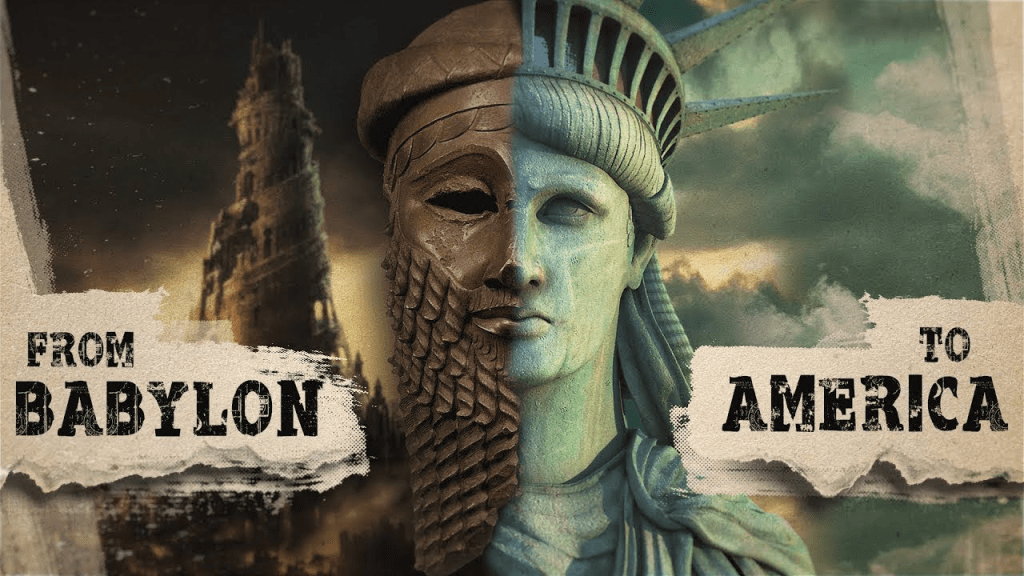


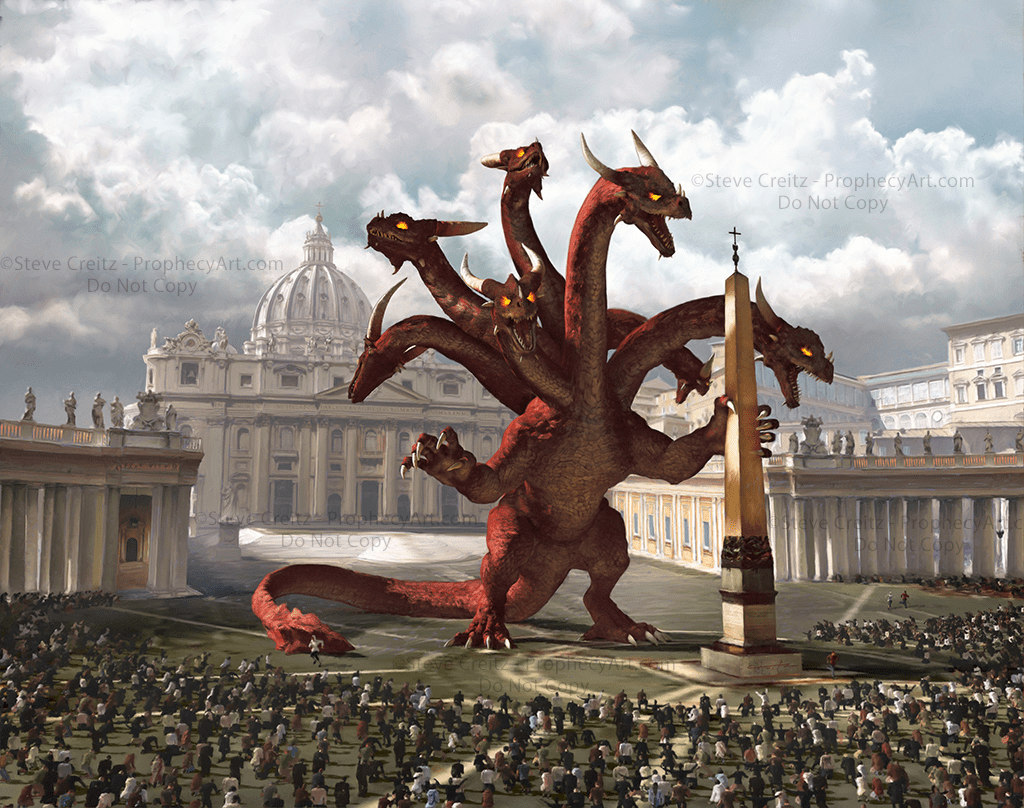

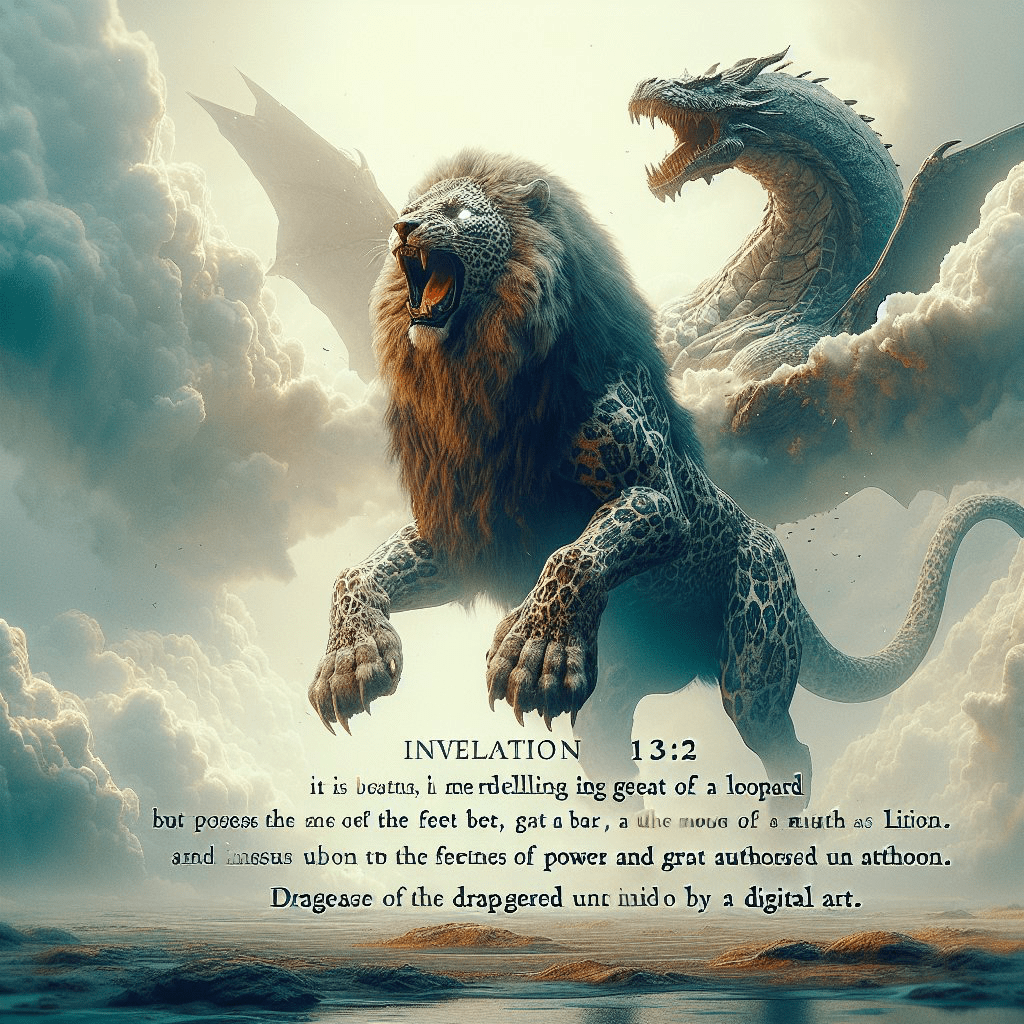



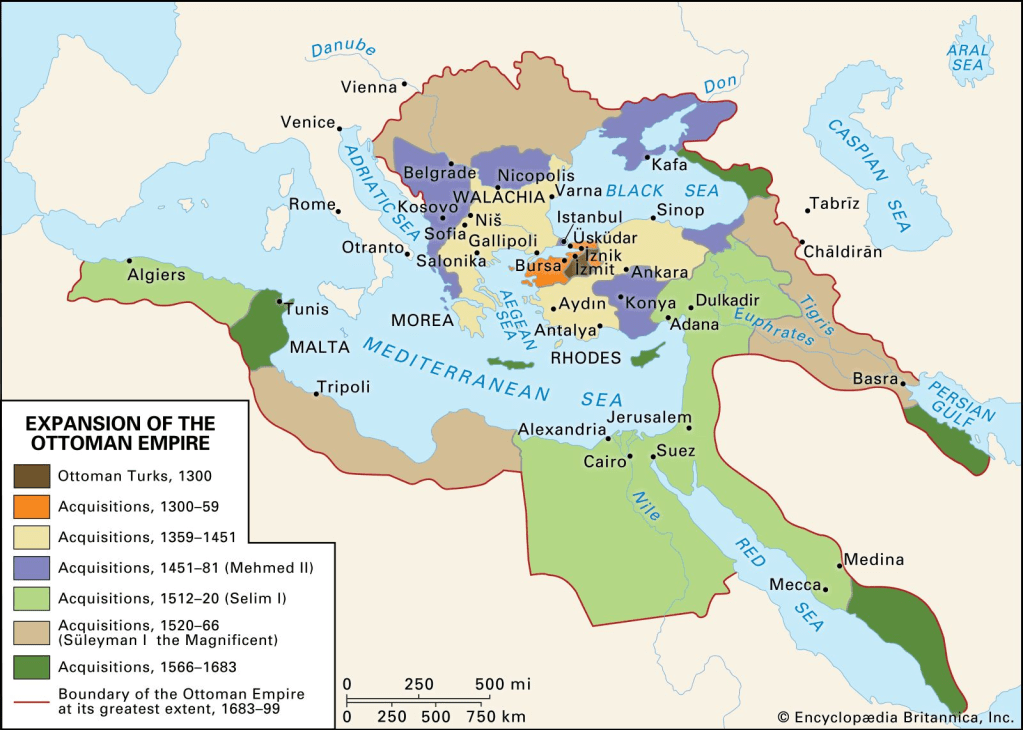


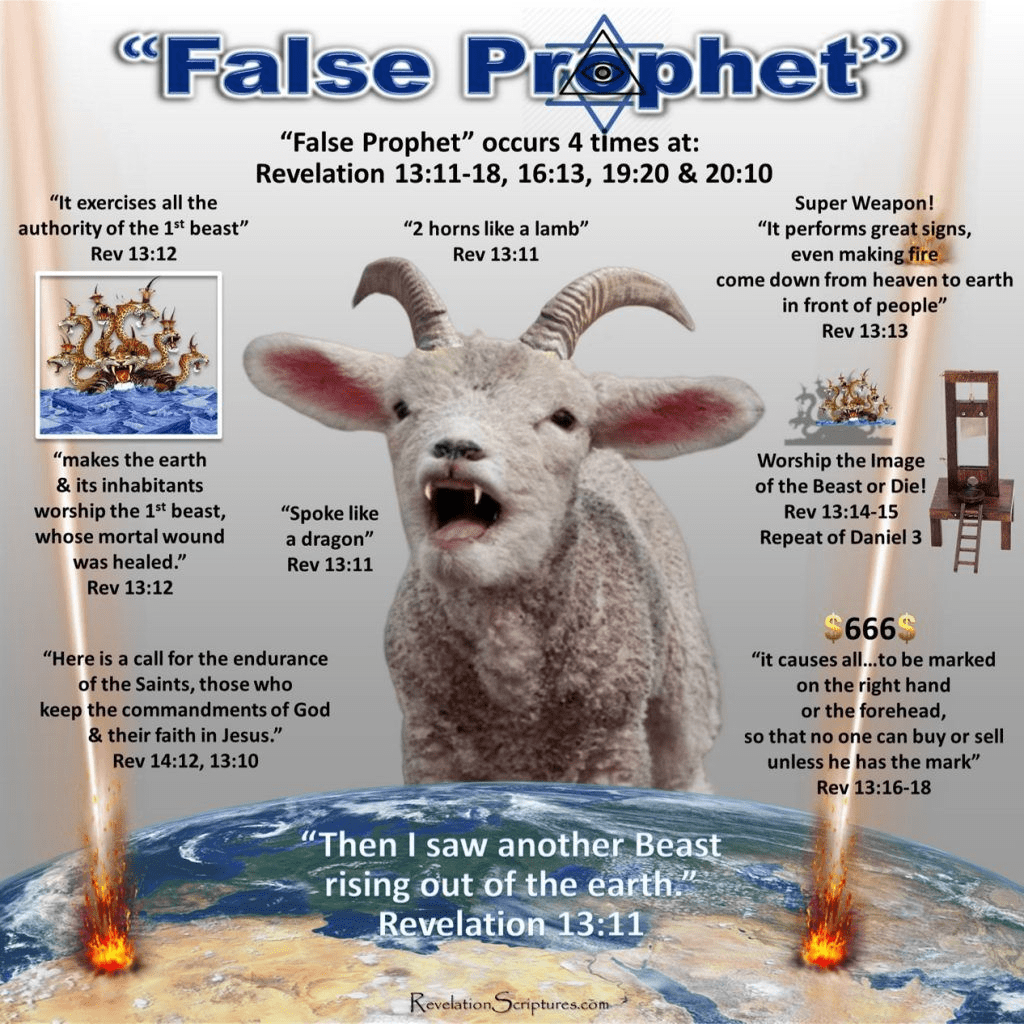
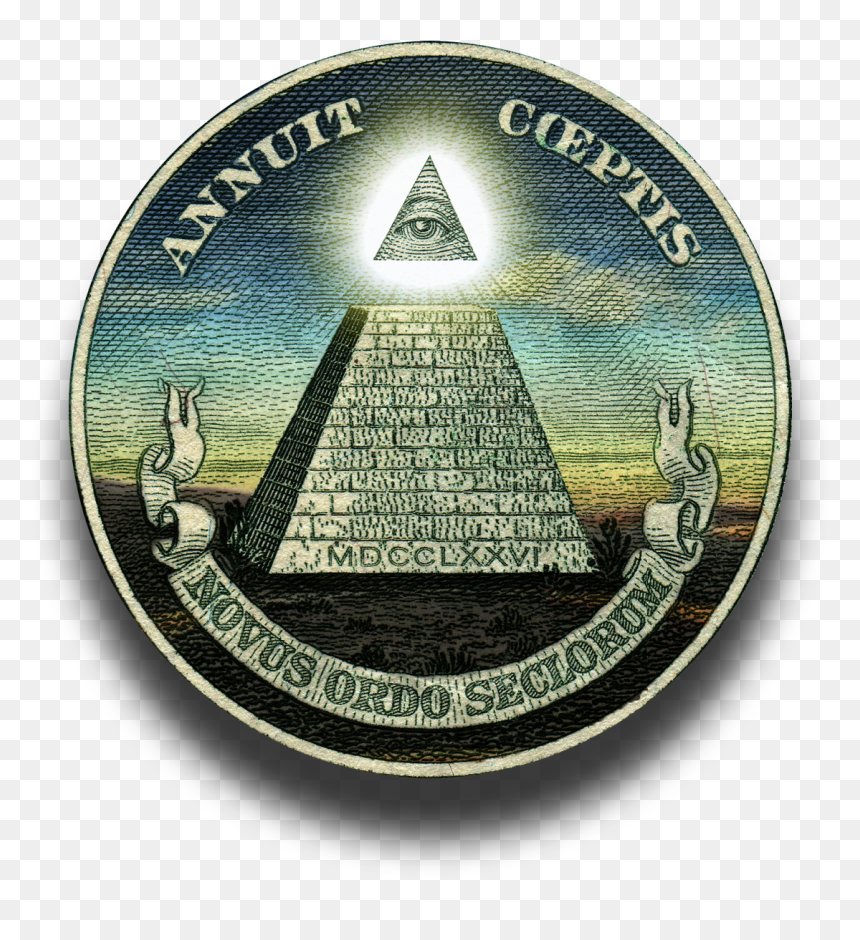
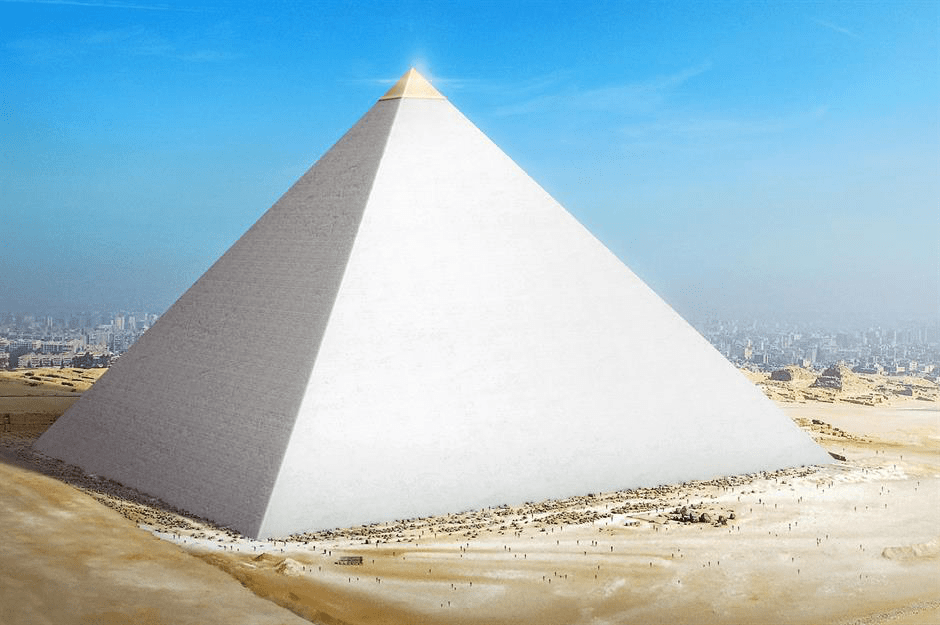

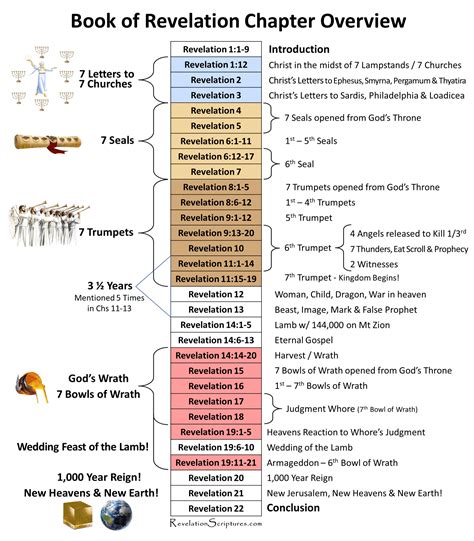















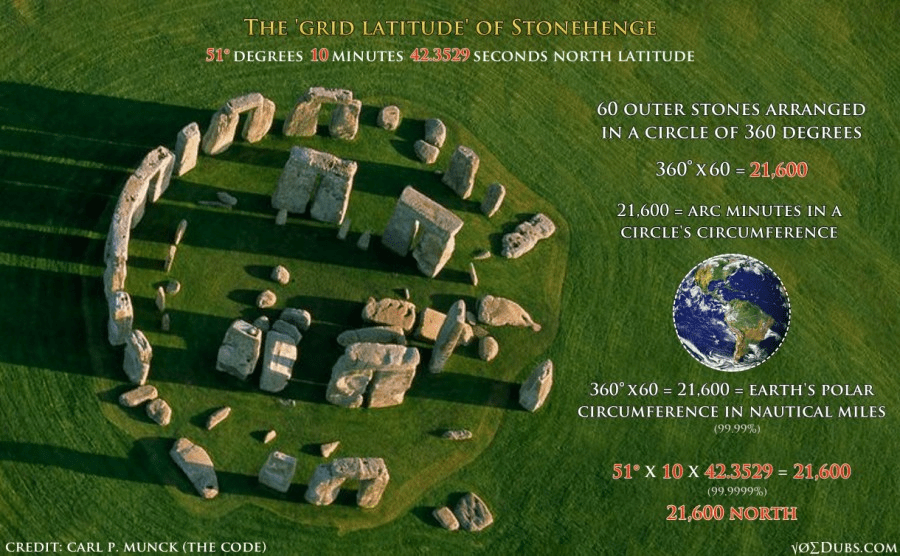













































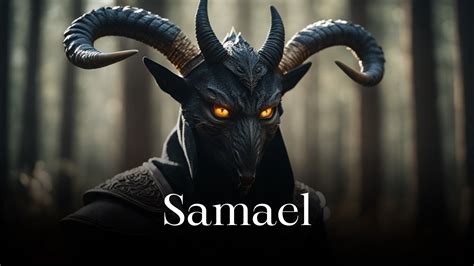




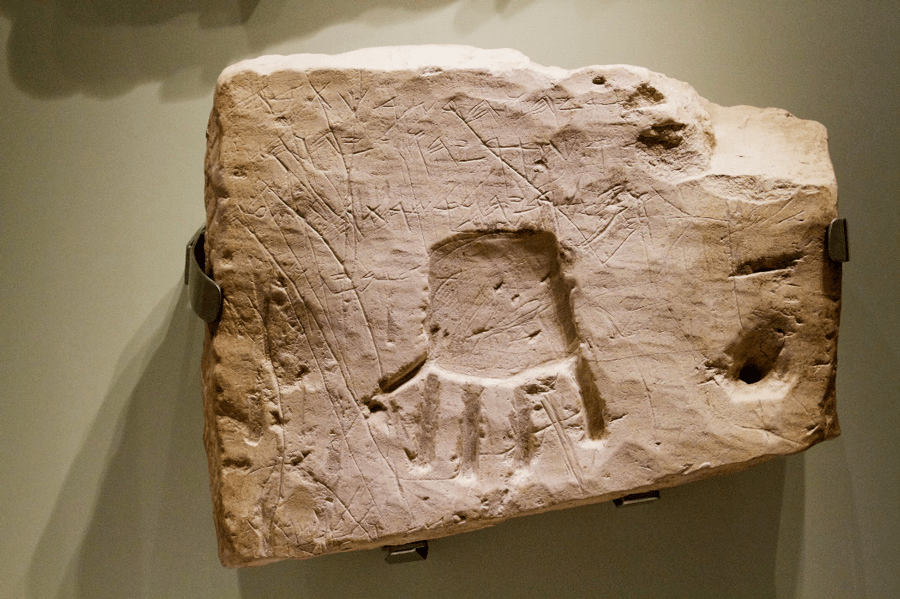
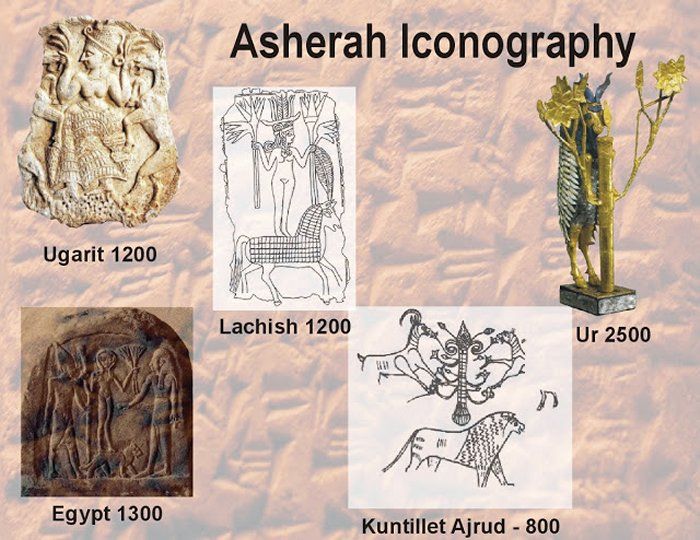

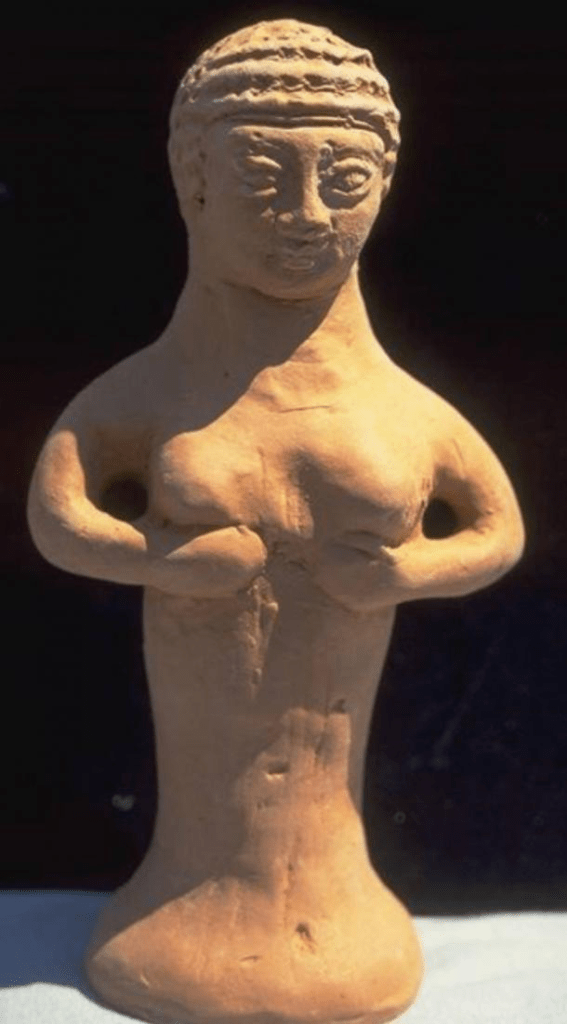

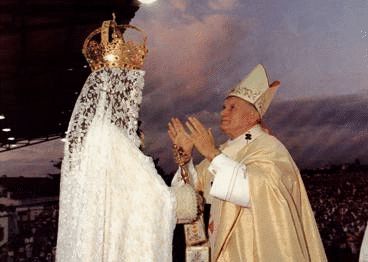
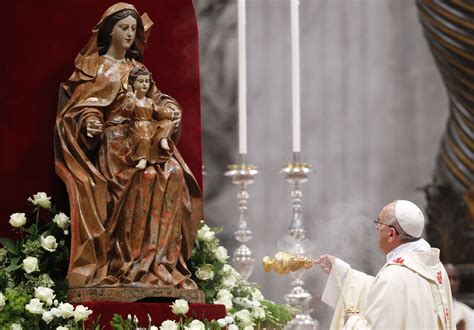

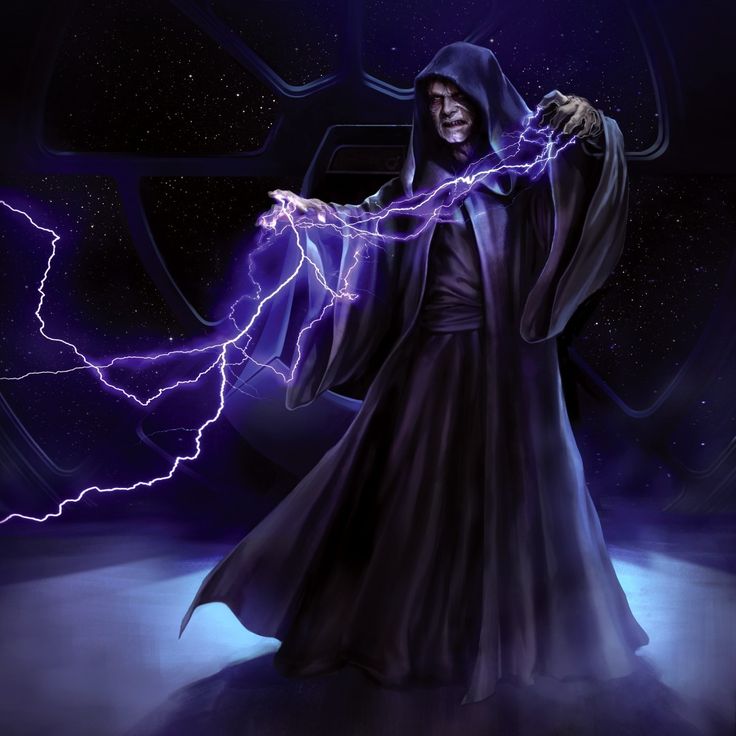
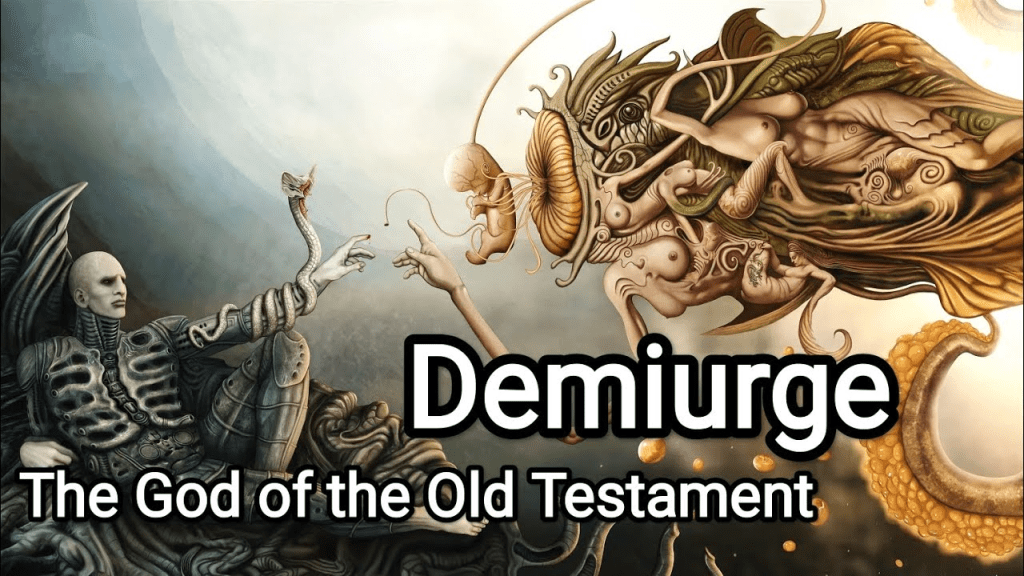



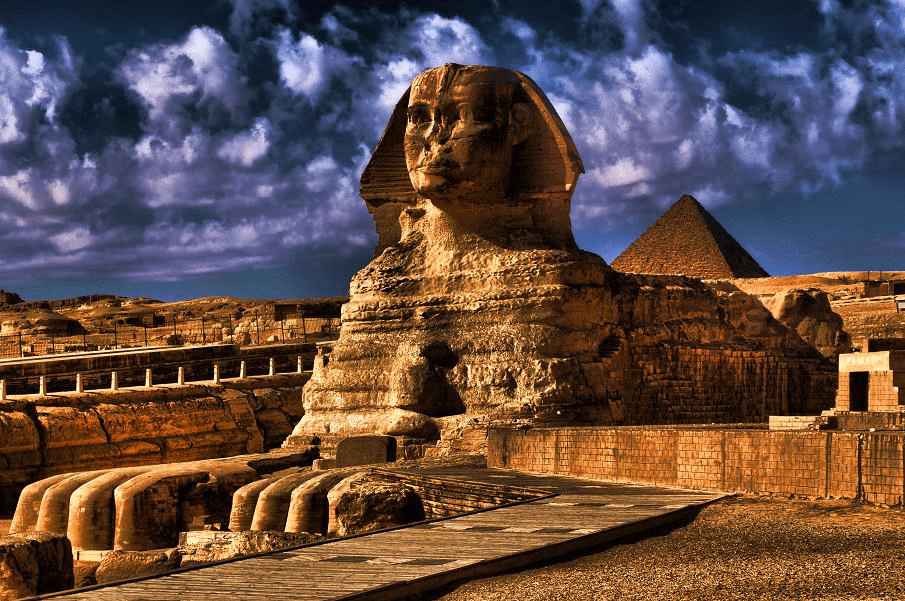
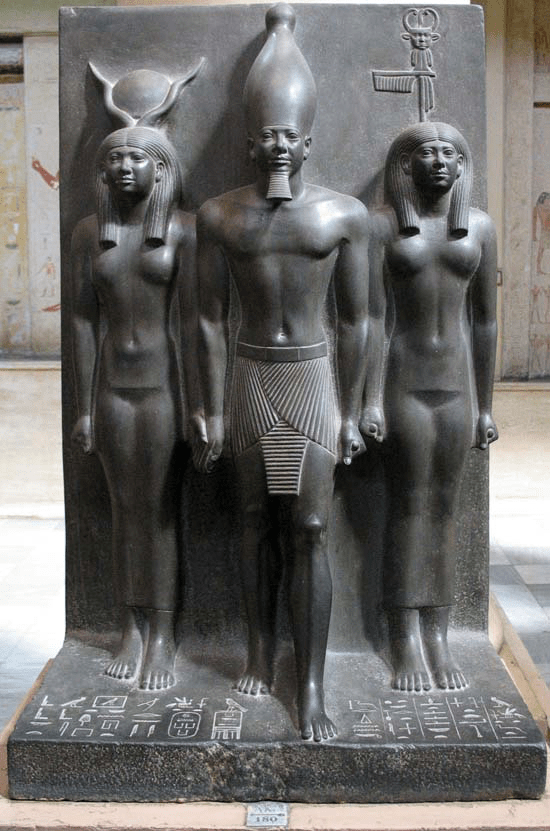

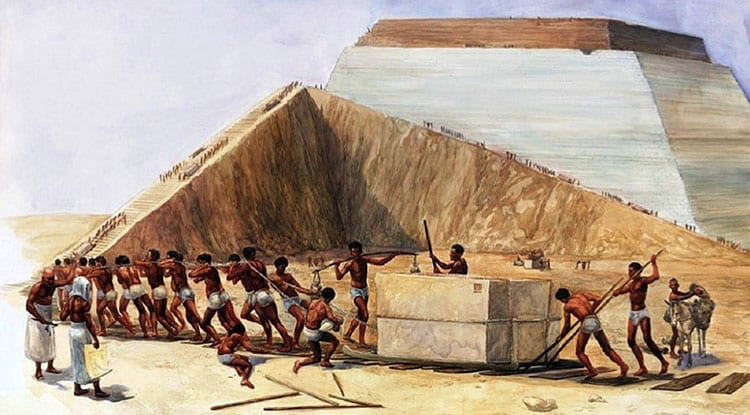
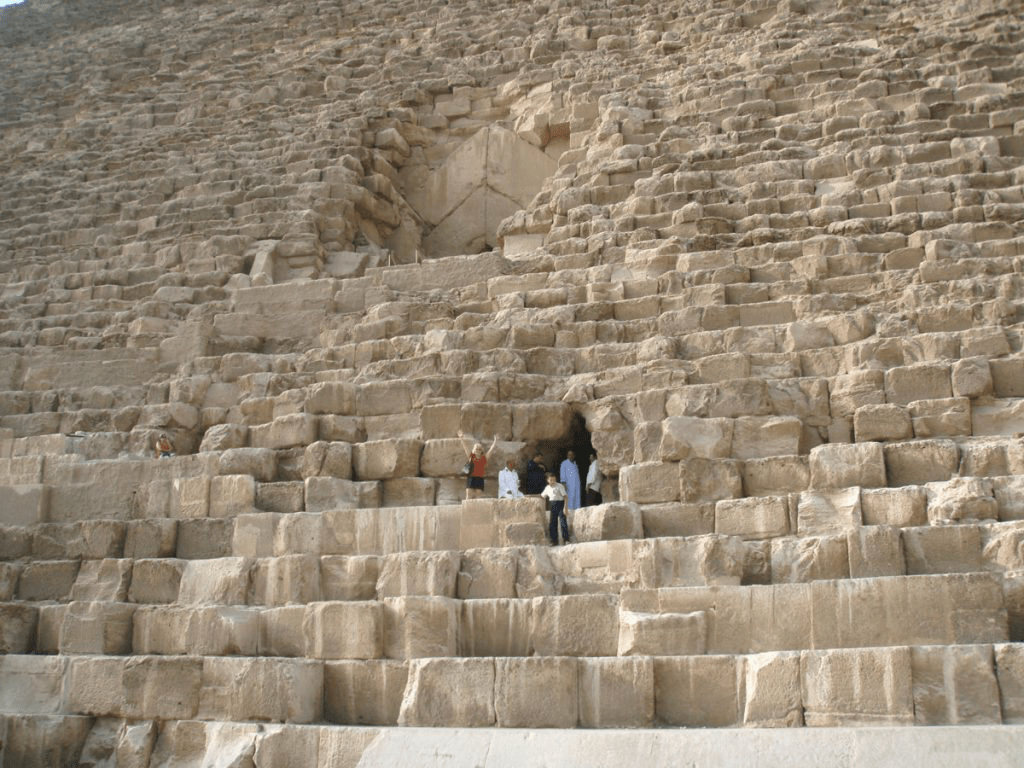
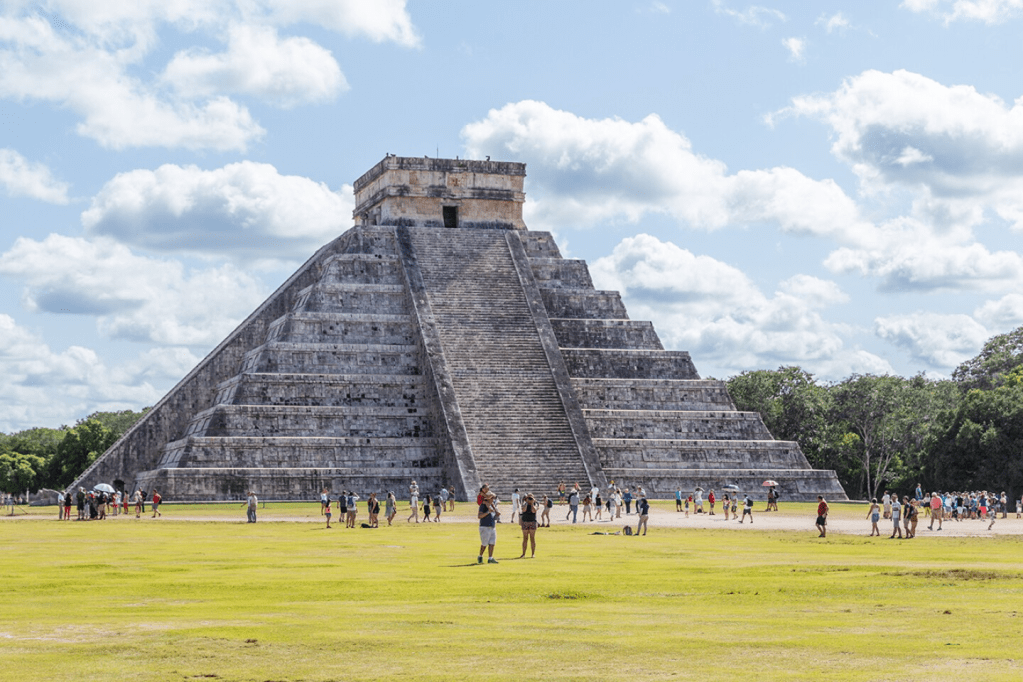

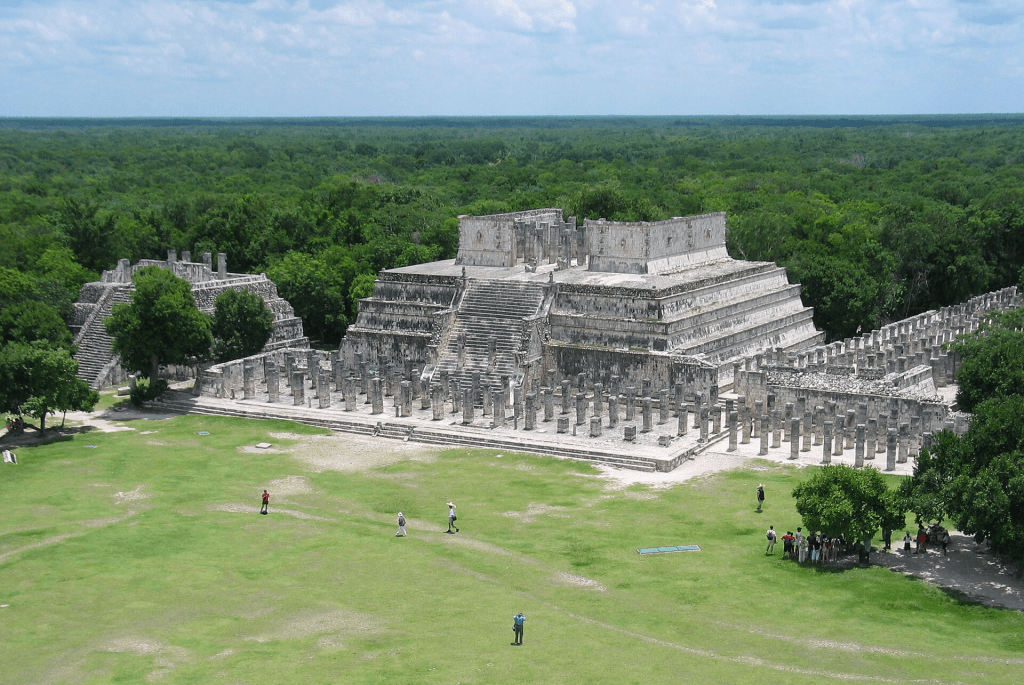


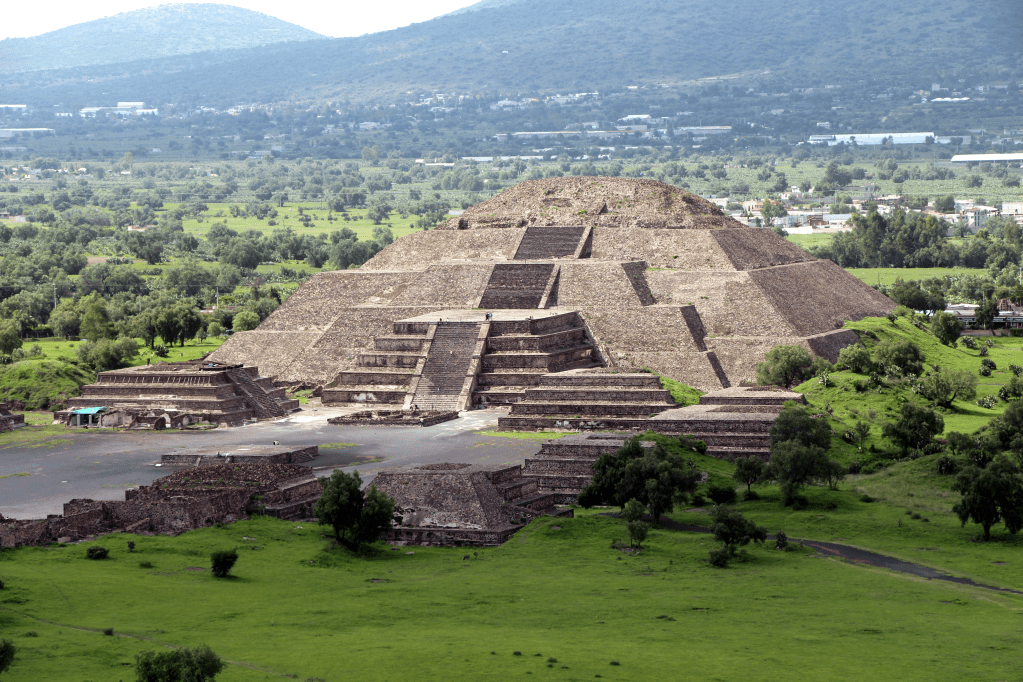






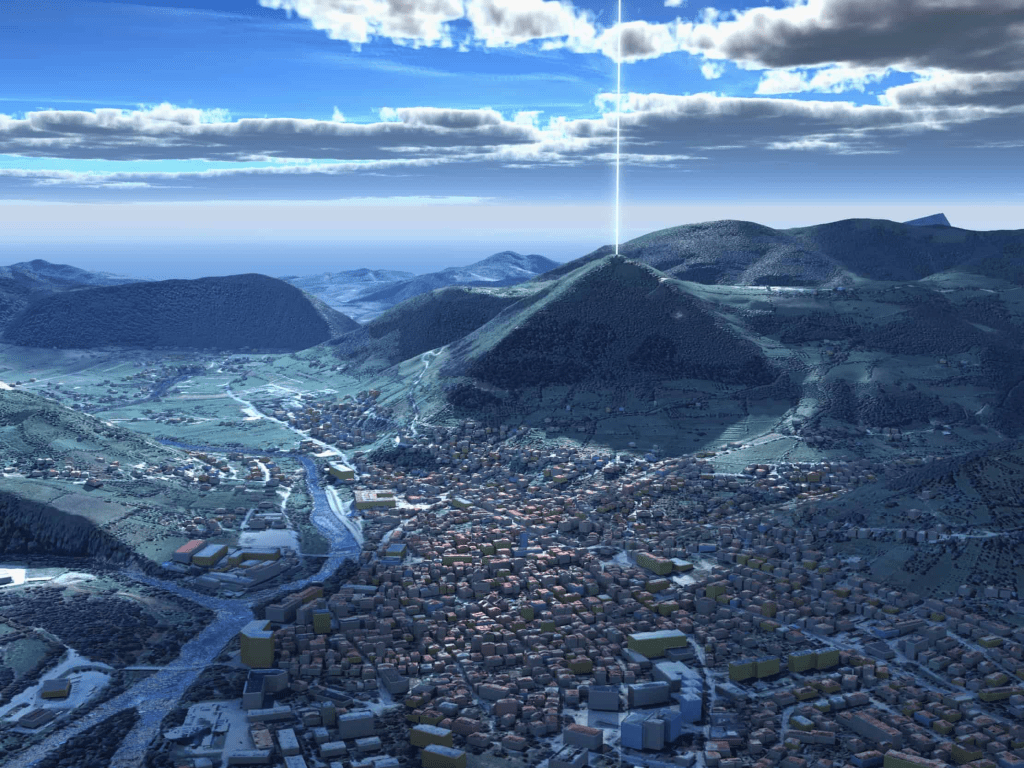




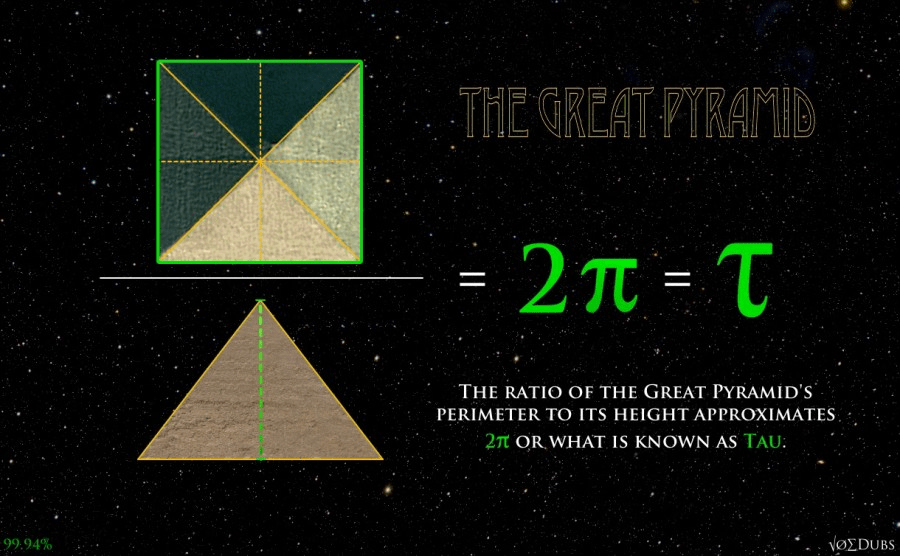
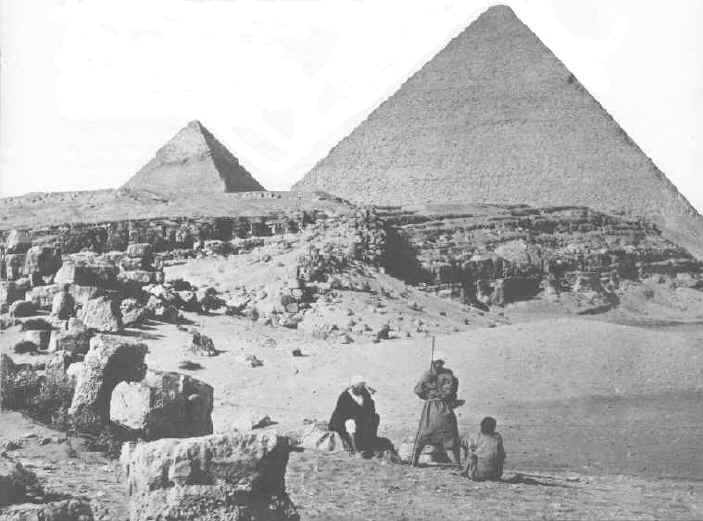
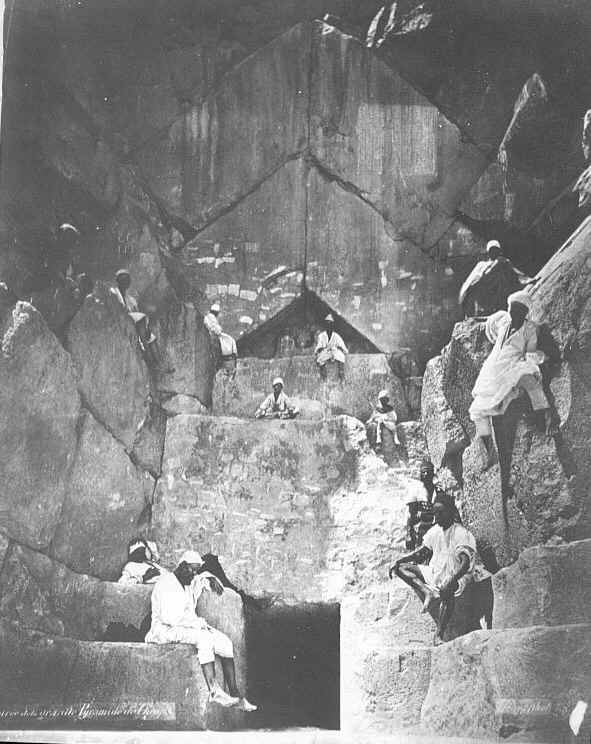


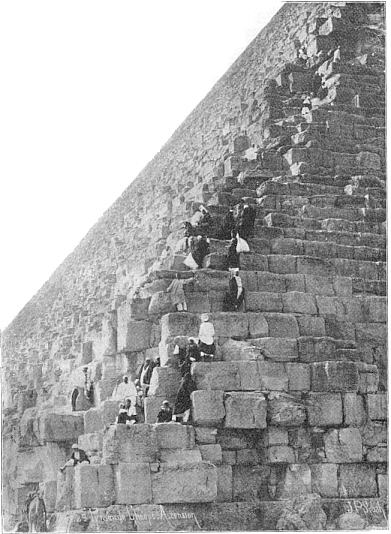

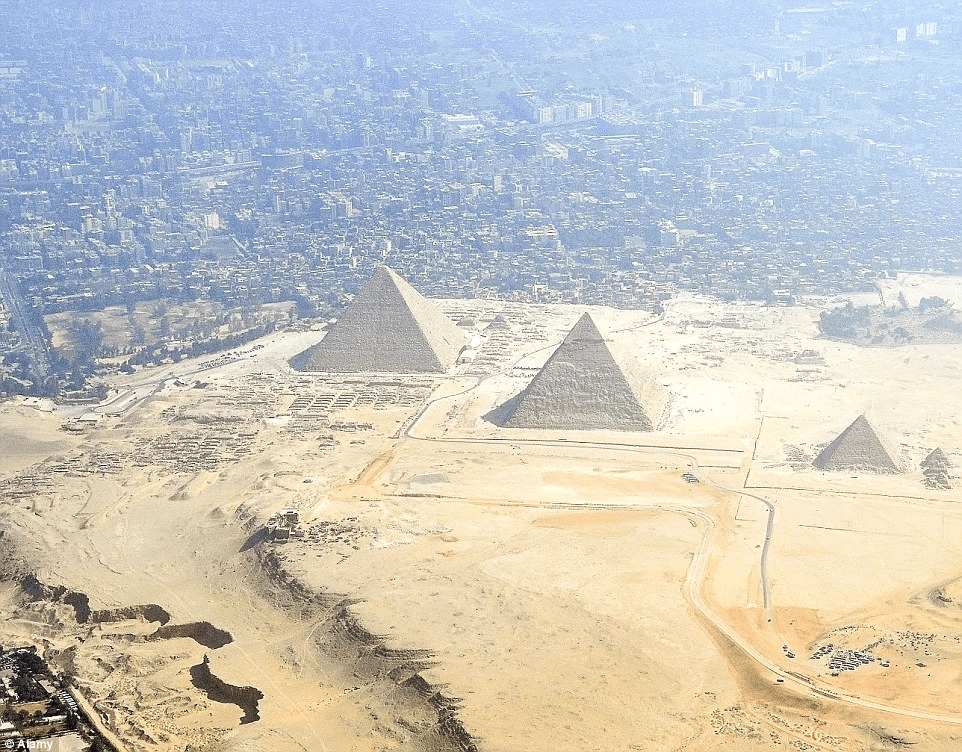

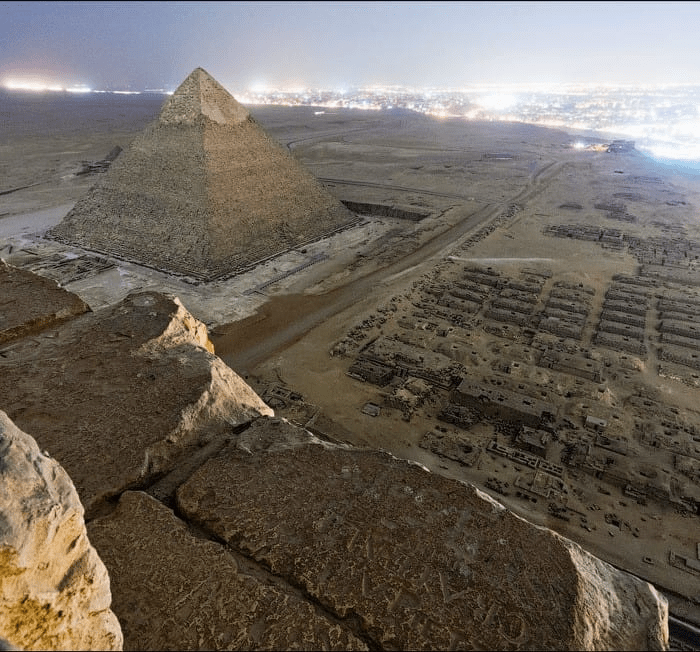


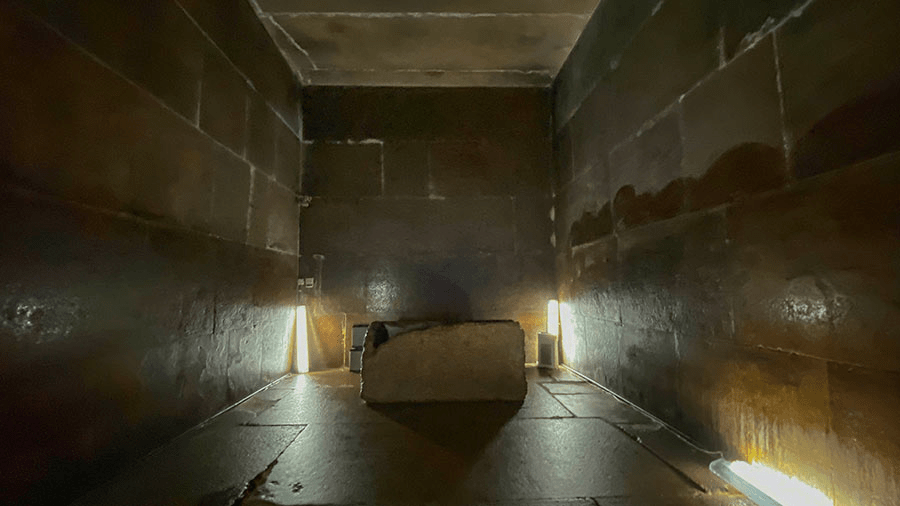

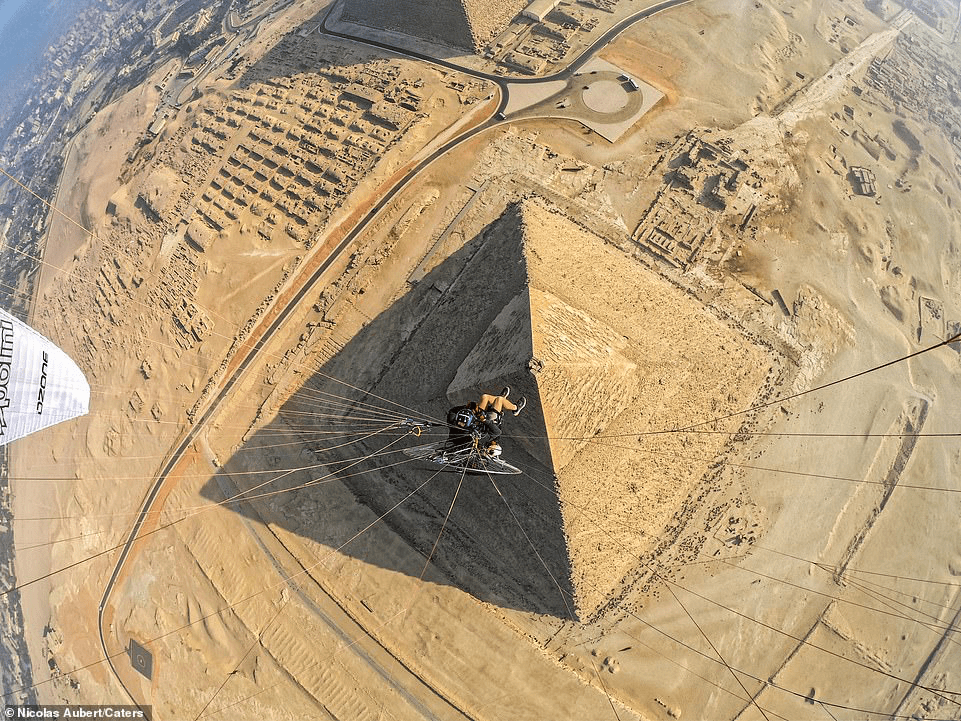




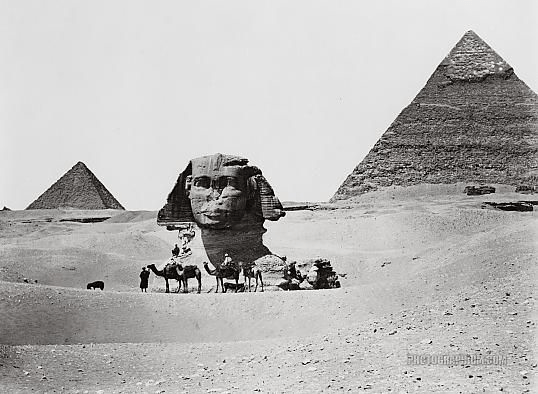


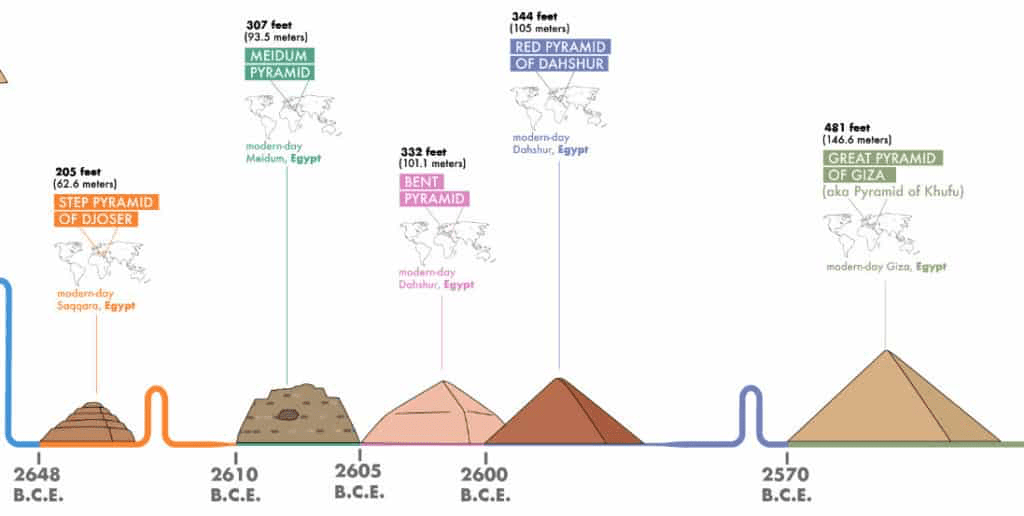
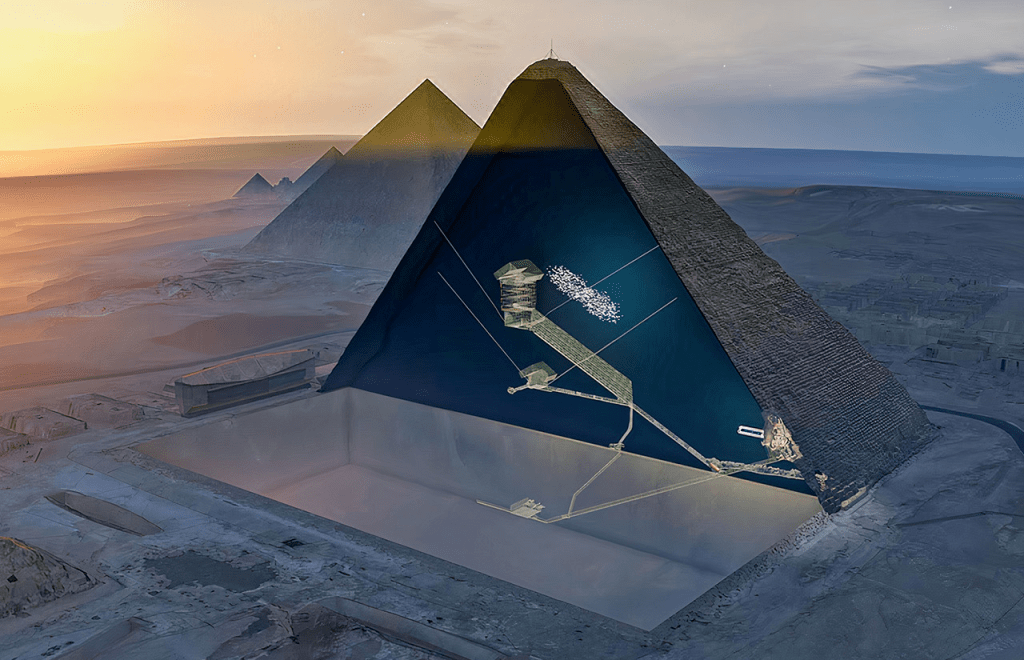


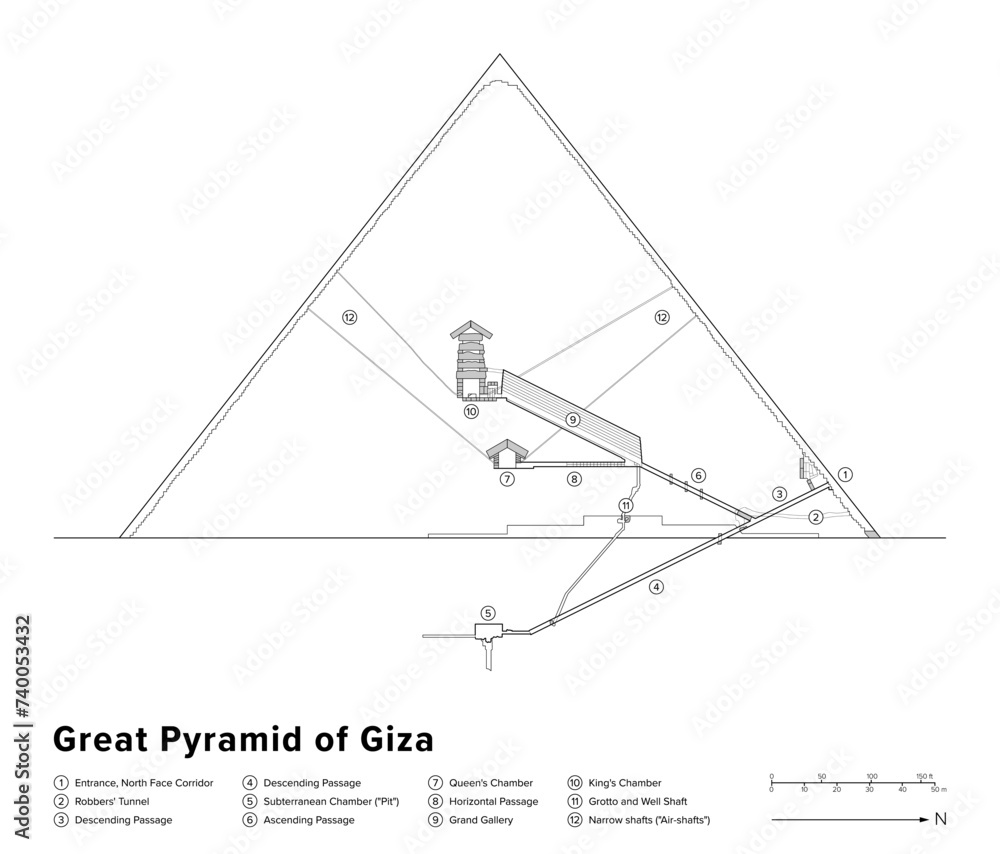



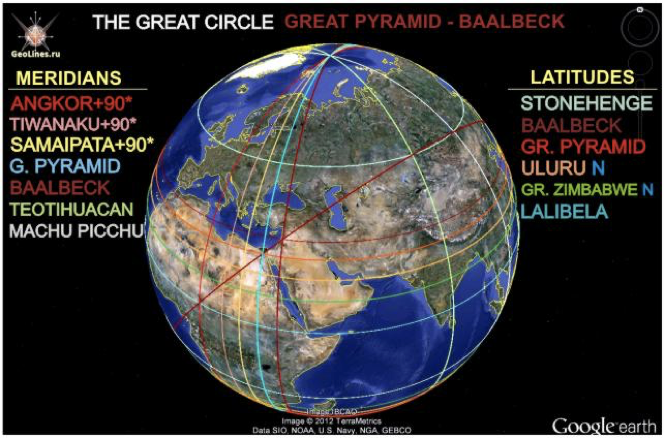


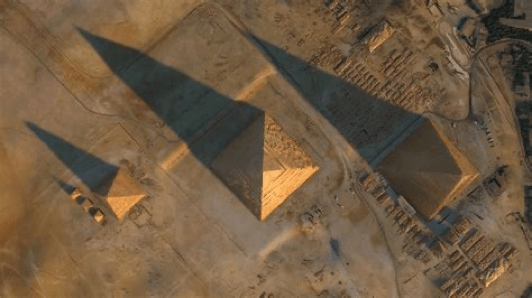


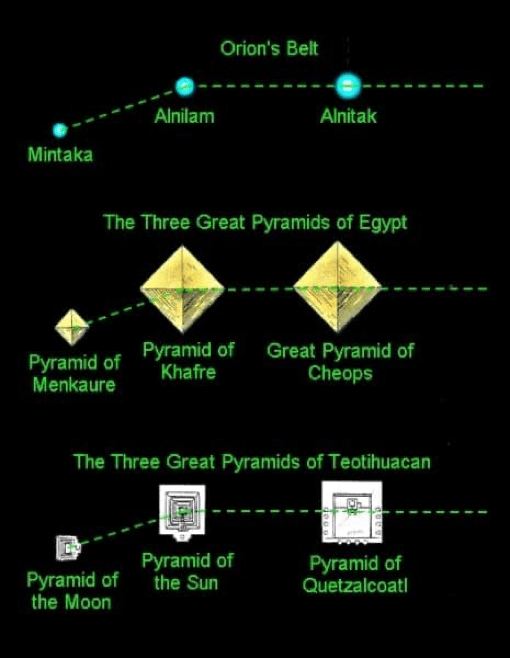
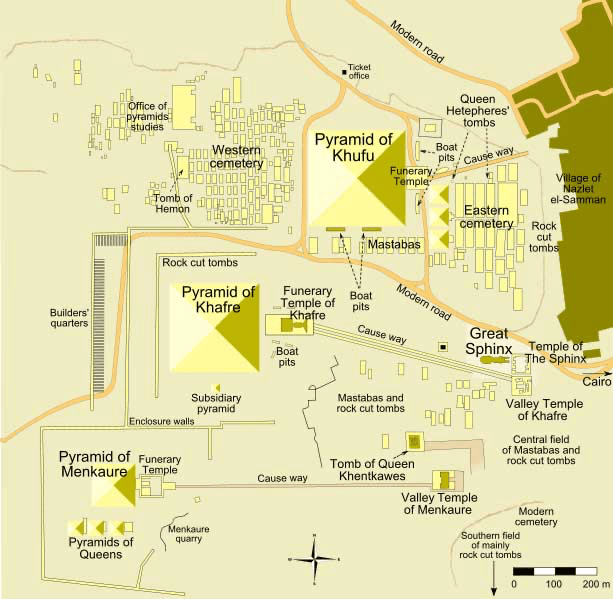





















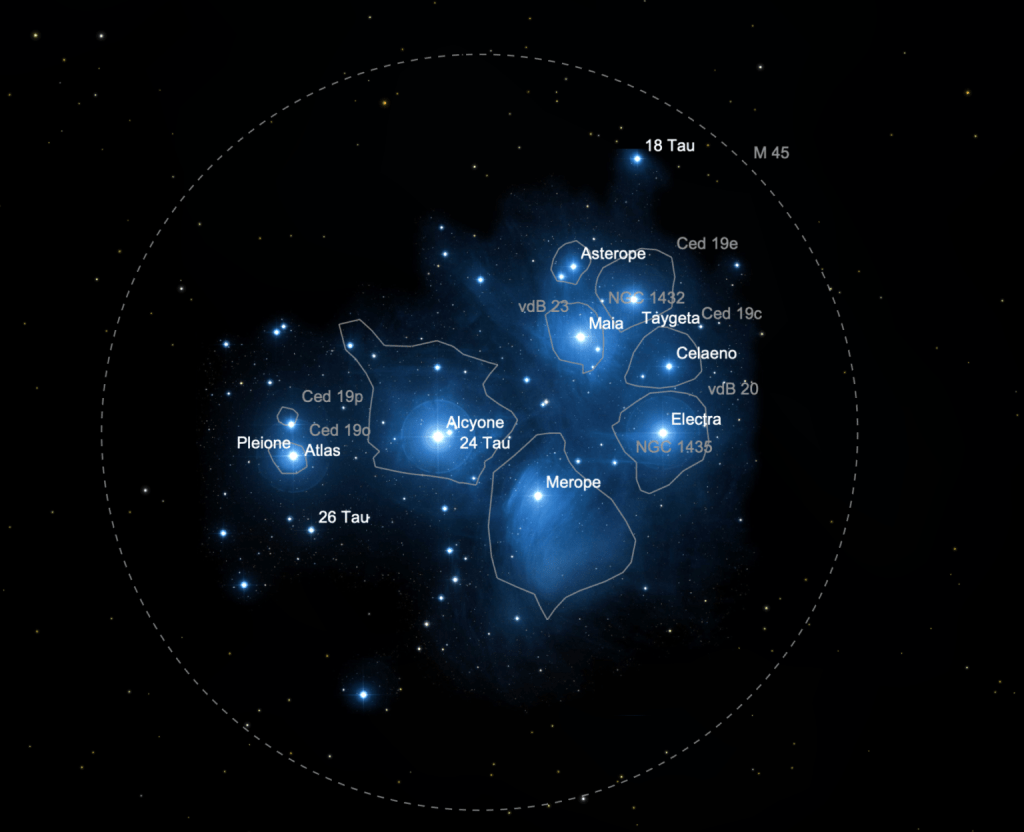
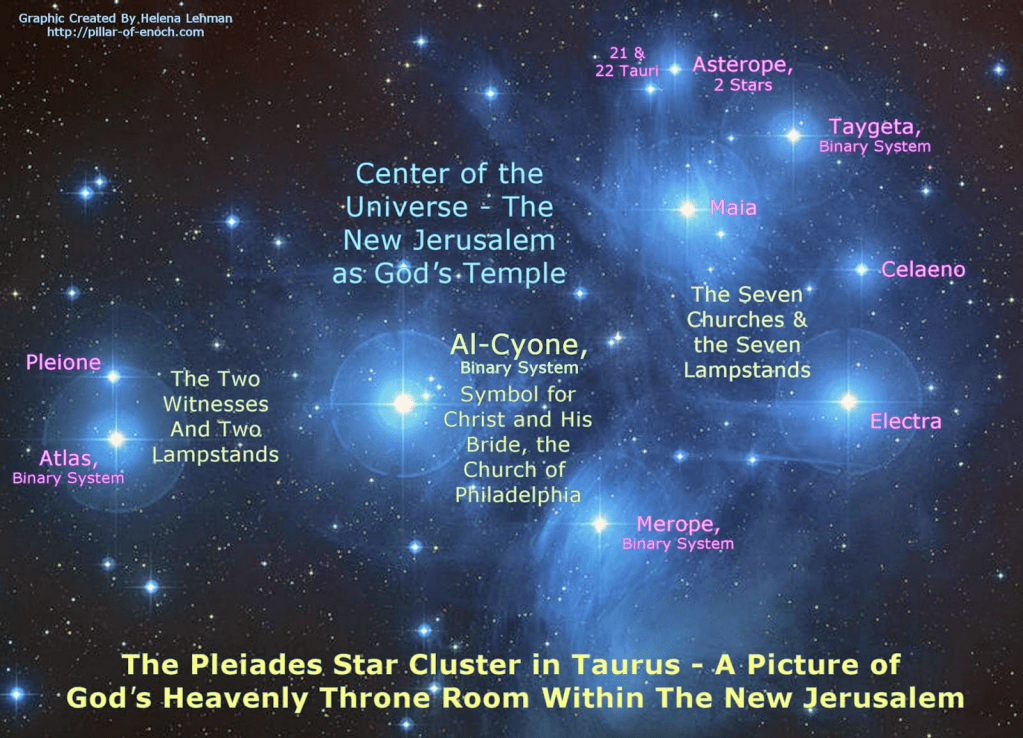





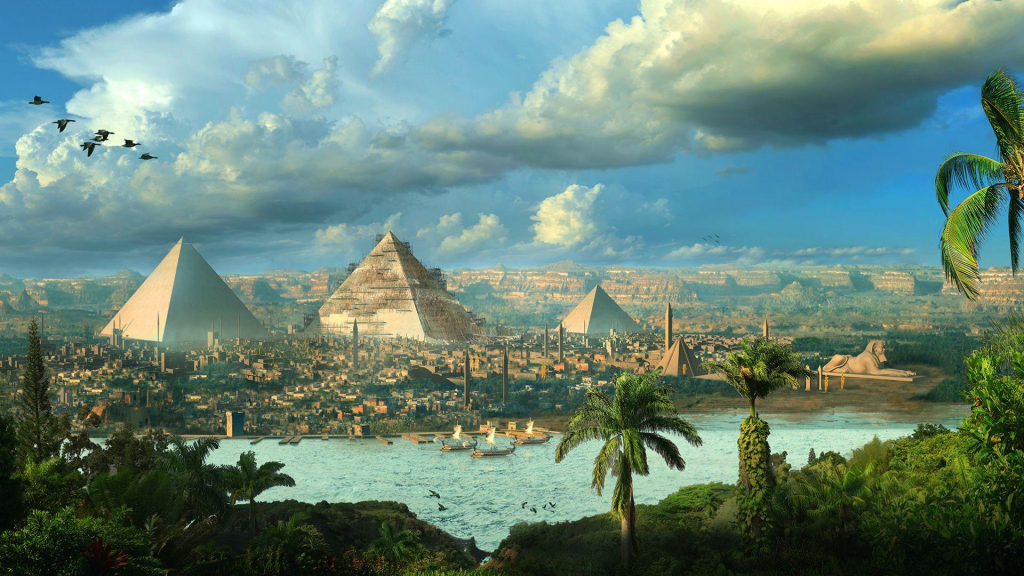

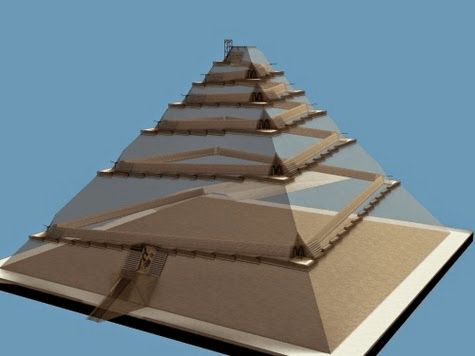



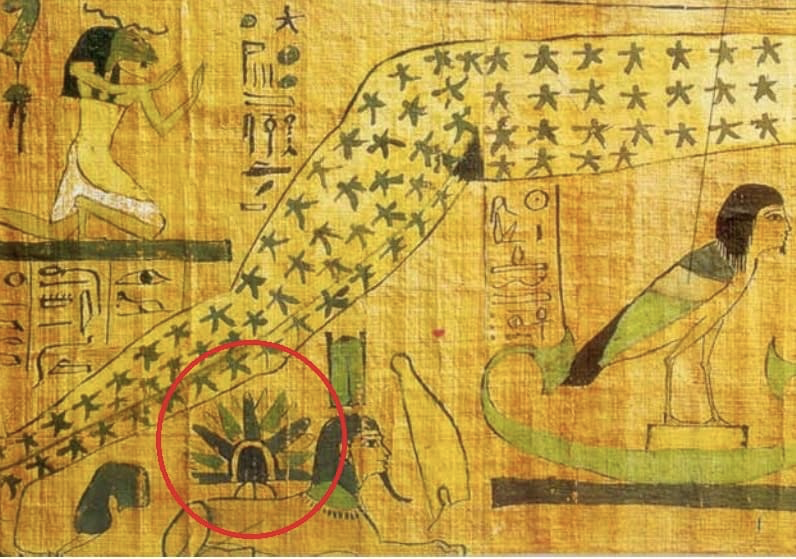
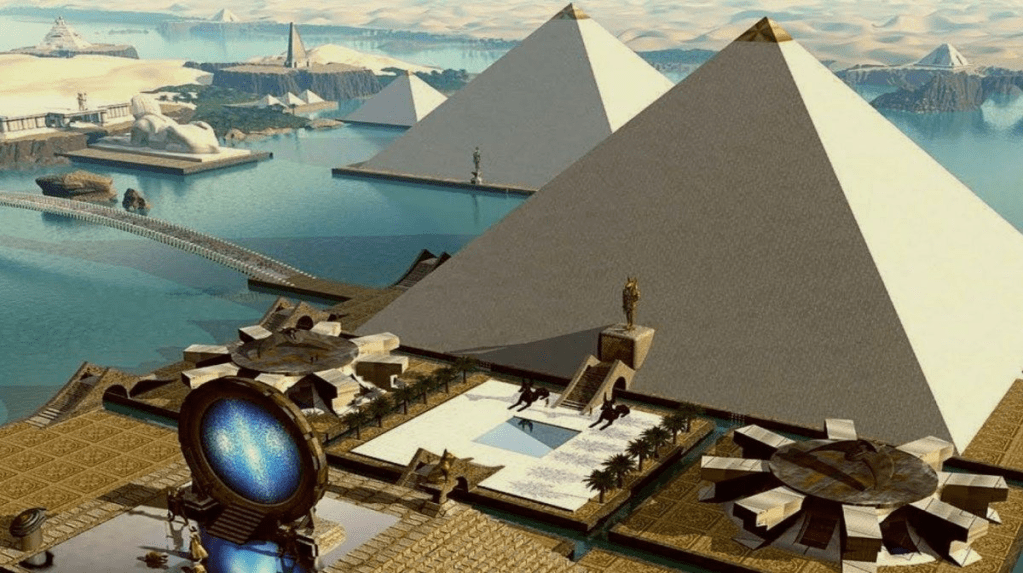


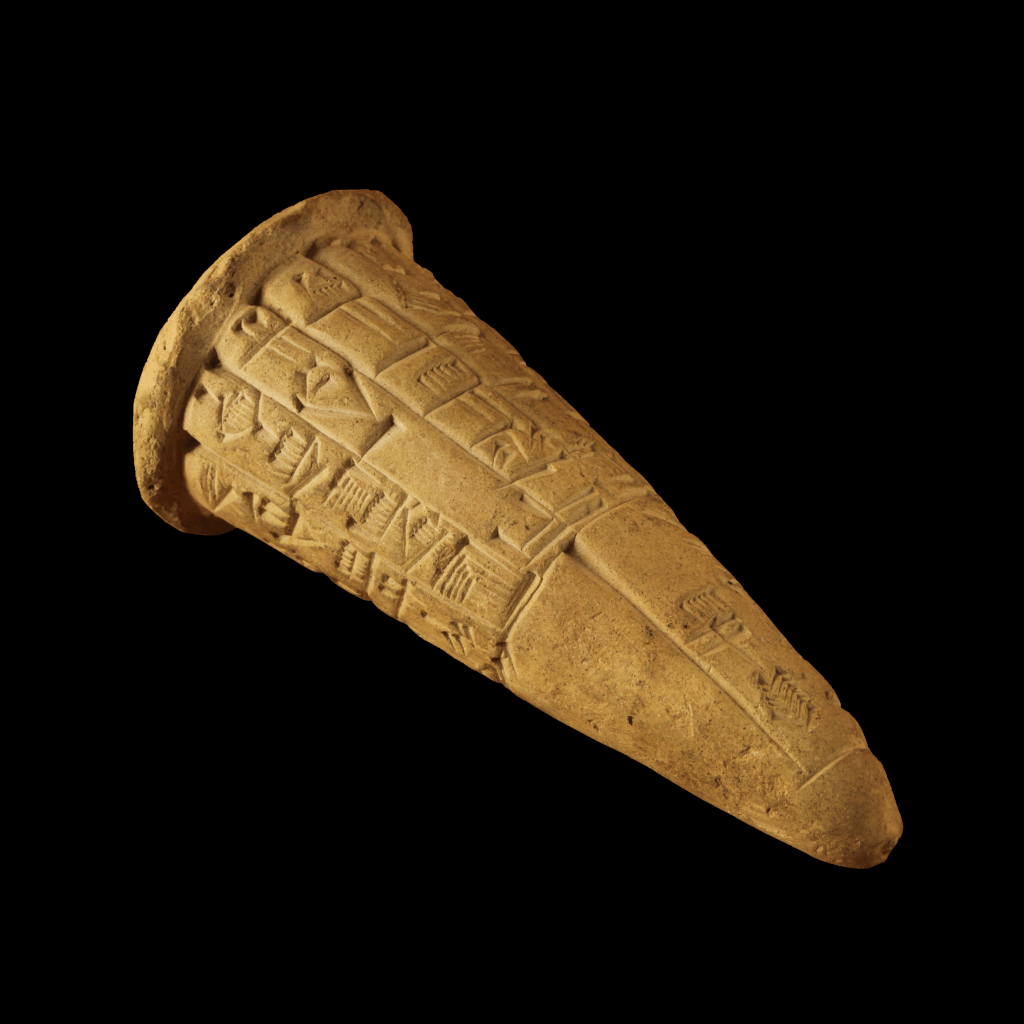
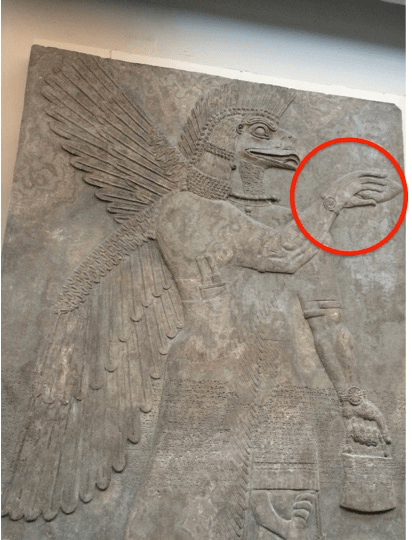






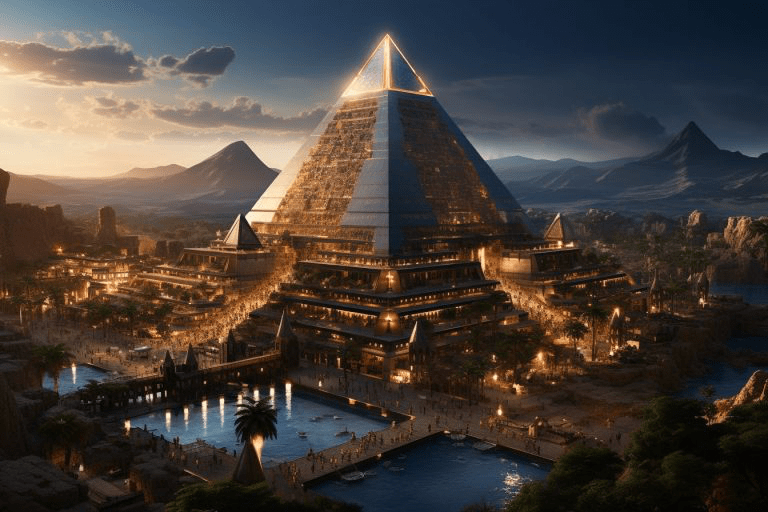


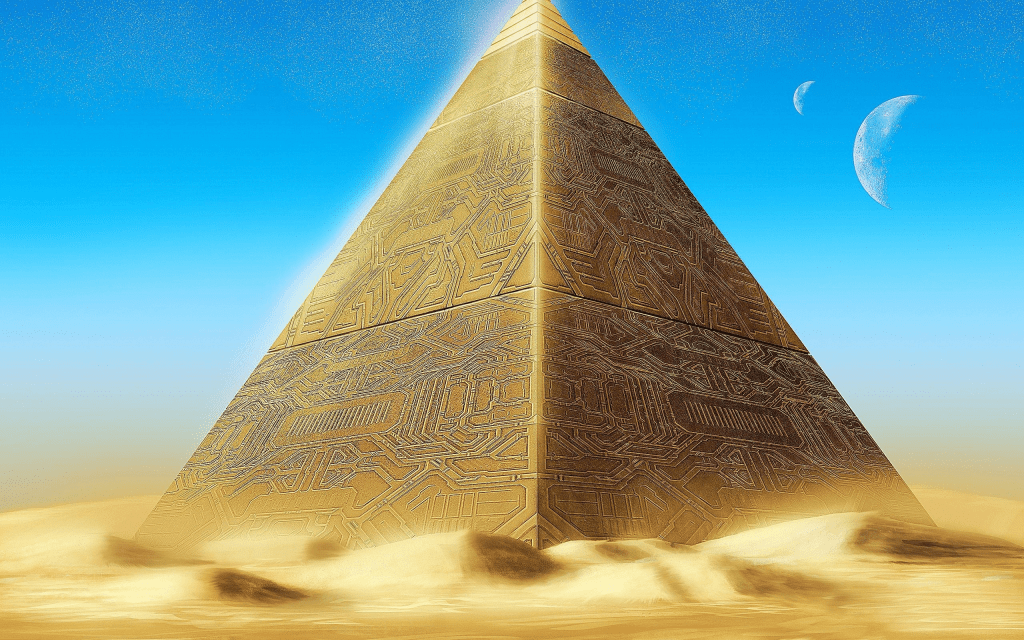


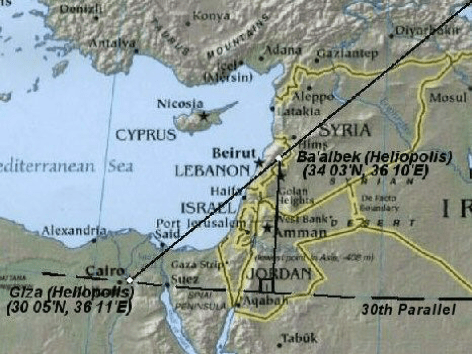











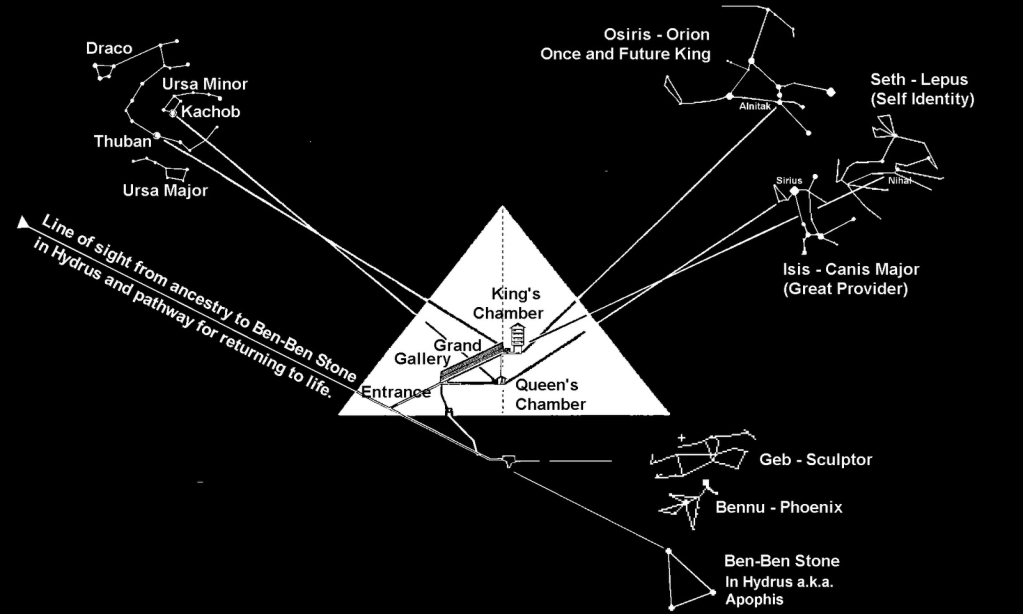


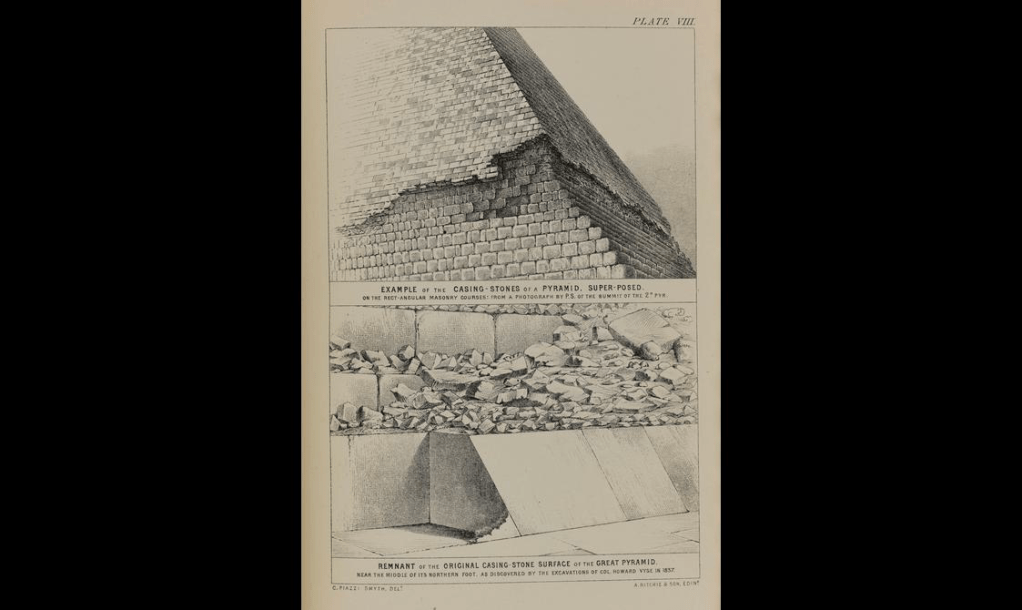


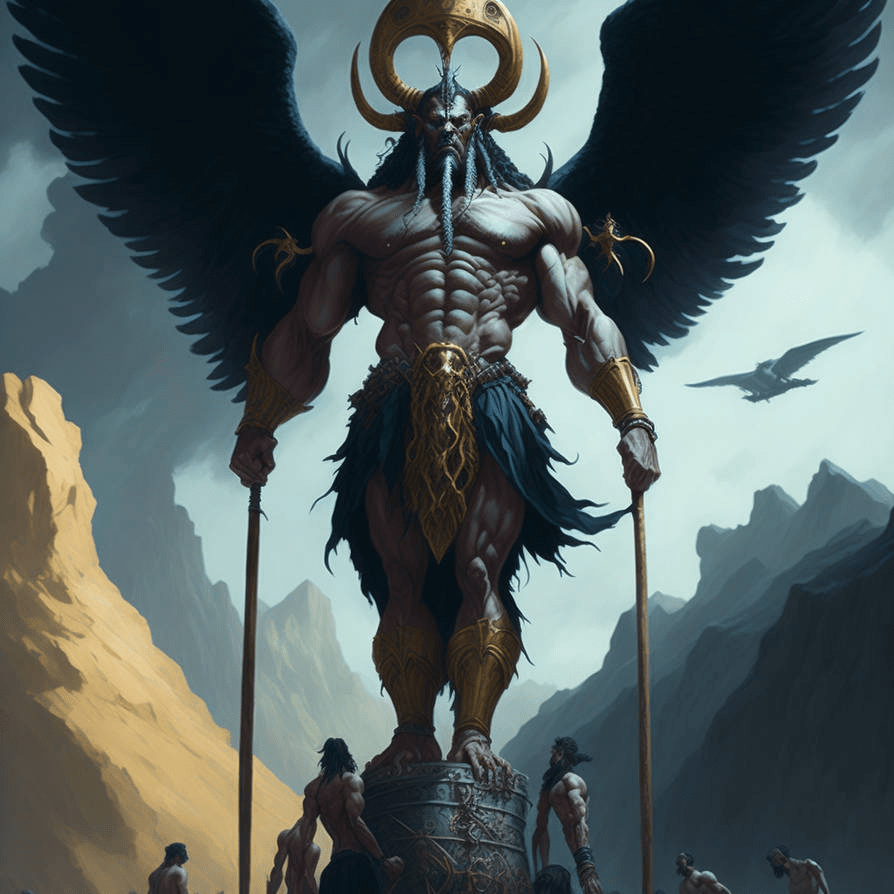
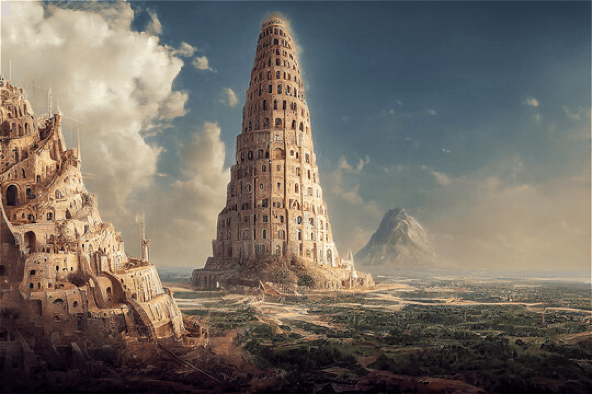


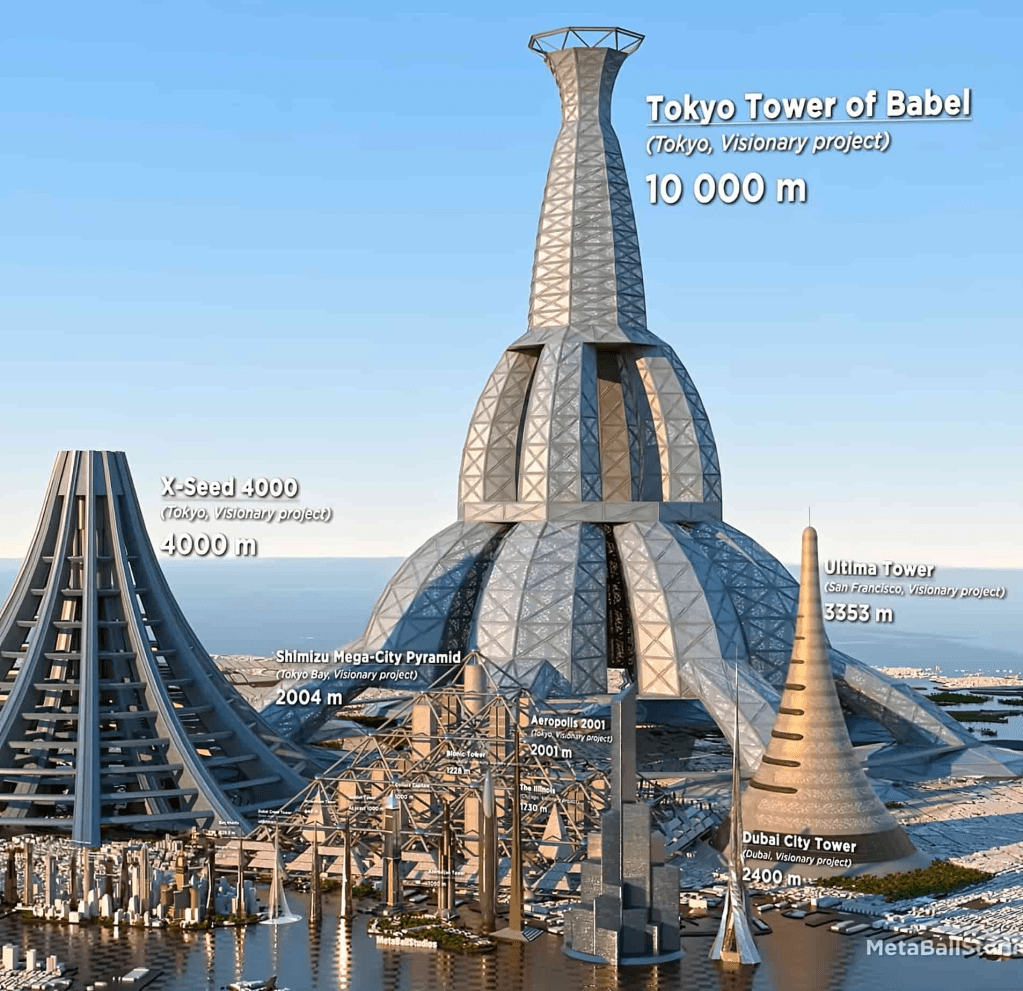












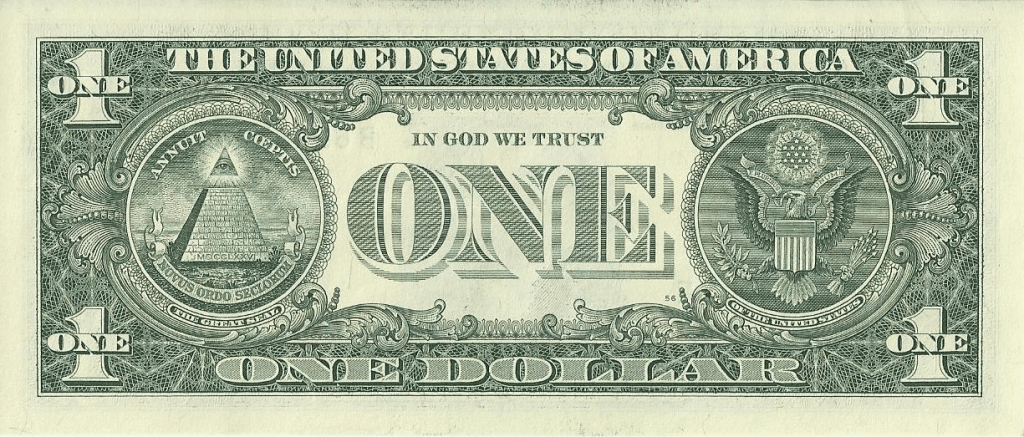





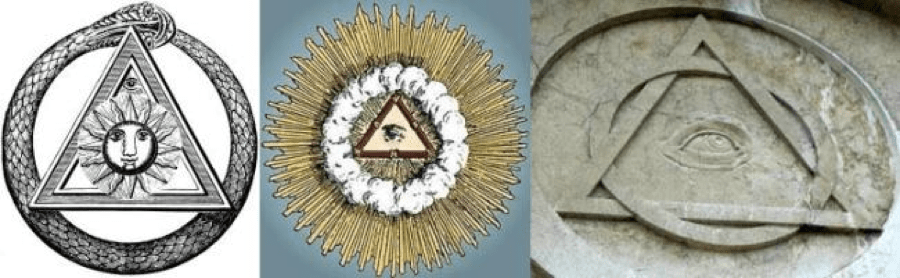



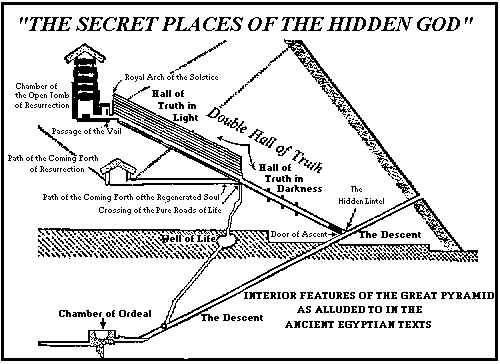


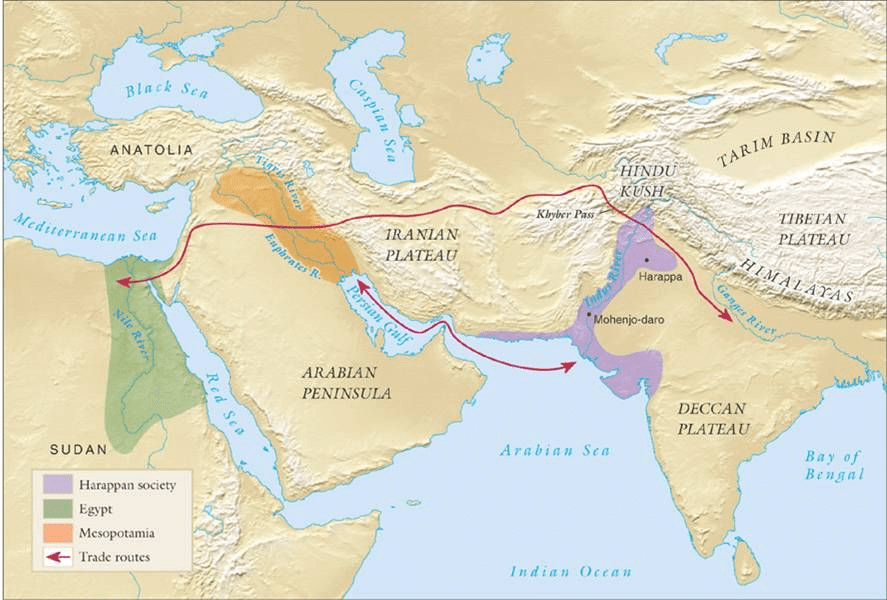











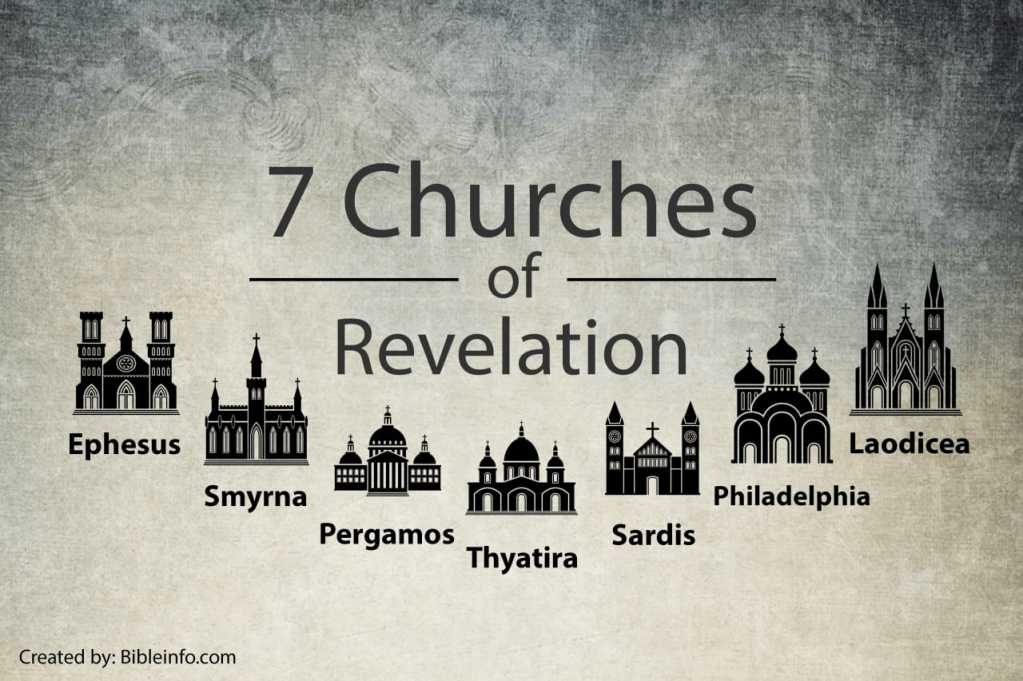





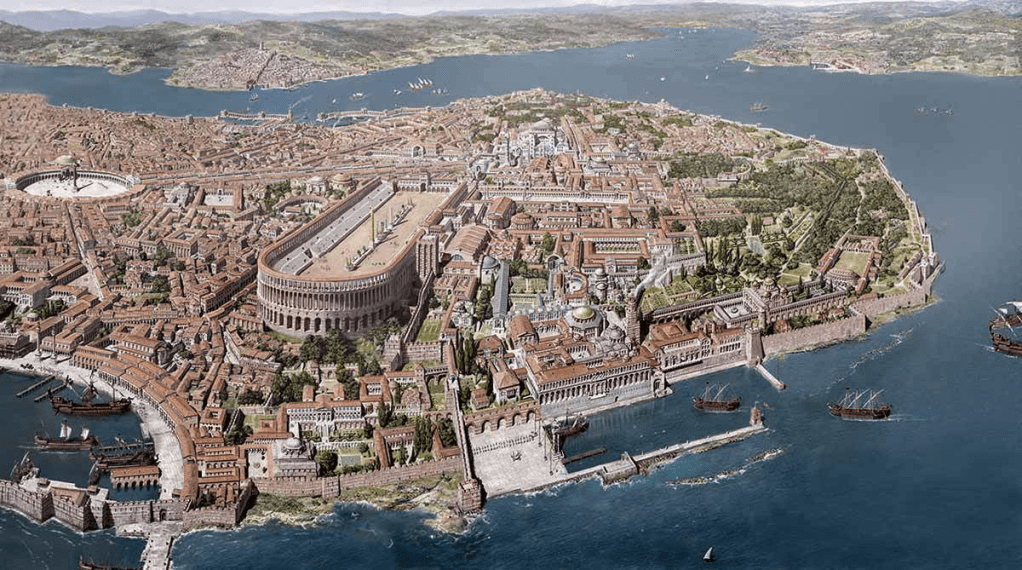




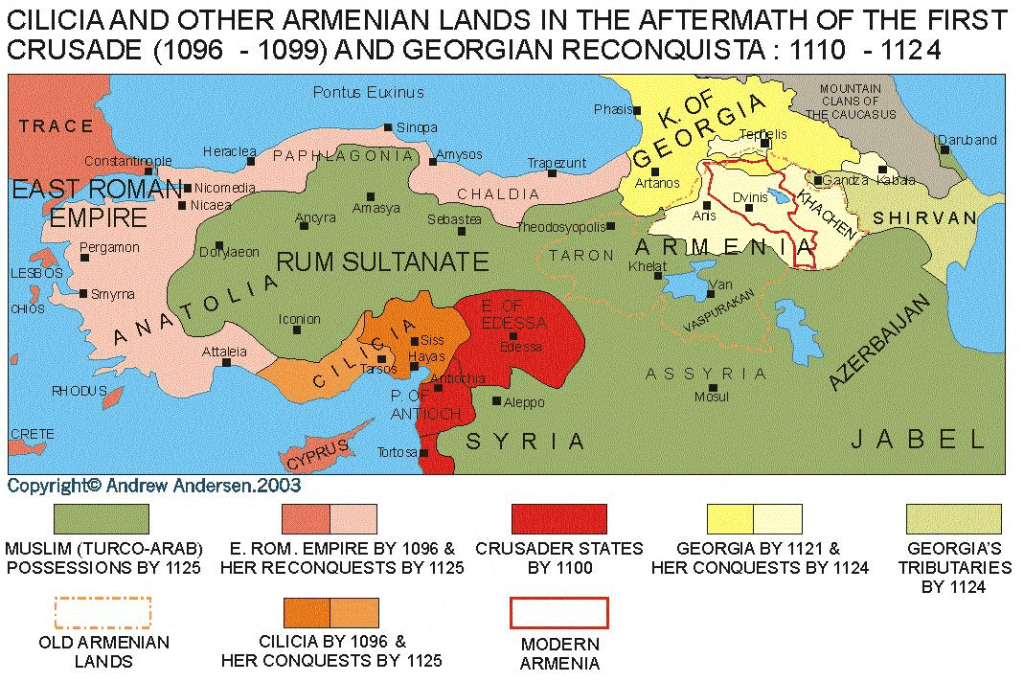


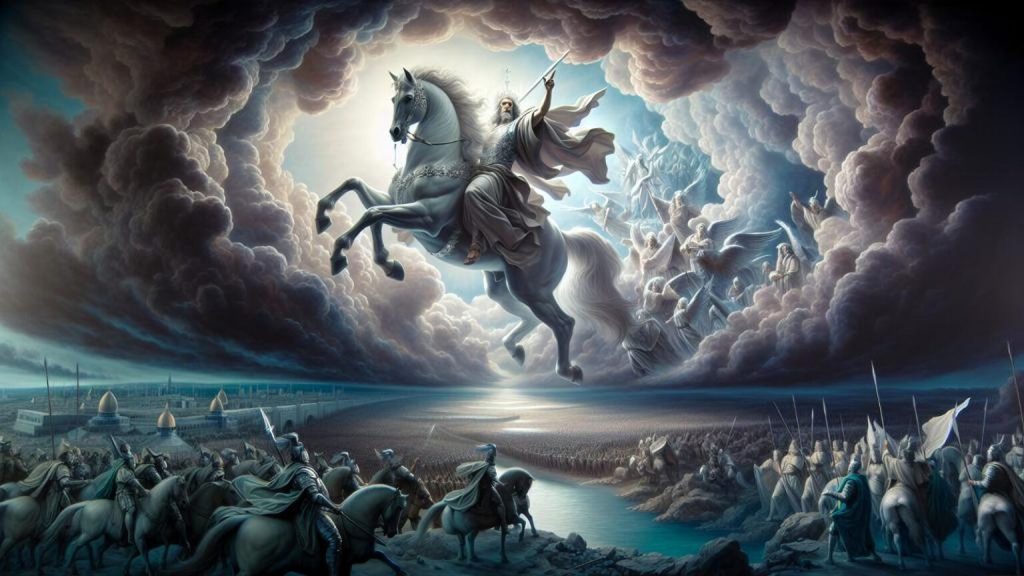




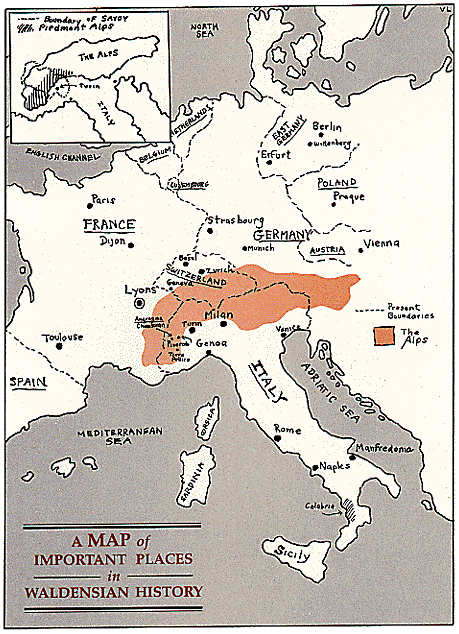


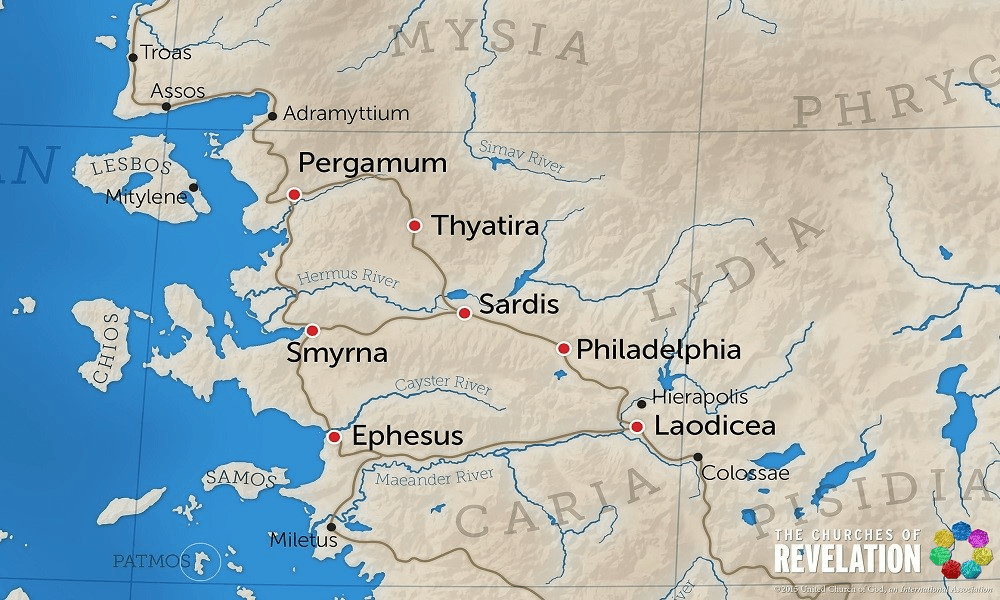







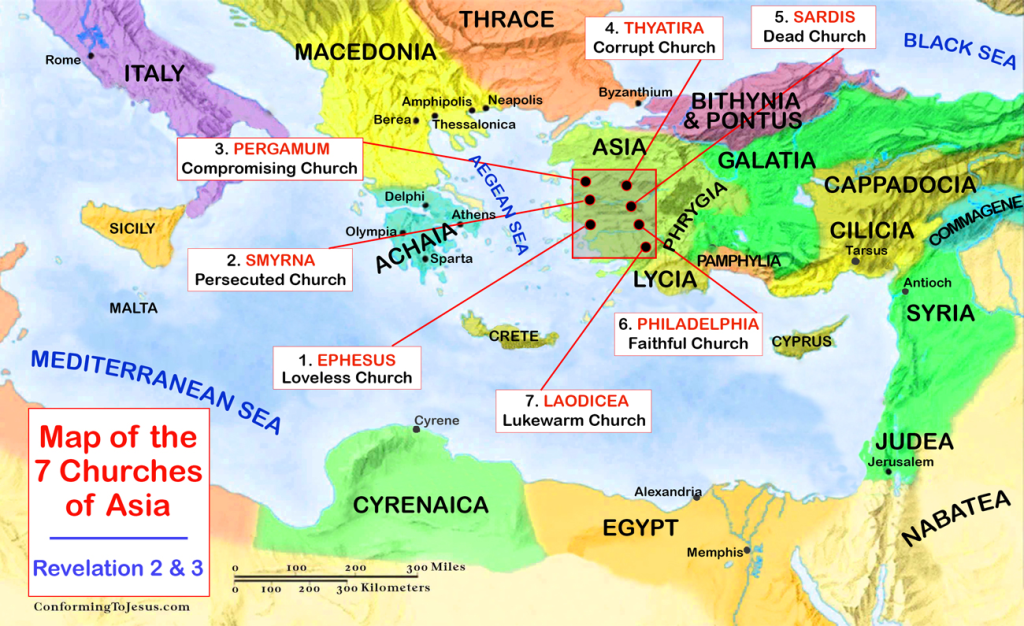



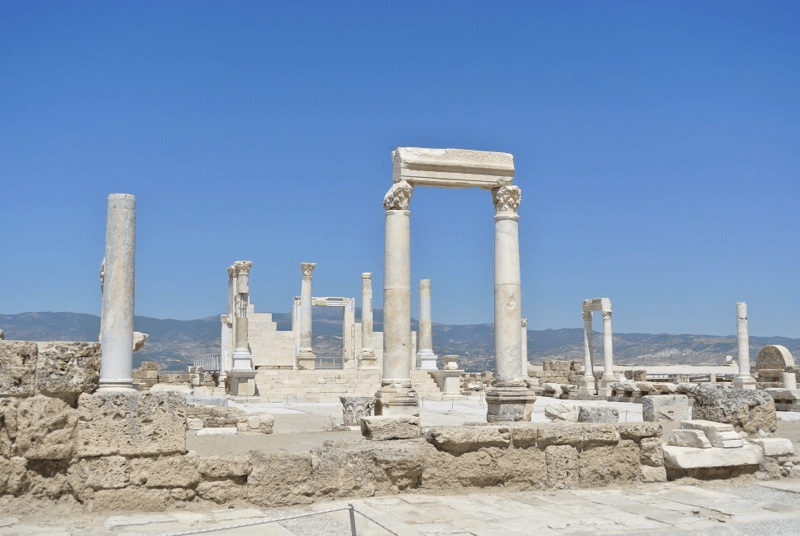



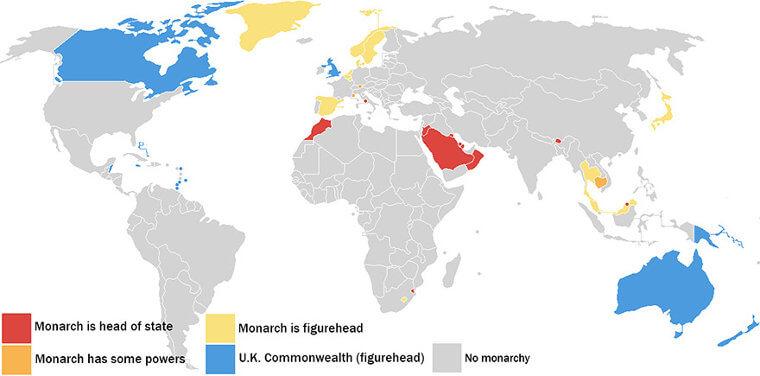
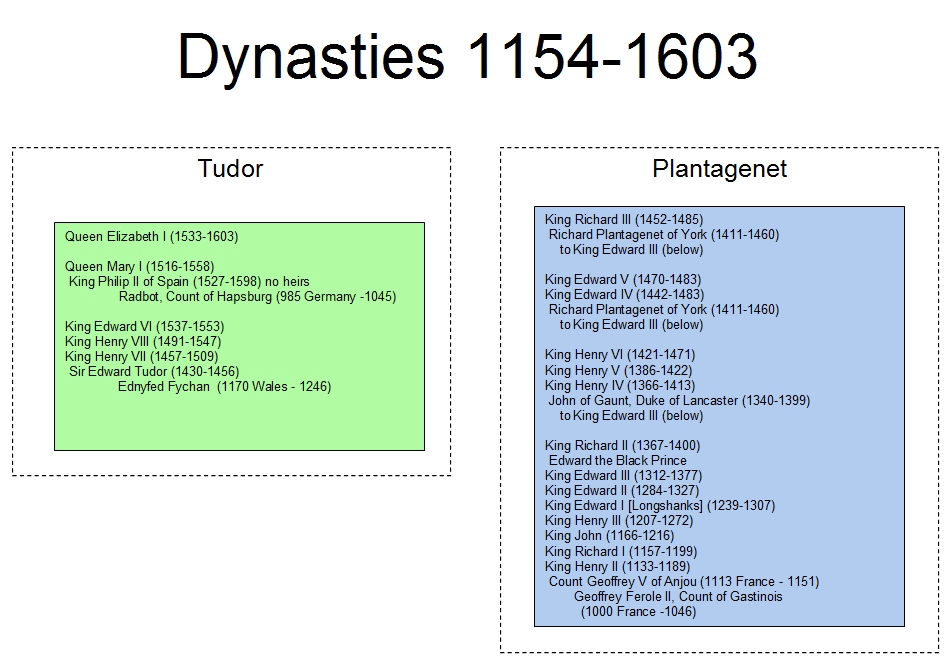
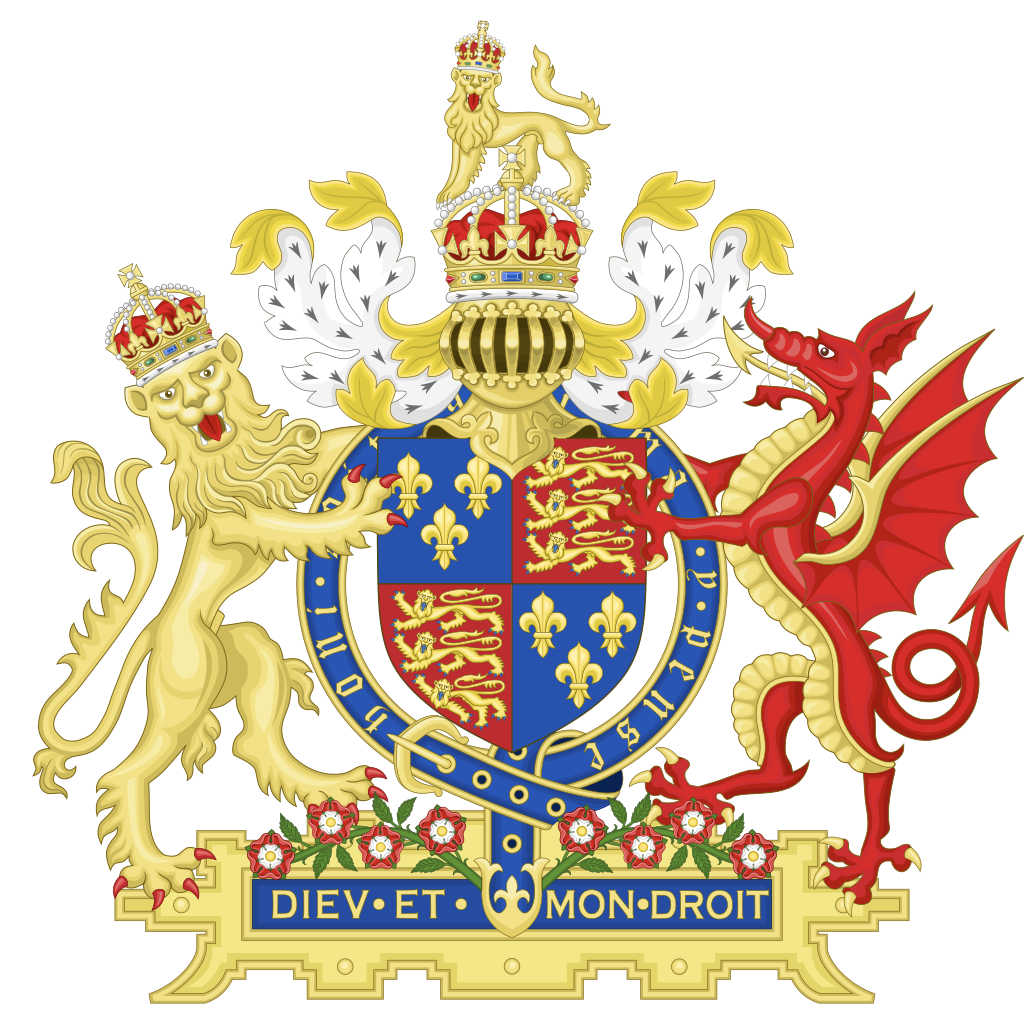

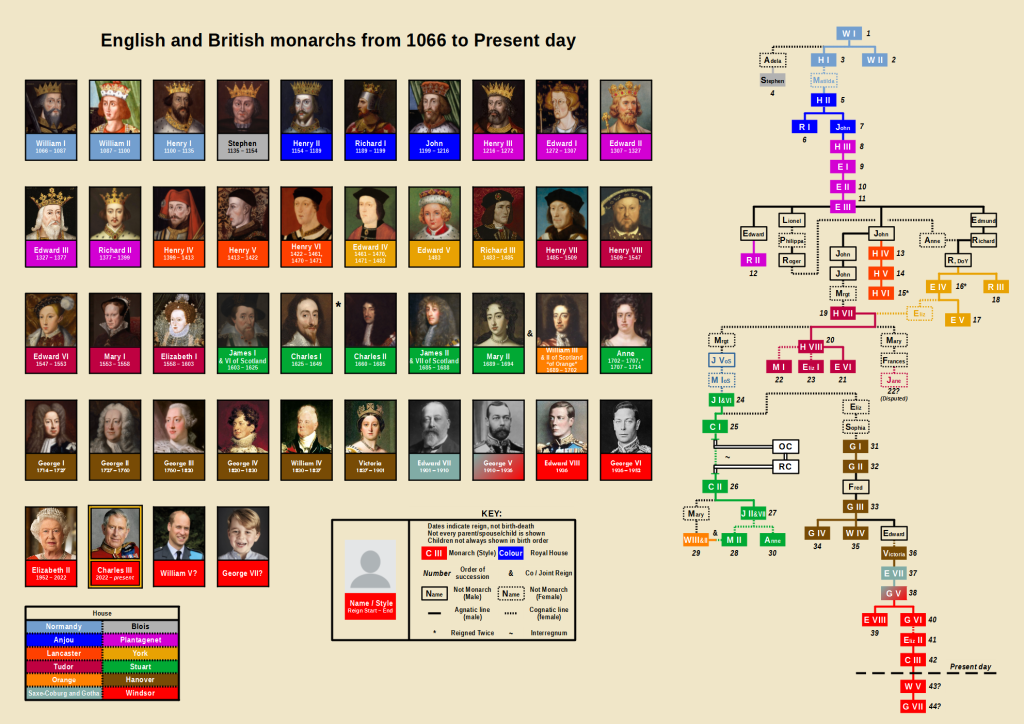

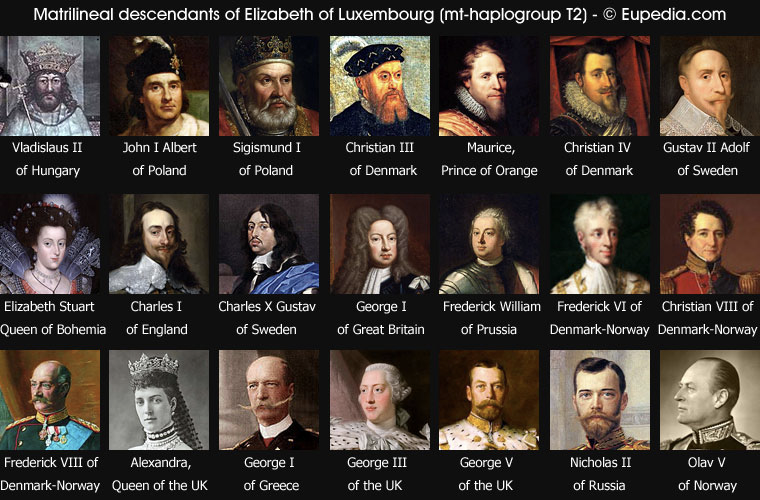
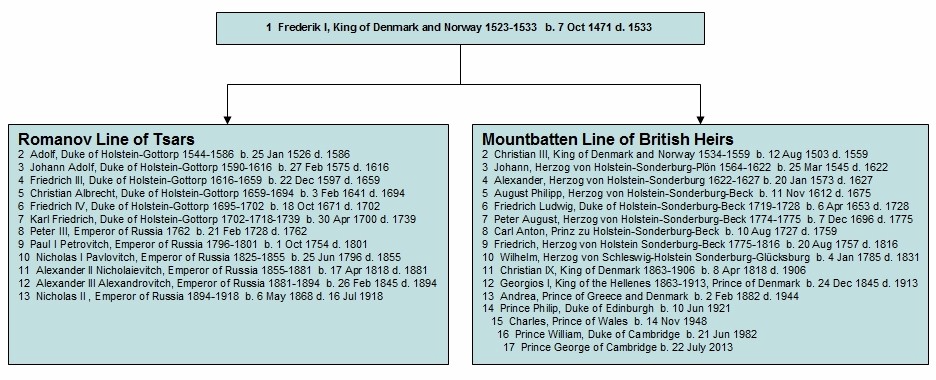
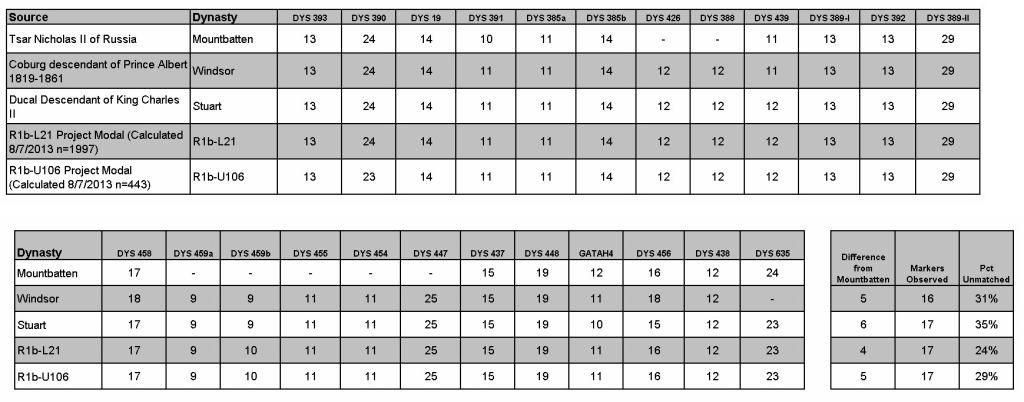






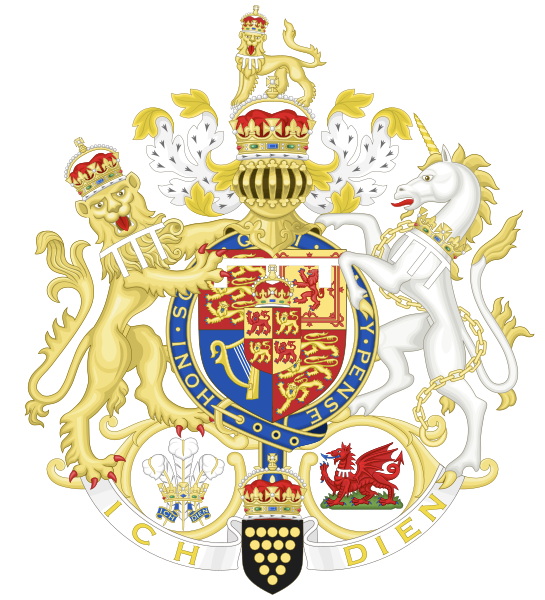







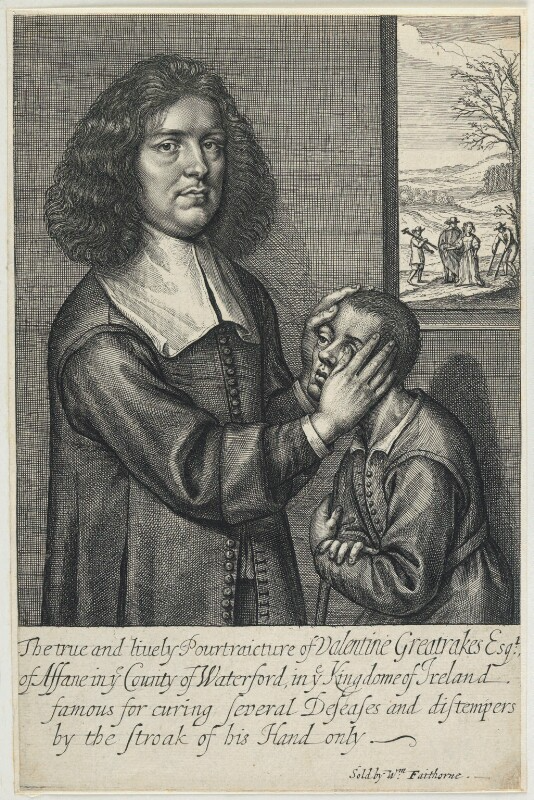
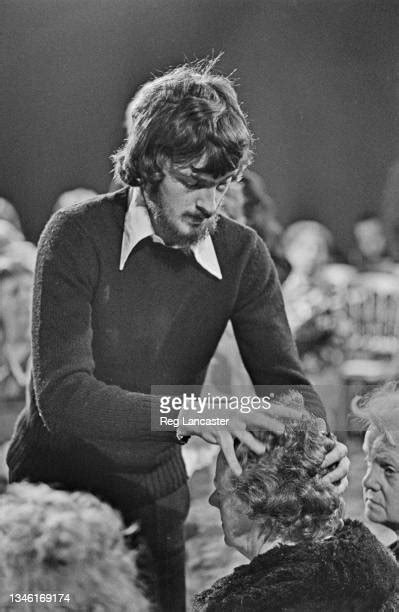



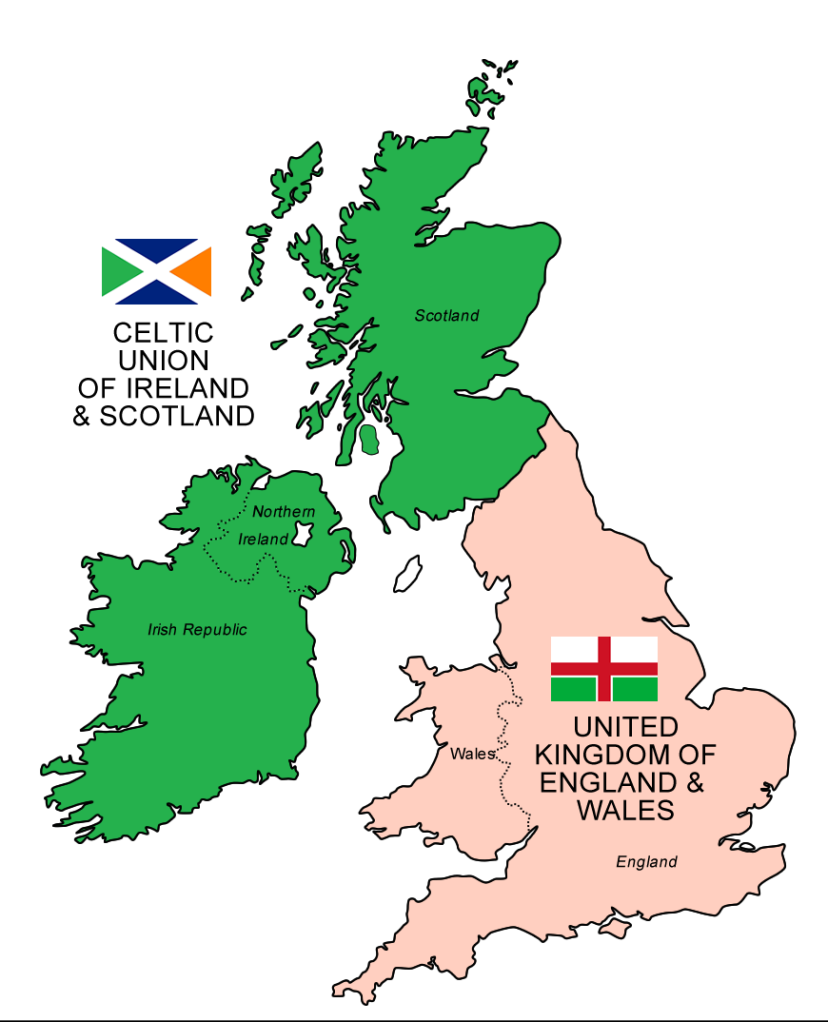
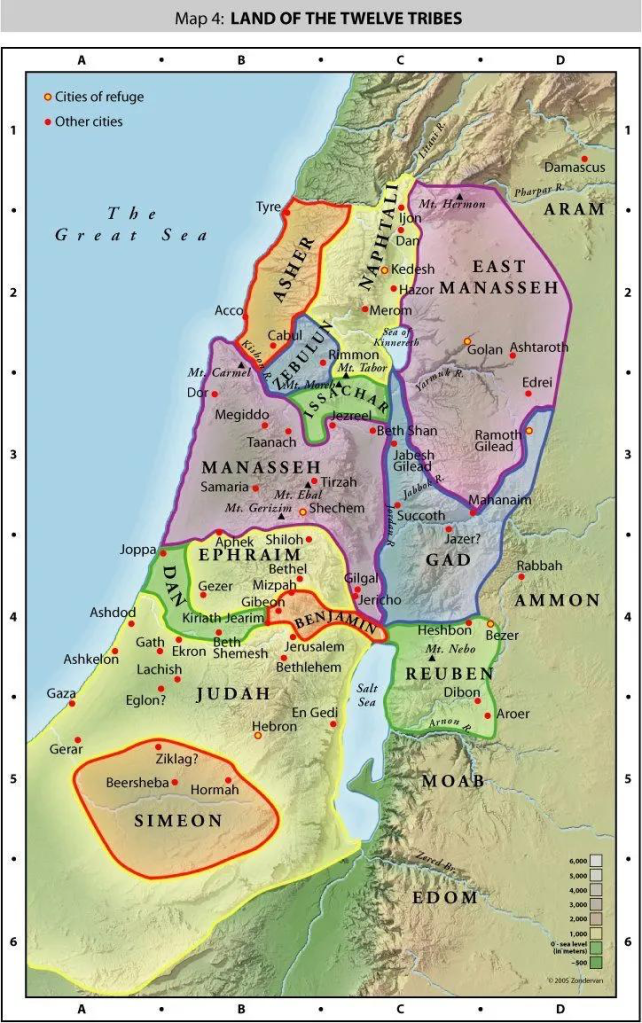


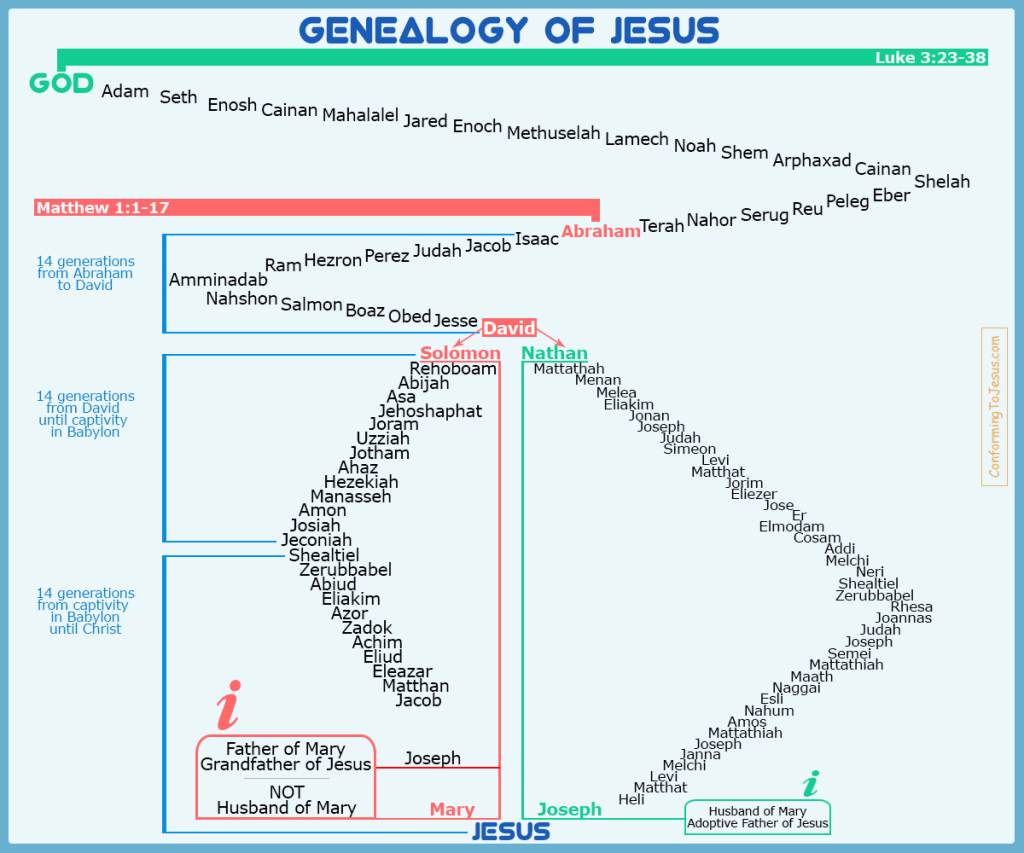
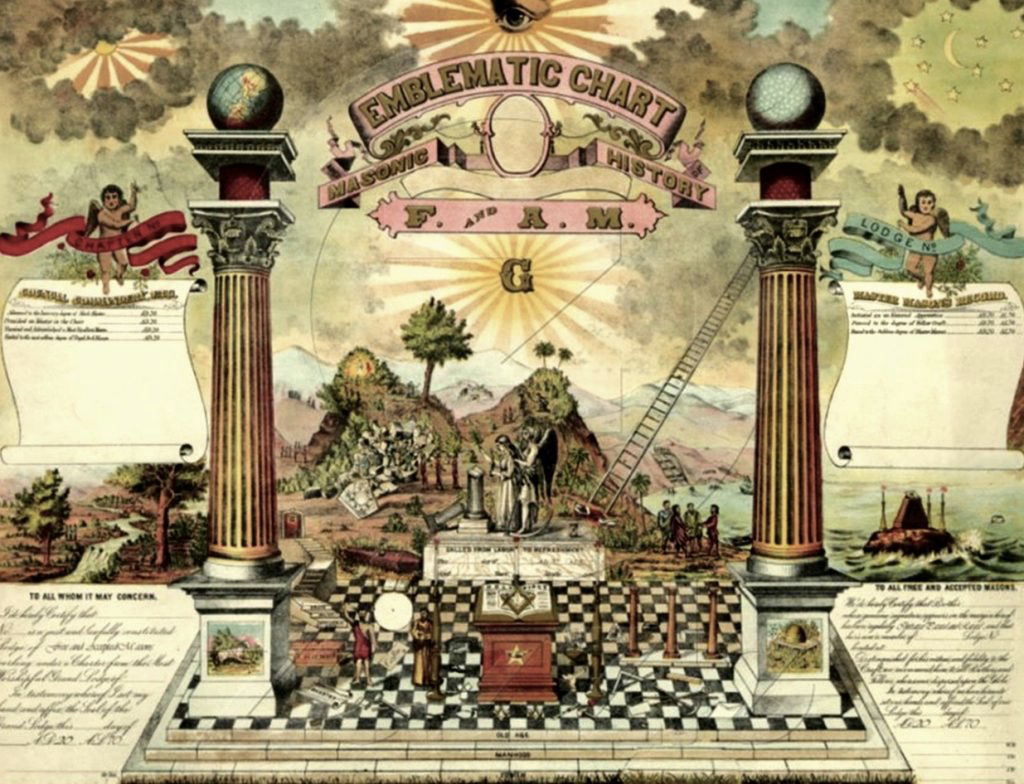
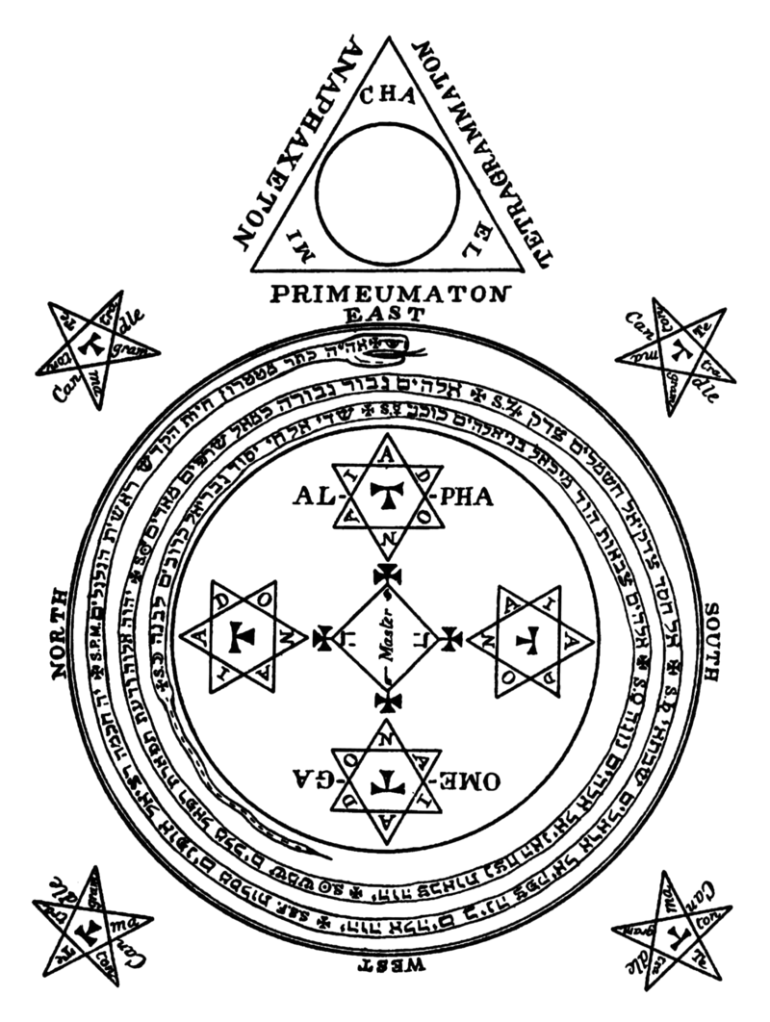

































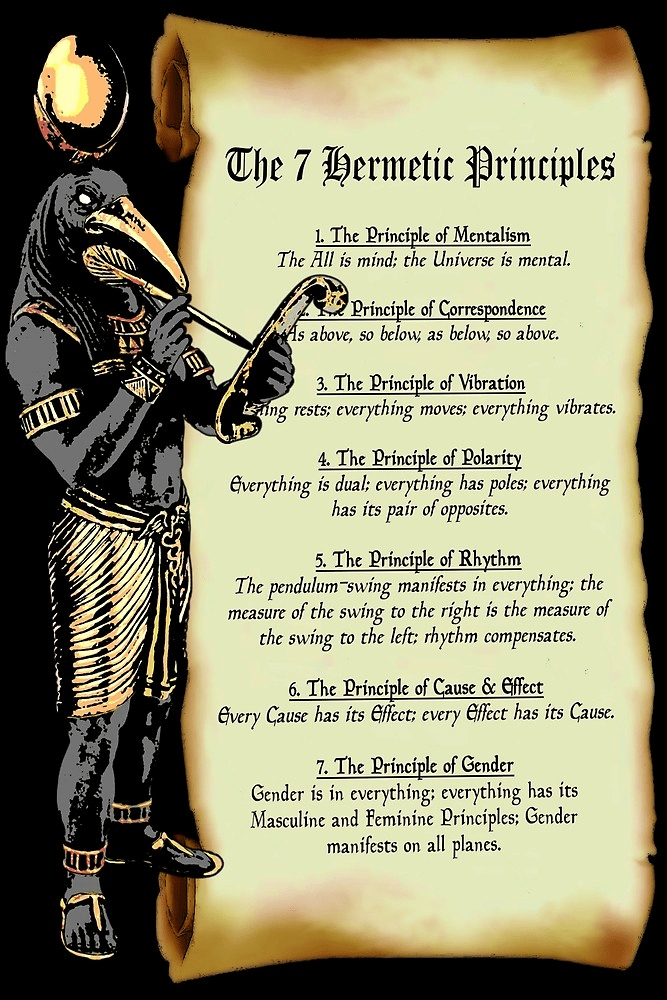




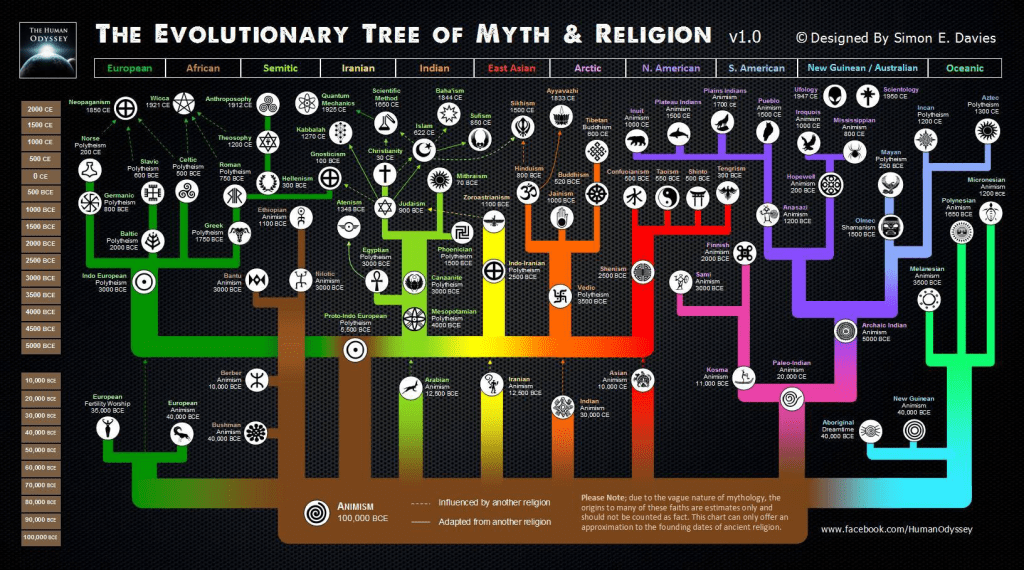













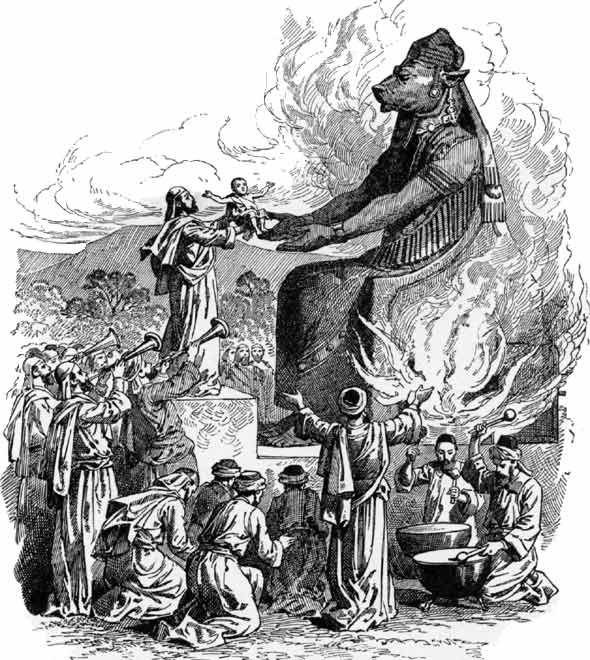







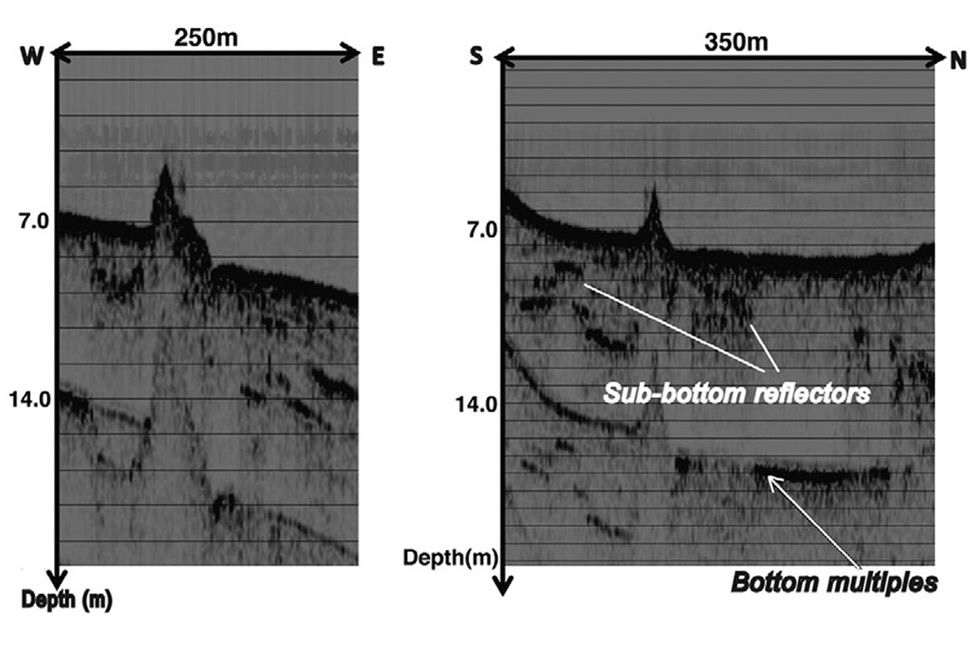
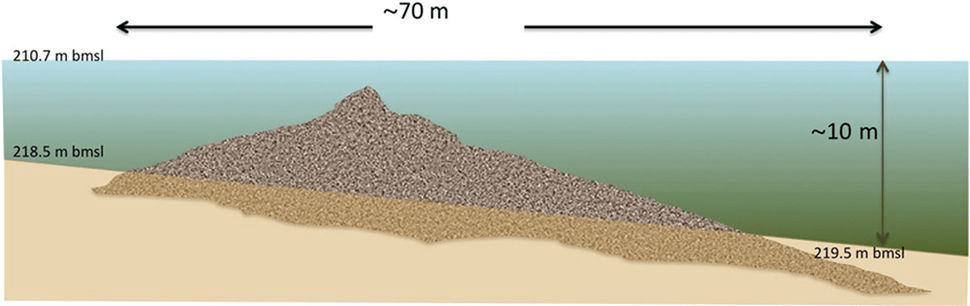




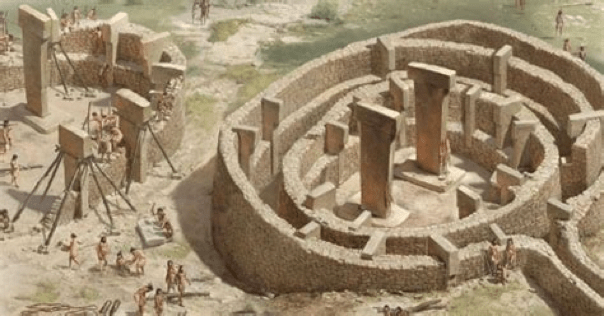













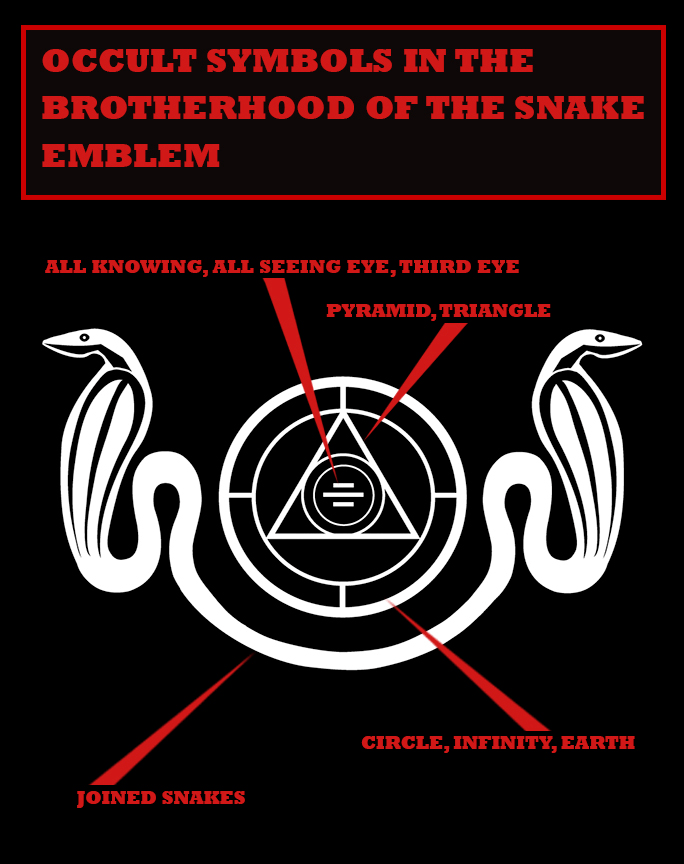
















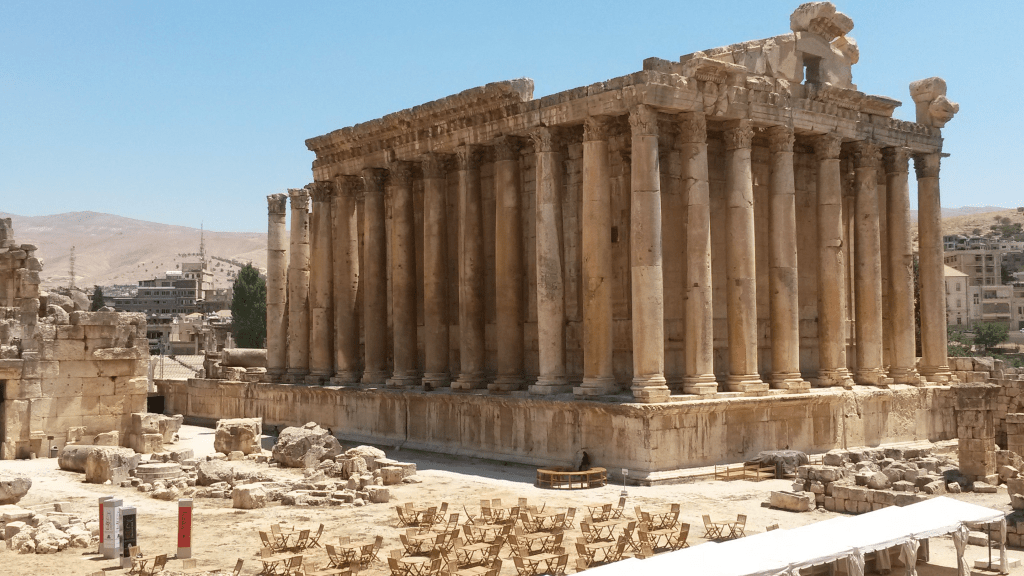

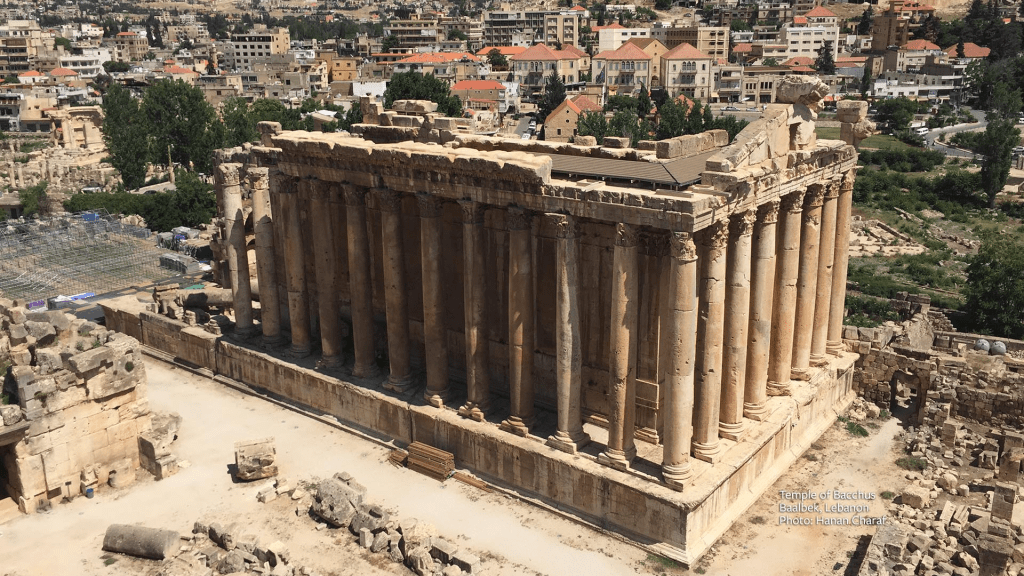
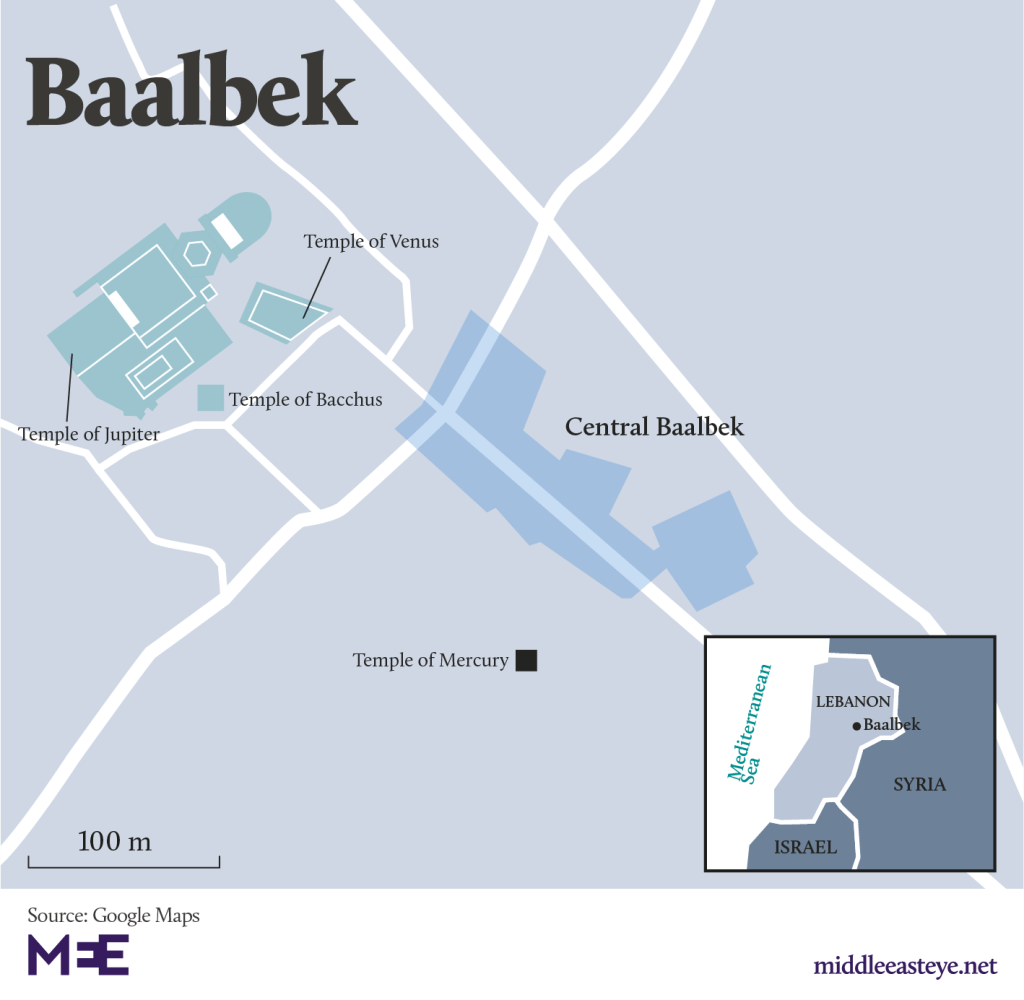

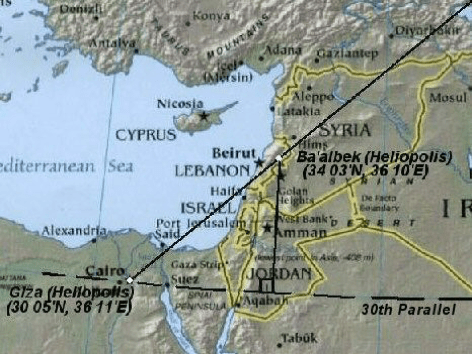


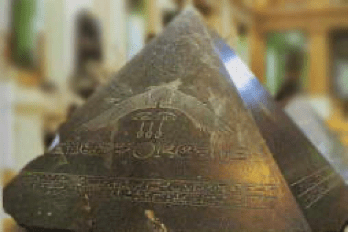
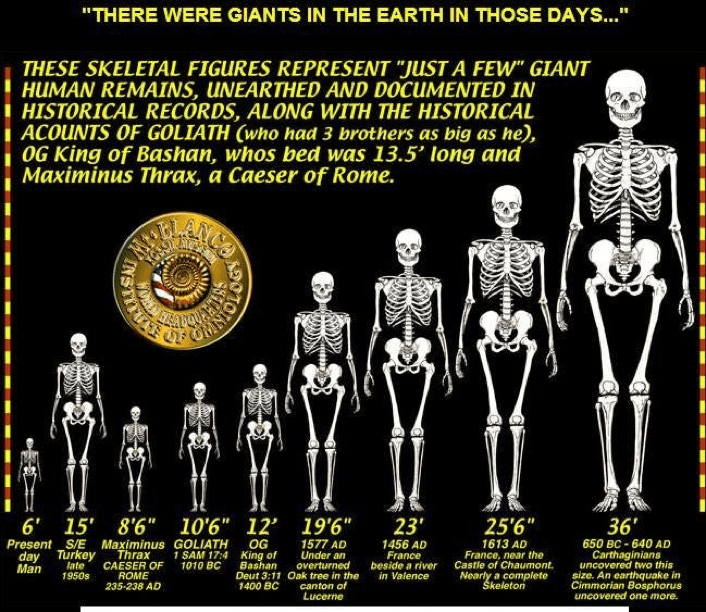


























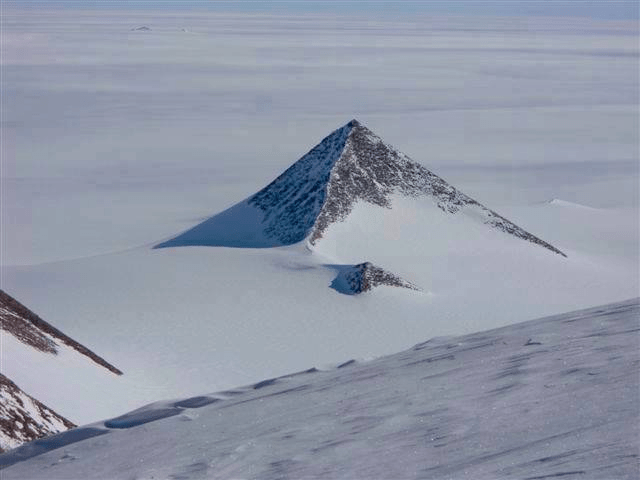

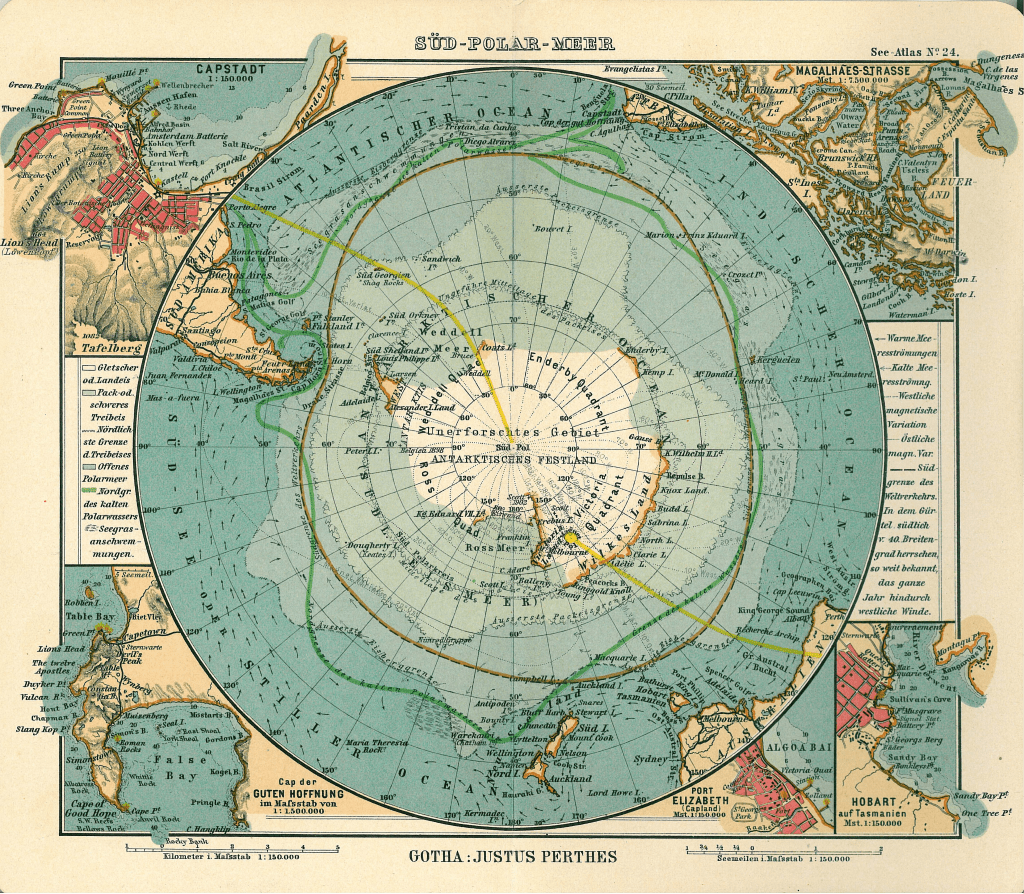



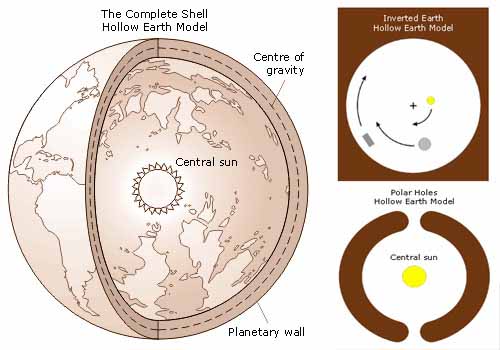




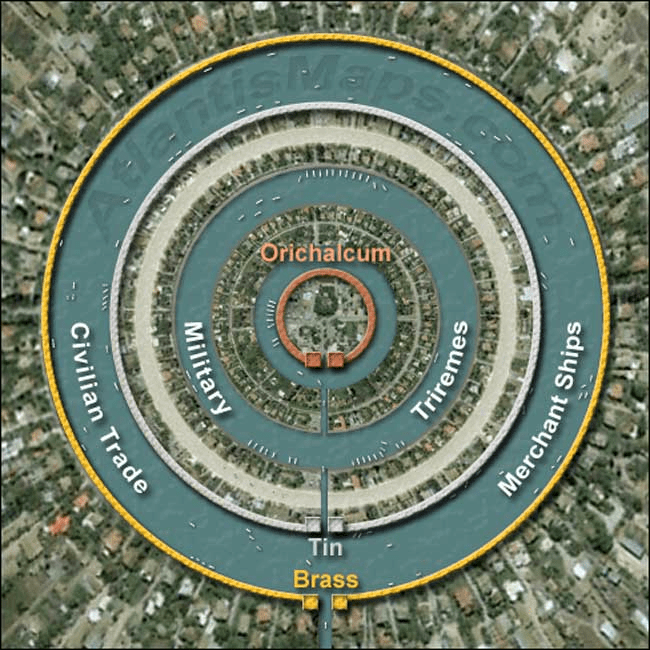

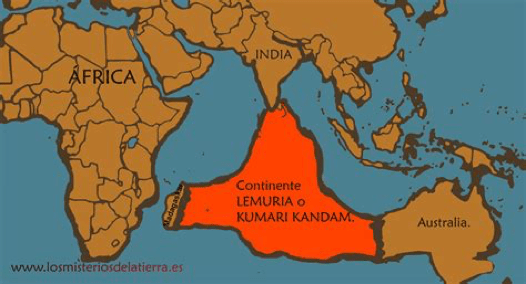



















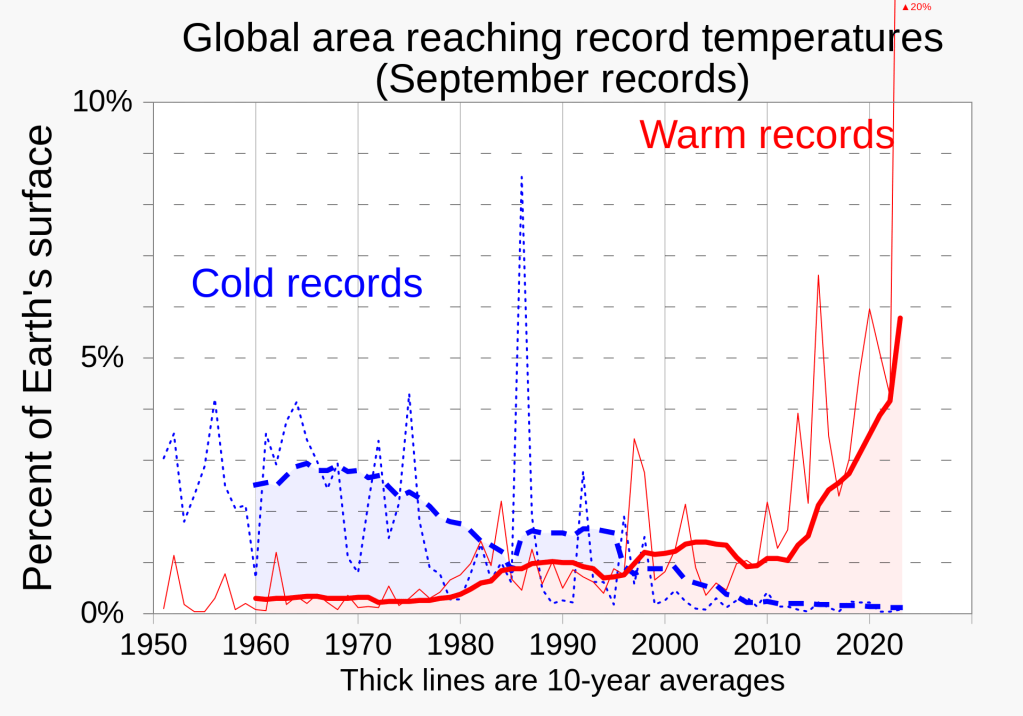


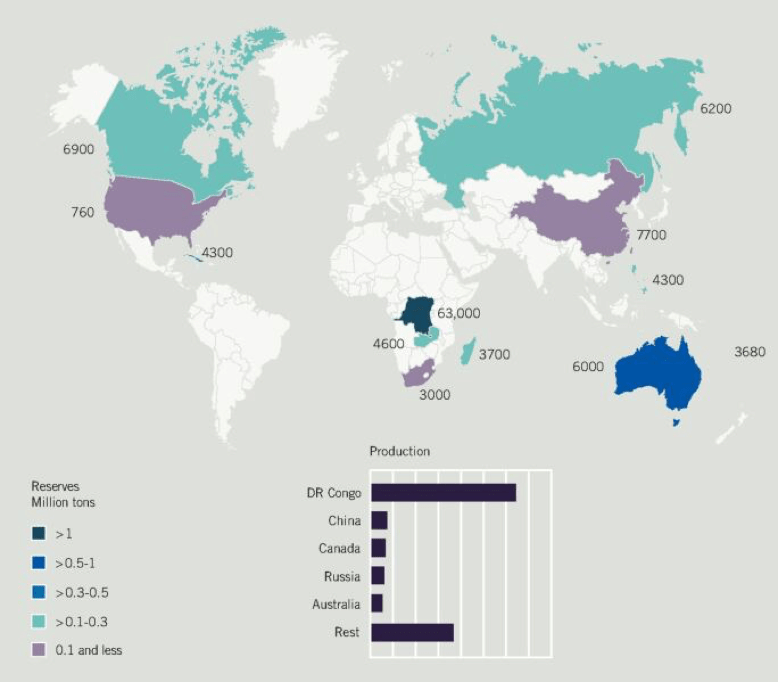






















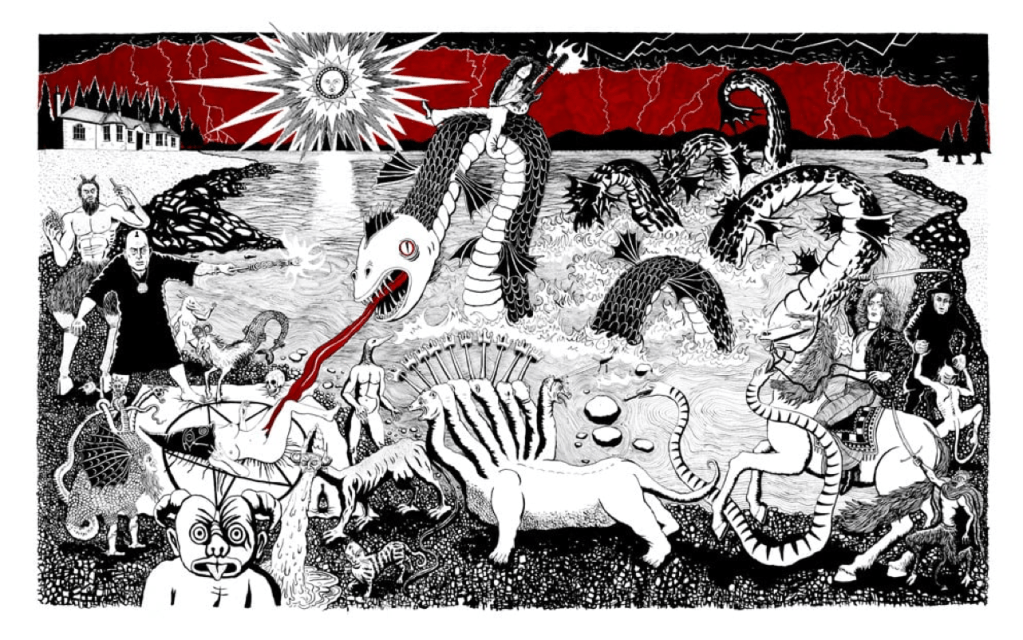












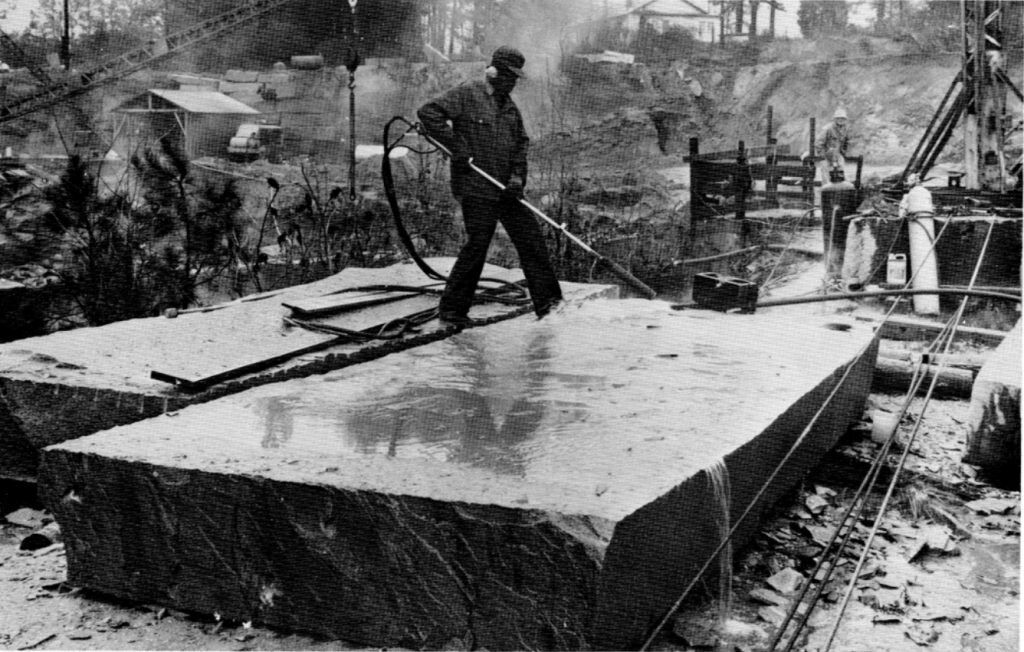
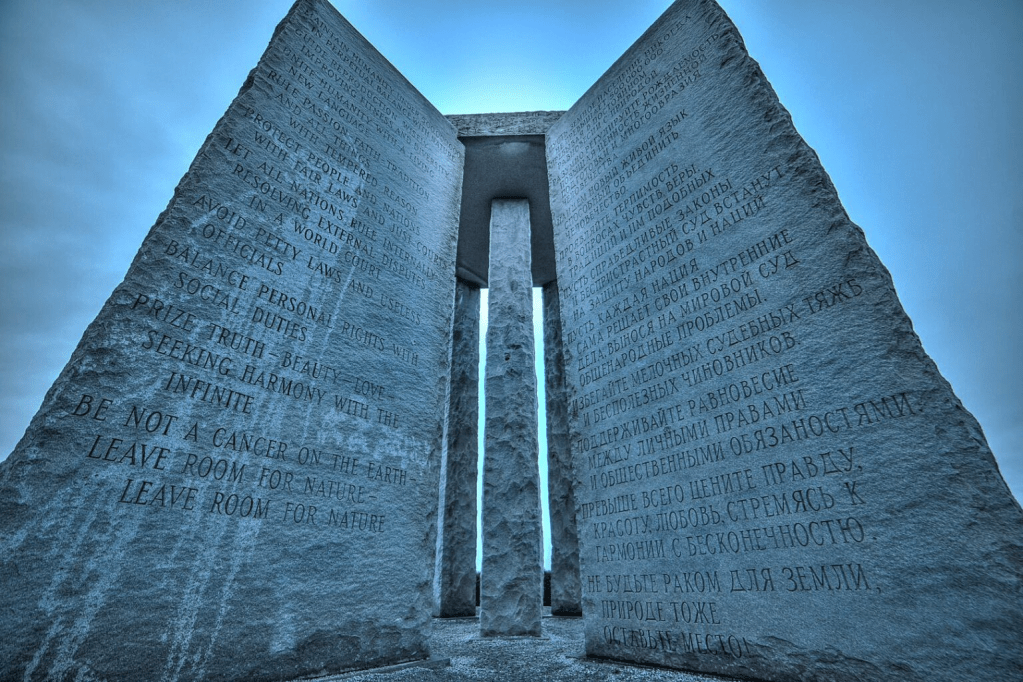




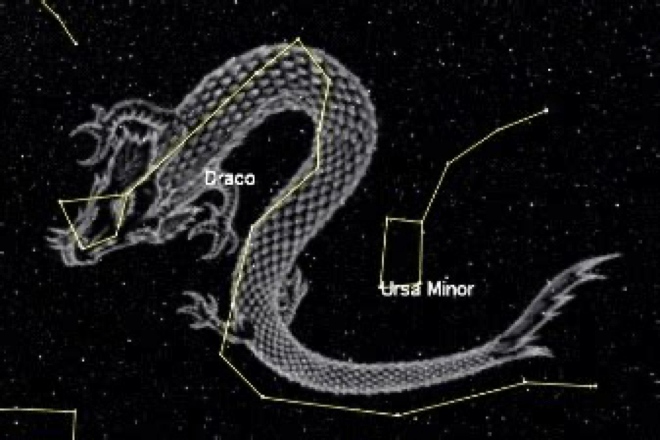
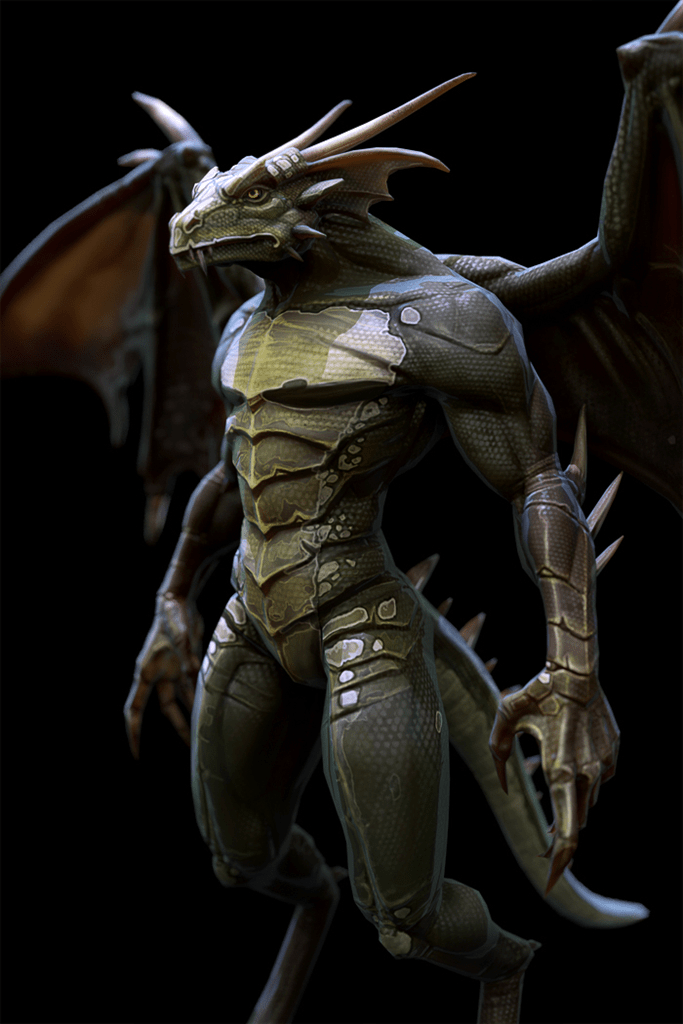


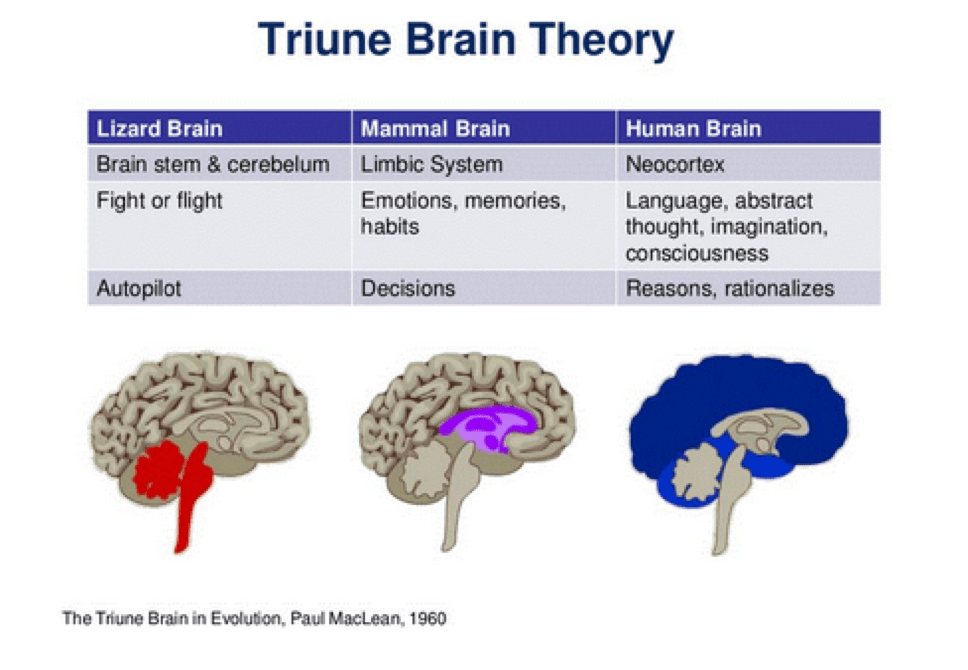

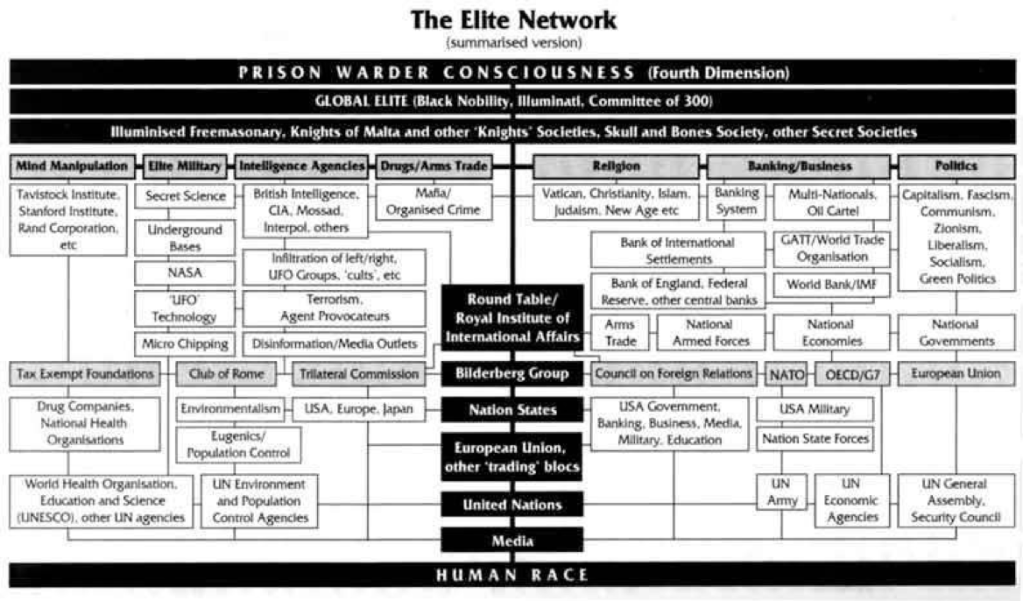

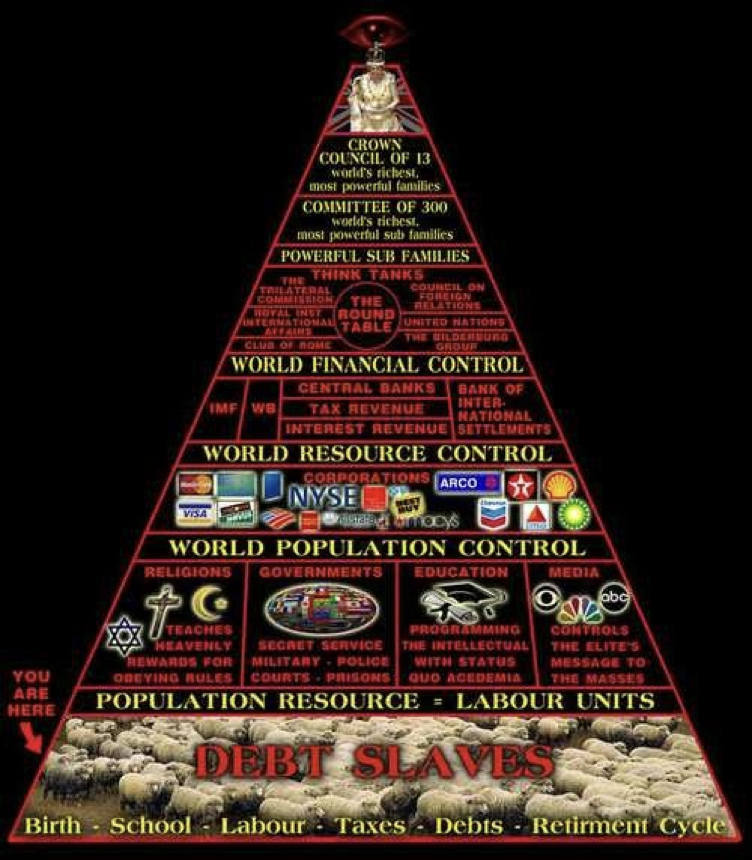


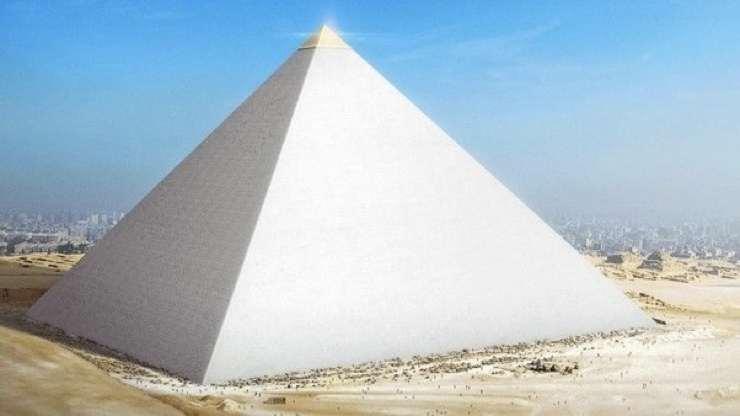
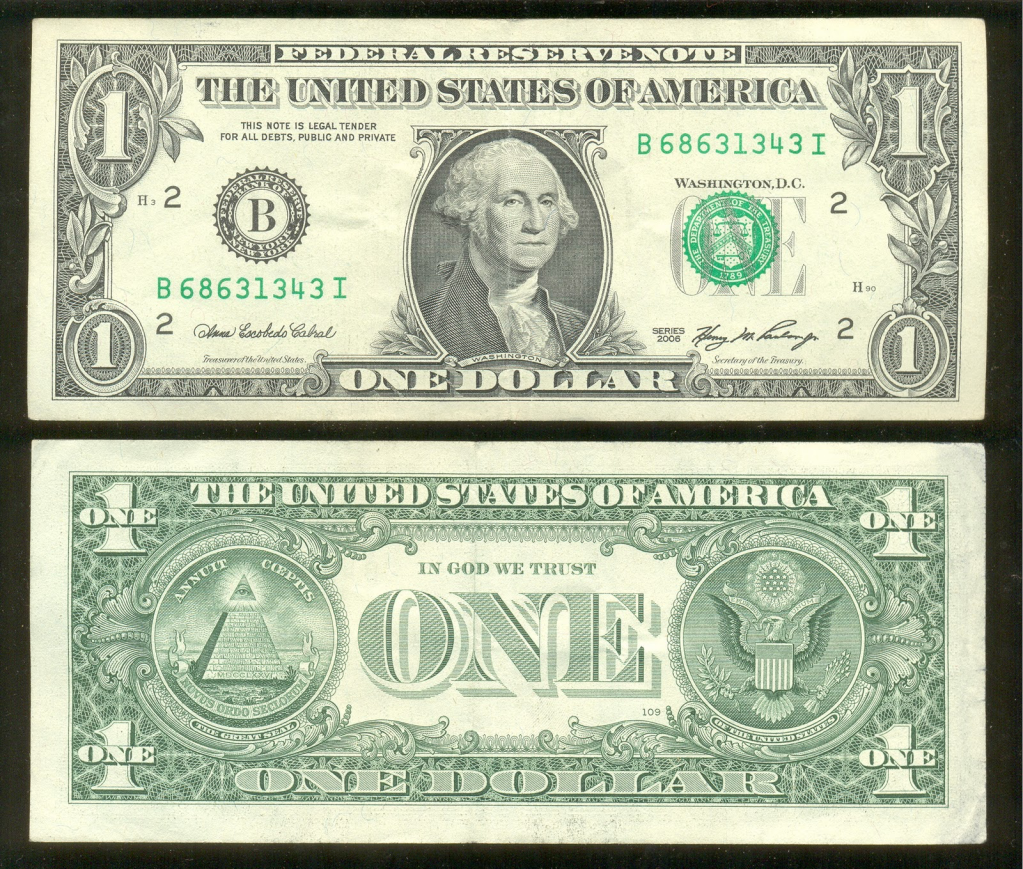
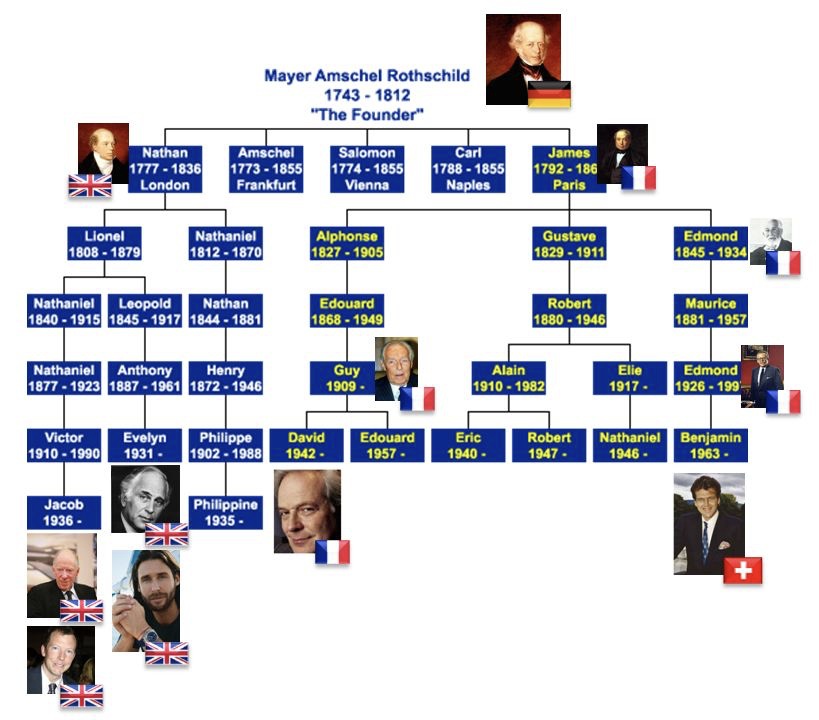


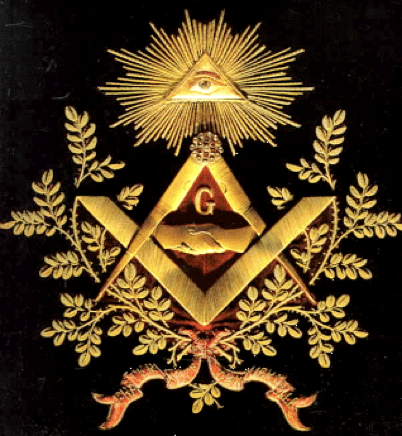
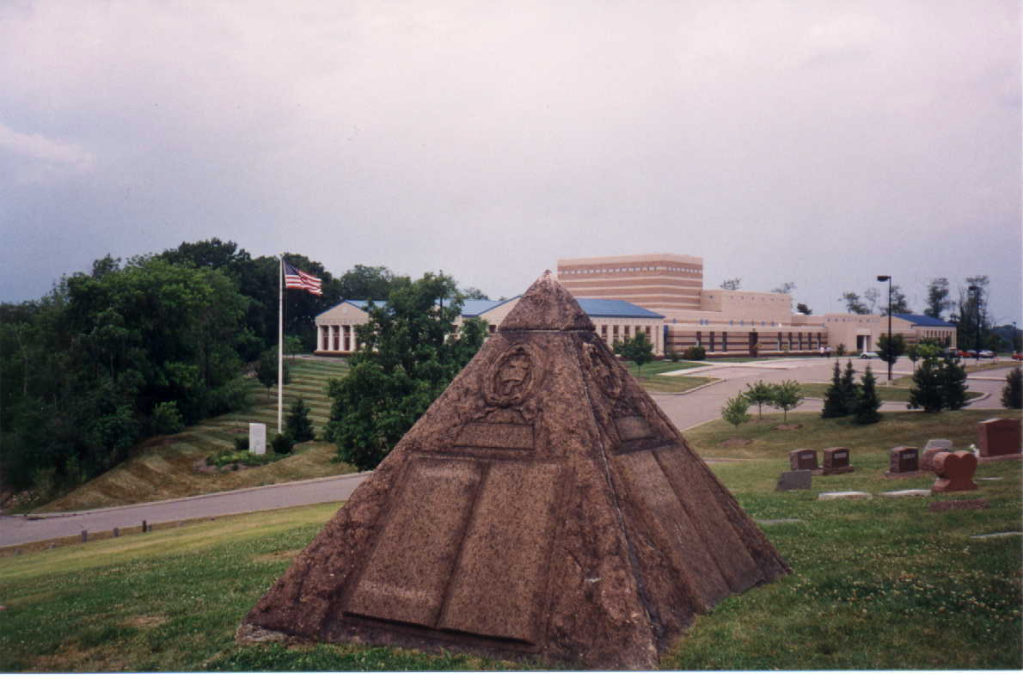
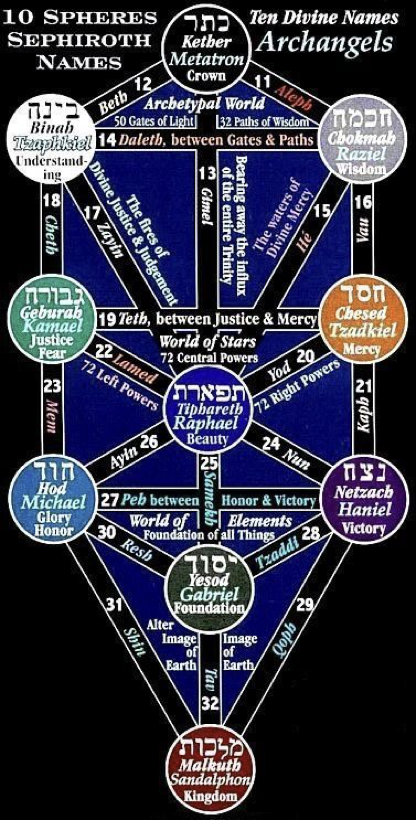
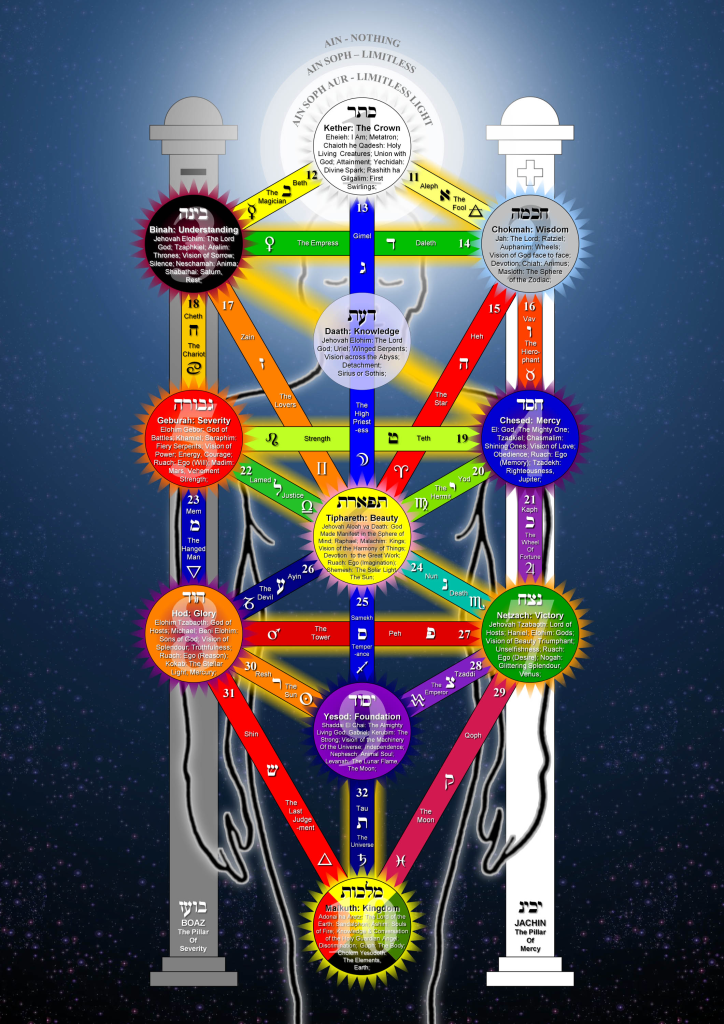















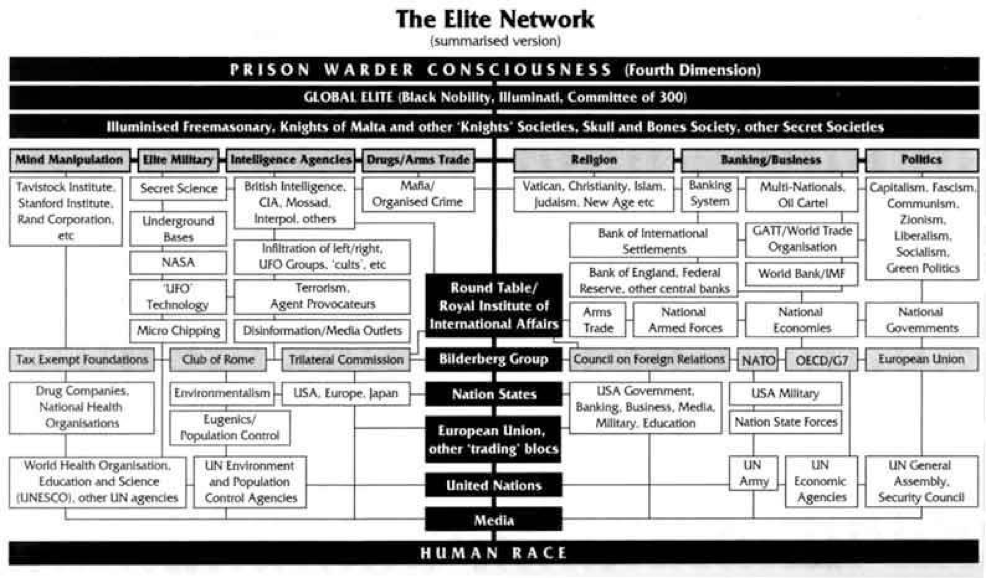


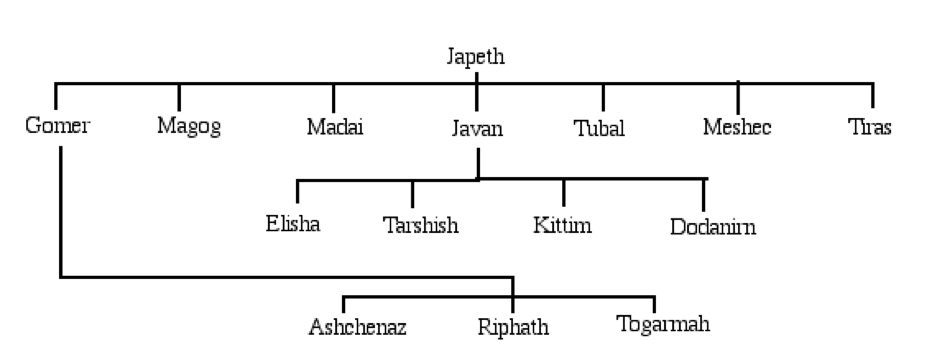


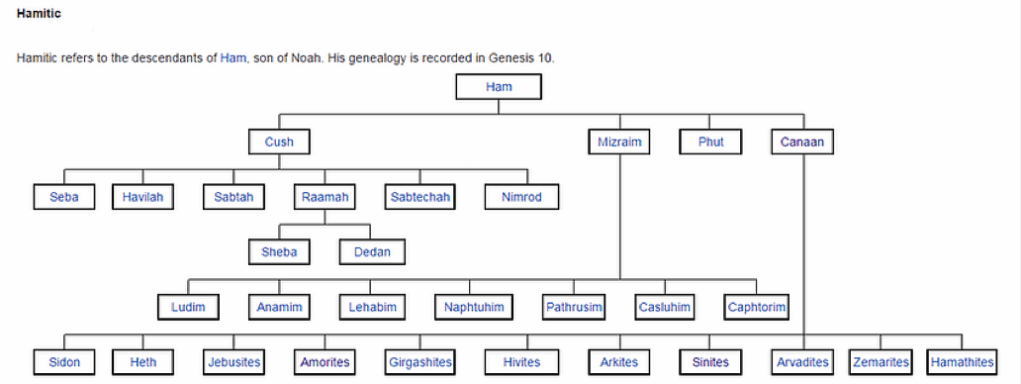














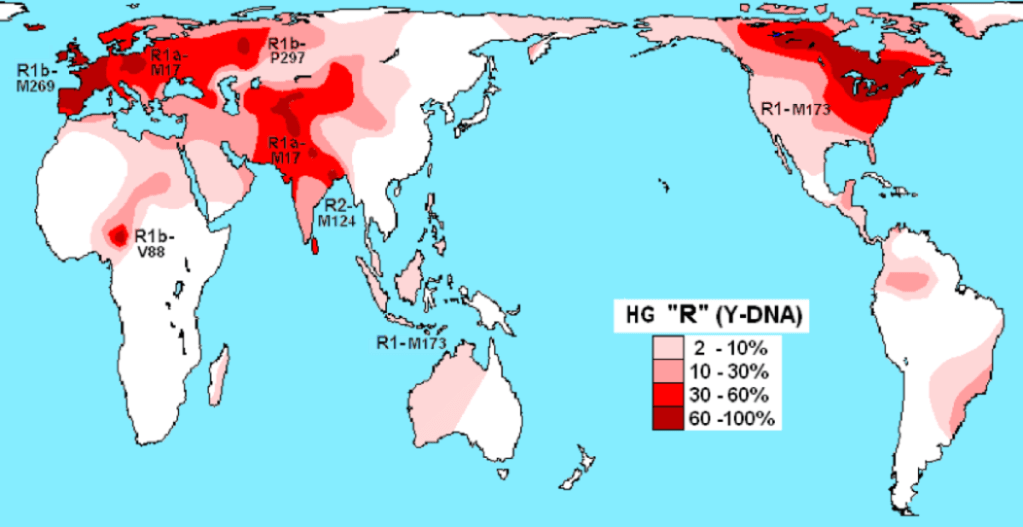


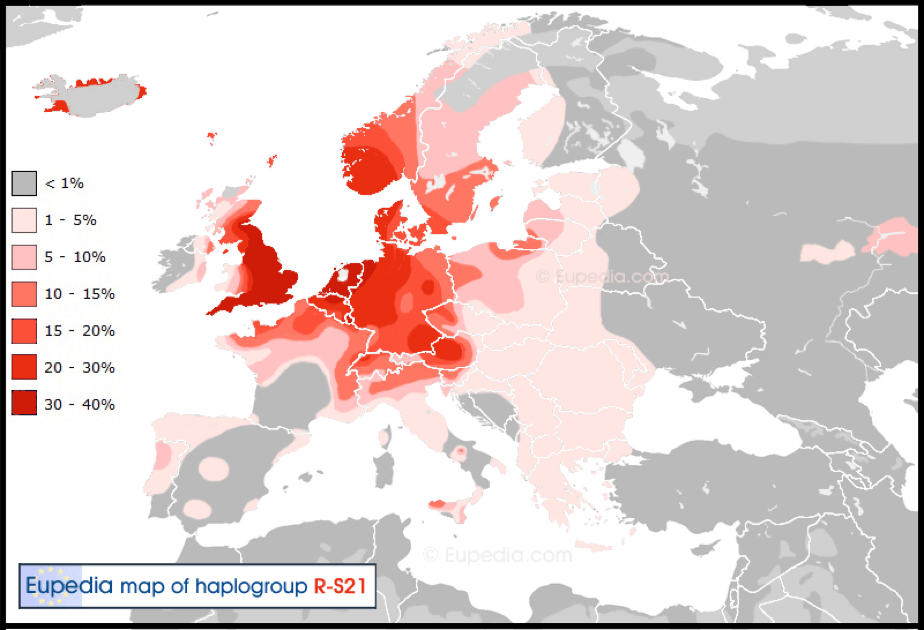

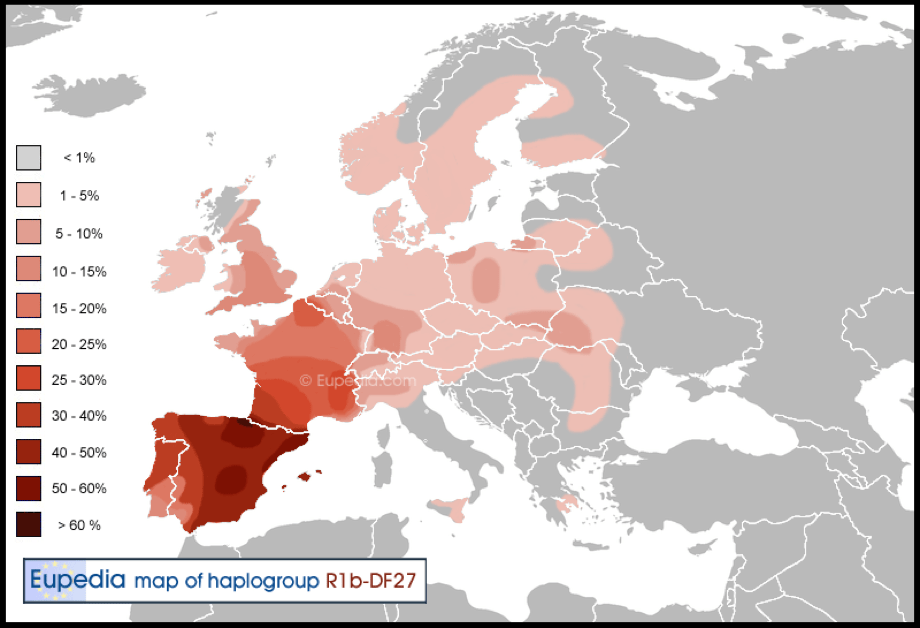

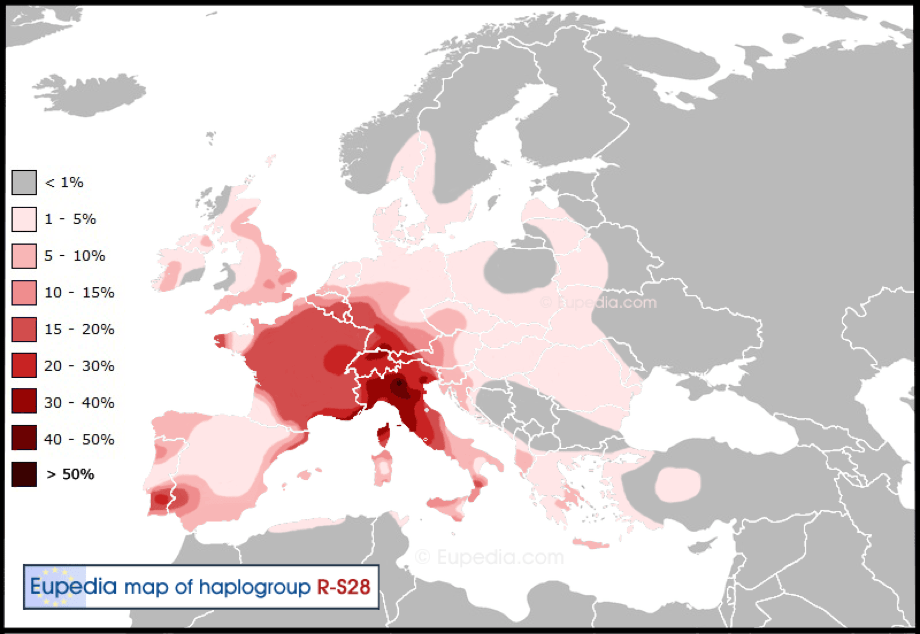






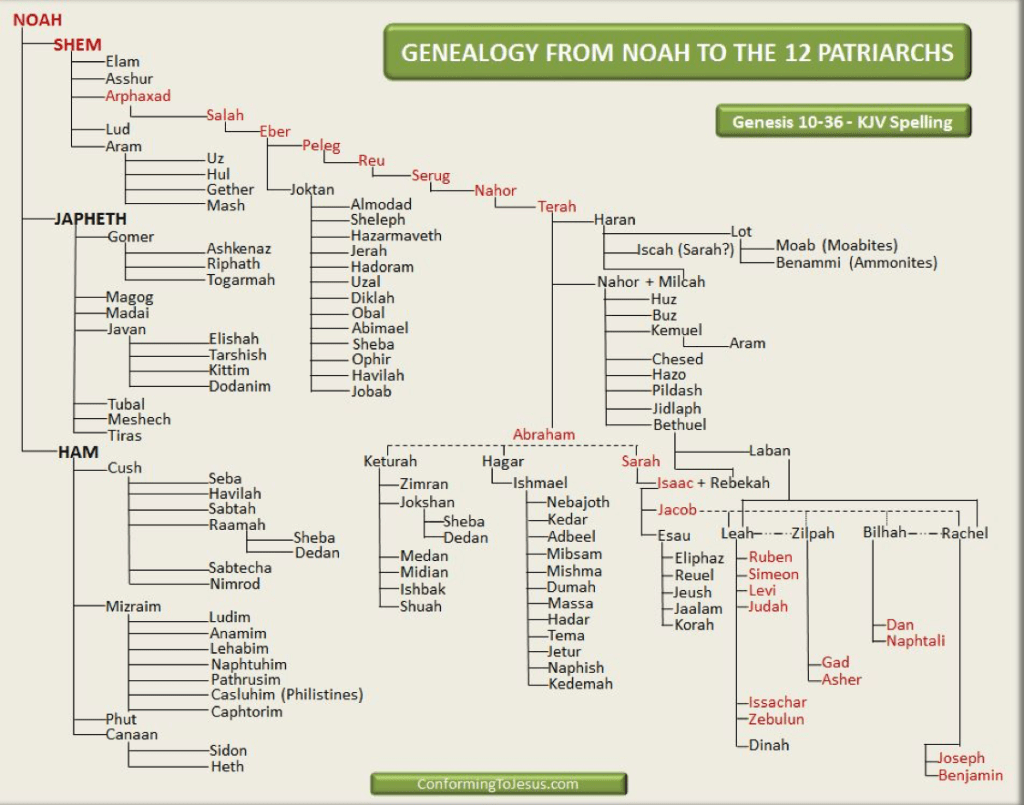


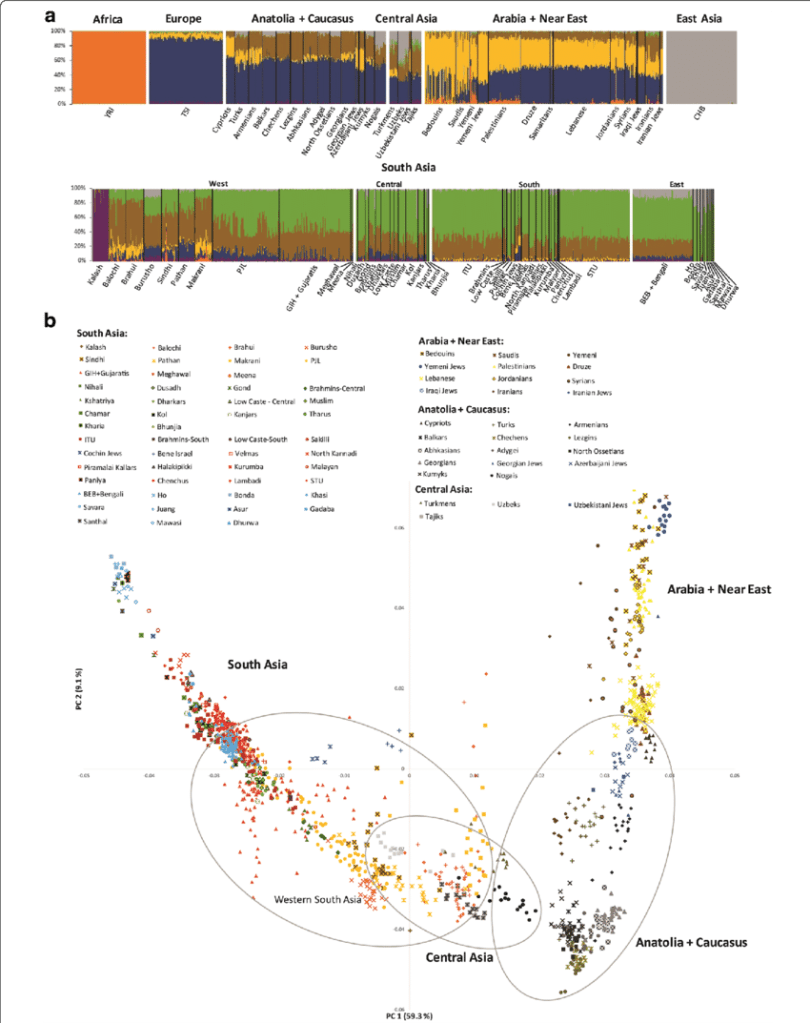
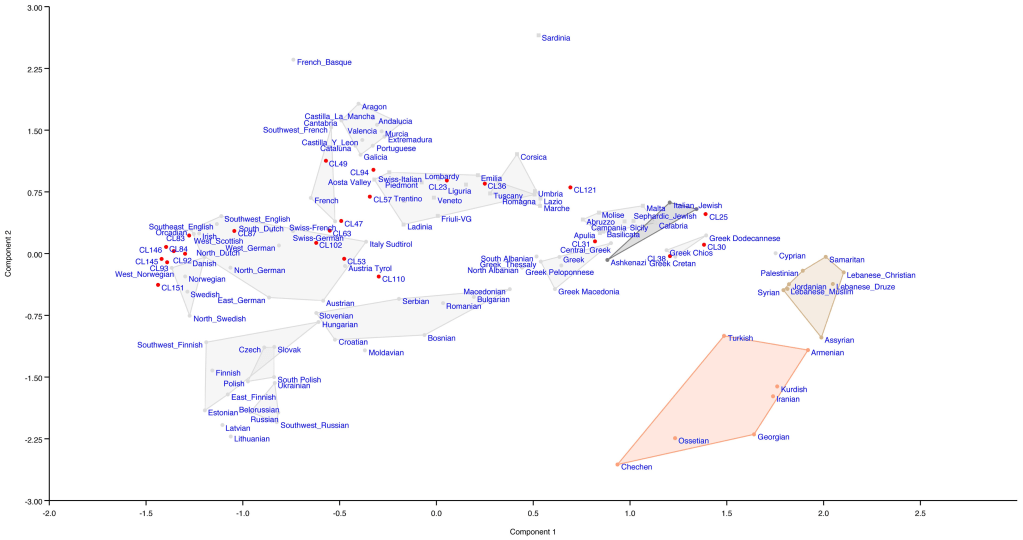

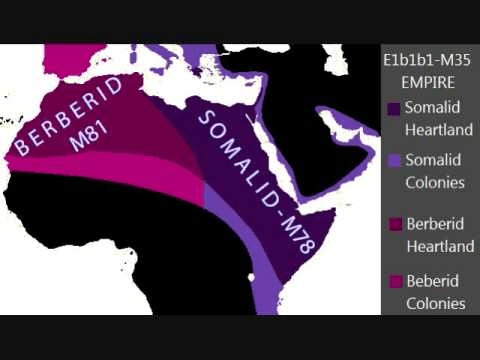


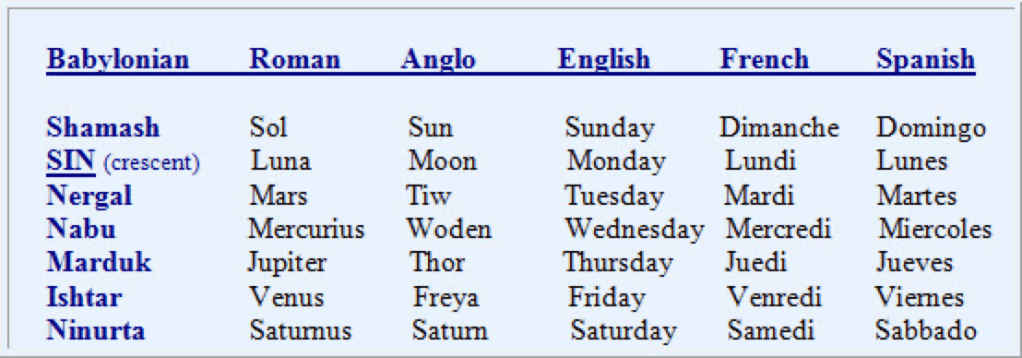


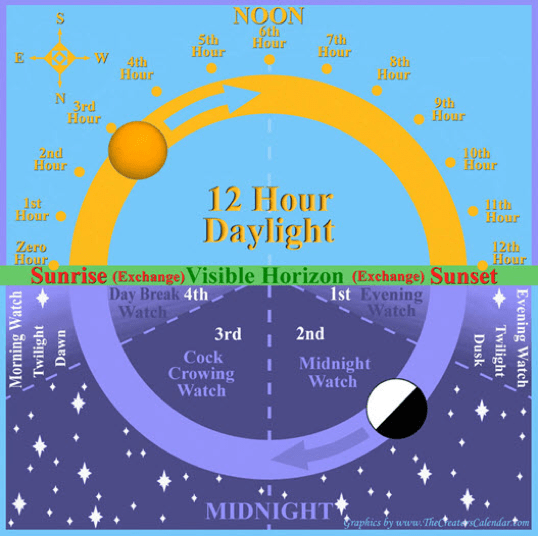
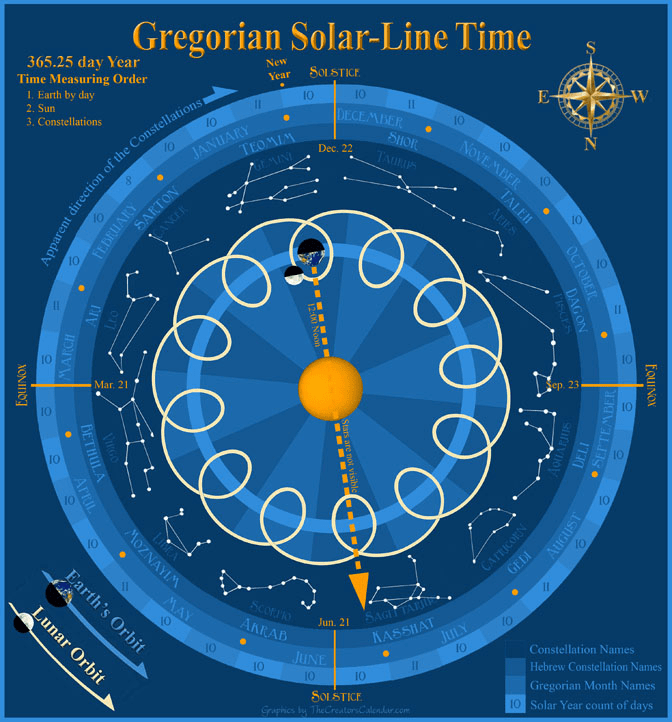
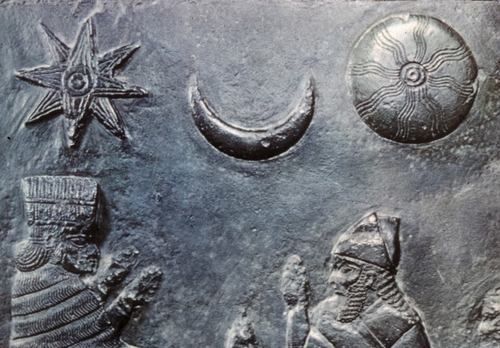


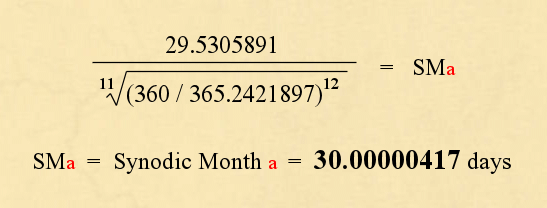



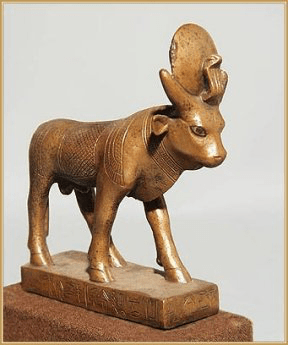
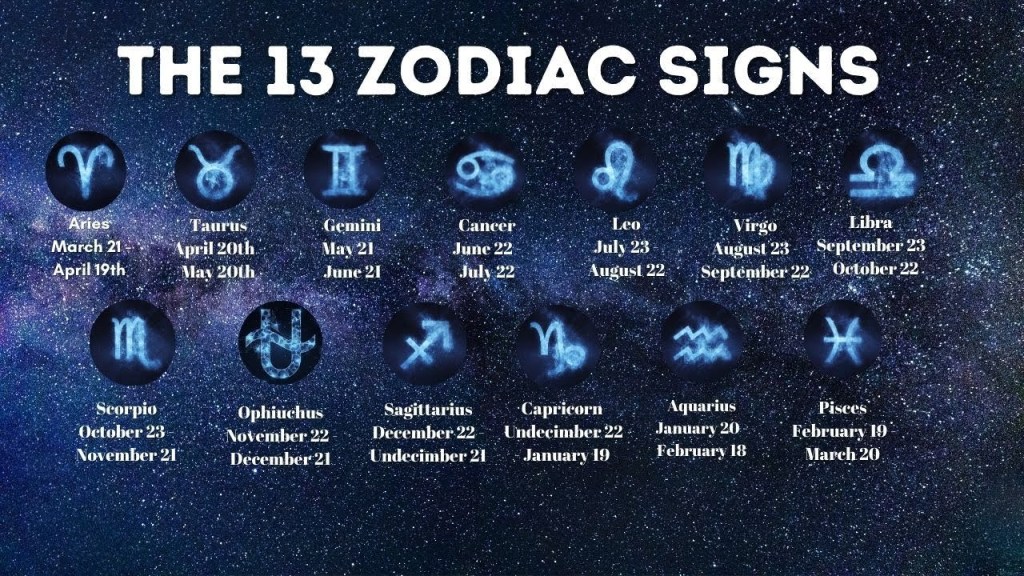




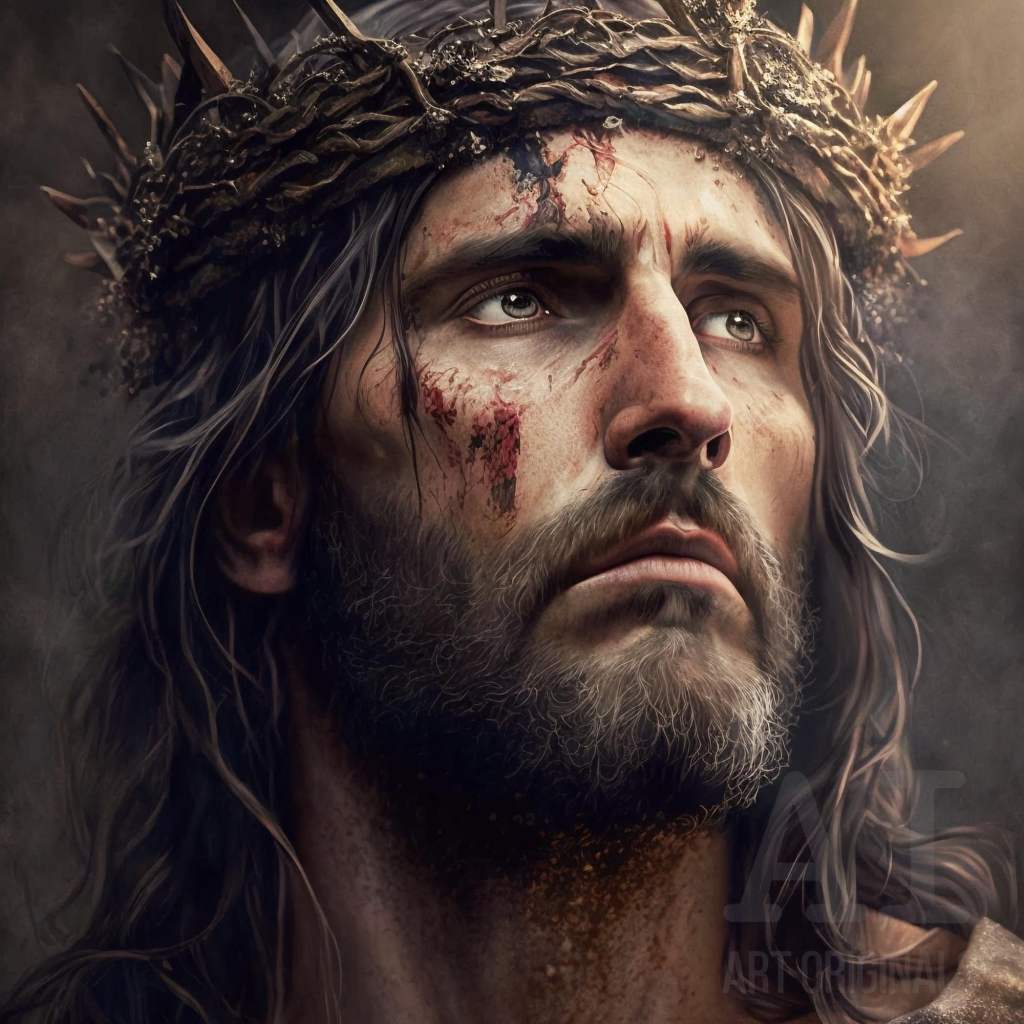


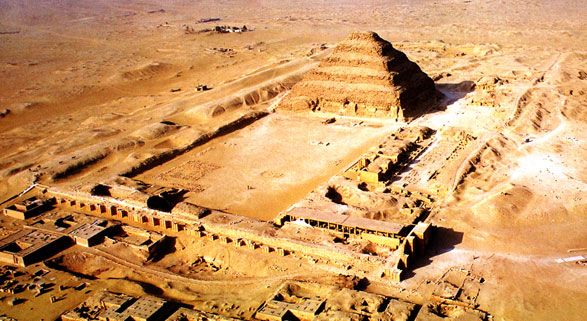

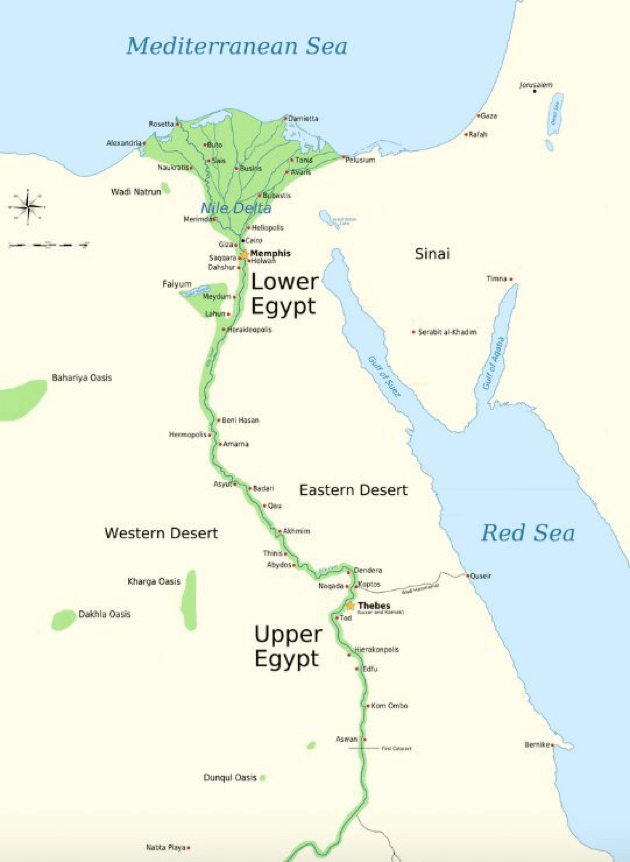




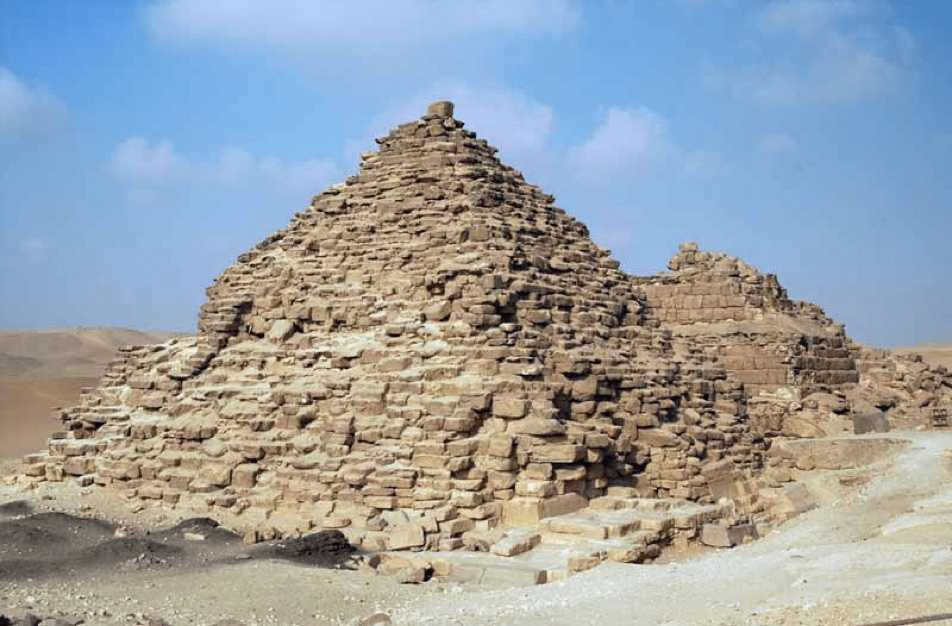


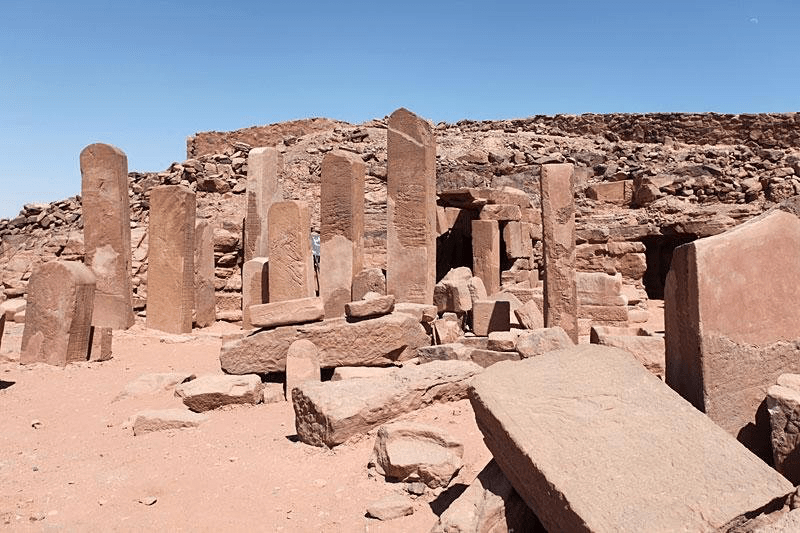




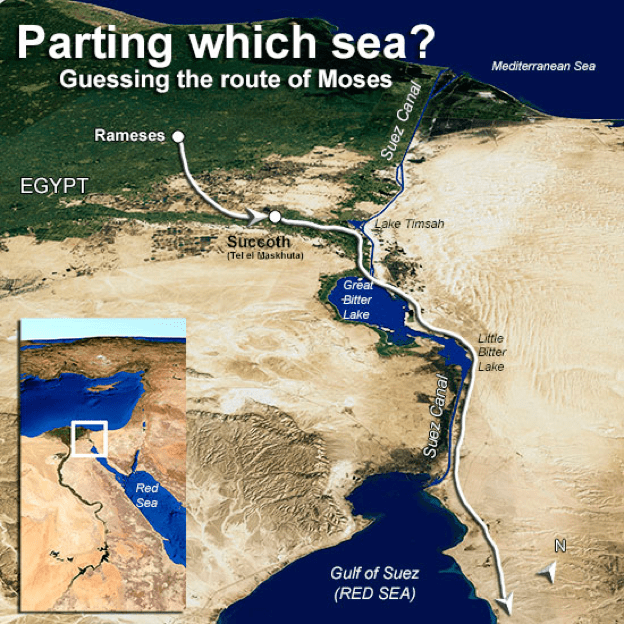





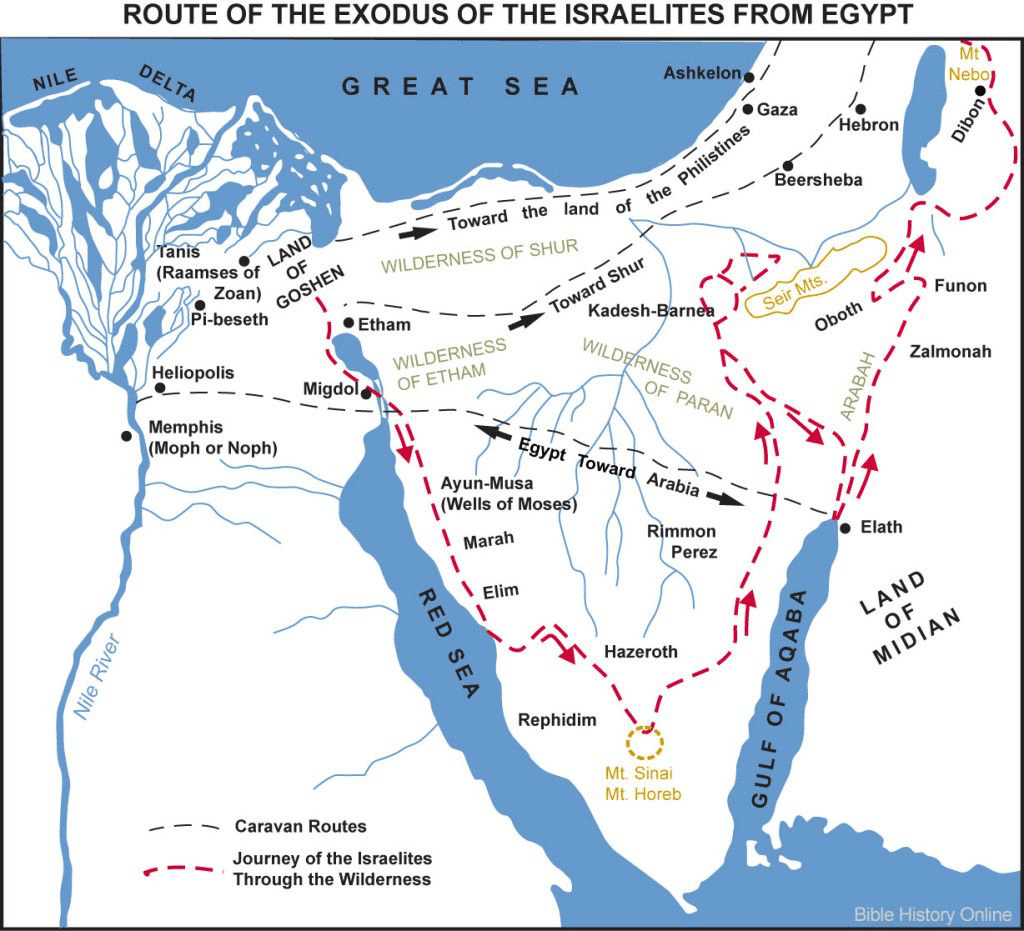


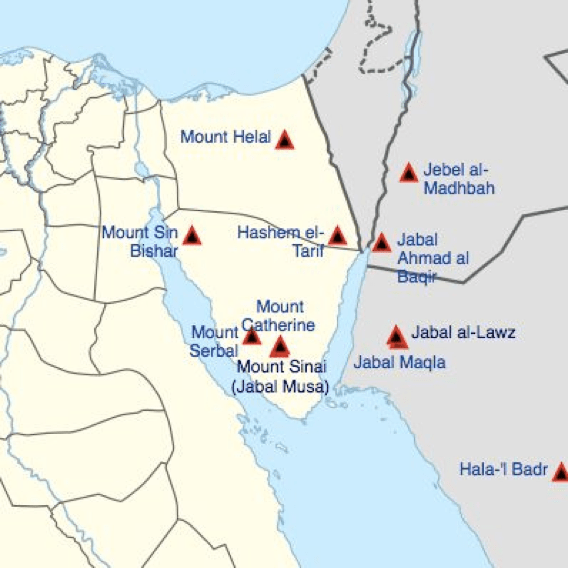


















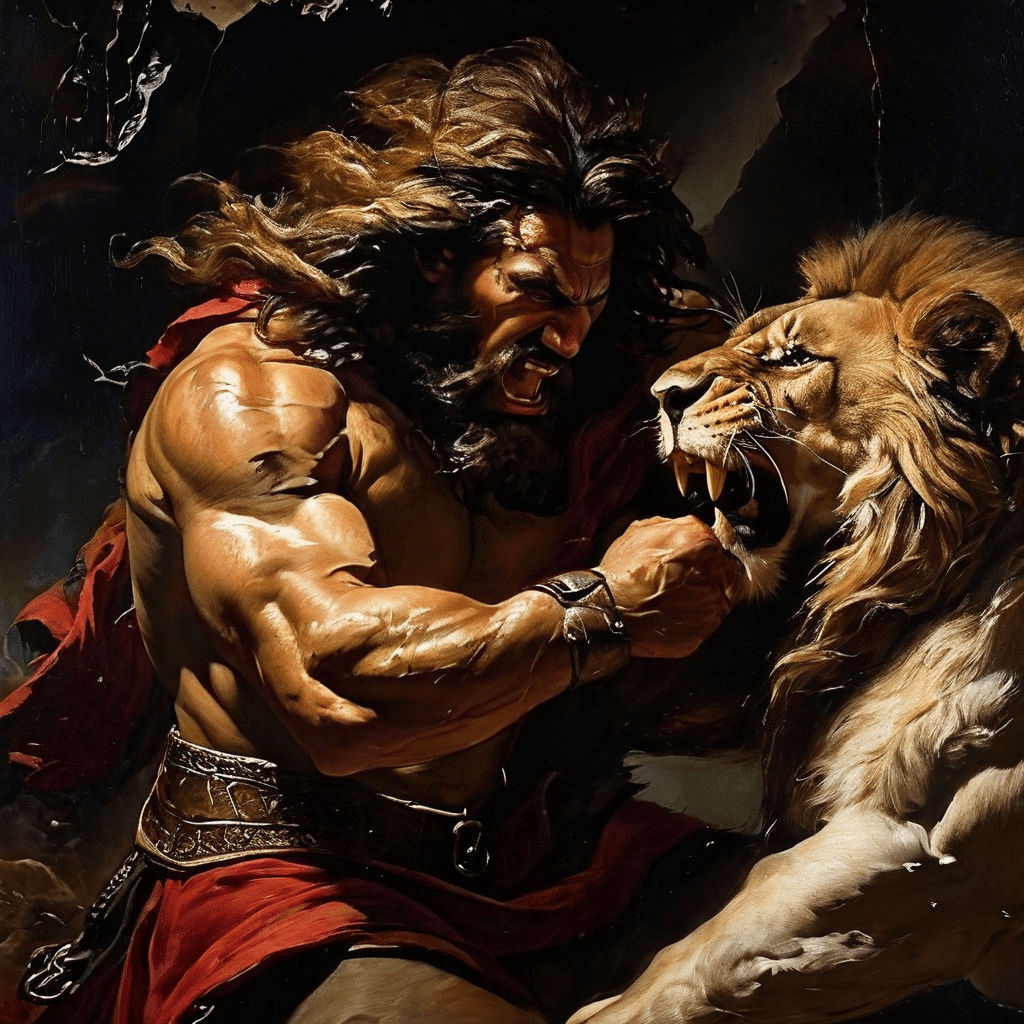















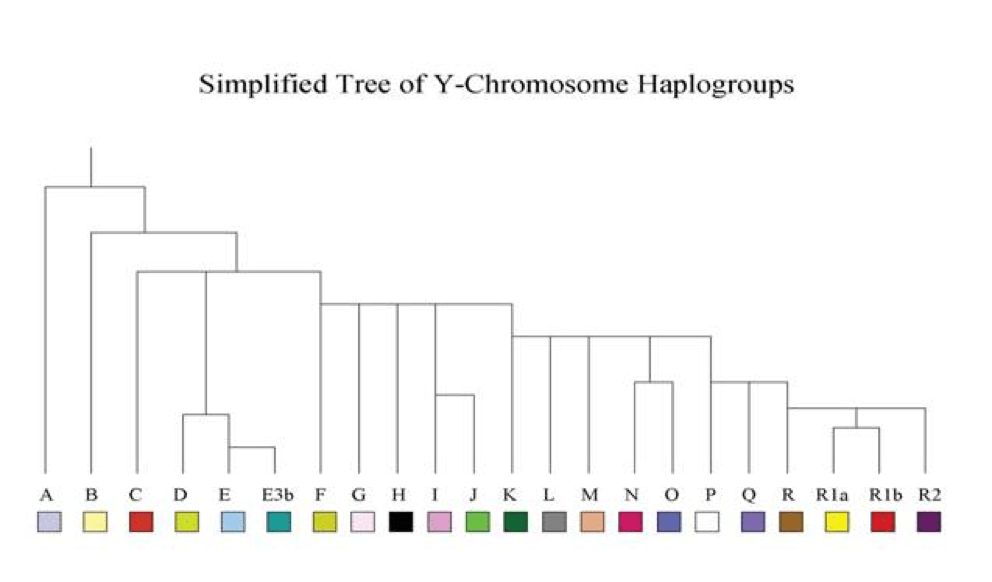
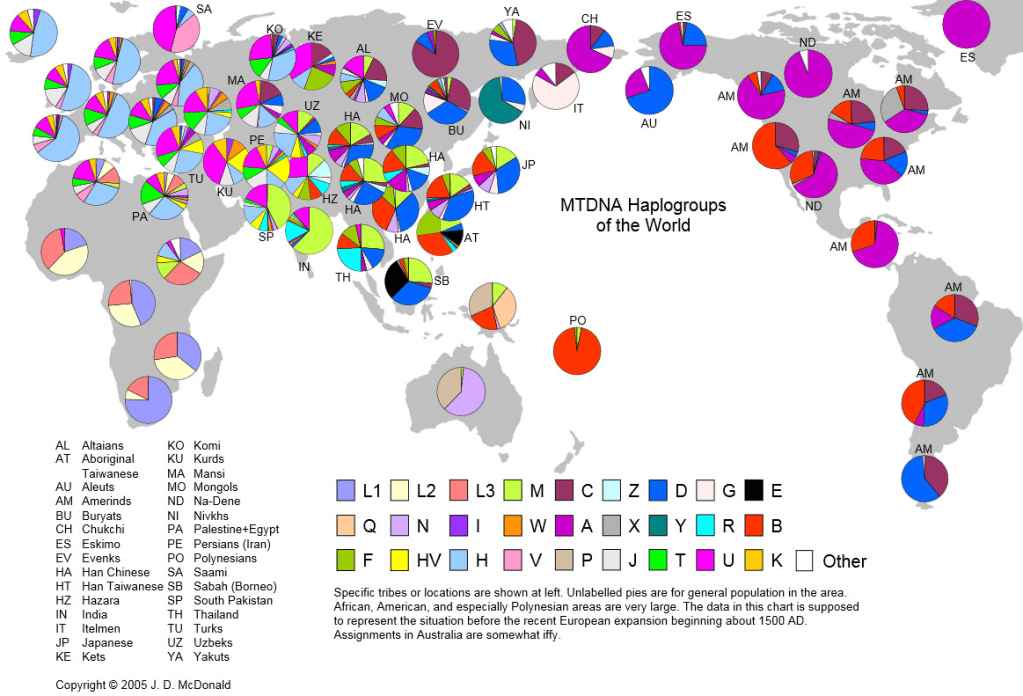




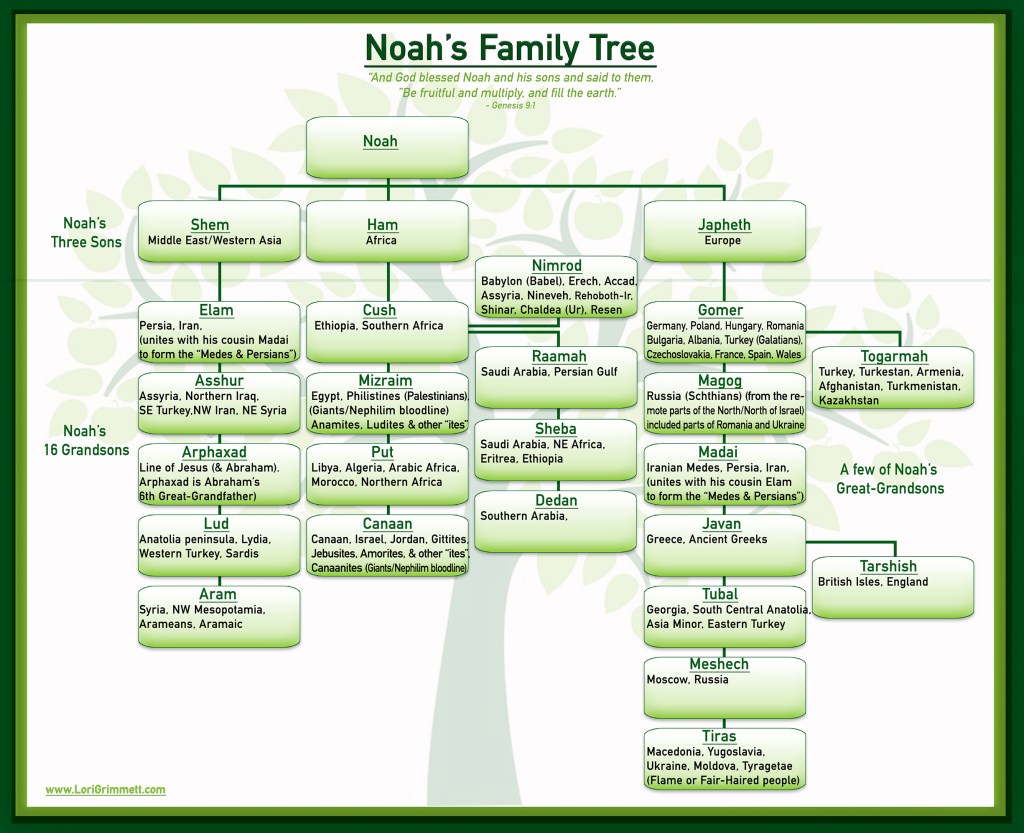
 The Lightkeeper