
It is remarkable that the notable Jewish historian of the first century CE, Flavius Josephus, is recognised and valued for his writings to a high degree, for often he is the final or only word on a matter; yet on the question of whether the Messiah was a real person, he is largely ignored. In Antiquities of the Jews, Book 18, Chapter 3:3, Josephus wrote:
“… there was about this time” – during the governorship of Roman procurator of Judea, Pontius Pilate from 26 to 36/37 CE – “Jesus, a wise man, if it be lawful to call him a man, for he was a doer of wonderful works, a teacher of such men as receive the truth with pleasure. He drew over to him both many of the Jews, and many of the Gentiles. He was the Christ; and when Pilate, at the suggestion of the principle men among us, had condemned him to the cross, those who had first come to love him did not cease. He appeared to them alive again the third day, as the divine prophets had foretold these and ten thousand other wonderful things concerning him; and the tribe of Christians, so named from him, are not extinct at this day” – refer article: The Christ Chronology.
One can see why, for it is very convenient with its information, including all the salient facts in a nutshell from a ‘Christian’ perspective and rather syrupy, with its glowing ‘wonderful’ descriptions, that again appear to be for the benefit of any Christian readers. If legitimately written by Josephus at the time, then it makes one wonder if he was a Christian himself? Using the commentary of Josephus as the final or only word would not be persuasive of itself. Unless of course, he were to make mention per chance of Christ again… and so he does.
The Real Jesus, Garner Ted Armstrong, 1977:
‘Josephus also mentions Jesus briefly in another passage which scholars feel is quite genuine: “He [Annas the High Priest] convened a judicial session of the Sanhedrin and brought before it the brother of Jesus the so-called Christ – James by name – and some others, who he charged with breaking the law and handed over to be stoned to death” – Josephus, Antiquities, XX, 200.’
Further evidence is again provided by noted Roman historian Tacitus, who had access to official court records, diplomatic correspondence and Roman archives. Writing – between 115 CE to 117 CE – about the Christians blamed by Emperor Nero for the disastrous fire in Rome in 64 CE, Tacitus unequivocally states:
“They got their name from Christ, who was executed by sentence of the Procurator Pontius Pilate in the reign of Tiberius. That checked the pernicious superstition for a short time, but it broke out afresh – not only in Judea, where the plague first arose, but in Rome itself, where all the horrible and shameful things in the world collect and find a home” – Annals, XV, 44.

What is not always understood, is that Christ and the apostles were commissioned to seek the lost sheep of the scattered tribes of Israel – Matthew 10:6, John 1:11, James 1:1, 1 Peter 1:1. Matthew 15:24 ESV: ‘[Jesus] answered, “I was sent only to the lost sheep of the house of Israel.” Christ, like the apostles knew the Israelites were ‘scattered abroad’ and not just living in portions of Judea – John 10:16. Whereas it was Paul who took upon himself the unique calling of preaching to Gentile nations (Galatians 2:7-8) – refer article: The Pauline Paradox.
From the age of twelve, Jesus of Nazareth, the son of Joseph and Mary suddenly disappears from the gospel accounts of his life. Mysteriously, he resurfaces in Galilee eighteen years later to begin his three and a half year ministry – Article: The Christ Chronology. Where was he? One thing is certain, Jesus had ample time to visit, live with and learn from, the descendants of the sons of Jacob.
And so it appears that Christ did in fact, travel the world with his Great Uncle, Joseph of Arimathea. Joseph, who was the equivalent of a business tycoon and global metal magnate of his day. Much of the life of Christ outside of the biblical account can be readily pieced together from tradition and what isn’t, is yet still ignored or denied by those who choose not to believe.
For the bible clearly states, with words inspired by the very Being who created us (Colossians 1:15-16) in John 1:10, The Voice: “[Jesus] entered our world, a world He made; yet the world did not recognize Him.”
Prior to concentrating fully on Jesus and his Great Uncle Joseph, (or even Paul), it may be beneficial to include a synopsis of the apostles (formerly disciples) responsible for spreading the Gospel of the good news of the Kingdom of God, in the early decades following Christ’s death – Matthew 24:14, Mark 1:14-15.
The original eleven apostles are “… Peter (1) and John (2) and James (3) and Andrew (4), Philip (5) and Thomas (6), Bartholomew (7) and Matthew (8), James (9) the son of Alphaeus (Mark 15:40) and Simon (10) the Zealot and Judas (11) the son of James” – Acts 1:13, ESV. The replacement for Judas was Matthias (12) – Acts 1:26.
Josephus recognised the dispersal of the Israelite tribes when he stated: “… [Wherefore] there are but two tribes in Asia and Europe subject to the Romans, while the ten tribes are beyond Euphrates till now, and are an immense multitude, and not to be estimated by numbers” – Flavius Josephus, Antiquities of the Jews, 11:5:2.
Theses tribes were scattered from as far west as the British Isles and as far eastwards as India. The main centres of Israelite occupation as we have thoroughly investigated and specifically located during Christ’s lifetime were Parthia, stretching from modern day Iran to India (1); the embryonic Saxon peoples who were part of the Scythian hordes of Central Asia, known as the Sakae or Saka (2); and the Celtic peoples (Cimmerians) of Britain, Ireland, Gaul, Iberia and Asia Minor (3).
Recall, the Messiah’s commission was to be sent to the House of Israel. As this precludes the peoples in northern Judea who were mainly from the tribe of Judah as well as encompassing remnants form other tribes; it then follows that Jesus would have travelled to those same regions in the world where these ‘lost sheep of the House of Israel’ were living – thus fulfilling scripture.
The Epistula Apostolorum, from the 3rd Century, verse 30 states: “But he said unto us: Go ye and preach unto the twelve tribes, and preach also unto the heathen, and to all the land of Israel from the east to the west and from the south unto the north…” This admonition ties in with Christ’s original instruction, when he told the disciples in Matthew 28:19 ESV: “Go therefore and make disciples of all nations…”
Hippolytus in the third century discusses the Apostles and the possible destinations they travelled in fulfilling the great commission. The reader is cautioned that not all of the information may be accurate. Peter is said to have preached the Gospel in Pontus, Galatia, Cappadocia, Betania and Asia. His brother Andrew (Matthew 4:18) is noted for preaching to the Scythians and Thracians and was later crucified – suspended on an olive tree, at Patrae a town of Achaia and then buried there. Tradition even says that Andrew preached the gospel in Scotland, where he is the patron saint.
John preached in Asia, was banished by Roman Emperor Domitian (81 to 96 CE) to the isle of Patmos, in which he wrote his Gospel and saw the apocalyptic visions in the Book of Revelation – Revelation 1:9. He was likely released by Nero’s successor, Nerva (96-98 CE). During Emperor Trajan’s reign (98 to 117 BCE), John at 101 years of age, passed away at Ephesus, where his remains were sought for, but could not be found (supposedly) – refer article: The Seven Churches – A Message for the Church of God in the Latter Days. Tradition says he preached in Gaul. His brother James (Matthew 4:21), when preaching in Judea, was cut down with the sword by Herod (41-44 CE) the tetrarch circa 44 CE and was buried there – Acts 12:1-2.
Philip preached in Phrygia and Scythia and was crucified – after enduring a stoning in Hierapolis near Laodicea and Colossae in Asia Minor – with his head ignomously downward, in the time of Domitian (81-96 CE) and was degradingly buried with his corpse upright. Bartholomew also known as Nathanael (John 1:45), preached to ‘Indians’ which is probably a reference to the Israelite Parthians and to whom he gave the Gospel of Matthew (actually written by John Mark on behalf of Peter) – refer* article: The Pauline Paradox. He was crucified with his head pointing downward and buried in Allanum, a town of greater Armenia where Bartholomew had preached – as well as in Upper Phyrigia and Cilicia.
The Apostle Matthew also known as Levi, wrote his Gospel (the Book of Mark*) in the Hebrew tongue and it was published at Jerusalem. He died at Hierees, a town of Parthia, after he had also preached to the Ethiopians – Chapter XIII India & Pakistan: Cush & Phut. Thomas is said to have preached to the Parthians, Medes, Persians, Hyrcanians, Bactrians and Margians. He was thrust through in the four members of his body with pine spears at Calamene, a city of India and buried there.
James the son of Alphaeus – the brother of Matthew (Matthew 9:9; 10:3, Mark 2:14) – went to Britain and Ireland. While preaching in Jerusalem, he was stoned to death by the Jews and was buried beside the temple. Prior to this he preached the gospel in Spain: “The Spanish writers… contend, after the death of Stephen [Acts 7:58-60] he [James] came… into Spain where he planted Christianity” – Cave, Antiquitates Apostolicae, page 148. Jude or Judas (John 14:22), who was also called Lebbaeus Thaddeus, preached to the people of Edess and to all Mesopotamia, including Assyria. He passed away at Berytus and was buried there.
Simon the Zealot (or Canaanite) – the son of Clopas who was also called Jude – became bishop of Jerusalem after James the Just – the half-brother of Jesus – and was buried there at the age of one hundred and twenty years. Contrary to this (or perhaps in tandem in part) and confusingly from Hippolytus, is the alternative explanation: “[Simon] directed his journey toward Egypt, then to Cyrene, and Africa… and throughout Mauritania and all Libya, preaching the gospel… and [then] over to the western islands… to Britain… He went at last into Britain, and… was crucified… and buried there” – Cave, Antiquitates Apostolicae, page 203.
We will return to the Apostle Simon. Matthias, originally one of the seventy was later numbered along with the eleven apostles, after Judas Iscariot’s suicide. Matthias preached in Macedonia, Dacia and Jerusalem, where he was buried – Acts 1:23-26.
Paul likely entered into his ‘apostleship’ around 35 CE; five years after the resurrection of Christ, though it could have been later – preaching his Gospel for about thirty years. In the time of Nero (54-68 BCE) he was beheaded at Rome and buried there – Hippolytus, On the Twelve Apostles, in Ante-Nicene Fathers, Volume V by Robert & Donaldson, 1885 Hendrickson Publishers, Peabody (MA), printing 1999, pages 254-255.
Nota Bene
At this point it is only fair to mention the status of the man originally called Saul and later, Paul. While mainstream Christians recognise Paul as a prominent figure in the New Testament church, the truth of the matter is that Paul was actually the founder of Christianity – refer article: The Pauline Paradox. His teachings are contrary to the apostles and in variance with that of Christ and followers of the Way.
Critically, anything written by Paul (seven New Testament books) and any credited to him (six New Testament books) are of no value in any theological debate. This wields huge irony for literally all the ‘difficult’ scriptures in the New Testament are ascribed to Paul – Article: The Sabbath Secrecy. That said, his life, particularly while in Rome and his relationship with the British Royal family are of intrinsic interest in this investigation.
Hippolytus mentions Aristobulus who is included in the scriptures written in 56 CE – Romans 16:10. He was one of the seventy disciples who were appointed to preach the Gospel of the Kingdom of God – Luke 10:1-24. Hippolytus correctly claims Aristobulus was the Bishop of Britain. As one of the seventy, he would certainly have known the early disciples who became apostles, for he is none other than the brother-in-law of the Apostle Peter.
The Martyrologia of Adonis says under March 17th: “Natal day of Aristobulus, Bishop of Britain, [elder] brother of… Barnabas the Apostle, by whom he was ordained bishop. He was sent to Britain where, after preaching the truth of Christ and forming a Church, he received martyrdom.”
This is of special note as Barnabas and Aristobulus had a sister called Mary (Acts 12:12). She was the wife of Peter and they were the parents of John Mark – the nephew of Barnabas and Aristobulus (1 Peter 5:13, Colossians 4:10).
Eusebius confirms that Jesus’s disciples preached to the three main bodies of Israelites at the time: “His disciples… to preach to all the Name of Jesus, to teach about His marvelous deeds in… [the] Roman Empire, and the Queen of Cities itself, and… that others should go to the Parthian race, and yet others to the Scythian, that some already should have reached the very ends of the world…” And “The Apostles passed beyond the ocean to the isles called the Britannic Isles” – De Demonstratione Evangelii, Library III. The Apostles were commissioned to go to not just Jerusalem, Judea and Samaria but to the farthest part of the earth – Acts 1:8. Heading in a north-westerly direction leads one to the far away isles waiting for the truth – Isaiah 42:4.
Tradition says the Apostle Peter went to Italy, became the first Apostolic See of Rome, was crucified by Emperor Nero and buried on Vatican Hill. Though there is no biblical evidence that Peter ever set foot in Rome. He is not included in Paul’s salutations to those at Rome; a serious omission if such was the case – Romans 16:1-15. If Peter had been at Rome, then Paul would not have been teaching brethren in Rome for the first time – Acts 28:21-23. The Bible reveals Peter definitely spent time in Jerusalem and also in Babylon – Acts 15:4, 7, 1 Peter 5:13. Yet even so, we will discover that the Apostle Peter did actually visit Italy, including Rome and that he was executed by Nero’s orders and buried there. What is not true is that Peter was not the first Bishop of Rome, let alone its first apostle for he did not establish his residence there.
The Greek historian, Metaphrastes informs that: “Peter was not only in these western [Mediterranean] parts but particularly… he was a long time in Britain, where he converted many nations to the faith” – Cave, Antiquitates Apostolicae, page 45. The Venerable Bede [670-735] in his Ecclesiatical History of the English Nation writes that in 665, Pope Vitalian sent the mortal remains of several Saints to Oswy, King of Britain: “… we have ordered the… relics of the blessed apostles, Peter and Paul, and… John… to be delivered to the bearers of these our letters, to be by them delivered to you.”
As Bede is held in high regard, it would be very doubtful he would put nib to scroll in his name to knowledge that was untrue. If such is the truth, then these two stalwarts of the faith (Peter and John) – excepting Paul – would undoubtedly have been buried in Avalon. So who then, is buried under the altar in St Peter’s Basilica in Rome? It was not Simon Peter, but another ‘Peter’ masquerading as a true Apostle of Christ. None other than Simon Magus who established a counterfeit church based in Rome and it is he that was the first Apostle of Rome – Acts 8:5-24, Revelation 17:5. Refer article: The Seven Churches – A Message for the Church of God in the Latter Days.
William Steuart McBirnie, in his book, The Search for the Twelve Apostles, states: “There certainly is no other tradition known concerning the history of St. Joseph of Arimathea and since the British tradition is vigorous we see no reason to challenge it… If in any country there is a strong tradition concerning some Apostolic figures, and no counter tradition elsewhere, then we at least stand on the ground of possibility and even probability. So it is with… St. Joseph.”
The true Way (Acts 9:2; 19:23; 24:14, 22) – rather than what today is called Christianity – as taught by the apostles, was established in Britain from as early as 35 CE and as we shall discover, spearheaded initially by Joseph of Arimathea; then the Apostle Peter; Aristobulus the Bishop of Britain, his brother Barnabas; and the Apostle Simon the Zealot. Later, Paul in between his imprisonment years in Rome during 58 to 64 CE also visited Britain.
‘Gildas [Badonicus] the earliest British writer of history, 520’ CE, states: “Meanwhile these islands… in a distant region of the world… received the beams of light, that is, the holy precepts of Christ… at the latter part, as we know, of the reign of Tiberius Caesar [14-37 CE], by whom his religion was propagated without impediment.” ‘… the events mentioned appear to be [prior]… to the defeat of Boadicea, [in] A.D. [62]… [at the latest and more likely before]… the defeat of Caractacus, [in] A.D. [52]. Therefore the testimony of Gildas is to the effect that the gospel was preached in Britain [well] before the year 61’ CE – The Sabbath in the British Isles; Reprinted from “Seventh Day Baptists in Europe and America” Volume 1, 1910, pages 21-39.
The Way in Britain from the beginning, varied considerably with the teachings which arrived later from the Universal Church centred in Rome. From an outsiders perspective it had more of a Judaic form. It is worth noting that the Celtic or Keltic churches claimed to have descended from the true church congregation based in Ephesus, where the Apostle John had lived and preached – refer article: The Seven Churches – A Message for the Church of God in the Latter Days. The Keltic Churches of Ireland, Galloway and of Iona in Scotland were one with the British Church and they claimed like Southern Gaul and Iberia, to have drawn their faith from the Apostolic Church of Ephesus.
These early churches embodied a simpler, yet a more missionary type of religion compared with the Church of Rome. Doctrinally, even from the early centuries there were a number of significant differences. Though the key teachings of disagreement, where the Church of Rome had changed to incorporate palatable pagan and gnostic ideas, were the Trinity (the Councils of Nicaea in 325 CE and Constantinople in 381 CE); the Lord’s Day (Council of Laodicea 364 CE); and Easter (Council of Nicaea 325 CE).
The truth regarding one eternal God and the Son of Man’s origin were substituted with the Trinity, refer article: Arius, Alexander & Athanasius; the Saturday Sabbath was made illegal and substituted with the observance of the Lord’s Day, the day of the Sun on the first day of the week – yet both as physical observances are either obsolete or unscriptural, refer articles: The Sabbath Secrecy; and Chronology of Christ – and the observance of Passover on the 14th day after the new Moon of the first sacred calendar month, was substituted with the commemoration of Easter on the first Sunday following the full Moon after the Spring Equinox (today March 21) – yet again, both are either obsolete or unscriptural, respectively.
The eighth century Catholic monk and historian Bede, highlighted the difference with church leaders in Britain: “They do not keep Easter Sunday at the proper time, but from the fourteenth… They did other things too which were not in keeping with the unity of the Church. After a long dispute they were unwilling, in spite of the prayers, exhortations, and rebukes of Augustine and his companions to give their assent, preferring their own traditions to those which all the churches throughout the world agree…”
Vatican librarian Cardinal Baronius (1538–1607) who spent 30 years compiling his history from Vatican records and Anglican archbishop Ussher (1581–1656) mentioned several of the Apostles and their companions traveled to the ‘Isles of the West.’ Cardinal Cesar Baronious provided the following details in Latin. “Annus 35… Lazarum, Mariam Magdalenam, Martham, & Marcellam peditfequam… cum Maximino difcipulo… comitemque… Ioiephum ab Arimathaea nobilum Decurionem, quem tradunt ex Gallia in Brittanniam naugafie, illeque pofit predicatum diem claufifle extremum” – Annales Ecclesiastici, Sumptibus Uoannis Gymnici & Antonji Hierati, 1609, pages 280-281.
An approximate translation: “Year 35 CE… Lazarus [John 12:9-11], Mary Magdalene [Mark 16:9], Martha, [and] Marcella [her] servant… with the disciple of Maximim… and with… Joseph of Arimathea the noble Decurion, fled in a boat without oars [or sails?] to Marseilles, then from Gaul to Britain, where after preaching the gospel [Joseph] ended his days [in Glastonbury].” A prominent companion on the same journey included Christ’s mother, Mary.
The poet Mistral states a handful of others who arrived in Gaul: Trophimus (Acts 20:4); Cleon; Eutropius; Restitutus (Sidonius) whom we know from the Bible as ‘the man born blind’ (John 9:1-38); Martial; Saturninus; Mary the wife of Cleophas (John 19:25); and Salome. The names of these saints have been perpetuated in the Gallic Church and Lazarus is persistently recognised as the first Bishop of Marseilles. Joseph of Arimathea was subsequently a frequent visitor to Gaul, to confer with the disciples resident there and particularly with the Apostle Philip, who had arrived at Marseilles ahead of Joseph and awaited him and the Bethany family. It was Philip who consecrated Joseph, appointing him as ‘the Apostle to Britain’.
The fact that Philip was the Apostle of Gaul is noteworthy, for Paul’s letter to the Galatians is a misinterpretation and his letter is in fact the Letter to the Gauls, where descendants of Jacob were living in considerable numbers. Galatia meanwhile was an offshoot of Gauls. Likewise, his mention of Crescens being in Galatia, should read Gaul – 2 Timothy 4:10. Cardinal Baronius stated: ‘… that “to the Galatians” must be corrected in the place of “to the Gauls.” St. Epiphanius (315-407 CE) wrote: ‘… so that St. Paul assures [Luke] in his epistles about some of his disciples – “Crescens”, said he, “is in Gaul.” In it must not be read in Galatia as some have falsely thought, but in Gaul.’
Britain was the obvious choice for a safe haven as it was the only free state in Europe – safe from Roman persecution – and which afforded a secure asylum to these early Christians who had left the instability of Judea and the indelibly raw memories of Jesus’s shocking death which remained too vivid and fresh while they remained living in Palestine. With this band of illustrious people who had intimately known Christ and shared in the drama and horror of his execution, it is little wonder that the small isle of Britain became known as ‘the most hallowed ground on earth,’ ‘the Sacred Isle’ and ‘the Motherland.’
It was to this land that Jesus’ mother Mary arrived with her Uncle, Joseph of Arimathea. Though Christ had entrusted the care of his mother to ‘the disciple he loved’, universally considered to be John, we do not ever hear the Apostle John make mention of her. We have addressed who else might be the disciple that Jesus loved previously. The verse says John ‘took her to his own home.’ Though in the Greek, it does not include the word home – John 19:26-27. It should more accurately be rendered: ‘took her as his own [mother].’
John was a marked man and he had his apostolic commission that would necessitate considerable travel not suitable for Mary to endure and so it makes sense that ultimately, Mary should find refuge with her ‘own’ as in Joseph and the Bethany family of Lazarus and his sisters. William of Malmsbury in the Magna Tabula Glastoniensis says: “St. John while evangelizing Ephesus, made Joseph Paranymphos” – the Guardian of Mary. The fact that where Joseph went so did Mary, supports her being in his care and not in John’s.
The four gospels added with historical records reveal that Joseph of Arimathea had very high standing in the community; was a person of great wealth; the most influential businessman in Judea; and possessor of an honourable social distinction as evidenced by his ‘not consenting to the council and deed of them’, for he was a member of the Sanhedrin, as well as a ‘Provincial Roman Senator’ – George F Jowett, The Drama of the Lost Disciples, 1996, page 134. He was a good and righteous man and because of his visibility, a secret follower of Jesus, who ‘himself waited for the kingdom of God’. It was prophesied that Christ would be buried in the tomb of a rich man and Joseph was that individual – refer article: Chronology of Christ.
It took real courage on one hand to approach Pontius Pilate over the dead body of his great nephew, yet his position meant an audience with the Roman Governor of Judea at such short notice was not difficult to request or fulfil. It is hard to credit that Pilate who had signed Christ’s death warrant when he ‘washed his hands’ from the false charges against Jesus; then would release his body for private burial, allowing his tomb to become the shrine of a martyr. This would indicate not only Joseph’s rank and influence but also his rightful claim to Jesus’ body. A claim made possible by being a blood relative. The Jewish Talmud corroborates in stating that Joseph was the younger brother of the father of Mary.
It is clear from the biblical account that Mary’s husband – also Joseph – died while Jesus was young. The Judaic law in such circumstances appointed the next male kin as guardian of the family. We can begin to understand why Jesus was frequently seen in the company of his great Uncle, particularly at religious festivals and on voyages to Britain by ship, which Cornish traditions confirm and where ancient landmarks bear Hebrew names recording these visits. Joseph’s actions at the time of Jesus’ death affirm their close relationship. Rather than being a mere guardian of Jesus, Joseph was a father figure to Christ and treated him as his son. It becomes only more moving and harrowing to realise that it was this man, with the help of Nicodemus, who took Jesus’ broken body down from the cross, cradling the corpse of the very Son of God in his arms – John 19:38-40.
The Bible says that Joseph hurried to Pilate in requesting Jesus’ body because the day was ending, darkness was approaching and with it, the Passover that evening and the Sabbath which was also the Holy Day of the first day of Unleavened Bread, the following morning. Though there is a far more pressing urgency in Joseph’s need to meet with Pilate than it would appear. It begins with the word, tree and the true manner in which the Messiah was crucified.
In the nineteenth chapter of the Book of John, we learn a number of fascinating details that many have possibly overlooked. The first is that Jesus died in a garden called Golgotha, meaning ‘place of the skull’ – John 19:17, 41. Golgotha was a monticulus, which means ‘a small hill on top of a mount.’ The mount in question, being the Mount of Olives. The Greek word for garden means an orchard or plantation – a grove of trees. It was to this garden, set on a hill that Jesus carried not an assembled Latin or Greek cross, weighing some two hundred pounds but rather the crossbeam that would be fixed to a living tree. It was this crosspiece which Simon of Cyrene carried the final distance to Golgotha because Jesus was exhausted after enduring repeated brutal beatings at the hands of Pontius Pilate’s Roman soldiers throughout the night until dawn while imprisoned – Matthew 27:32.
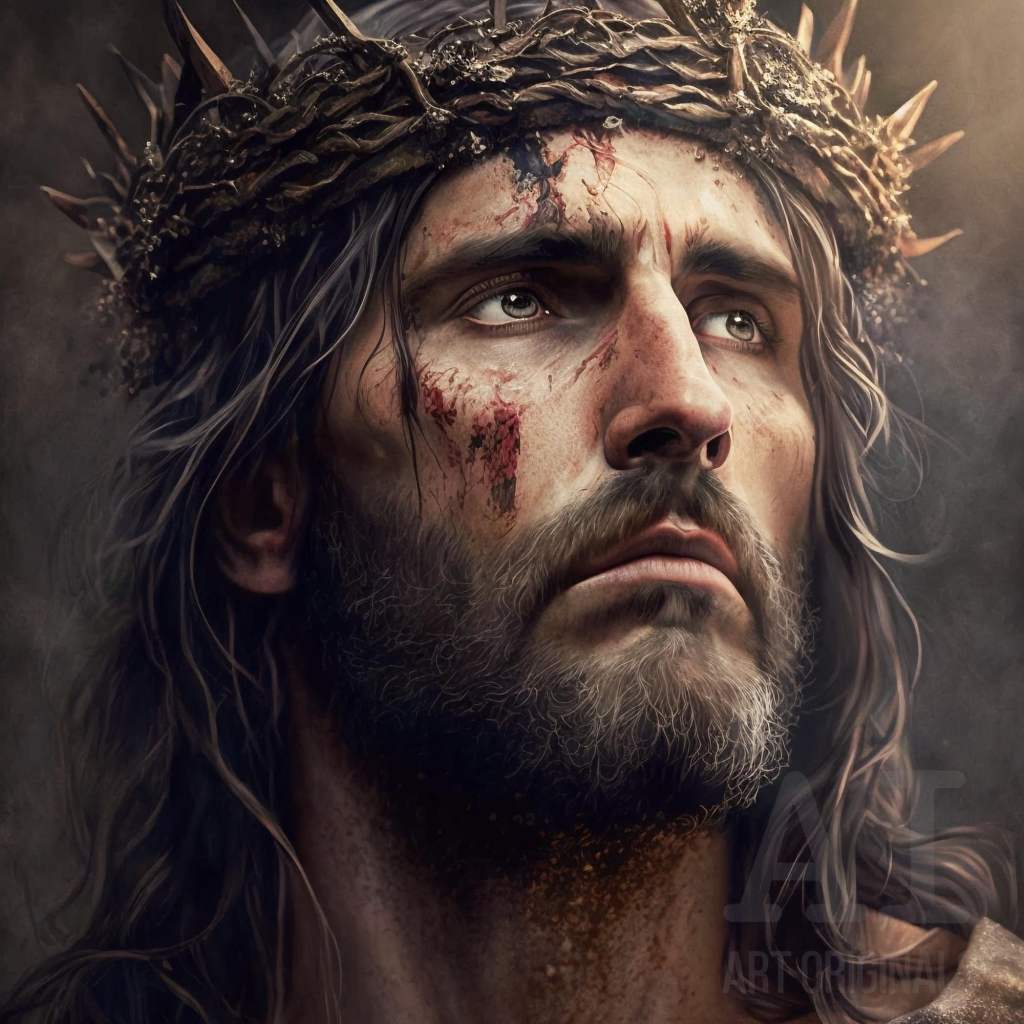
Biblical scholar Ernest Martin explains that this crosspiece associated with crucifixions had a technical Latin name, with the upper part of the cross known as a patibulum. Jesus would have had his hands and wrists bound and nailed to the patibulum. Both he and the patibulum would have then been hoisted upwards with the crossbeam nailed in place against a sizeable tree. Christ’s legs would have been bound at the ankles, his legs bent upwards together and his feet nailed to the tree trunk. It is important to understand that not only was the ‘cross’ a tree, but that the two robbers crucified with Jesus had their own patibulum, also nailed to the same tree. “… so that the bodie-s would not remain on the cross…” as referenced in John 19:31-32.
The trial, verdict, imprisonment and crucifixion of the Son of Man was not only illegal but rushed because of the timing right before the Passover and Feast of Unleavened Bread. As time was of the essence, a tree was used instead of a Roman cross. Added to this, was the biblical law that no one could hang on an instrument of death beyond sunset because the tree and the soil it was in were accounted as defiled by the accursed person – Deuteronomy 21:22-23, Galatians 3:13. This was part of the reason why Joseph was in a great hurry to rescue Christ’s corpse.
It was not uncommon in times of haste for criminals to be nailed to trees – Joshua 8:29; 10:26-27. In this instance, it meant the Roman soldiers did not have to dig three separate holes some five to six feet deep to secure three large standing poles.
The Apostle Peter (and Paul) confirm that Jesus was hung on and died on, a tree – Acts 10:39; 13:29, 1 Peter 2:24. Acts 5:30 ESV: “The God of our fathers raised Jesus, whom you killed by hanging him on a tree [G3586 – xulon: tree, wood, log, beam].” In John chapter nineteen a different word is used G4716 – stauros. This word is generic and means a ‘pole, stake, cross.’ It applies to any instrument used for execution and therefore can also apply to a tree.
The word stauros can be used for the patibulum which supported Christ’s arms (Luke 23:26); it can be used for the actual pole or tree trunk itself (John 19:19); and it can be used for the combined patibulum and pole or tree trunk used as a single device for execution – John 19:25. There is a colossal irony in Jesus dying on a tree, for Christ is a living tree, the source of Eternal life and our Maker – Genesis 2:9, Psalm 1:3, Colossians 1:15-20, Revelation 2:7; 22:2, 14. “Early Christian art indicates a close relationship between the tree of life and the cross. The Cross of Christ, the wood of suffering and death, is for Christians a tree of life. The idea that the living trunk of the cross bears twigs and leaves is a common motif in Christian antiquity” – Kittel, Theological Dictionary, Volume V, Pages 40-41.
Returning to Joseph’s urgency in claiming Christ’s body; his remains were accursed, which meant so was the tree upon which he was hung. The author of Hebrews reckoned the cross as a ‘shame’ and a ‘reproach’ – Hebrews 12:2; 13:13. To cleanse the area, required purging and this was accomplished through burning with fire – Deuteronomy 21:21, Joshua 7:24-26, Isaiah 4:4, Ezekiel 22:17-19. Joshua 7:15 NKJV: “Then it shall be that he who is taken with the accursed thing shall be burned with fire, he and all that he has, because he has transgressed the covenant of the Lord, and because he has done a disgraceful thing in Israel.” According to the law and usual protocol, the Jews fully expected to burn and destroy the tree of execution and the three men hanging dead from it. So it was of necessary daring that Joseph requested an immediate audience with Pontuis Pilate – Mark 15:43. If Joseph had not succeeded, Christ would have surely been consumed in the flames.
A prophecy makes clear that the tree of execution was destroyed and Jesus along with it, should Joseph have not dramatically intervened: “I was like an unsuspecting lamb led to its slaughter. I had no idea they were plotting against me. They were saying, “Let’s cut down that lush olive tree and destroy all its beautiful fruit. Let’s cut him off from the land of the living. Let’s make sure no one even remembers his name.” Jeremiah 11:19 – Jerome in the fourth century says of this verse: “The tree is his cross, and the bread [fruit] his body: for he says himself, I am the bread that came down from heaven” – John 6:51 – Anglican Commentary, London, 1875, Volume V, page 395.
There is one further aspect of the Messiah’s death prior to investigating his life before his ministry began in the Autumn of 26 CE. It is linked to Deuteronomy 21:21 ESV, which says: “Then all the men of the city shall stone him to death with stones. So you shall purge the evil from your midst, and all Israel shall hear, and fear.” As it was law to purge by fire an accursed one; it was also standard practice to throw stones at them while they hung upon a tree.
As the one mediator between God and men (1 Timothy 2:5) suffered brutal beatings through the night before his crucifixion and while he suffered the immense pressure and pain of slow asphyxiation; the Son of Man endured the horrifying experience of stoning that led up to his last breath and finally, death. The result of a relentless tide of pellet like stones meant: “Many people were shocked when they saw him. His appearance was so damaged he did not look like a man; his form was so changed they could barely tell he was human” – Isaiah 52:14 NCV.
Christ’s ancestor King David, was inspired to write about Jesus one thousand years before he was born: “The enemy, this gang of evil men, circles me like a pack of dogs; they have pierced my hands and feet. I can count every bone in my body” – Matthew 26:26. “See these men of evil gloat and stare…” – Psalm 22:16-17. These verses can only be understood in one context. Though Jesus was scourged, Pilate fully intended for Jesus to recover and be set free – Luke 23:22. The severe disfigurement of the Son of God was not by beating alone but through the pelting of sharp flint stones which are common on the Mount of Olives.
Even so, Chan Thomas states: ‘It is known that Jesus suffered “scourging” for some time before his walk to crucifixion with Simon of Cyrene, who was compelled by soldiers to carry his cross. “Scourging” meant torture with whips with barbs in the ends of the lashes of each whip; those barbs ate deeply through Jesus’ skin and into his flesh. It had to be excruciatingly painful. While on his walk to Golgotha, Jesus was still sufficiently conscious to have made the walk successfully; he had not yet entered a state of deep shock.’
And so, the One who had supreme glory sitting on a throne at the right hand side of the Ancient of Days, gave up his majesty upon high (Revelation 22:3); humbled himself as no other has ever done; laying down his eternal life for a creation that despises him and only seeks evil continually. This spectacular Being offered himself as the ultimate sacrifice in the determination to defeat Satan and sin once and for all. Naked, he endured a barrage of stones thrown at him – for possibly nearly six hours, from nine in the morning until he died at three in the afternoon – that would break his skin and eventually dislodge flesh away from the bone. They lacked the force to break any bones (John 19:36) and so the verses are accurately describing the complete and utter disfigurement to his body, his genitals and his face. The abhorrent result of being able to see all his protruding bones is atrociously heartrending in its vivid fulfilment.
Stoning was reserved for capital crimes under the Mosaic law – Leviticus 20:2, Deuteronomy 13:10. Though the pelting of stones by a mob at a person who merited ill-will also occurred – Exodus 8:26; 17:4, 2 Chronicles 24:20, Hebrews 11:37, Acts 5:26. The reader must understand that this was on top of the ignominy of being nailed to the tree in the first place. Chan Thomas explains the procedure:
‘Contrary to one of the popular myths, Jesus was not nailed to the cross through his hands and spaces through his bones in his lower feet leading to his toes. It was a common form of execution in that time, and always, the nails were driven through a space in the wrist bones as, if driven through the hands, the crucified could pull his hands off of the nails easily while on the cross.’
The Most Painful ways to Die, according to Science, Jeff Somers: ‘The nails don’t go through the palms, but through the wrists, which would feel like “lightning going through your middle and ring fingers” while hitting the median nerve, making your hands contract in agony.’
Thomas: ‘Plus, the same conditions existed in the feet of the crucified: in order to keep him from pulling his feet off of the nails, the nail or nails had to be driven through a space between the upper foot bones. Therefore, the crucified became literally a prisoner of the cross. The only way to get him off of the cross was to pull the nails.’ Somers: “And while this torture is going on, insects may be gnawing away at the wounds, causing even more pain. It’s so painful, in fact, that, as noted by Azusa Pacific University, the word “excruciating” actually derives from “crucifixion.” Excruciating: “extremely painful; causing intense suffering; unbearably distressing; torturing: excruciating pain.”
Thomas: ‘The crucified was nailed to the cross in such a way that, with his knees bent somewhat, he could hang by his arms and rest his legs. After a while his diaphragm would enter the early stages of paralysis, and he would feel suffocation oncoming. Then he would straighten his legs, standing on his nailed feet, providing relief for his arms from bearing the stress of holding up his body, thereby relieving the stress on his diaphragm leading to paralysis and suffocation. Consequently, he endured a running continuum of up and down, up and down, up and down for hours and hours. Those responsible for performing the crucifixion had a way of stopping this endurance test. They simply broke the legs of the crucified so that he couldn’t stand on them anymore. He was forced to hang by his arms without surcease; he soon fell into full paralysis of his diaphragm and died of suffocation.’
Thus Christ was sentenced to death by the Romans as the people of Judea were forbidden to apply the death penalty; but in so doing, Pilate allowed the Jerusalem authorities to kill Christ according to biblical law – John 18:31. Therefore, extraordinarily and uniquely, Christ suffered the two death penalties simultaneously and though the Roman crucifixion certainly contributed to his death, it was the Edomite Jews stoning him which killed Jesus.
The truth surrounding the manner of the Messiah’s death is profound, yet not widely known and Isaiah who penned the words, himself acknowledges that those who learn the truth would be amazed; including the educated and stately of the world: “Now many nations will be astonished… world rulers will be speechless… For they will see what they’ve never been told; they will understand what they’ve never heard” – Isaiah 52:15 The Voice. But Isaiah knowing human nature also knew that few would believe or be moved: “But, oh, how few believe it! Who will listen? To whom will God reveal his saving power?” – Isaiah 53:1.

The risen Christ looked very different from how he had looked formerly. The most accurate description of Christ is in the Bible: “There was nothing attractive about him, nothing to cause us to take a second look. He was looked down on and passed over, a man who suffered, who knew pain firsthand. One look at him and people turned away. We looked down on him, thought he was scum” – Isaiah 53:2–3, The Message. Later, after Christ’s resurrection and being restored to his previous glory, Jesus looked very different – John 17:5, Revelation 1:14.
Mary Magdalene, the two disciples on the road to Emmaus and Thomas did not recognise him – Luke 24:13-16, John 20:14, 24-27. Though Jesus was not yet returned to spirit and still physical flesh and bone – Luke 24:39-40. His new looks are described: “You are the most handsome of the sons of men; grace is poured upon your lips; therefore God has blessed you forever” – Psalm 45:2. He was now his restored true self and would have been what we would call attractive and handsome – Revelation 1:14, 18.
For anyone to claim that the Saviour did not exist or deny his sonship from the Father reveals a deeply deceived mind indeed, for: “Such teachings are spread by deceitful liars, whose consciences are dead, as if burnt with a hot iron” – 1 Timothy 4:2, GNT. Paul says: “Stop fooling yourselves. If you count yourself above average in intelligence, as judged by this world’s standards, you had better put this all aside… For the wisdom of this world is foolishness to God… God uses man’s own brilliance to trap him; he stumbles over his own “wisdom” and falls… the Lord knows full well how the human mind reasons and how foolish and futile it is” – I corinthians 3:18-20, TLB.
Joseph of Arimathea returned to Britain in 35 CE, for it was not his first visit. The Latin Vulgate translated by Jerome, renders ‘honourable counsellor’ (Mark 15:43, Luke 23:50) as nobilis decurio. Decurio was the name given to a town counsellor as well as an officer in the Roman Army. Dr C R Davey Biggs in Ictis and Avalon, explains that a Decurio was also a common term employed by the Romans used of an ‘officer’ or an official in charge of a metal mine. The addition of the word noble, indicates that Joseph held a prominent position in the Roman administration as a Minister of Mines and as a provincial Roman Senator. For an Israelite from Judah to hold such high rank in the Roman Empire is unusual to say the least. A number of writers have put forward a case that Joseph was an international merchant involved in mining; including E Raymond Capt in The Traditions of Glastonbury. It would explain the source of his immense commercial wealth and measure of political standing.
Even more interesting is that the south-western coast of England was renowned for tin mining. Cornwall was the source for a major portion of the world’s tin at the time; where it was smelted into ingots and exported throughout the civilised world – chiefly in one of the largest private merchant fleets afloat owned by Joseph – traversing the many sea lanes in transporting the precious metal. The main customer being the warring Roman Empire. Joseph of Arimathea had a controlling interest in the world tin and lead industry much like the importance of steel today. The existence of the tin trade between Cornwall and Phoenicia is frequently referred to by classical writers, including Diodorus Siculus and Julius Caesar.
Therefore, Joseph would have been a frequent visitor to Britain for it was the main source of tin in the ancient world. As a number of Israelite tribes were already resident in Britain including those from Simeon, Dan and Benjamin, it is plausible that Joseph from the tribe of Judah would be trading with people descended from these tribes – Chapter XXX Judah & Benjamin – the Regal Tribes; and Chapter XXXI Reuben, Simeon, Levi & Gad – the Celtic Tribes. Britain was referred to as the Cassiterides, or the tin bearing islands. The Sunday Telegraph of September 21st, 1969 announced that “There is still probably as much tin under the Cornish ground as ever came out of it.”
When Joseph and his party arrived in Britain, they sailed inland to the Isle of Avalon, today known as Glastonbury and named from either aval, Celtic for apple, the sacred fruit of the Druids; and or, avilion, which in Celtic has a similar meaning as the Biblical name Jehoshaphet, ‘the Isle of departed spirits’. The sea came fourteen miles further inland in those days and lapped at the foot of Glastonbury Tor, a 521 foot high hill.
Joseph is said to have planted his staff in the ground at Wearyall Hill, where it took root, growing into a thorn tree. It is not unknown for a staff cut from a tree to take root, as Aaron’s rod budded – Numbers 17:8. A scion of the original tree still exists to this day in the hallowed churchyard of St John at Glastonbury. What makes it unique is that it is the only thorn tree in the entire world that blooms both in winter and in May.
This group was met by King Guiderius and his brother, Prince Arviragus; for it was he who had extended the invitation to Joseph and his party, being well acquainted with Joseph and granting them twelve hides of land, tax free – a symbol of promised protection. A hide was larger prior to the Norman invasion in 1066. A hide since represents 120 acres (50 hectares) of land; though in Joseph’s day it was 160 acres. This Royal Charter is recorded in the Domesday Book, published in 1087: “The Domus Dei, in the great monastery of Glastonbury, called the Secret of the Lord. This Glastonbury Church possesses, in its own ville XII hides of land which have never paid tax.” The twelve hides of land can still be traced today -at time of writing – Phelps, The History and Antiquities of Somersetshire, 1836.
Arviragus was Prince of the Silures in Britain, resident in the Dukedom of Cornwall. He was the son of King Cunobelinus – Cymbeline of Shakespeare fame – and a cousin of the warlike patriot Prince Caradoc. These two men represented the Royal Silurian Dynasty; the most powerful warrior kingdom in Britain and from whom the later Tudor kings and queens of England had their descent and from Arviragus no less, the illustrious Emperor Constantine of Byzantium descended (306-337 CE) – refer articles: The Seven Churches – A Message for the Church of God in the Latter Days; and The Calendar Conspiracy.
Arviragus was later a convert of Joseph: “Joseph converted this King Arviragus, By his prechying to know ye laws divine. And baptized him… And to Christian laws made hym inclyne…’ – Hardynge’s Chronicle. Raymond Capt cites evidence that Glastonbury bore two titles from ancient times Secretum Domini and Domus Dei, Latin for ‘The Secret of the Lord’ and ‘The House of God.’
Joseph of Arimathea constructed the first Church above ground and it was in Britain, on the same site where Jesus had originally constructed a wattle temple and altar to commune with the Father and affectionately dedicated to his mother, Mary – as confirmed by St Augustine in a letter to the Pope, stating the altar had existed. For up to that time the followers of the Way had met in peoples homes.
For the Greek word for Church is ekklesia, meaning ‘called out ones.’ The Church constituted the people, not a building – Romans 16:3-5, 1 Corinthians 16:19, Colossians 4:15, Philemon 2. During the persecution, the Church had met in underground catacombs in Jerusalem. This first British church building was made from wattles daubed with mud, thatched with reeds and was sixty feet long and twenty-six feet wide. Very close to the dimensions of the Tabernacle during the wilderness years and the time of the Judges (Exodus 26:1-37) – refer article: The Ark of God.
The original sacred temple and altar was preserved for hundreds of years until St David erected the first stone church in 546 CE over the hallowed wattle temple of Christ. He also encased the temple in lead to preserve it, which was reputed to also be the resting place of Mary. In 1184, a fire destroyed the Wattle Church. Fortuitously in its place, a Norman Chapel was erected, which though ruined remains till this day.
John Leland quoting from Maelgwyn of Avalon’s Historia de Rebus Britannicis in 540 CE states: “The isle of Avalon… received thousands of sleepers, among whom Joseph de Marmore from Arimathea by name, entered his perpetual sleep. And he lies in a bifurcated line next the southern angle of the oratory made of circular wattles by thirteen inhabitants of the place over the powerful adorable Virgin.” The tomb of Joseph was inscribed with the epitaph: AD BRITANNOS VENI POST CHRITUM SEPELIVI. DOCUI. QUIEVI. Meaning, “I came to Britain after burying Christ. I taught. I rest.” Nothing remains of his grave, though there is an empty stone sarcophagus in St John’s Parish Church, where allegedly his remains were transferred.
Joseph of Arimathea looms large on the canvas that is the life of Christ and the early New Testament church. His contribution to the work of the Gospel based in Avalon and his service to the saints and disciples of Christ’s little flock is both immeasurable and influential, with that of the preeminent apostles, Peter and John. Perhaps, no one grew as close to the Saviour after his mother Mary and the disciple he loved, John, as his Great Uncle. Joseph was truly a father figure to Jesus, for the biblical account and historical records reveal a deeply touching and moving story of a man who probably reluctantly stepped into the role, that was so early vacated by Jesus’ father Joseph. He is the unsung hero of the New Testament and a more pivotal role at that time in the history of mankind could not have gone to more sincere and humble man.
Joseph’s death in July, 82 CE (according to Cressy) of very old age, must have cast a dark cloud on those of the early church who yet remained and had begun the final period or phase of the apostolic era (30-98 CE) until its justifiable end with the death of the last original Apostle, John. Church tradition says John died during the reign of Emperor Trajan from 98 to 117 CE; Irenaeus speaks of John as still living in 98 CE and passing away at the grand old age of 101; and Jerome dates John’s death as sixty-eight years after the Crucifixion in 30 CE. Thus if John died in 98 CE at 101, this means he was born the exact same year as his beloved Lord in 3 BCE – refer article: The Christ Chronology.
The connection between Joseph and Mary the mother of Jesus, would indicate that she is also buried in Glastonbury. Support for this is that St Joseph’s Chapel was also known as St Mary’s and a stone set in the south wall of the Chapel bears the inscription: Jesus Maria. There are no records that Mary lived or died in Judea, nor has Jerome recorded that her remains were ever taken back to her original homeland. Capgrave in Novo Legende Anglia informs readers that the Apostle John was present at Mary’s death as were all the original living Apostles and disciples; who had come at Mary’s ‘bidding to be by her side as Mary breathed her last’ as described by historians on ‘the most hallowed ground on earth.’
The temple lovingly built by Jesus’ own hands, sanctified by his prayers and bequeathed to his mother was where Mary spent her last peaceful years from 35 to 48 CE, when she died, according to a number of old records. The support that Joseph buried her here is in the fact that: ‘No one better than they (the Roman Catholic Church) know the facts of her (Mary’s) life, and no one better than they espouse them. And over the ages the holy ground at Glastonbury has been constantly referred to by them as “Our Lady’s Dowry”. As such it has always been recognized by the Roman Catholic Sisterhood, who never ceased to pray daily for this hallowed spot at Glastonbury’ – St. Joseph of Arimathea at Glastonbury, James Clarke.
Melchinus known as Maelgywn, was a bard and philosopher of Avalonia who about 450 CE said: “Ye ealde chyrche was built over the grave of the Blessed Mary.” According to George F Jowett, when printing was invented, ‘the first book to come off the press was the Bible, and then Wynkyn De Worde printed the life story of St. Joseph.’ It was at the same time that Pynson printed from old documents in his work the Life of St. Joseph the following: “Now here how Joseph came into England; But at that time it was called Brytayne. Then XV yere with our lady, as I understande. Joseph wanted still to serve her he was fayne.” Here we learn that Joseph was in fact Mary’s guardian and carer from 33 CE. This would have been three years after the crucifixion and so we can deduce that the Apostle John lingered in either Jerusalem or Judea for those years until he departed on his evangelising, thus transferring care of Mary to her Uncle, Joseph of Arimathea.
Pynson adds regarding Joseph: “So after Her Assumpcyn, the boke telleth playne; With Saynt Phylyp he went into France. Phylyp bad then go to Great Brytayn fortunate.” We learn that Joseph sought consolation by being with his good friend Philip the Apostle. William of Malmesbury quoting from an old record of the Abbey at Glastonbury dated 183 CE: “Their leader, it is said, was Phillip’s dearest friend, Joseph of Arimathea, who buried our Lord.”
Philip recognising Joseph’s value in Britain and particularly accompanying and hosting the new missionaries who Philip sent periodically from Gaul each time with Joseph, had him return to Britain rather than linger on the continent. In fact, Philip sent a total of one hundred and sixty disciples over the years to assist Joseph and his companions in Britain – Capgrave, De Sancto Joseph ab Aramathea. On this particular trip, Joseph’s own son Josephe travelled with him for he had been recently baptised by Philip. Philip had requested Josephe to return to Gaul after arriving in Britain in 35 CE.
In 60 CE Joseph had a special passenger with his new recruits in the form of the Apostle Simon the Zealot. Simon had been to Britain once before in 44 CE according to Cardinal Baronius and Hippolytus, though only staying a short while during the Claudian war. Simon was known as the Canaanite because he had been born in Cana of Galilee, not necessarily because he was a descendant of Canaan; though this cannot be entirely ruled out.
He later was known as Zelotes, or the zealot on the strength of his enthusiasm and fearlessness for his missionary work which took him to Mauritania, Libya, Egypt and Africa. So fiery were his sermons in the east of England, where there were less Britons and many Roman soldiers stationed, his evangelising was short-lived. He quickly caught the attention of the Roman Catis Decianus, who was set to destroy anything and everyone Christian. Not before Simon had converted Britons and Romans alike, though the latter had to keep it secret. He was condemned to death at Caistor, Lincolnshire, crucified and buried May 10, 61 CE. The second Christian martyr in Britain after the Bishop Aristobulus.
Lazarus and his sisters, Mary and Martha did not stay long upon their arrival in Avalon; whether Joseph encouraged them, or Philip requested it, or they just preferred Gaul, the three of them returned. Lazarus left an imprint of his time in Britain in The Triads of Lazarus. Jowett states: “Nowhere else are his laws recorded and nowhere else but in Britain was the word ‘Triad’ employed, not even in Gaul. The word is Celtic for Law. The Triads of Lazarus are still preserved in the ancient Celtic records of Britain.’
It was back to Marseilles where Lazarus returned. Roger Hovedon comments: “Marseilles is an episcopal city… Here are the relics of St. Lazarus [still venerated greatly to this day], the brother of St. Mary Magdalene and Martha, who held the Bishopric for seven years.” Similarly, the Church records of Lyons state: “Lazarus returned to Gaul from Britain to Marseilles, taking with him Mary… and Martha. He was the first appointed bishop. He died there seven years later” – circa 42 to 45 CE. Before the escape from Judea in 35 CE, Lazarus had served as the Bishop of Cyprus. Lazarus built the first church building in Marseilles, the same site where the present Cathedral stands. Lazarus is remembered fondly – perhaps more so than Philip who served longer in Gaul – for his zealous preaching and kindness. Many consider him as the Apostle of Gaul and in Marseilles, Lyons, Aix, St Maximin and La Sainte Baume, numerous monuments, liturgies, relics and traditions remind of his esteemed memory.
The Apostle Philip at first, sent Martha and her faithful handmaid Marcella to Arles. She was not there long, with Trophimus replacing her and he was soon consecrated the first Bishop of Arles. He was industrious and his area grew to become the Metropolitan of the Narbonne, with Arles as his Bishopric. Eutropius the first Bishop of Aquitaine and Parmena – who is not listed in the original party and was a disciple of Joseph, becoming the first Bishop of Avignon – also departed Britain to serve in Gaul. Meanwhile Martha and Marcella settled in Tarascon, spending the rest of their lives teaching and ministering. They both died naturally and ‘Marcella was with Martha at her death.’
Maximin joined the other Bethany sister, Mary at Aix. It is controversial to equate Mary Magdalene with Mary of Bethany, though the French Church regards them as one. Maximin was the first Bishop of Aix and he and Mary lived the rest of their lives there. There are many relics and memorials for Maximin in the area and especially for Mary Magdalene. George Jowett, writes: “Mary’s classic beauty and her rich voice, extolled in reverence and pleasure by all who knew her, endeared her so deeply to the hearts of the people among whom she laboured that she was adored as a Saint before she died. The most hardened soul melted to her preaching, and she converted, as we are told, ‘multitudes to the faith’.
Martial of the second party stayed in Avalon and tirelessly served as the right hand of Joseph, teaching and converting neophtyes. Of the physician Luke it is said he taught in Gaul, Dalmatia, Italy and Macedonia as well as making trips to Britain to visit the saints in Avalon. Churches were also founded outside Gaul in Helvetia (Switzerland) and Lotharingia (North-eastern France). A son of a prominent British noble founded the Helvetian church: Beatus, who was educated at Avalon and baptised by Aristobulus’ brother, Barnabas. The same Barnabas who co-founded the church at Antioch with Paul in 43 CE – Acts 11:22. Barnabas frequently visited Britain and with his brother and Joseph, was instrumental in the growth of the early church in what is now Wales.
It was after his brother’s martyrdom that Barnabas on a later visit baptised Beatus, formerly Suetonius. After finishing his novitiate, Beatus was ordained a Bishop and chose Helvetia as his Bishopric. Upon leaving he gave up his wealth and used it to ransom prisoners of war on the continent. Beatus made his headquarters at Underseven (Unterseen) in lake Thun. He successfully introduced the Way of the true faith into Switzerland, erecting churches and hospitals. He died in 96 CE in the humble abode he had built on arrival. It is still preserved and can be seen today on the shore of the Lake.
As for Barnabas, he sadly met his death in Cyprus, where Lazarus had once been Bishop. Barnabas was stoned to death and buried by Mark, his nephew outside the city. The record says that as he laid Barnabas to rest in his grave, he placed on his breast a copy of the Gospel of Matthew – which had been written by Mark. For any who may wonder who the child was that Jesus took on his knee in reference to becoming like little children (Matthew 18:3), it is thought to be Ignatius a disciple of the Apostle John; whom he ordained as the third Bishop of Antioch. Ignatius was martyred in 107 CE by the Emperor Trajan, who had him cast to the wild beasts in the Colosseum and had him devoured – refer articles: The Sabbath Secrecy; and The Seven Churches – A Message for the Church of God in the Latter Days.
Paul is both famous and synonymous with being the Apostle to the Gentiles, so it is easy to forget that his alleged commission included not just kings but also the children of Israel – Acts 9:15. So when did Paul preach to the tribes of Israel? The book of Acts ends abruptly at the close of Chapter twenty-eight, with Paul living two years in the city of Rome, teaching ‘the kingdom of God and about the Lord Jesus Christ.’ It is as if Acts is unfinished and interestingly, like the epistles of James and III John, does not have an amen at the close.
It is widely held that Paul was set free from house arrest (Acts 28:16, 20), for six years – between 58 to 64 CE – to then return to Italy and suffer martyrdom at the hands of Emperor Nero Claudius Caesar Augustus Germanicus (54-68 CE). Jerome places Paul’s arrival in ‘Rome in the second year of Nero’ in 56 CE and who had succeeded Emperor Claudius.
The Book of Acts may have a link with the Book of James, in that where James addresses the ‘twelve tribes scattered abroad’ (James 1:1) without saying where they are; yet acknowledging the clue that they were in regions of unrest (James 4:1), so too the Book of Acts goes quiet regarding the original apostles after the early chapters. Is this so to not divulge who or where the lost tribes of Israel are? The only regions of war in the world at the time of James writing were Parthia and Britain; both fighting against the Roman Empire and both locations being of Israelite occupation. Where was Paul for approximately six years?
The Bible says that Paul intended to visit Spain (Romans 15:24), but there is reason to believe that Spain was a port of call on a journey going even further. There is a document in existence called the 29th Chapter of the Acts of the Apostles. This writer doubts that it was compiled by Luke or that it is a missing chapter to the Book of Acts and withheld from the biblical Canon. Even so, there is valuable information contained in its early verses. The document is known as the Sonnini Manuscript and was found in the archives of Constantinople.
1: “And Paul, full of the blessings of Christ, and abounding in the Spirit, departed out of Rome, determining to go into Spain, for he had a long time purposed to journey thitherward, and was minded also to go from thence into Britain.”
2: “For he had heard in Phoenicia that certain of the children of Israel, about the time of the captivity, had escaped by sea to the isles afar off, as spoken by the prophet, and called by the Romans Britain.”
3: “And the Lord commanded the gospel to be preached far hence to the Gentiles, and to the lost sheep of the house of Israel.”
4: “And no man hindered Paul; for he testified boldly of Jesus before the tribunes and among the people; and he took with him certain of the brethren which abode with him at Rome, and they took shipping at Ostrium and having the winds fair, were brought safely into a haven of Spain.”
5: “And much people were gathered together from the towns and villages, and the hill country; for they had heard of the conversion to the Apostles, and the many miracles which he had wrought.”
6: “And Paul preached mightily in Spain, and great multitudes believed and were converted, for they perceived he was an apostle sent from God.”
7: “And they departed out of Spain, and Paul and his company finding a ship in Armorica sailing unto Britain, they were therein, and passing along the south Coast, they reached a port called Raphinus.”
8: “Now when it was voiced abroad that the Apostle had landed on their coast, great multitudes of the inhabitants met him, and they treated Paul courteously and he entered in at the east gate of their city, and lodged in the house of an Hebrew and one of his own nation.”
9: “And on the morrow he came and stood upon Mount Lud and the people thronged at the gate, and assembled in the Broadway, and he preached Christ unto them, and they believed the Word and the testimony of Jesus.”
Ludgate Hill is the site of St Paul’s Cathedral, which has been a place where people from many nations have worshipped the Lord. The ancient St Paul’s Cross is said to mark the spot where Paul stood to preach the gospel. Paul is the patron saint and today his emblem, the sword of martyrdom, is incorporated in the City of London, Coat of Arms.
10: “And at even the Holy [Spirit] fell upon Paul, and he prophesied, saying, Behold in the last days the God of Peace shall dwell in the cities, and the inhabitants thereof shall be numbered: and in the seventh numbering of the people, their eyes shall be opened, and the glory of their inheritance shine forth before them…”
The 7th numbering of the people may refer to the seventh National Census in 1861. It is from this time that the scriptural identity of the British people began to be understood, in part – Chapter XXX Judah & Benjamin – the Regal Tribes; and Chapter XXXIII Manasseh & Ephraim – the Birthright Tribes.
11: “And in the latter days new tidings of the Gospel shall issue forth out of Jerusalem, and the hearts of the people shall rejoice…”
14: “And Paul abode in his lodgings three months confirming in the faith and preaching Christ continually.”
15: “And after these things Paul and his brethren departed from Raphinus and sailed unto Atium in Gaul.”
16: “And Paul preached in the Roman garrison and among the people, exhorting all men to repent and confess their sins.”
17: “And there came to him certain of the Belgae [tribe of Gauls, or Celts] to inquire of him of the new doctrine, and of the man Jesus; And Paul opened his heart unto them and told them all things that had befallen him, howbeit, that Christ Jesus came into the world to save sinners; and they departed pondering among themselves upon the things which they had heard.”
18: “And after much preaching and toil, Paul and his fellow laborers passed into Helvetia [Switzerland]…”
26: “And they went forth and came unto Illtricum, intending to go by Macedonia [Greece] into Asia, and grace was found in all the churches, and they prospered and had peace. Amen.”
Aside from this intriguing concluding chapter to the Book of Acts, a number of historians record the visit of Paul to the British Isles: Clement the third Bishop of Rome (Philippians 4:3), Irenaeus (125-189 CE), Tertullian (155-222), Origen (185-254), Eusibius in 315 and Athanasius in 353 CE. Theodoret the Bishop of Cyprus, circa 435 states: “Paul, liberated from his first captivity [in 56 to 58 CE] at Rome, preached the gospel to Britons and… the Cymry… to the islands surrounded by the sea [during 58 to 64 CE].” Capellus confirms in his History of the Apostles: “I scarcely know of one author… who does not maintain that… Paul, after his liberation, preached in every country in Western Europe, Britain included.”
The Morning Post of the 27th March, 1937 reported an amazing admission: “The mayors of Bath, Colchester and Dorchester… were received today in special audience by the Pope, Pius XI. His Holiness, in a specially prepared address, advanced the theory that it was St. Paul himself and not Pope Gregory [and specifically Augustine in 597 CE] who first introduced Christianity into Britain.”
There is yet more to add to the story of the ‘Apostle to the Gentiles’ and that involves his relationship with the British Royal family. A little known but captivating piece of history nonetheless against the backdrop of the might of the Roman Empire. Thirteen years after the death of the Messiah and just eight years after the arrival of Joseph of Arimathea, the Roman Emperor Claudius (41 to 54 CE) launched a full-scale invasion of Britain in 43 CE, under the edict: “Exterminate Christian Britain” – O’Reiley, The Martyrs of the Colosseum.
Claudius sent four legions, about 25,000 soldiers under the command of Aulus Plautius; the largest and most efficient army ever prepared by Rome to conquer a foe, where the goal was to kill man, woman and child and destroy its great institutions and burn its libraries; for his venomous hatred of Christians lasted until his dying breath as ‘he spat on the Christian in malevolent scorn.’ Nevertheless, a protracted war ensued where Rome could not subdue the warlike and stubborn British people.
After early success by Arviragus against Aulus Plautius, but with the loss of his brother King Guiderius, the British chose a commander-in-chief (a Pendragon), in Caradoc – Caradog ap Bran – or Caractacus as the Romans knew him; the son of Bran the Blessed, grandson of king Llyr – the King Lear of Shakespeare. The royal boundaries of the Silures were divided in two, so that Caradoc ruled over Cambria, now called Wales; while his cousin Arviragus ruled the southern part of England from Cornwall.
The Roman writers, Tacitus, Martial, Juvenal and others documented a war like no other. The preservation of the British people, of their island, their freedom and their new-found faith were at stake. George Jowett writes: “With ungrudging admiration they tell how the Silurian warriors, led by Caractacus, Arviragus and the Arch Priests (of the Druids) swept onward in irresistible waves over the bodies of their dead and dying comrades with a battling savagery that appalled the hardened, war-scarred veterans of the Roman Legions. Their fierce outcries of defiance rang over the din and clash of sword and shield… [and their] Christian battle cry: ‘Y gwir erbyn y Byd’, meaning ‘The Truth Against the World’.”
After two years of bloody war – and merciless beyond measure – with horrendous loss of life on both sides; Emperor Claudius sought peace through an armistice in 45 CE. Many battles were drawn, some where the Romans suffered terrible slaughter and then when the British suffered severe reverses, Tacitus said: “The fierce ardour of the British increased.” The truce only lasted six months, though during that time both Caractacus and Arviragus were invited to Rome. Claudius offered his daughter Venus Julia to Arviragus, who sensationally married her while in Rome. And so, the bizarre event transpired where a Christian British king became the son-in-law to the pagan Roman Emperor; who had only sworn to exterminate Christianity and the British.
No less strange was Aulus Plautius the Roman commander-in-chief who had stayed in Britain to maintain the truce, had only gone and married the sister of Caractacus, Gladys, Celtic for Princess. Now Gladys had been personally converted by Joseph of Arimathea, together with her niece Eurgen, King Guiderius and his son Arviragus. An incredible relationship through marriage, of where her new husband and brother were wartime opponents. Aulus Plautius due to the conflict of interest in conducting a war against his in-laws, was honourably relieved of duties and after remaining in Britain with his new wife was recalled to Rome in 47 CE, taking Gladys with him and later he too became a Christian.
Gladys’ new Roman name was Pomponia Graecina Plautius. Pomponia from the Plautius clan and Graecina, as an honorific name conferred on her because of her extraordinary scholarship in Greek; for she had been religious before conversion, completing training in Avalon; while her father Bran once king, was then the Arch Druid. Pomponia was gifted and talented as a scholar in classical literature and wrote a number of books of prose and poetry in Greek and Latin, as well as her native tongue Cymric. She and her husband were to become intimately acquainted with the Apostle Peter and Paul as she had been with Joseph, Lazarus, Mary Magdalene and the others at Avalon.
The armistice failed as the two cousins considered the terms unsatisfactory. They returned home with Arviragus bringing his new wife, Venus Julia. The stalemate situation now compounded with Caractacus against his sister and new brother-in-law – until Aulus was relieved of command – and Arviragus in conflict with his father-in-law, the Emperor Claudius. Claudius and the Roman Senate had underestimated the will and fortitude of the British in regard to protecting and practicing their faith. George Jowett aptly comments: “[The Briton’s] religion had taught him that his earthly life was but a stepping-stone to the eventual goal of immortality… that death transcended the grave. It made him both faithful and fearless.”
The war dragged on for another seven years, with Ostorius Scapula now commanding the Roman Army. Caradoc held out until 52 CE when he was devastatingly defeated in Clune, Shropshire. In that time, the enemy had nicknamed him ‘the scourge of the Romans.’ Though to ensure victory, Caradoc faced the military genius of four great Roman generals, which included Vespasian, future Emperor of Rome (69-79 CE); his brother and his son Titus (79-81 CE) who was to later put Jerusalem to the torch and the Temple to destruction in 70 CE; and Geta, the conqueror of Mauritania; as well as Emperor Claudius himself who brought two extra Legions and a squadron of Elephants while he personally directed the Battle.
Arviragus successfully fled the battle scene and evading capture, carried on the war against Rome for many more years. The fact he was married to the Emperor’s daughter may have played a part in his remaining free. Caradoc meanwhile fled northwards to the Brigantes seeking sanctuary, but was betrayed by Aricia his cousin – known as Queen Cartismandua – while he was asleep and was handed over to Ostorius Scapula, with his wife, daughters Gladys and Eurgen, his father Bran and members from two other British Royal families. Taken to Rome, death awaited, though because of his stature for military genius and reputation for bravery, his fame preceded him and he was received in awe by the three million citizens who lined the streets of Rome to watch.
During the arduous nine years of one of the most violent and bitter wars ever fought, the Romans recorded a staggering thirty-two pitched battles, while the British Annals accounted for an incredible thirty-nine. Victories and defeats endlessly alternating between each side in one of the most evenly contested wars in history. Here was the leader of a resistance who had repeatedly outmanoeuvred the greatest Roman military strategists and relentlessly decimated the most experienced Roman Legions in combat.
People came from afar, pouring into Rome to witness this valiant warrior. Caractacus was heavily chained, yet proudly walked with his family as they were led by Emperor Claudius’ chariot through the streets of Rome.
Against this backdrop, Caradoc was brought to trial to deliver his own defence before Emperor Claudius and the Roman Senate. Women were not ever allowed inside, though his young daughter Gladys refused to be parted and defiantly walked up the marble steps with her father. The Pendragon stood before the Emperor ‘unconquered in spirit.’ Another breach of Roman law was evident with the attendance of Queen Agrippira, sitting on her throne in the far corner, not desiring to miss the most famous trial in history. Never before or after has one delivered such a challenging defence towards a Roman Tribunal in the Senate. It is completely unique in history, for the Eternal was with this man of courage, born from the conviction that only comes from a man made free in Christ.
Tacitus in his Annals, records the masterful oration: “Had my government in Britain been directed solely with a view to the preservation of my hereditary domains, or the aggrandisement of my own family, I might long since have entered this city an ally, not a prisoner… Does it follow, that because the Romans aspire to universal dominion” – refer Chapter XXVIII The True Identity & Origin of Germany & Austria – Ishmael & Hagar – “every nation is to accept the vassalage they would impose? I am now in your power – betrayed, not conquered. Had I like others, yielded without resistance, where would have been the name of Caradoc? Where your glory? Oblivion would have buried both in the same tomb. Bid me live, I shall survive for ever in history one example at least of Roman clemency.”
The Roman conquerors were not known for their mercy towards heads of state, just the opposite and took evil pleasure in extreme acts of tortuous barbarity; yet possibly through his family connections and certainly by the Eternal’s grace, Caradoc, the man of faith and his family, were spared on condition that he would a. live in Rome for seven years; whereas his family were all free to return to Britain and b. would never ever bear arms against Rome. True to his word, when Caradoc returned to Britain in 59 CE, and while Arviragus was still waging war, Caradoc and his family ‘remained aloof, honour bound.’
Why Emperor Claudius set Caradoc free, a man who was never going to give up his Christian faith which Claudius so vehemently disdained in so doing defying all traditions and laws, remains a mystery to all, except those who have been given the ‘peace of God’ – Philippians 4:6-7. At the announcement, Queen Agrippira is said to have risen from her dais and first shaken hands with Caradoc and Gladys in the British fashion and then hug them both as in the Roman. This public display of affection was another unusual ‘deviation from custom.’
Meanwhile, the war in Britain continued for the next seven years and a defining moment was when the Druid stronghold on Mona in Anglesey was destroyed and the Druids were massacred. It was while the Roman Legions remained assembled in North Wales, the British tribes revolted in a frenzy of defiance in 60 CE under the leadership of Queen Boadicca of the Iceni, otherwise incorrectly known as Boudicea.
She led an army of united British tribes comprising allegedly as many as 120,000 men, in likeness of the Judge Deborah – Judges 4:4-24. Her immortal words of defiance to her troops were: “Never let a foreigner bear rule over me or these my countrymen; never let slavery reign in this island.” The ensuing battles saw victories at Camulodunum; Londinium, (London); and Verulamium, (St Albans); all being razed to the ground by fire and quenched in blood. Anyone or anything associated with the despised Roman authority was not spared. The carnage was shocking and appalling, particularly the destruction in London.
All told, 80,000 Roman soldiers were mercilessly butchered over the following two years. Forty thousand Romans fell in London alone. So savage was the fury of the normally measured British towards a Roman army of occupation, for their seventeen years of persecution and brutality. In her last battle in the midlands in 62 CE, Boudicca fearing capture, chose suicide in a last act of defiance, rather than the rapine that would follow. So shocked were both sides when the news filtered through, that each side immediately ceased combat and retreated to their respective encampments. The Romans were quick to seize the opportunity for peace and a pact with the Iceni was agreed.
When Caradoc was taken to Rome in 52 CE, his daughter Gladys, named after her Aunt was sixteen years old. Emperor Claudius adopted Gladys in whom he had grown paternally fond into his home – she the fervent Christian of which he remained aware, yet did not make her recant in the terms of the adoption – where she was renamed Claudia.
Only a year later at the age of seventeen, she married a wealthy Roman Noble and Senator with vast estates in Umbria, called Rufus Pudens – who had been the aide-de-camp to Aulus Plautius. Pudens must have first laid eyes on Gladys in 45 CE during the truce. She would have been nine years old, yet it was said that her remarkable beauty was already evident. Rufus was a friend of the poet Martial who in his Epigrams, writes: “Claudia, the fair [or flaxen] one from a foreign shore, is with my Pudens joined in wedlock’s band… Our Claudia, named Rufina, sprung we know from blue-eyed Britons” – iv 32, xi 40. Martial describing Claudia said “for wit and humour she had no equal, and her beauty and scholarship exceeded that of her august aunt, Pomponia.” For Claudia was a ‘fluent linguist and, like her aunt, wrote many volumes of odes and poetry in Greek, Latin and her native Cymric.’
The startling irony must not have been lost on Caradoc regarding his sister and daughter of same name. George Jowett remarks: “What could be a stranger circumstance than that of the British Pendragon Caractacus permitting his favourite daughter to become adopted by the remorseless enemy who had brought about his defeat at Clune and see his sister and daughter married to the leaders he had opposed in battle for… years, Plautius and Pudens.”
This means that Paul when under house arrest in Rome, was living concurrently with the British Royalty in residence, while Caradoc was on parole. Caradoc and his family lived in the Palatium Britannicum, or the British Palace. While residing in Rome, Caradoc was allowed to receive monies from his British estates in maintenance of the Palace. It was here in the British Palace – where Caradoc and his family and then his daughter Claudia and her husband Pudens and their children after him, dwelt – that generous and welcoming hospitably was shown to many of the early converts to the Way. Thus becoming ‘the first true Christian Church above ground in Rome.’
The Palace is long gone, though a partial church building in disrepair remains within the palatial grounds, respectively known after the Palatium Britannicum as Titulus, then Hospitium Apostolorum and finally its name today in honour of Claudia’s eldest daughter, St Pudentiana. It is bypassed without a thought by tourists for the true Christians that lived there or the many in Rome who died for their faith, as they eagerly head to view Saint Peter’s Basilica basking in wealth and luxury, yet which had no part in the bravery of those first in the Way.
Cardinal Baronius in Annales Ecclesias records: “… the house Pudens was the first… [where] Christians [assembled] form[ing] the Church, and that of all our churches the oldest is that which is called after the name Pudens.” The Jesuit Robert Parsons adds: “Claudia was the first hostess or harbourer… of… Paul at the time of [his] coming to Rome” – Three Conversions of England, Volume I, Page 16.
Tragically, it would be the destiny of Pudens in 96 CE and then his children years afterwards – Timotheus the eldest, Novatus the youngest, Pudentiana and Prassedis his daughters – to suffer martyrdom. Mercifully Claudia died in 97 CE before the violent death of her children, yet of a broken heart within a year of her beloved husband passing, of whom Martial says she described as “Rufus her Holy husband” – Volume 4, page 18.
Brian Williams writes: ‘Now it is surely without question that Caradoc, coming from Britain which had received the gospel only a few years earlier under Joseph of Arimathea, would be anxious to hear the gospel from the lips of the great apostle himself. Would not the renowned British King and the famed apostle have become intimately acquainted? And did not the Lord say of Paul, “He is chosen vessel unto Me, to bear My name before the Gentiles, and Kings, and the Children of Israel”? Was not Caratacus a King and were not his people of Israel stock?’
Upon Caractacus’ release, he returned to Britain and resided at Aber Gweryd, now St Donat’s Major, Llan Ddunwyd, in Glamorganshire, where he had built a palace, more Romano. Therefore, Caractacus was living in Britain, during the time frame when Paul was also granted temporary release to travel and likely this would have added incentive for him to visit Britain.
A telling and moving verse – for reasons that will become apparent – is in the second Epistle to Timothy, where the author in the guise of Paul passes on his final greetings from ‘prison’ prior to his imminent death, to Timothy: “Do your utmost to come before winter. Eubulus greets you, as well as Pudens, Linus, Claudia, and all the brethren” – 2 Timothy 4:21, NKJV.
It surely is far more than a coincidence, that the son-in-law, son and daughter of the British king are mentioned, who just happen to be living in Rome with Paul. This is not a random statement, but a personal message from people Paul obviously has either in the least met, or ostensibly knows well. Other believers who are brethren are included in the salutation. One could reasonably infer just from this insertion that Pudens, Claudia and Linus the first Bishop of Rome, are brethren also. The eventual martyrdom of Pudens, strongly indicates that this is more than conjecture. We have scriptural support that Pudens, Claudia and Linus were baptised and converted Christians – with the other members of the Royal family: Eurgen, Pomponia, Claudia’s Aunt and Bran, with Cyllinus and Cynon, the sons of Caractacus also likely converts.
George Jowett confirms that Eurgen, Bran, Linus and Eurgen’s husband Salog, the Lord of Salisbury were all baptised by Joseph of Arimathea – The Drama of the Lost Disciples, 1996, page 184. He further states that Caractacus and his sons Cyllin, in Celtic – who became regent in Britain while his father was captive in Rome – and Cynon his youngest son, were in fact all baptised in Rome by Paul. All of Cyllin’s children were also baptised in the faith. In later years, Cyllin abdicated in favour of his brother Cynon and like his grandfather Bran took up the cross of Christ, ministering in the faith. Llyr, the King Lear of Shakespeare and the grandfather of Caradoc founded the first Christian church in Wales at Llandaff, after his conversion and baptism by Joseph. Llyr died in Rome in 52 CE. His son Bran, the former king turned Arch Druid for the Silures, voluntarily offered himself as hostage in place of his father. And so Bran remained in the British Palace with Pudens and Claudia for a time after Caradoc was released in 59 CE.
Of Pudens, it is written: “May 17. Natal day of the blessed Pudens, father of Praxedes and Pudentiana. He was clothed with baptism by the apostles, and watched and kept his robe pure and without wrinkle to the crown of a blameless life” – Martyr. Romana, ad diem Maii 17.
Irenaeus was a disciple of Polycarp, the Bishop of Smyrna, who himself was a disciple of the Apostle John. Irenaeus became the presbyter of Lyon and said of Linus: “The apostles having founded and built the Church of Rome, committed the ministry of its supervision to Linus. This is the Linus [son of Caractacus] mentioned by Paul in his Epistle to Timothy” – Irenaei Opera, Library III, Chapter I.
In the Apostolic Constitutions, a statement allegedly by the Apostle Peter in Book 1, chapter 46 says: “Linus [the] brother of Claudia, was first ordained by Paul [58 CE], and after Linus’s death, Clemens, the second ordained by me, Peter.” The second Bishop of Rome, Clemenus Romanus confirms in the Epistola ad Corinthos: “Sanctissimus Linus, Frater Claudiae (St. Linus, brother of Claudia).”
This Clement who was a disciple of Joseph of Arimathea and intimate guest of Pudens and Claudia at the Palace, says according to Jowett, that ‘Paul was in constant residence at the Palatium Britannicum and personally instructed Linus for his consecrated office… and… preached in Britain’ – Epistola, Chapter 5.
Now Paul, also greets Rufus in his letter to the Romans, written just prior to Paul’s arrival in Rome: “Greet Rufus, chosen in the Lord; also his mother, who has been a mother to me as well” – Romans 16:13. This is an intriguing verse. Most have connected an apparent link between this Rufus and the one mentioned by Mark, whom was a son of Simon of Cyrene who had assisted Christ with his crosspiece on the day of execution – Mark 15:21. As Cyrene is located near the coast of present day Libya, this writer is not convinced by this conclusion.
The other equally unanimous assumption is that the mother of Rufus was a church mother, who had a spiritual impact on Paul. As Paul was allegedly taught directly by ‘Christ’, this remains a weak premise – Romans 1:1, Galatians 1:11-12. The verse at face value seems to have escaped most peoples attention, in that Rufus and Paul were half-brothers having the same mother. The verse reveals that both Rufus and his mother Priscilla, are converts of the Way. As if this is not remarkable enough, it means that the adopted daughter of Emperor Claudius, Claudia Britannica Rufina Pudens Pudentius, was the sister-in-law of Paul.
It can be appreciated why numerous references have Paul as either resident or a frequent visitor to the Palace to visit his nephews and nieces, at the Palatium Britannicum and why in the Roman Martyrologies it states: “The children of Claudia were brought up at the knee of St. Paul.”
A visit to Britain by Paul, in light of this information and put together with what we have discovered thus far, should leave no doubt that Paul would not have missed Britain out of his missionary work, when Joseph of Arimathea and the Apostle Peter (even with their rivalry – refer article: The Pauline Paradox) had also visited the prophesied home of the regathered tribe of Judah, including its re-building of a new Jerusalem on England’s ‘pleasant pastures and mountains green’ – Chapter XXX Judah & Benjamin – the Regal Tribes. “Proclaim it in the faraway lands along the sea. Say, ‘The one who scattered Israel will regather them. He will watch over his people like a shepherd watches over his flock.’ For the Lord will rescue the descendants of Jacob. He will secure their release from those who had overpowered them” – Jeremiah 31:10-11, NET.
Another connection to Britain for Paul was Aristobulus the elder brother of Barnabas mentioned earlier and also the brother-in-law of the Apostle Peter and who was ordained the first and only Bishop of Britain. Alford in his Regia Fides says: “It is perfectly certain that before St. Paul had come to Rome Aristobulus was absent in Britain, and it is confessed by all that Claudia was a British lady” – Volume I, page 83. Paul also makes mention of him: “Greet Apelles, who is approved in Christ. Greet those who belong to the family of Aristobulus” – Romans 16:10, ESV. And so Paul likely resided in Siluria or Cambria beyond the bounds of the Roman Empire and in peace while he visited Britain.
When Paul departed Rome and conducted his mission in Britain, it was the House of Caradoc which officially sponsored his work; though in reality the chief sponsor was the ‘first’ female saint of Britain, Caradoc’s daughter Eurgen who endowed Paul’s mission ‘with munificent gifts and lands.’
There is scholarly debate on when Paul dictated to his amanuensis Tertius, the message to the Church in Rome, otherwise known as the Book of Romans – Romans 16:22. Most date it confidently to between 56 and 58 CE, but without certainty to which precise year. Paul was eager to visit Rome, but the opportunity had not easily arisen – Romans 1:13, 15; 15:22. It is worth noting that Paul enquires about the family of Aristobulus, but not of him directly. It is recorded that Aristobulus, was the first Christian martyr in Britain, ‘in the second year of Nero. This would be the year 56 CE.
Now, Paul arrived in Rome in 56 CE and had already written his letter to the congregation in Rome from Corinth (Romans 16:23, 1 Corinthians 1:14, 2 Timothy 4.20), where he had tarried three months – Acts 20:1-3. Paul then travelled from Greece through Macedonia whence he had come, Asia Minor, Syria and finally to Jerusalem to deliver aid, even though he knew it was dangerous to do so – Acts 19:21; 21:13; 24:17, Romans 15:25. Paul was subsequently arrested and by sailing ship was transported to Rome – Acts 21:32-33; 26:32; 27:1-2. Therefore, with a strong degree of certainty, Paul wrote the Book of Romans in 56 CE.
Reverand W Morgan states: “The constant current of European tradition affirmed Britain to have been the first country in Europe which received the Gospel, and the British Church to be the most ancient of the Churches of Christ therein. The universality of this opinion is readily demonstrated. Polydore Vergil… and… Cardinal Pole, both rigid Roman Catholics, affirmed in Parliament… that ‘Britain was the first of all countries to receive the Christian faith.’
‘The glory of Britain,’ remarks Genebrard, ‘consists not only in this, that she was the first country which in a national capacity publicly professed herself Christian, but that she made this confession when the Roman Empire itself was Pagan and a cruel persecutor of Christianity’.” – St Paul in Britain, 1860, Page 63. Sabelluis adds: “Christianity was privately confessed elsewhere, but the first nation that proclaimed it as their religion, and called itself Christian after the name of Christ, was Britain.” – Sabell, Enno., Library VII, Chapter 5.
In 66 CE, Claudia, her husband and their pre-teen children using their influence as an adopted daughter of an Emperor and as a Senator respectively – at a dangerous time of persecution much akin to to the daring rescue by Joseph of Arimathea thirty-six years previously – rescued the murdered and mutilated body of Paul; interring it in the private burial grounds on the Pudens estate at Aquae Salviae, the family sepulchre in the Ostian Road, near Rome.
It was where Pudens in 96 CE and Claudia in 97 CE were also laid to rest. Their children sacrificing their lives for Christ later joining them. Pudentiana was executed on the anniversary of her father’s death in 107 CE; her brother Novatus was martyred in 137 CE while Timotheus was in Britain, ‘baptising his nephew, [great] grandson of Arviragus [by intermarriage, and great grandson of Caradoc and the son of Coel, the son of Cyllinus], King Lucius, at Winchester [or more likely Glastonbury according to other sources and Winchester maybe referenced because it was where Lucius was based]. Shortly after his return… in his 90th year, [he] suffered martyrdom… Later the same year… Praxedes, the youngest daughter of Claudia and Pudens and last surviving member of the family, was also executed. Thus by the year A.D. 140, all of this glorious family were interred by the side of St. Paul in the Via Ostiensis, their earthly mission in Christ finished.’
That Paul visited Britain and Gaul, spreading his gospel about Christ is beyond question. The following authors all confirm his presence in Britain: St Clement, Capellus, Theodoret, Ventanius, Irenaeus (125-189), Tertullian, Origen (185-254), Mello, Eusebius (315 CE) and Athanasius (353 CE) to name but a few.
Returning to the Apostle Peter, who is mentioned by Cardinal Baronius, who wrote: “Rufus the Senator received St. Peter into his house on Viminalis Hill, in the year A.D. 44.” This is none other than the home of Rufus Pudens, though as he was with Aulus Plautius in Britain from 43 CE, this account is speaking of his father named Rufus and also a Senator. Now one wonders why Peter would be visiting his estate in Umbria which was considerably north of Rome.
In 44 CE, the British Royal family, not yet taken into captivity were not in Rome. Peter on the other hand would be aware that Priscilla was the mother of Paul and would perhaps welcome his visit. Though Peter’s stay in Italy was short-lived, for in 44 CE Emperor Claudius had issued the banishment decree, whereby all Jews and Christians in Rome and its environs fled. Thus true believers in the Way, departed for Gaul or Britain and Peter left Italy for Avalon. This is documented by Cornelius a Lapide in Argumentum Epistolae St. Paul ad Romanos.
Peter acted as a free-lance missionary, preaching in Britain during the Caradoc-Claudian war. It was during this time that the Apostle Peter became well acquainted with the Royal Silurian Houses of Arviragus and Caradoc, knowing the families and children of Caradoc before their exiles to Rome eight years later. Plenty of evidence reveals that Peter was a frequent visitor to Gaul and Britain during his lifetime. His final visit occurring shortly before his arrest and crucifixion in Nero’s circus at Rome.
It appears Peter may have been a visitor to the Palatium Britinnica and the family of Pudens and Claudia, for Simon Metaphastes quotes Eusibius: “St. Peter to have been in Britain as well as in Rome.” Memory of Peter in Britain is inscribed on a rough hewn stone excavated at Whithorn (Candida Casa, Celtic Christian settlement). It is four feet high and just over a foot wide. Written on the face of the tablet is: ‘Locvs Sancti Petri Apvstoli, The Place of St Peter the Apostle. A descendant of Arviragus, King Lucius of Britain was the first by royal decree to proclaim Christianity the national faith of Britain in 156 CE. Lucius also dedicated the first church to the Apostle Peter, for his evangelising efforts in Britain, built in 179 CE. It is still known as ‘St. Peter’s of Cornhill.’
Peter met his end in the same city that many of the true and faithful servants of Christ did, including of course his most illustrious adversary, Paul. With our spoiled, self-satisfied lives and with everything we need so readily at hand; not knowing the pain of persecution and torture for one’s beliefs, it is difficult to quite imagine the suffering that many thousands of Christians endured. Peter was one such example who experienced the full wrath and cruelty of Rome. As Queen Boudicca claimed, the Romans scorned their enemies as barbarian, yet it was they who were the most barbarous and inhumane of all.
There is an infamous prison and dungeon in Rome, today called the Mamertine; located on Capitoline Hill. It has had a variety of names in the past: Gemonium, Tullianum and the Tullian Keep. It may well be the oldest torture chamber extant, built in the 7th Century BCE. So brutal and fearsome was an experience there, that most prisoners died in the dungeon before their day of execution. It was not a place to be sent, for there would only ever be one outcome. The dungeon can be seen to this day, with the alleged pillar to which Peter was bound in chains. Evil resonates from its claustrophobic stone enclosure.
It was here then, that the remarkable Apostle Peter who had exhibited more enthusiasm and faith than his fellow disciples (Matthew 14:28-29), and yet less faith when denying his Lord three times (Matthew 26:72-75, John 13:37); who as the rock on whom Jesus began his work (Matthew 16:15-19, Acts 10:9-48; 15:7), then found himself for nine unrelenting, gruelling months at the hands of his bestial Roman torturers. His suffering was unimaginable.
The Mamertine is a deep pit cut out of solid rock. It comprises a cell, consisting of two chambers, one on top of the other. Access to the lower chamber is through an aperture in the ceiling. The lower chamber was the death cell. Light did not penetrate it, nor was it ever cleaned. The vile filth generated over time produced a horrific stench of poisonous fumes that could be fatal of itself. It was a sickening place in 50 BCE when historian Sallust described it as such. Over one hundred years later, Peter was imprisoned in its dark, stinking, cold clutches. It is said that thousands died in this room. How Peter survived and endured as long as he did defies reason; for he was manacled to the column for the whole nine months in an upright position, unable to lie down or sleep properly.
Yet, Peter never doubted the saving power of his Lord and in those nine months his indomitable and indefatigable spirit of faith, love and forgiveness led to his gloriously converting both his gaolers, Processus and Martinianus, as well as forty-seven other precious souls. Finally, the order was given by Nero to kill Peter by crucifixion. He refused to die in the same position as his friend and teacher; declaring he was unworthy. Peter setting the precedent, demanded a reverse position, which was only too willingly granted by the taunting Romans at Nero’s circus in 67 CE, a year after Paul’s own death. Thus, the Apostle Peter died with his head hanging down; defiant, proud and at peace till the end.
The Roman arenas were ‘carnivals of blood and death’ a sport where wagers were made on the staying power of the Christian prisoners. Through it all, the Britons showed what made their people special by their courage and bravery. Men would with their last breath of strength hurl themselves on their gladiatorial opponent in a superhuman effort to avenge. Often times being successful in ensuring that both Briton and Roman died together, impaled on one another’s weapon. Women, would push their children forward to die first, to ensure their deaths and spare them suffering the agony of being dragged across the arena floor by the wild mauling animals of prey. It is said the sadistic Romans could never understand the detached, remorseless courage of the Christian Briton with their ‘silent, savage ferocity’ in the face of death. Of course, not understanding the hope of the resurrection and immortality, they could not as Julius Caesar wrote: grasp a faith that made its believers “fearlessly indifferent to death.”
Peter and all the faithful saints with him, who suffered such momentous hardships in life and then in tortuous death during this dramatic and dangerous yet exhilarating time, have all proven their love and loyalty for the one who had shown them the same – in willingly giving his life for them – by honouring him with their own lives. What a glorious and happy day it will be for all these saints of the little flock to be reunited with one another and with their friend and shepherd, Jesus.
We last read of Jesus as a twelve year old, who had grown up in Nazareth – Matthew 2:23, Luke 2:42-52. We then learn about Christ again when he is thirty years old (Luke 3:23) and of his return to Nazareth ‘where he had been brought up.’ Where it is obvious he had been away for some time, for ‘they said, “is this not Joseph’s son?” (Luke 4:16, 22).’ In fact, Jesus was so unfamiliar to them that those in the Synagogue described him as: “Is not this the carpenter, the son of Mary and brother of James [the Just] and Joses and Judas [the author of Jude] and Simon? And are not his sisters here with us?” They could not refer to him by name, so long had Jesus been absent – Matthew 13:55, Mark 6:3.
Christ’s sisters are not named in the scriptures. Epiphanus records them as Maria or Anna and Salome – depending on which version – while the Gospel of Philip names one as, Maria. The History of Joseph the Carpenter provides different names: Assia and Lydia.
A further indicator that Christ had been missing for many years is referred to when he and Peter were entering Capernaum and they were challenged by tax collectors. They deduced Christ was a stranger subject to the two drachma tax. Christ was actually exempt because he was a resident of Capernaum after moving from Nazareth – Matthew 4:13. Yet he put up no argument and had Peter pay tax for them both, proving his absence had been protracted – Matthew 17:24-27.
It is not a stretch of the imagination to consider that as Joseph of Arimathea would be required to make frequent trips from the Holy land to the ‘new Jerusalem’, that he would at a certain point bring his (great) nephew with him. Traditions in Cornwall, Devon, Somerset, Wiltshire and Wales attest to at least two visits by Christ; once when a boy with Joseph and later as a young man.
As Jesus is described as a carpenter (and carpenter’s son) in scripture, he would have served an apprenticeship. In Britain and Europe within the past one hundred and fifty years apprenticeships have often began at fourteen years of age. It is likely Christ spent his teen years learning the trade and working perhaps, all the while in Britain from 8 to 14 CE. The Greek word for carpenter is G5045, tekton meaning: joiner, builder, craftsman. One commentator includes: ‘artisan’ and ‘contractor’. At some point, he would have ceased this occupation full time and began preparing mentally and emotionally for his destined mission.
Later, Jesus visited the Parthians in India, prior to his ministry in Galilee beginning in 26 CE – Article: Chronology of Christ. Christ would have been desirous of seeking the lost sheep of Israel, so it is plausible he travelled to their known locations, west to east – beginning in Gaul, Iberia, Asia Minor, Scythia and finally Parthia during 18 to 22 CE. Particularly Parthia, for it was an Empire which rivalled Rome, a stubborn enemy and enclave consisting principally of the tribe of Judah – Chapter XXX Judah & Benjamin – the Regal Tribes. It is interesting to note that Christ did not wish to study at the feet of the Rabbis of the Sanhedrin in Judea which was under Edomite control, for he had scathingly accused them of ‘knowing not the Law’ – refer Chapter XXIX Esau: The Thirteenth Tribe.
Russian, Nicolas Notovitch visited a Buddhist monastery in the Himalayas and claimed he saw proof Jesus had traveled to India, Nepal, and Tibet to study with yogis. Notovitch wrote a book about his experiences in 1894. People who read his book were incredulous, but others have since verified his findings.
Ancient wise men of India assert that Christ had dwelt among them. The Vishnu Purana mentions Christ journeying to the Himalayan Kingdom in Nepal; living there for a time, perhaps between 22 to 26 CE. Curious support about Christ visiting India is found in The Adam and Eve Story: The History of Cataclysms, Chan Thomas, 1965 & 1993:
‘In the mid-1800’s, the British Army was stationed in northern India, near the town of Ahoydia, prehistorically known as Adjudia. They discovered that there was a temple there, of which there were only three of that kind in India. In pre-Brahman India, all temples were of this kind, and were called Nacaal Temples. The official language of these temples, the British found out, was Naga, or Prehistoric Mayan. Curiously enough, there was a tribe in the extreme north of India, called the Naga tribe. This tribe, even today, speaks pure Naga as their everyday language. They told the British of Jesus having been there as a… young-adult who attended the Nacaal Temple as a student and graduate of the Temple.
He was especially remembered through tradition because he was a genius. Students were taught rigorous courses, from mathematics to medicine, languages… metaphysics as a science, and natural healing. The course was so rigorous that it usually took the lifetime of a normal person to graduate from the temple. Students had to learn Naga’ the unknown language Jesus uttered while dying on the cross (Matthew 27:46) – Article: The Calendar Conspiracy.
Chan: ‘Graduates were called Son of God. It’s interesting that Jesus never referred to himself as Son of God, but always Son of man. The Nagas’ tale of Jesus includes Jesus becoming a student as a young man, and through his genius he went through the courses in record time as a student. Master and Graduate at 25 to 30 years old.’
The books of old India and religious teachers referred to Britain as ‘the Sacred Isles of the West.’ One book refers to ‘Britashtan, the seat of religious learning.’ They employed similar language to the prophet Isaiah in calling Britain, the only islands lying to the far west of Palestine, as ‘Isles of the West’ and ‘Isles of the Sea.’
It is no surprise that Christ while in Britain would study after learning his trade for it was world renowned for the prestige and eminence of the Druidic religious wisdom – based on the ancient Levitical precepts – between 14 to 18 CE for example. The Druid’s universities were the largest in the world in size and attendance; with sixty listed and having as many as 60,000 students – Morgan, History of Britain, pages 62-65. Greek and Roman testimony states that the noble and wealthy sent their children to Britain to study law, science and religion.
Jesus may have actually lived close to ten years, nearly a third of his life in what would become the new inheritance for Judah and be called England after the Saxon tribe the Angles. In no less than twenty places in the south west of England, there are firm traditions of Jesus having visited the British Isles during his missing years. Particularly in Glastonbury, Priddy and Pilton in the Mendips, as well as parts of Cornwall and Somerset. These traditions find expression in the uncanny words of the poet and mystic, William Blake and his extraordinary poem, Jerusalem.
And did those feet in ancient time Walk upon England’s mountains green?
And was the holy Lamb of God On England’s pleasant pastures seen?
And did the Countenance Divine Shine forth upon our clouded hills?
And was Jerusalem builded here Among these dark Satanic mills?
Bring me my bow of burning gold: Bring me my arrows of desire:
Bring me my spear: O clouds unfold! Bring me my chariot of fire.
I will not cease from mental fight, Nor shall my sword sleep in my hand
Till we have built Jerusalem In England’s green and pleasant land.
These words are not a chance happenstance, but – wittingly or unwittingly – divulge the real identity of the English people as well as the truth of the Lion of Judah visiting the very land that his people would one day fully inherit and possess – refer Chapter XXX Judah & Benjamin – the Regal Tribes.
A 2009 BBC report stated an academic had written a book saying Christ visiting Britain ‘was “plausible” and Jesus had “plenty of time” to make the journey.’
George Jowett comments that this poem turned hymn was a favourite of George V (1910-1936), who would request it be played and sung on ‘special occasions of national significance.’ These powerful and profound words penned by Blake (1757-1827) who was well versed in the traditions of Glastonbury, could not be lost on the present British Royal family who claim descent (in part) from the ancient kings of Judah as allegedly attested by the extraordinary genealogical chart in the Royal Library at the Round Tower of Windsor Castle – Article: The Life & Death of Charles III.
Author Baring-Gould in Book of Cornwall, page 57, writes: “Another Cornish story is to the effect that Joseph of Arimathea came in a boat to Cornwall and brought the child Jesus with him, and the latter taught him how to extract the tin and purge it of its wolfram. When the tin is flashed then the tinner shouts ‘Joseph was in the tin trade’.” Another tradition in Somerset, is that Joseph and Jesus arrived ‘in a ship of Tarshish to the Summerland and sojourned in a place called Paradise.’ The name Paradise is to be found around Burnham-on-Sea and especially in the environs of Glastonbury.
According to one author, Somerest and Cornwall have the following place names: ‘Christon, Marazion, Jesus Well, Port Isaac and Jacobstown.’ They continue: ‘… on the top of the Mendip Hills, right in the centre of the ancient lead and copper mining industry, is little hamlet of pride, where people were wont to say, “As sure as our Lord was at Priddy.” What a very strange saying this is, [if in fact], Jesus was never there.’
But it is Glastonbury where tradition is strongest and its early history points to the sanctity it held was influenced by more than Joseph of Arimathea’s presence. As mentioned, Glastonbury is associated with two very unusual names: Secret of the Lord and the Home of God. Both of which are ascribed to the belief that Christ not only lived there, but also built his own home.
William of Malmesbury (1080-1143) makes reference to a letter purportedly written by Augustine to Pope Gregory, Epistolae ad Gregorium Papam: “In the western confines of Britain there is a certain royal island of large extent, surrounded by water, abounding in all the beauties of nature and necessaries of life. In it the first neophytes of the catholic law, God beforehand acquainting them, found a Church constructed by no human art, but by the Hands of Christ Himself, for the salvation of His people. The Almighty has made it manifest by many miracles and mysterious vitiations that He continues to watch over it as sacred to Himself, and to Mary, the Mother of God.”
One would assume that this is highly doubtful, though the fact remains of the Wattle Church’s real existence. Excavations in the area, reveal a life way beyond painted savages as espoused by some historians. Villages at Godney and Meare have been perfectly preserved with approximately one hundred dwellings at each. People at this time tilled the land, grew cereals and bred livestock. They were weavers, potters and worked with iron, bronze, tin, lead and wood. If Christ lived in the vicinity, the local inhabitants were probably unaware of his true identity until his later years or even after his departure. Christ did not perform any miracles until his ministry began in Galilee and after he had received the Holy Spirit – Matthew 3:16, John 2:11, Acts 1:1.
It is remarkable to consider that Christ may have spent his preparatory years on English soil before his ministry which changed everything, forever. The fact that there is little documentation of Christ’s missing years only underscores his living in obscurity. He would not have stood out or drawn attention to himself prior to returning to Galilee; then openly teaching the Kingdom of God and performing miracles.
Surely after his crucifixion, resurrection and ascension and the arrival of Joseph of Arimathea, would there be a dawning recognition of who Jesus had really been. Paul writes: “I will make my dwelling among them and walk among them, and I will be their God, and they shall be my people” – 2 Corinthians 6:16. And just as Christ dwelt with people while on the Earth, he now dwells with those who seek him, spiritually – Galatians 2:20.
It can now be understood why the future home for Judah should be where Jesus spent many years. Just as to why he was born in and then returned to Judea to perform his ministry amongst the residue of the tribes of Judah (and Israel). It should not be a surprise then, that it was Britain, outside of Judea and Galilee which accepted the gospel message of the Kingdom of God first, or that it was England which promulgated that message and its written affirmation, the Holy Bible more than any other nation in the world – refer Chapter XXX Judah & Benjamin – the Regal Tribes; and article: The Seven Churches – A Message for the Church of God in the Latter Days. Similarly, it would seem odd if Christ in keeping with being ‘sent to the lost sheep of Israel’, had not visited all the enclaves of Israelites, throughout Spain, Gaul, Asia Minor, Scythia and Parthia – where the wise men had journeyed from (Matthew 2:1).
It was these self same peoples that the author of First Peter addresses: “But you are a chosen race, a royal priesthood, a holy nation, a people for his own possession, that you may proclaim the excellencies of him who called you out of darkness into his marvelous light. Once you were not a people, but now you are God’s people; once you had not received mercy, but now you have received mercy” – 1 Peter 2:9-10.
The Eternal chose the people Israel, to become Christian nations who would spread the Lord Jesus Christ to the rest of the world, so that all nations could be blessed – Genesis 12:2-3. It does not mean that the Creator is not interested in other nations, for he desires that all would seek repentance and salvation (Romans 1:16, 1 Timothy 2:4, 2 Peter 3:9); just that the nations of England and America were principally purposed to fulfil this destined role.
Author Brian Williams concludes: “Thus it has fallen to the British and American people to give Christianity to the world. [They]… are the world’s centre and nucleus of Christianity, the custodians of the Word of God, and the propagators of the gospel to the nations of the world. It is [they] who have translated the Bible into almost a thousand tongues… [and] who have been responsible for more than 90 per cent of all missionary activity. The only reason why the world and even Britain herself does not know that she is Israel is that God planned it that way. Despite the fact that the British people worship in their National Church as though they were Israel, and despite the fact that our people have fulfilled exactly what was promised through Israel, the nation is still blind to its identity and shall be until that day when God takes the blindness away” – Isaiah 6:9-10, Revelation 3:18.
The light shines in the darkness, and the darkness has not overcome it.
John 1:5 English Standard Version
“Christ did not come here to found a suffocating religion. Religion is what men create to control the masses. Jesus came to teach the way to true freedom.”
Michael Logan
Post Scriptum
For readers interested in further detailed historical information regarding the early Christian church in Britain, as well as the sojourn of Christ on English soil, the following articles by John Keyser are recommended.
1st Century Britain and the Gospel of Christ
Joseph of Arimathea and David’s Throne in Britain!
© Orion Gold 2020-2022 – All rights reserved. Permission to copy, use or distribute, if acknowledgement of the original authorship is attributed to orion-gold.com
 The Lightkeeper