
There is a supernatural being recorded in the Bible, who while not the same spirit entity as the Old Testament Baal otherwise known by his secondary title in the New Testament, as Beelzebub; it is perhaps the next most important personage in the Baal pantheon. In the scriptures, he is introduced as the Baal of Peor. The Hebrew word Ba’al – H1168 – means: ‘lord, ruler, owner, master, husband, adversary’ as well as ‘master of dreams.’ The plural form is Baalim. The Hebrew word Peor is H1187 – P’owr; meaning in its simplest, ‘gap.’ Baal-of-Peor pronounced bah’-al peh-ore’ was the Lord of the Gap – the Moabite deity worshipped with licentious rites.
Baal Peor was also known as Ba’al Phegor, or more commonly today as the latinised, Belphegor – pronounced as bell-fih-gore. Other spellings include Belphegore and Belphagor – both master number names in numerology. His name, or more accurately his descriptive title literally means: ‘Master of the Opening’. The Hebrew word peor derives from the root word pa’ar, meaning: to ‘open wide’. It includes the extended definitions of: hole, orifice, crack, cleft, crevice, cavity, hollow, tunnel and shaft. All having a sexual connotation; while from a spiritual perspective, an opening to the other side as in a gate way or portal.
Abarim Publications: ‘The Verb pa’ar is ‘used to apply to the mouth but suggests to allude to other bodily cavities. This verb yields no nouns, which suggests that it describes doings out of a kind of hunger or desire rather than merely the mechanics of opening. [In] that sense it means to desire, to yearn and obviously also to lust.’

Images for Belphegor fall into one of two categories, either comical or monstrous. This one is perhaps leaning towards some semblance of accuracy in that, he is horned and black.
The constant reader will be aware that we have encountered Ba’al of Peor twice before. Once in Chapter XXVII Abraham & Keturah – Benelux & Scandinavia.
Numbers 25:1-18
English Standard Version
1 ‘While Israel lived in Shittim, the people began to whore with the daughters of Moab. 2 These invited the people to the sacrifices of their gods, and the people ate and bowed down to their gods. 3 So Israel yoked himself to Baal of Peor. And the anger of the Lord was kindled against Israel. 4 And the Lord said to Moses, “Take all the chiefs of the people and hang them in the sun before the Lord, that the fierce anger of the Lord may turn away from Israel.” 5 And Moses said to the judges of Israel, “Each of you kill those of his men who have yoked themselves to Baal of Peor.”
6 And behold, one of the people of Israel came and brought a Midianite woman to his family, in the sight of Moses and in the sight of the whole congregation of the people of Israel, while they were weeping in the entrance of the tent of meeting. 7 When Phinehas the son of Eleazar, son of Aaron the priest, saw it, he rose and left the congregation and took a spear in his hand 8 and went after the man of Israel into the chamber and pierced both of them, the man of Israel and the woman through her belly. Thus the plague on the people of Israel was stopped.
9 Nevertheless, those who died by the plague were twenty-four thousand – Deuteronomy 4:3. 10 And the Lord said to Moses, 11 “Phinehas the son of Eleazar, son of Aaron the priest, has turned back my wrath from the people of Israel, in that he was jealous with my jealousy among them, so that I did not consume the people of Israel in my jealousy. 12 Therefore say, ‘Behold, I give to him my covenant of peace, 13 and it shall be to him and to his descendants after him the covenant of a perpetual priesthood, because he was jealous for his God and made atonement for the people of Israel.”
14 ‘The name of the slain man of Israel, who was killed with the Midianite woman, was Zimri the son of Salu, chief of a father’s house belonging to the Simeonites’ – Chapter XXXI Reuben, Simeon, Levi & Gad – the Celtic tribes. 15 ‘And the name of the Midianite woman who was killed was Cozbi the daughter of Zur, who was the tribal head of a father’s house in Midian. 16 And the Lord spoke to Moses, saying, 17 “Harass the Midianites and strike them down, 18 for they have harassed you with their wiles, with which they beguiled you in the matter of Peor, and in the matter of Cozbi, the daughter of the chief of Midian, their sister, who was killed on the day of the plague on account of Peor” – Numbers 31:16.

The Phillip Medhurst Picture – Idolatry with Baal-Peor
It would appear that – even after coming out of Egypt and the infamous golden calf incident – the sons of Jacob were easily influenced by the religions and false gods of their neighbouring nations; who were in reality, extended family – refer article: The Calendar Conspiracy. As they followed the gods of Moab and Ammon, they also worshipped the same gods as Midian. A case in point, is the false god just outlined in Numbers chapter twenty-five, prominent amongst the Moabites and Midianites, Baal of Peor. Peor was a mountain located in the Abarim Range in the territory of Moab. The name Abarim comes from the verb abar, meaning ‘to pass over’ or ‘through’. It can connote ‘regions beyond, crossings’ and ‘passages.’ All of which have a dual spiritual application in passing over to the other side. The precise location of Mount Pe’or itself is uncertain. Some researchers have identified it with Mt. Nebo – refer article: The Ark of God.

Abarim: ‘This mountain is so very special because Moses was given a birds-eye view of the promised land of Israel (Numbers 27:12, Deuteronomy 32:48-52). After he had seen it he was ‘gathered to his people’ and he was never to enter what he had seen and towards which he had led the people for forty years of suffering and wars. Moses, the friend of God… was kept in God’s ultimate esteem. When he died God himself buried him in the valley in the land of Moab (Deuteronomy 34:6), close to Mount Abarim. Moses’ body was even such a prize that none less than Michael the arch-angel and the Devil entered into a dispute over it’ – Jude 9.
Dragon of the Two Flames, Demonic Magic and Gods of Canaan, Michael W Ford, 2019:
“… Moses… called upon the ‘angel’ Haron/Horon, who is called in the ‘Legends of the Jews’ by Louis Ginzberg as ‘Baal-Peor’. Horon, being a manifestation of Baal of Peor is ‘drawn once more into the depths of the earth’. Baal-of-Peor… was bound in the chthonic depths by… Yahweh, who buried Moses opposite of where the old god was bound. Baal-of-Peor as Horon would ascend from the underworld to cause plague and destroy Israel if they did not follow the rules and structure Moses defined.”

Not only is the link between Moses and Baal of Peor of interest, so is the personal name given for the Baal… of Peor: Horon. For the meaning of Horon is parallel with that of Peor in that Horon means ‘hollow; from the noun hor. Abarim include the definition of ‘freeman’ for Horon. ‘There are two towns named Beth-horon in the Bible: Upper [located in Ephraim] and Lower Beth-horon [in Benjamin], which were built by Ephraim’s daughter Sheerah (1 Chronicles 7:24). Much later king Solomon would fortify both Beth-horons (2 Chronicles 8:5).’
This is an interesting coincidence in light of Solomon’s relationship with Naamah of Ammon; her relationship with Molech; Molech’s relationship with Chemosh; and Chemosh’s relationship with Belphegor – refer article: Na’amah. For Chemosh is none other than Baal of Peor the Moabite deity – 2 Kings 23;13, Jeremiah 48:46.
Ford notes that ‘Astarte is mentioned as the equivalent of Ishtar [aka Lilith] and holds power of not only magic (in spells regarding snakes* often with Horon) yet also of love and of course war’ – article: Lilith.
Abarim: ‘Because the area of Beth-horon had at least one major cave, scholars assume that the horon-part comes from the word (hor), meaning hollow or hole, or else (hur), meaning cavern. The extension is a common device to personify or localize the word it’s attached to. In this case horon would thus mean: of the hor [or the hollow].’

Belphegor by Louis Le Breton drawn in 1863 for the Dictionnaire infernal written by Collin de Plancy – which unfortunately for Belphegor stuck.
Michael W Ford: “In Ugaritic literature there are two demon-gods who are associated with the netherworld yet also have a balanced role in the world of the living… ‘Horon’, called ‘The One of the Pit’… [or] ‘The One of the Netherworld’ is mentioned in the legend of Keret and other texts as [not just] a striking, deadly Deific Mask but also one who is a powerful magickian [and] who can keep other underworld powers from attacking humans… Horon… a very powerful underworld god… [is] invoked in curses against not only enemies but also snakebites* and other demons… [indicating] his powers are much greater than most rebel spirits… Horon… [relates] to the Arabic ‘haur’ which translates [as] ‘bottom of a well’… [as in] ‘under’ the earth or ‘hole’ in the earth… [and] represents the ‘underworld’. Associated with Horon is the meaning ‘deep one, the one inhabiting the underworld’. Horon’s name is connected to hor signifying a ‘pit’. The Pit is more than the underworld… – [it is] the ‘place for necromancy, offering libations… sacrifices to the dead… [and] an entrance into Hell.
Horon is known by the epithet ‘Horanu Habiruma’… which translates “Horanu, the Spellcaster”… a powerful god of death and dark magick. His powers are invoked in the direst circumstances and Horon was rightly feared due to the degree of harm in which he could inflict upon his enemies.
The abode of Horon is a rather mysterious name, ‘msd’ (Ugarit epithet of ‘hrn msd’)… [meaning]: ‘fortress’, ‘stronghold’ or ‘melting oven’ (Akkadian ‘Masadu’ which [means] ‘Hiding Place’, i.e. [the] ‘Underworld’).’ This word is almost the same as the fortress Masada in Israel (Chapter XXIX Esau: The Thirteenth Tribe)… ‘Horon is a balanced god who is both chthonic darkness, the predatory instinct of hunting and survival with the discipline of restraint and assisting those worthy of the [god’s favour].
Horon is a greatly [revered] Deific mask in the Ugarit texts, yet he is also a beneficial power… an expert in sorcery and magick; his spells and instruction of magick can hold back his demonic creatures which often threaten humanity… [these] ‘Creatures of Horon’… are called ‘flying demons’ and can avert any other demonic being; his specialty is the serpent… Horon holds power over hordes of phantoms and… demons known as ‘creatures of agitation’, ‘creatures of insanity’, ‘sons of disease and terror’, ‘legions’, ‘flies’ and ‘those of the flood.’ All these names are in common with Beelzebub.
“Despite being a neglectful father… especially based on what I’ve heard from other warlocks and cambions about their own sire. He acknowledged me, that’s first, and his authority alone protects me from all demonic forces. All demons know better than to harm a child of the Lord of Opening, whose hatred of many of his brethren rivals none. All of Hell knows that he hates many of the demonic nobility, to their cores and is waiting for an opportunity to rain hell upon them” – Matt Wright

The previous image has greatly influenced how Belphegor is perceived, as shown by the replica statue above.
Ford: “In Egyptian texts, Horon is the son of Astarte which is akin to the assimilation of Horus and Isis. Horus being the child of Isis…” This is revealing, for it would mean that Horon as Belphegor is the son of Lilith and thus perhaps the son of, Samael – Chapter XXII Alpha & Omega. “In Upper Egypt, Horon is identified with Shed and amulets from Deir el-Medina present both Horon and Shed as [a] double-name[…], Heron-Shed. This is the manifestation of Horon as the Horus-Hawk, the Lord of the Desert.
In Tanis a large statue of Horon in the form of the hawk-god is protecting the Pharaoh Ramesses II… This bird of prey for the Egyptian pantheon represented mastery of the sky… In Canaan, Ugarit and the Levant the… hawk had underworld associations… Horon is shown… as a hawk holding a snake in his talons; his power and essence indicates his dominion over serpents.
The spelling of… [Horon] is varied depending on the ancient source and translation. Hauron, Hawran, Choron, Chauron… are a few versions of the name… The Enochian grimoires of John Dee, the Elizabethan court astrologer and John Kelly present ‘Coronzon’ (Aleister Crowley’s spelling is ‘Choronzon’) as the ‘mighty devil’… As a powerful ‘devil’, Coronzon is an assimilated mask of the Adversary known as Samael, who is… an enemy of the Hebrew religion and a powerful fallen angel.”

Belphegor seems destined to remain on a commode, yet this interpretation is less unflattering – for at least Belphegor has wings and a decent set of horns.
Michael W Ford: “Chemosh is equated with the god ‘Baal-Peor’, becoming in Christin antiquity the demon “Belphegor”. As a Chthonic god, Baal-Peor is… [associated with] the deified dead known as the Raphaim… Baal-of-Peor is a god of the underworld… the subconscious desire and [the] lust of both women and men. Among the temple-cults one of the most esteemed Deific Masks [was] the god Kamish… Third Millennium B.C.E. [city-state] Ebla had the [prominent] Temple of Kamis… [and] the twelfth month (August/September, ITU NIDBA ka-mi-is) was named after the god, called [the] ‘Month of the Sacrifice (Feast) of the god Kamish (Chemosh)… Kamish had a cult centre at Ebla… [while] later on Kamish appears with a temple in Ugarit and manifests various aspects of Deific Energy: Athar (Ashtar-Chemosh), Kemosh the Dust/Darkness (in Ugarit)… an underworld god and later [is] elevated as a major Deific Mask of the Moabite tribes.” In the grimoire Key of Solomon, Belphegor is listed near the end of the book as an Assyrian idol, who was destroyed.
“In a Middle-Assyrian god list, the divine name Ka-am-mus and Ka-mu-us is a name of [the Babylonian] Nergal. The spelling… in Sumerian cuneiform is ‘GUD’ and the other [word] ‘Etemmu’ [is a] sign for ‘ghost’ [or ‘Spirit of a dead one’]. Kamasu has etymological origin in Assyrian as meaning ‘to kneel down in submission’ as well as ‘to prepare for burial’. Kamasu is a conquering god, and thus his enemies are meant to kneel into the grave. GUD is also translated ‘Bull’…” – refer article: The Calendar Conspiracy. “From Middle Babylonian (1595-1157 BC)… a record… lists a group of gods who are named… GUB which is…[also] ‘Bull’; nearly all these gods are associated with death and the netherworld.
Chemosh is found in several Ugaritic texts in which his name, ‘kmt’ was compounded with ‘clay, ‘darkness’, ‘mud and ‘bird of prey’ indicating his nature… of the underworld. In the Babylonian tradition the demons… may be clothed in the feathers of ravens, owls and [hawks]… [all having] the wings of predatory birds. Kemosh has the wings of a Black Raven or Owl [Article: Lilith]; his feet terminate into the talons of a bird of prey with razor-sharp claws, black as night. His body is covered in dust and black feathers and the fur of a bull. The arms are long, and his hands have extended black predatory claws. Kemosh has… blazing, illuminated eyes… yet his face is emaciated, with a hairless skull… His mouth reveals rows of fangs, jagged and uneven… his tongue is that of a serpent and his crown is a… conical golden one with two Bull horns protruding in front.
There is a connection between the Lemegethon-Goetia grimoire and the 66th Spirit, Kimaris… symbols associated with Chemosh include a phallus (as Baal-Peor), a tree branch [and a] pillar” the same as Ba’al Peor.
Abarim Publications define Chemosh from ke, ‘as if’ and the verbs yasha, ‘to save’ and mush, ‘to be ambulant’ or ‘feel.’ Thus meaning either, as if he feels; as if he moves; and as if he saves. One source also offers for Chemosh: destroyer and subduer.

An intimidating depiction of Chemosh aka Ba’al of Peor
Prior to the events recorded in Numbers chapter twenty-five involving the Israelite apostasy with Ba’al Peor, there is a potent background story. Previously quoted in Chapter XXVI The French & Swiss: Moab, Ammon & Haran, an excerpt from Chapter XI, The Moabites and the Ammonites, Emanuel Swedenborg – emphasis mine:
‘Both became great and powerful clans or nations, but the Ammonites always preferred the roving life of… marauders, while Moab… [developed] into a settled, well organized and prosperous nation, the chief characteristics of which were wealth and moral corruption. The prosperity and riches of Moab are vividly portrayed in the Word. In the cities of this land there was “a great multitude of people,” living on the “glory” and “fat of the land,” possessing “great treasure,” and crowding the temples of Chemosh and Baal Peor, where infants were sacrificed, and virgins prostituted in the name of religion. Outside of the towns were the “plentiful fields,” the vineyards [how French] and gardens of “summer fruit,” the meadows where hundreds of thousands of sheep and cattle were browsing. Peace and prosperity reign everywhere; the people are fat and self-satisfied, but of the worship of the true God there is not a trace.
Small wonder that such a nation should view with alarm the approach of a great horde of desert wanderers, asking permission to pass through the land on their way to Canaan. They came as Hebrew kinsmen, worshipping an ancient but generally forsaken deity named Jehovah. Balak, the king of the Moabites, now bethought himself of a Syrian wizard, Balaam, who was [known]: to prophecy in the name of Jehovah and who was wont to dispense his blessings or cursings for filthy lucre.
If a prophet of Jehovah were to curse the children of Israel, the latter would surely be put to confusion. He, therefore, sent for the complaisant prophet, but great was his disgust when the magician was forced by his God to turn the intended curse into a blessing, the power and beauty of which are almost without equal in Hebrew literature. Dismayed, Balak now allied himself with the Midianites in an effort to destroy Israel by the seductions of harlots in the lascivious rites of Baal Peor, but again his scheme was frustrated, and he was glad to escape the frightful punishment meted out to the Midianites, who had been the most active in the plot’ – Numbers 22:1-41; 23:1-30; 24:1-25.
Recall Baalim is the plural for Baal – note the spelling similarity with Balaam. According to Abarim Publications, the name Balaam includes the following definitions: ‘destroyer of people, destruction of the people, confuser of the people’ and ‘swallowing up the people’ – article: The Seven Churches – A message for the Church of God in the Latter Days. Balaam was from Pethor to the north in Upper Mesopotamia and the son of Beor; both names showing similarity with Peor, also known as Beth-peor – Deuteronomy 3:29.
In fact, when the cursing of the Israelites failed – Numbers 23:27-28, ESV: ‘… Balak said to Balaam, “Come now, I will take you to another place. Perhaps it will please God that you may curse them for me from there.” So Balak took Balaam to the top of Peor, which overlooks the desert.’

Hell’s most wanted possesses a sense of humour
The collective sins of the Israelites committed at Peor remained a dirty stain, long in the memory of the Eternal and the righteous.
Psalm 106:28-29
English Standard Version
‘Then they yoked themselves to the Baal of Peor, and ate sacrifices offered to the dead [spirits of the Nephilim]; they provoked the Lord to anger with their deeds, and a plague broke out among them.’
Joshua 22:17
English Standard Version
‘Have we not had enough of the sin at Peor from which even yet we have not cleansed ourselves, and for which there came a plague upon the congregation of the Lord…’
Hosea 9:10
English Standard Version
‘Like grapes in the wilderness, I found Israel. Like the first fruit on the fig tree in its first season, I saw your fathers. But they came to Baal-peor and consecrated themselves to the thing of shame, and became detestable like the thing they loved.’
Even Paul mentions the incident at Peor to the Corinthian brethren, who lived in a city infamous for similar rituals.
1 Corinthians 10:5-12
English Standard Version
‘Nevertheless, with most of them God was not pleased, for they were overthrown in the wilderness [worshipping the golden calf]. Now these things took place as examples for us, that we might not desire evil as they did. Do not be idolaters as some of them were; as it is written, “The people sat down to eat and drink and rose up to play.” We must not indulge in sexual immorality as some of them did, and twenty-three thousand fell in a single day. We must not put Christ to the test, as some of them did… Now these things happened to them as an example, but they were written down for our instruction… Therefore let anyone who thinks that he stands take heed lest he fall.’
Ultimately, Balaam paid with his life, as do those souls who follow his way – Joshua 13:22, Jude 11, 2 Peter 2:15.
Revelation 2:14
English Standard Version
‘But I have a few things against you: you have some there who hold the teaching of Balaam, who taught Balak to put a stumbling block before the sons of Israel, so that they might eat food sacrificed to idols and practice sexual immorality.’
The Moabites themselves likewise paid the price for their disobedience in worshipping Ba’al Peor and were also taken into captivity.
Jeremiah 48:7, 46
English Standard Version
‘For, because you trusted in your works and your treasures, you also shall be taken; and Chemosh shall go into exile with his priests and his officials. Woe to you, O Moab The people of Chemosh are undone, for your sons have been taken captive, and your daughters into captivity.’
This did not stop the wisest man who ever lived from worshipping Chemosh the false god of the Moabites and Molech the false god of the Ammonites – refer article: Na’amah.
1 Kings 11:7
English Standard Version
‘Then Solomon built a high place for Chemosh the abomination of Moab, and for Molech the abomination of the Ammonites, on the mountain east of Jerusalem.’
2 Kings 23:13
English Standard Version
‘And the king defiled the high places that were east of Jerusalem, to the south of the mount of corruption, which Solomon the king of Israel had built for Ashtoreth [Ishtar] the abomination of the Sidonians, and for Chemosh the abomination of Moab, and for Milcom the abomination of the Ammonites.’
Yves Tourigny: ‘The Moabite Stone, a stele bearing an inscription commemorating the activites of King Mesha [“son of Chemosh-Melech king of Moab”] (c. 840* BCE), was discovered in 1870. It is the only known extensive text in Moabite. It makes frequent mention of Chemosh… :
“I assaulted the wall and captured it, and killed all the warriors of the city for the well-pleasing of Chemosh and Moab, and I removed from it all the spoil, and offered it before Chemosh in Kirjath; and I placed therein the men of Siran, and the men of Mochrath. And Chemosh said to me, Go take Nebo against Israel, and I went in the night and I fought against it from the break of day till noon, and I took it: and I killed in all seven thousand men, but I did not kill the women and maidens, for I devoted them to Ashtar-Chemosh; and I took from it the vessels of Jehovah, and offered them before Chemosh.” – From an 1878 translation by James King

Left: Mesha Stele, Reconstructed parts are black, original parts are grey – Right: 1898 Mesha Stele drawing.
The taking of Nebo (refer article: The Ark of God) may be a clue that it was one and the same with Mount Peor, as some scholars assert. The book of 2 Kings chapter three appears to contradict the events of the battle depicted in the Mesha Stele, until we read right through to the very end of the chapter.
2 Kings 3: 1-5, 21-27
English Standard Version
‘In the eighteenth year of Jehoshaphat king of Judah, Jehoram the son of Ahab became king over Israel in Samaria, and he reigned twelve years. 2 He did what was evil in the sight of the Lord, though not like his father and mother, for he put away the pillar of Baal that his father had made. 3 Nevertheless, he clung to the sin of Jeroboam the son of Nebat, which he made Israel to sin; he did not depart from it. 4 Now Mesha king of Moab was a sheep breeder, and he had to deliver to the king of Israel 100,000 lambs and the wool of 100,000 rams. 5 But when Ahab died, the king of Moab rebelled against the king of Israel.’
The sin of Jeroboam I – the first king of the Kingdom of Israel from 930 to 910 BCE, after it split from Judah following Solomon’s death – was to erect two golden calves in Bethel and Dan. This Horned Bull worship was tantamount to serving Ba’al Hadad the storm god and – according to Michael W Ford – in supreme irony would the reader believe, for ‘the Bull has a relation to… the Deific Masks of Chemosh [and] Molech…’ A Deific Mask being a “representation of a type of ‘power’, [and] ‘energy’ which has a connection to the mind-body-spirit of the human being…” In other words, what one would ‘identify’ as a ‘God’ or ‘Demon’.
Evil king Jehoram enlists the help of righteous Jehoshaphat the King of Judah, as well as an un-named king of Edom against King Mesha of Moab. Jehoshaphat reigned for twenty-five years, circa 869 to 844 BCE. His eighteenth year would have been 852/851* BCE, coinciding with Jehoram’s first year of rule.

2 Kings : 21 ‘When all the Moabites heard that the kings had come up to fight against them, all who were able to put on armor, from the youngest to the oldest, were called out and were drawn up at the border. 22 And when they rose early in the morning and the sun shone on the water, the Moabites saw the water opposite them as red as blood. 23 And they said, “This is blood; the kings have surely fought together and struck one another down. Now then, Moab, to the spoil!”
24 But when they came to the camp of Israel, the Israelites rose and struck the Moabites, till they fled before them. And they went forward, striking the Moabites as they went. 25 And they overthrew the cities, and on every good piece of land every man threw a stone until it was covered. They stopped every spring of water and felled all the good trees, till only its stones were left in Kir-hareseth, and the slingers surrounded and attacked it. 26 When the king of Moab saw that the battle was going against him, he took with him 700 swordsmen to break through, opposite the king of Edom, but they could not.
27 Then he took his oldest son who was to reign in his place and offered him for a burnt offering on the wall. And there came great wrath against Israel. And they withdrew from him and returned to their own land.’
It is here that we learn of an incredible about shift in the battle, where Mesha received supernatural intervention from Chemosh in recompense for his grisly sacrifice – corroborating the Mesha Stele’s claims of a famous Moabite victory.

Belphegor is associated with gluttony, misanthropy, the colour green, the month of April – when his power is strongest – the Zodiac sign, Cancer, the North, the element Earth, the metal Iron, Sandalwood incense, Lemon Balm, Devil’s Claw, Absinthe – refer Wormwood, Chapter XXII Alpha & Omega – and a prime number with 666 in the centre.
Beth Elias: ‘Belphegor’s Prime is not only a prime number, but also a palindrome. It begins and ends with 1, and 666 is in the middle: 1000000000000066600000000000001. The symbol for this demonic number is an upside-down Pi. It’s not so much that the prime number itself is mysterious, but its symbol definitely is. It was first seen in the Voynich Manuscript, which is a large book written entirely in a code that appears to be one of a kind and has kept historians and scientists stumped… It includes astrology, plants, [and] naked women… The 600-year-old tome is understood by absolutely no one – even the most elite Voynich scholars don’t even know what language it was written in before it was put into a cipher – and… attempts to crack the code using artificial intelligence haven’t worked.’
Whether significant or not, the number 666 is the number of the Beast which is loosed from the Abyss (the Pit) and rises from its opening. The Beast as identified elsewhere, is the fallen Watcher angel, Azazel – Chapter XXII Alpha & Omega; and Chapter XXI The Identity, Origin & Destiny of Nimrod.

Christian demonology labels Belphegor as the Arch-devil. Belphegor allegedly presides over twenty-six legions of demons – approximately 130,000 – and is referred to as the Lord of Sloth, one of the seven cardinal sins. Thomas Aquinas, expressed that sloth was in fact the root of other sins as well; such as ignorance, which is a result of laziness.

An image bordering between the comical and monstrous
Belphegor is invoked by persons today who wish to find fame, fortune or power through ingenious inventions and novel discoveries; often with as little effort as possible. Most demonic invocations fail. Likewise with Belphegor, whose ‘true mission is to draw the lazy into the sin of Sloth. Through the failure of whatever Belphegor provided to the invoker, he draws them into procrastination and idle dreaming rather than producing, thus damning them.’
Occult World: ‘He can bestow wealth and inspiration and can allegedly guide you toward the creation of new inventions (if you can trust him not to destroy you in the process). Legends suggest that he enjoys sowing discord, causing dissension, and luring people to ruin via their own greed.’ Demopedia: ‘His role… [is] to sow discord among men and seduce them to evil through the apportionment of wealth.’
Gods and Demons: ‘Belphegor is known for giving people wild ideas that ultimately result in their destruction. He seduces people by inspiring them with ideas for ingenious inventions that will make them rich and famous, but in the process he will corrupt them, causing them to grow selfish and paranoid of someone stealing their invention and success.’
The Demonic Paradise: ‘Inventions created by followers of Belphegor will invariably promote the further decadence of the human species. Sometimes possessing alien geometries and illogical structures, these machines on occasion will be capable of incredible technological feats; but despite their functionality, any who succeed in creating these devices will progressively grow slothful and immoral through the usage of these inventions. As the mental and physical state of the inventor deteriorates, so too will the invention, until both are destroyed.’
“I am the greatest scientific mind in all of this realm, not Astaroth, not Beelzebub… There is no one in Hell who can surpass the scientific mind of Belphegor” – Belphegor

Mirta000: ‘In “Legends, Monsters, Or Serial Murderers? The Real Story Behind an Ancient Crime” by Dirk Cameron Gibson (2012) there is an entry stating that in 1589 Peter Binsfeld correlated seven demons to their devilish domain and Belphegor was given the domain of “sloth.”
“Exhaustion: A History” by Anna Katharina Schaffner (2016) has a mention of a monk and theologian Evagrius Ponticus (year 346-299) that has catalogued eight fundamental demonic temptations. The last on the list is acedia (mental and spiritual exhaustion that manifests in listlessness, apathy, boredom, restlessness, dejection, irritability, and hatred of the anachoretic [living in isolation] lifestyle) and this temptation is attributed to a noonday demon which Schaffner believes to be Belphegor.
Andrés Serrano, a Jesuit who worked during the sixteenth century as a priest in Mexico and the Philippines wrote a system of categorizing angels and demons… Serrano… put Belphegor in charge of the deadly sin of gluttony, that can be countered by the virtue of temperance, the angel that is the opposite of Belphegor and can temper him is Sealtiel and both this angel and Belphegor are under the influence of planet Jupiter. The 1409 Lollard manuscript titled Lanterne of Light also associates Belphegor with the deadly sin of… gluttony.’
Chaos Magician and Mystic: “According to some esoteric traditions, this entity can lure people towards immorality and laziness, tempting them with idle pleasure. It’s believed that Belphegor has great power and knowledge, and can predict the future and reveal hidden things. In some texts, Belphegor is also linked with the planet Mars, and often appears as a goat-headed figure riding a chariot.”
Online Encyclopaedia: ‘The novella Belfagor arcidiavolo [Belfagor the archdaemon] by Italian diplomat Niccolo Machiavelli [written between 1518 and 1527] was first published in 1549’… and ‘gives the name to a devil sent into the world by Pluto to discover if it is true, as many of those arriving in hell assert, that they have been sent there by their wives…’ While on Earth for ten years, under the name Rodrigo de Castilla, he seeks a mate to judge marriage for himself. After his misadventure on Earth, Belphegor’s name has come to be applied to being a “misanthrope or a licentious person. Belphegor is known to hate many of his brethren.”
Hrothsige Frithowulf: ‘Machiavelli’s work, which also appeared in an abbreviated form under the name Giovanni Brevio in 1545, and in Giovanni Francesco Straparola’s Le piacevoli notti, was imitated throughout Europe: by Hans Sachs in Der Dewffel nam ain alt Weib zw der Ee, die in vertrieb (1557) and by John Wilson in the drama: Belphegor, or The Marriage of the Devil (1691).’ Belphegor figures in Paradise Lost by John Milton. ‘In Milton’s poem… Belphegor is identical to Nisroc (Hebrew form of an Assyrian god) and, before his fall, “the first of the Princes.” He then becomes one of Satan’s closest confidants.’
Yves Tourigny: ‘There are brief mentions of Chemosh, Peor, Moab, and Moloch in John Milton’s Paradise Lost (1667)…’
“Next CHEMOS, th’ obscene dread of MOABS Sons, From AROER to NEBO, and the wild Of Southmost ABARIM; in HESEBON And HERONAIM, SEONS Realm, beyond The flowry Dale of SIBMA clad with Vines, And ELEALE to th’ ASPHALTICK Pool. PEOR his other Name, when he entic’d ISRAEL in SITTIM on their march from NILE To do him wanton rites, which cost them woe. Yet thence his lustful Orgies he enlarg’d Even to that Hill of scandal [the Mount of Olives], by the Grove Of MOLOCH homicide, lust hard by hate; Till good JOSIAH drove them thence to Hell.”
Occult World: ‘In 1955, Australian artist Rosaleen Norton (1917–1979) was charged with obscenity for an exhibition of several paintings including one entitled Belphegor.’
Personified as a male, Belphegor represents the Sun god; as a female, the Moon goddess, typically associated with Ishtar. As Ba’al Peor, he was simply androgynous; including as Chemosh – the Moabite War god who fought relentlessly against the Israelites.
According to Professor Geller on Mythology:
‘[Belphegor] is a shape shifter, delighting in using this ability to deceive mortals. His most common forms are polarized in their appearances. He will take the form of a beautiful woman, naked in all her glory, to seduce those who would fall for his wiles. He also appears as a terrible demon, with leathery flesh, huge horns, long sharp teeth [a beard] and fingernails… a gaping mouth [wings and a tapered tail]. He was a phallic deity, associated with sex, orgies, and all forms of debauchery…
Belphegor is one of the many demons [and one of the seven princes* of hell] with the attribute “Baal,”… [though] As one of the fallen angels, Belphegor was originally a member of the order of principalities, and after his fall he became a demonic counterpart to… [the patron angel of beauty of the sixth Sephiroth, one of the ten who]… oversee the Tree of Life.’ Occult World add: ‘He is one of the Togarini, “the wranglers” or “disputer” and of the 2nd* hierarchy of demons.’

Beth Elias: ‘Though demonology isn’t a hard and fast science, most people consider [the German Bishop], Peter Binsfield’s 1589 guide to demons as the one to trust. In it, he lists the Seven Princes of Hell as Lucifer (pride) [symbol: Fire], Mammon (greed) [Gold], Asmodeus (lust) [Serpent], Satan (wrath) [Goat/Pentagram], Beelzebub/Baal (gluttony) [Fly], Leviathan (envy) [Dragon], and Belphegor (vanity and sloth) [Phallus].’
Future articles are planned which will investigate further the two most powerful diabolic entities who oppose the Ancient of Days and the Son of Man – previously discussed in Chapter XXII Alpha & Omega – Asherah and Samael. The list of seven Princes of Hell is interesting for the fact that four names of the seven are doubled up identities, so that three singular ones remain: Mammon, Asmodeus and Belphegor.
Asmodeus is the only bonafide personal name for even the name Belphegor is a latinised version of a description for the Ba’al of Peor. It is dubious that Mammon is a personal name and appears to be rather a description or a title. Few realise that Lucifer and Baal are one and the same entity, with Lucifer a Latinised description deriving from the Hebrew Heylel, meaning light bringer. While the label Baal is a title meaning Lord. Neither are personal names. Last but definitely not least is Satan and Leviathan, who are the same creature. The word Satan being a title, which means the Adversary, while a Leviathan is a description meaning a sea monster and specifically relating to a dragon.
Regarding Mammon, an article entitled: Demon Mammon: Stepping into the Realm of Wealth & Abundance reveals its relationship with Belphegor. ‘Mammon shares a unique relationship with another demon from the Seven Princes of Hell: Belphegor. While Mammon represents the desire for wealth and the pursuit of prosperity, Belphegor embodies the contrasting principle of sloth and the desire for a life of ease without effort. Belphegor tempts individuals with ideas of invention and innovation that would make them rich without needing to work hard, while Mammon encourages the active pursuit of wealth. This creates a paradoxical symbiosis between the two. They both pertain to wealth and abundance but approach it from different perspectives – one from the prospect of ease and the other from the necessity of effort. This complex relationship between Mammon and Belphegor provides a fascinating study into the human psyche’s contradictions. It explores the opposing desires for easy riches and the recognition of wealth as a result of hard work and determination. These opposing forces within the human psyche are represented well in the symbiotic relationship between Mammon and Belphegor.’
V K Jehannum: ‘Belphagore is a solar fertility god whom the Israelites worshiped through the statue of a giant phallus in orgiastic sacraments, venerated by the Black Lodge as a granter of wealth and resurrector of the blessed dead. His are the will to power, the attainment of wealth, licentiousness, the flash of creative inspiration, the rush of combat, the necromantic arts, and sexual power.
Belphagore is the lord of the dead and a master of all manner of weaponry, and he is a harbinger of economic advancement and personal transformation. Spells to help the witch with occupational or monetary concerns and letting go of the past are specialties of Belphagore’s.
Liber HVHI refers to Belphagore as the “encircler of shades,” and the manuscripts of the Temple of the Black Light call him “the deifier of the inner dark flame and the Rising Beast of the Final Apocalypse.” His name means “Lord of the Opening,” which esoterically harkens to liminality [a threshold, transition, doorway], black holes, star gates, and other nexions. He can empower the witch’s psychic senses and powers and enchant herbs and plants.
A good relationship with Belphagore is a good relationship with the Devil – Satan and Belphagore are very close’ indicating his underlying power as he possesses all the wisdom of the arts, for he ‘enjoys wisdom and art, and he strongly enjoys offerings of blood. Eliphas Levi postulates that the medieval witch sabbats were resurrections of the ritual veneration of Belphegor. Among Belphegor’s devotees were the Kadeshoth, being religious (ceremonial) prostitutes. He was often venerated in the form of a phallus, or as a semi-bestial man with a phallus-shaped tongue. He was primarily venerated on Mount Peor, and his devotees are said to have eaten the sacrifices of the dead.’

Perhaps it was singer Miley Cyrus who initiated the craze especially amongst young women celebrities, to publicly poke their tongues out. Miley Cyrus performs in Hollywood, California, during the taping of Idol Gives Back held at the Kodak Theatre on April 6, 2008.
While the idol in question is the television show, American Idol, it is an interesting coincidence indeed, that Cyrus regularly performs an oral phallic gesture commensurate with the Idol who is in fact the Lord of Orifices.

Even the ancient Hindu Goddess Kali gets in on the act. Significant because she is linked with the biblical Goddess, Asherah – Article: Asherah.
Jehannum: ‘Belphagore is a deity of alchemical transmutation and he’s said to be a deeply cunning spirit. According to Liber Azerate, “Belphegor manifests before men as a beautiful, naked, demonic princess and before women as an elegant, naked, demonic prince, revealing his face which has the aspect of a wild and peculiar beast. If you survive beholding his countenance, he will manifest before you as Sorath, who is described in the bible as the Antichrist or the Beast 666.”
Traditional demonography generally depicts Belphegor as a bearded man with claws, and occasionally with horns as well. According to Joy of Satan Ministries: “Belphagor has blonde Hair, and a muscular build. He usually leaves one with a warm glow after meeting him. He has white wings and very piercing eyes.”
Ketab-e Siyah presents an “infernal alphabet” wherein one demon is attributed to one of a list of letters… letters are the same which occur in the English alphabet, albeit out of order. Belphegor is attributed to I, which is counted the 17th letter of the “infernal alphabet.” The infernal alphabet is a construct which no one understands and no one uses… 17 is the number of Aeonic progression, and is a sensible attribution for Belphegor, in that he rules the Qlipha of the Black Sun… [where the] Black Sun is the engine of Aeonic progression’ [The theory that there are many different realities created by many different perspectives]. Belphegor is the 17th demon listed in the Dictionnaire Infernal. ‘[Seventeen] is also the number of squares inside the swastika. The letter I… refers to the Higher Self, [the] Higher Self the magickian traditionally encounters after initiation through the Black-Solar Qlipha of Belphegor.’
Online Encylopaedia: ‘Tiferet (Hebrew: ‘beauty, glory, adornment’) is the sixth sefira in the kabbalistic Tree of Life. It has the common association of “Spirituality”, “Balance”, “Integration”, “Beauty”, “Miracles”, and “Compassion”. In the Bahir it states: “Sixth is the adorned, glorious, delightful throne of glory, the house of the world to come. Its place is engraved in wisdom as it says ‘God said: Let there be light, and there was light.’

Tiferet – Emanation of Beauty
‘Tiferet is the force that integrates the Sefira of Chesed (“Kindness”) and Gevurah (“Strength, also called Din, “Judgement”). These two forces are, respectively, expansive (giving) and restrictive (receiving). Either of them without the other could not manifest the flow of Divine energy; they must be balanced in perfect proportion by balancing compassion with discipline.’

‘The Name of God associated with Tiferet is Adonay Eloah. The Archangel of this sphere is Raphael. Malakhim (messengers) are the Angelic order associated with Tiferet, and the planetary/astrological correspondence of Tiferet is the sun. The Qliphah of Tiferet is represented by the demonic order Thagirion [aka the Black Sun], ruled by the Archdemon Belphegor. The symbol associated with this sphere is a majestic King.’
modernite420: ‘The “black sun” refers to that of which is antecedent to denotative magnetism, centrifugal, or metaphysically speaking: “that-of-which-is-without”. You will never begin to understand Reality from any facet, until you comprehend that physics and metaphysics are ultimately one and the same. The word “magic” came from the word: magnet. The “black sun” is literally the “hidden sun” that makes the “Sun”, and everything else, manifest in the first place’ – refer article: The Calendar Conspiracy. It is the closest and most accurate depiction of the “unmoved mover”, because thanks to the human brain, we get to comprehend that what we are seeing is the “half face” of the “unmoved mover.”
Encyclopaedia: ‘Tiferet also occupies a place on the middle pillar, and can be seen as a lower reflection of Kether, as well as a higher reflection of Yesod and Malkuth. Tiferet relates to the Sun, and as such, it takes a central place in the lower face of the Tree of Life, much in the same manner that the Sun is at the center of the Solar System. It is not the center of the universe, as one could perhaps argue Kether to be, but rather it is the center of our local astronomical system. Nonetheless, it is the Sun that gives light and life, even though it did not create itself. Tiferet can be seen as a metaphor for these same attributes. Tiferet is unique amongst the Sephirot as it is connected to all the other Sephirot (except Malkuth) via the subjective paths, be they conscious or less conscious.’
While Horon, the Lord of Peor has his origin as an angelic being, there remains debate for some on his exact origin. The question posed on Quora, whether Belphegor was a demon or fallen angel, invoked the following responses, with number four the closest to the truth: 1. “Neither, he is a wicked spirit of a king made into a demon” 2. “Belphegor or Baal-Peor is a demon. In [the] Kabbalah Belphegor is a demon…” 3. “Belphegor was once an angel before falling and becoming a demon” 4. “Supposedly he was originally a fallen angel and I think it’s probable…”
Other aliases for Belphegor include: Beelphegor, Phegor, Belfegor, Belfagor, Belfagel, Velfegor, Belphegus, Belphareth, Praipus and Belfegoth. Titles for Belphegor include: The Demon of Discovery, Prince of Demons, Prince of Sloth, Lord of the Gap, Lord of the Opening, Lord of the Underworld and the Lord of Paris. Belphegor is said to personify: sloth, apathy, indolence, selfishness, greed, invention and wealth. One source states his father and mother as the Ancient of Days and Asherah. While this is probable, a parentage of Samael and Lilith is also possible.
His consort is said to have been Eisheth Zenunim, one of the four Angels of Prostitution and each rumoured to have been originally partners of Samael. They are described as demonic sisters, succubi and demon goddesses – refer article: Na’amah. While Lilith is a fallen Angel and Na’amah was a Nephilim turned demoness; it is not clear what status Eisheth Zenumim (or Agrat bat Mahlet) is, who is described as a Princess of the Qliphoth.
Even though the following is heavily laden with conjecture, there are salient points of interest – Gods and Demons:
‘Belphegor was once part of the choir of Principalities. During his time in Heaven, Belphegor was a friend of Asmodel, a… cherub and… fellow principality, an angel of the forests… though [Belphegor] did not exactly enjoy his angelic duties and [prefered] to laze around in the luxury of heaven, foreshadowing his slothful tendencies. Moreover, Belphegor enjoyed crafting strange and intricate objects from all manner of material he could find which, according to him, was his outside hobby. However, his slothful attributes were finally starting to overtake the angel when during a conflict against Hell, the demon lord Merihem had struck and slain his principality friend which… even [to] this day, Belphegor has not forgiven him. After her death, Belphegor experienced the five stages of grief… and started to fall into the sin of Sloth.
Unlike the majority of rebel angels, Belphegor did not join Lucifer’s side after he declared war against Heaven, nor was he fighting against the rebellion at God’s side either. Despite not being part of Lucifer’s rebellion, the fact that he refused to join God’s side and instead stood idly earned him his Father’s punishment by being cast down to Hell alongside all the other rebel-angels, no longer as an angel of God but instead transforming into the Archdemon of Sloth.
Belphegor, along with Asmodeus and Mammon, were soon awakened by the sound of Lucifer’s voice calling out to them from his cage in a large crater in the depths of Hell as [a] result of their impact from the fall. Belphegor would then… [search] for the cage in which Lucifer became imprisoned in. After that, they… [took] over Hell and made every demon kneel to them, including Merihem [with] which Belphegor… [took satisfaction]’
The Demonic Paradise: “Despite not being part of the original rebellion to overtake heaven, Belphegor quickly rose through the demonic hierarchy due to his great contributions to the construction of Pandemonium, the newly founded capital of Hell. Given his talent and interest in machinery, he participated in the crafting of the many evil mechanical inner workings of the capital, whilst Mulciber and Mammon worked on both the exterior and interior.”
Gods and Demons: ‘He was then present at Pandemonium during Lucifer’s Rally, officially declaring himself as an enemy of God forever… During the rally, Belphegor became anointed as one of the… Princes of Hell along with… Mammon, Asmodeus… [Satan-Leviathan] and [Lucifer-Beelzebub]. This rise in rank for Belphegor resulted in much confusion and disruption amongst the crowd of demons, who largely viewed Belphegor as the laziest and least threatening among them. However, Lucifer recognized the tremendous potential for evil within Belphegor, and defended his nomination, silencing all those who questioned his placement.
[Later], the pagan god Baal Peor who ruled over the Moabites as their patron was killed by the True Archangel Merkabah [the divine chariot of the Eternal]. Afterwards, his essence and soul… joined with Belphegor to be united as one.’
“Belphegor was known to not migrate from one place to another as often as other demonic monarchs, preferring to remain in the same location within Hell. He [would] only put in the effort to turn away from his work if something actually [caught] his interest.” ‘Despite his desire to remain in Hell and avoid hard work, Belphegor had several exploits during his time on Earth, with the most notable [for] him posing as the now absorbed pagan deity and leading the Moabites astray from the path of God as their patron deity.’
“[Another] such occurrence was when he had been dispatched to Earth on a mission by Satan. While on Earth, the demon king [had] found a particular affinity for Paris, France, where he now resides hidden deep within the catacombs of the city… he… serves as Hell’s ambassador to France.”
‘During 2010, an unknown demon gathered most archdemons, Belphegor included, to convince them to team up and work together to accomplish their ultimate goal.’
“My name is Belphegor… the seeker of harmony on Earth, and Duke of Hell presiding over indolence… The harmony that I want is unity through surveillance. Keep an eye on the population while I simply push buttons and flip levers” – Belphegor

All Baal worship was synonymous with licentious sin, though Baal Peor ‘especially called for sensual indulgence.’ According to Rabbinical literature, ‘the worship of this idol consisted in exposing that part of the body which [people] usually take the utmost care to conceal’ […] with its symbol being a giant phallus. Michael W Ford: “The phallus is… key to the role of Baal… Peor… having a role as a god of fertility; [with] sexual rites… conducted… in honour of the nature god, from which new life is brought from death.” Similarly recognised symbols for Ba’al Peor included a tree branch, a cone or a pillar.
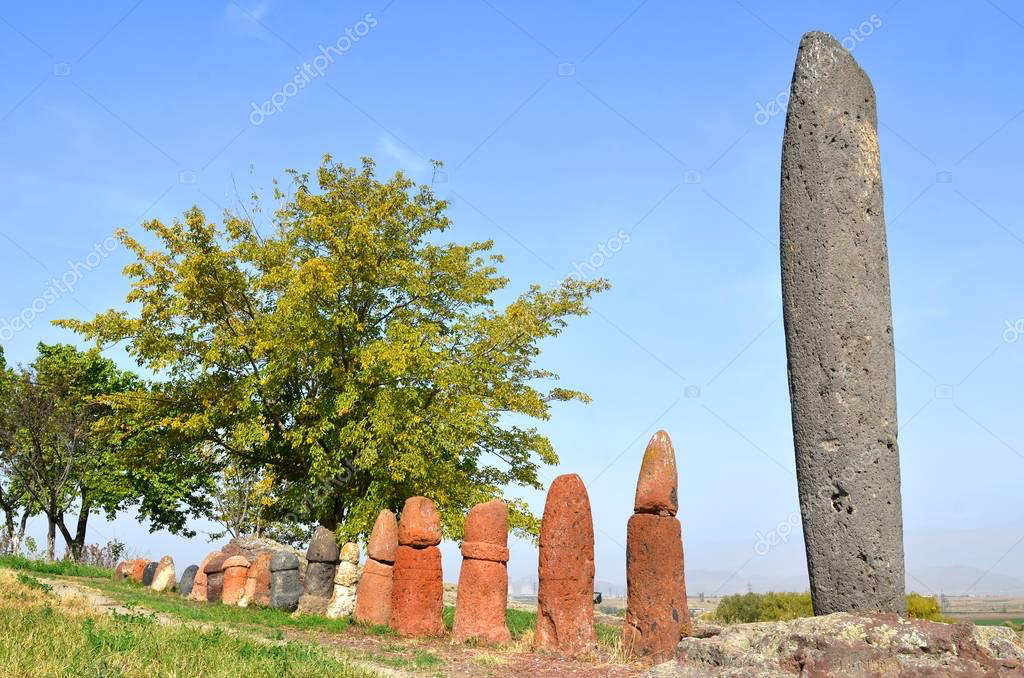
A row of phallus standing-stones at the ruins of Metsamor – an archaeological site located at Taronik in the Armavir province of Armenia
A supposedly acceptable offering to Belphegor and somewhat puzzling, were passing wind and excrement. Yet, as Belphegor is the lord of openings or holes, the Talmudic traditions assert Belphegor’s association with exposure, defecation and faeces. Thus, Belphegor is linked to the god Pet and wind or gas; Crepitus, a Roman god of flatulence; as well as Priapus, a fertility god with an oversized and permanent erection.
Recall in Numbers twenty-five, verse one it states Israel camped in Shittim. Shittim was a large area in the plains of Moab directly across from Jericho and north of the Dead Sea. Shittim is significant in Israel’s history, as it was the site of the last encampment concluding the nation’s wilderness wanderings, just before crossing the River Jordan into the Promised Land. Israel had remained at Shittim for a lengthy period before traversing deeper into Canaan. The exact location of the Valley of Shittim is unknown, though a prophecy in Joel 3:18, confirms Shittim’s location seemingly west of the River Jordan. While the Hebrew word means ‘acacia wood’; the similarity of Shit-tim with the slang word for faeces is undeniable.
It was at Peor, where worship included eating ‘beets, drinking strong drink’ and exposing oneself in front of the idol. Eleventh century French Rabbi Shlomo Itzhaki, otherwise known as Rashi, comments that the people would bare their anus and relieve themselves; incorporating the act into deviant sexual practices. In Sifrei Balak 1 his commentary on the Talmud, Rashi states further on the manner of worship: ‘… and [they] prostrated themselves to their gods: When his urge overcame him, and he said to her, “Submit to me,” she took out an image of Peor from her bosom and said to him, “Bow down before this.”
As the Lord of the Wide Open Holes, worship of Baal Peor allowed for sexual immorality within ‘rites of religious worship’ which were inclusive of oral, anal and homosexual acts, spilling over into ultimately child sacrifice. One source states: ‘Selden is cited by Bainier as reporting that human victims are to be offered to him, and that his priests partake of the flesh. Wierus wrote that he always has an open mouth, attributing it to the name Phegor, which according to Leloyer means “crevice” or “split,” and refers to when he was worshipped in caves and people threw him offerings through an air hole.’

The Worship of Baal Peor:
‘While all sexual immorality gives homage to Baal, worship of Baal-Peor was considered to be… the most obscene. In his honour, those in the cult of Baal-Peor would expose themselves, bow down to the ground with bottoms up, and eat from a place associated with body waste. The “cleft” or “opening” to which Peor referred was [primarily] the woman’s vagina [leading to her womb, yet also included the urethral and anus openings]. The Temples had dedicated prostitutes and worshippers could eat from their “cleft” in order to commune with Baal-Peor.’
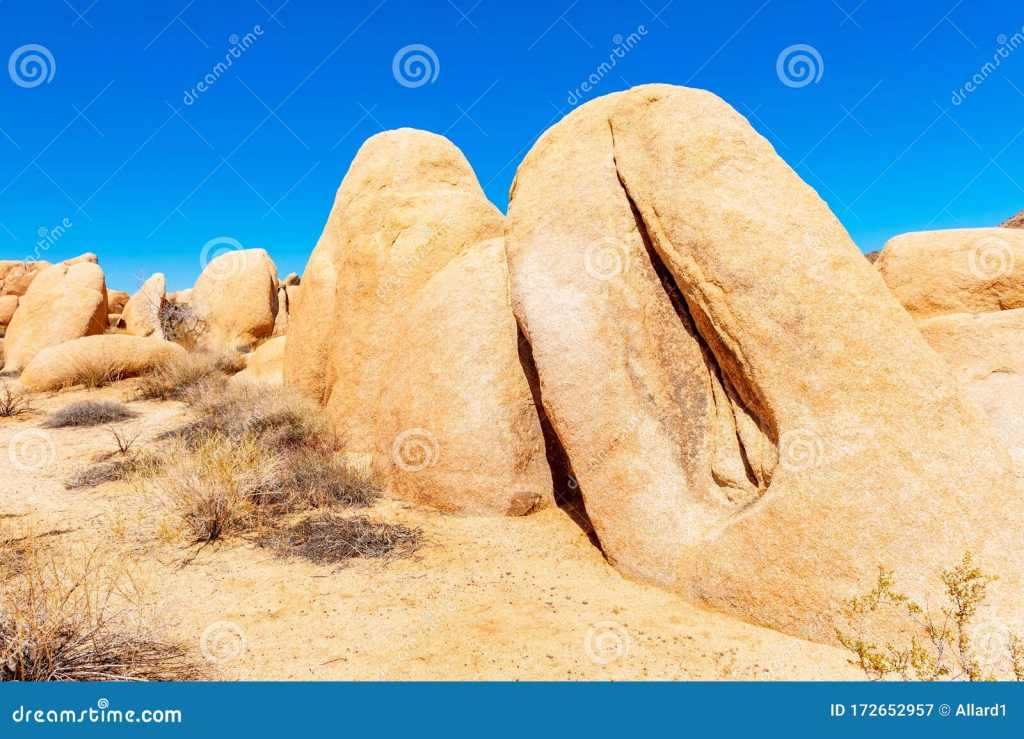
Vagina shaped rock in Joshua Tree National Park, Southern California, USA
The Worship of Baal Peor: ‘While female and male prostitutes participated in this worship, the act itself only glorified the feminine principle. Whether a man did the act or had it done to him, he had to sacrifice his manhood to join the act. In either case, he effeminizes himself. This brought glory to Baal-Peor because the worshipper had to debase himself [in an act of submission] both physically and spiritually before the cleft.
The worship of Baal-Peor is not about some mutual pleasure with the man, it is about domination by, and exaltation of, the female principle [the Dark Goddess* of the divine feminine]… whether the man is the initiator or the recipient, he MUST sacrifice his [masculinity] to take part in the act… [as] the rites of Baal-Peor only exalt the feminine principle.’
This may well explain the incredible resemblance and symbolic similarity which exists between the female reproductive organs and the universal symbol for satanic worship – invariably designed with a goats head if Baphomet, otherwise – a Ram’s head and horns… [WARNING] as the following going full circle sequence of explicit pictures reveals.
1

2

3

4

5

6

The Worship of Baal Peor: ‘When a stripper uses a pole, she is re-enacting the sexual rites of Baal worship. You have the female form (Asherah*) [refer article: Asherah] and the male pole form (Baal). As she is lifted up on a stage so that others may worship at the altar of Baal-Peor, the stripper represents a temple prostitute.’

‘Why are female entertainers exposing and flashing themselves? They are identifying themselves as temple prostitutes dedicated to Baal-Peor.’

What is especially interesting and a little unnerving, is the fact that Belphegor was a deity of the ancient Moabites, whose descendants now comprise much of the French nation – refer Chapter XXVI The French & Swiss: Moab, Ammon & Haran. To which country is Belphegor an ‘ambassador’ of Hell? According to the 1818 Dictionnaire Infernal [revised in 1863] by Jacques August Simon, Collin de Plancy repeated by Victor Hugo in Toilers of the Sea [1866] and also Waite’s Grand Grimoire [1898]; it is France no less and especially its capital – Paris. As a deity of debauchery, Belphegor apparently became ‘enamoured with the seedier side of the nation… and the [capital] in particular.’
Occult World: ‘Belphegor is [the] guardian of France, especially Paris, where he allegedly lives. He preserves and protects erotic, risqué aspects of French culture (French postcards; Paris cabarets).’ As a result, Belphegor is considered an adversary of Mary Magdalene, the patron saint of France – refer Appendix VIII: When the Creator came to dwell with His Creation.
It is a strange coincidence indeed when the personal name for the god Chemosh – and its idol at Ba’al of Peor worshipped by the Moabites – is Horon (or Haron). For the original patriarch and grandfather of Moab’s descendants was a man none other than Haran, the eldest brother of Abraham – Genesis 11:27-32.
Michael W Ford: “Sex Magick is considered an excellent means [of] entering ‘gnosos’ [knowledge] or a type of trance with the focus towards the ritual. Masturbation and self-stimulation while invoking… is [a] powerful process in magic. At climax the Black Adept forgets the purpose of the rite, which fuels the subconscious and the Daemon towards achieving… True Will [in tandem].”
“… an offering feast to the Raphaim and Shades of the Dead with invocations to Baal-of-Peor [during] sexual copulation will open the Underworld and initiate the Kessapim (male and female) to the ancient rituals practiced by the Moabites and so loathed by the Hebrews.”

A Phallic Sigil of Belphegor
The Marzeah of Baal-of-Peor [Abbreviated]
BA’AL PEOR (x7)
It is my will to eat among the shades of the dead, in honour of the shades and Ba’al-of-Peor.
It is my will to open the mouth of Sheol, the Underworld.
Open wide the gates of Hell.
Ba’al Peor!
PEOR Y ARAD BOR
Incantation of Baal-of-Peor [Abbreviated]
Ba’al – Peor (x7)
PEOR Y ARAD BOR
Ascend through me. You are the illuminator of the dead.
Be welcome here; I pour thee libation. Let me be welcomed in the company of the Rephaim!
I shall be the centre of light – like the sun! By Baal-Peor, the illustrious, Lord of Shades!
I seek you, Divine Powers of the Underworld!
ABARIM!
BA’AL PEOR!
The Rephaim Ritual Feast [Abbreviated]
I summon you, Rephaim! I conjure thee Shades of the dead!
To this Shrine, Rephaim! Hasten to my shrine, O Spirits!
I seek by dream-omen or vision your knowledge!
So might it be!
Ford: “Incantations for Belphegor, allow an Adept “to mentally and spiritually awaken… in dreams, astral contact, and psychic awareness. Physically go beyond your limits, to enter the cult of shades, to gain powers hidden in the underworld. Baal-of-Peor is an alternate name of the god Chemosh within the gnosis of sexual union, fertility and the underworld. Baal-Peor was worshipped as an underworld power; he was visualised as both the Sun and the Moon when it reaches the netherworld. The Deified Dead taste of the pleasures of living women through the Black Adept’s invocation of Baal-of Peor.
The cultic act of Sex Magick is a balanced unity of masculine and feminine opposites to create a fertile environment of the inner desires; such offerings as fluids blending into an altar cloth or idol consecrated to Baal-of-Peor is an activating ‘carnal foundation’ of energy towards success.
The underworld is also a place of emerging fertility of the land, thus as the Raphaim as shades may offer continued blessings to the Black adept who [offers] libations and summons them. The Rephaim or ‘Gods of the earth’ are ‘buried’ and dwelling as spirits in a cave, these honored shades are elevated to gods of fertility and called often ‘saviours’ of the land – UT 62:16-18. The phrase for this burial place is called ‘hrt elm ‘ars’, ‘The Hole of the Earth Gods’. Incense, libations and food offerings were made to these kings and warriors of old. The Shades of the dead of the cult of the Rephaim come forth as shadows among the living around the time of the autumn gatherings…” – that is, Halloween.
It is of note that Ford should mention the Rephaim in connection with Belphegor, for they are an ancient branch of the Nephilim. The Rephiam are otherwise known as: ‘The Deified Dead, Warriors of Old and Royal Shades’. The Rephaim are linked with the Moabites and Ammonites, just as we learned of the link between another Nephilim line, the Amalekites who were descended from Na’amah’s father, evil Lamech – refer article: Na’amah. In fact, the Amalekites and Rephaim were part of the five king alliance who rebelled against paying tribute to the Elamite ruler Chedorlaomer in 1894 BCE – refer Chapter XIX Chedorlaomer & the War of Nine Kings. The Rephaim – Elioud giants – are first mentioned in scripture here and again when the Israelites invaded Canaan in 1406 BCE.
Genesis 14:5-7
English Standard Version
‘In the fourteenth year Chedorlaomer and the kings who were with him came and defeated the Rephaim in Ashteroth-karnaim, the Zuzim** in Ham, the Emim* in Shaveh-kiriathaim, and the Horites in their hill country of Seir as far as El-paran on the border of the wilderness. Then they turned back and came to En-mishpat (that is, Kadesh) and defeated all the country of the Amalekites, and also the Amorites who were dwelling in Hazazon-tamar.’
Deuteronomy 2:9-11, 19-21
English Standard Version
‘And the Lord said… ‘Do not harass Moab or contend with them in battle, for I will not give you any of their land for a possession, because I have given Ar to the people of Lot for a possession.’ (The Emim* formerly lived there, a people great and many, and tall as the Anakim. Like the Anakim they are also counted as Rephaim, but the Moabites call them Emim. And when you approach the territory of the people of Ammon, do not harass them or contend with them, for I will not give you any of the land of the people of Ammon as a possession… (It is also counted as a land of Rephaim. Rephaim formerly lived there – but the Ammonites call them Zamzummim** – a people great and many, and tall as the Anakim; but the Lord destroyed them before the Ammonites, and they dispossessed them and settled in their place…’

Horon, the spirit otherwise known as Chemosh, the Ba’al – behind the inspiration for the Idol at Mount Peor – and overseer of its worship
A famous member of the Rephaim and reputed to be a descendant of the former archangel Samael, was King Og. According to Ford, ‘the Semitic word ‘Og’ means ‘corpse’ and ‘death.’ Deuteronomy 3.11, ESV: ‘For only Og the king of Bashan was left of the remnant of the Rephaim. Behold, his bed was a bed of iron. Is it not in Rabbah of the Ammonites? Nine cubits was its length [thirteen and a half feet long], and four cubits its breadth [six feet wide], according to the common cubit’ – a cubit is eighteen inches. Note that after his death, his bed was kept in the capital of the Ammonites.
Recall the link between Astarte-Ishtar and Horon-Chemosh – Lilith and Belphegor – Ford notes: “An ancient… powerful goddess, her very name was the capital city of… King Og of the Ammonites… his people, other Rephaim dwelled in power in the city of Astaroth” – being the plural of Astarte. “Astarte held the epithet ‘Ashteroth-Qarnaim’ which is ‘Astarte of the Two Horns’ [Venus] in which she is depicted with two horns in various statues and figures found in Palestine. Astarte set the ‘head of a bull’ upon her own head as a ‘mark of power, royalty and authority.”
Abarim Publications: ‘The name Rephaim: From the verb (rapa), to sink. There is… mention of a Valley Of Rephaim (Joshua 15:8, 1 Chronicles 14:9, Isaiah 17:5). At this valley the Philistines gathered to fight against the newly anointed king David (2 Samuel 5:18). According to Isaiah, this valley was the counterpart of Mount Perazim, at which YHWH had proverbially risen up (Isaiah 28:21), which draws the attention to the verb (rapa), to sink. The name Rephaim is curious to say the least. It most likely has something to do with the verb (rapa), sink down, let drop or be slack. Scholars insist that the name should be regarded as another word than (repaim), meaning ghosts or shades, but we may wonder if the original audience of the Hebrew Bible was aware of that, or even cared about it.
The name Nephilim, which seems to be either a synonym or else something close to one, comes from a verb that means to fall. The difficult noun (repai’m) refers to the “sunken ones,” i.e. ghosts or shadows of people that are no longer alive. The Rephaim are the Faded Ones. The name Zamzummim appears to mean something similar: The Dealt With.’
It is important to remember as discussed regarding Na’amah, that an Adept is unlikely to make contact with Belphegor directly and it is probably one of its many minions who responds to an incantation or invocation. Thus the Adept who is not an accomplished sorcerer, beware.
Aside from the month of April and particularly its Full Moon, significant dates for Rites to Belphegor include: March 11, 31; April 9 and May 13. Black Serpent, 2006: ‘Traditionally these rites were celebrated to welcome the coming of new earth (Spring). It is common practice to have large feasts during these rites. It is said that if the Demonolator allows a few drops of his/her blood to fall upon the ground around these dates, Belphegore… will look kindly upon the practitioner for an entire year. Magick for new jobs, letting go of the past, stability, and help with mundane issues (i.e. finding a new place to live, house blessings etc…) can be done during the Rites to Belphegore.’
Enn: Lyan Ramec Catya Ganen Belphegore
Invocations:
Liftoach Pandemonium, Et Germinet Belphegor
“Open the Infernal Plane, and Bring Forth Belphegor”
Veni – Venire Balphegor Rex Thagirion Et Zomiel
“Come – Come Balphegor, King of the Sphere of the Black Sun and the Divinities of Revolt”

“More than that! I am probably one of the true believers who is raising their hands in supplication to His Infernal Splendour. Let us bask in Belphefor’s radiant darkness” – A demonic cultist
Andrei Hofer: “My experience with Belphegor was that it is a very subtle agent and shows many similarities with Choronzon… in other words: a really powerful fellow.”
Morino Ravenberg: “I invoked Belphegor in the beginning of… [January-March 2017] and it was very interesting, despite the fact that it didn’t work out with him. But that was not his fault. When he appeared, it was the same shape that he took as I remember him when I astral projected to his qliphotic sphere… He is friendly… and is more than willing to help someone… Belphegor is a Lunar spirit (Cancer, 13°) and very potent… He excels at clairvoyance and also has a good deal of financial ability. One would do [well] if he were to be worked with in the long term and needed help in these fields. I have had someone I know tell me that He was her patron and she had good results in working with Him, financially. I have never, when engaging with Belphegor, noticed anything about Him in the sense or way of Sloth and excrement… Roughly stated, [opponents] turned Him unjustly into a demon of [stool and] laziness.”
Mirta000: [Belphegor] “came as warm somewhat oily miasma. The spirit felt very heavy and Earthy. Had a long conversation on why they’re connected to excrement and was told that because all wealth is shit. It is all temporary and decays and here we are chasing self esteem based on a number. It is all shit. The rant that I have received may be very personal as I live a peculiar life where I earn less than the minimum for the country that I am in, but through sheer luck and otherworldly help I always have what I need when I need it, so I do not need to go hungry or worry about the roof over my head, yet at the same time every luxurious expense is something that I torment myself over.
The grey area of having what I need and being able to give myself such luxuries as this while still stressing over what if this house of cards will collapse tomorrow is an unpleasant way of living, yet the wealth demon tells me that I am provided for, to trust in the journey and spend less time fretting over a number because it is all the equivalent of shit. In case your path can see more material goods than mine, Belphegor will work with anyone, but the price of what he asks may be too steep for some. He did not elaborate further on that. No deal is made upon contact, so you can always safely reach this spirit and converse with him until you find out what your personal price may be.”
“So Death will open up its throat, and open wide its mouth… dignitaries and masses will descend into it, including those who revel and celebrate… Men will be humiliated, they will be brought low; the proud will be brought low.”
Isaiah 5:14-15
New English Translation
“I would rather sit here and invent, finding solitude and peace in my work, than to meddle in affairs which clearly are not suited for my abilities. Why bathe in the blood of your enemies when you could create a machine that could bathe in your enemies’ blood for you?”
Belphegor to Mephistopheles
“I never understood why laziness is considered a sin. Laziness is normal to have. Do you know something that in my opinion should be considered a sin? Stupidity. Stupidity should be a sin, because stupid people not even Satan can stand for them.”
Belphegor
© Orion Gold 2024 – All rights reserved. Permission to copy, use or distribute, if acknowledgement of the original authorship is attributed to orion-gold.com
 The Lightkeeper