
No doubting gold, diamonds and oil are valuable, though water is the primary source for life and the most vital element which maintains living on our Earth. While the air we breathe could be argued as the most important substance for our survival, as the average person cannot survive much longer than three minutes without it, it is still free and available to all – for now. Whereas water, made up of two atoms of hydrogen and one of oxygen forming the molecule H2O, is the most valuable commodity in the world; with the average person crucially unable to survive much longer than three days without it.

Three days is a relative average, for a child left in a vehicle on a hot day without ventilation can dehydrate, overheat and die in a period of hours or an adult in comfortable surroundings can survive a week or more with either no water or a limited intake. We obtain water from food as well as liquids and lose water in a number of ways including: sweat, urine, faeces and water saturated air we exhale. Sweat stops us from overheating as its evaporation cools blood vessels in the skin.
Under certain extreme circumstances people can lose up to 1.5 litres or 3.2 pints of sweat an hour. If not replaced, the onset of dehydration begins, where the total volume of body fluid falls and with it blood volume drops. This can lead to dangerous problems of sweat stopping and body temperature soaring, with blood pressure decreasing due to low blood volume. As water levels drop inside the body, liquid diverts to fill vital organs with blood, causing cells throughout the body to shrink. Water leaches out of brain cells and the brain contracts, causing blood vessels within the cranium to burst. The kidneys are usually the first organs to collapse and at that point other ‘organs fail in a toxic cascade.’ It is a painful process resulting quickly in death. Symptoms include: thirst, dry and cold skin, fatigue, light-headiness, dizziness, confusion, headache, dry mouth, heatstroke, stiff joints, hypovolemic shock, a sped up pulse, heightened breathing and seizure.
It is grim picture for sure and reflects the importance of water which according to Medical News Today is required for:
- regulating body temperature through sweating and breathing
- aiding in digestion by forming saliva and breaking down food
- moistening mucous membranes
- helping to balance the pH of the body
- lubricating joints and the spinal cord
- helping the brain make and use certain hormones
- helping transport toxins out of the cells
- eliminating waste through the urine and breath
- delivering oxygen throughout the body
Coupled with the fact that the average human has between 50% to 65% water in their body, with 57% to 60% being the adult average. Infants on the other hand have a higher percentage of some 75 to 78%, which drops to 65% by one year of age. Losing just 3% through water loss can cause dehydration.

It is interesting to note that our Earth could more accurately be called Oceania for our planet is mainly comprised of oceans accounting for surface water of 71%. Hence, why it is called the blue planet. The reason why Earth is lopsided, with the continents on one side and the Pacific Ocean on the other is a story in itself and discussed in Chapter XXII Alpha & Omega.
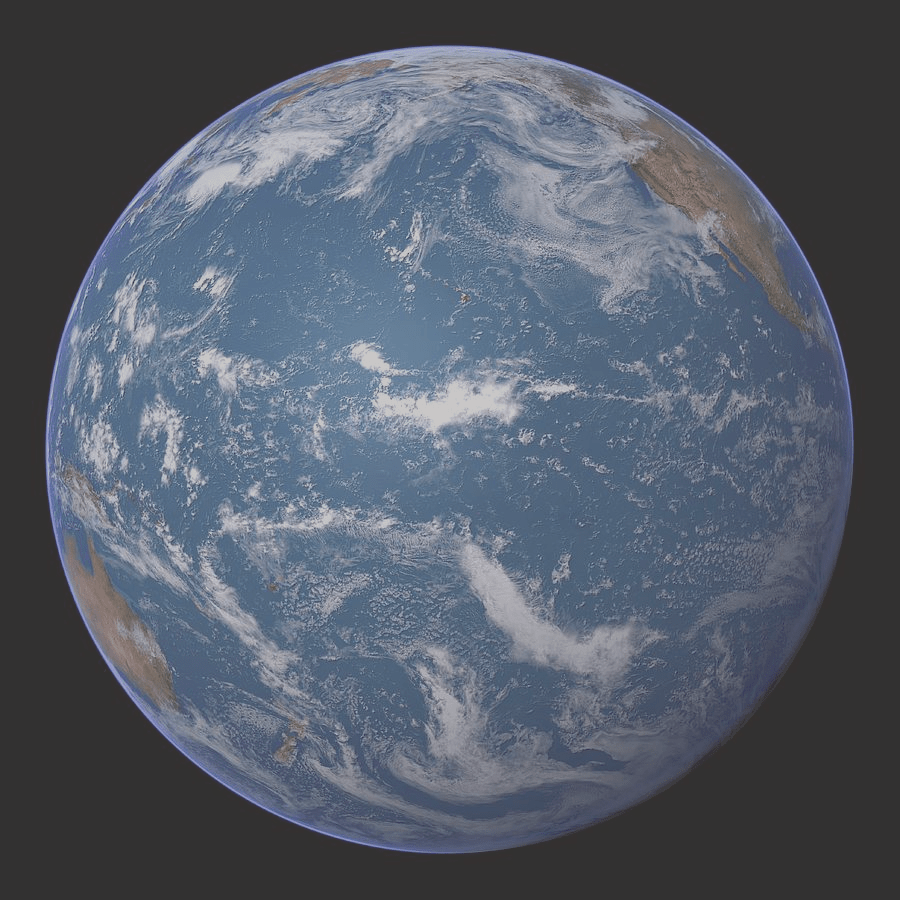
Incredibly, 96.5% of Earth’s water is found in oceans and only 1% is in lakes and rivers. Apart from rivers and lakes, fresh water is found in the air as vapour, in icecaps, glaciers, in the ground as soil moisture and in aquifers – permeable rock which can contain or transmit groundwater. Water is also essential in animal and plant life.
The wonder of water in all its guises are especially beautiful, inspiring and majestic as a series of different photos throughout this article show.

There are two key issues surrounding water and they are firstly: is water growing in short supply and secondly; how will control of the world’s water be determined? Should we collectively be concerned about either one of these issues? If one judges by the internet, there is growing concern about an increasing global population and the decreasing amount of water available. Should water supply slow down and fail to meet demand at any level, the price of water would increase. It then leads to the question, who then will seek to own such a valuable resource and should we feel threatened by those who control the world’s water supply?
Steve Maxwell and Scot Yates in their book, The Future of Water, 2011, discuss the fact that ‘population growth and unchallenged water use have brought us to the brink of a worldwide water crisis.’ The book examines what the next one hundred years may bring to water use, prices, availability and ‘how individuals, water utilities, industries, and countries can change the future of water.’
A bleak picture is portrayed online, with various headlines including: “Fresh water going down the drain”; “Disaster: Global Fresh/Potable Water Shortage”; “Objective: Disaster prevention”; and “The future of water: plenty or peril?” Tech Knowledge states: “The supply of fresh water on Earth is essentially fixed. The Earth’s population and its demand for freshwater is rapidly growing. Water use has been growing at more than twice the rate of population increase over the past century.”
The World Economic Forum whom we have previously discussed – refer article: The Great Reset & the Fourth Industrial Revolution – have something to say on the issue in an article compiled by Stefan Ellerbeck, March 28, 2023. Where he comments that the United Nations has warned of a ‘looming global water crisis’ at its first conference on water security in nearly half a century in 1977 ‘to push governments to better manage the world’s water.’
UN Secretary General Antonio Guterres said: “We are draining humanity’s lifeblood through vampiric overconsumption and unsustainable use, and evaporating it through global heating.” Shockingly ‘a quarter [2 billion] of the world’s population relies on unsafe drinking water while [nearly] half [4 billion] lacks basic sanitation’ according to the UN. It would appear from the following statistics that a serious water sanitation crisis already exists in the world, let alone any water shortages in the future.
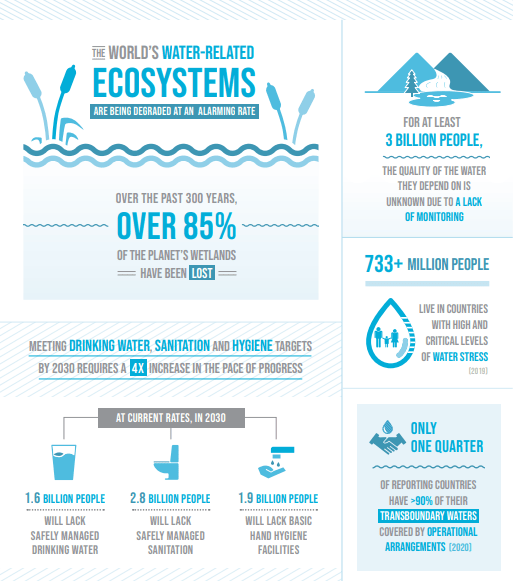
While there was an international binding agreement reached for climate in Paris in 2015, the more vital issue of fresh and sanitised water has no such agreement ‘despite dire warnings of the [grave] risks humanity faces if water is not managed better.’

CNN reported that the looming water crisis threatened to ‘spiral out of control’ and that ‘water use has increased by about 1% a year over the last 40 years.’ It went on to say: ‘By 2050, the number of people in cities facing water scarcity is projected to nearly double from 930 million people in 2016 to up to 2.4 billion, the report found. Urban water demand is expected to increase by 80% by 2050’ with ‘about 10% of the global population already [living] in countries with high or critical water stress.’

The BBC highlighted ‘an “imminent risk” of shortages due to overconsumption…’ and that ‘the world is “blindly travelling a dangerous path…”

Water the Future, Helmano David Galvao Fernandes, February 8, 2021:
‘… Ismael Serageldin, 1995 world bank vice president, said: “If the wars of this century were fought over oil, the wars of the next century will be fought over water.” How can our planet hold 1,386,000,000 km3 of water and still face water scarcity? You might be asking. Well, the problem is actual availability and distribution of fresh water. Take a look at the figure below. Notice if all available water was removed from the planet and stored in a big sphere, over the USA. There is a small sphere on the right, and below it, an even smaller nearly invisible bubble. That’s the total amount of freshwater in all the rivers and lakes on the planet. That’s only 0.8% of the total fresh water available on Earth. And with increasing demand on water caused by population increase, the United Nations Water (UN-Water) predicts that by the year 2025, absolute water scarcity will be a reality affecting [1.8 billion] people around the globe.’

The World Meteorological Organization in 2021, warned that “increasing temperatures are resulting in global and regional precipitation changes, leading to shifts in rainfall patterns and agricultural seasons, with a major impact on food security and human health and well-being.” It incongruously stated that ‘water-related disasters have increased in frequency since the year 2000’ with ‘flood-related disasters [rising] by 134 per cent when compared with the two previous decades. Most deaths and economic losses occurred in Asia, where warning systems require strengthening’ and from 2020 to 2021, ‘extreme rainfall across the continent caused massive flooding in Japan, China, Indonesia, Nepal, Pakistan and India. Millions were displaced and hundreds were killed. But it [was] not just in the developing world that flooding… led to major disruption, catastrophic flooding in Europe led to hundreds of deaths and widespread damage.’
While flooding has increased, so to have droughts where ‘the number and duration of droughts also increased by 29% over this same period. Most drought-related deaths occurred in Africa…’ Continuing: ‘In the past 20 years, terrestrial water storage – the summation of all water on the land surface and in the subsurface, including soil moisture, snow and ice – has dropped at a rate of 1 cm per year. The biggest losses are occurring in Antarctica and Greenland, but many highly populated lower latitude locations are experiencing significant water losses in areas that are traditionally providing water supply, with major ramifications for water security. The situation is worsening by the fact that only 0.5% of water on Earth is useable and available freshwater.’
Helmano Fernandes adds: ‘… it is important to identify major uses of water in order to efficiently tackle water scarcity. According to a 2008 Food and Agriculture Organization’s Report, “of all economic sectors, agriculture is the sector where water scarcity has the greatest relevance. Currently, agriculture accounts for 70 percent of global freshwater withdrawals, and more than 90 percent of its consumptive use”… it is also important to safely return water to natural or human-managed cycles. According to the same FAO Report, water recycling and re-use is one of the options to cope with water scarcity.’

Steve Maxwell in The Future of water, offers the following future developments and solutions in using water more efficiently.
‘At home: Grass species that live on common seawater, clothes washers that use a cup of water per load – or no water at all, UV-light dishwashers, and toilets that flush with reused bathwater…
Agricultural water use: Learn the many innovative ways farmers are growing more food with less water. In coming years, don’t be surprised if you see on packaging, “Irrigated with natural rainfall, no fossil waters used.”
Industrial water use: We will see industry increasingly move to where water is plentiful. Old industrial cities in the rainy northeast US that have been shrinking and decaying for decades may experience revitalization.
Sources of water: Reclamation and reuse of wastewater and stormwater will be commonplace sources of water for drinking, energy production, agriculture, and industry. Climate changes and global warming will increase precipitation in some locales and decrease it in others.
Water storage: America is tearing down many old dams, while China and Africa are on dam-building binges. How will the US meet its water storage needs with fewer dams? What do these new Chinese and African dams – some the biggest ever built – mean for the future of water?
Water utilities: Watch for widespread consolidation of small utilities for efficiency and cost-savings. Many water utilities will follow Singapore’s lead to become better at educating the public of the true value of water.
Water business: Learn about innovative solutions to the challenges of water scarcity, storage, treatment, and distribution.
Role of water: Rivers, lakes, and aquifers cross political borders, creating conflicts. Learn about many innovative technologies and creative solutions to water problems.’
In line with this, Tech Knowledge propose that ‘water will increasingly be viewed as a “factor of production” and its consumption ‘will increasingly be viewed in a more holistic manner’ with ‘boundaries between different types of water… [fading].’ These developments will mean… ‘the price of water will inexorably rise – reflecting its true cost and value.’ Thus the principle challenge will be managing water as an ‘economic commodity, while simultaneously insuring that it is available to all.’ Yet we have learned that sizeable portions of the world do not even have access to sanitised water. As there is obvious mismanagement of water currently, it does not bode well for the future being any better.

The populations most affected are those in remote or rural regions which often lack infrastructure or funds to construct large-scale water treatment facilities. Consequently in recent years, packaged water treatment systems have risen in popularity. The flexibility afforded by the mobility of packaged Water Treatment Plants gives them an advantage over a fixed large-scale WTP. They can be modified to keep pace with ‘new environmental factors, innovations, and regulations in water treatment.’ They can also be rented over short or longer terms rather than purchased and require less capital and maintenance costs. Importantly, a mobile WTP is more effective in removing contaminants from water.
Still, all this comes at a cost as outlined in an article in Media Planet, The Future of Water, Meredith Jones Russell, March 25, 2021:
“There is a huge gap between the USD 114 billion funding we need annually and the USD 5 billion donor funds available, ‘says Joslen Sluijs, Managing Director of Aqua for All. “The only way to bridge it is to mobilise private capital”.’ Private investments in water and sanitation can provide significant social and financial return.”
Yet procuring investment is difficult as private investors a. do not know the sector well enough to appreciate the opportunities and returns and b. have a prejudice in believing the sector is unprofitable or risky. Joslen Sluijs counters: “If you simply make the calculations, water is worth investing in.” Thus private investment is required and welcomed, but is it a step in the right direction? This unknown is addressed by Michael McDonald for Oil Price in Who Will Control The World’s Water: Governments Or Corporations? April 9, 2015 – emphasis mine:
‘For decades water was regarded as a common good, and it was plentiful enough that in most parts of the world there was little money to be made off of it. Now as the world’s population continues to grow, all of that is changing. Today there are numerous companies focused on earning a profit based on water management, water provision, and water remediation. There are at least ten major corporations working in the area including three that between them supply water to 300 million people in 100 countries. These three corporations, RWE/Thames, Suez/ONDEO, and Veolia control vast swaths of water systems in Europe and are now looking at a less saturated market; the United States. The US has its own share of large water companies including American Water Works, ITT Corp, and GE Water, but most Americans are still served by publicly owned utilities and this presents a new opportunity for corporations in the space.
Water is so critical a resource that any discussion of privatizing water resources predictably draws a frequent public outcry as the fight over a water infrastructure bill in Congress last year showed. The truth is though, that water access is no more or less safe in the hands of corporations than in the hands of governments. There are certainly cases of corporations abusing their customers, but there are equally many cases of governments using their considerable power to oppress their citizens. Corporations are often owned by and responsible to shareholders (i.e. the general public). Further, while government objectives are often murky and depend on the people in office, corporate objectives are more straightforward – earn a profit.
None of this is to say that people should be racing to sell off water rights, but the realities of the 21st century will require hard choices. The world’s population is growing most in countries which are less developed and have less infrastructure. Rich nations like the US, Europe, and Japan are seeing slow or no population growth while under-developed nations like India and Indonesia continue to see booming growth. This will lead to challenges that unstable governments are ill-equipped to handle, but which require serious investment efforts.
Even in the United States, the on-going drought in California is taxing the ability of the government to handle the problem. Perhaps what is needed is a system of interstate pipes to enable the transfer of water resources between areas of the country in the same way that the interstate highways facilitate traffic flow.
Such a system would enable the movement of water from say, the water-soaked northeast (which had a very wet winter) to the parched southwest. Traditionally major projects like this have always been the purview of the government. But in today’s dysfunctional political environment, it is unclear if the US government is even remotely prepared for the challenges that would accompany building a national canal system.
Regardless of one’s views on the efficiency of government or the effectiveness of corporations, it is clear that the world is entering a new era where water is now fair game as an economic resource. And that is a scenario that presents both major risks and major opportunities for mankind.’
McDonald makes a good case where corporations may not be less suited in investing in and managing water supply. A system of canals to transport water from overflow areas to underflow ones is inevitable and would be effective, yet who would want to pay this bill, unless like gas and electric delivery there is profitable revenue from the ownership and use of the pipe infrastructure.

A thought provoking article is, Those who control oil and water will control the world, John Gray, March 30, 2008. While he focuses on oil, the points made can be increasingly ascribed to water – emphasis mine.
‘History may not repeat itself, but, as Mark Twain observed, it can sometimes rhyme. The crises and conflicts of the past recur, recognisably similar even when altered by new conditions. At present, a race for the world’s resources is underway that resembles the Great Game that was played in the decades leading up to the First World War. Now, as then, the most coveted prize is oil and the risk is that as the contest heats up it will not always be peaceful. But this is no simple rerun of the late 19th and early 20th centuries. Today, there are powerful new players and it is not only oil that is at stake.
It was Rudyard Kipling who brought the idea of the Great Game into the public mind in Kim, his cloak-and-dagger novel of espionage and imperial geopolitics in the time of the Raj. Then, the main players were Britain and Russia and the object of the game was control of central Asia’s oil. Now, Britain hardly matters and India and China, which were subjugated countries during the last round of the game, have emerged as key players. The struggle is no longer focused mainly on central Asian oil.
It stretches from the Persian Gulf to Africa, Latin America, even the polar caps, and it is also a struggle for water and depleting supplies of vital minerals. Above all, global warming is increasing the scarcity of natural resources. The Great Game that is afoot today is more intractable and more dangerous than the last.
The biggest new player in the game is China and it is there that the emerging pattern is clearest. China’s rulers have staked everything on economic growth. Without improving living standards, there would be large-scale unrest, which could pose a threat to their power. Moreover, China is in the middle of the largest and fastest move from the countryside to the city in history, a process that cannot be stopped.
There is no alternative to continuing growth, but it comes with deadly side-effects. Overused in industry and agriculture, and under threat from the retreat of the Himalayan glaciers, water is becoming a non-renewable resource. Two-thirds of China’s cities face shortages, while deserts are eating up arable land. Breakneck industrialisation is worsening this environmental breakdown, as many more power plants are being built and run on high-polluting coal that accelerates global warming. There is a vicious circle at work here and not only in China. Because ongoing growth requires massive inputs of energy and minerals, Chinese companies are scouring the world for supplies. The result is unstoppable rising demand for resources that are unalterably finite.
Although oil reserves may not have peaked in any literal sense, the days when conventional oil was cheap have gone forever. Countries are reacting by trying to secure the remaining reserves, not least those that are being opened up by climate change. Canada is building bases to counter Russian claims on the melting Arctic icecap, parts of which are also claimed by Norway, Denmark and the US. Britain is staking out claims on areas around the South Pole.
The scramble for energy is shaping many of the conflicts we can expect in the present century. The danger is not just another oil shock that impacts on industrial production, but a threat of famine. Without a drip feed of petroleum to highly mechanised farms, many of the food shelves in the supermarkets would be empty. Far from the world weaning itself off oil, it is more addicted to the stuff than ever. It is hardly surprising that powerful states are gearing up to seize their share.
This new round of the Great Game did not start yesterday. It began with the last big conflict of the 20th century, which was an oil war and nothing else. No one pretended the first Gulf War was fought to combat terrorism or spread democracy. As George Bush Snr and John Major admitted at the time, it was aimed at securing global oil supplies, pure and simple. Despite the denials of a less honest generation of politicians, there can be no doubt that controlling the country’s oil was one of the objectives of the later invasion of Iraq.
Oil remains at the heart of the game and, if anything, it is even more important than before. With their complex logistics and heavy reliance on air power, high-tech armies are extremely energy-intensive. According to a Pentagon report, the amount of petroleum needed for each soldier each day increased four times between the Second World War and the Gulf War and quadrupled again when the US invaded Iraq. Recent estimates suggest the amount used per soldier has jumped again in the five years since the invasion.
Whereas Western countries dominated the last round of the Great Game, this time they rely on increasingly self-assertive producer countries. Mr Putin’s well-honed contempt for world opinion might grate on European ears, but Europe is heavily dependent on his energy. Hugo Chávez might be an object of hate for George W Bush, but Venezuela still supplies around 10 per cent of America’s imported oil. President Ahmadinejad is seen by some as the devil incarnate, but with oil at more than a $100 a barrel, any Western attempt to topple him would be horrendously risky.
While Western power declines, the rising powers are at odds with each other. China and India are rivals for oil and natural gas in central Asia. Taiwan, Vietnam, Malaysia and Indonesia have clashed over underwater oil reserves in the South China Sea. Saudi Arabia and Iran are rivals in the Gulf, while Iran and Turkey are eyeing Iraq. Greater international co-operation seems the obvious solution, but the reality is that as the resources crunch bites more deeply, the world is becoming steadily more fragmented and divided.
What is different this time is climate change. Rising sea levels reduce food and fresh-water supplies, which may trigger large-scale movements of refugees from Africa and Asia into Europe. Global warming threatens energy supplies. As the fossil fuels of the past become more expensive, others, such as tar sands, are becoming more economically viable, but these alternative fuels are also dirtier than conventional oil.
In this round of the Great Game, energy shortage and global warming are reinforcing each other. The result can only be a growing risk of conflict. There were around 1.65 billion people in the world when the last round was played out. At the start of the 21st century, there are four times as many, struggling to secure their future in a world being changed out of recognition by climate change. It would be wise to plan for some more of history’s rhymes’ – Article: Climate Change & Global Warming – Looming Crisis or a New Equilibrium?
Gray clearly outlines the grim reality of dwindling resources, whether they be oil or mineral supplies and the potential for rivalry. As he wrote this piece in 2008, the obvious bias towards oil is understood. One can see that tensions over any resource could lead to conflict. Minerals and oil would surely pale in significance should shortages of water supply eventuate. While industry, manufacturing, science and technology would be affected by reduced output caused by interruptions of oil say, humans would adapt to the new status quo and proceed accordingly.
The same could not be said about any issues with water supply. The very worst in human nature amongst countries and between governments, corporations and individuals would be evidenced should any serious contention over water arise. Such a scenario in a region (or the world) of being without enough water and the subsequent loss of life, would clearly result in catastrophic consequences.
Final thought: it never hurts to stock up on extra bottles of drinking water and store them wherever you can; whether it be in a garage, shed, basement, cellar, attic, loft or spare cupboard.
… To the thirsty I will give from the spring of the water of life without payment.
Revelation 21:6 English Standard Version
But whoever drinks of the water that I will give him will never be thirsty again. The water that I will give him will become in him a spring of water welling up to eternal life.
John 4:14 English Standard Version
© Orion Gold 2023 – All rights reserved. Permission to copy, use or distribute, if acknowledgement of the original authorship is attributed to orion-gold.com
Addendum
“An Ocean Beneath Your Feet”: Scientists Reveal Massive Hidden Sea Below Earth’s Crust That Shakes Geology to Its Core, Gabriel Cruz, May 31, 2025 – emphasis mine:
‘The recent discovery of a vast reservoir of water trapped deep within the Earth has challenged longstanding beliefs about the planet’s water resources. Located approximately 250 miles beneath the surface, this water is held within a mineral known as ringwoodite [rarely seen on the surface but abundant in the mantle]. Unlike conventional bodies of water, this reservoir is not in liquid [solid or gaseous] form but rather is retained within a crystalline structure [much like a sponge]. This groundbreaking finding… suggests the presence of a global water cycle far deeper than previously imagined.
Geophysicists confirmed this phenomenon by utilizing seismic waves generated by earthquakes. As these waves traverse the mantle, they exhibit changes indicating the presence of water in the ringwoodite, providing crucial evidence of the vast amounts of water beneath our feet.
Previously, focus was centered on the visible water cycle, encompassing oceans, lakes, and rivers. According to researcher Steve Jacobsen, this buried water might explain how such a vast quantity of water surfaced on Earth. Understanding this global cycle could also shed light on the formation of water on other celestial bodies, where similar reservoirs might exist.
Deep-seated water enriches our understanding of geological and climatic processes. It could have significant repercussions on predicting natural disasters like earthquakes and volcanic eruptions, offering new insights into tectonic movements and Earth’s internal pressures’ – Article: The Younger Dryas Stadial: Ending of the Earth… Beginning of the World.
‘Scientists also conducted laboratory experiments to simulate the extreme pressure and temperature conditions of the Earth’s mantle. Synthesized ringwoodite samples demonstrated their ability to absorb and retain water, confirming the seismic observations.
Besides this hidden ocean in the mantle, other water reserves are concealed within Earth’s crust. Mineralized waters are trapped in the structure of minerals like olivine and serpentine. Additionally, deep aquifers contain ancient water, sometimes trapped for millions of years. Subduction zones, where tectonic plates overlap, are also potential reservoirs, driving oceanic crust water into the mantle.
Fractures and porous spaces in rocks allow water to permeate deeply, creating underground reserves. Finally, mantle-derived water, released by volcanic activity, adds to these hidden resources. These reservoirs play a crucial role in geological processes, influencing tectonic movements and the global hydrological cycle.’
 The Lightkeeper