
Top three key mtDNA and Y-DNA Haplogroups for select nations. In so doing, it clearly shows the palpable divide between the three (actually four) main racial strains of Japheth, Ham, Shem (and Canaan) – refer Chapter XI Ham Aequator. Conversely, it also highlights the familial nature of the three (four) siblings with various crossover Haplogroups observable through admixture; particularly between Ham (Canaan) and Shem – Chapter XII Canaan & Africa.
Japheth very much in contrast with his brothers and thus lending weight to their evolutionary link with whom the Bible names as the people of Day Six and who scientists unwittingly call the Neanderthal – Articles: Homo Neanderthalensis I, II, III & IV. The stark isolation of the descendants of Canaan’s Haplogroups lends weight to their original ancestry as the first humans descended from Adam and Eve in the antediluvian age; from which all other ethnicities have sprung. Just not ‘out of Africa’ but rather from Noah and off the Ark – refer Chapter I Noah Antecessor Nulla; Chapter XXII Alpha & Omega; and article: Y-DNA Adam & mtDNA Eve: The Genesis & Evolution of Homo sapiens.
The maternal Haplogroups are listed first and paternal listed second. There are a few where there is just one line, or Haplogroups derived from admixture and so to decipher, the dominant or defining Y-DNA Haplogroup is in bold.
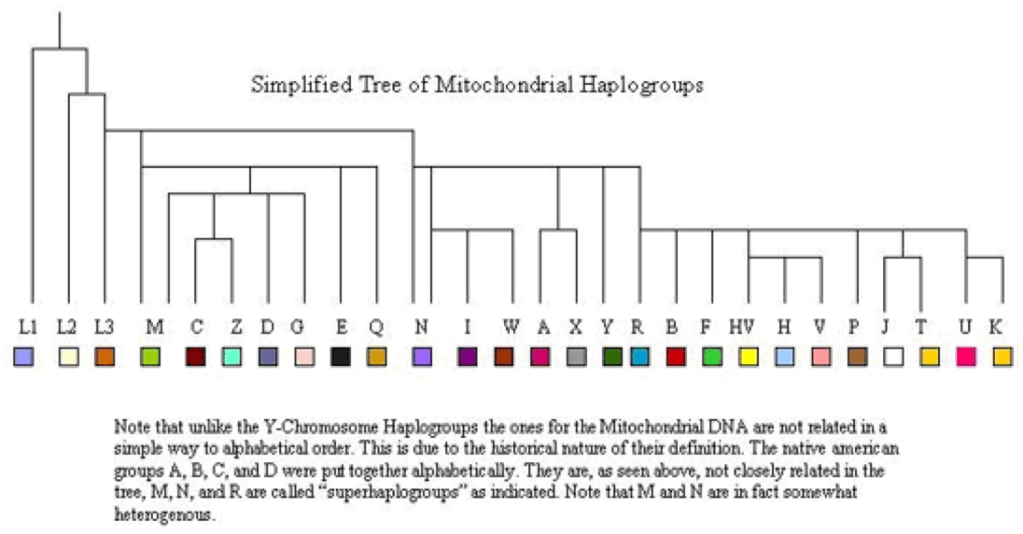
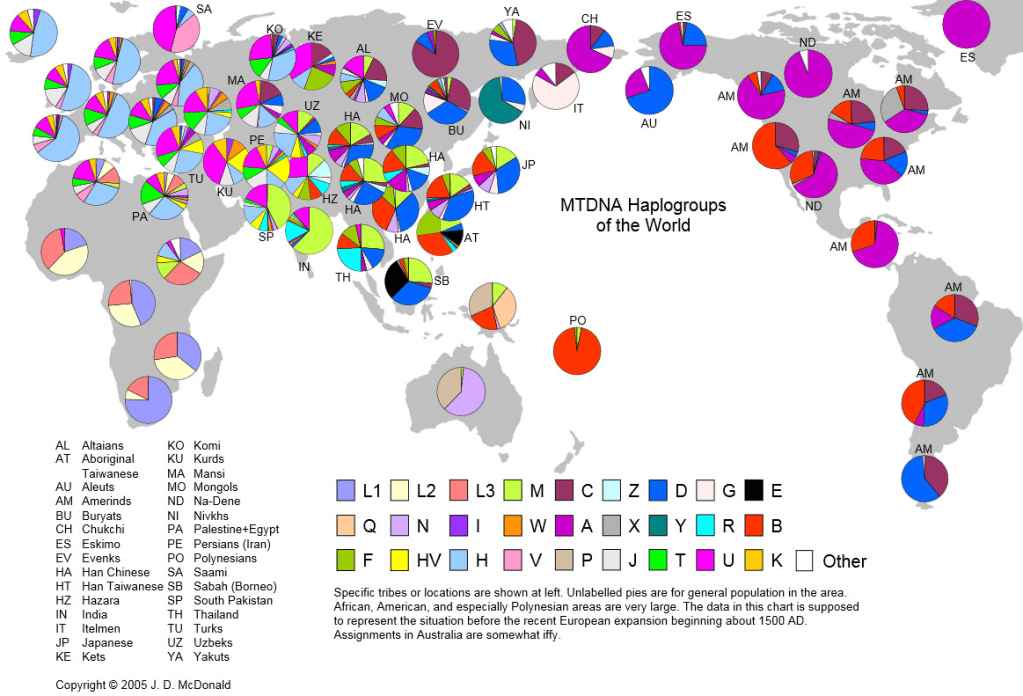
Generally, the principle Japheth (East Asian) mt-DNA Haplogroups alphabetically are B, D and M plus the American Indian additional Haplogroups of A and C. Whereas, the Y-DNA Haplogroups include the main East Asian Haplogroups of C, D, K, N and O, plus the additional American Indian Haplogroup of Q.
Japheth
Tiras: Amerindians
A C B
Q C R1
Y-DNA Haplogroup Q is widespread and found in Asia, the Americas, Europe and the Middle East. One of its sub-clades, group Q1a3a is exclusively associated with Native Americans.
Madai: Turko-Mongol peoples of Central Asia
Kazakhstan
C K O
Y-DNA Haplogroup C is found in Central Asia, South Asia, and East Asia. The C1a1 lineage is exclusively in Japan. Haplogroup C1b3a is found in New Guinea, Melanesia and Polynesia. The Haplogroup C2 lineage is thought to have originated in Southeast or Central Asians, spreading into northern Asia, the Americas and Central Europe. Haplogroup C1b3b is restricted among aboriginal Australians and is dominant in that population. Whereas Haplogroup C1b1a1 has a significant presence in India.
Turkmenistan
R1b J2 K
Paternal Haplogroup K is considered the ancestral Haplogroup for the major groups from L to P. Which includes the principle Asian Haplogroup O.
Uzbekistan
R1a J2 C
Kyrgyzstan
R1a C O
Gomer: Continental South East Asia
Ashkenaz: Vietnam
B F M
O Q C
Paternal Haplogroup O (M175) is a major defining marker Haplogroup for the descendants of Japheth. Lineage O represents nearly 60% of chromosomes for males in East Asia and it is numerically dominant throughout East Asia, Southeast Asia, the South Pacific and Central Asia. Haplogroup O descends from NO-M214 and has two main branches identified as O1 (F265), also known as F75 and O2 (M122). Haplogroup O1 divides again into the primary lineages O1a (M119) and O1b (M268, P31).
Riphath and Diphath: Cambodia and Laos
O J2 C
Ararat: Myanmar
F C B
O D K
Minni: Thailand
O C D
Togarmah: North and South Korea
D M B
O C K
Javan: Archipelago South East Asia
Elishah: Malaysia, Singapore
M F B
O K C
Dodan: Philippines
O K C
Rodan: Polynesians, Micronesians
C O K
Kitti: Indonesia
O K C
Tarshish: Japan
D M B
O D C
Haplogroup D is present in Central Asia, Southeast Asia and Japan; with the highest frequencies in Tibet and Japan.
Magog, Tubal & Meshech: China
O C K
Ham
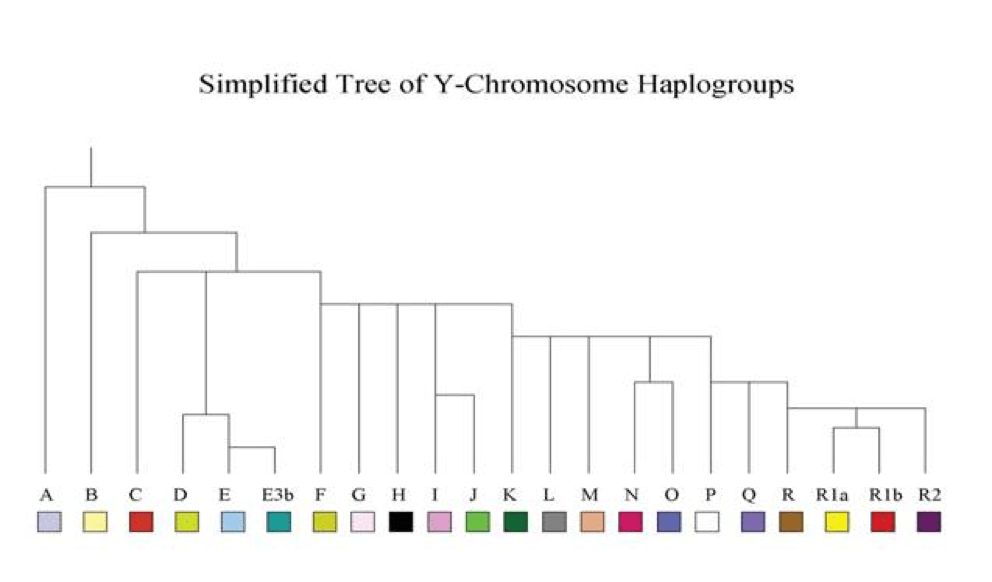
The key mt-DNA Haplogroups for the Hamitic and equatorial peoples of the world are H, M, R and U. The main Y-DNA Haplogroups for the same peoples are H, J, L, M and T.
Cush: South Asia
Havilah: Bangladesh
M U R
H R1a J
Paternal Haplogroup H (L901, M2939) is prevalent in the Indian sub-Continent in the form of H1 (L902, M3061) and the rarer H3 (Z5857). ‘Its sub-clades are also found in lower frequencies in Iran, Central Asia, across the middle-east, and the Arabian peninsula.’ H2 (P96), formerly F3 is present in Europe and western Asia.
Sabtah: Nepal
R1a C H
Sabteca: Jammu and Kashmir
R1a L H
Y-DNA Haplogroup L-M20 (K1a) is found at its highest frequency in Southern India, Pakistan and among the Baloch of Afghanistan.
Seba: Sri Lanka
M U R
R1a L H
Raamah: India
M U R
R1a H L
Sheba: Northern India
R1a H R2
Dedan: Dravidians of Southern India
H R1a J
South East Asian Negritos and Pacific Melanesians
C M K
The highest frequencies of Y-DNA Haplogroup M are found in Melanesia and New Guinea.
Sukki: Afghanistan
R1a Q L
Phut: Pakistan
R1a J2 L
Mizra: Arabs
Middle East: J1, J2
Haplogroup J has two main sub-groups, J1 (M267) and J2 (M172)
Pathros: Egypt
L H J
E1b1b J1 J2

Canaan
The key mt-DNA Haplogroup for the Canaanite peoples of the world are L0 to L6. The main Y-DNA Haplogroups for the same peoples are A, B and E.
Sub-Saharan Africans, East Africa, Berbers
L1 L2 L3
E B A
Y-DNA Haplogroup A represents the oldest branch of the Y-chromosome phylogeny and with Haplogroup B, only appears in Africa. Haplogroup E is one of the most branched, comprising many sub-Haplogroups. Haplogroup E1b1b has a wide geographic distribution and is present in North Africa, the Near East and Southern Europe through admixture; whereas E1b1a is the predominant Haplogroup in sub-Saharan Africa.
Shem
The principle mt-DNA Haplogroups for Shem and the Europeans are H, J, K, U and T. The key Y-DNA Haplogroups for the West Eurasians are G, I and R1. Specifically: G2, I1, I2a1, I2a2, R1a and R1b.

Lud: Iran
H J U
J R1a G
Elam: Turkey
H J U
J R1b E1b1b
Asshur: Russia
H U5 J
R1a N I2a1
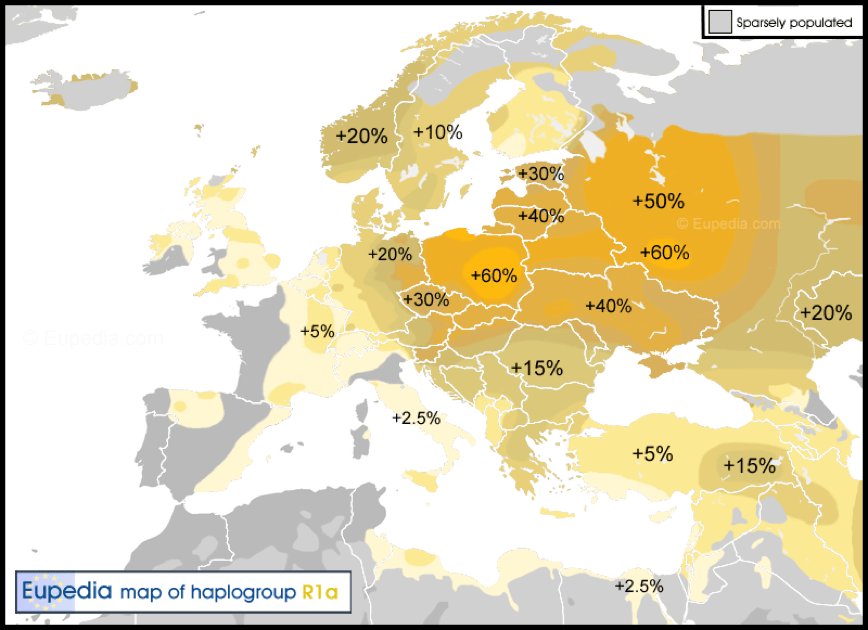
The extensive Haplogroup R is mainly represented by two major lineages: R1a and R1b. The members of R1b are the most common Y-DNA Haplogroup in Europe, with more than half of European men belonging to the different sub-clades of R1b. Haplogroup R is both the most numerous and widespread paternal Haplogroup in the world. Y-DNA Haplogroup R (M207) mutated from P1. Haplogroup R branched into R2 (M479) and R1 (M173), with R1 diverging into R1a (M420) and R1b (M343).

Aram
Hul: Portugal
H J U5
R1b E1b1b J2
Hul: Brazil
H U T
R1b E1b1b J
Gether: Spain
H U5 HV0+V
R1b J2 E1b1b
Uz: Central Italy
H J K
R1b J2 E1b1b
Philistines: Mixed Latino-Hispano Americans of Central and South America (Mash from Aram; Caslush and Caphtor from Mizra; Tiras from Japheth; and Canaan)
Mexico
R1b Q J
Argentina
R1b J E1b1b

Arphaxad – Europe
Anar and Ashcol
Finland
H U5 W
N I1 R1a
Haplogroup I (M170) is a clear European paternal Haplogroup and considered the oldest major Haplogroup in Europe. Haplogroup I ranges from frequent to infrequent in European males and though spread across Europe it is principally found in two distinct locations resulting from a mutational split. Haplogroup I split into the key Haplogroup divisions of I1 (M253) and I2 (M438). Haplogroup I1 is dominant in Scandinavia and north western Europe; whereas I2 is located primarily in Central Europe and southeastern Europe, Sardinia and the Balkans. The main mutations include: I1, I2a1 (P37.2), I2a1a (M26), I2a1b (M423) and I2a2a (M223) – now I2a1b1 since 2018.
Joktan – Eastern Europe
Ophir: Ukraine
H U5 T2
R1a I2a1 R1b
Havilah: Poland
H U5 J
R1a R1b I1
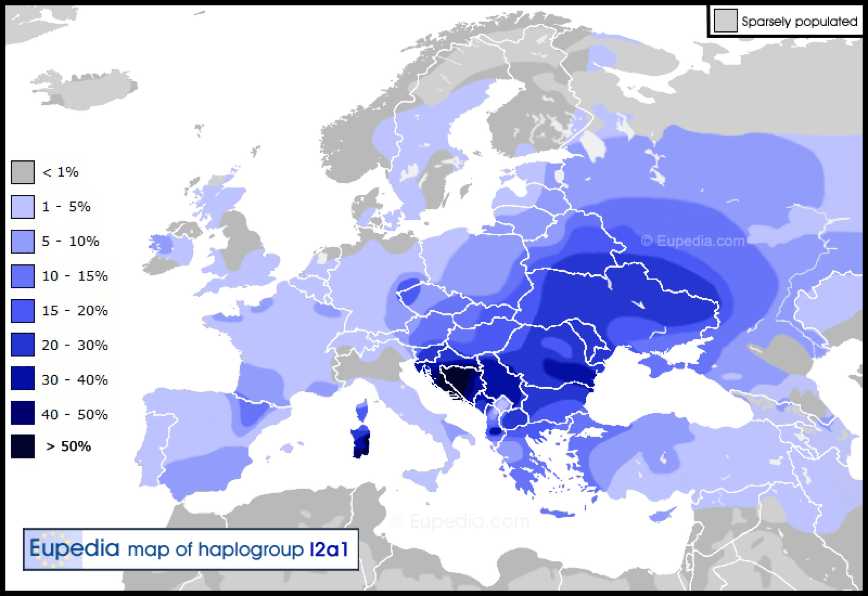
Sheba: Romania
H J K
I2a1 R1a R1b
Uzal: Greece
H J T2
J2 E1b1b R1b
Peleg – Western Europe
Nahor: Northern and Central Italy
H T2 J
R1b J2 E1b1b
Haran: Switzerland
H J T2
R1b I1 I2a1
Moab and Ammon: French
H K U5
R1b I1 E1b1b
Abraham and Keturah: Scandinavia and Benelux
Zimran: Norway
H U5 J
R1b I1 R1a
Ishbak: Iceland
H J T2
R1b I1 R1a
Medan: Denmark
H J K
I1 R1b R1a
Shuah: Sweden
H U5 J
I1 R1b R1a
Jokshan: Belgium
H K T2
Sheba: Flanders
R1b I1 E1b1b
Letush: Wallonia
R1b I1 R1a
Asshur: Luxembourg
R1b J2 I2a2
Midian: Netherlands
H T2 J
R1b I1 I2a2
Ishmael and Hagar: Germany and Austria
H J U5
R1b R1a I1
Esau: State of Israel, Jews
Sephardim
H HV0+V K
R1b J2 J1

Jacob – British and Irish
Judah and Benjamin: England, Scotland
H J U5
R1b I1 R1a
Simeon: Wales
H J K
R1b I1 E1b1b
Reuben: Northern Ireland
R1b I2a2 I1
Gad: Ireland
H K J
R1b I1 I2a2
Ephraim and half tribe of West Manasseh: United States of America
R1b E1b1b I1
© Orion Gold 2020-2022 – All rights reserved. Permission to copy, use or distribute, if acknowledgement of the original authorship is attributed to orion-gold.com
 The Lightkeeper
Ham is Y-DNA AB. Shem is DE with Israel being E1b1a. Japheth is CF. Haplogroups D and E have the same forefather. One can not be Ham and the other be Japheth. There are living people with haplogroup DE without it being split into either D or E.
Thank you for taking the time to share your thoughts.
The impression is that you read the appendix summary without studying the relevant supporting chapters in The Noachian Legacy.
This would be unfortunate and would explain the following inconsistencies.
Respectfully responding to the points in chronological order:
a. The paternal Haplogroups A and B are indicative of the descendants of Canaan (Africa) today, though originally all of Noah’s sons would have been A; as Haplogroup mutations occur over hundreds of years.
b. Haplogroups D and E are not associated with Shem’s descendants but rather with Japheth (D1a, D1b) and Canaan (D2*, E1a, E1b1a, E1b1b, E2).
c. The Haplogroup E mutation is very old, whereas the descendants of Jacob have only been in existence for three thousand, seven hundred and fifty years and therefore the men would be identified by a far more recent mutation – one associated with Shem. In this instance, it is the paternal Haplogroup R1b-U106.
d. Haplogroup CF is a connecting Y-DNA Haplogroup, much like DE and IJ. While C is associated with Japheth, Haplogroup F is a subsidiary connecting Haplogroup and today is indicative of a proportion of men who descend from Ham (India).
e. The Haplogroups D and E from Japheth and Canaan, show early evidence of admixture* in each ones genealogical history.
f. While there is lively debate on where Haplogroup DE originated, the few males who carry this mutation today live primarily in West Africa – with a smaller minority in Tibet. This supports point e. in that admixture has occurred between Japheth and Canaan. It would then appear that a dominating* Canaanite male line (E) intermixed with a Japheth lineage (D).
Trust this is hopefully of benefit – and for other readers – in the continued endeavour to understand this subject more fully.
God Bless
You aren’t understanding. It is a genetic fact that haplogroups D and E have the same forefather. There are living people that have basal DE meaning DE not split into either D or E today. Haplogroup D and E are from the same son of Noah. D and E are the only haplogroups that have the YAP mutation. All other haplogroups are YAP negative. The only way for that to happen is if D and E have common ancestry. D can not be Japheth and E be Ham. Haplogroup DE is Shem. E1b1a is Israel.
Hello Anonymous
This writer is still persuaded that you have not read the pertinent material.
It is also clear that there is a stubborn adherence to an inaccurate paradigm (point c. above) – i.e. thinking sub-Saharan Africans are descendants of Jacob when their Y-DNA Haplogroups A, B and E prove they are not. Haplogroup E1b1a is not indicative of true Israel but rather of Canaan’s male descendants.
Respectfully responding to the points in chronological order:
1. The DE mutation stems from the same ancestor[s] (points e. and f.)
2. There are a small handful of males who carry DE today (point f.)
3. Haplogroup D and E are a. later mutations; from b. different descendants of Noah; and c. not from any of his sons directly. Noah’s sons were all Haplogroup A (point a).
4. All Y-DNA Haplogroups are YAP negative, except DE, D and E which are YAP (Y-chromosome Alu Polymorphism) positive.
5. Haplogroups D and E only share common ancestry because “the mutation was caused when a strand of DNA (known as an Alu) [somehow] inserted a copy of itself into the Y-Chromosome.”
6. There is considerable debate (point f.) on whether it originated in Africa (E) or in Asia (D). The consensus majority lean towards an African origin (E).
https://alchetron.com/Haplogroup-DE
7. If such is the case, then this writer would concur in that the ‘older’ (Japheth/Asian) lineage (stemming from BT and DE, becoming D) had a genetic intrusion from the ‘younger’ (Canaan/African) lineage (stemming from BT and DE, which would become E).
Hence why “Africa has the highest frequency of YAP(>80%). Whereas the YAP+ in Asia has a fairly restricted geographic distribution, mainly at low to moderate frequencies (average 9.6%) in East Asia.”
8. Thus, Haplogroups D and E do share a common ancestry and common ancestors through the DE mutation, rather than just one specific ancestor (point d. and 1. above)
9. They cannot be from the same son (points e. and f.) as Japheth (Prime Haplogroups C, D, K, N, O1, O2, Q) and Canaan (Prime Haplogroups A, B, E1) are two different people from two of Noah’s four sons – refer Chapter XI Ham Aequator; and Chapter XII Canaan & Africa.
10. Haplogroup DE is shared by Africans in West Africa and Asians in East Asia; but as a connecting Haplogroup it has little bearing on identities as shown by so few men who carry it. Whereas Haplogroup D is relatively common in certain Asian areas (Tibet and Japan) and Haplogroup E is very common in Africa (and beyond through admixture).
11. Haplogroup DE is not indicative of only Shem or Ham, Japheth and Canaan; just as CF and IJ aren’t either.
12. Haplogroup E1b1a (and E1b1b) derive from Canaan’s descendants. Shem’s male descendants are primarily Haplogroups G, I1, I2, R1a and R1b.
Normally, this writer would not undertake responses of this length. It is mainly for those interested readers as well as others who may unfortunately hold similarly incorrect views.
Apparently you don’t understand how Y DNA works. Every son of Noah did not have A. A is exclusively of Ham. It is not possible for two different sons of Noah to randomly develop the YAP mutation. D and E come from the same son of Noah. It is a fact already established. There was no “genetic intrusion” required. Shem only had haplogroups D and E. F, G, H, I, J, etc. down to T are descendants of Japheth. The Bible is proof that there is no way possible for Japhetic lineages such as I, J, and R to be of Shem. The Bible on multiple occasions states that Israel would be scattered in Africa and later abducted from Africa on ships and put into slavery. There were Israelites in Europe, but the bulk of them were also deported to Africa and later enslaved from Africa. That doesn’t apply to people with I, J, R, etc. You also seem to be under the delusion that the entirety of Africa belongs to Ham. Shem was promised a large part of Africa. There are not and will never be multiple Y DNA haplogroups belonging to the same nation. Canaan having haplogroups A, B, and E is not genetically possible. Nothing I said is incorrect. Everything I said is a fact.
Sadly, it is abundantly clear the reader is not fully cognisant on the relevant biblical passages (and what they do or do not say); while at the same time defending flawed theories espoused by the Black Hebrew Israelites.
With that, they have chosen to ignore how Israelite men could not carry an ancient Haplogroup mutation but rather would exhibit a (relatively) recent one.
Nor do they allow for how Haplogroup mutations occur over hundreds (and thousands) of years, so that Noah’s sons would have been the same Y-DNA Haplogroup as their father, Noah. Descendants would have possessed later mutations beginning from Haplogroup B all the way to Haplogroup T today.
Added to this, they are labouring under the false teaching that Europeans descend from Japheth. Inspired by the incorrect T and O map identification from Isidore’s Etymologiae.
Finally, they have difficulty in separating fact from opinion and do not offer one source, reference or scripture in defence of their untenable position.
Any further comments from this contributor are unwelcome (though will be left available for readers to judge for themselves, as they will likely be someone who must have the final word). For they are not interested in the truth, but rather have an aggressive axe to grind in furthering a misleading and error strewn doctrine, which advocates an unsubtle racial superiority.
These teachings of the Black Hebrew Israelites (an oxymoron) have been introduced in furthering an ideology designed to deceive through pseudo scientific means; a misinterpretation of history; and a misapplication of specific (prophetic) verses in the Bible. Deuteronomy chapter twenty-eight a case in point.
The aspect of Jacob’s descendants becoming a great nation composed of smaller ones has been sensationally fulfilled by the United States of America – no African nation can make that claim (Chapter XXXIII Manasseh & Ephraim – the Birthright Tribes).
Nor can any other nation lay claim to the sceptre and throne promise to Judah… except England (Chapter XXX Judah & Benjamin – the Regal Tribes). No African nation (or the Jews) have fulfilled this prophetic blessing.
The sincere hope is that their eyes and ears are opened at the right time for them to see and hear with a humble heart – Revelation 3:17-18, 22, Isaiah 66:2.
Sadly the author of this article is not aware of the fact that the scientific narrative of how old haplogroups are cannot fit with the Bible. There has been a little less than 6000 years from the time of Adam to now. All haplogroups that exist today must be less than 6000 years old because Noah lived less than 6000 years ago. There is no racial superiority going on. Yes, the original inhabitants of Israel were so called black people. It is not an opinion. Israelites on multiple occasions were confused with Hamites (Egyptians) that were native to Africa. Yes, Israel was scattered in Africa. The Bible explicitly states that. The Bible states that the would taken into slavery by way of ships. The vast majority of people in Europe are Japheth. There are some Semitic people (haplogroup DE) there, but they are far from the majority. There is no such thing as so called Caucasian Jew/Israelite. It is a myth and fairytale.