
An appendix designed for readers who cannot recall a particular identity, for there are a lot to remember and particularly helpful for those who may be new to the subject, possessing only a passing interest or a surface level of knowledge.
It should be advantageous for those readers desiring to skip sections should their interest or desire not extend to a full investment of time in reading the chronological and contextual background of information chapter by chapter. Though as a result, some identities on first reading, may be a more difficult (change of) paradigm to assimilate and process than others for the knowledgable reader.

Japheth
Tiras: Amerindians of North, Central and South America
Madai (Medes): Turko-Mongol peoples of the Central Asian Republics of Kazakhstan, Turkmenistan, Uzbekistan, Kyrgyzstan, partially Tajikistan, the Tatars of Russia, the Sami of Russia, Finland and Scandinavia, the Mongols, Tibet and Bhutan
Gomer: Continental South East Asia
Ashkenaz: Vietnam
Riphath: Cambodia
Diphath: Laos
Ararat: Myanmar
Minni: Thailand
Togarmah: North and South Korea
Javan: Archipelago South East Asia
Elishah: Malaysia (Singapore)
Dodan: Philippines
Rodan: Polynesia, Micronesia (Taiwan)
Kittim: Indonesia
Tarshish: Japan
Magog, Tubal and Meshech: China (Taiwan)
Canaan: Sub-Saharan Africa, East Africa, (Berbers)
Sidon: South Africa
Arvad: Angola
Hamath: Nigeria
Ham
Cush (Ethiopia): South Asia
Havilah: Bangladesh
Sabtah: Nepal
Sabteca: Jammu and Kashmir
Seba: Sri Lanka
Raamah: India
Sheba: Northern India
Dedan: Dravidians of Southern India, South East Asian Negritos and Pacific Melanesia
Sukki: Afghanistan
Phut (Libya): Pakistan
Mizraim: Arabs
Pathros: Egypt
Anam: Arabian Peninsula
Naphtuh: Middle East and the Levant
Ludim: Iran
Lehab (Lubim): Pakistan
Casluh and Caphtor: (Berbers) Central and South America
Philistines: Mixed Latino-Hispano Americans of Central and South America, including Mexico, Colombia and Argentina
Shem
Lud (Lydia): Iran (Azerbaijan, Georgia)
Elam (Persia): Turkey (Armenia)
Asshur (Assyria): Russia
Aram (Syria): Latin and Hispanic
Mash: Central and South America
Gether: Spain
Hul: Brazil (Tyre) and Portugal
Uz: Central Italy
Arphaxad: Europe
Anar and Ashcol: Finland and Estonia; Latvia and Lithuania
Joktan: Eastern Europe
Belarus; Czech Republic and Slovakia; Hungary; Moldova; Bulgaria; Albania, Kosovo and Macedonia; Slovenia; Croatia; Bosnia-Herzegovina and Montenegro
Ophir: Ukraine
Havilah: Poland
Sheba: Romania
Uzal: Greece, (Southern Italy and Sicily)
Peleg: Western Europe
Nahor (Chaldeans): Northern (Central) Italy
Haran: Switzerland
Lot: France
Moab: Central and Southern France
Ammon: North Western France (Paris) and French Quebec, Canada
Abraham and Keturah: Scandinavia and Benelux
Zimran: Norway
Ishbak: Iceland
Medan: Denmark
Shuah: Sweden
Jokshan: Belgium
Sheba: Flanders/Flemish
Dedan: Wallonia and Luxembourg
Leumm: Brussels
Letush: Walloons
Asshur: Luxembourg
Midian (Hivites): Netherlands
Kenites: Dutch (French, German) Afrikaners, South Africa
Ishmael (Hittites): Germany
Hagar: Austria
Esau (Edom): State of Israel, Sephardim and Ashkenazim
Amalek: American Jews
Jacob (Israel)
Irish and British – Celts, Saxons (Angles, Frisians, Jutes), Vikings (Normans)
Judah: England
Benjamin: Scotland
Simeon: Wales
Levi: Scattered (predominantly within Judah, Benjamin and Simeon)
Reuben: Northern Ireland
Gad: Ireland
Issachar: Zimbabwe (Rhodesia) and South Africa
Zebulun: South Africa
Asher: Australia
Naphtali: New Zealand
Joseph: North America
Ephraim: United States of America, East, North and West
Half tribe of West Manasseh: Southern United States
Half tribe of East Manasseh (Gilead, Machir): Canada
Dan: Scattered… predominantly located in the United States, Northern Ireland and Scotland and known respectively as Scotch Irish, Ulster Scots and Scots Irish
Addendum
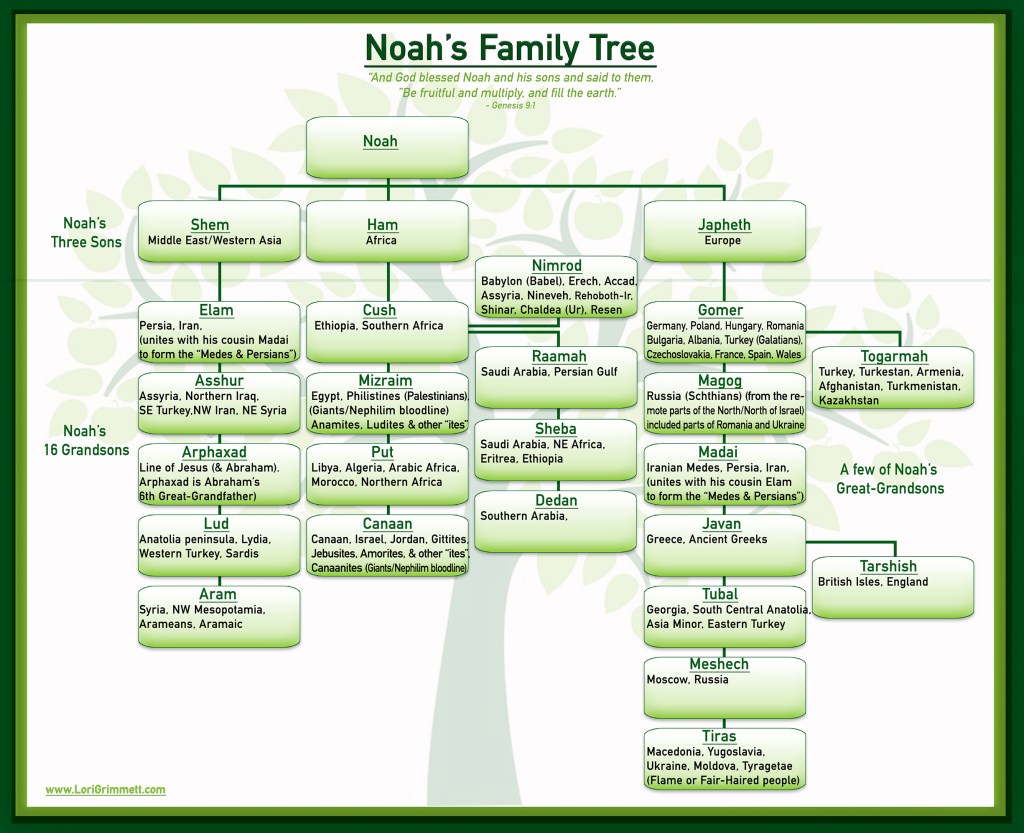
The above is a good example reflecting the generally agreed understanding for the modern identity of nations descended from Noah’s sons and grandsons. The caption underneath the diagram is the author’s. The endeavour to sincerely help with an honest and humble attitude is commendable and to be respected. Yet, it is left for the reader to decide whether this standard (orthodox) view is in fact biblically logical and historically accurate? Compared with the material compiled within The Noachian Legacy representing thirty-five years of diligently seeking the truth through prayerful and meditative investigation.
© Orion Gold 2020-2022 – All rights reserved. Permission to copy, use or distribute, if acknowledgement of the original authorship is attributed to Orion Gold
 The Lightkeeper